
April 6, 2026 - T-Partying off of Nanoose Bay
You couldn’t have asked for a better day than this. The winds were calm, and the sun was shining overhead; all we needed was to get out there and find some whales! So we headed to the dock after checking in and were ready to start the adventure. This adventure started sooner than we expected, though! As we were preparing to board, a Bald Eagle flew right overhead with a pair of gulls hot on their talons! We weren’t sure what it had at first, until they released their bundle, just narrowly avoiding hitting our Marine Naturalist Val with what turned out to be a small piece of chicken! This was likely stolen from the nearby crabbing dock before being thrown our way. Although Bald Eagles are skilled fishermen, they also scavenge for food when it's easier! Later, a gull came back to claim their delicious prize. It was an early reminder of wildlife's unpredictability and that you should always be ready for anything!
After the pre-boarding excitement, we were ready to get out on the water. After learning all about the wildlife we were going to look for, our eyes were trained and ready to start searching. We decided to start the day by heading into the Strait of Georgia, the open body of water that separates the mainland of British Columbia from Vancouver Island and the Southern Gulf Islands. This can be a great spot for wildlife, since there are a fair number of features along the seafloor that help mix the water and increase the area's productivity. In addition, many rivers feed into the area, introducing more nutrients that the ocean typically lacks. Lots of wildlife use these rich waters to sustain themselves, including large whales like Humpback and Grey whales. Orca are here year-round, taking advantage of seasonal food availability. There is always something here for them, from the Sea Lions that spend their winters here to the harbour seal pups in the early summer and, of course, the adult seals that are here year-round. This abundance of food means there are many different pods of Transient Orca around, though not always the same ones. The other fun thing about the orca is how much they move in a day! A pod may cover up to 100 miles each day in its travels, which helps it keep hunting unsuspecting prey, since it relies on stealth for its success. If they spend too long in one area, the intelligent pinnipeds tend to get harder to hunt.
With travelling so far each day, and since we don’t have any tracking on our whales, we are never sure where they might be, but luckily for us, there is a large network of sightings both on and off the water that helps us find them. Like today, we headed south in the Strait until we got word of a pod of orca travelling north near Lantzville. With no hesitation, our skilled captain, Tino, turned us around, and we headed that way. Along the way, we heard another report; there was another pod heading south! The excitement built as we got closer and closer, eager eyes scanning the horizon looking for the telltale sign of whales. And eventually we spotted them! It would have been hard to miss this group, as it seemed the two groups had joined together and were super excited about it. Marine Naturalist Val quickly pulled out her camera, snapping photos of the unique notches and scars on the dorsal fins and saddle patches of these whales, and quickly made the ID: it was the T065Bs travelling with T071B and the T124Ds! This means that the following whales were partying together:
T065B Chunk ♀ (1993)
T065B1 Birdsall ♂ (2011)
T065B2 Nettle ♂ (2019)
T065B3 Rook ♂ (2023)
T071B Hood ♀ (2000)
T071B4 (2026)
T124D Field ♀ (1996)
T124D1 Salish II (2014)
T124D3 Lupine ♀ (2022)
T124D4 Dune (2024)
There was all sorts of surface activity during our time with these whales, with breaching, los of tail slaps, back dives, and upside-down swimming. In addition to all the excitment at the surface, we could also hear the whales! It’s not too often that we can hear the vocalization of the whaes above the surface of the water, but a few squeeks and .whistled made their way to us over the wind. It was met with exciting comments of our own back to them, as you can see in this video!
That little squeak is caused by the Phonic Lips in the orca. When they breathe, they can constrict the passageway, creating a sound similar to squeezing the top of a balloon to let out air. This squeaking can have all sorts of meaning for the whales, but in this case, we think that they were just having fun with each other and being chatty.
This amount of chatter is unusual for the Transient Orca, again due to their prey. Just like how they have to be constantly moving around to stay stealthy for their prey, they also have to limit the amount they talk to each other most of the time because their prey can detect them through vocalizations. It’s only if they are focused on social behaviour, or have just finished a hunt, that we will hear them talking to each other more.
We felt so privileged to witness this incredible social behaviour among the whales, but eventually it was time to leave them to it, and we started heading south once more. We were aiming for a small island just off of Gabriola Island on our way, Entrance Island. This is a beautiful lighthouse that helps guide people into Nanaimo from the Strait of Georgia, but it also provides a resting place for some of our Pinniped species. There were all three of these species here today; the boisterous Steller Sea Lions were taking up space on the rocky shore, with some California Sea Lions barking away at each other while they floated by in the water. We even got to see thermoregulation in action here, with some of the sea lions sticking their flippers out of the water to warm up in the sunshine. Around the corner were also some Harbour Seals on the rocks, but instead of heading into the shallow reef to look at them, we went to a small rocky islet closer to Gabriola and got to see a haulout of them there. All these pinnipeds are important to our ecosystem, as they serve not only as a food source for larger predators like the Transient Orca but are also great hunters in their own right, preying on many fish and cephalopod species.
From here, we headed back into Nanaimo, sharing photos from the day and enjoying the time we spent with all the wildlife we spotted. Please enjoy the photos below, captured throughout the tour by onboard Marine Naturalist Val Watson and ride-along staff member Jordan Robinson!
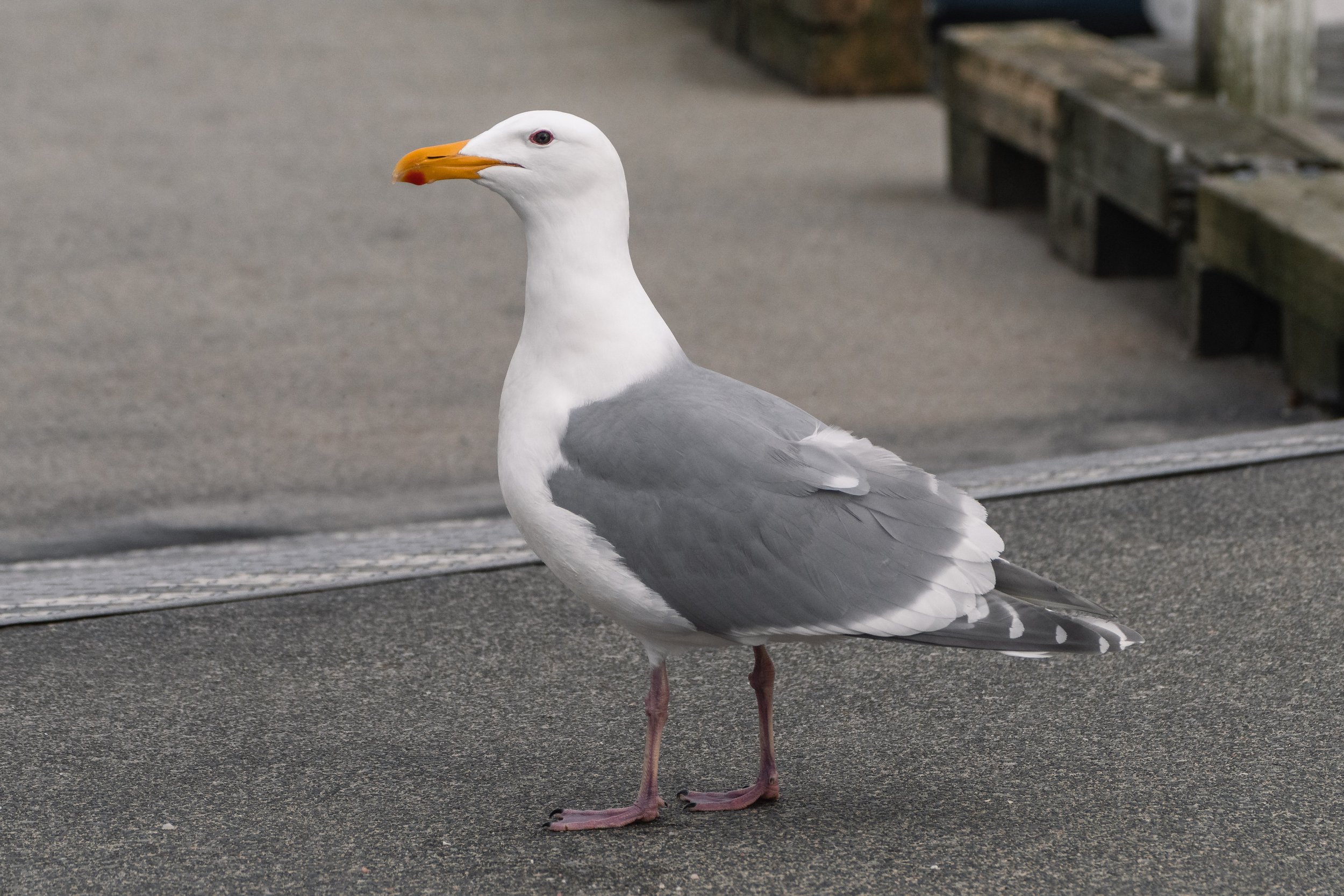
A gull watching us board the boat after stealing some chicken from an eagle. Photo by Val Watson.
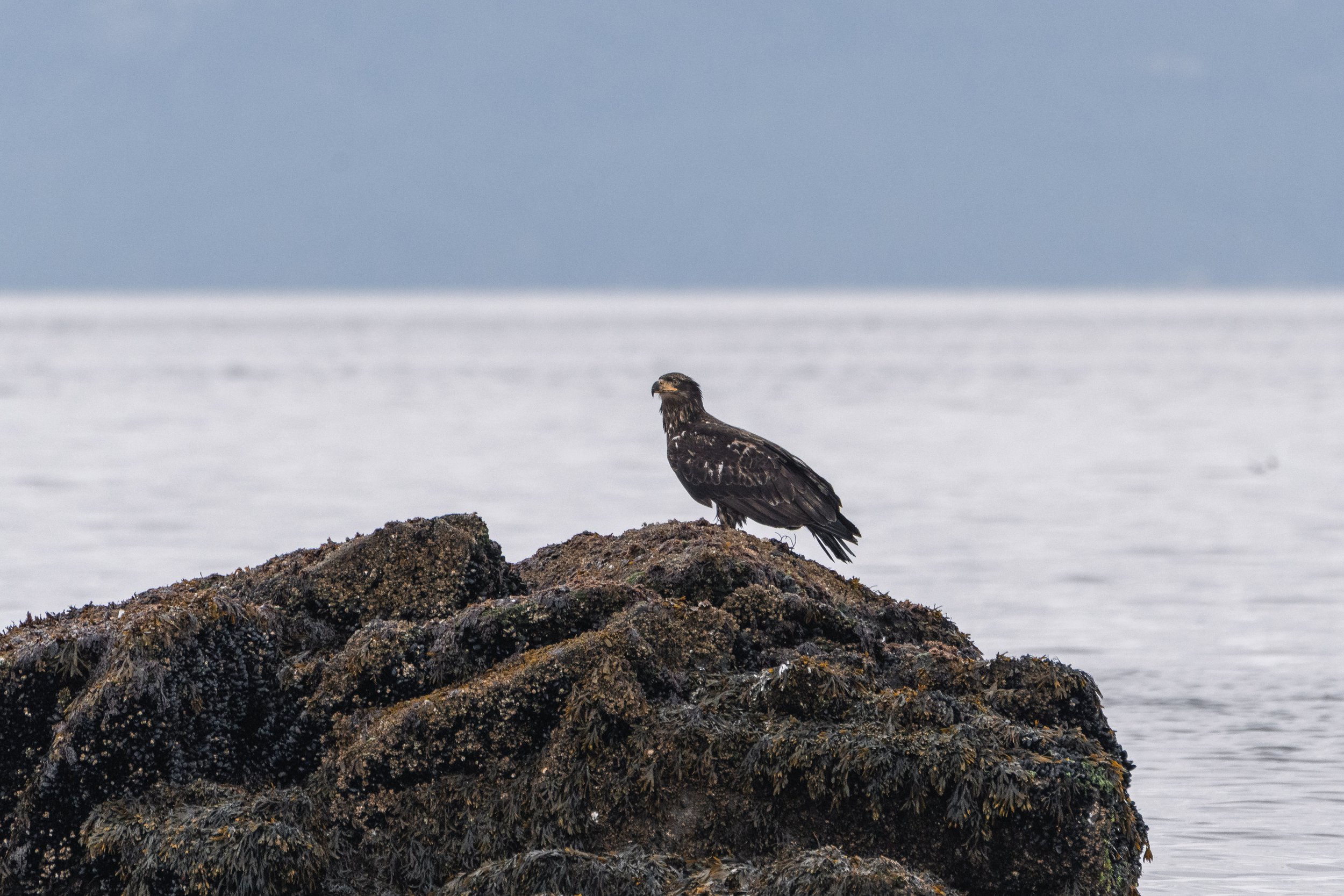
A juvenile Bald Eagle spending time on the rocks. Photo by Val Watson.
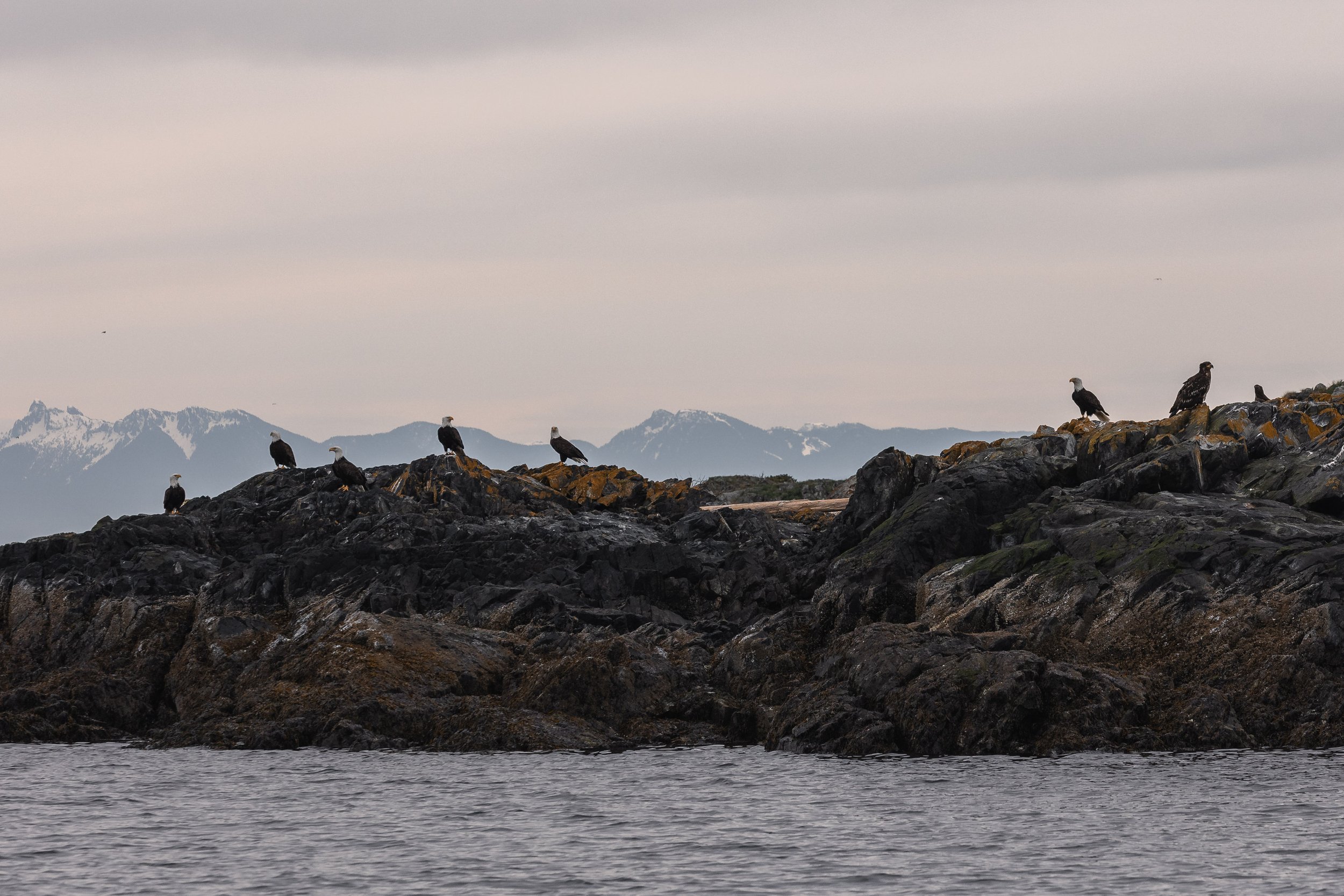
A larger group of Bald Eagles on the rocks off Nanoose. Photo by Jordan Robinson.
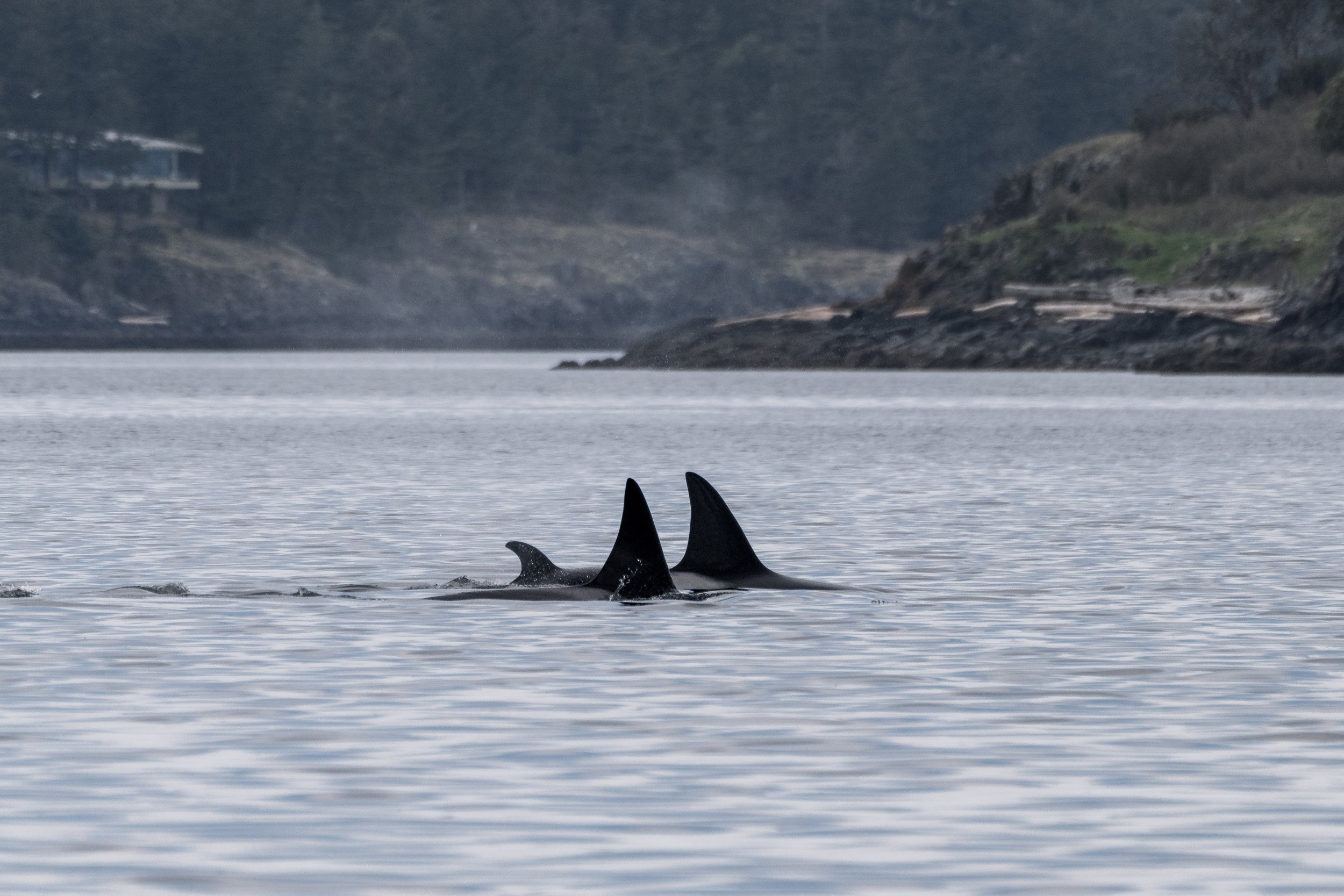
T124D Field, T071B Hood and the new calf surfacing together. Photo by Val Watson.
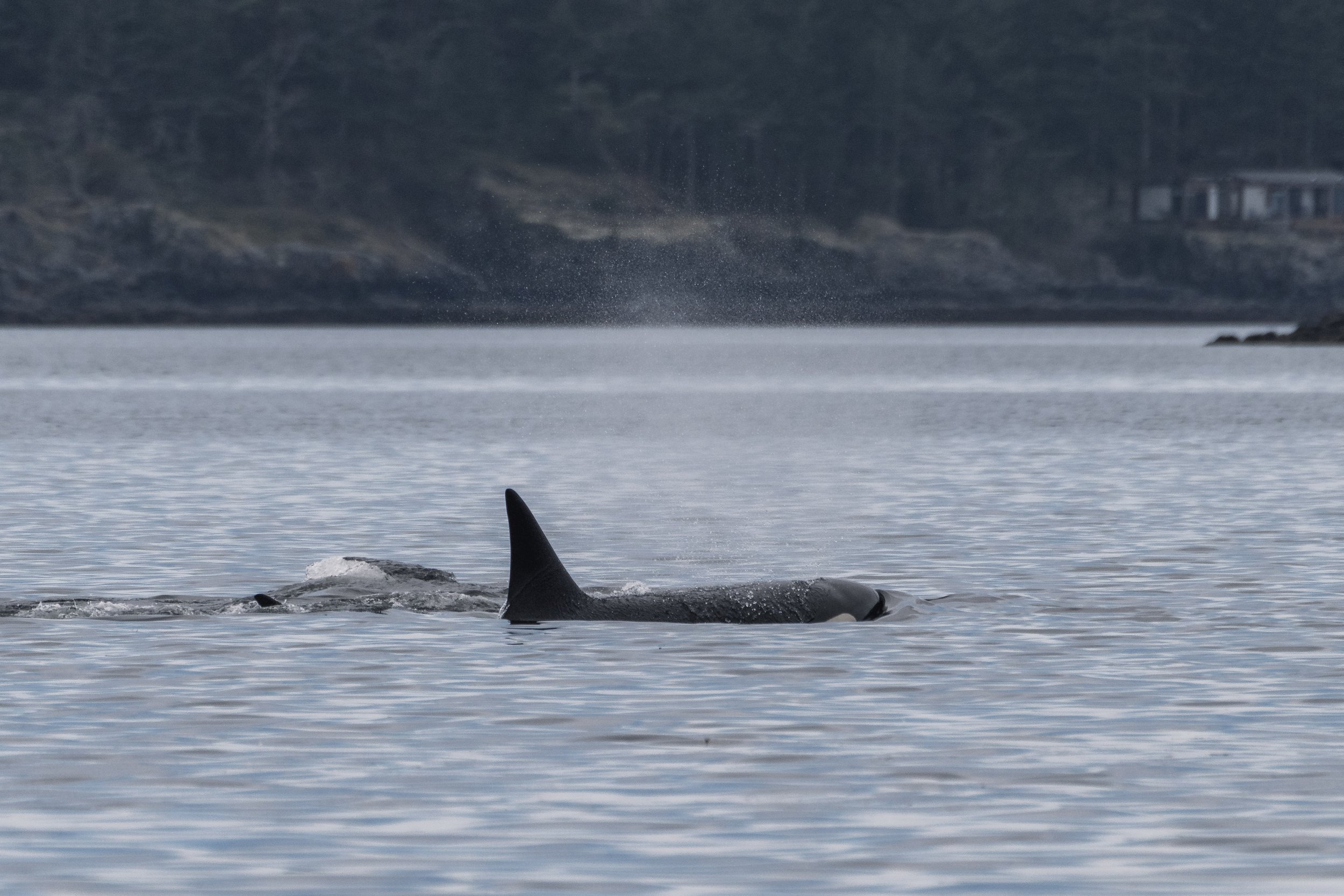
T124D Field splashing through the water. Photo by Val Watson.
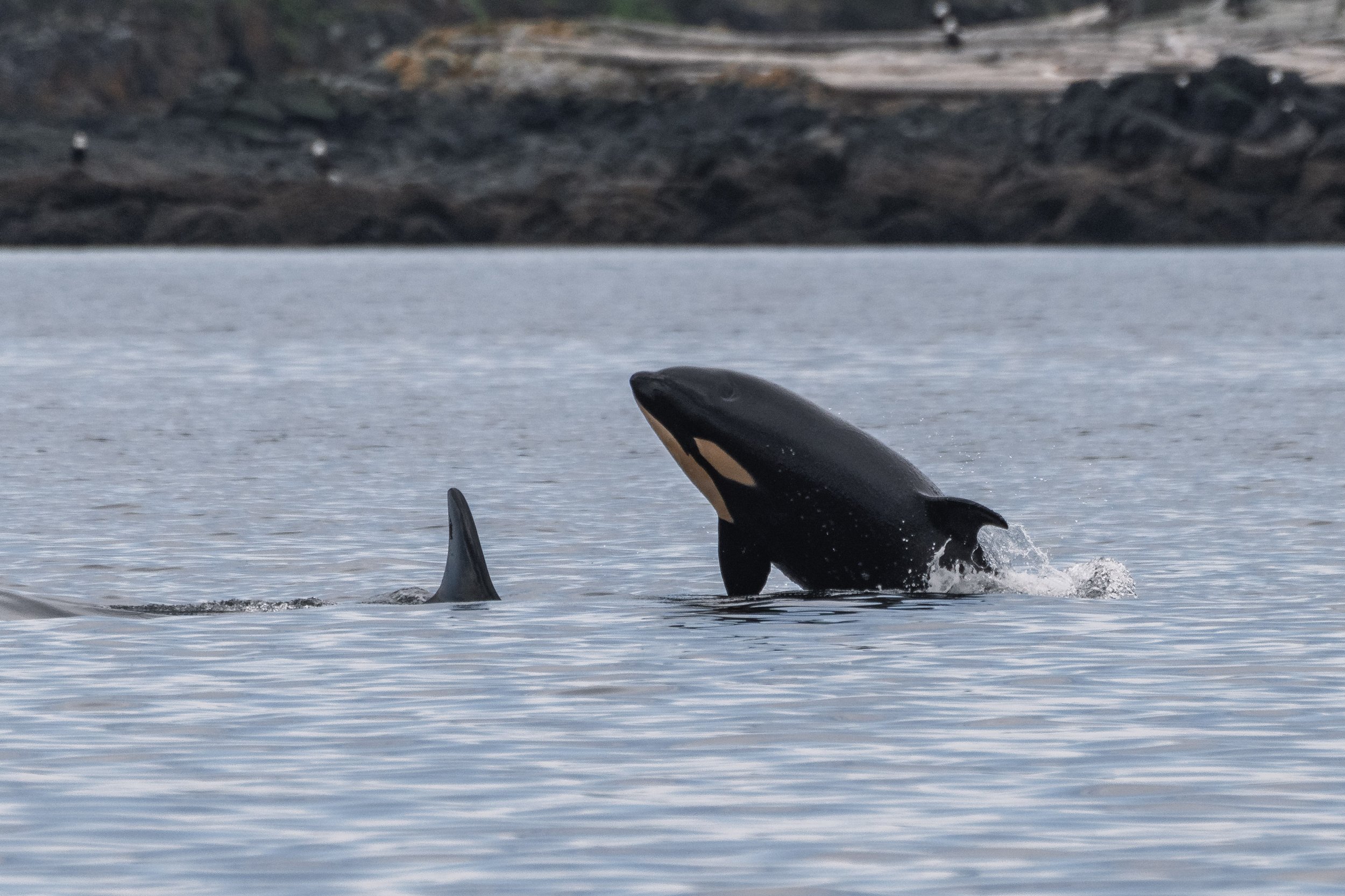
(likely) T071B4 breaching in the T-Party! Photo by Val Watson.
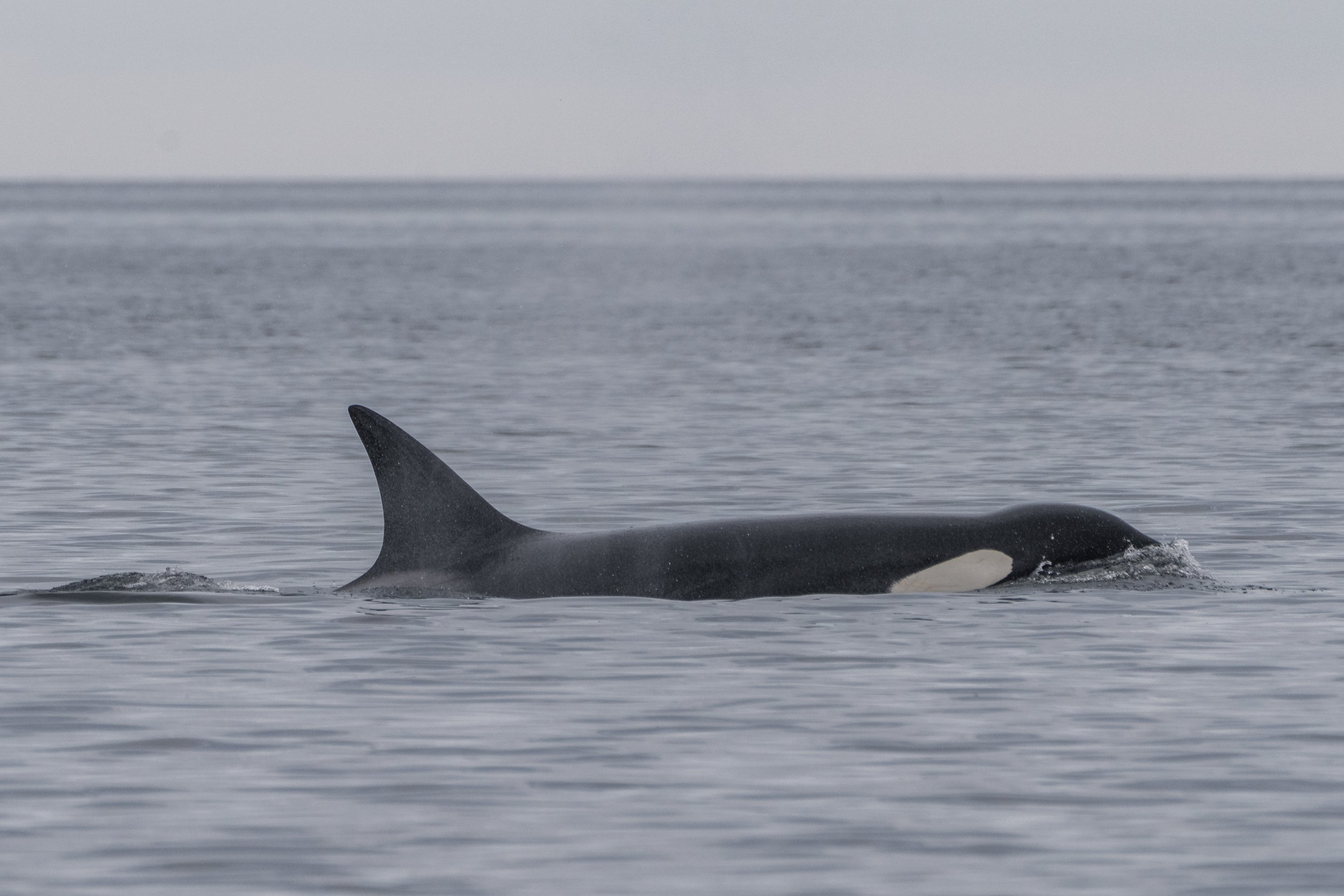
A great look at T124D Field as she surfaces in the calm water, showing off her eye patch. Photo by Val Watson.
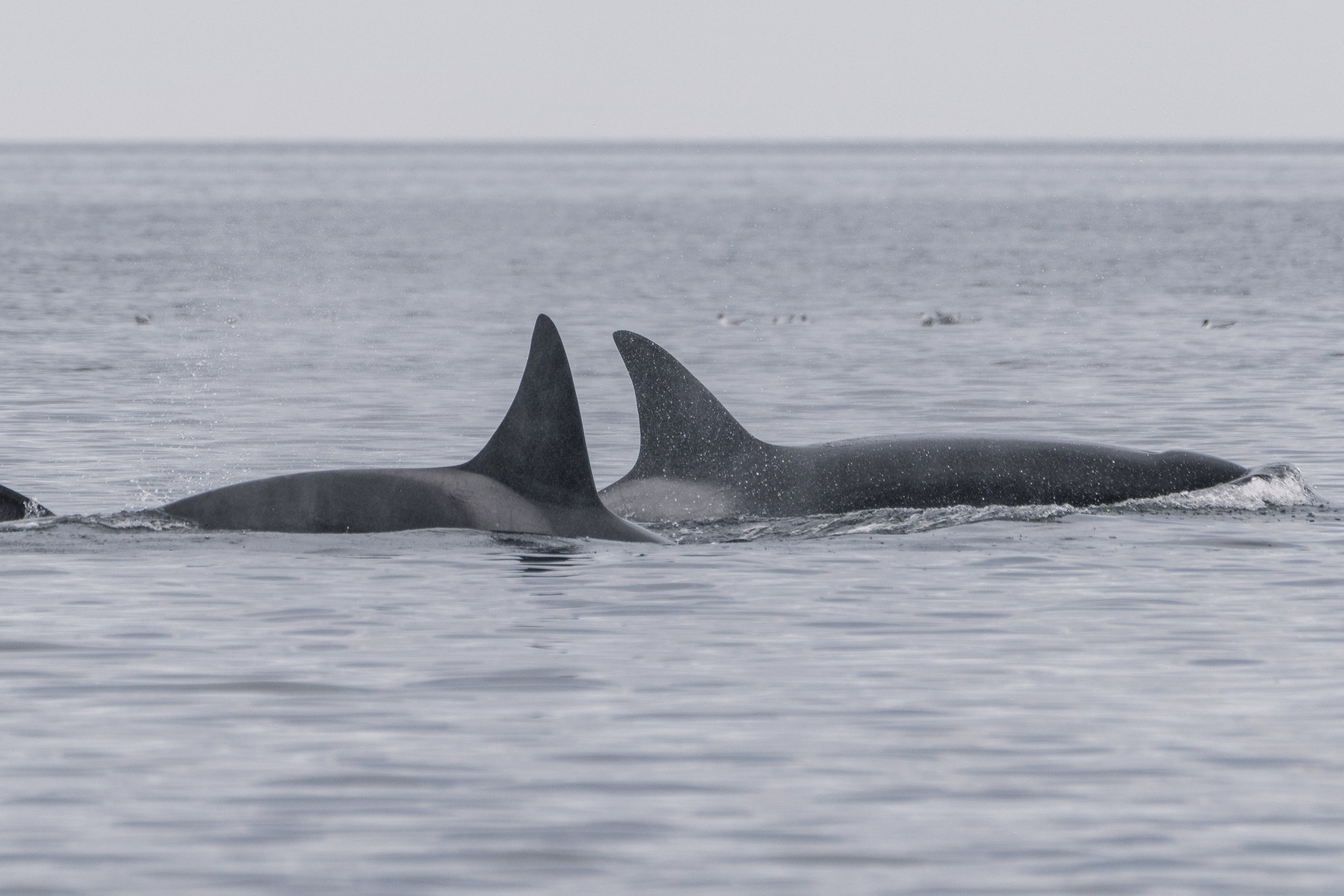
T071B Hood surfacing just ahead of T124D Field. Photo by Val Watson.
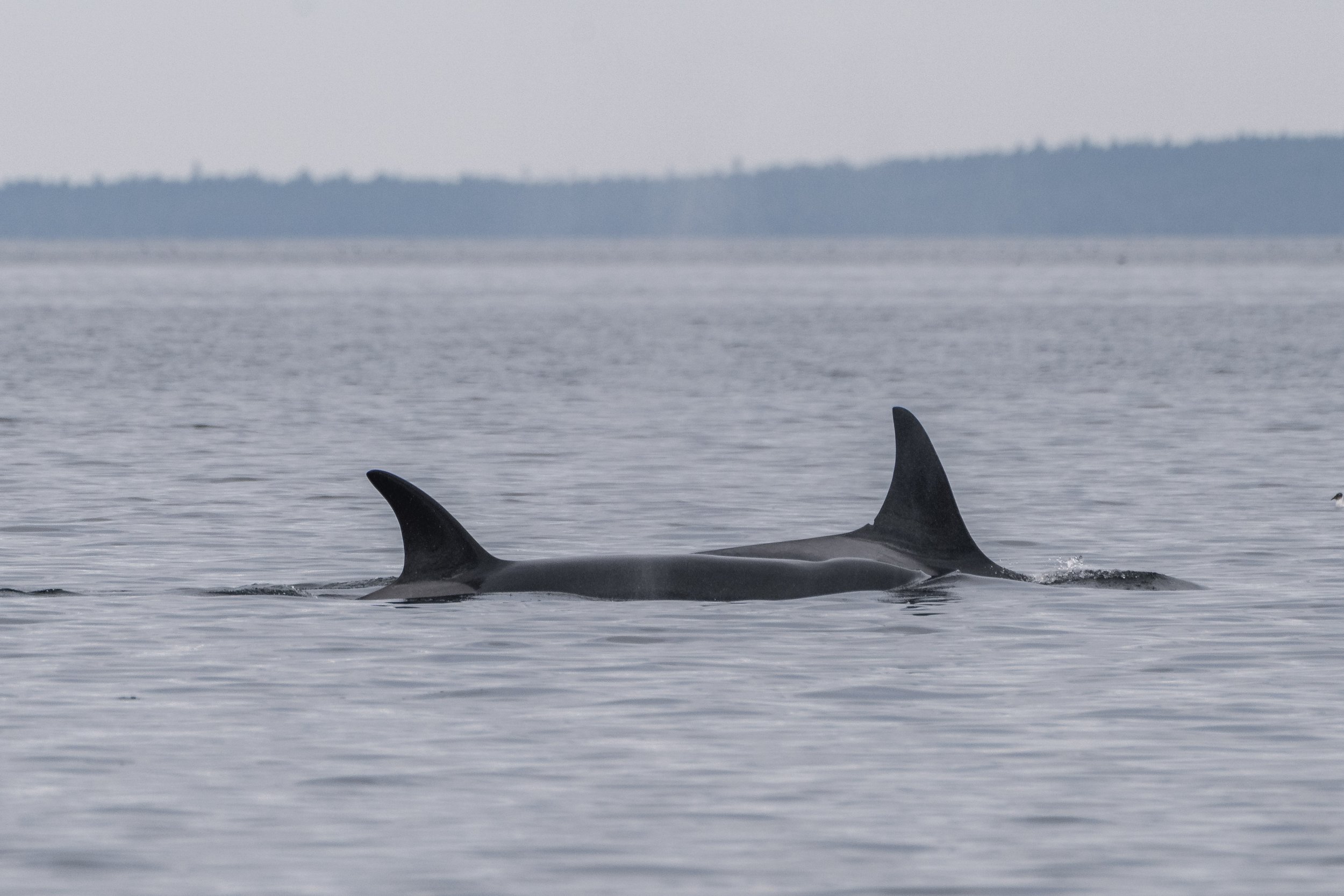
T065B Chunk surfacing with T065B2 Nettle by her side. Photo by Val Watson.
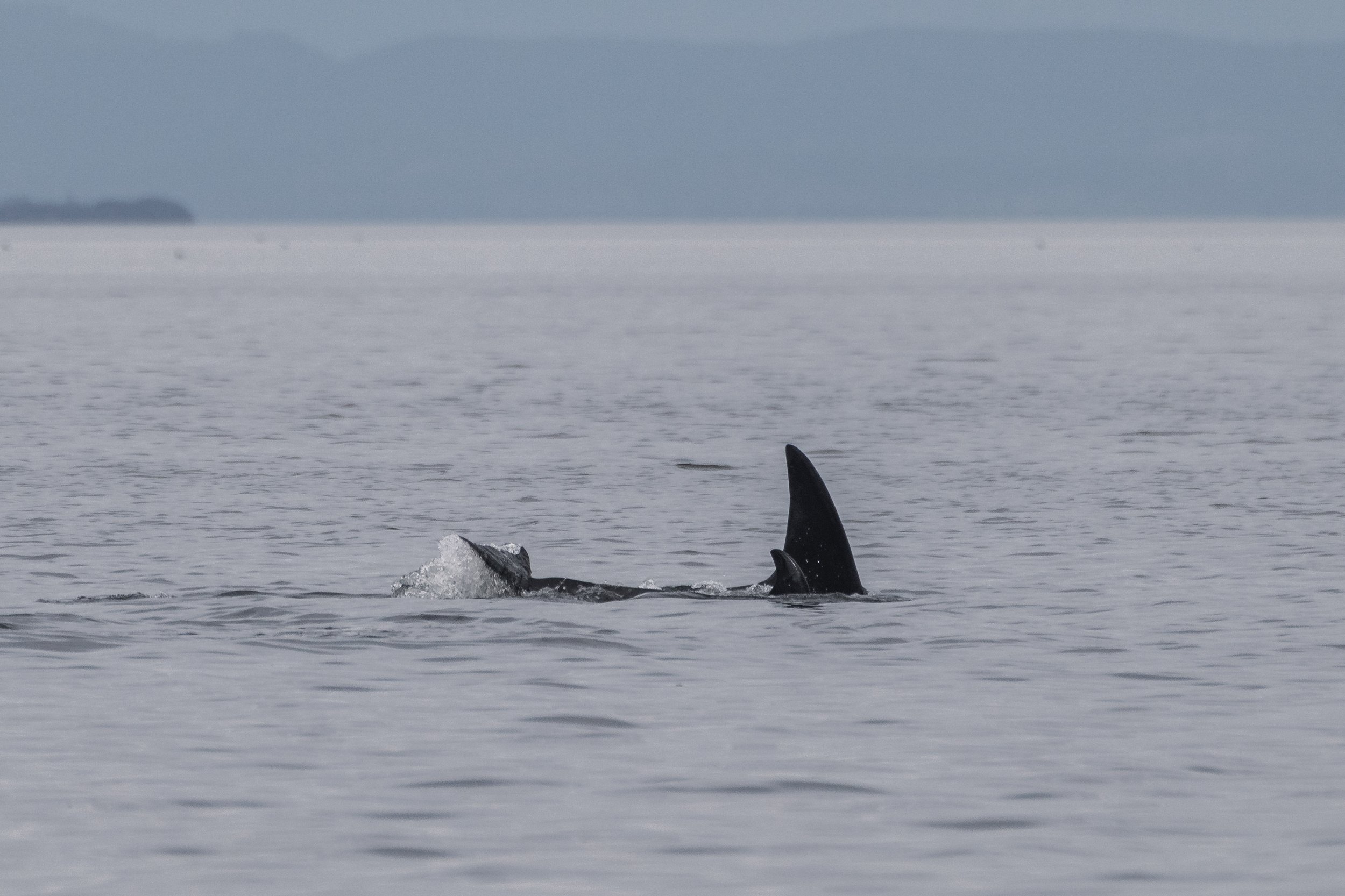
The baby flicking their tail while traveling beside mom, T071B Hood. Photo by Val Watson.
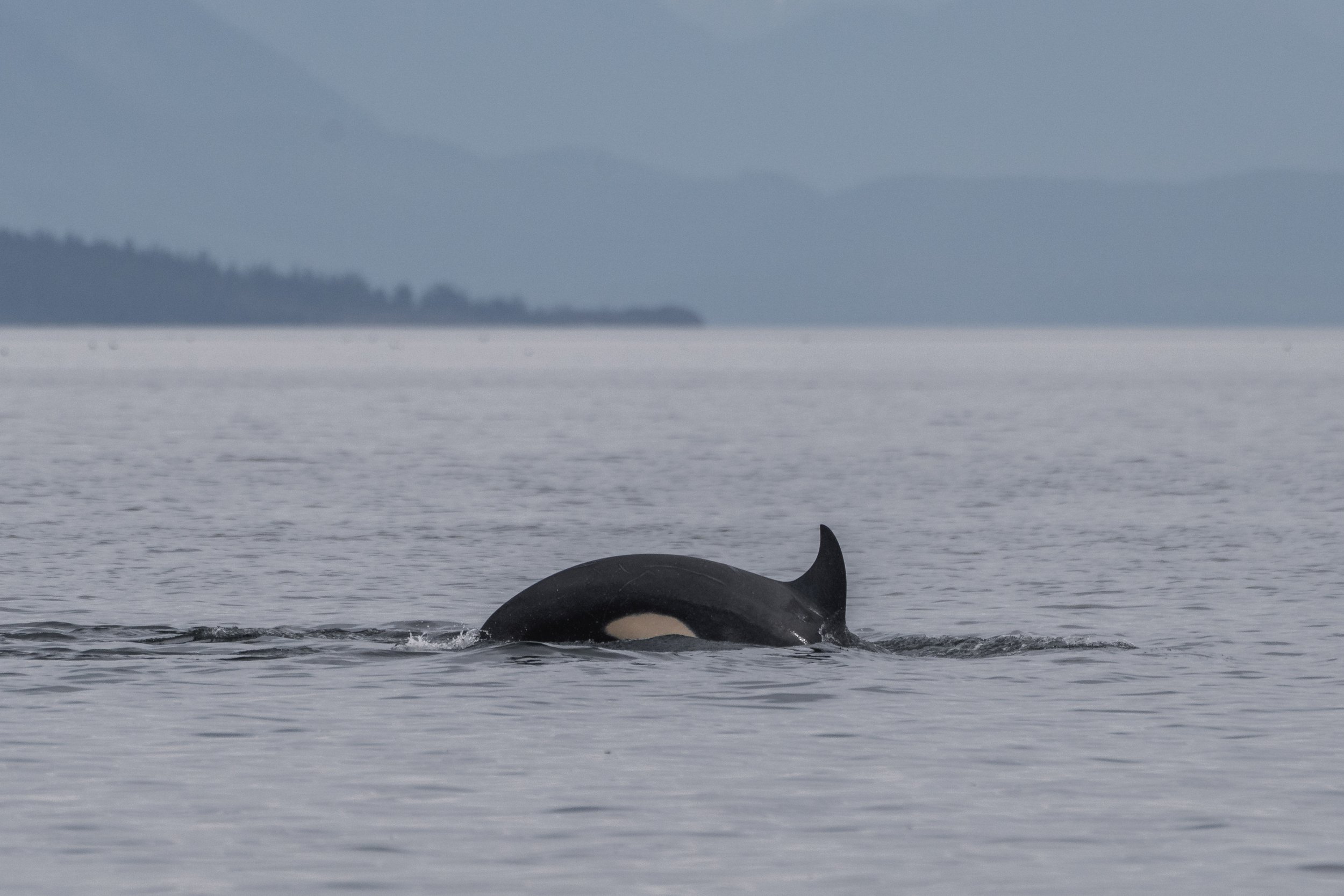
T124D4 Dune going for a dive. Photo by Val Watson.
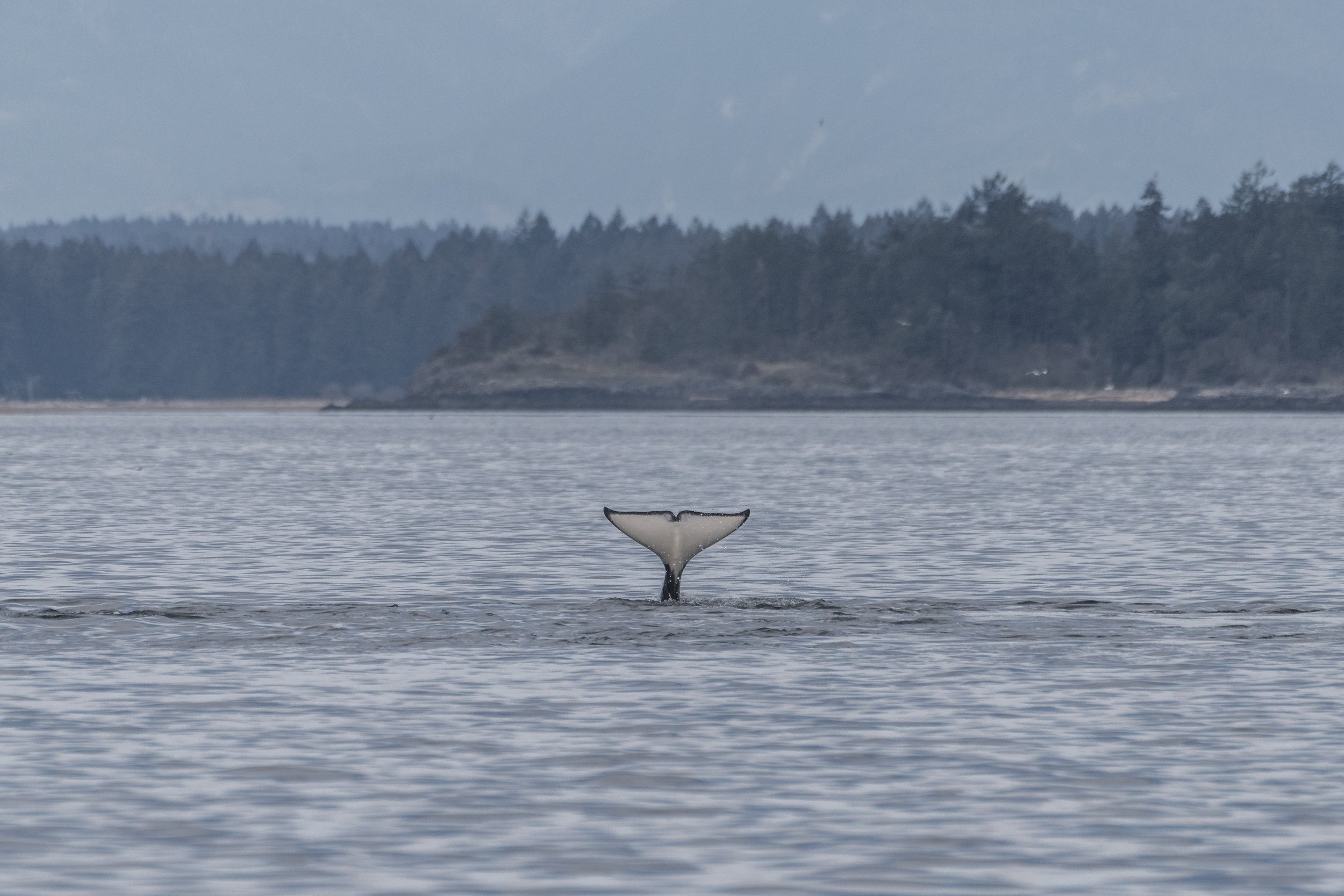
The lovely white underside of one of the whales tails. Photo by Val Watson.
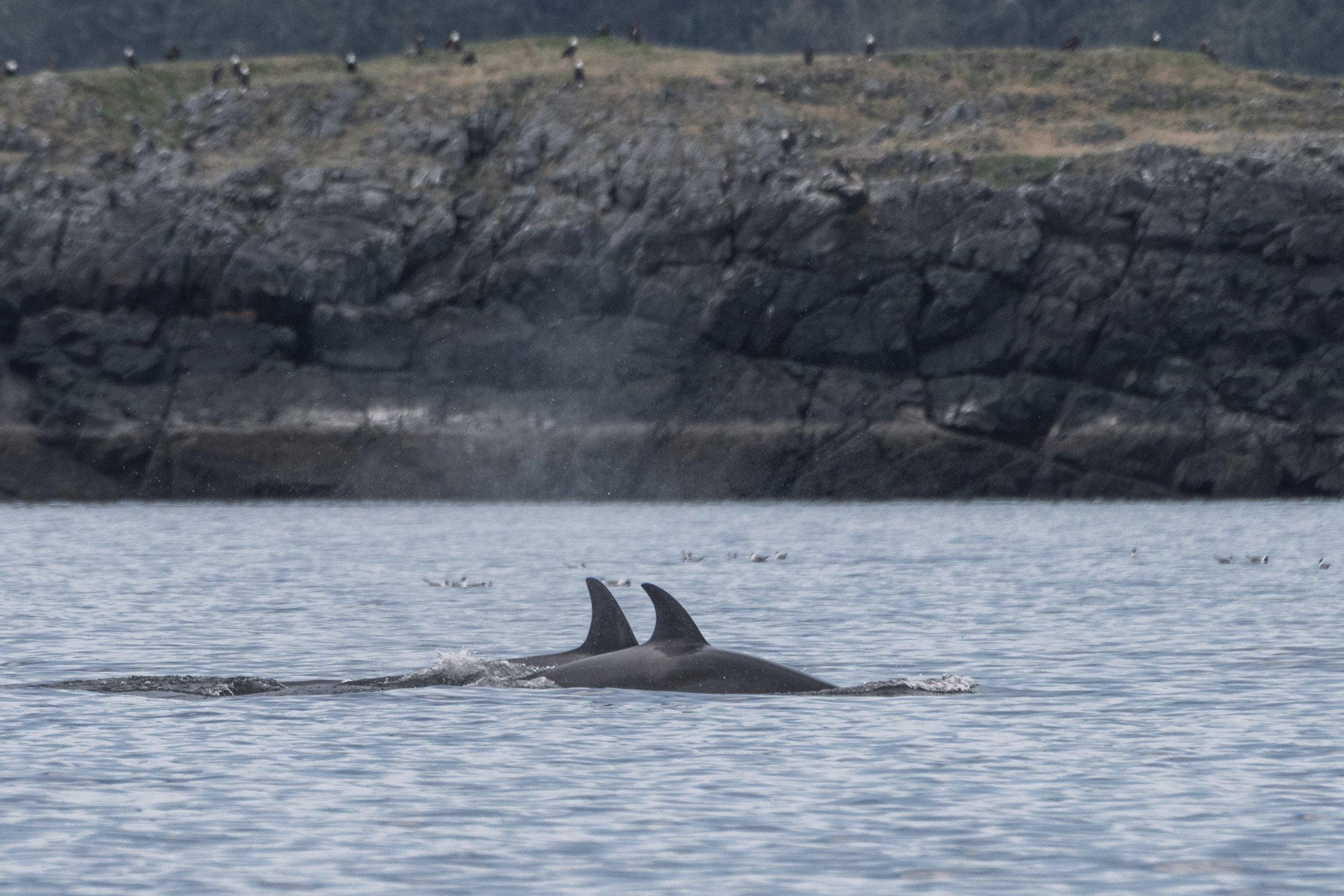
Can you spot all the Bald Eagles in the background of this photo of T124D4 Dune and T124D3 Lupine surfacing together? Photo by Val Watson.
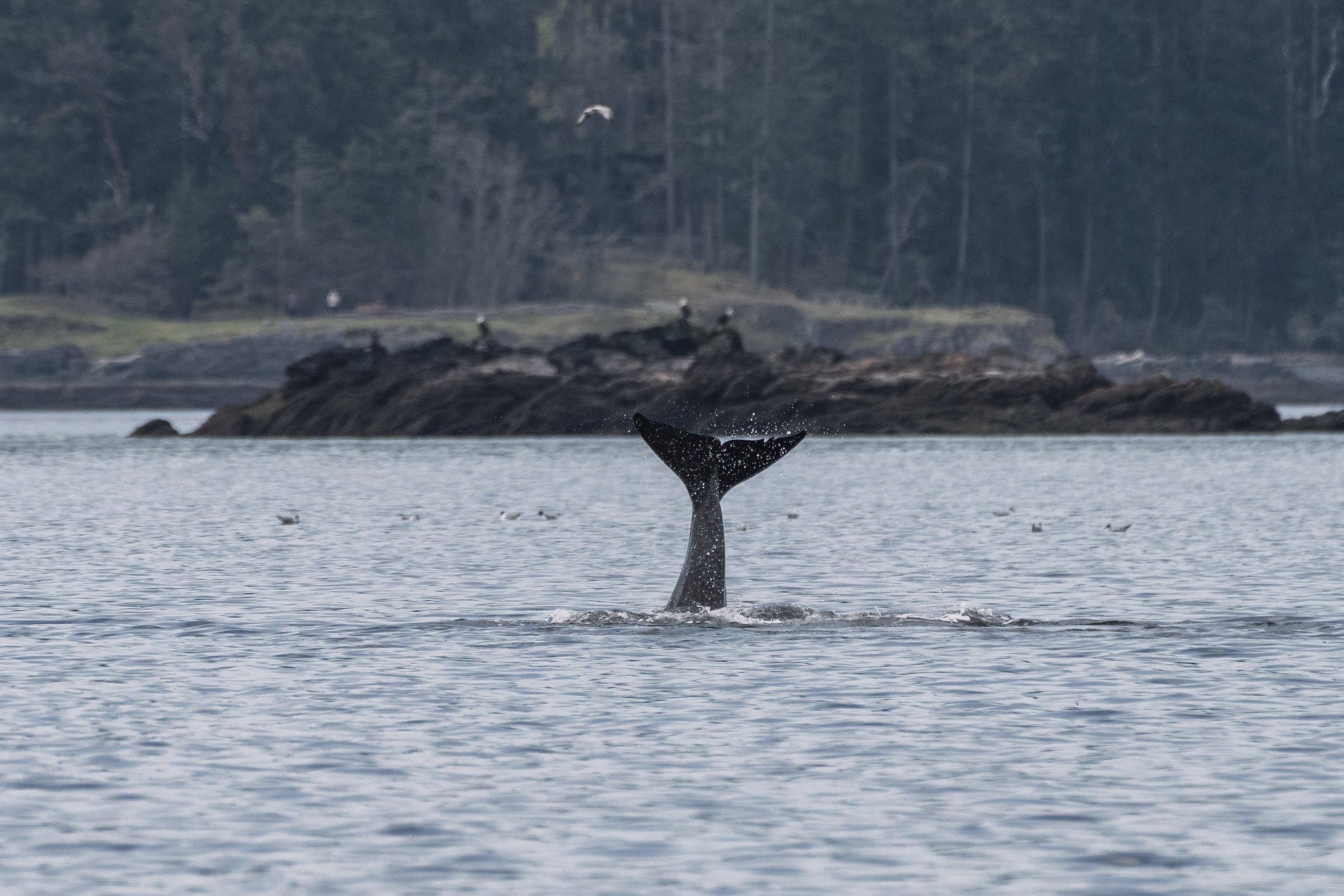
Another tail in the air! This one has a few chunks missing. Photo by Val Watson.
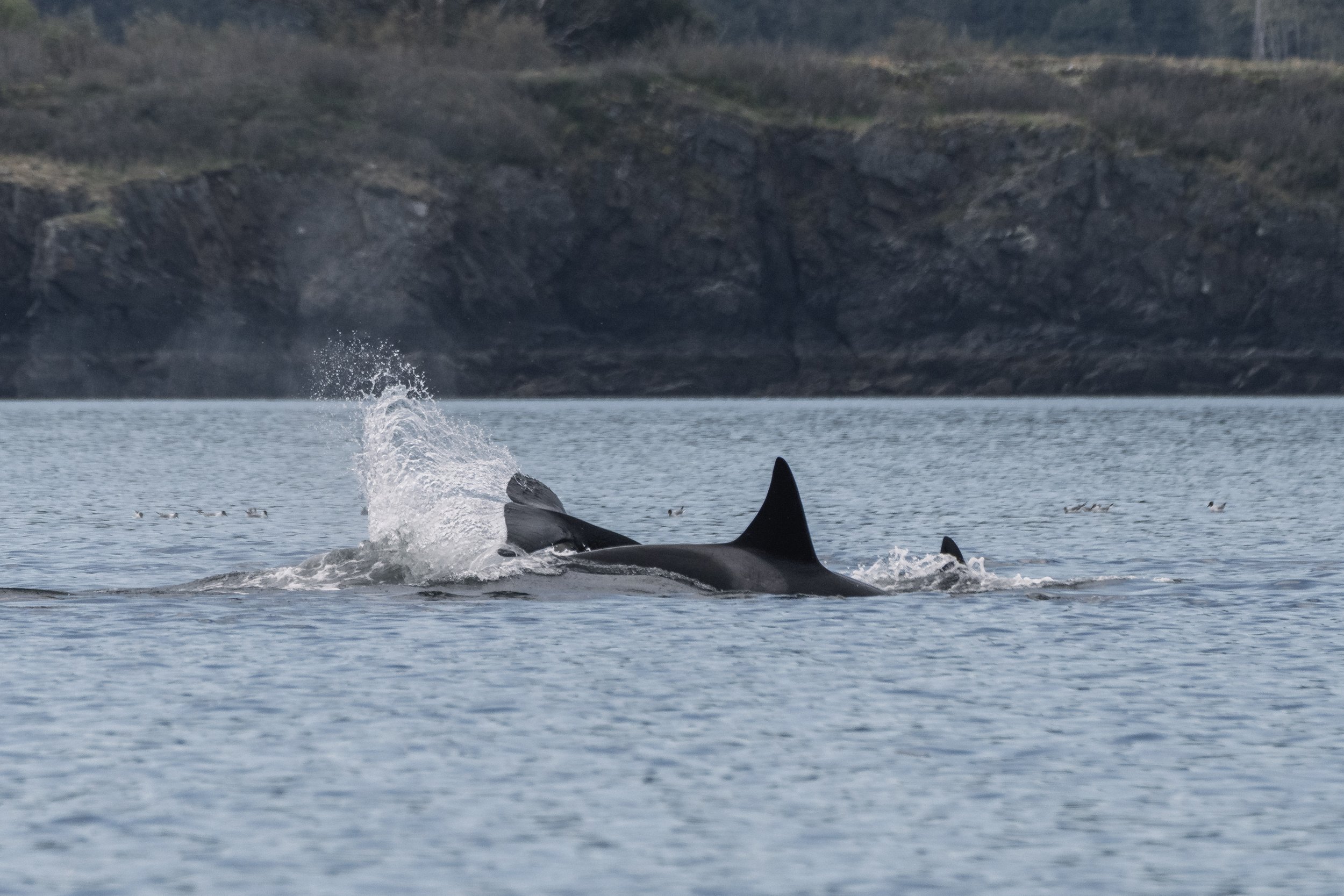
T071B Hood surfacing alongside another whale flicking their tail. Photo by Val Watson.
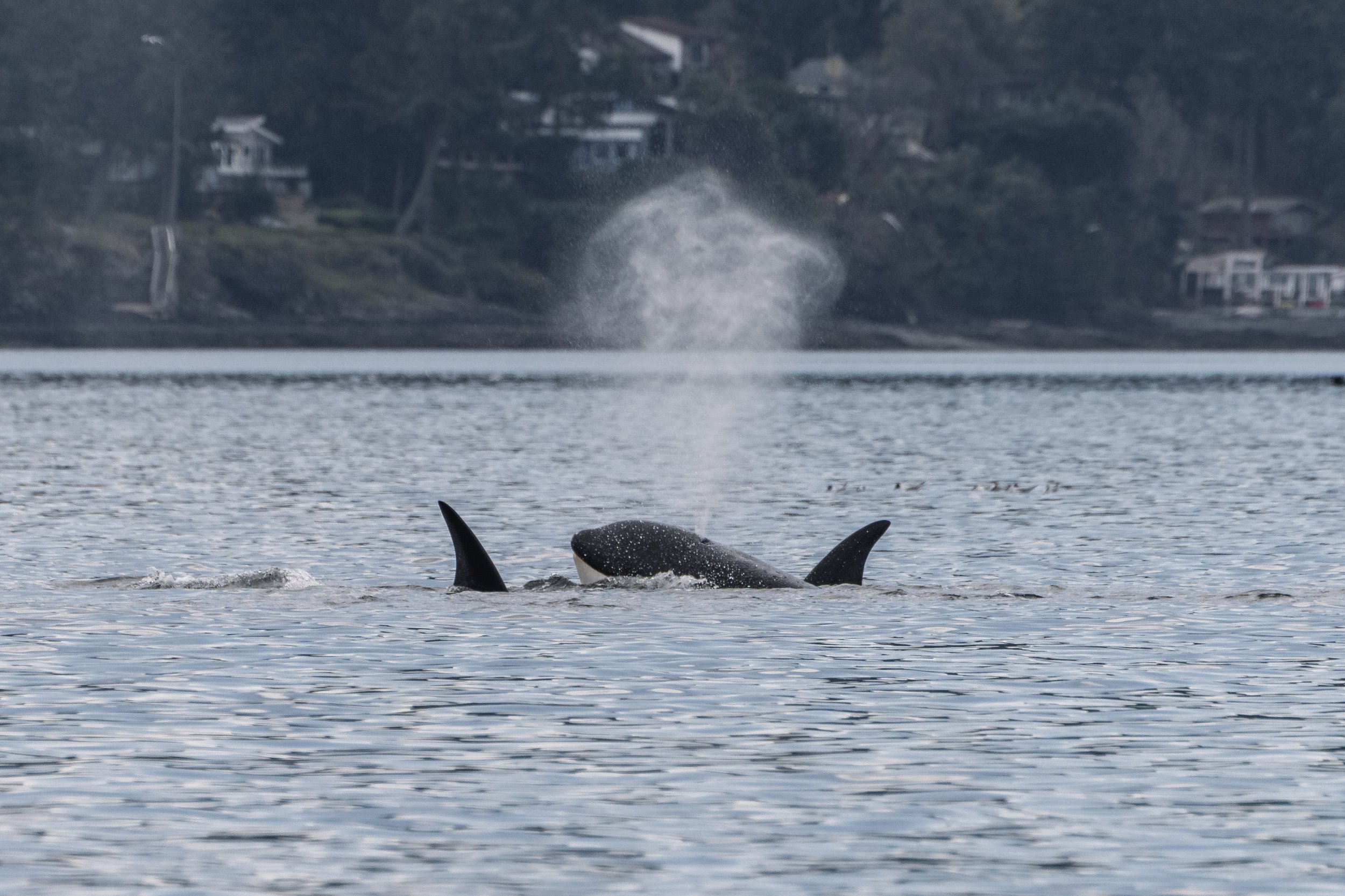
One of the whales sticking their rostrum out of the water. Photo by Val Watson.
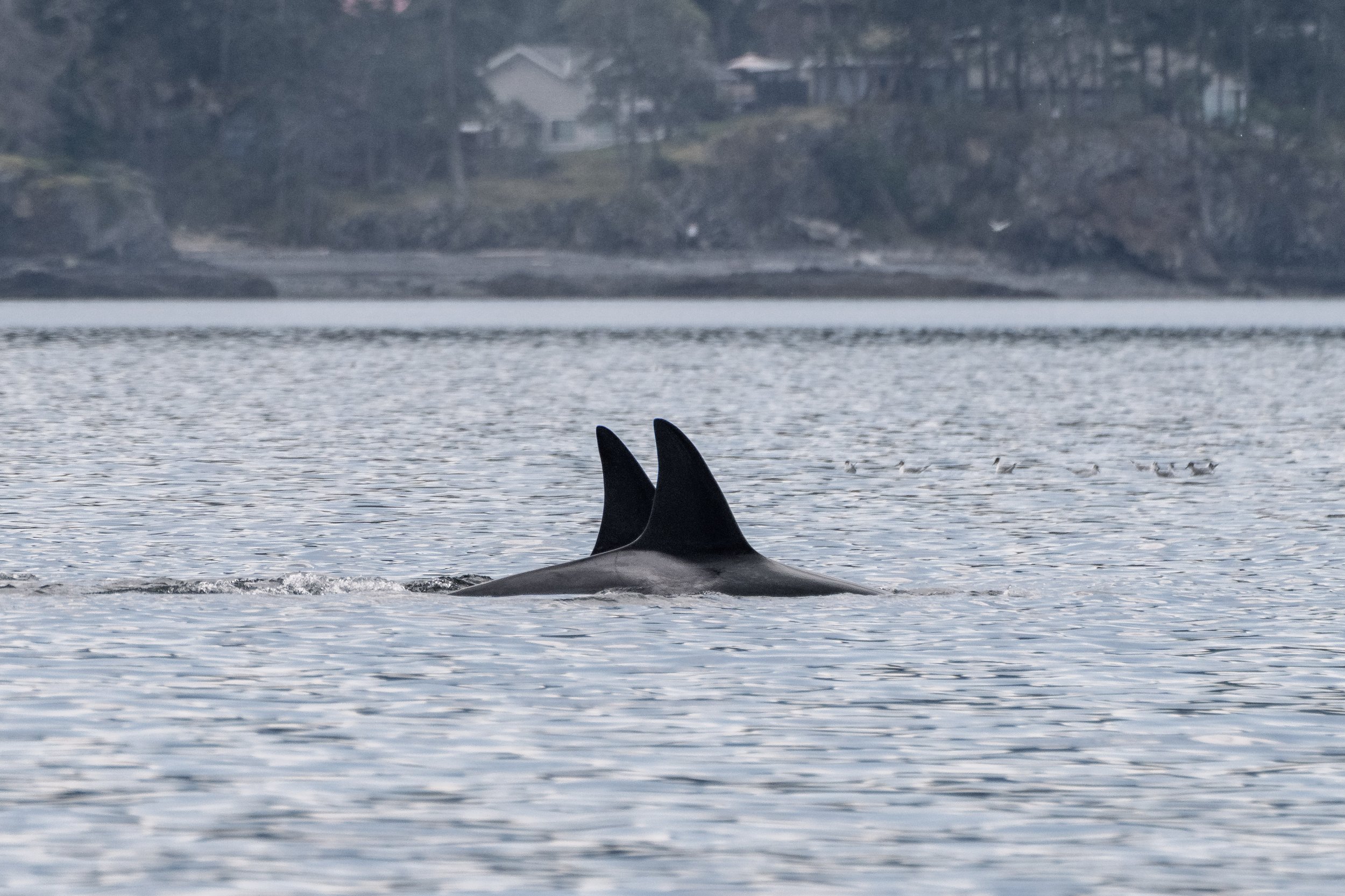
T071B Hood surfacing with T124D Field right beside her. Photo by Val Watson.
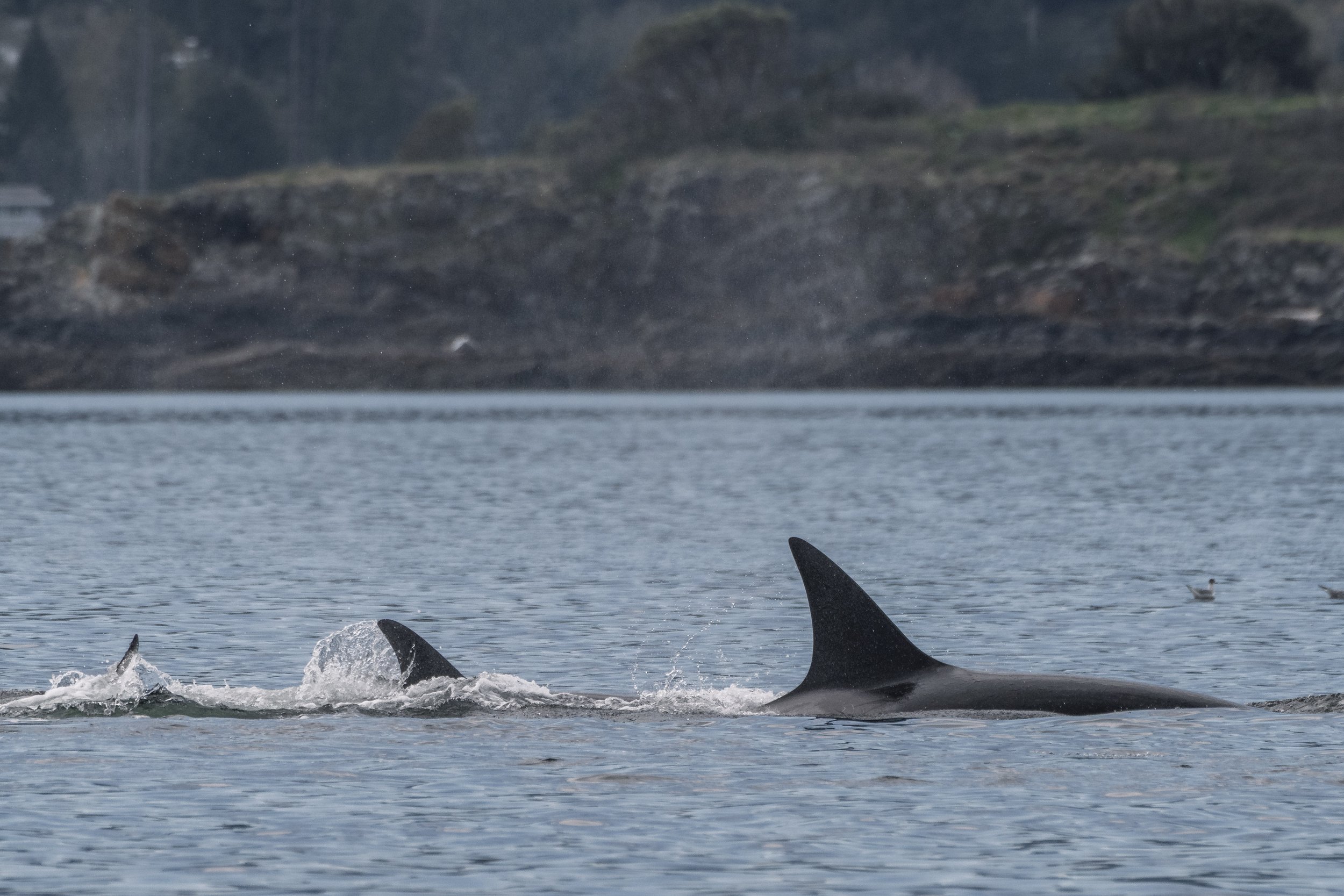
T124D Salish II in the lead followed by a couple of the playful youngsters. Photo by Val Watson.
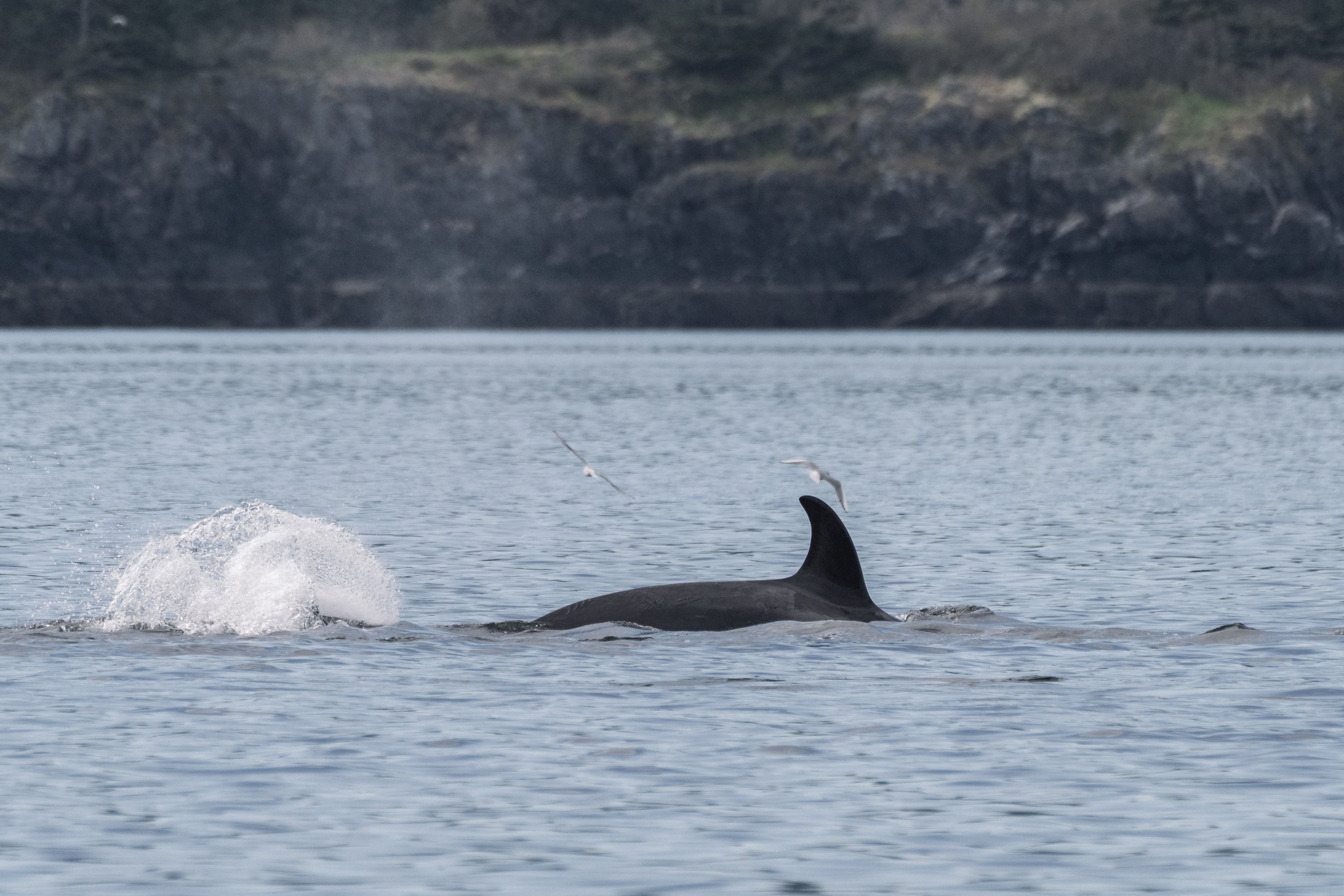
T065B3 Rook surfacing ahead of a splash. Photo by Val Watson.
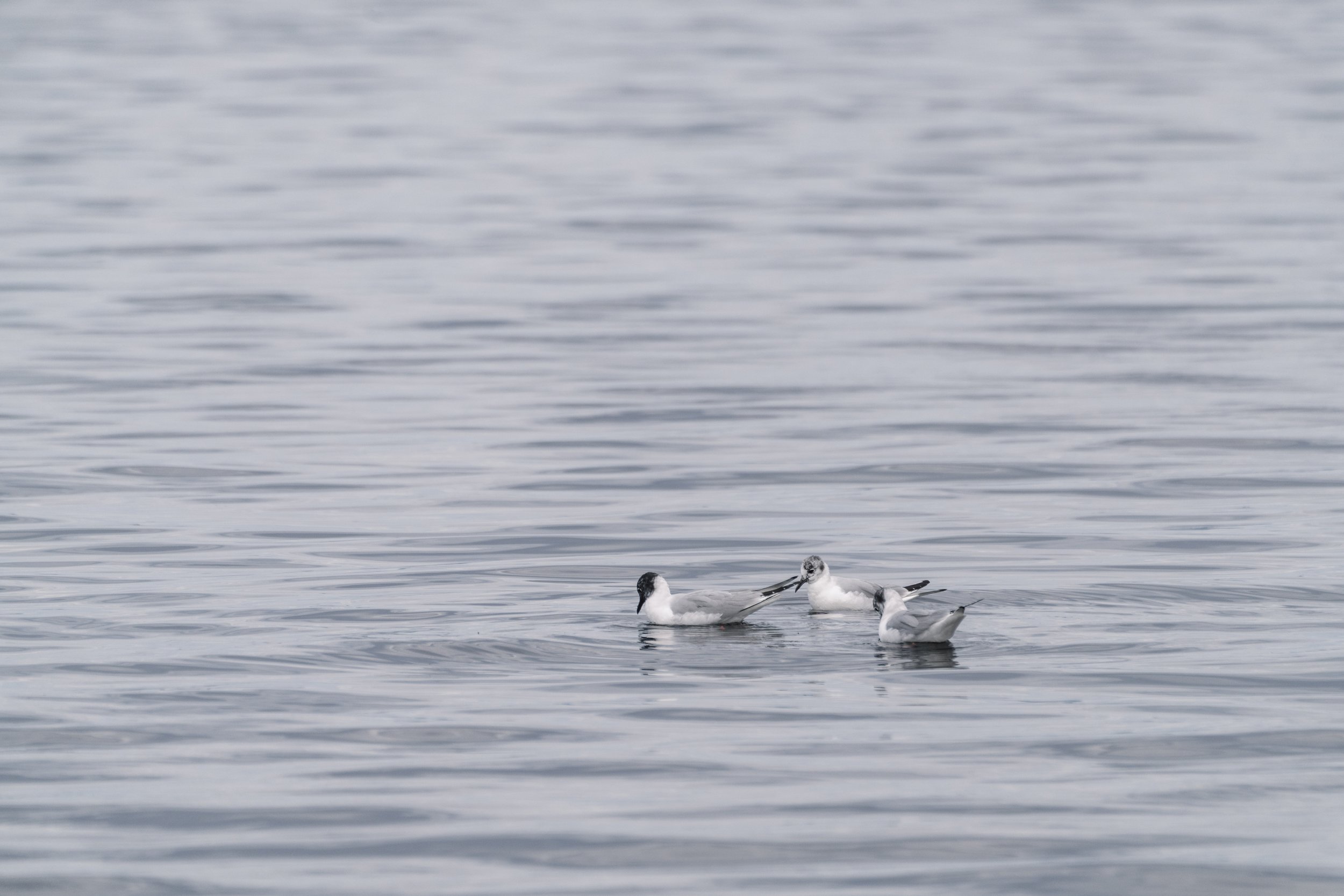
A small group of Bonepartes gulls floating by. Photo by Val Watson.
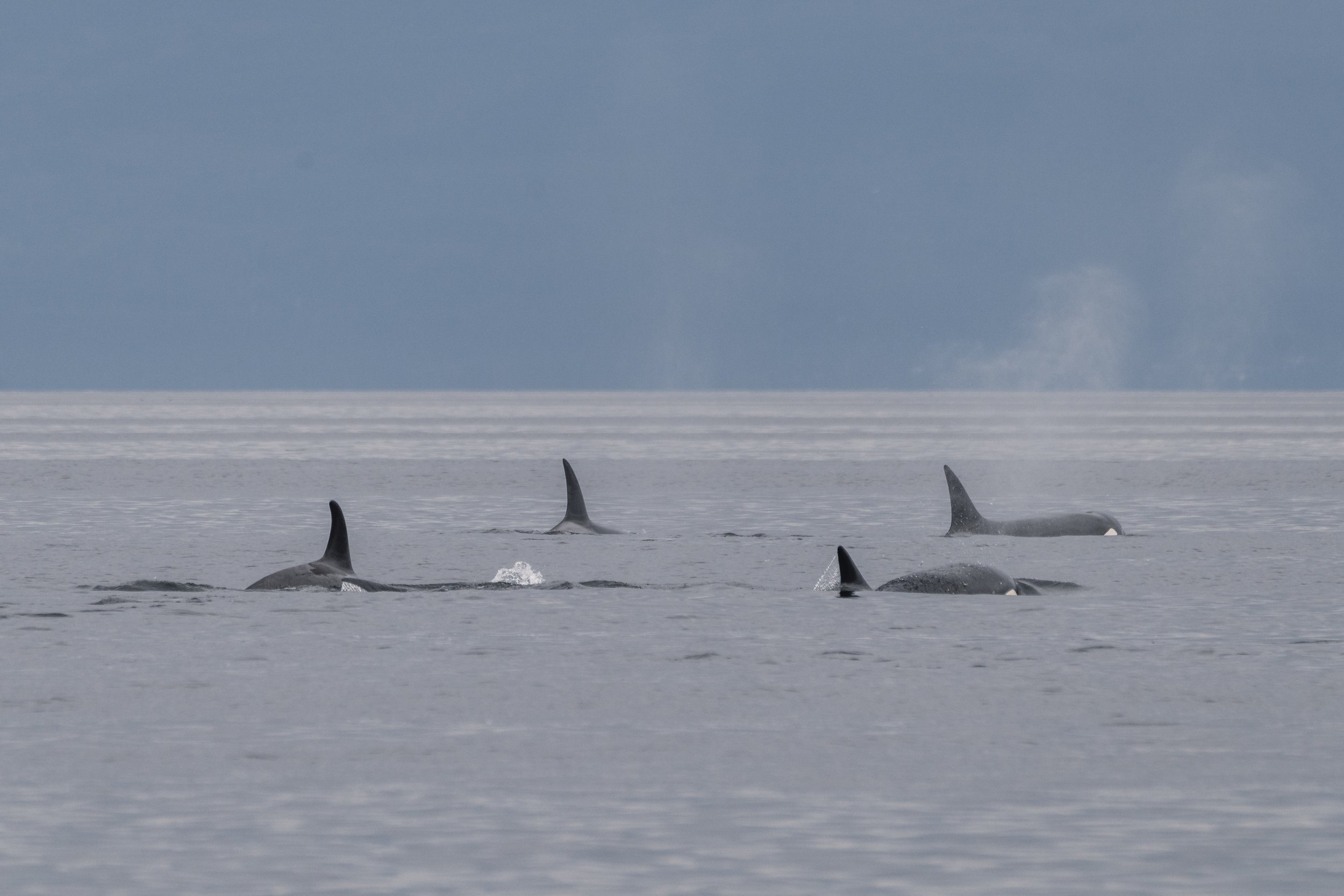
Four whales surfacing in circle! T124D Field, T124D1 Salish II, T071B Hood, and T65B2 Nettle. Photo by Val Watson.
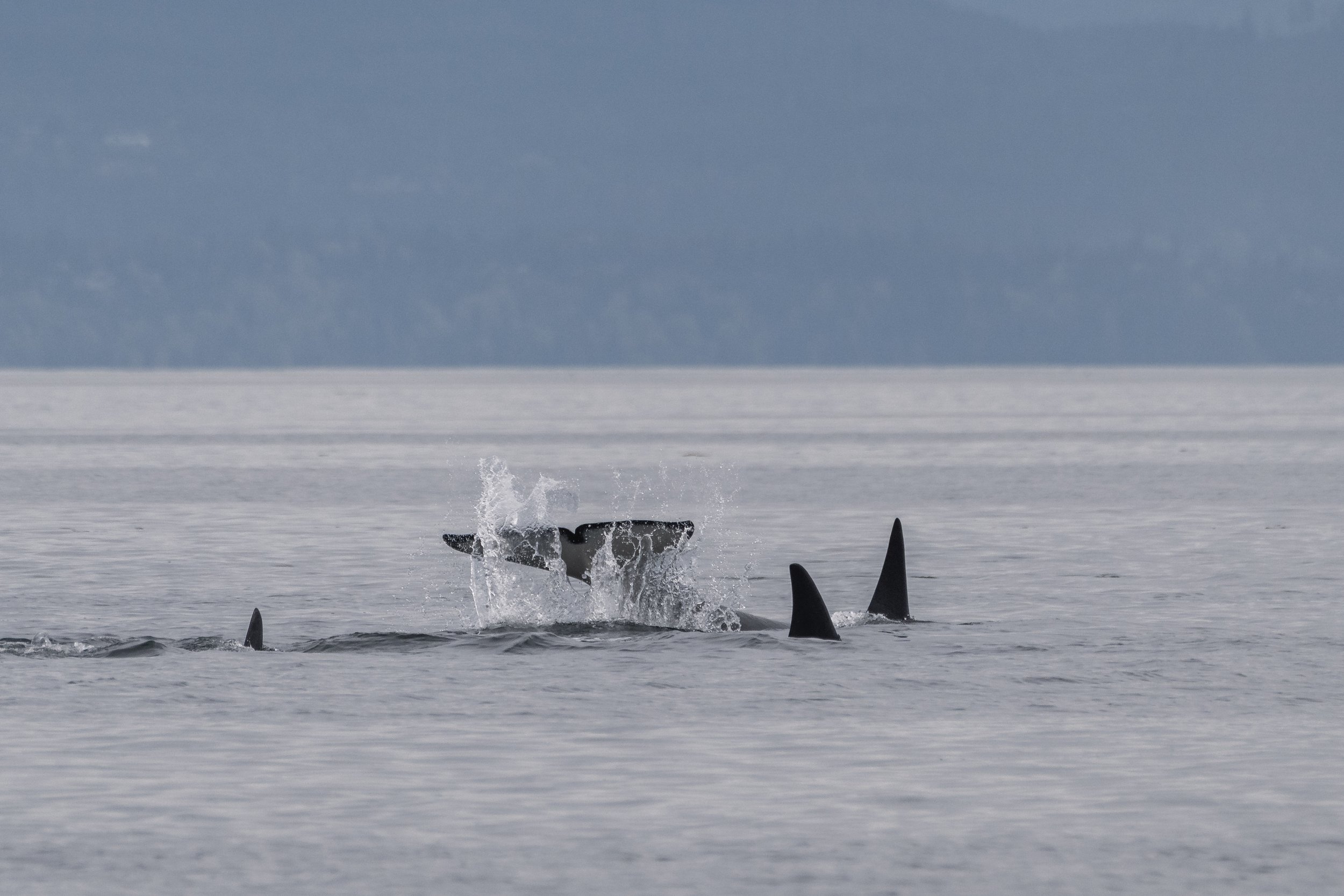
T124D Field flicking her tail! Photo by Val Watson.
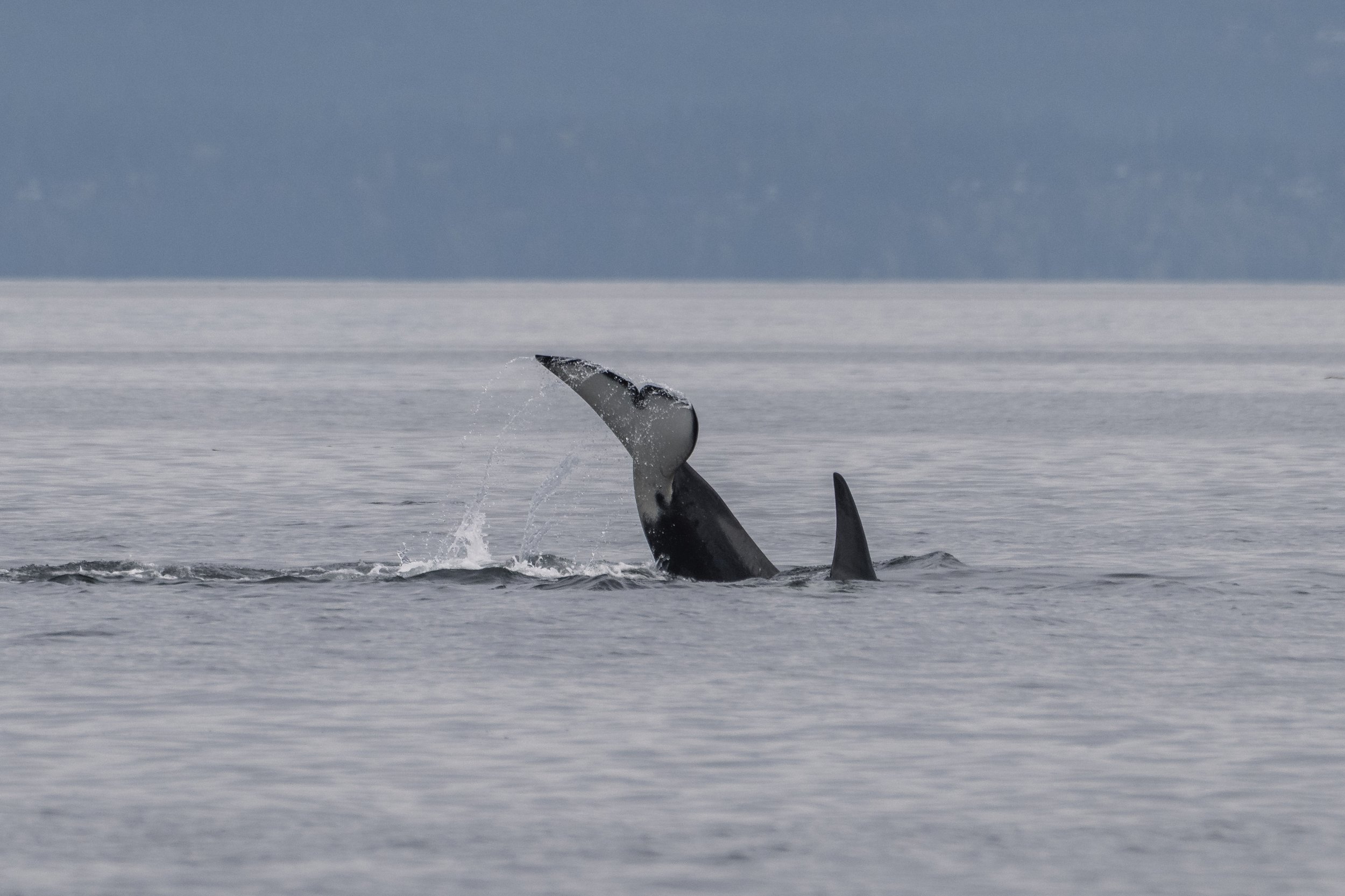
Another big tail slap incoming! Photo by Val Watson.
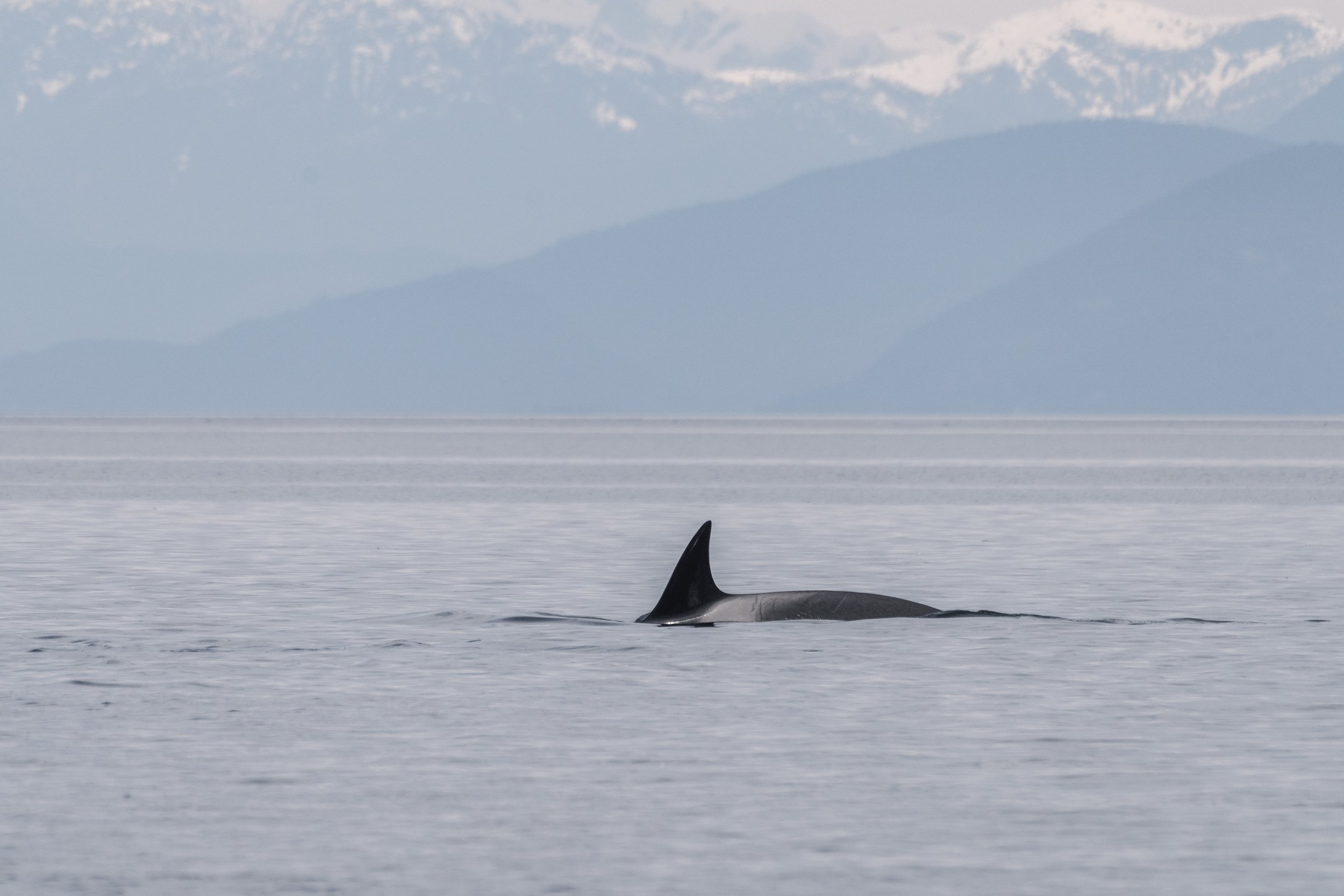
The scars on T124D Field’s saddle patch make her easy to distinguish from the others from this side. Photo by Val Watson.
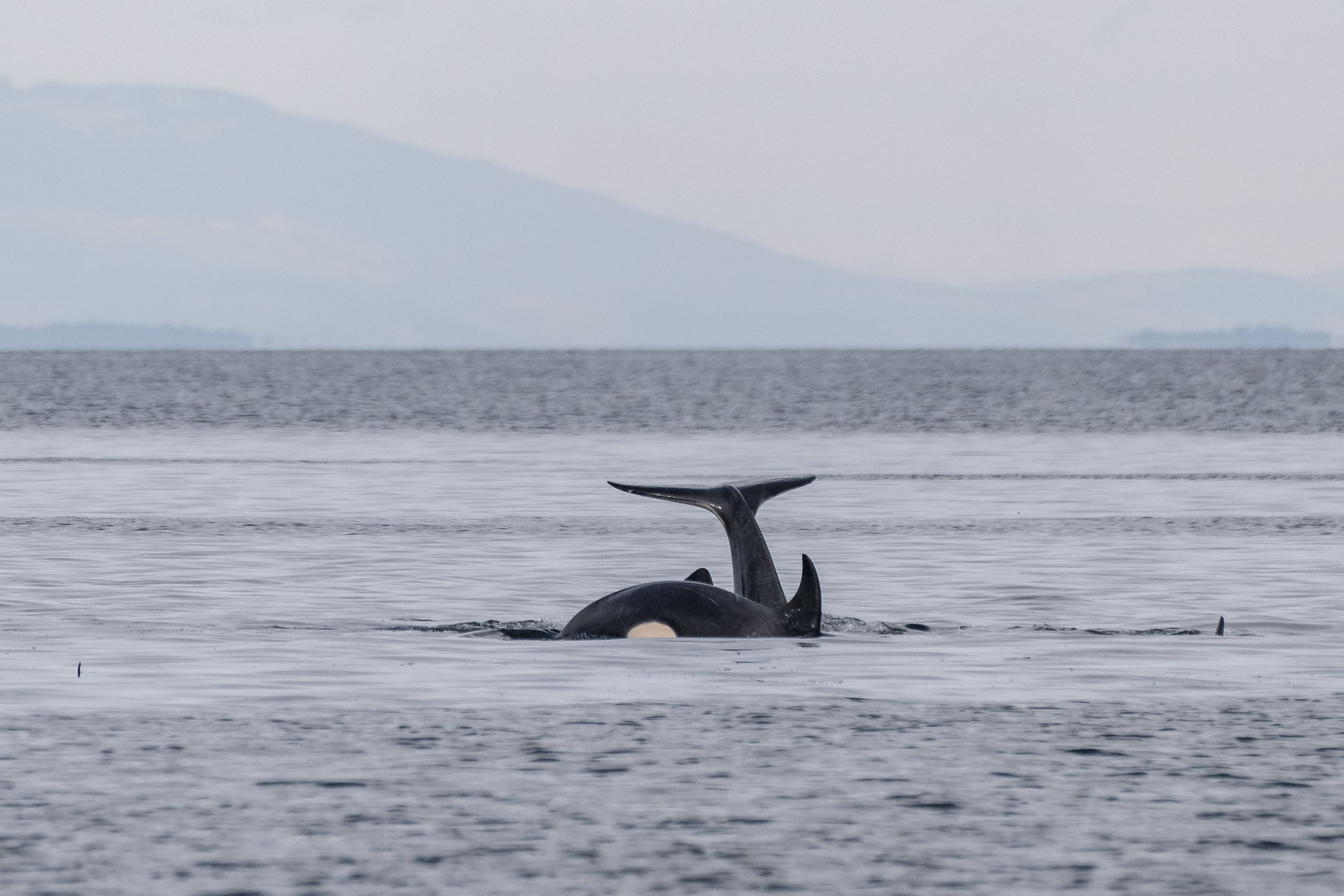
T124D4 Dune diving in front of another young whales tail. Photo by Val Watson.
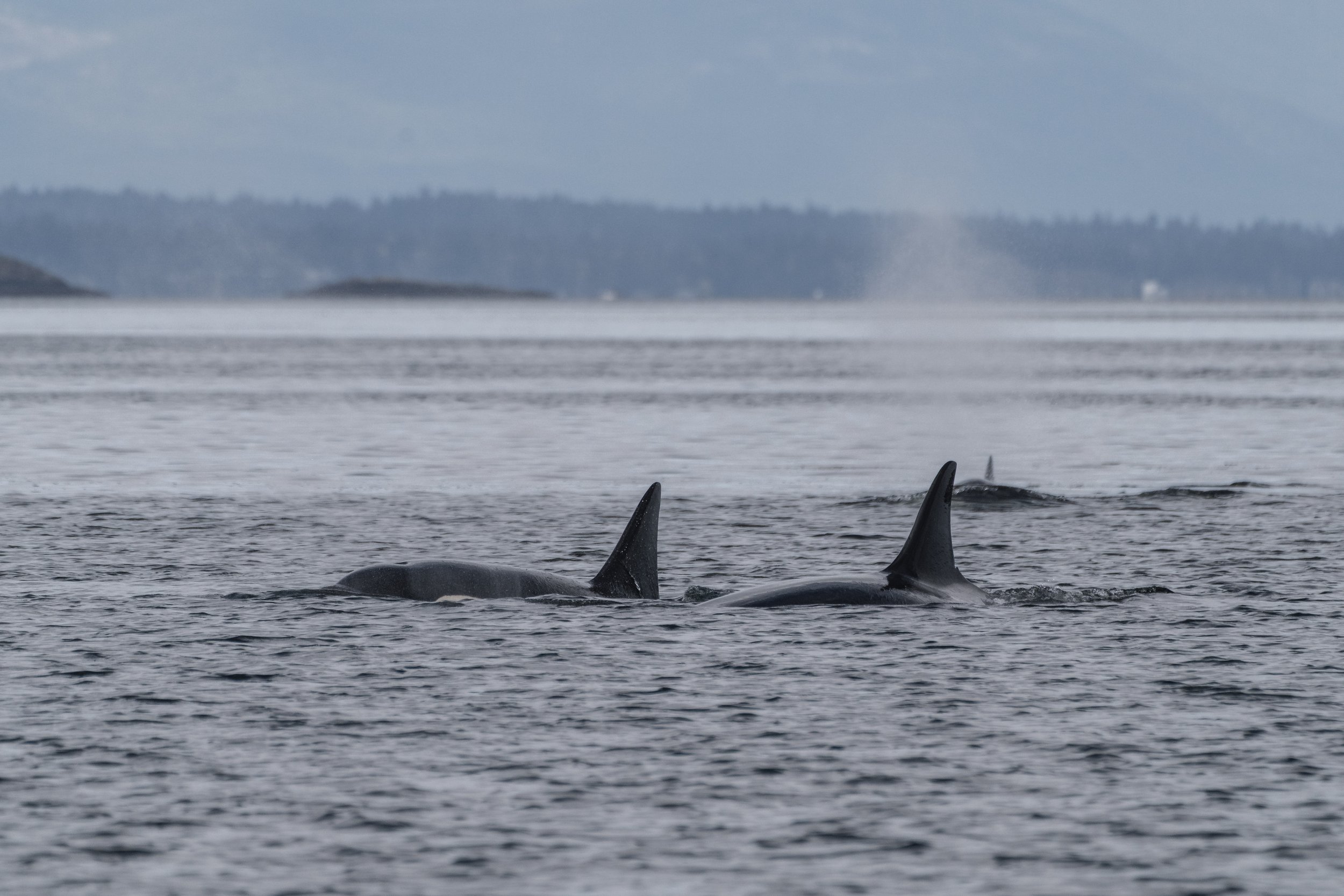
T124D Field and T065B Chunk surfacing side by side. Photo by Val Watson.
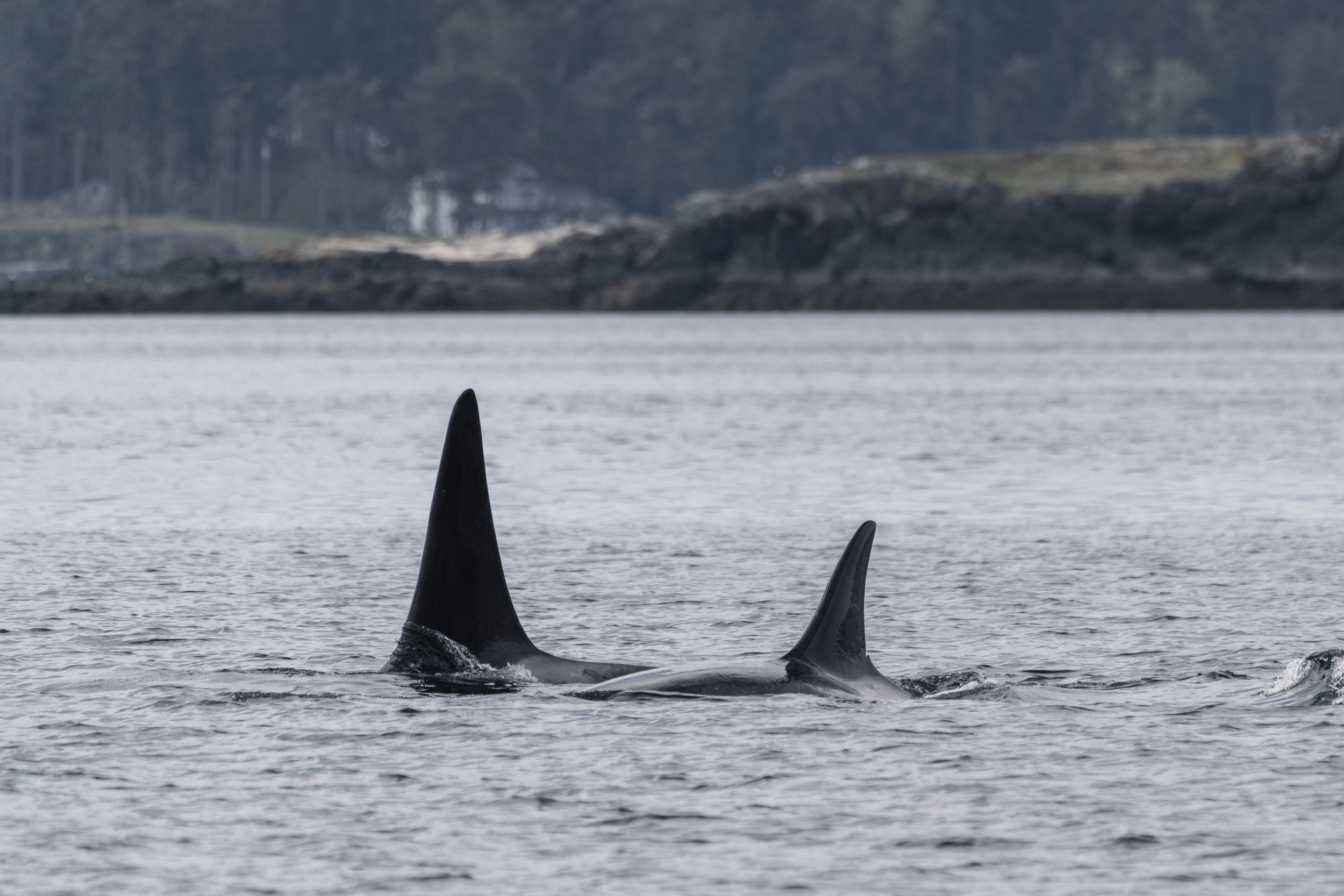
T065B1 Birdsall surfacing beside his mom, T065B Chunk. Photo by Val Watson.
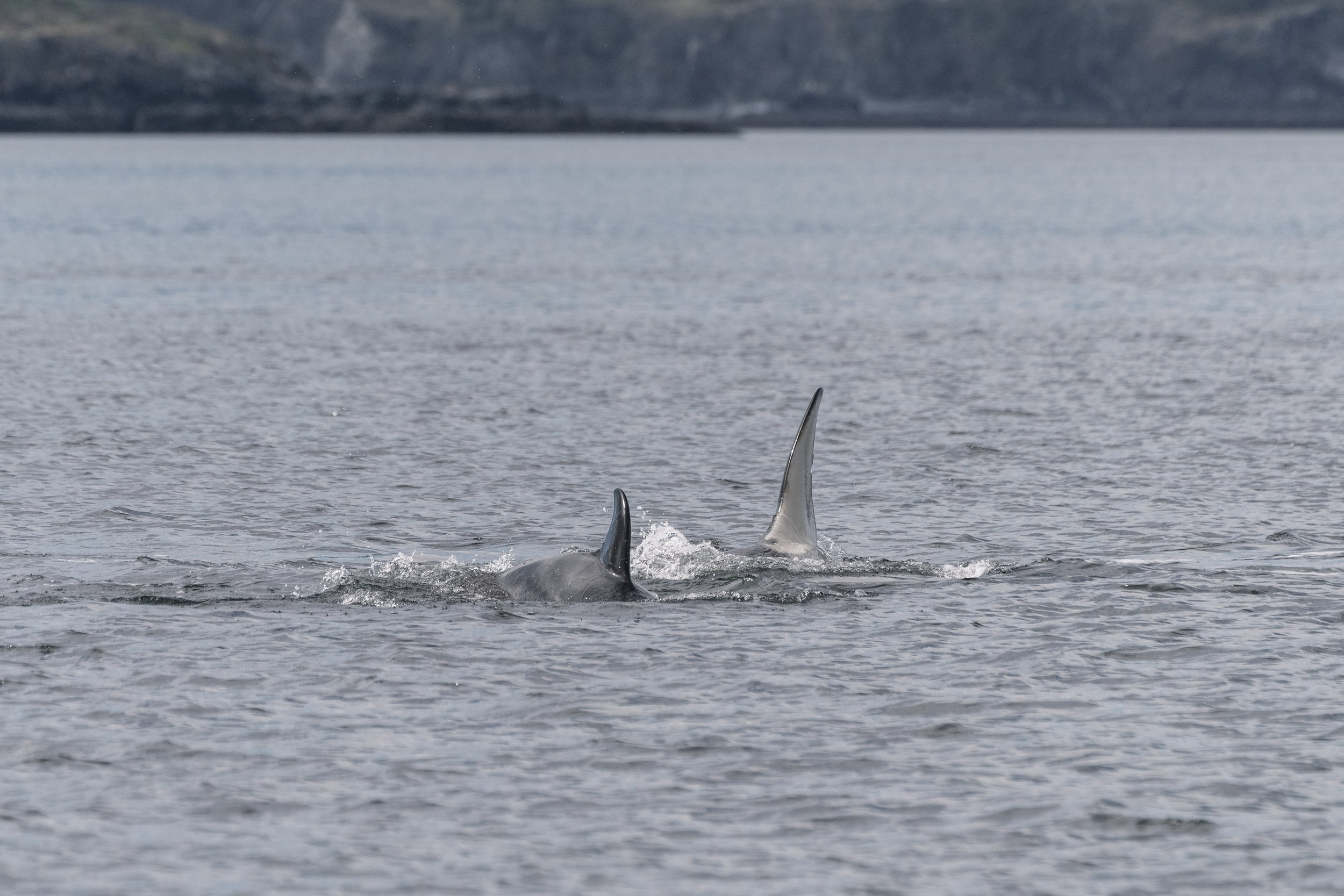
One of the younger whales surfacing quickly with a sideways tail beside them. Photo by Val Watson.
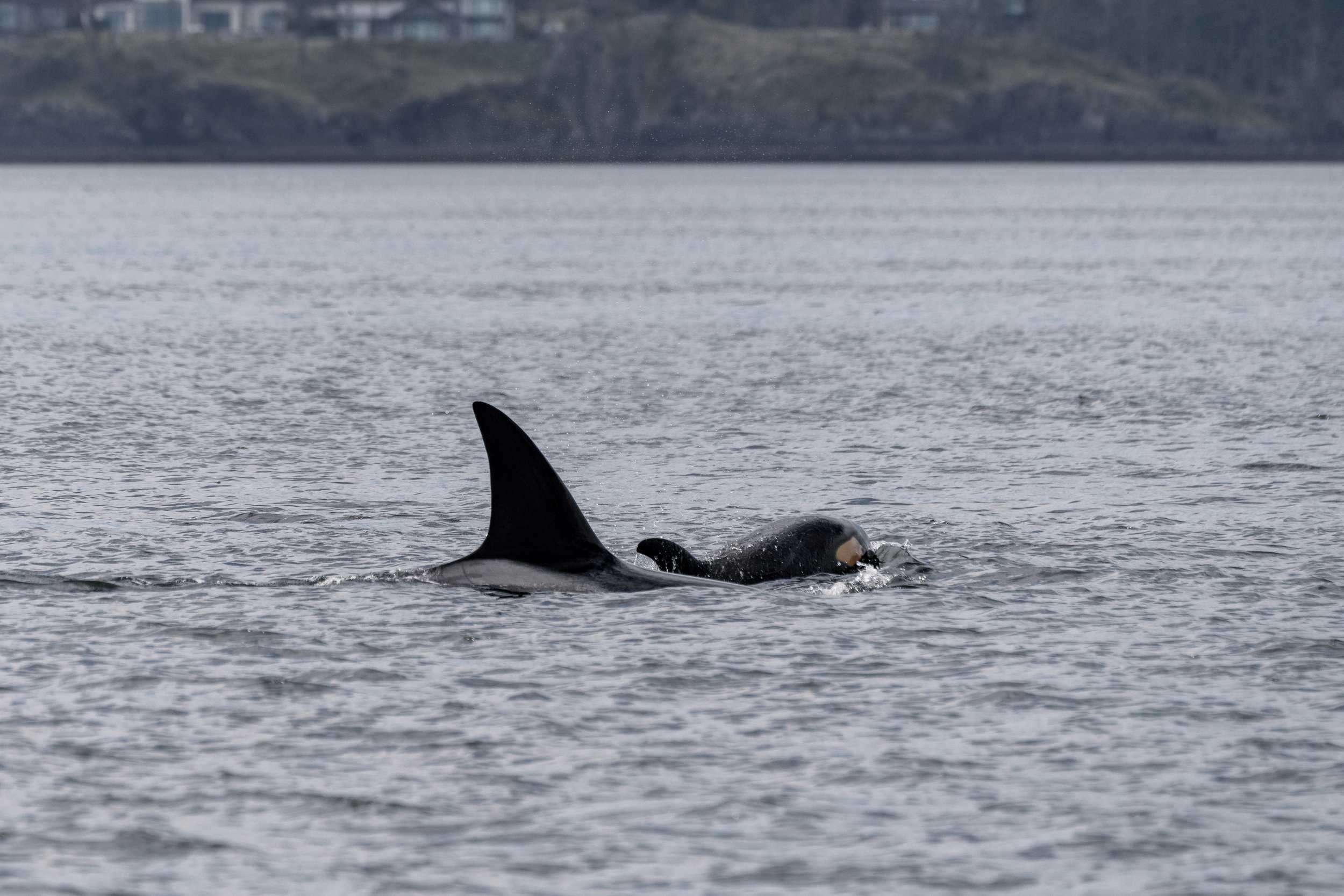
T071B Hood surfacing with her calf beside her. Photo by Val Watson.
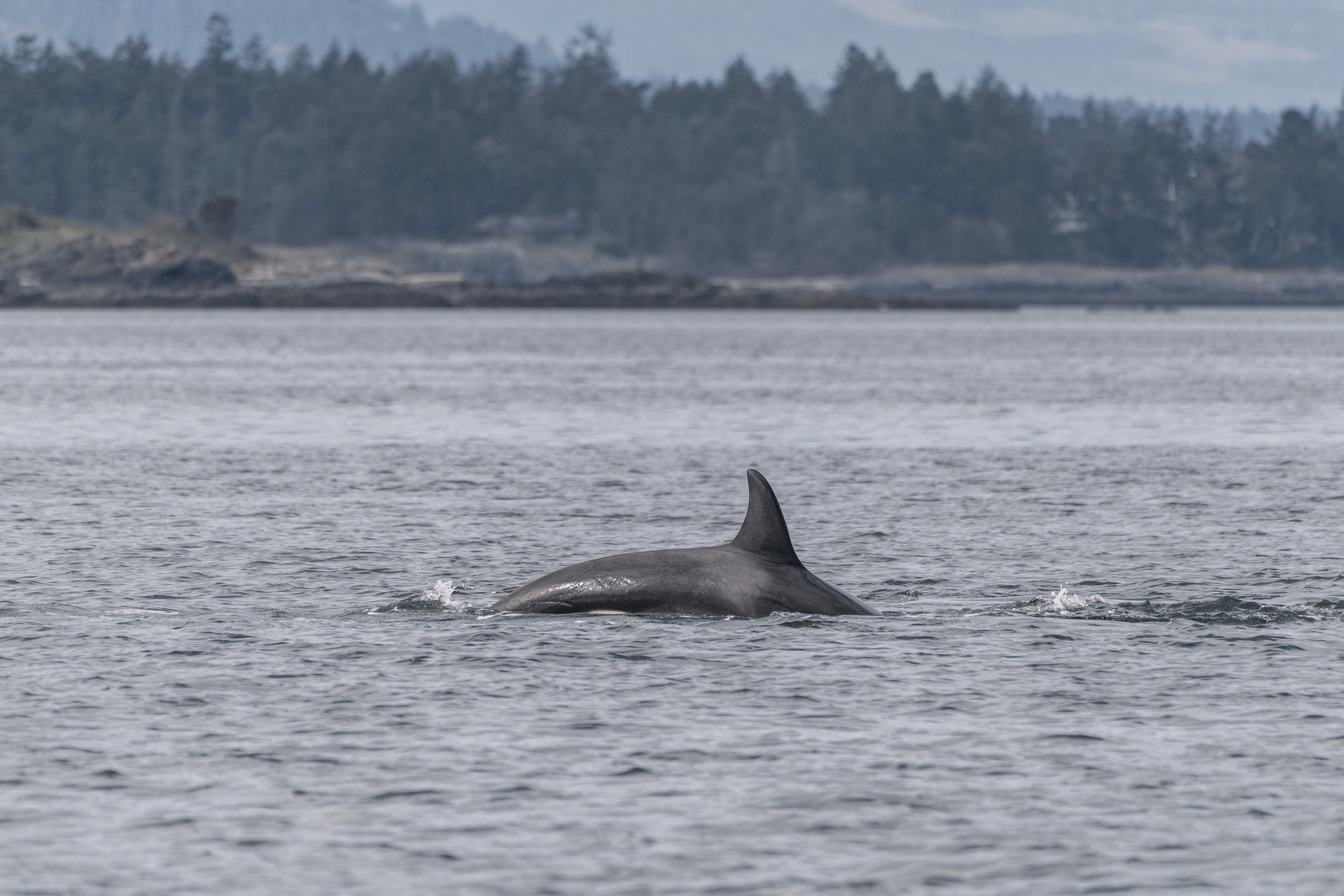
T124D3 Lupine showing off her saddle patch. Photo by Val Watson.
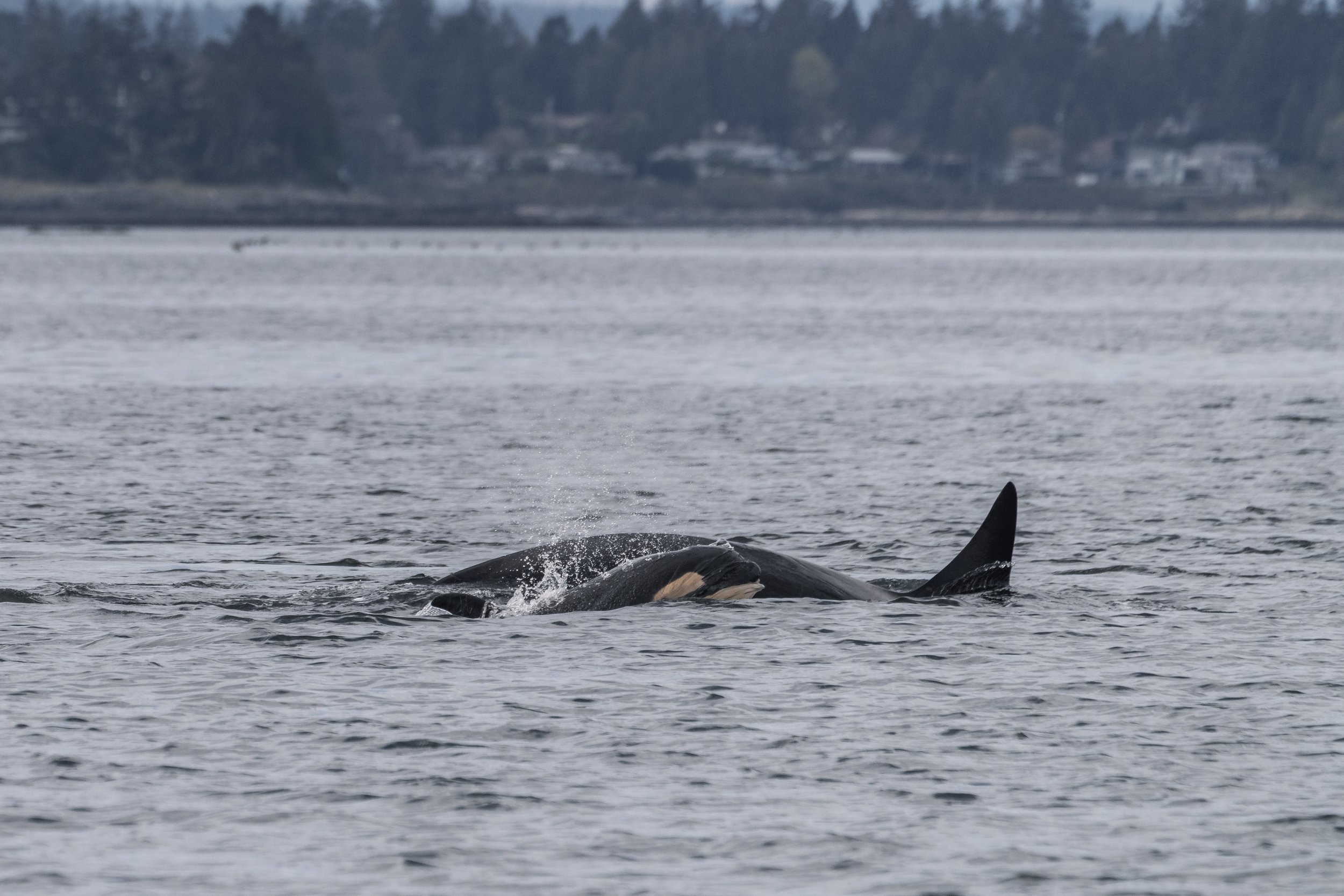
A great look at the young calf, likely T071B4, coming to the surface. Although this photo shows them beside T124D Field. Photo by Val Watson.
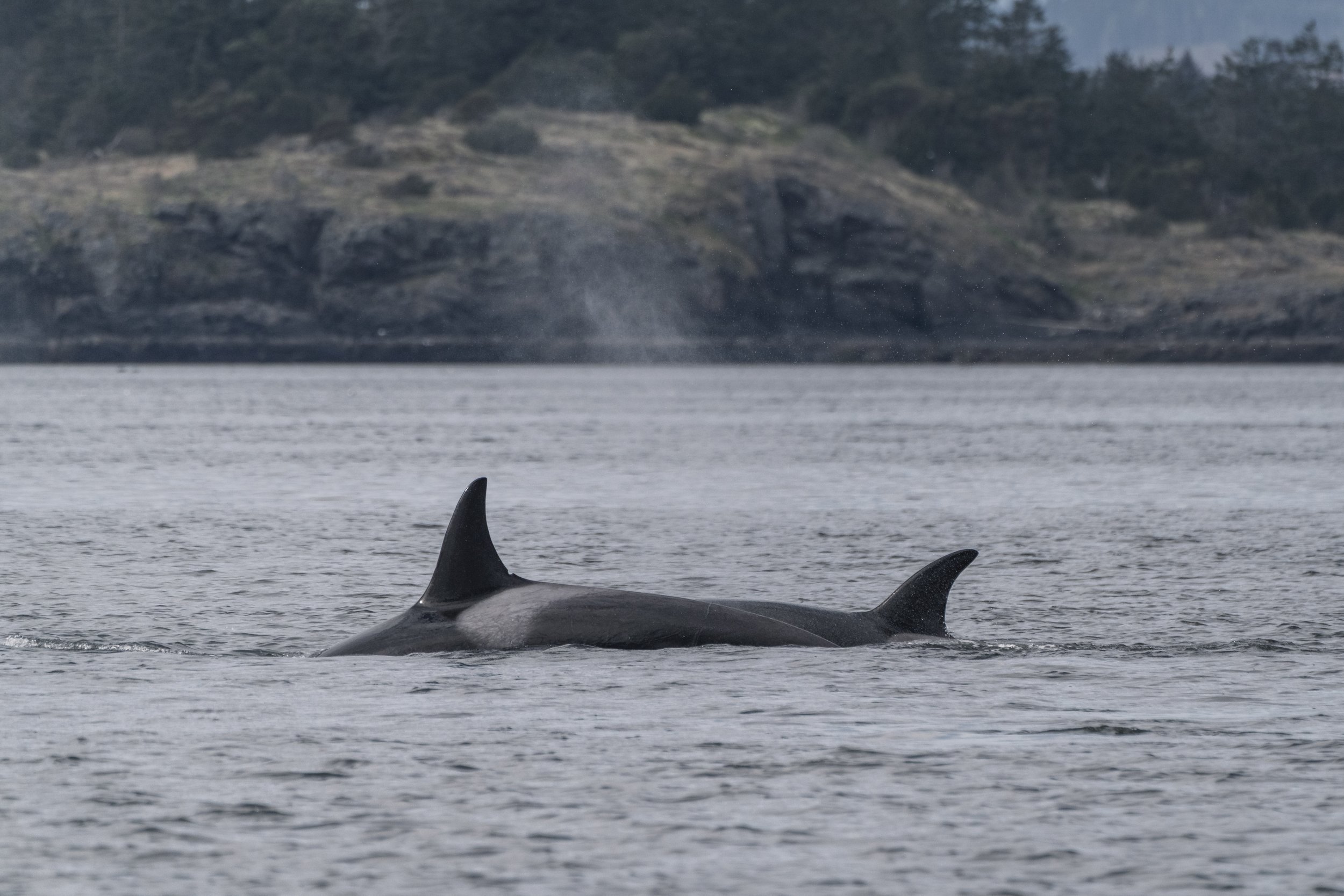
T065B Chunk surfacing just ahead of her son, T065B2 Nettle. Photo by Val Watson.
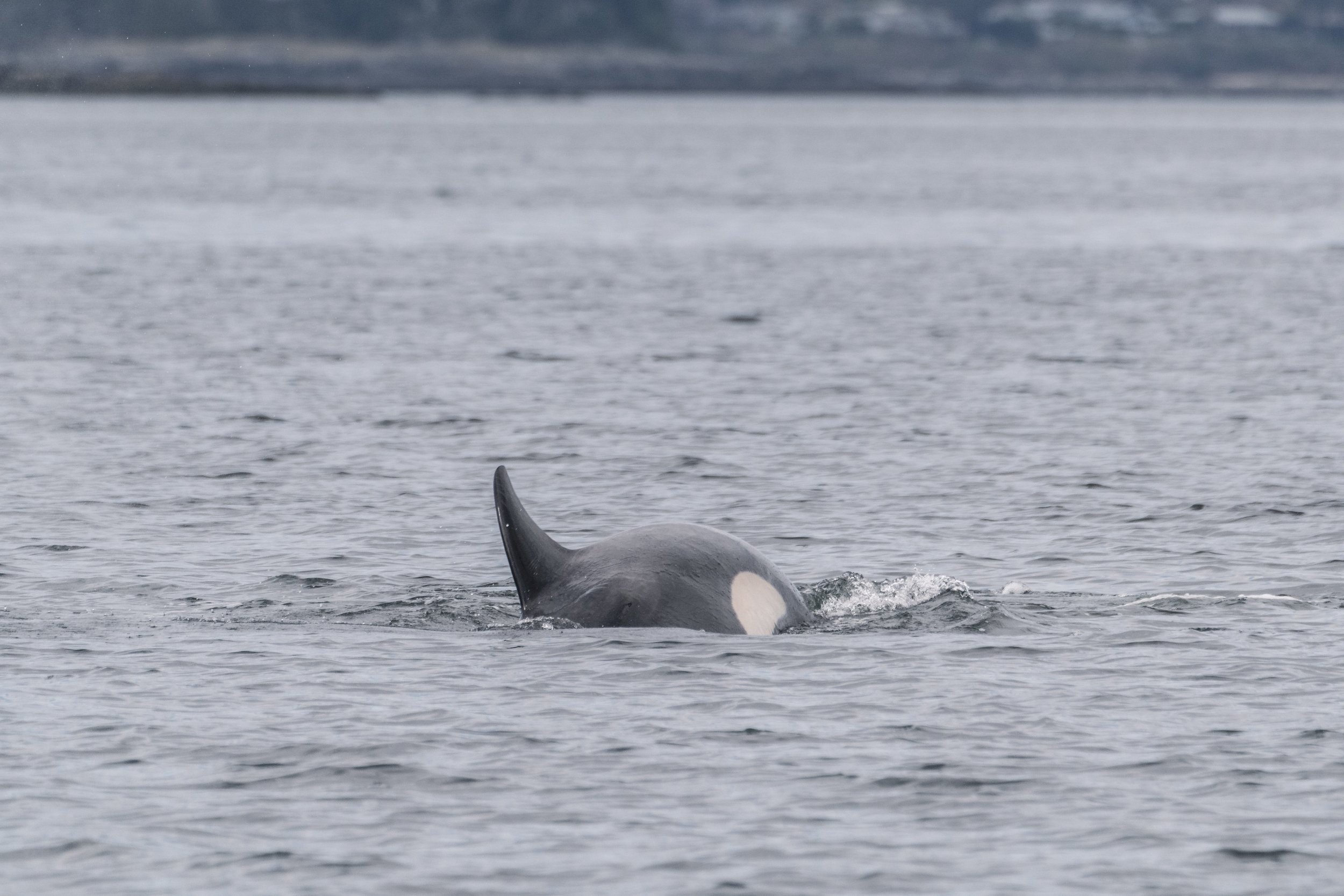
Another intense surface from one of the younger whales! Photo by Val Watson.
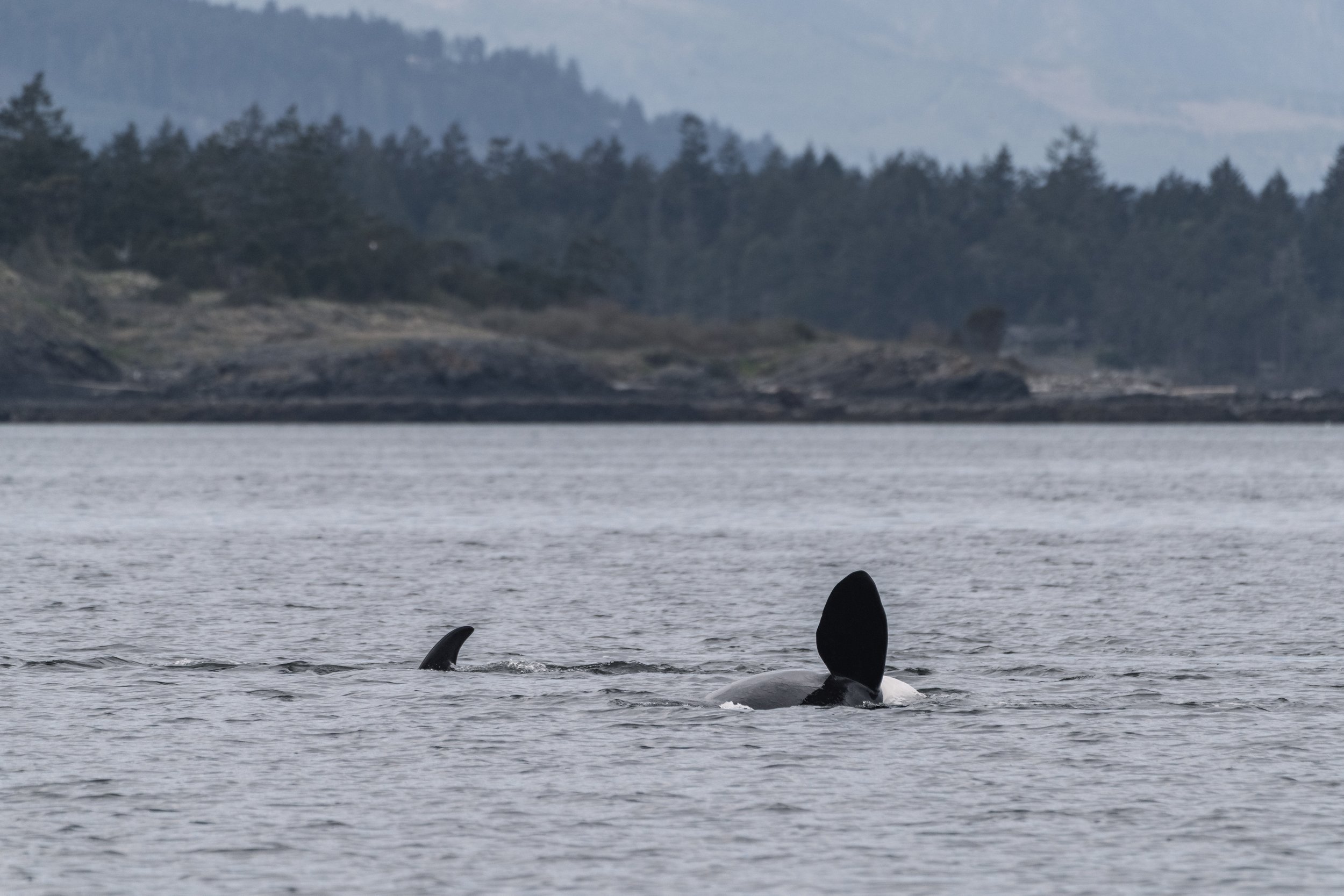
One of the whales swimming on their side with their pectoral fin in the air! Photo by Val Watson.
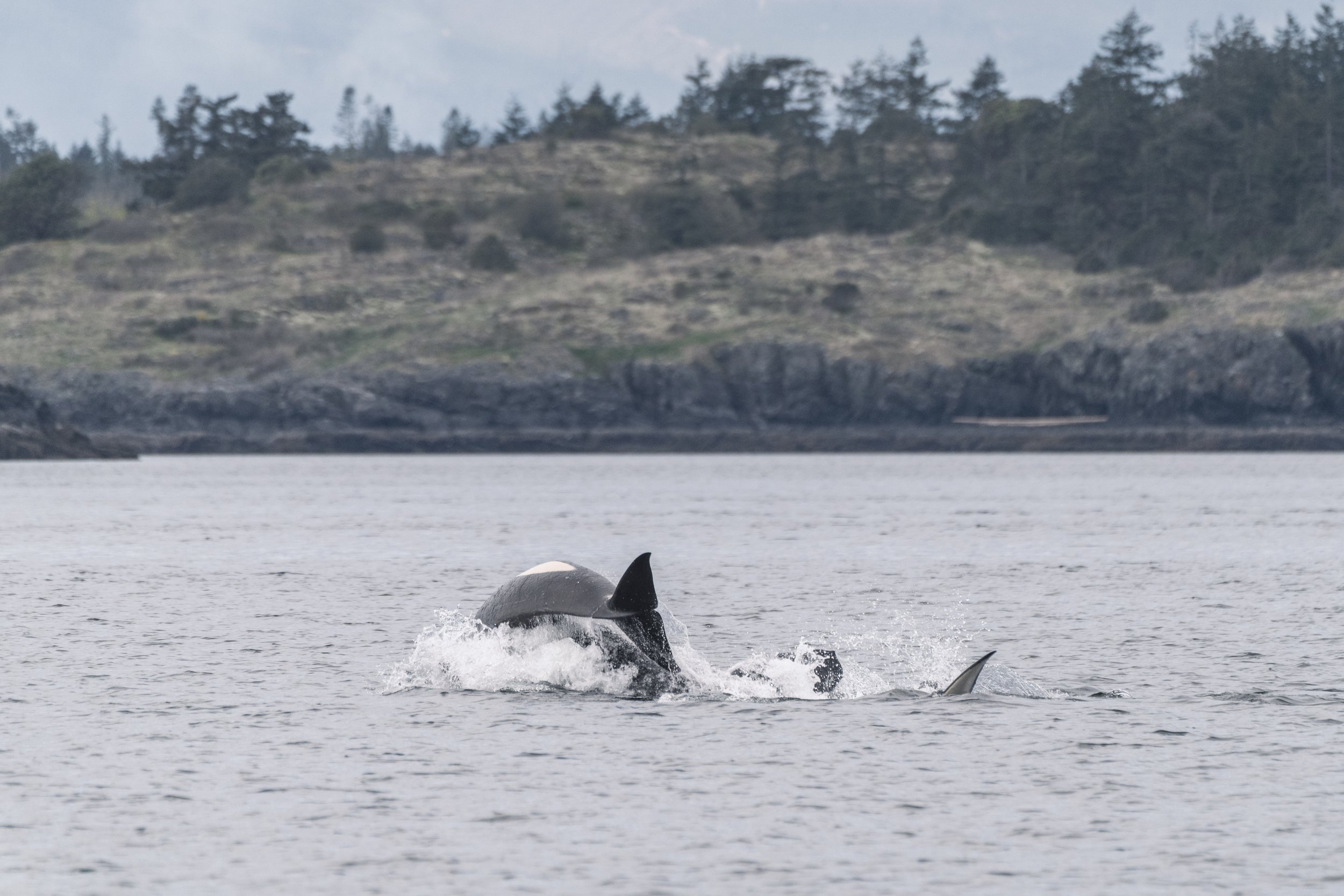
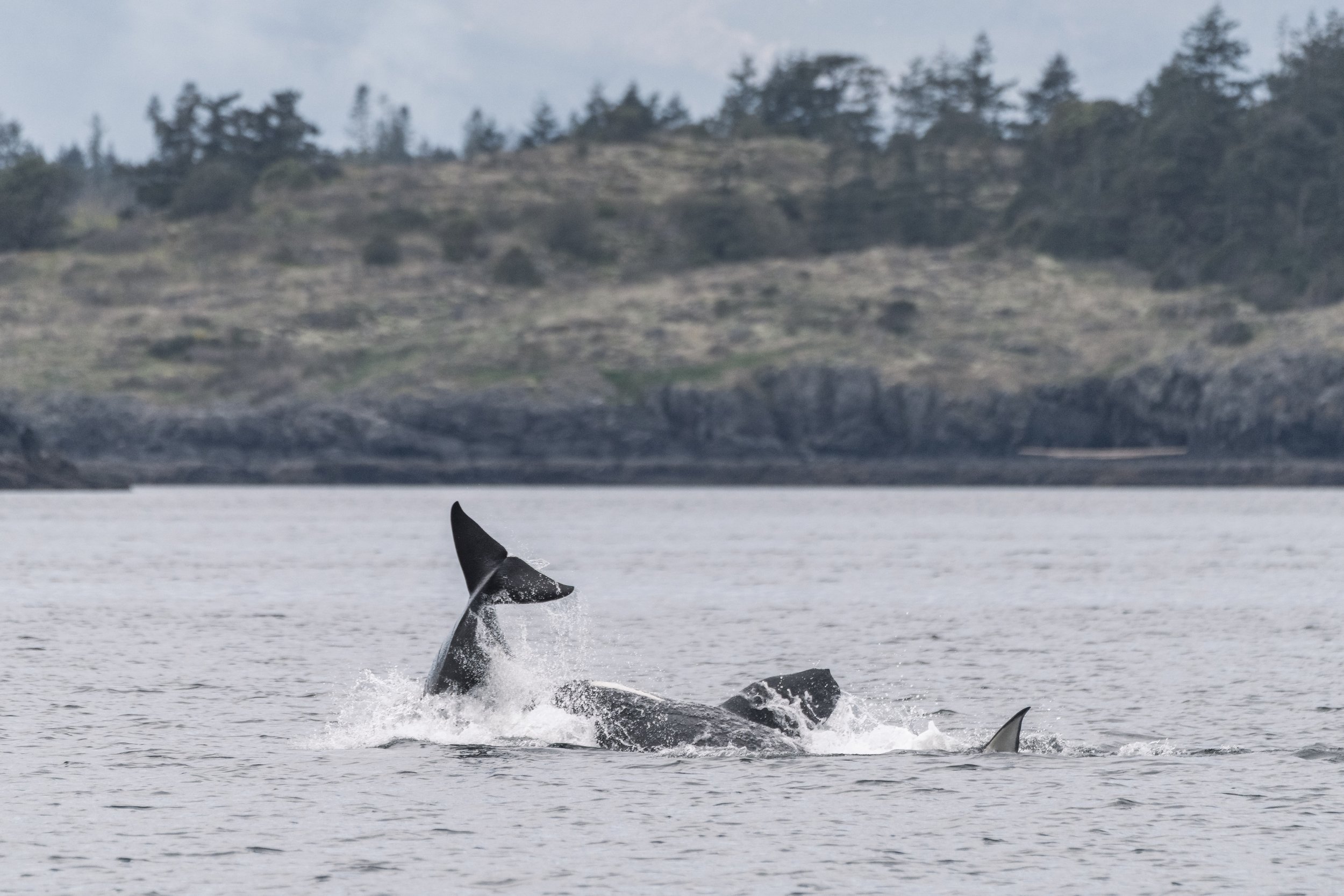
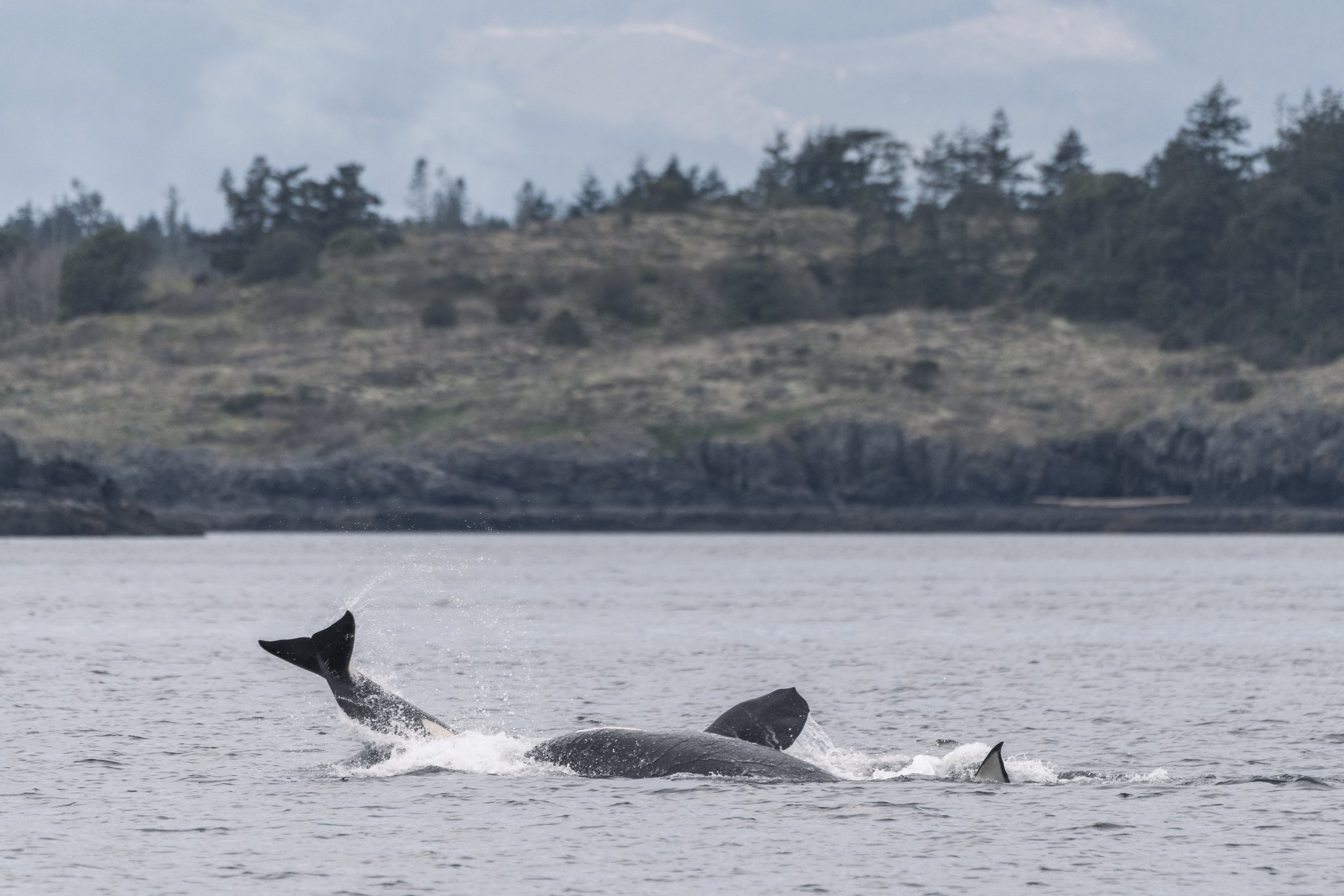
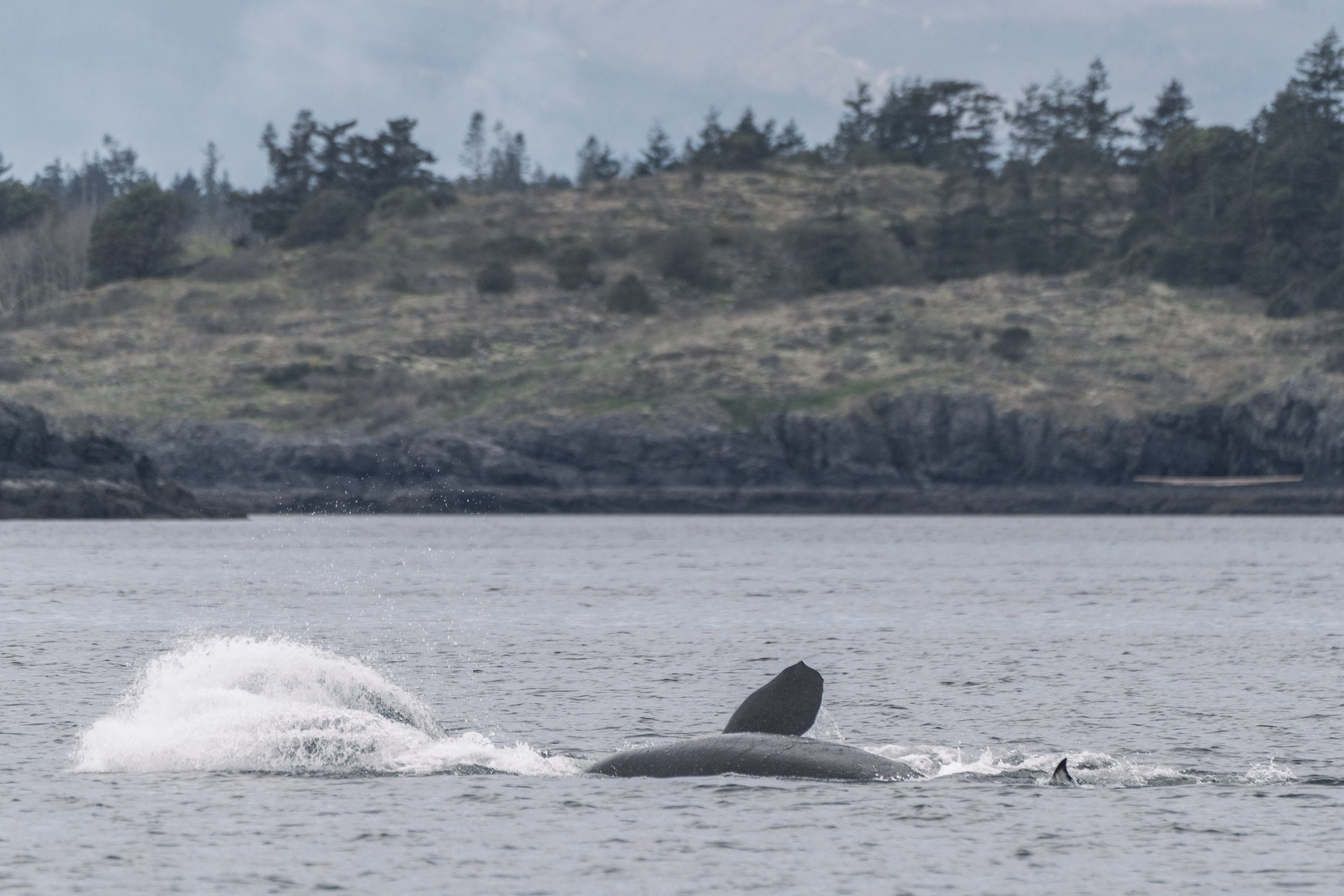
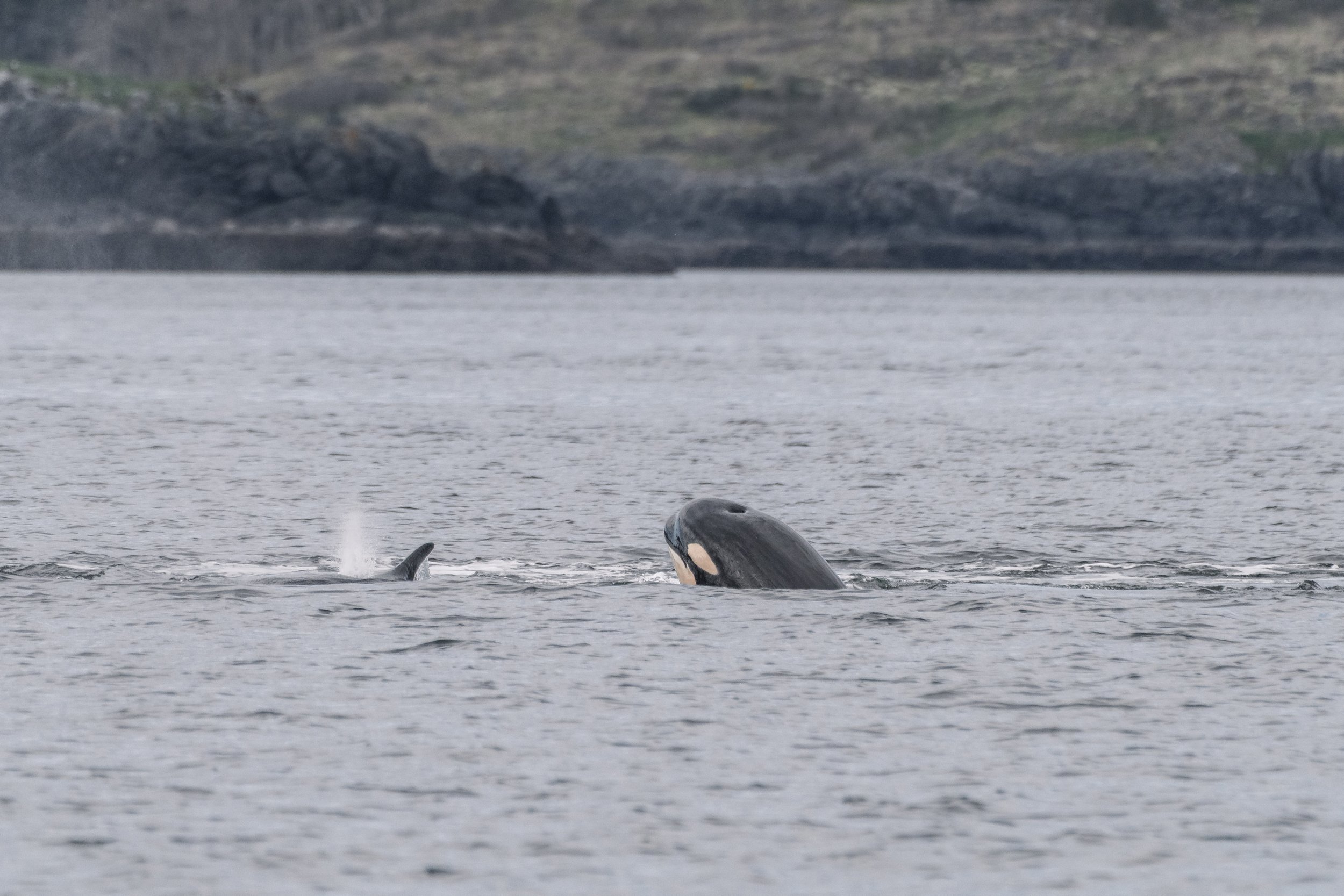
T124D4 Dune sticking their face out of the water after the commotion. Photo by Val Watson.
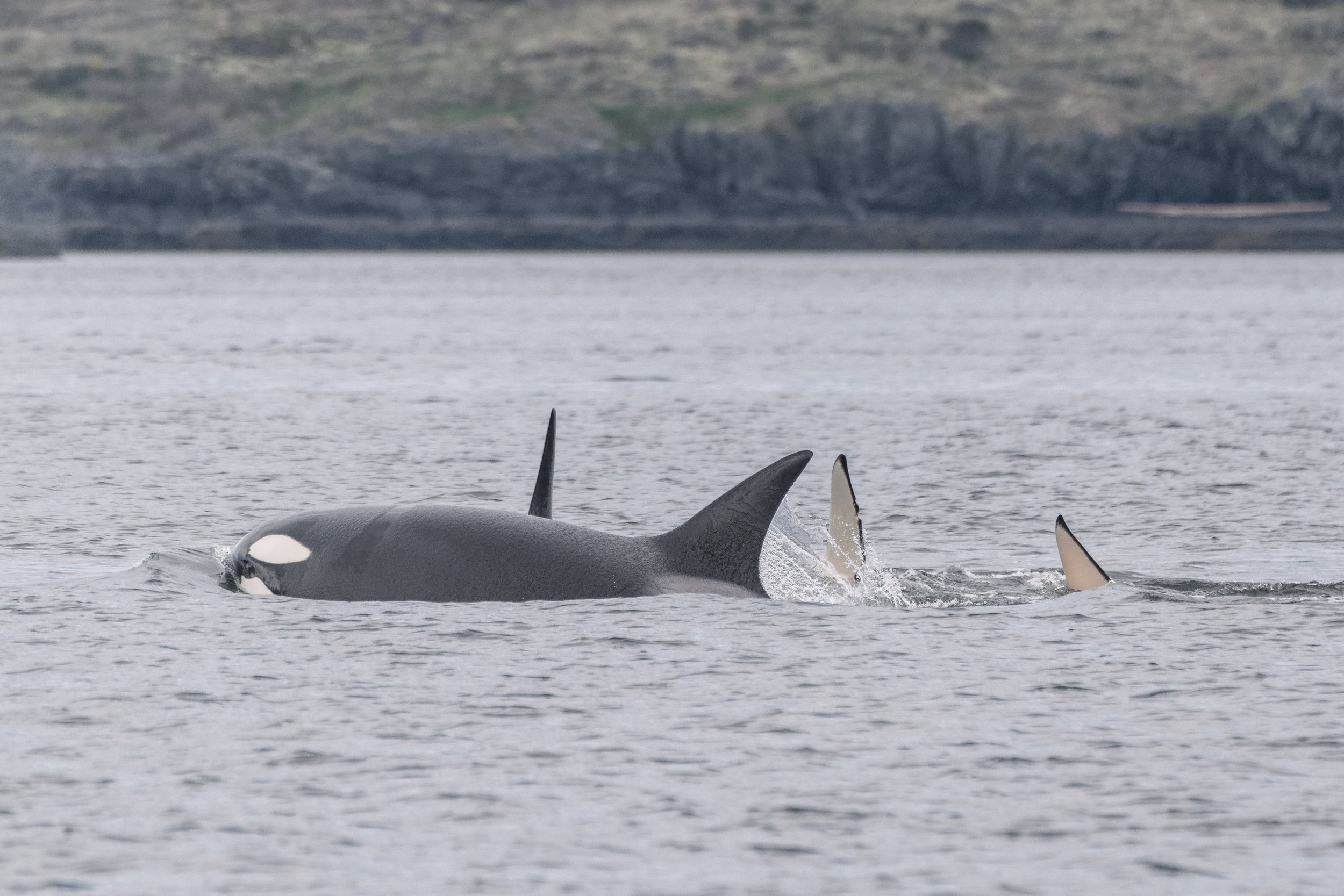
T124D Field surfacing in the midst of a bunch of turned tails. Photo by Val Watson.
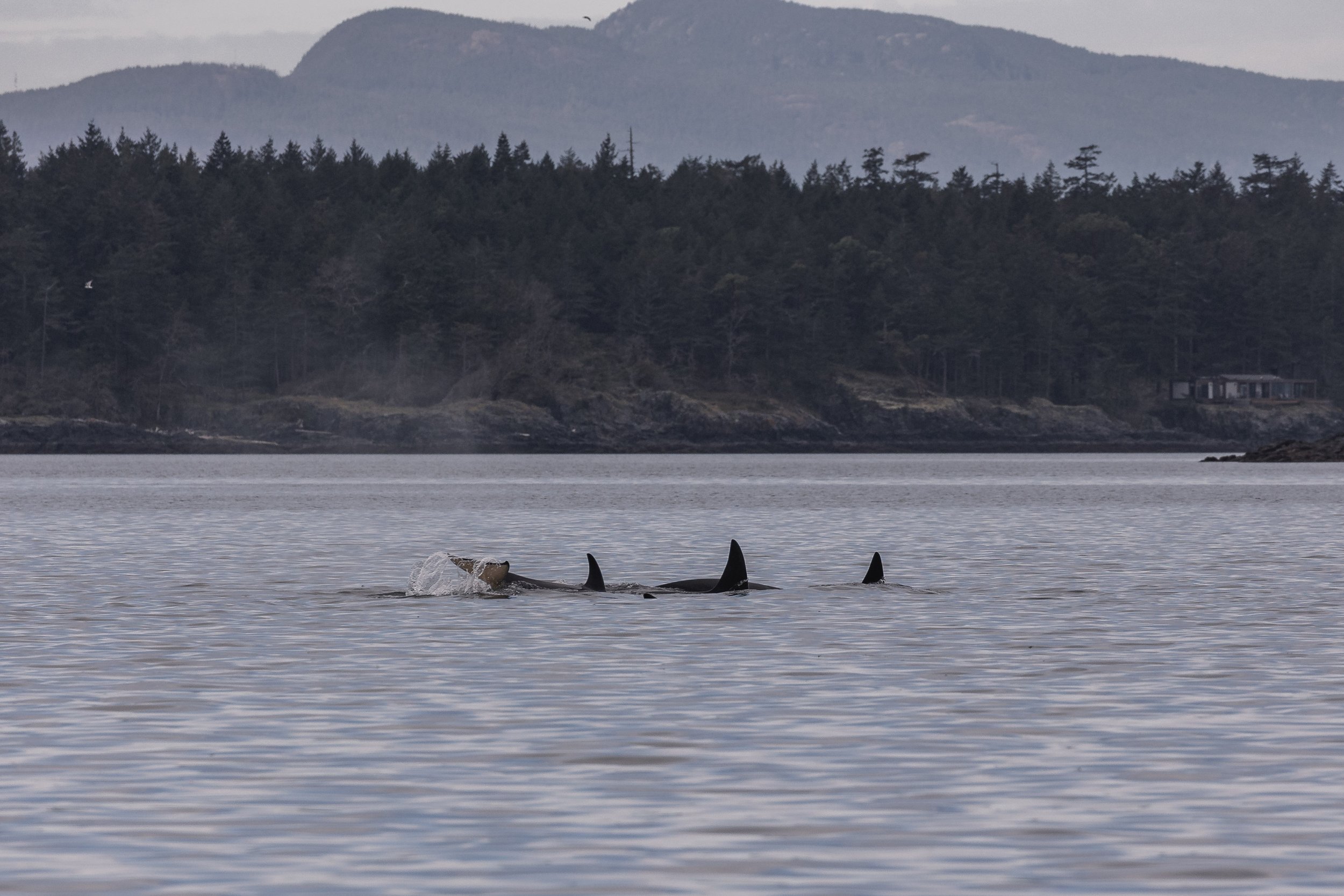
T071B Hood, T124D Field, and T124D4 Dune surfacing together, with dune flicking their tail! Photo by Jordan Robinson.
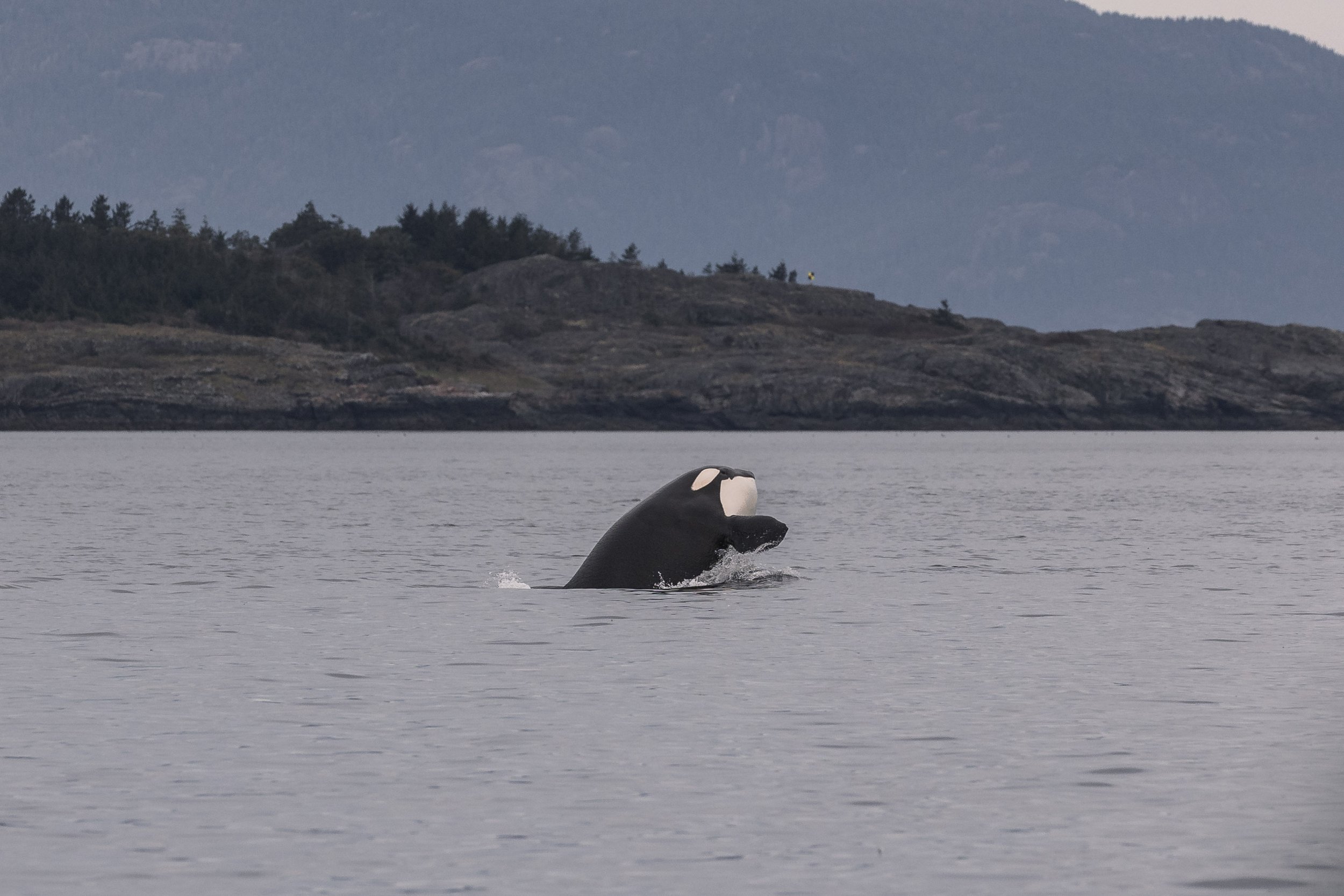
One of the whales doing a mini-breach! Photo by Jordan Robinson.
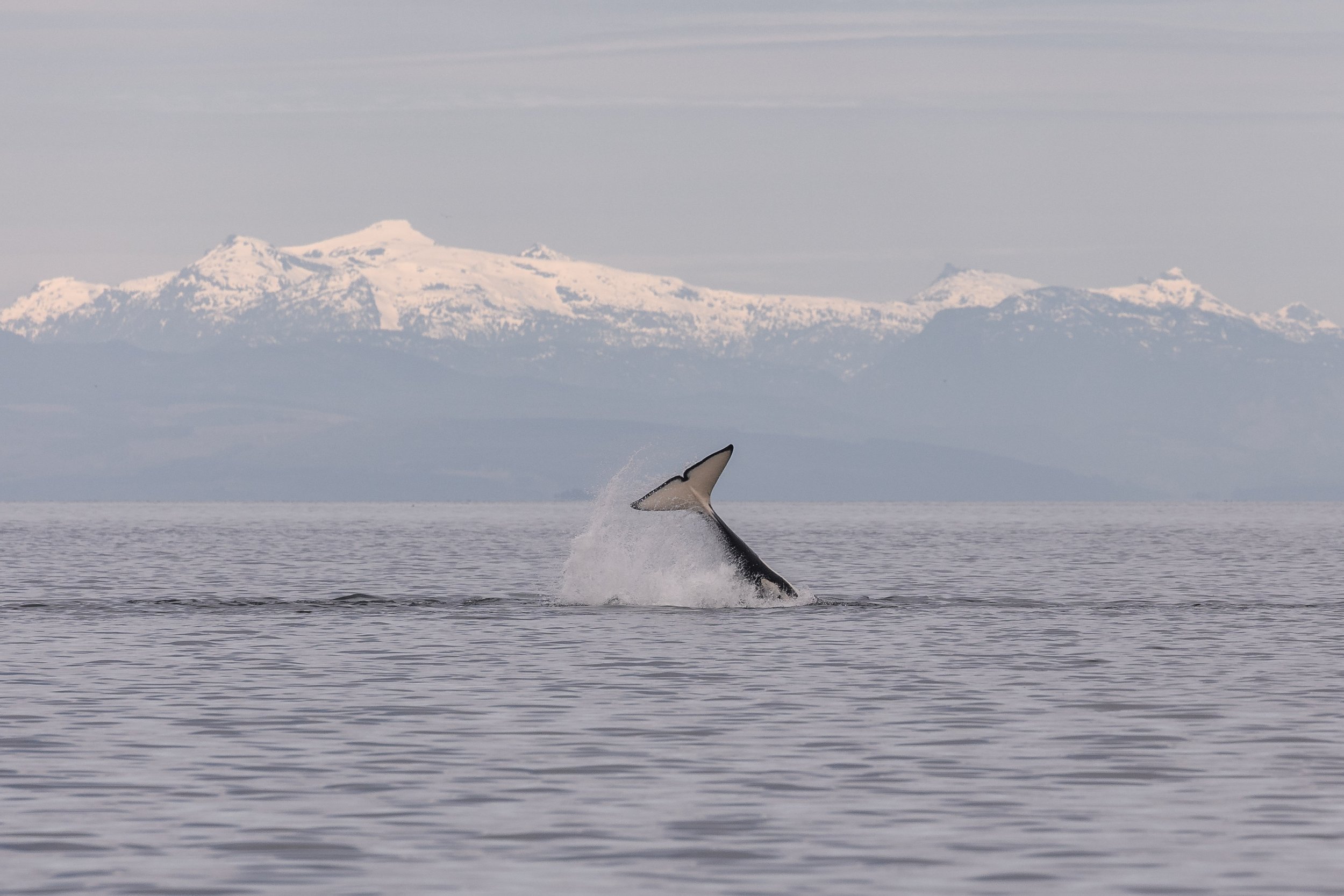
A lovely cartwheel from one of the whales with the Vancouver Island Mountain Range in the background. Photo by Jordan Robinson.
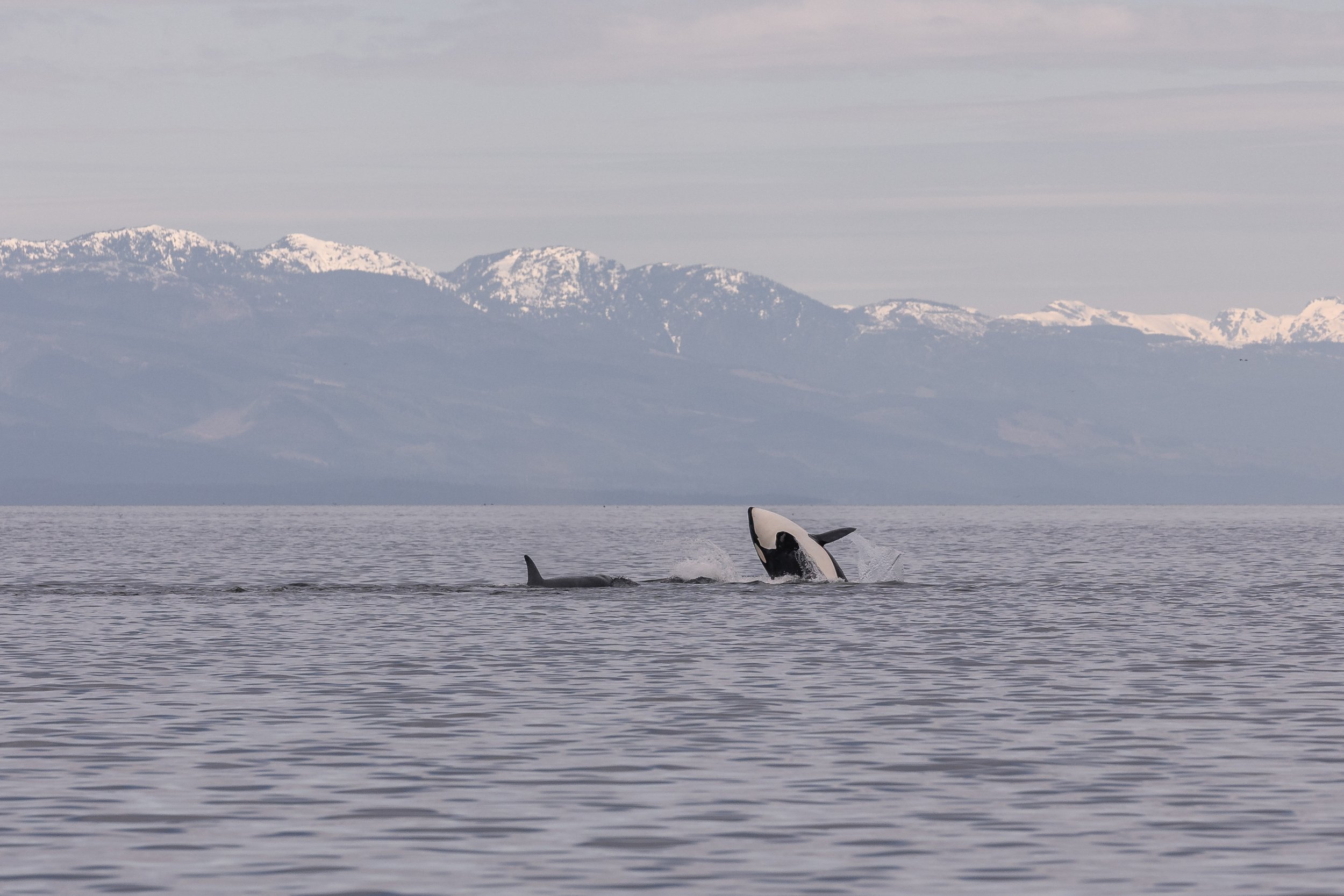
A beautiful back dive from one of the whales. Photo by Jordan Robinson.
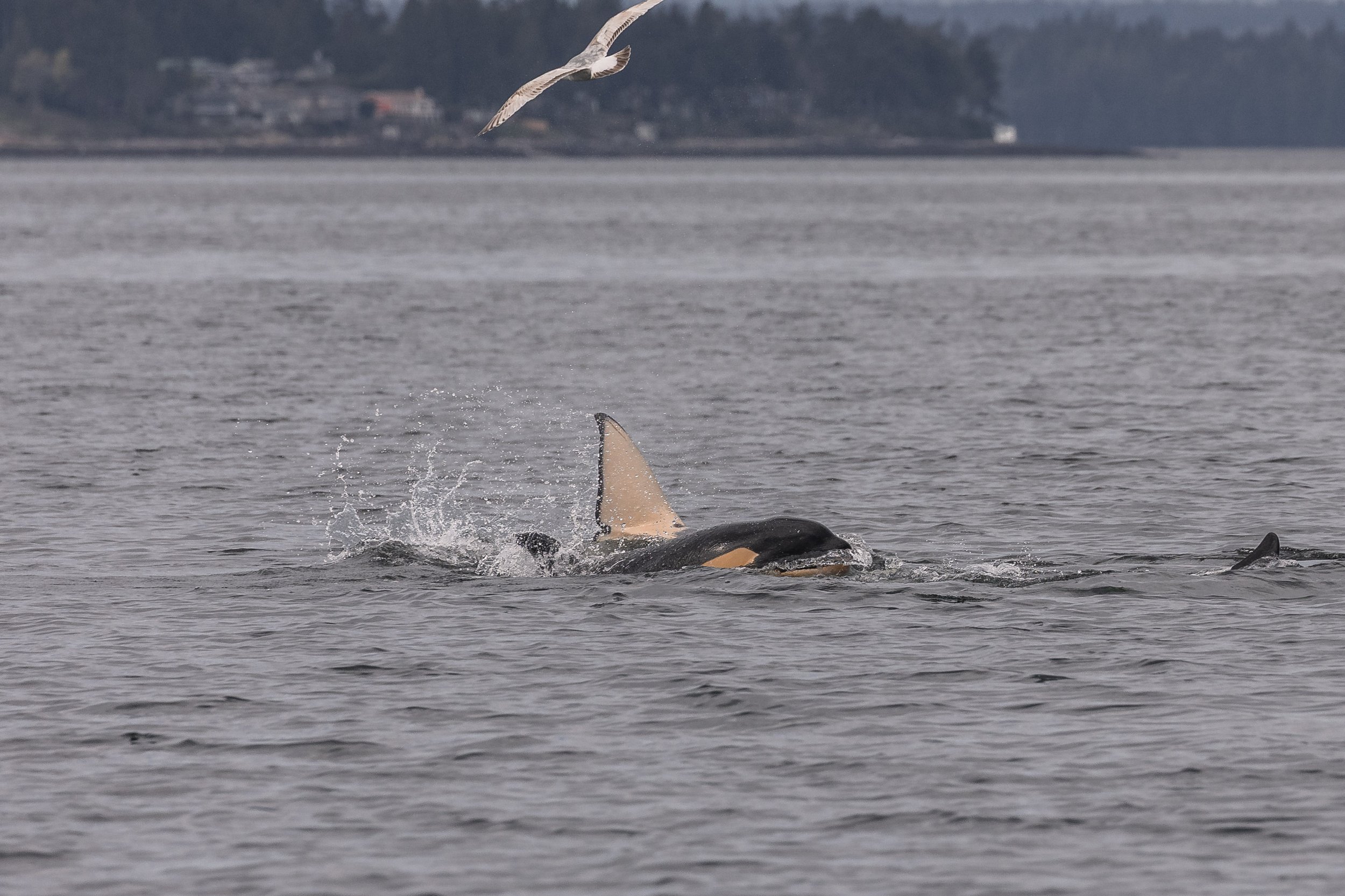
A lovely look at the still-orange baby, likely T071B4. Photo by Jordan Robinson.
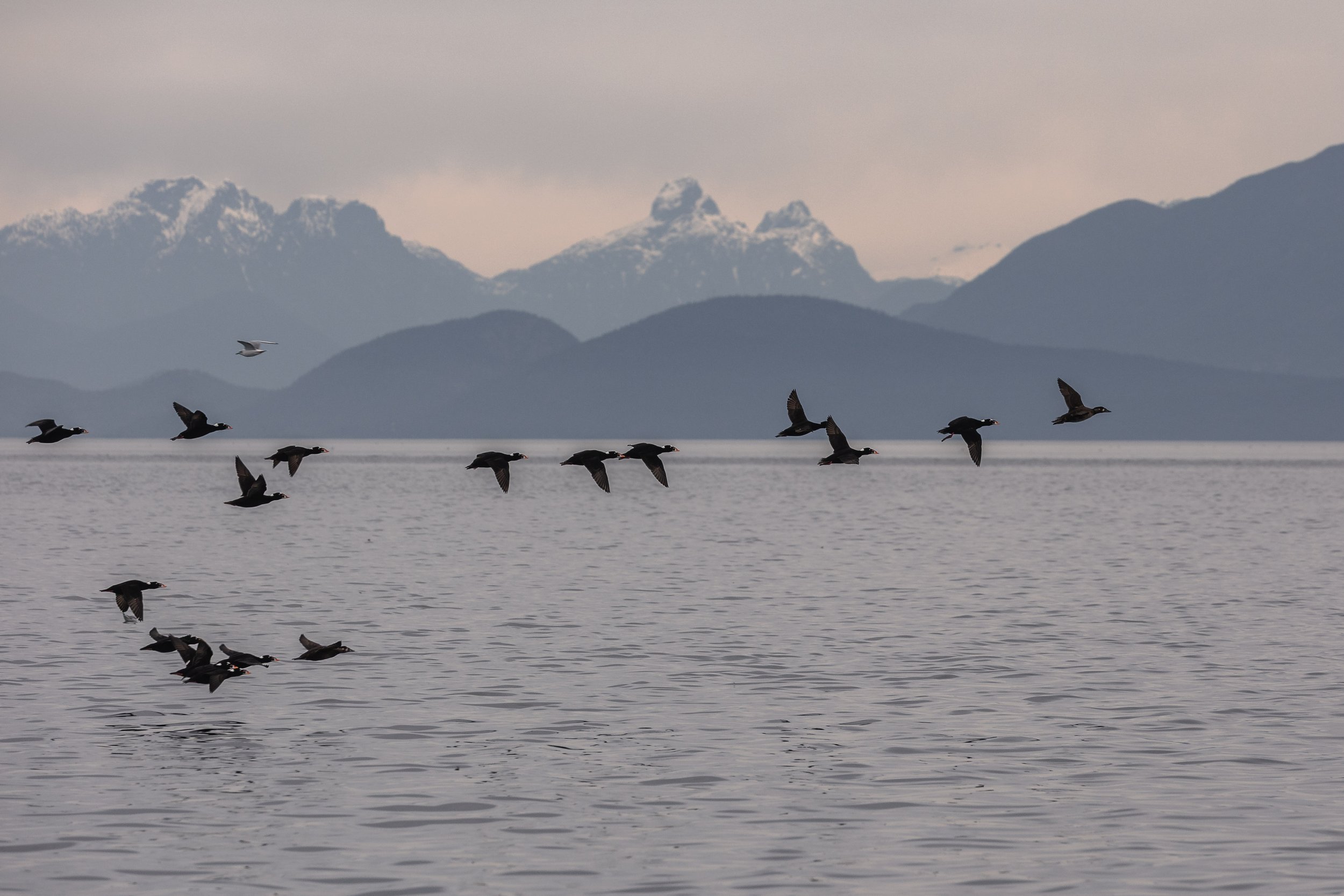
A group of Surf Scoters flying by. Photo by Jordan Robinson.
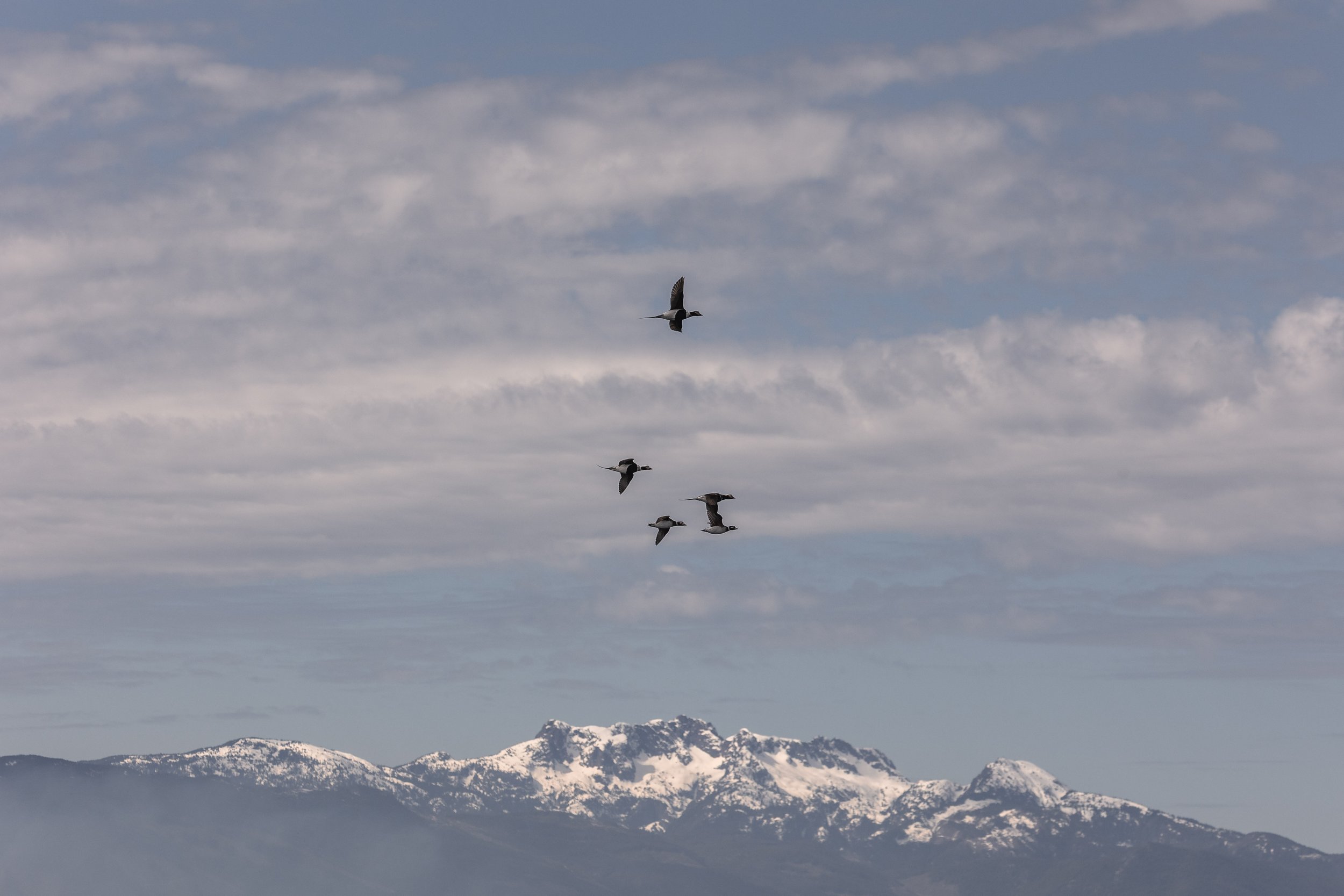
A small group of Long-tailed ducks. Photo by Jordan Robinson.
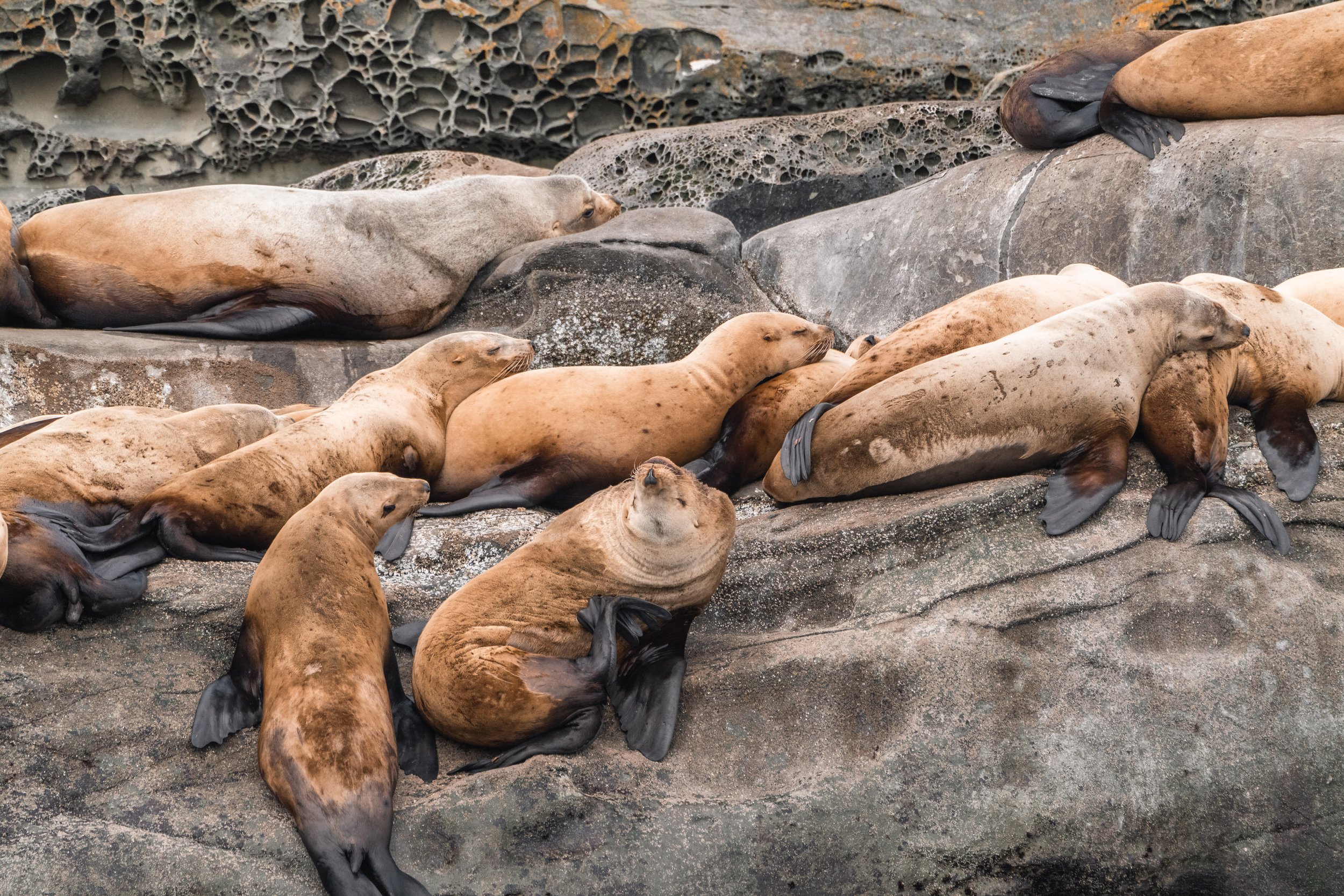
Steller Sea Lions at entrance island doing some itchy yoga. Photo by Val Watson.
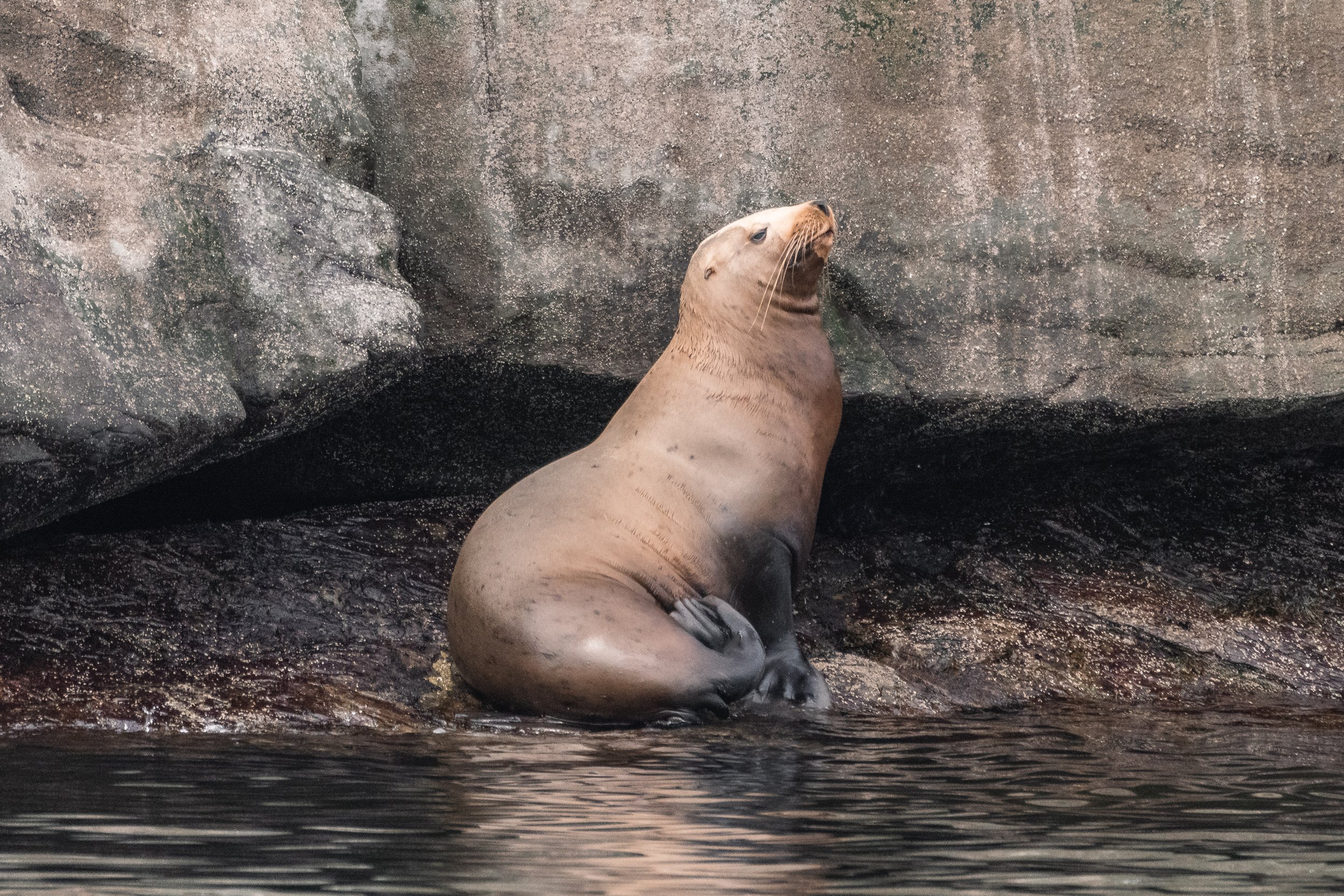
A lone Steller Sea Lion by herself at the water. Photo by Val Watson.
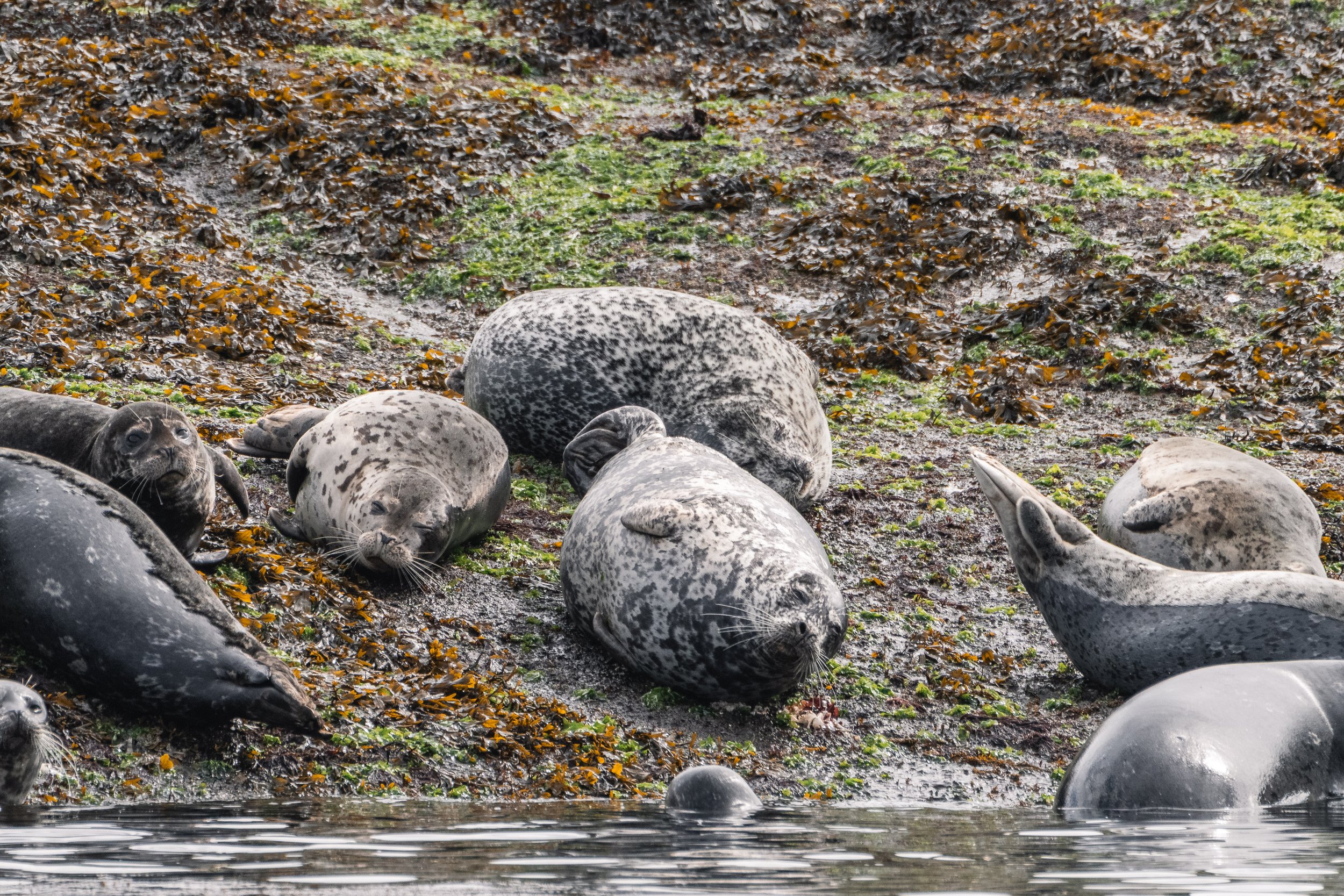
A group of Harbour Seals close to Gabriola Islnd. Photo by Val Watson.
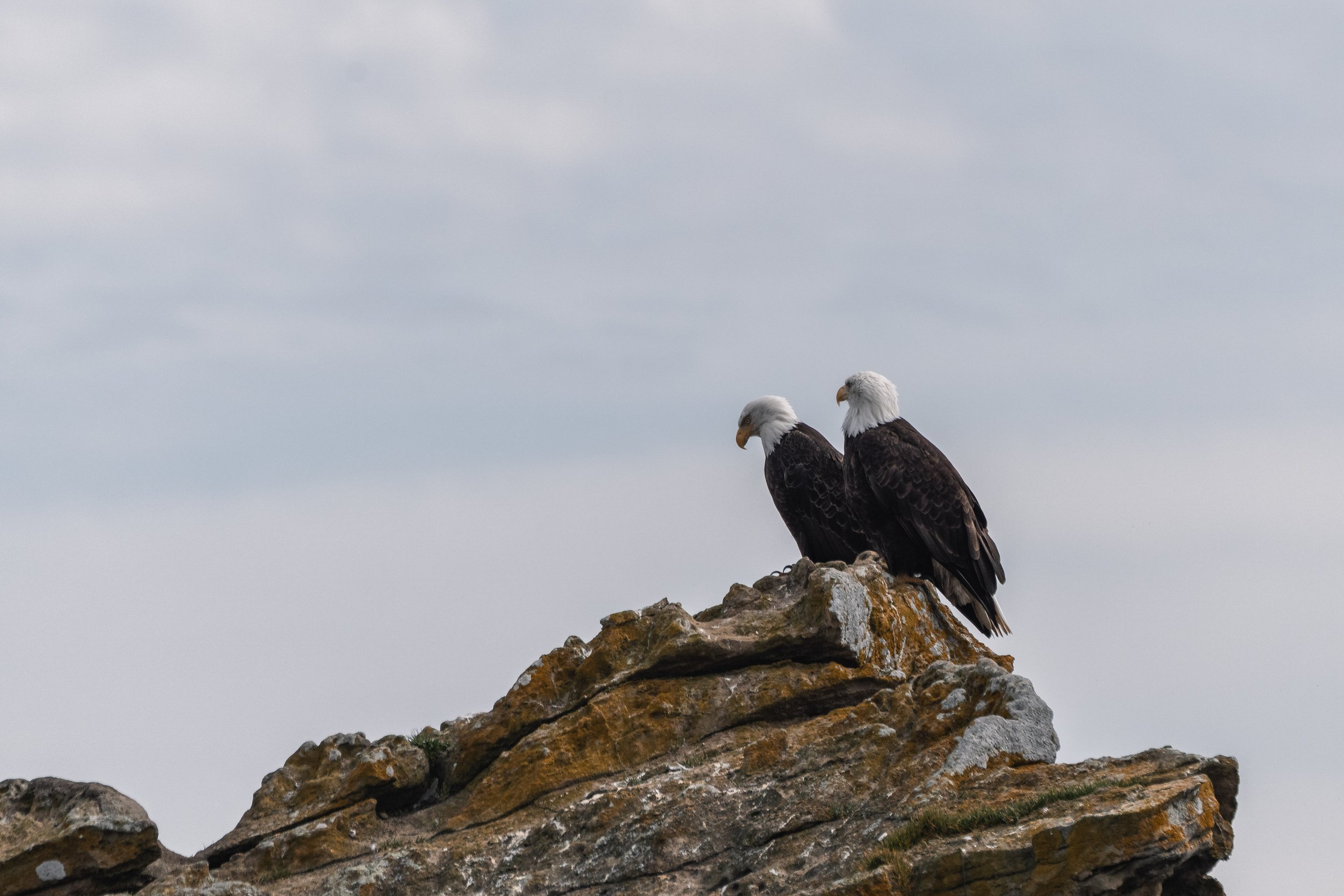
A pair of Bald Eagles watching over the seals from their sandstone perch. Photo by Val Watson.
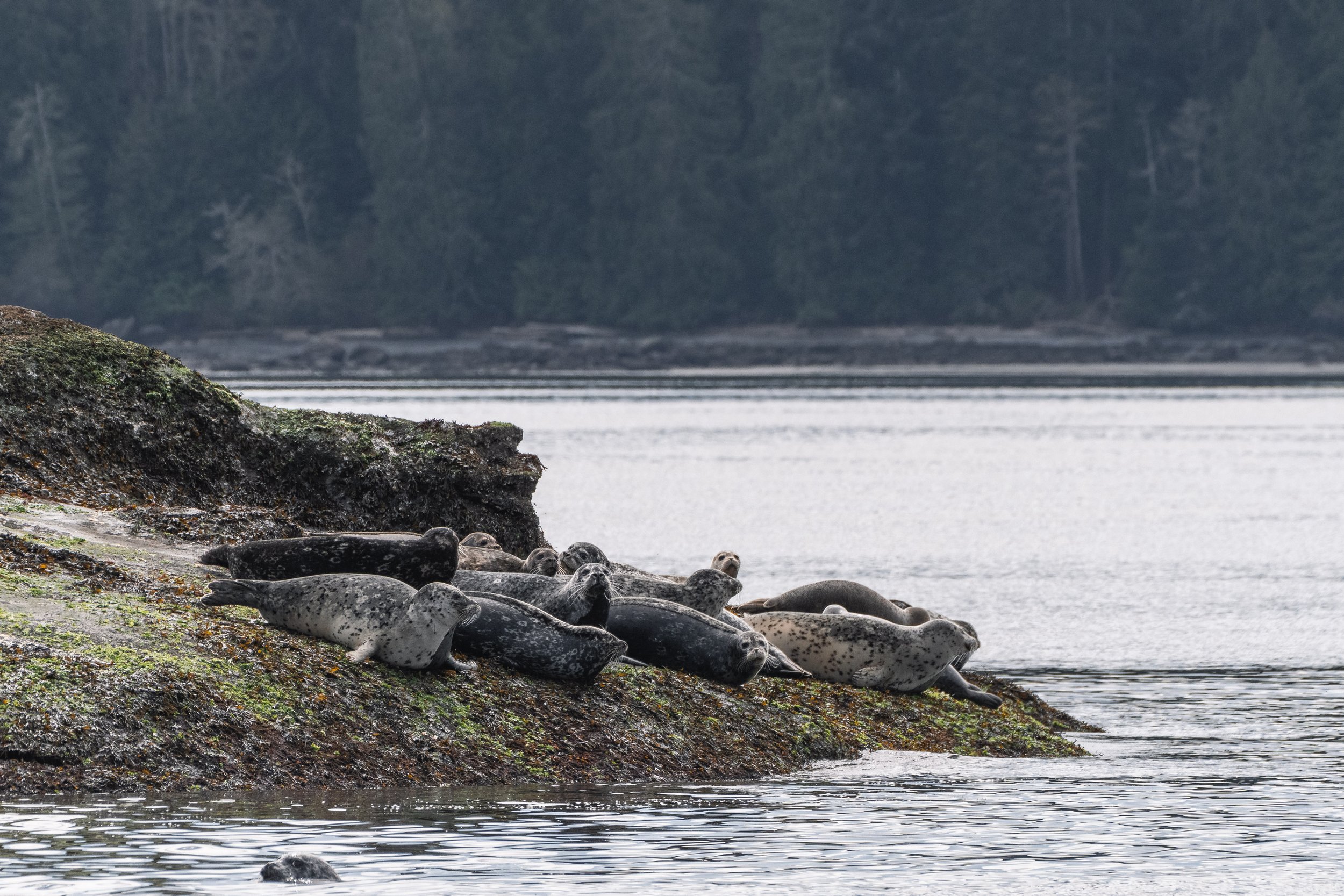
A group of Harbour Seals hauled out. Photo by Val Watson.
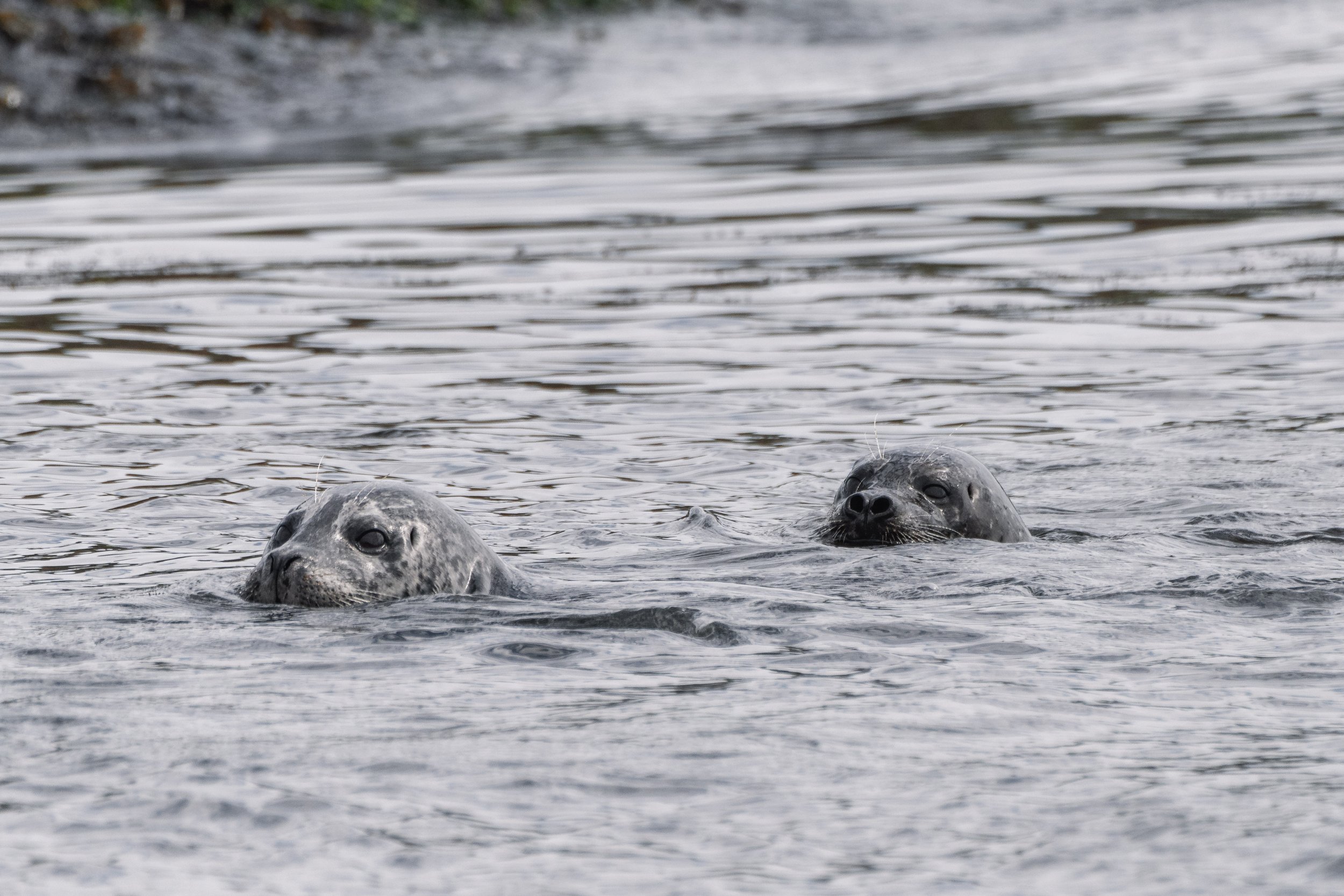
A pair of Harbour Seals watching us from the water. Photo by Val Watson.
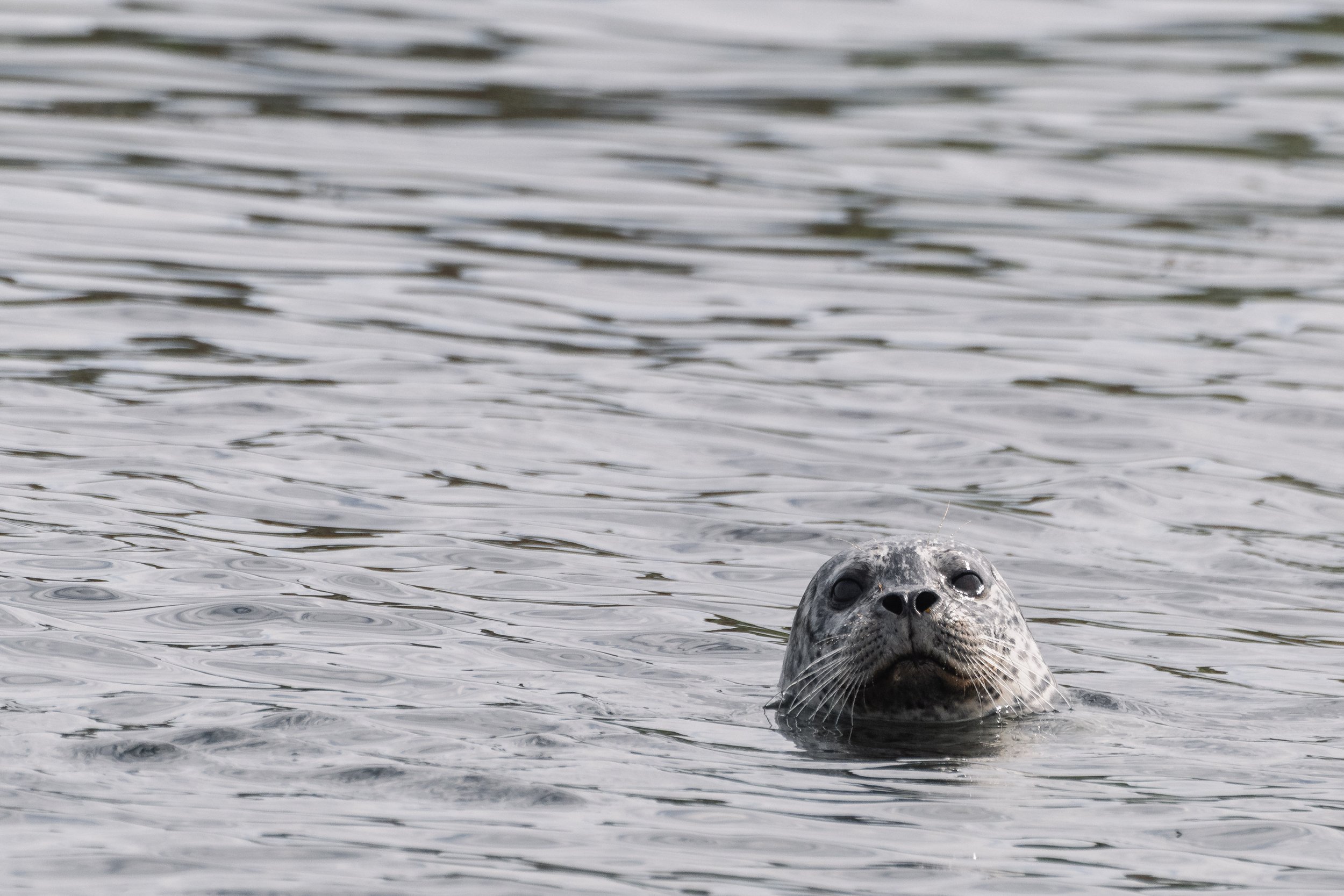
A very cute Harbour Seal. Photo by Val Watson.