
May 10, 2026 - A mothers day treat with some Salish Sea supermoms!
Mother’s Day in the Salish Sea couldn’t have been more perfect. Not only did we get to spend the day out on the water under beautiful conditions, but we also had the privilege of spending time with some of the most incredible moms the Salish Sea has to offer.
Our day began with us heading north from Nanaimo, making our way toward Lasqueti Island. Before long, we found a group of Bigg’s orcas travelling steadily together through the calm waters. Among the group were two very well-known matriarchs in the area: T101 Reef and T065 Whidbey.
T065 Whidbey II ♀ (~1971)
T063 Chainsaw ♂ (~1978)
T101 Reef ♀ (≤1969)
T101A Rush ♂ (1993)
T101B Lagoon ♂ (1997)
Orcas are incredible mothers, and their family structure revolves entirely around the matriarch. In these societies, male offspring will stay with their mothers for life, while most females disperse and go off on their own once they have their own offspring, but this doesn’t always happen, especially if the matriarch is no longer reproductive herself. This means that mom can become the centre of a family line spanning generations! Between Reef and Whidbey alone, the two whales have six known living children and twelve grandchildren, and Reef has even become a great-grandmother! While we only see them both travelling with their adult sons, we know that their daughters are off being successful matriarchs in their own right.
What makes this even more fascinating is that there are likely many more descendants of these whales through their sons. Since Bigg’s orca family trees are tracked matrilineally, researchers only officially follow the maternal line. Male orcas will eventually have offspring of their own with whales from other groups, but those calves become part of their mother’s family instead. It really highlights just how important mothers are in orca society.
After spending quality time with the orcas, we continued on and encountered another remarkable mom: Olympus (BCX2075). Olympus holds a very special title in this area, as she is the youngest known humpback whale mom in the Salish Sea. She had her very first calf when she was only five years old! Prior to Olympus, the youngest known humpback mother in this region was eight years old, even though the worldwide average for a humpback’s first calf is typically estimated to be between six and ten years old.
Seeing Olympus thriving and successfully raising a calf at such a young age was an incredible reminder of how resilient and adaptable these animals can be.
Once we had finished spending time with the whales, we slowly made our way back toward Nanaimo, making a stop at the Harmac Pacific pulp mill to visit some of the sea lions hauled out around the area. These massive pinnipeds are always a guest favourite! Sea lions are some of the largest pinnipeds that we have in the area, with California Sea Lions reaching 800 pounds and Steller Sea Lions reaching upwards of 2500! Despite their enormous size, they are surprisingly agile both in and out of the water. During this time of year, many of the sea lions we see around the Salish Sea are preparing to migrate to breeding rookeries, where dominant males will establish territories and gather harems of females for the summer breeding season.
Our final wildlife stop of the day was with a beautiful Bald eagle perched proudly atop a navigation marker overlooking the water. Bald eagles are also incredibly dedicated parents. Eagle pairs often mate for life and work together to raise their young. Both parents take turns incubating the eggs, protecting the nest, and bringing food back to hungry chicks. Their nests can become absolutely enormous over time, too, as pairs reuse and add to them year after year. Some eagle nests have been recorded weighing over a ton!
After a day spent with so many amazing animal families and mothers, we returned to the harbour with smiles all around and memories that will last a lifetime.
Enjoy the photos taken by Marine Naturalist Vanessa Vereschahen and ride-along crew member Jordan Robinson below!
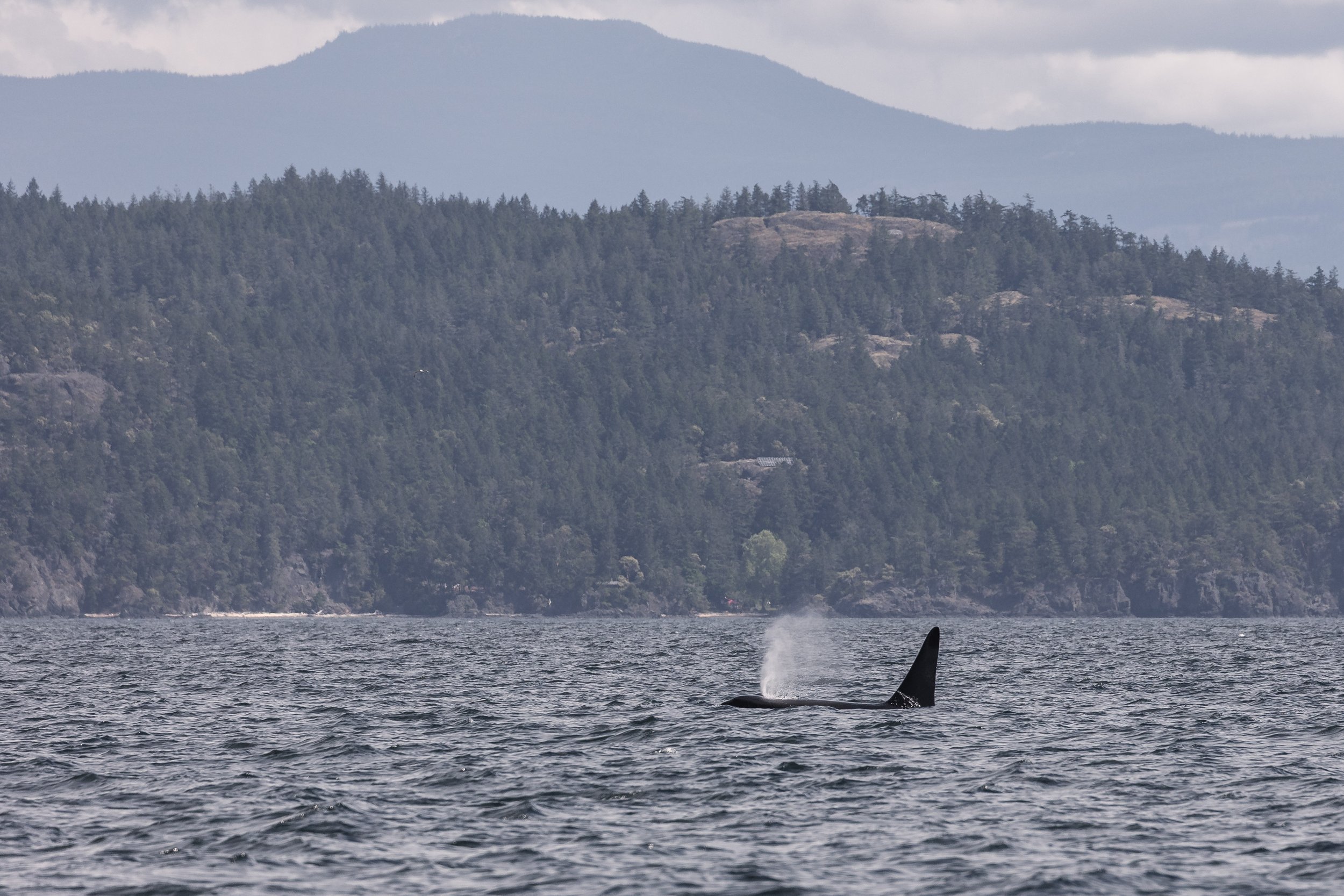
T101A rush surfacing with Lasqueti Island in the background. Photo by Vanessa Vereschahen.
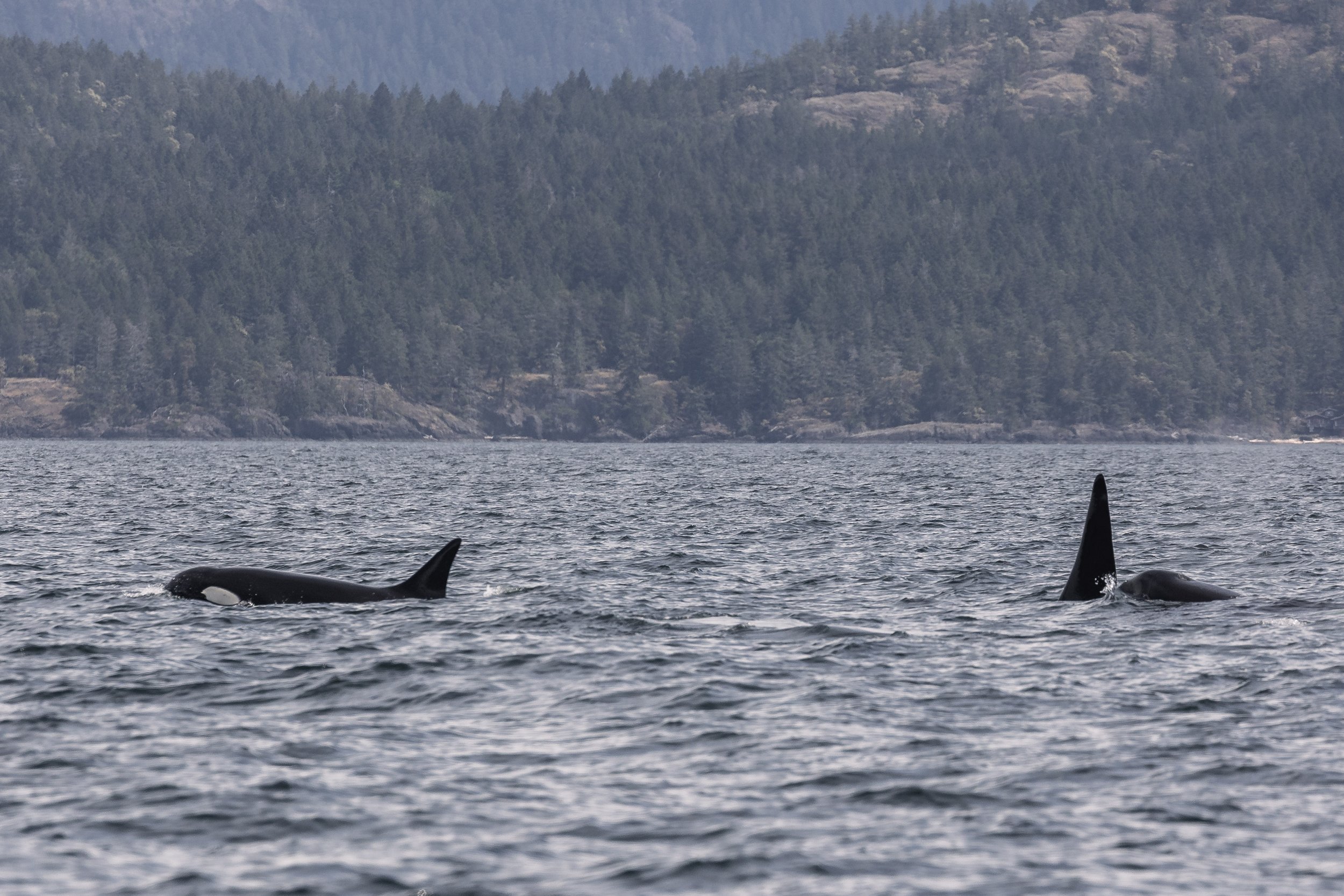
T101 Reef in the lead followed by T101A Rush and another breaking the surface. Photo by Vanessa Vereschahen.
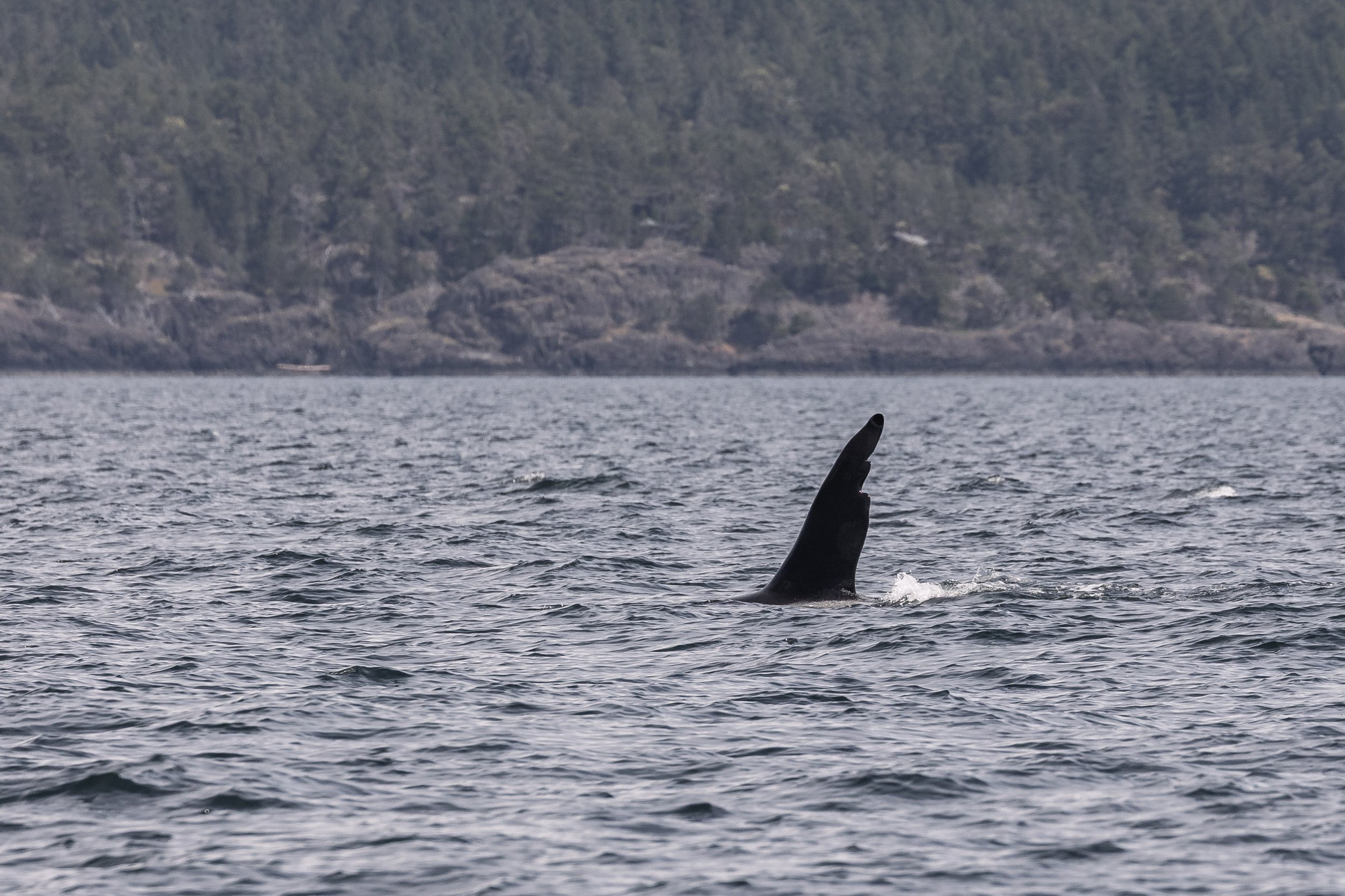
T063 Chainsaw surfacing in the waves. Photo by Vanessa Vereschahen.
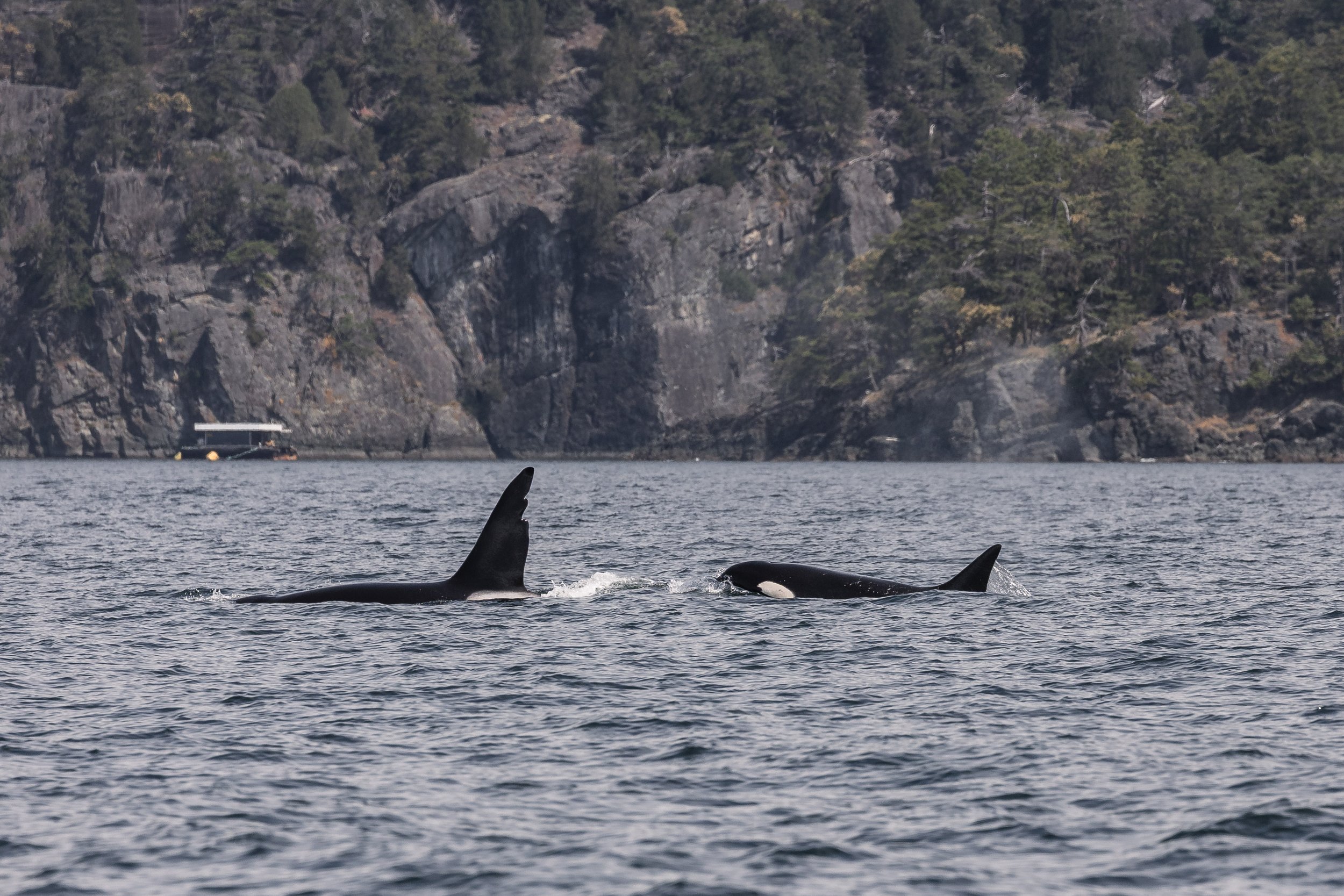
T063 Chainsaw surfacing with T101 Reef just behind him. Photo by Vanessa Vereschahen.
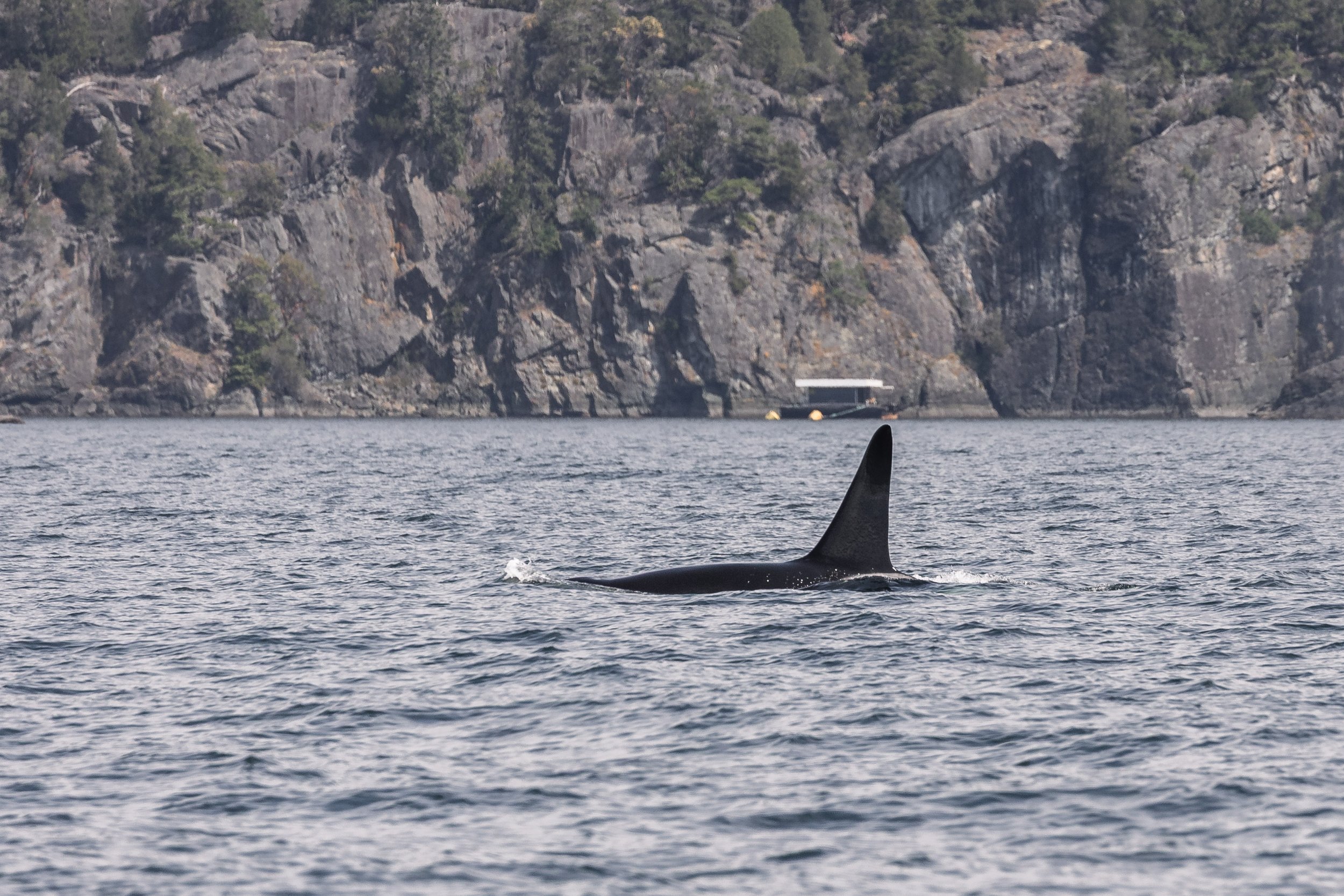
T101A Rush surfacing. Photo by Vanessa Vereschahen.
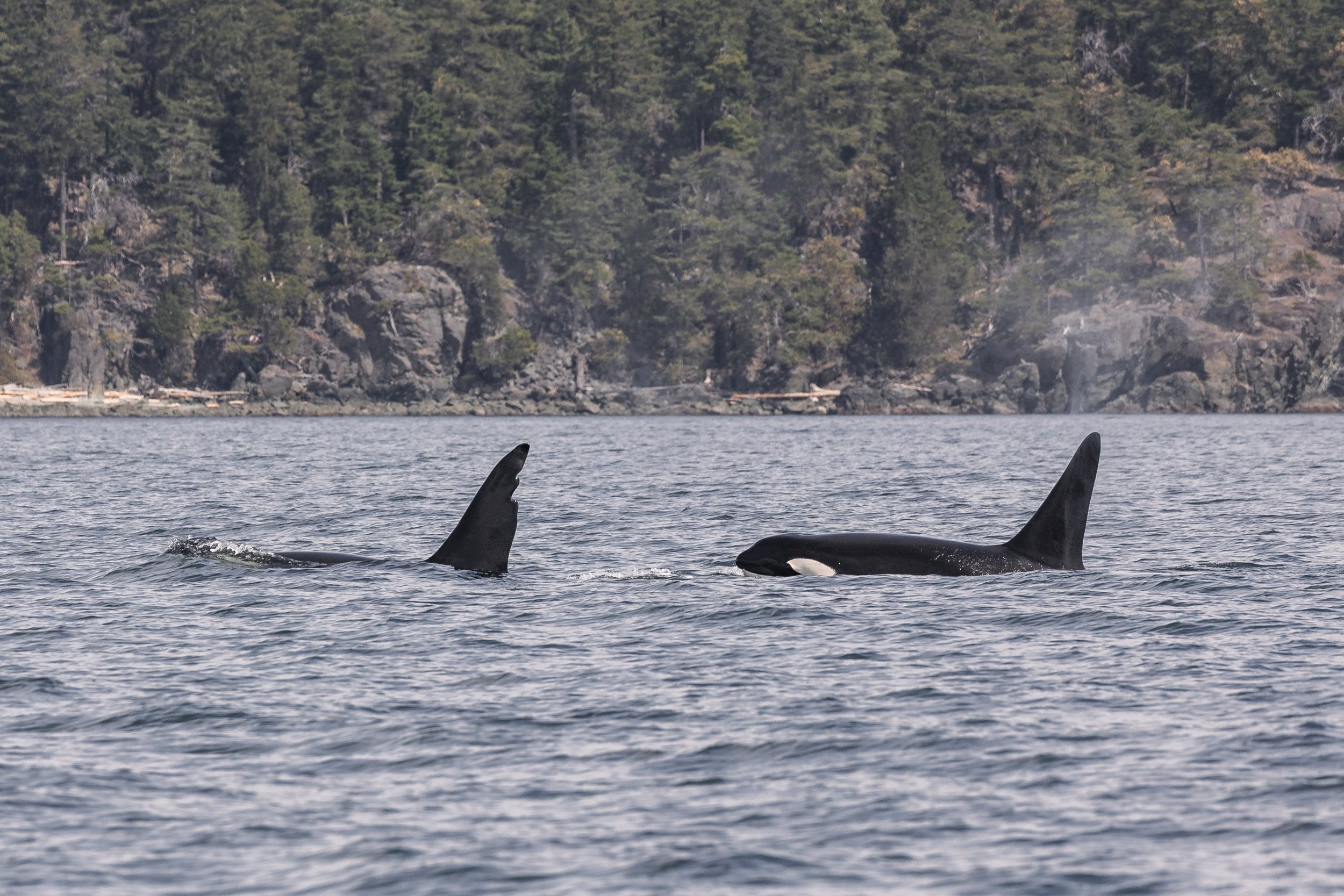
T063 Chainsaw and T101A Rush surfacing together. Photo by Vanessa Vereschahen.
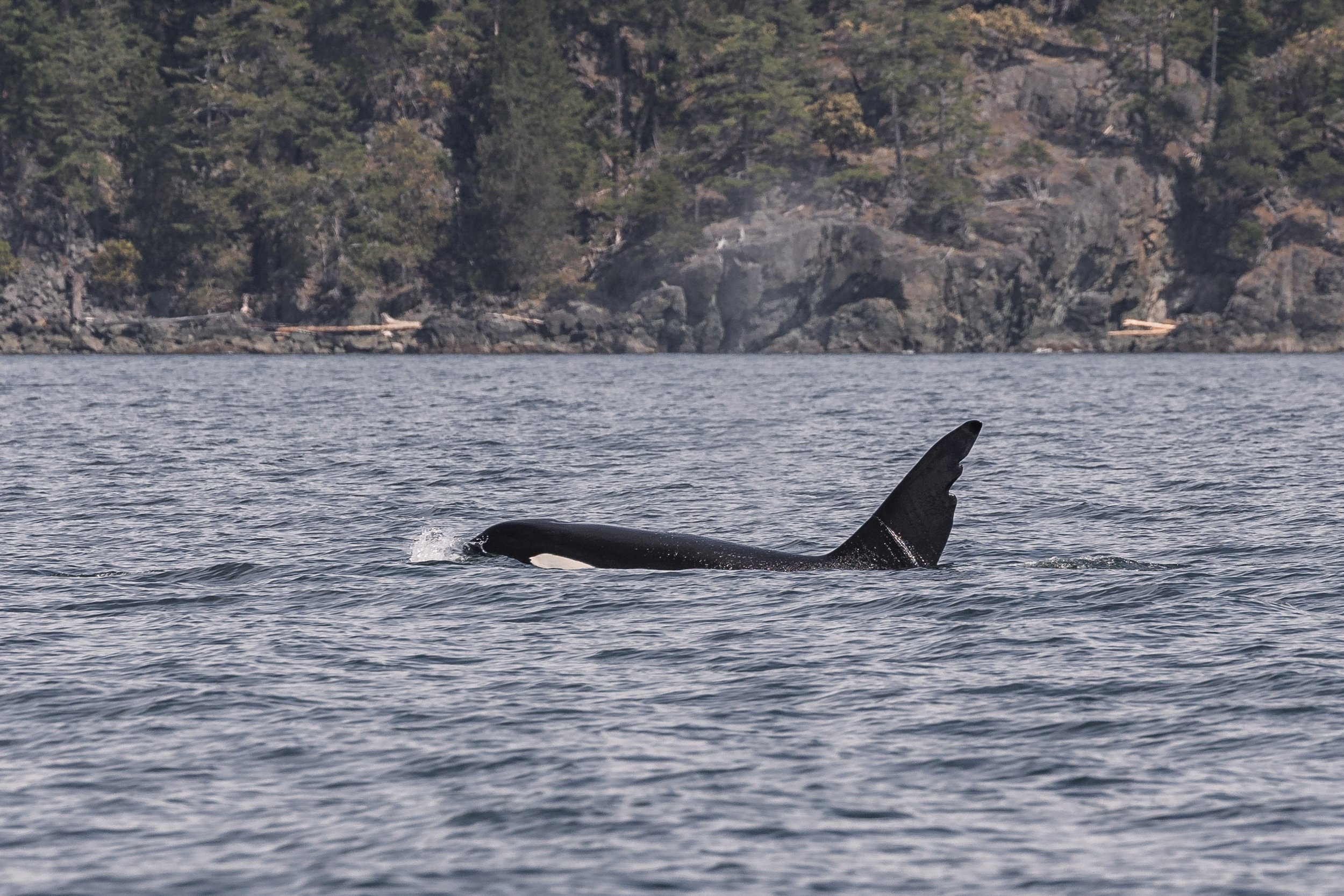
A great look at T063 Chainsaw. Photo by Vanessa Vereschahen.
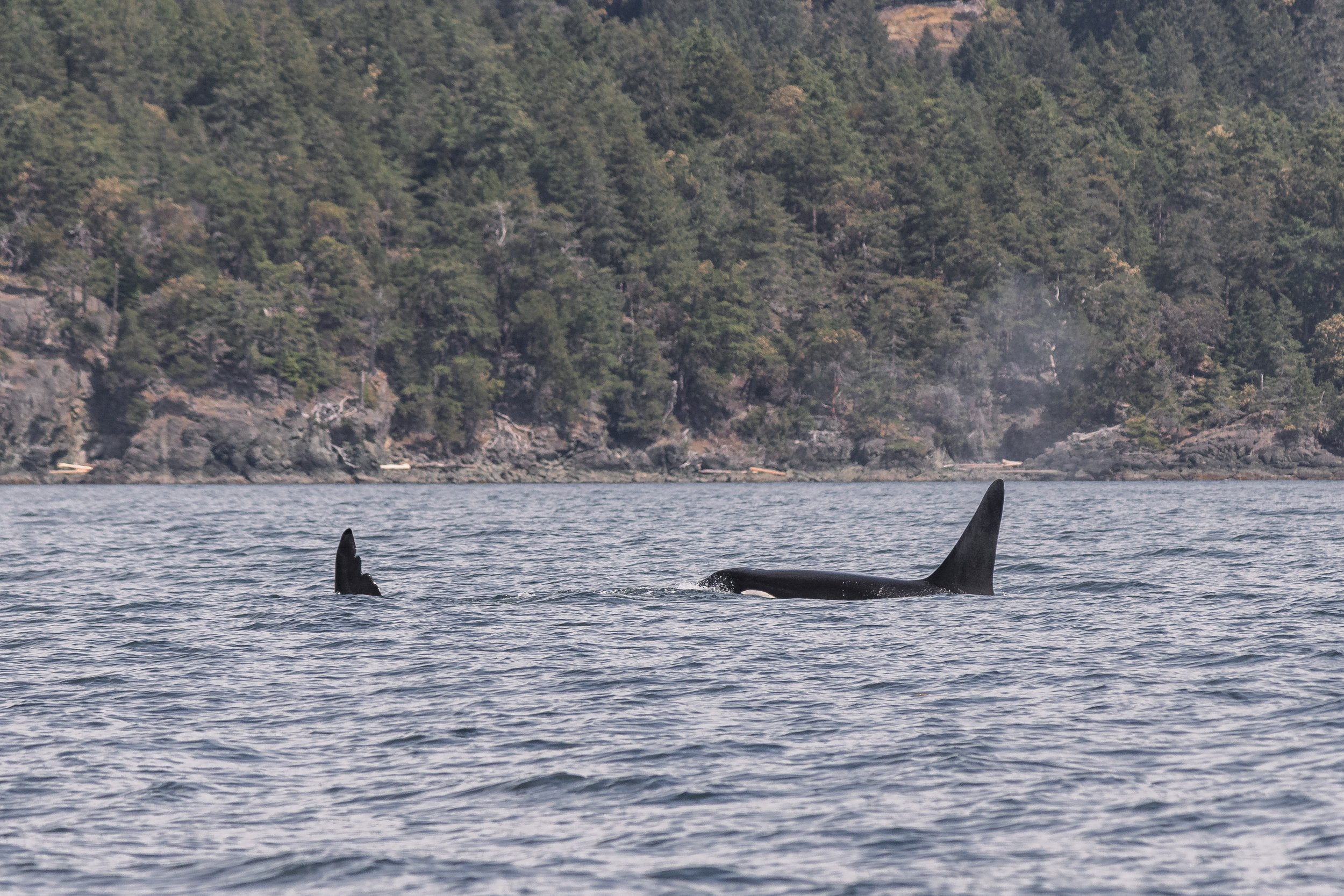
T063 Chainsaw diving in front, followed by T101A Rush. Photo by Jordan Robinson.
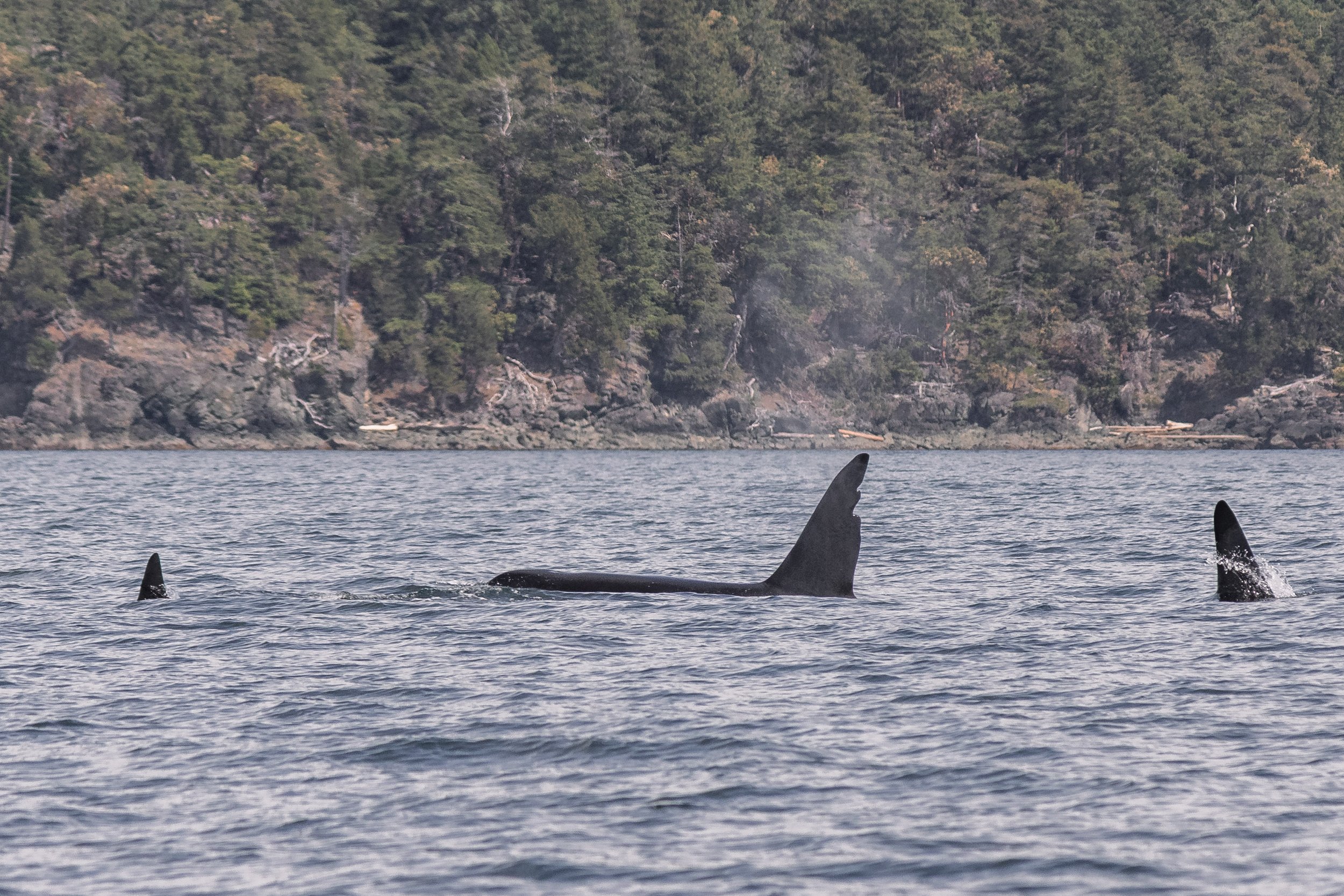
T101 Reef in the lead, followed by T063 chainsaw and T101A Rush. Photo by Jordan Robinson.
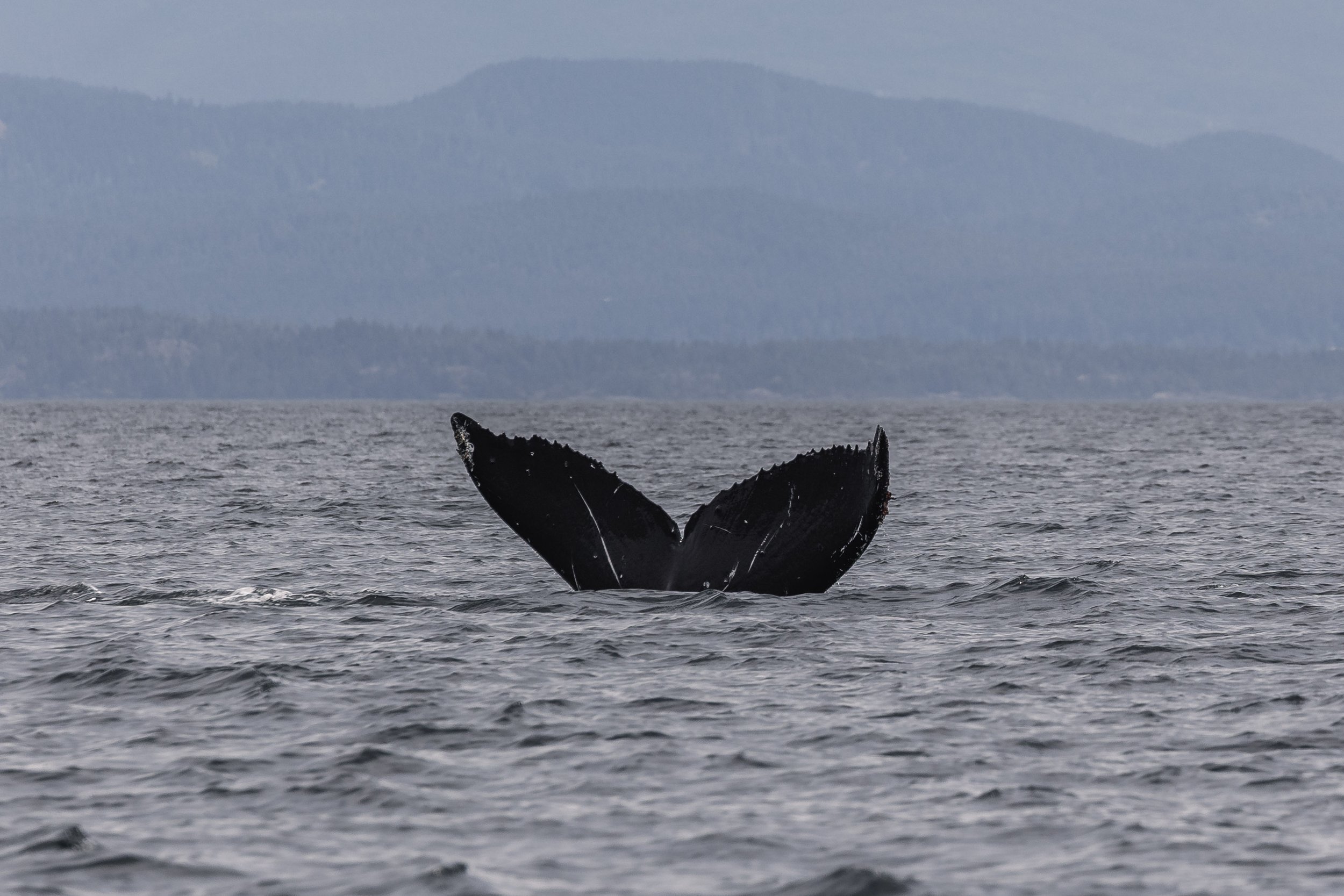
The scarred up underside of Olympus’ tail. Photo by Vanessa Vereschahen.
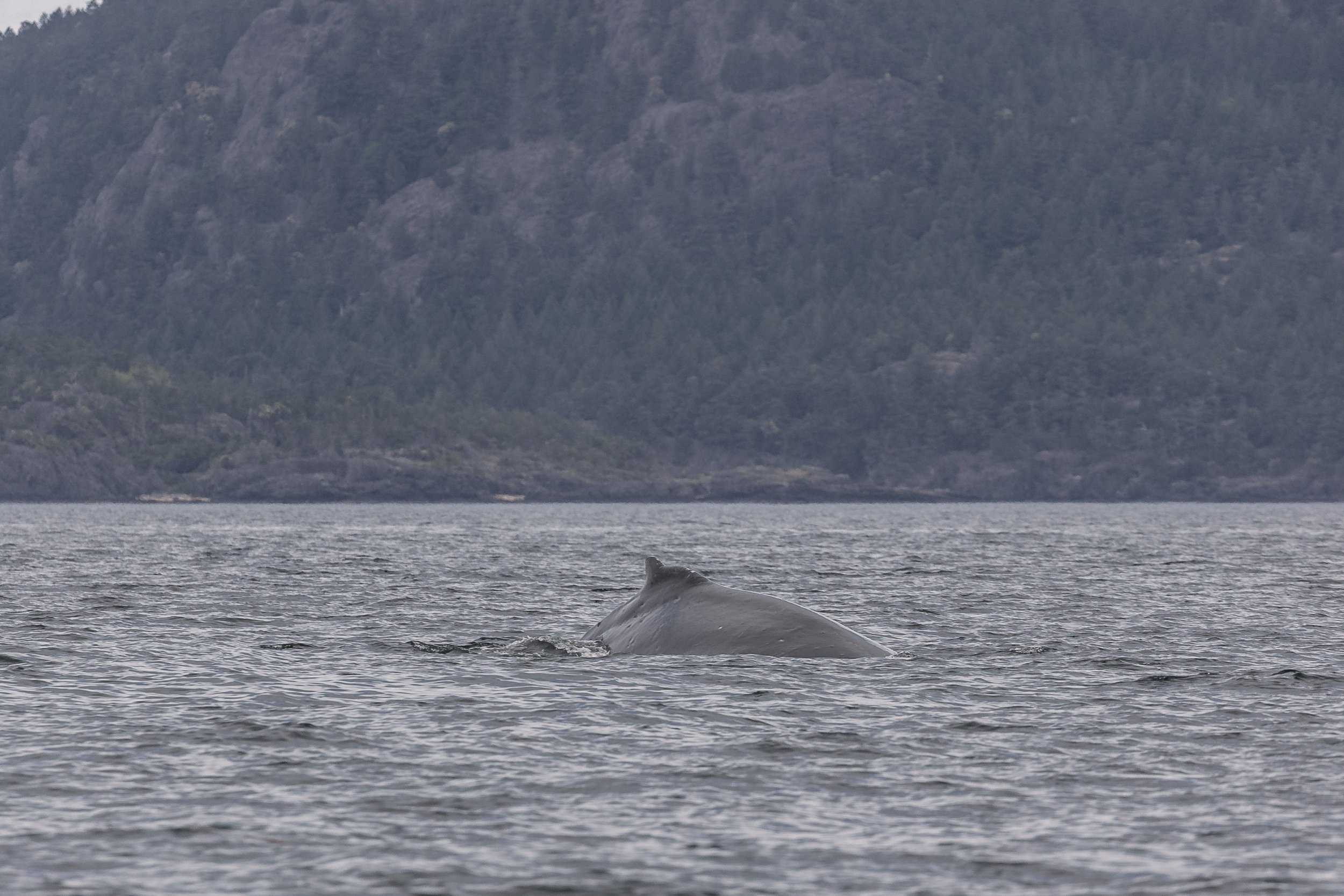
Olympus arching for a dive. Photo by Vanessa Vereschahen.
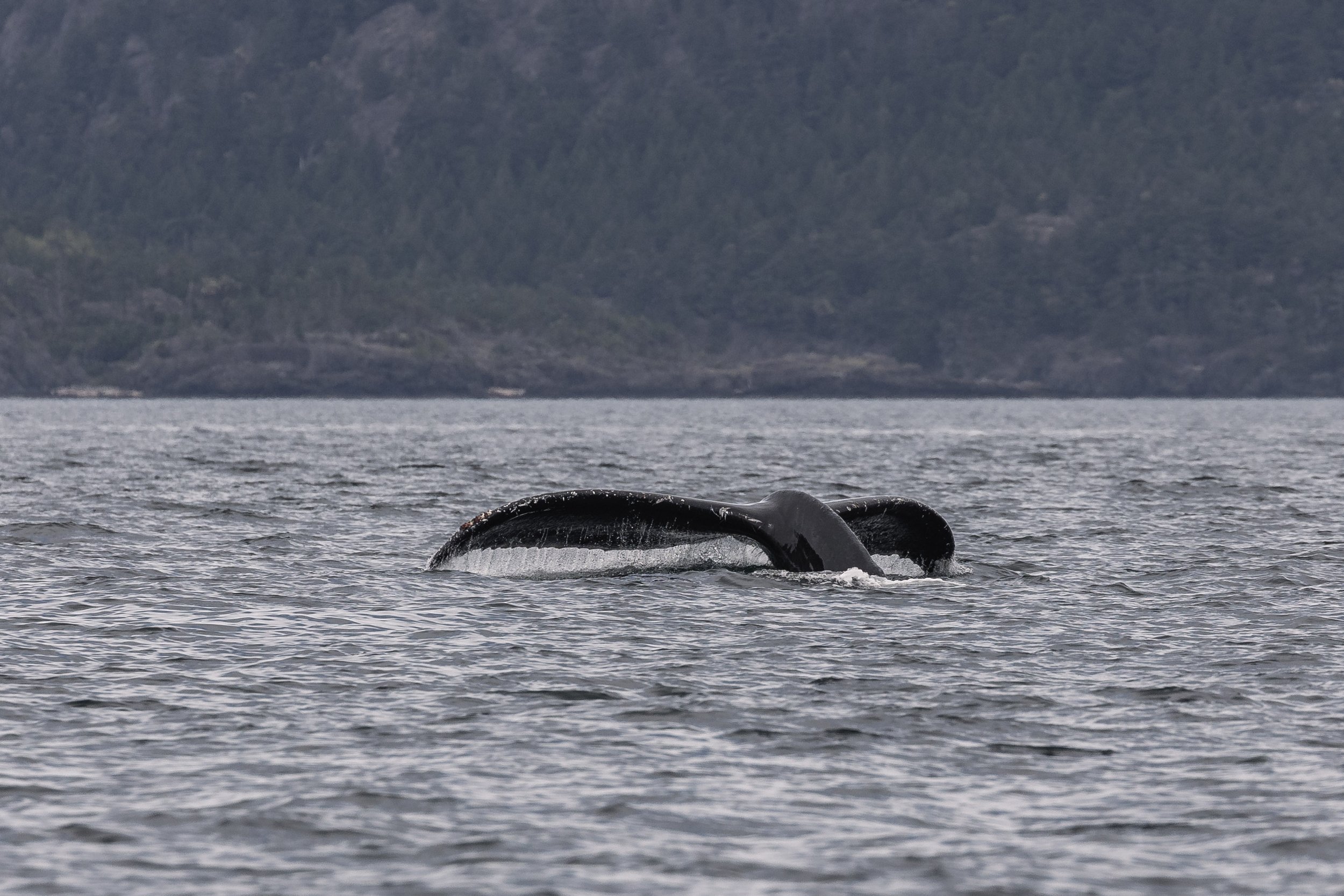
A beautiful fluke waterfall from Olympus as she dives. Photo by Vanessa Vereschahen.
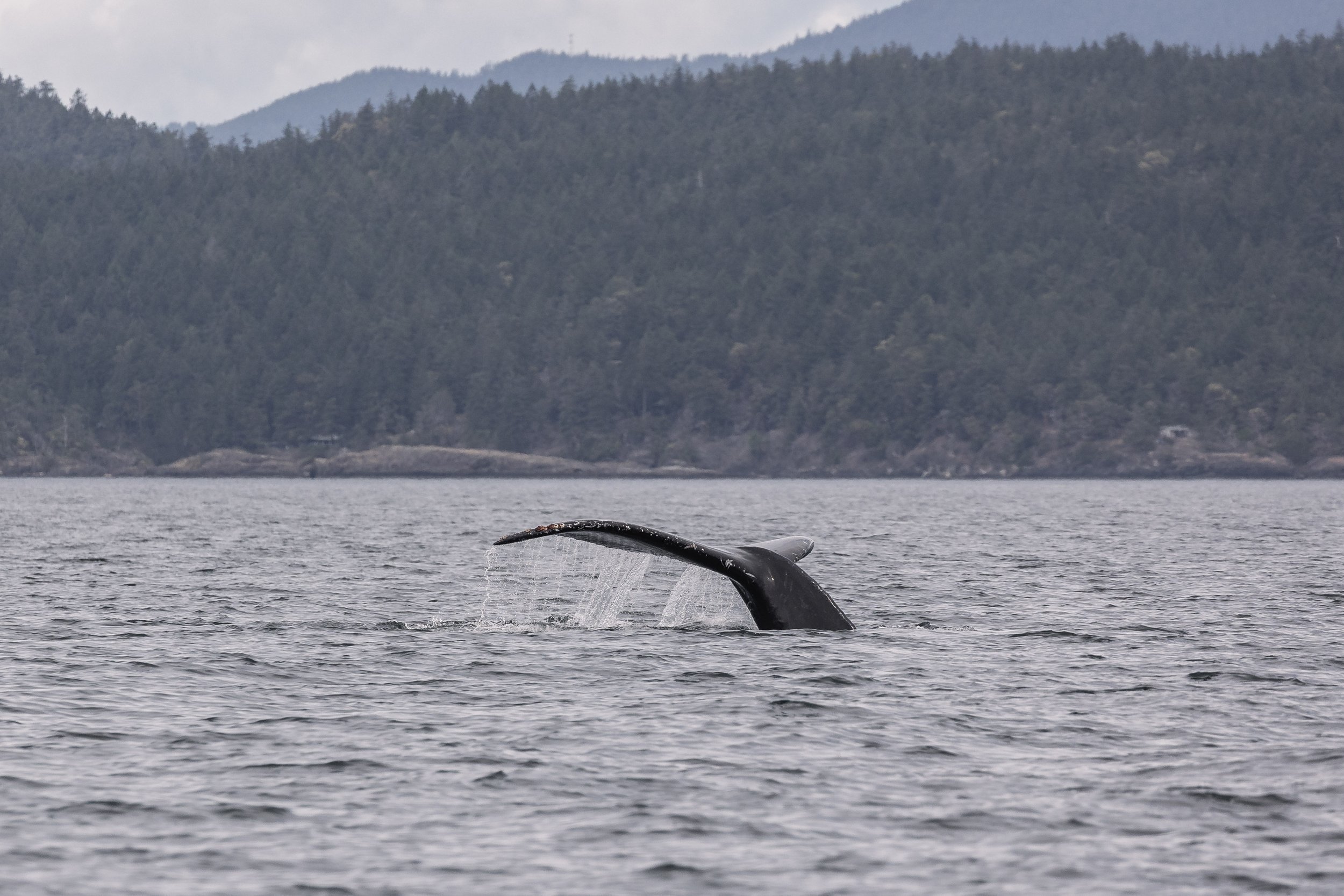
Olympus lifting her tail flukes high to propell a dive. Photo by Vanessa Vereschahen.
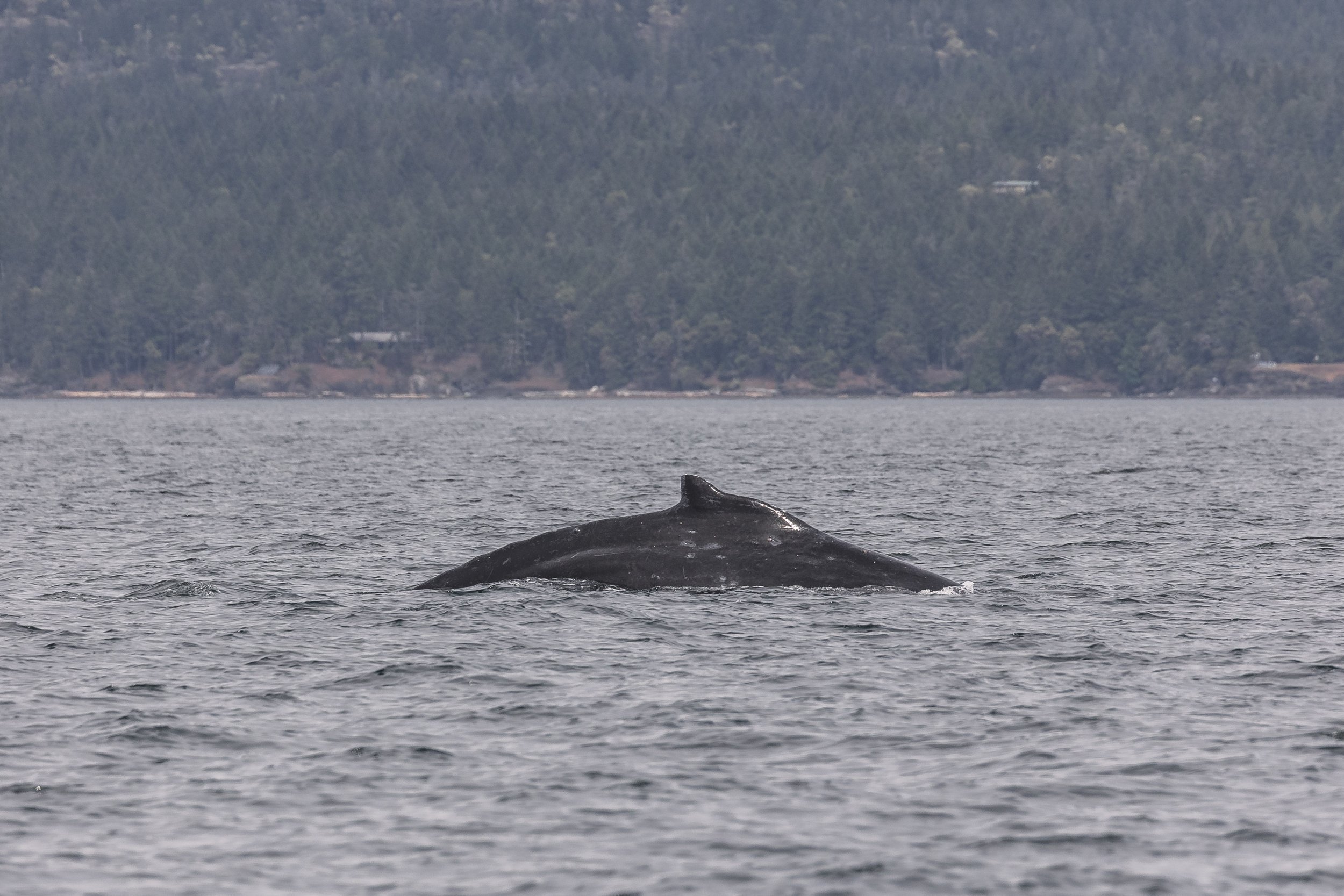
Olympus’ dorsal fin as she surfaces. Photo by Vanessa Vereschahen.
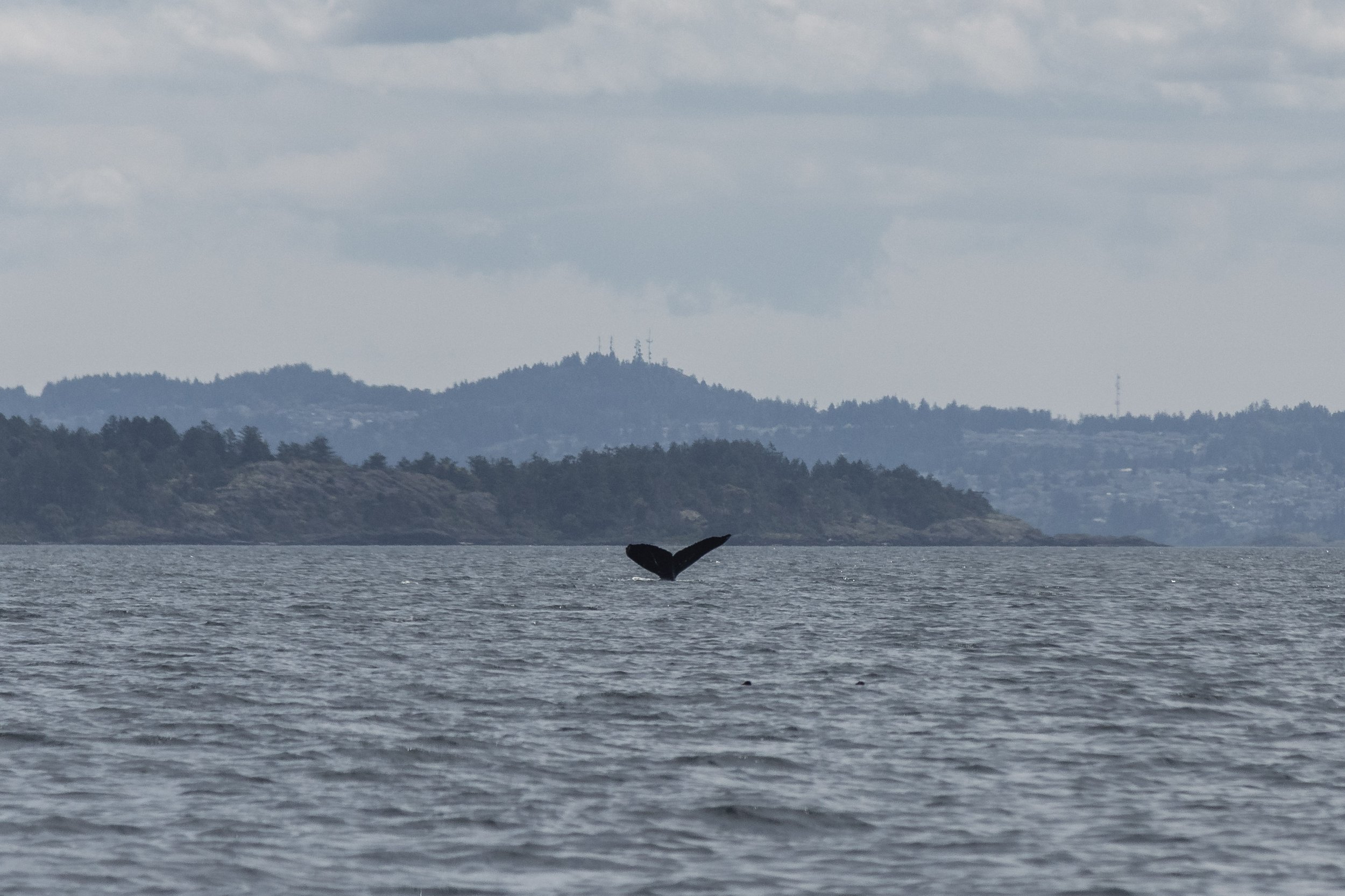
Olympus diving in the distance. Photo by Jordan Robinson.
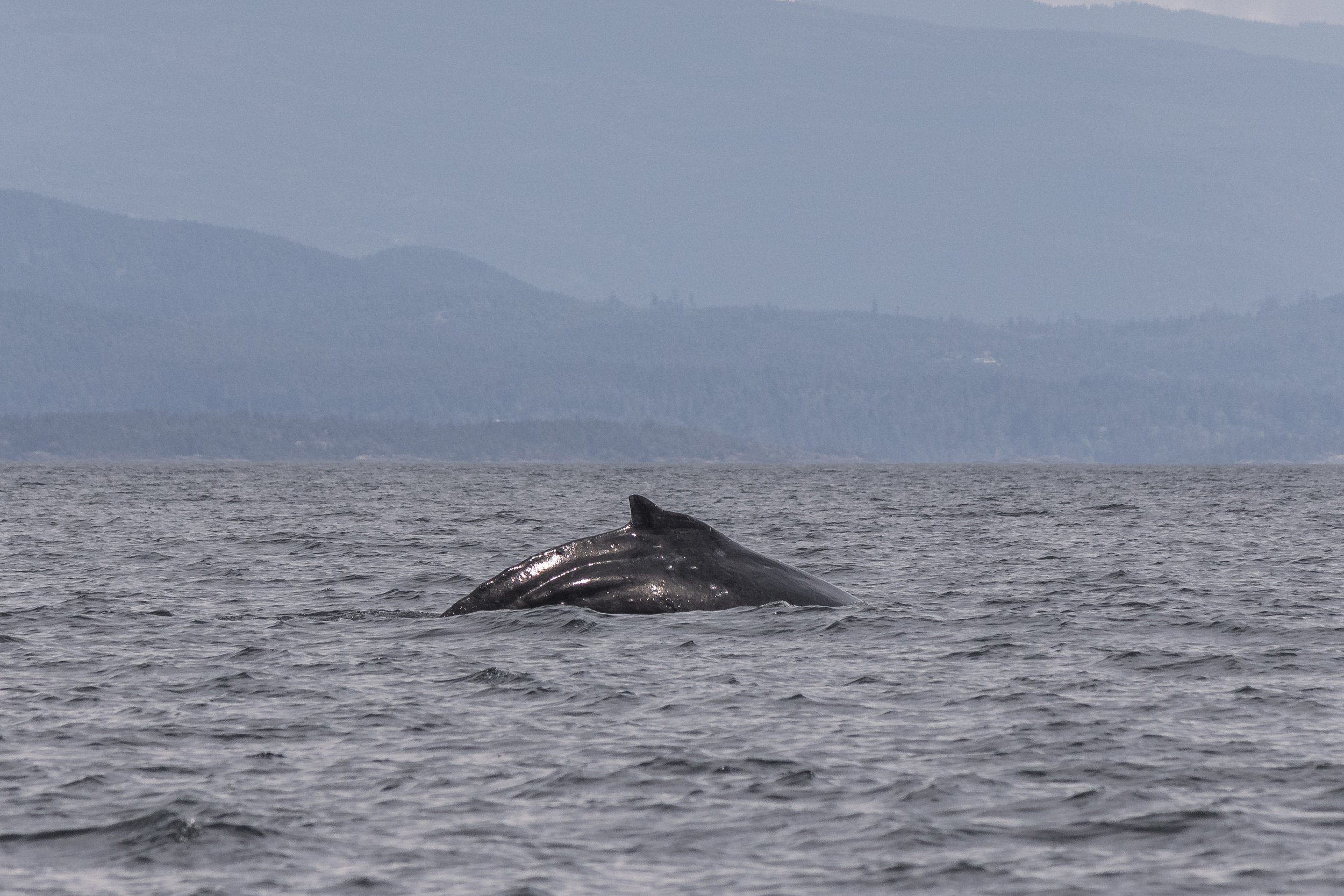
Olympus arching for a dive. Photo by Jordan Robinson.
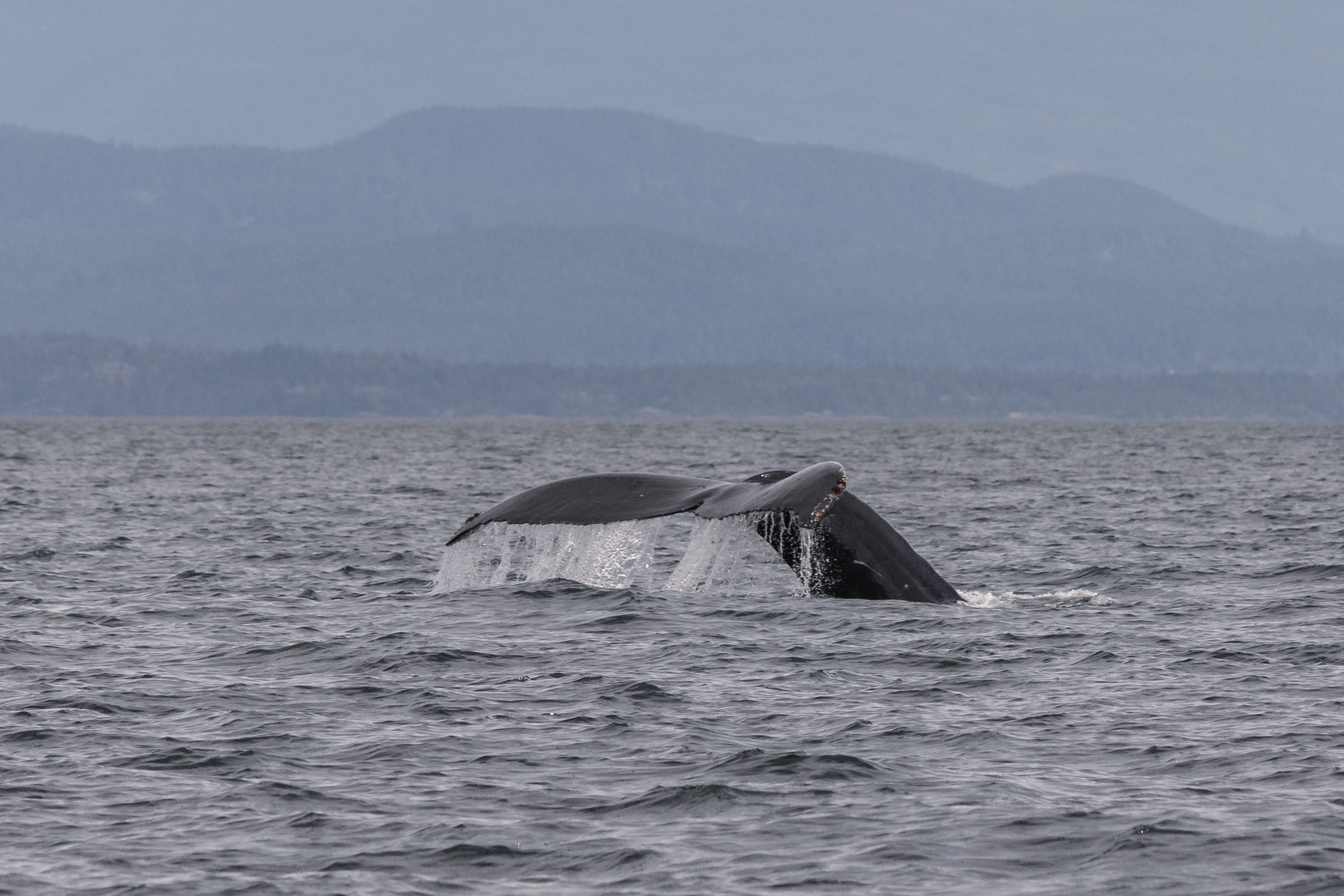
Another fluke waterfall from Olympus as she lifts her tail. Photo by Jordan Robinson.
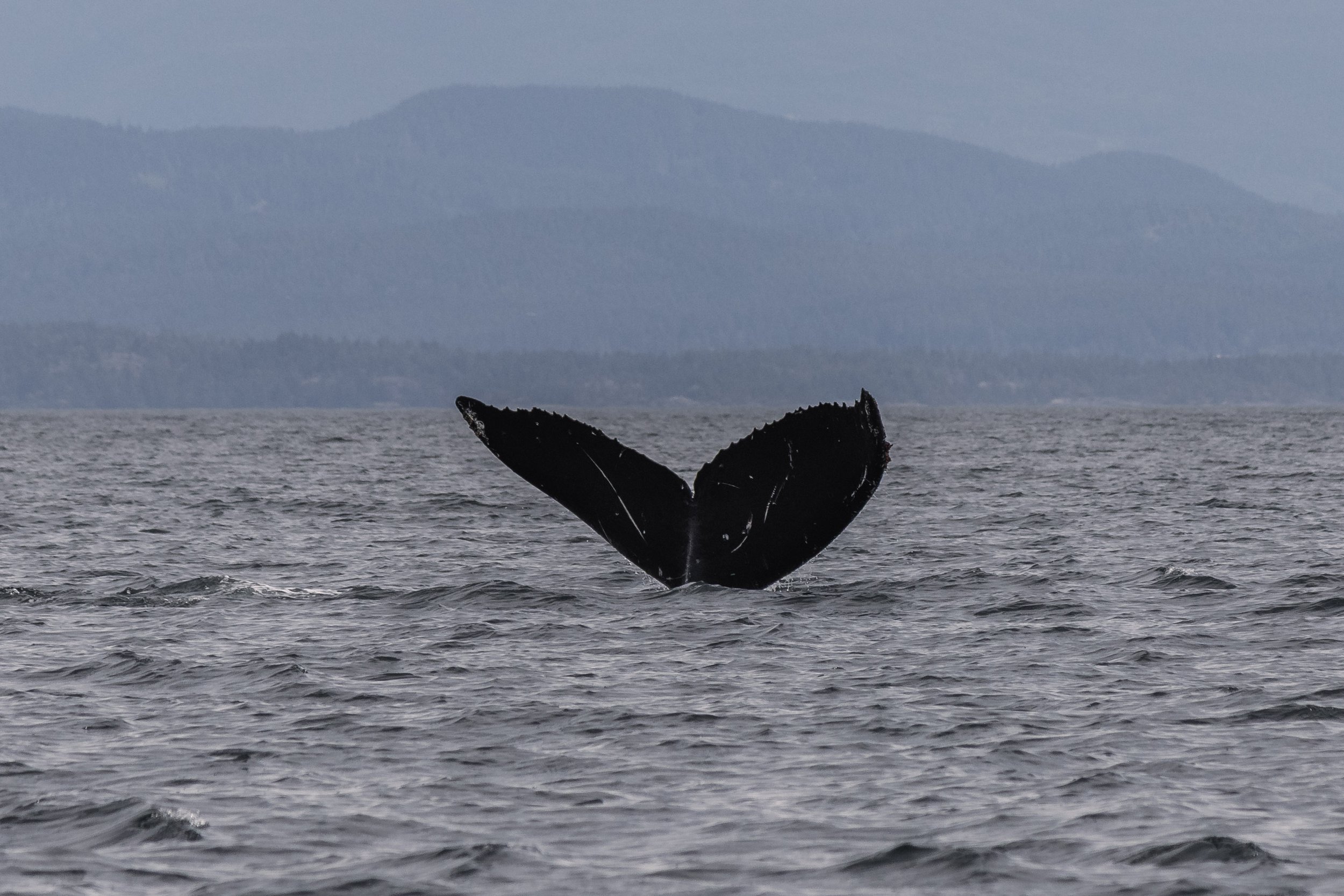
The underside of Olympus’ tail is what we use for ID. Photo by Jordan Robinson.
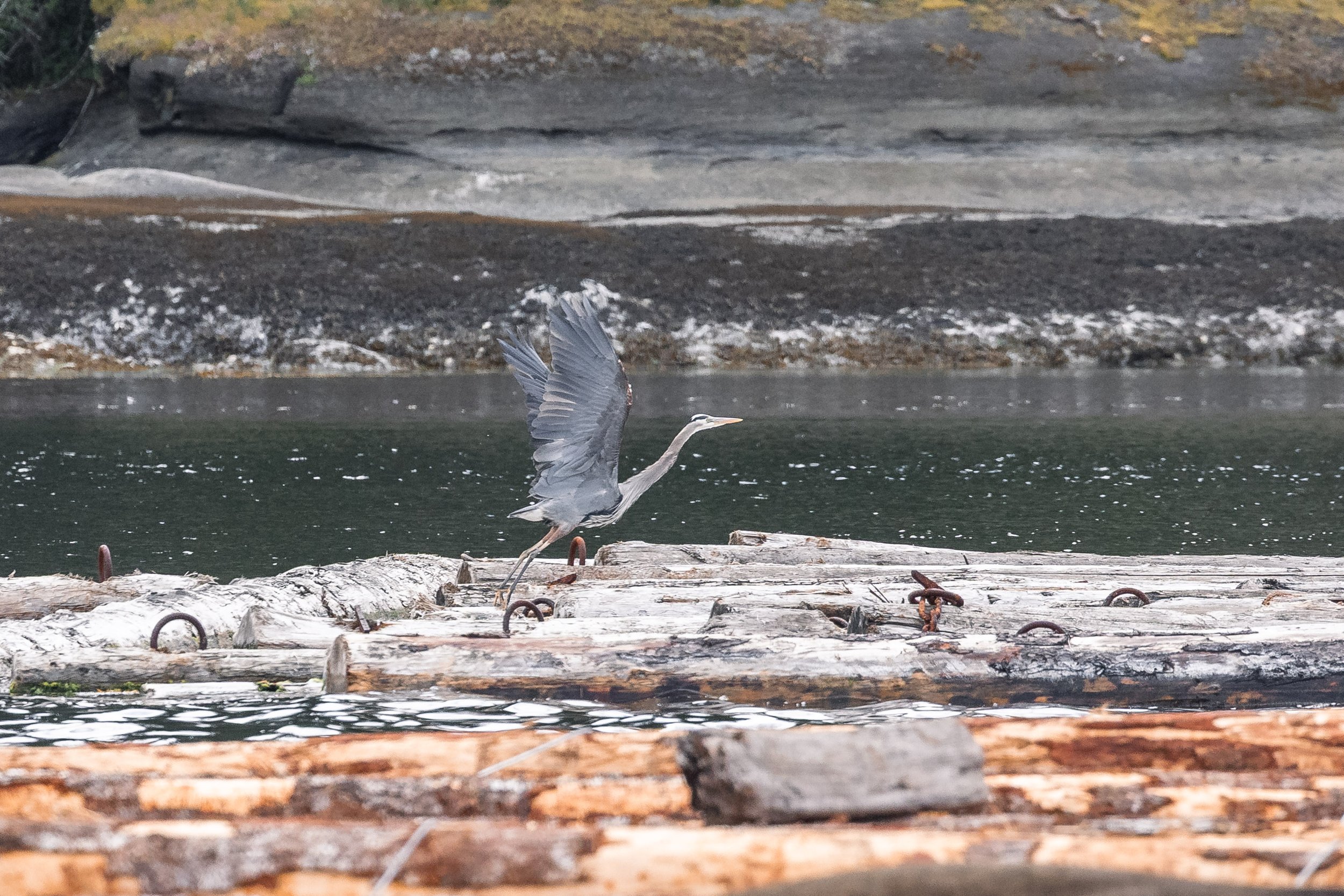
A Great Blue Heron flying off. Photo by Vanessa Vereschahen.
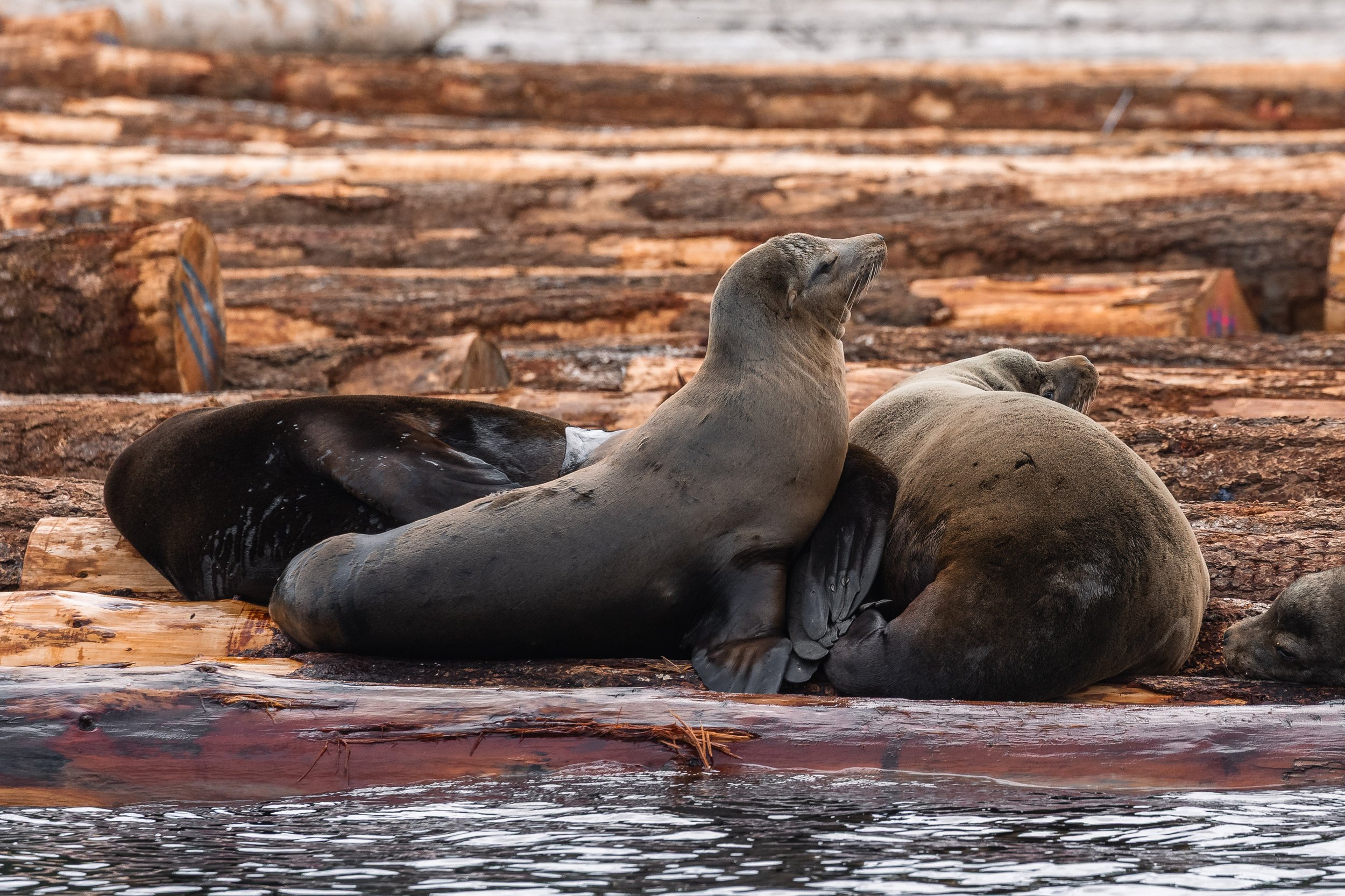
Sea lions getting cozy on the logs. Photo by Vanessa Vereschahen.
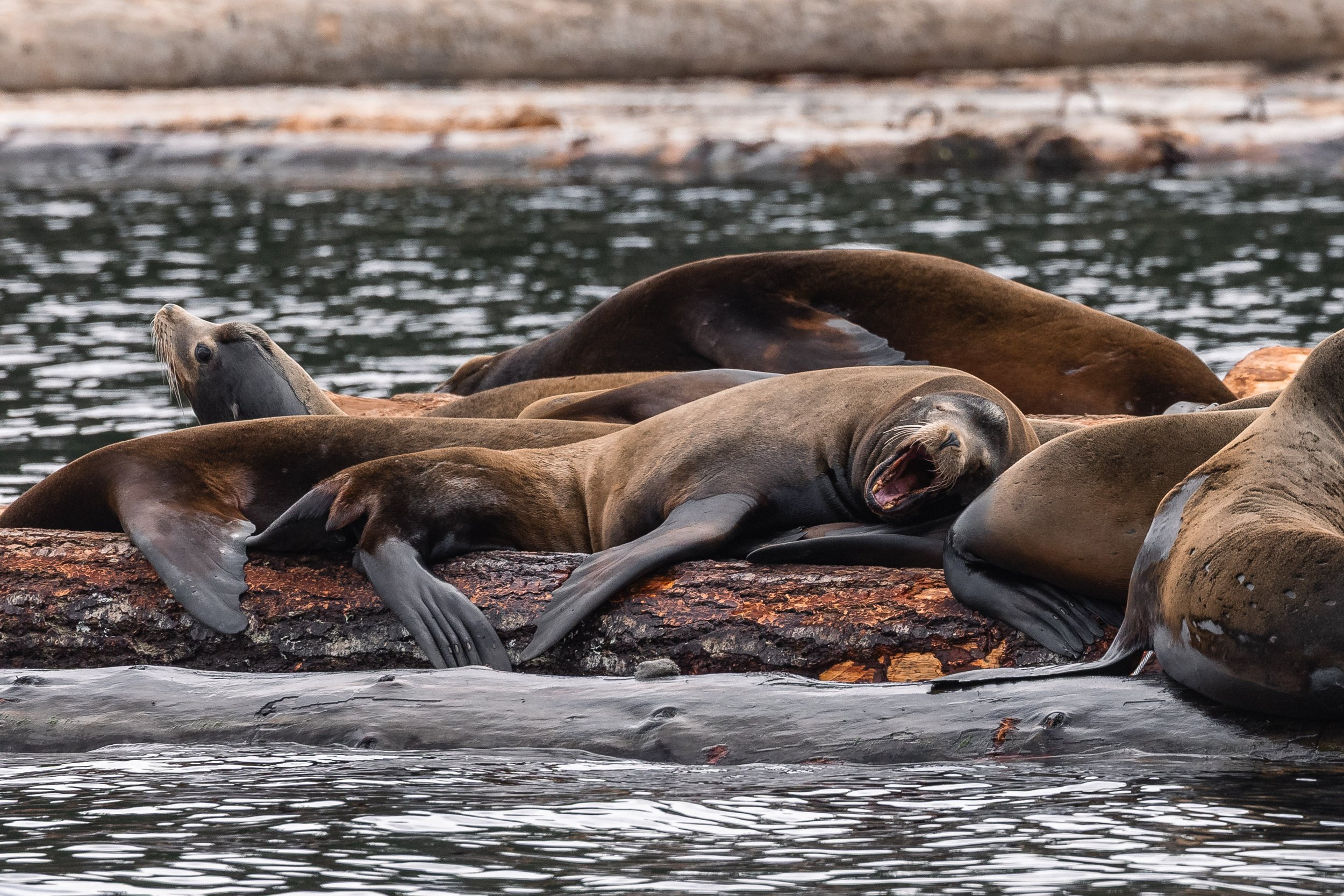
A big yawn from one of the California Sea Lions. Photo by Vanessa Vereschahen.
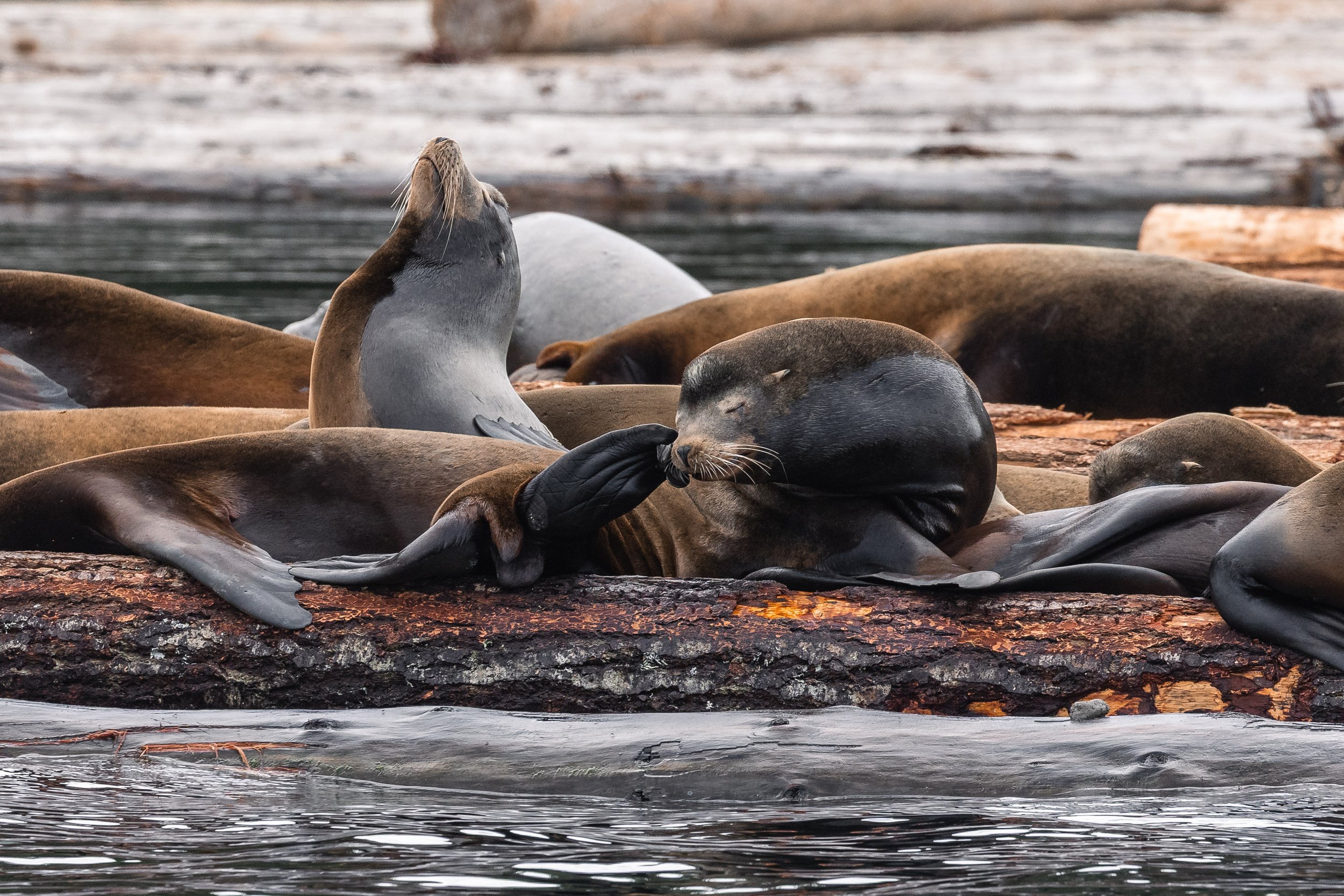
An ichy male California Sea Lion. Photo by Vanessa Vereschahen.
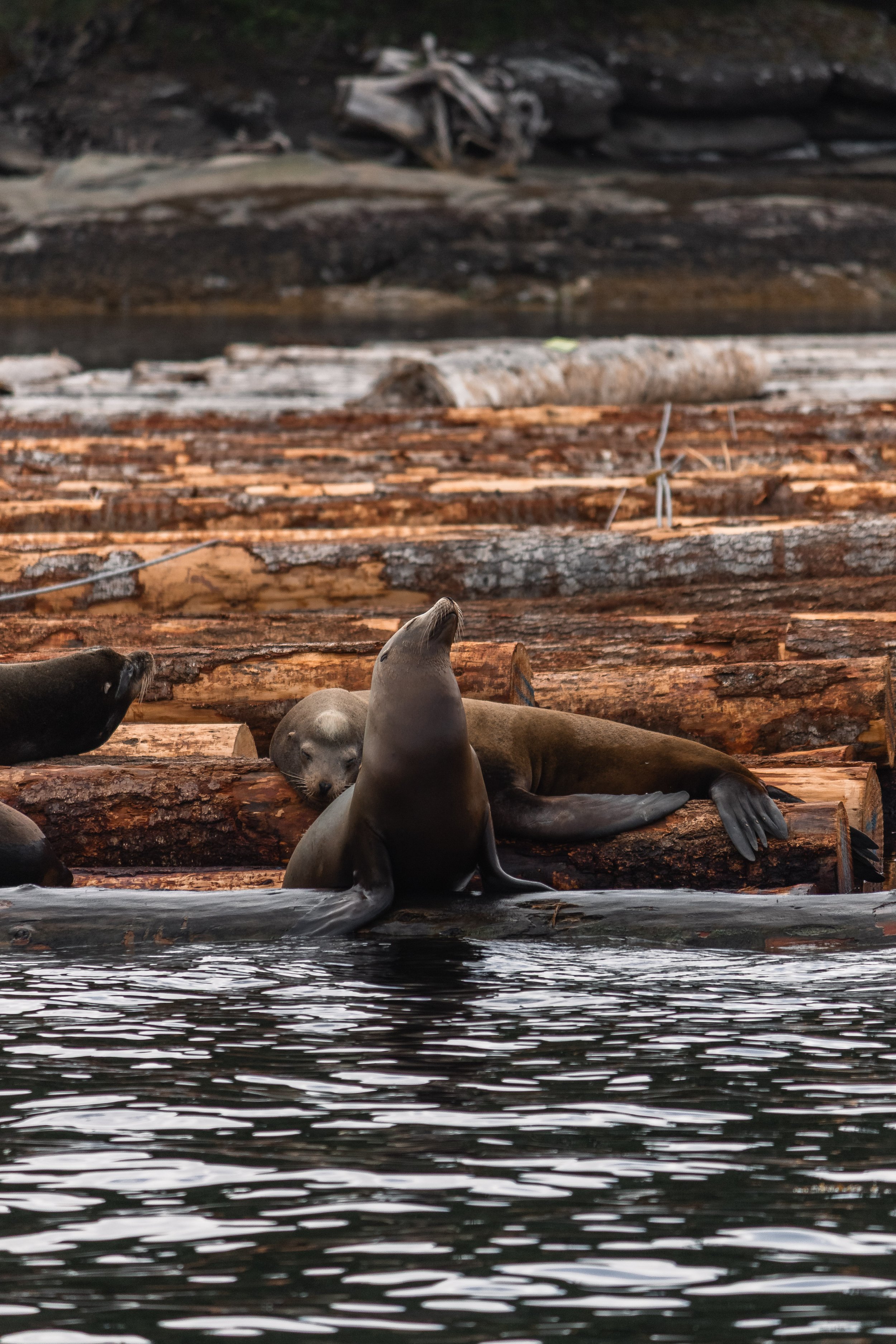
One of the Sea Lions striking a pose. Photo by Jordan Robinson.
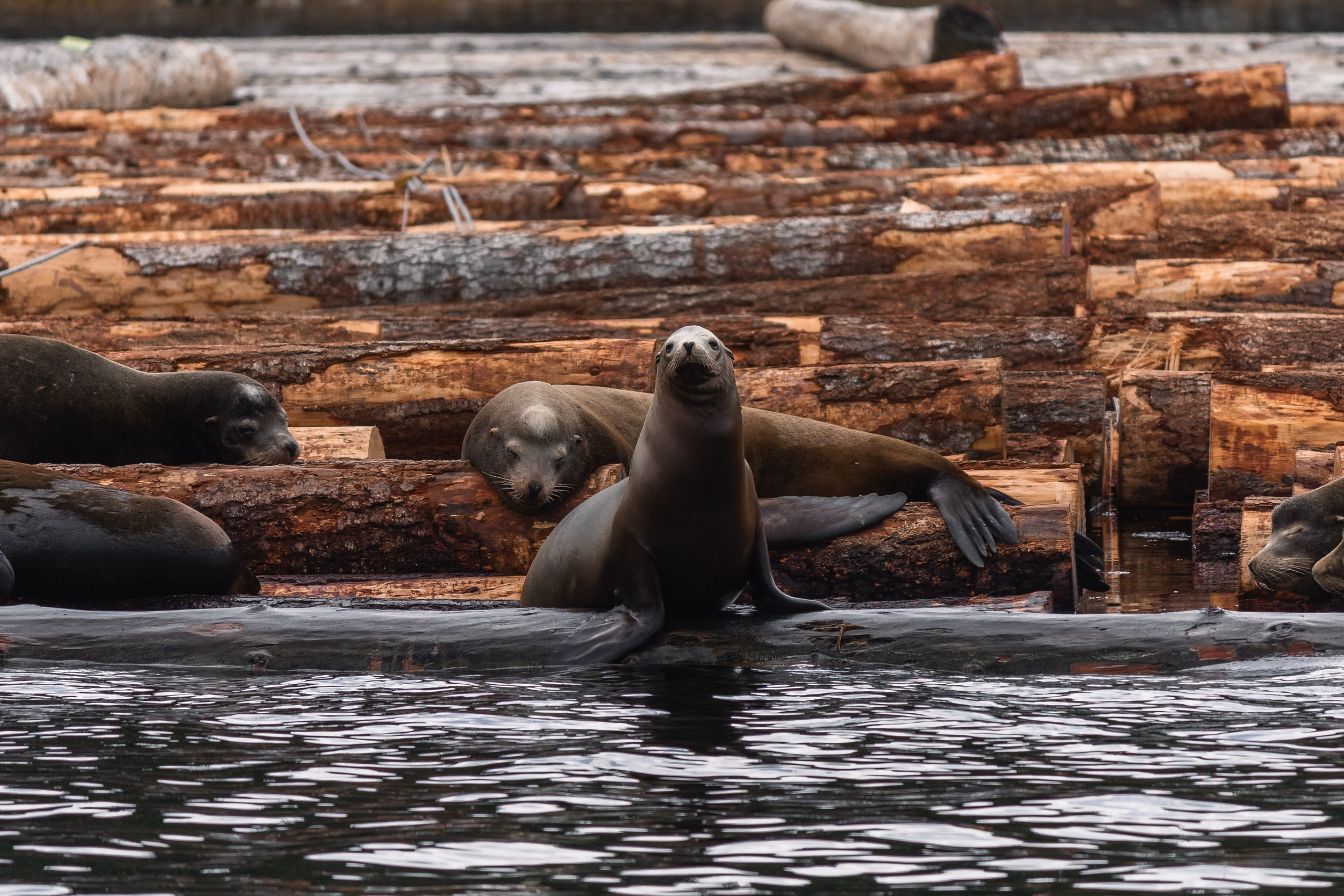
Can you spot the bones in the flippers through the thinner skin? Photo by Jordan Robinson.
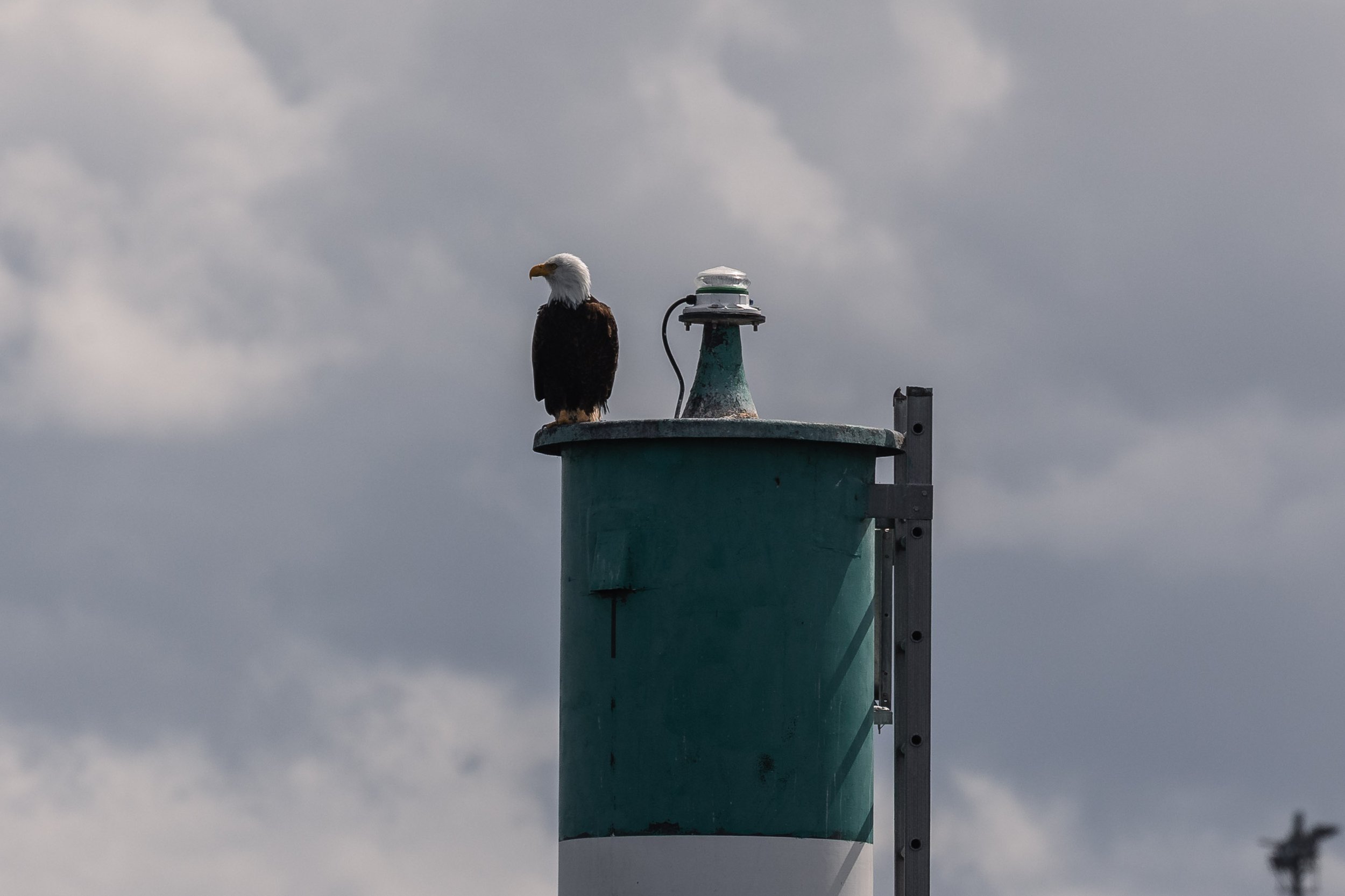
A Bald Eagle watching from a navigational marker. Photo by Vanessa Vereschahen.
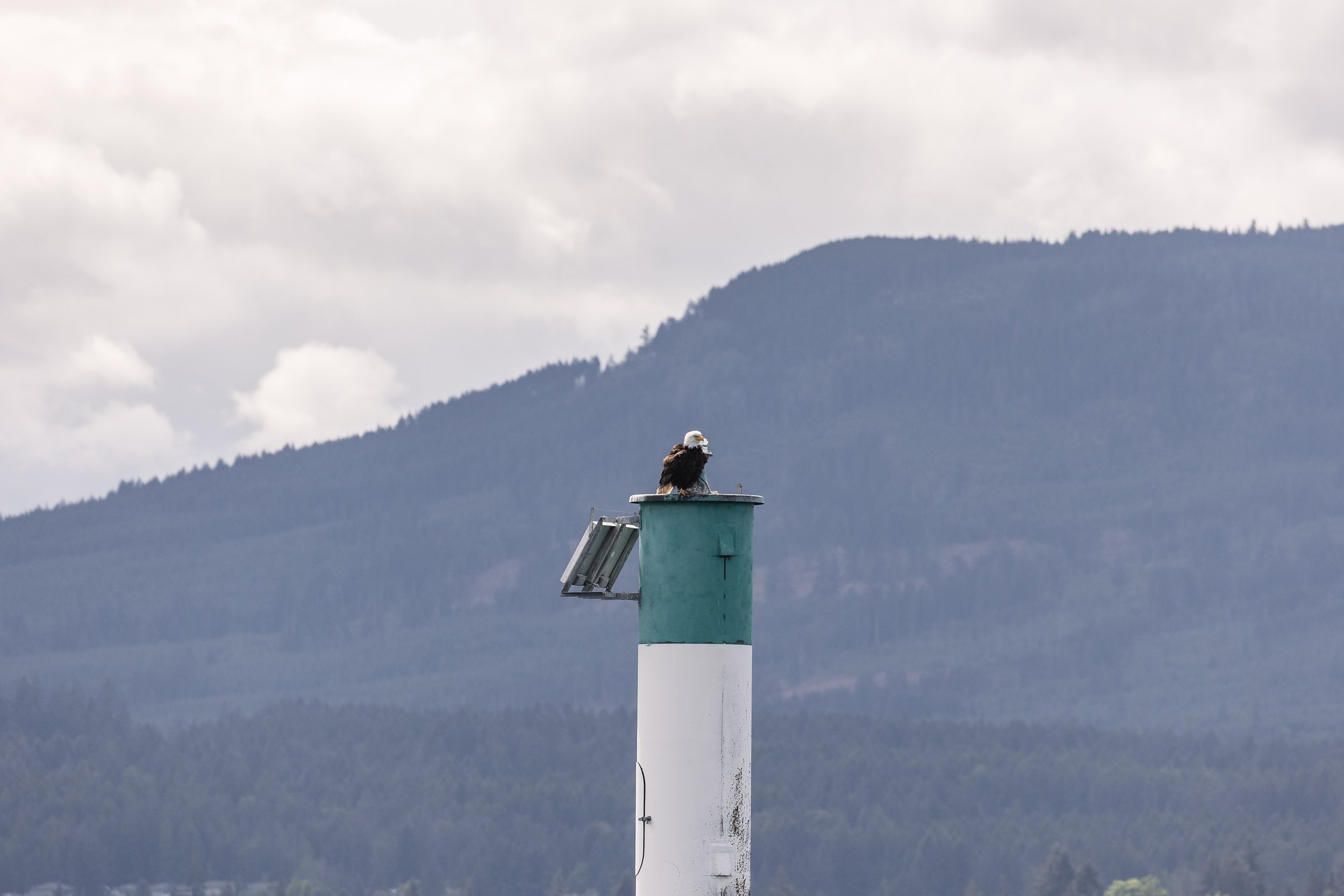
A Bald Eagle all fluffed up in the wind. Photo by Vanessa Vereschahen.