
May 18, 2026, 10:30 AM - The Humpbacks are back with a splash!
Conditions couldn’t have been better as our two boats left the Nanaimo Harbour. The sun was shining overhead, and the wind was barely a rustle through the trees, making conditions perfect for spotting wildlife. Both boats headed out into the open waters of the Strait of Georgia, eyes peeled for any signs of whales.
Spreading out to cover more ground, each boat spotted something around the same time. The open boat saw some blows in the distance, while the semi-covered vessel found itself a large floating barrel. After completing a quick marine debris rescue, they also found a whale while on the way to join the other boat.
This whale was being a little shy, moving through the water unpredictably and surfacing inconsistently in different directions. This likely meant that the whale was feeding, changing direction beneath the surface to chase down prey such as small schooling fish and krill. Since this whale wasn’t being as cooperative as the two the open boat had found, we left it to its lunch, and both boats spent some time with the next pair of humpbacks: Split Fluke (BCX1068) and Pingu (BCY1110)!
These two were being a bit more cooperative in their feeding endeavours, surfacing beside each other several times to breathe before lifting their tails and dipping back below the surface, likely in search of prey of their own. Similar to the other whale, these two weren’t travelling directionally at first, circling the area while they dove and taking advantage of what must have been rich feeding grounds.
Feeding is specifically what these whales are here in BC to do, since they have just returned from a long migration south to their breeding grounds. While they are in either Hawaii or Mexico (Mexico in Split Fluke’s case), they won’t have nearly as much food available to them. This means they rely on burning through the fat reserves they built up over the summer months here for their primary energy source. That’s why feeding is so important for our whales, especially in the early season like now. They need to consume about 3,000 pounds of food each day to meet their energy requirements, which can take up nearly 20 hours of their day.
Getting to watch these giants move through the water, lifting their tails with such grace, was an amazing sight, and we enjoyed every moment of it. Eventually, however, it came time to leave them to it. We do our best to minimize our impact on whales, and one way we do this is by limiting the time we spend with them. Once we’ve been observing them for 30 minutes to an hour, we move on. As we were doing so today, something caught our eye in the distance; we could see a whale jumping out of the water!
This energetic behaviour, known as breaching, requires a significant amount of energy for these whales: around 1% of their daily energy expenditure, equivalent to a human running an entire marathon. We watched these whales repeatedly launch themselves out of the water as we approached, continuing the activity after we arrived with another breach, along with many tail slaps and pectoral fin slaps. It turned out to be two humpback whales engaging in all of this activity. Kelpie (BCY1276) led the charge, while companion HW-MN0510858 joined in with a few tail slaps and pec slaps of their own!
Seeing this sort of activity from the whales is spectacular, especially since it’s not very common this early in the year. As mentioned, the whales are primarily focused on rebuilding their fat reserves while they’re here, but there are a few possible reasons why they might spend this much energy. One leading theory is that they are trying to knock off the barnacles that begin to grow on their bodies. These barnacles thrive in warmer waters, where their free-swimming larval stage is most abundant, and they settle onto whales in their breeding grounds. Over time, the barnacles grow and can eventually become cumbersome for the humpbacks, who then need to try to remove them. Unlike us, who can use our dexterous fingers to remove parasites from our bodies, humpbacks must resort to more extreme measures, like breaching and slamming their 30-tonne bodies back onto the water in an attempt to dislodge some of these hitchhikers. You’ll notice the barnacles on all of the whale photos below! They aren’t considered parasites because they can provide some protective benefits to the whales, but when they are too abundant, they can decrease the whales’ swimming efficiency.
No matter why these whales were displaying all of this surface activity, we felt lucky to have witnessed it. Towards the end of our time with these two playful whales, after they had calmed down a bit, a third whale actually joined them. Much to our surprise, after reviewing the photos, this was the same unknown that the semi-covered boat had seen before joining with Split Fluke and Pingu! Unfortunately, our viewing time had come to an end, so we continued on. Our sights were set on one of the common places to find pinnipeds in the Strait, so both captains pointed their bows toward the White Islets. Once we arrived, we could immediately see why this spot is so popular — the rocks were covered with Steller Sea Lions!
These sea lions are always show-stoppers thanks to their massive size and big personalities. They are constantly clambering over the rocky shoreline and over each other, grumbling loudly along the way. We even got to see one of the large males there, which really puts into perspective that these are the largest sea lion species in the world. This big guy may have weighed up to 2,500 pounds, while the smaller females nearby were likely closer to 800 pounds. Next to these massive animals, the Harbour Seals looked tiny, though they are still impressive in their own right, weighing up to around 300 pounds. Seeing the two species side by side on the rocks made for a great comparison!
From there, the boats split up to continue their search, and the semi-covered vessel had one final humpback whale encounter on the way back into Nanaimo. Again, this whale was active in the distance, making it easy to spot, but by the time we arrived, it had settled down. We did get to see the whales swimming on their sides, with one whale’s fluke sticking partway out of the water, allowing us to identify Ulli (BCY0946calf2024). While on scene, we didn’t immediately recognize the dorsal fin of Ulli’s companion, but after some investigating, the whale was identified as Wiggins (BCY1469). These two split up right as we arrived and started heading in separate directions, so perhaps the activity that first caught our attention was some sort of goodbye between them.
The final stop for both vessels was at the Gabriola Bluffs, where we enjoyed seeing wildlife taking advantage of the tall sandstone cliffs as nesting habitat. It’s mostly cormorants that catch the eye here, flying in and out from the cliffs carrying nesting materials in preparation for the breeding season. Their stark black feathers stand out beautifully against the orange cliffs, making them easy to spot, though some of the other inhabitants are not as easy to see. Cliff Swallows also use the small caves and crevices here to nest, along with Pigeon Guillemots and other seabirds. We could have stayed there watching the birds for hours, but time was running out on this morning’s tour, so we reluctantly pulled our attention away and began the journey back to Nanaimo.
It was an amazing day on the water, and we returned to the dock feeling lucky to have seen so many whales and so much activity from them! Please enjoy the photos from the tour below, captured by Marine Naturalists Val Watson and Vanessa Vereschahen.
Unknown Humpback
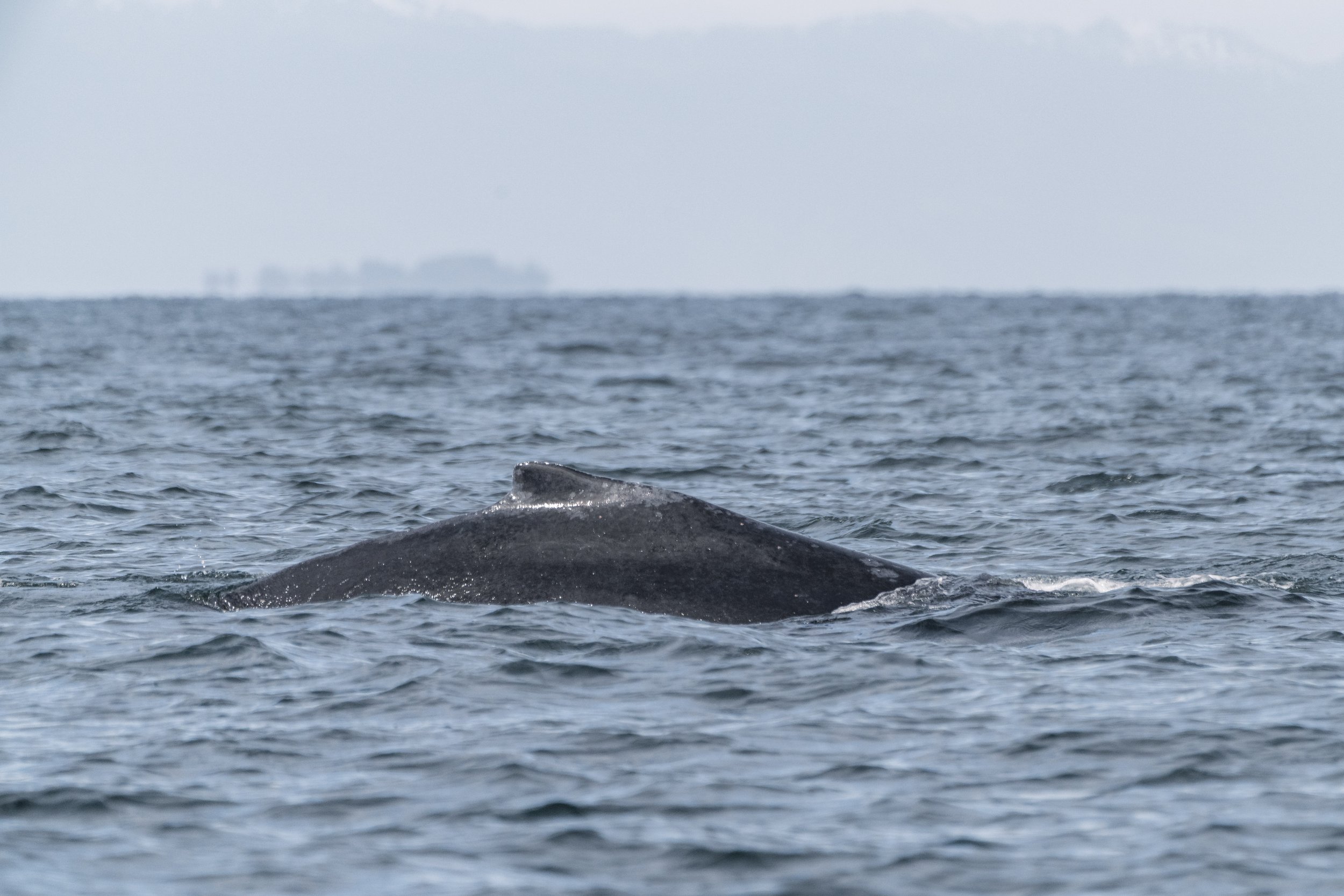
The Unknown humpback’s dorsal fin. Photo by Val Watson.
Split Fluke and Pingu
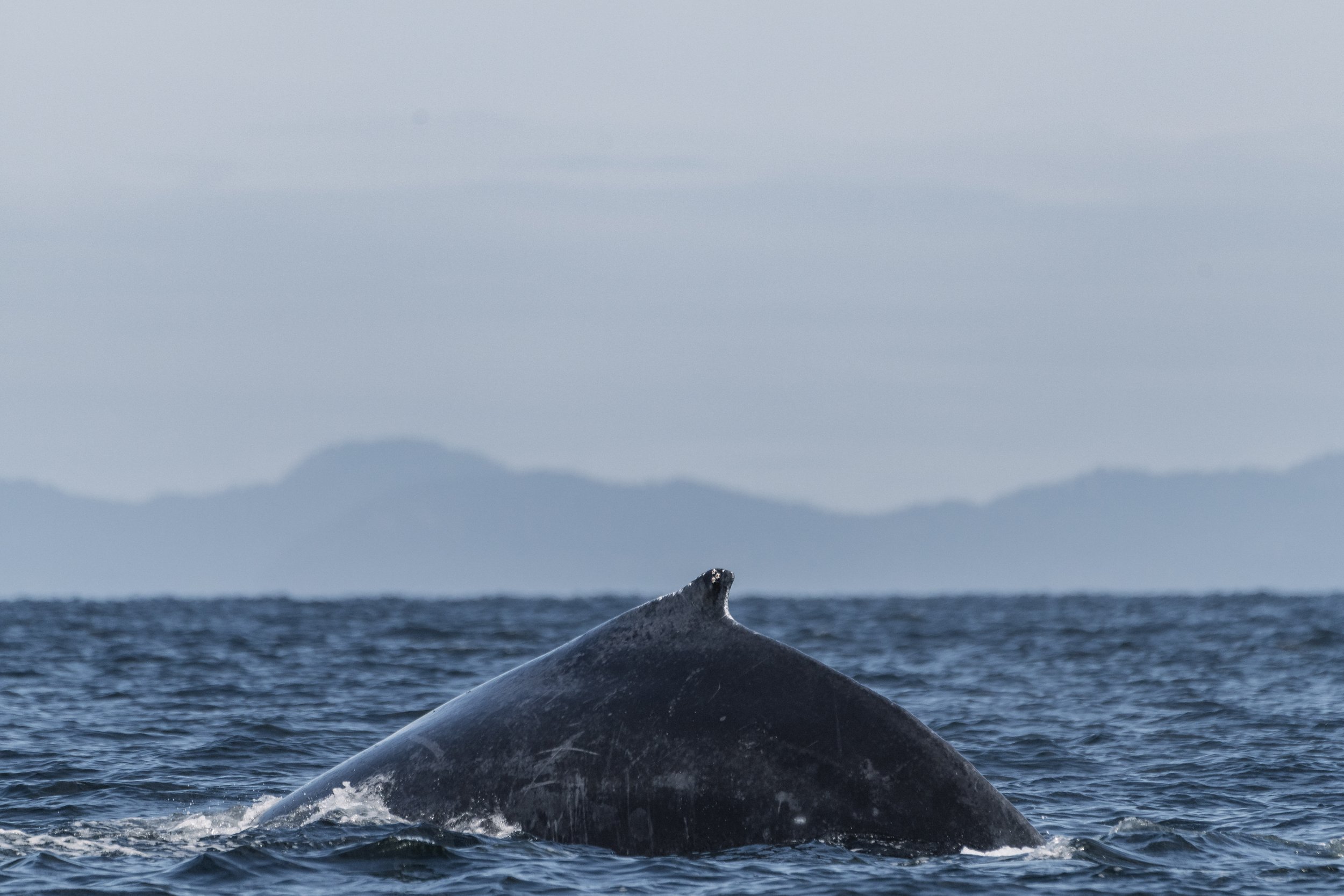
Pingu going for a dive. Photo by Val Watson.
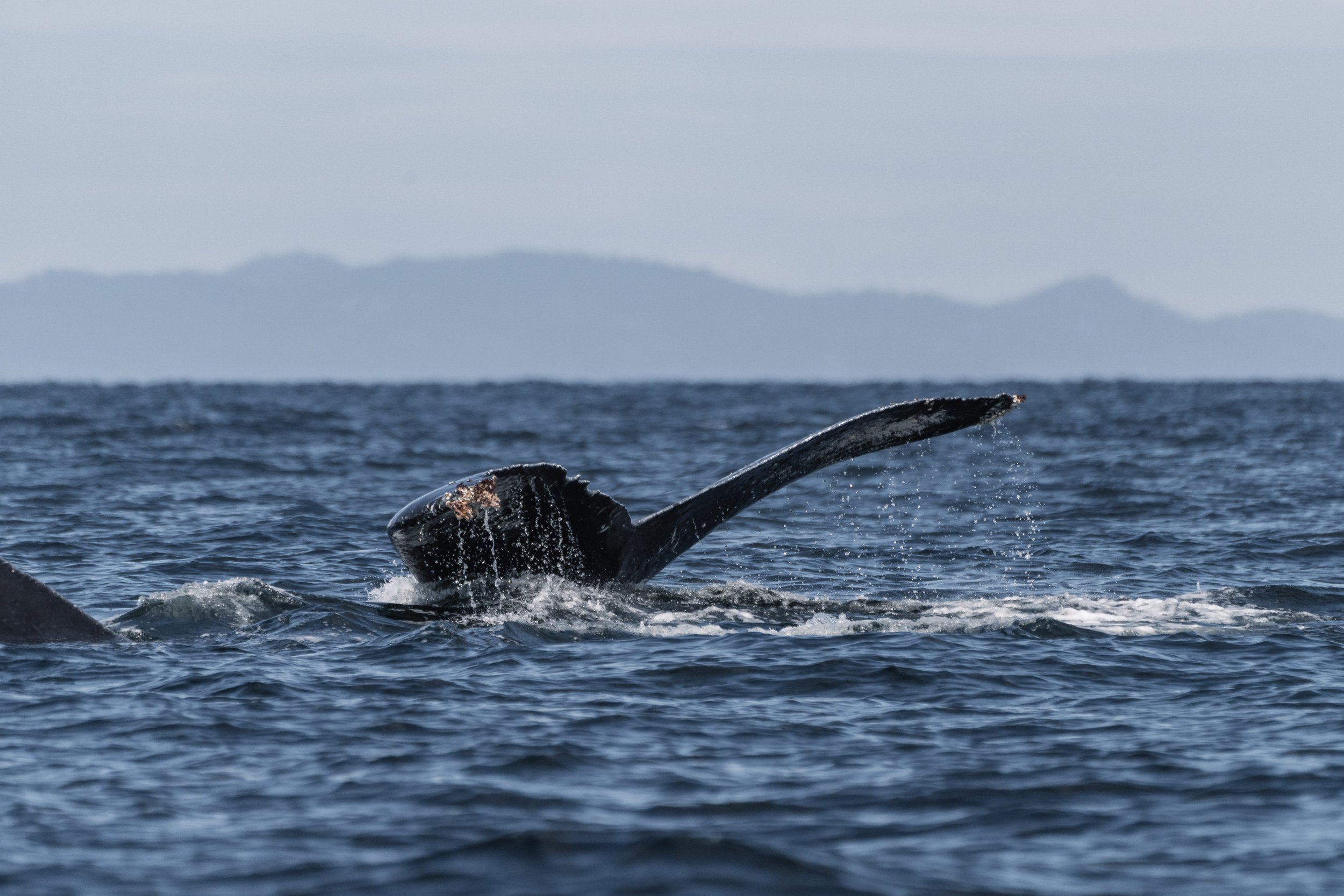
The underside of Pingu’s fluke. Photo by Val Watson.
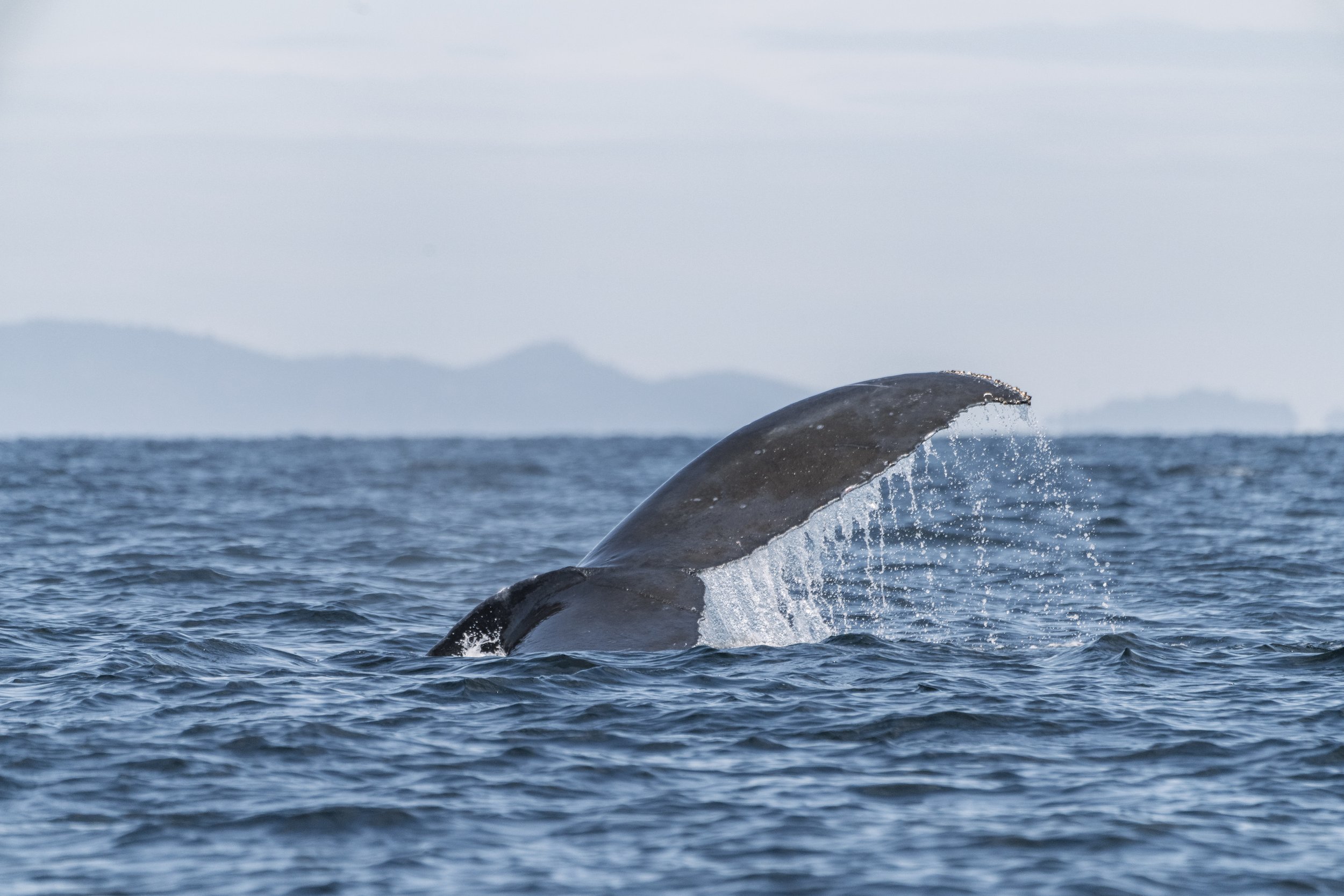
Split fluke putting her tail up sideways. Photo by Val Watson.
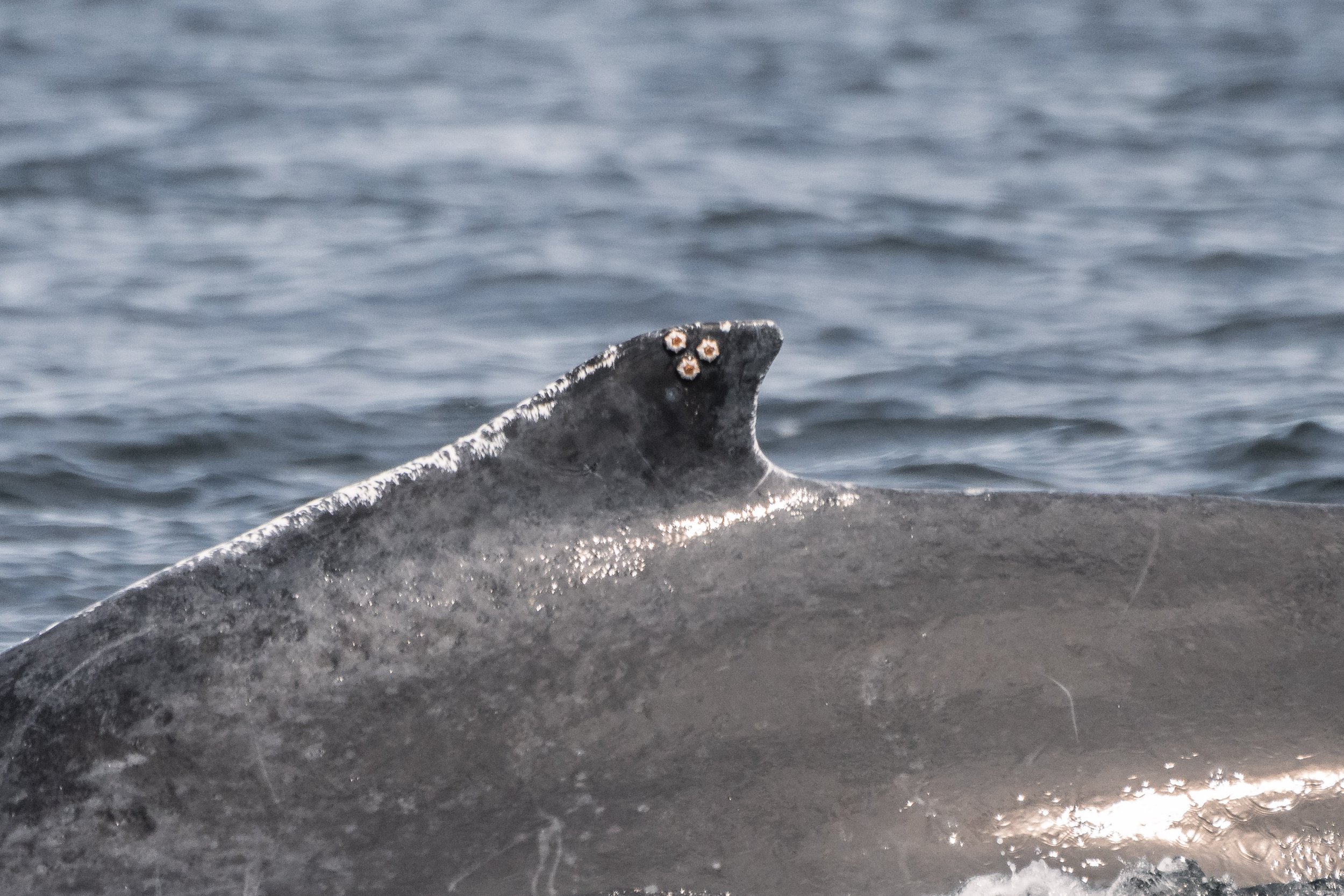
A trio of barnacles on Pingu’s dorsal fin. Photo by Val Watson.
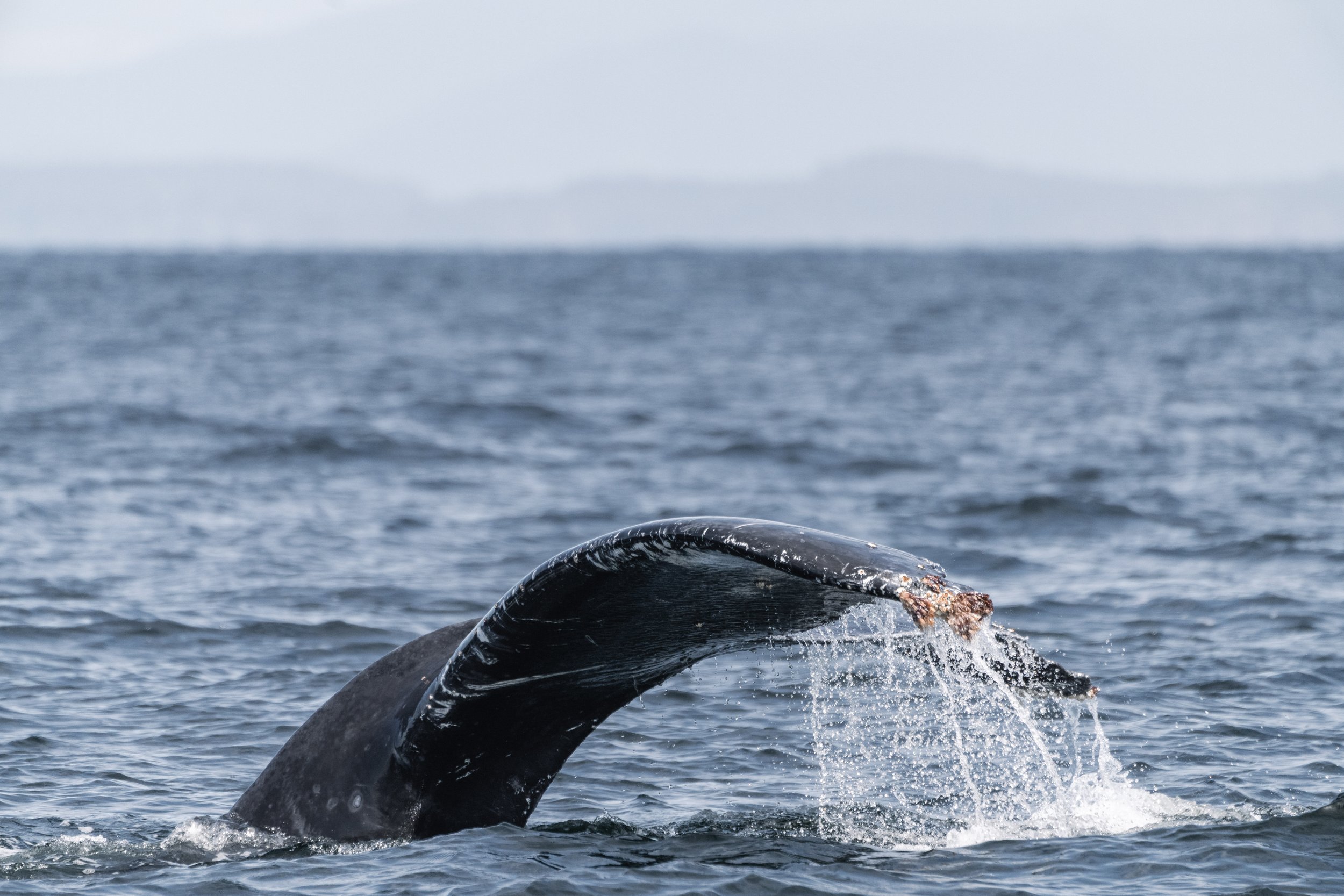
Pingu going for a dive. You can see the entanglement scarring here, as well as the barnacles hanging off the side of their tail! Photo by Val Watson.
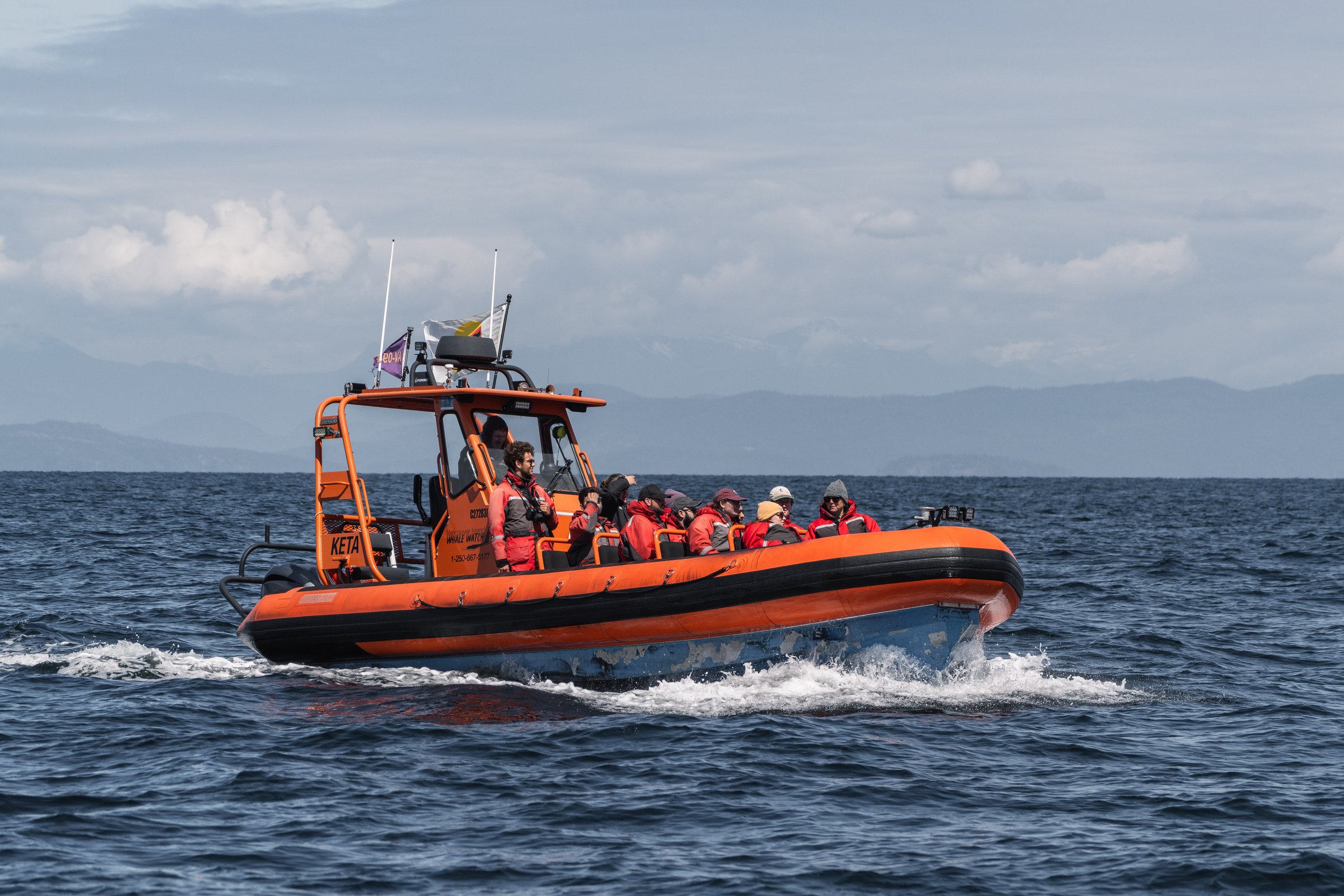
Happy whale watchers on the open boat. Photo by Val Watson.
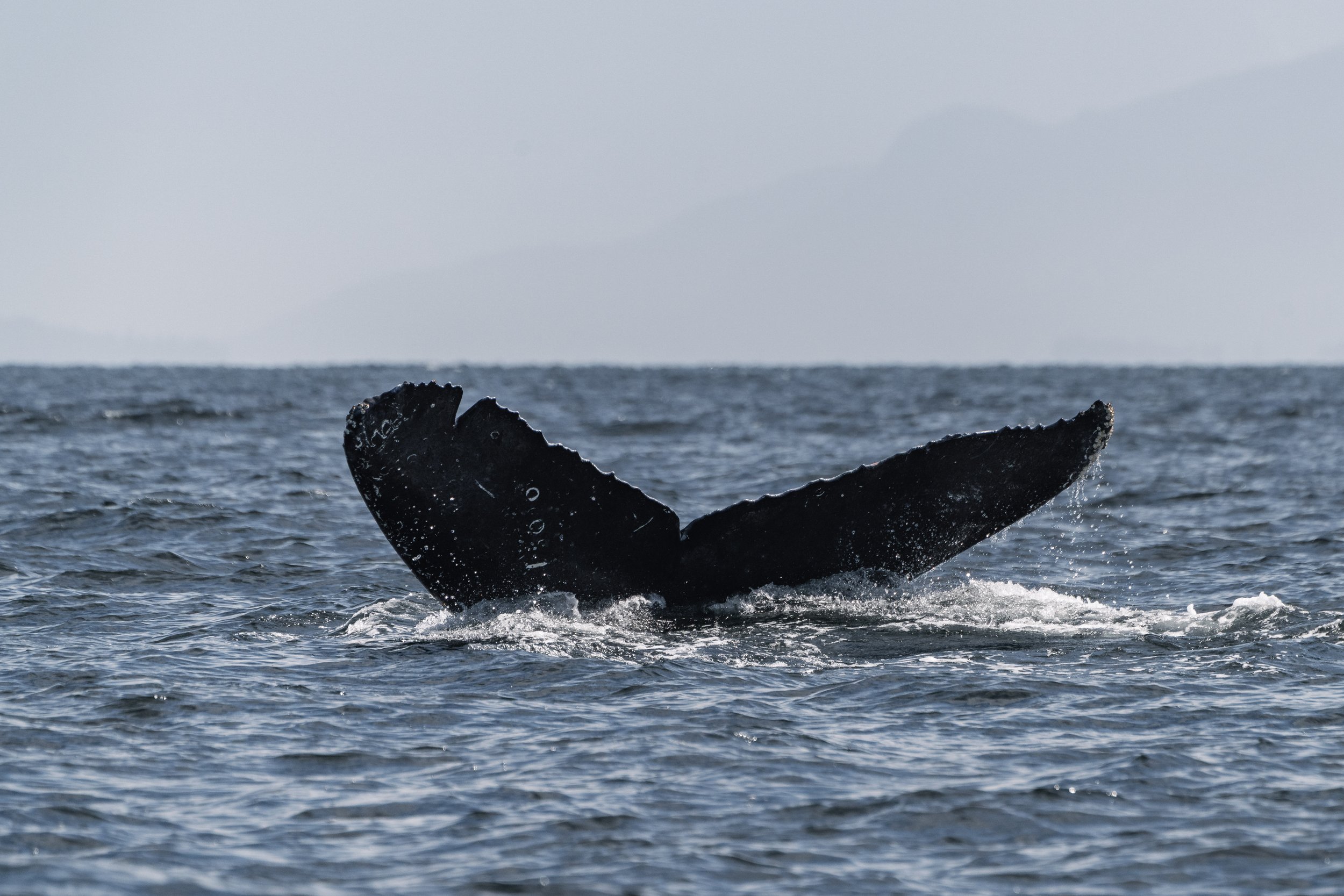
The underside of Split Flukes tail, showing off the notches that give her her name. Photo by Val Watson.
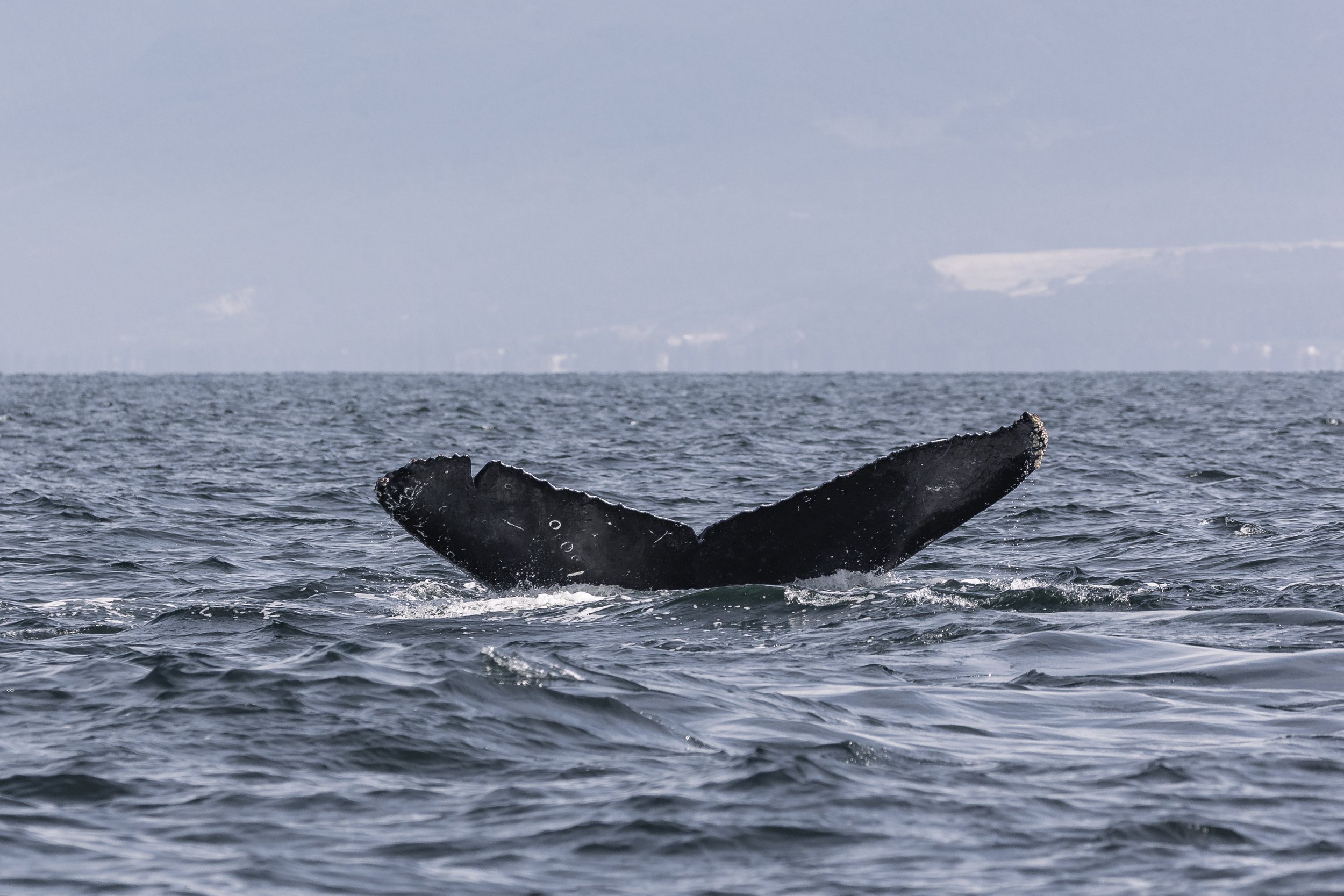
Split Fluke going for a dive. Photo by Vanessa Vereschahen.
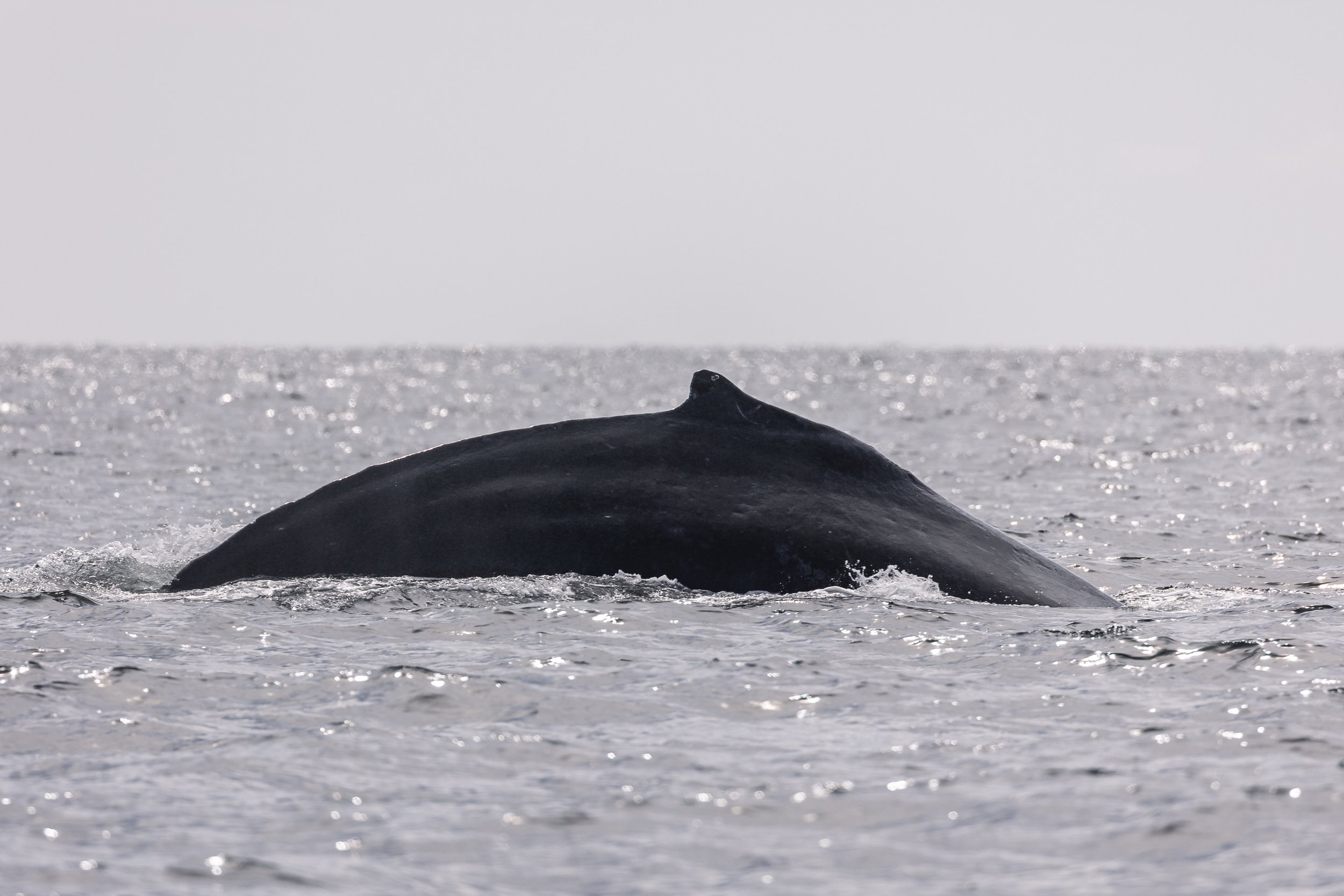
Split Fluke arching for a dive. Photo by Vanessa Vereschahen.
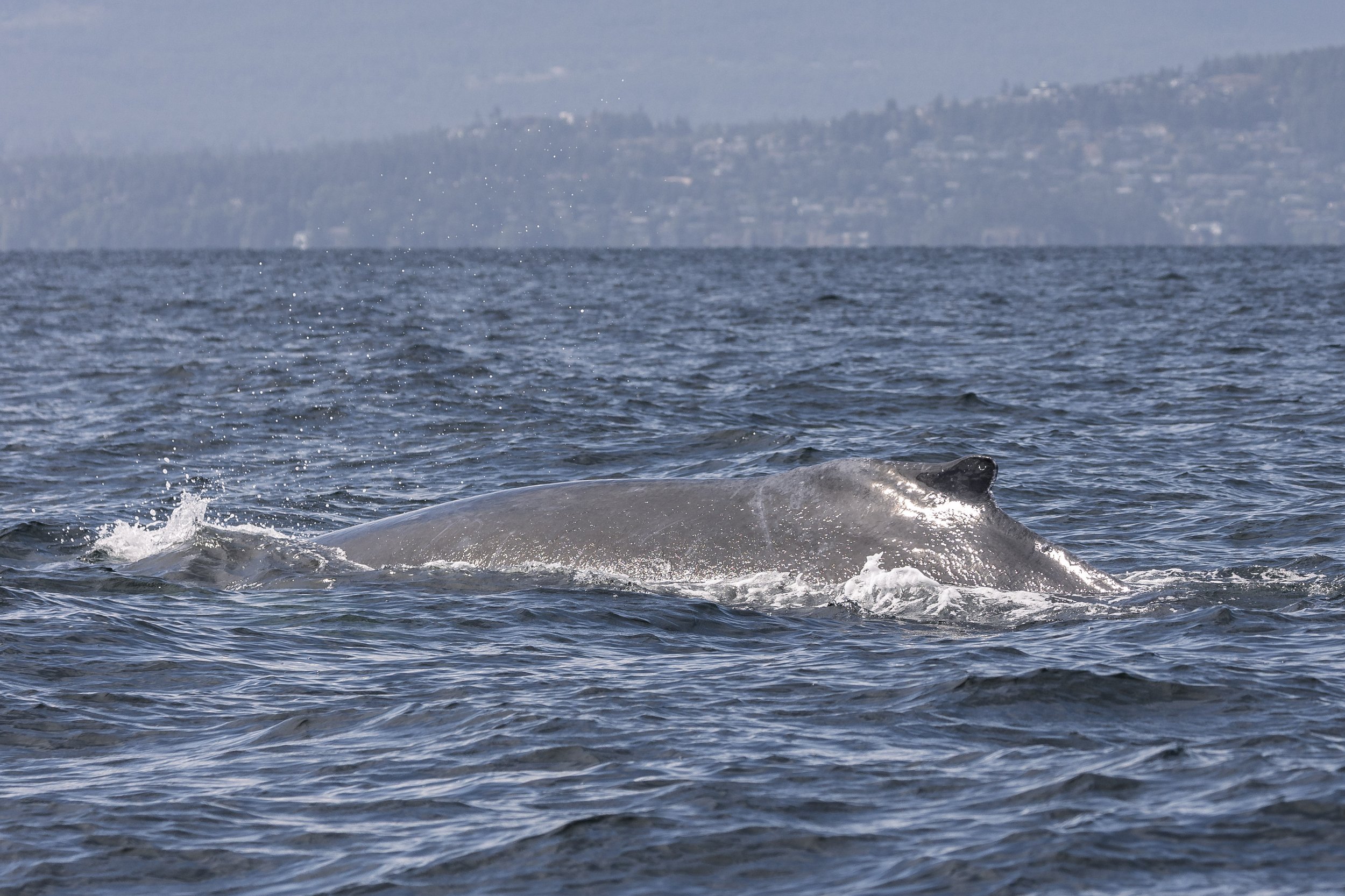
Split Fluke surfacing in the waves. Photo by Vanessa Vereschahen.
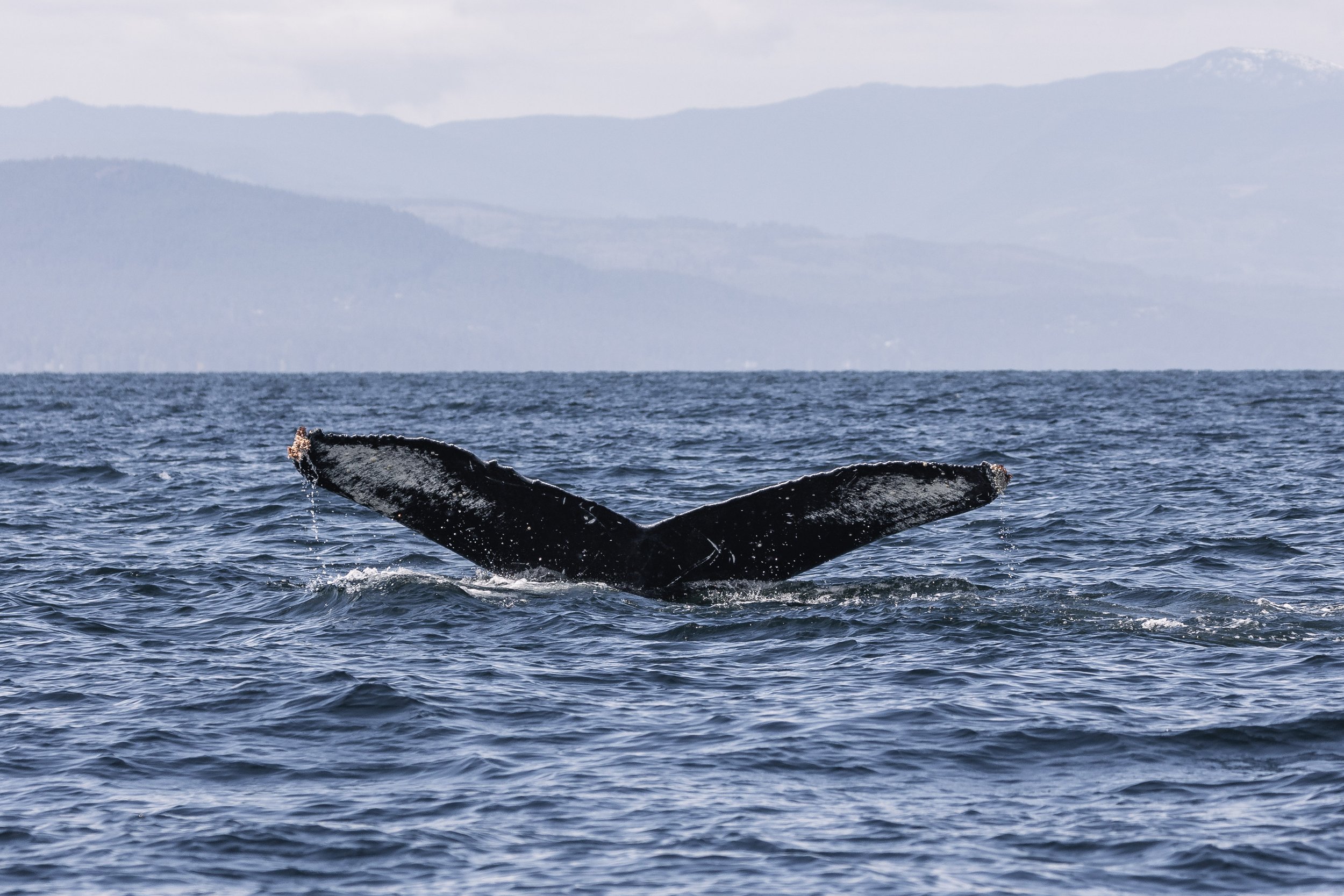
The underside of Pingu’s tail showing healed entanglment scarring. Photo by Vanessa Vereschahen.
Kelpie and HW-MN0510858
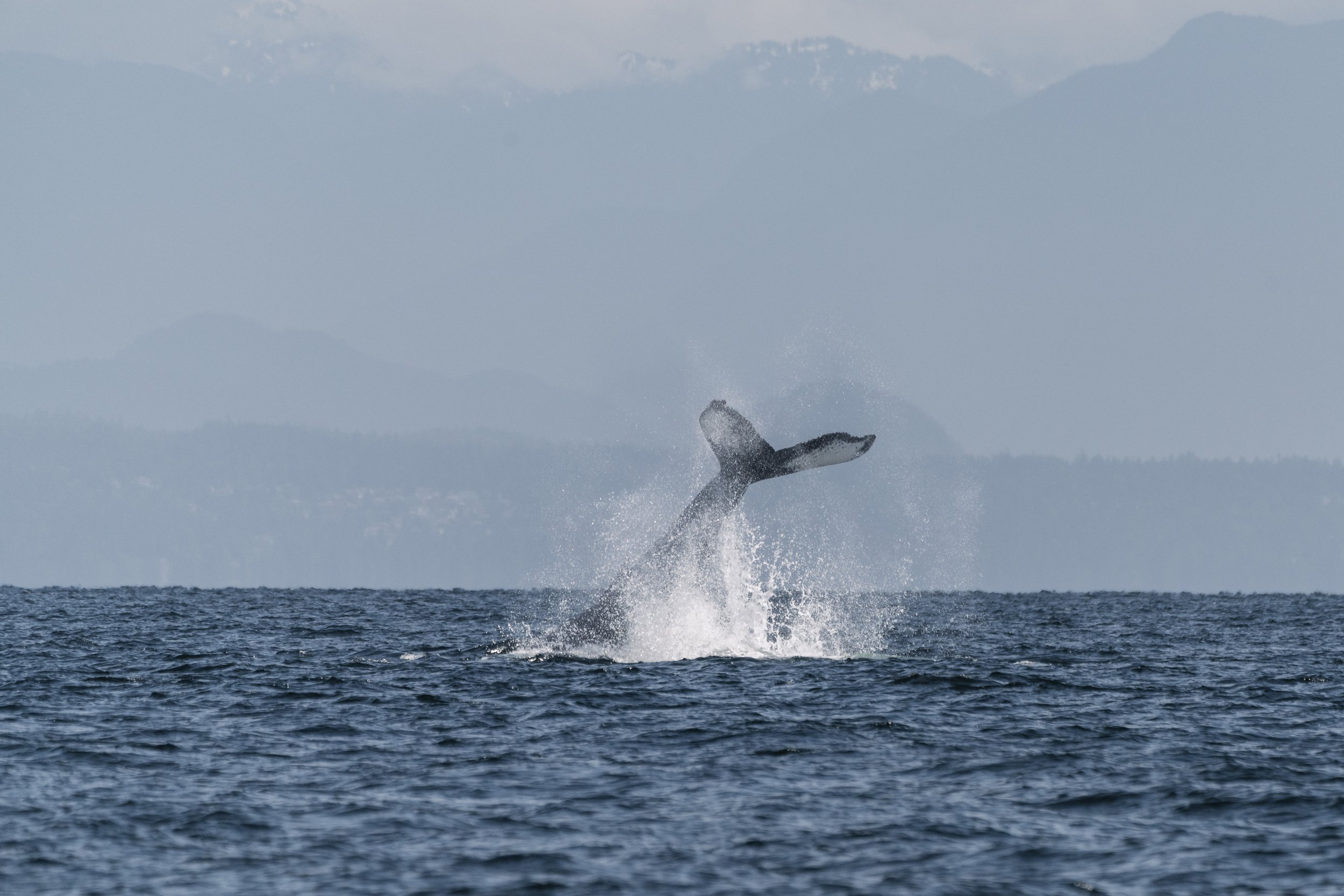
Kelpie lobtailing. Photo by Val Watson.
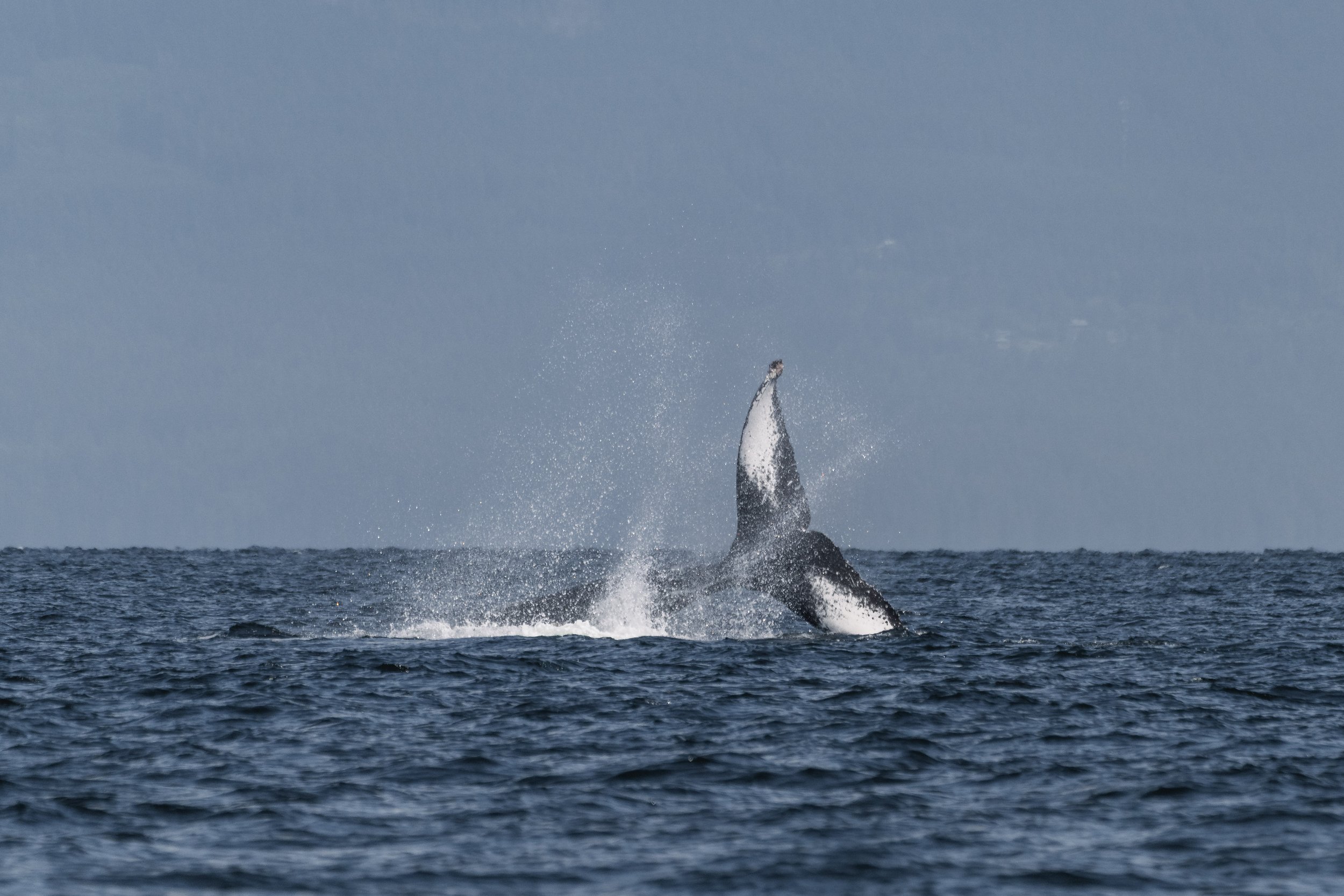
Kelpie doing a cartwheel. Photo by Val Watson.
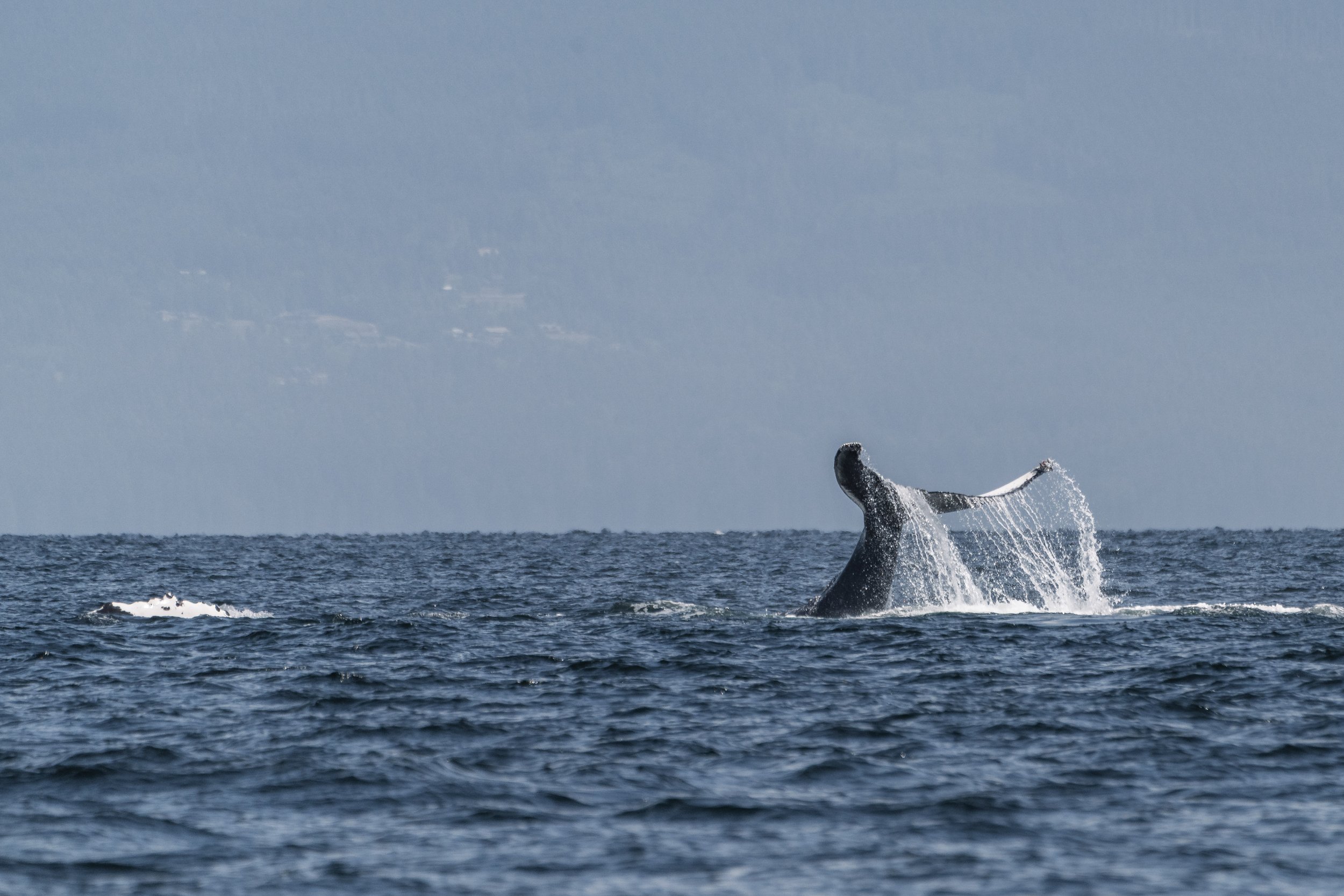
HW-MN0510858’s pectoral fin with Kelpie tail slapping beside it. Photo by Val Watson.
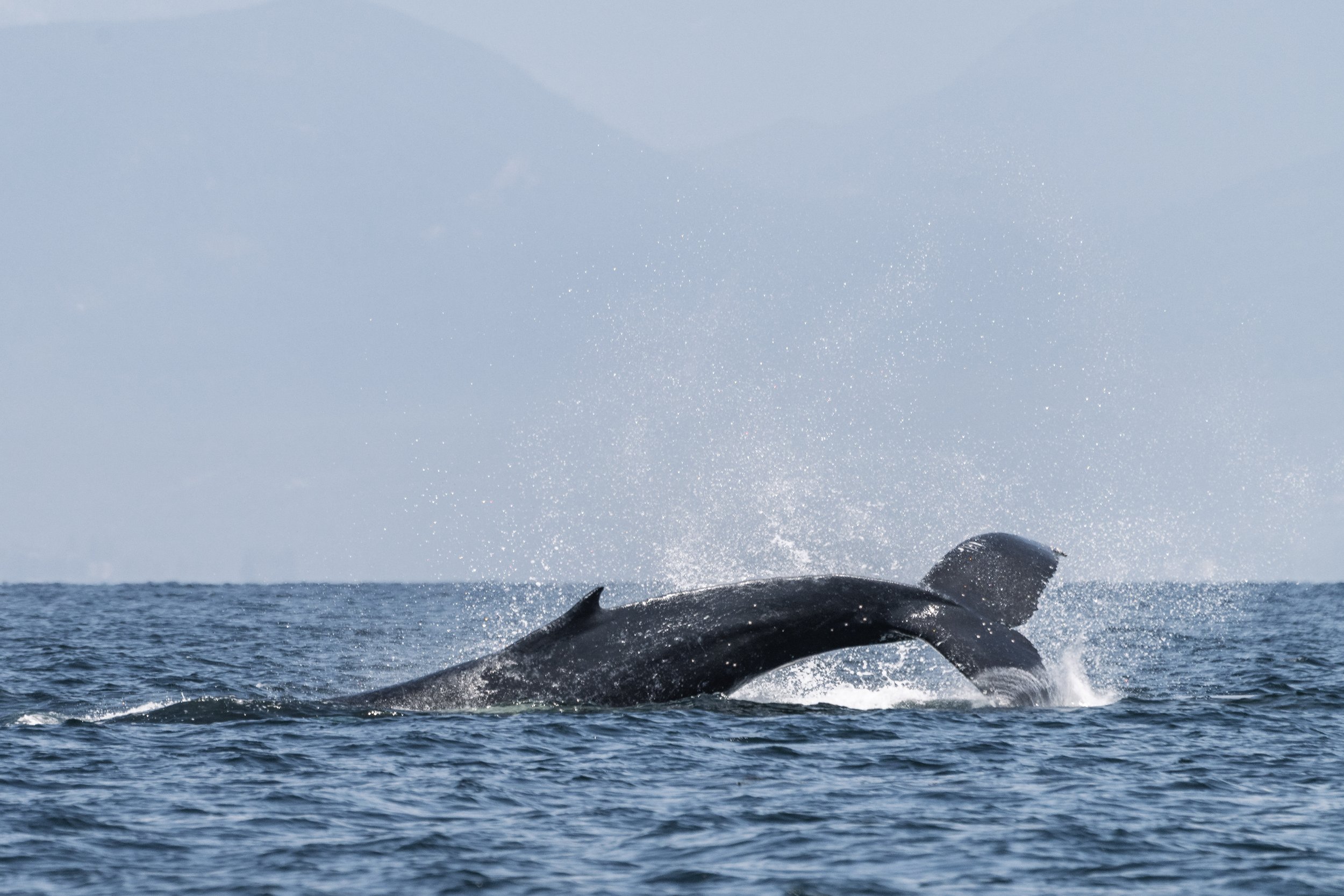
Kelpie cartwheeling. Photo by Val Watson.
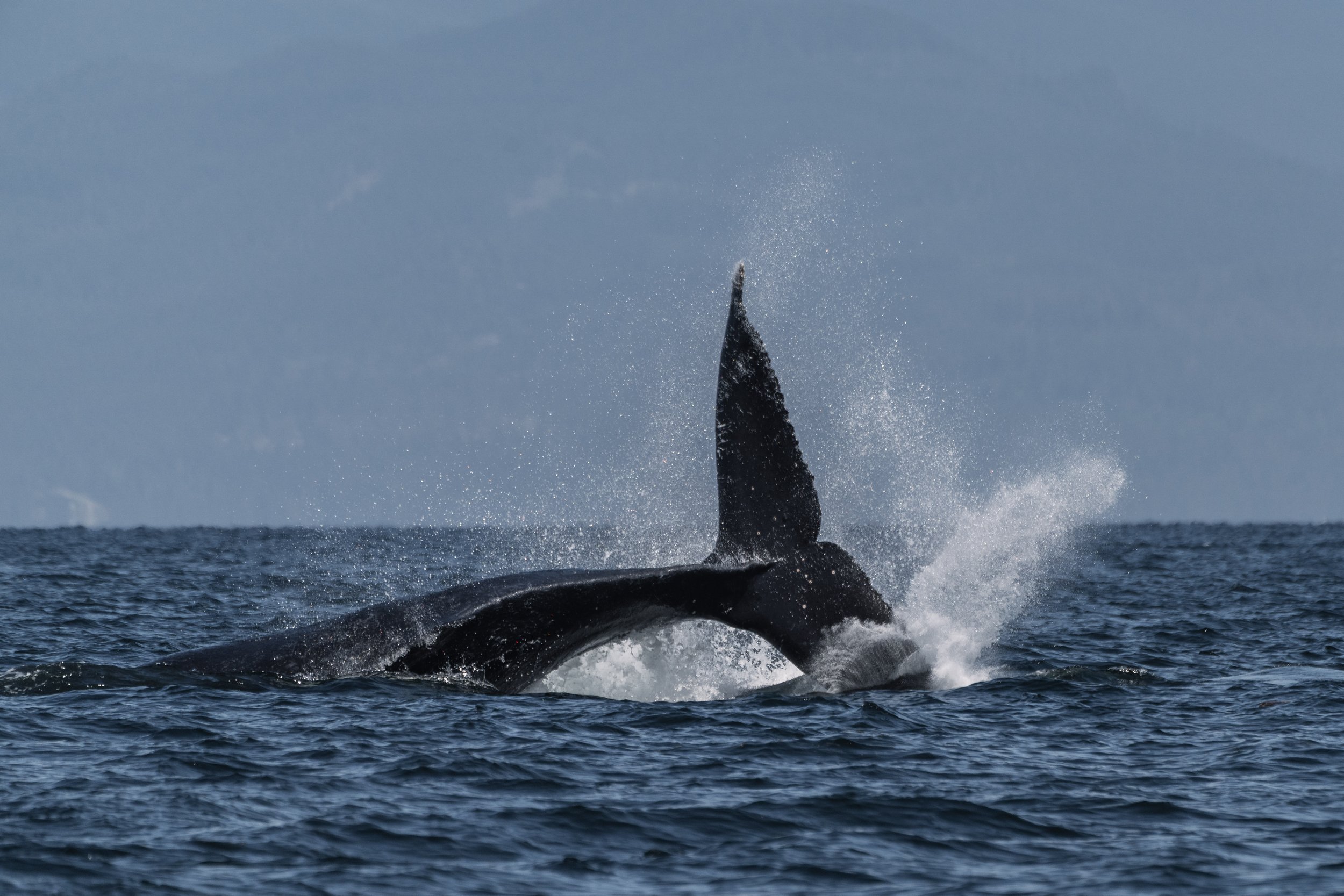
Another cartwheel from Kelpie. Photo by Val Watson.
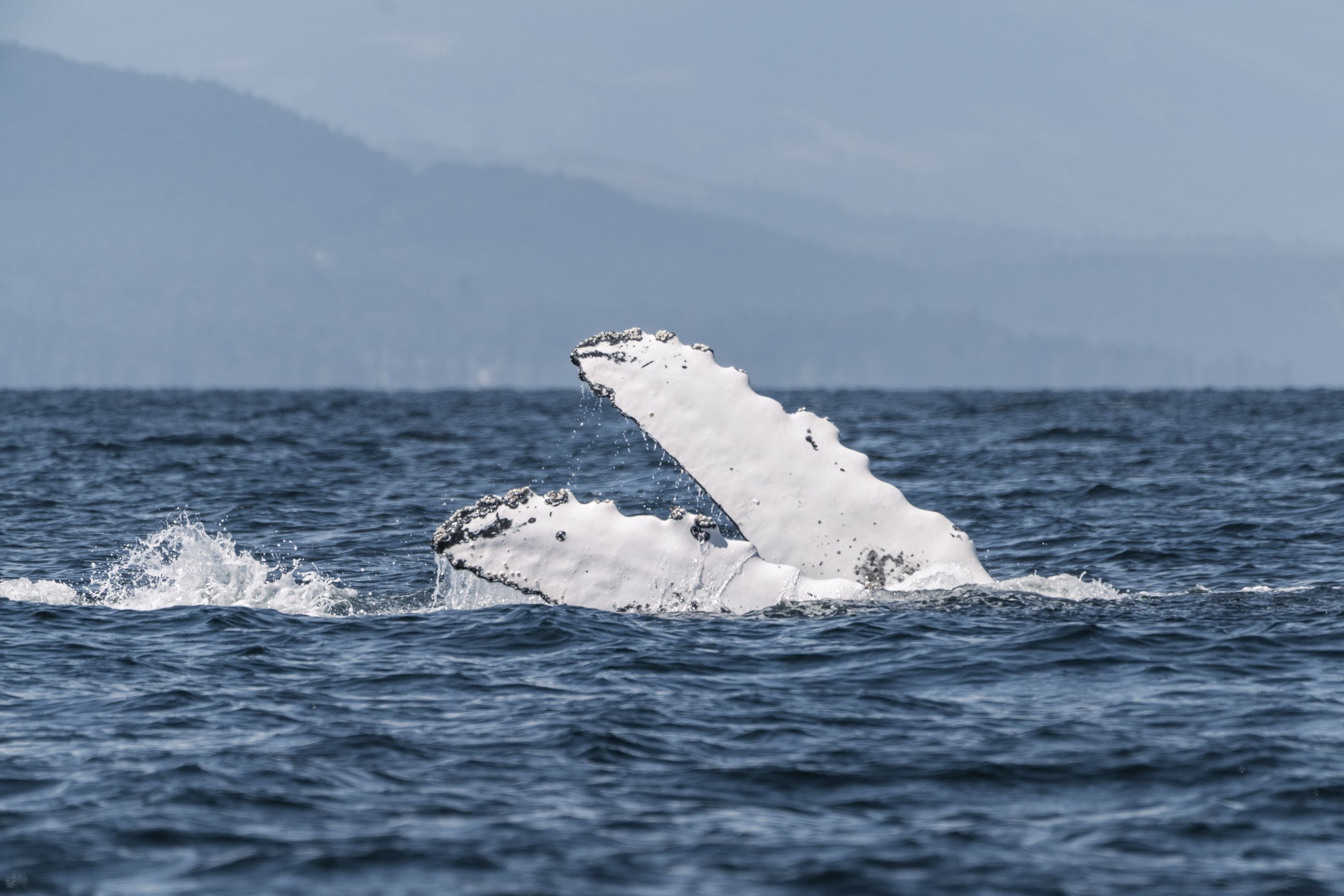
Kelpie’s pectoral fins in the air. Photo by Val Watson.
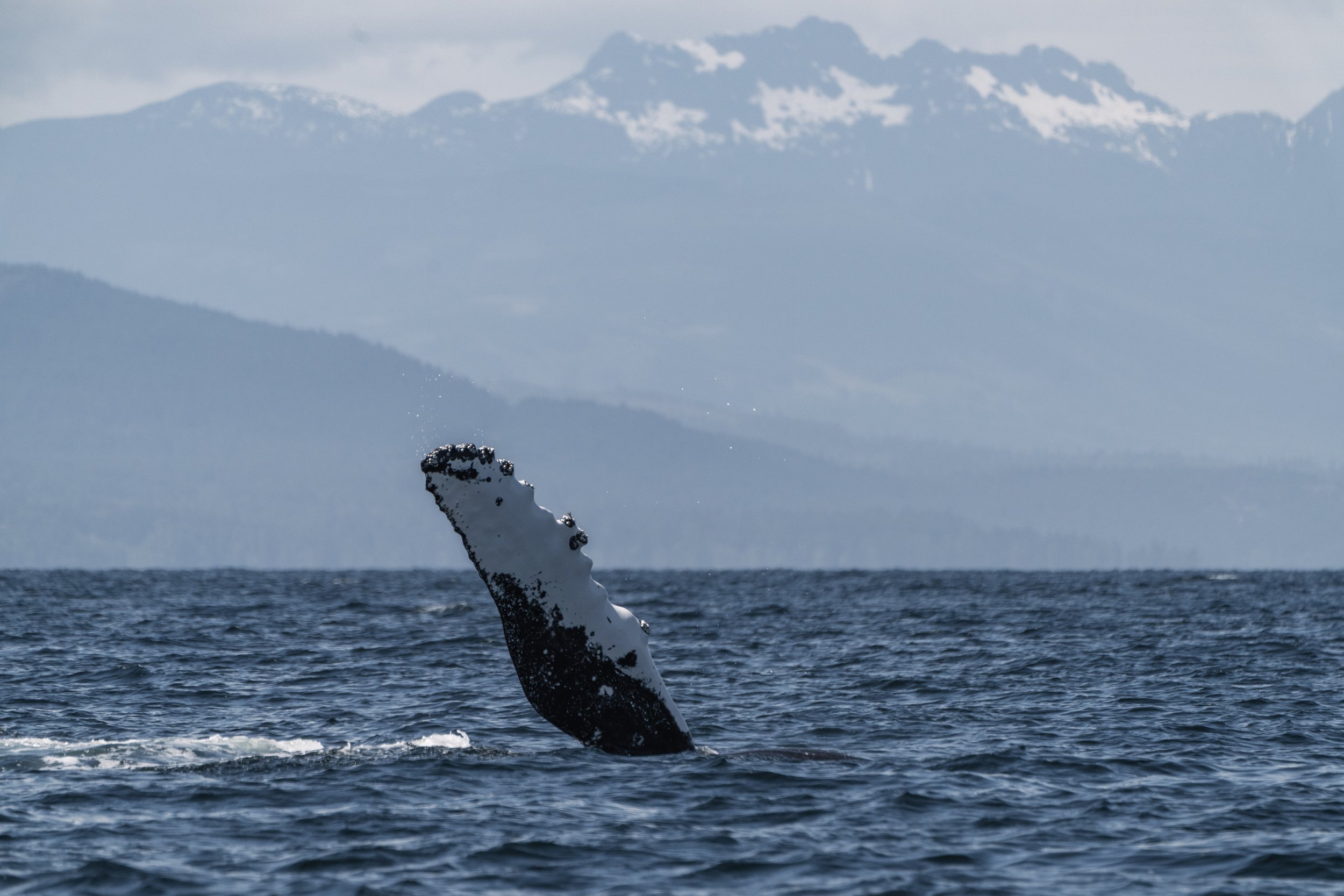
Kelpie showing off his pectoral fin in front of the coastal mountains. Photo by Val Watson.
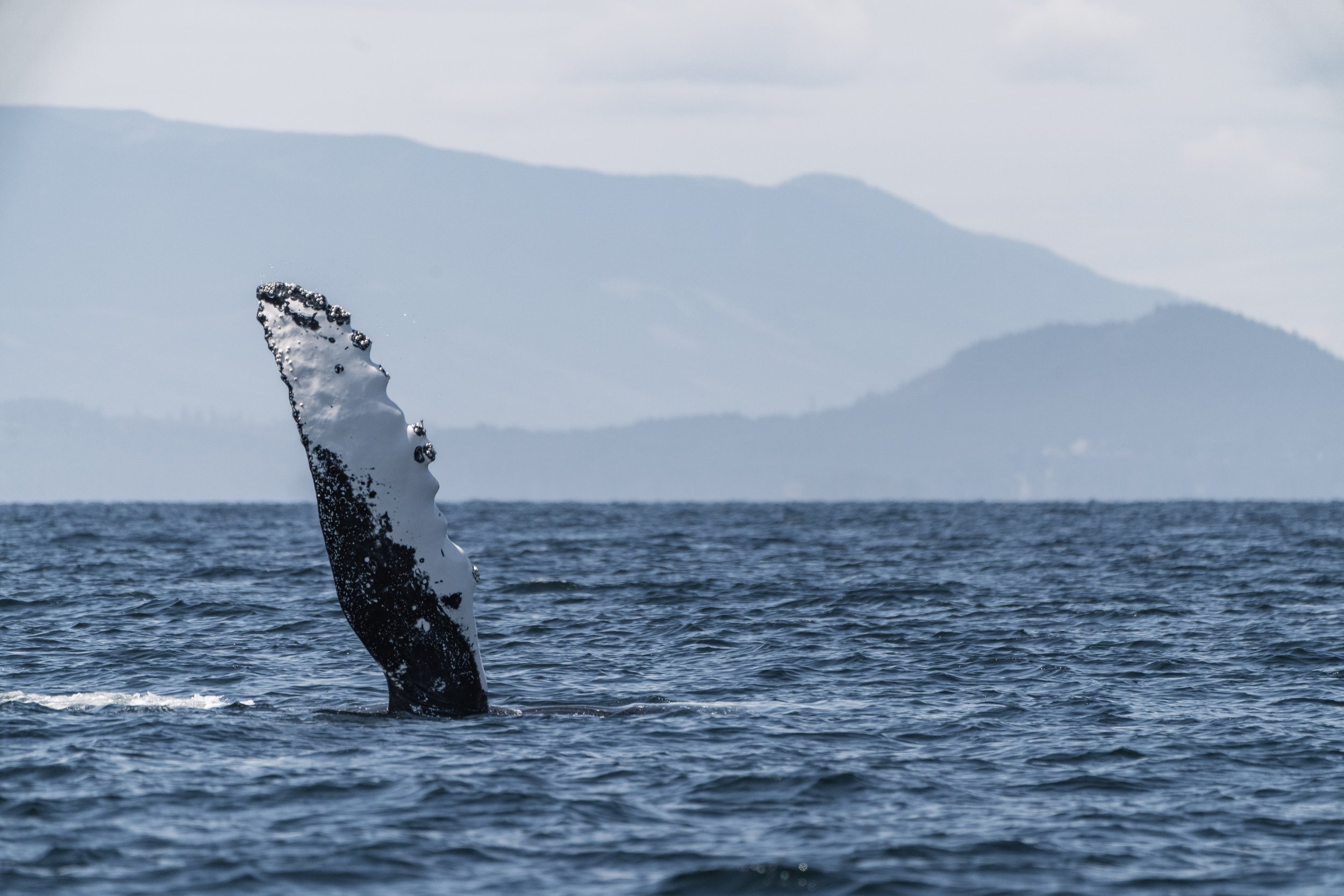
Kelpie slapping his fin. Photo by Val Watson.
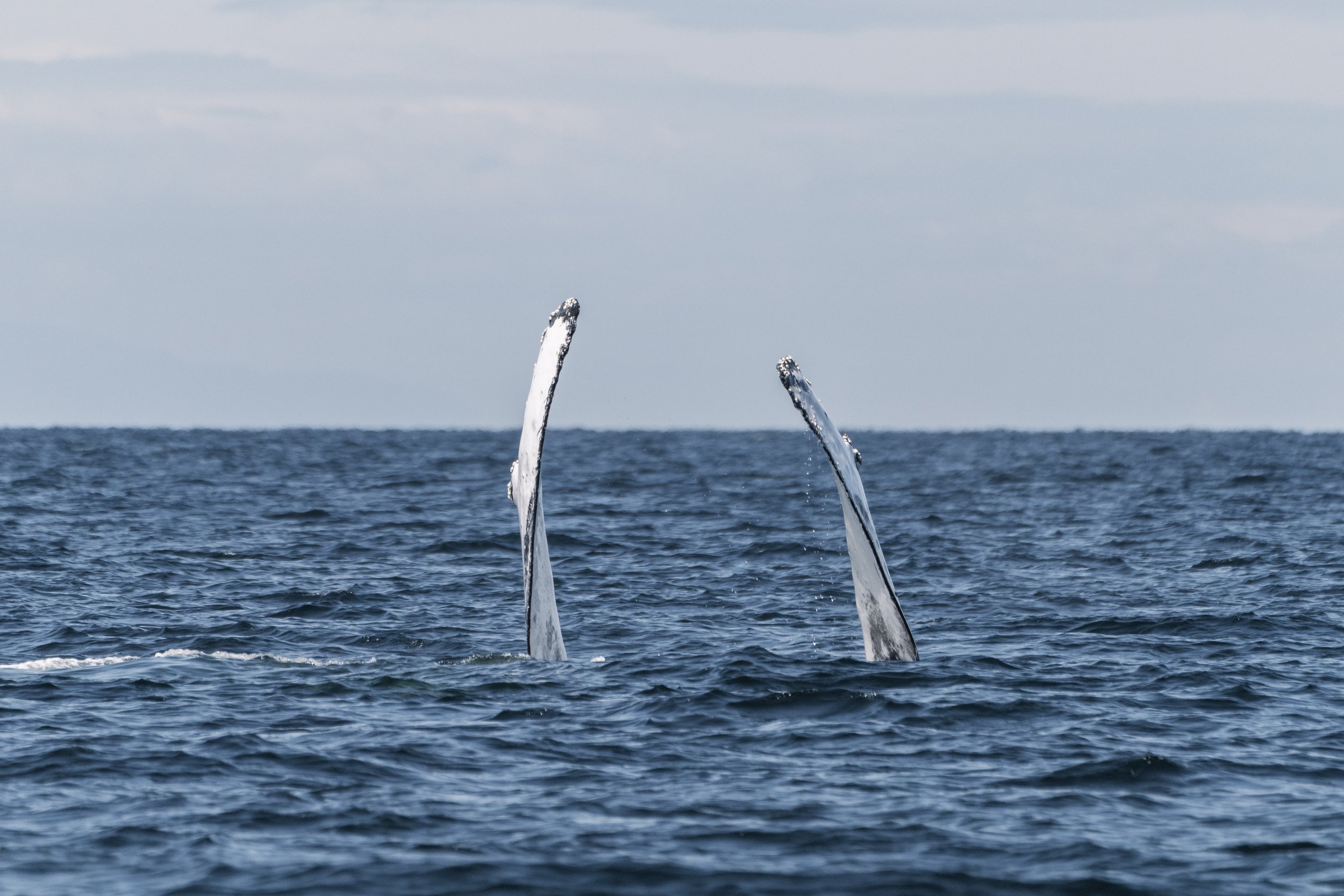
Kelpie swimming upside down with his two pectoral fins in the air. Photo by Val Watson.
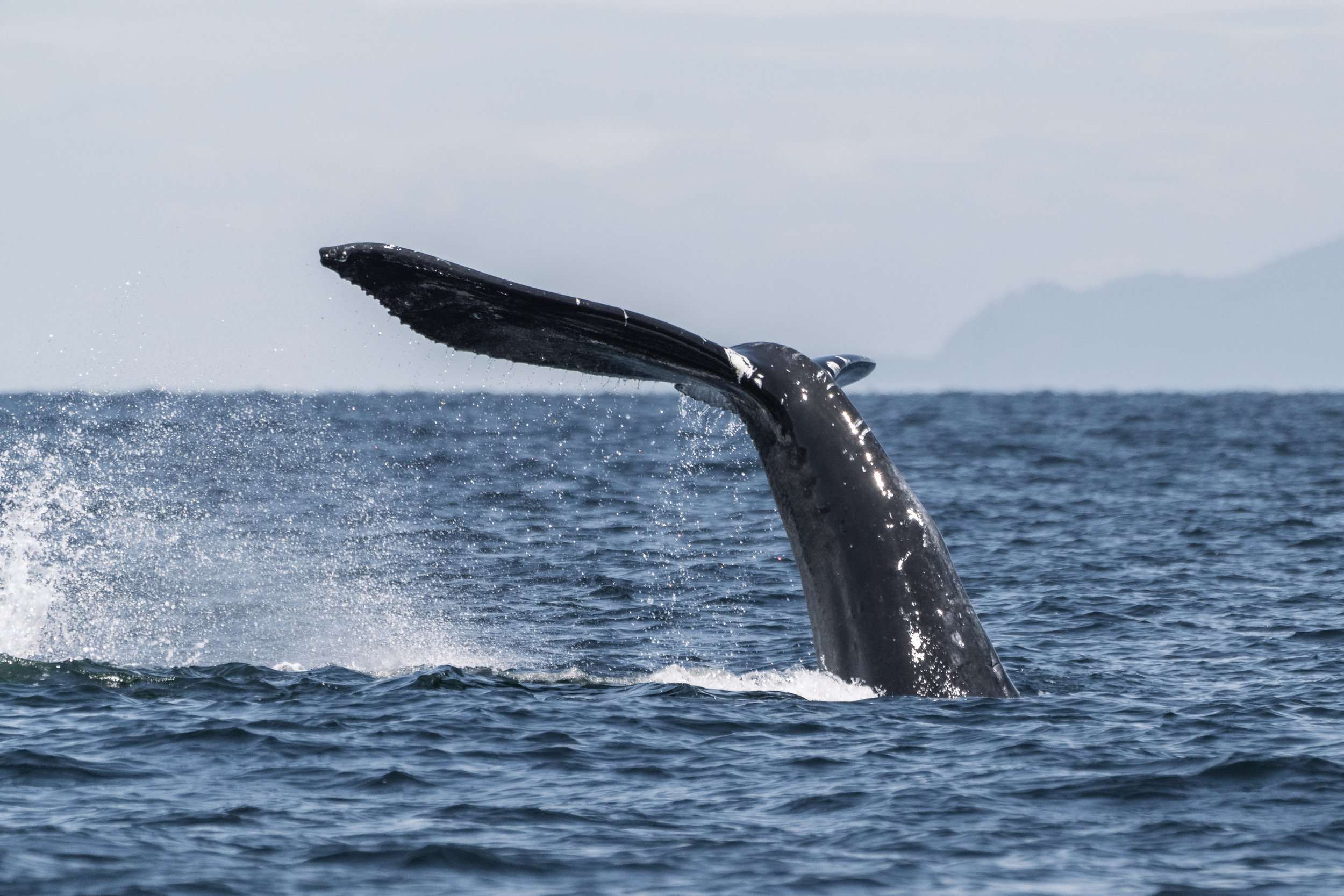
HW-MN0510858 lifting their tail. Photo by Val Watson.
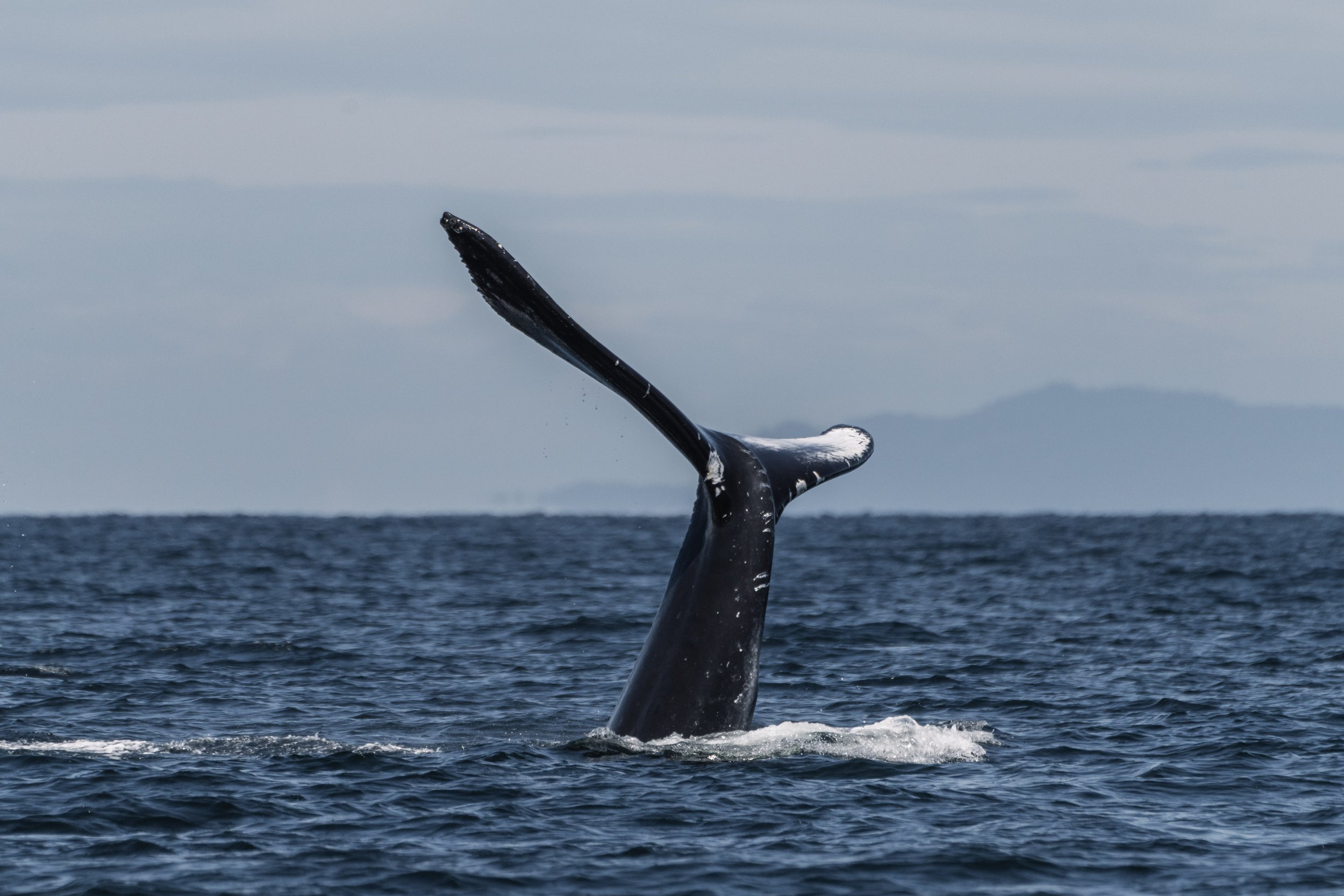
A lovely tail from HW-MN0510858. Photo by Val Watson.
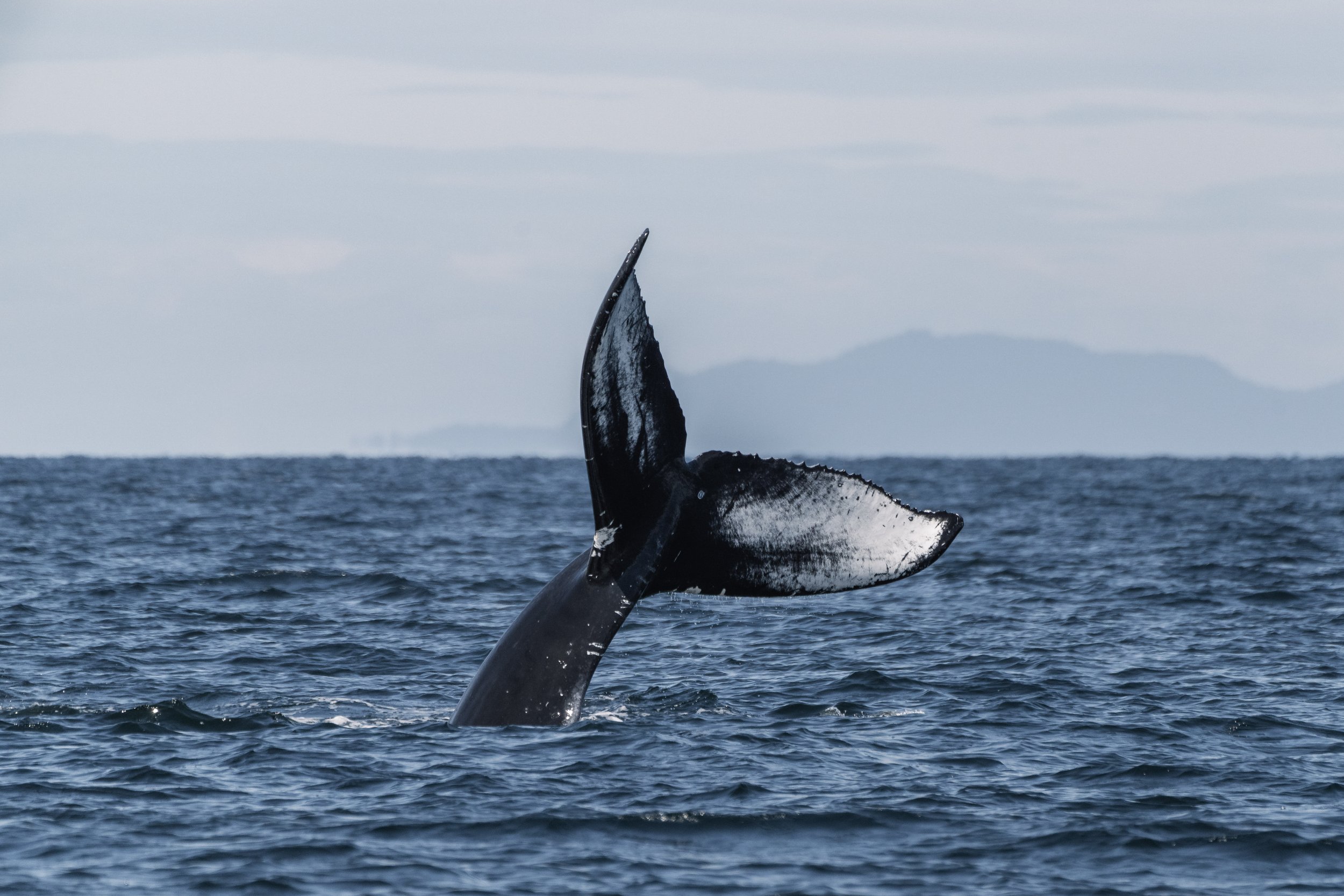
The underside of HW-MN0510858’’s tail. Photo by Val Watson.
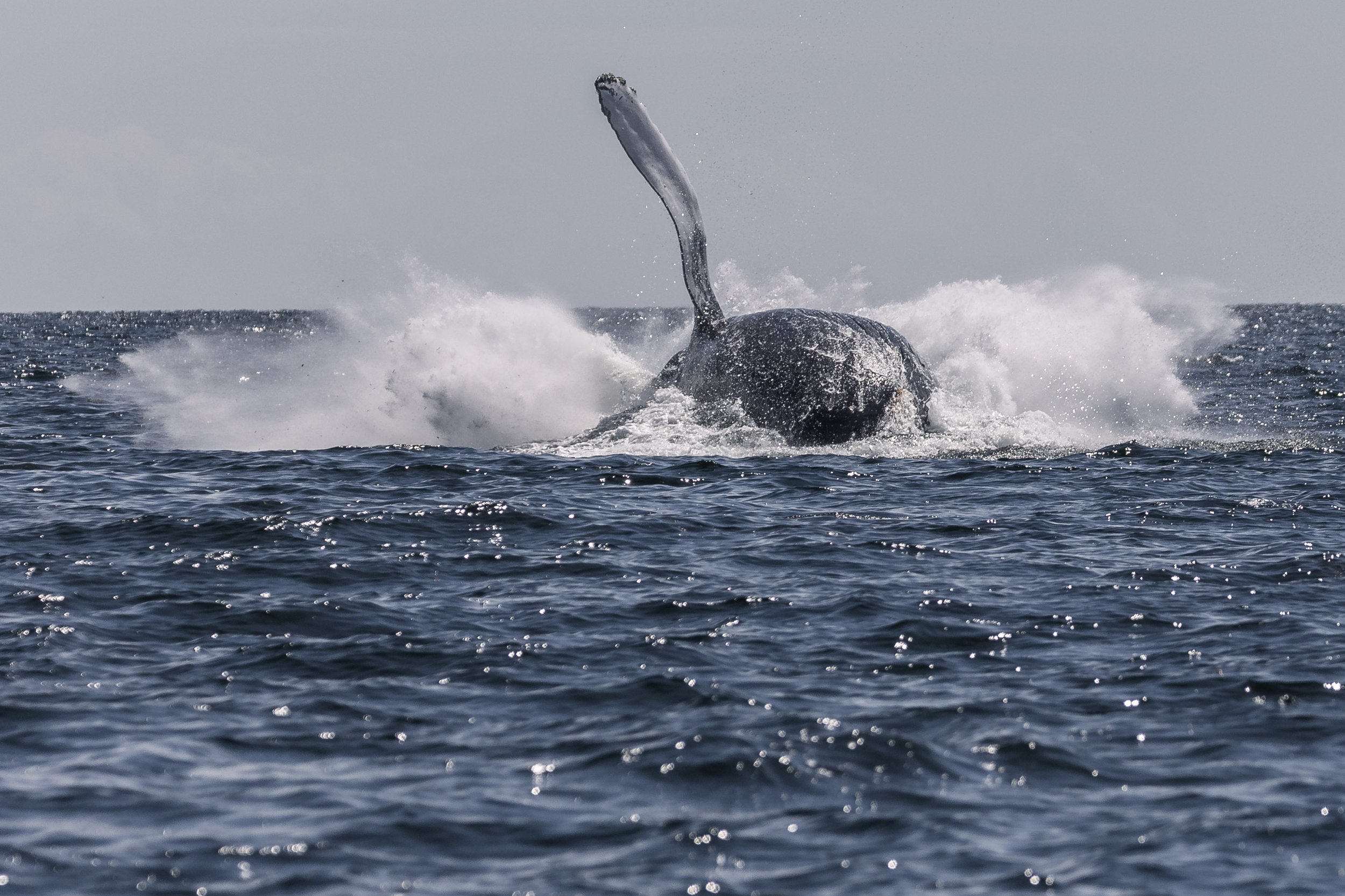
Kelpie landing from a breach. Photo by Vanessa Vereschahen.
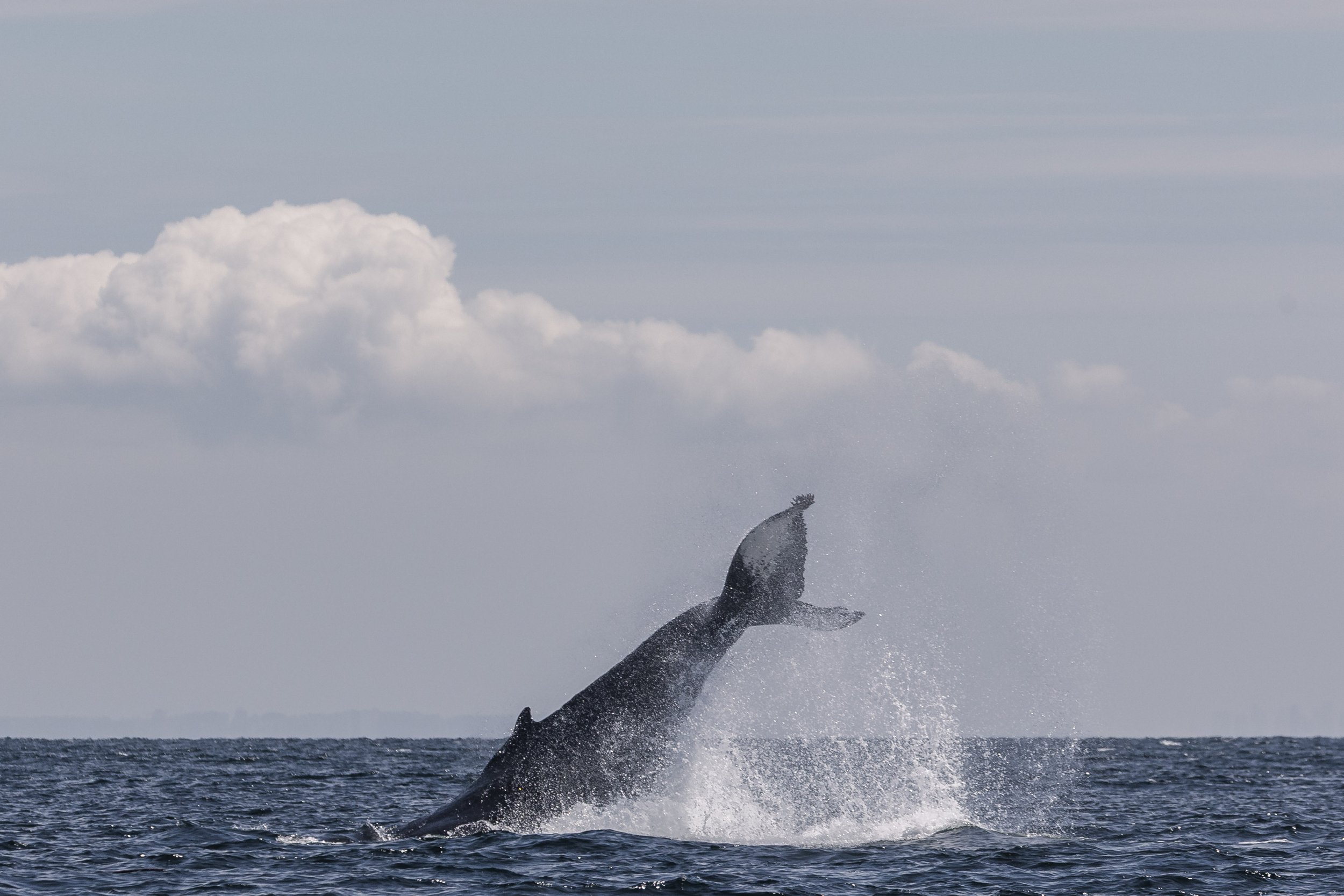
A big tail lob from Kelpie. Photo by Vanessa Vereschahen.
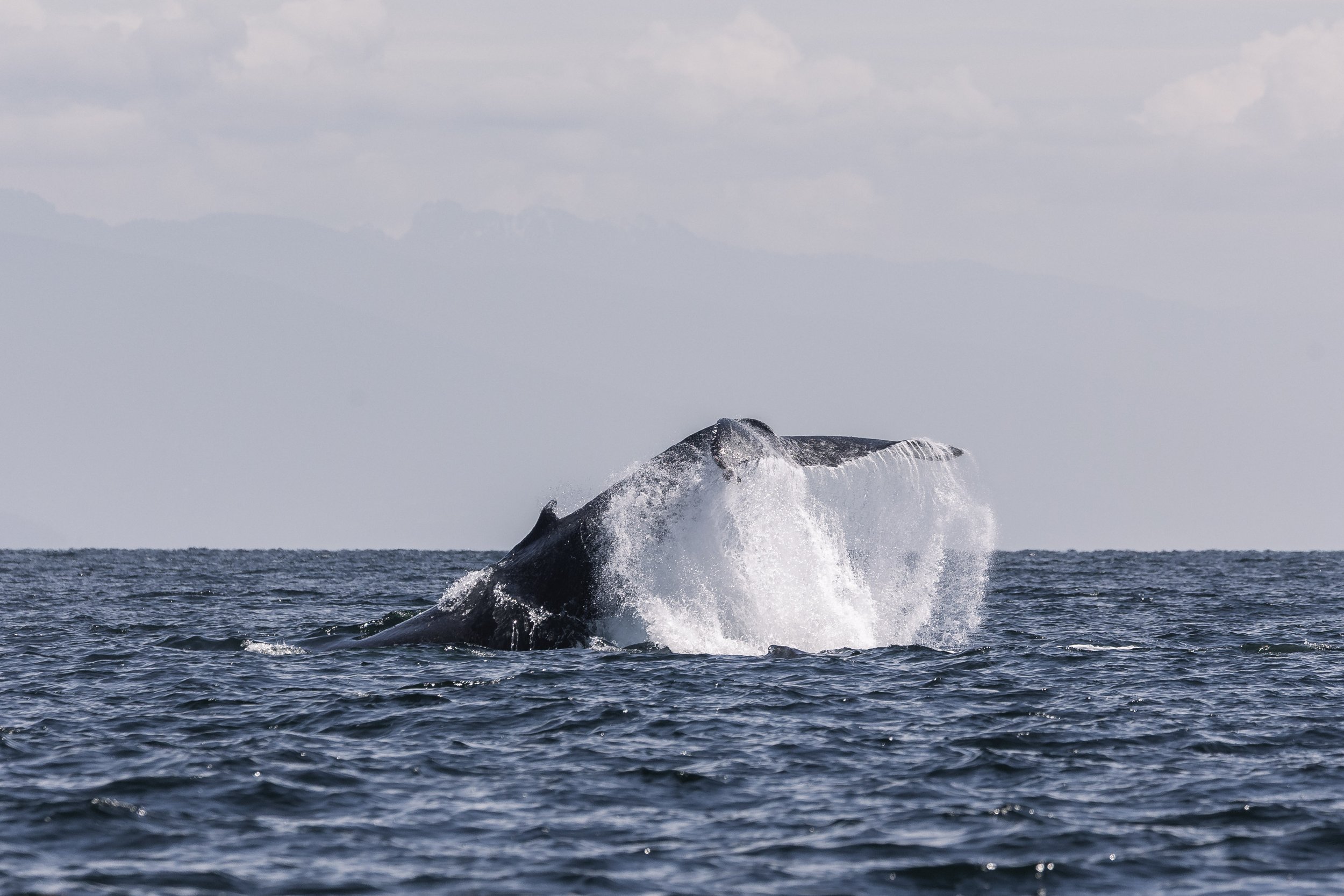
Look at all the water Kelpie is moving with his tail. Photo by Vanessa Vereschahen.
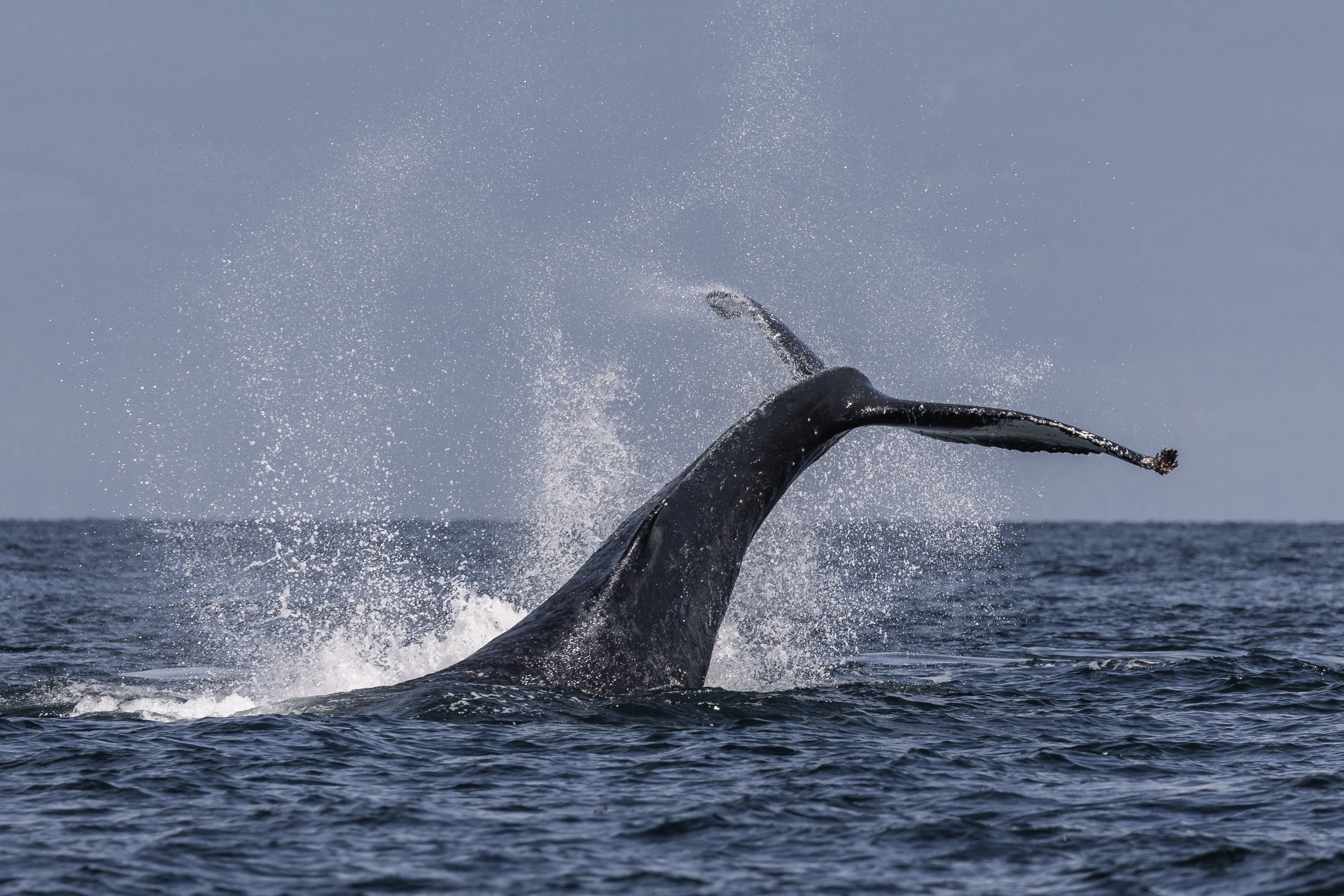
Kelpie slapping his tail. Photo by Vanessa Vereschahen.
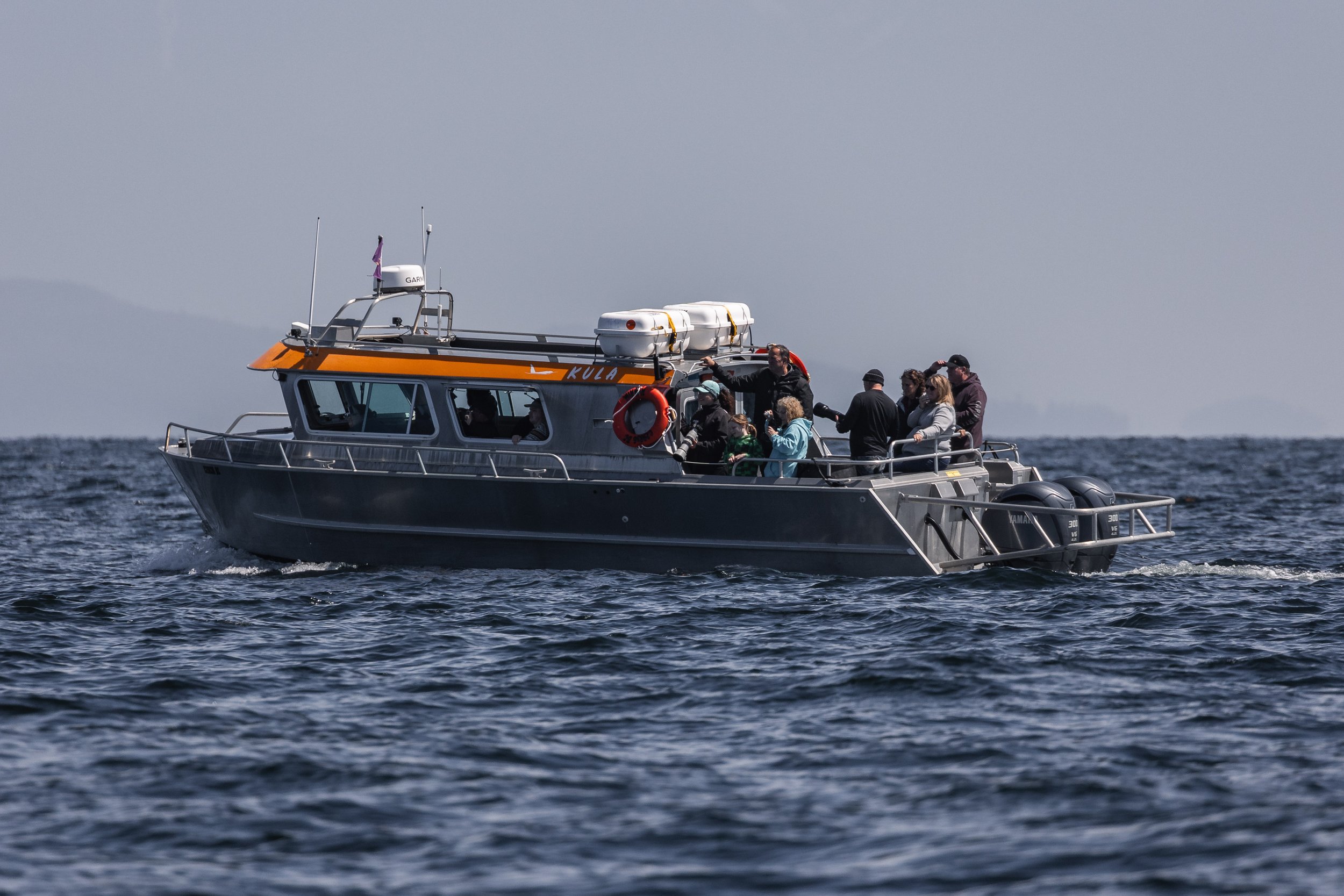
Whale watchers on Kula enjoying their time with Kelpie and HW-MN0510858. Photo by Vanessa Vereschahen.
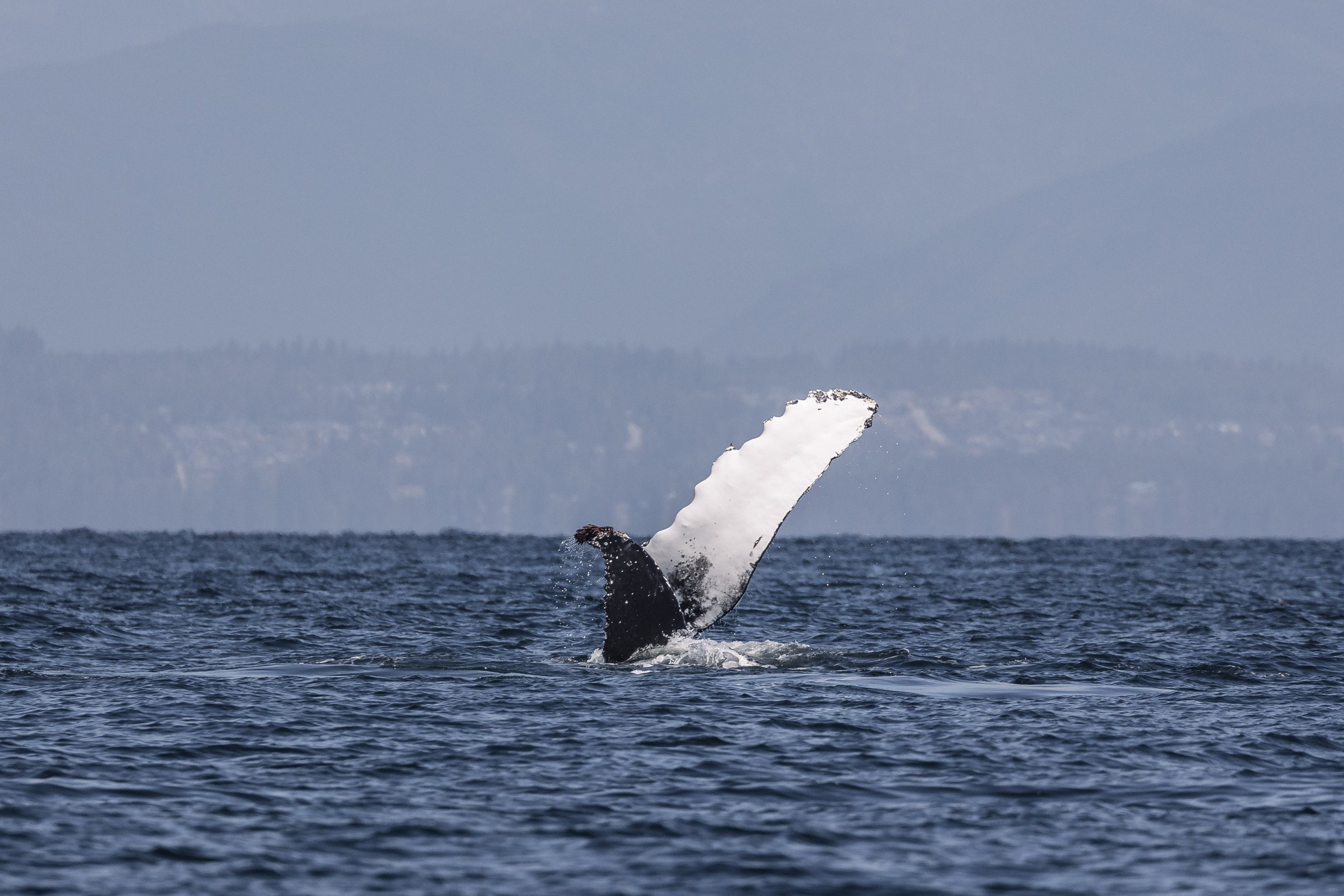
Kelpie with his pectoral fin and tail out of the water. Photo by Vanessa Vereschahen.
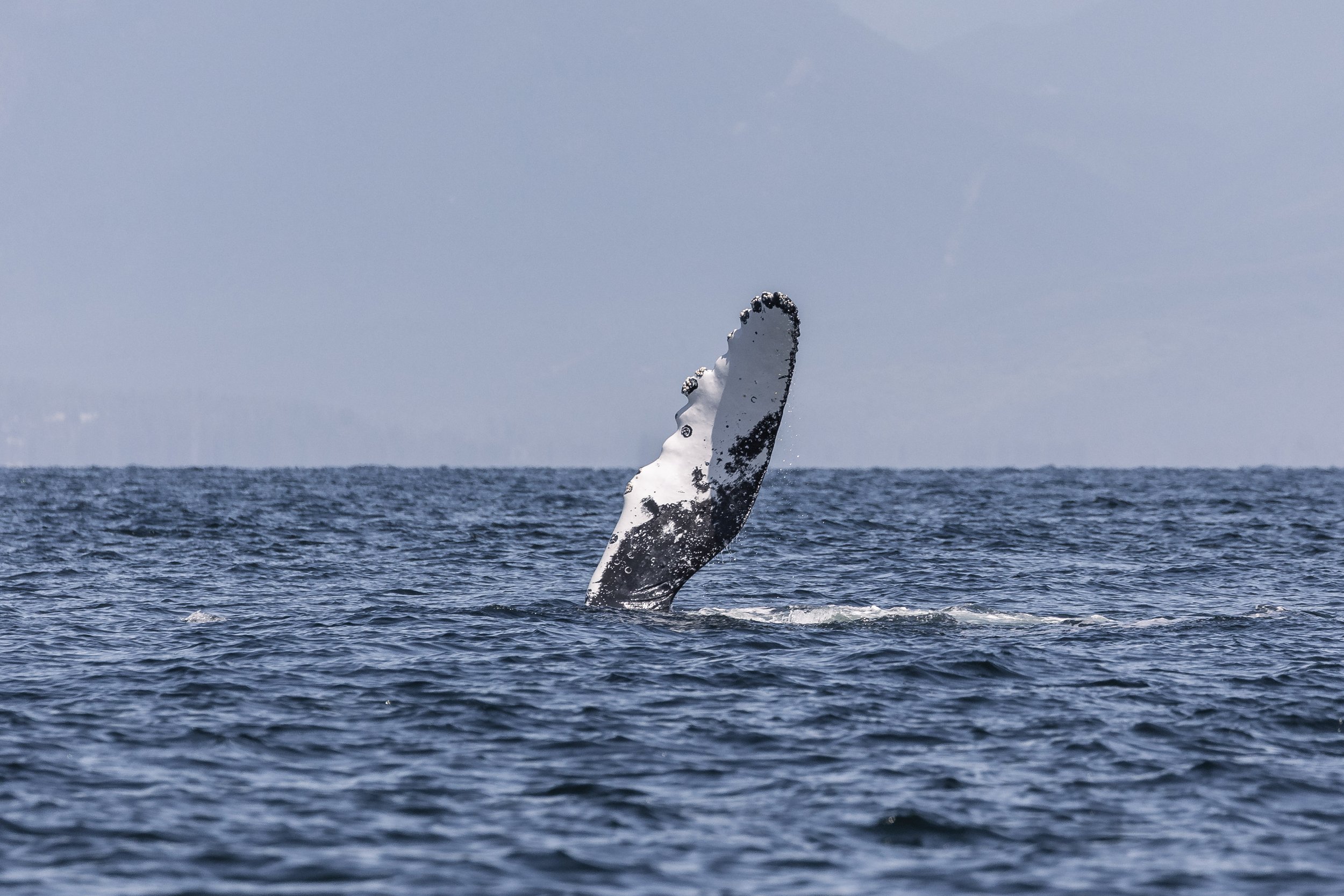
Kelpie’s pectoral fin in the air. Photo by Vanessa Vereschahen.
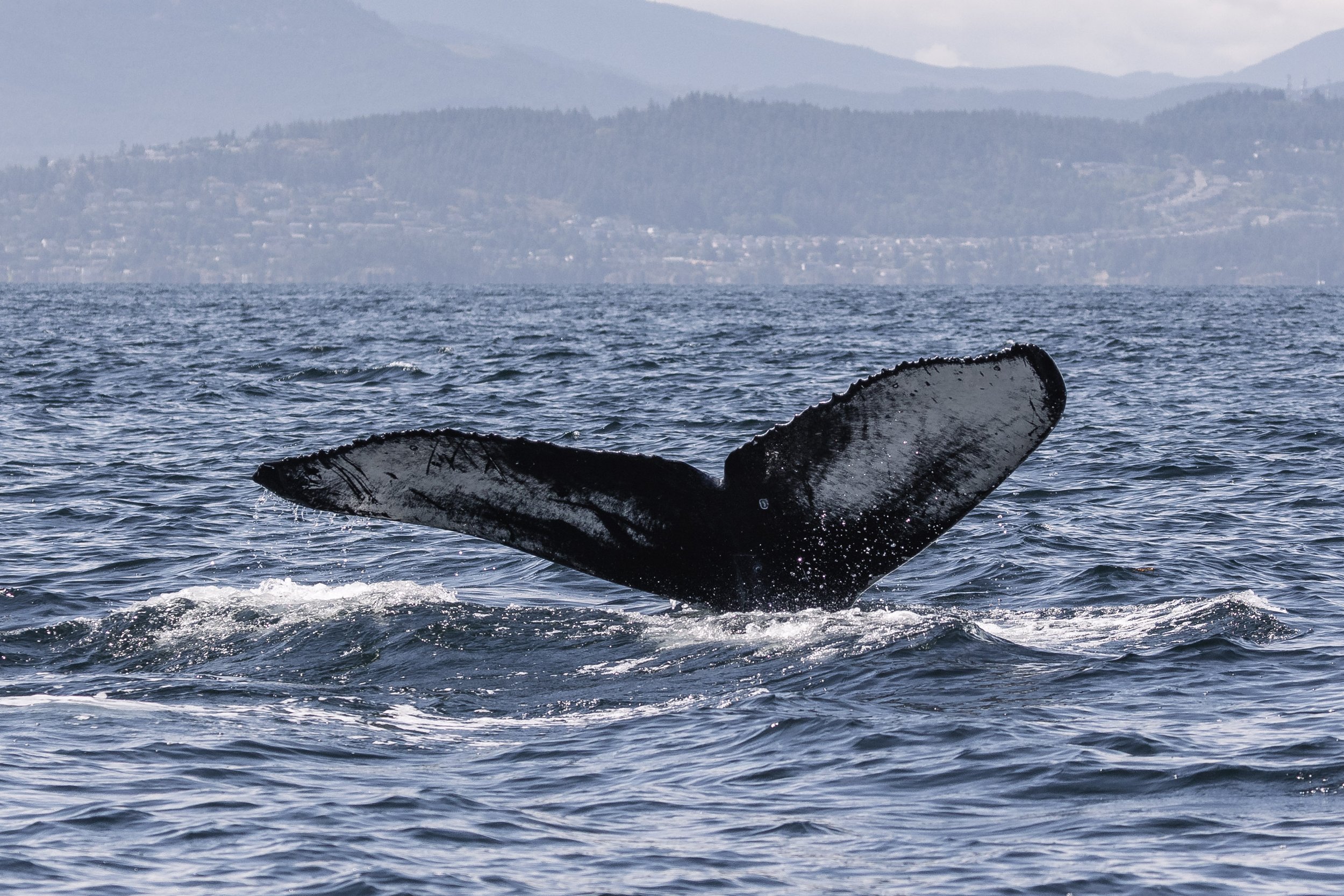
HW-MN0510858 showing off the bottom of their tail as they dive. Photo by Vanessa Vereschahen.
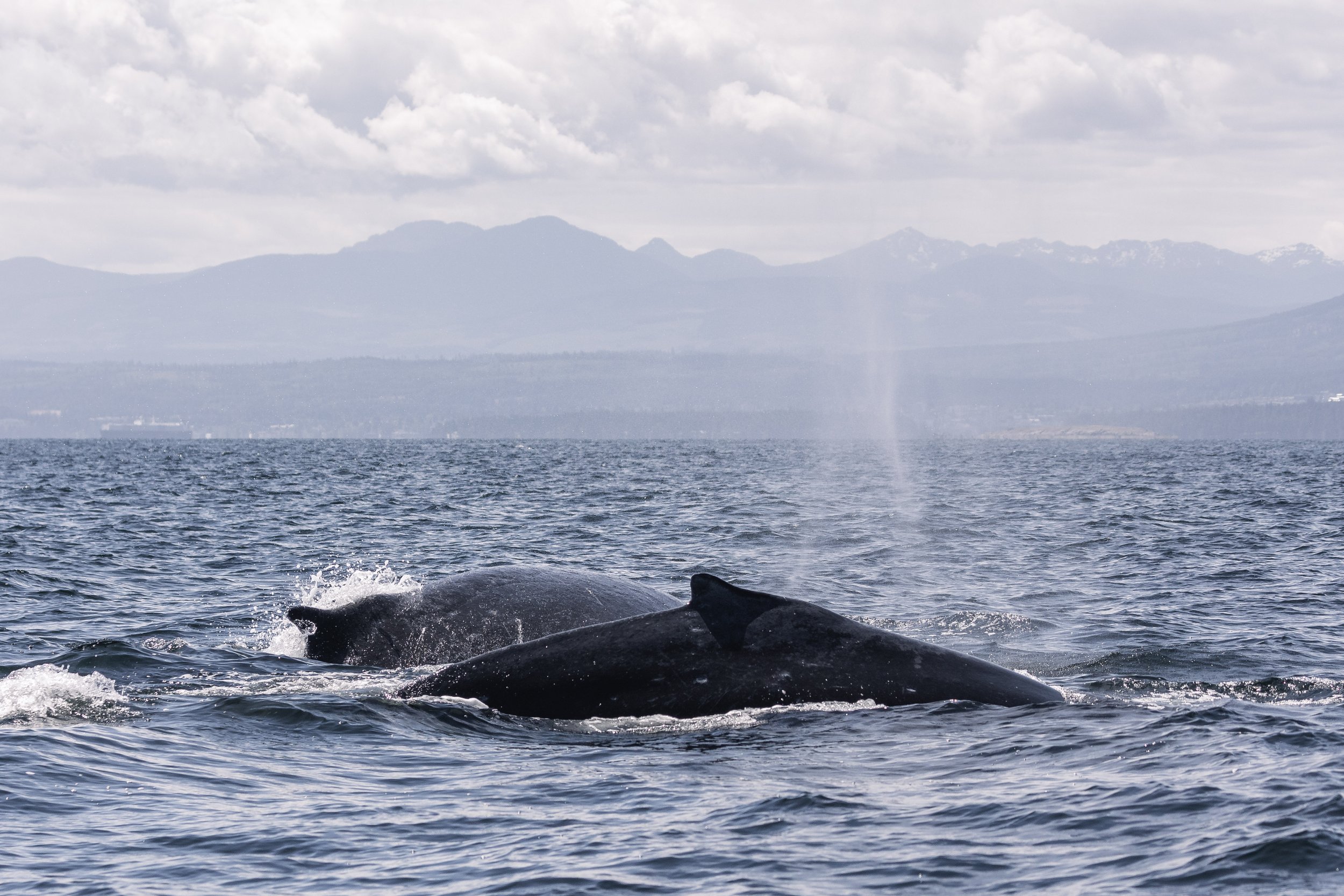
Kelpie surfacing just behind HW-MN0510858. Photo by Vanessa Vereschahen.
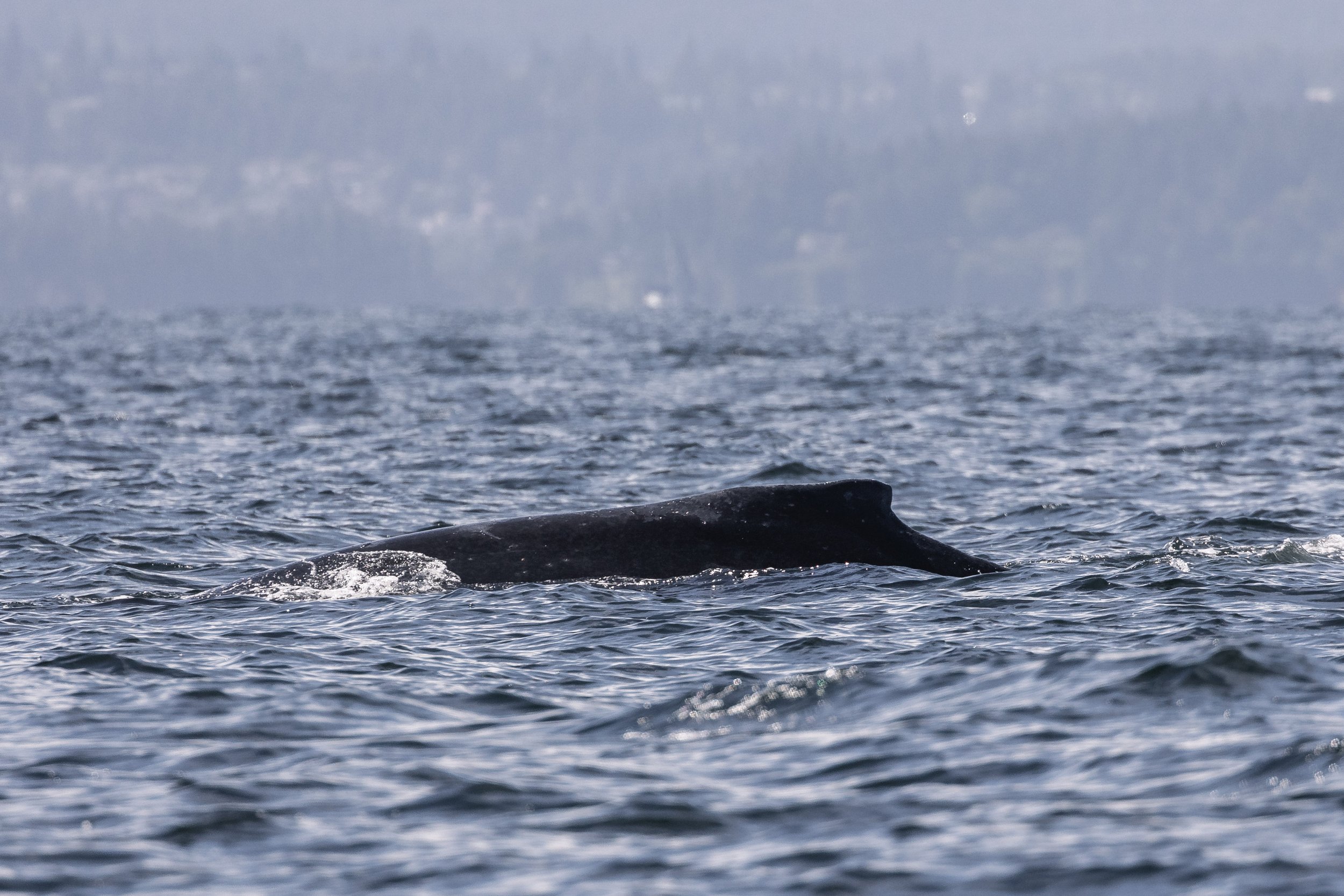
The little unknown joining the party. Photo by Vanessa Vereschahen.
The White Islets
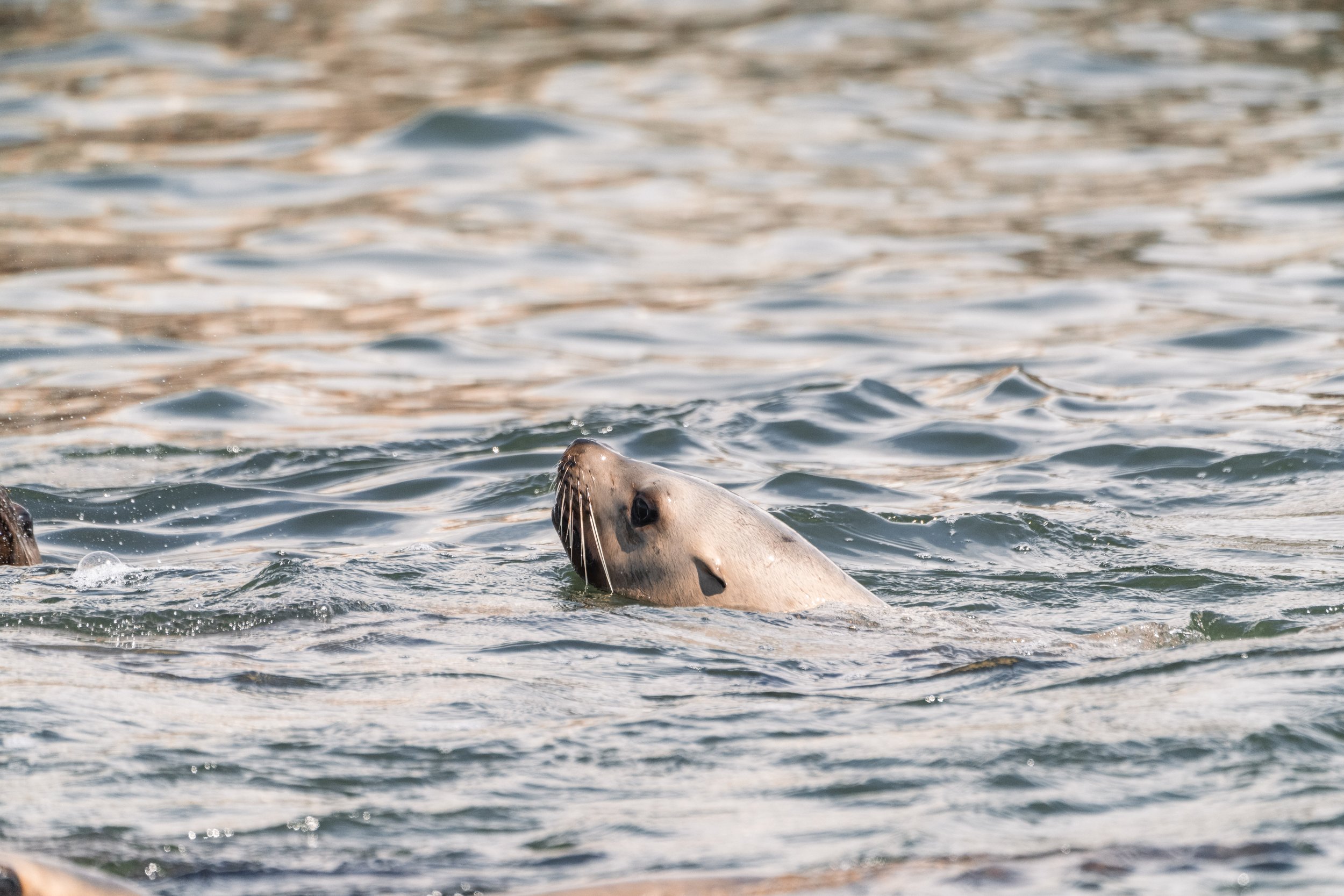
Steller Sea Lion swimming through the water. Photo by Val Watson.
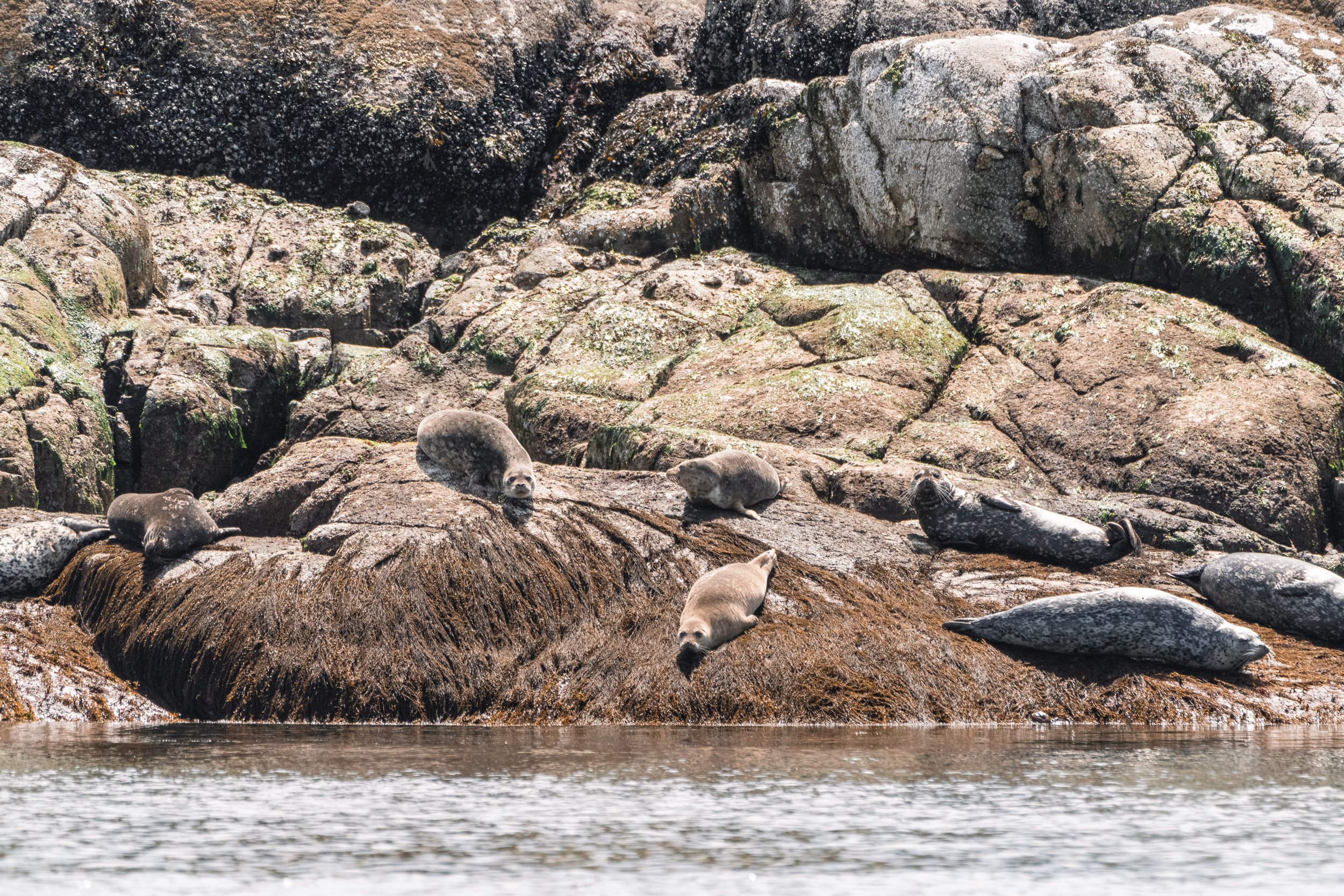
Harbour Seals on the rocks. Photo by Val Watson.
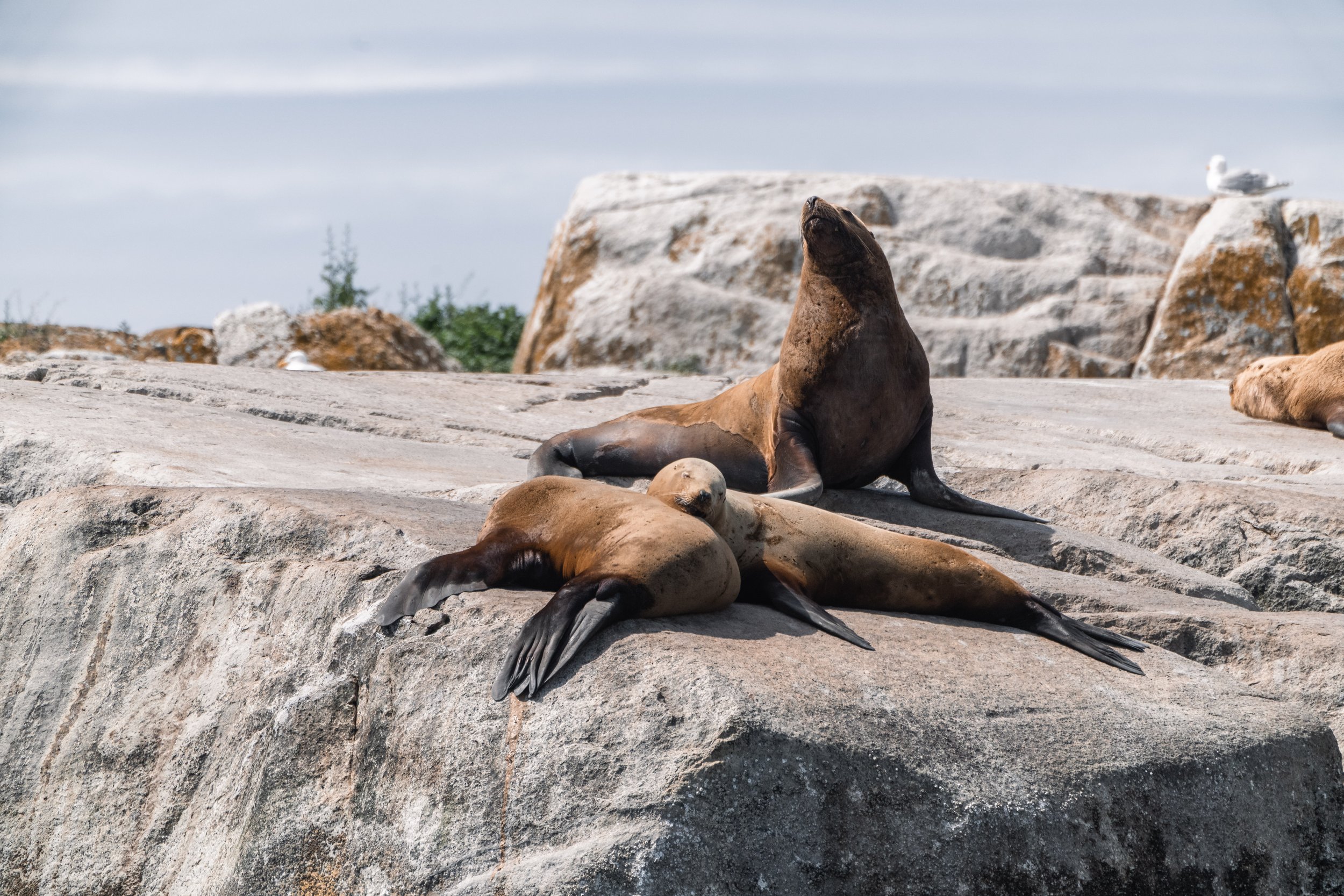
Steller Sea Lions on the White Islets. Photo by Val Watson.
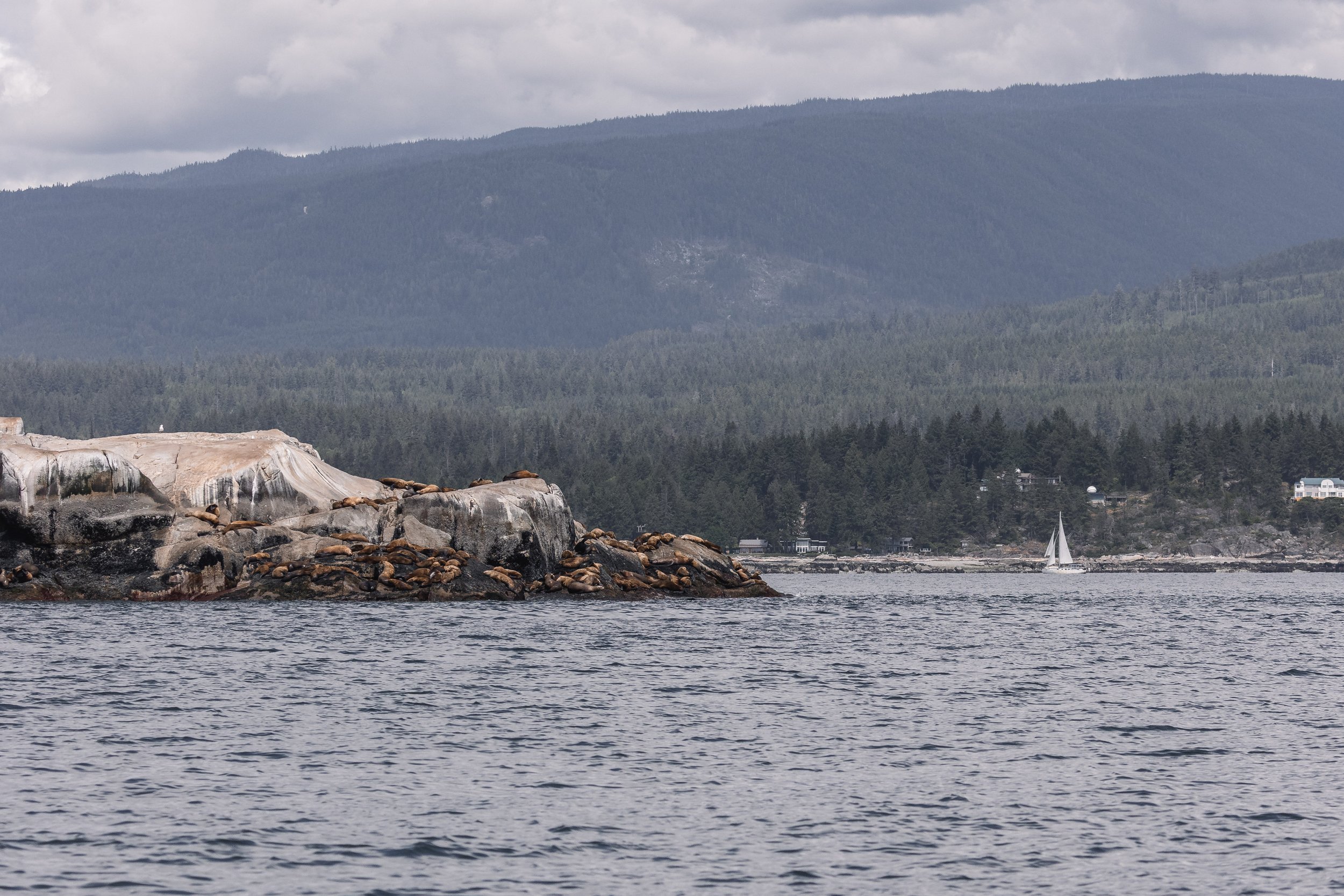
Steller Sea Lions on Stinky Rocks. Photo by Vanessa Vereschahen.
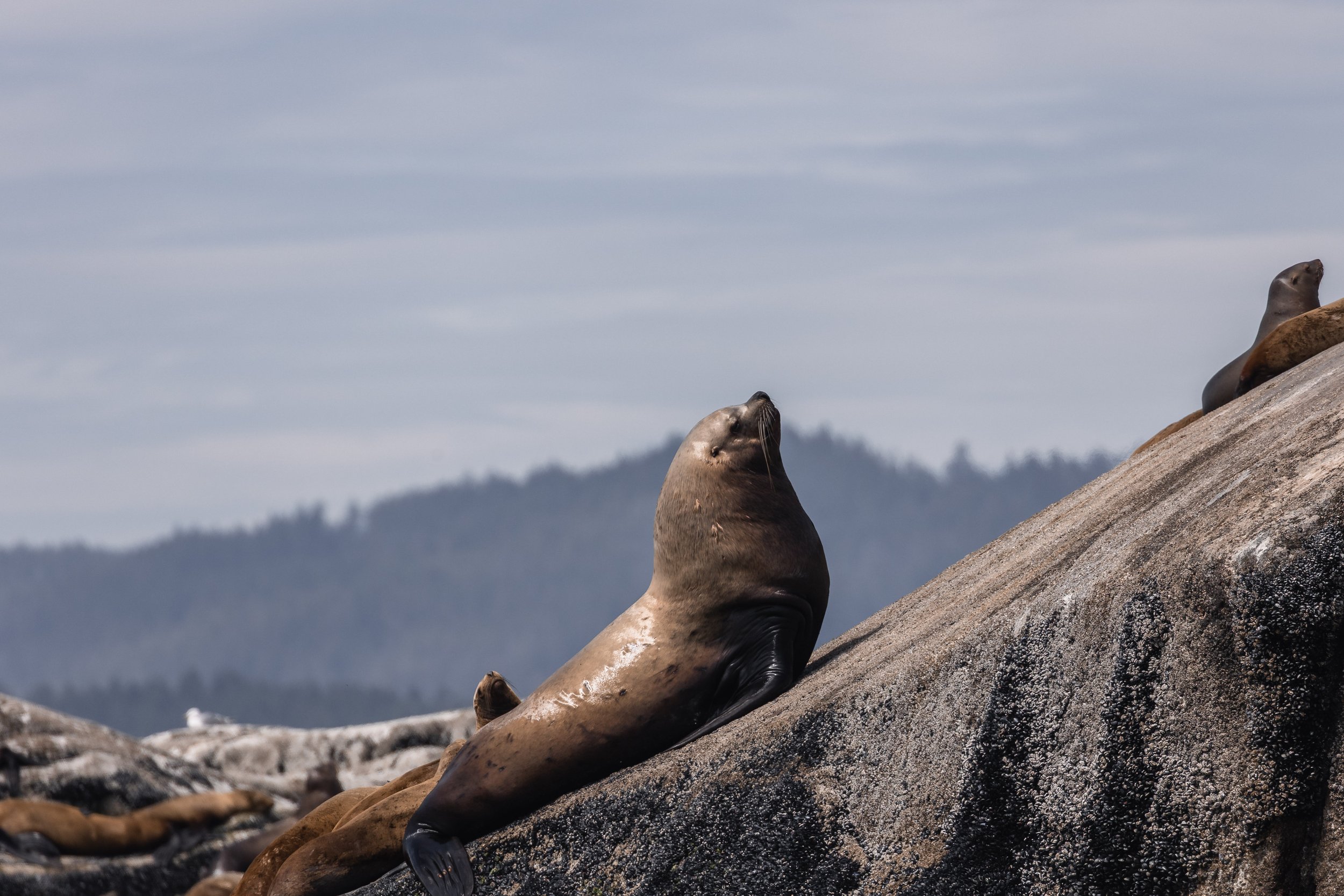
The Male Steller Sea Lion drying off on the rocks. Photo by Vanessa Vereschahen.
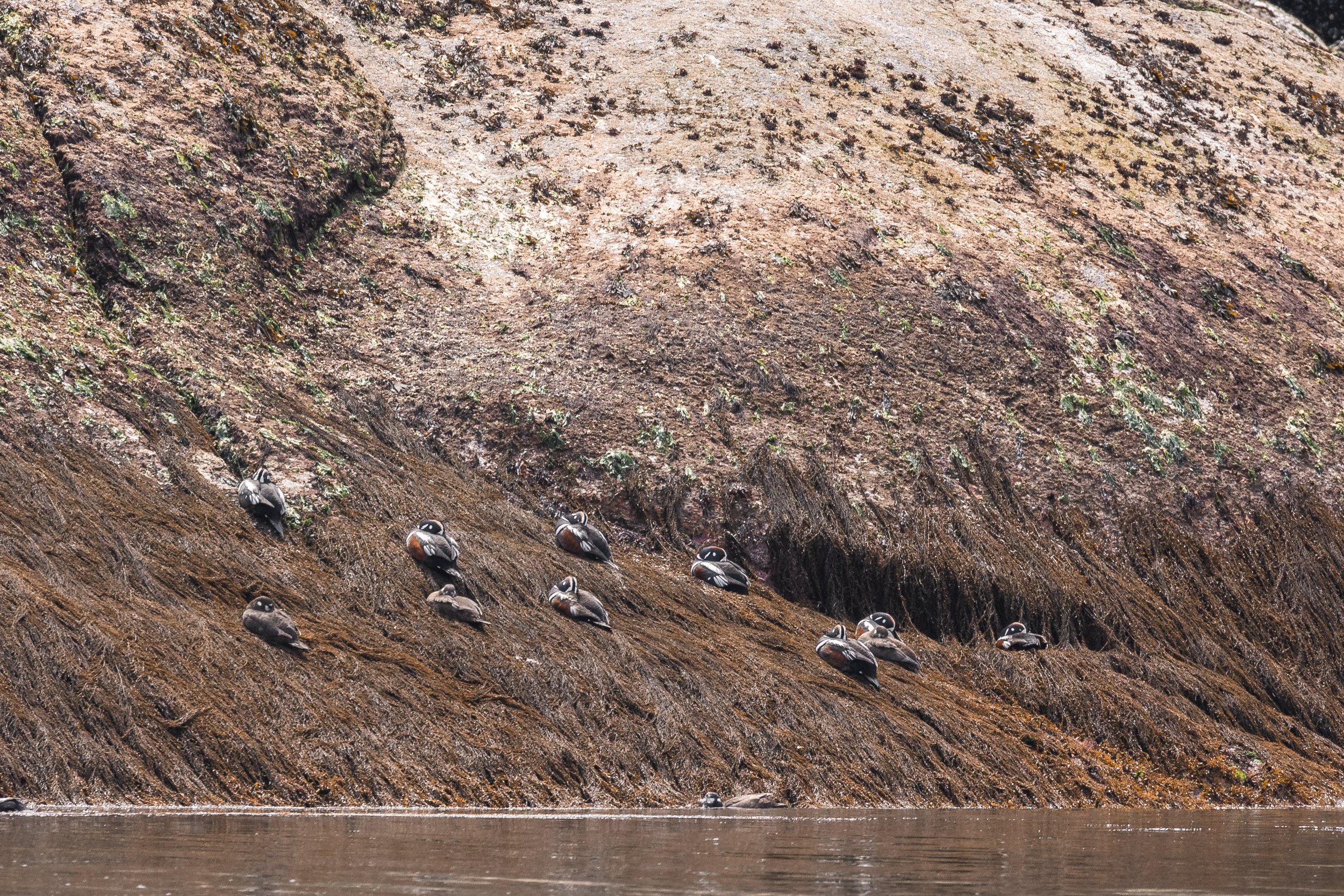
Harlequin Ducks on the rocks. Photo by Vanessa Vereschahen.
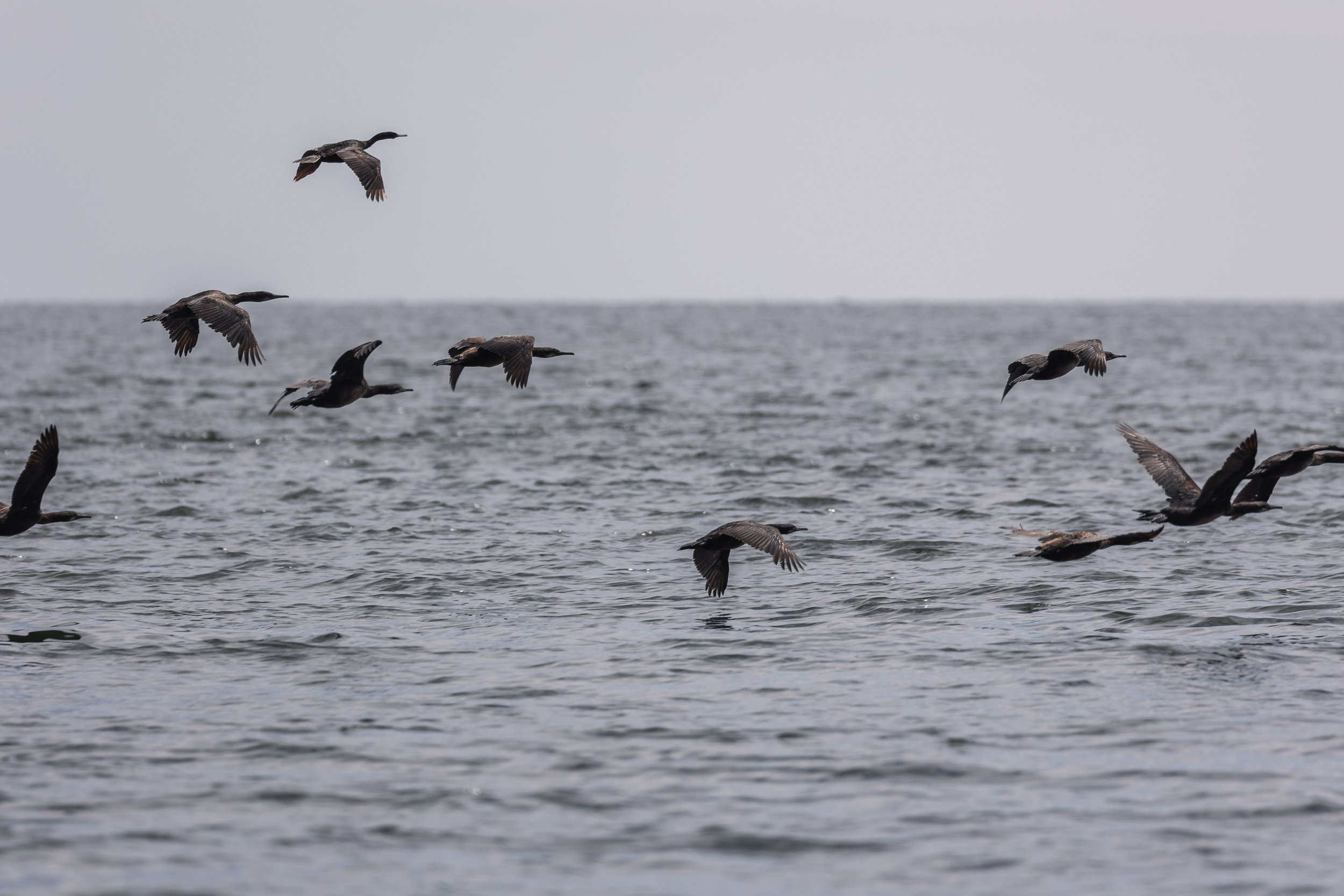
Cormorants flying by. Photo by Vanessa Vereschahen.
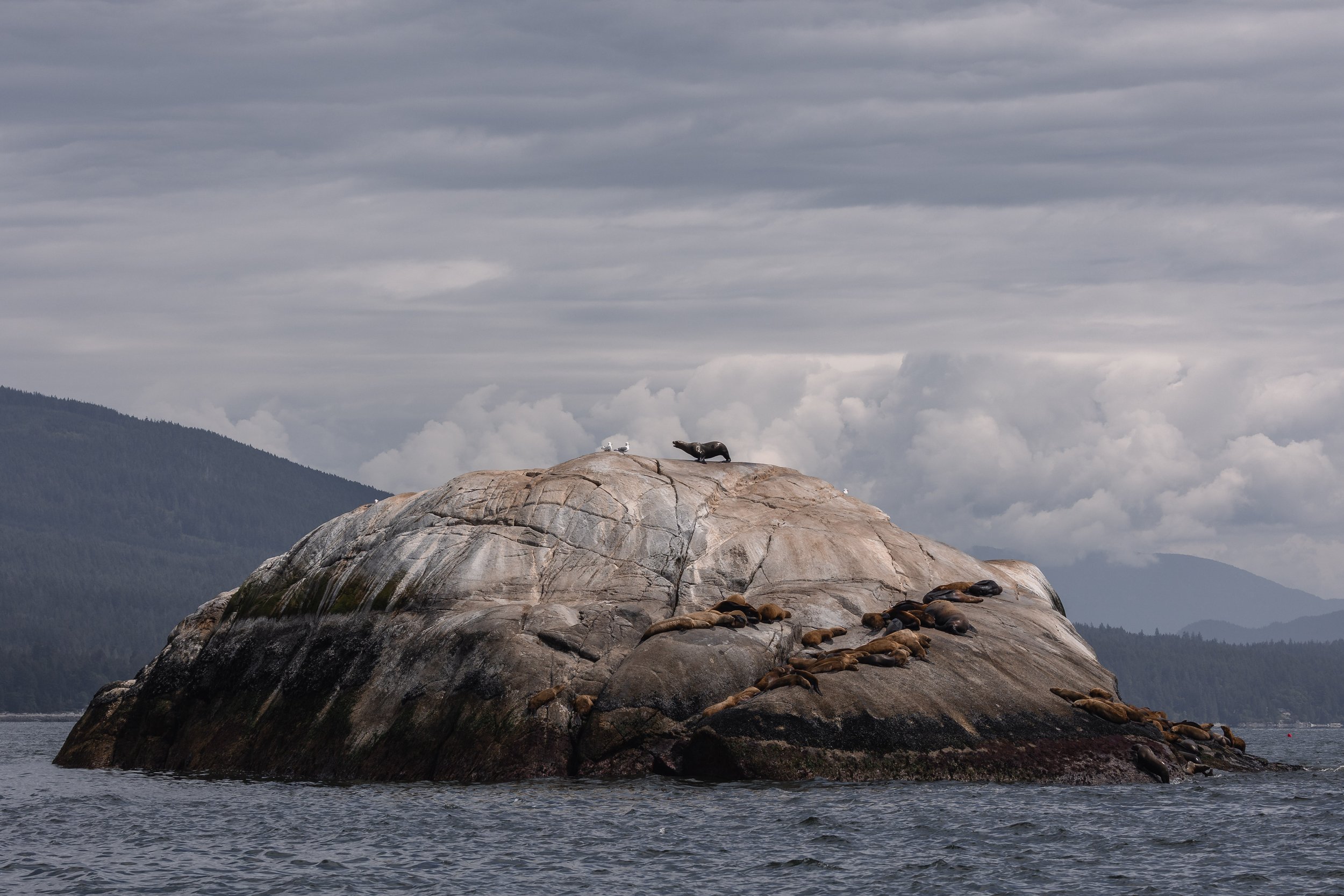
This sea lion is playing “king of the castle”. Photo by Vanessa Vereschahen.
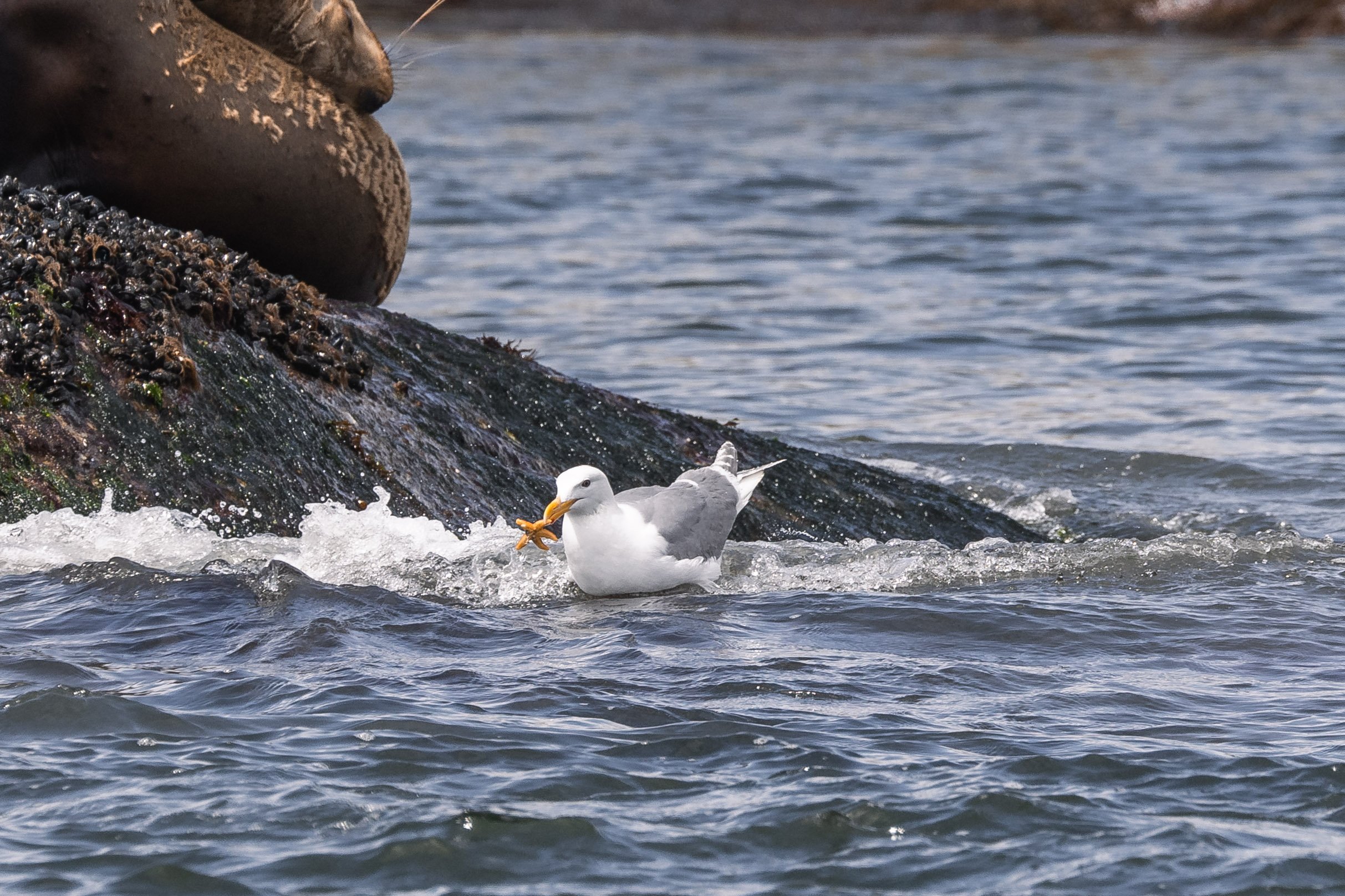
A gull with a baby starfish. Photo by Vanessa Vereschahen.
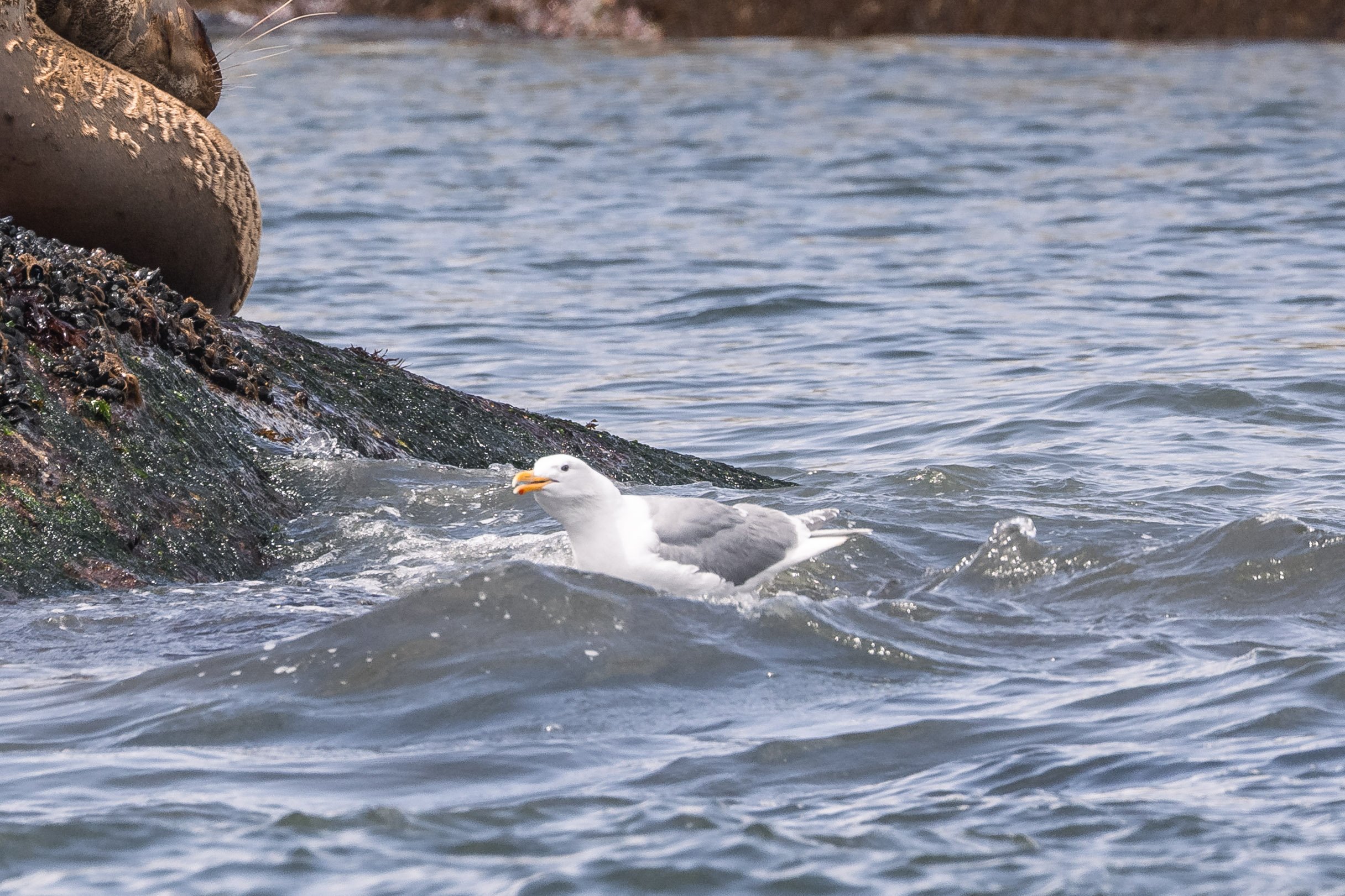
Gulp! No more baby starfish here. Photo by Vanessa Vereschahen.
Ulli and Wiggins
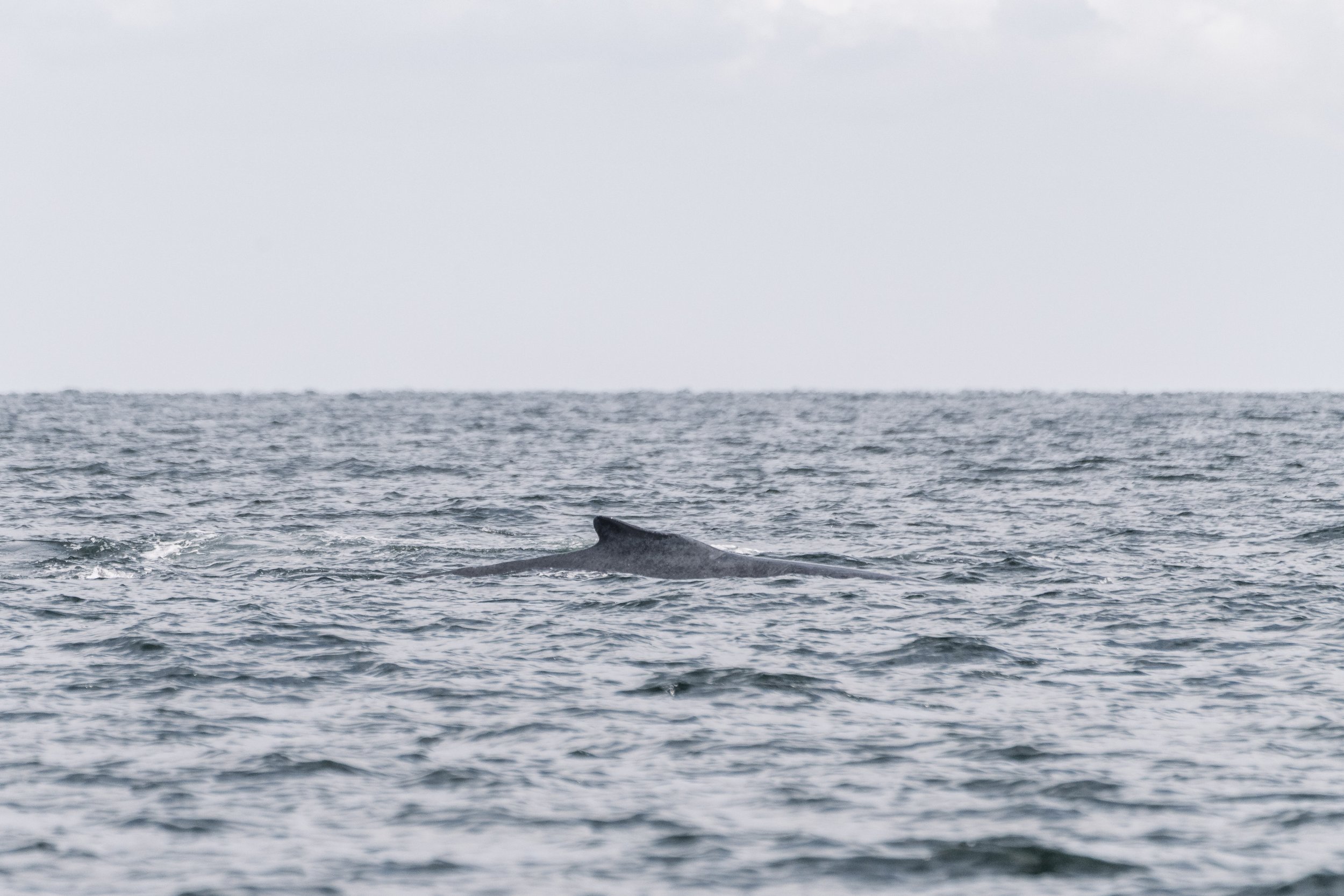
Wiggins’ dorsal fin. Photo by Val Watson.
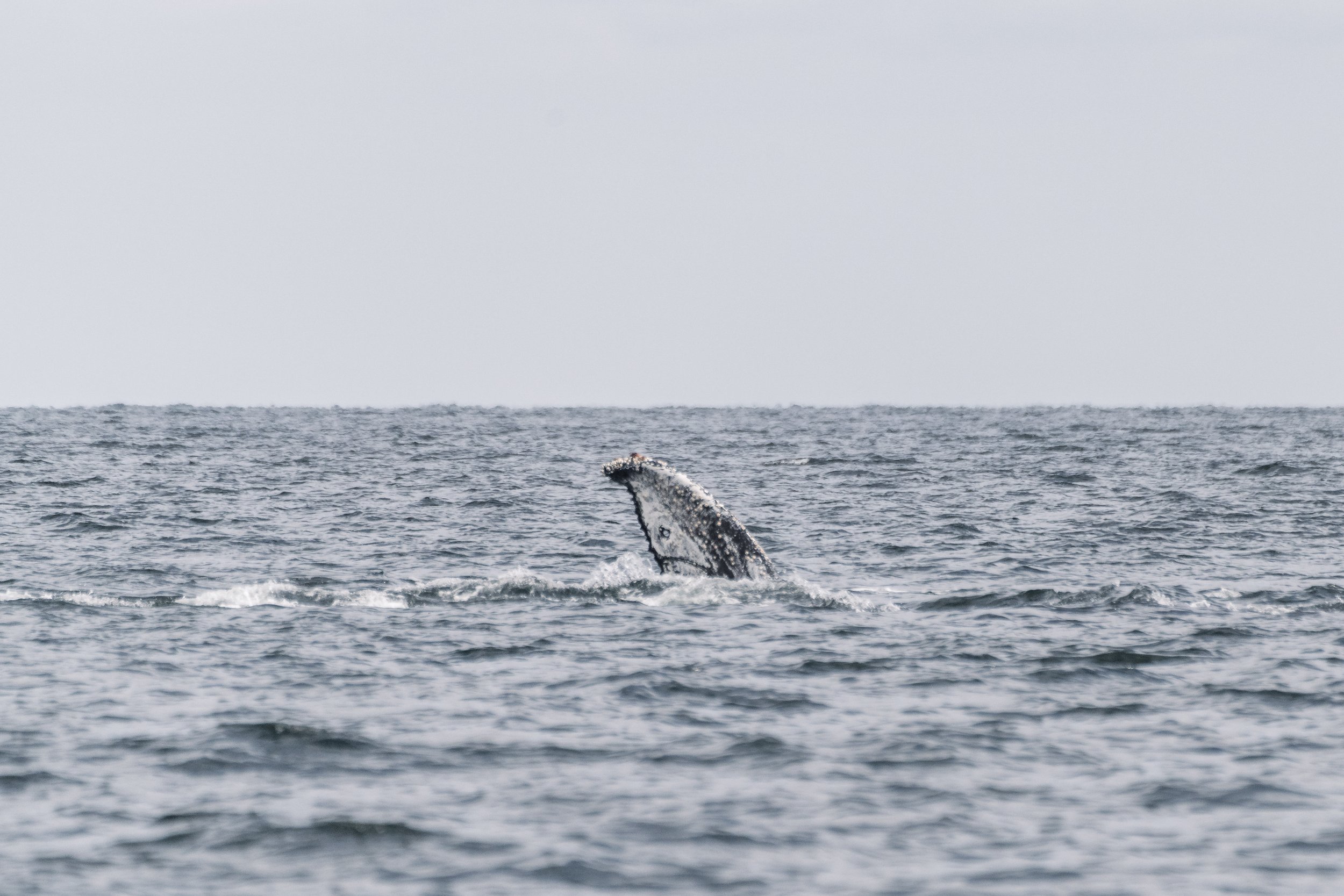
Ulli swimming on their side. Photo by Val Watson.
The Gabriola Bluffs
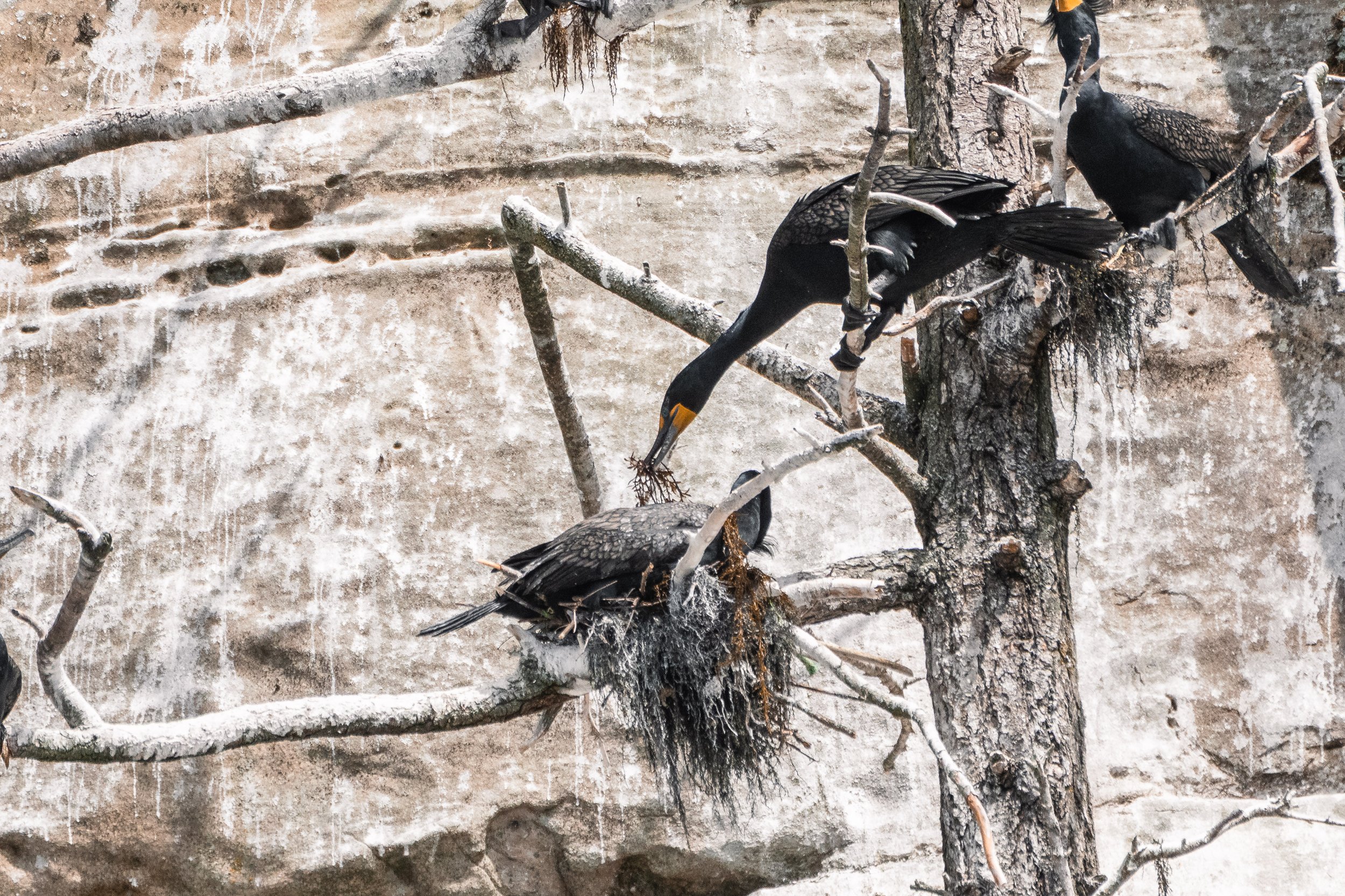
Cormorants building their nests. Photo by Val Watson.
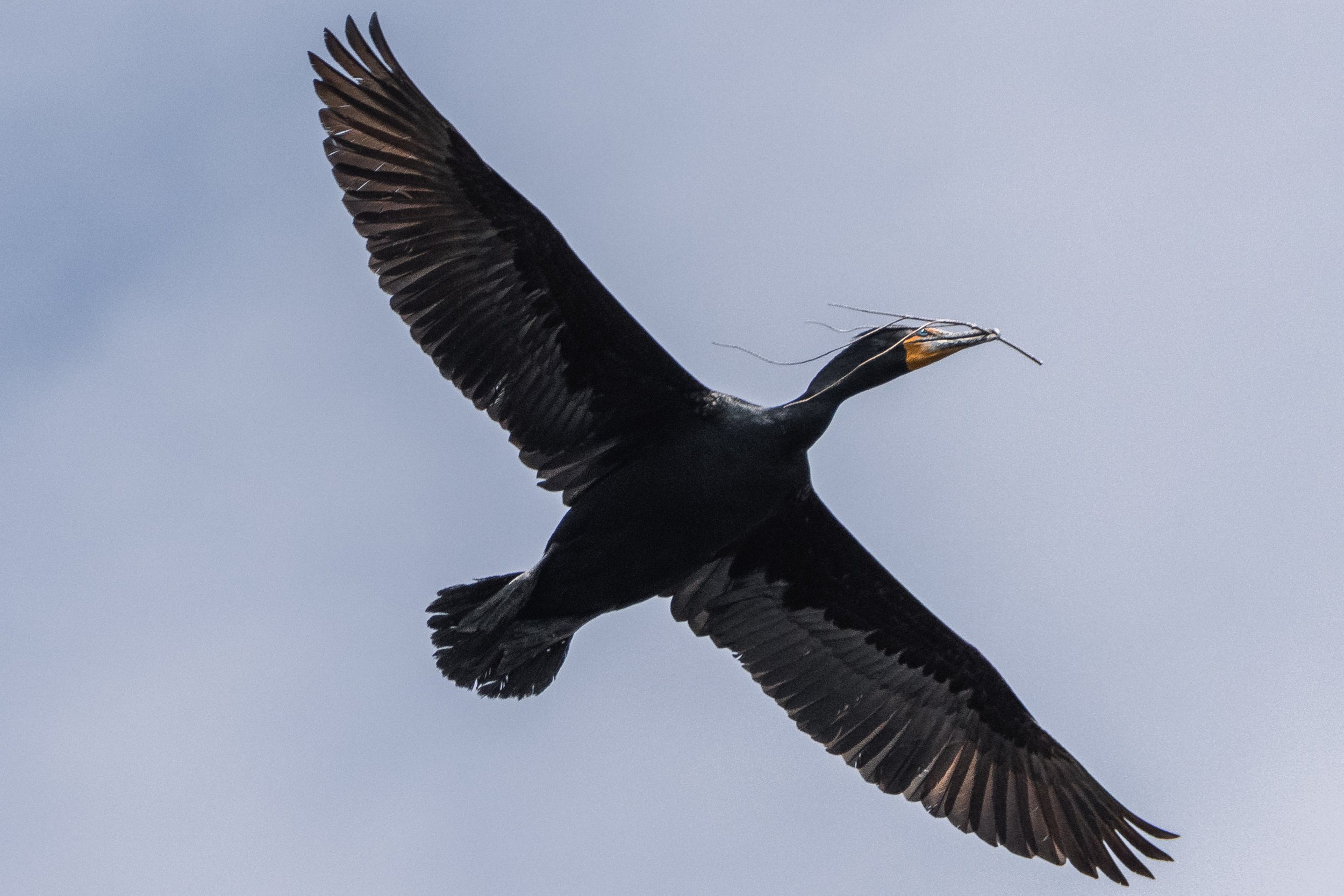
Cormorant flying with a stick for it’s nest. Photo by Val Watson.
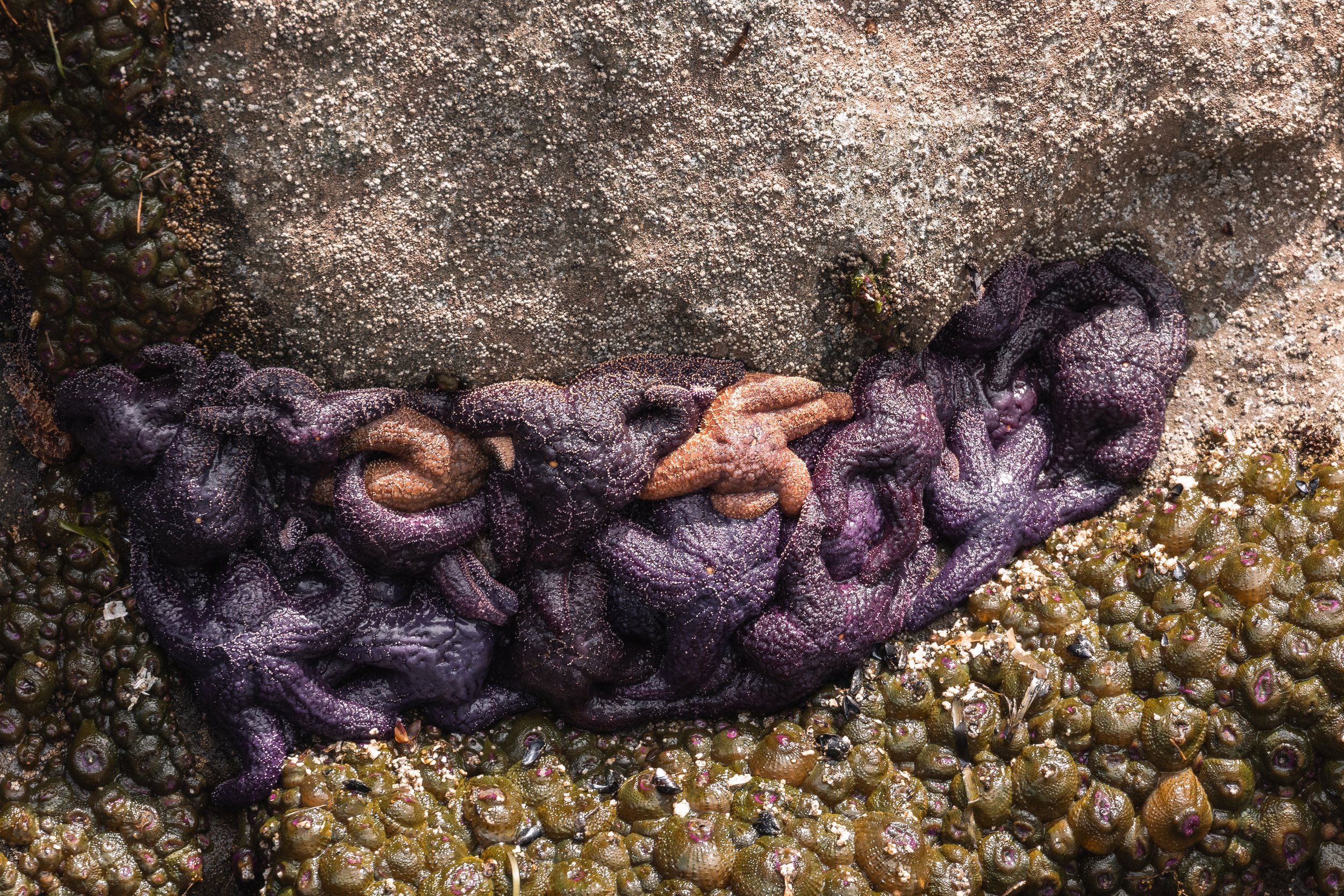
A group of Ochre Stars surrounded by Anemones. Photo by Vanessa Vereschahen.
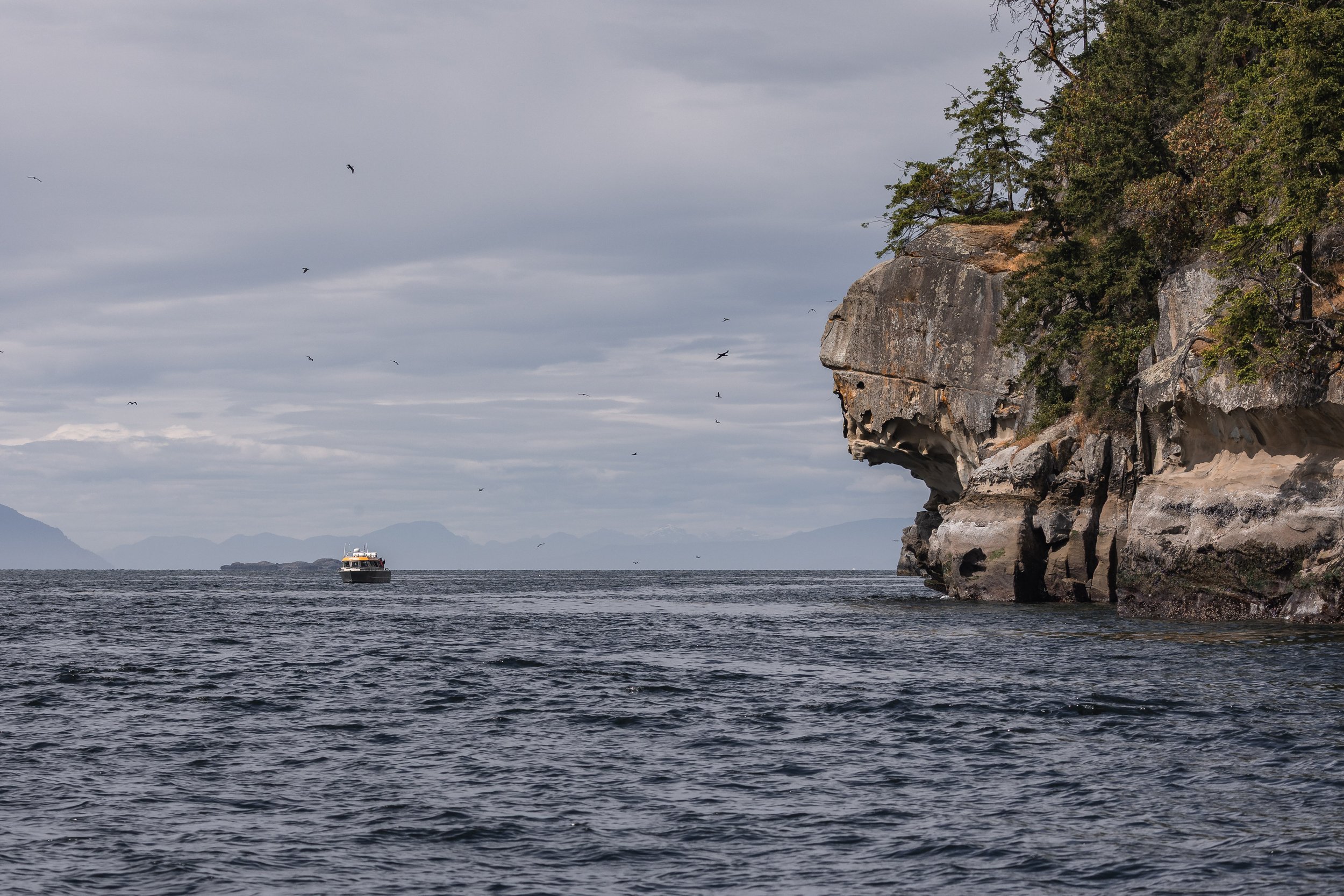
Kula watching the birds at the bluffs. Photo by Vanessa Vereschahen.
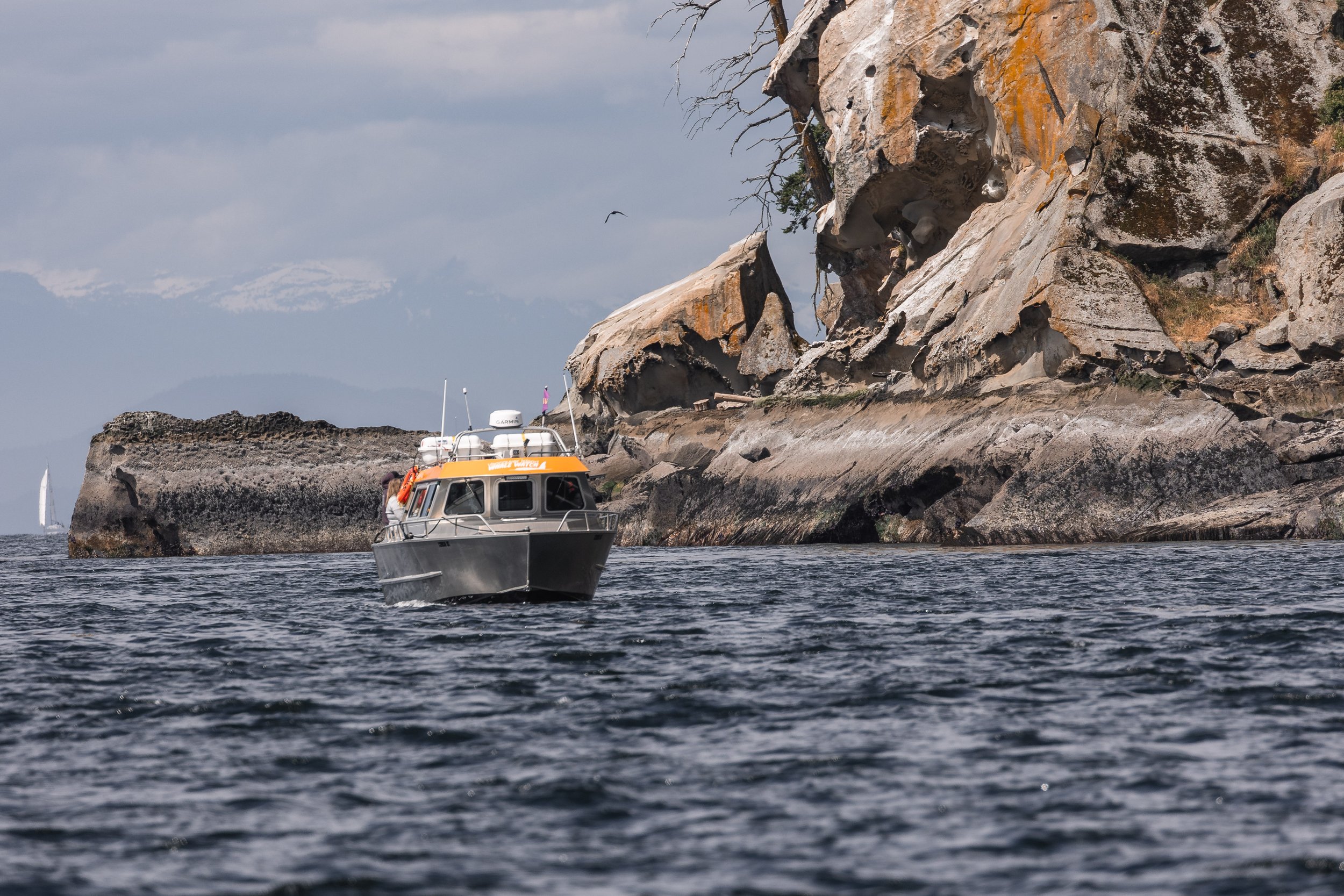
Kula beside the beautiful sandstone formations. Photo by Vanessa Vereschahen.