
May 21, 2026 - Beak is back
We loaded aboard Kula and set off into the sunshine and rolling waves, eager to discover what wildlife the Salish Sea might reveal today. The morning carried that perfect mix of excitement and anticipation as we left the harbour behind, the ocean glittering beneath the sun while cool sea spray drifted across the deck.
Our plan for the morning was to head south. We had received a vague report of possible whale activity near Sansum Narrows, and there were certainly no complaints from the crew about heading that direction. Sansum Narrows is one of the most breathtaking waterways we can explore on tour. Stretching between Vancouver Island and Salt Spring Island, the narrow passage is lined with steep forested shorelines, rocky bluffs, and hidden coves where arbutus trees cling impossibly to the cliffs. The currents here can run strong as tides funnel through the narrow channel, creating swirling eddies and rippling water patterns that add to the dramatic scenery. Bald eagles often perch high in the towering firs while seabirds skim low across the surface. Even without whales, travelling through Sansum Narrows feels like stepping into a postcard of the Pacific Northwest.
We slowed to carefully investigate the area, scanning every patch of calm water and every distant disturbance on the horizon. But after taking in the scenery and thoroughly searching the area, we became fairly certain the original whale report may have been a false alarm. No worries, that simply meant it was time to shift gears and continue the search elsewhere.
This time, we pointed the bow farther west and tucked out into the open Strait. Conditions became noticeably livelier as we left the shelter of the islands behind. The swell lifted the boat higher while sea spray occasionally splashed over the sides, but spirits remained high onboard. Sometimes the extra bumps and spray are well worth it when they lead to wildlife encounters.
Our goal was to reach the Canoe Islets, a favourite haul-out location for sea lions. These rocky islets are often alive with pinnipeds sprawled across the shoreline, but as we pushed farther into the rougher waters, the crew collectively agreed the conditions were a little more intense than anticipated. Safety and comfort always come first on the water, so we made the call to head south again toward calmer conditions.
It turned out to be an excellent decision. Perhaps the calmer waters were calling us over, because not long after arriving near Active Pass, a massive bushy blow erupted from the ocean’s surface. “Humpback!” Aly shouted excitedly from the deck.
Instantly, all eyes locked onto the spot where the whale surfaced again, its dark back arching gracefully above the water. Aly quickly raised her telephoto lens, eager to capture the underside of the tail fluke for identification. Moments later came another excited shout: “It’s Beak!”
Meeting a whale you know well always makes the encounter extra special. Beak is a humpback whale we have followed for years, and he carries an especially remarkable family history. Beak (BCX1606) is a descendant of the legendary Big Mama, one of the most important humpback whales in the recovery of this population.
It is difficult to imagine today, but humpback whales were once almost entirely absent from these waters. Commercial whaling devastated populations throughout the North Pacific during the 19th and early 20th centuries. By the time large-scale hunts finally ended in the 1960s, humpbacks had been pushed to the brink, and sightings in the Salish Sea became incredibly rare. Entire generations grew up without regularly seeing humpback whales here at all.
Then, in the 1990s, Big Mama returned. Her reappearance in the Salish Sea became a symbol of recovery and resilience. Year after year, she returned to these productive feeding grounds, and over time, researchers documented her raising calf after calf. Big Mama has now produced at least eight known calves, at least five known grandchildren, and even great-grandchildren. Few individual whales have had such a visible impact on the repopulation of the Salish Sea. Her family line has helped transform humpbacks from occasional visitors back into regular seasonal residents of these waters.
So you can imagine how thrilled we were to spend time with one of her offspring today. Watching Beak surface was like witnessing a living piece of conservation history.
Like his mother, Beak migrates annually from Hawaii to the rich feeding grounds of the Pacific Northwest. Humpback whales undertake one of the longest migrations of any mammal on Earth, travelling thousands of kilometres between tropical breeding grounds and colder northern feeding waters. During the winter months in Hawaii, humpbacks focus almost entirely on breeding, calving, and caring for newborns. They feed very little, if at all, during this period.
That means when whales like Beak arrive back in British Columbia each spring, food becomes their top priority. The waters here are incredibly nutrient-rich, supporting vast populations of krill, herring, and other schooling fish. Throughout the summer and fall, humpbacks spend long hours feeding and rebuilding the enormous fat reserves known as blubber that will sustain them during their migration south and the winter months ahead. An adult humpback can consume up to 5000 pounds of food per day during peak feeding season. Every deep dive and every mouthful matters as they prepare for another incredible trans-Pacific journey back to Hawaii.
We spent a beautiful stretch of time with Beak as he travelled and surfaced rhythmically through the calmer waters near Active Pass. Eventually, however, the clock reminded us that home was still quite a distance away. Reluctantly, we left Beak to continue his travels and pointed our bow northward once again.
Before returning to harbour, we squeezed in one final wildlife stop at the Harmac log booms, where a noisy group of California Sea Lions greeted us with their unmistakable barking calls. These charismatic pinnipeds are seasonal visitors to British Columbia, much like our humpback whales. California Sea Lions breed farther south along the coasts of California and Mexico, but many males migrate northward after the breeding season to take advantage of the abundant food resources in our colder waters.
California Sea Lions are highly social and often gather in large, noisy groups on docks, buoys, and log booms. Adult males can weigh upwards of 800 pounds and are easy to recognize by their tall foreheads and loud vocalizations. Despite their bulky appearance while resting, they are remarkably agile swimmers capable of impressive bursts of speed underwater. Watching them jostle for space on the logs while barking at one another is always an entertaining way to end the day.
As we cruised back toward Nanaimo beneath the afternoon sun, today’s adventure served as a reminder of just how dynamic the Salish Sea truly is. From the dramatic beauty of the Sansum Narrows to the powerful presence of Beak and the lively sea lions at the log booms, every mile of ocean carried its own story. Encounters like today’s are more than just wildlife sightings, they are glimpses into an ecosystem that continues to recover, evolve, and thrive. And for all of us onboard, meeting one of Big Mama’s descendants out on the open water made this day one we will not soon forget.
Photos by Aly Kohlman below.
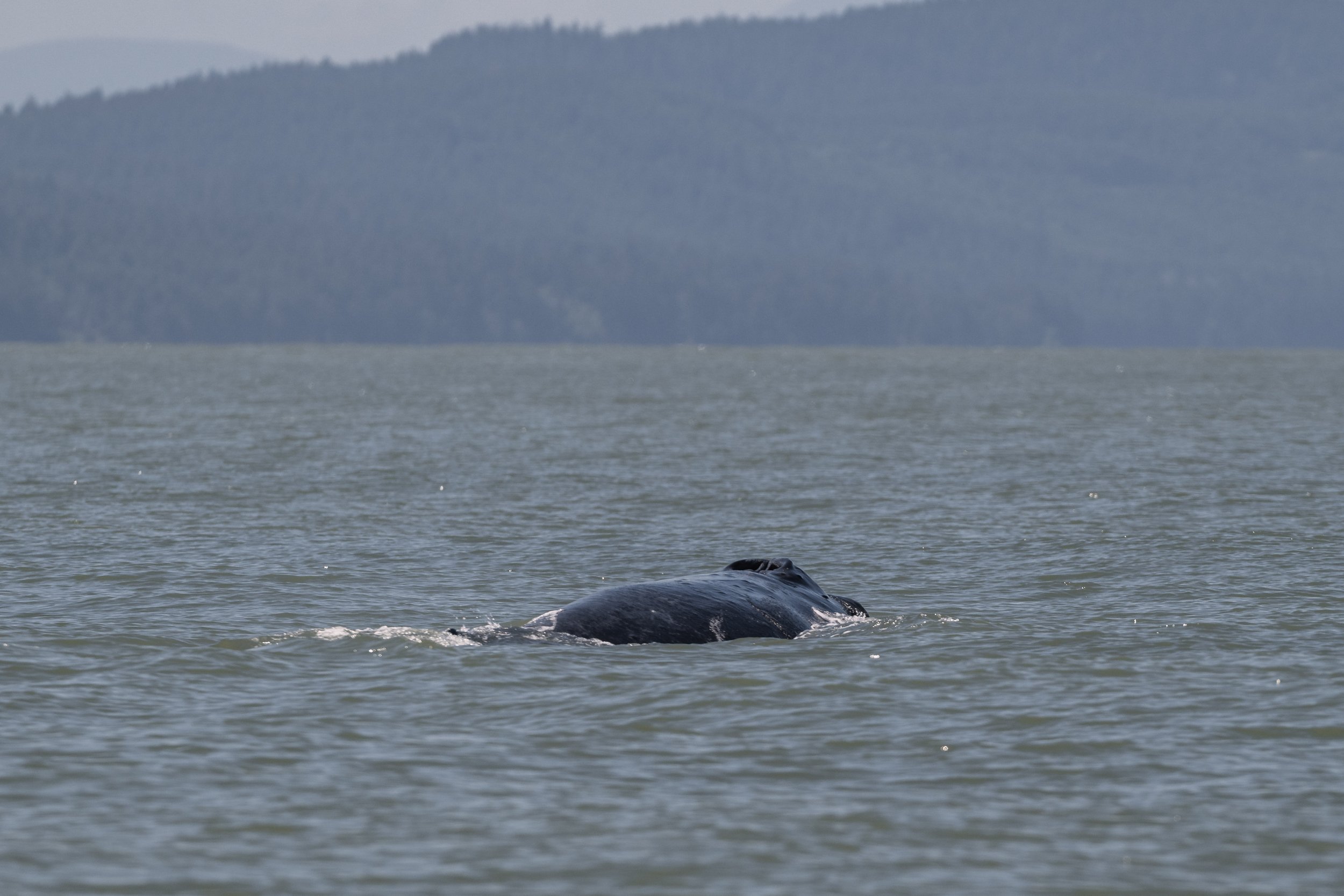
Beak surfacing.
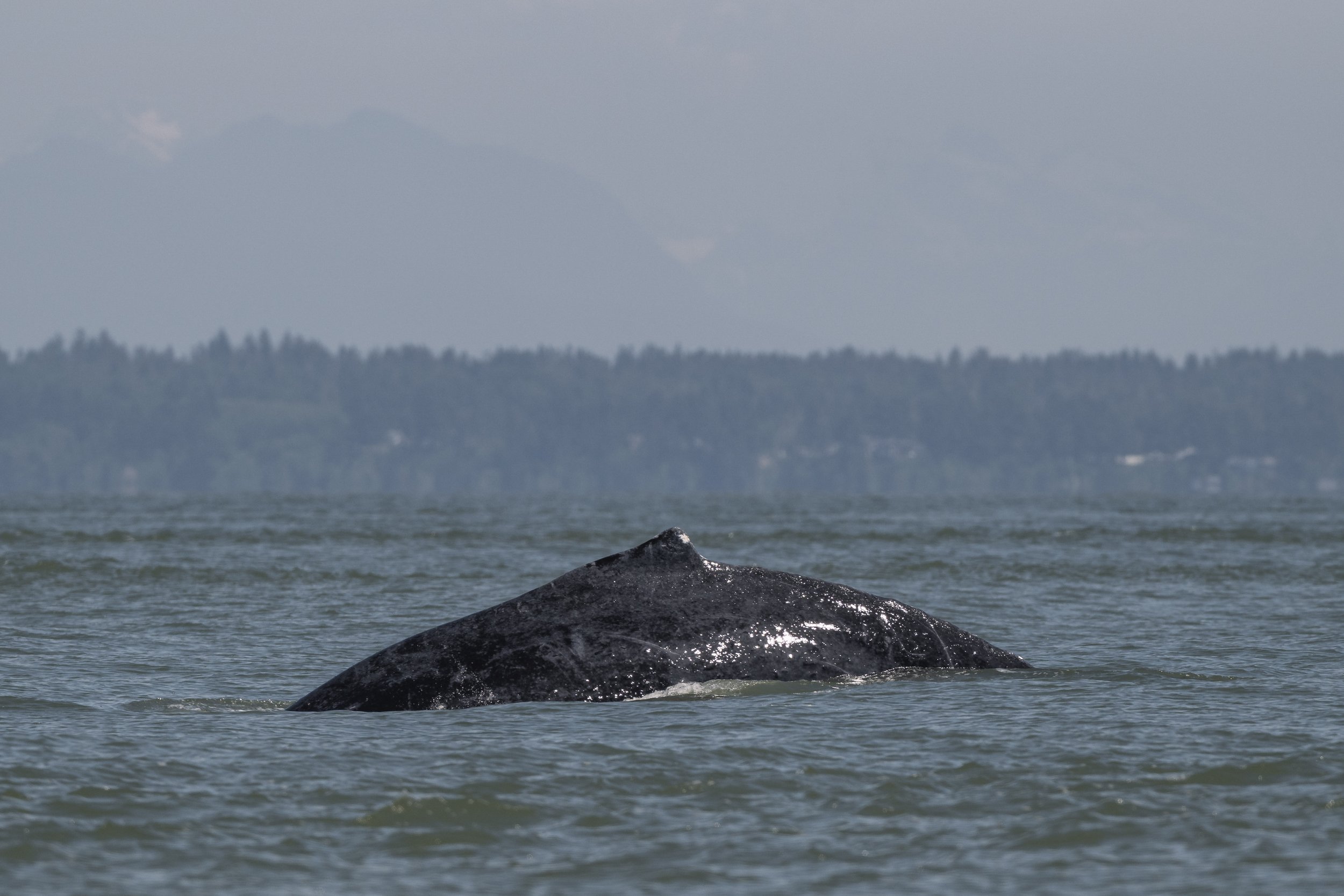
Beak’s left dorsal.
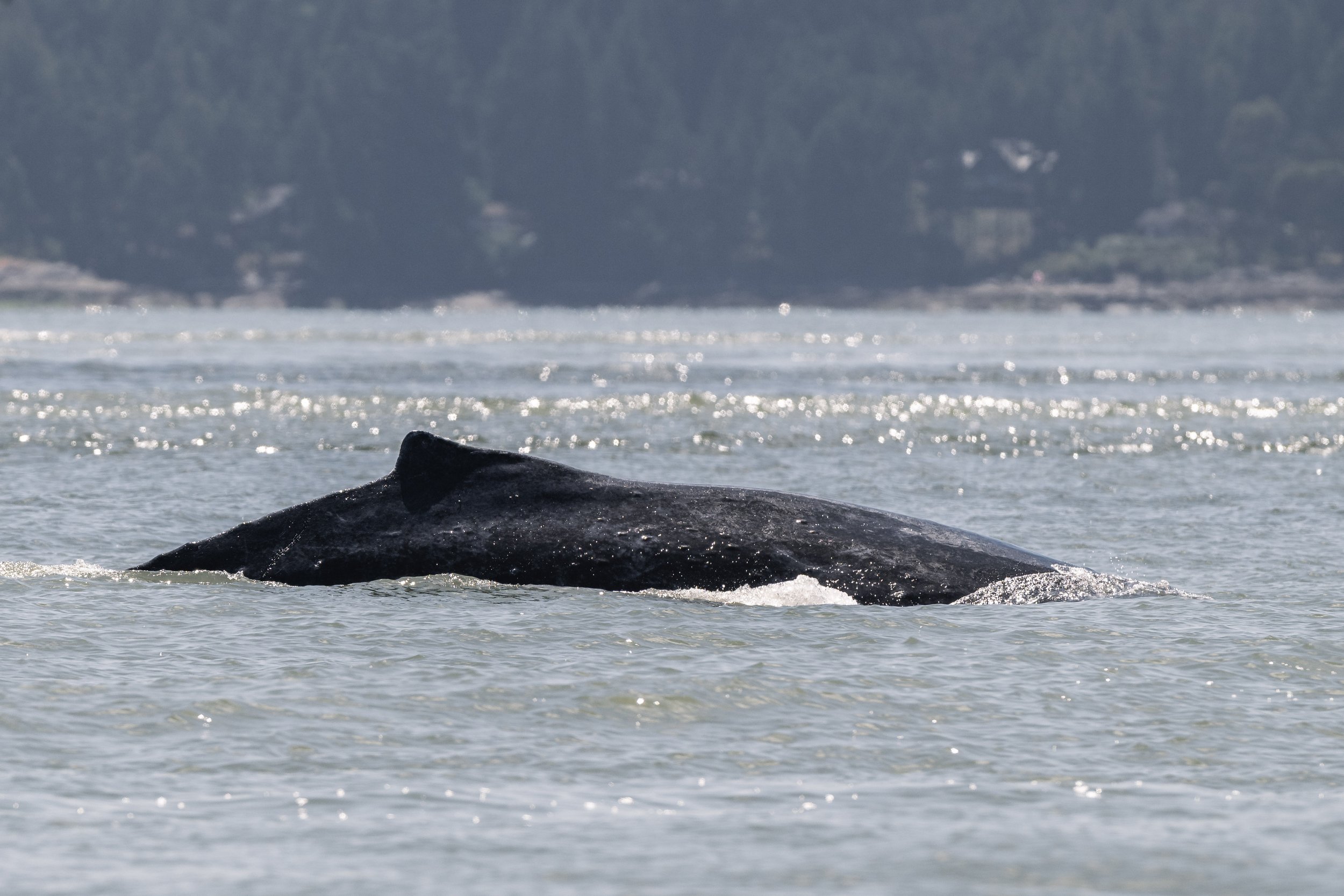
Beak’s right dorsal.
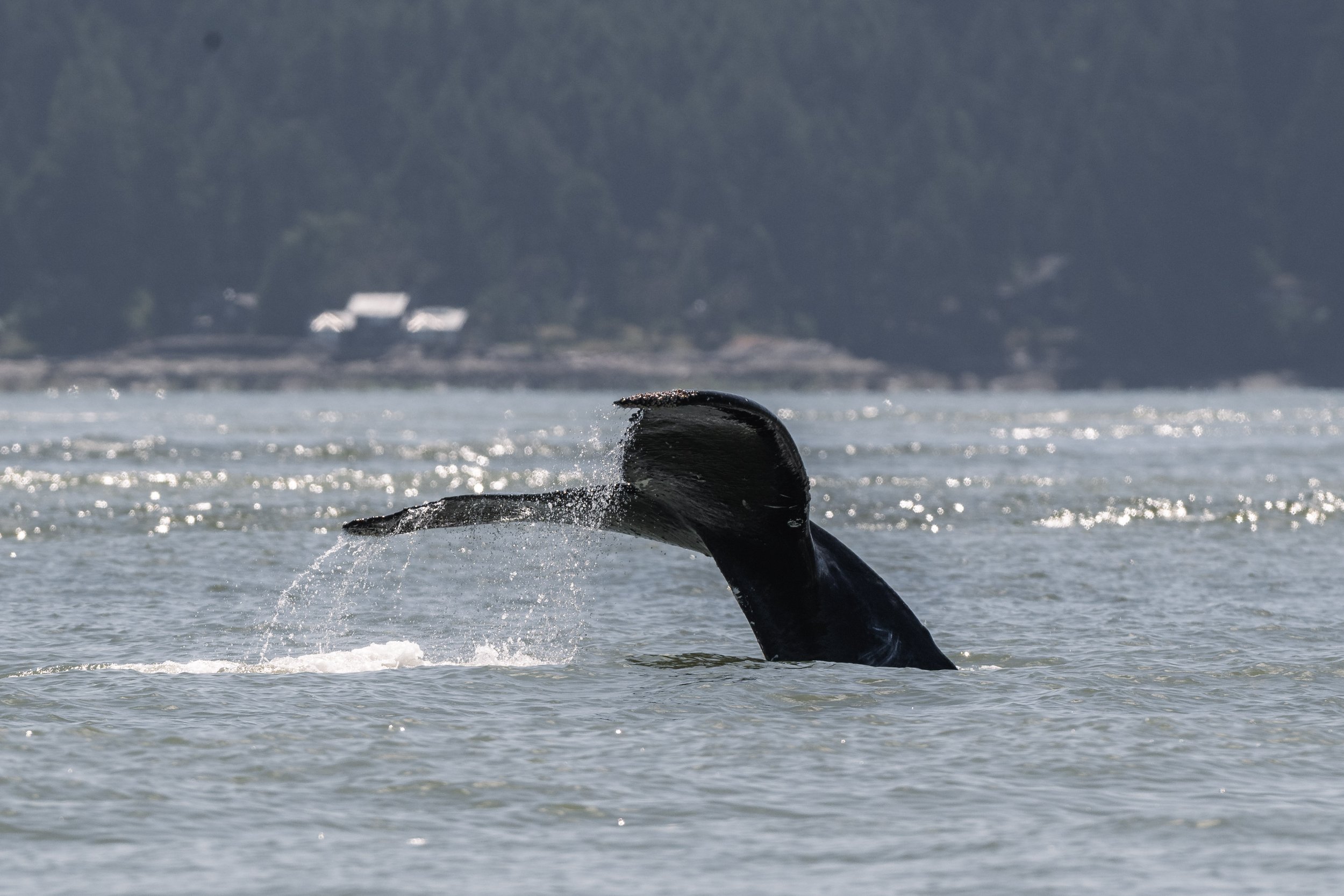
Tails up!
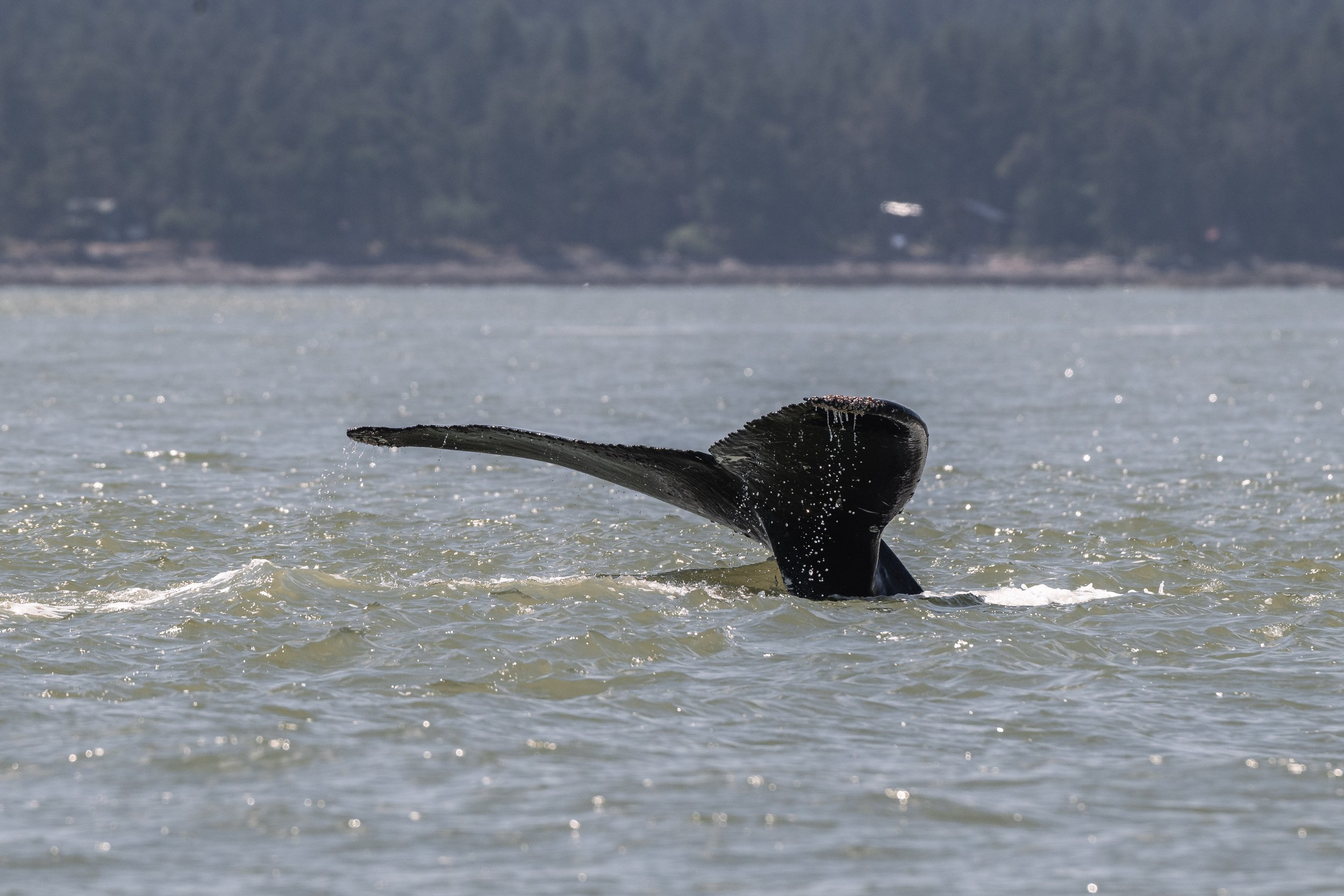
Beak fluking.
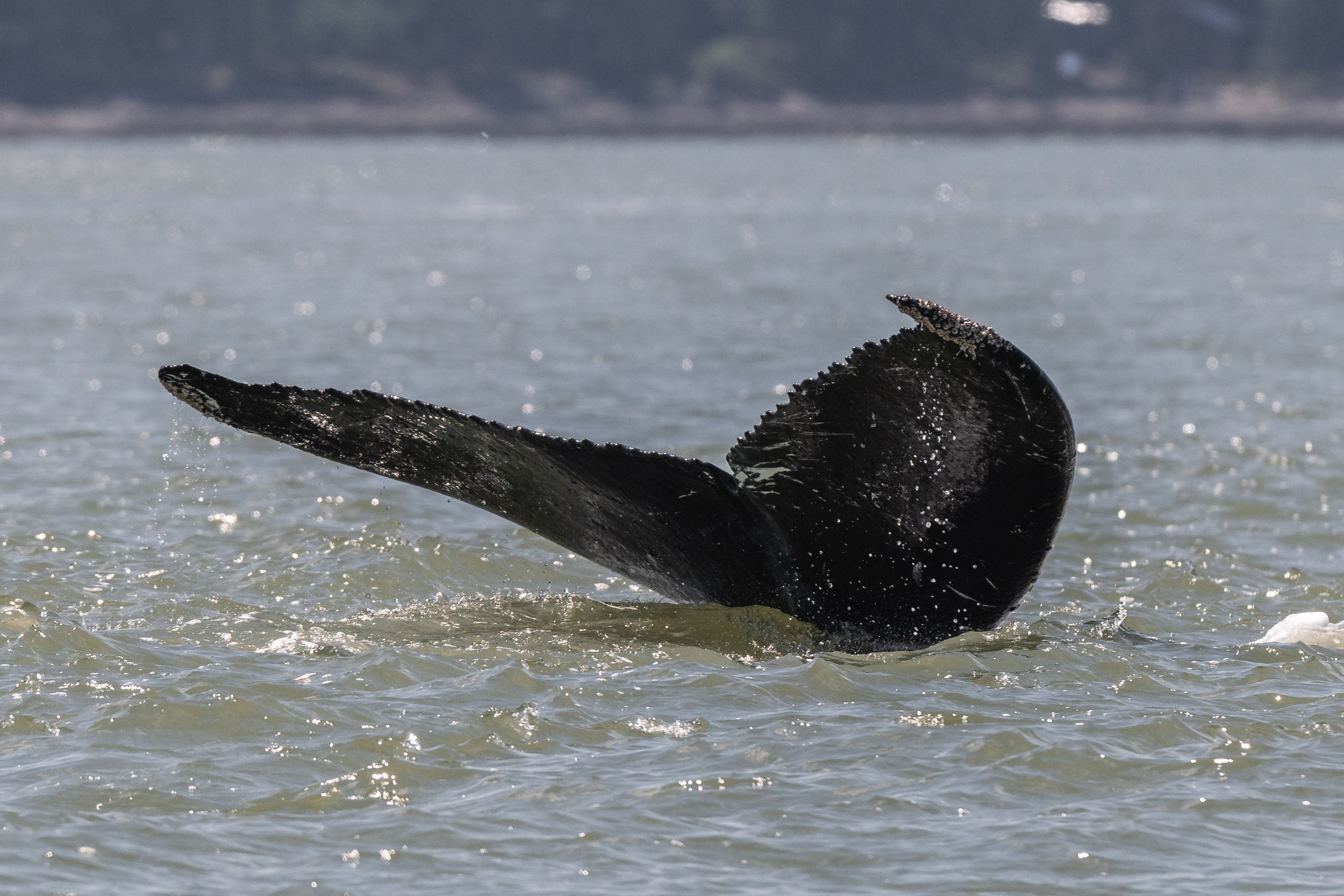
A good look at the markings on the underside of Beak’s tail.
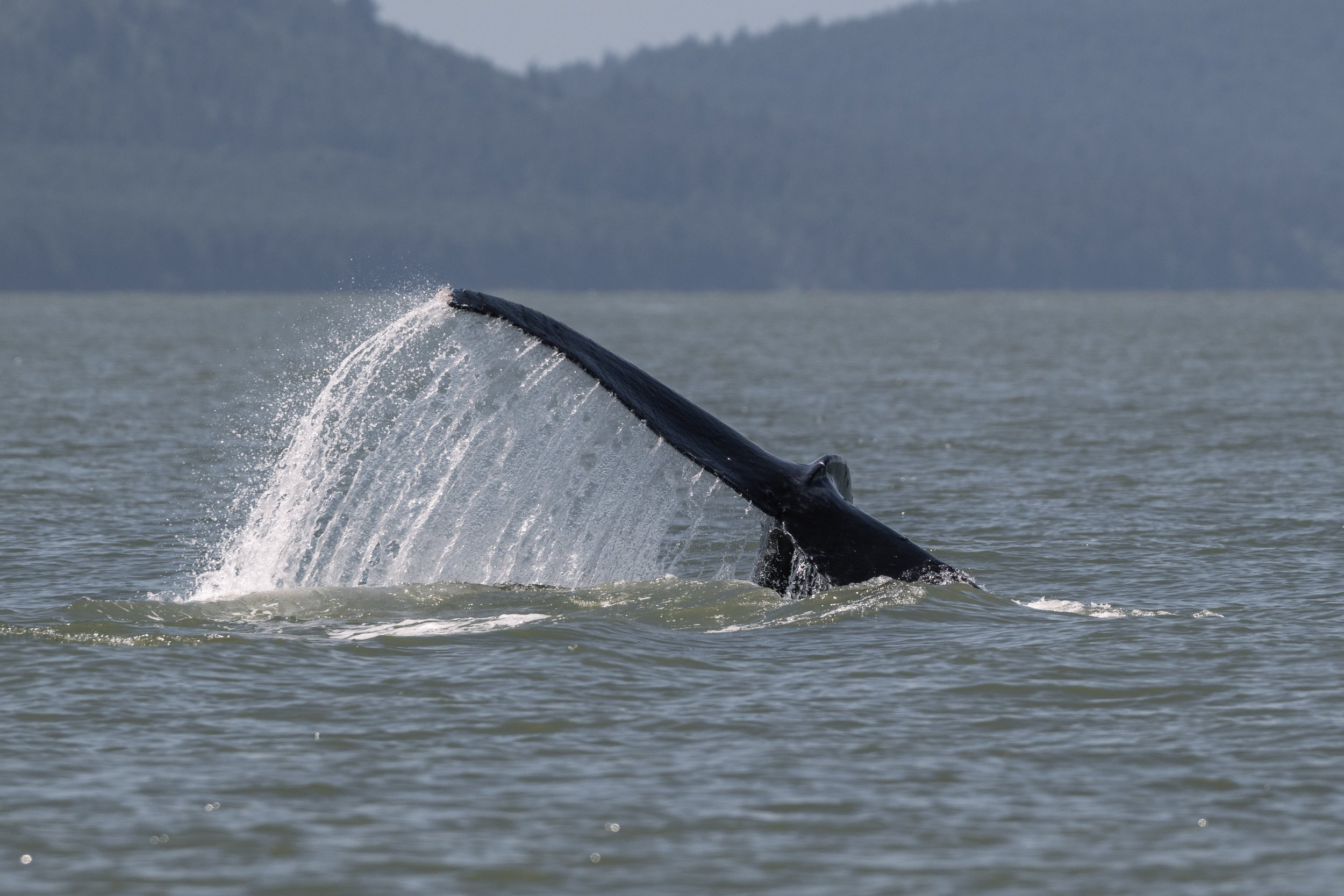
Beak moving some water with his tail.
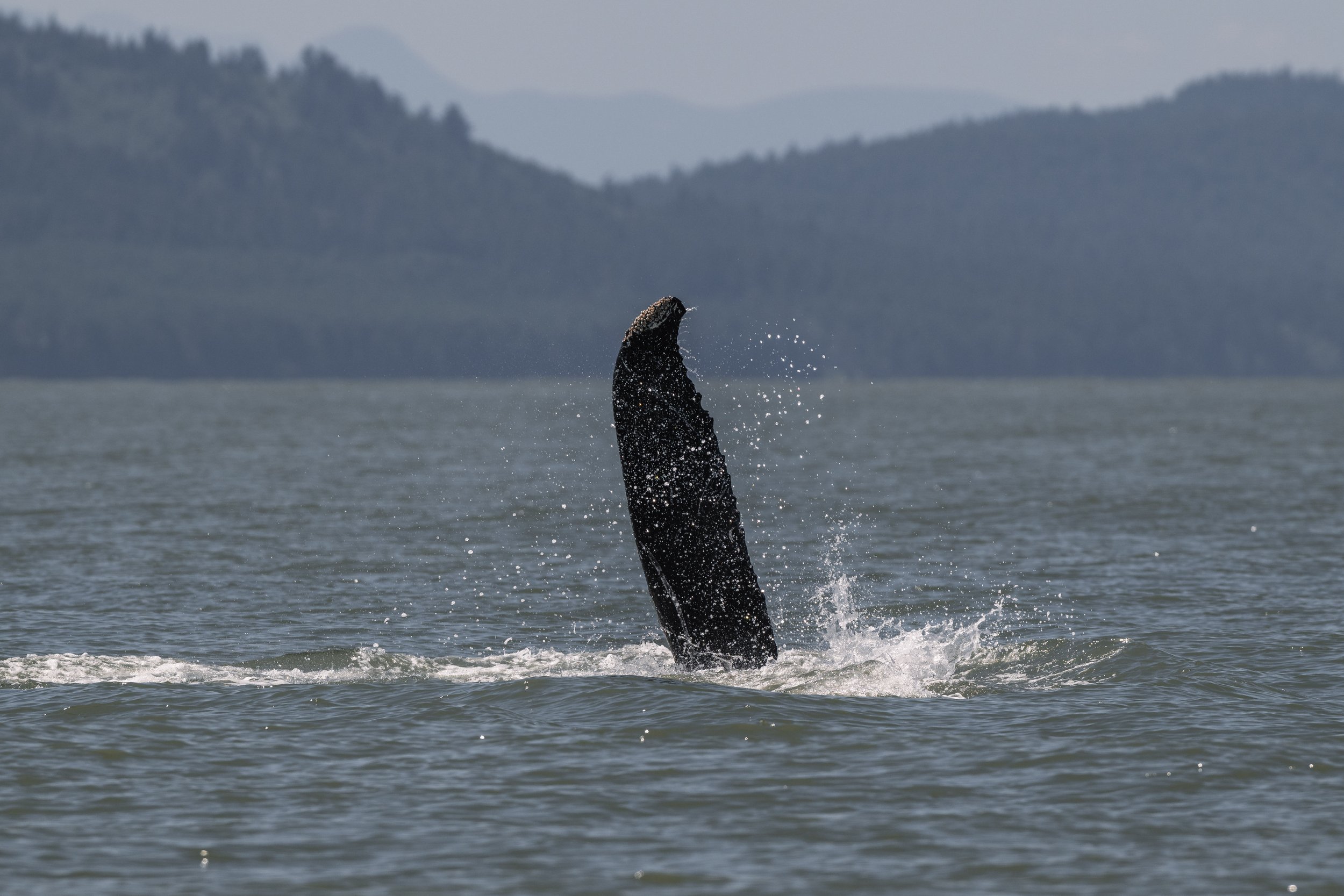
Beak feeling splashy.
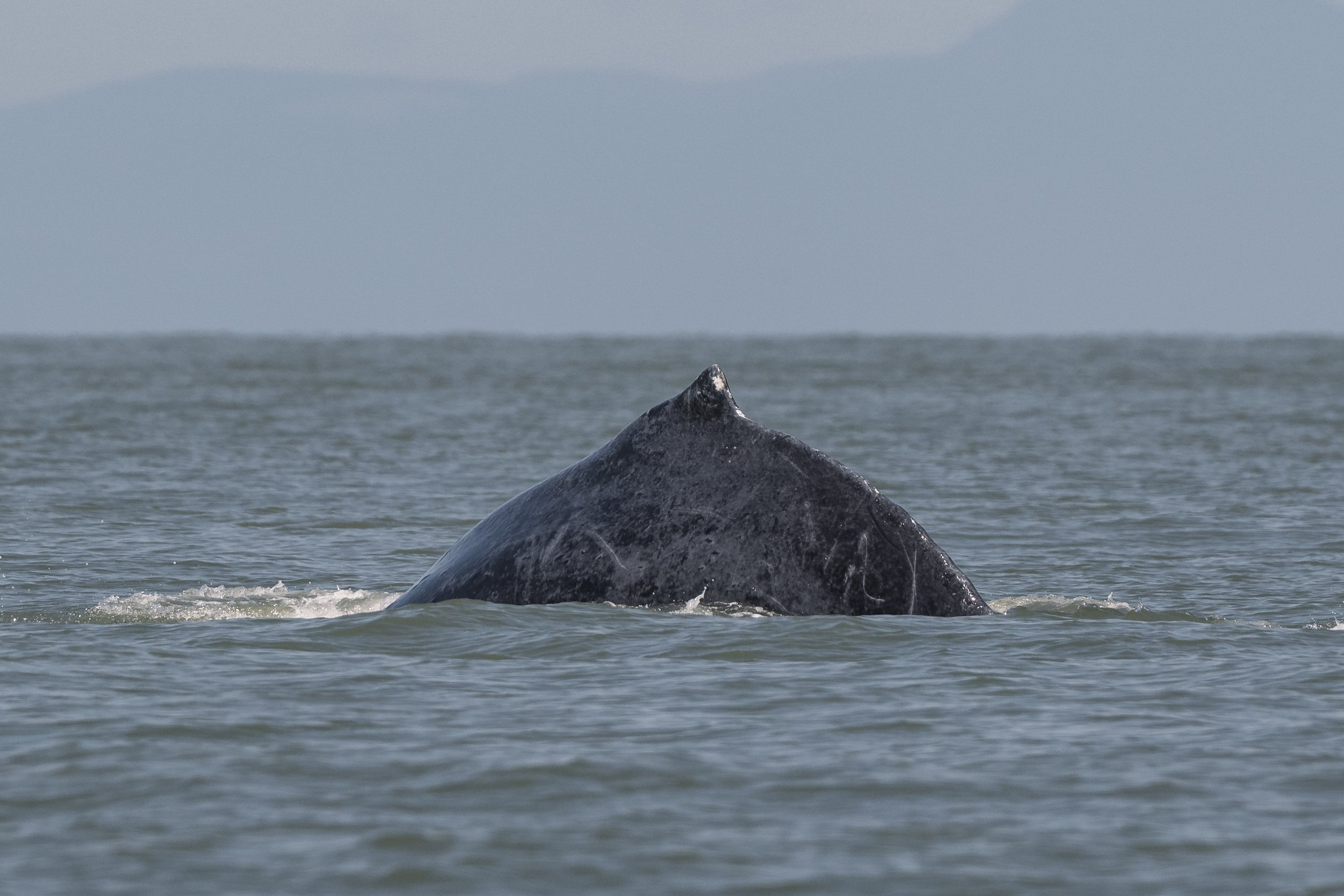
A big arch before Beak lifts his tail to dive.
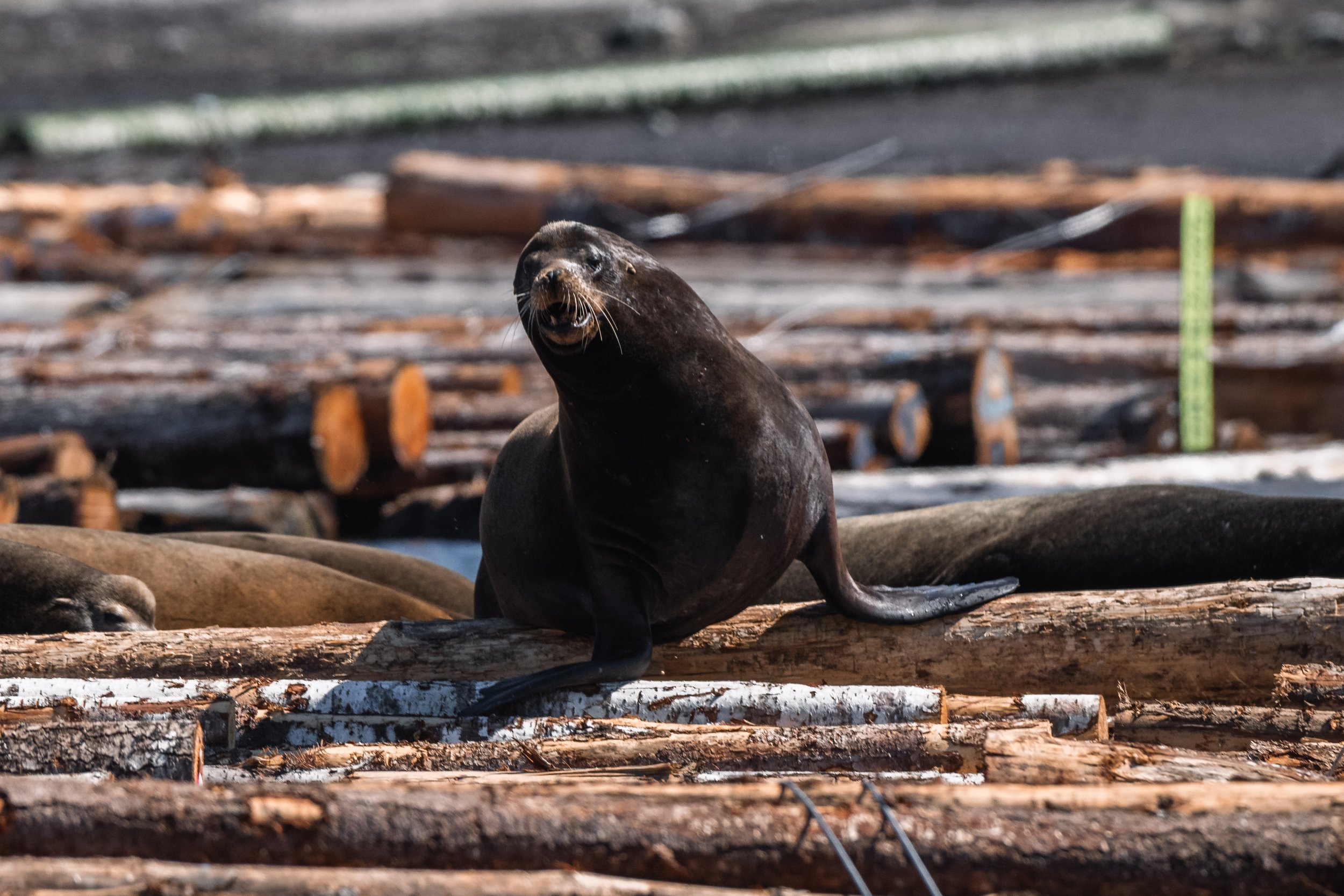
A barking California Sea LIon on the log booms.
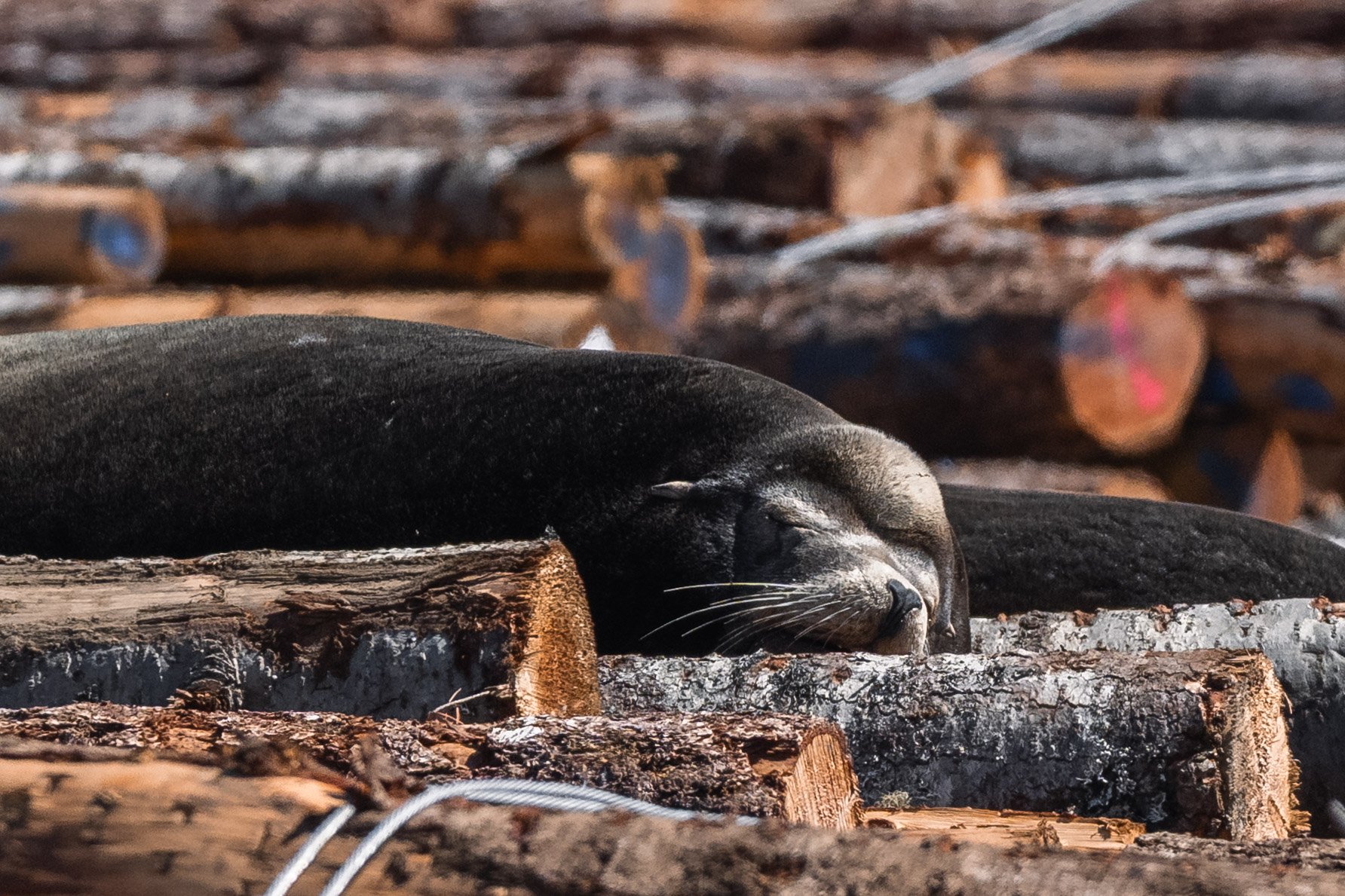
A fast asleep fuzzy male California Sea Lion.