
June 10, 2026, 3:30 PM - Winding through the islands for a double species day!
The sun was high in the sky as we set off on Kula, curious where our ventures would take us. Naturalist Hayleigh discussed the many species we could locate throughout the trip, from the stealthy orca to the giant humpback whales and the boisterous sea lions. Settling into our seats, we set off, always scanning the waters for any signs of activity.
After a quick crossing of Dodd Narrows, Captain Joseph swung us east, weaving through the smaller inner gulf islands before approaching Gabriola Pass. This pass, with Gabriola Island on one side and Valdez Island on the other, is a frequent route for us as we head out into the Strait of Georgia. Once through the pass, the view ahead opened up, as the islands fell away and the open waters of the Strait appeared. Skirting the edge of Valdez Island, we continued south for a bit before reaching our first stop of the day. Pale rocks jutted out from the dark waters ahead, with large brown lumps draped all over them. As we approached, the ‘lumps’ began to stir, raising their heads and giving us an inquisitive look.
These animals were Steller Sea Lions, the largest species of sea lion on earth. The males sport a pale, sandy-coloured coat and, once mature, have thick rolls of blubber covering their necks. These rolls are vital during the breeding months, when males will viciously fight each other to win over the many females present. While we observed them, one of these males was spotted tucked right in the midst of the others. His light coat contrasted with the chocolate coats of the smaller individuals around him, making his appearance even grander. After a few minutes with the sleepy pinnipeds, we set off, continuing our search to the south.
Soon after departing, we found our first whale of the day. A dark shape was moving gracefully through the waters ahead, arching and diving. Hayleigh donned her camera and began capturing the moment. These photos are important for identifying the individuals we encounter on our trips. While humpbacks are typically identified by the beautiful markings along the underside of their flukes, this whale was being a bit uncooperative. After catching a brief glimpse of one side of their fluke as they dove, and combining that with the shots of their dorsal fin, we confirmed that this was Windy (BCY0893), a well-known male humpback who has returned to our waters for many seasons.
Windy is a bit of an oddball, with confirmed sightings in both the Hawaii and Mexico breeding grounds. This differs from most humpback whales, who show a strong sense of site fidelity. Site fidelity, or the tendency to return to areas their mothers taught them about as calves. It is possible that Windy may have made social connections with individuals who migrate to the Mexico breeding grounds, leading to the change in his travel patterns. While we will likely never know for sure, we are grateful for resources such as Happywhale that have led us to learn so much more about our whales’ travel habits over the years!
Once we had spent some time with Windy, we continued on, travelling through Porlier Pass and back into the Gulf Islands. Heading south, we traversed the channels before making our way to Wallace Island. Soon after arriving, our second type of whale was spotted - two huge black dorsal fins, and one smaller one lazily travelling along. A quick shot and comparison to our ID guides confirmed that this was the T101s:
T101 Reef ♀ (≤1969)
T101A Rush ♂ (1993)
T101B Lagoon ♂ (1997)
The T101s were travelling very slowly as we watched. Occasionally surfacing to take a deep breath, they may have been napping today. Sleep in the world of whales looks a bit different than how we picture it, though. As “voluntary breathers”, each and every breath they take in their lives is a conscious decision on their part. Because of this, they rely on a resting style known as Unihemispheric Sleep. Unihemispheric sleep refers to resting one hemisphere of the brain while the other remains alert and active. This active side is in charge of lifting the whale back up to the surface, taking a breath, and then slowly sinking back into the waters. The active part of the brain is also in charge of keeping an eye out for danger, helping to stir the animal back into full consciousness if needed. Because of this unique sleeping pattern, whales never truly get a “full night's rest” in the same way we think of it.
The smaller of the three fins ahead of us belonged to the pod's matriarch, T101 Reef. The two larger fins belonged to her two sons, T101A Rush and T101B Lagoon. This dramatic size difference is a great example of sexual dimorphism, or the physical differences between males and females in some species. While much larger, females are still in charge of the pods, so it is always interesting to see these giant boys happily following their significantly smaller mother.
Soon our time with the T101s was up, and we departed scene, eyes scanning around once more in search of any potential whale sightings. While we did spot a couple of other humpbacks, they were taking incredibly deep dives, so we left them before they returned to the surface, leaving them as memories in our minds.
A bit more searching took place before we made our next stop alongside a small coastal island. High in the sky, a tangle of branches was snagged together. This was a Bald Eagle nest, and a bright white head could be spotted popping out from within the thicket of sticks. Although not visible today, we have confirmed that at least one chick is currently in the nest. We are excited to watch the little one grow up, from their current fluffy form to their beautiful mottled plumage in the coming months!
With the quick eagle break concluded, we zoomed off. Travelling all around the coasts of Gabriola Island, we continued peeking about. With the sun starting to set over Mt. Benson, we huddled up and prepared for one final stop of the day. The golden rays cast long shadows down the rocky cliffs of the Gabriola Bluffs, where many small shadowy birds bickered away. These birds were cormorants, with many Pelagic Cormorants and Double-crested Cormorants visible along the rocks. Many of them were getting comfortable in their nests, preparing for the night ahead. With a few yawns amongst us, it was time to return to our own ‘nest’ in the harbour.
Turning around one final time, we meandered back to the dock, ending a beautiful evening of exploring and learning about the Salish Sea and its many inhabitants.
Please enjoy these photos taken by Marine Naturalist Hayleigh Hilbert.
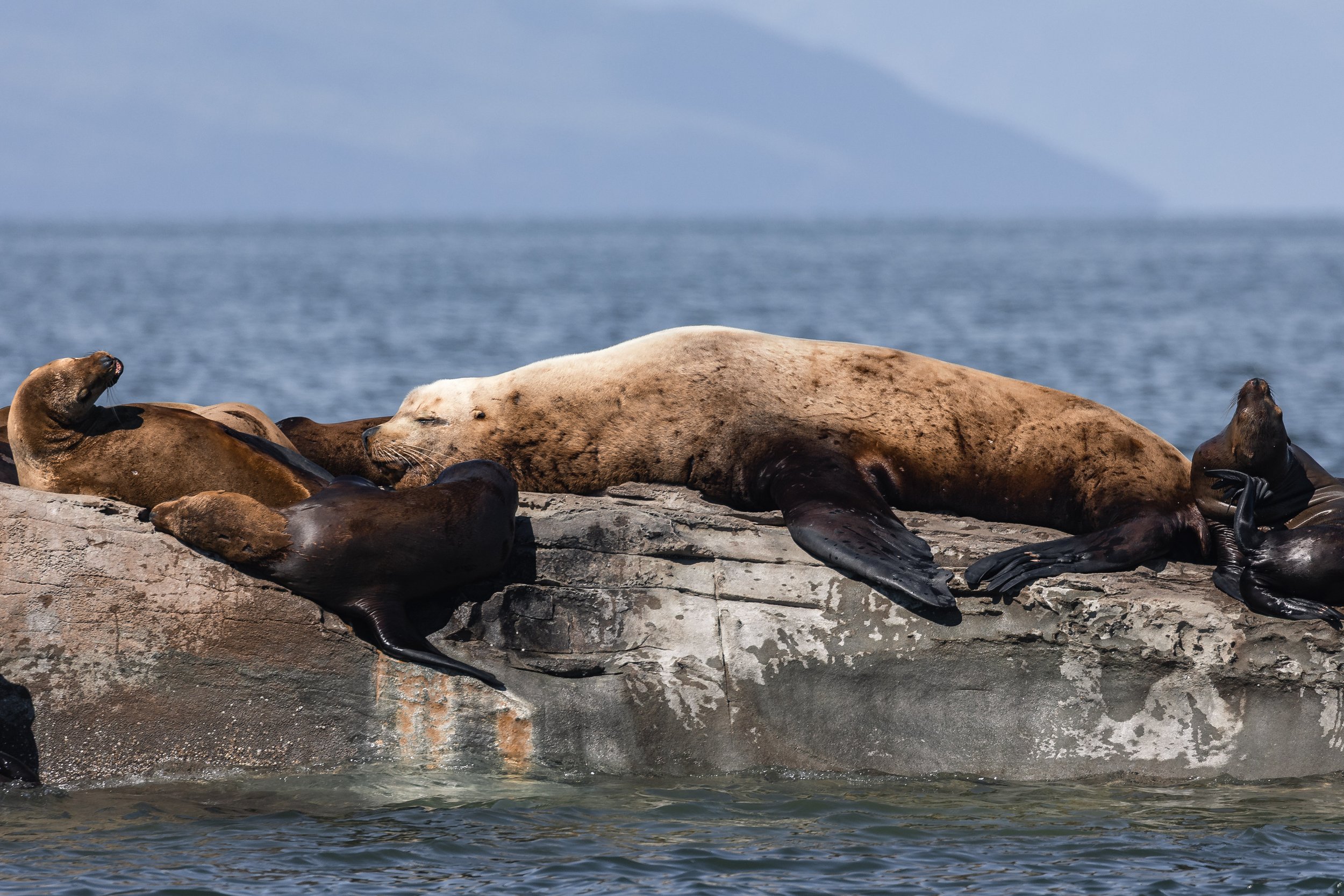
A huge male Steller Sea Lion tucked up on the rocks.
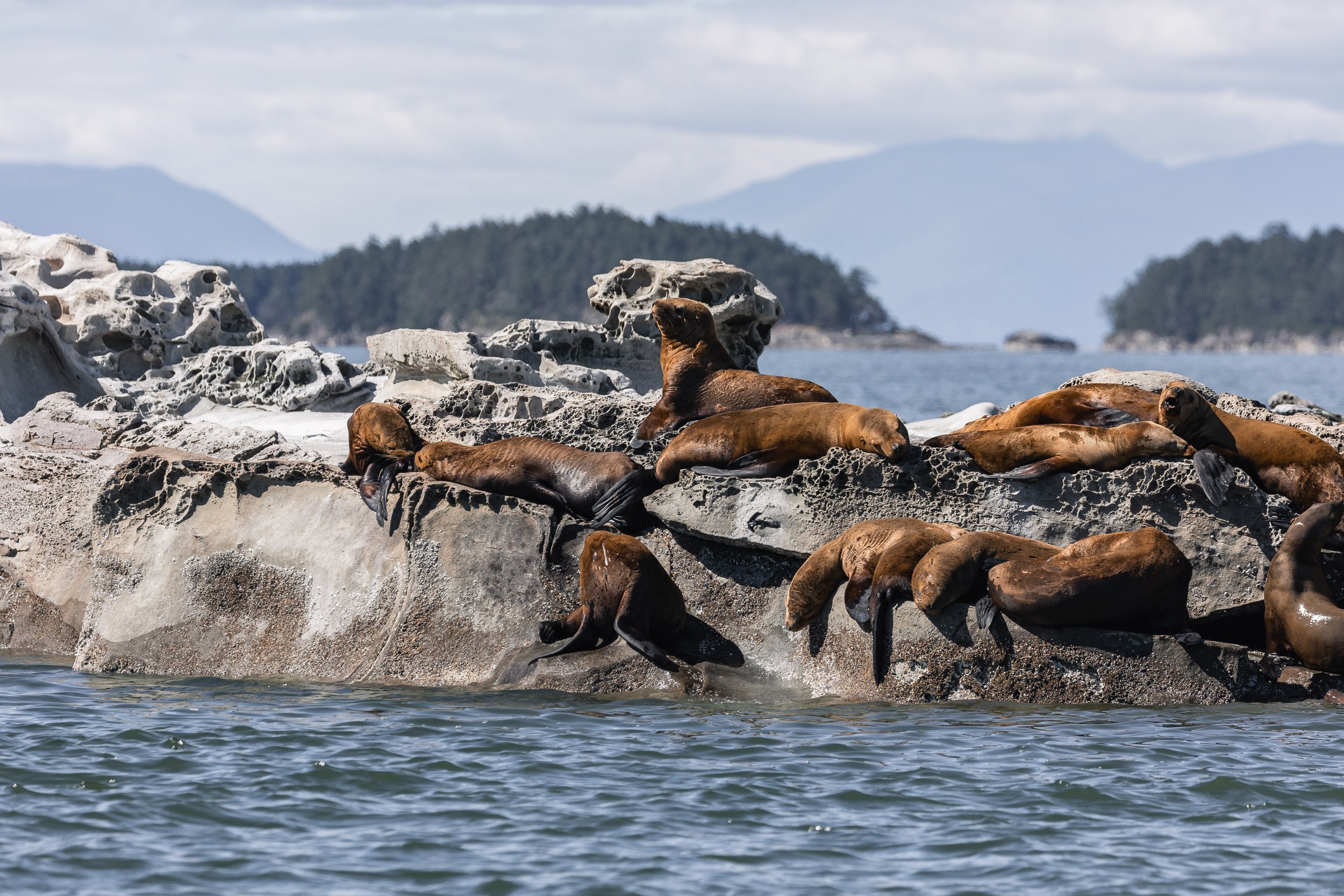
Dramatically draped sea lions over the rocks.
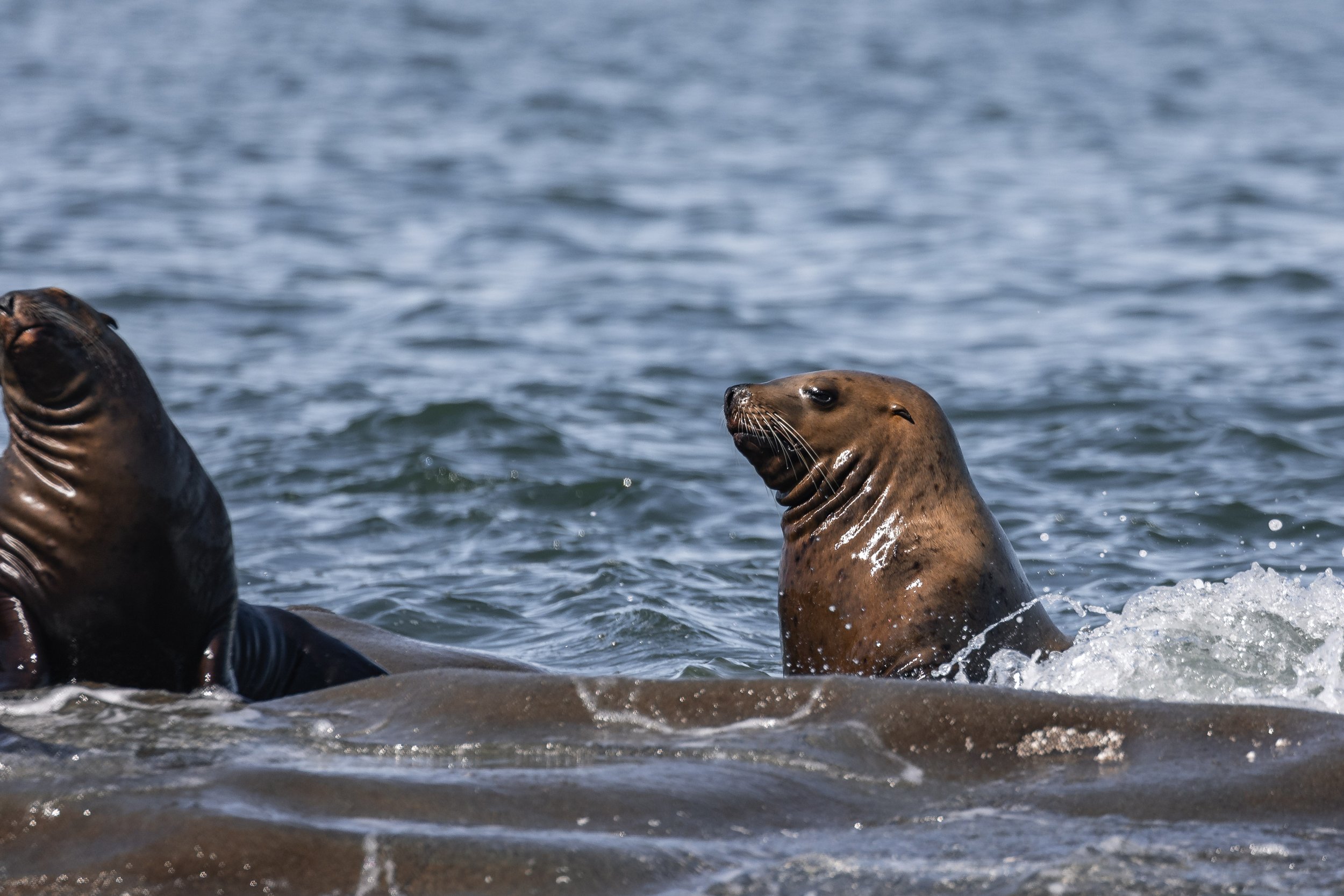
This little one looks barely awake in the surf!
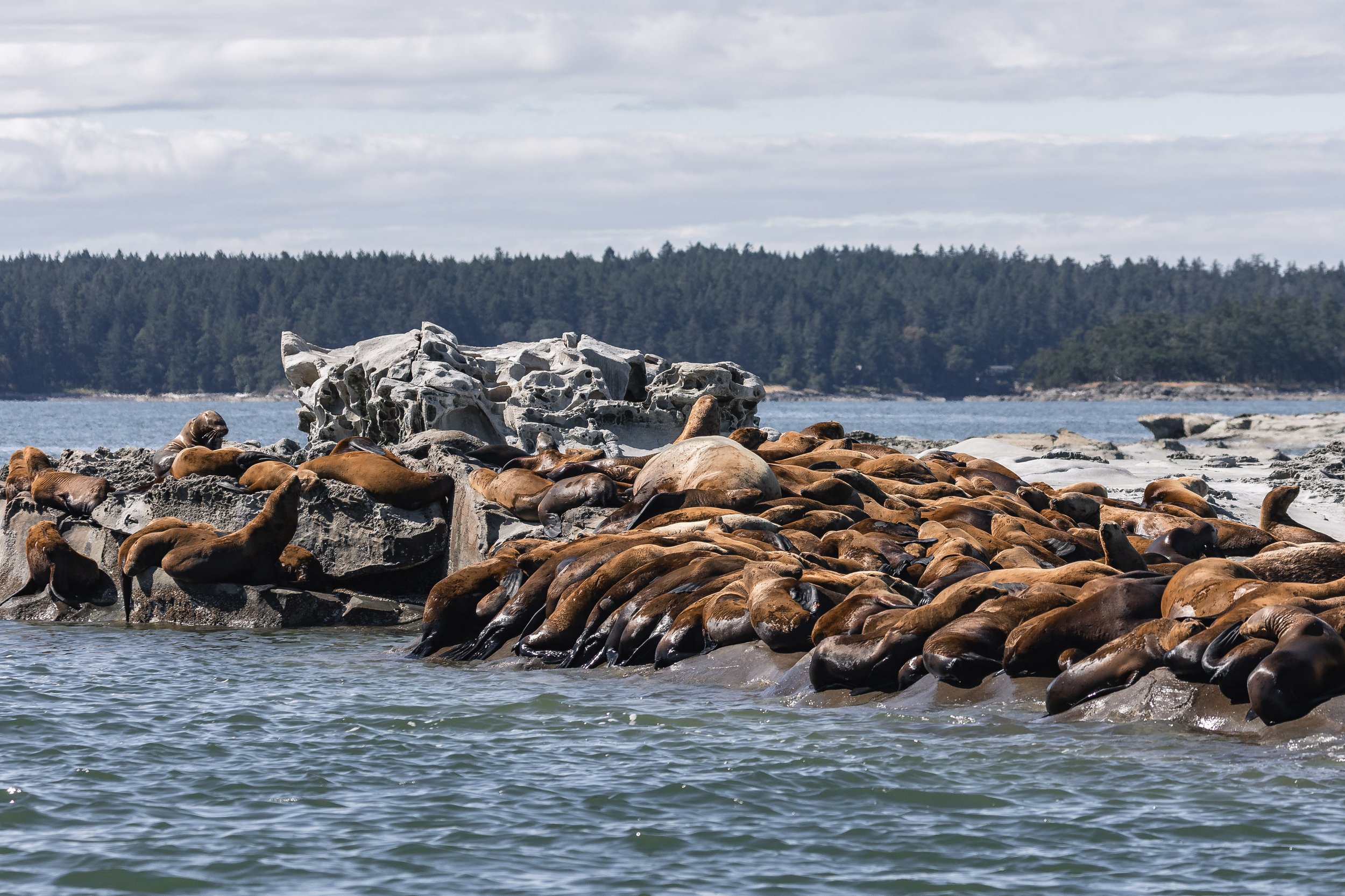
Can you spot the giant Steller Sea Lion male in the middle here?
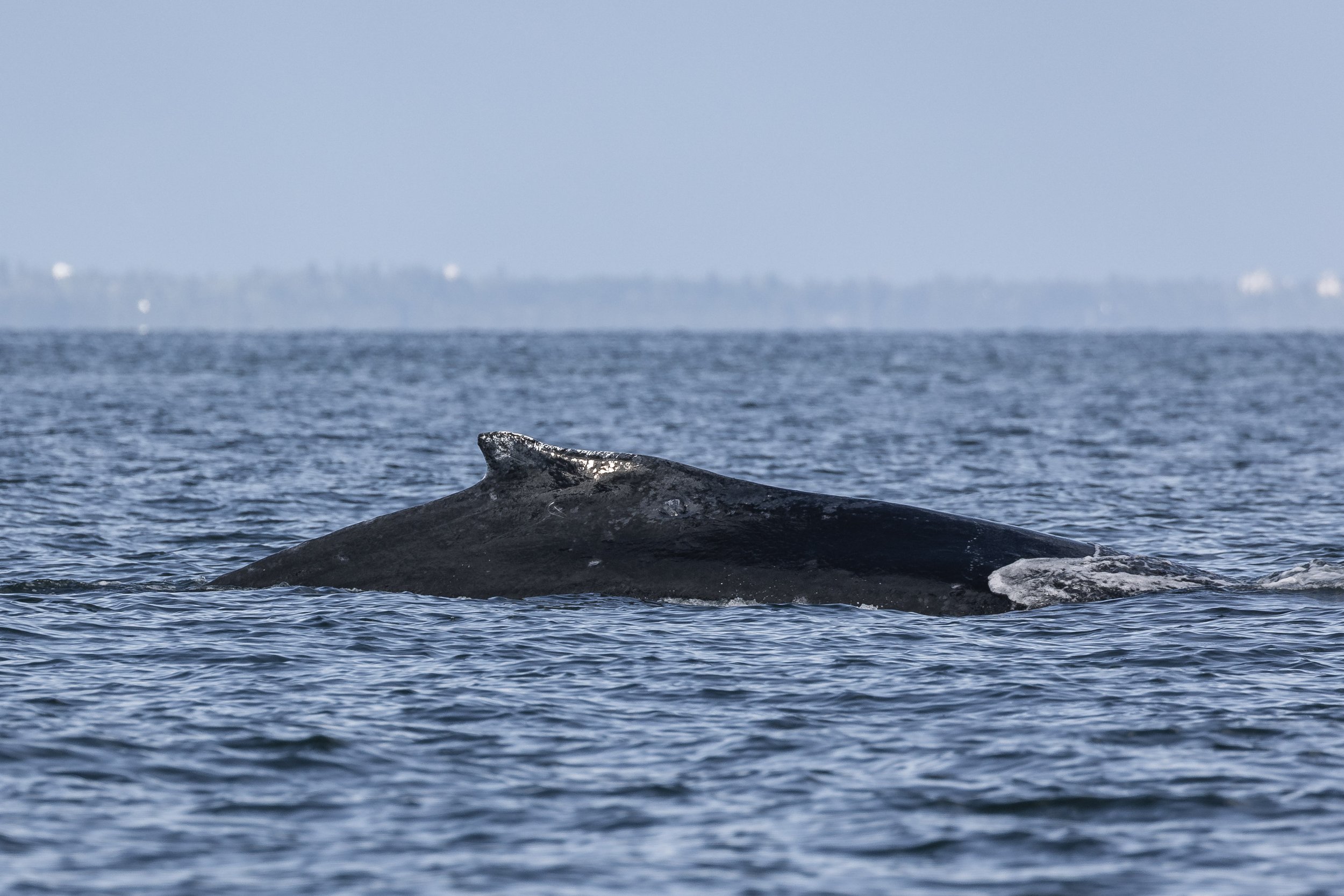
Windy travelling along.
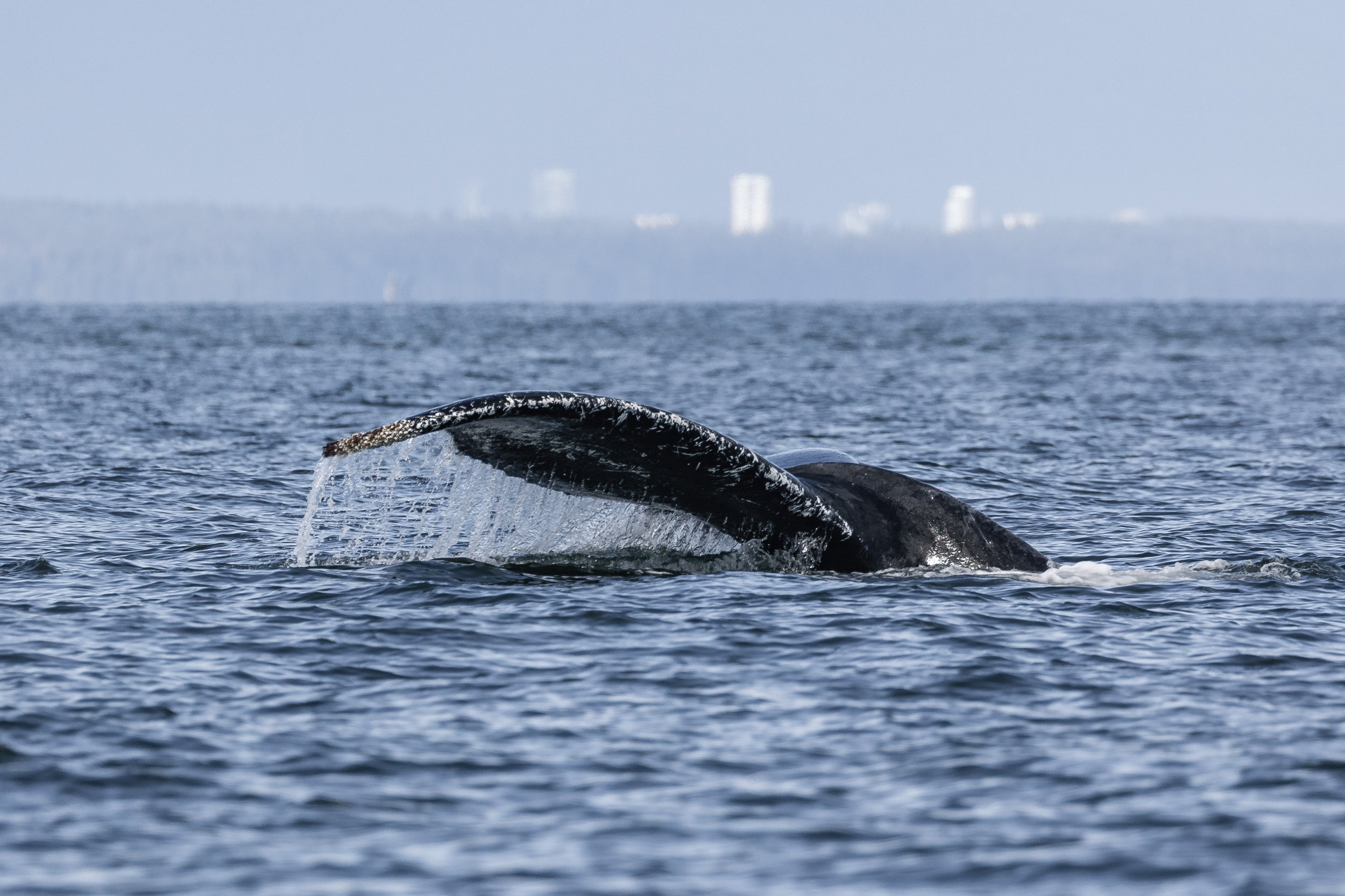
Windy diving, with just a hint of his fluke visible.
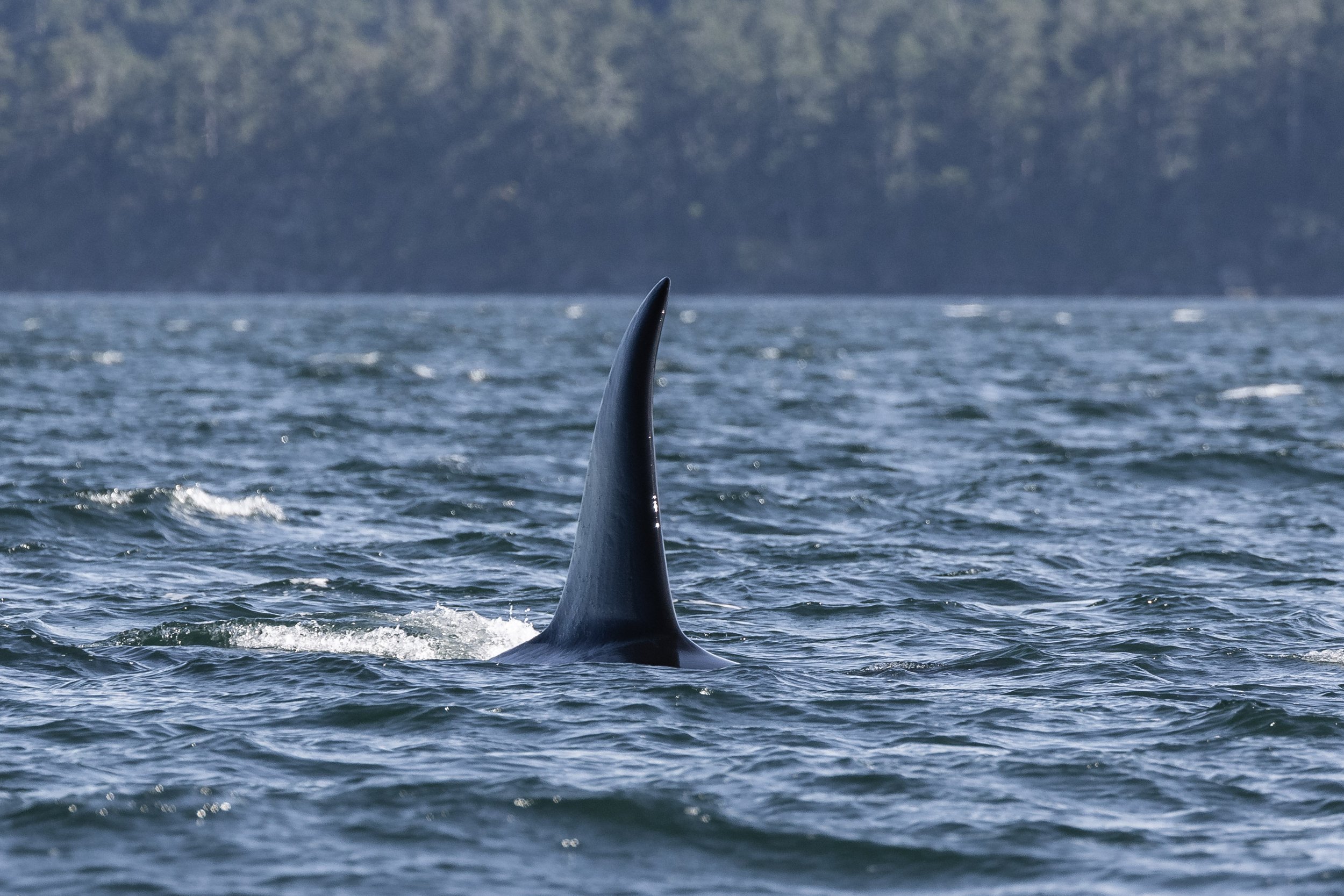
T101A Rush rushing along.
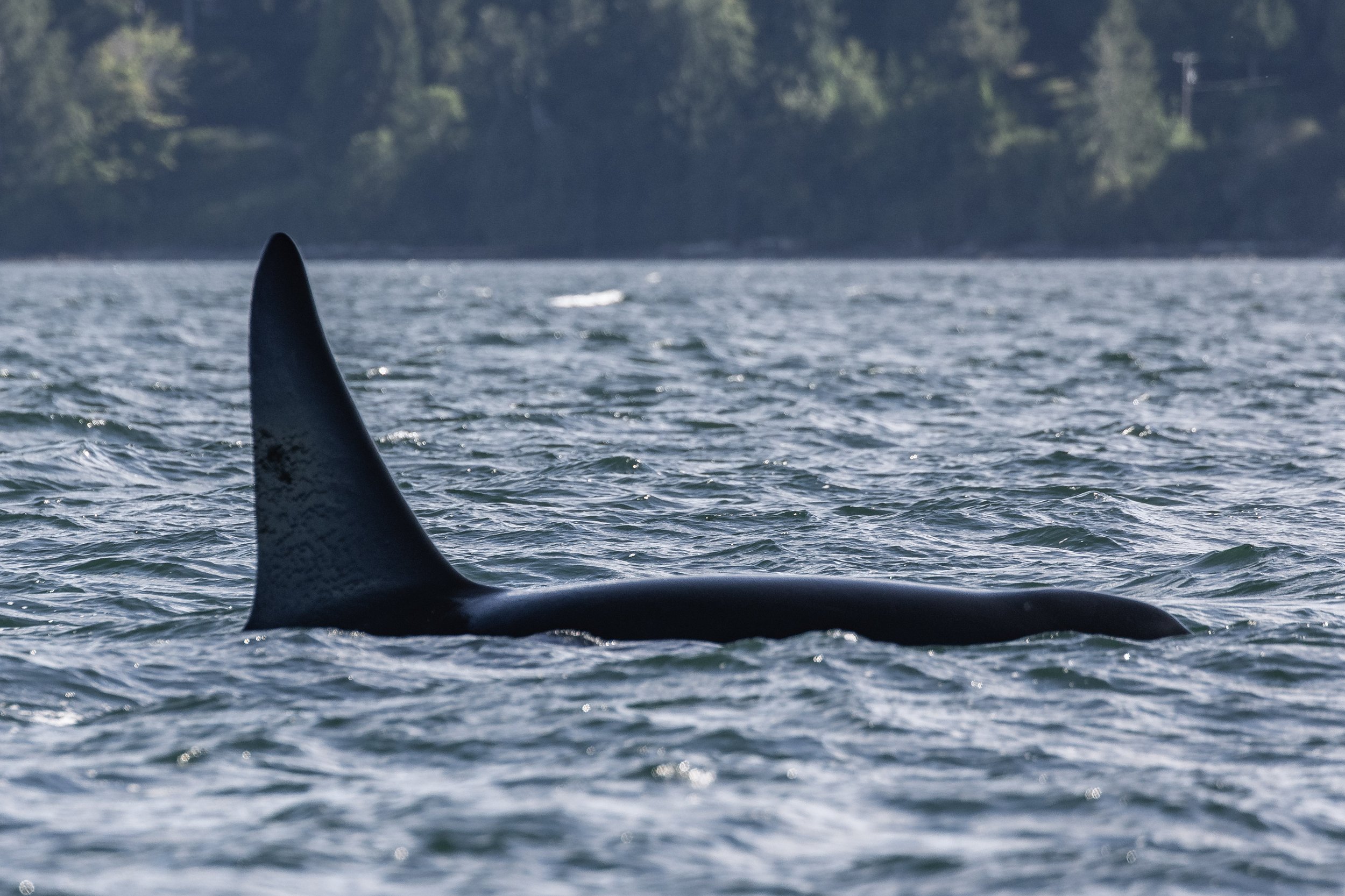
T101 Rush surfacing with his whole back visible.
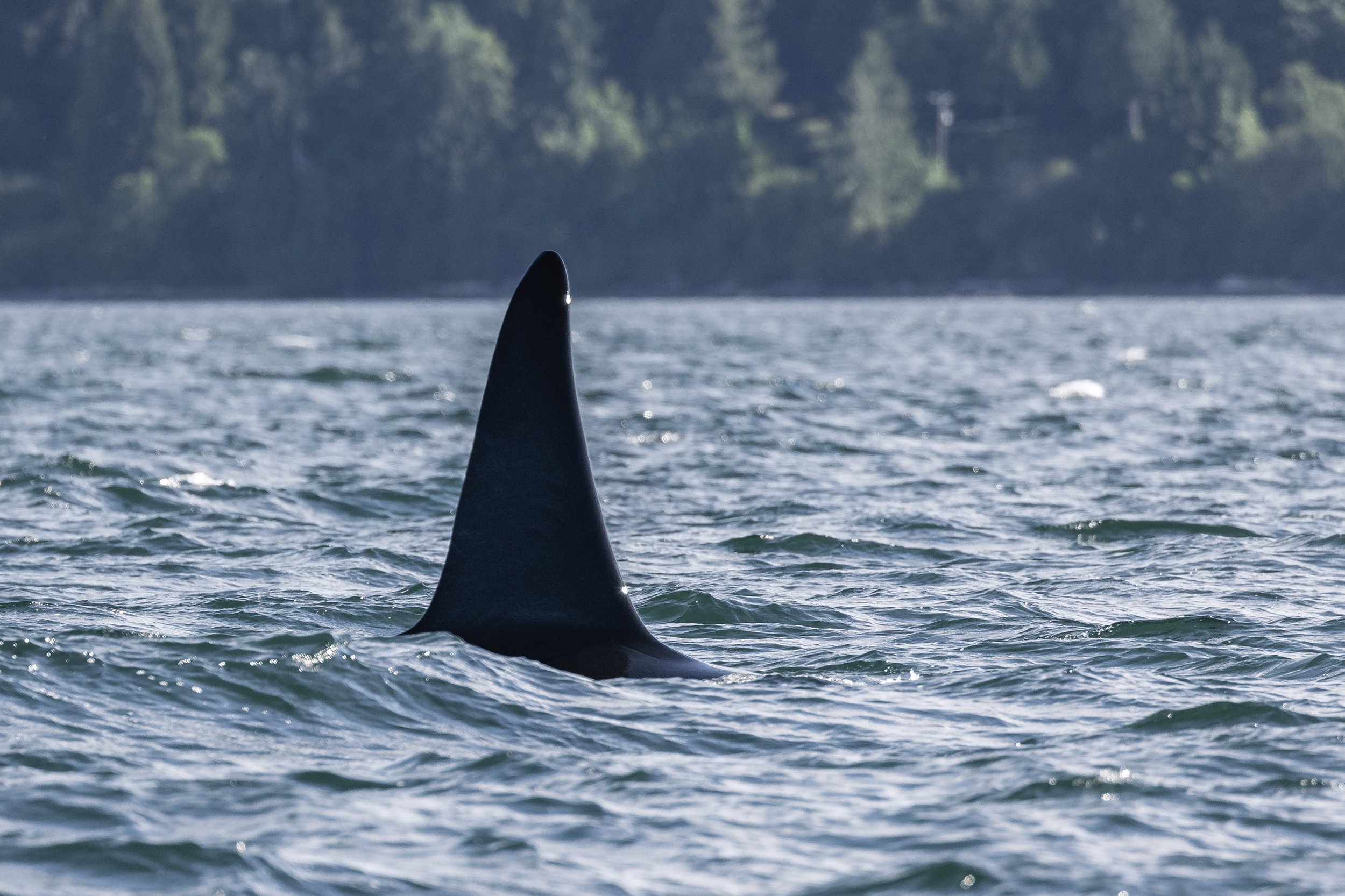
T101A Rush going down for a dive.
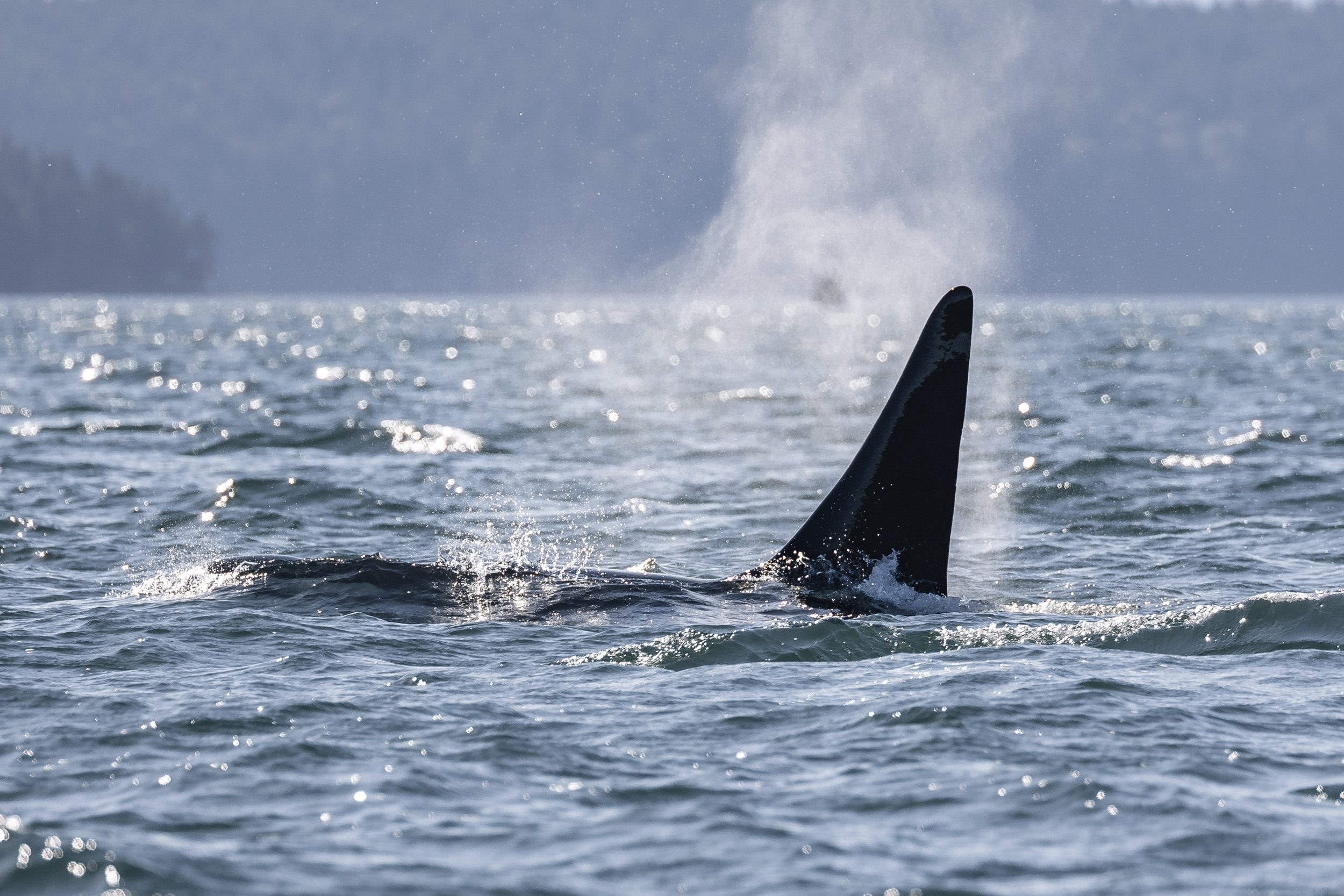
T101B Lagoon surfing through the waves.
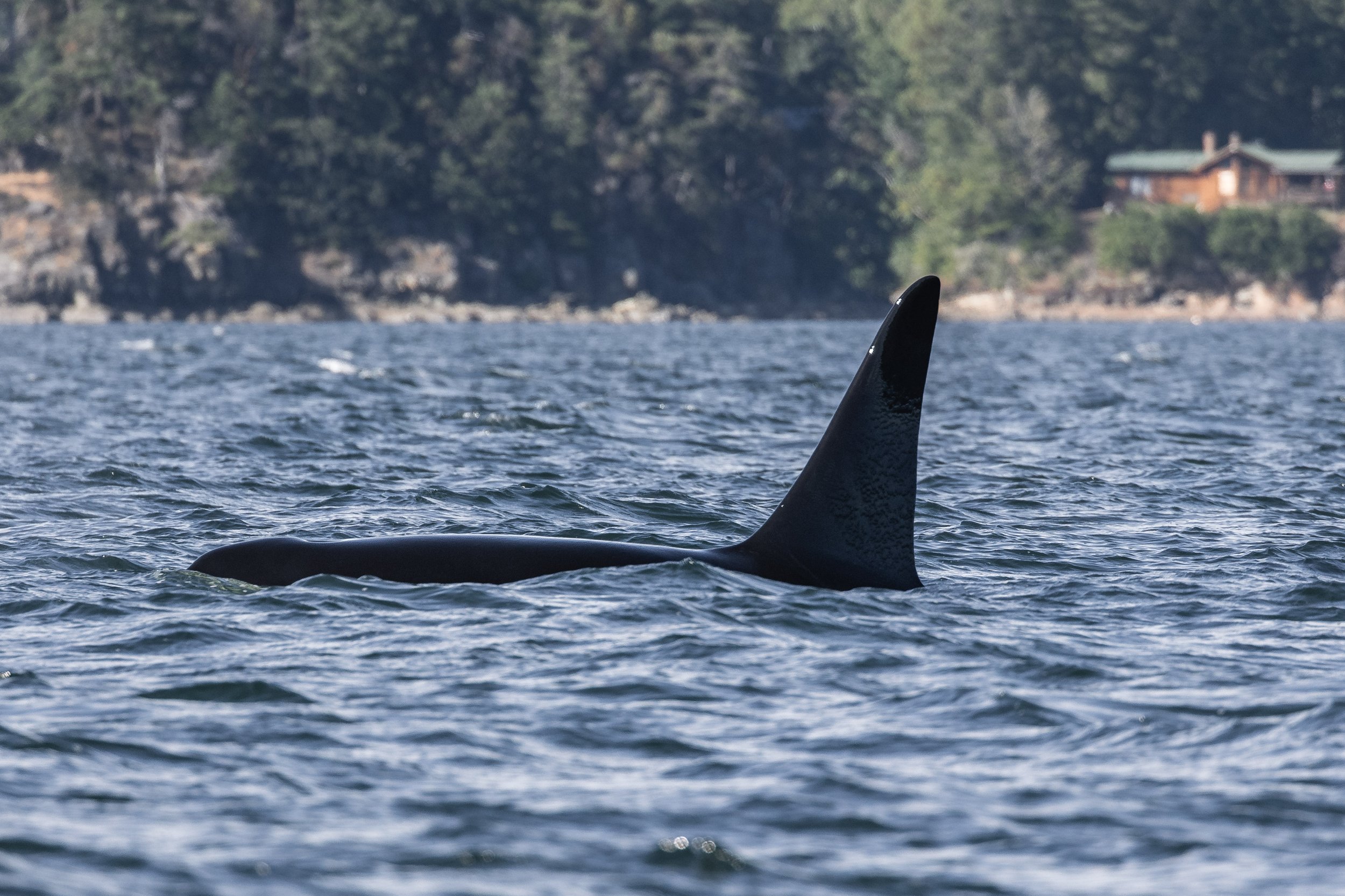
T101A Rush travelling.
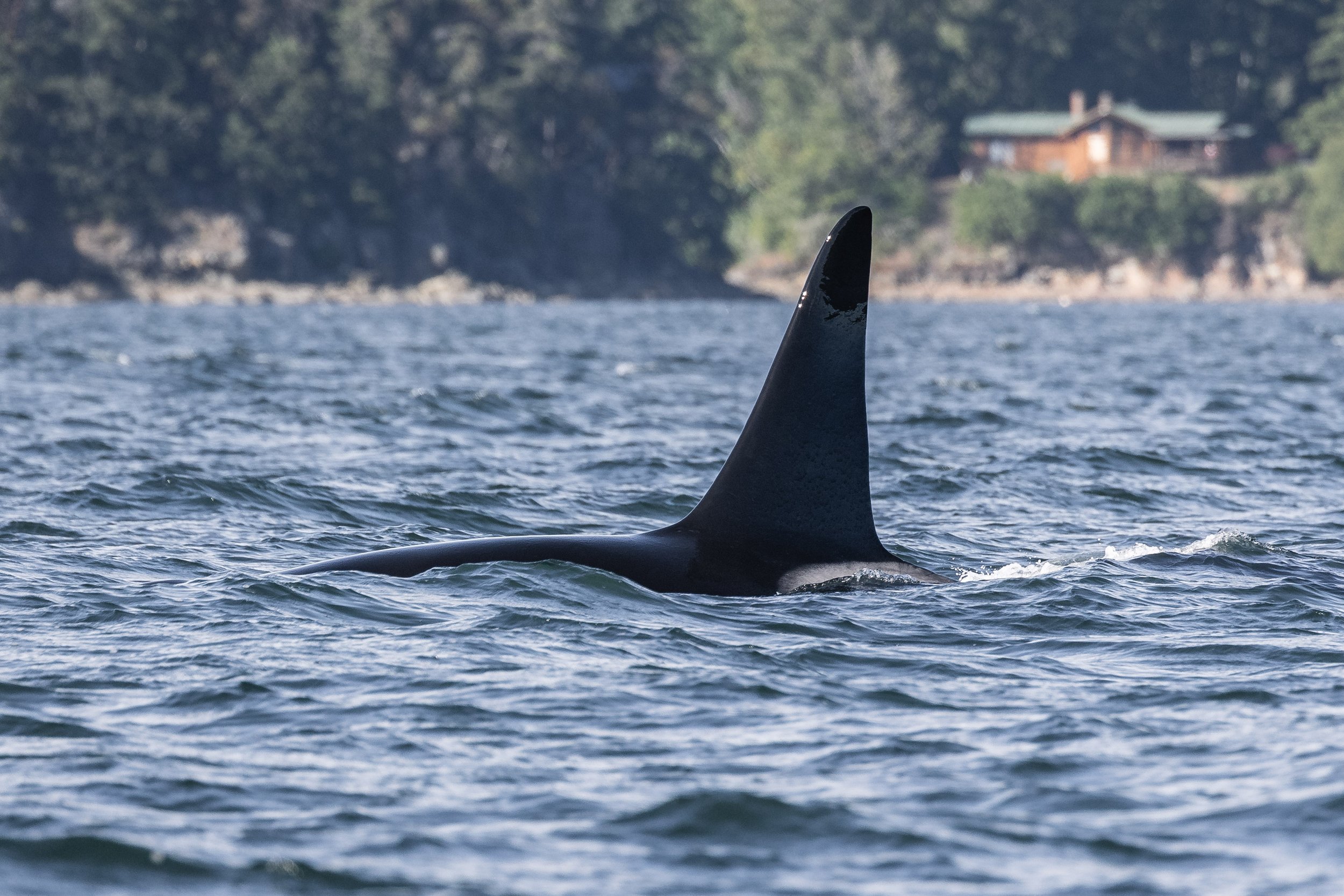
T101A Rush surfacing with a hint of saddlepatch visible.
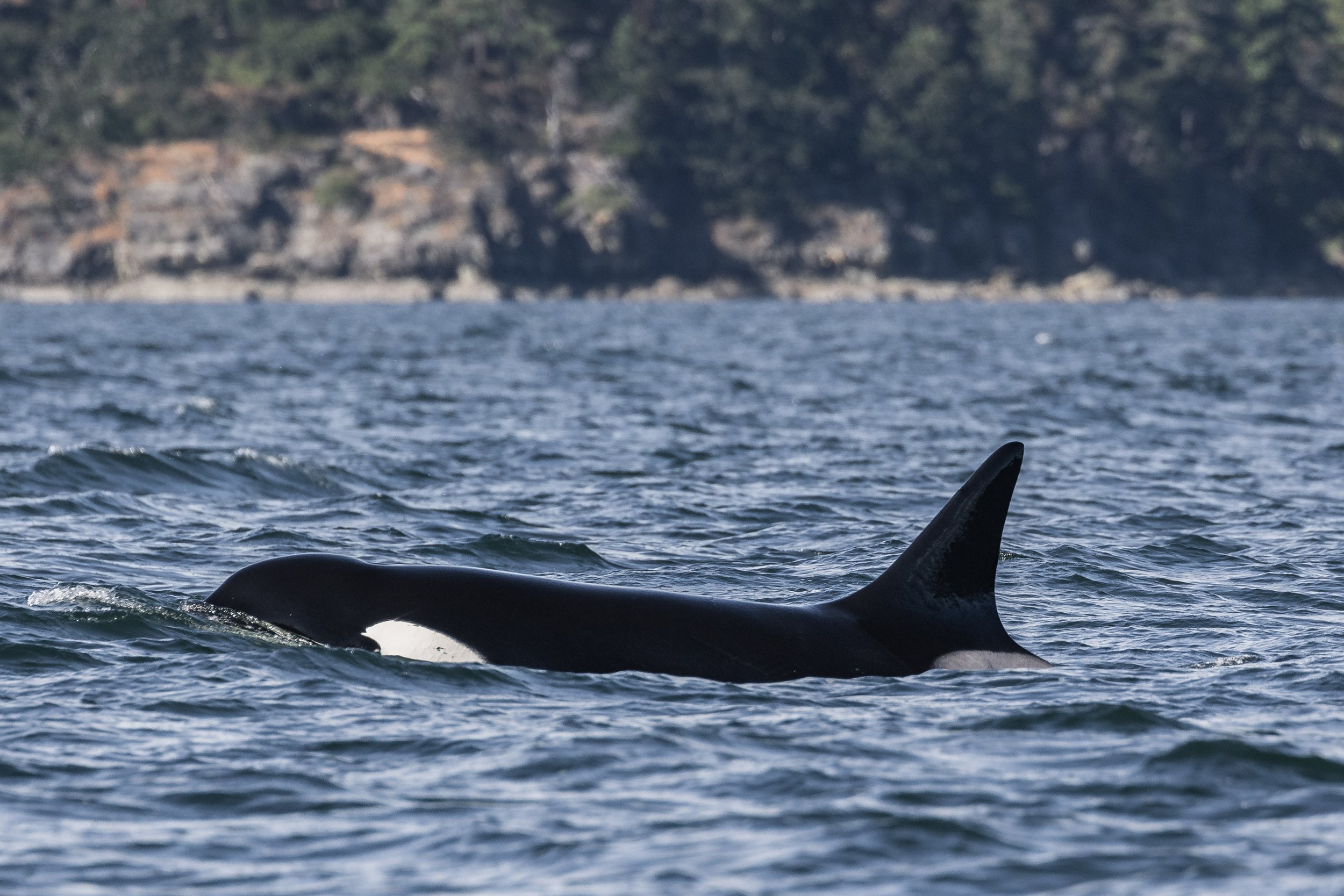
T101 Reef peeking her head (and distinct eyepatch) out of the water.
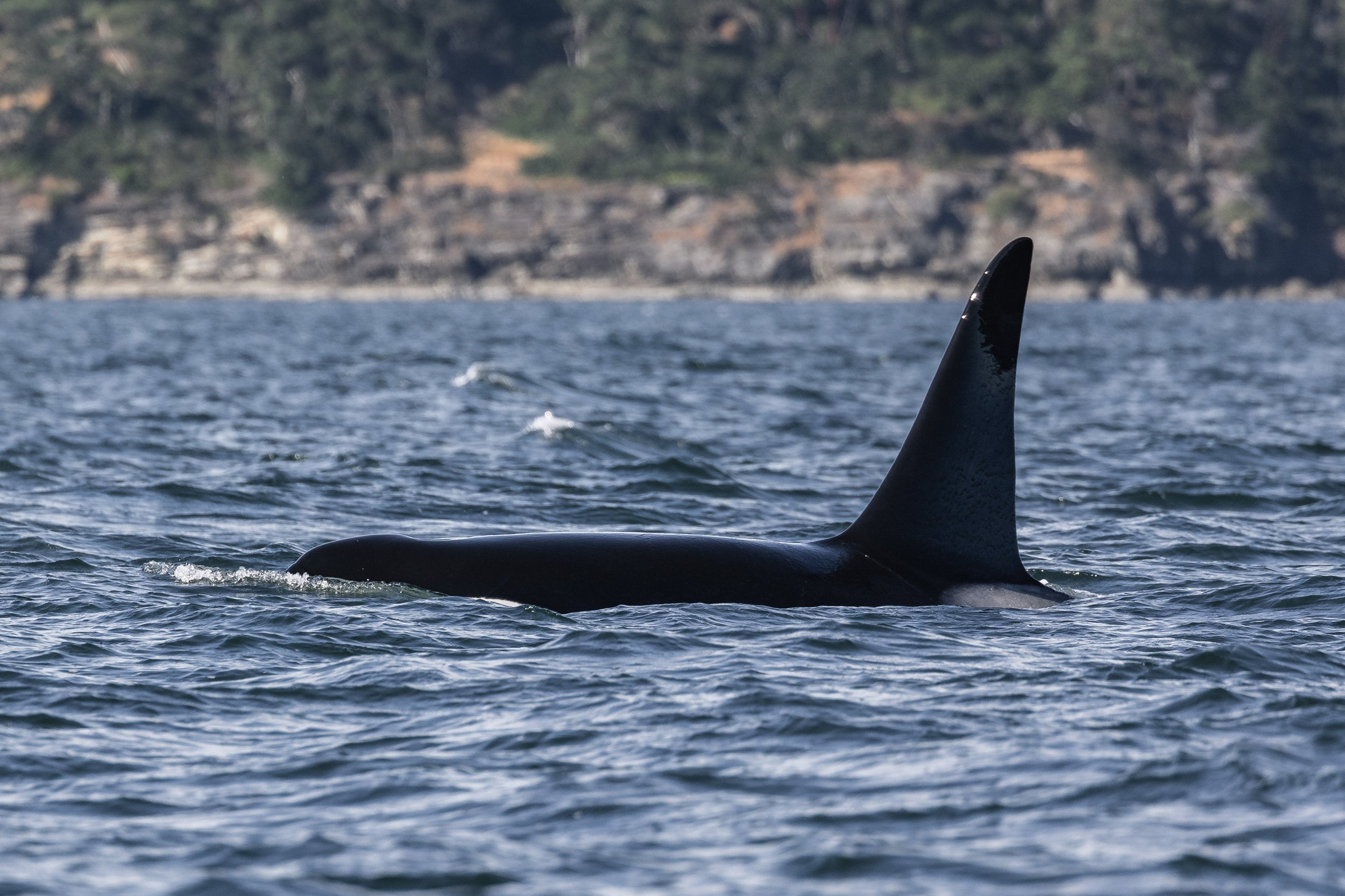
T101A Rush shining in the sun.
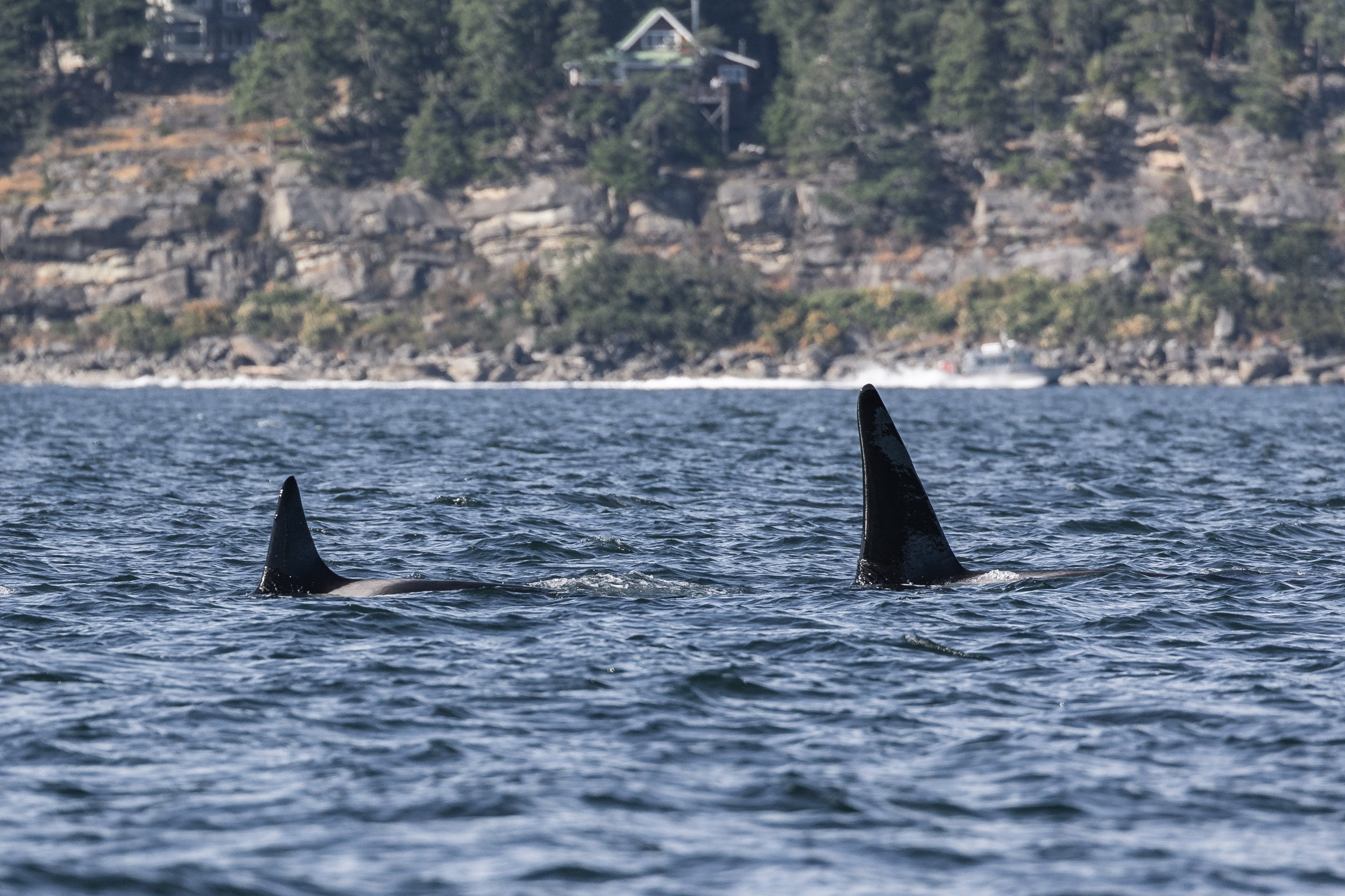
T101 Reef diving with T101B Lagoon following behind her.
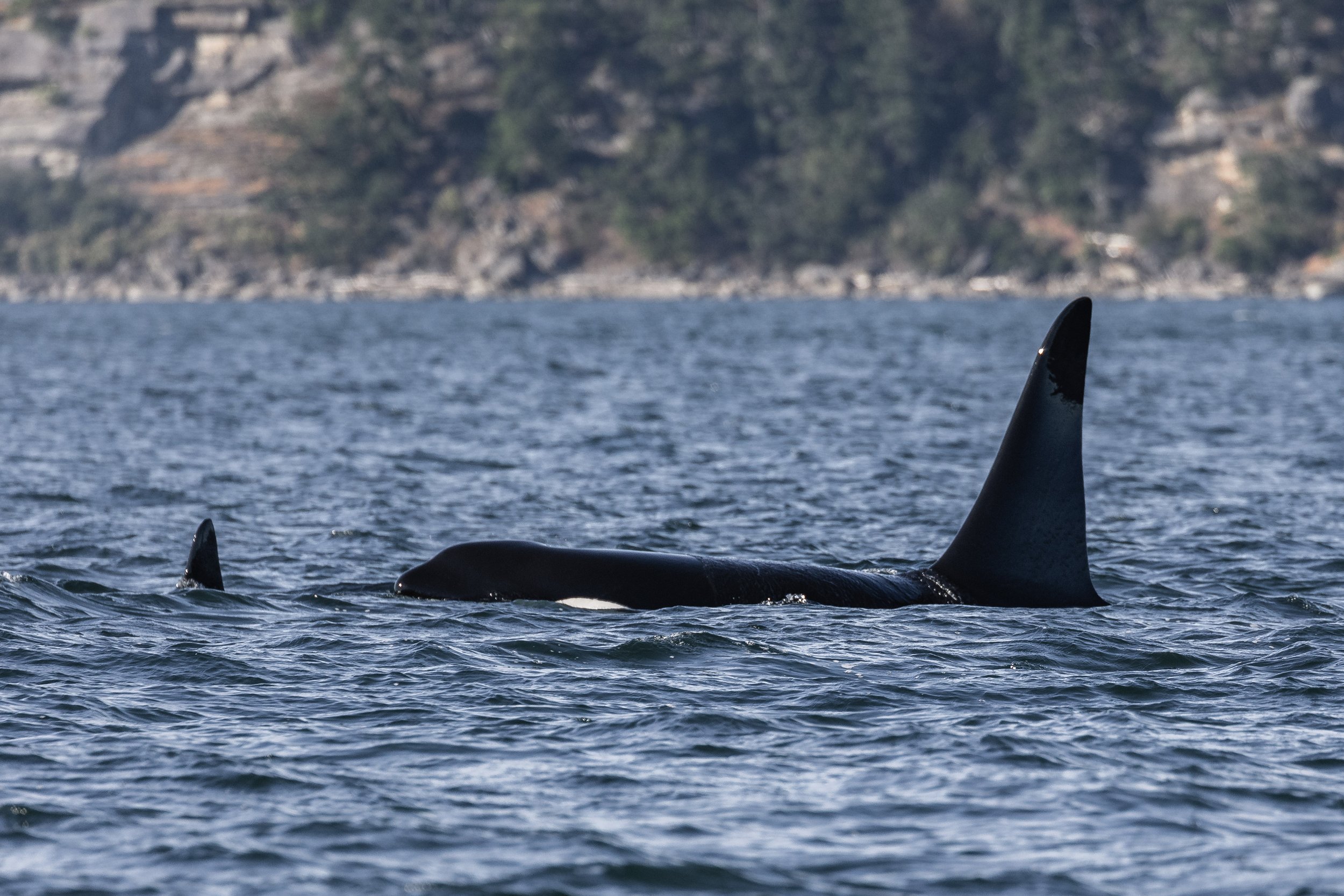
The tip of T1011A Reef’s dorsal fin is visible as T101A Rush comes up behind her.
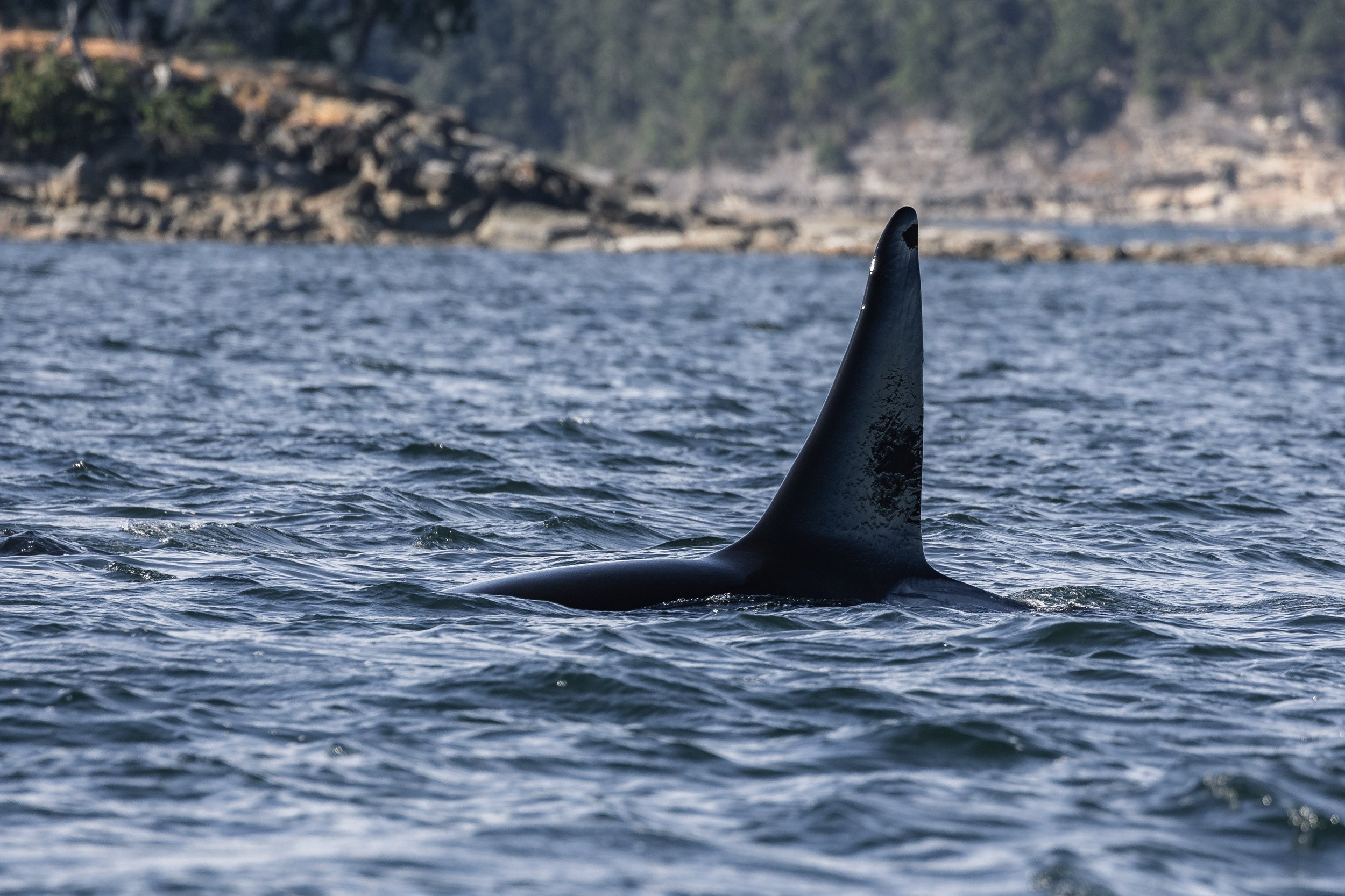
T101B Lagoon’s dorsal fin is a bit bent on the tip.
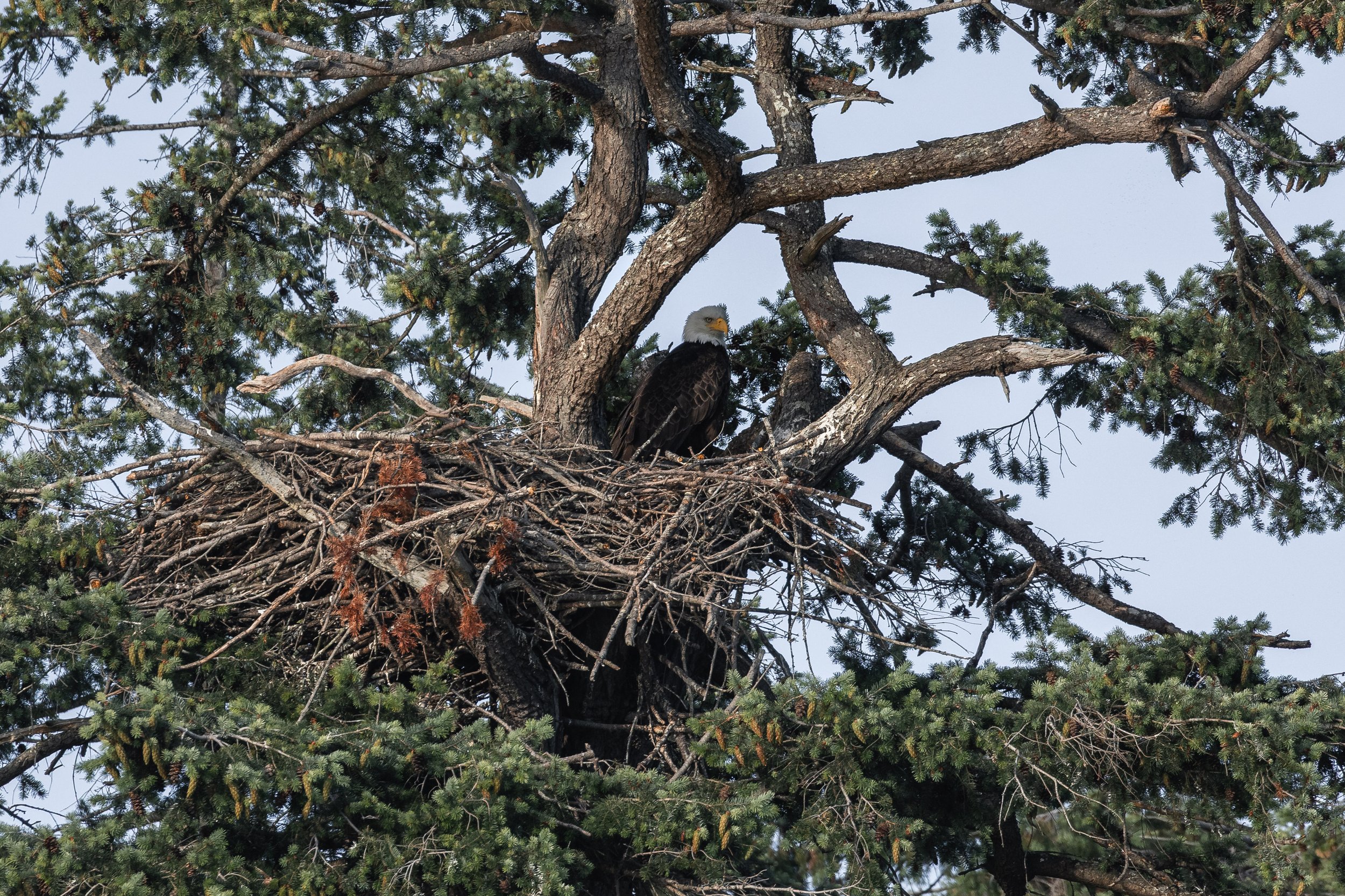
A Bald Eagle guarding their nest.
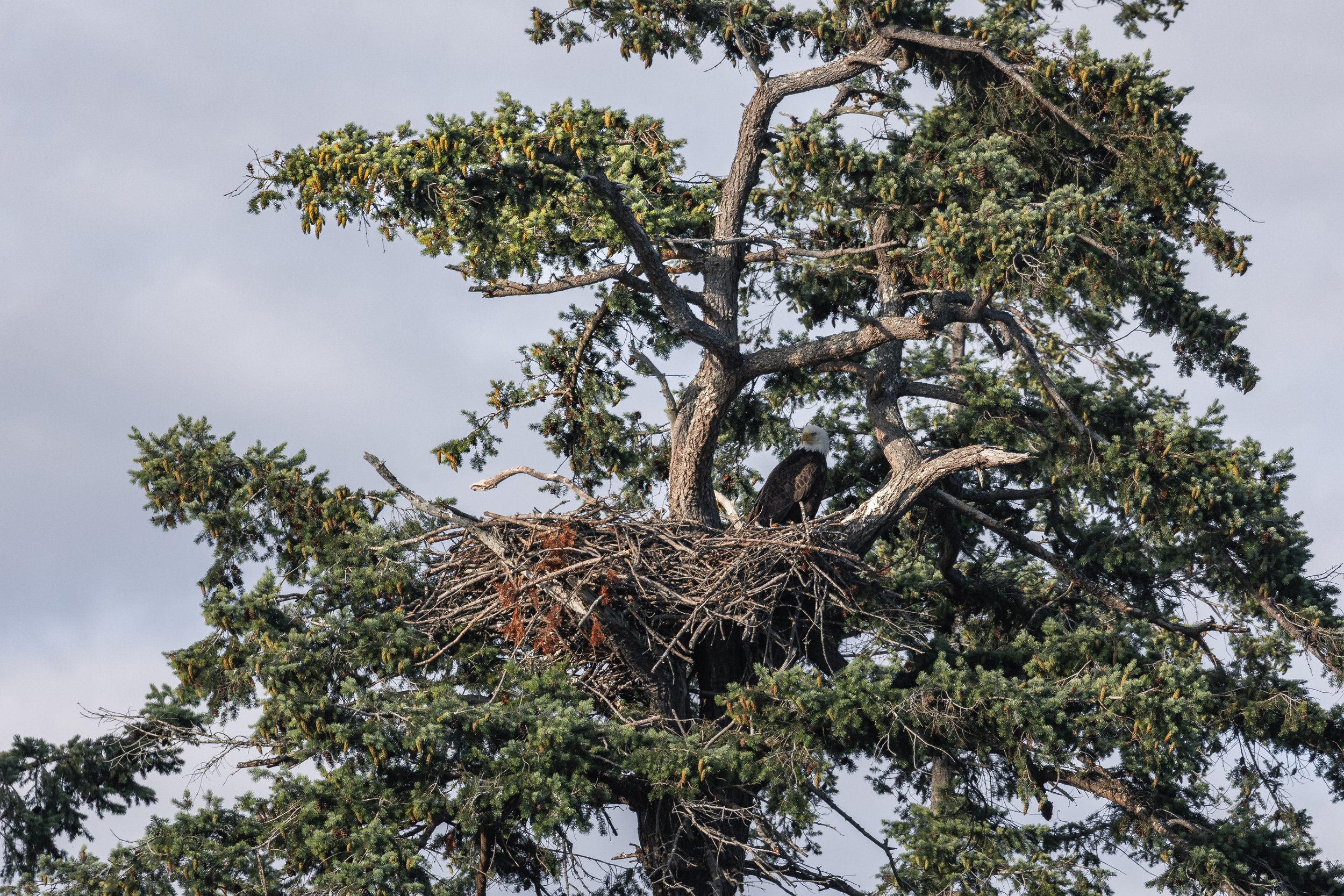
This tree, with its many bendy boughs, is an excellent natural shelter to help combat the winds.
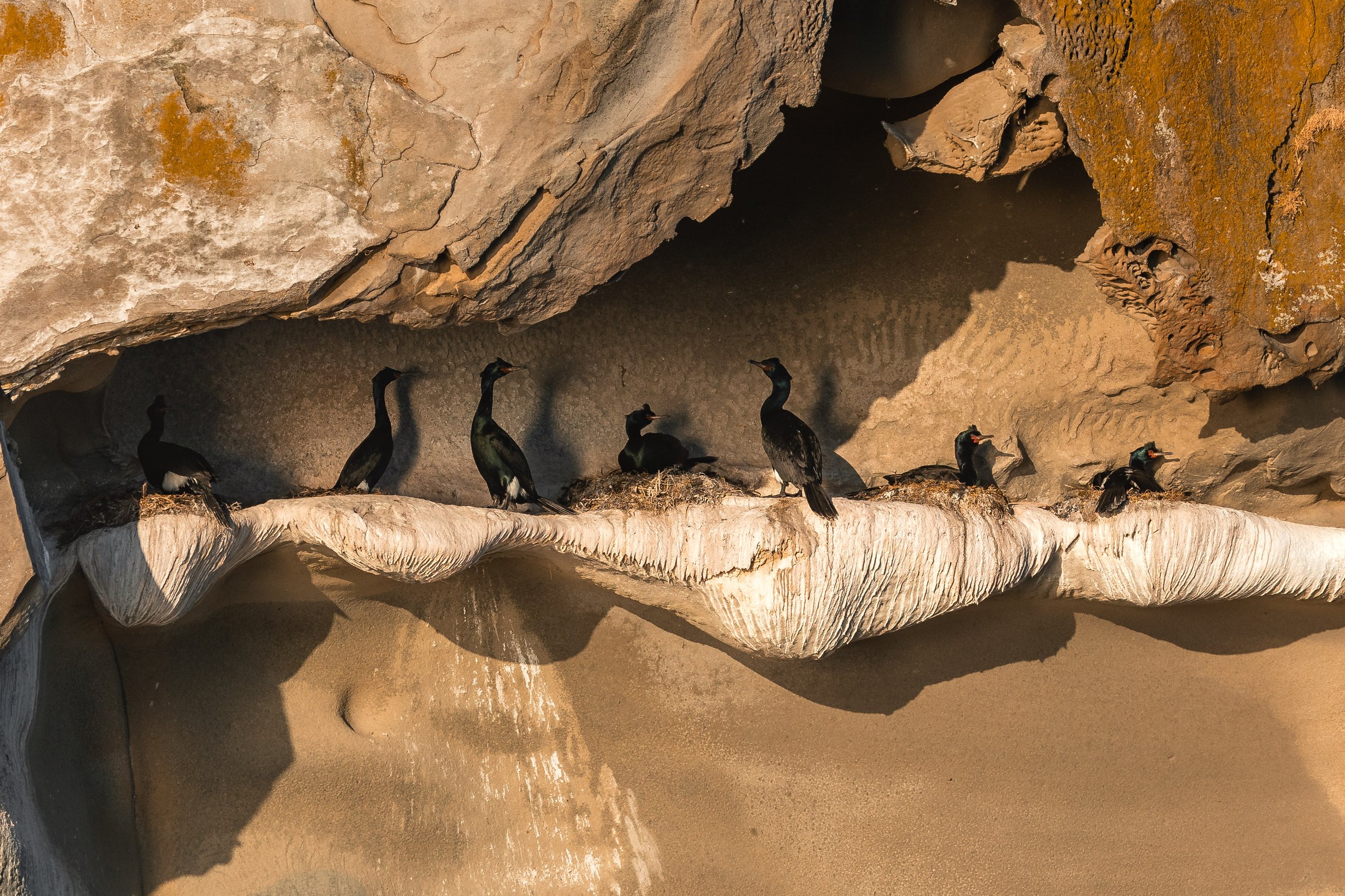
All the ducks - er, Pelagic Cormorants, in a row!
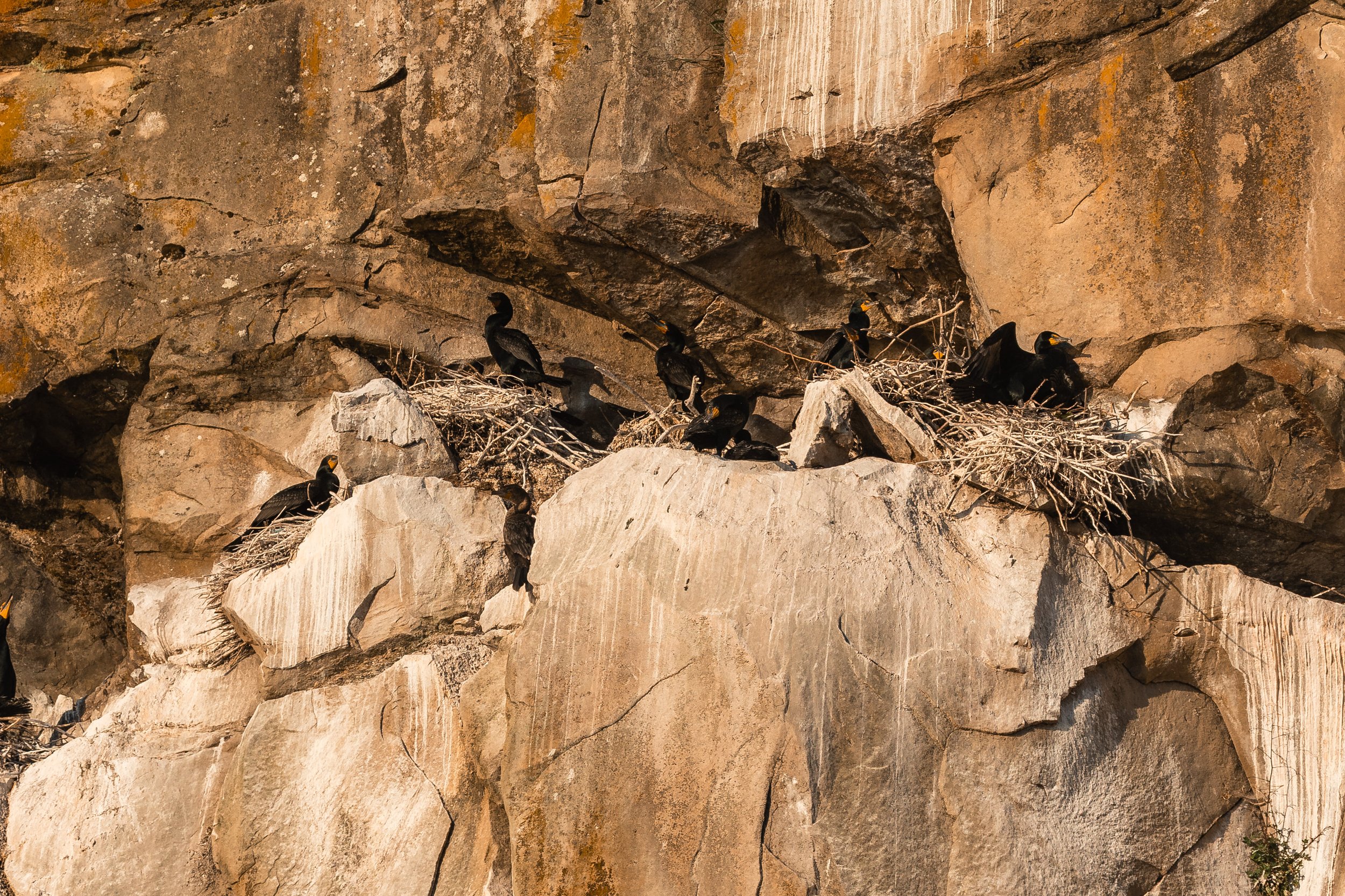
Settling into their nests for the evening.
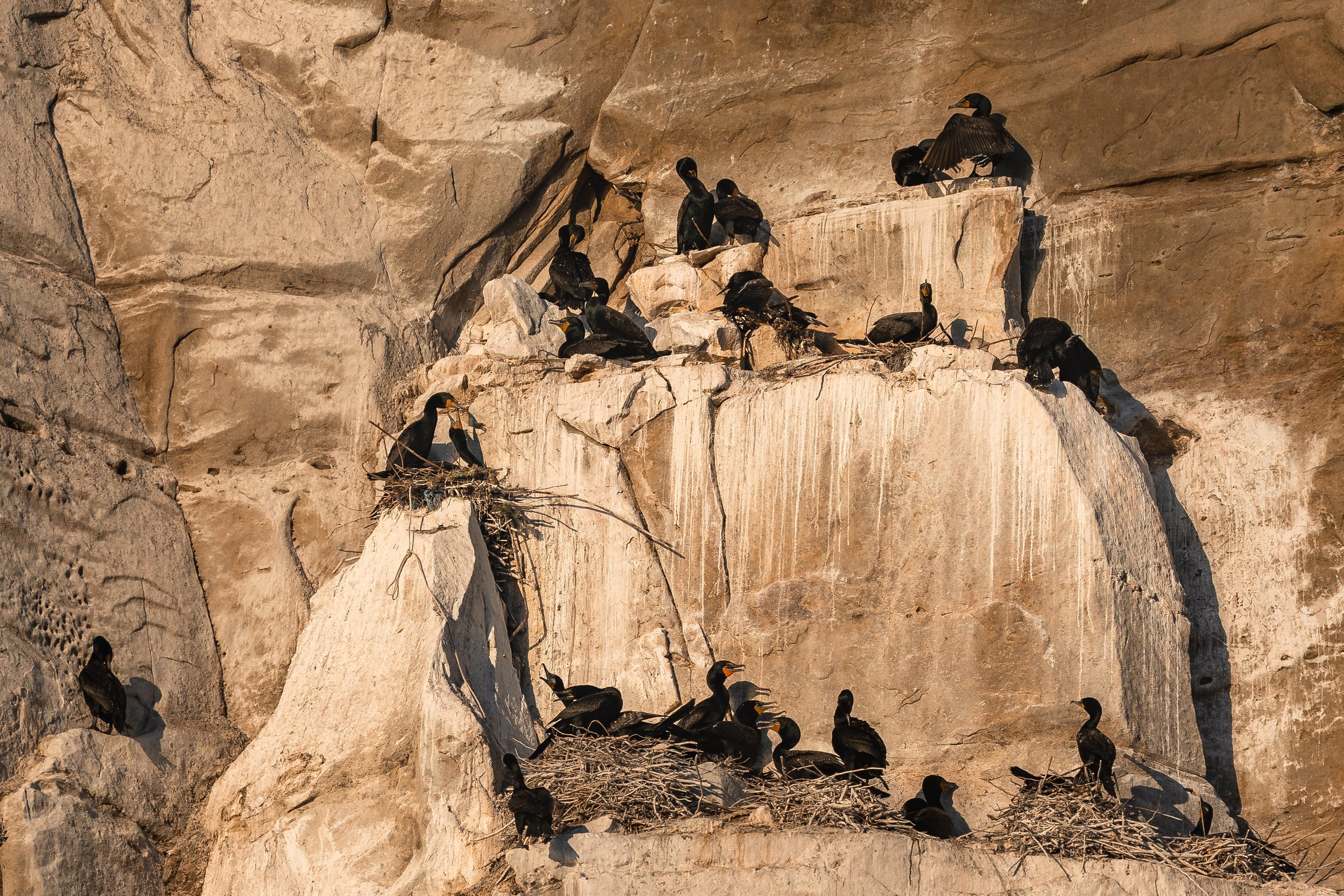
Some of these nest locations seem a bit precarious to us!
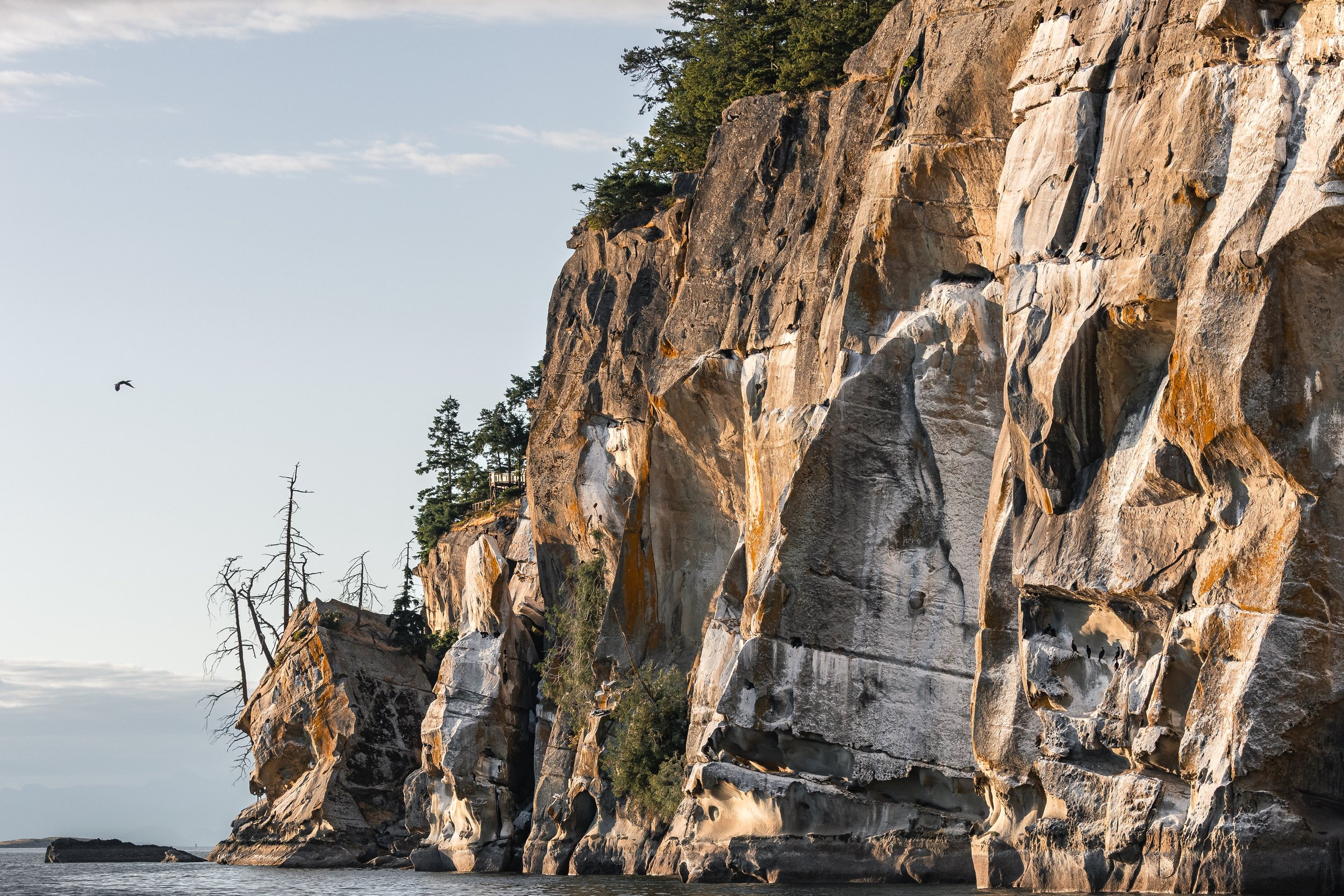
The beautiful Gabriola Bluffs as the sun begins to set.