
June 12, 2026, 10:30 AM - A little whale near Saltspring!
Sunny summer mornings seem tailor-made for our open vessel, Cascadia. With clear blue skies overhead and only a gentle breeze ruffling the water, our guests eagerly climbed into their anti-exposure suits before making their way down the dock. Excitement buzzed through the group as we cast off and headed into the Salish Sea, wondering what wildlife adventures the morning might bring.
Captain Rodrigo decided to point the bow south toward the stunning Gulf Islands, a maze of forested shorelines, sandstone cliffs, and hidden coves scattered between Vancouver Island and the mainland. The Gulf Islands are some of the most picturesque landscapes on the British Columbia coast, shaped over thousands of years by powerful glaciers that carved valleys and sculpted the rolling terrain we see today. As the glaciers retreated at the end of the last Ice Age, rising seas flooded these valleys, leaving behind the beautiful landscape we know today.
The islands enjoy one of Canada's mildest climates, creating some surprisingly Mediterranean-like conditions. In fact, certain pockets among the Gulf Islands are warm and dry enough to support olive trees, lavender, vineyards, and other plants more commonly associated with southern Europe. It's a unique corner of Canada where rugged Pacific coastlines meet an unexpectedly Mediterranean feel.
As we wound our way through the islands, we spotted several Harbour Seals hauled out on rocky reefs and sandstone ledges. These charismatic marine mammals are entering an exciting time of year as their breeding season approaches. Harbour seals have developed a remarkable reproductive strategy known as delayed implantation. After mating, the fertilized embryo doesn't immediately begin developing. Instead, it remains dormant for several months before implanting in the uterus and continuing its growth. This adaptation allows pups to be born during the most favourable time of year, when environmental conditions and food availability give them the best chance of survival. Over the coming weeks, more and more pups will begin appearing along our coast, often resting beside their mothers on secluded beaches and rocky haul-outs.
Leaving the seals to enjoy their morning sunbathing session, we resumed our search. It wasn't long before someone spotted a telltale puff of mist rising above the water near the Salt Spring Island shoreline. A blow! Within moments, everyone was scanning the water as a humpback whale surfaced gracefully nearby. Hayleigh quickly set up her camera and began photographing as the whale continued its leisurely travels along the coast.
For humpback researchers and whale watch naturalists, photographs are invaluable identification tools. Every humpback whale carries a unique combination of markings on the underside of its tail flukes, much like a fingerprint. The pigmentation patterns, scars, and shapes along the trailing edge allow researchers to identify individual whales year after year. Their dorsal fins also contain unique features, including nicks, notches, and scarring that can help confirm an identification when a whale doesn't show its tail. As Hayleigh reviewed the photos, something seemed familiar. This was a whale we hadn't seen in quite some time. Even more exciting, this young humpback was born to the female humpback Tempest in 2024 and affectionately nicknamed Lizard (BCX0837 calf 2024). Seeing young whales return to our waters as they grow is one of the most rewarding aspects of long-term whale monitoring. While the black-and-white pigmentation patterns on a humpback's tail remain largely consistent throughout life, young whales often undergo noticeable changes in contrast and appearance as they mature. Calves frequently have lighter, milkier-looking flukes that gradually darken and become more defined over the first several years of life. The whale's tail certainly looked different from our last encounter; much of the pale, milky appearance we remembered from its younger days was gone, replaced by the increasingly bold markings of a growing juvenile. The young whale appeared to be embracing the relaxed pace of island life, travelling close to shore and surfacing lazily beneath the warm summer sun. It seemed content to spend its morning drifting through the Gulf Islands, enjoying the calm conditions just as much as we were.
Of course, while island life may move at a leisurely pace, our tours operate on real time rather than island time. Eventually, it was time to begin our journey home. Before returning to Nanaimo, however, we made one final wildlife stop.
Several Steller Sea Lions were gathered together on their haul-out rocks, filling the air with their unmistakable roars and grumbles. These impressive pinnipeds are the largest sea lions in the world, with adult males capable of weighing over 1,000 kilograms. During the spring and summer months, many of the sea lions we see around the Salish Sea are feeding heavily before continuing their migration northward. They will spend the breeding season at rookeries located along the coast of northern British Columbia and Alaska, where large males establish territories and compete for access to females.
As we watched the sea lions lounging on the rocks, several Bald Eagles soared overhead. Their brilliant white heads shone in the sunlight as they rode the gentle air currents above the coastline. Once endangered in many parts of North America, Bald Eagle populations have rebounded remarkably and remain one of the most iconic sights along British Columbia's coast.
With a whale, seals, sea lions, eagles, and spectacular island scenery all packed into a single morning adventure, the Salish Sea once again reminded us why no two days on the water are ever the same. From glacier-carved islands and Mediterranean-like landscapes to a familiar young humpback enjoying a sunny day close to shore, today's voyage aboard Cascadia was a perfect example of the incredible diversity of life that calls these waters home.
As we returned to the dock, smiles stretched across every face aboard. Sunny days may make for beautiful whale watching conditions, but it is the wildlife that truly makes each trip unforgettable.
Enjoy the photos below taken by Hayleigh Hilbert.
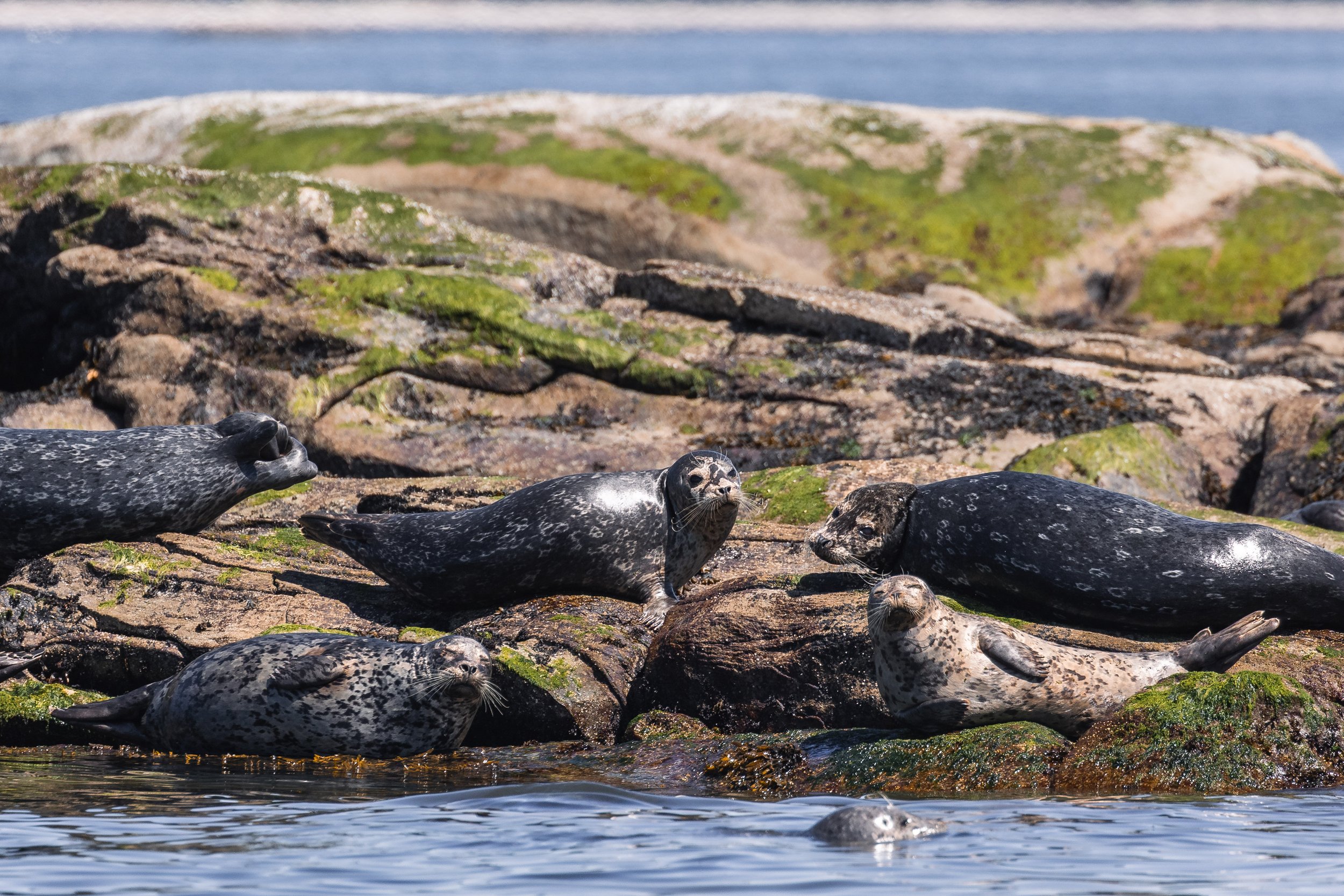
Harbour seals hauled out, most of them!
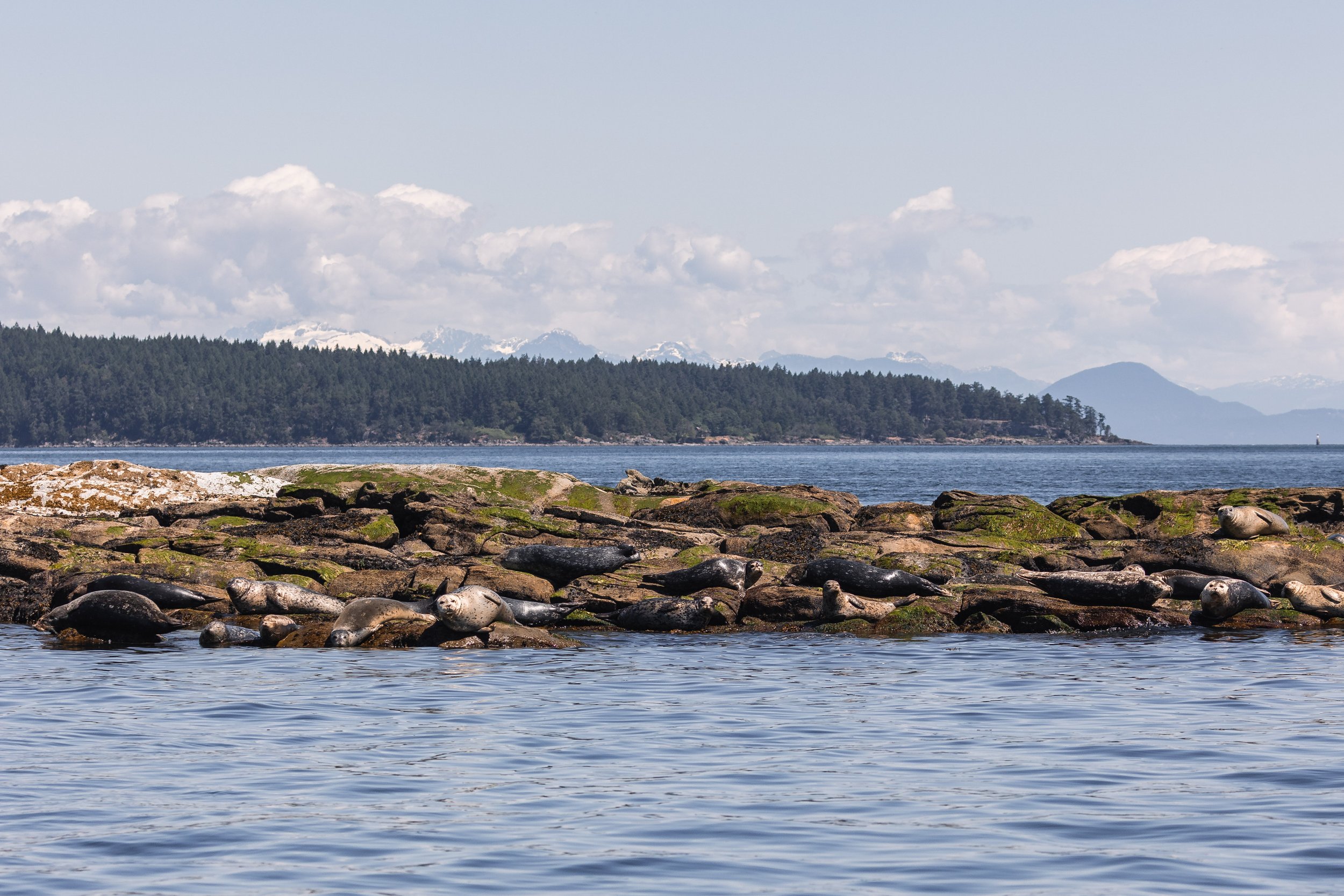
Take a close look at the rocks the seals blend in well.
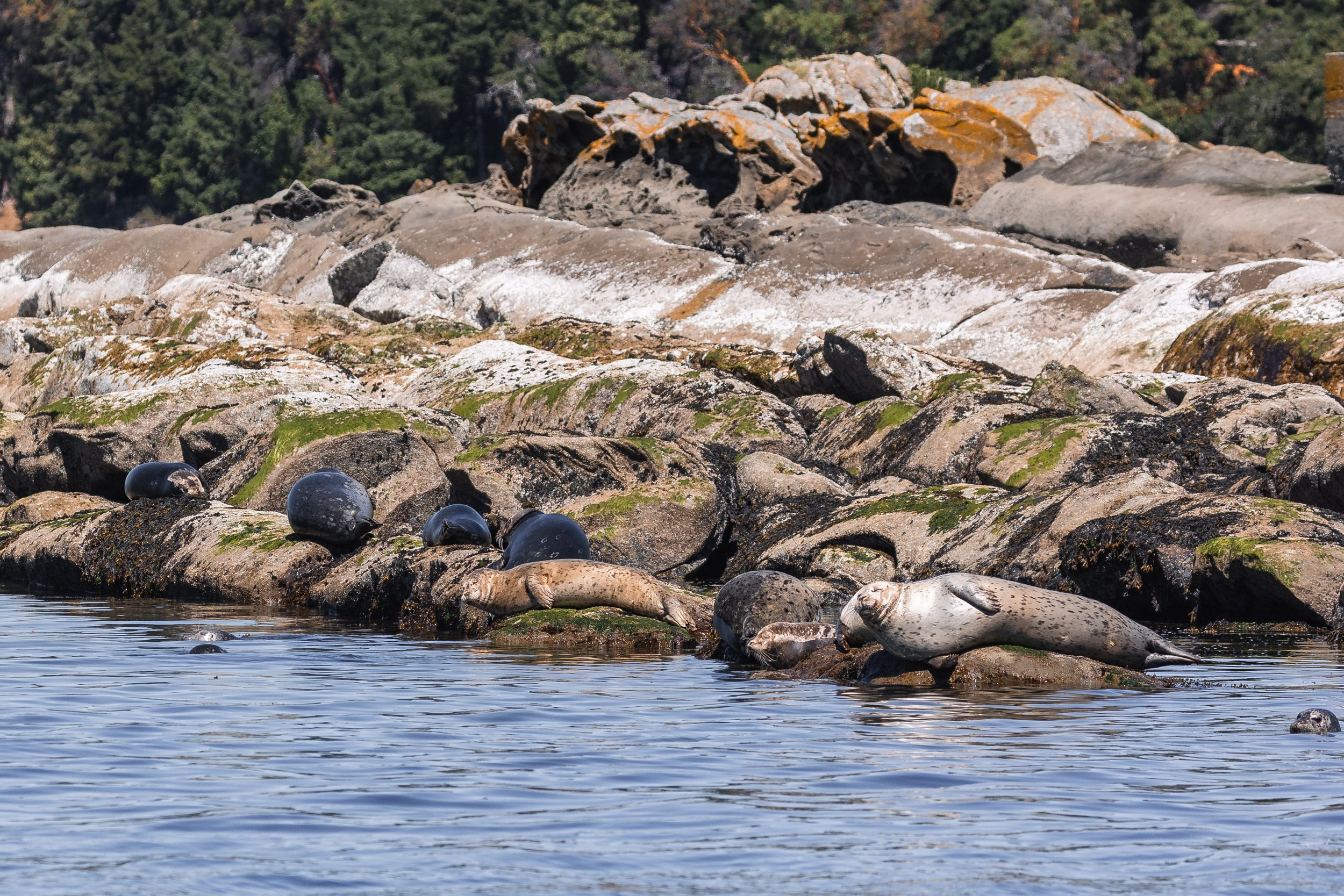
Some of the rock formations with sunning seals.
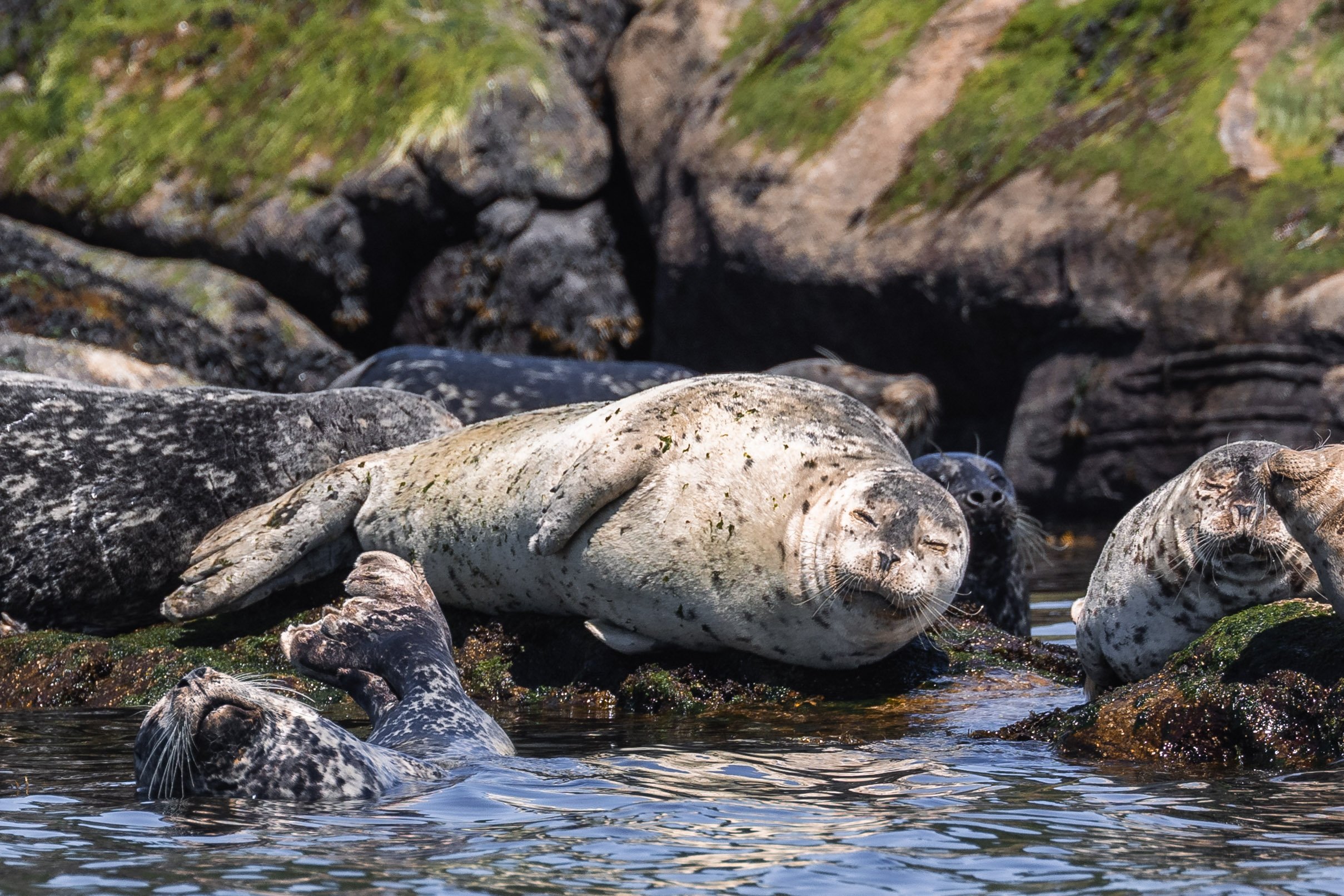
Sleepy harbour seals.
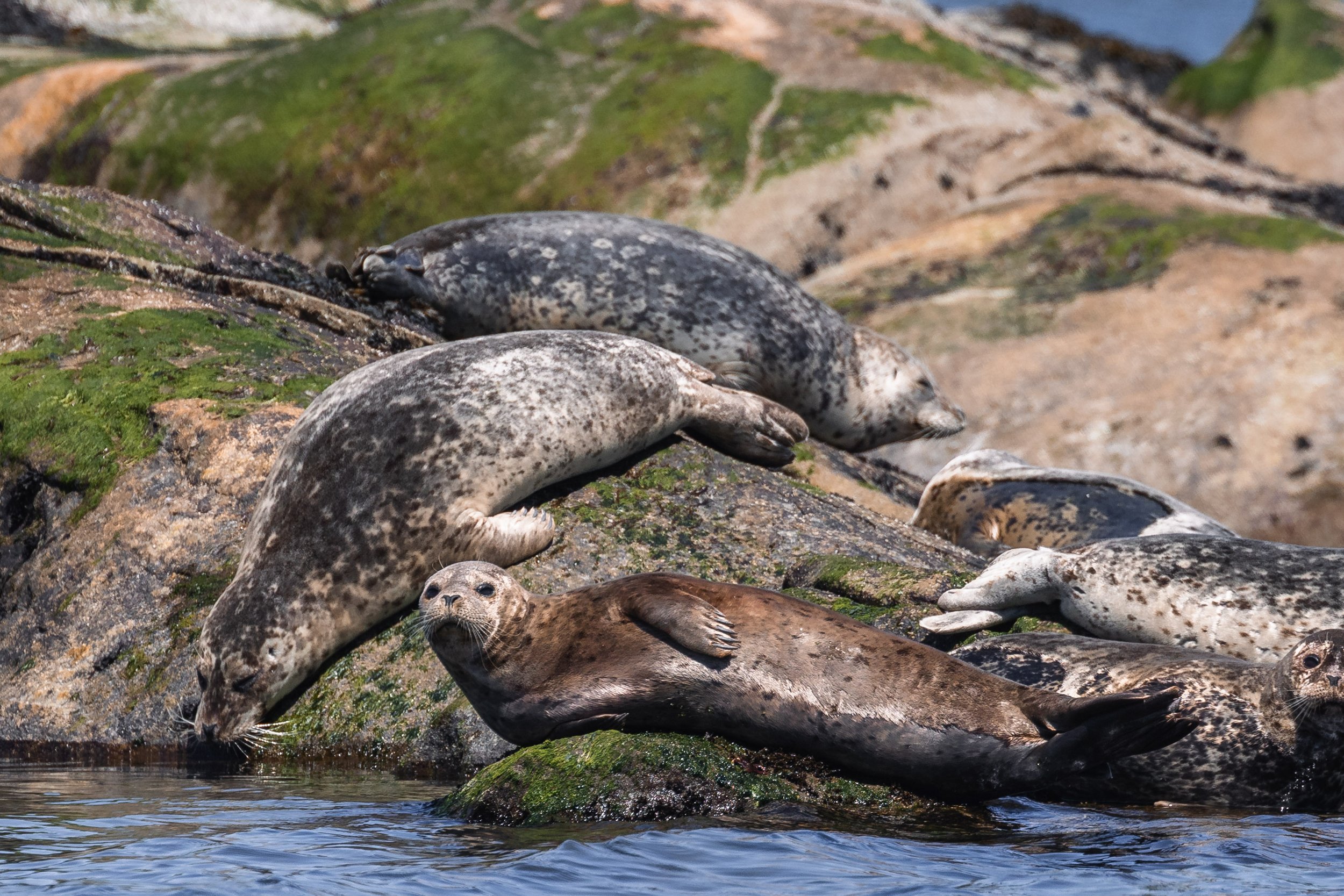
Watching us back!
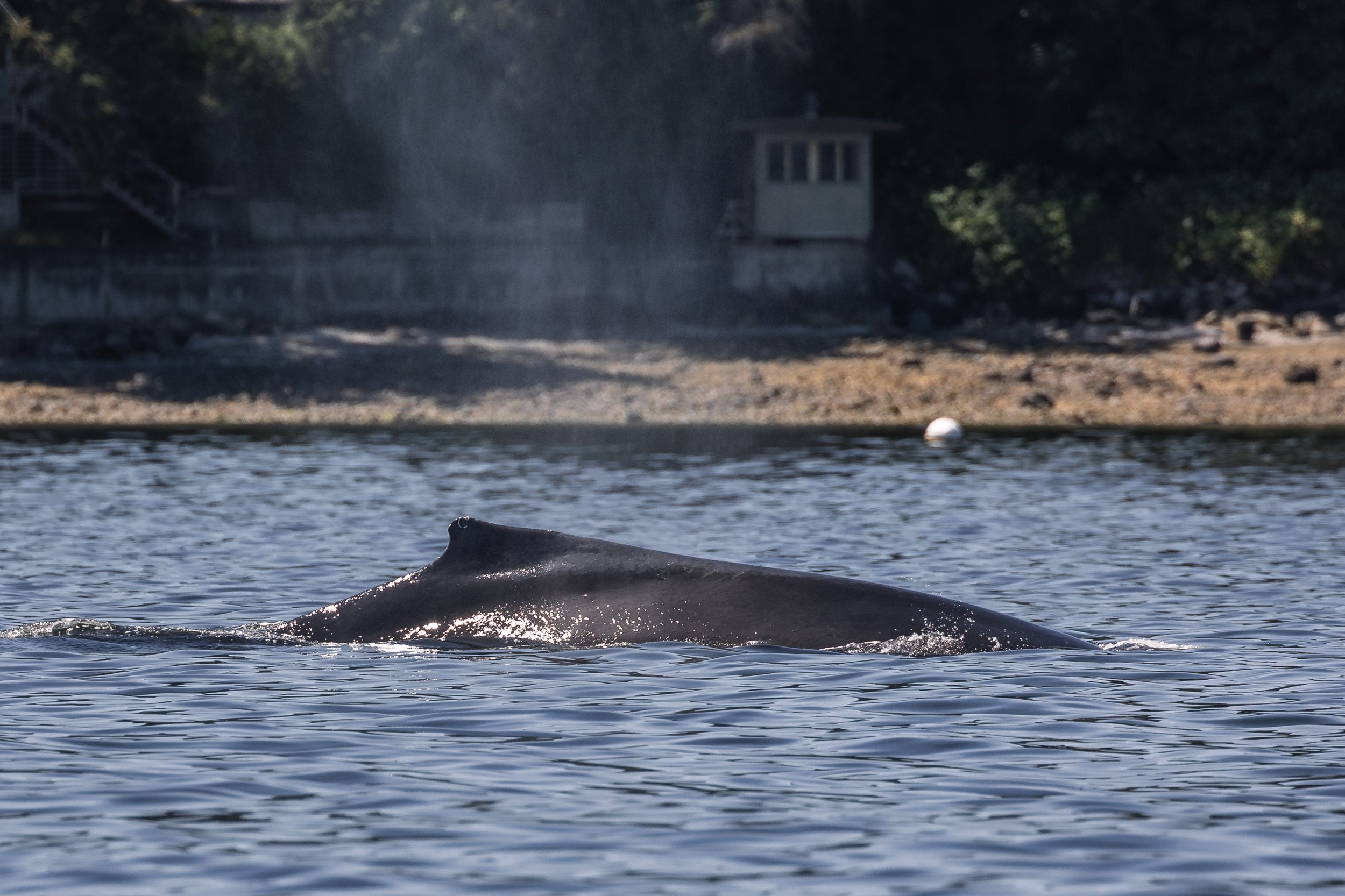
Lizard’s dorsal fin.
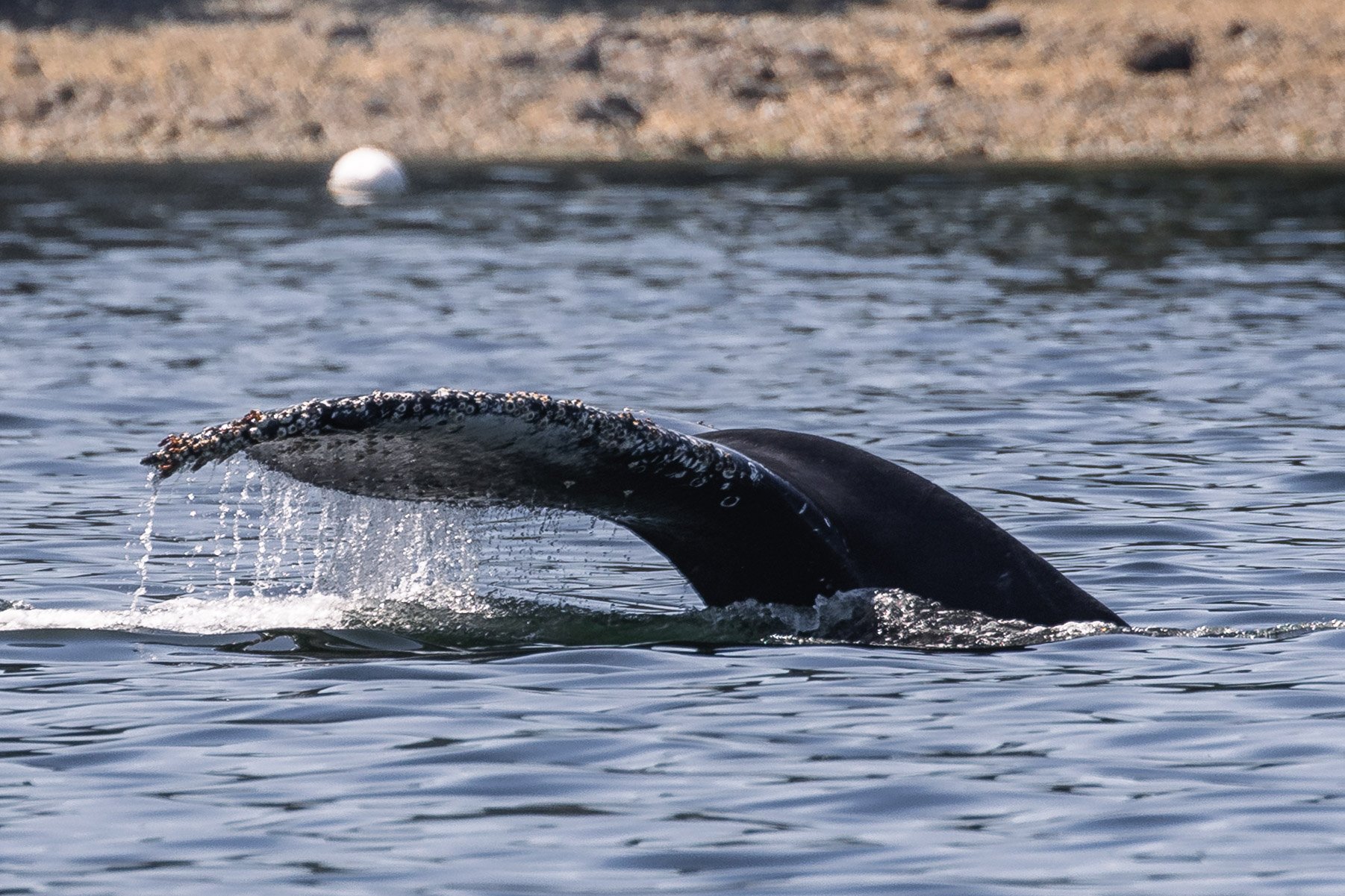
A fluke waterfall.
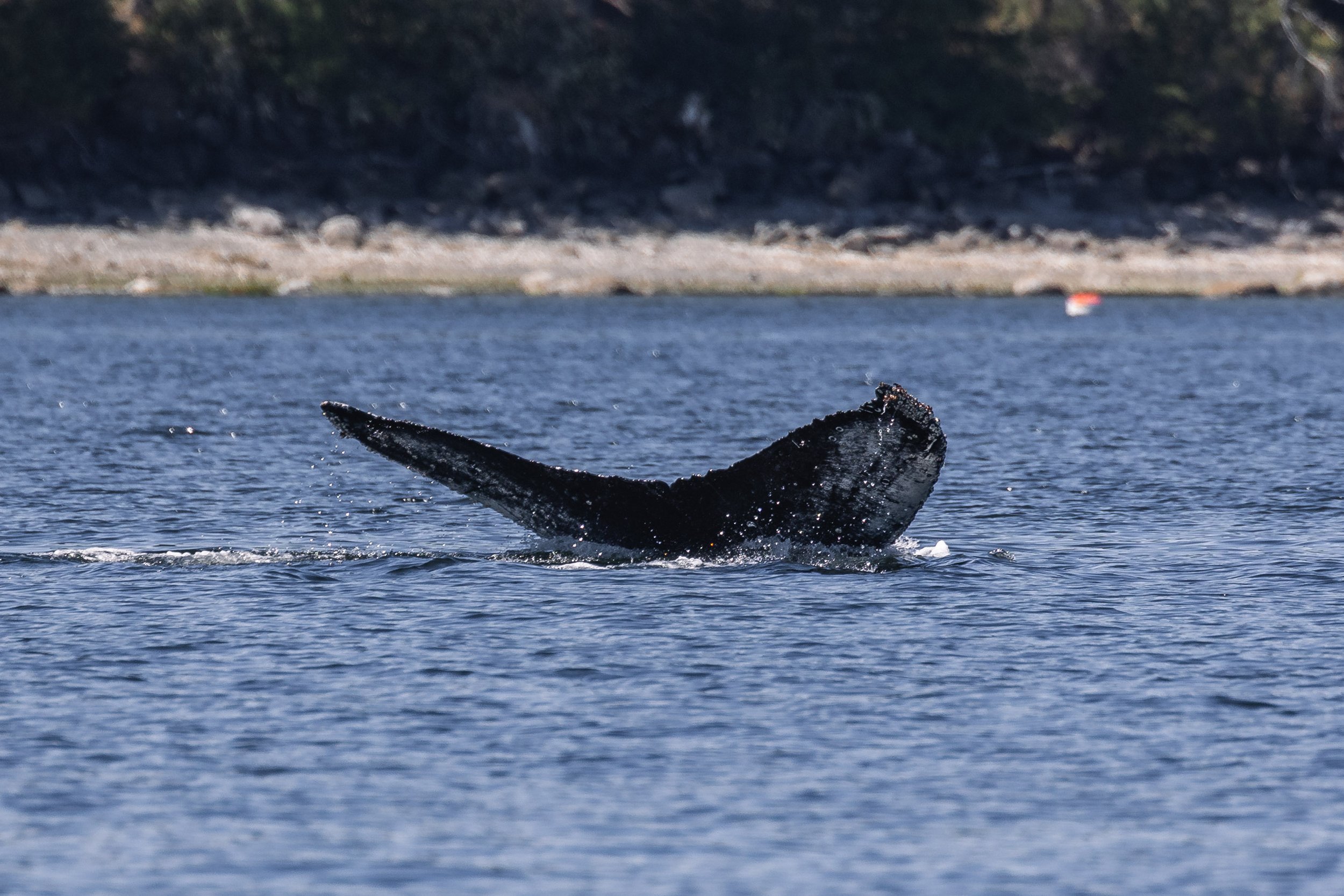
The underside of Lizard’s tail.
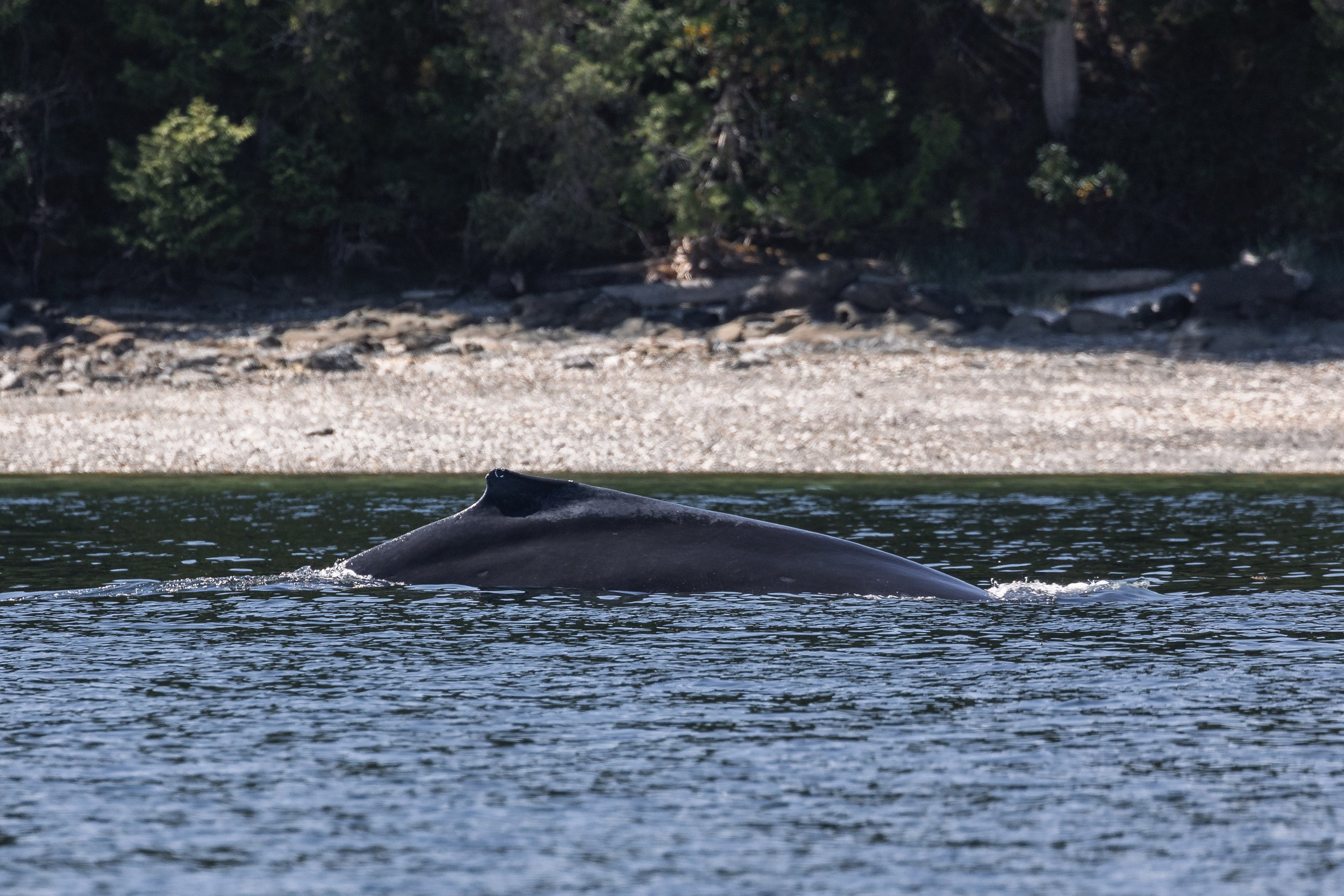
Crusing along the shore.
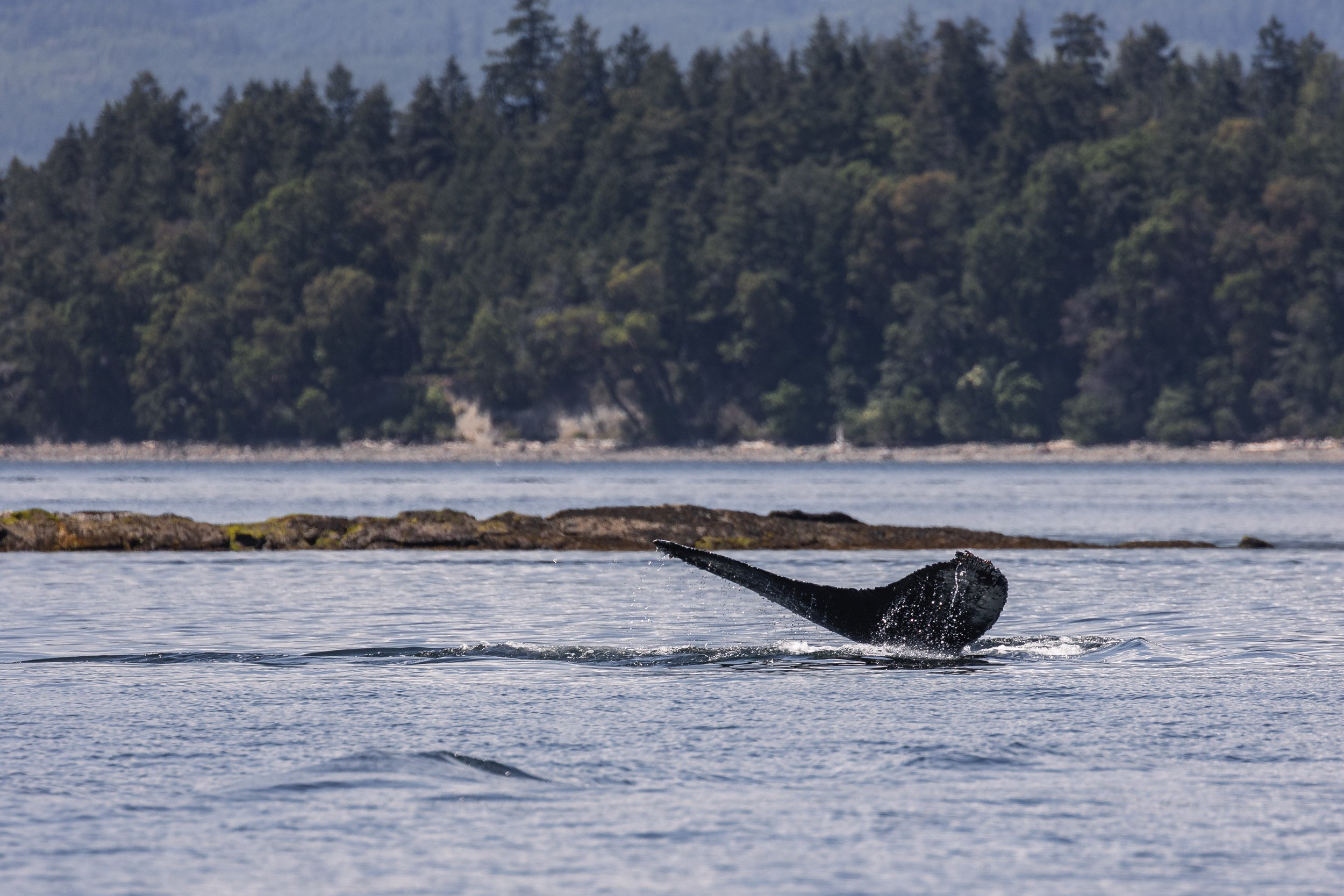
Lizard fluking with a forested backdrop.
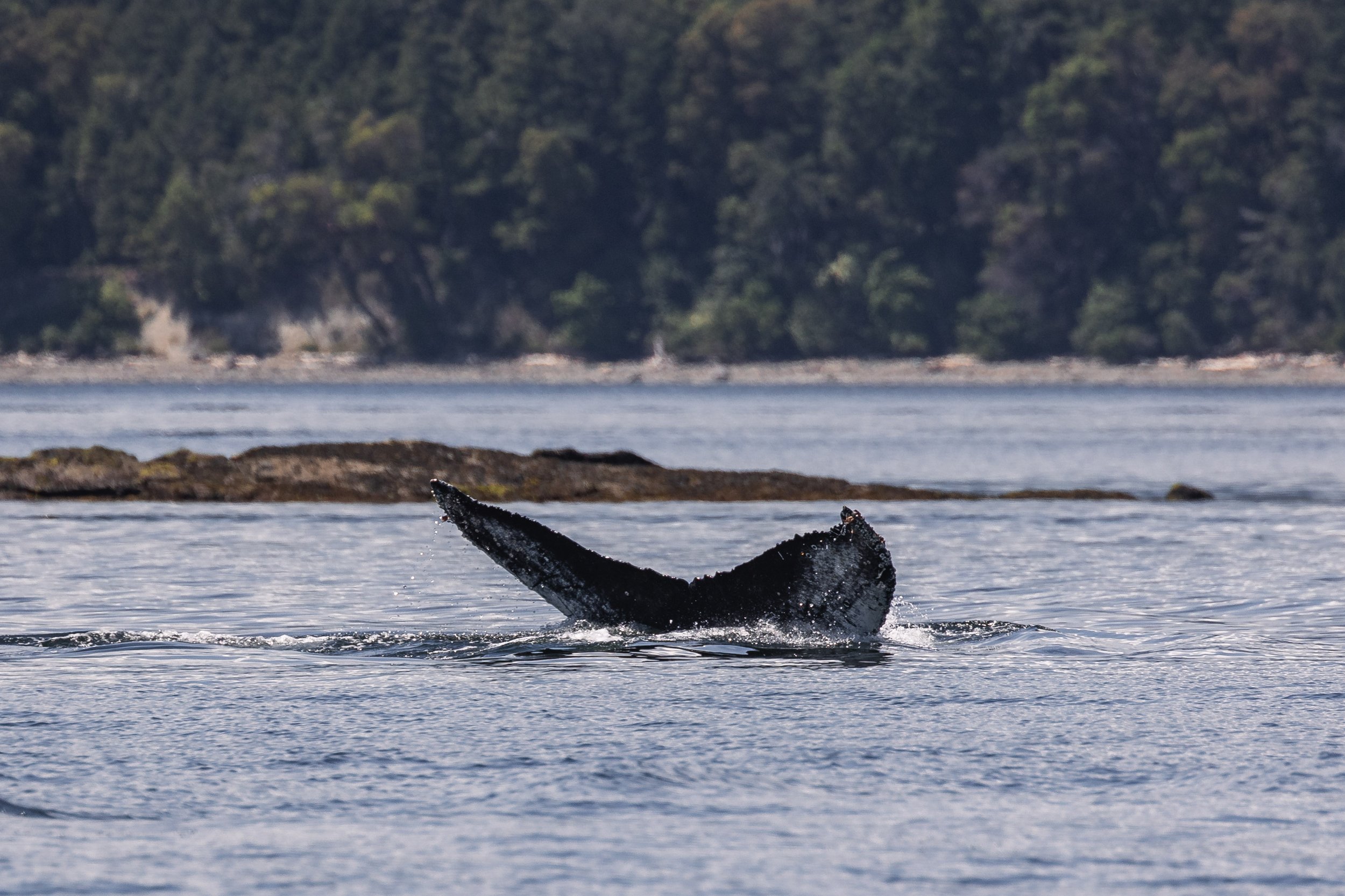
A closer look at Lizard’s tail.
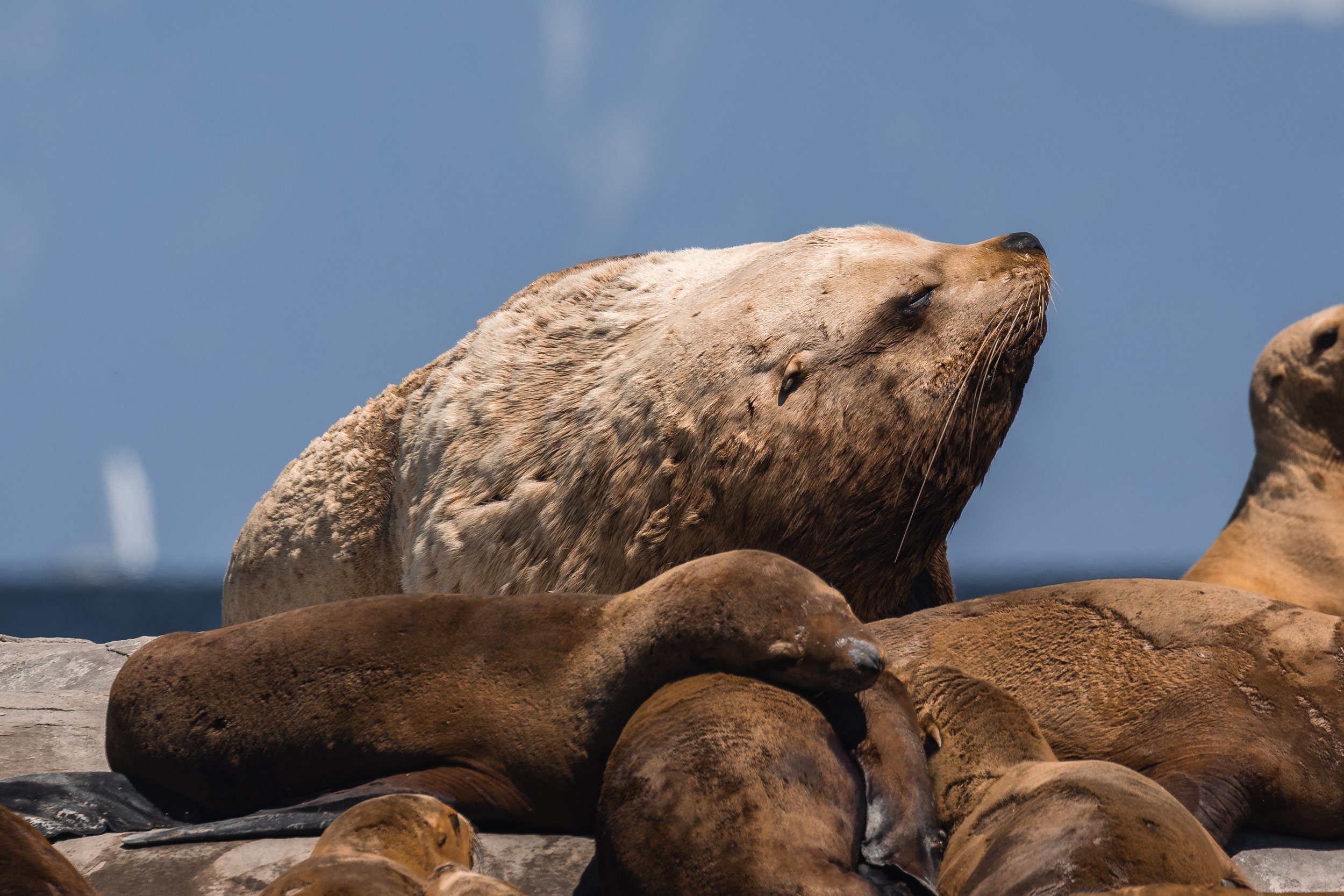
Look how large this male Steller Sea Lion is!
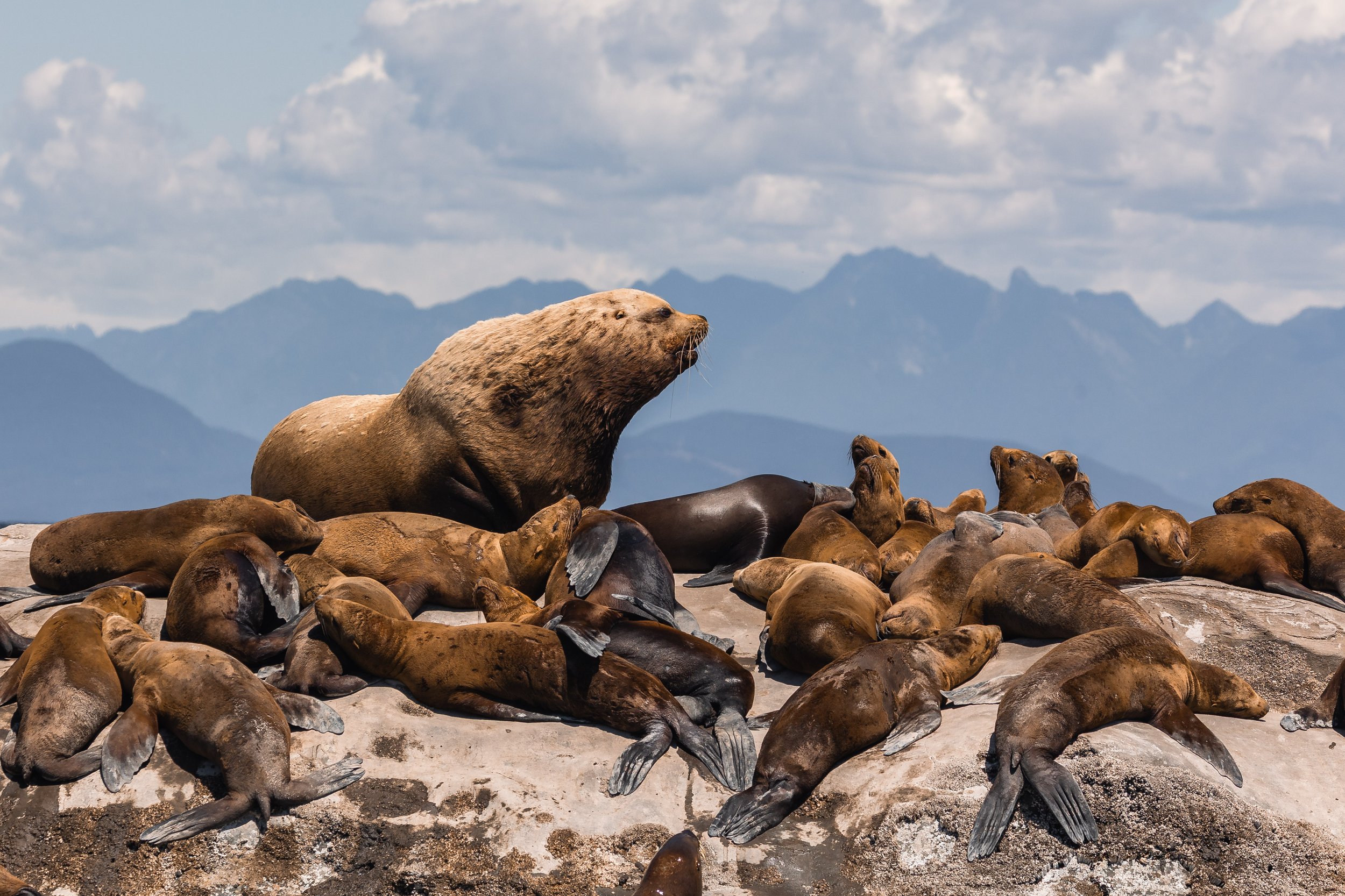
He makes the others look small.
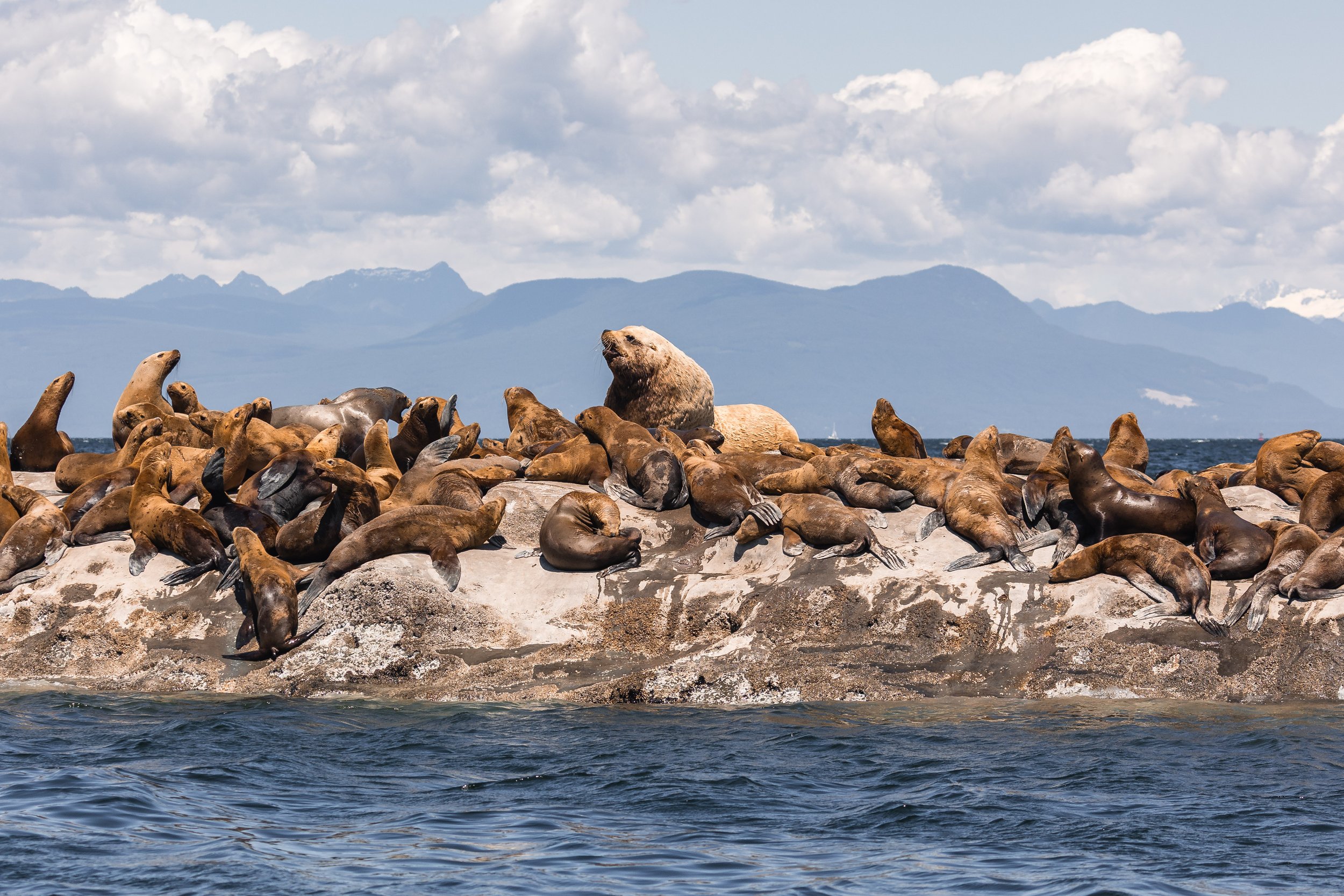
A pile of Steller Sea Lions.
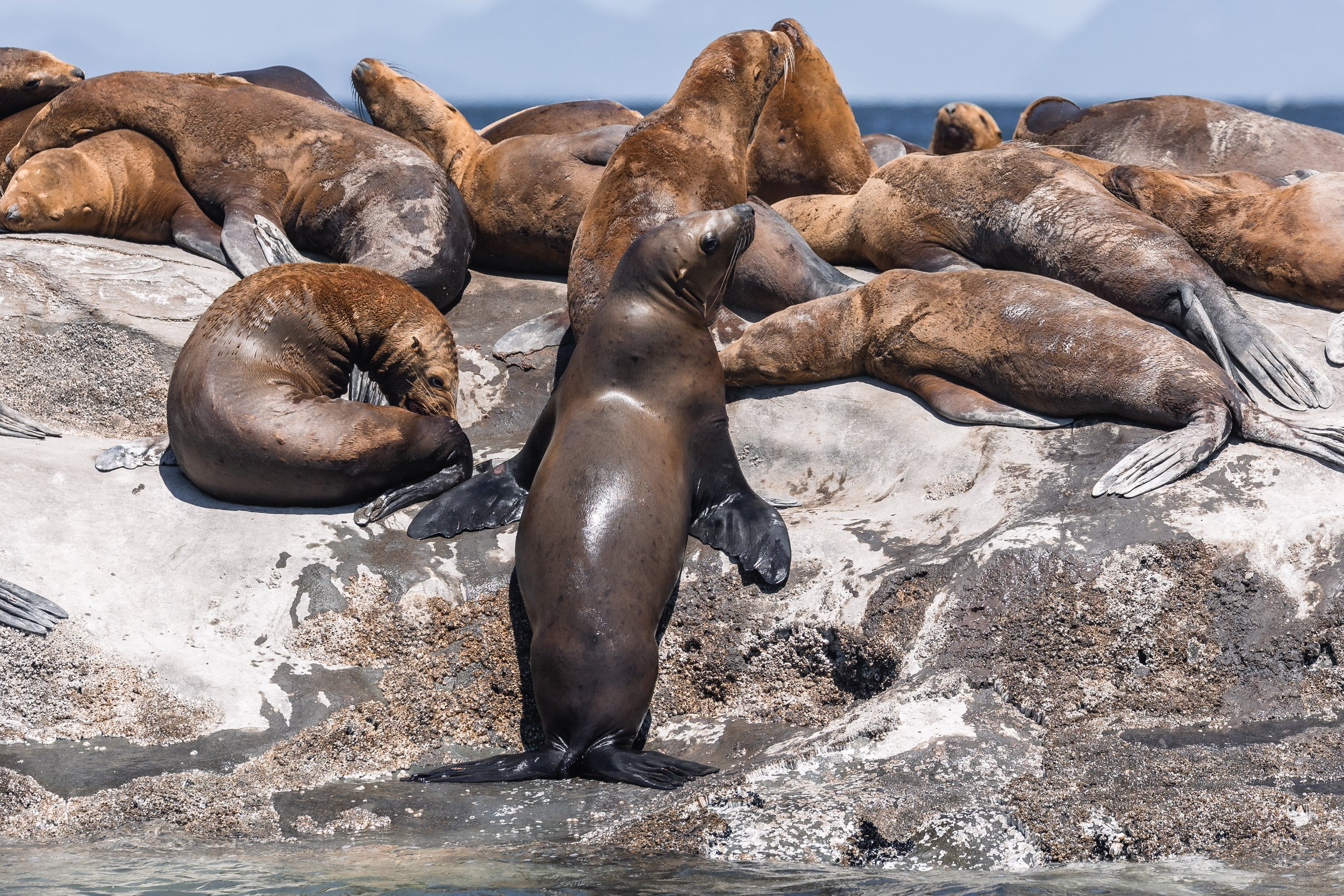
Climbing onto the warm rocks.
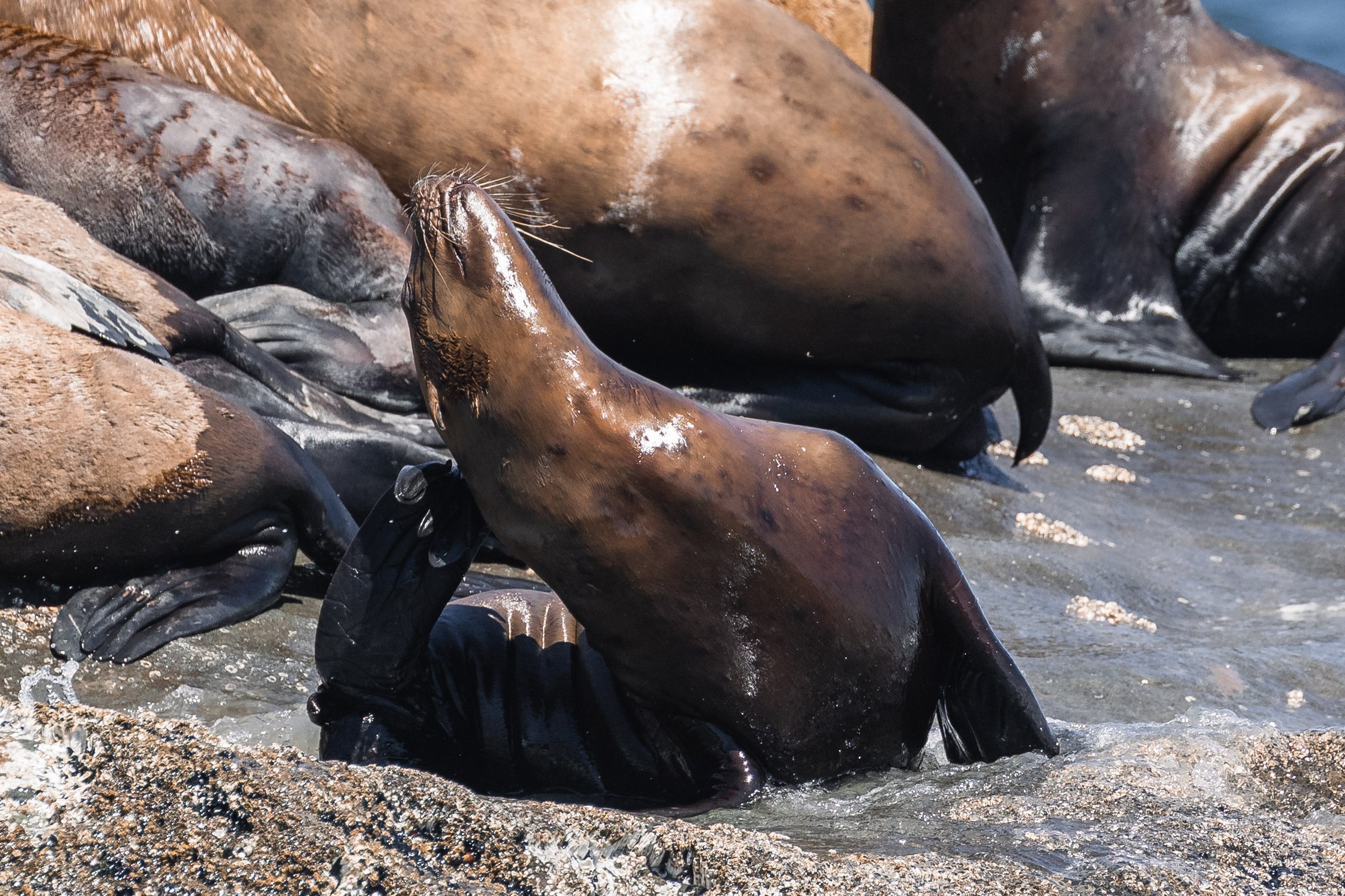
An itchy Steller.
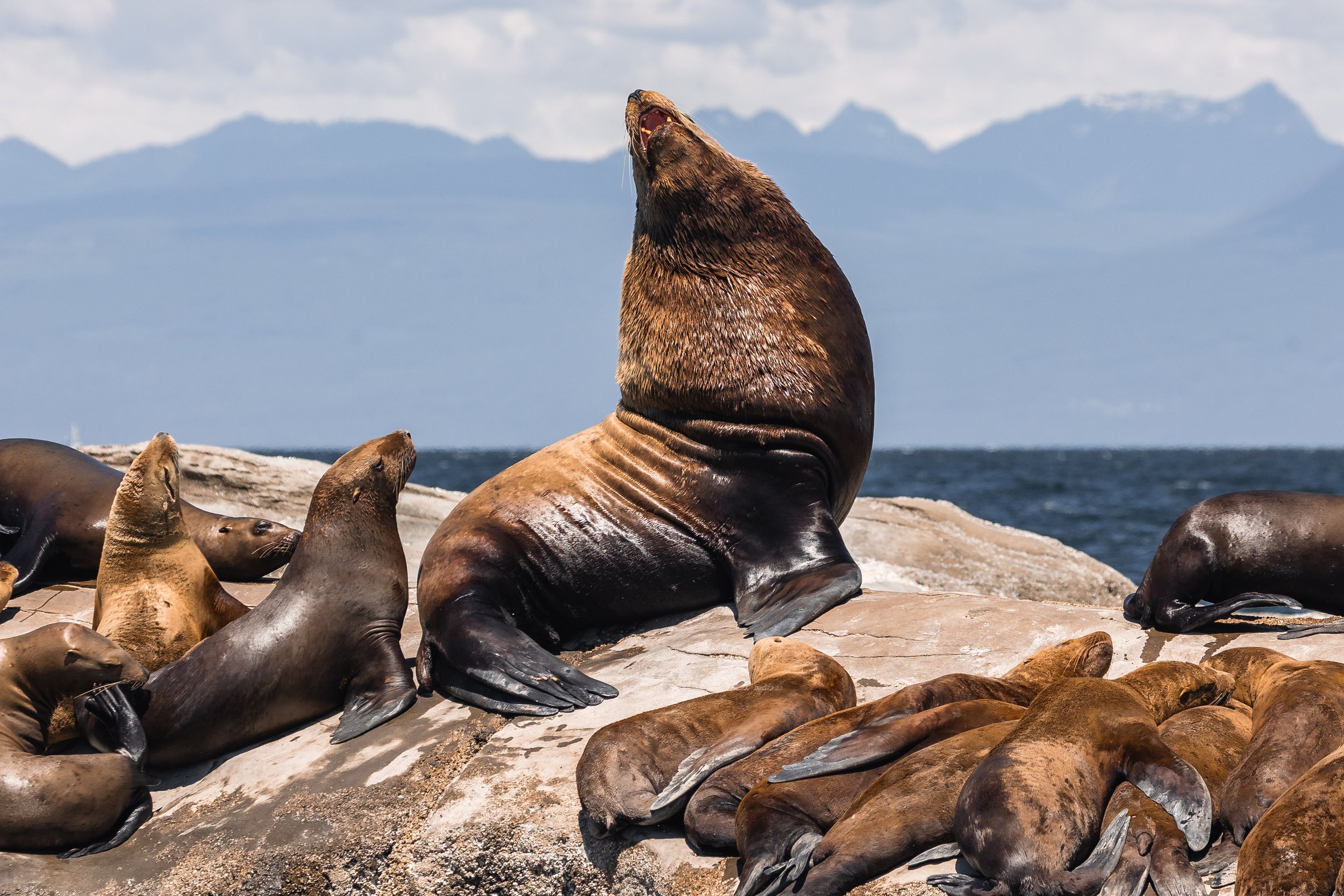
AWOOOOO, I’m a wolf!
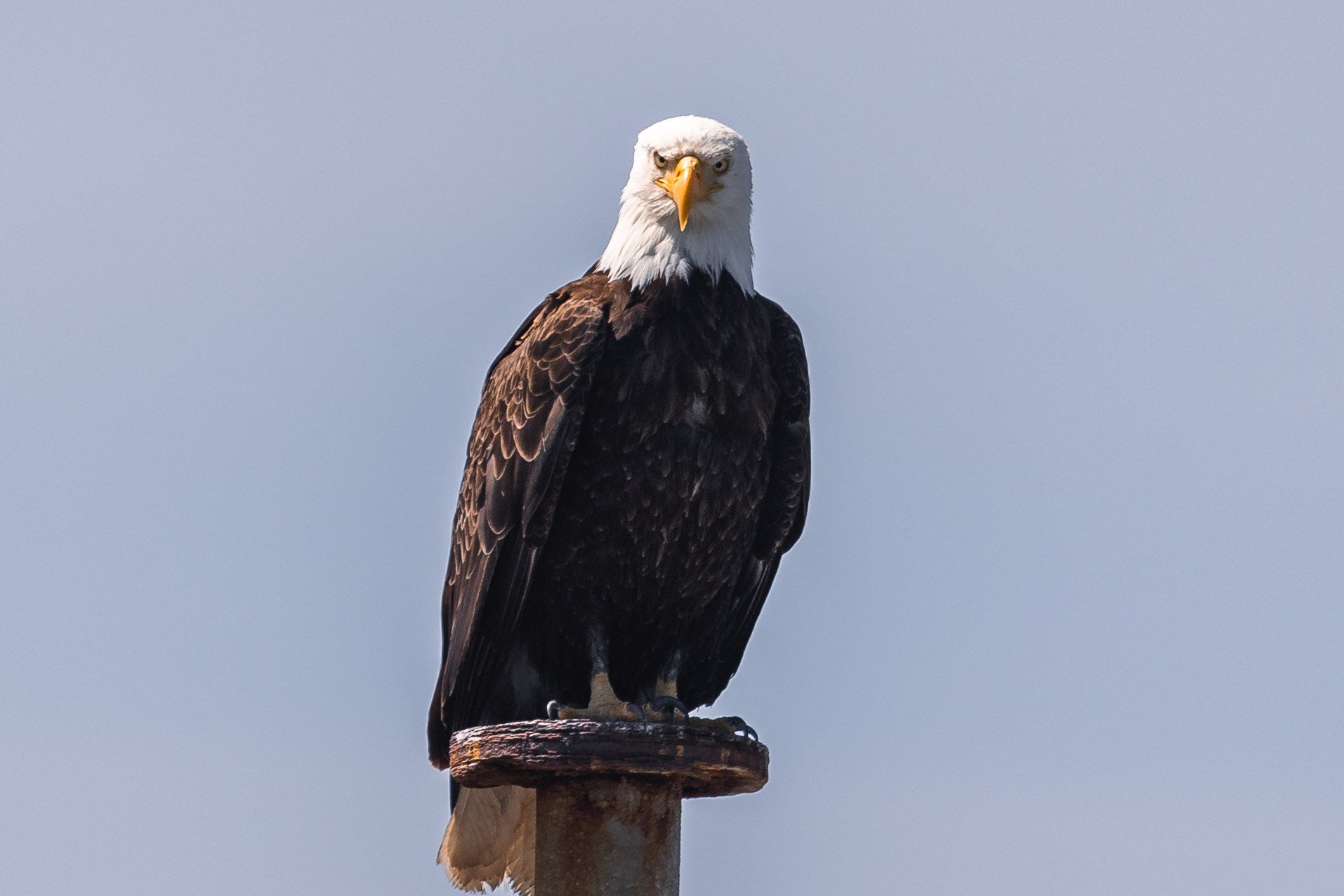
A bald eagle giving us the stink eye.
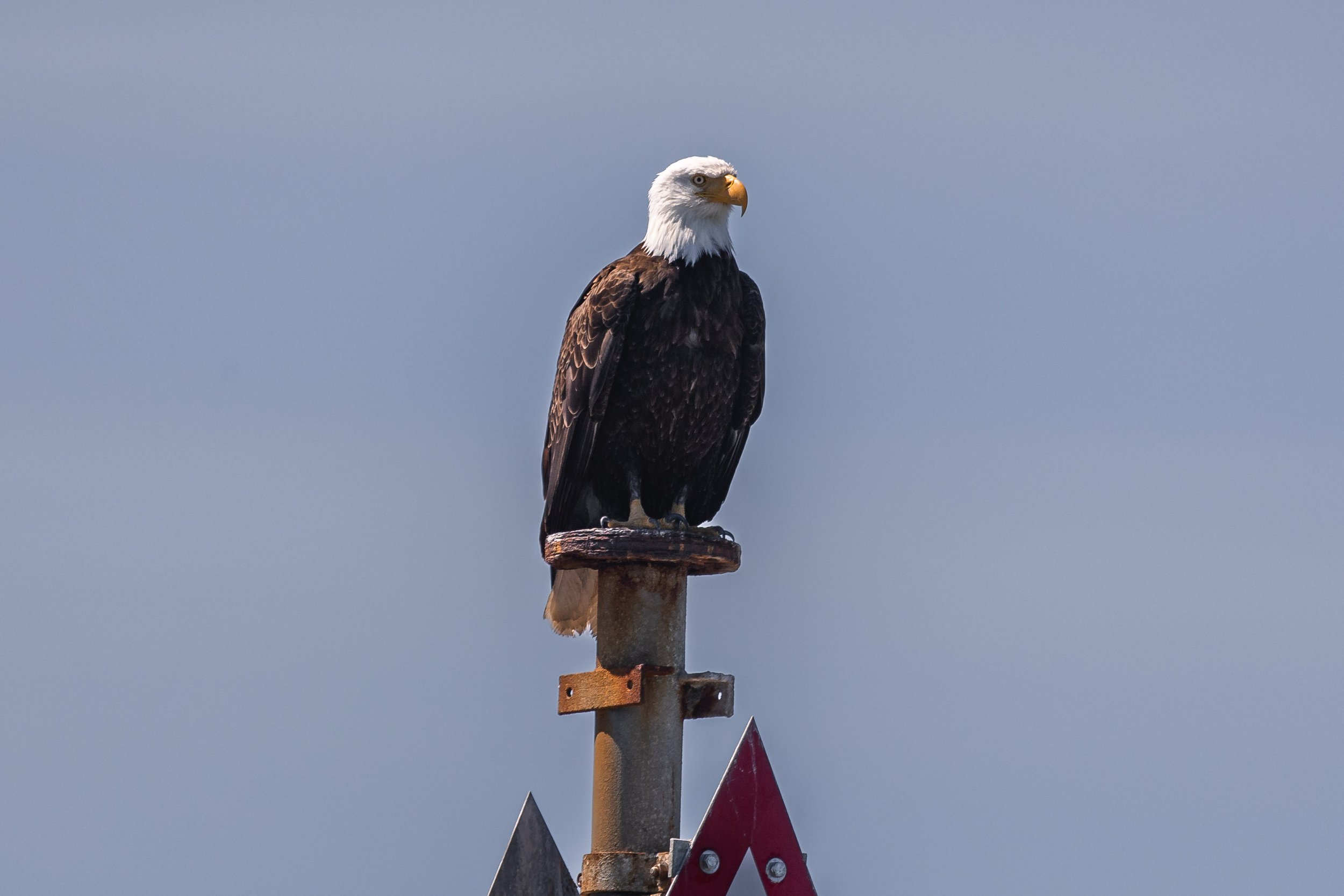
This bald eagle is mature because it has it’s white head and tail, we know they are at least 5 years old.