
June 13, 2026, 10:30 AM - Trip to the southern region for orca
Getting onboard Kula and settling into our seats, Naturalist Jordan chatted about the day ahead and what to expect and look forward to. Many whales had been spotted all around the Salish Sea over the last few days, but with none of them being tagged, it is always a new exciting experience to find them on every trip.
Starting the day off strong, we headed into the Strait of Georgia, into open waters. Crossing towards the Sunshine Coast, we made our way over to a small group of rocks jutting above the surface of the ocean. These were the White Islets, a valuable area for pinnipeds to haul out on as well as being designated as an Important Bird Area (IBA). The White Islets are known as an invaluable nesting and resting space for many seabirds, including Surfbirds and Marbled Murrelets. We peeked and saw a handful of Steller Sea Lions as well as Harbour Seals enjoying the summer warmth, sprawled out all over the place. While our Harbour Seals are year-round residents of our area, our Steller Sea Lions will soon be heading north to their breeding grounds, so we are enjoying every one of our last few sightings of them before they depart!
We left the White Islets behind and once again began searching around. We had caught word of a potential sighting to the south near Active Pass and were eager to check it out. After surfing our way down, eyes eagerly searching all around us, we travelled through Active, scanning and scanning and scanning. Unfortunately, our search ended up fruitless, and we continued onward. There had also been sightings a bit further south, so Captain Rodrigo pointed us there and we headed out once more.
Rounding the southern tip of Vancouver Island, the waters opened ahead of us once more, with the horizon occasionally being broken up by the various small islands located there. We transited along to the waters near Moresby Island, where we finally located what we had been searching for – a series of black dorsal fins was busily travelling along, surfacing together in a line.
Jordan raised his camera up and began snapping photos of the scene ahead of us. With these photos, and our ID catalogues, we can crossmatch to confirm the identities of individual orca. After a quick peek, these orca were confirmed to be members of two different matrilines – the T086As and the T124As:
T086A Eider ♀ (1988)
T086A4 Akia ♀ (2016)
T086A5 Siku ♂ (2024)
T124A Kittiwake ♀ (1984)
T124A6 Kasuun ♂ (2016)
T124A7 Kite ♀ (2021)
Interestingly, these two matrilines have very similar compositions right now, both consisting of the matriarch and their youngest two calves. Both matriarchs have multiple older female calves that have now dispersed, many now travelling with calves of their own. As matrilines extend and disperse, we continue to wonder what their family trees will look like in the years ahead.
These orca were having a blast as we observed them. There was a lot of socializing and splashing as they travelled along. Many of the younger individuals were tail slapping away, loudly displaying their excitement. Orcas are incredibly intelligent and social, and interacting with one another is a key part of their day-to-day lives. We also believe they had just hunted and may have been celebrating the meal.
Besides celebrating, we also witnessed a bit of the exact opposite behaviour as well - resting. Orcas do not sleep the same way humans do and never truly get a “full night’s rest” as we think of it. They are voluntary breathers and have to consciously think about every breath they take. Because of this, they rest using a technique known as Unihemispheric Sleep, resting only one half of the brain at a time, keeping the other half awake and active to keep an eye out for danger and to lift the body to the surface to inhale and exhale. When a matriline is travelling, and it is time to rest, you will sometimes see them slow down and swim side by side. The pod may then sleep in a line formation, sitting basically fin tip to fin tip. These close-knit arrangements help the pod members synchronize their breaths and dive together as they bob along. It is truly an awe-inspiring behaviour whenever we get to witness it.
After visiting with the T086As and T124As, we soon had to say our goodbyes and start travelling back north. We travelled along the Southern Gulf Islands, zooming our way back up. Crossing back through Dodd Narrows, we turned the corner, and soon we approached the Nanaimo Harbour once more. While we had to go on quite the journey to find our whales this time, we succeeded, and it was a great example of how every trip is a new adventure!
Please enjoy these photos taken by Marine Naturalist Jordan Robinson!
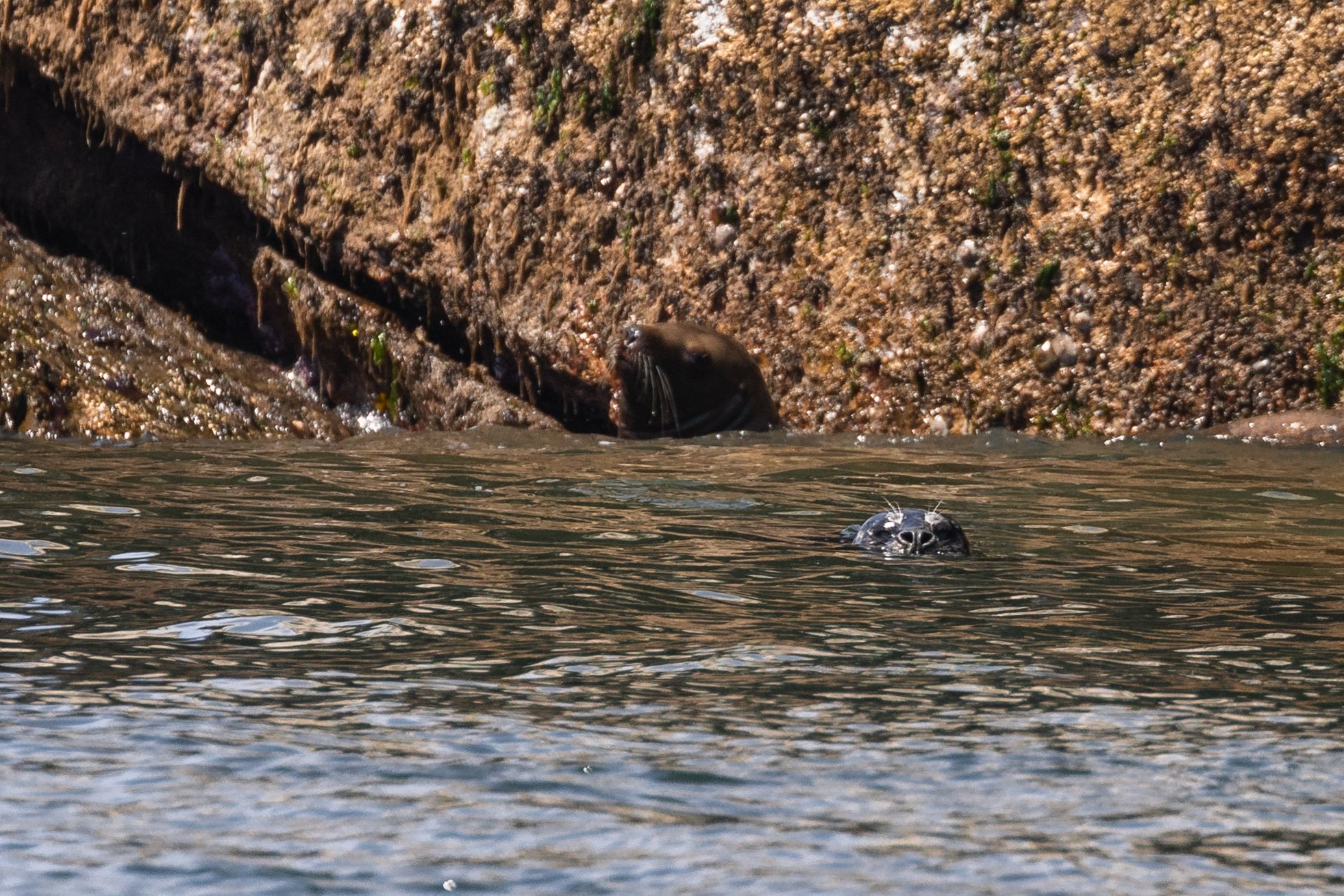
A Harbour Seal briefly peeking at us, with a sea lion visible behind it.
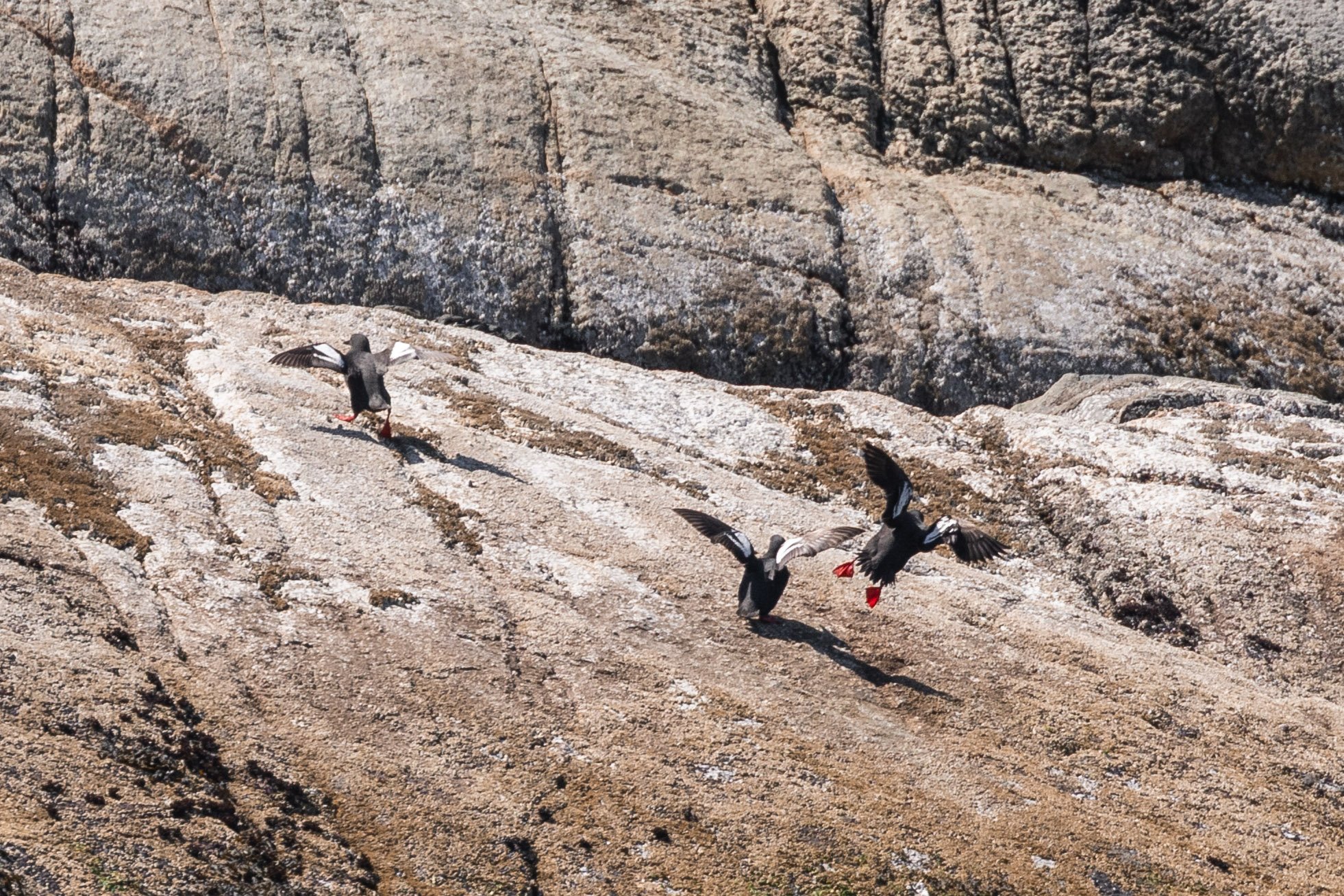
Pigeon Guillemots about to take flight.
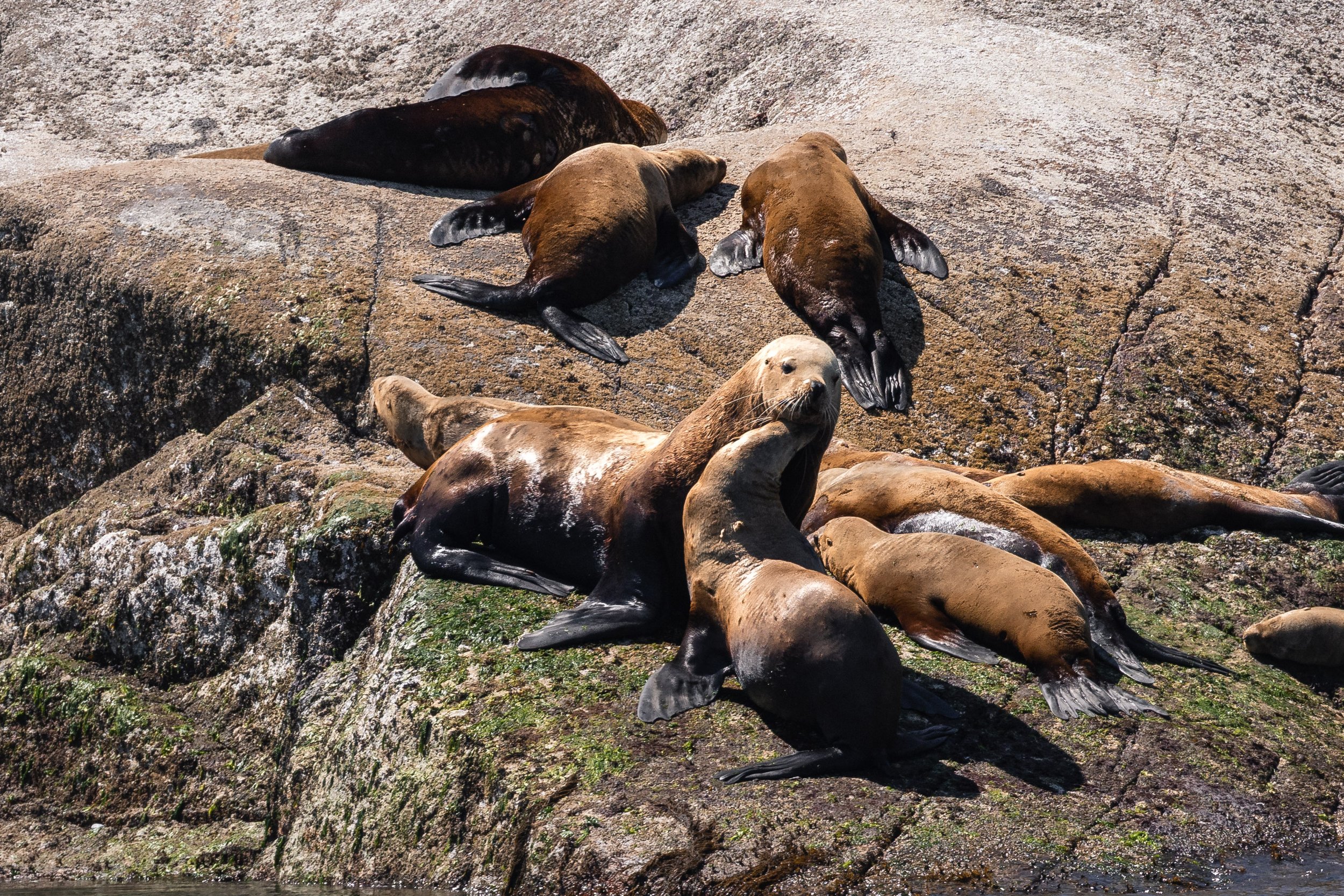
Steller Sea Lions waddling along the White Islets.
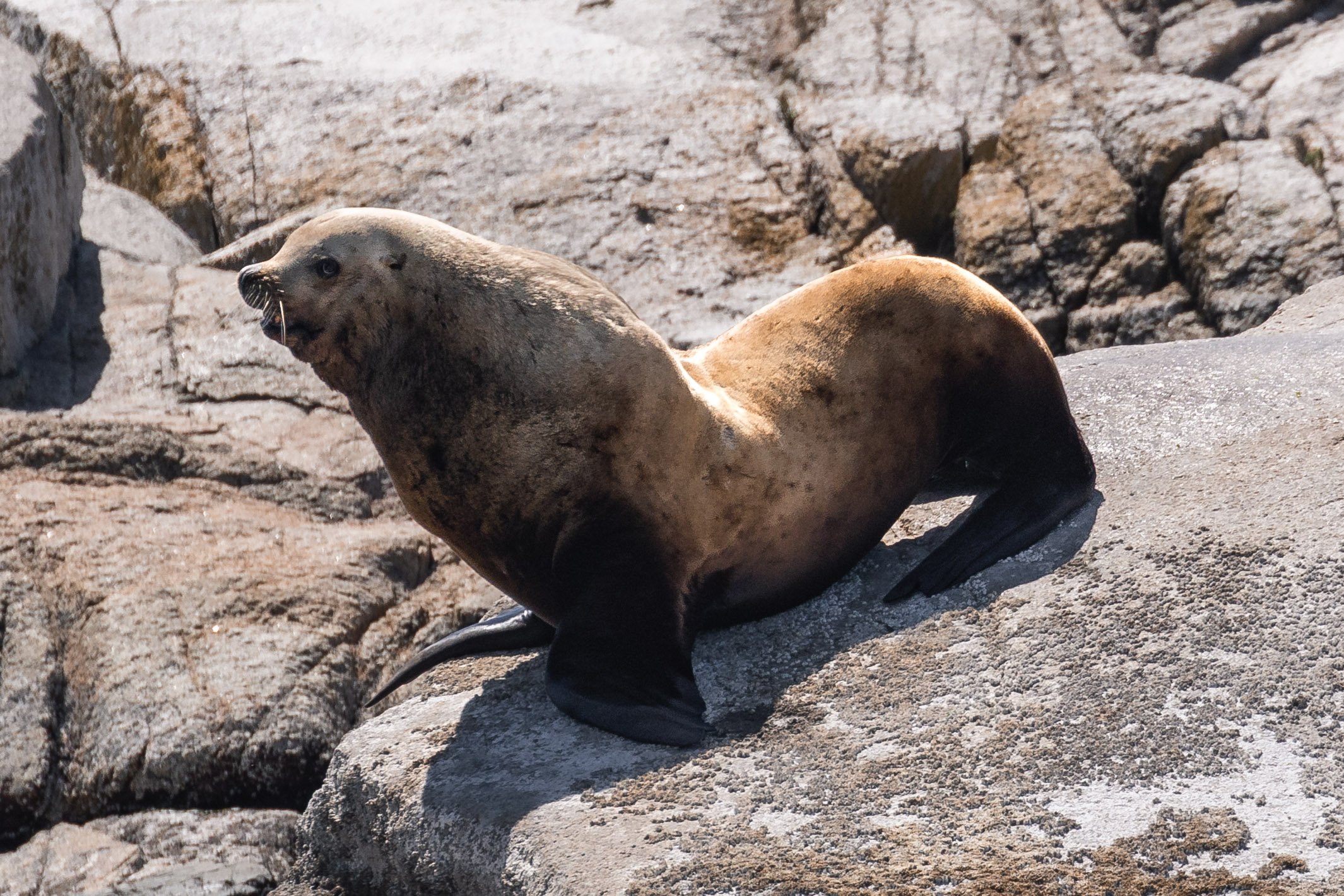
A large male Steller Sea Lion giving us the side eye.
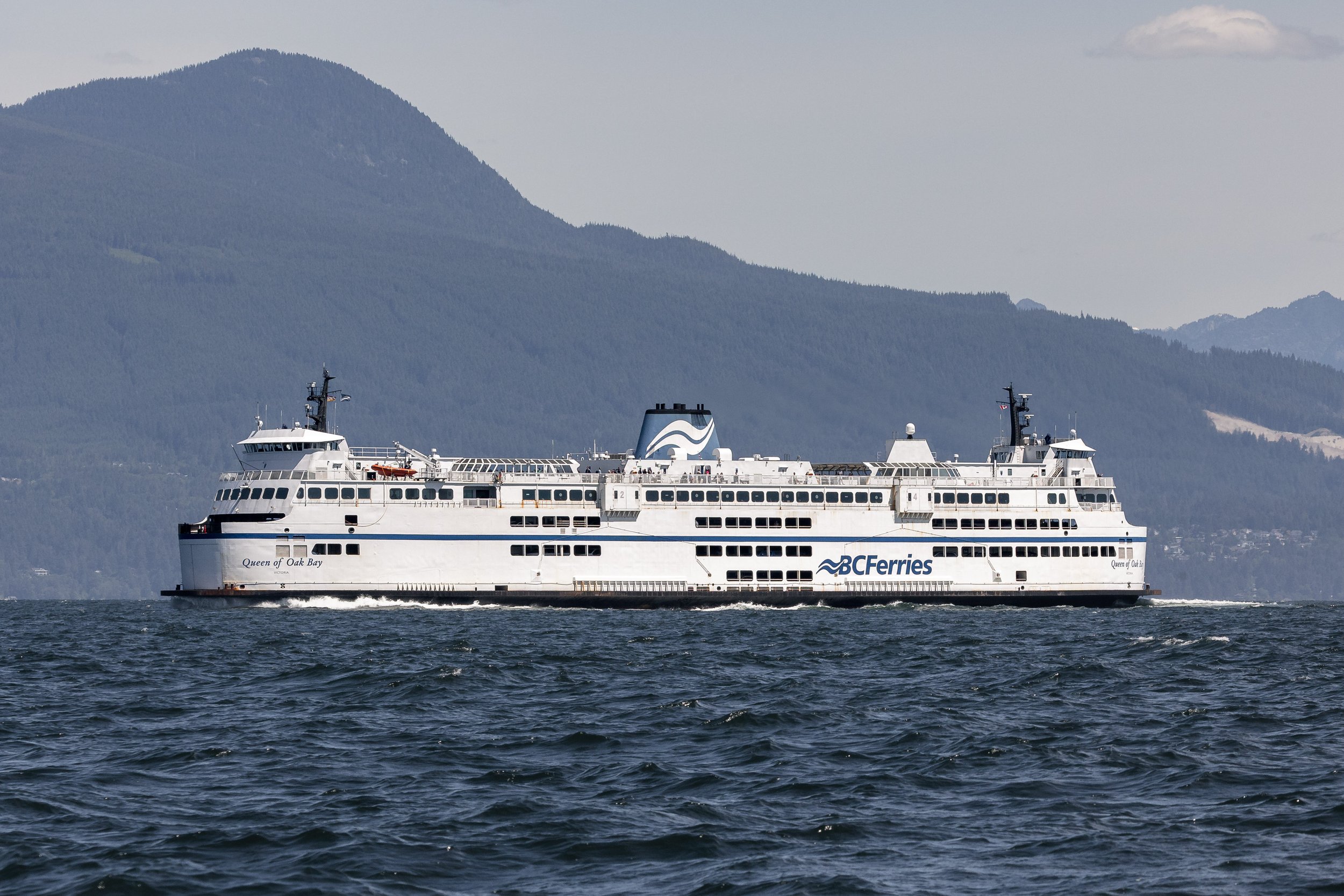
The Queen of Oak Bay transisting along.
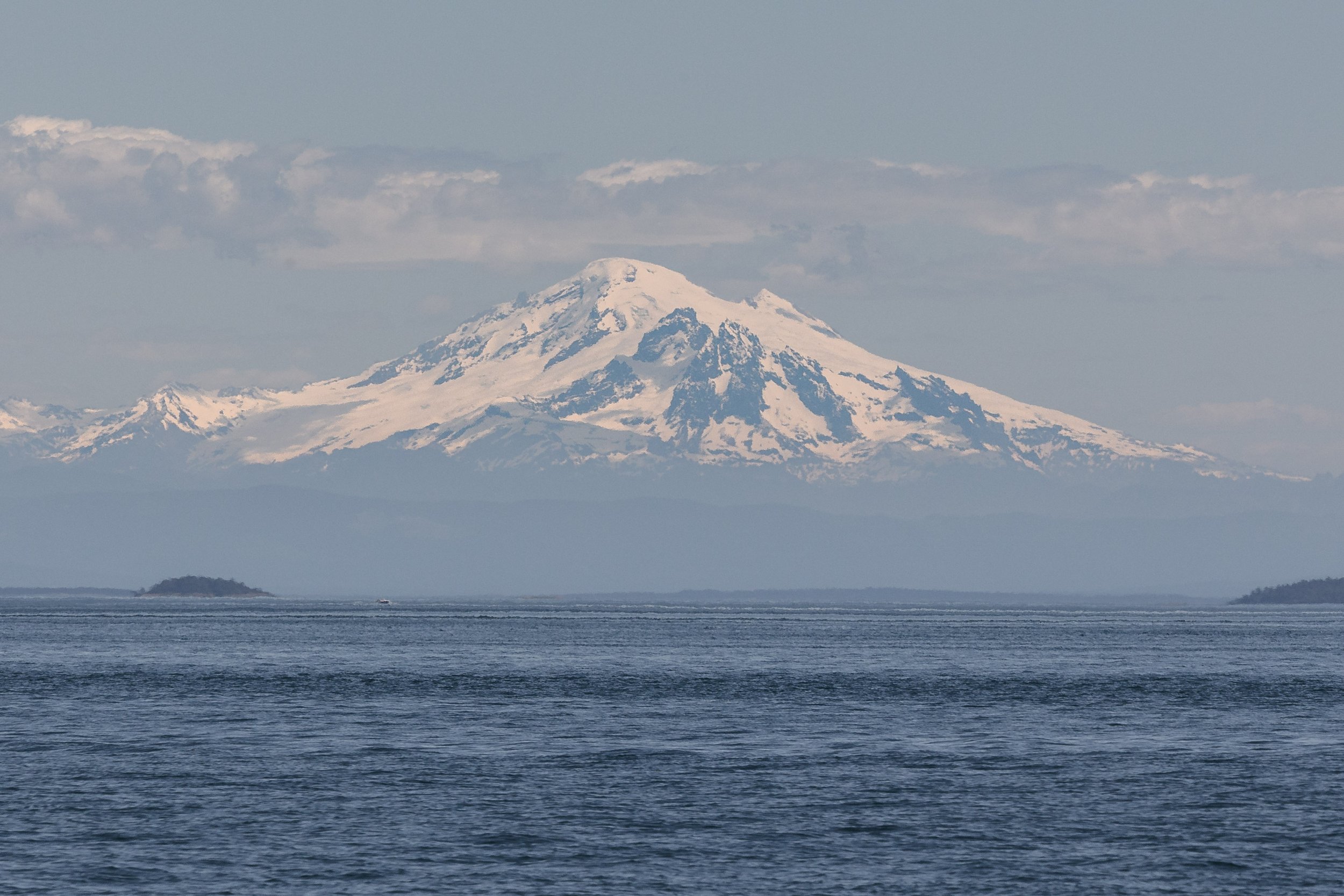
Mt.Baker clearly visible during the trip.
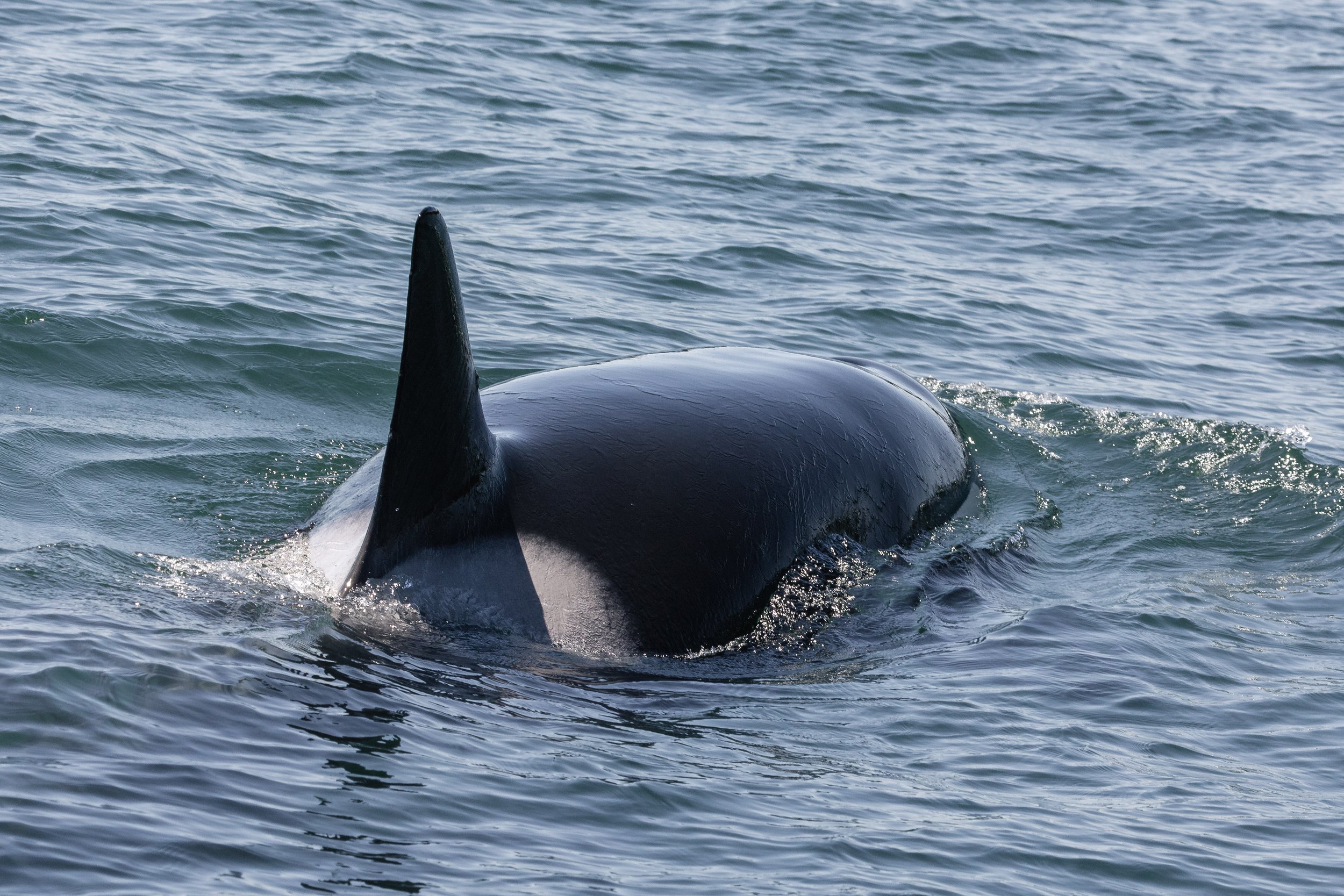
T086A Eider, from behind.
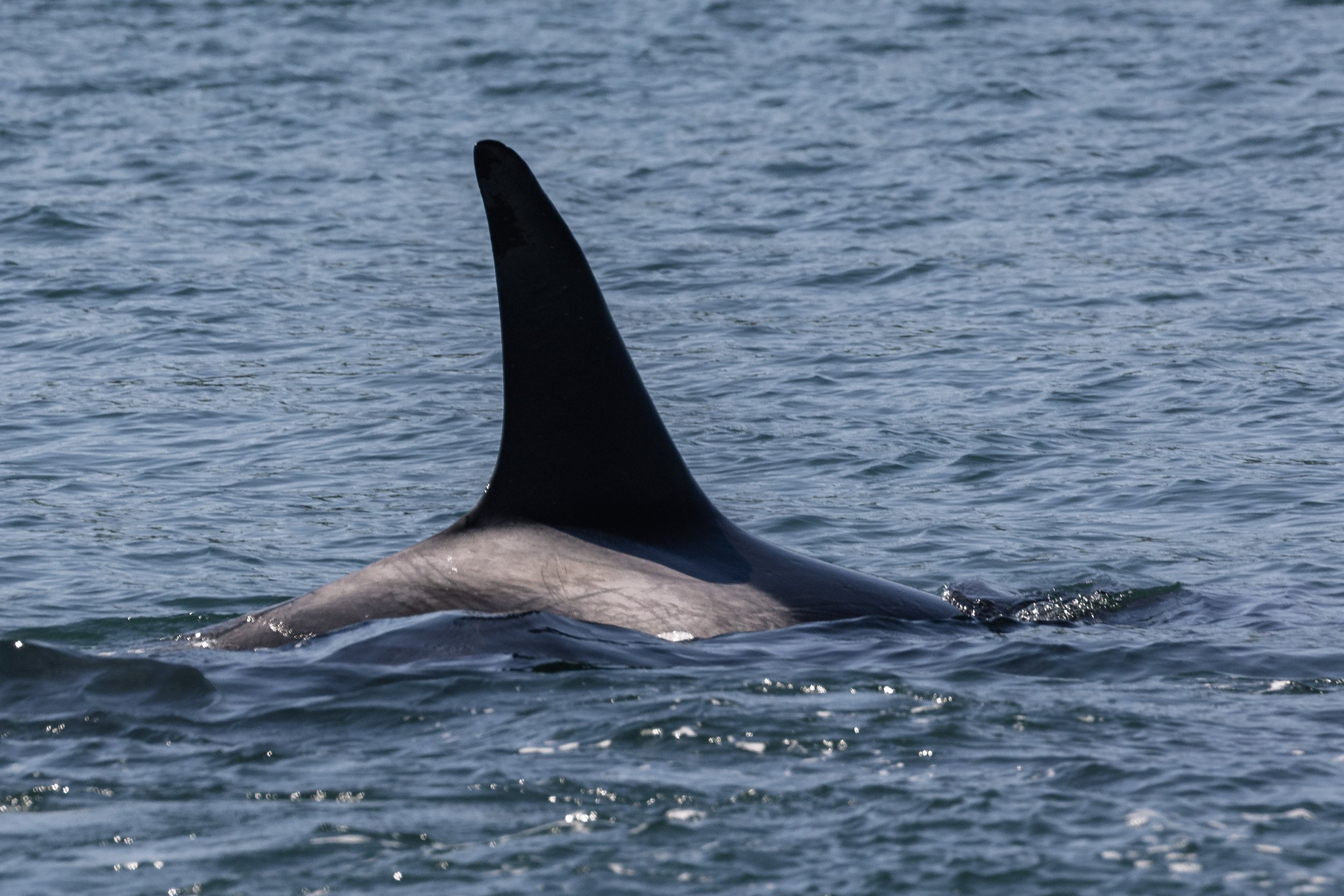
T124A Kittiwake with her heavily scarred saddlepatch visible.
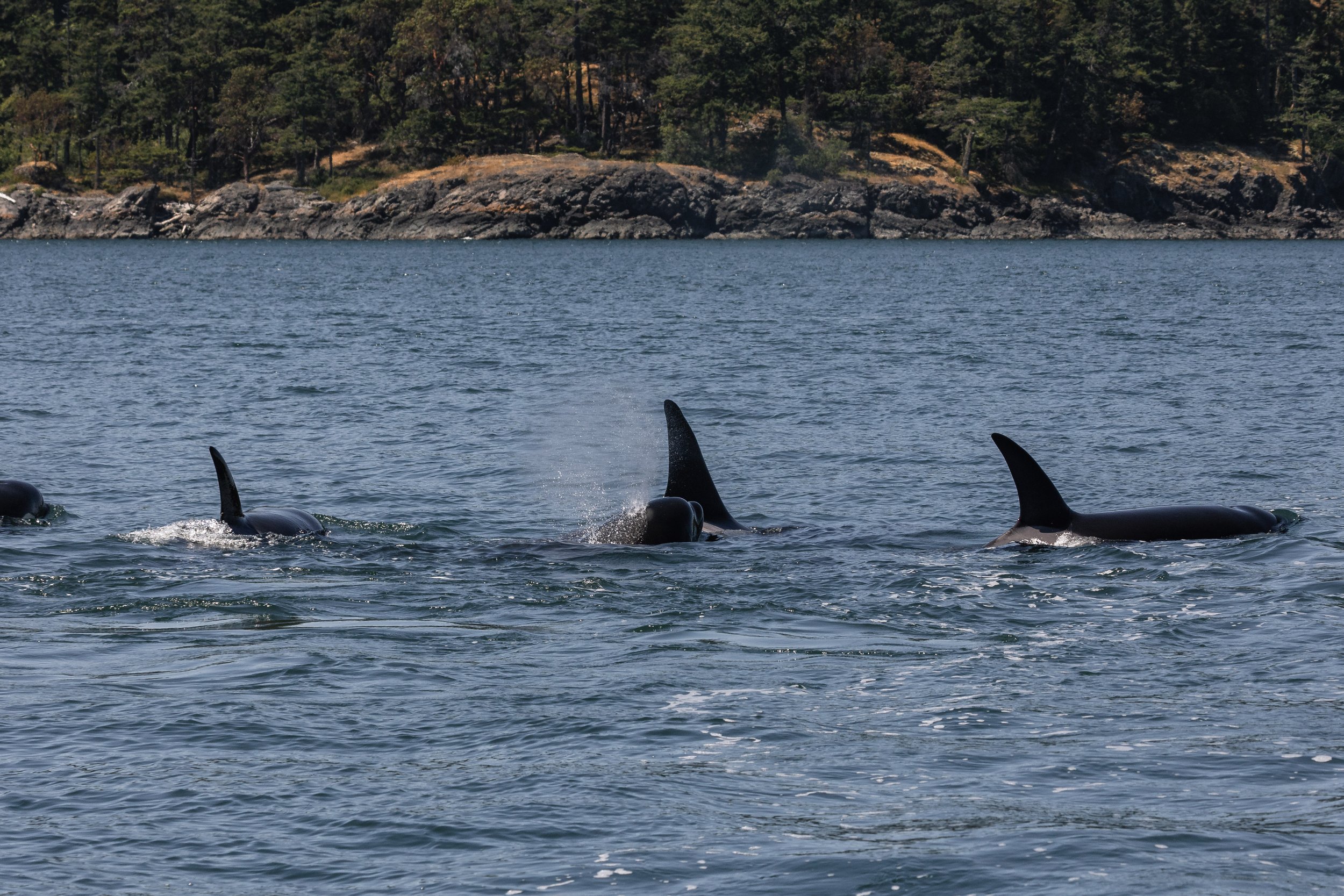
T124A6 Kasuun, T124A Kittiwake, T124A7 Kite (behind), and T086A4 Akia.
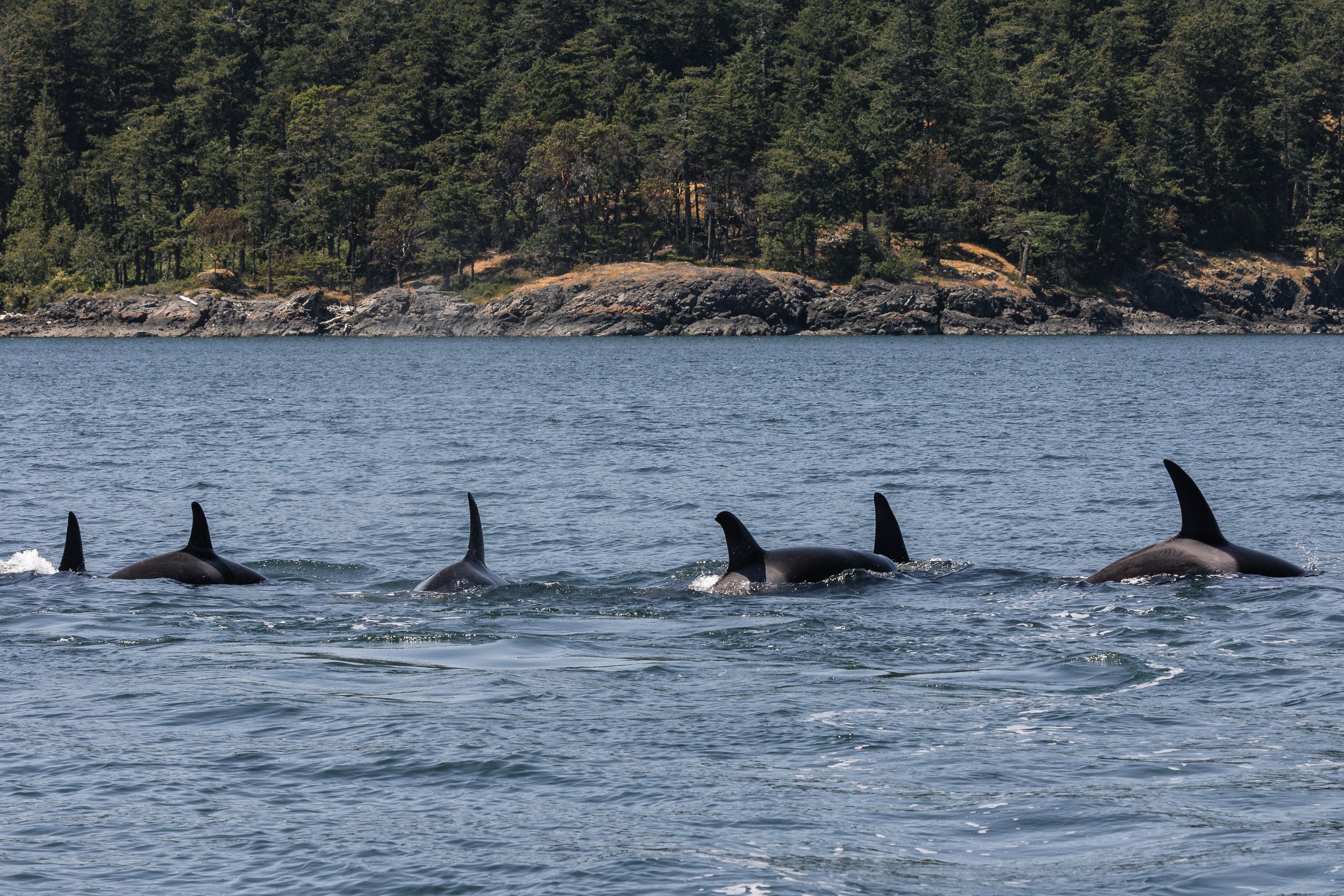
All in a line! Left to right: T086A Eider, T086A5 Siku, T124A6 Kasuun (with a new injury near the base of their dorsal fin), T124A7 Kite, T124A Kittiwake, and T086A4 Akia.
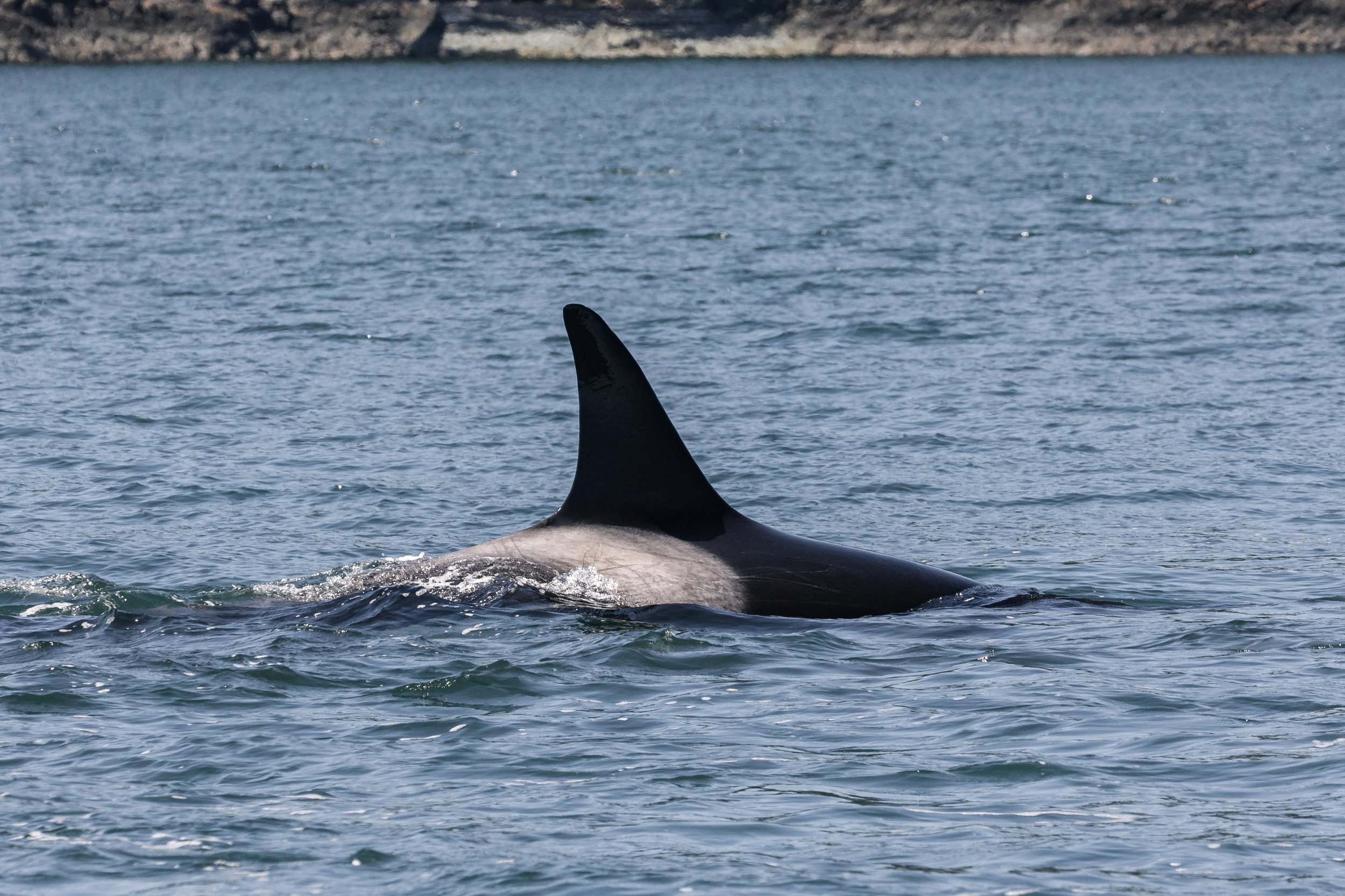
T124A Kittiwake travelling.
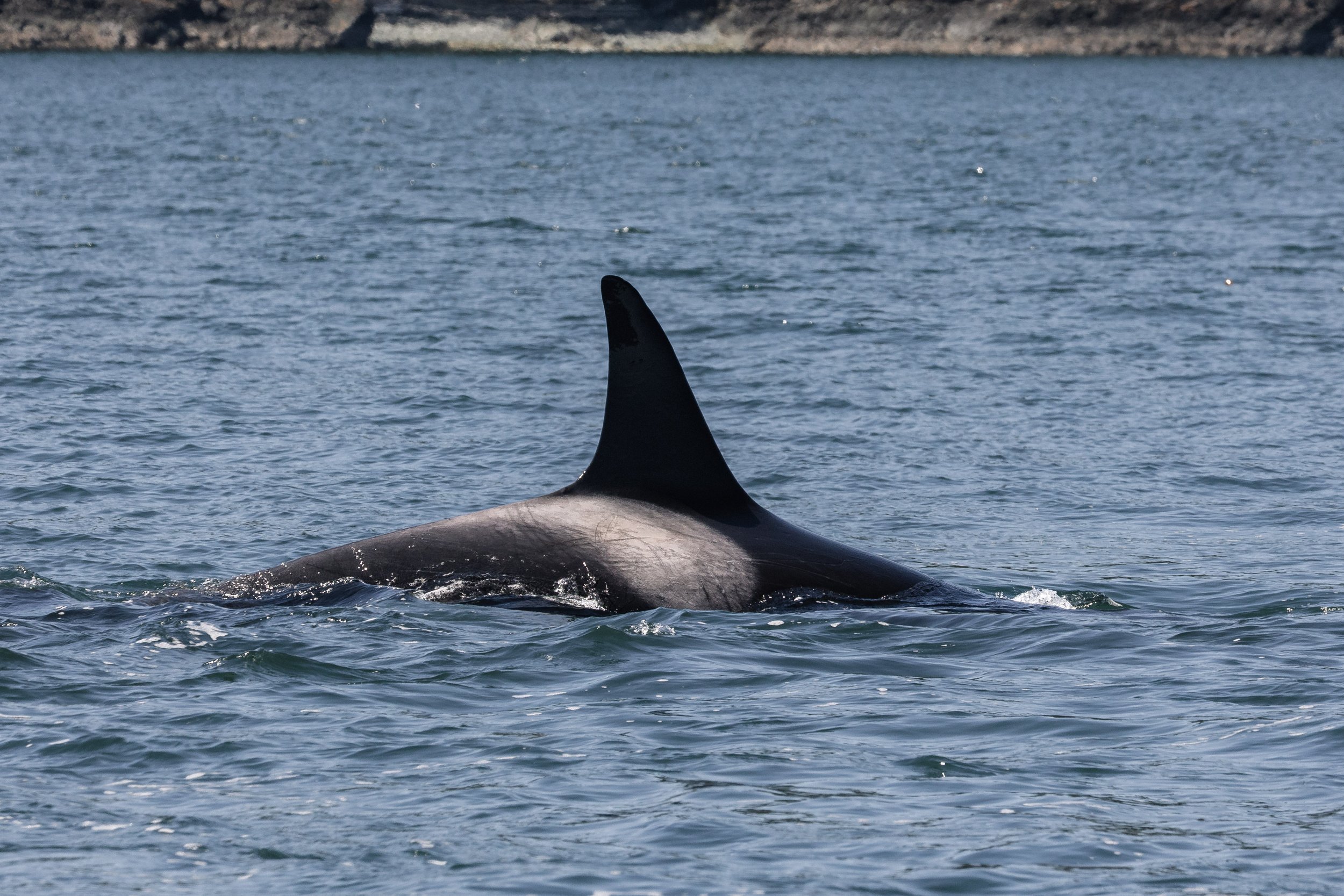
T124A Kittiwake sports many scars in her saddlepatch that help confirm her ID.
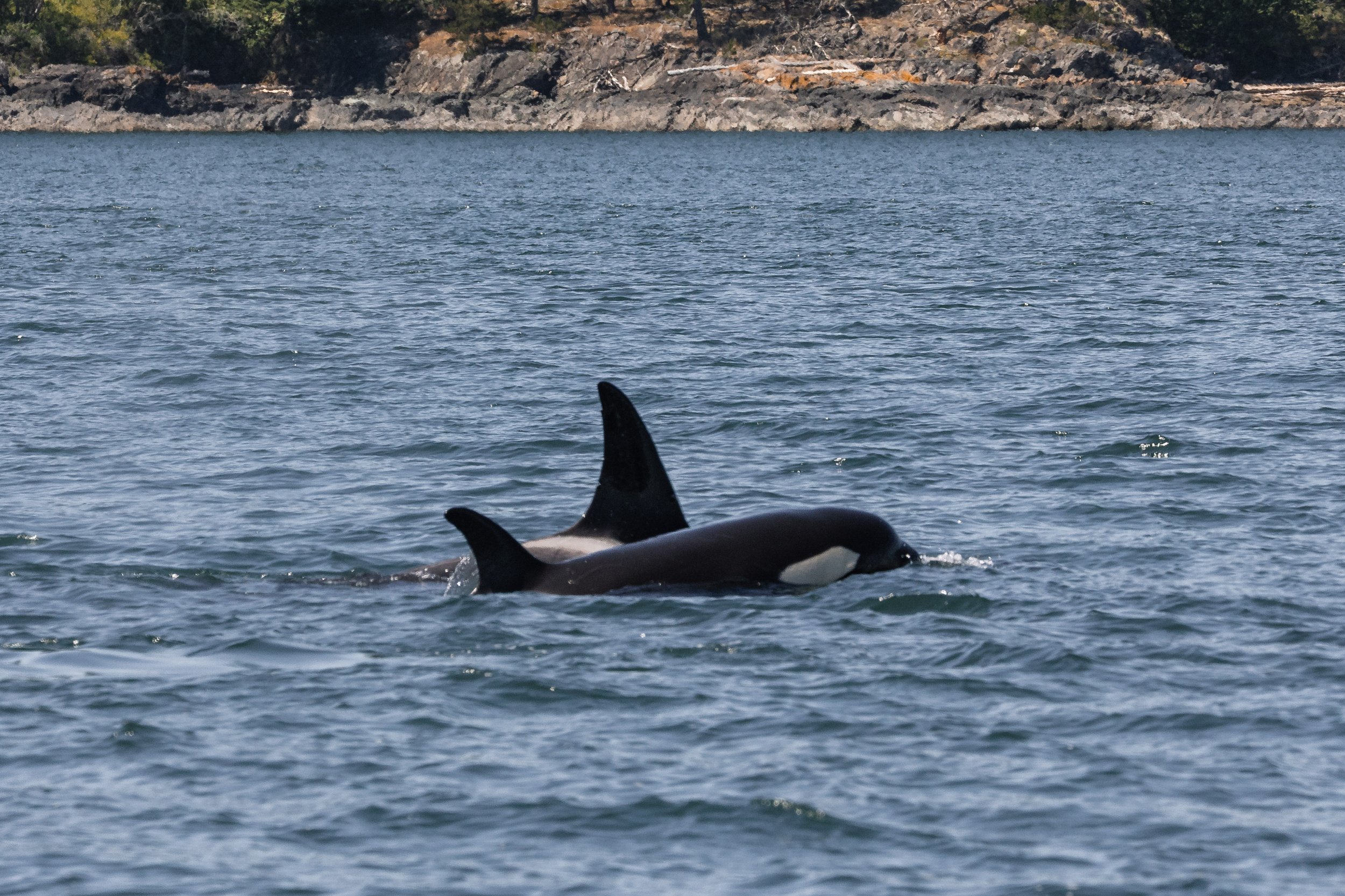
T086A Eider with her youngest calf T086A5 Siku.
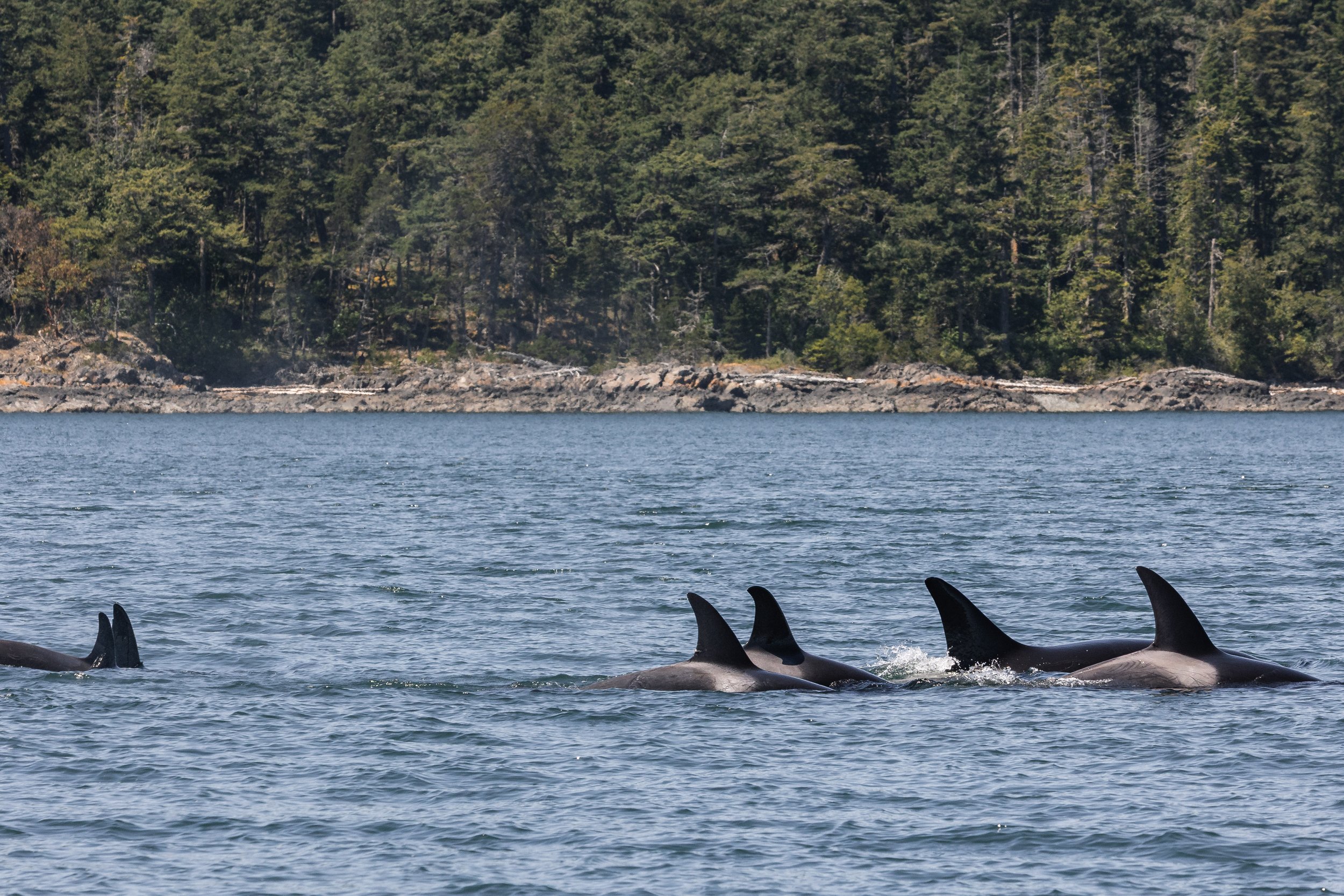
Left to right: T086A5 Siku, T086A Eider, T124A6 Kasuun, T124A7 Kite, T124A Kittiwake, and T086A4 Akia.
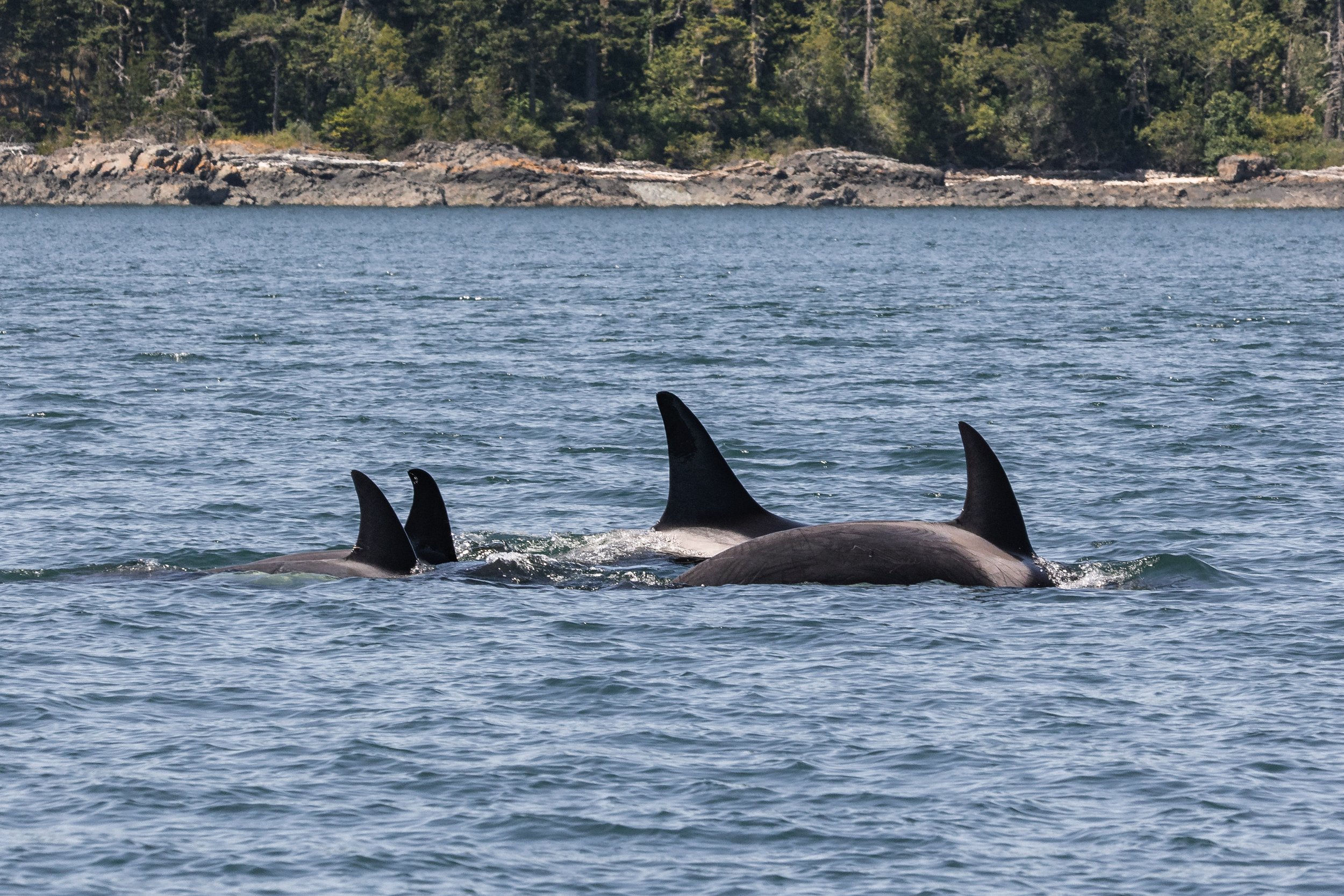
T124A6 Kasuun, T124A7 Kite, T124A Kittiwake, and T086A4 Akia.
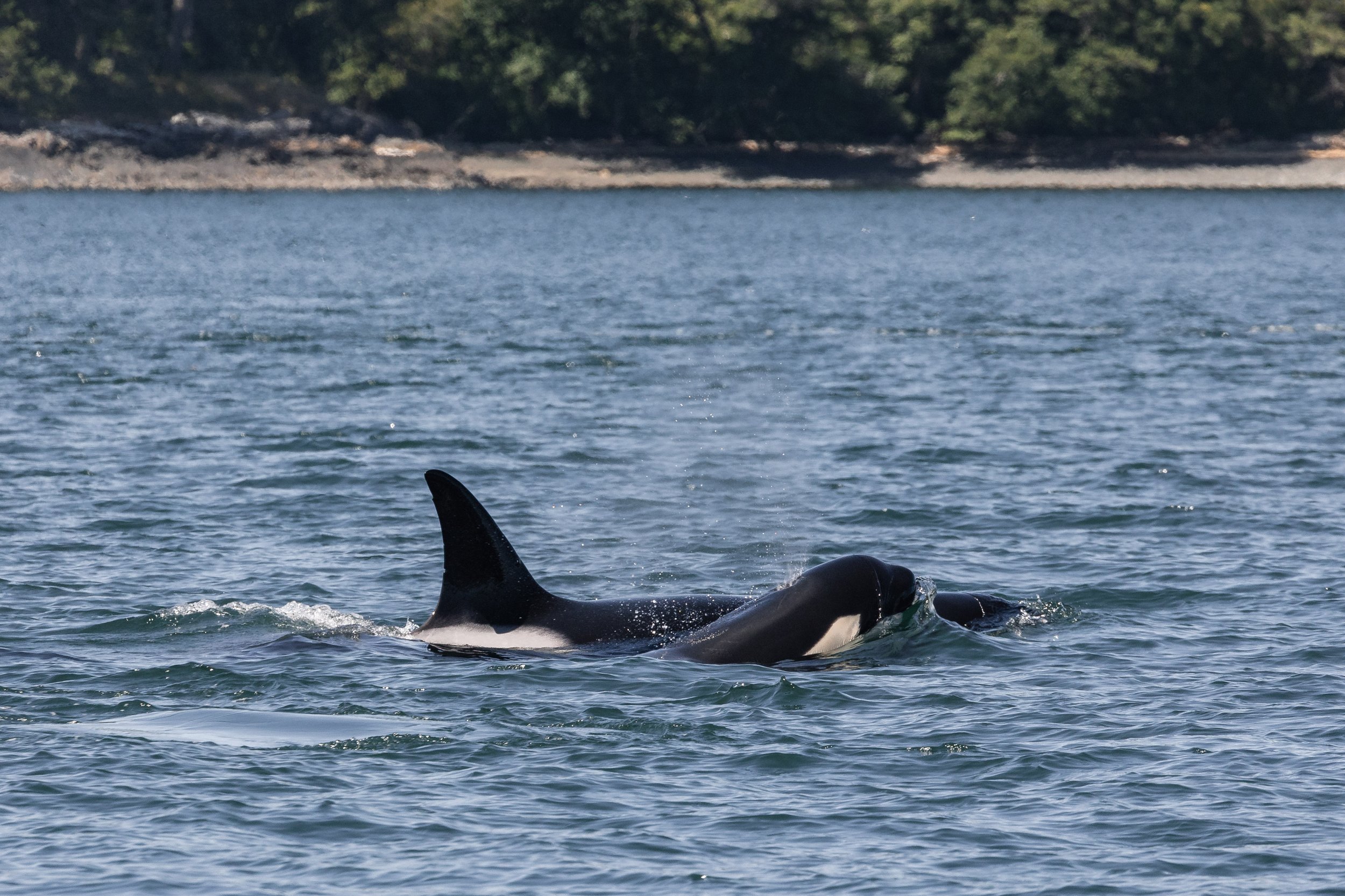
T086A Eider with T086A5 Siku beside her.
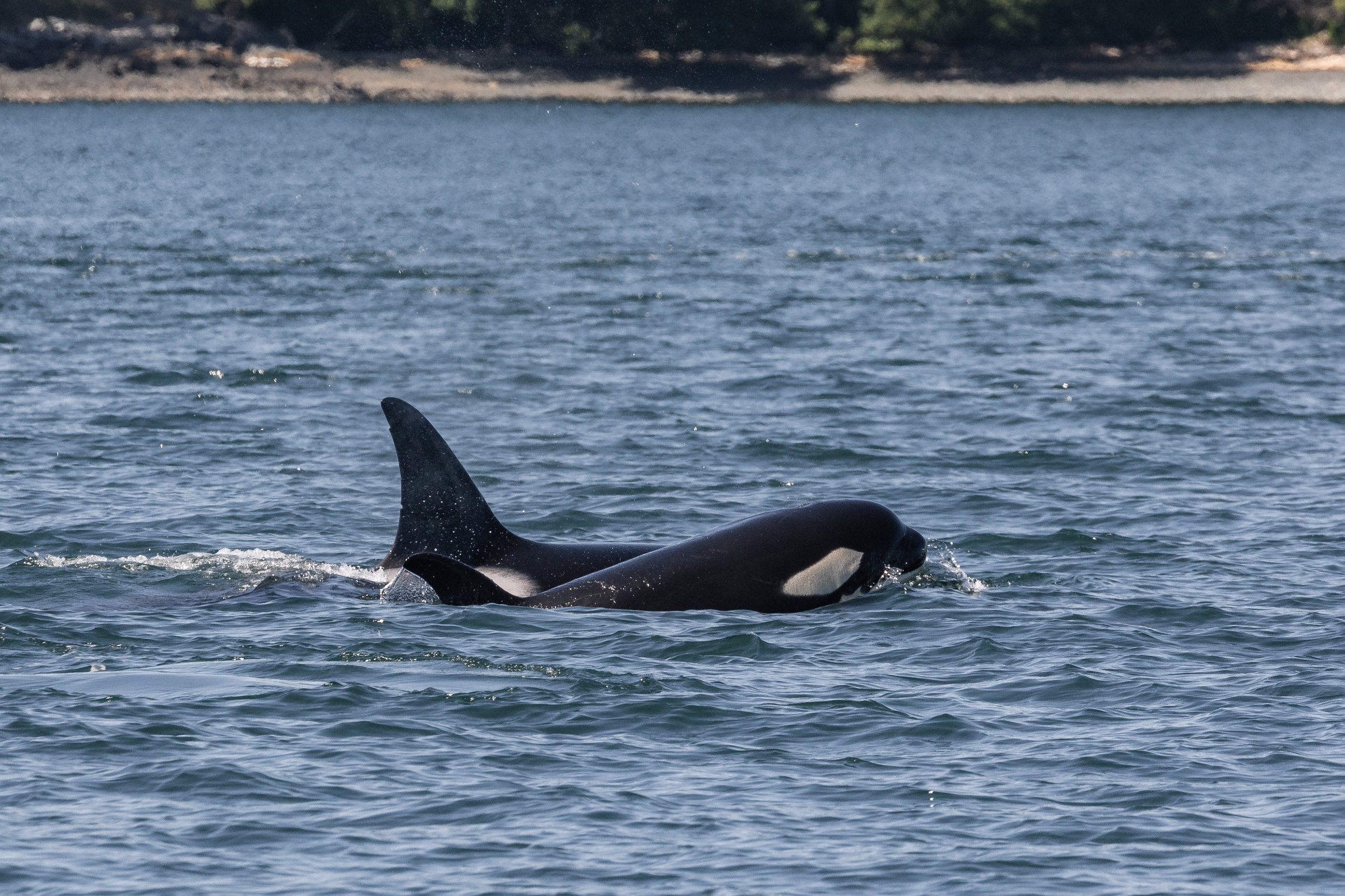
T086A Eider with T086A5 Siku with his full eyepatch visible.
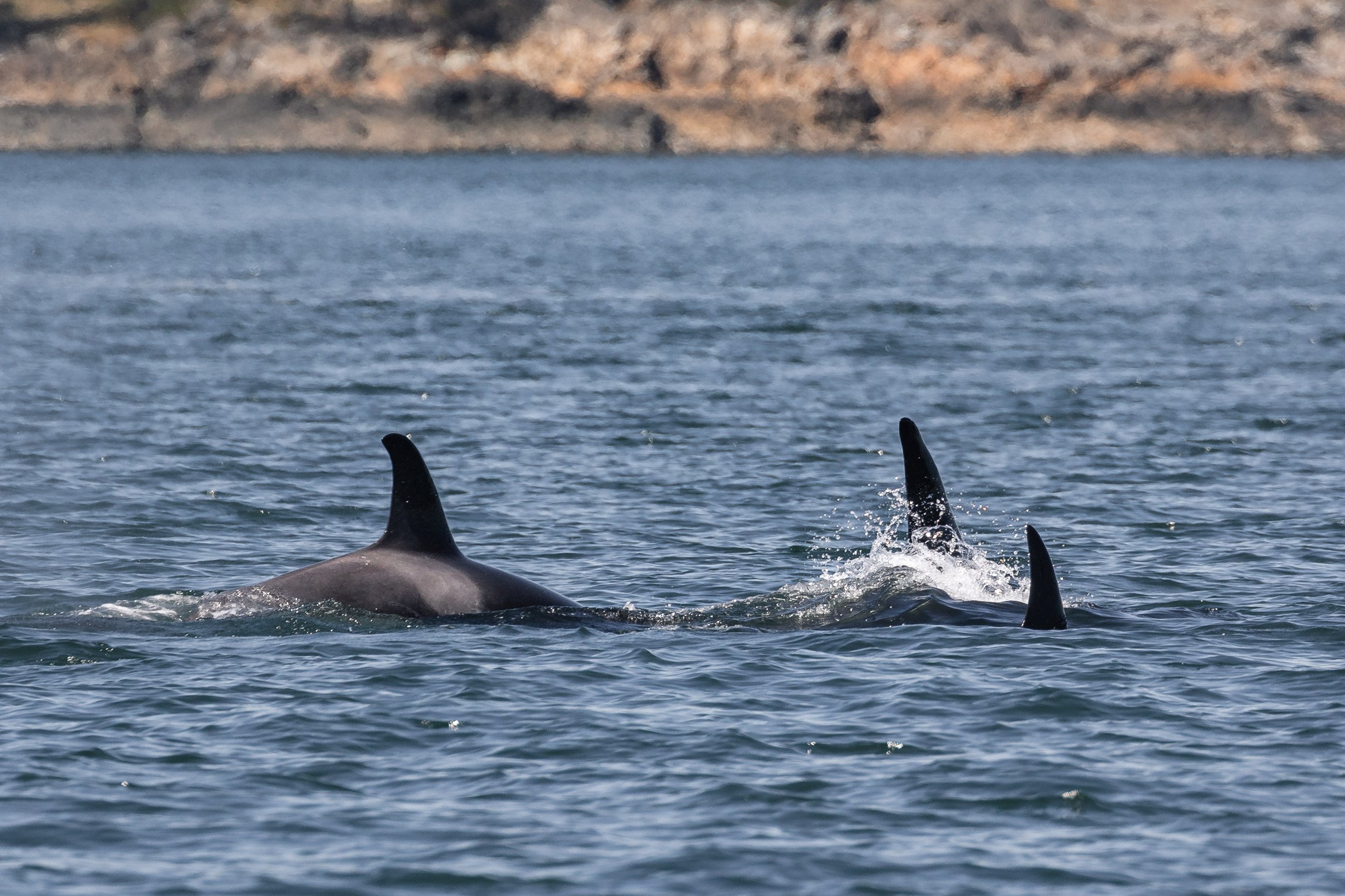
T124A7 Kite, T124A Kittiwake, and T0866A4 Akia beside her.
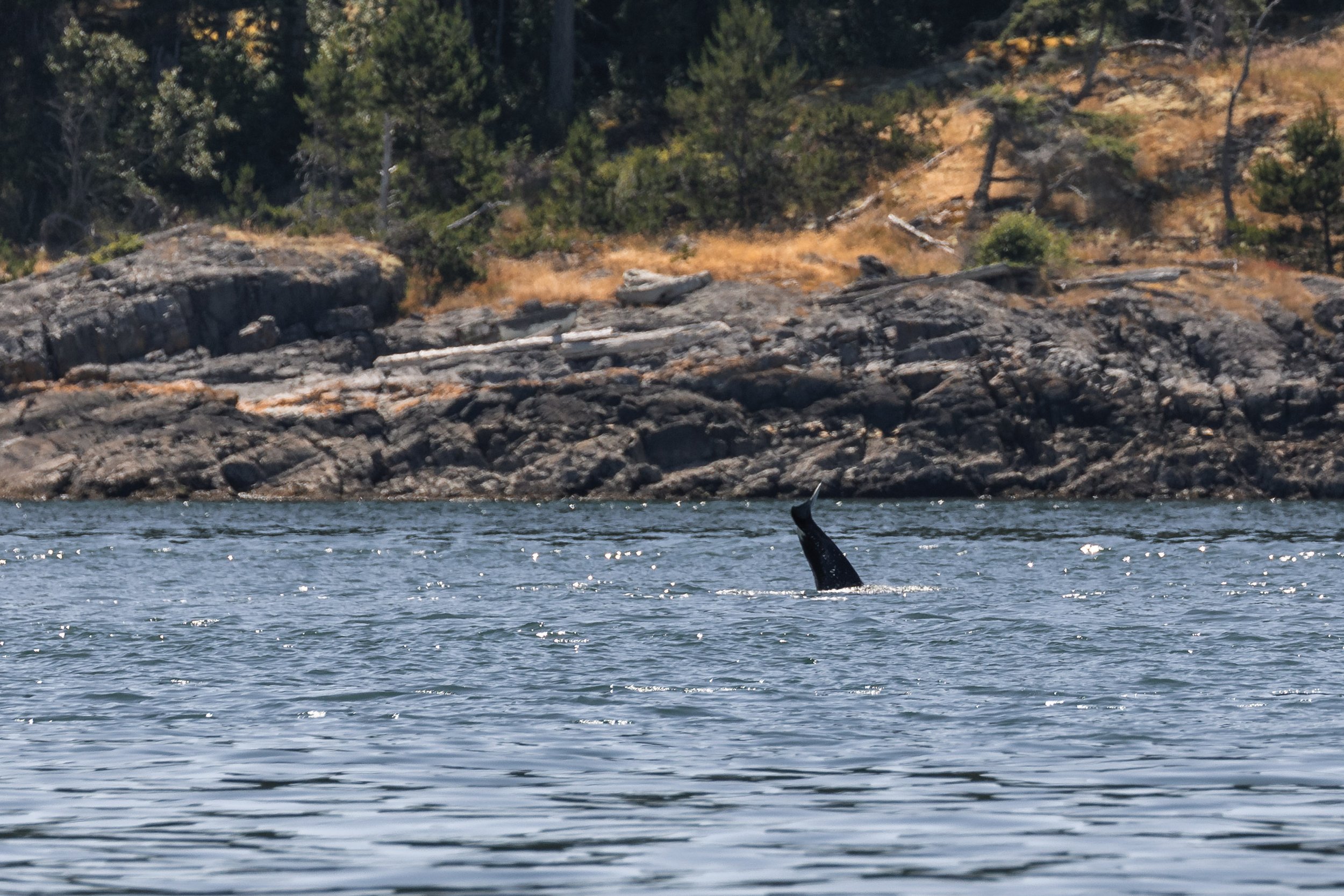
A little tail slap from one of the youngsters!
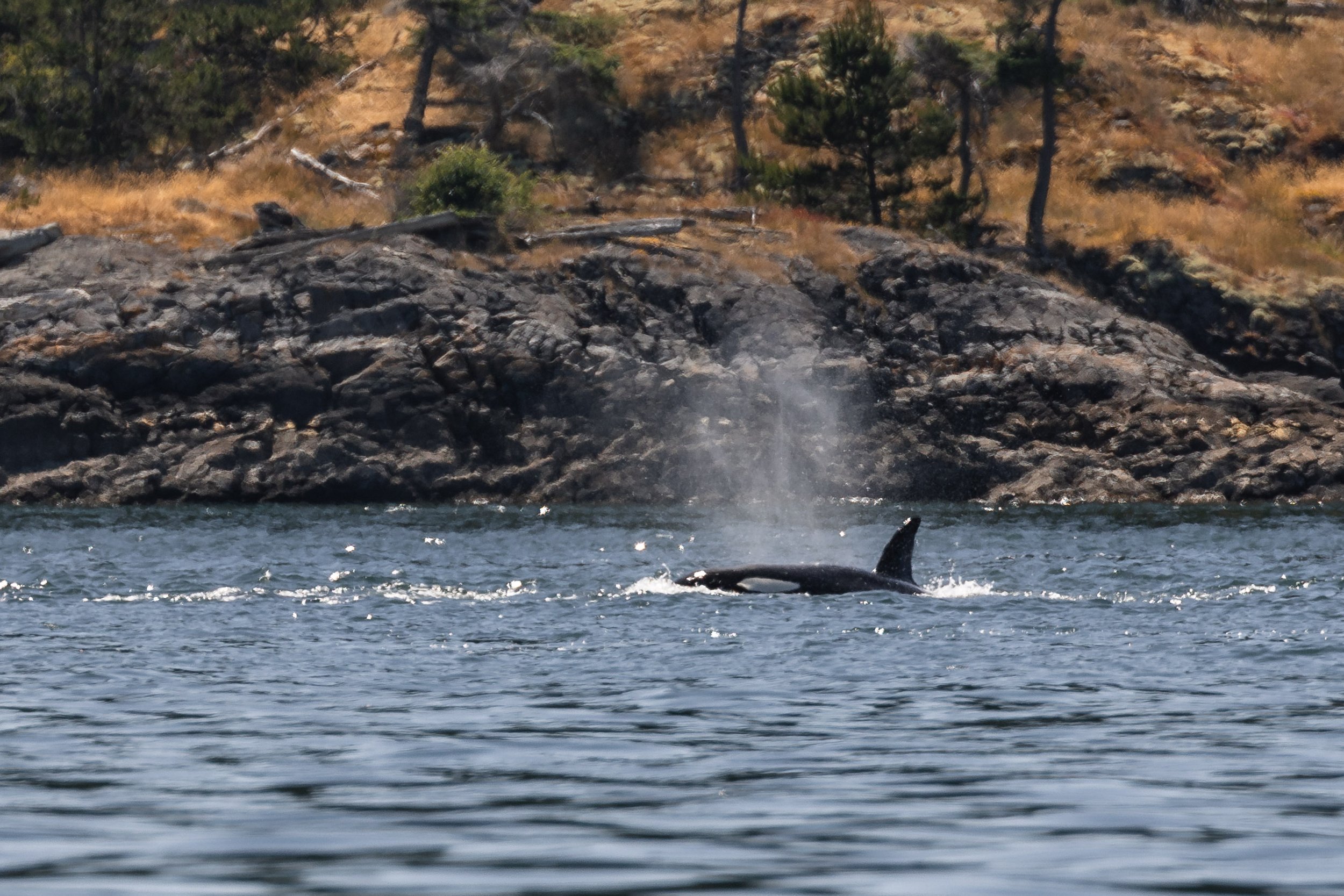
T086A4 Akia travelling along.
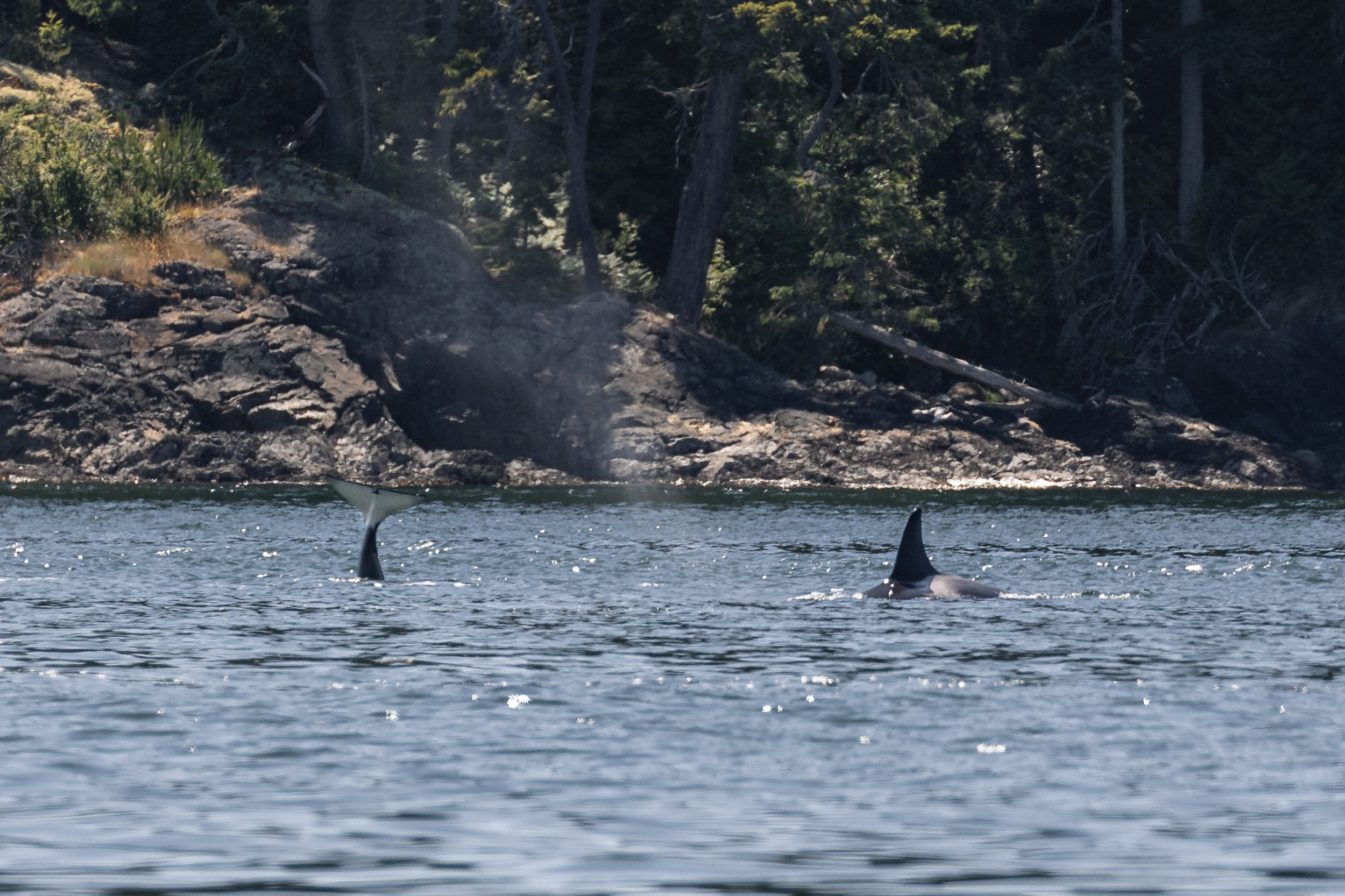
A little tail wave.
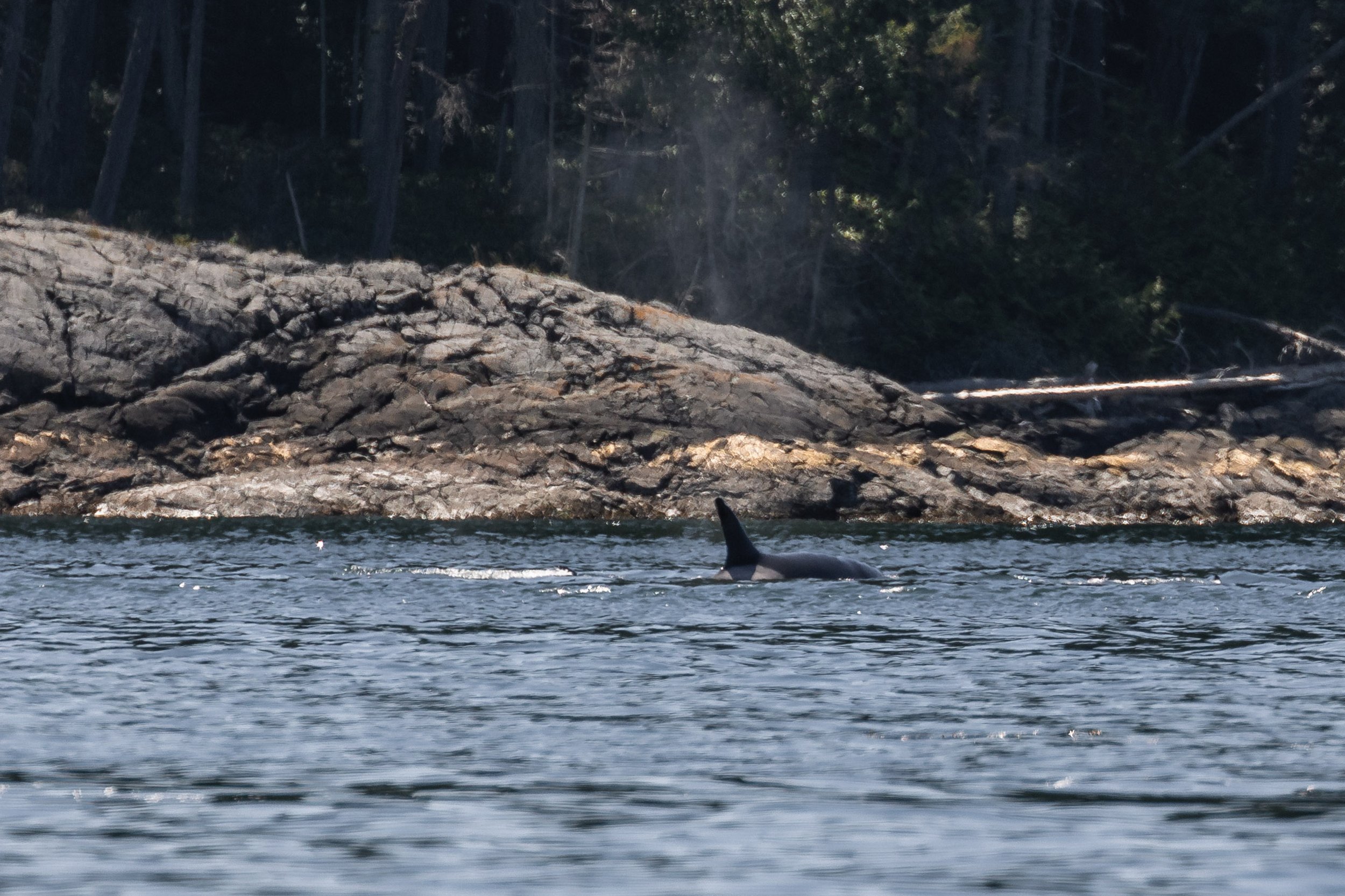
T124A Kittiwake close to shore.
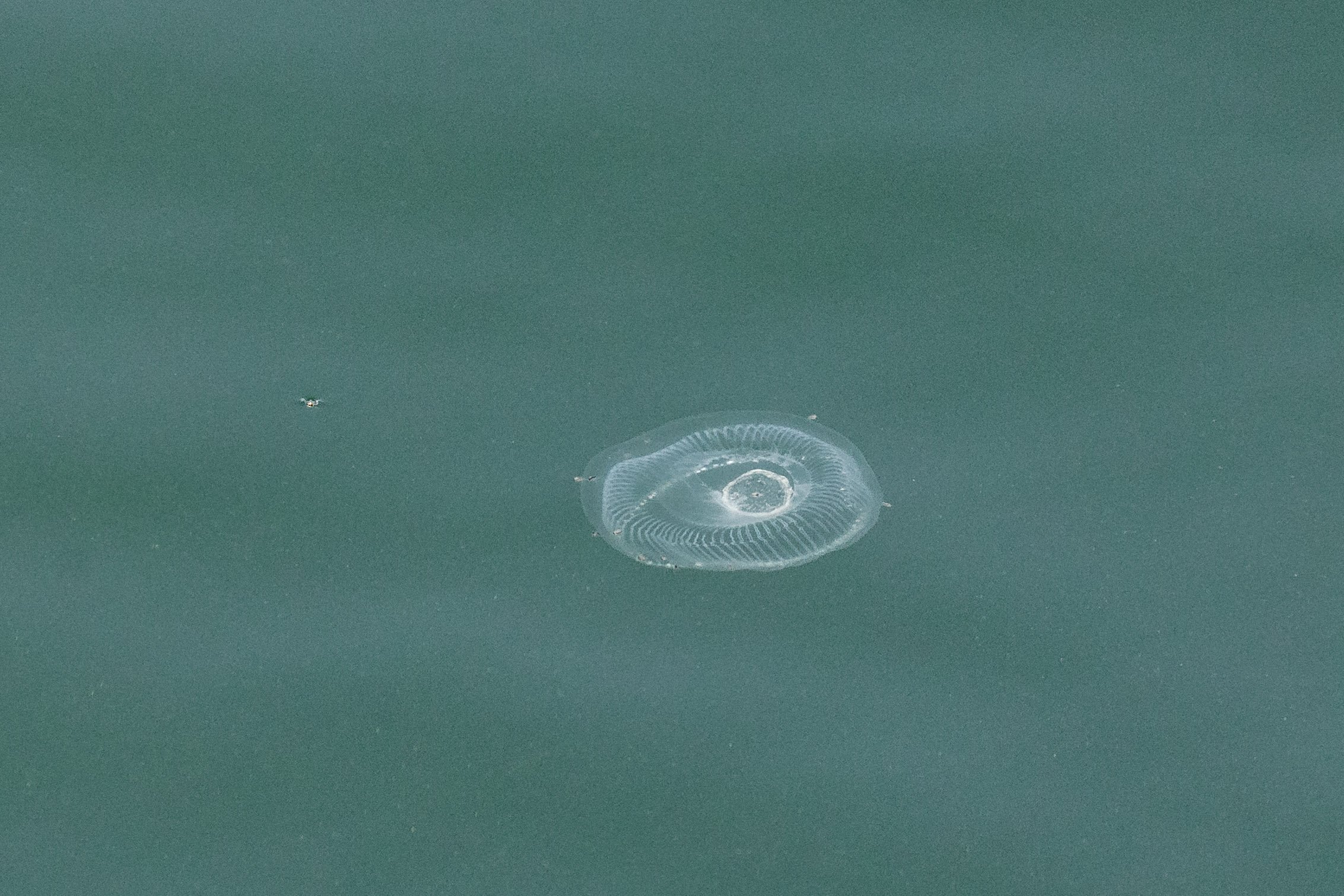
A Crystal Jellyfish floating by.