
June 13, 2026, 3:30 PM - Crossing to Delta for orca!
After a busy morning, we were excited to get out again and hopeful we would have an equally busy afternoon. Keta, one of our Open Zodiacs, departed first, with Kula departing later. After a quick chat on the species we could find, we set out, scanning all around us as we went.
Keta made a quick pit stop along the way when a lone humpback was spotted. It raised its flukes high in the air before diving… and was not seen again. Humpback whales have an incredibly efficient respiratory system, absorbing over 80% of the oxygen they inhale with each breath. In comparison, human lungs can process only about 10-15% of the oxygen we consume. Because of this incredibly advanced respiratory system, humpbacks can stay submerged for long periods. That is exactly what this individual seemed to be doing, and after waiting a few minutes to see if they would reemerge, Keta headed off once more, returning to search mode.
In the meantime, Kula was making their way through the Southern Gulf Islands. Crew and passengers travelled through Porlier Pass and entered the Strait of Georgia to join Keta. Along the way, some blows had been spotted by guests aboard Kula. It was a humpback whale! Marine naturalist Jordan snapped a photo of the whale's tail fluke for identification. Using the photo to match the patterns and scars to our catologue, the humpback was identified as Kappa’s 2022 calf (BCX2492)! This humpback whale hasn't received its official nickname yet, but nicknames are typically named after distinct features or markings on the underside of the tail fluke. While BCX2492 was down on their deeper dive, two more distant blows had been spotted! Although only one distant tail was spotted, a photo of the distant fluke identified the humpback whale as Zig Zag (BCX1193), travelling with an unknown friend. Once BCX2492 resurfaced, passengers and crew enjoyed a couple of surfaces with this humpback before it fluked back down to the depths for feeding. Captain Rodrigo slowly departed the area and headed over towards Keta.
Before long, both boats had transited across the Salish Sea, where Vancouver’s skyline could be spotted in the distance. Soon after that, we saw what we had crossed over for - about half a dozen black dorsal fins appeared of various shapes and sizes ahead, travelling along. Naturalist Evan was first on the scene, donning his cameras and snapping away, capturing photos to compare with our ID guides and to have on hand for this blog. Once notches and scrapes were noted, we confirmed that this was two matrilines travelling together - the T123s and the T124A4s:
T123 Sidney ♀ (~1985)
T123A Stanley ♂ (2000)
T123C Lucky ♀ (2012)
T123D Darcy ♀ (2018)
T124A4 Sabio ♀ (2010)
T124A4A Strix ♀ (2021)
T124A1A Sabine (2024)
This wonderful group of whales was travelling through the water, surfacing together. After some time travelling, it appeared as though a hunt was underway!
Stanley, a large, mature male, was seen picking up speed, his dorsal fin just poking above the water's surface. He was moving much faster than usual, darting side to side as his dorsal fin cut through the surface. More small dorsal fins were seen quickly surfacing alongside Stanley, matching his speed and direction. And just like that, it was over! Almost all orca hunts occur out of sight, without any obvious indication that a hunt has taken place. Additionally, most hunts take place very quickly, in the blink of an eye; Like what happened this day. That being said, some transient orcas are known to prolong their hunting, especially when cooperating in groups. This can be interpreted as the transient orcas being inefficient hunters, or that these orcas are prolonging their hunts because they are mean or evil animals. Rather, orcas use their hunts to cooperate with one another, strengthen family bonds, learn new skills, or teach the younger generation how to hunt successfully. Like humans, orcas have cultures and rituals around feeding, which is recognized as an important social moment for both species! Once a hunt is successful, these orcas will also share food amongst themselves! Food sharing is commonly documented among both transient (marine-mammal-eating) and resident (fish-eating) orcas, tying back to the strengthening of family bonds and social connections between individuals.
After some time observing the transient orcas socializing following their hunt, Captains Rodrigo and Sylvain gradually increased the viewing distance until it was safe to continue. Both vessels ventured northwest in search of more spectacular wildlife! Along the way, guests and crew stopped at a rocky outcrop off the coast of Valdes Island, which hosts a haulout for some furry friends: Steller sea lions! These sea lions were hauled out on a rocky outcrop dubbed “Stinky Rock” because of the smell they create. Those unfortunate enough to be downwind of the Sea lions that hang out there get to find out why the rock has this nickname. Since so many animals are eating, sleeping, feeding, and defecating together on one small rock, the smell is as bad as you can imagine!
This species is the largest of all the sea lions in the world! Steller sea lions exhibit sexual dimorphism, in which males and females of the same species differ markedly in anatomy. The difference between male and female Steller sea lions is their size. Females grow to be only a third the size of mature males, with males reaching 11 feet long and weighing upwards of 2500 pounds, whereas females max out at around 800 pounds and reach 8 feet long. The large stature of males is a crucial advantage during the breeding season, which begins mid-May and runs through mid-July. During this time, dominant males claim and defend harems of females on rocky haul-outs. Incredibly, these males will fast and remain on land, without entering the water to feed, for the entire two-month period!
Additionally, on a smaller nearby rock were some skittish Harbour Seals! These seals only weigh up to 280 pounds and grow to be 6 feet long. These cute little pinnipeds are considered true seals because they belong to a different evolutionary lineage compared to sea lions. One of the key differences lies in their anatomy: true seals lack external ear flaps (pinnae) and have smaller front flippers. Additionally, their pelvic bones are fused, which limits their ability to move on land, but it gives them a decisive advantage in the water. This adaptation enhances thrust and agility, crucial when evading killer whales.
Keta made one last stop by Gabriola Island, having a quick peek along the Gabriola Bluffs. Here, many small black birds could be seen dotting the landscape. These birds were cormorants - specifically, Pelagic and Double-crested Cormorants. Many of them were settling into their nests, likely in anticipation of the evening. One was also seen soaring by, a large chunk of seaweed grasped in its bill.
From here, guests and crew continued on their search following the coastline of Gabriola Island. Along the way, three small blows were spotted between Vance Island and Gaviola Island (near Gabriola Island). Passengers and crew aboard Kula were the ones to encounter them, and searched for quite some time, trying to spot the blows once again. Captain Rodrigo and Naturalist Jordan are quite certain it was more orca, but the animals never showed themselves. Kula continued along their adventure, heading back north.
In no time, we found ourselves back in Nanaimo after an amazing tour. Please enjoy all of the photos below, captured throughout the tour by Marine Naturalists Evan Hessels and Jordan Robinson!
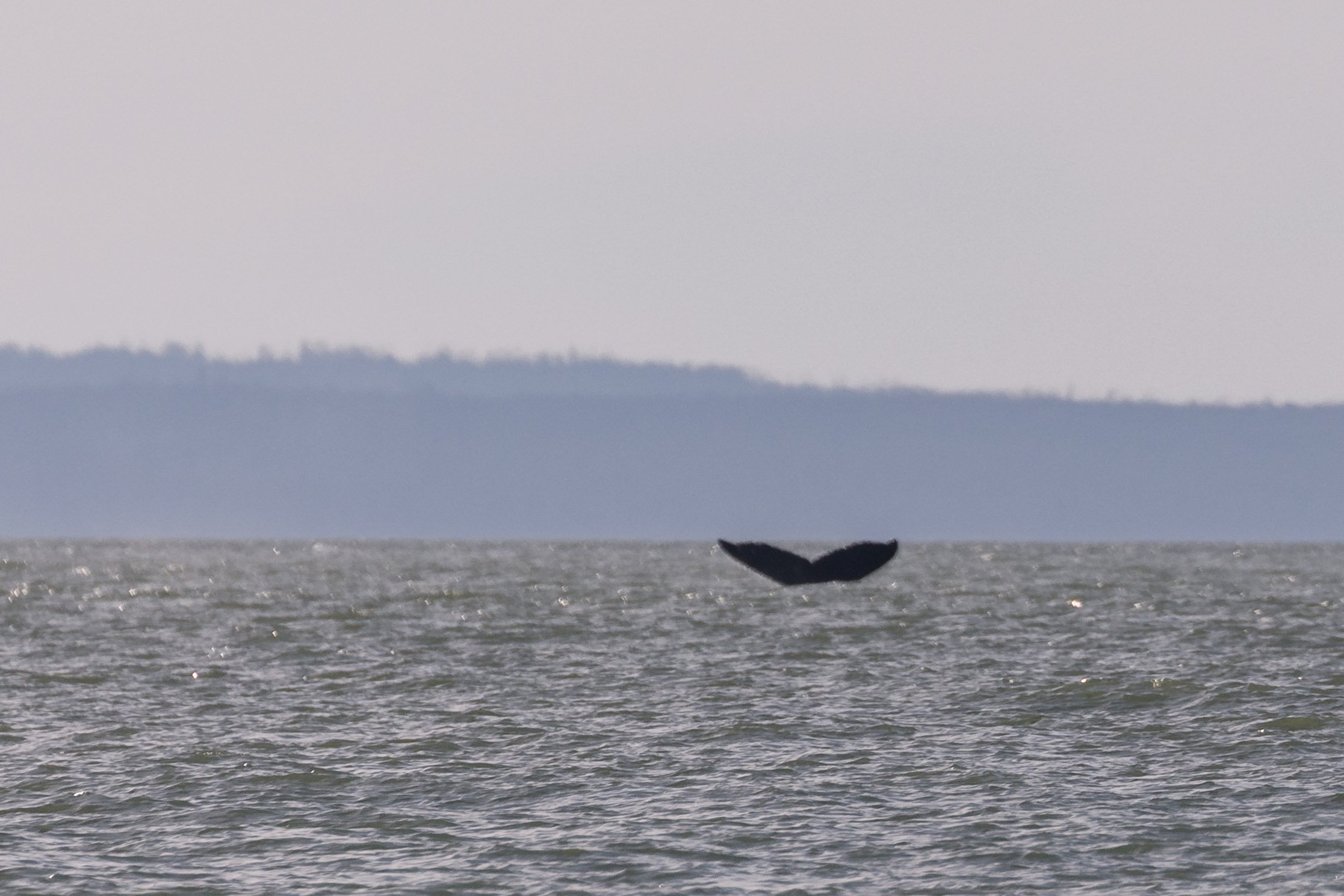
While distant, comparing the shape, trailing edge, and the faint spots help us to confirm that this was Zig Zag! Photo by Jordan Robinson.
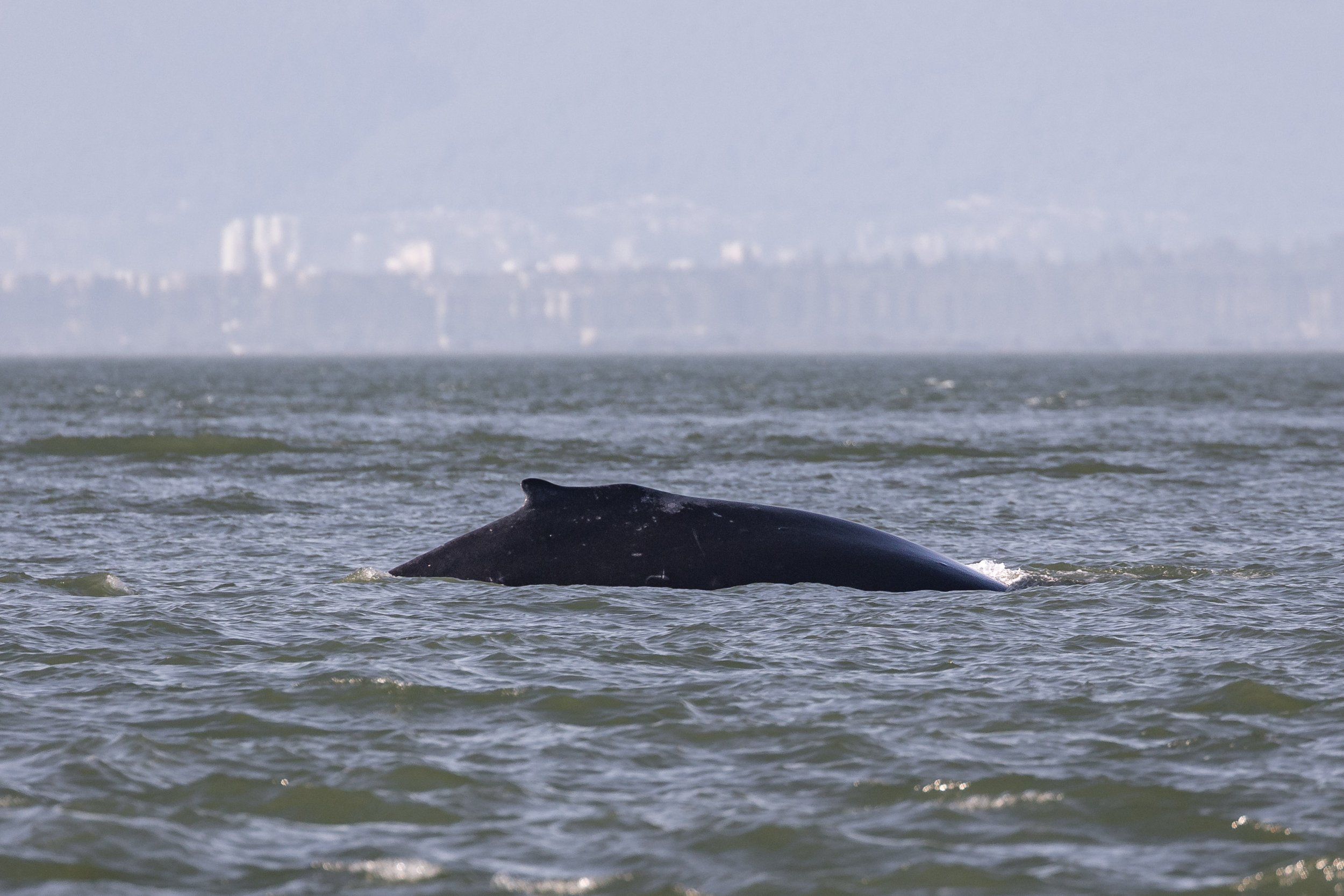
Kappa’s 2022 calf travelling along. Photo by Jordan Robinson.
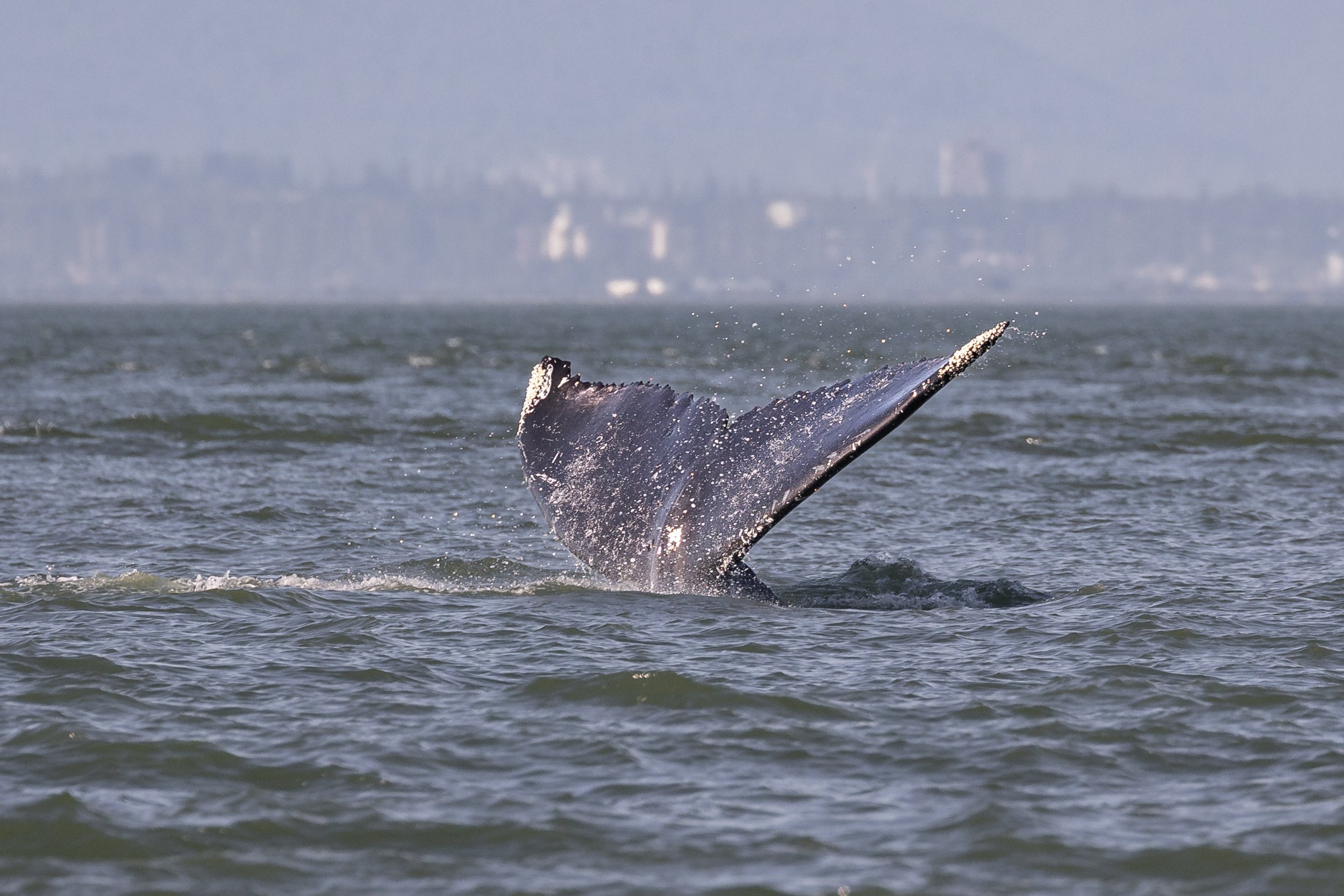
A big tail flick from Kappa’s 2022 calf. Photo by Jordan Robinson.
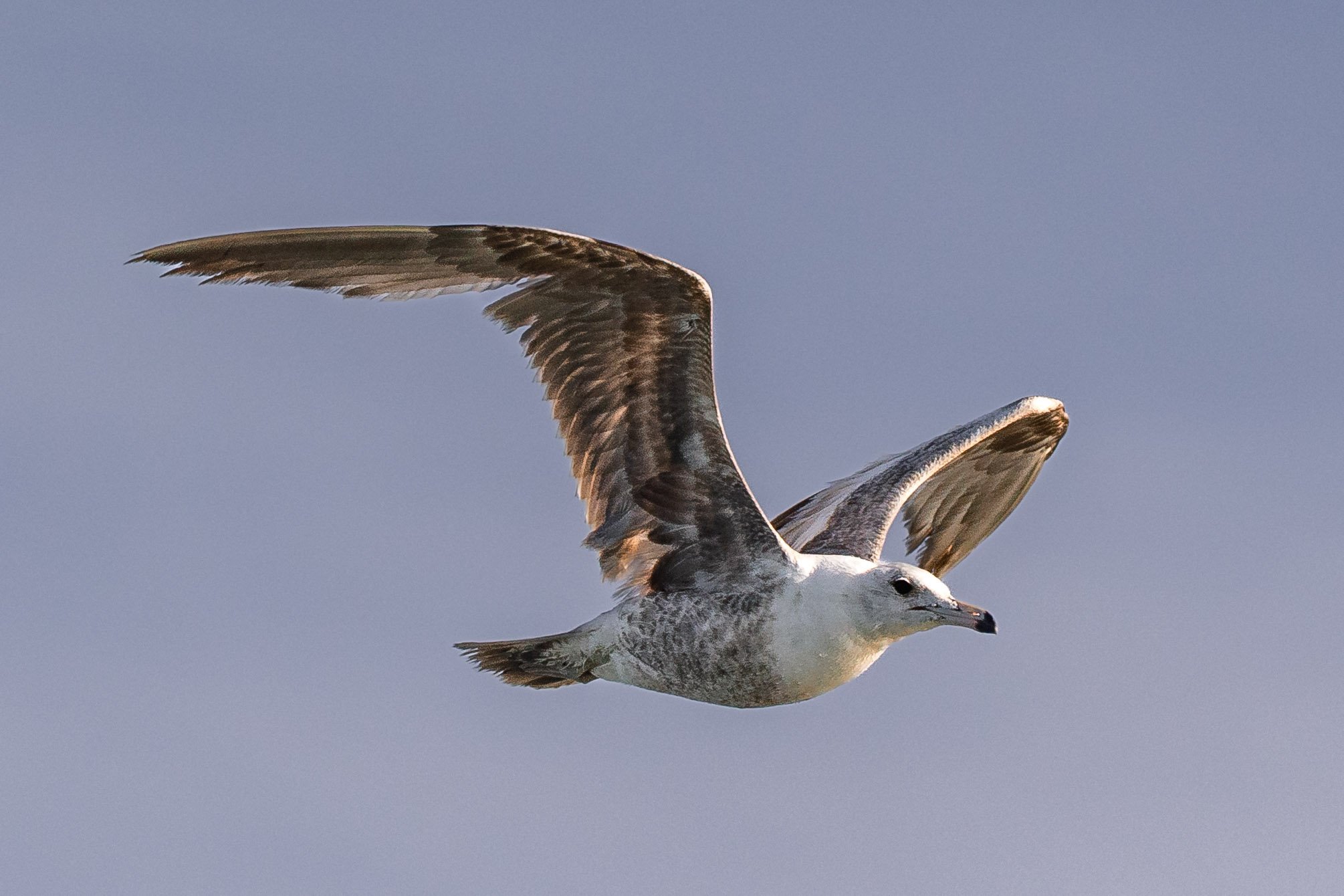
A beautiful Gull flying overhead. Photo by Jordan Robinson.
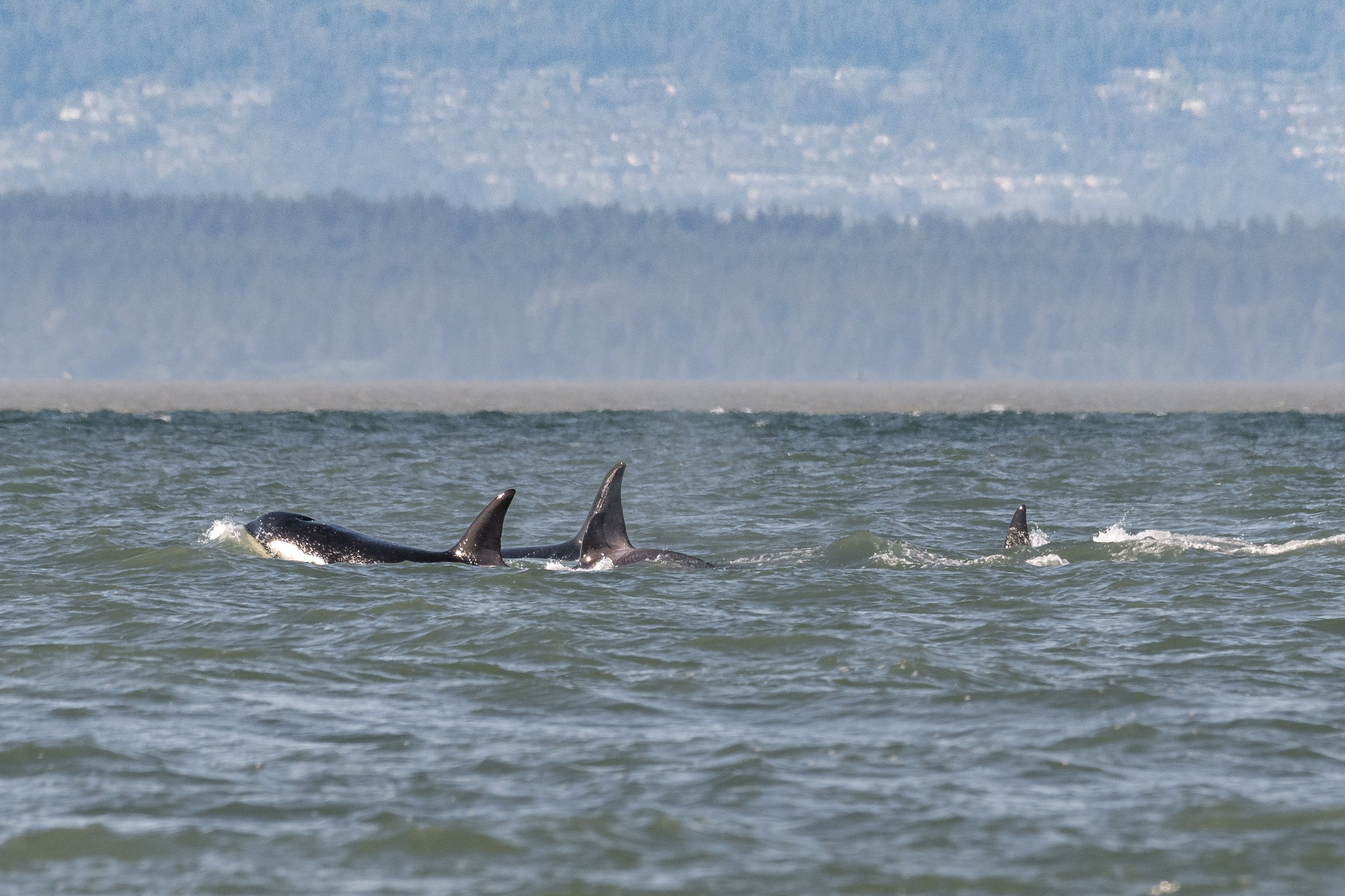
T124A4 Sabio and T123 Sidney travelling along, with T124A1A Sabine behind them. Photo by Evan Hessels.
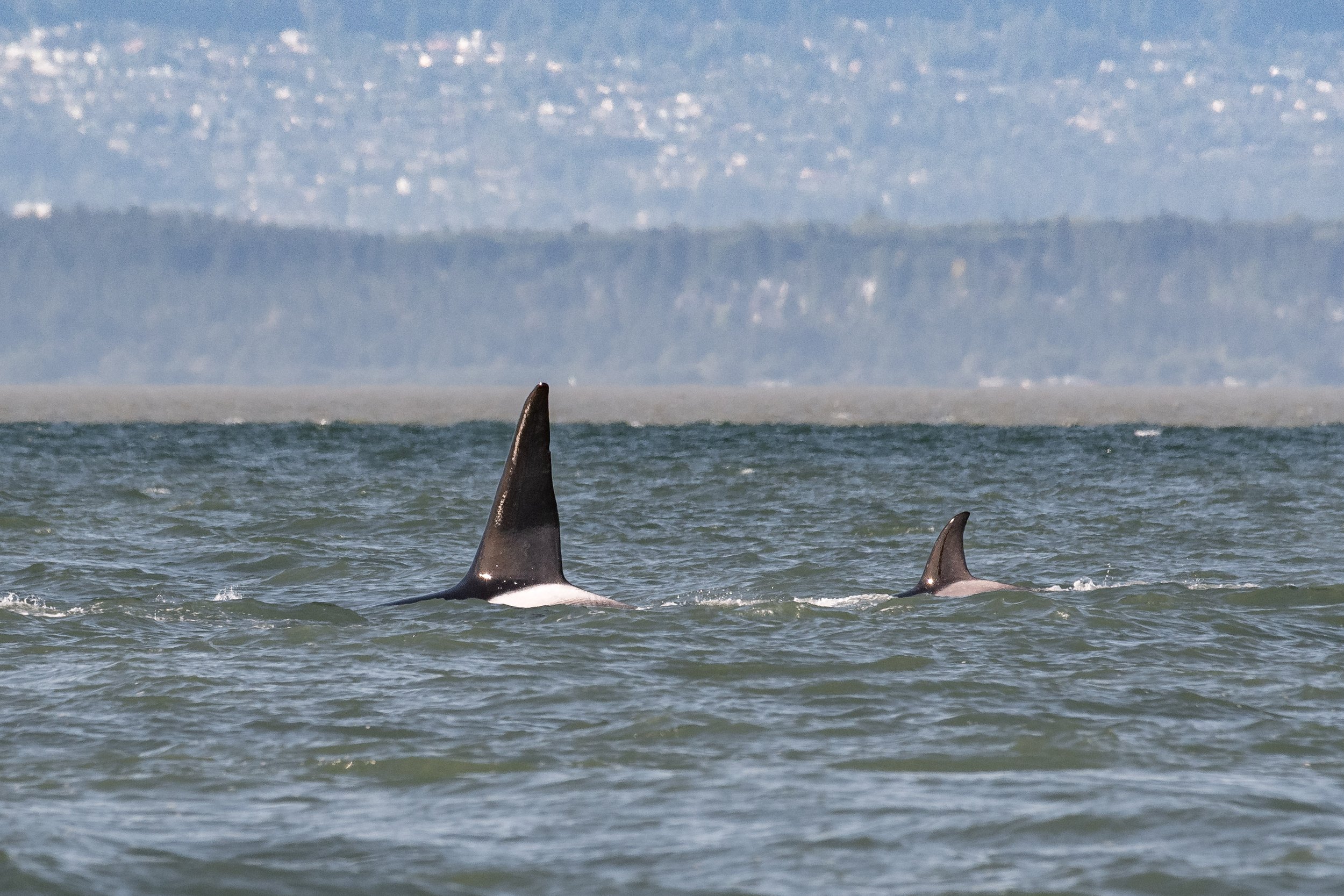
T123A Stanley with his little sister T123D Darcy behind him. Photo by Evan Hessels.
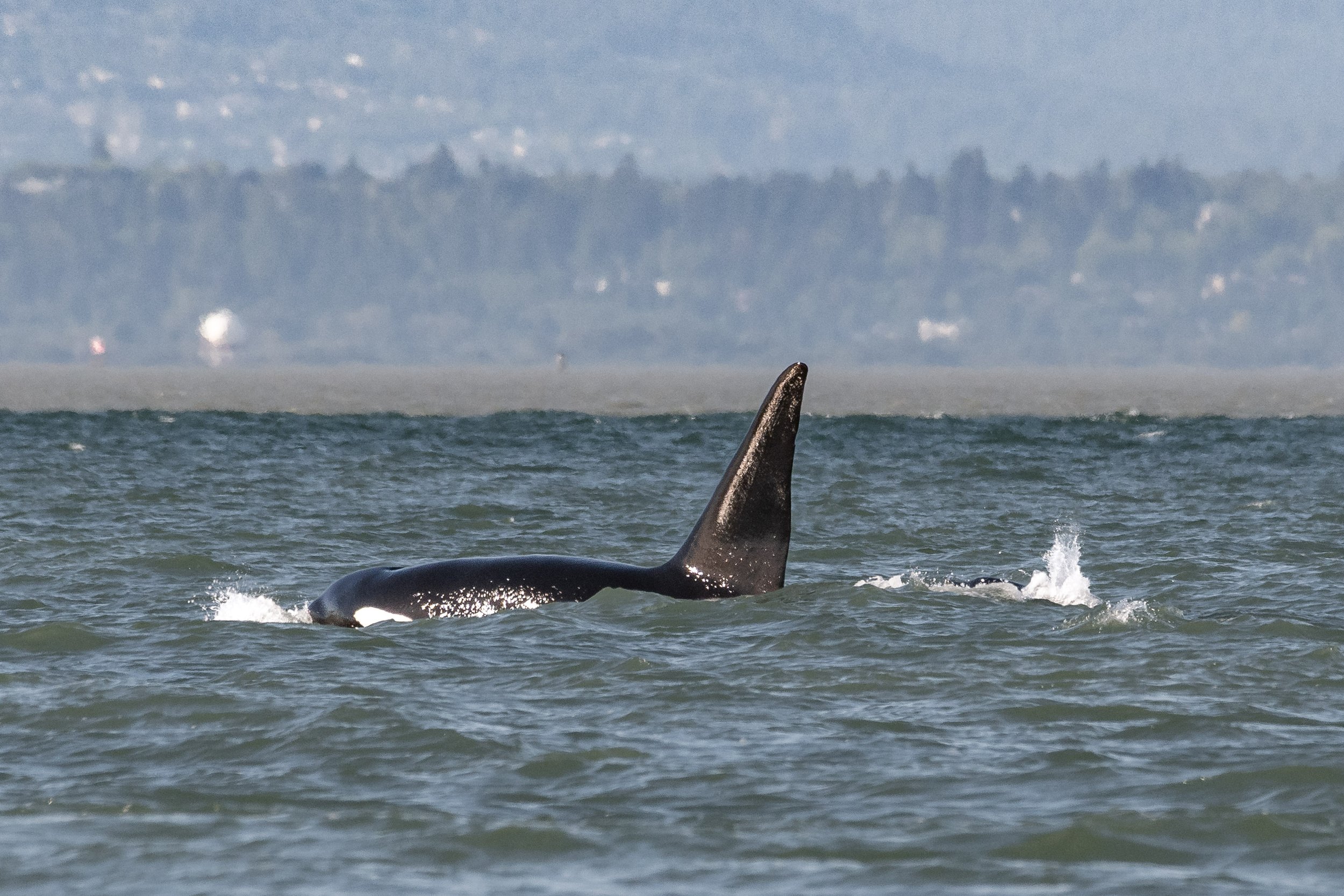
T123A Stanley cruising along. Photo by Evan Hessels.
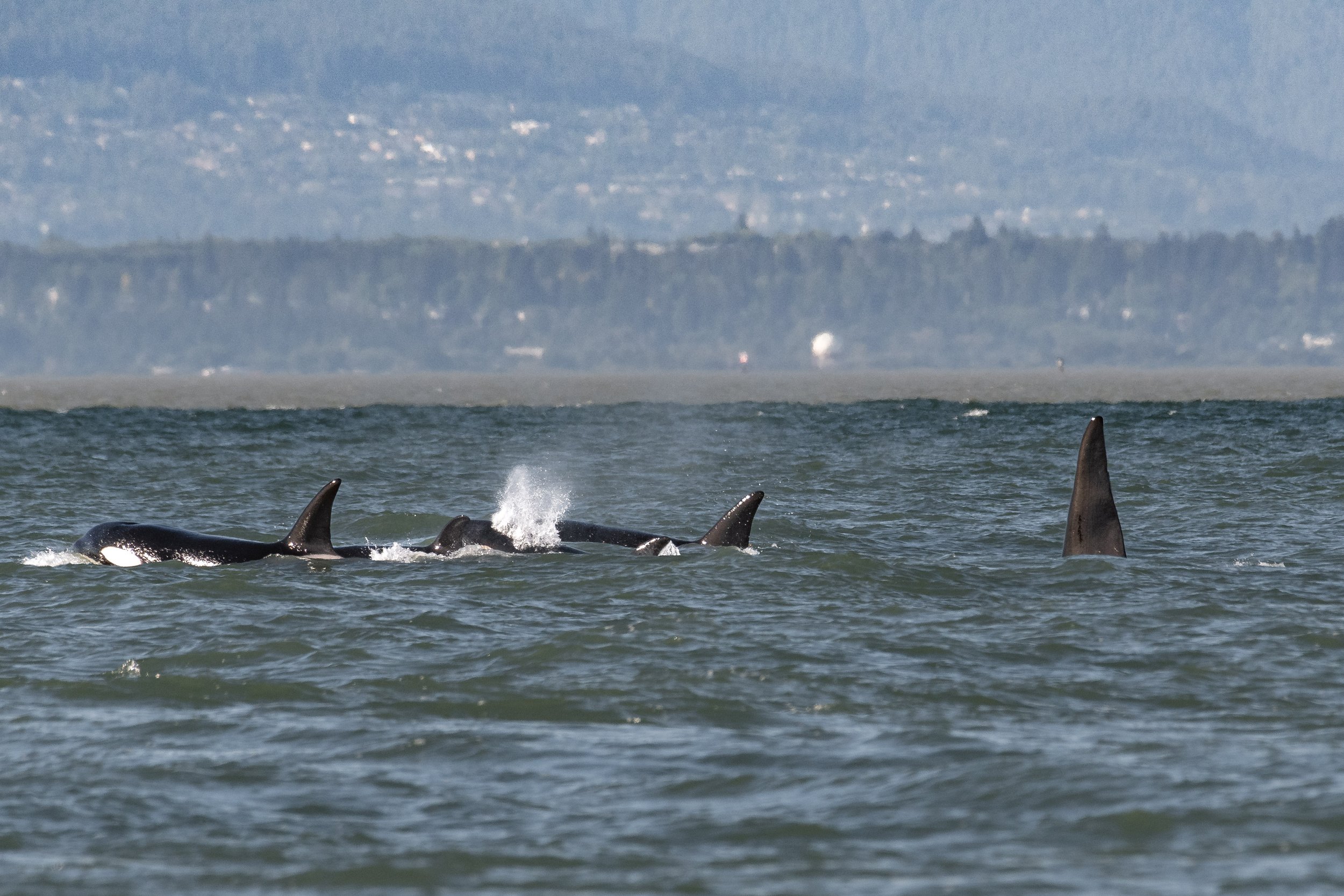
T124A4 Sabio with T124A4A Strix and T124A1A Sabine behind her, T123C Lucky beside them, and T123A Stanley in the rear. Photo by Evan Hessels.
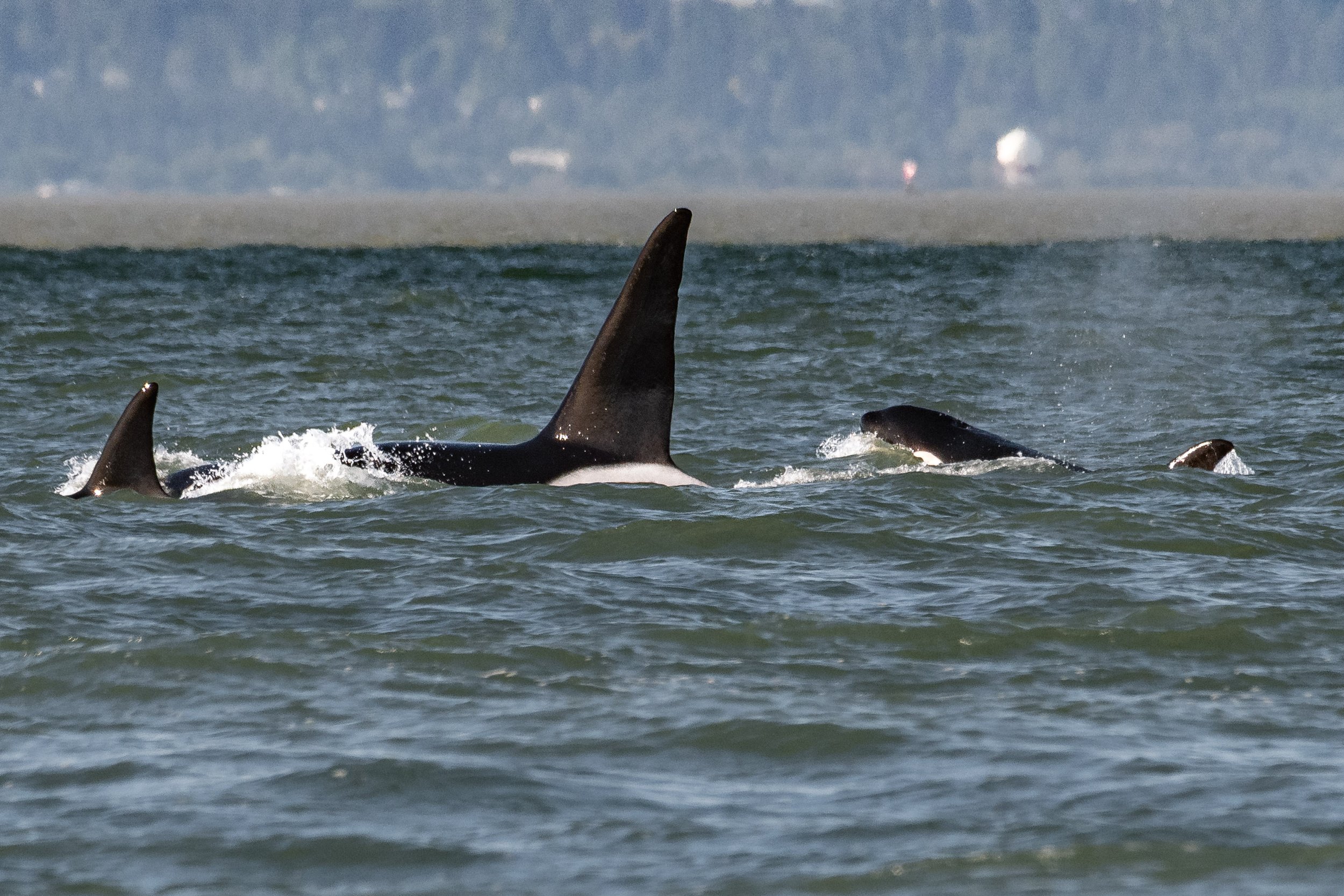
T123C Lucky, T123A Stanley, and one of the young ones behind them. Photo by Evan Hessels.
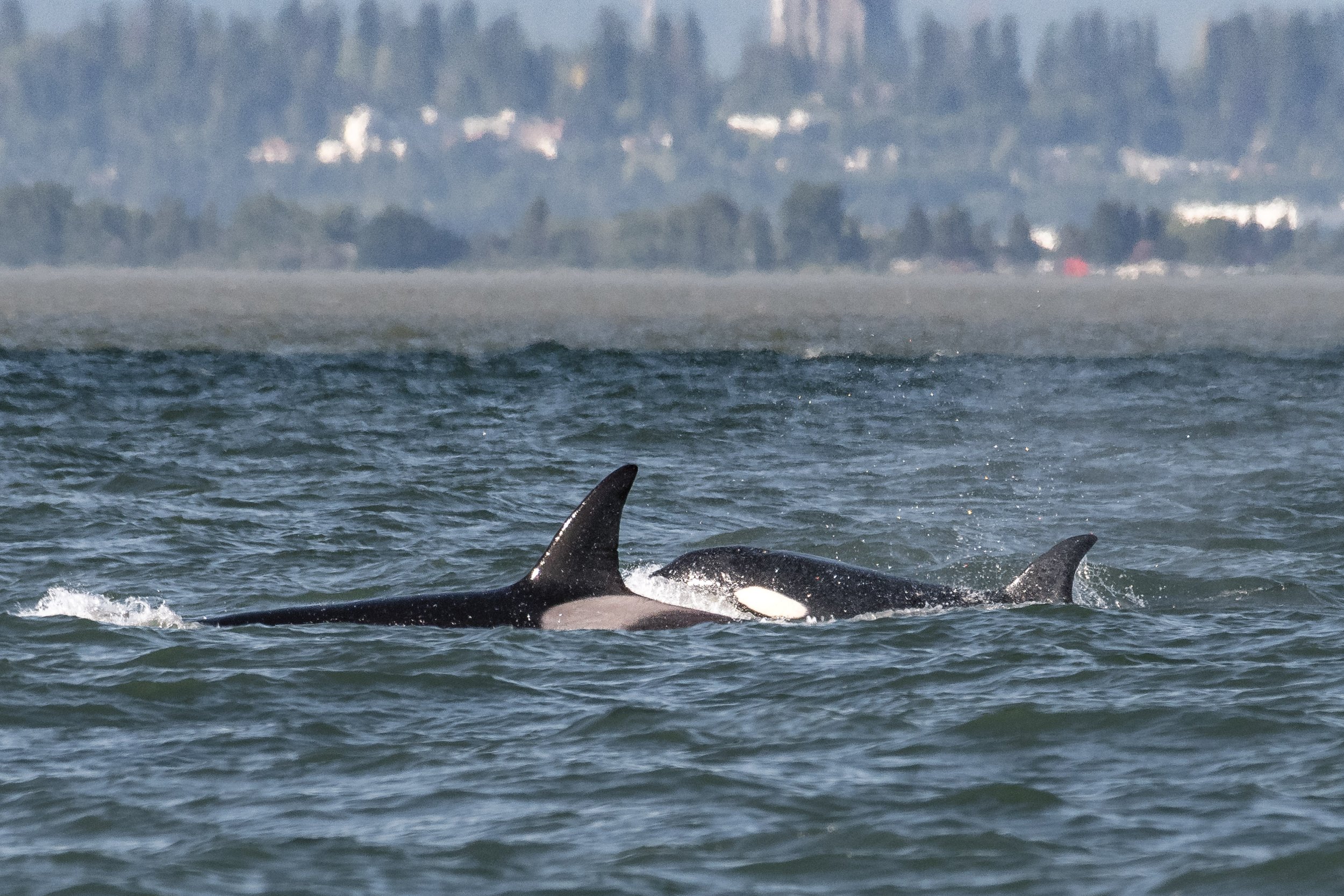
T124A4 Sabio travelling with her eldest T124A4A Strix. Photo by Evan Hessels.
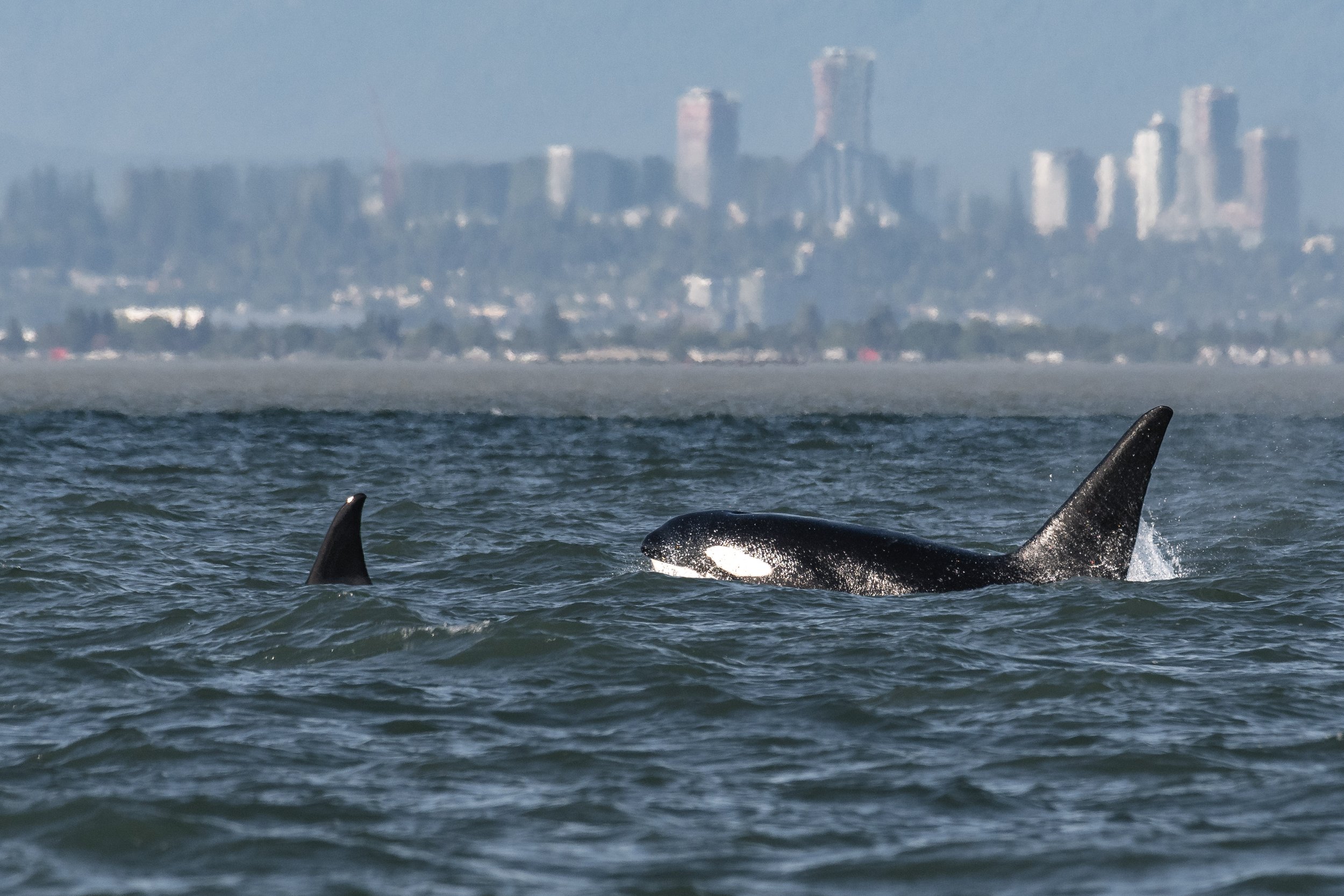
T123 Sidney with her son T123A Stanley behind her. Photo by Evan Hessels.
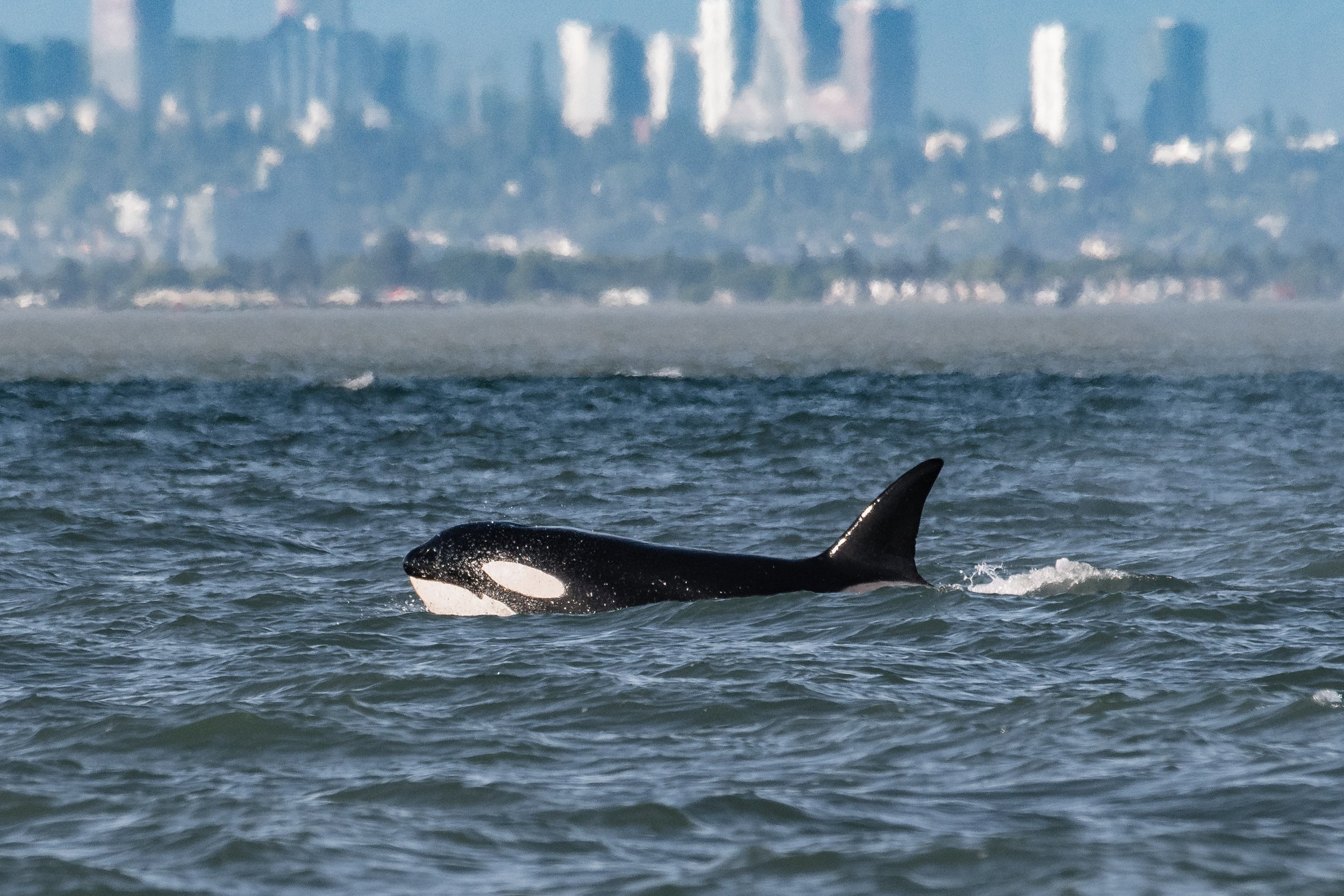
T124A4 Sabio with her face out of the water. Photo by Evan Hessels.
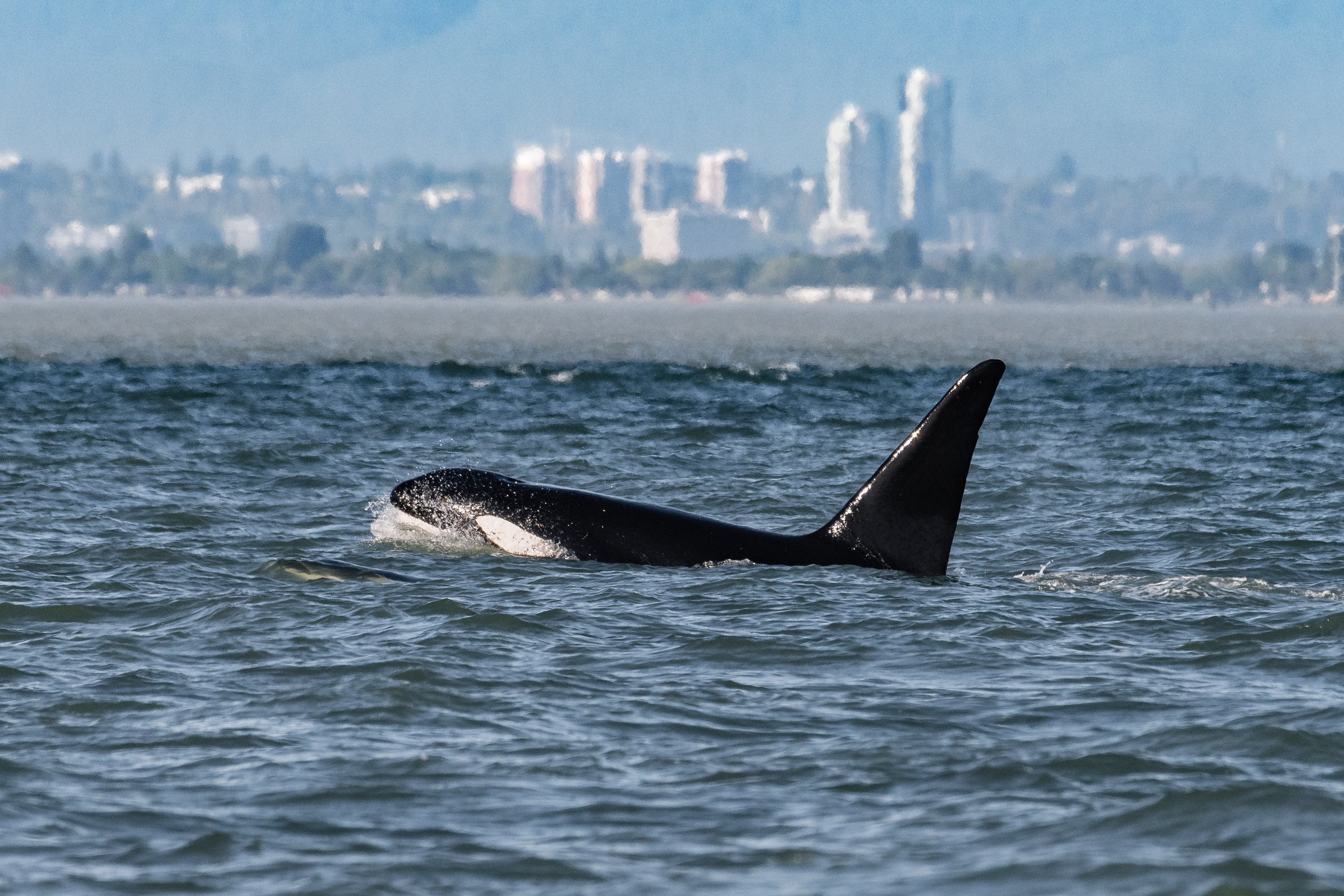
T123A Stanley with T123C Lucky beside him, about to break the surface. Photo by Evan Hessels.
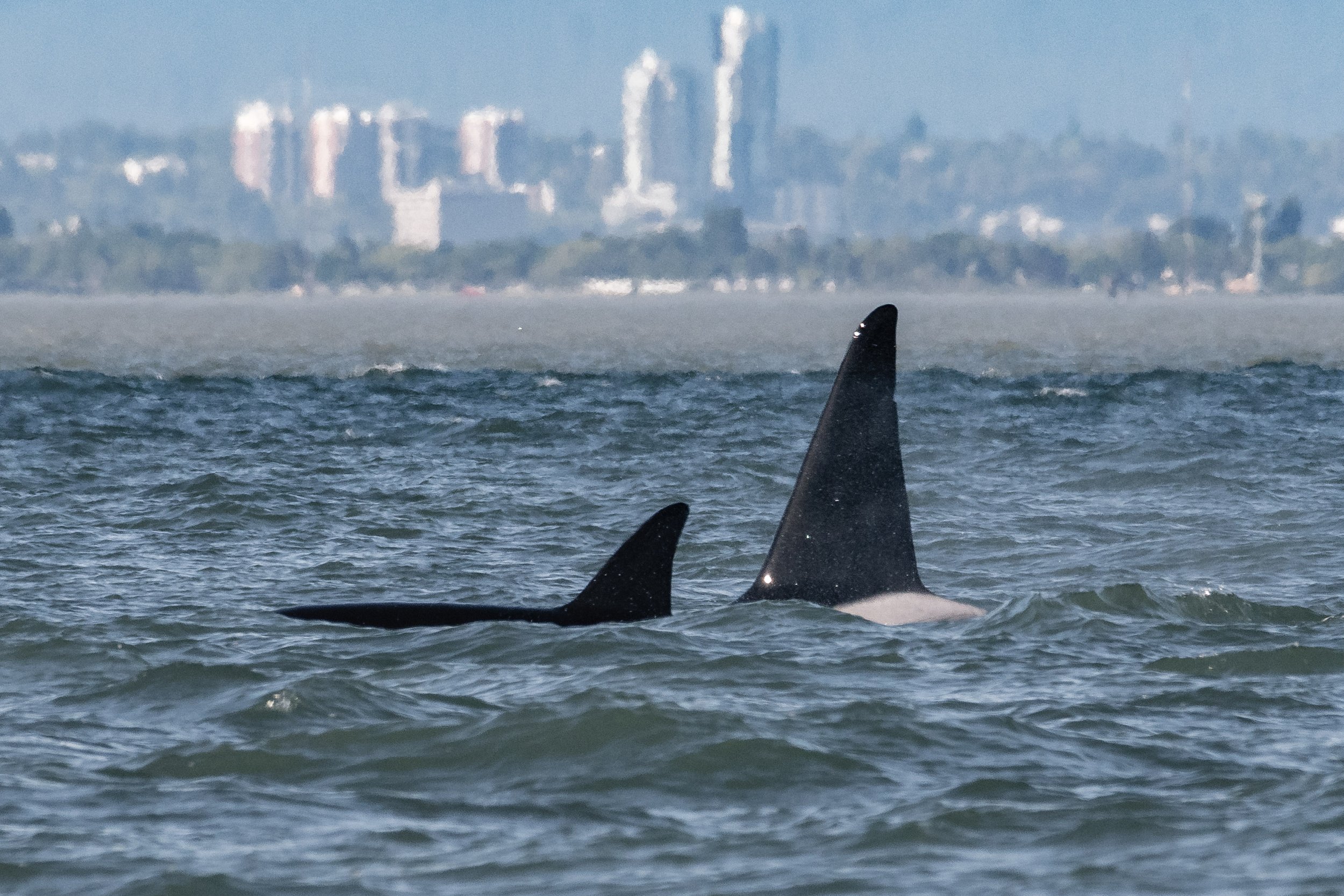
T123C Lucky and T123A Stanley. Photo by Evan Hessels.
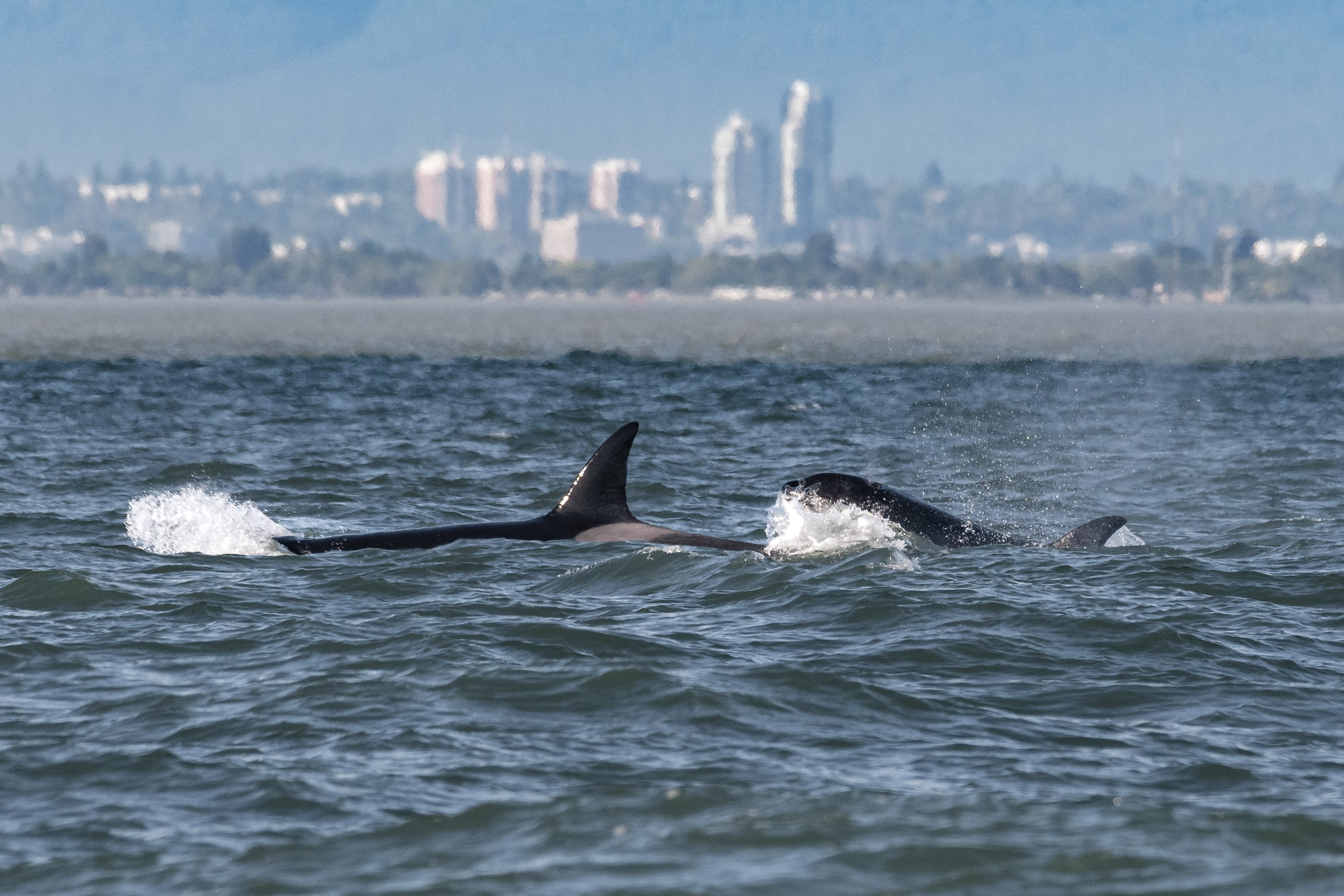
T124A4 Sabio and T124A4A Strix splashing along. Photo by Evan Hessels.
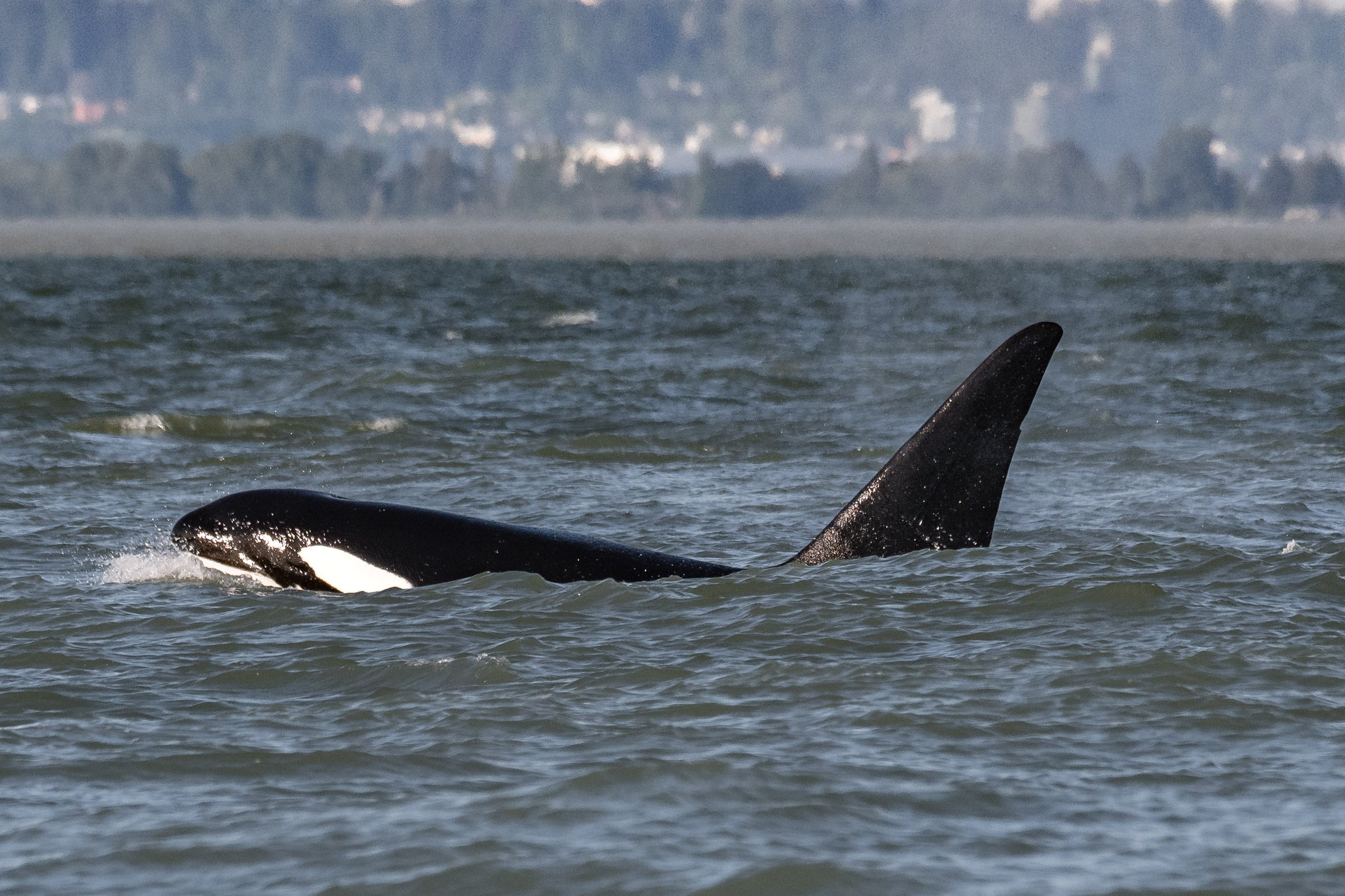
T123A Stanley with the outline of his eye visible. Photo by Evan Hessels.
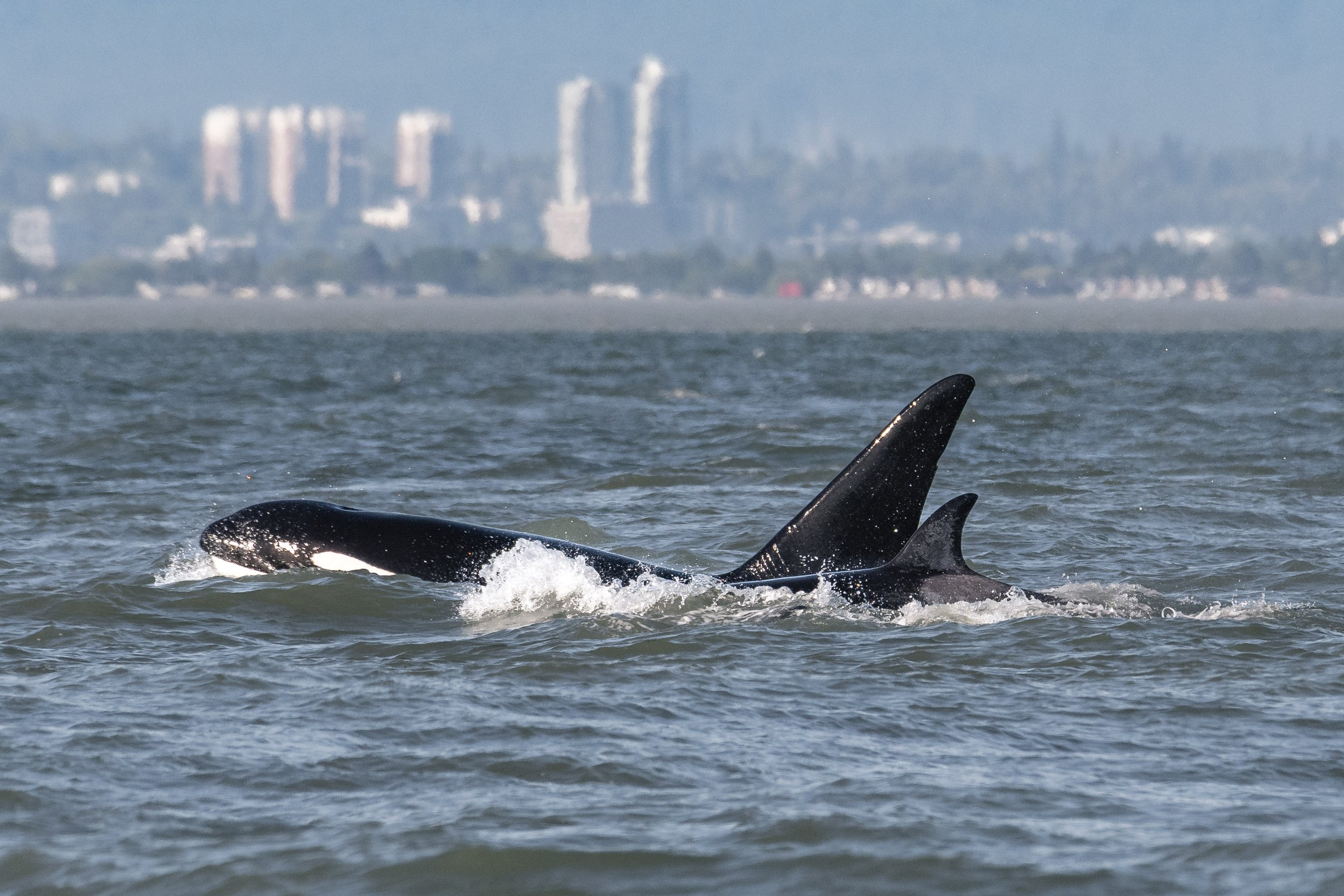
T123A Stanley and T124A4A Strix. Photo by Evan Hessels.
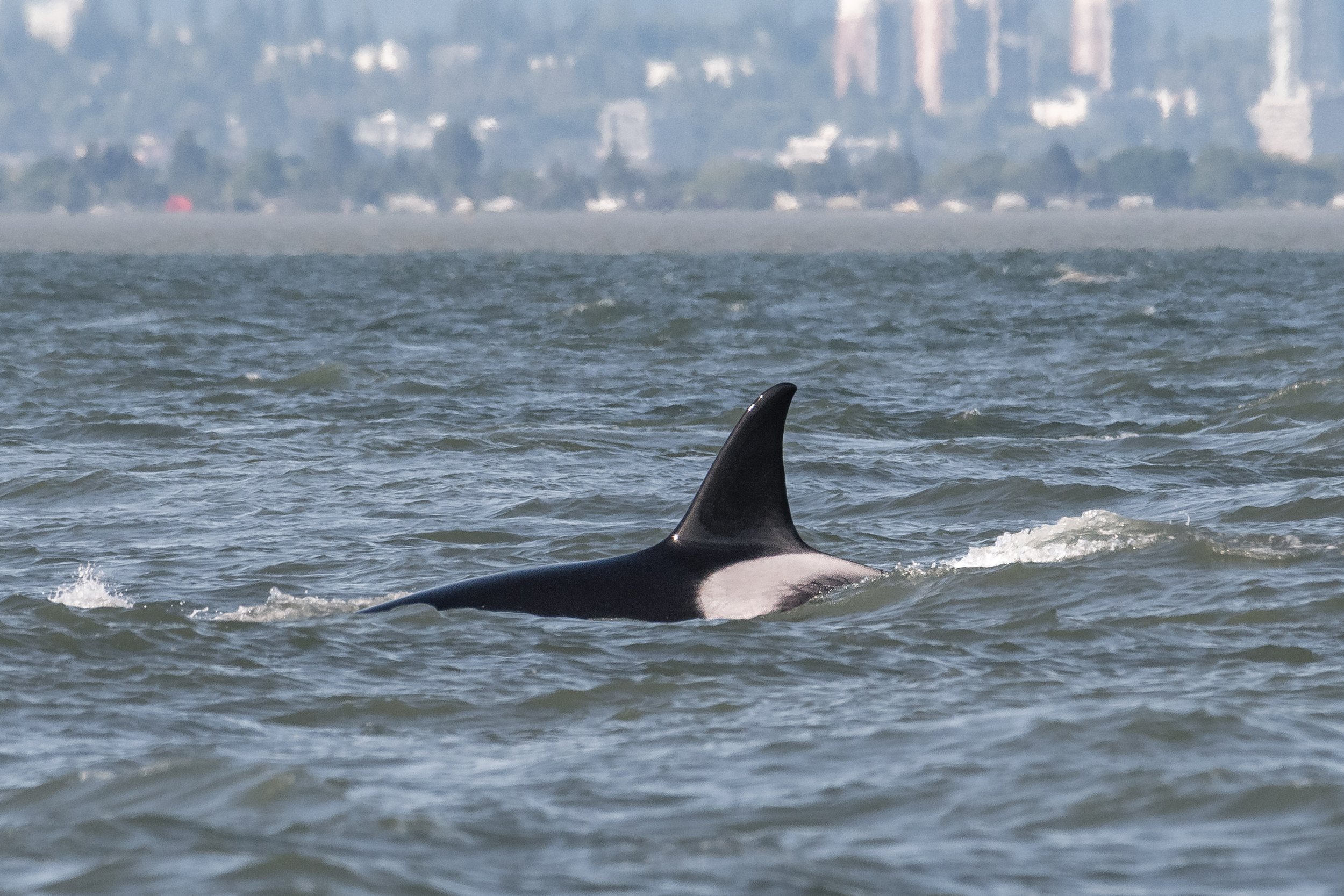
T123 Sidney. Photo by Evan Hessels.
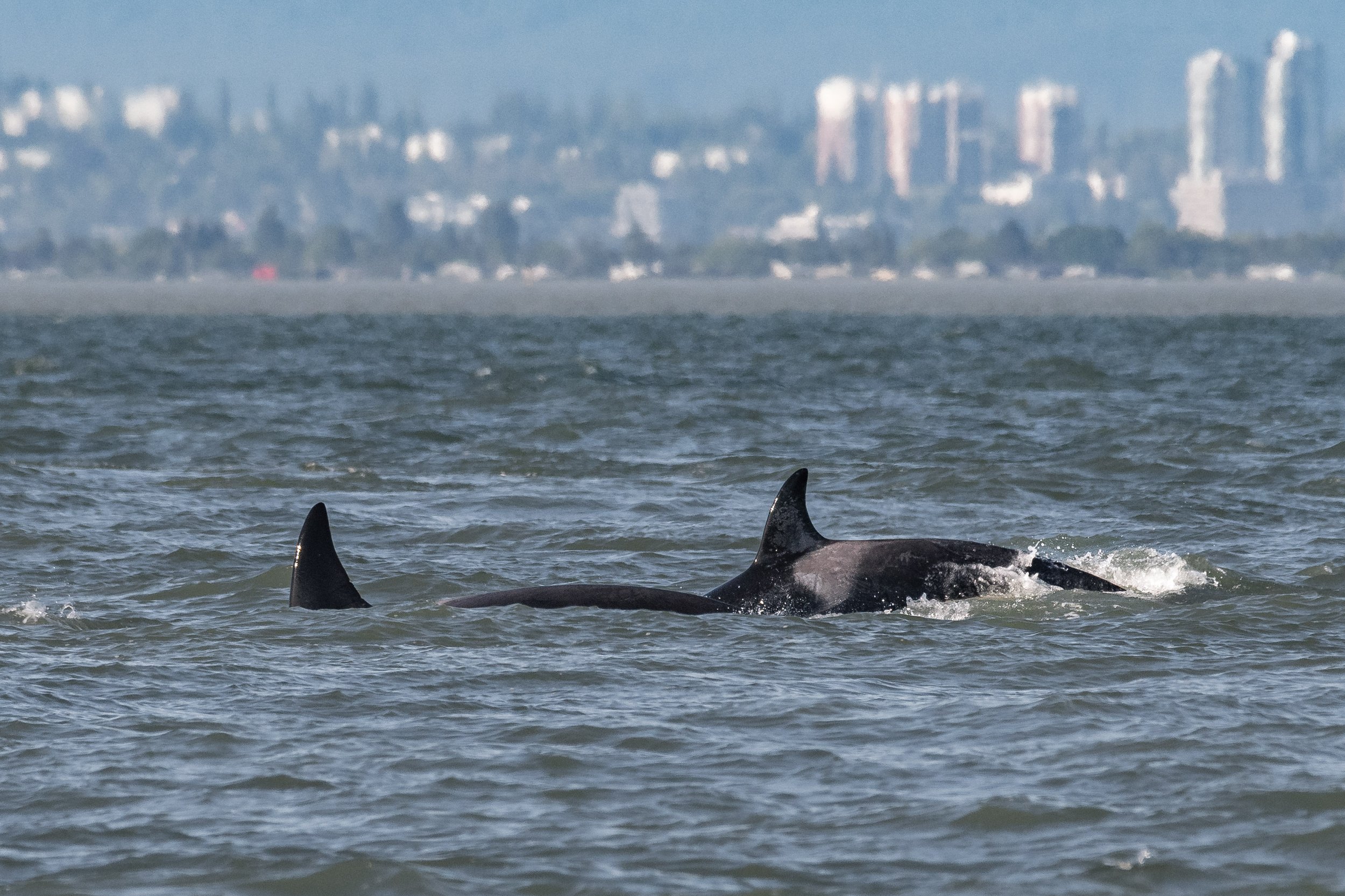
Photo by Evan Hessels.
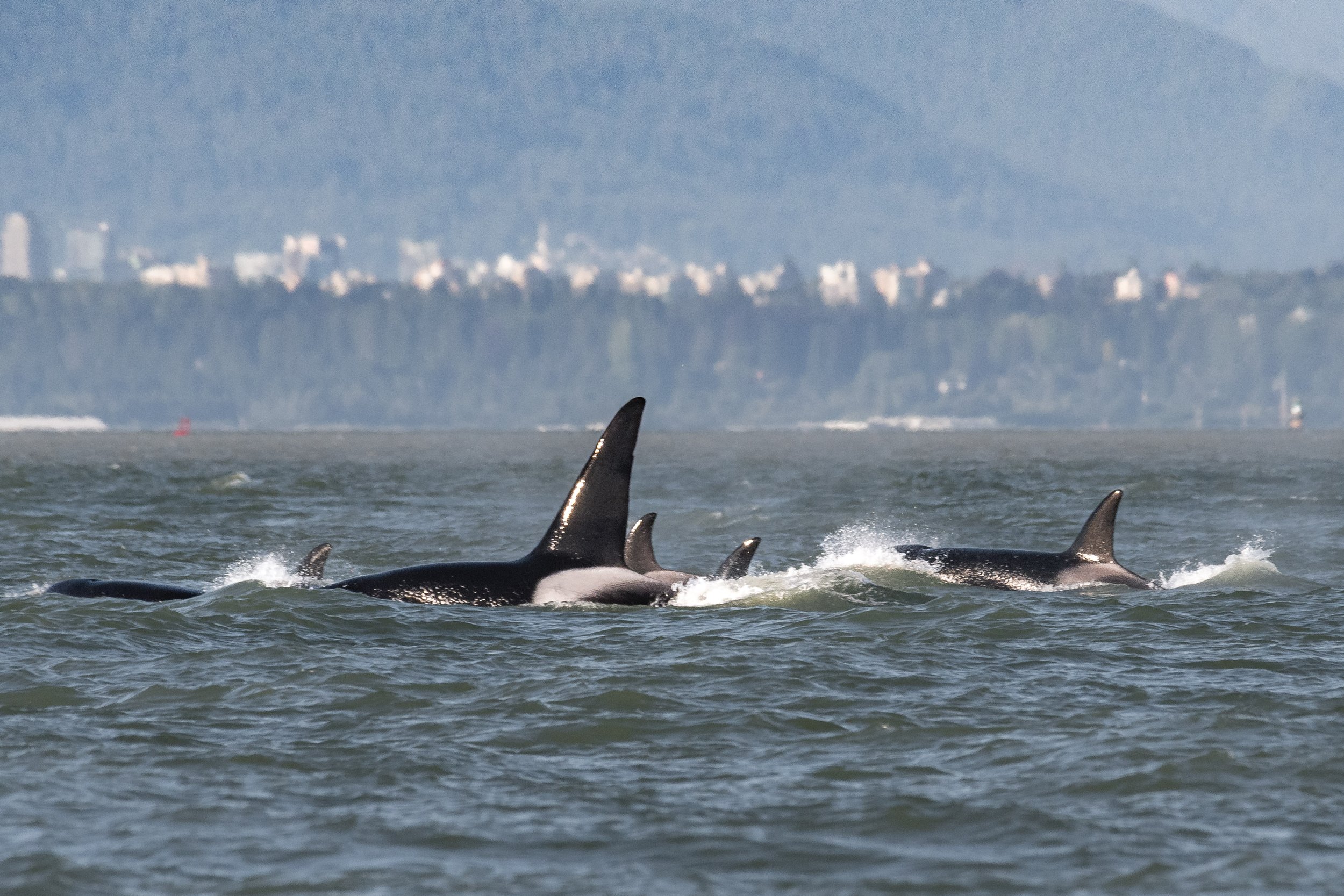
The party surfing along! Photo by Evan Hessels.
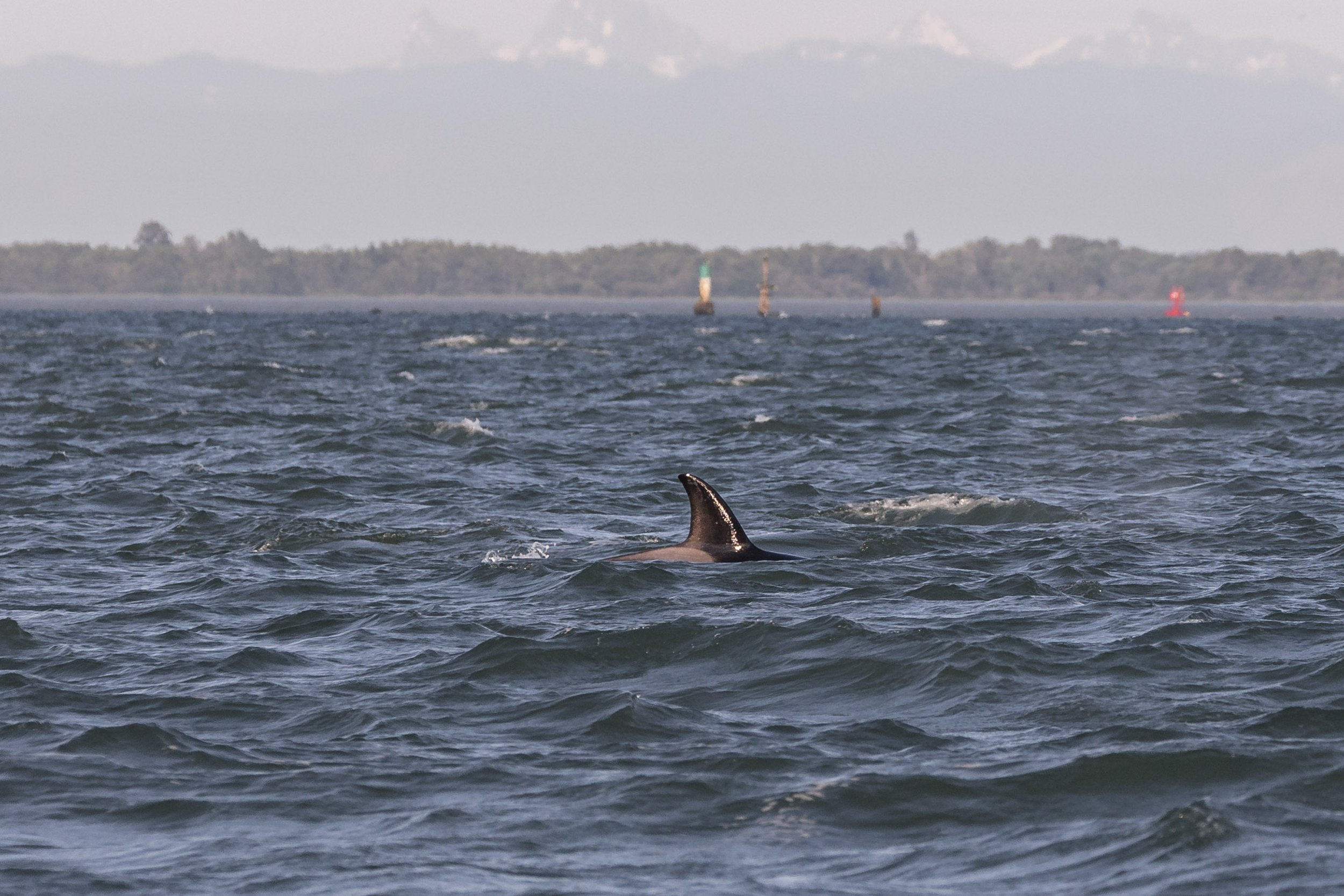
T123D Darcy travelling solo. Photo by Jordan Robinson.
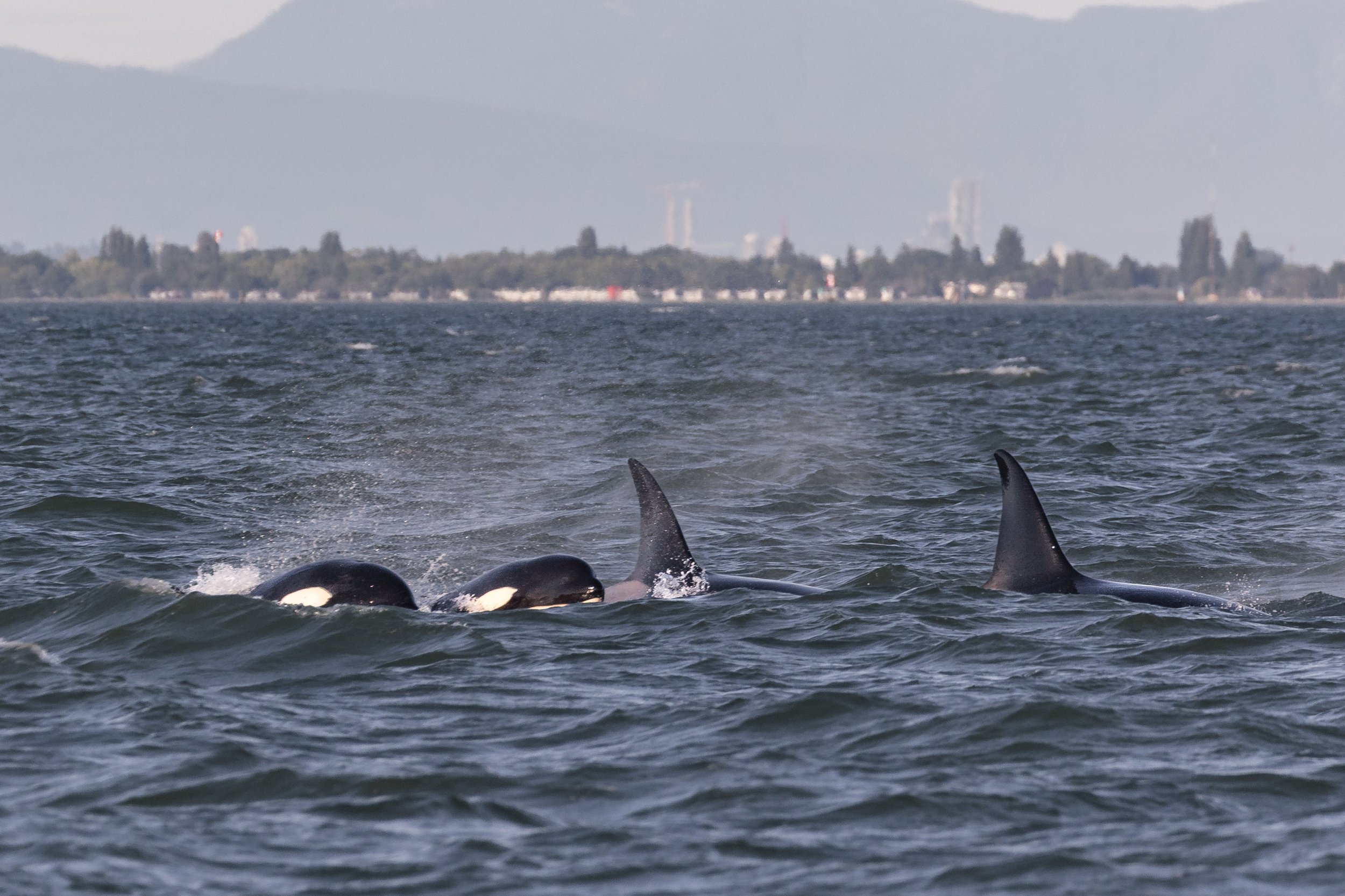
T123 Sidney with T124A4A Sabio behind her, and T124A1A Sabine and T124A4A Strix beside her. Photo by Jordan Robinson.
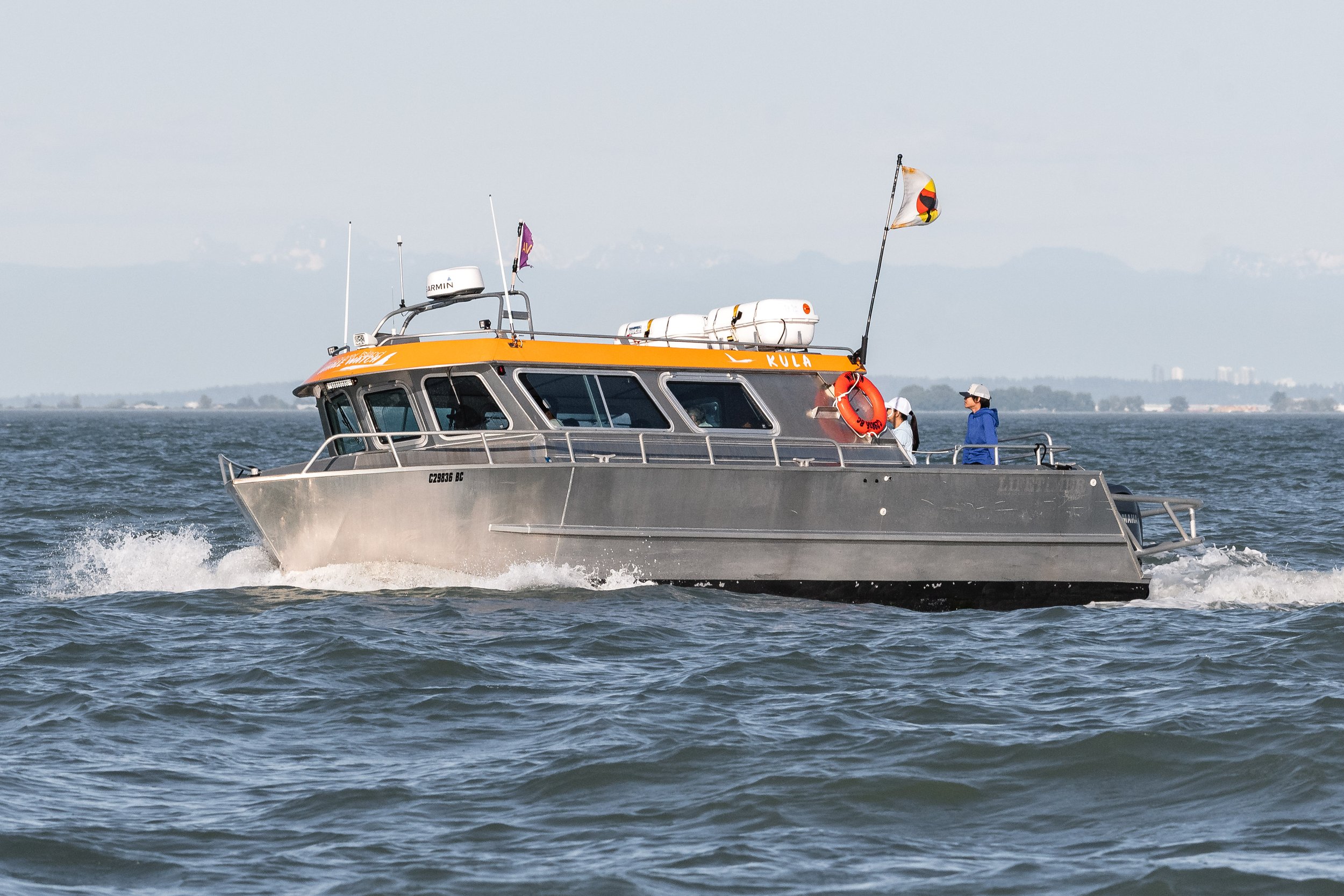
Semi-covered vessel Kula on scene. Photo by Evan Hessels.
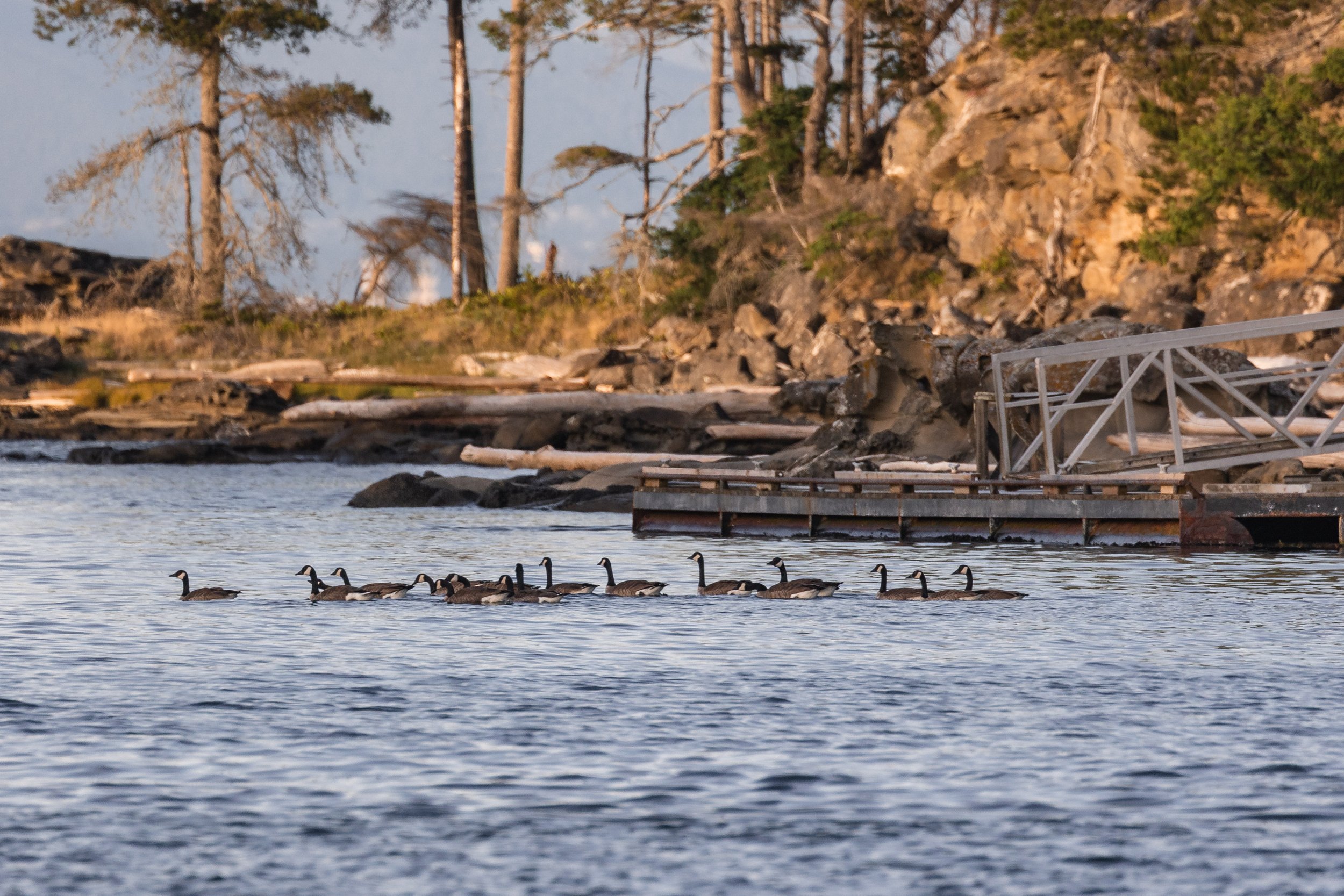
A gaggle of Canada Geese floating by. Photo by Jordan Robinson.
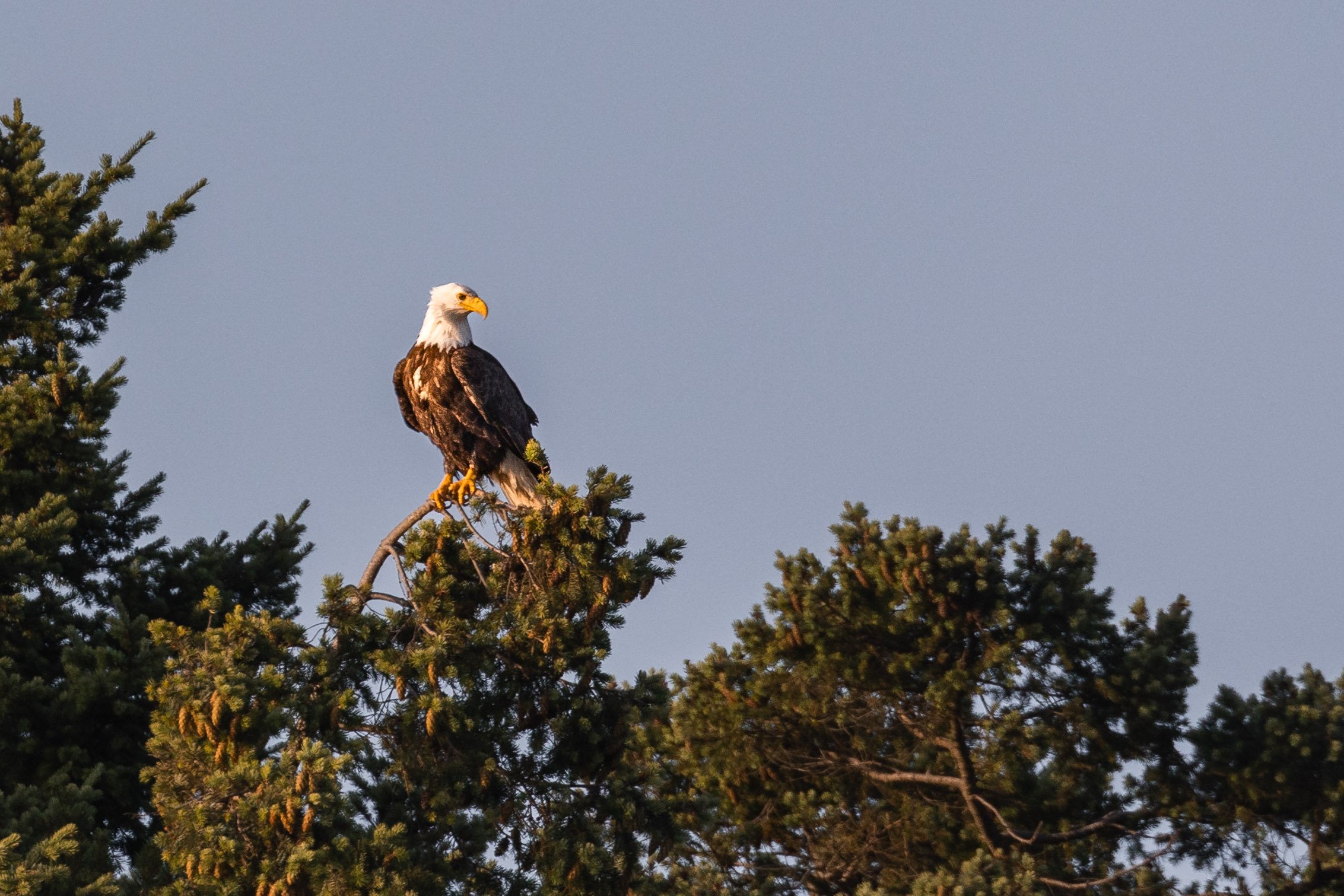
A majestic Bald Eagle at the top of a tree. Photo by Jordan Robinson.
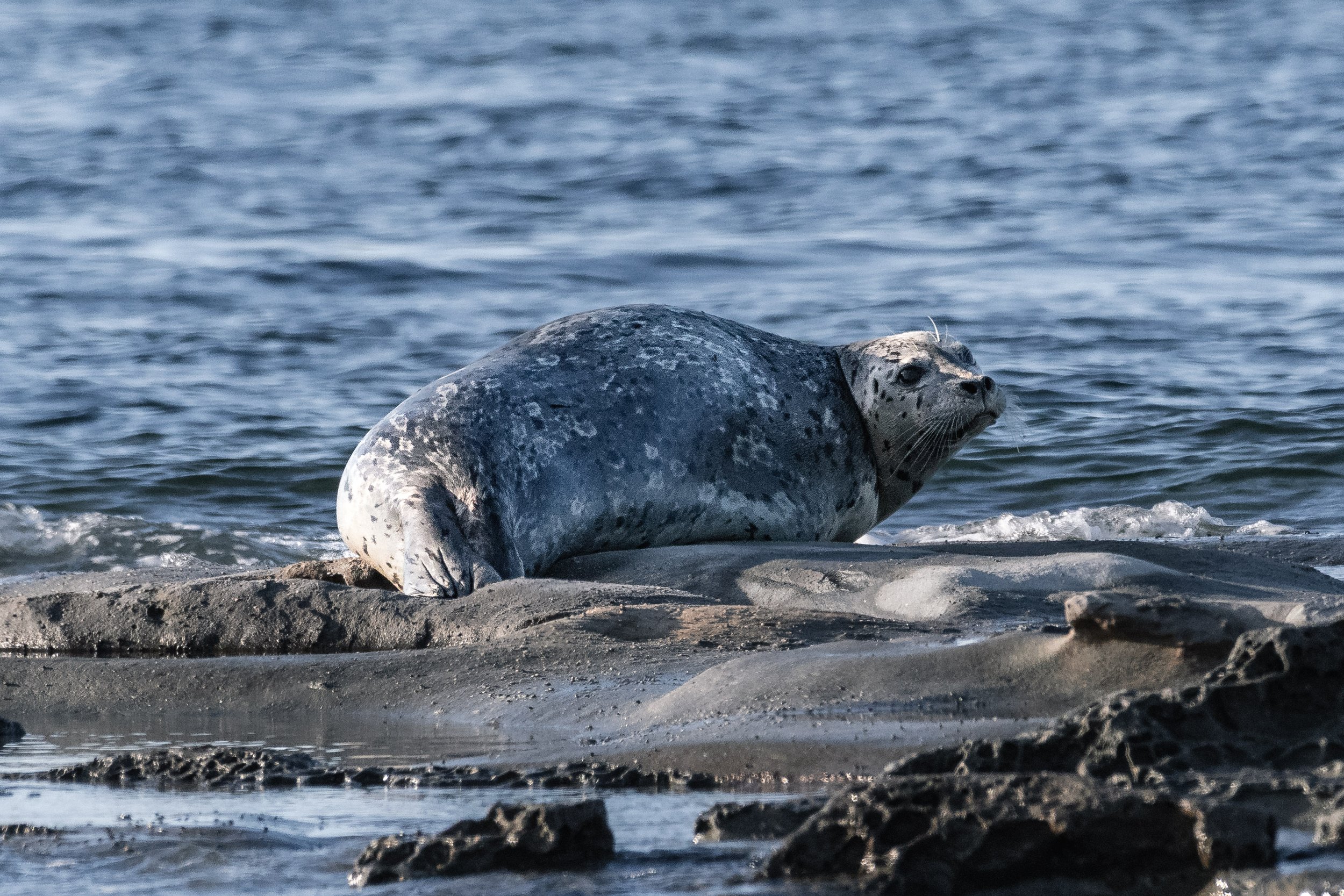
A very rotund Harbour Seal sitting in the shallows. Photo by Evan Hessels.
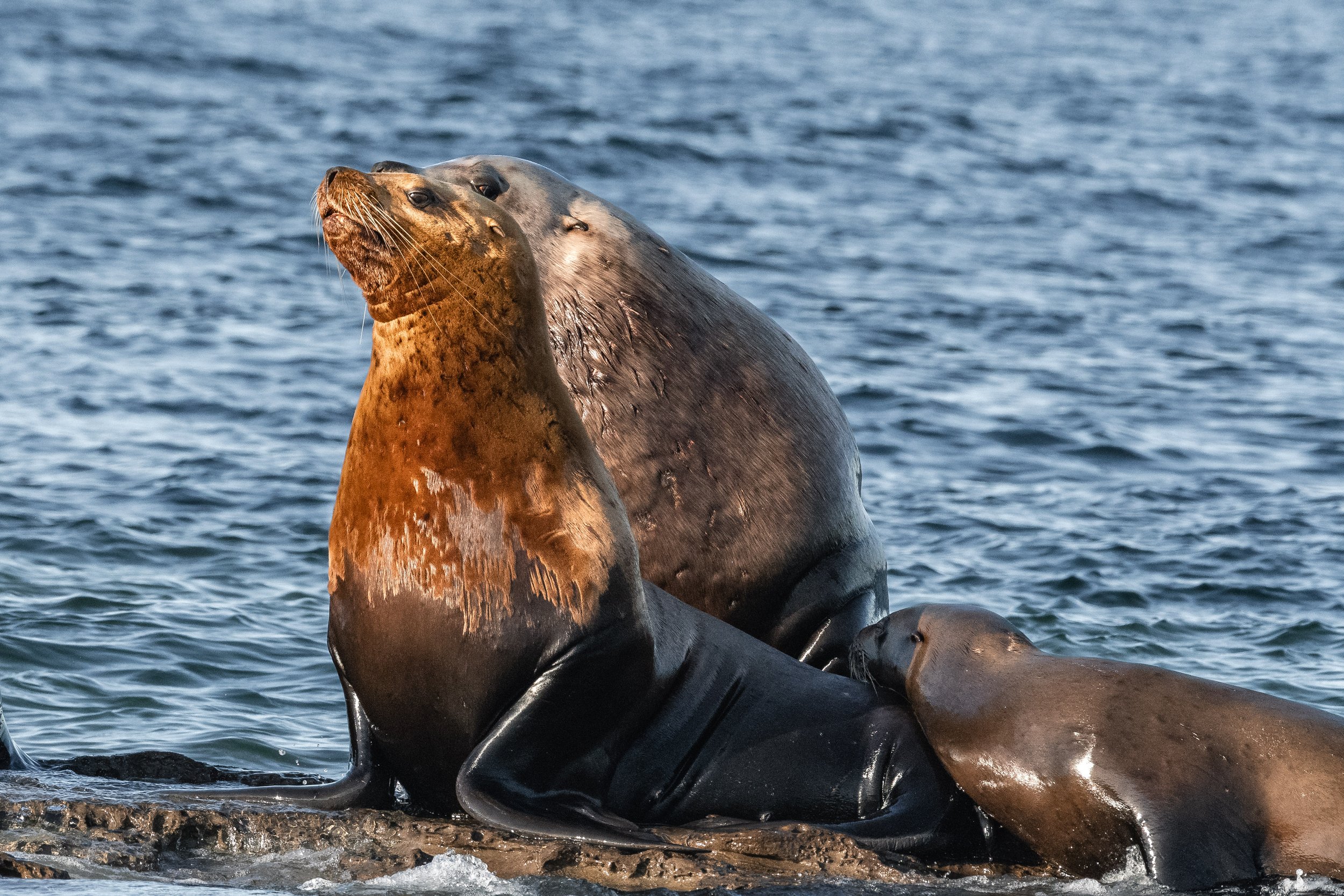
Some majestic Steller Sea Lions. Photo by Evan Hessels.
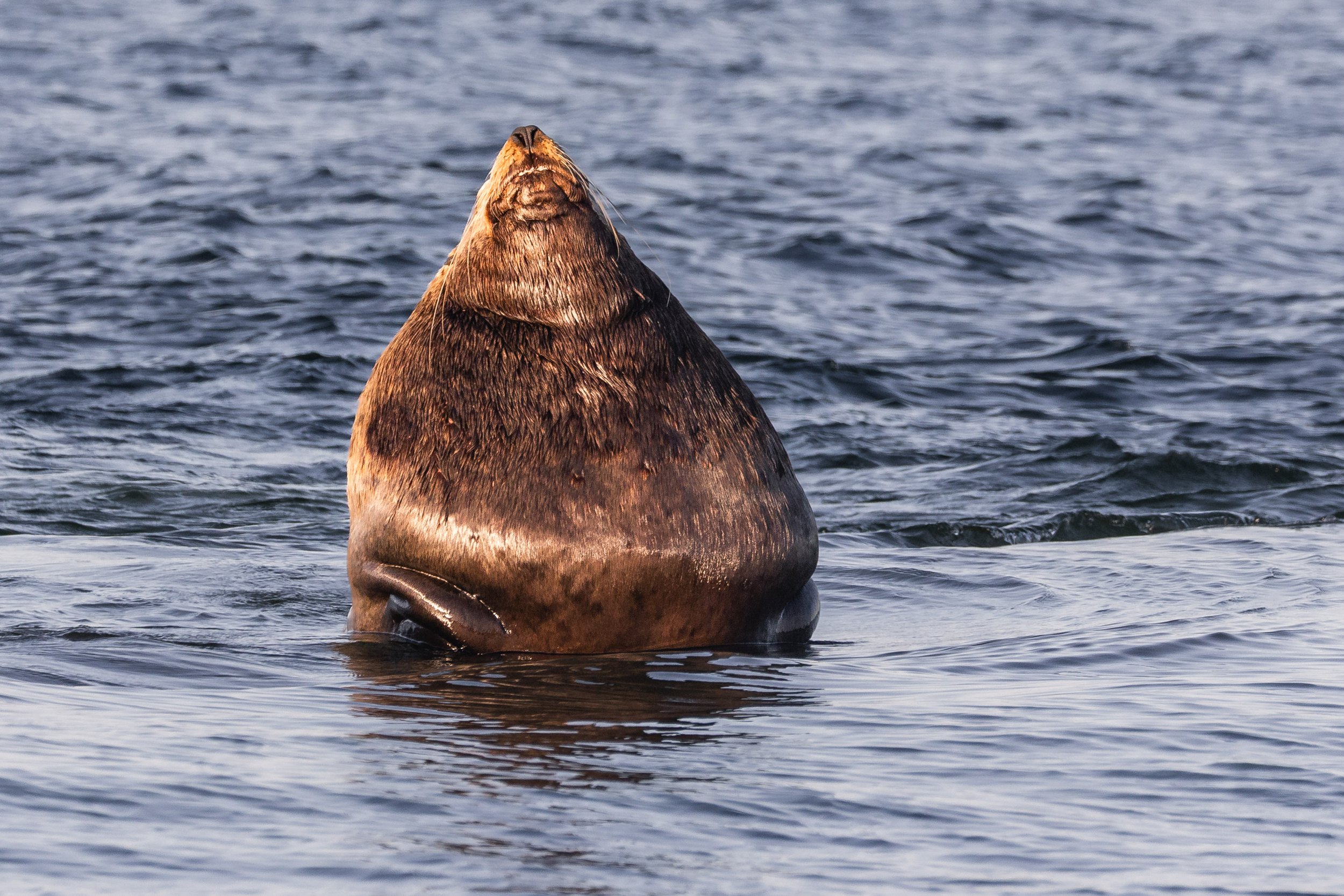
A very content and plump looking male Steller Sea Lion. Photo by Jordan Robinson.
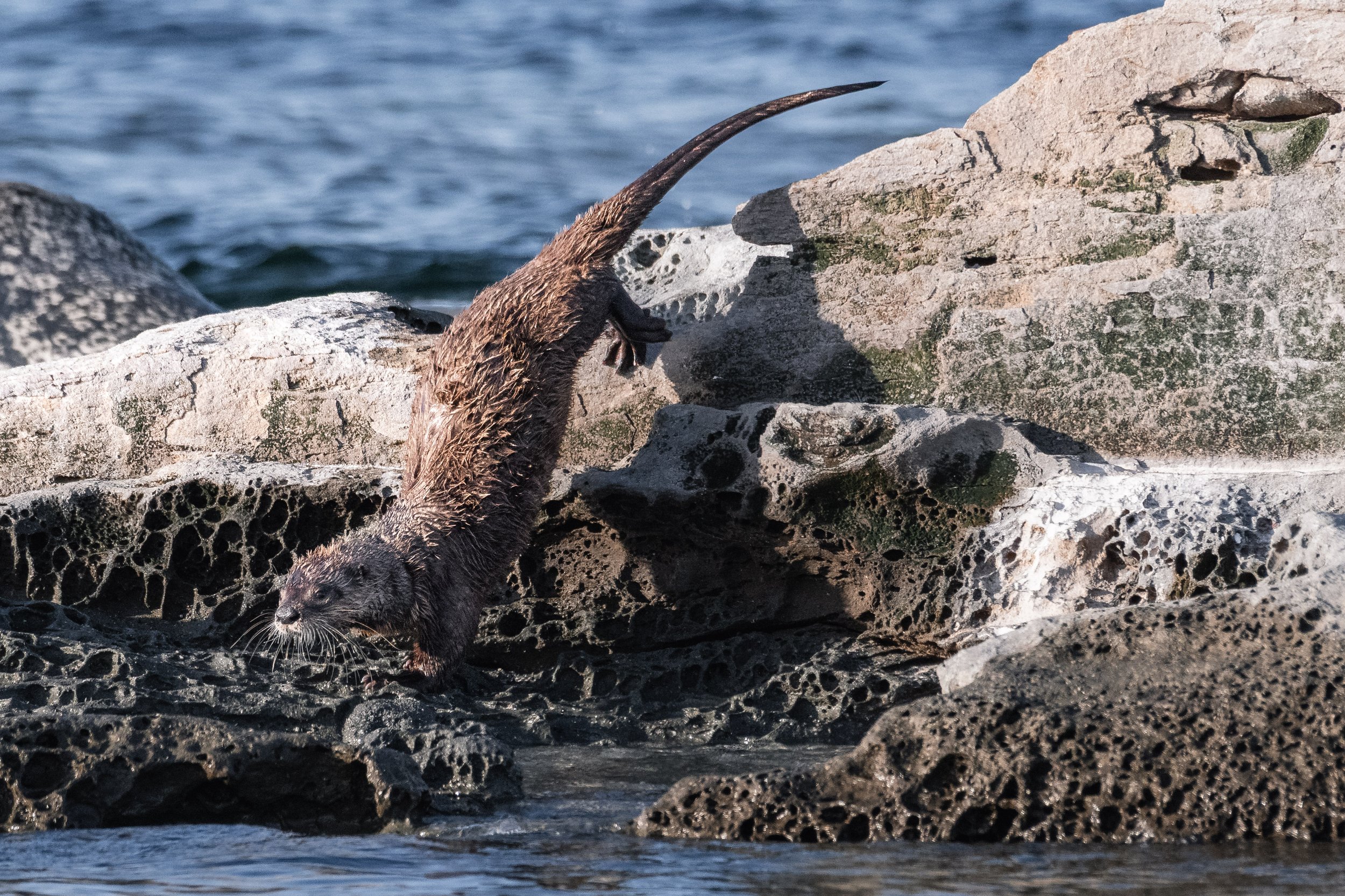
A River Otter hopping across the rocks. Photo by Evan Hessels.
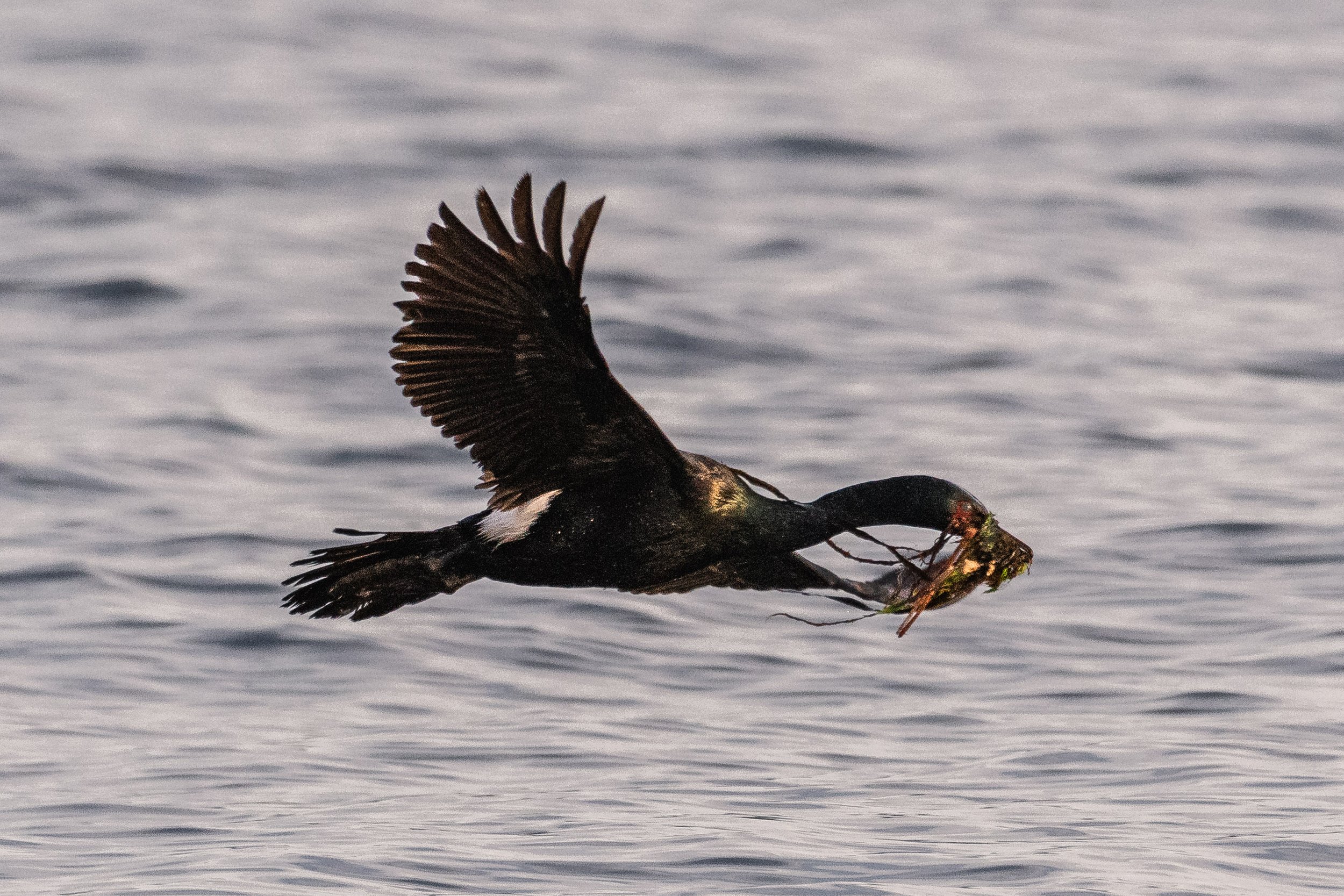
A Pelagic Cormorant flying by with a beak full of seaweed. Photo by Evan Hessels.
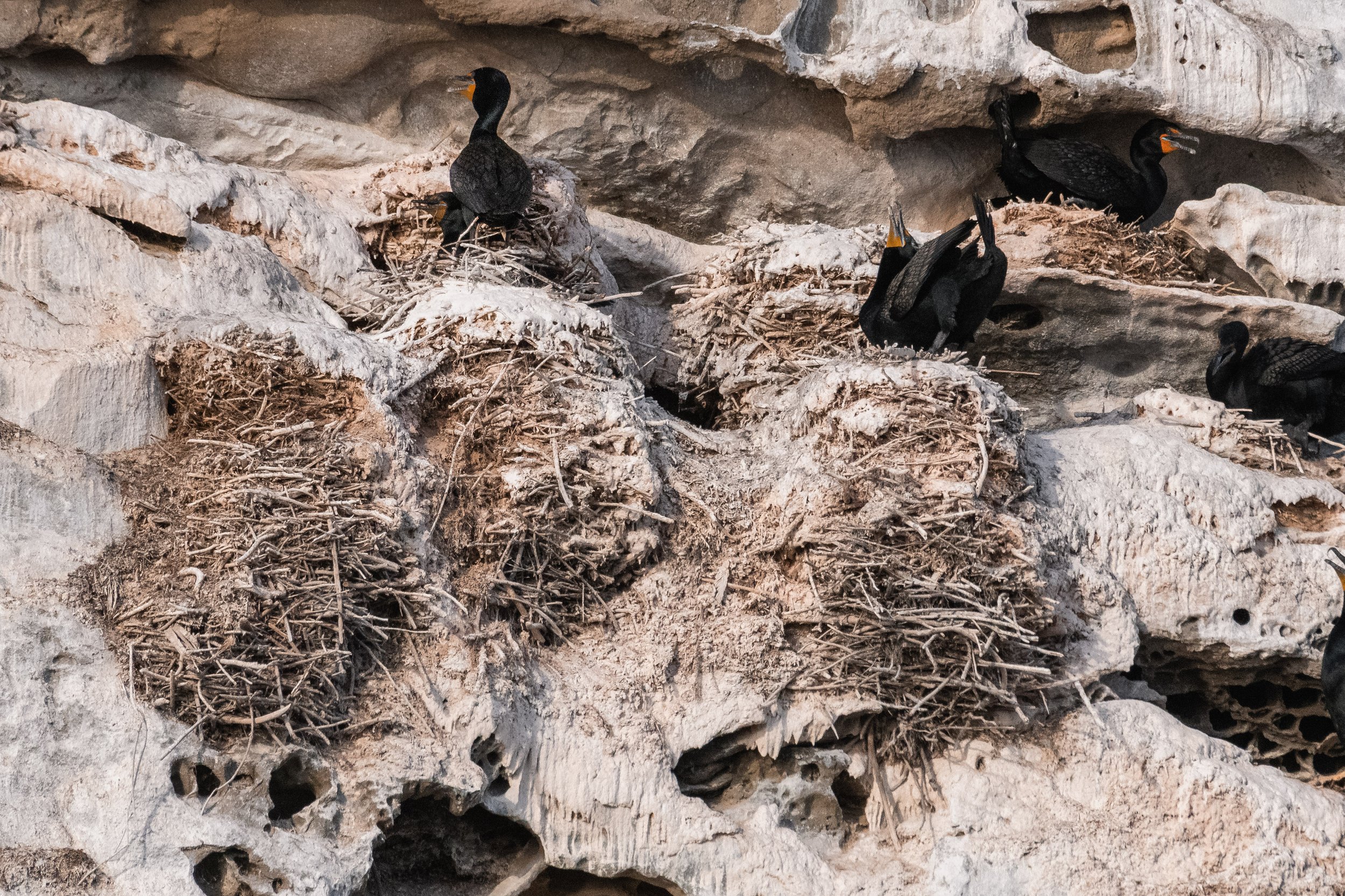
Look at this crazy structures that cormorants form for their nests! Photo by Evan Hessels.
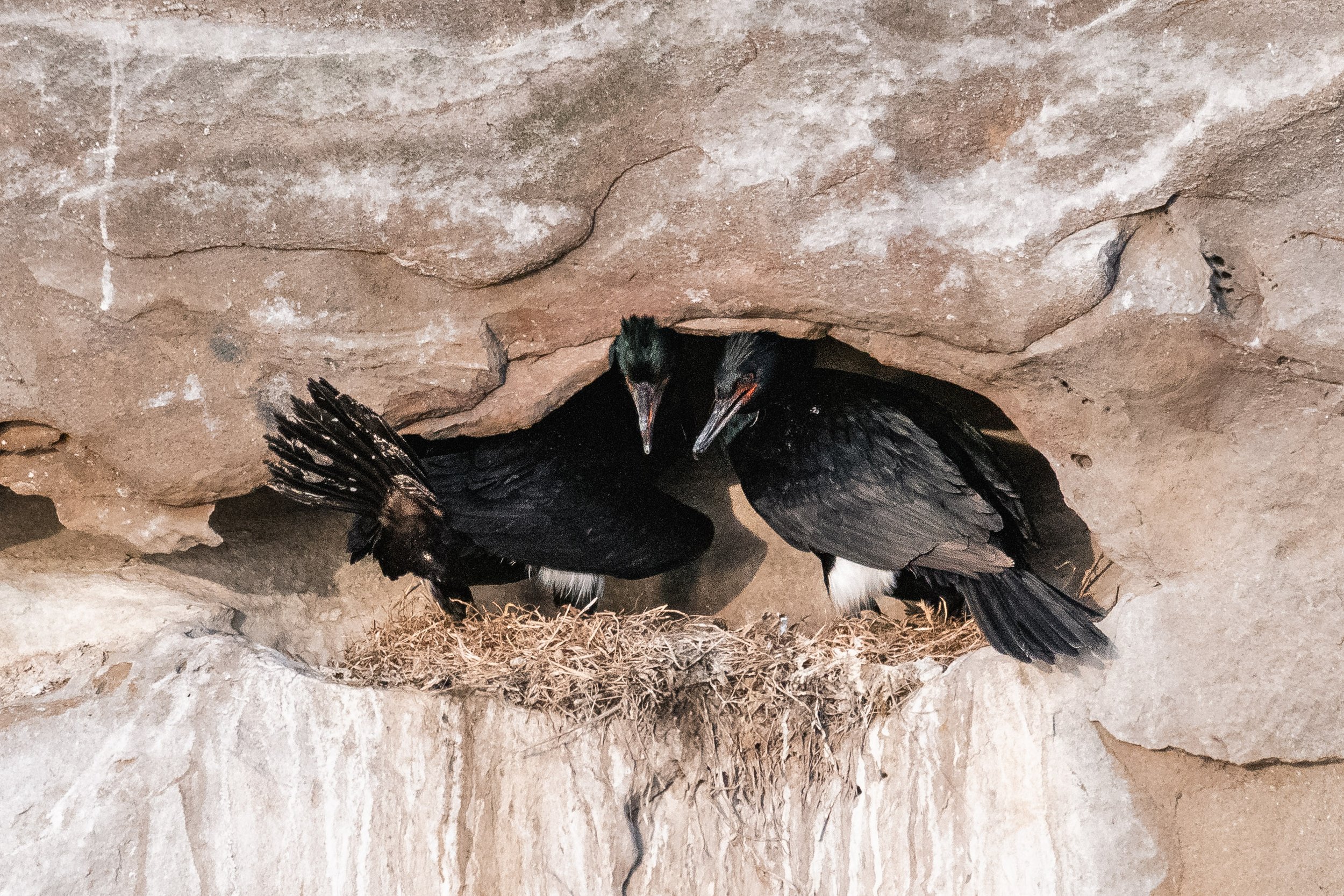
A pair of Pelagic Cormorants sitting on their nest. Photo by Evan Hessels.