
June 27, 2026, 10:30 AM - Flat Calm Waters and a Successful Orca Hunt, a day with the T123s
We were fortunate enough to head out today with a our full fleet, all three of our vessels departing Nanaimo under beautiful summer skies. The Salish Sea greeted us with almost glassy conditions, making for an incredible day to search for wildlife.
Our journey began by heading south through Northumberland Channel and into Dodd Narrows, one of our favourite stretches of water between Vancouver Island and Mudge Island. Although only about 50 metres wide at its narrowest point, Dodd Narrows funnels enormous volumes of water with every tide. The powerful currents create swirling eddies that mix nutrient-rich waters from below, supporting an abundance of marine life throughout the area. It's one of many reasons these narrow passages are such biodiversity hotspots.
After navigating through the narrows, we continued weaving our way through the Southern Gulf Islands, enjoying the calm waters as we rounded Penelakut Island. Before heading into the Strait of Georgia, we made a brief stop near Norway Island, where several Harbour Seals were hauled out on the rocky shoreline. Harbour Seals are one of the most common marine mammals in the Salish Sea, with thousands calling these waters home year-round. While they may appear relaxed basking on the rocks, they are also one of the primary prey species for Bigg's (transient) orcas. Their abundance helps support the growing population of marine mammal-eating killer whales that regularly visit our region.
Continuing through Porlier Pass and into the Strait of Georgia, we resumed our search across the calm open waters. Before long, a distant blow caught our attention, followed by the unmistakable sight of a humpback whale's dorsal fin rising above the surface. After reviewing photographs of the dorsal fin, our naturalists were excited to identify the whale as BCX1193 Zig Zag.
Several times, Zig Zag lifted her enormous tail high above the water before slipping beneath the surface for a deeper dive. This classic humpback behaviour often signals a longer feeding dive, allowing the whale to reach dense patches of prey below. Humpback whales spend much of the summer feeding almost continuously throughout the Salish Sea. Before migrating thousands of kilometres to their tropical breeding grounds, they must build up enormous fat reserves, gaining as much as 50% of their body weight in blubber. Here in the Strait of Georgia, their diet consists primarily of tiny crustaceans known as krill, along with schooling fish such as Pacific herring and sardines. After enjoying several wonderful views of Zig Zag between dives, another exciting report crackled over the radio: a nearby vessel had found orcas.
We made our way toward the reported location, and it wasn't long before four tall dorsal fins appeared on the horizon. The whales were spread over several hundred meters. After capturing a few photographs, our naturalists quickly identified the pod as the T123s.
T123 Sidney ♀ (~1985)
T123A Stanley ♂ (2000)
T123C Lucky ♀ (2012)
T123D Darcy ♀ (2018)
The T123s are regular visitors to our waters and are always a favourite encounter. Today, they appeared to be fully focused on hunting. Bigg's orcas often spread themselves out while searching for prey, covering a much larger area than they could if travelling shoulder-to-shoulder. Then, in an instant, everything changed. One of the whales, T123A Stanley, erupted at the surface with several powerful splashes. Immediately, the rest of the pod converged on the same location. This behaviour often signals a successful hunt. Because orcas cannot chew their food, they typically tear larger prey into manageable pieces, allowing the entire family to share the meal. A few moments later, the final clue appeared as gulls gathered over the surface, scavenging small scraps left behind.
Although we'll never know for certain what they caught, it was most likely a Harbour Seal. Adult Harbour Seals typically weigh between 70 and 130 kilograms (150–285 pounds), making them an ideal-sized meal for a family of Bigg's orcas. Depending on their size, each orca requires roughly 50 to 150 kilograms of food every day, meaning a pod like the T123s may consume several Harbour Seals daily to meet their energy needs. With full stomachs came a burst of playful behaviour. Several members of the pod lifted their heads high above the water in curious spyhops, while others entertained us by "moonwalking"—swimming backwards across the surface, one of the more unusual behaviours occasionally seen in killer whales.
After an unforgettable encounter with the T123s, we continued exploring the Strait of Georgia before making our way to another favourite wildlife stop: Stinky Rock. Despite its memorable name, Stinky Rock is one of the best places in our area to observe Steller Sea Lions year-round. Even with the high tide covering much of the rocky outcrop, the sea lions crowded together wherever space remained, barking, stretching, and occasionally nudging one another for the best resting spot. Steller Sea Lions are the largest sea lion species on Earth. Adult males can grow to over 3.5 metres (11 feet) in length and weigh close to one metric tonne. Haul-out sites like Stinky Rock allow them to rest, socialize, and regulate their body temperature between feeding trips in the cool waters of the Strait of Georgia. At the opposite end of the rocks, another group of Harbour Seals rested quietly, providing yet another reminder of just how closely connected the predator and prey species of the Salish Sea truly are.
As the afternoon drew to a close, we began our journey back toward Nanaimo, making one final stop at the spectacular Gabriola Island Bluffs. These towering sandstone cliffs have been sculpted by thousands of years of wind, waves, and tidal erosion, creating dramatic formations that continue to evolve with every passing season. The bluffs also provide nesting habitat for Pelagic Cormorants, whose carefully balanced nests dotted the cliff faces as adults busily tended to their young. From there, it was one final cruise across Nanaimo Harbour to complete another incredible day on the water.
From the powerful currents of Dodd Narrows to a feeding humpback whale, a successful hunt by the T123 orcas, playful Steller Sea Lions, and the spectacular scenery of the Gulf Islands, today's adventure was another wonderful reminder of just how much life thrives throughout the Salish Sea.
Please enjoy the photographs taken by marine naturalists Evan Hessels, Jordan Robinson, and Hayleigh Hilbert.
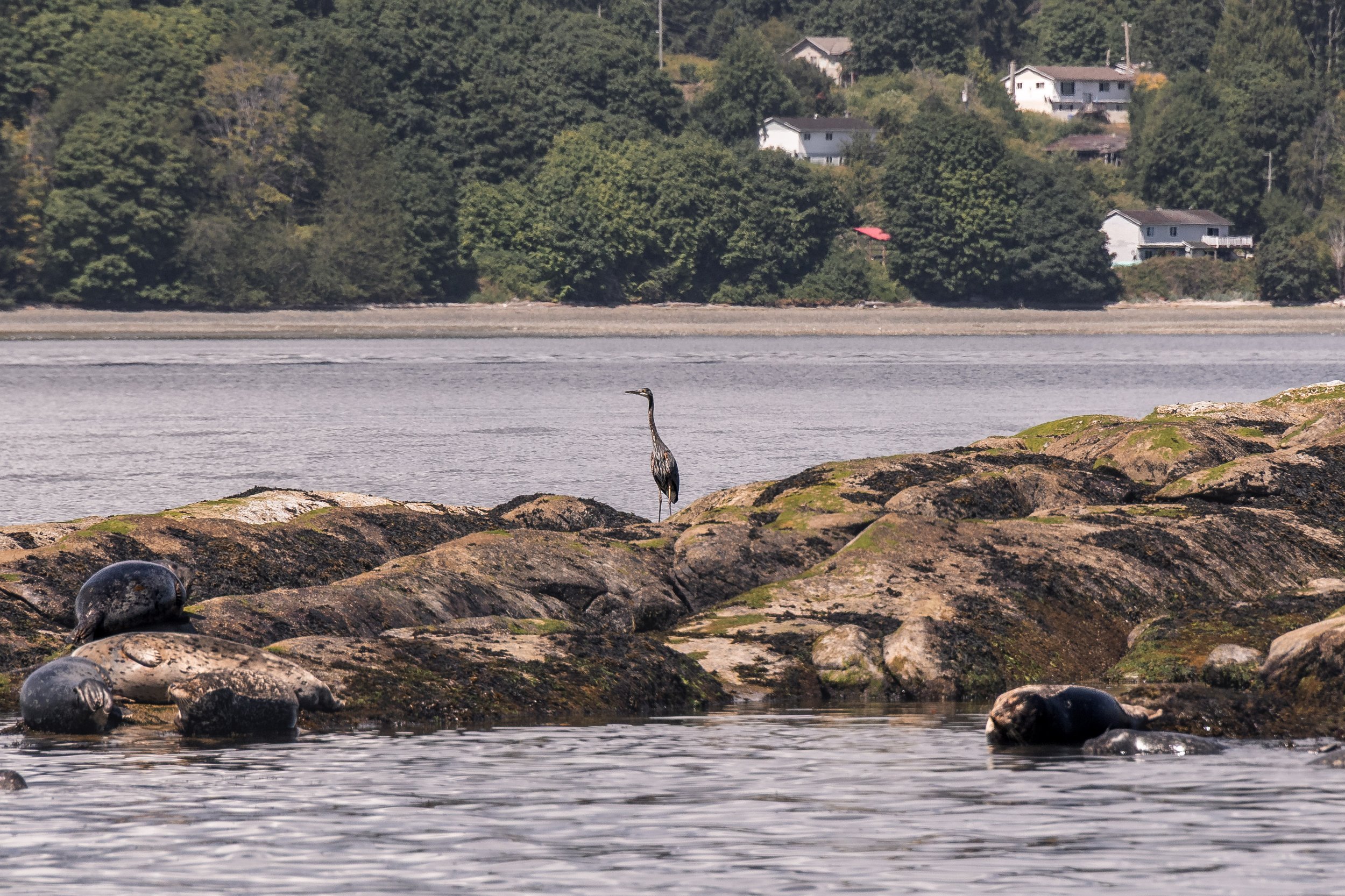
A lone Great Blue Heron standing behind some sleeping Harbour Seals. Photograph by Hayleigh Hilbert.
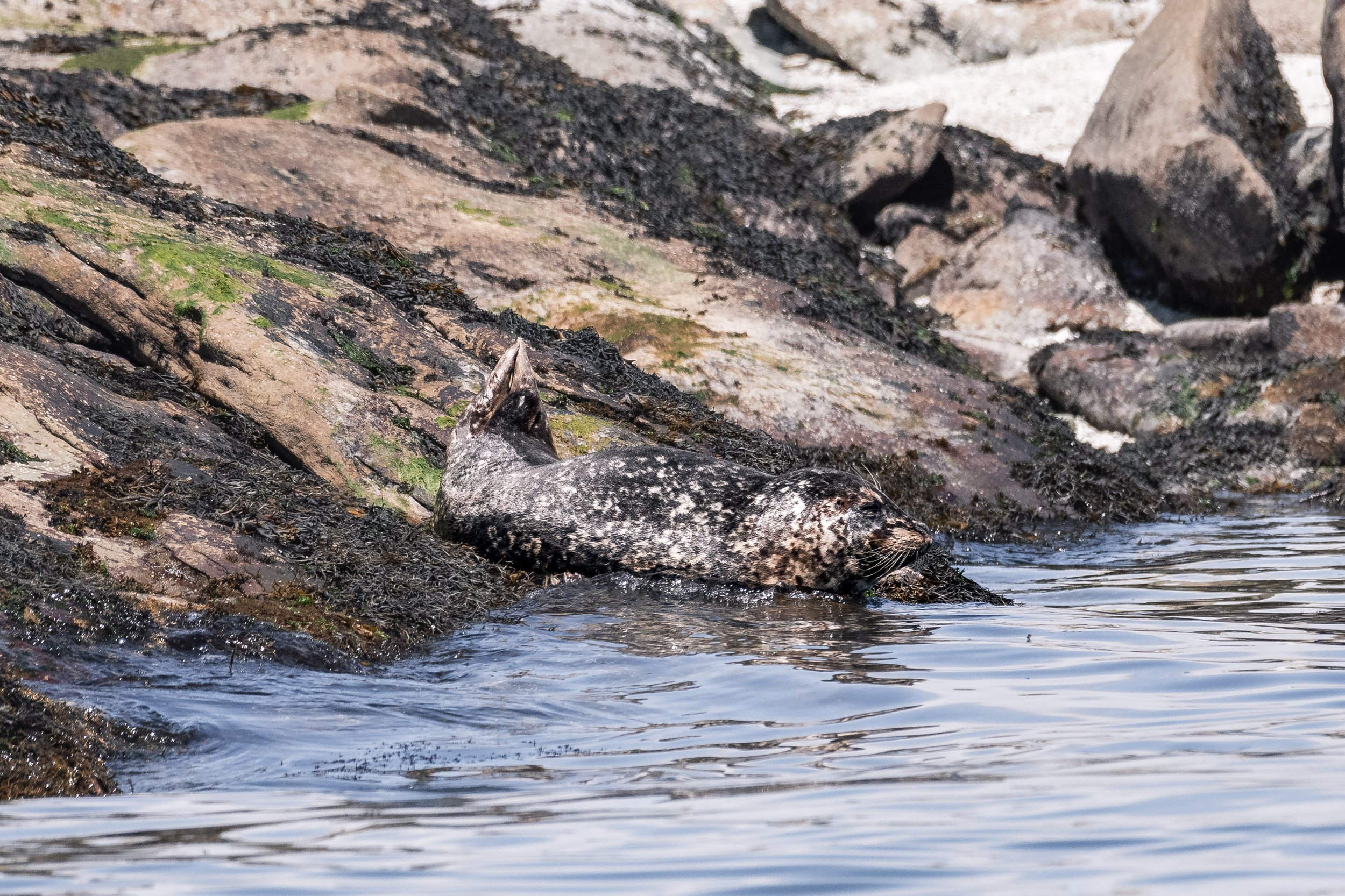
A Harbour Seal relaxing just out of the water. Photograph by Evan Hessels.
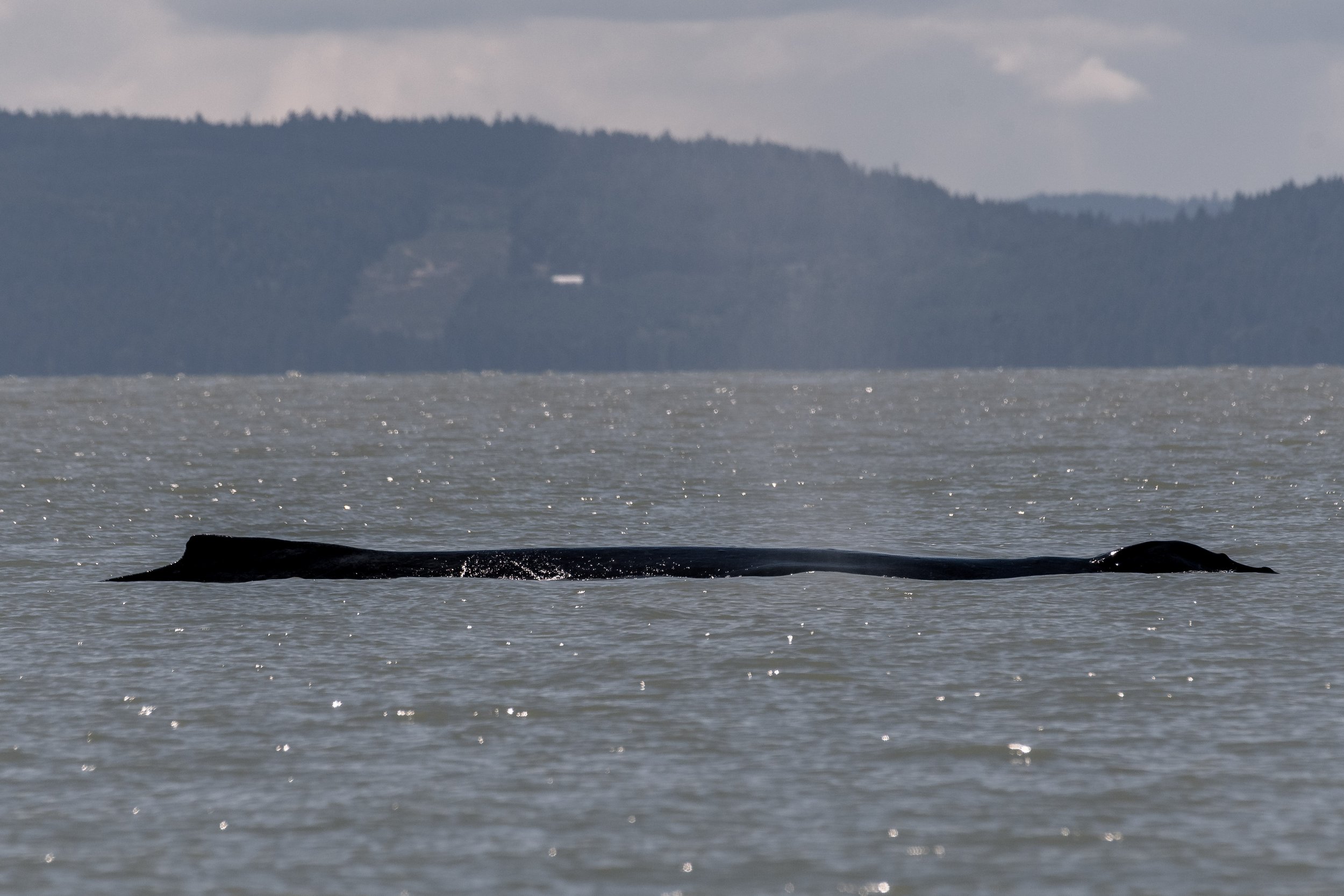
BCX1193 Zig Zag giving u a good look at her immense size. Photograph by Evan Hessels.
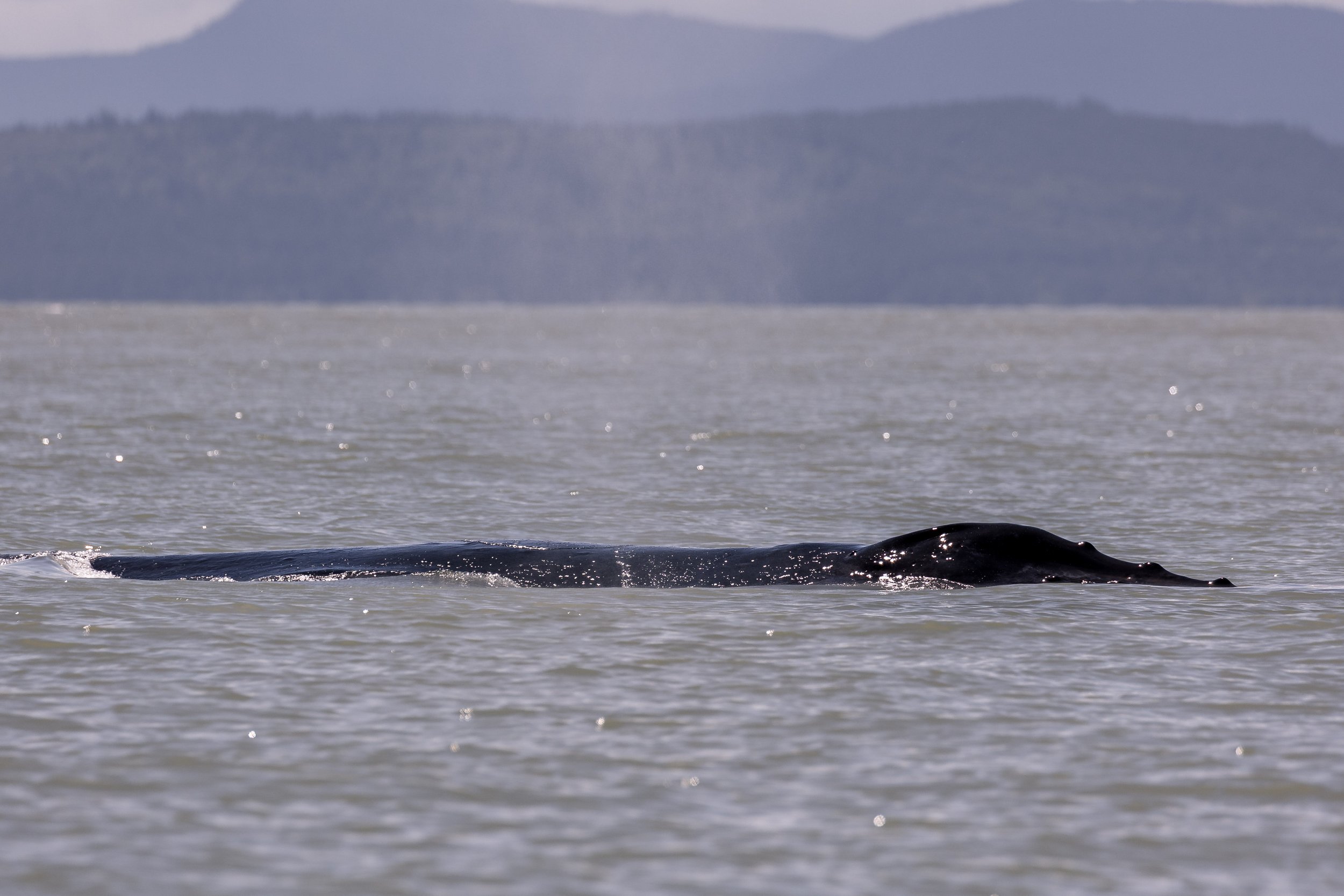
A closer look at BCX1193 Zig Zag’s exposing her blowhole on the right. Photograph by Jordan Robinson.
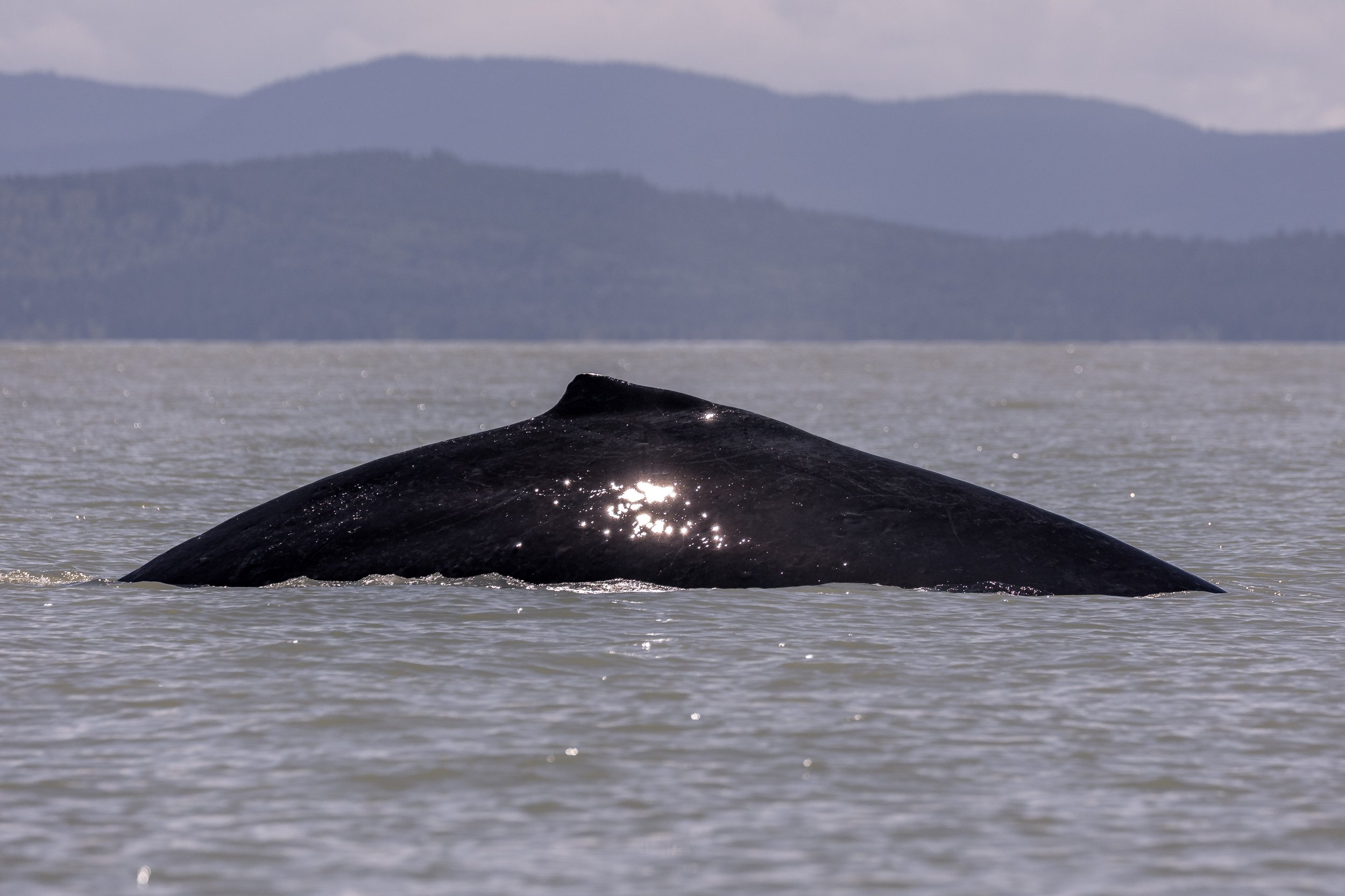
BCX1193 Zig Zag lifting her tail as she prepares to dive. Photograph by Jordan Robinson.
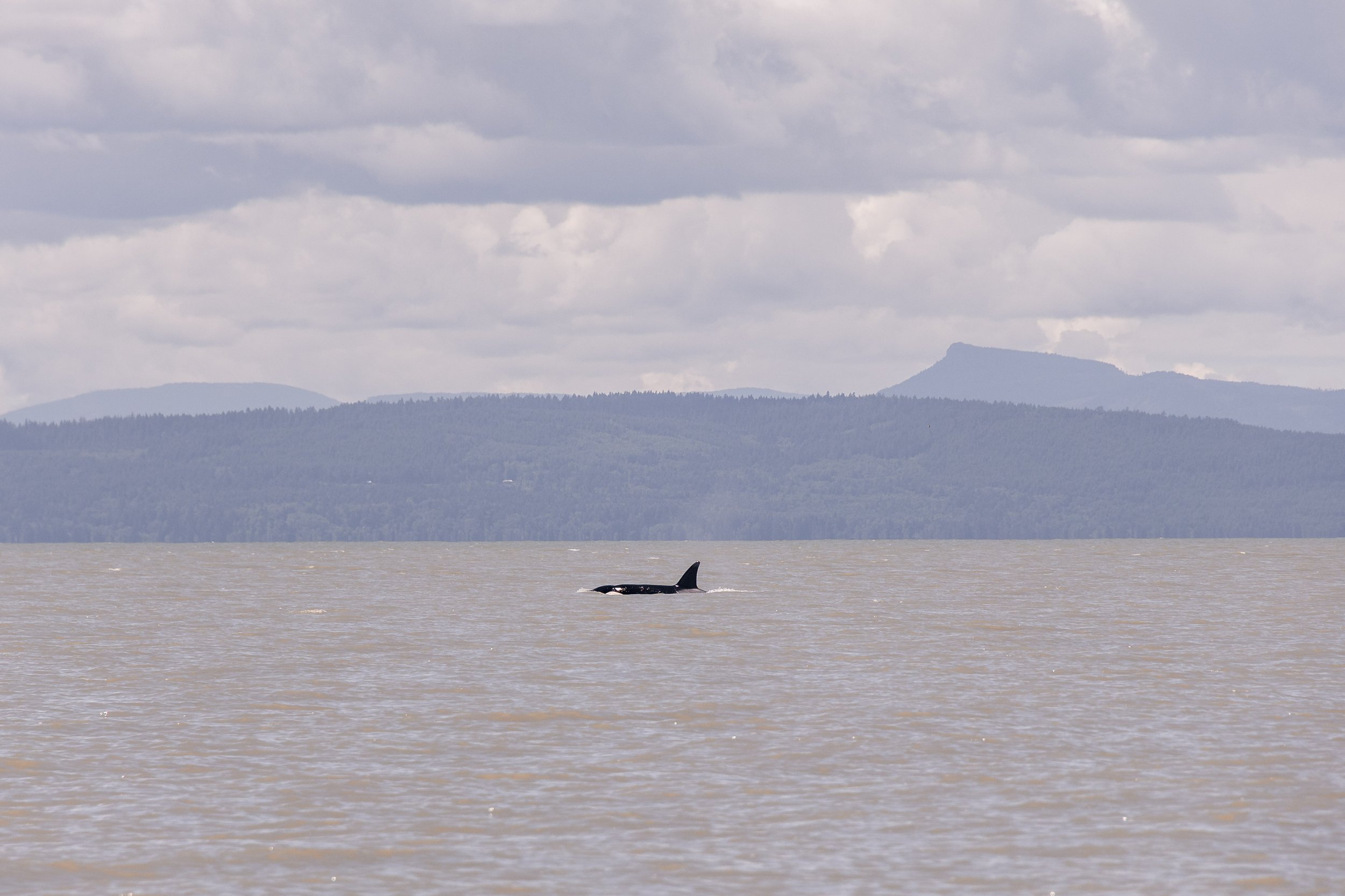
T123C Lucky cruising along in the distance. Photograph by Hayleigh Hilbert.
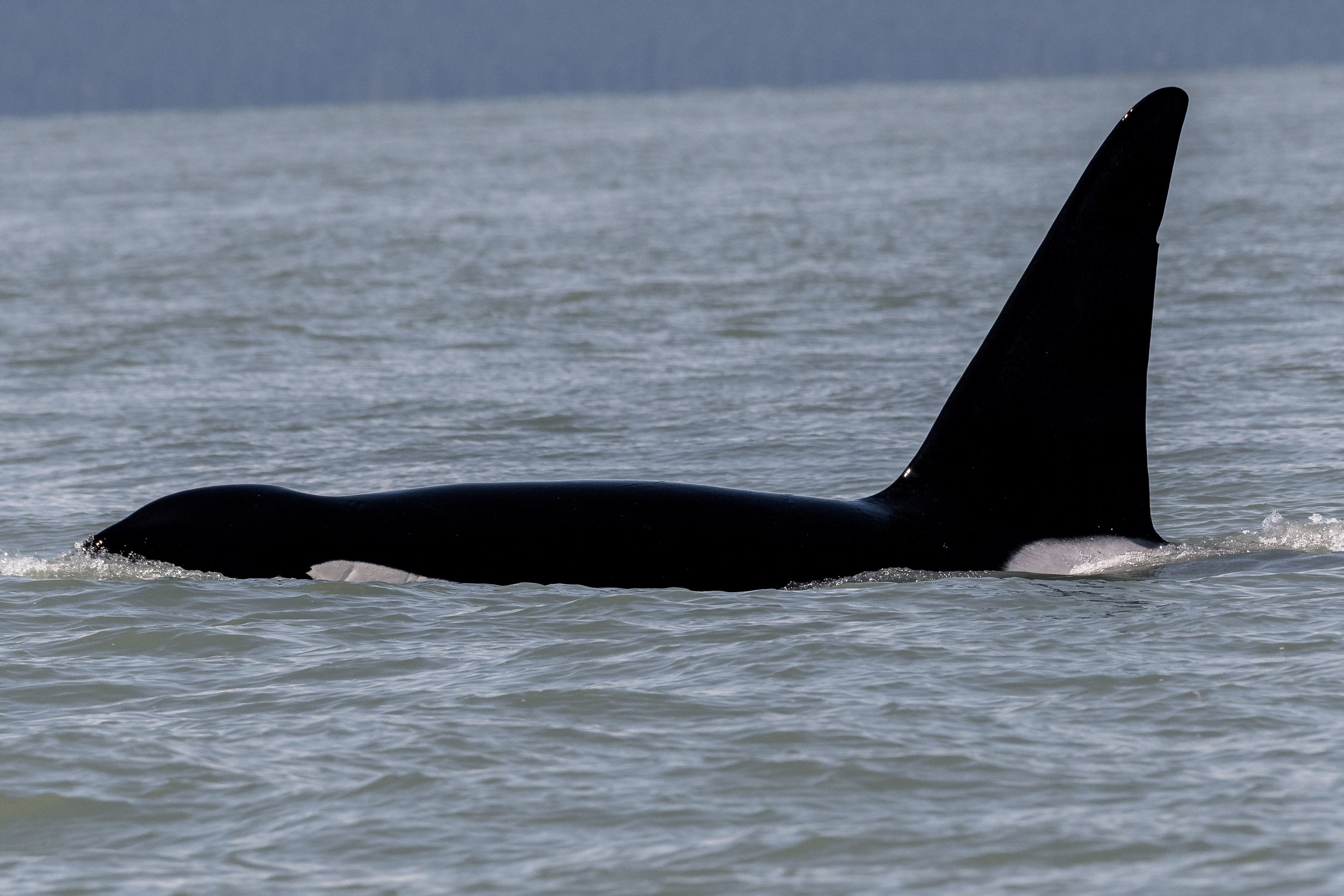
T123A Stanley showing off his massive dorsal fin. Photograph by Evan Hessels.
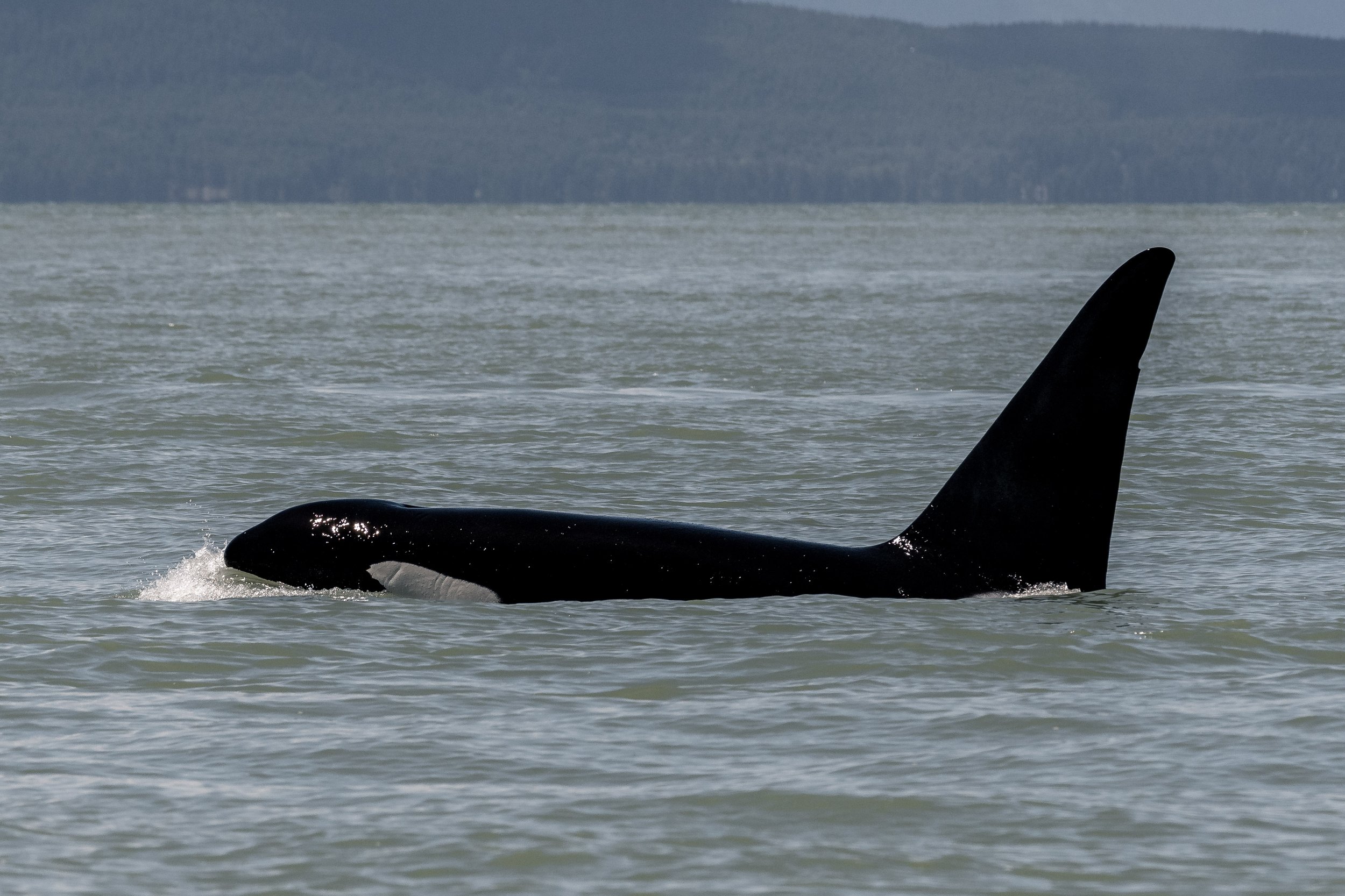
A better look at T123A Stanley’s eyepatch just out of the water. Photograph by Evan Hessels.
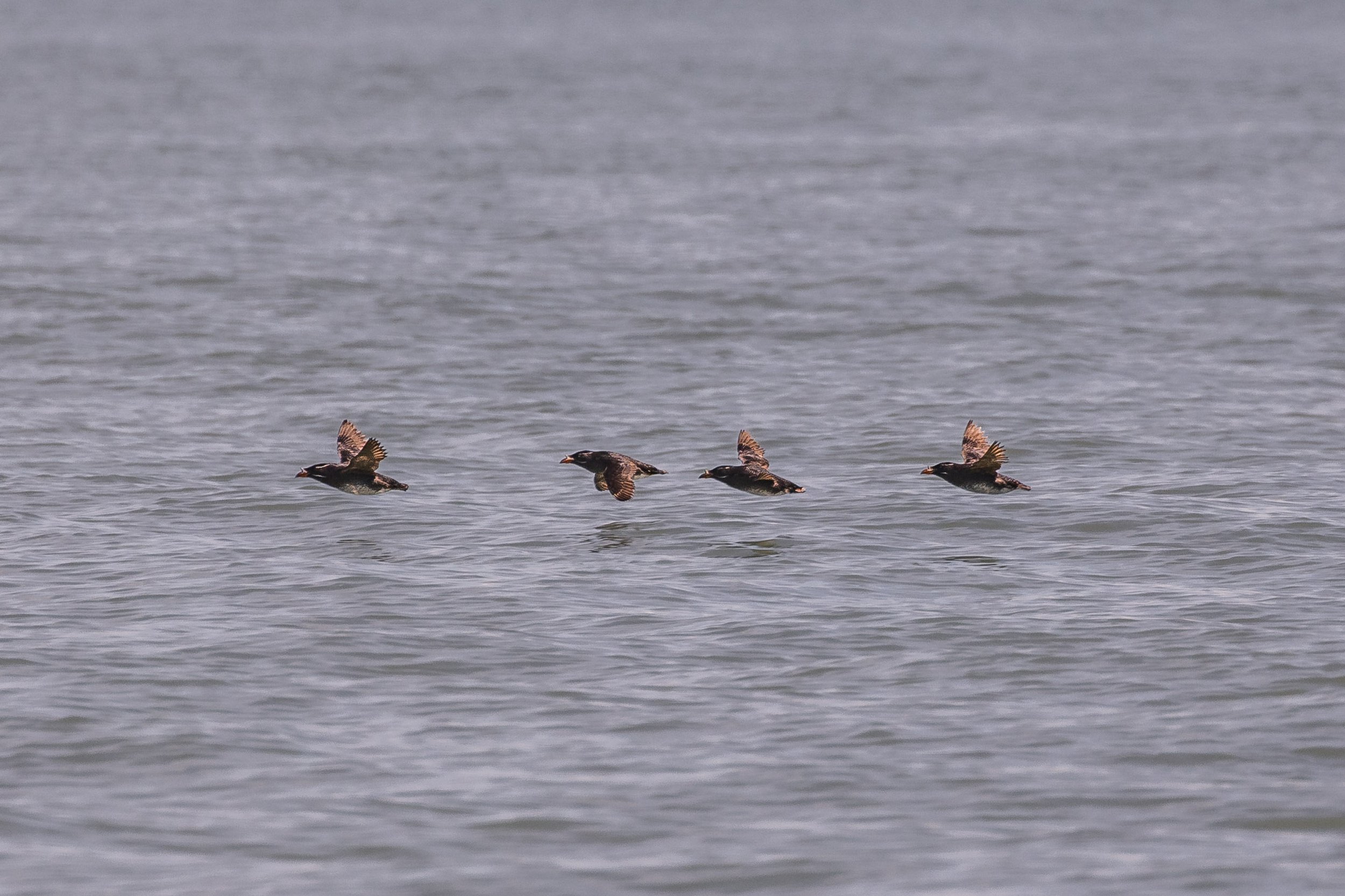
A flock of Rhinoceros auklets flying by. Photograph by Jordan Robinson.
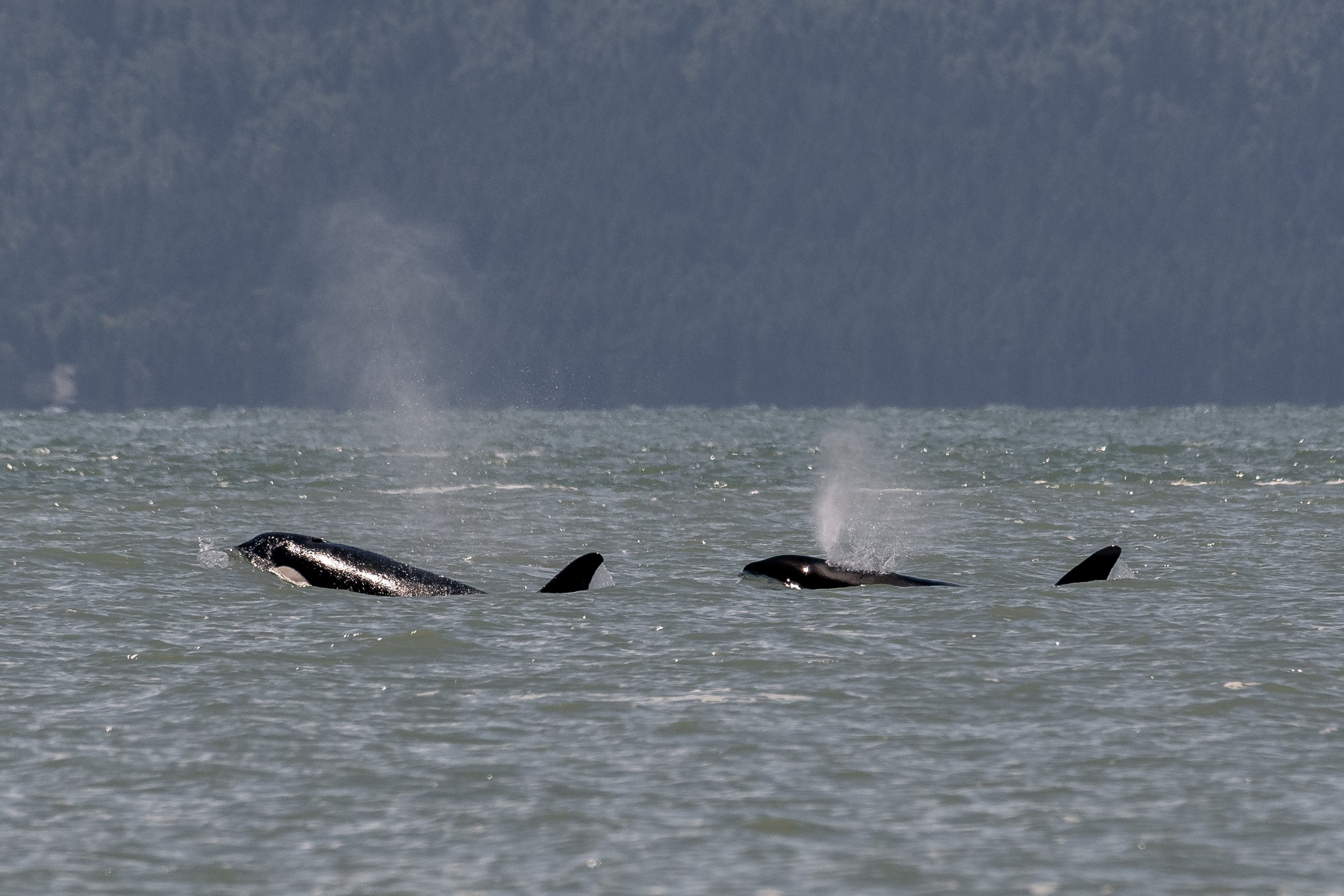
The matriarch of this pod T123 Sidney on the left follows by T123C Darcy on the right. Photograph by Evan Hessels.
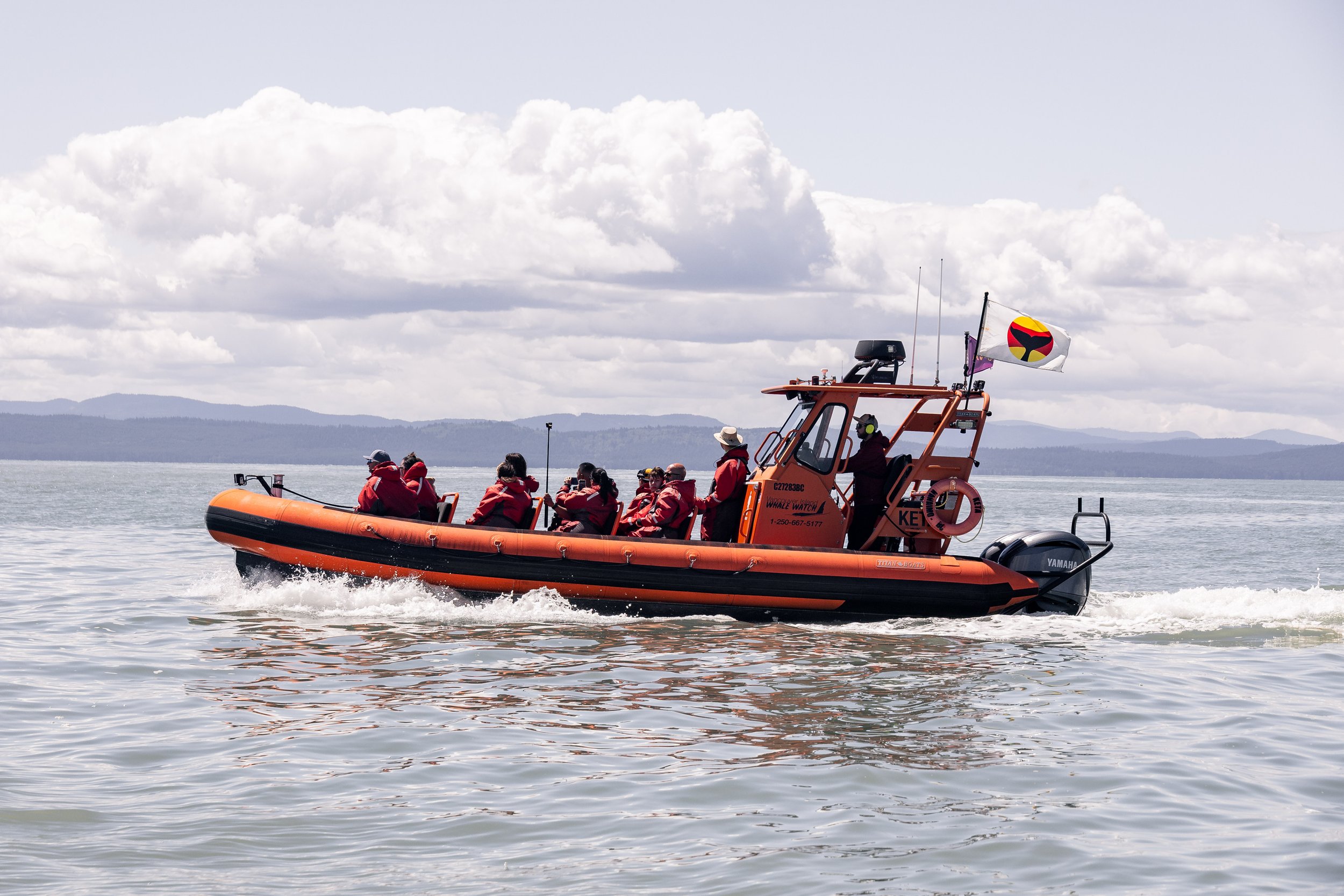
Our open boat Keta enjoying the good sights of the T123s. Photograph by Hayleigh Hilbert.
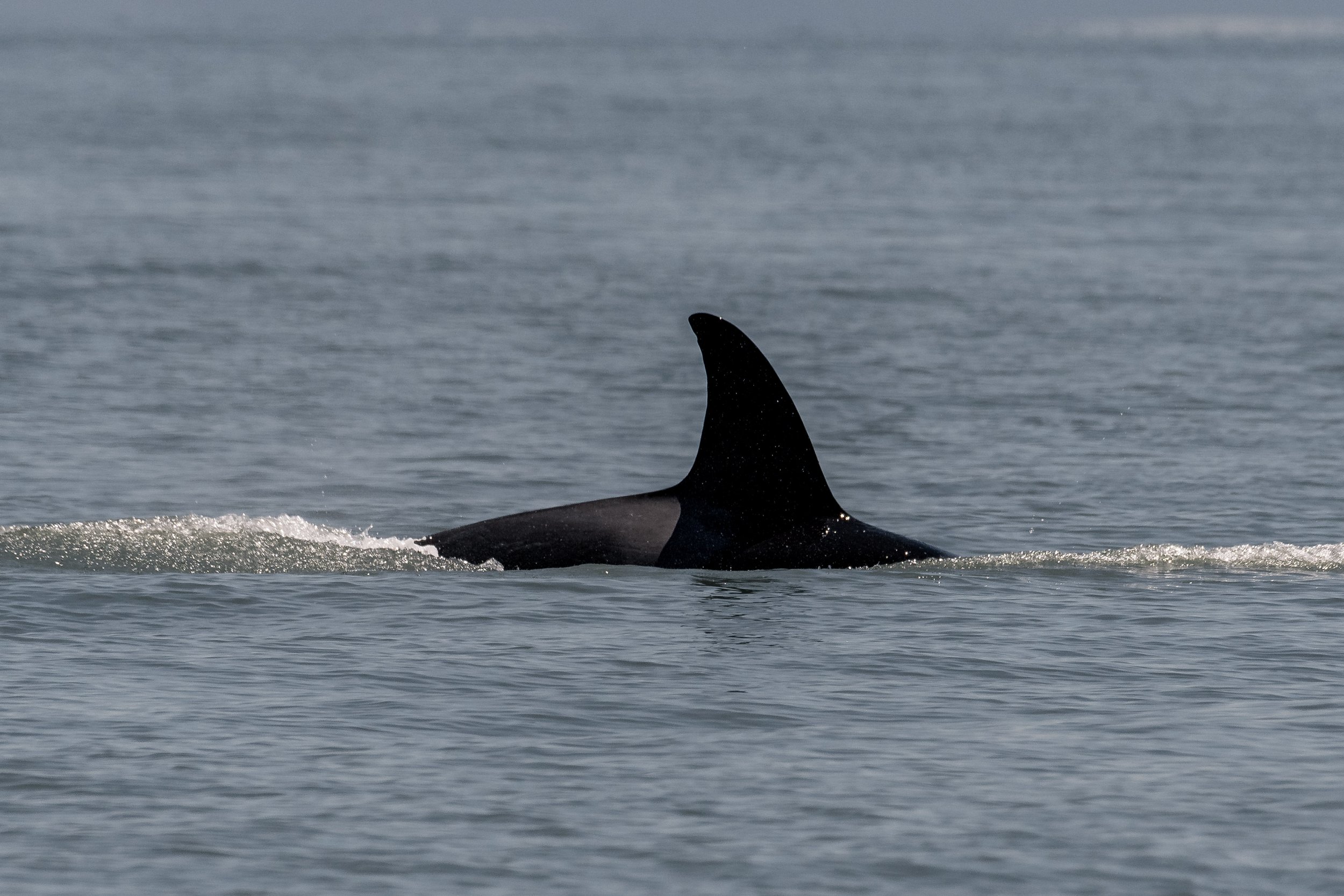
The youngest in the pod T123D Darcy cruising along. Photograph by Evan Hessels.
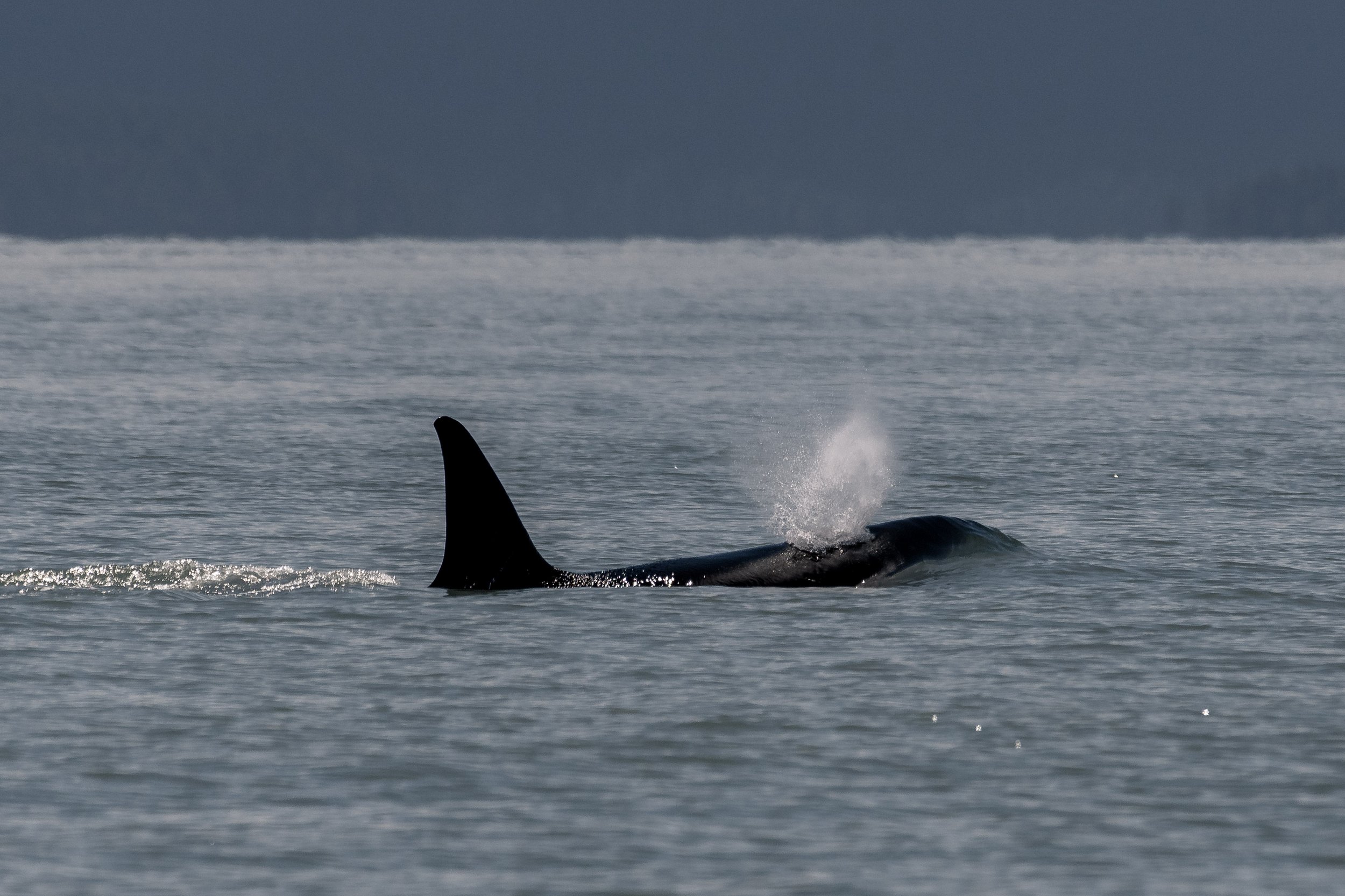
T123 Sidney giving a blow as she comes to the surface. Photograph by Evan Hessels.
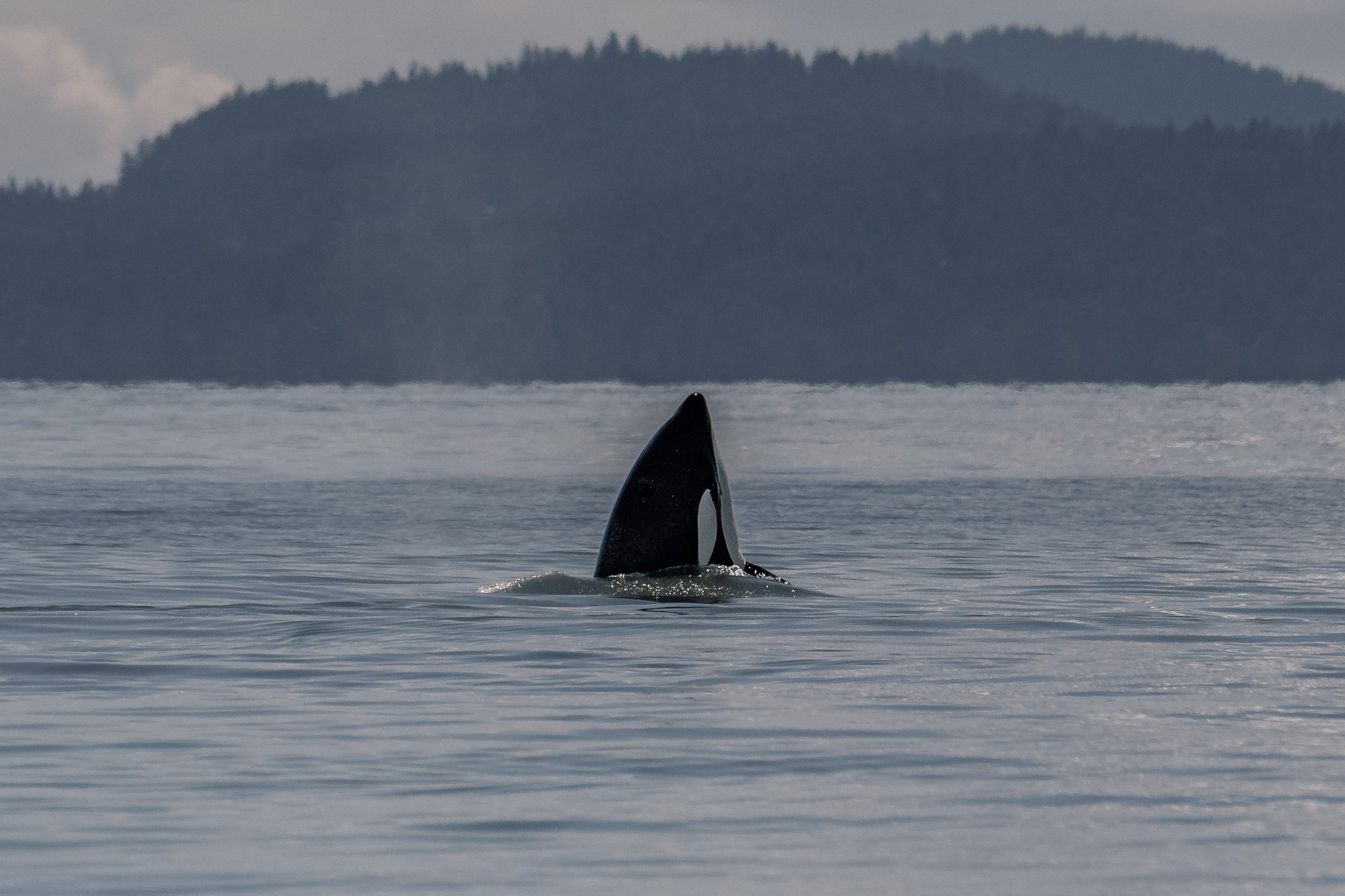
A spyhop by T123C Lucky.
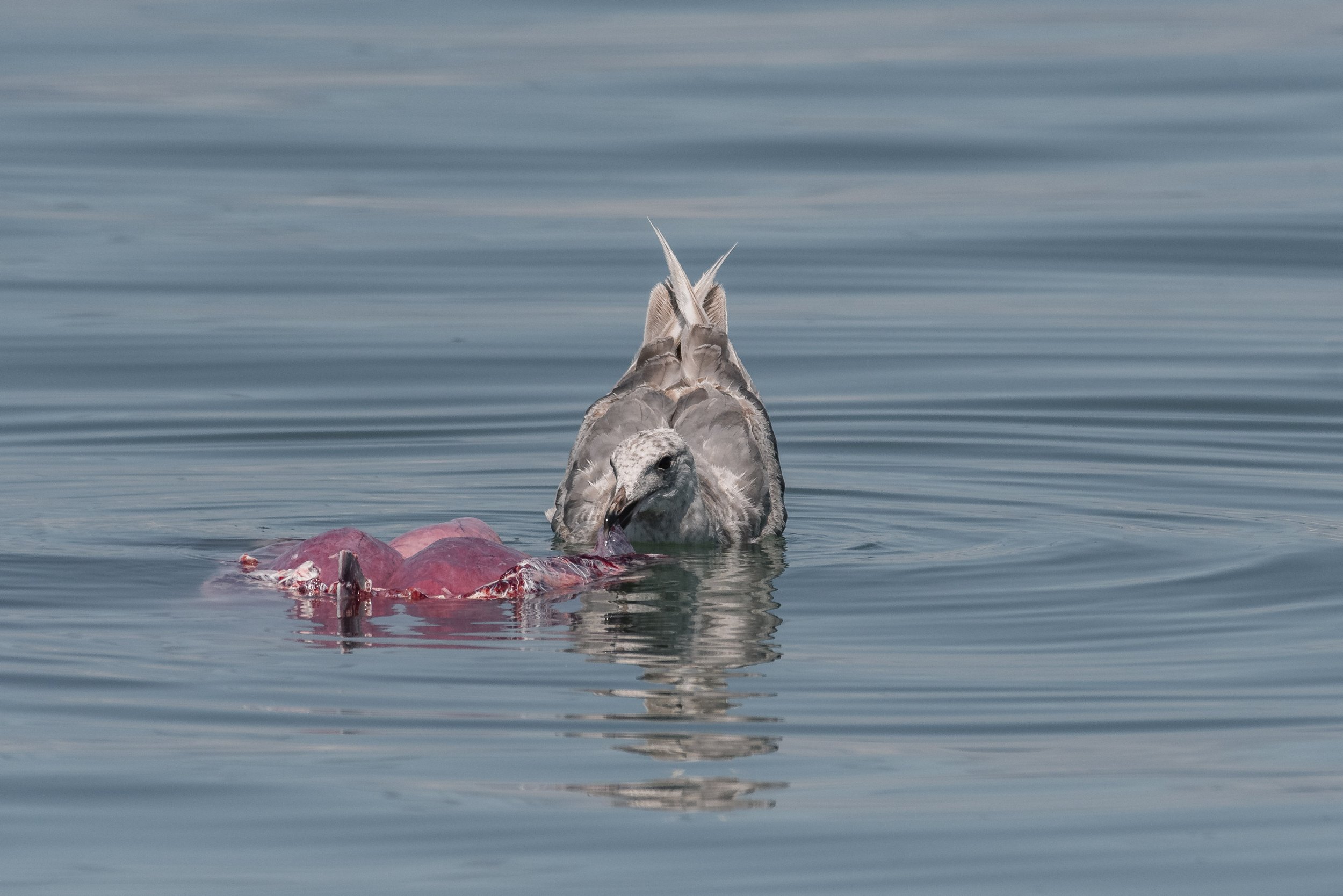
A juvenile Gull feeding on what remains of T123s prey. Photograph by Evan Hessels.
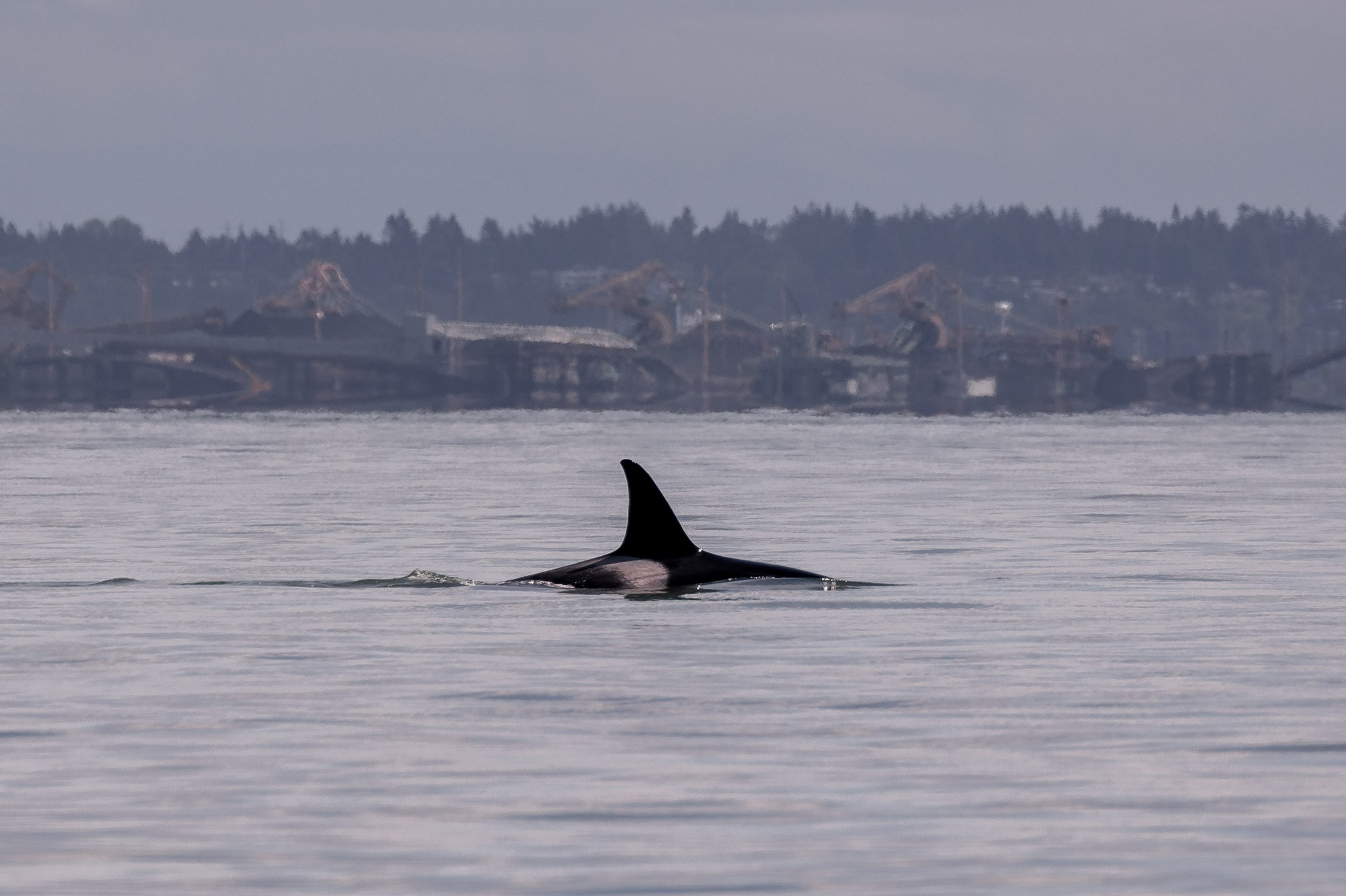
T123 Sidney giving a better view of the unique scarring on her saddlepatch. Photograph by Jordan Robinson.
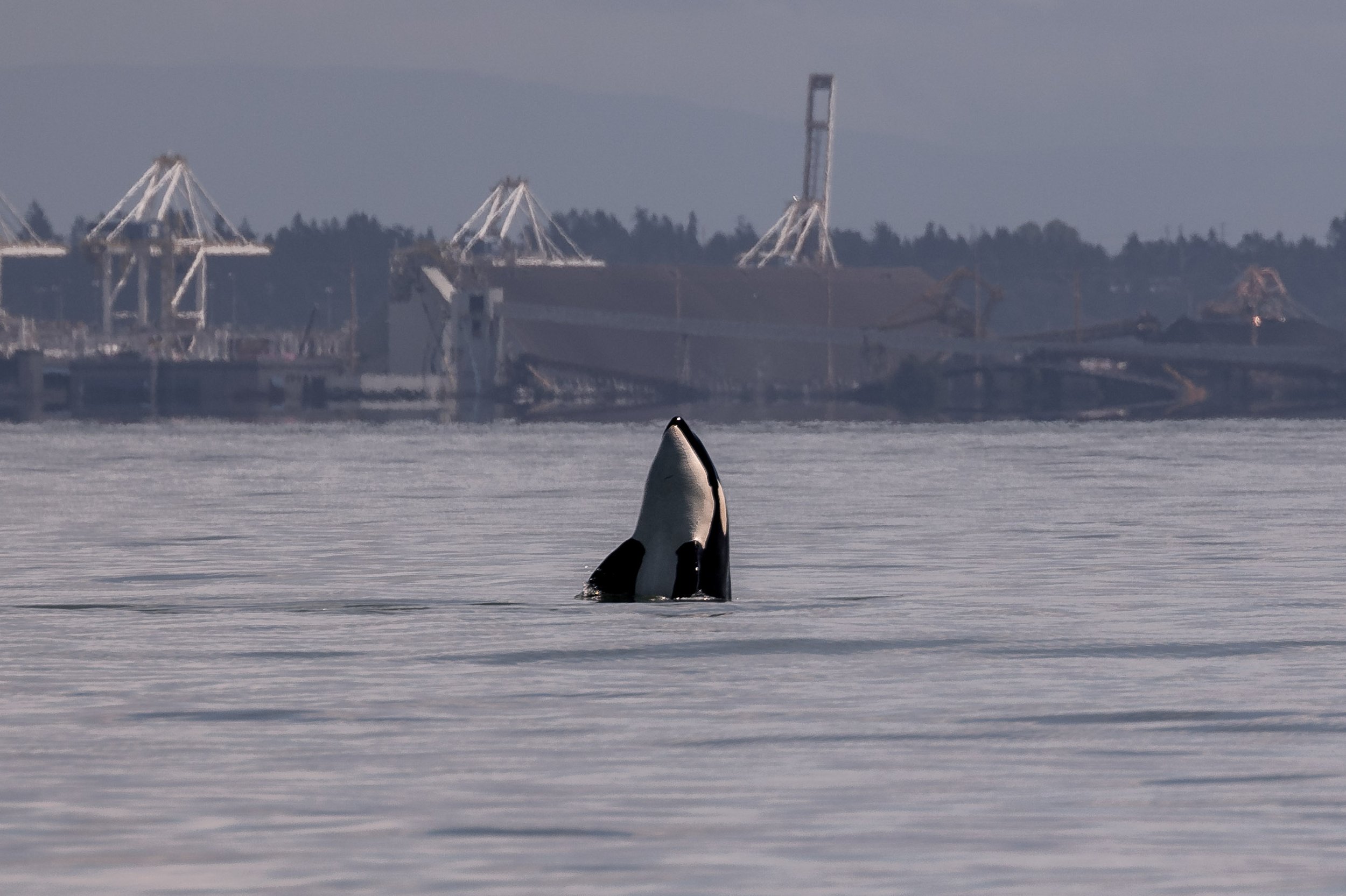
T123D Darcy spyhopping in the distance. Photograph by Jordan Robinson.
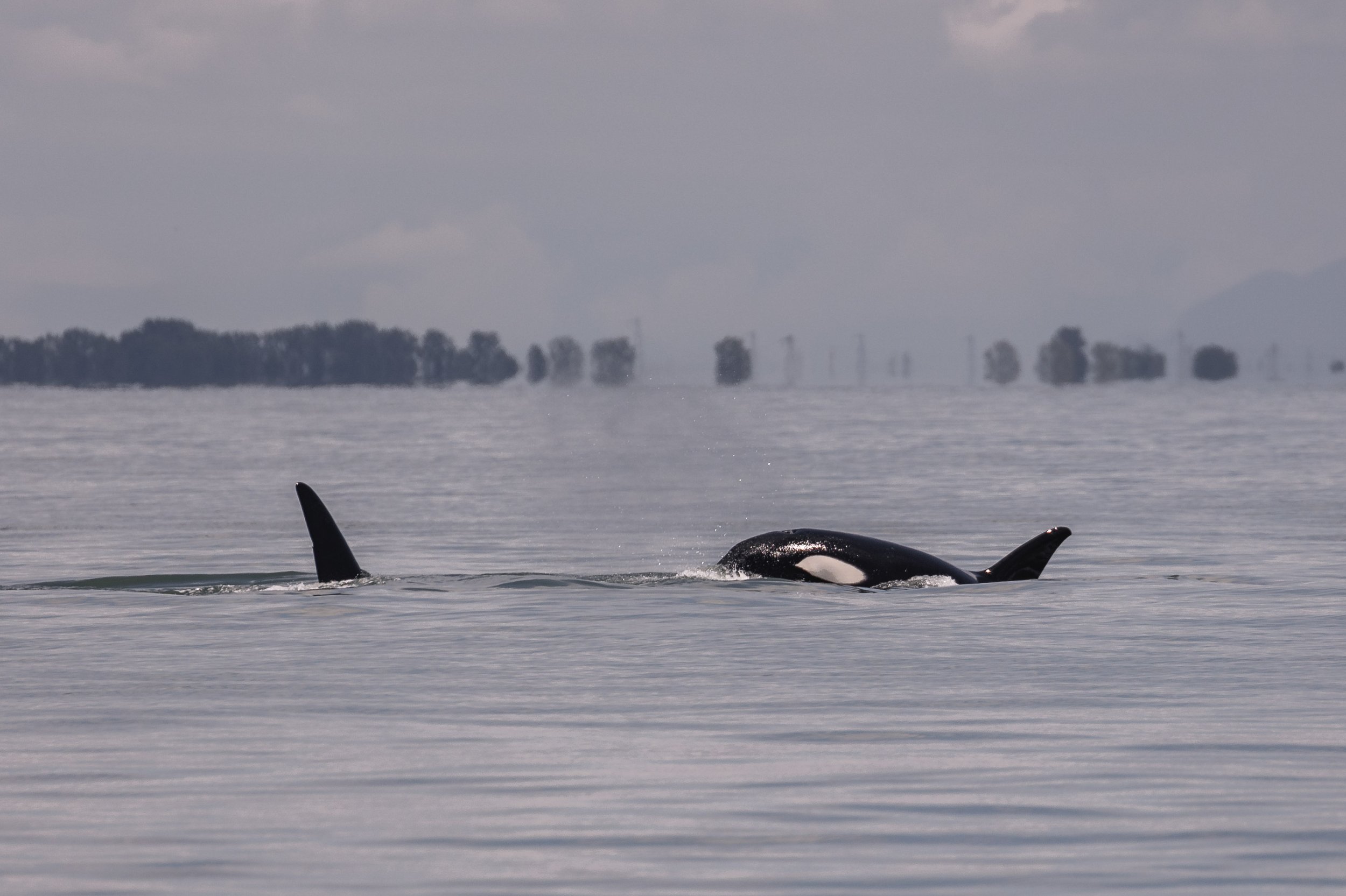
The tip of T123A Stanleys fin on the left and a good view of T123C Luckys eyepatch on the right. Photograph by Jordan Robinson.
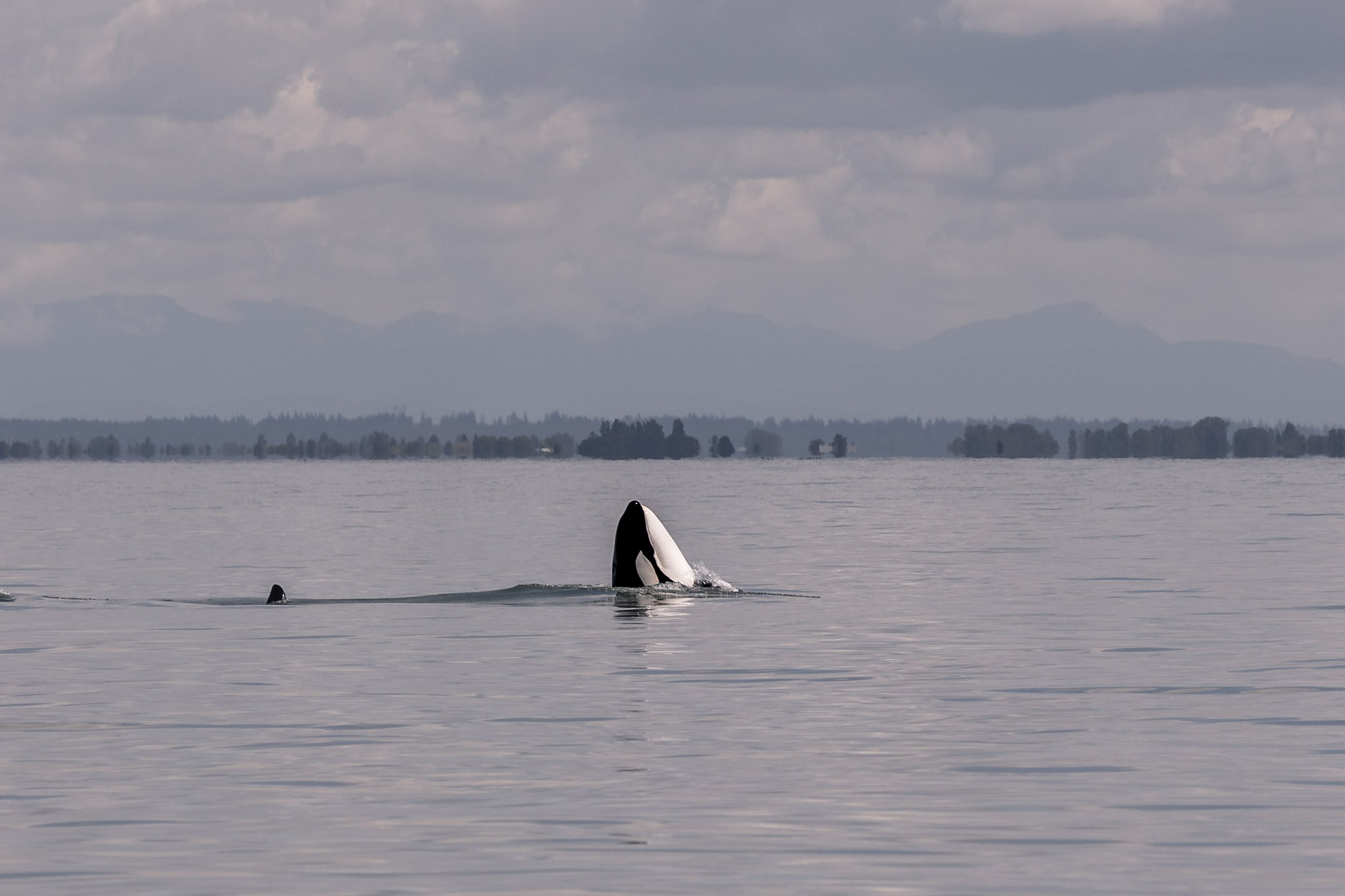
T123 Sidney now giving a good spyhop. Photograph by Jordan Robinson.
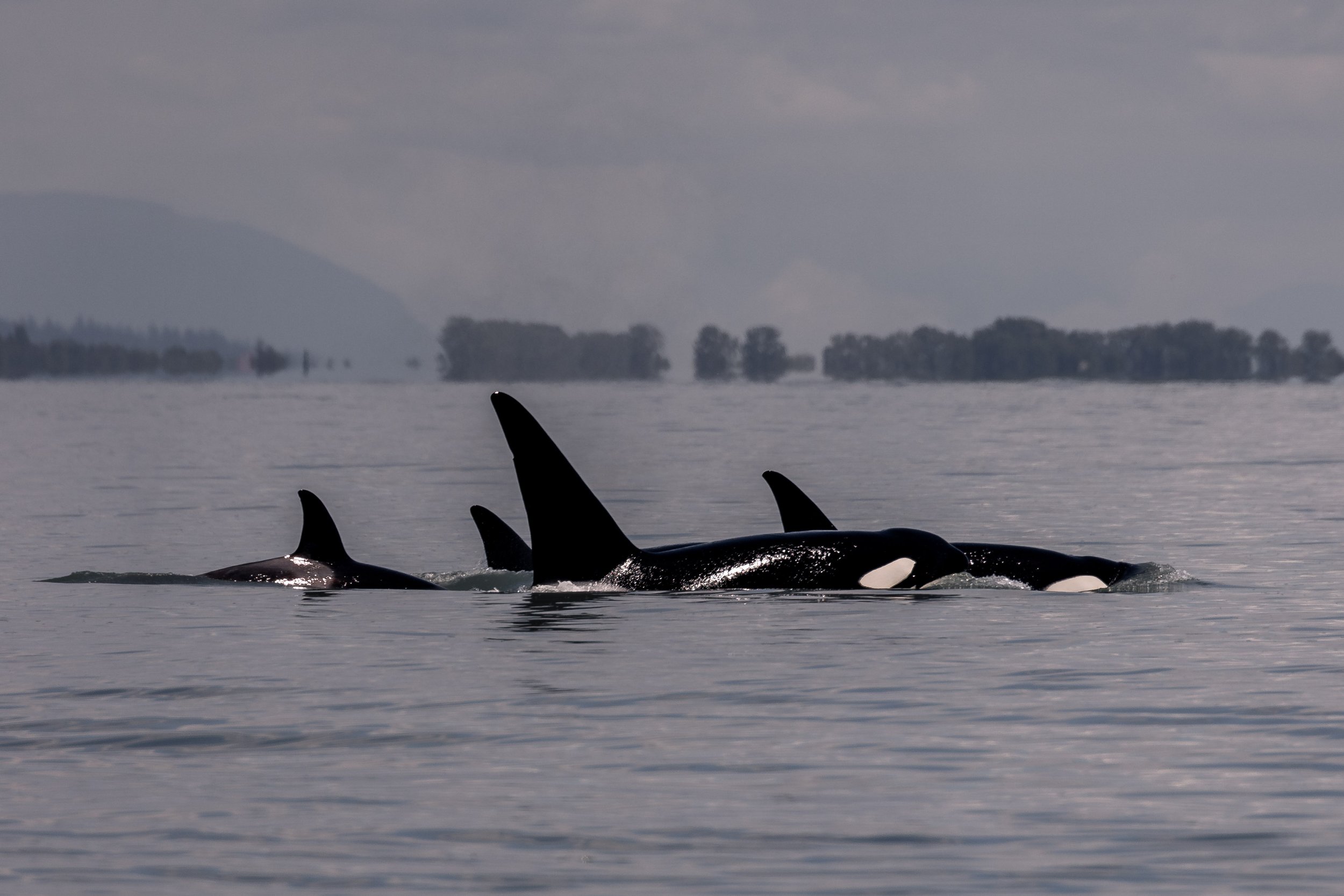
The whole pod now together, from left to right: T123D Darcy, T123C Lucky, T123A Stanley, and T123 Sidney taking the lead. Photograph by Jordan Robinson.
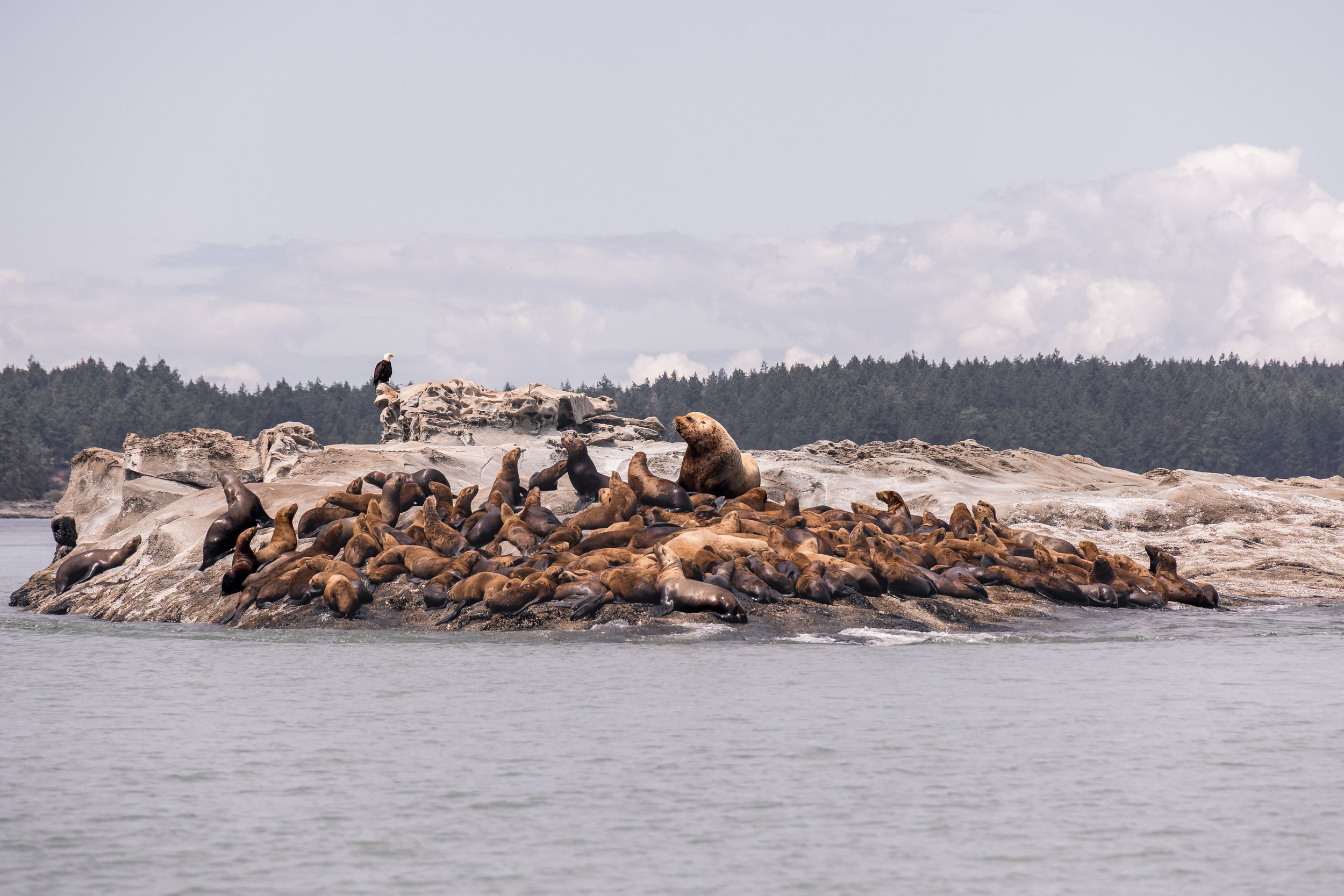
A large haulout of Steller Sea Lions at Stinky Rock. Photograph by Hayleigh Hilbert.
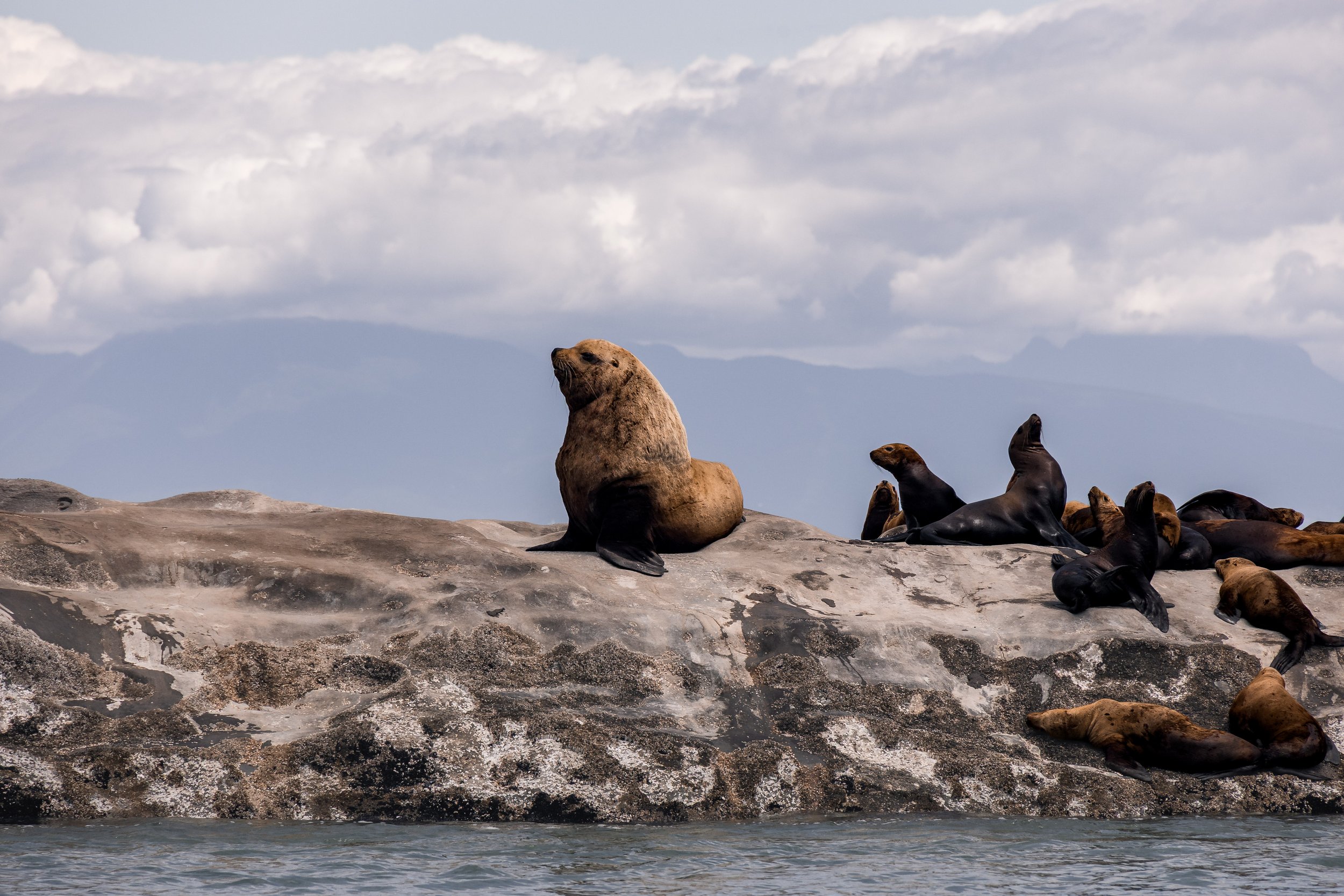
The largest male Steller Sea Lion on this rock, Stinky Steve, showing off his size. Photograph by Hayleigh Hilbert.
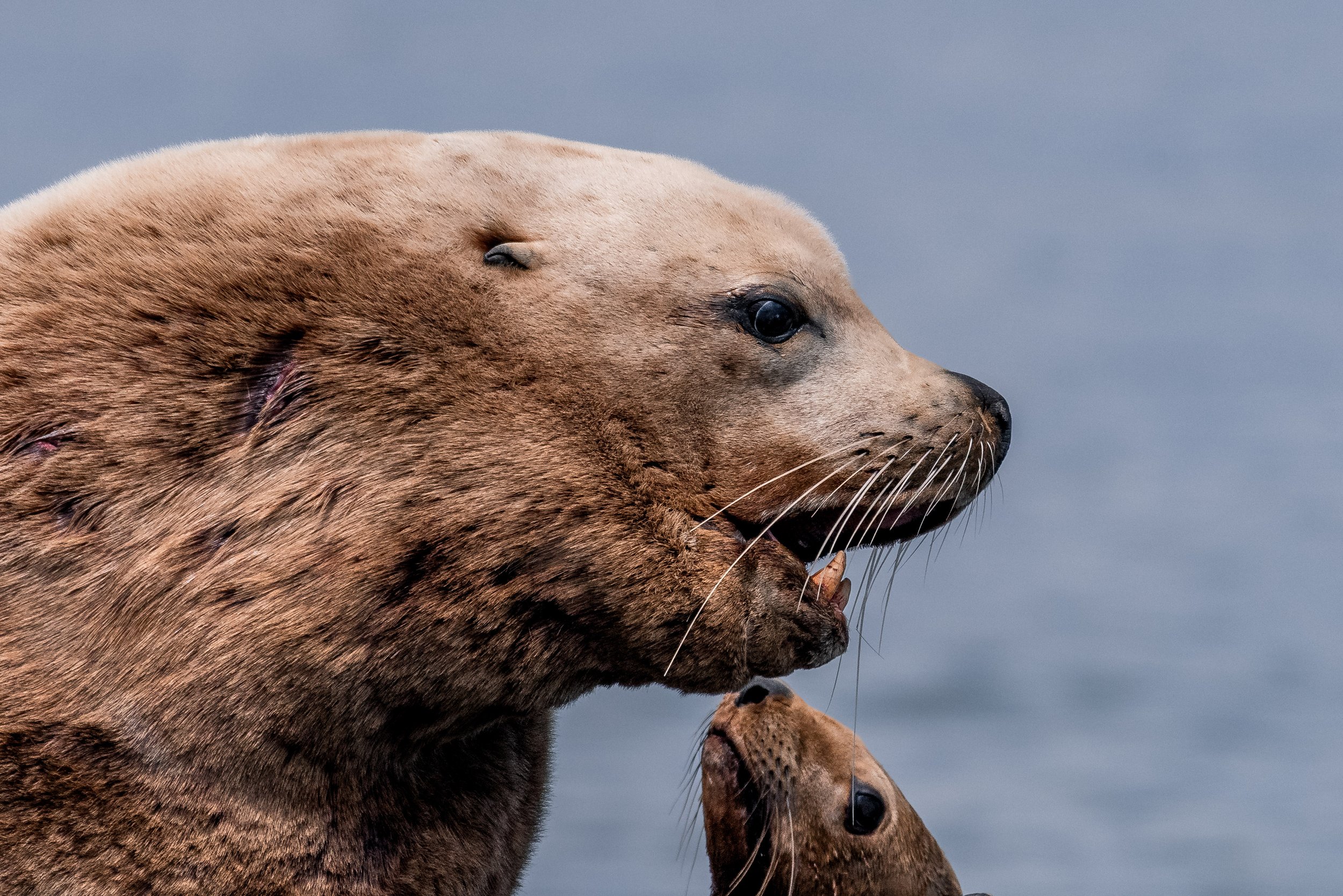
A close view of the large male Steller Sea Lions face, showing off his large teeth. Photograph by Evan Hessels.
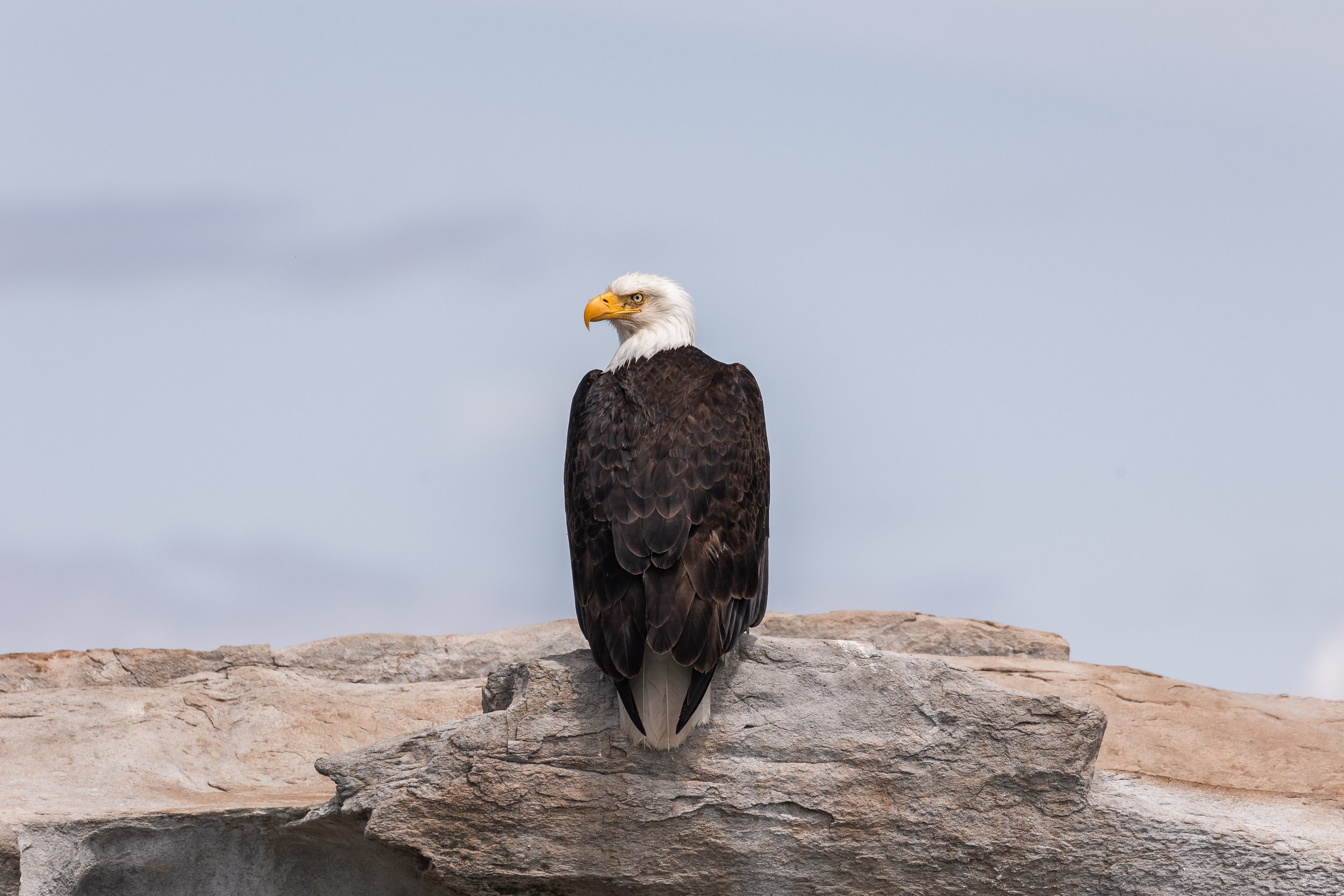
An adult Bald Eagle taking a look at us as we boat by. Photograph by Jordan Robinson.
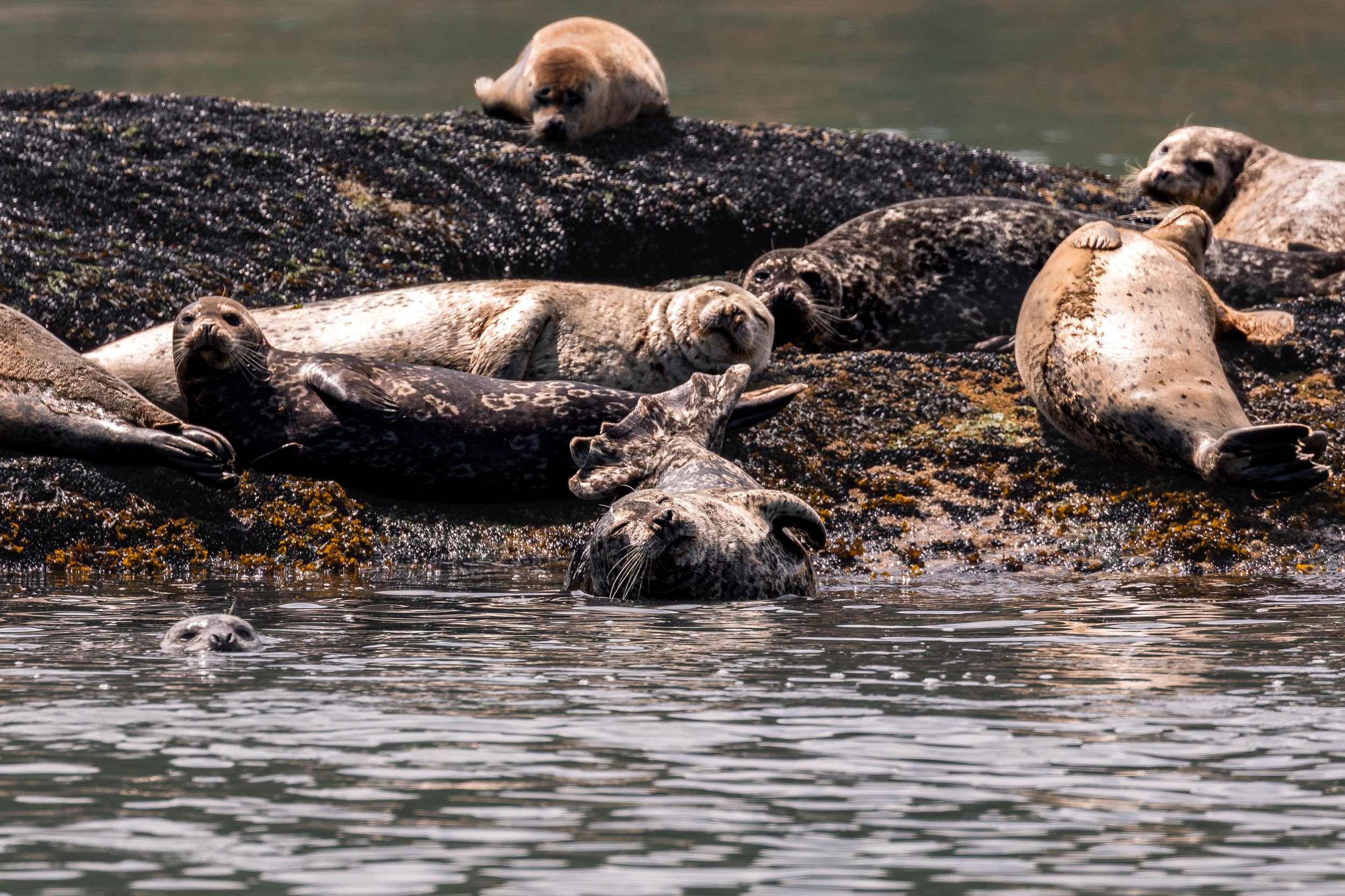
A number of Harbour Seals relaxing on the rocks. Photograph by Jordan Robinson.
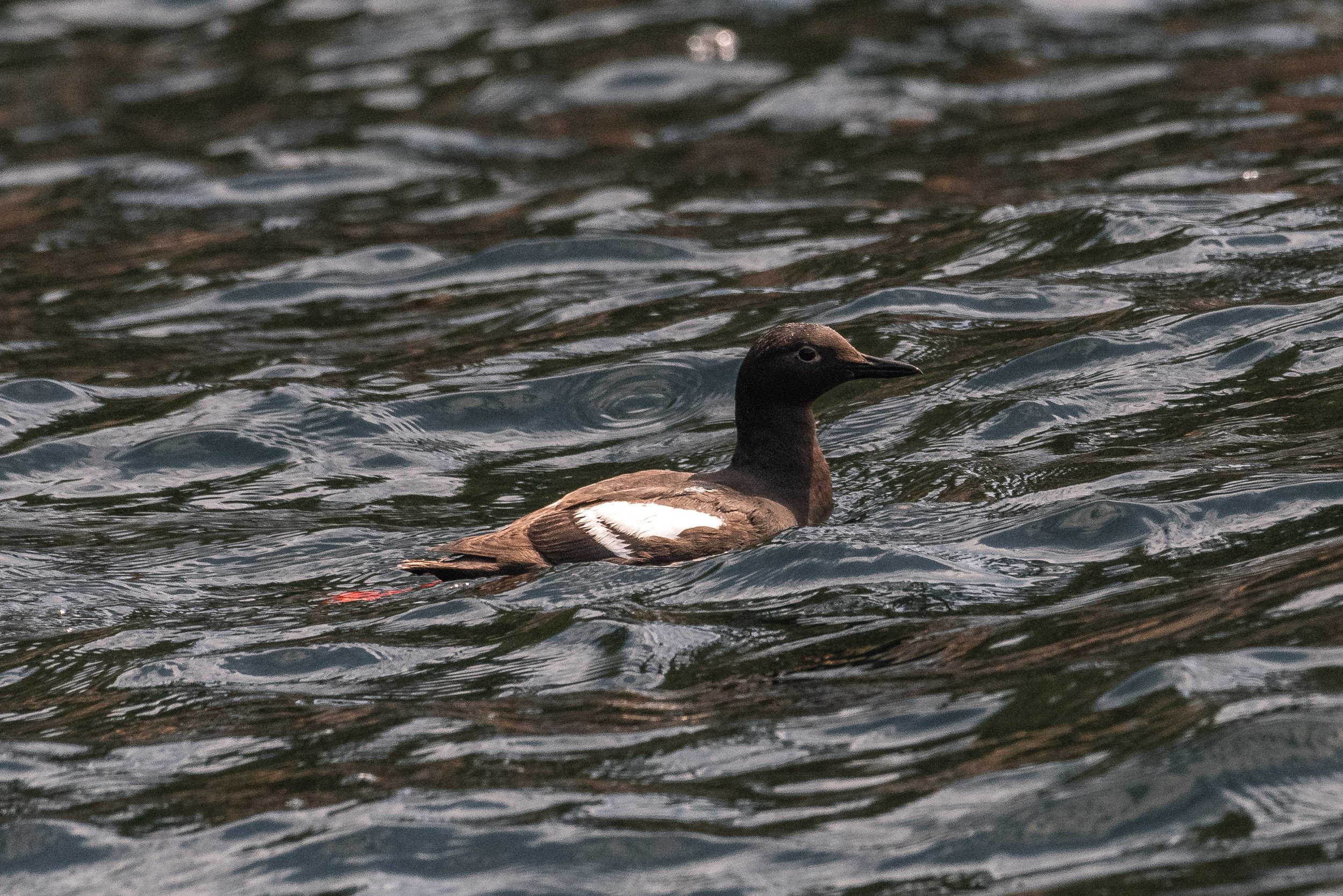
A close view of a Pigeon Puillemot swimming by. Photograph by Evan Hessels.
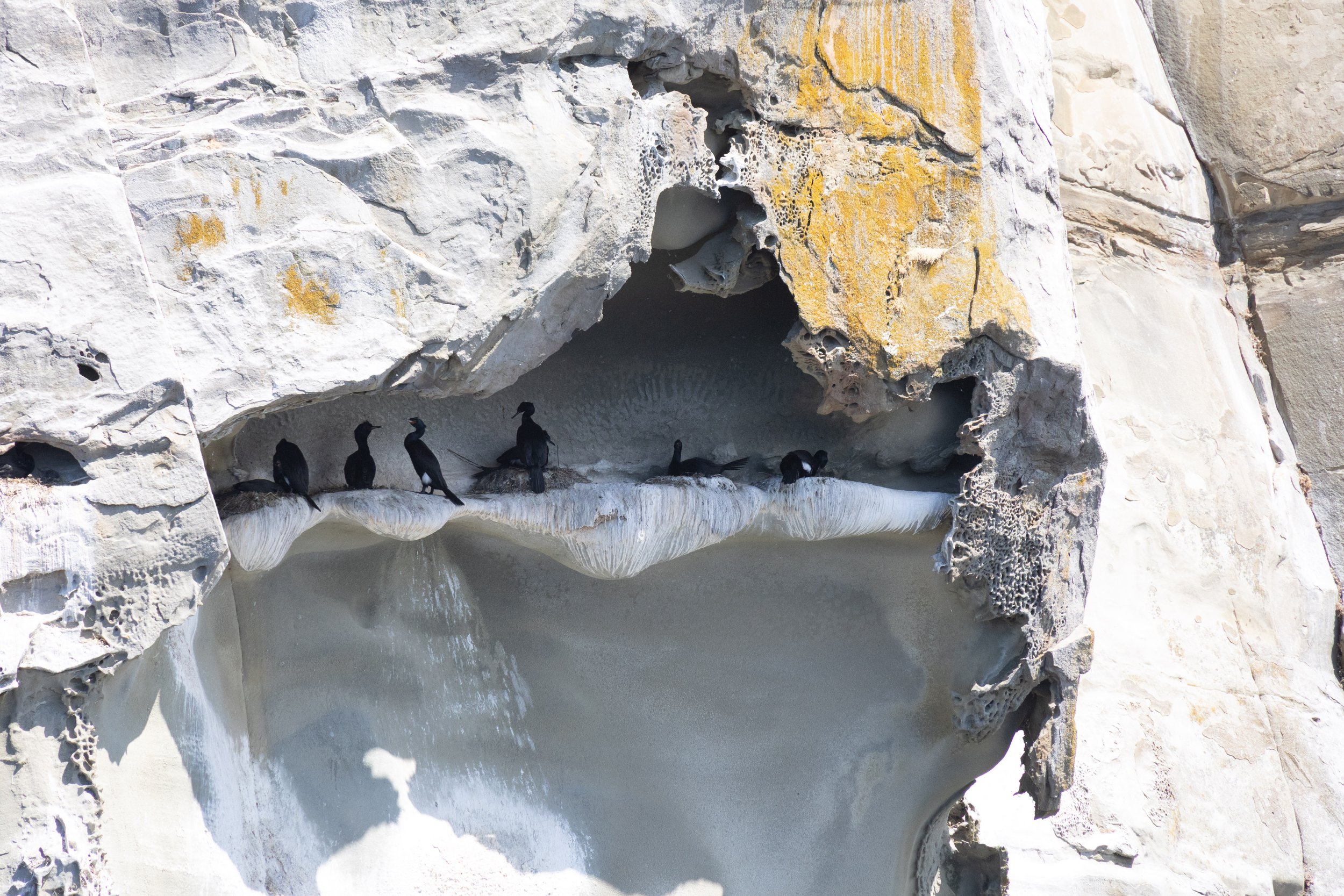
A group of nesting Pelagic Cormorants. Photograph by Hayleigh Hilbert.
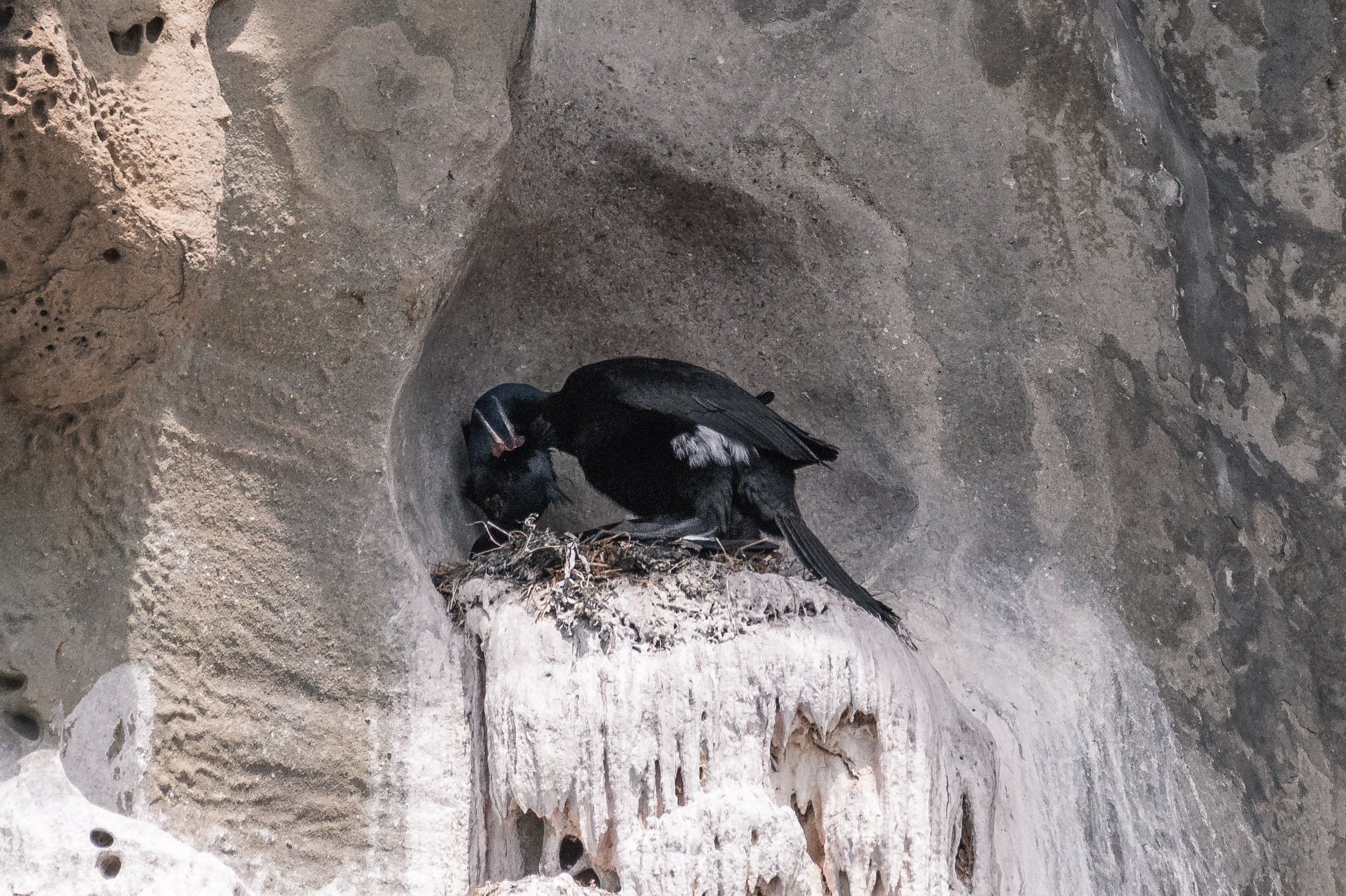
A closer view at some nesting Pelagic Cormorants. Photograph by Evan Hessels.
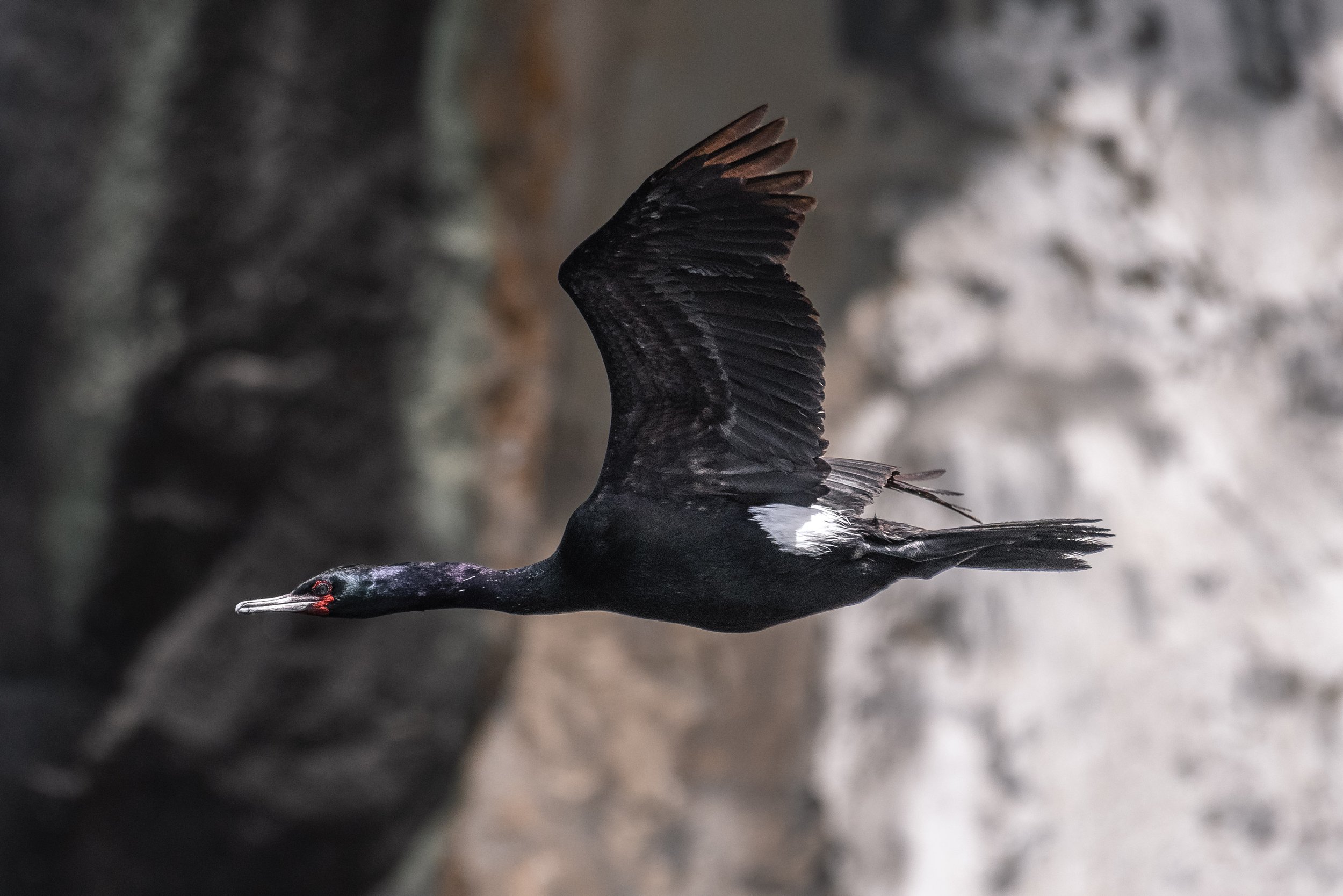
A Pelagic Cormorants in full breeding plumage flying by. Photograph by Evan Hessels.