
June 7, 2026, 10:30 AM - Celebrating with the orca, followed by a side of humpbacks
Moody skies greeted us as we prepared the journey ahead. Donning our anti-exposure suits, our Open Zodiac guests boarded Keta, while our Semi-covered guests loaded onto Kula. With much buzz about potential sightings in many areas around us, we had no idea what the day had in store for us as we departed the dock, eyes eagerly peeking across the waters as we started travelling onward.
Heading up the Vancouver Island coasts, we passed by North Nanaimo, then Lantzville, before making it all the way to French Creek. Once here, we soon spotted what we were after – orca of all sizes emerged from the waters, surfacing together all around. A quick count suggested there were at least ten whales present, meaning we likely had more than one matriline on scene. Suddenly, excitement exploded amongst the whales, with a ton of splashing, tail slapping, and breaching. What we had found turned out to be a giant celebration, or in other words, a T-party! T-parties is the name used whenever multiple Transient orca pods are seen travelling and socializing together.
With many fins popping up all around, Naturalists Vanessa and Jordan began working on identifying who was present. With many small fins tucked in amongst the larger whales, IDing everyone turned out to be quite the challenge. We confirmed that at least twelve orca were present, including the following pods:
T100 Hutchins ♀ (~1979)
T100C Laurel ♂ (2002)
T100F Estrella (2014)
T137 Loon ♀ (~1984)
T137A Jack ♂ (2002)
T137B Tempest ♀ (2006)
T137D Wright ♀ (2012)
T036A Leland ♀ (1990)
T036A2 Kailas ♀ (2012)
T036A2A Rogue (2025)
T036A3 Storm/Mike III ♂ (2015)
T036A5 Squall ♂ (2021)
T086A Eider ♀ (1988)
T086A4 Akia ♀ (2016)
T086A5 Siku ♂ (2024)
Amongst the matrlines, two individuals stuck out: T086A5 Siku, and T036A2A Rogue. These young whales were bouncing with youthful energy, quickly porpoising alongside their mothers while zipping back and forth amongst other pod members. The two large males present, T100C Laurel and T137A Jack, also appeared to be having a great time, occasionally breaching, before landing with a huge splash back into the depths.
Get-togethers such as this one are an important part of the developmental cycle for young calves. Here, they meet other calves their age who can be their playmates, and learn valuable information from other matriarchs and older whales. For the mature individuals, it is also a key breeding opportunity, which in turn helps the population continue to grow and flourish in the future.
Soon after arriving, the party fragmented into two distinct groups. It seems that we may have witnessed their farewell celebrations, as one group soon zoomed away, likely off on a new adventure. After visiting the orca for a bit longer, we broke away as well, Captains Rodrigo and Joseph turning us back south and motoring on once more.
Keta and Kula spread out, extending our search range to find the other whale most commonly spotted on our trip: the humpback whale. This technique proved very successful, as both boats found a pair of humpbacks!
Keta’s humpbacks were travelling along very slowly, diving deep between breaths. After snapping a couple of photos of the pair’s dorsal fins during a surface, we learned that this was Chinook (BCY0996) and X_pialidocious (BCY1540) associating. Both of these whales have been regular visitors to our waters in the summer in previous seasons, and we are happy to see that trend continues in 2026 as well.
Nearby, Kula’s humpback pair was similarly travelling along, fluking occasionally as they dove. This pair turned out to be Arial (BCY0767) and Forge (BCX2499). Just like Keta’s pair, Arial and Forge have been documented returning to our shores yearly. Arial, in particular, has been returning for nearly two decades, from when his mother, Houdini (BCX0022), had him by her side back in 2007, to now, when he is often spotted travelling with a companion or two.
After a couple of quick views of the humpbacks, we were off once more, travelling down the coastline back towards Nanaimo. The trip was not quite over yet, though, as there were a couple more species to find right on the outskirts of the harbour. Over towards Harmac, small fuzzy brown lumps could be seen balancing on the log booms. Lazily lifting their heads, they revealed bright blonde crests at the centres of their foreheads. These were California Sea Lions enjoying a nice, lazy afternoon. Most of our California Sea Lion population has now departed our waters, heading back to California to breed, but we still have a couple of stragglers enjoying the Island life here for the time being. On the other side of Northumberland Channel, squawks bounced off the rock faces as cormorants soared overhead, bustling around as they brought nesting materials back to the cliffside. This area is a rookery, where they breed and lay their eggs, raising chicks amongst the nooks and crannies.
Departing once more, we turned one final time, with Nanaimo soon coming back into view. Returning to the dock, we chatted excitedly, discussing the many incredible encounters from the day’s adventures.
This tour’s photos were taken by Marine Naturalists Vanessa Vereschahen and Jordan Robinson - please enjoy!
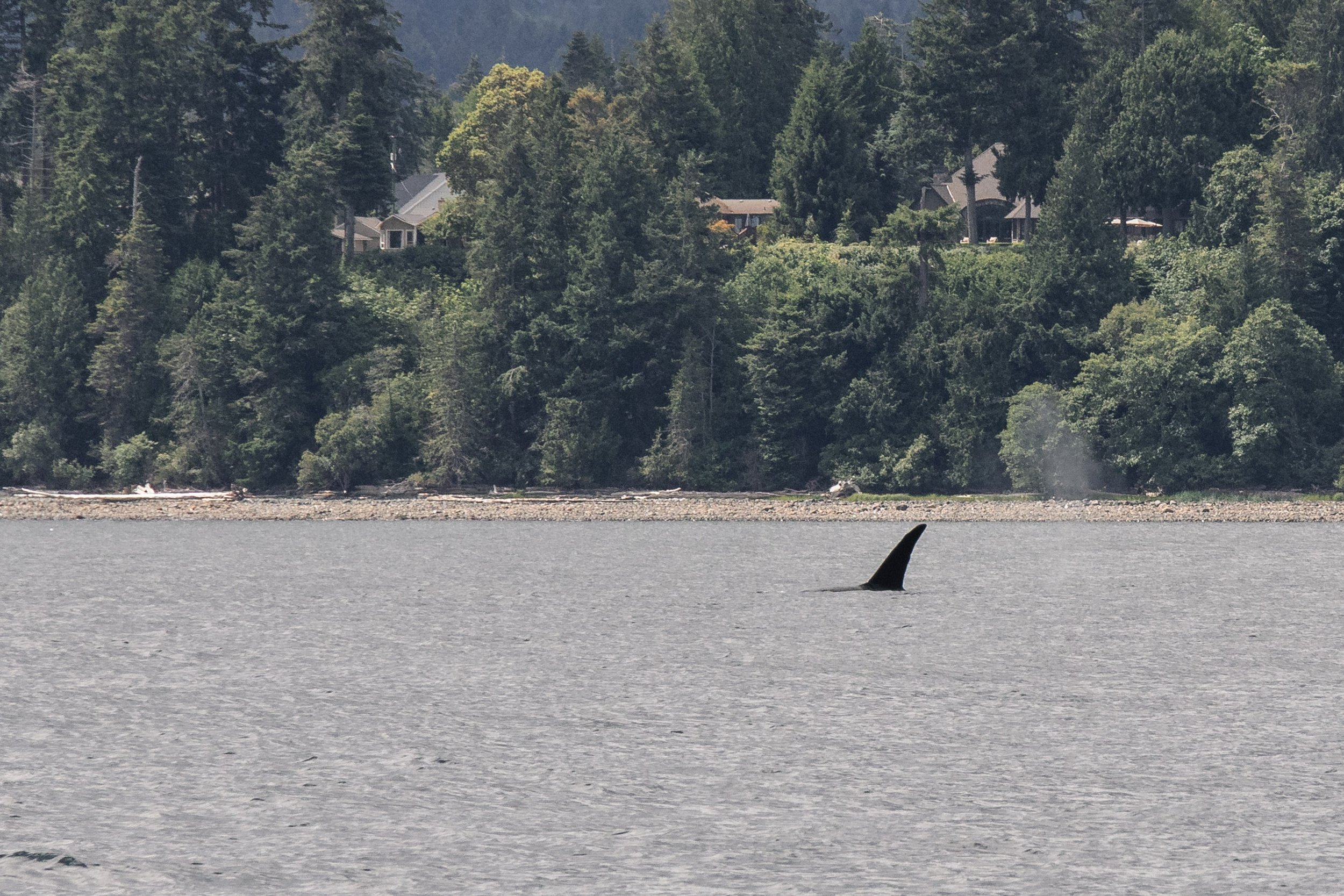
T100C Laurel travelling solo in the distance. Photo by Jordan Robinson.
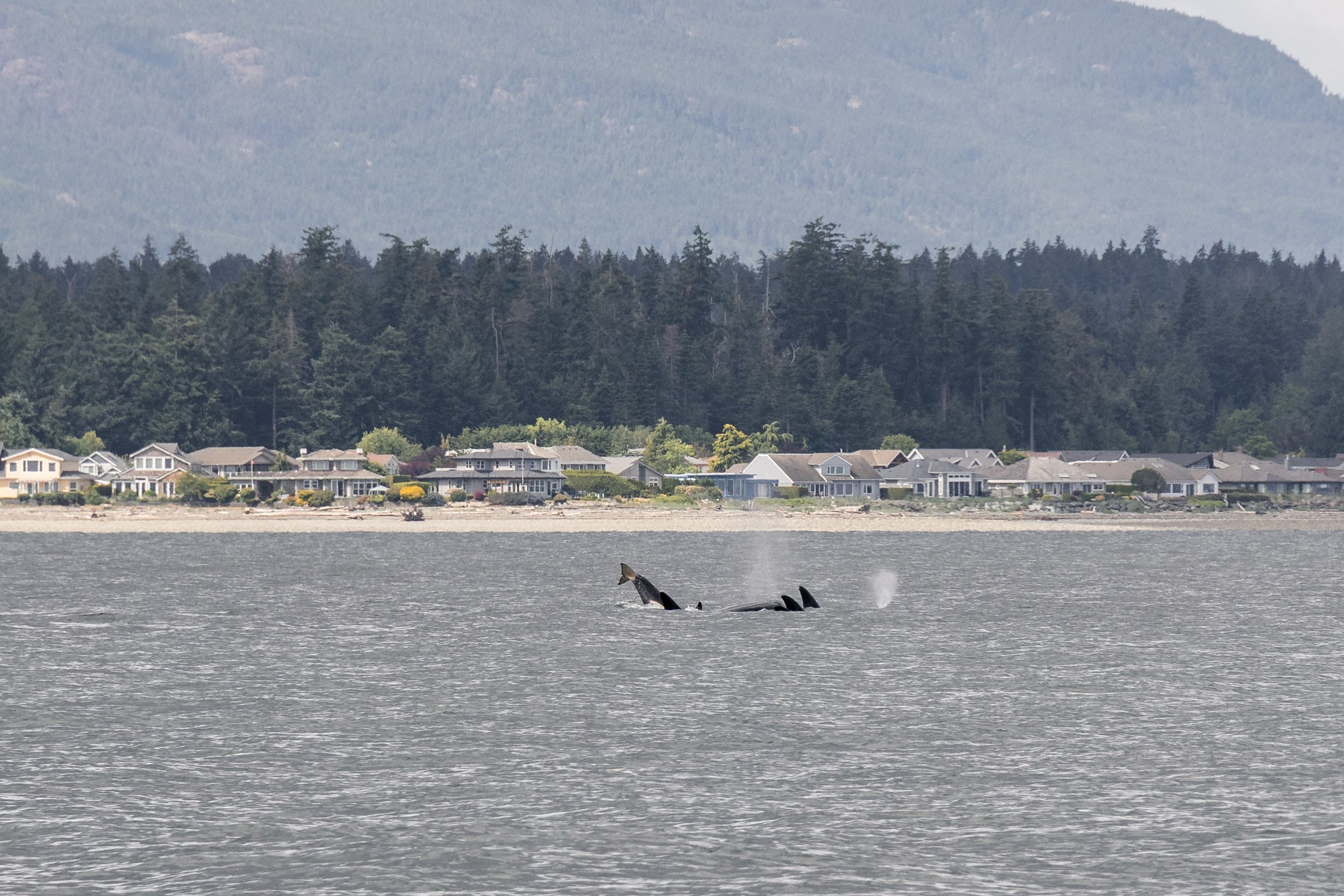
The T036As bunched together, with T036A2A Rogue’s tail up in the air. Photo by Jordan Robinson.
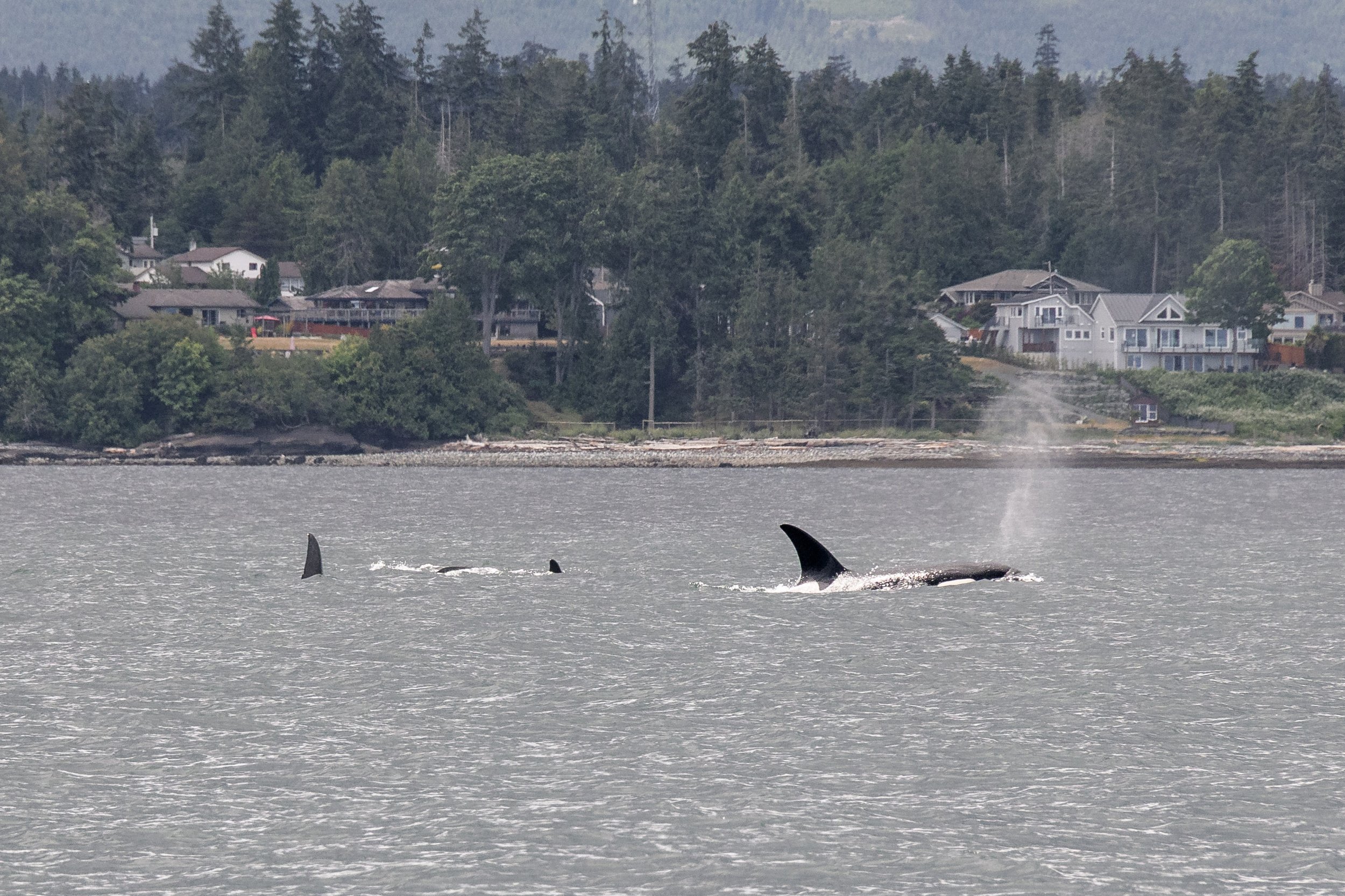
T036A3 Storm/Mike III travelling along. Photo by Jordan Robinson.
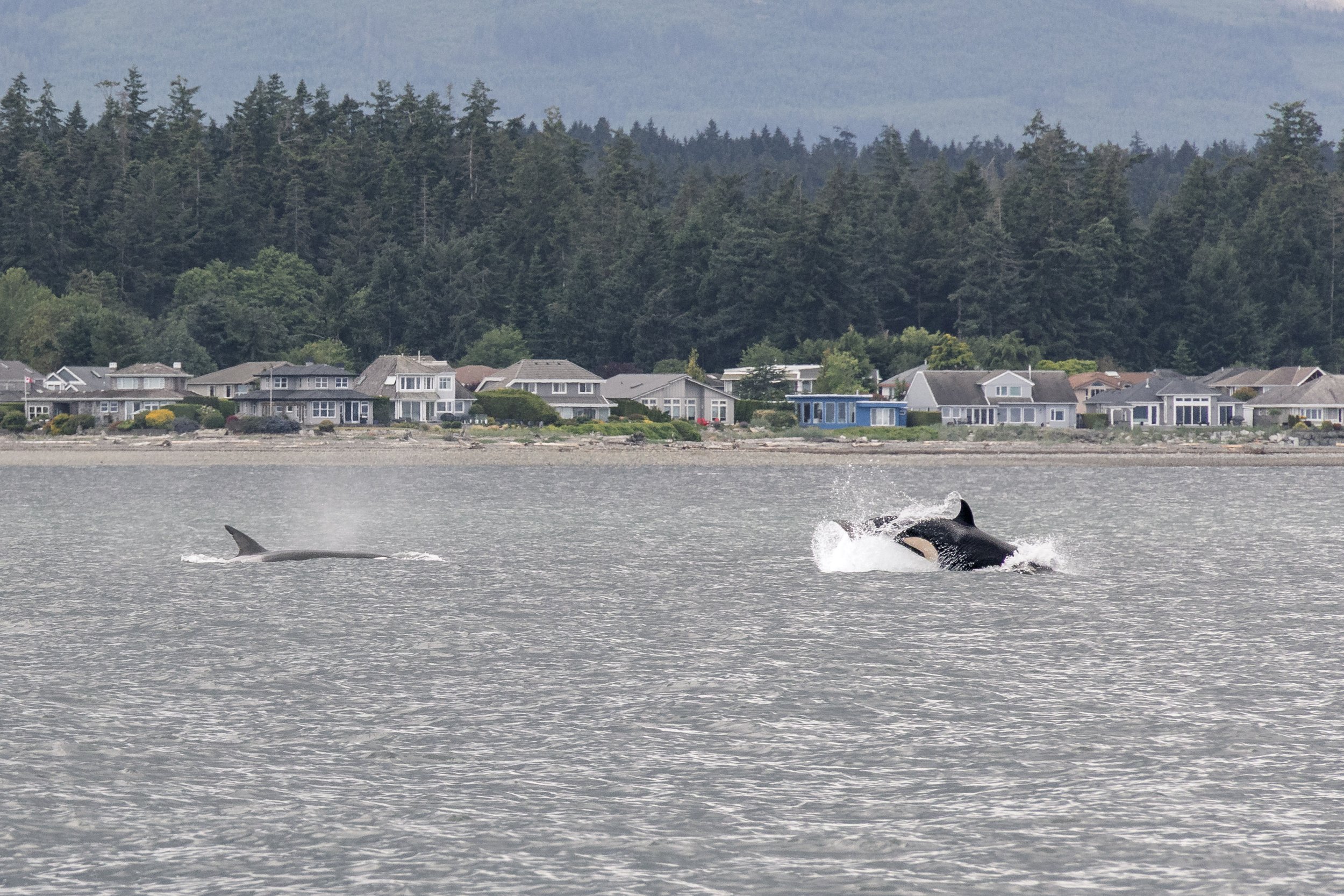
T137D Wright with T036A2A Rogue ahead of her. Photo by Jordan Robinson.
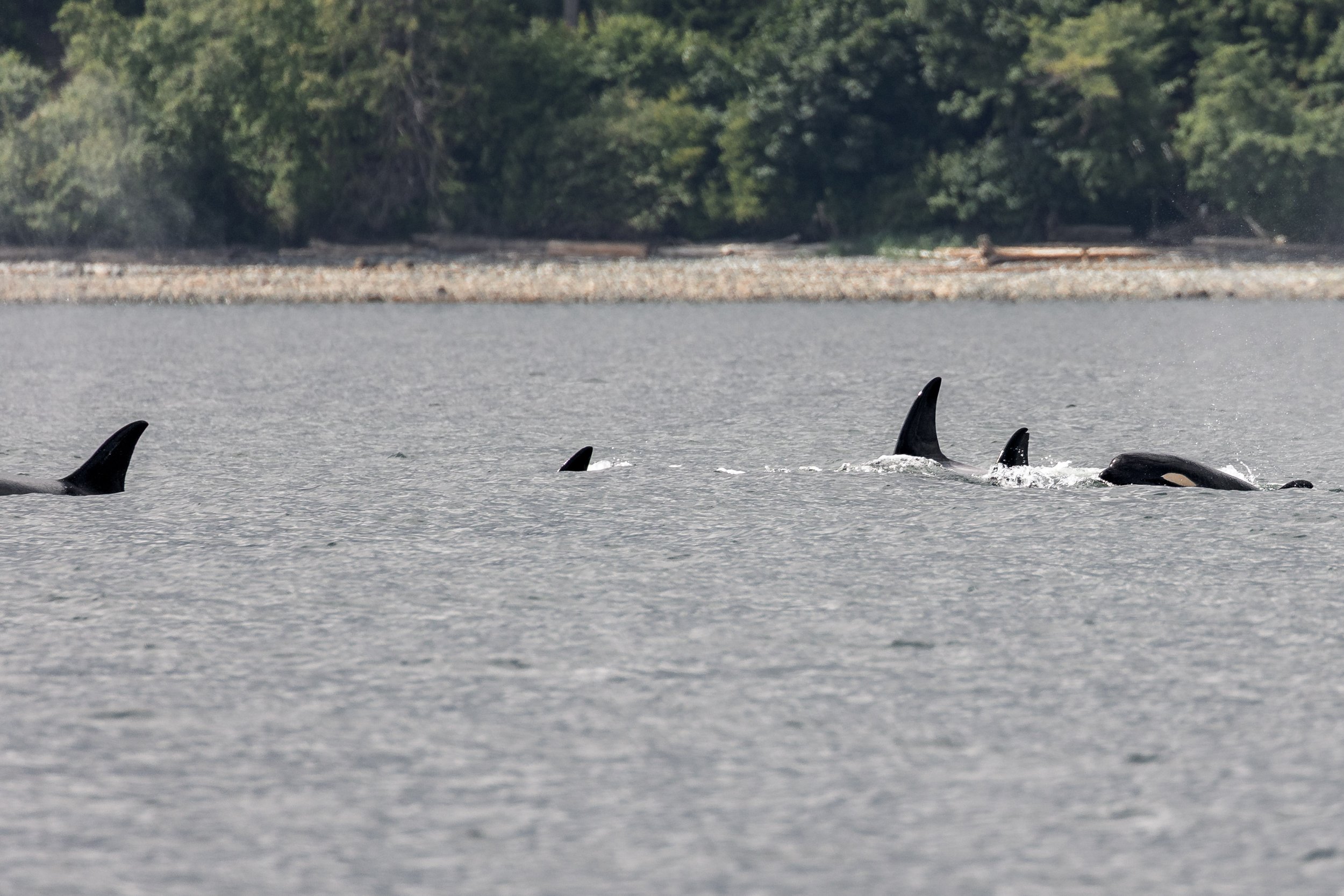
T036A Leland, T036A3 Storm/Mike III, T036A2 Kailas, and young T036A2A Rogue. Photo by Vanessa Vereschahen.
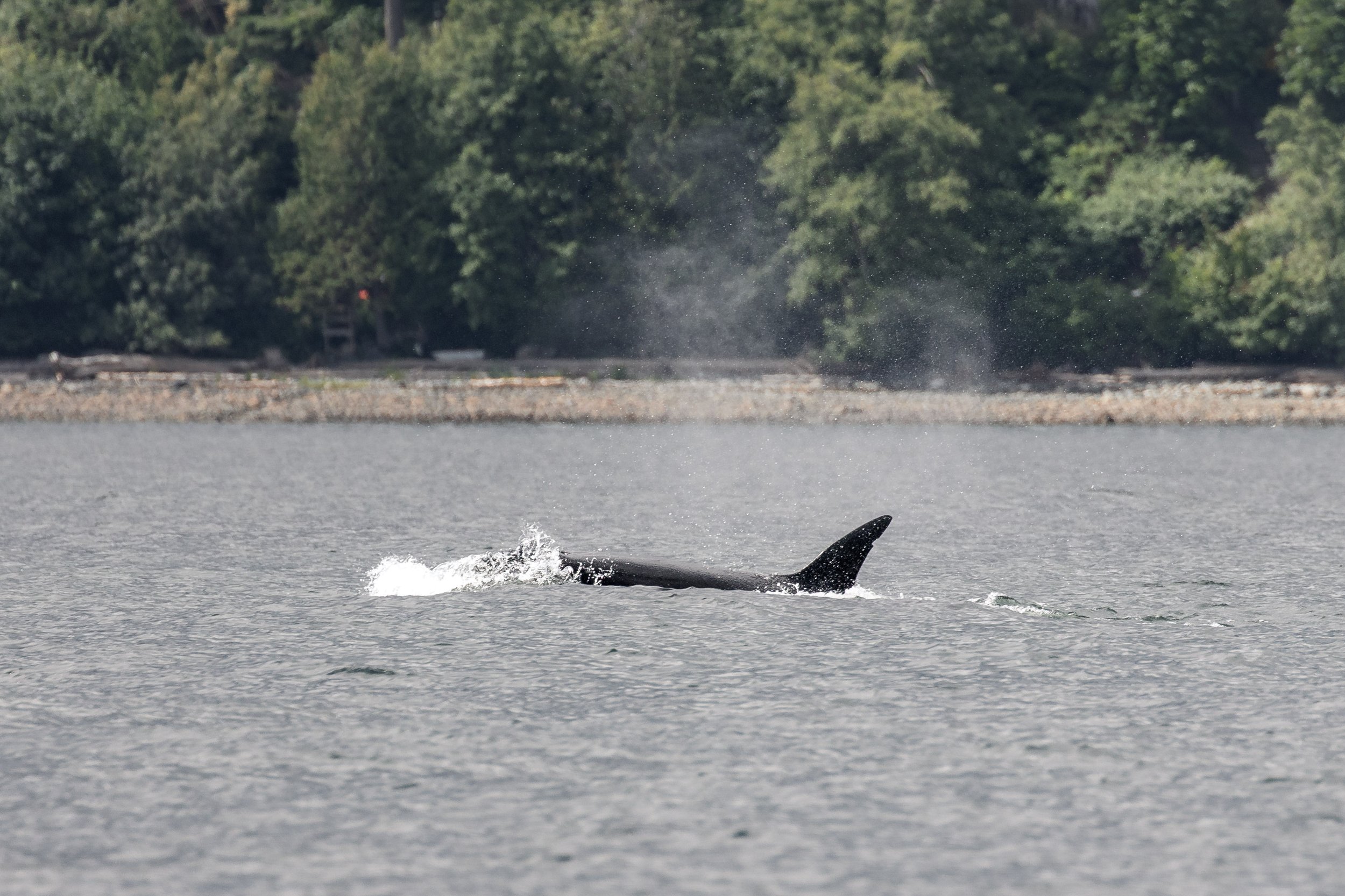
T137D Wright travelling along. Photo by Vanessa Vereschahen.
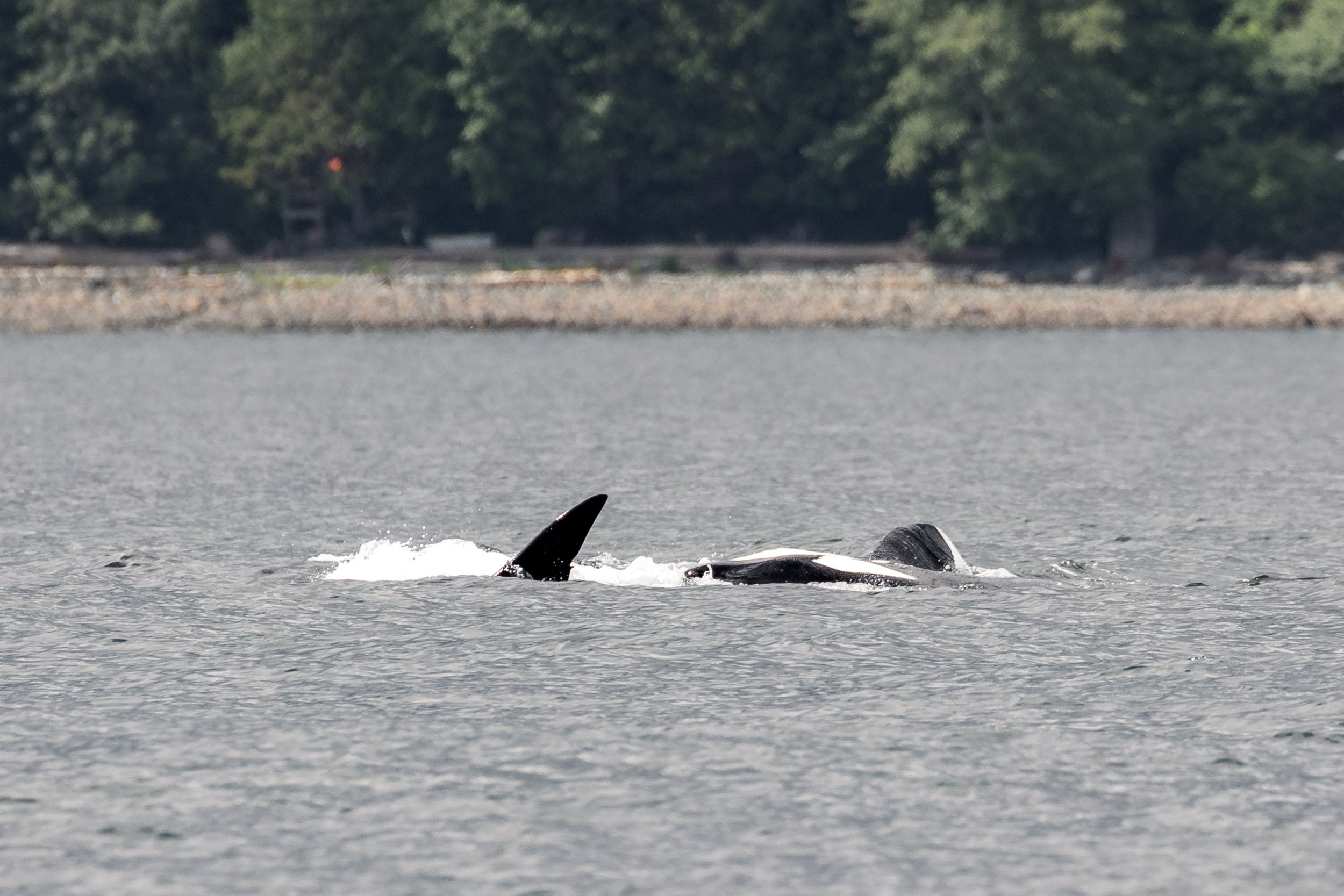
T137 Loon with another breaking the surface beside her. Photo by Vanessa Vereschahen.
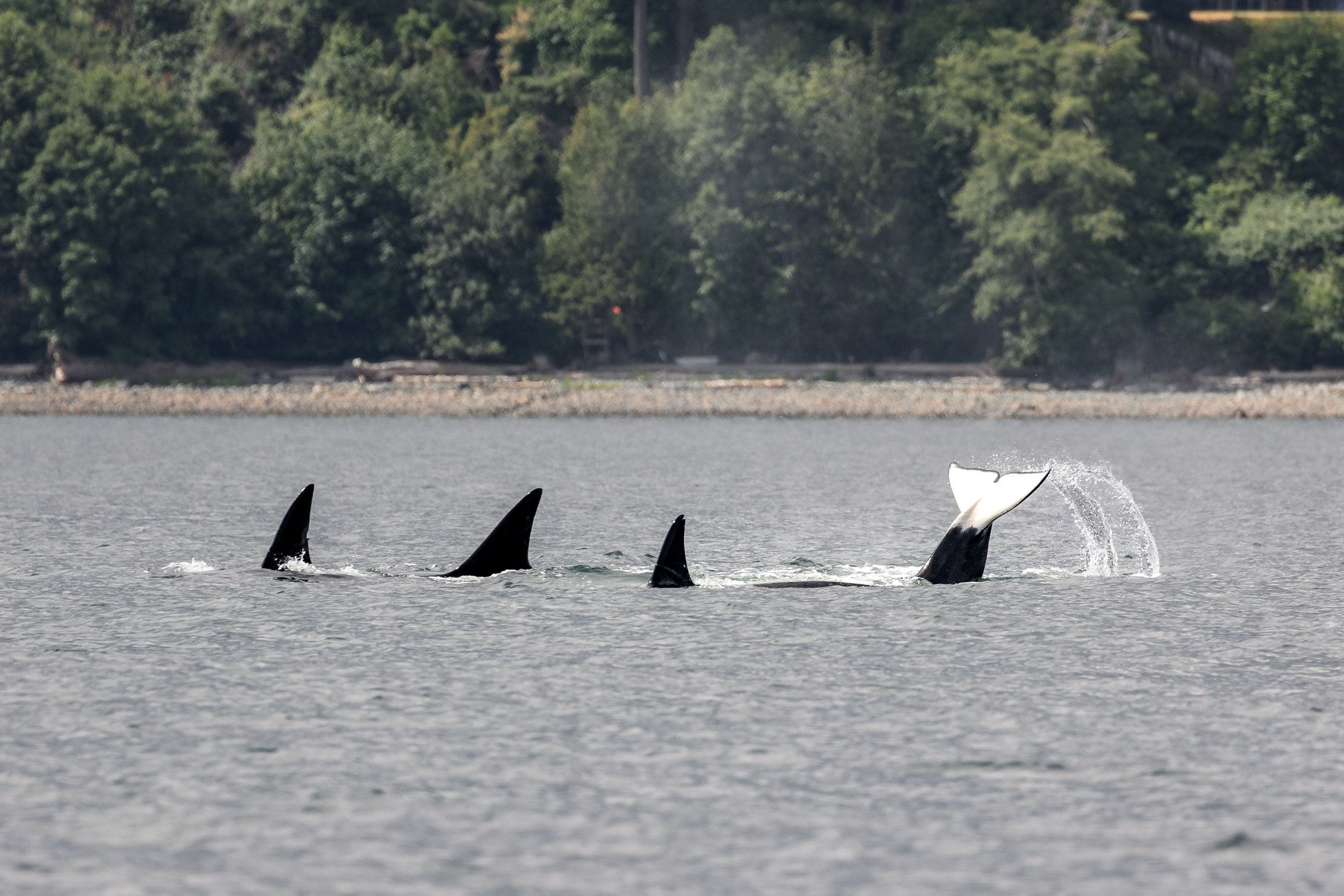
T137 Loon, T137B Tempest, T036A2 Kailas, and another flicking their tail. Photo by Vanessa Vereschahen.
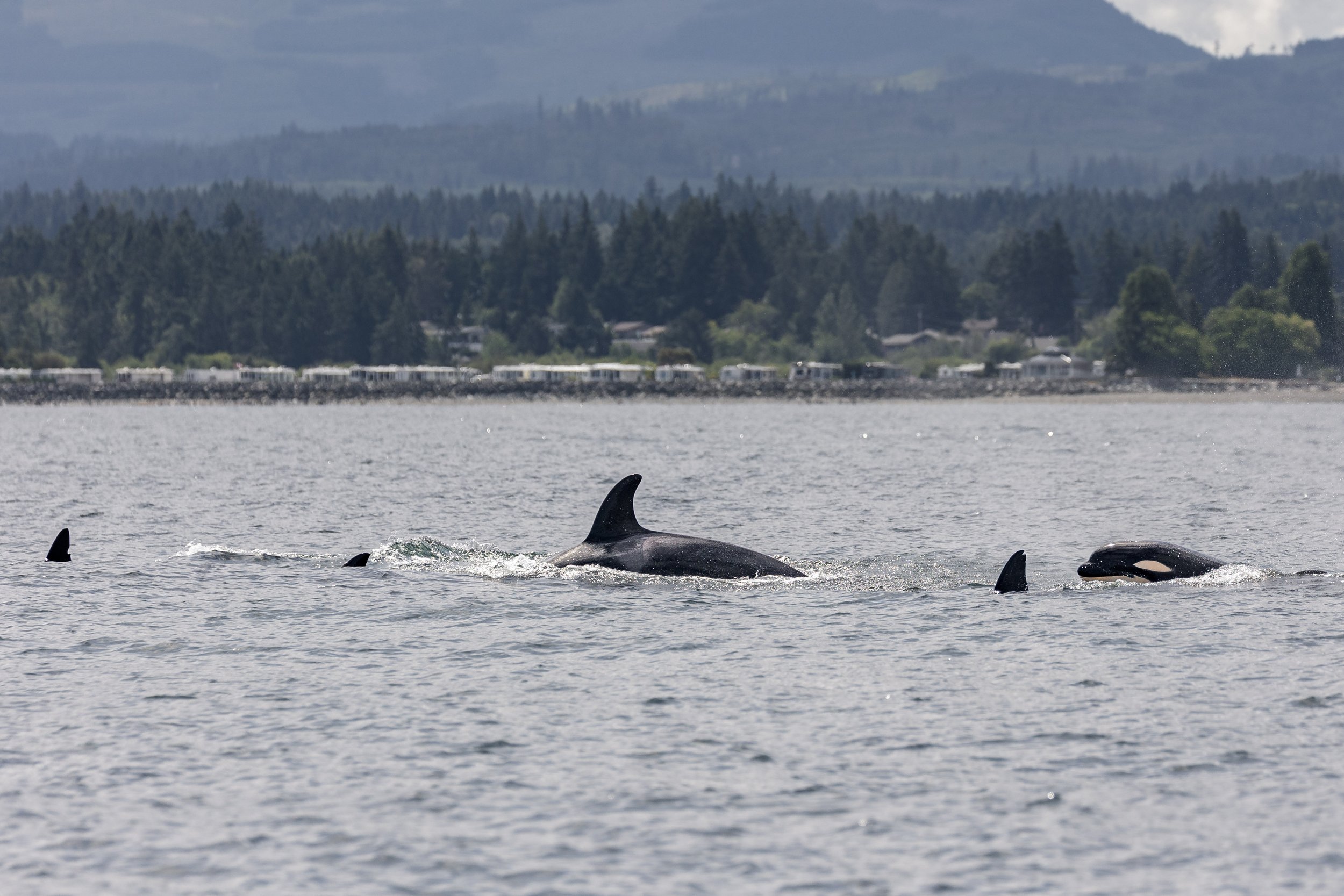
T137D Wright, T036A5 Squall, T036A2 Kailas, and T036A2A Rogue. Photo by Vanessa Vereschahen.
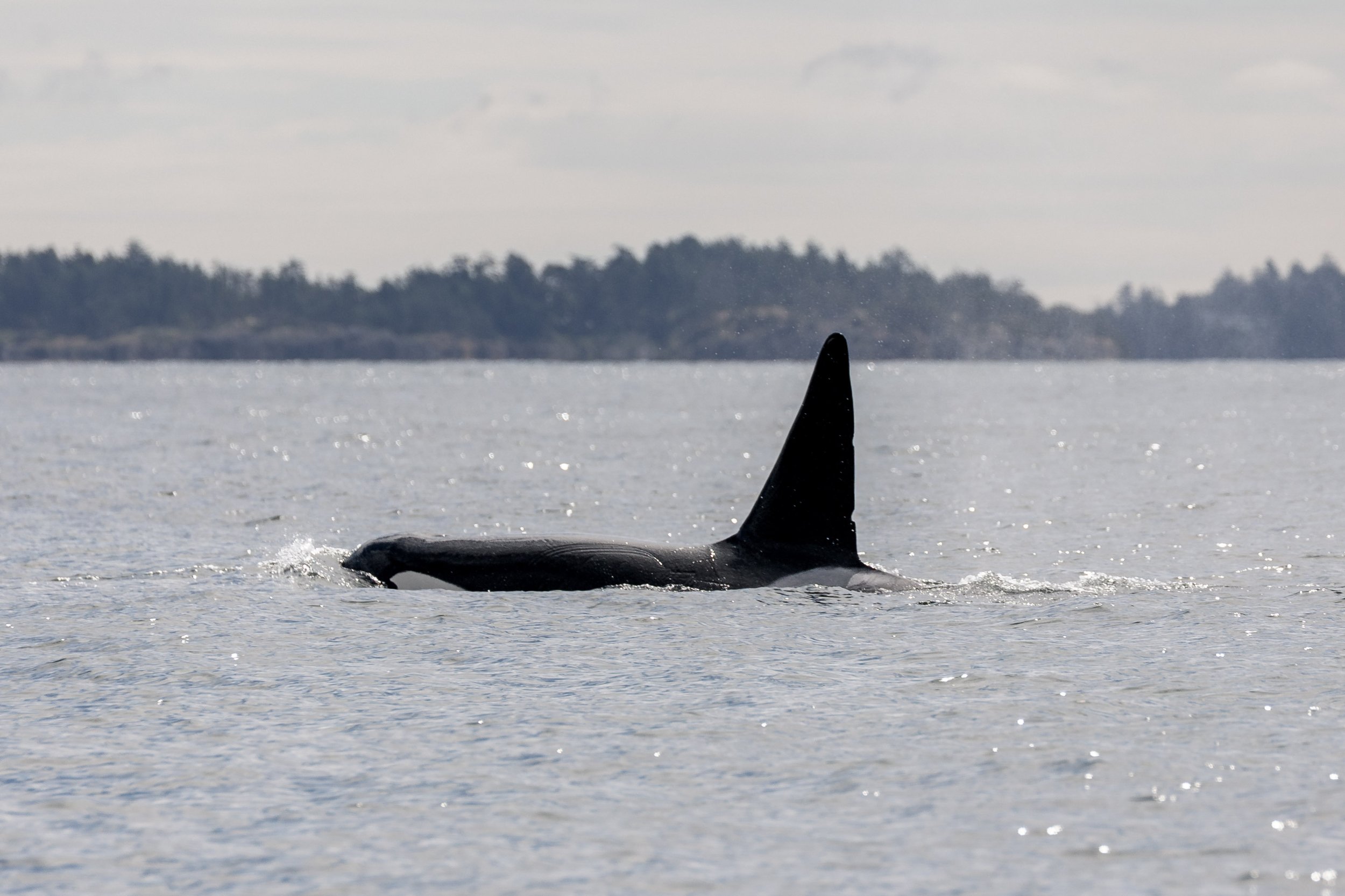
T137A Jack travelling. Photo by Vanessa Vereschahen.
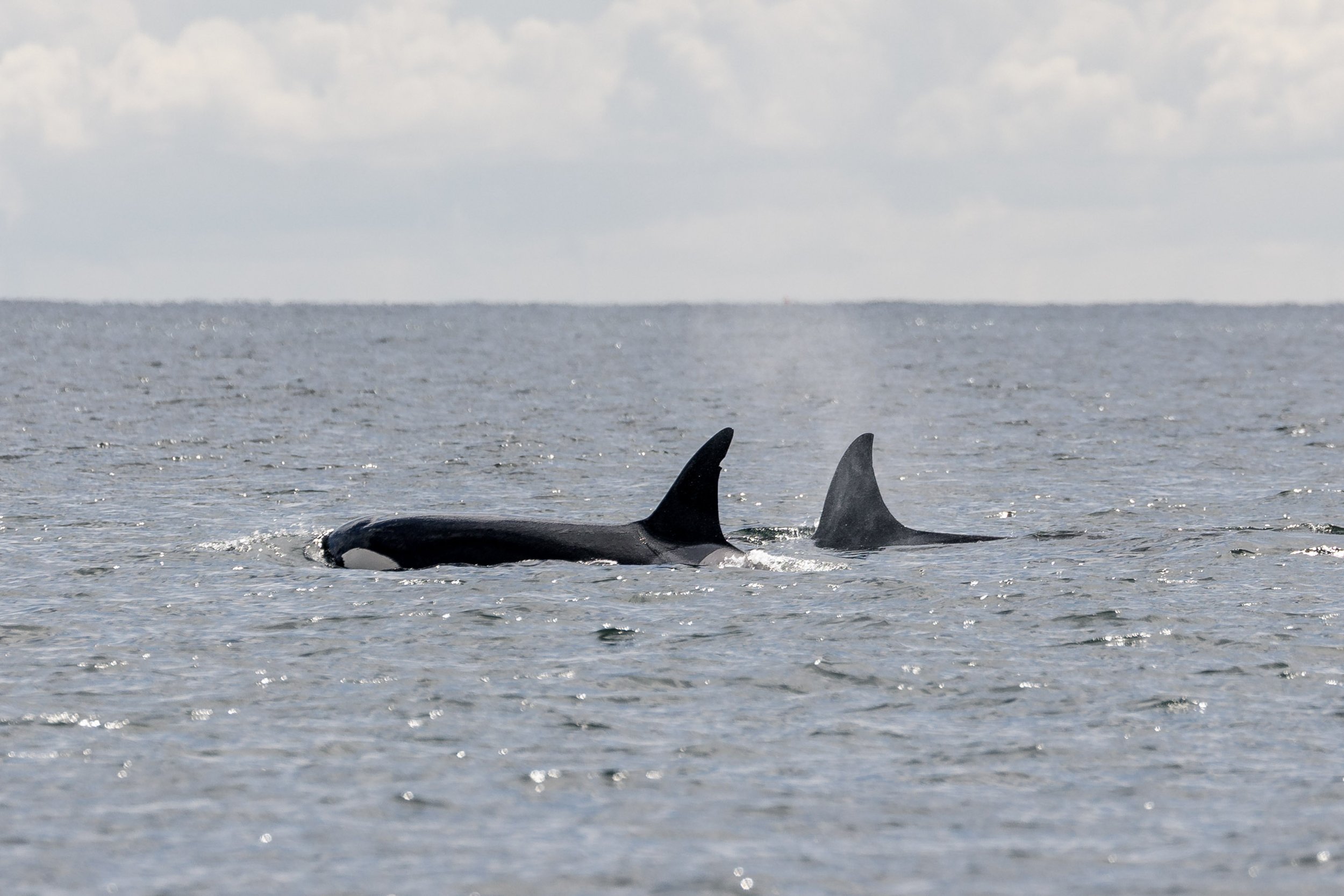
T137D Wright tucked beside T036A Leland. Photo by Vanessa Vereschahen.
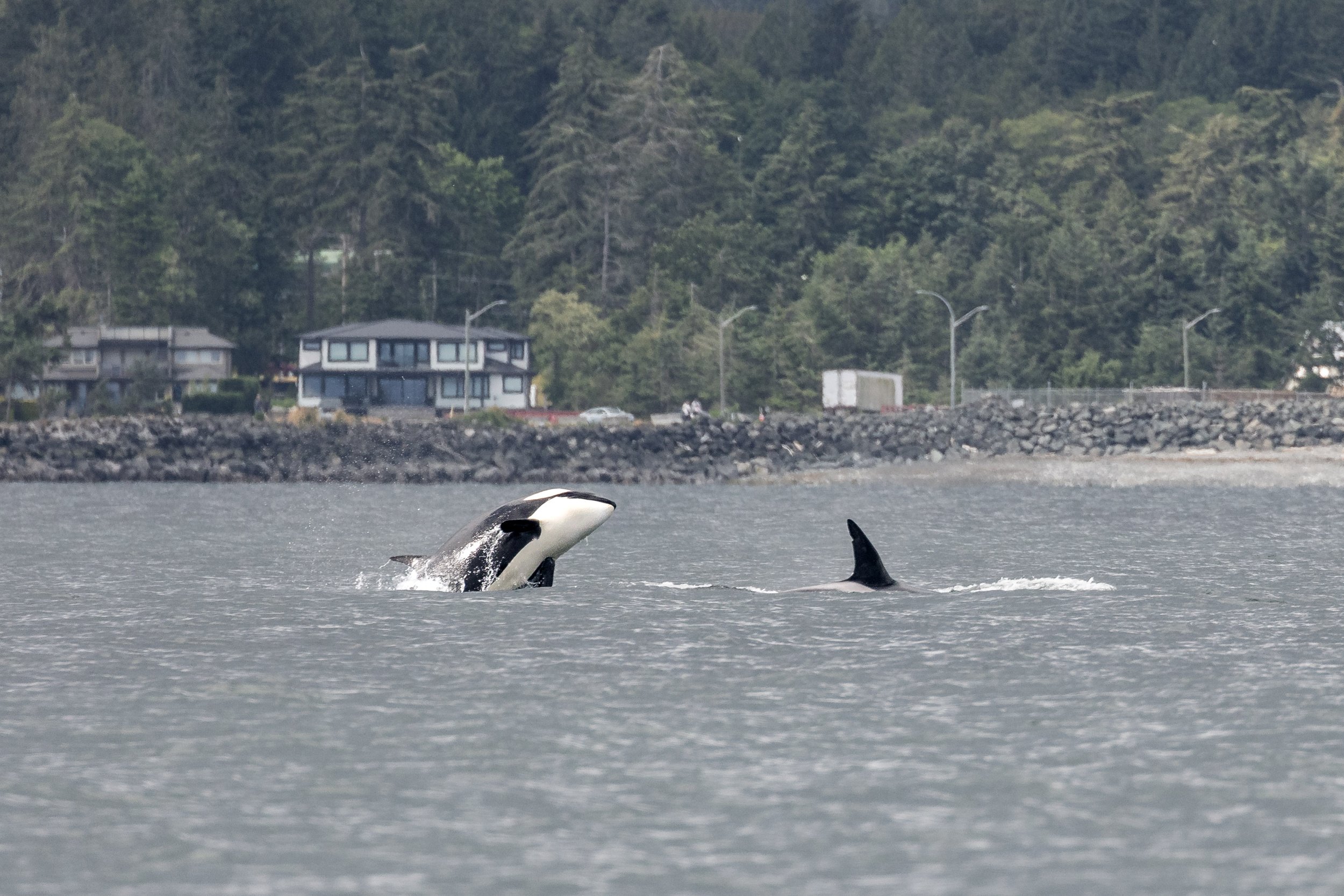
T137D Wright with another breaching behind her. Photo by Vanessa Vereschahen.
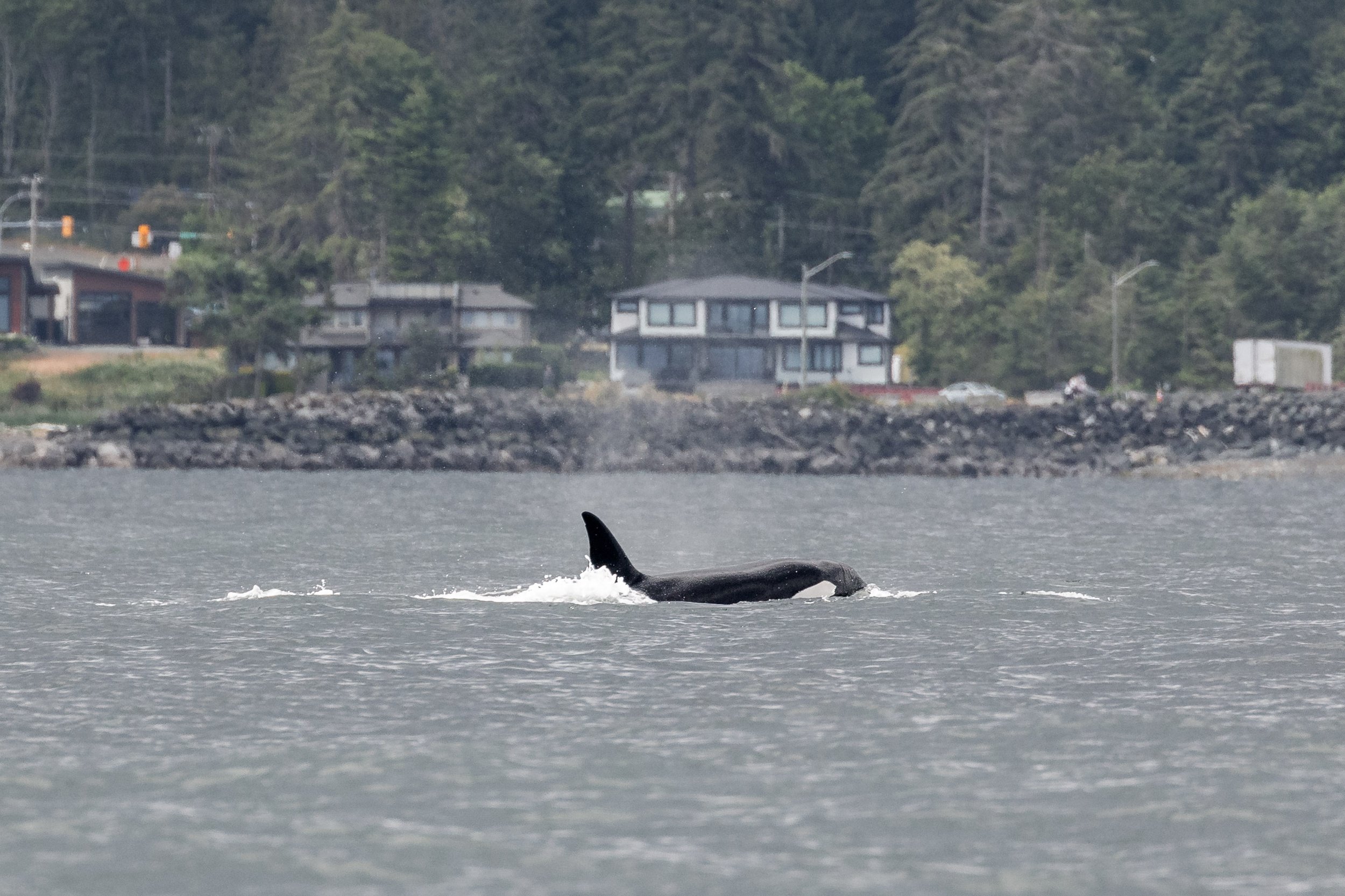
T086A Eider, one of the matriarchs. Photo by Vanessa Vereschahen.
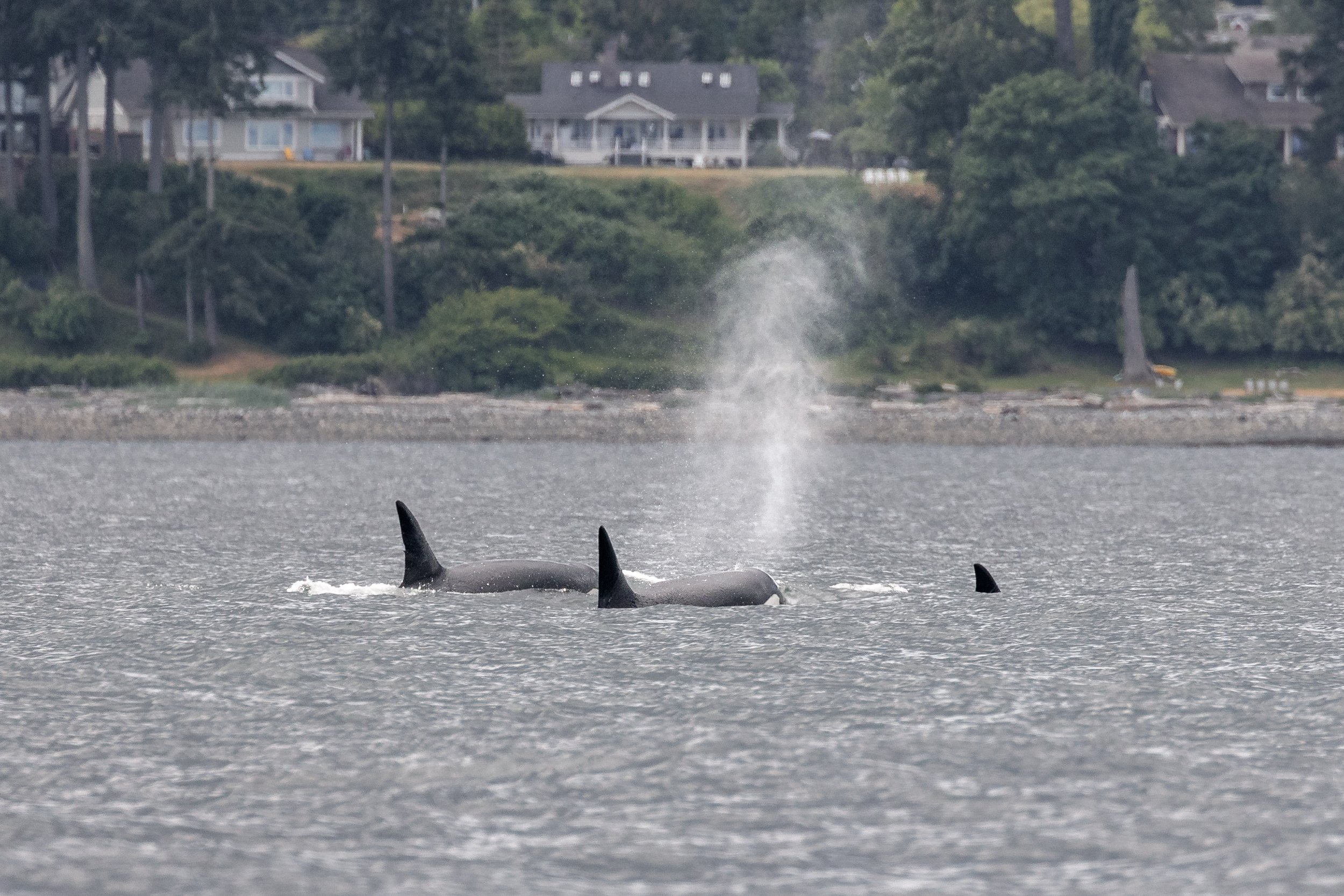
T137 Loon and T137B Tempest travelling side-by-side. Photo by Vanessa Vereschahen.
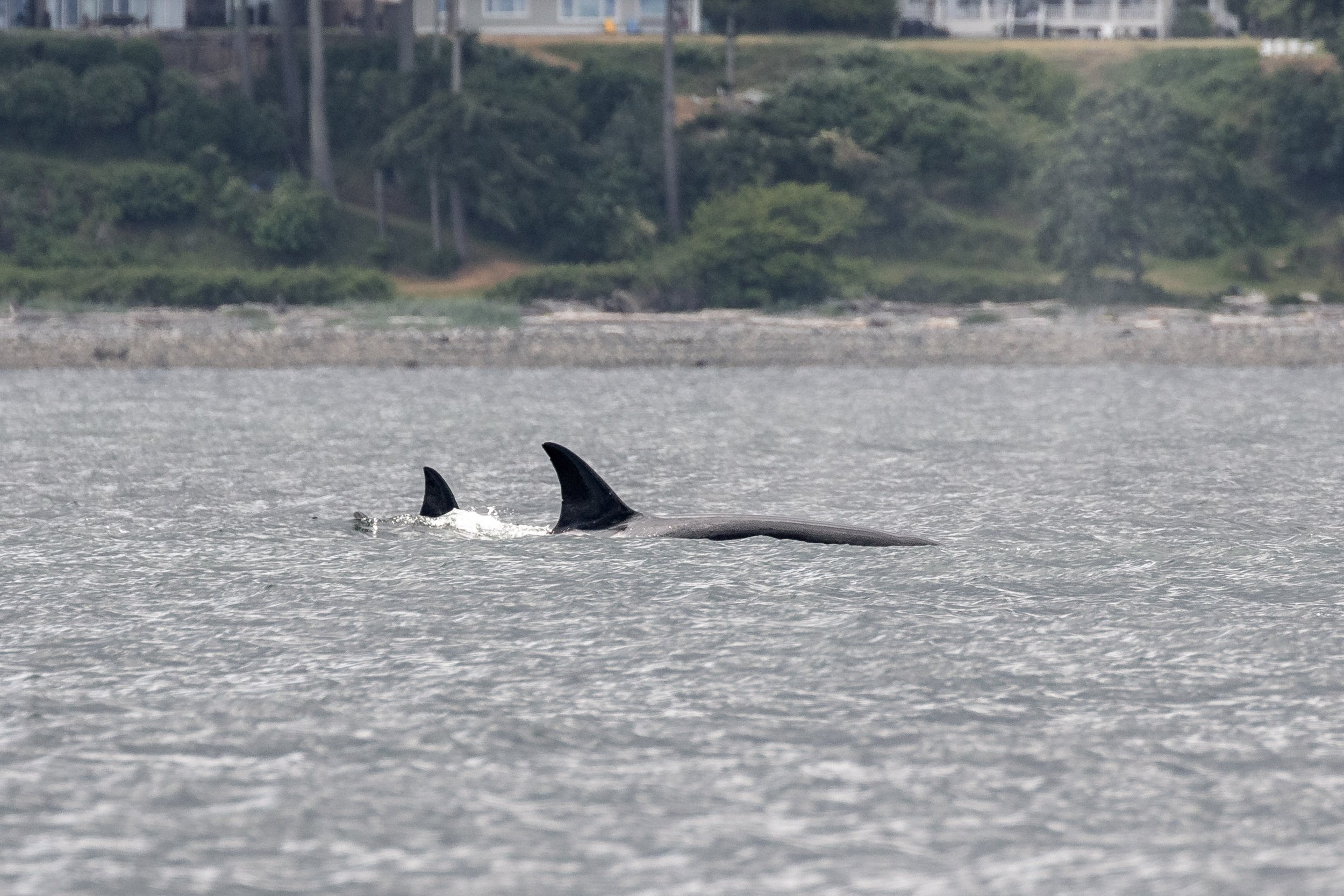
T036A Leland and T086A Eider. Photo by Vanessa Vereschahen.
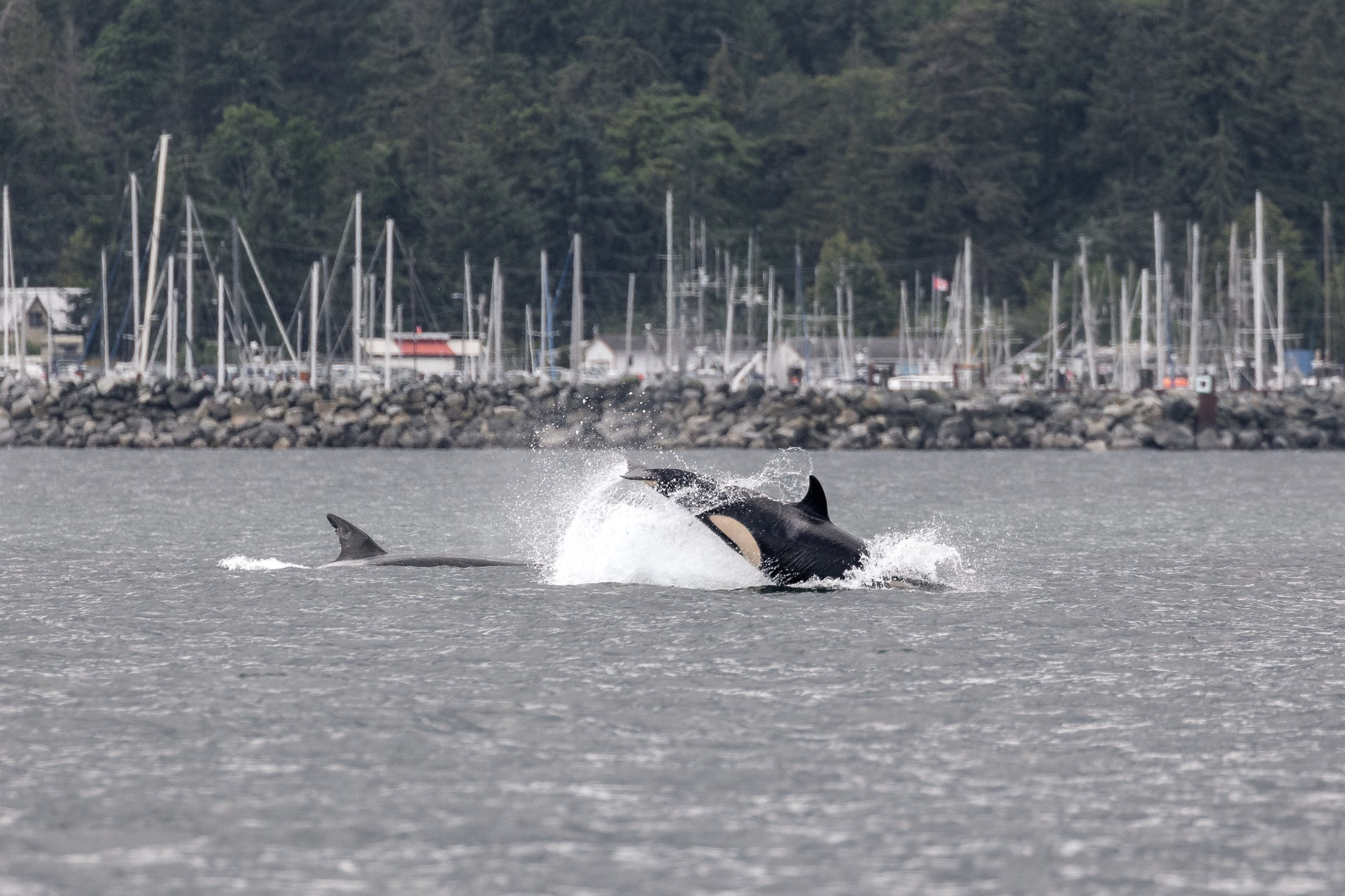
T137D with T036A2A Rogue tail lobbing beside her. Photo by Vanessa Vereschahen.
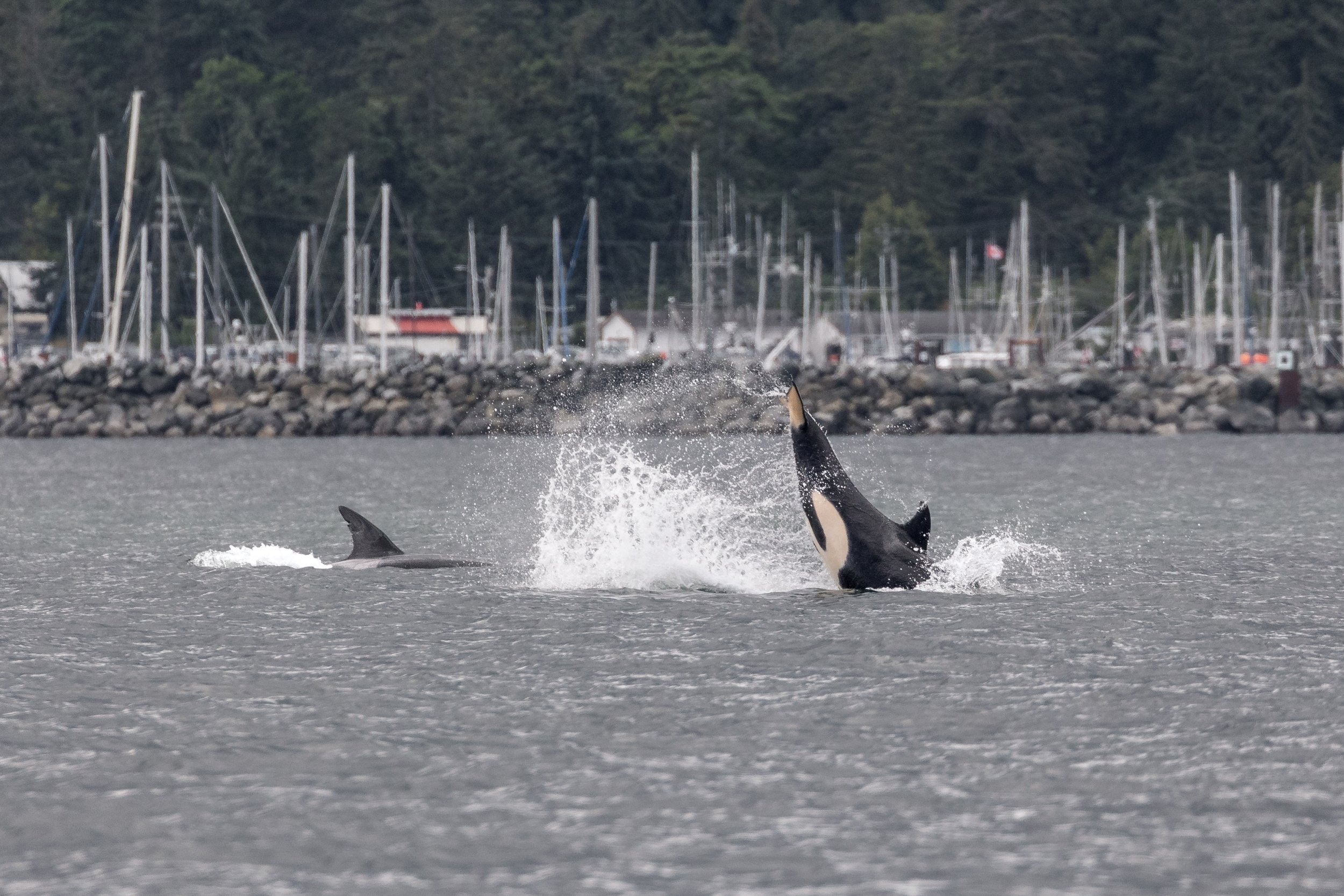
T137D Wright and T036A2A Rogue. Photo by Vanessa Vereschahen.
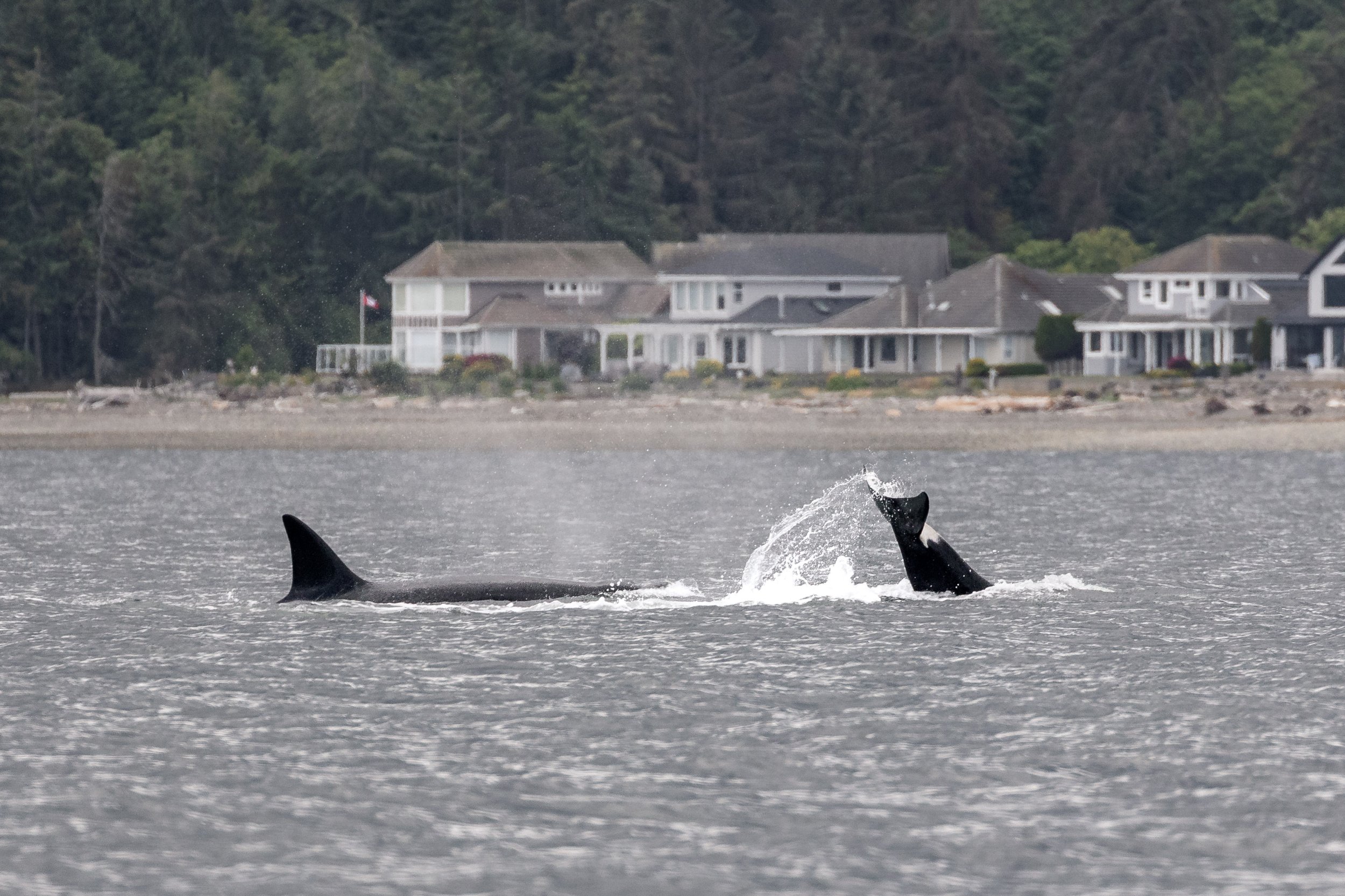
T137B Tempest with another upside down, tail slapping on the surface. Photo by Vanessa Vereschahen.
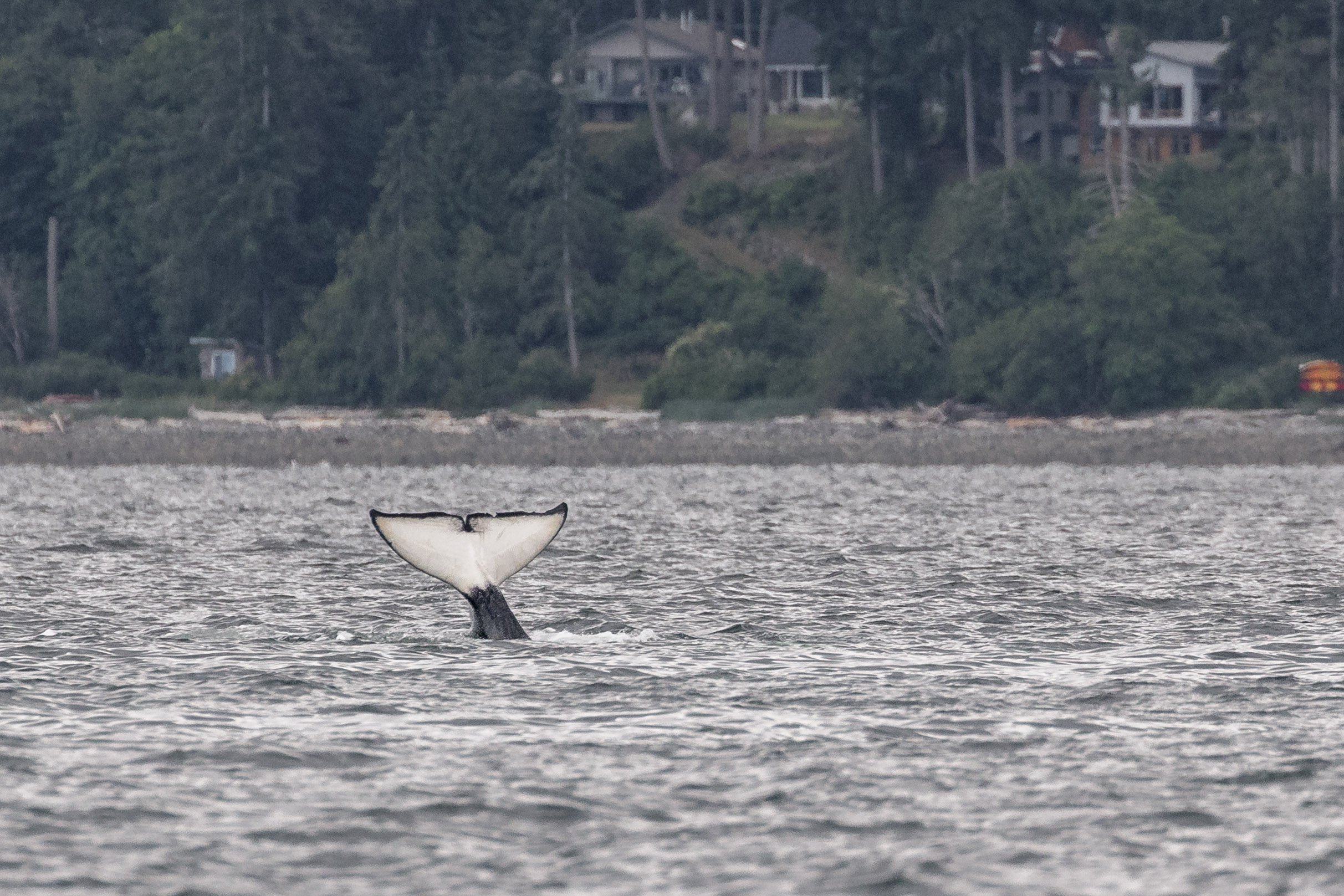
Flukes up! Photo by Vanessa Vereschahen.
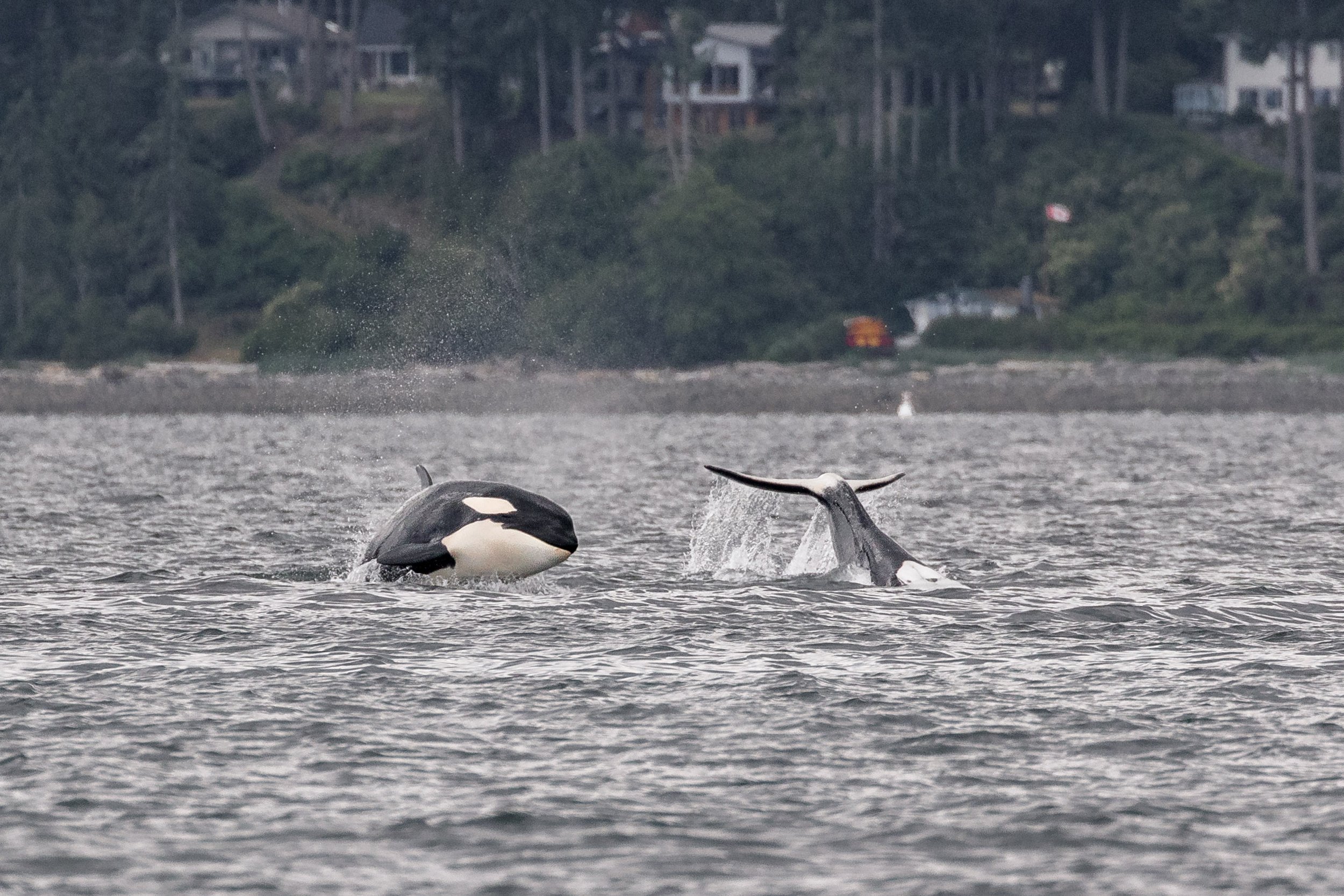
T086A5 Siku with his face out of the water, with another beside him tail slapping. Photo by Vanessa Vereschahen.
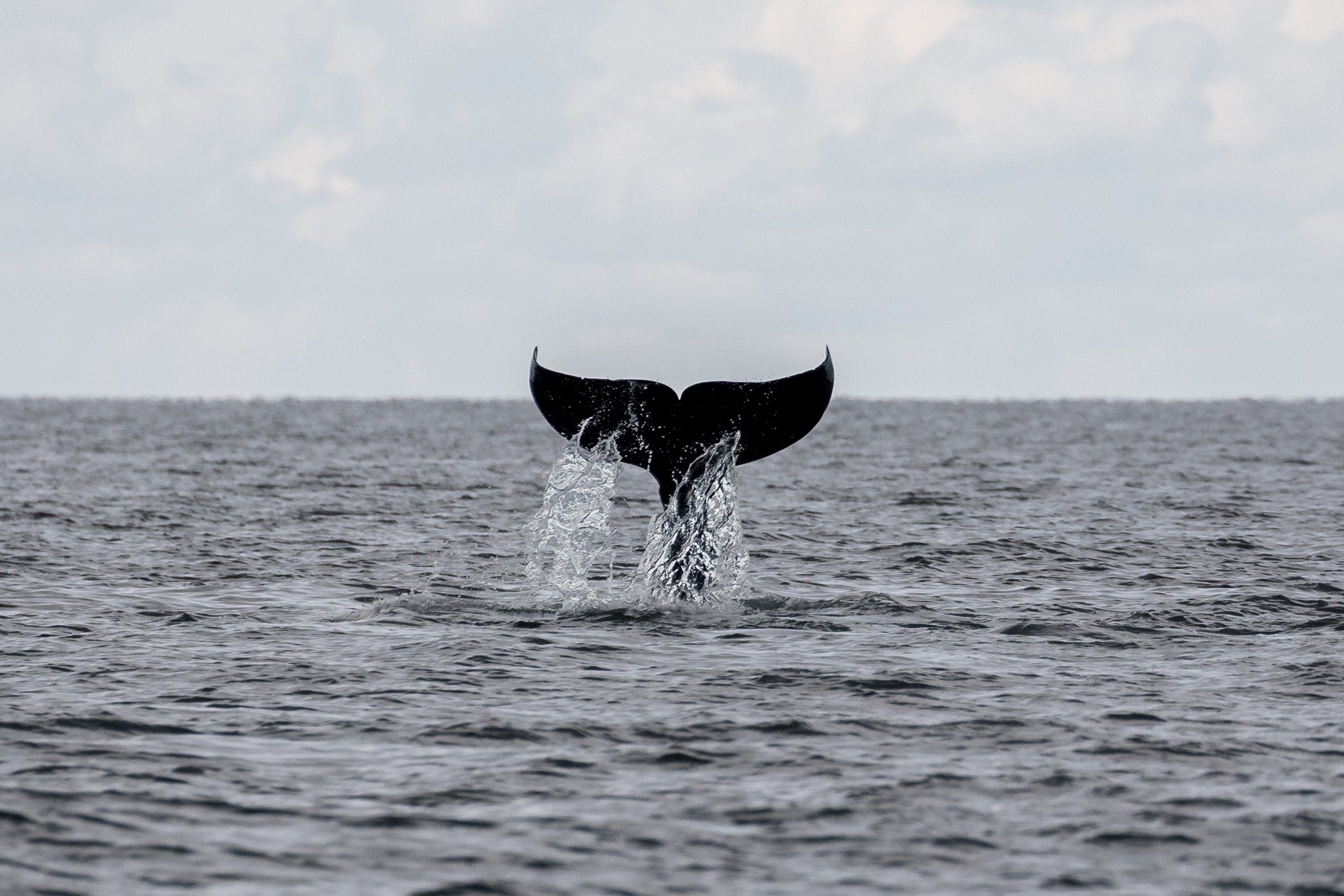
Look at the curl on those fluke tips! Photo by Vanessa Vereschahen.
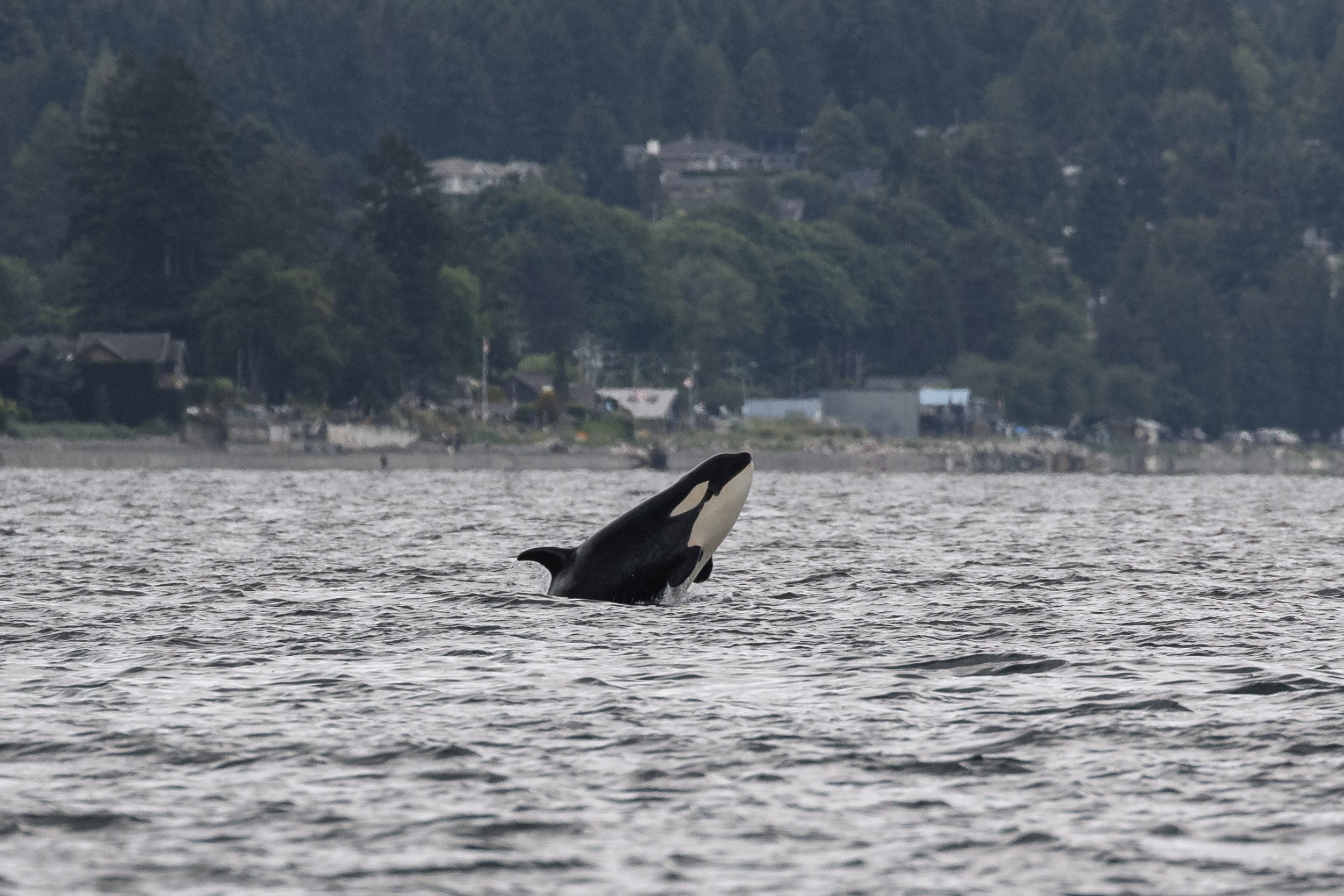
T086A5 Siku was spending more time out of the water than in it! Photo by Vanessa Vereschahen.
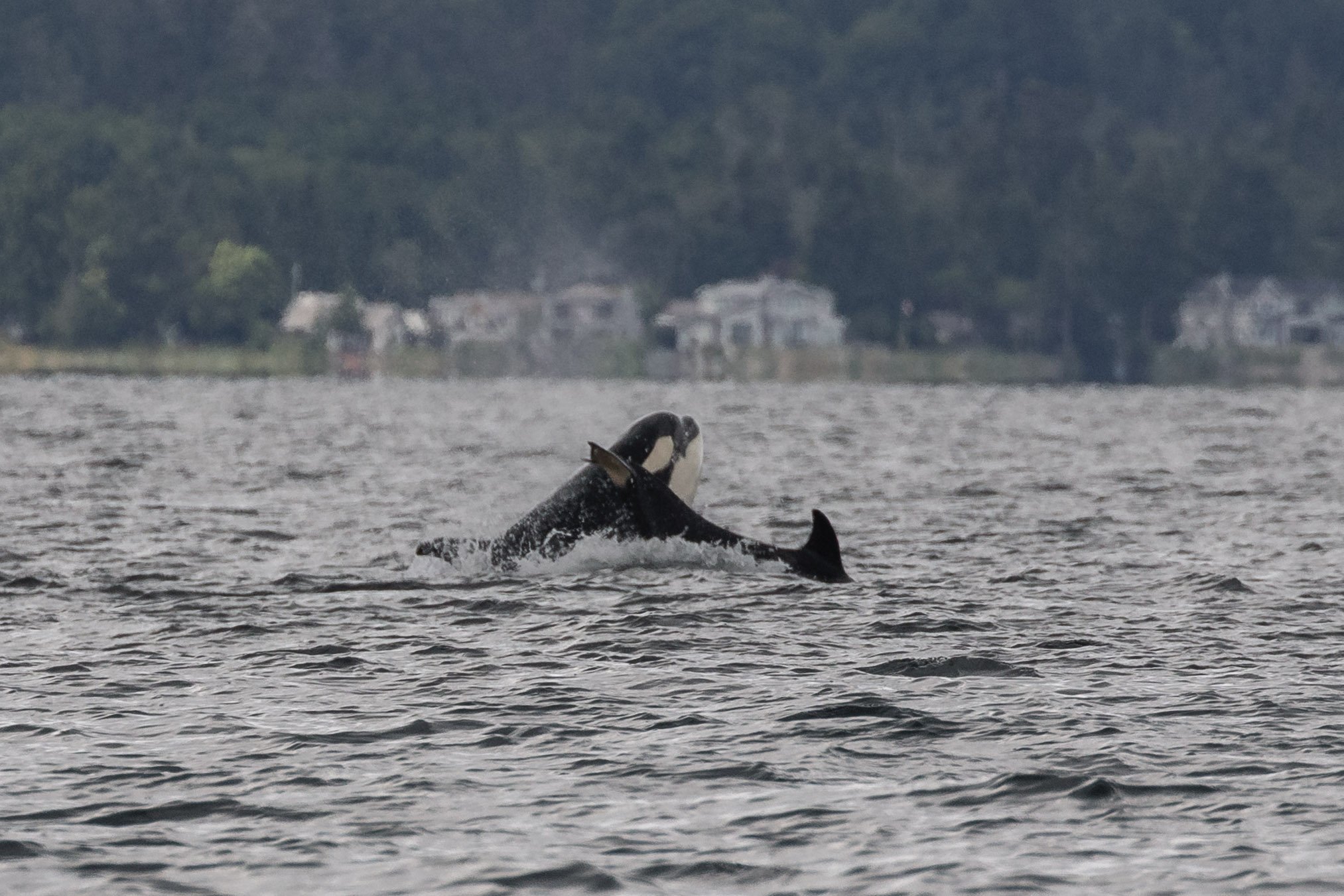
Catching air - together! Photo by Vanessa Vereschahen.
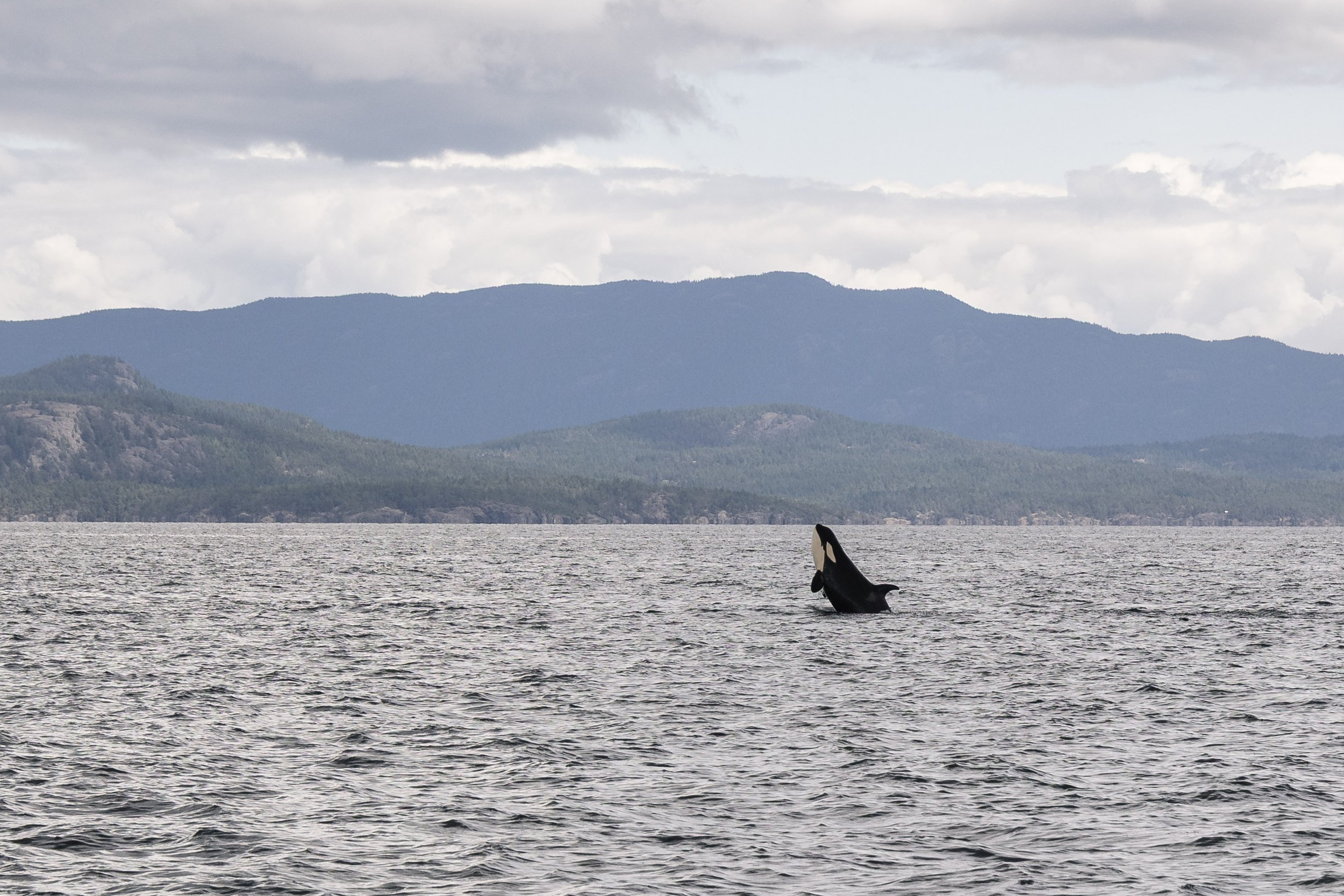
A dramatic breach from young T086A5 Siku. Photo by Jordan Robinson.
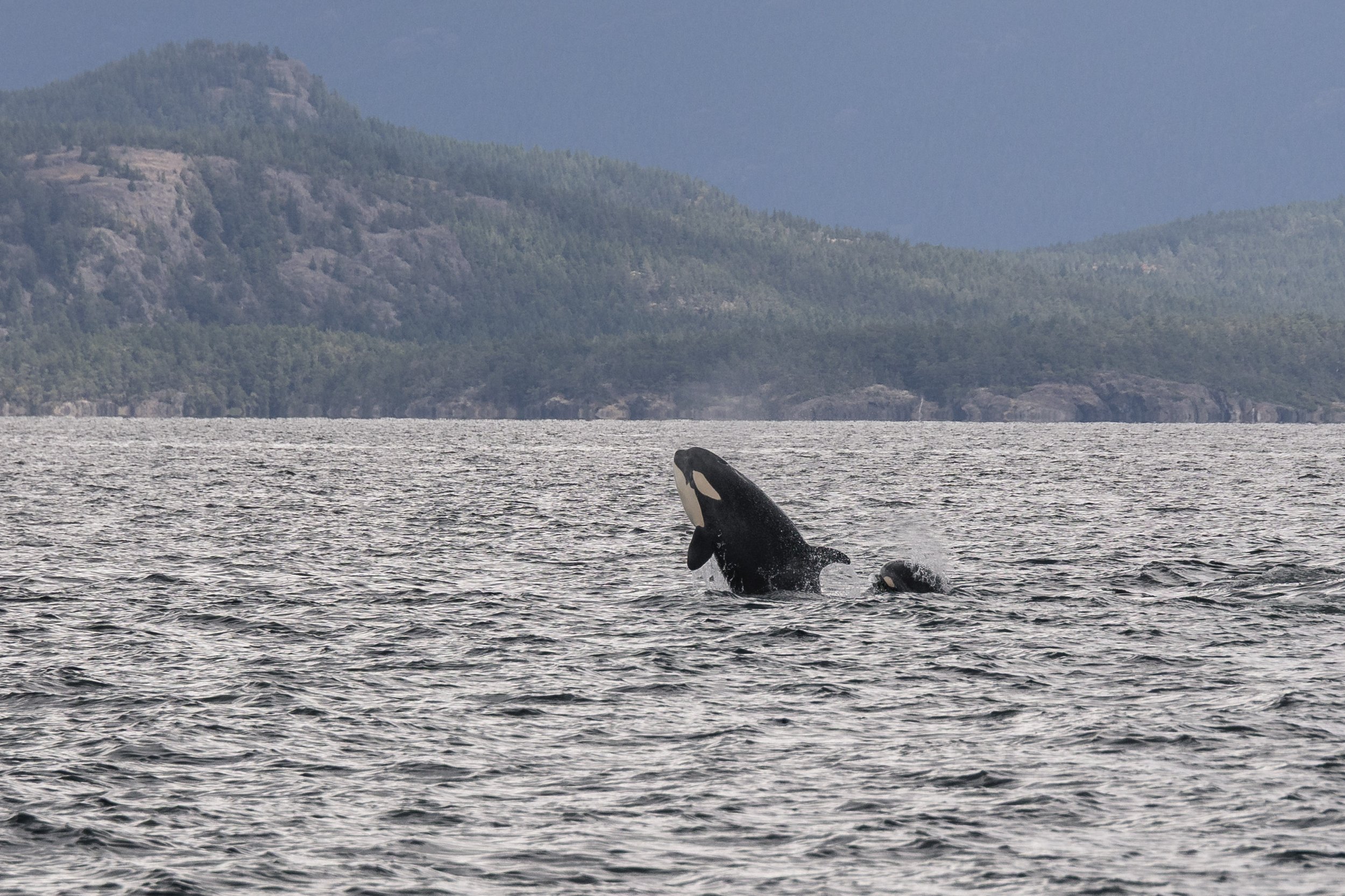
T086A5 Siku breaching with T036A2A Rogue visible, eyepatch above the water. Photo by Jordan Robinson.
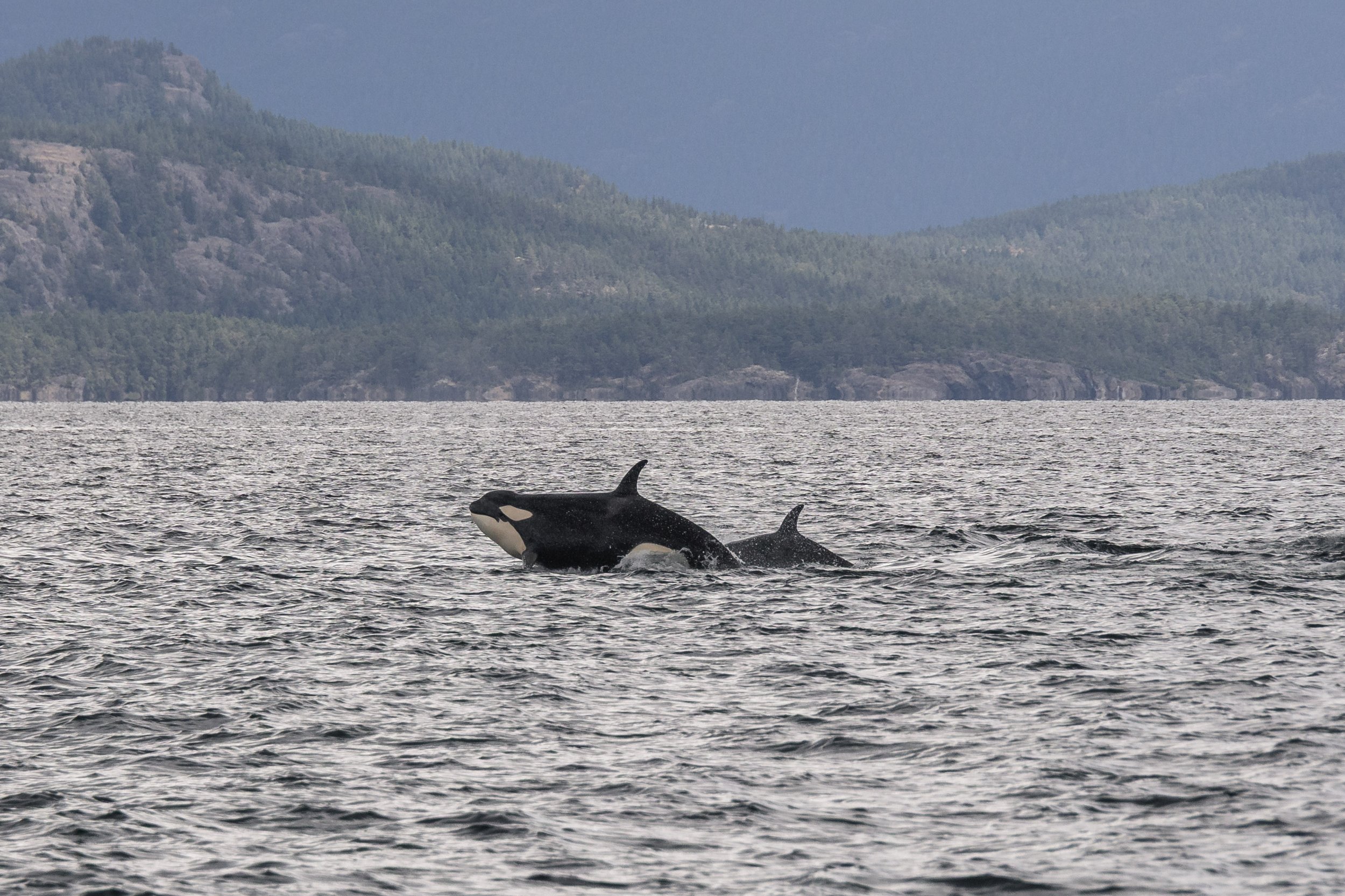
T086A5 Siku with young T036A2A Rogue beside them. Photo by Jordan Robinson.
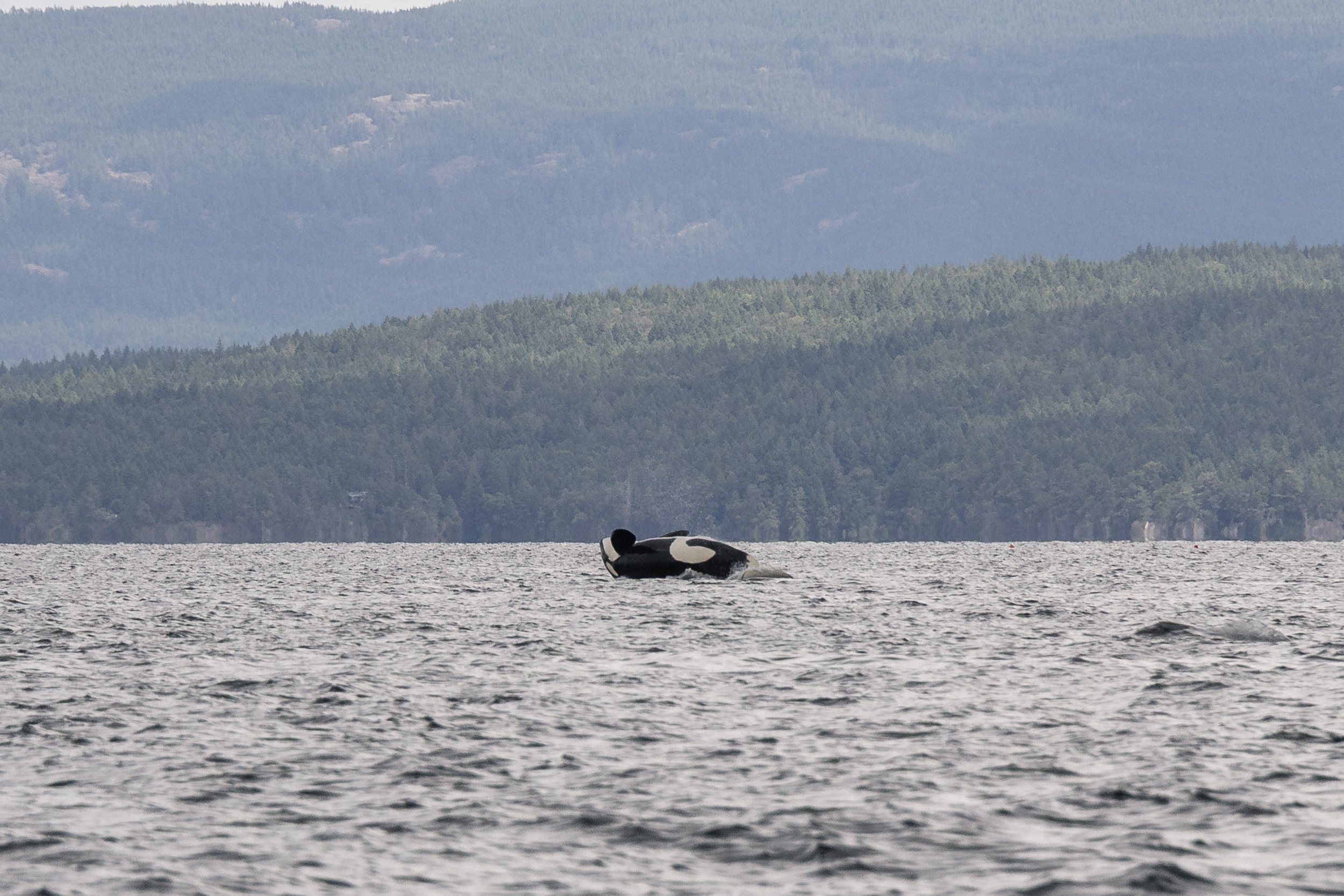
Coming in for a landing! Photo by Jordan Robinson.
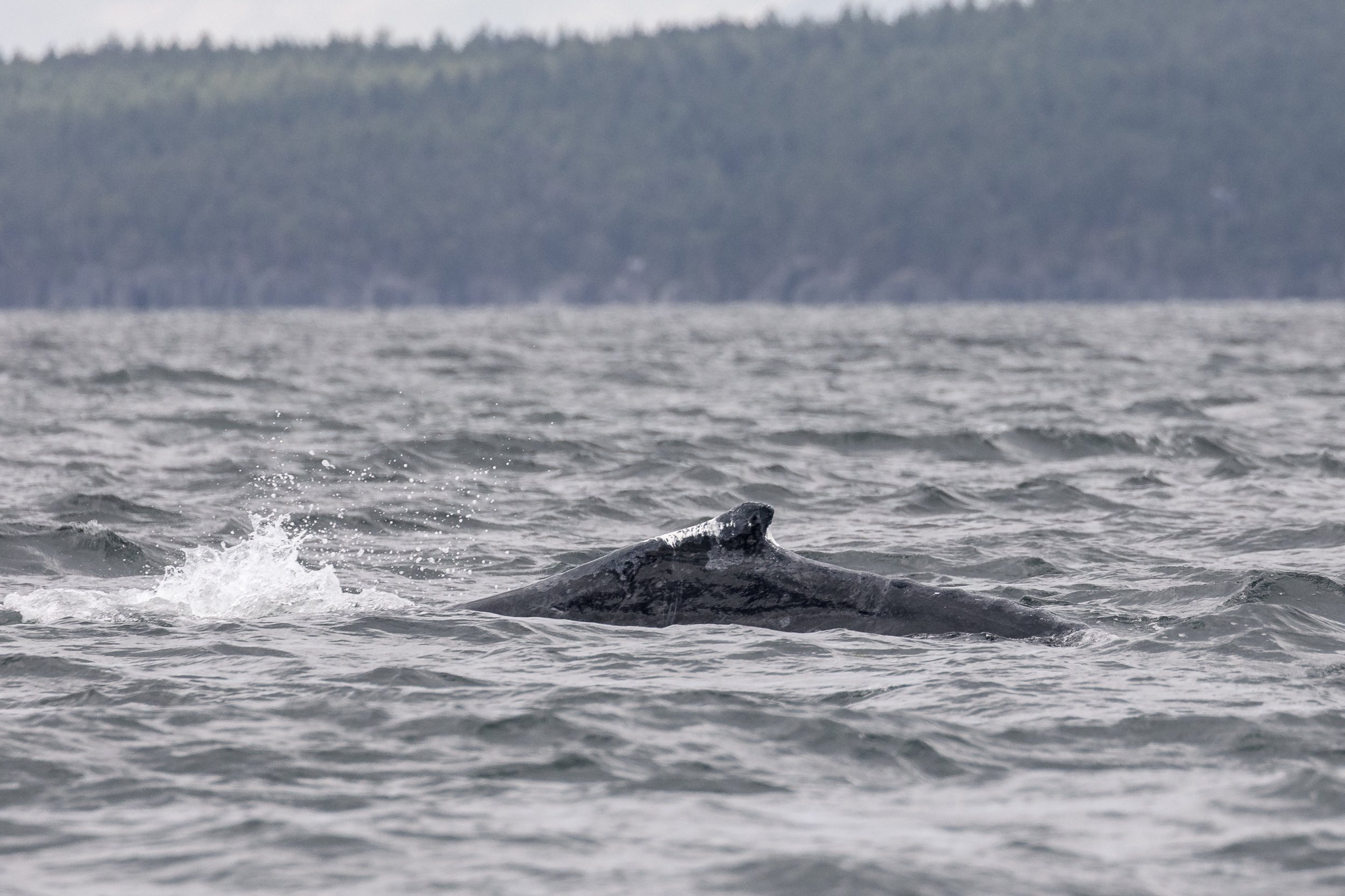
Chinook’s dorsal fin. Photo by Vanessa Vereschahen.
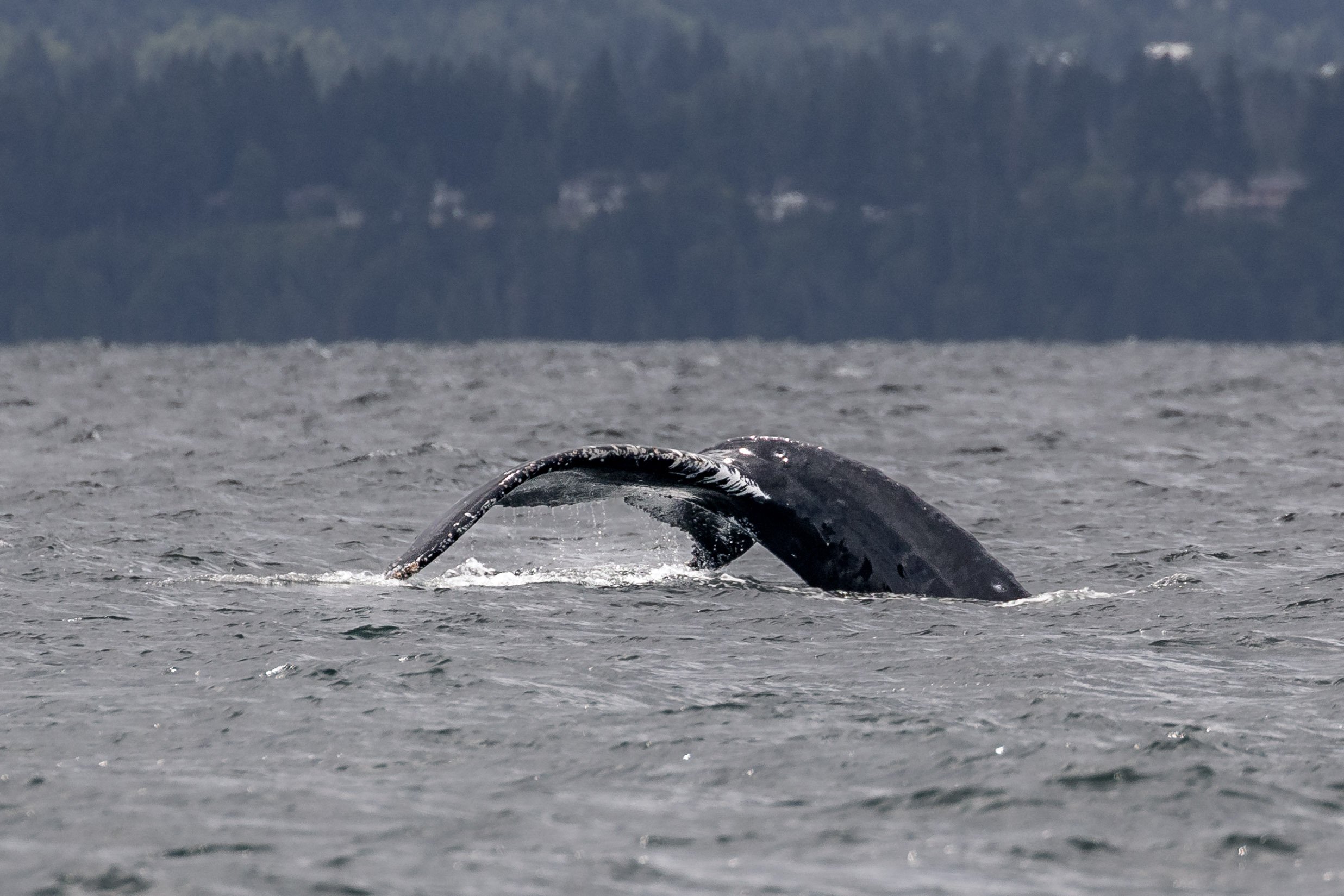
Chinook diving. Photo by Vanessa Vereschahen.
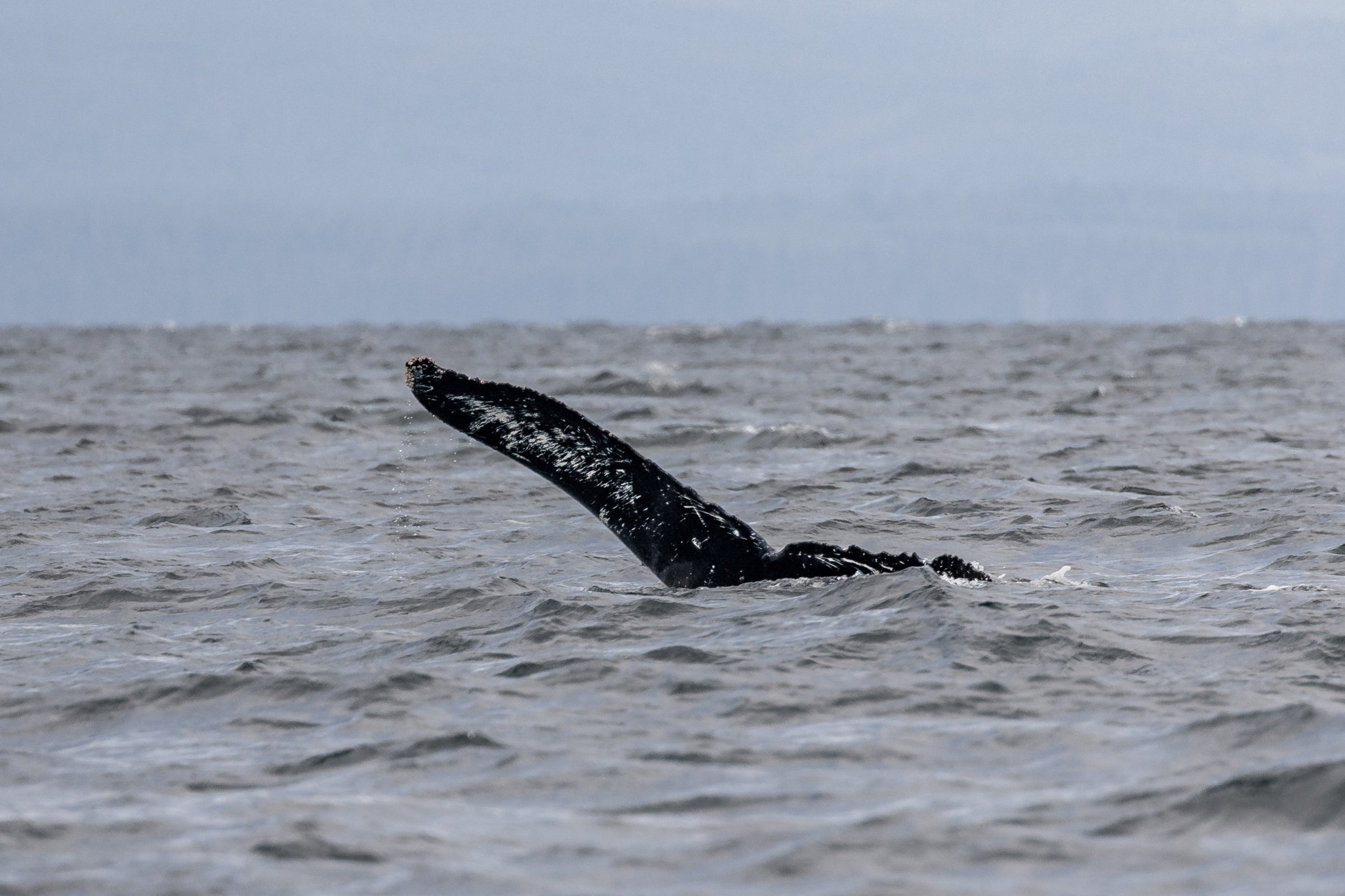
A corner of Chinook’s fluke. Photo by Vanessa Vereschahen.
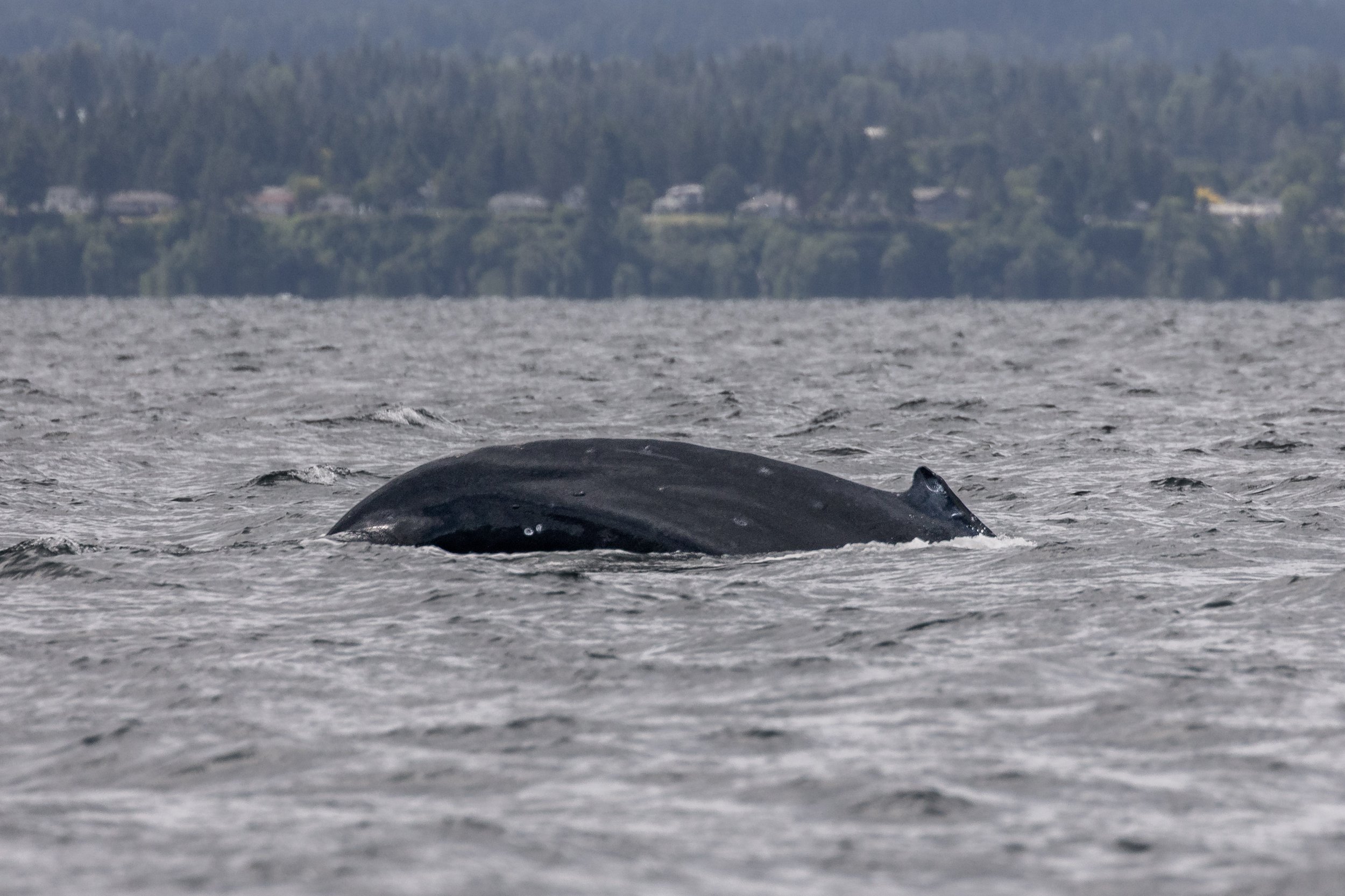
X_pialidocious’ dorsal fin as they dive. Photo by Vanessa Vereschahen.
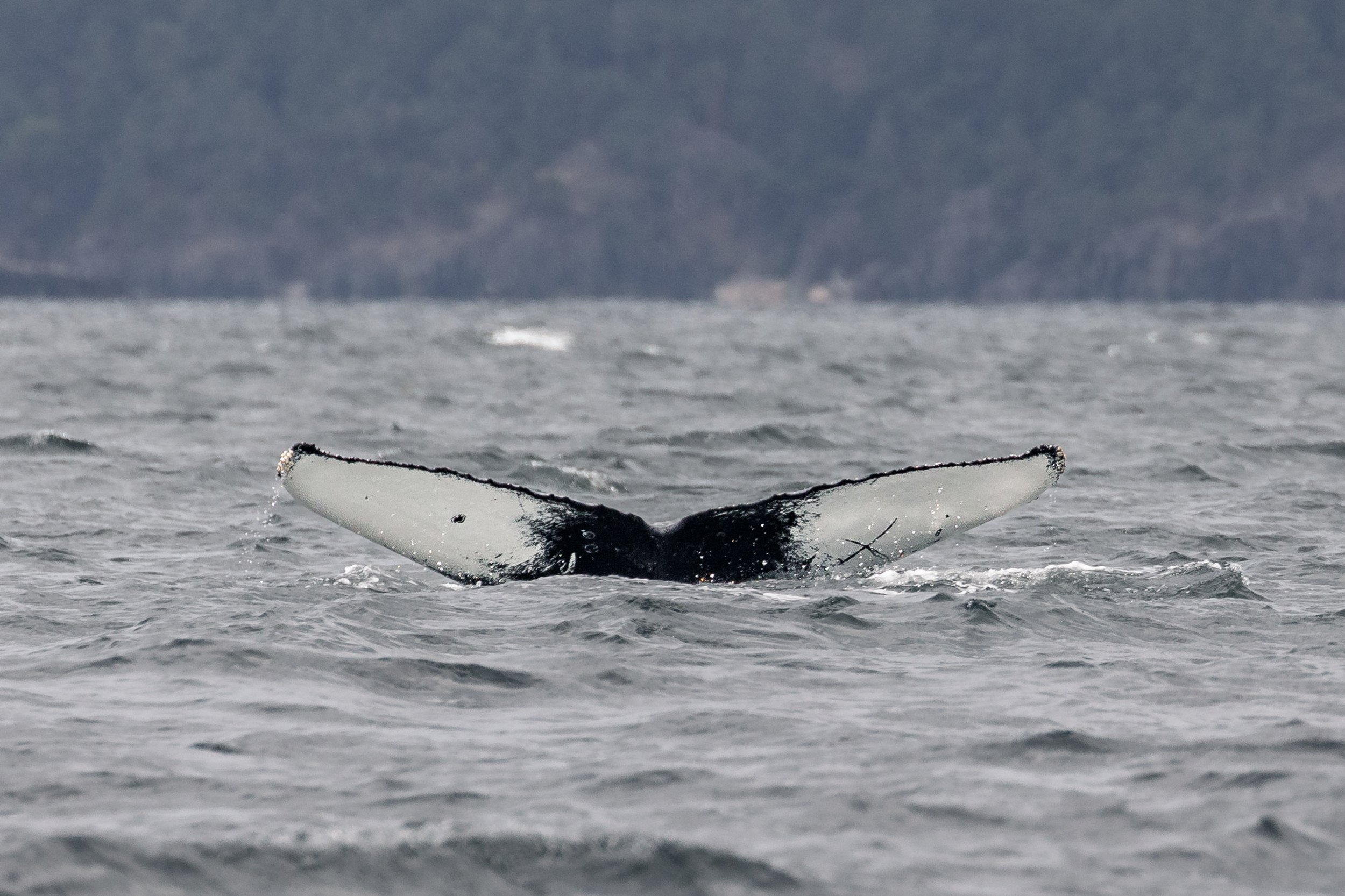
X_pialidocious’ fluke. Photo by Vanessa Vereschahen.
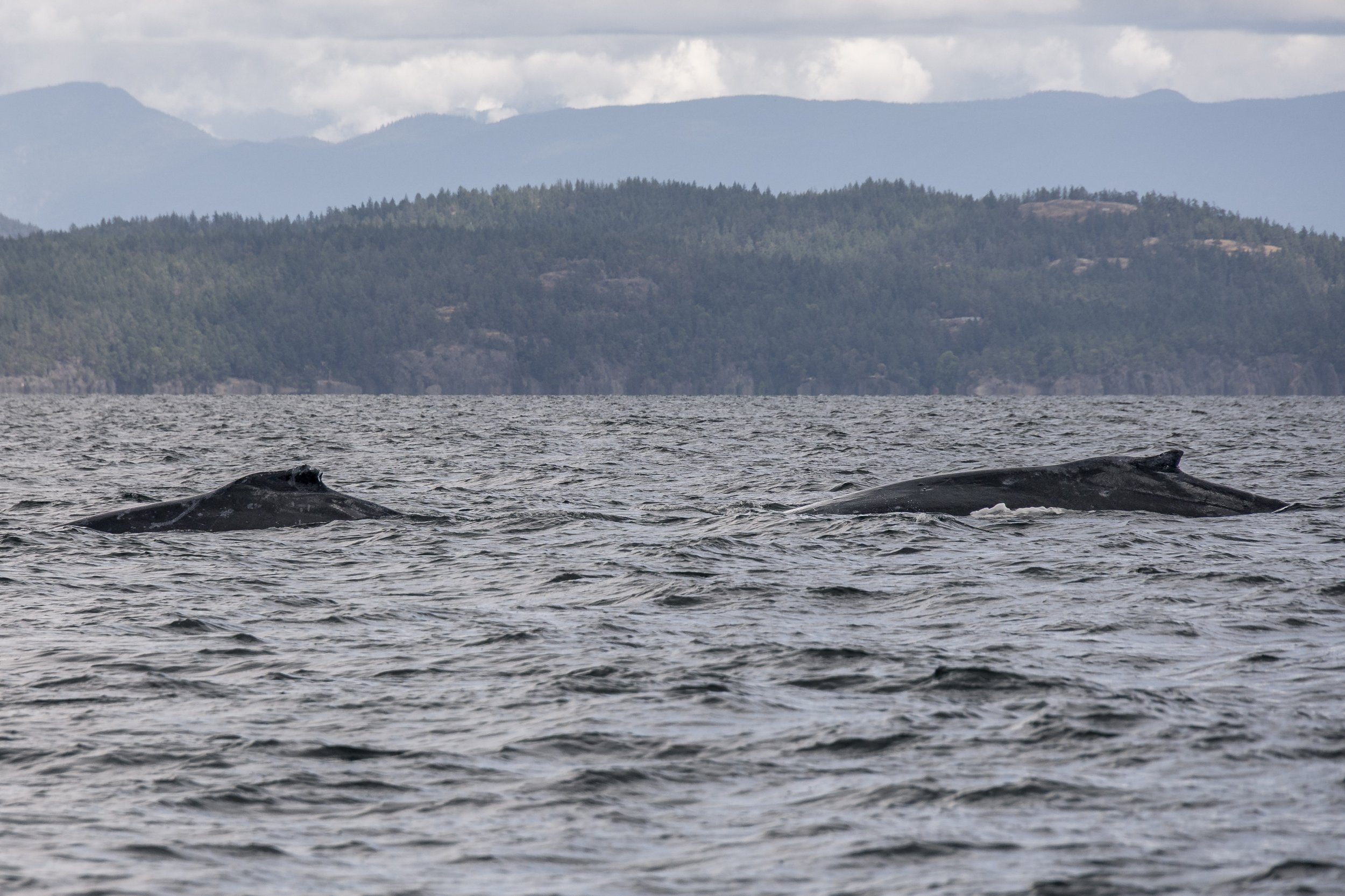
Forge and Arial travelling together. Photo by Jordan Robinson.
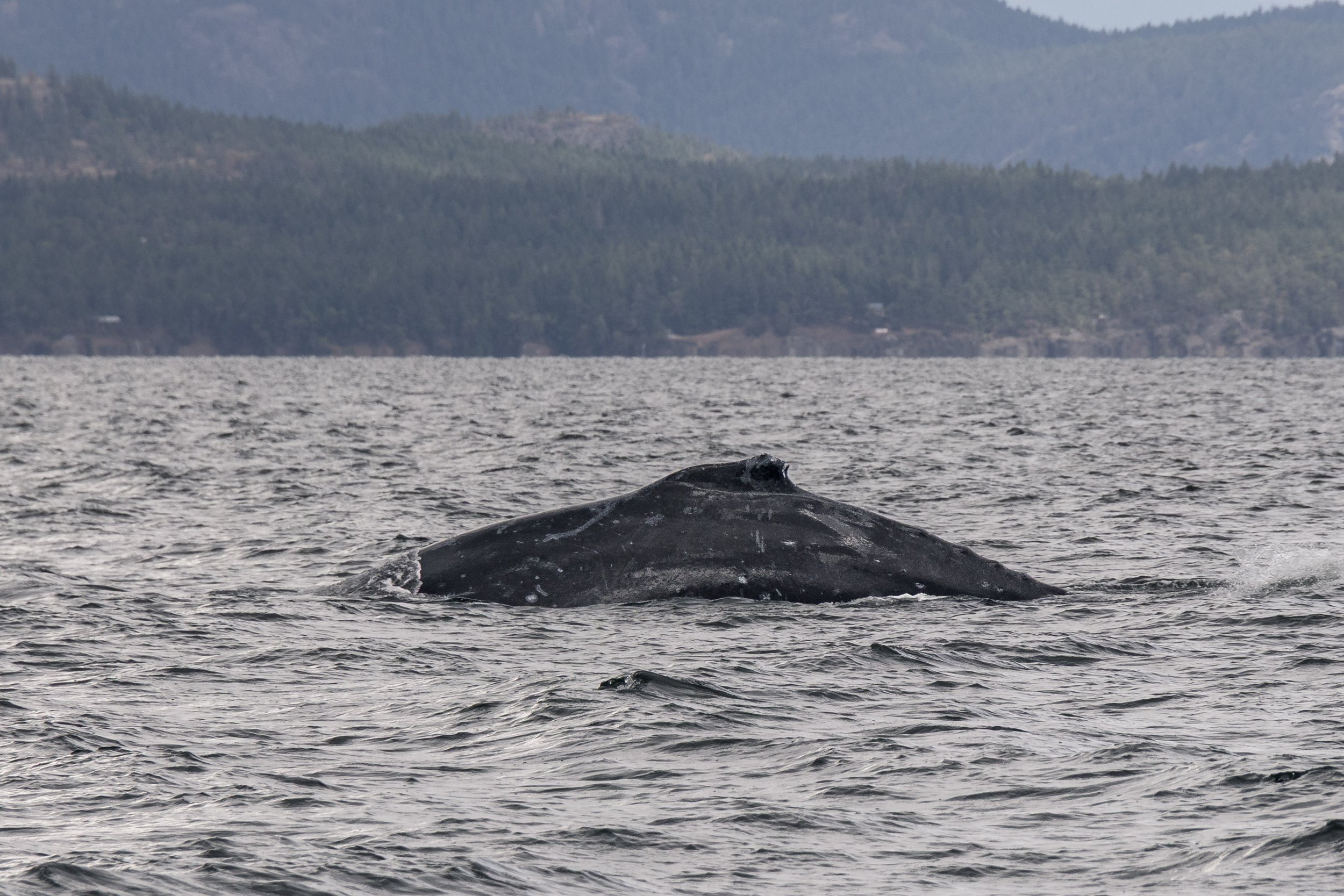
Forge’s dorsal fin. Photo by Jordan Robinson.
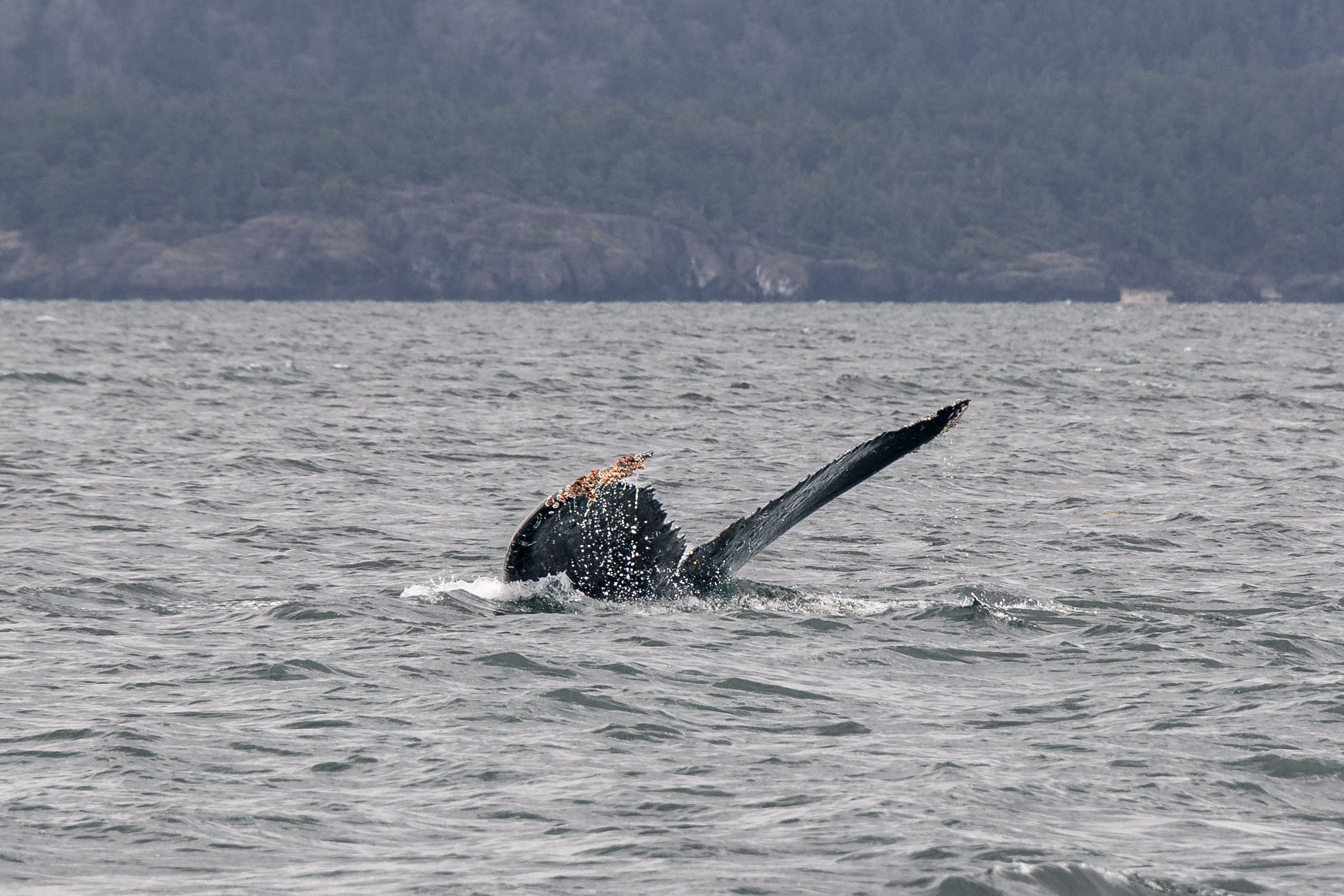
Arial diving. Photo by Jordan Robinson.
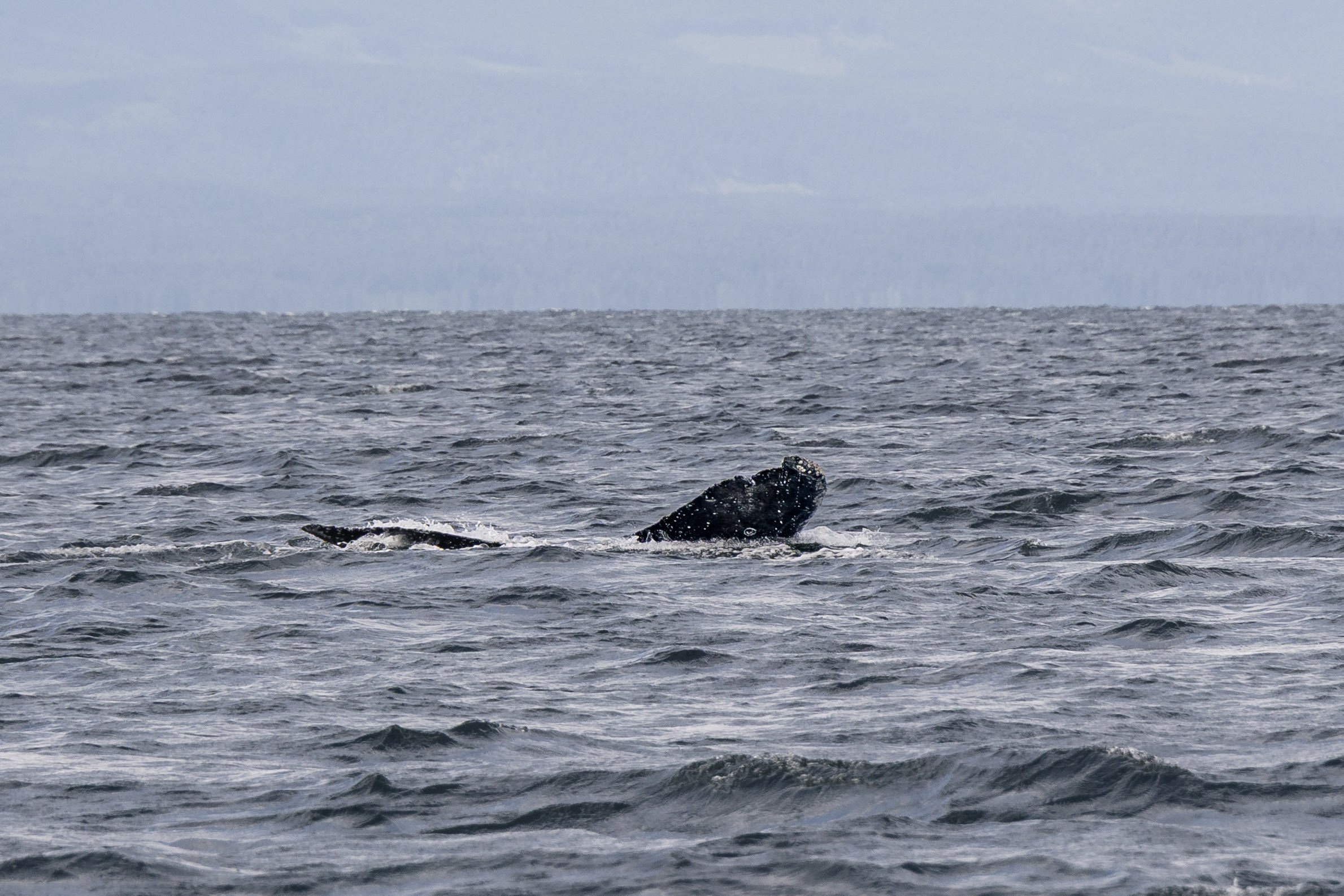
The corner of Forge’s flukes. Photo by Jordan Robinson.
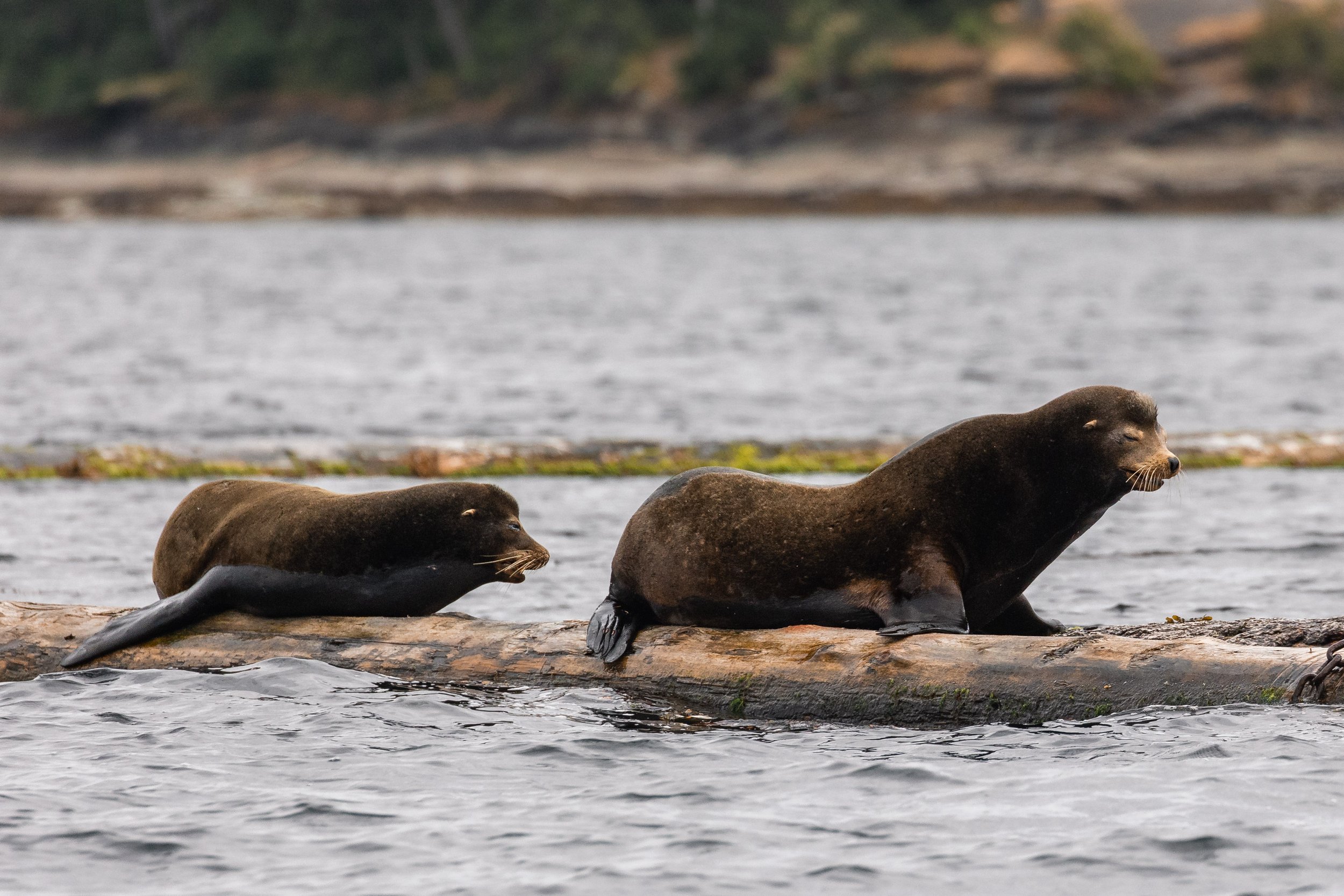
A pair of California Sea Lions waddling along the log booms. Photo by Vanessa Vereschahen.
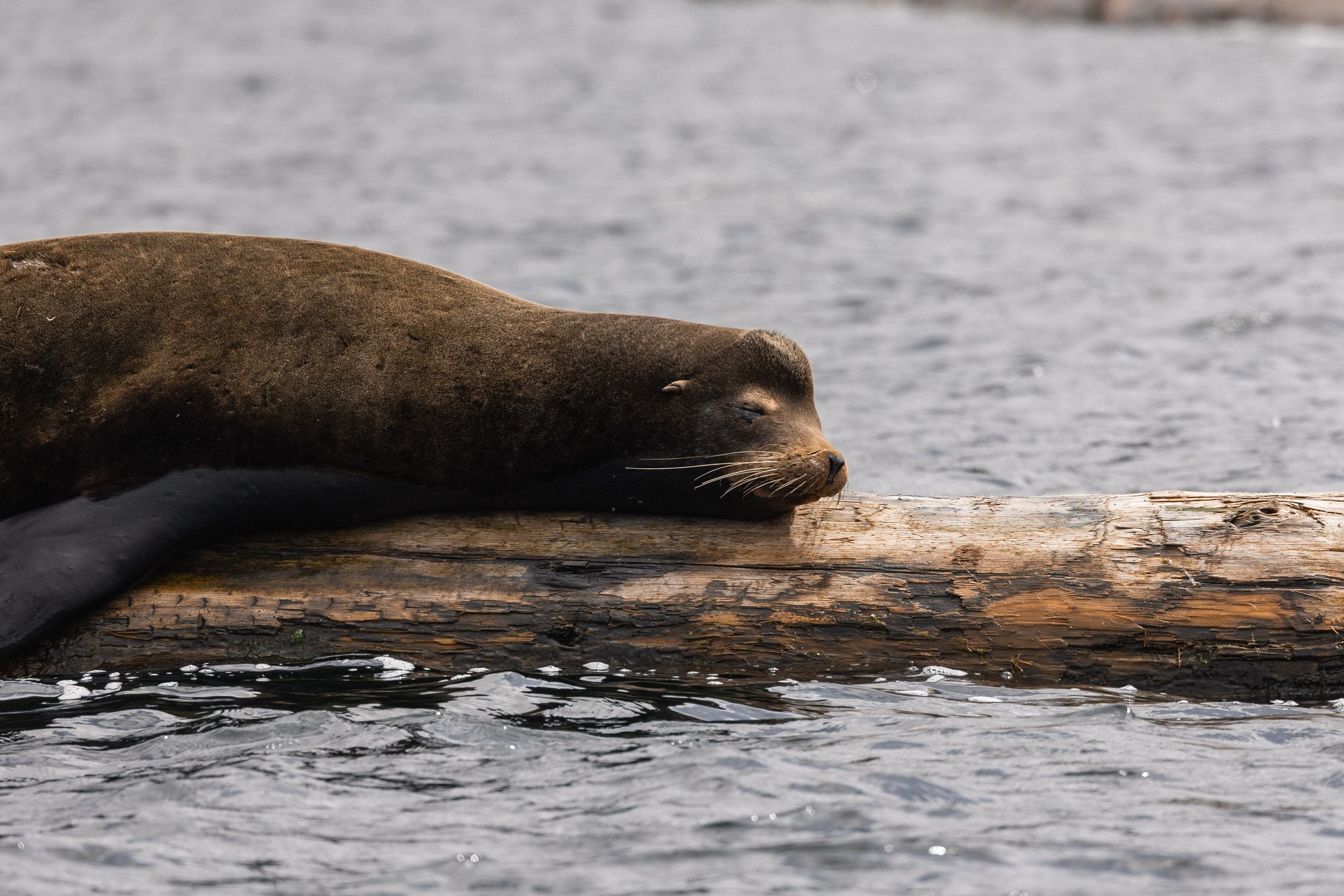
Sleeping in the sunlight. Photo by Vanessa Vereschahen.
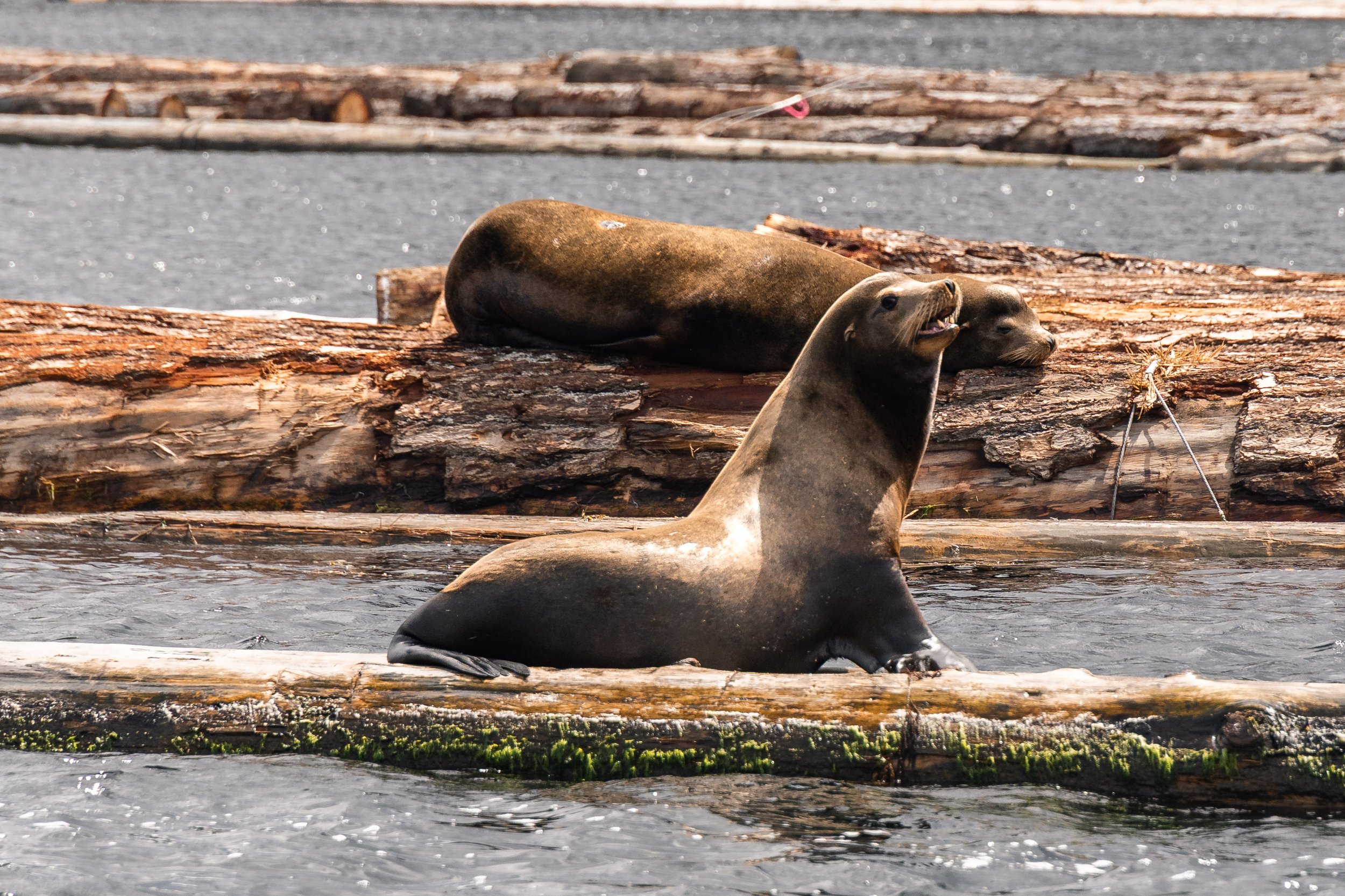
A side eye from some of the California Sea Lions. Photo by Jordan Robinson.
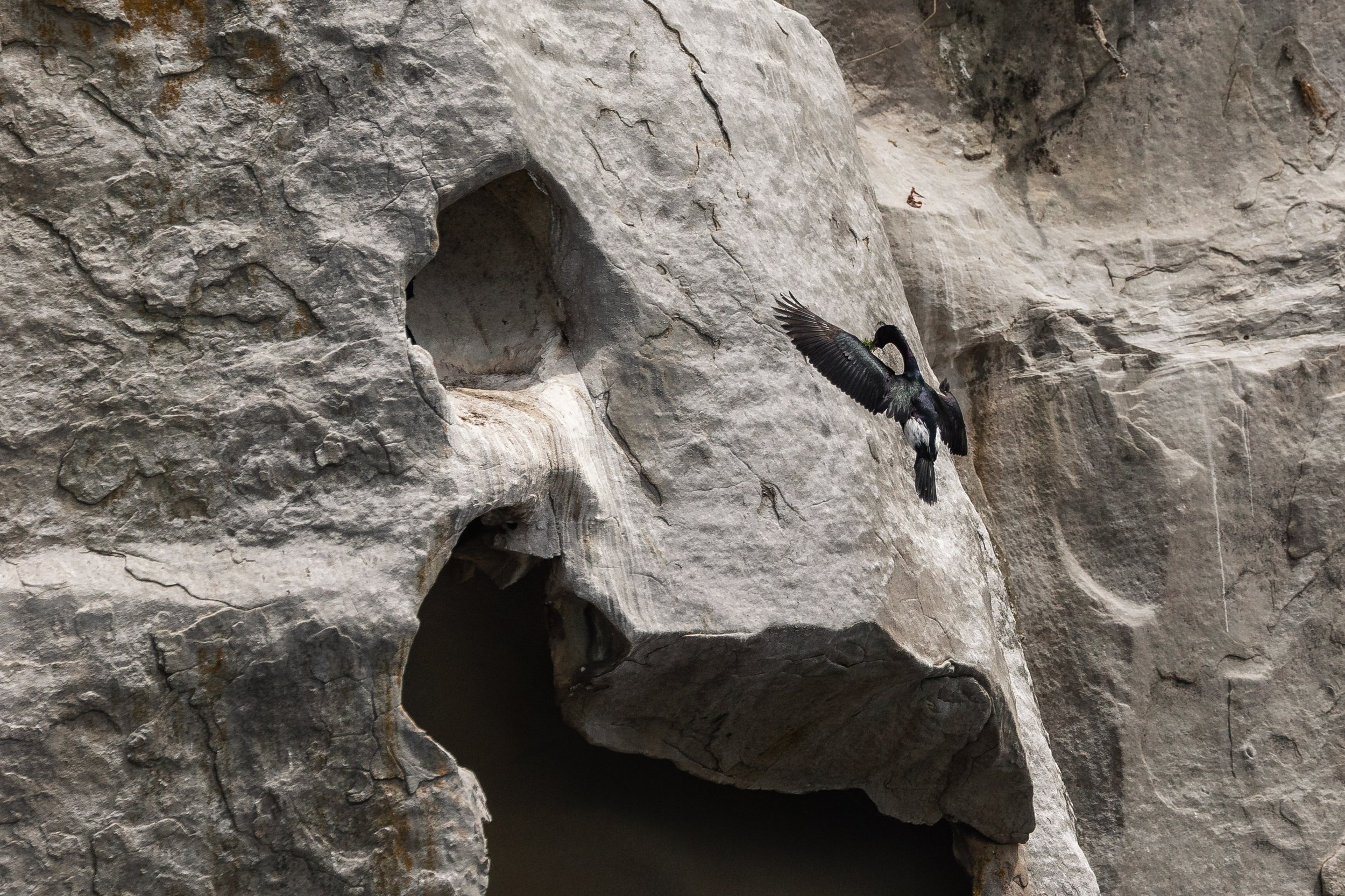
A cormorant coming in for a landing. Photo by Vanessa Vereschahen.
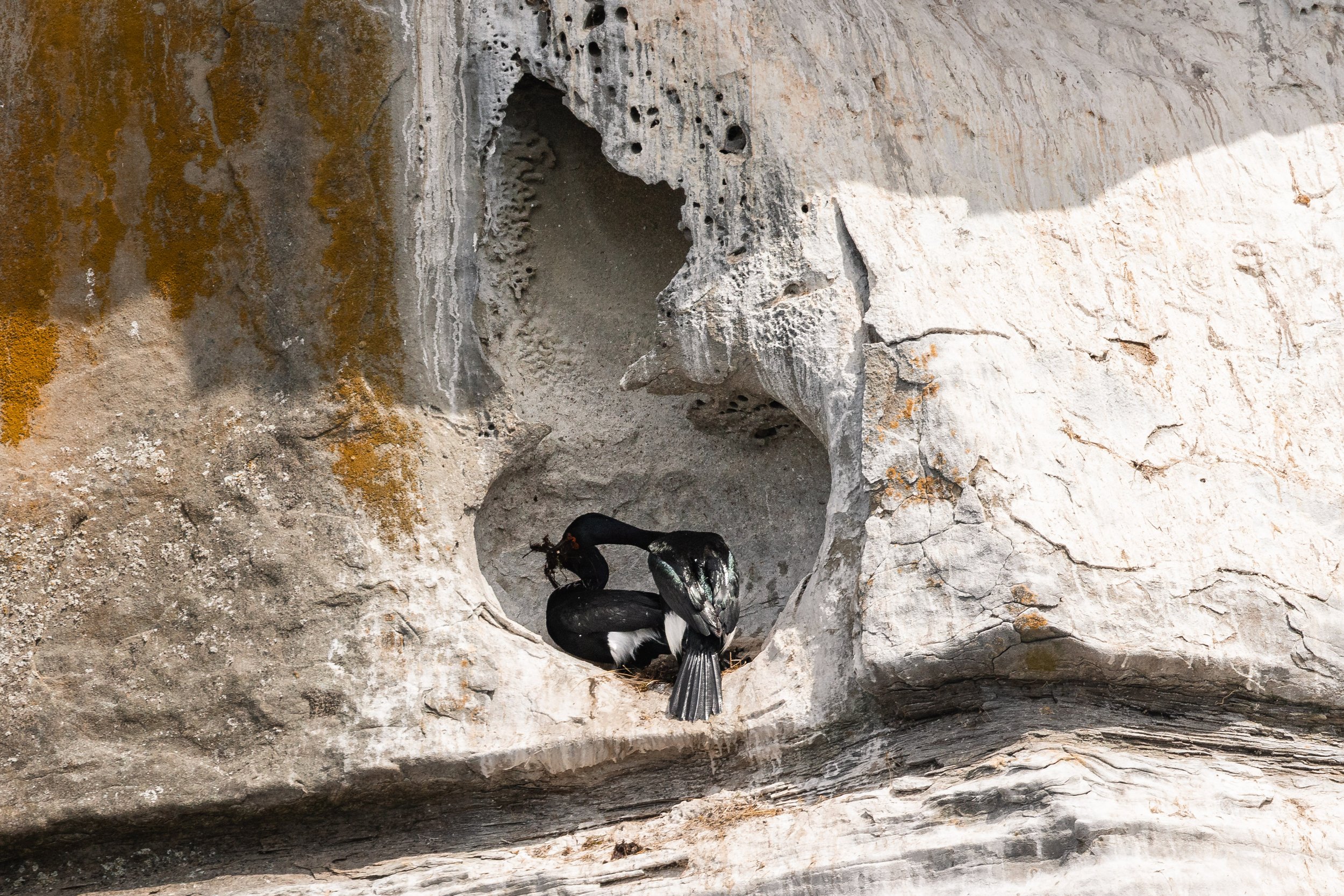
Sharing some nesting material amongst two Pelagic Cormorants. Photo by Vanessa Vereschahen.