
June 6, 2026 - Party time, humpbacks feeding, and a new pod too!
It looked like it was going to be another great day for Whale Watching in the Salish Sea; the sun was shining overhead, the winds were calm, and we started our day with an idea of where we would be headed. We geared up, learned about what we would be looking for, and headed south towards an area known as Dodd Narrows. We had heard earlier in the day that there were some whales just south of Dodd Narrows, so the plan was to head that way to see if they were still there. As we got closer, we heard that the whales were entering the narrows, so we decided to wait for them to pass through before we got into position. Giving the whales space is very important, and there are many regulations in place that we follow to help protect these animals, in addition to the best practices we have adopted to go above and beyond what is required by law. The regulations state that we have to remain a distance of at least 200 meters away from Biggs Orca and travel under 7 knots when within a kilometer of them, but we also regulate how many boats we will watch the whales with, leaving if there are more than 5 boats present, we travel parallel with the whales motion, and we limit the time we spend watching them, all of which are voluntary actions on our behalf. Not only do we want to keep the whales as protected as possible, but we also only want to see whales that are happy and undisturbed. Such was the case today when we caught up to these animals, allowing them space to exit the narrows before travelling north with them in Northumberland Channel. These whales were super happy to be socializing, and we saw all sorts of surface activity from them during our hour. It turned out to be 4 matrilines present: the T100s, T124As, T124A1s, and the T137s!
T100 Hutchins ♀ (~1979)
T100C Laurel ♂ (2002)
T100F Estrella (2014)
T124A Kittiwake ♀ (1984)
T124A6 Kasuun ♂ (2016)
T124A7 Kite ♀ (2021)
T124A1 Bonapartes ♀ (1996)
T124A1B (2026)
T137 Loon ♀ (~1984)
T137A Jack ♂ (2002)
T137B Tempest ♀ (2006)
T137D Wright ♀ (2012)
We saw them breaching, tail-slapping, rolling, and looking like they were having a great time overall! It’s quite special to see this sort of activity from the Biggs Orca, since they are stealthy predators and usually try to keep a low profile to avoid detection by their prey. But this all goes out the window once the socializing begins! Although the odds of them finding food in this state are quite low, socializing is also very important for the whales, especially outside of their own family groups. It can be not only a great time to expand your social circle a bit, but it may also lead to breeding opportunities! Since this ecotype has plenty of food available to them, such as abundant Harbour Seals and sea lions, they have a healthy fat reserve that they can use for energy on days when they may be more focused on spending time together and less on finding food. It’s always great to witness this sort of activity from the whales, and it kept us in awe the entire time we watched them. Soon enough, though, it was time to leave them to their parting, and we headed out into the Strait of Georgia to see what other wildlife we could spot.
The more open waters of the Strait are where we often find our humpback whales, since their food (small schooling fish and krill) is more abundant and easier to locate there. This isn’t always the case, though, since we sometimes find them inside the narrow passageways of the islands. We had our eyes peeled for the telltale signs of these larger whales as we travelled: the burst of mist that is released upon exhale, called a Blow. Soon enough, excited pointing radiated throughout the boat: we had found humpbacks! The first group was a trio of whales travelling in close proximity, X_pialidocious (KEY0059), Olympus (BCX2075), and KEX0087. Soon after, we came across a pair of whales: Smiley (BCY0996), Europa (BCX0854). All of these humpbacks were doing what humpbacks do best this time of year: feeding. We assume as much anyway, since these whales will spend around 20 hours a day feeding below the water's surface. They are filter feeders, so they take in huge mouthfuls of water, around 20,000L at a time, and use the 400 plates of baleen that hang from the roof of their mouths to separate the delicious food from the water it lives in.
Compared to the acrobatic orca seen earlier, spending time with the humpbacks felt quieter and more graceful as they breathed at the surface and lifted their massive tails for their dives.
Soon enough, it was time to leave these guys behind as well and head back towards Nanaimo. Along the way, there was one last surprise in store for us: more orca! This time, it was a single pod spending time together, hunting just outside of the Nanaimo Harbour. This was our first time as a company to see these whales, making the encounter extra special: it was the T069Ds!
T069D ♀ (2001)
T069D1 ♂ (2013)
T069D2 (2016)
T069D3 (2020)
T069D4 (2024)
Although we didn’t have long to spend with them, the short encounter had some very interesting highlights: they hunted a harbour seal and harassed a cormorant that was passing by! They made quick work of the seal, but the bird wasn’t so lucky. Biggs orca typically won’t eat the birds they mess with in the water, but small targets do make for great practice. It’s a low-stakes way for a young whale to practice their hunting skills without the danger that comes with the seals and sea lions in the form of sharp teeth and claws. It was a great way to end our already exciting trip!
Please enjoy the photos captured throughout the tour by the onboard Marine Naturalist Jordan Robinson, included below!
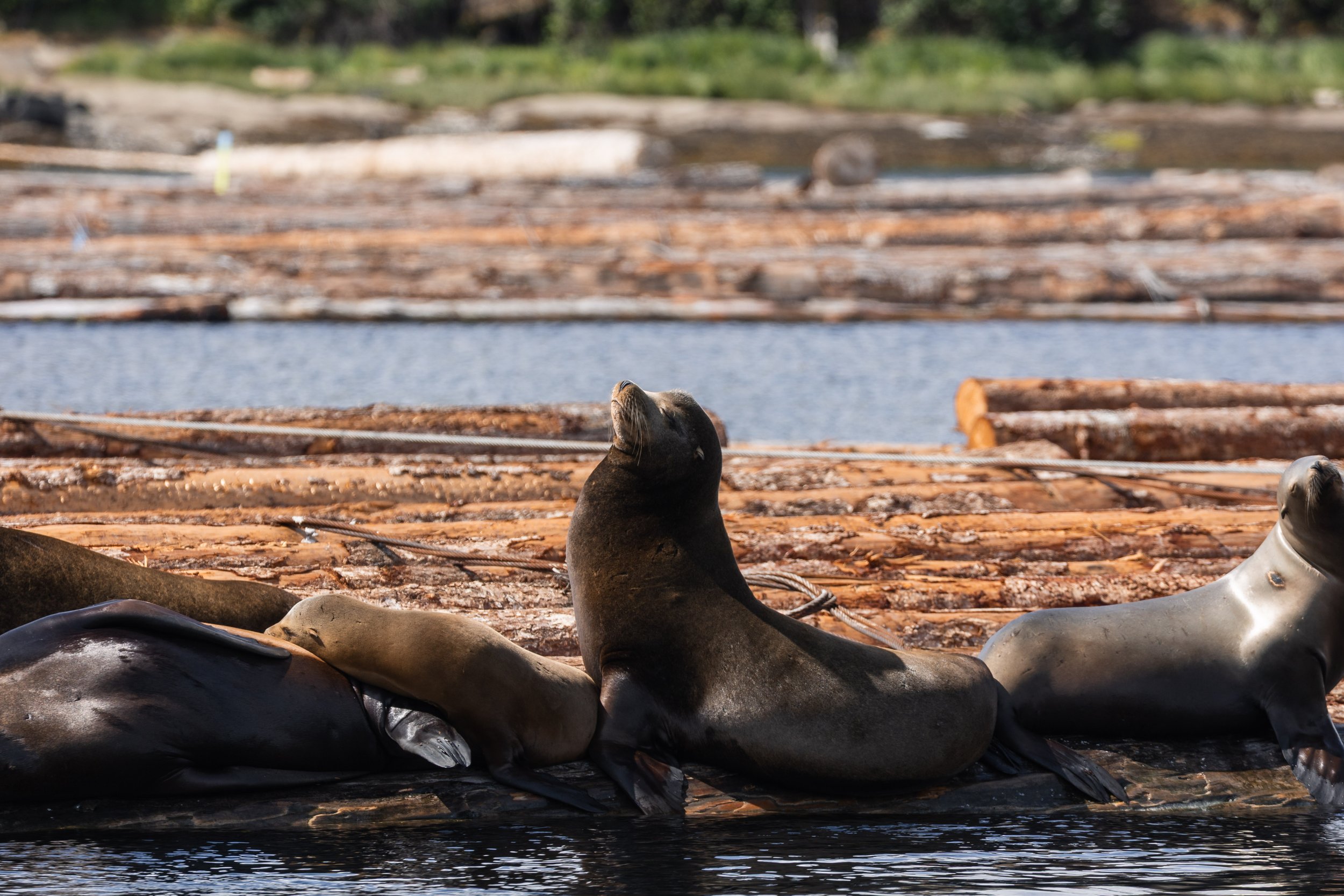
California Sea Lions relaxing on the log booms at Harmac.
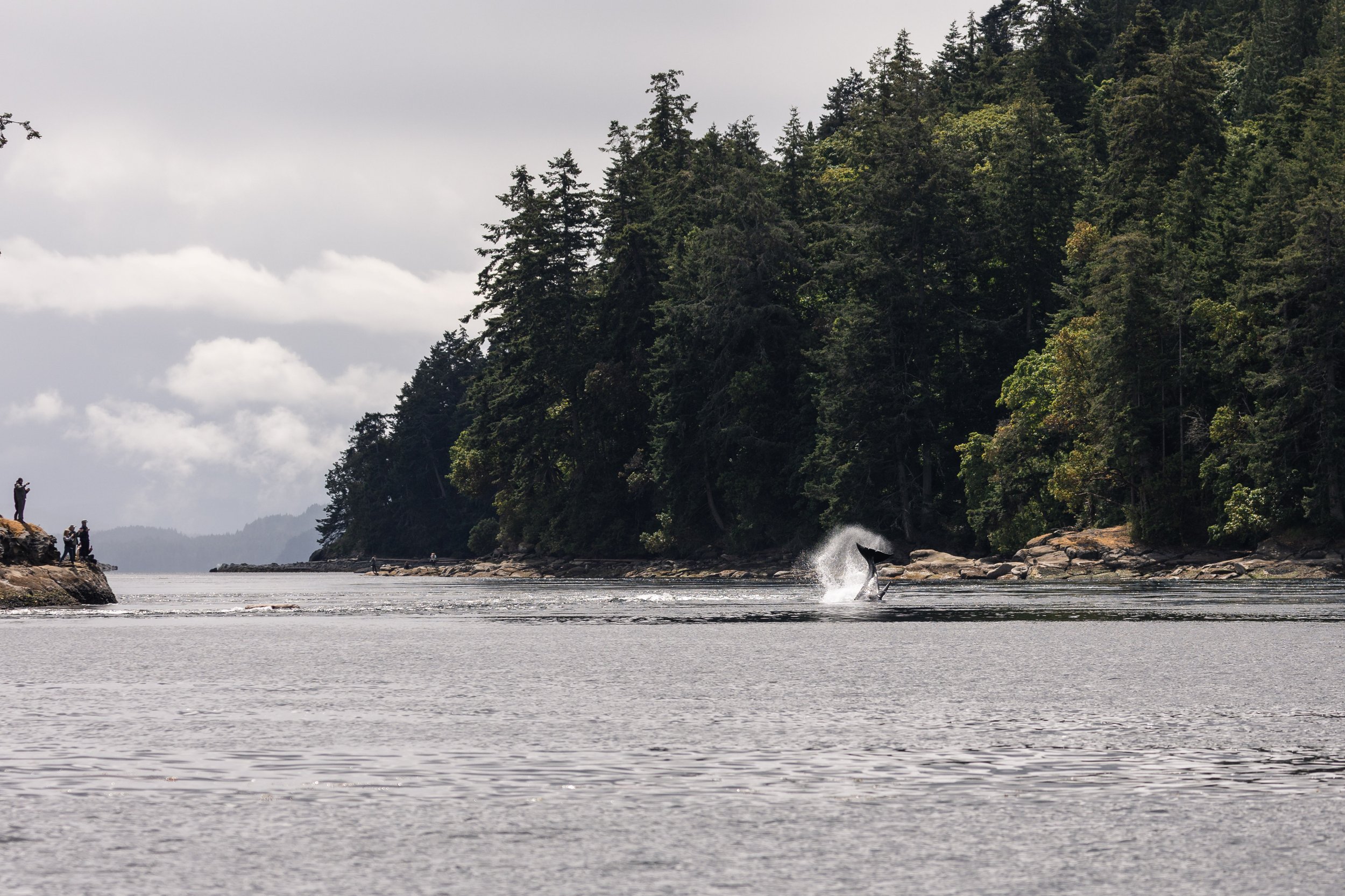
A big tail lob as the whales make their way through Dodd Narrows.
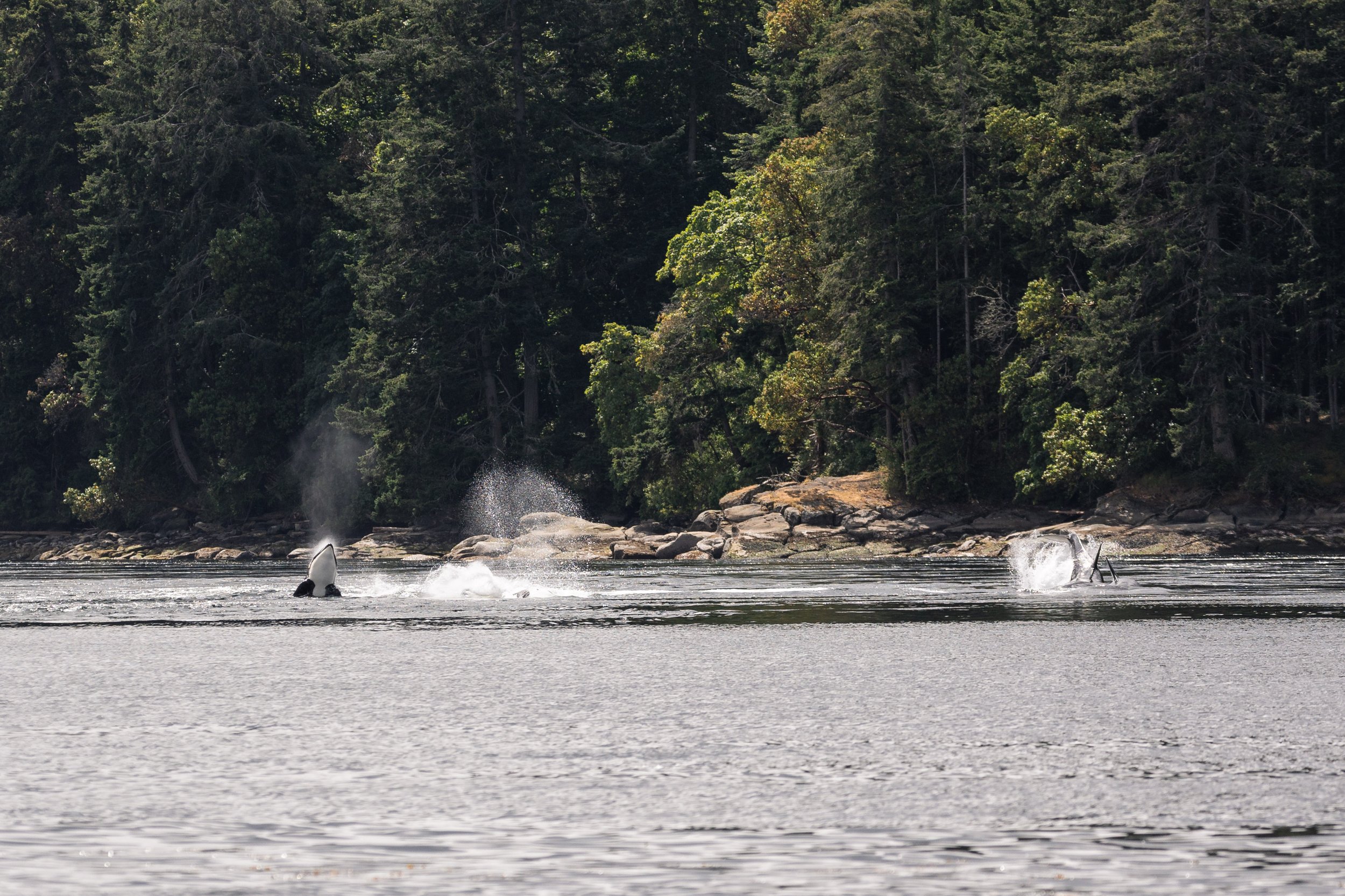
A breach and a tail slap as they continue through the narrows.
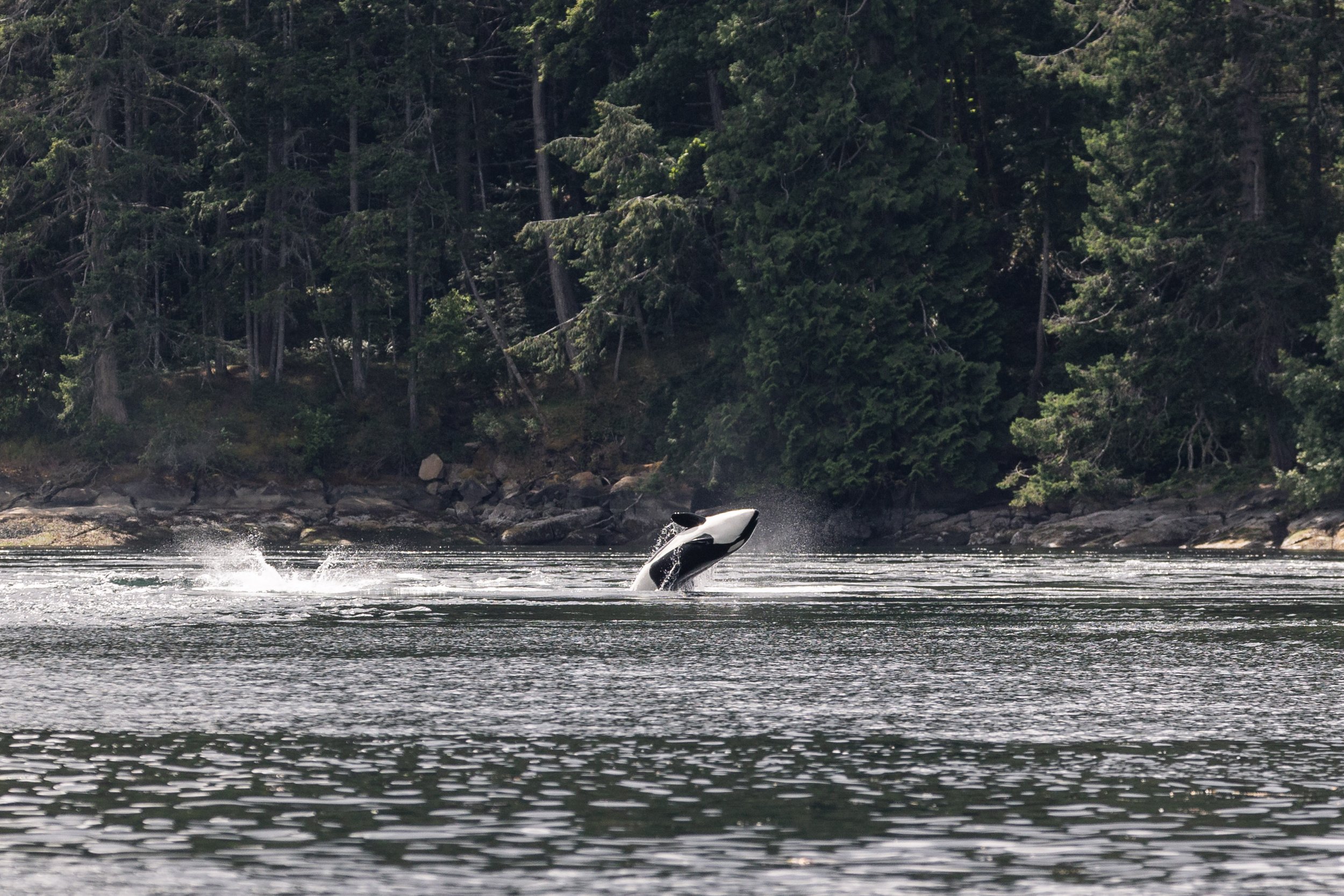
Breaching in excitment passing through Dodd.
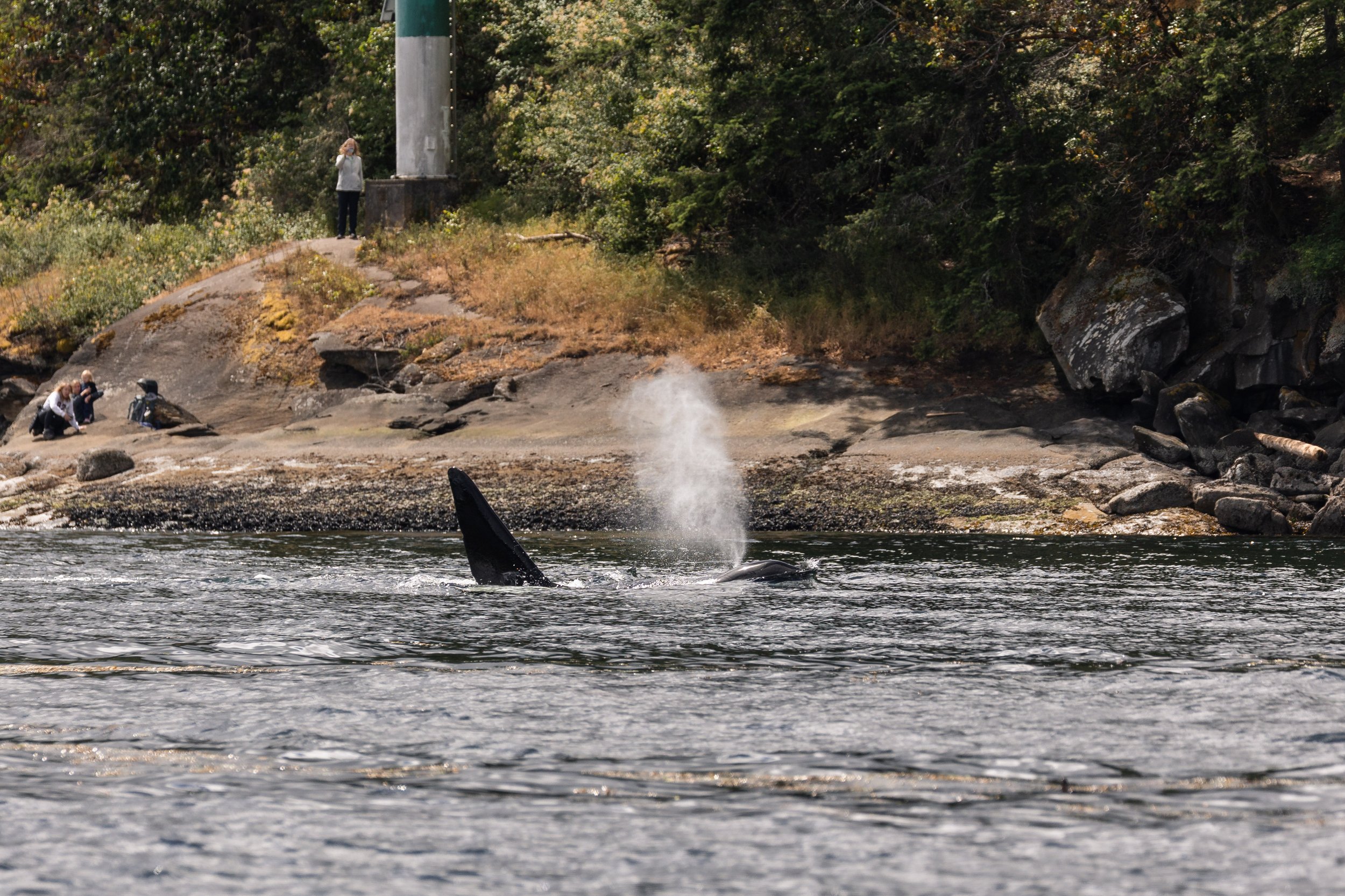
T137A jack surfacing in front of the onlookers at Joan Point Park.
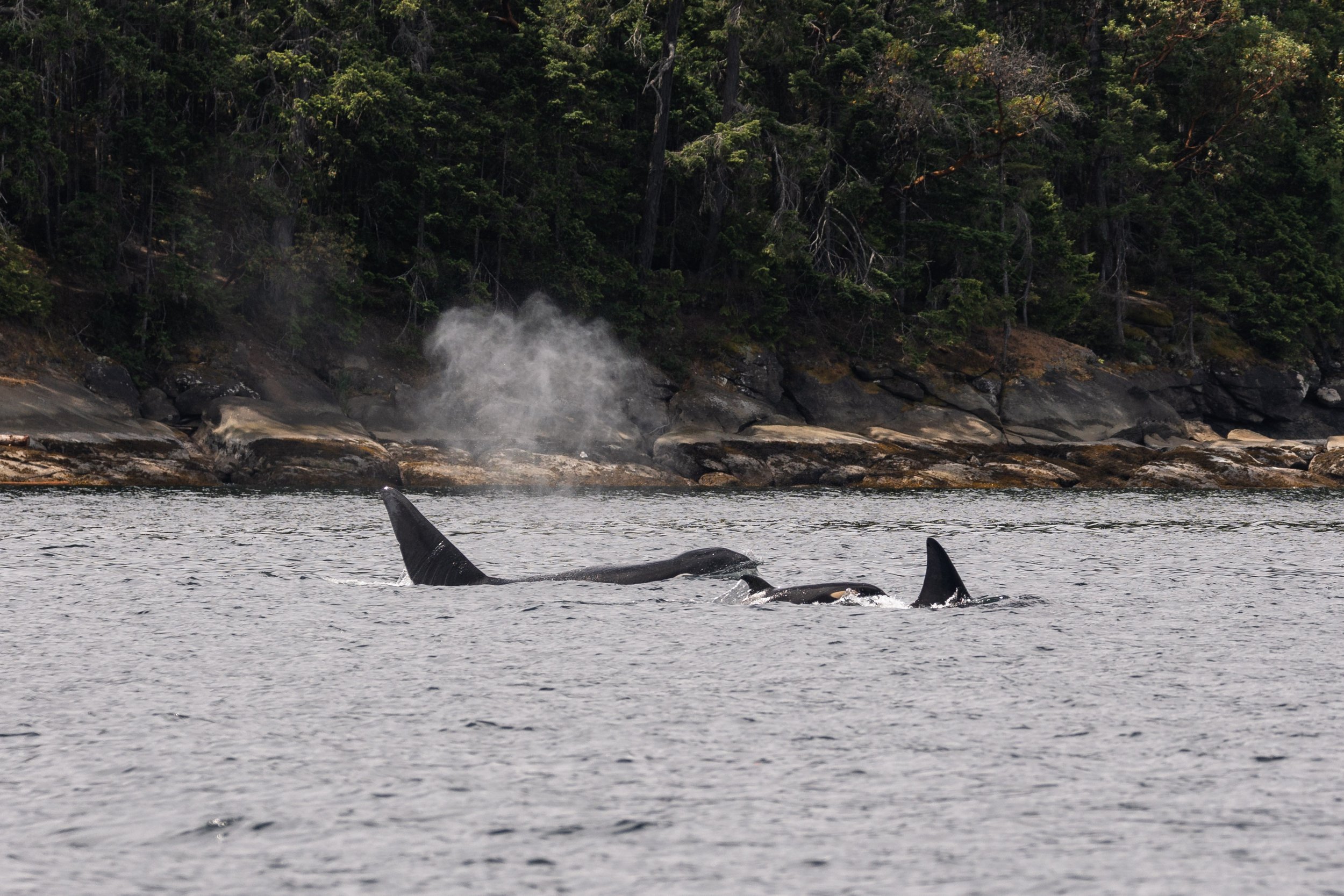
T137A Jack surfacing close to T14A1 Bonepartes and her brand new calf!
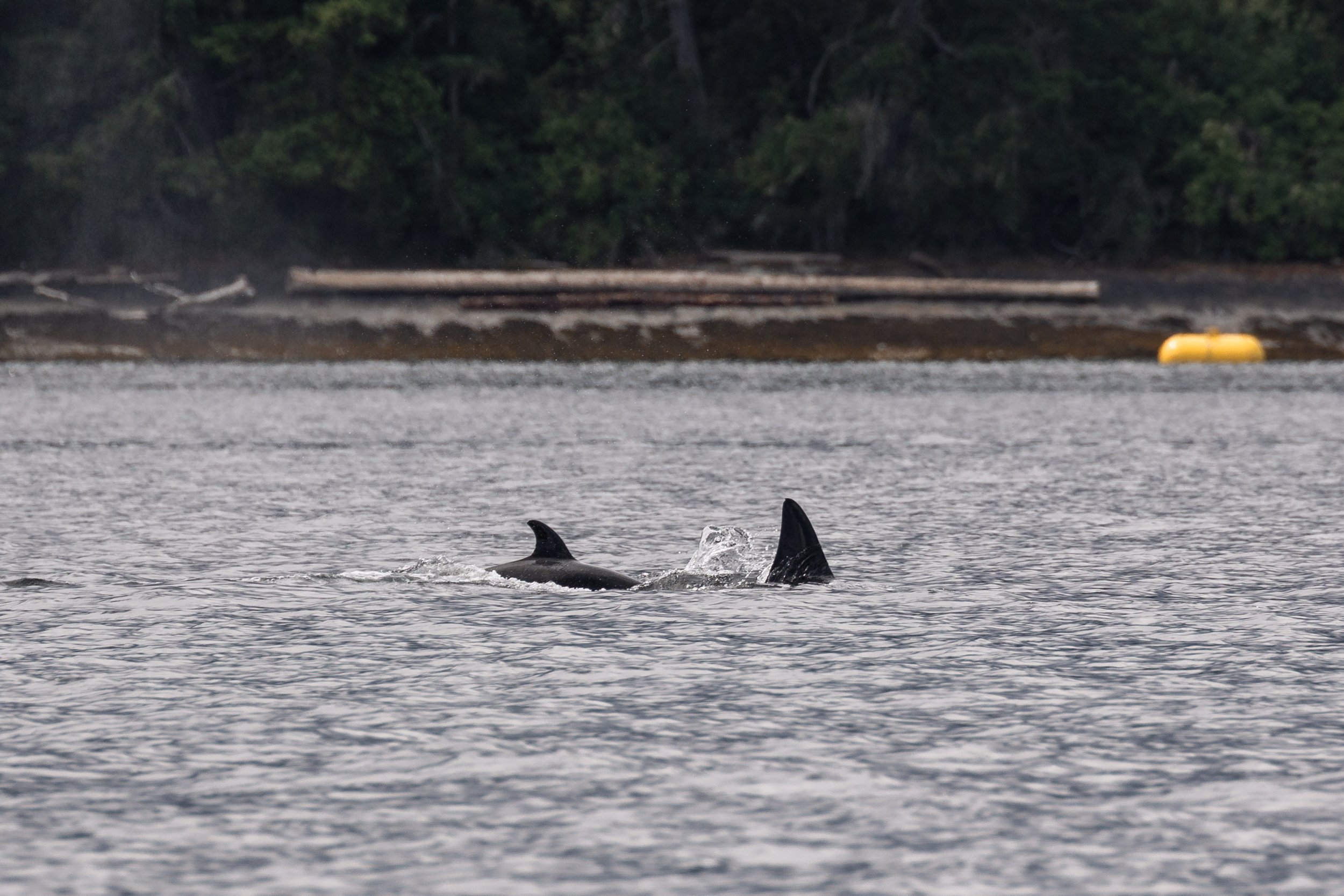
T124A1B surfacing jsut behin their mm, T124A1 Bonepartes.
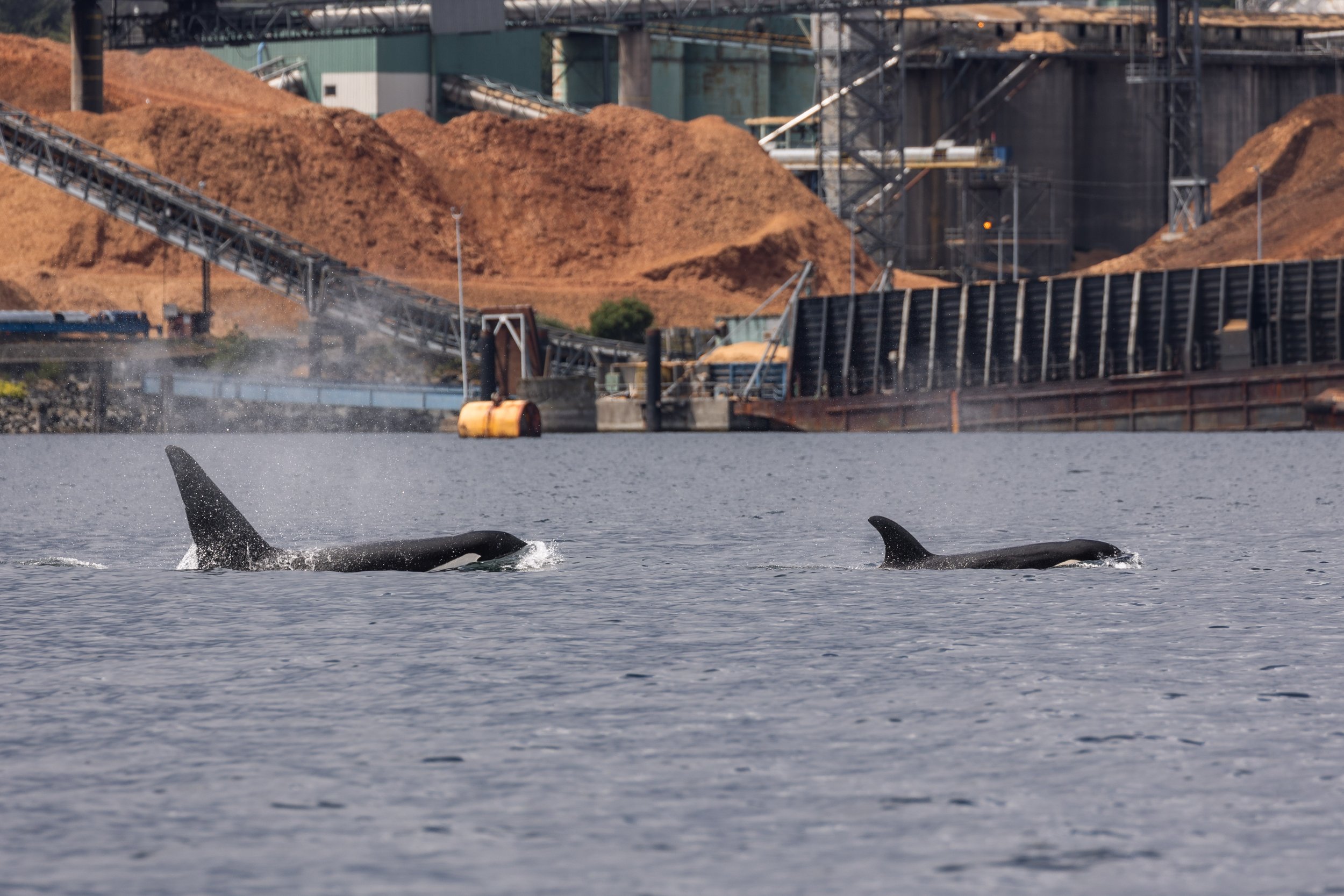
T137A Jack surfacing behind T100F Estrella.
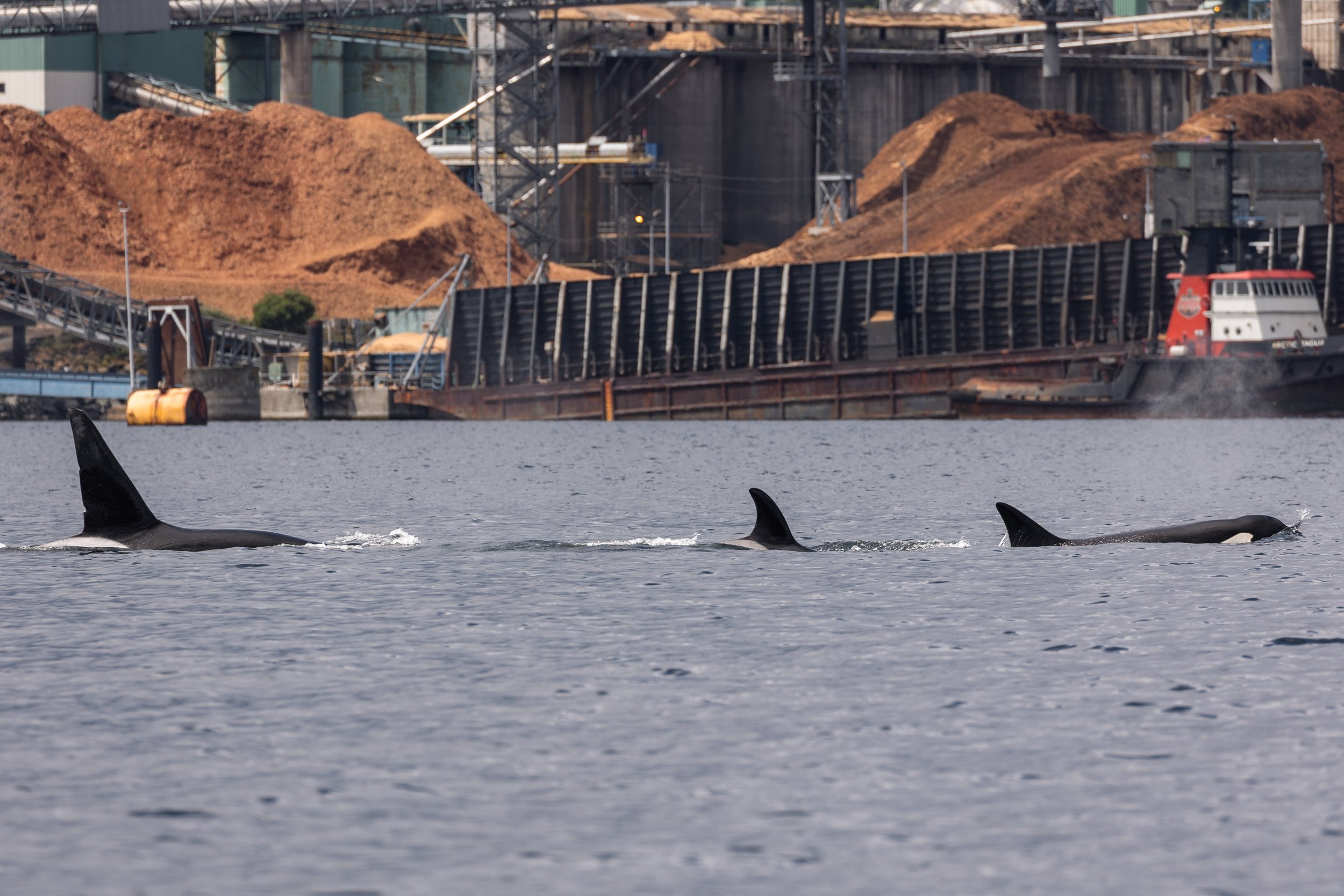
From left to right we have T137A Jack, T100F Estrella, and T124A1 Bonepartes surfacing together.
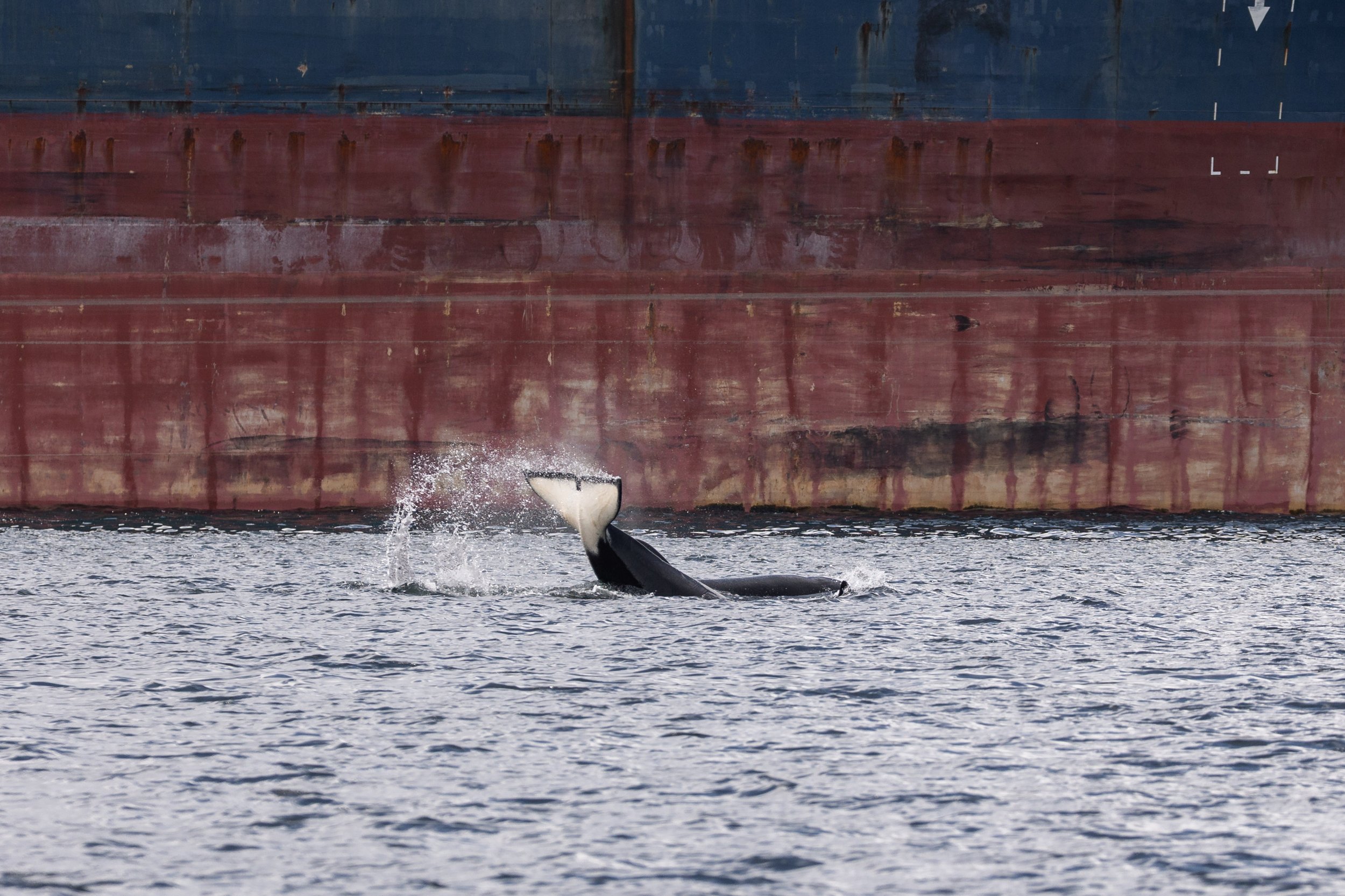
A big tail slap beside the freighter in Nortumberland Channel.
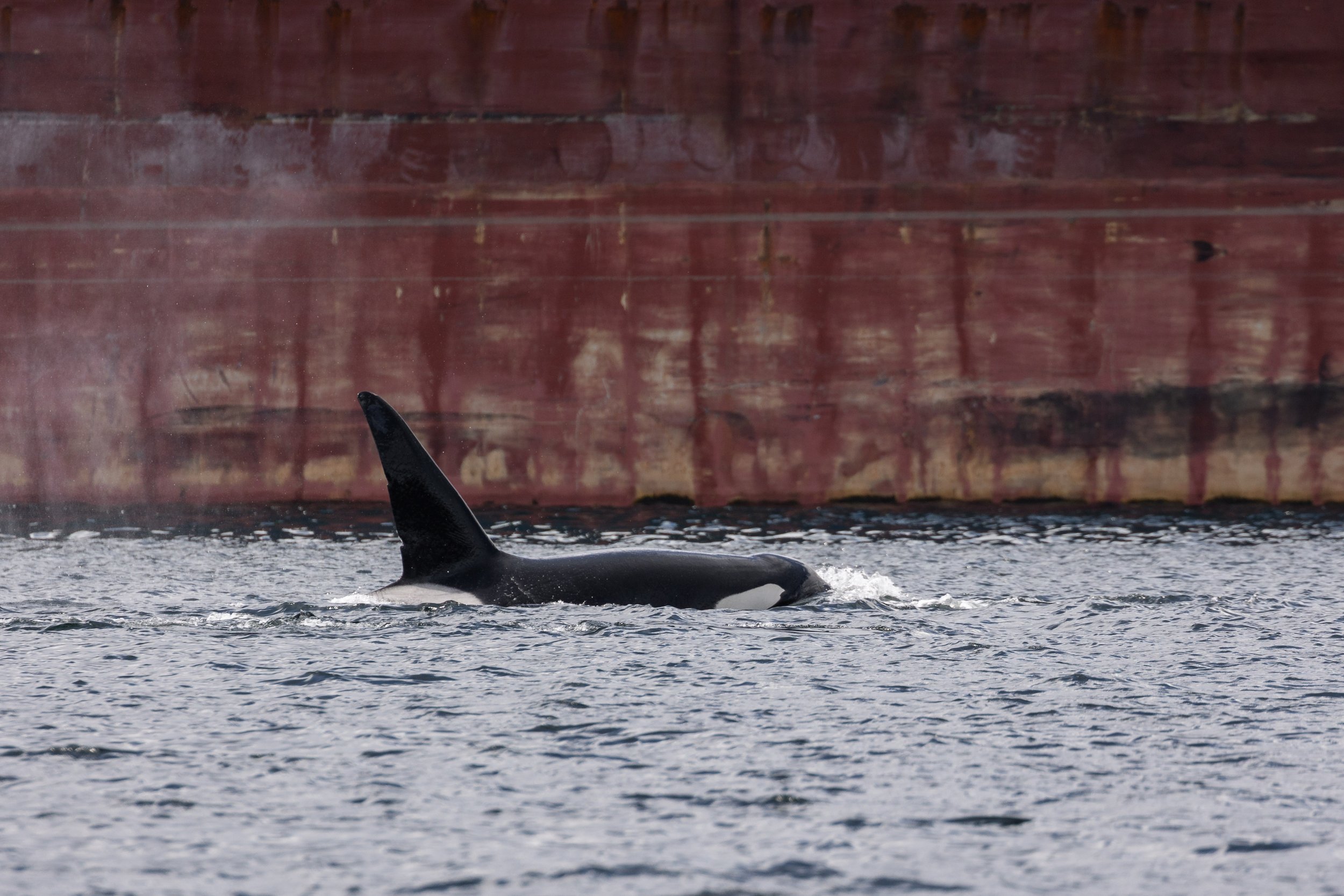
A great look at T137A Jack as he surfaces.
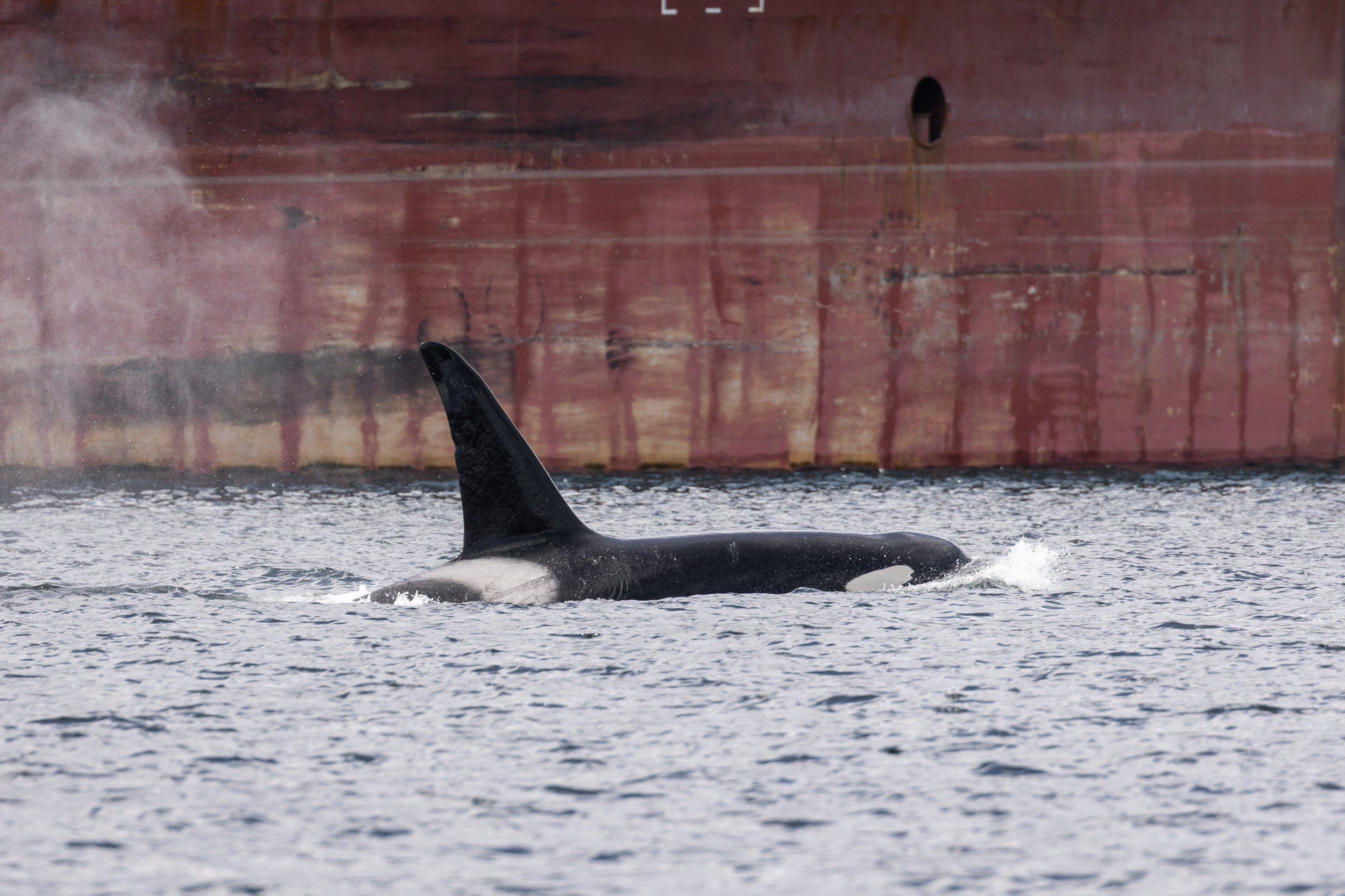
Look at all the scarring on T100C Laurel’s saddle patch.
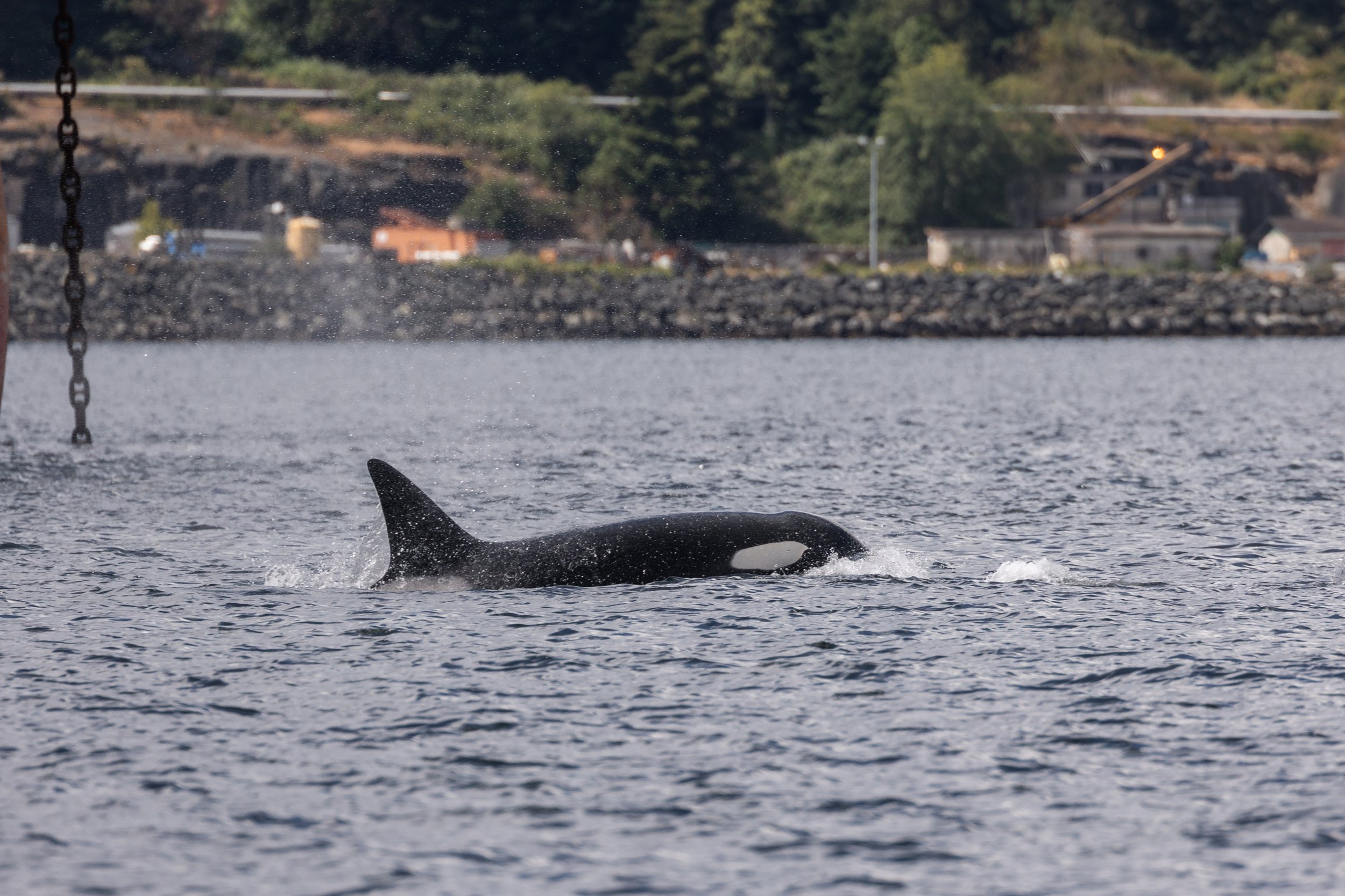
A great look at T137B Tempest as she surfaces.
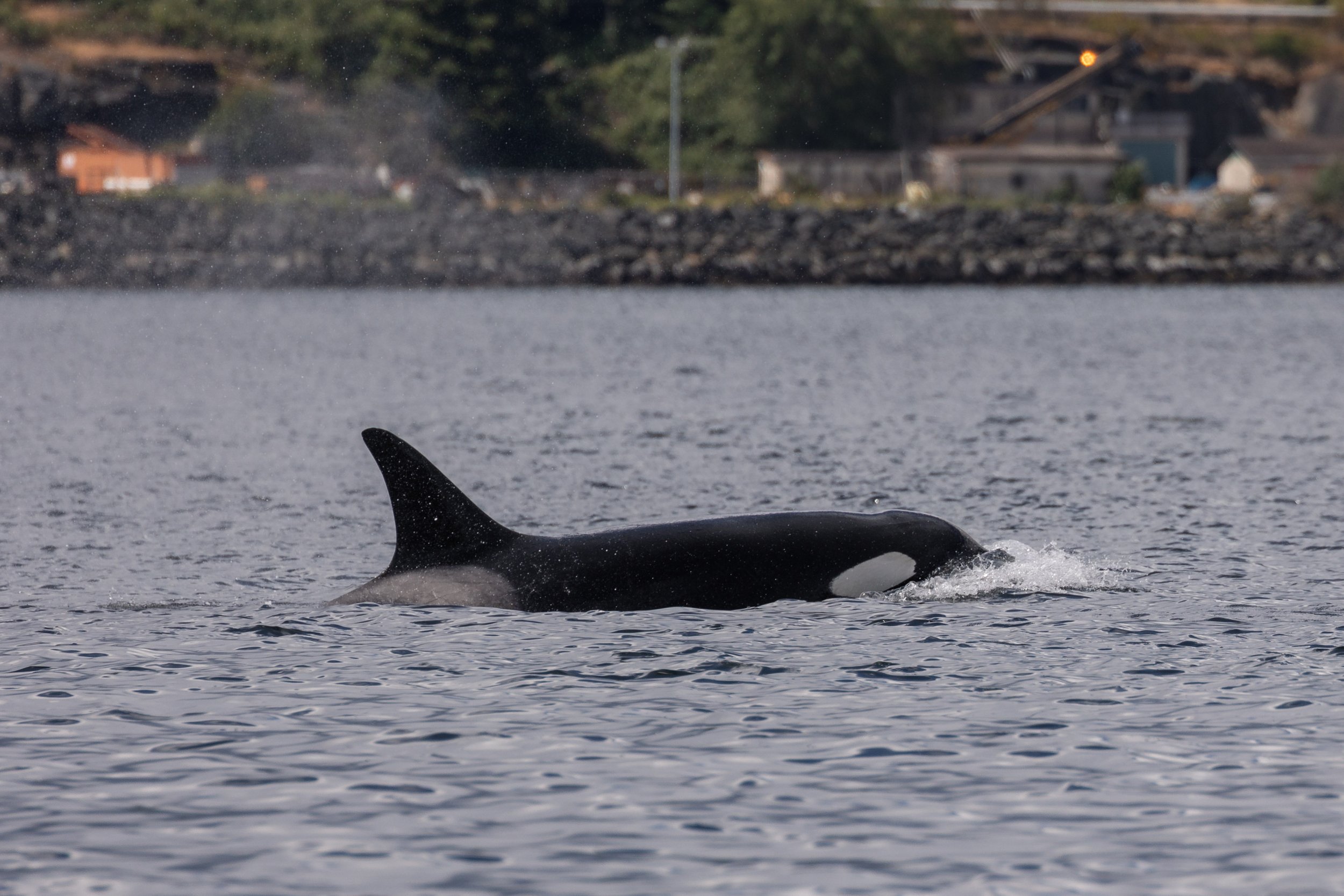
T124A Kittiwake surfacing.
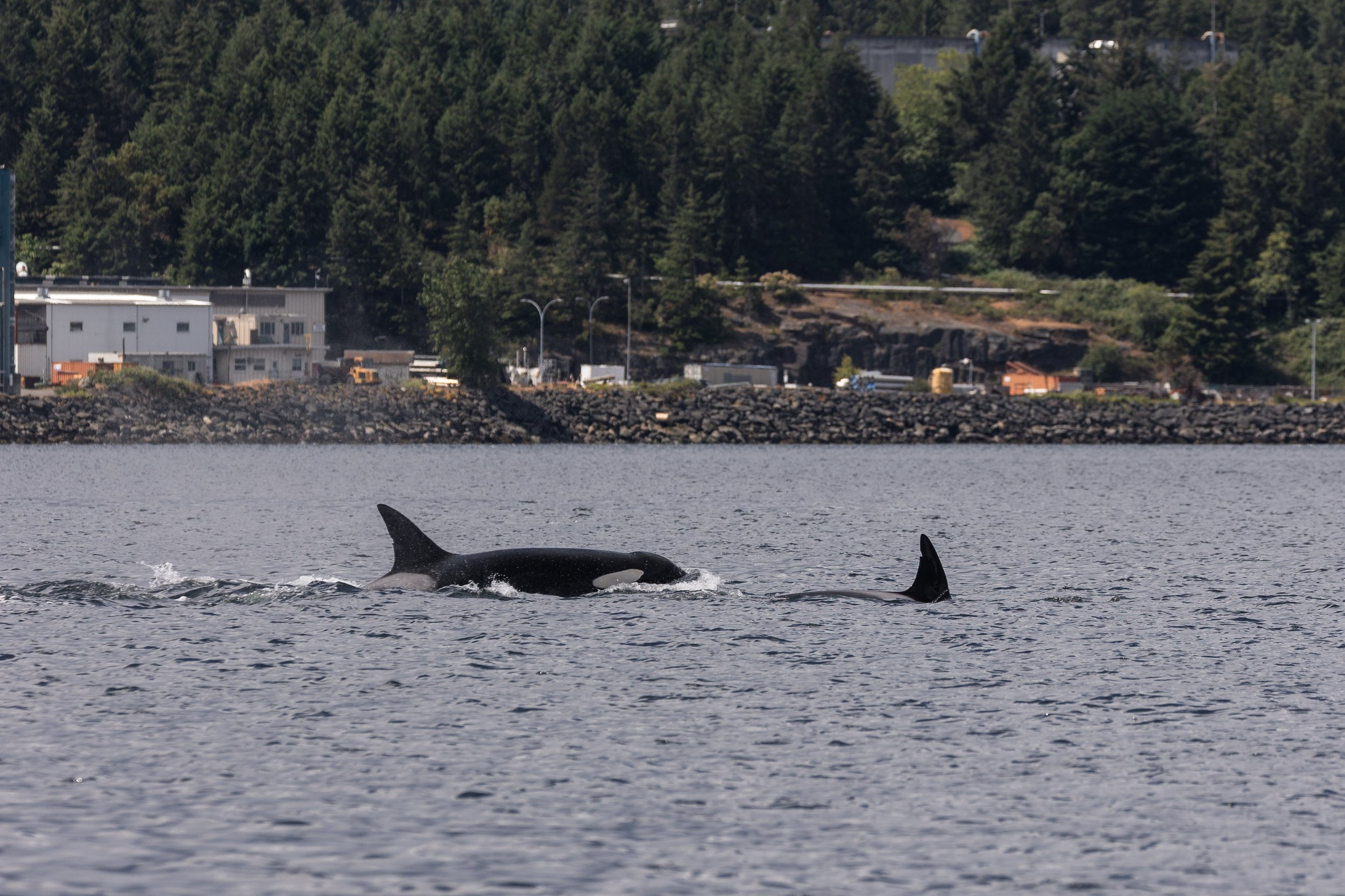
T137 Loon surfacing just behind T137D Wright.
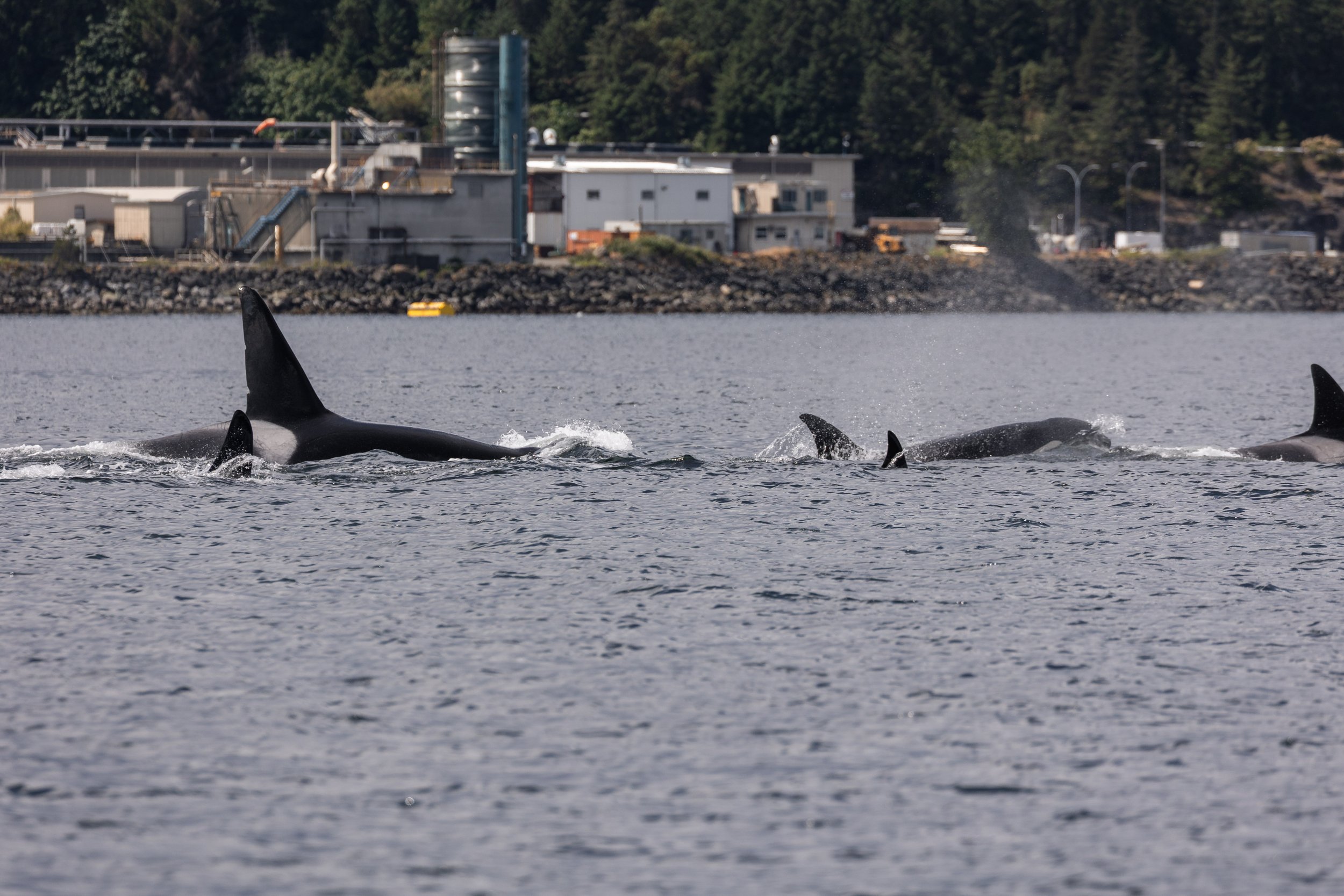
A bunch of biggs surfacing together! T137A Jack, T100C Laurel, T100 Hutchins, T124A6 Kasuun, and T137B Tempest.
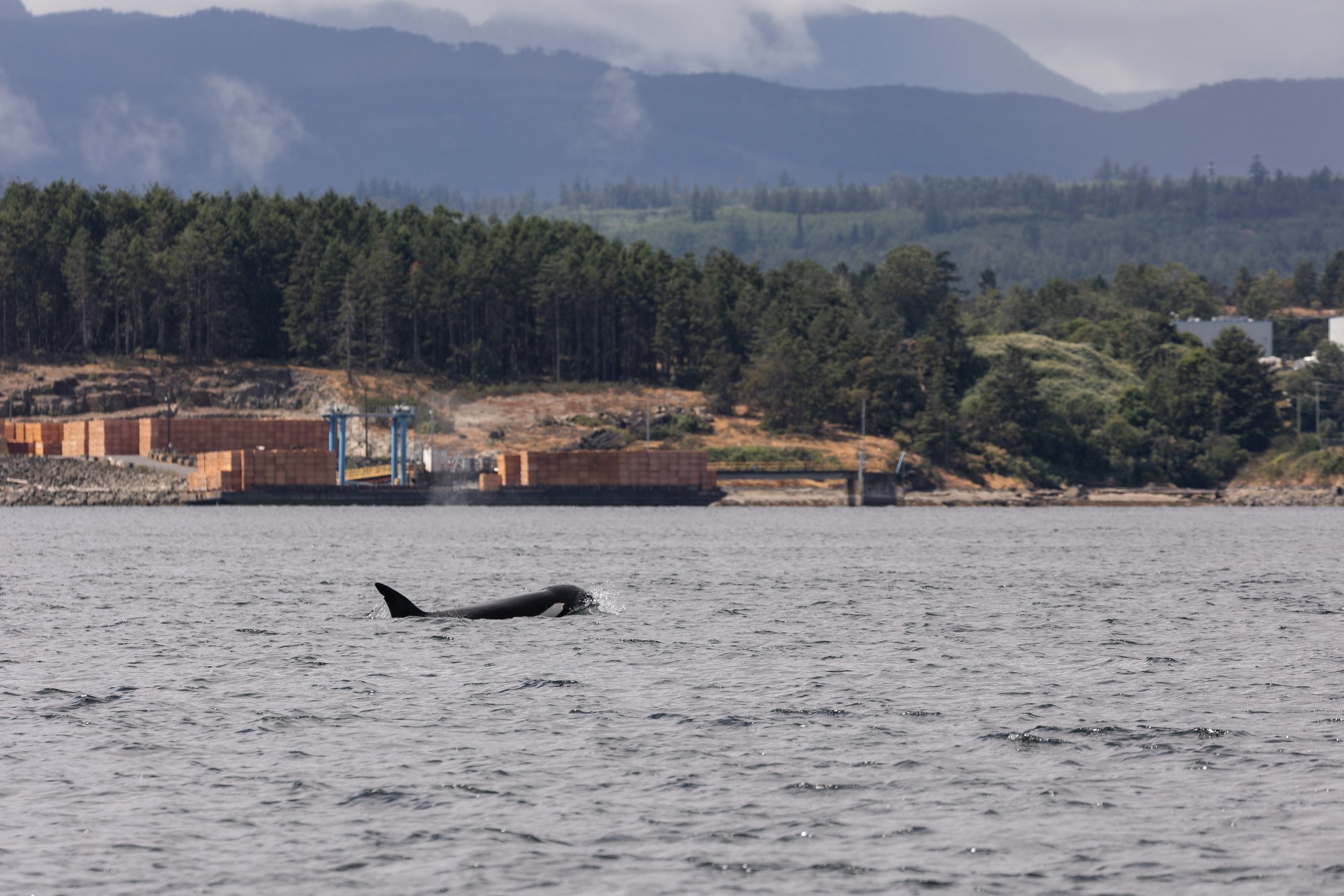
T137D Wright surfacing in front of the Nanaimo Industrial Area.
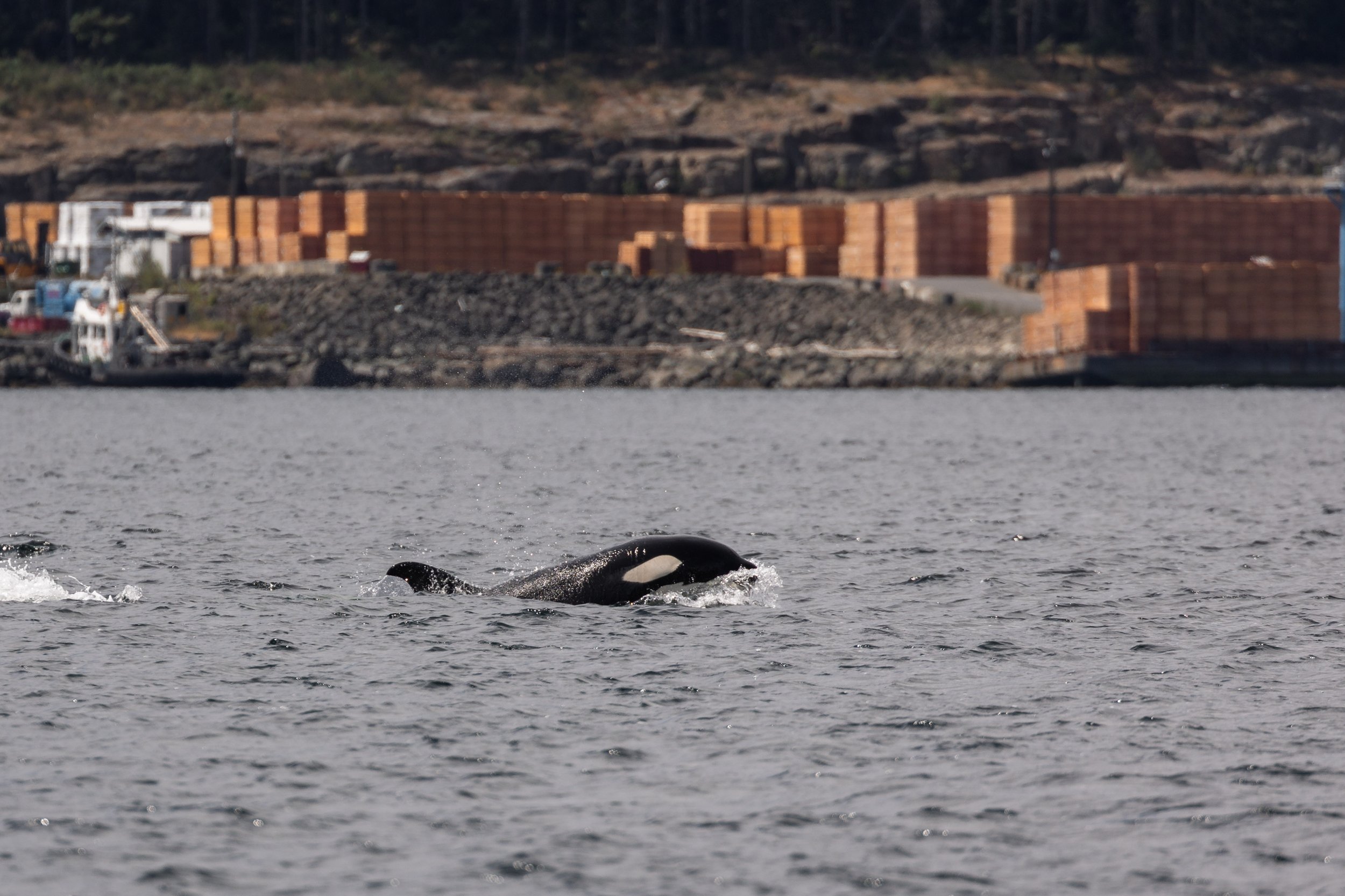
A great look at T124A7 Kite.
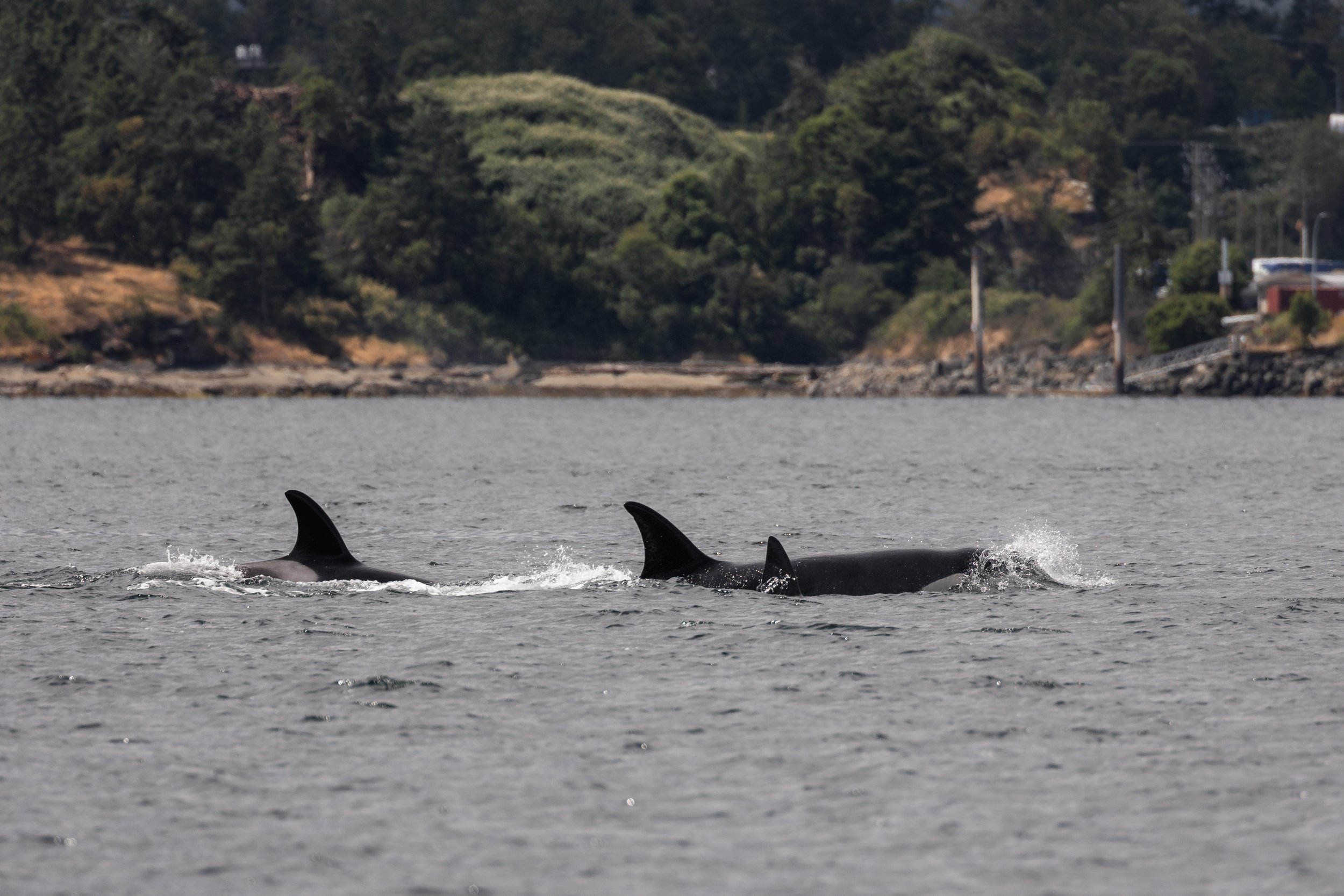
T100F Estrella sufacing behind mom, T100 Hutchins.
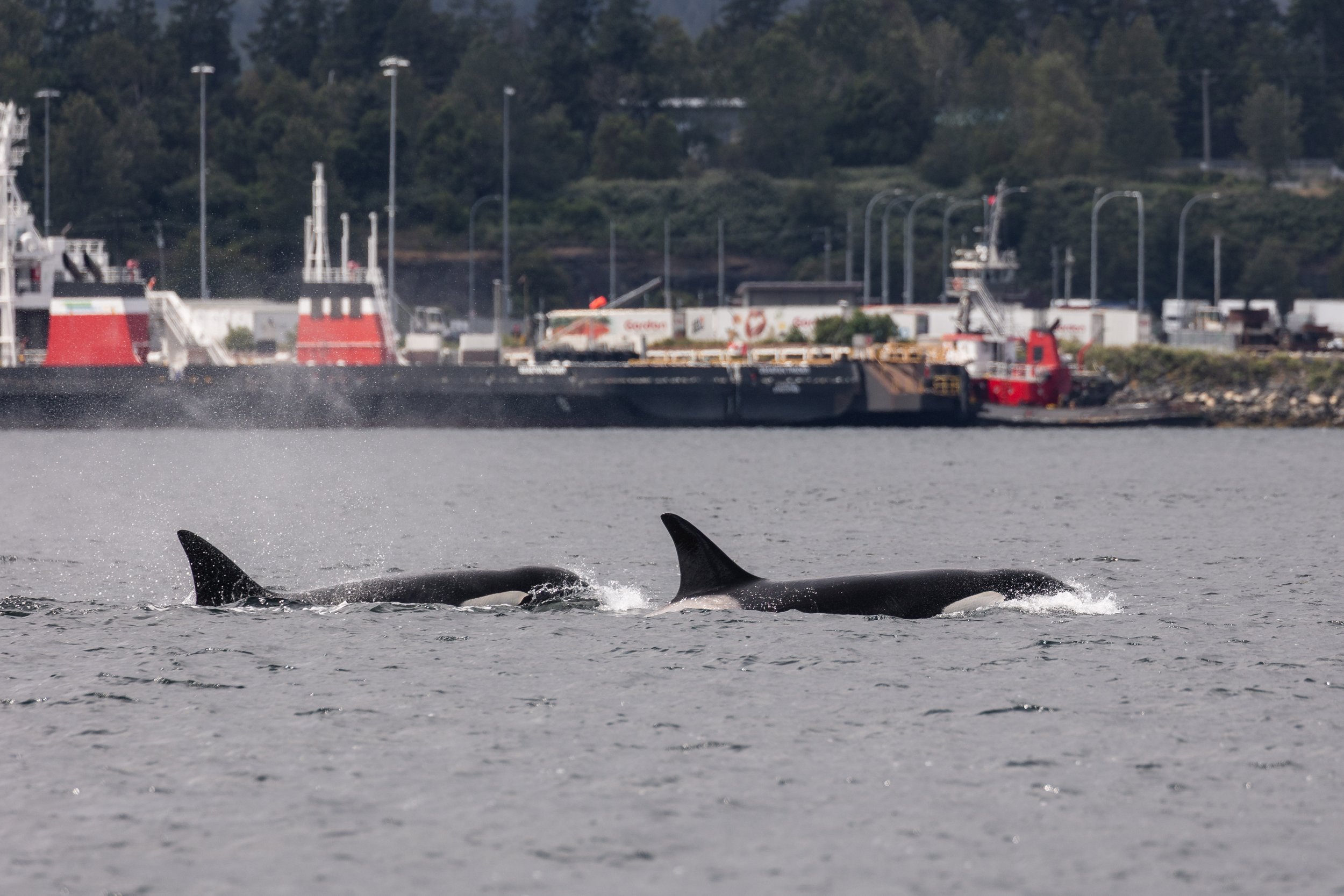
T137B Tempest and T124A Kittiwake surfacing together.
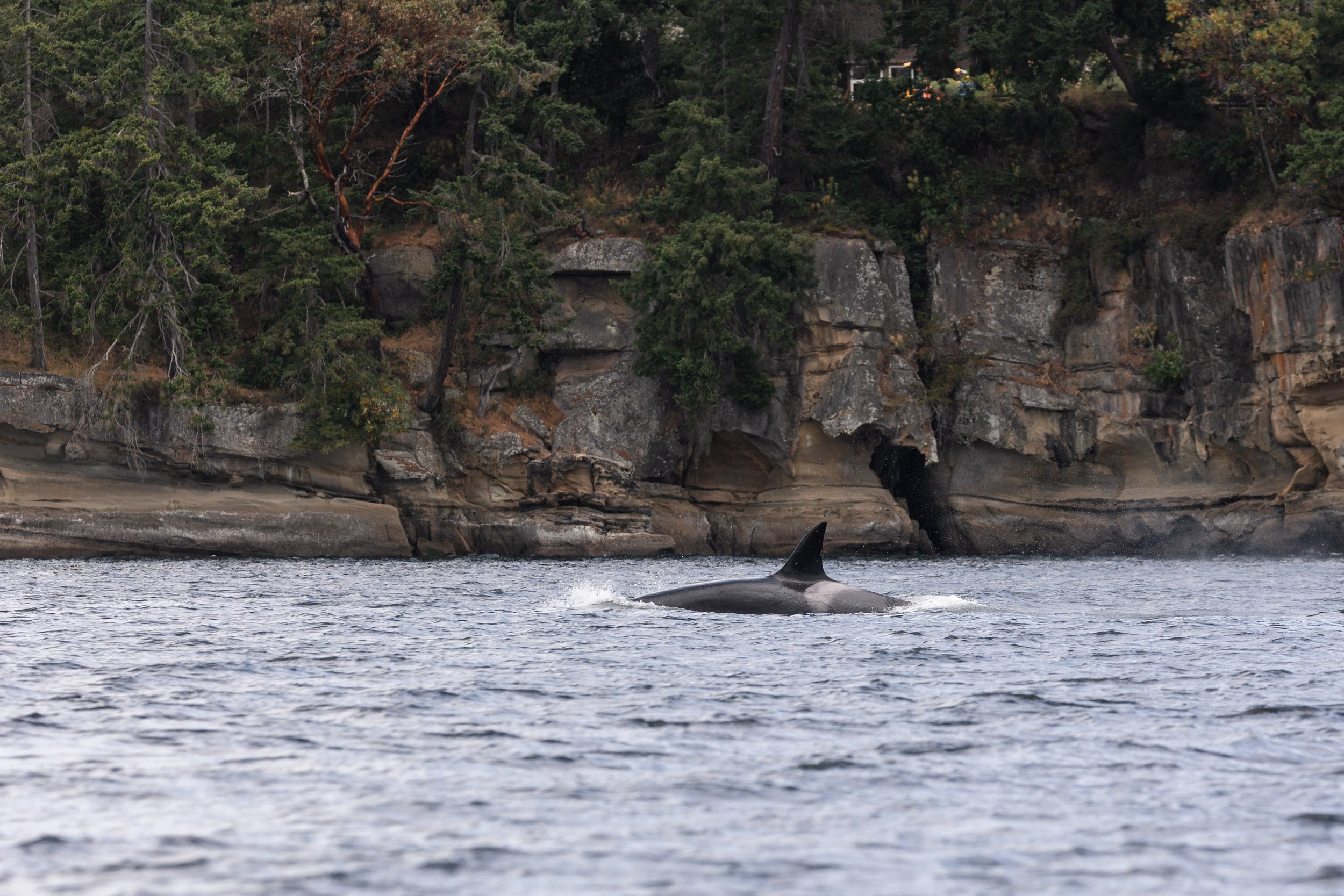
T137 Loon surfacin in front of some lovely sandstone formations.
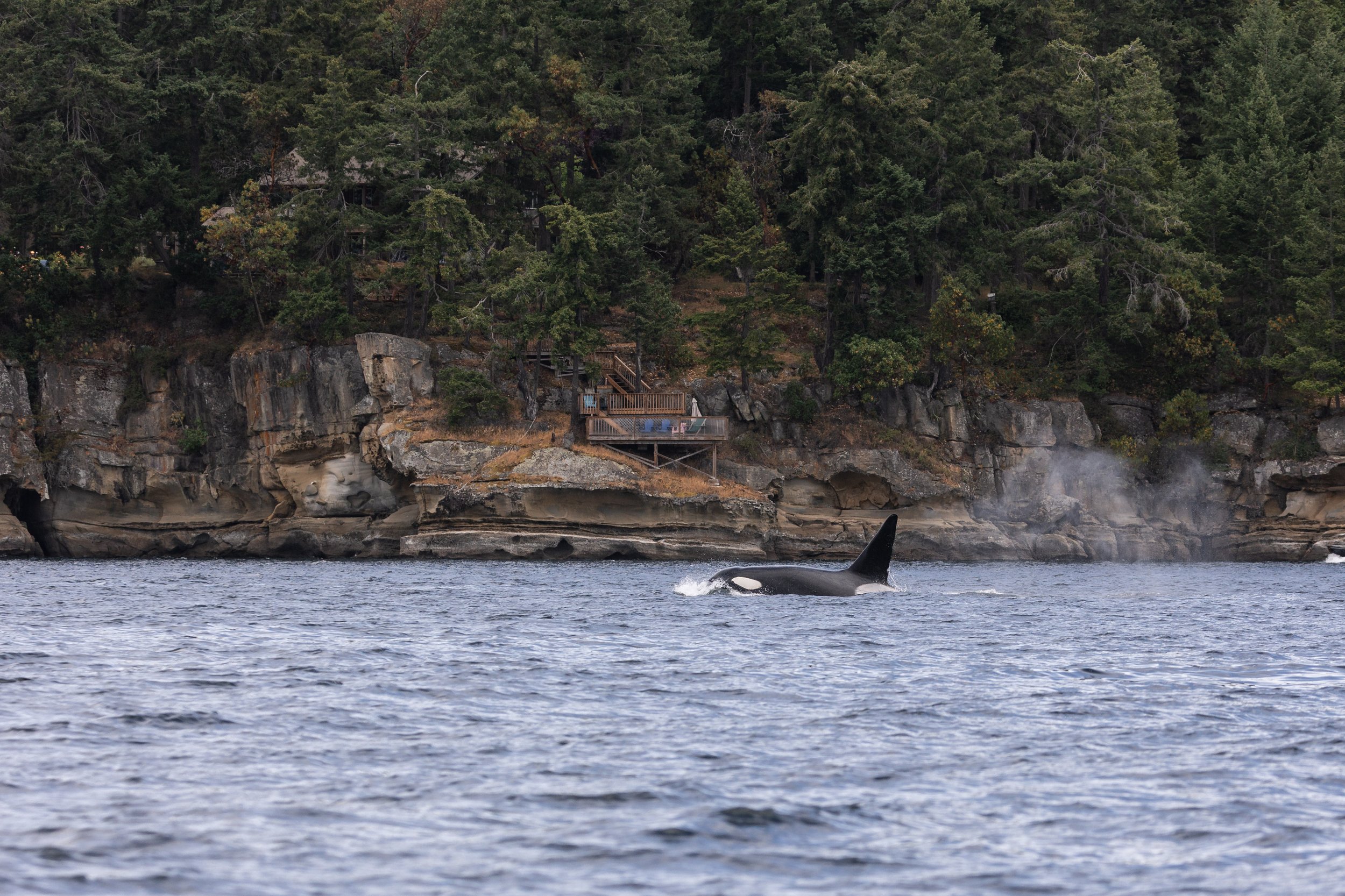
T137A Jack surfacing in front of Gabriola Island.
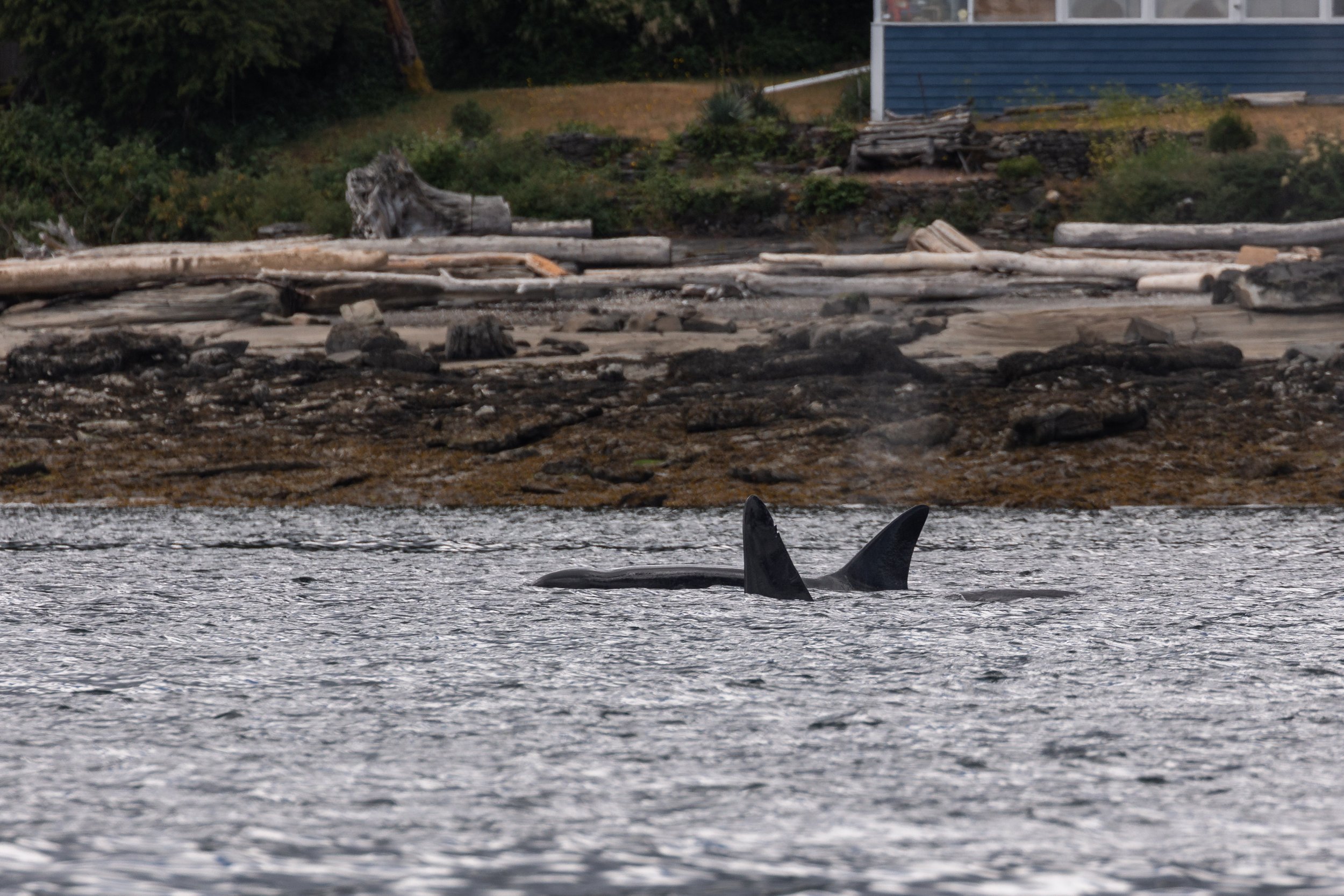
T069D surfacing with her eldest, T069D1.
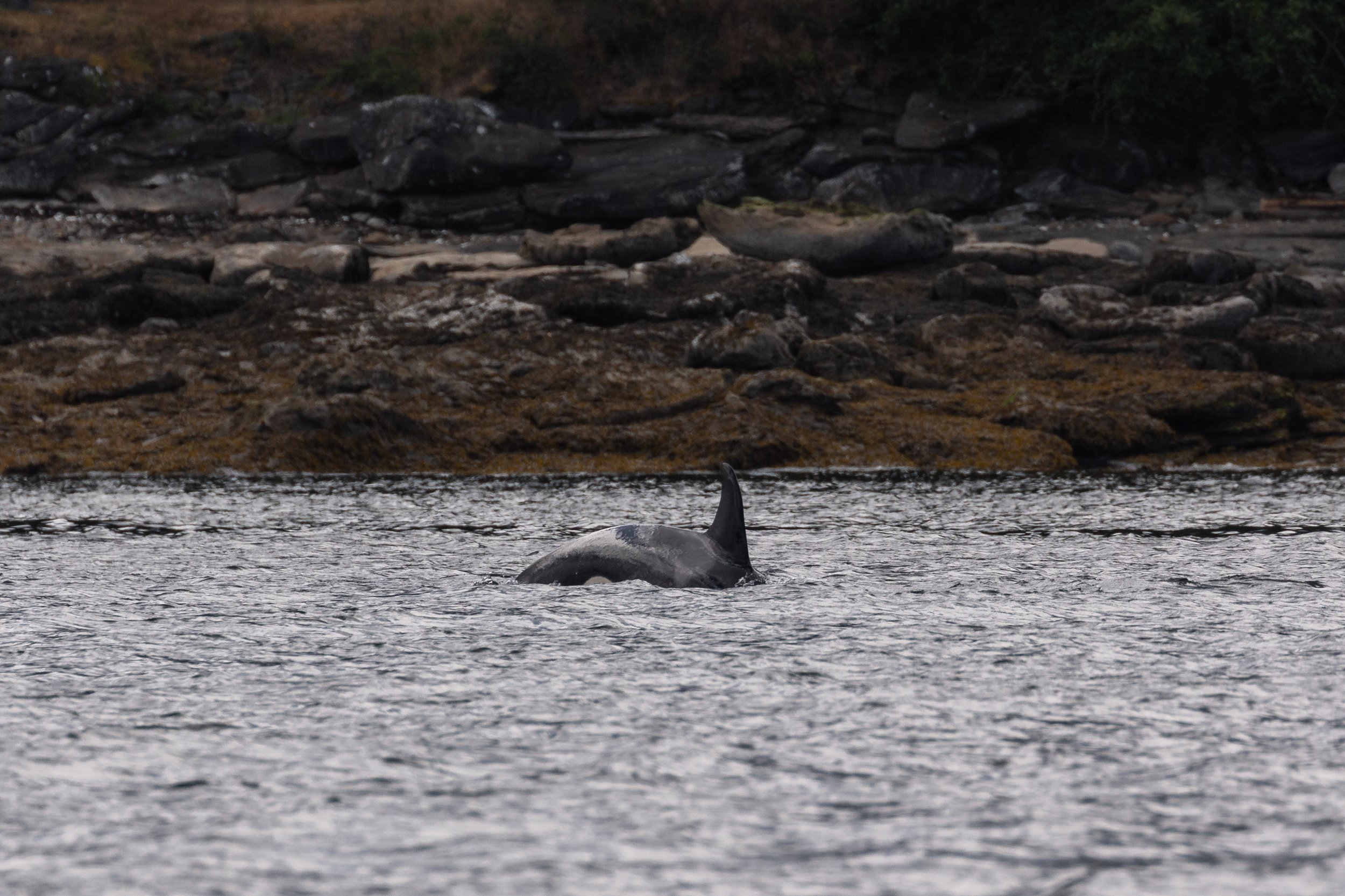
T069D2 arching to dive below the surface.
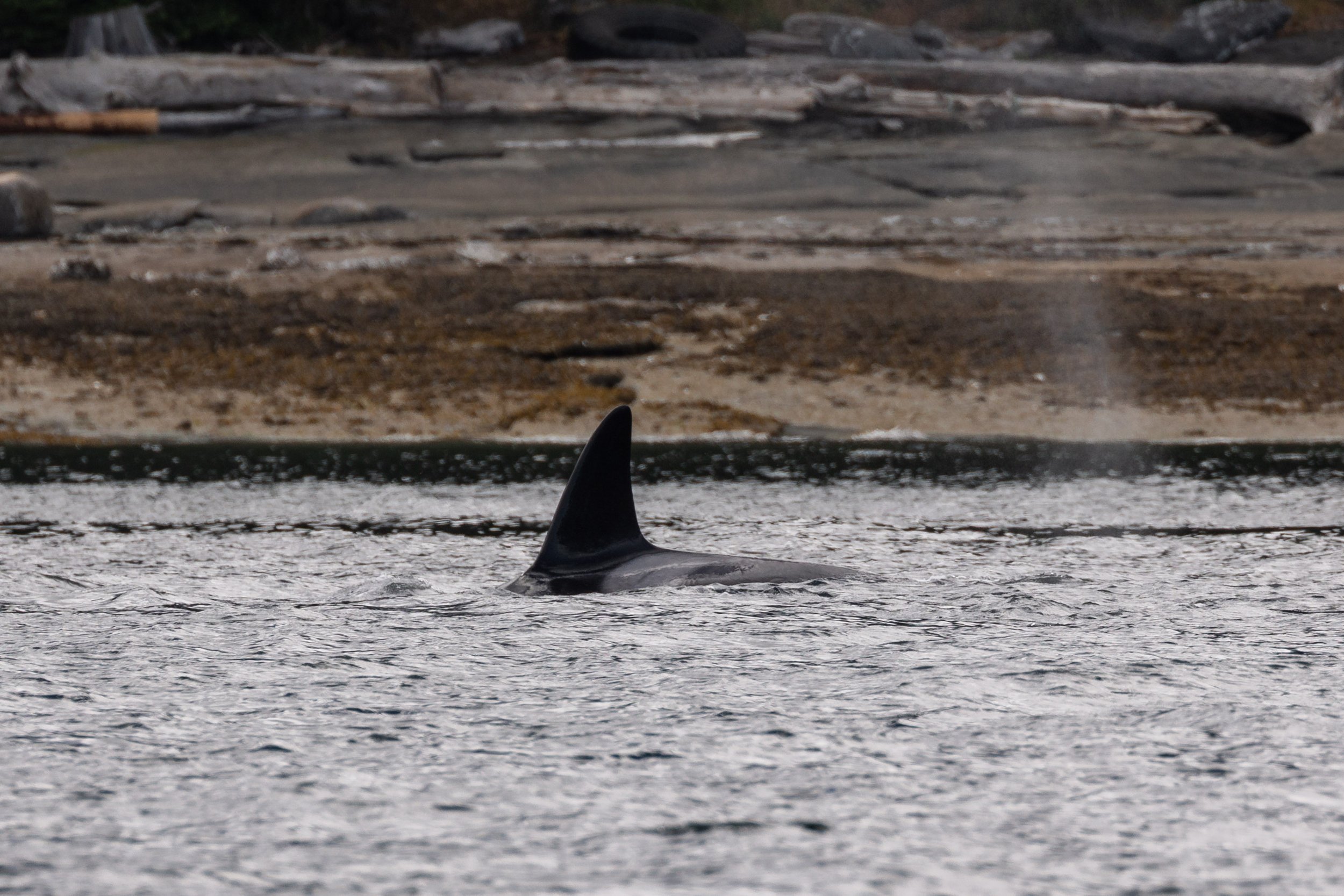
A great look at T069D.
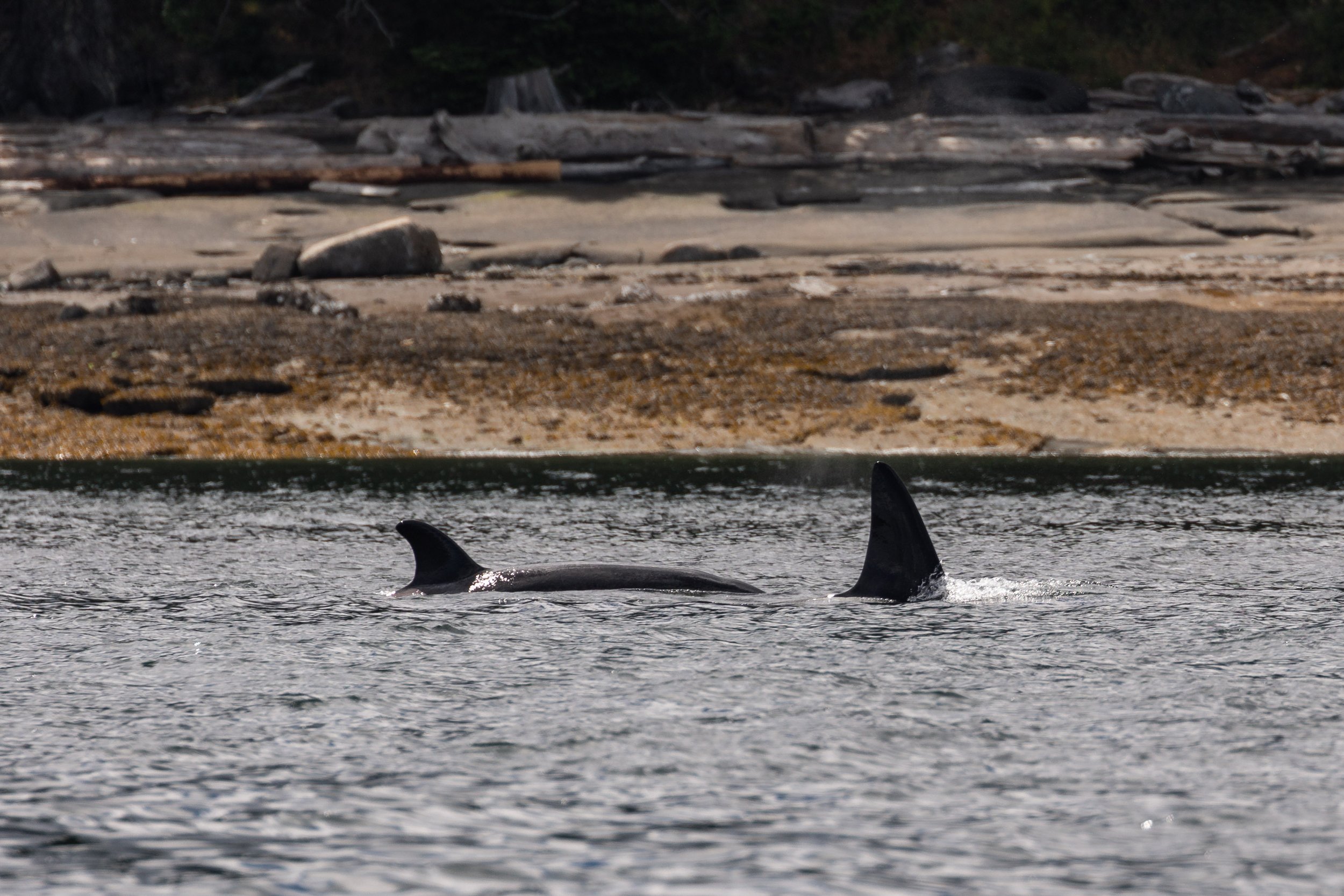
T069D surfacing with her youngest, T069D4.
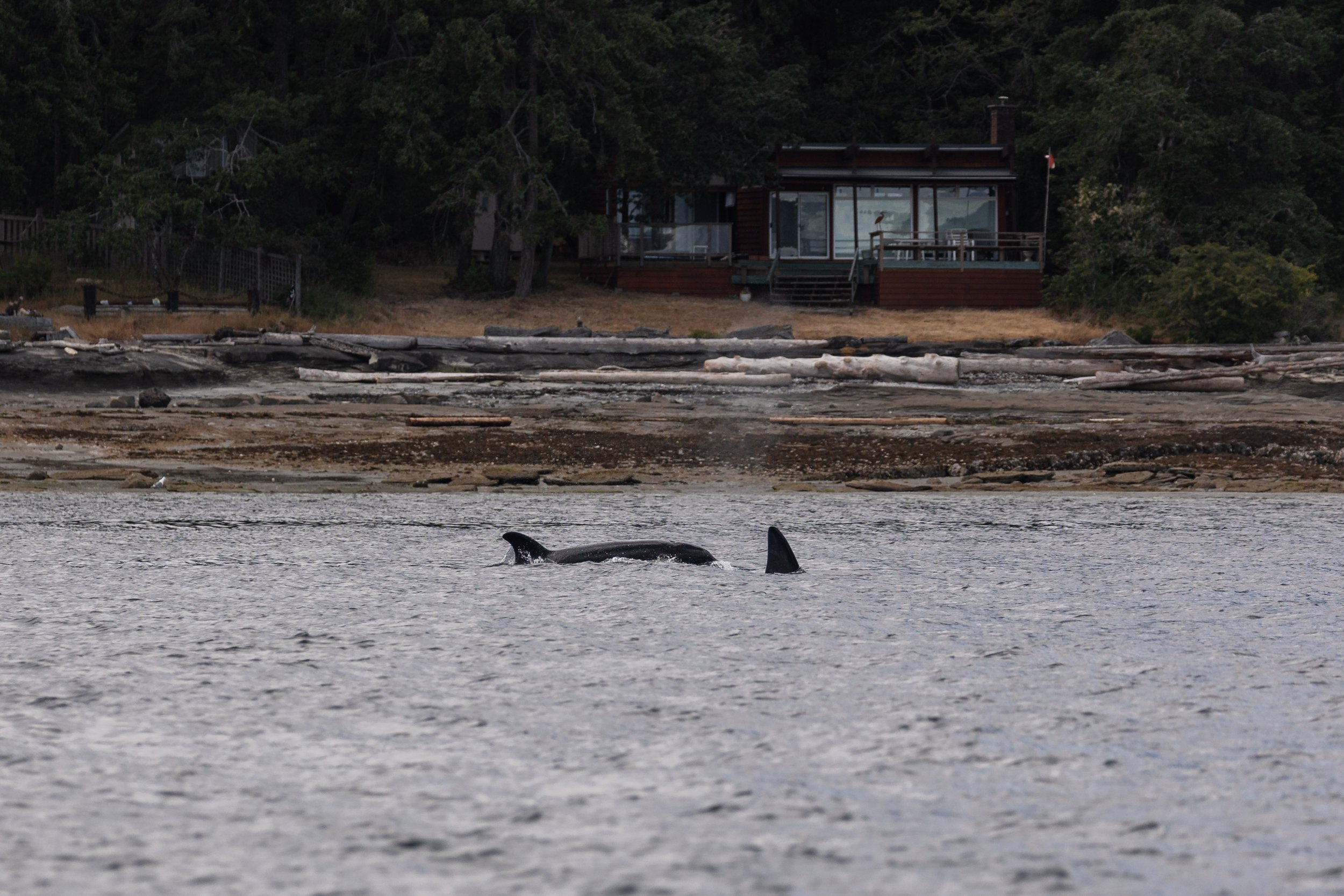
A better look at T069D4.
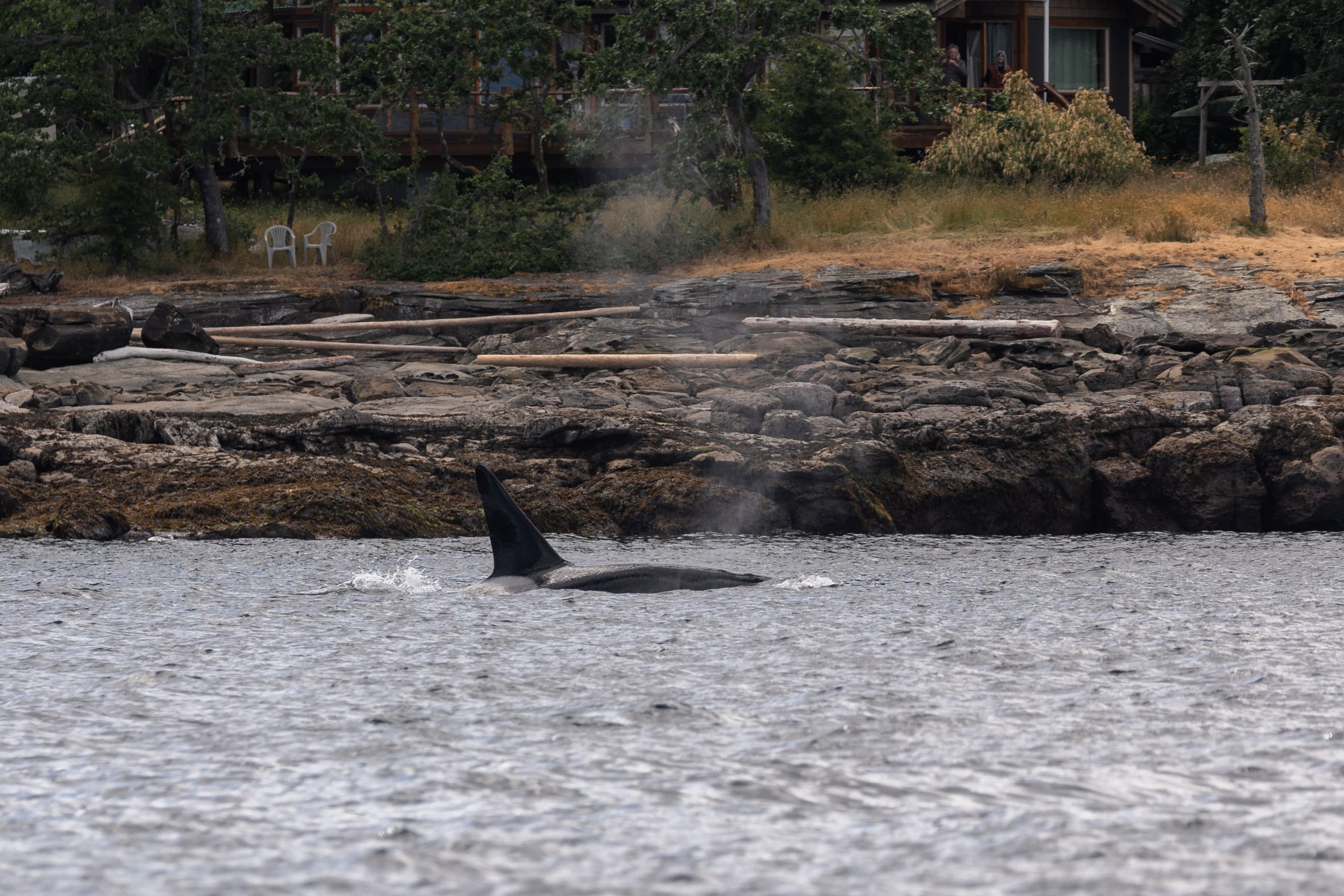
Can you spot the unique notches on T069D1’s dorsal fin?