
July 9, 2026, 10:30 AM - Happy Humpbacks
It was a very exciting morning on the water, with the waves seeming to bring an extra burst of energy to the wildlife we encountered. Our adventure began with a trip out into the Strait of Georgia, the broad stretch of water separating southern Vancouver Island from the British Columbia mainland.
As we scanned the horizon for any telltale signs of whales, it wasn't long before a tall, bushy blow caught our attention. A lone humpback whale was making quite the spectacle, splashing around in the rolling seas and making himself easy to spot from a distance. Fortunately for us, part of that splashing involved his tail, allowing our naturalists to quickly identify him as Coyote (BCY2484).
Coyote was putting on a display of the behaviour humpback whales have become famous for: aerial acrobatics. Time and again, he launched his enormous body clear of the water before crashing back down in an explosion of white spray. Between breaches, he repeatedly slapped his long pectoral fins and powerful tail flukes against the surface, treating everyone on board to an unforgettable display.
Surface activity like this comes at an incredible energetic cost. A single breach by a fully grown humpback is often compared to the energy a human would expend running an entire marathon. Whales may breach for several reasons, including long-distance communication, removing barnacles and whale lice, or perhaps simply because they can. This behaviour is more frequent in younger whales, whose smaller bodies require less energy to launch into the air than those of the 35-tonne, 17-metre giants they will eventually become. Coyote still has some growing to do, but even so, watching him repeatedly propel himself skyward was an impressive sight.
If you look closely at Coyote's photographs, you'll notice plenty of barnacles attached to his pectoral fins and tail flukes. Perhaps cleaning them off was the motivation behind all of his activity today. Like so much of whale behaviour, we can only speculate, but that mystery is part of what makes every encounter so fascinating.
As we enjoyed Coyote's energetic display, another splash erupted nearby. Curious to investigate, we made our way over and discovered yet another lively humpback whale. This individual turned out to be BCX2492, the 2022 calf of Kappa. Much like Coyote, this young whale seemed full of energy, repeatedly breaching, slapping its pectoral fins, and slapping its tail as if putting on an acrobatic display of their own.
Seeing two young humpbacks behaving like this is a wonderful sign for the local ecosystem. The humpbacks that visit the Salish Sea each summer are here for one primary reason: to feed. They spend the season building up the thick layer of blubber that will fuel their long migration south and sustain them throughout the winter breeding season in Hawaii or Mexico. The tropical waters they migrate to simply don't contain the abundance of food found here in British Columbia, so feeding there happens only opportunistically, if at all.
To prepare for that journey, a humpback whale can consume around 3,000 pounds of prey every single day. Considering those enormous energy demands, we most often observe humpbacks feeding rather than repeatedly launching themselves into the air. That's exactly why days like today are so memorable. The fact that both of these whales had enough energy to spend on spectacular displays suggests they have already been finding plenty to eat. Their playfulness was not only exciting to witness but also an encouraging sign of a healthy, productive ecosystem.
After saying goodbye to our energetic humpbacks, we made our way to one of our favourite local pinniped haul-out sites: Stinky Rock. Both Steller Sea Lions and Harbour Seals were resting on the rocks, offering a perfect opportunity to compare these two closely related marine mammals.
Although they may look similar at first glance, they move very differently on land. Harbour Seals have fused hip bones, meaning they cannot rotate their hind flippers beneath them. As a result, they spend most of their time hauled out on low rocky islets and sandy beaches, where they wriggle across the surface on their bellies. Steller Sea Lions, on the other hand, can rotate their hind flippers underneath their bodies, allowing them to walk surprisingly well across the rocks.
Once back in the water, however, both species become remarkably agile swimmers. They hunt a wide variety of prey, including fish, cephalopods, and crustaceans, before returning to shore to rest and regulate their body temperature. Sharing the rocks with our pinniped friends was a magnificent Great Blue Heron, patiently standing watch over the surrounding shallows. These large wading birds take advantage of the productive shoreline, carefully stalking fish before striking with lightning-fast precision.
With one final look at the wildlife, we began our journey home, weaving through Gabriola Pass before threading through the swirling currents of Dodd Narrows and back into Nanaimo Harbour.
It was an incredible day filled with active wildlife, unforgettable whale encounters, and a reminder of just how rich and vibrant the Salish Sea can be. Please enjoy the photos below, taken by Marine Naturalists Evan Hessels and Aly Kohlman.
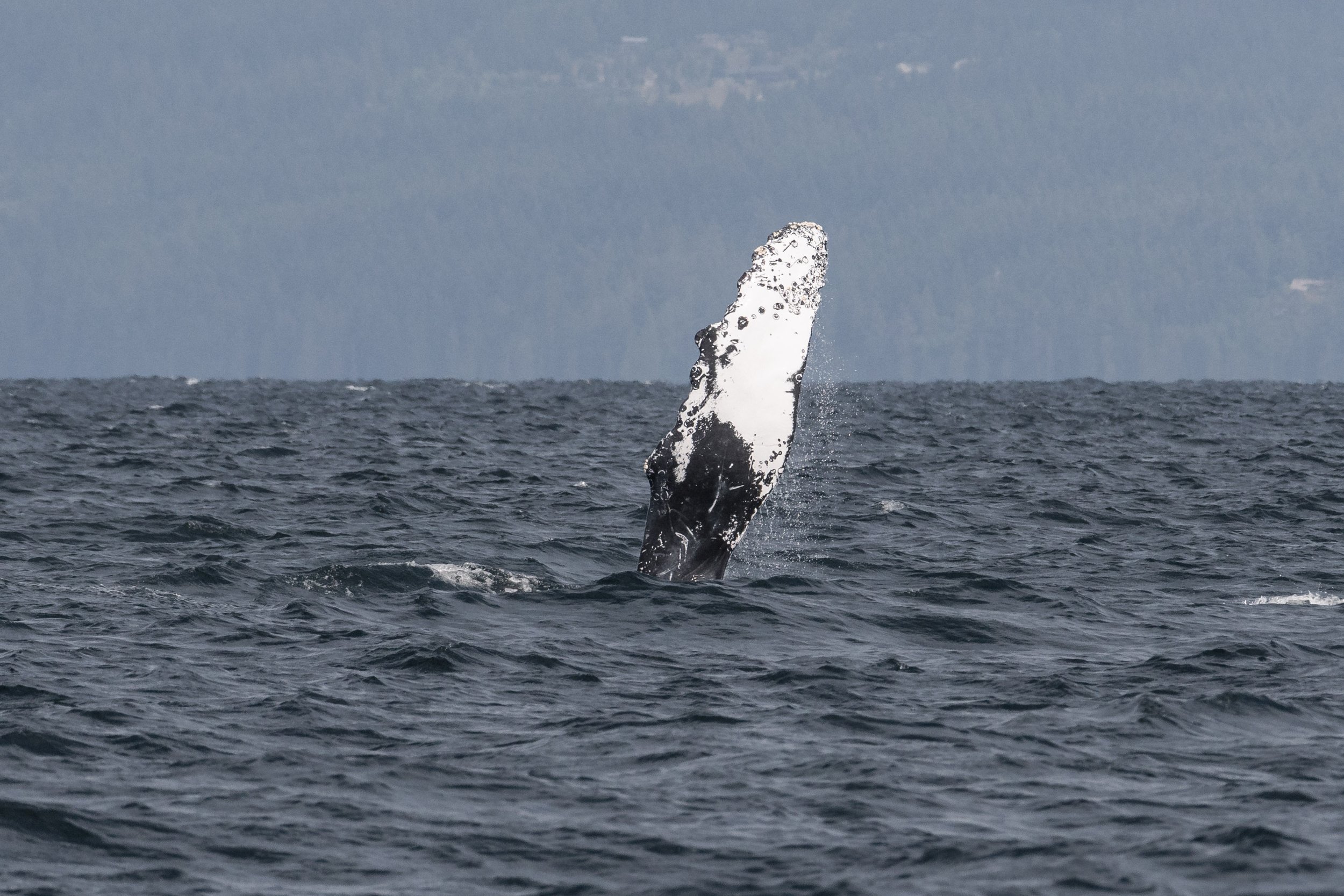
Coyote’s pectoral fin in the air. Photo by Evan Hessels.
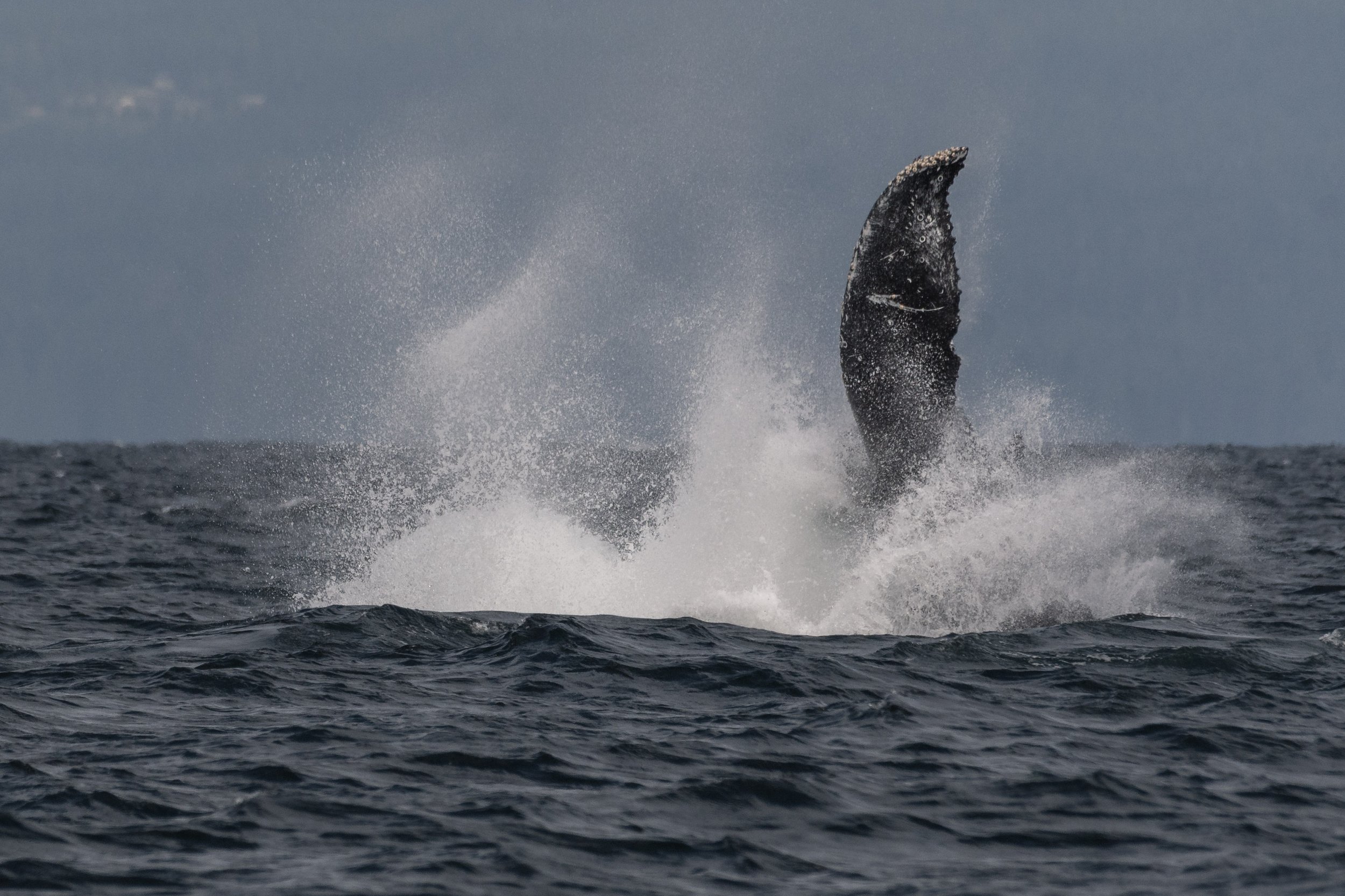
A cartwheel from Coyote. Photo by Evan Hessels.
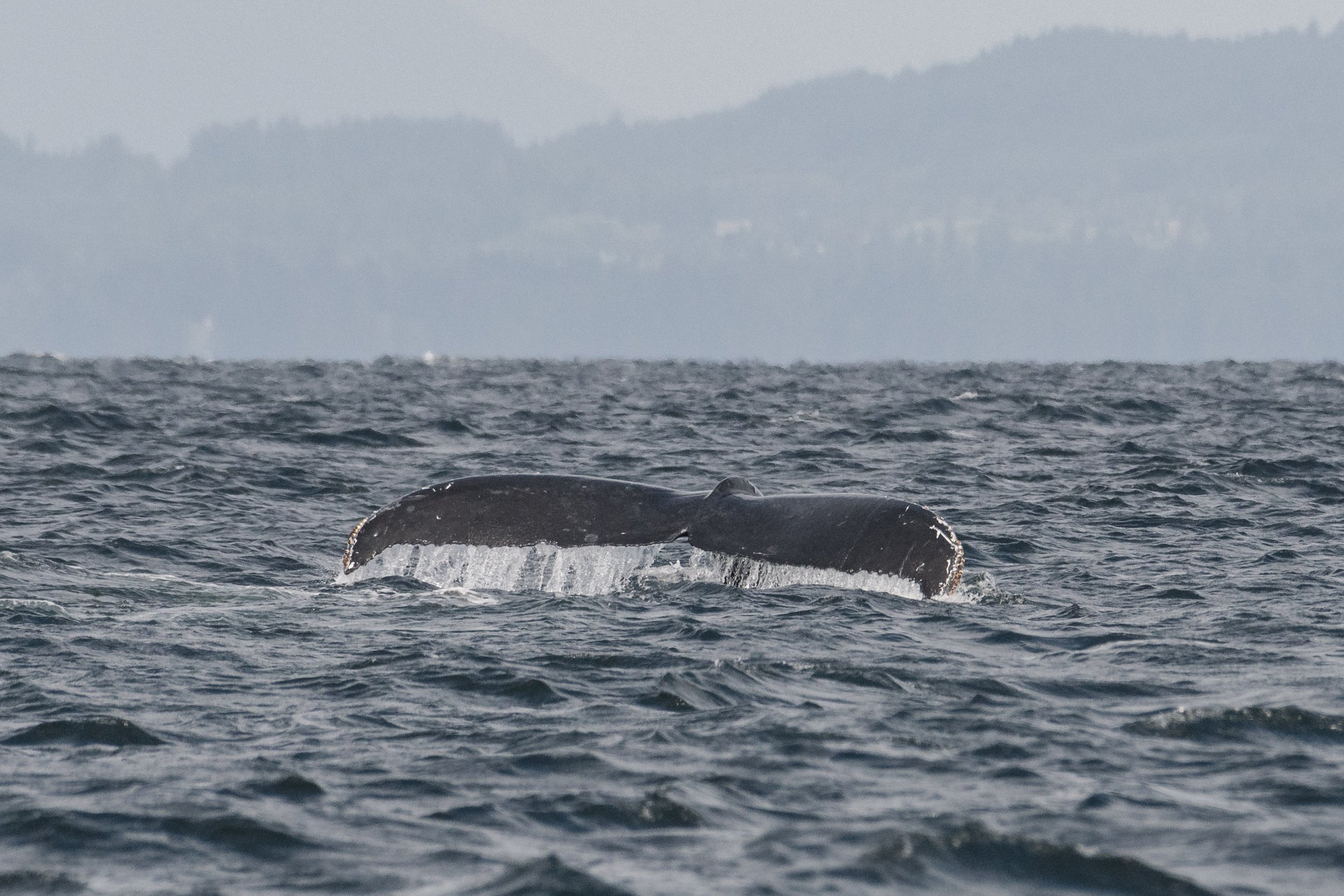
Coyote lifting his tail to dive. Photo by Evan Hessels.
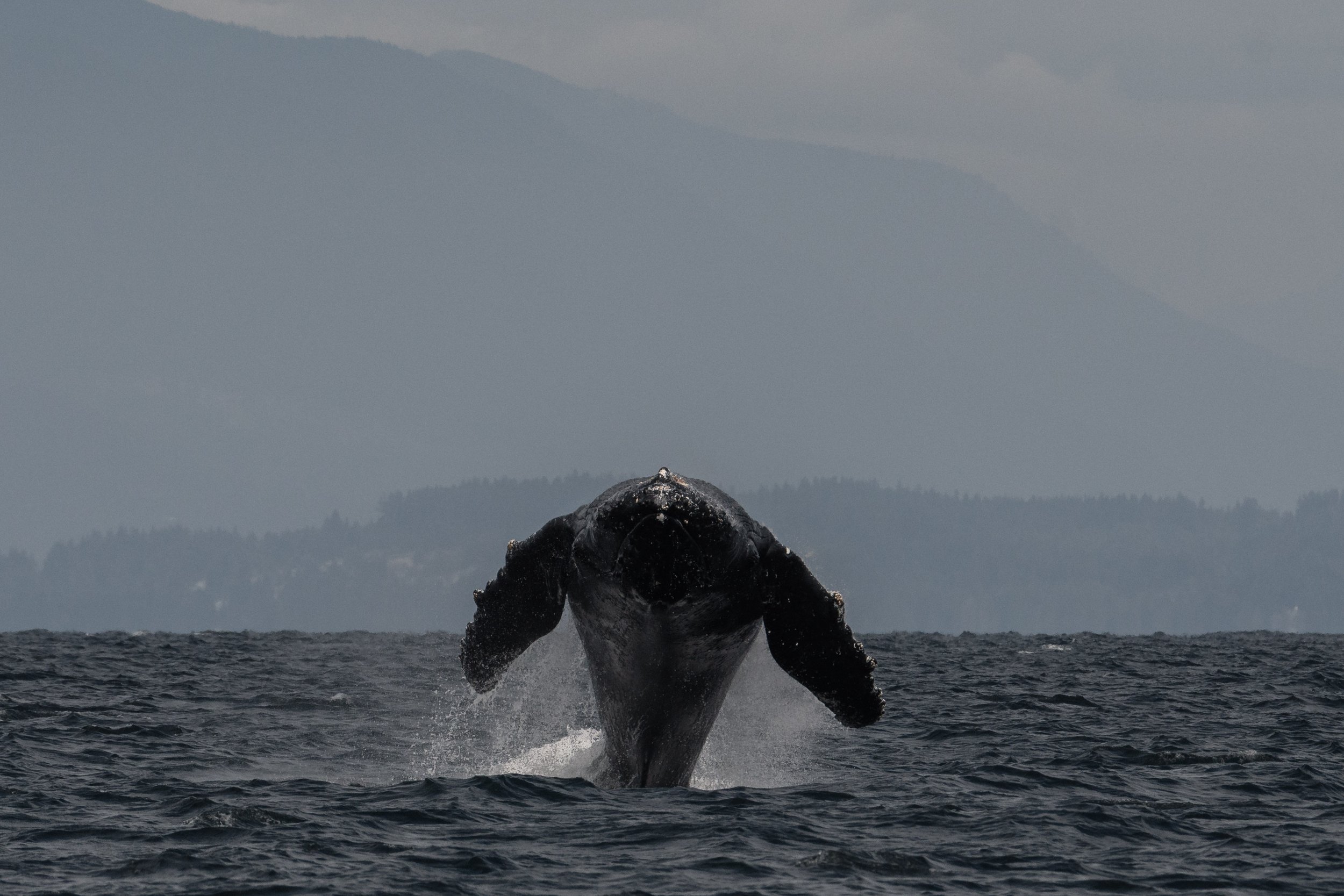
A very interesting angle of Coyote breaching. Photo by Evan Hessels.
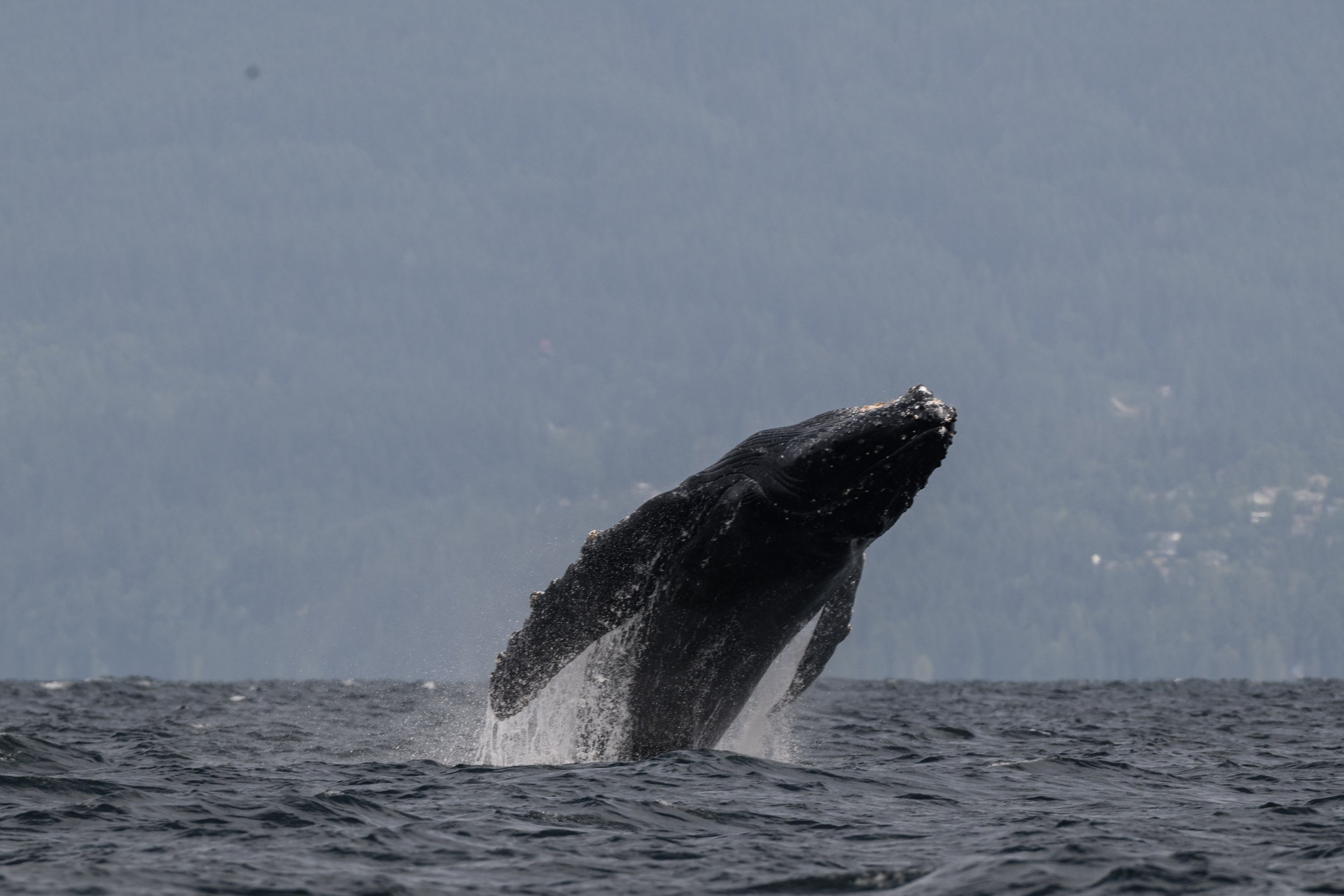
Another angle of Coyote breaching. Photo by Aly Kohlman.
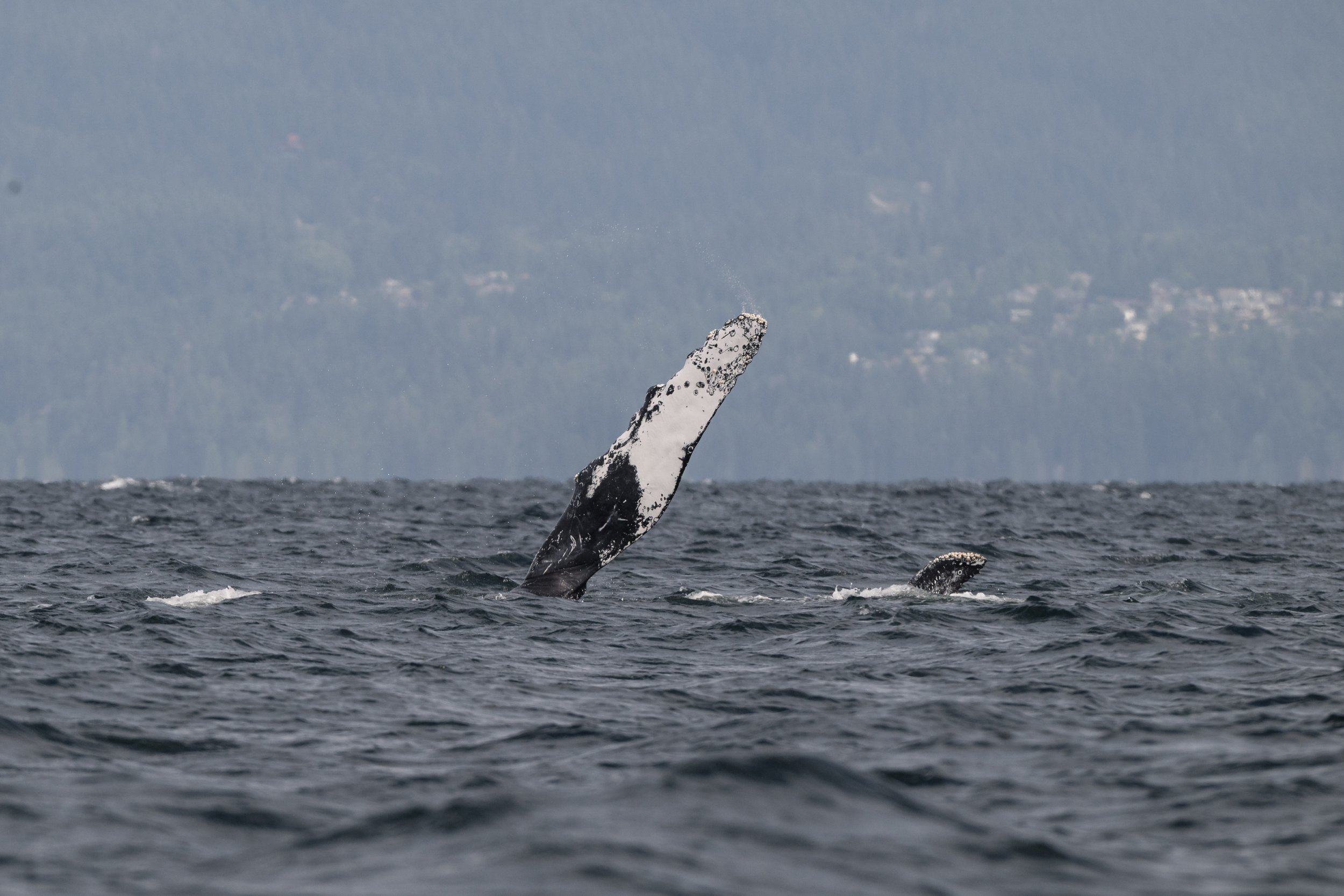
Coyote swimming sideways. Photo by Aly Kohlman.
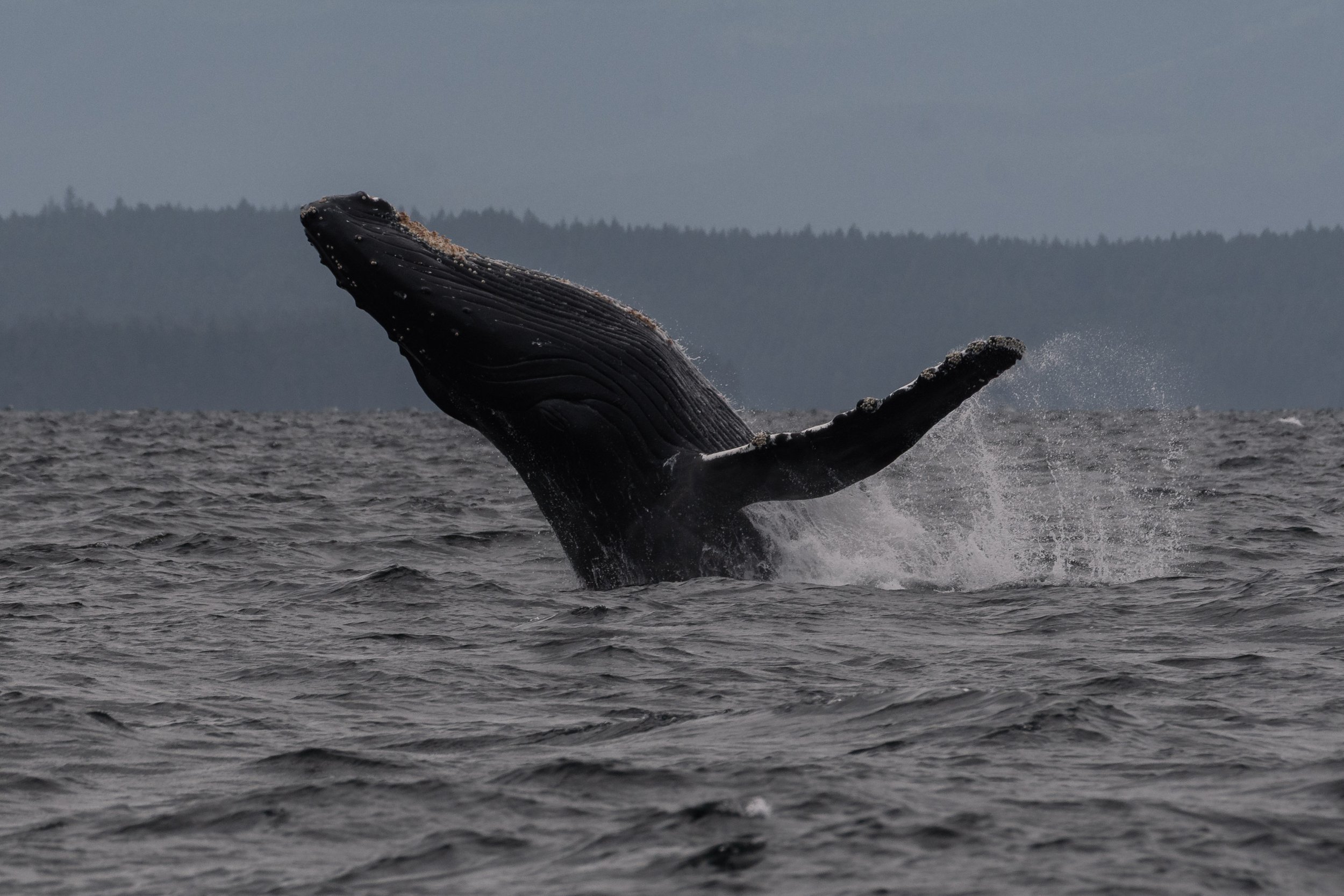
BCX2492 breaching. Photo by Evan Hessels.
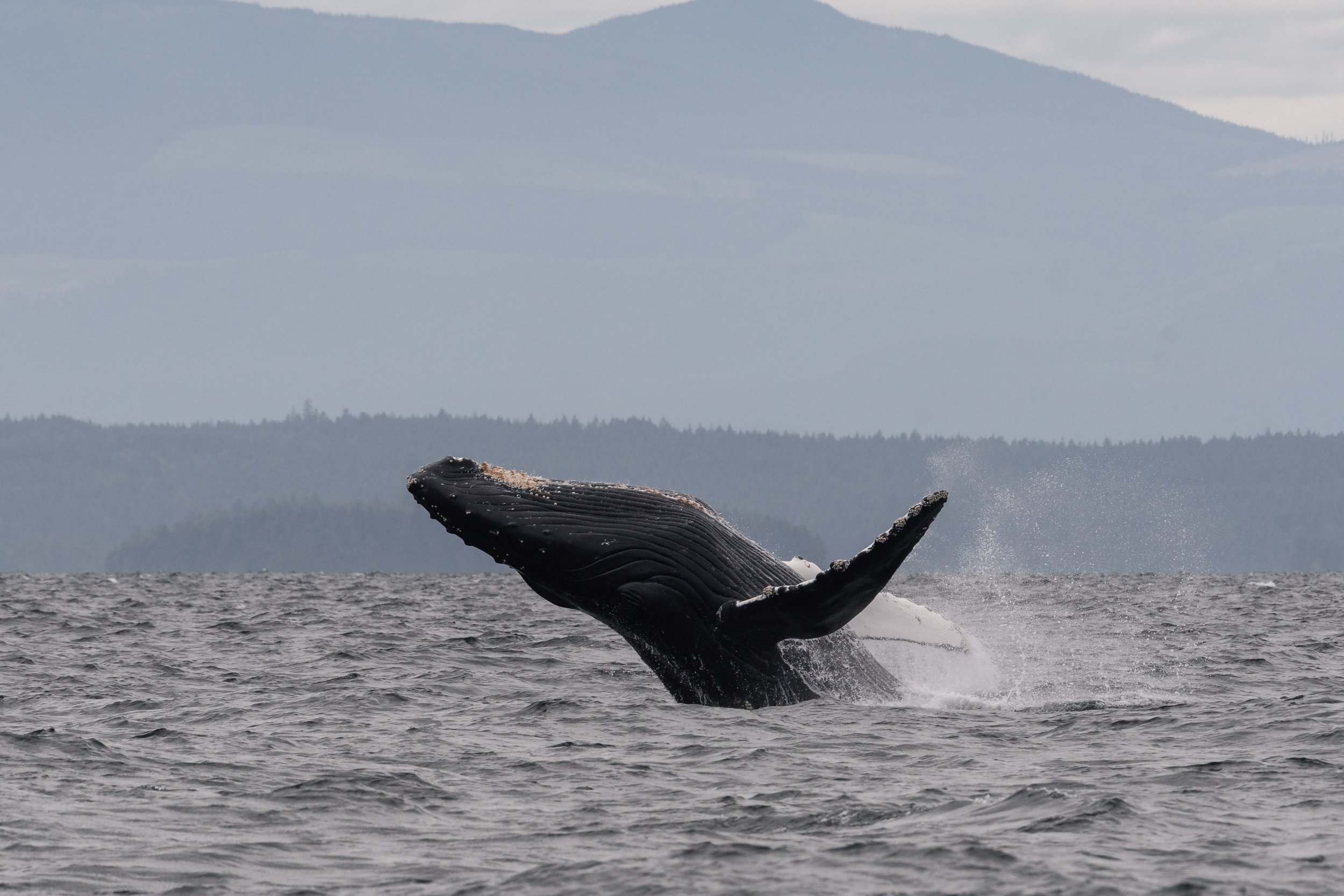
A lovely look at BCX2492 doing aback dive. Photo by Evan Hessels.
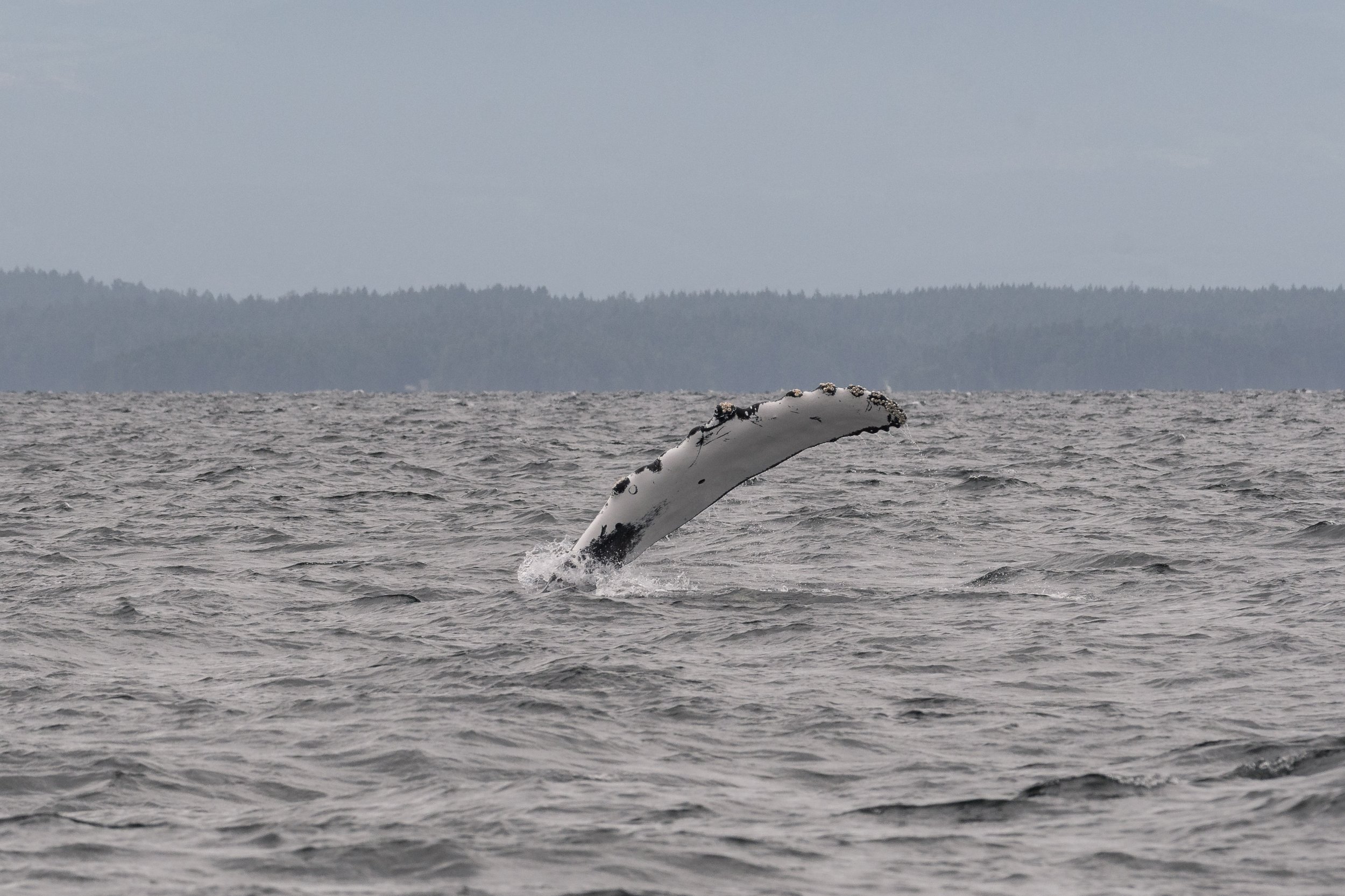
BCX2492 with their pectoral fin in the air. Photo by Evan Hessels.
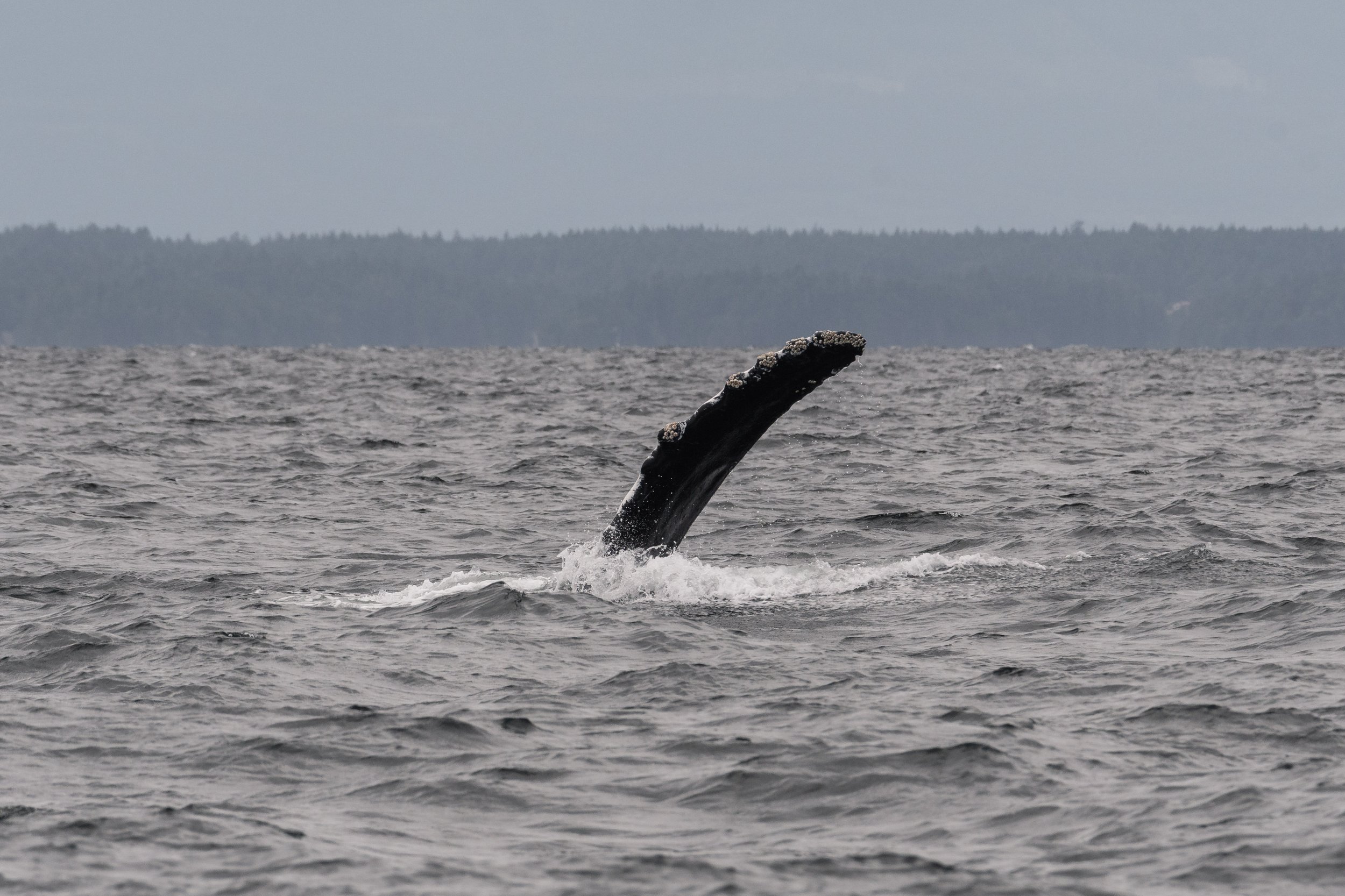
BCX2492’s pectoral fin in the air. Photo by Evan Hessels.
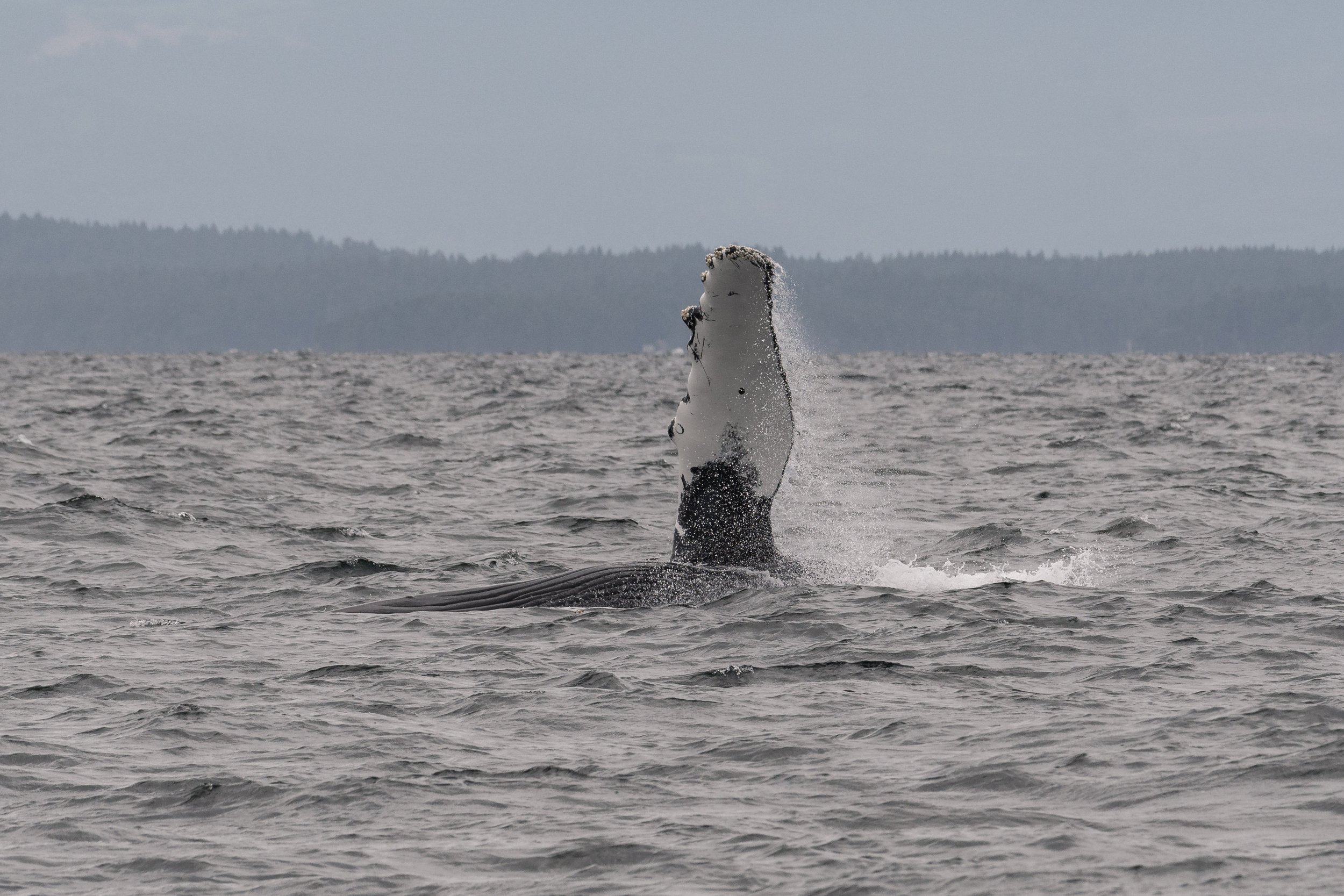
BCX2492 pec slapping. Photo by Evan Hessels.
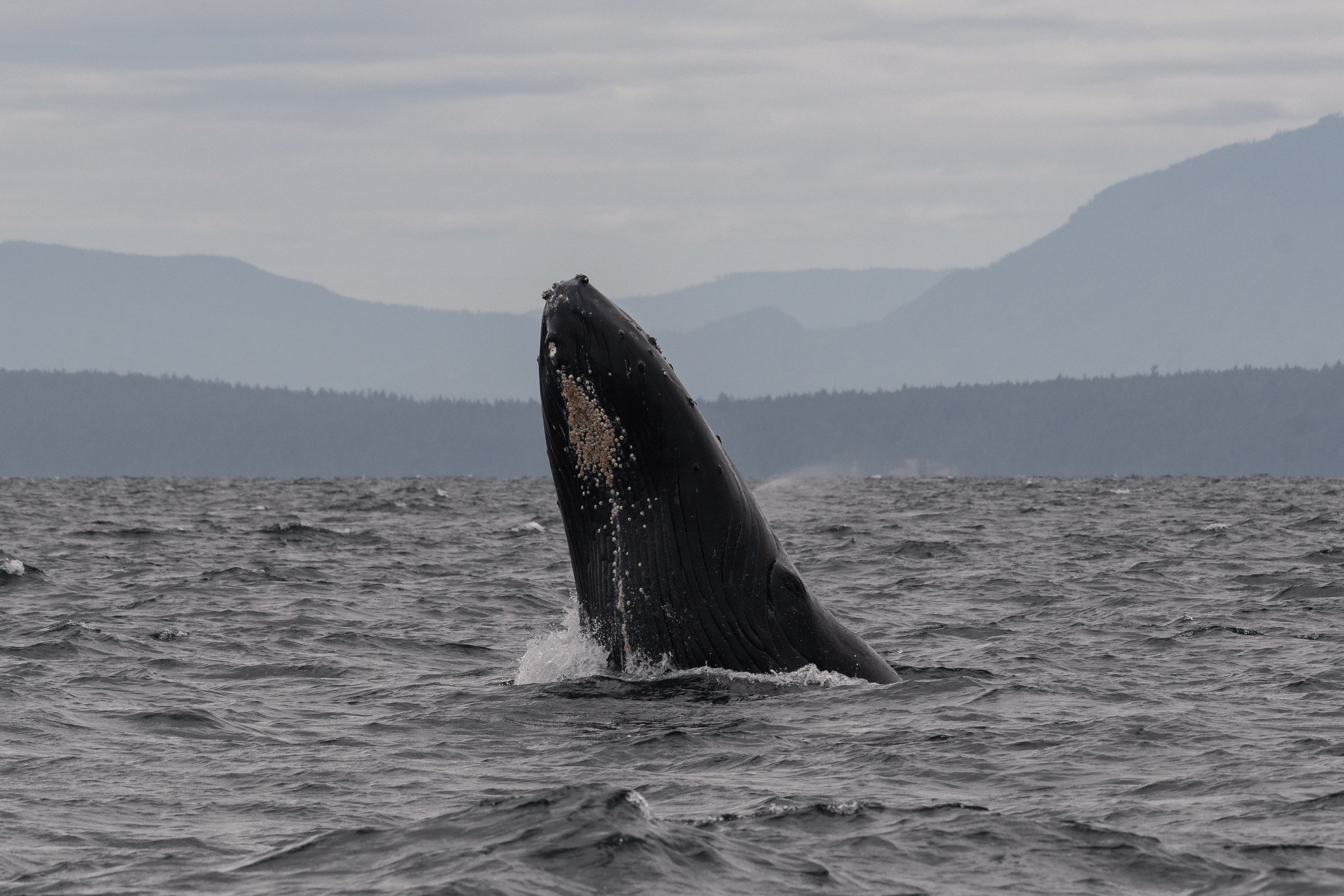
BCX2492 lifting their rostrum out of the water. Photo by Evan Hessels.
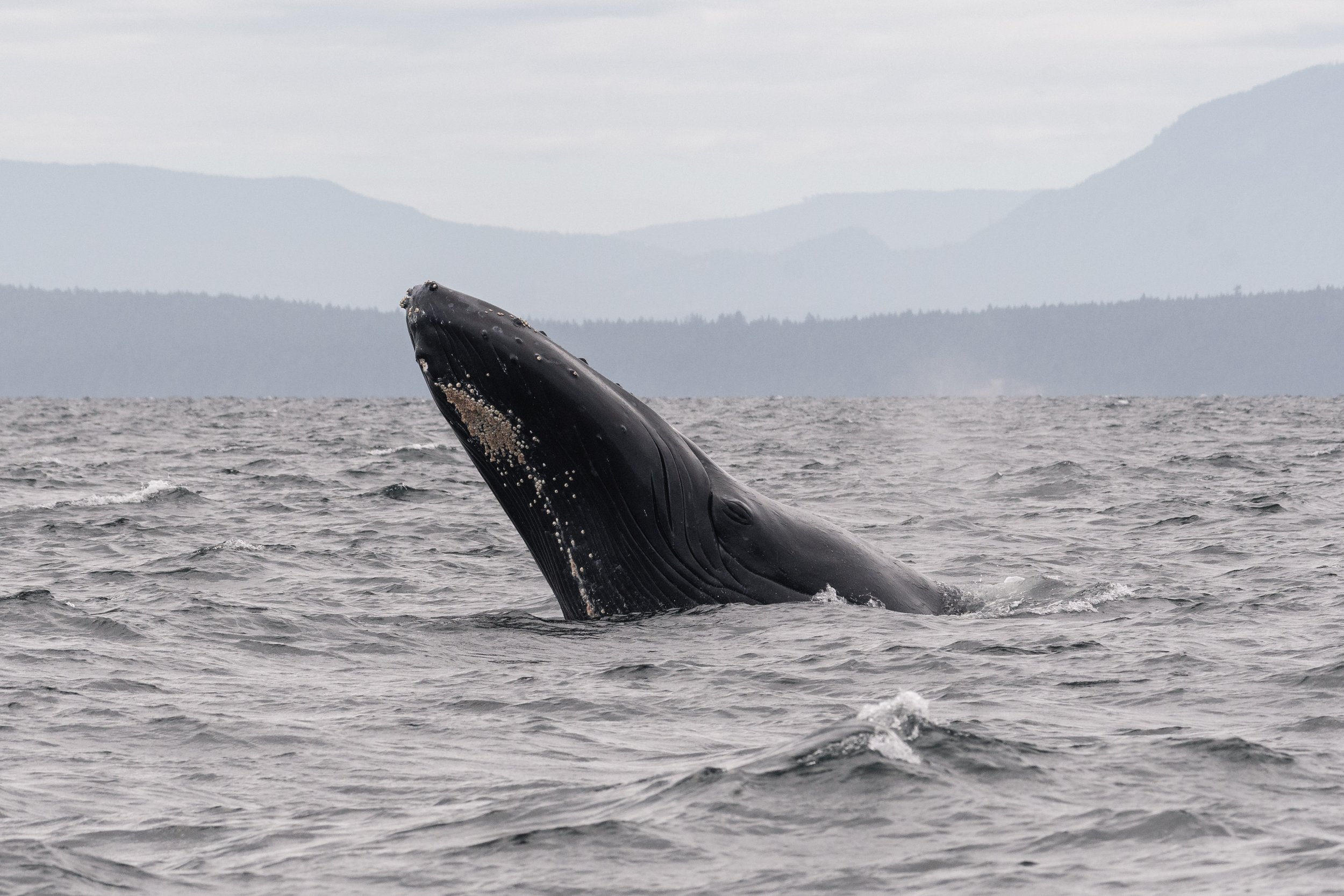
Can you see BCX2492’s eye in this photo? Photo by Evan Hessels.
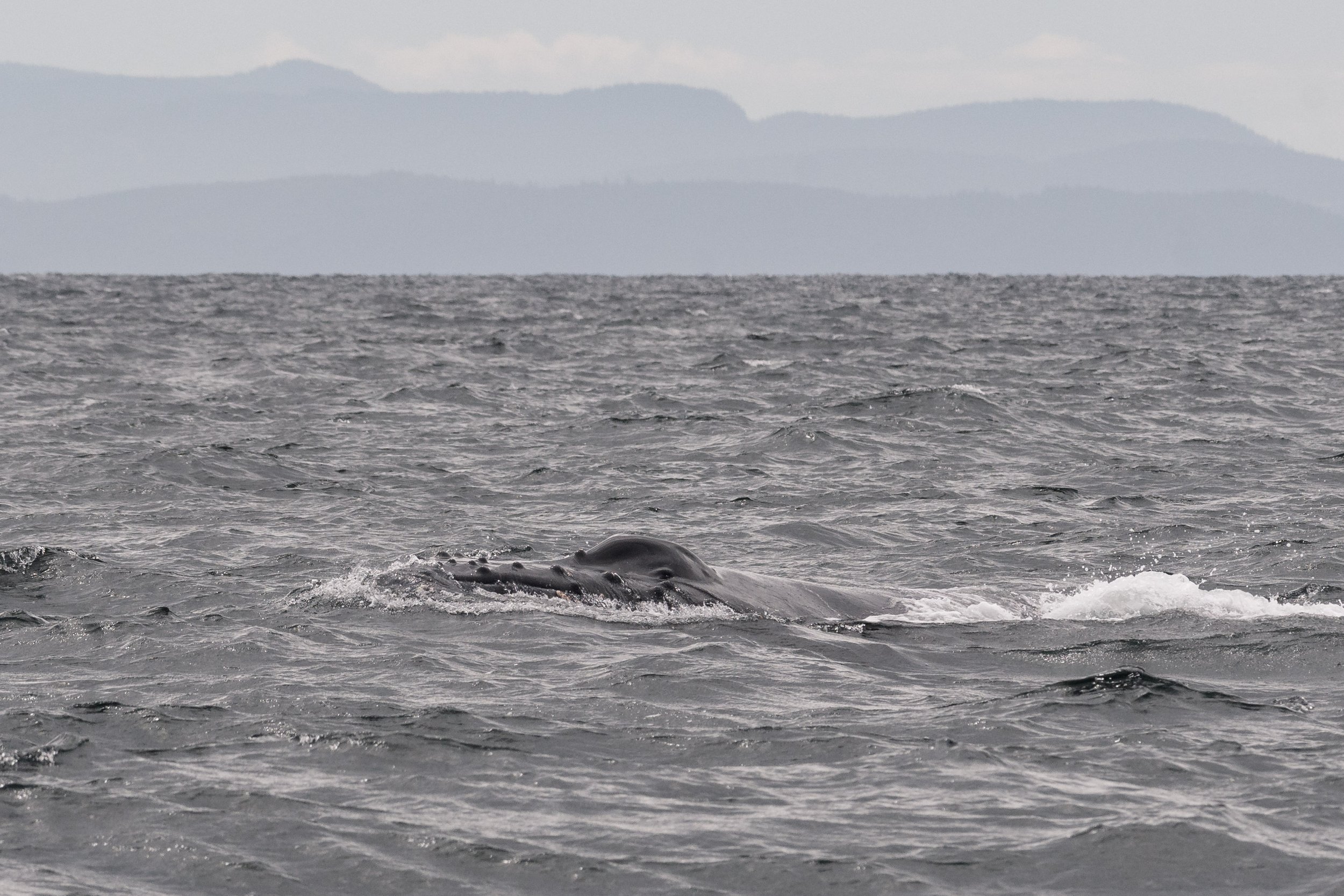
Can you see the bumps on BCX2492’s rostrum? Those are called tubercules! Photo by Evan Hessels.
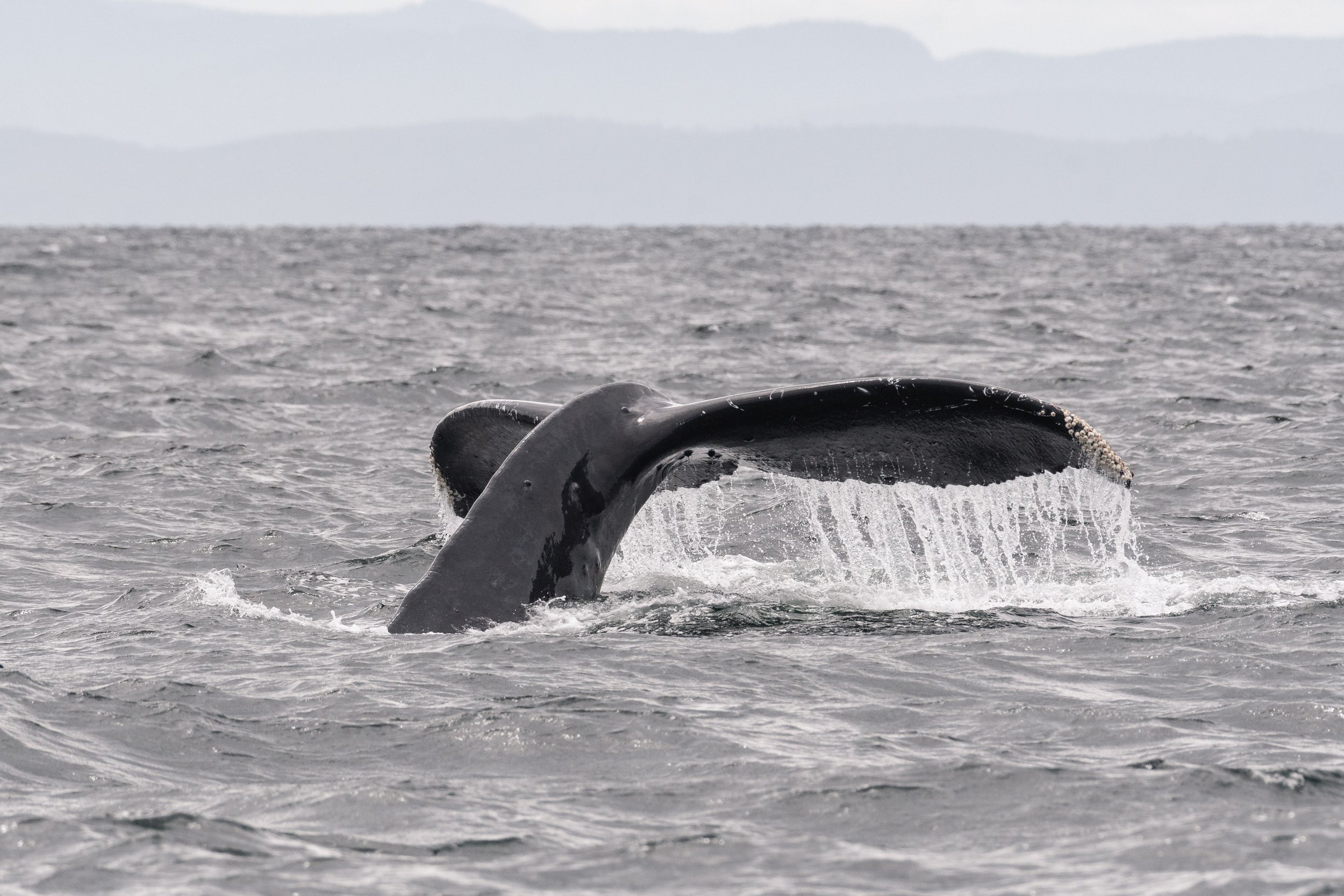
BCX2492 lifting their tail to dive. Photo by Evan Hessels.
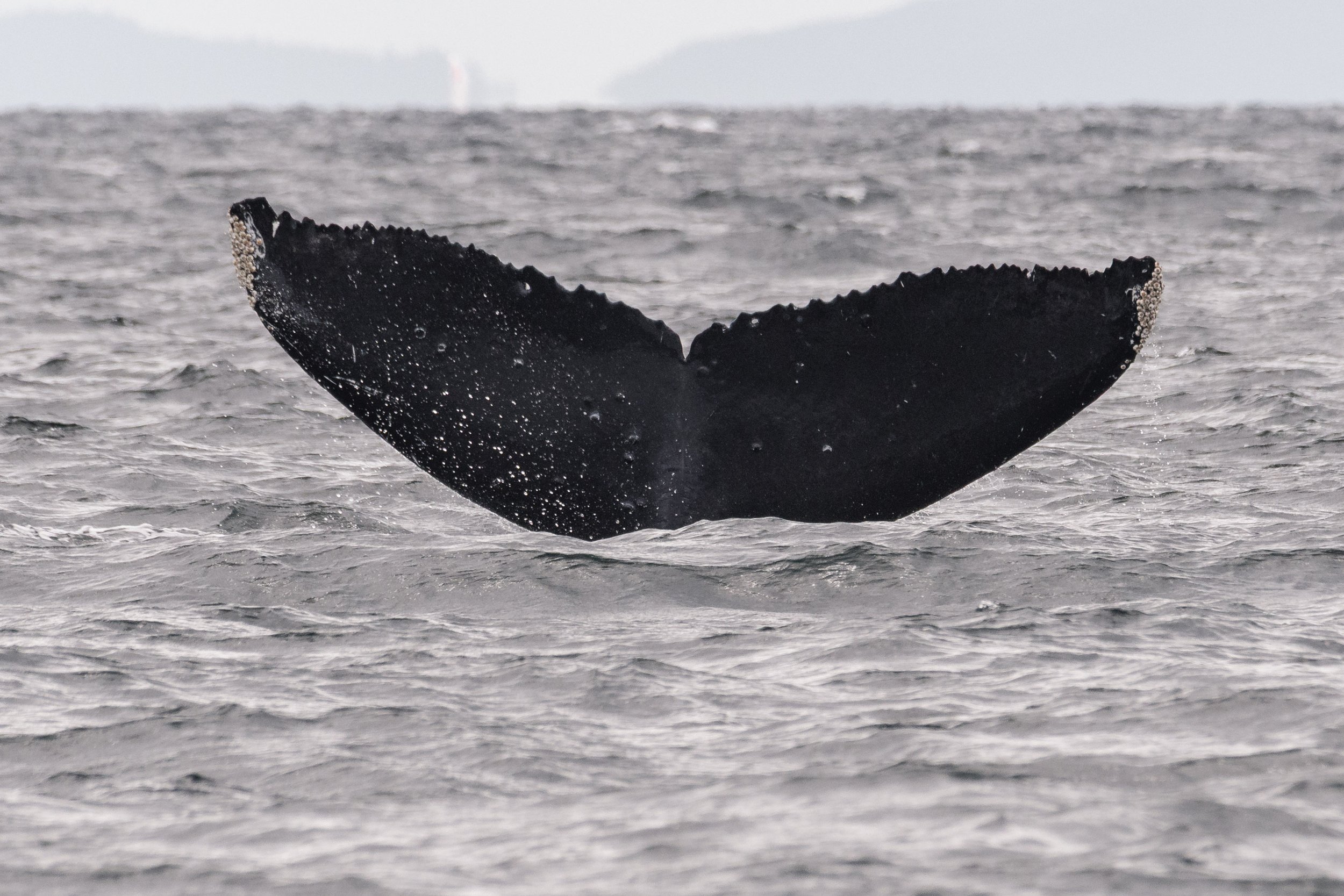
The underside of BCX2492’s tail. Photo by Evan Hessels.
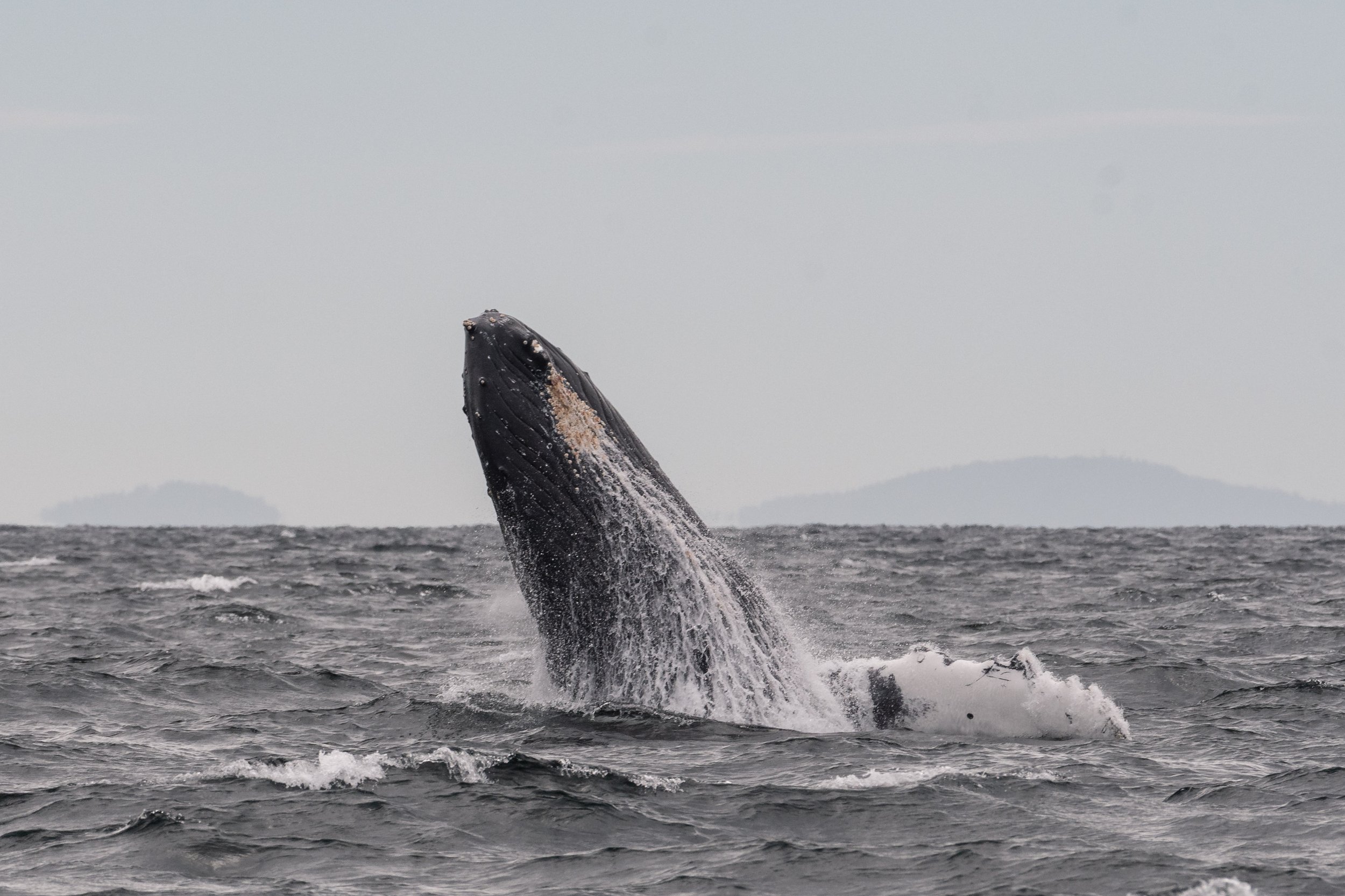
BCX2492 with water cascading off him as he breaches. Photo by Evan Hessels.
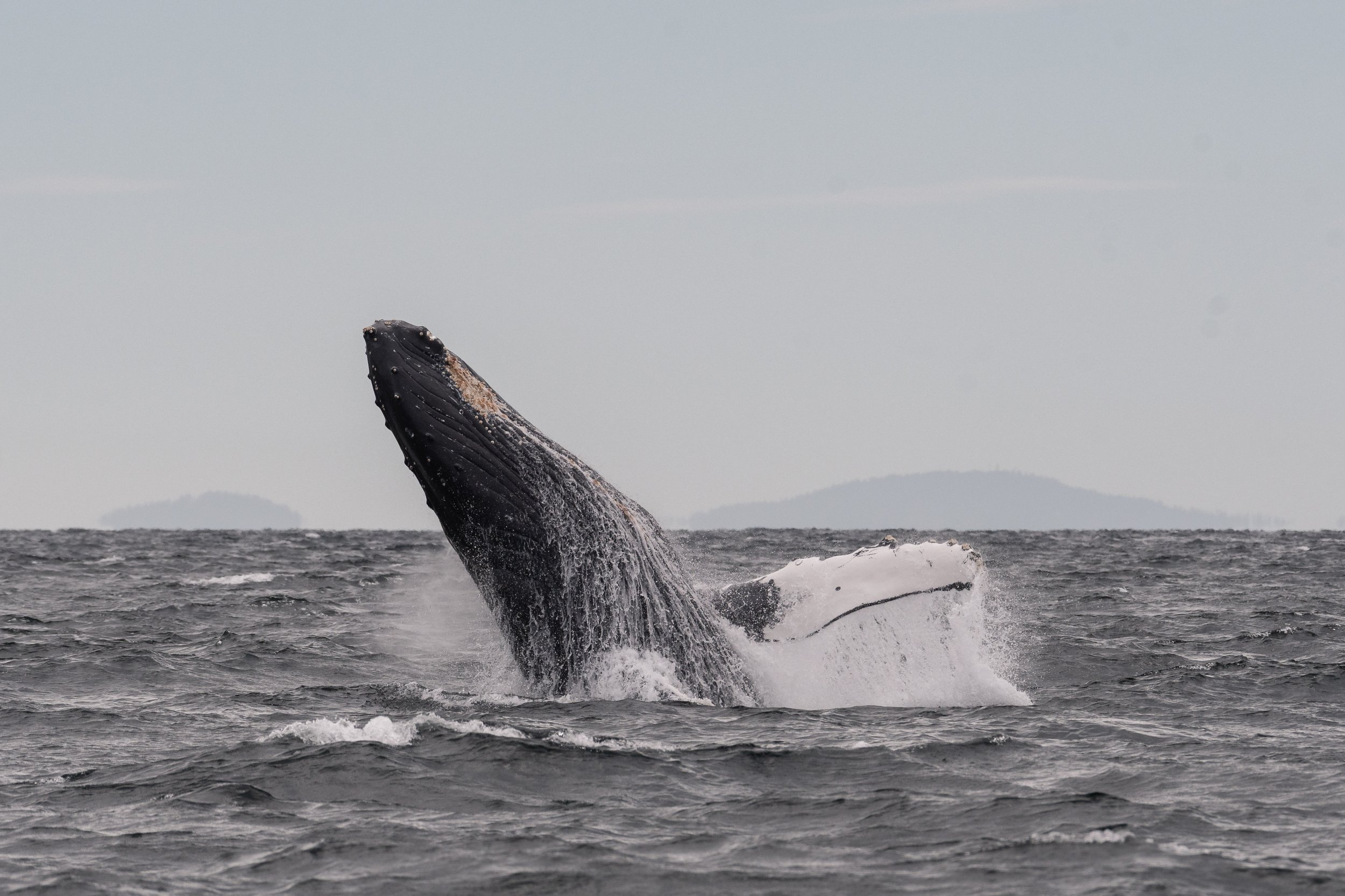
A lovely look at BCX2492 breaching. Photo by Evan Hessels.
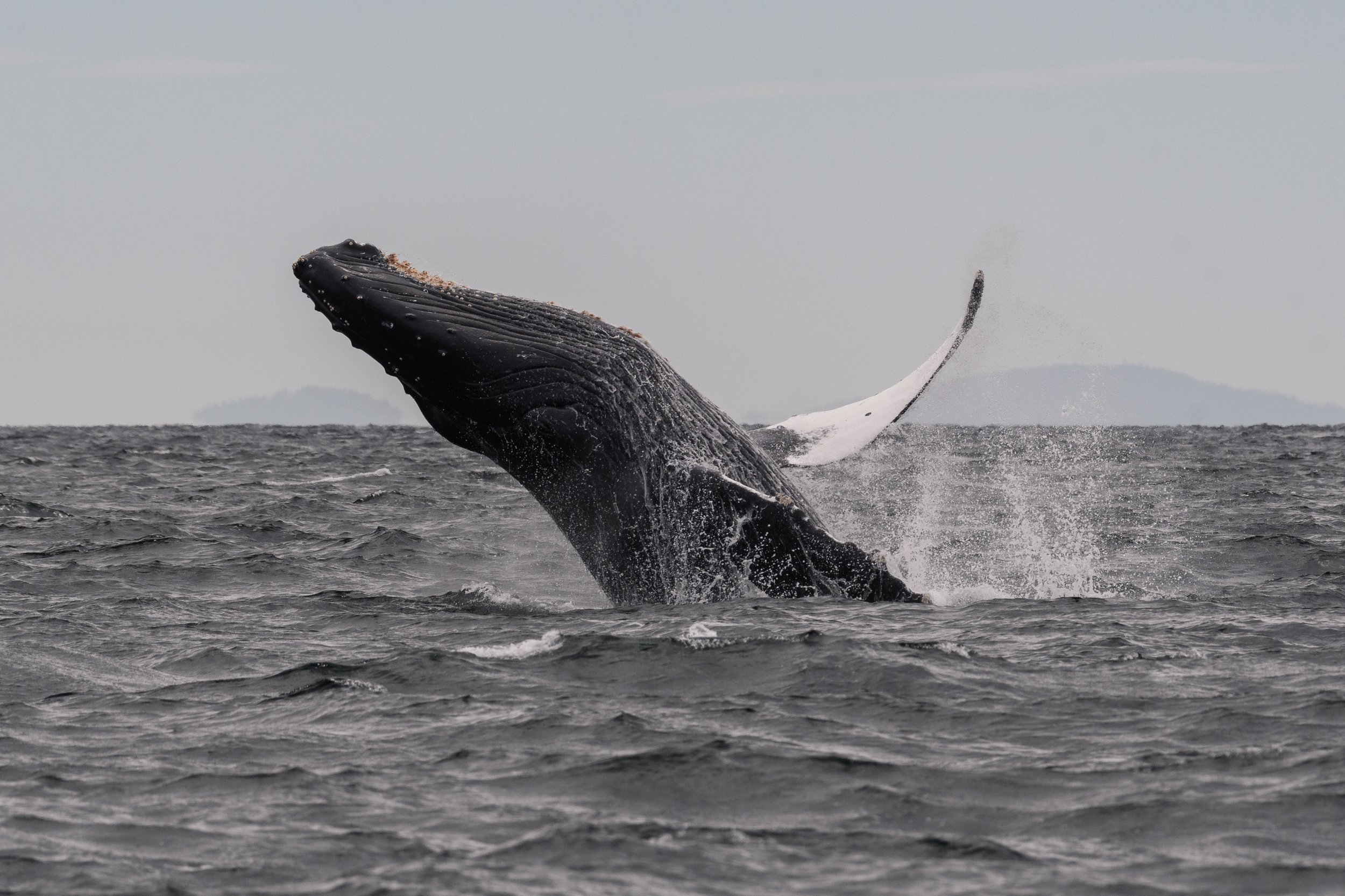
Look how floppy BCX2492’s pectoral fins are. Photo by Evan Hessels.
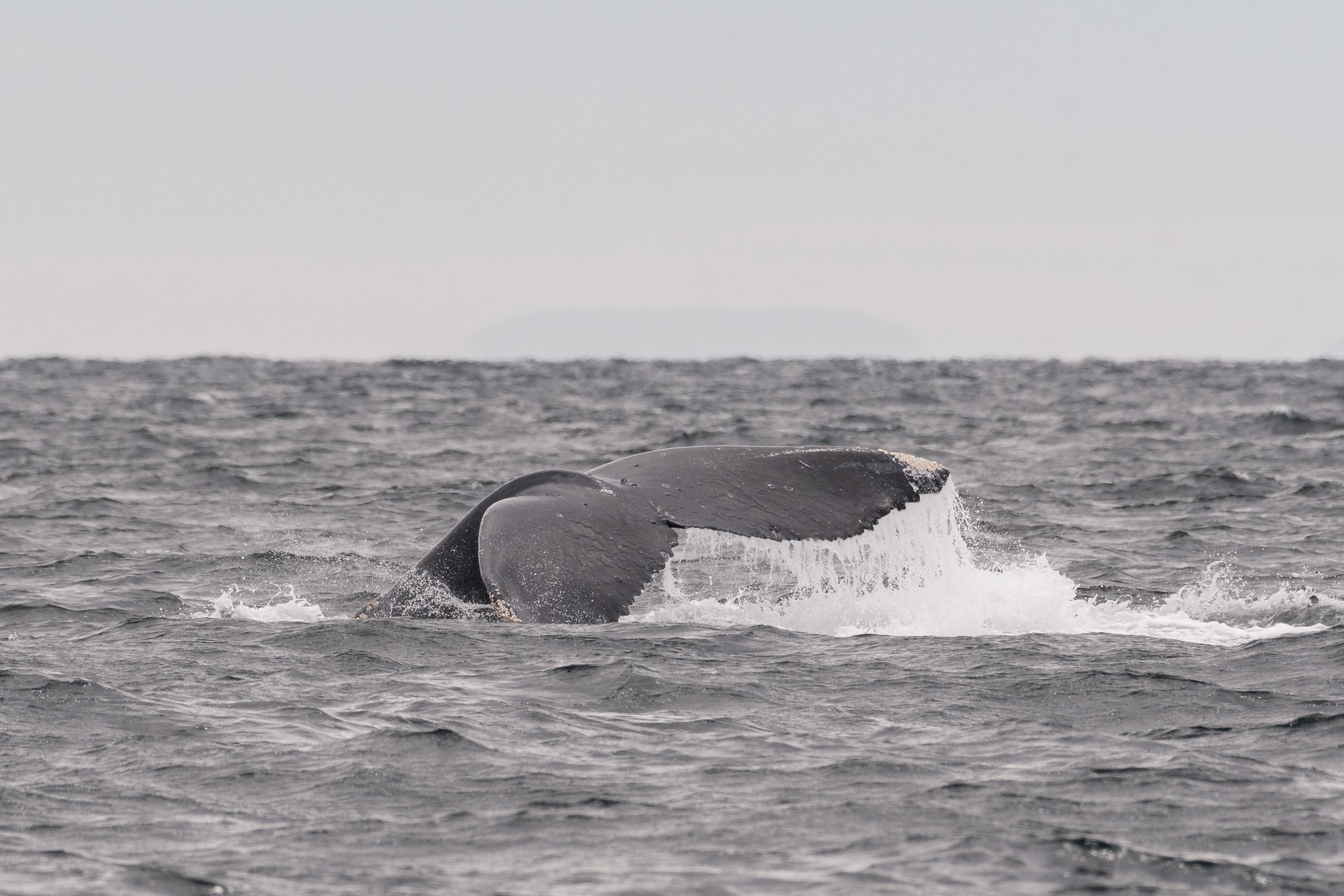
BCX2492 lifting their tail as they are upside down. Photo by Evan Hessels.
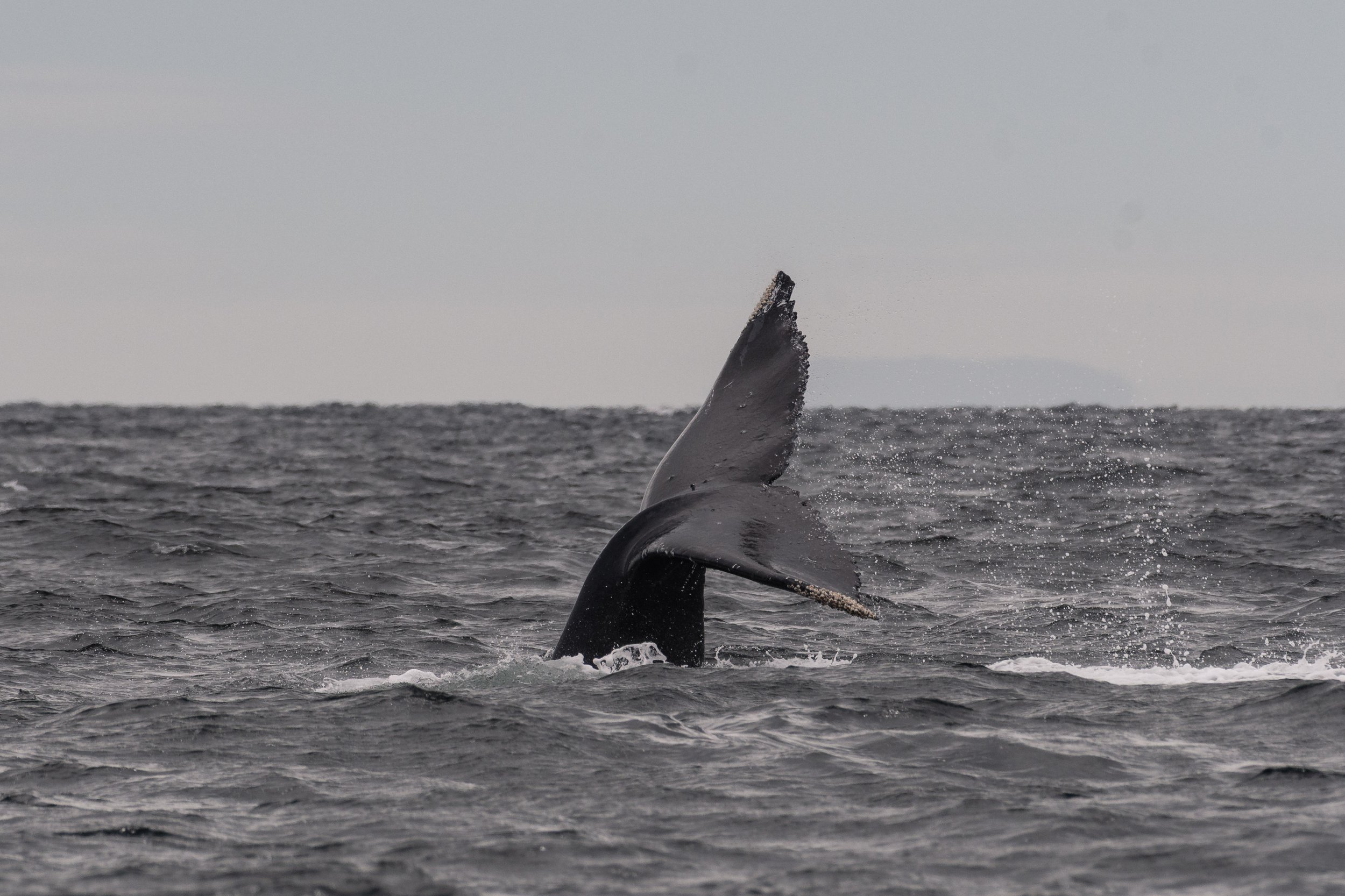
The tail flukes are also very flexible, as BCX2492 shows here. Photo by Evan Hessels.
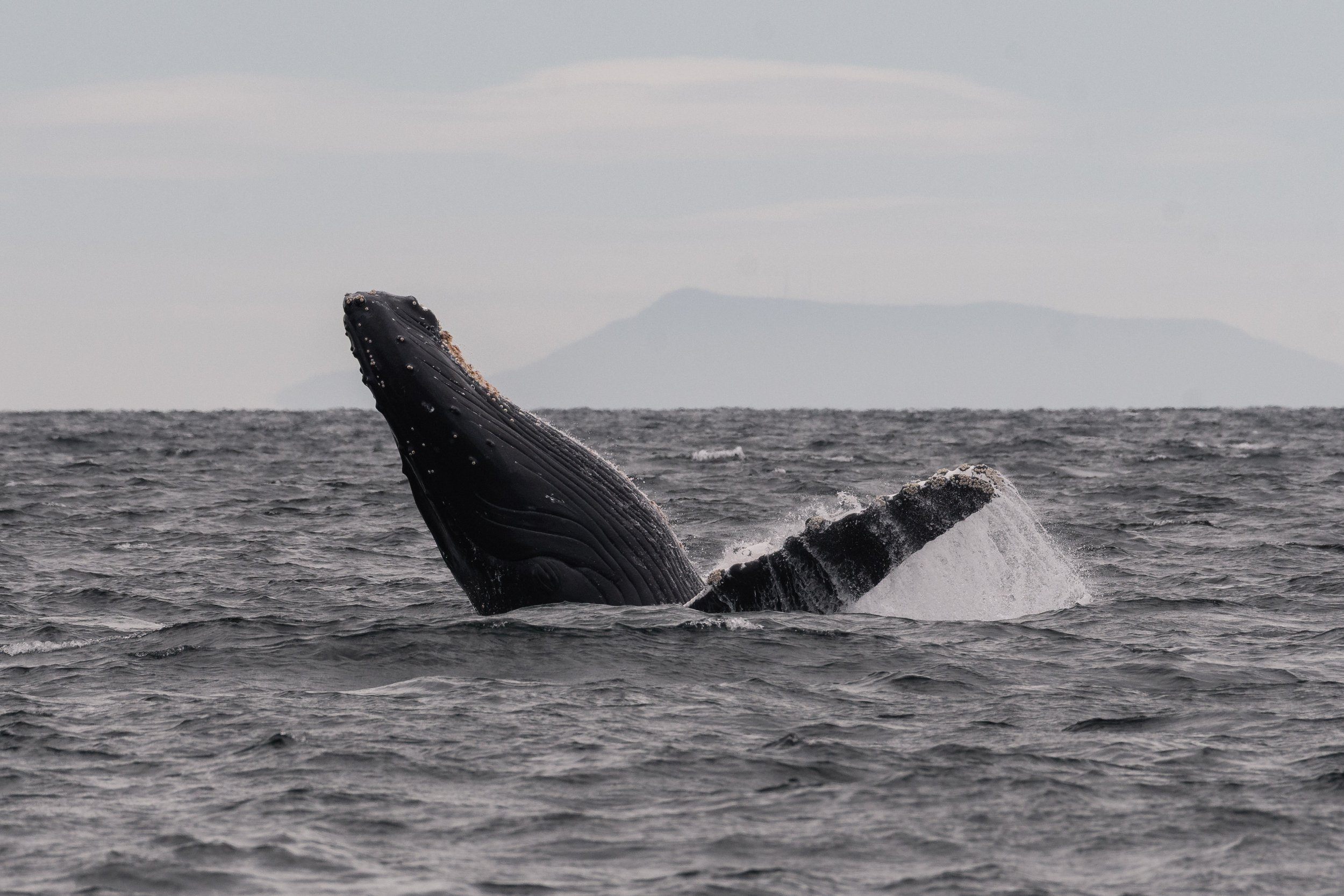
A mini-breach from BCX2492. Photo by Evan Hessels.
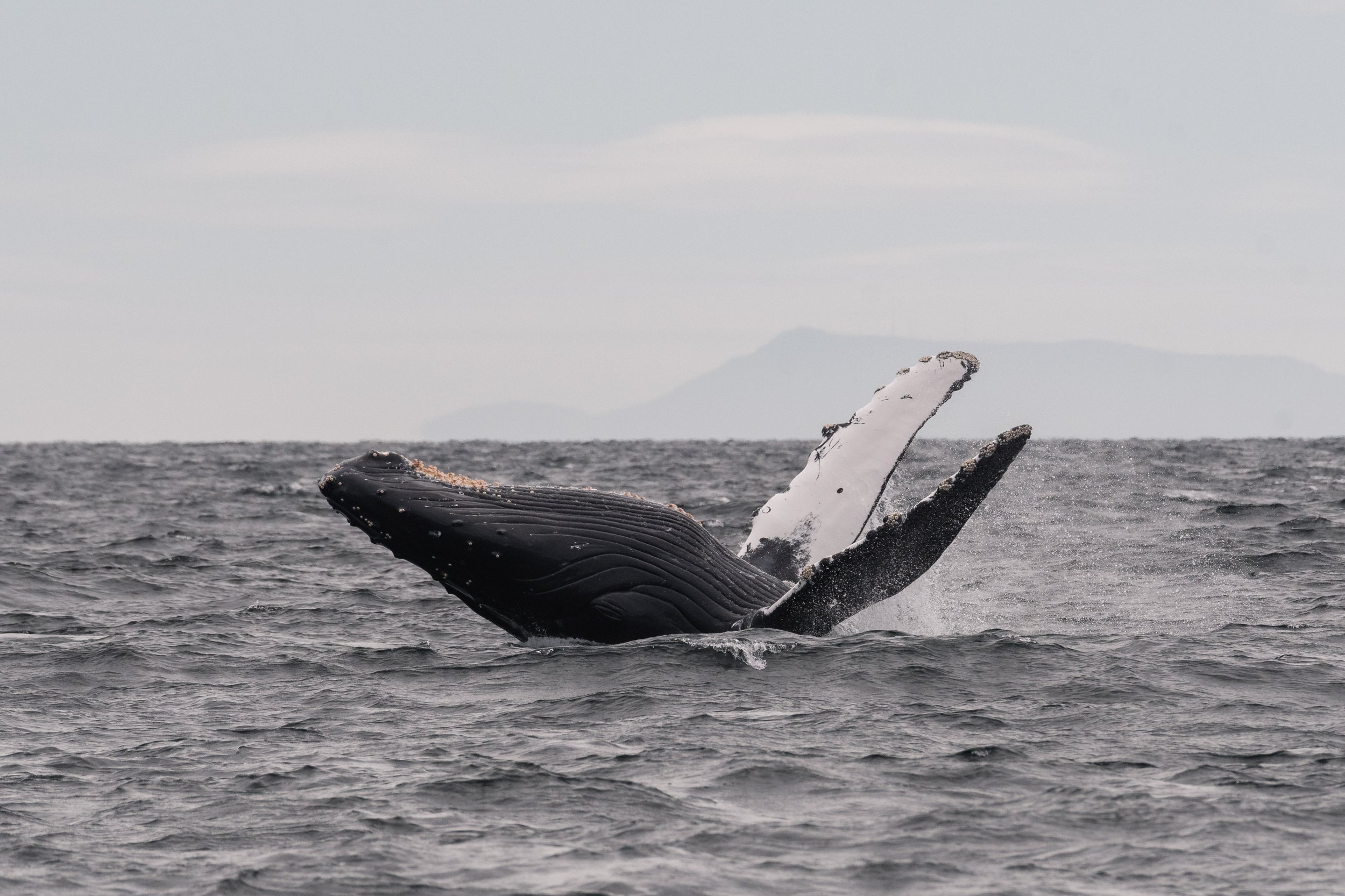
BCX2492 breaching with both pectoral fins in the air. Photo by Evan Hessels.
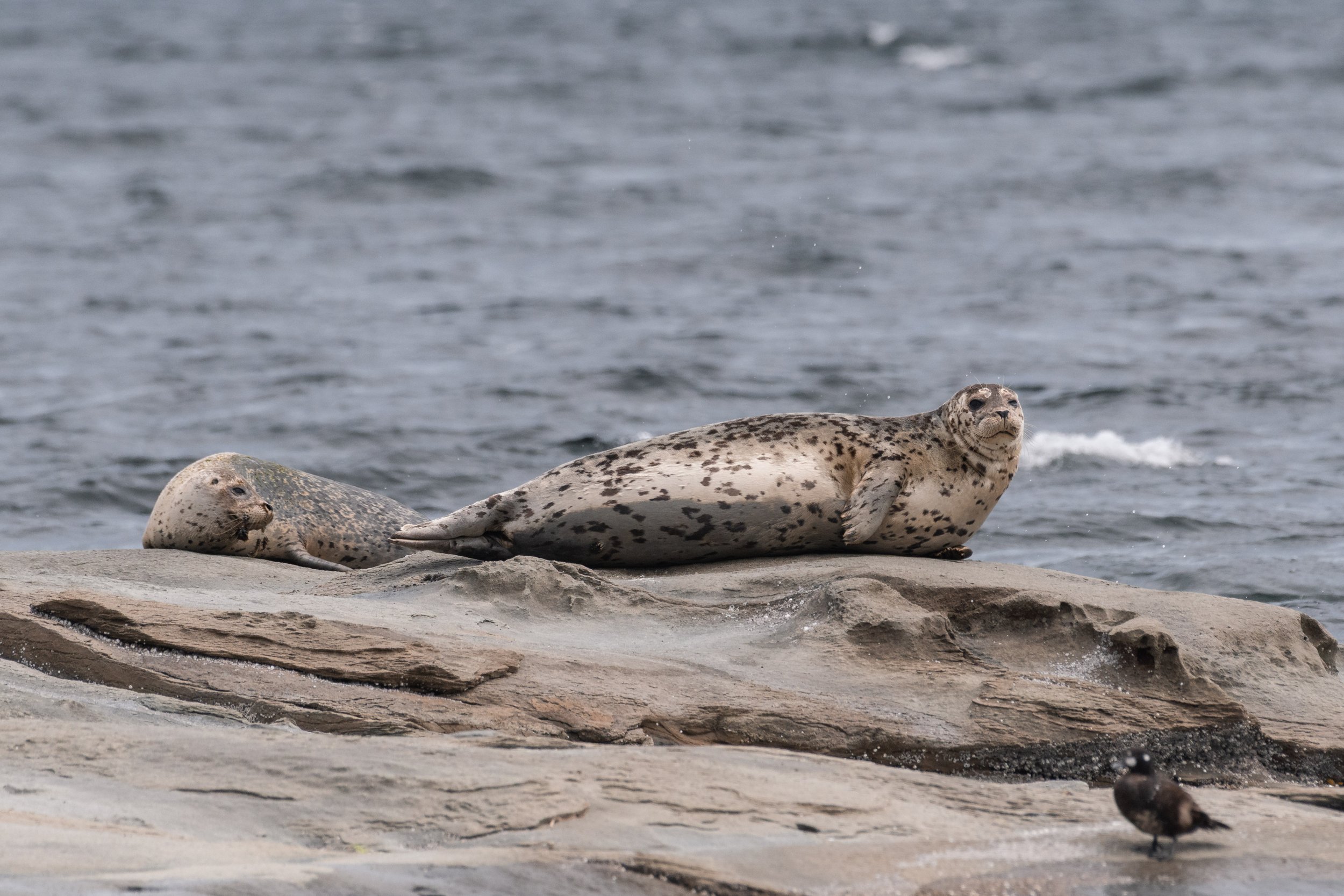
Some Harbour Seals lounging on the rocks. Photo by Evan Hessels.
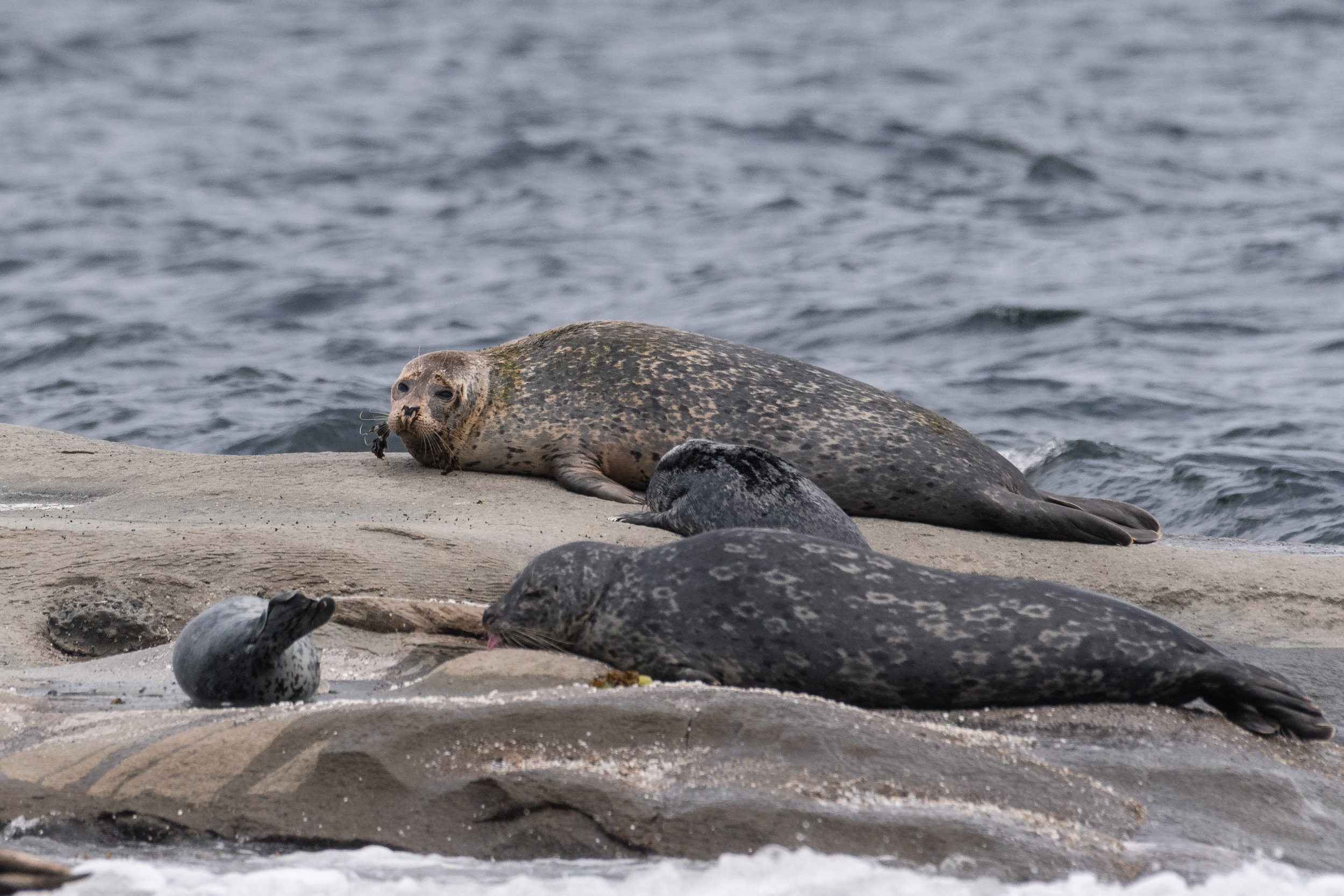
A new pup on the rocks with mom. Photo by Evan Hessels.
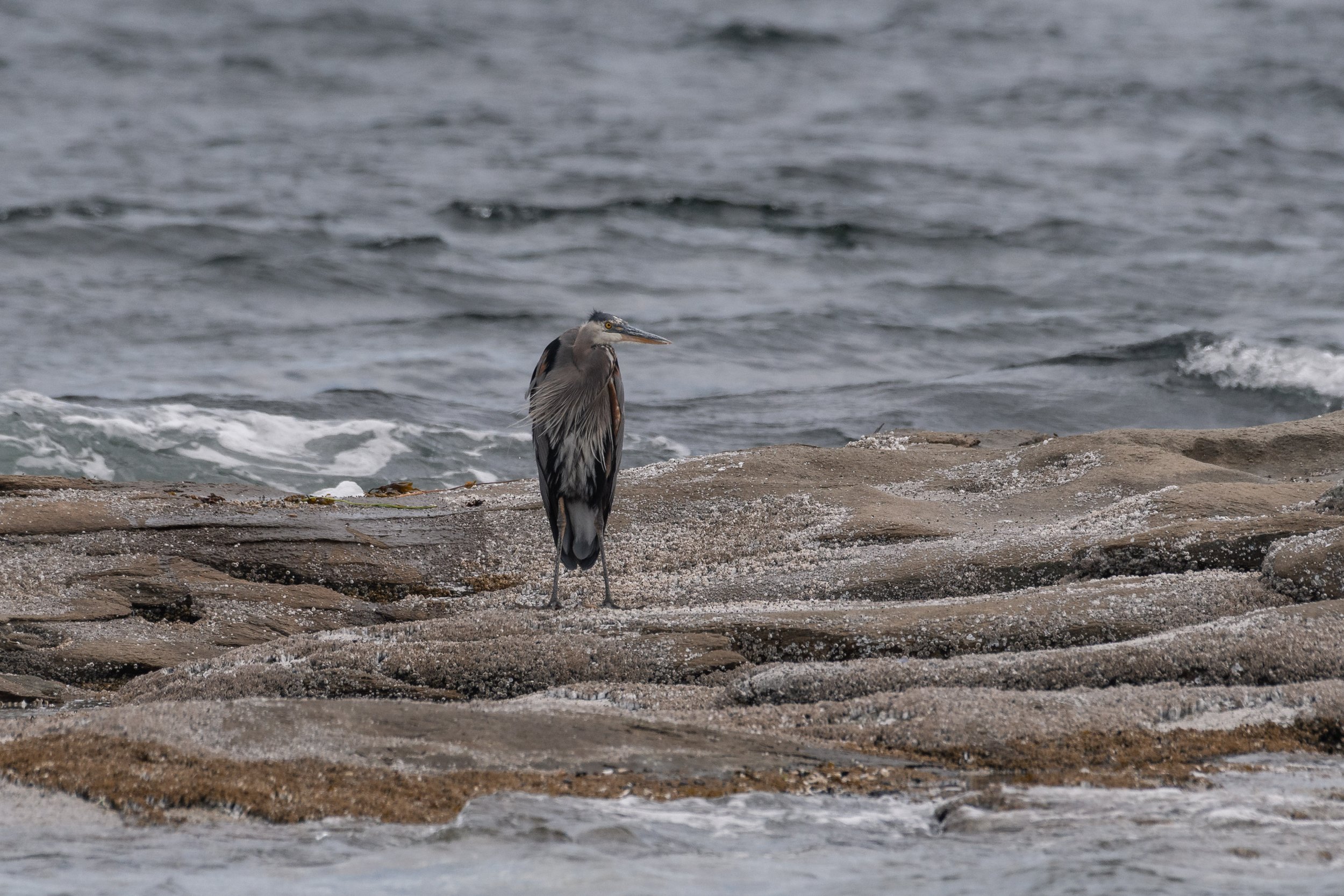
A great blue heron bracing against the spray on the rocks. Photo by Evan Hessels.
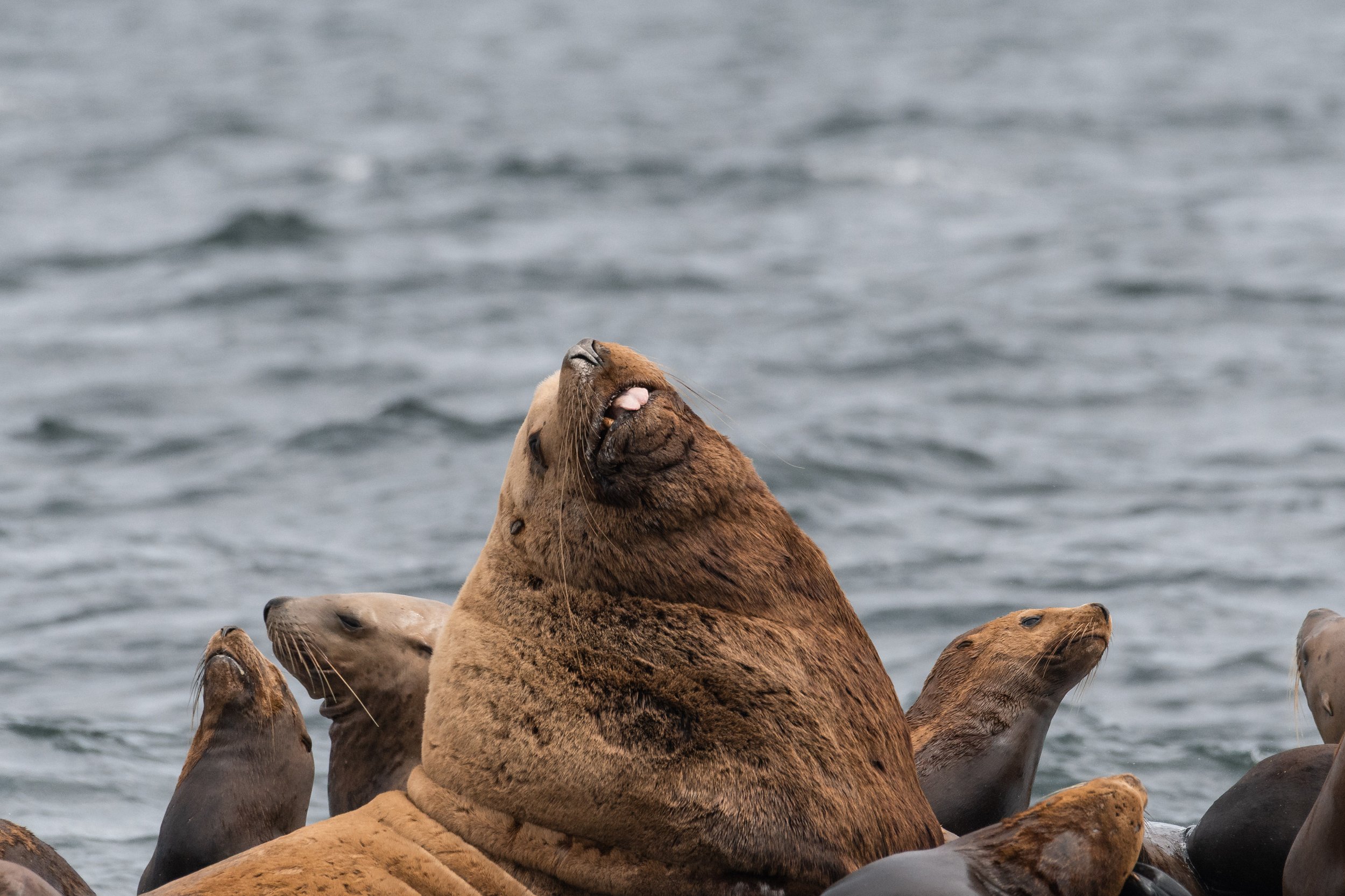
A male Steller Sea Lion with his tongue out. Photo by Evan Hessels.
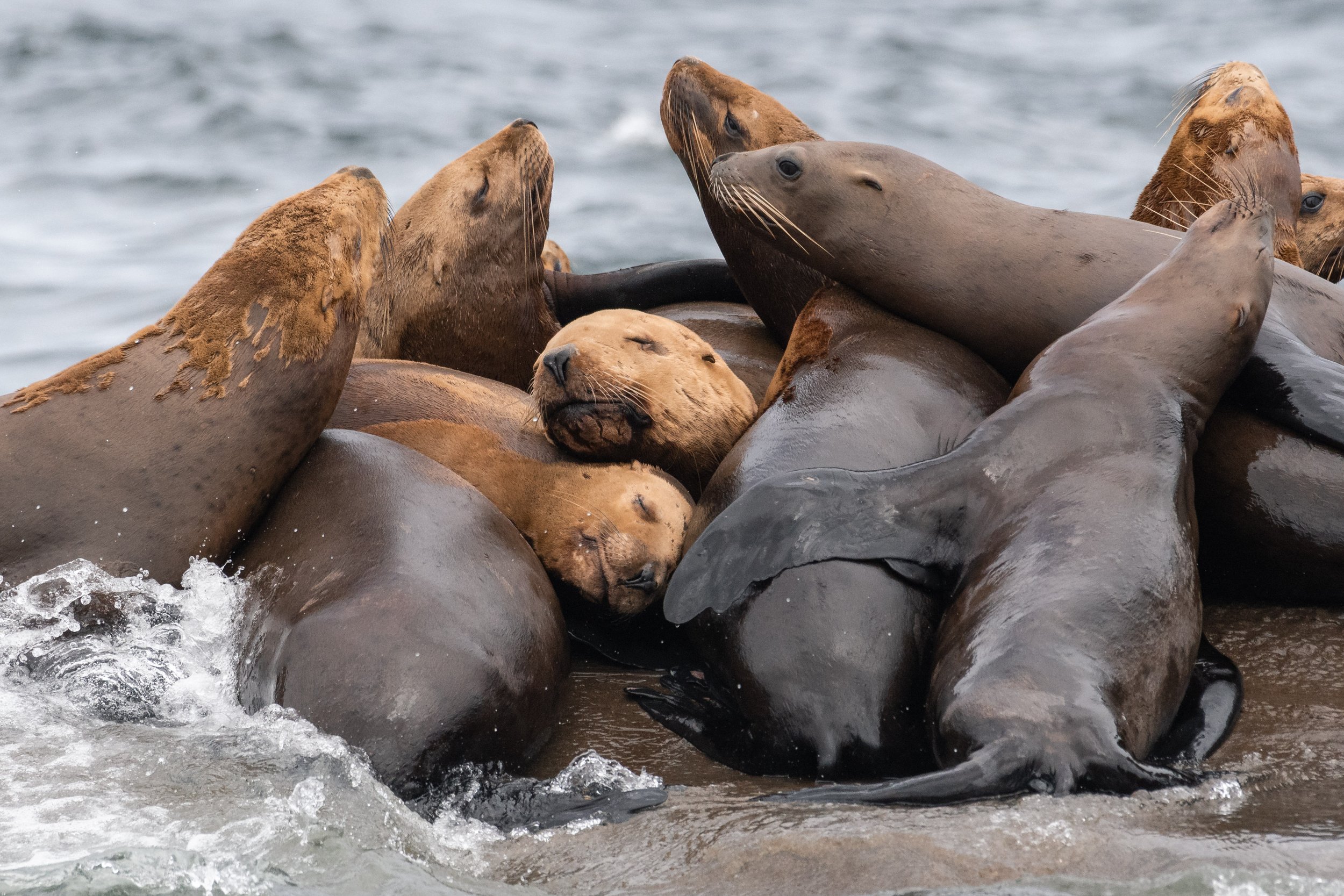
A cuddle puddle on Stinky Rock. Photo by Evan Hessels.
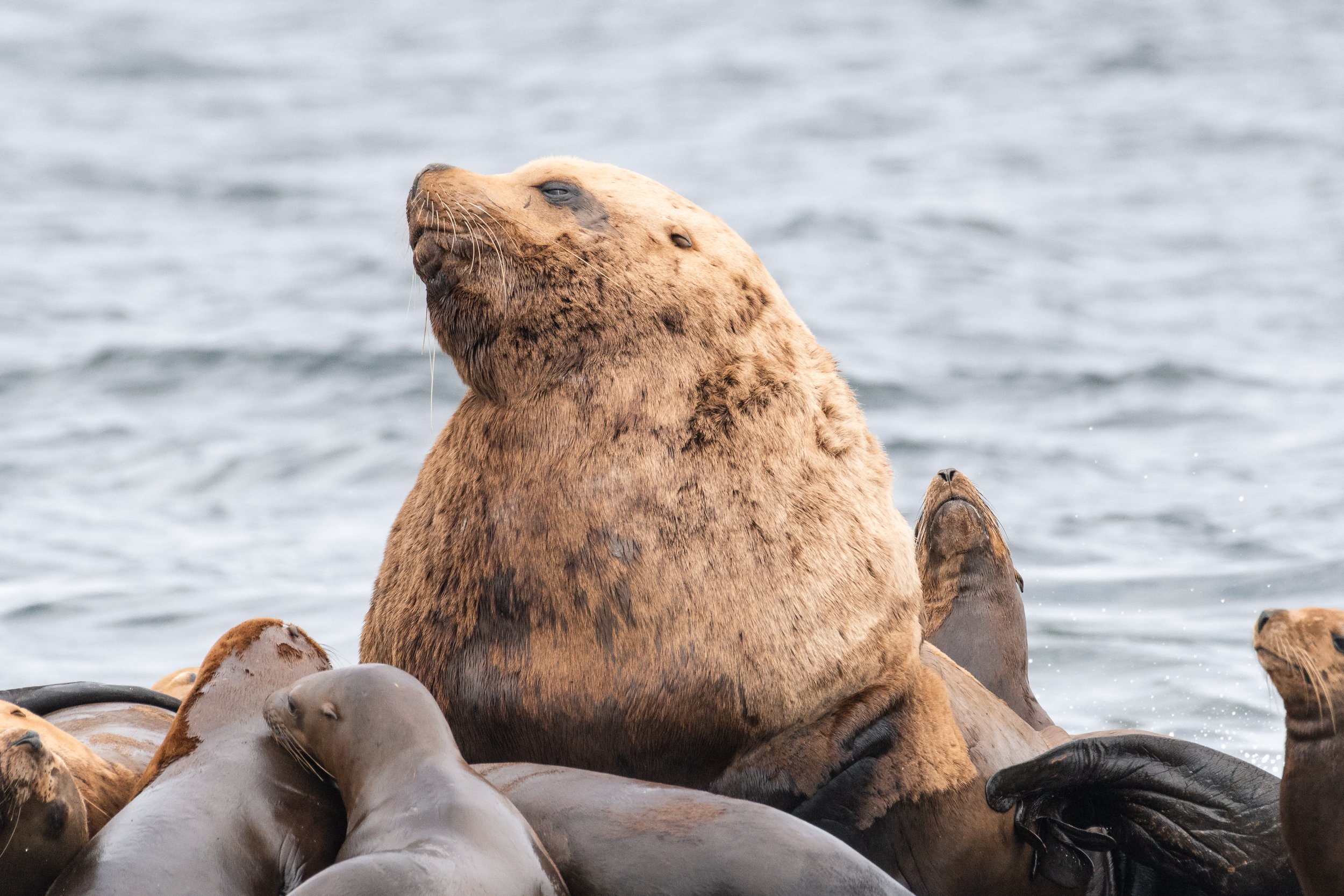
A male Steller Sea Lion is much bigger than the others here. Photo by Evan Hessels.
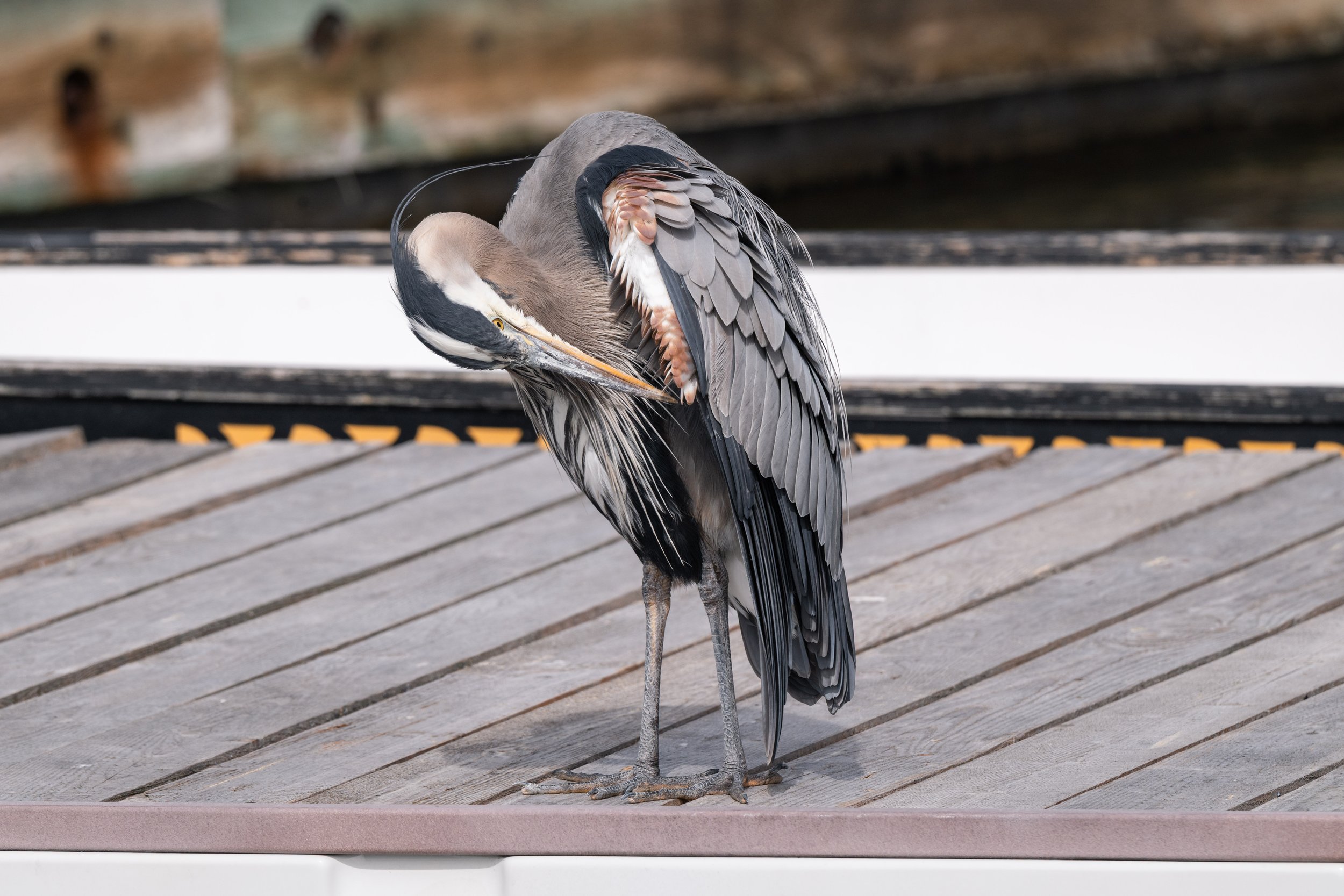
A Great Blue Heron on the docks by our boats. Photo by Aly Kohlman.