
July 8, 2026 - A pair of Humpbacks and a handful of Orca!
With all three of our vessels pushing off the dock this morning, we were greeted by a brisk breeze that gave us a little helping hand as we set our course for the open waters of the Strait of Georgia. Conditions on the Salish Sea can shape every adventure, and today the wind encouraged us to head south toward one of our favourite wildlife hotspots, Porlier Pass.
As we cruised through the waves, guests kept a watchful eye on the horizon, scanning for any sign of where the wildlife might be hiding. Before long, the search began to pay off. Just beyond the pass, two distant blows rose into the air, hanging like wisps of mist above the water.
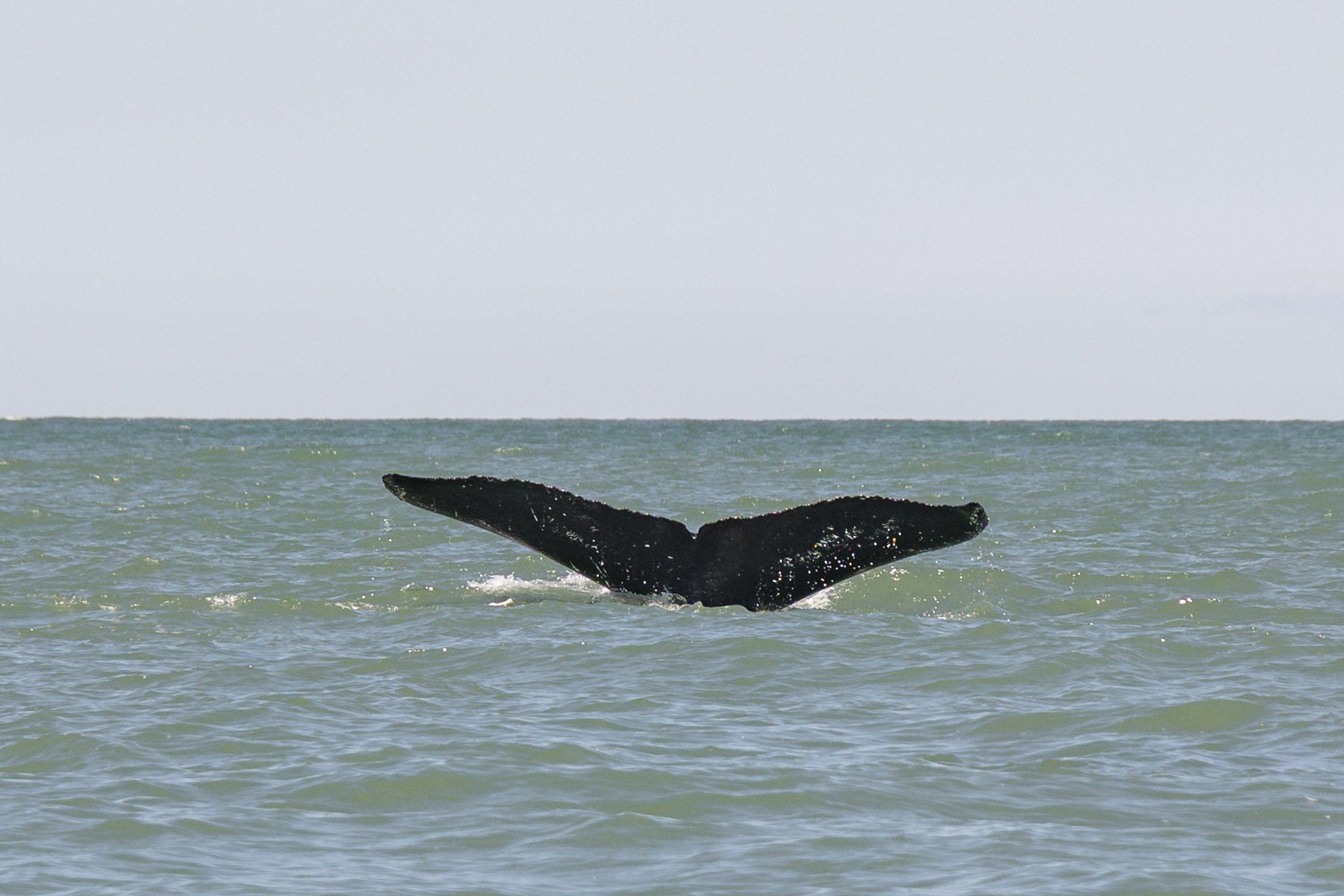
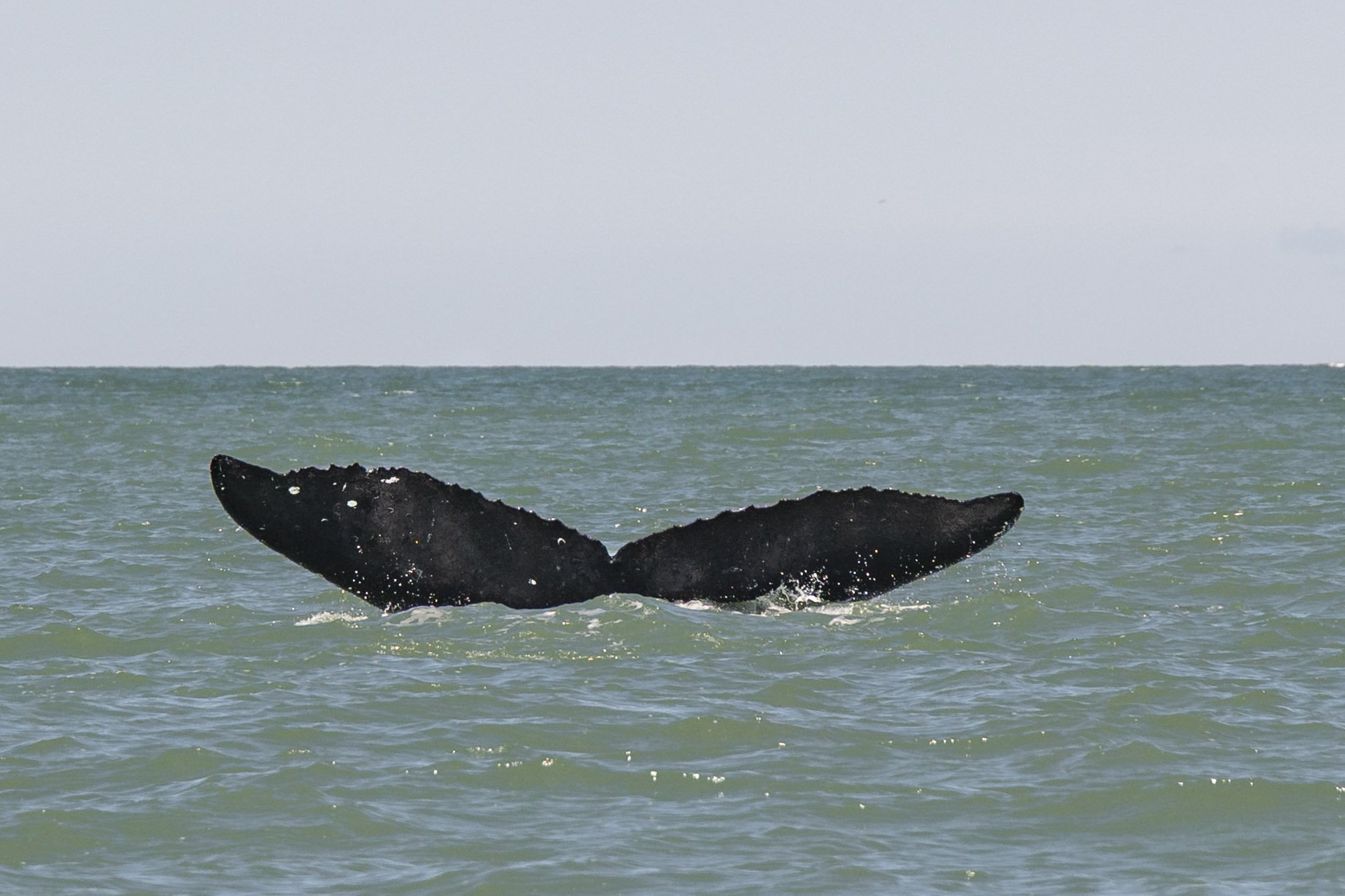
Our first whales of the afternoon had been found. It was Zig Zag (BCX1193) and Raptor (BCY0458).
Watching two humpback whales travelling side by side naturally raises one big question: are they friends?
The answer is... maybe.
Humpback whale social dynamics are one of the most fascinating (and still not fully understood) aspects of their lives. For many years, scientists believed humpbacks were largely solitary animals that only came together briefly to feed or breed. Today, we know their social lives are far more complex.
Unlike orca, which typically spend their entire lives in tight-knit family groups, individual humpbacks regularly come together, split apart, and reunite with different whales throughout the season. Some associations last only a few hours, while others appear to continue for months or even years. Researchers are still working to understand exactly what drives these relationships and whether certain whales deliberately seek each other out.
One of our favourite examples comes from 2019, when Raptor and Heather spent almost the entire summer travelling together. They were seen side by side so often that they earned the nickname "the Best Friends of the Salish Sea." Then came the surprise. When both whales returned the following season, each had a brand-new calf swimming beside her. It turned out they had likely spent the previous summer together while both were pregnant!
Could today's pair, Raptor and Zig Zag, be following a similar story? It's certainly an intriguing possibility. Zig Zag has become remarkably predictable, returning with a new calf every two years in 2019, 2021, 2023, and 2025. If she keeps to that schedule, she could very well be pregnant right now, with another calf expected to arrive in the Salish Sea in 2027. Of course, until that little calf appears beside her, we can only speculate, but it's always exciting to wonder what stories are unfolding beneath the surface.
If Zig Zag is indeed expecting, she'll have an enormous appetite to match. A pregnant humpback whale can consume around 5,000 pounds of food every single day to fuel both herself and her growing calf. To put that into perspective, that's roughly the same amount of food an average person would eat over the course of three years!
As we travelled outside Porlier Pass, the water had taken on a rich green hue, a welcome sight for both us and the whales. That vibrant colour comes from blooms of microscopic phytoplankton, the foundation of the marine food web. Phytoplankton feed tiny zooplankton, which in turn support the schools of small fish that humpbacks rely on. When the ocean turns green, it's often nature's way of telling us the dinner table is set, making it an excellent place to search for hungry humpback whales. We left these two to dine as we got back into search mode!
Not too far from our humpbacks, another splash of colour caught our attention. This time it wasn't the emerald-green water; it was the unmistakable black-and-white pattern of Transient Orca.
With so much life concentrated in this productive stretch of the Salish Sea, there was every chance these apex predators were searching for their next meal. As we approached, however, identifying them proved to be a bit of a challenge. Instead of travelling neatly together, the whales were scattered across a wide area, surfacing in different places and heading in different directions. It quickly became apparent that they were possibly hunting. After snapping a few photographs and comparing dorsal fins and saddle patches, our Naturalists confirmed that we were watching members of the T037A family.
T037A Volker ♀ (1994)
T037A1 Inyo ♀ (2007)
T037A2 Inky ♂ (2009)
We positively identified three individuals, although it's entirely possible that all five family members were nearby. When Transient Killer Whales are searching for marine mammals such as seals, sea lions, or porpoises, they often spread out to cover as much water as possible before regrouping once prey has been located. Watching them weave back and forth across the landscape was like watching a perfectly choreographed search pattern unfold.
Life as an orca leaves little time to sit still. These incredible animals can travel well over 100 kilometres in a single day, constantly patrolling the coastline in search of their next meal. All that travelling burns a lot of energy, too. An adult Transient Killer Whale can consume around 300 pounds of food every day, meaning the hunt is never truly over. Every surfacing, every change of direction, and every zig-zagging pass through the water serves a purpose.
For several minutes, we watched the family criss-cross the coastline, each whale appearing and disappearing in a different place before quietly slipping beneath the surface once again. Although they never settled into one location, seeing these skilled hunters methodically work the area offered a fascinating glimpse into the daily lives of one of the ocean's most efficient predators.
Eventually, it was time for us to continue our own journey home.
Before pointing Kula back toward Nanaimo, we paid a visit to one of our favourite wildlife stops: Stinky Rock. The Steller Sea Lions were as noisy as ever, filling the air with their unmistakable bellows as they jostled for the best haul-out spots. Sharing the rock were several Harbour Seals, stretched out in the afternoon sun and enjoying a much more peaceful afternoon than their larger, louder neighbours.
Our final stop brought us alongside the towering Gabriola Bluffs, where another generation of seabirds was hard at work. Dozens of Cormorants dotted the cliff faces, tending their nests high above the water. These steep sandstone cliffs provide ideal nesting habitat, keeping eggs and chicks safely out of reach of many predators while offering easy access to the rich feeding grounds of the Salish Sea below.
As we made our way back into Nanaimo Harbour, it was hard not to reflect on just how interconnected this ecosystem truly is. From microscopic phytoplankton colouring the water green, to feeding humpback whales, to seals hauled out on the rocks and the orca searching for their next meal, every encounter told another chapter in the story of the Salish Sea. Days like today are a wonderful reminder that whale watching isn't just about finding whales; it's about experiencing an entire marine ecosystem in action, where every species plays an important role in keeping these coastal waters healthy and thriving.
Please enjoy the photos from the trip, taken by Marine Naturalists Evan Hessels, Hayleigh Hilbert, and Jordan Robinson.
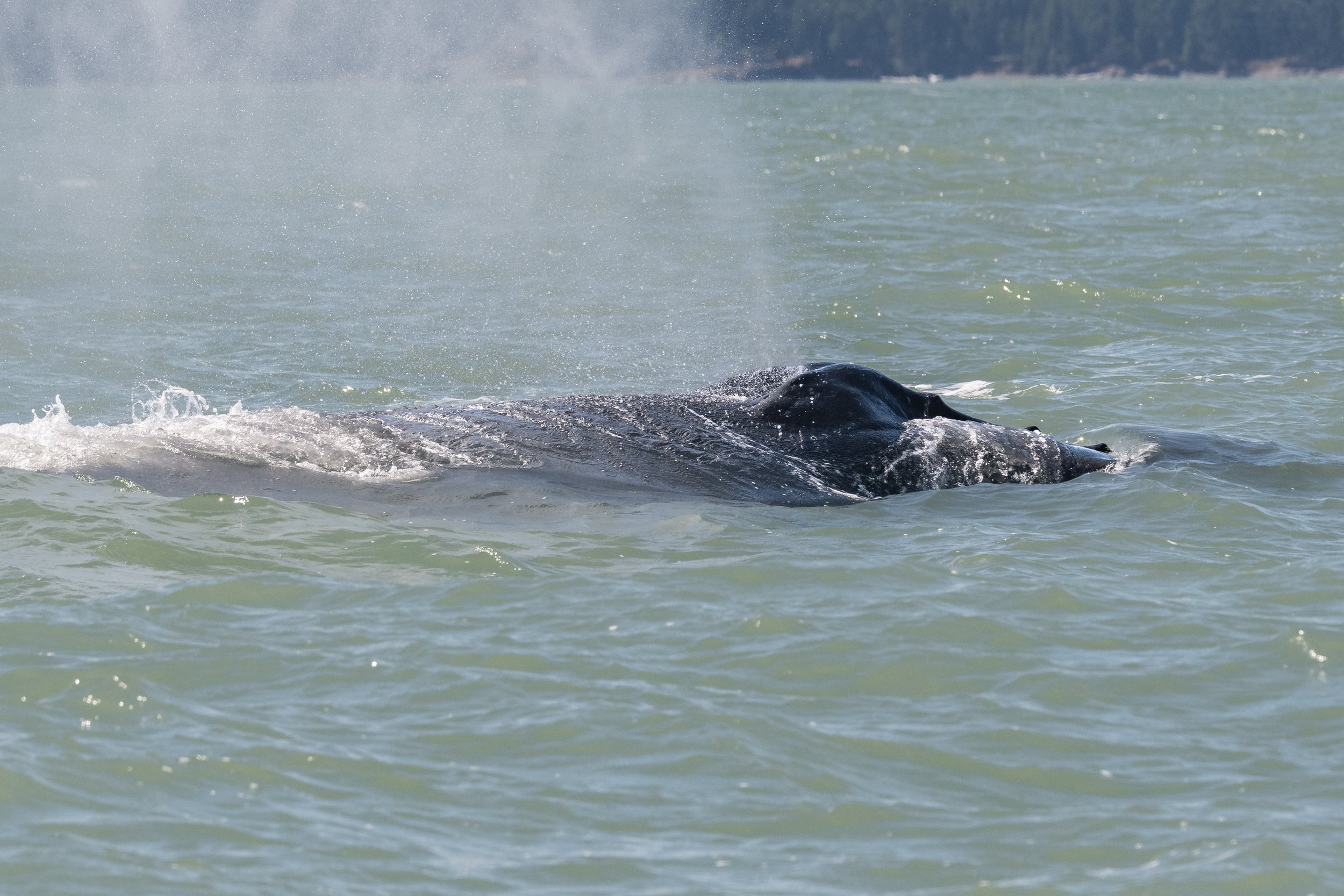
A blow and wave cascading over one of the humpback’s backs. Photo by Evan Hessels.
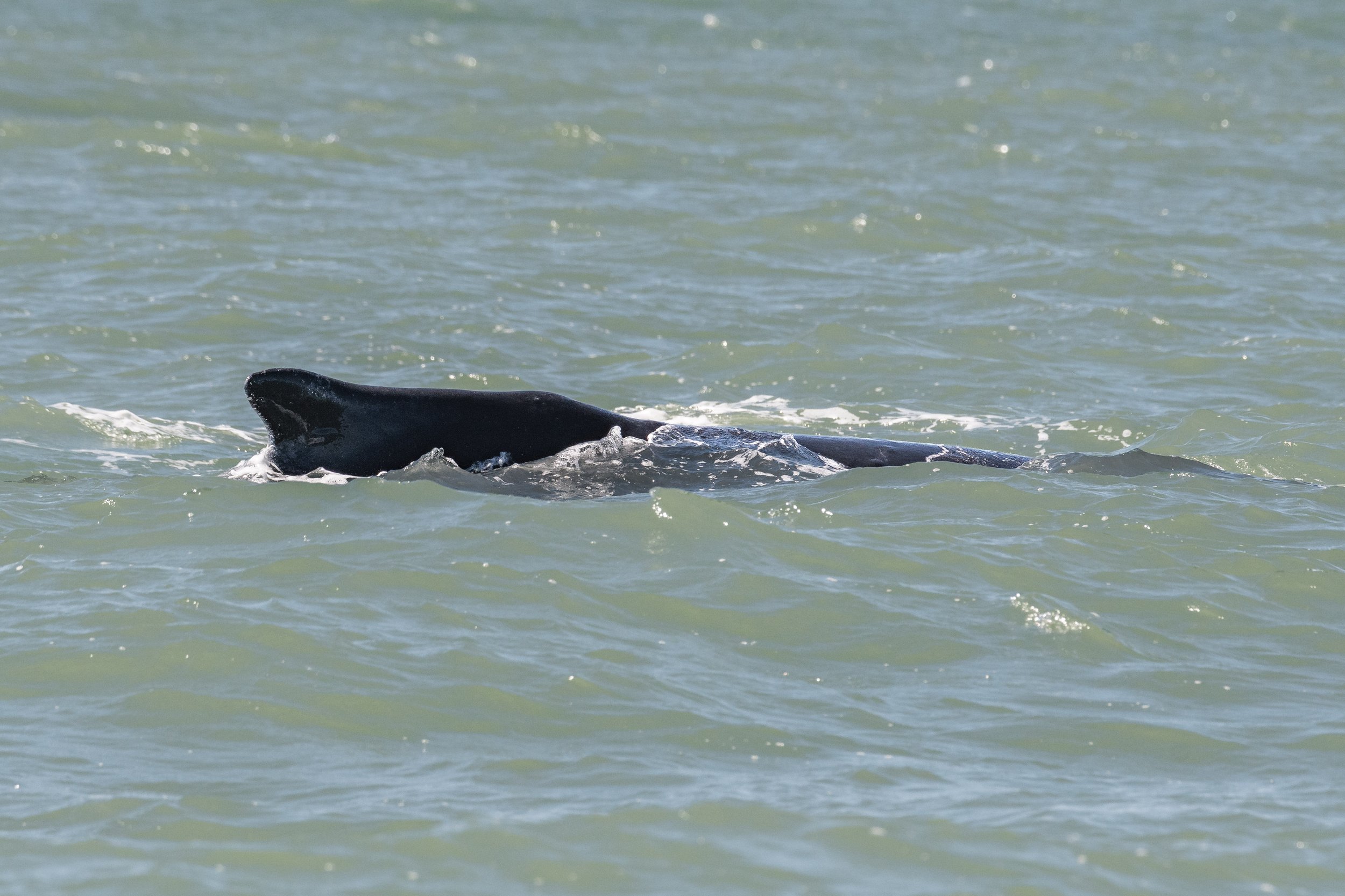
Raptor slicing through the surf. Photo by Evan Hessels.
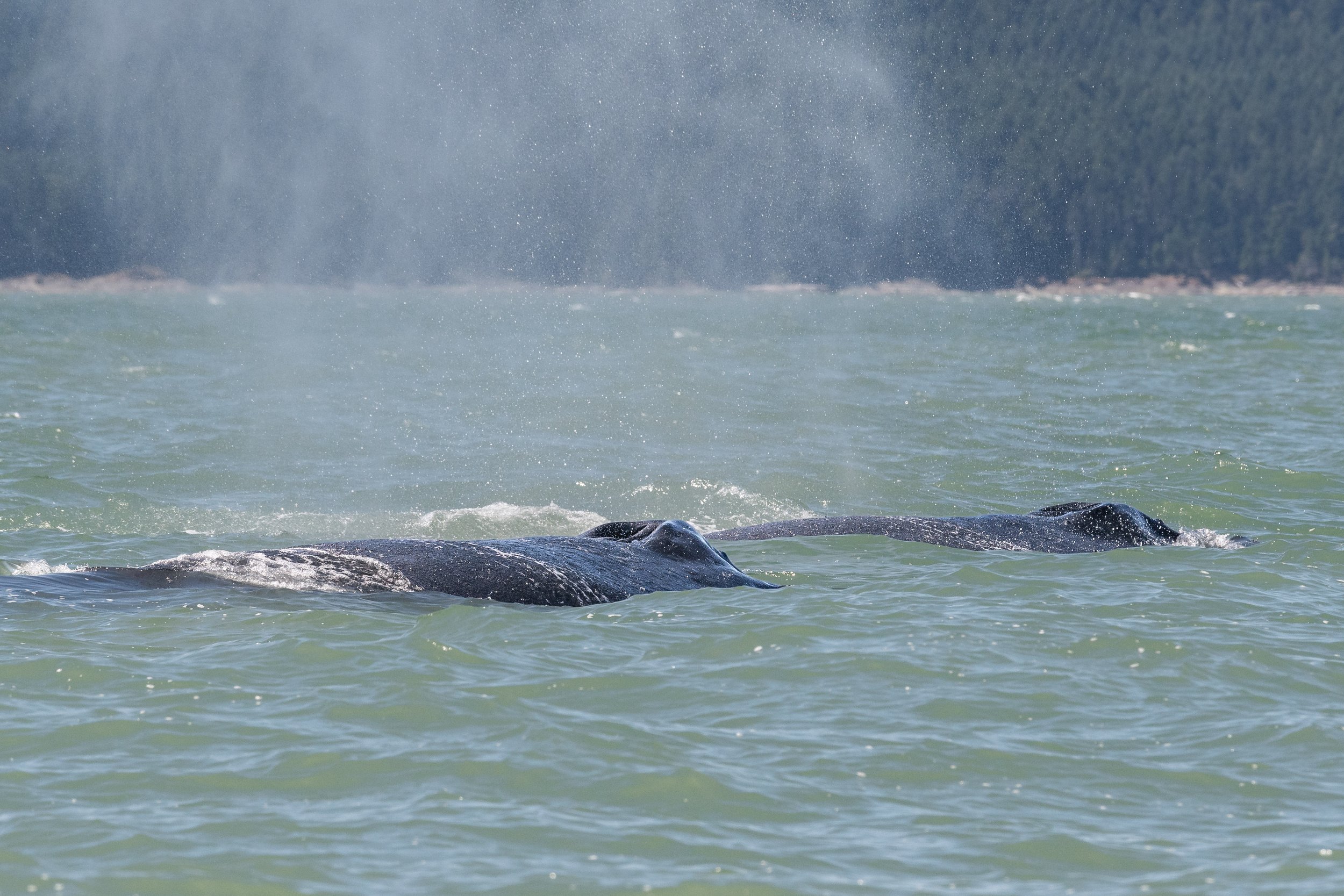
Zig Zag and Raptor side-by-side. Photo by Evan Hessels.
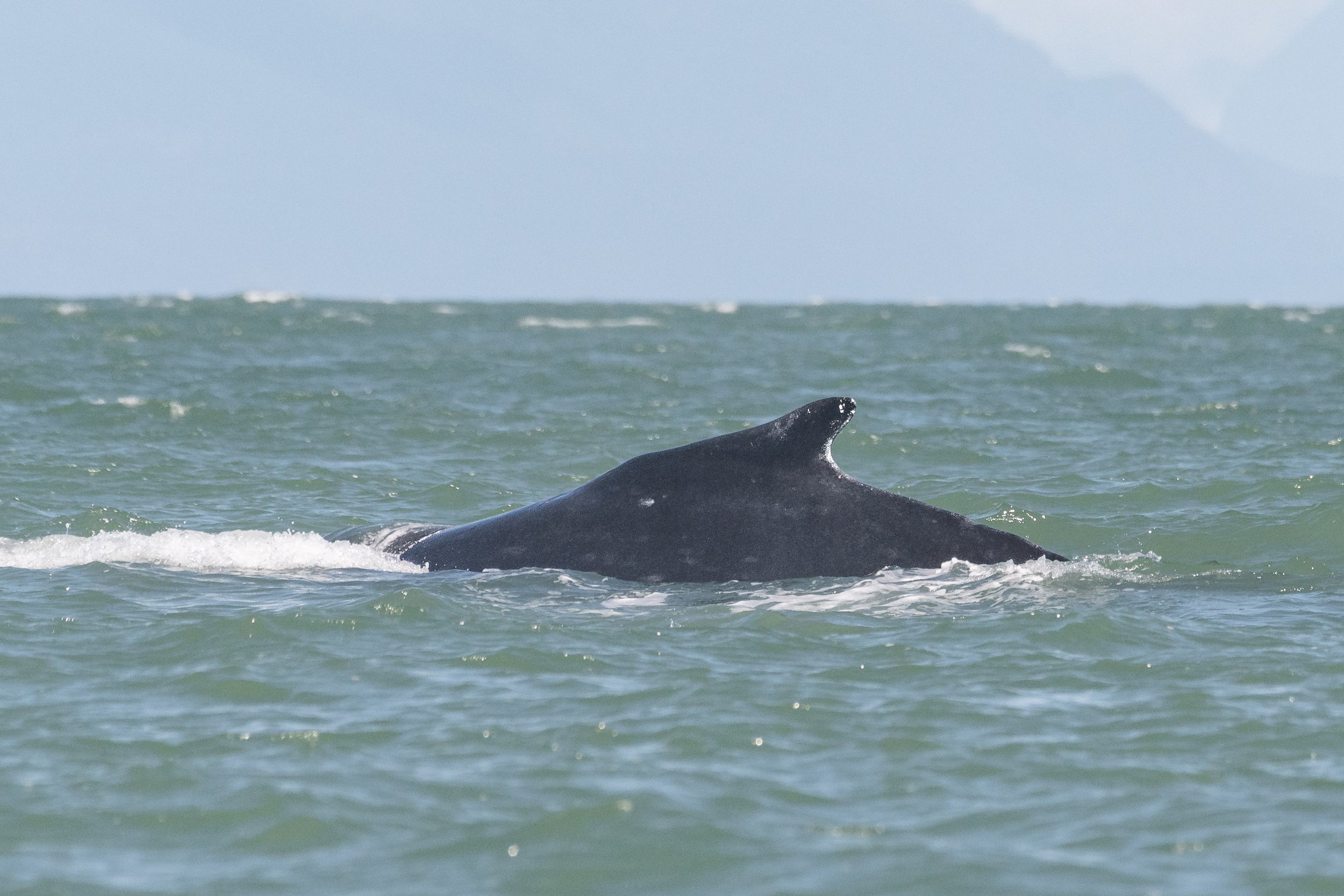
Raptor preparing for a dive. Photo by Evan Hessels.
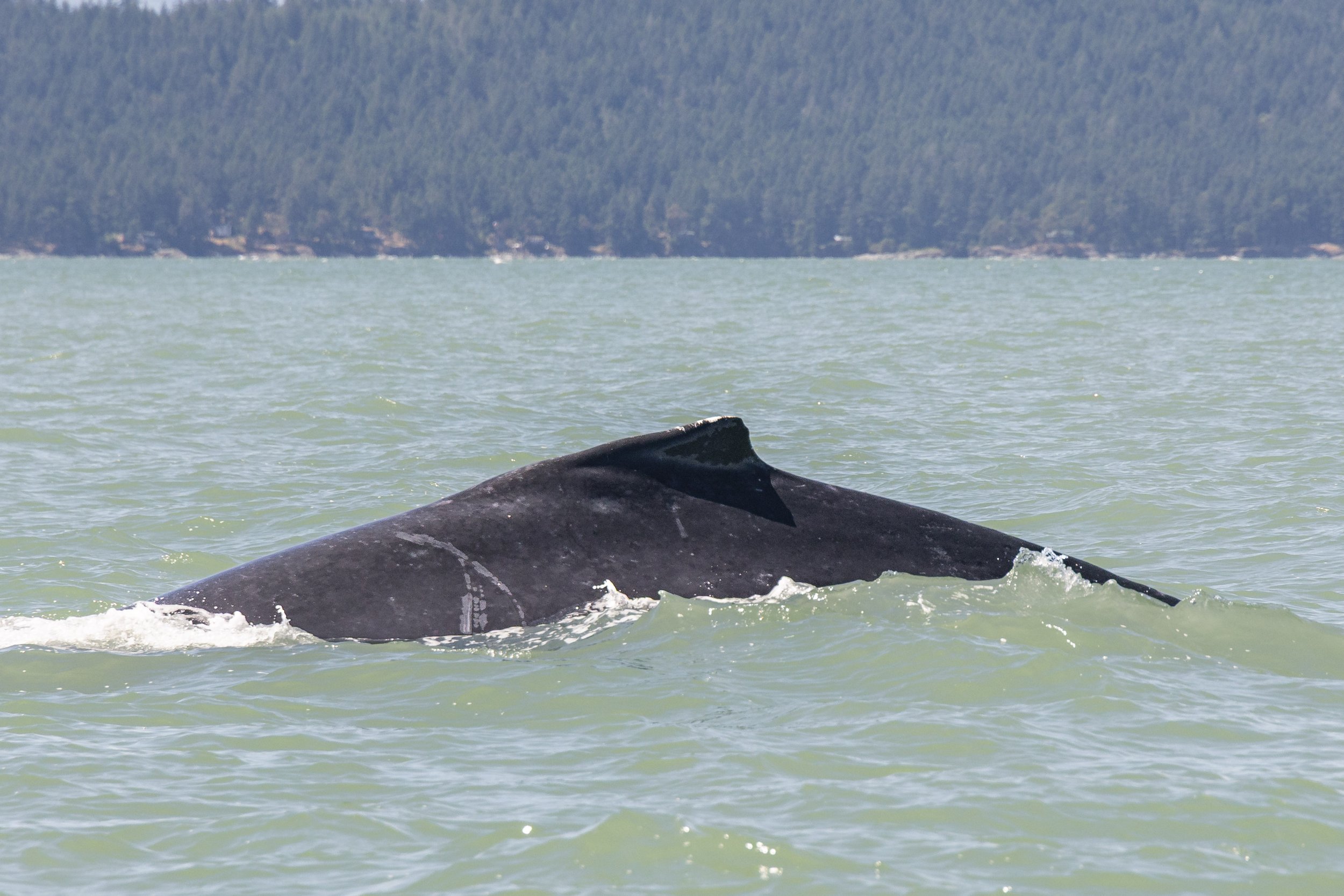
Zig Zag travelling along. Photo by Hayleigh Hilbert.
Raptor fluking. Photo by Hayleigh Hilbert.
Zig Zag fluking. Photo by Hayleigh Hilbert.
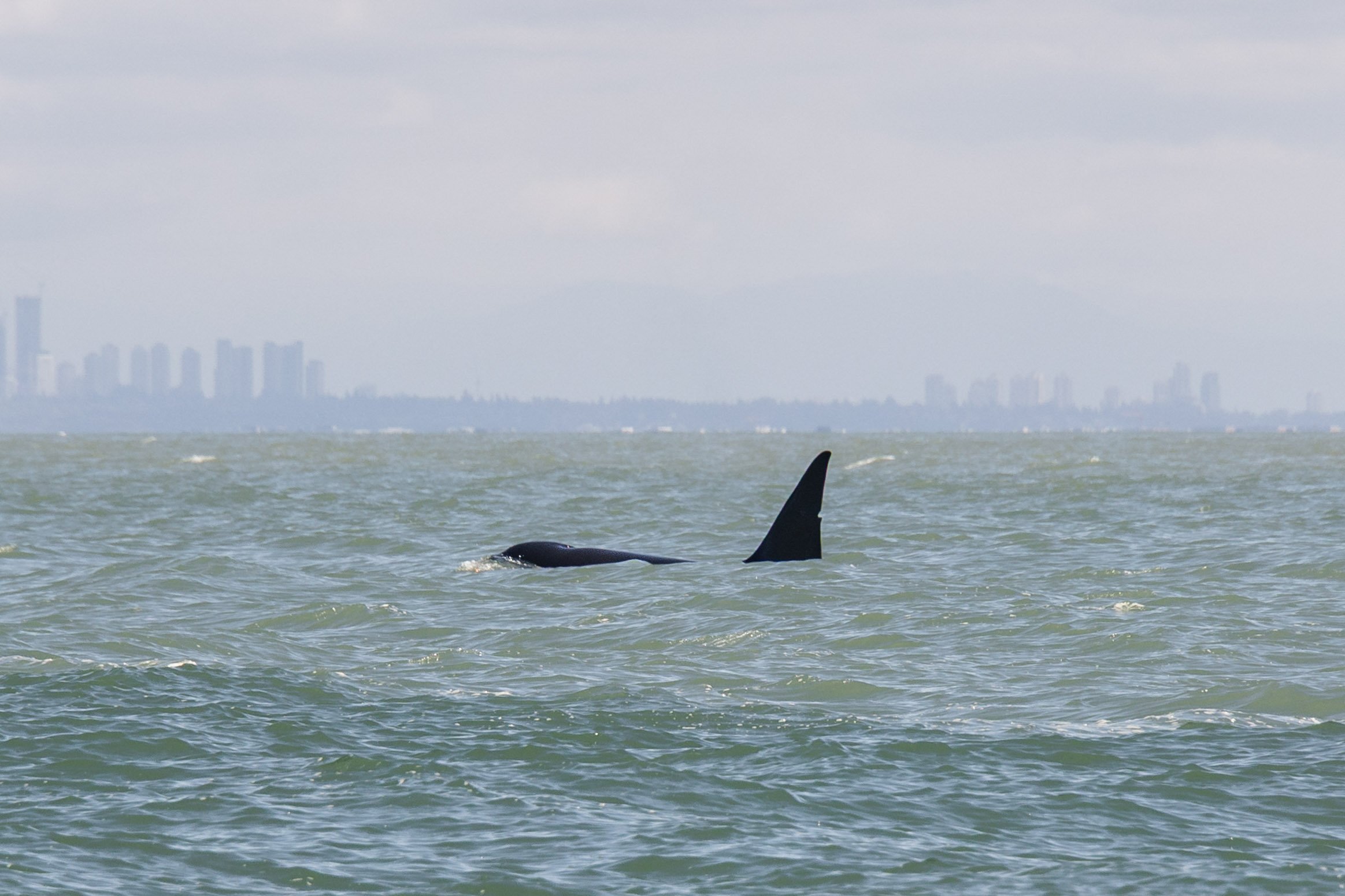
T037A2 Inky travelling along with Vancouver’s skyline visible on the horizion. Photo by Hayleigh Hilbert.
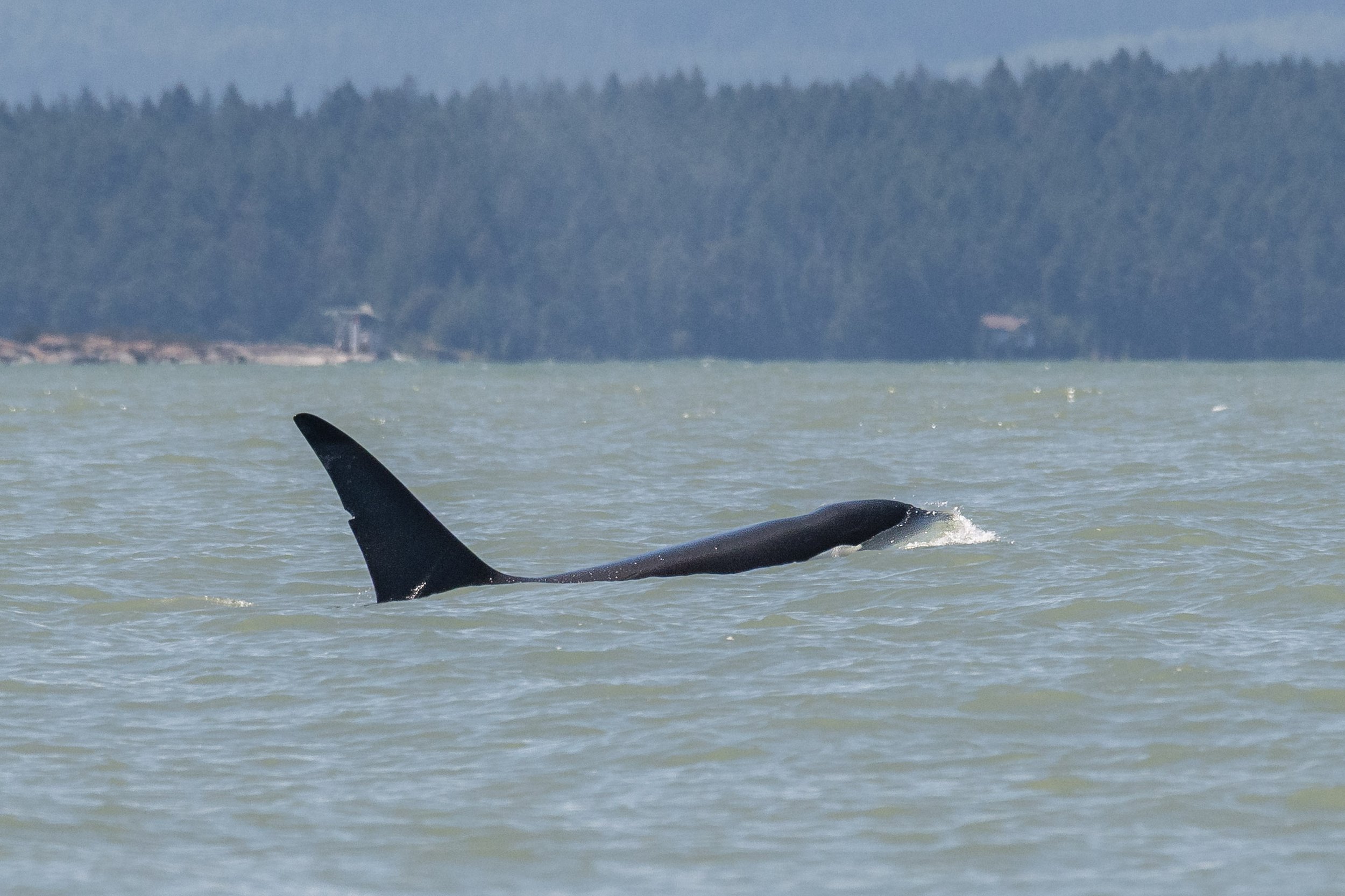
T037A2 Inky travelling. Photo by Evan Hessels.
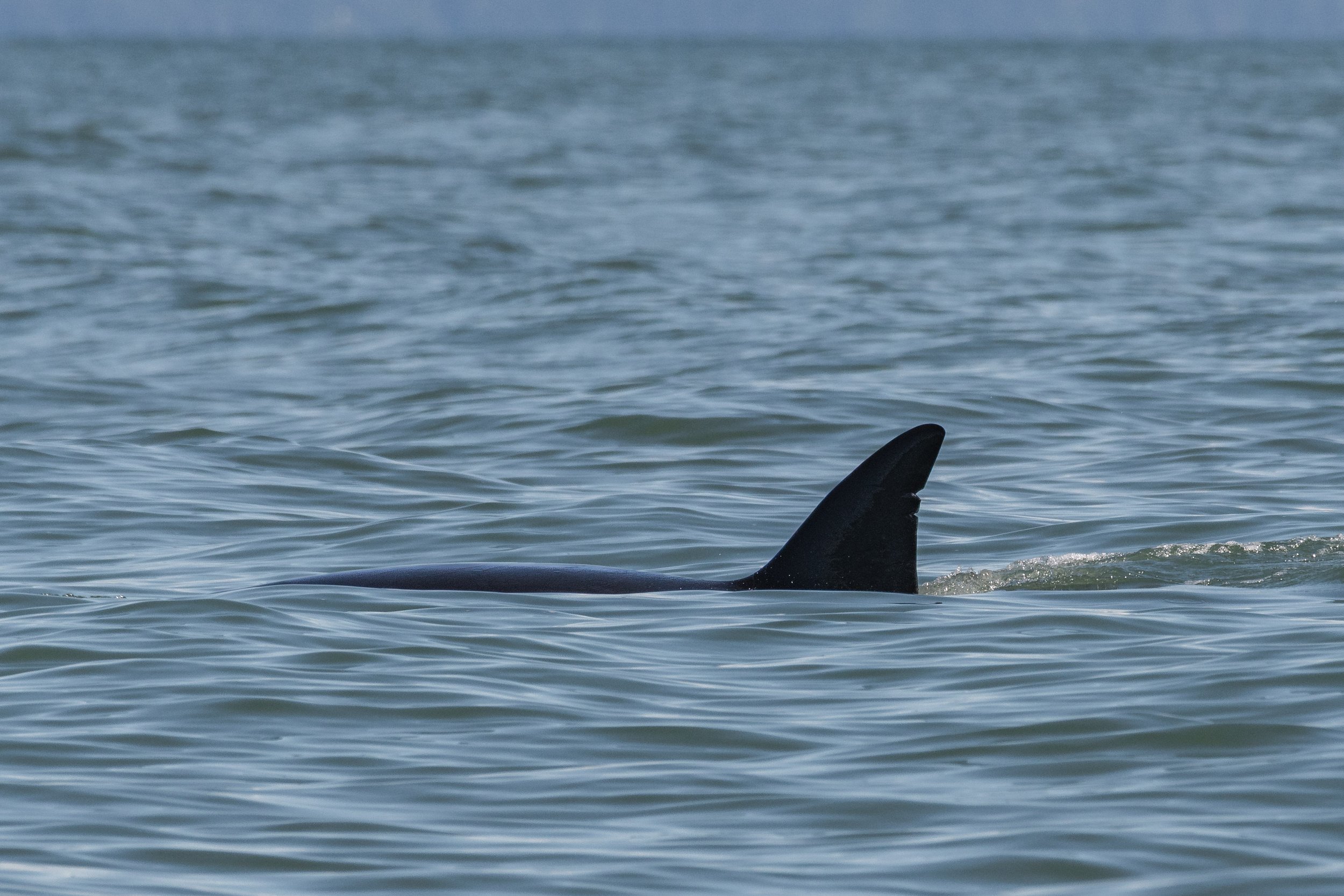
T037A1 Inyo travelling - a rare occurence to be seen with her natal matriline! Photo by Evan Hessels.
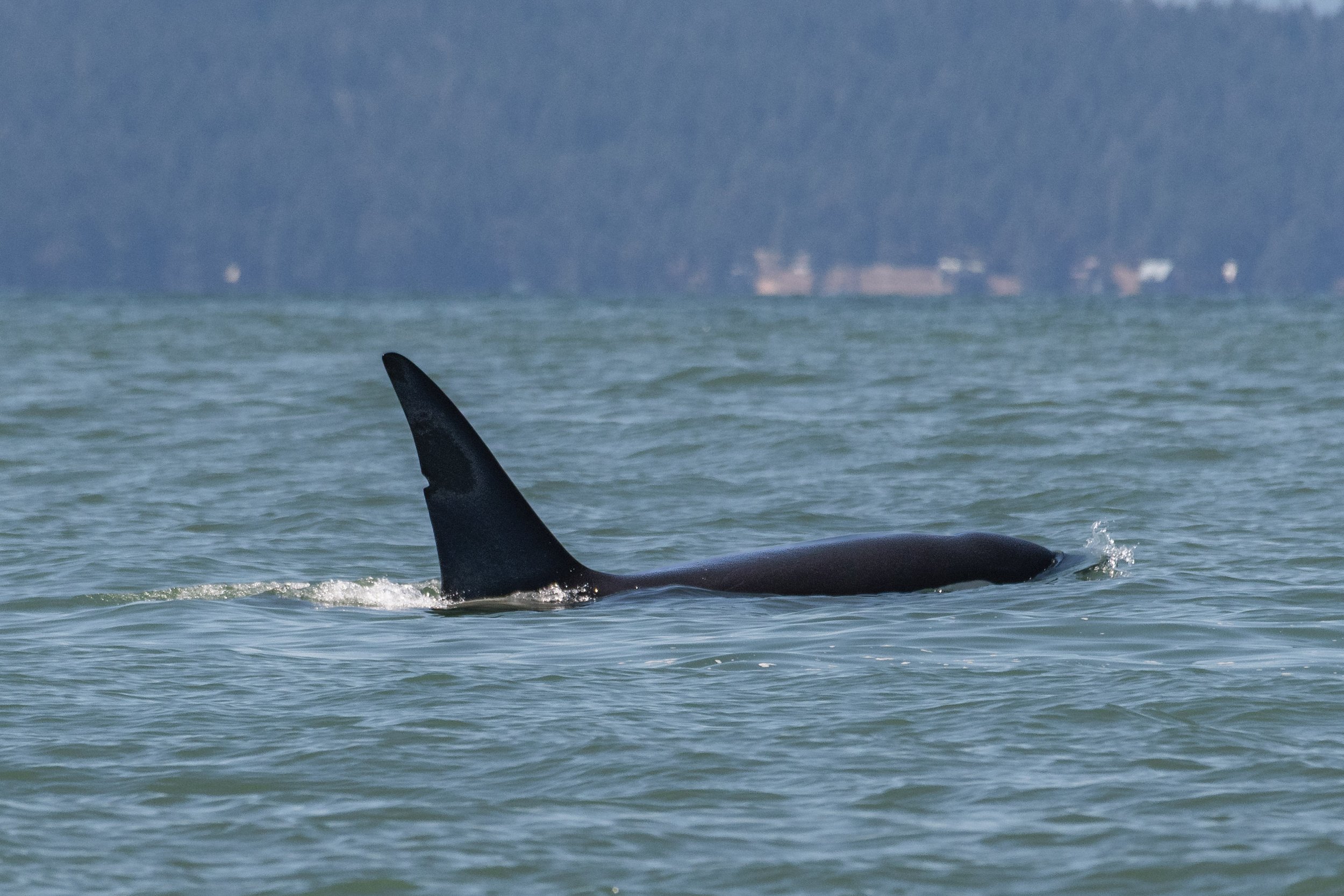
T037A2 Inky continuing on along. Photo by Evan Hessels.
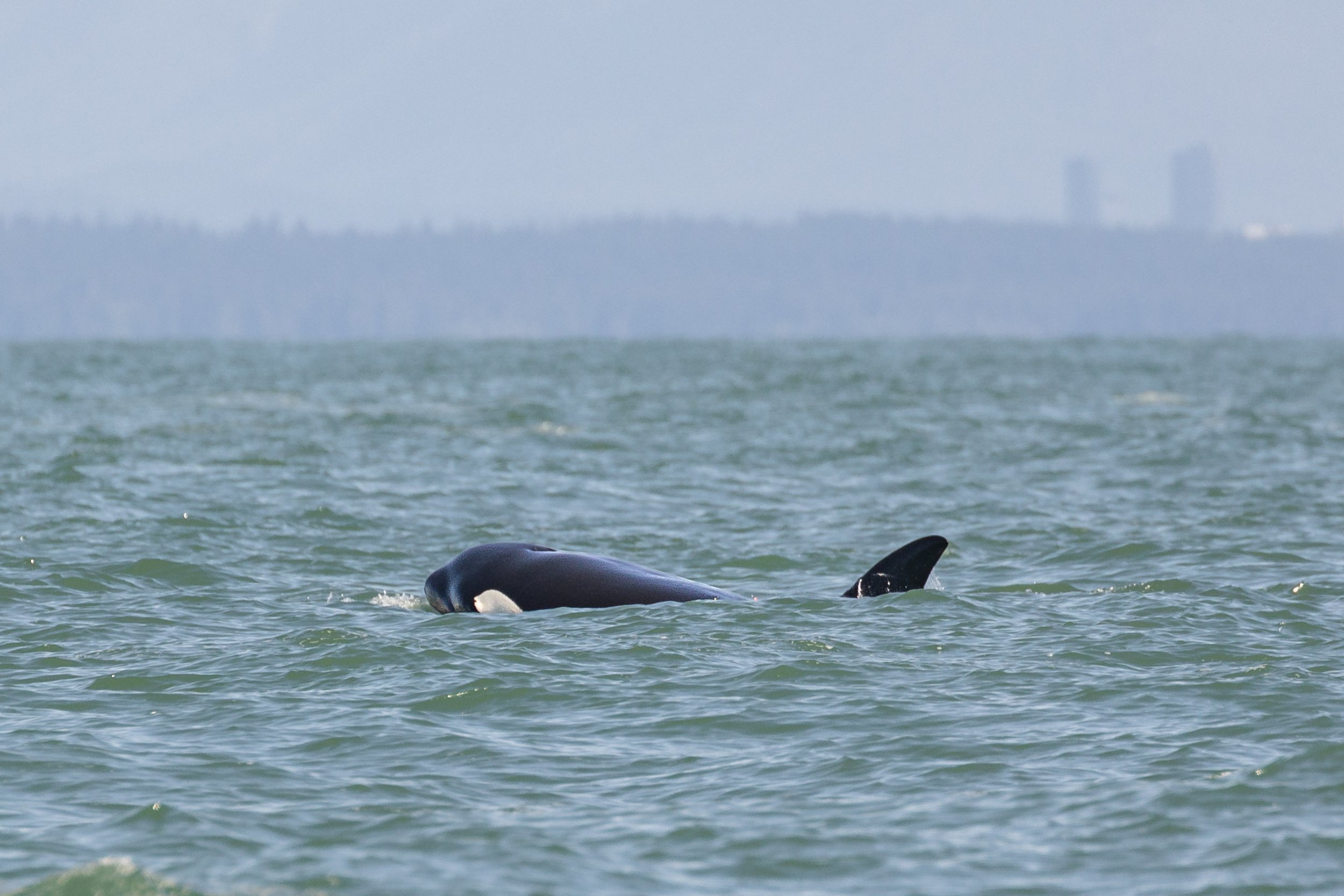
Matriarch T037A Volker making her way along. Photo by Jordan Robinson.
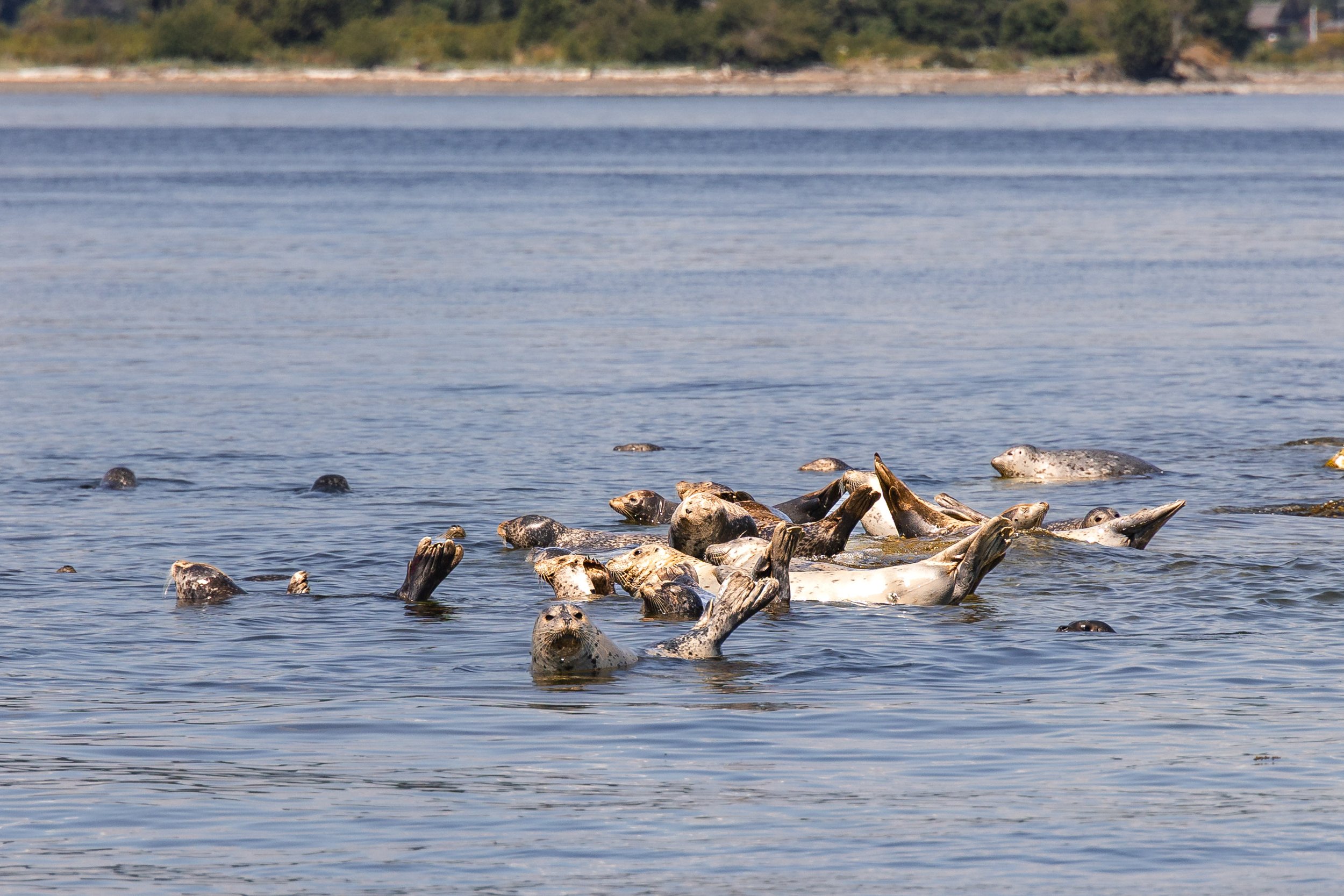
Harbour Seals posing in the classic Banana position. Photo by Hayleigh Hilbert.
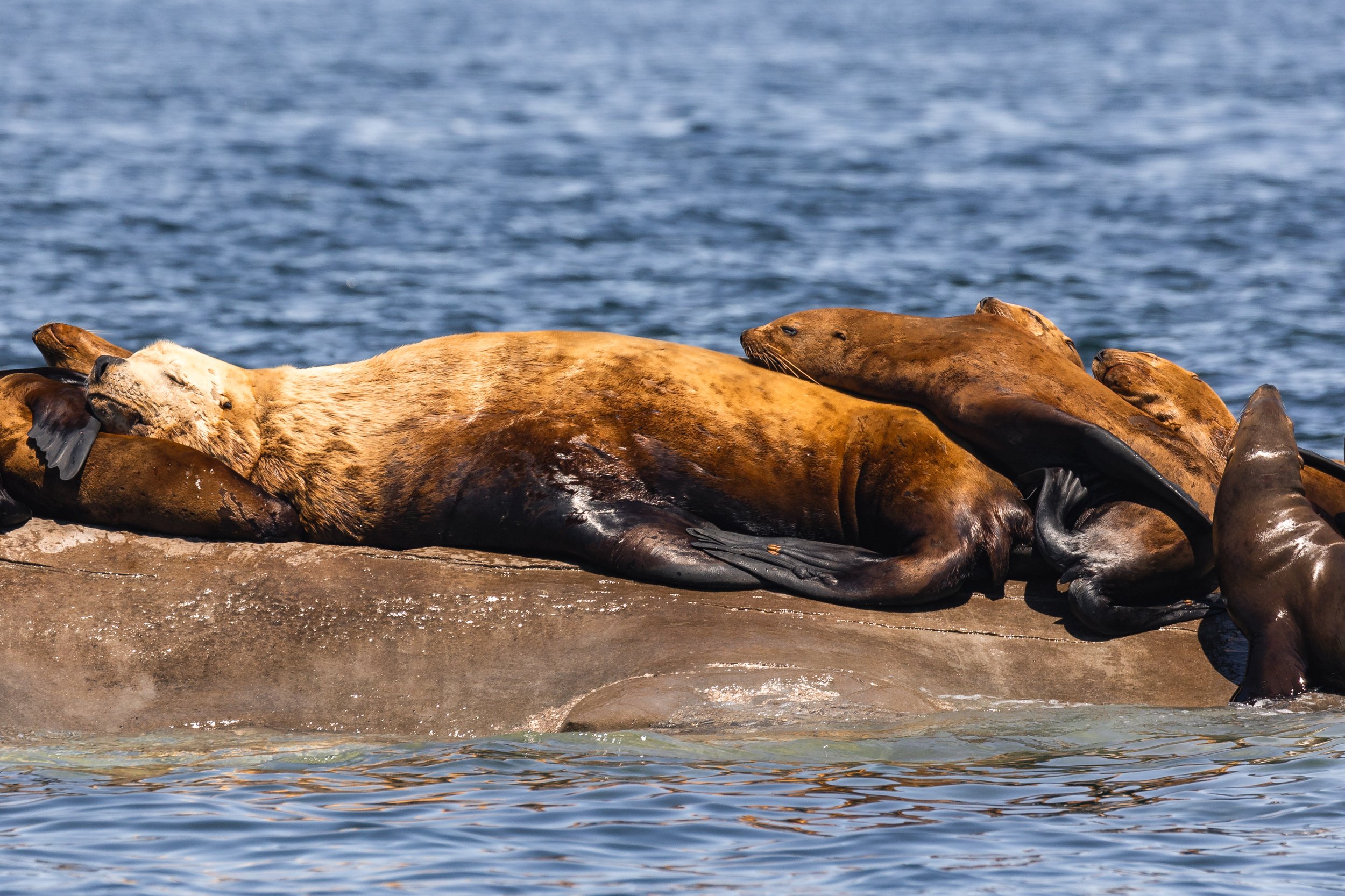
Nap time with the Steller Sea Lions. Photo by Jordan Robinson.
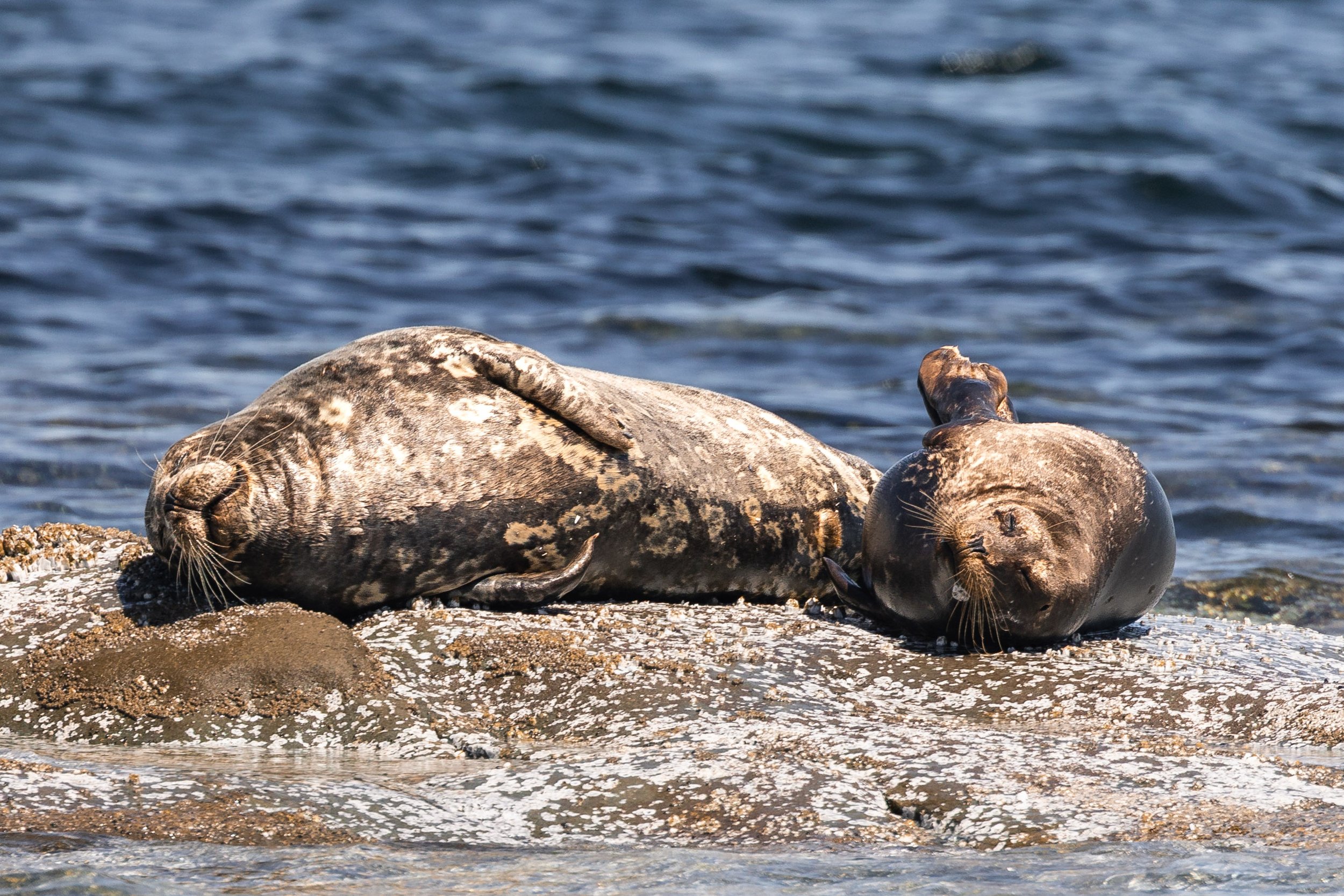
The seals were also busy snoozing. Photo by Jordan Robinson.
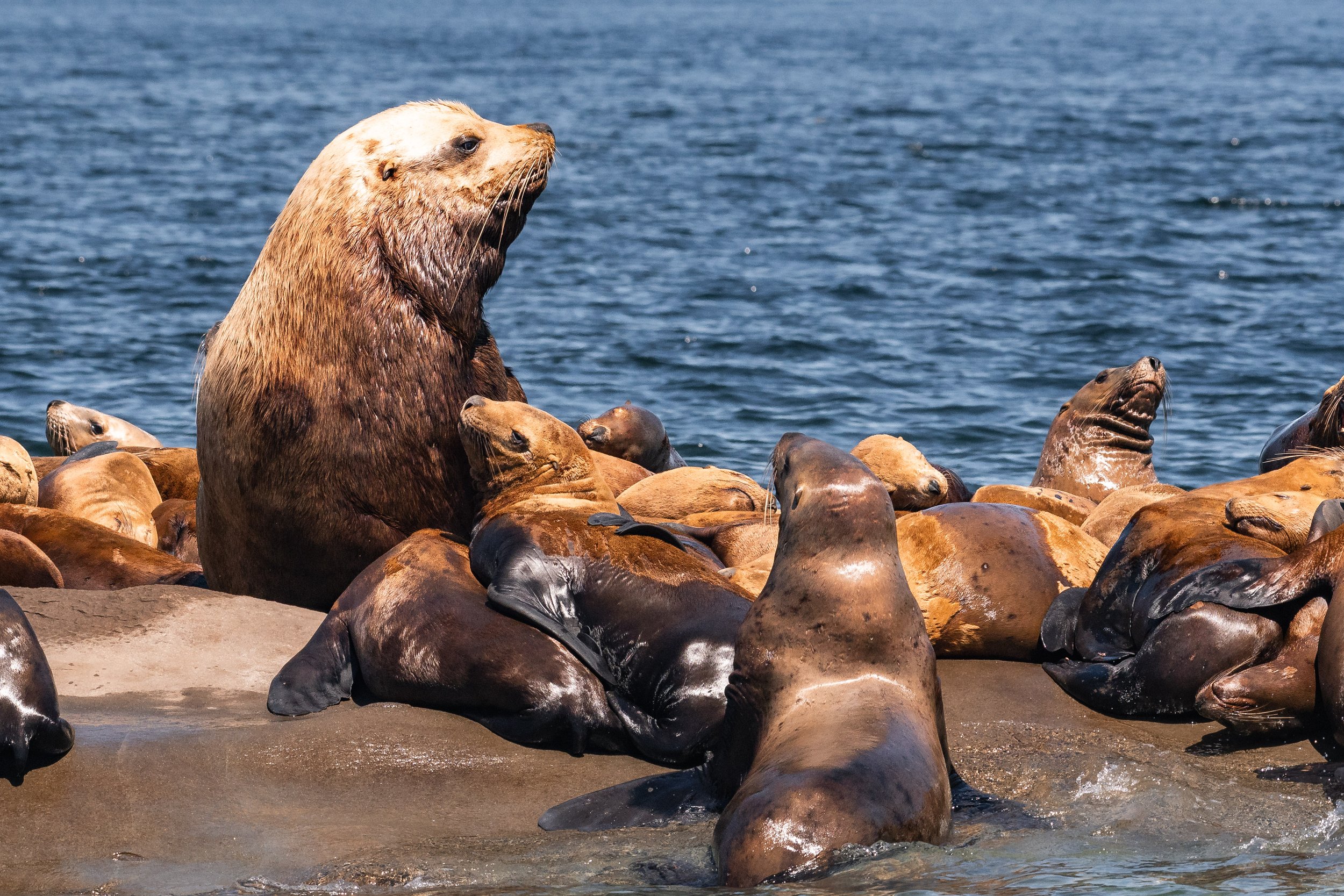
The mature male Steller Sea Lion towers over the others. Photo by Evan Hessels.
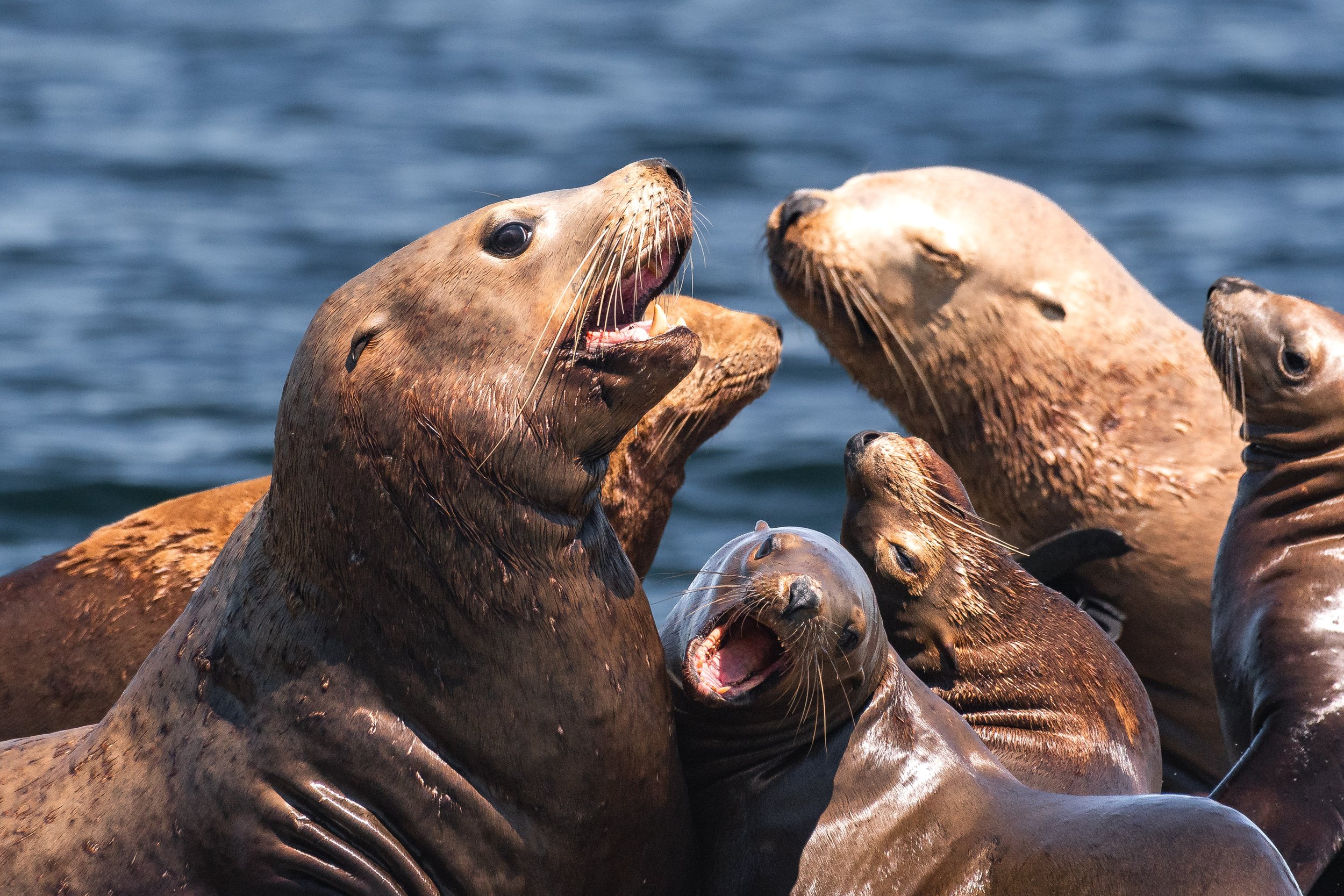
Grumbling and growling amongst the sea lions. Photo by Evan Hessels.
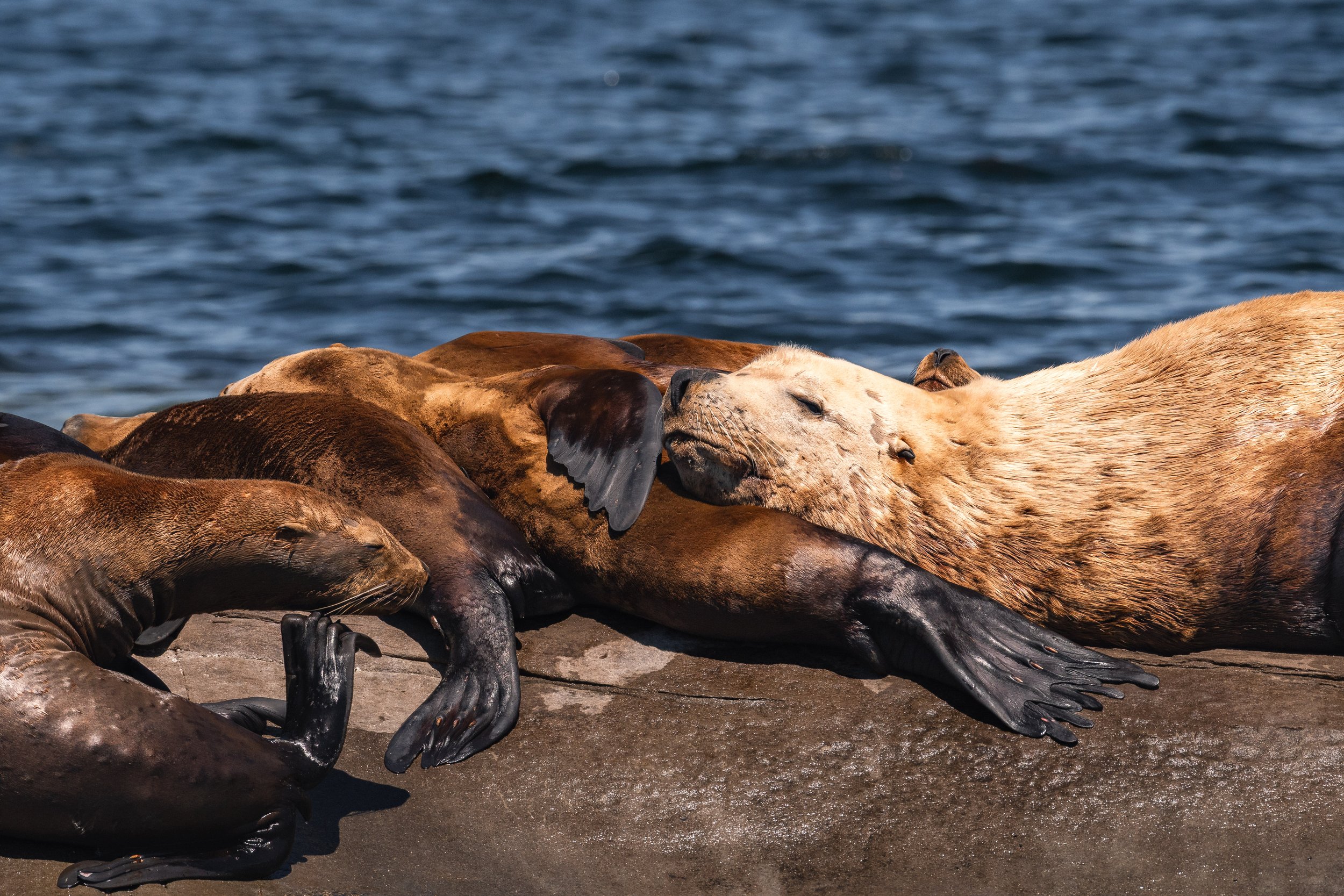
Using eachother as pillows is common at the sea lion haulouts. Photo by Evan Hessels.
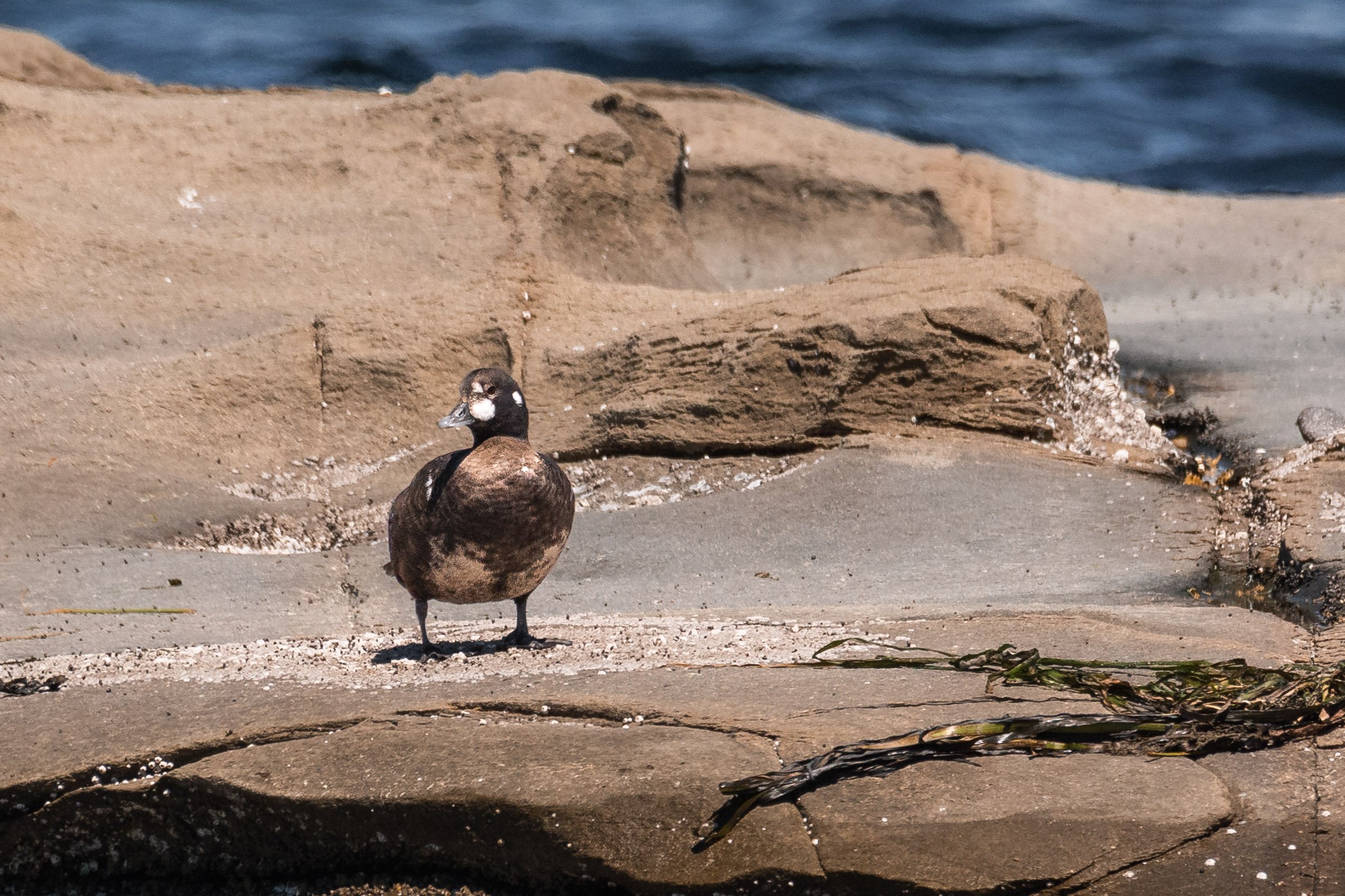
A female Harlequin Duck waddling along the shores. Photo by Evan Hessels.
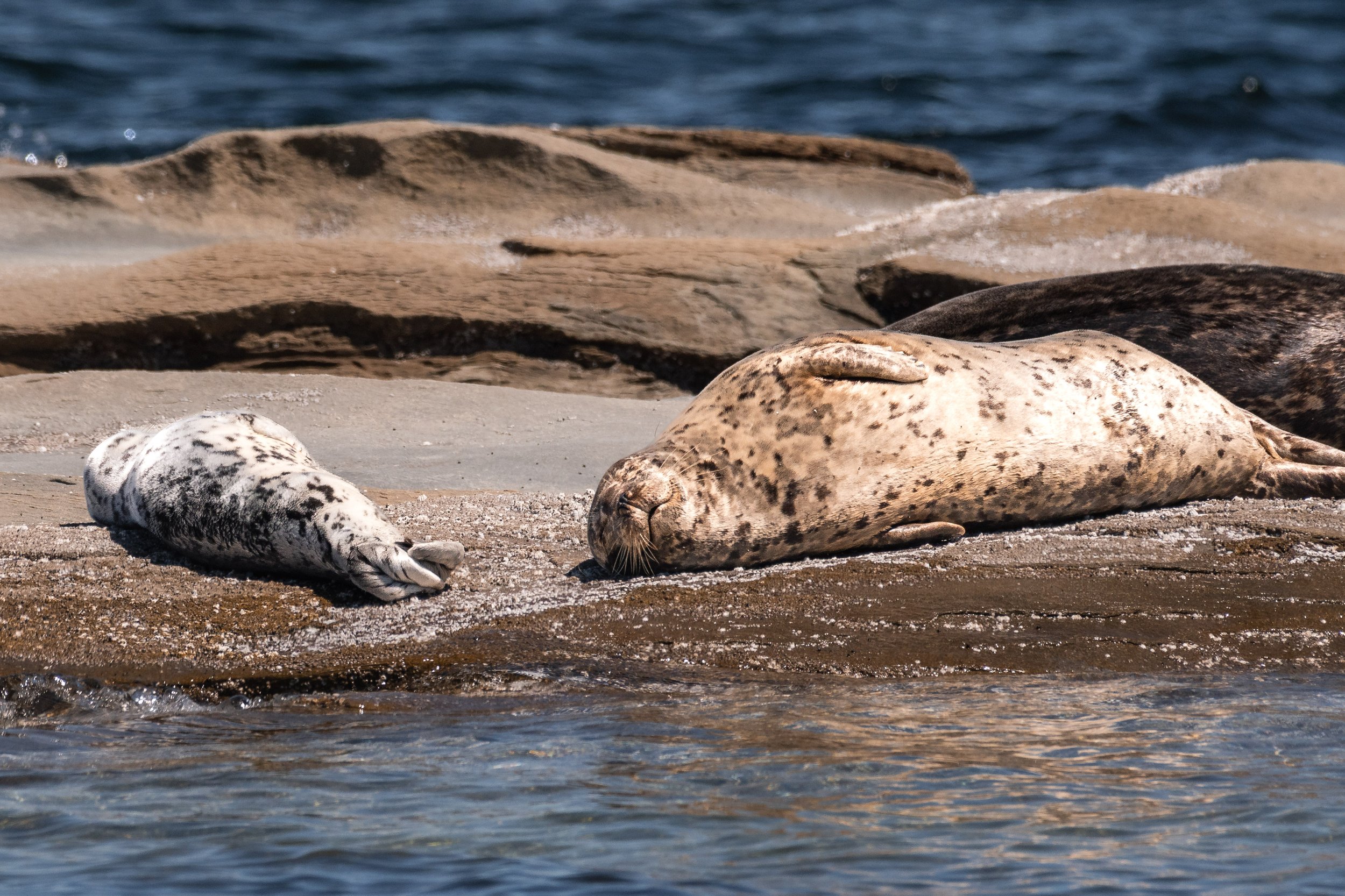
A little sleepy pup beside a much larger adult seal. Photo by Evan Hessels.
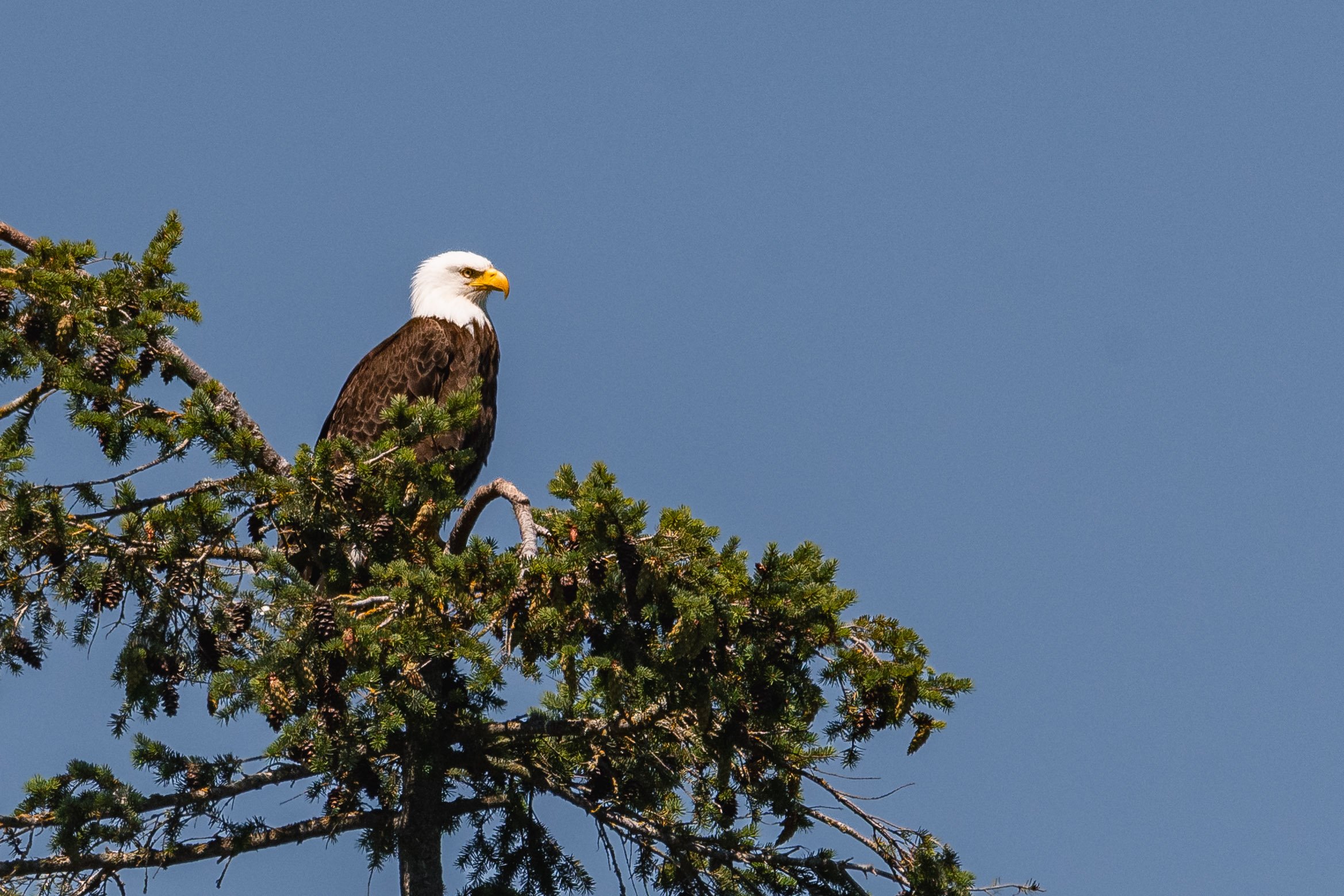
A Bald Eagle perched high in the trees. Photo by Evan Hessels.
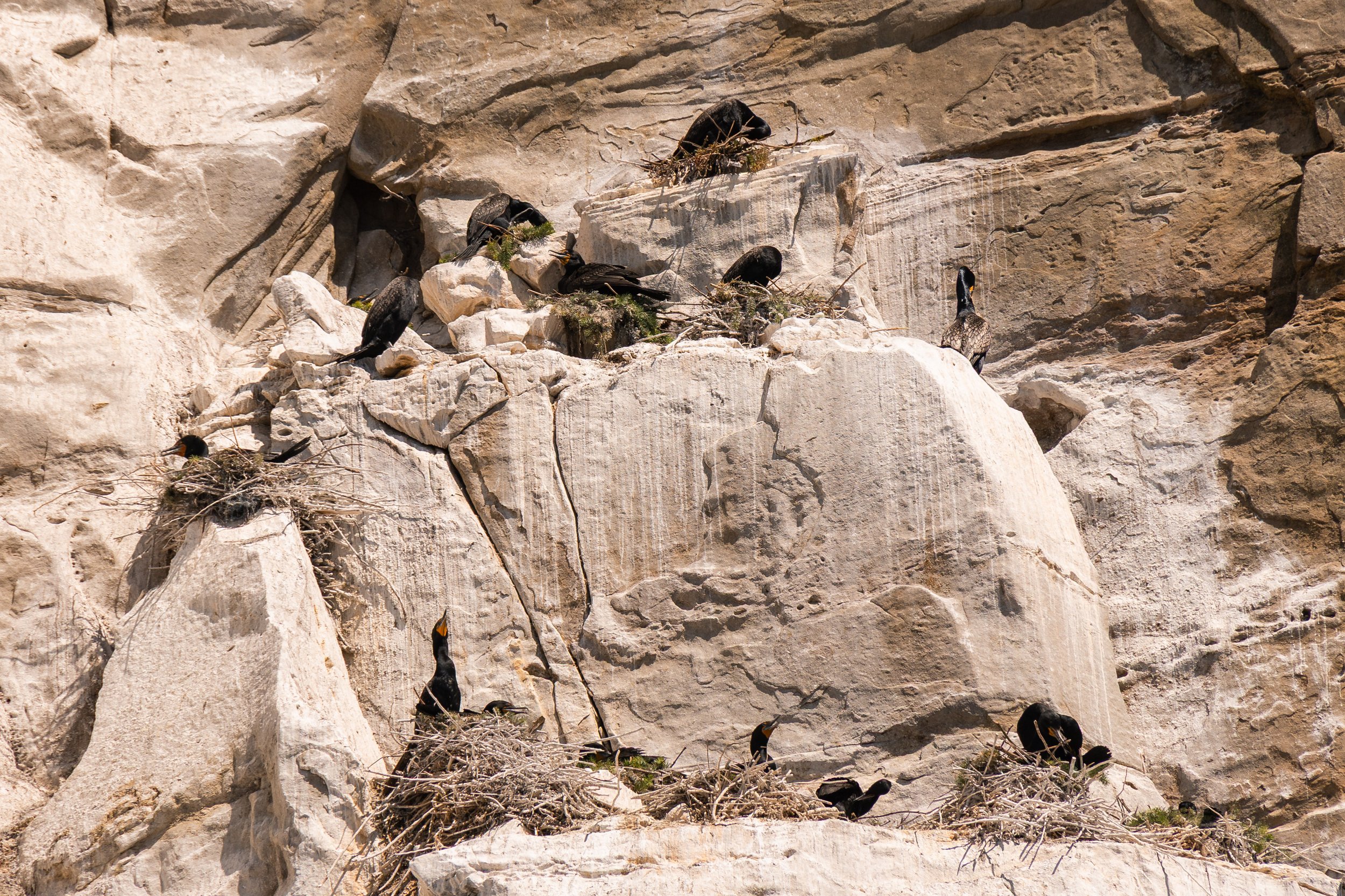
A flock of cormorants nestled into the rocks. Photo by Hayleigh Hilbert.
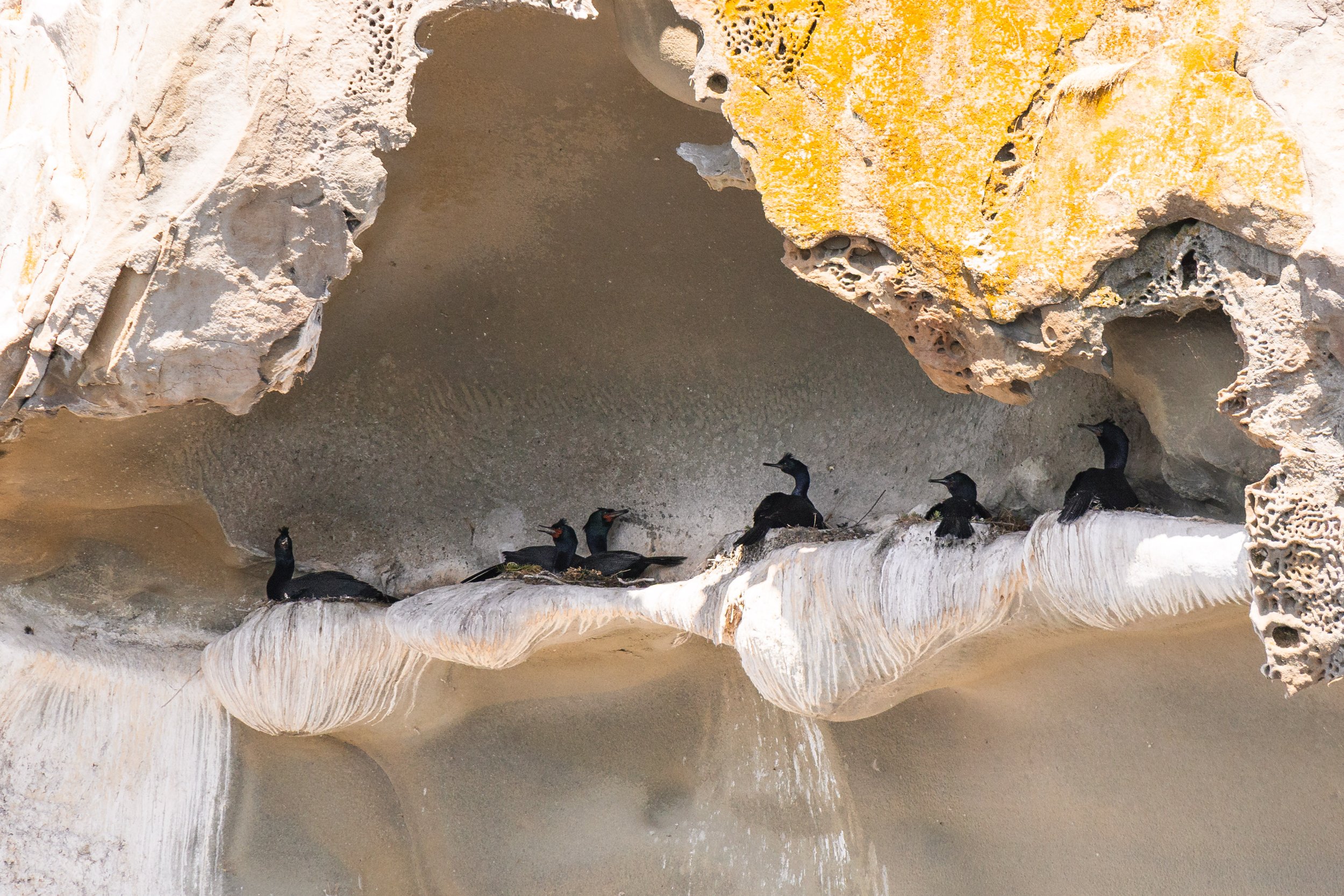
More cormorants nesting along a natural shelf. Photo by Hayleigh Hilbert.