
July 10, 2026, 10:30 AM - A classic West Coast morning with a mix of grey skies and whales!
The grey skies overhead and a breeze across the Salish Sea made for a classic West Coast morning as Kula and Cascadia slipped away from the dock in search of wildlife. While sunny days are always beautiful on the water, overcast mornings have a secret advantage for whale watchers. Against a dark horizon, the bright white mist of a whale's breath stands out like a beacon, often giving away an animal's location long before the whale itself comes into view. With that in mind, we pointed our bows north of Nanaimo and began scanning every stretch of water. It wasn't long before a bright white plume appeared against the charcoal-coloured sky. "Blow!" Cameras were raised, binoculars came up, and our crew quickly worked to identify the animals responsible.
As the dorsal fins surfaced, we realized we had found Bigg's (Transient) Orca. Leading the way were the matriarchs Volker and Harald, travelling alongside their sons Inky and Lance, and Harald’s daughter Slice. Watching these families travel together is a wonderful reminder of just how important mothers are in the lives of killer whales.
T037A Volker ♀ (1994)
T037A2 Inky ♂ (2009)
T037B Harald ♀ (1998)
T037B1 Lance ♂ (2012)
T037B3 Slice ♀ (2022)
Unlike many mammals, orca offspring usually remain with their mothers for life. Sons and daughters may have calves of their own one day, but they typically continue travelling with their mother's family group, known as a matriline. While there are always a few exceptions in nature, this lifelong bond is one of the defining characteristics of orca society.
That relationship begins long before a calf is ever seen swimming at the surface. Mother orcas carry their calves for an astonishing 17 to 18 months, one of the longest pregnancies of any mammal. By the time a calf is born, it already measures around 2 to 2.5 metres (6.5-8 feet) in length and can weigh nearly 180 kilograms (400 pounds). Raising such a calf is an enormous investment, and every new arrival represents years of care and protection.
The role of the matriarch extends far beyond simply raising young calves. Female orcas accumulate decades of knowledge about where to find food, how to hunt, and how to navigate the ever-changing waters of the Salish Sea. This knowledge is passed down through generations, making older females among the most valuable members of their families.
This relationship is especially important for sons. Male orcas can grow to nearly twice the size of their mothers, but despite their impressive stature, they remain remarkably dependent on them throughout adulthood. Mothers often share food with their sons, help guide them to successful hunting grounds, and provide the social stability that allows the family to thrive. In fact, studies have shown that adult males have a significantly greater chance of surviving when their mothers are still alive. It's a remarkable example of how strength in the animal kingdom doesn't always come from size - it often comes from family.
After spending time watching these close-knit families travel together through the calm swells, we continued our search for more wildlife.
Before long, another familiar sound reached us across the water.
Long before we spotted the buoy itself, we could hear the deep growls, barks, and bellows of Steller Sea Lions echoing across the waves. As we approached, dozens of these impressive marine mammals competed for the best haul-out spots, shoving one another aside amid dramatic vocal protests. It may look chaotic, but this noisy behaviour is simply part of daily life at a busy sea lion haul-out.
Young Steller Sea Lions stay closely bonded with their mothers for their first year of life, nursing while gradually learning to forage on their own. Some pups, however, continue nursing for as long as three years, particularly if their mother does not have another pup. It's another reminder that strong family bonds aren't unique to whales.
Leaving the lively sea lions behind, we hadn't travelled far before another unmistakable blow appeared on the horizon. This one was different. Instead of the short, bushy exhalation of an orca, a towering column of mist rose high into the air.
A humpback whale.
As cameras once again came out across the boats, we noticed something even more exciting - a second, much smaller blow surfacing right beside the larger whale. A quick look at the tail flukes confirmed the identity of the mother. It was Sage (BCX2073), travelling with her brand-new calf.
Humpback mothers also make an incredible investment in raising their young. After a pregnancy lasting roughly 11 to 12 months, calves enter the world already measuring about 4 to 5 metres (13-16 feet) long and weighing close to one tonne. From that moment on, growth happens at an astonishing pace. By drinking some of the richest milk found anywhere in the animal kingdom, humpback calves can gain 40 to 50 kilograms (90-110 pounds) every single day during their first months of life.
Most calves remain with their mothers for close to a year as they migrate together between tropical breeding grounds and productive northern feeding grounds. However, some young whales begin showing signs of independence surprisingly early, occasionally spending short periods away from their mothers after only five or six months. Even then, the bond remains incredibly strong throughout their first season together.
Watching Sage and her calf this morning, we couldn't help but notice that connection. The pair stayed close together as they surfaced, often rolling gently toward one another between breaths. At times, the calf nestled so close to its mother that they appeared to be cuddling - a quiet moment of tenderness in the vastness of the Salish Sea. These peaceful interactions are among the most memorable encounters we can have on the water, offering a glimpse into the nurturing side of these giants.
As the morning drew to a close, it felt fitting that our final wildlife encounter mirrored our first. From orca matriarchs guiding generations of their families, to Steller Sea Lion mothers raising their pups, to Sage patiently caring for her newborn calf, today's adventure became a celebration of motherhood in the marine world.
Eventually, it was our turn to cuddle up aboard Kula and Cascadia, pull our jackets a little tighter against the cool sea breeze, and begin the journey back toward Nanaimo. The skies may have stayed grey all morning, but they provided the perfect backdrop for brilliant white blows, unforgettable wildlife encounters, and a reminder that some of the strongest bonds in nature are the ones between a mother and her young.
Please enjoy these photos taken by Marine Naturalists Aly Kohlman and Hayleigh Hilbert.
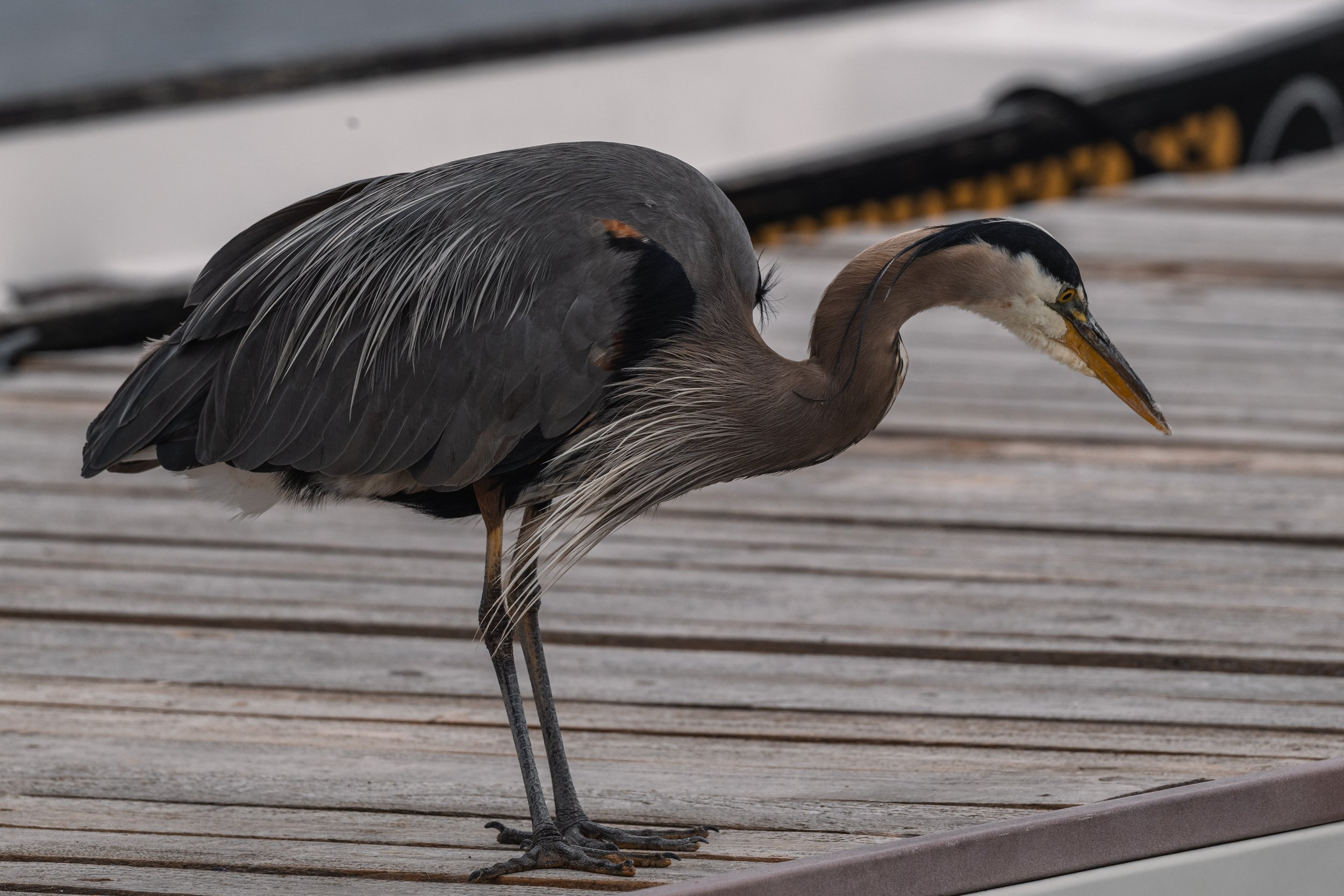
A Great Blue Heron wandering the docks. Photo by Aly Kohlman.
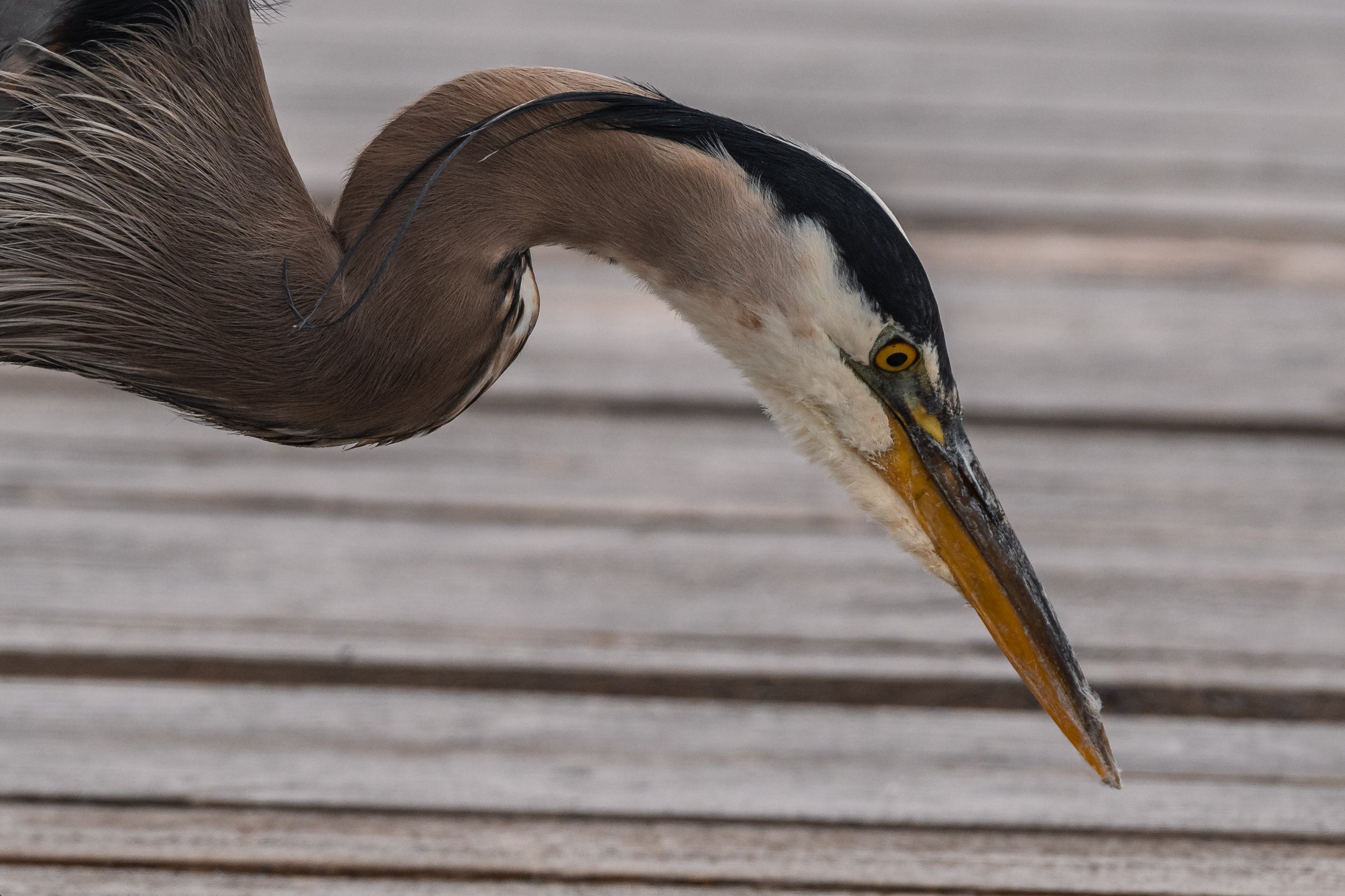
Look at how fluffy this bird is! Photo by Aly Kohlman.
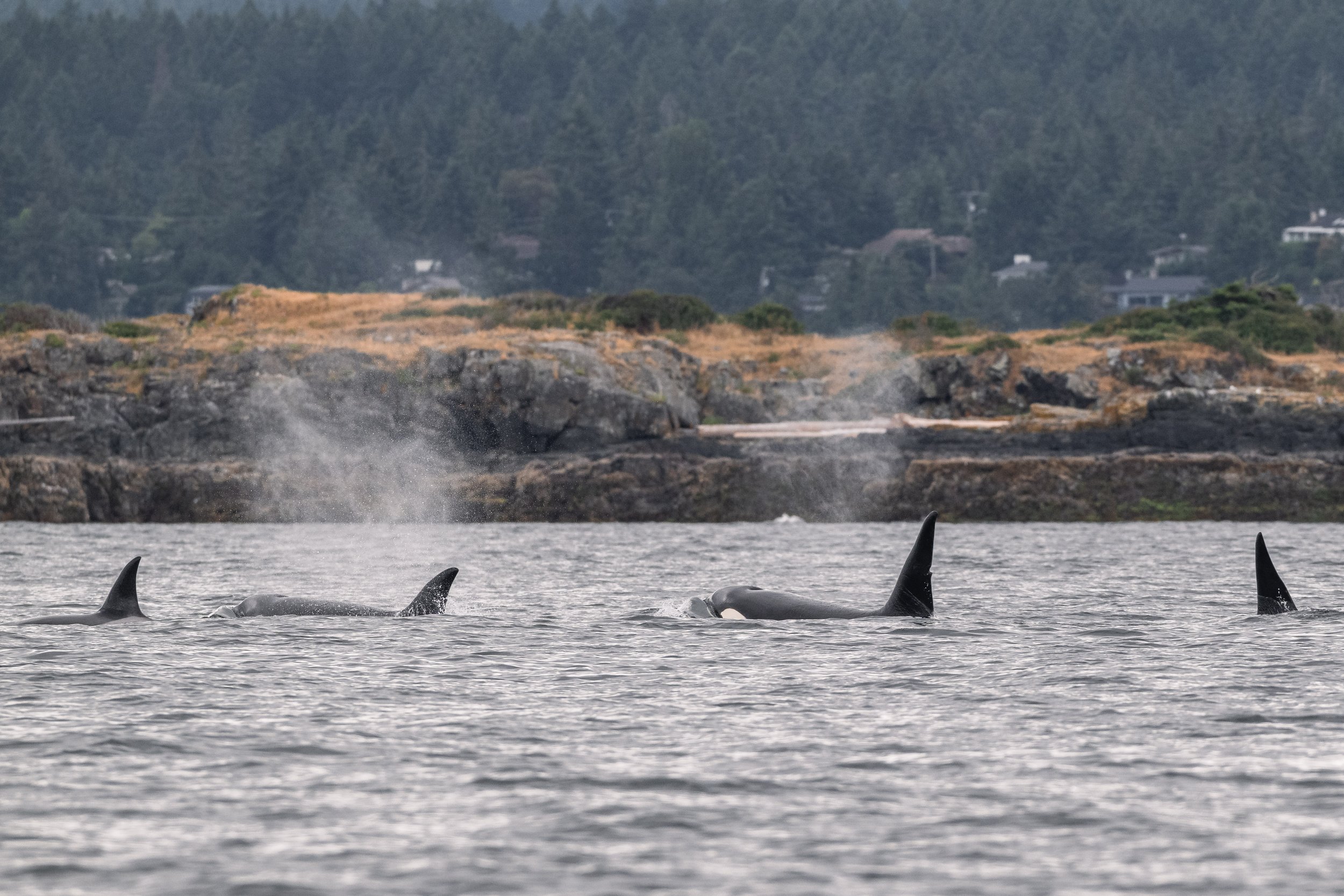
T037B Harald, T037A Volker, T037A2 Inky, and T037B1 Lance. Photo by Aly Kohlman.
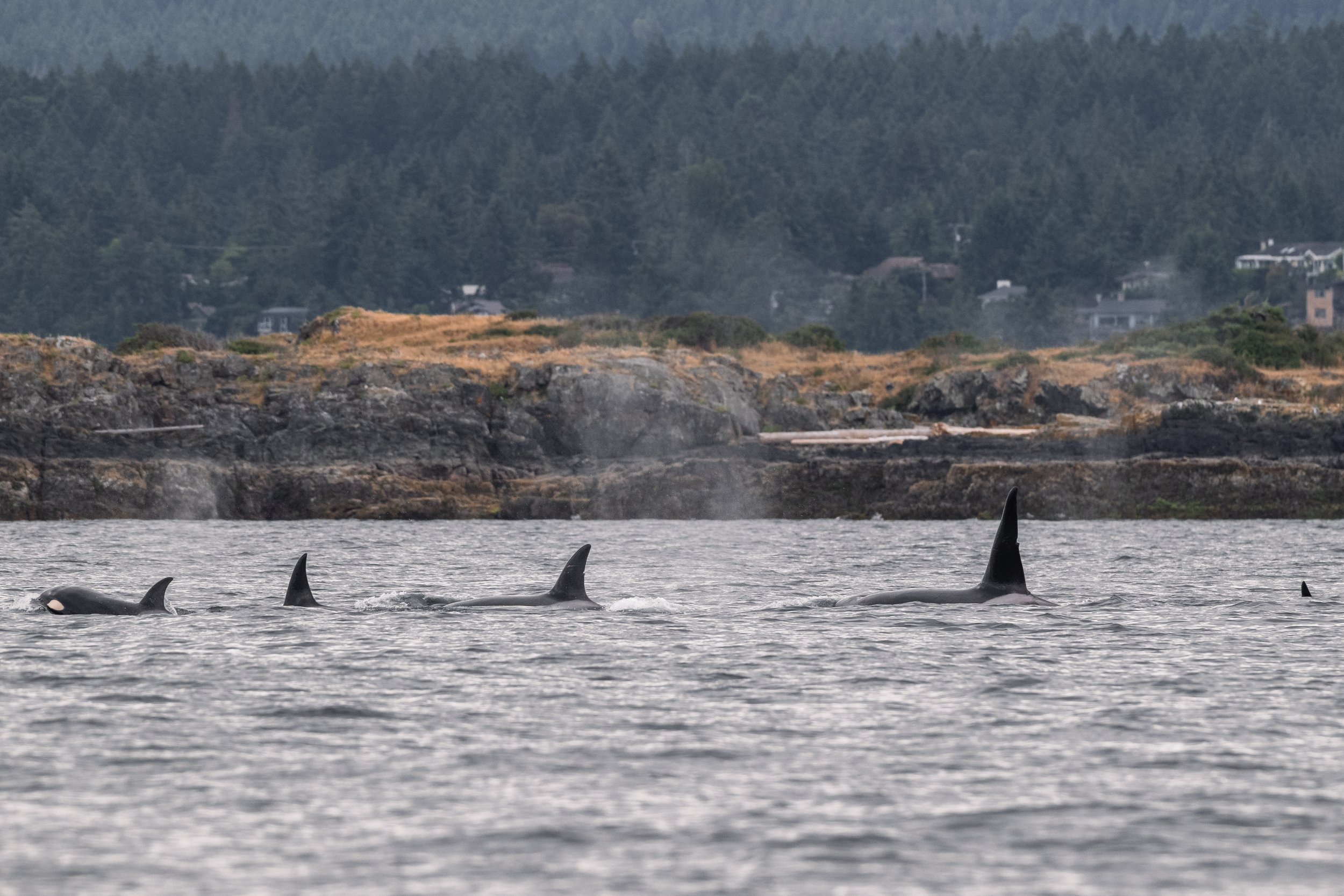
T037B3 Slice, T037B Harald, T037A Volker, and T037A2 Inky. Photo by Aly Kohlman.
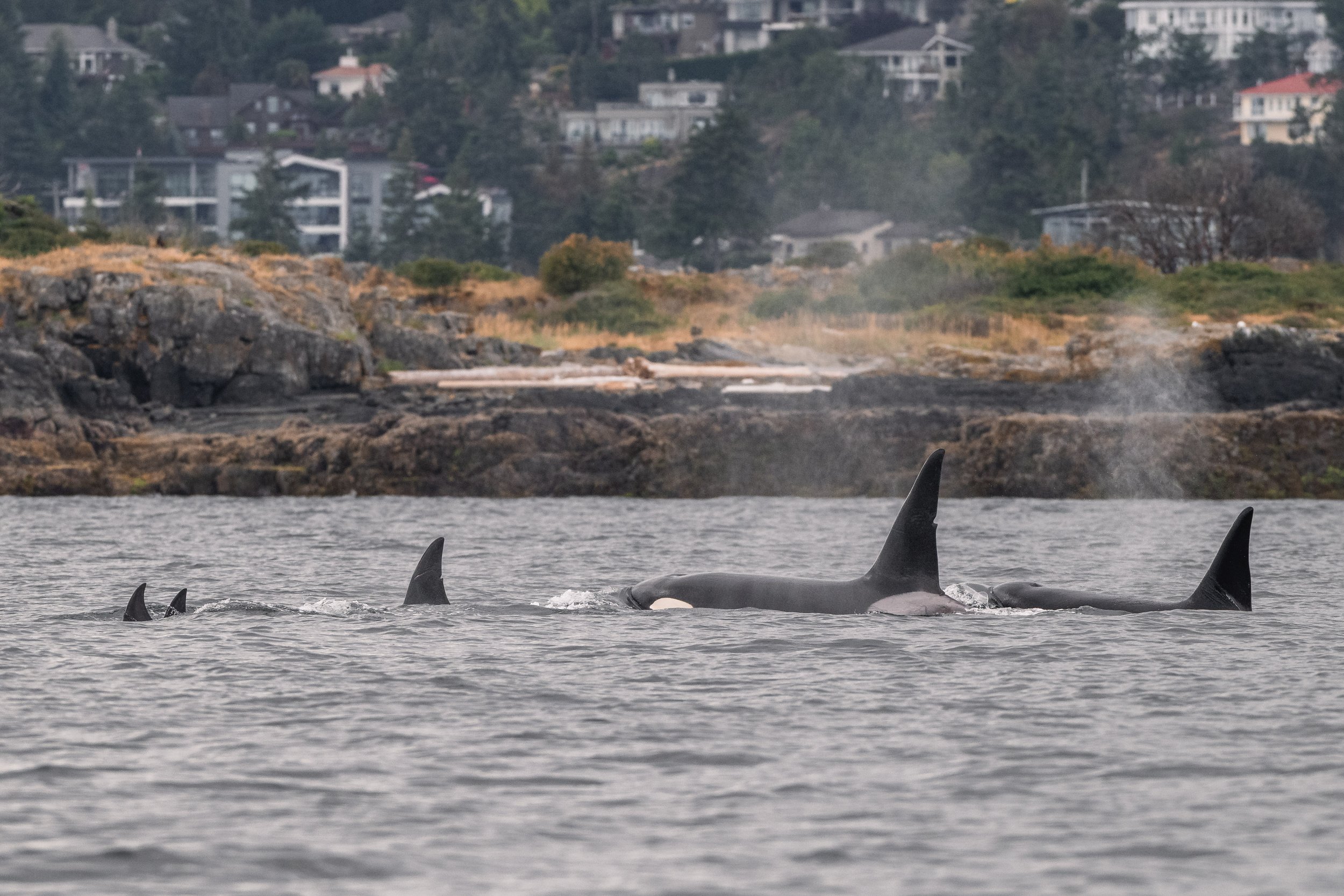
T037A2 Inky (centre) is beginning to tower over his friends and family, but T037B1 Lance (right) is getting big too! Photo by Aly Kohlman.
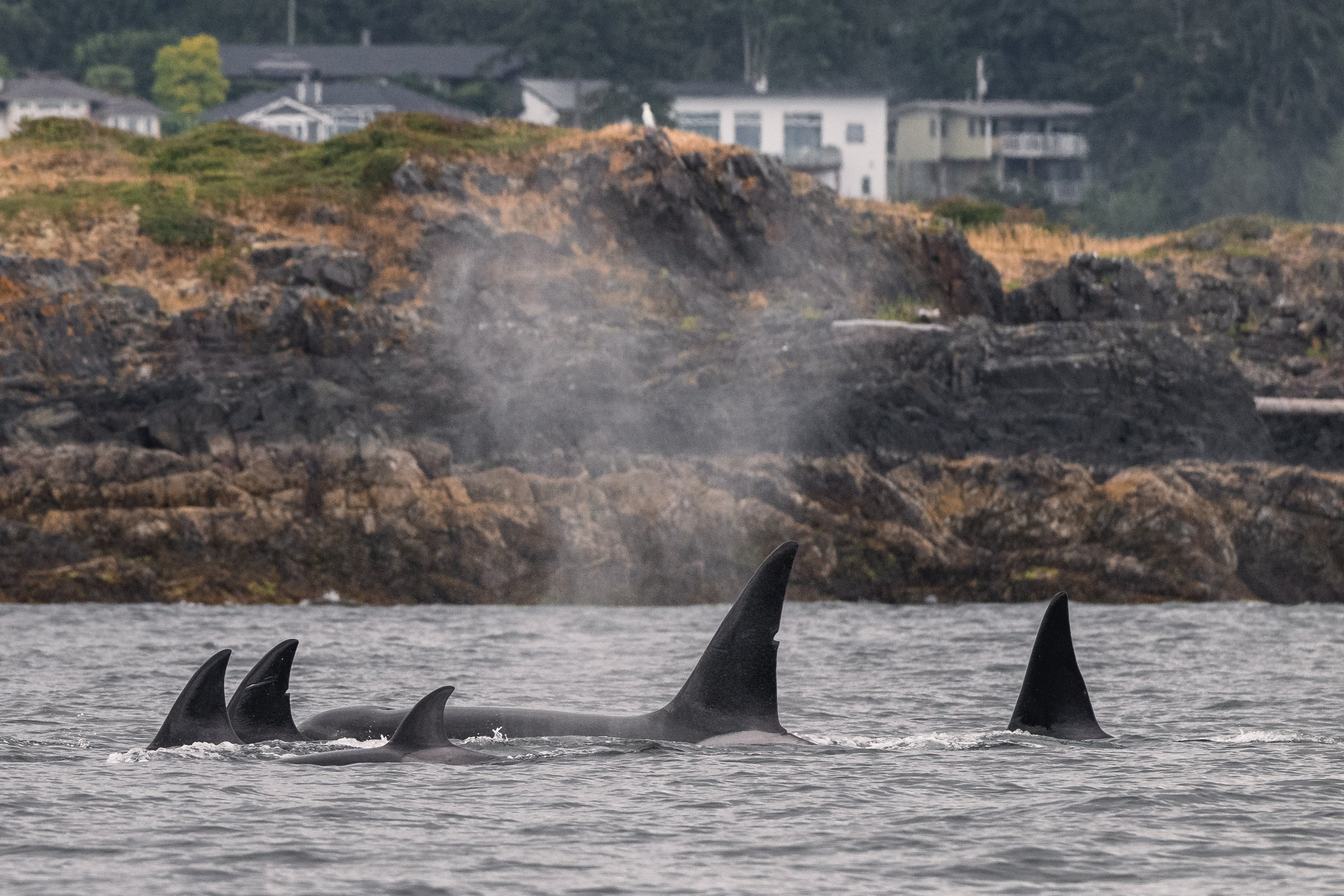
All together! Left to right: T037B Harald, T037A Volker, T037B3 Slice, T037A2 Inky, and T037B1 Lance. Photo by Aly Kohlman.
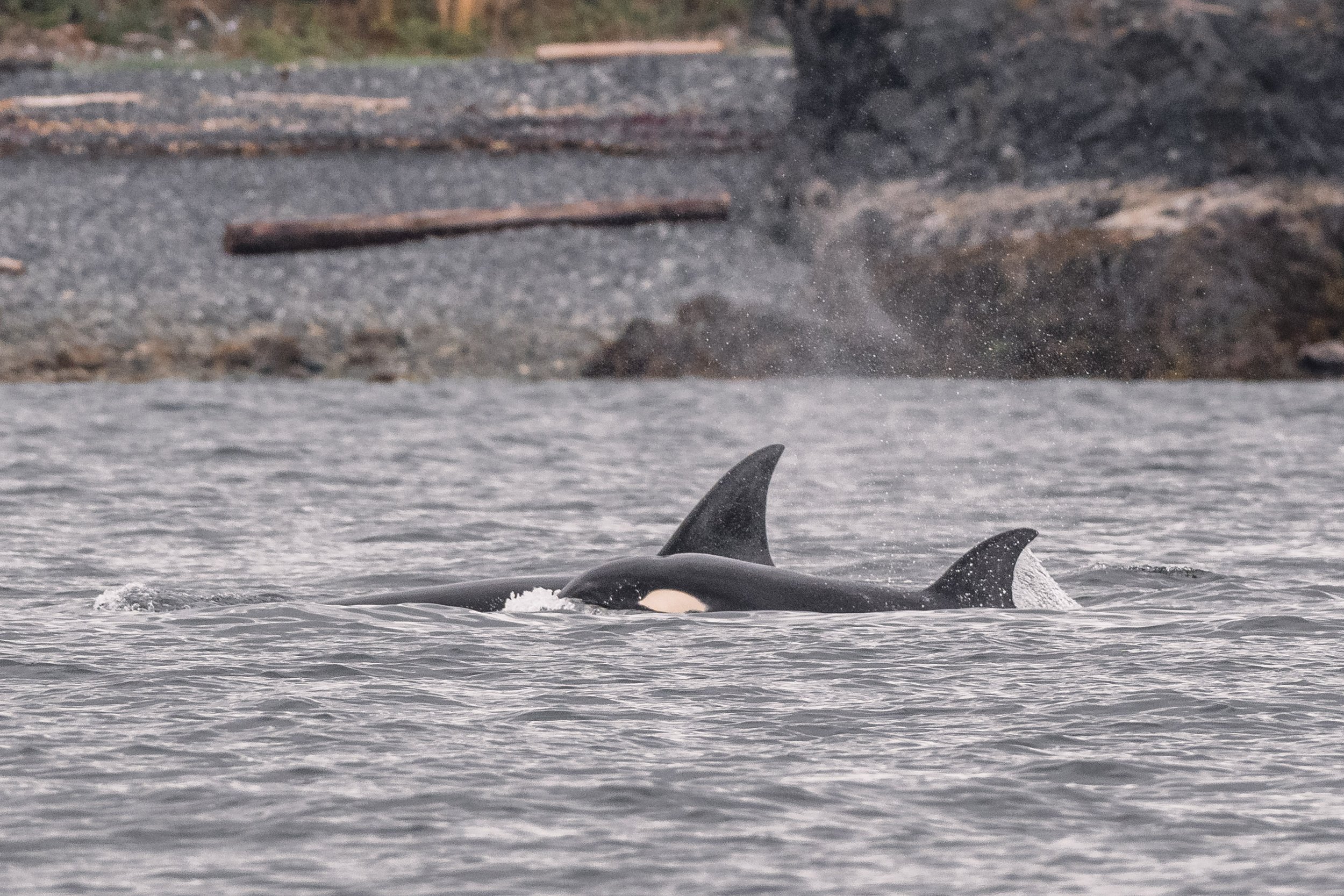
T037B Harald beside her youngest calf T037B3 Slice. Photo by Aly Kohlman.
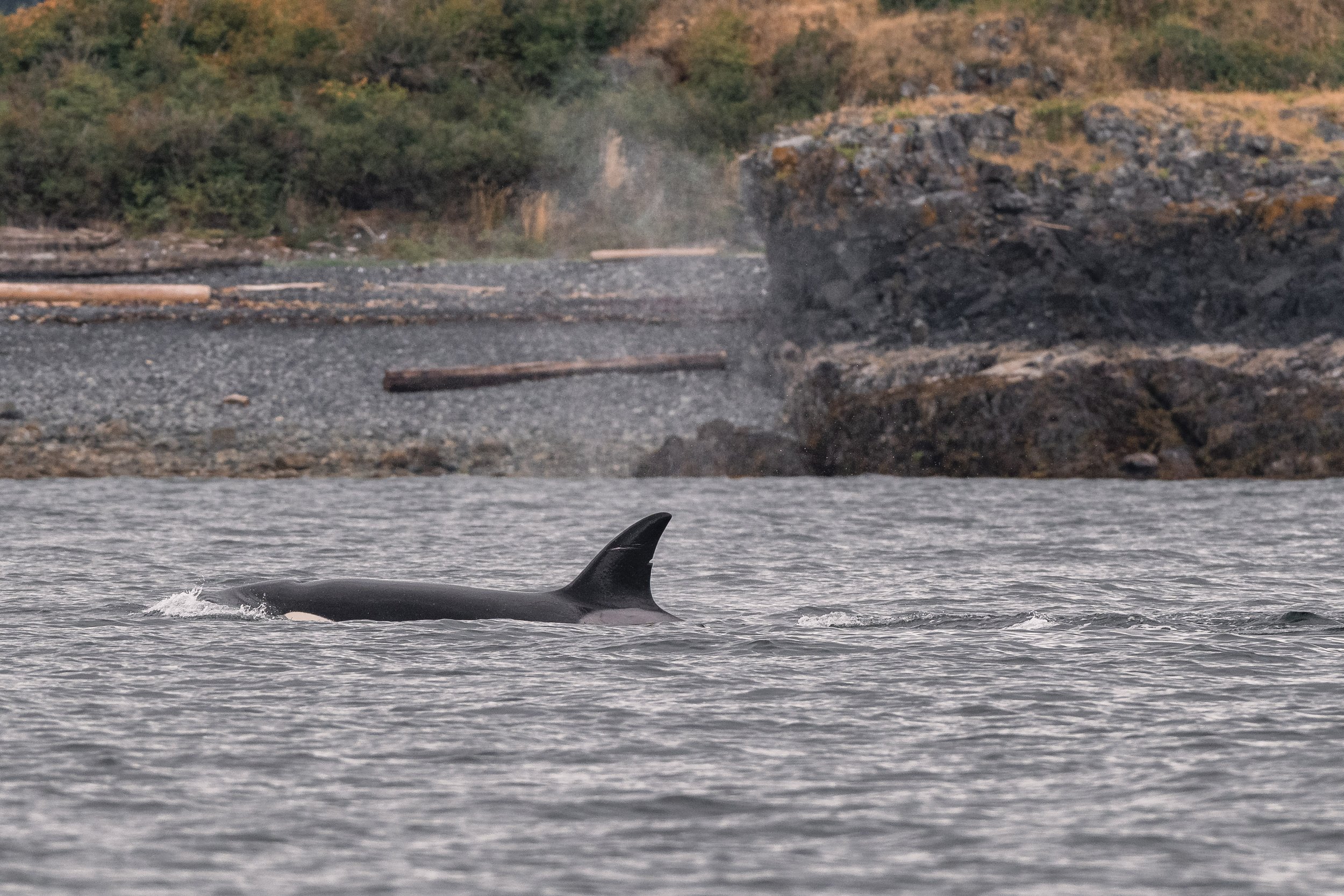
T037A Volker sporting some fresh scars. Photo by Aly Kohlman.
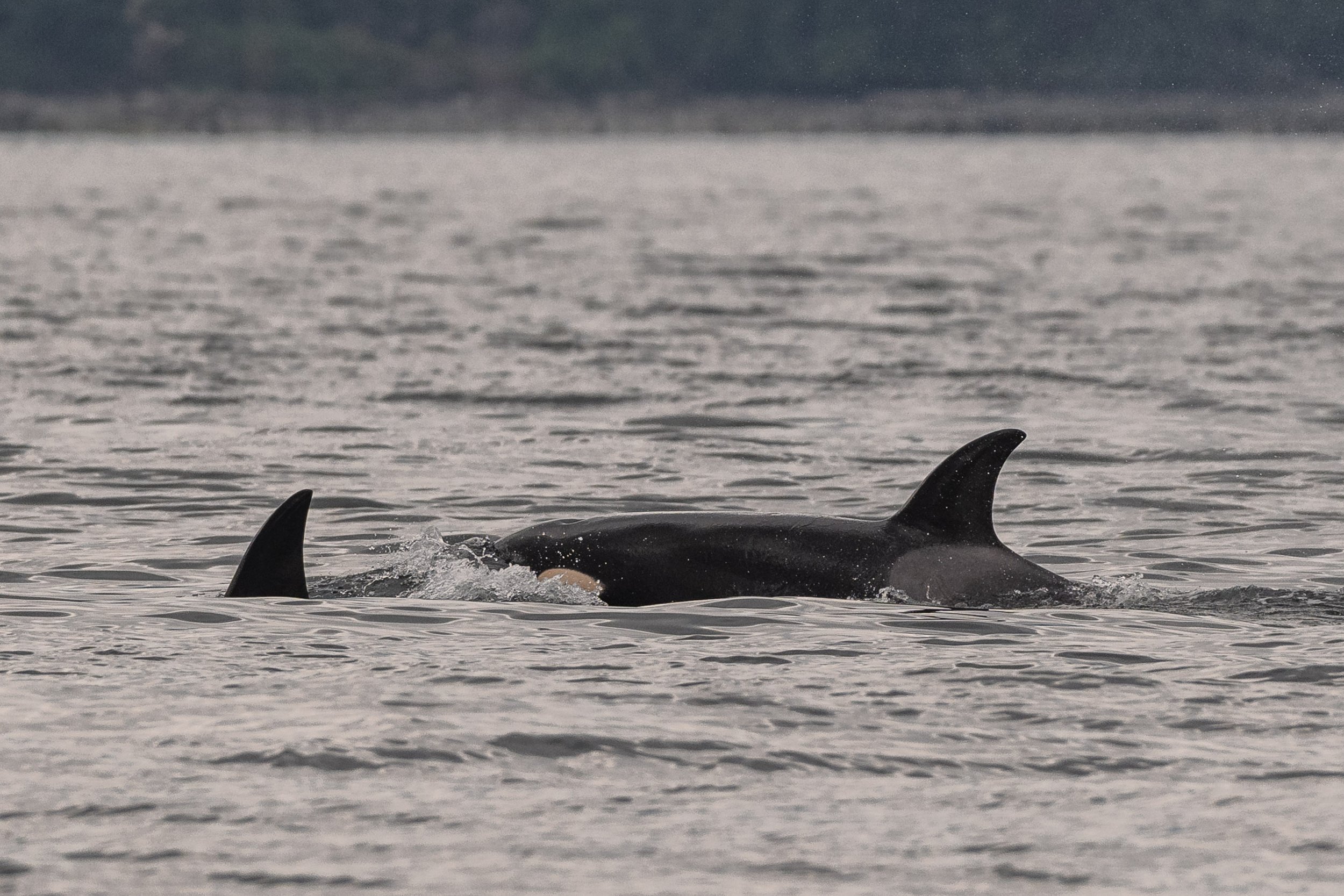
T037B3 Slice racing to catch up with mother T037B Harald. Photo by Aly Kohlman.
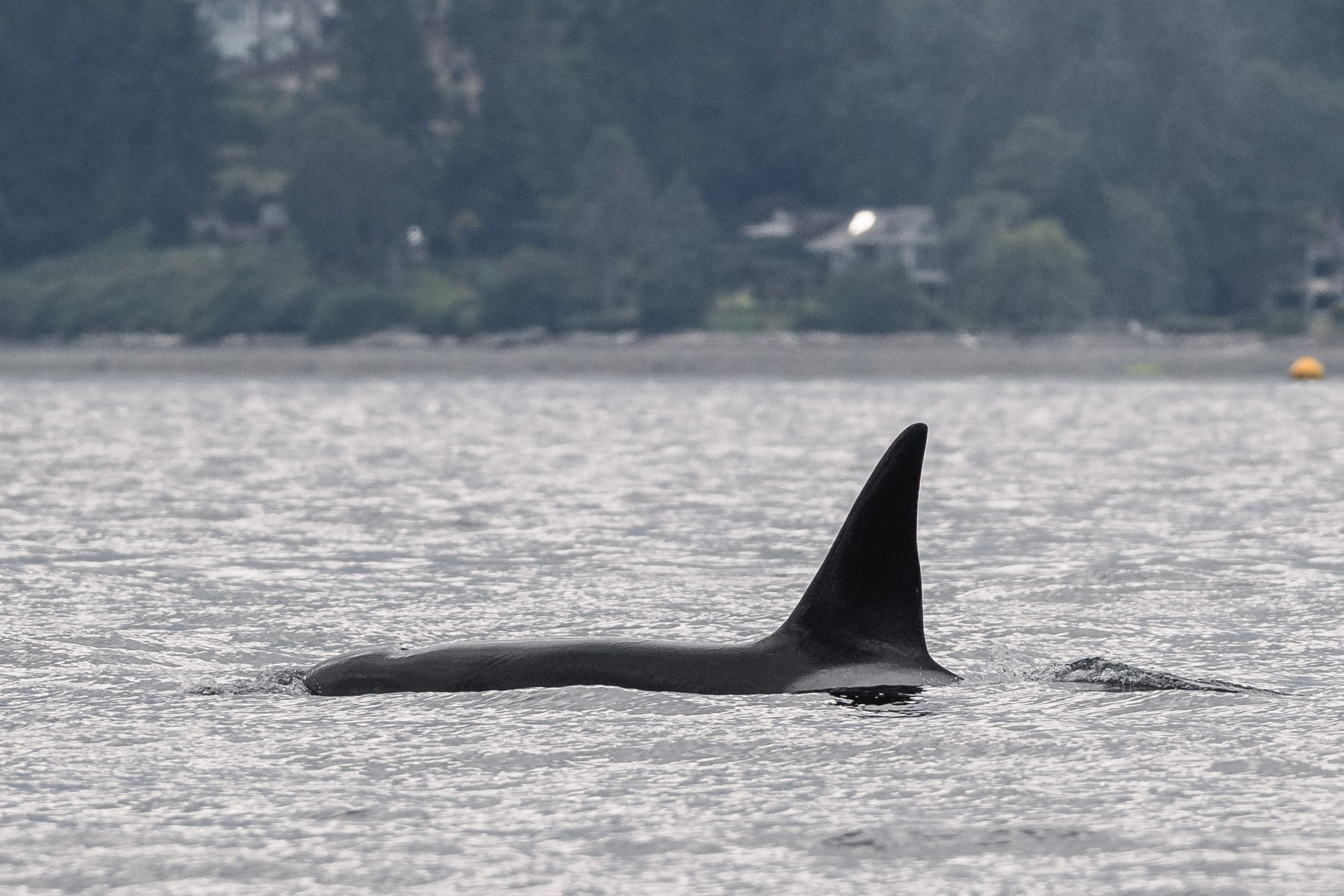
T037B1 Lance - at 14 years old, he is beginning to sprout! Photo by Aly Kohlman.
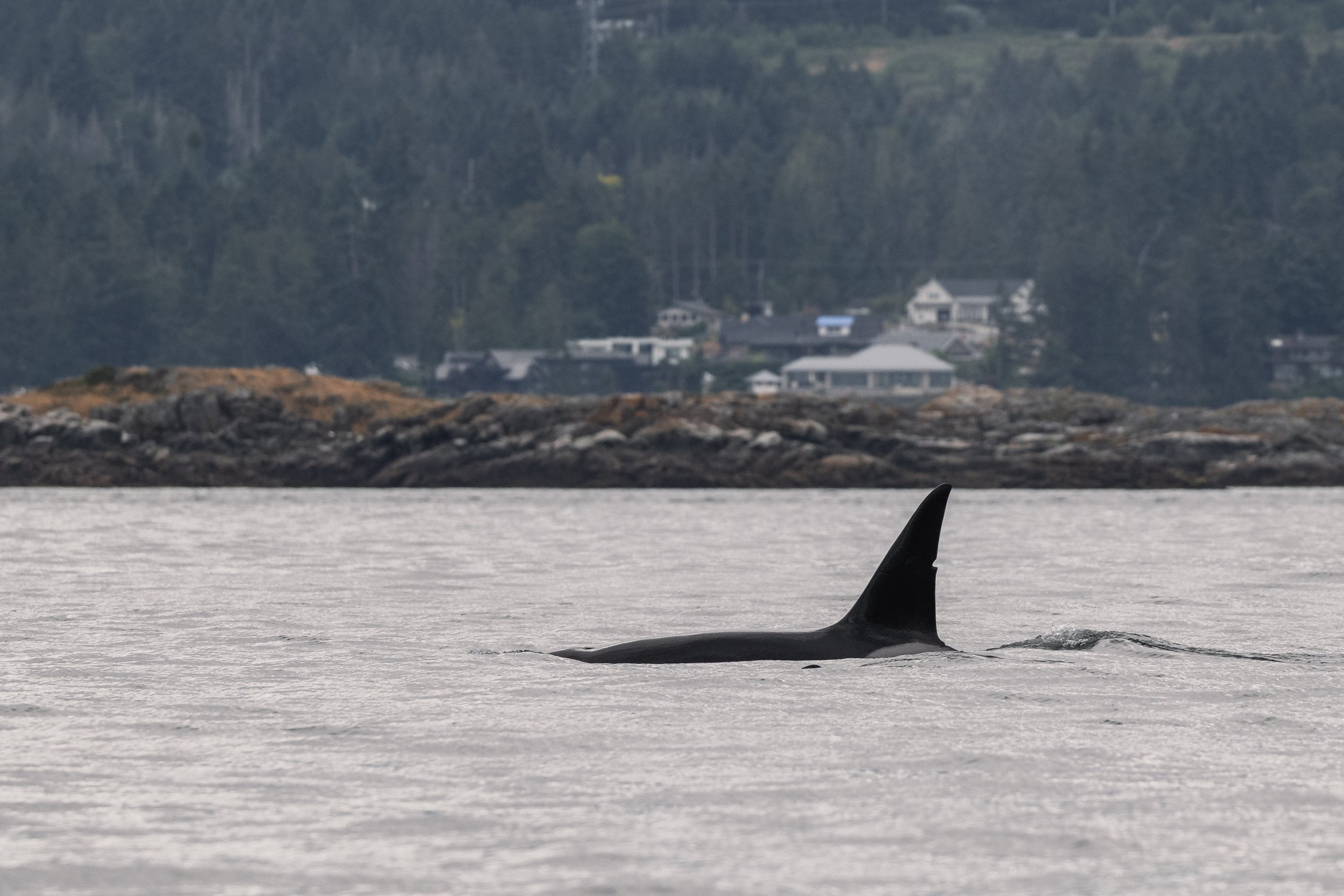
T037A2 Inky travelling. Photo by Aly Kohlman.
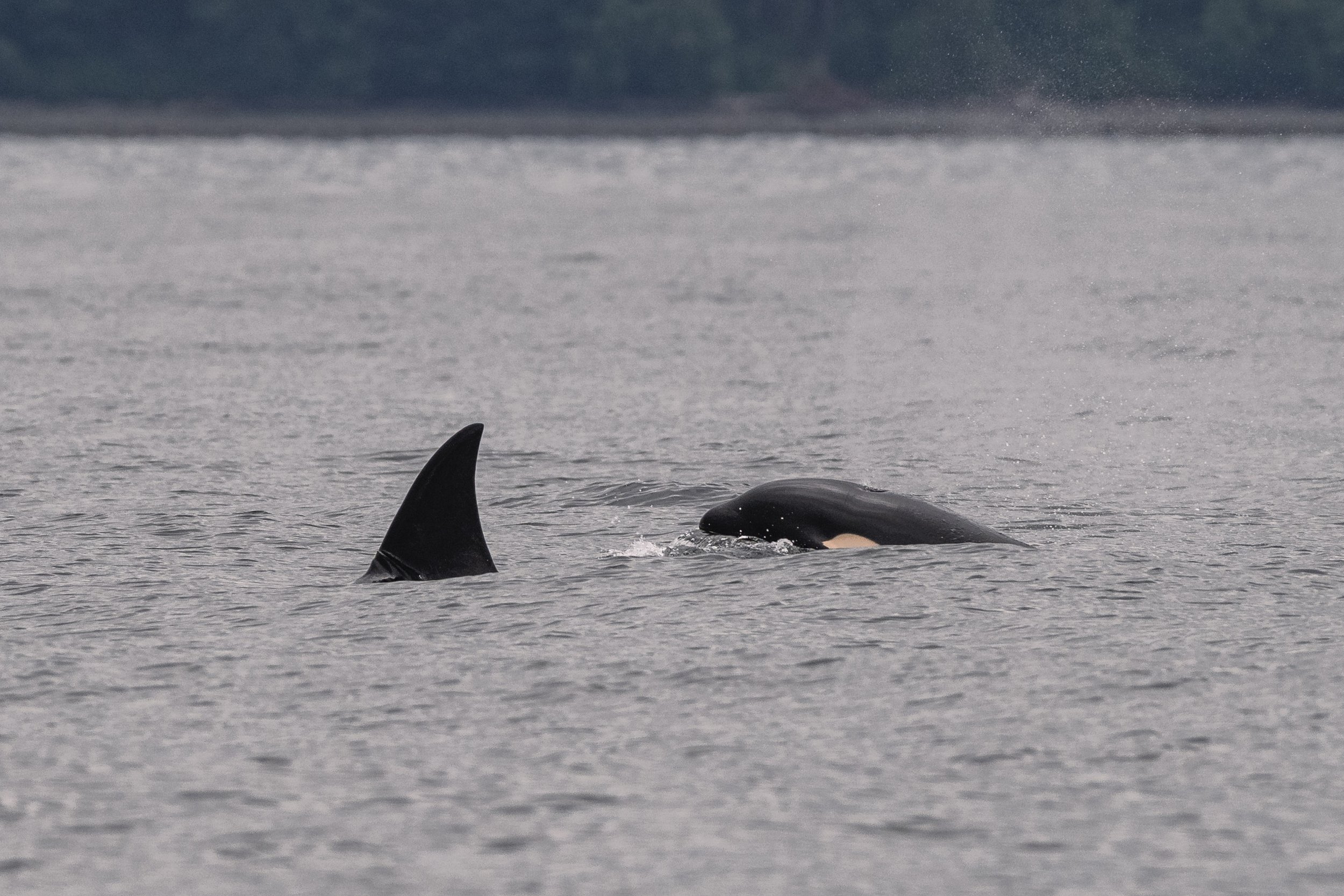
T037B3 Slice coming up for a blow behind T037B Harald. Photo by Aly Kohlman.
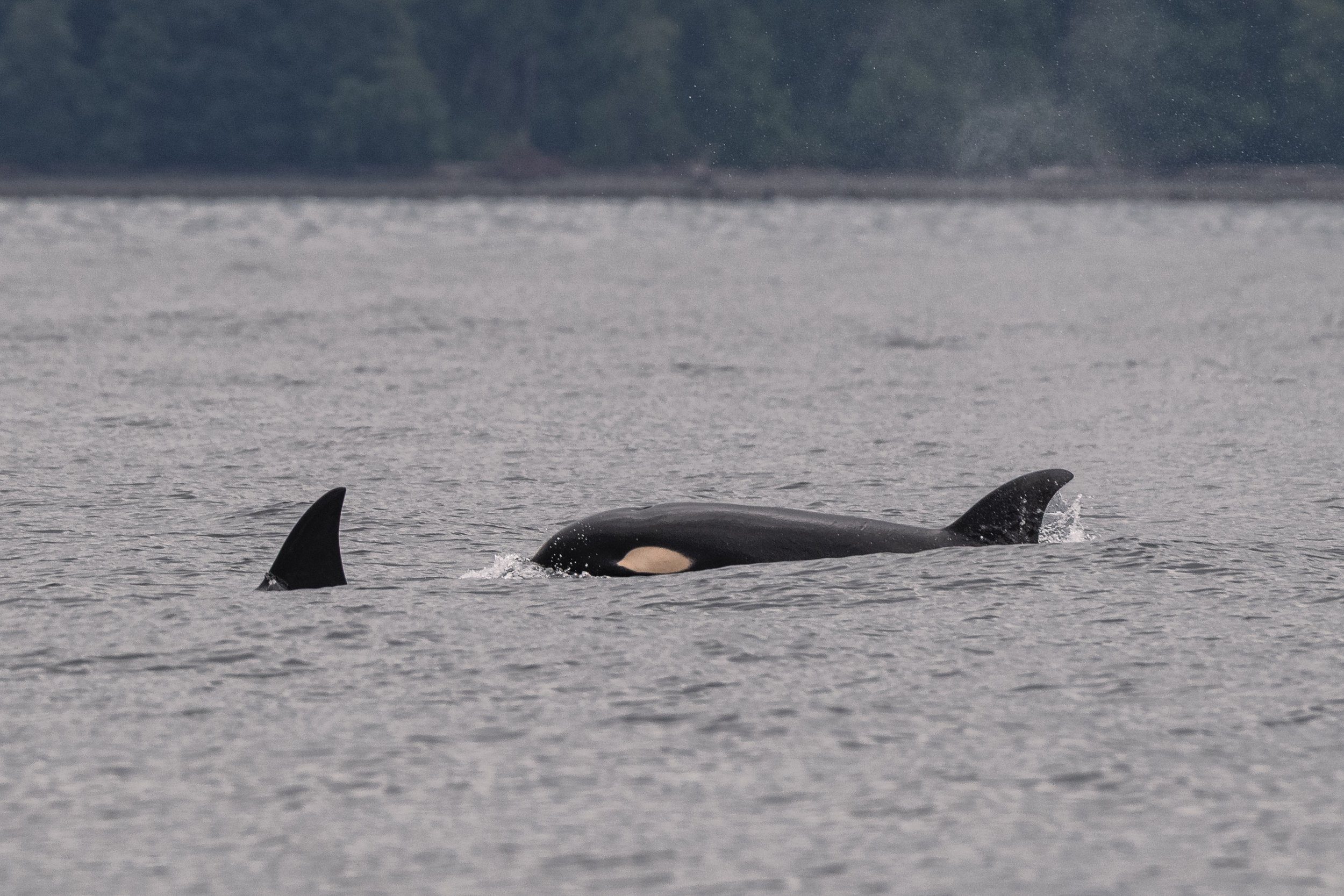
T037B3 Slice sticking close to her mother. Photo by Aly Kohlman.
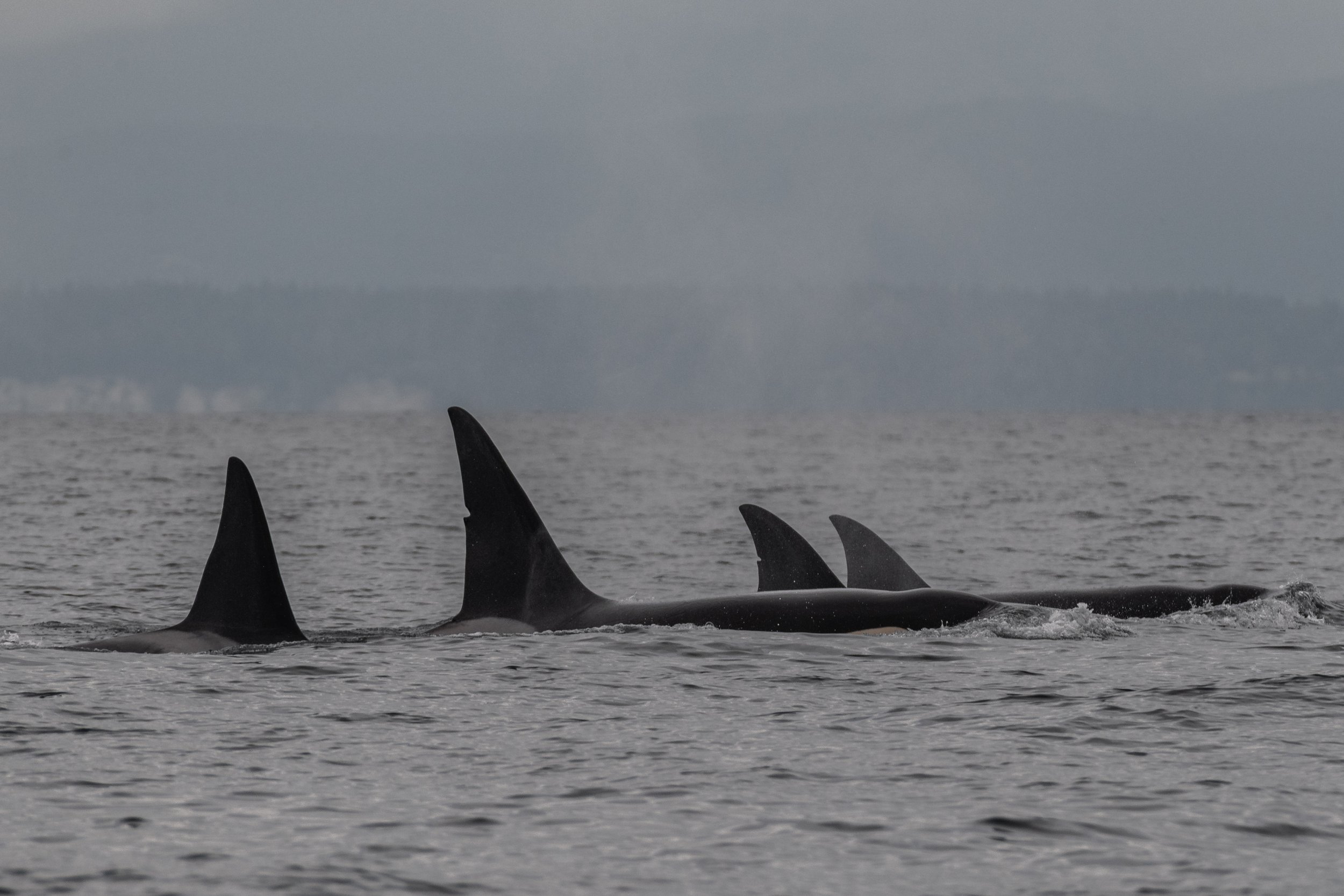
T037B1 Lance, T037A2 Inky, T037A Volker, and T037B Harald. Photo by Hayleigh Hilbert.
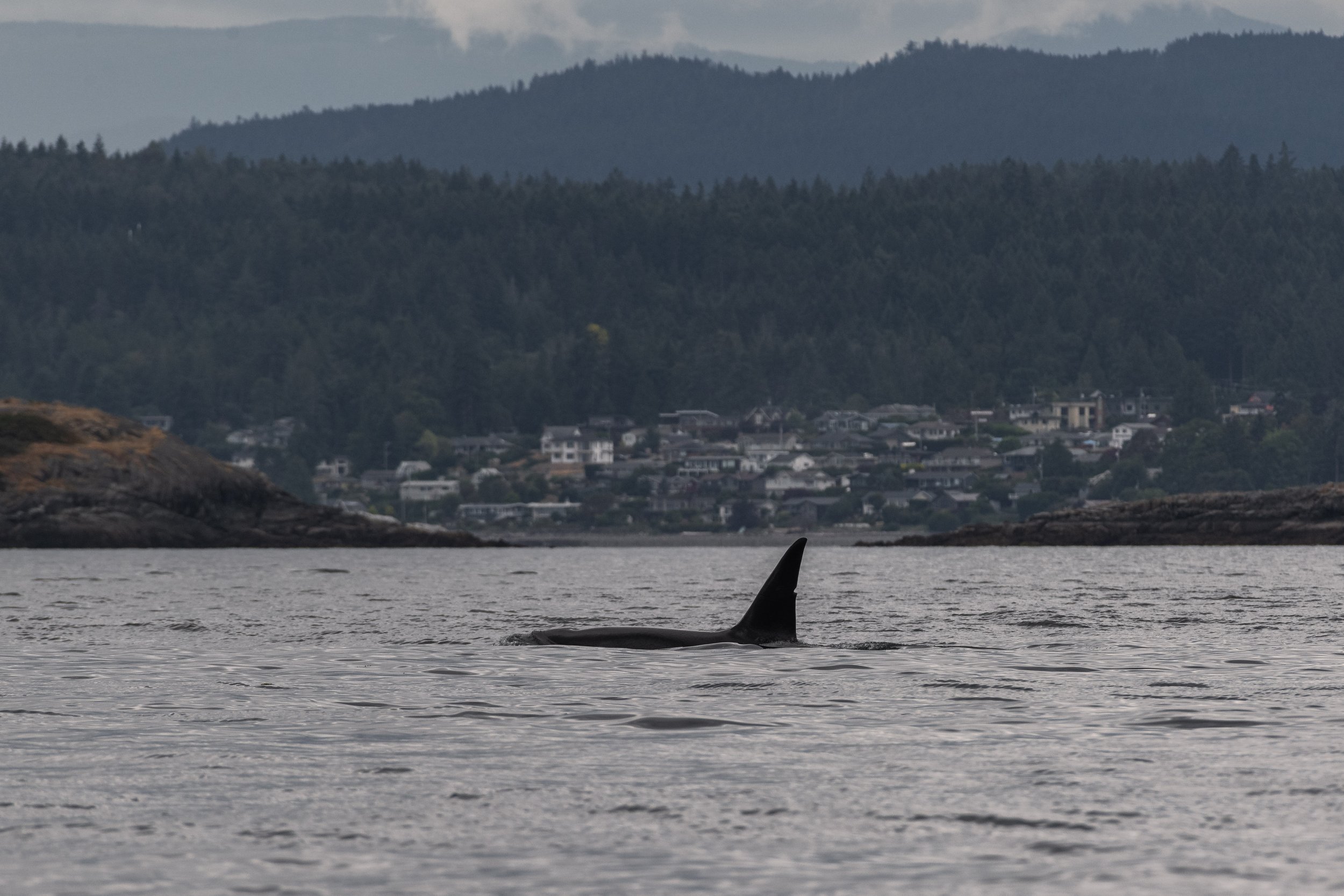
T037A2 Inky with Vancouver Island visible behind him. Photo by Hayleigh Hilbert.
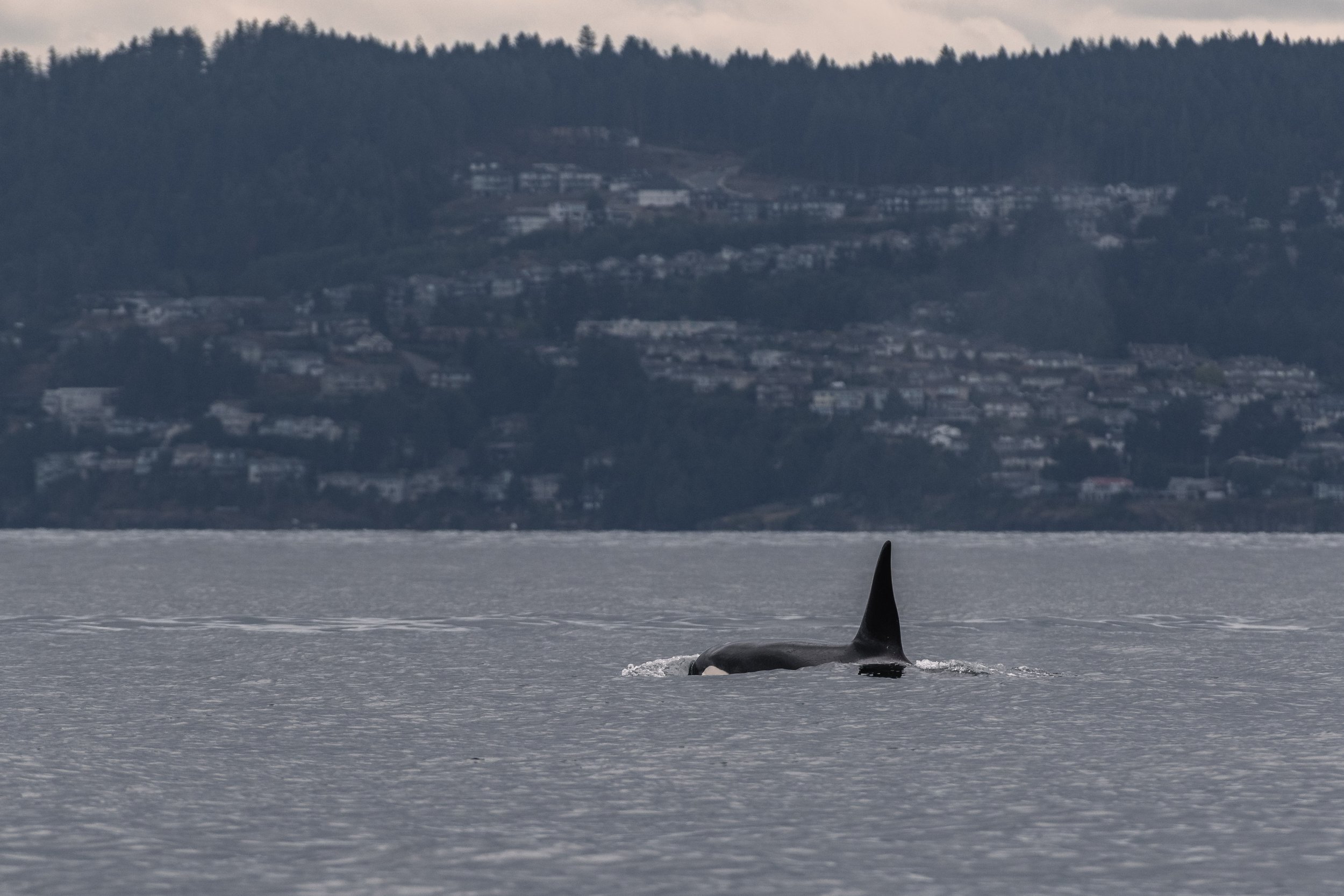
T037B1 Lance travelling along. Photo by Hayleigh Hilbert.
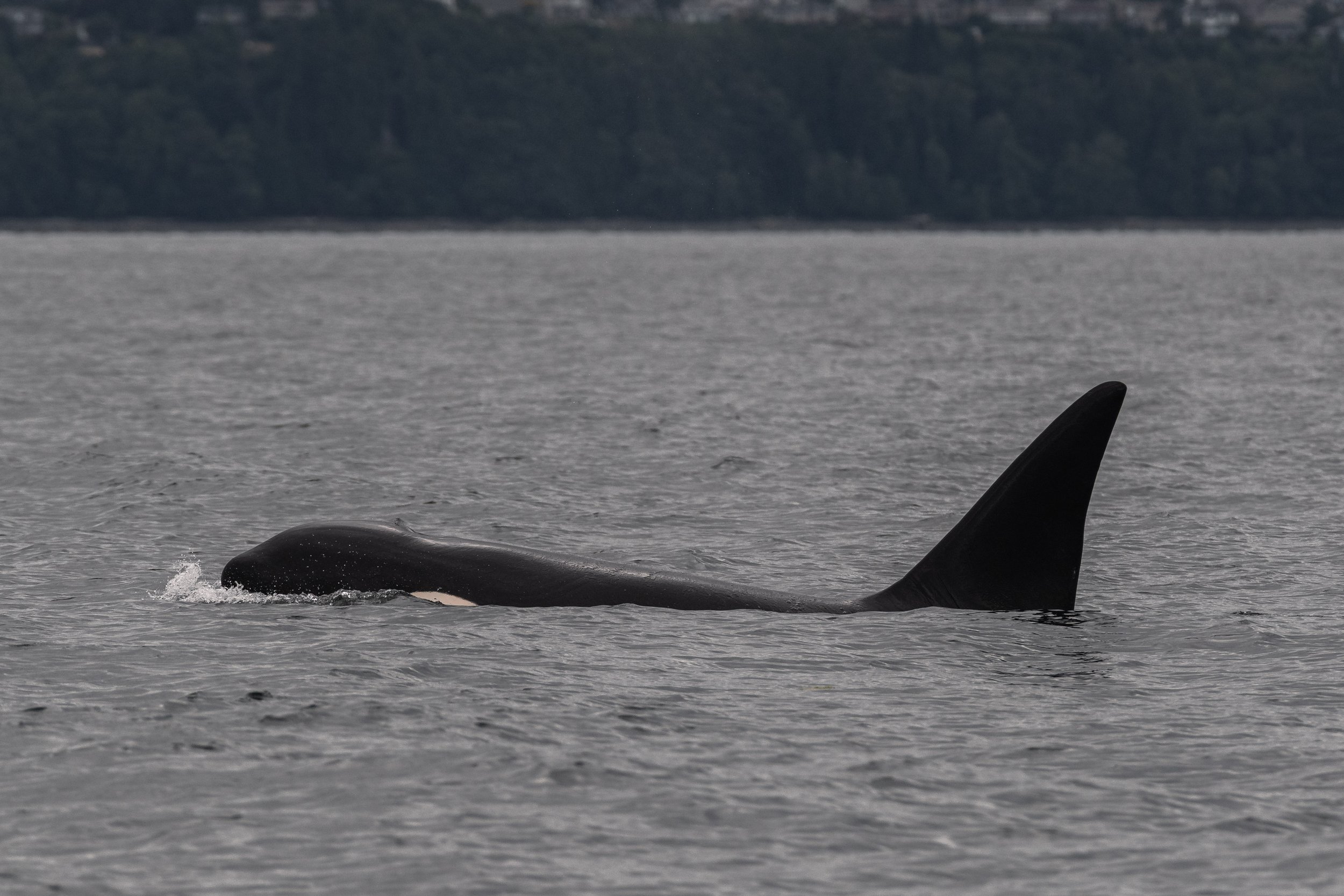
T037B1 Lance coming up for a breath. Photo by Hayleigh Hilbert.
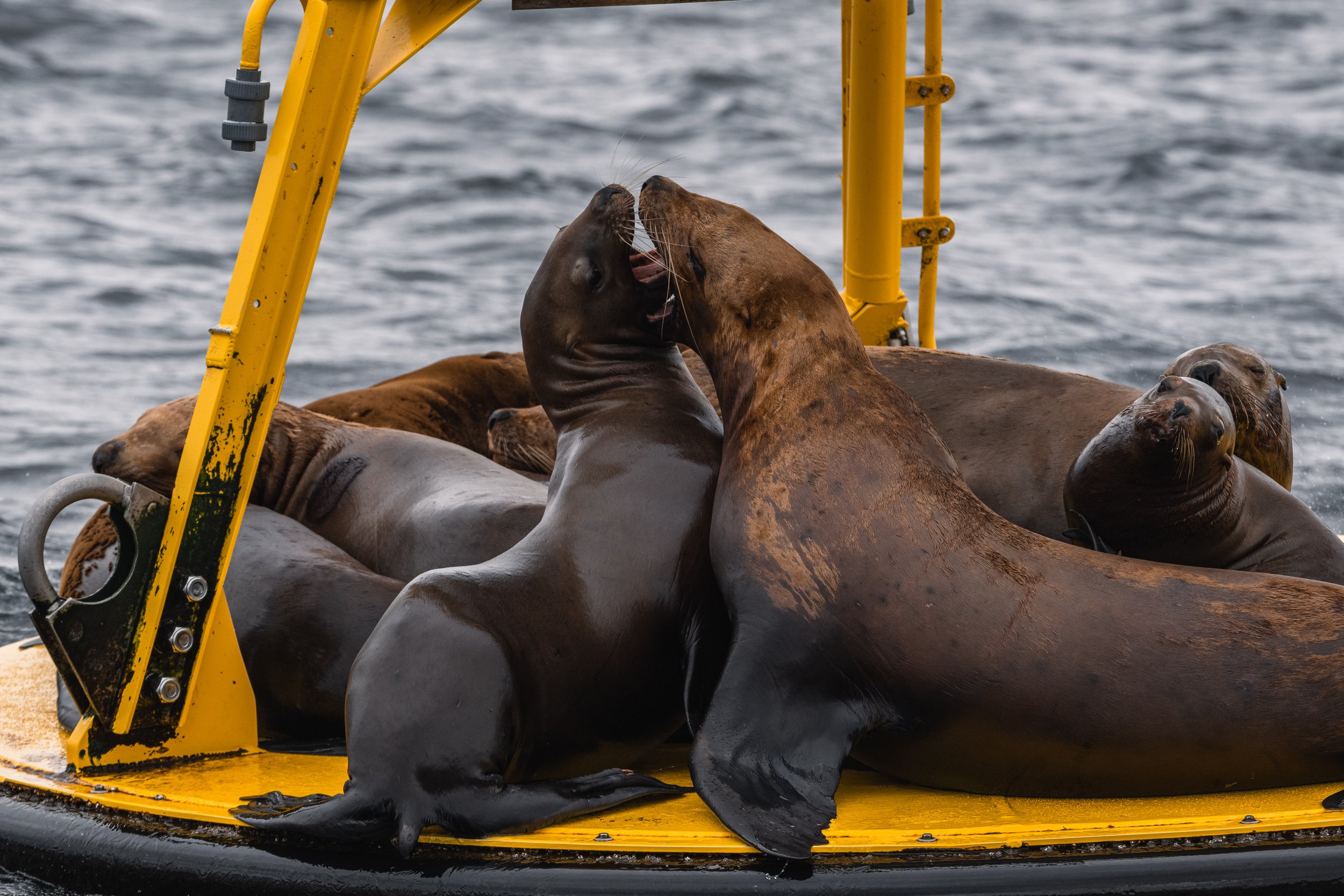
Fighting amongst the sea lions. Photo by Hayleigh Hilbert.
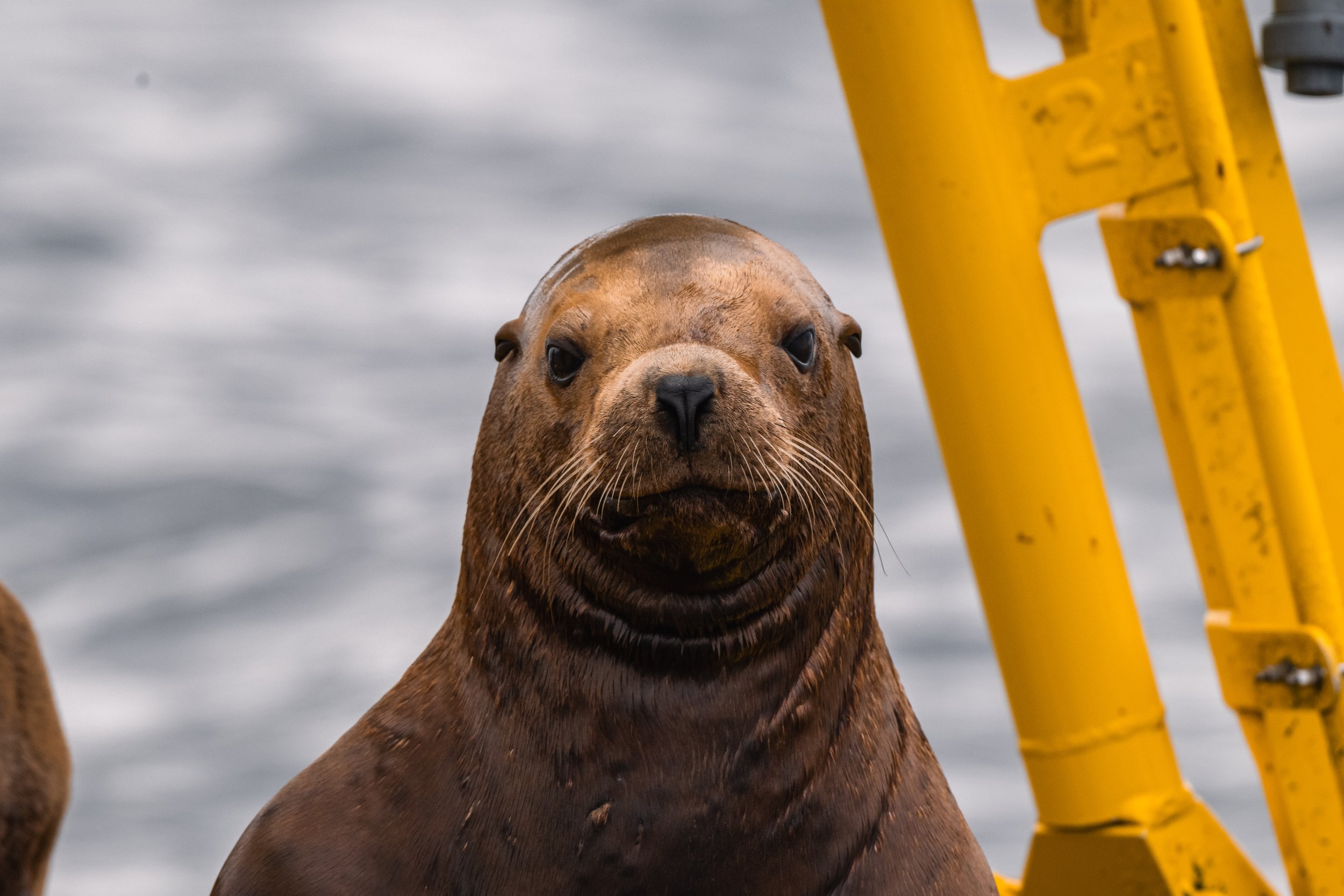
What a stern expression! Photo by Aly Kohlman.
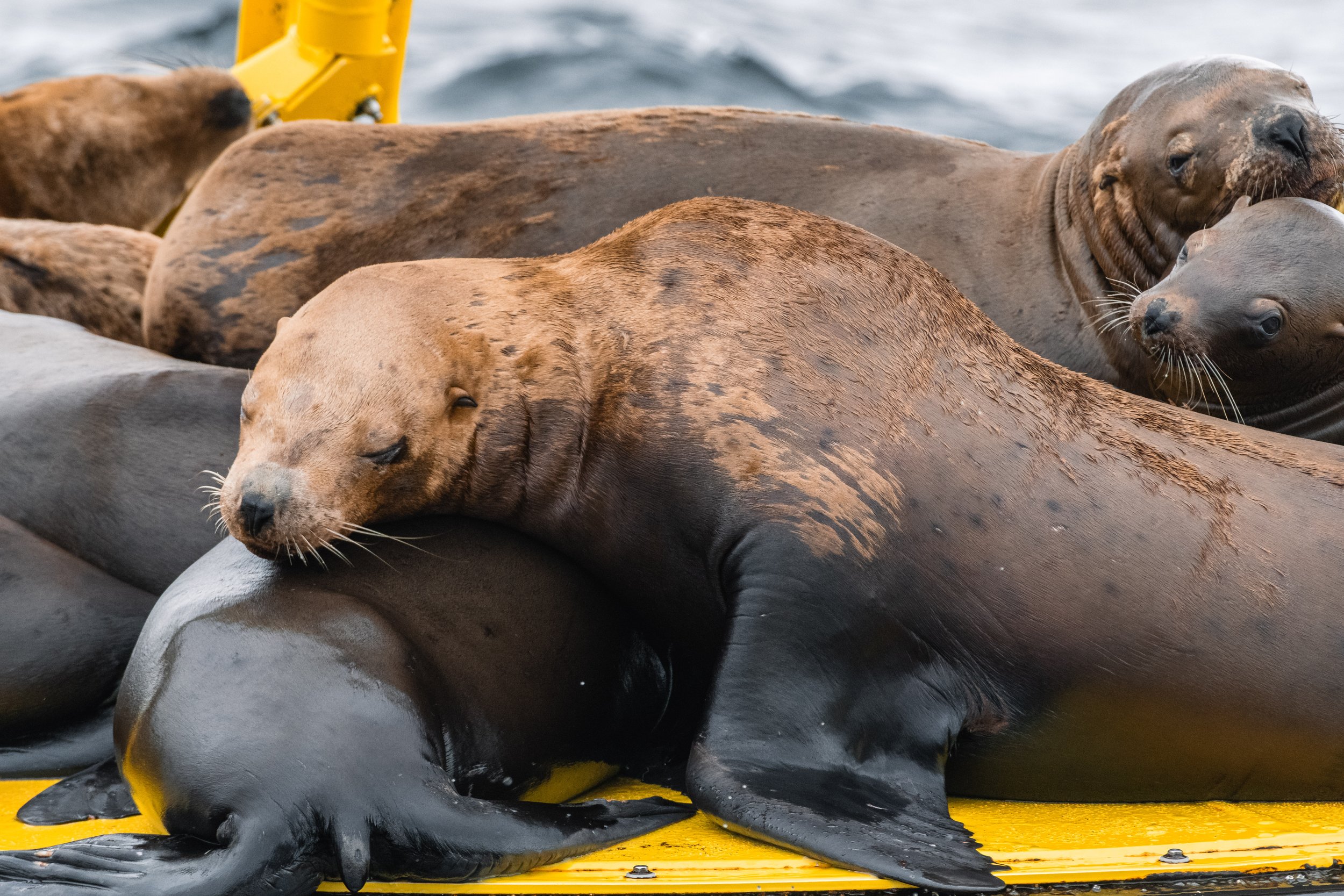
Nap time on the ODAS buoy. Photo by Hayleigh Hilbert.
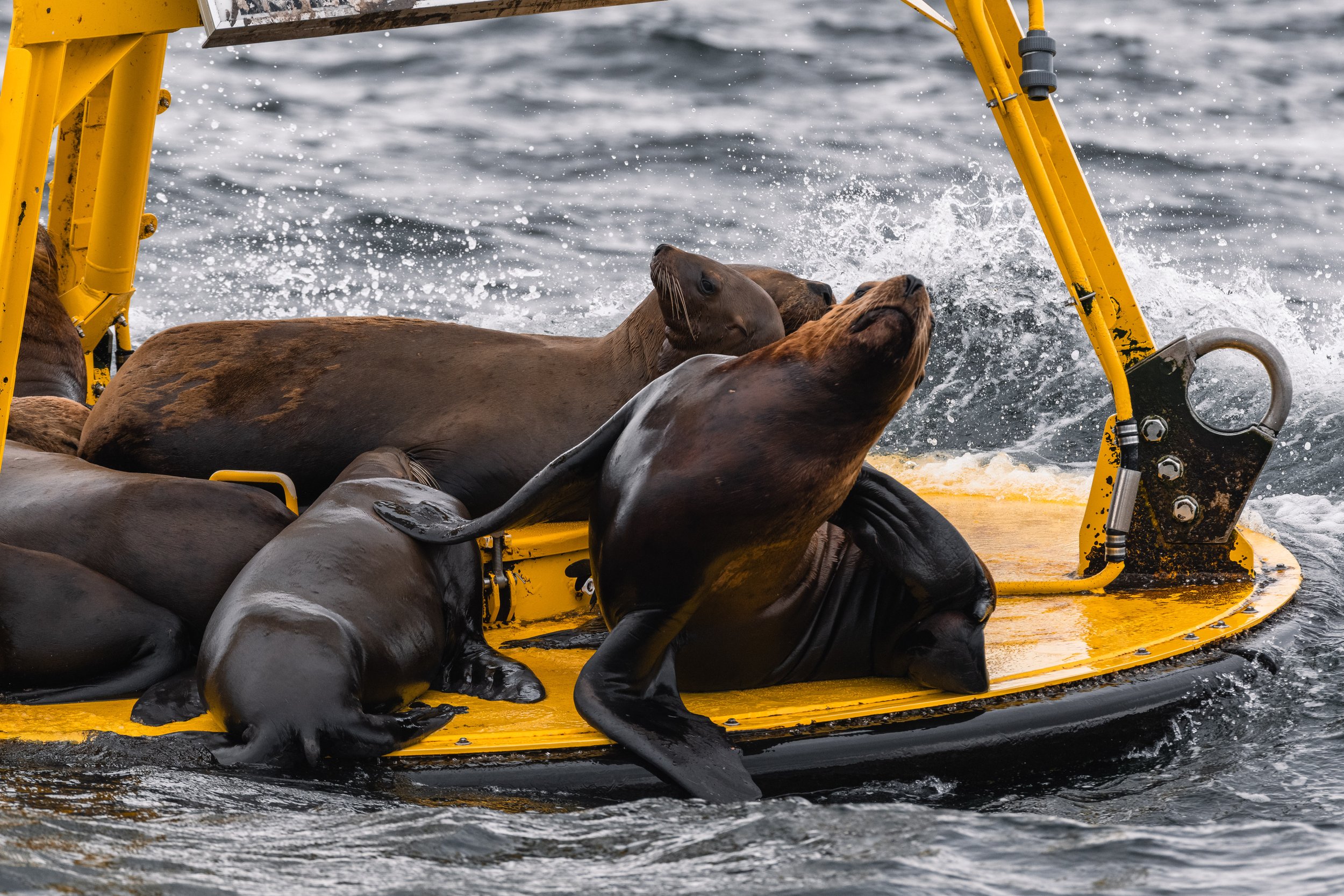
Scratching an itch while balancing on the buoy. Photo by Hayleigh Hilbert.
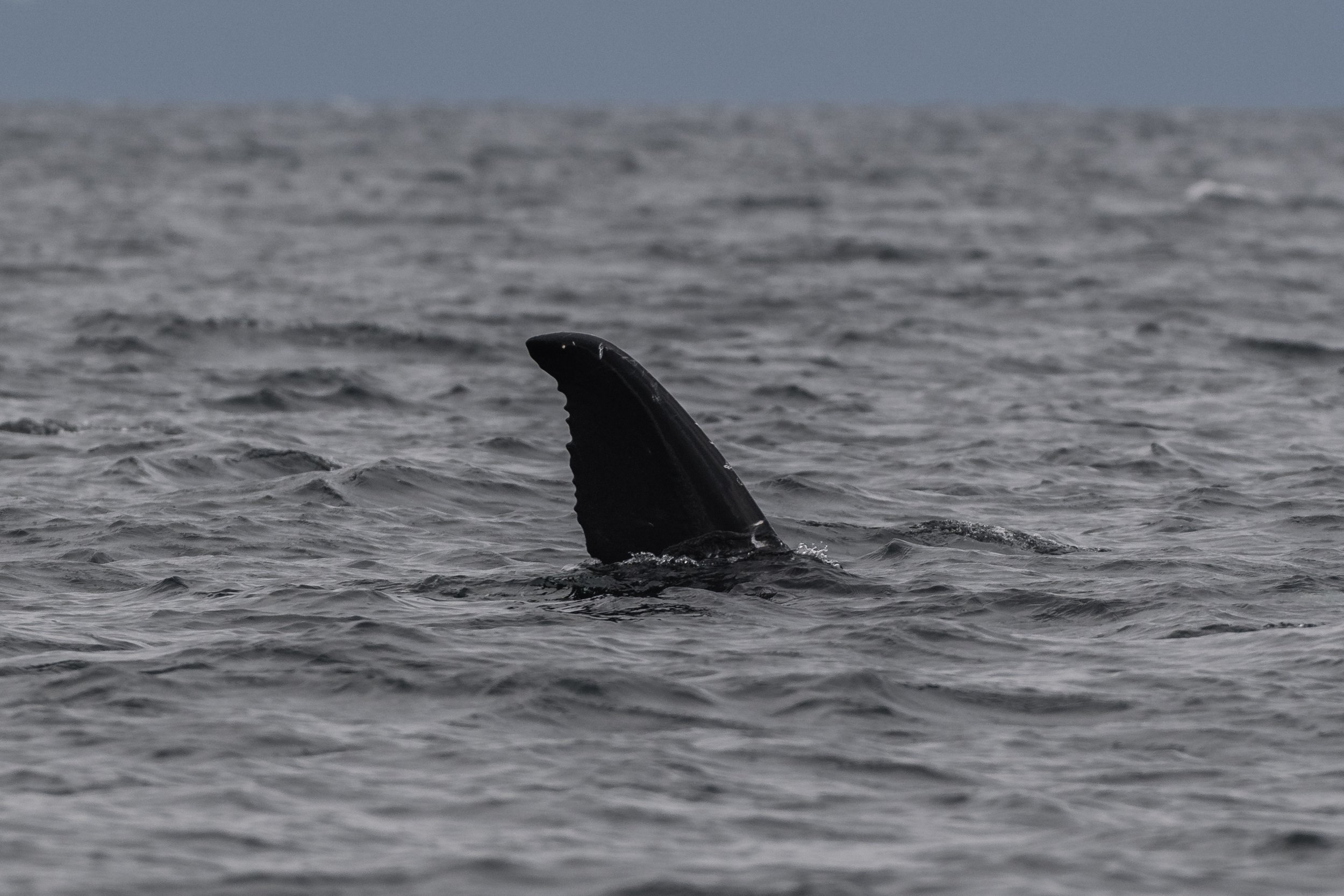
Photo by Aly Kohlman.
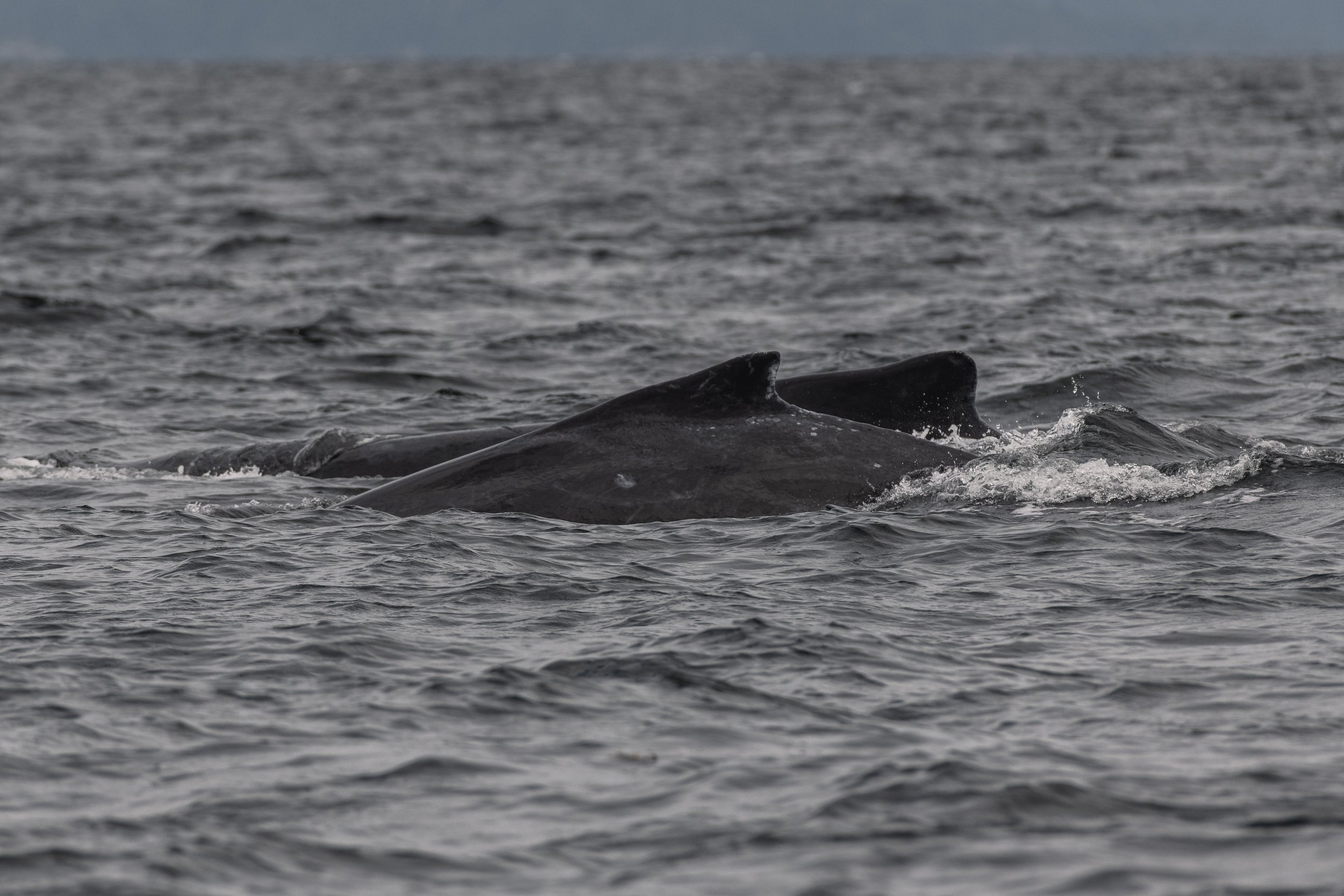
Sage (back) with her new calf (front). Photo by Hayleigh Hilbert.
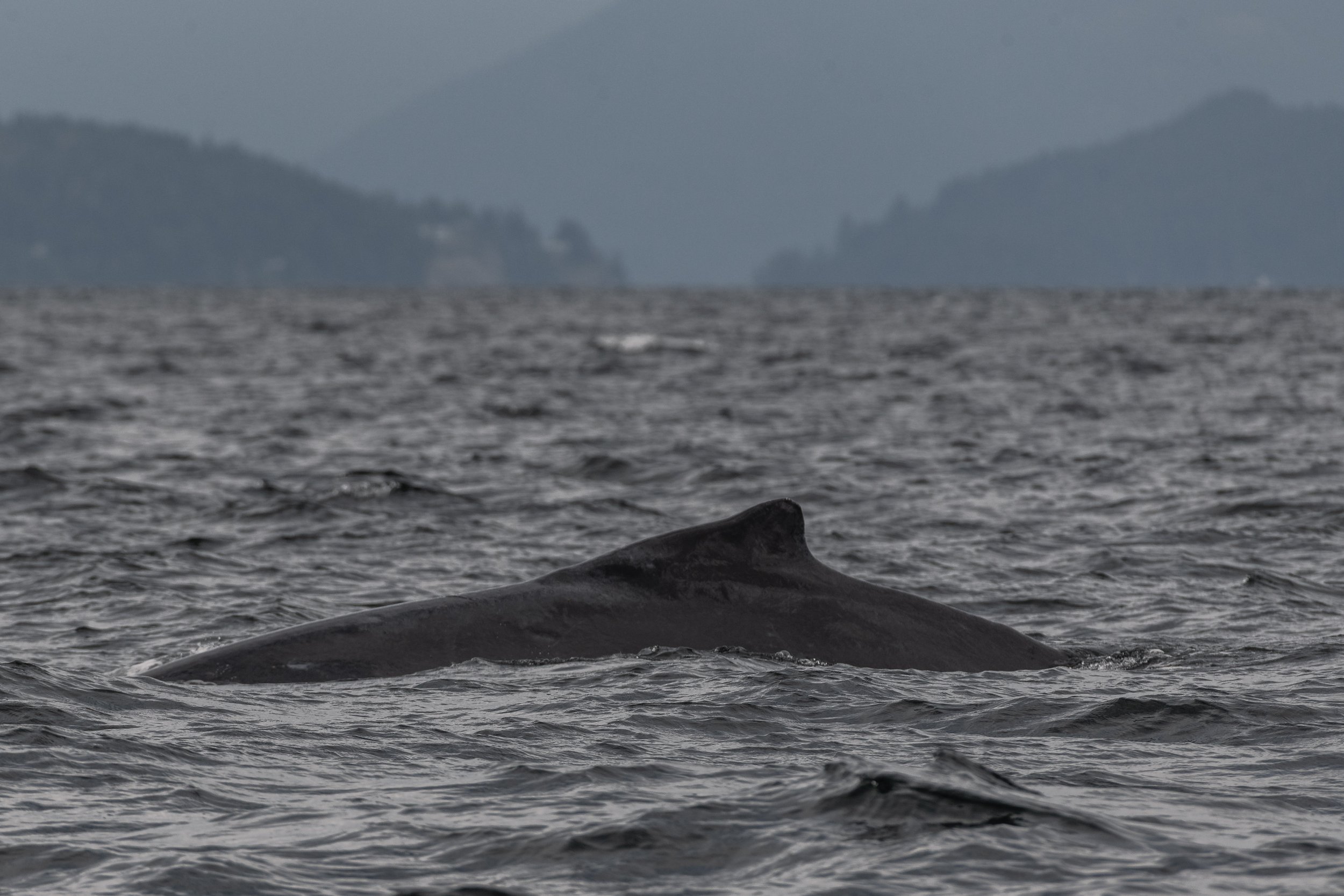
Sage’s dorsal fin. Photo by Hayleigh Hilbert.
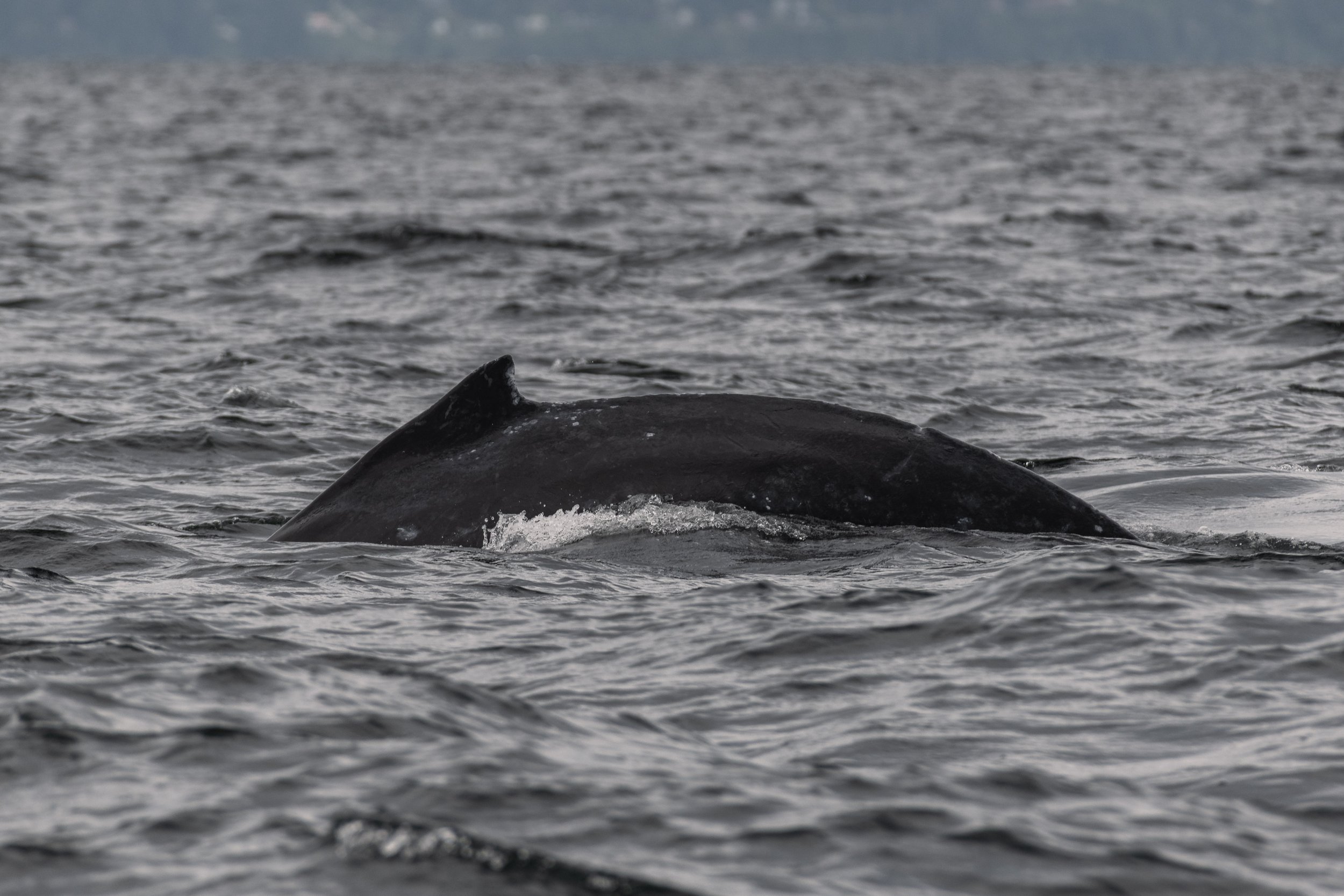
Sage’s calf beginning to dive. Photo by Hayleigh Hilbert.
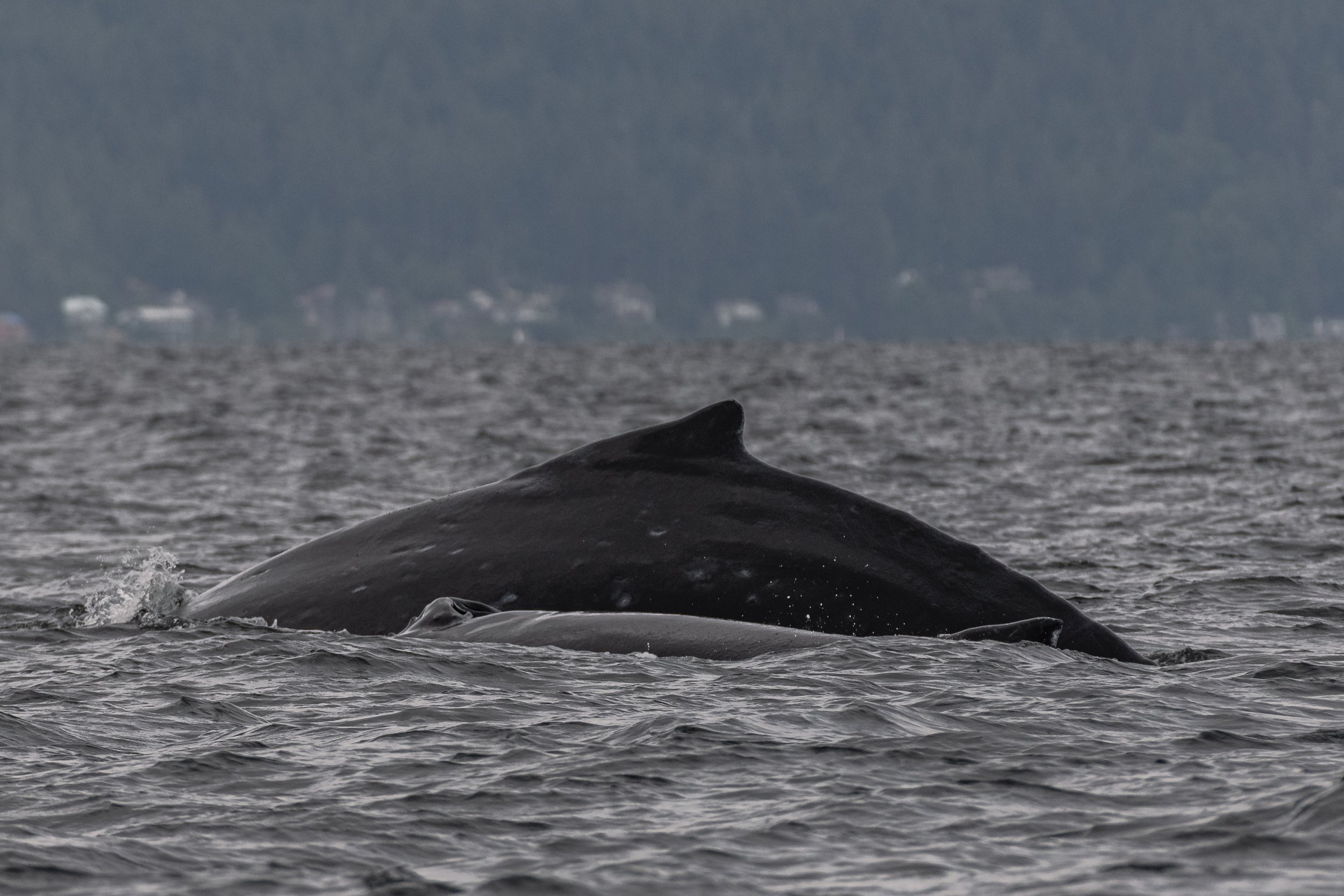
Sage surfacing with her calf right beside her. Photo by Hayleigh Hilbert.
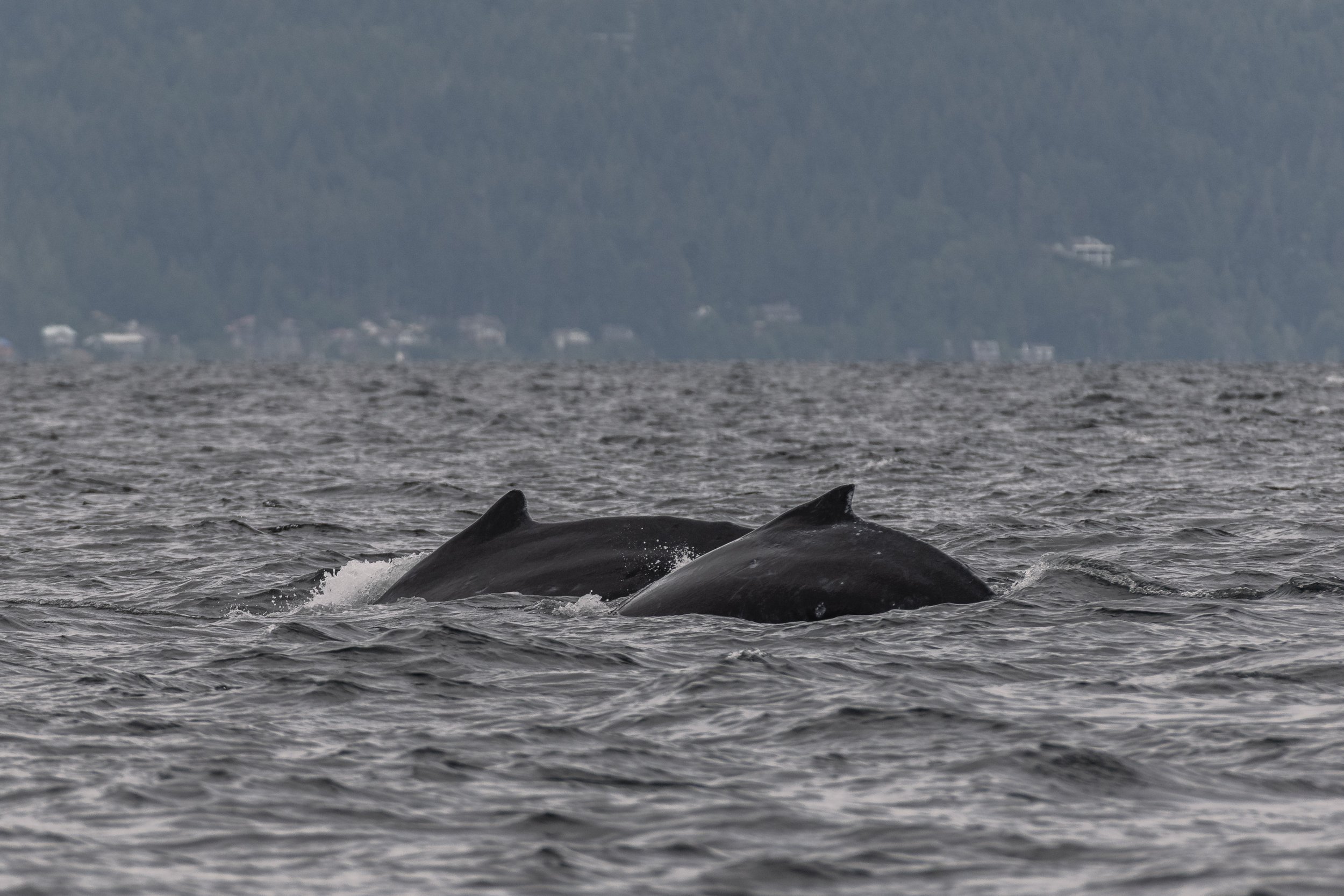
The pair going down for a dive. Photo by Hayleigh Hilbert.
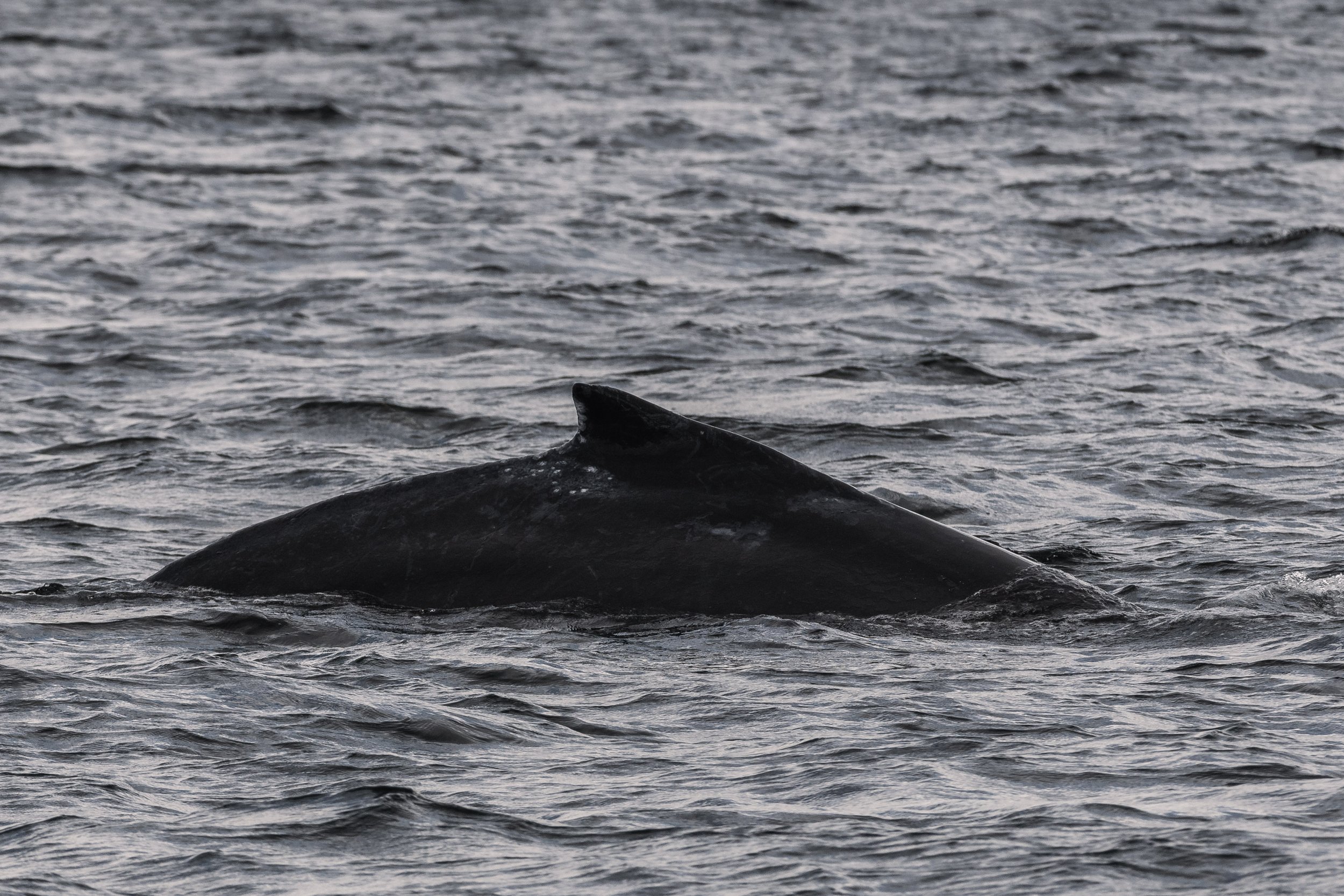
Sage’s calf’s dorsal fin. Photo by Hayleigh Hilbert.
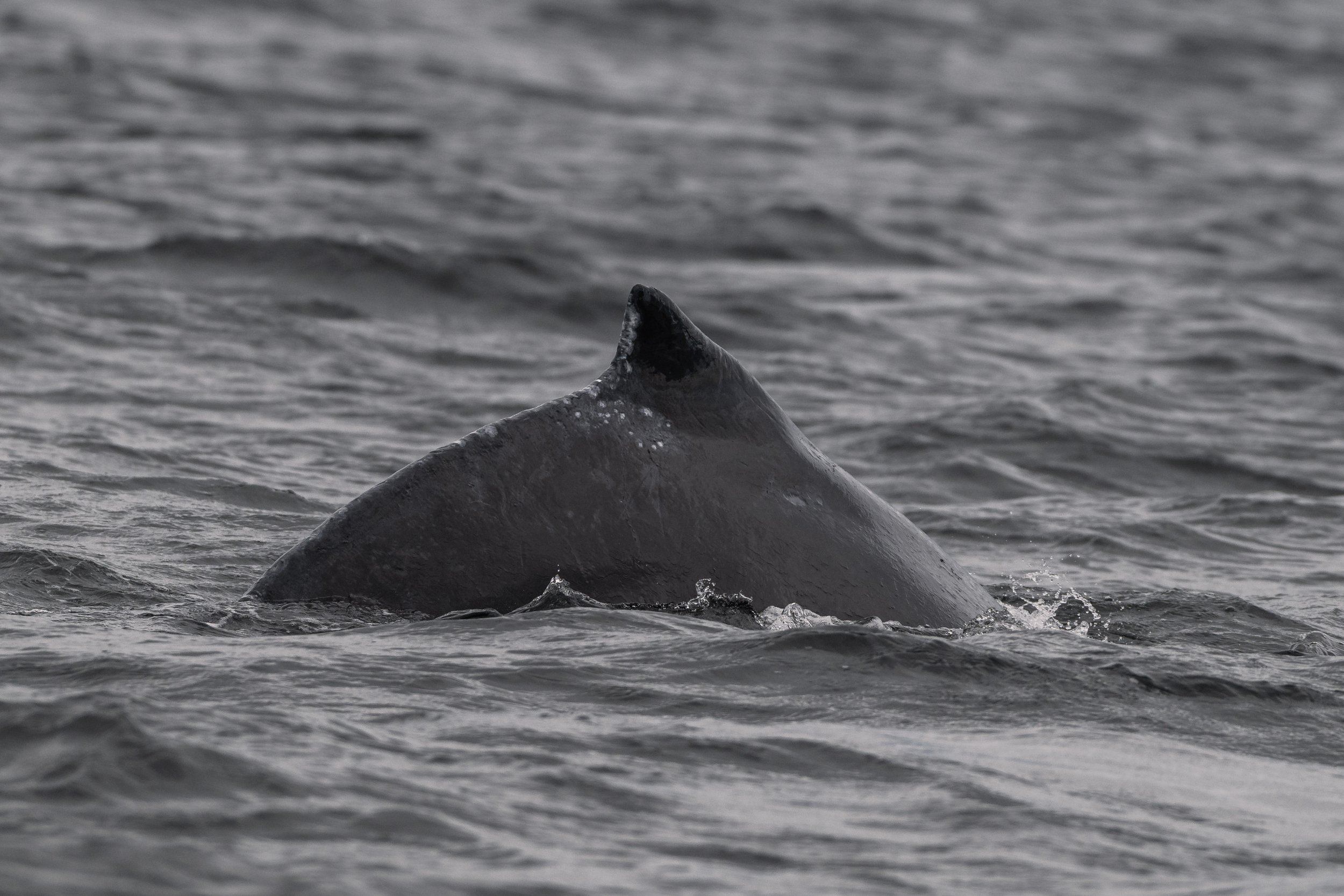
The calf has quite a few speckles over their back and dorsal fin. Photo by Aly Kohlman.
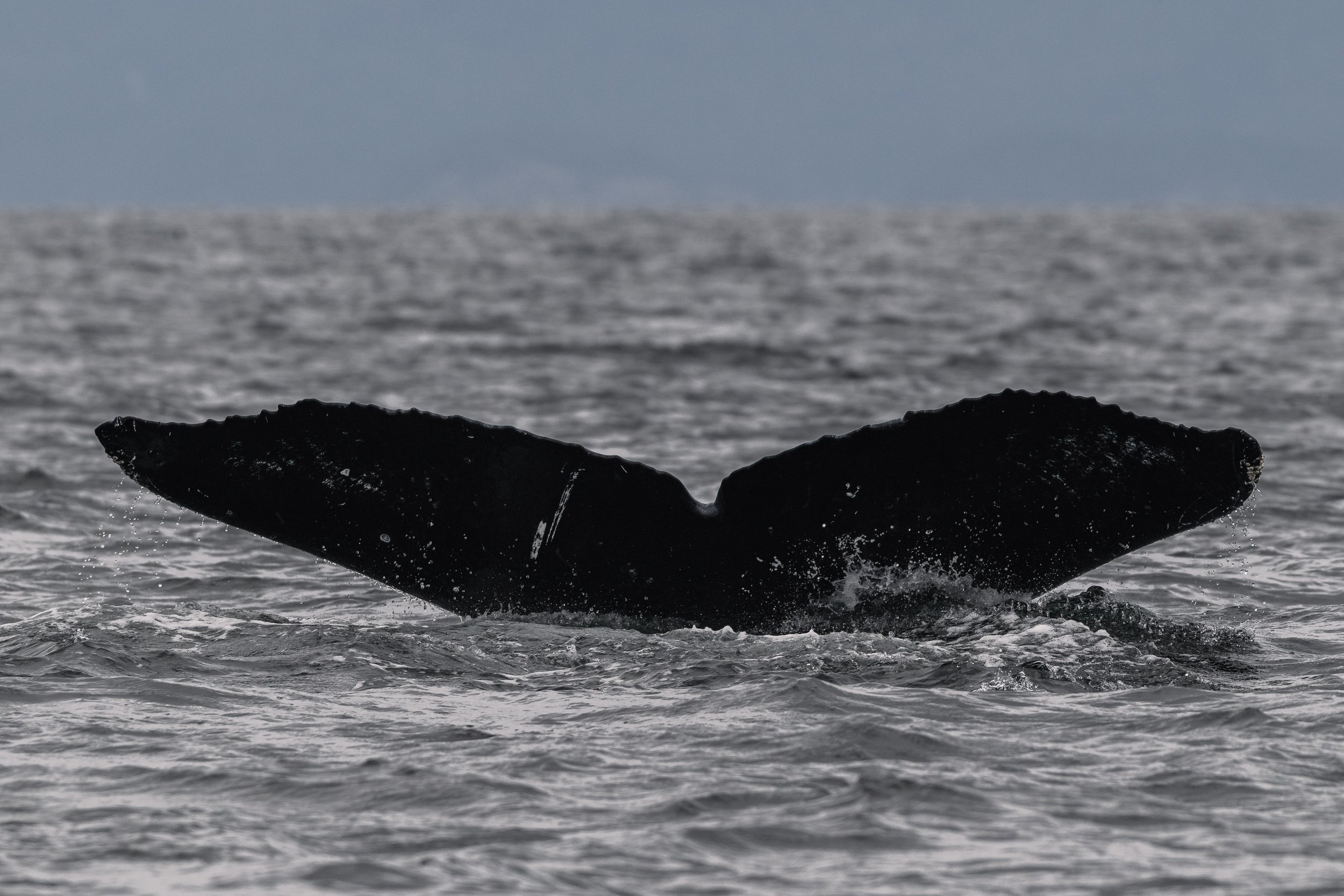
Sage’s fluke as she dives. Photo by Aly Kohlman.