
July 11, 2026, 3:30 PM - A pocket full of humpbacks!
The Salish Sea had a little bit of everything waiting for us this afternoon. A fresh breeze ruffled the water, gentle waves rolled beneath the hulls of Kula and Cascadia, and somewhere beyond the horizon, whales were waiting to be found. With cameras ready and eyes scanning in every direction, our captains pointed the bows into the Strait of Georgia and began another wildlife adventure.
While searching for whales, we stopped at one of our favourite local wildlife hotspots, a rocky haul-out affectionately nicknamed "Stinky Rocks." If you've ever visited, you'll understand exactly how it earned its name long before we even explain it!
The undisputed kings of this rocky outcrop are the mighty Steller Sea Lions, the largest sea lion species on Earth. Adult males can stretch over 3 metres (10 feet) long and tip the scales at more than 1,000 kilograms (2,200 pounds), while females are considerably smaller but still impressive animals. These marine mammals spend much of their day resting between foraging trips, but beneath that seemingly lazy lifestyle lies an incredible appetite. A Steller Sea Lion may consume 25 to 75 pounds of fish and squid every single day, feasting on salmon, herring, hake, rockfish, octopus, and whatever else is seasonally abundant.
As any regular whale watcher knows, eating that much comes with consequences! Sea lions frequently regurgitate partially digested food, defecate often, and spend much of their time climbing over one another to claim the best resting spots. During the heat of summer, the sun bakes this mixture of fish remains and sea lion waste into an unforgettable aroma that drifts across the water whenever the wind is just right. It certainly isn't glamorous, but it is wonderfully wild.
Sharing the rocks were their much smaller cousins, the Harbour Seals. While they enjoy a very similar menu of fish and squid, they require only around 4 pounds of food per day. They can certainly produce an unpleasant smell themselves, but thanks to their much smaller size, the evidence they leave behind is considerably less noticeable. Sometimes, being small has its advantages!
One particularly heartwarming sight had everyone smiling: a Harbour seal mother resting alongside her tiny pup. Every summer, pupping season reminds us just how remarkable these animals truly are.
Harbour Seals possess one of nature's most fascinating reproductive adaptations: delayed implantation. After mating in the summer, the fertilized embryo does not immediately begin developing. Instead, it enters a suspended state for several months before implanting in the uterus later in the year. This incredible biological timing allows pups to be born during the following summer, when weather conditions are milder, and food is plentiful. It is an astonishing evolutionary strategy that ensures each new generation arrives at exactly the right time for survival.
After spending time with our charismatic pinnipeds, it was finally time to continue the search for whales.
Our captains pointed south along Gabriola Island, and we settled into search mode once again. The Salish Sea has a wonderful way of testing your patience. Minutes can feel long while scanning every ripple and whitecap, wondering which one might suddenly transform into a whale's exhale.
Then it happened.
A single white blow appeared against the horizon.
Then another.
And another.
Before long, the ocean seemed alive with towering, bushy blows rising in nearly every direction. We had stumbled upon a true humpback hotspot.
Our best explanation? Food.
Every spring, humpback whales complete one of the longest migrations undertaken by any mammal, travelling thousands of kilometres from their breeding grounds in Hawaii, Mexico, and other tropical waters to the rich feeding grounds of British Columbia and Alaska. The tropical oceans provide calm, warm waters that are ideal for giving birth and raising newborn calves, but they are surprisingly poor places to find food.
While in the breeding grounds, humpbacks feed very little, if at all, surviving largely on the enormous fat reserves they built during the previous summer. By the time they return to British Columbia, many have lost around half of their body weight. The months ahead become an all-you-can-eat buffet, with whales feeding almost constantly on krill, herring, anchovies and other schooling prey whenever opportunities arise.
To rebuild those depleted energy reserves before the next migration south, a humpback whale may consume an astonishing 3,000 to 5,000 pounds of food every single day.
Judging by what we witnessed this afternoon, the buffet was certainly open.
With whales surfacing in nearly every direction, Evan and Jordan quickly had cameras clicking away, photographing tail flukes as each whale dove beneath the surface. Every fluke pattern is unique, much like a human fingerprint, allowing us to identify individuals and contribute valuable sightings to ongoing research.
By the end of the encounter, we had successfully identified eight individual humpback whales! Valiant (BCX1773), Turkey (BCY1157), Thunderbolt (BCY1517), Crackle (BCY1227), Slice (BCX2487), Olympus (BCX2075), Hammer (BCY1222) and Incognito (BCX2053). We estimated that nearly 30 whales were spread throughout the area. It was one of those magical afternoons where no matter where you looked, another whale seemed ready to surface.
Moments like these are especially meaningful when viewed through the lens of history.
Only a few generations ago, scenes like this would have been almost unimaginable. Commercial whaling pushed humpback whales to the brink of extinction throughout much of the North Pacific. Thousands were hunted for their oil and baleen, reducing populations to only a fraction of their former abundance. Thanks to international protection, conservation efforts, and decades of recovery, humpbacks are making an inspiring comeback.
Seeing dozens of these giants feeding together in the Salish Sea is far more than an exciting day on the water; it is a living conservation success story. Each blow on the horizon represents resilience, recovery, and nature's incredible ability to rebound when given the chance.
As the afternoon slowly drew to a close, the sun glimmered across the waves, sea lions growled from their rocky kingdom behind us, and humpbacks continued surfacing all around. It was one of those days that perfectly captures why we love sharing this coastline with our guests. From the wonderfully pungent residents of Stinky Rocks to one of the largest gatherings of humpback whales we've encountered this season, the Salish Sea once again reminded us that every trip offers something unforgettable. You simply have to head out and see what nature has in store.
Enjoy the photos below taken by Jordan Robinson and Evan Hessels.
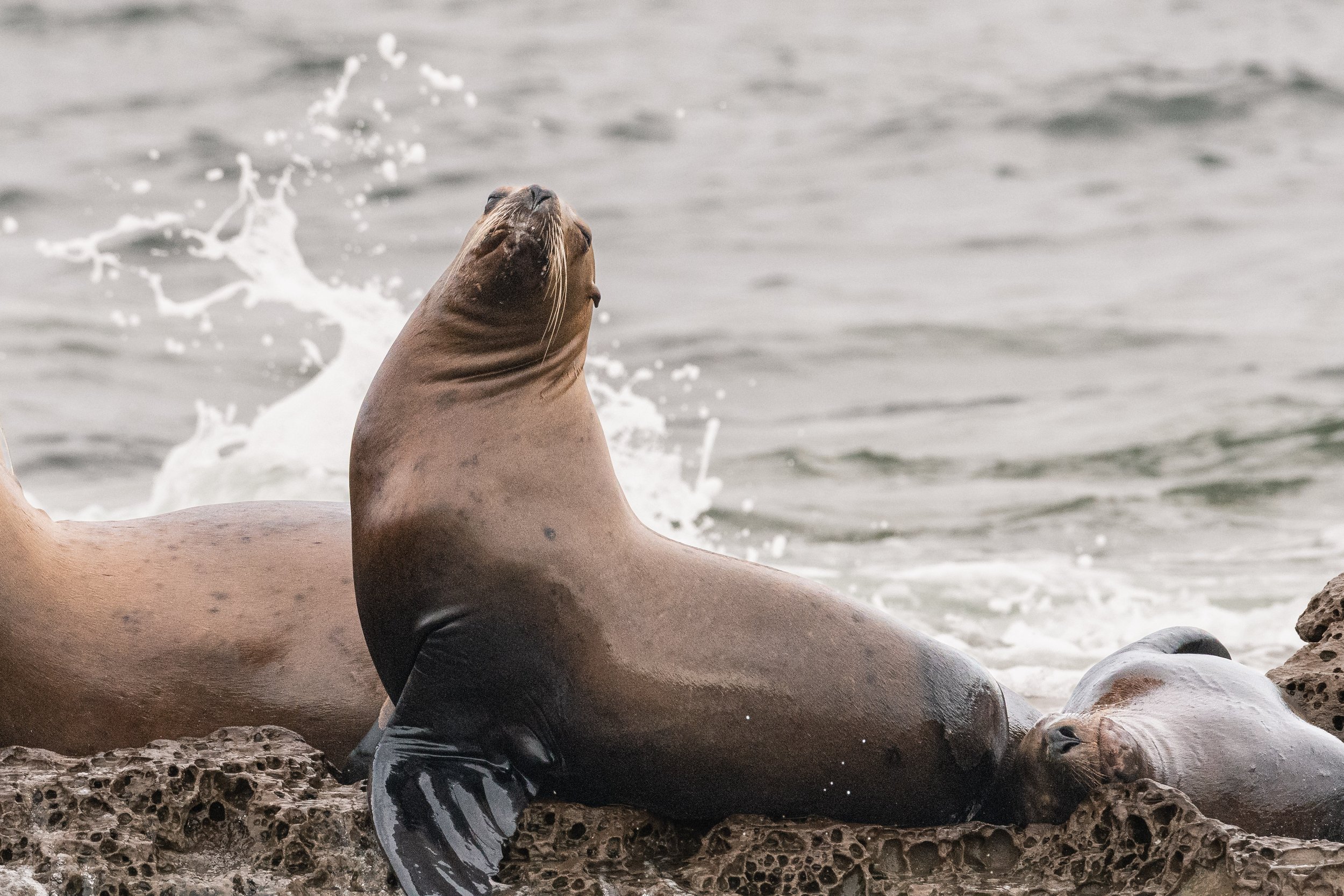
A Steller Sea Lion that knows they’re good looking! Photo by Evan Hessels.
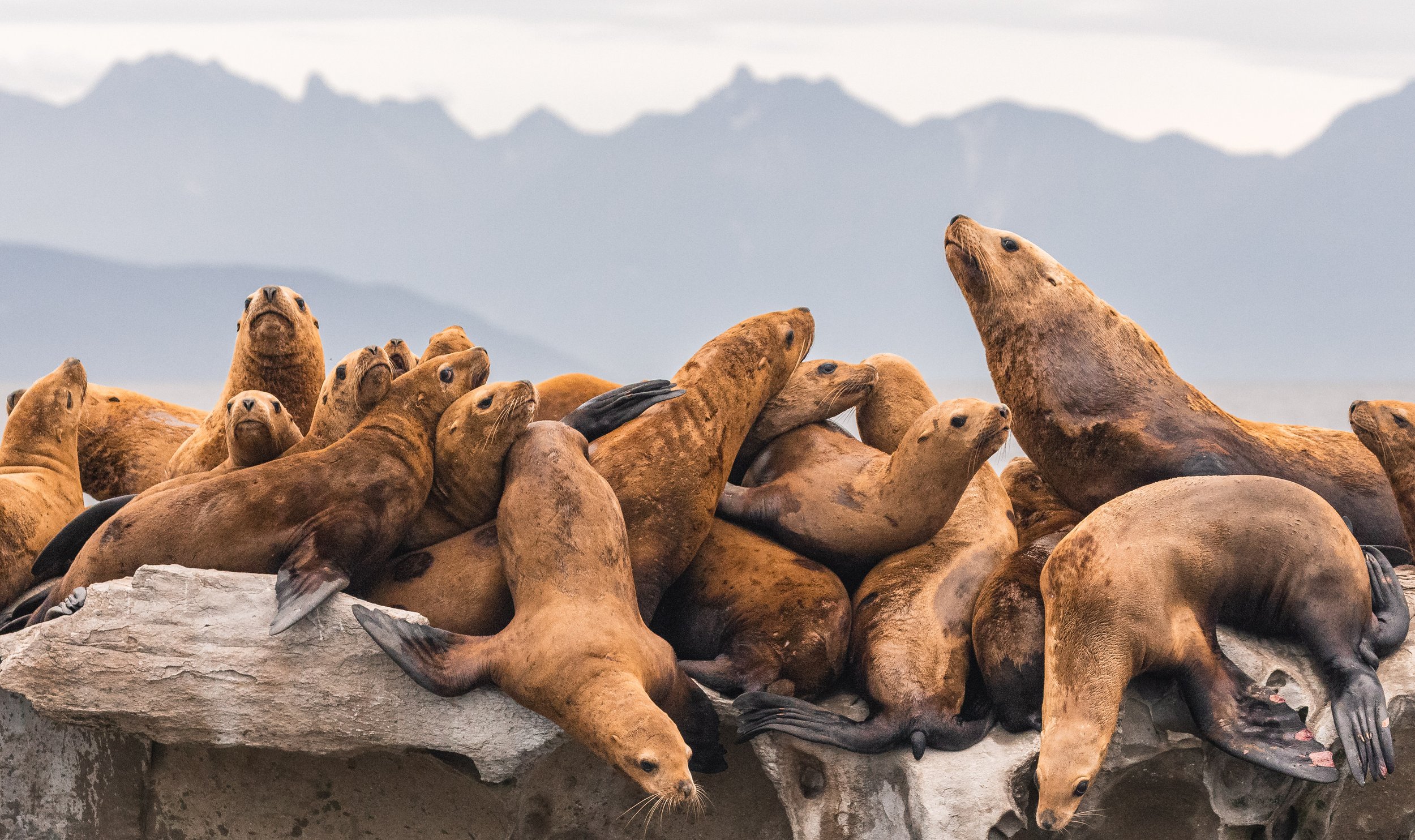
A pile of Stellers. Photo by Jordan Robinson.
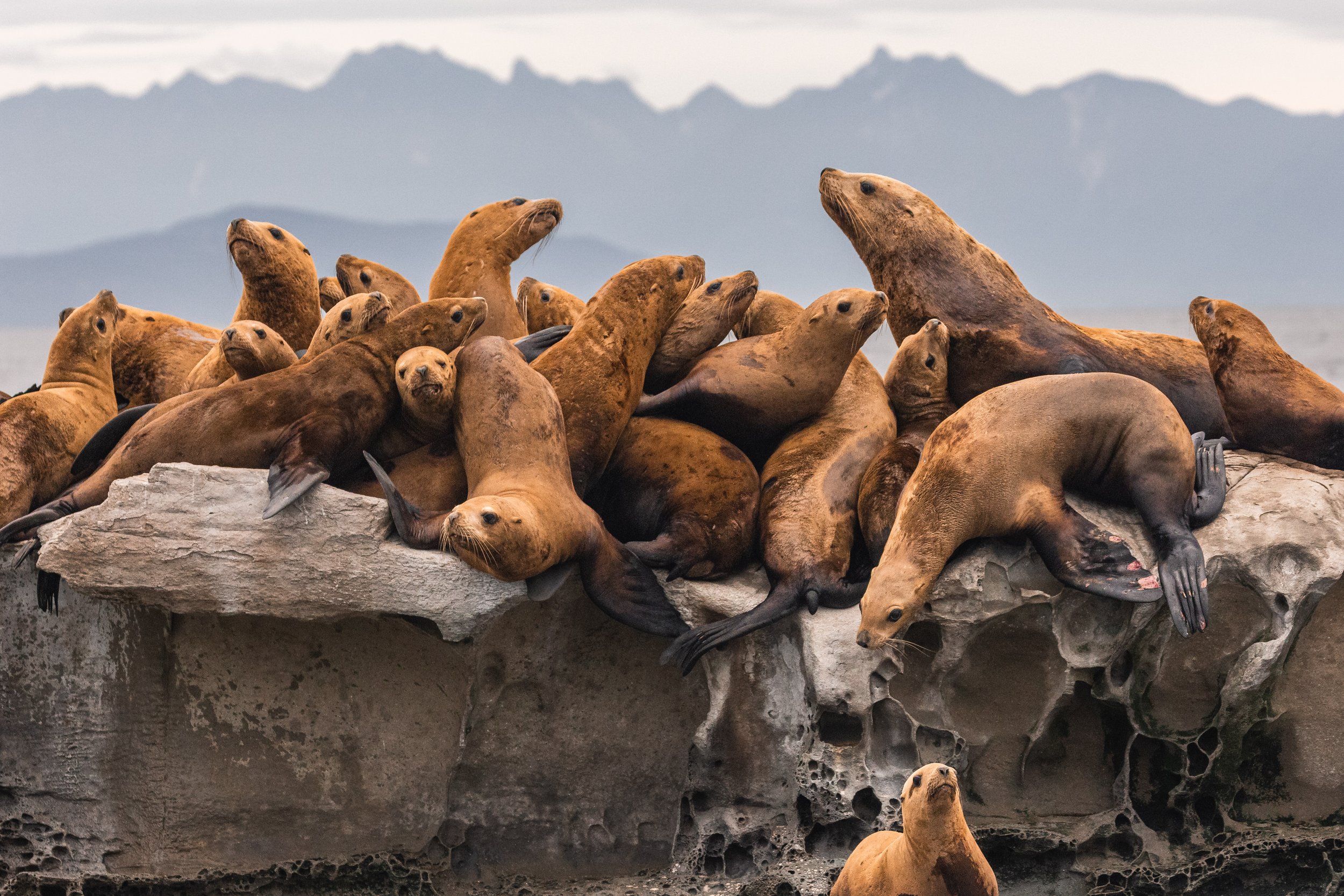
Can you count them all? Photo by Jordan Robinson.
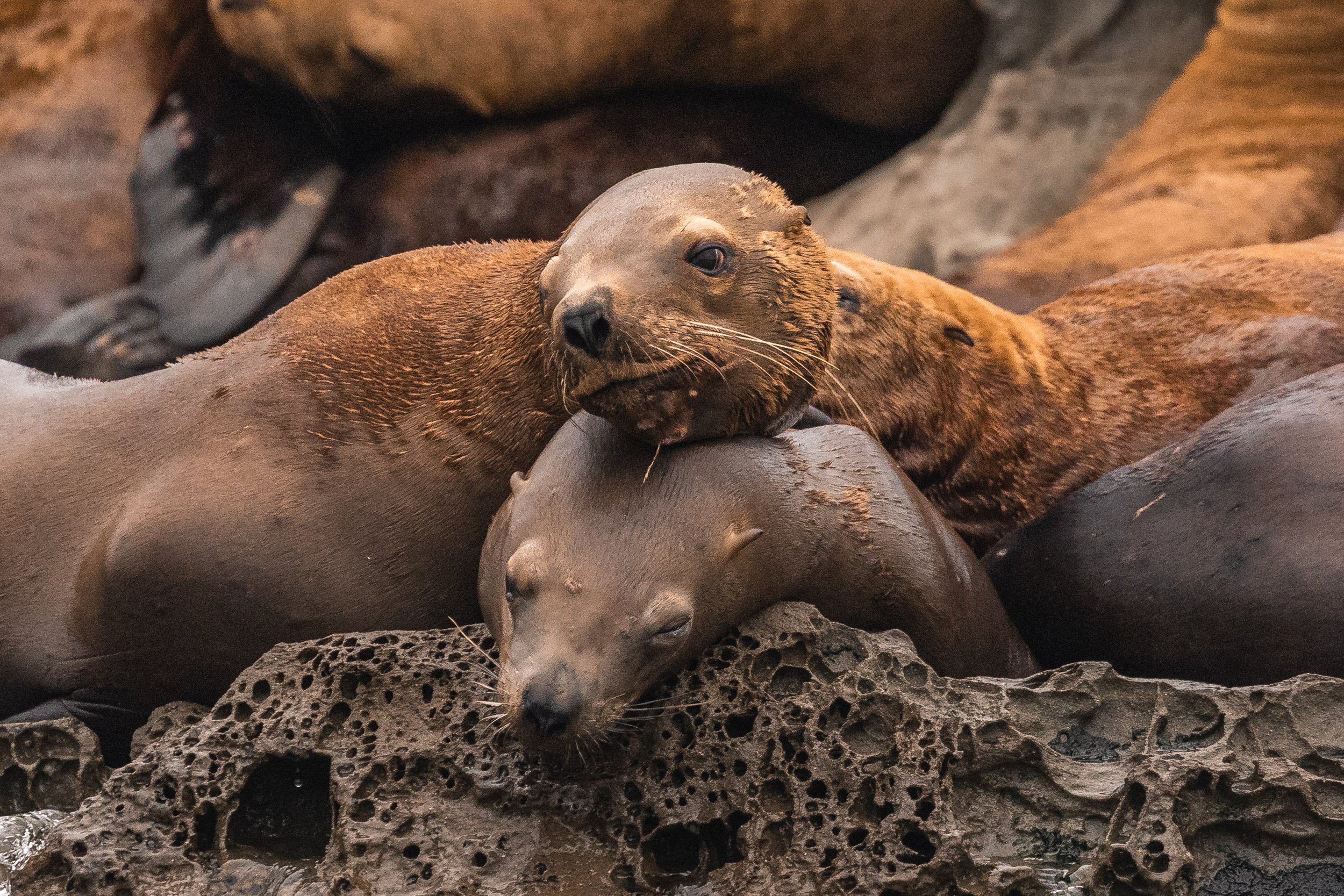
Steller Sea Lions partaking in a cuddle puddle. Photo by Jordan Robinson.
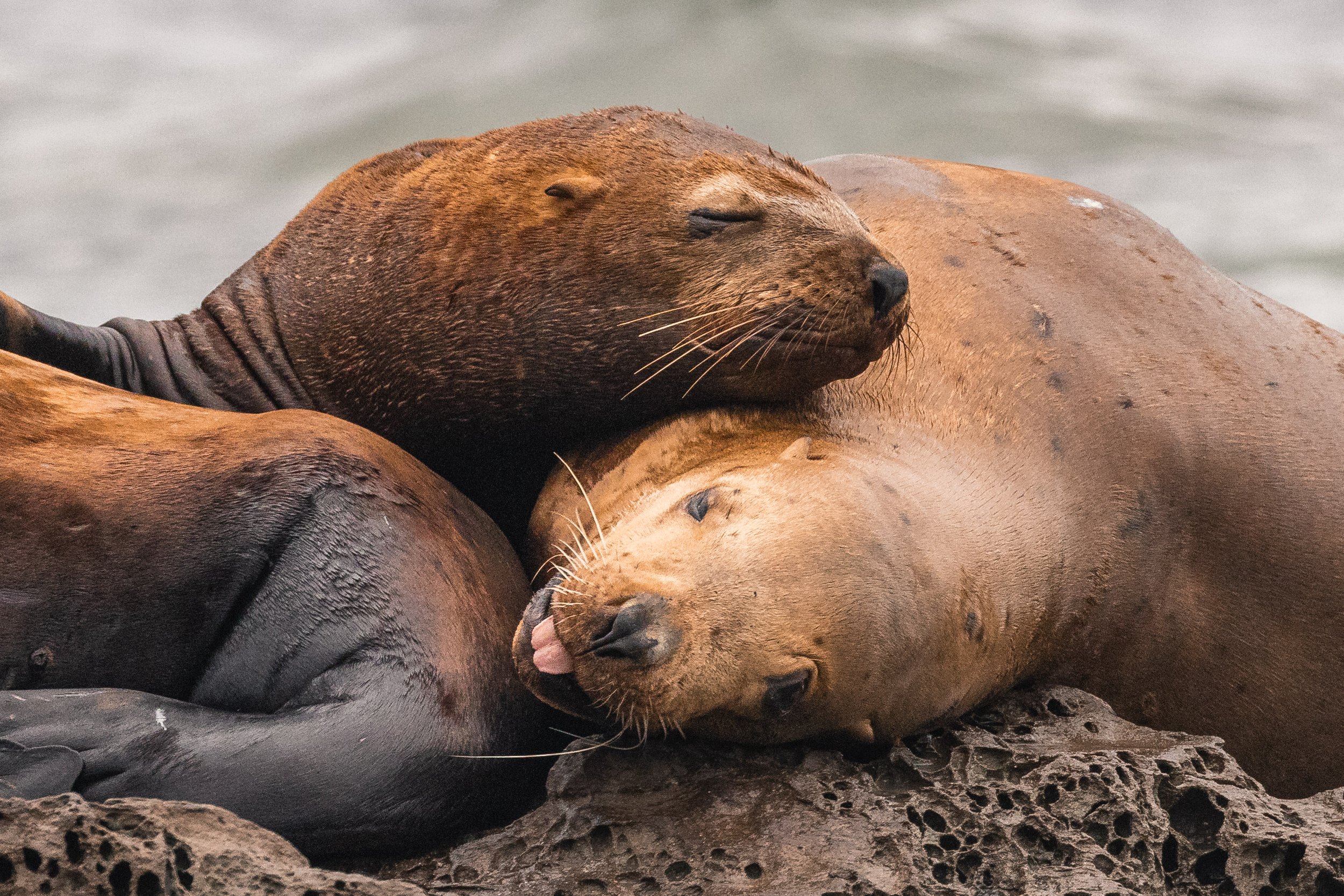
A little toung! Photo by Jordan Robinson.
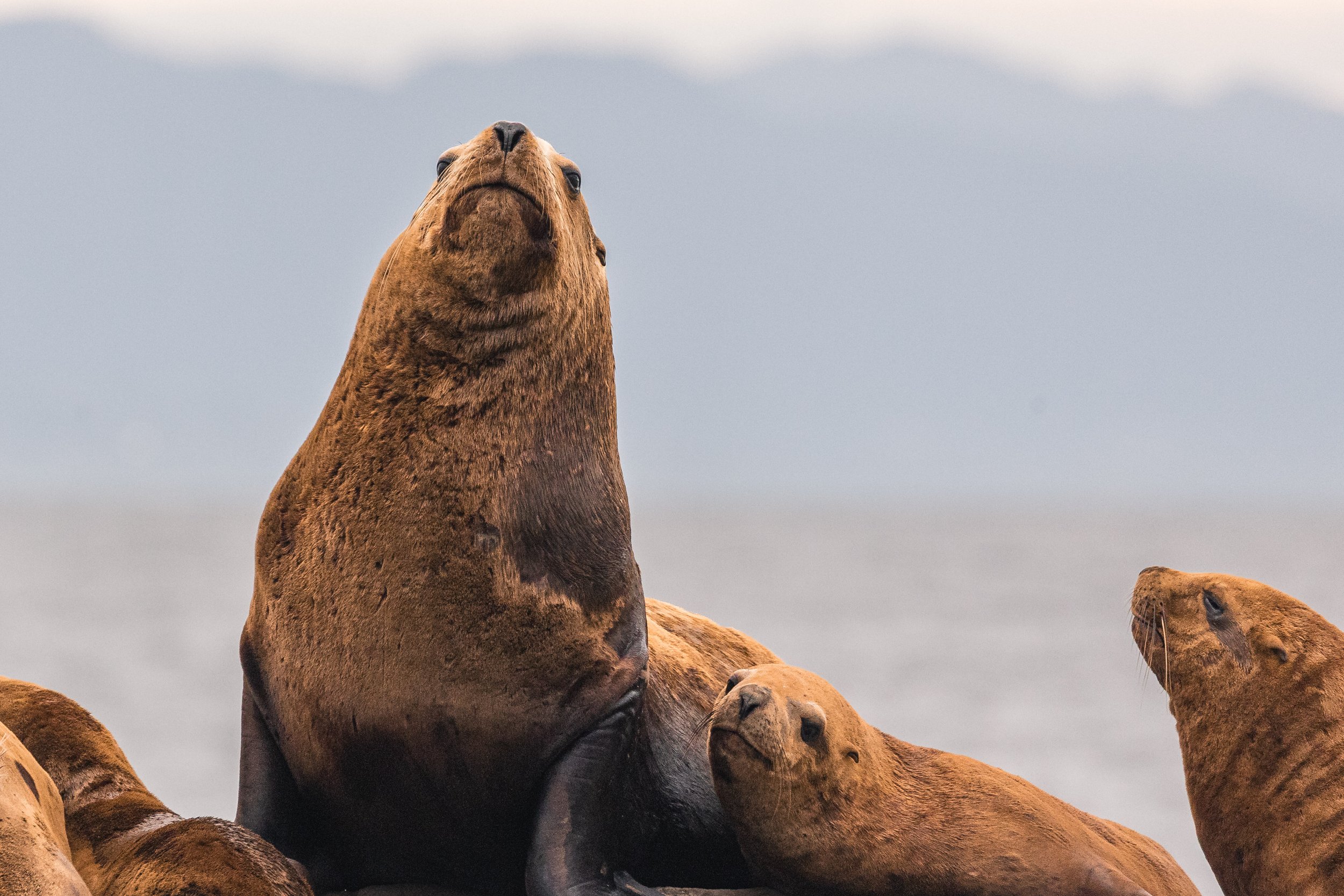
These Steller Sea Lions are watching us back. Photo by Jordan Robinson.
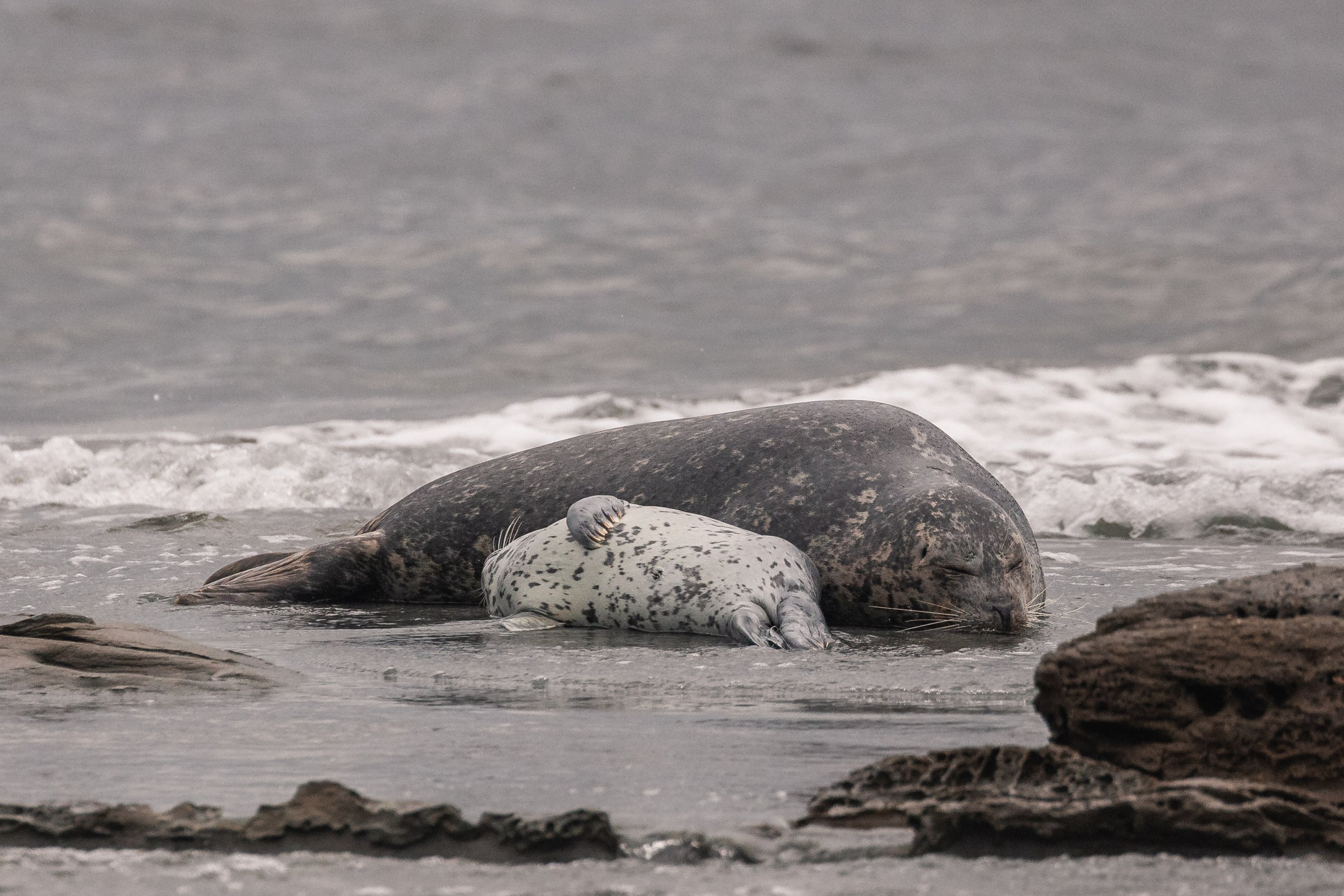
A mother harbour seal and her pup. Photo by Jordan Robinson.
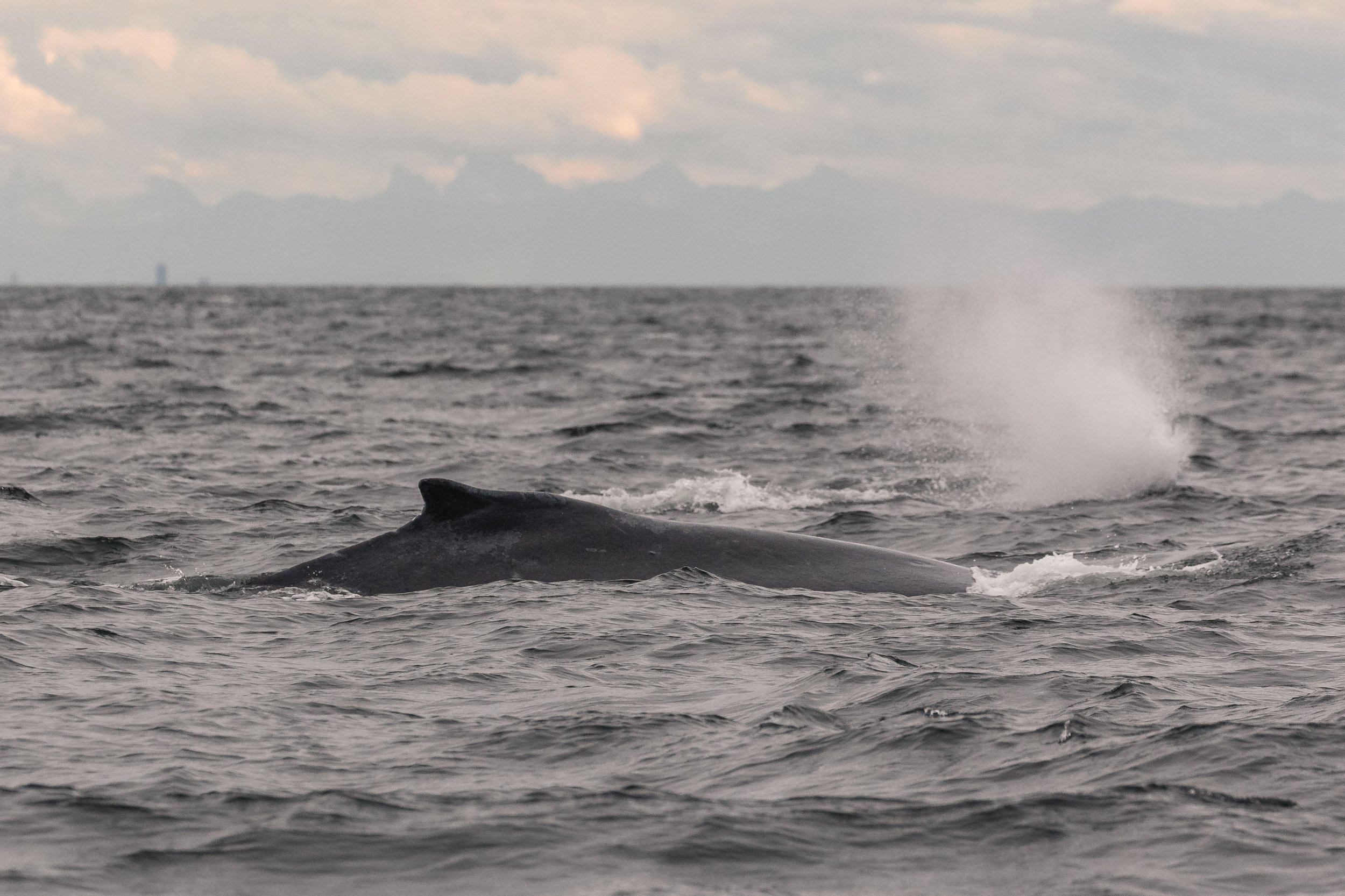
Turkey’s dorsal as another blows beside. Photo by Jordan Robinson.
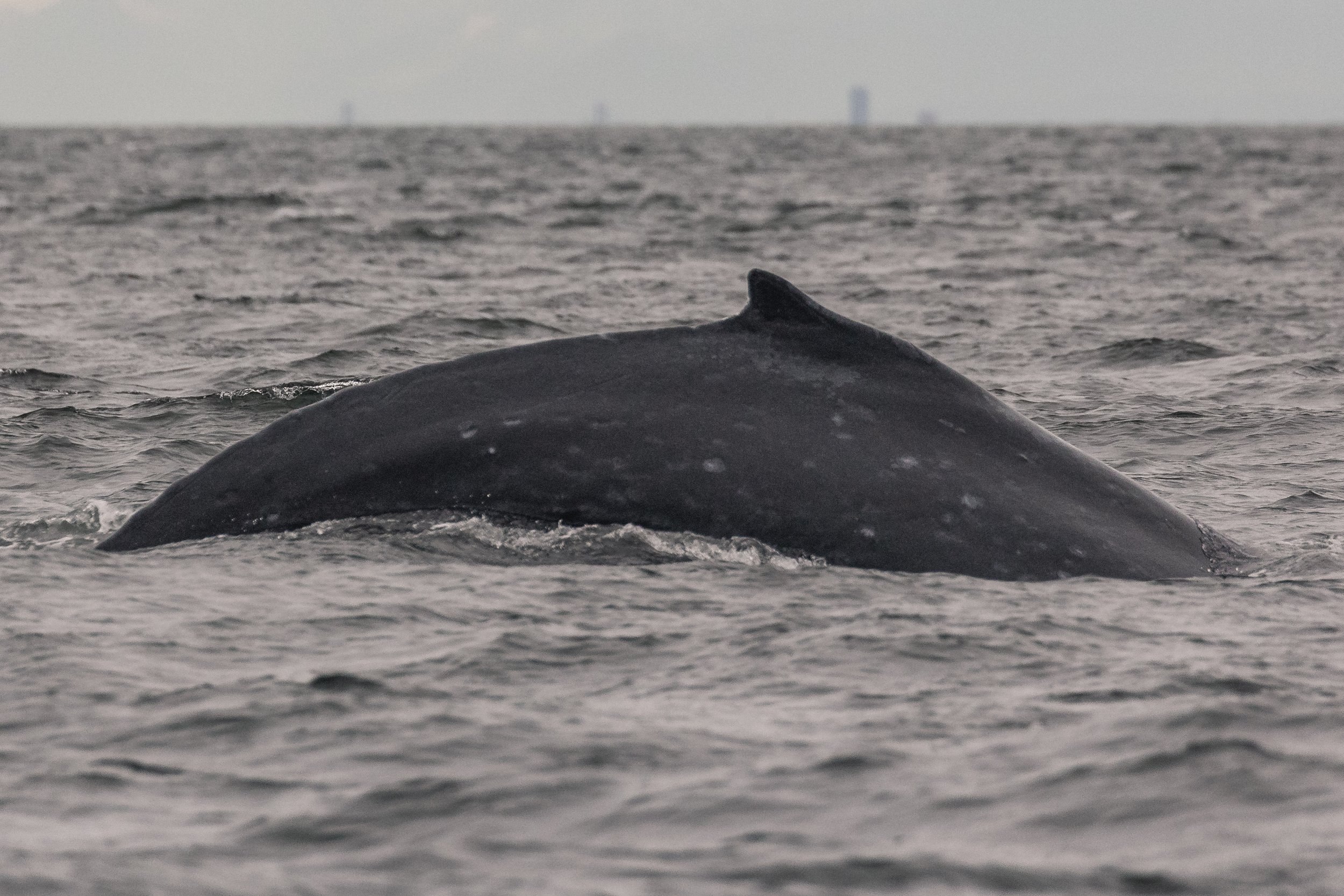
Turkey arching to dive. Photo by Jordan Robinson.
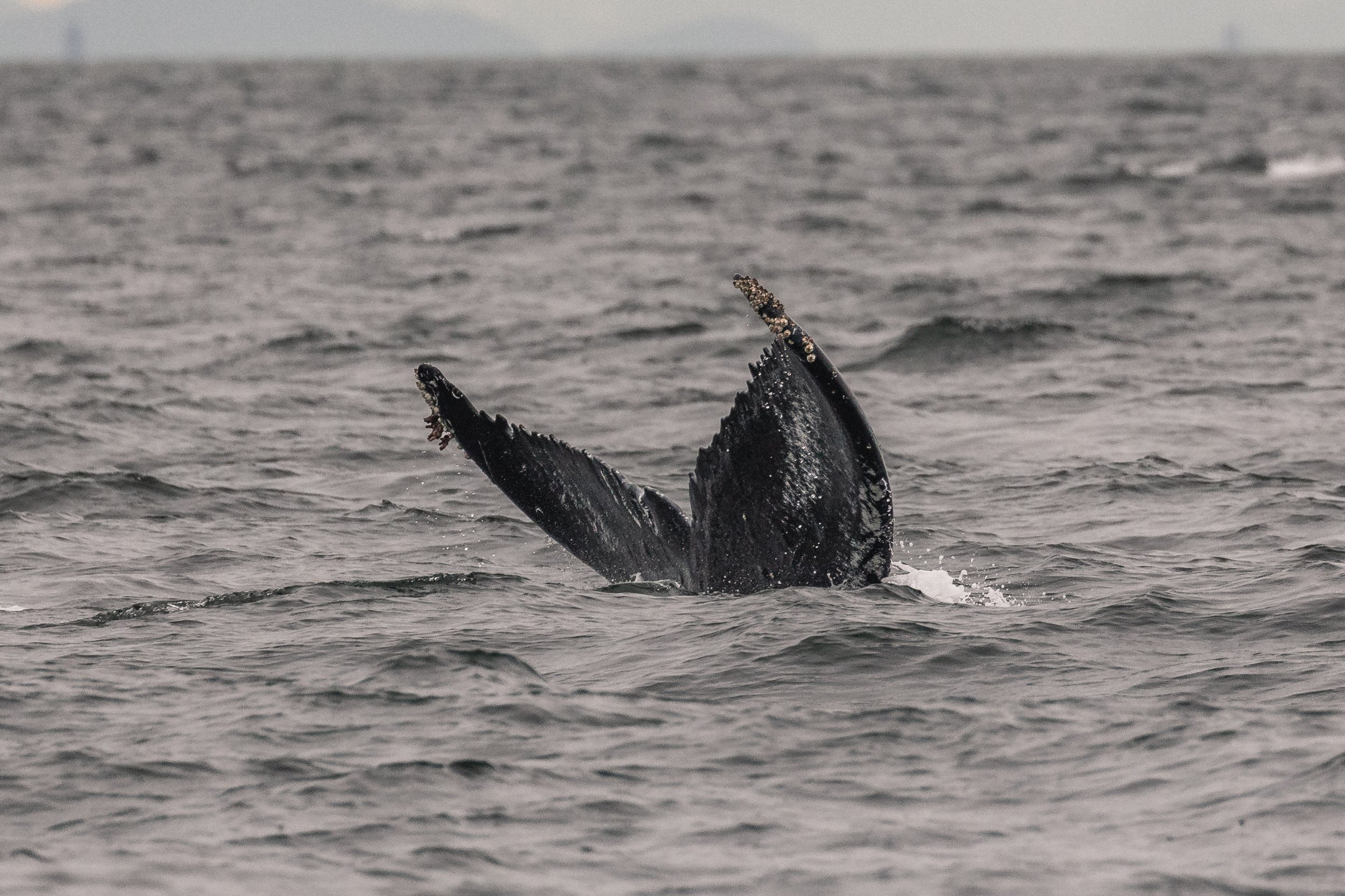
Turkey’s flukes. Photo by Jordan Robinson.
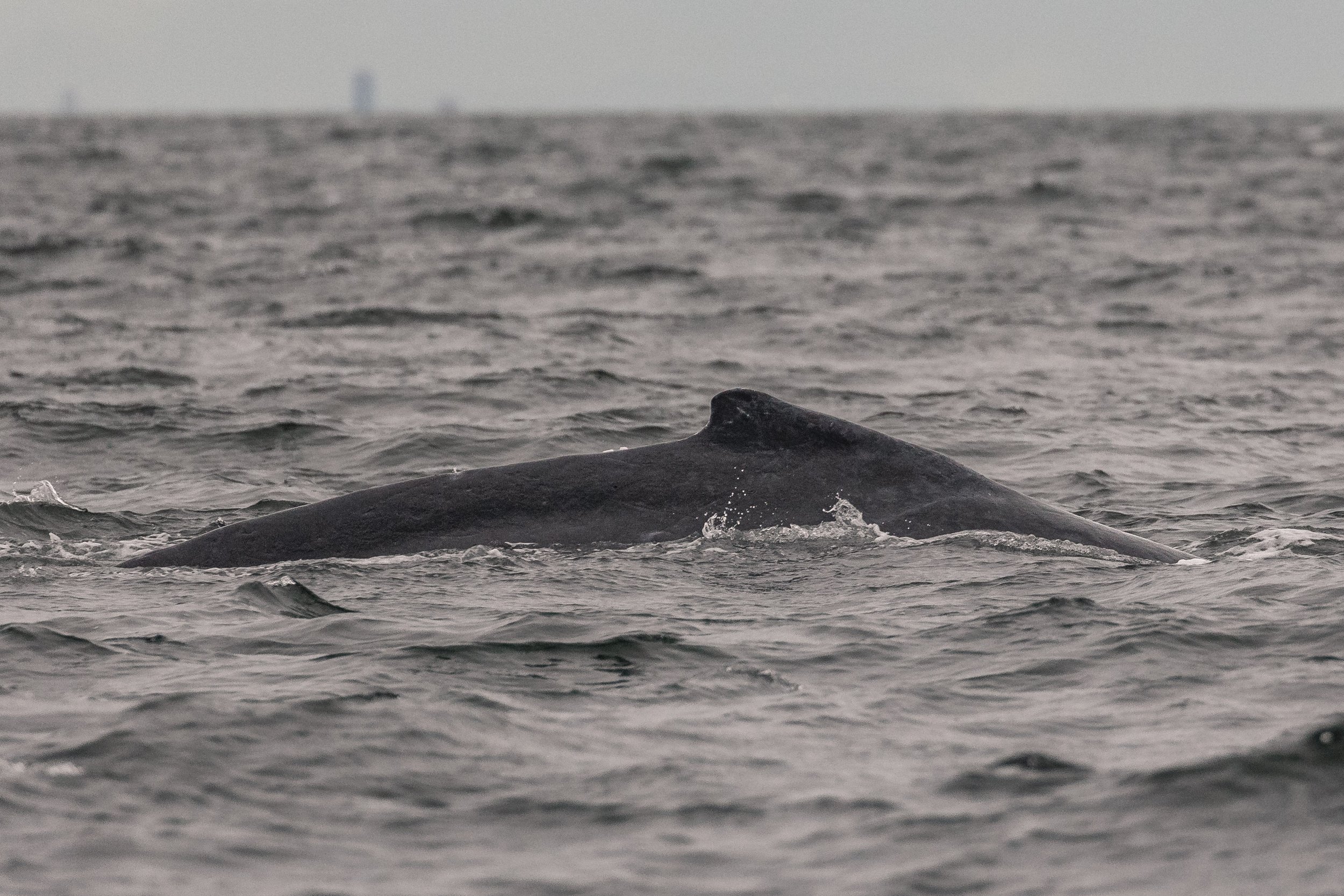
Incognito’s dorsal fin. Photo by Jordan Robinson.
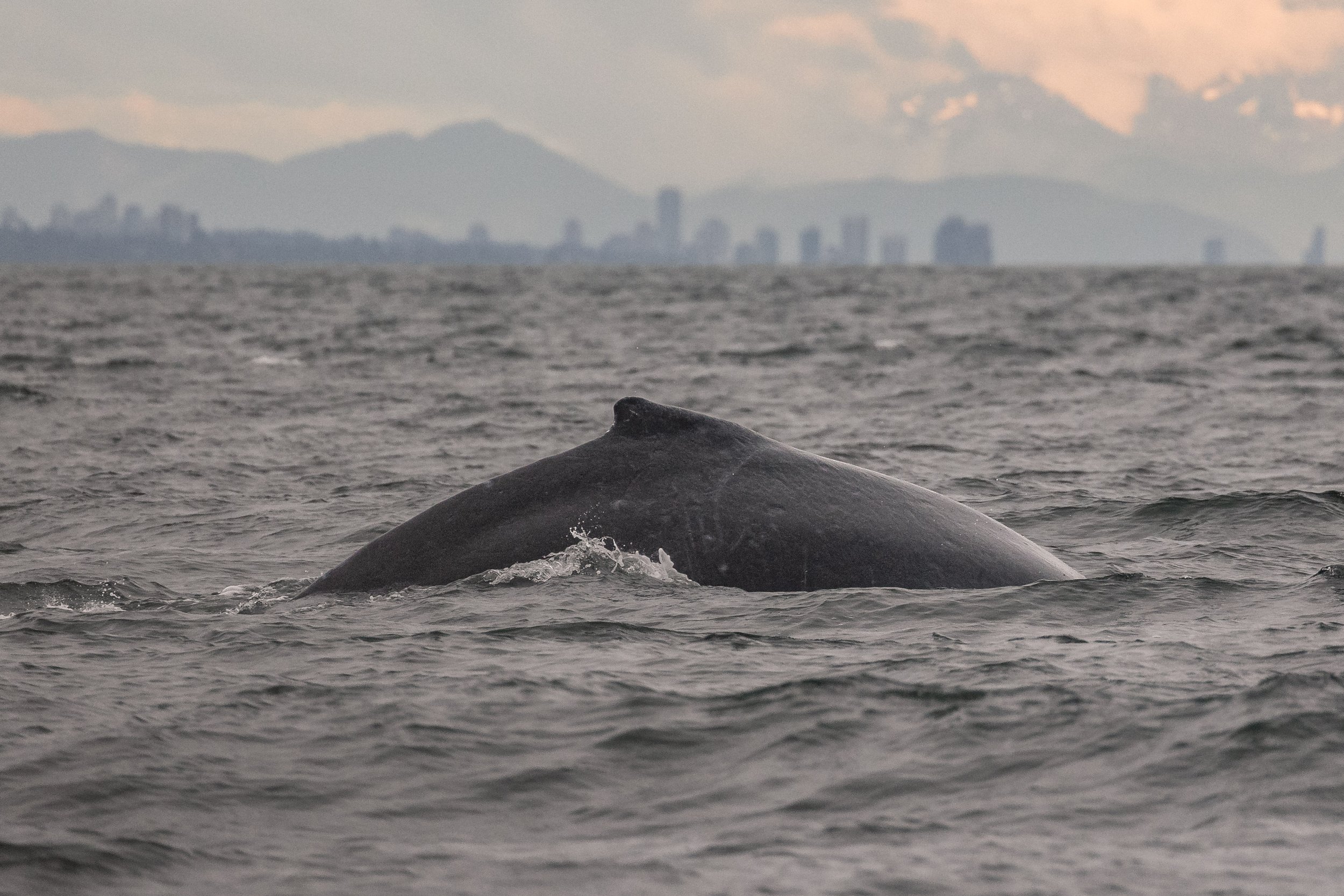
Incognito with Vancouver in the background. Photo by Jordan Robinson.
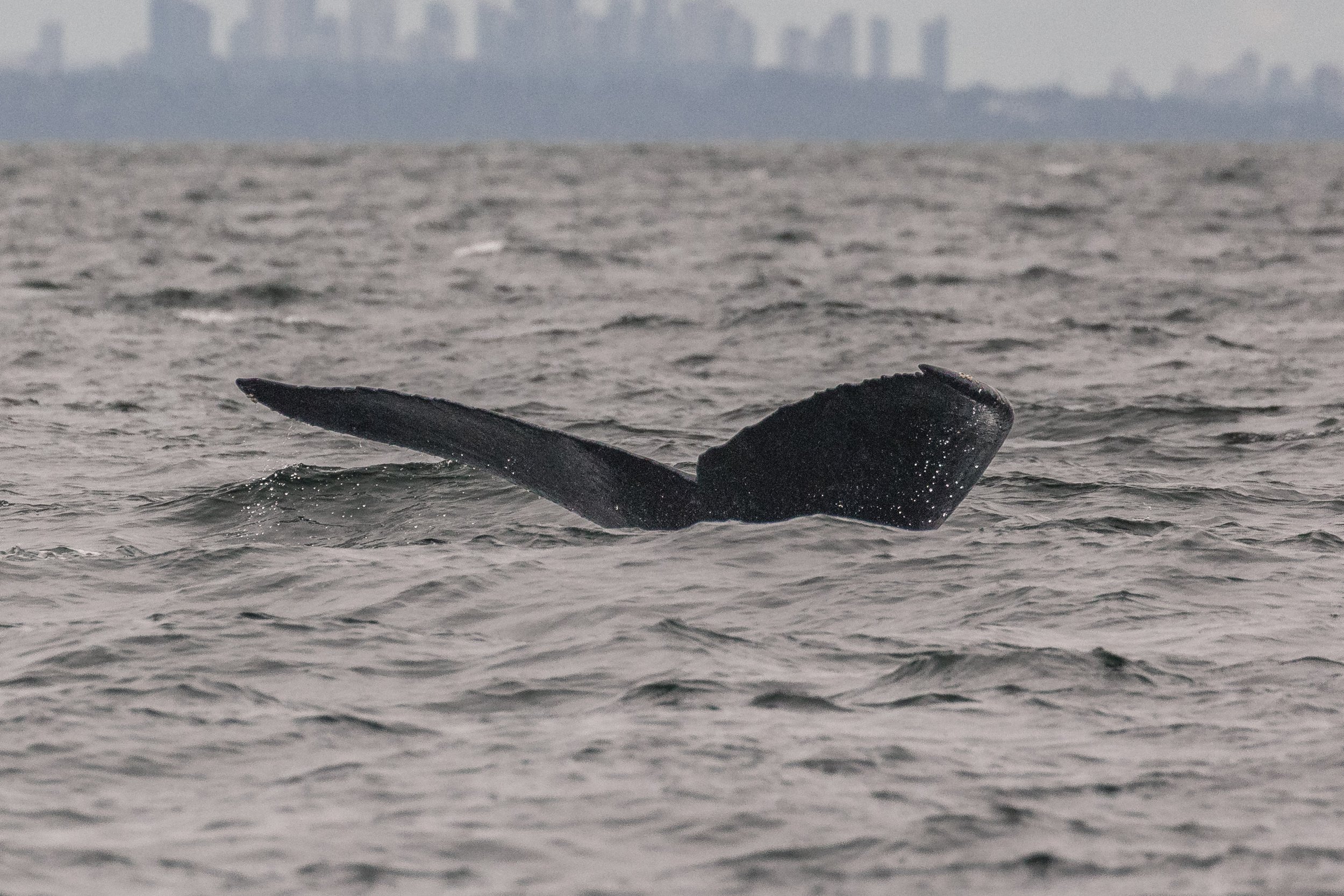
Incognito going down. Photo by Jordan Robinson.
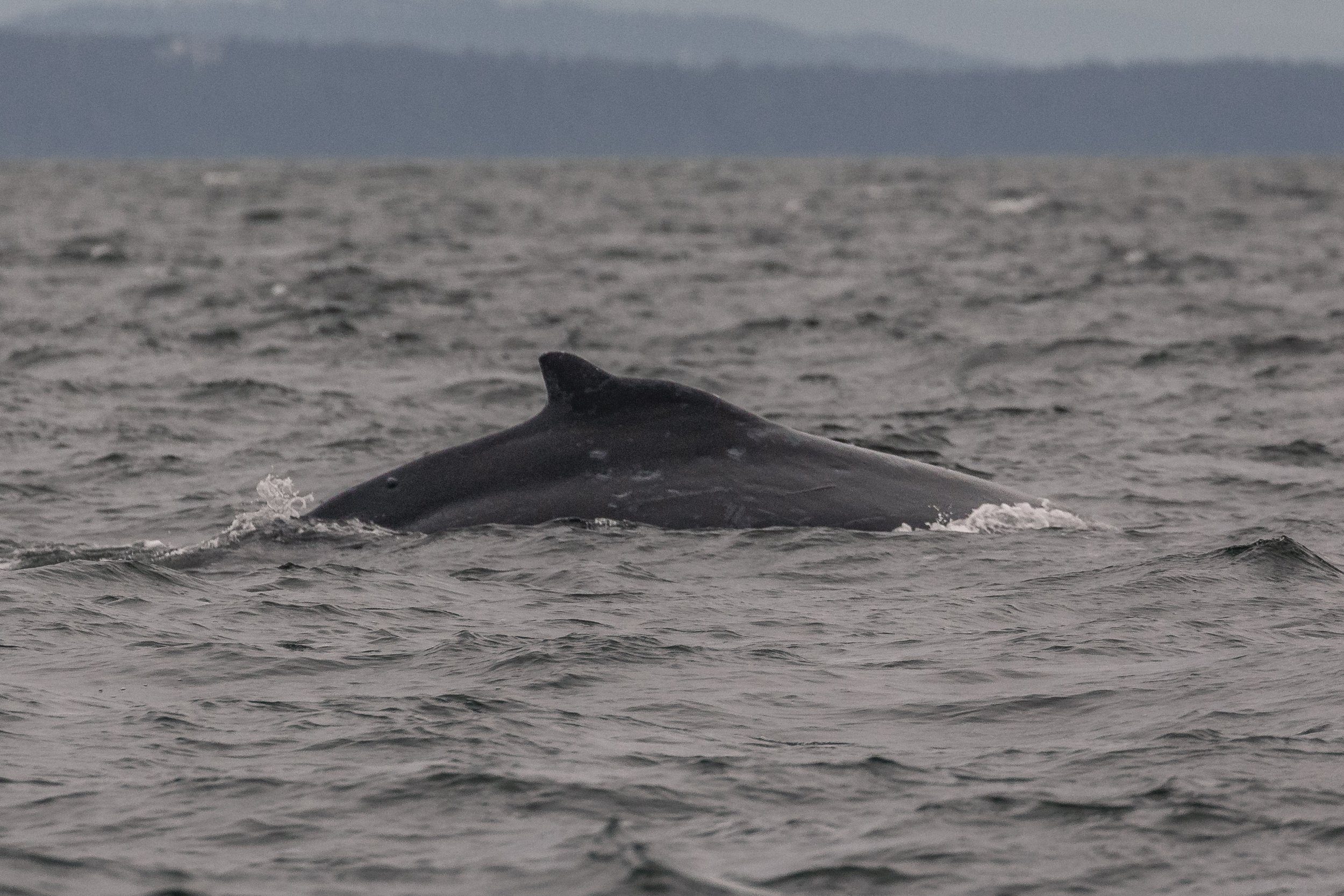
A dorsal from Olympus. Photo by Jordan Robinson.
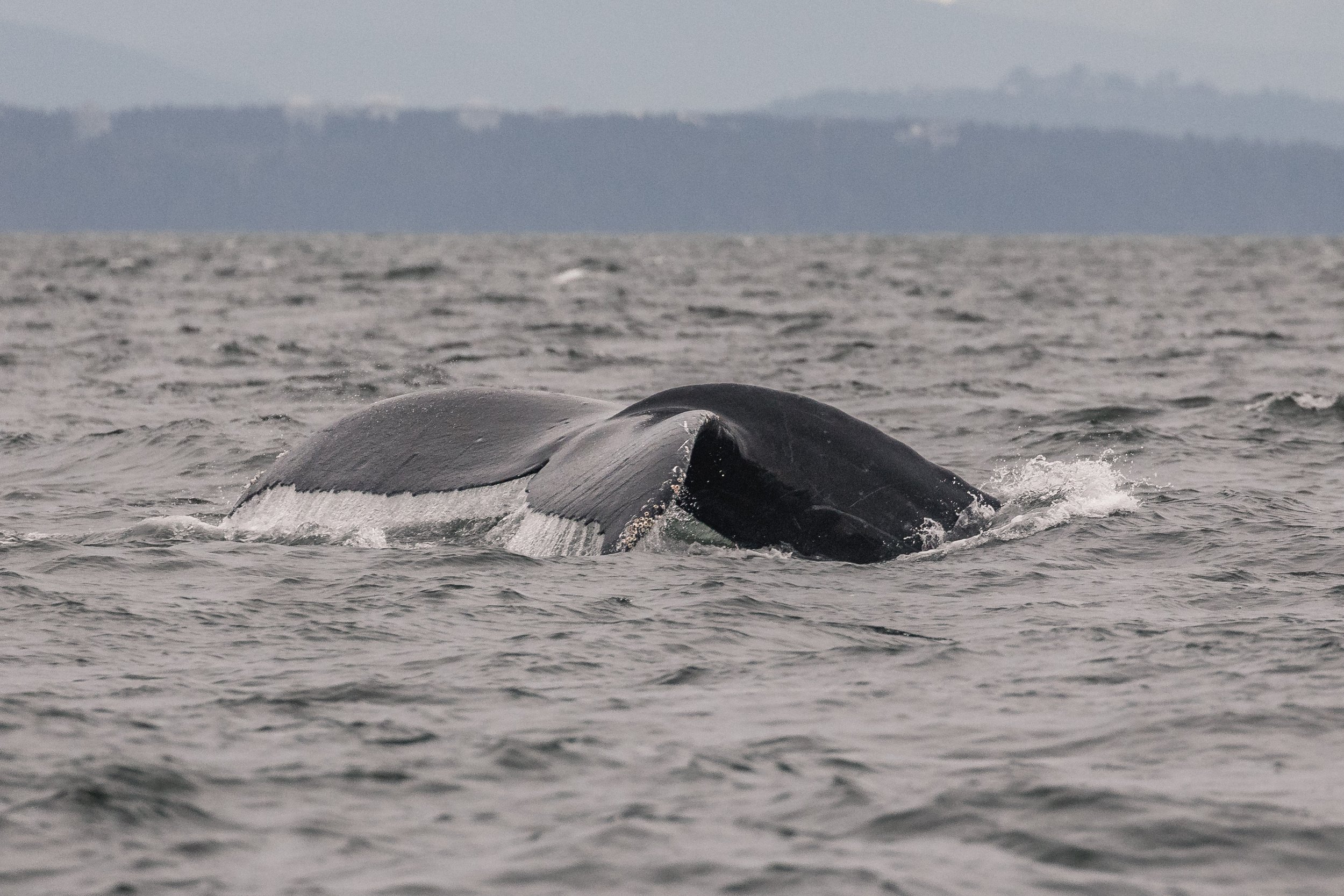
Olympus with a fluke waterfall. Photo by Jordan Robinson.
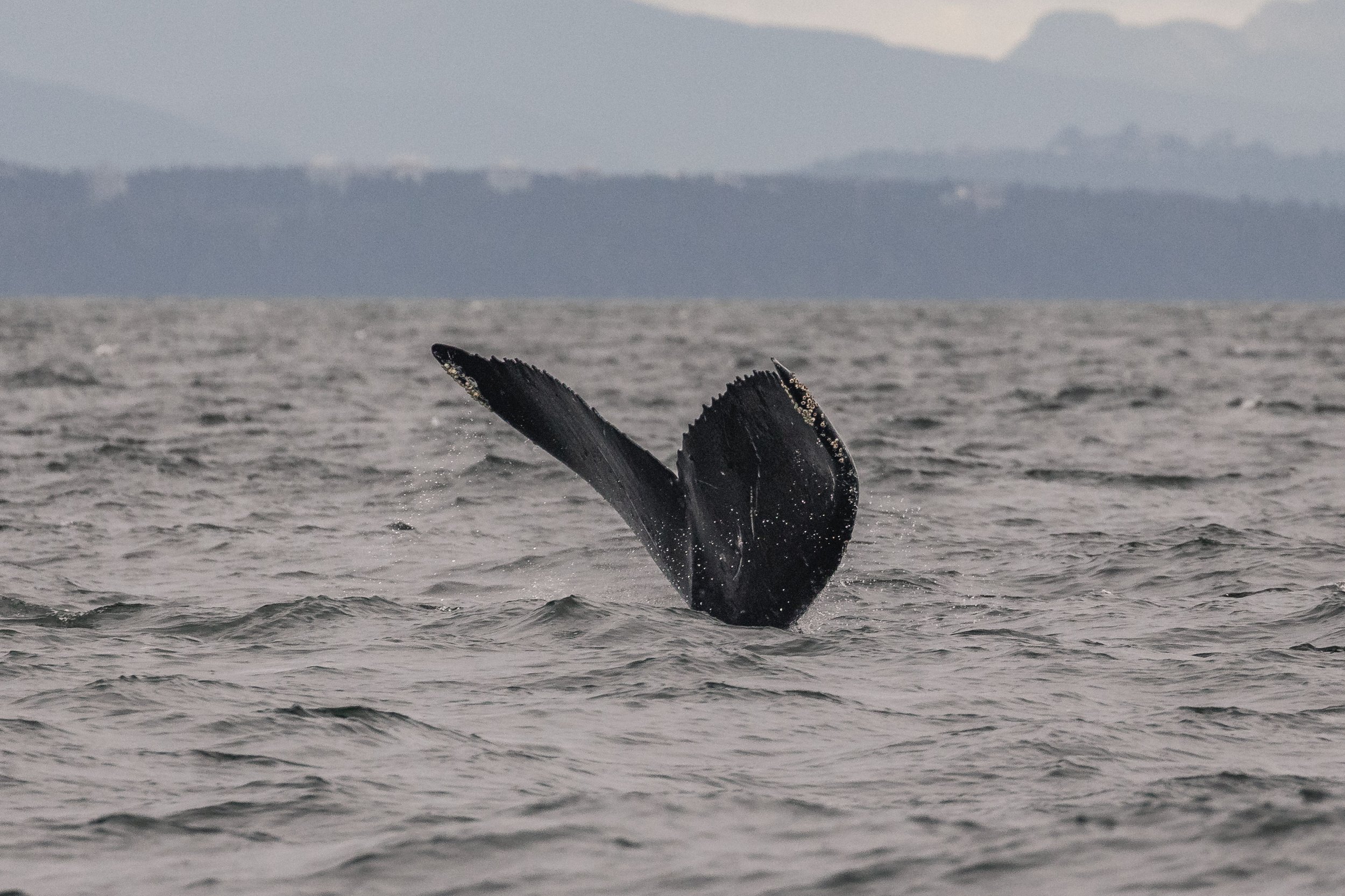
Olympus fluking for a dive. Photo by Jordan Robinson.
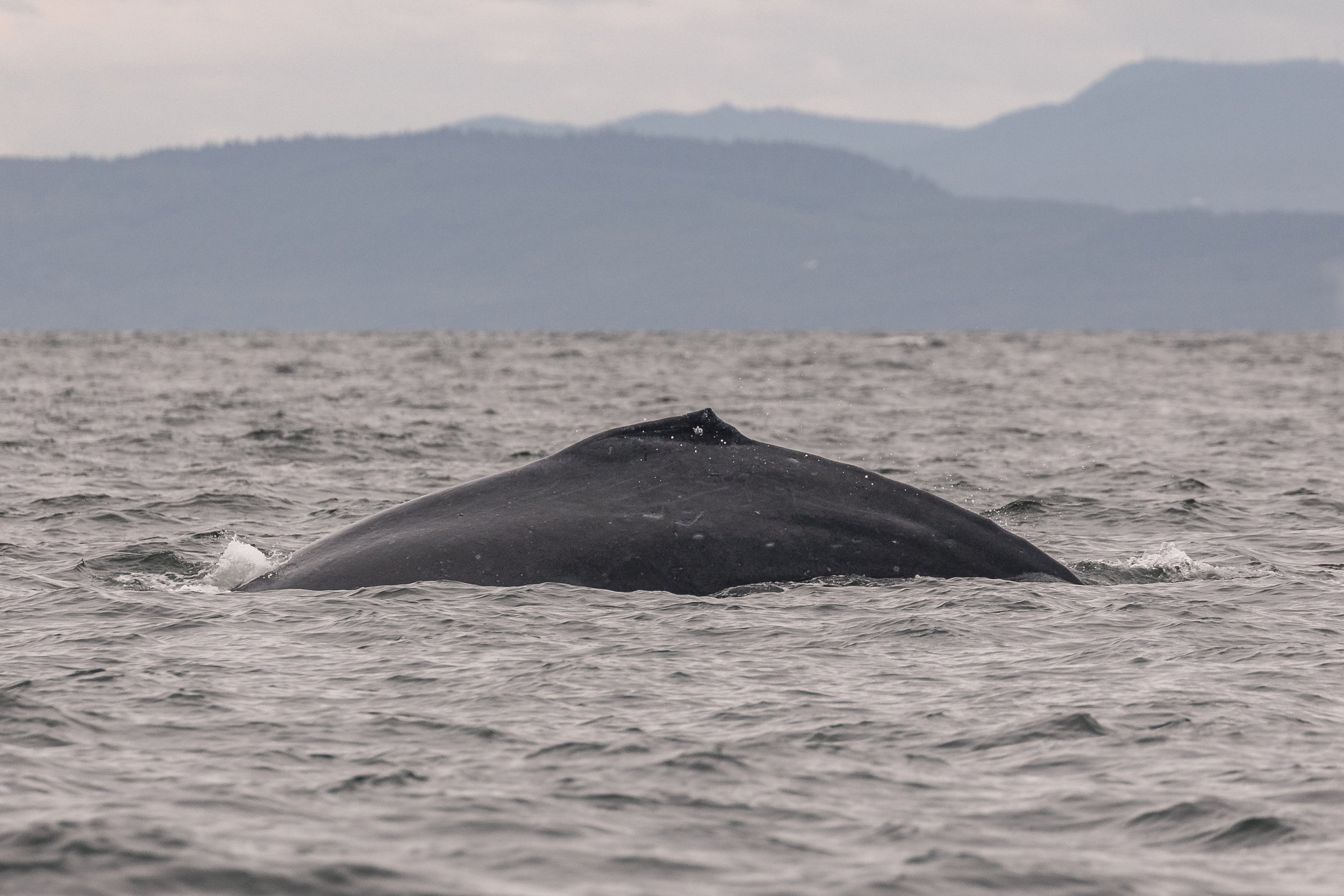
Valiant’s dorsal fin. Photo by Jordan Robinson.
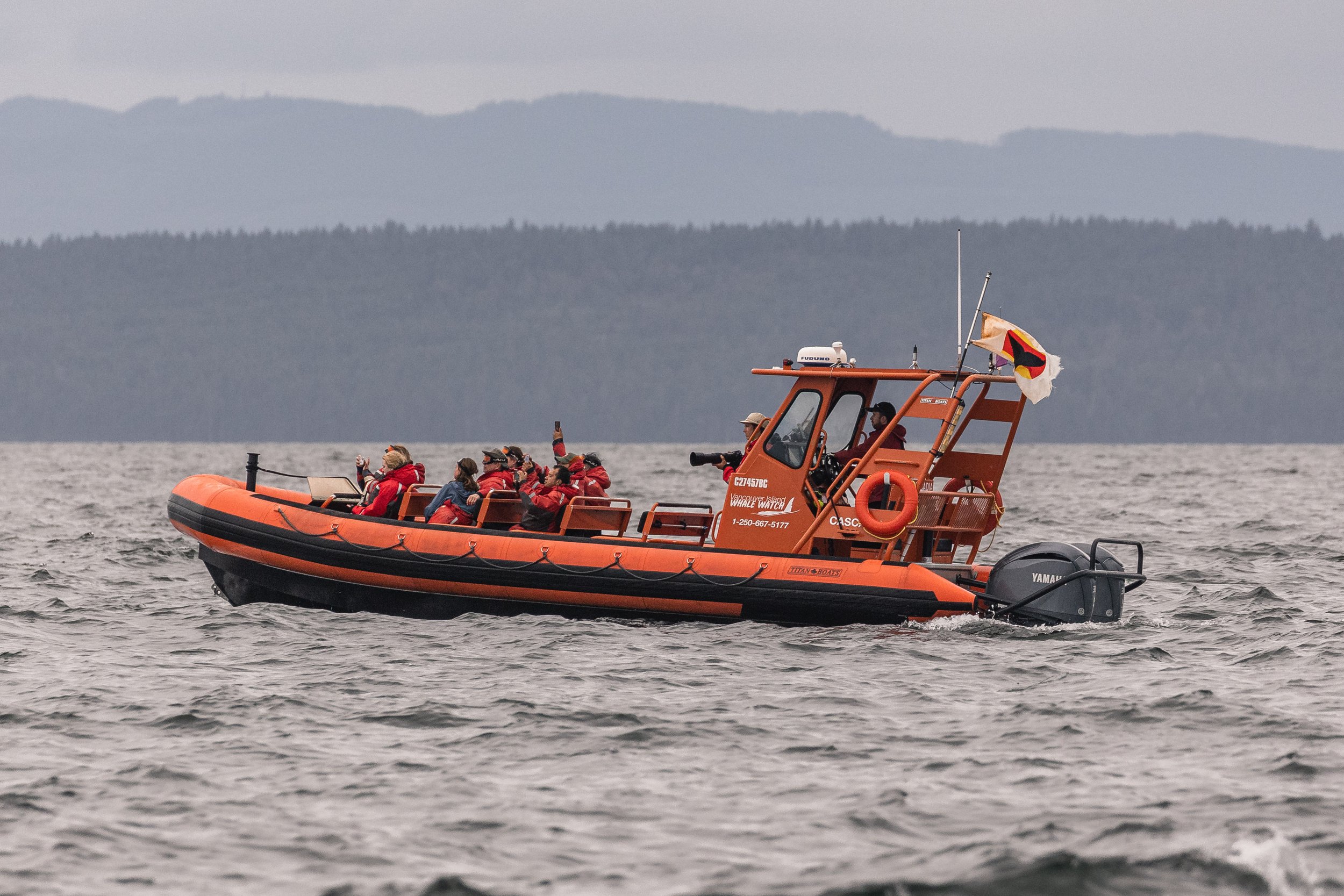
Cascadia watching the humpbacks. Photo by Jordan Robinson.
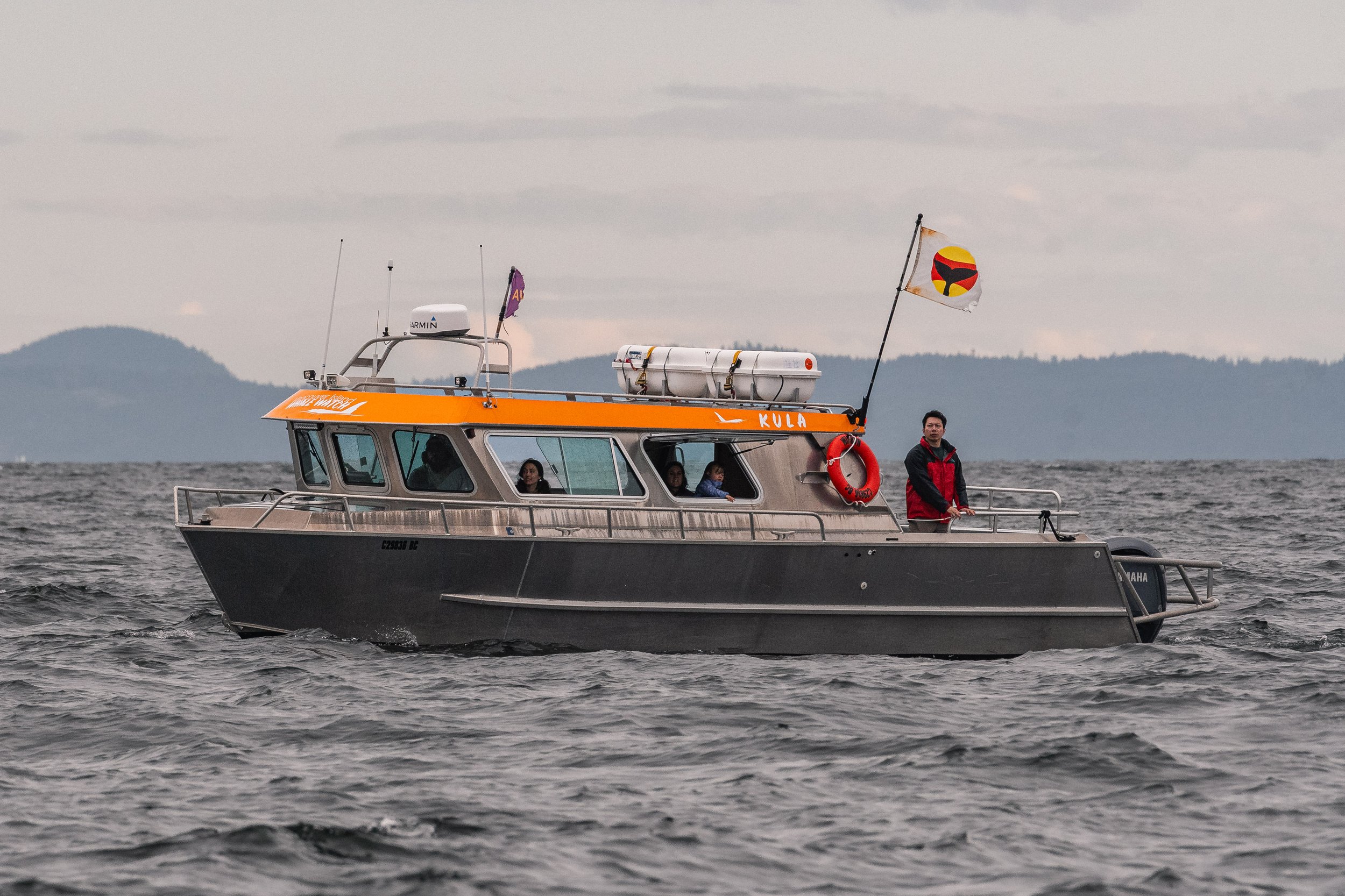
Kula with the whales. Photo by Evan Hessels.
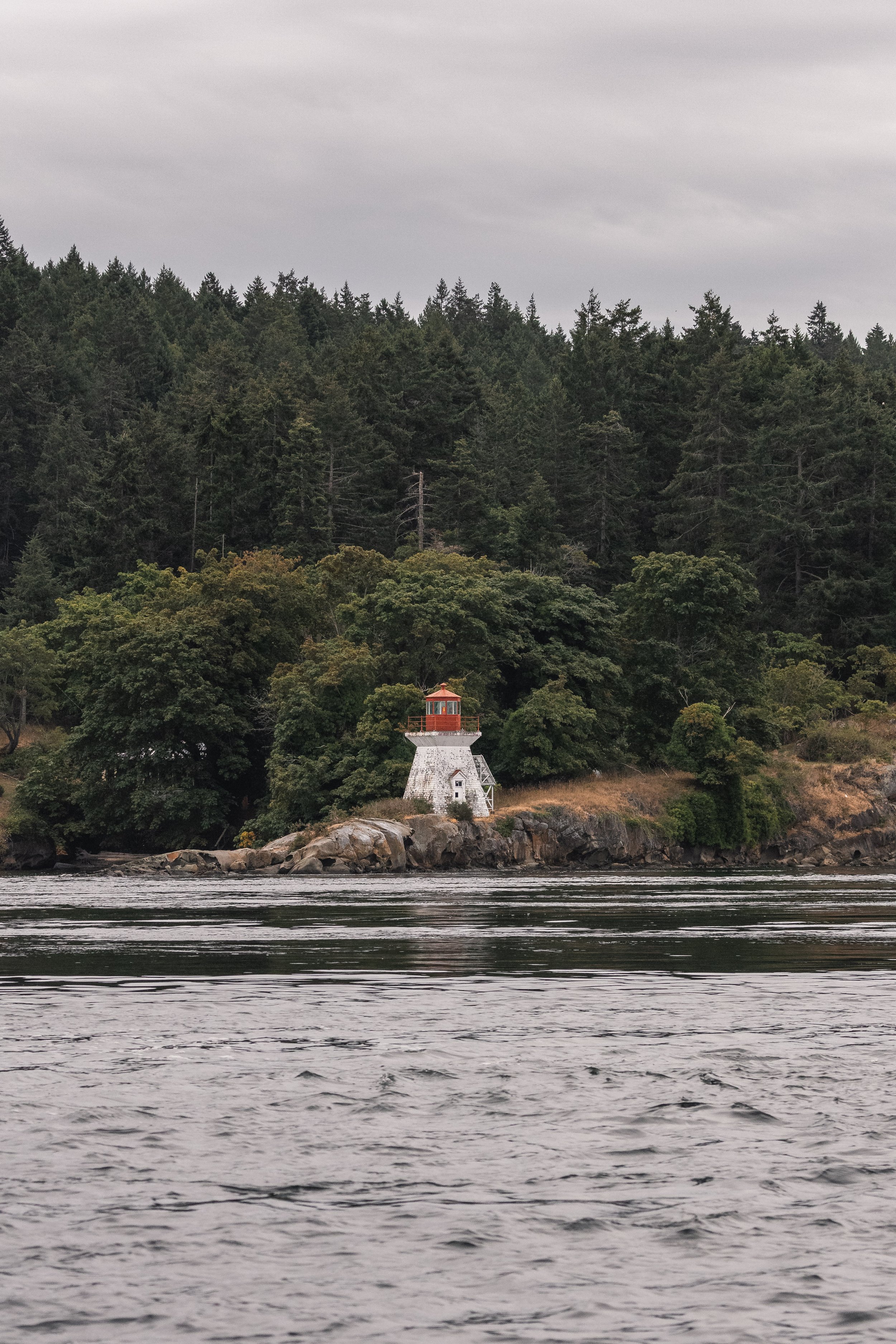
Lighthouse at Poiler Pass. Photo by Jordan Robinson.
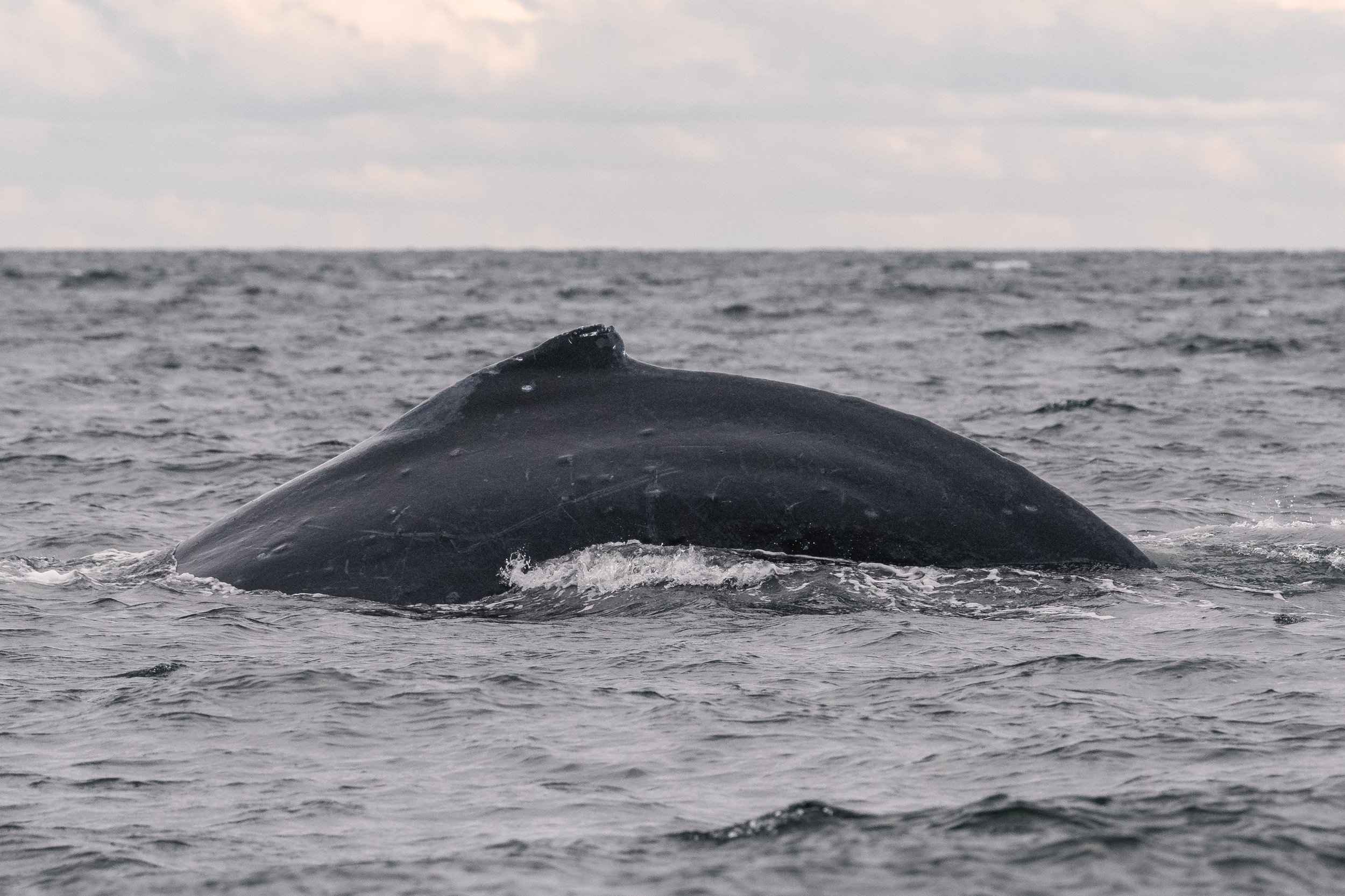
Slice diving. Photo by Evan Hessels.
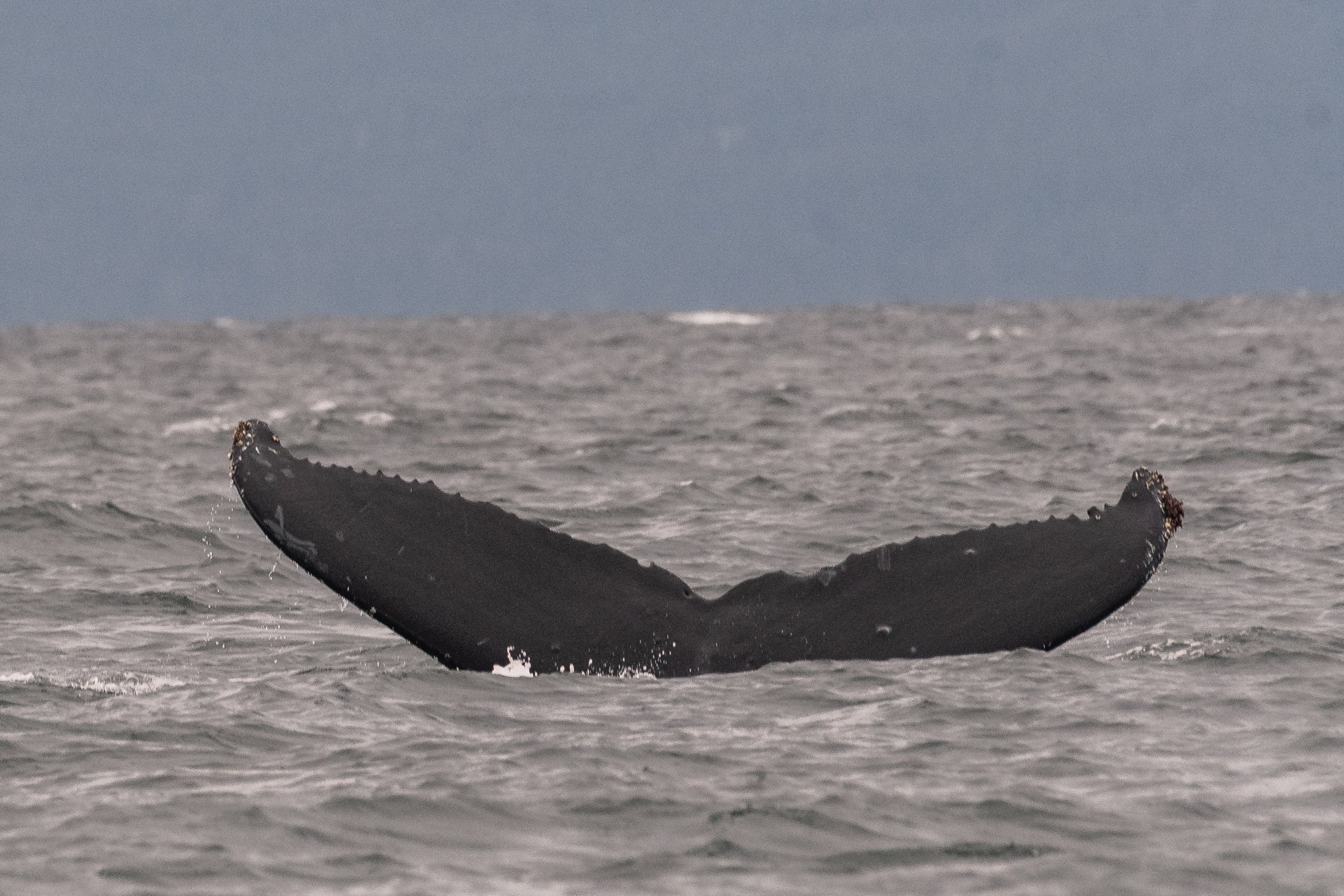
The front side of Turkey’s tail. Photo by Evan Hessels.
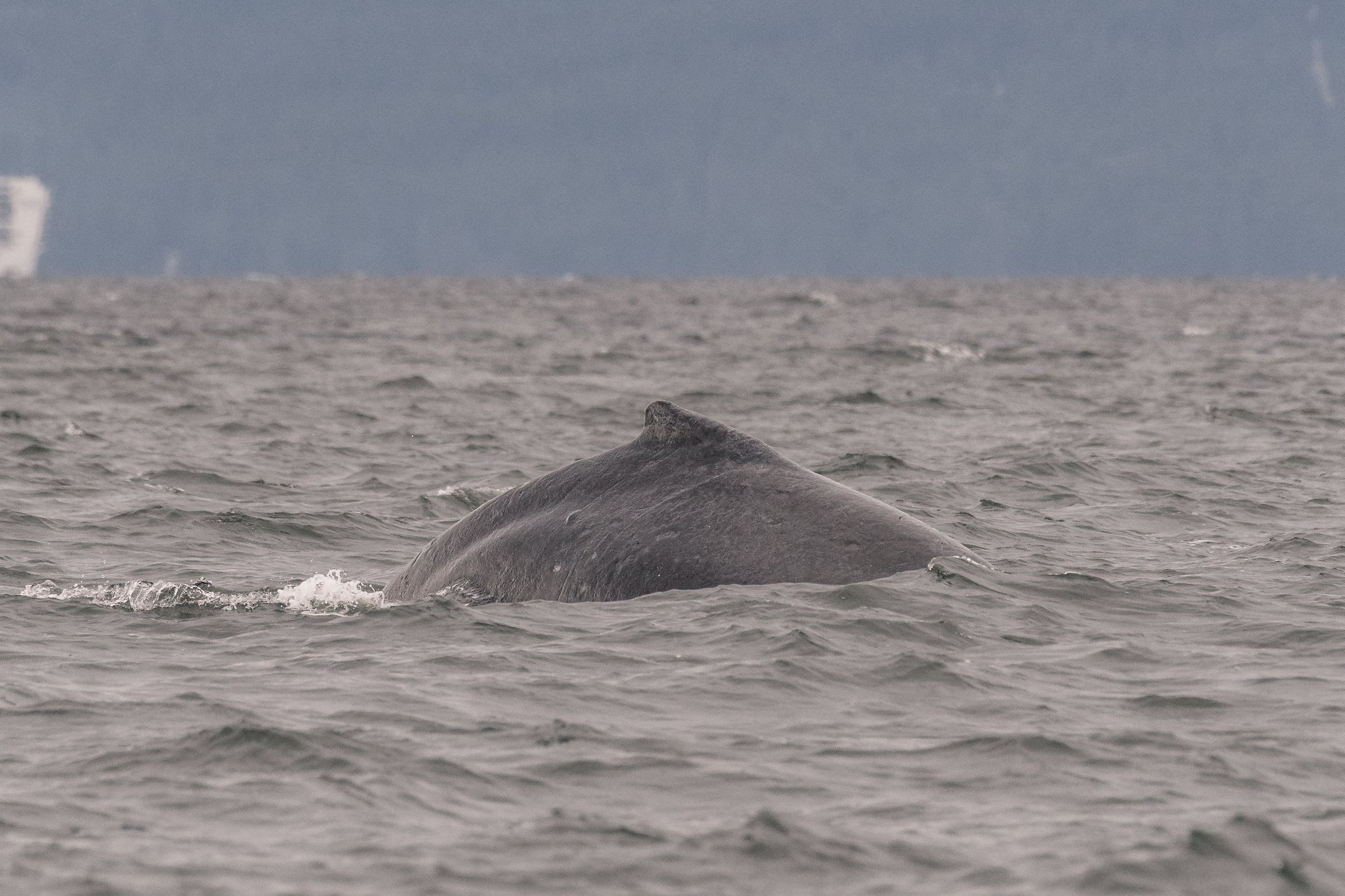
Incognito arching for a dive. Photo by Evan Hessels.
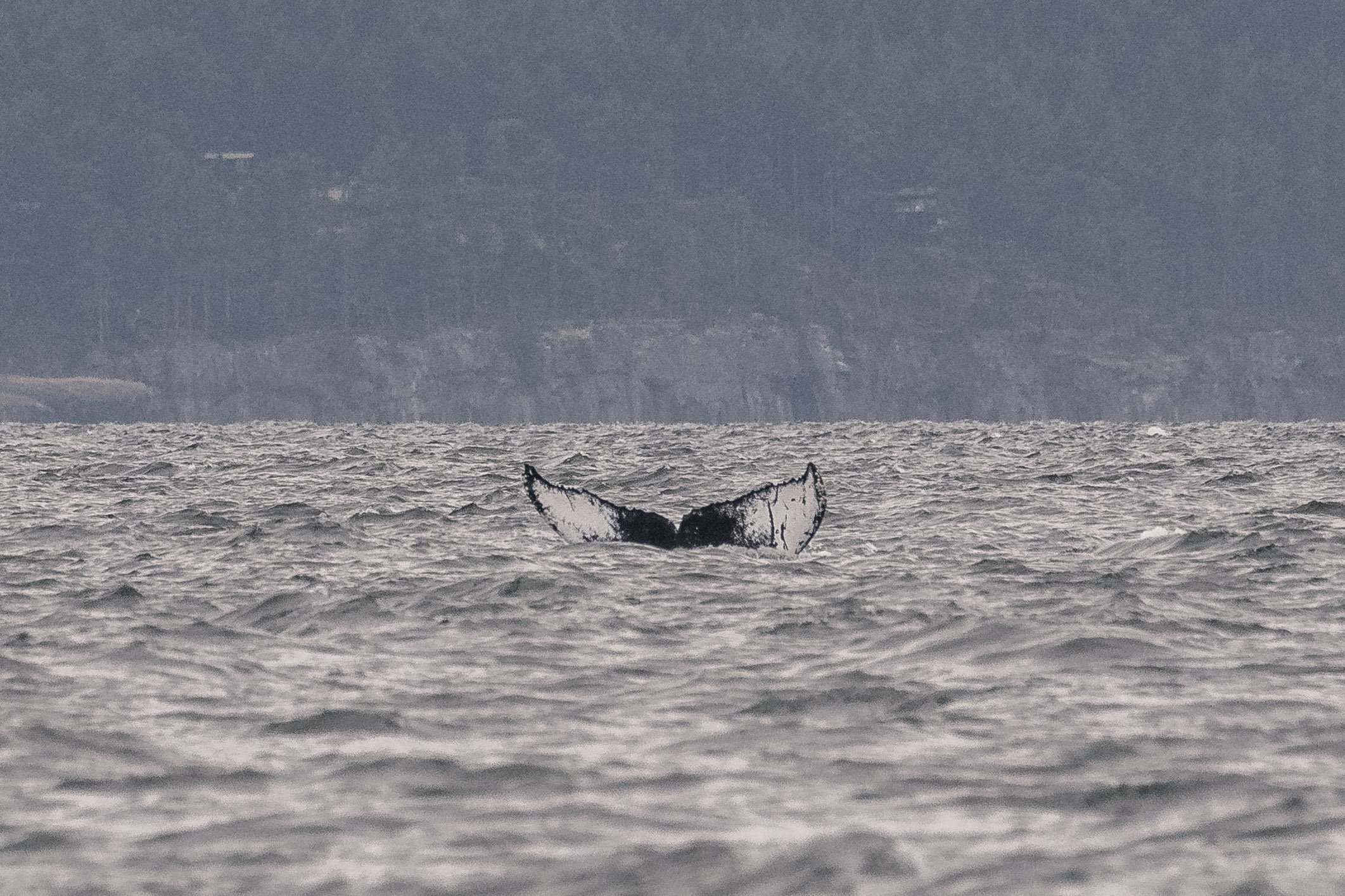
Thunderbolt fluking. Photo by Evan Hessels.
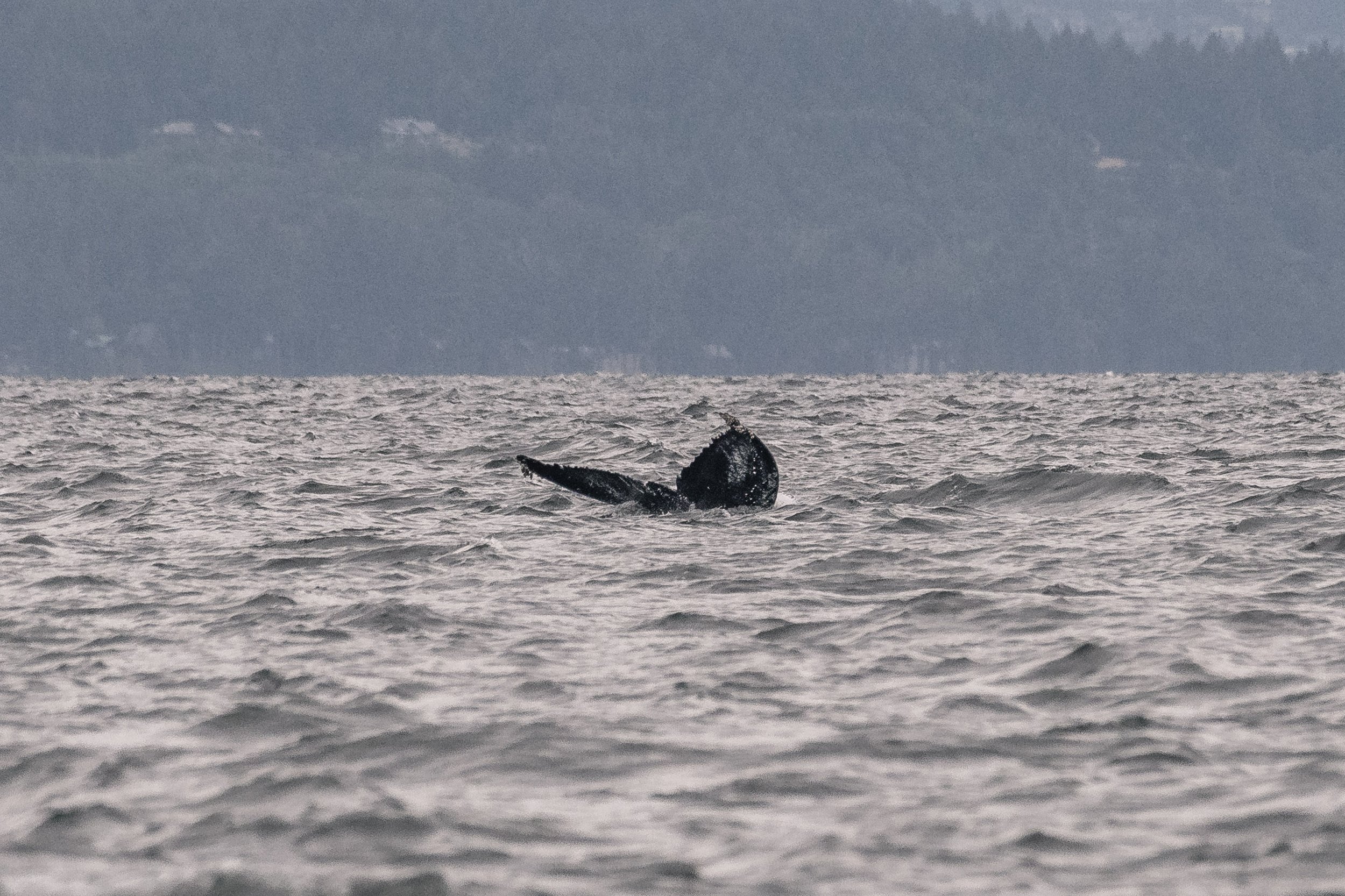
A fluke from Turkey. Photo by Evan Hessels.
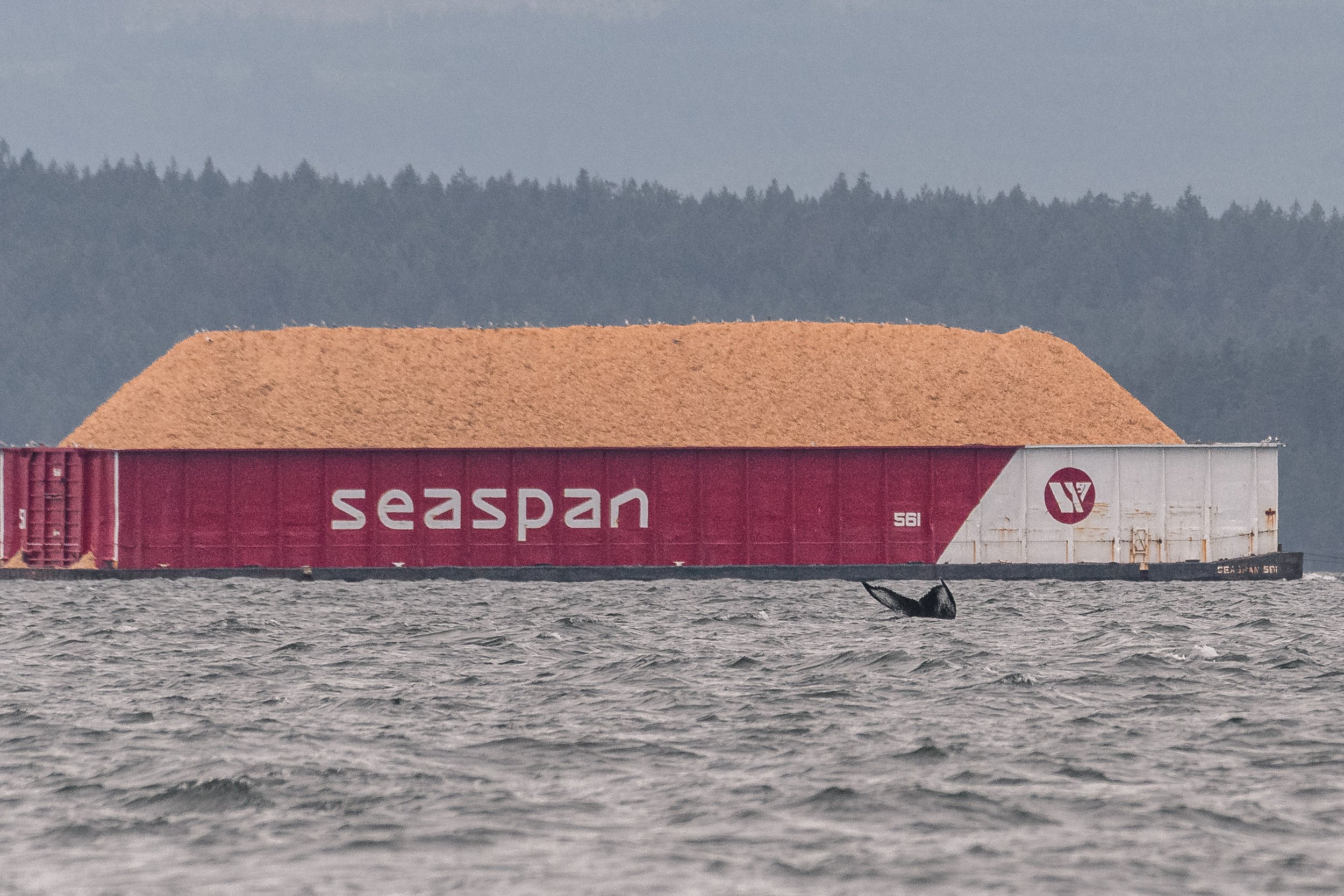
Crackle diving beside the barge. Photo by Evan Hessels.
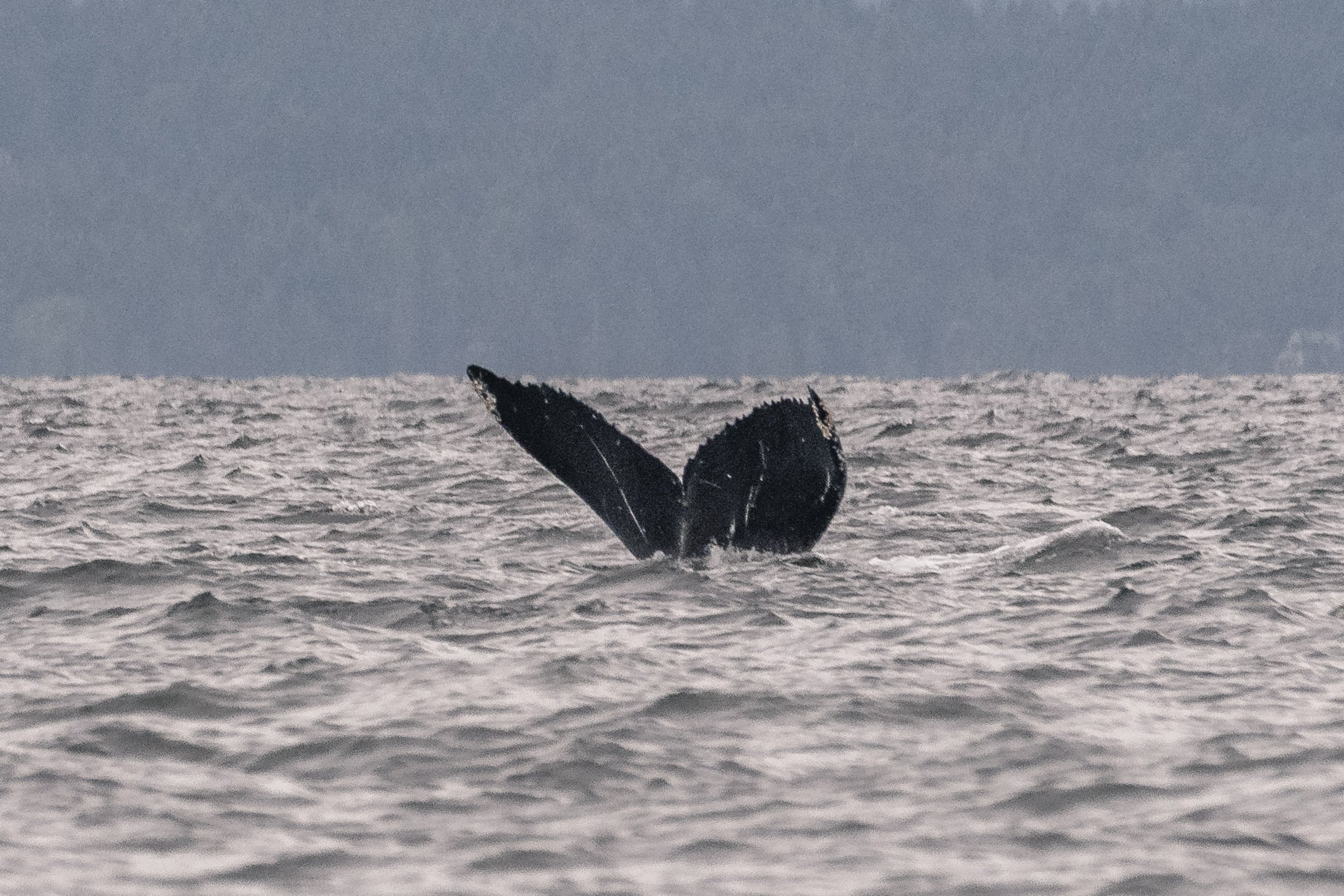
Olympus going down! Photo by Evan Hessels.
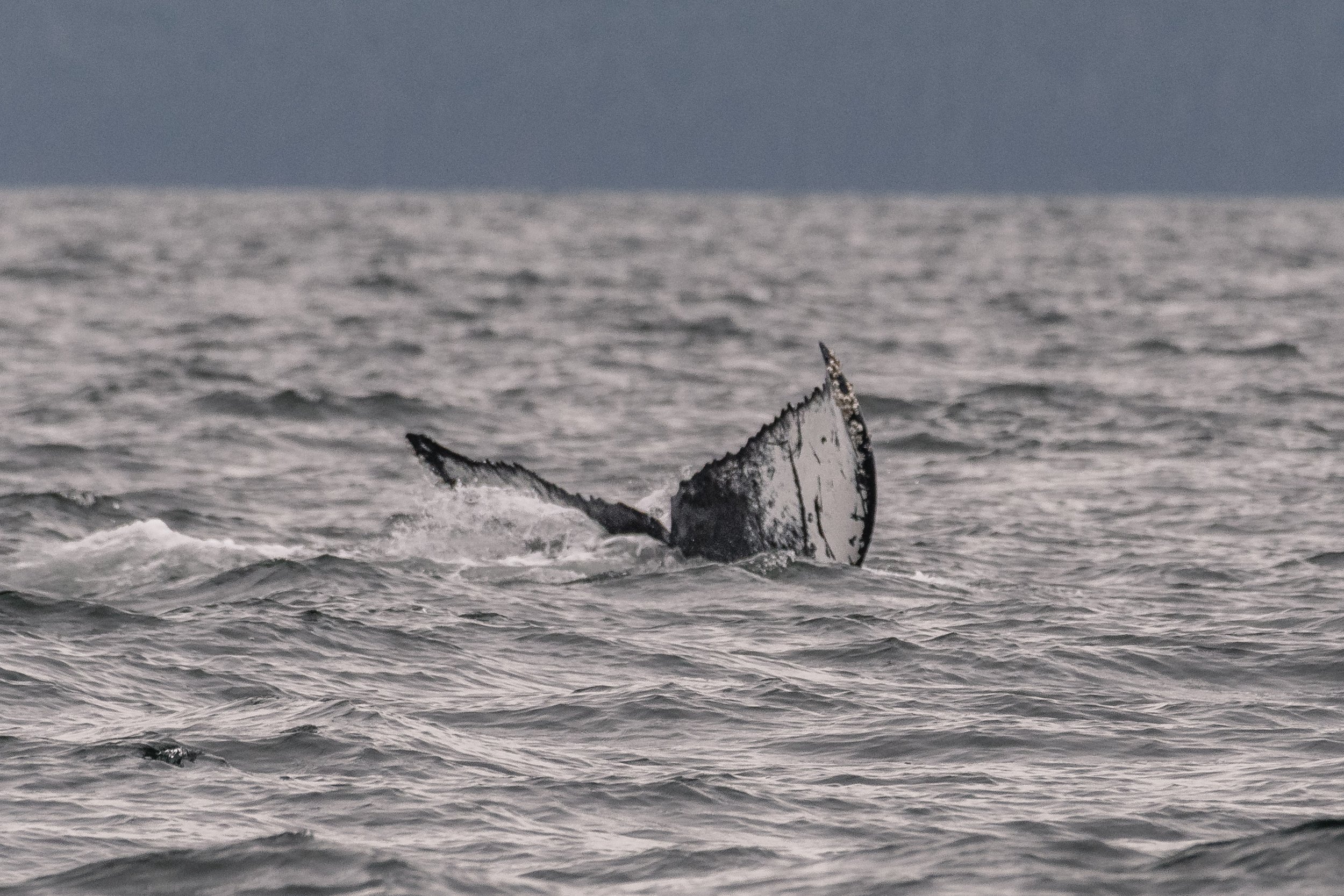
Thunderbolt in the waves. Photo by Evan Hessels.
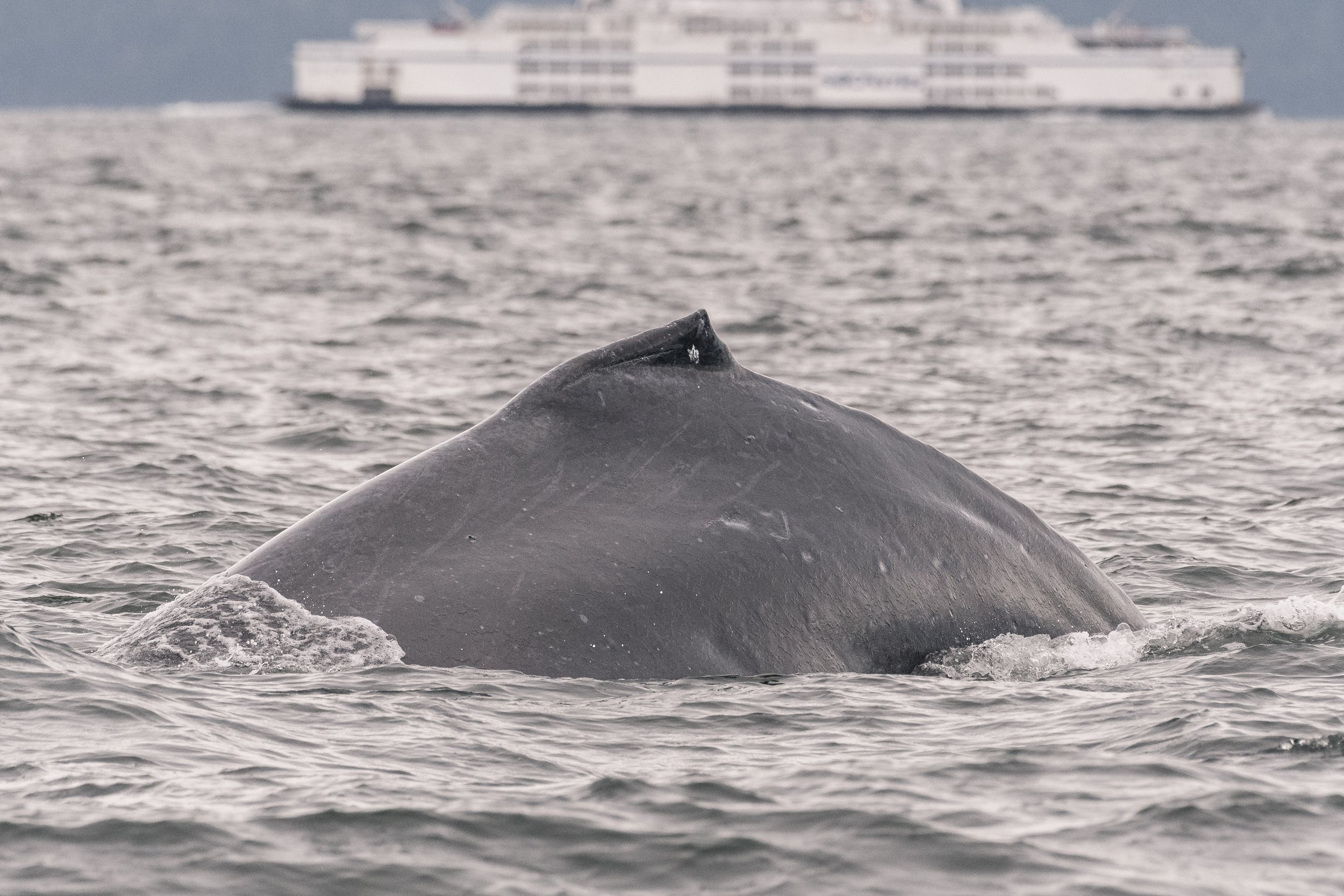
Valiant arching to fluke. Photo by Evan Hessels.
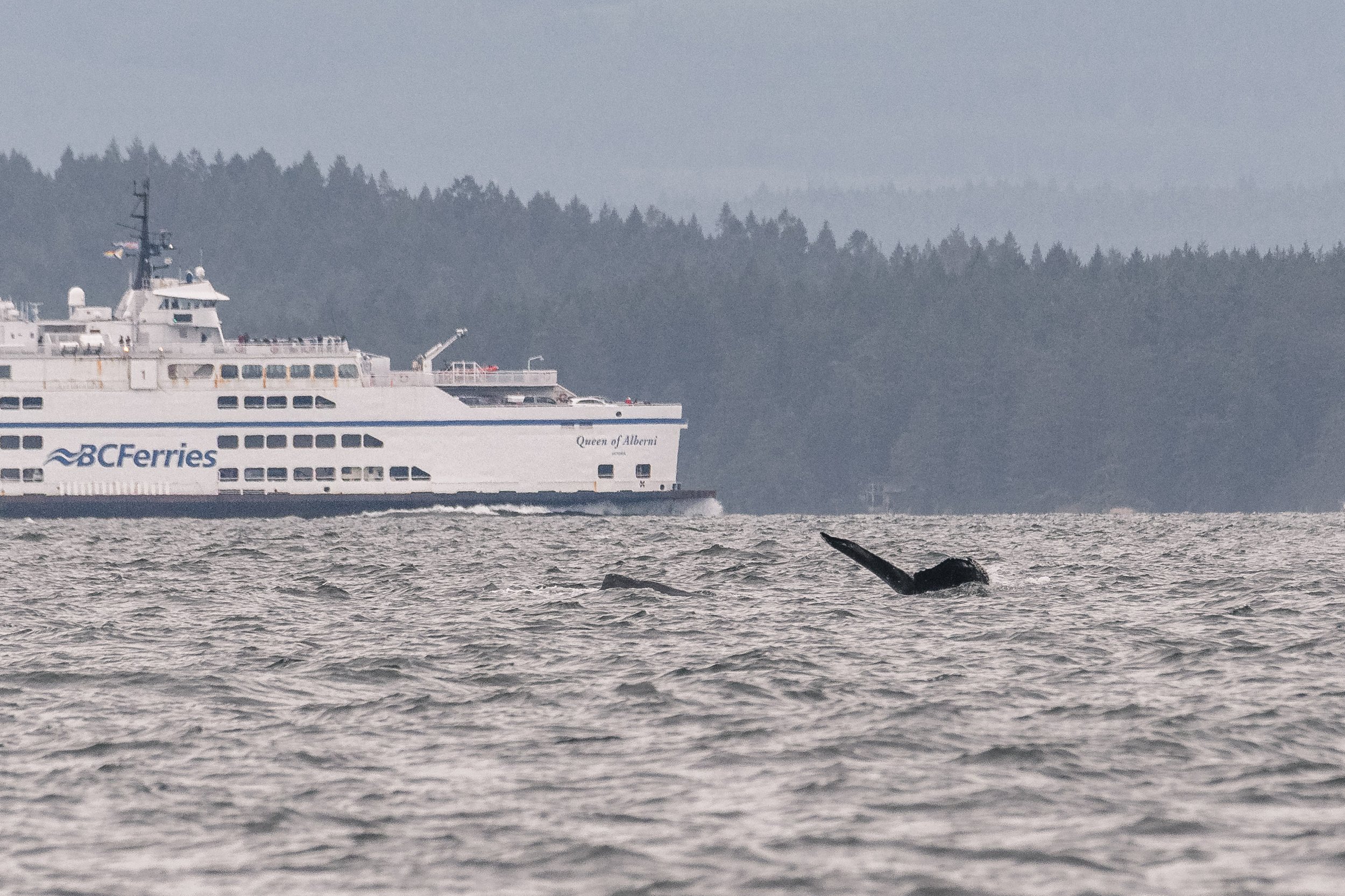
Slice fluking in front of Hammer’s dorsal fin. Photo by Evan Hessels.
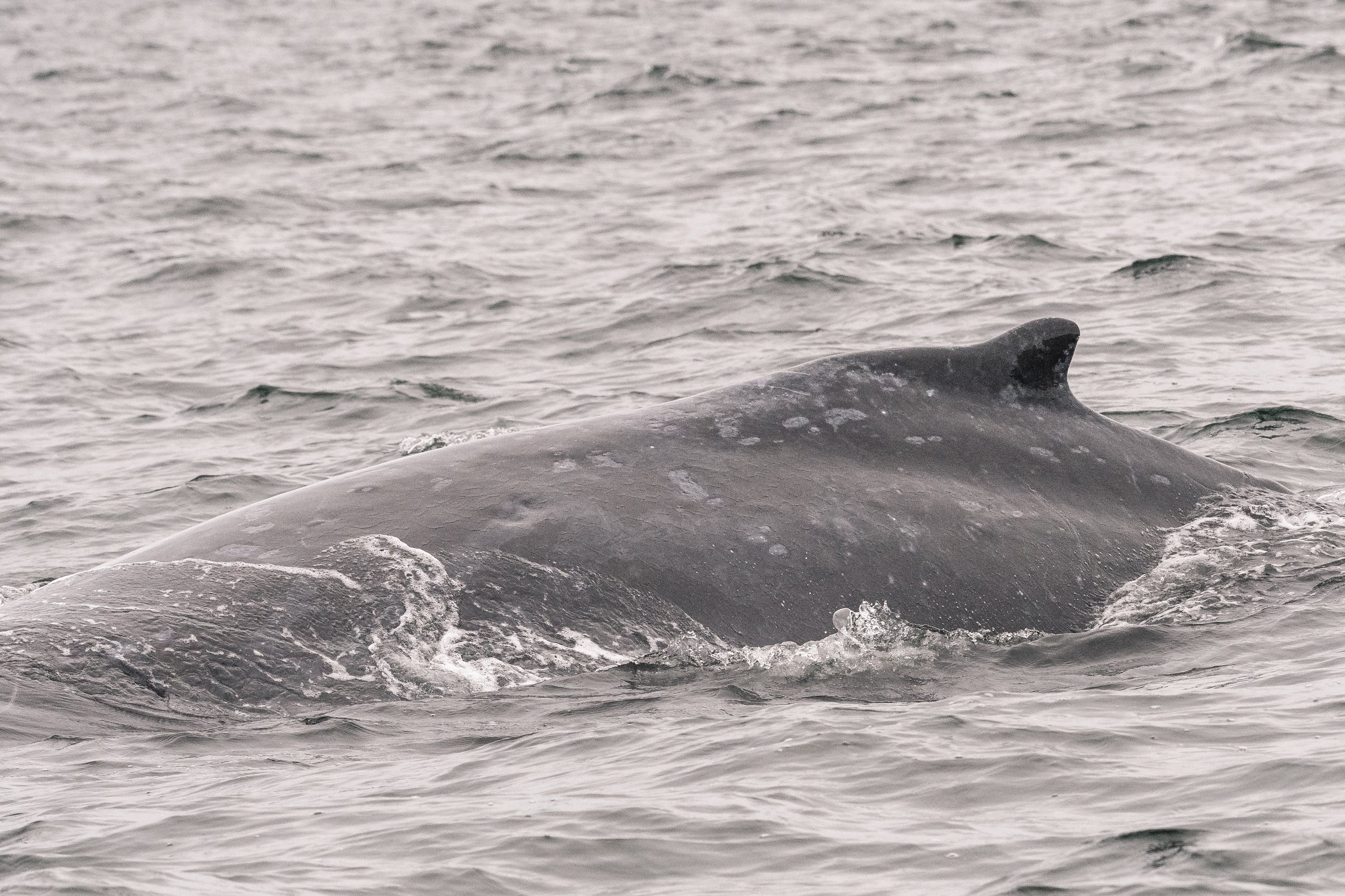
Olympus surfacing. Photo by Evan Hessels.
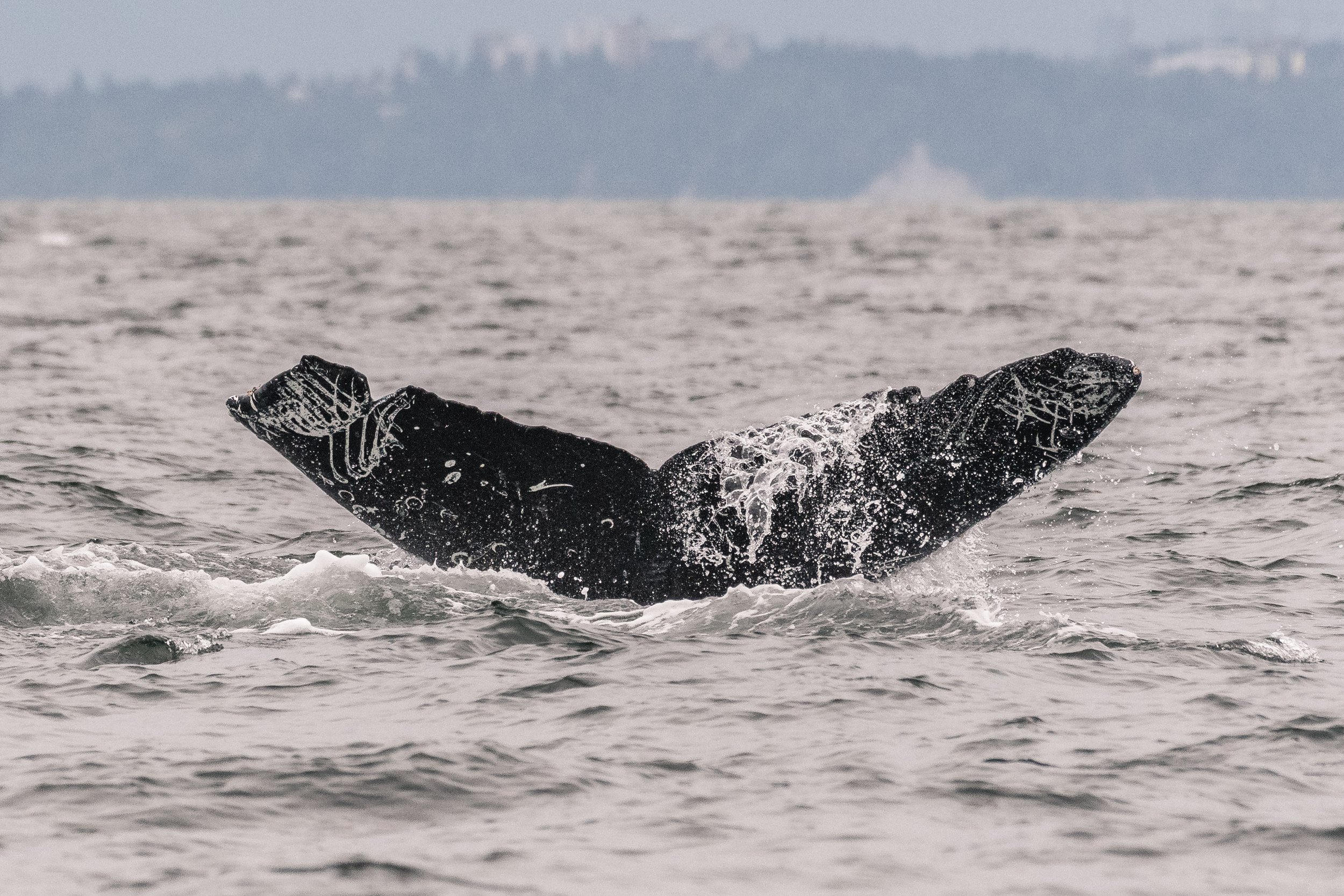
Valiant’s unique tail. Photo by Evan Hessels.
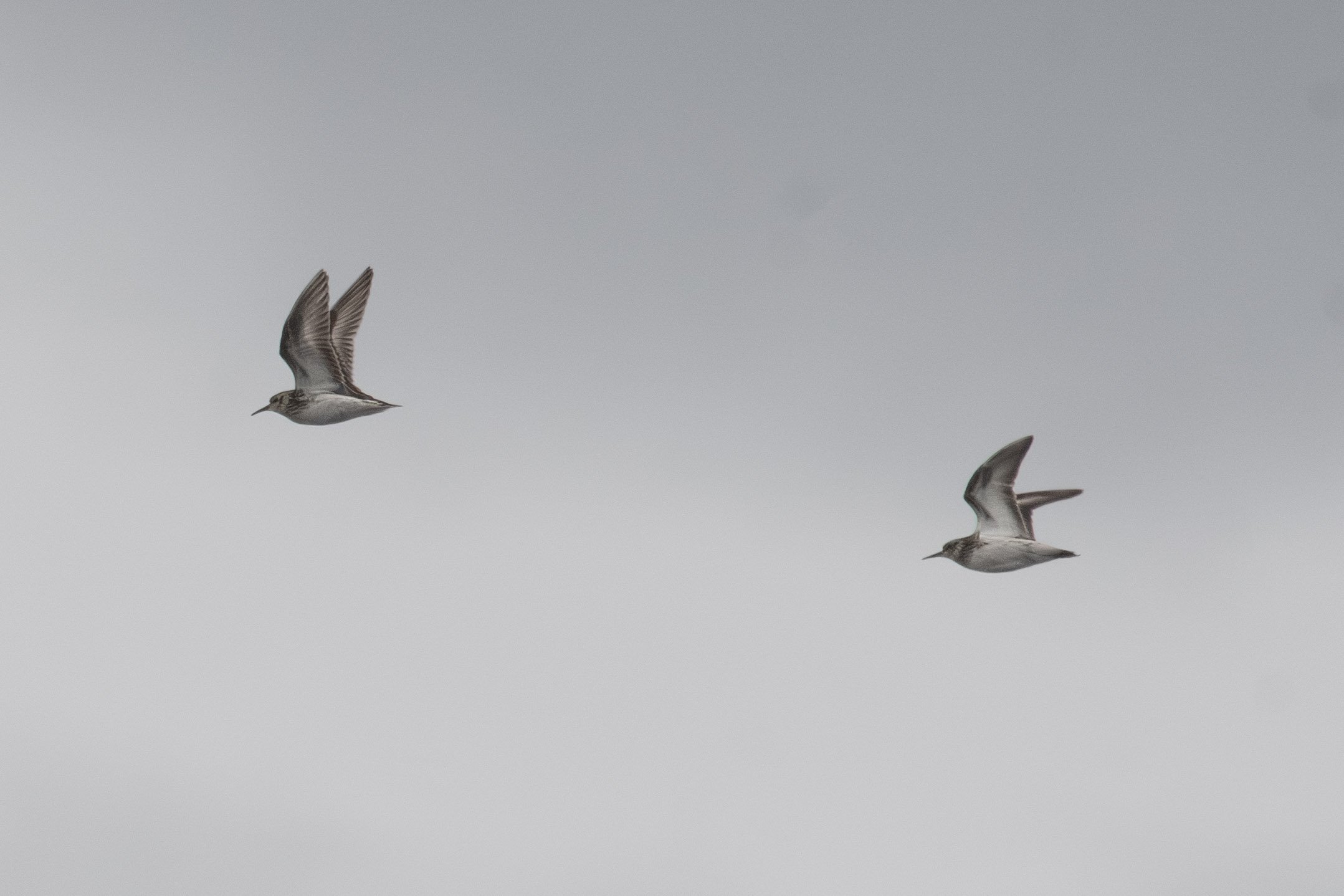
A pair of Least Sandpippers soaring overhead. Photo by Evan Hessels.
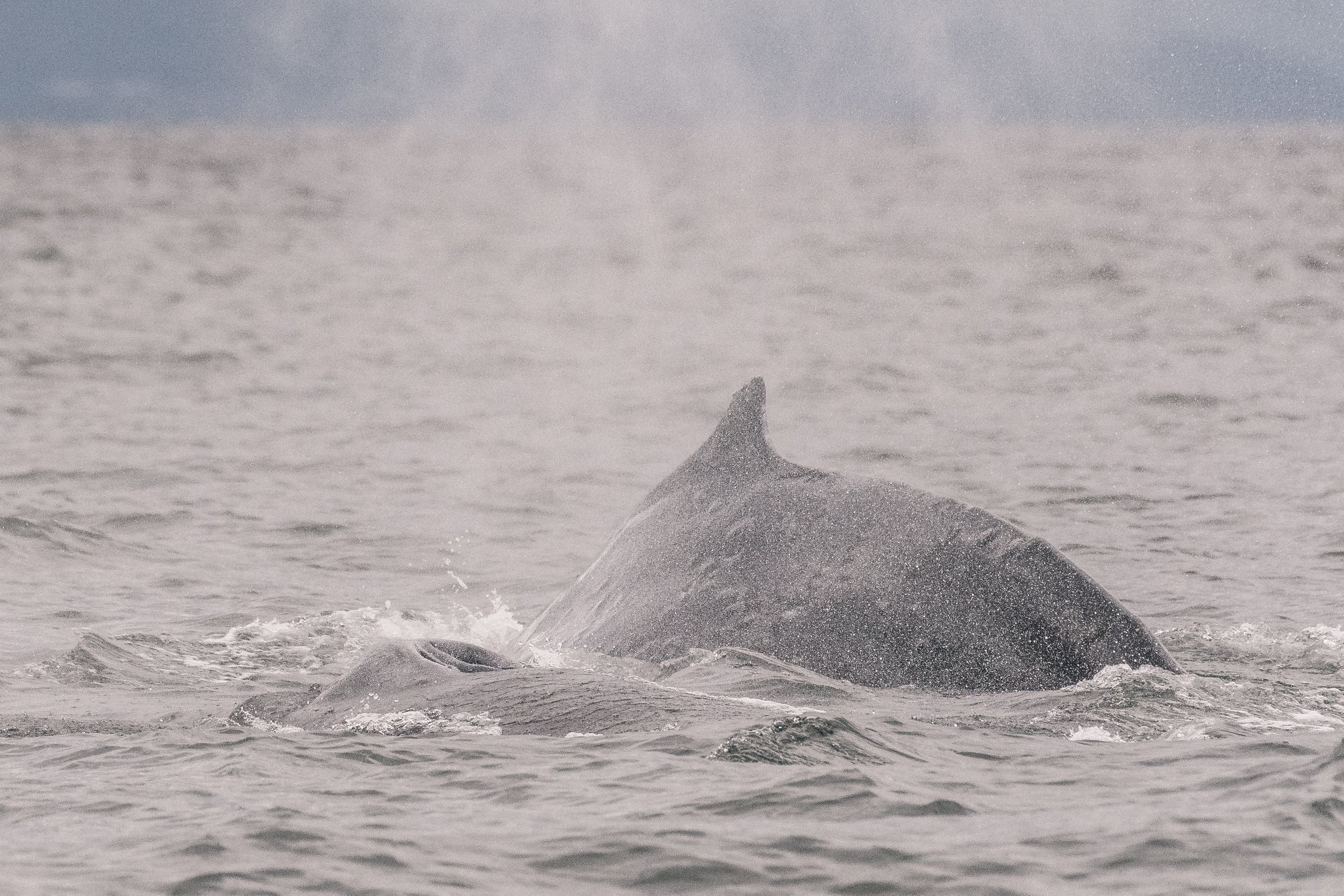
Check out that big misty blow! Photo by Evan Hessels.
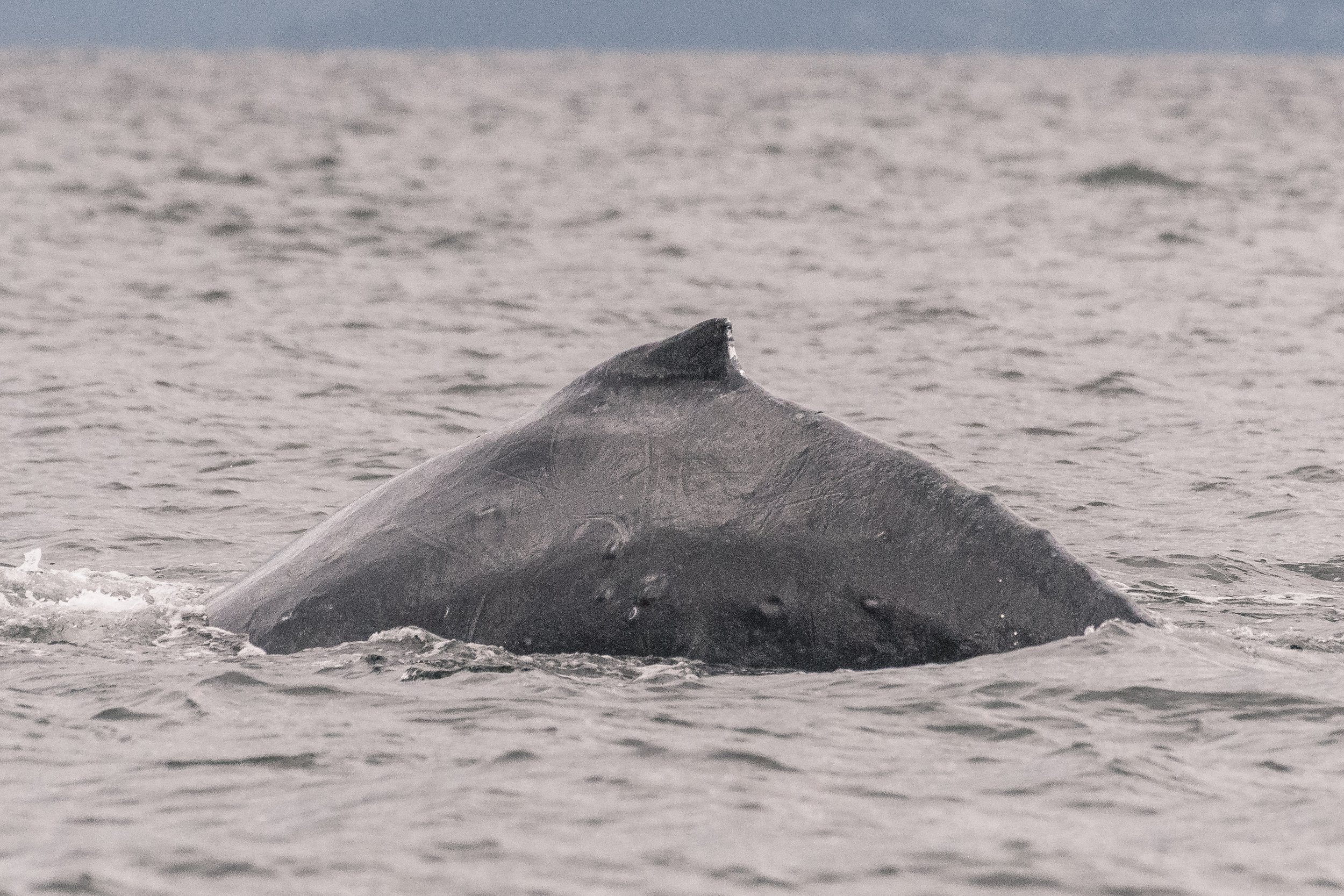
Hammer’s dorsal fin. Photo by Evan Hessels.
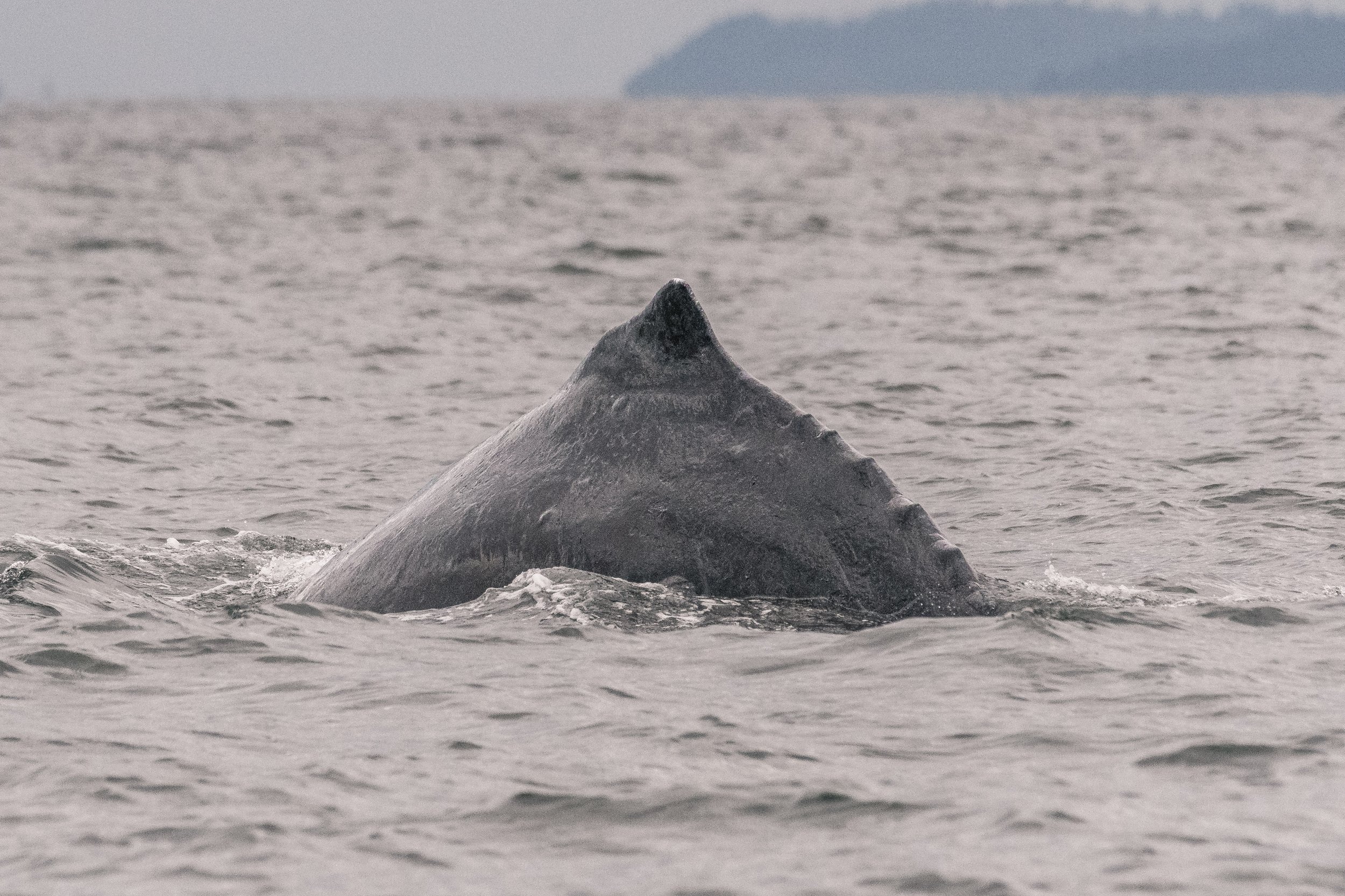
Hammer arching. Photo by Evan Hessels.
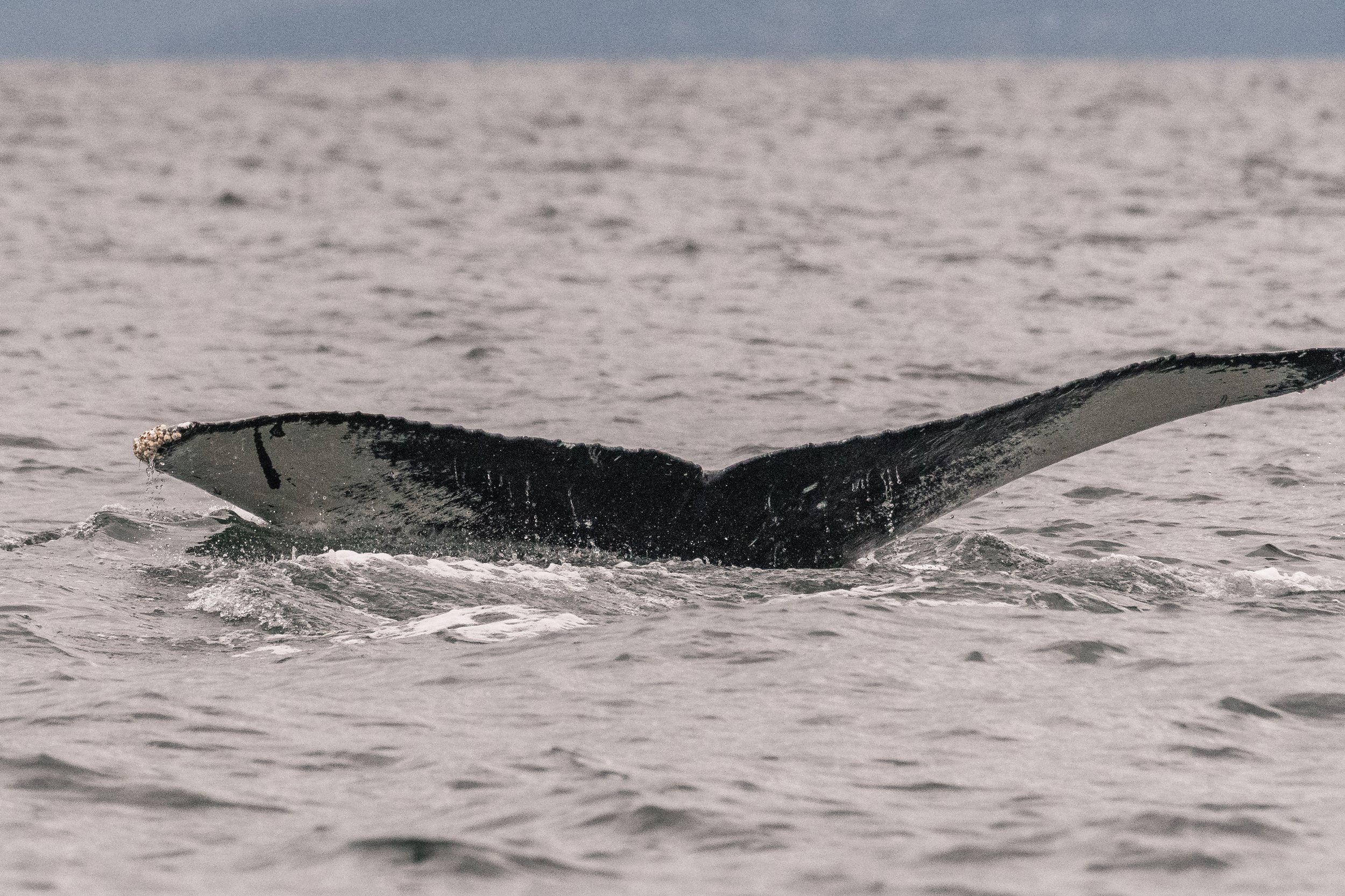
A fluke from Hammer. Photo by Evan Hessels.