
July 13, 2026, 3:30 PM - Double Species Day in the Strait
As we left for the afternoon trip, ready to see what the Salish Sea would have in store for us, we had some idea of where we might be headed for the day. We had spotted some whales on the morning trip and decided to try our luck in picking them up again. We headed into the Strait of Georgia, eyes peeled for any signs of whales. Different species have features that typically give them away on the water more than others. For orca, it’s usually the dorsal fins that you spot first, although it can depend on the lighting conditions and the pod combination. If there is an adult male in the group, his dorsal fin can reach around 6 feet, making him relatively easy to spot out there. Females are much smaller, with their dorsals reaching only around 3 to 4 feet in height. They will also exhale at the surface, releasing a blow that can reach higher in the air than those dorsals.
The blow for the humpback whales will be much larger than the orcas', which makes sense since they are a much larger animal. The humpback blows are what we typically spot first for them, since they can reach around 15 feet on average. When you spot a blow, you will sometimes see their bodies rise out of the water as they prepare to dive, typically lifting their tails as they go.
This is what we spotted in the distance while we searched: the tall blows backlit by the sun. We had found a pair of Humpback Whales! These whales seemed to be just travelling together, spending a fair amount of time on the surface before lifting their tails to dip back below, potentially to feed. When they lifted their tails, the naturalist on board, Aly, took photos of their undersides, and we were able to identify them as Smiley (BCY0995) and Corona/Phi (BCX1416). These two known females might be pregnancy buddies, or this could be a shorter-term association. It can be tough to guess with humpbacks, since their associations are much looser than we see with orcas. Females tend to have longer friendships, which is thought to be due to the higher energetic demands of pregnancy and lactation. If the whales are helping each other feed more efficiently, then spending more time together during those times would make sense.
We enjoyed pondering these thoughts while we watched these two travelling together before it came time to leave them. While we had found these two, another boat not too far away had spotted a group of orca travelling together, so we decided to head over there and see those whales ourselves. It turned out to be a few different matrilines of Transient Orca travelling together: the T037Bs, T046B1s, T046C2, T100s, and the T101s. That means that the following whales were present:
T037B Harald ♀ (1998)
T037B1 Lance ♂ (2012)
T037B3 Slice ♀ (2022)
T046B1 Tread ♀ (2003)
T046B1A Tsakani ♀ (2015)
T046B1C Tide ♂ (2022)
T046B1D Tashi (2025)
T046C2 Sam ♀ (2009)
T100 Hutchins ♀ (~1979)
T100C Laurel ♂ (2002)
T100F Estrella (2014)
T101 Reef ♀ (≤1969)
T101A Rush ♂ (1993)
T101B Lagoon ♂ (1997)
Even though the group moved in unison, the groups did seem to form based on Matriline. Interestingly, there is a bit of a family reunion happening here. Although typically the alphanumeric code that the orca have tells you their lineage, for the older individuals this doesn’t always hold true. Given T101 Reef’s age, she actually had two children who weren’t assigned her code when they were first recorded: her now-deceased oldest son, Beardslee (T102), and Hutchins (T100). Over time with more observations, researchers connected the dots and determined that these whales were likely Reef's children as well. It can be harder to know for female offspring since they will disperse from their mother's pod to start their own. Hutchins herself has already had one of her daughters disperse as well, T100B, who has her own kids now too. The males are much easier to identify, since they will typically stick with their mother for their entire lives, or hers. The T036Bs and T046B1s are also examples of dispersed pods. We don’t know exactly what drives these gatherings of unrelated orca, but the best guess is that they do it to socialize. Orca are extremely social animals, and they like to spend time with whales outside their own pods, as this can be important for forming social relationships and potential breeding opportunities.
While we were watching these whales, they passed by one of our favourite haul-out sites for Steller Sea Lions: Stinky Rock! While we are there, we are often asked by guests why the orca don’t just spend their time here, snacking on the Seals and Sea Lions. But even today, when there were sea lions in the water, the orca passed right by without having a meal. With such a large group, it’s unlikely they could use the element of surprise against these animals, which is how they maintain their high success rates. When the Sea Lions know the whales are there, there is a higher chance they will fight back and injure the orca, which can be detrimental to these apex predators' survival.
Just seeing them pass the group of sea lions by was quite exciting, and a great way to end our time with the orca. From here, we headed back to Nanaimo, very thankful for all the wildlife we had spotted on the water. Please enjoy all the photos captured throughout the tour by Marine Naturalist Aly Kohlman, included below.
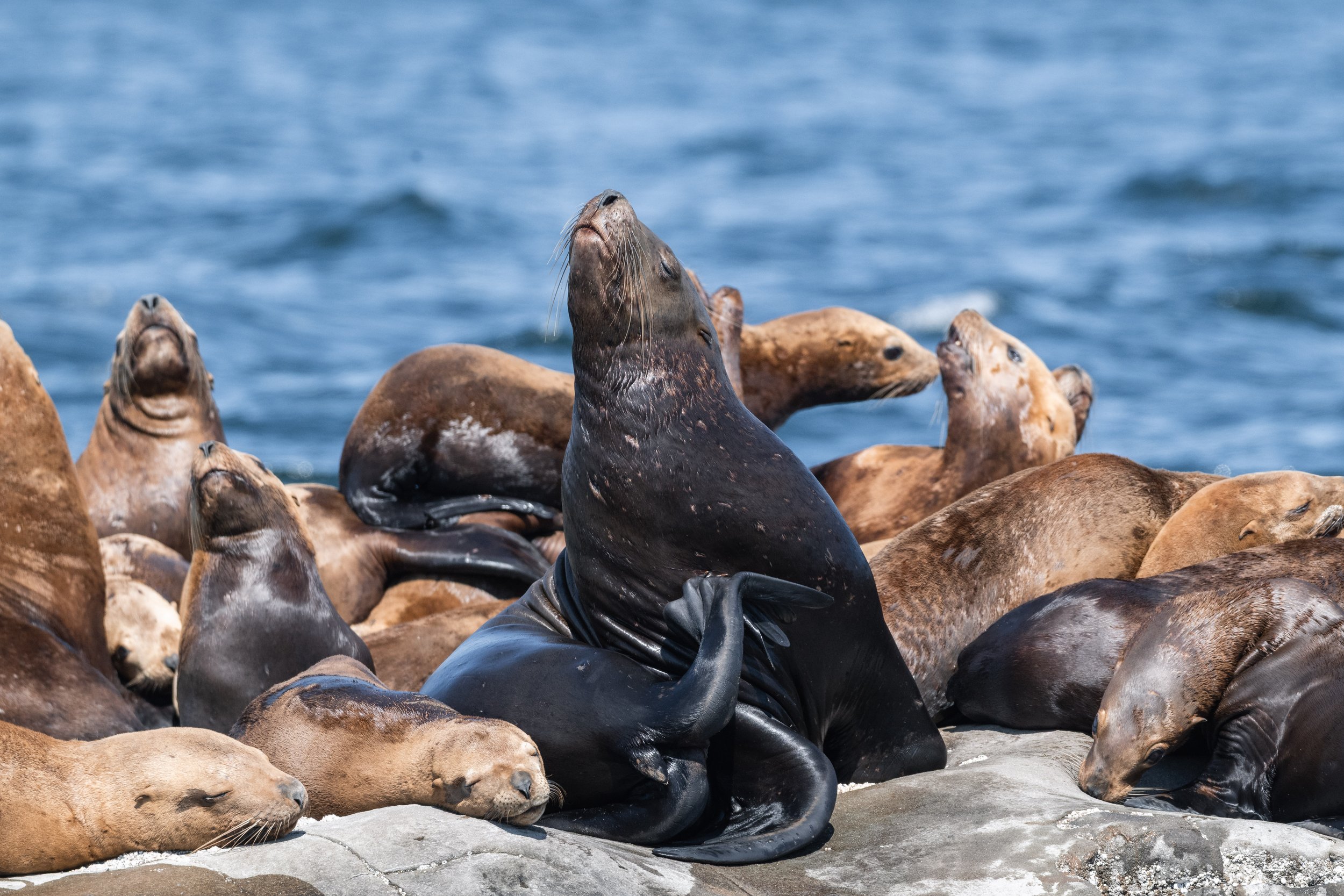
An itchy Steller Sea Lion on Stinky Rock.
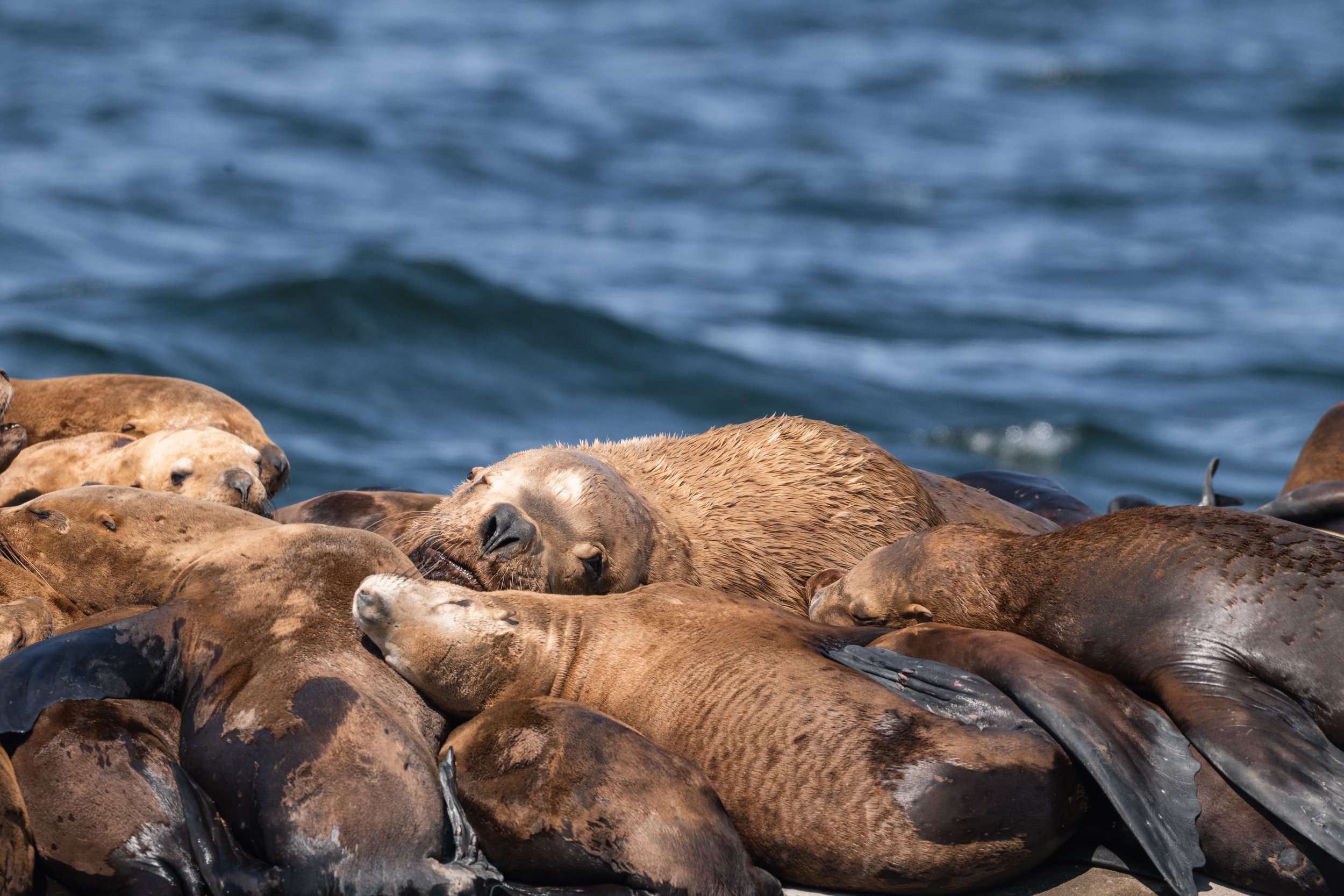
Steller Sea Lions in a cuddle puddle on Stinky Rock.
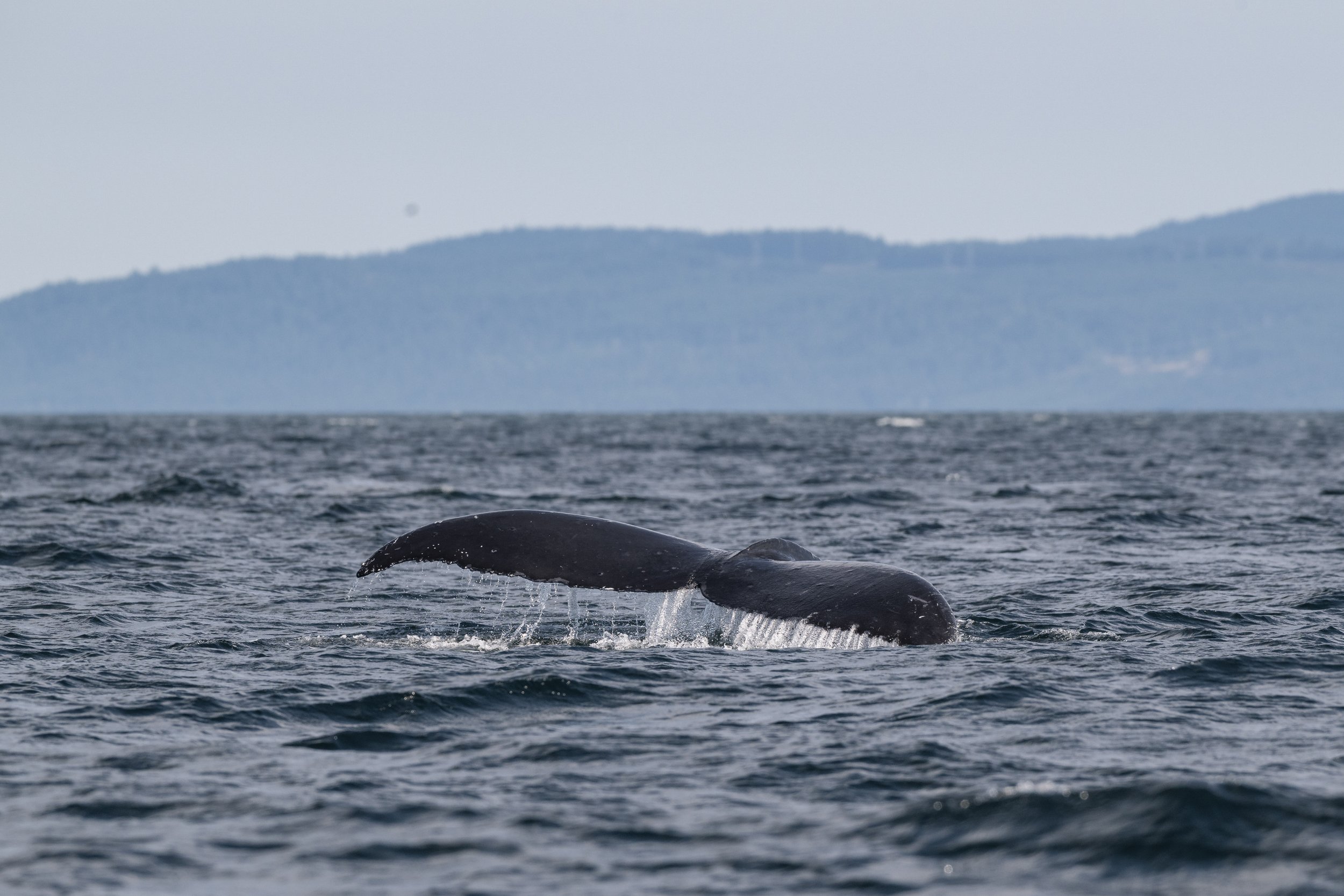
Smiley lifting their tail to dive.
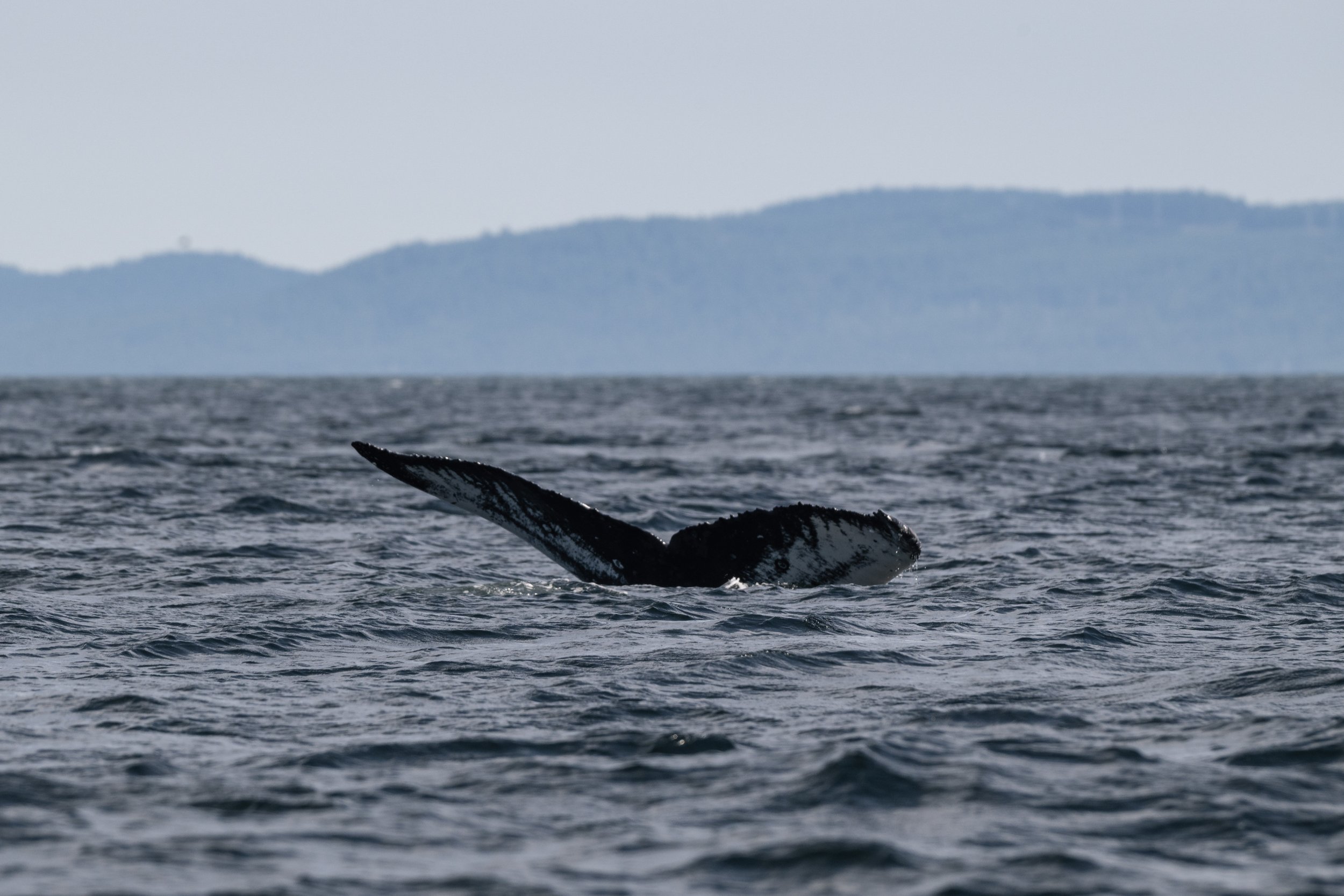
The underside of Smiley’s tail as she dives.
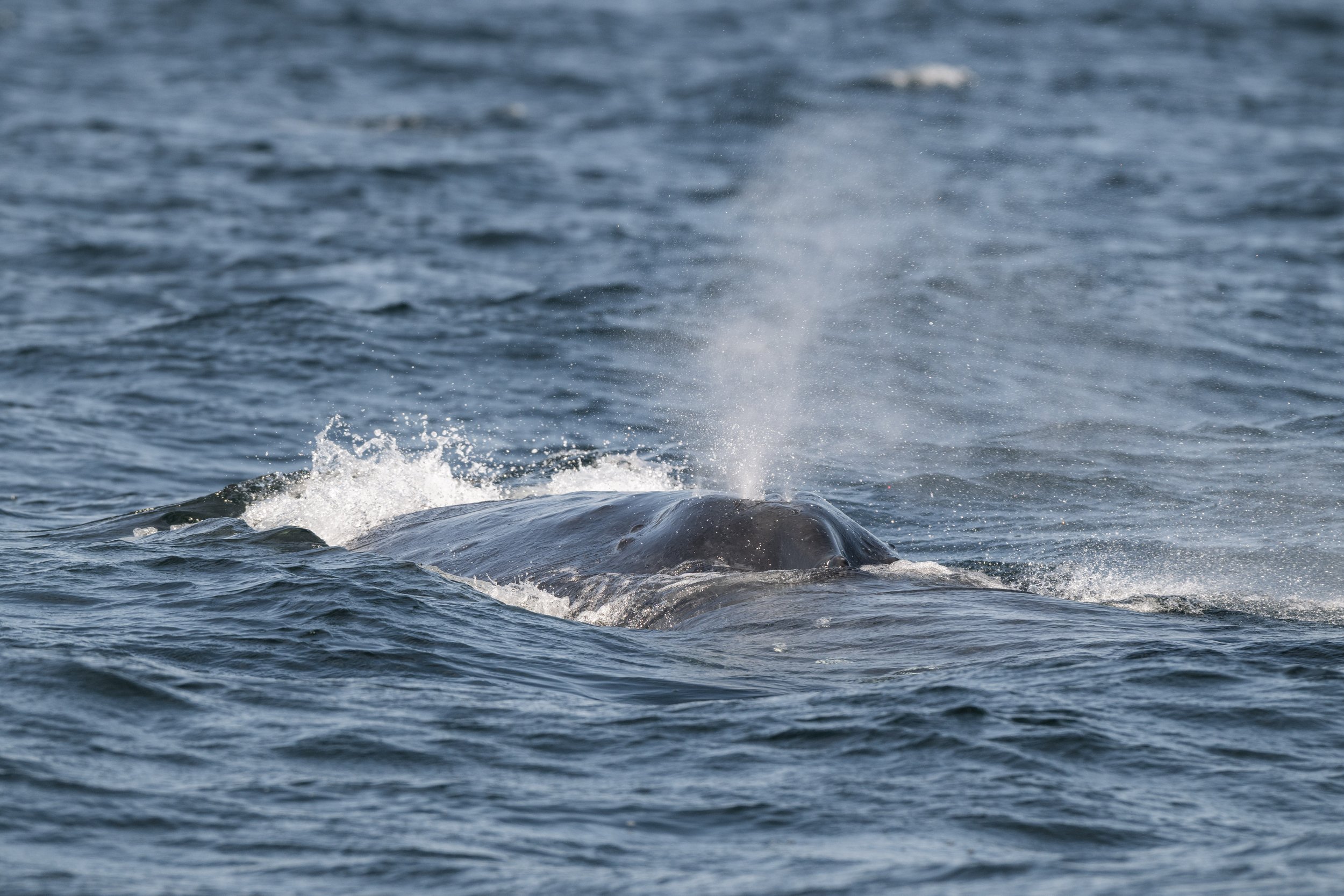
Smiley exhaling at the surface.
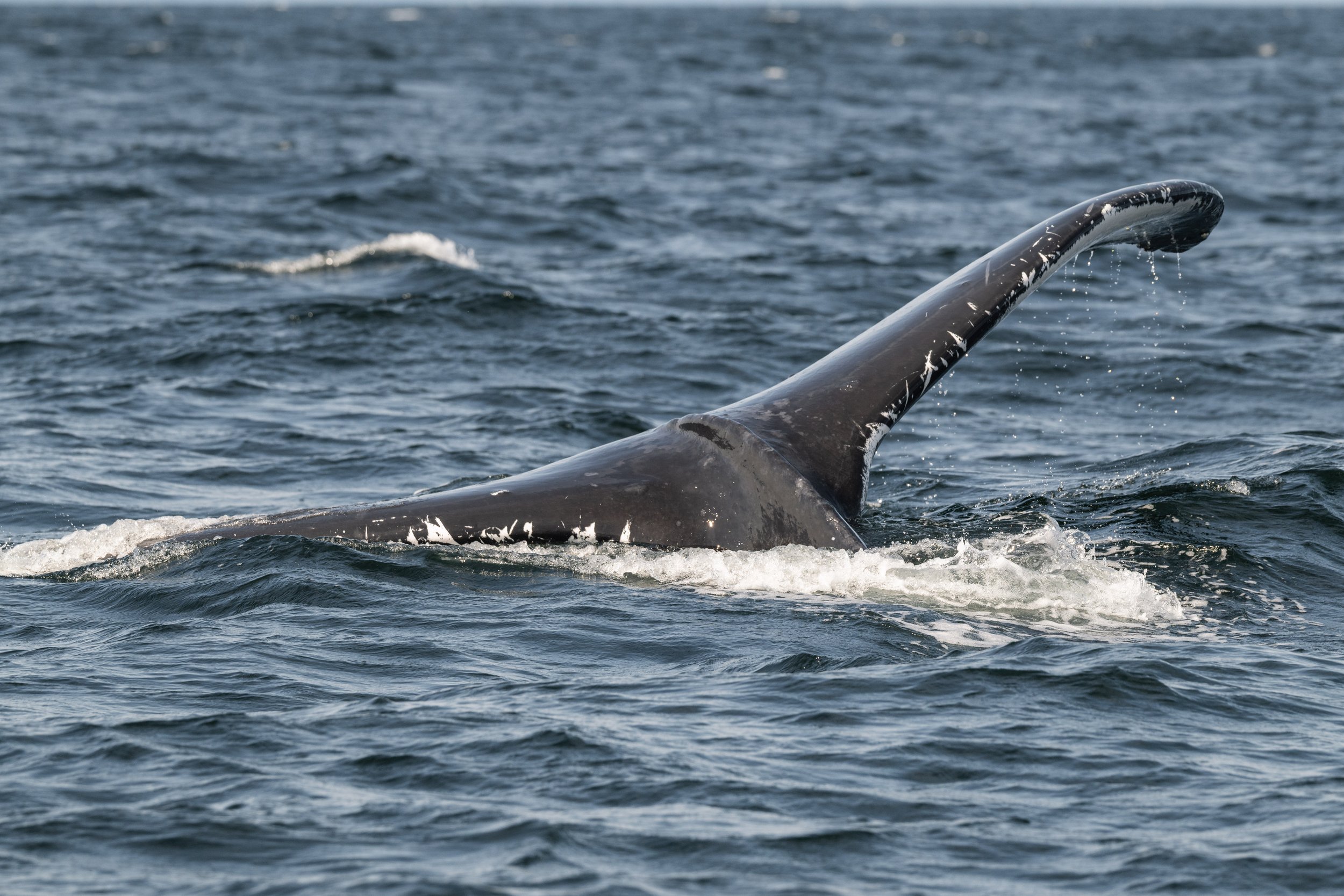
Smiley lifting her tail to dive.
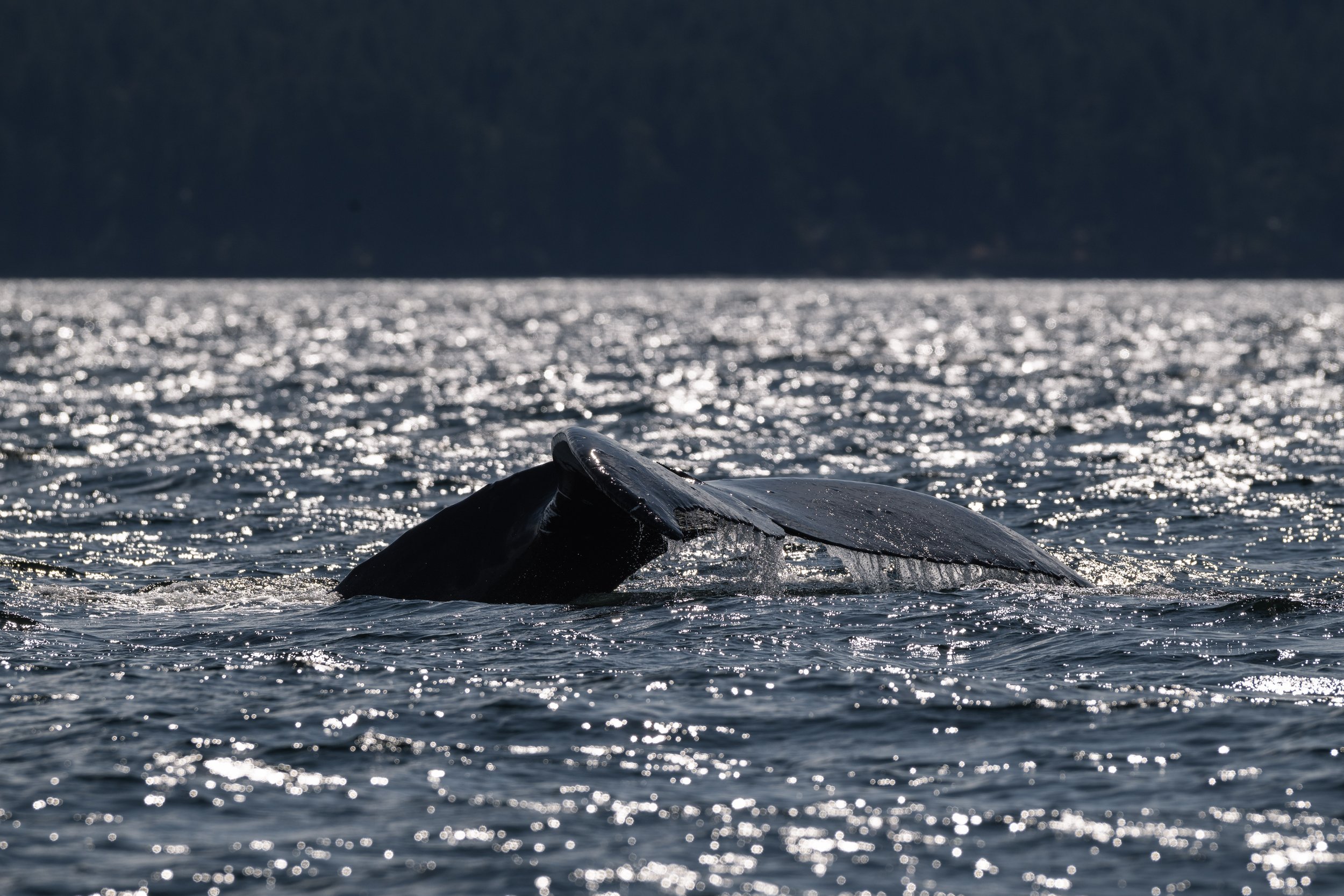
Corona/Phi lifting her tail to dive.
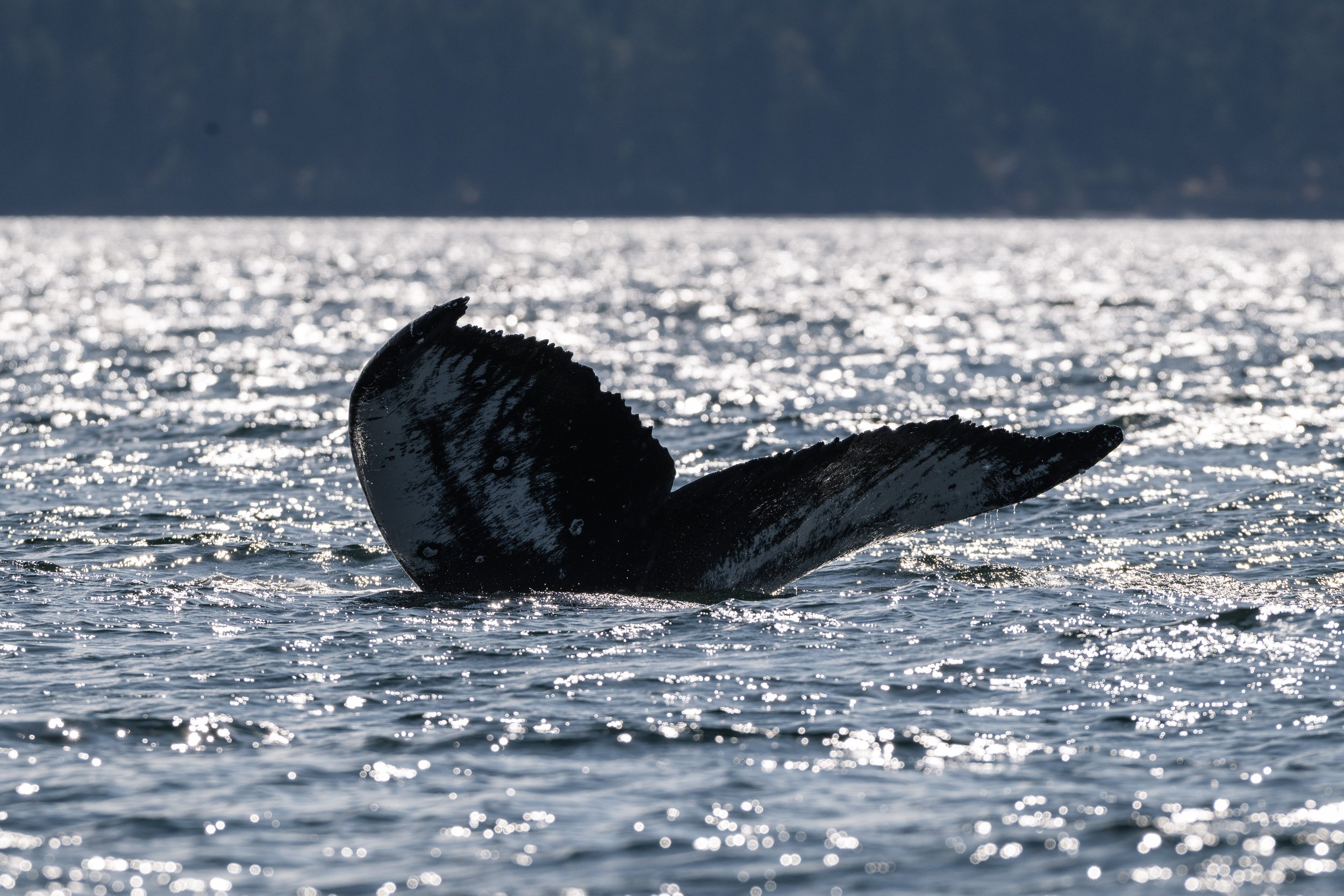
Can you see the smiley face that Smiley is named for.
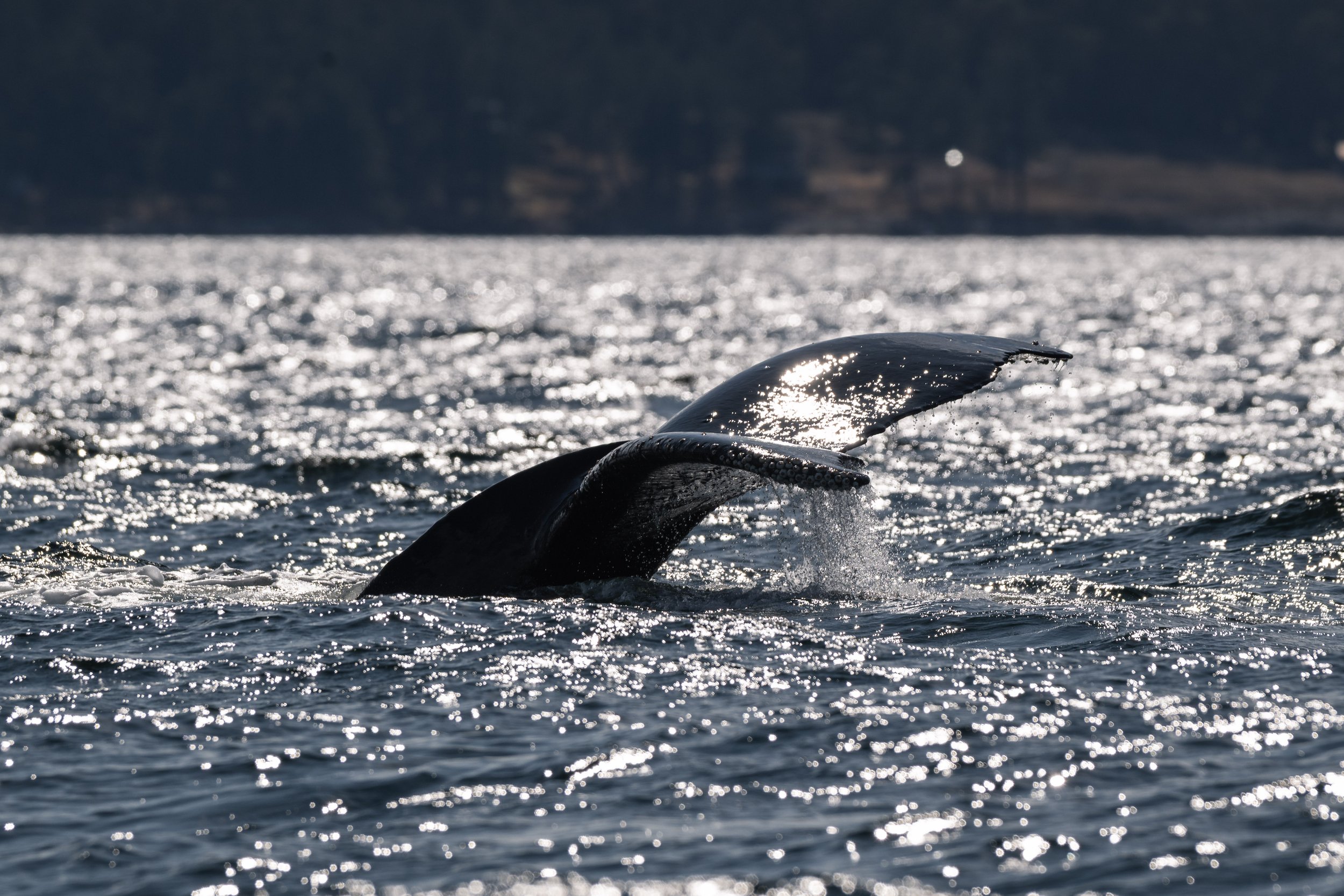
Corona/Phi going for a dive.
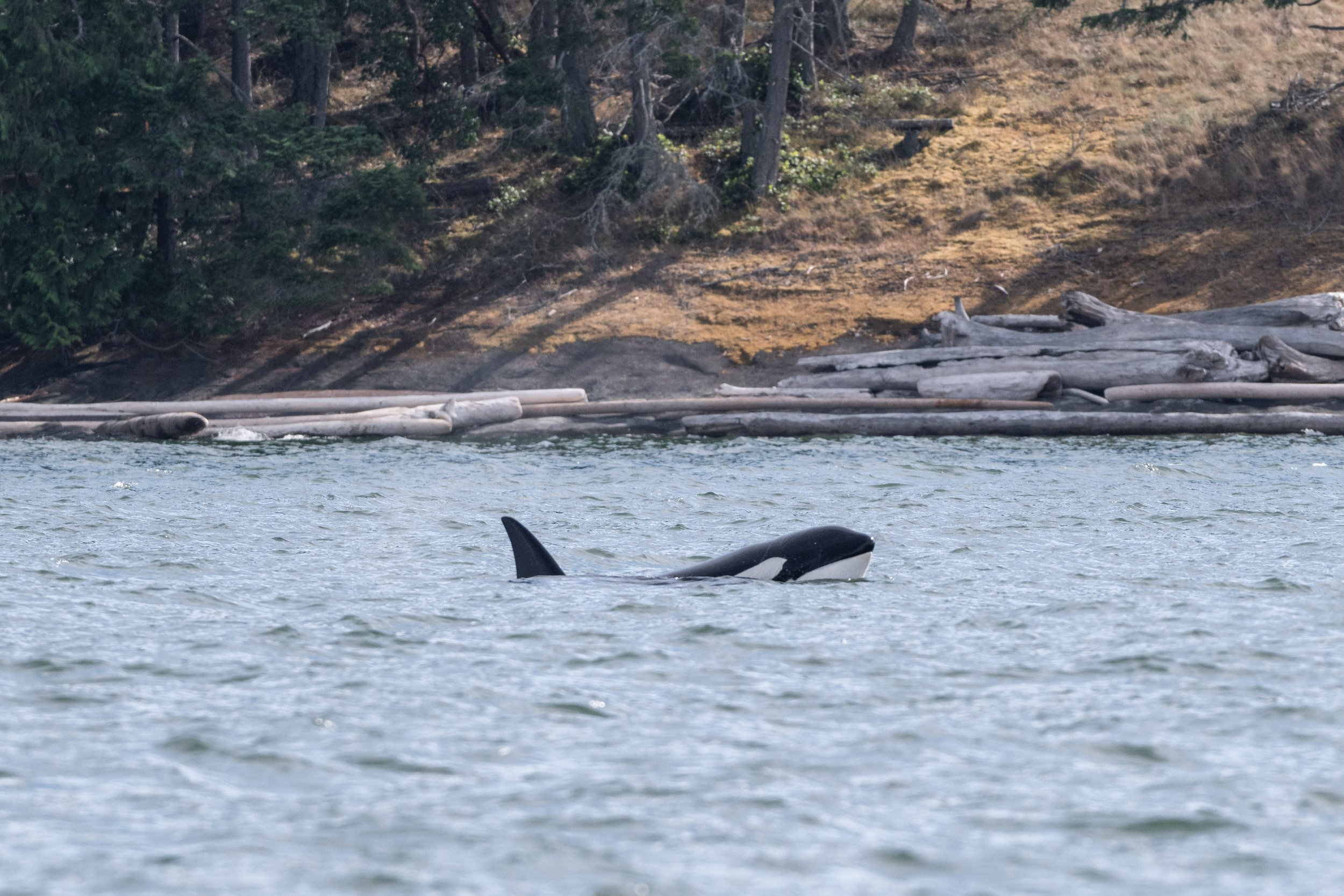
T046B1 Tread shownig off her Rostrum as she surfaces.
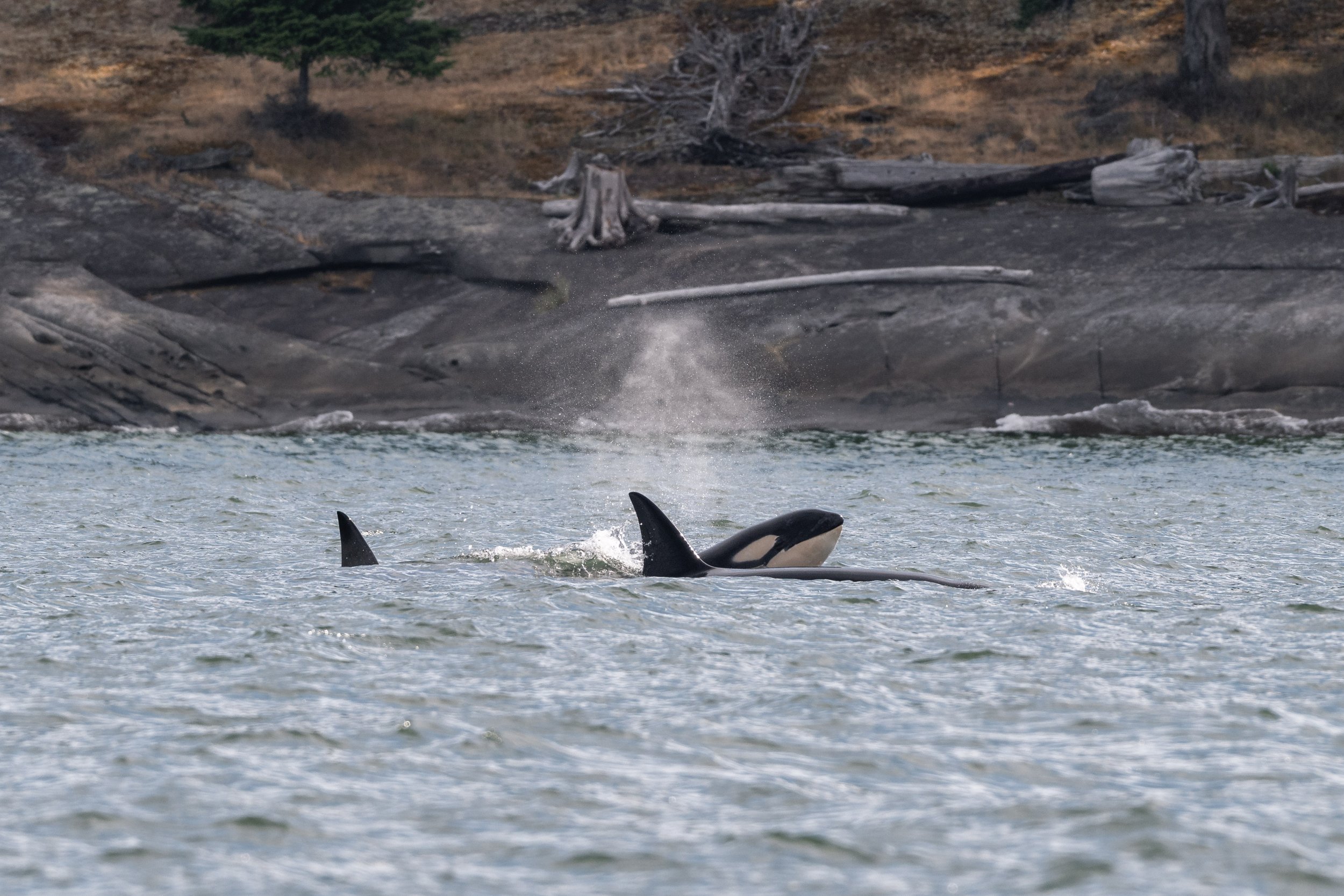
T046B1D Tashi surfacing beside their mom, T046B1 Tread.
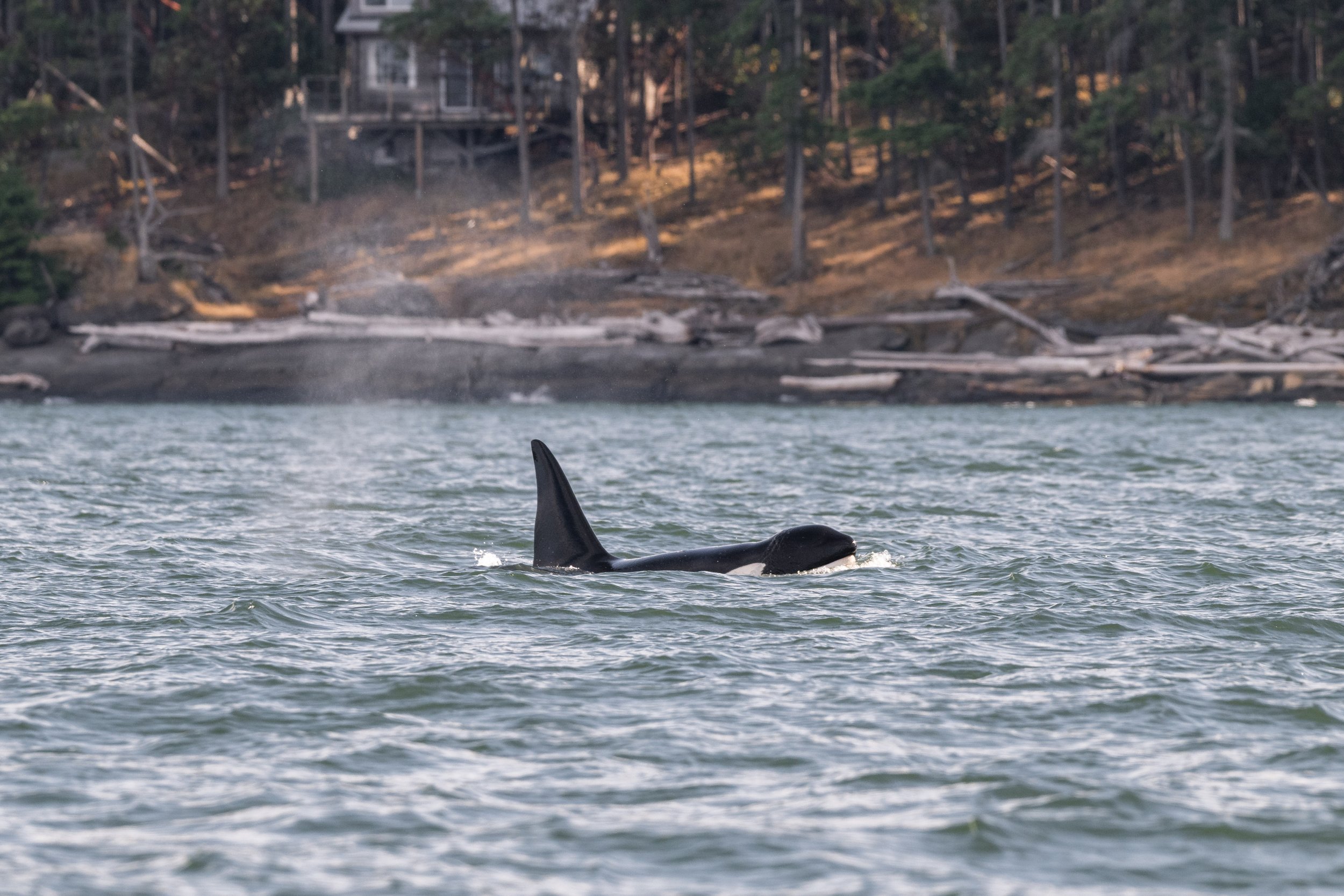
T037B1 Lance surfacing in the waves.
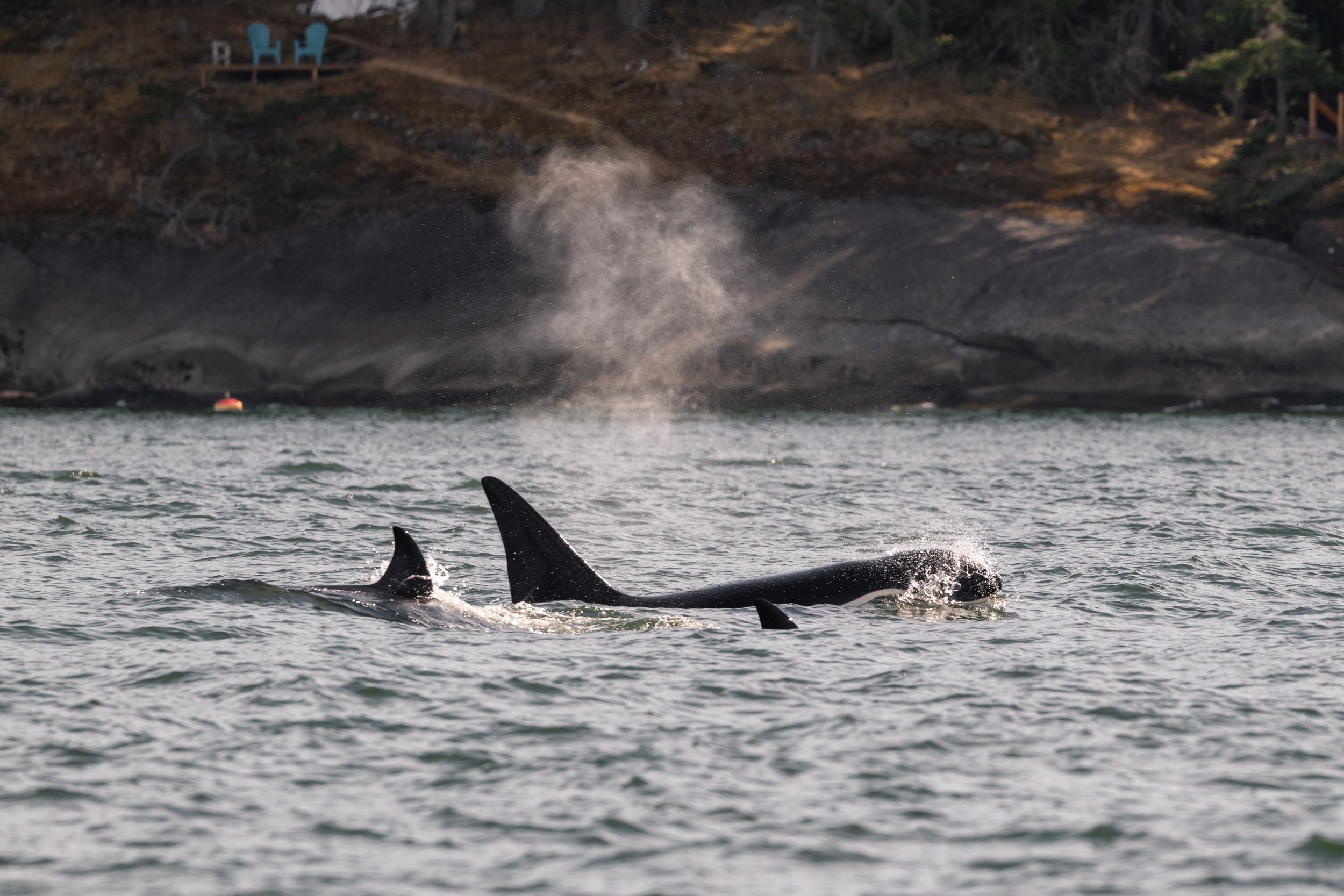
T036B1 Lance surfacing beside T037B3 Slice.
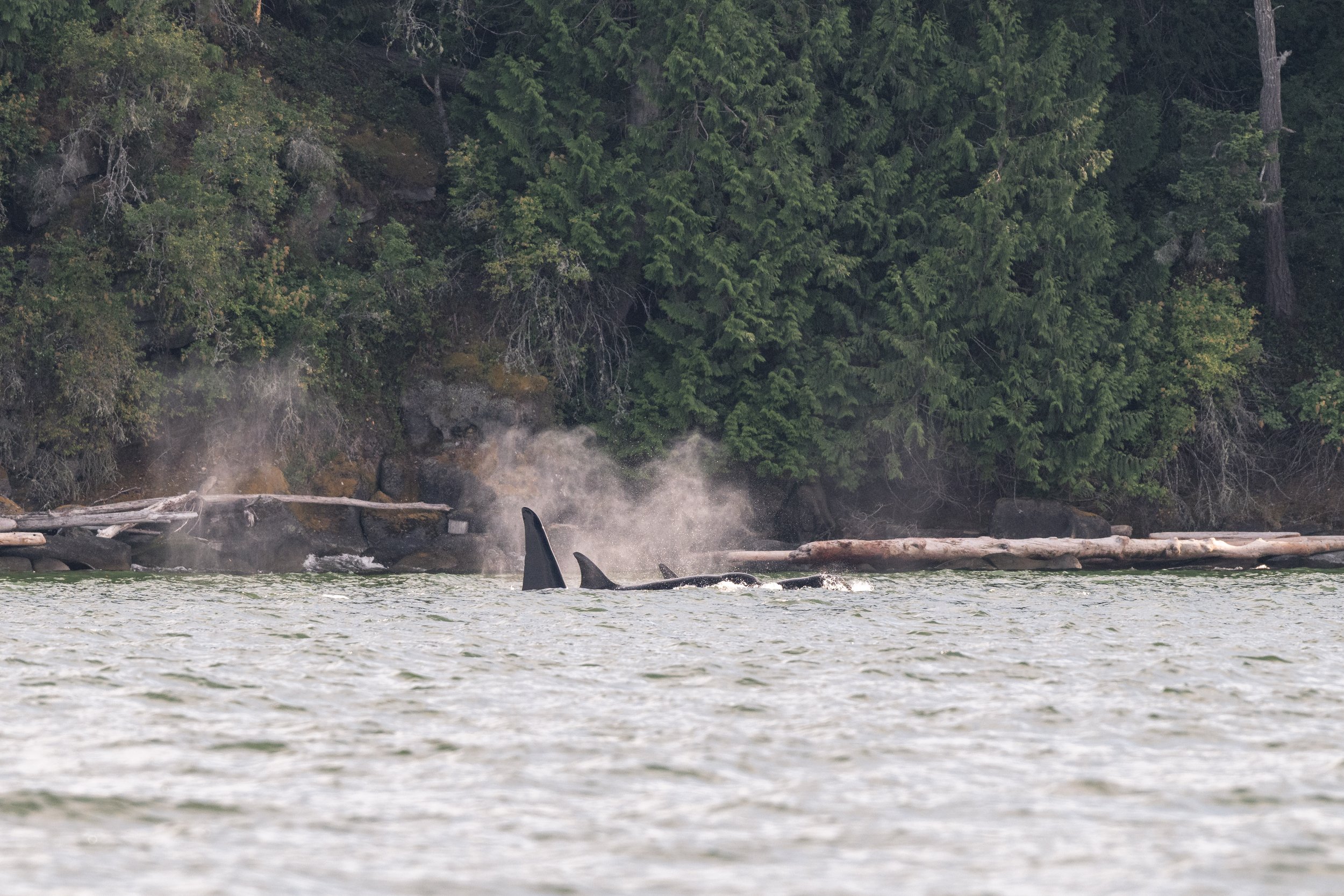
The T100s surfacing alongthe shoreline.
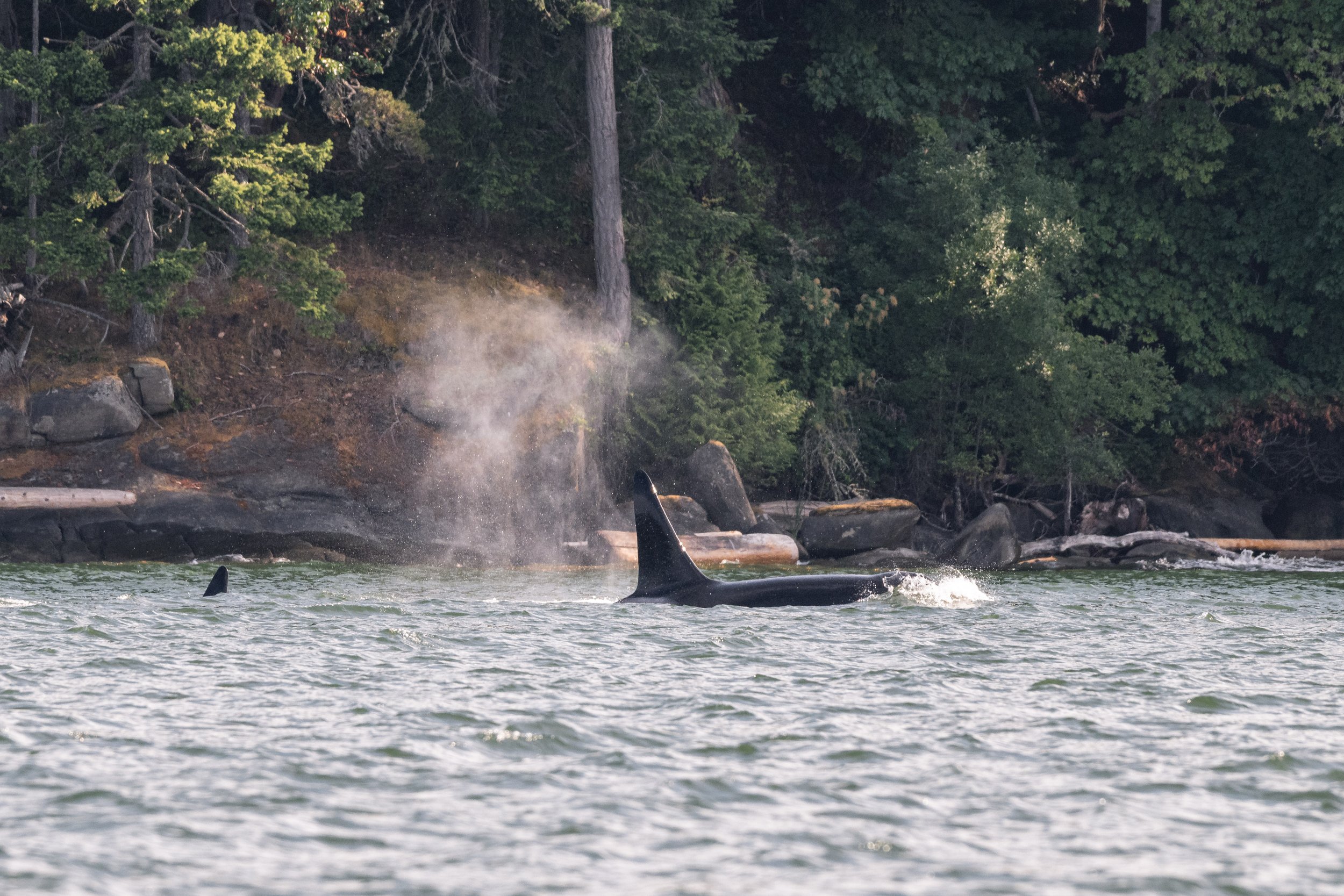
T101A Rush surfacing with a beautiful backlit blow.
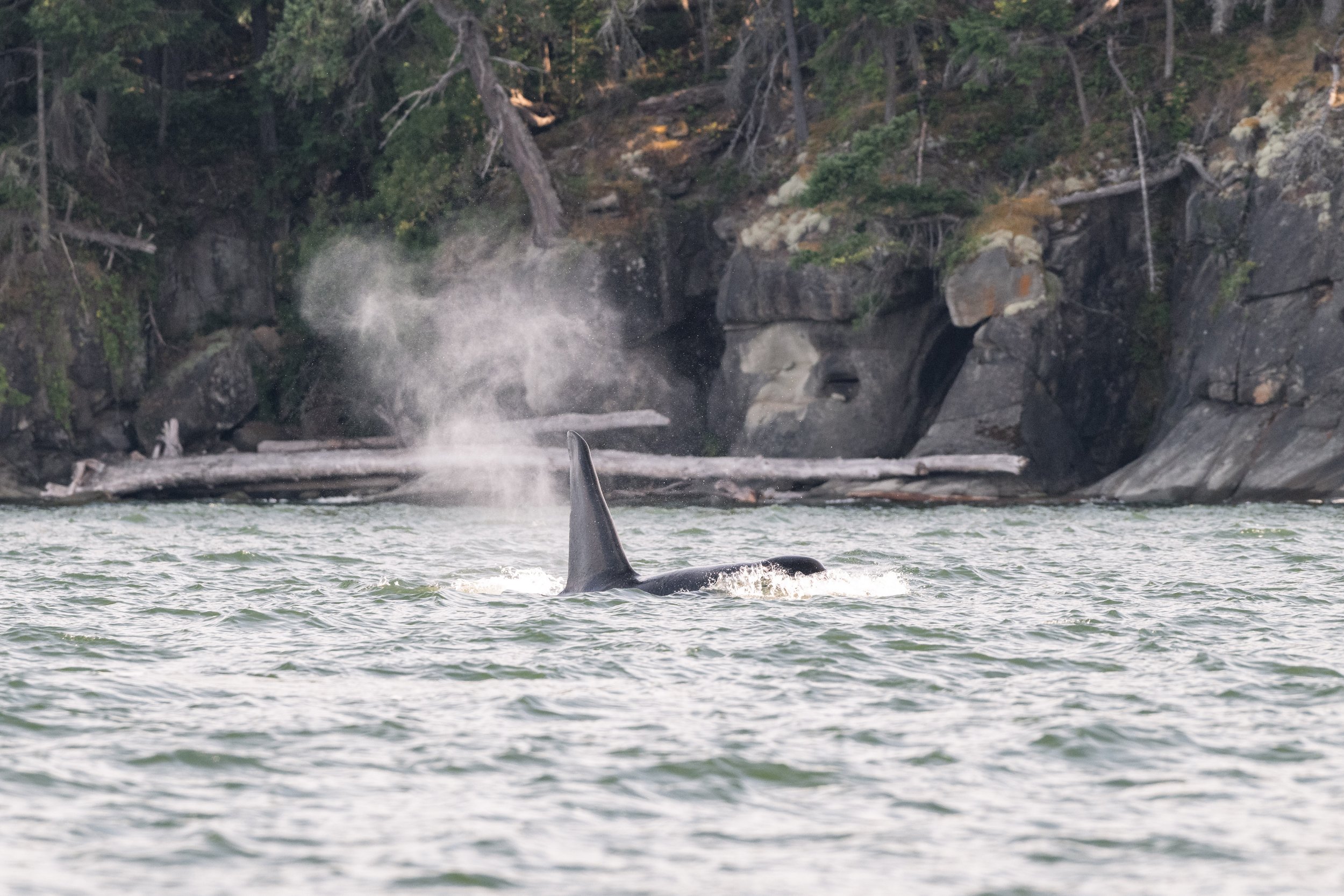
T100C Laurel pushing through a wave as he surfaces.
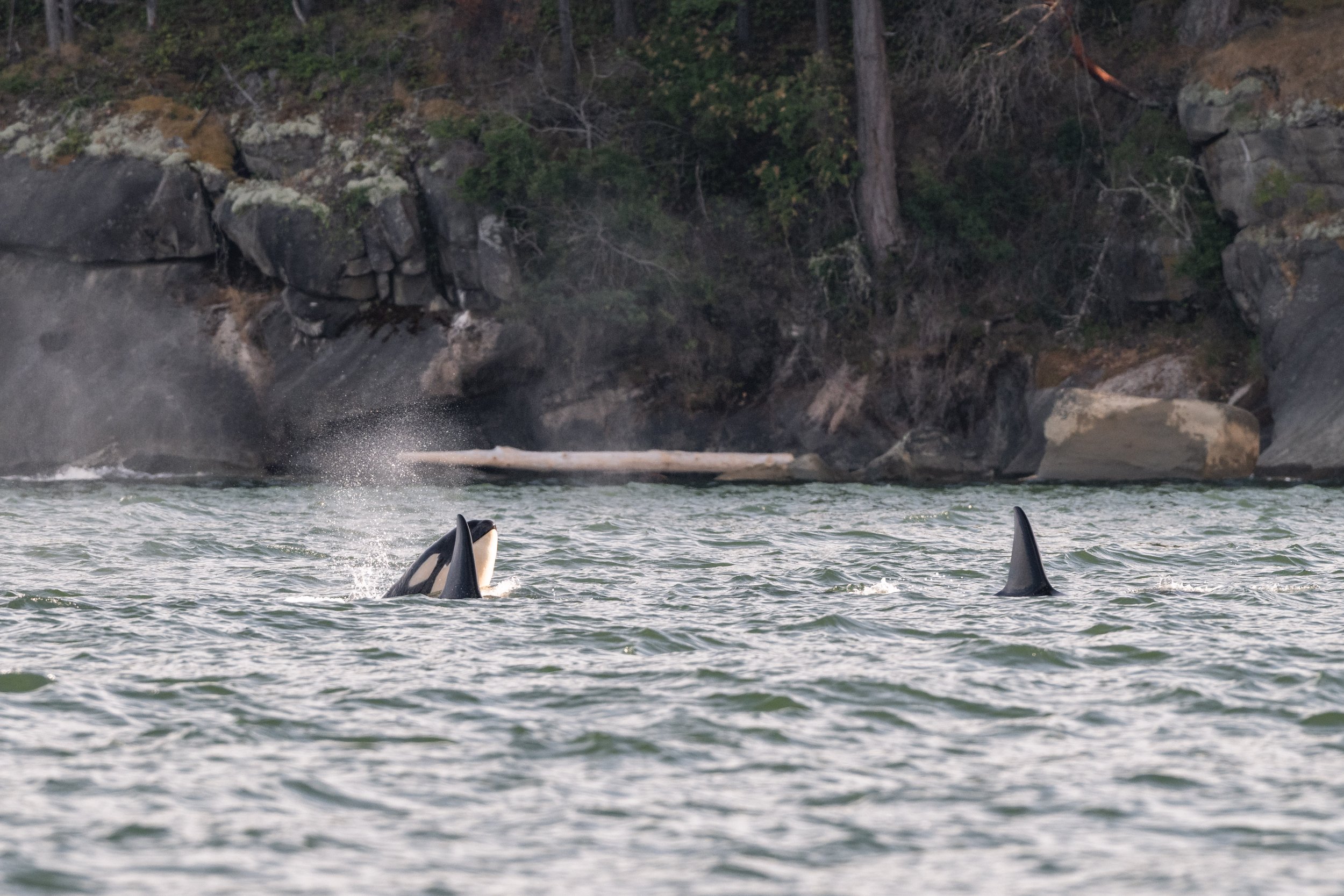
T046B1D Tashi with a very energetic surface.
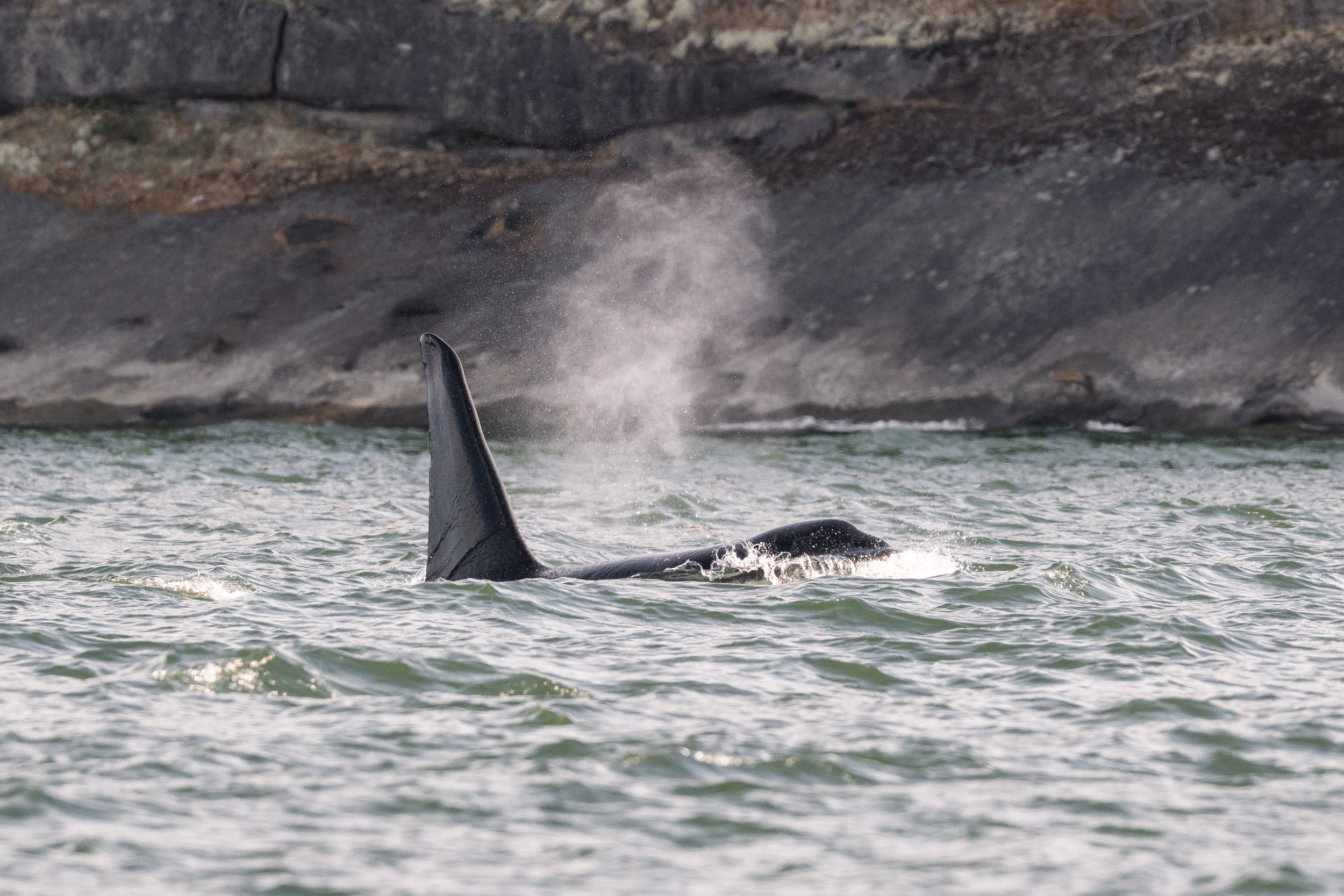
A great look at T100C Laurel.
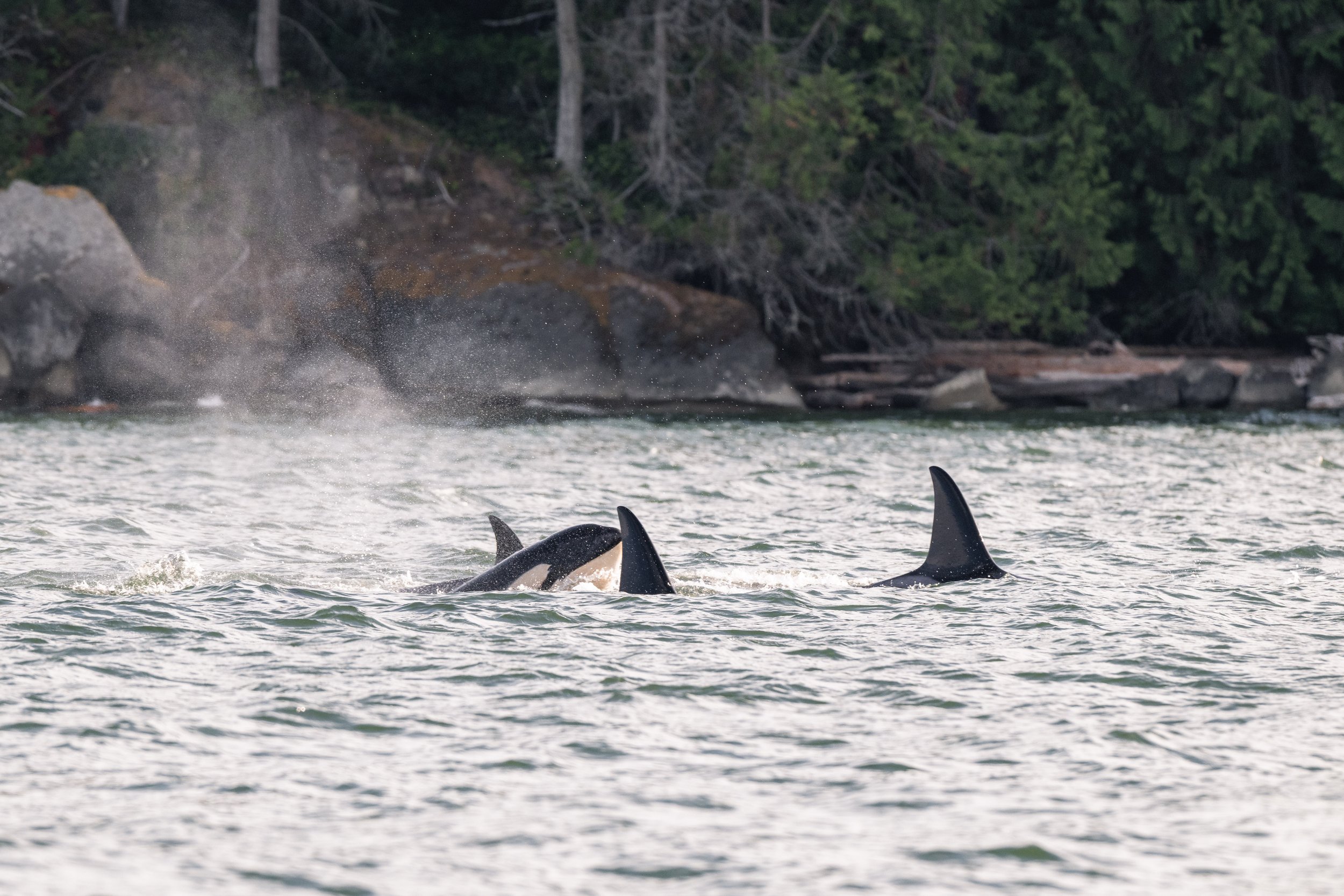
T046B1D Tashi surfacing with T046B1C Tide, T046B1 Tread, and T046B1A Tsakani.
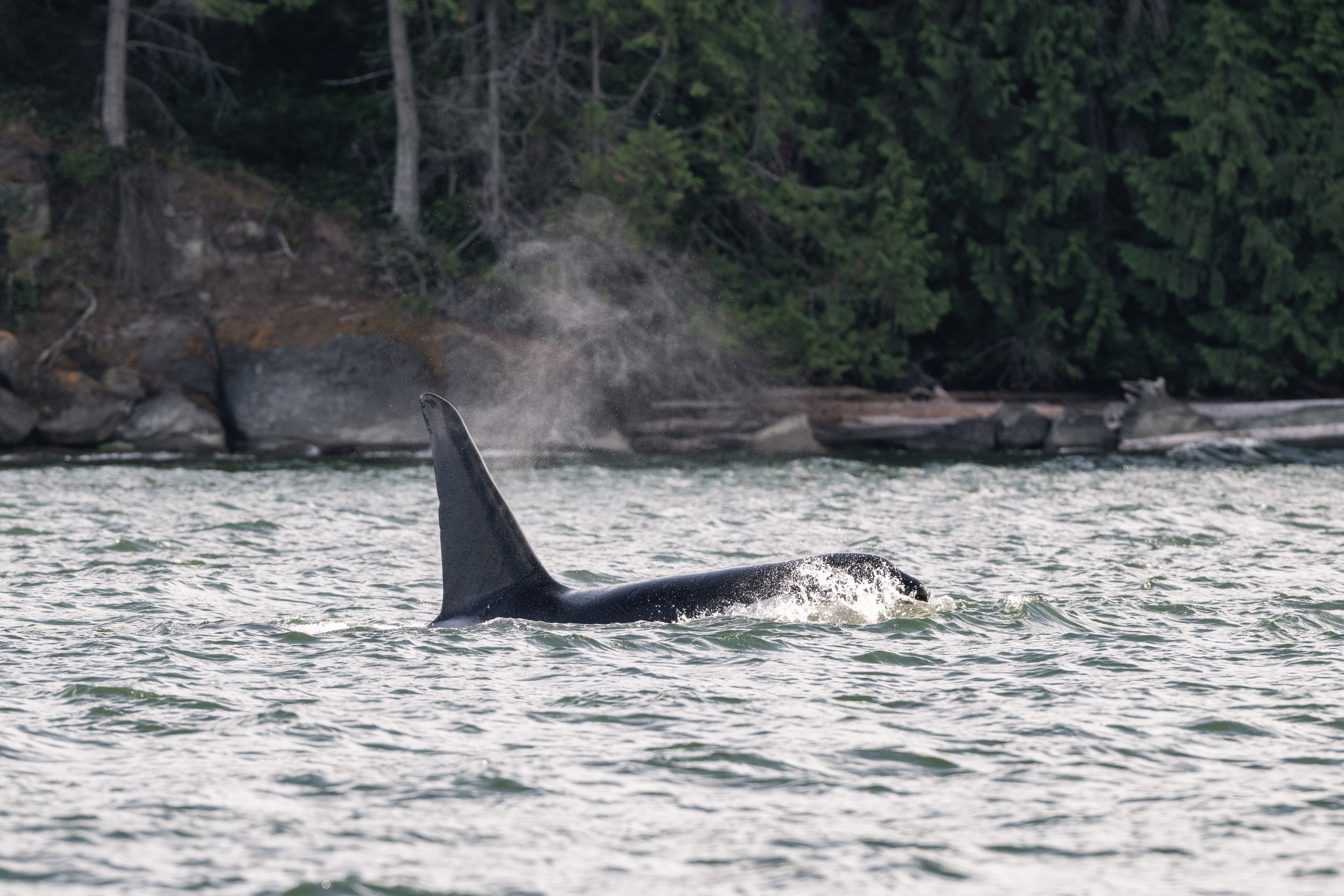
T100C Laurel moving quickly through the waves.
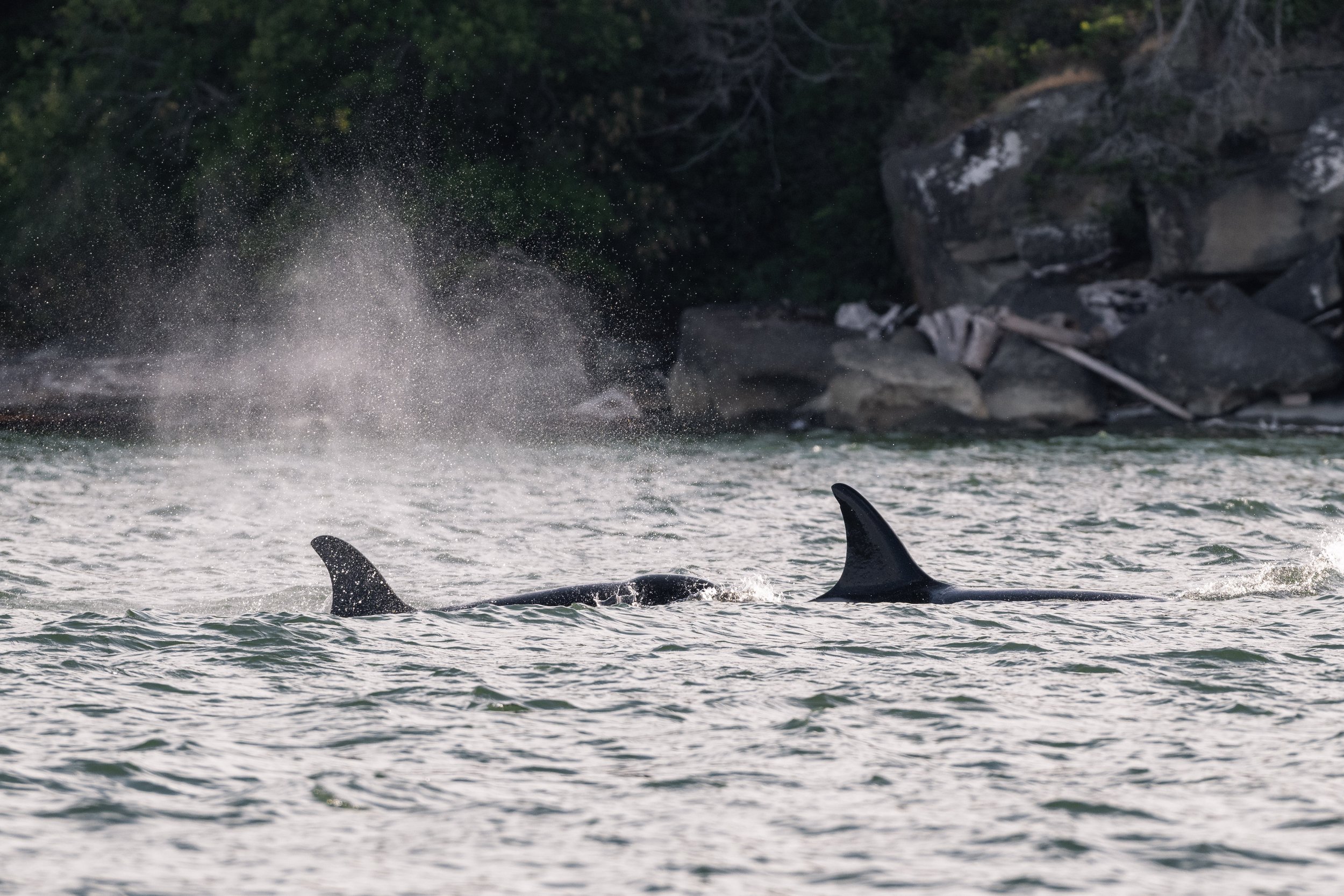
T100 Hutchins surfacing with her youngest T100F Estrella.
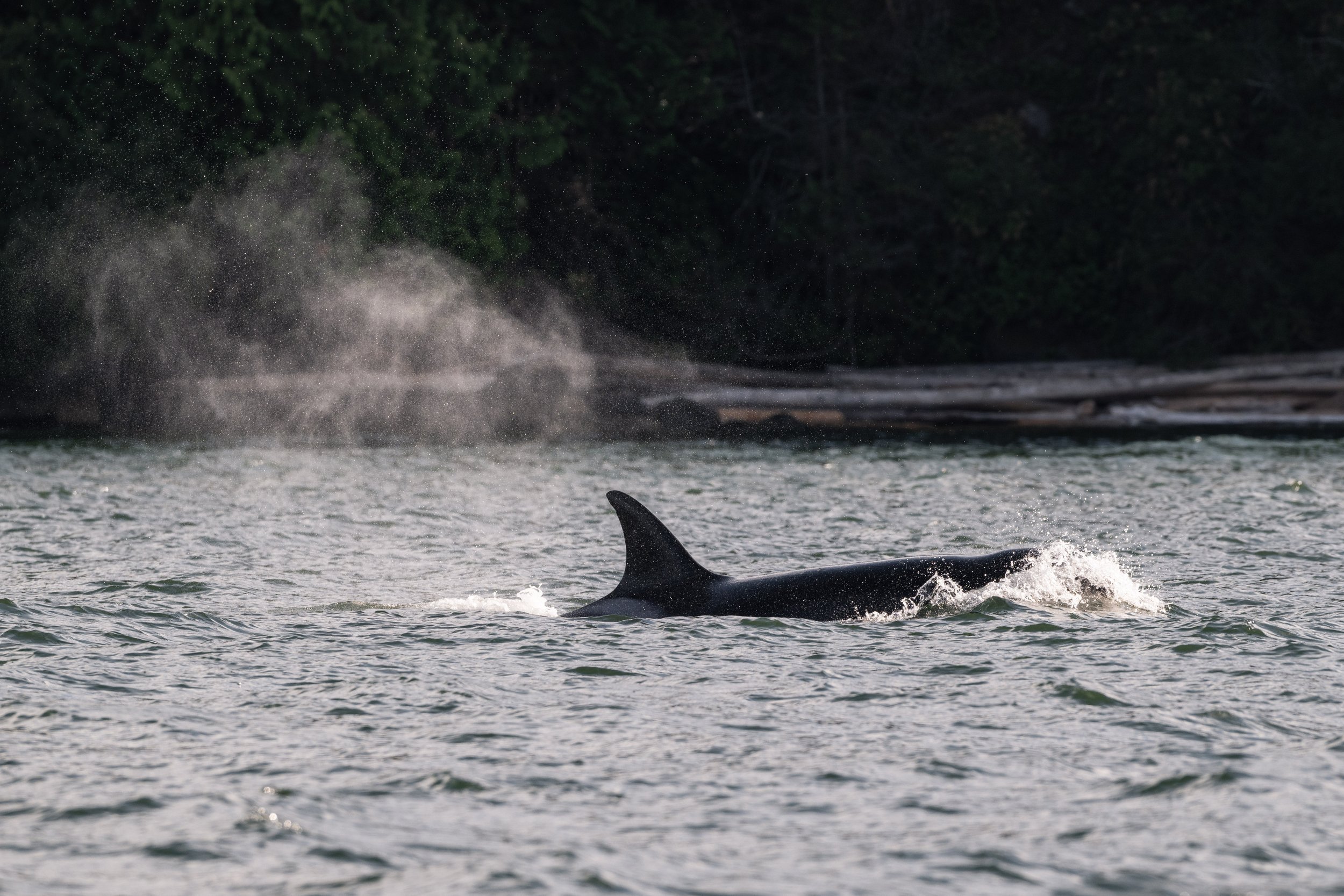
T100 Hutchins has a distinct notch towards the top of her dorsal fin.
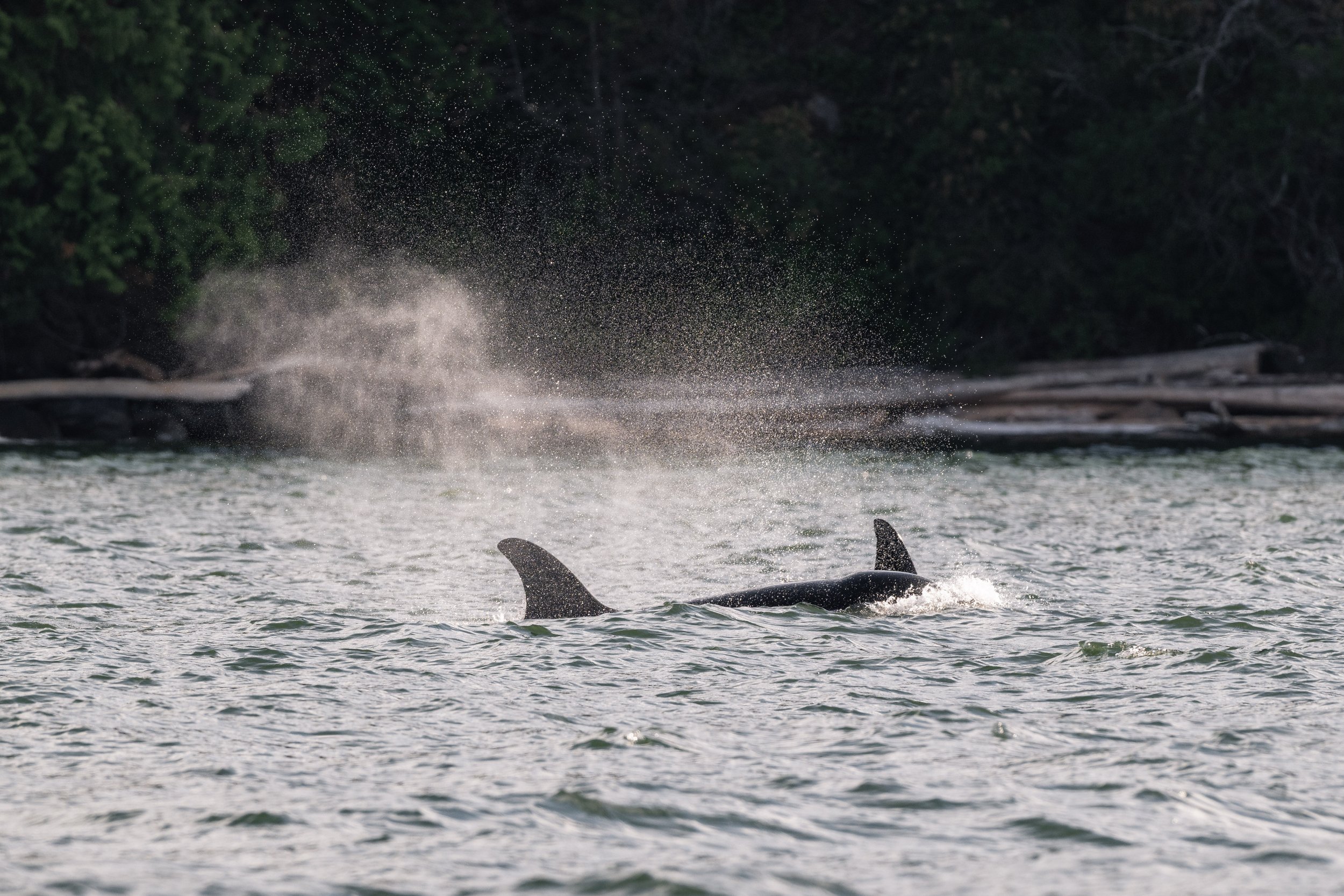
A beautiful backlit blow from T100F Estrella.
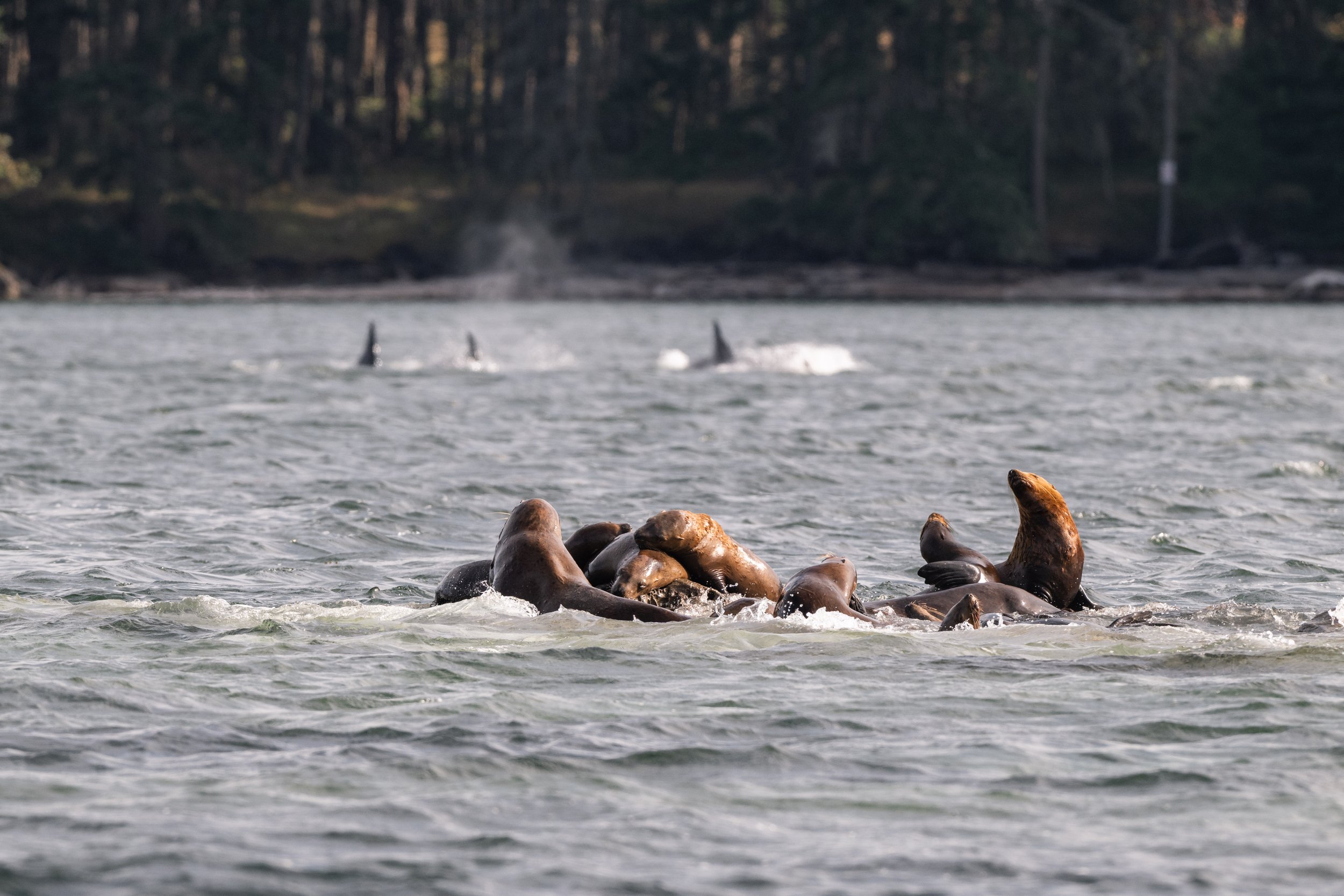
The orca passing by the Sea Lions at Stinky Rock.
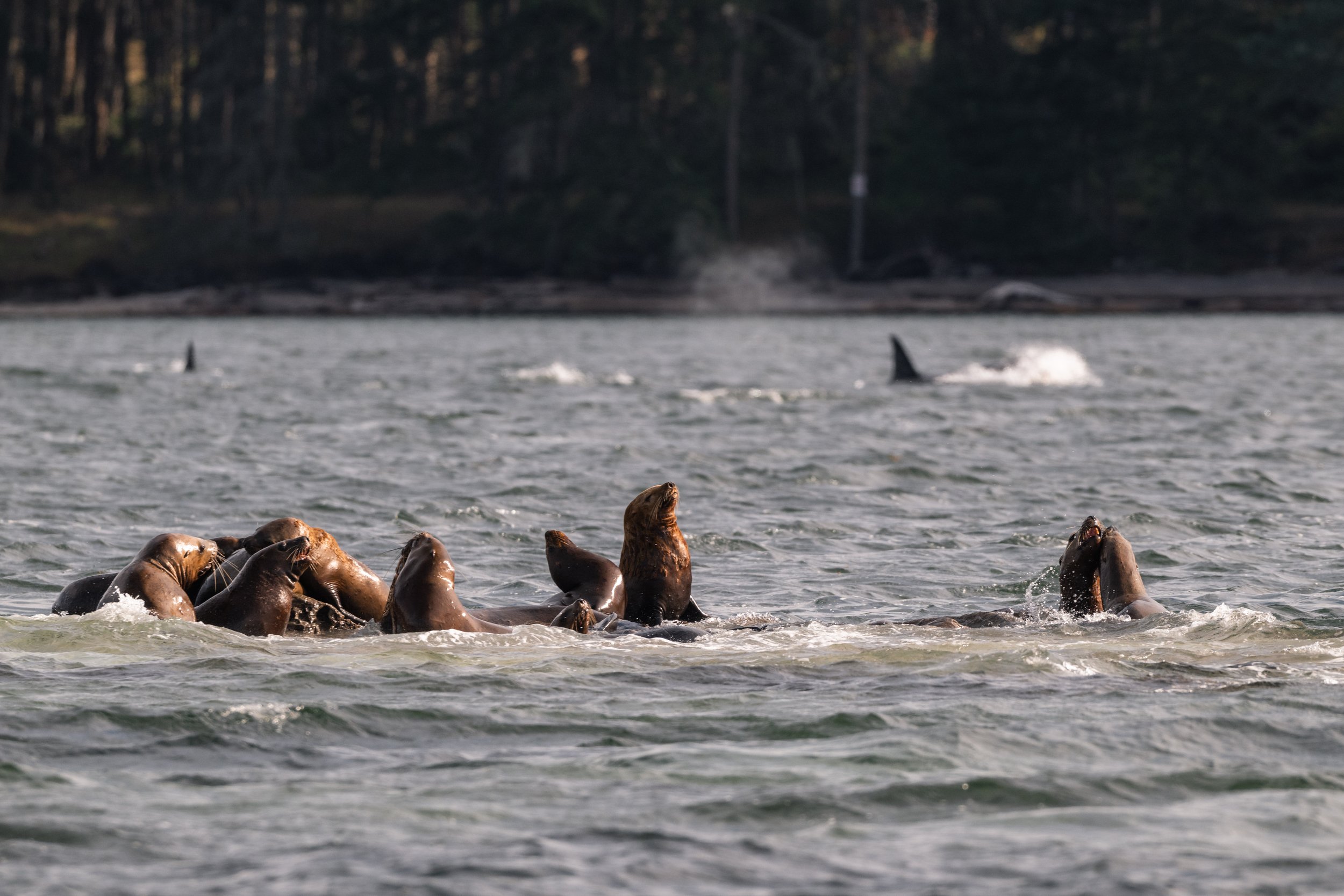
The Steller Sea Lions seem unbothered by their predator passing by.
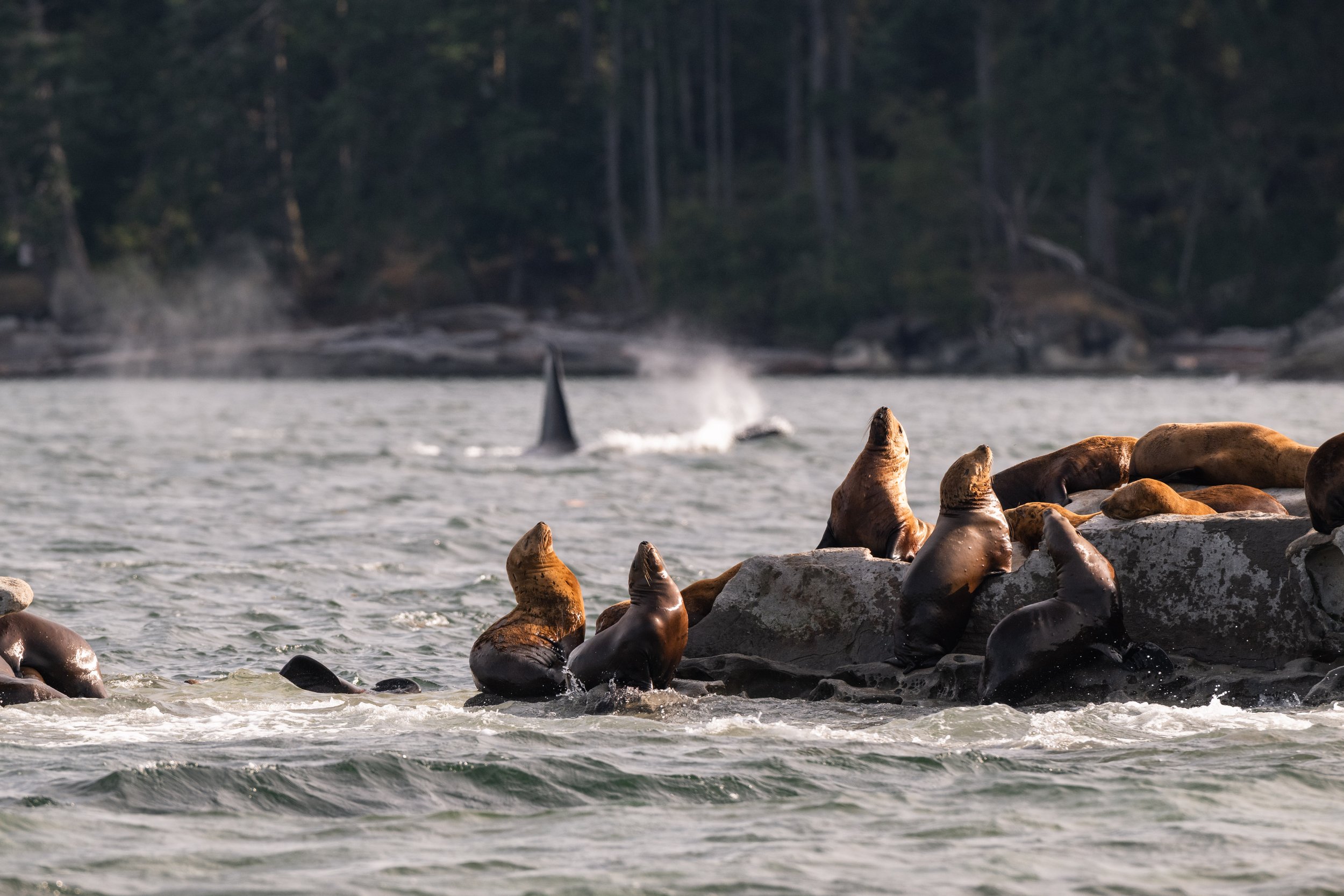
T100C Laurel passing by Stinky Rock.
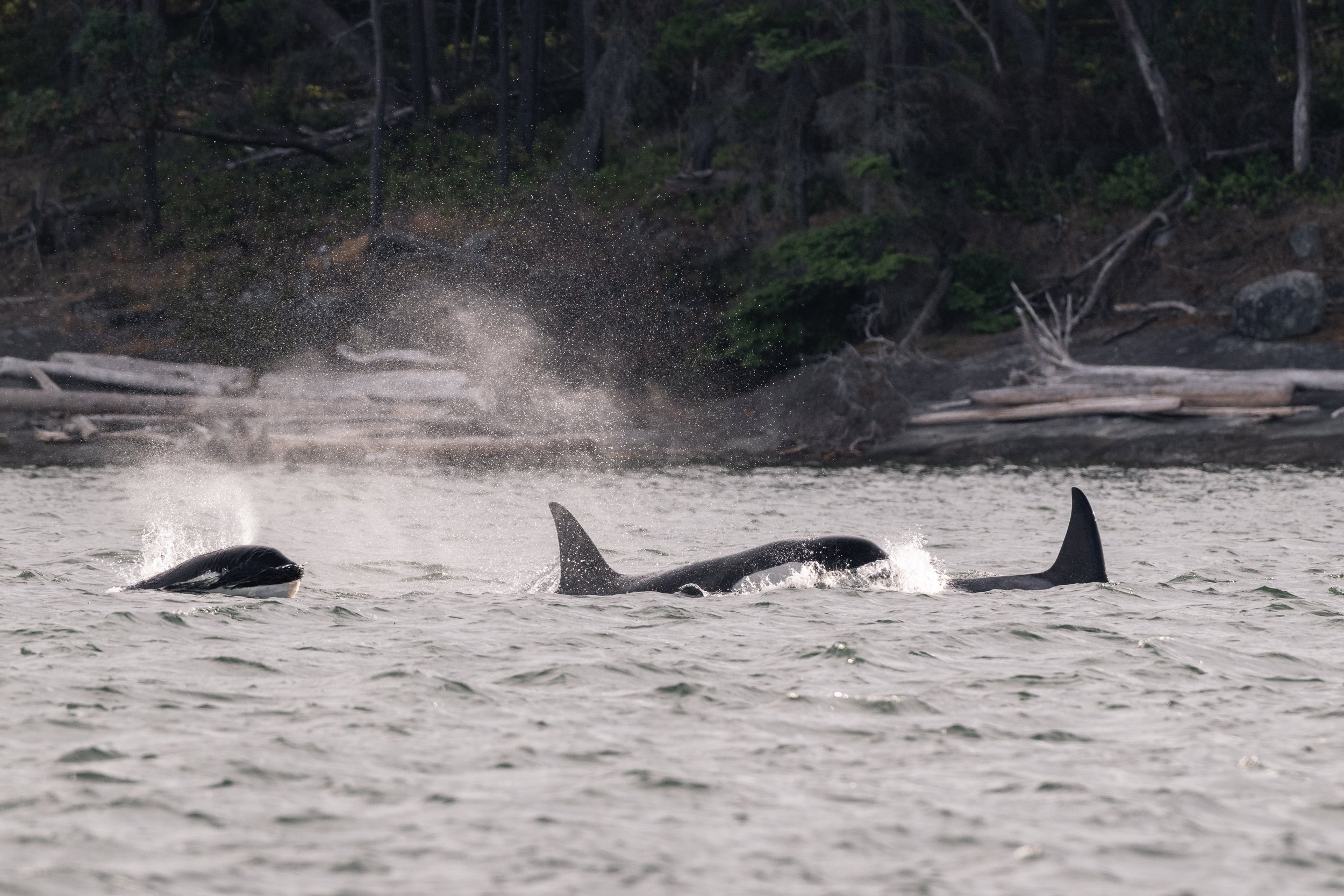
The T046B1s surfacing together.
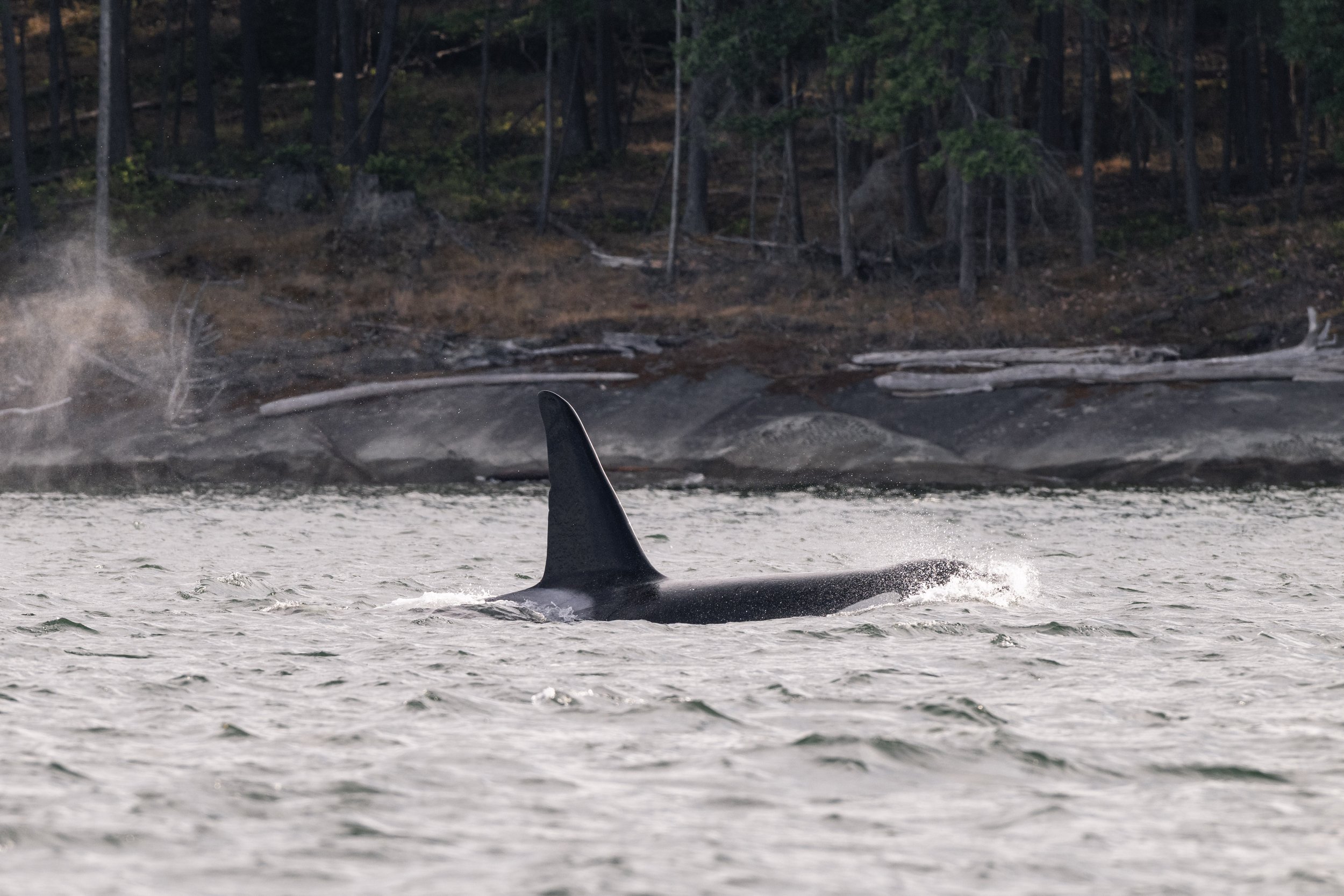
T100C Laurel showing off his scarred up saddle patch.
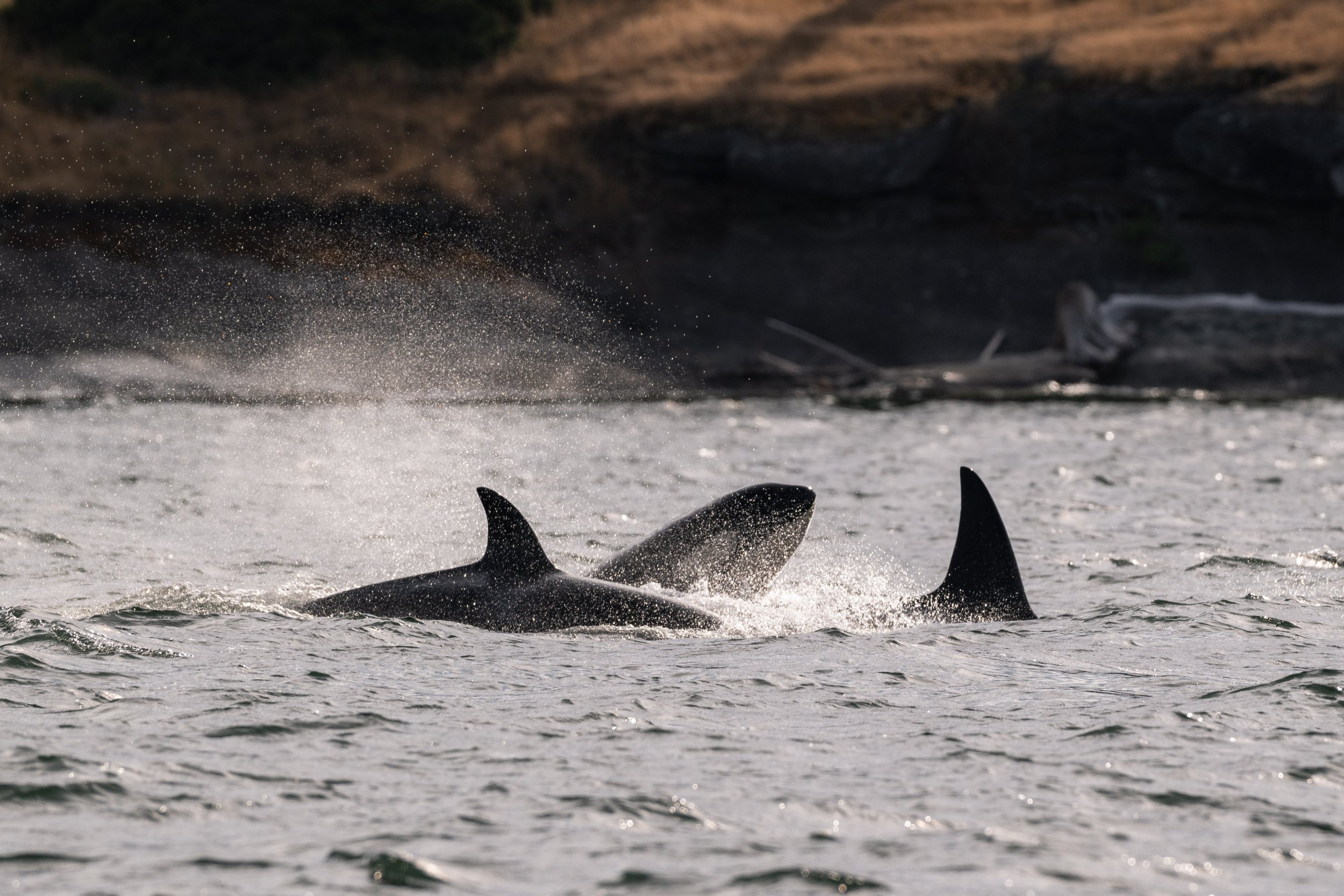
T046B1C Tide, T046B1D Tashi and T046B1 Tread surfacing together.
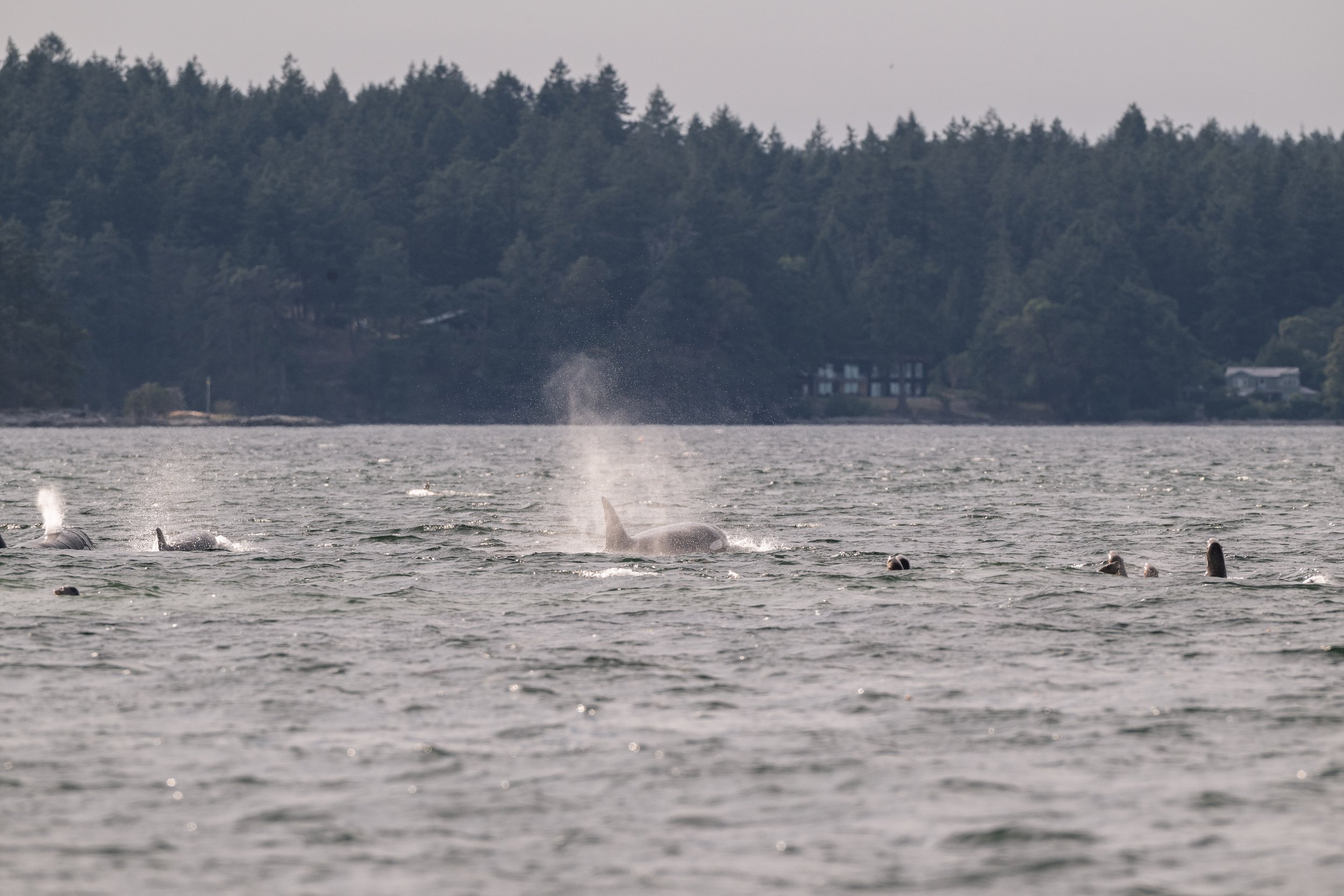
Another close pass between the orca and the Steller Sea Lions, seems the orca aren’t hungry this afternoon, though.
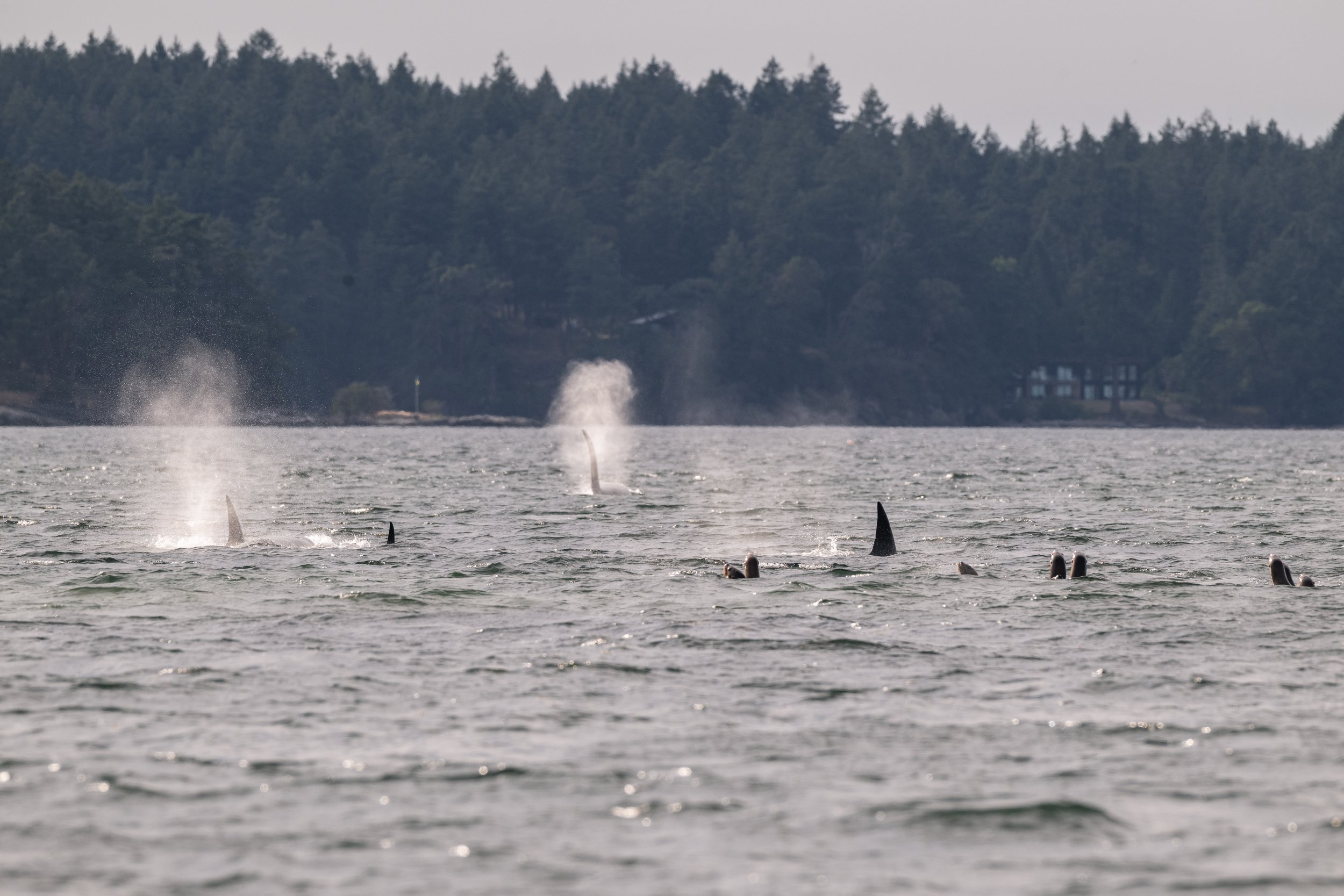
T046C2 Sam passing for a closer look.
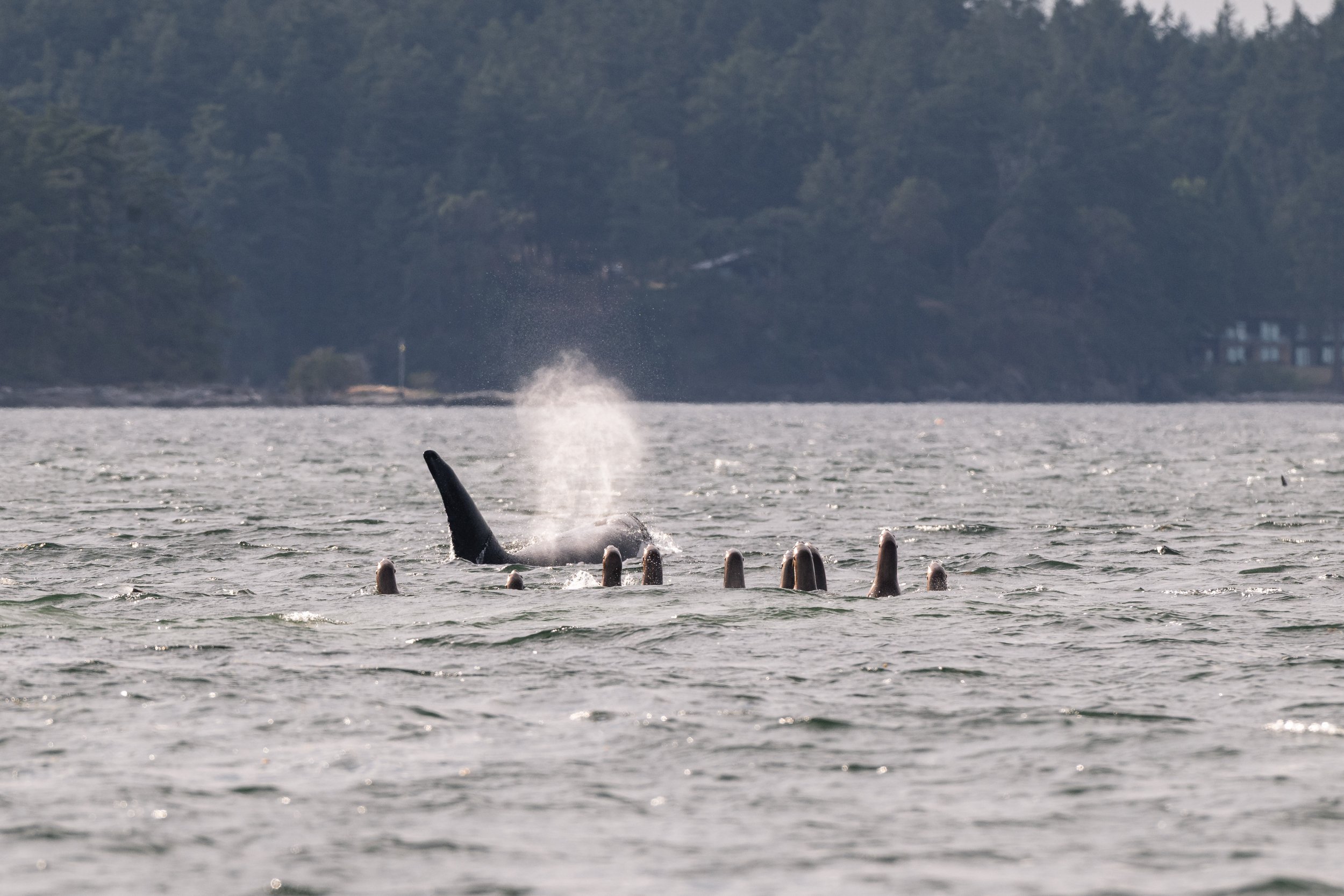
T100C Laurel giving the Sea Lions something to worry about.