
July 14, 2026, 3:30 PM - A Strait full of Humpbacks!
It was a classic West Coast afternoon as Cascadia and Keta slipped away from the Nanaimo waterfront beneath calm seas and a blanket of overcast skies. While sunshine often steals the spotlight, seasoned whale watchers know that grey skies can be a gift. Against the dark horizon, the brilliant white mist of a whale's exhalation stands out like a beacon, making distant blows much easier to spot. With glassy water stretching across the Strait of Georgia, we pushed offshore with high hopes and eyes fixed on the horizon.
Those hopes paid off in less than an hour. A bright white blow appeared in the distance. Then another. And another.
Before long, we had found what our crew affectionately calls "humpback soup." If the Salish Sea is the bowl, then the humpbacks are the noodles, surfacing seemingly everywhere you look! It's one of those wonderfully chaotic encounters where every direction reveals another whale, leaving everyone trying to decide where to point their cameras next.
As exciting as these moments are, every encounter is about much more than simply watching whales. Every trip onto the water is also an opportunity to contribute valuable information to the growing understanding of the humpback whales that call the Salish Sea home.
One of the things our naturalists are most passionate about is identifying each individual whale we encounter. There's always a bit of friendly competition onboard to see who can be the first to call out a positive identification! Unlike many marine mammals studied elsewhere in the world, the whales we encounter are not tagged, chipped, or fitted with tracking devices. We find them the old-fashioned way, with trained eyes, patience, and countless hours spent scanning the ocean.
Once we find them, the detective work begins.
The easiest way to identify a humpback whale is by the underside of its enormous tail fluke. Each tail is completely unique, much like a human fingerprint. The black-and-white pigmentation patterns, the shape of the trailing edge, old scars, scratches from barnacles, rake marks left by killer whales, and even tiny nicks all combine to create an identification that belongs to one whale alone. Considering these tails can span an incredible 16 to 18 feet (5 to 5.5 metres) across, they provide a fantastic canvas for identification.
If a whale decides not to show us its tail, we can often identify it using its dorsal fin instead. Although much smaller, the dorsal fin has its own unique shape, scars, and markings that experienced observers learn to recognize. Every piece of the puzzle helps.
Hayleigh and Jordan were quick to pull out the telephoto lenses, capturing photographs that would allow us to confirm each whale's identity back at the dock. Today's humpback soup included an impressive lineup: Slits (BCY0946), Poptart (BCY1014), Bonapartes BCX1773 calf 2025, Prowler (BCX1660) and Barge Boy (BCX2514).
Every confirmed identification is added to public databases and shared with researchers and fellow whale watchers. By making this information publicly available, everyone benefits. The more sightings collected across the coast, the clearer the picture becomes of where these whales travel, who they associate with, and how their lives are changing over time.
One of the most fascinating discoveries emerging from years of photo-identification is that humpbacks may not be as solitary as scientists once believed.
Not long ago, finding a humpback whale in the Salish Sea almost always meant finding a single animal travelling or feeding alone. Outside of breeding grounds or exceptionally rich feeding areas, humpbacks were generally considered solitary creatures.
But our observations, and those of many researchers throughout the Pacific Northwest, are beginning to tell a more complicated story.
Time and again, we document temporary associations among individual whales. Some remain together for only a few hours, while others continue travelling together for weeks or even months. Certain whales seem to reunite repeatedly over multiple seasons, suggesting they may have preferred companions or social relationships that we are only just beginning to understand.
Are humpbacks social animals?
The evidence is certainly pointing in that direction.
We are still a long way from fully understanding these relationships, but every encounter like today's adds another piece to the puzzle. It's an exciting reminder that even after decades of studying humpback whales, they continue to surprise us with behaviours we never expected.
Eventually, it was time to leave our bowl of humpback soup and allow the whales to continue their travels. Our next stop took us to one of our favourite spots, the Steller Sea Lions hauled out on the rocky islets we affectionately call "Stinky Rocks." The nickname becomes obvious the moment you arrive! Dozens of massive sea lions crowd together on the rocks, filling the air with their unmistakable chorus of belches, grunts, and, of course, a rather unforgettable aroma. Steller Sea Lions are the largest members of the eared seal family, with adult males tipping the scales at over 1,100 kilograms (2,500 pounds). Despite their enormous size on land, they are remarkably agile underwater, using their powerful front flippers to propel themselves through the water with surprising speed and grace.
Sharing the shoreline with the sea lions were several Bald Eagles keeping watch from nearby perches. Bald Eagles thrive along the coast of British Columbia thanks to the abundance of fish and marine life. With wingspans reaching over two metres (seven feet), they are among North America's largest birds of prey. Their iconic white head and tail don't actually appear until they're about five years old, meaning the mottled brown youngsters can sometimes surprise first-time eagle watchers.
Just when we thought the afternoon was winding down, Cascadia spotted one final blow far off in the distance.
Curiosity got the better of us.
A quick detour and a few photographs later revealed the whale to be Beak (BCX1606), travelling steadily through the Strait. At first glance, Beak appeared to be alone, but after everything we'd witnessed earlier in the day, we couldn't help but wonder if another companion might have been just beyond our view. With our time on the water coming to an end, we left Beak to continue their journey, knowing that every encounter leaves behind another question waiting to be answered.
Days like today are a wonderful reminder of why we love exploring the Salish Sea. Calm water, dramatic skies, a bowl full of humpback whales, curious sea lions, soaring eagles, and one final surprise before heading home made for an unforgettable afternoon. More importantly, every sighting, every photograph, and every identification contributes to the bigger picture of understanding the incredible wildlife that calls these waters home. While we may head out hoping to find whales, we often return having learned something new, and that's an adventure worth sharing every single day.
Photos below taken by Hayleigh Hilbert and Jordan Robinson.
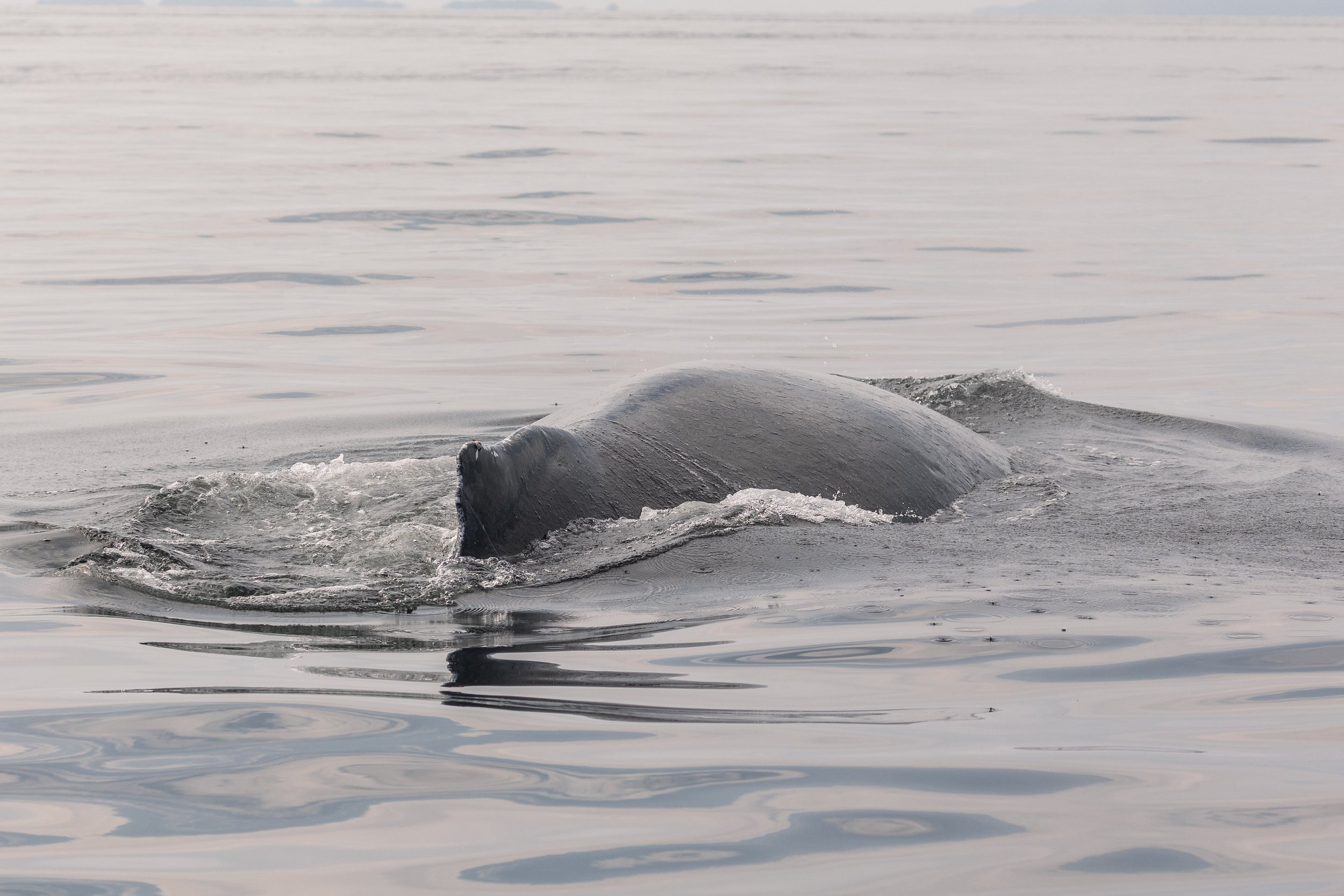
Slits surfacing. Photo by Jordan Robinson.
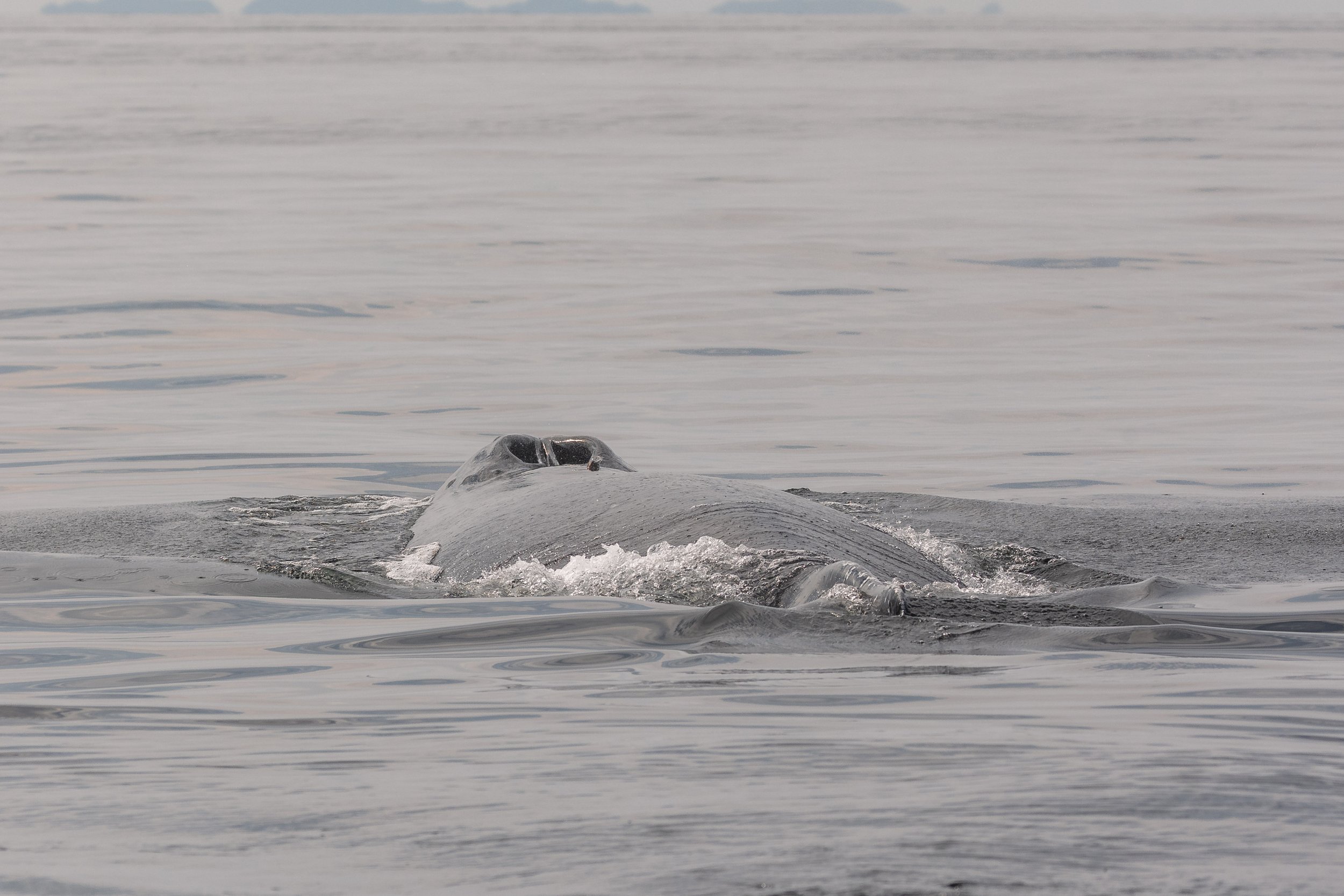
A good look at the blowholes. Photo by Jordan Robinson.
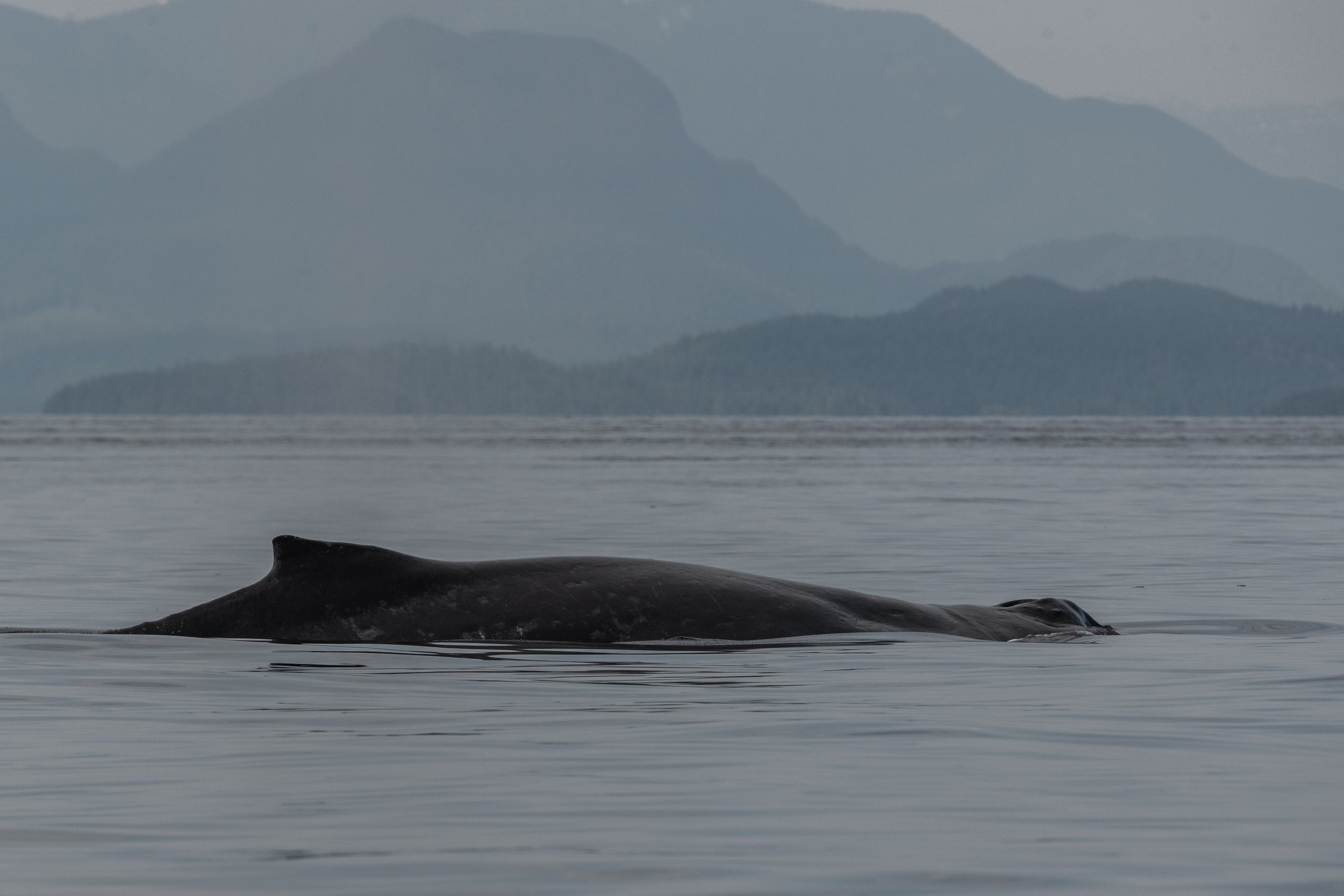
Poptart in the calm water. Photo by Hayleigh Hilbert.
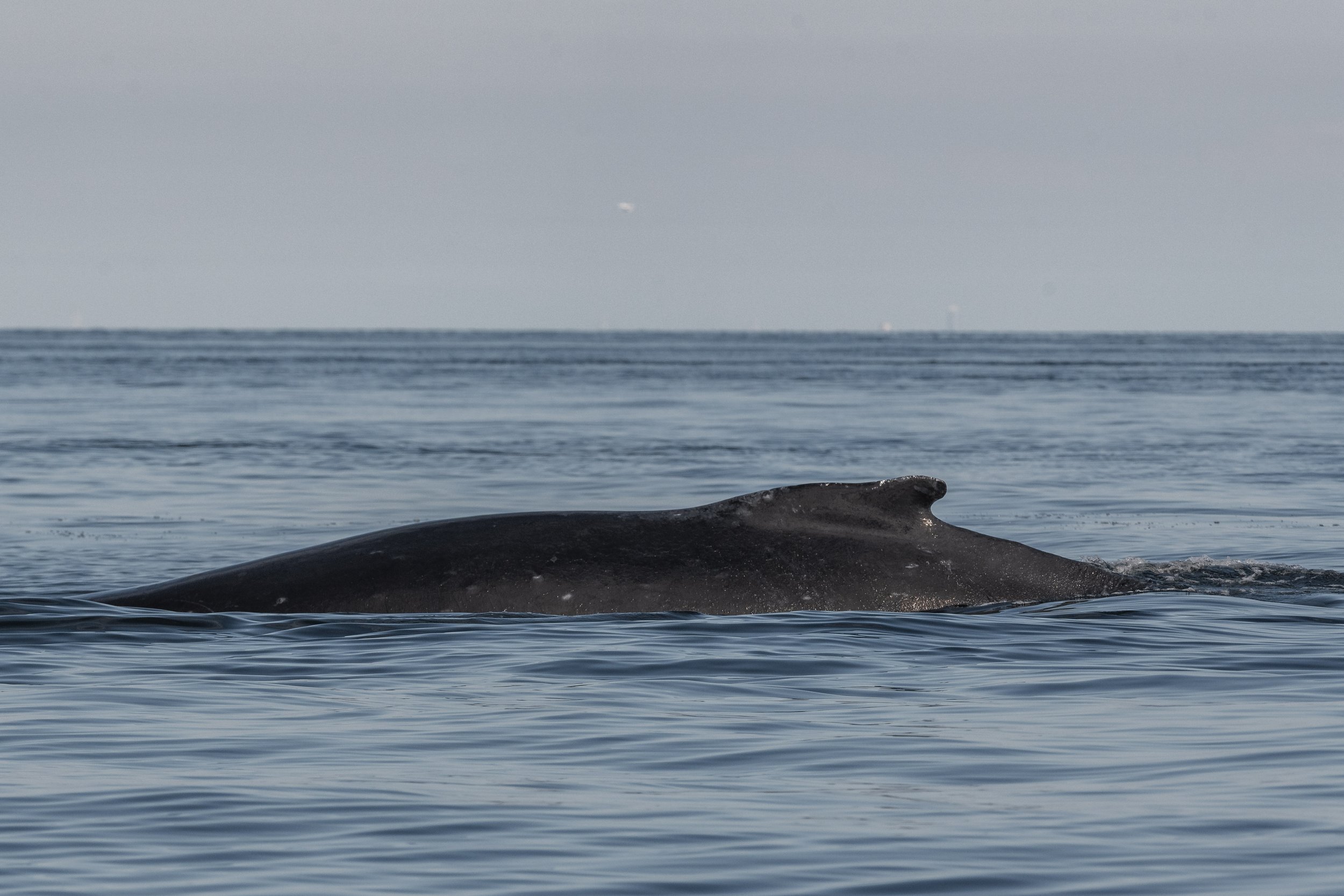
Barge Boy’s dorsal fin. Photo by Hayleigh Hilbert.
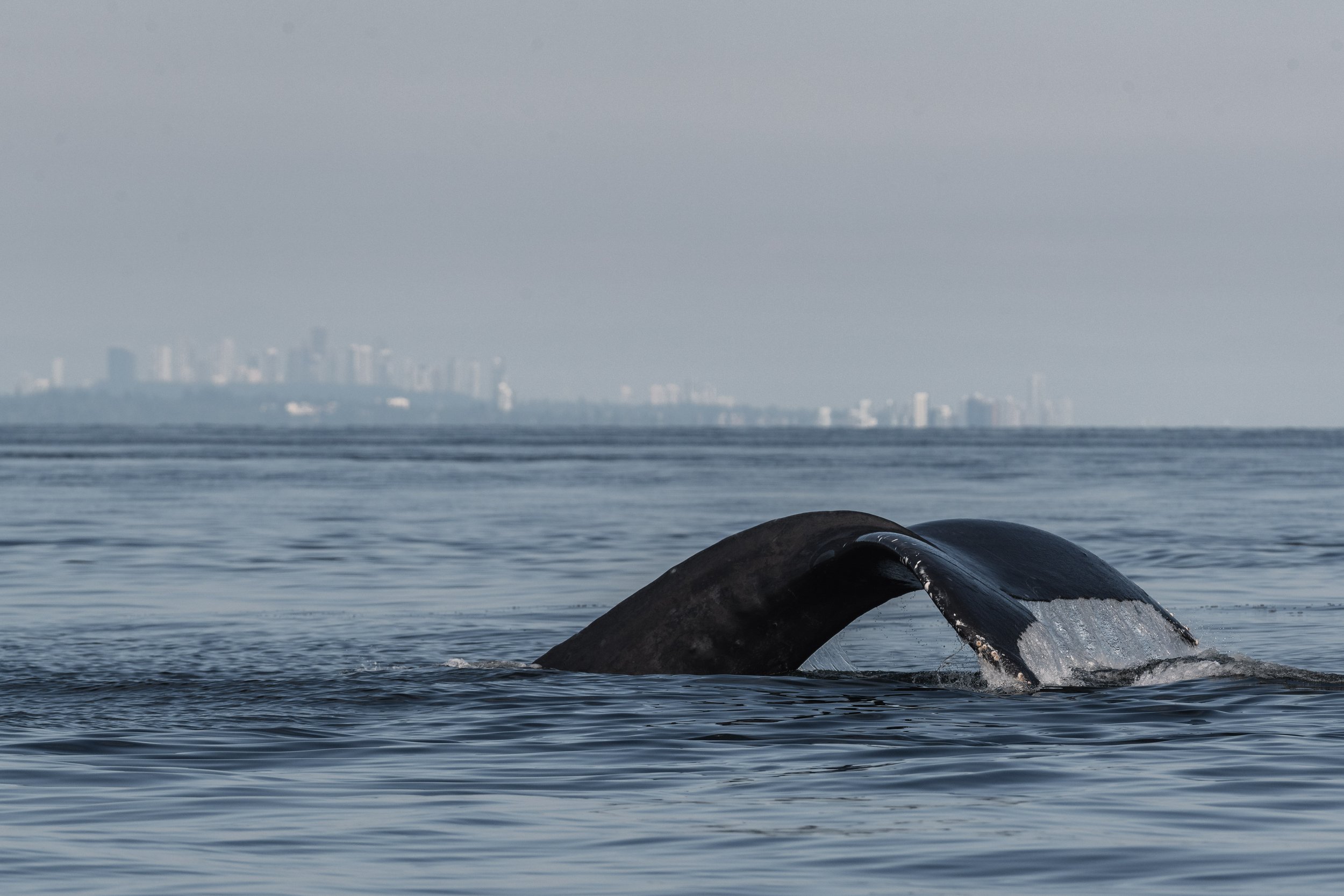
Barge Boy with Vancouver in the background. Photo by Hayleigh Hilbert.
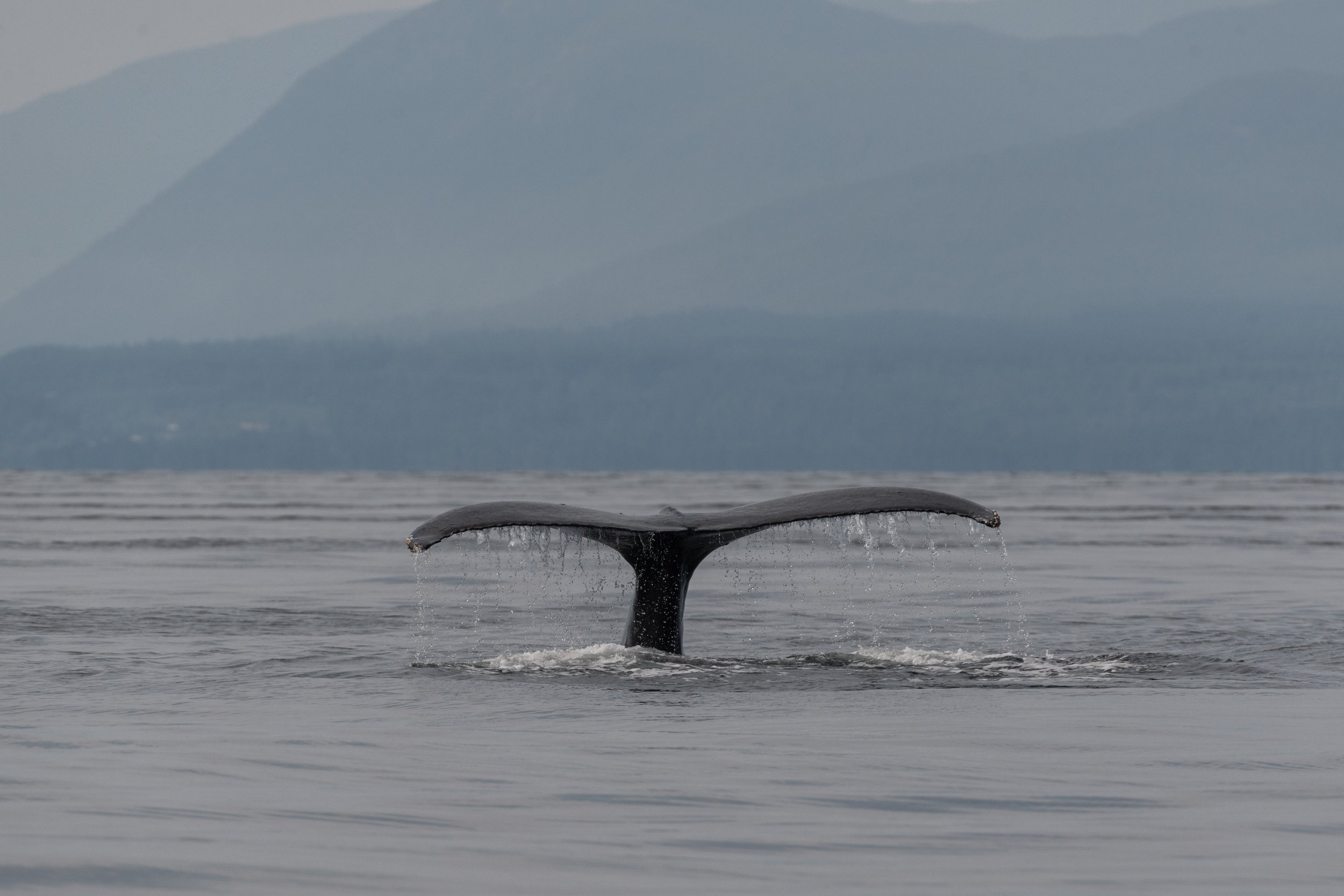
Barge Boy going for a dive. Photo by Hayleigh Hilbert.
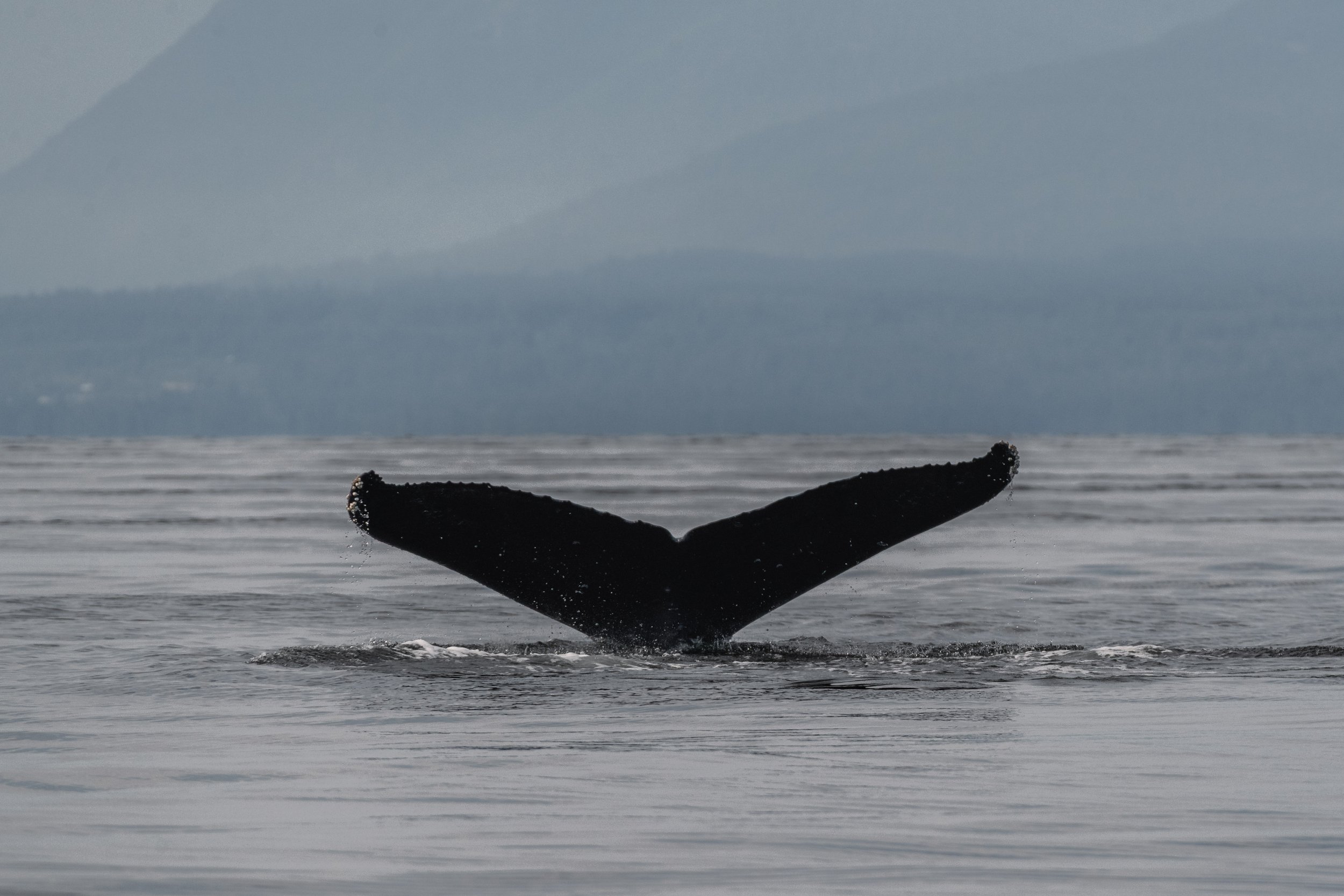
Barge Boy fluking. Photo by Hayleigh Hilbert.
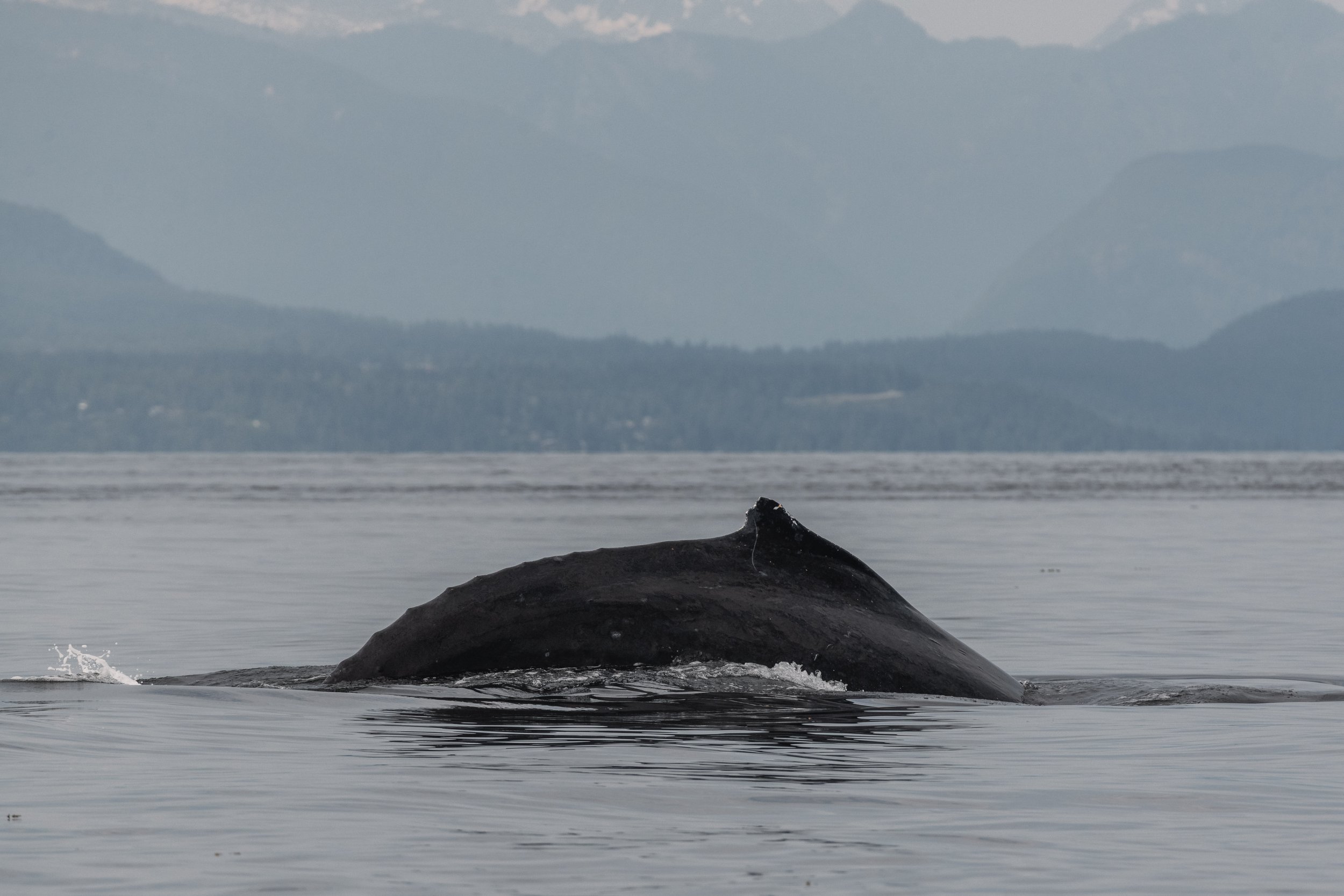
Slits arching to dive. Photo by Hayleigh Hilbert.
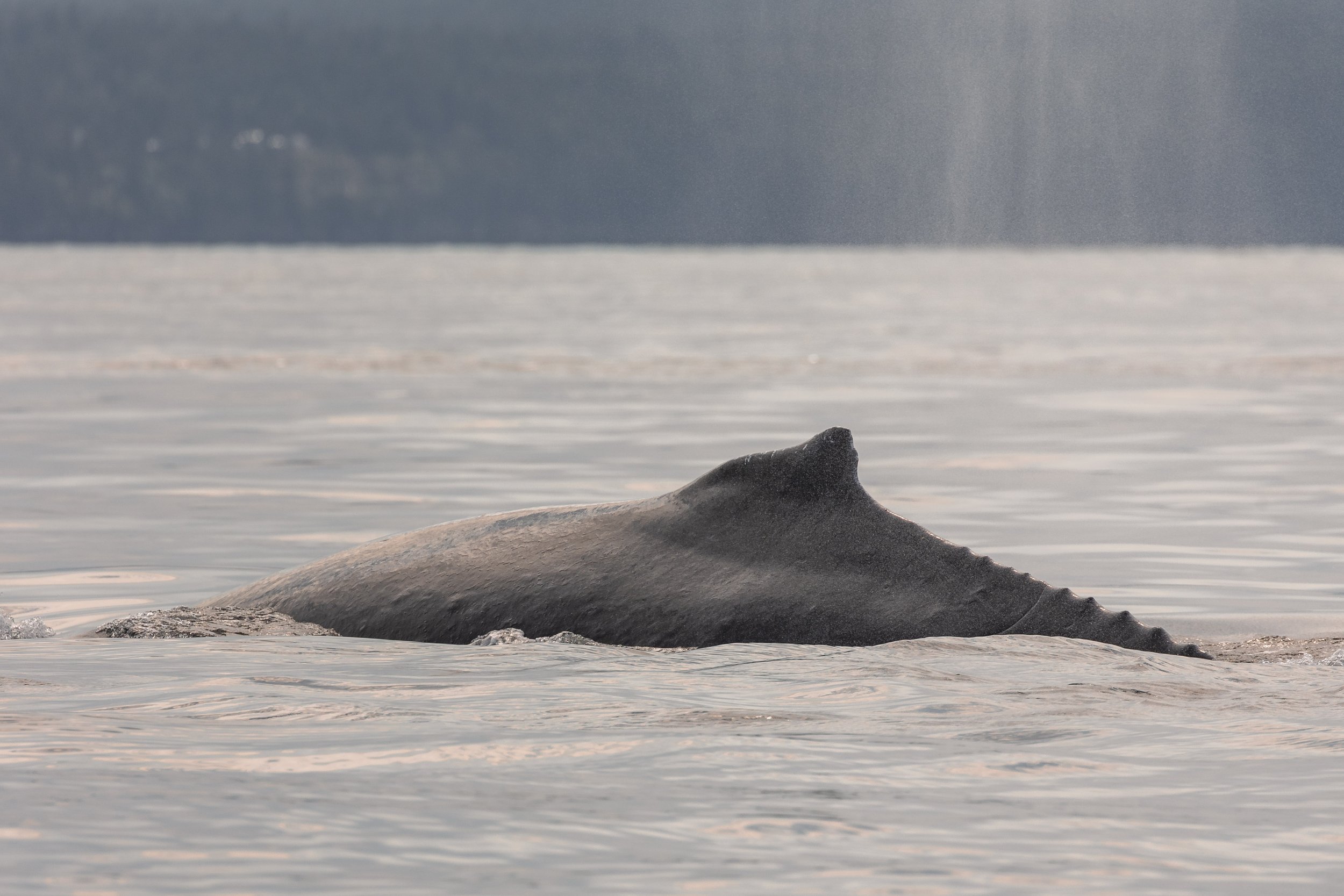
Slits’ dorsal fin. Photo by Jordan Robinson.
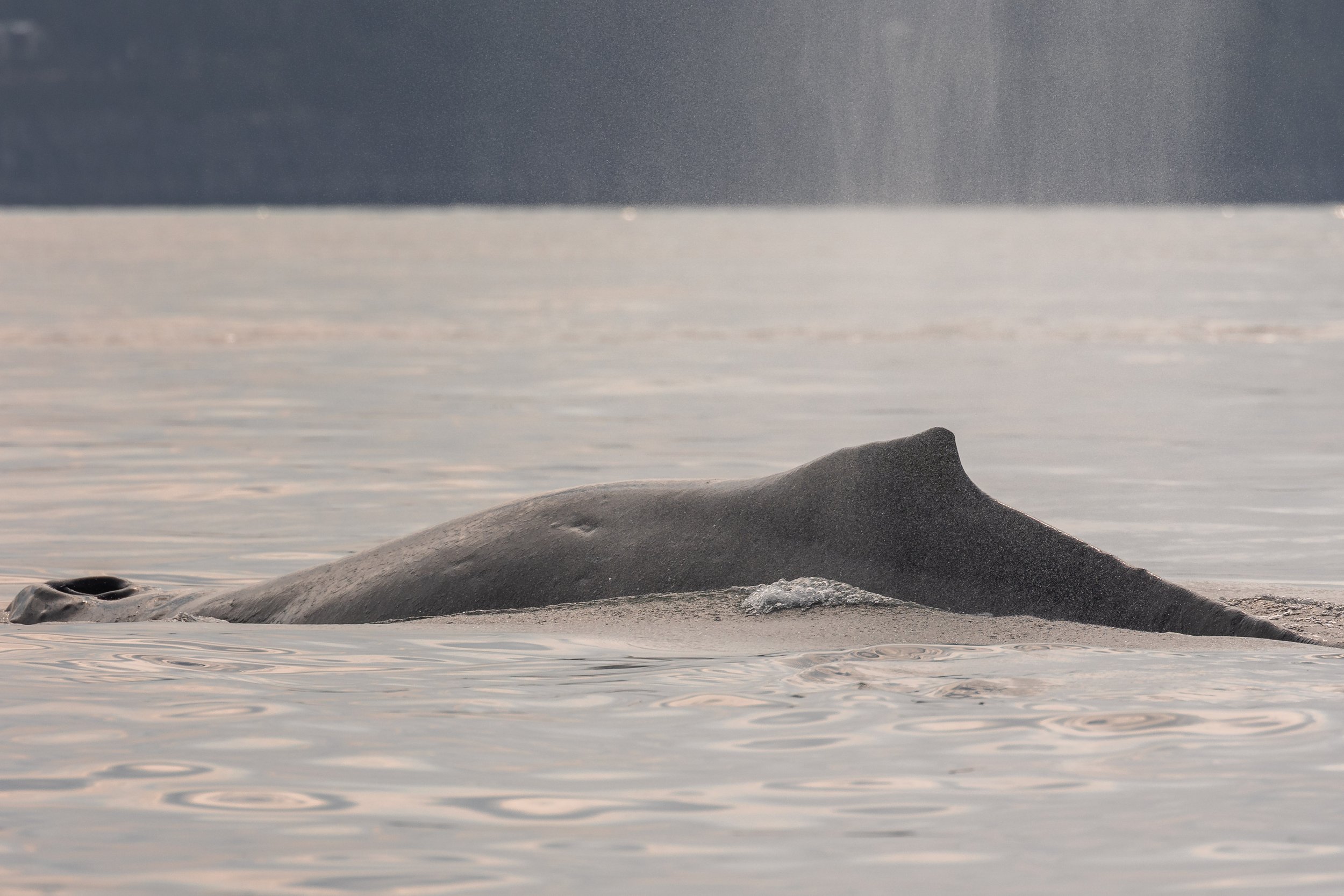
Poptart’s dorsal fin. Photo by Jordan Robinson.
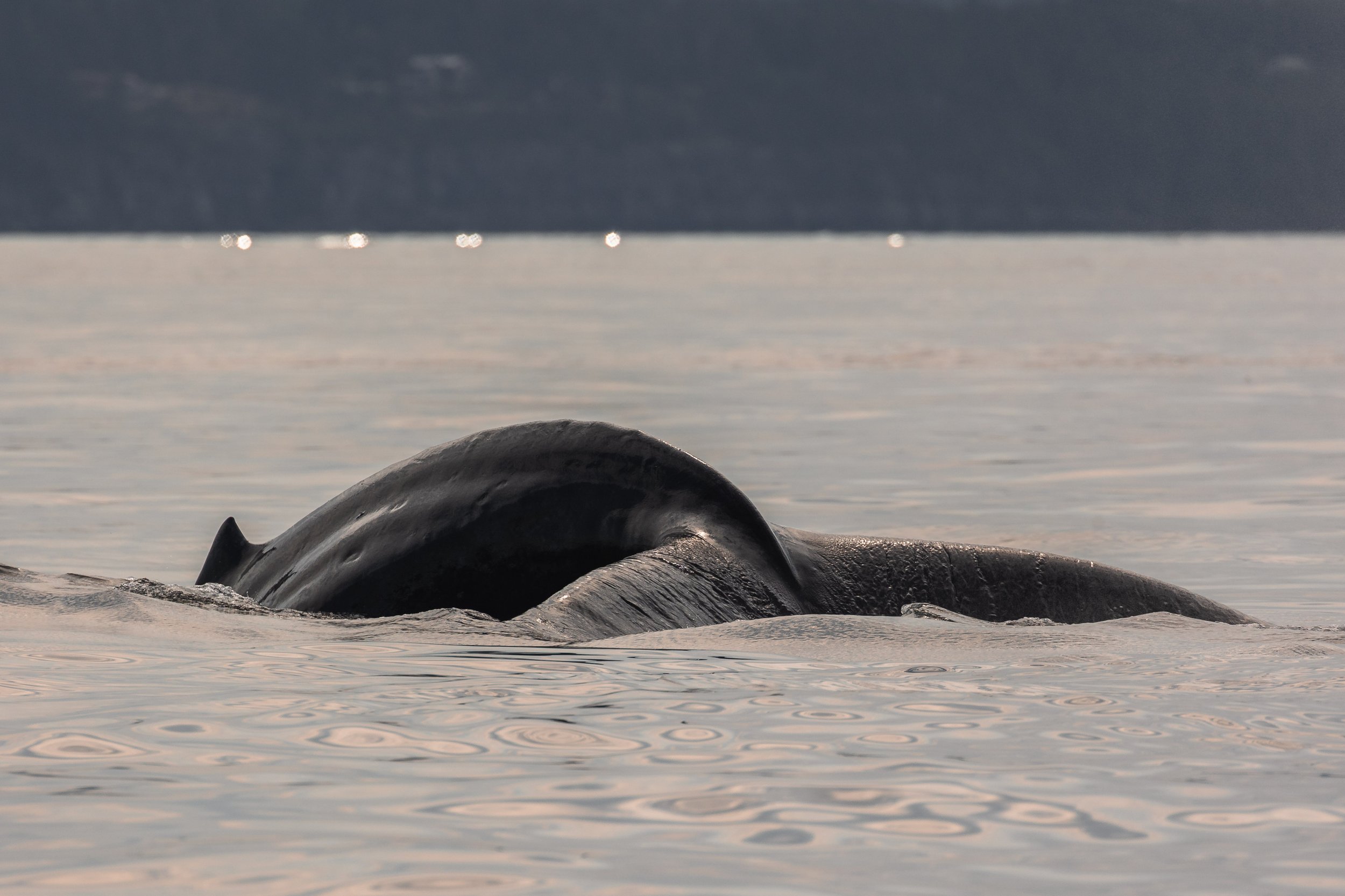
Poptart arching to dive. Photo by Jordan Robinson.
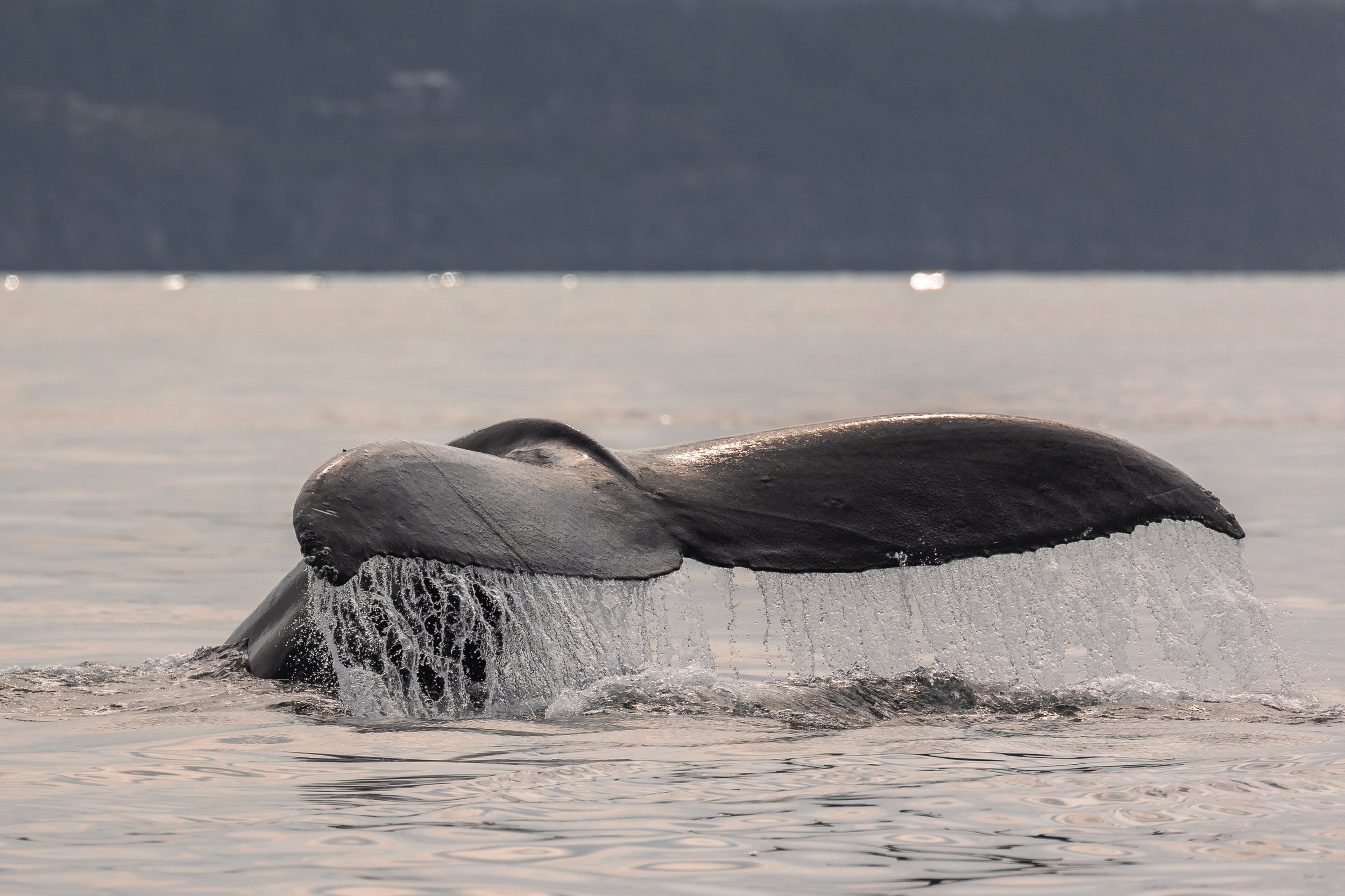
Poptart with a fluke waterfall. Photo by Jordan Robinson.
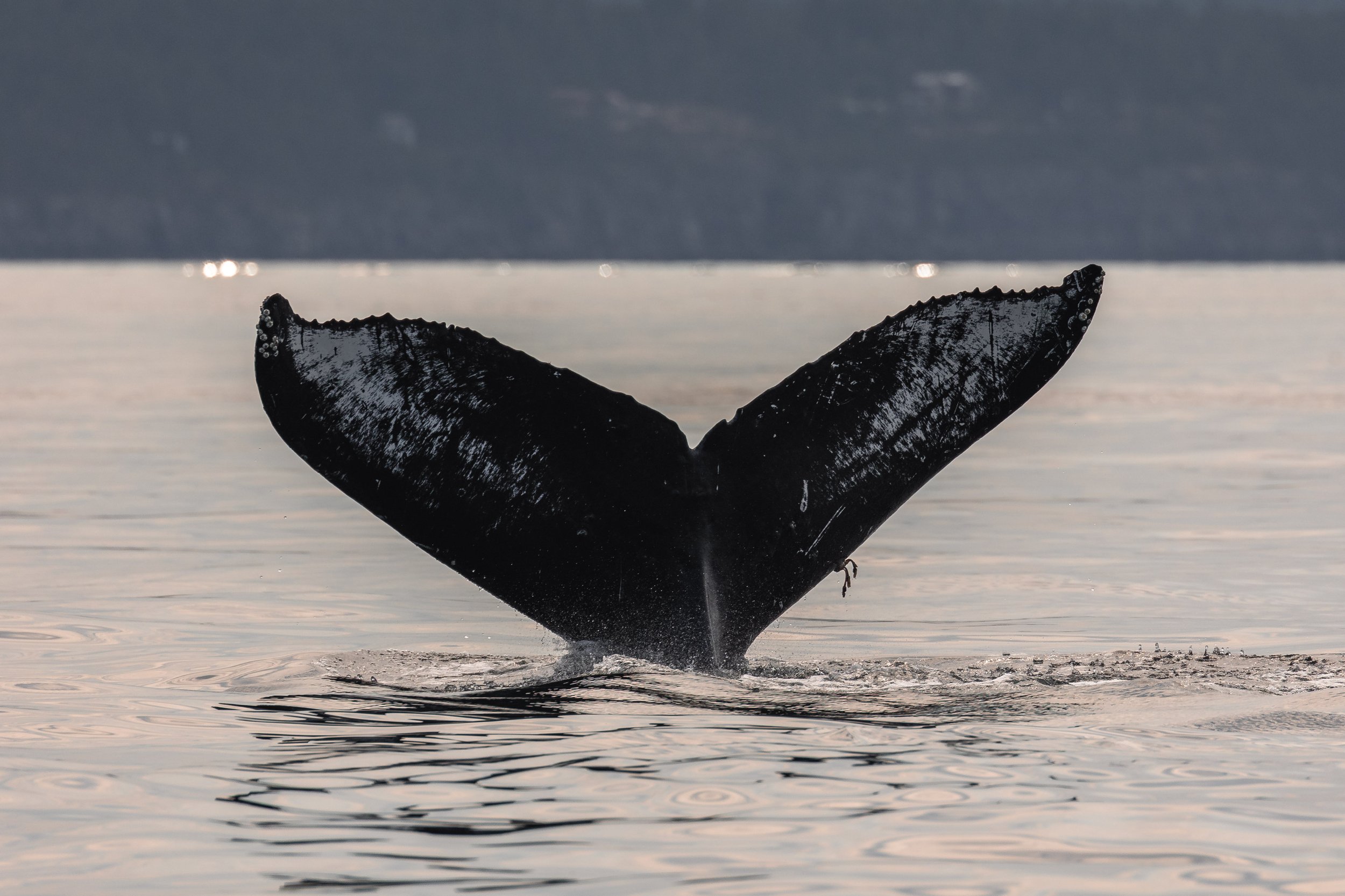
Poptart fluking. Photo by Jordan Robinson.
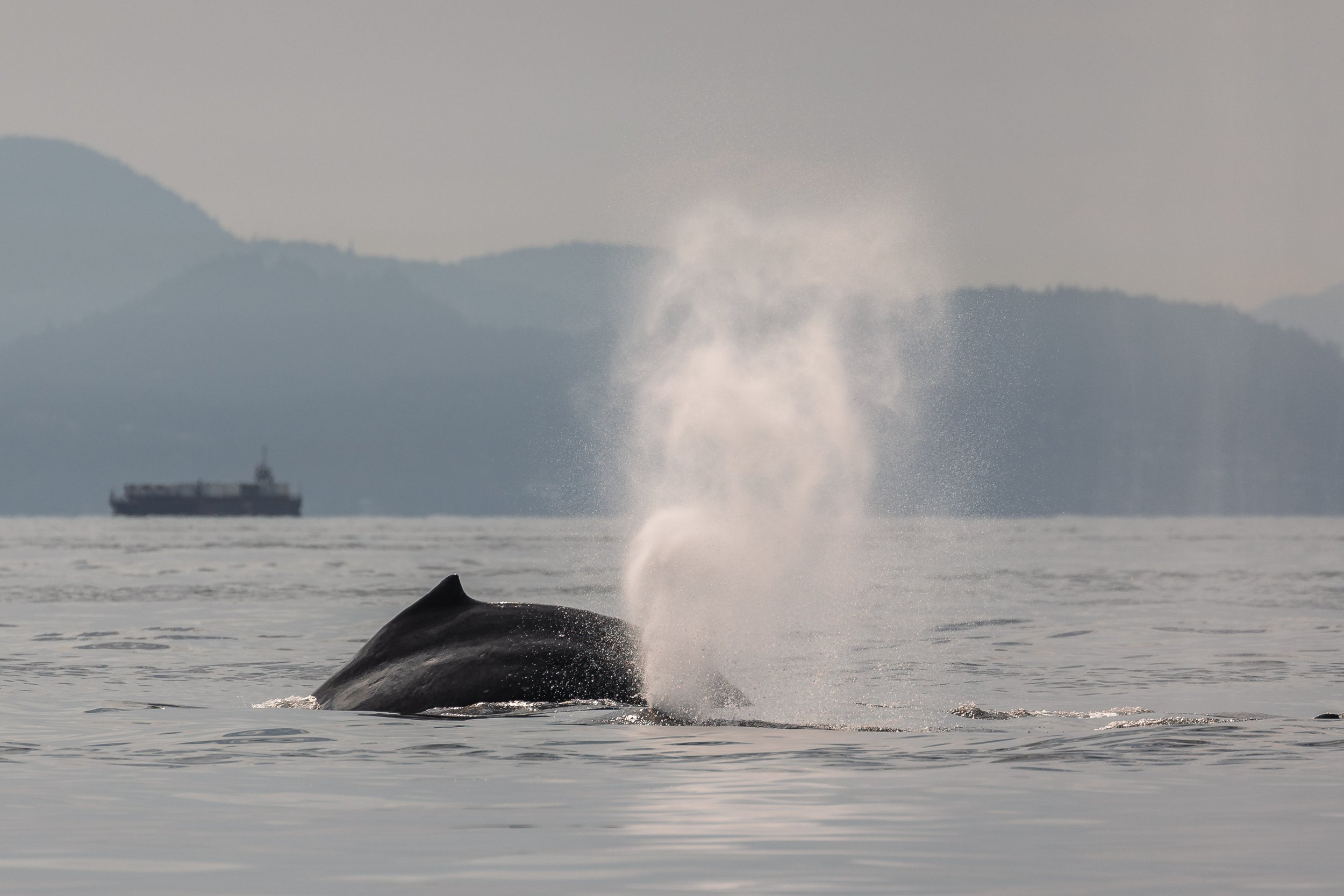
Poptart diving as Slits blows alongside. Photo by Jordan Robinson.
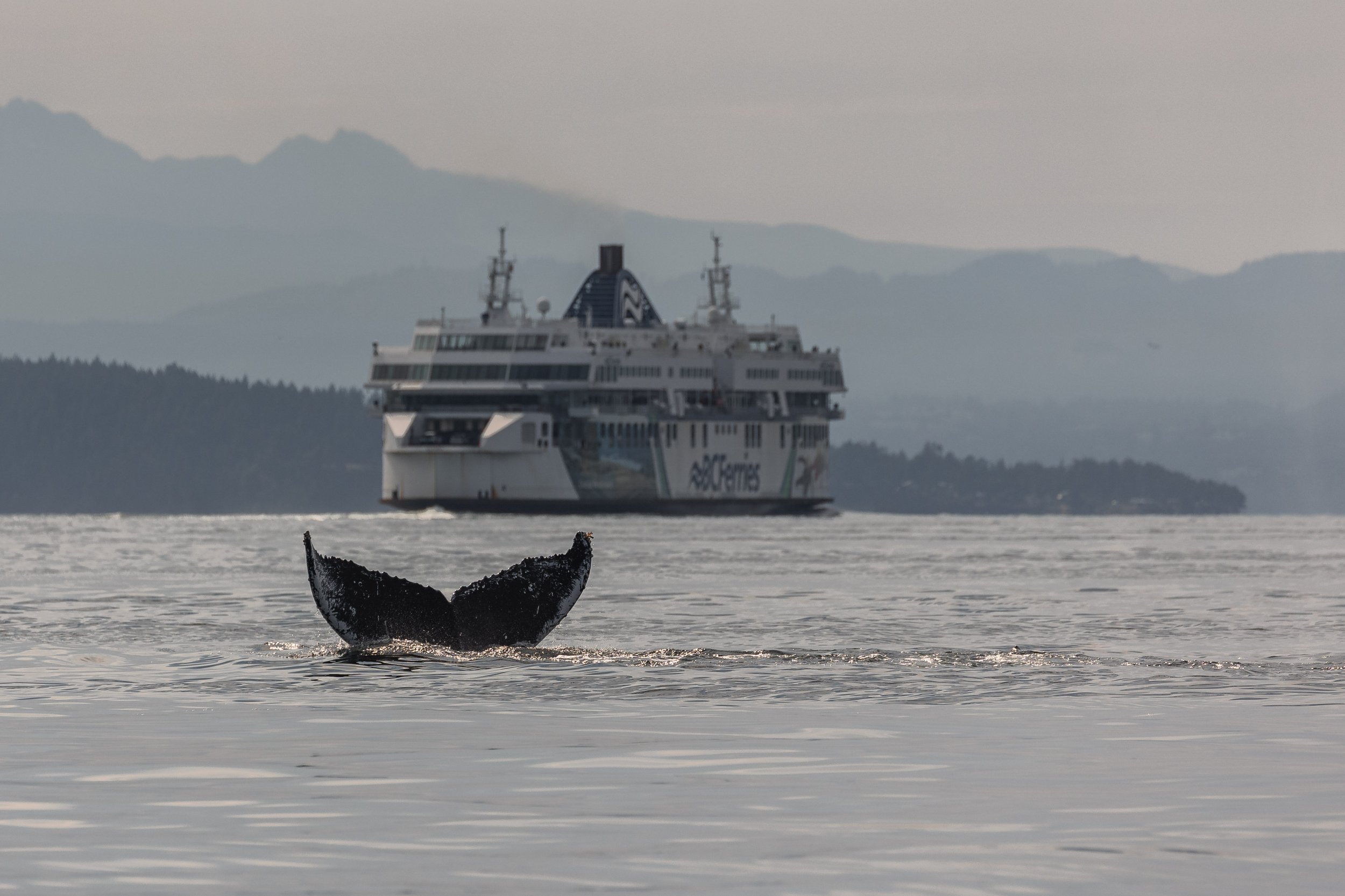
Slits with the B.C. ferry. Photo by Jordan Robinson.
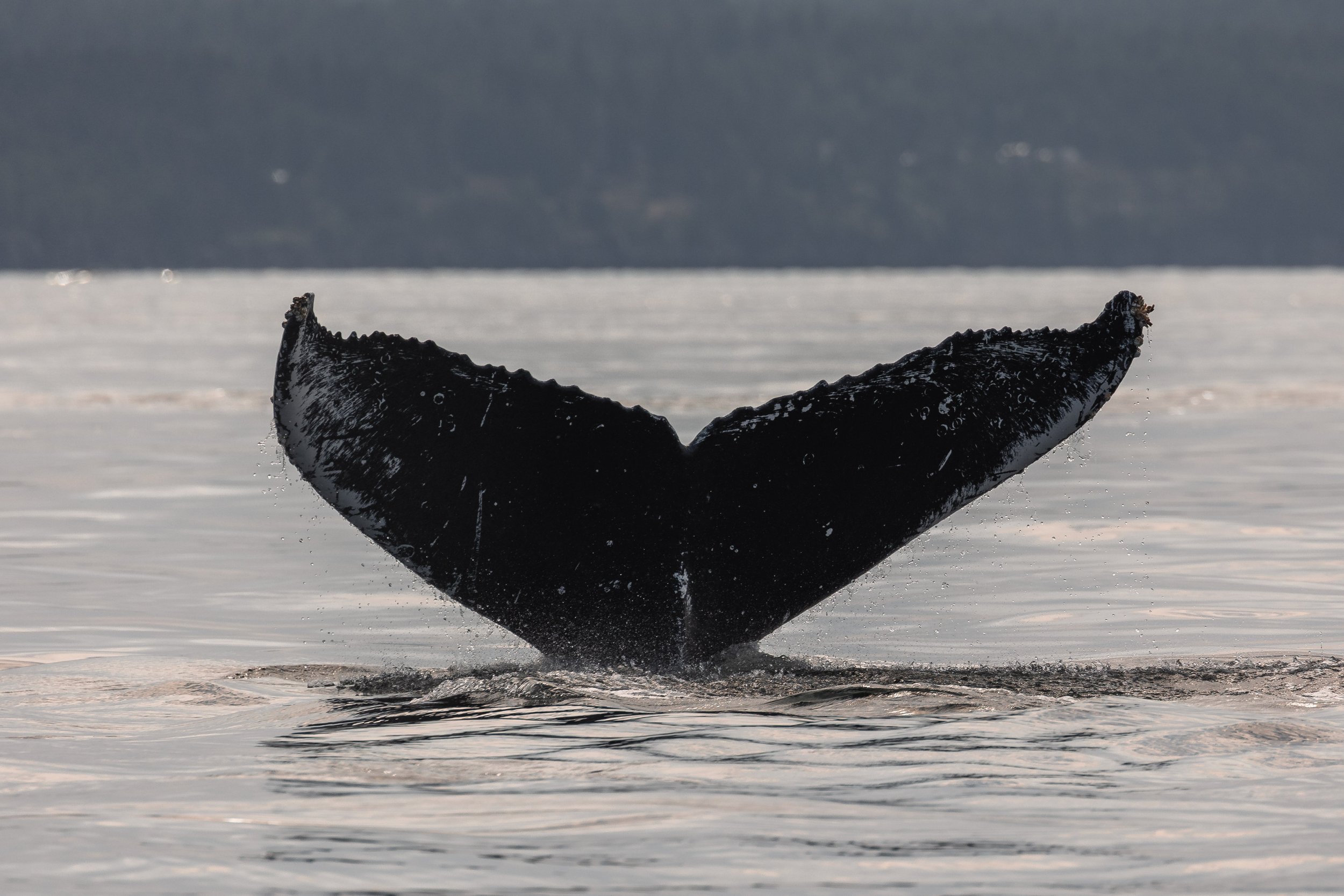
Slits fluking. Photo by Jordan Robinson.
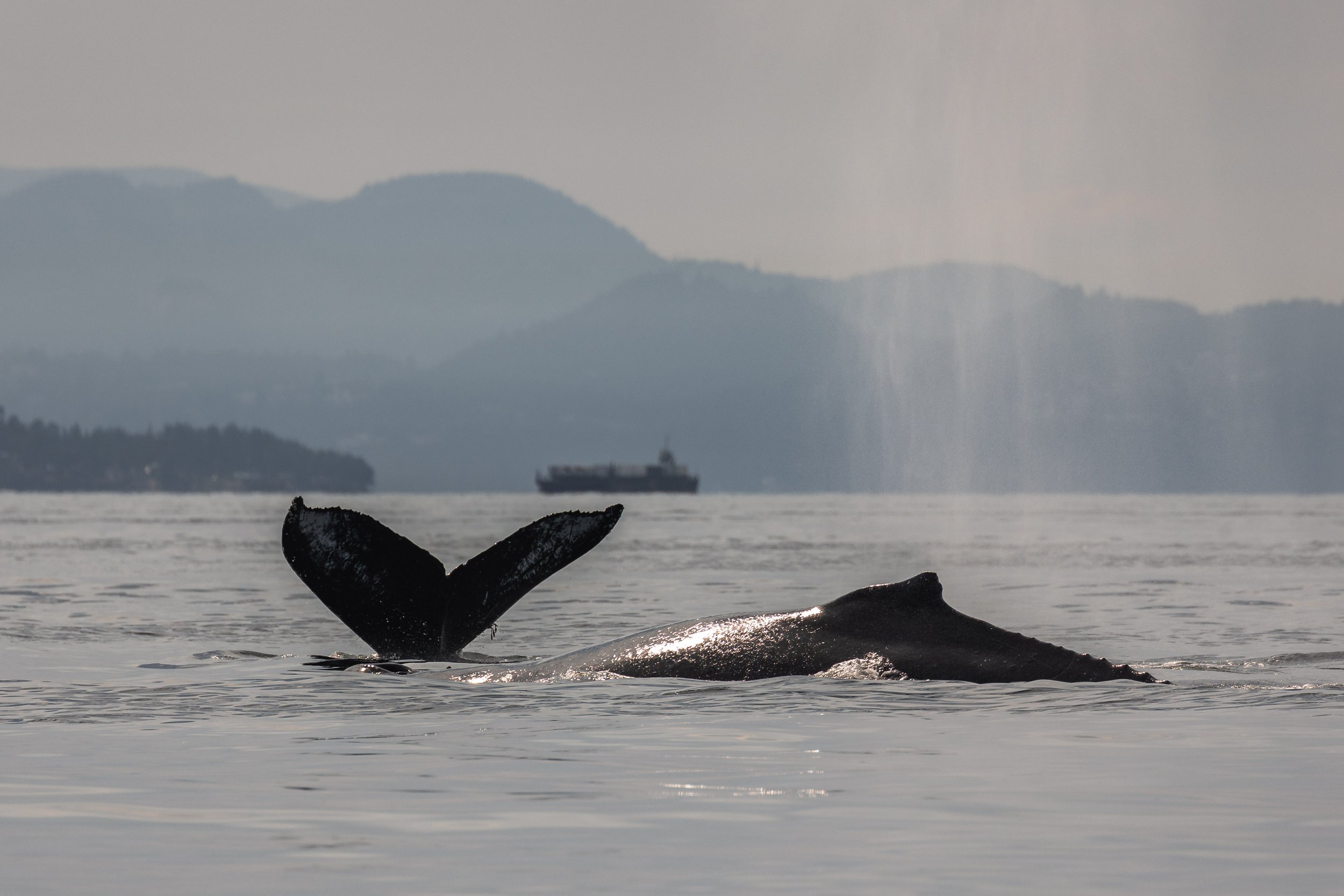
Poptart fluking as Slits surfaces. Photo by Jordan Robinson.
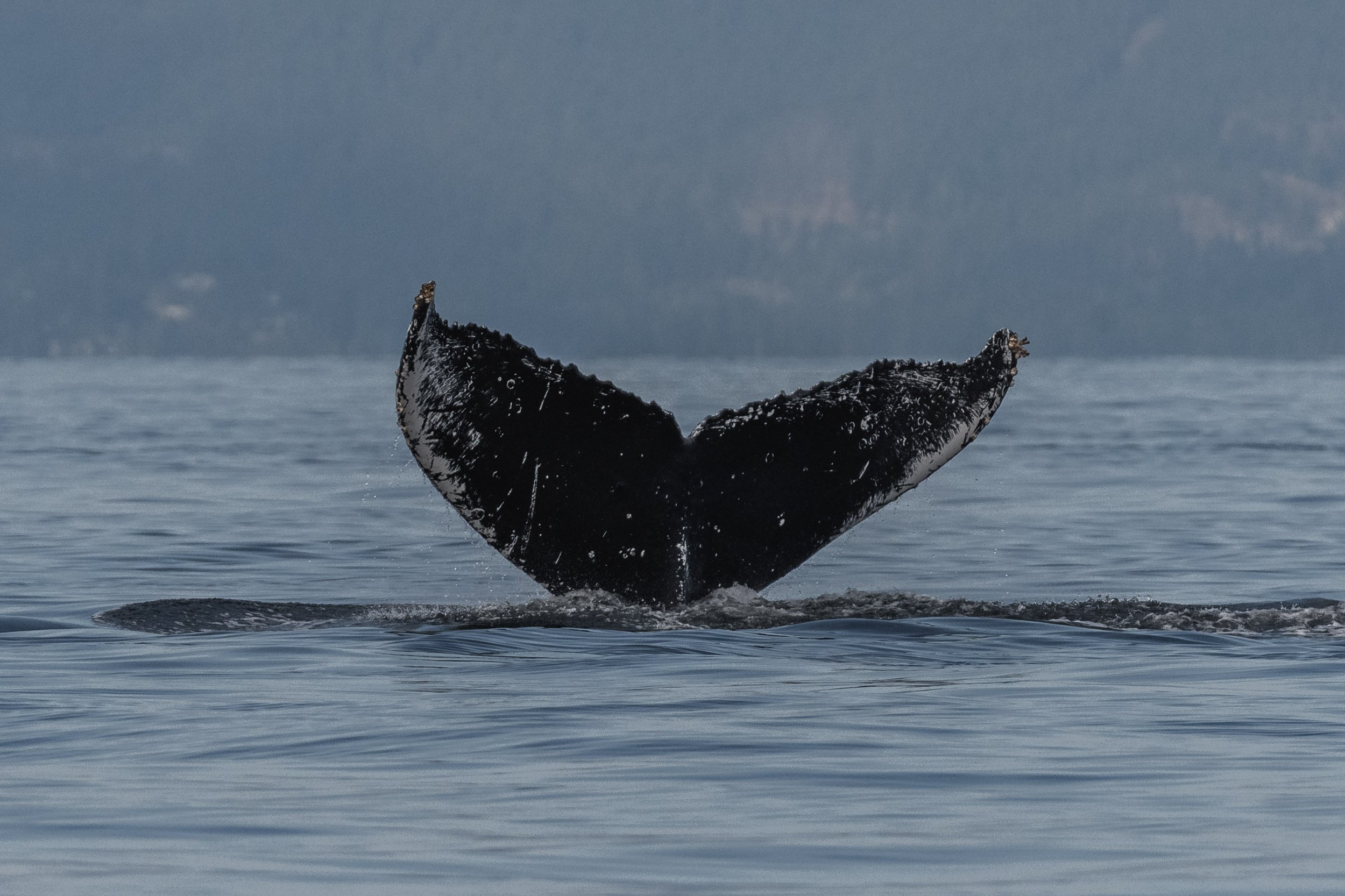
A fluke from Slits. Photo by Hayleigh Hilbert.
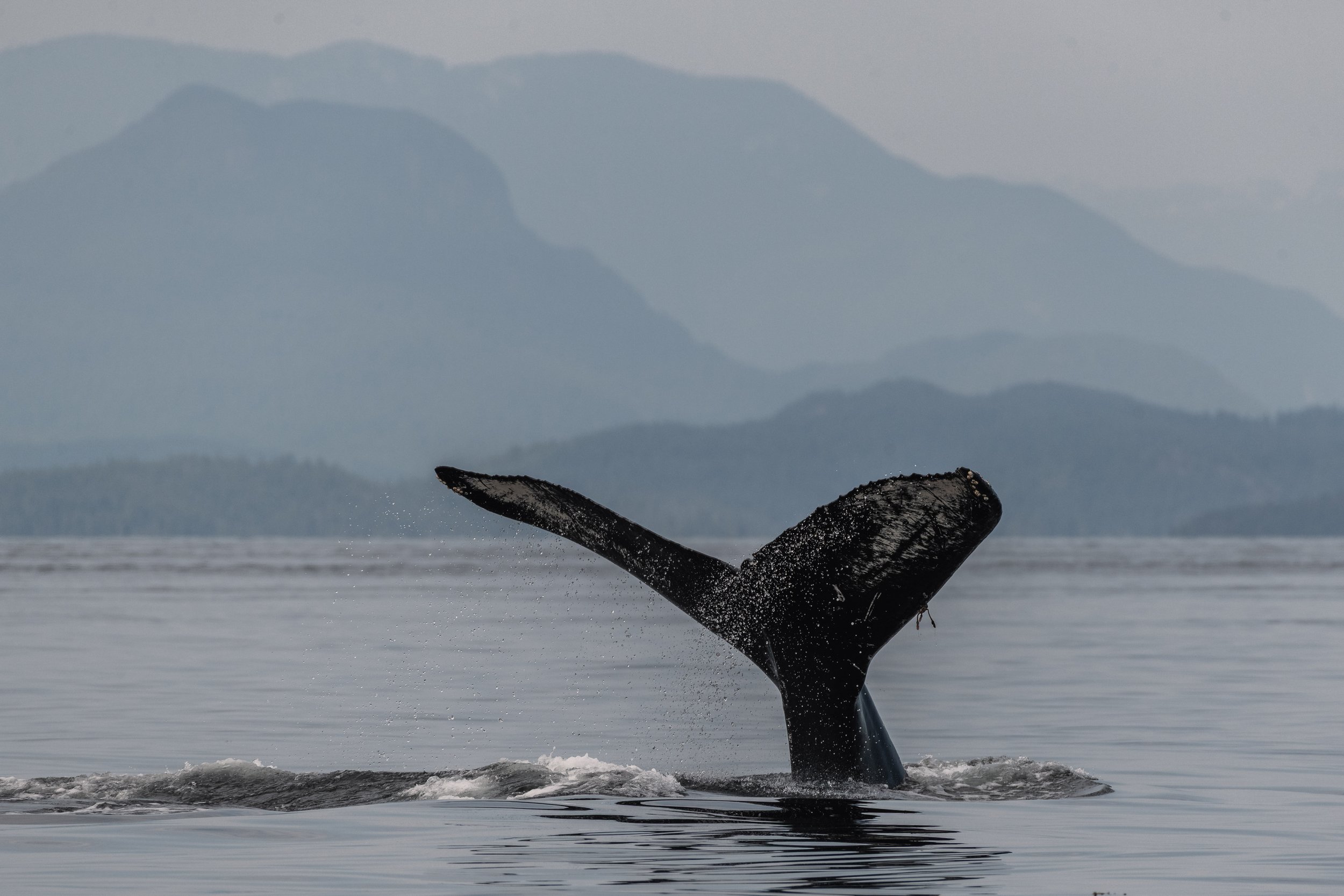
Poptart going down. Photo by Hayleigh Hilbert.
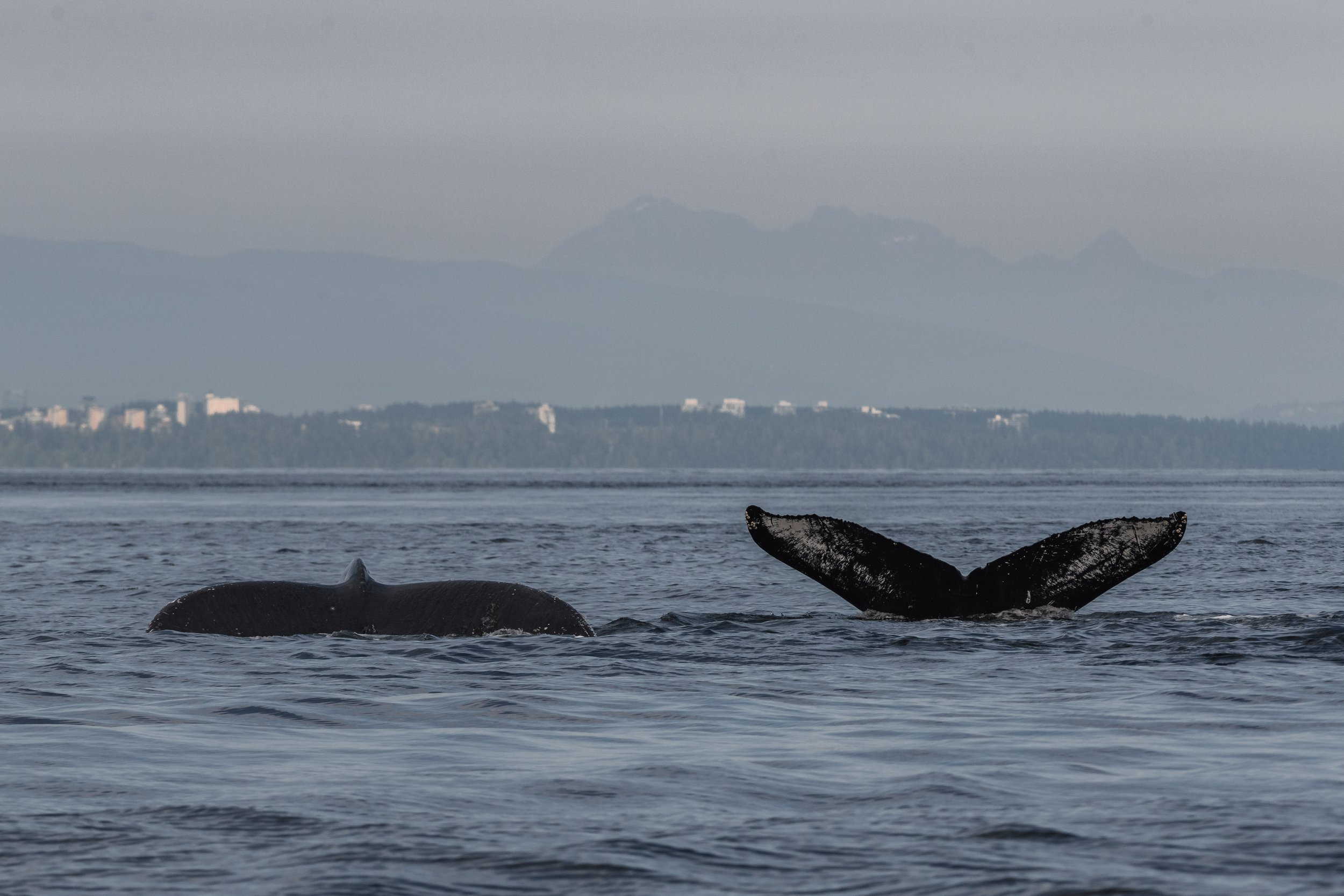
Poptart and Slits diving together. Photo by Hayleigh Hilbert.
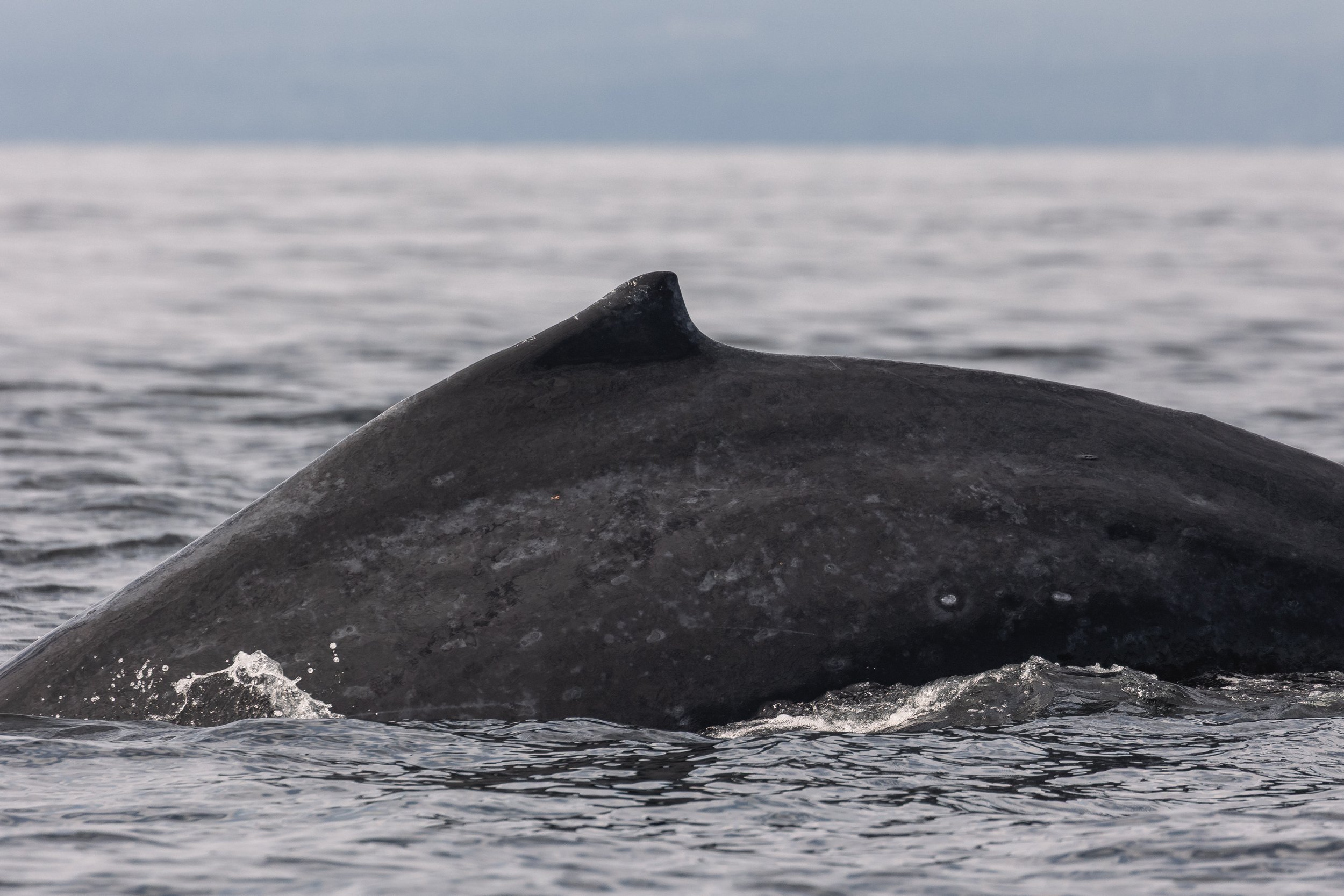
Poptart’s dorsal. Photo by Jordan Robinson.
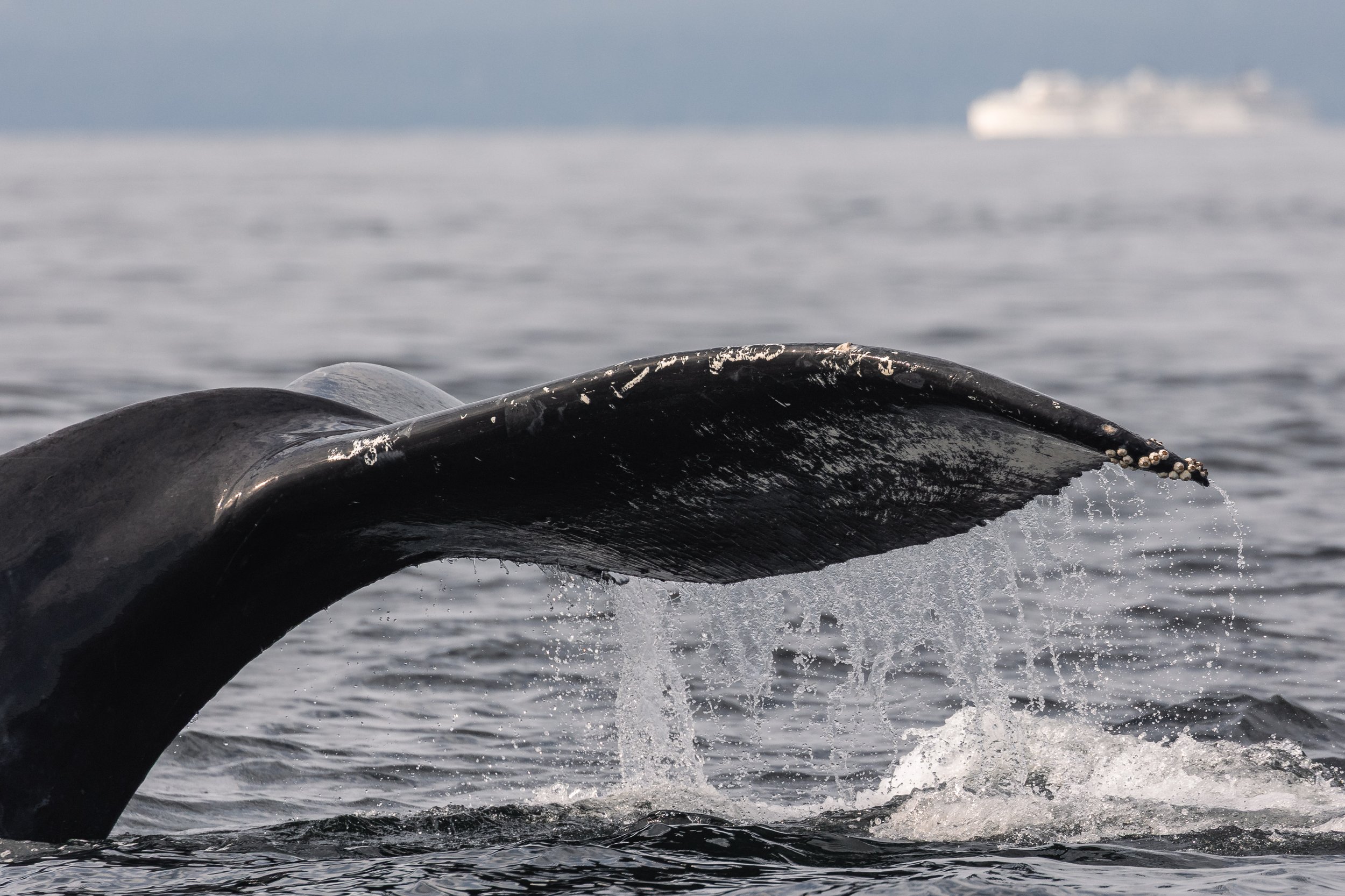
Poptart’s tail. Photo by Jordan Robinson.
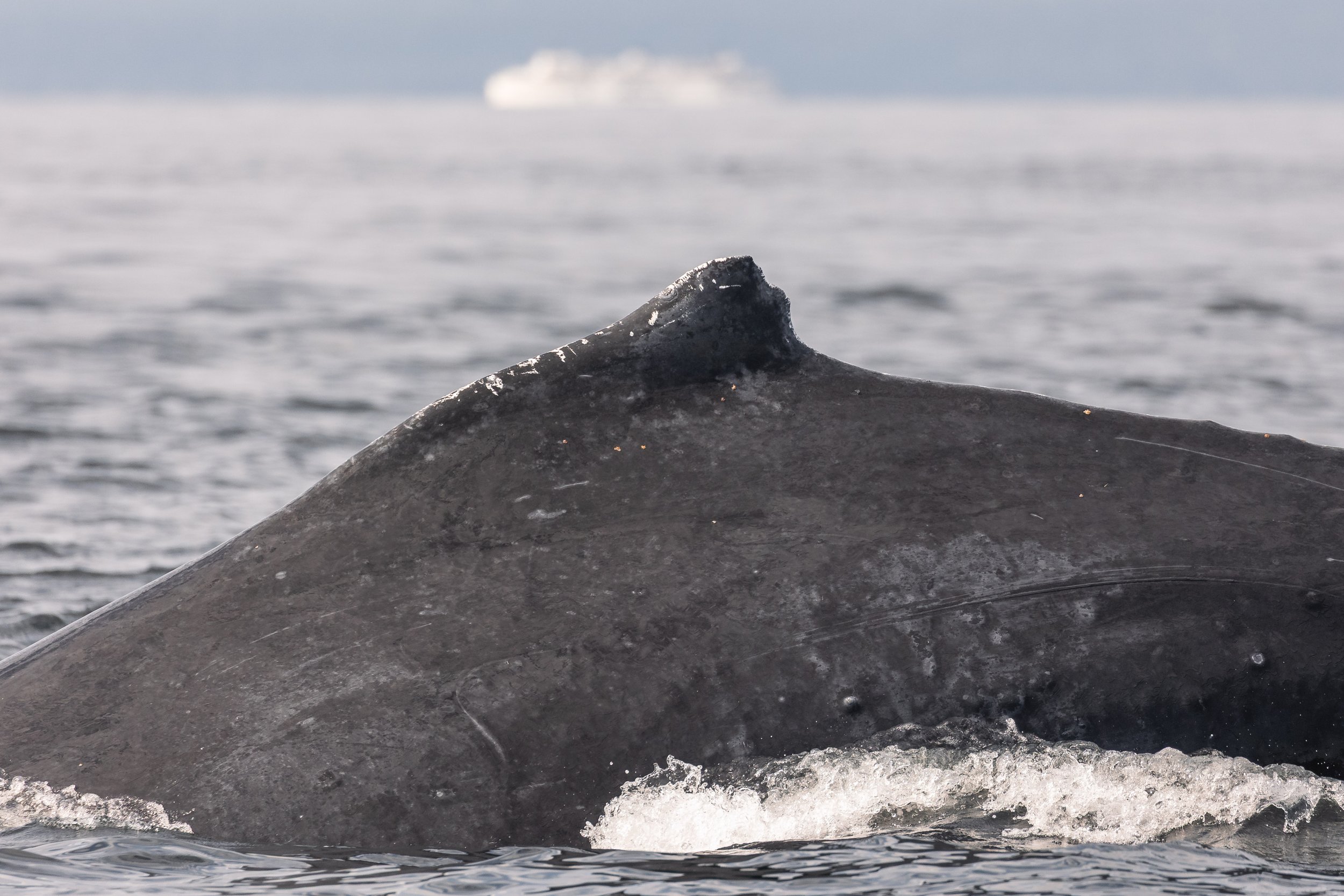
Slits crusing by. Photo by Jordan Robinson.
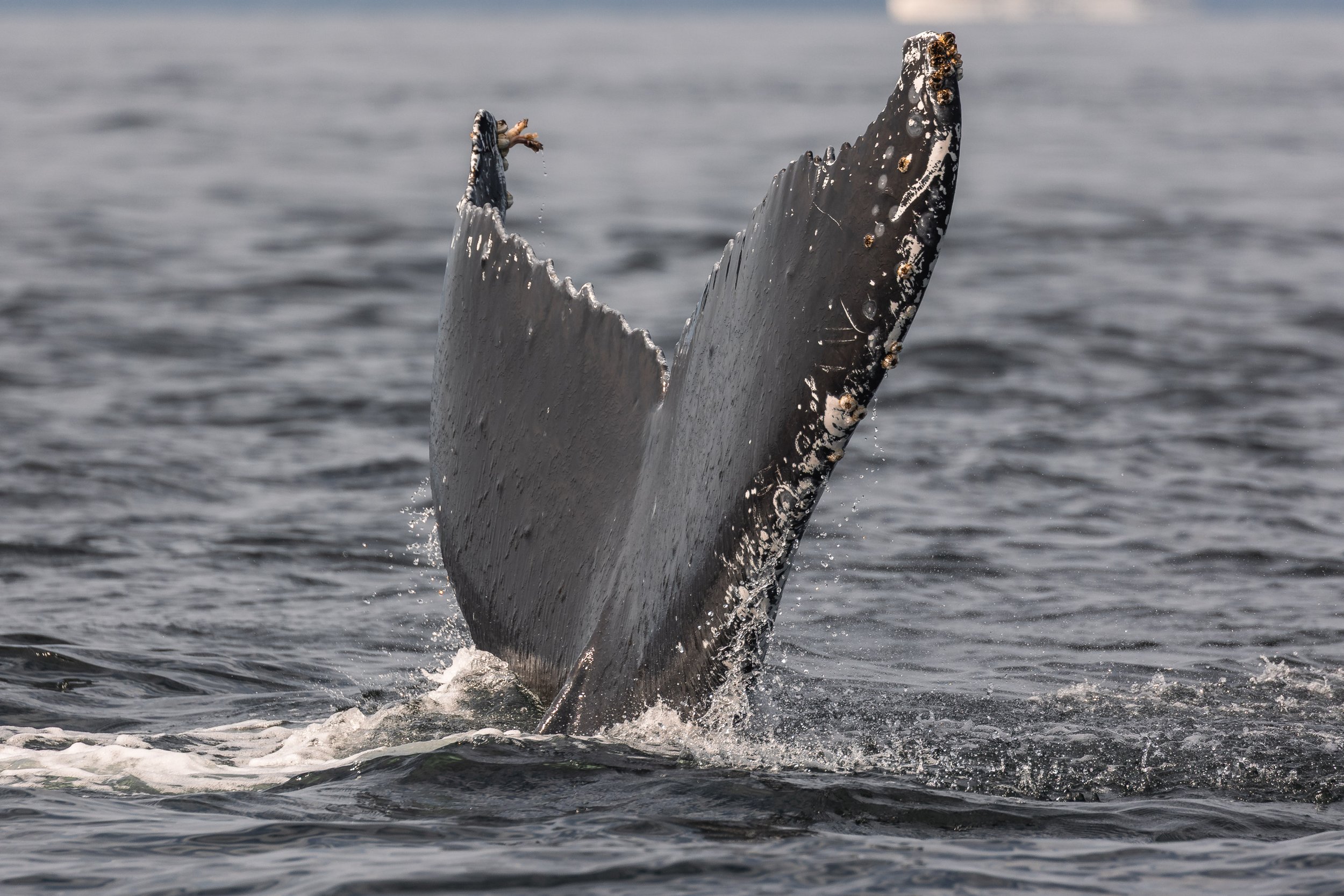
Slits tail. Photo by Jordan Robinson.
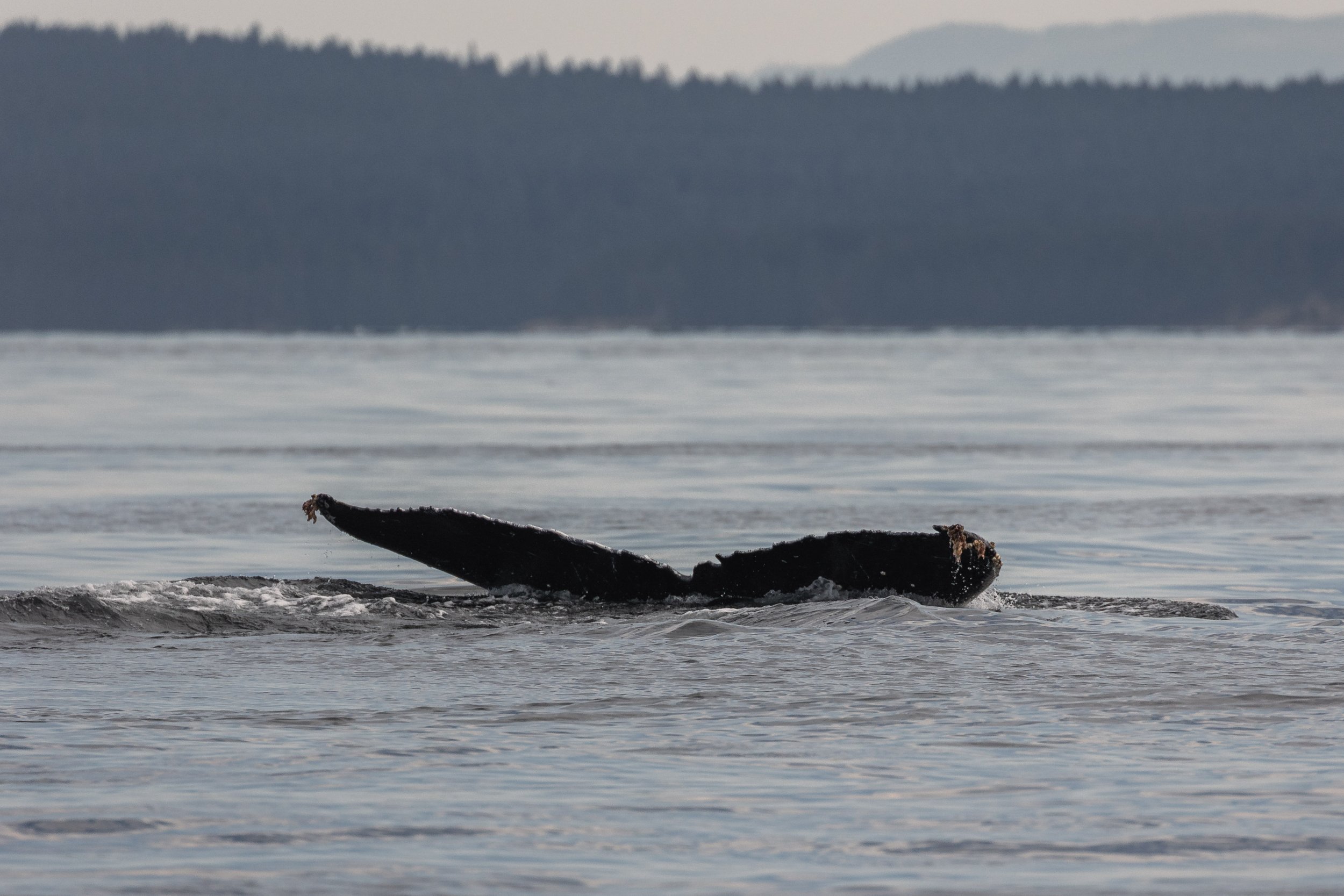
Prowler with a low fluke. Photo by Jordan Robinson.
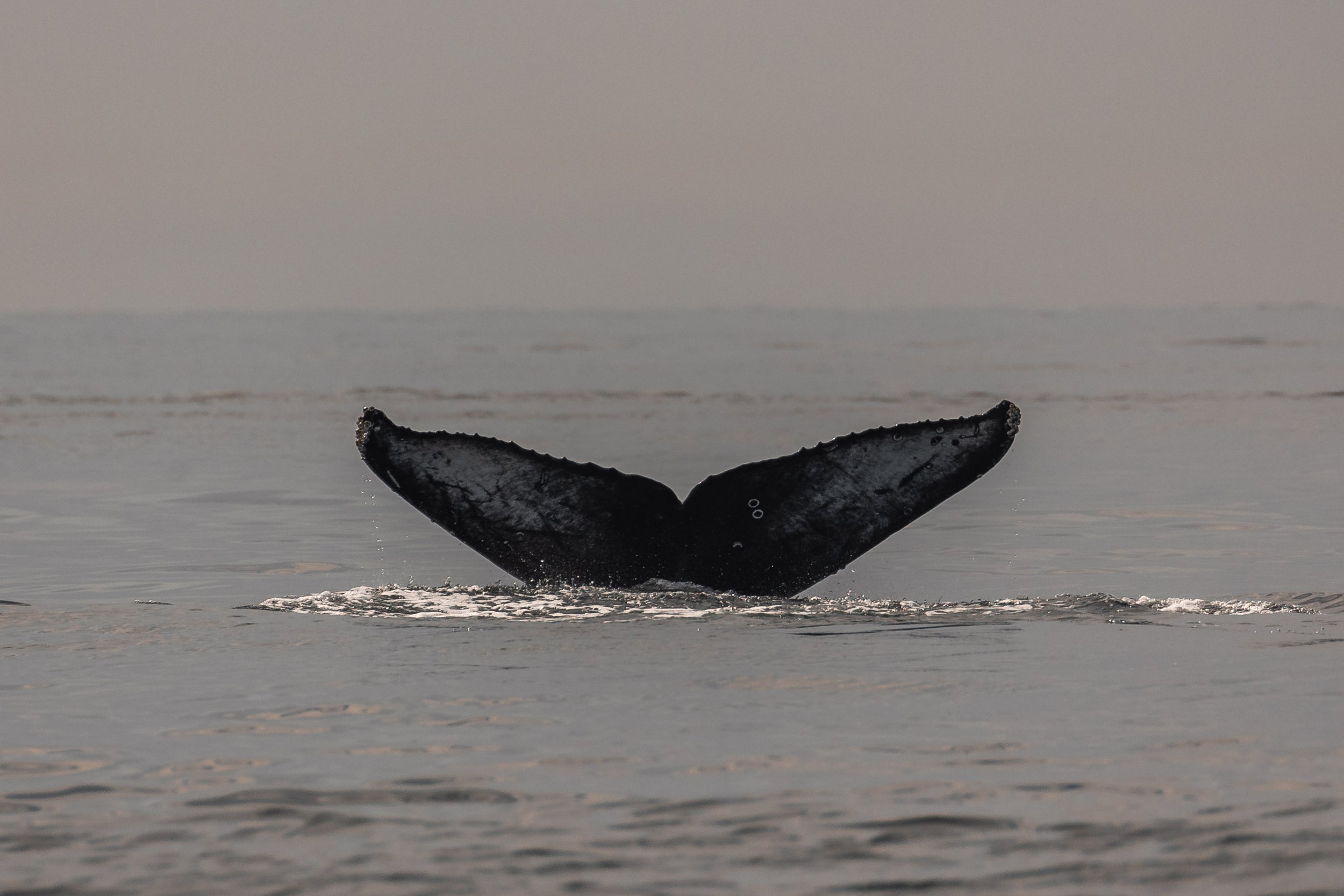
Bonapartes (BCX1773 calf 2025) fluking. Photo by Jordan Robinson.
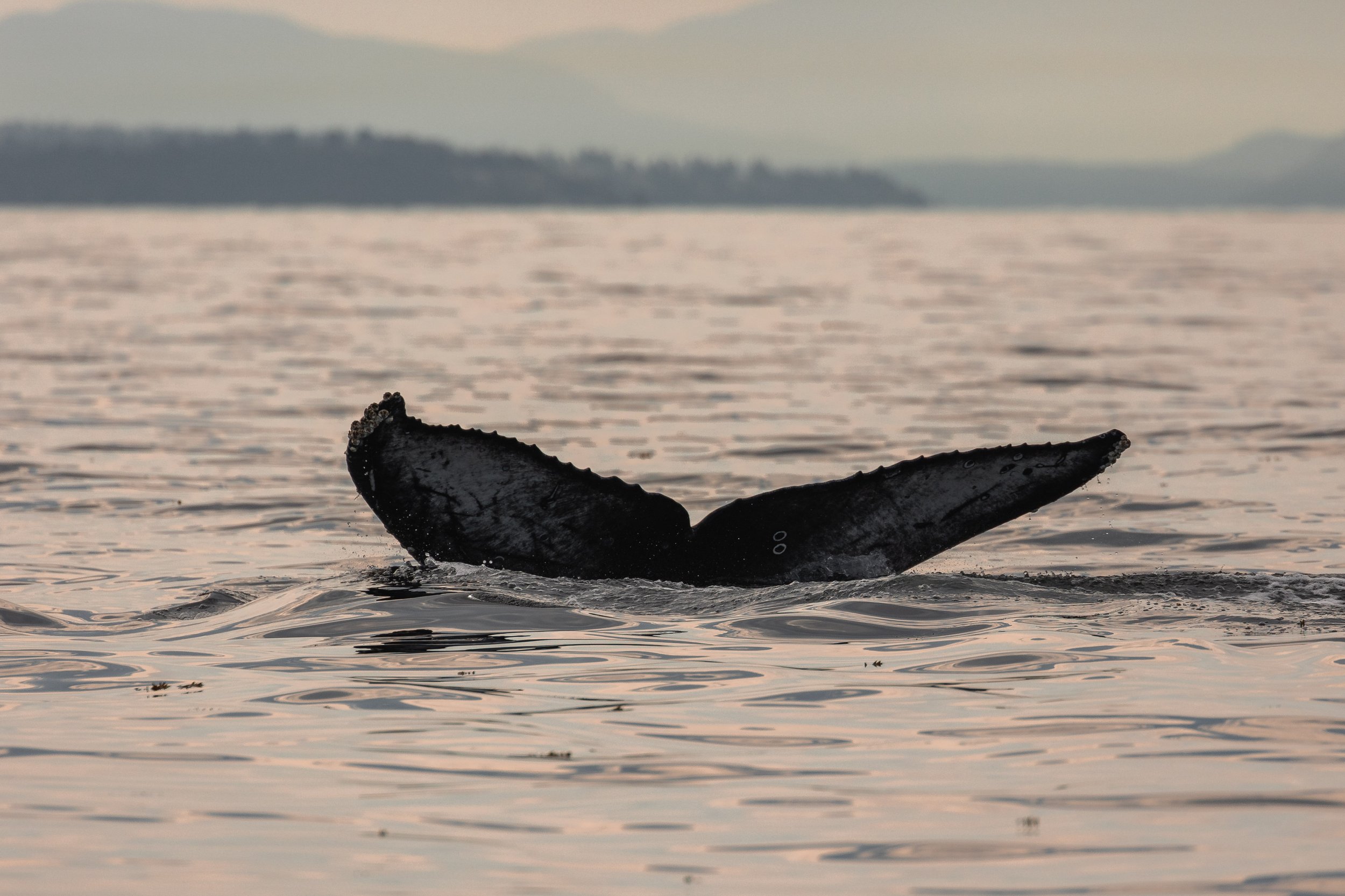
Bonapartes (BCX1773 calf 2025) going for a dive. Photo by Jordan Robinson.
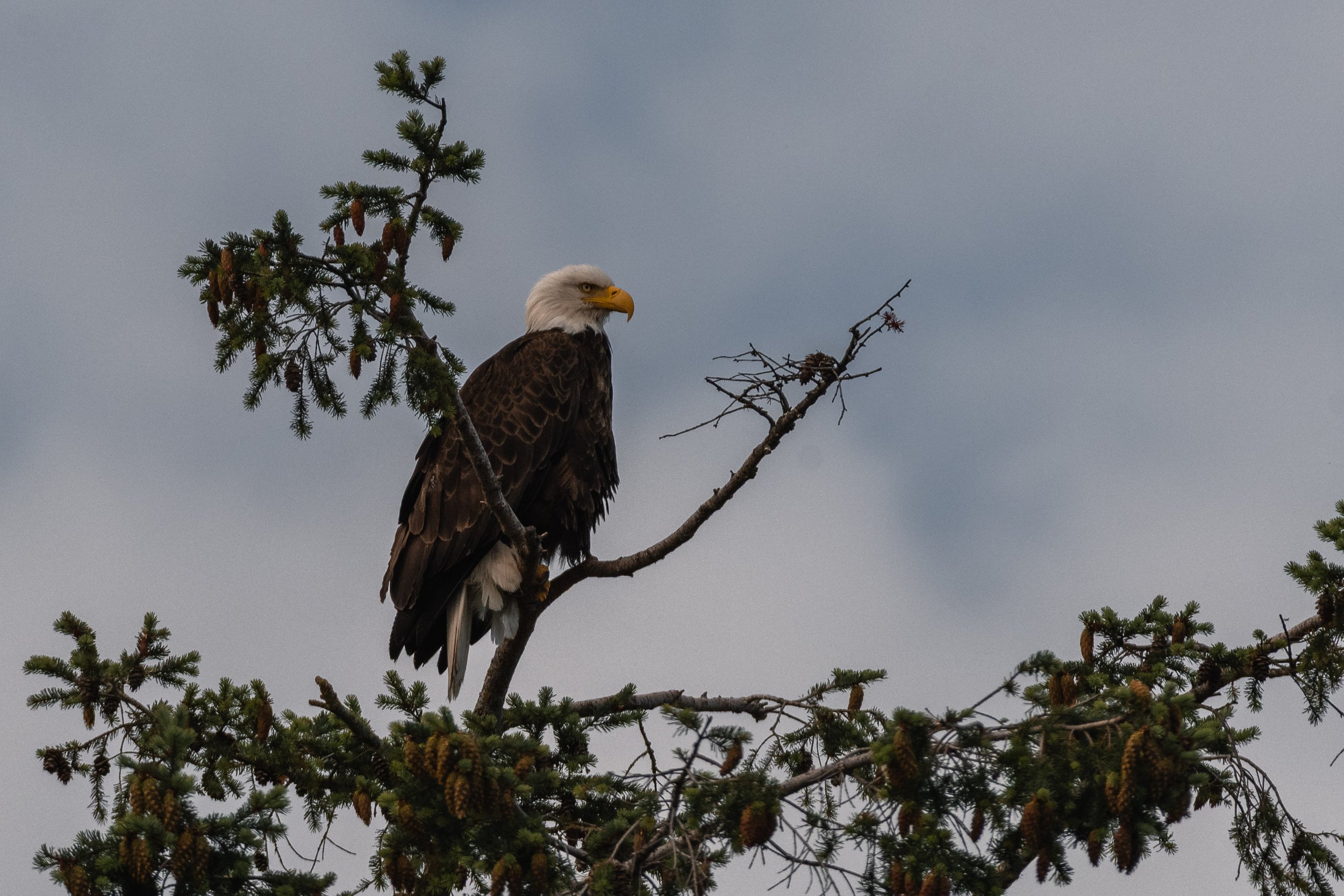
An adult Bald Eagle. Photo by Hayleigh Hilbert.
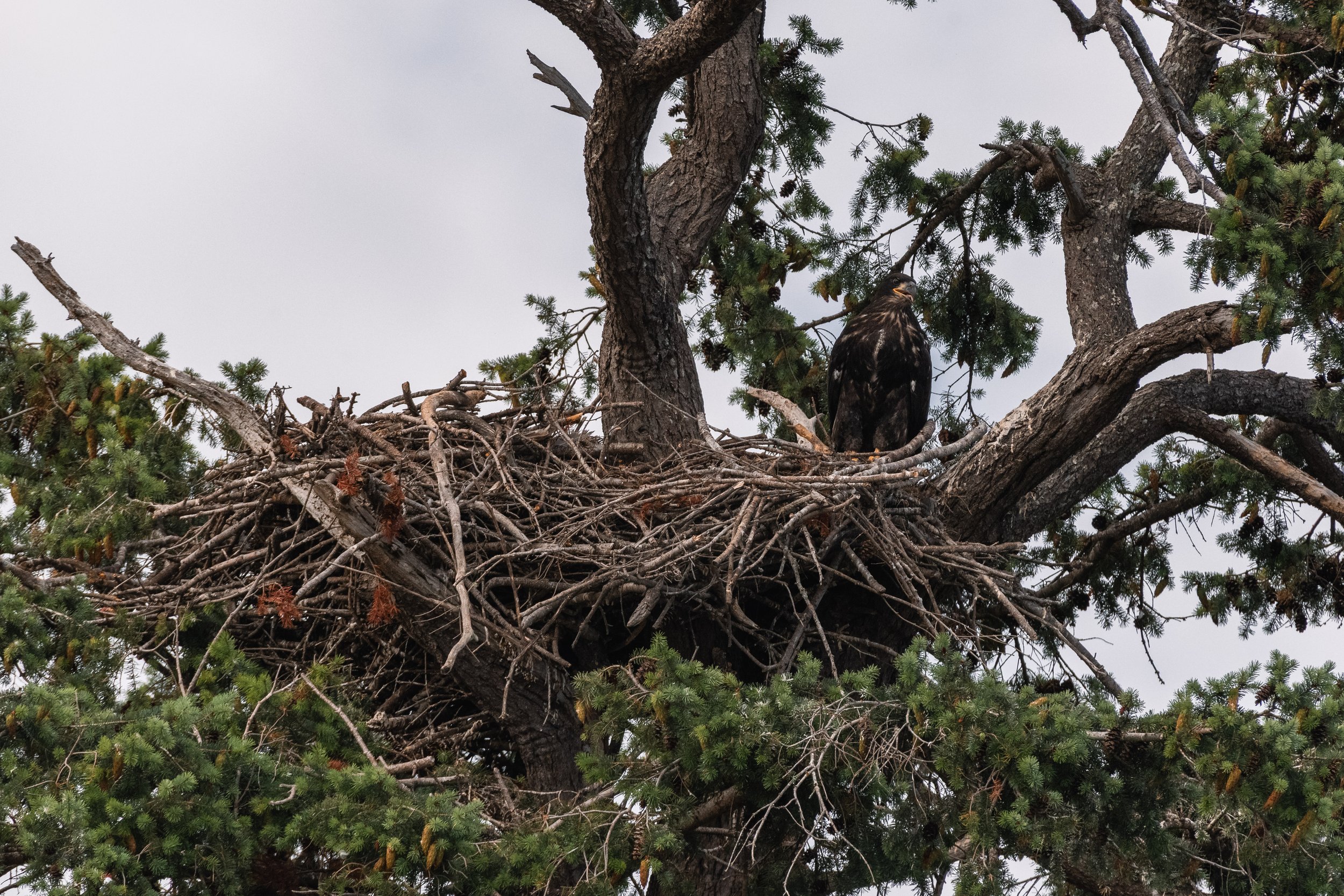
Can you spot the chick in the nest? Photo by Hayleigh Hilbert.
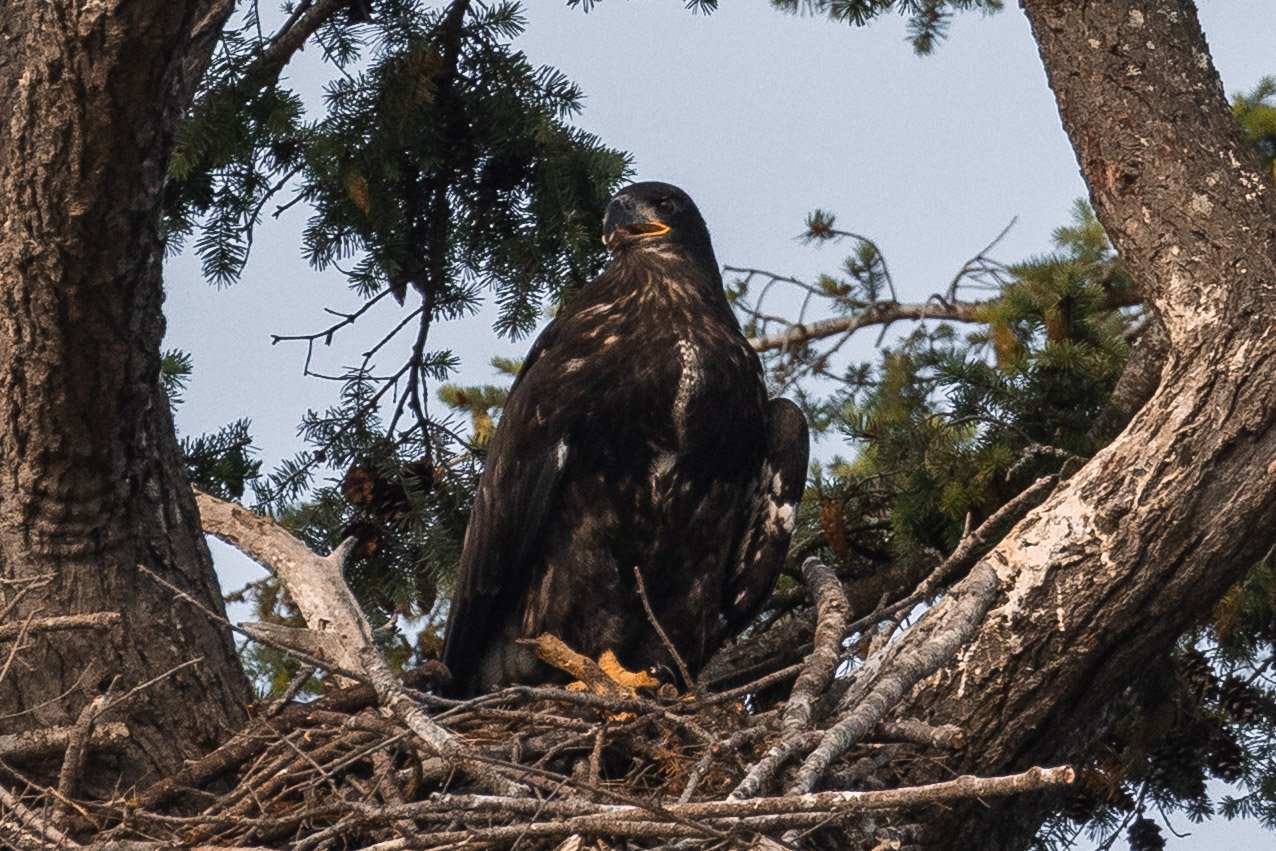
A close up of the juvenile eagle. Photo by Jordan Robinson.
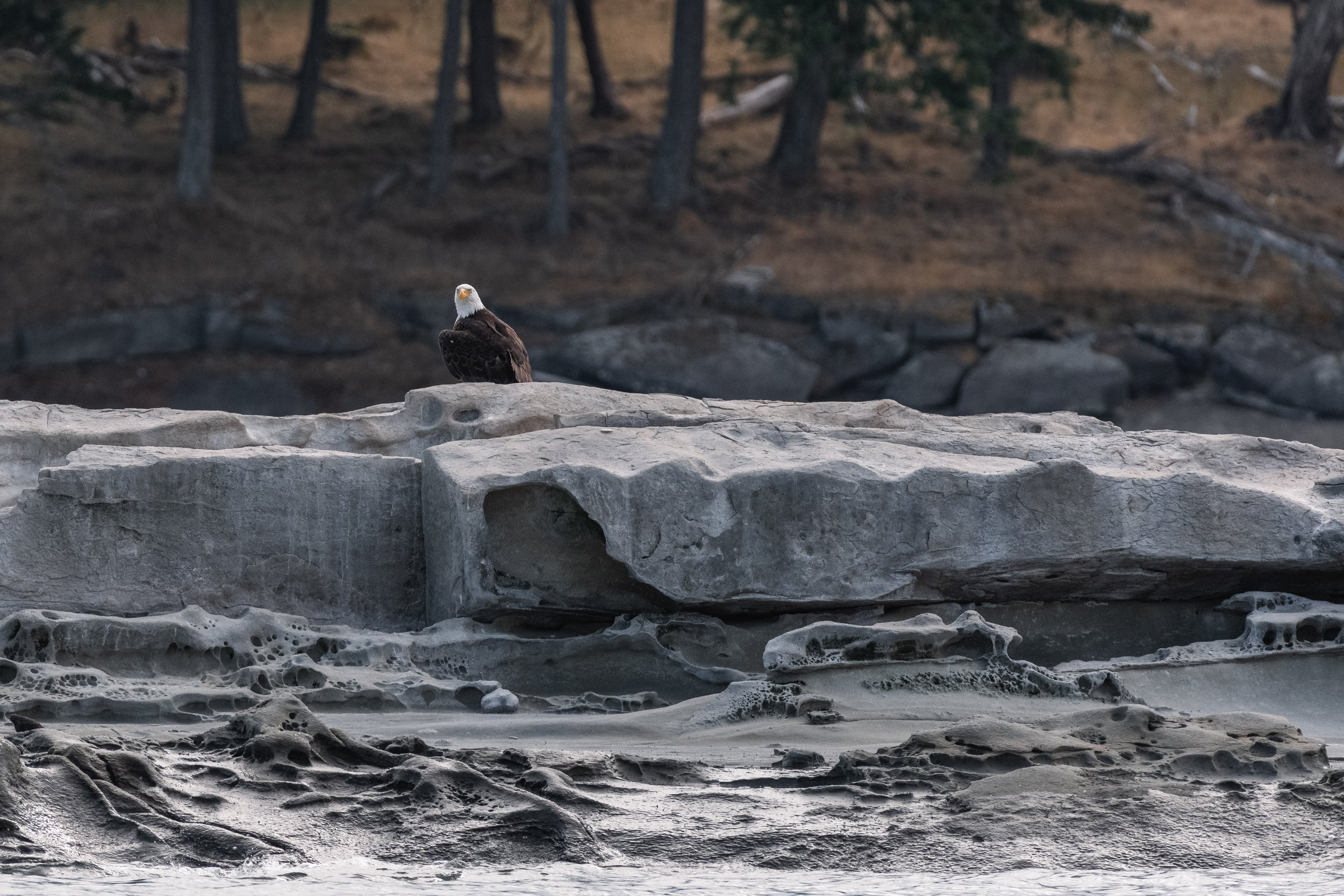
A Bald Eagle on the rocks. Photo by Hayleigh Hilbert.
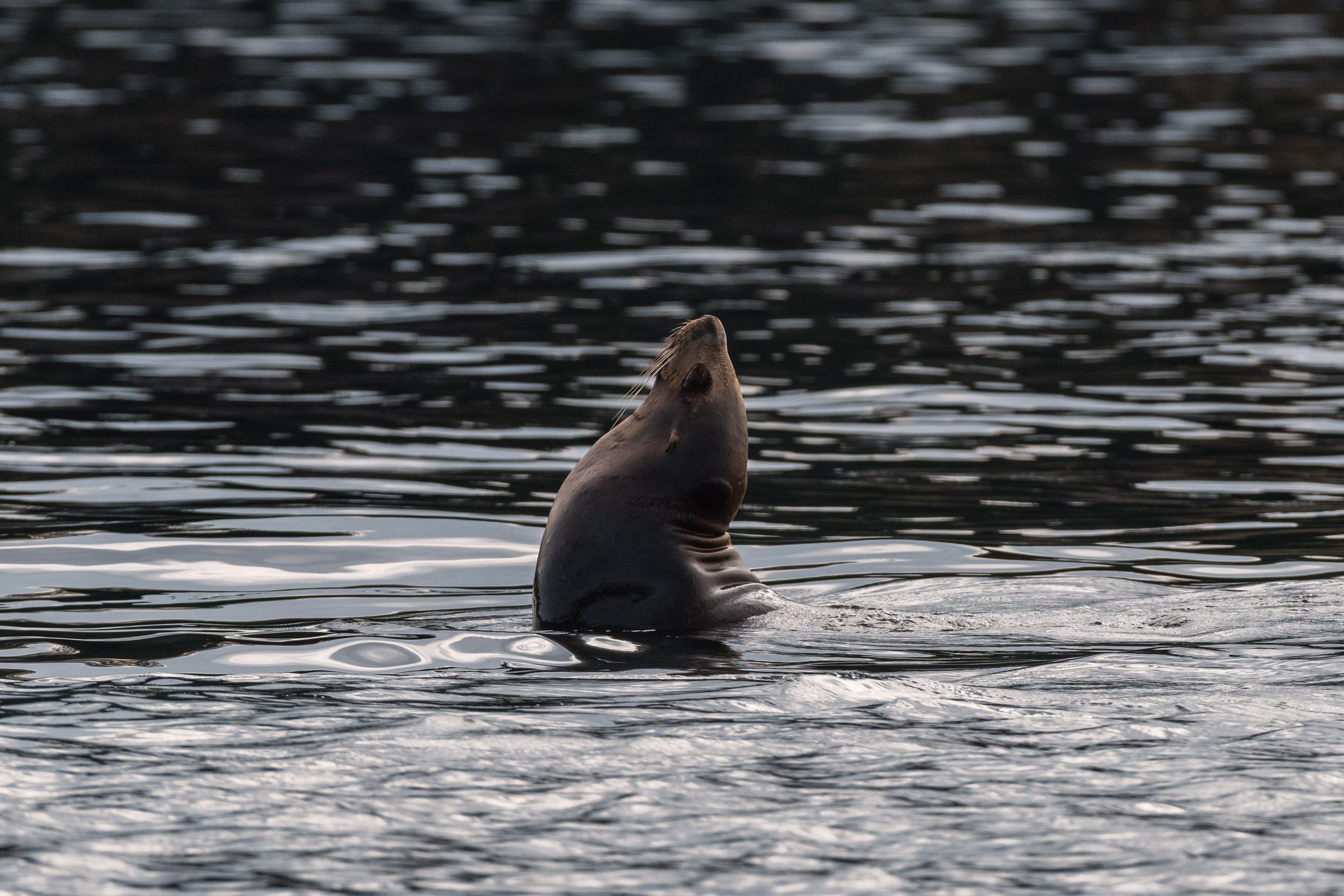
A Steller Sea Lion striking a pose. Photo by Hayleigh Hilbert.
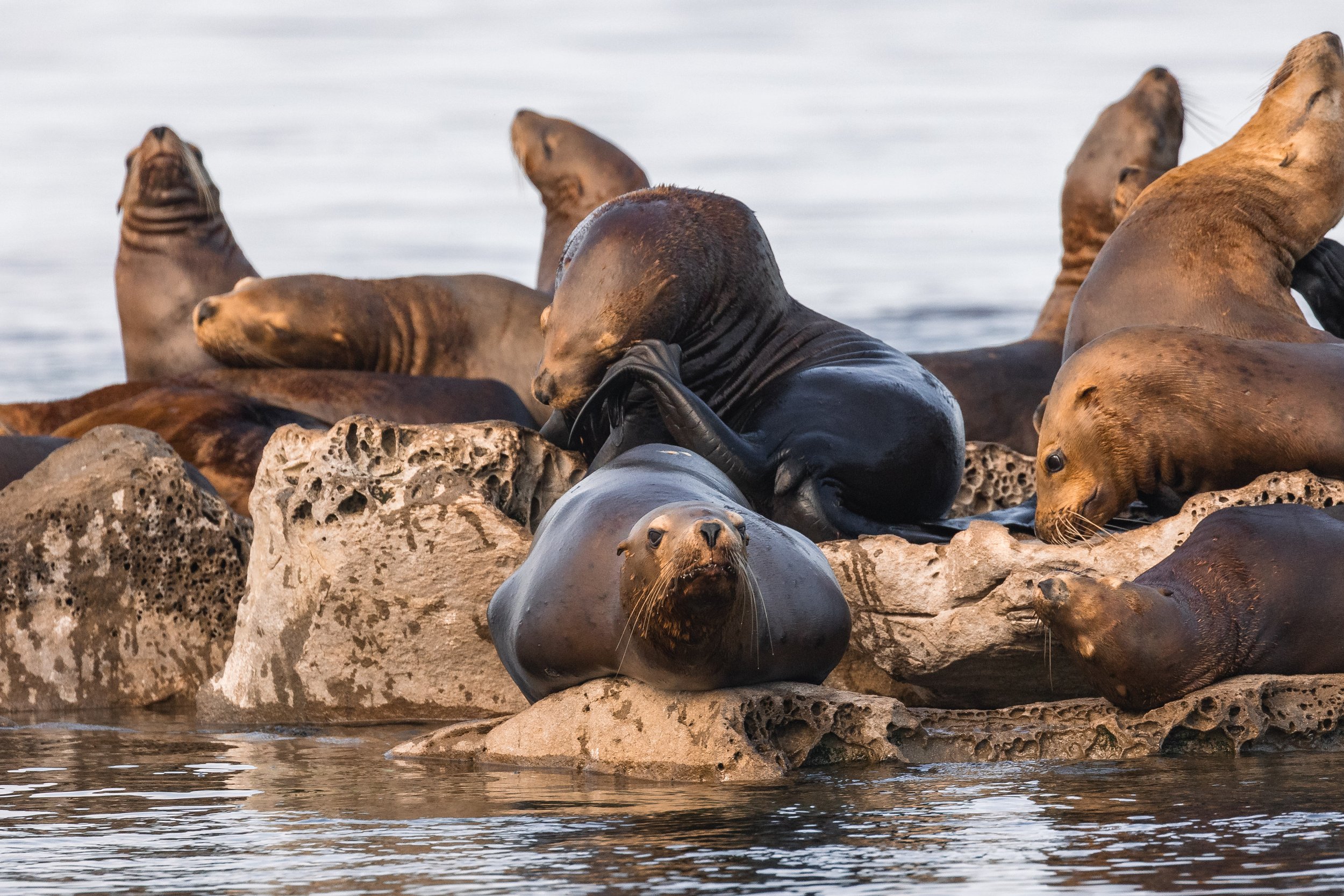
This Steller is giving itself a scritch! Photo by Jordan Robinson.
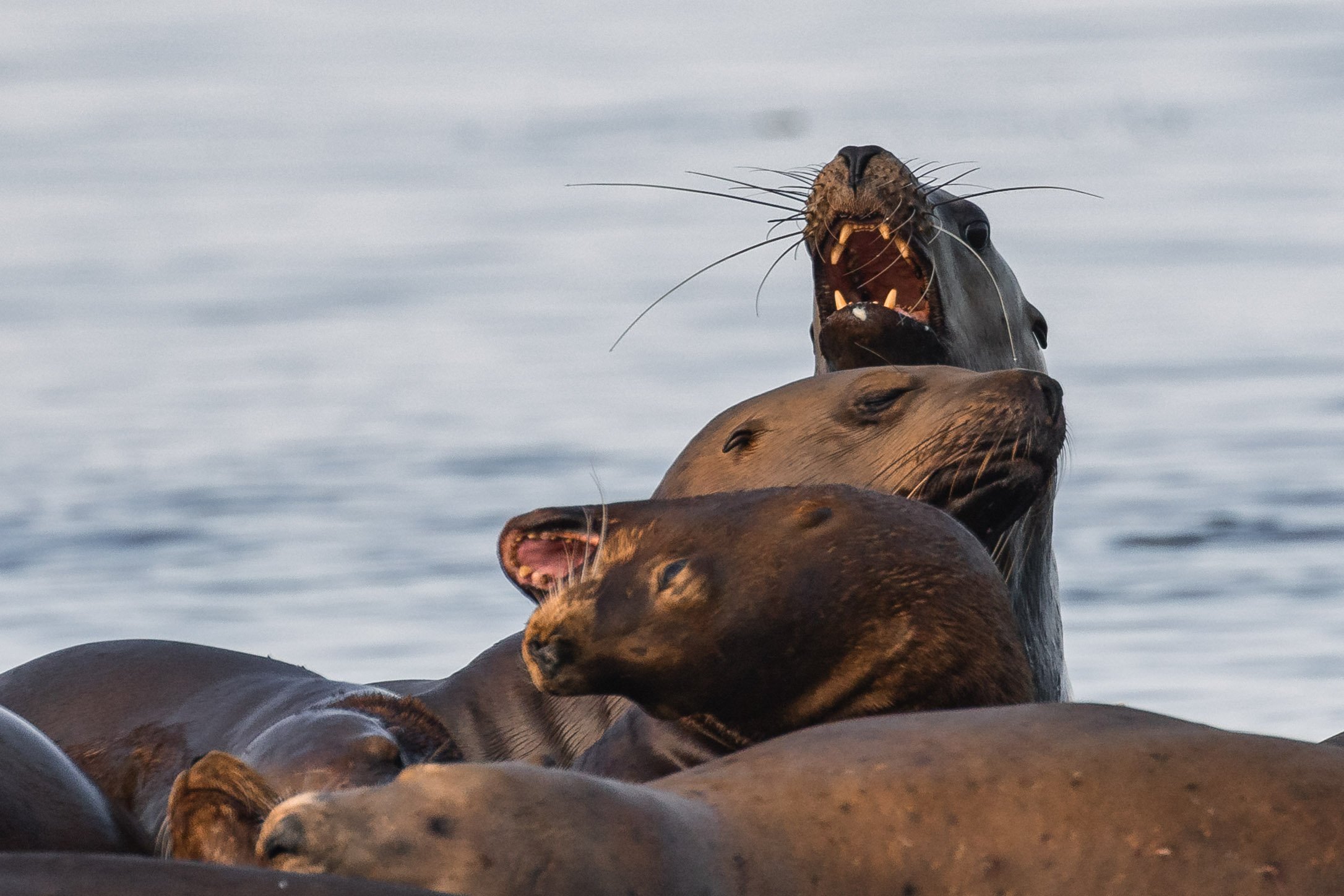
Stellers fighting over the best spot on the rocks as usual. Photo by Jordan Robinson.
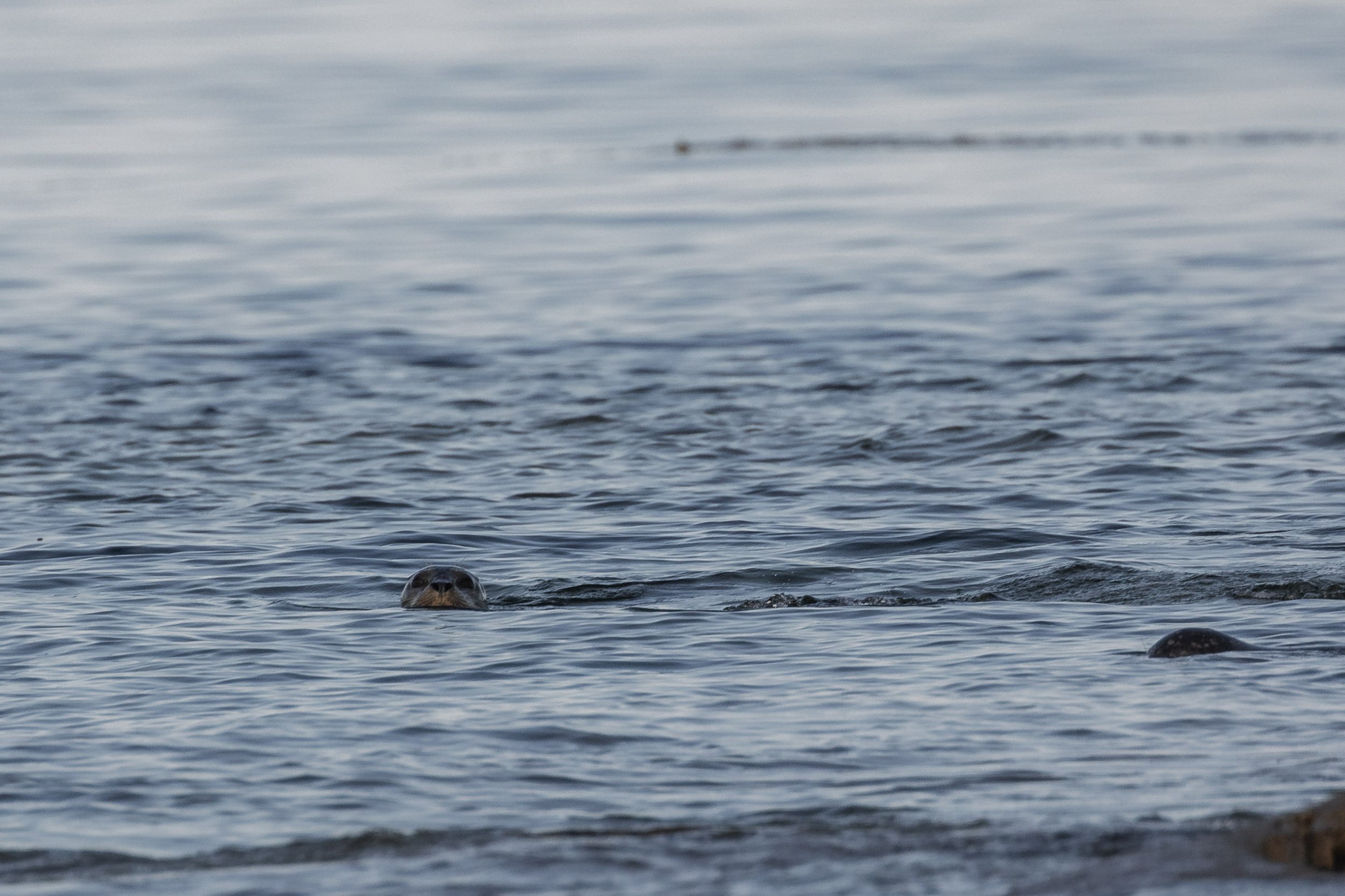
A harbour seal peeking at us. Photo by Jordan Robinson.
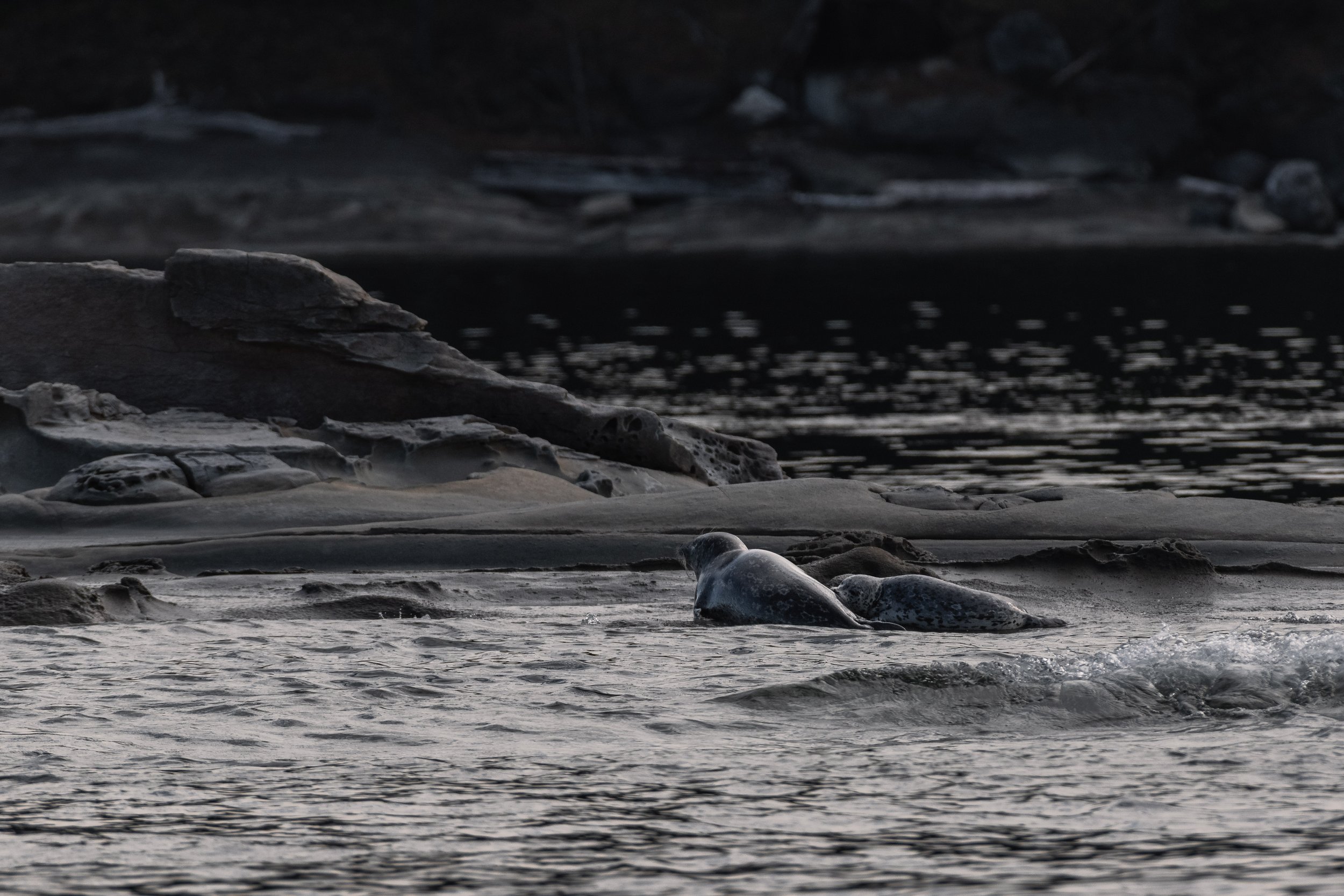
A mother harbour seal with her pup. Photo by Hayleigh Hilbert.
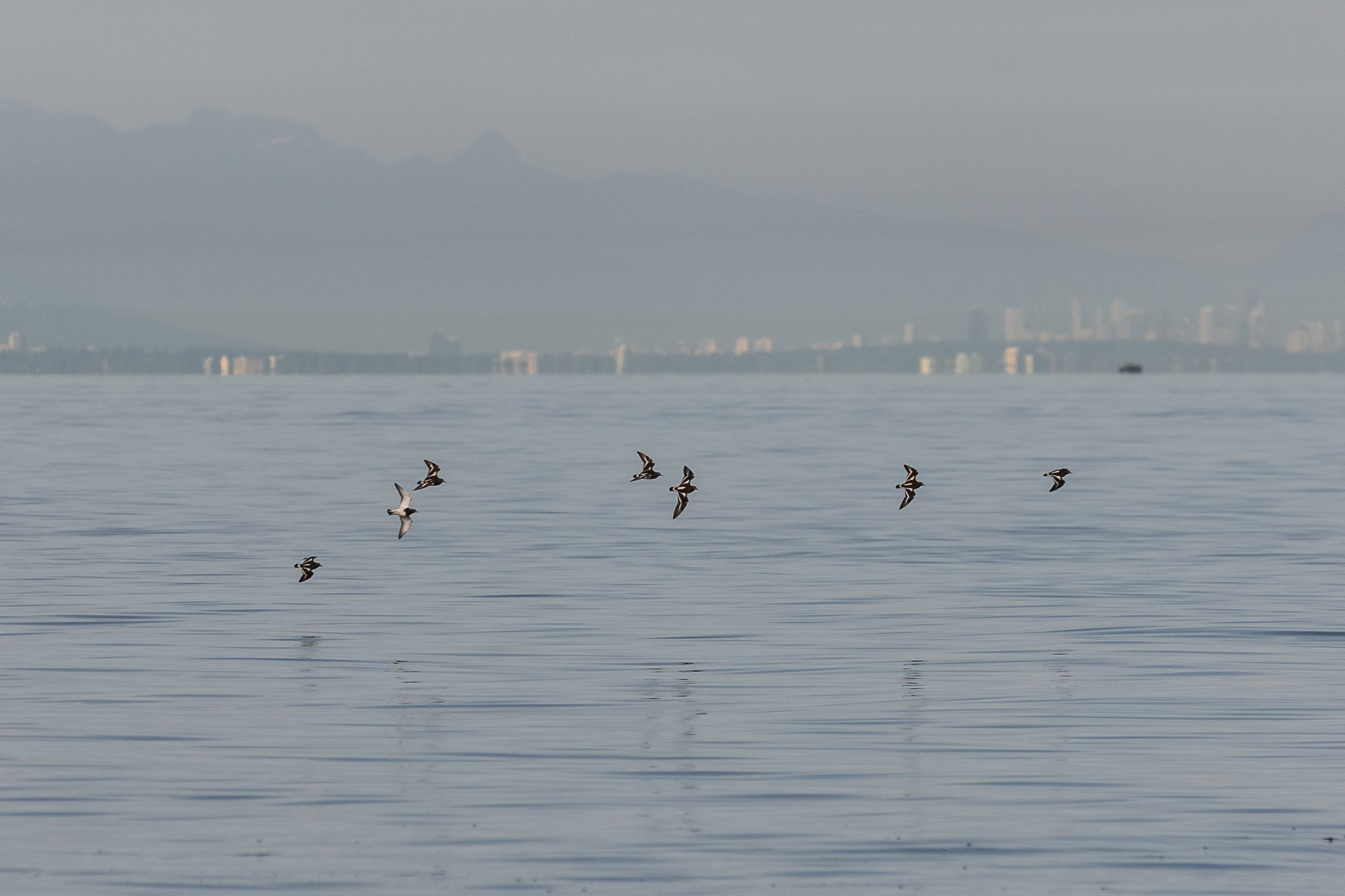
Black turnstones in flight. Photo by Jordan Robinson.
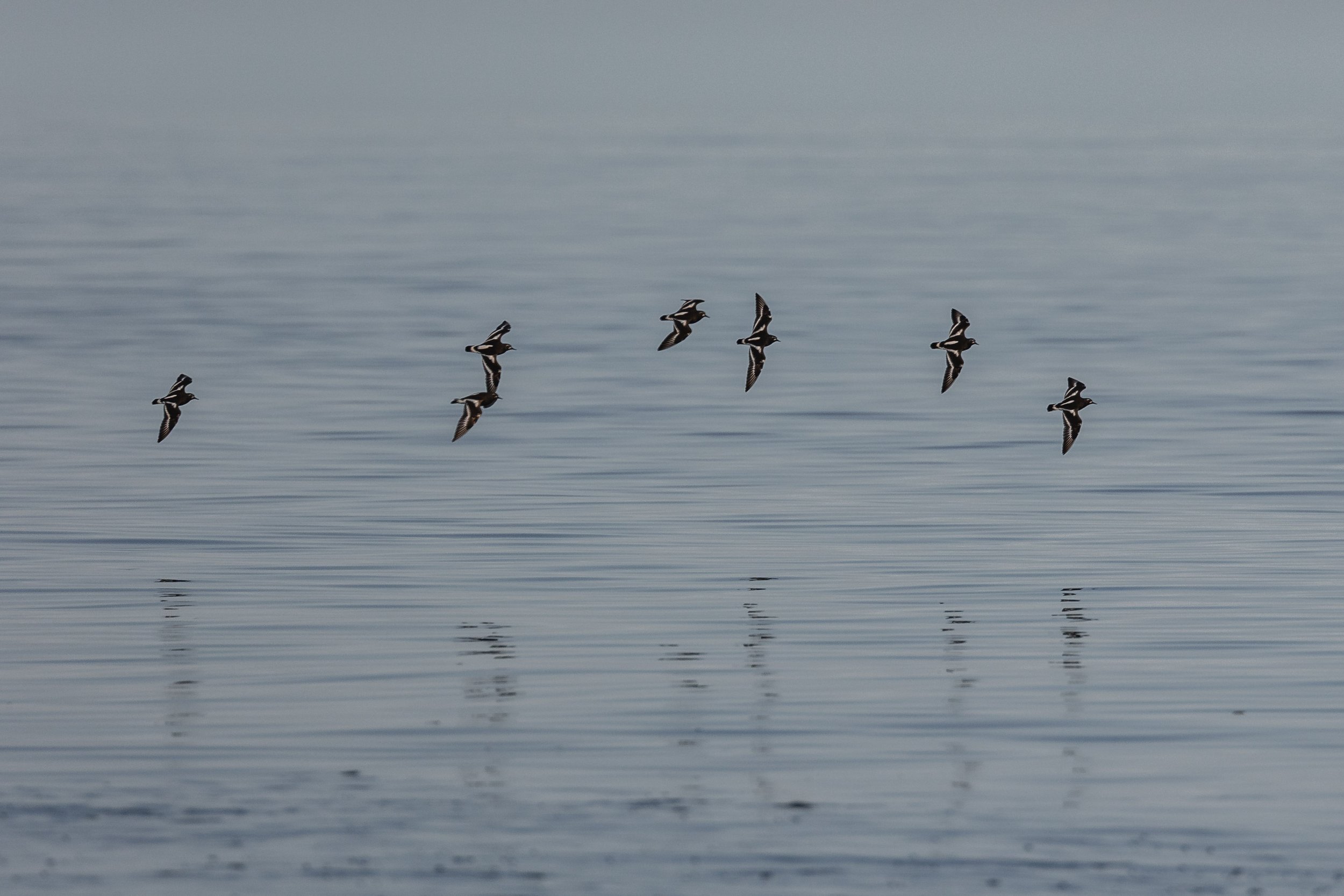
Black turnstones with their striking plumage. Photo by Jordan Robinson.
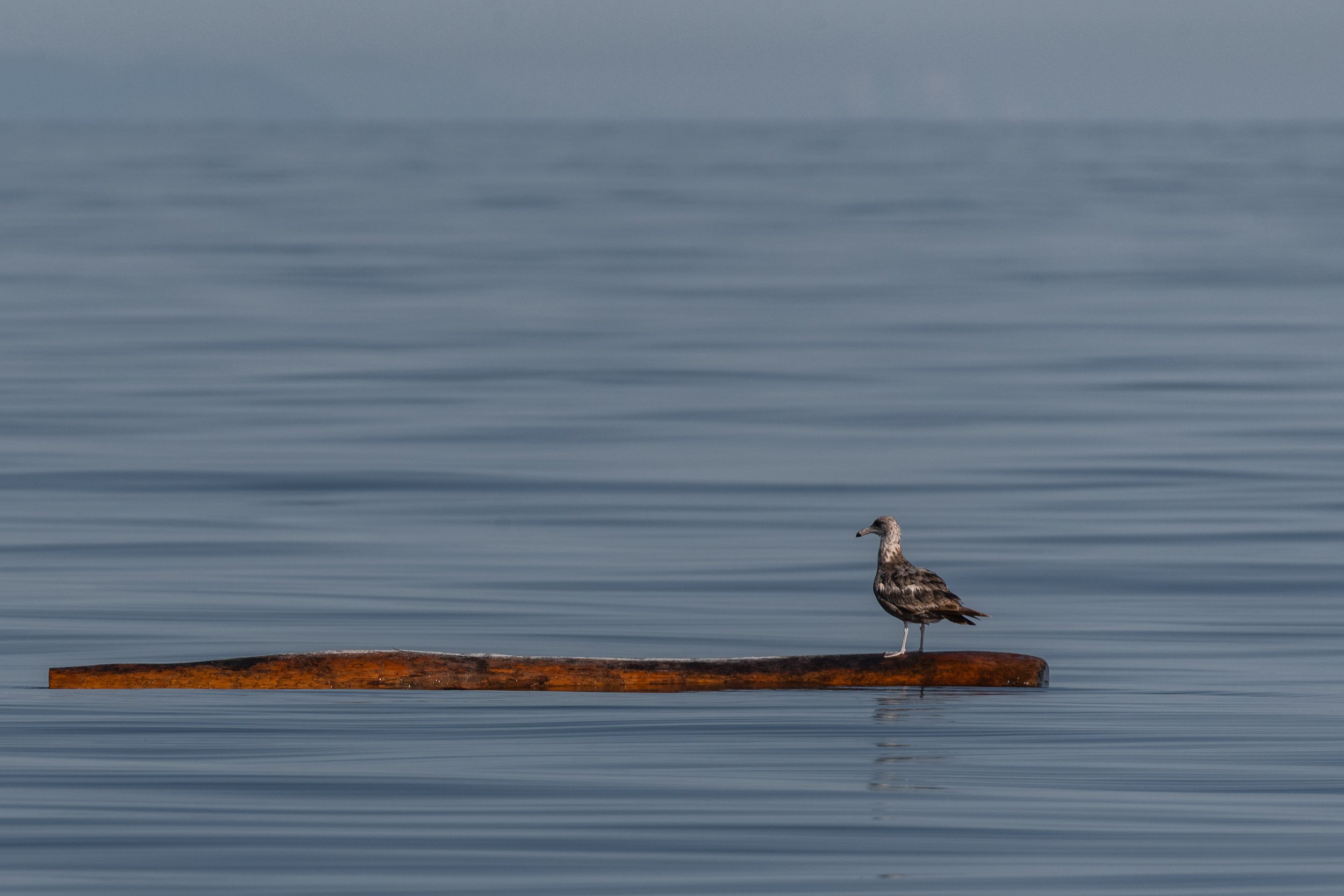
A gull on a log. Photo by Hayleigh Hilbert.
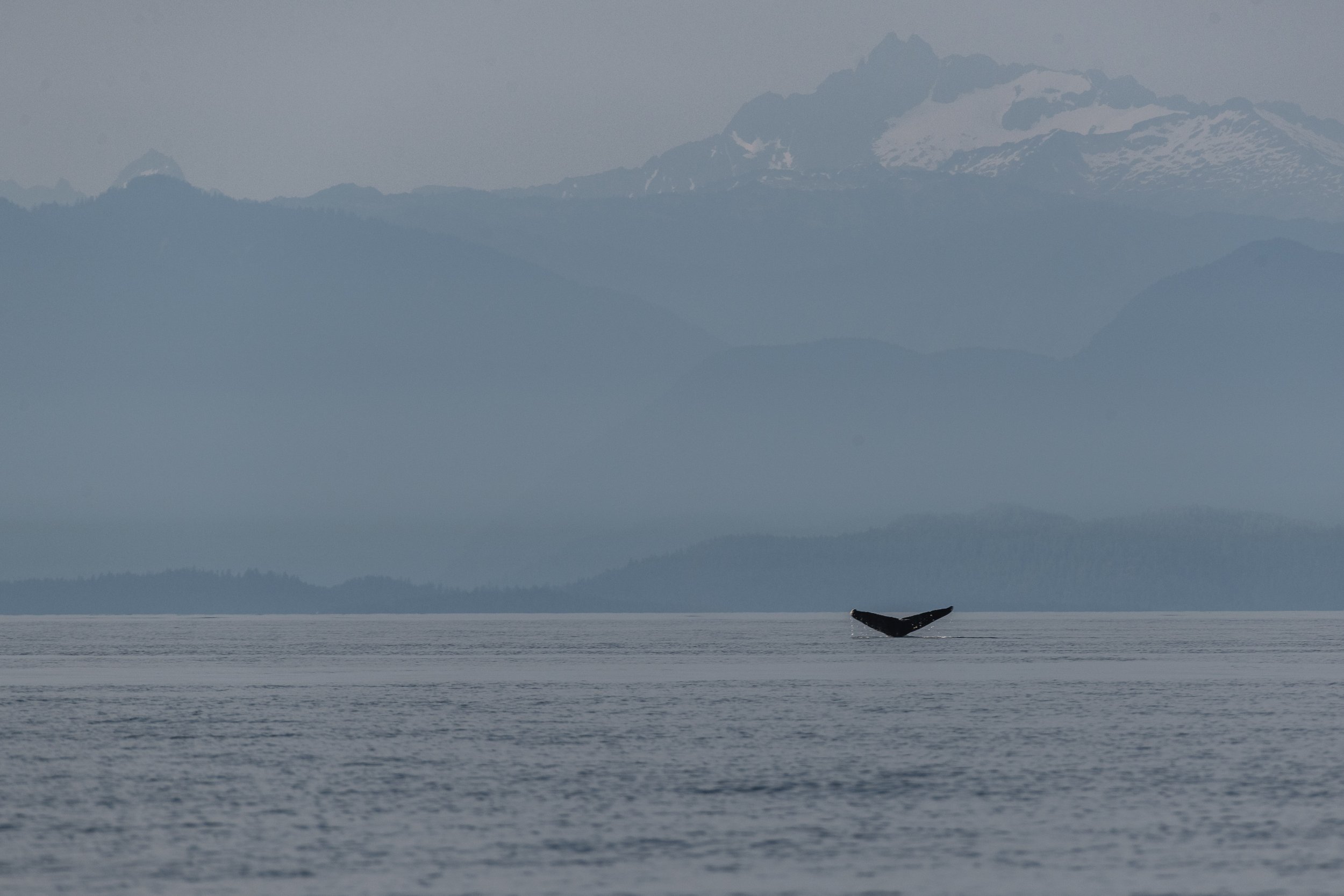
Beak diving in the distance. Photo by Hayleigh Hilbert.
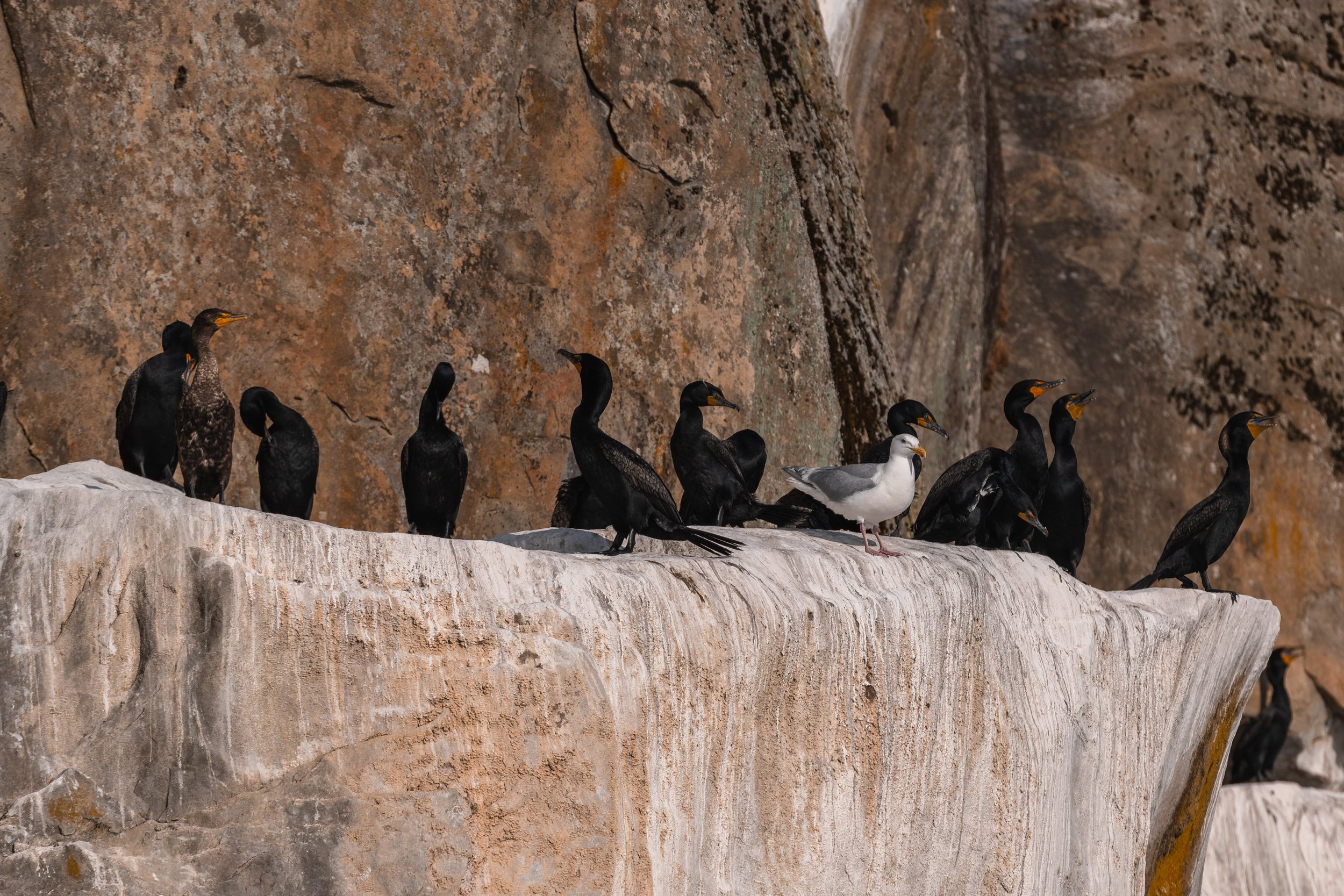
A gull among the cormorants. Photo by Hayleigh Hilbert.
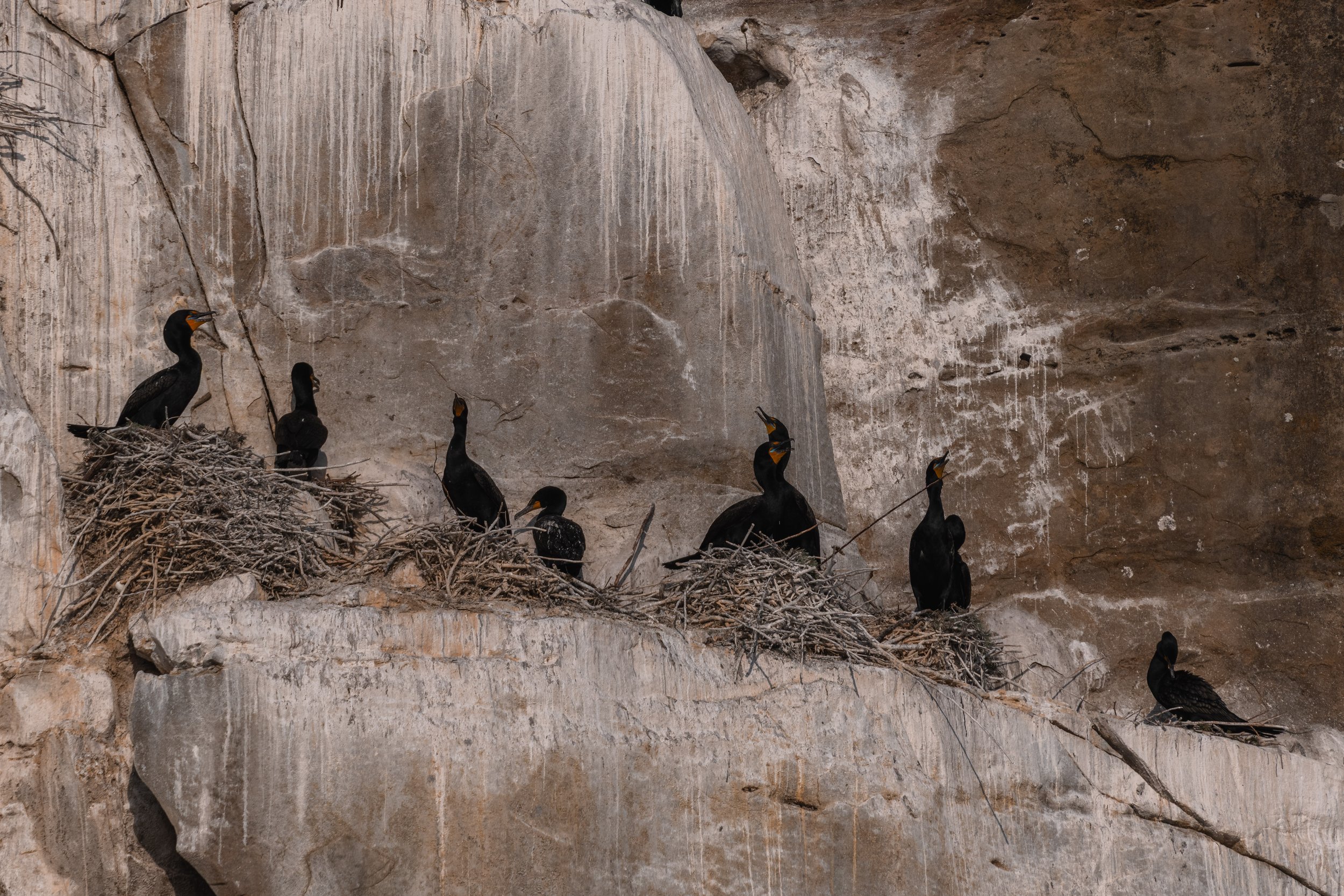
Cormorants in their nests. Photo by Hayleigh Hilbert.
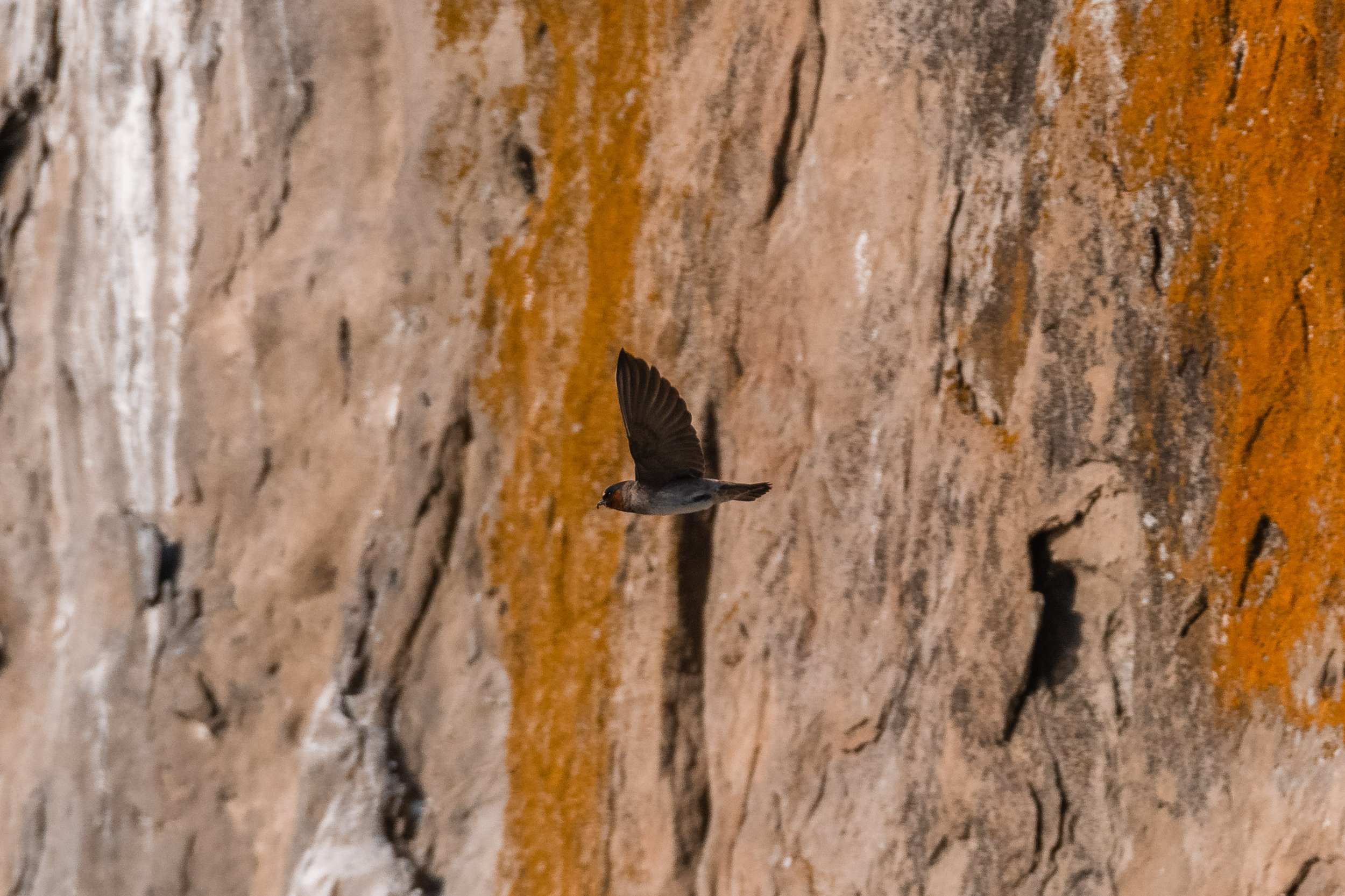
A cliff swallow flutters by. Photo by Hayleigh Hilbert.