
July 15, 2026, 10:30 AM - One Orca, one Humpback and one unforgettable morning!
There are few better ways to start a summer morning than with all three boats, Kula, Keta and Cascadia, gliding away from the dock beneath blue skies and brilliant sunshine. With barely a breath of wind, the Salish Sea was transformed into a sheet of glass, reflecting the mountains and sky so perfectly it was difficult to tell where one ended and the other began.
Conditions like these don't come around every day, so we wasted no time pointing our bows toward the Strait of Georgia. Summer is an exciting season to be on the water. While Bigg's (Transient) Killer Whales can be encountered throughout the year, the warmer months also bring the highest concentration of humpback whales to our local waters. With a little luck, we hoped today would be one of those rare days where we could enjoy the best of both worlds.
It didn't take long before something sliced across the calm surface ahead of us. A tall dorsal fin appeared, moving with purpose through the mirror-like water. Cameras were raised, and shutters clicked as we worked to capture the identifying features of the whale. Back on board, we compared photographs of the dorsal fin against our catalogues and soon had our answer: it was T069E Kodiak.
T069E Kodiak ♂ (2004)
Kodiak is a 22-year-old male Bigg's Killer Whale and a bit of an oddity among his family. Bigg's Killer Whales are incredibly family-oriented animals, with both sons and daughters typically remaining with their mothers for life. Adult males, despite growing up to 8 metres (27 feet) long and weighing well over 5 tonnes, are often described as the ultimate "mama's boys." Their mothers continue to lead the family and play a vital role in helping them locate food and navigate the ever-changing marine environment.
Every rule has its exceptions, however.
Kodiak has been documented travelling on his own on numerous occasions, appearing to enjoy something of a bachelor lifestyle. While he may seem like a lone wolf, we suspect that, like many wandering family members, he still reconnects with his matriline from time to time to socialize and strengthen those lifelong family bonds. There is still so much to learn about the social lives of Bigg's Killer Whales, and individuals like Kodiak remind us that nature rarely follows every rule.
After spending some time travelling alongside Kodiak, it was time to wish him well and continue our search.
After all, we still had our fingers crossed for a humpback whale.
Fortunately, we barely had time to settle back into search mode before the call rang out across the boat.
"Blow!"
A large, bushy column of mist rose straight ahead against the blue horizon. Moments later, a broad back surfaced before arching gracefully beneath the water. Out came the cameras once again, this time waiting patiently for the all-important tail fluke. As the whale lifted its fluke above the surface, we captured the unique black-and-white pattern on the underside before quickly comparing it with our catalogue.
Today's humpback was Thunderbolt (BCY1517), the 2023 calf of Strike.
Unlike our earlier encounter with Kodiak, seeing Thunderbolt travelling independently wasn't particularly surprising. Humpback whales have a very different family dynamic from killer whales. Calves remain with their mothers for roughly their first year of life, although they often begin exploring more independently much earlier. In fact, calves have been observed moving farther from their mothers as early as five months of age, gradually preparing for life on their own before the pair eventually separates during the mother's next migration and breeding cycle.
For many years, humpback whales were thought to be largely solitary animals outside of this mother-calf relationship. However, as humpback numbers continue to recover throughout the Salish Sea, researchers are beginning to notice far more complex social lives than previously imagined. Certain individuals appear to form long-term associations, while others are repeatedly seen feeding or travelling together across multiple seasons. We are only beginning to scratch the surface of understanding these relationships, making every sighting another valuable piece of a much larger puzzle.
After leaving Thunderbolt to continue their journey through the Strait, we made one final stop at one of our favourite wildlife hotspots, a bustling Steller Sea Lion haul-out.
The rocky islets were alive with activity as massive Steller Sea Lions lounged shoulder to shoulder, occasionally bellowing at one another before lazily shuffling across the rocks. Sharing the haul-out were dozens of Harbour Seals, many of which are currently raising this year's pups.
Although both are pinnipeds, seals and sea lions are remarkably different animals. Steller Sea Lions are the largest members of the eared seal family, using their rotating back flippers to "walk" surprisingly well across land and producing the loud growls that often announce their presence long before you see them. Harbour Seals, on the other hand, lack external ear flaps and move by wriggling across the rocks on their bellies.
Watching the tiny harbour seal pups resting safely beside their mothers served as a wonderful reminder that summer isn't just whale season; it's also a busy time for many of the Salish Sea's marine mammals as they raise the next generation.
From a bachelor killer whale carving across calm seas, to a young humpback beginning life on its own, and playful seal pups soaking up the sunshine, today's adventure showcased just how diverse life in the Salish Sea can be. Every trip tells a different story, and days like these remind us that there is always something new to discover just beyond the horizon.
Photos below taken by Evan Hessels, Hayleigh Hilbert and Jordan Robinson.
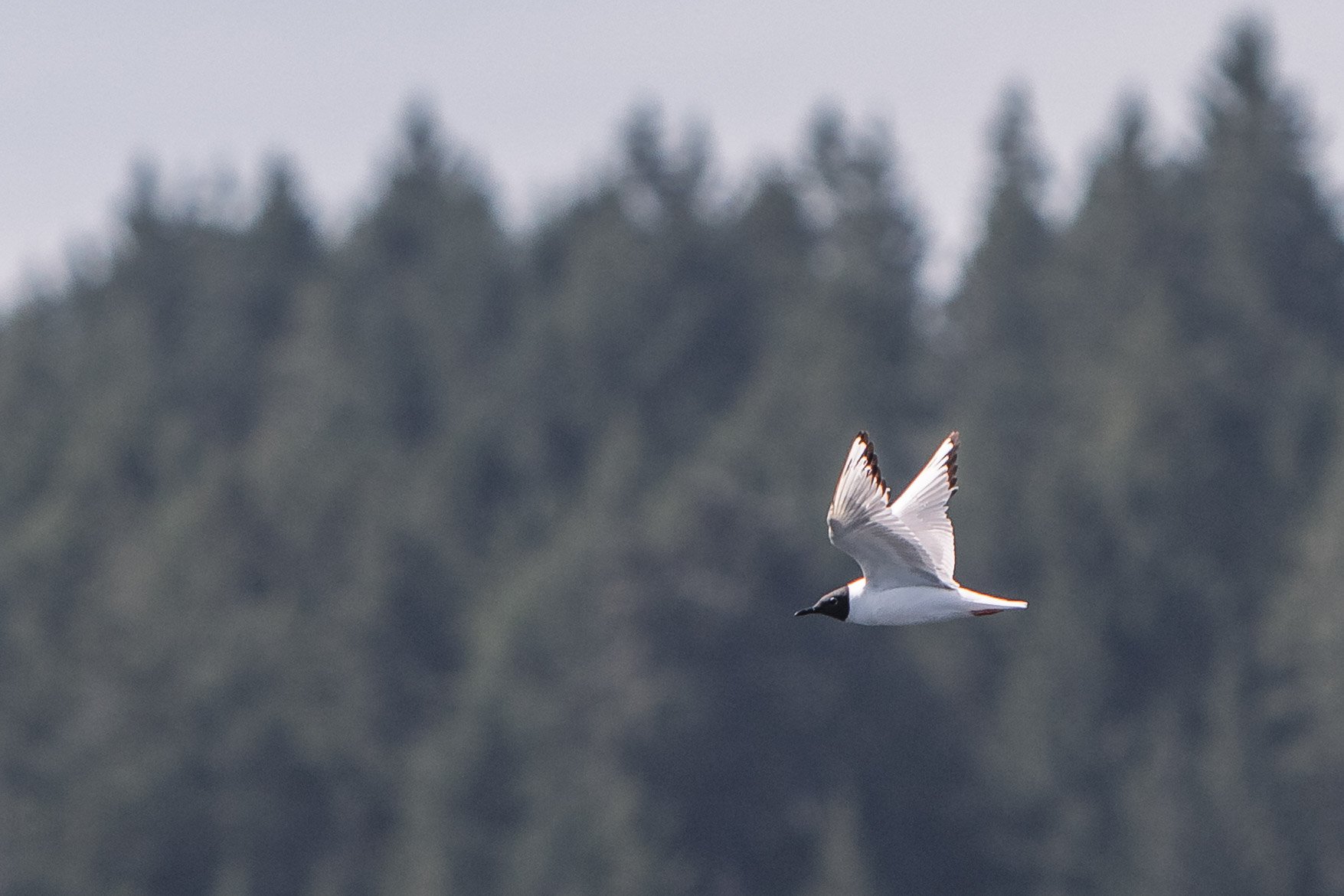
A Bonaparte’s gull soaring. Photo by Jordan Robinson.
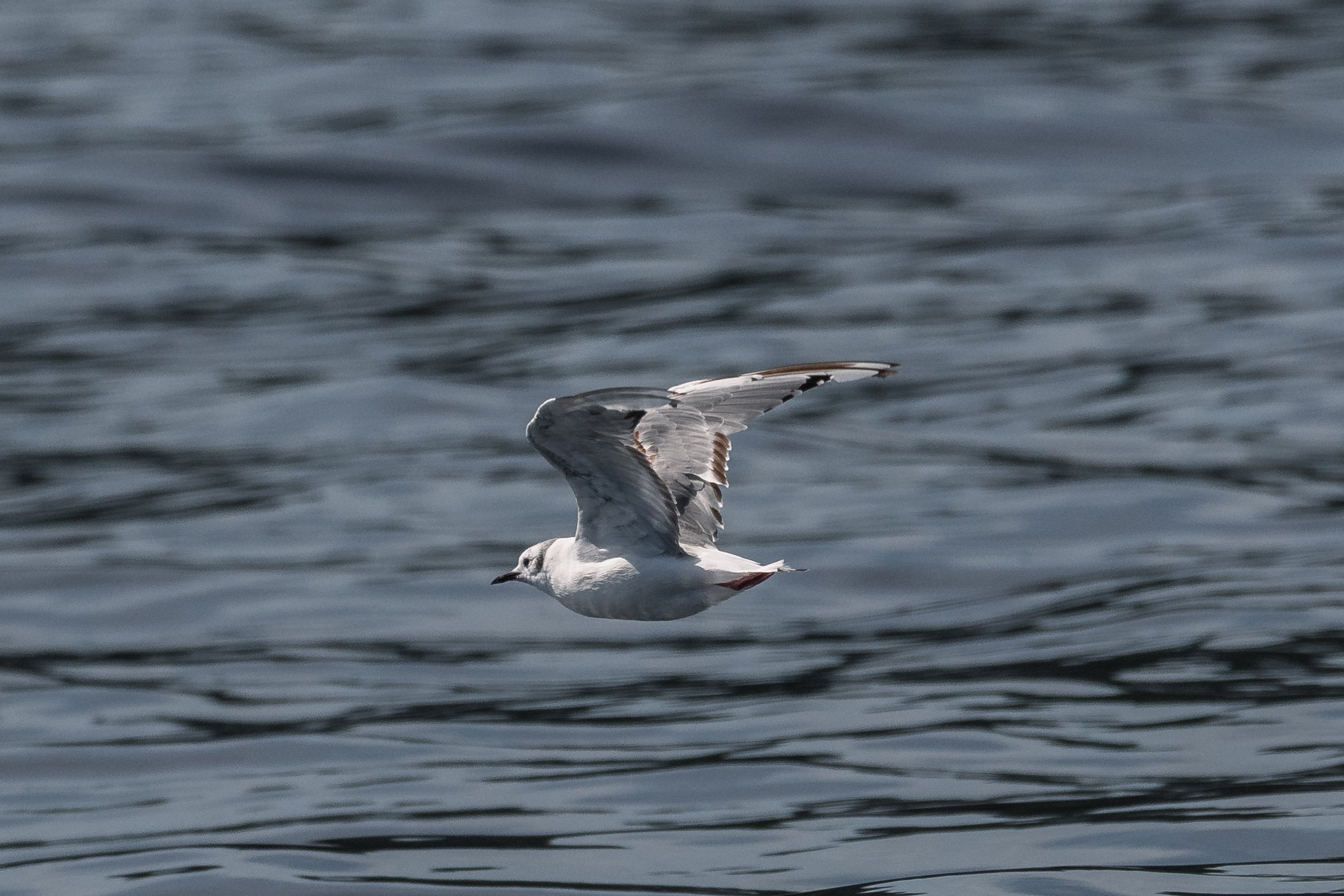
A Bonaparte’s gull flying past. Photo by Evan Hessels.
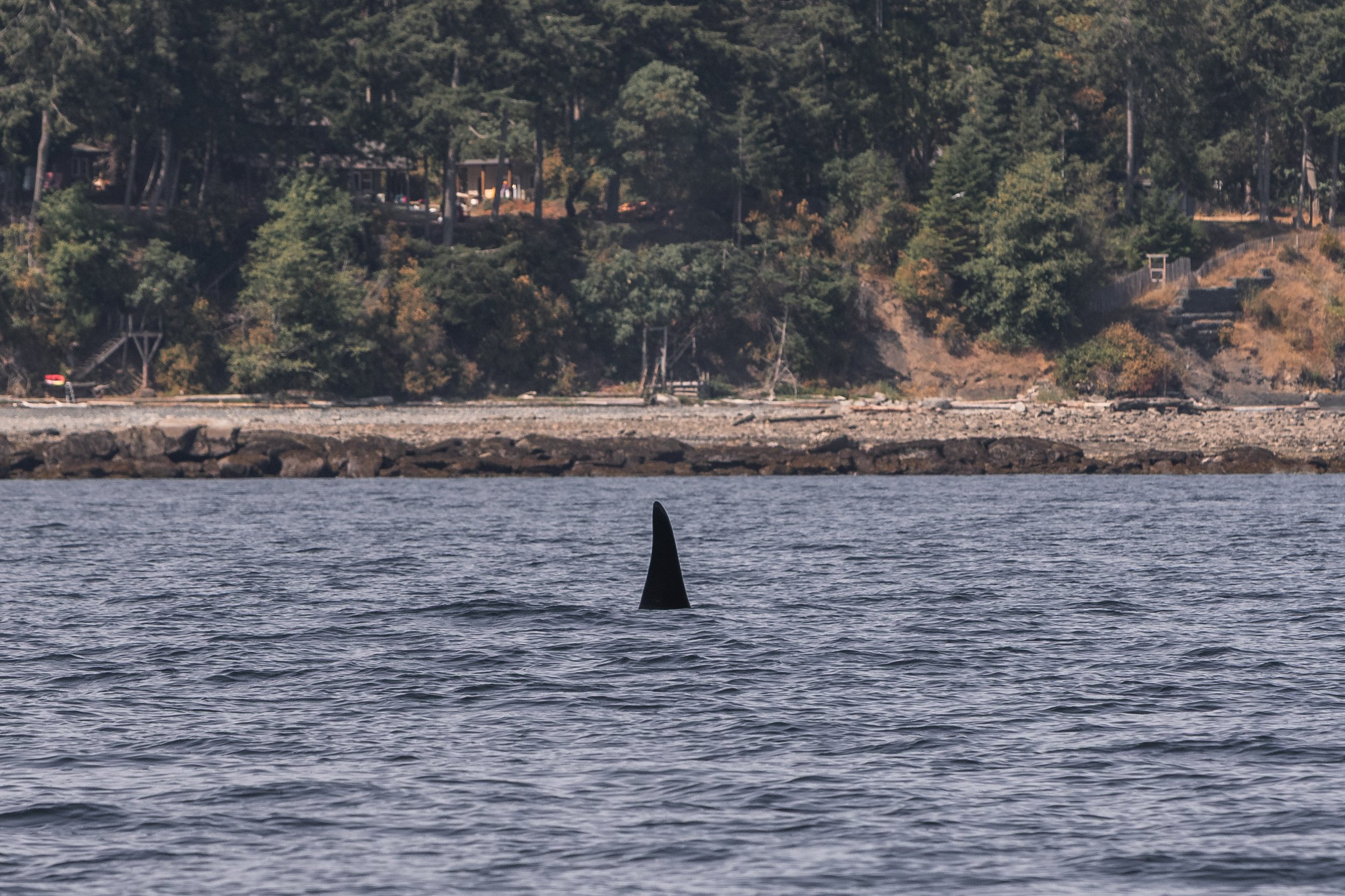
Kodiak slicing through the calm seas. Photo by Jordan Robinson.
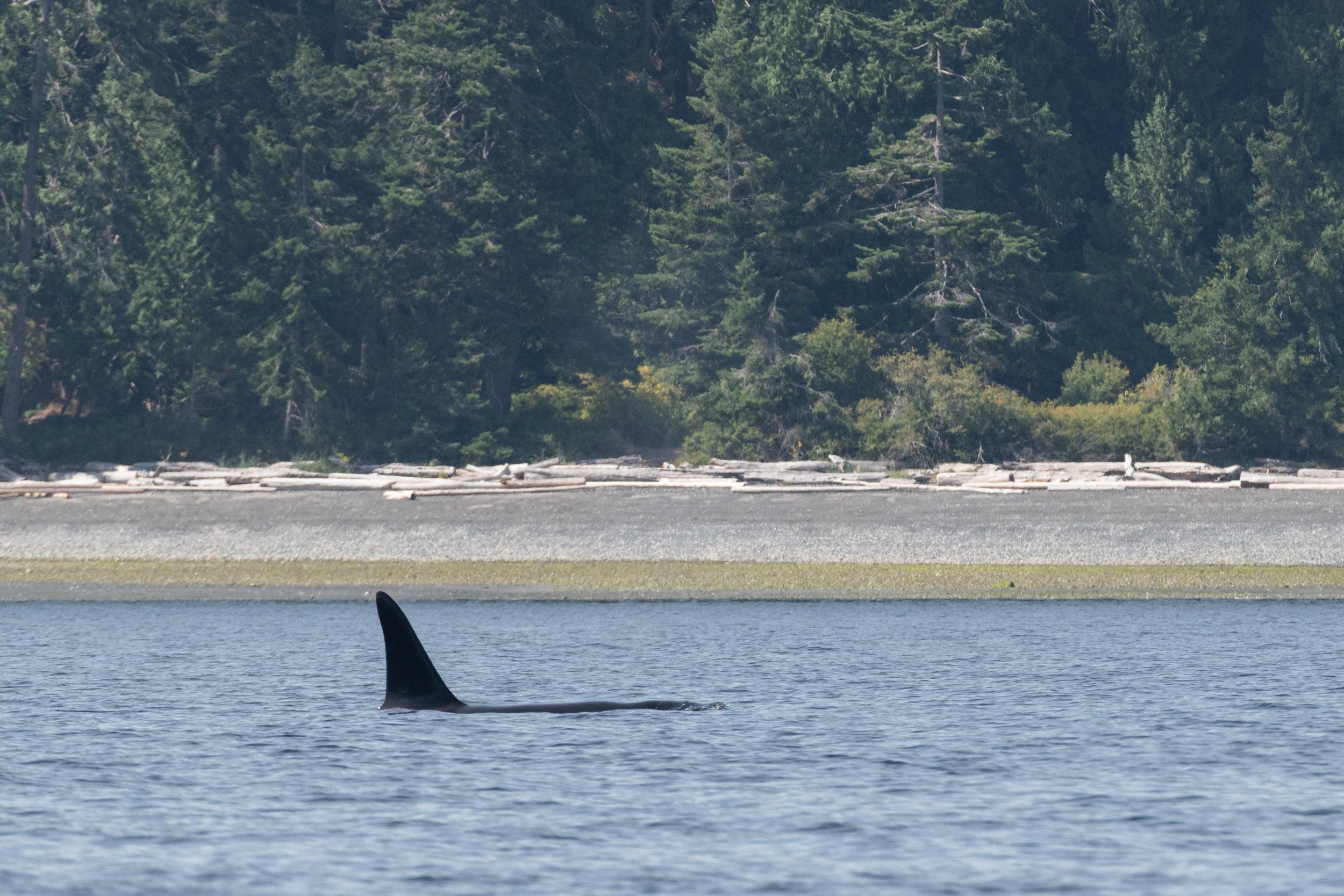
Kodiak close to shore. Photo by Hayleigh Hilbert.
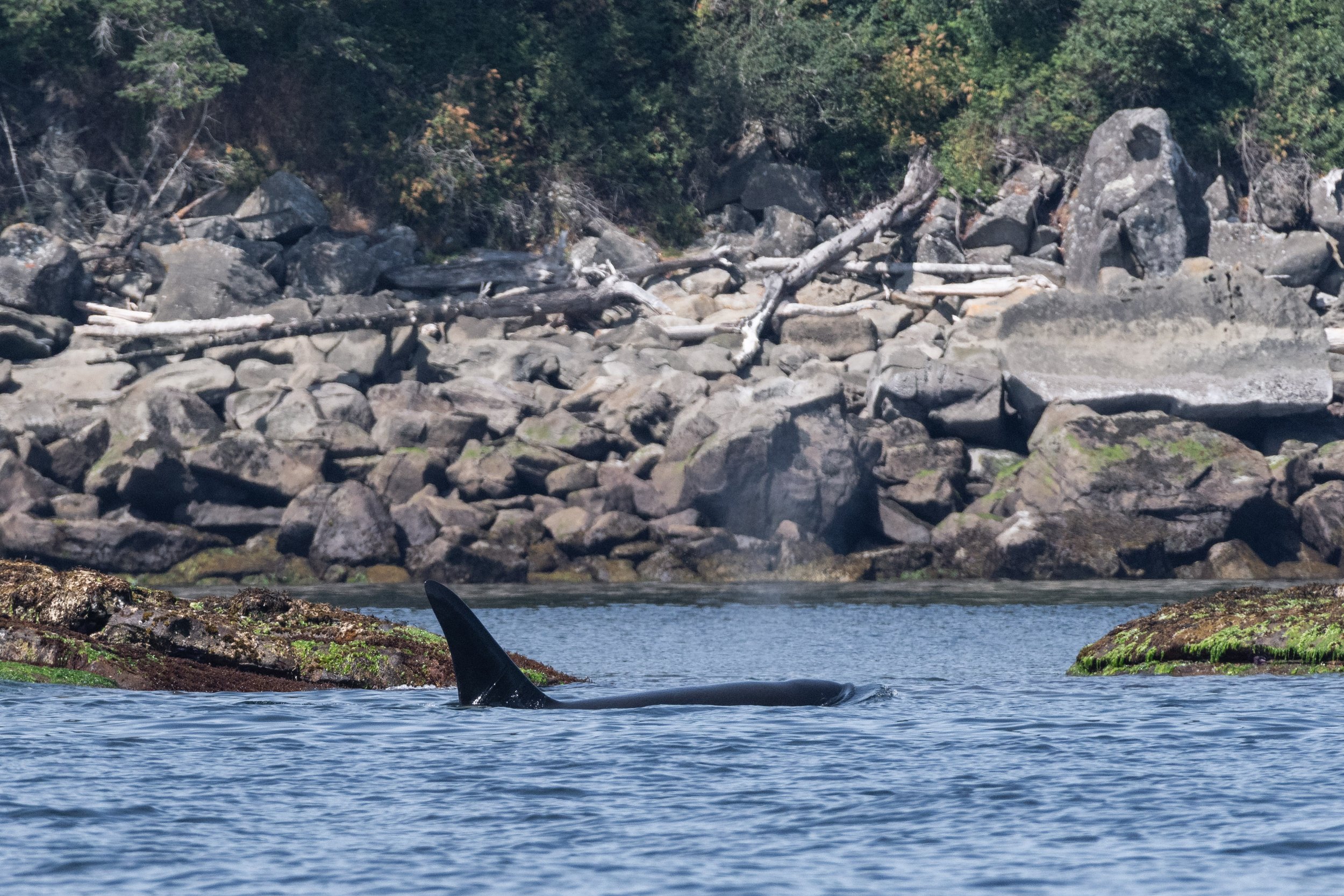
Searching for a snack. Photo by Hayleigh Hilbert.
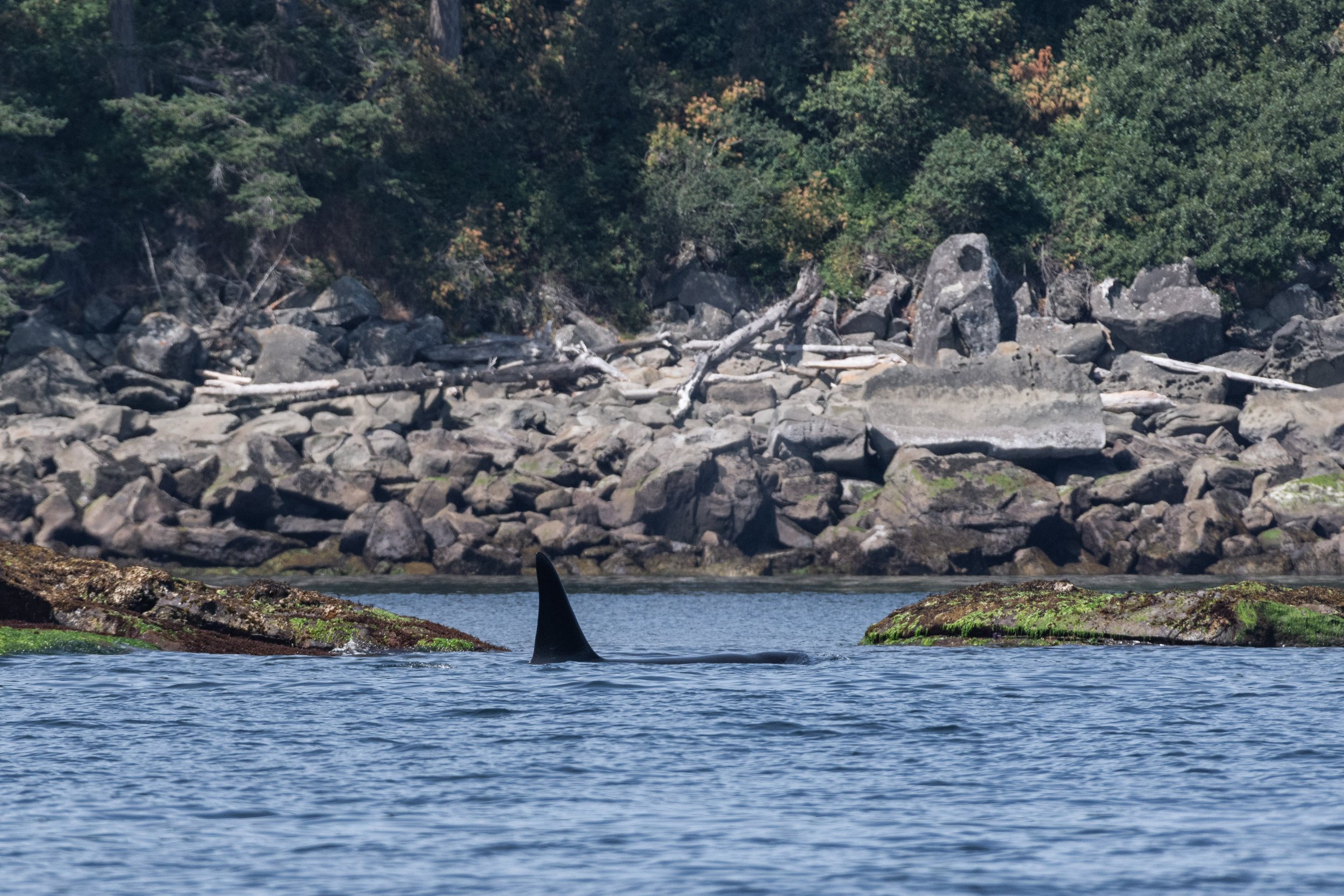
Kodiak in the middle of the rocks. Photo by Hayleigh Hilbert.
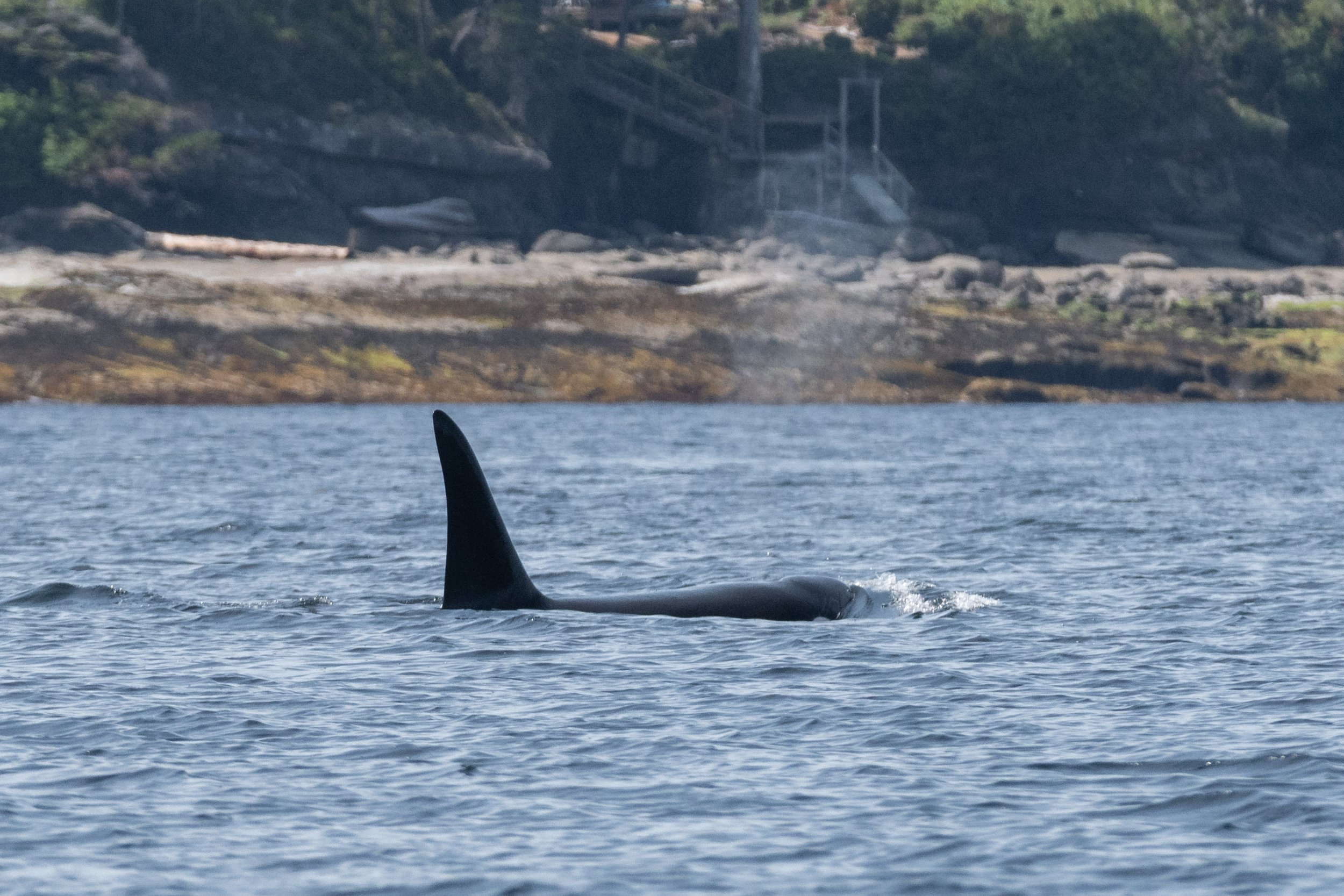
A big blow from Kodiak. Photo by Hayleigh Hilbert.
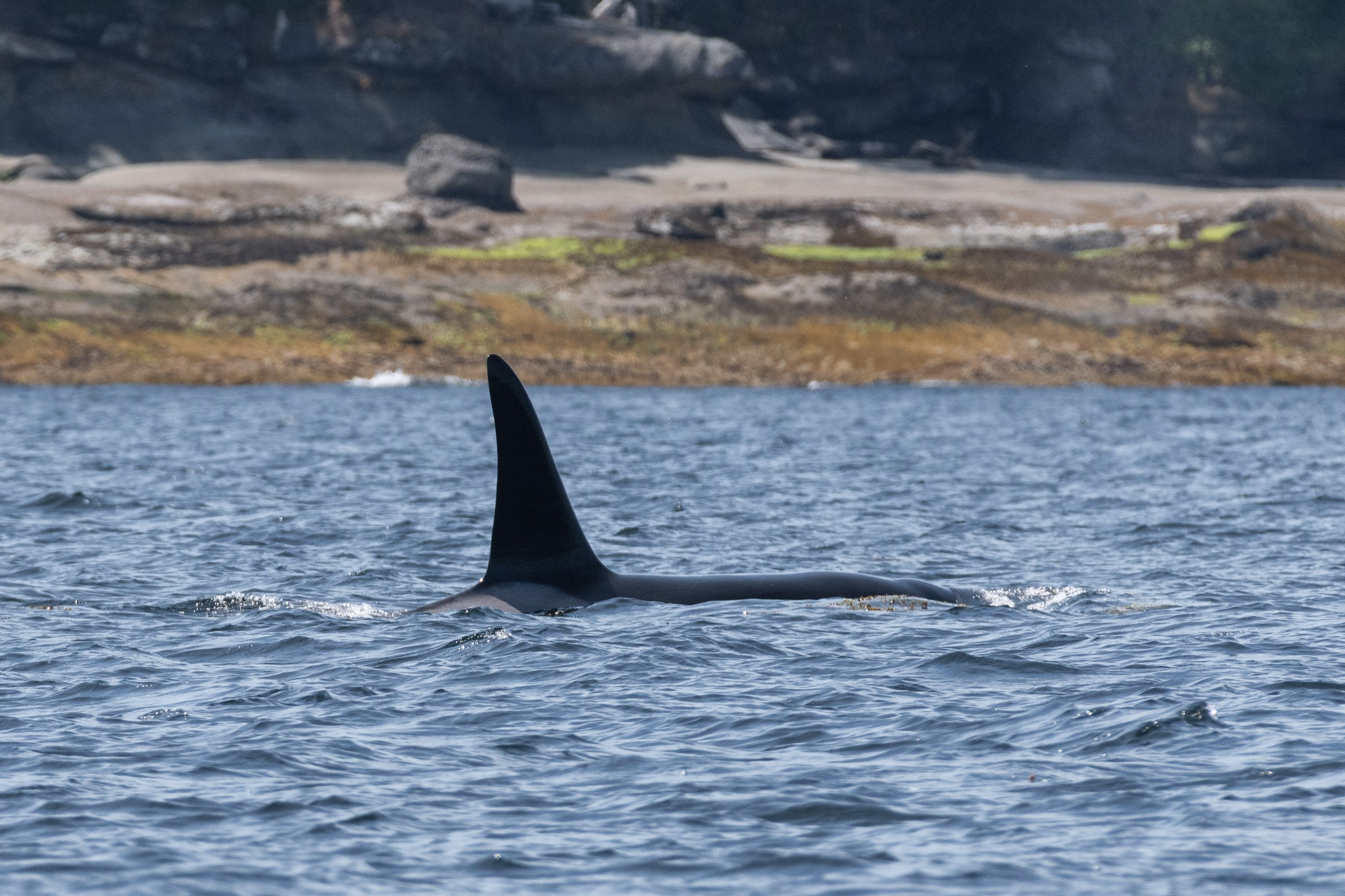
Kodiak surfacing. Photo by Hayleigh Hilbert.
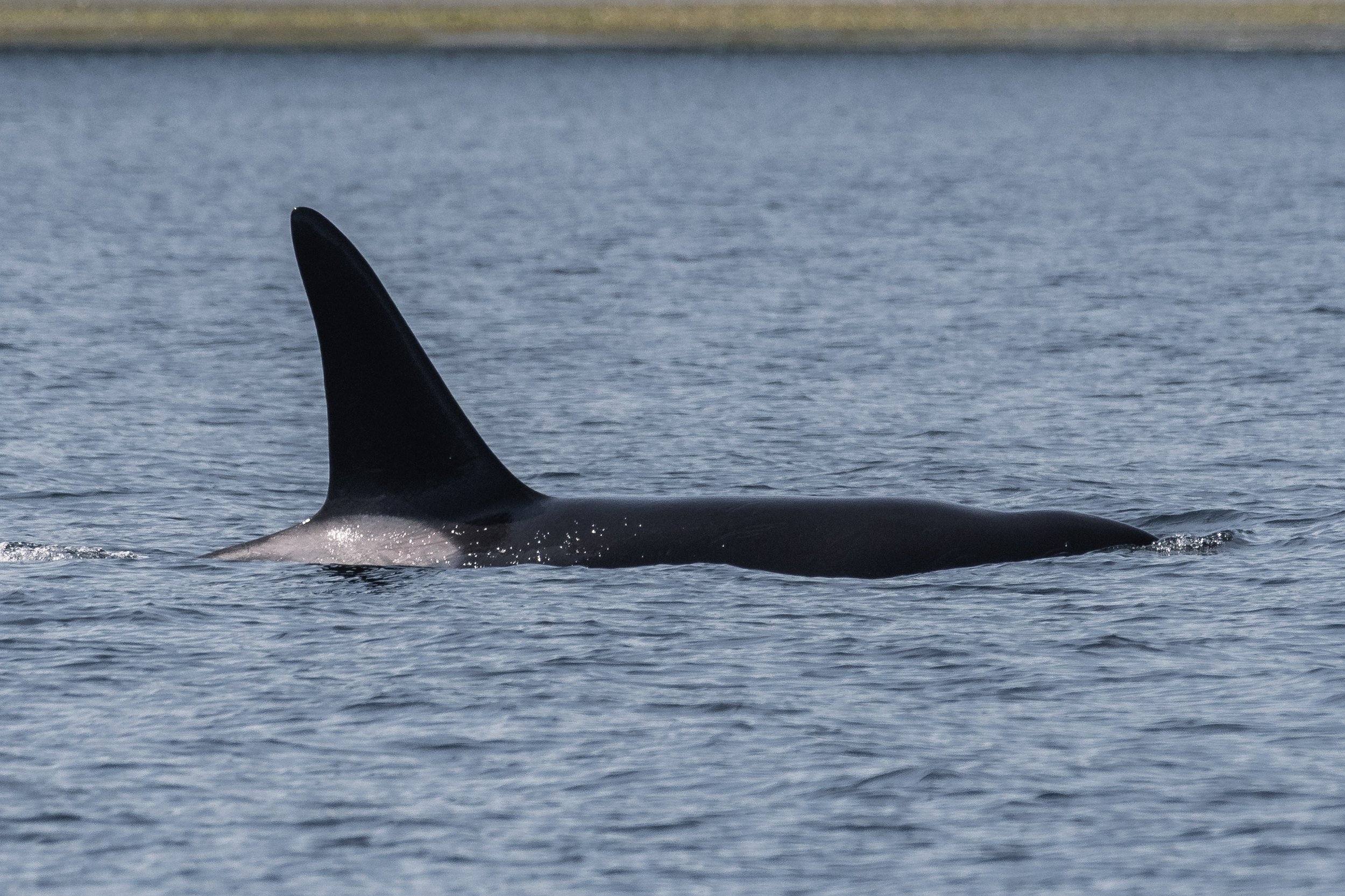
Kodiak crusing past. Photo by Evan Hessels.
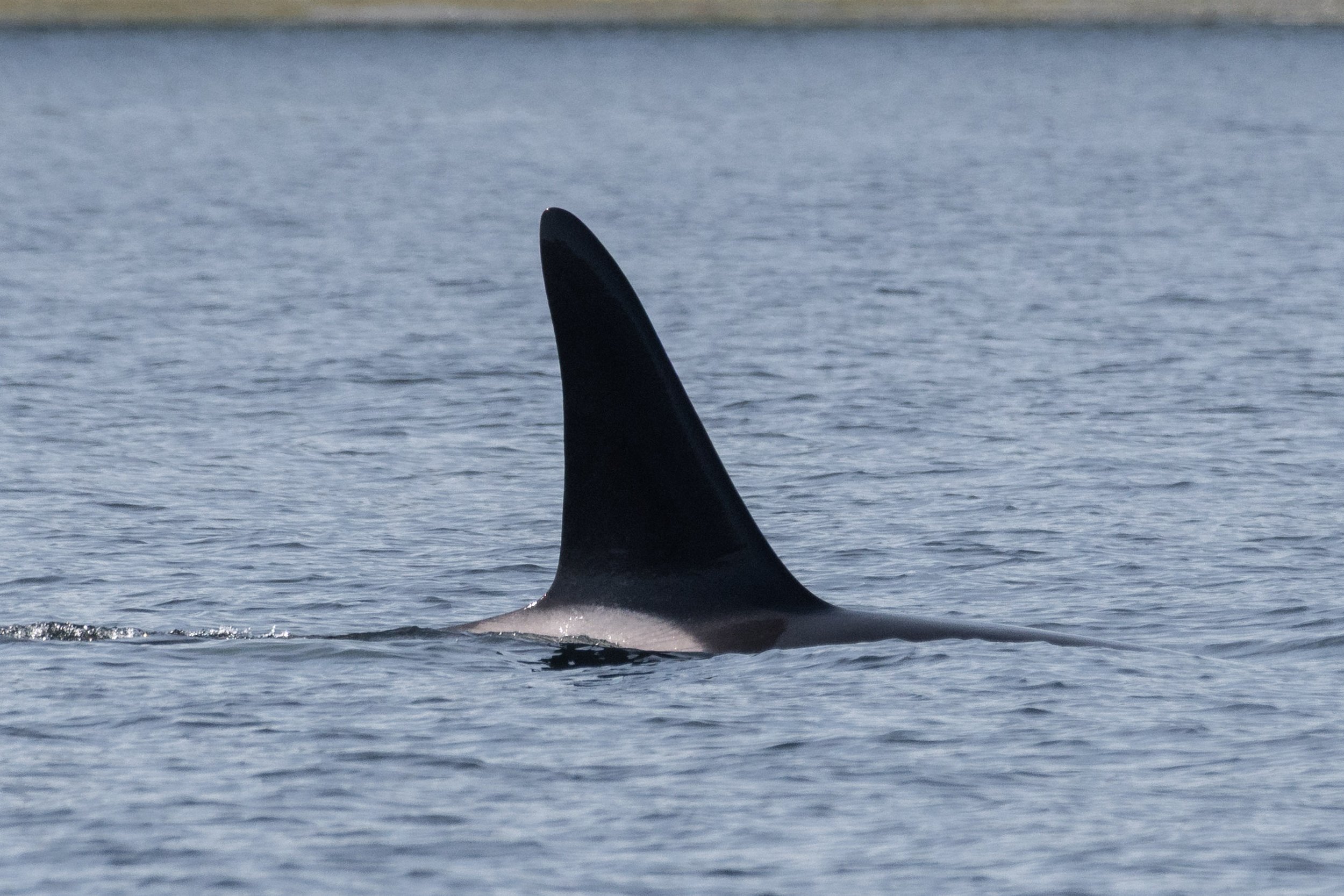
Kodiak in the calm water. Photo by Evan Hessels.
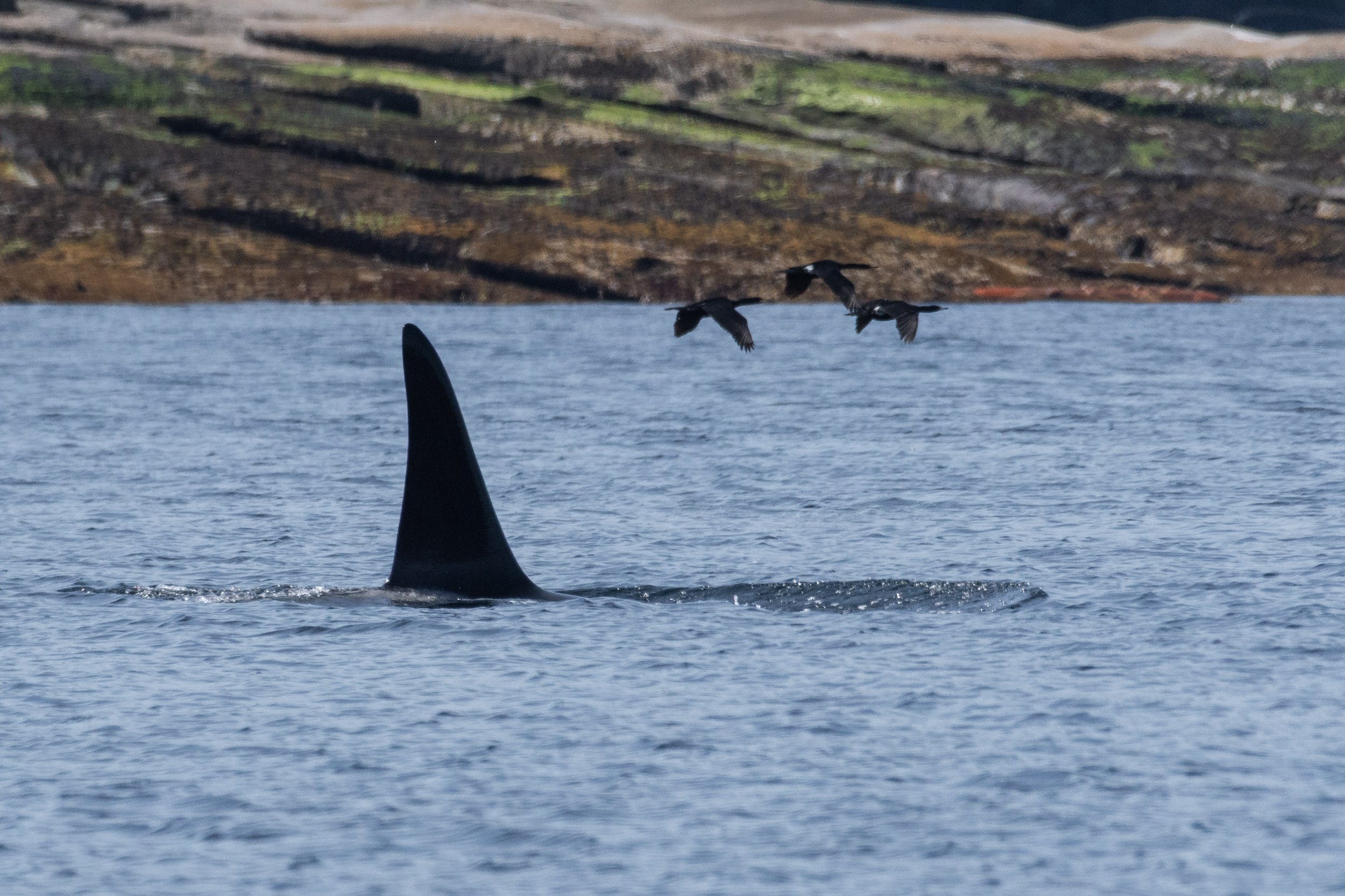
Kodiak racing the cormorants flying past. Photo by Evan Hessels.
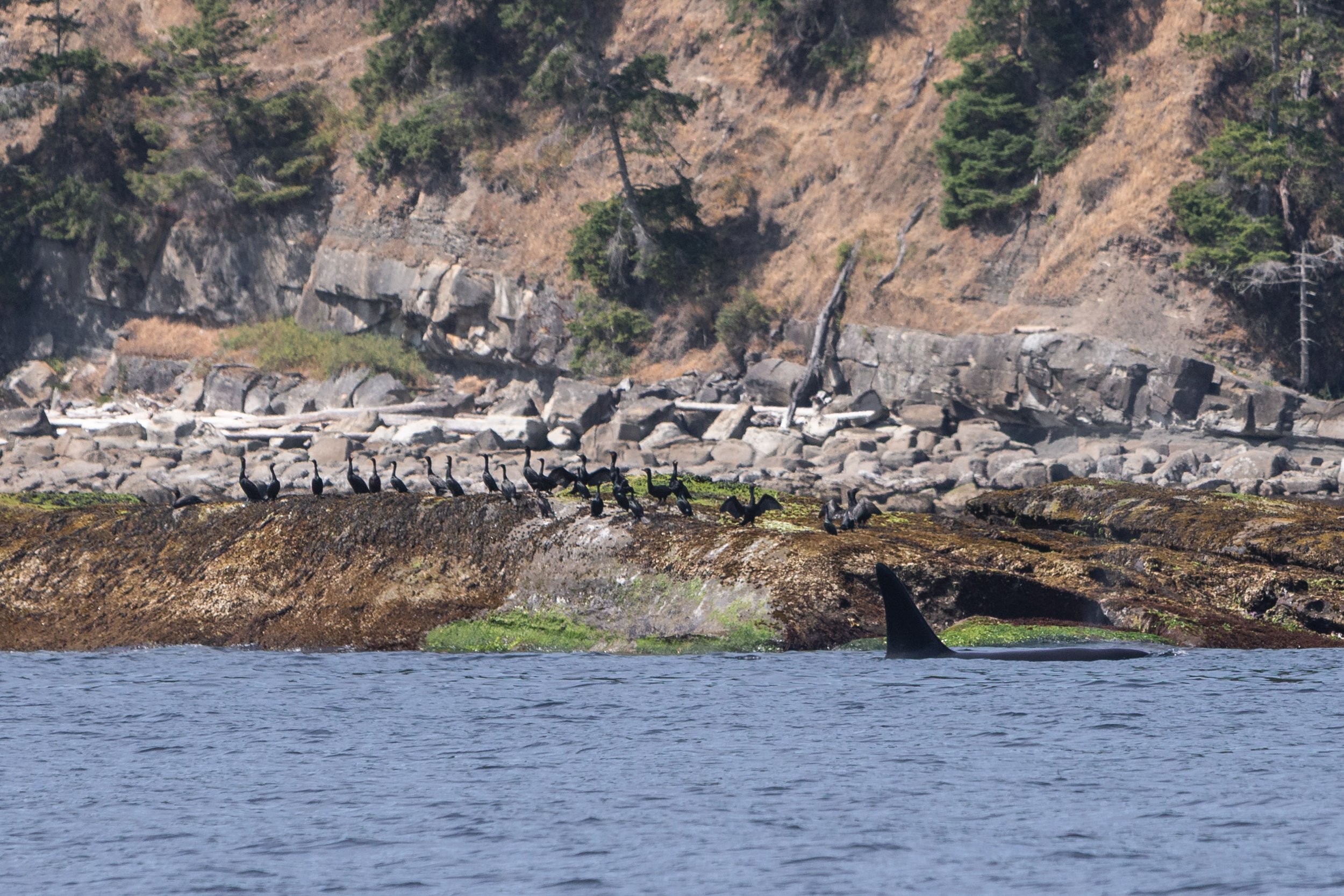
Kodiak along the shore, possibly checking out the cormorants! Photo by Jordan Robinson.
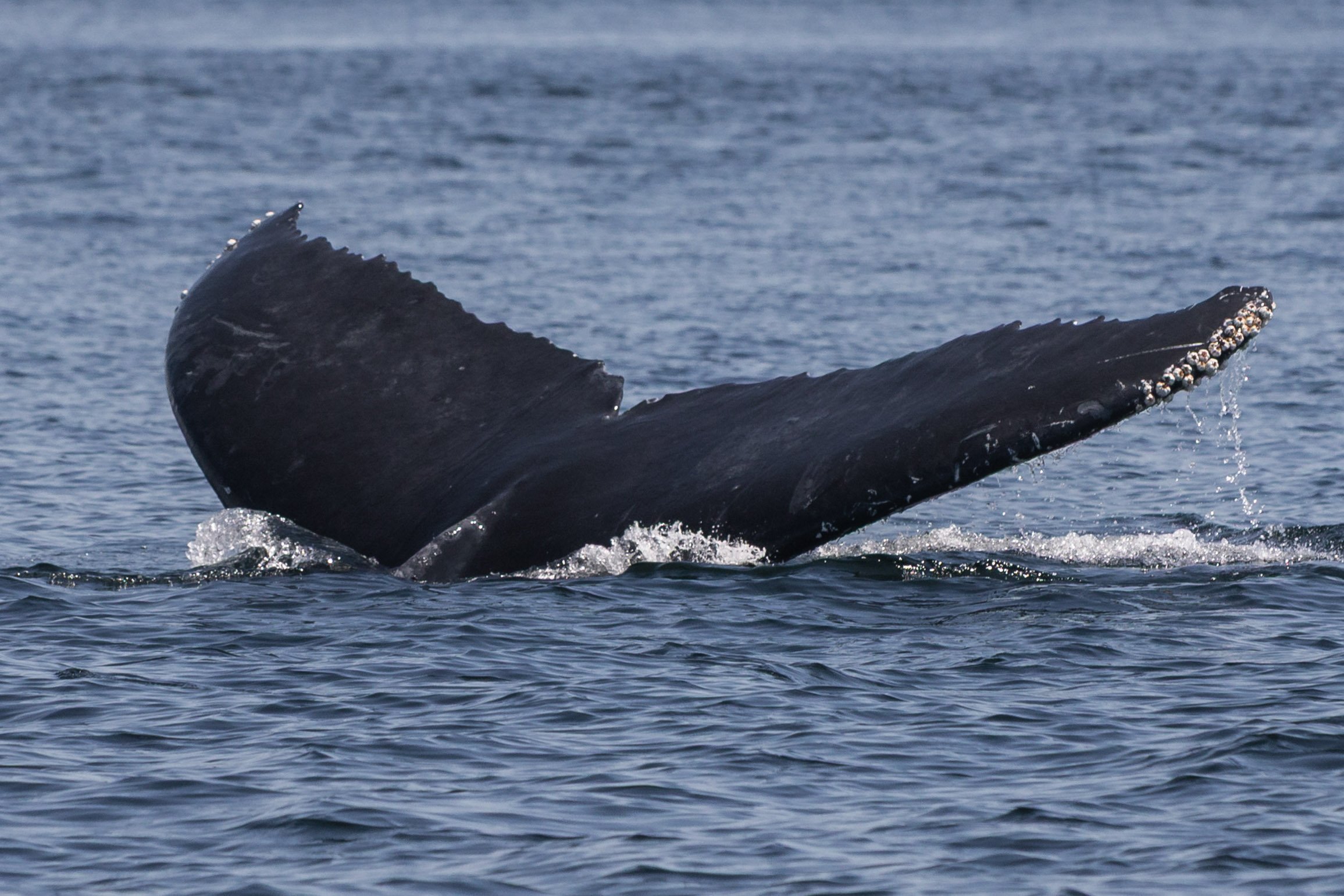
The front of Thunderbolt’s tail. Photo by Jordan Robinson.
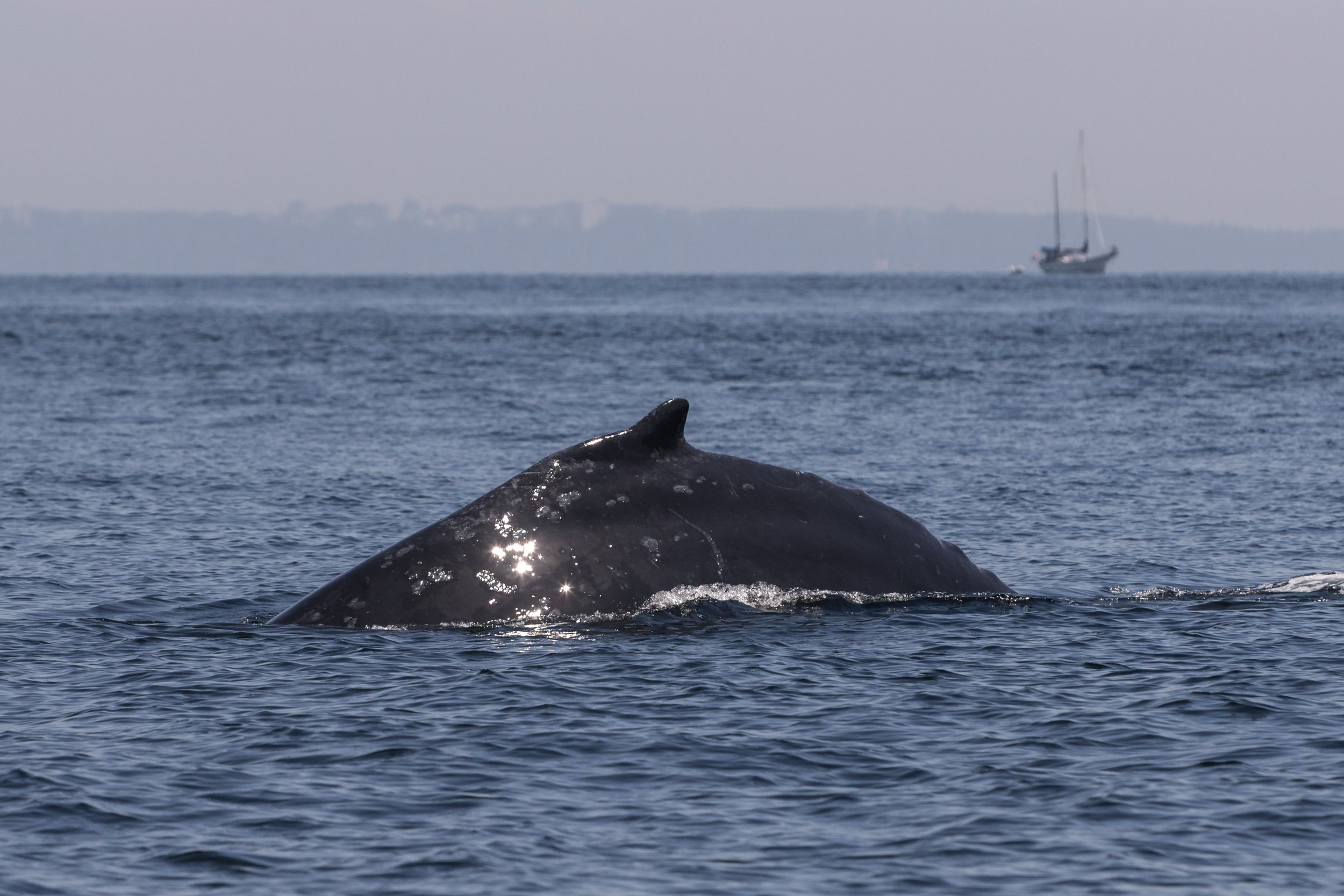
Thunderbolt arching for a dive. Photo by Jordan Robinson.
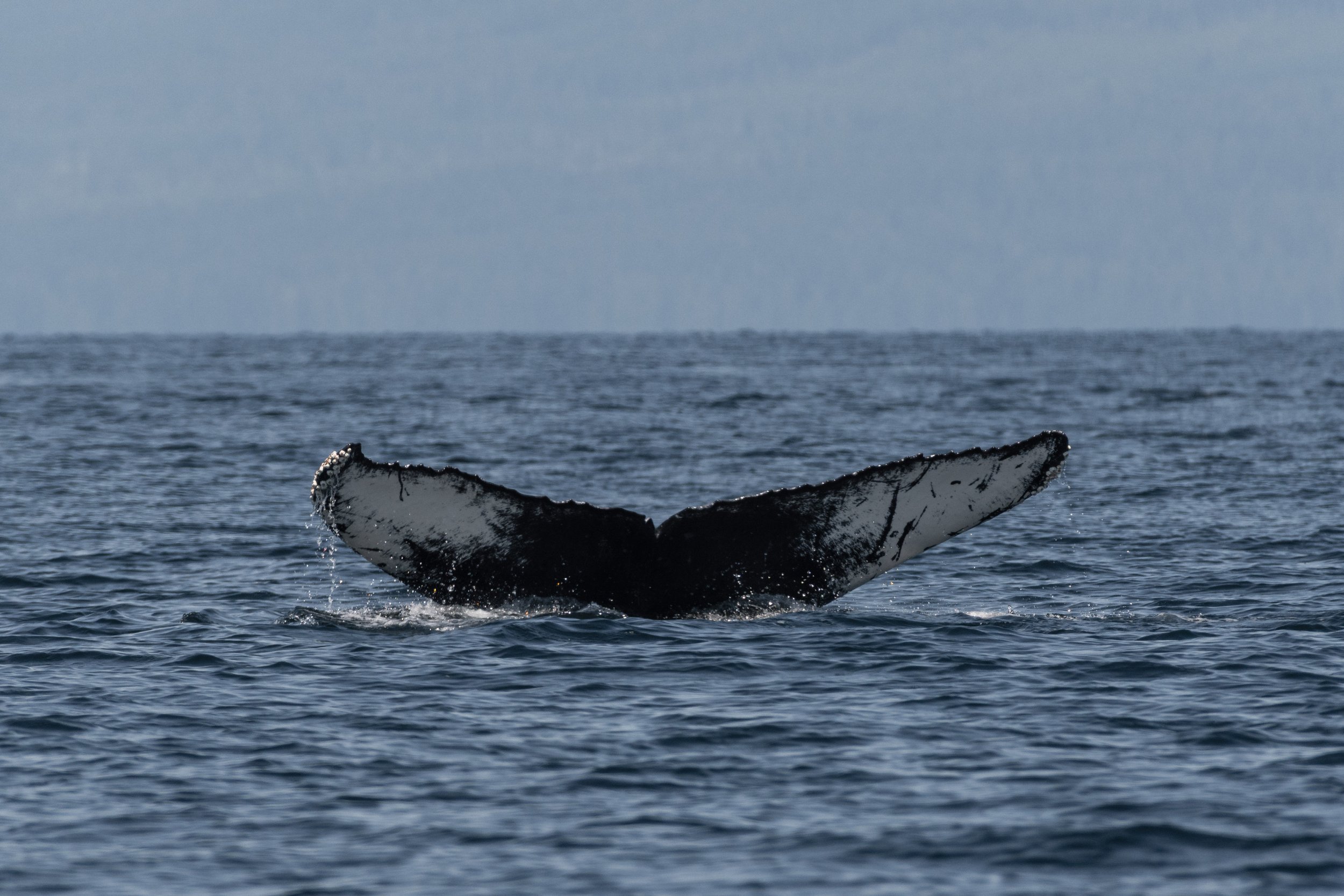
The underside of Thunderbolt’s tail. Photo by Hayleigh Hilbert.
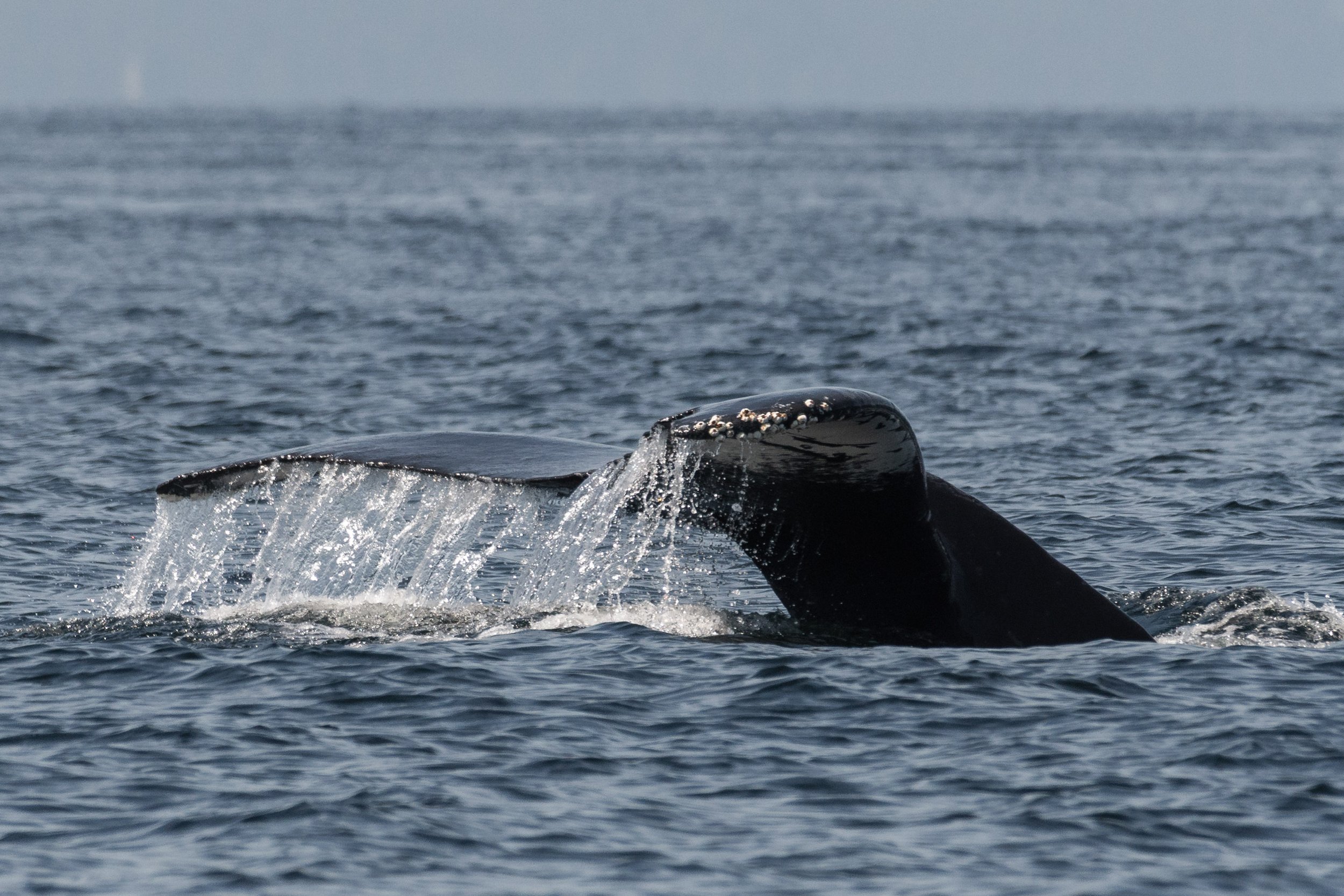
A fluke waterfall from Thunderbolt. Photo by Evan Hessels.
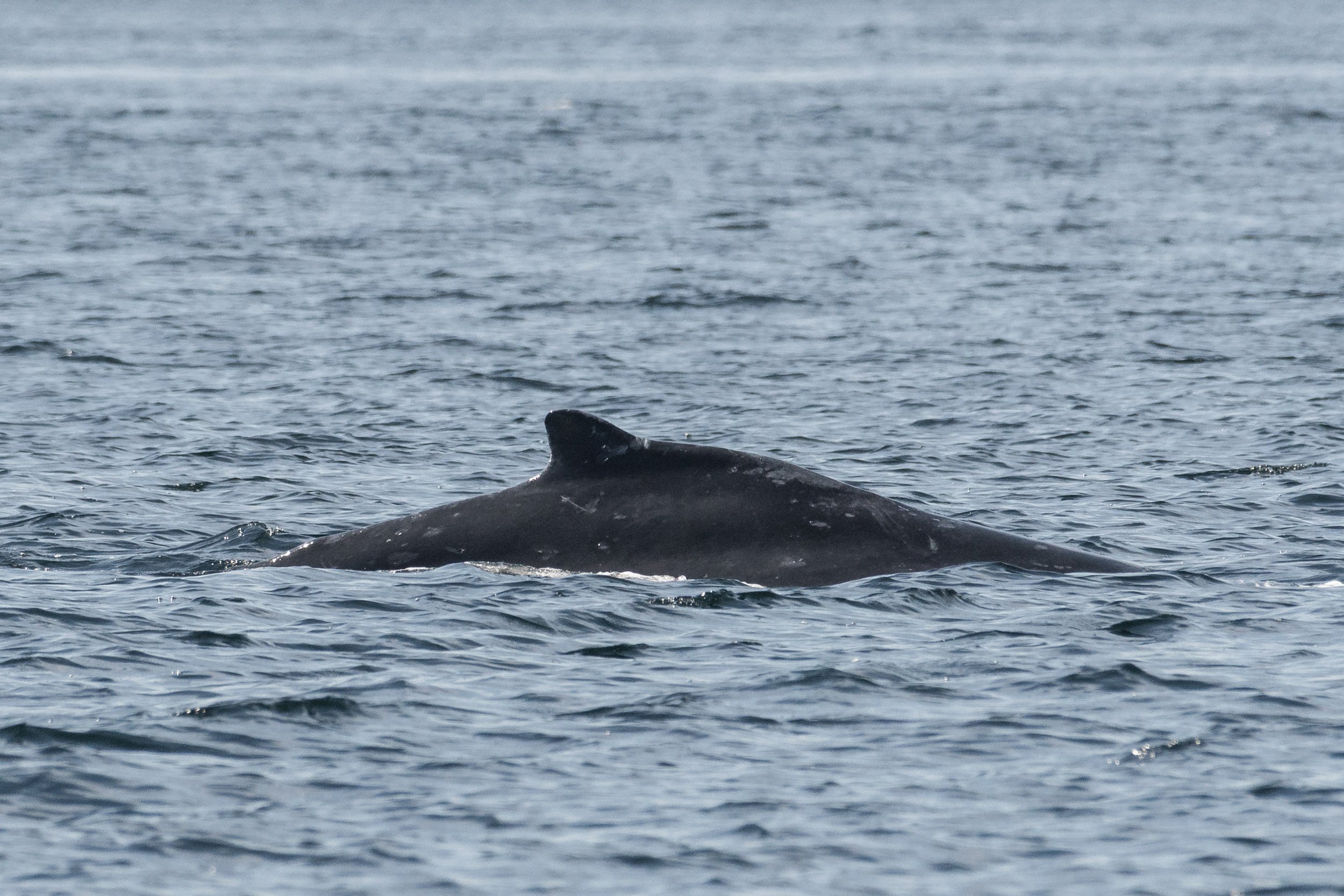
Thunderbolt’s dorsal fin. Photo by Evan Hessels.
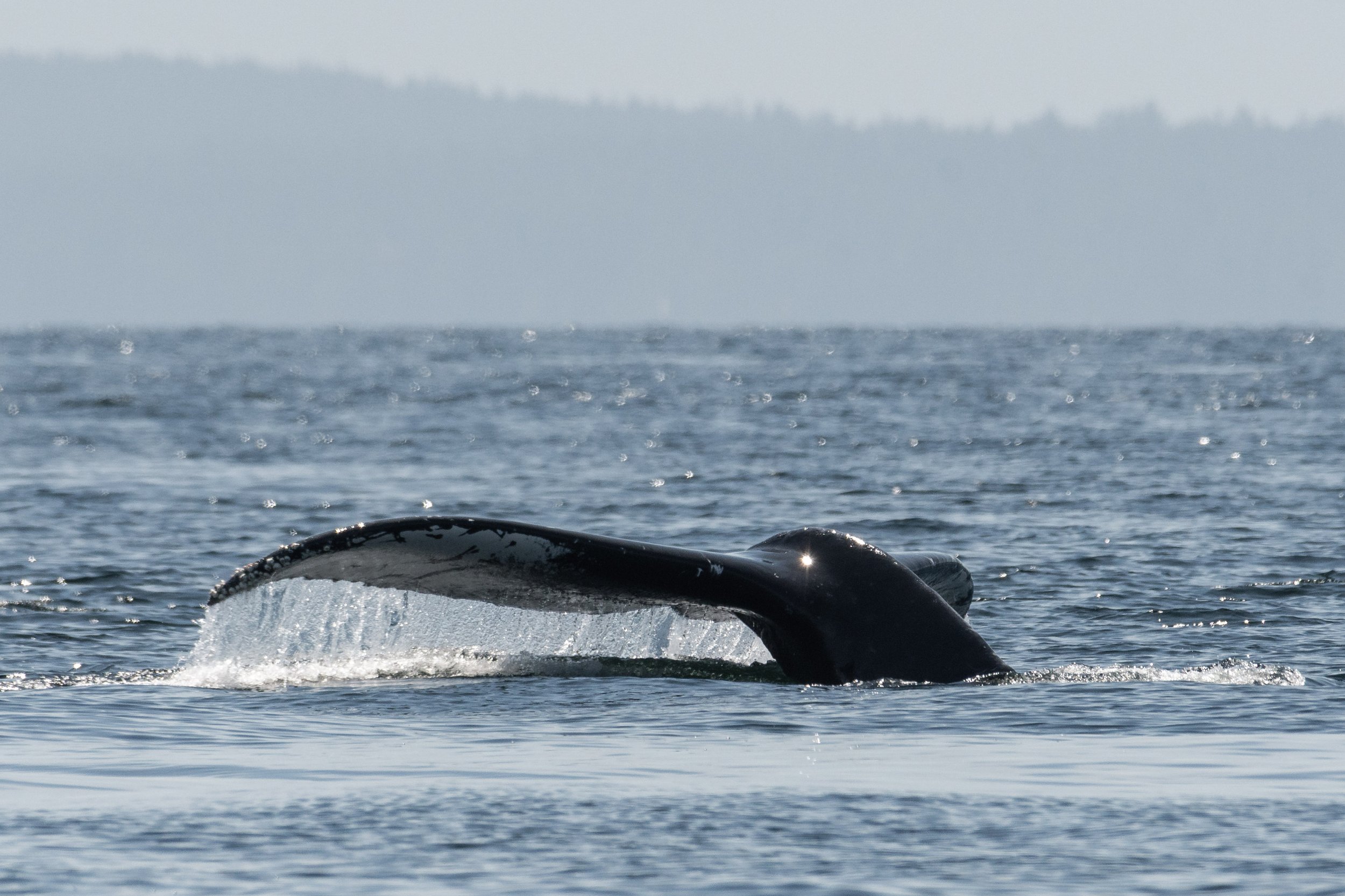
Going down. Photo by Evan Hessels.
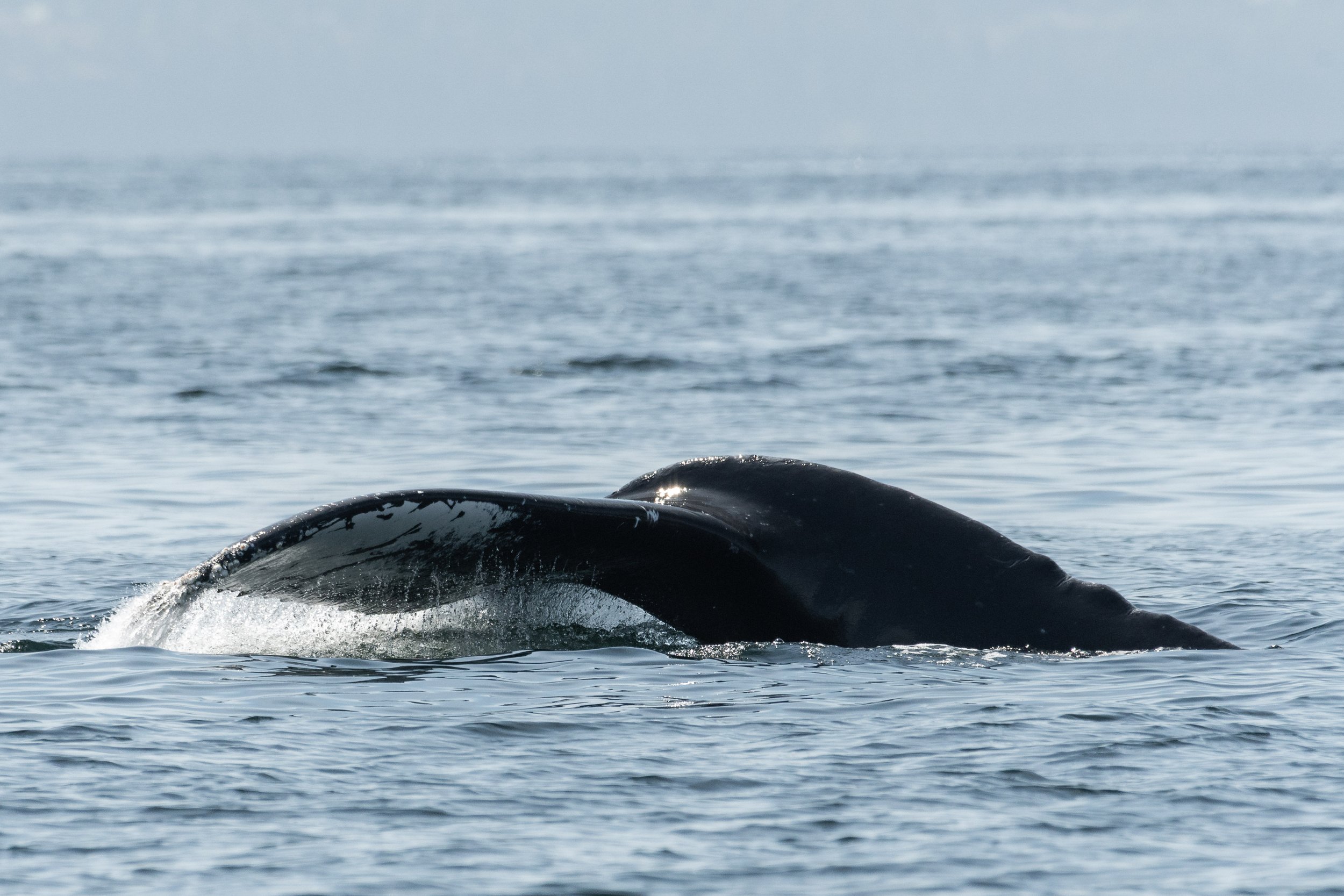
A low fluke from Thunderbolt. Photo by Evan Hessels.
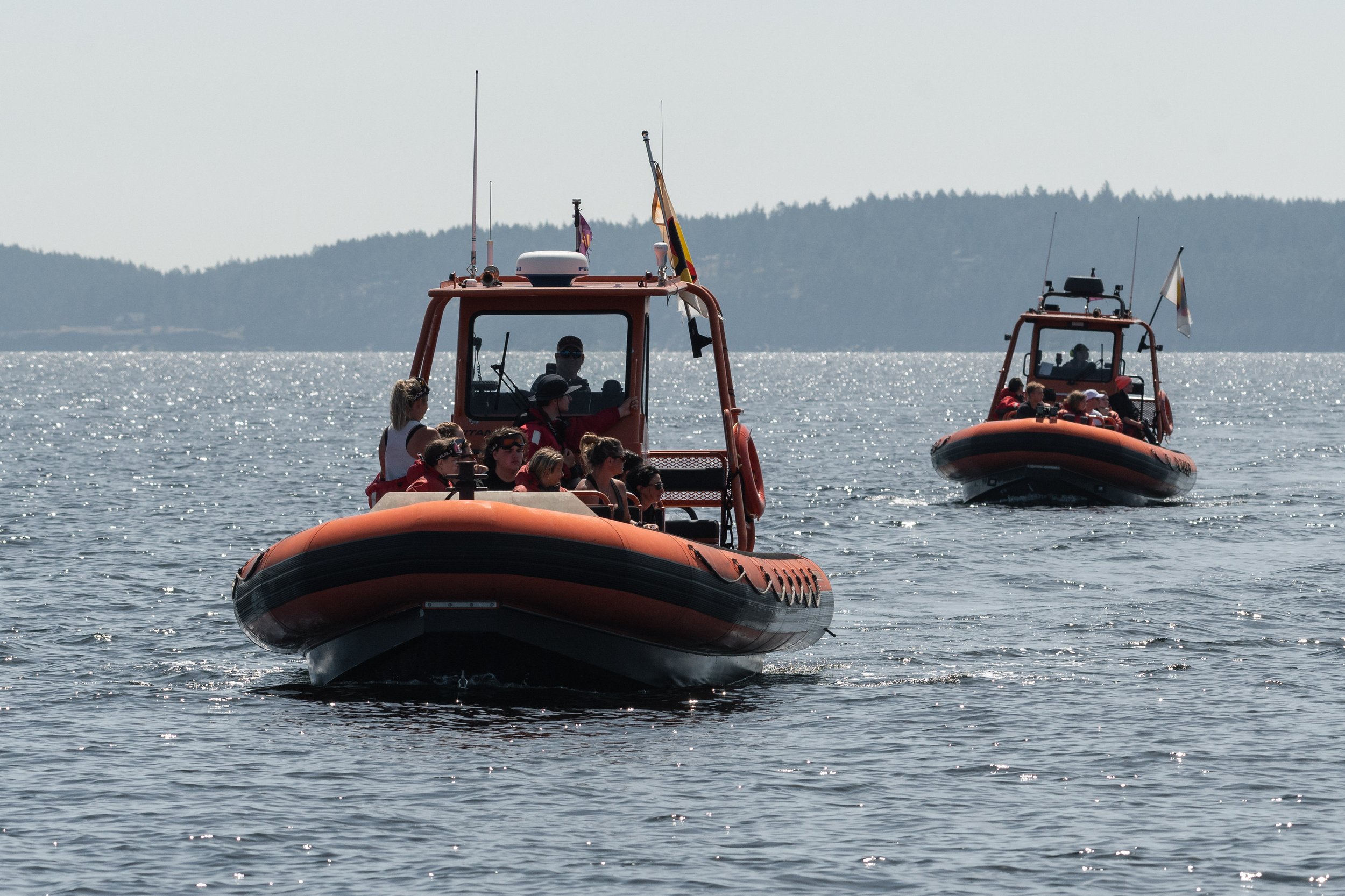
Keta and Cascadia watching whales. Photo by Evan Hessels.
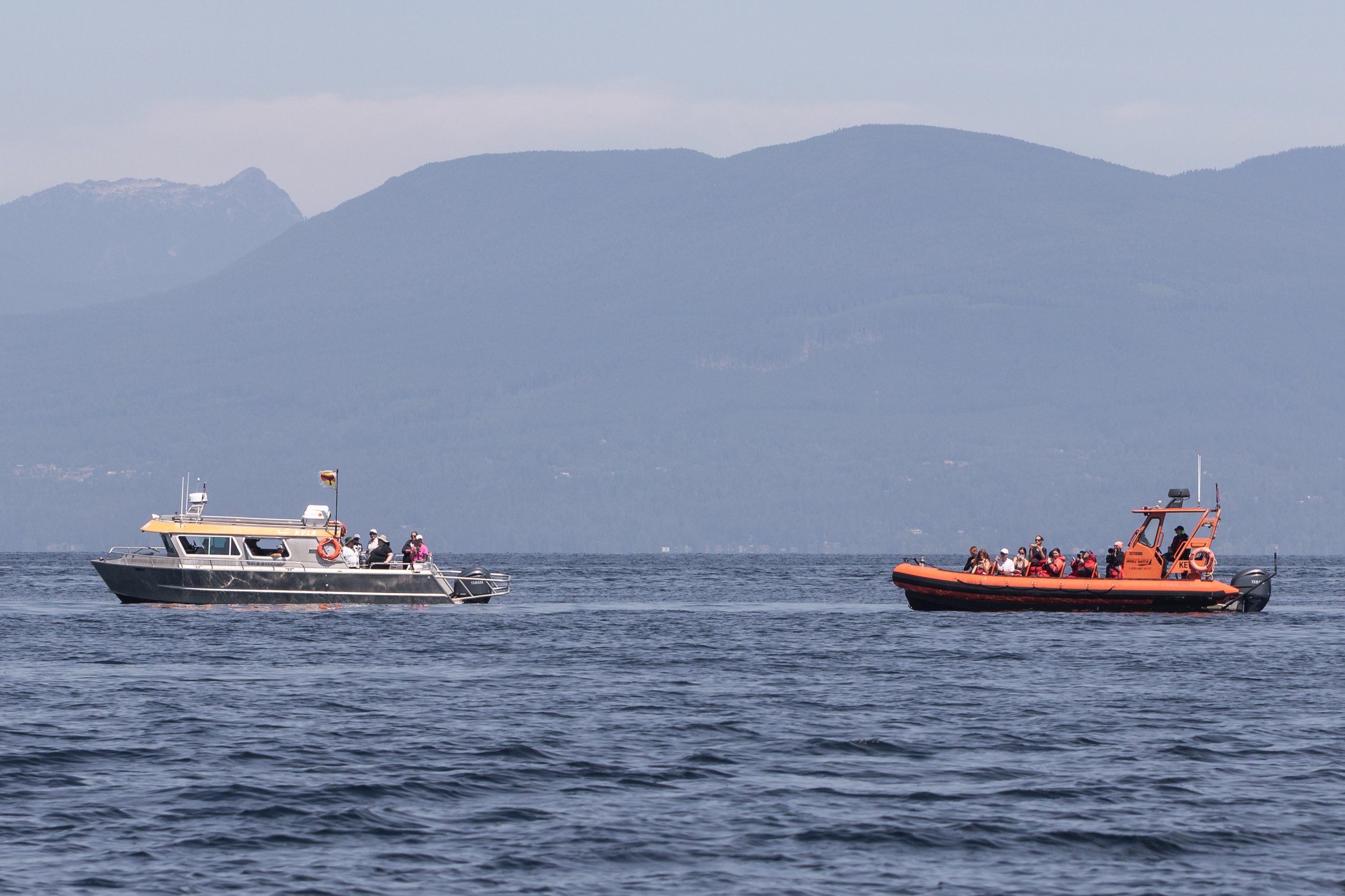
Kula and Keta with Thunderbolt. Photo by Jordan Robinson.
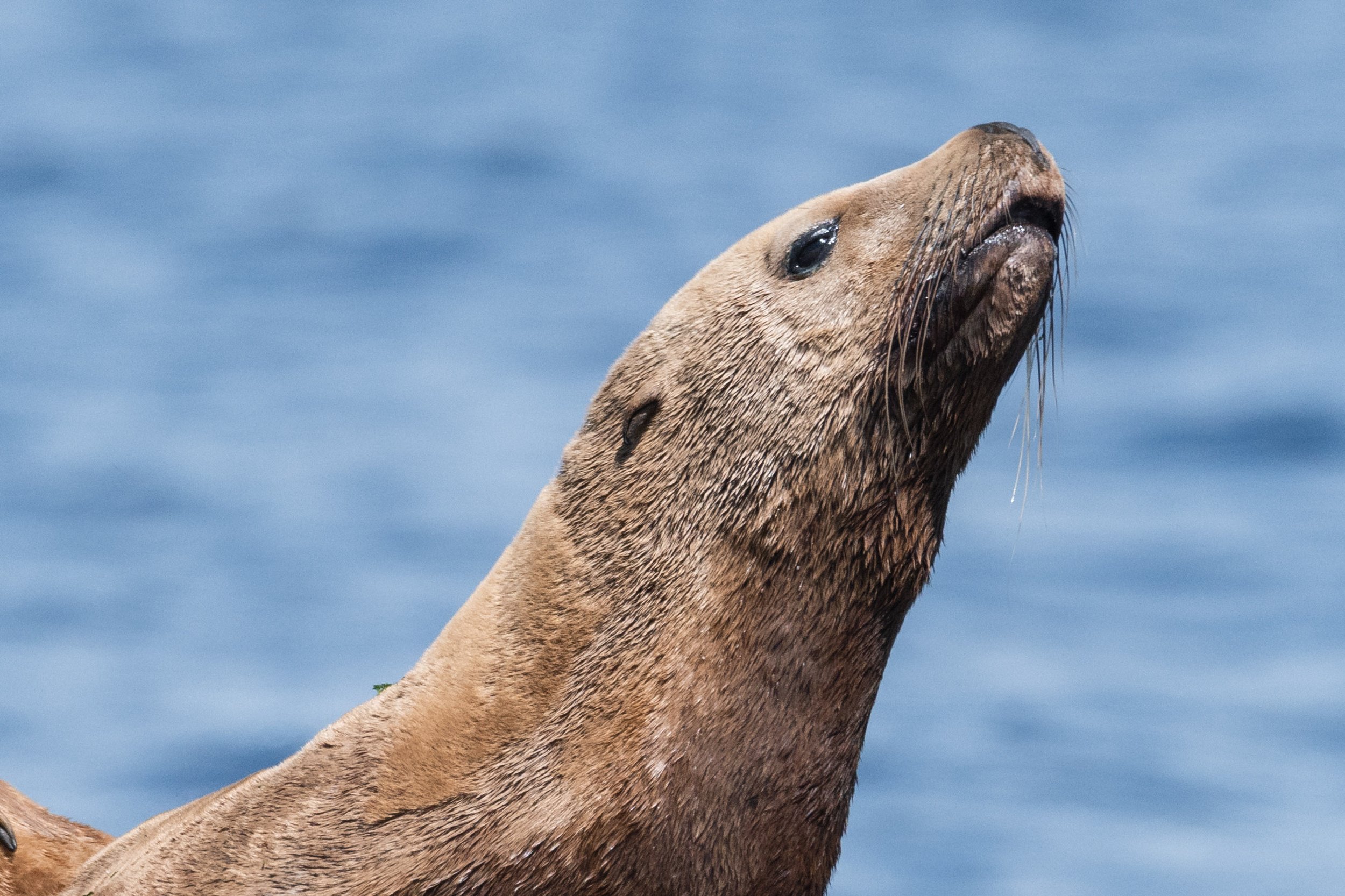
A Steller Sea Lion, can you spot the little green bug on it’s back? Photo by Evan Hessels.
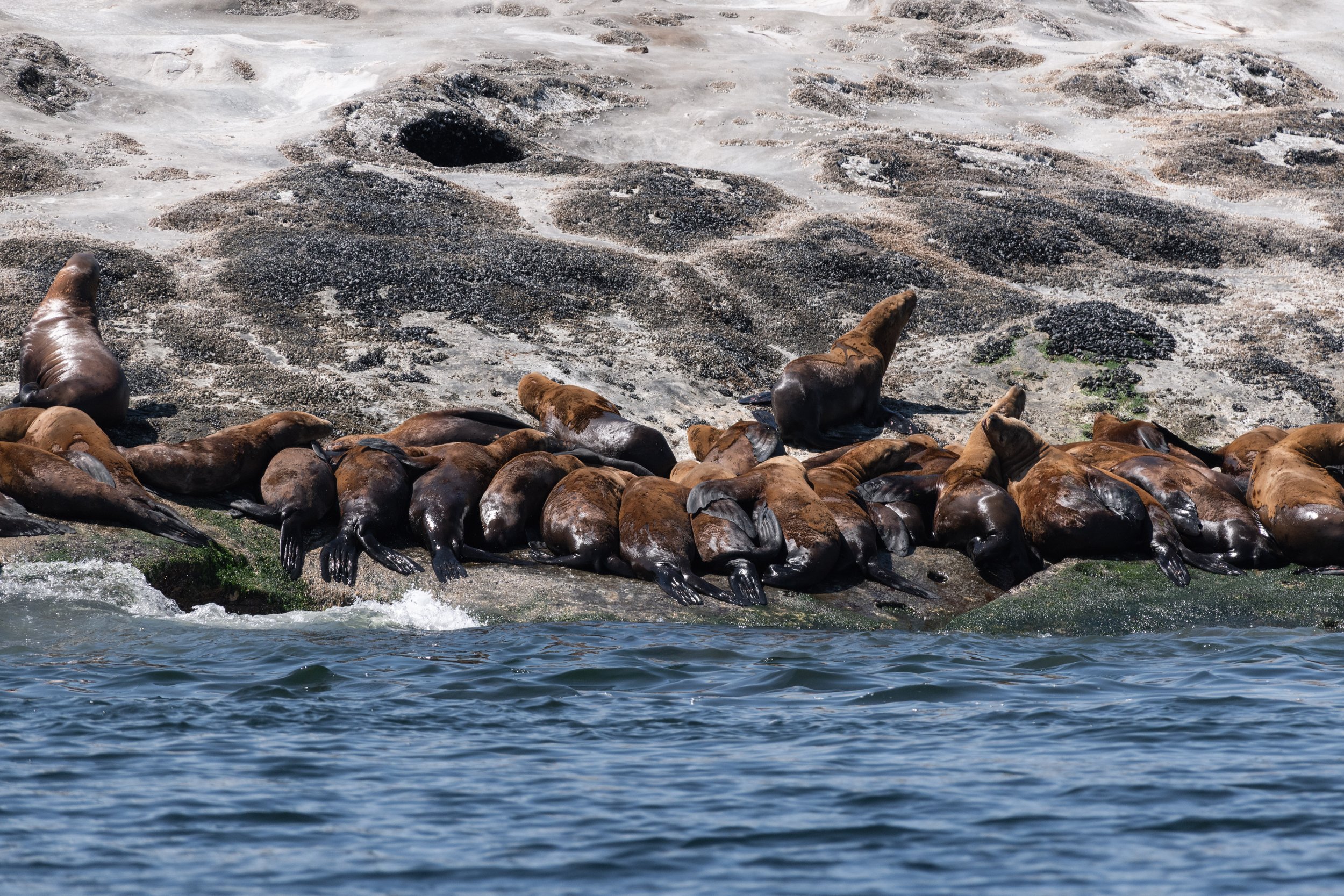
A line of sleepy Steller Sea Lions. Photo by Hayleigh Hilbert.
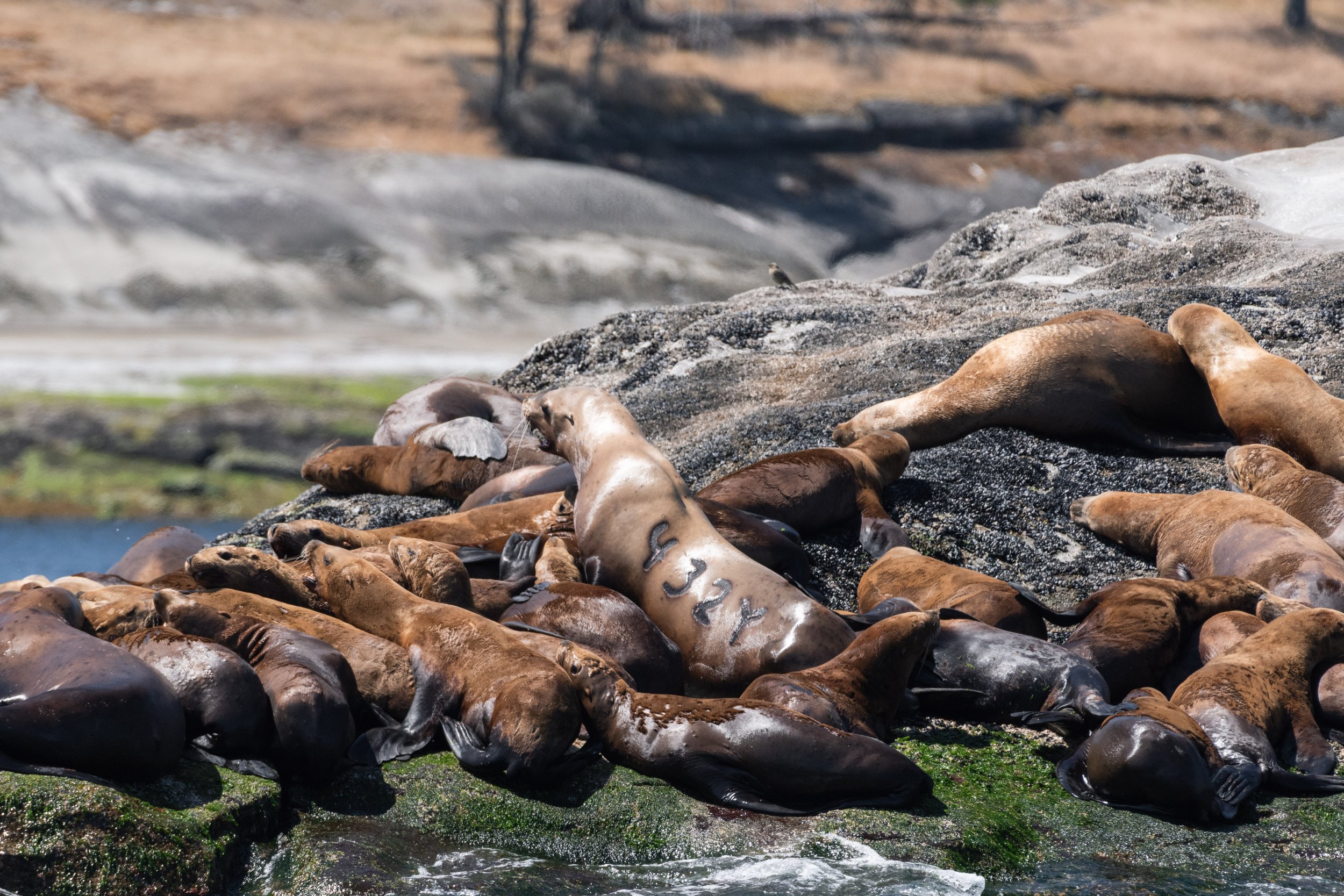
This Steller had a brand. Photo by Hayleigh Hilbert.
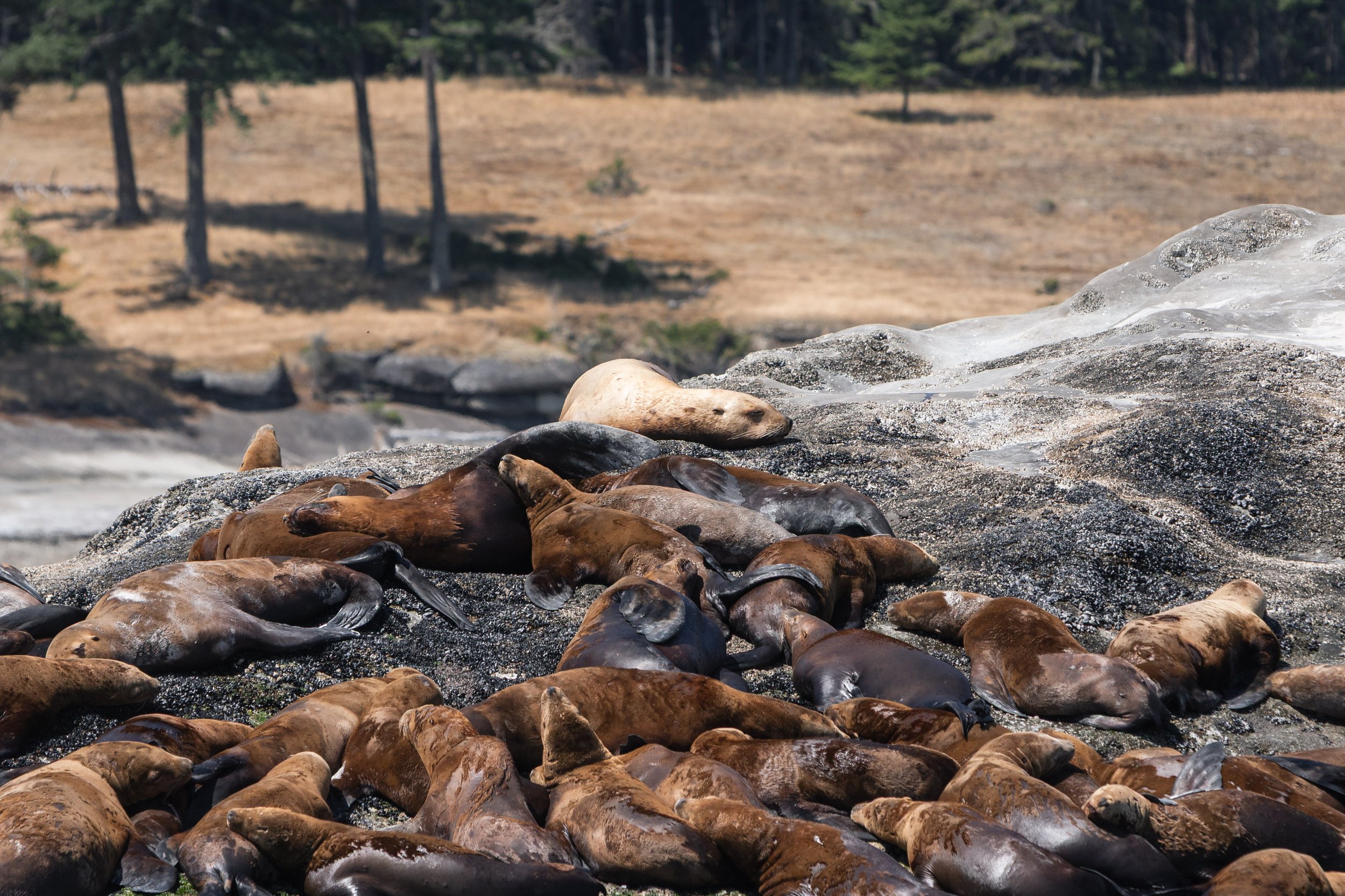
A cuddle puddle of Steller Sea Lions. Photo by Jordan Robinson.
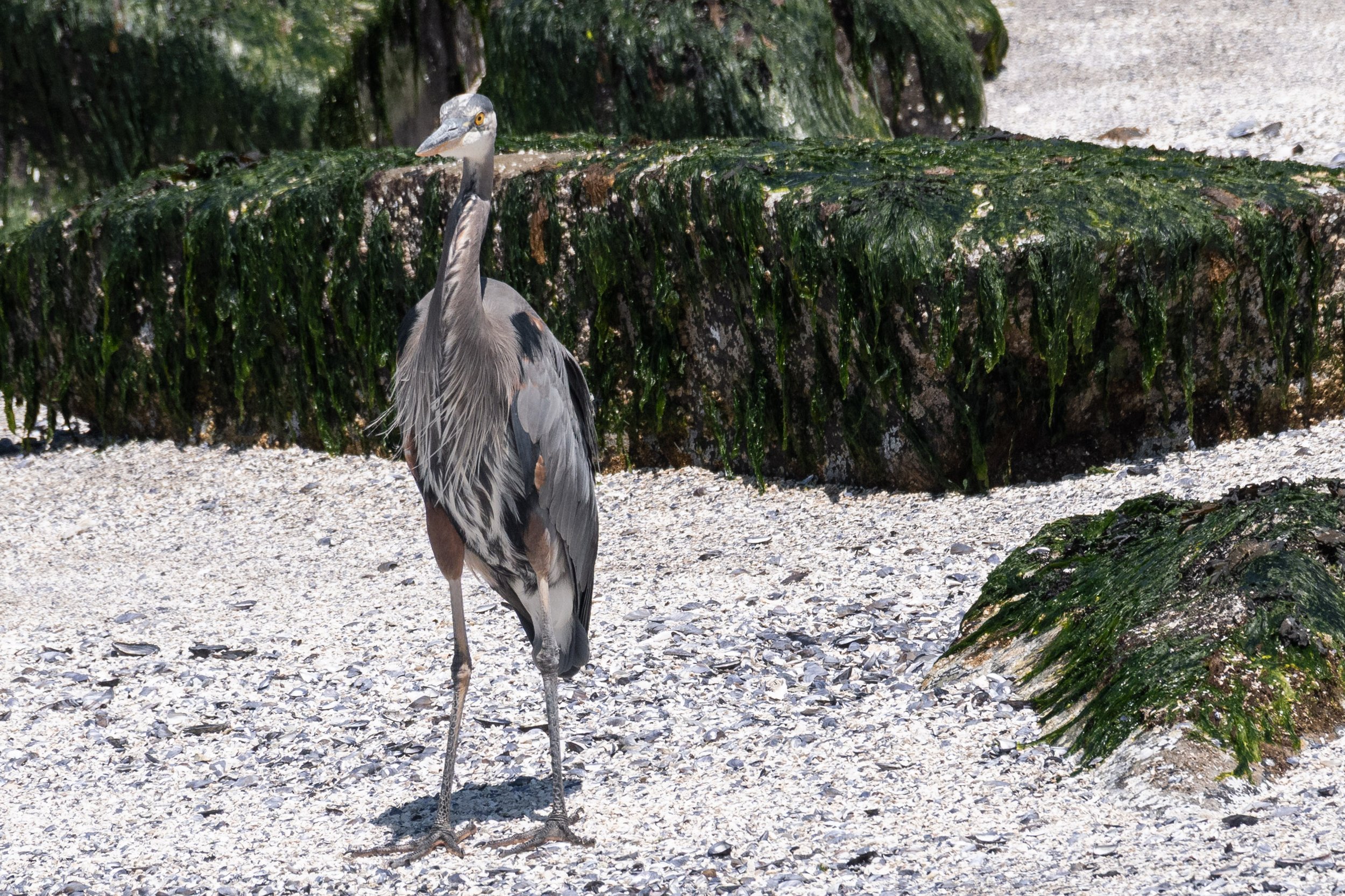
A blue heron. Photo by Evan Hessels.
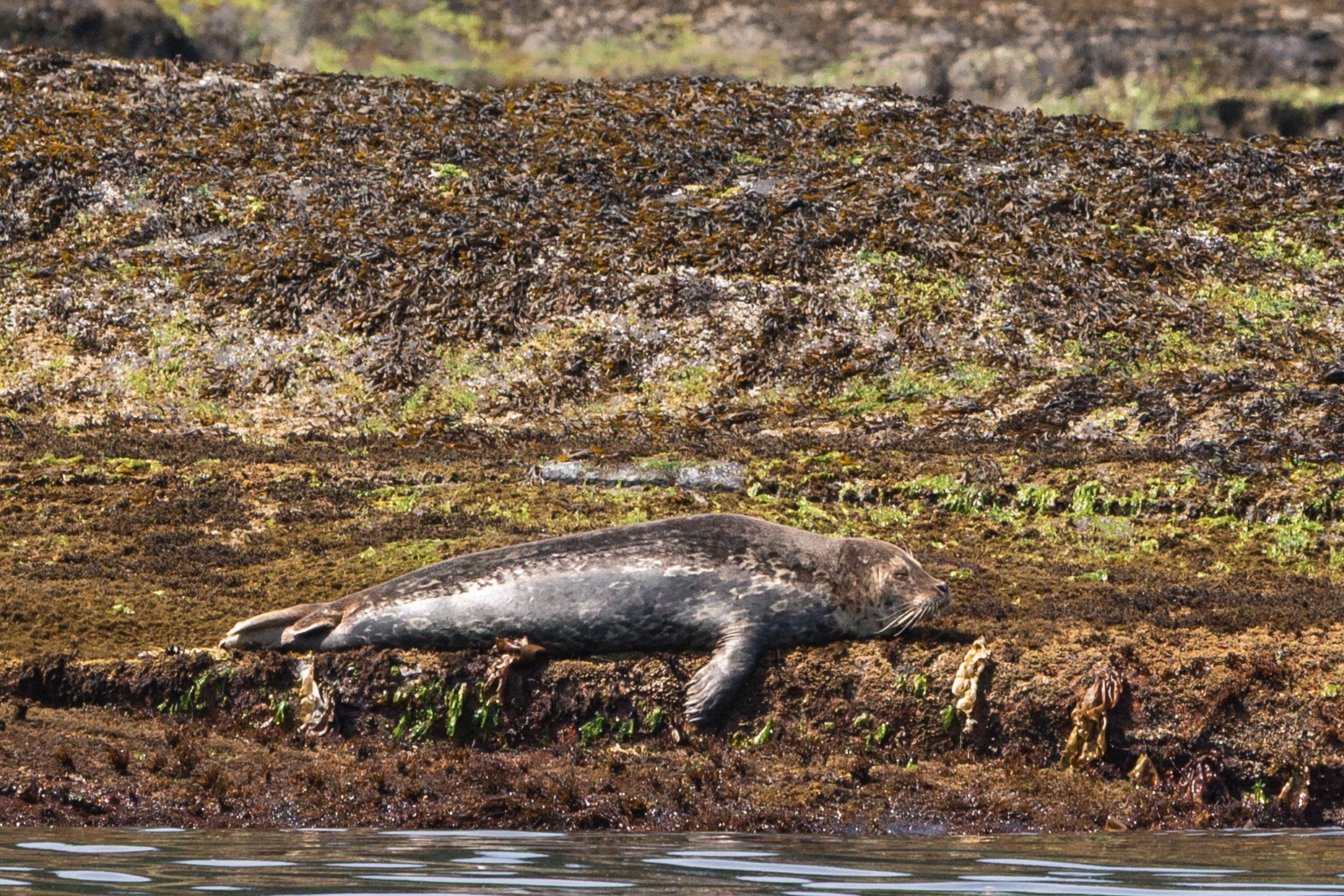
A sleepy seal. Photo by Jordan Robinson.
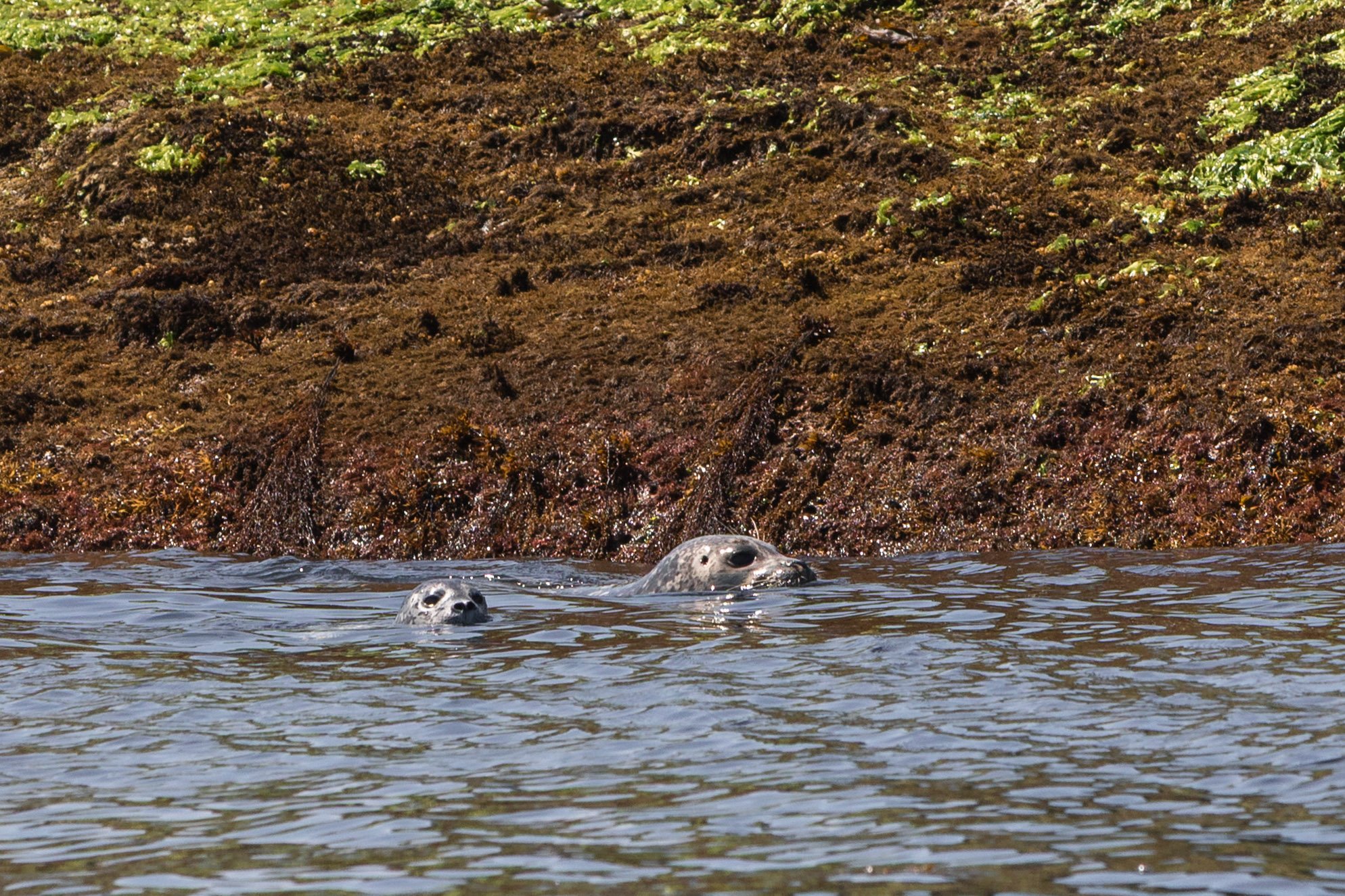
Harbour seals out for a swim. Photo by Jordan Robinson.
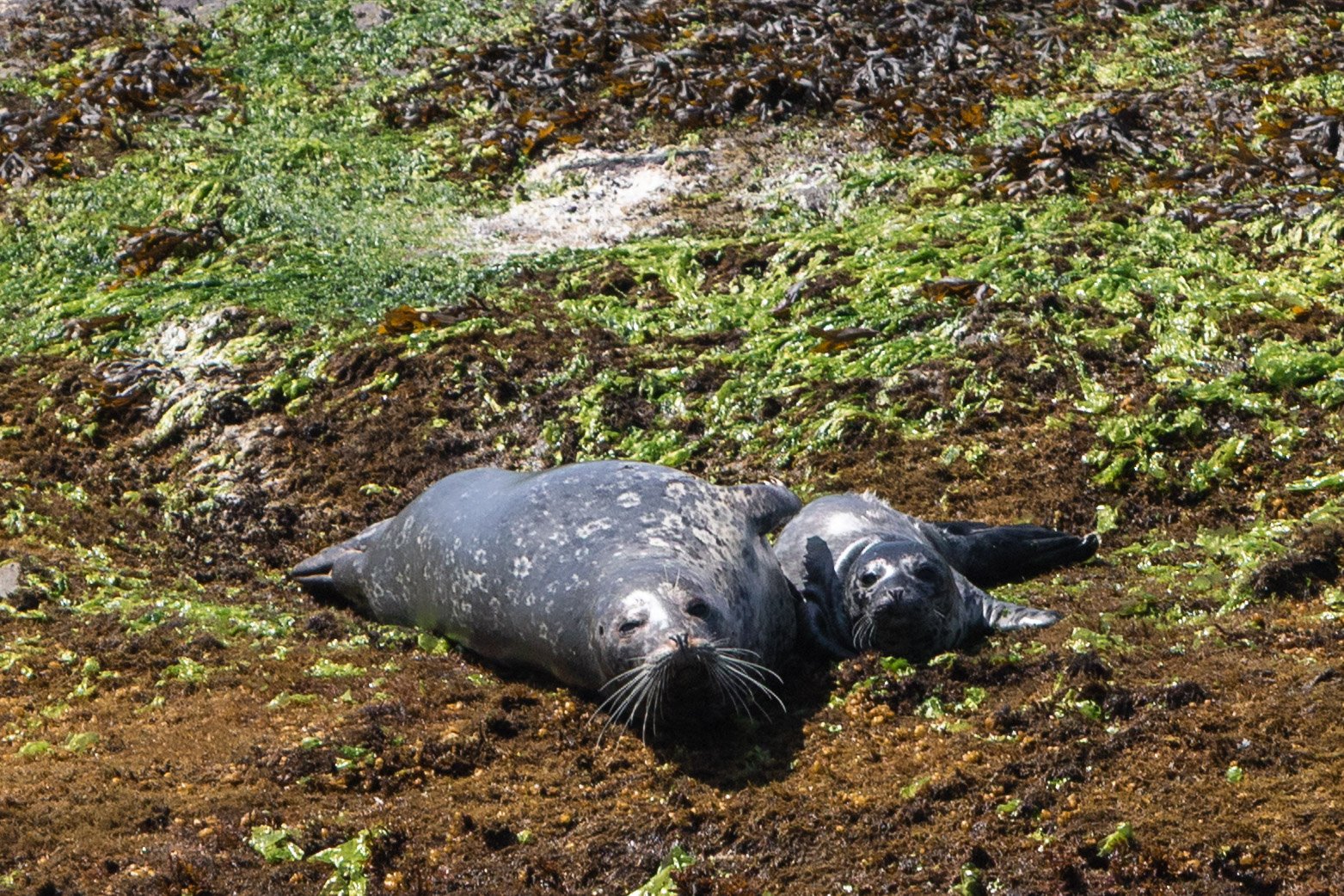
A harbour seal and her pup. Photo by Jordan Robinson.
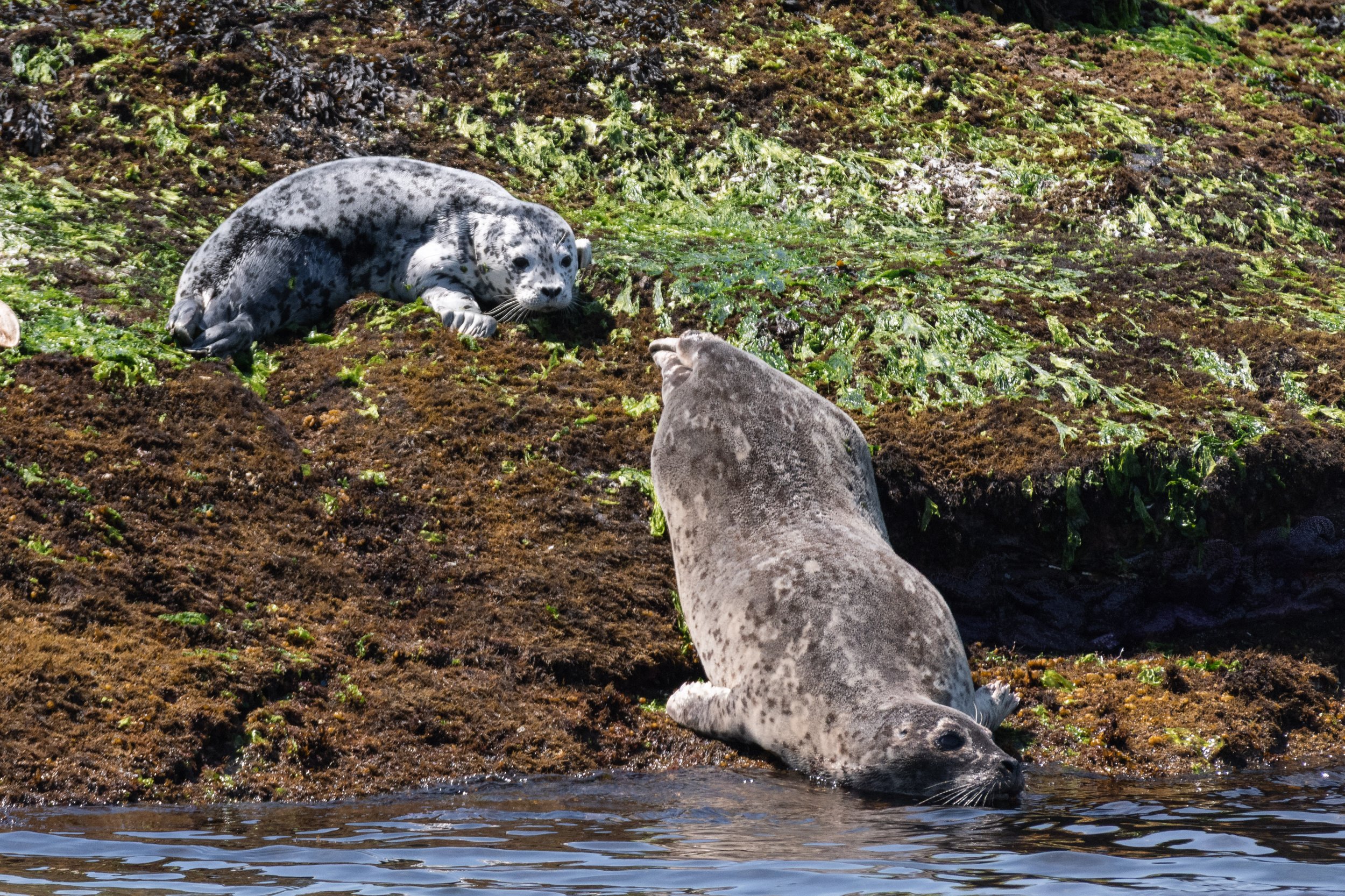
A harbour seal with her pup. Photo by Hayleigh Hilbert.
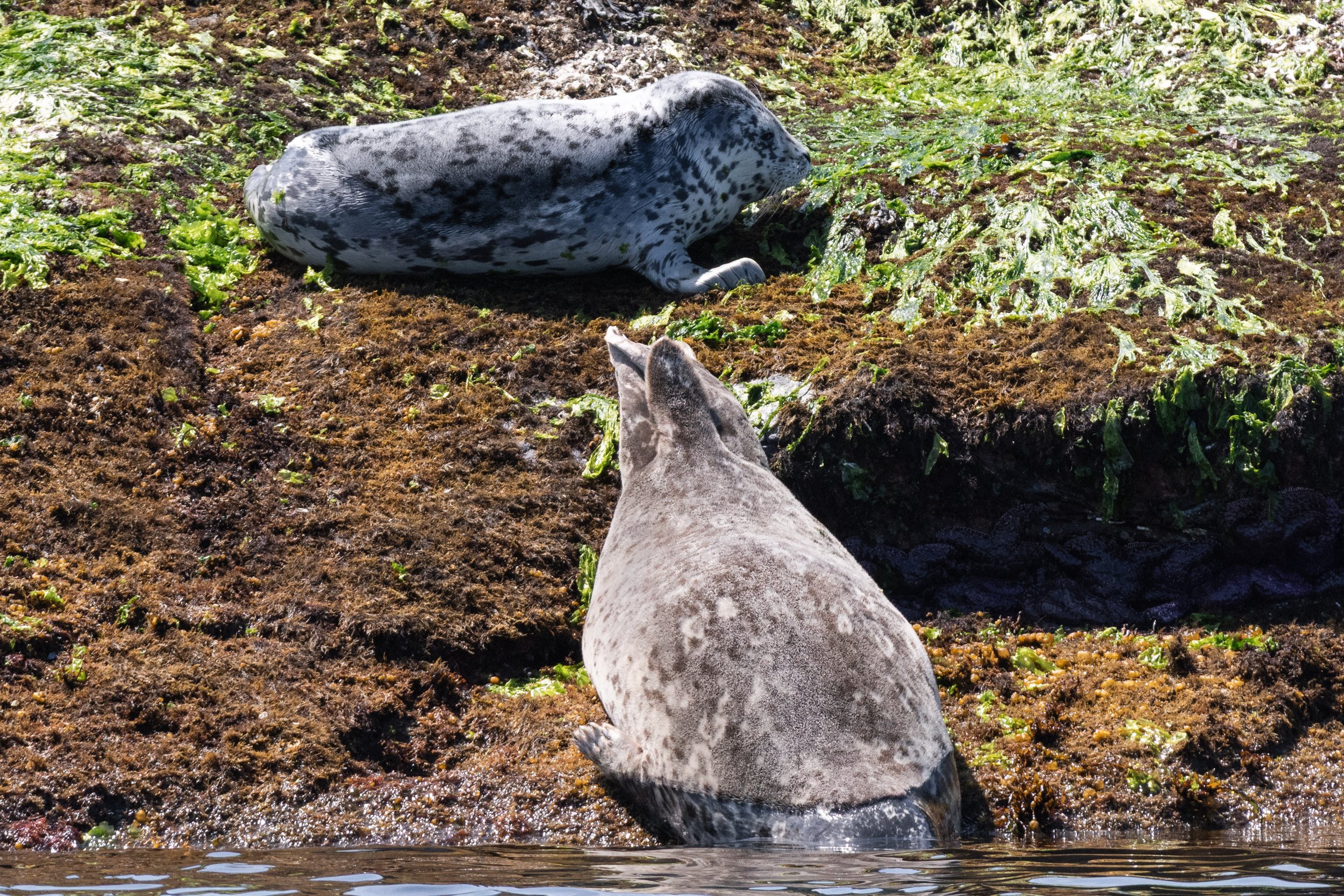
Off to go fishing. Photo by Hayleigh Hilbert.
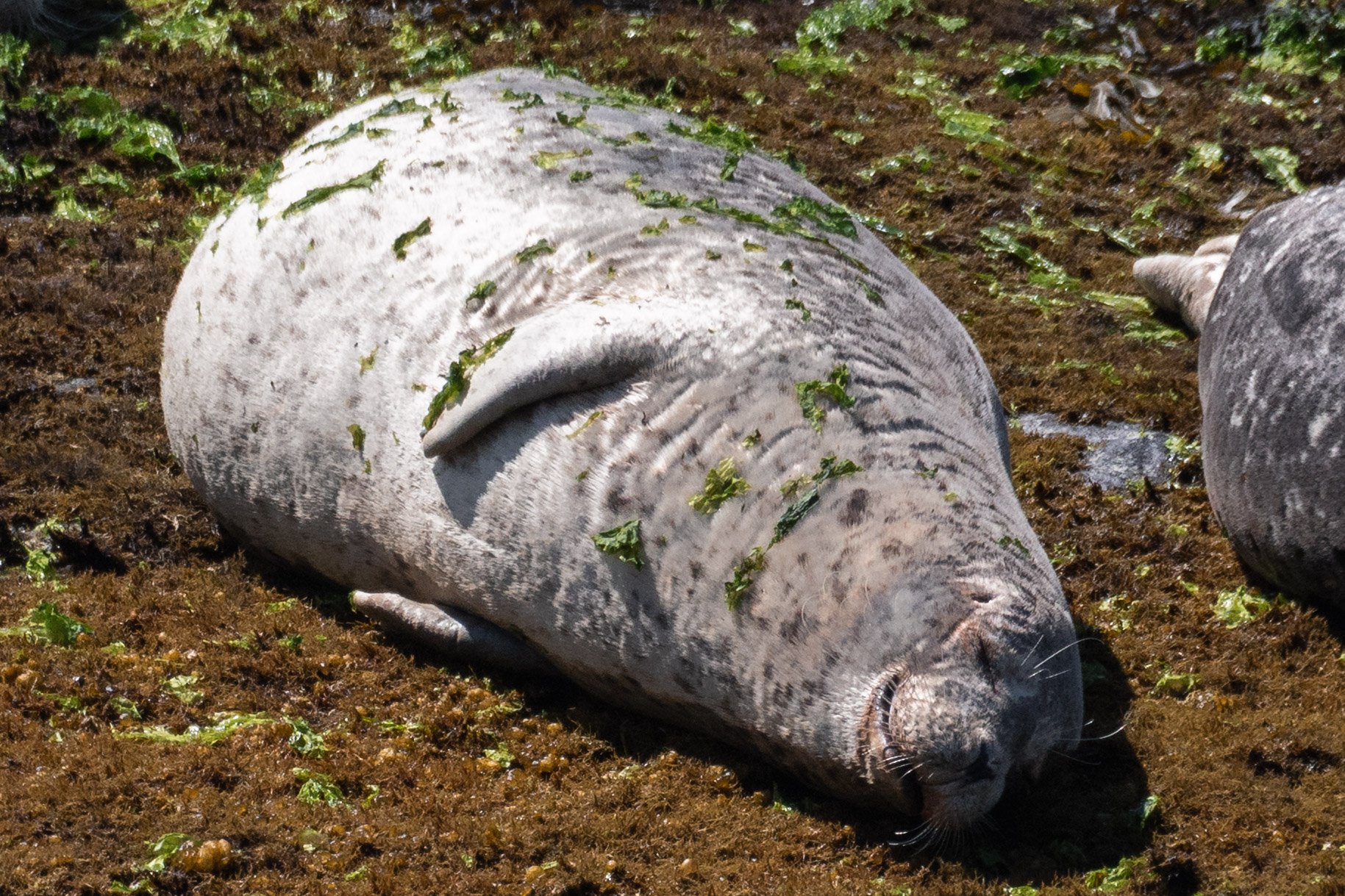
A chubbu harbour seal covered in seaweed. Photo by Evan Hessels.