
July 15, 2026, 3:30 PM - Twinkle Twinkle Little Star(ry Knight)!
Beautiful skies greeted us as Cascadia and Kula were boarded, with guests on board excitedly chatting and wondering what the day had in store. After a brief discussion from the onboard Naturalists on what wildlife may be spotted, we headed out and eagerly began the day’s search. None of the whales we observe are fitted with trackers or tags, so every day is a unique adventure, even from the morning trip to the afternoon trip!
As we set off into the Strait of Georgia, near-perfect sea conditions greeted us. With such beautiful seas, our sightlines stretched for miles in every direction. Cruising northwest bound, we slowed down as we approached Halibut Bank. This highly productive area often teems with wildlife, from tiny fish to seals and sea lions, and sometimes even whales. We were just in luck, as in the distance a large blow was spotted, followed by a dark silhouette and soon after a large tail rising high in the sky. It was a Humpback Whale travelling and potentially feeding in the bio-productive waters of the Bank!
Once on scene, Naturalists Evan and Hayleigh raised their cameras, snapping a few photos of the whale’s dorsal fin and fluke. Excitement buzzed as we soon discovered that this was Starry Knight (KEX0094/BCX0915 calf 2024).
We celebrate every whale we see returning to our area, but Starry Knight is an extra special case. Many believed that Starry Knight would not return this year, after a harrowing summer last year. They were entangled not once, but twice, in the span of a month – an intense and extremely damaging series of events. At less than 2 years old, that amount of damage could be fatal. However, Starry Knight persevered and appears to be healing up very well.
After spending some quality time with Starry Knight, we began adventuring around once more. A quick stop at the ODAS buoy close to Starry Knight. Here, the Steller Sea Lions were enjoying the afternoon sunshine, snoozing away. Below the buoy, a couple of curious individuals popped up above the surface to peek at us as well!
Soon after, we caught word of another whale sighting close to Gabriola Island. We departed Halibut Bank and swiftly crossed back across the Strait once more. The red-and-white buildings of Entrance Island came into view, and soon after that, so did the whales. This time, it was a trio of black fins, with one a bit larger than the others. Once more, the Naturalists raised their cameras to confirm their identities. While Humpback whales are confirmed by dorsal fins or fluke (tail) patterns, orcas are more traditionally identified by their dorsal fins, saddle patches (grey-white area behind their dorsal fin), or even their eyepatches (white oval shapes on either side of their face). A few quick captures confirmed that this was a well-known matriline for us – the T124A2s:
T124A2 Elkugu ♀ (2001)
T124A2A Agafia ♂ (2013)
T124A2B Litton ♀ (2016)
These three were very rambunctious as we watched. The youngest pod member, T124A2B Litton, was breaching along beside her mother and brother. On top of that, T124A2A Agafia was tail-slapping at the surface. Agafia is an interesting individual, as he tail-slaps so often that his ID can be confirmed by his tail shape. The right tip of his fluke is blunted, likely from a previous injury. Check out the photos below to see if you can spot this!
Their speedy travel style and frequent directional changes suggest they were busy hunting when we first approached. Judging by their energetic acrobatics once we were on scene, we believe this hunt was successful and that they were celebrating. Interestingly, when orcas hunt, there tends to be relatively little action on the surface of the water. Most of the intense moments happen under the surface. For our Transient orcas, this means quietly sneaking up on their prey and ambushing them. Once a hunt is successful, the pod members will then come together to share the meal. Orcas are highly social creatures, and sharing food is a very important part of that social dynamic.
After the excitement, we said our goodbyes to the T124A2s and began travelling once more. The journey didn’t take long though, and soon we were coasting beside Gabriola Island, peering up at the Gabriola Bluffs. This rocky cliffside is home to a variety of different birds, from Cormorants and Swallows to Turkey Vultures and Bald Eagles. Soaring overhead today, though, was a species we very rarely spot on our trips - a Common Nighthawk! These birds may look a bit strange to the average bird enjoyer, as their large eyes and mouths are quite striking compared to many other species. These big eyes are very important, though, as Common Nighthawks are considered crepuscular - hunting primarily at dawn or dusk or during low light hours.
We had one last peek at the bluffs before our Captains turned us away and we were travelling again. We had one last small jaunt across Northumberland Channel, and then we were back in the Nanaimo Harbour, the sun beginning to set behind Mt. Benson as we disembarked, concluding another beautiful double-species trip!
Please enjoy the photos from this trip taken by Marine Naturalists Evan Hessels and Hayleigh Hilbert.
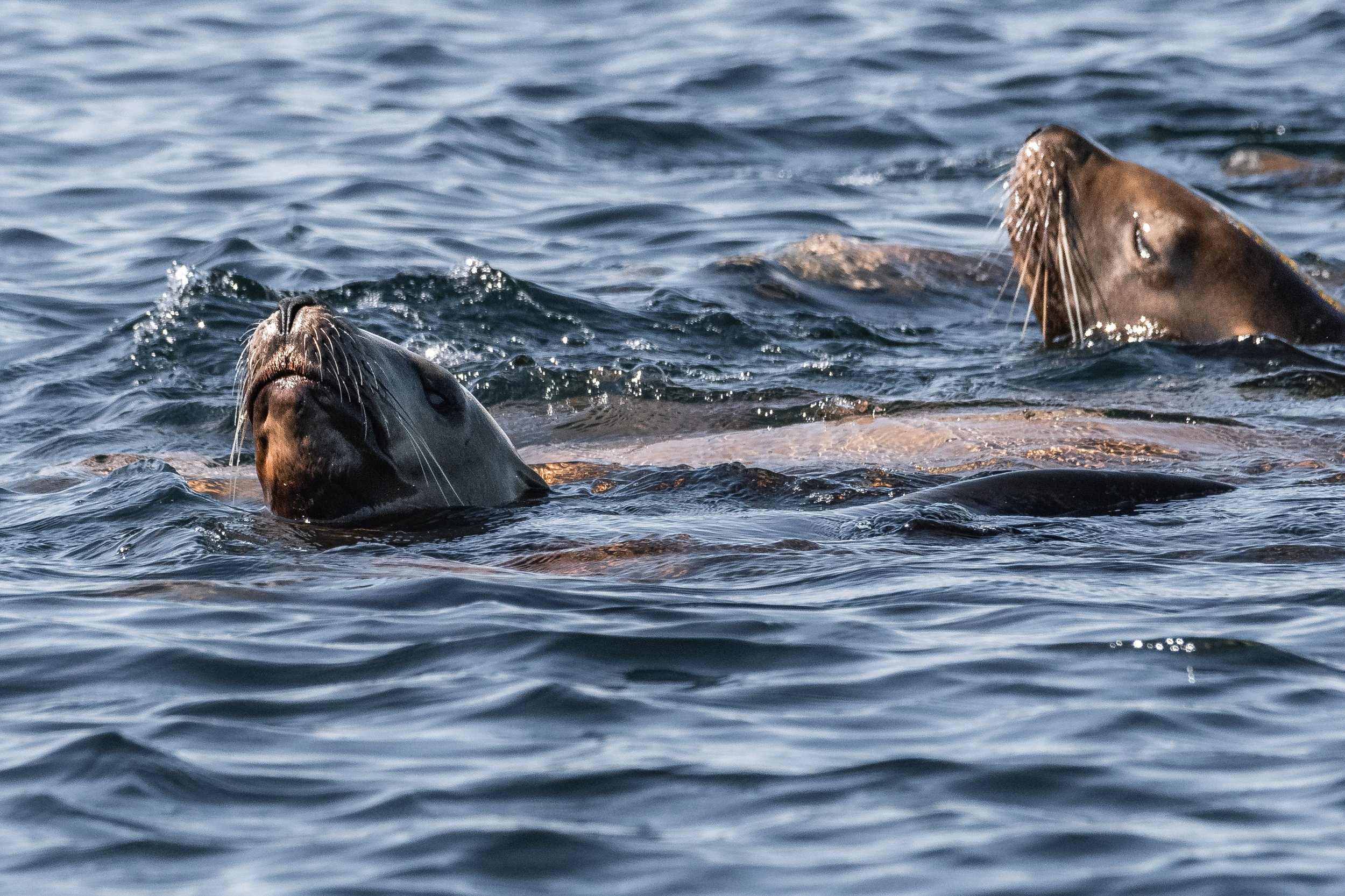
Peeking around. Photo by Evan Hessels.
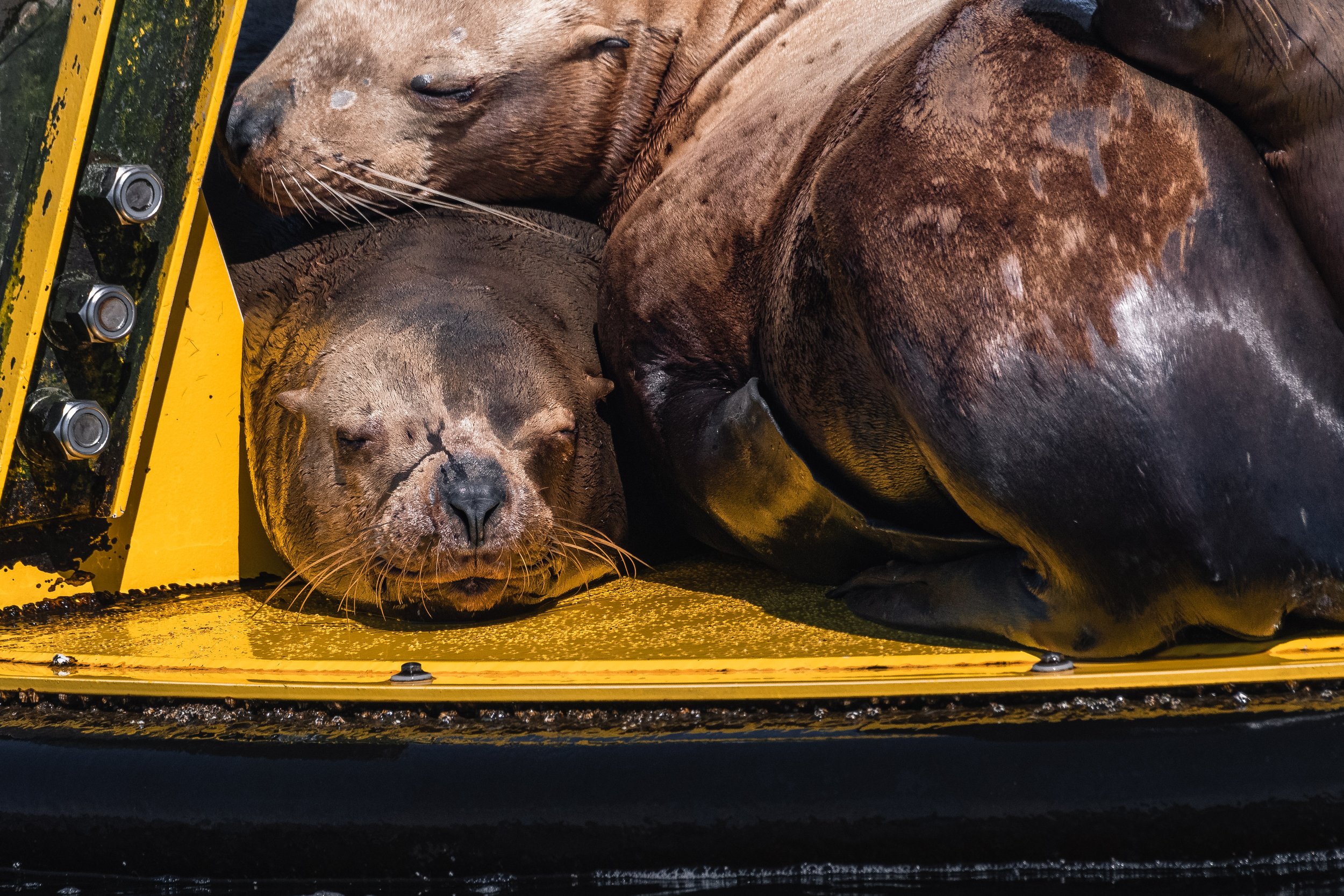
Sea lions snoozing away on the buoy. Photo by Evan Hessels.
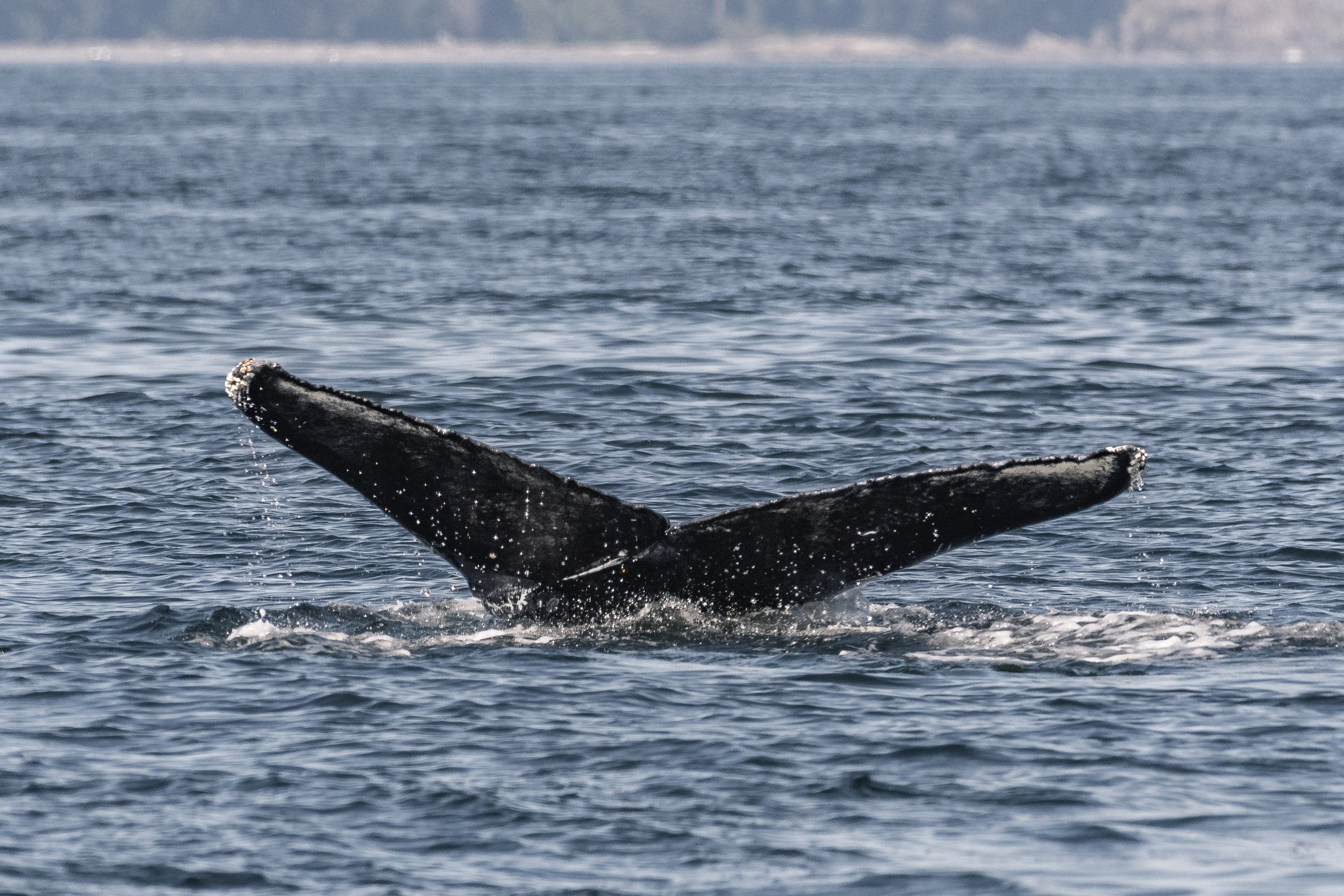
Starry Knight diving. Photo by Evan Hessels.
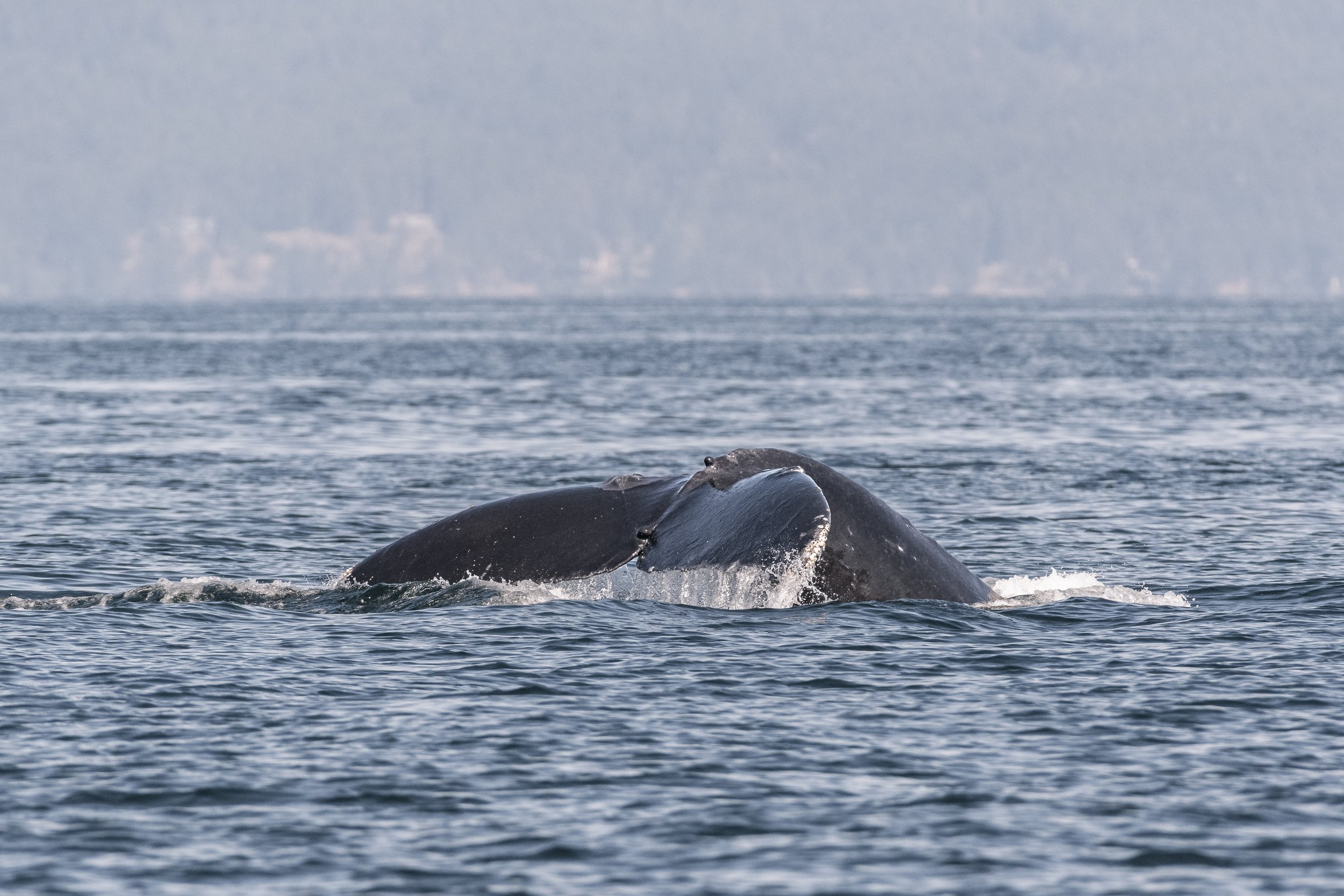
Starry Knight has survived two intense entanglements, as seen here. Photo by Hayleigh Hilbert.
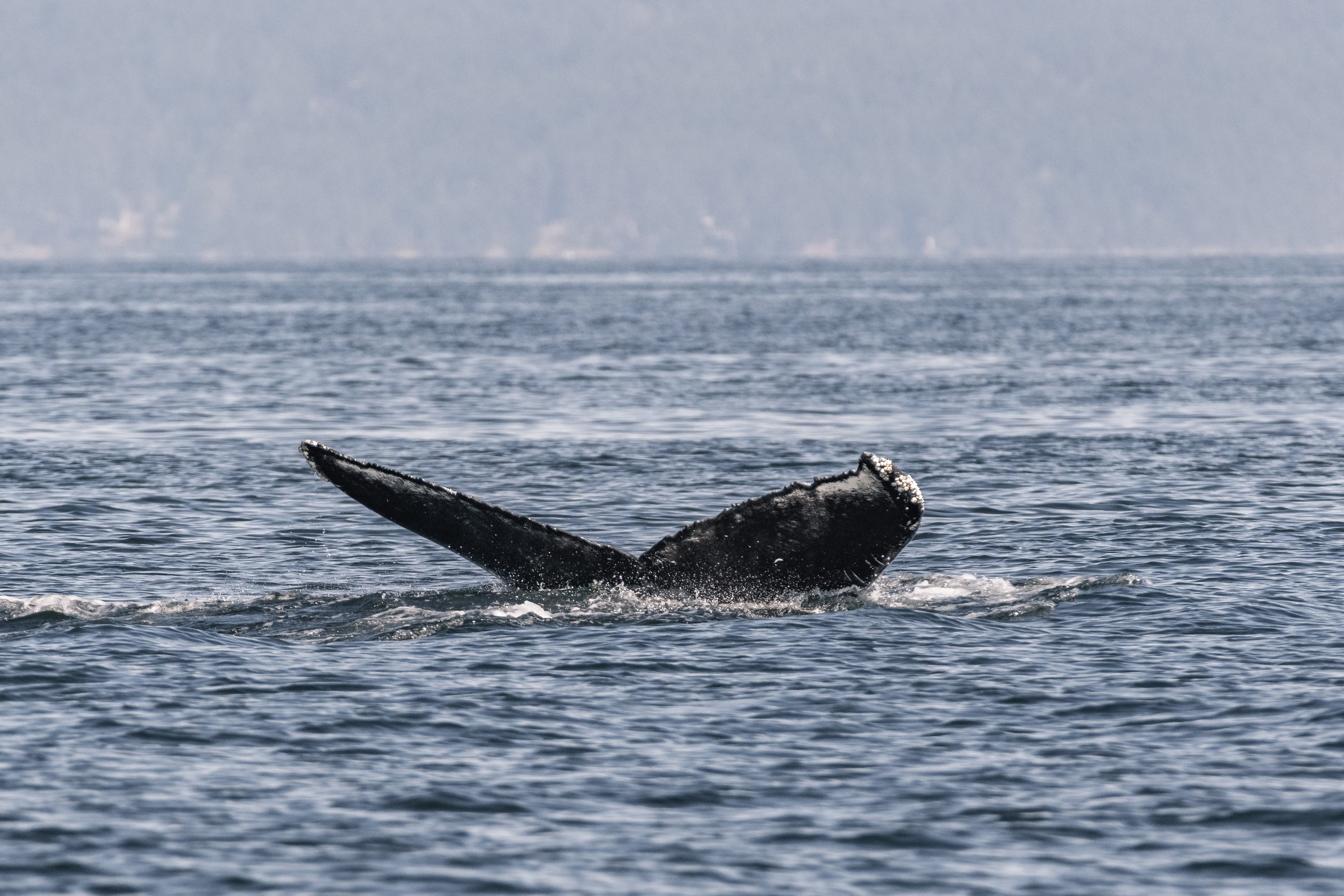
Starry Knight diving. Photo by Hayleigh Hilbert.
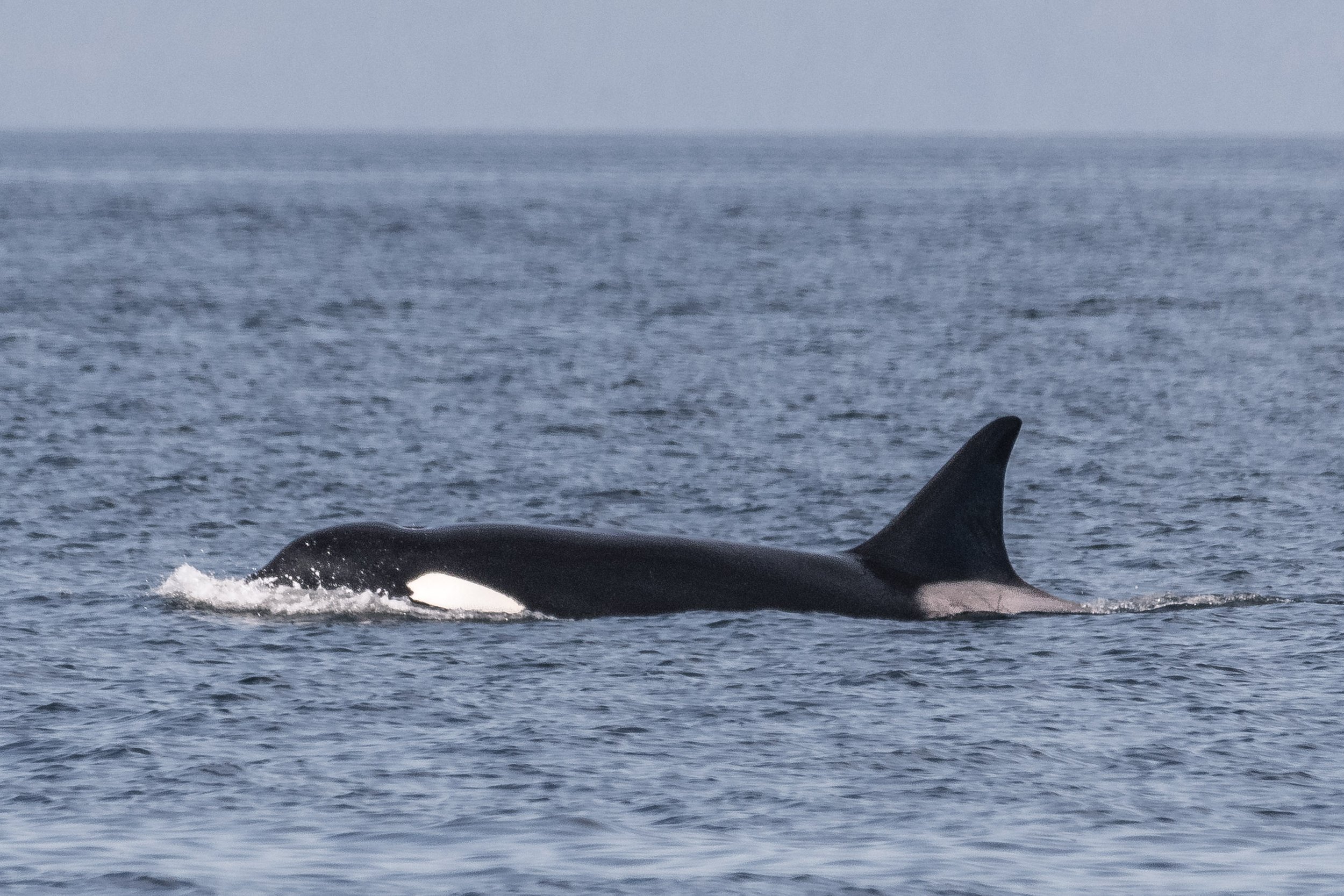
T124A2 Elkugu travelling along. Photo by Evan Hessels.
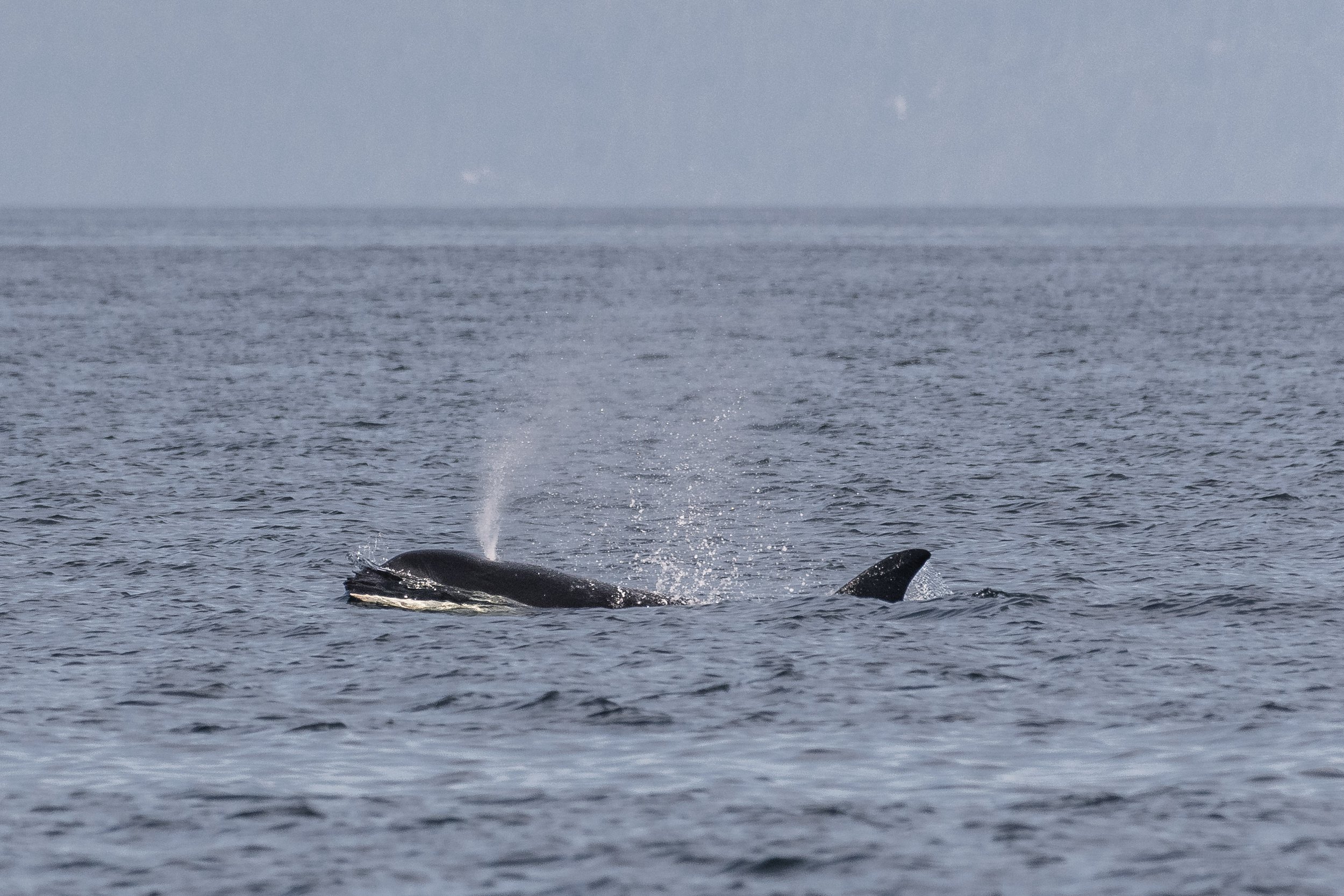
T124A2B Litton coming up for a breath. Photo by Evan Hessels.
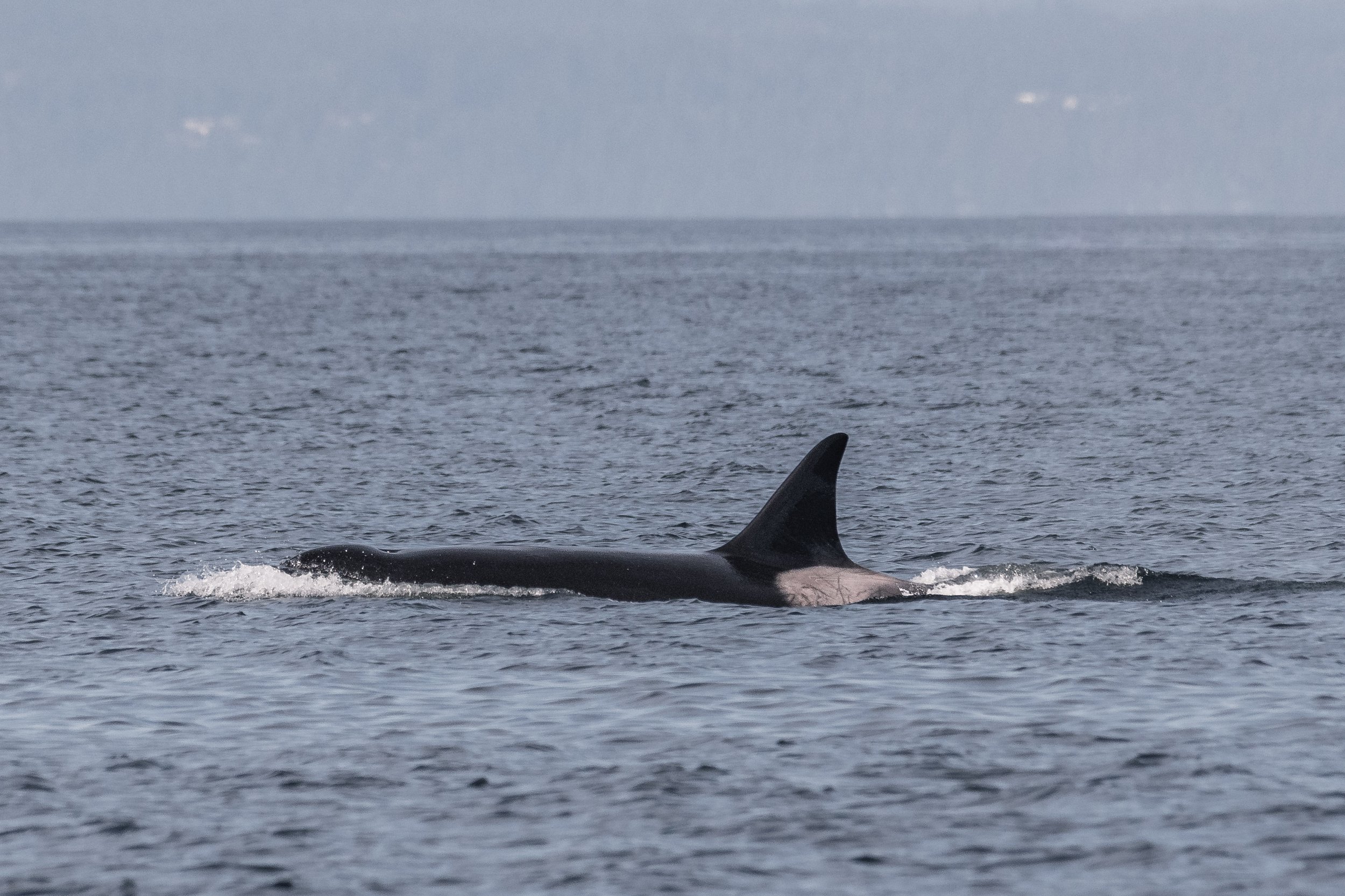
T124A2 Elkugu powering on along. Photo by Evan Hessels.
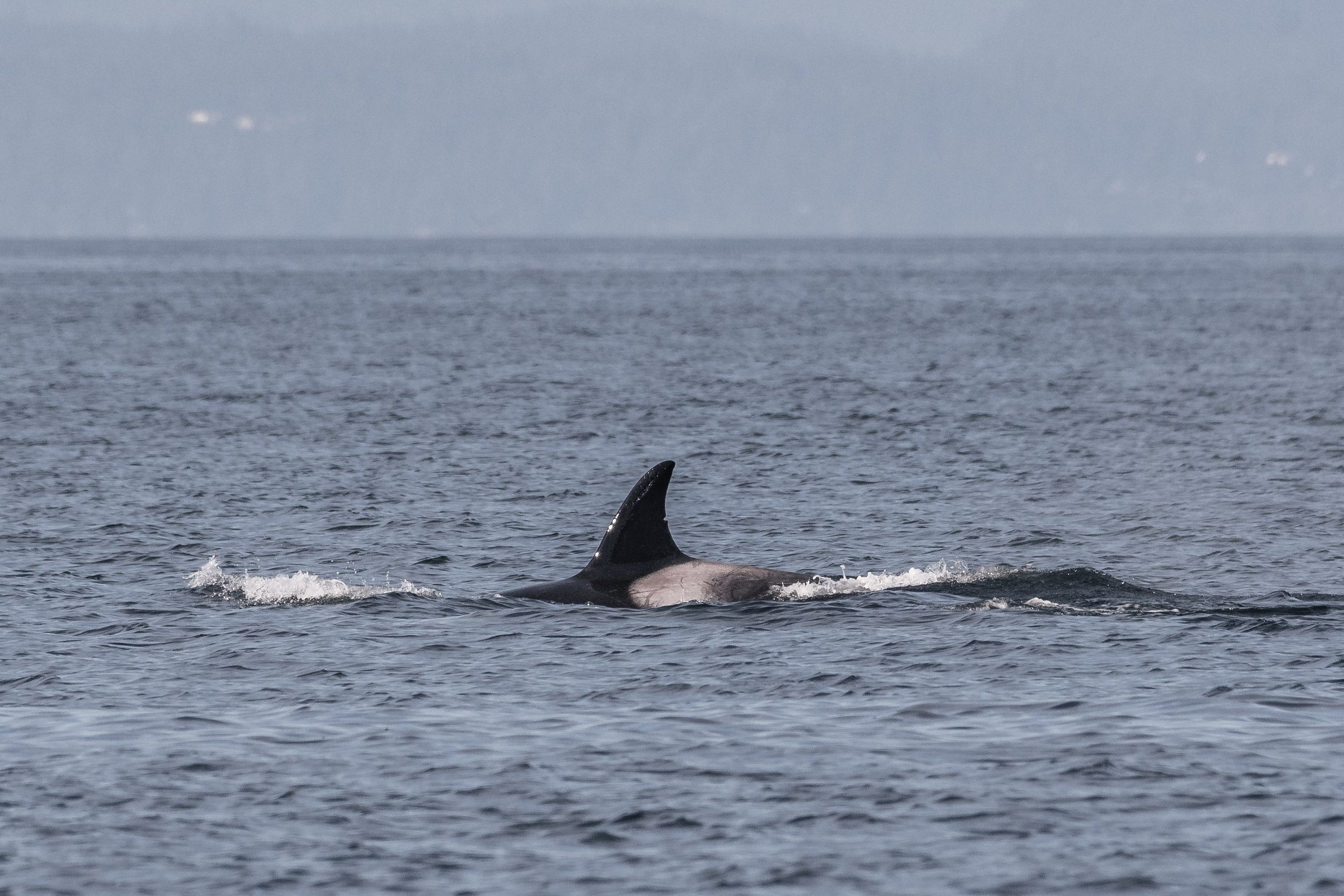
T124A2B Litton is heavily scarred up now. Photo by Evan Hessels.
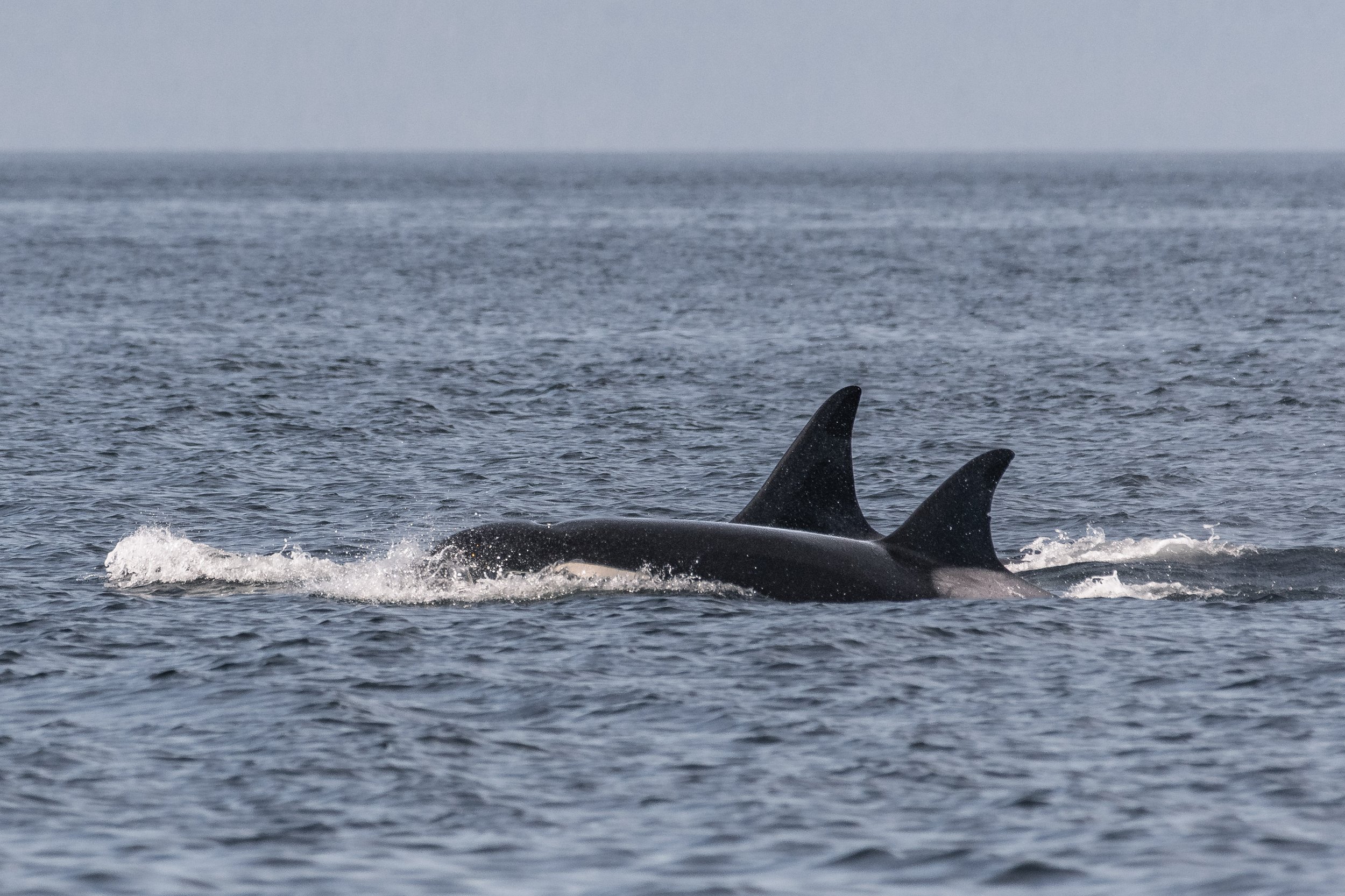
T124A2 Elkugu with her youngest calf T124A2B Litton. Photo by Evan Hessels.
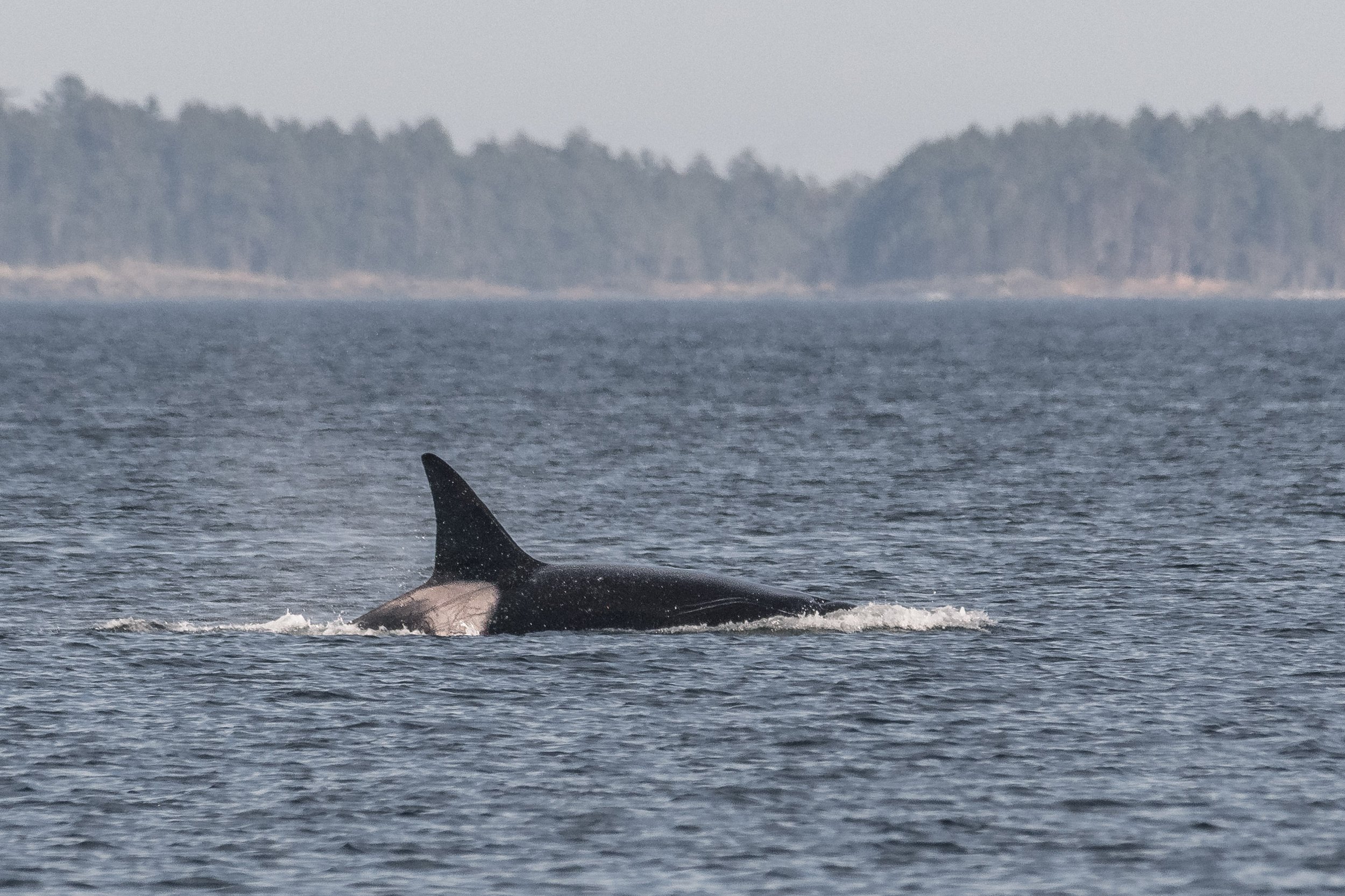
T124A2A Agafia has many unique markings that we can use to ID him. Photo by Evan Hessels.
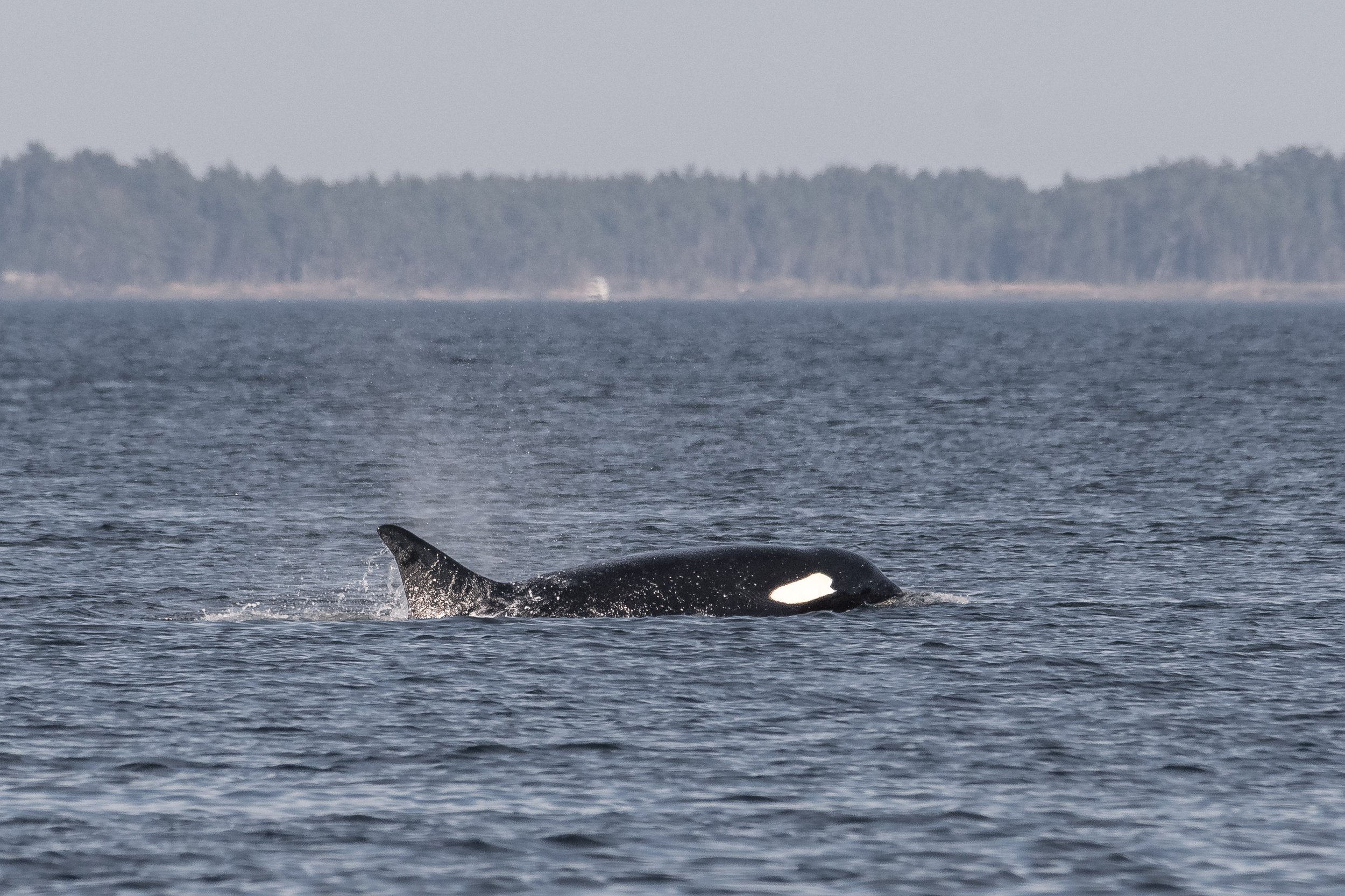
T124A2 Elkugu has a very unique, Pacman-shaped eyepatch. Can you see it here? Photo by Evan Hessels.
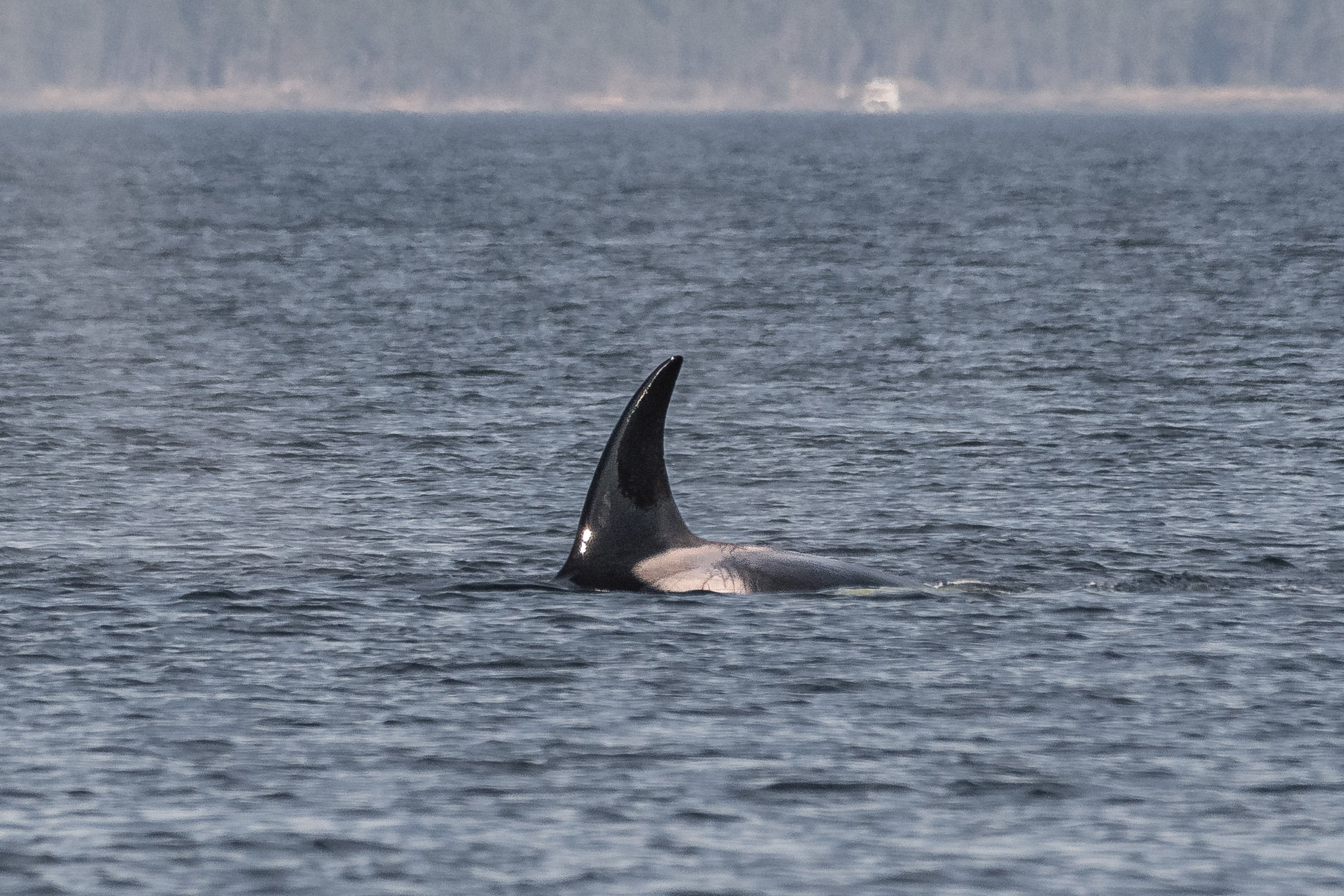
T124A2A Agafia going for a dive. Photo by Evan Hessels.
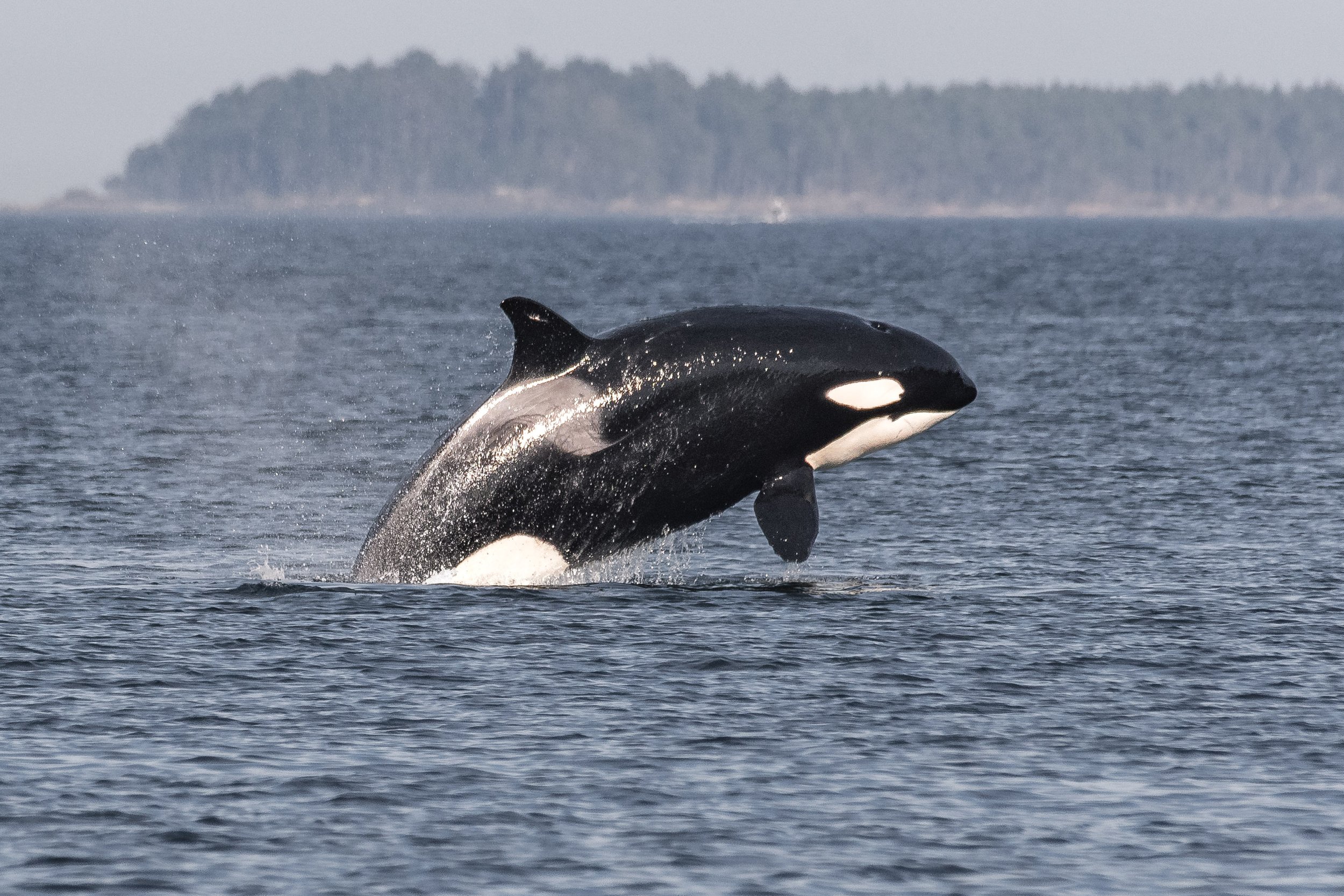
T124A2B Litton breaching. Photo by Evan Hessels.
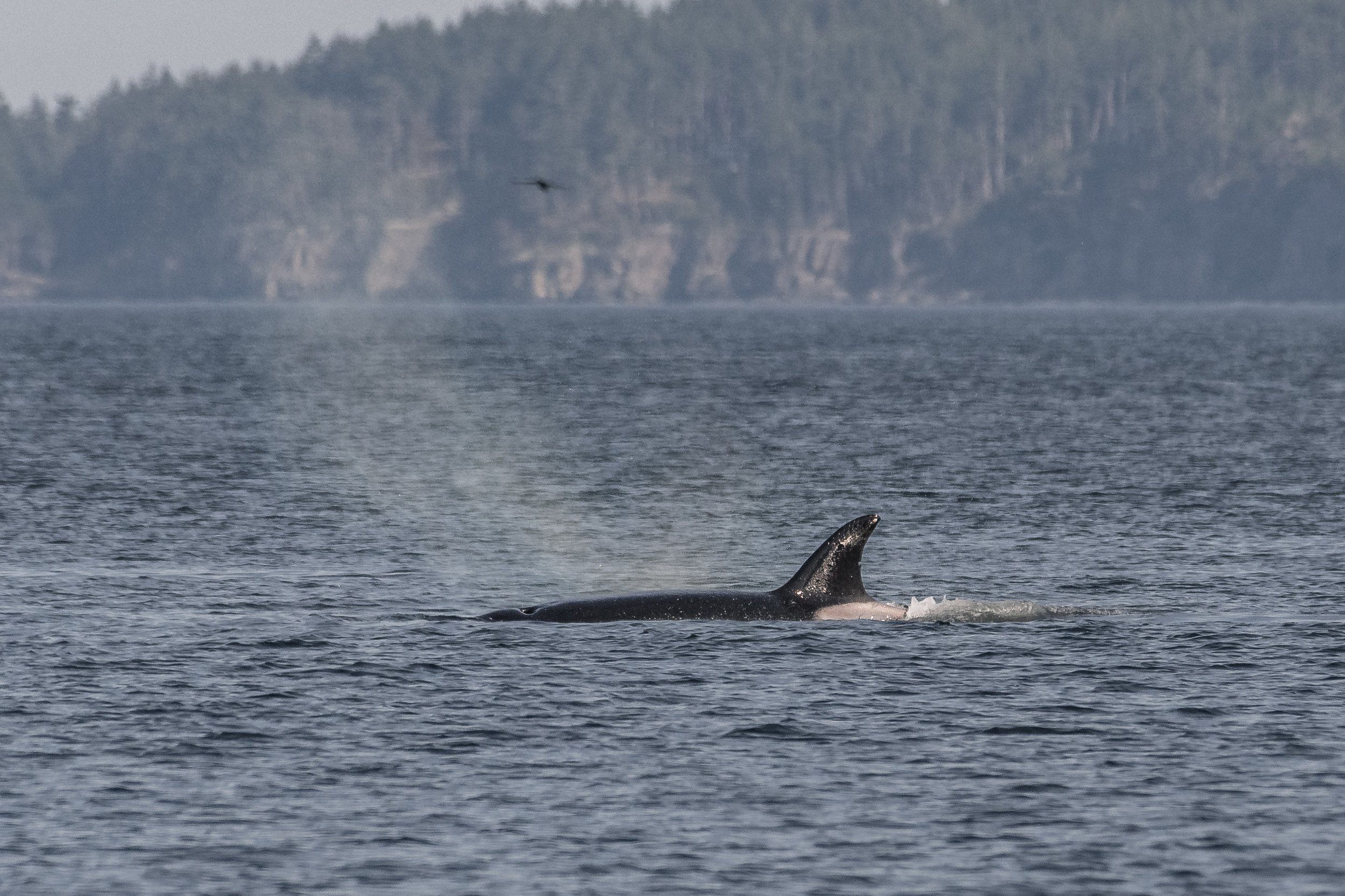
T124A2B Litton shining in the sun, with all her scarring visible in the light. Photo by Evan Hessels.
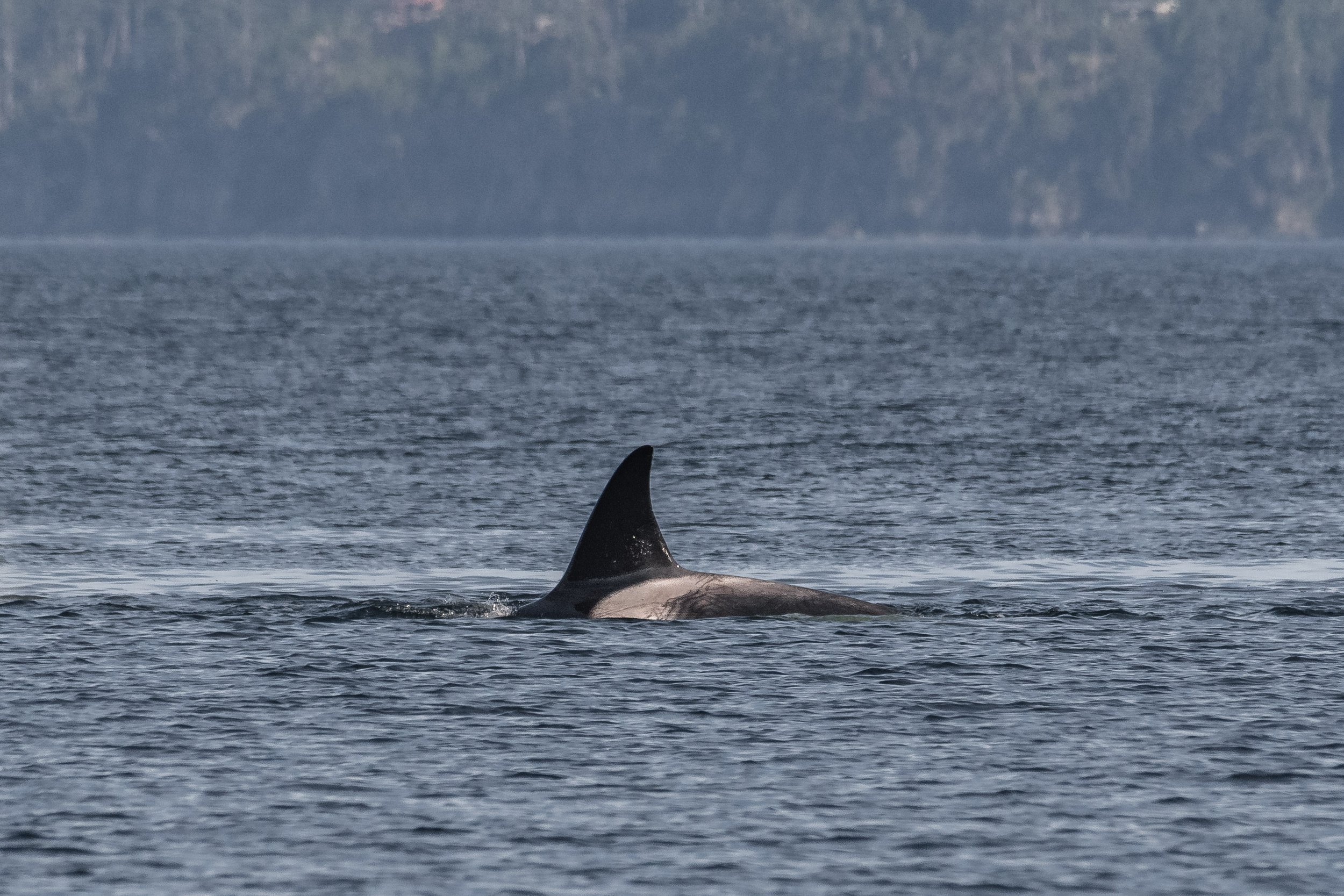
T124A2A Agafia going for a dive. Photo by Evan Hessels.
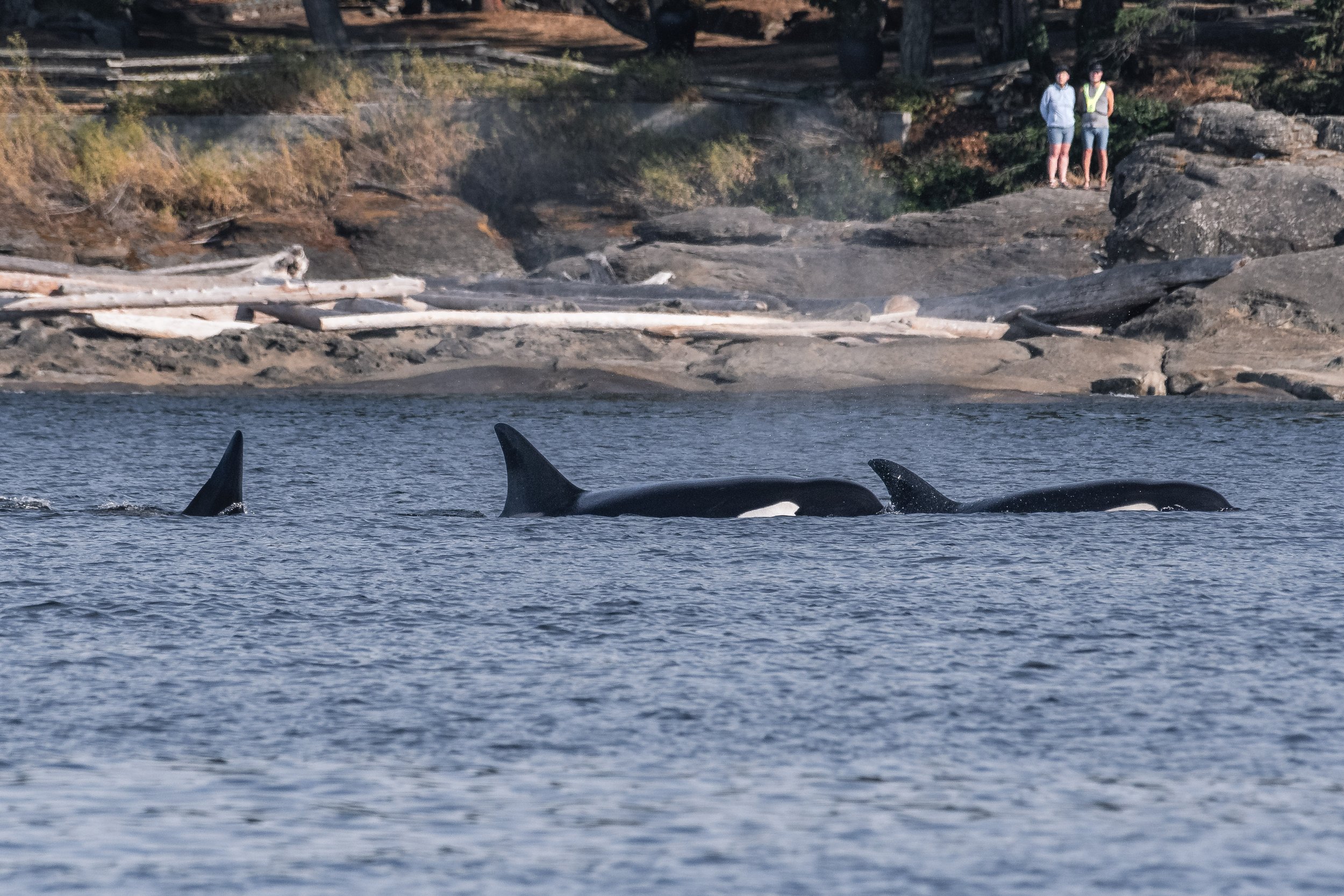
The family all together: T124A2A Agafia, T124A2 Elkugu, and T124A2B Litton. Photo by Evan Hessels.
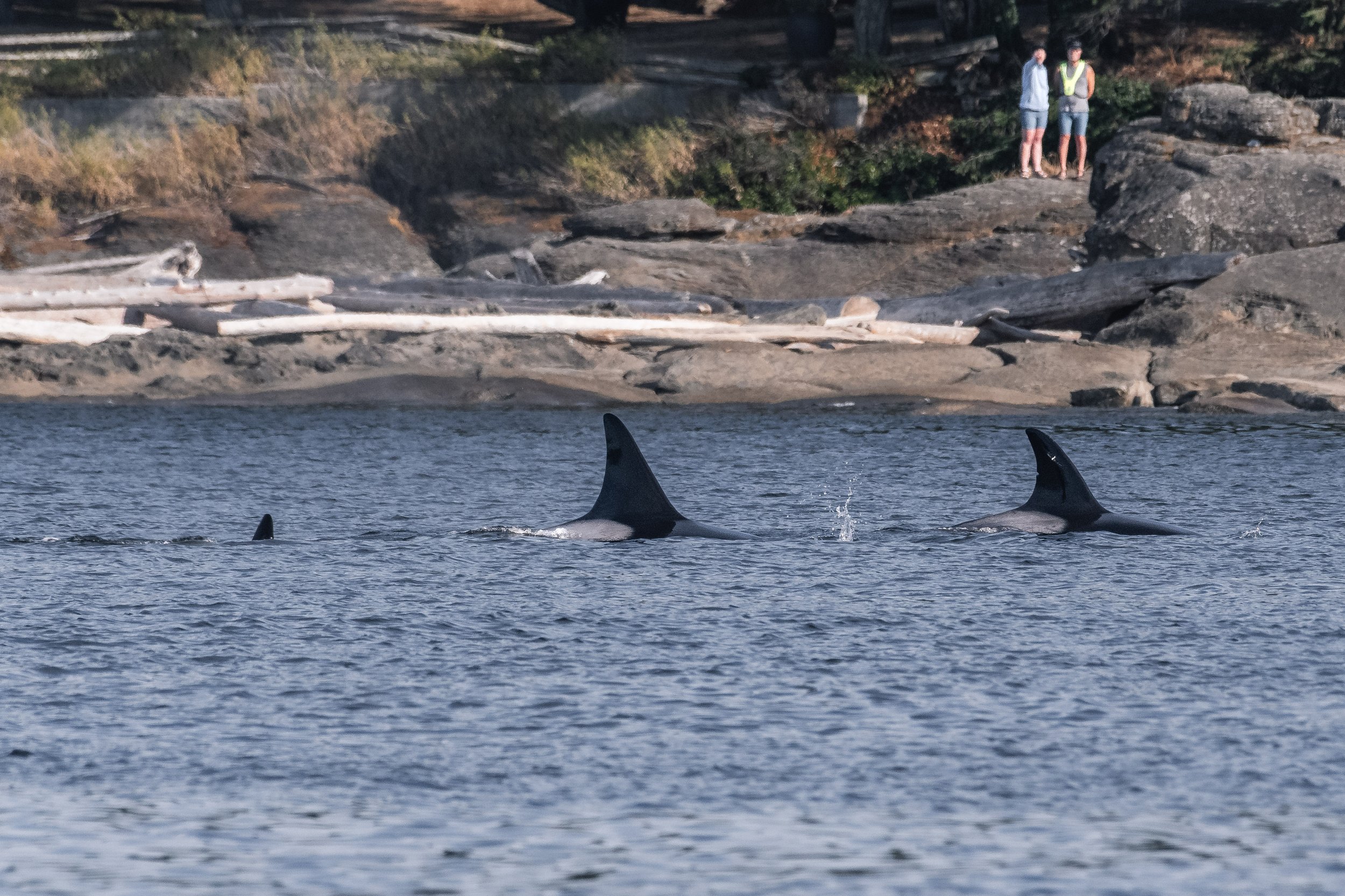
T124A2 Elkugu in the middle with T124A2B Litton ahead of her, and T124A2A Agafia behind her. Photo by Evan Hessels.
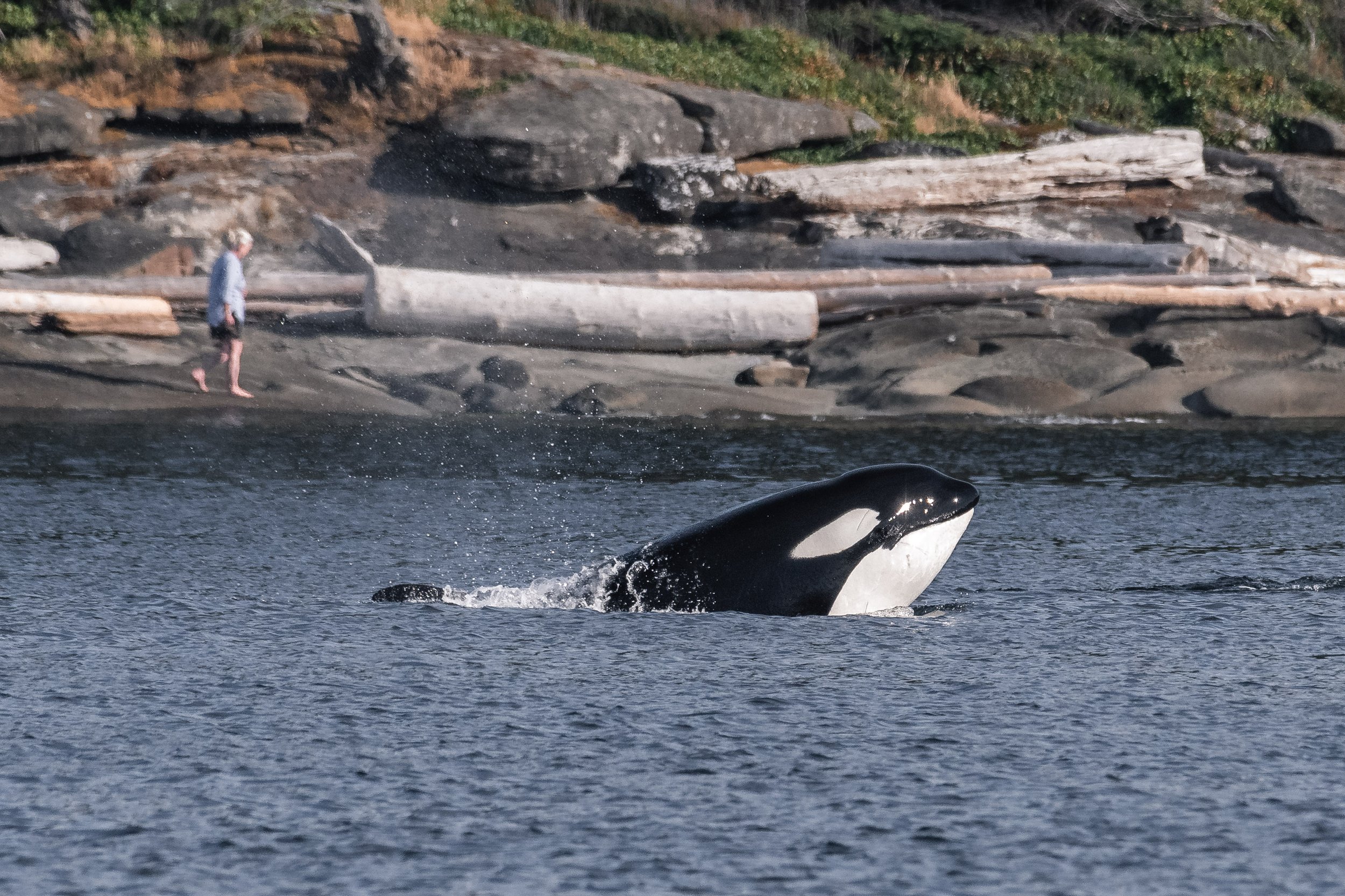
T124A2B Litton with her face above the surface. Photo by Evan Hessels.
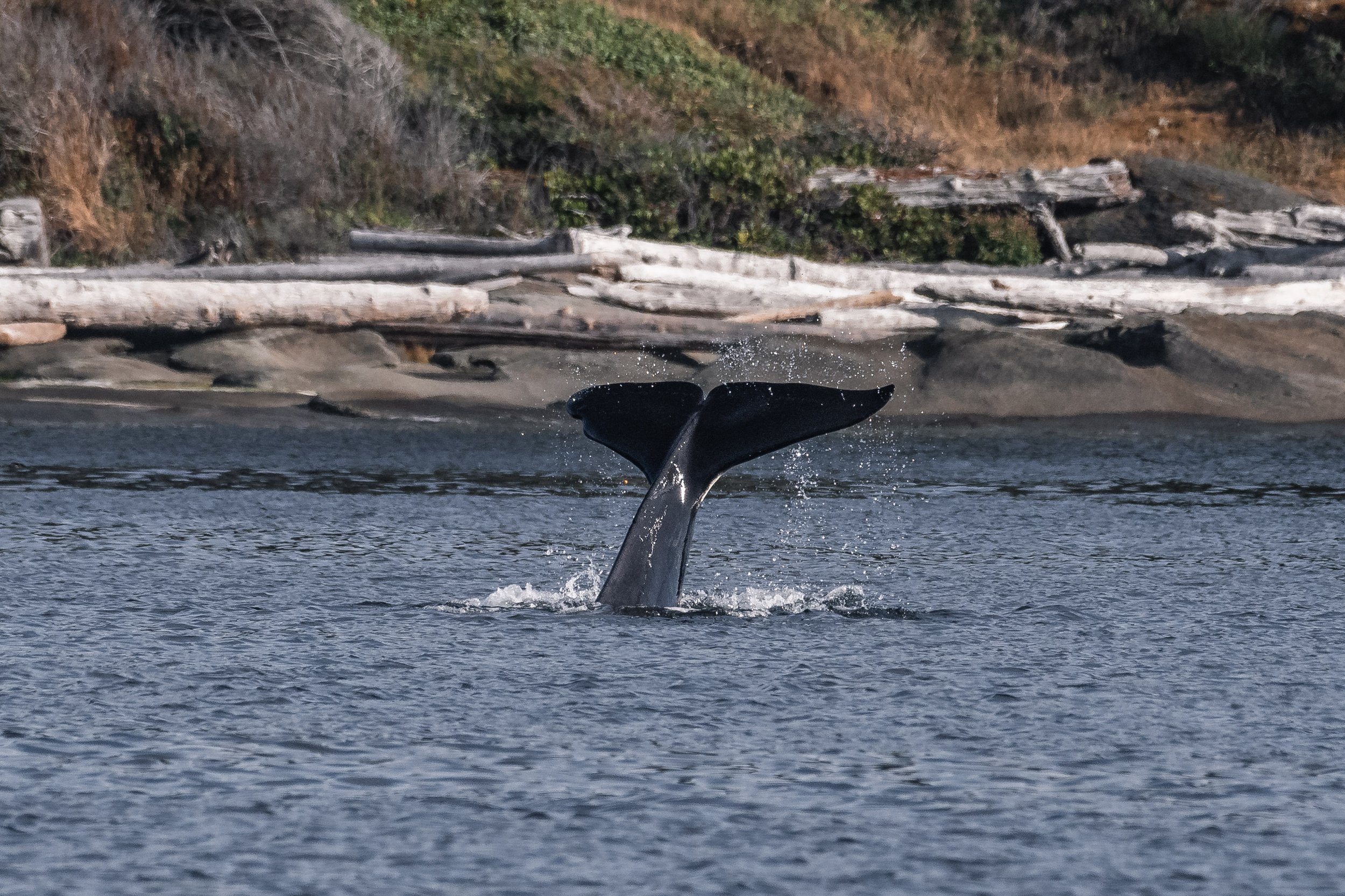
T124A2A Agafia tail slapping. Photo by Evan Hessels.
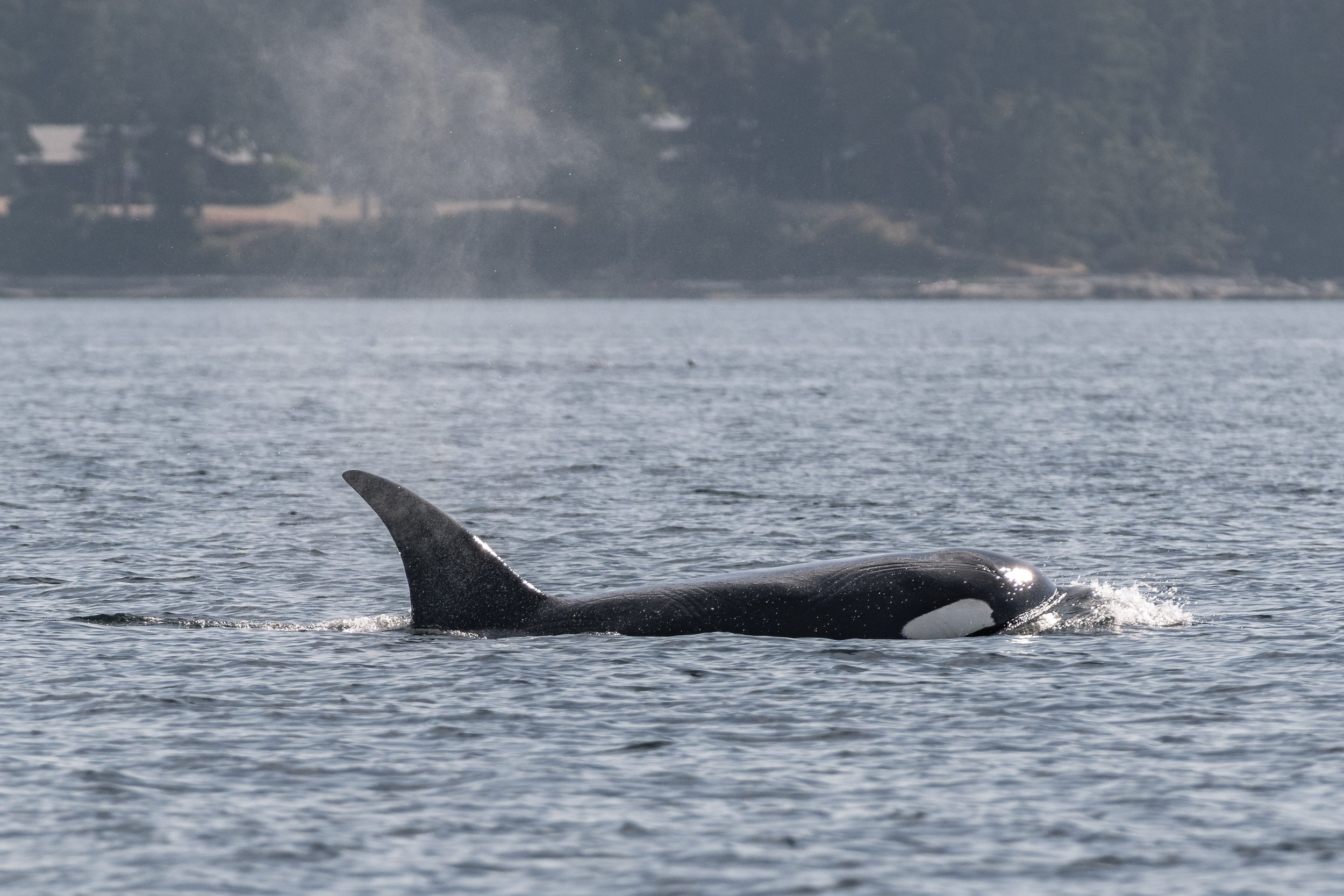
T124A2A Agafia travelling along, his body covered in scars. Photo by Hayleigh Hilbert.
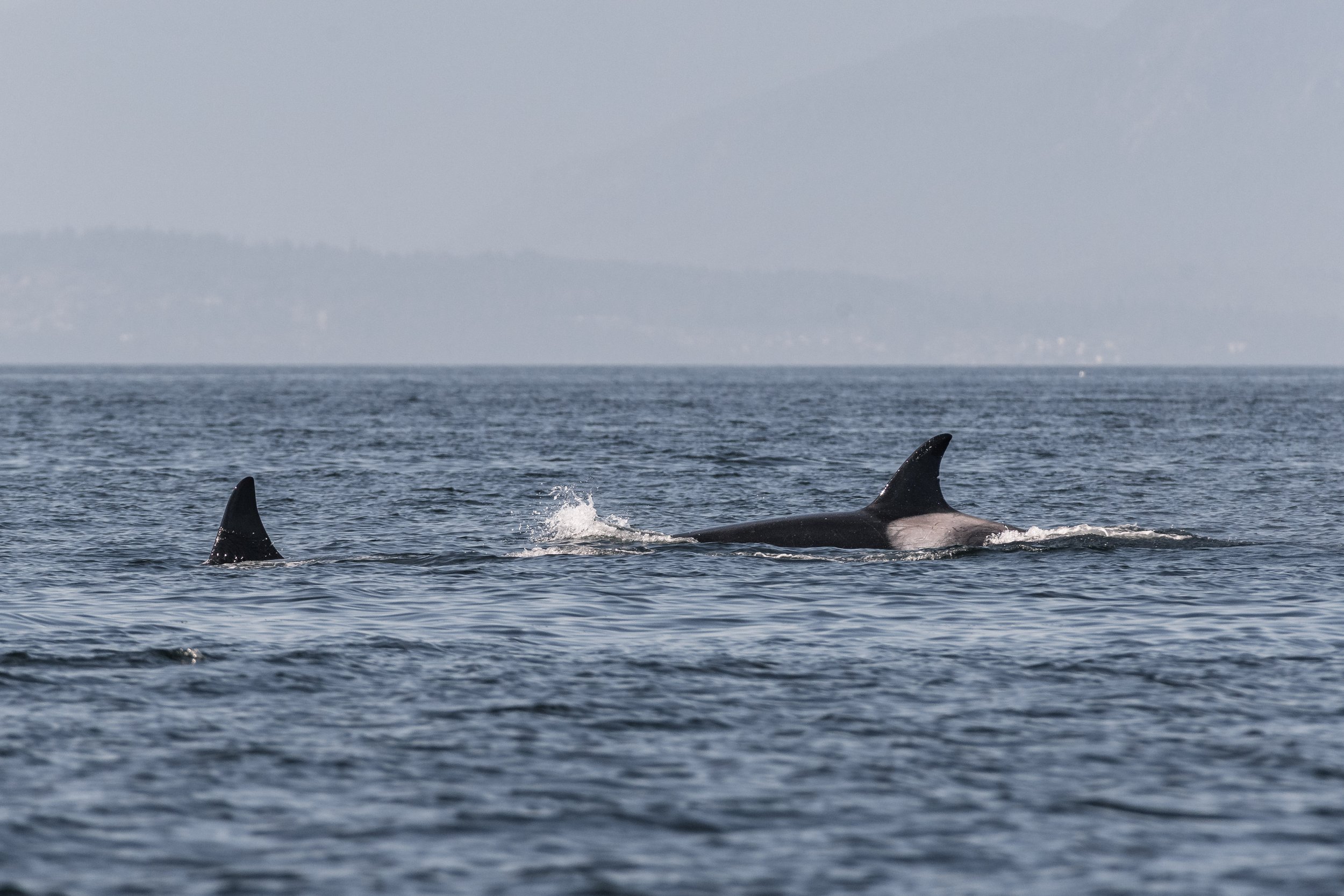
T124A2 Elkugu and T124A2B Litton behind her. Photo by Hayleigh Hilbert.
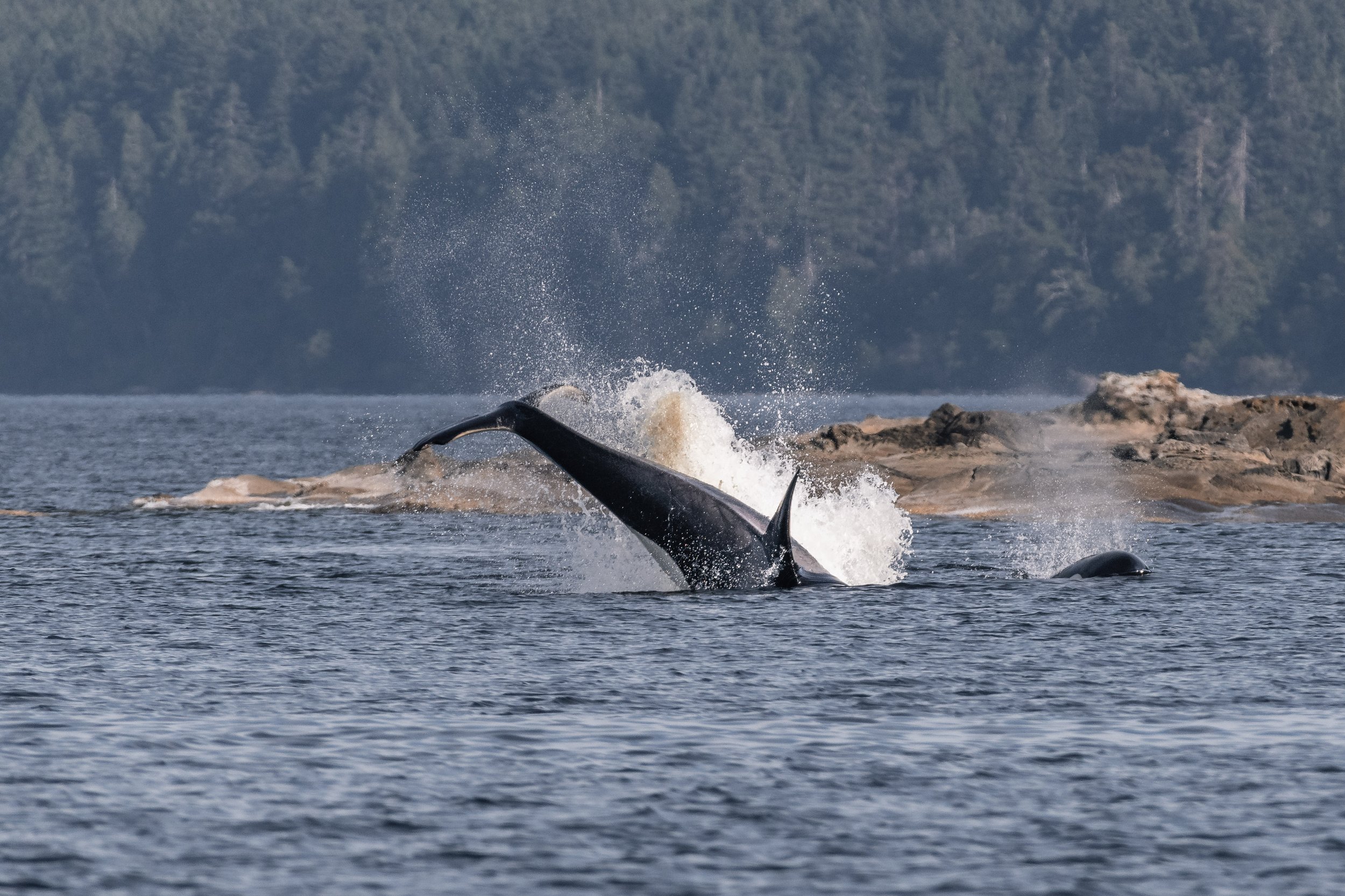
What appears to be T124A2A Agafia potentially defecating as he cartwheels beside his sister T124A2B Litton. Photo by Hayleigh Hilbert.
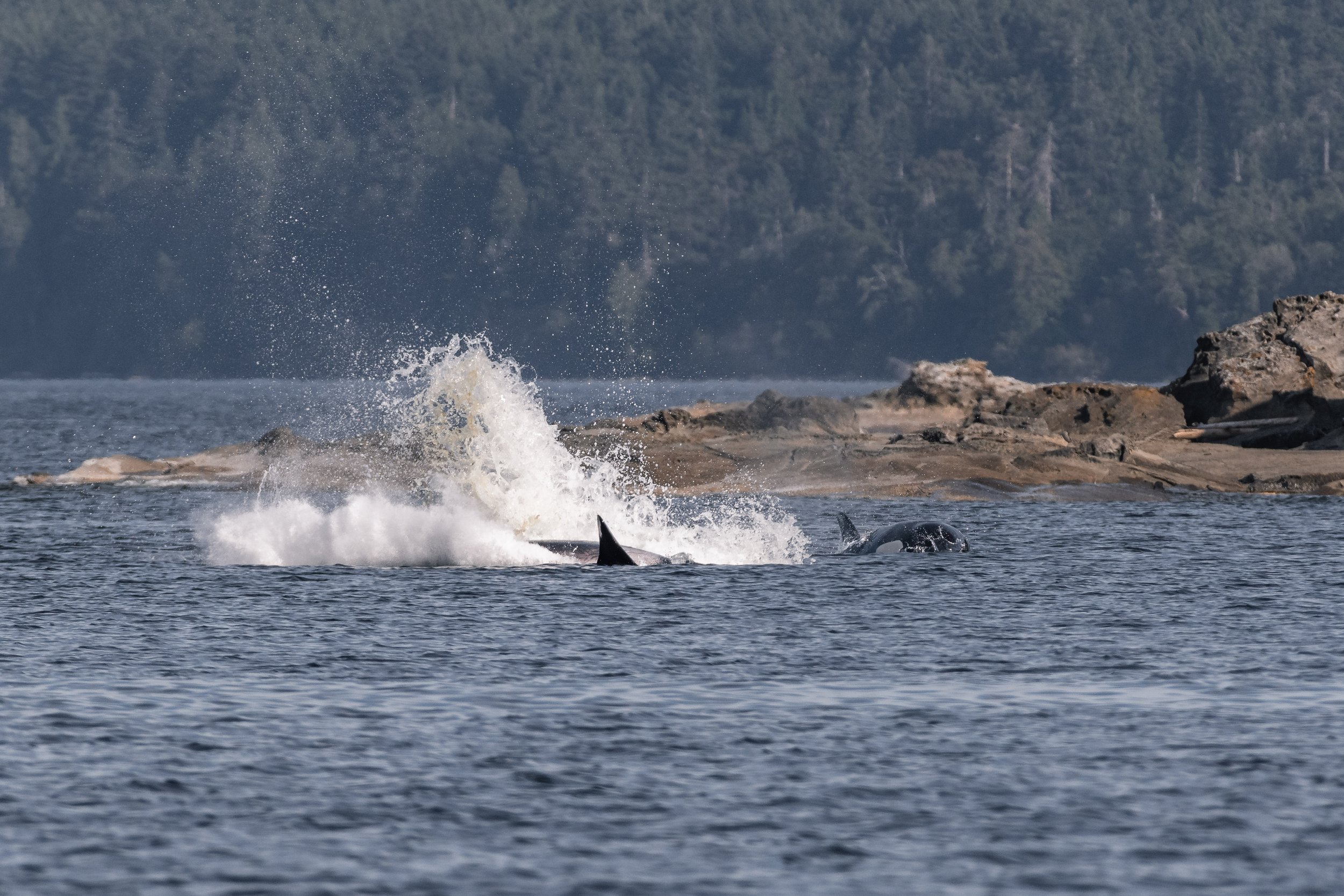
Coming in for a landing! Photo by Hayleigh Hilbert.
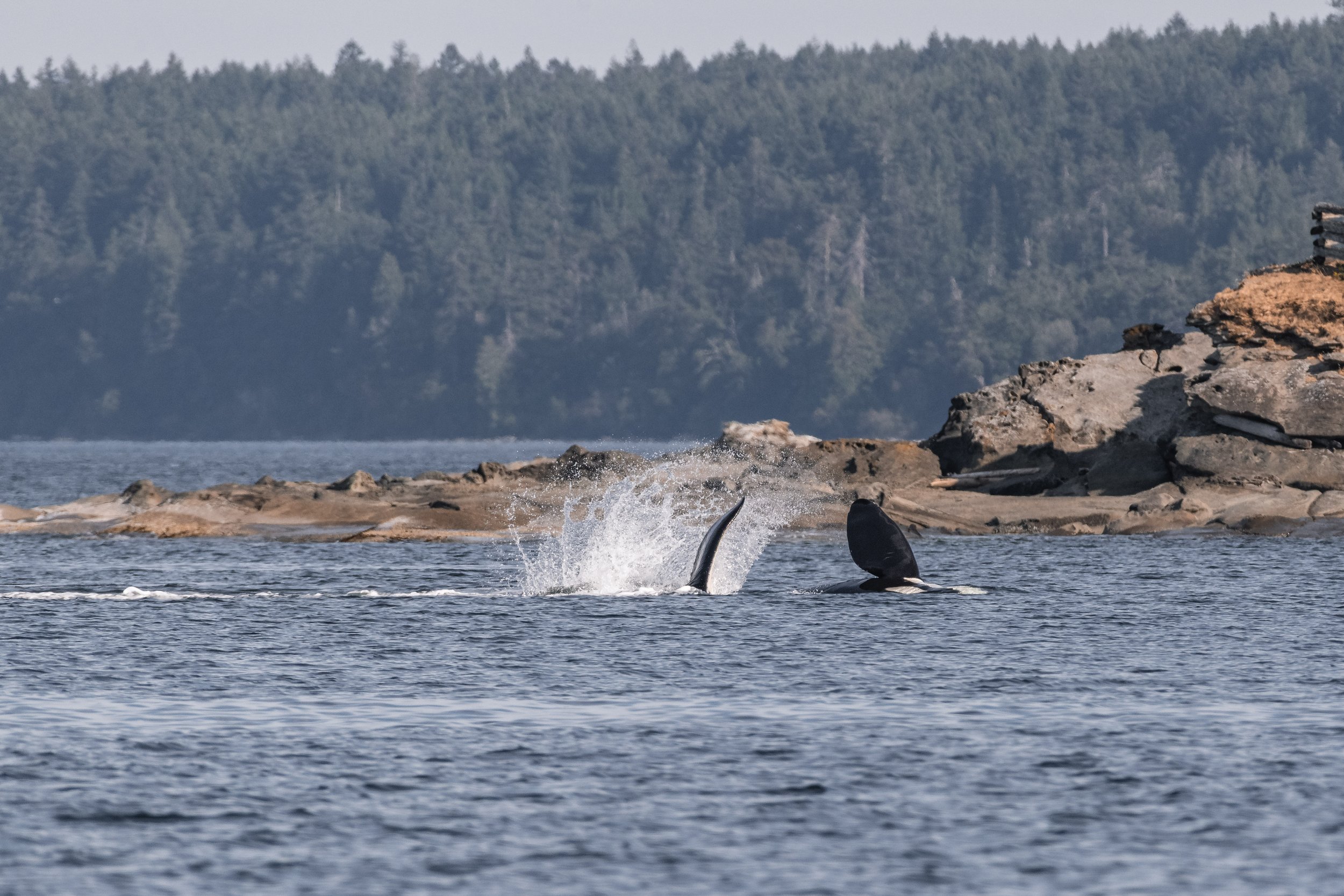
Waving a pec away in the air while splashing about. Photo by Hayleigh Hilbert.
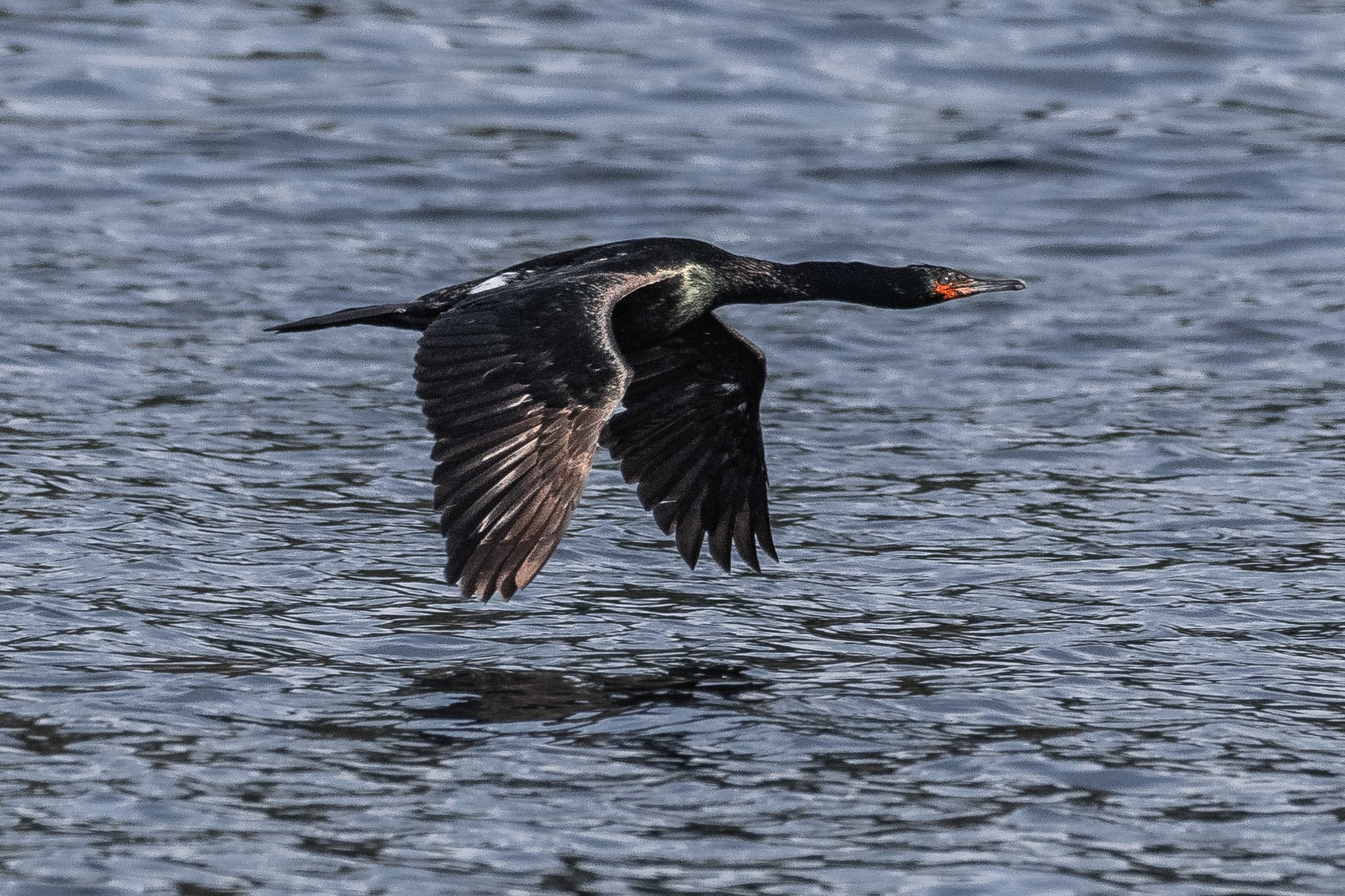
A Cormorant flying by. Photo by Evan Hessels.
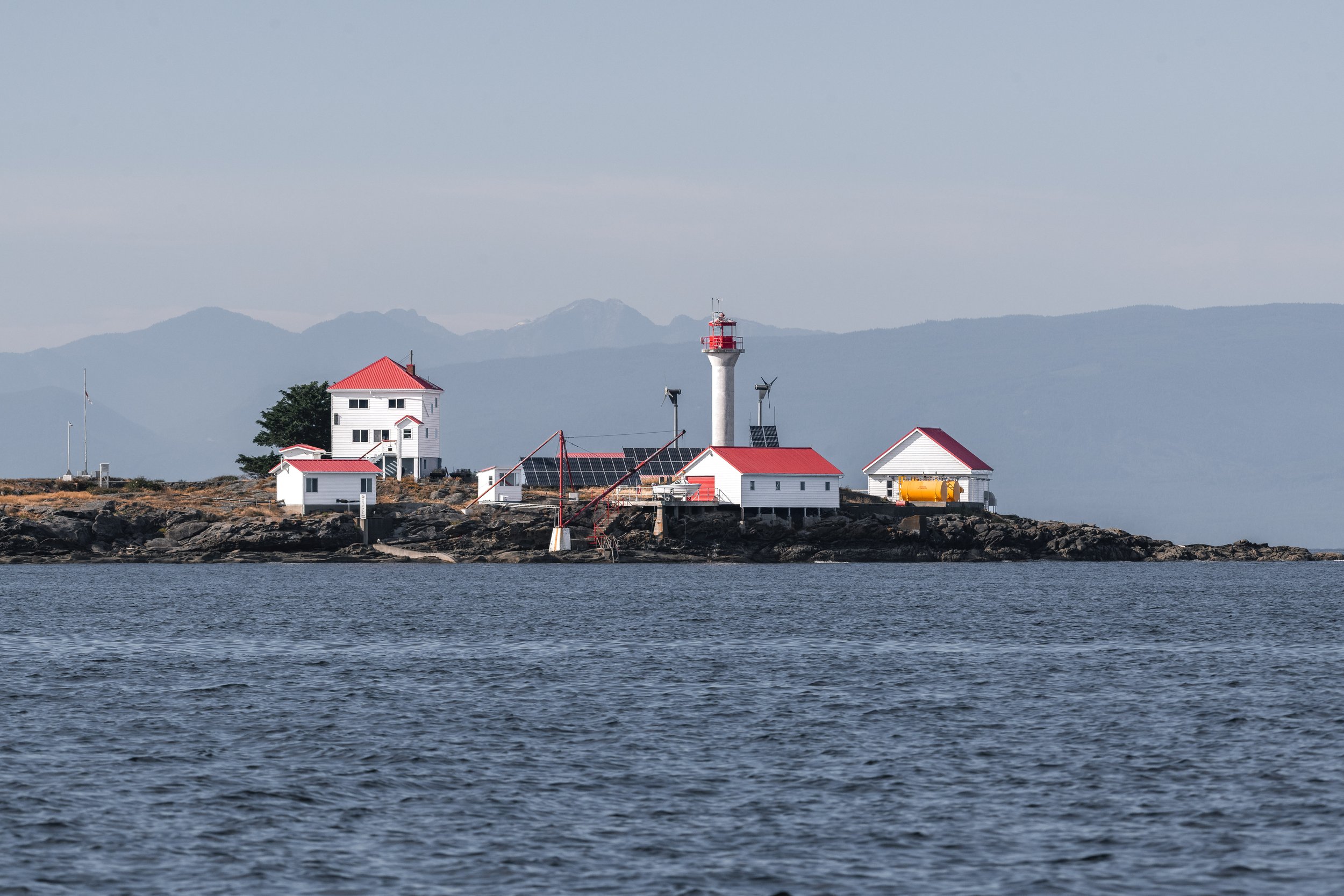
Entrance Island. Photo by Hayleigh Hilbert.
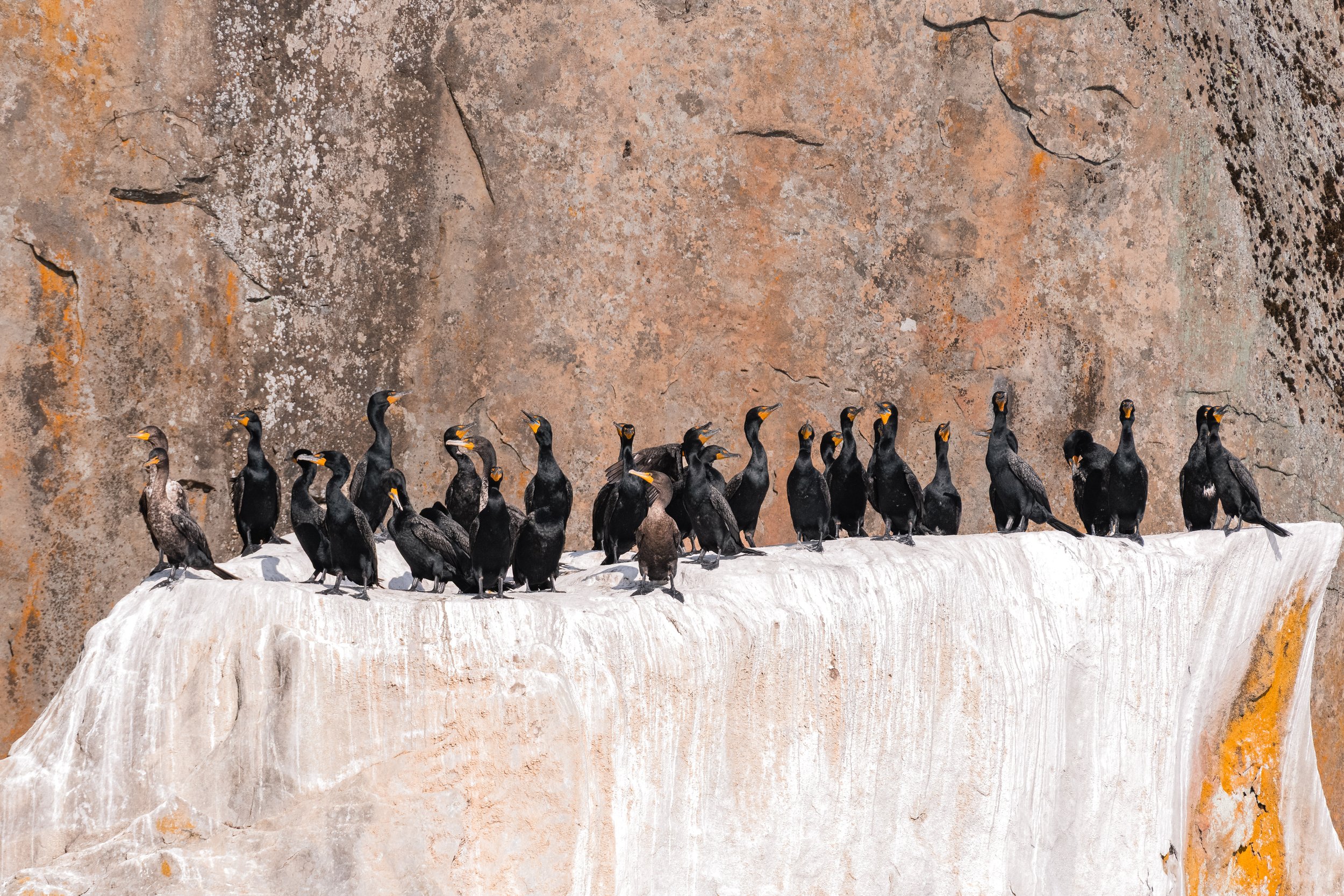
A flock of Cormorants huddled together on the rocks. Photo by Hayleigh Hilbert.
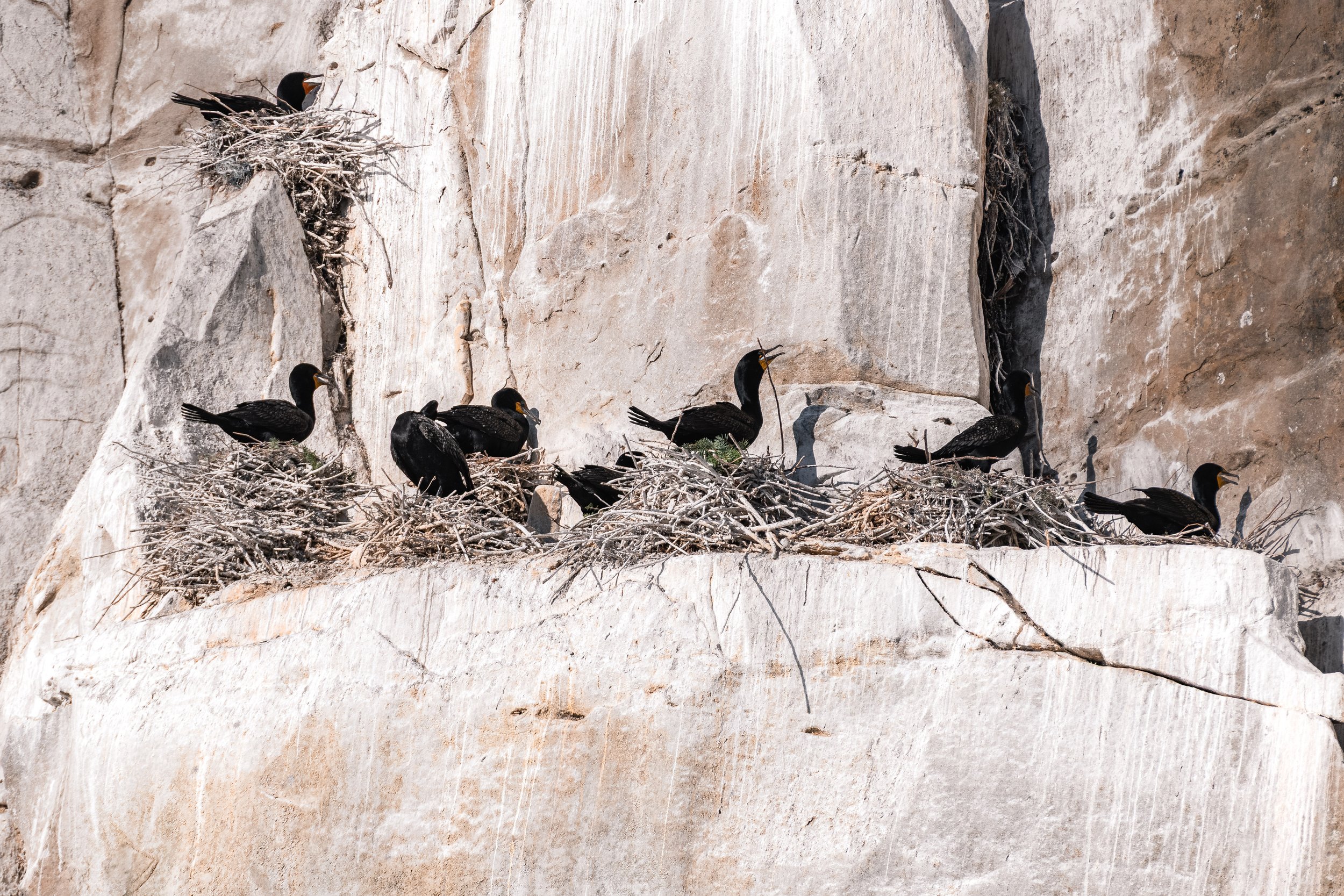
Waddling through the nests. Photo by Hayleigh Hilbert.
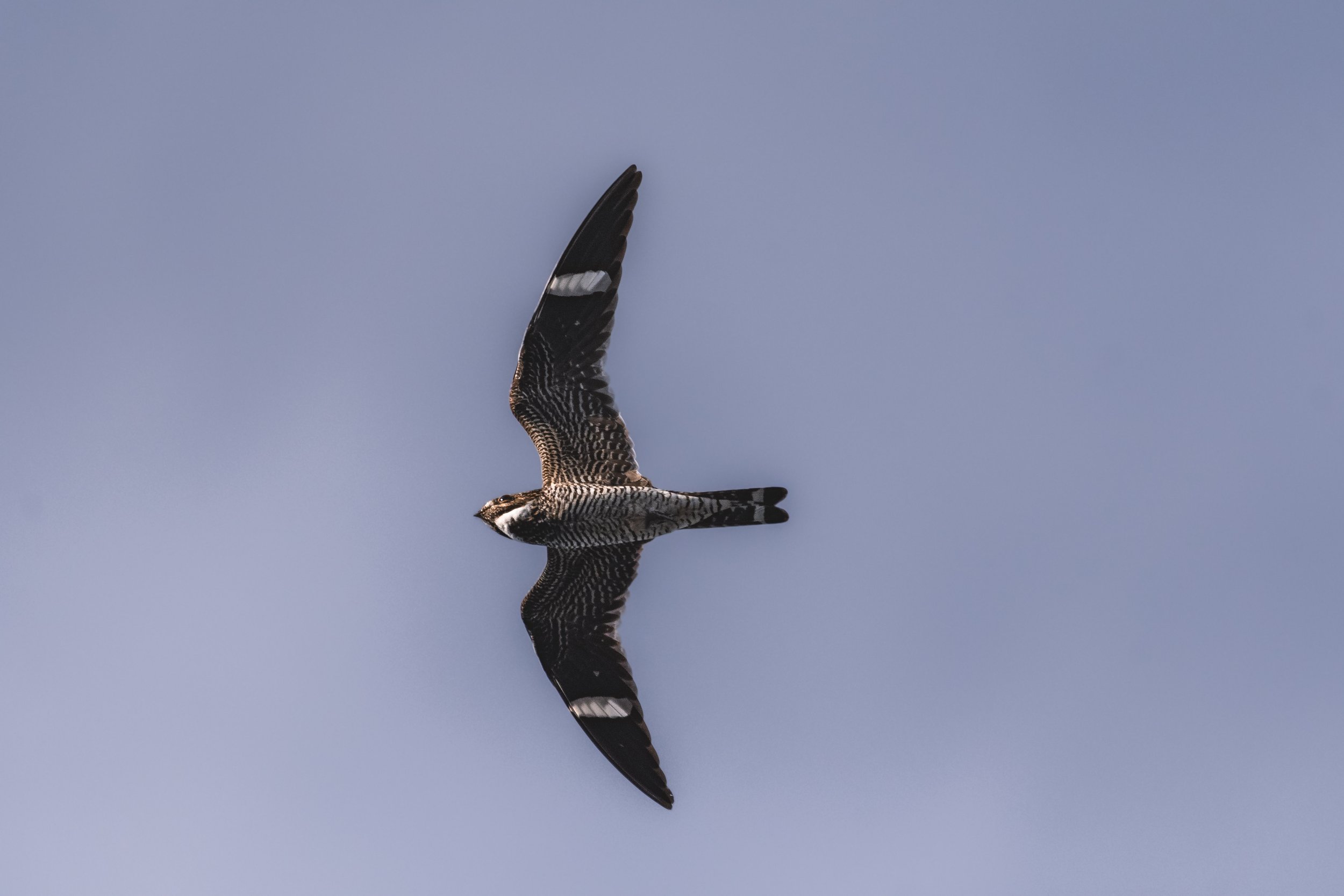
A Common Nighthawk soaring by. Photo by Evan Hessels.
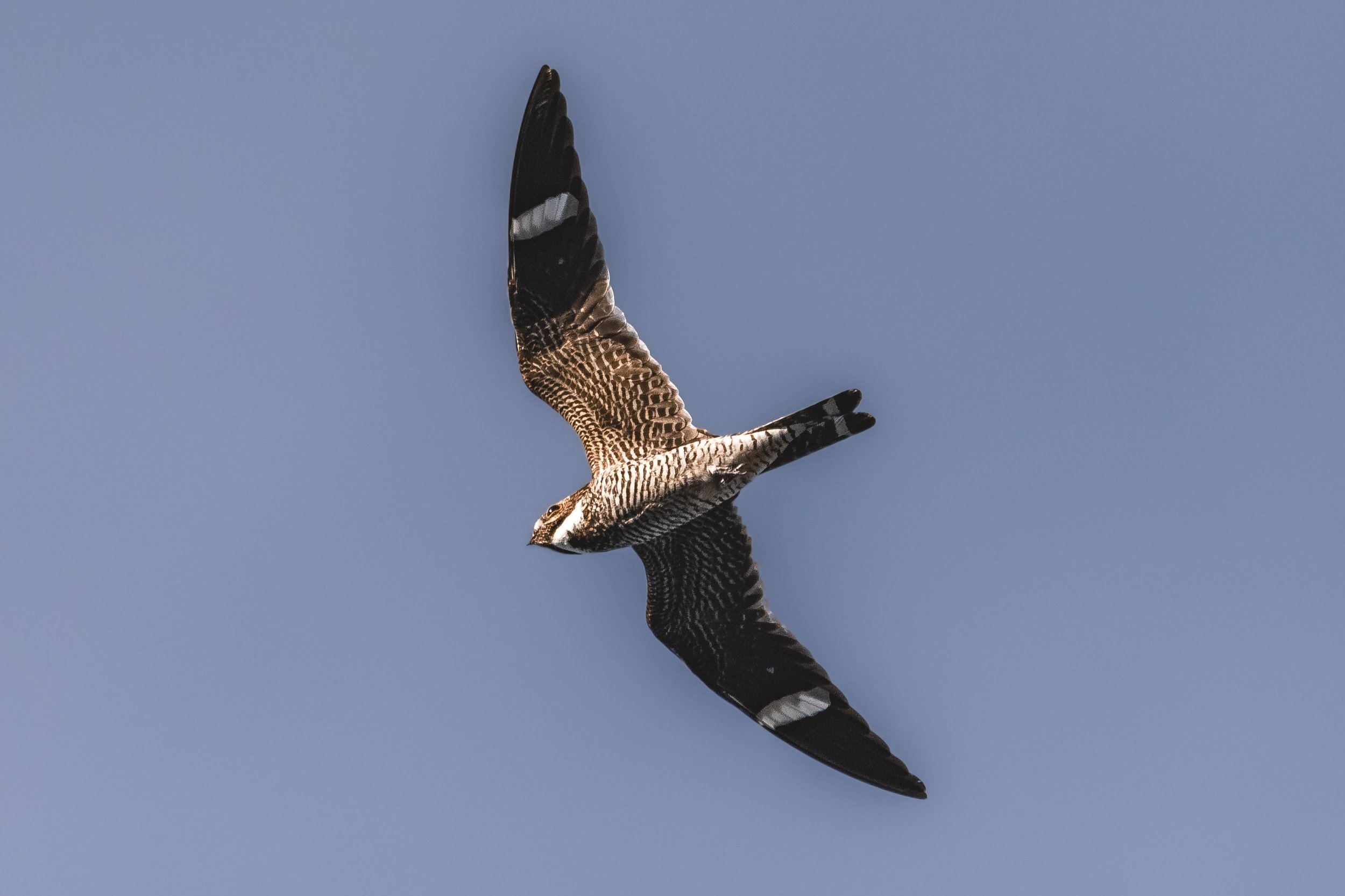
Common Nighthawks are uncommonly spotted birds for our tours. Photo by Evan Hessels.