
July 18, 2026, 3:30 PM - Sleepy Humpbacks and splash-happy Orca
Conditions remained beautiful as we set off for our afternoon adventure. Guests on board Cascadia and Kula settled into their seats as Naturalists Hayleigh and Jordan discussed what the day had in store for us. With many reports of sightings all across the Salish Sea, our options were endless as we set off and began exploring. We headed towards the northern part of our range, rounding the corner out of the harbour and into Rainbow Channel, where the waters began to open up before us, stretching as far as the eye could see.
It wasn't long before we spotted our first whales of the trip: two bushy blows rising side by side as the whales travelled together, surfacing in unison and occasionally lifting their flukes before diving down. We had found a pair of humpback whales! Once we were in position, our onboard Naturalists reached for their cameras to begin documenting the encounter. After comparing photographs to local identification catalogues, the whales were identified as Smiley (BCY0995) and Corona/Phi (BCX1416), two well-known female humpbacks that return to the Salish Sea seasonally.
Interestingly, Phi/Corona has only ever been confirmed on a breeding ground once, in Hawaii, while Smiley has never been photographed on a breeding ground at all and has only been documented here in the Salish Sea. Humpback whales are known for their strong site fidelity, often returning to the same feeding and breeding areas they learned from their mothers. This gives researchers valuable clues when trying to piece together family histories. Once a female's calf is photographed on a breeding ground, it can often reveal where the mother migrates as well. Smiley, however, continues to keep that secret. Despite raising several calves over the years, neither she nor any of her offspring have yet been photographed on a breeding ground, leaving this branch of her family tree an intriguing mystery that we hope to solve one day!
Soon after we departed from Phi/Corona and Smiley and slowly continued on. Nearby, a large floating yellow structure could be seen, gently rocking side to side. This marker, known as the Halibut Bank ODAS buoy, is an important tool that is used to determine many environmental conditions such as wave height and wind speeds. It is also used for something else - it is a haulout site for many Steller Sea Lions! While being a haulout is not one of its primary functions, it does provide a valuable area in the open waters for pinnipeds to get out of the water to relax. Many Steller Sea Lions were dramatically draped all over the buoy as we approached today, sunning themselves and snoozing the day away. One boisterous individual had even managed to climb high above the others, precariously balancing near the top of the marker!
After spending some quality time with the pinnipeds, we headed on out to continue our journey. In no time at all, we had another whale sighting ahead of us - several black dorsal fins appeared, with a couple of them towering over the others. Once more, cameras were raised, photos captured, and IDs confirmed. This was the T065Bs travelling with a couple of oddball whales - T065A5 Indy, T077C Neftali, and T077E Misneach:
T065A5 Indy ♂ (2014)
T065B Chunk ♀ (1993)
T065B1 Birdsall ♂ (2011)
T065B2 Nettle ♂ (2019)
T065B3 Rook ♂ (2023)
T077C Neftali ♂ (2006)
T077E Misneach (2016)
This ragtag group had been travelling together earlier in the day, and it seems that their shenanigans were continuing into the afternoon. Instead of travelling as one cohesive group, they appeared to be broken up into several smaller groups: T065A5 Indy was closely travelling with T077E Misneach, T065B1 Birdsall and T077C Neftali were also travelling close together, and then T065B2 Nettle and T065B3 Rook were staying by their mother T065B Chunk’s side.
Indy and Misneach seemed to be quite enjoying socializing with eachother, with them frequently racing off side by side. It is always heartwarming seeing Indy socializing, as he used to be often spotted travelling by himself. While it is not uncommon to spot a lone male orca, seeing one leave their natal pod so young was concerning. He seems to be doing well though, and we will cherish these little moments and wait and see if he becomes Indy-pendant once more afterwards.
Chunk, Rook, and Nettle were mostly travelling along together, occassionally tailslapping along as they went. We peeked cautiously at Nettle, looking him over carefully as he swam along. We happily noted that he appeared in good health - an important note, as he was documented being stranded on July 16th!
Neftali and Birdsall were off to the side on their own, having their own energetic moment. The pair was travelling together, often tail slapping and surfacing side by side. At some points, the two could be spotted ‘sea snaking’ along. This behaviour is very interesting, as scientists aren’t entirely sure why this behaviour occurs. It could be a form of reproductive practice, with males performing courtship behaviours amongst eachother before attempting to mate with a female. It may also be a form of dominance used amongst eachother to develop a clearer social standing.
As the sun began to sit low in the sky, we soon said our goodbyes to the orca and slowly made our way away. Circling around Entrance Island, we approached a small rocky area off of Gabriola Island’s coast. This area, affectionately known as Seal Rock, has been a hotspot for wildlife activity lately. While there were indeed a couple of seals snoozing away in the evening light, the main species catching our eyes here were actually the Turkey Vultures and Cormorants! Both birds could be seen stretching their wings out… and then carefully sitting there and sunning themselves. This pose, known as the Horaltic Pose, may appear a bit funny looking, but it is very important for both species’ health. For the Turkey Vultures, this position helps them thermoregulate (cool off or warm up), dry off any potentially wet feathers, and also helps keep their plummage clean by using the sun’s rays to help kill bacteria that may be left on themselves after eating carrion. For Cormorants, the pose is mostly used after they have gone fishing. Cormorants are very good divers, and can sometimes go under a 100 ft. down to catch prey for themselves and their chicks. However, to be such a successful swimmer, their plummage lacks a different characteristic most other aquatic birds sport - waterproofness. This causes their feathers to become waterlogged, and once they bring their catch back up to the surface, they are unable to take flight and return to their nests until they have sufficently dried off.
With the day slowly coming to a close, we set off one final time. Rounding the corner back into the Nanaimo Harbour, we were greeted by the skyline glowing in the low light as we approached the docks. It had been an amazing day full of incredible encounters, from the gentle giant humpbacks to the rambunctious orca, with many moments that would live on in our memories for years to come.
Photos taken by Marine Naturalists Hayleigh Hilbert and Jordan Robinson - please enjoy!
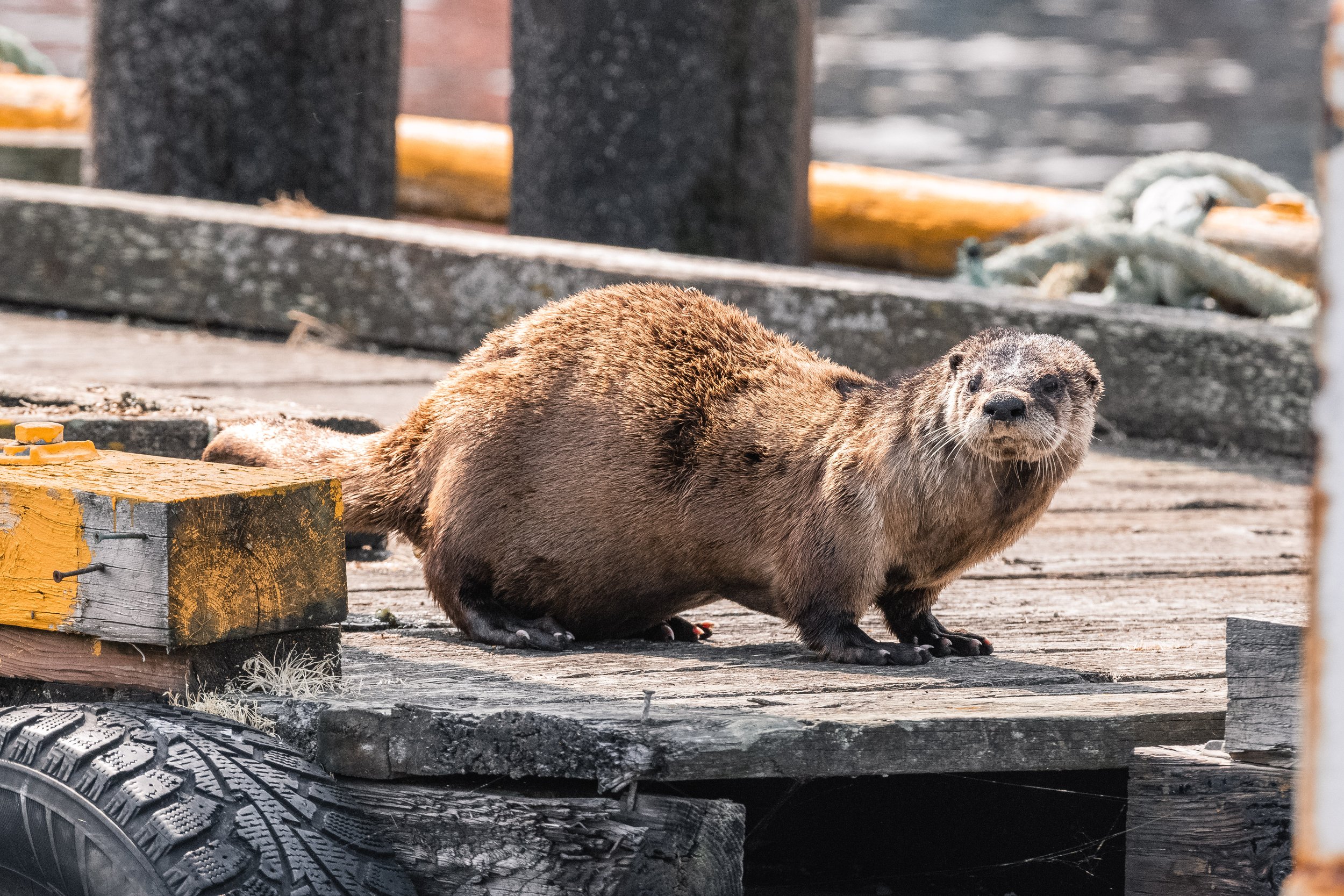
A rotund River Otter on the dock. Photo by Hayleigh Hilbert.
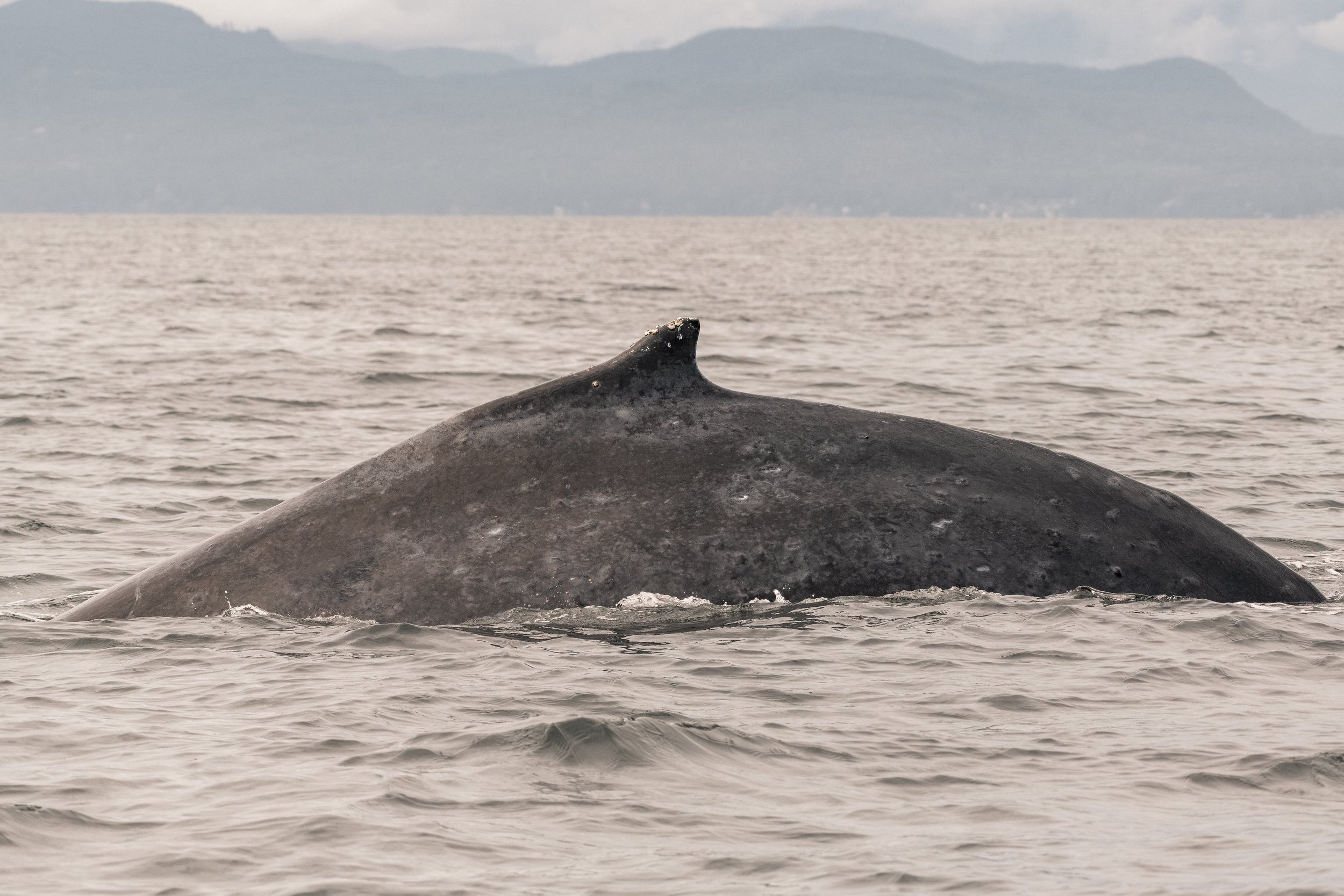
Corona/Phi’s dorsal fin as she begins to dive. Photo by Hayleigh Hilbert.
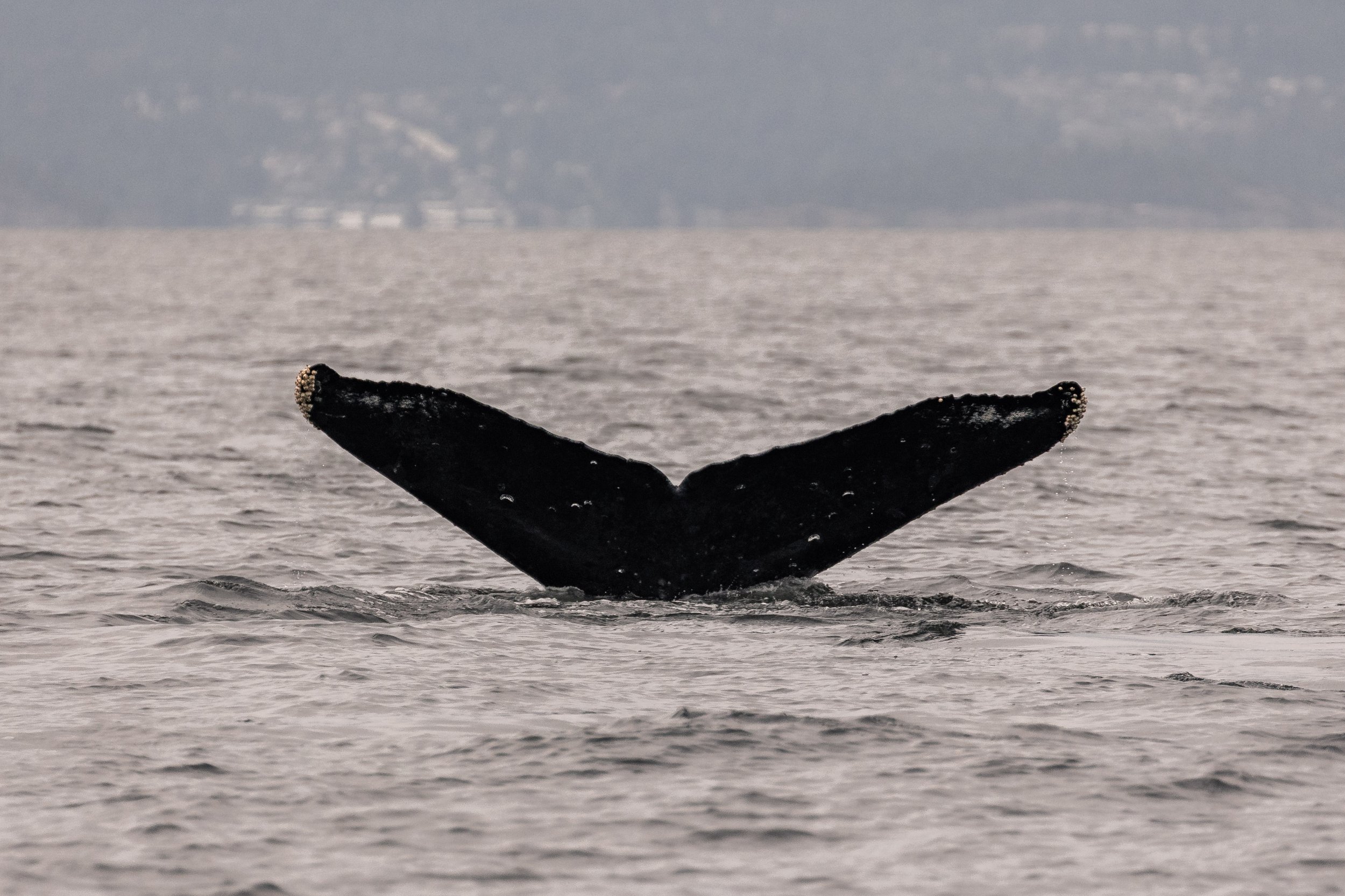
Corona/Phi’s fluke. Photo by Jordan Robinson.
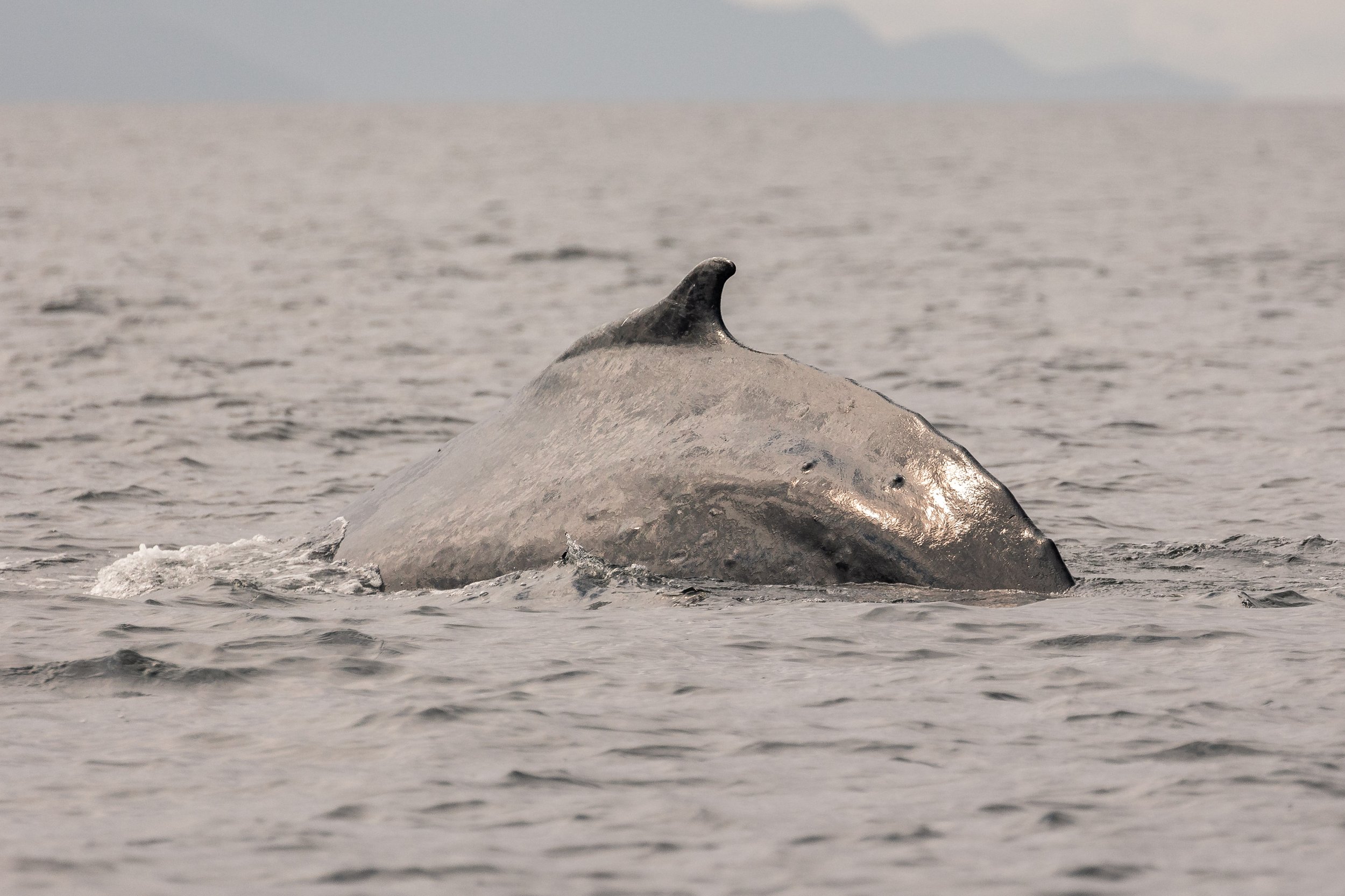
A different angle of Smiley. Photo by Jordan Robinson.
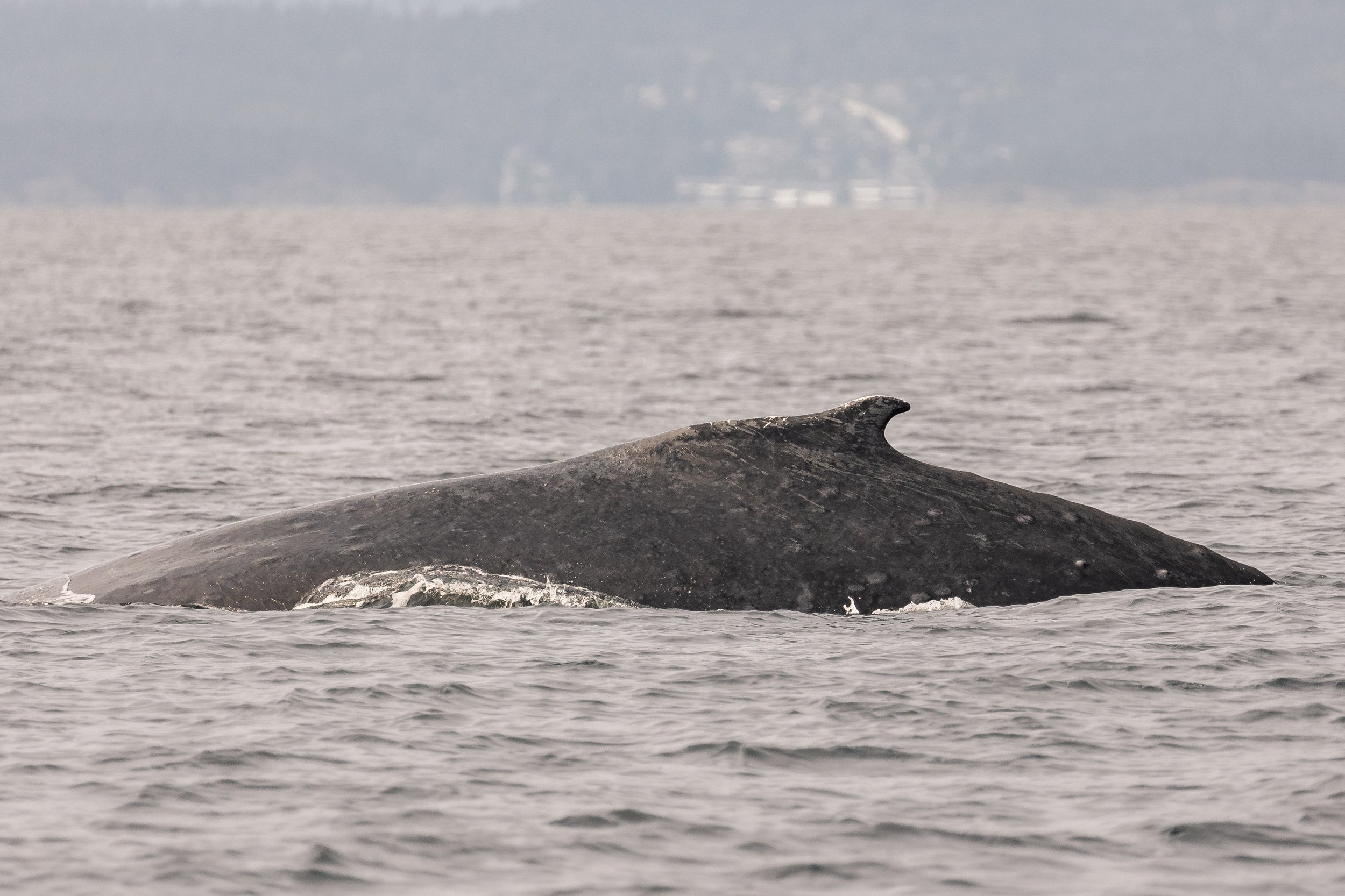
Smiley’s dorsal fin. Photo by Jordan Robinson.
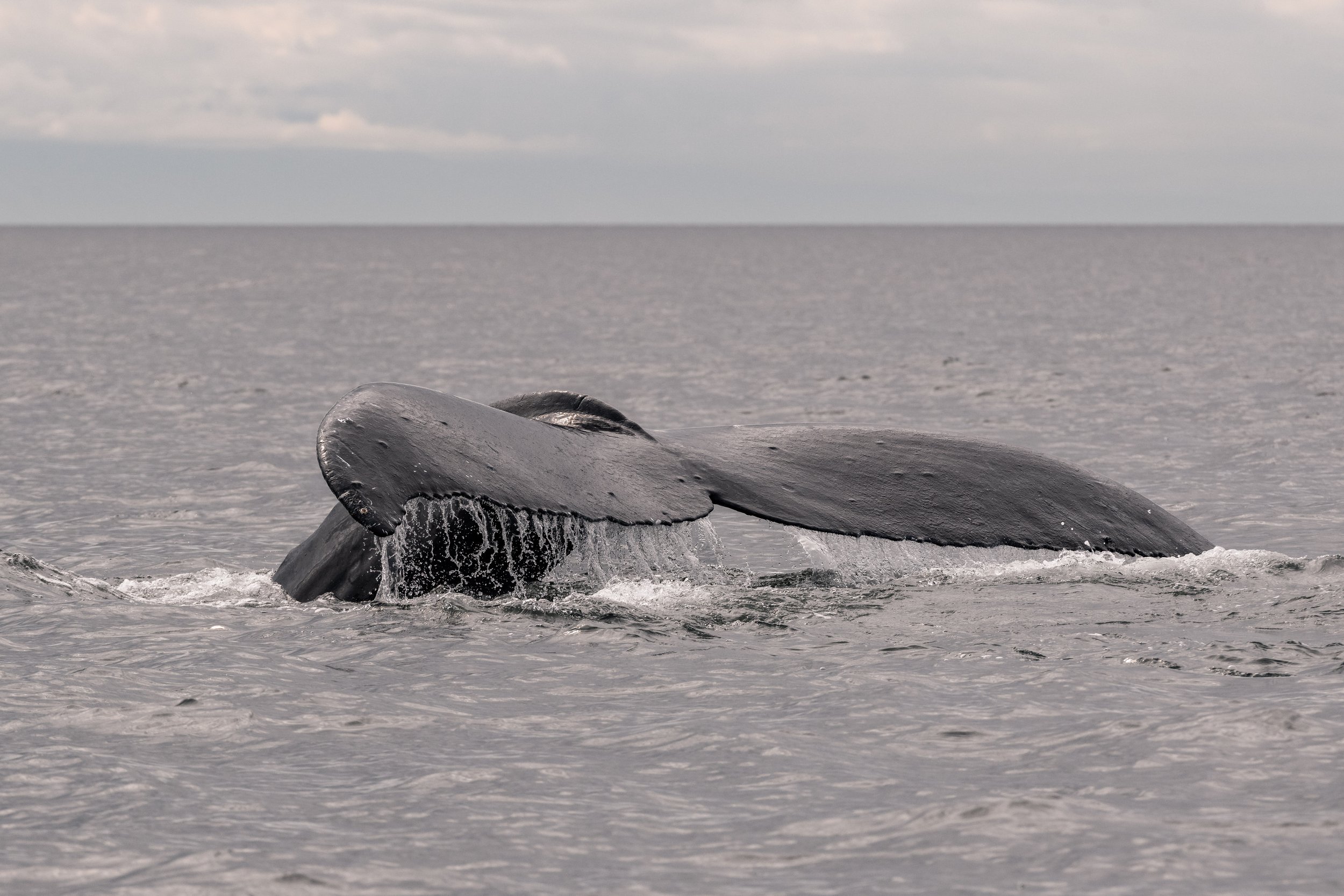
Smiley beginning to dive. Photo by Hayleigh Hilbert.
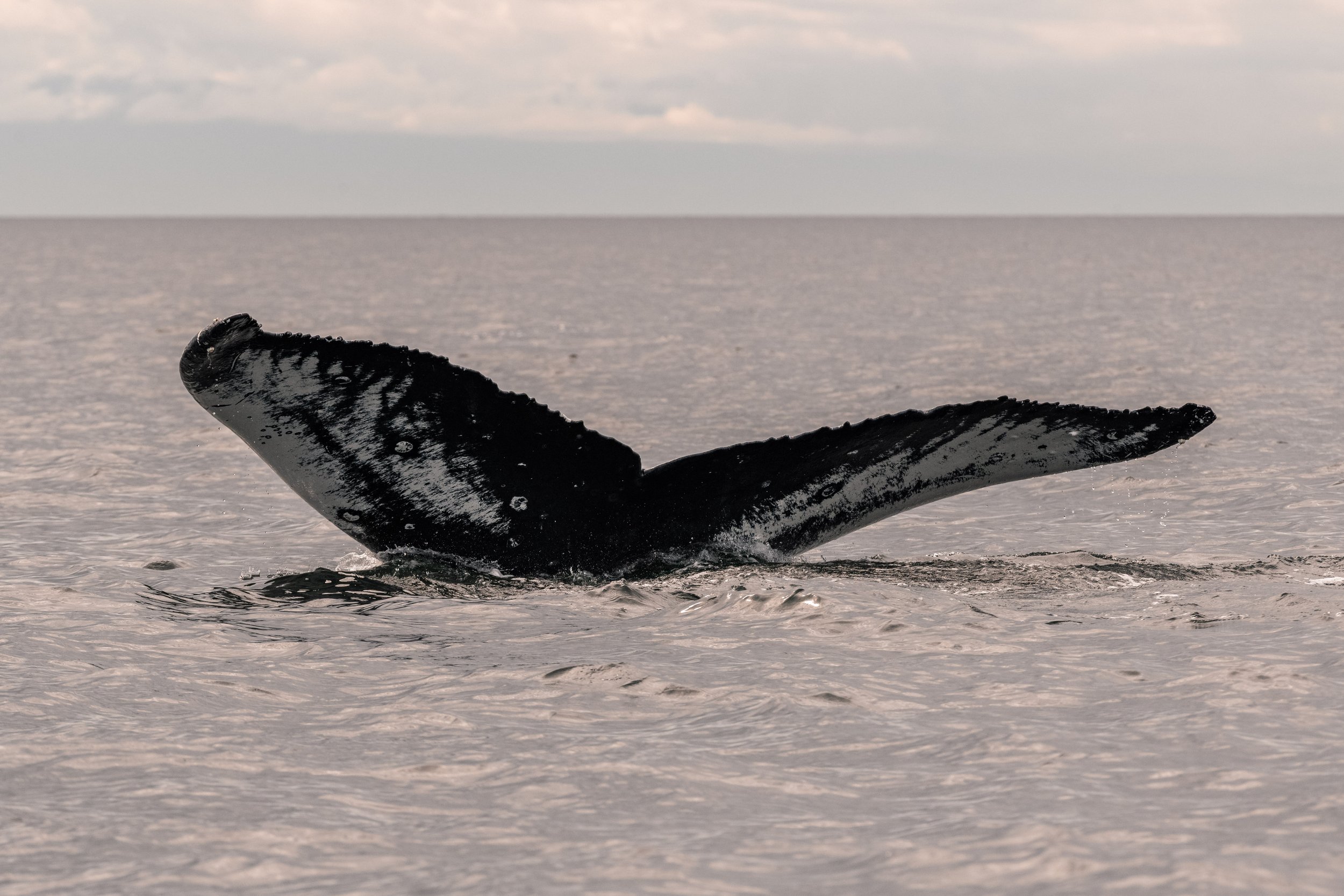
Smiley’s fluke. Photo by Hayleigh Hilbert.
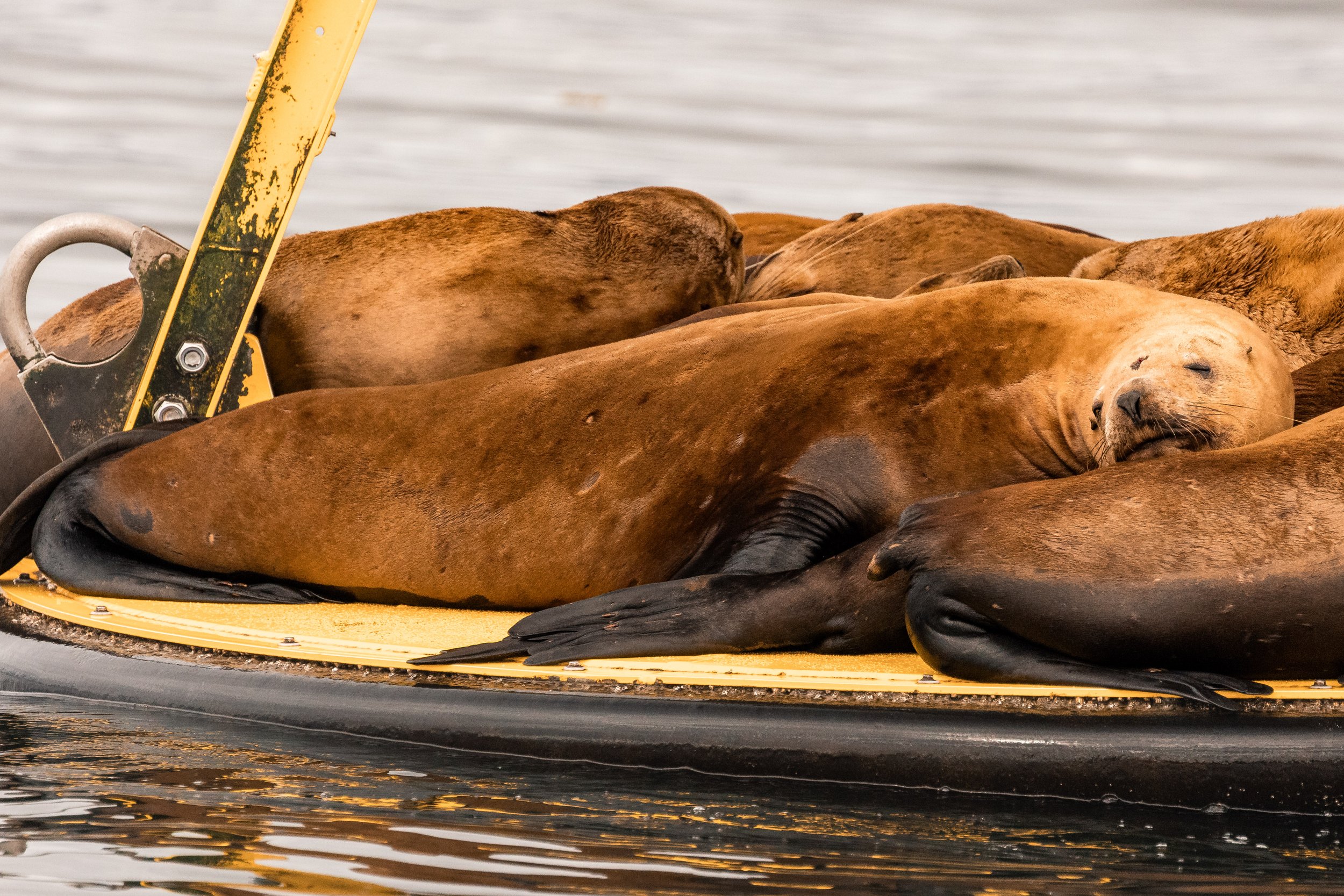
Hauled out together on the ODAS buoy. Photo by Jordan Robinson.
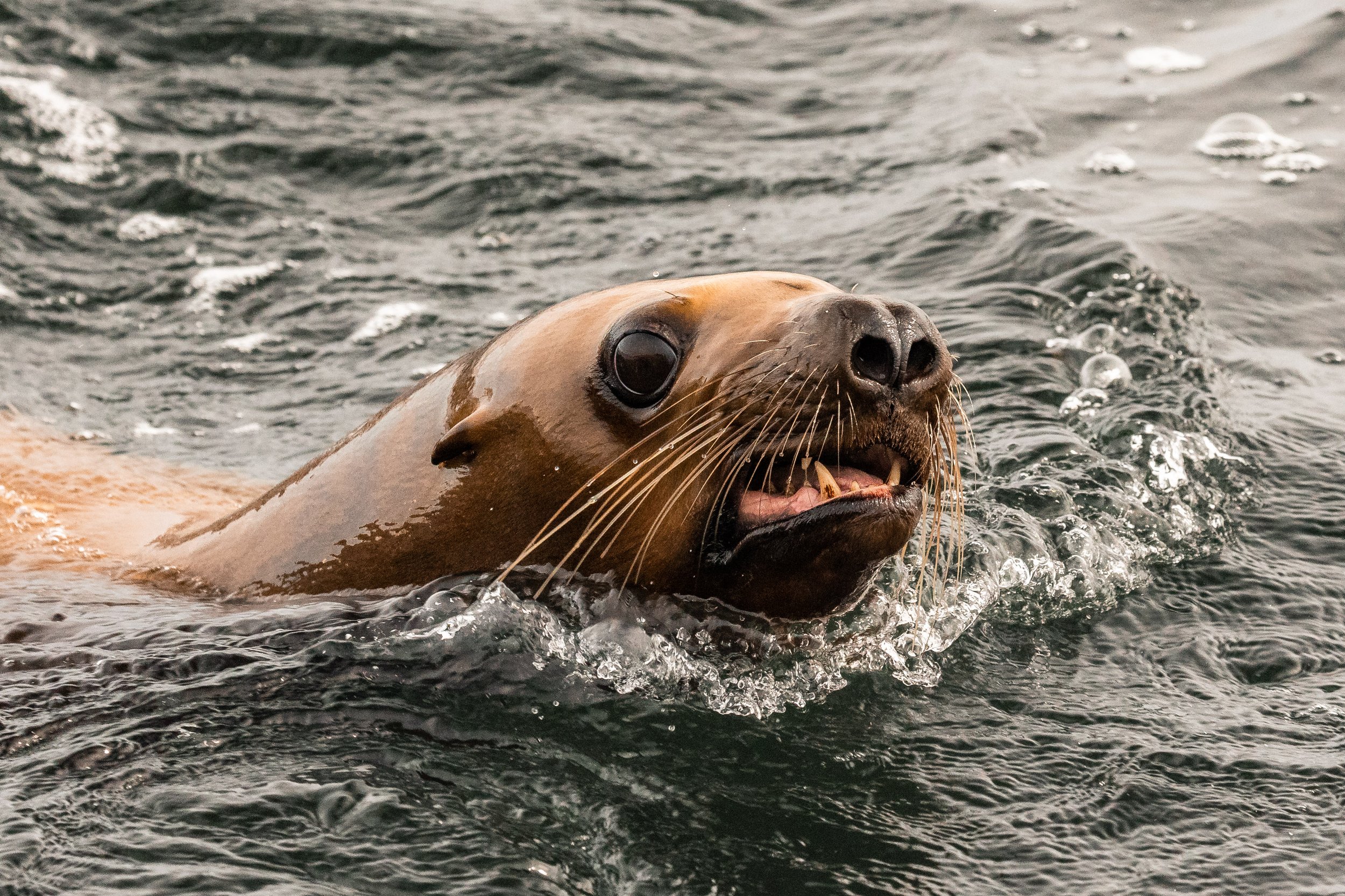
A sea lion curiously watching us. Photo by Jordan Robinson.
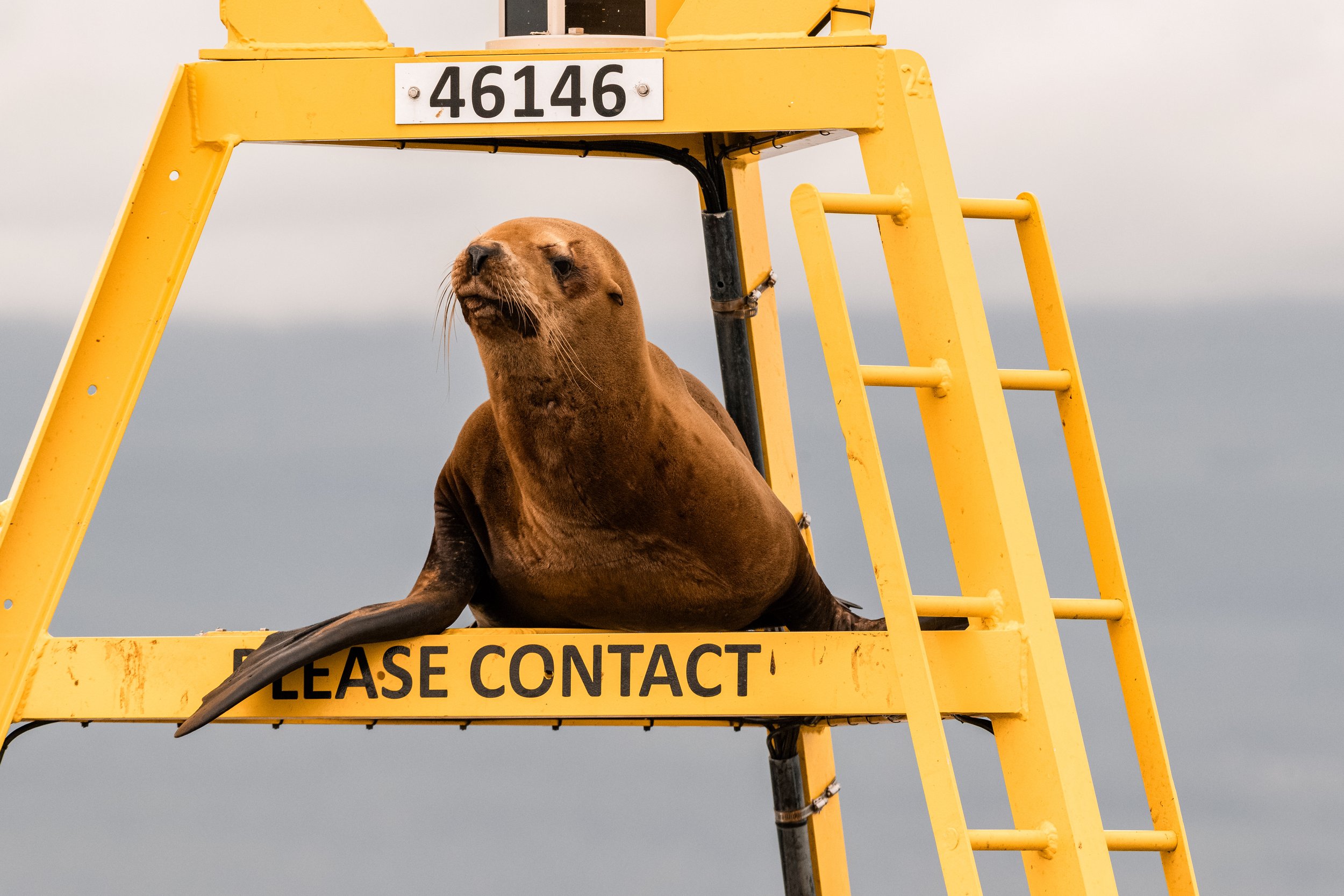
This individual has the high ground! Photo by Hayleigh Hilbert.
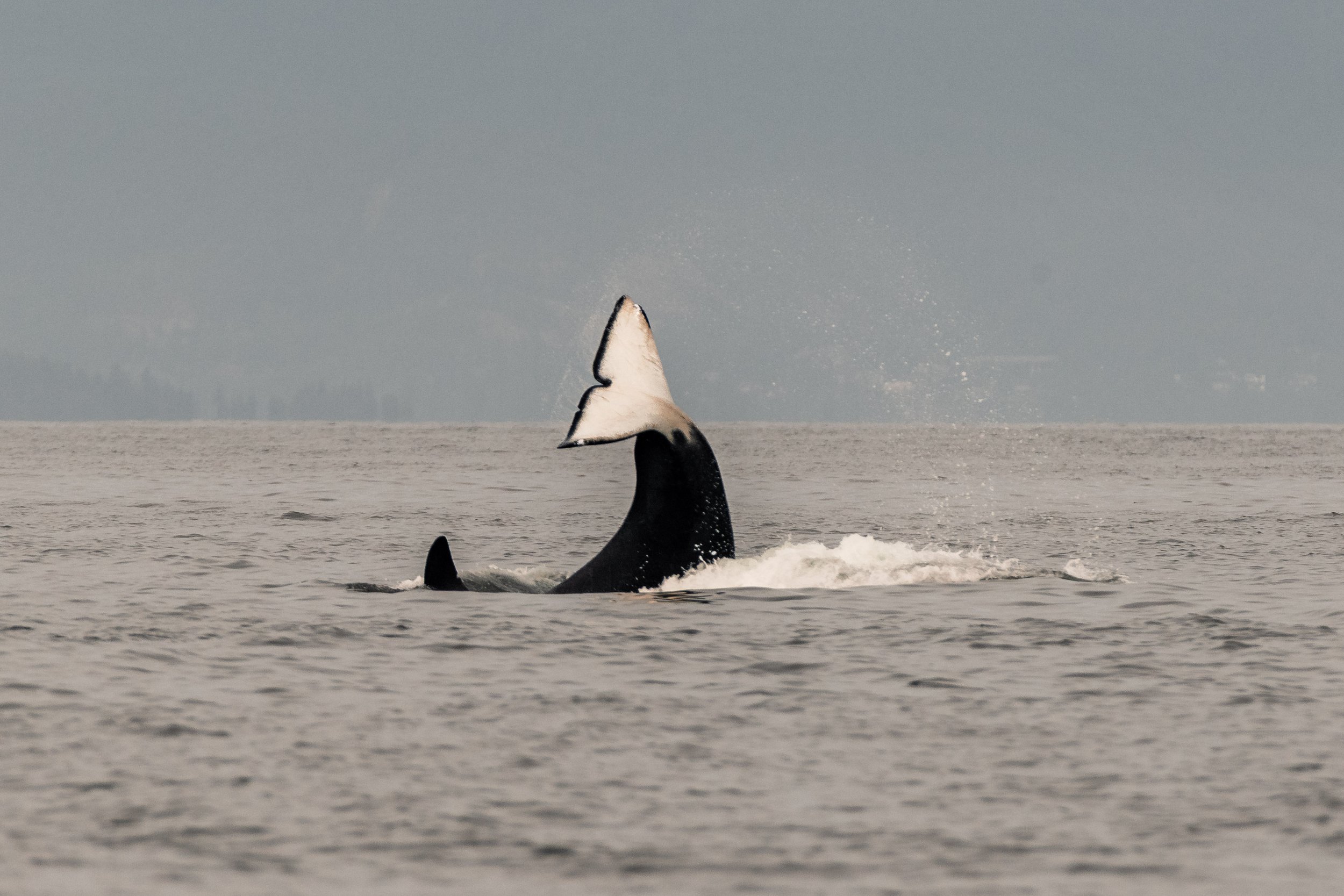
T065A5 Indy happily tailslapping. Photo by Hayleigh Hilbert.
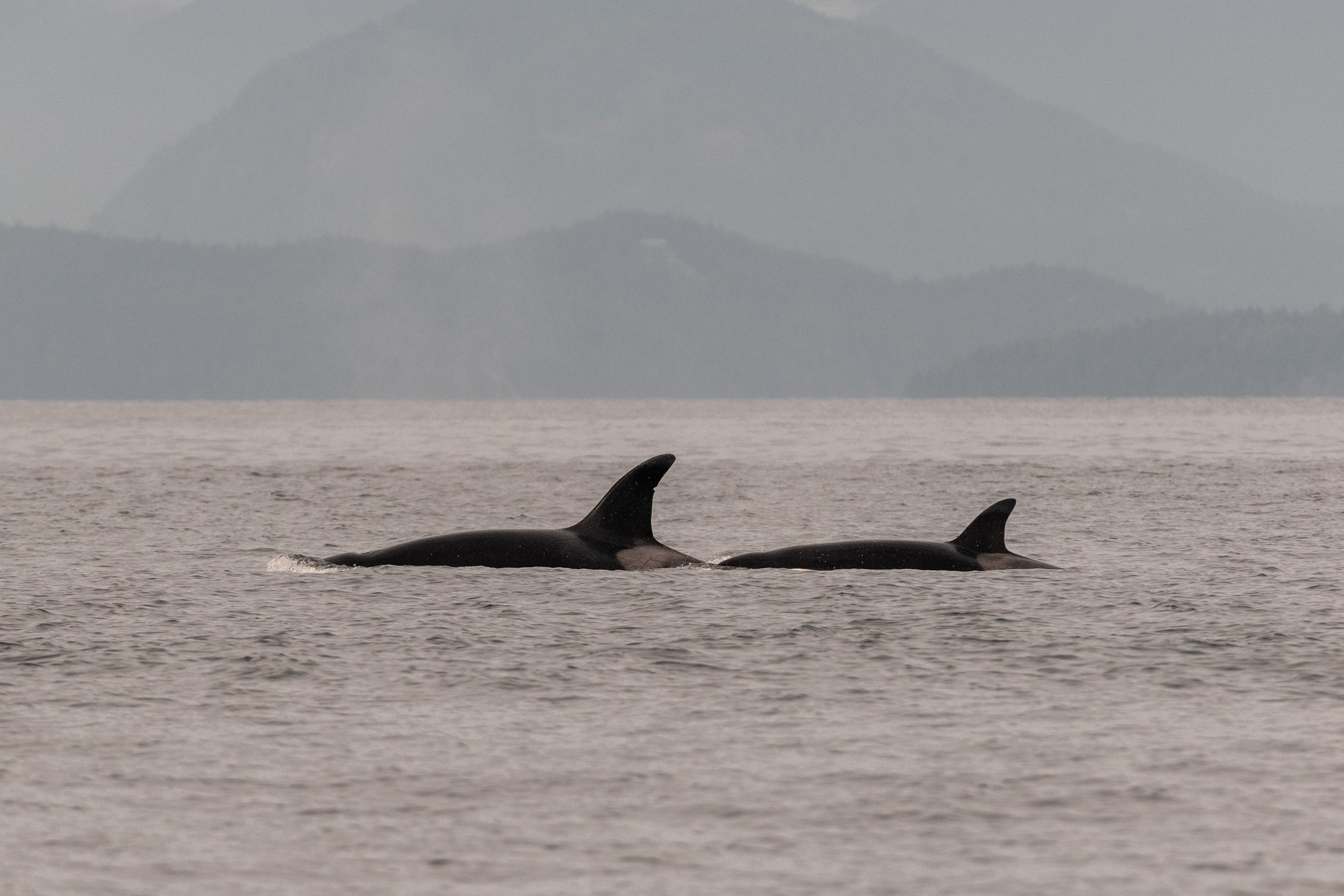
T065A5 Indy and T077E Misneach. Photo by Hayleigh Hilbert.
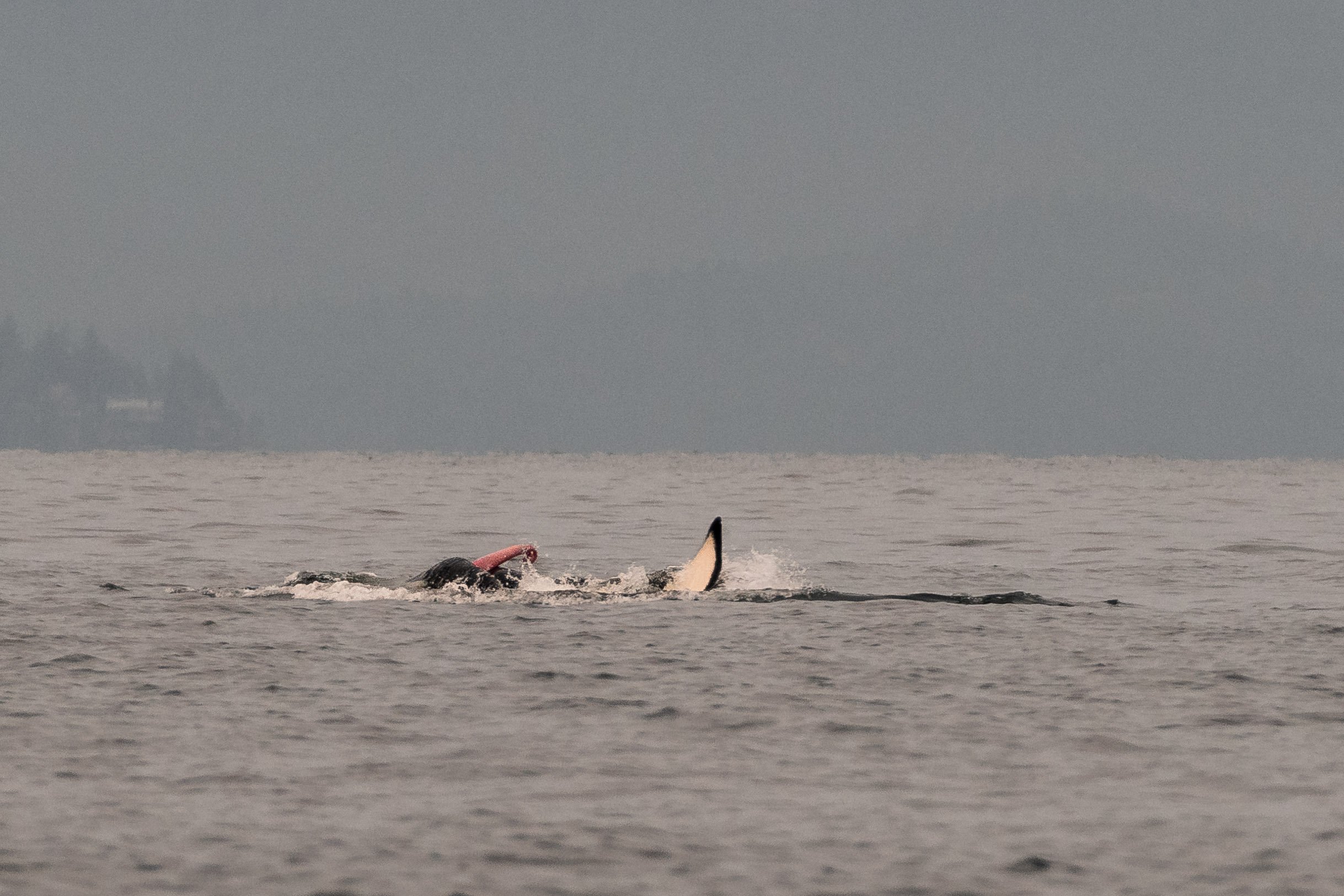
The males were ‘sword fighting’ during this encounter. Photo by Hayleigh Hilbert.
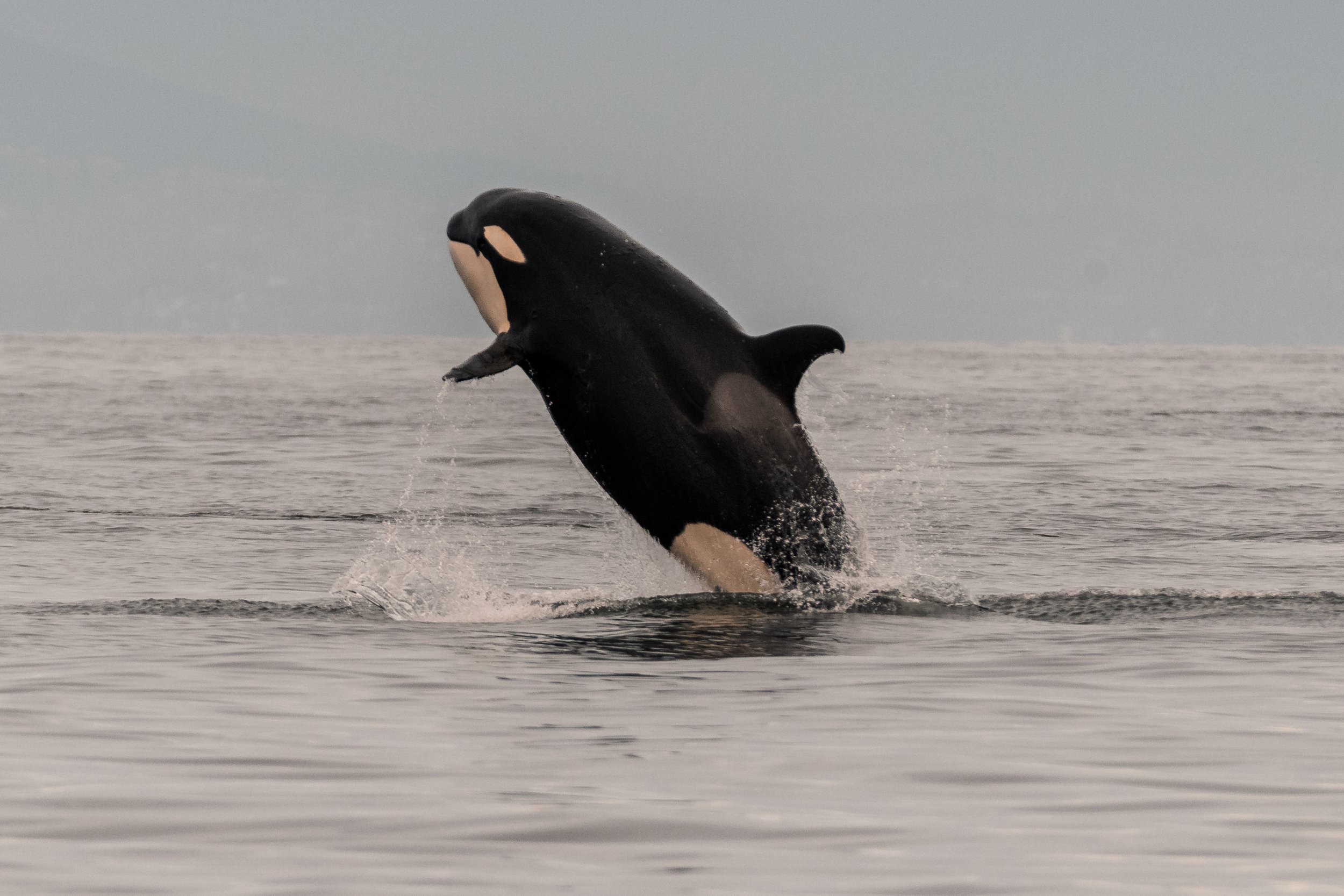
T065B3 Rook taking to the skies. Photo by Hayleigh Hilbert.
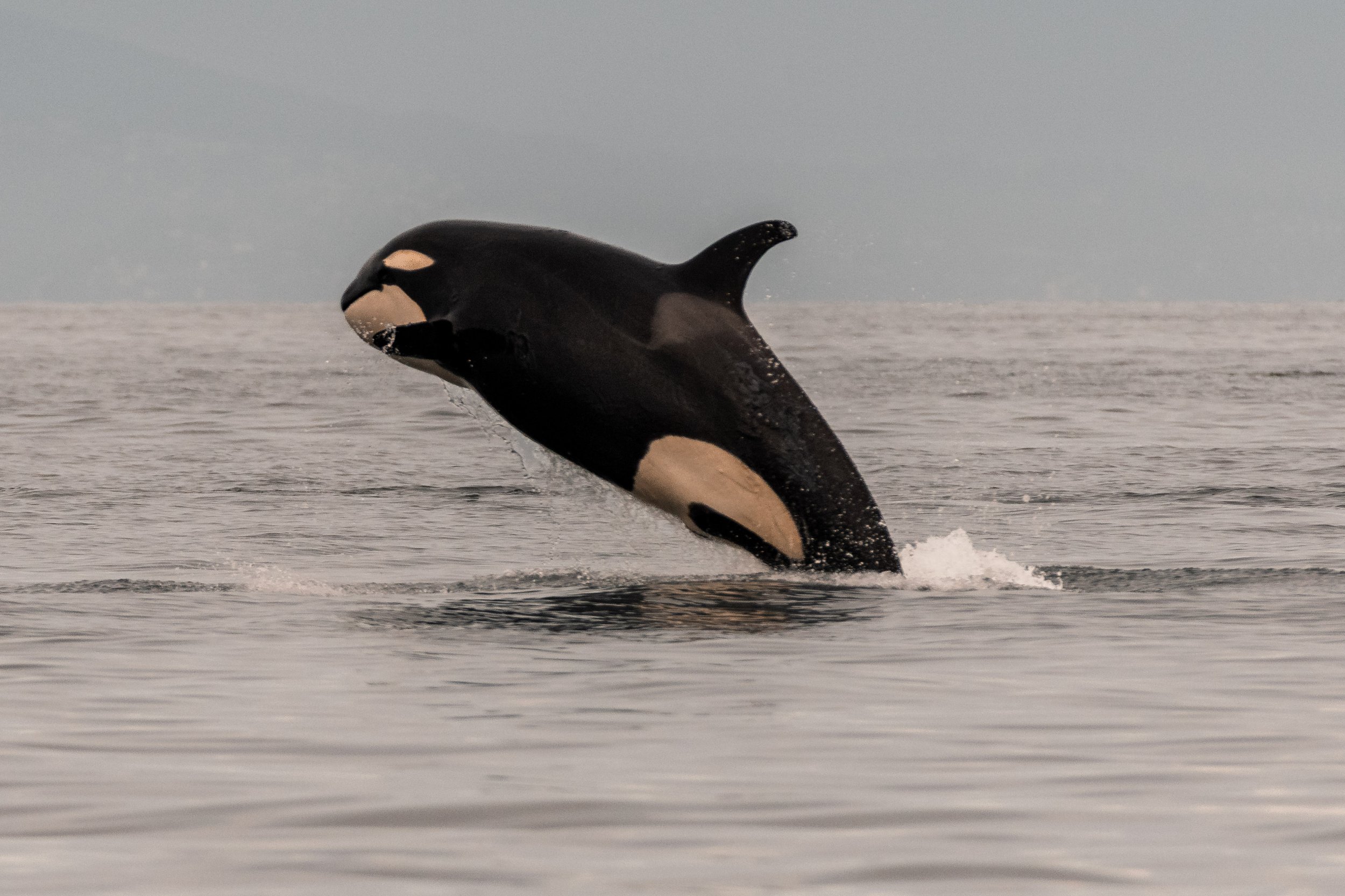
T065B3 Rook coming in for a landing. Photo by Hayleigh Hilbert.
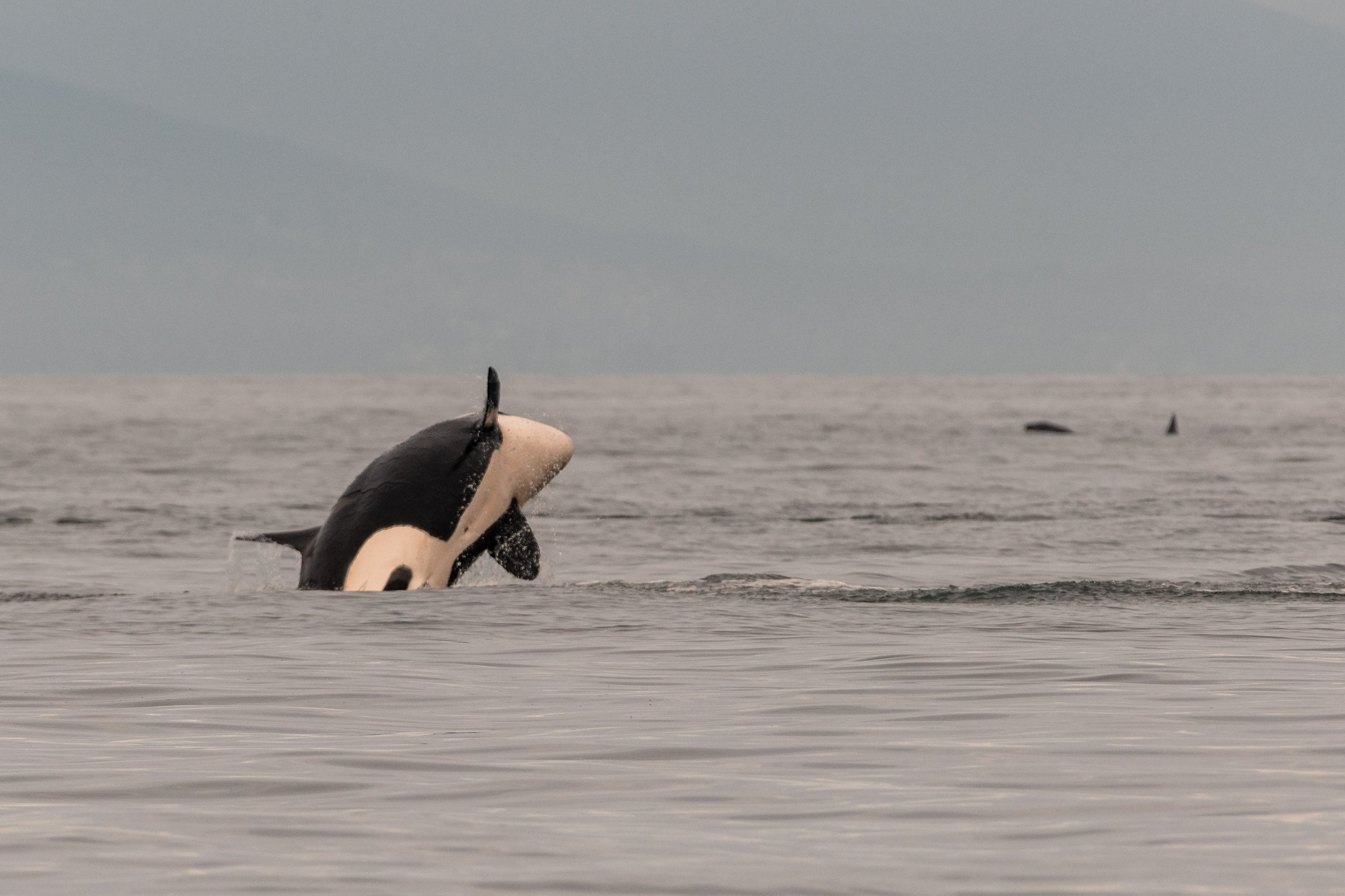
Celebrating. Photo by Hayleigh Hilbert.
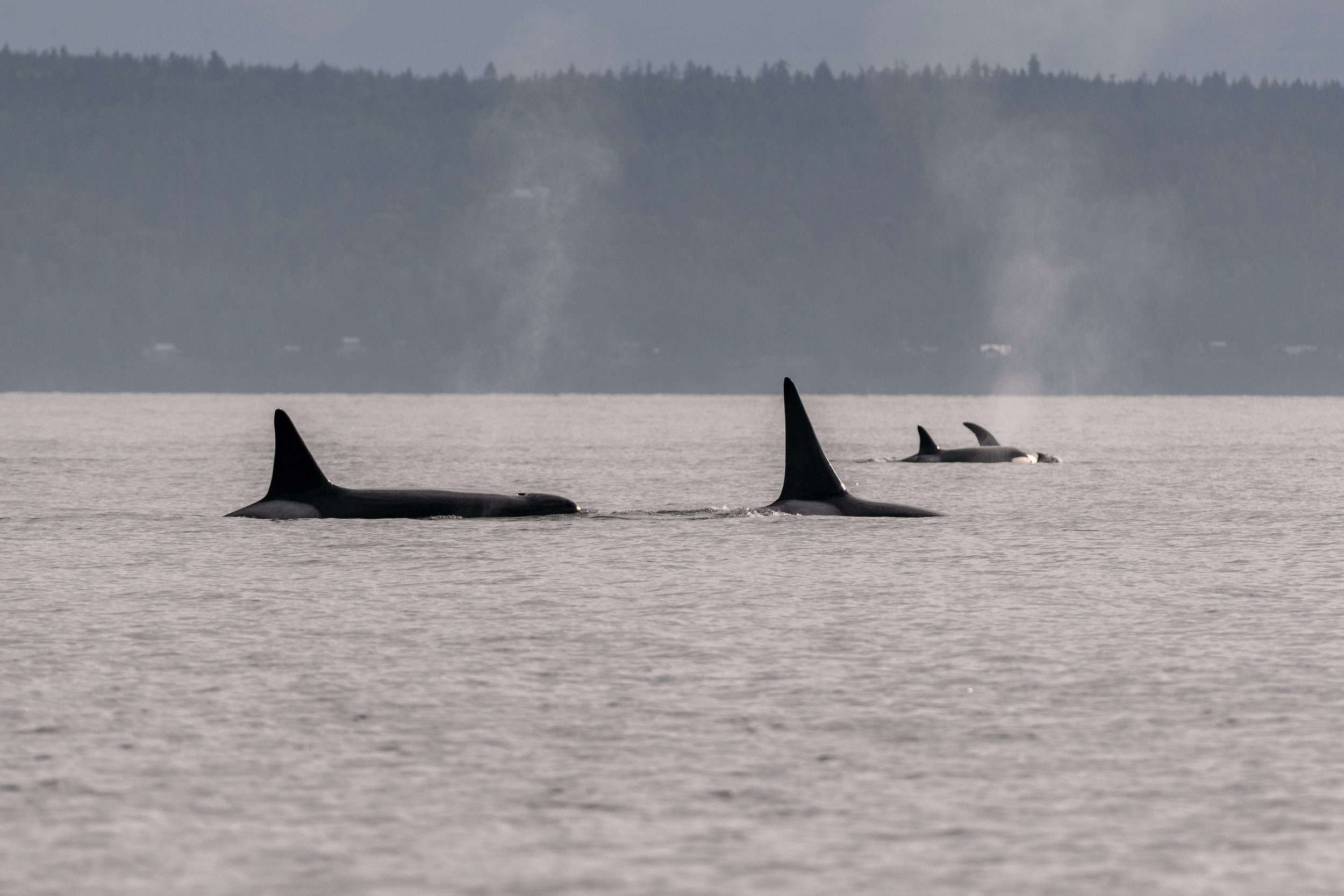
Left to right: T077C Neftali, T065B1 Birdsall, T077E Misneach, and T065A5 Indy. Photo by Hayleigh Hilbert.
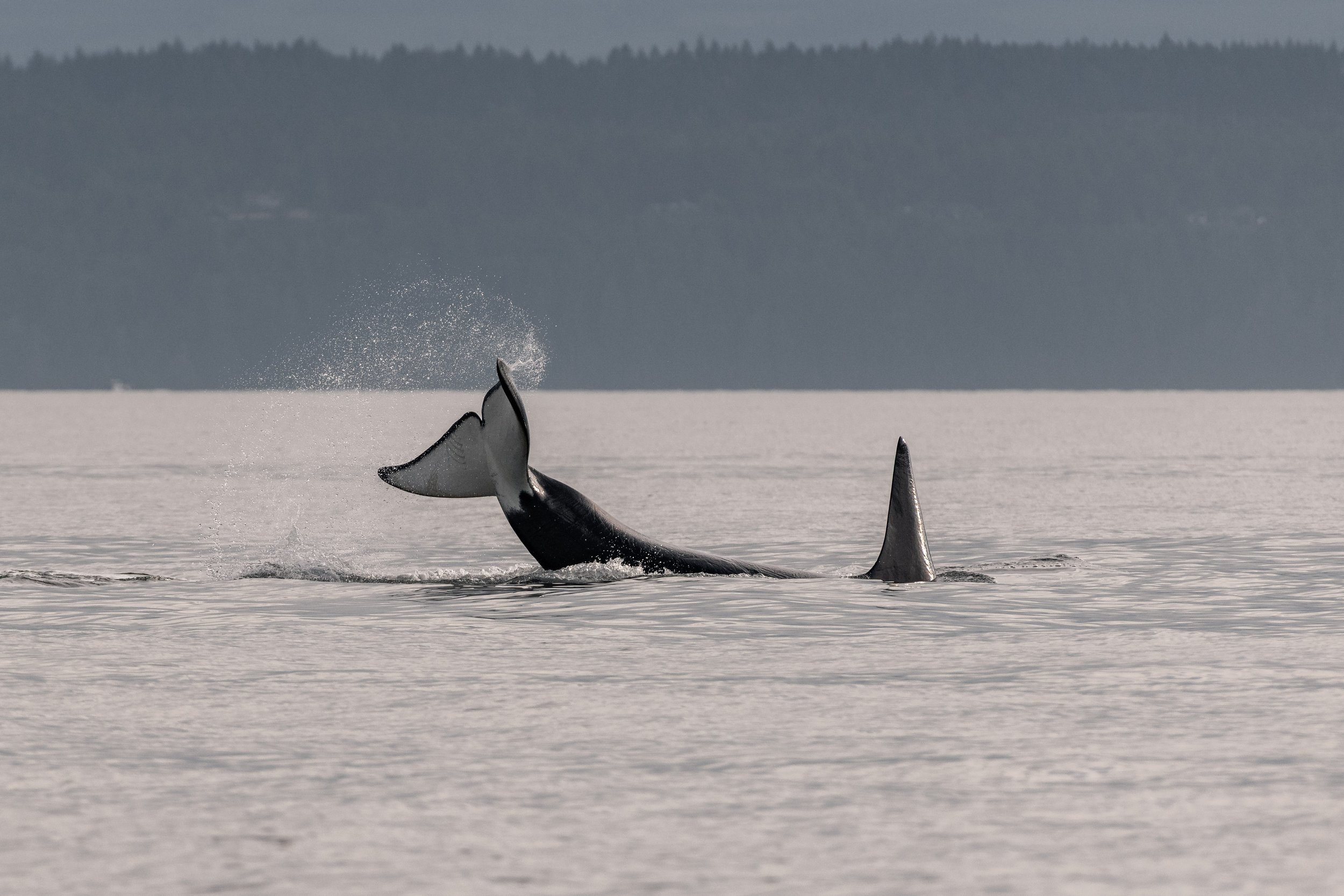
T065B1 Birdsall getting slap happy. Photo by Hayleigh Hilbert.
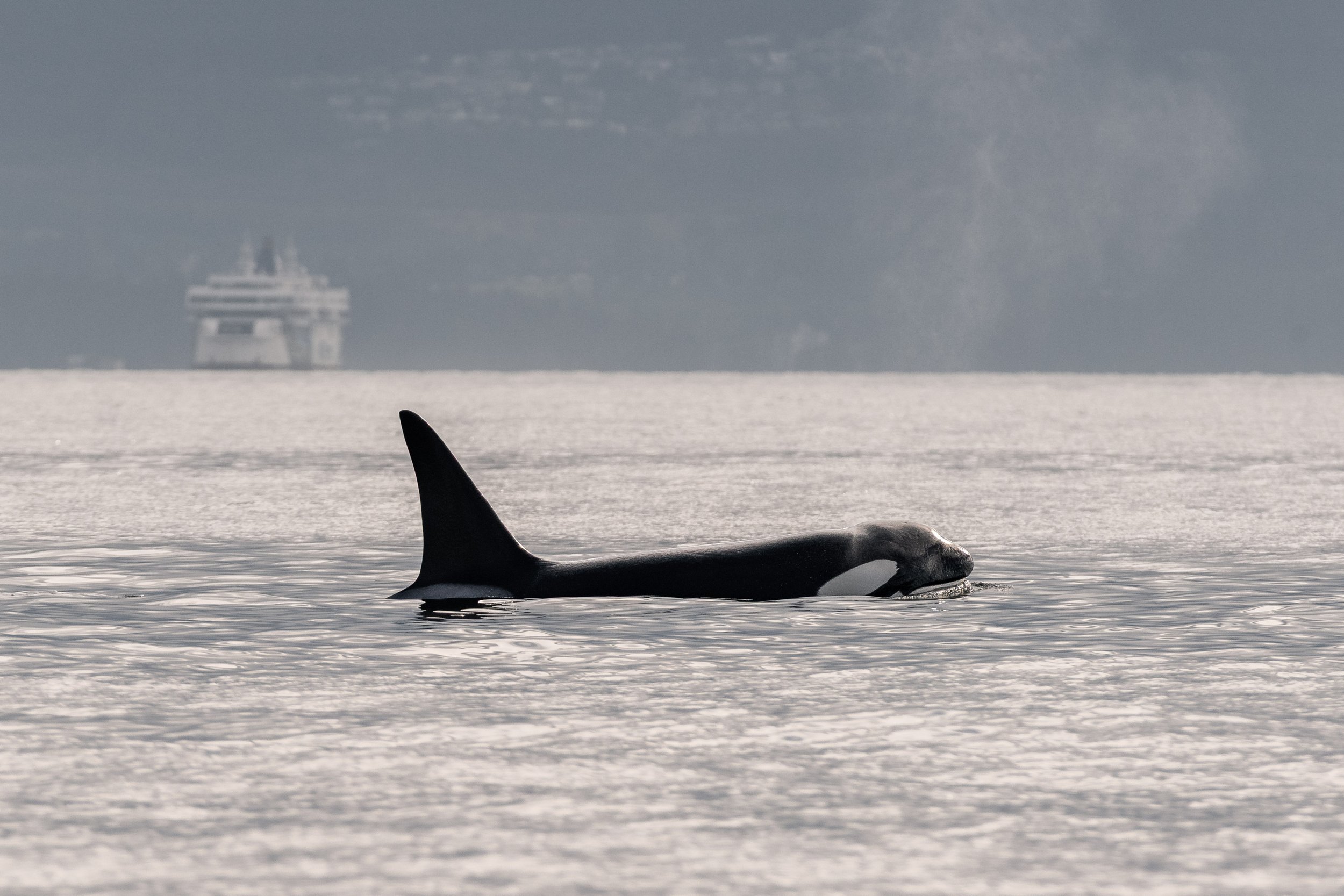
Photo by Hayleigh Hilbert.
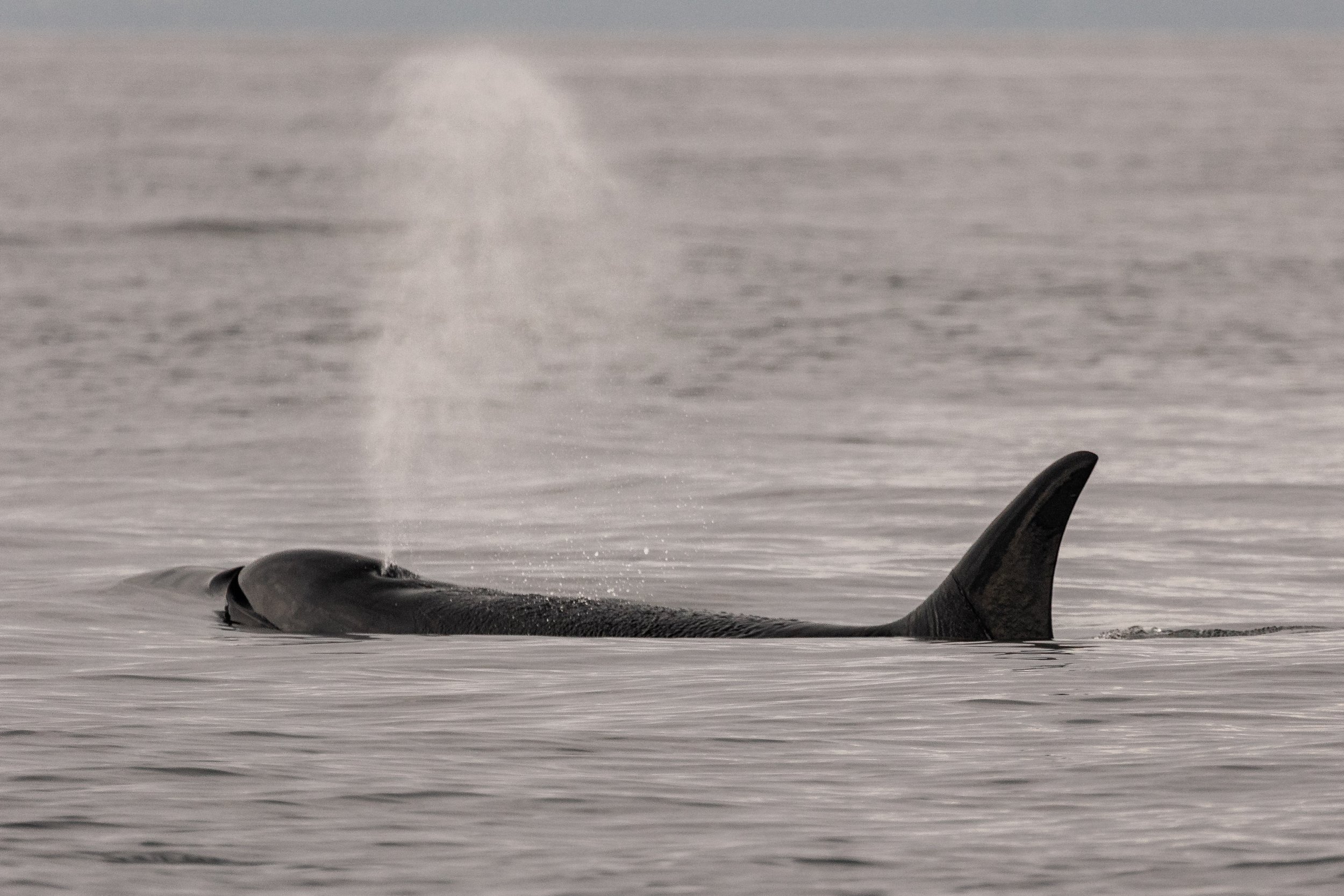
T065B Chunk coming up for a blow. Photo by Jordan Robinson.
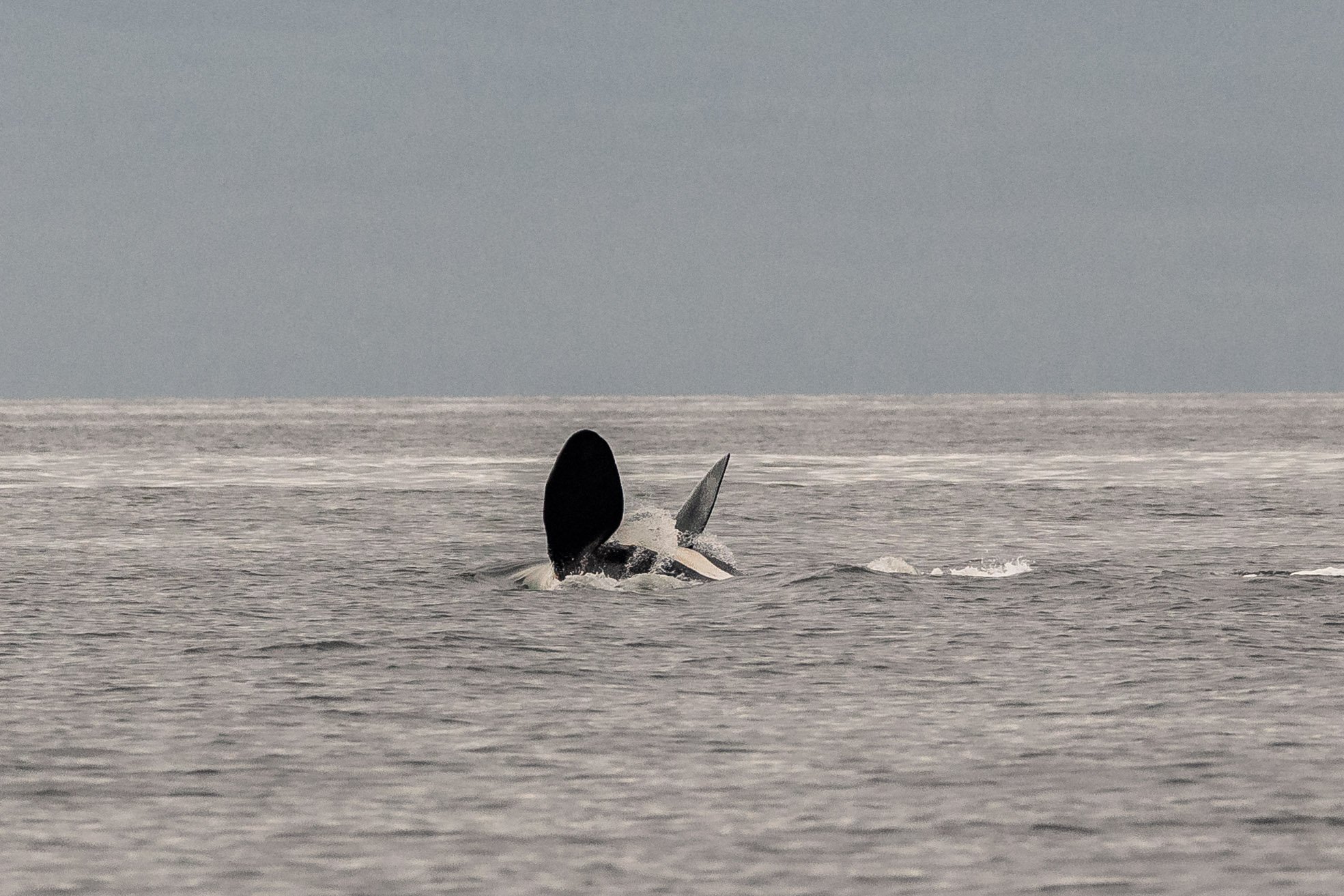
Doing the backstroke with both pectoral fins up and out of the water! Photo by Jordan Robinson.
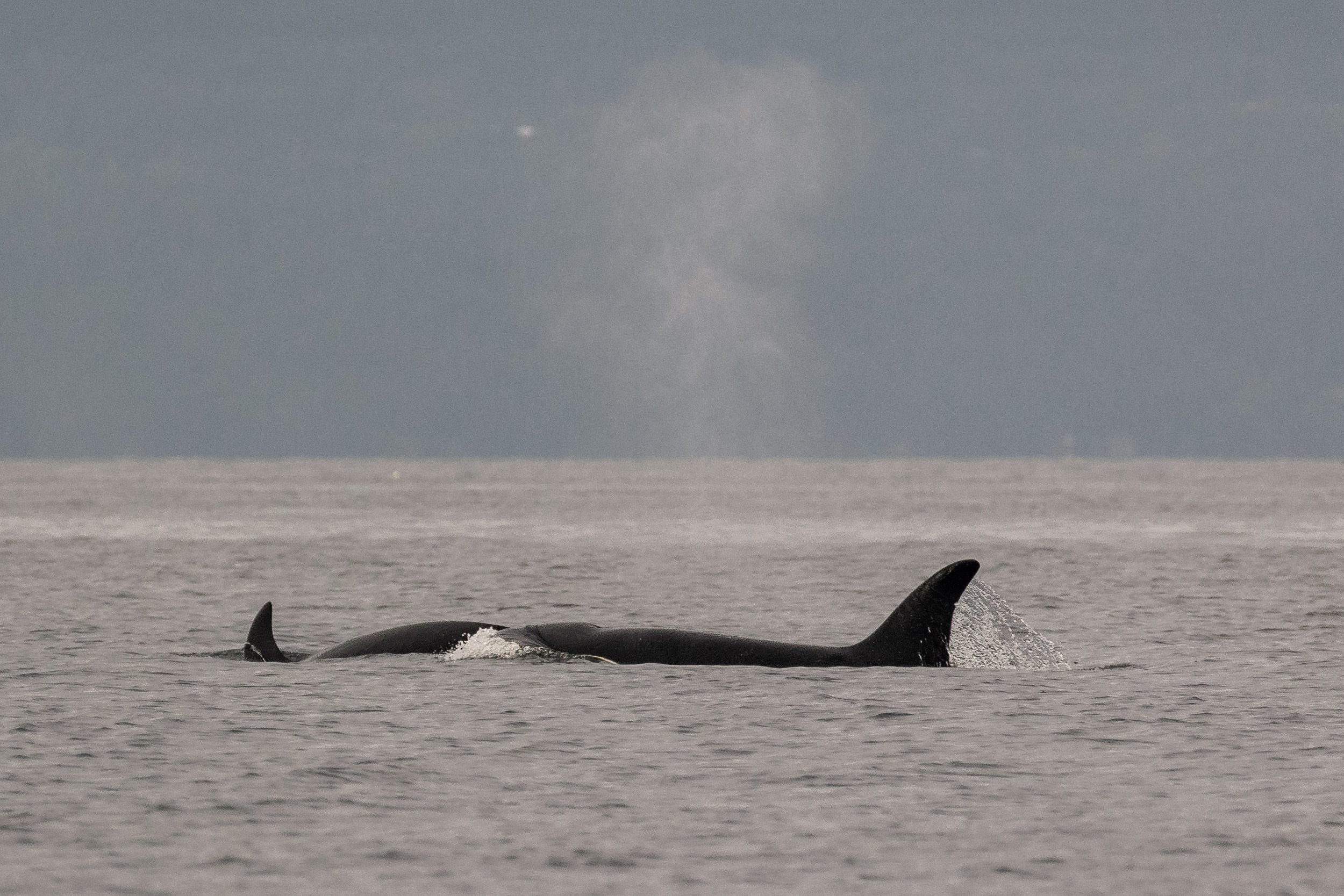
T065A5 Indy with T077E Misneach ahead of him. Photo by Jordan Robinson.
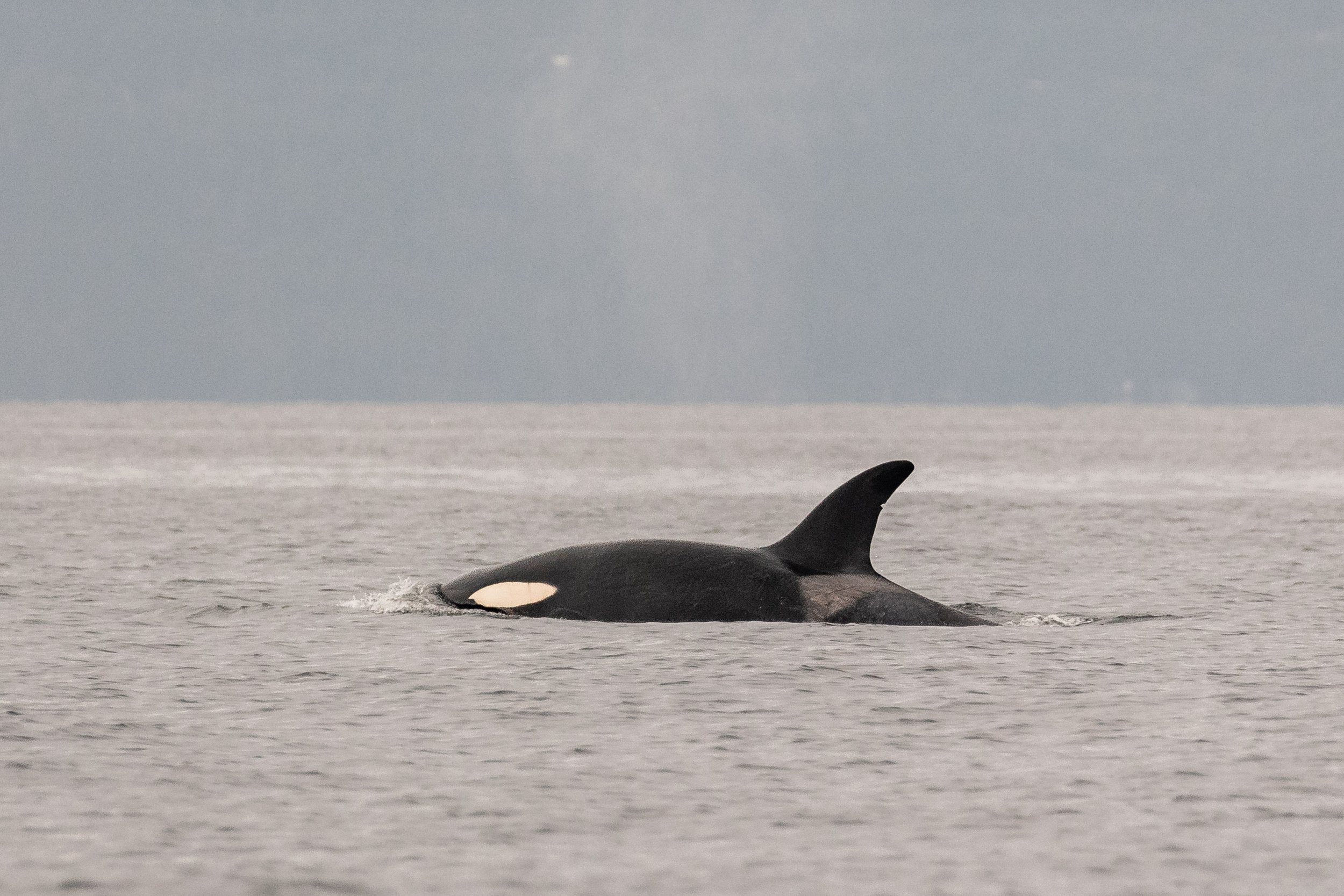
T065A5 Indy coming high out of the water. Photo by Jordan Robinson.
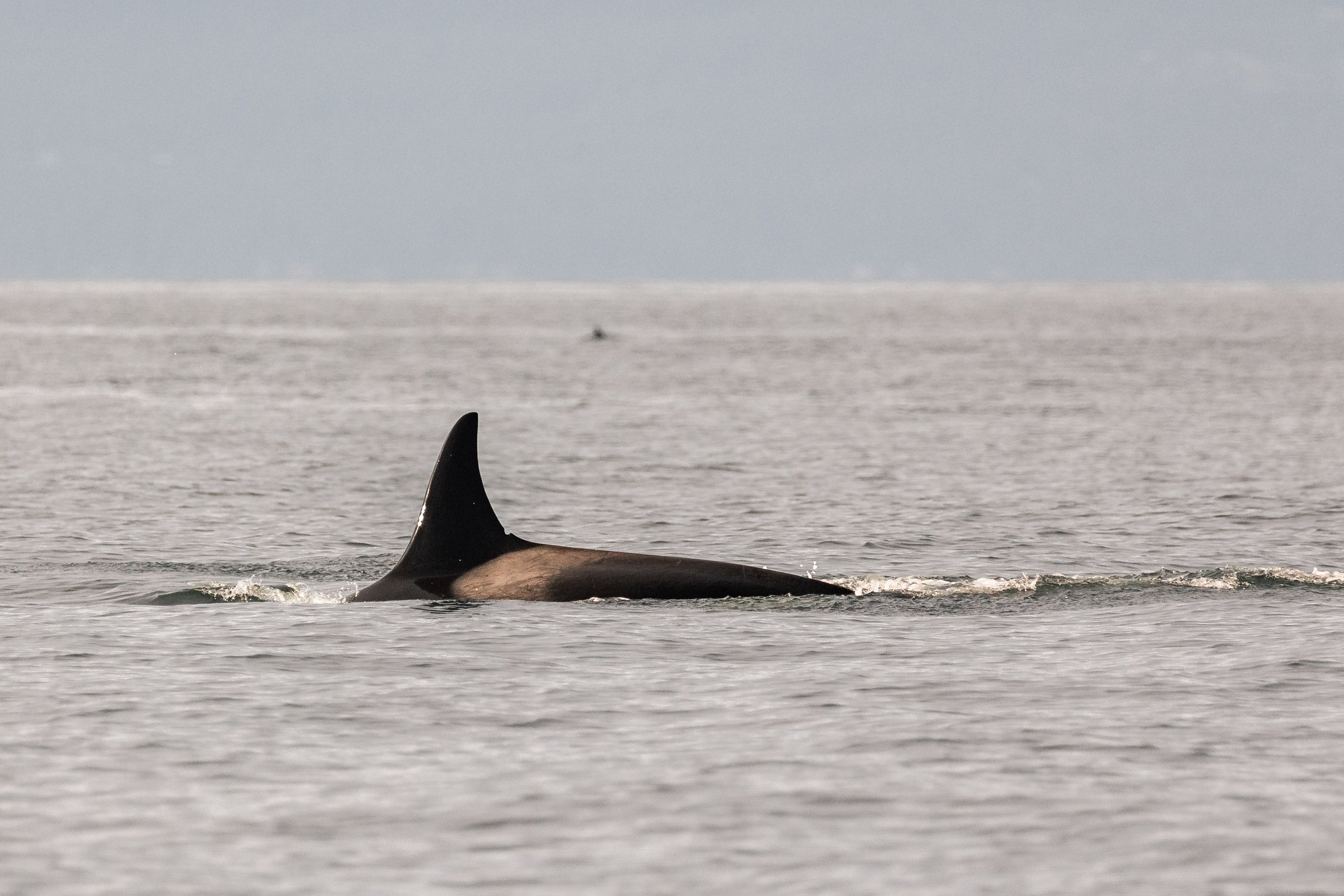
T065B Chunk - can you see how she earned her name? Photo by Jordan Robinson.
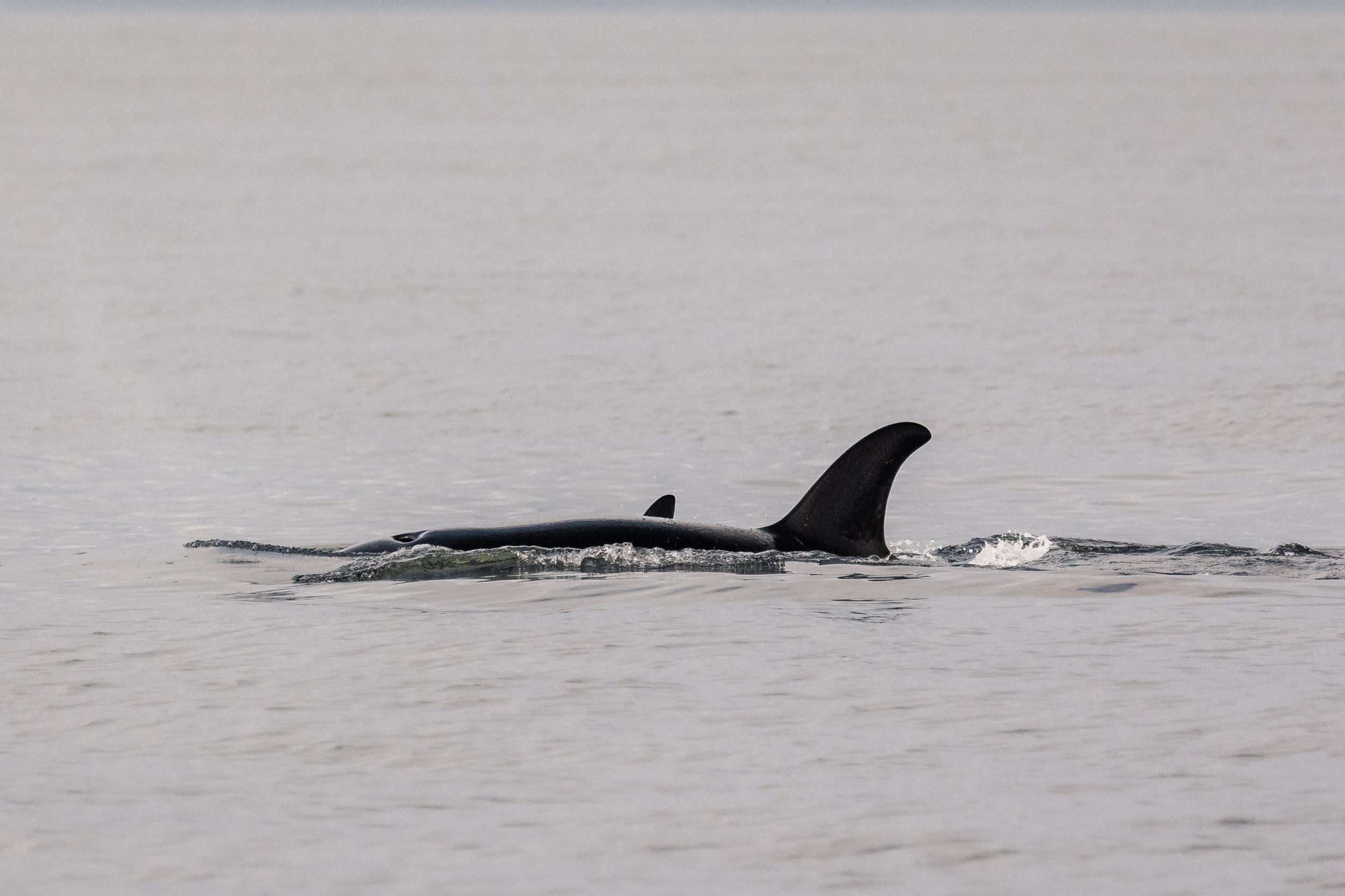
T065B3 Rook with his uniquely hooked dorsal fin visible. Photo by Jordan Robinson.
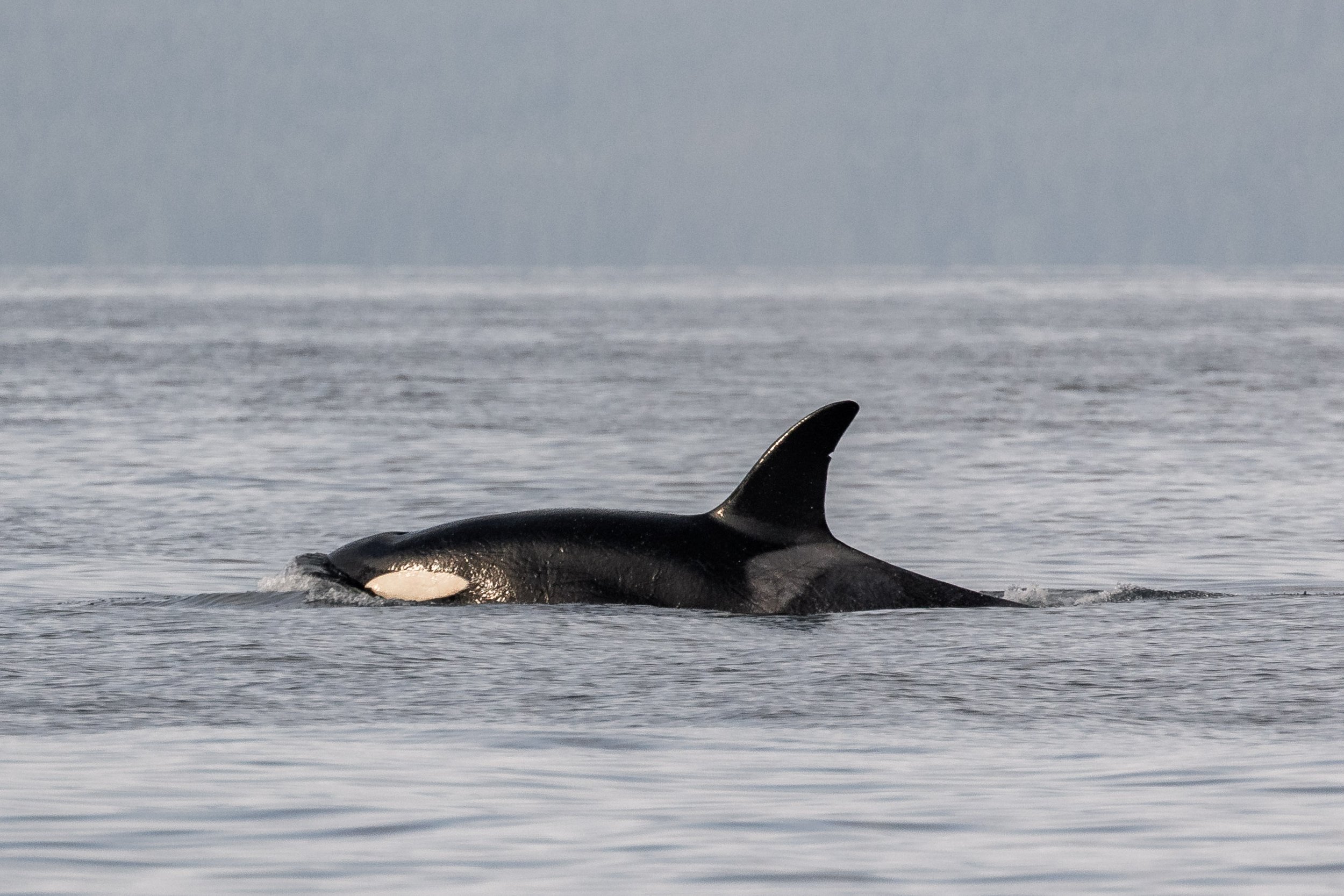
T065A5 Indy cruising along. Photo by Jordan Robinson.
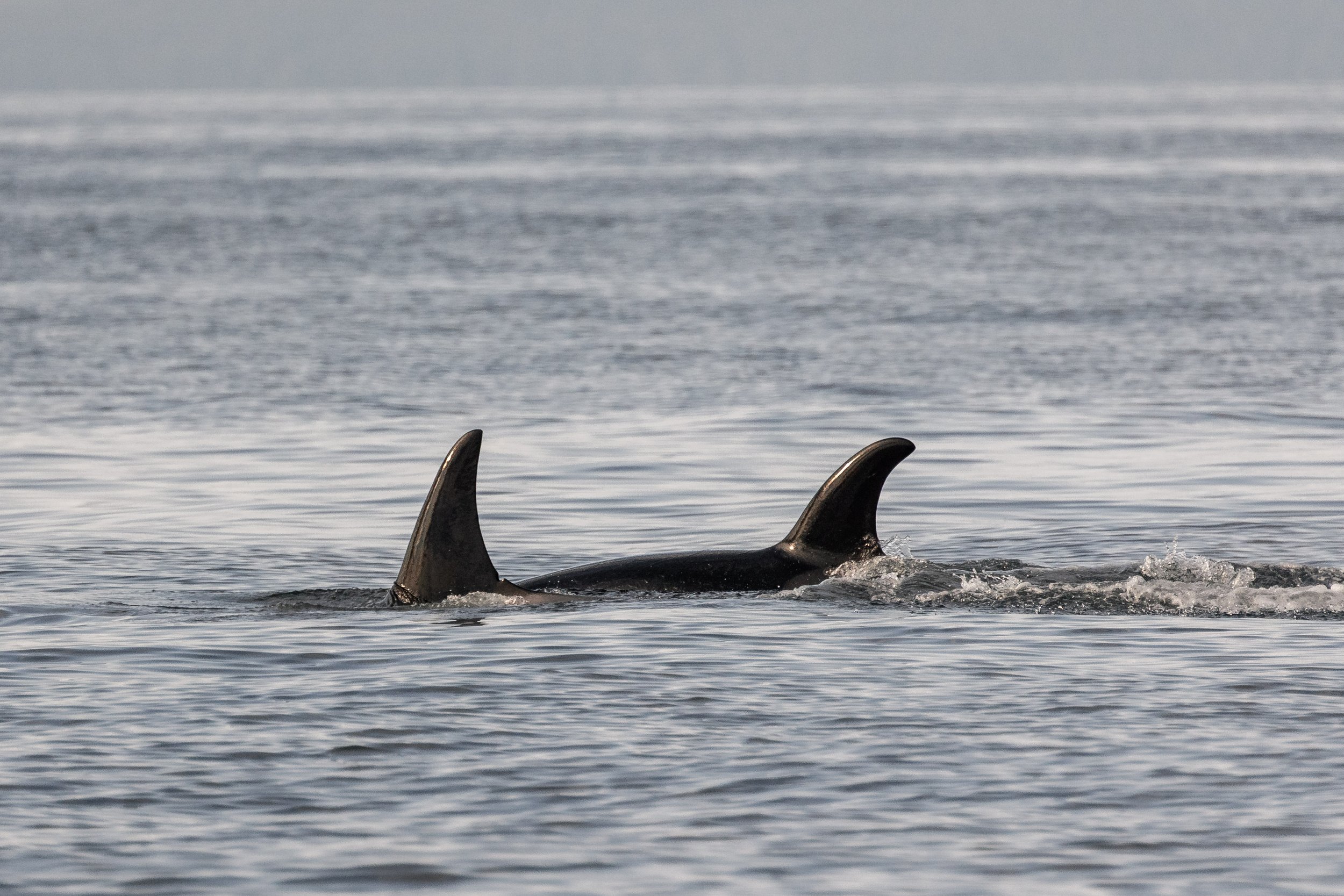
T065B Chunk with her youngest calf T065B3 Rook. Photo by Jordan Robinson.
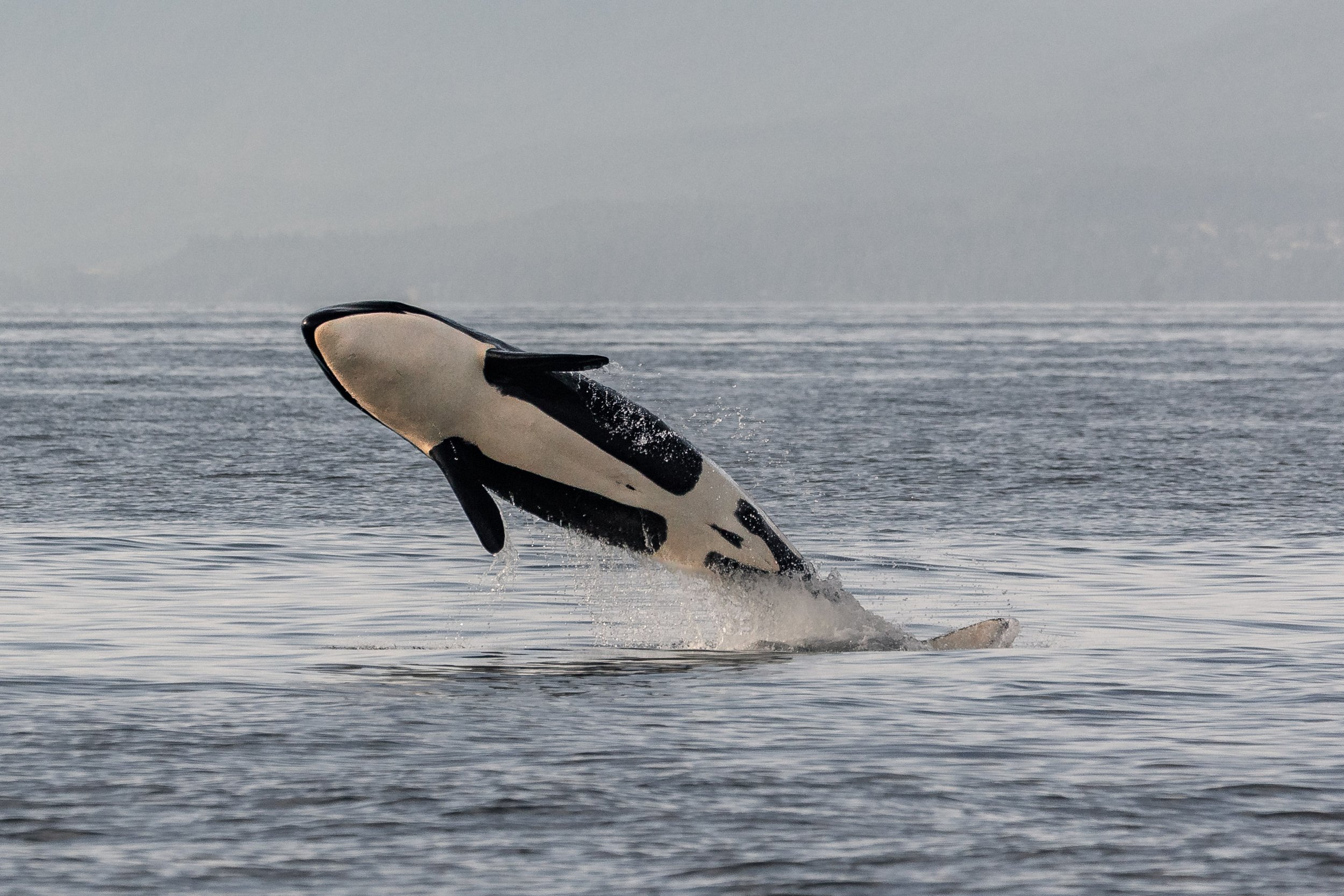
T065B3 Rook breaching. Photo by Jordan Robinson.
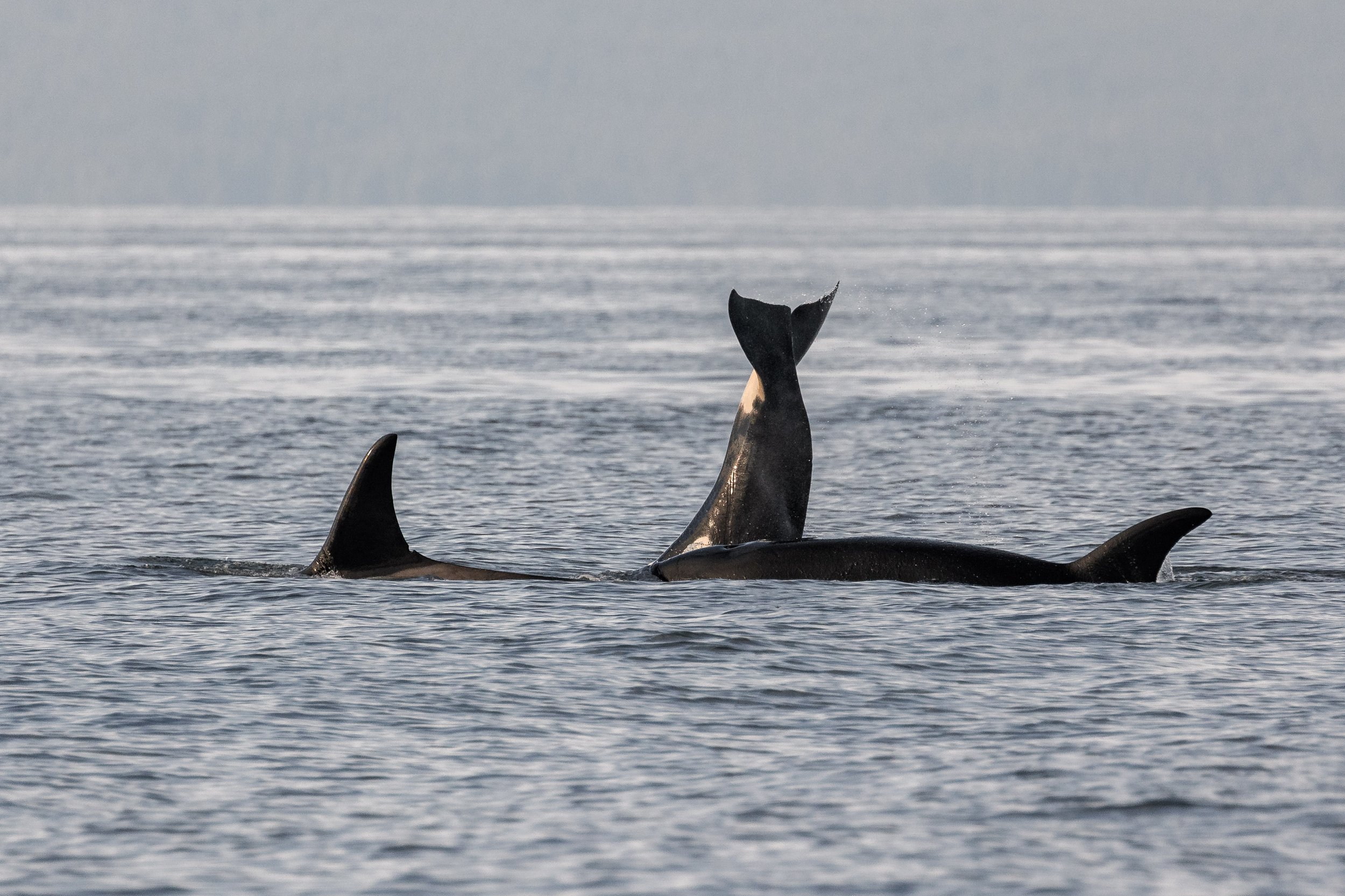
T065B Chunk and T065B2 Nettle with another beside them. Photo by Jordan Robinson.
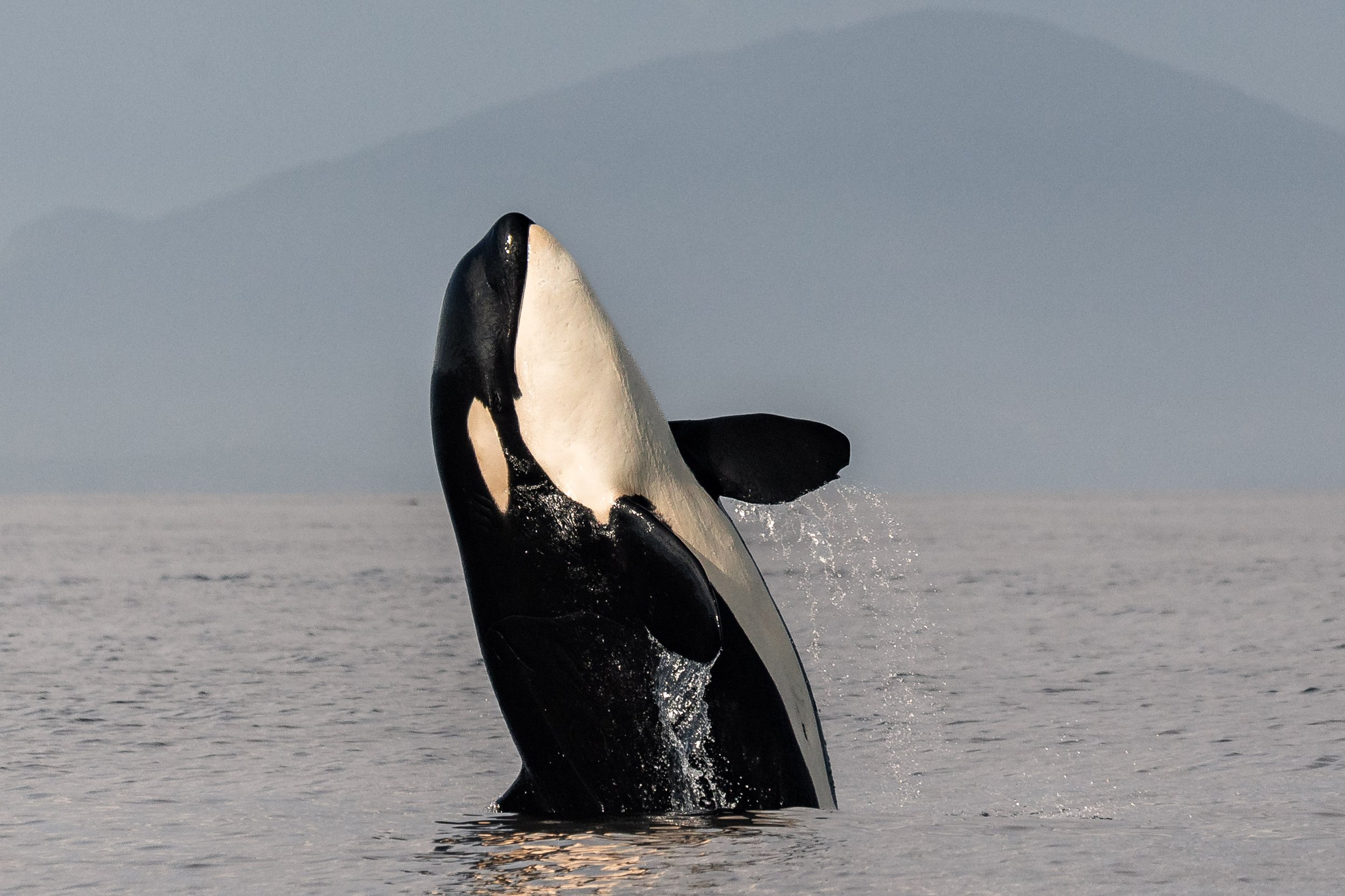
Look at how chunky and round T065B3 Rook is! Photo by Jordan Robinson.
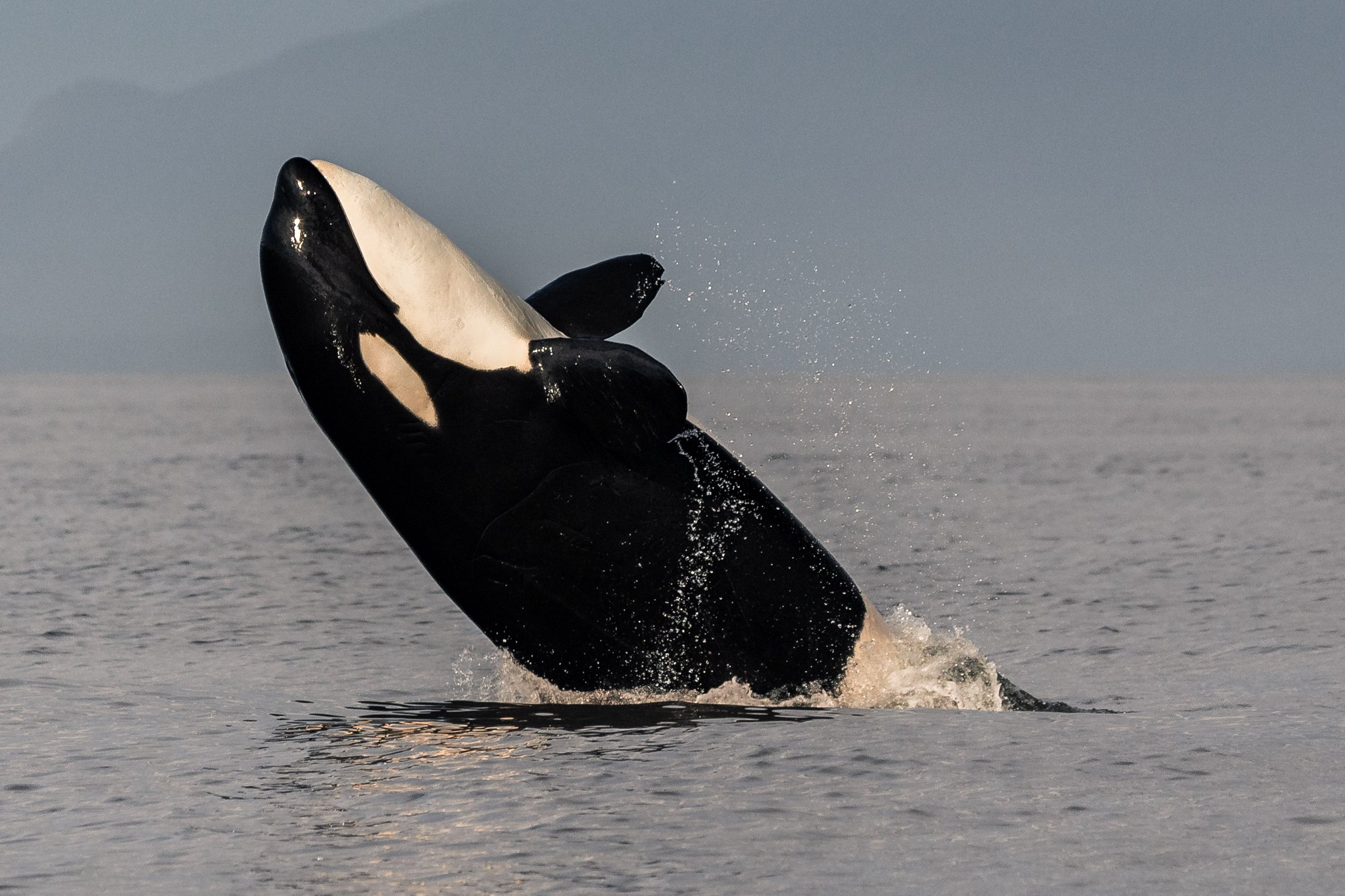
Coming in for a landing! Photo by Jordan Robinson.
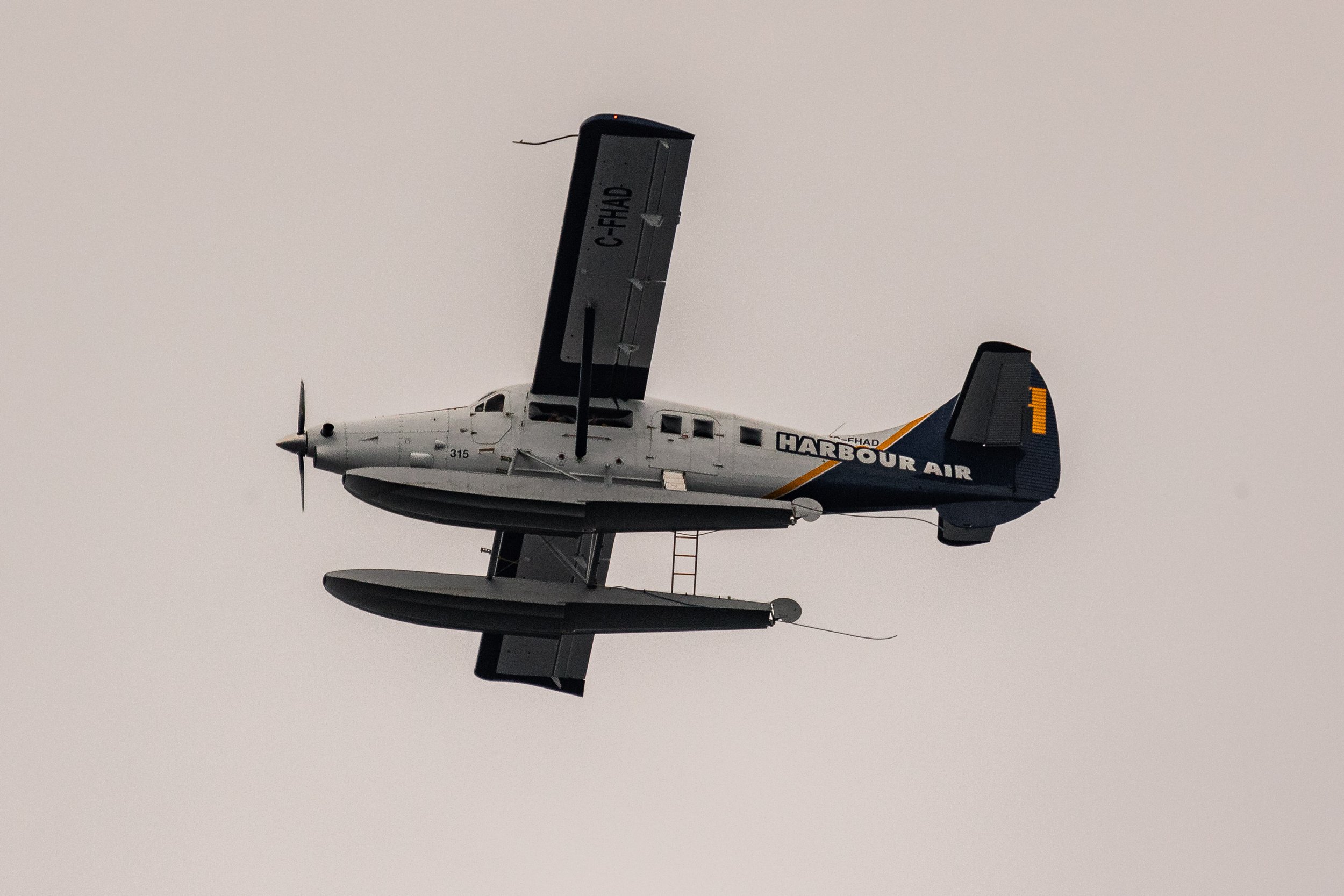
A seaplane flying overhead. Photo by Jordan Robinson.
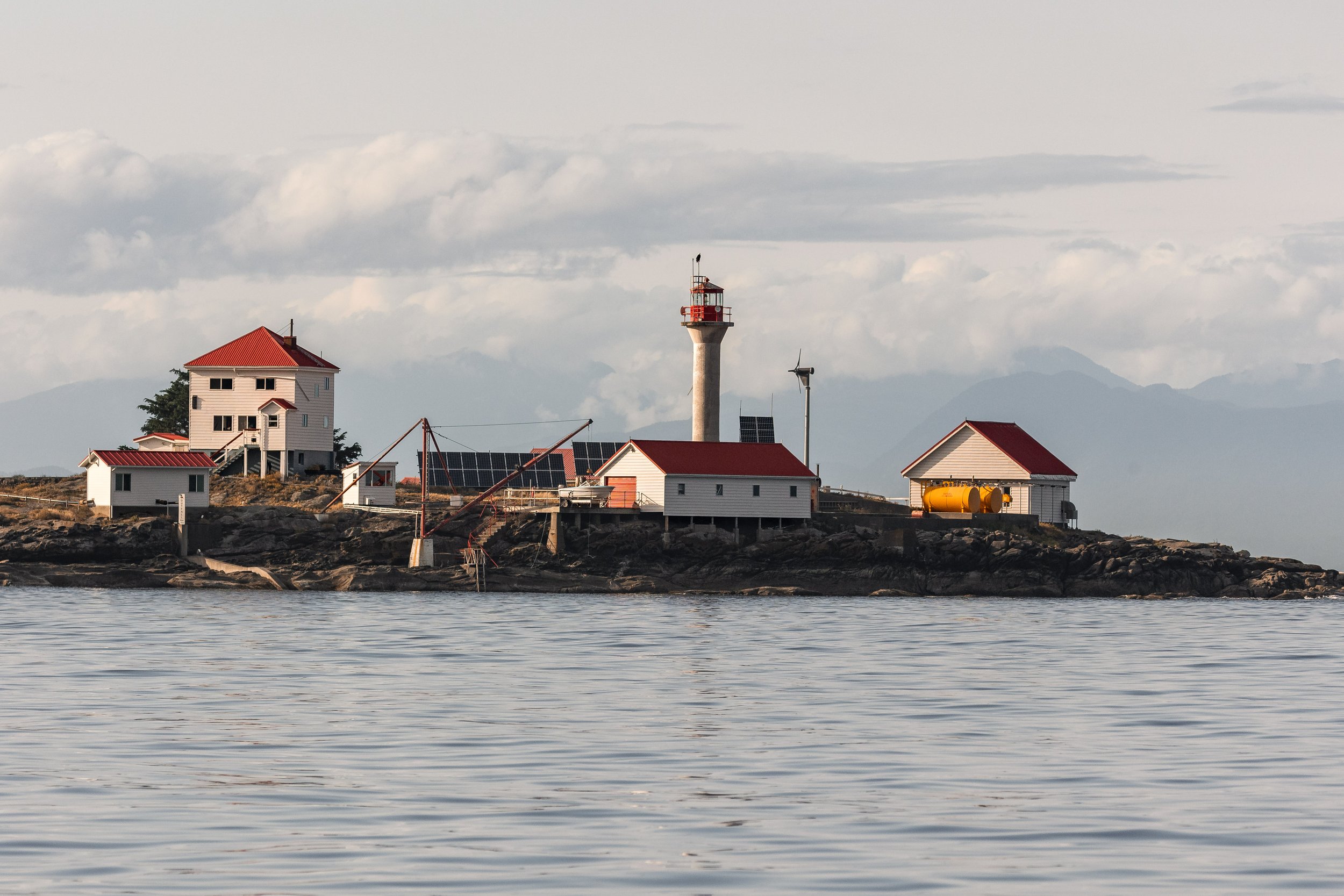
Entrance Island in the evening. Photo by Jordan Robinson.
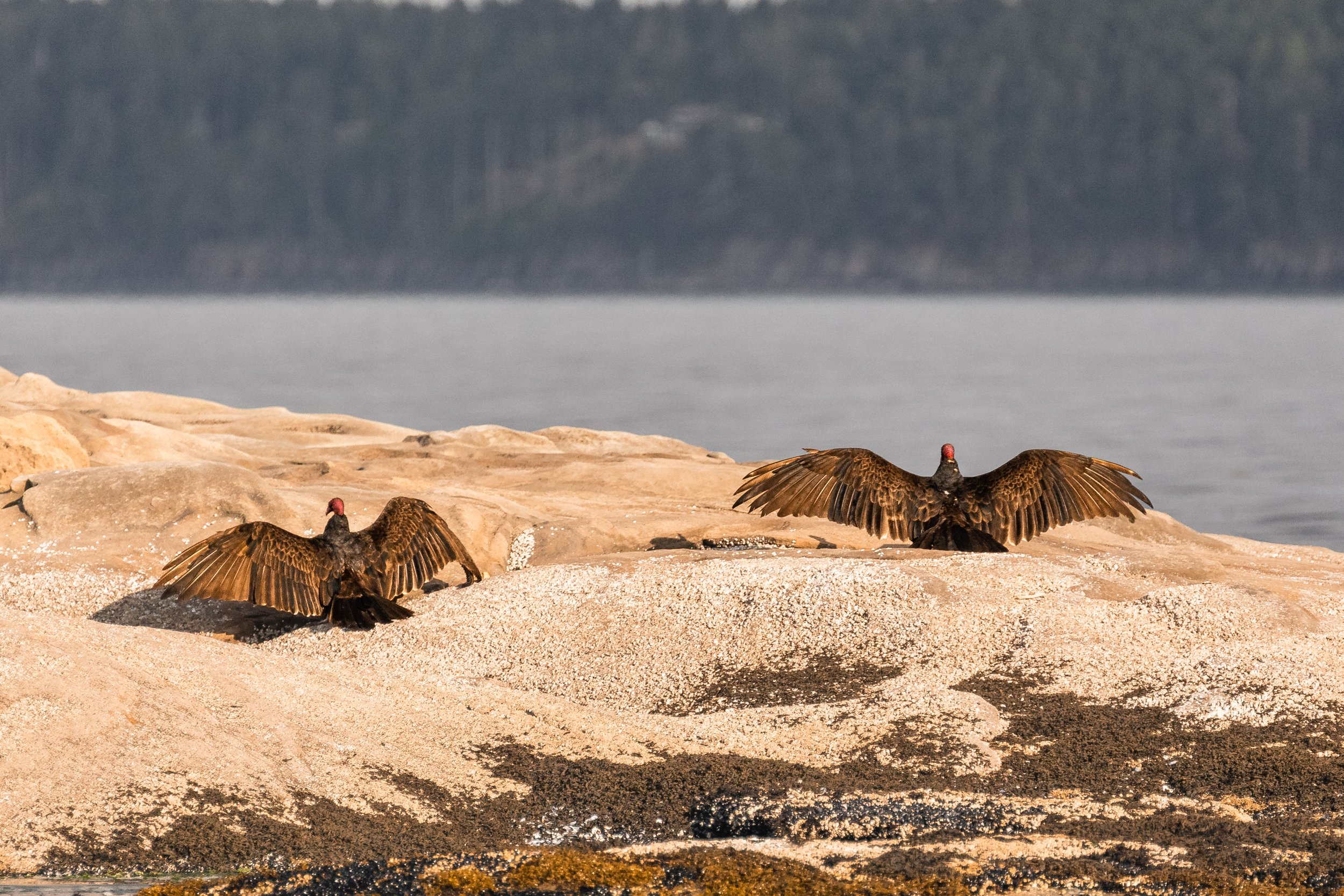
Turkey Vultures in the Horaltic Pose, used to dry their feathers, warm up, and to help kill parasities and bacteria via UV rays. Photo by Jordan Robinson.
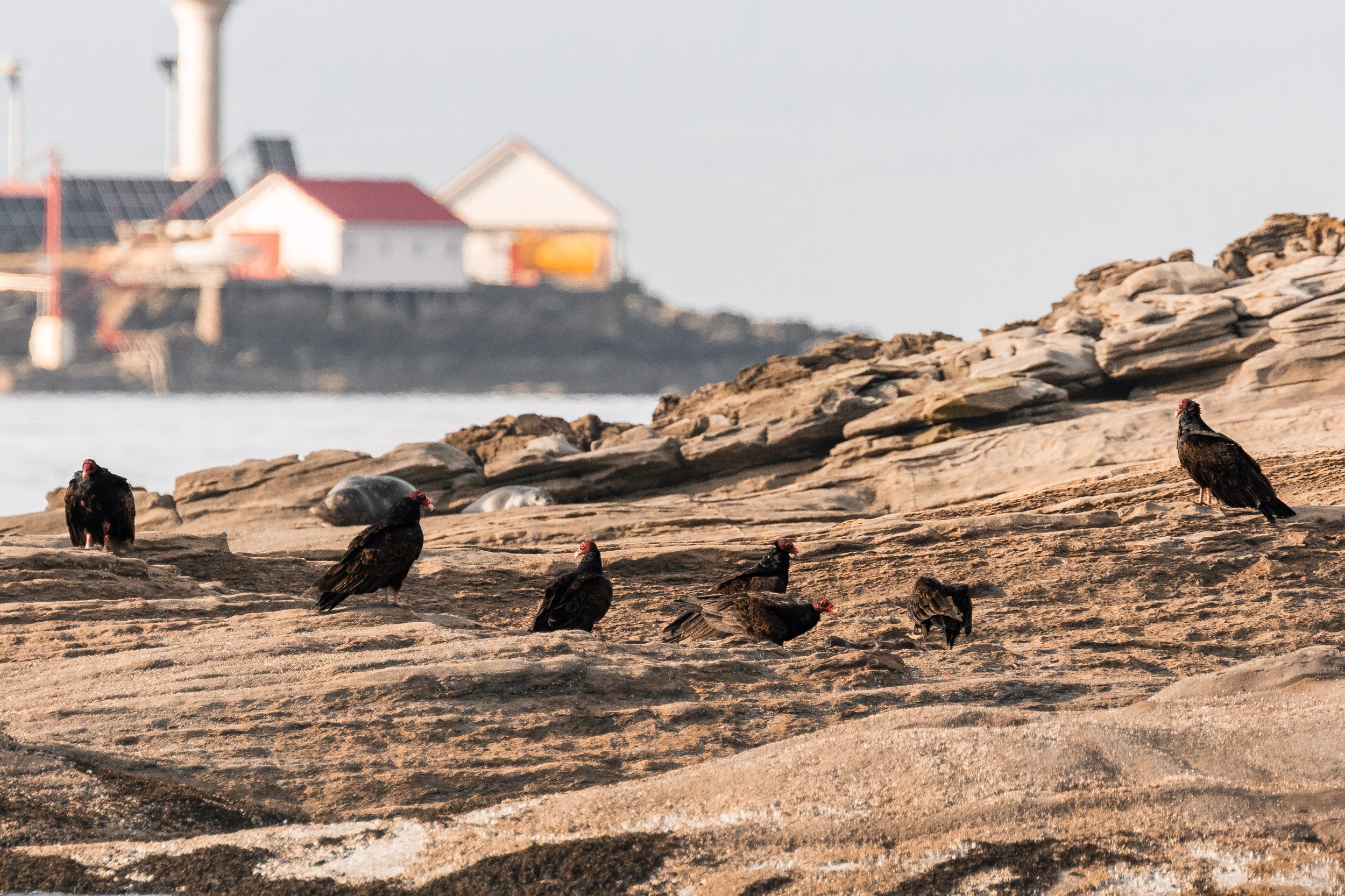
A wake of Turkey Vultures. Photo by Jordan Robinson.
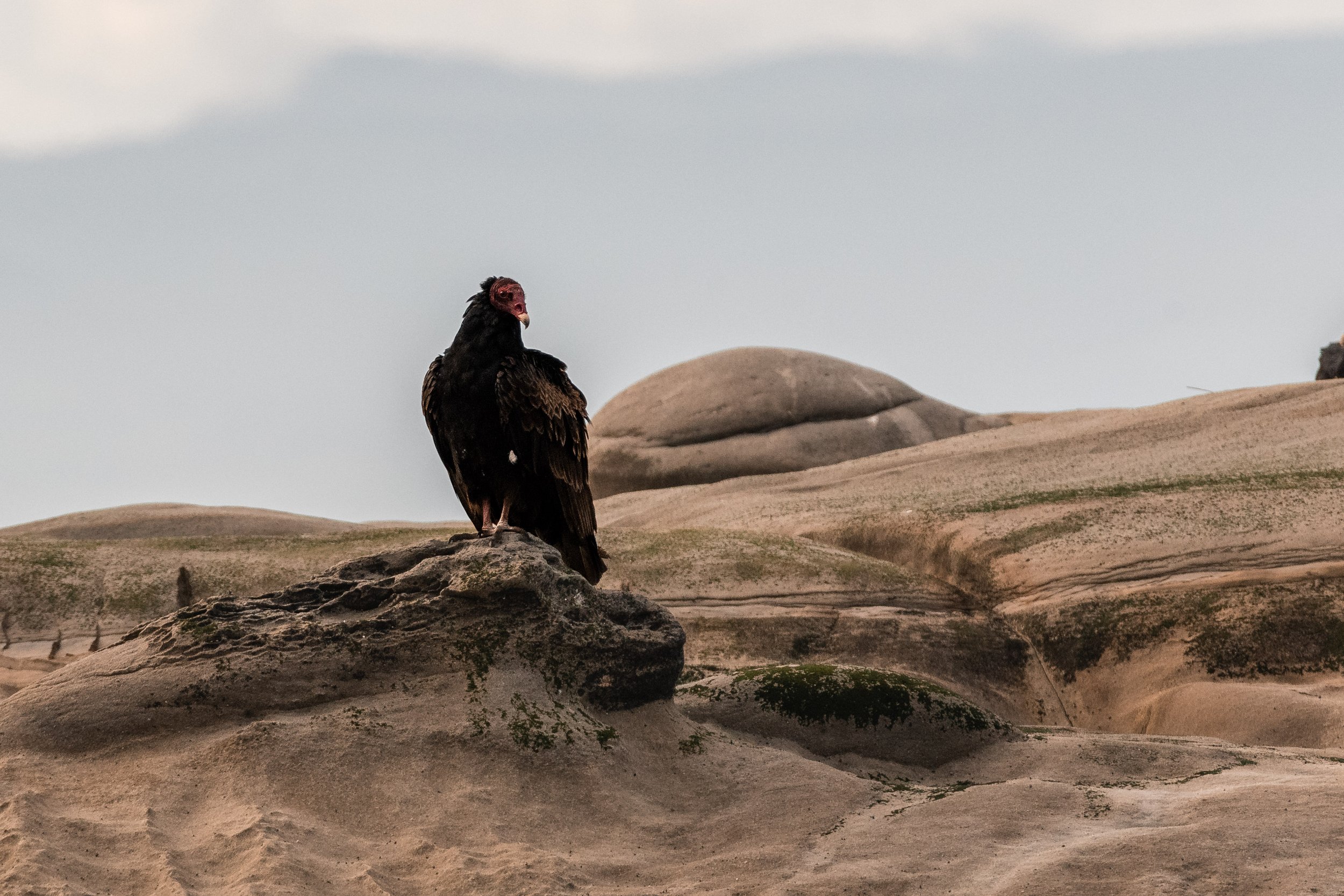
A Turkey Vulture watching majestically frm the rocks. Photo by Hayleigh Hilbert.
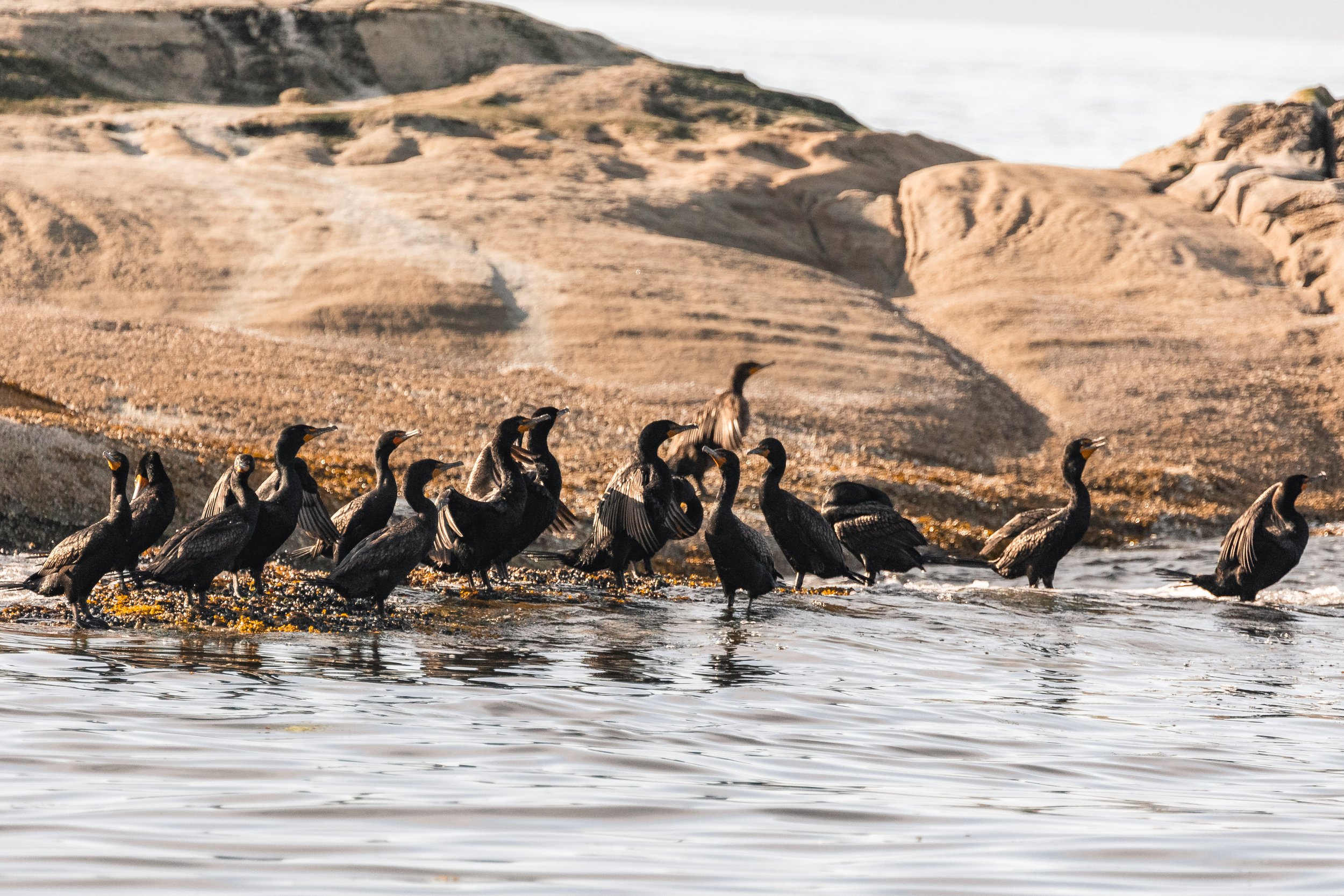
Cormorants sunning in the shallows. Photo by Jordan Robinson.
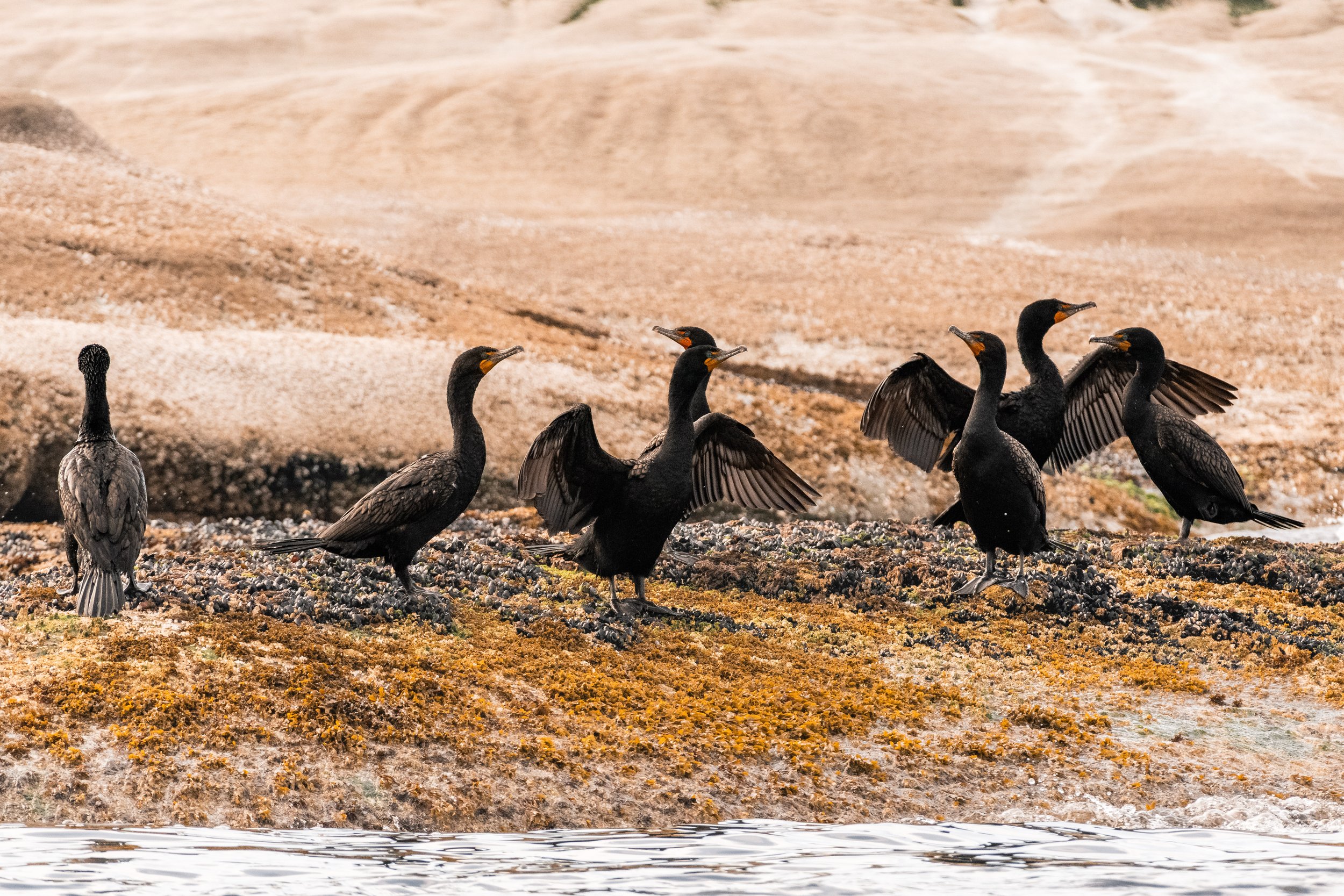
Similar to the Turkey Vultures, Cormorants can also be spotted standing still with their wings spread. For them, it is usually to dry their feathers off before they take flight. Photo by Hayleigh Hilbert.
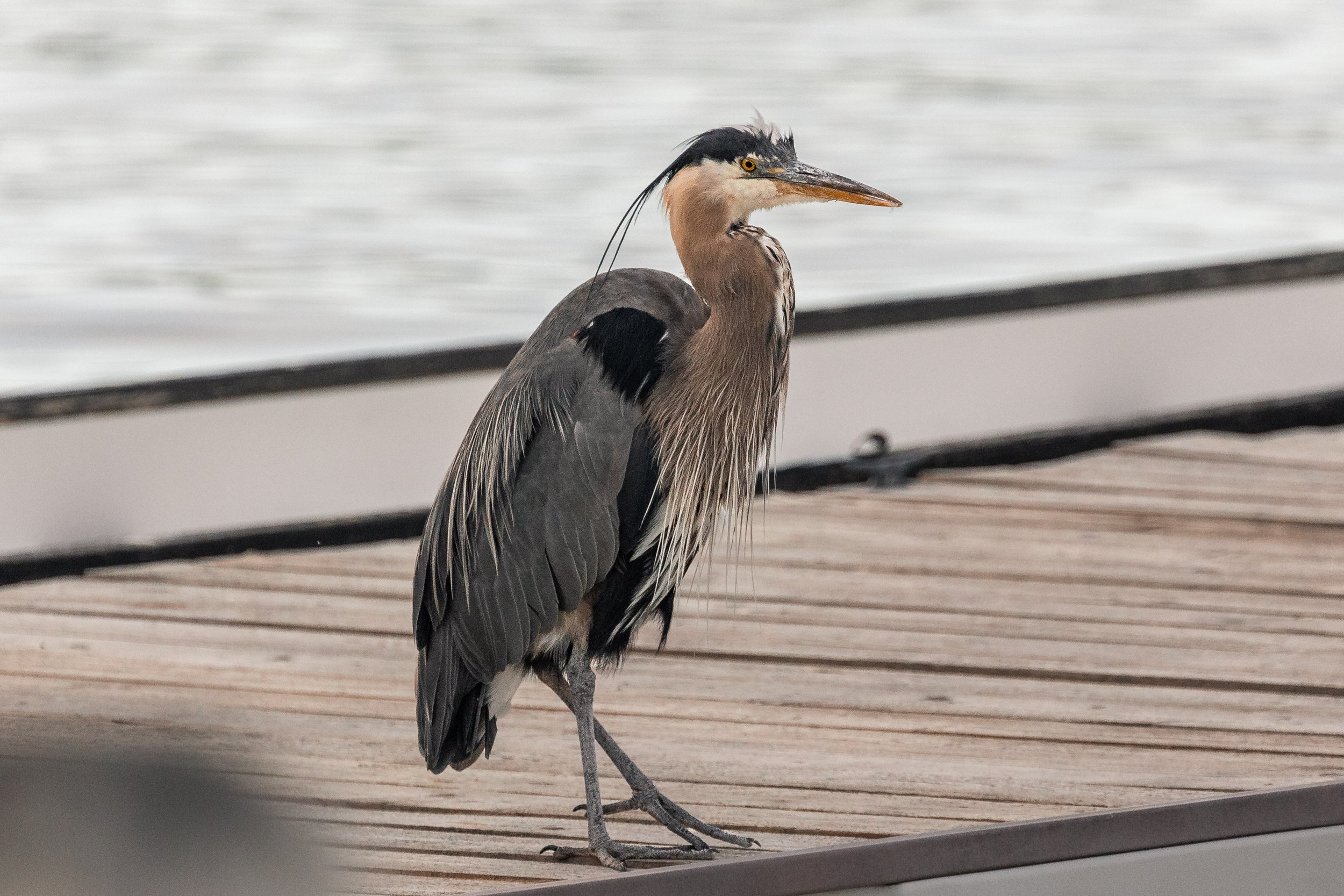
Harold the Great Blue Heron back at the docks. Photo by Jordan Robinson.