
July 4, 2026, 3:30 PM - The party continues right on our 'doorstep'!
Summer is here in full force, and so are our whales! Once more, Kula and Cascadia headed out and began venturing around the Salish Sea. The open waters greeted us as we skimmed along the Strait of Georgia, eastward bound.
Our first stop was a bright yellow angular marker. Seemingly unordinary, it is a perfect deep water haul out for our sealions. Here, large sandy coloured pinnipeds known as Steller Sea Lions pushed each other around, fighting for the best spots to rest and relax. In the waters below the marker, other individuals curiously watched us as we drifted by. Suddenly, a handful of them picked up speed, and soon they were launching themselves clear out of the water. This behaviour, known as porpoising, is believed to help increase their swim speed while also reducing energy consumption.
After the intriguing encounter with the sea lions, Captains Joseph and Nick turned us away and we began travelling once more. Eyes ever searching the waters around us, after a bit more looking, we soon found what we were looking for – a large dark back arched out of the water, and soon a tail was spotted as well. It was a lone Humpback whale, and the first whale encounter of the trip!
Once in a good position, Naturalists Evan and Jordan began working on identifying the individual. Thankfully, this whale had not only a unique fluke, but also a highly unique dorsal fin. With photos of these two features, we cross-referenced our guides and learned we were with Forge (BCX2499).
Born in 2022 to one of our regular returners, Anvil (BCZ0410), Forge has returned seasonally to our area since they began venturing out on their own. Humpback calves spend roughly one full year by their mother’s side, where they learn migration routes, feeding areas, and potential danger zones to avoid. It is a lot of information for a young whale to take in, but it is all vital to their survival in the depths of the sea.
Forge was being a very typical humpback as we observed them, simply travelling along and occasionally fluking as they went. It is possible they were foraging deeper in the water column, as feeding occupies a large portion of their day in our waters. Relying on their fat reserves to keep them going, they tend to go on multi-month fasts once they leave our area for the breeding grounds and will often not eat a large meal again until they return.
Soon, we departed Forge and were once again back in full search mode. We had found a large group of Transient orca travelling together earlier in the day, and we were eager to try and relocate them. They had been spotted travelling through the Southern Gulf Islands and were likely now near Nanaimo Harbour. Crossing back through the Strait, we skirted Gabriola’s coastline before slowing down near Entrance Island. Just ahead, travelling through the outer harbour, was what we were looking for – dorsal fins of all shapes and sizes cut through the waters as they travelled along.
After a quick photoshoot and comparison, it was confirmed that these were the T065Bs, T075Bs, and T077s:
T065B Chunk ♀ (1993)
T065B1 Birdsall ♂ (2011)
T065B2 Nettle ♂ (2019)
T065B3 Rook ♂ (2023)
T075B Pebbles ♀ (1995)
T075B2 Jasper ♂ (2015)
T075B3 Rubble ♂ (2017)
T075B4 Petra ♀ (2021)
T077 Asja ♀ (1981)
T077D Alcyon ♀ (2009)
The group seemed extra slap-happy this evening, with many of the members travelling upside down and whacking their tails against the surface as they went. It is possible that they were simply socializing and enjoying their time together, or that they may have been celebrating a successful hunt that occurred prior to our arrival. Whatever the case, it is always awe-inspiring to see these whales simply going about their day and enjoying every moment!
With the sun beginning to dip down in the sky, we said our goodbyes and headed on out. Kula and crew made their way towards Gabriola for one last wildlife stop, and while Cascadia was going to follow suit, they ended up having another surprise whale encounter!
A small pod consisting of three orca had appeared. Two large males towered over the significantly smaller female. A quick photo confirmed that this was the T101s:
T101 Reef ♀ (≤1969)
T101A Rush ♂ (1993)
T101B Lagoon ♂ (1997)
These three were busy travelling along when we encountered them, potentially on their way to meet up with the other orca we had spotted earlier. After a few minutes with them, Cascadia continued onward once more.
The golden rays of evening cascaded over the cliffs as the vessels approached. This area, known as the Gabriola Bluffs, is always bustling with wildlife. Most of the animals seen here are birds, and today was no exception. Amongst the rocky outcroppings, several cormorants could be spotted settling into their nests for the approaching night. Brief glimpses of a fast-moving Cliff Swallow could also be seen darting into their nests. Nearby, a Violet-green Swallow sat high on a branch. In the waters, a Pigeon Guillemot could also be spotted taking flight.
After a couple more glimpses of the bluffs, the captains departed once more and soon were underway one final time. A few minutes later, we were pulling back into Nanaimo Harbour, wrapping up an amazing, double-species-filled adventure!
Please enjoy these photos by Marine Naturalists Evan Hessels and Jordan Robinson.
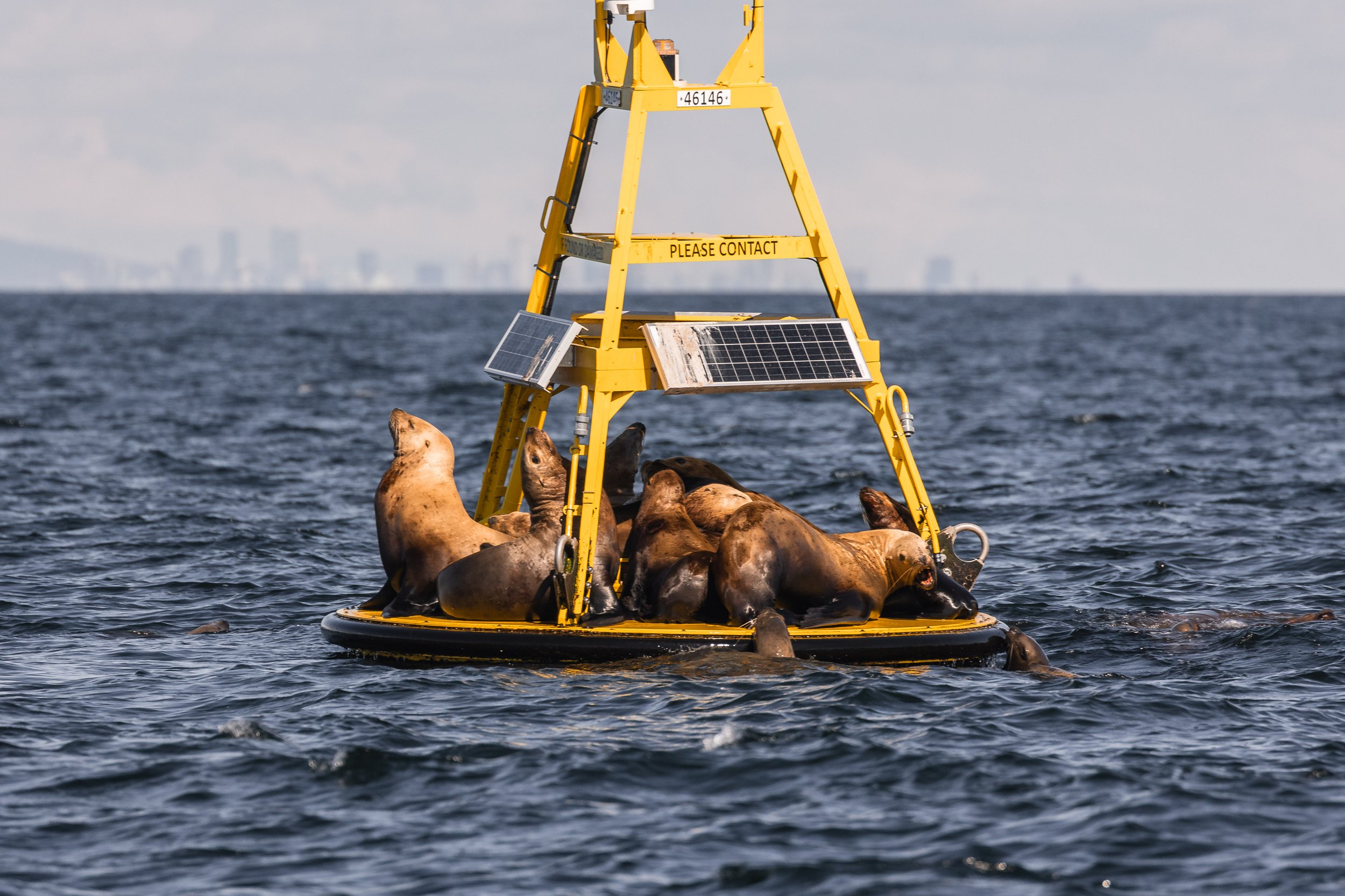
Sealions hauled out together at the Halibut Bank ODAS buoy. Photo by Jordan Robinson.
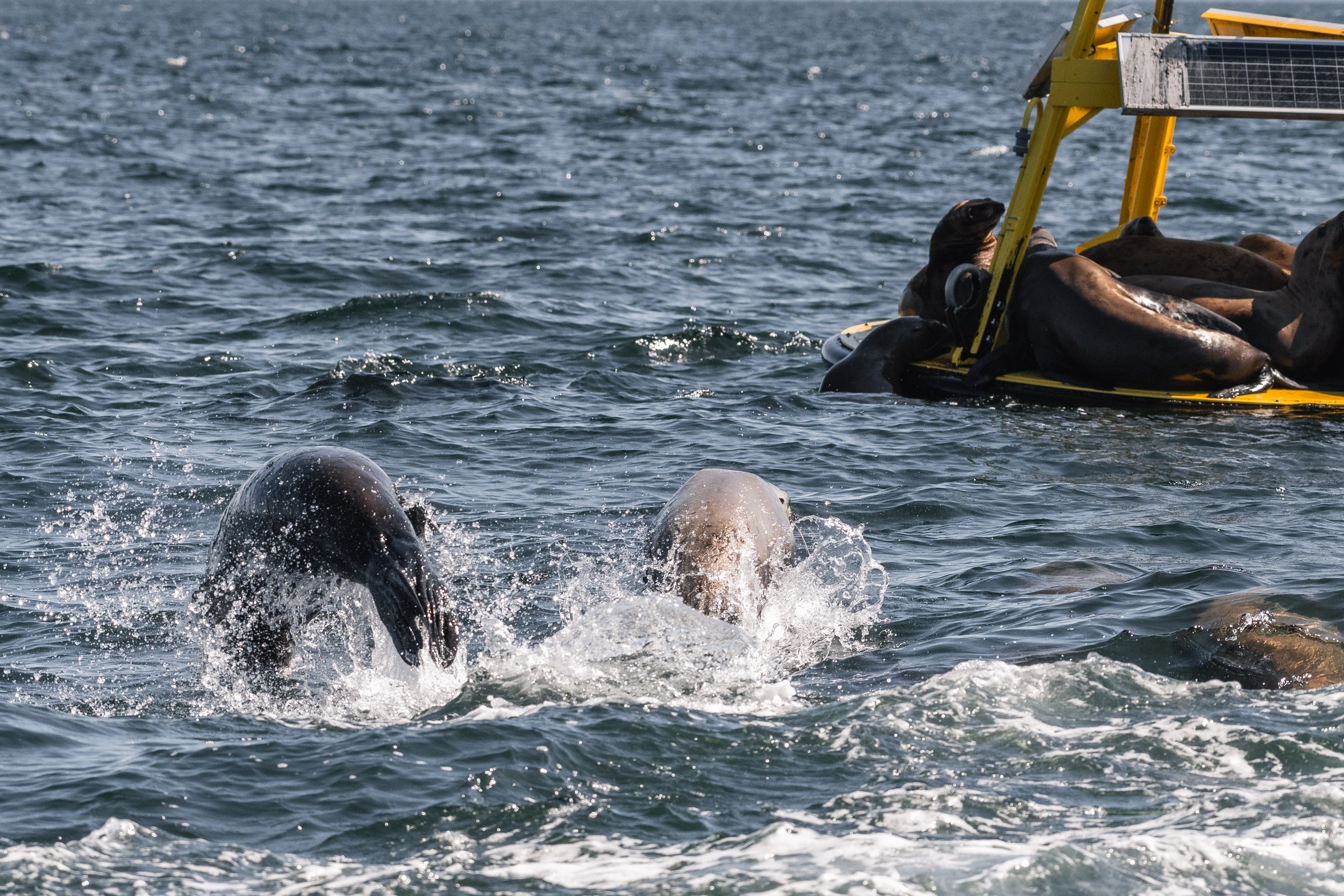
Porpoising along sea lion style. Photo by Evan Hessels.
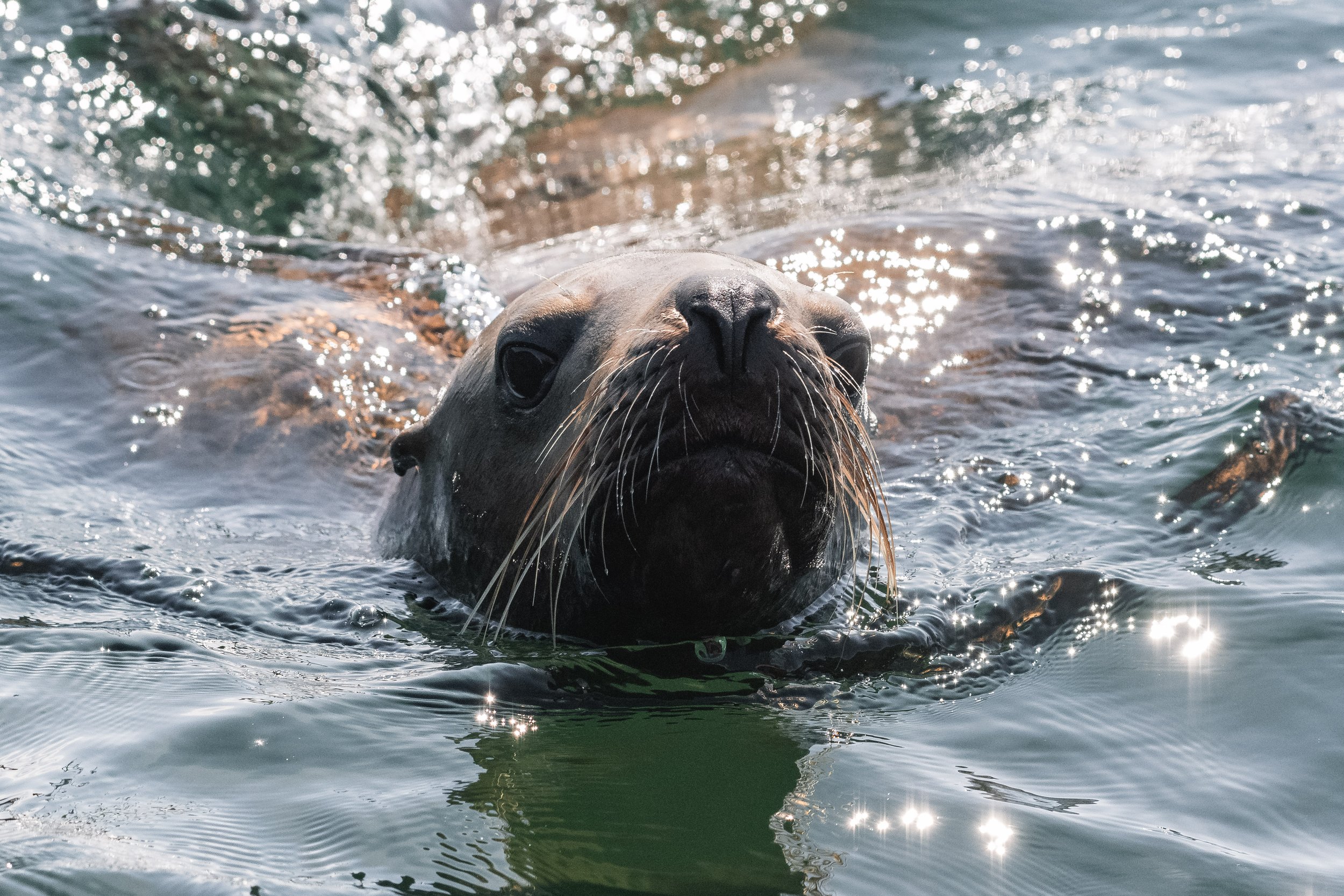
Look at those whiskers! Photo by Evan Hessels.
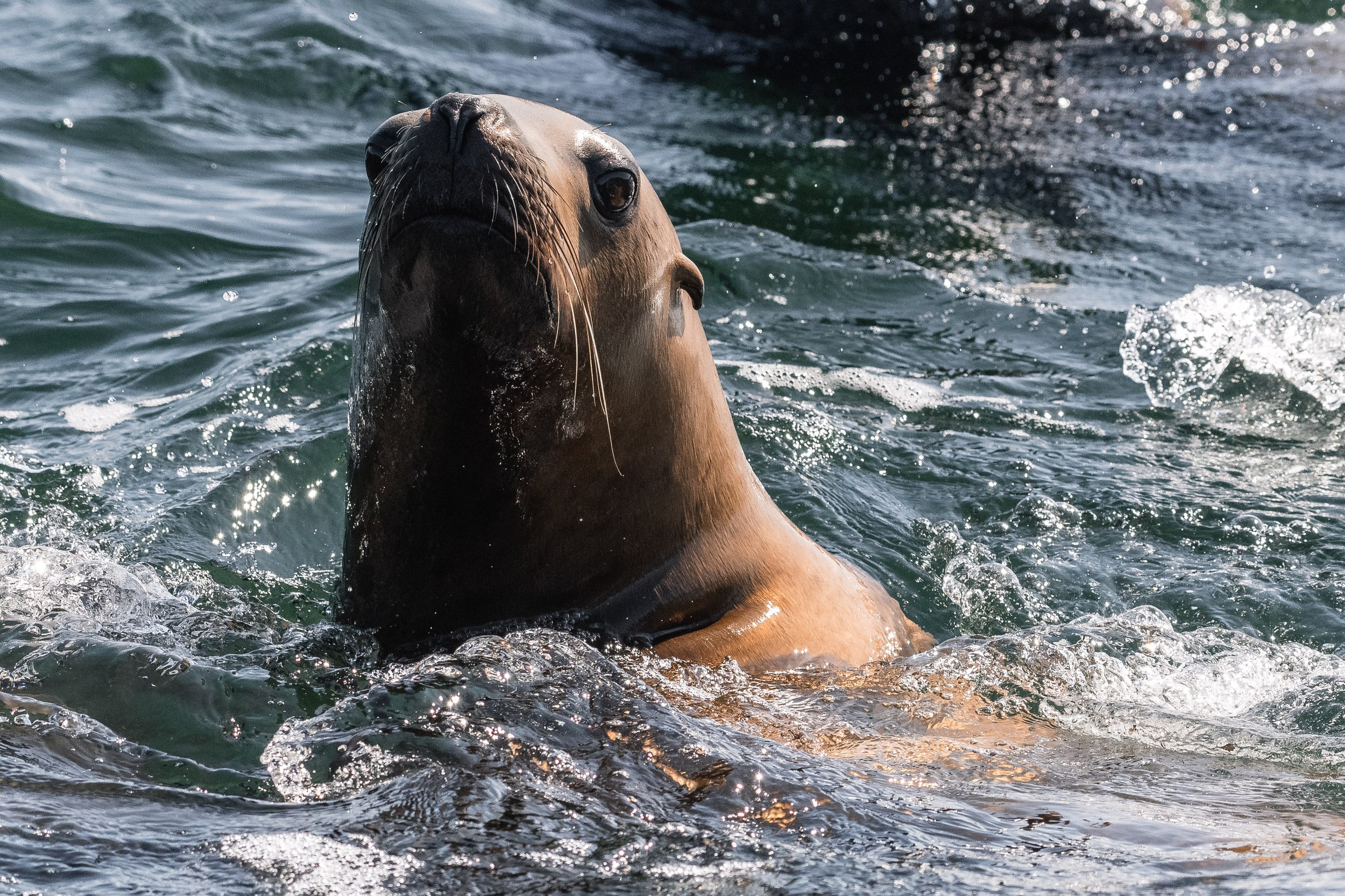
Giving us a peek. Photo by Evan Hessels.
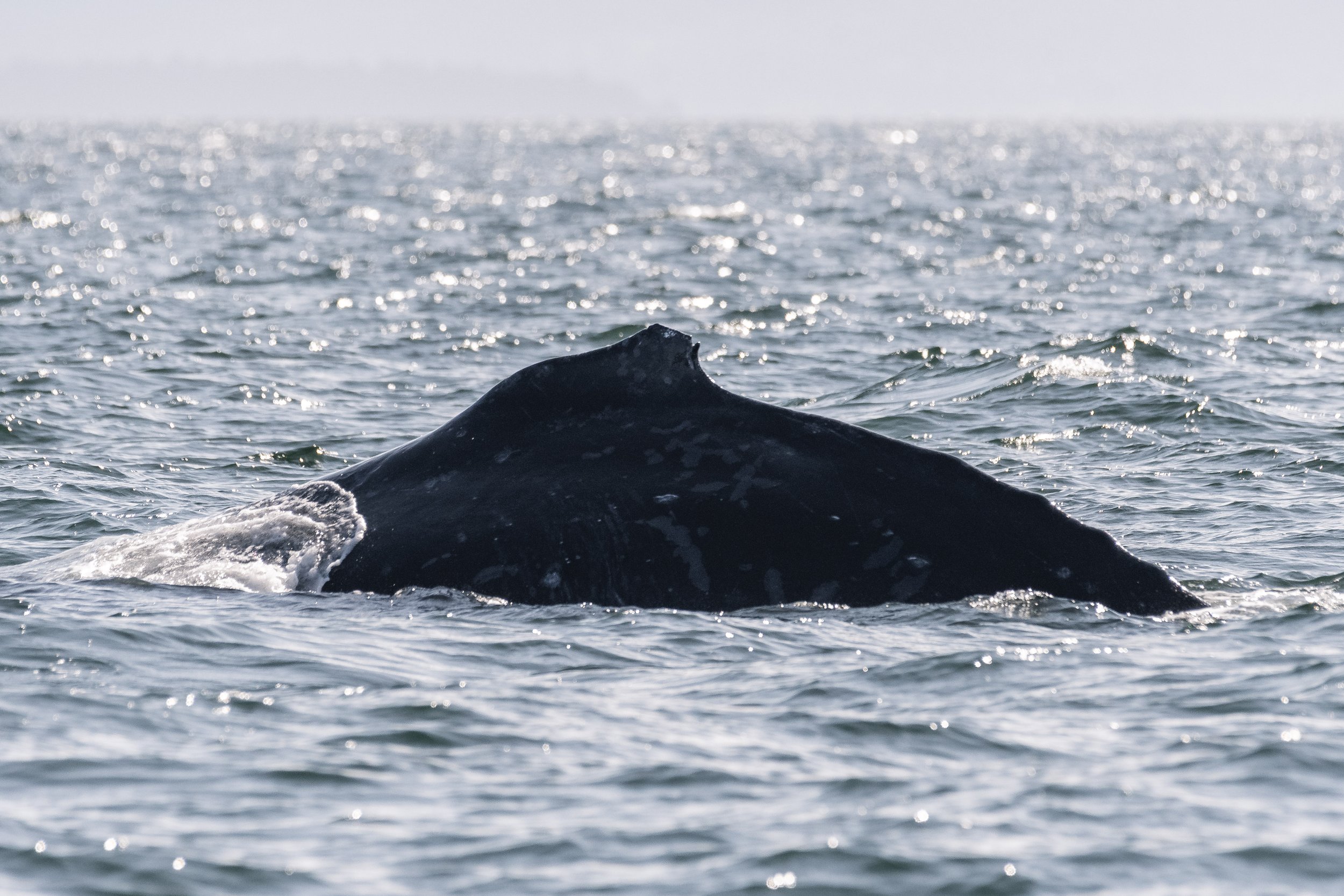
Forge’s unique dorsal fin. Photo by Evan Hessels.
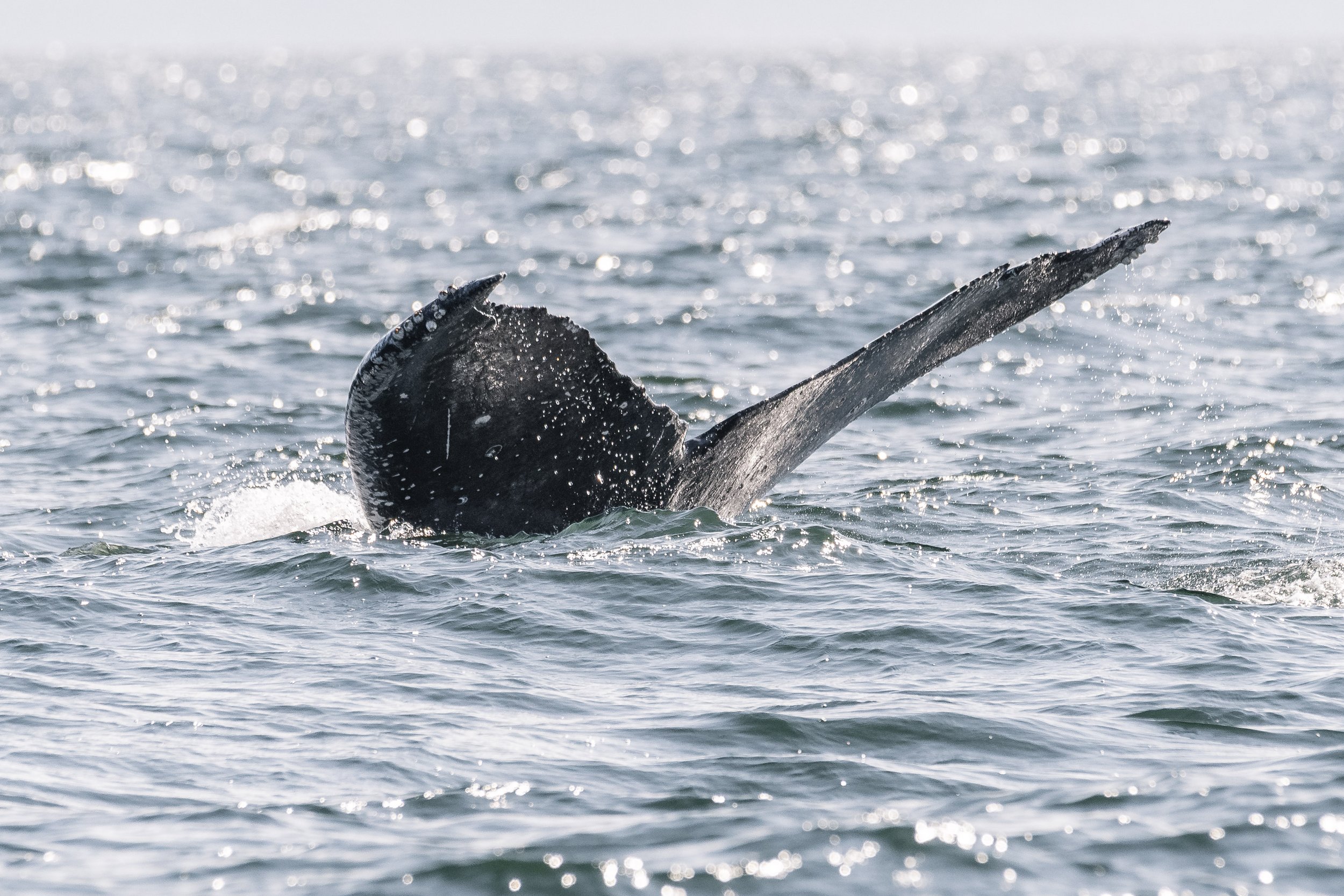
Forge diving. Photo by Evan Hessels.
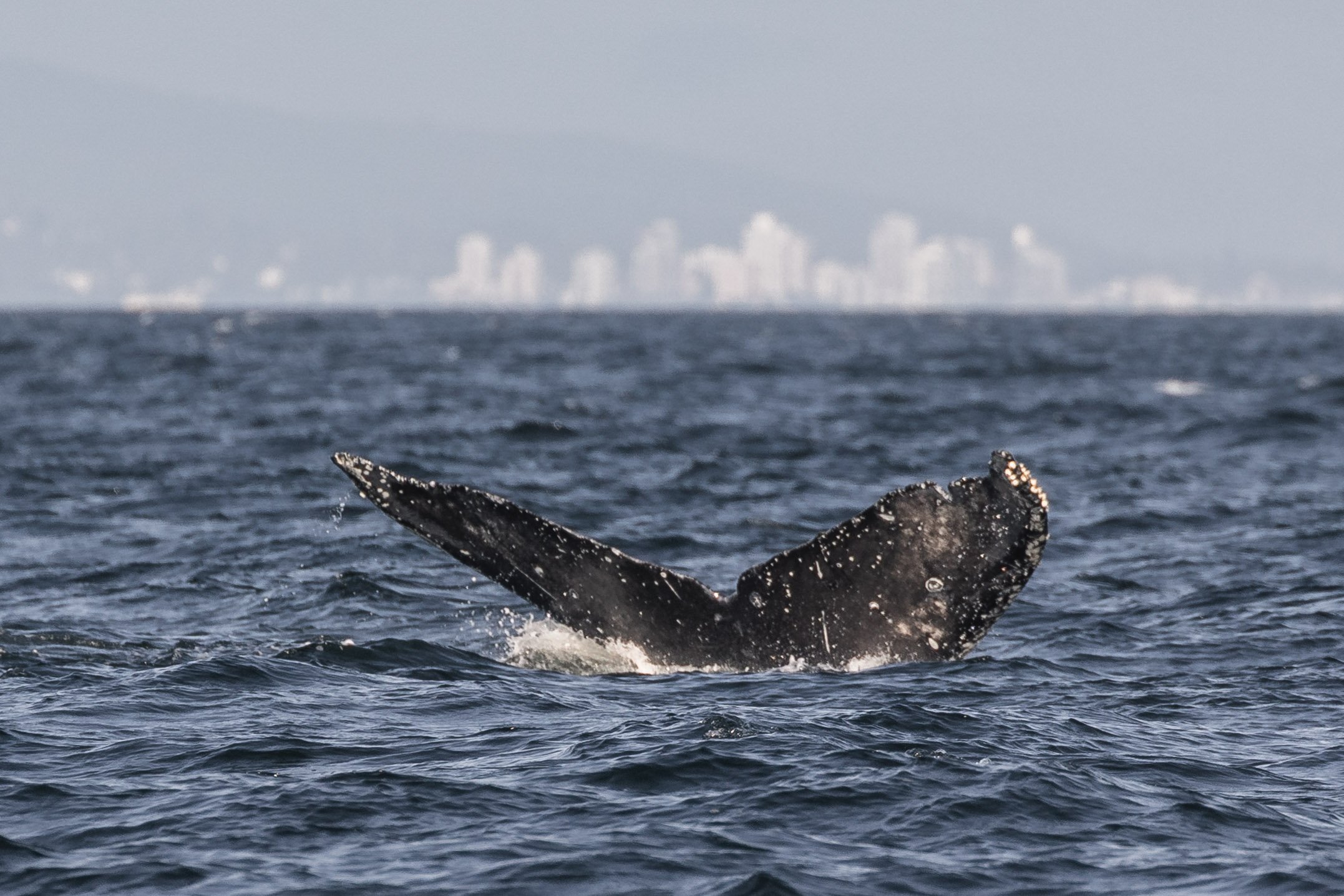
Forge’s fluke. Photo by Jordan Robinson.
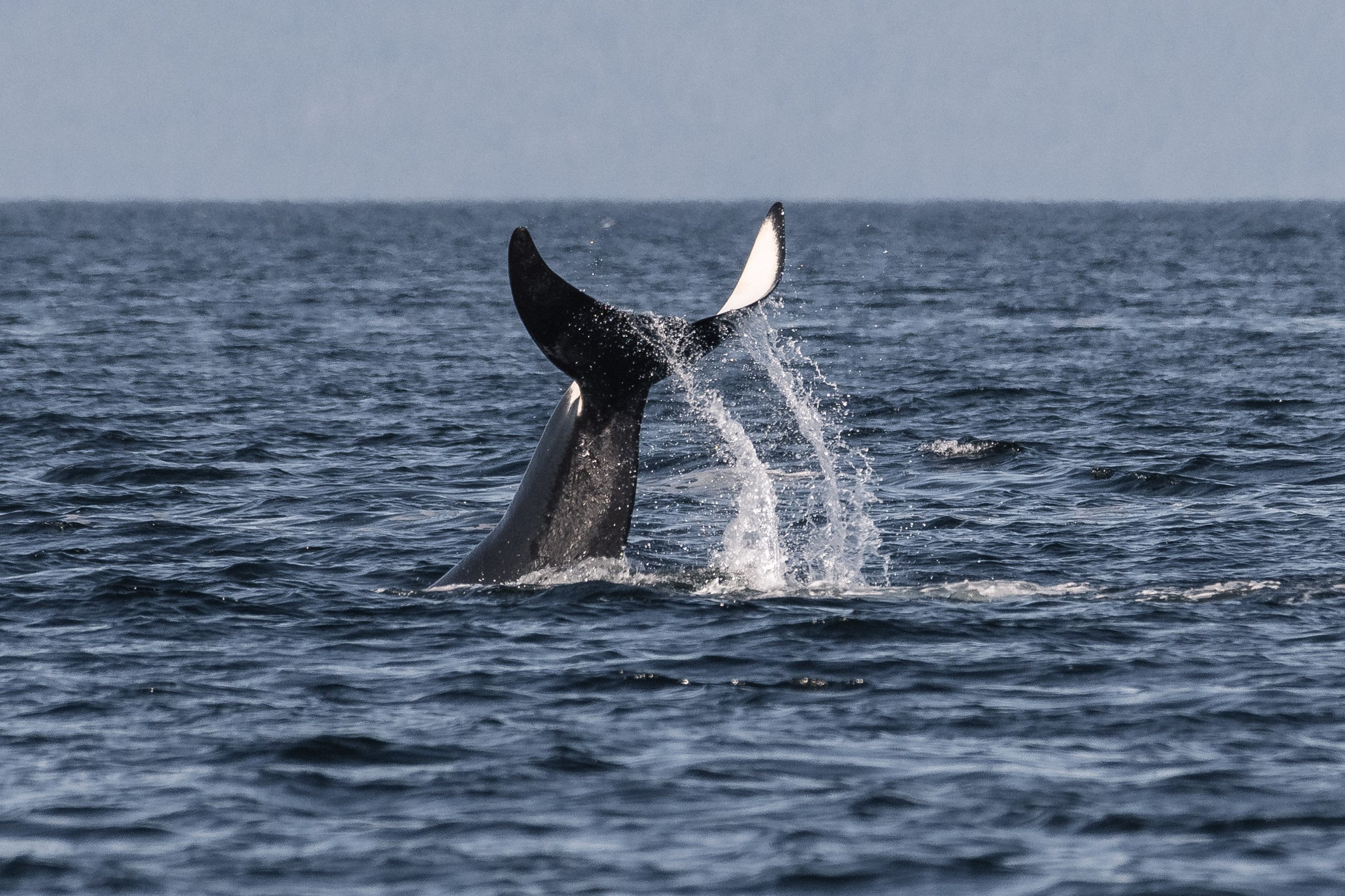
A big tailslap from one of the T-party members. Photo by Evan Hessels.
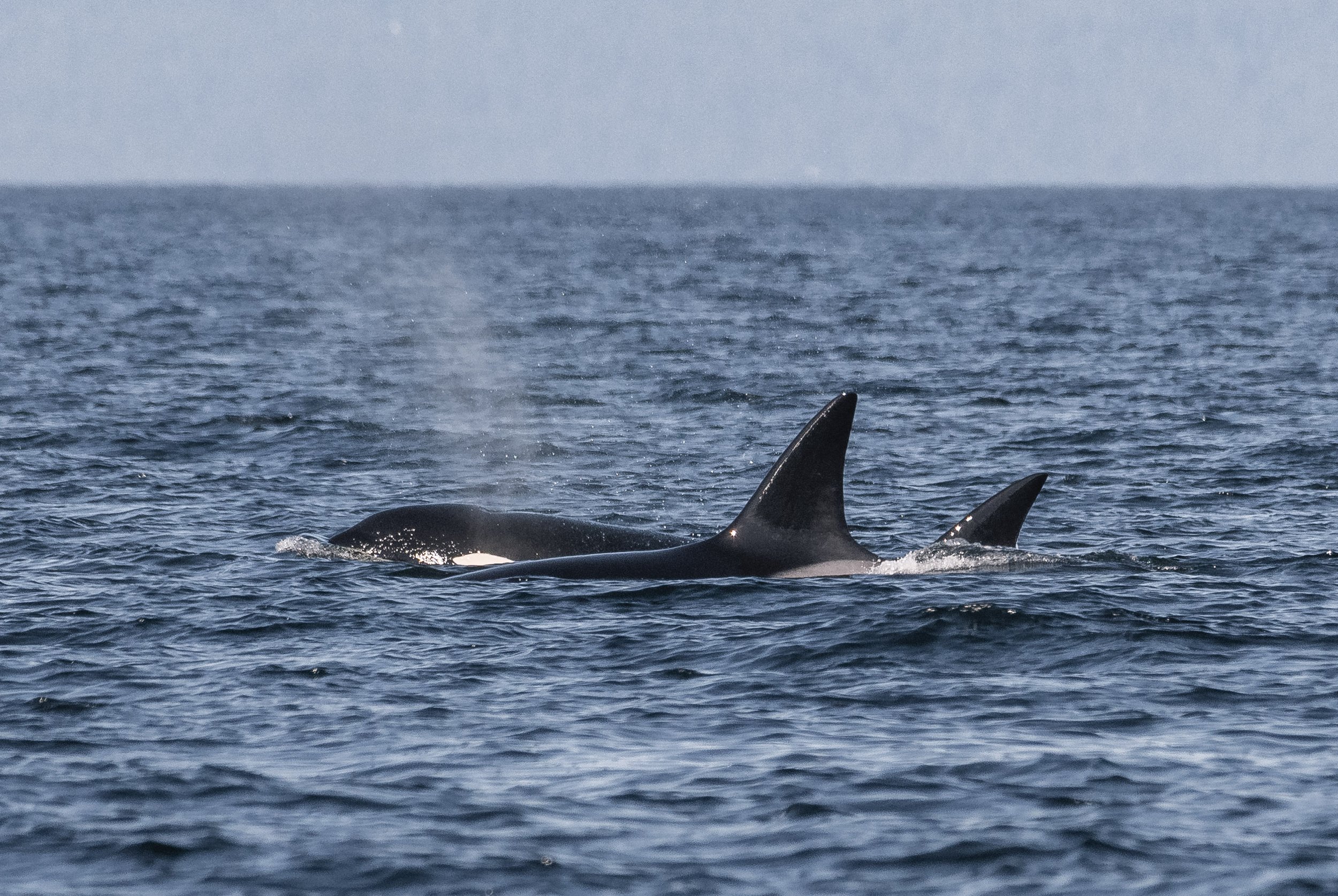
T077 Asja with her daughter T077D Alcyon surfacing beside her. Photo by Evan Hessels.
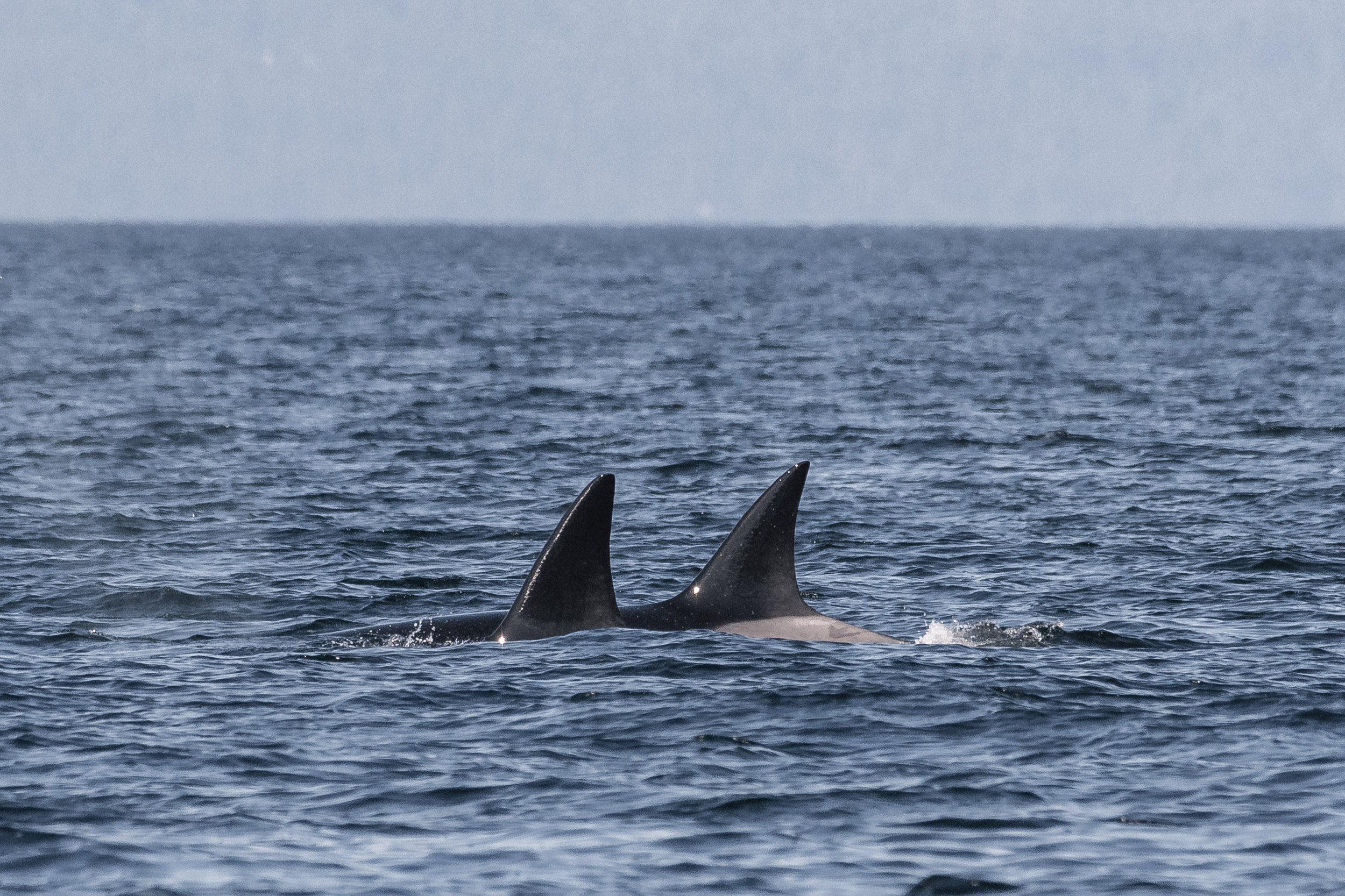
T077 Asja and T077D Alcyon. Photo by Evan Hessels.
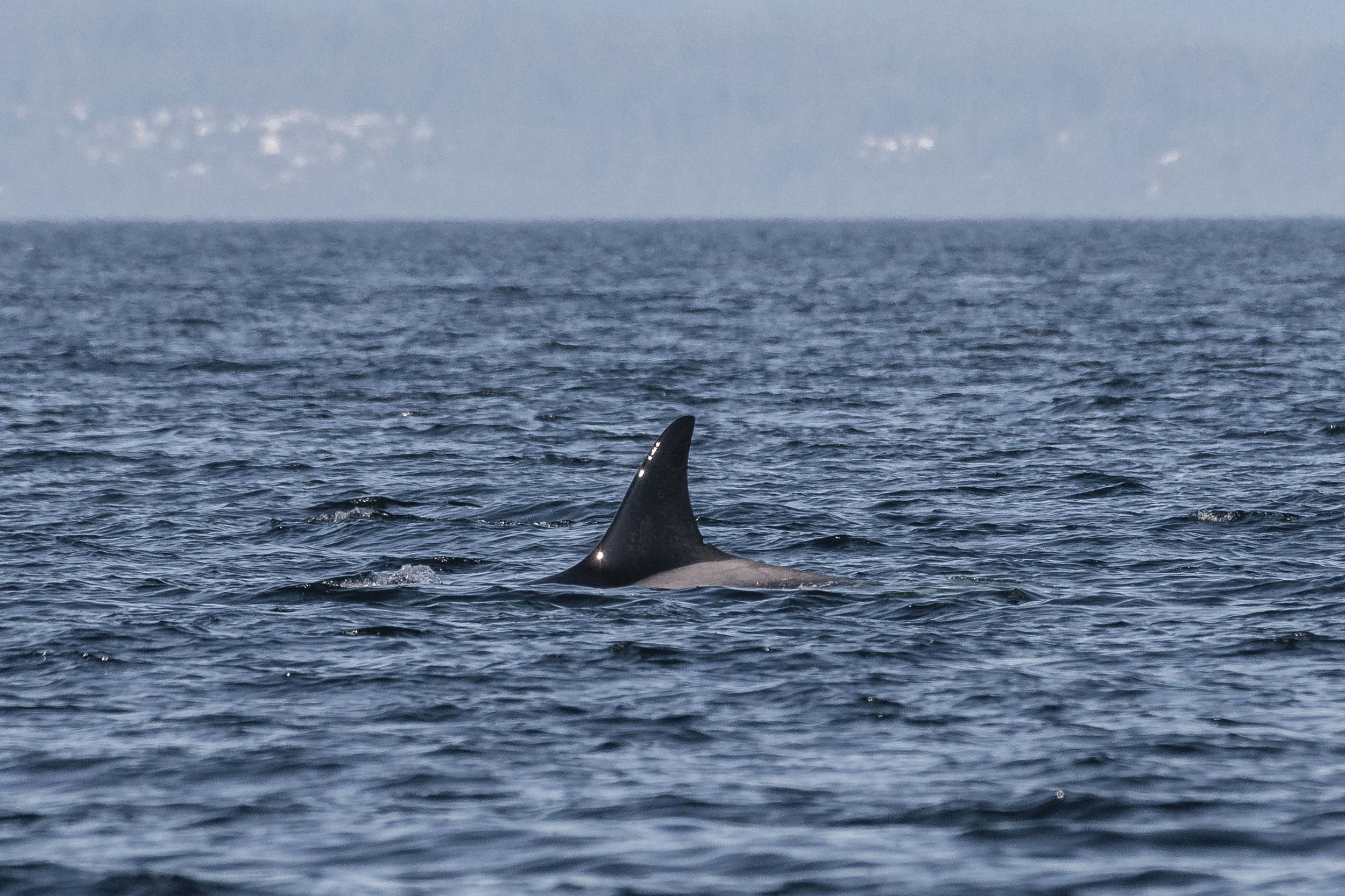
T065B Chunk. Photo by Evan Hessels.
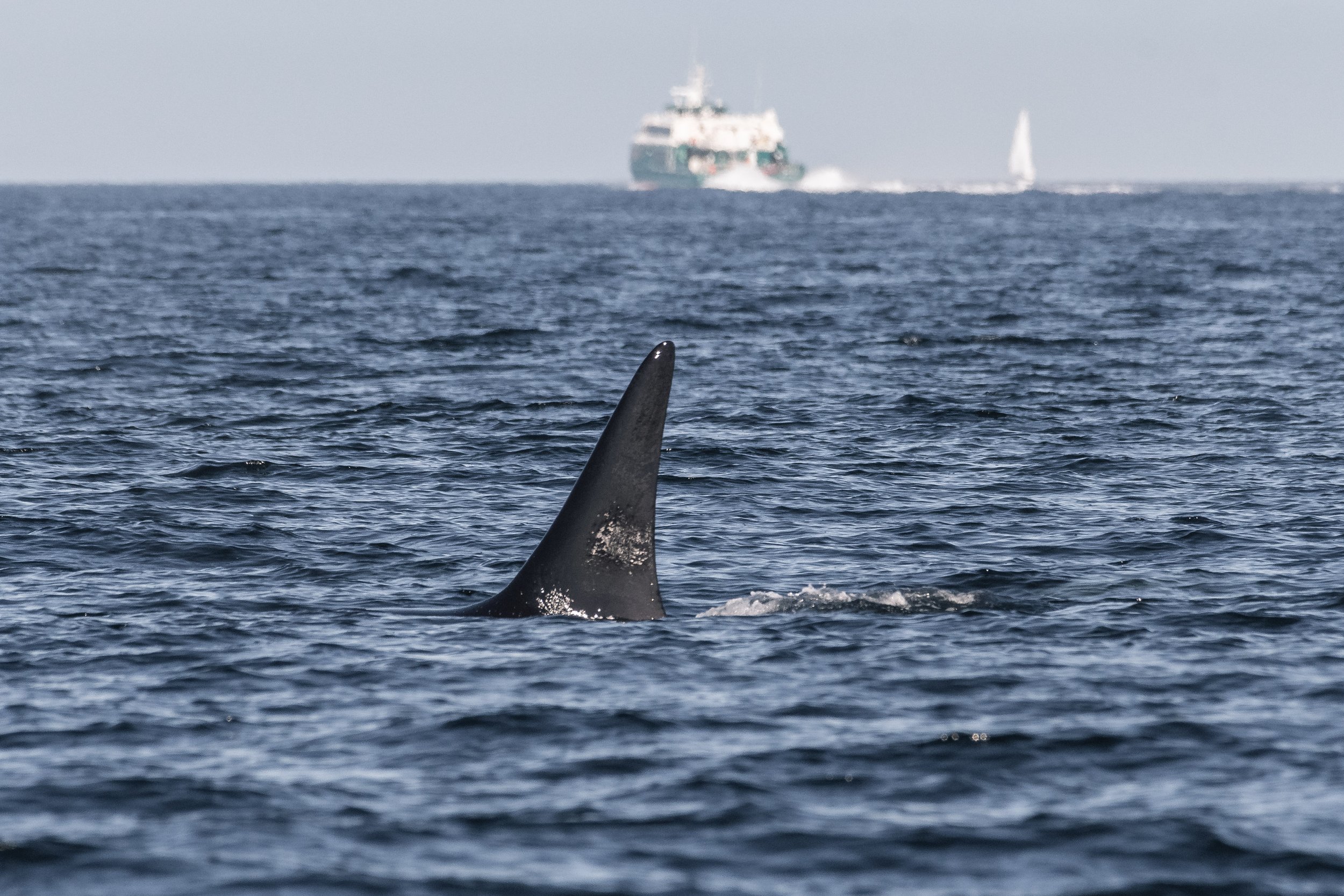
T065B1 Birdsall. Photo by Evan Hessels.
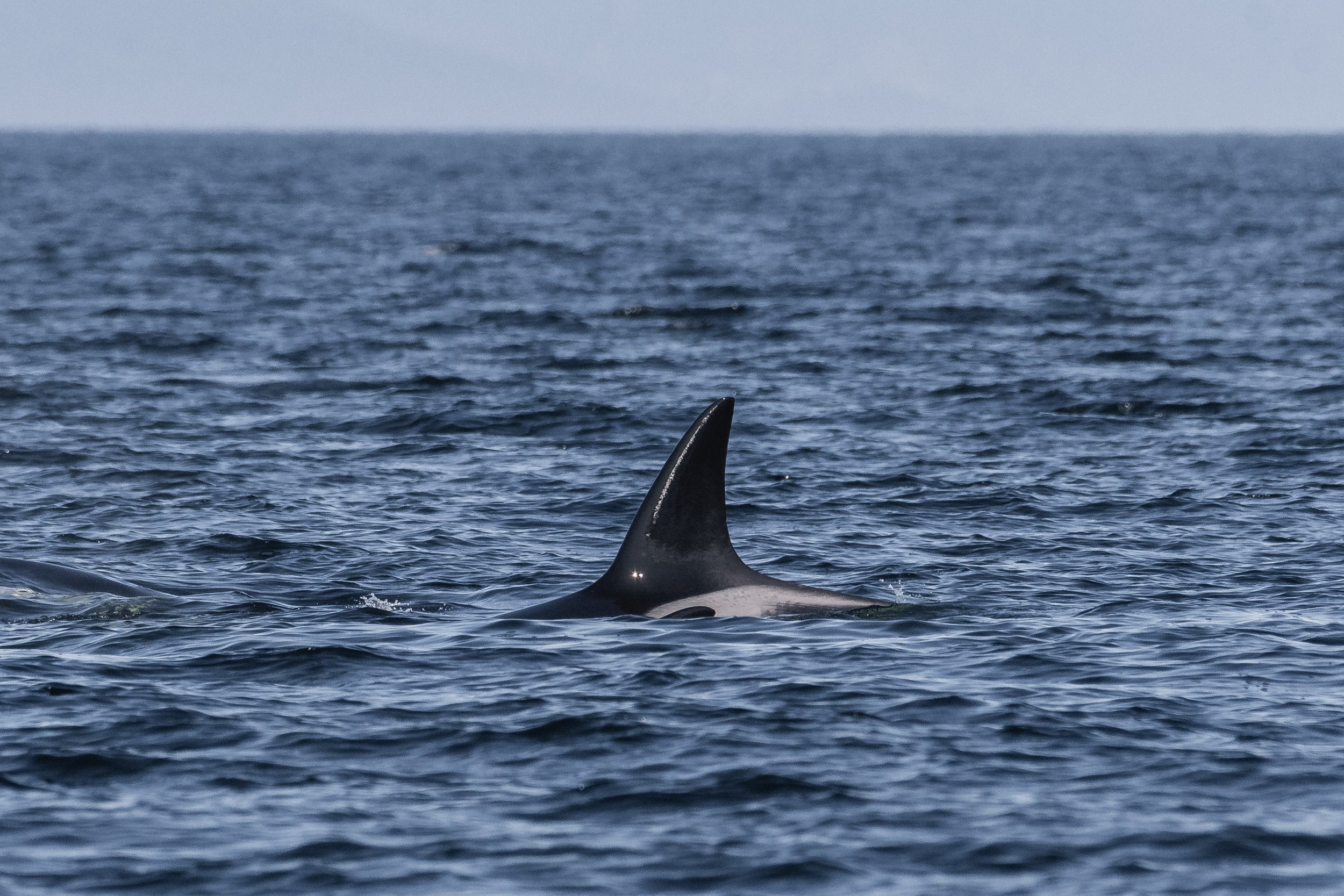
T075B Pebbles has a speckling of freckles through her saddlepatch - can you spot them in this shot? Photo by Evan Hessels.
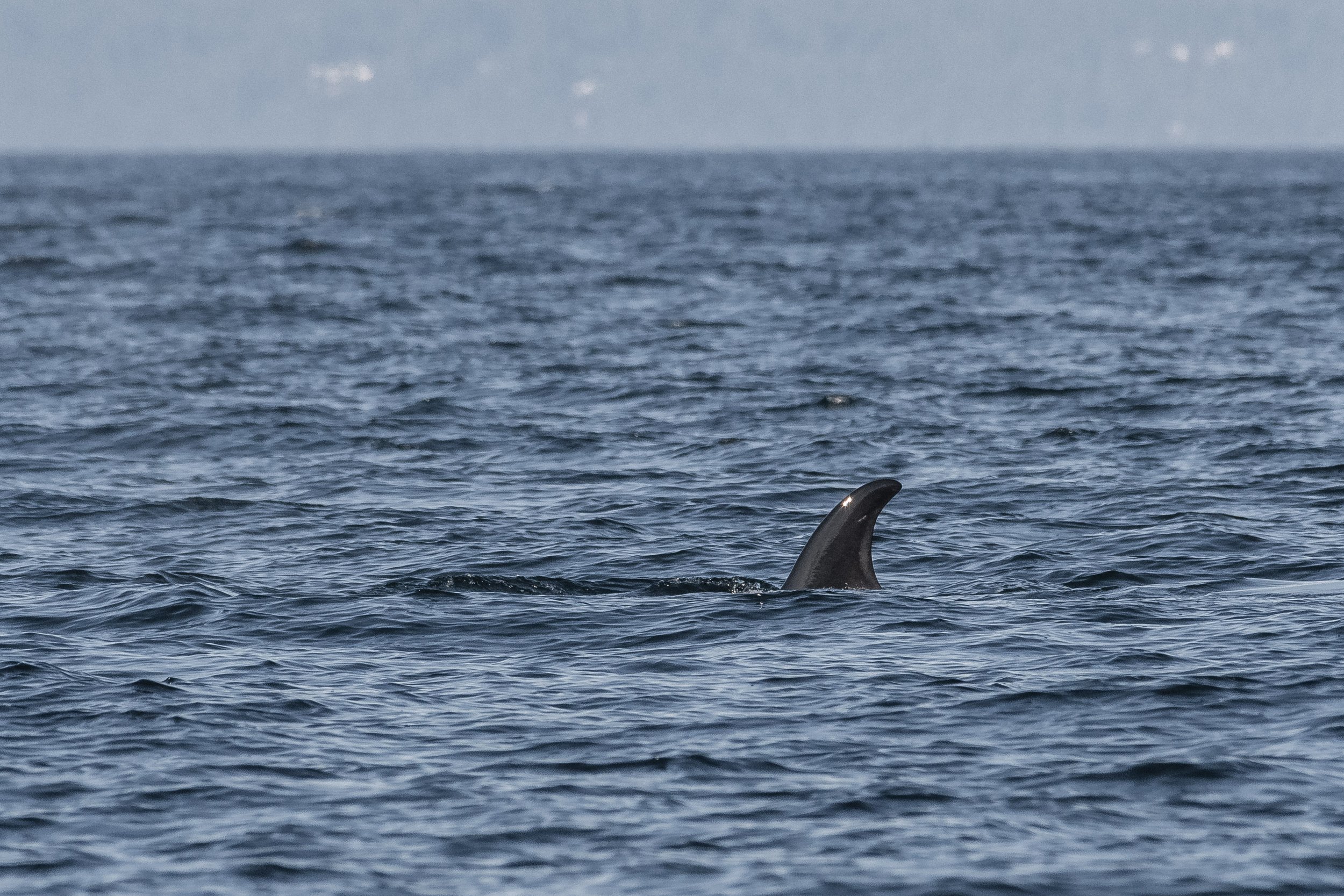
T065B3 Rook. Photo by Evan Hessels.
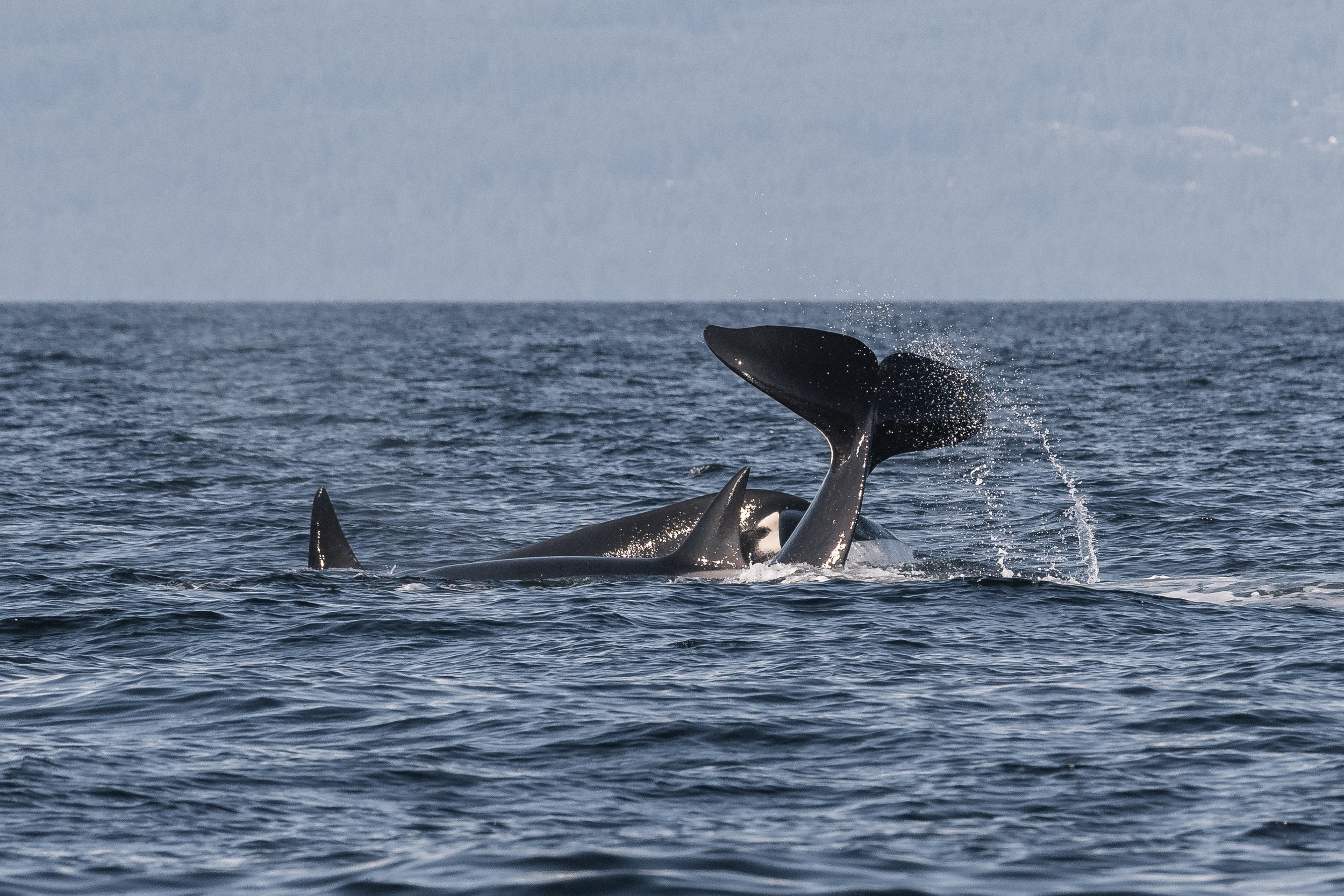
Look at how massive that tail is compared to those dorsal fins! Photo by Evan Hessels.
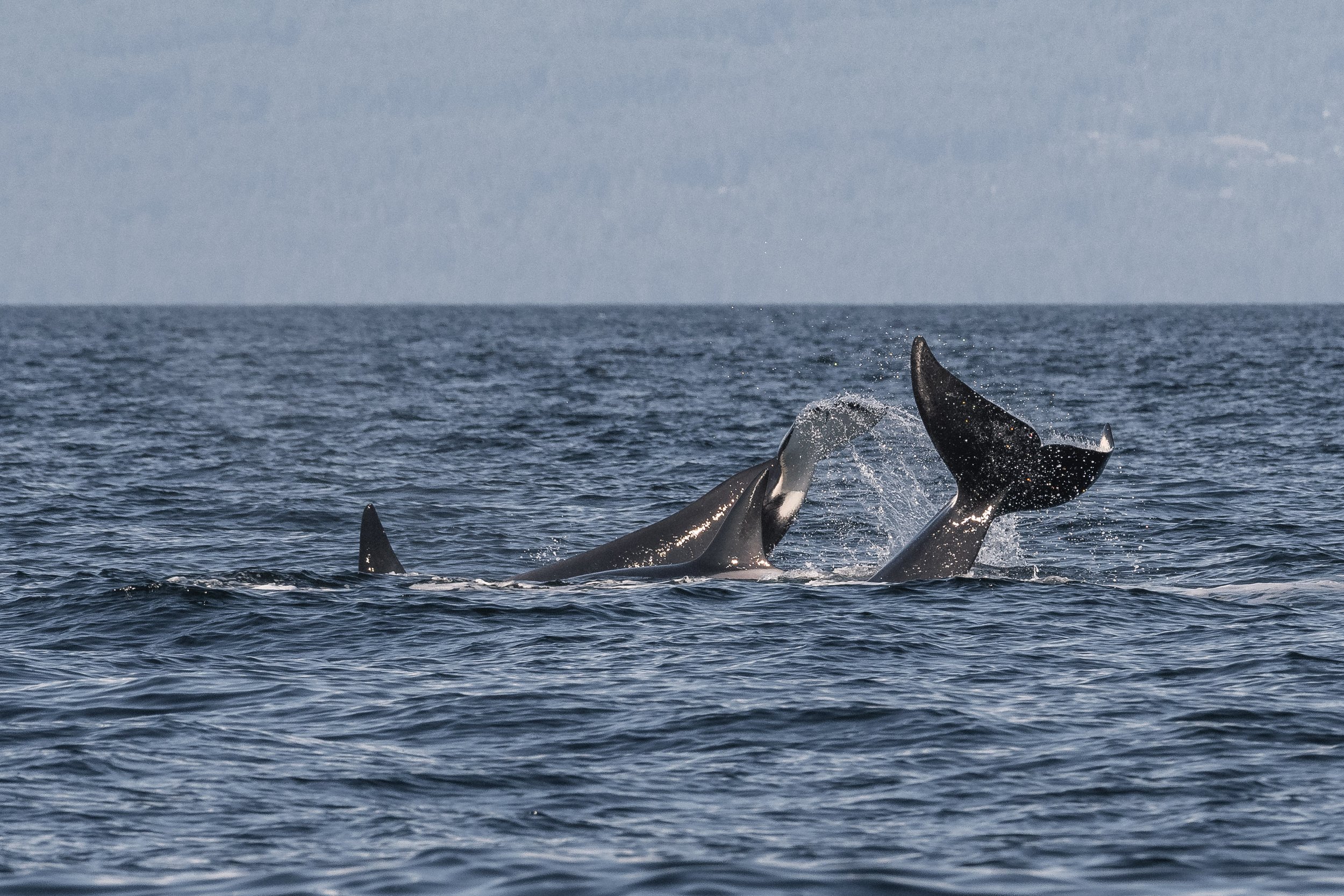
Having a fin-tastic time partying together. Photo by Evan Hessels.
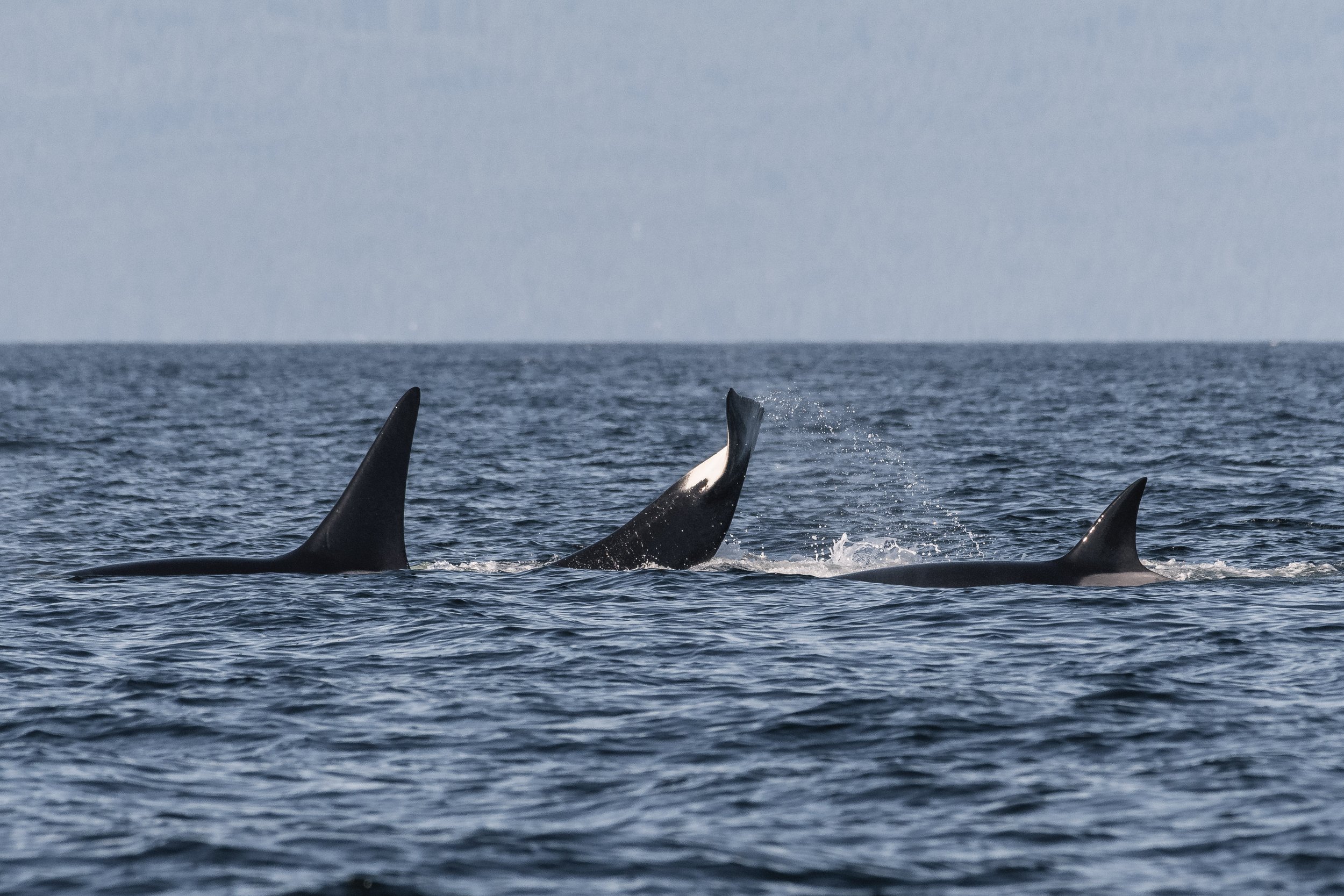
T065B1 Birdsall in the front, T077D Alcyon in the back, and another in the middle. Photo by Evan Hessels.
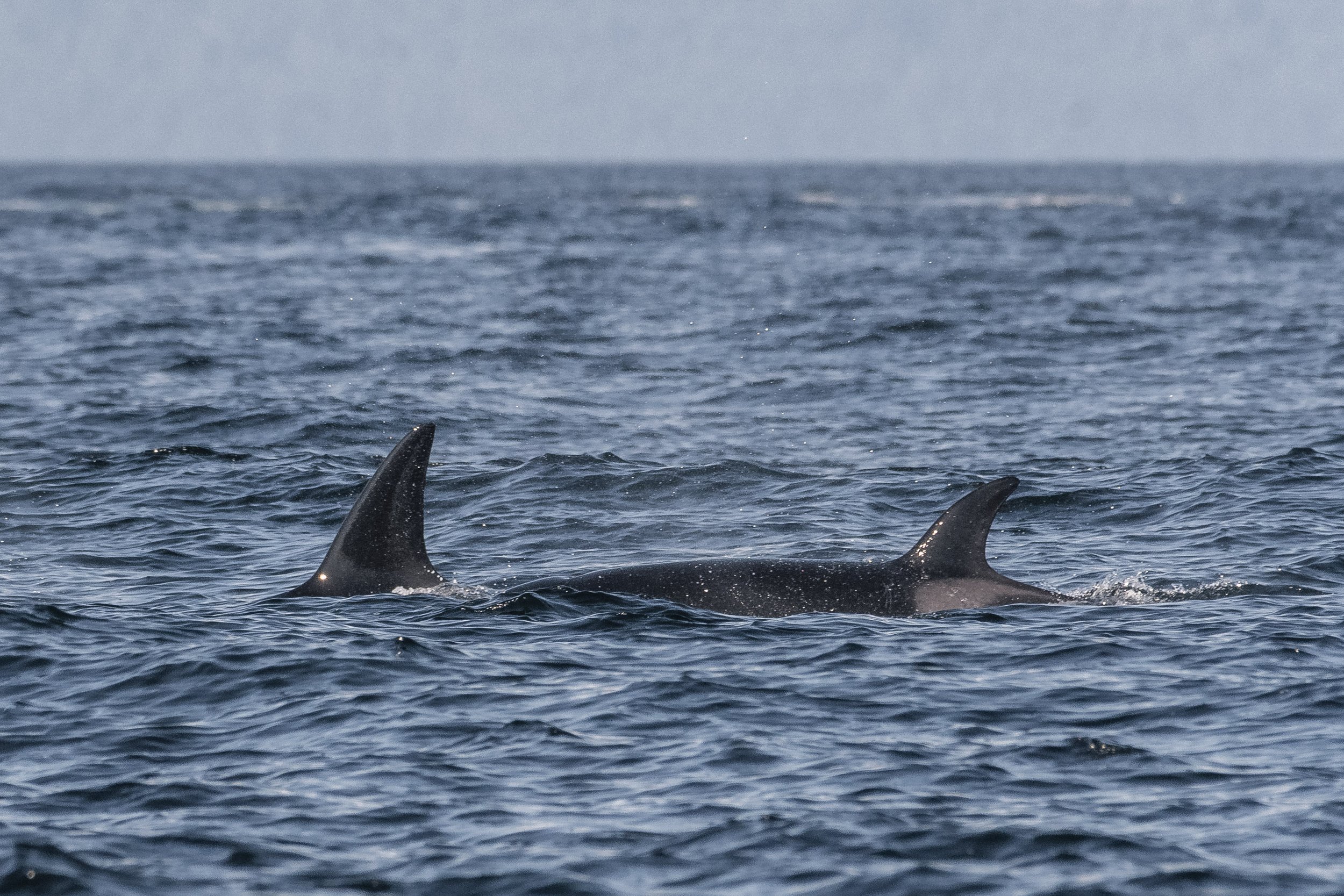
T075B Pebbles with her youngest T075B4 Petra. Photo by Evan Hessels.
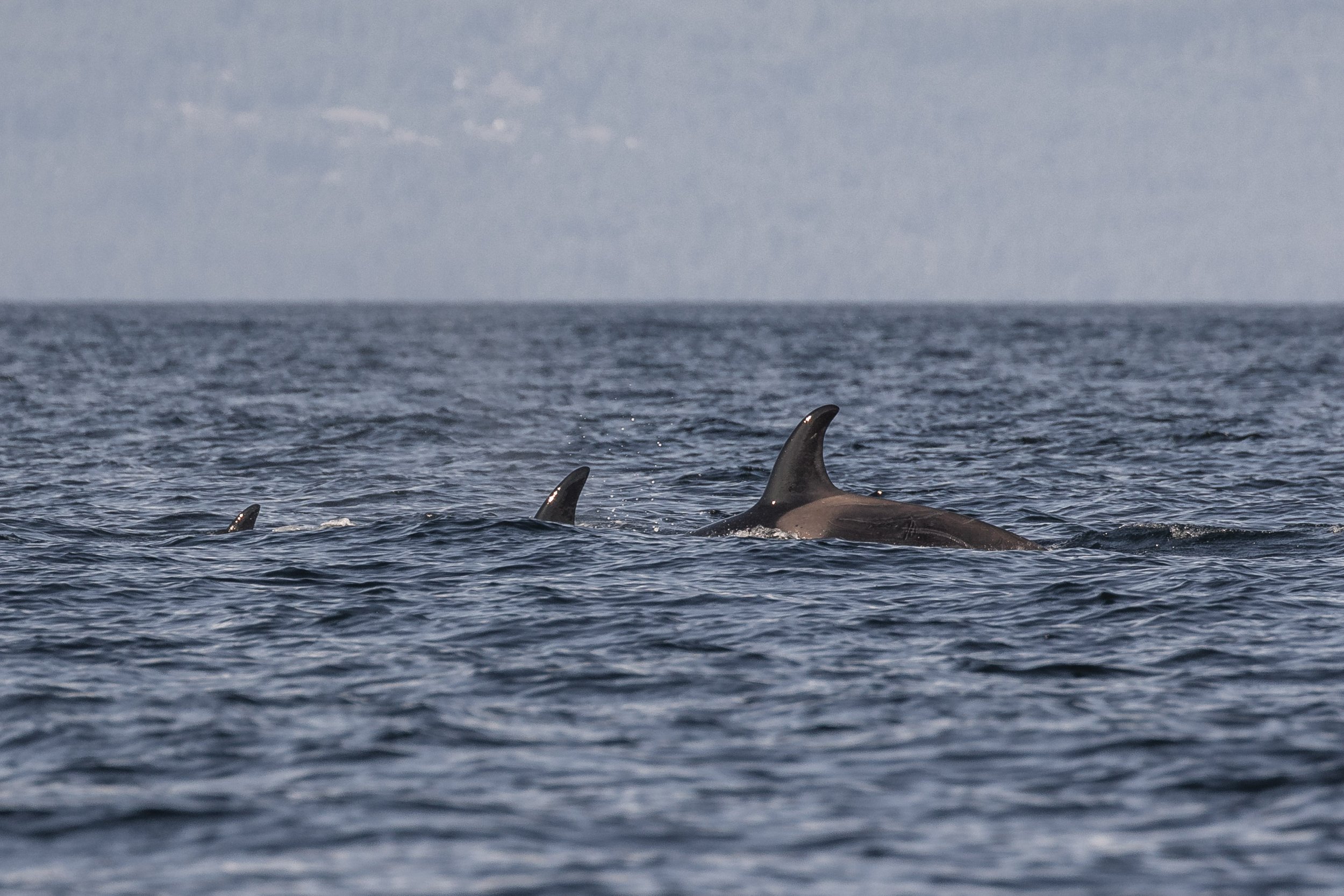
T065B3 Rook has a lot of new scarring on his sides. Photo by Jordan Robinson.
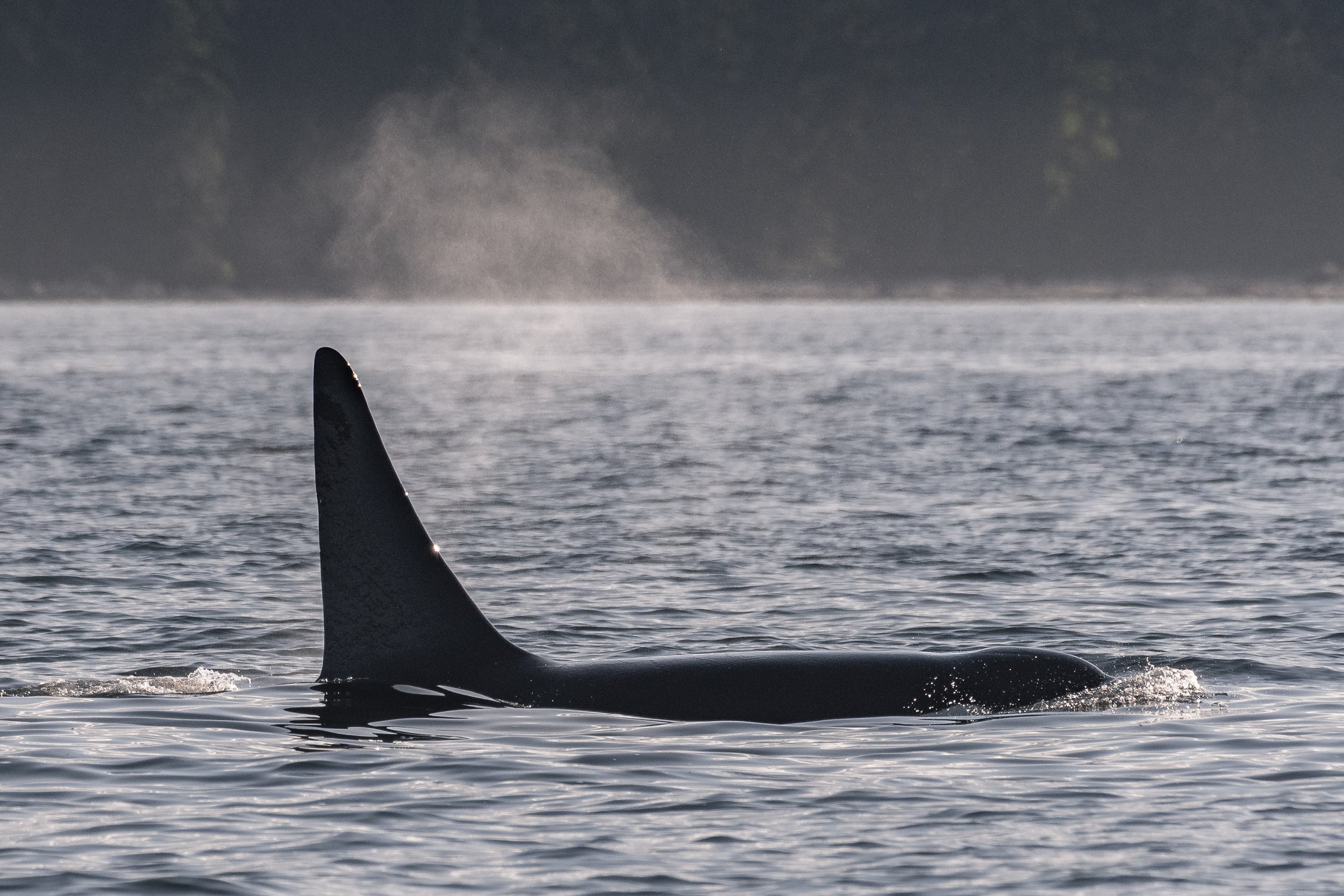
T101B Lagoon. Photo by Evan Hessels.
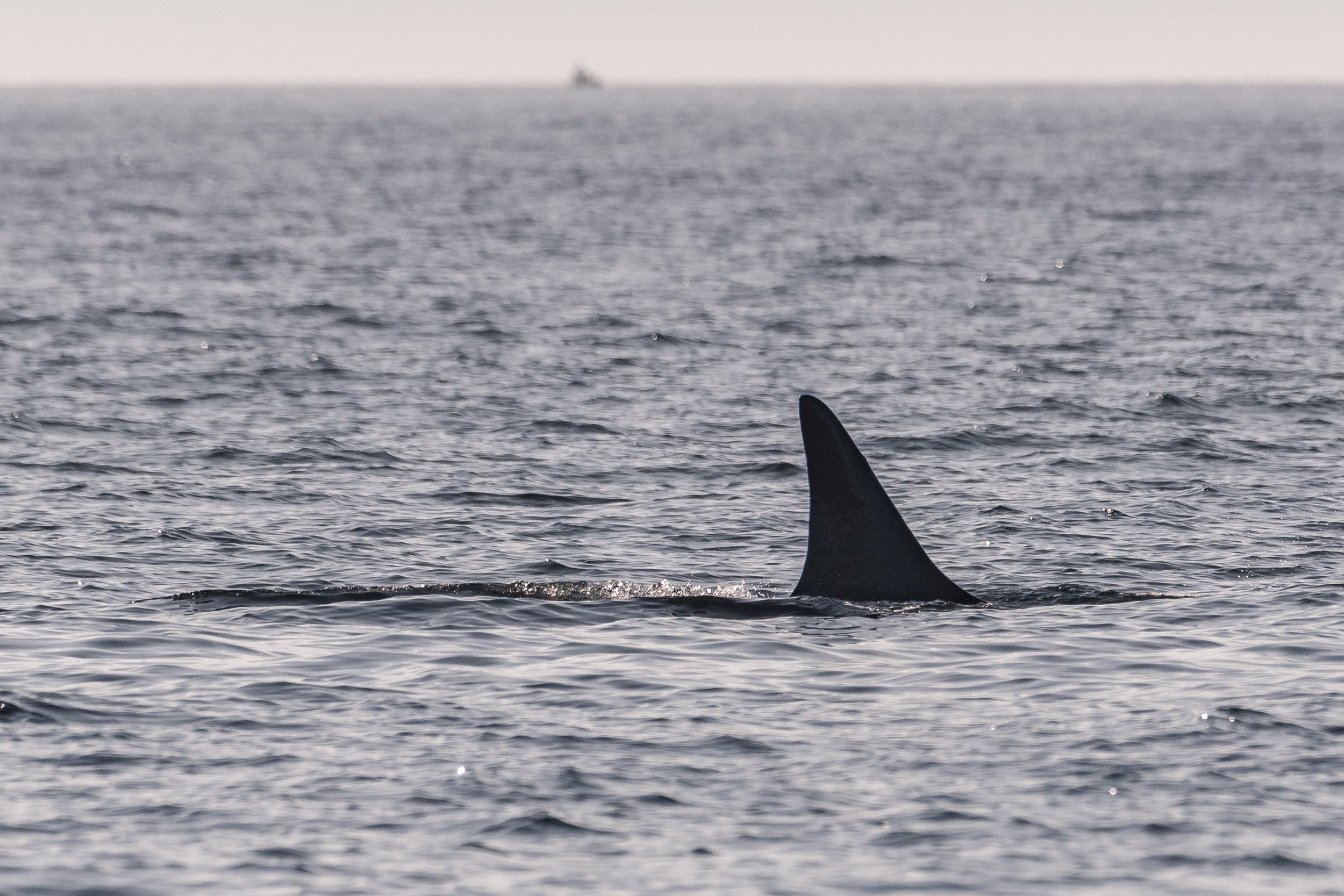
Matriarch T101 Reef. Photo by Evan Hessels.
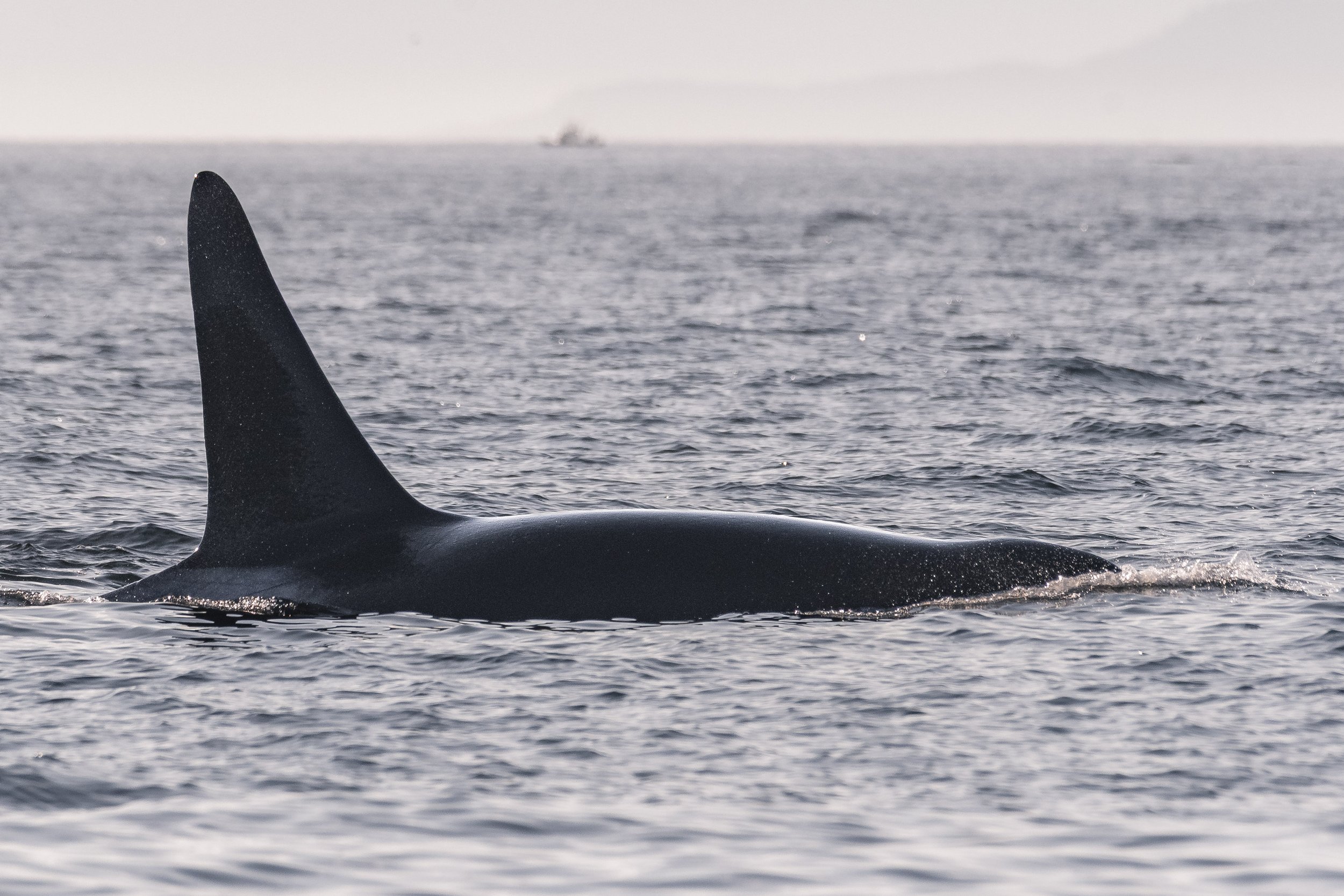
T101A Rush. Photo by Evan Hessels.
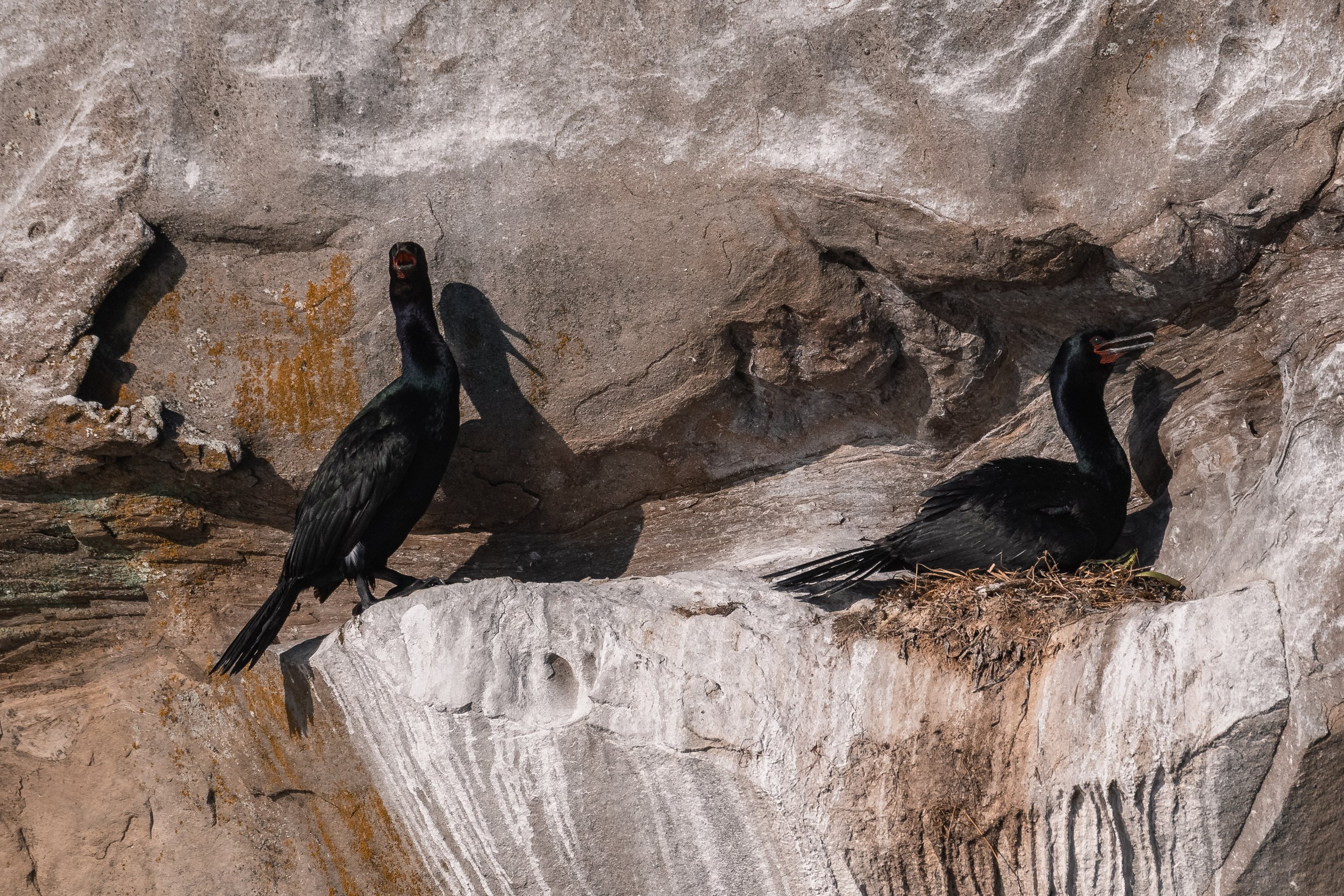
Cormorants nesting on the rocks. Photo by Evan Hessels.
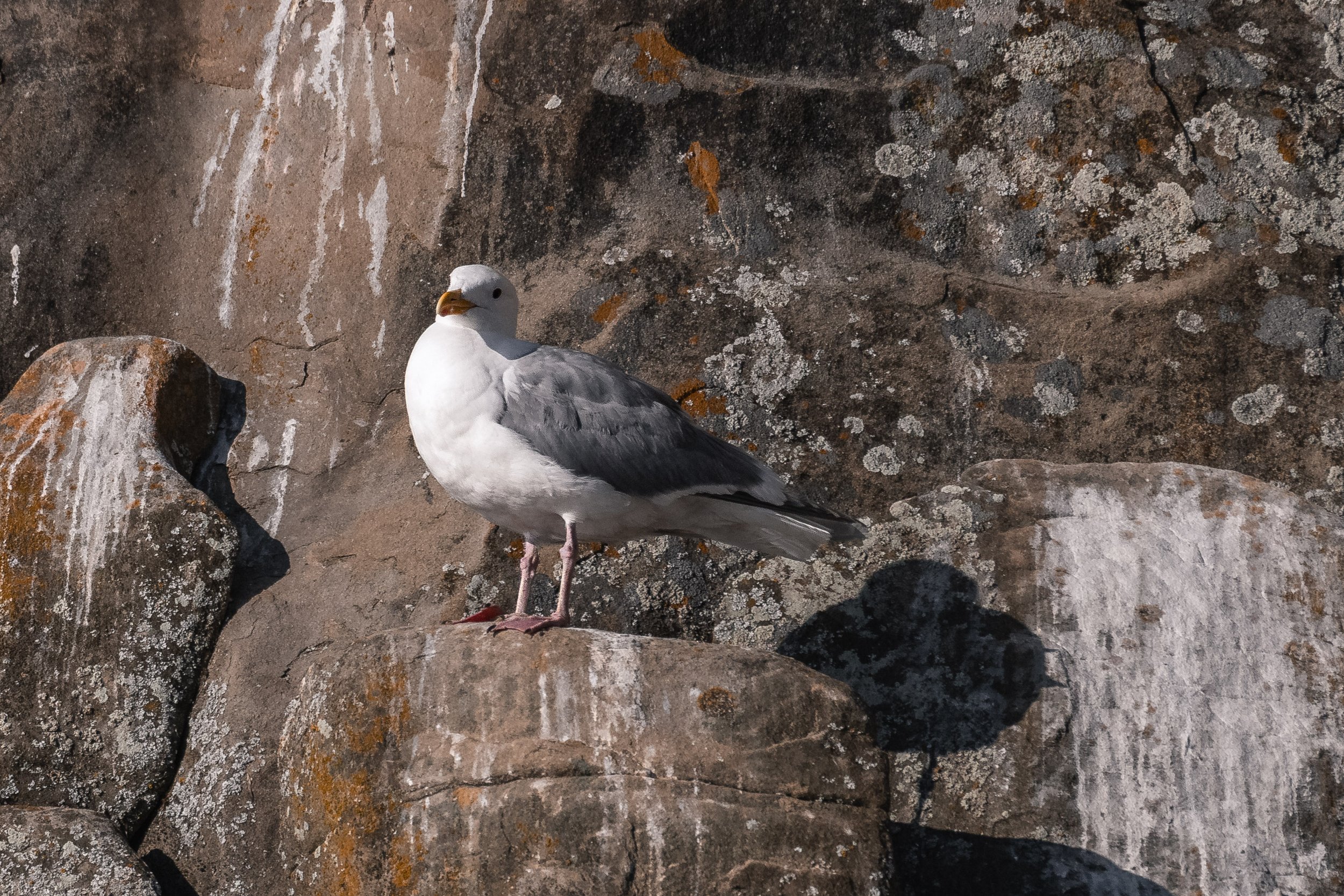
A solo Gull resting on the rocks. Photo by Evan Hessels.
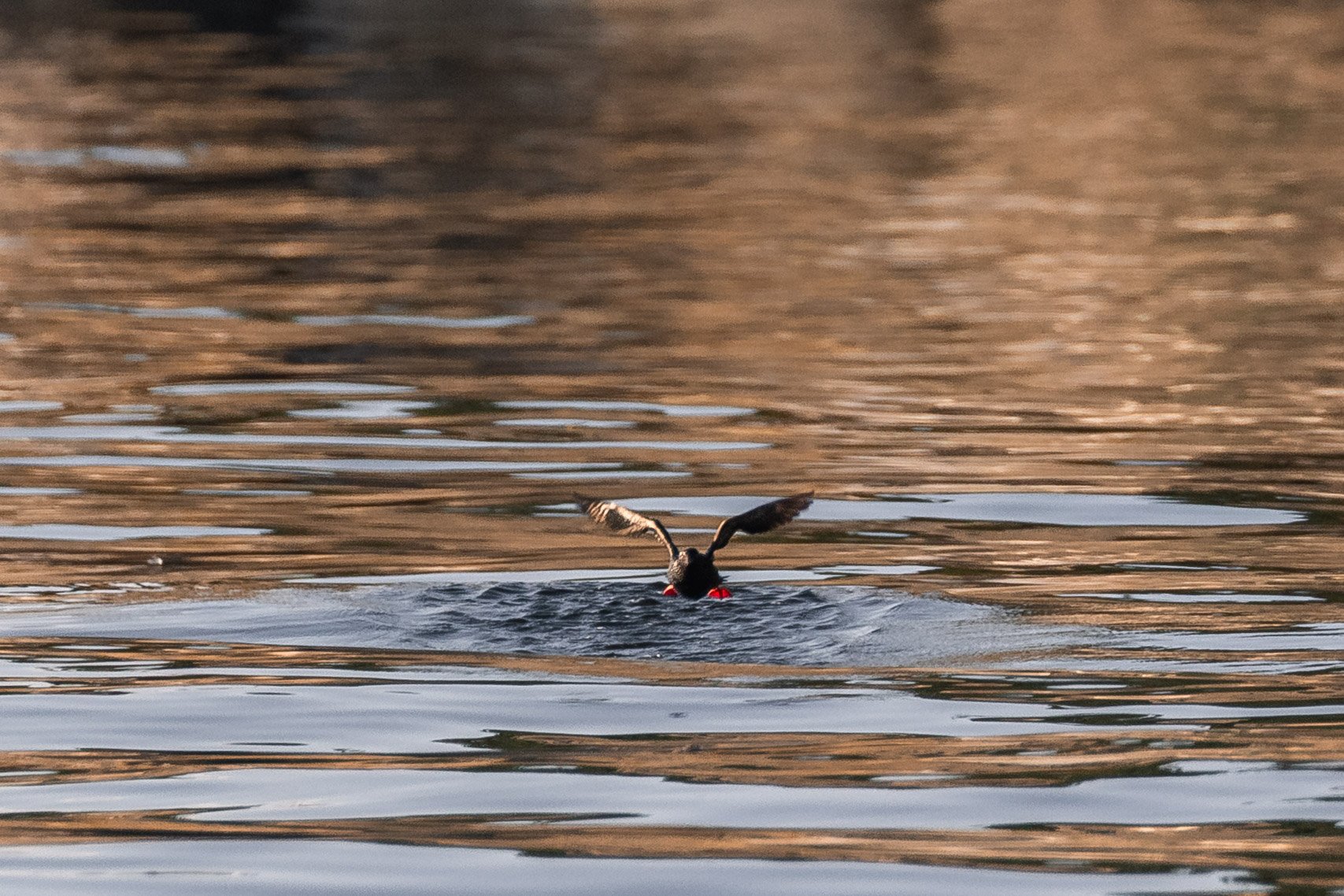
Pigeon Guillemots, even from a distance, can be idetified from their bright red feet! Photo by Jordan Robinson.
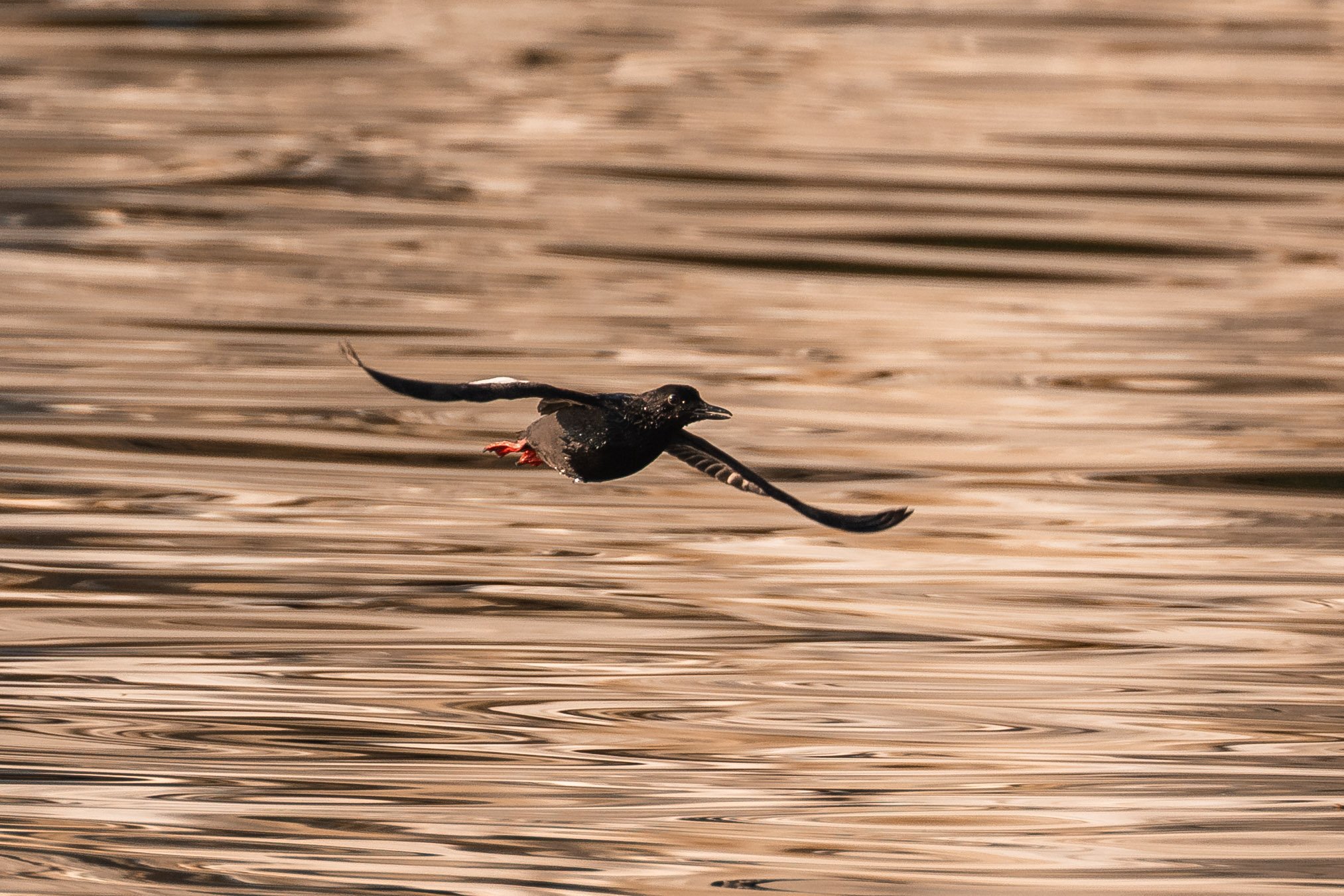
A Pigeon Guillemot in flight. Photo by Jordan Robinson.
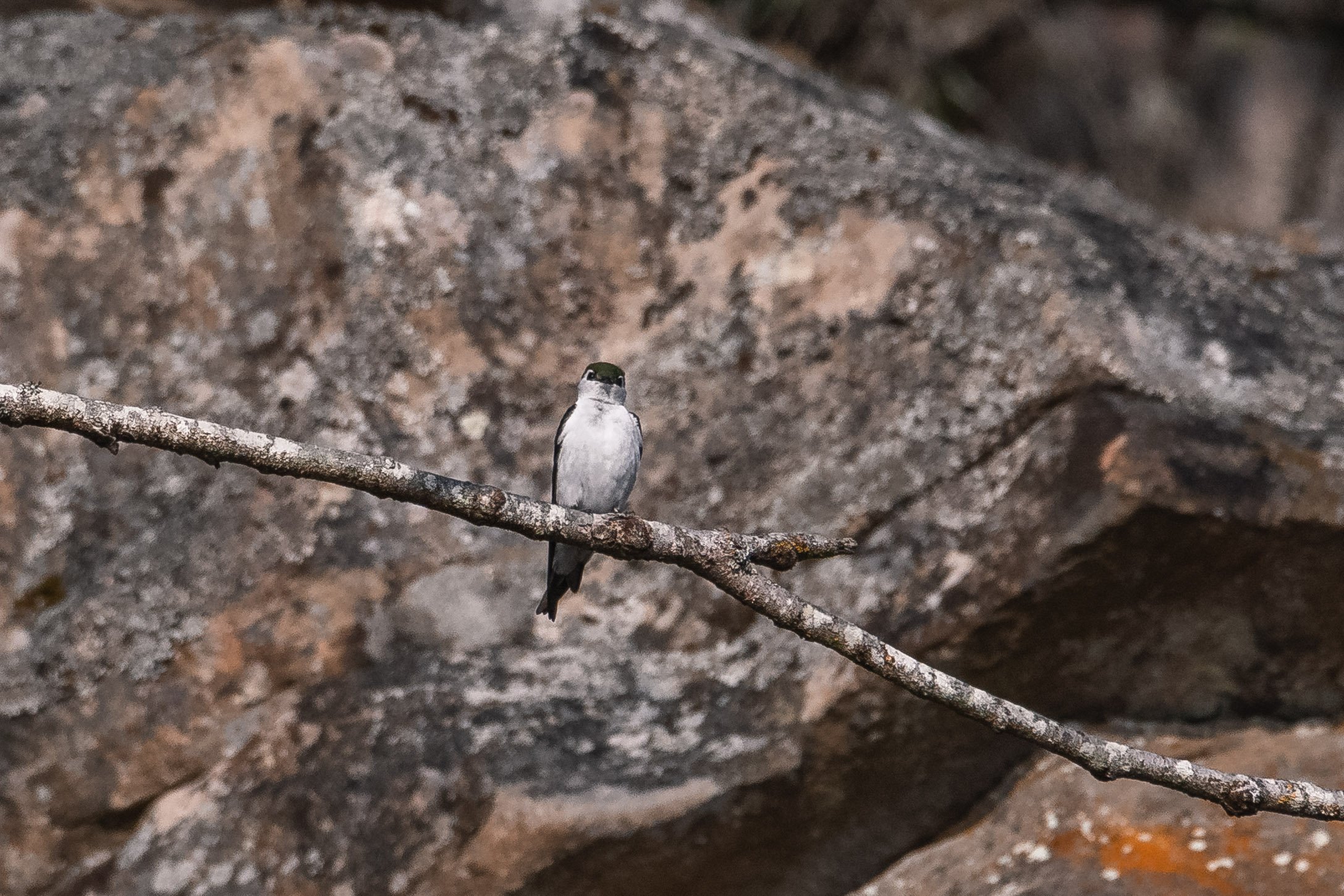
A Violet-green Swallow. Photo by Evan Hessels.