
August 5, 2026, 3:30 PM - The T077 siblings in Huston Channel (plus a pair of humpbacks)
Sunny skies and beautiful conditions greeted us as we boarded Keta and Kula. Nearly perfect seas led to endless opportunities for us to search, and after a brief chat about where to go, we pushed off. It was decided that we would begin by exploring the Southern Gulf Islands, spreading out to cover as much area as possible.
Zipping along, we peeked all around as we explored. Scanning for any sorts of whale activity (blows, dorsal fins, or flukes) as we went, we began heading down Trincomali Channel and Stuart Channel.
This search pattern proved fruitful: once we reached the southern tip of Penelakut Island, two dorsal fins popped out of the water. One fin, tall and slender, and the other short and stubby. Naturalists Val and Aly raised their cameras, and after a few quick photos, it was determined that this pair was the T077 siblings, T077C and T077E:
T077C Neftali ♂ (2006)
T077E Misneach (2016)
Over the past month, these two Bigg’s killer whales have been regularly visiting our area, with our first observation of them this season occurring on July 11th in Pylades Channel.
Since that time, they have been seen travelling through various parts of the Southern Gulf Islands. While we were observing them, the siblings kept moving quickly along the coastline, passing from one island to another as they navigated the inland waters.
Transient orca are capable of travelling huge distances as they move between various areas. A group on the move may travel more than 100 kilometres in a day, moving between coastal haul-out sites where they hunt marine mammals such as seals and sea lions.
Transient orca are extremely efficient predators because, although their large bodies require a lot of energy, their hunting method allows them to exploit highly nutritious prey. Transient orca in particular focus on marine mammals such as Harbour Seals, Steller Sea Lions, and porpoises. The prey they catch is usually much larger and more energy-rich than the fish eaten by other ecotypes, such as the Northern and Southern Residents. As a result, a successful hunt can yield a large meal, but to find that meal, the whales have to keep moving and searching.
We stayed on watching the siblings as they travelled through the Gulf Islands before finally saying our goodbyes and carrying on. We were looking forward to going further out to sea into the Strait of Georgia, hoping to spot another species which frequently visits the waters of our area - the Humpback whale!
When we had got to the open waters of the Strait of Georgia, our search area increased greatly.
The good weather conditions allowed us to scan huge distances ahead of us. We were on the lookout for the usual flash of a fluke, a big bushy blow, or dorsal fin as we went. We scanned all around before deciding to continue travelling further out into the Strait.
Then, after having travelled a bit further, we saw not a single one but two humpback whales swimming in the area. Cameras were raised once more, and the Naturalists began identifying the whales.
Although the two humpback whales were not directly associating with each other, they were travelling side by side close enough for us to take excellent photographs of both of them at the same time!
When a humpback whale is about to carry out a deep dive, it usually arches its back and raises its huge tail above the water. The underside of that tail usually holds a great deal of information, including patterns as unique to each of them as a fingerprint is to us. By examining the fluke's shape, pigmentation, scarring, and markings, naturalists can identify individuals.
The first whale had a big notch in its fluke, with extensive white scarring around it, while the other one had a mostly white fluke dappled with beautiful black markings. With these photos, we confirmed that the pair was Snoopy/Gibbous (BCY0770) and Chi (BCZ0575).
These photos are extra useful since humpback whales travel vast distances over their lifetime; a whale that is photographed near Vancouver Island can later be recorded at a breeding ground thousands of kilometres away, and scientists can make use of these individual identifications to gain further knowledge about their migration routes, preferred feeding areas, and population numbers.
The chance to observe these two whales as they moved about and at times raised their tails allowed us to see clearly just how useful such natural markings can be.
Even though we can’t see what is going on under the surface, their behaviour indicated that the whales were probably feeding as they travelled.
In the Salish Sea, humpback whales spend much of the summer building up their energy stores, feeding on small schools of fish and krill, depending on what is available in a given area. This feeding season is of immense importance, as they rely on our waters to prepare for their winter migration.
Humpback whale migrations are incredibly long and resource-intensive. In the winter, our humpback populations will travel thousands of kilometres to the breeding areas around Hawaii or Mexico and, once there, breed and give birth. In these warmer waters, they will fast, and many of them will not have a large meal again until they return to our area in the following summer.
That is why in the summer, feeding is of the utmost importance. They busily eat as much as they can, packing on weight. They then rely on these fat stores to sustain themselves during the breeding season.
After a bit more time with these two, we headed on out and turned our attention to a different kind of wildlife: pinnipeds. Up north a bit more, "Stinky Rocks," a common pinniped haul-out, sits near the coast of Valdez Island. We pulled up, and peeked around.
Large, rotund spotted Harbour Seals stretched and wormed their way along the rocks. These quiet pinnipeds can be found in our area all year round, as they never migrate away from our shores. We are in the middle of pupping season right now, so many tiny faces could also be seen amongst the adults. On the other side of Stinky Rocks, the loud and rambunctious Steller Sea Lions pushed each other around as they fought for the best places to rest on the rocks. The evening sun shone down on them, casting a beautiful orange glow over them.
The day had provided a great reminder of the wide variety of life that can be found throughout the Salish Sea, whether it was travelling killer whales, humpback whales feeding, young Harbour Seal pups, or the lively Steller Sea Lions.
It was finally time to head back towards Nanaimo.
While the sun was still shining and the waters remained pristine, Keta and Kula headed home, leaving the Gulf Islands and their wildlife behind until the next adventure.
Please enjoy these photos by Marine Naturalists Val Watson and Aly Kohlman!
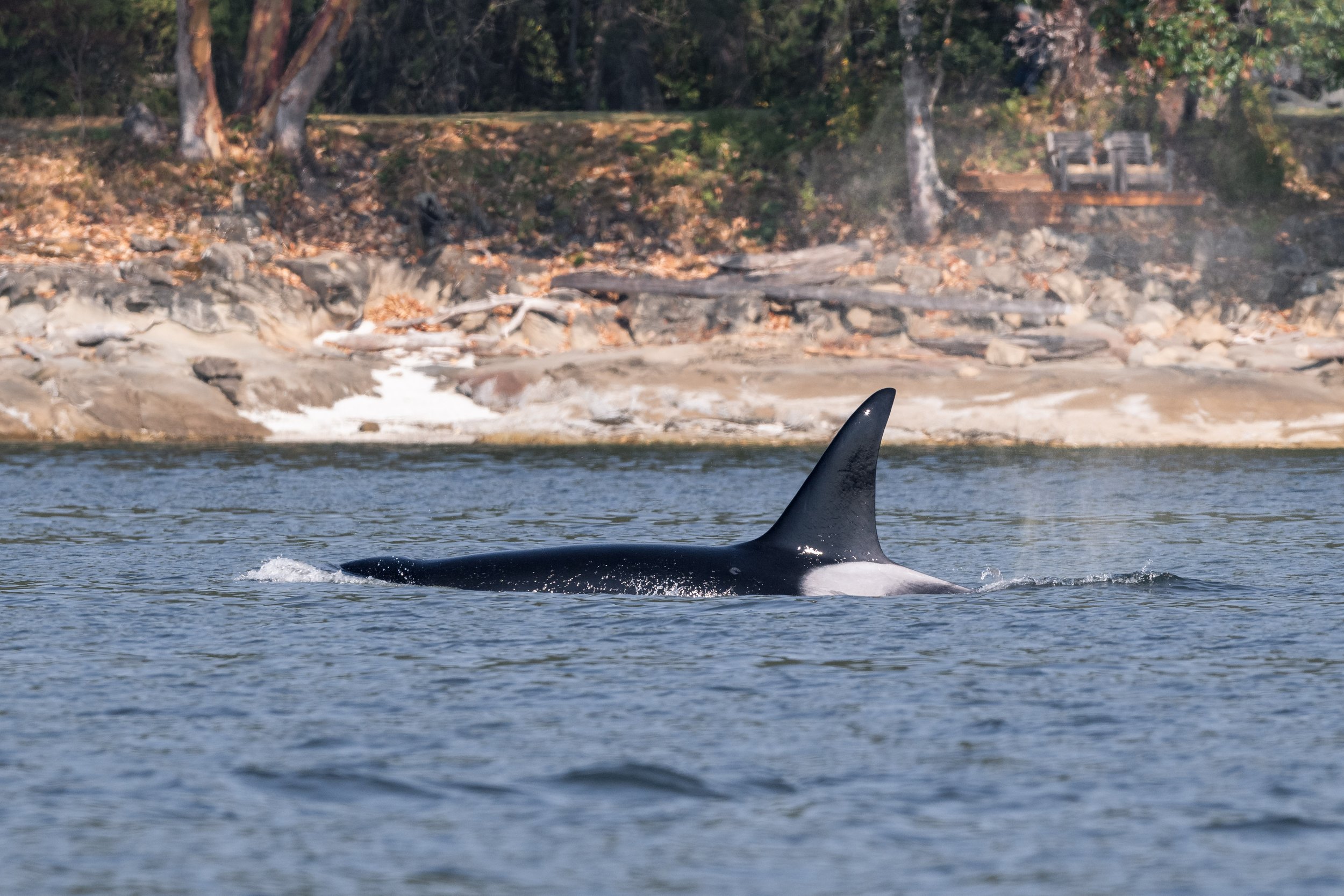
T077C Neftali travelling. Photo by Aly Kohlman.
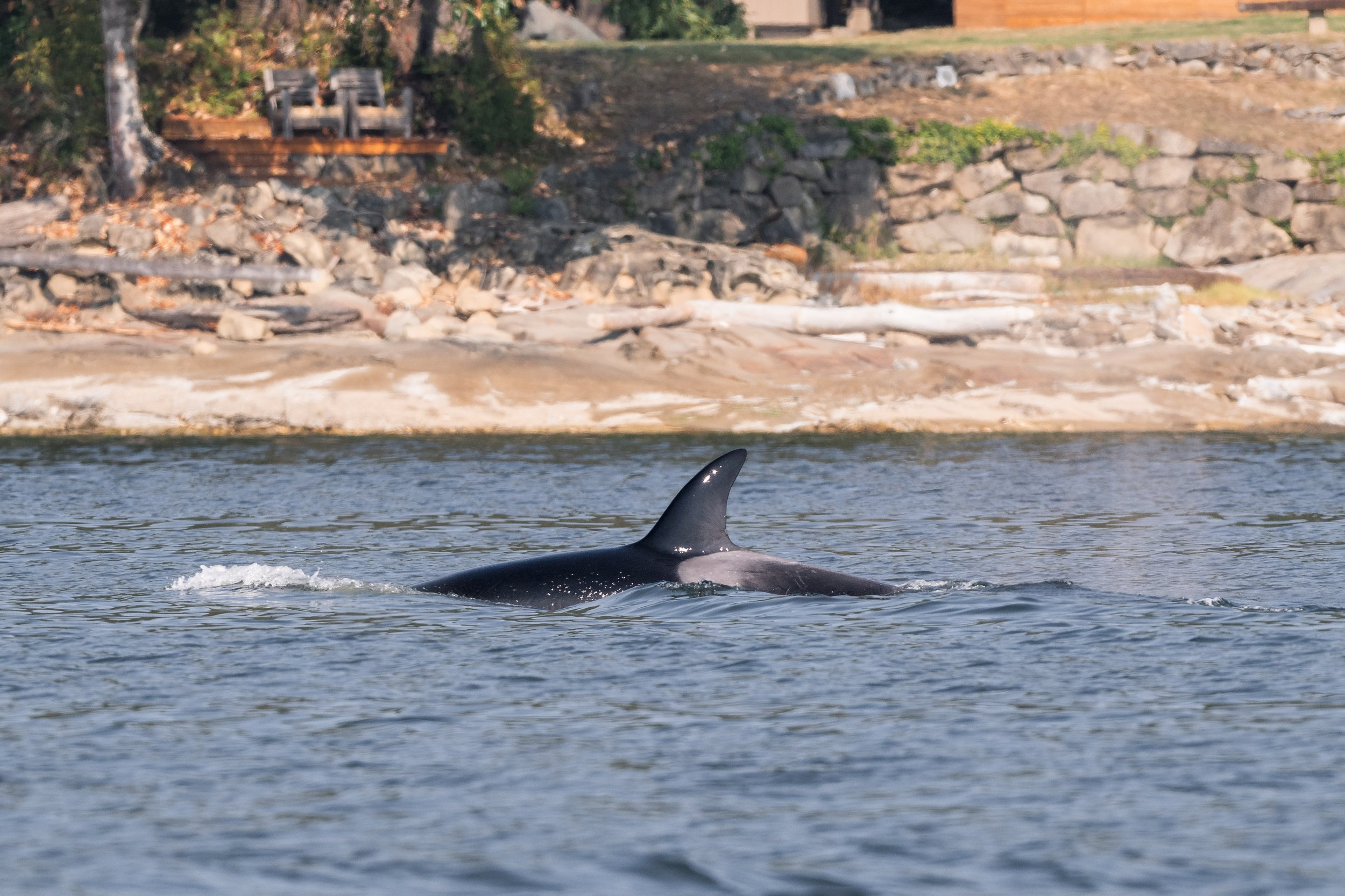
T077E Misneach close to shore. Photo by Aly Kohlman.
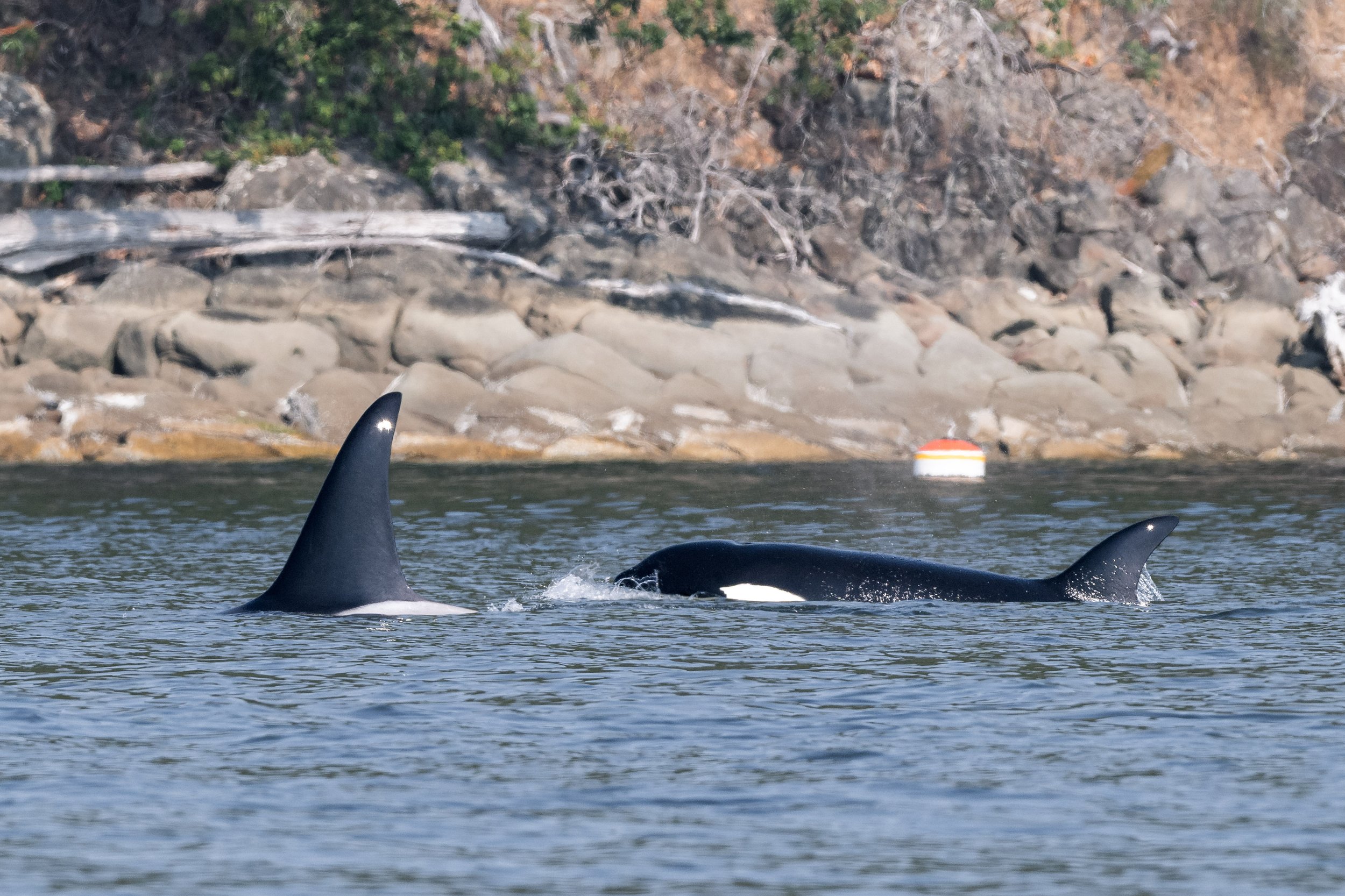
T077C Neftali and T077E Misneach. Photo by Aly Kohlman.
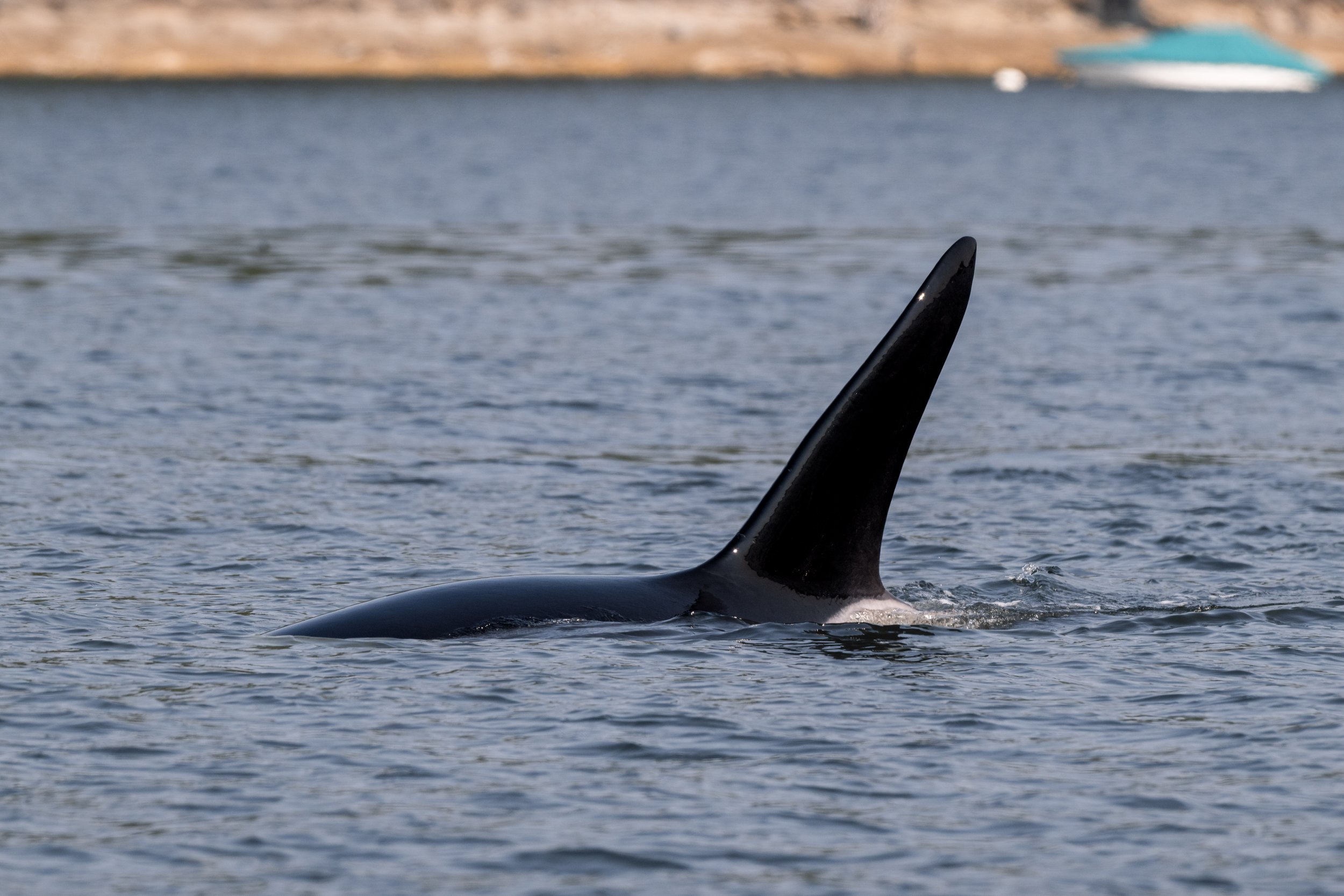
A funky angle of T077C Neftali. Photo by Aly Kohlman.
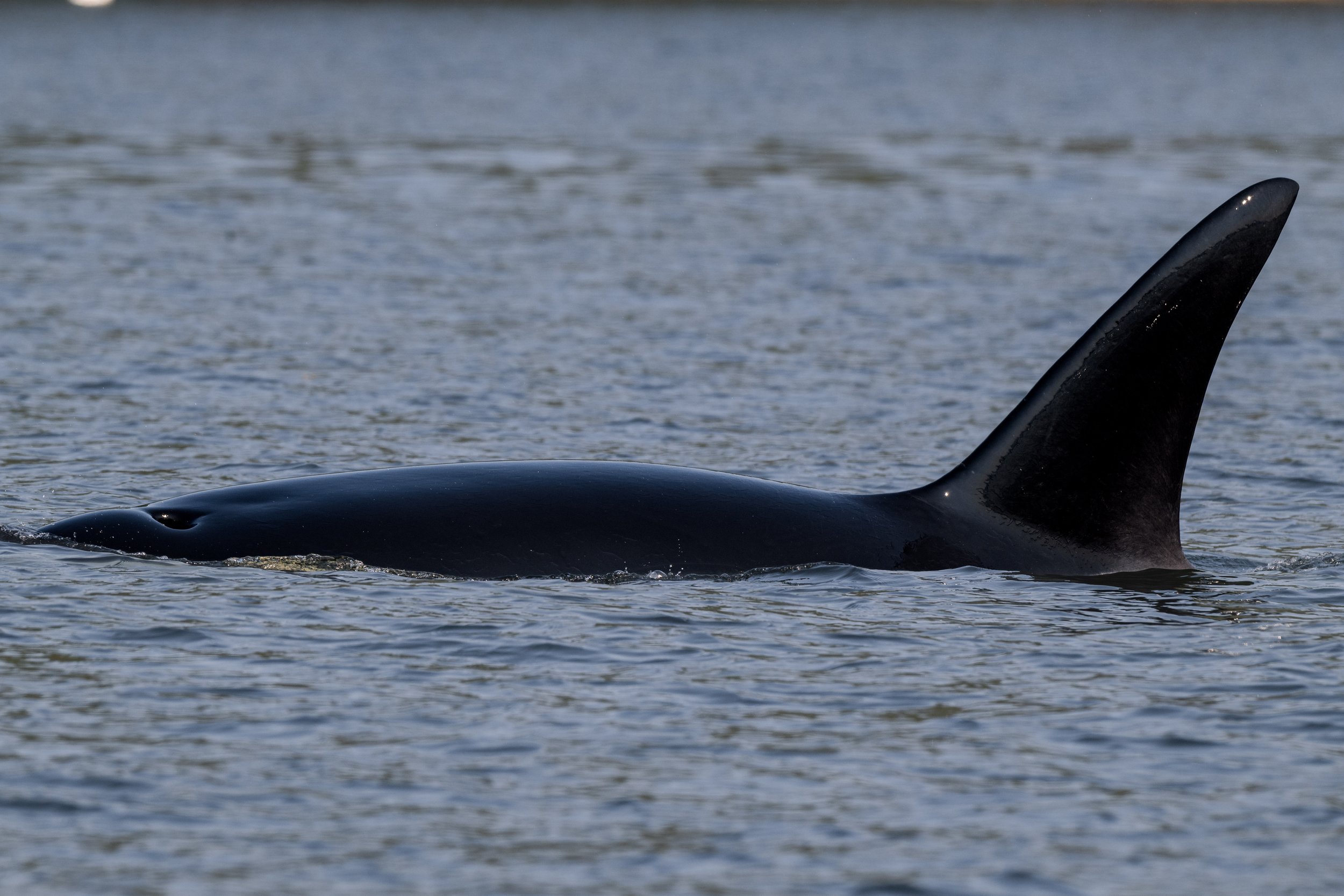
T077C Neftali’s dorsal fin is starting to fill out. Photo by Aly Kohlman.
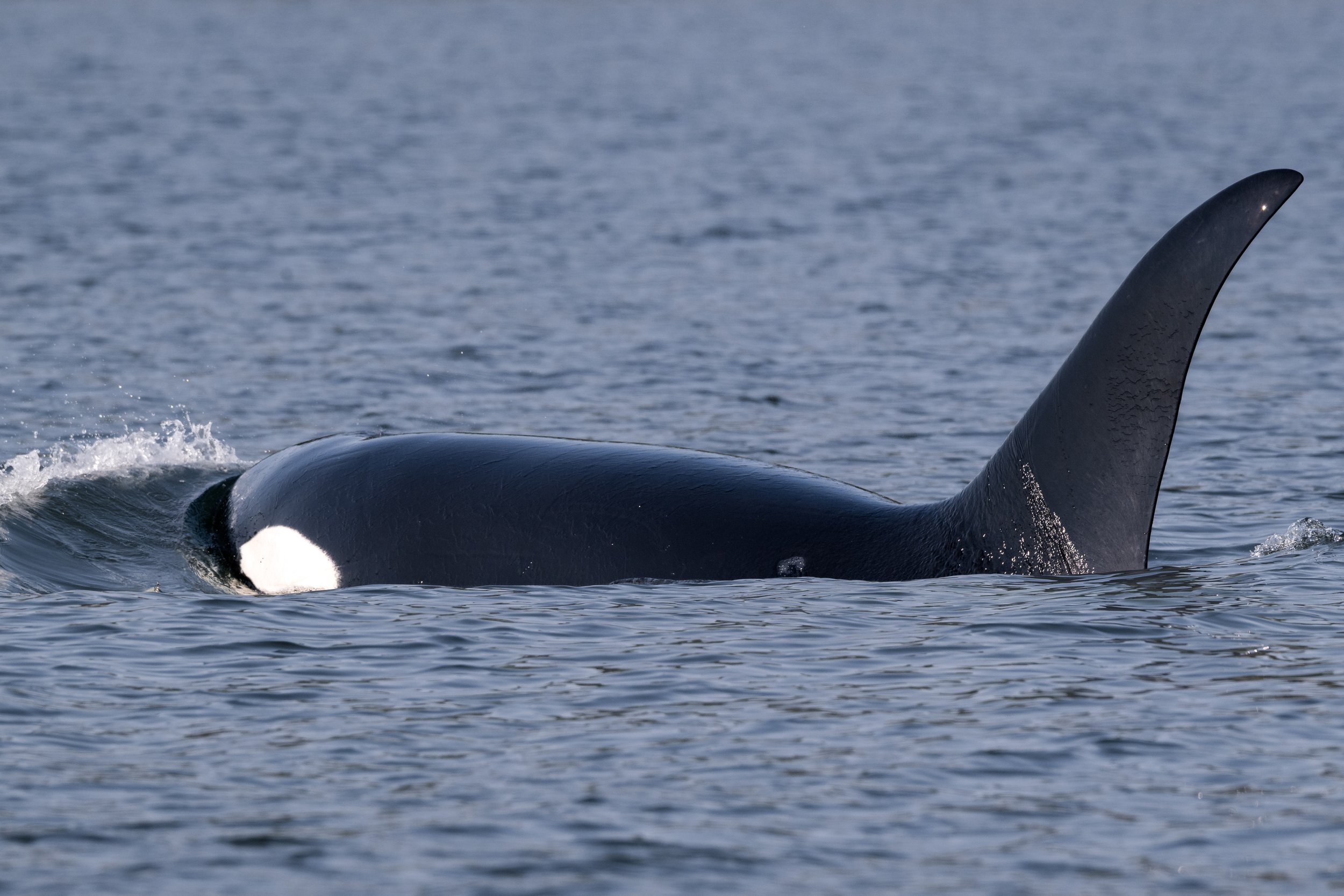
An interesting marking on T077C Neftali’s side. Photo by Aly Kohlman.
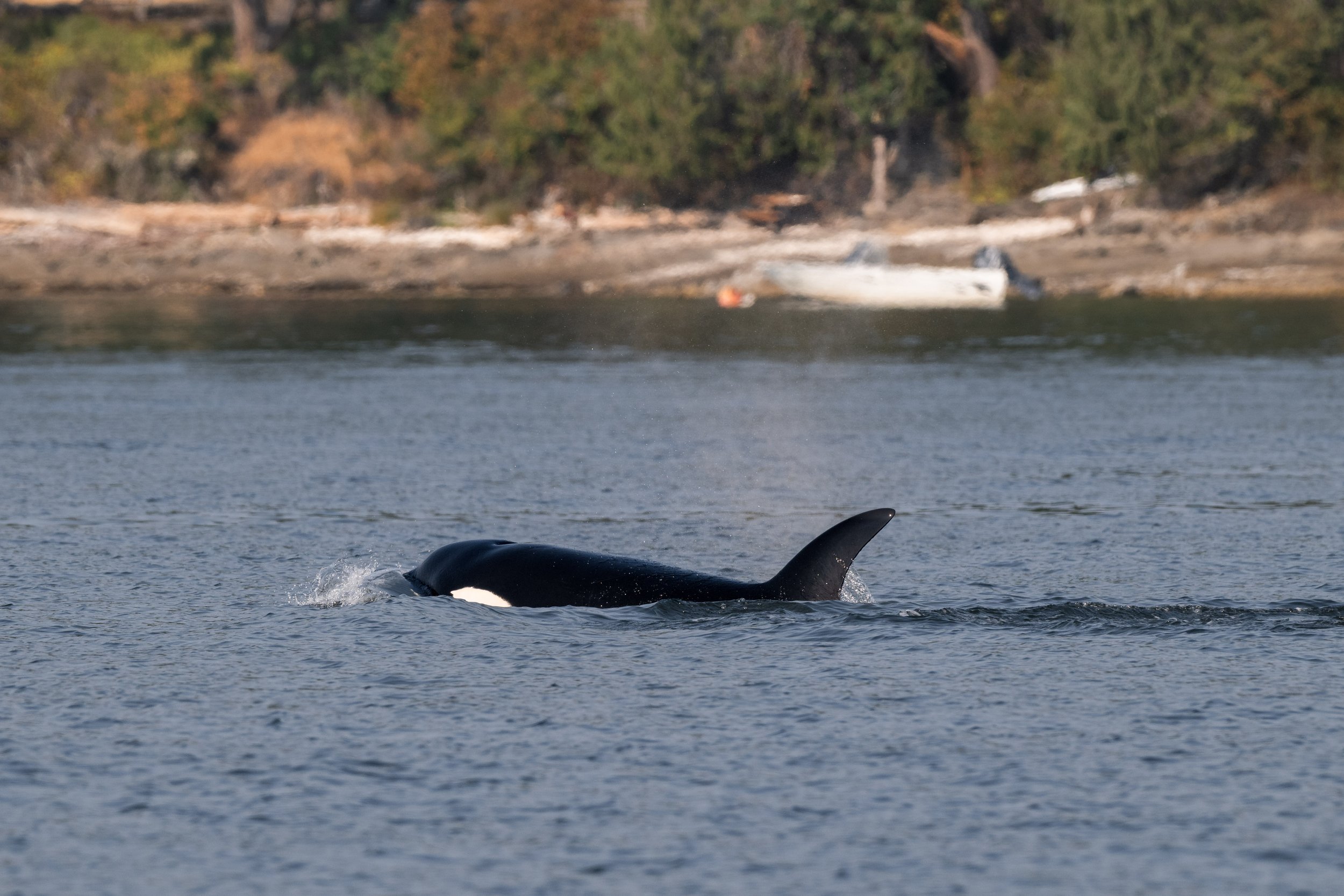
T077E Misneach making way! Photo by Aly Kohlman.
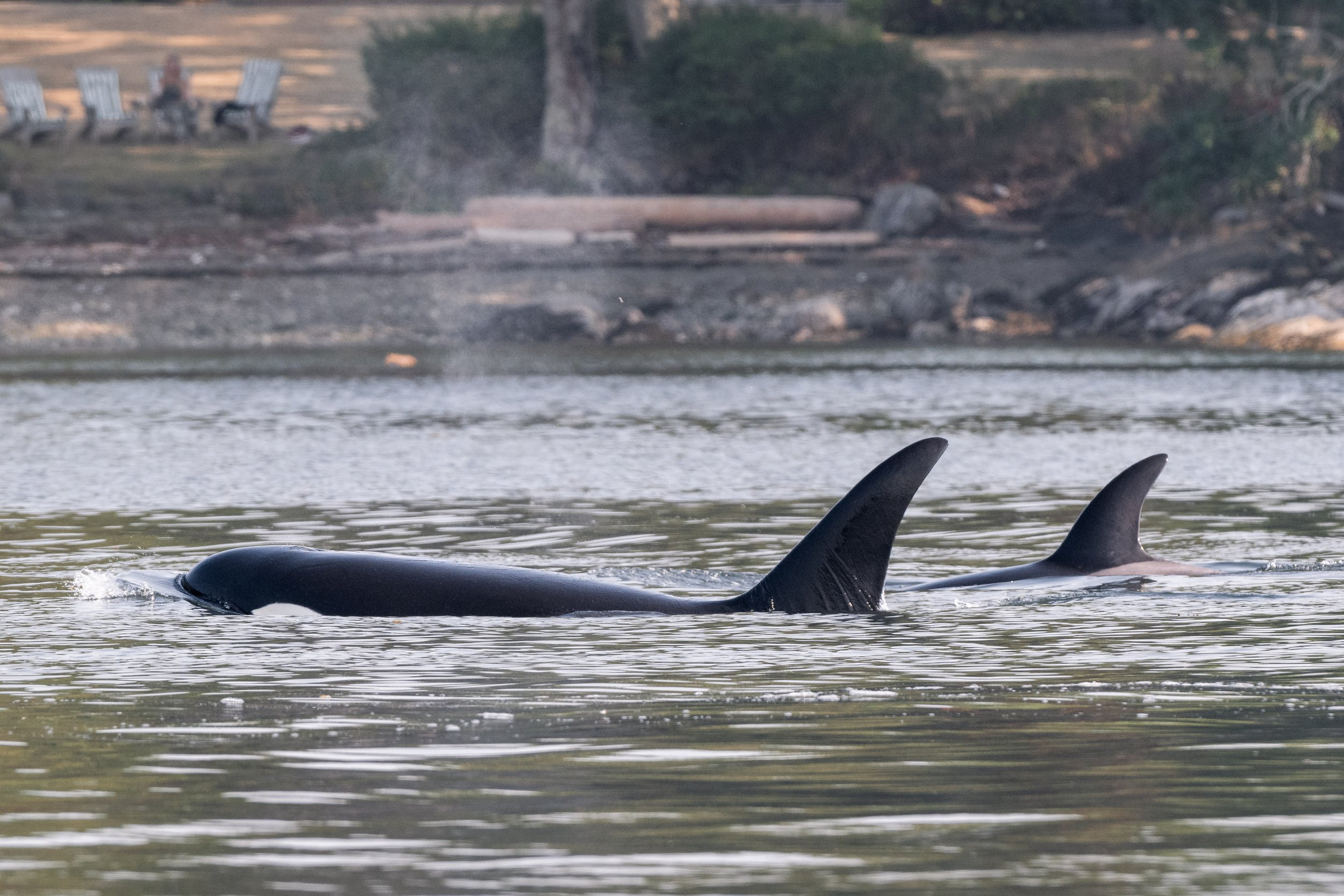
The sibling duo surfacing together with T077C Neftali in front of T077E Misneach. Photo by Aly Kohlman.
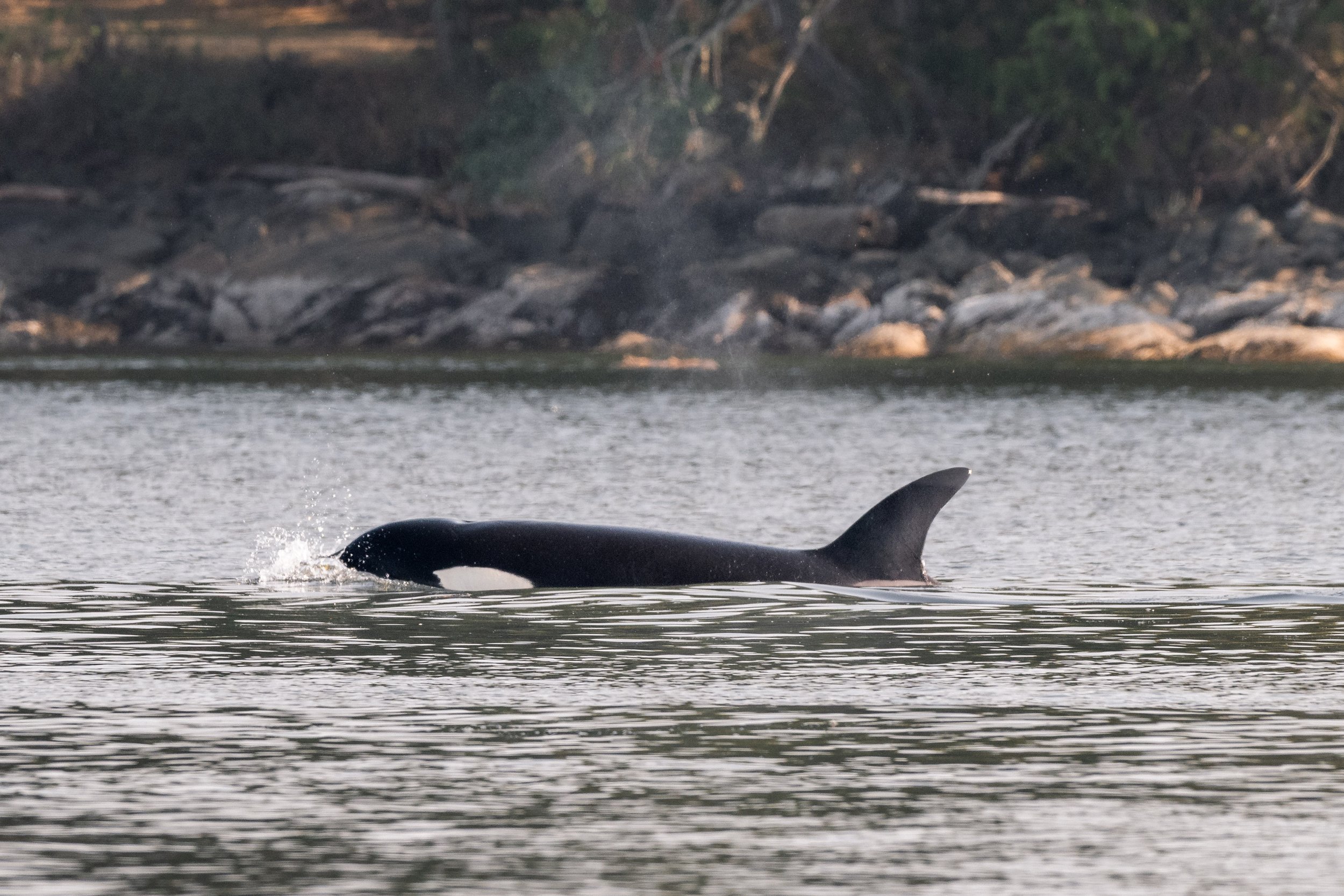
A great look at T077E Misneach. Photo by Aly Kohlman.
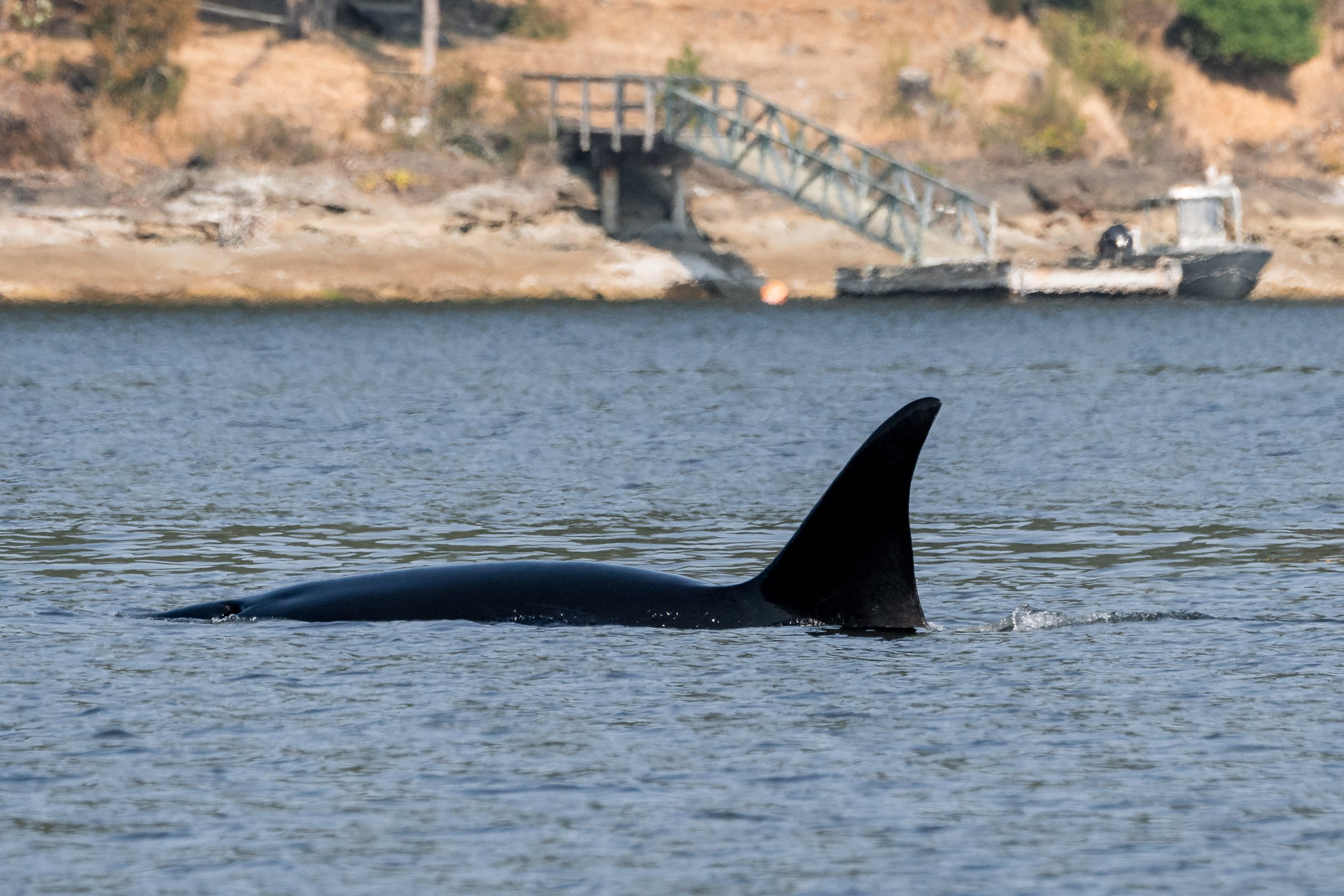
T077C Neftali arching to the side. Photo by Val Watson.
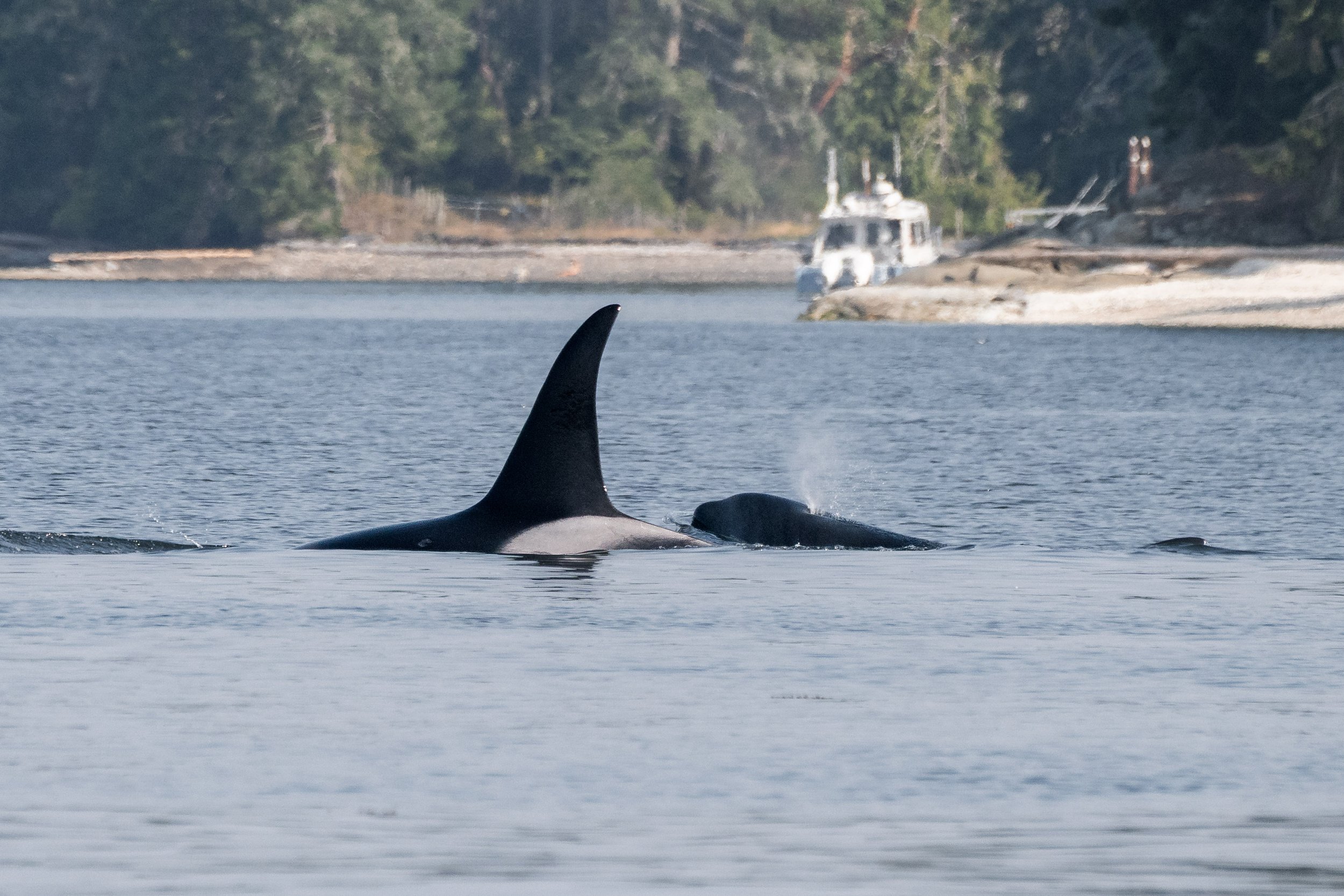
T077C Neftali surfacing with T077E Misneach right beside him. Photo by Val Watson.
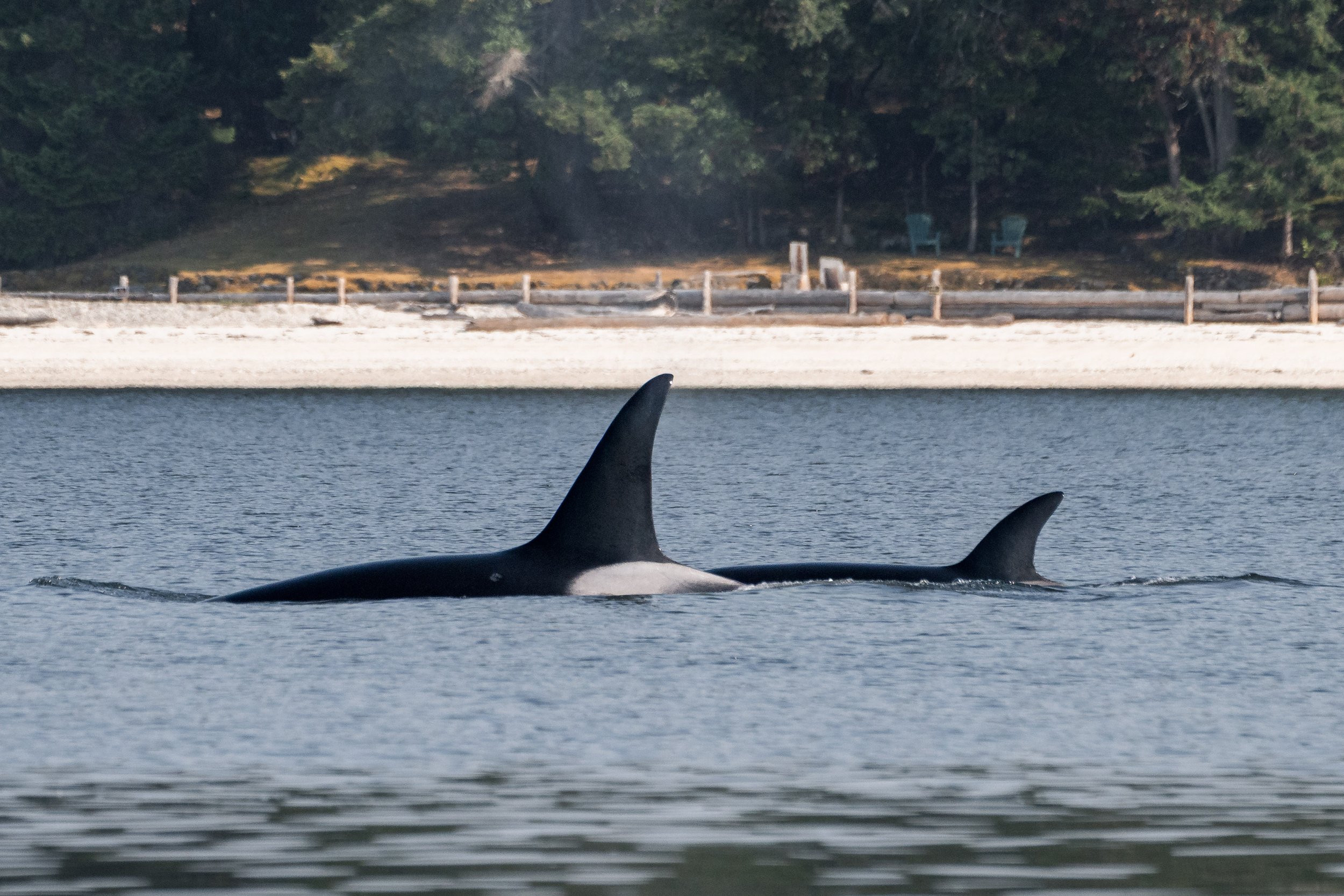
T077C Neftali and T0077E Misneach surfacing side by side. Photo by Val Watson.
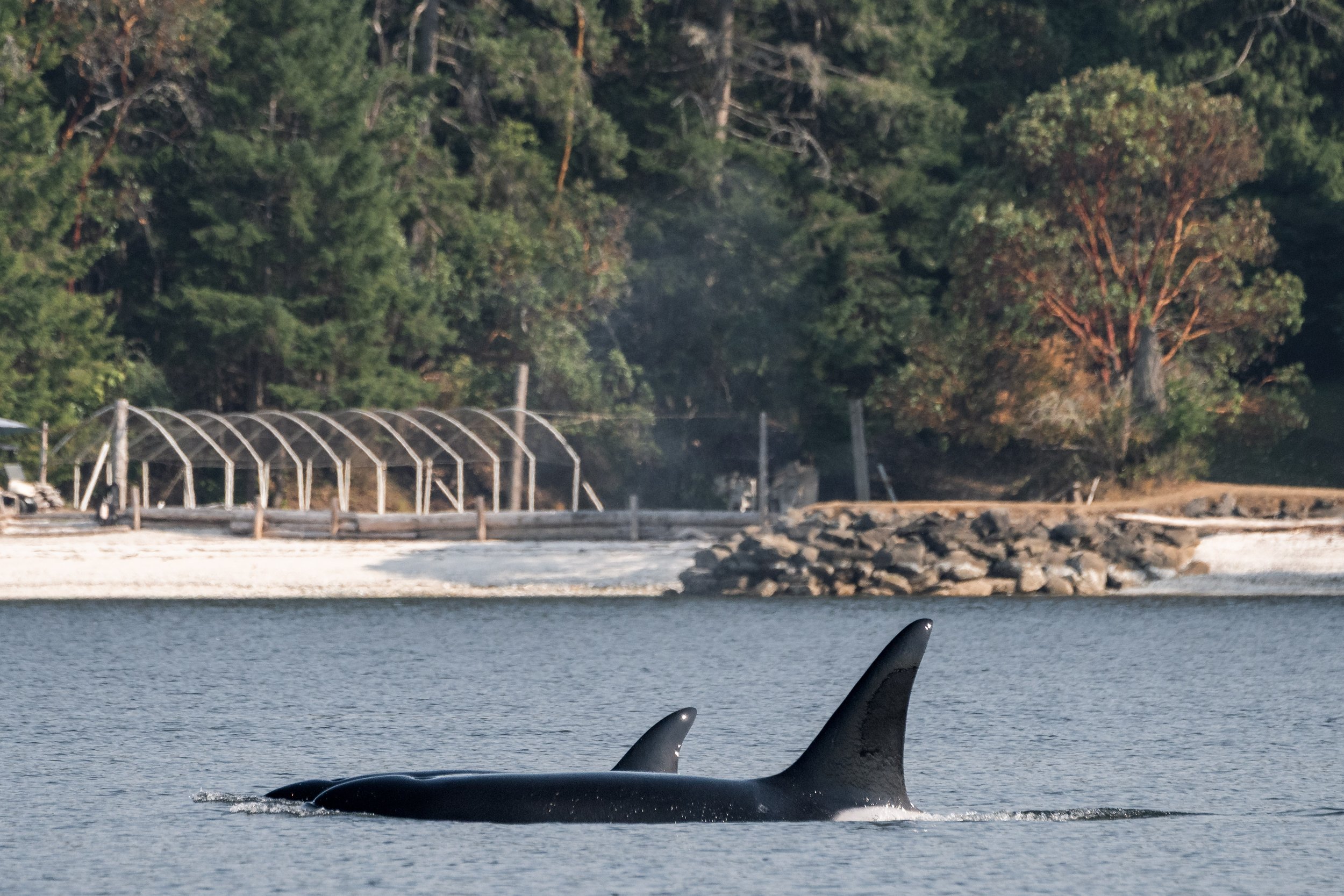
T077C Neftali surfacing in front of T077E Misneach. Photo by Val Watson.
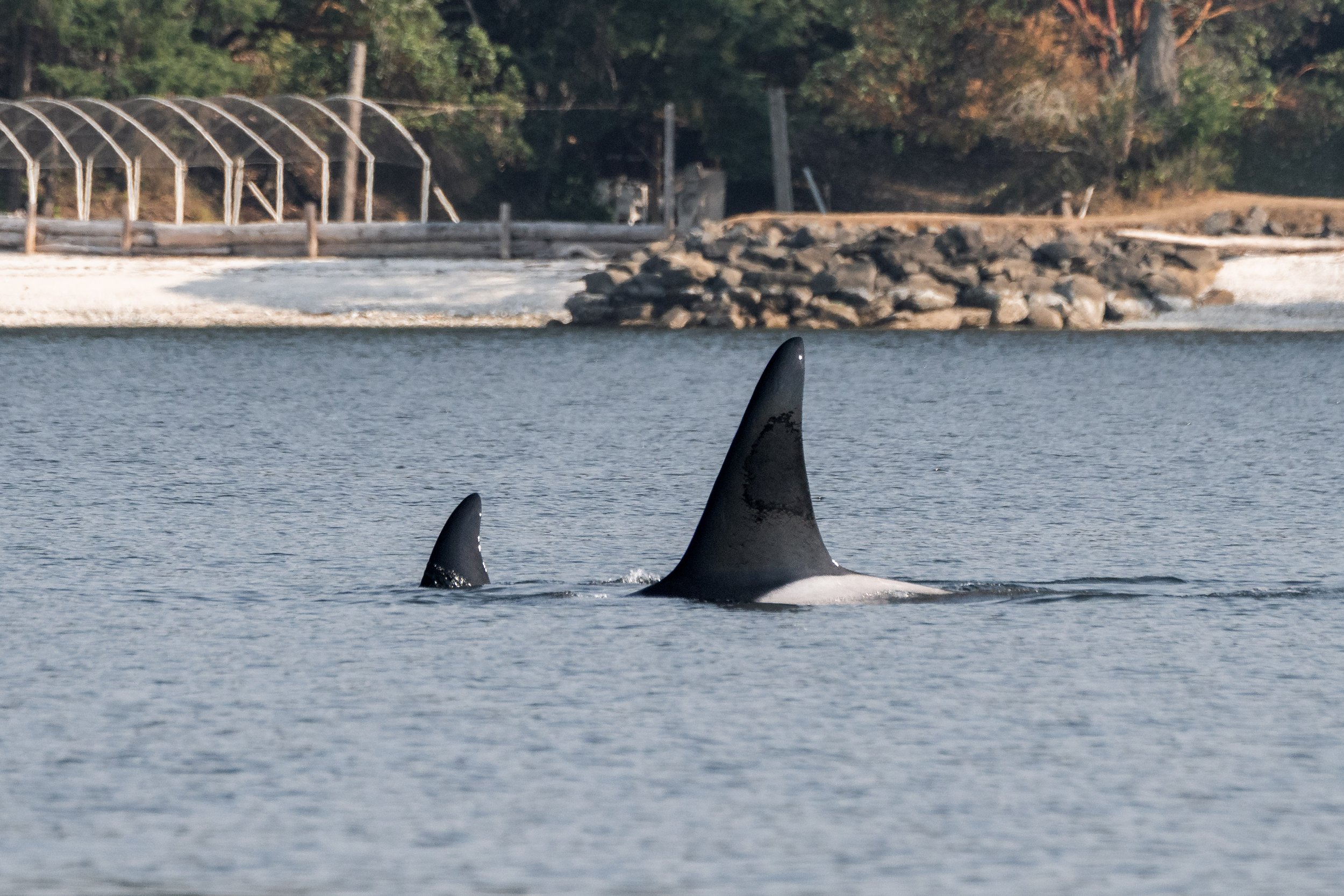
T077E Misneach and T077C Neftali both dipping below the surface. Photo by Val Watson.
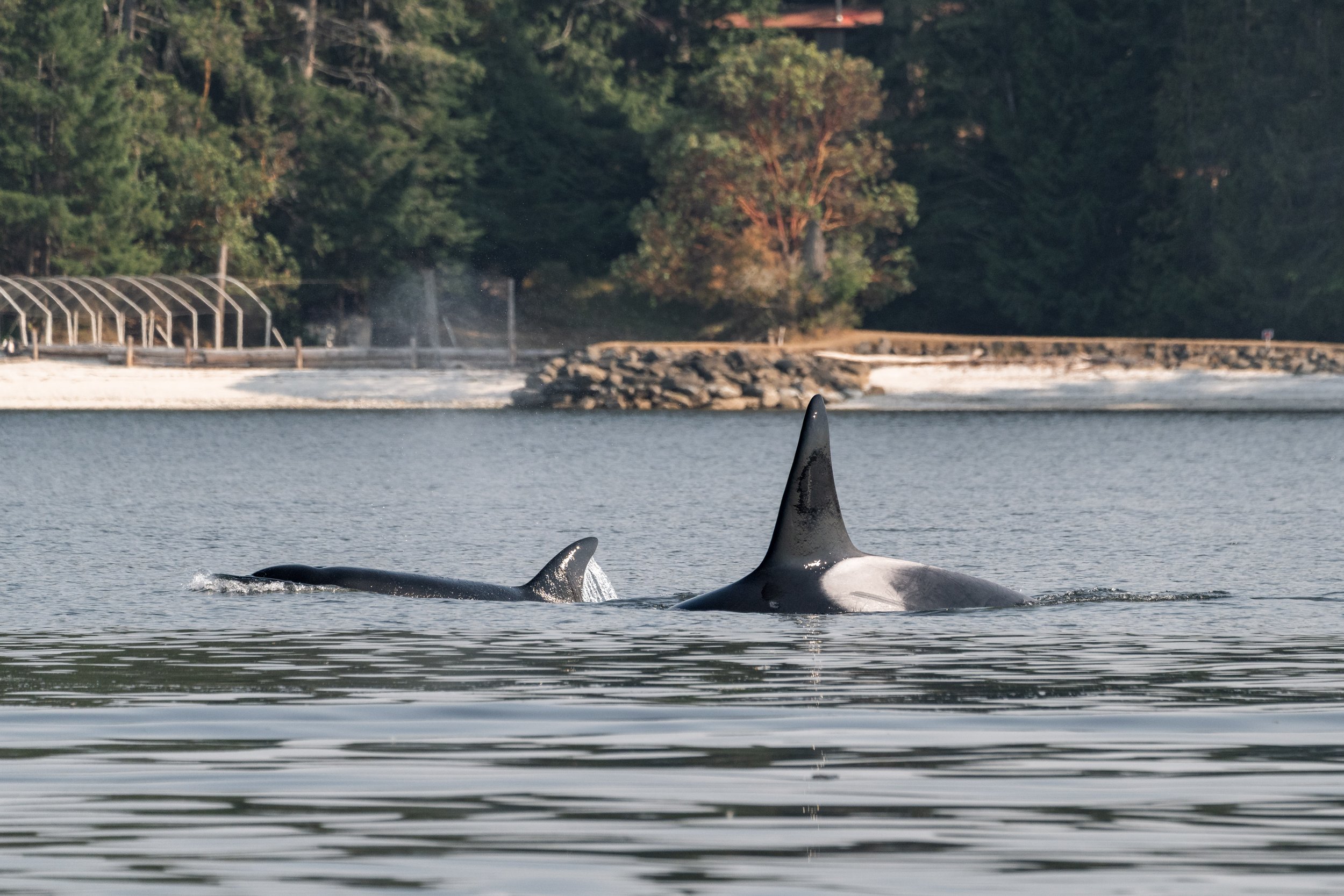
A great look at T077E Misneach surfacing with T077C Neftali dives beside. Photo by Val Watson.
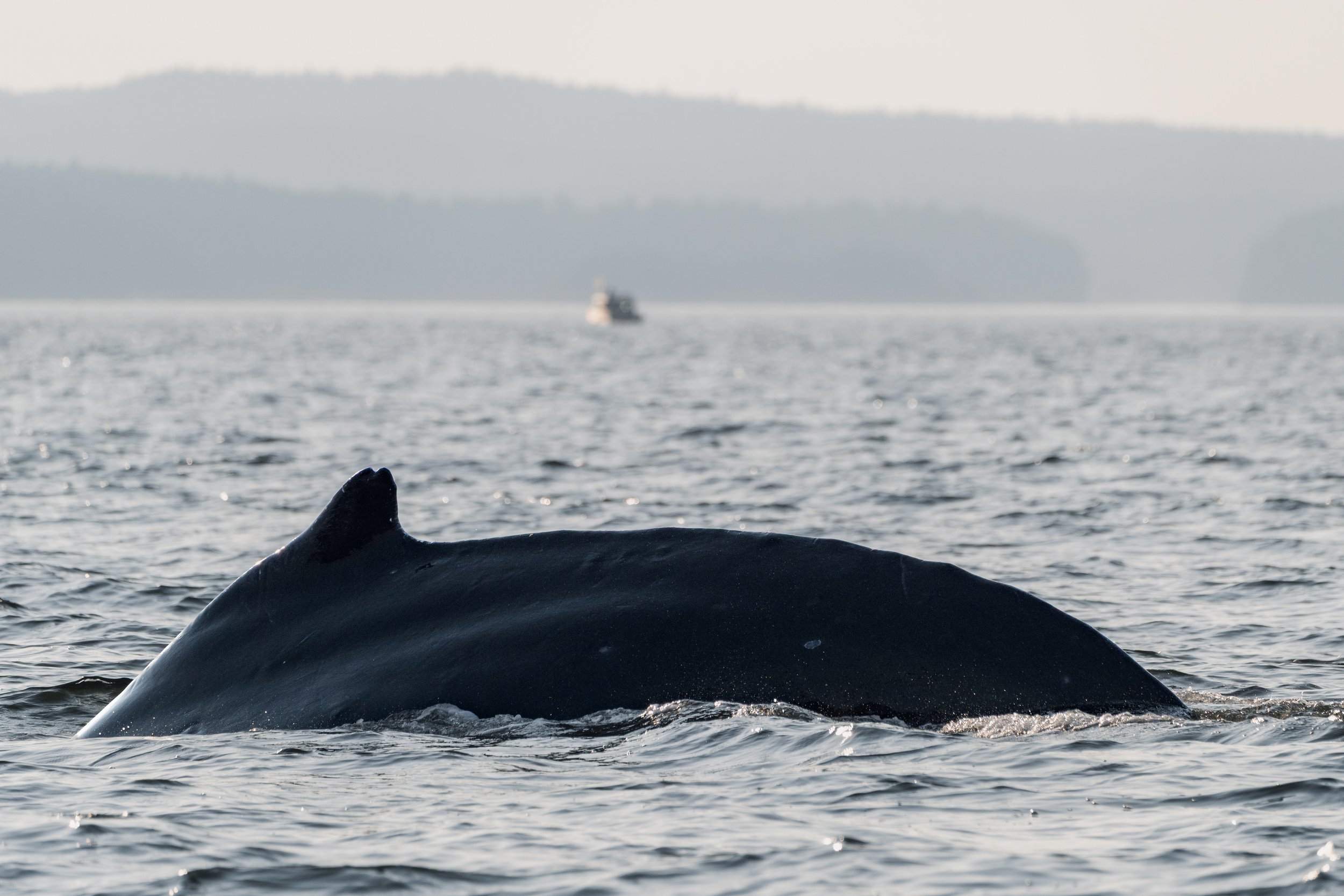
Chi’s notched dorsal fin. Photo by Val Watson.
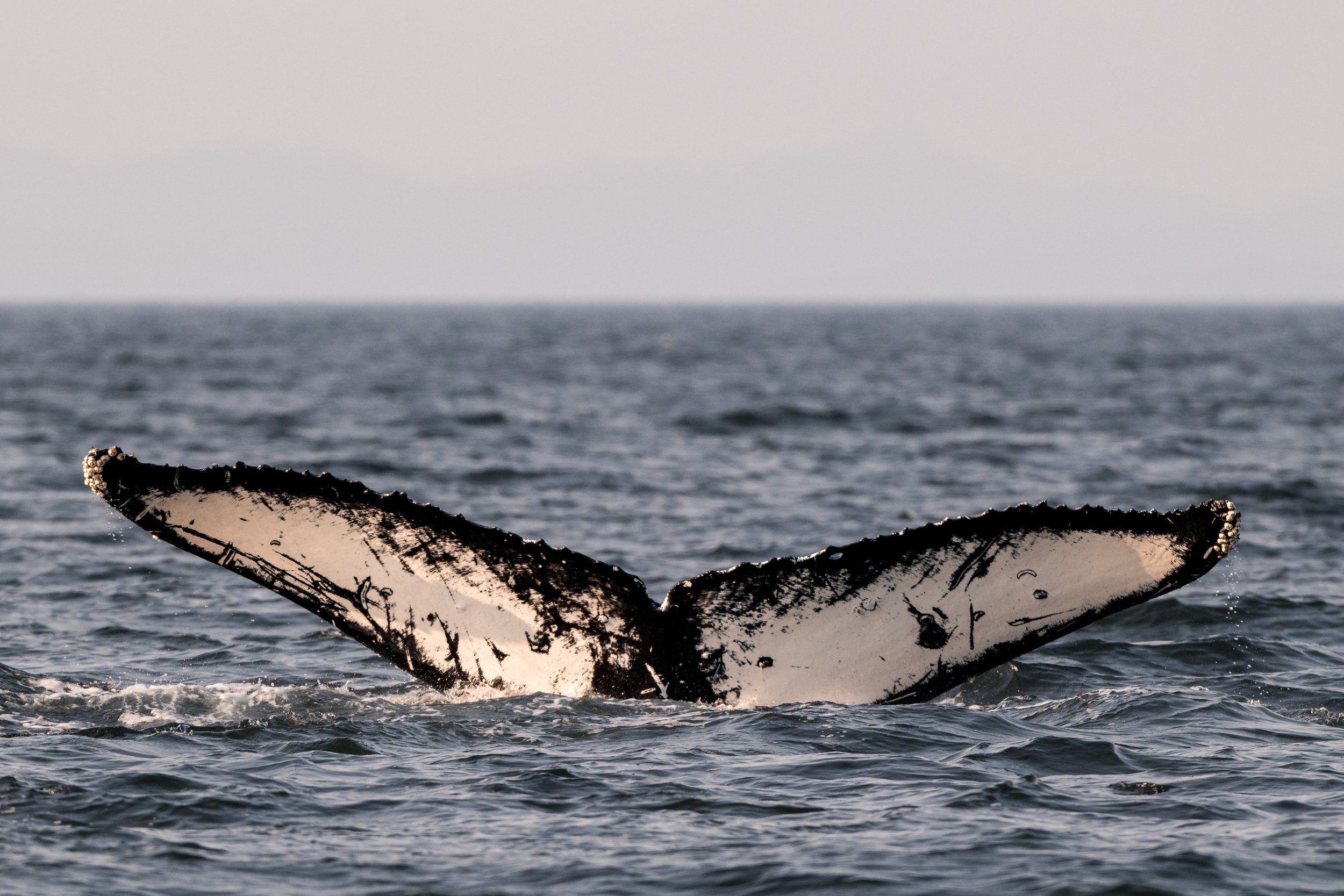
The beautiful underside o Chi’s tail fluke. Photo by Aly Kohlman.
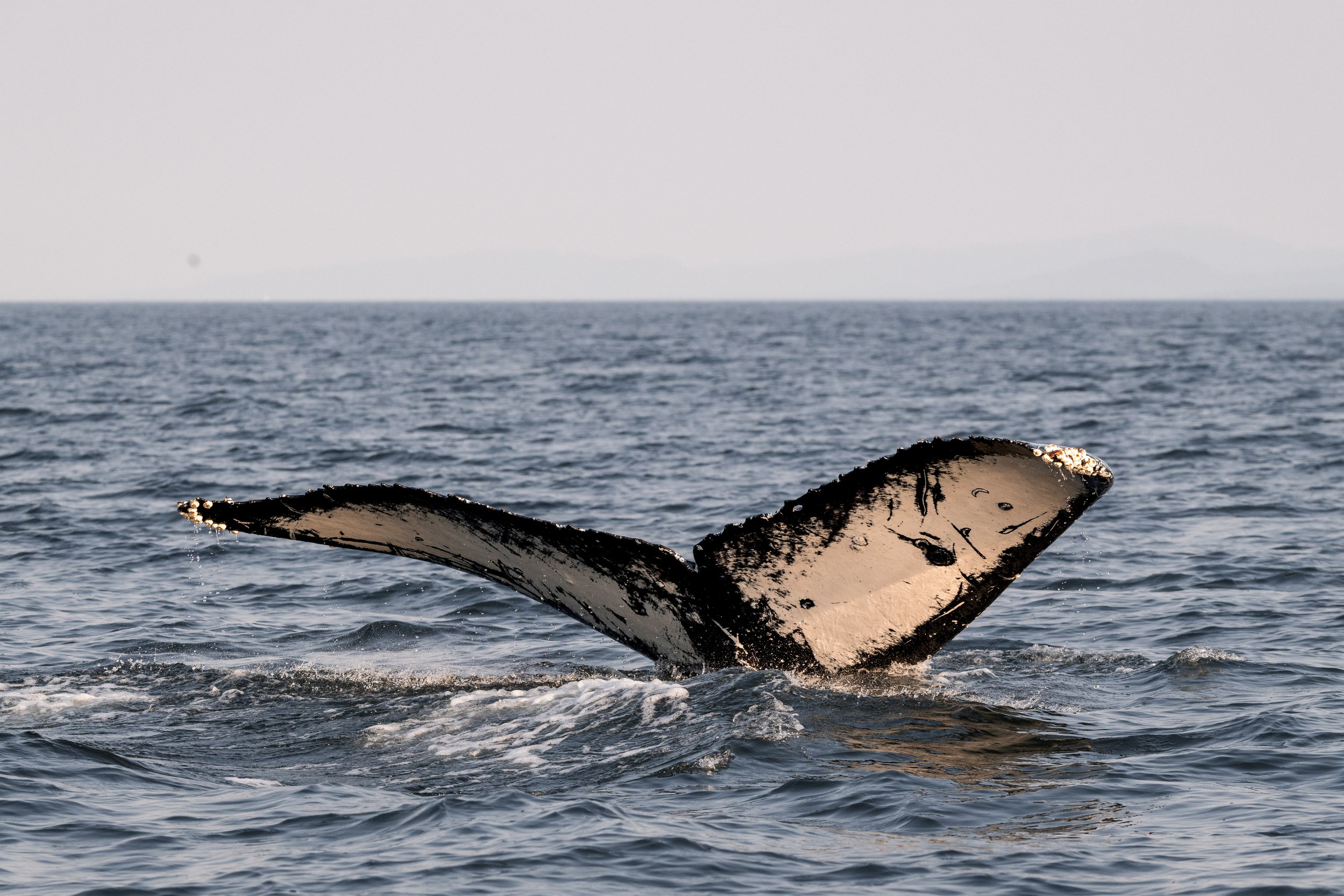
Chi is classified as a Z whale with all this white! Photo by Aly Kohlman.
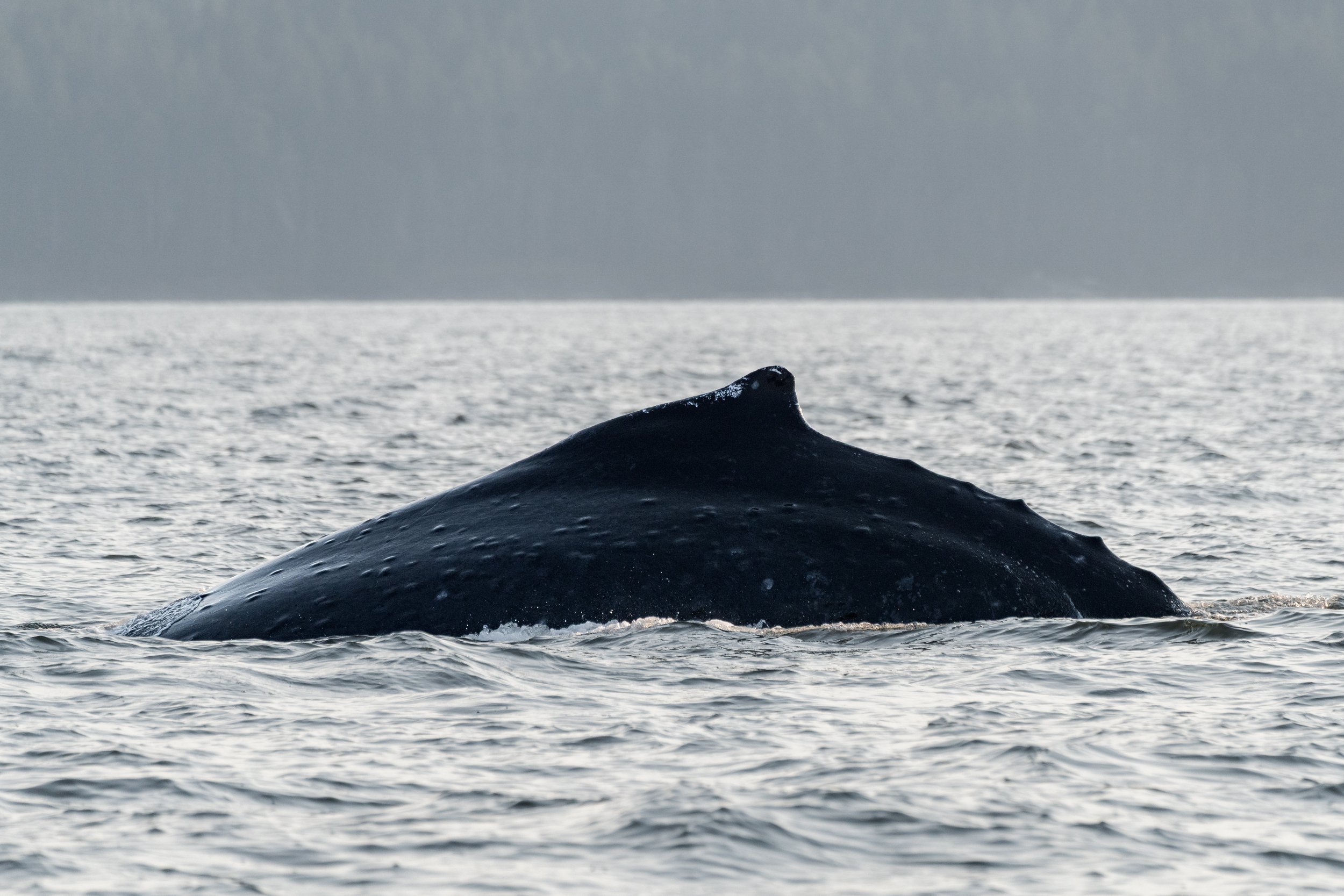
Snoopy’s scarred up dorsal fin. Photo by Val Watson.
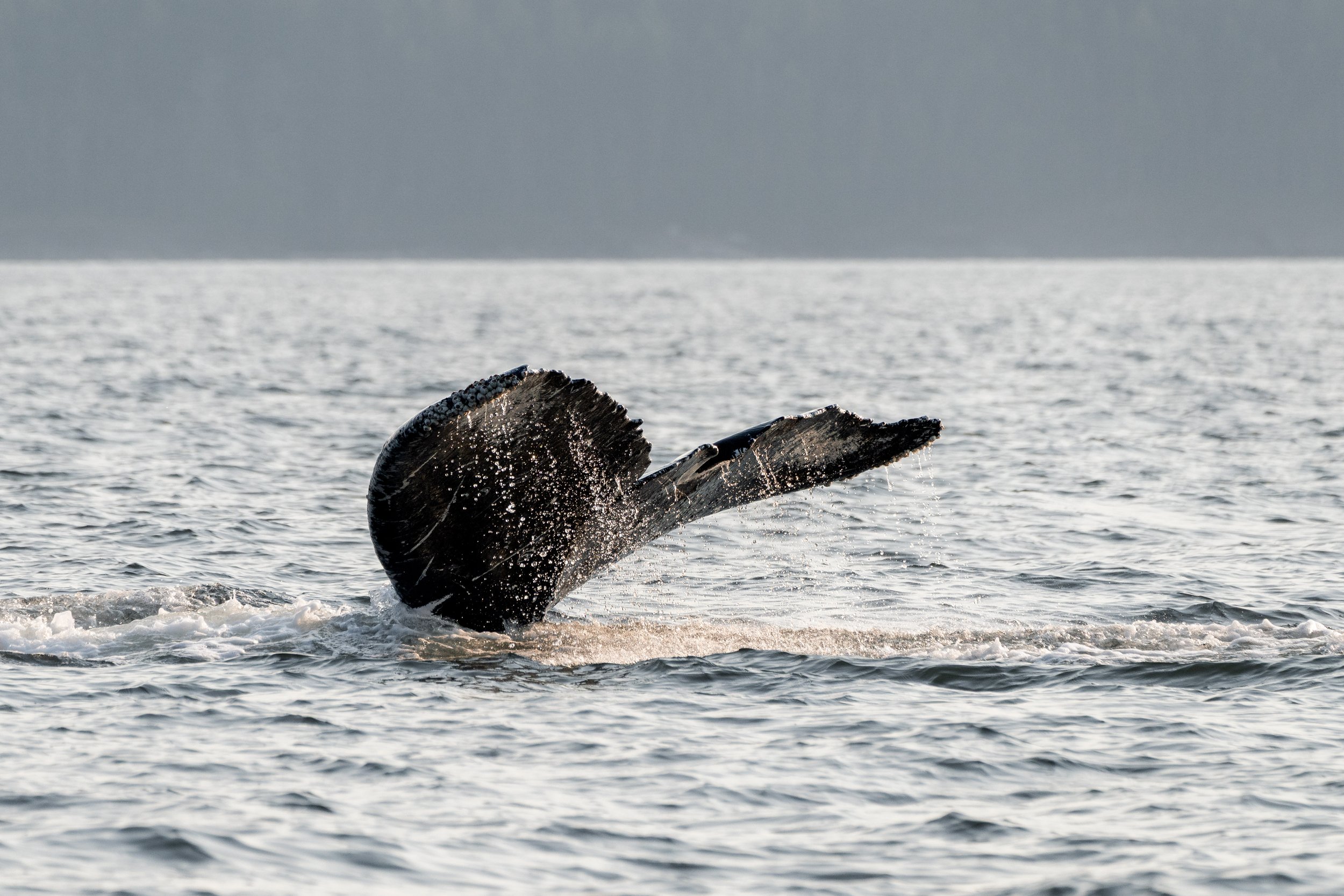
All of these scars were caused by Snoopy’s previous entanglement. Photo by Val Watson.
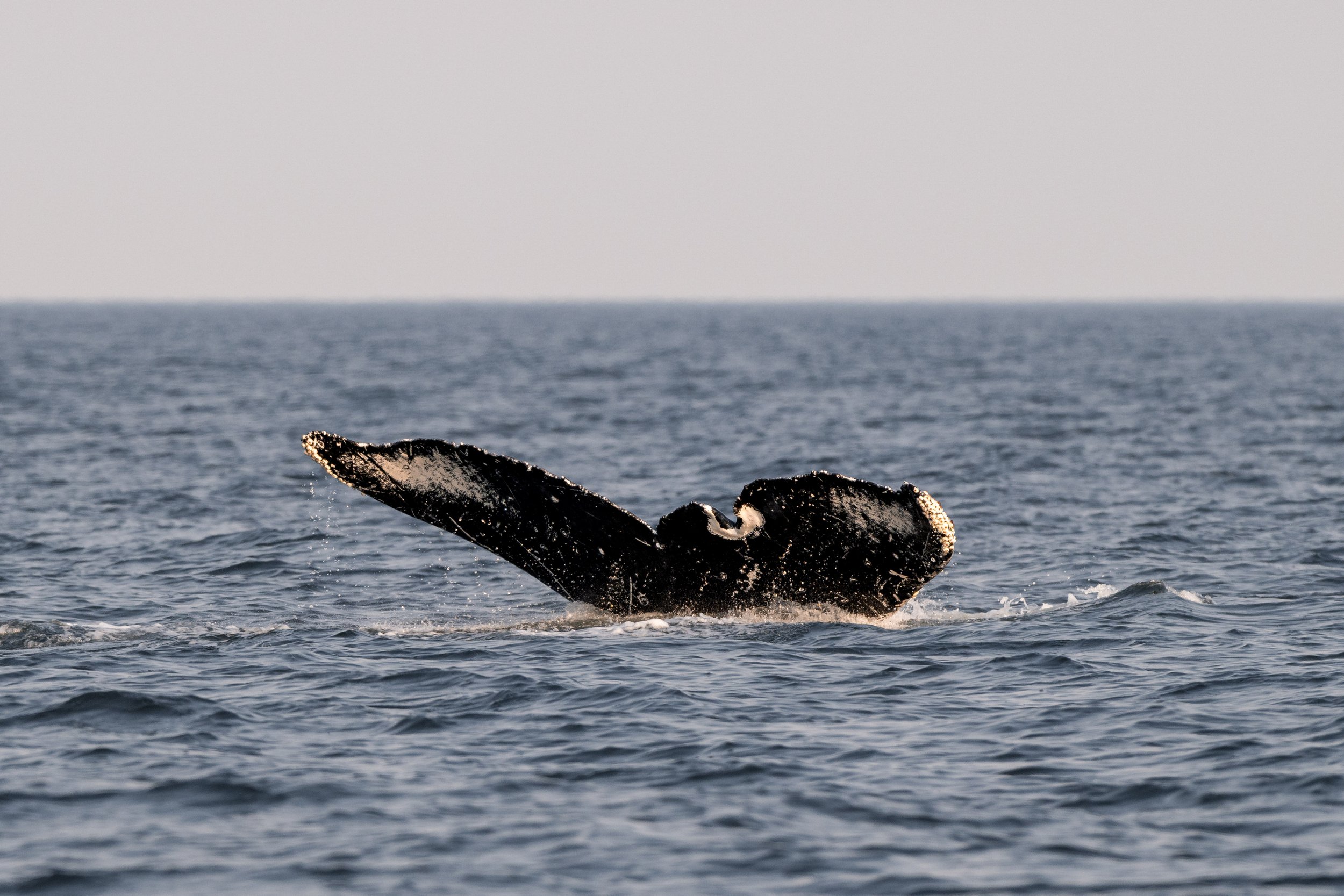
The underside of Snoopy’s tail as he dives. Photo by Aly Kohlman.
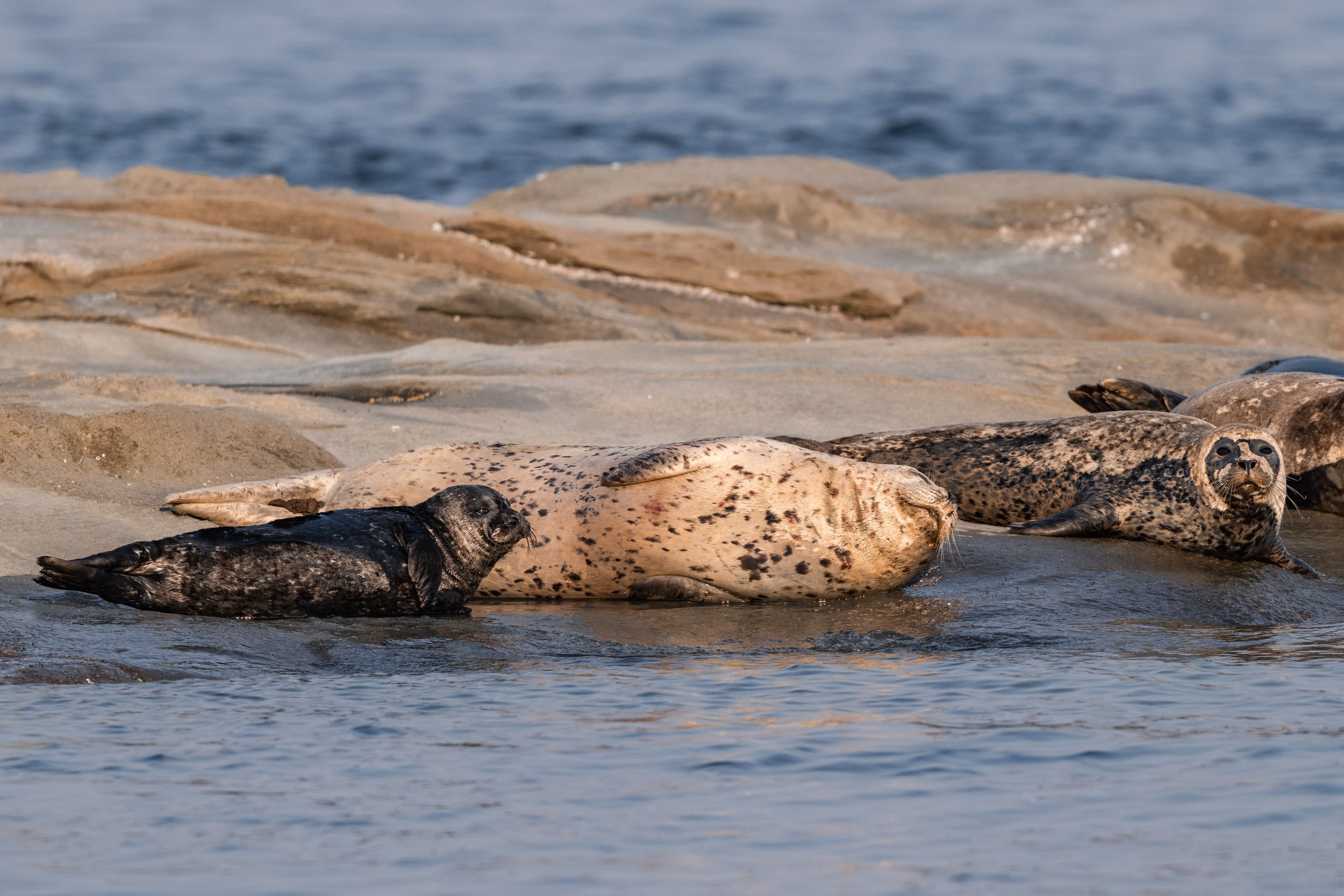
Some happy Harbour Seals at Stinky Rock. Photo by Aly Kohlman.
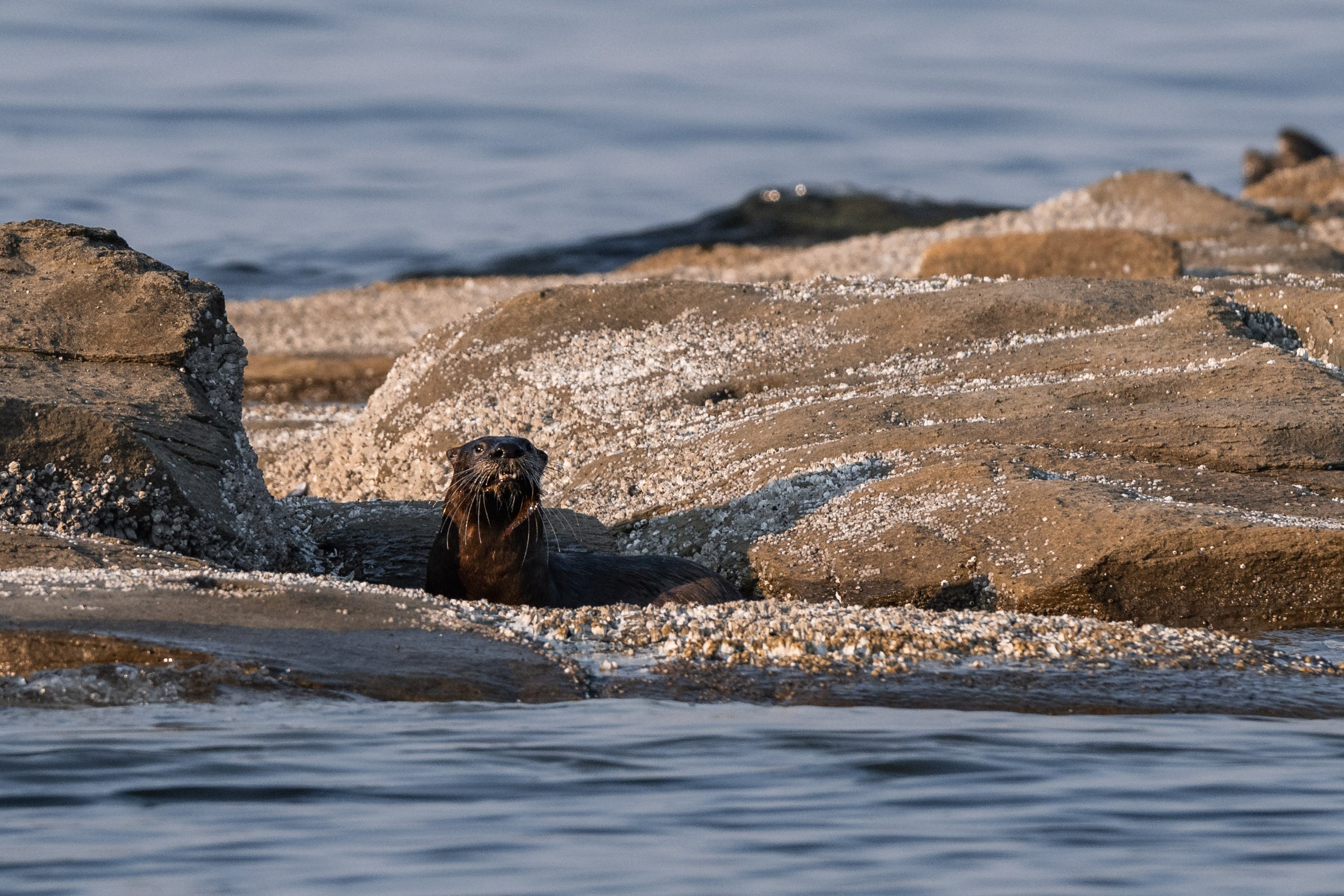
A River Otter with a gunnel for a snack. Photo by Aly Kohlman.
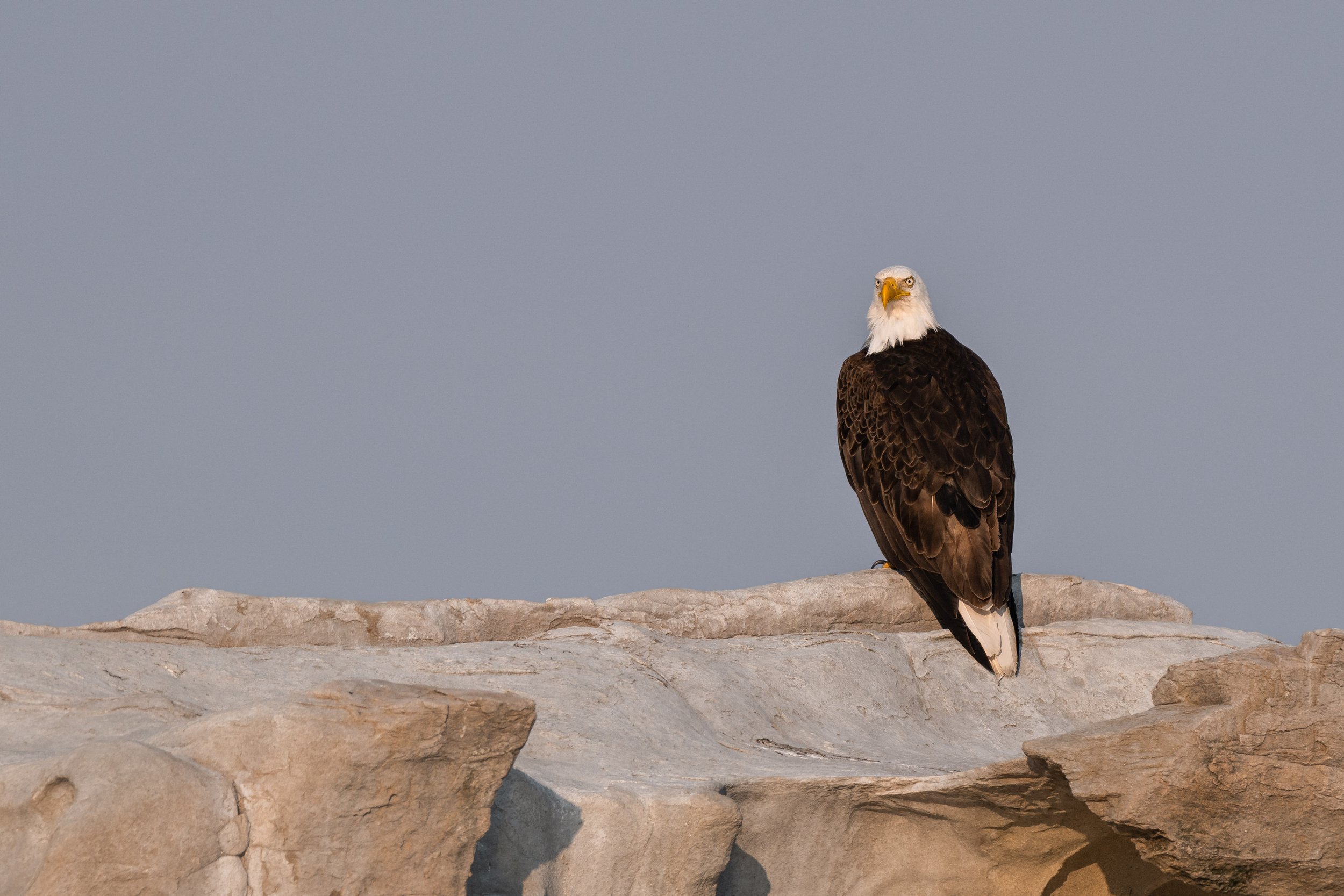
A Bald Eagle intently keeping an eye on things. Photo by Aly Kohlman.
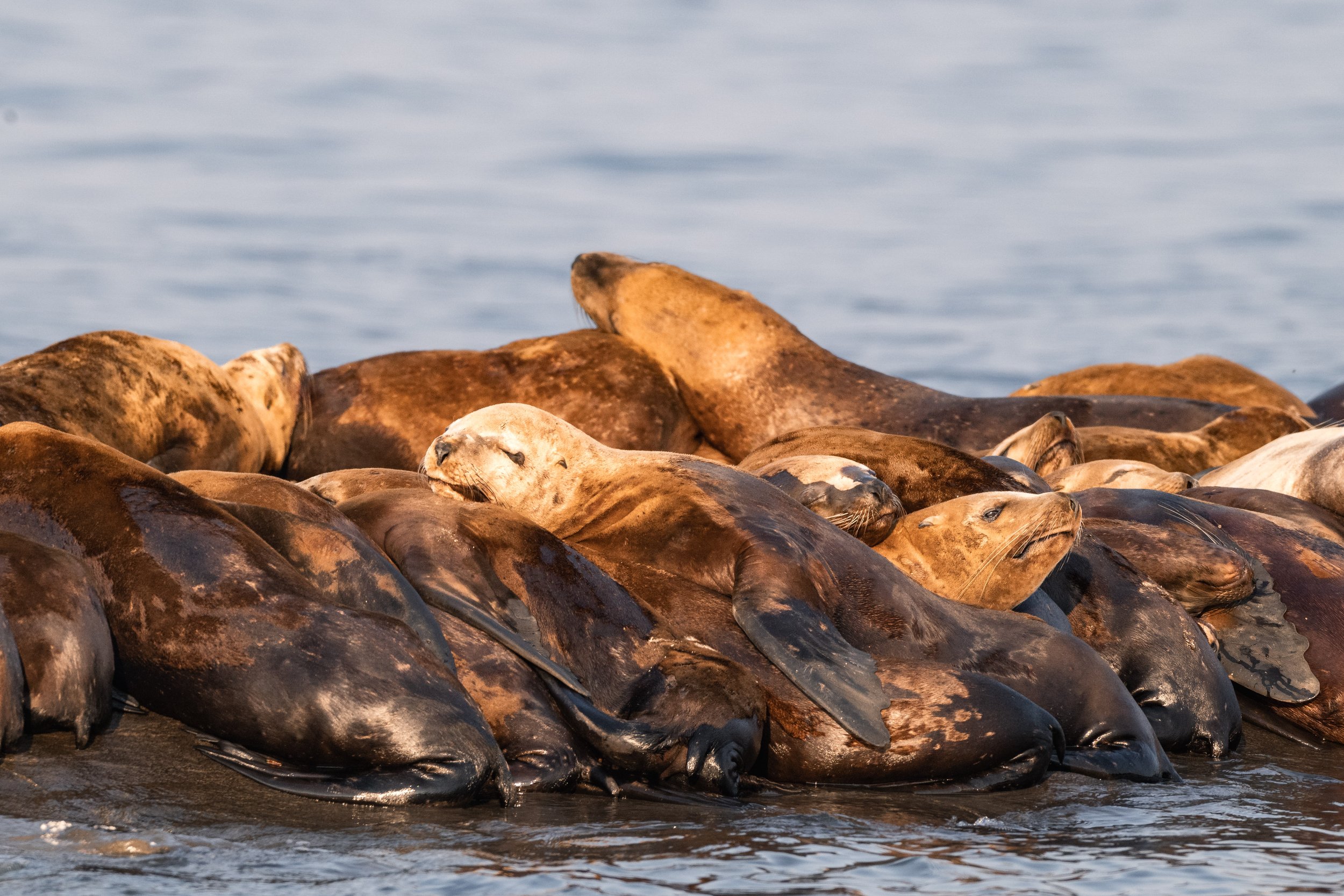
A cuddle puddle of Steller Sea Lions. Photo by Aly Kohlman.
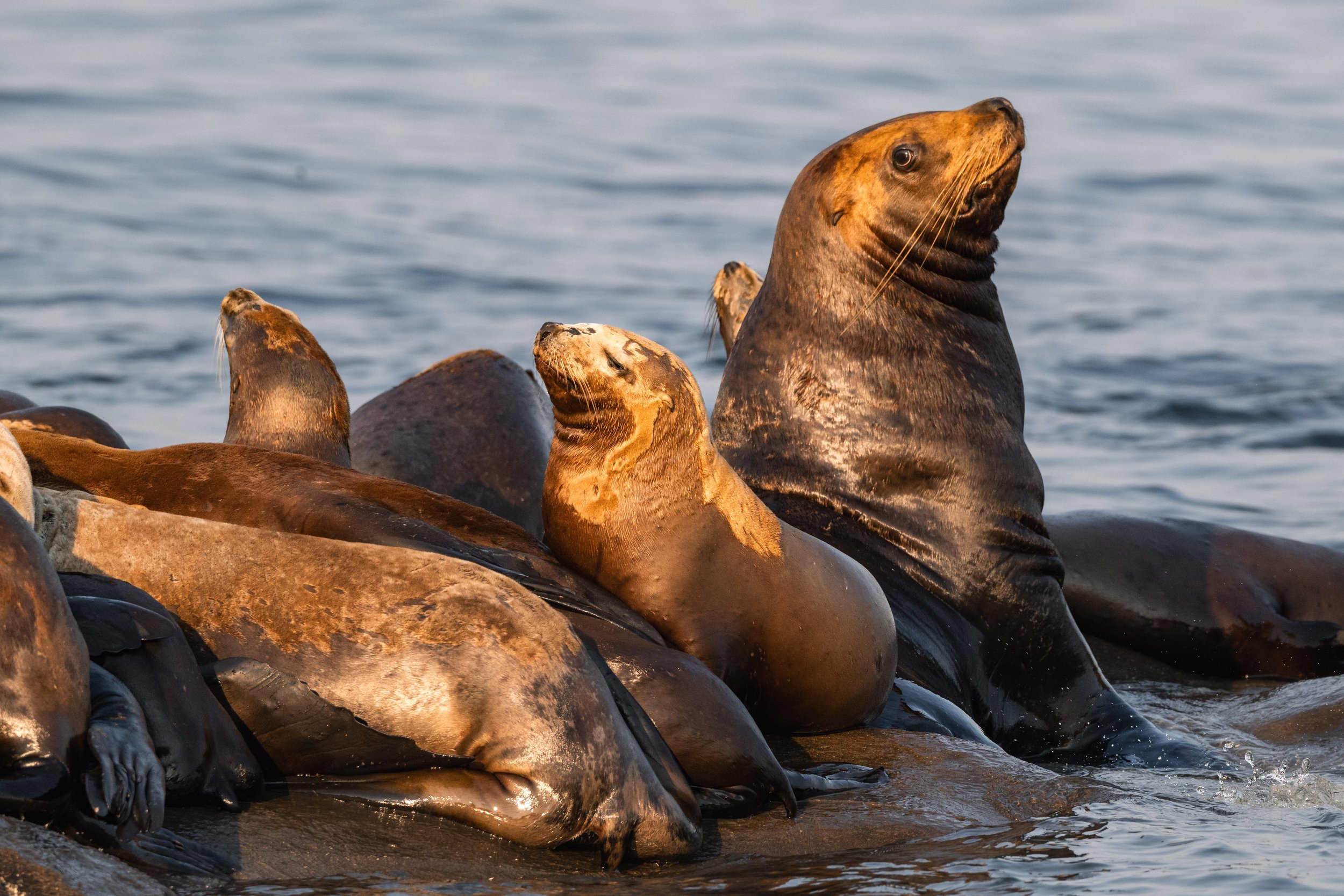
Just look at the size difference between individuals that are likely only a few years apart. Photo by Aly Kohlman.
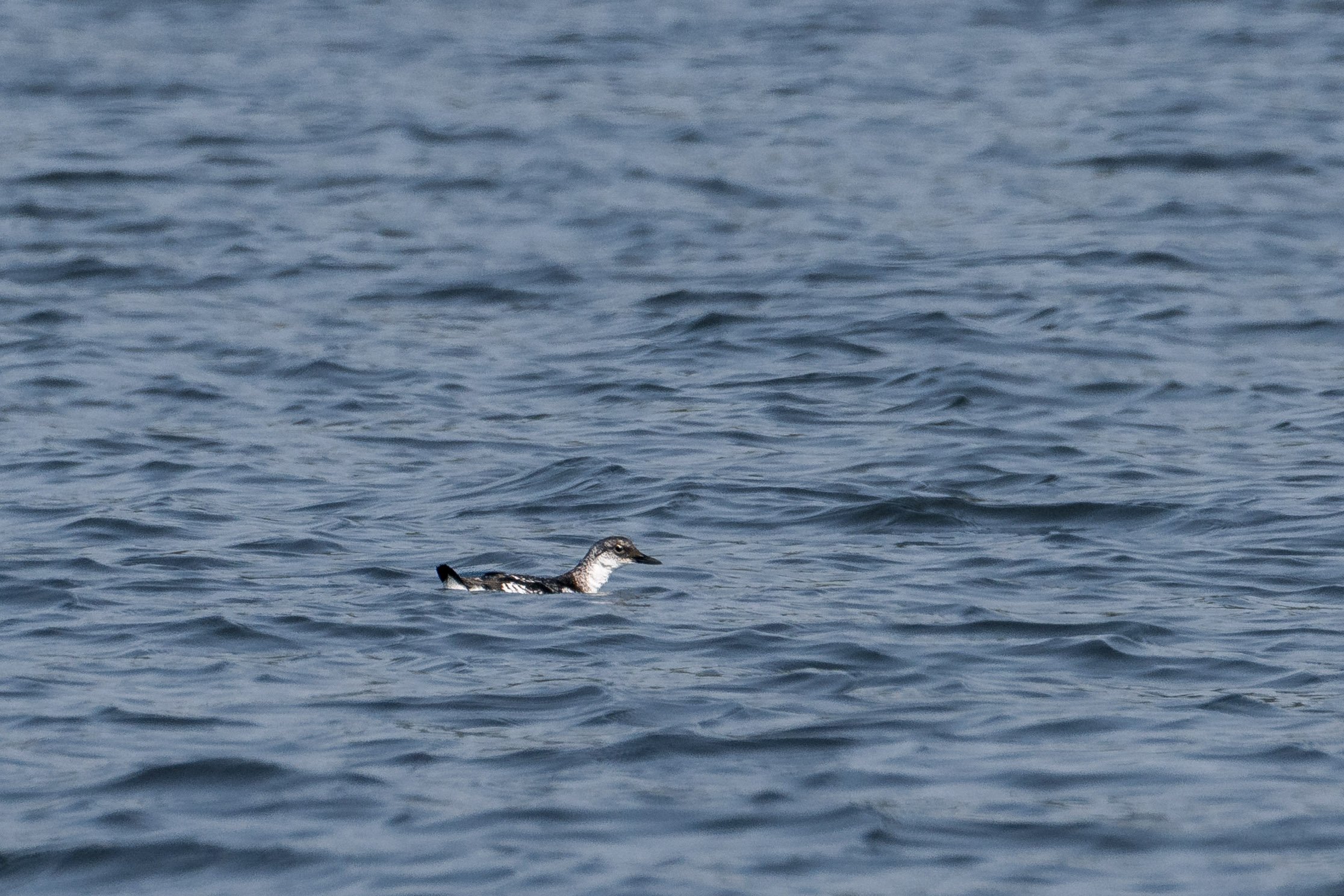
A common murre floating by. Photo by Val Watson.
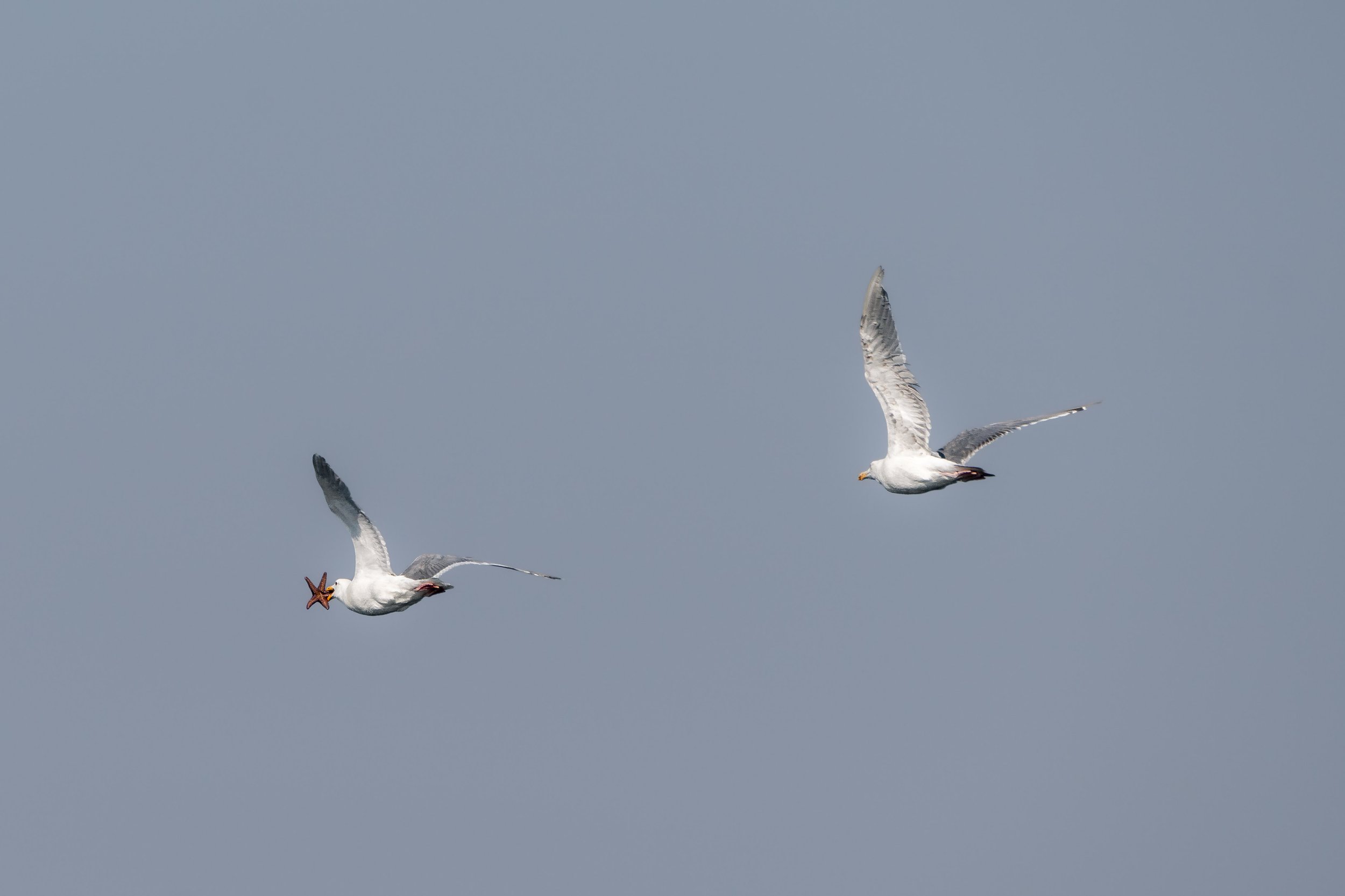
A gull chase over a yummy Starfish snack. Photo by Val Watson.
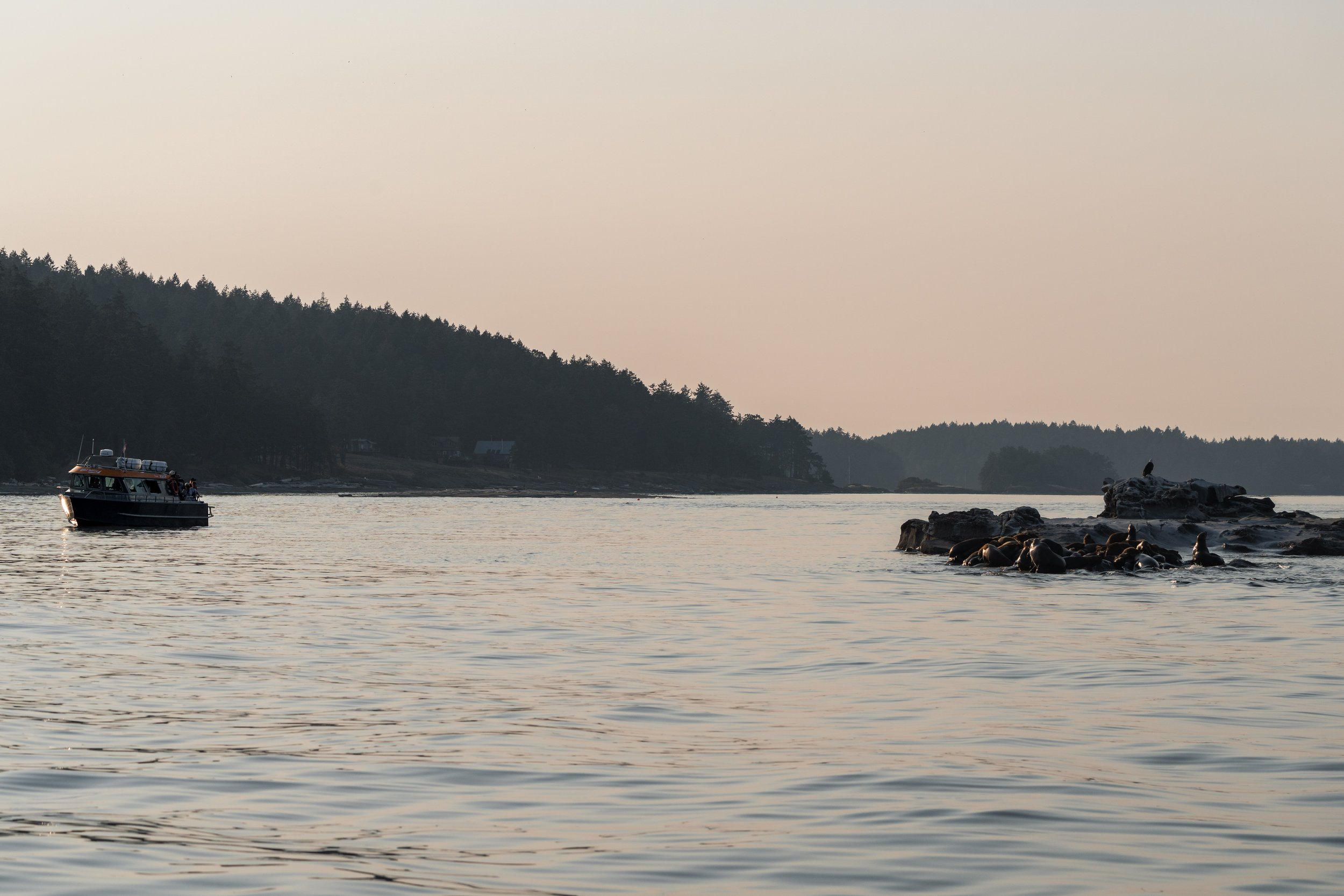
Whale watchers on Kula at Stinky Rock. Photo by Val Watson.
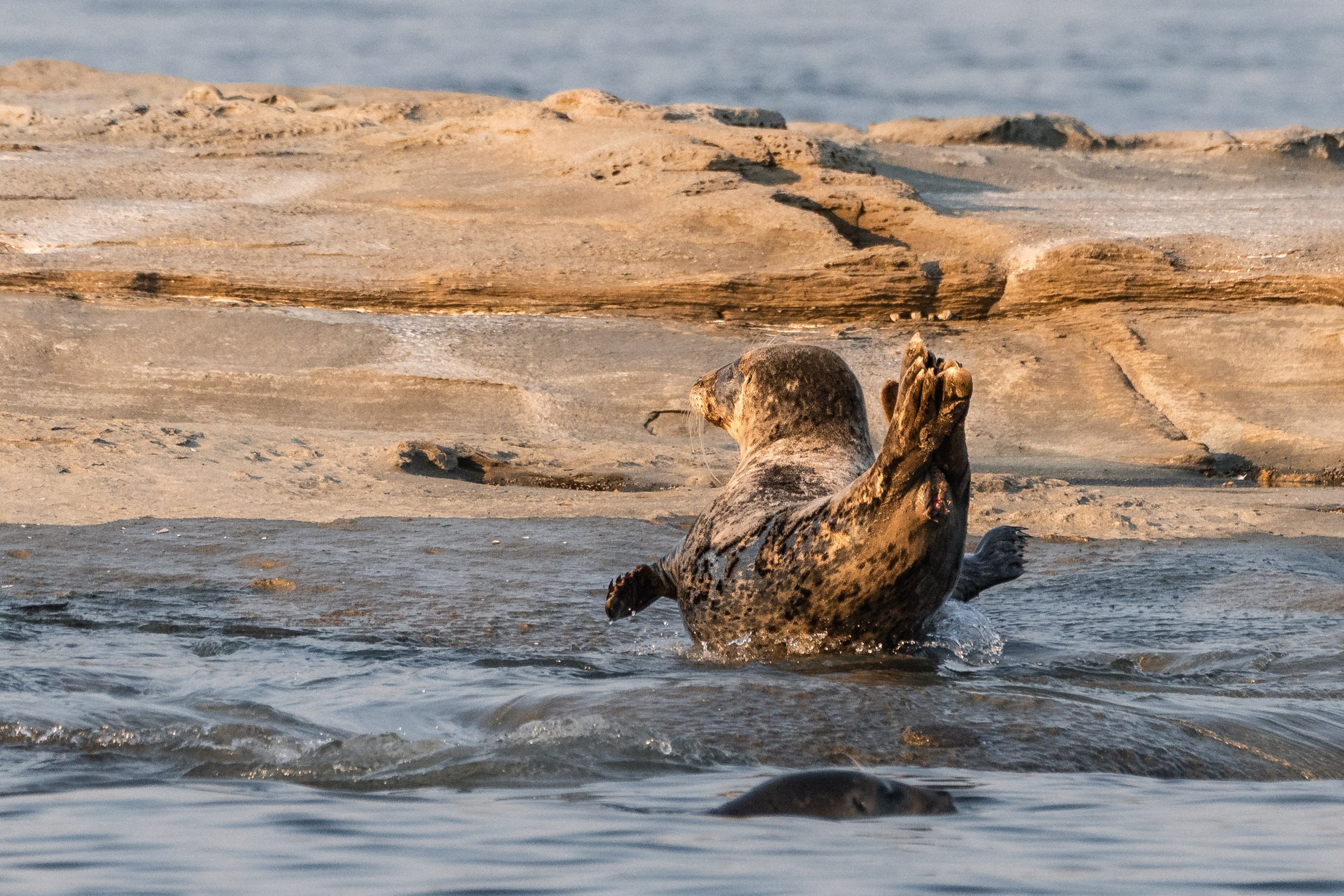
A Harbour Seal Gulumphing across the rocks. Photo by Val Watson.
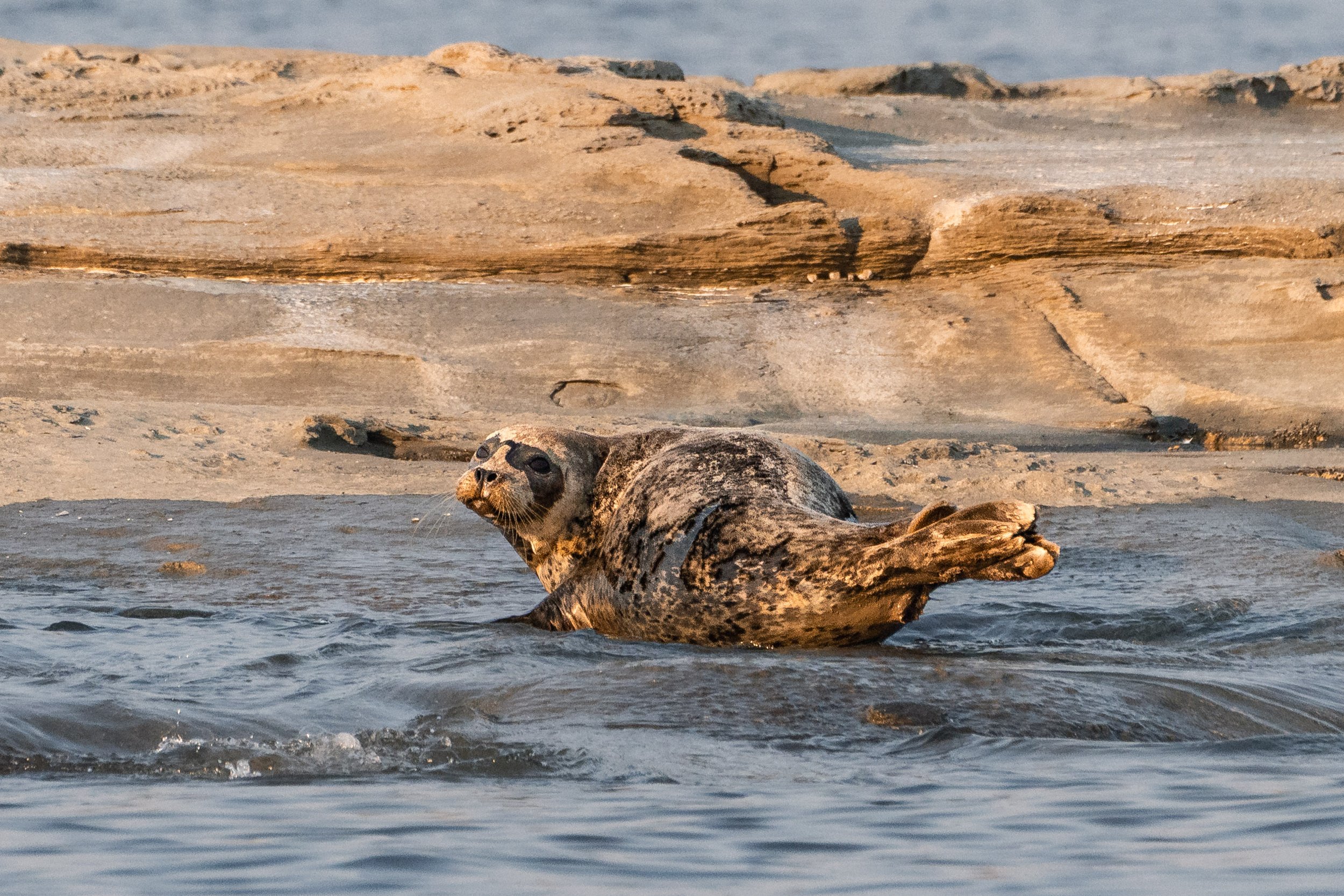
Looking back at us after wiggling along. Photo by Val Watson.
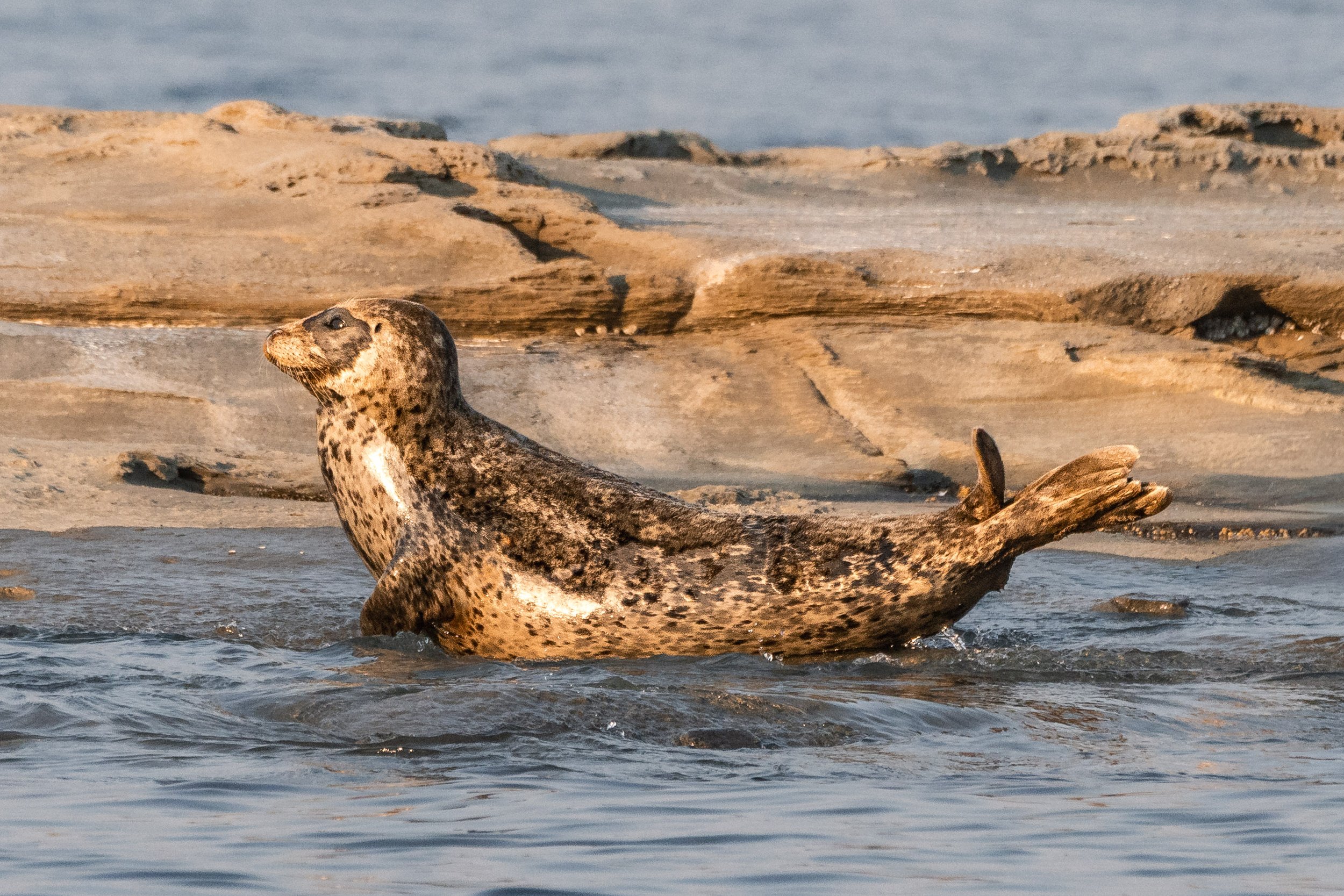
The Harbour Seal trying to get comfortable. Photo by Val Watson.