
August 5, 2026, 10:30 AM - A bouncy baby humpback is spotted (plus their mother and a companion)
With the full fleet out once more, we were itching to begin the search for whales. The waters all across the Salish Sea had been teeming with wildlife lately, and we were eager to see what we could find. The onboard Naturalists had a short chat with the guests on board, and after discussing what to look for as telltale signs of whale activity (blows, dorsal fins, and flukes/tails), we were off to begin our search!
Heading into the Southern Gulf Islands, we spread out and began our search. Going in between the various islands, we took our first wildlife stop at Norway Island, a small 30-acre private island located in the heart of the archipelago. Here, several Harbour Seals were lazily yawning away. These rotund pinnipeds are frequently spotted on our shores and can be found in our area all year round. We are in the middle of pupping season now, so many tiny cute baby faces can also be seen amongst the adults. After a short visit with them, we continued on, heading out into the Strait of Georgia to continue peeking around.
About halfway down Galiano Island, there they were - a couple of big blows shooting into the sky, with one smaller one beside them. The blows were accompanied by large dark shapes emerging from the water, then diving, with one of them raising their flukes high up into the sky. It was a trio of humpback whales travelling together!
Once we were in position, the Naturalists began working on identifying who was present. The individual who was fluking was easy to crossmatch and was confirmed to be Orion (BCX1251). The other larger whale, however, was refusing to fluke at all for most of the encounter, and instead was shallowly diving and skimming the surface. Thankfully, their dorsal fin was largely damaged, resulting in a trailing edge with distinctive markings across its surface. With a photo of this fin, we were able to cross-match them in our catalogues, confirming that they were Sherwina (BCY0961). At her side, a smaller whale was travelling, occasionally fluking. This little one was confirmed as her 2026 calf (BCY0961 calf 2026)!
Orion is a regular returner to our area, with his first sightings dating back to 2008. Originally nicknamed for a marking on his fluke resembling Orion’s Belt, a well-known asterism, he has become heavily scarred in recent years, rendering his namesake markings indiscernible. Thankfully, he has many other unique patterns along his flukes, and often brings his tail high out of the water, leading to many great moments to confirm his identity. Even though he has had nearly 20 years of sightings, at this time he has only had a single confirmed sighting in a breeding ground, back in 2025 in Hawaii.
Sherwina is a humpback who has returned to our seas many summers in a row. While we know she travels to the breeding grounds in Hawaii thanks to her previous Happywhale sightings, she has other interesting data on her profile. It seems that in 2017 and 2018, she spent her summers feeding off Monterey Bay in California. Then, in October of 2019, she had her first sighting in British Columbia, off the coast of Victoria. Typically, humpback whales show strong site fidelity, meaning they tend to return to the same feeding areas their mothers taught them during infancy. Sherwina being cross-matched to Monterey Bay in her early years suggests that that area was her natal feeding grounds. However, for reasons unknown, this appears to have changed, as she now returns to the Salish Sea seasonally. Humpback social structures remain largely a mystery to scientists, but we hope that as studies expand and data continue to be collected, we will learn more about them in the years ahead.
This young calf isn’t the first calf Sherwina has successfully brought to our area. Her first documented calf, Kaju (BCY1474), has also returned to our seas each year since its birth. We are excited to witness this little one learning the ropes of life, and we hope to see them again for many years to come.
While the first year of life is a vital time for a humpback calf to learn all the ins and outs of survival, life lessons seemed to be the last thing on its mind while we were observing it today. The young calf was spotted attempting to fluke multiple times while we were on scene, which is a fairly rare occurrence at this time of the year. It takes time to build up the coordination and muscle strength to raise one’s body up and out of the water, but this little one seems to have already gotten a knack for it. After a while, it appeared to become bored of feeding and simply travelling along, and instead decided to take to the skies. Briefly going under before bursting above the surface once more, it flung its body side to side, cartwheeling through the air. These massive acrobatic movements burn a lot of calories and are rarer to witness. Seeing this is a good sign that this calf has fed very well and feels sustained enough to burn some calories here and there!
After a fantastic time with the trio, it was time for us to say our goodbyes and start to make our journey home. Heading back north, we once more crossed between the many islands before once more approaching Dodd Narrows. Once on the other side, it was only a few minutes of travel before we were back in the dock, concluding a humpback-fuelled day exploring the Salish Sea!
Photos of this tour were taken by Marine Naturalists Val Watson, Aly Kohlman, and Jordan Robinson - please enjoy!
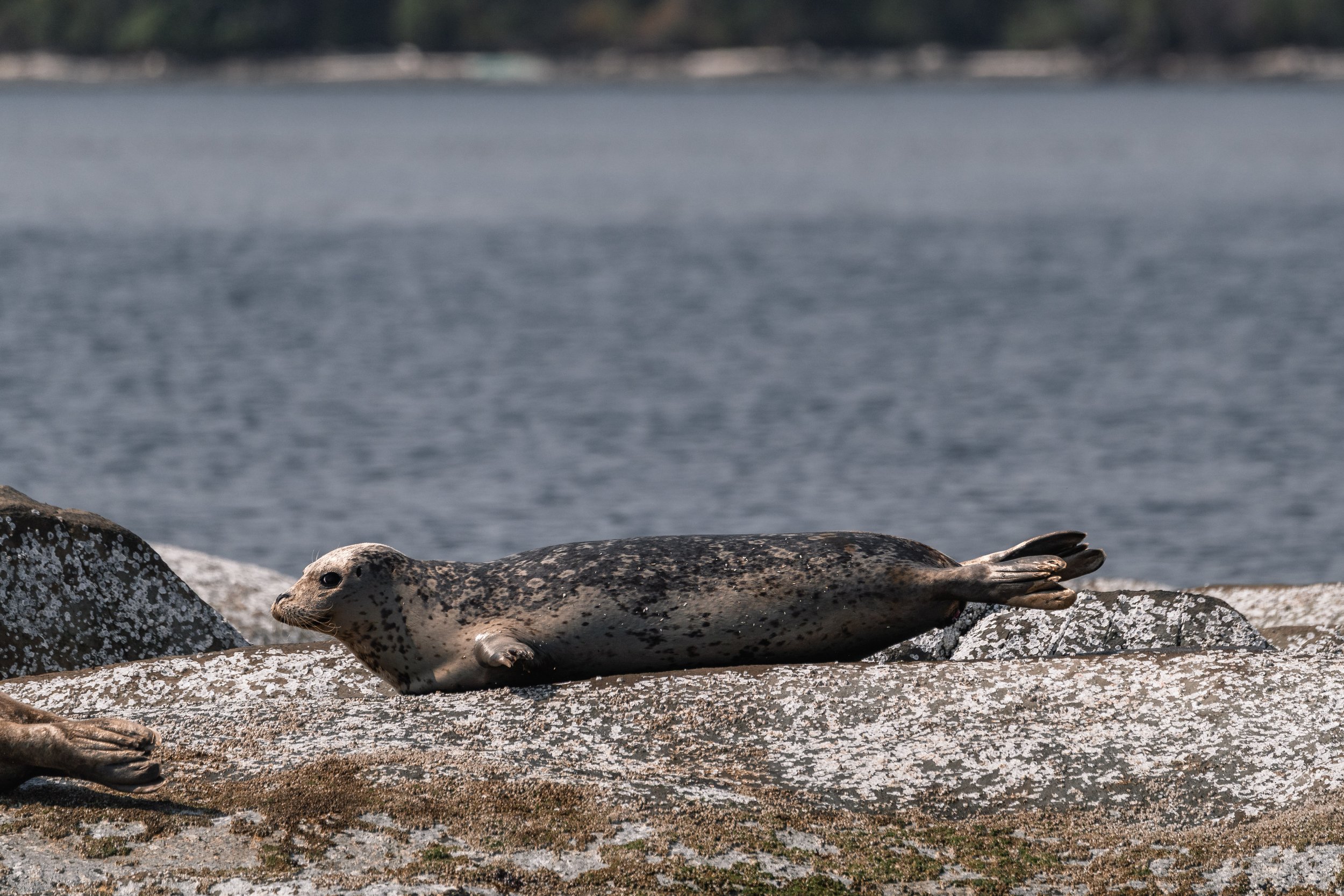
A long Harbour Seal. Photo by Val Watson.
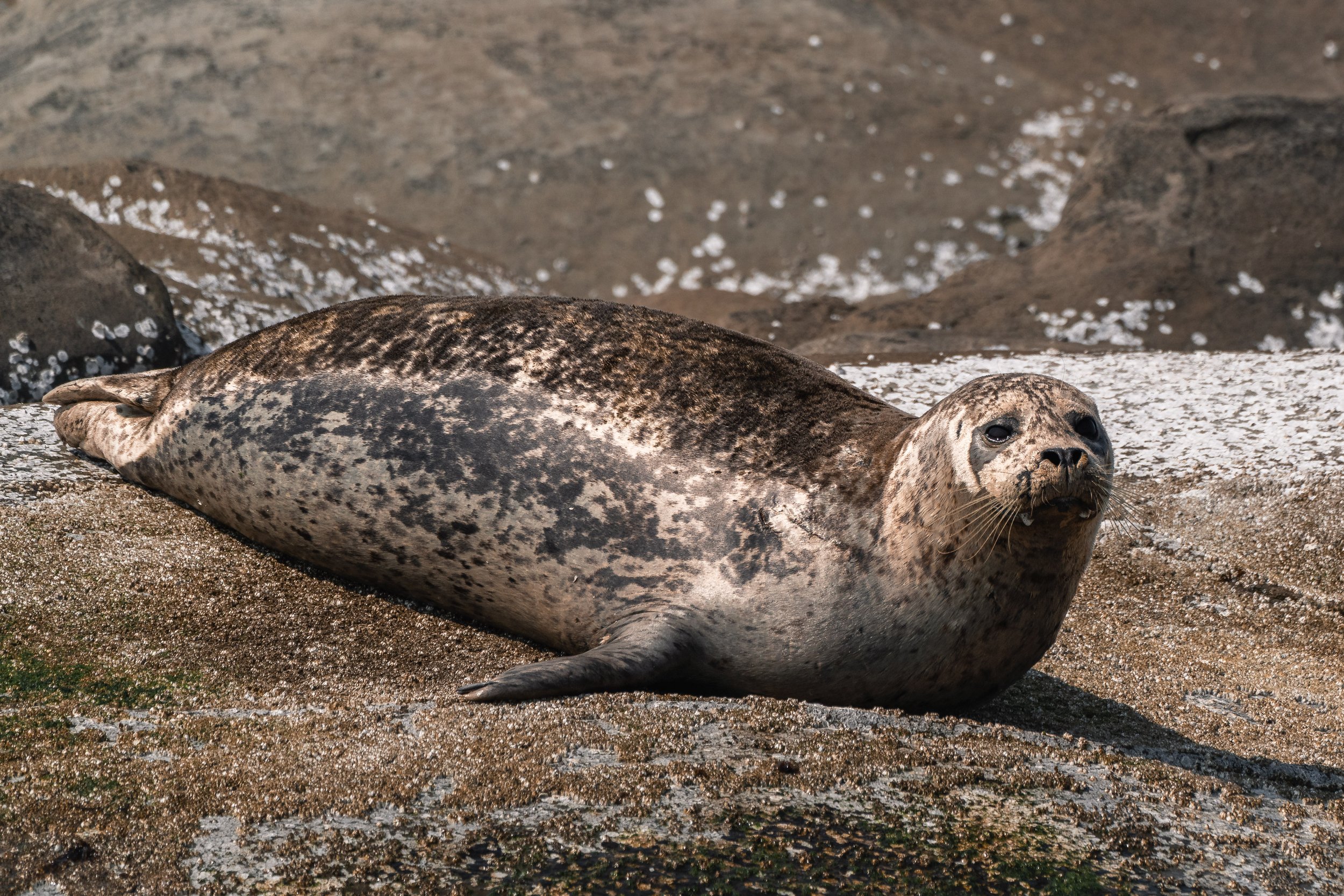
A drooly Harbour Seal. Photo by Val Watson.
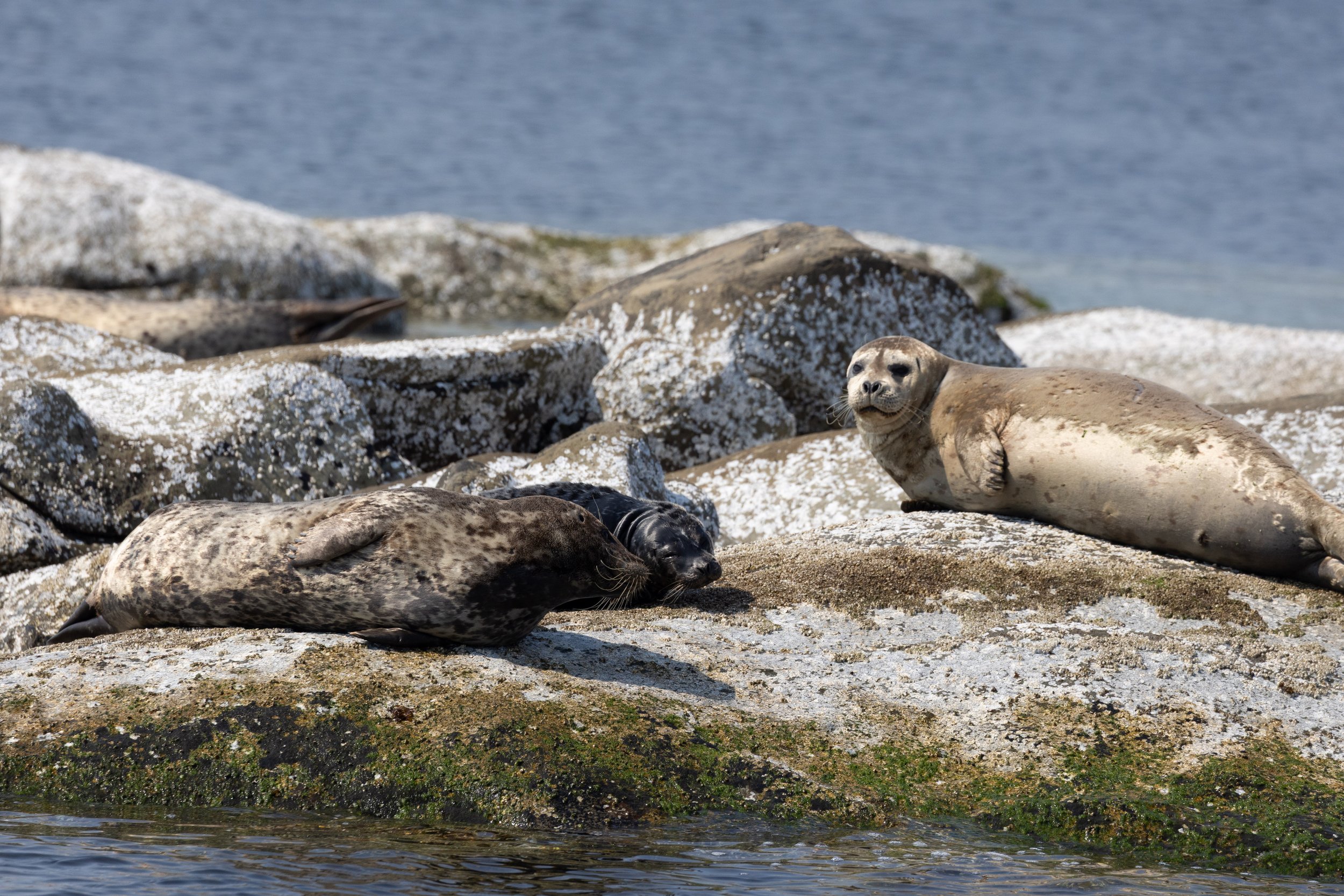
Harbour Seals hauled out together. Photo by Jordan Robinson.
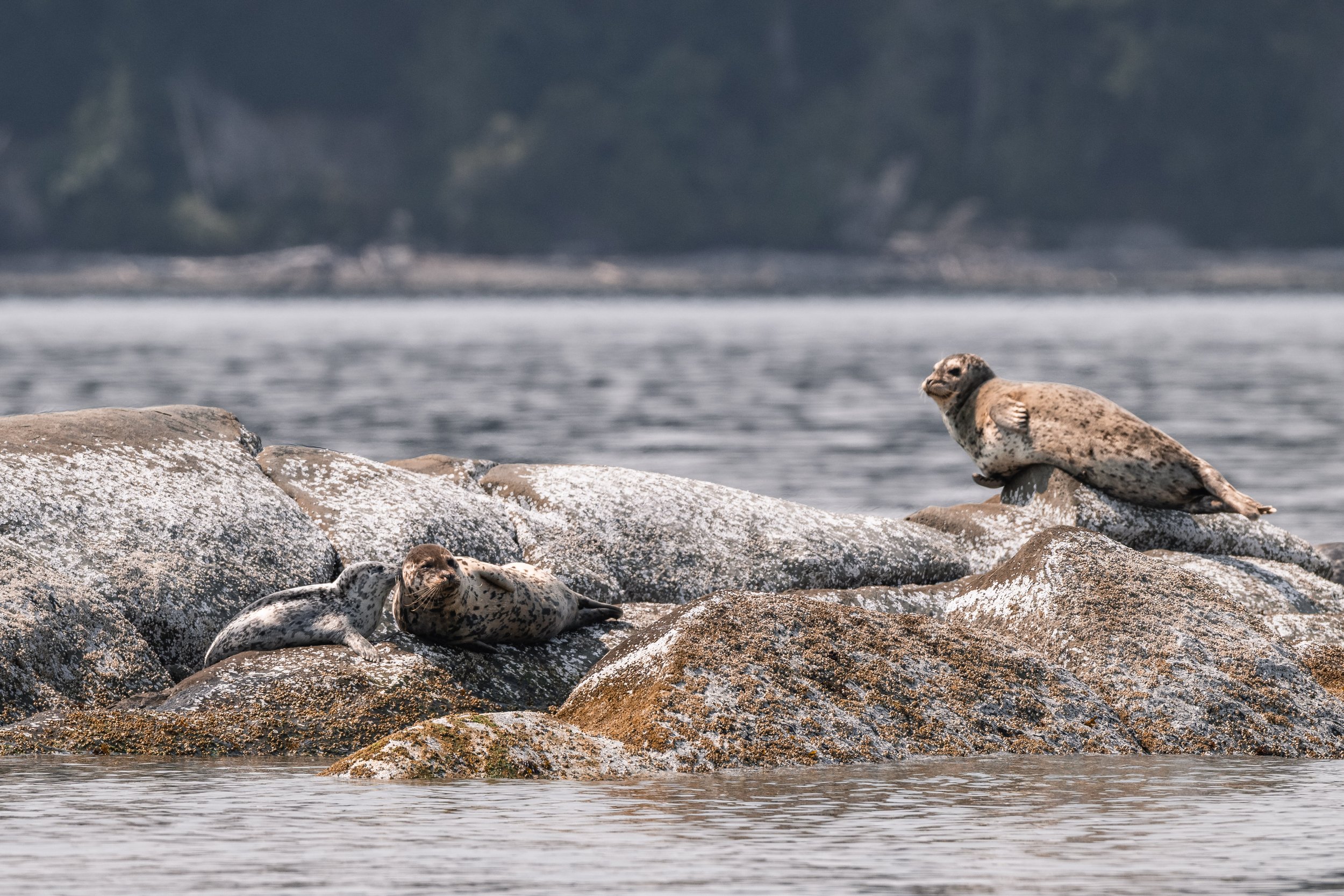
Sleepy Harbour Seals. Photo by Aly Kohlman.
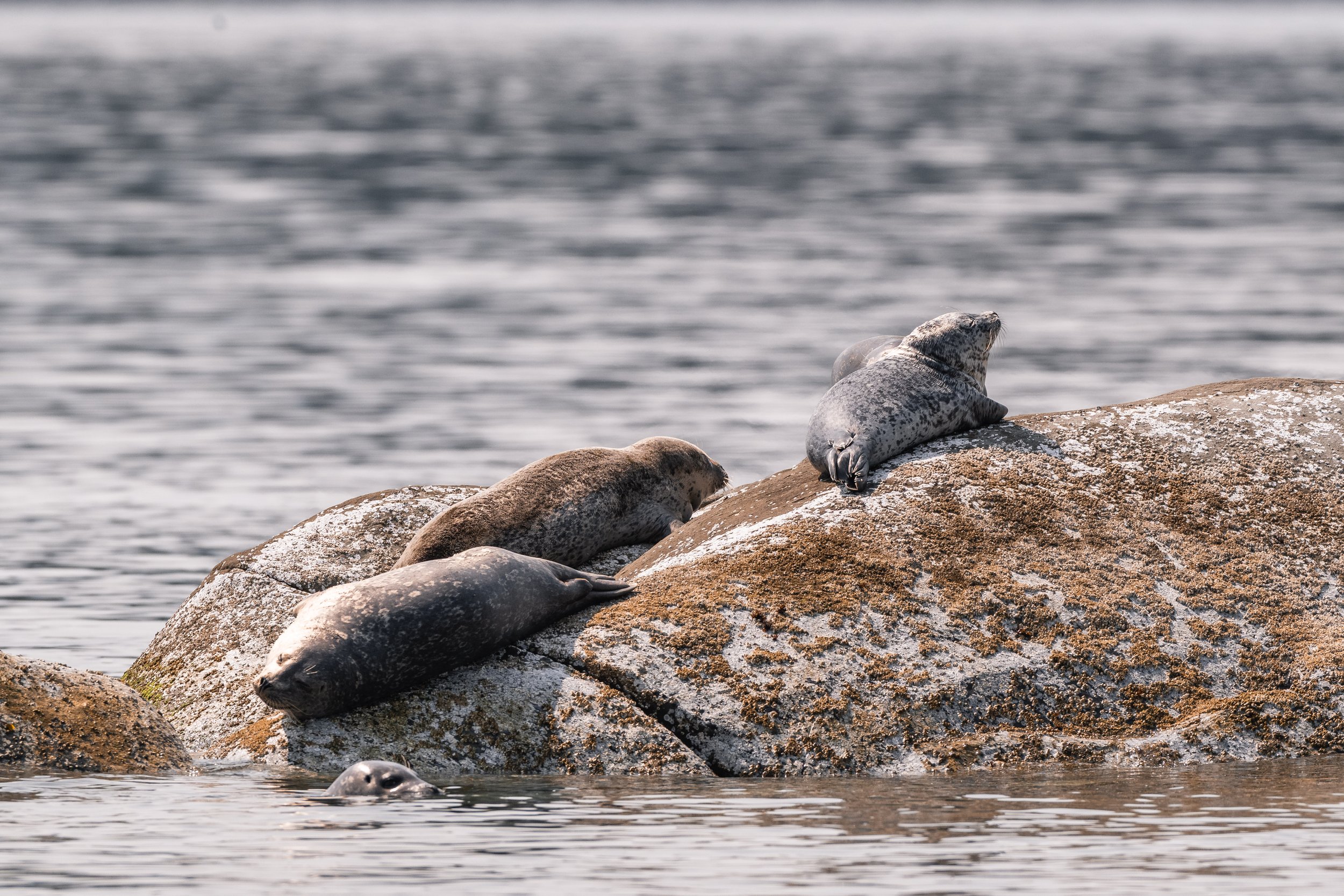
Nap time! Photo by Aly Kohlman.
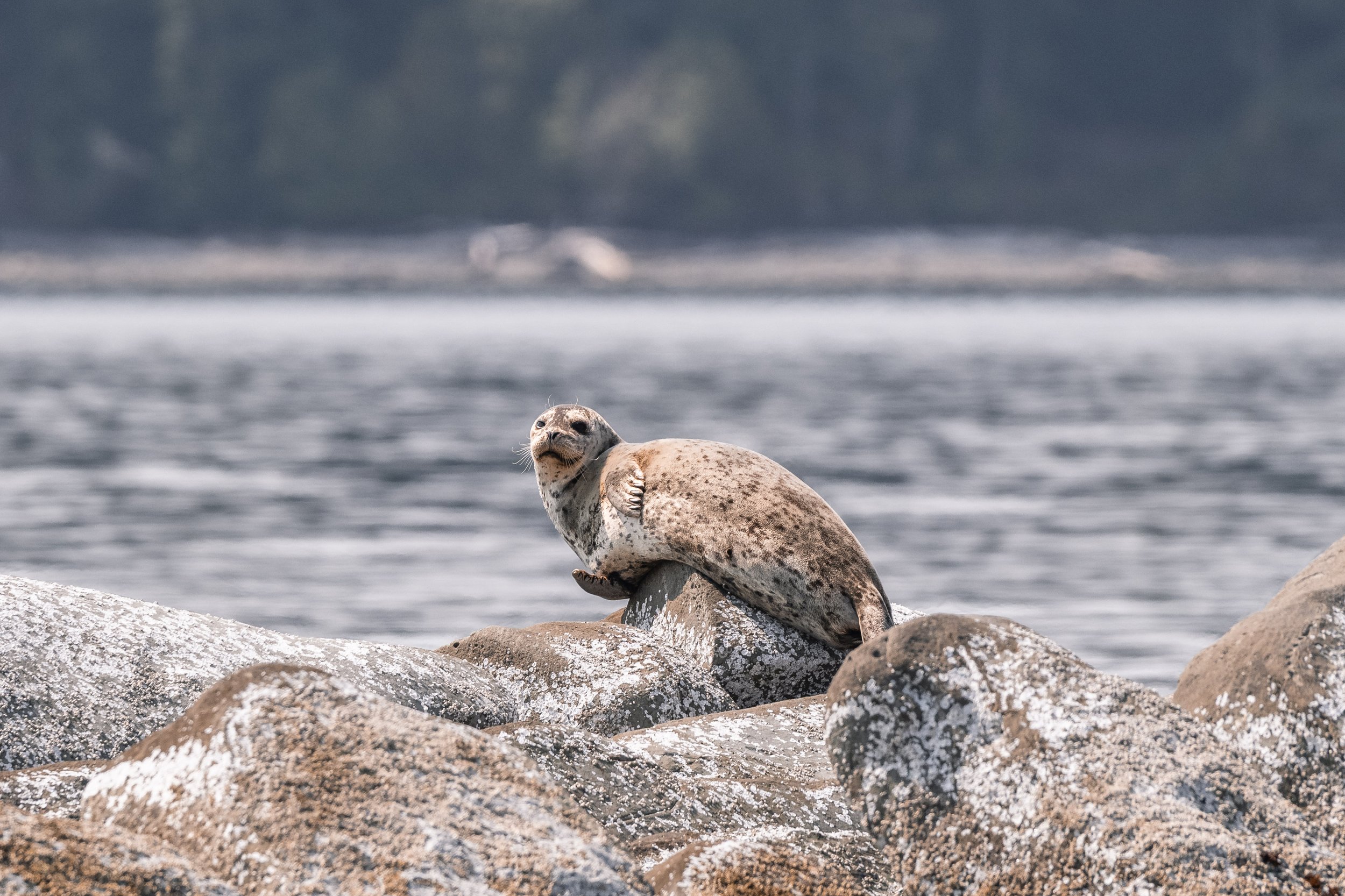
Carefully balanced. Photo by Aly Kohlman.
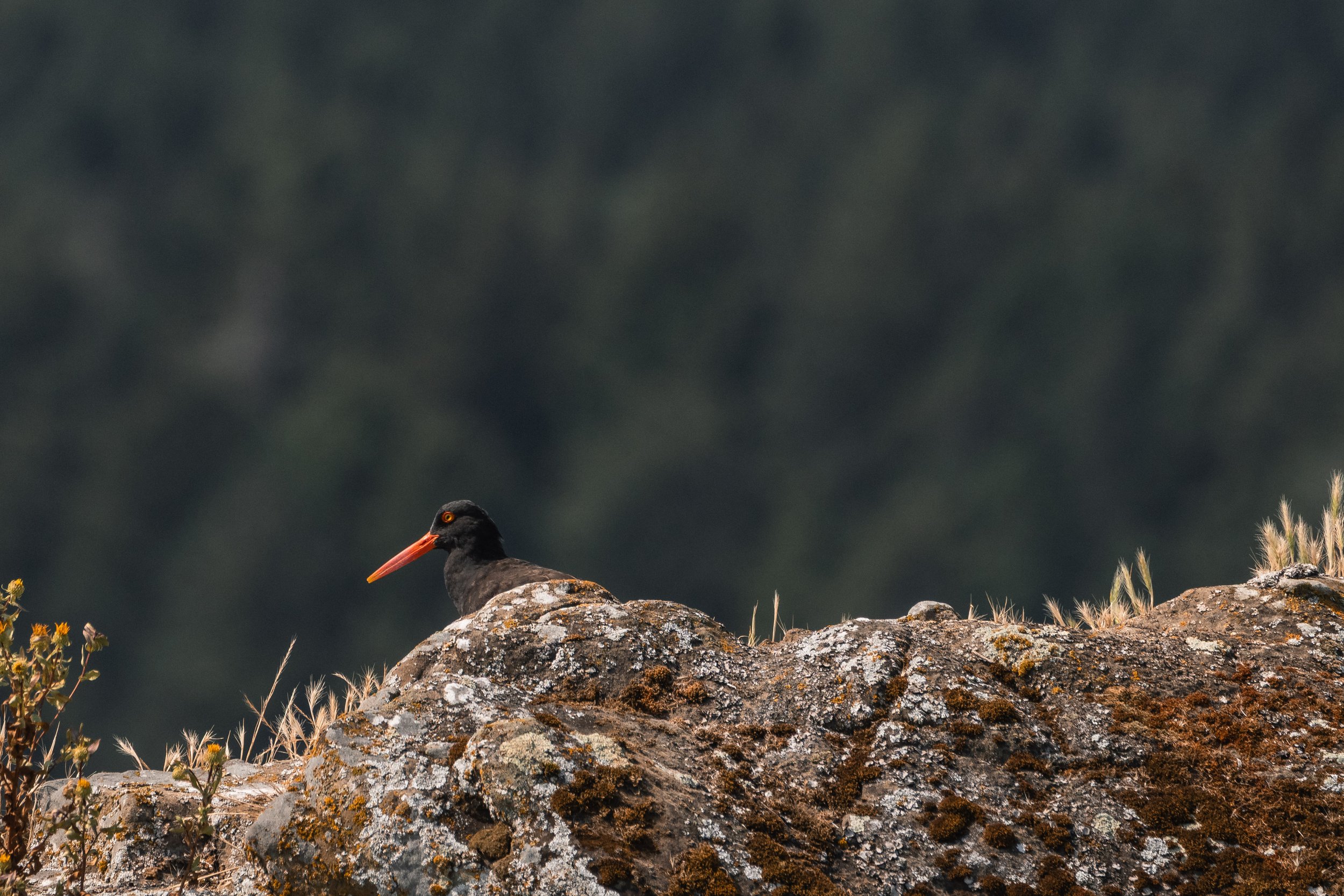
A Black Oystercatcher peeking above the rock. Photo by Val Watson.
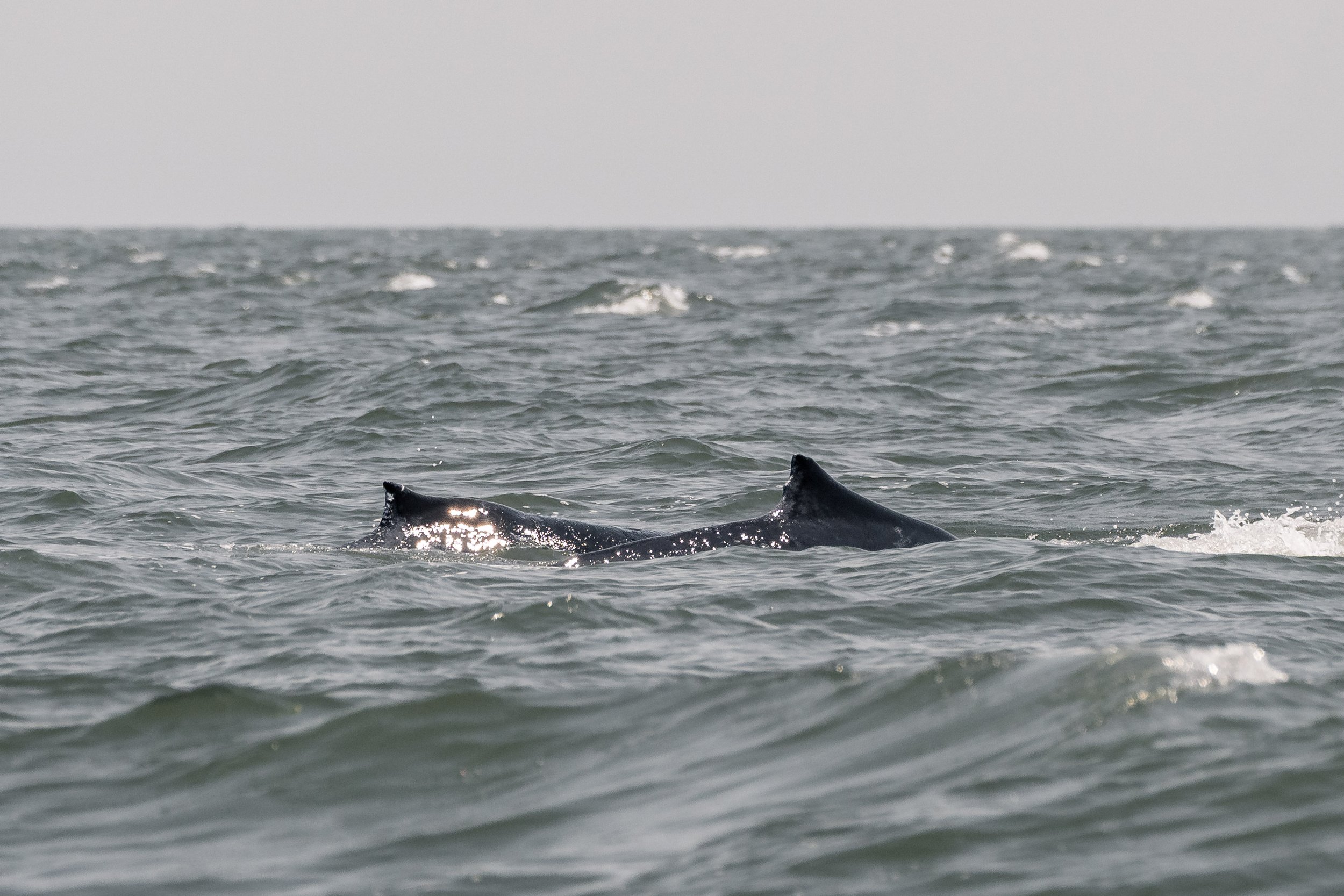
Sherwina and her calf, side by side. Photo by Val Watson.
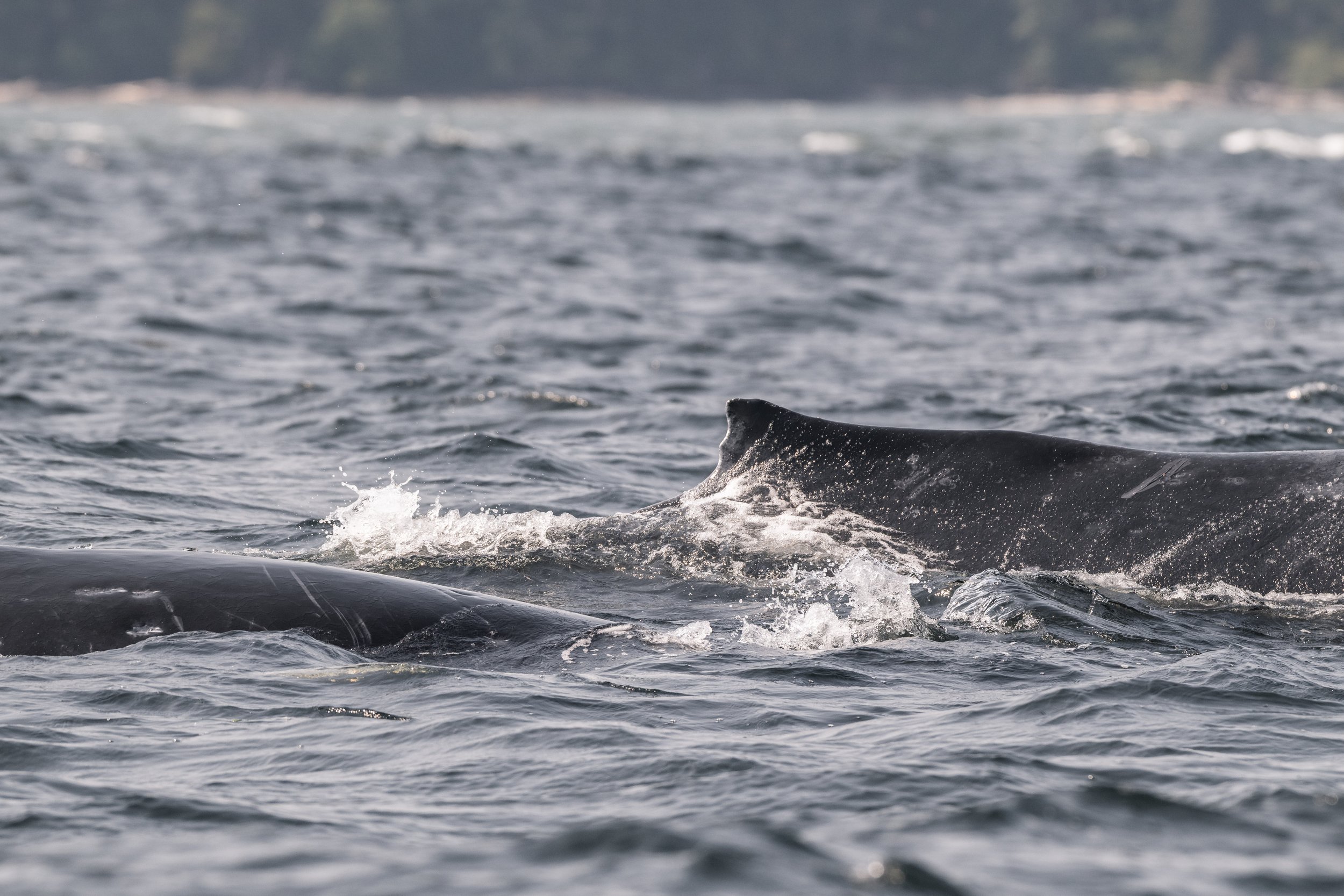
Sherwina in the lead with her calf right beside her. Photo by Aly Kohlman.
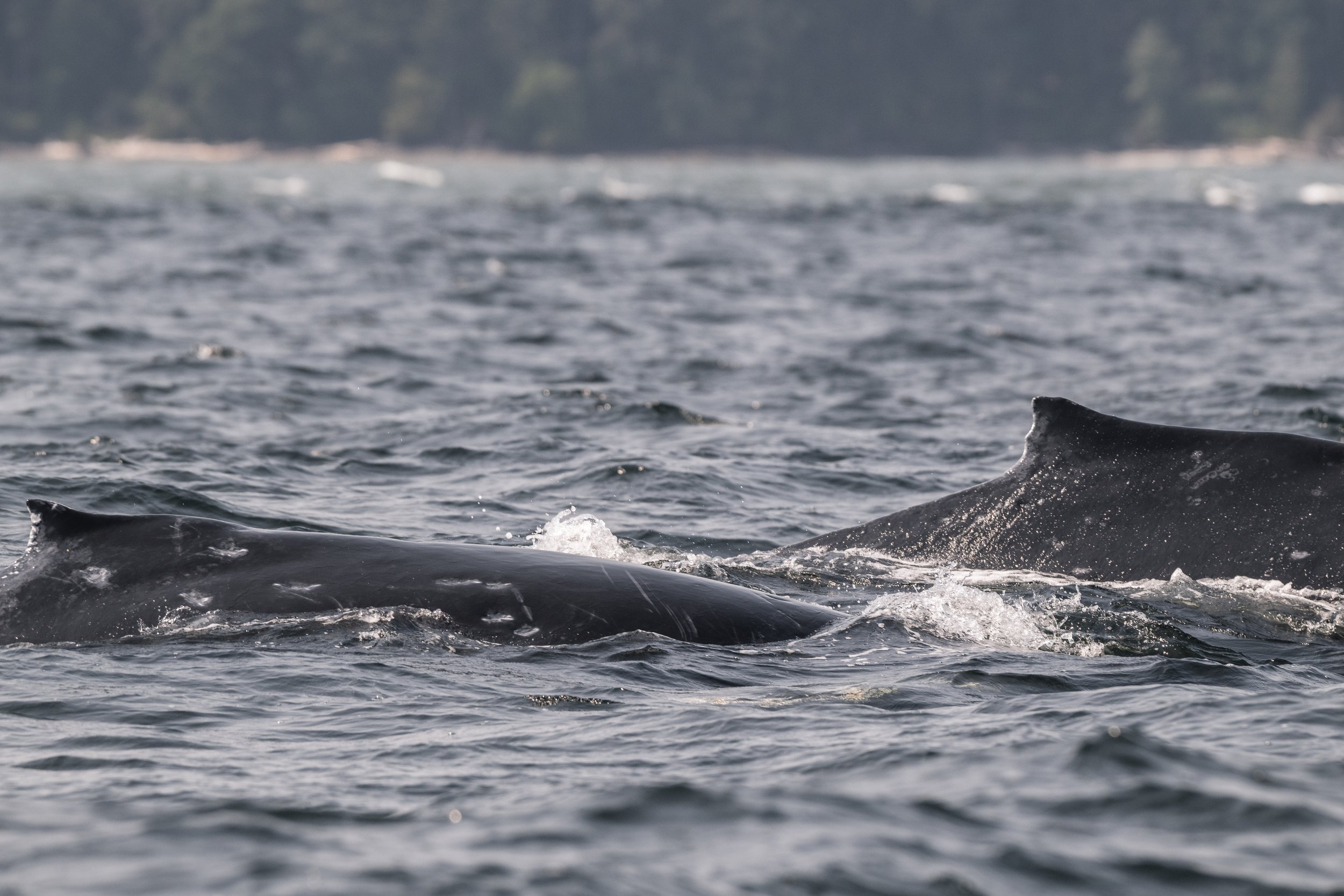
The calf racing to catch up with Sherwina. Photo by Aly Kohlman.
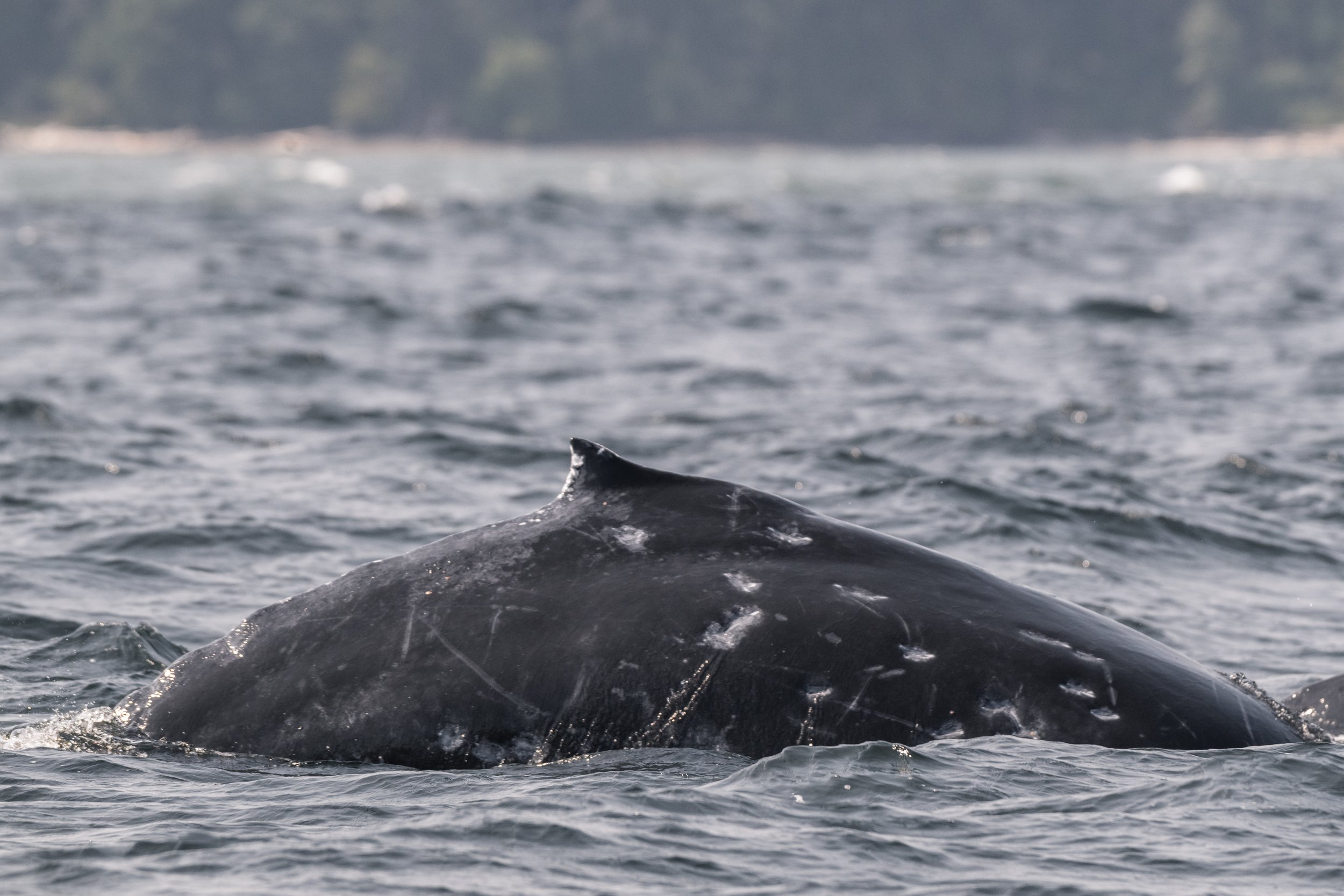
Sherwina’s calf is heavily scarred. Photo by Aly Kohlman.
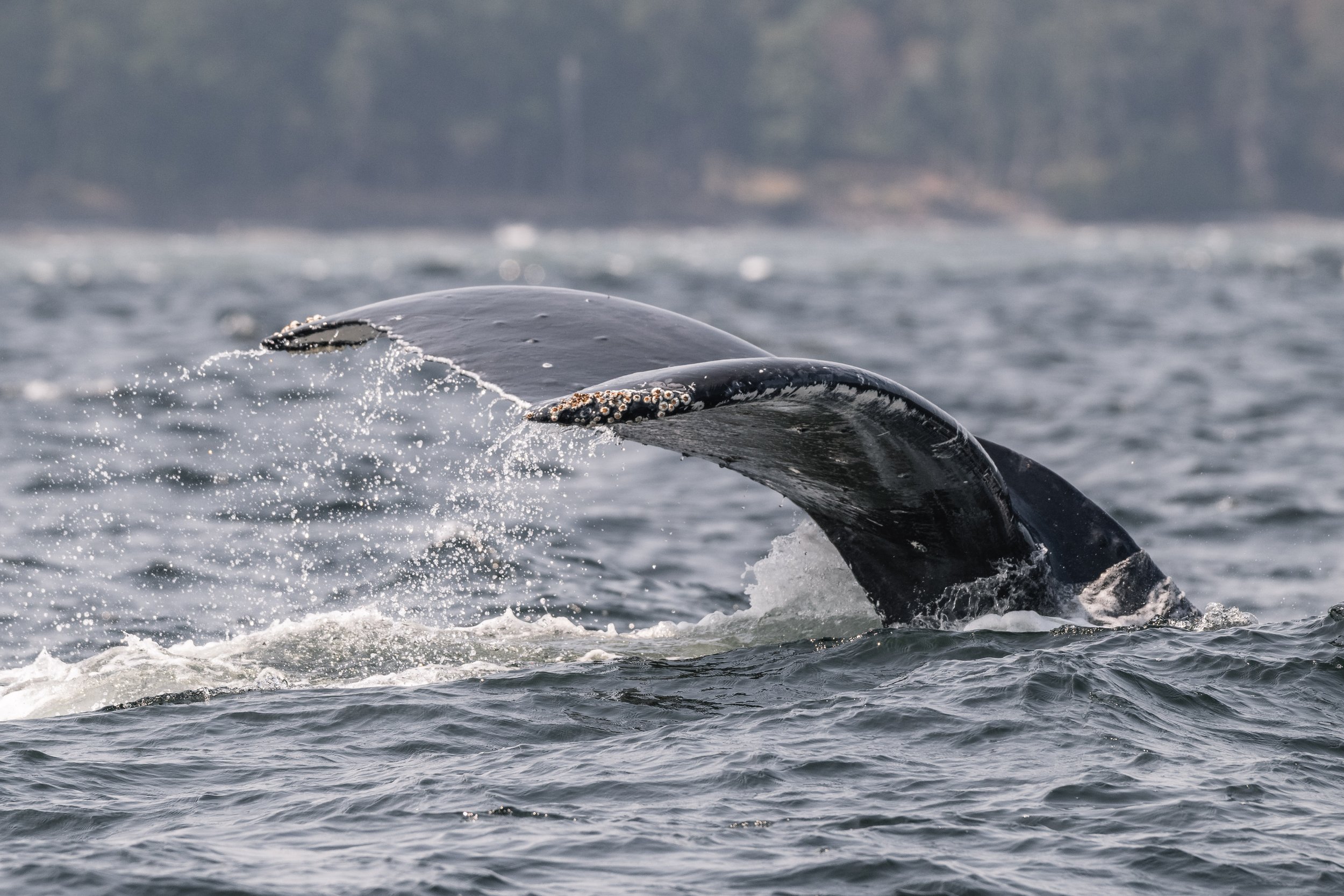
Sherwina fluking. Photo by Aly Kohlman.
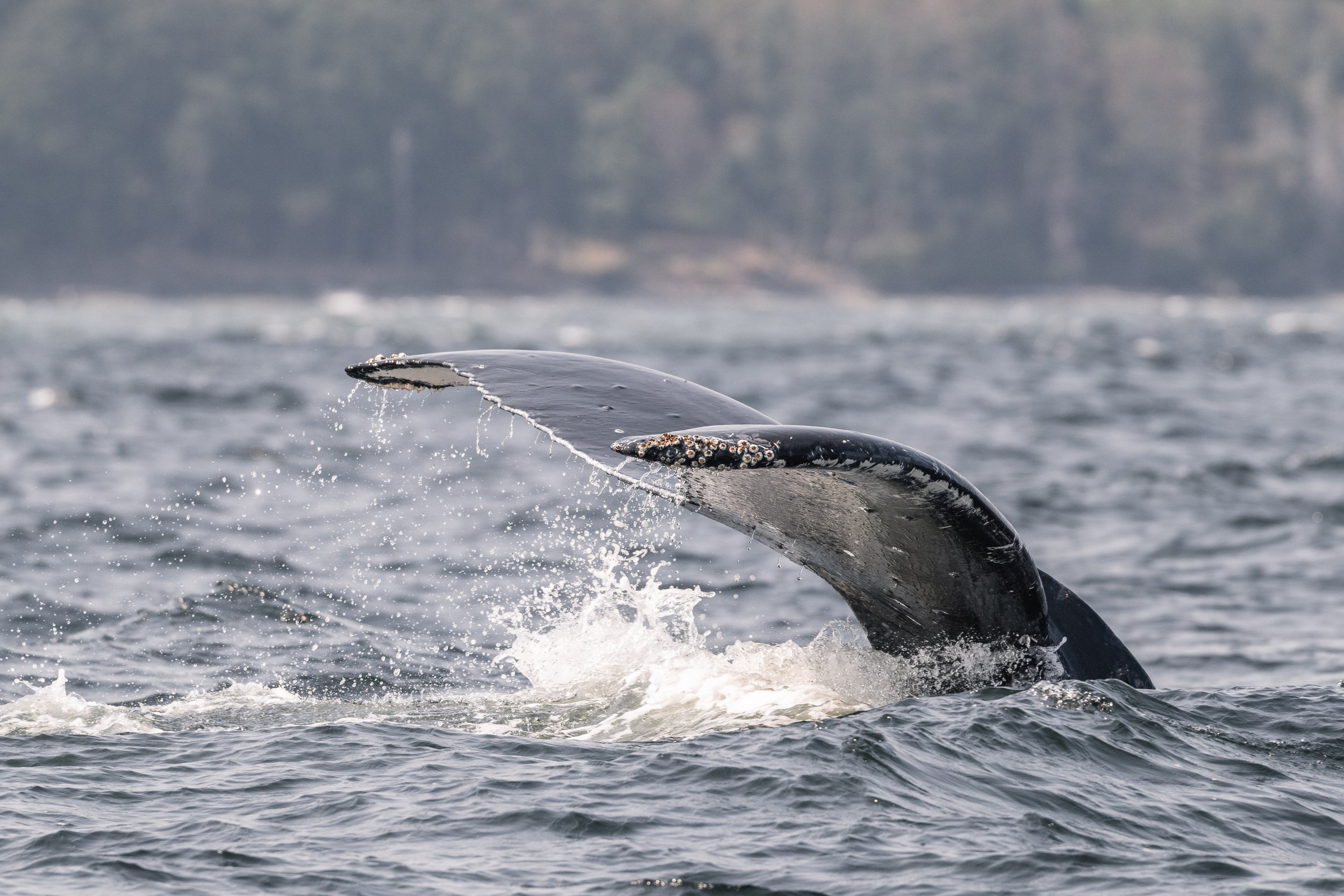
A beautiful fluke waterfall. Photo by Aly Kohlman.
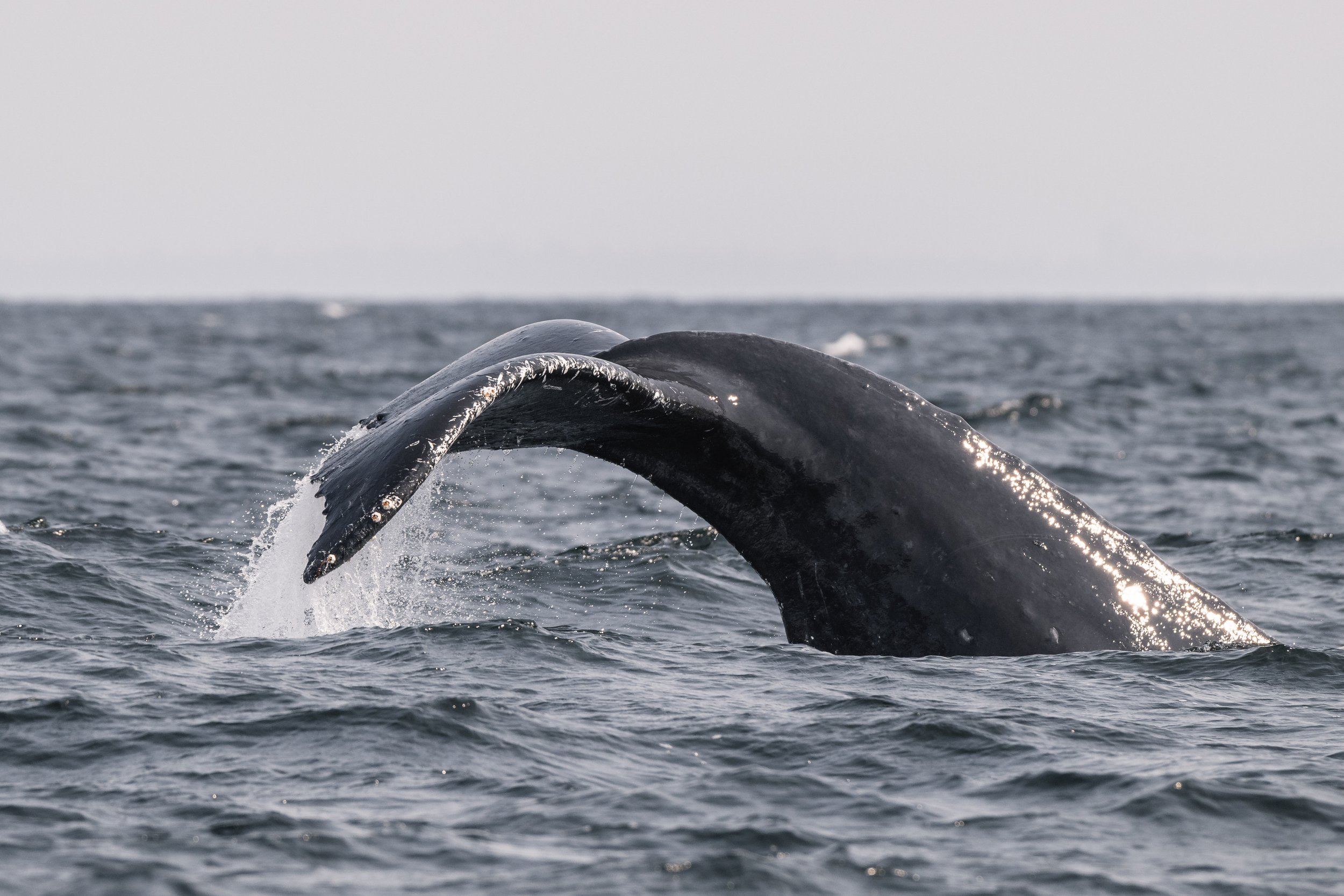
Humpbacks often have barnacles growing on them - can you spot them in this photo? Photo by Aly Kohlman.
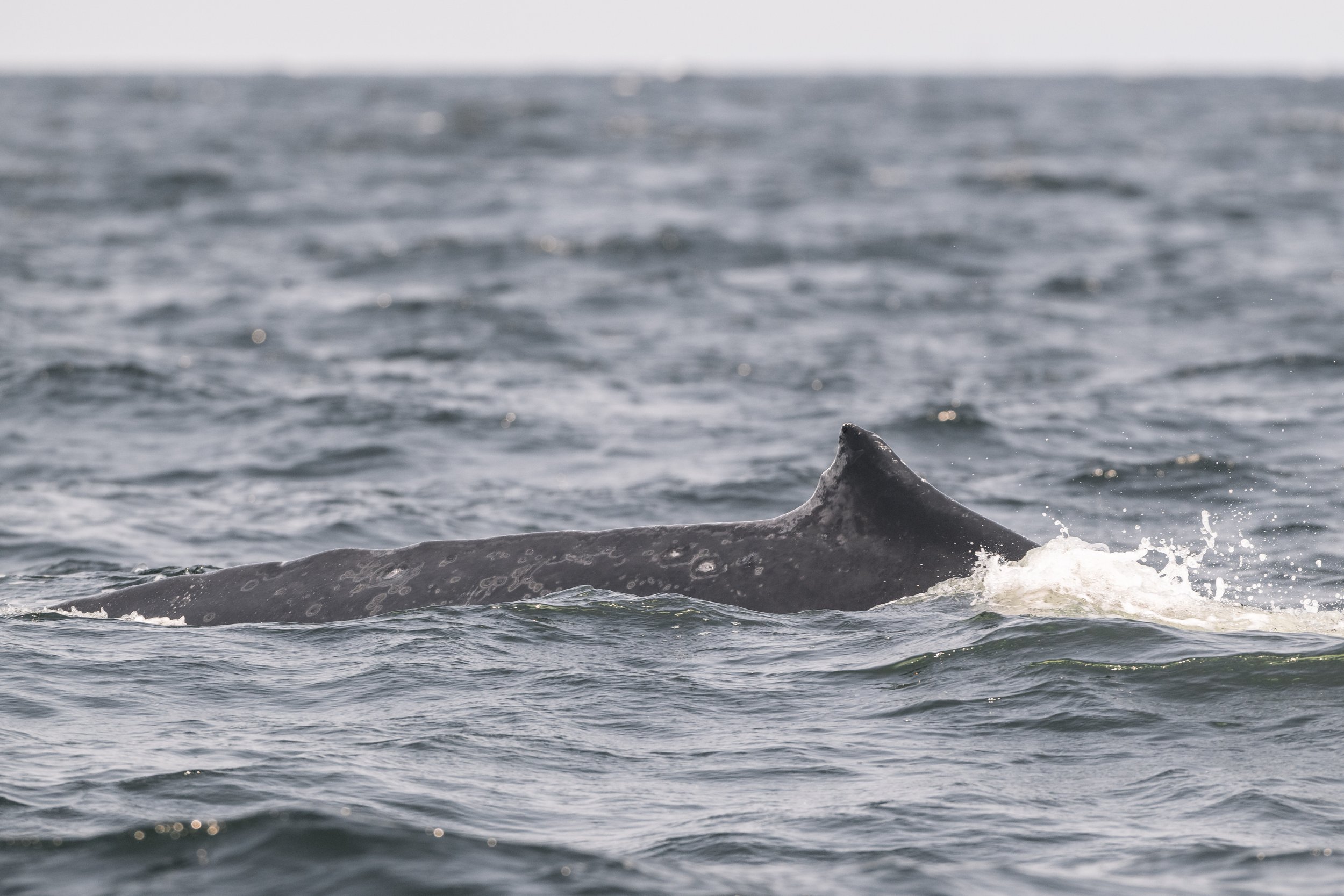
Sherwina with her uniqur dorsal fin visible. Photo by Aly Kohlman.
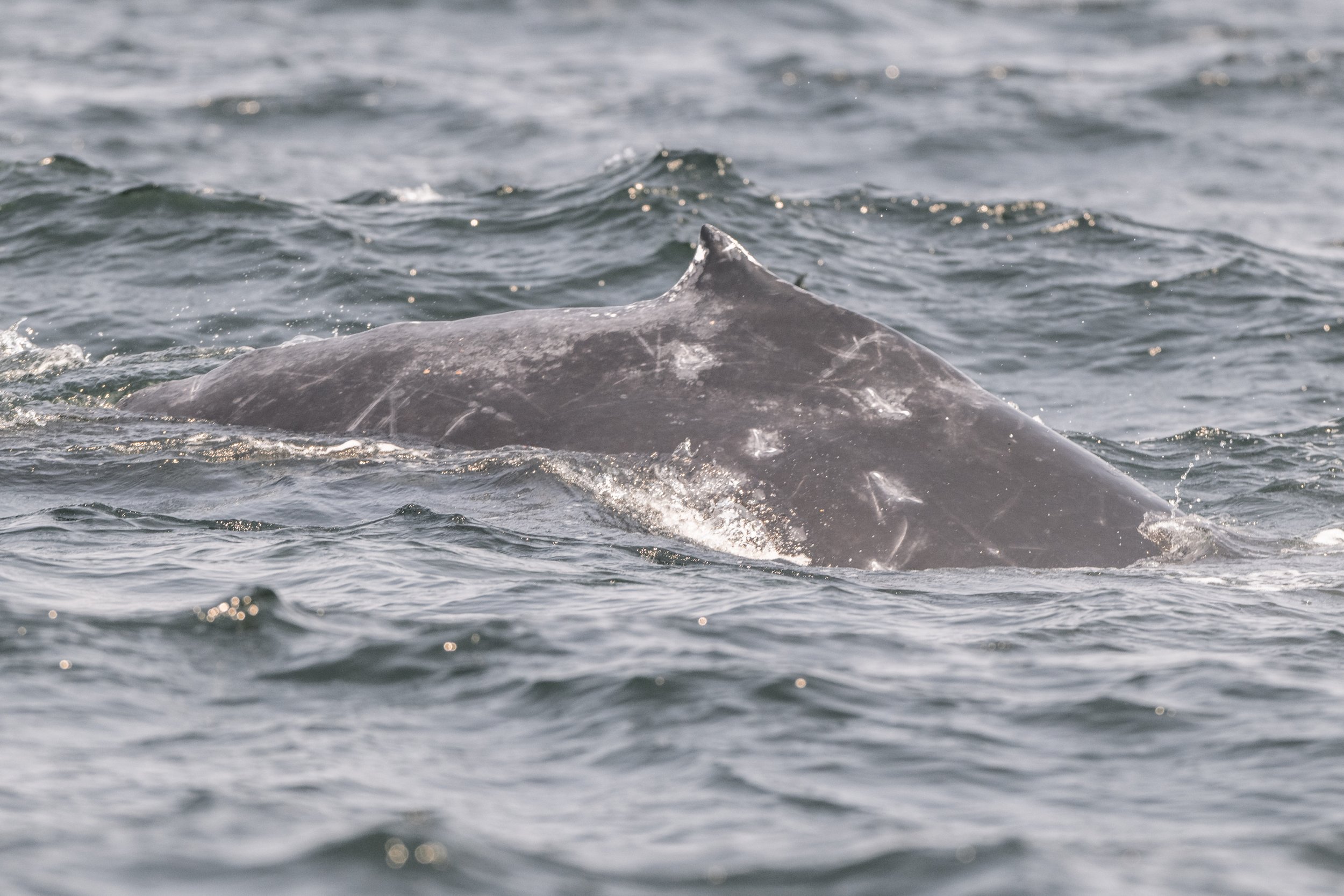
The calf charging through the waves. Photo by Aly Kohlman.
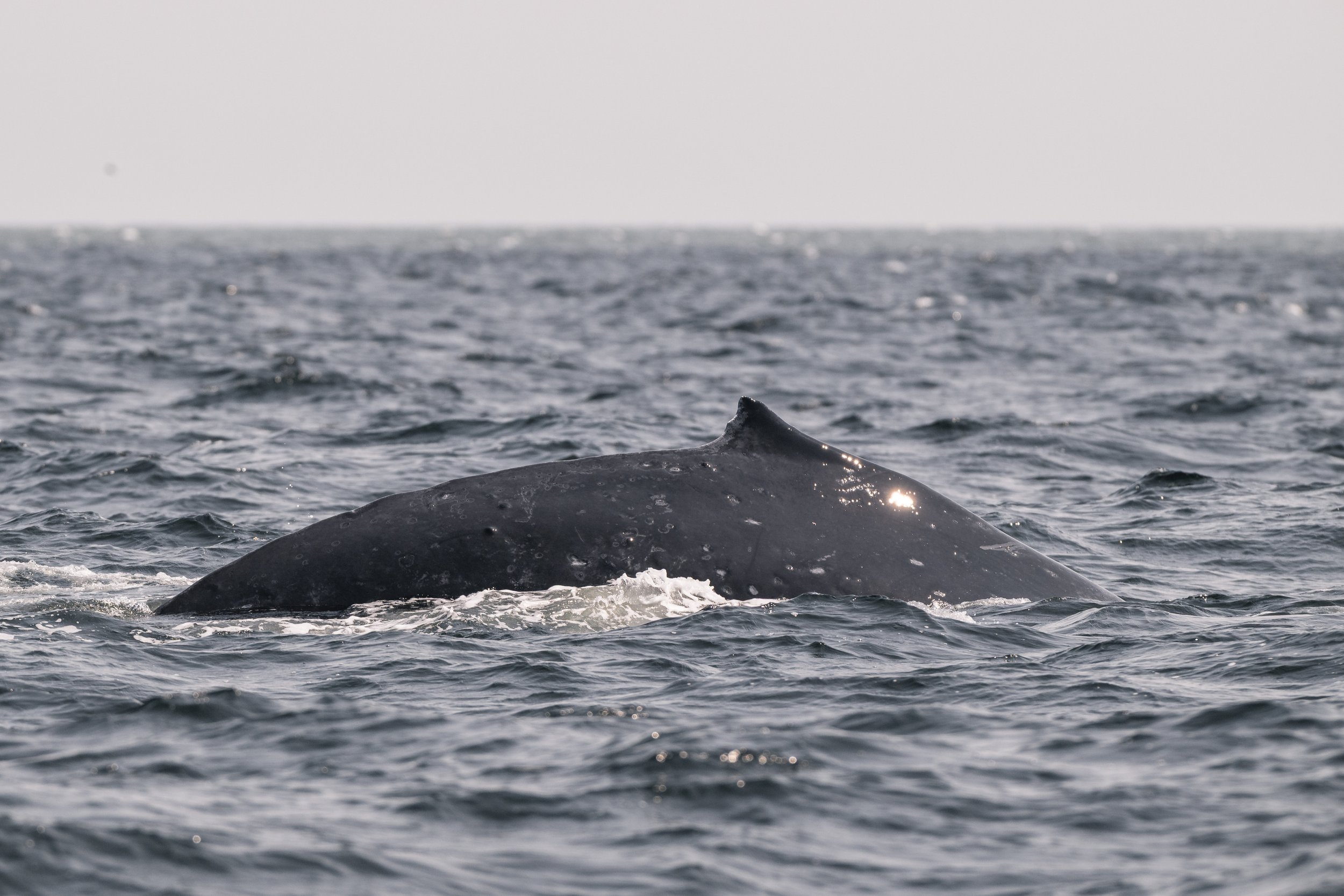
Sherwina surfacing. Photo by Aly Kohlman.
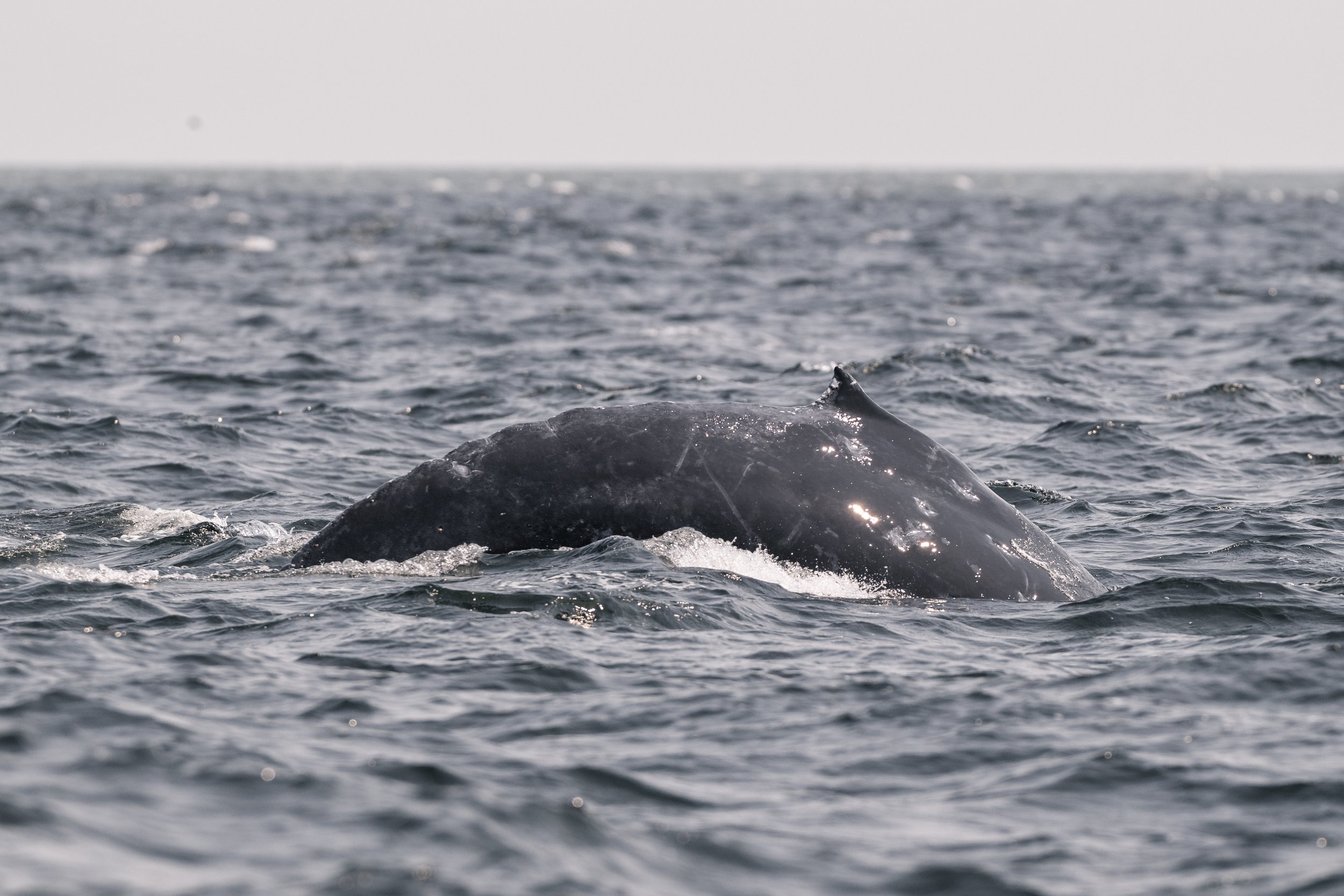
Sherwina’s calf surfacing. Photo by Aly Kohlman.
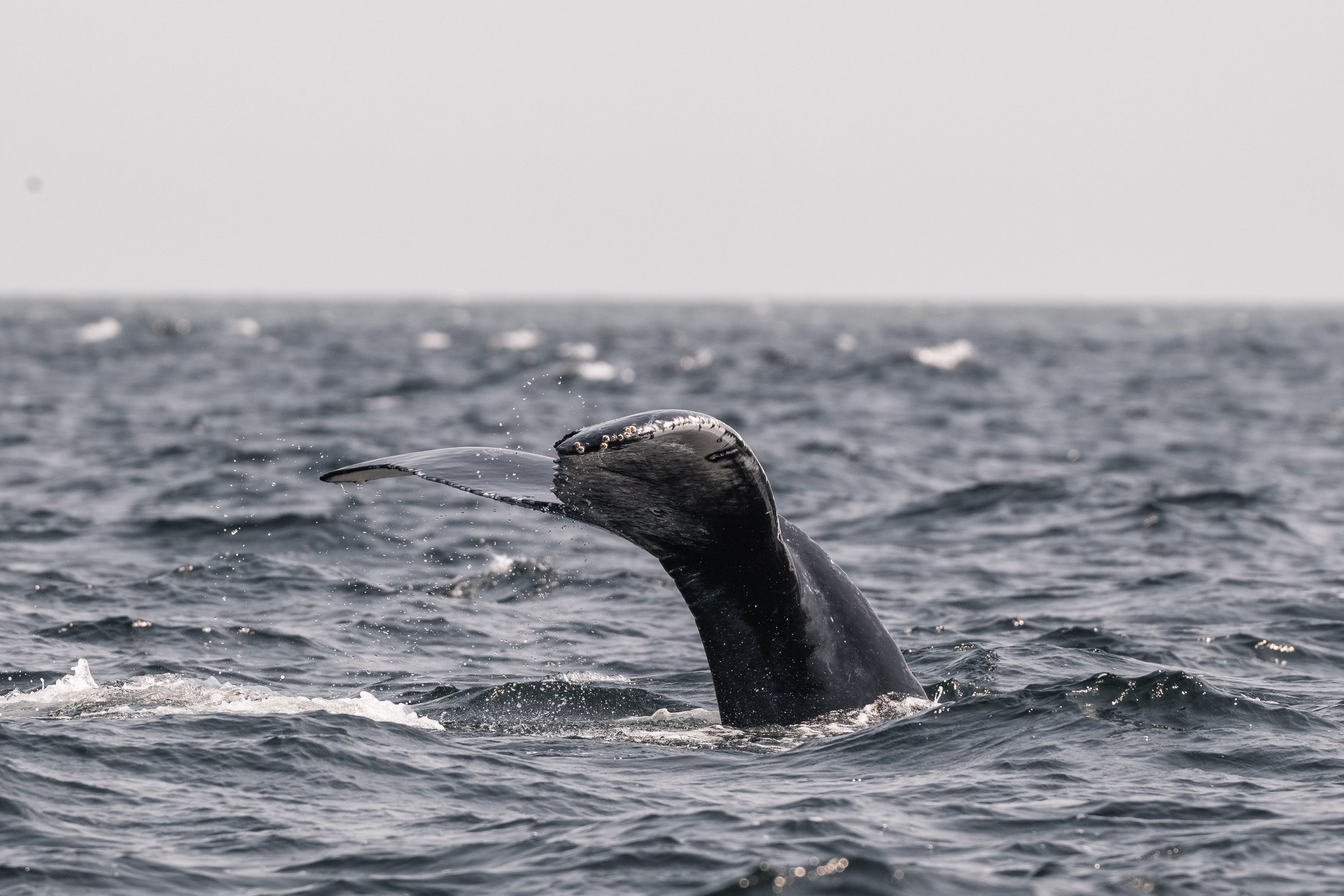
You can see some of the pigmentation on Sherwina’s calf here! Photo by Aly Kohlman.
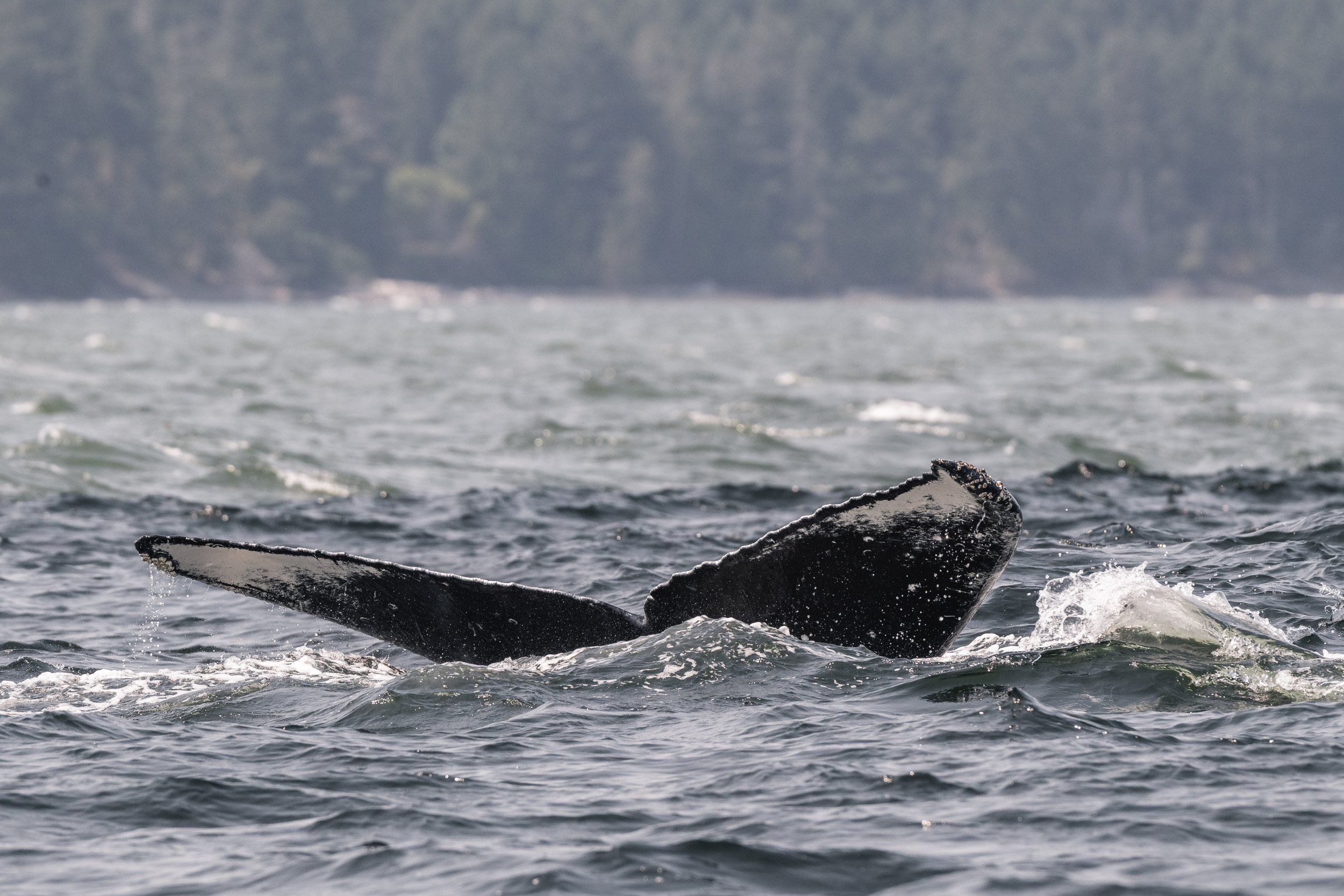
Sherwina fluking. Photo by Aly Kohlman.
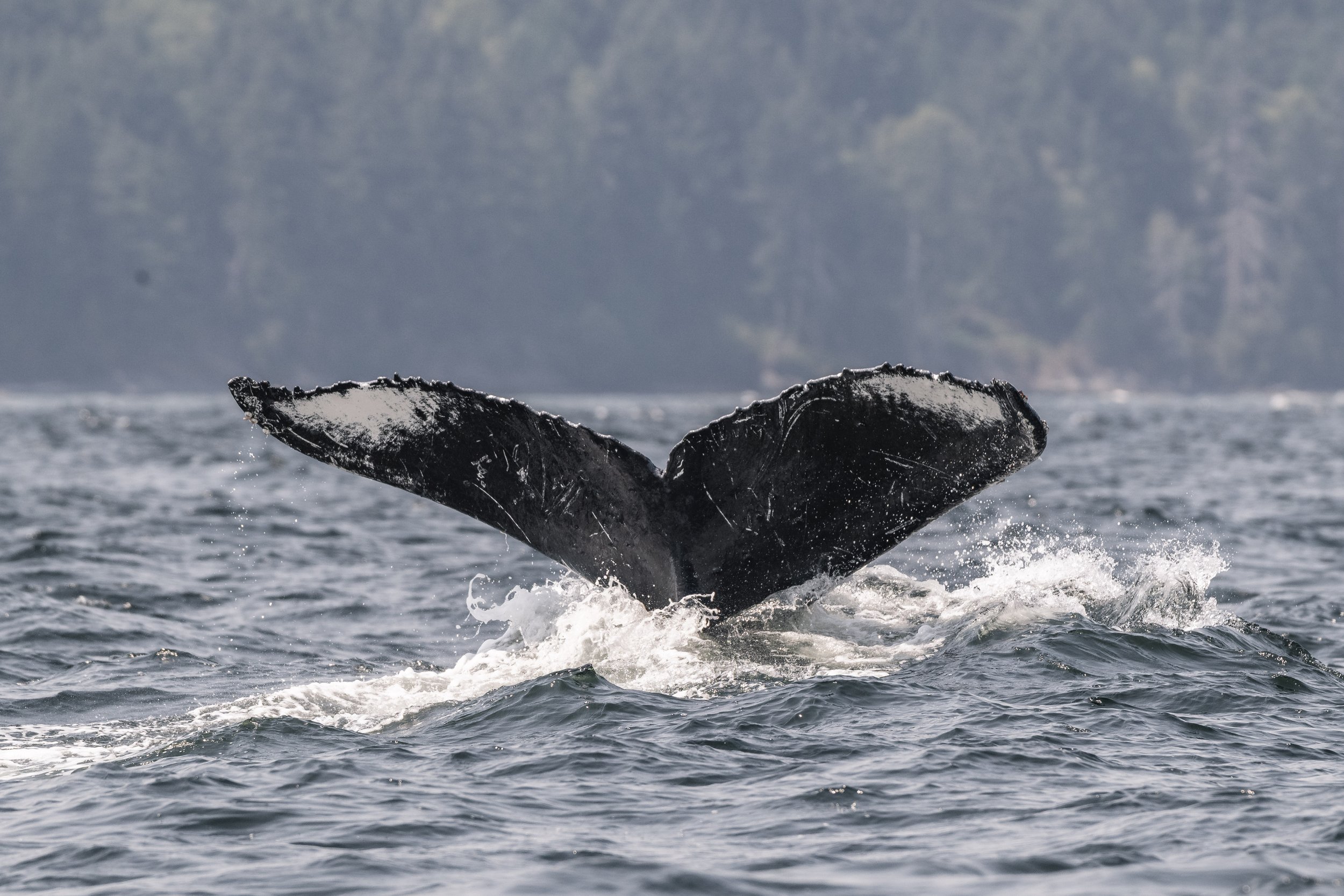
Orion fluking. Photo by Aly Kohlman.
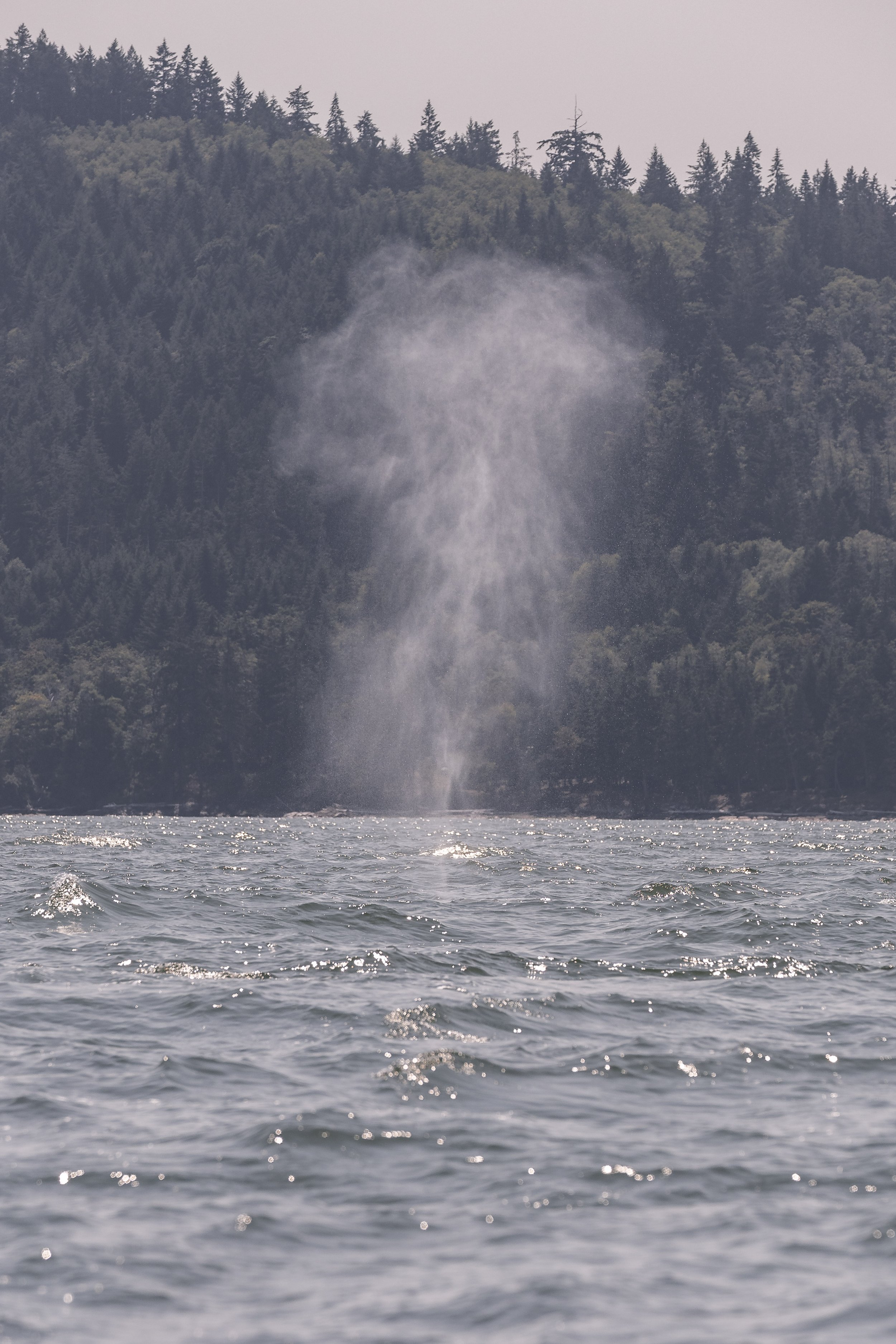
A beautifully backlit blow. Photo by Jordan Robinson.
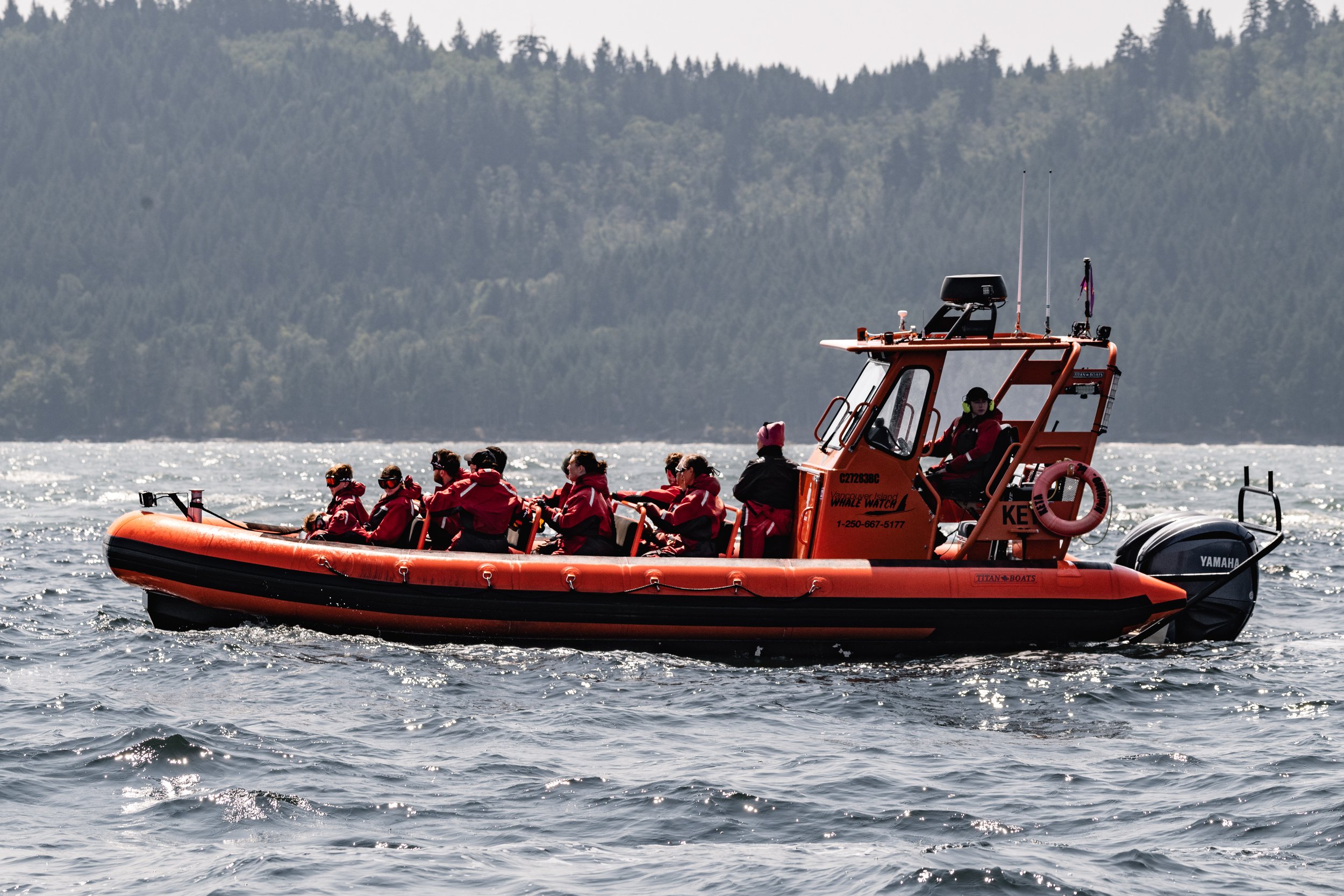
Keta on scene with the whales. Photo by Aly Kohlman.
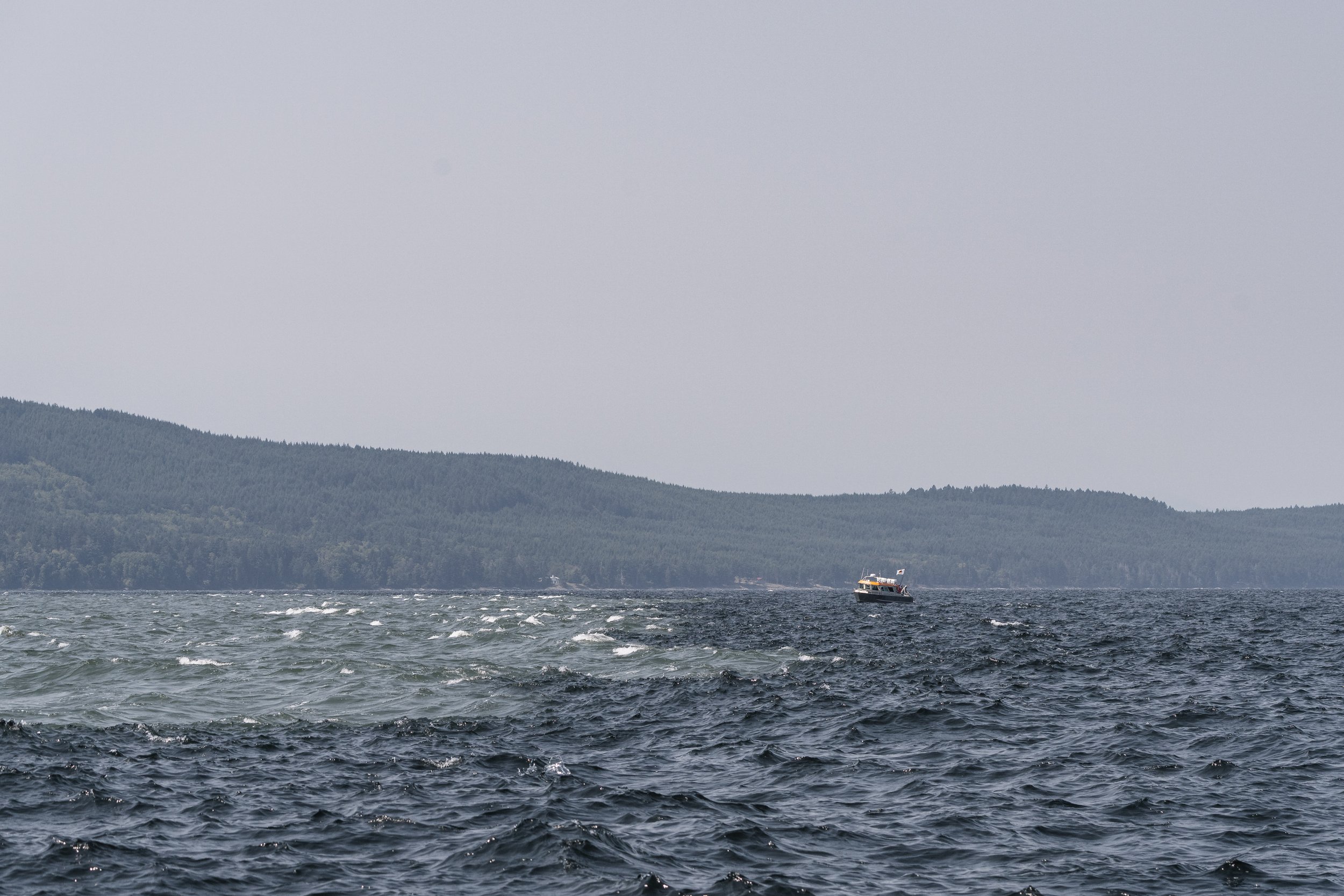
Kula with the brackish waters ahead of her. Photo by Val Watson.
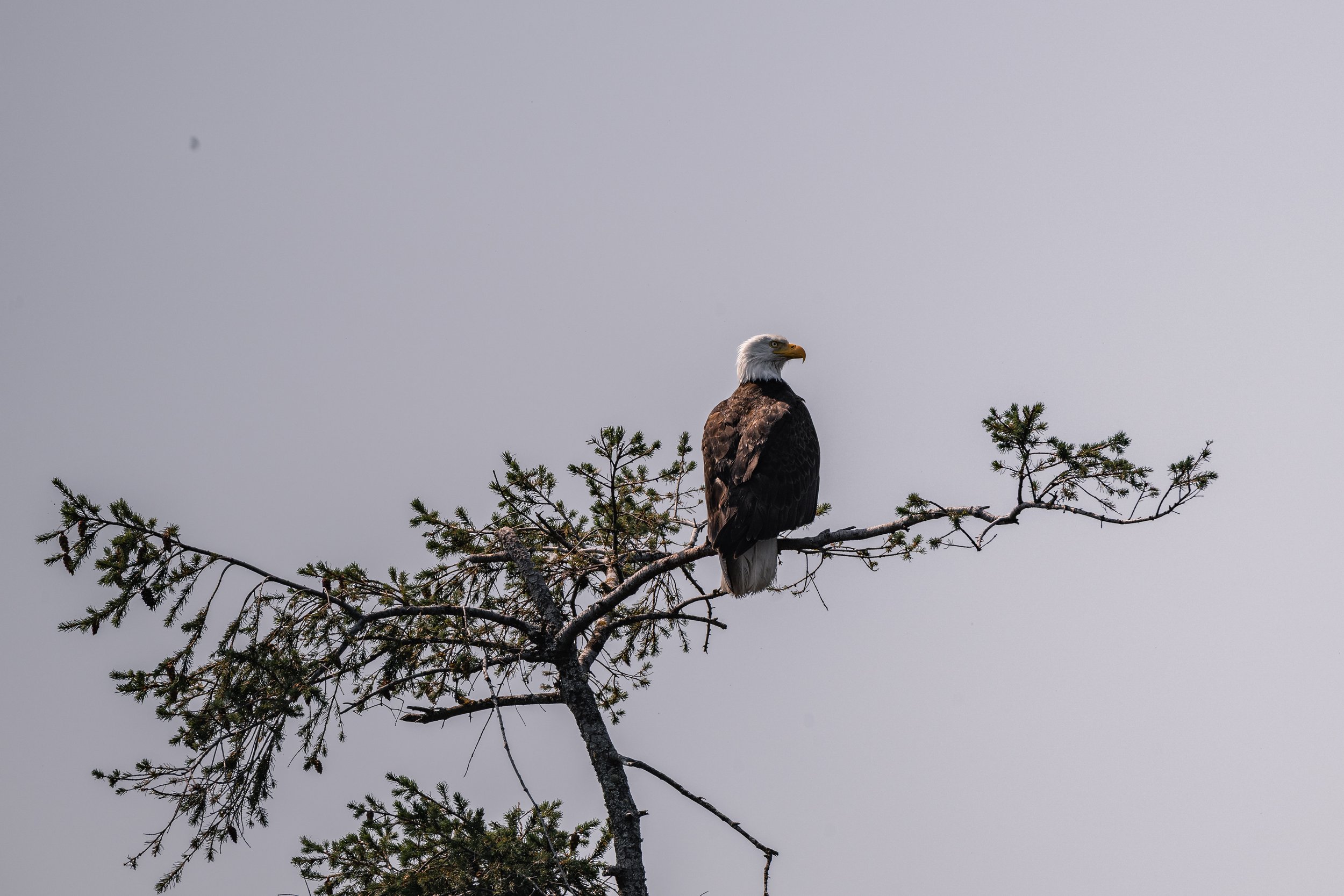
A Bald Eagle high up in the trees. Photo by Aly Kohlman.