
August 4, 2026 - Familiar fins throughout the trip!
The afternoon was shaping up to be a great trip as we headed out aboard our full fleet. It had been relatively quiet, sightings-wise, today, but we were still determined to locate some whales as we departed. After a brief discussion, we decided to head south, venturing around and through the Southern Gulf Islands as we went. We spread the fleet out to extend our range, resulting in slightly different encounters for the boats.
The first vessel to spot whales today was Kula out in the Strait of Georgia. While travelling along, a large blow was spotted, followed by a dark back and a tail as the whale dove. This was a humpback whale, travelling alone. Naturalist Jordan donned his camera, and after comparing the trailing edge of their fluke alongside their dorsal fin to our catalogue, it was determined that this was Raptor (BCY0458). While Raptor herself has been a bit of an uncommon whale for us to spot this season (our last sighting of her was on July 8th), her legacy as a successful reproductive female has been nothing short of legendary. Her 2024 calf has been spotted regularly for months, with our first confirmed sighting of it on May 20th. They have also been spotted associating with many other young humpbacks since then.
Humpback whales show an extraordinarily strong sense of site fidelity, meaning most individuals will return to the areas that their mother taught them about in their first year of life. These include the best feeding areas, migration routes, and likely also what areas to avoid. This is a lot of very critical information for a newborn to take in, but it is vital for their survival. Once they reach their second year of life, they begin travelling alone, breaking away from the safety their mother provided.
One of Raptor's other calves, Harpy (BCZ0503), has also been a frequent sight in our area over the years, returning every summer to feed on the bounty of the ocean.
While Kula enjoyed their time with Raptor, Cascadia and Keta continued onward. The pair found success soon at nearly the same time, when a pair of black dorsal fins caught the sunlight ahead of them. One towered over the other as the pair swam by.
Naturalists Aly and Des compared photos of the duo, and soon we learned that this pair was one of our favourites - the T030 siblings:
T030A Sequoia ♂ (1986)
T030C Salix ♀ (2005)
During our encounter, the two whales were very spread out, slowly travelling along. They may have been resting after an eventful day, or potentially were simply enjoying the beautiful evening.
Kula soon left Raptor and started to make their way away, pointing towards the orca pair. Along the way, though, they were stopped once more - another pair of humpback whales had been spotted!
The crew and guests did not stick with this pair for long, though, and after capturing a couple of photos of either whale, headed on out. One of these whales was identified as Bond (BCX1640), while the other was a bit less cooperative, as they never fluked, leaving us with only dorsal fins to work with. At this time, they are still unmatched in our database, but we hope as we continue searching, their identity will be revealed!
As they made their way over to the T030s, Cascadia and Keta headed on out to continue searching themselves. They were eager to have a peek at a humpback of their own, and after a bit more travelling, their search prevailed. Cascadia had located a group of four humpbacks, and Keta had located a group of two humpbacks.
Cascadia's group was travelling as two pairs side by side as they observed. Two of these whales fluked beautifully, leading to quick ID confirmations of Nike (BCX1377) and, funnily enough, the same whale Kula had spotted earlier - Bond (BCX1640)! One of the others they were travelling with, however, was surfacing without ever fluking. Thankfully, discolouration spotted on the side of their dorsal fin helped us ID them. This individual was identified as Vivaldi (BCX1704).
At the same time, Keta had identified two familiar fins in their trio as well. They were Snoopy/Gibbous (BCY0770) and Chi (BCZ0575). Similar to the other humpbacks we had seen throughout the evening, these three were busy fluking and diving as we watched, likely feeding down in the depths on krill. The summer months are a vital time for our humpbacks, as they are required to eat nearly a year's worth of calories in a few short months. Most individuals will not have another large meal until they return to our area next summer and will instead rely on their fat reserves to sustain themselves.
Once Kula had made it to the T030s, the pair seemed to have woken up a bit from their nap. Now travelling a bit faster, one of the siblings spyhopped, or brought the front of their body up and out of the water before continuing to meander along. It was a great reminder that these incredible animals can change up their behaviours in the blink of an eye, from simply swimming along to celebrating and spyhopping.
While whales were the highlight of the tour, they were not the only wildlife we saw along the way. Perched up on the rocks along our many islands, just out of the reach of the water, were several Harbour Seals. These rotund pinnipeds were taking full advantage of the relaxing evening, yawning away as they settled in for the night. In the waters themselves, Steller Sea Lions were spotted coming up for air, sending puffs of water up as they did. Cormorants also wandered the shores, peeking into the waters, likely trying to find a snack. A Bald Eagle was also spotted high up on the rock face, talons tucked tight against the rock as it stretched and preened.
It was a long journey home to port, so we settled into our seats to enjoy the beautiful scenery along the way. Rolling mountains and jagged forest skylines could be seen all around as we went, light dappled over them as the evening progressed. Soon the familiar buildings of the Nanaimo port came into view, and in no time at all, we were back at the docks. It had been an amazing time full of many unique and interesting encounters, and it was the perfect way to wrap up a beautiful summer day!
The photos from this tour were taken by Marine Naturalists Aly Kohlman, Desarae Poier, and Jordan Robinson - please enjoy!
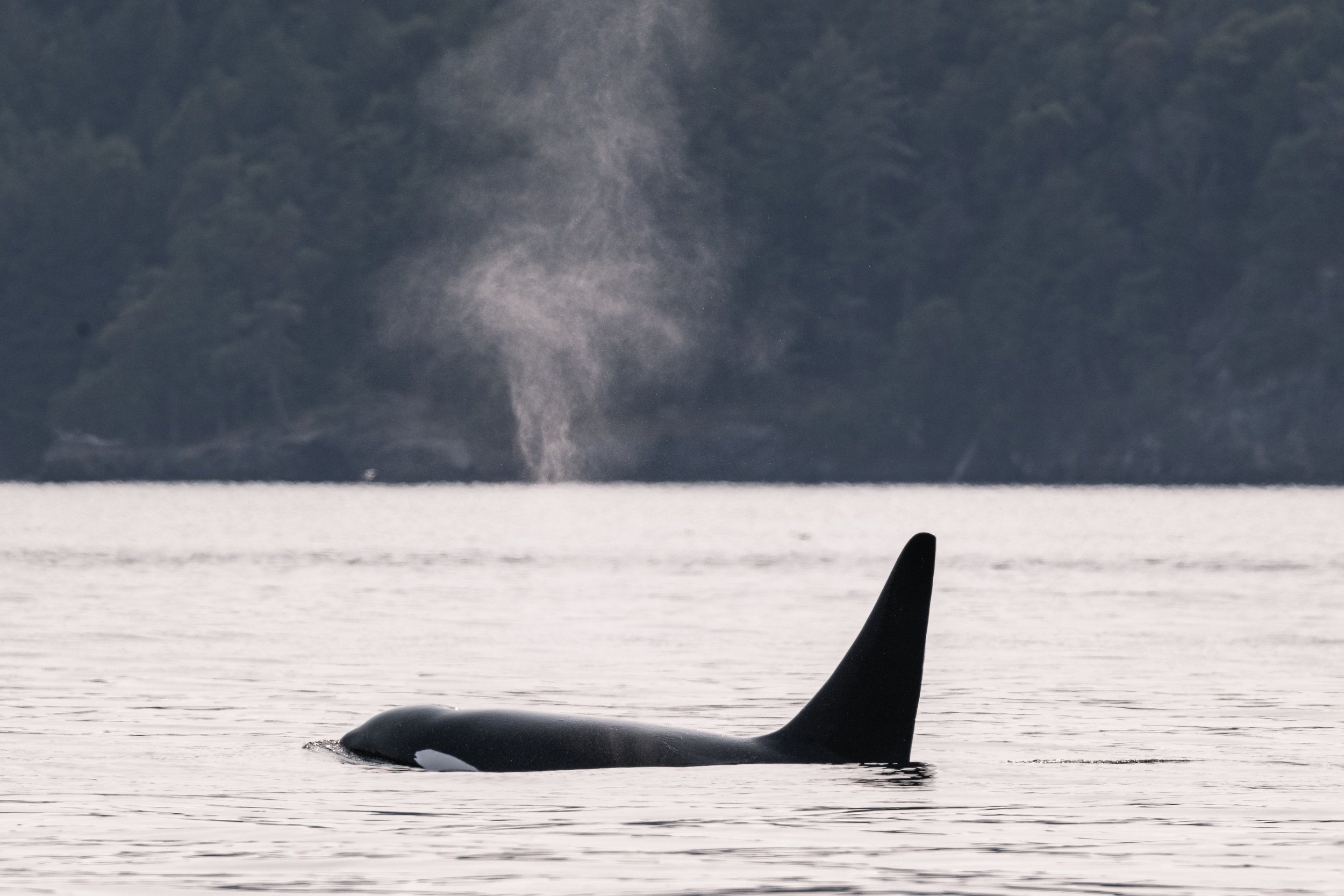
We love photos of backlit blows! Photo by Aly Kohlman
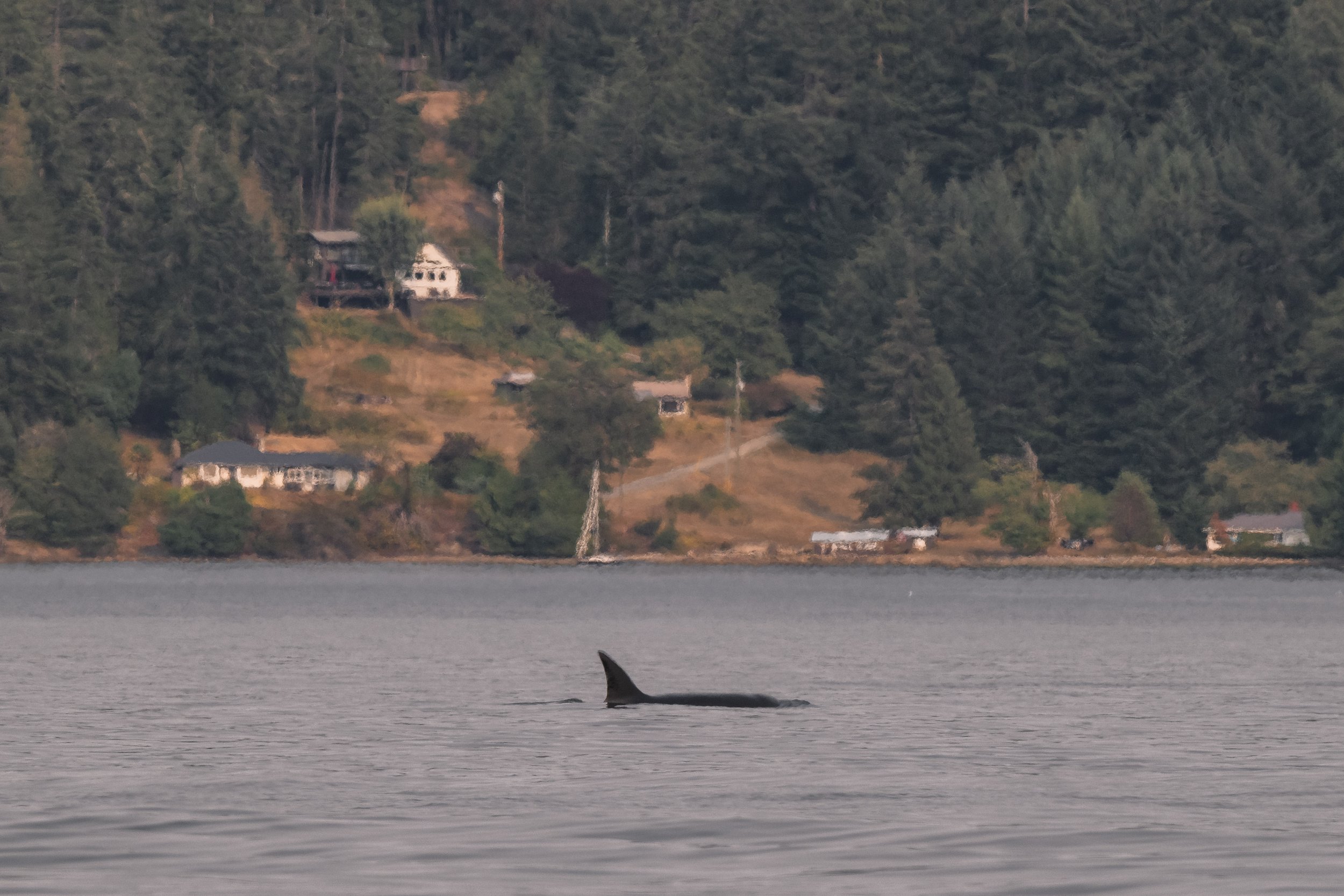
T030C Salix swimming in the distance. Photo by Aly Kohlman
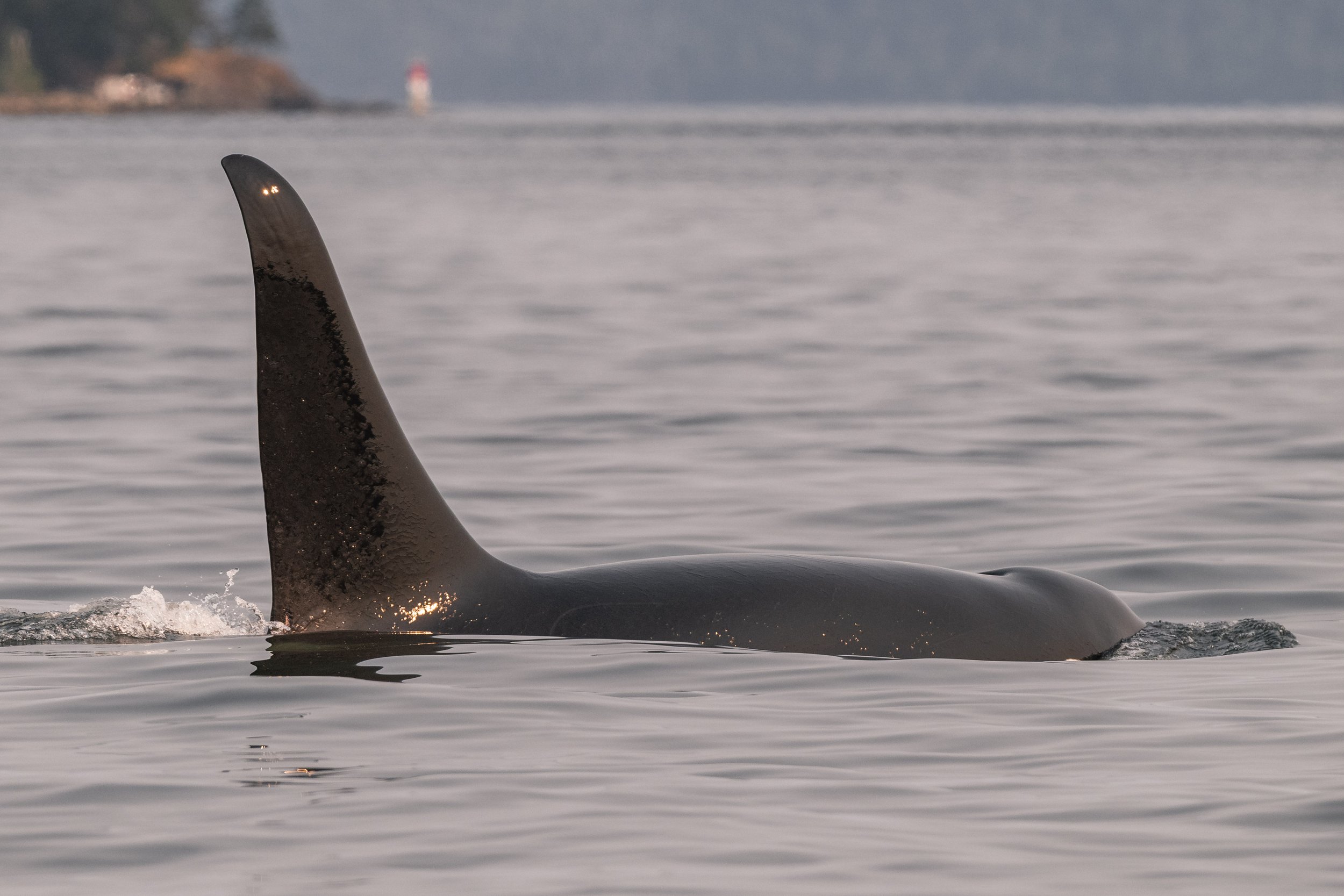
A male orca’s dorsal fin can be over 6 feet tall. Photo by Aly Kohlman
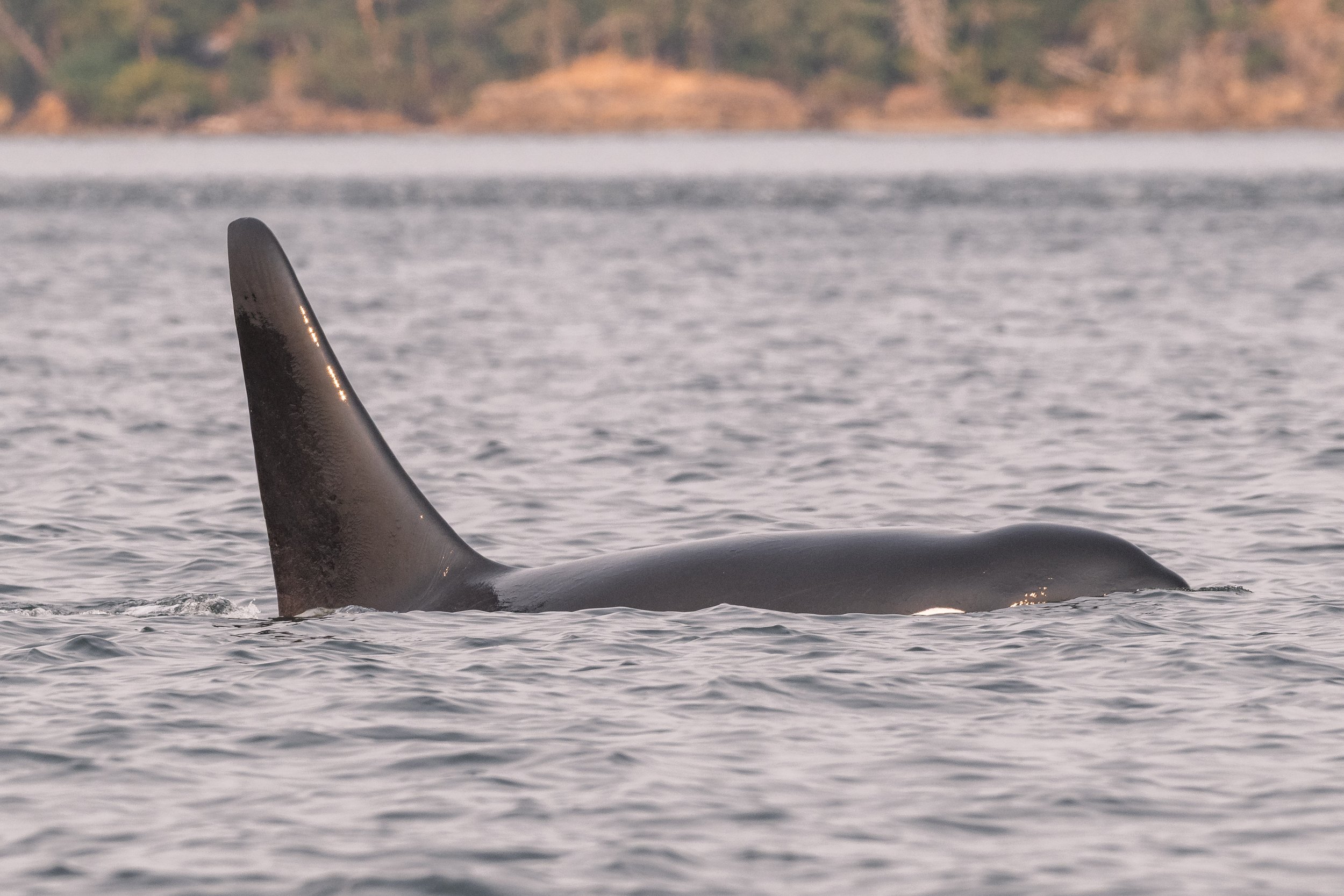
On of the way we ID the orcas is by looking at their dorsal fins, this is T030A Sequoia! Photo by Aly Kohlman
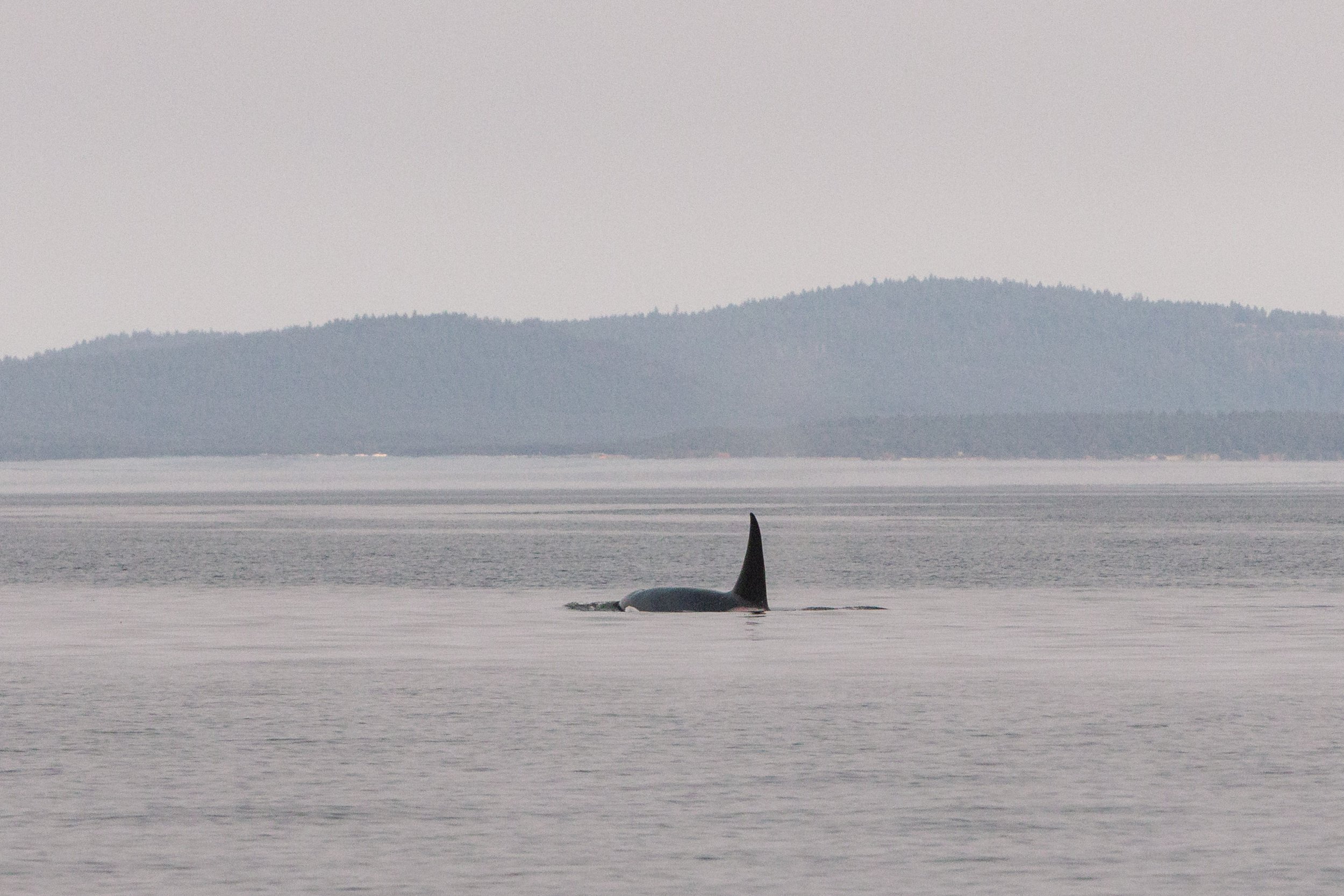
T030A Sequoia swimming in calm waters. Photo by Jordan Robinson.
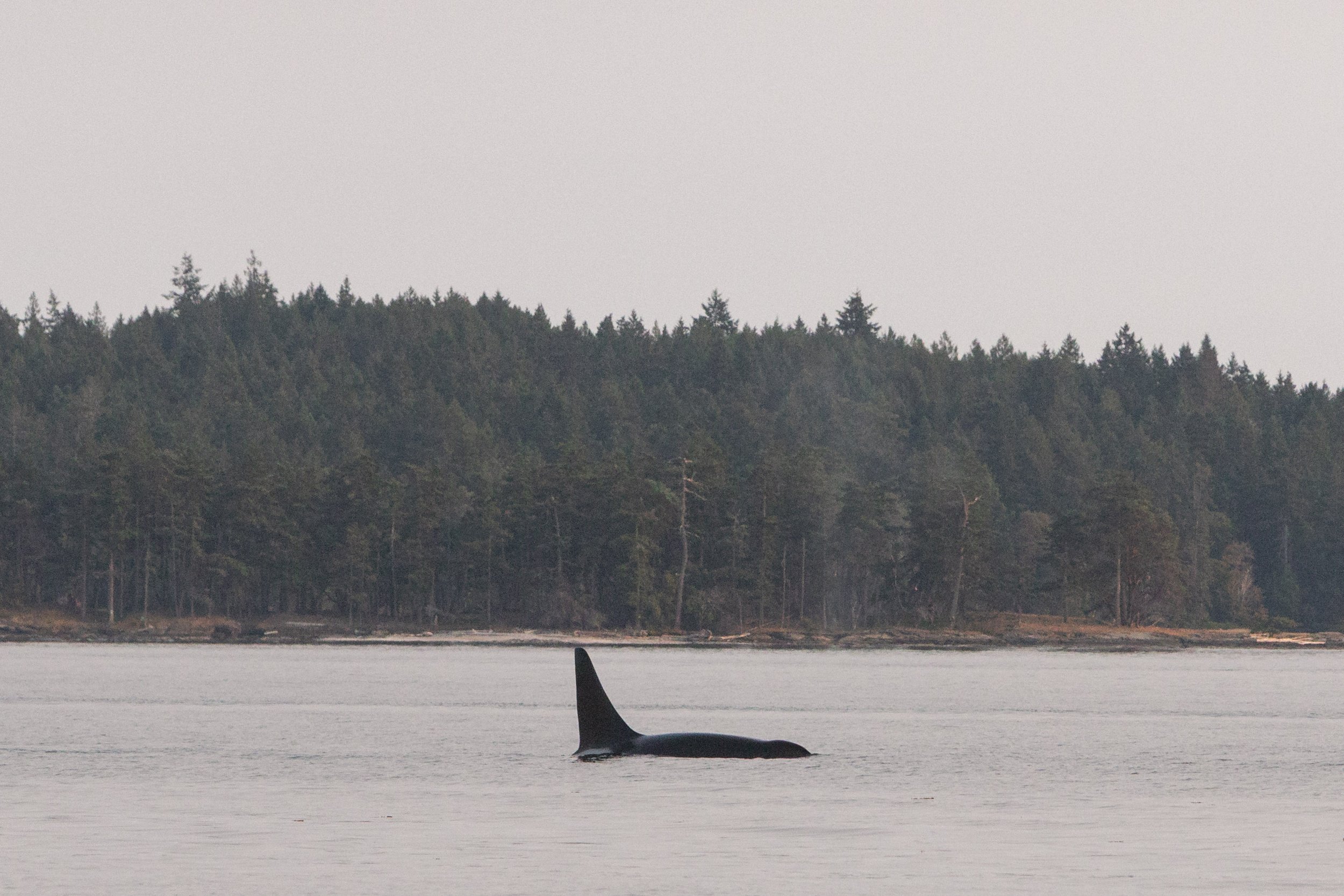
Can you believe this whale is 40 years old? Photo by Jordan Robinson.
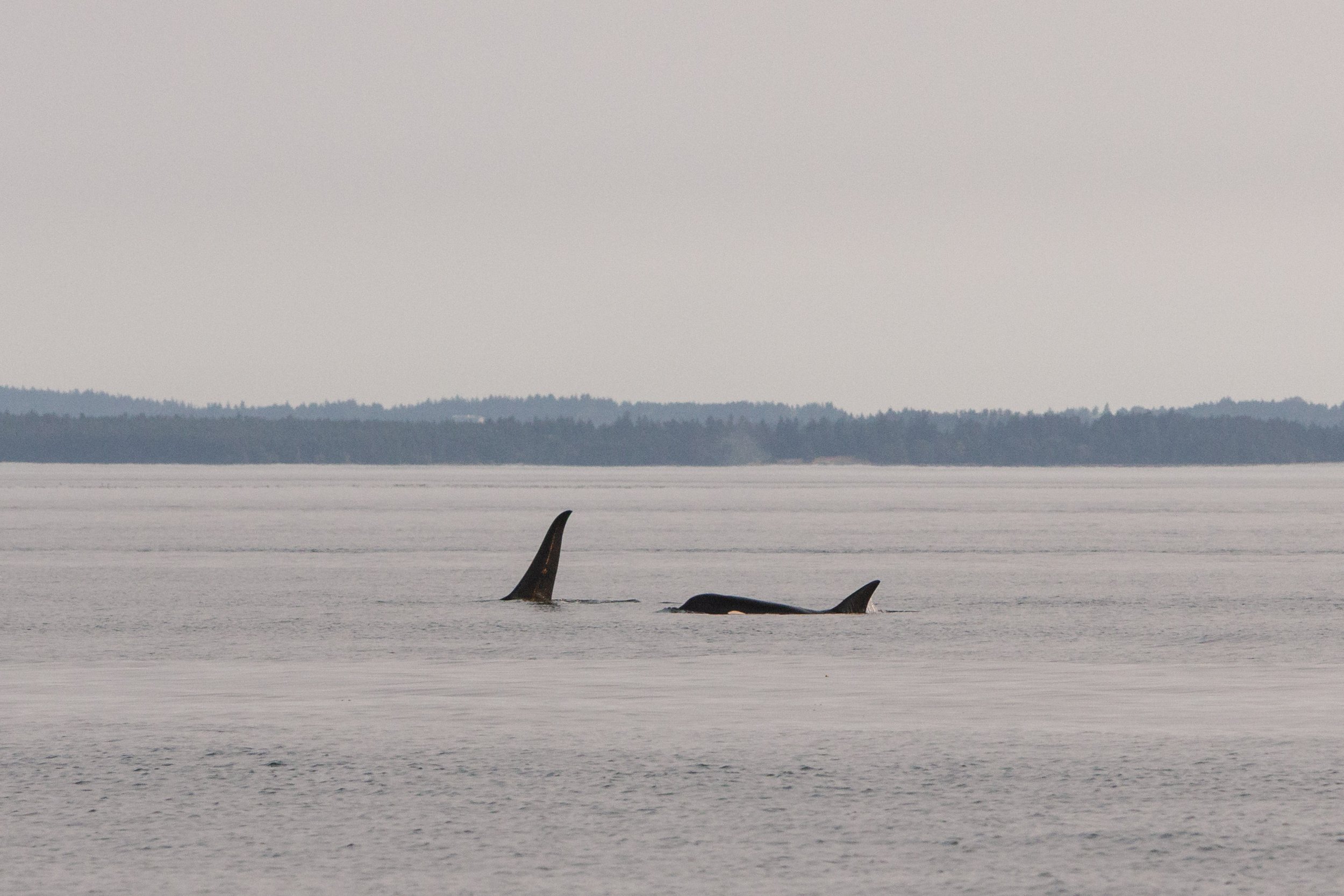
T030A Sequoia and T030C Salix together at last! Photo by Jordan Robinson.
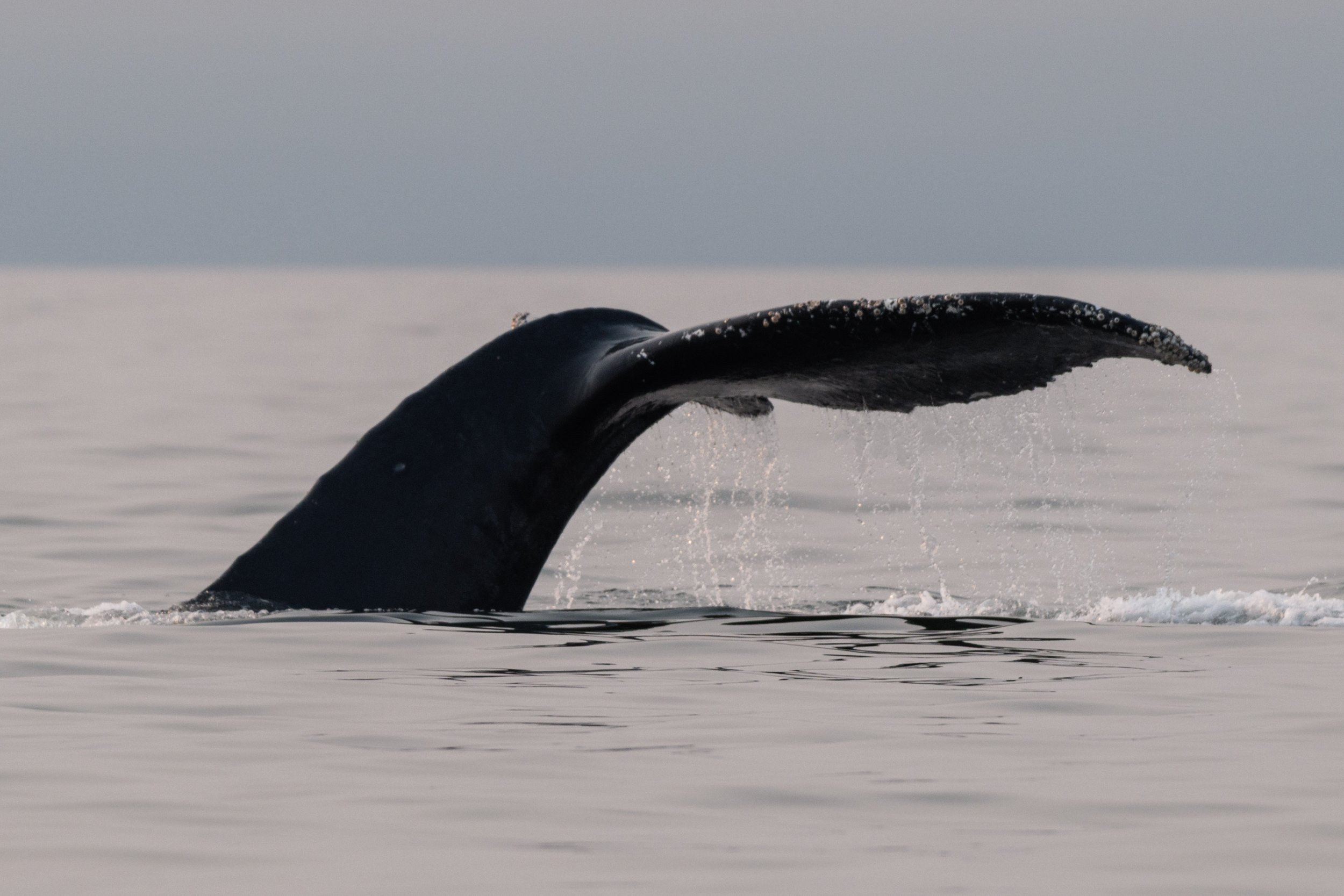
Nike going for a deep dive. Photo by Aly Kohlman
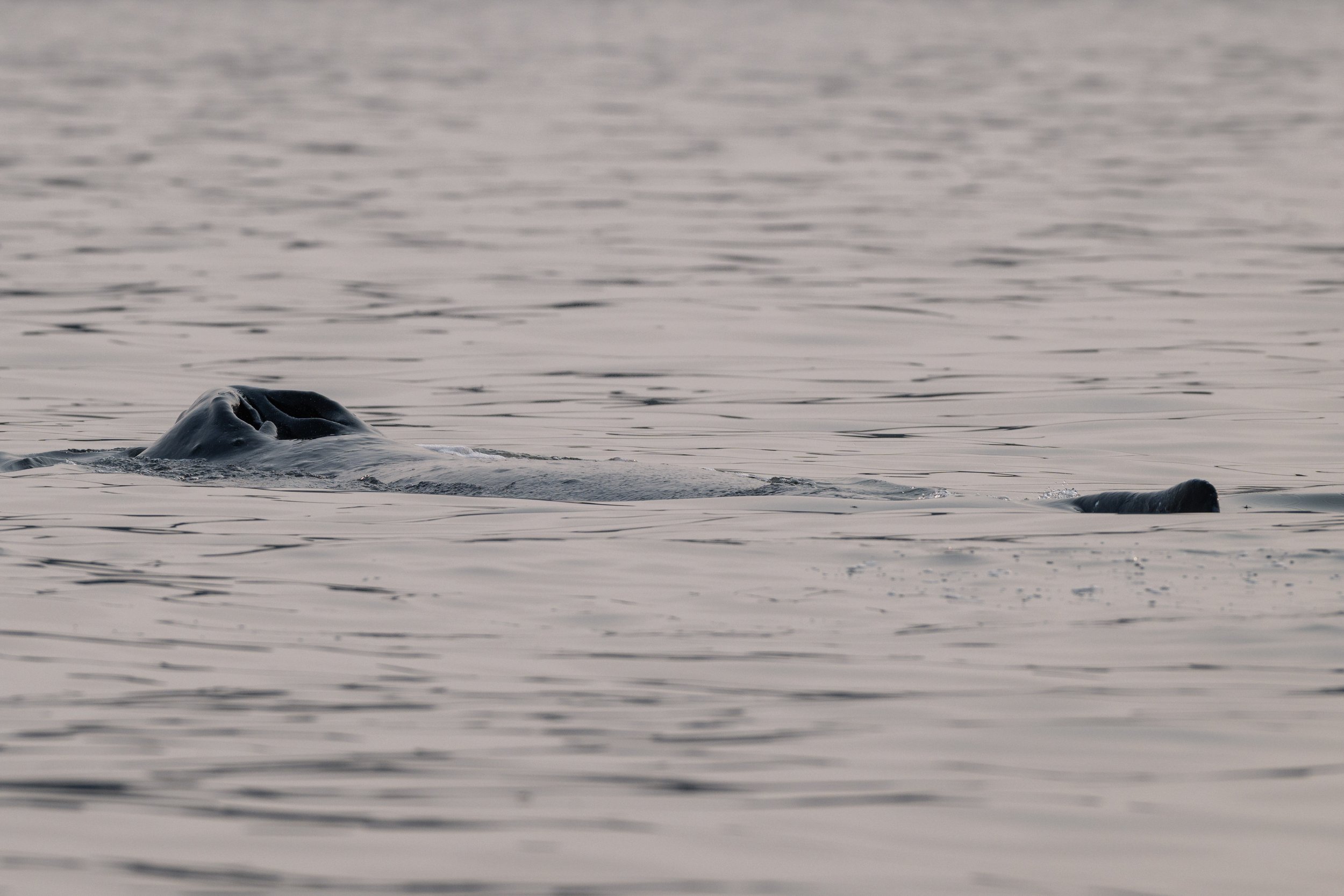
Did you know baleen whales like humpbacks have 2 nostrils while toothed whales like orcas only have 1? Photo by Aly Kohlman
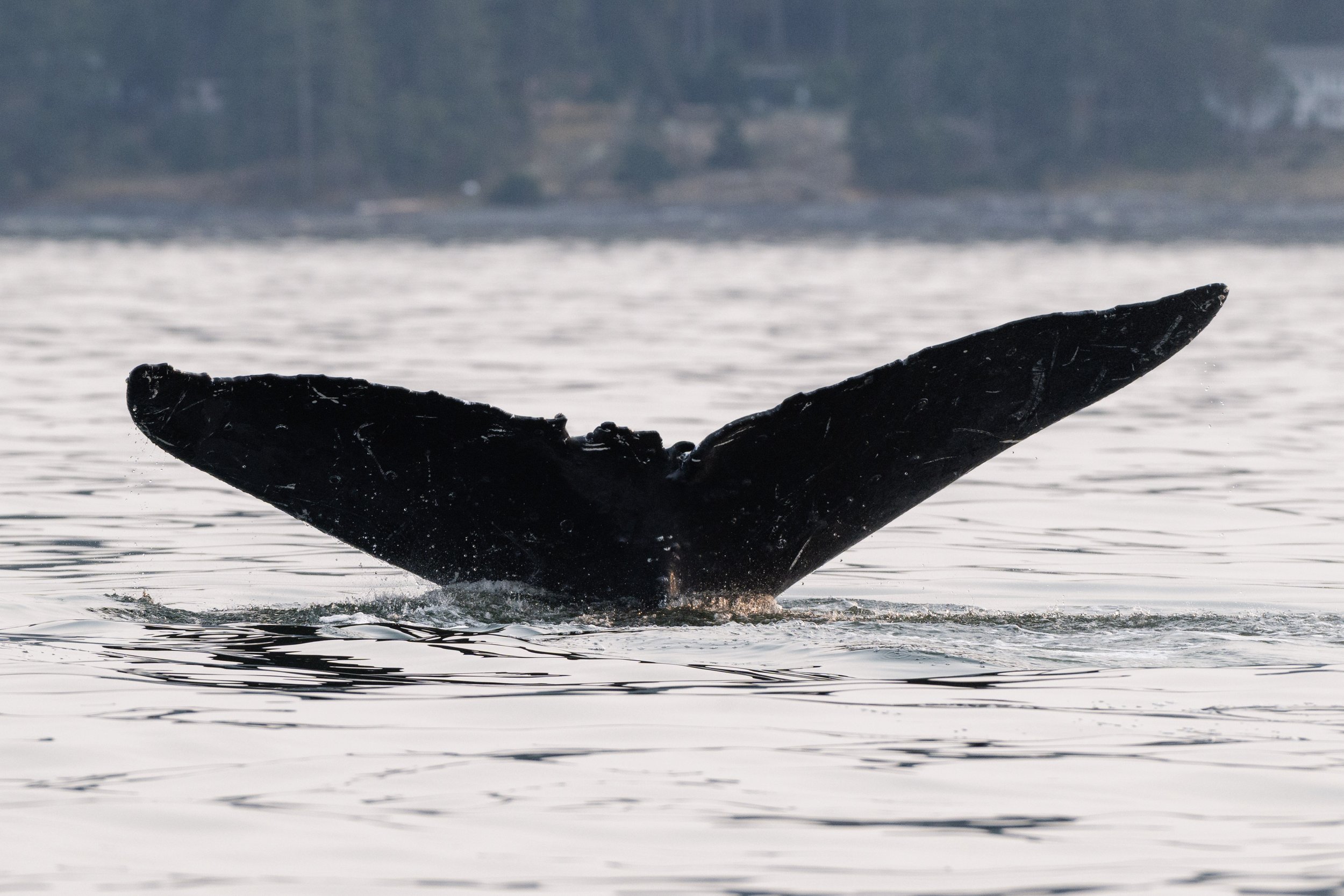
Bond going for a deep dive. Photo by Aly Kohlman
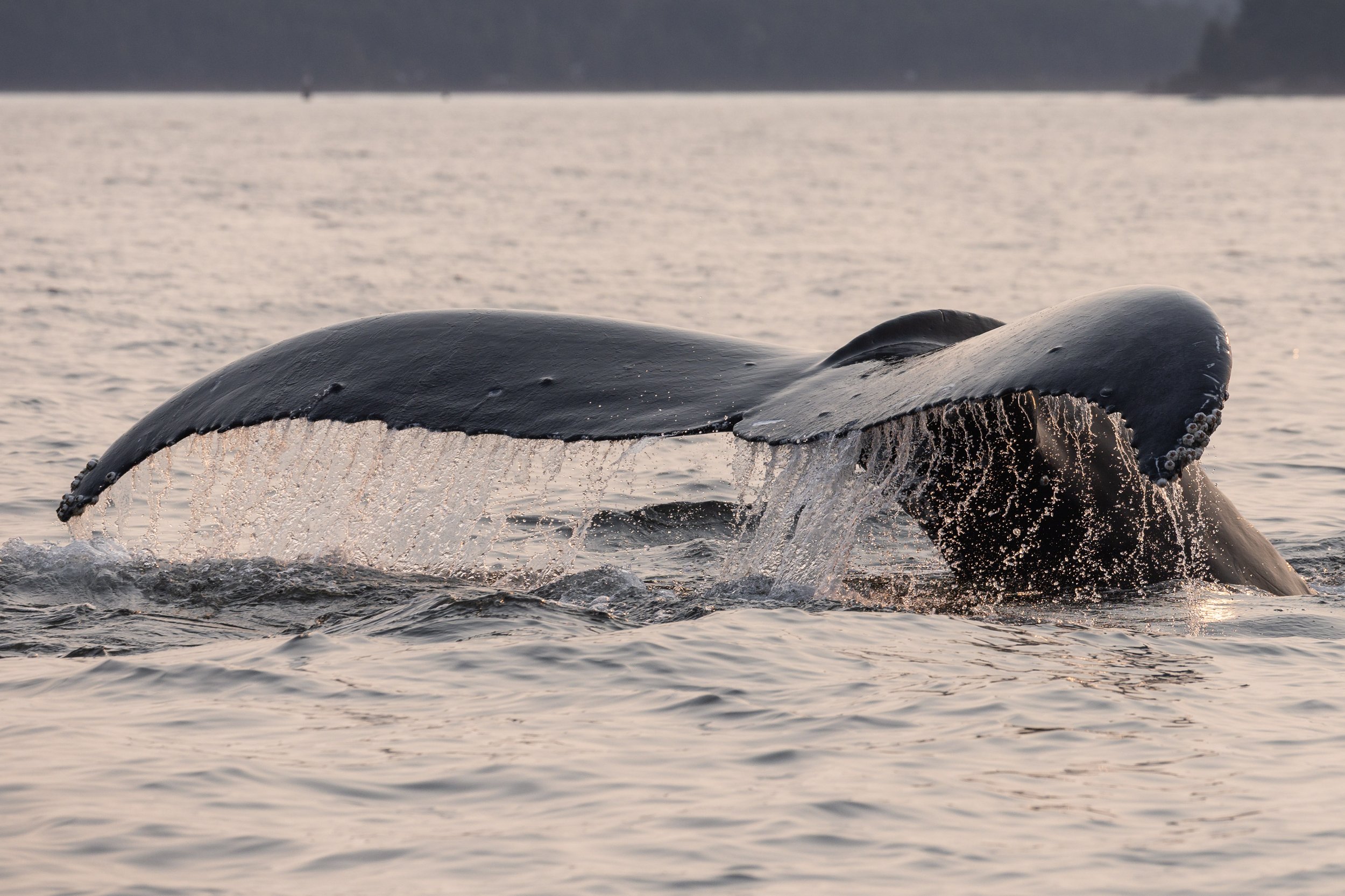
Chi going for a dive. Photo by Des Poier
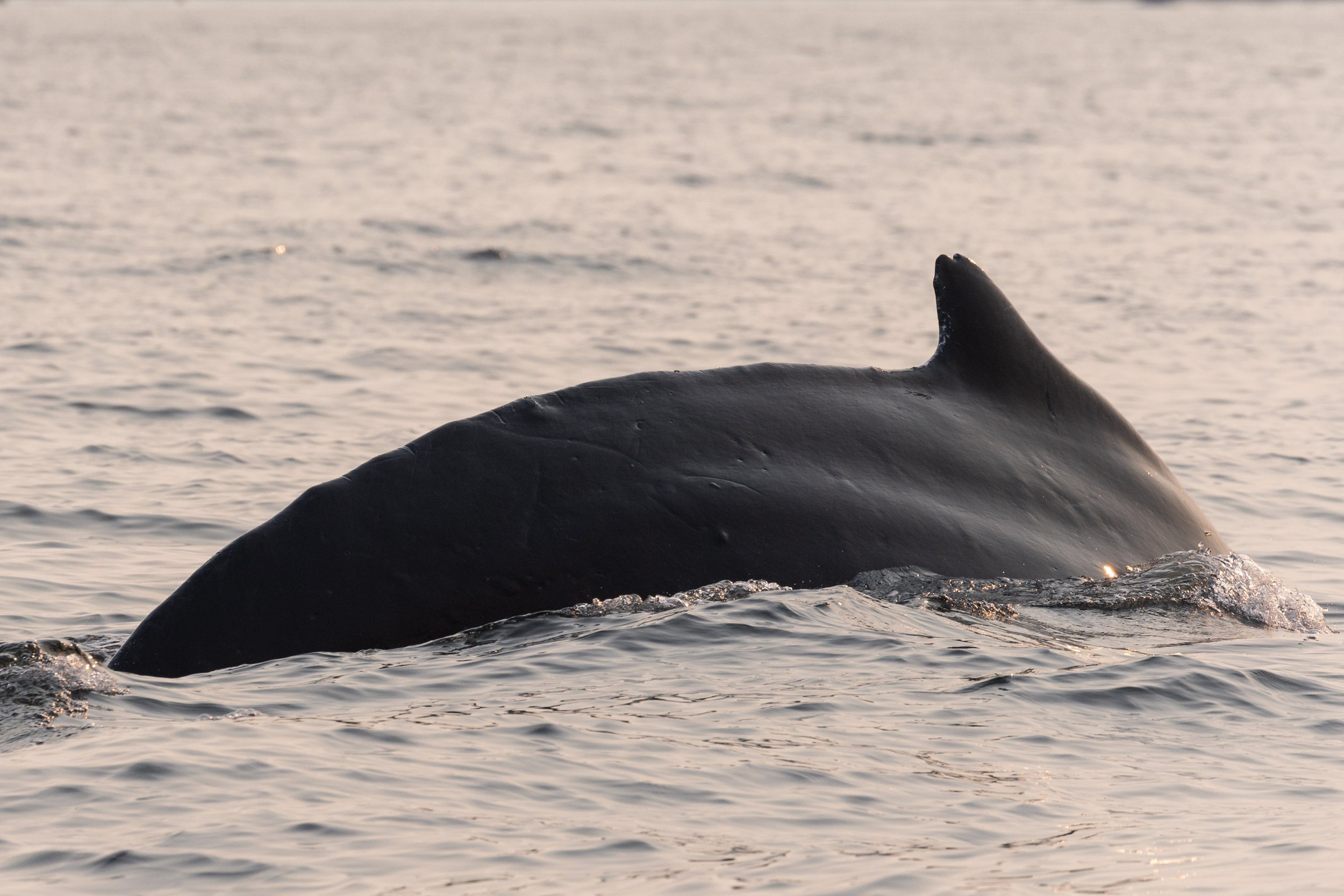
Do you see the small notch out of Chi’s dorsal fin? This makes him easy to identify. Photo by Des Poier
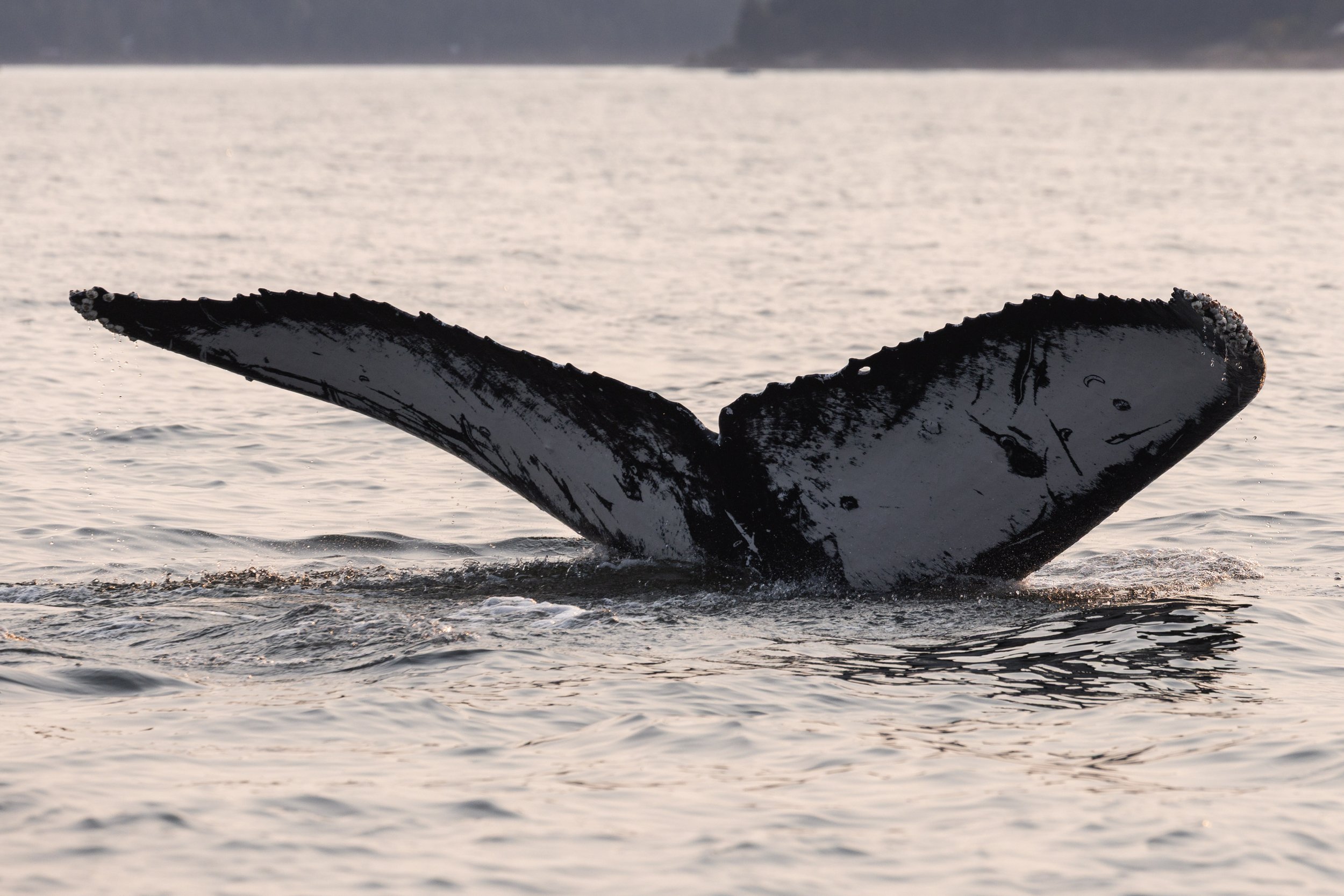
Chi showing off the markings on his fluke. Photo by Des Poier
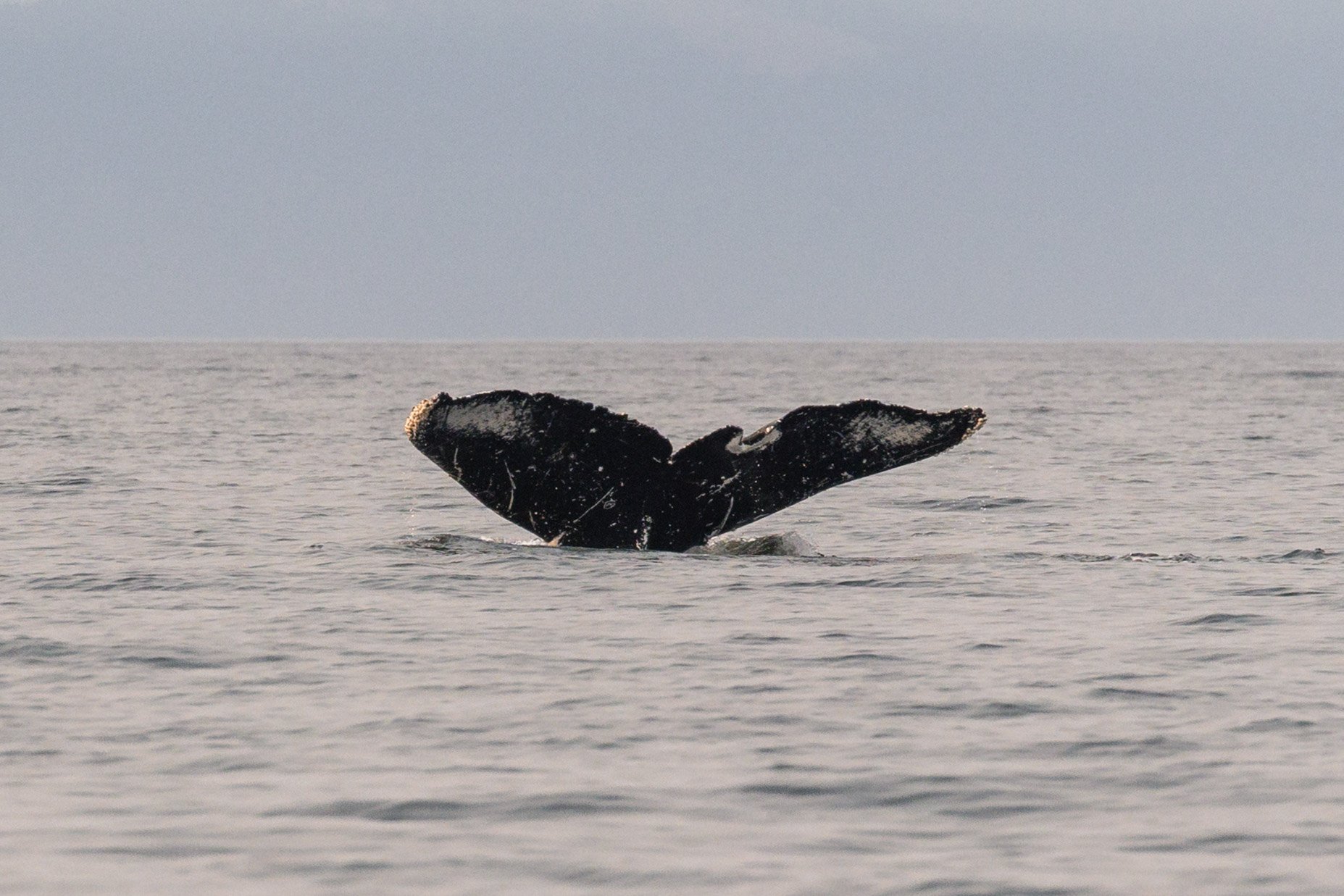
Snoopy going for a dive! Photo by Des Poier
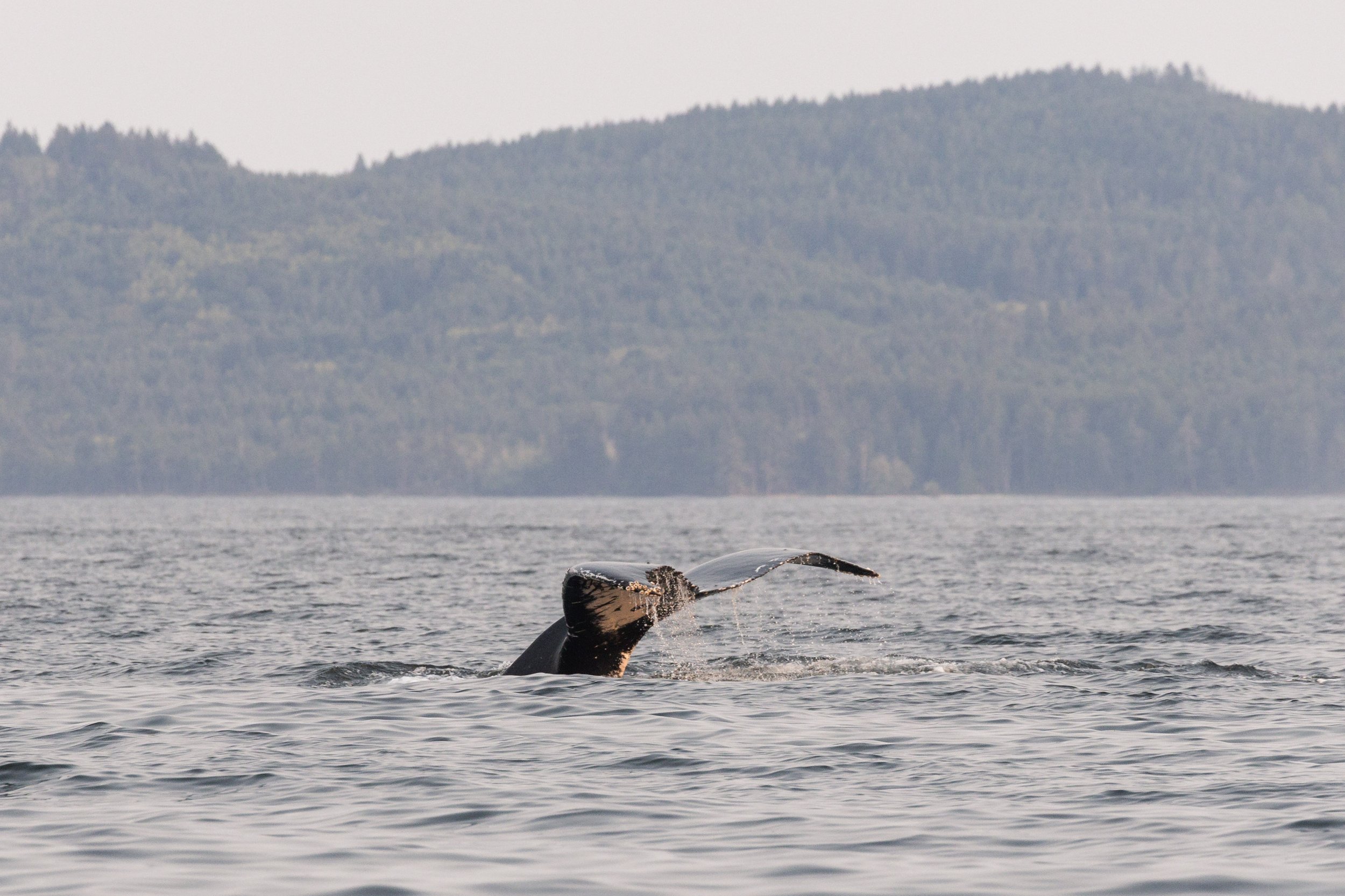
Flukes up! Photo by Des Poier
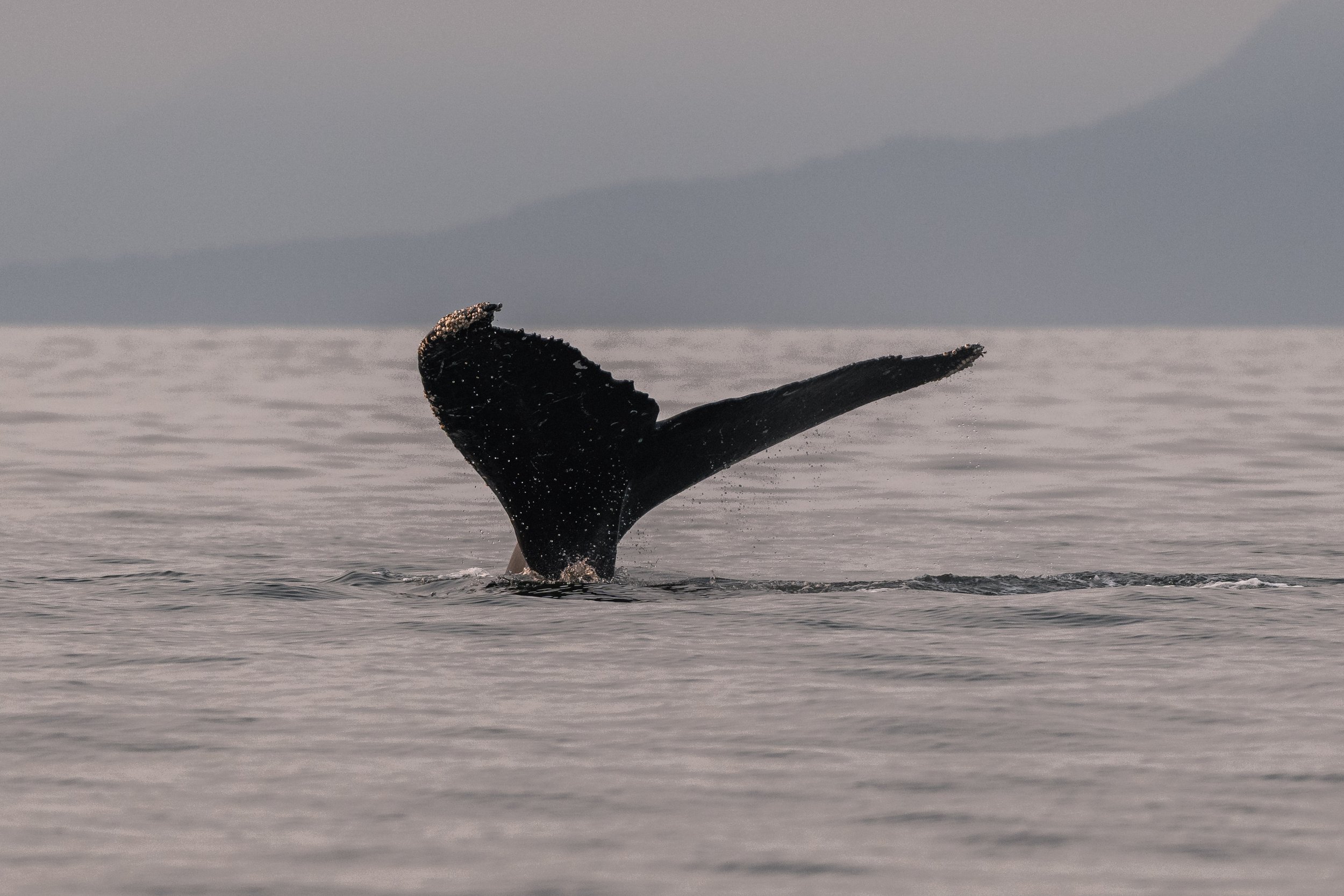
Nike showing us his lovely flukes. Photo by Aly Kohlman
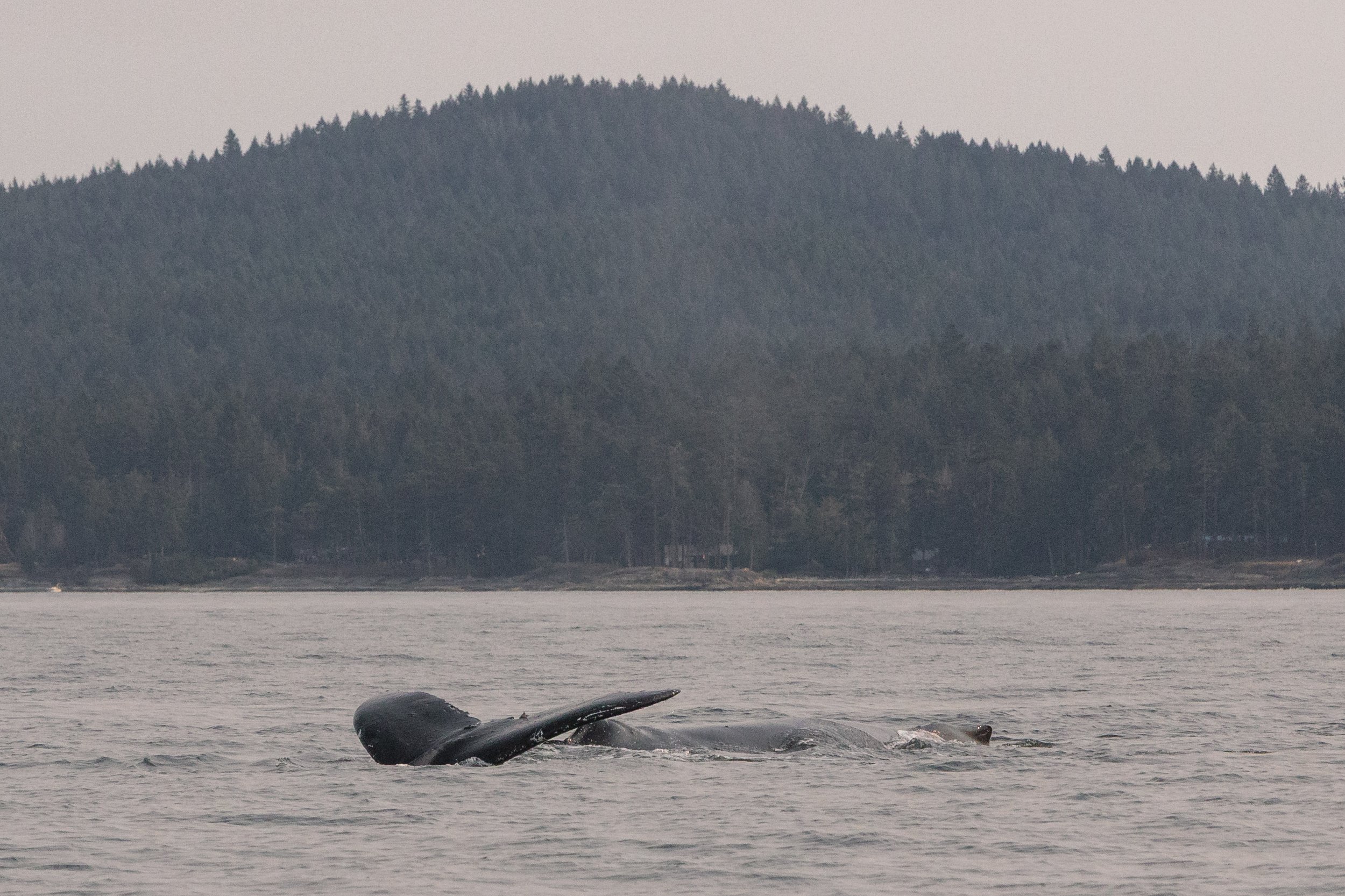
Bond and friend enjoying each other’s company. Photo by Jordan Robinson.
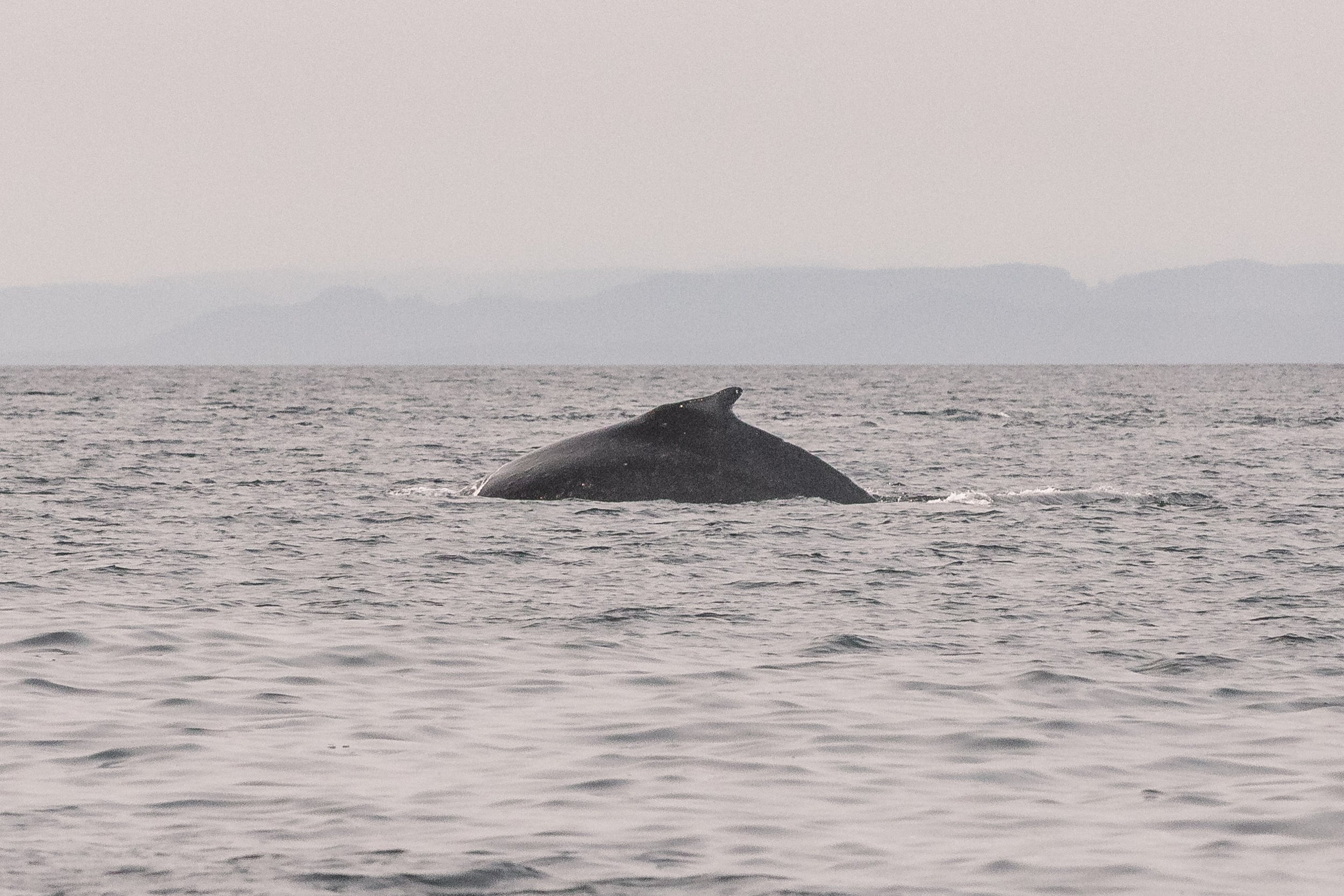
Raptor off for a dive! Photo by Jordan Robinson.
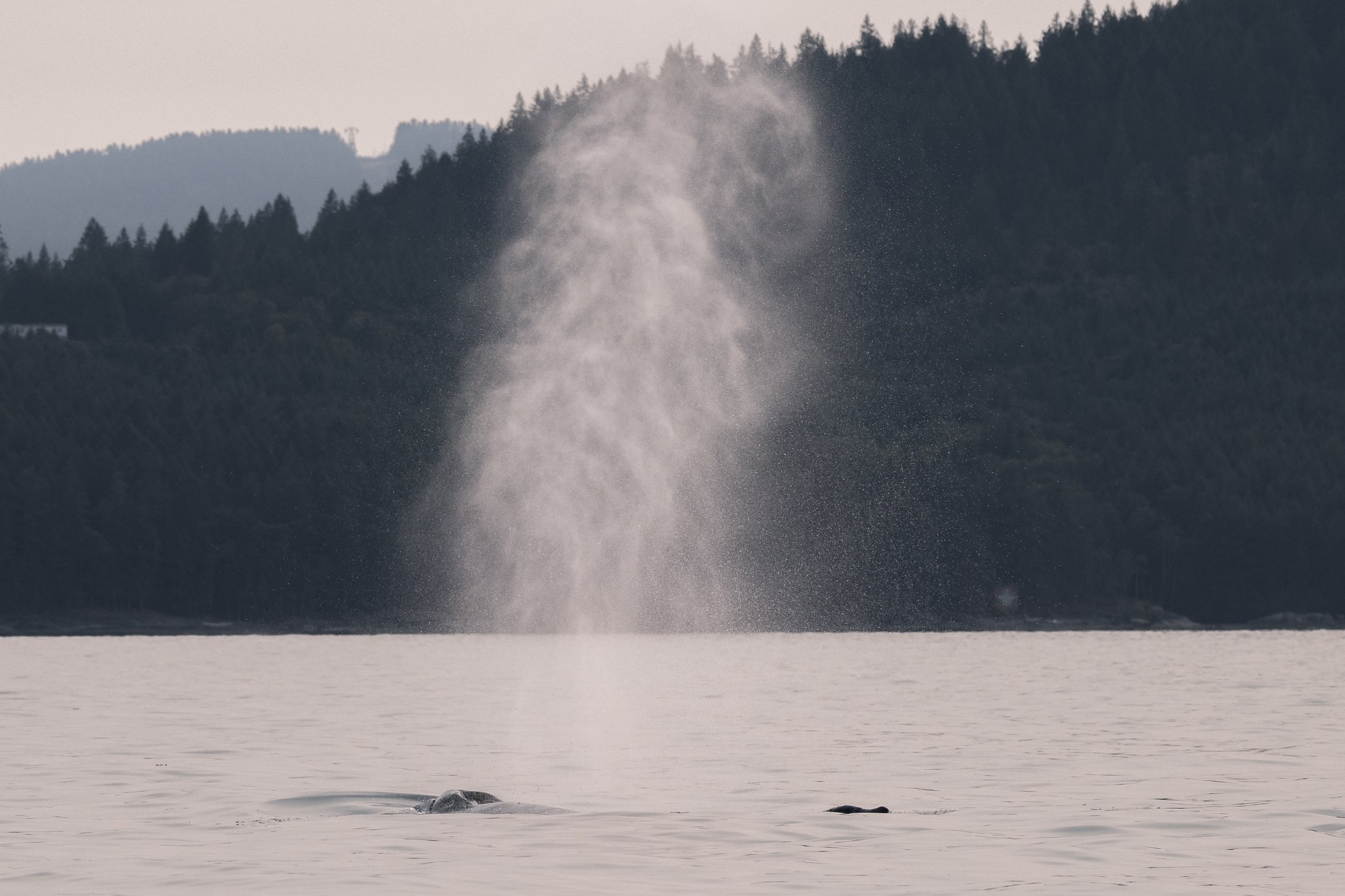
Nike with a beautfiul backlit blow. Photo by Aly Kohlman
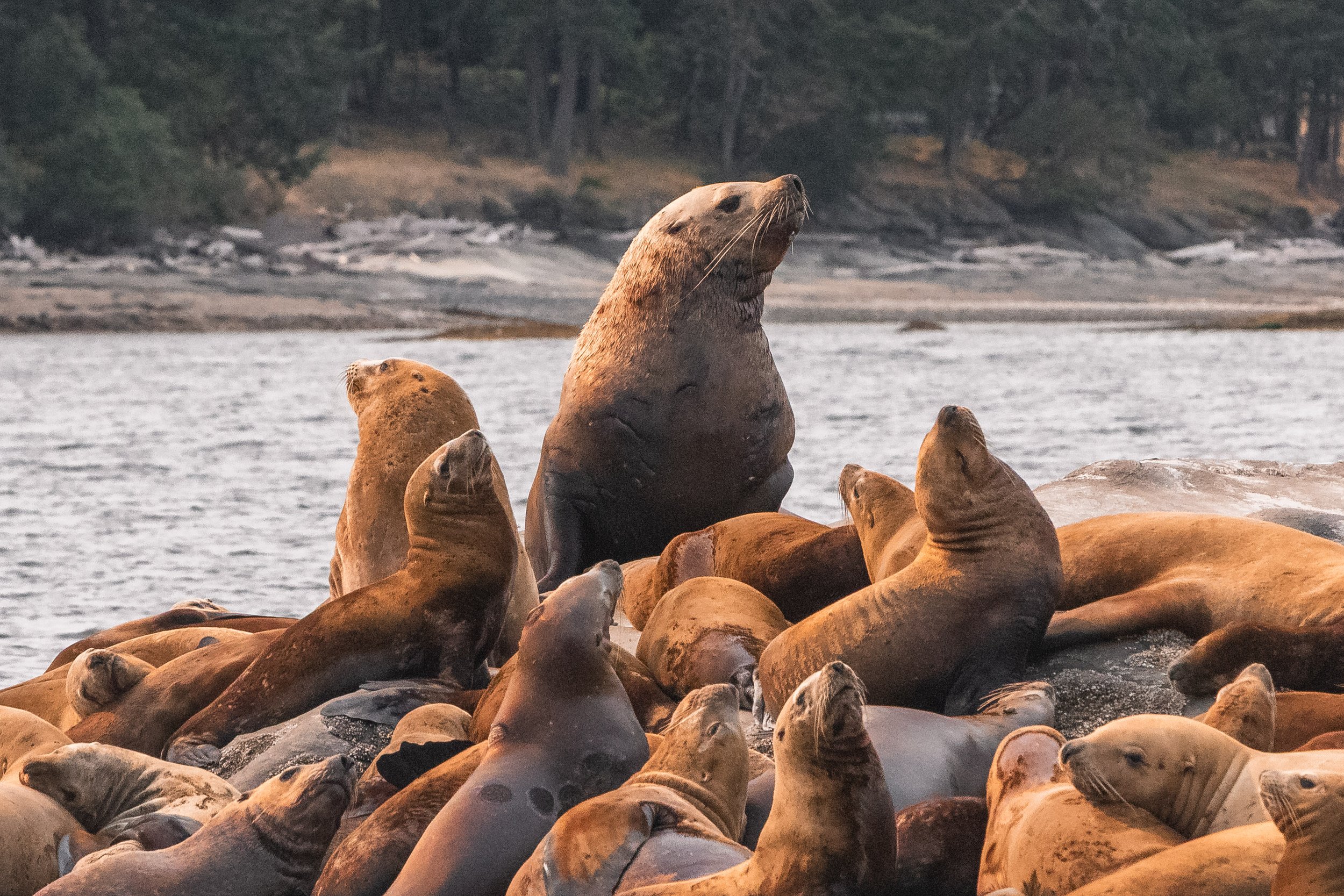
Steller Sea Lions in a cuddle puddle. Photo by Jordan Robinson.
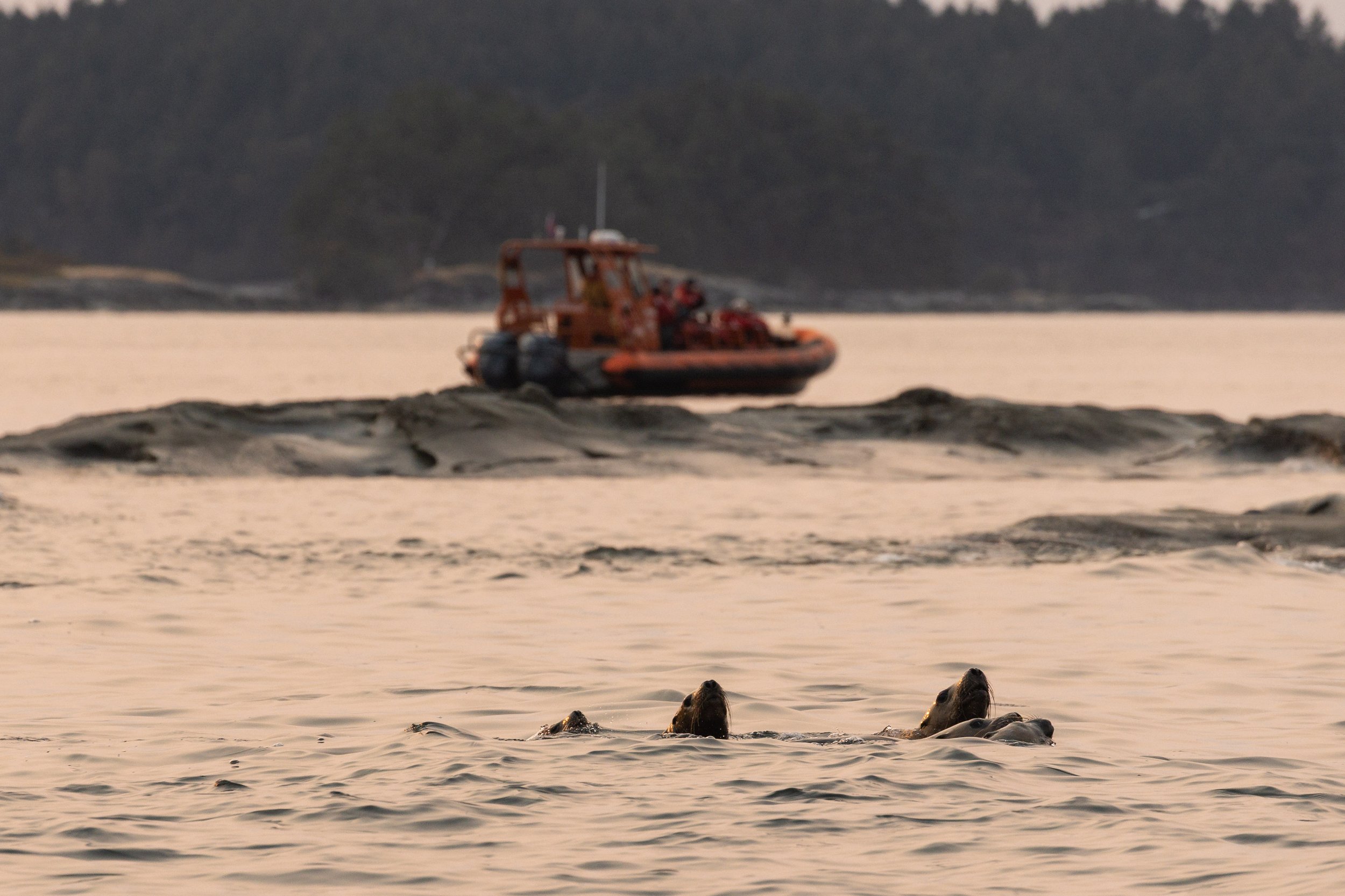
Steller Sea Lions with Cascadia in the background. Photo by Des Poier
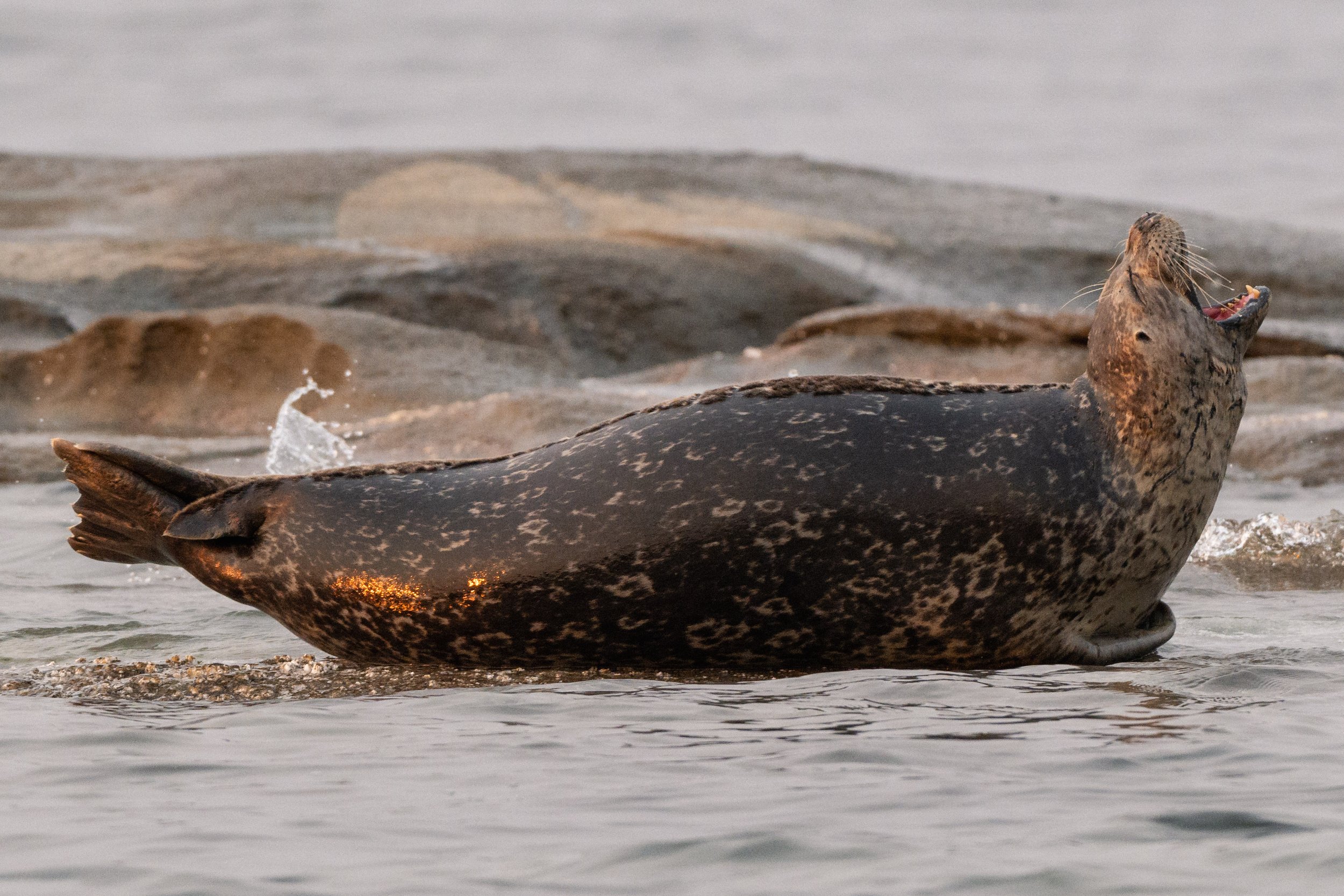
A habour Seal showing off those pearly whites. Photo by Aly Kohlman
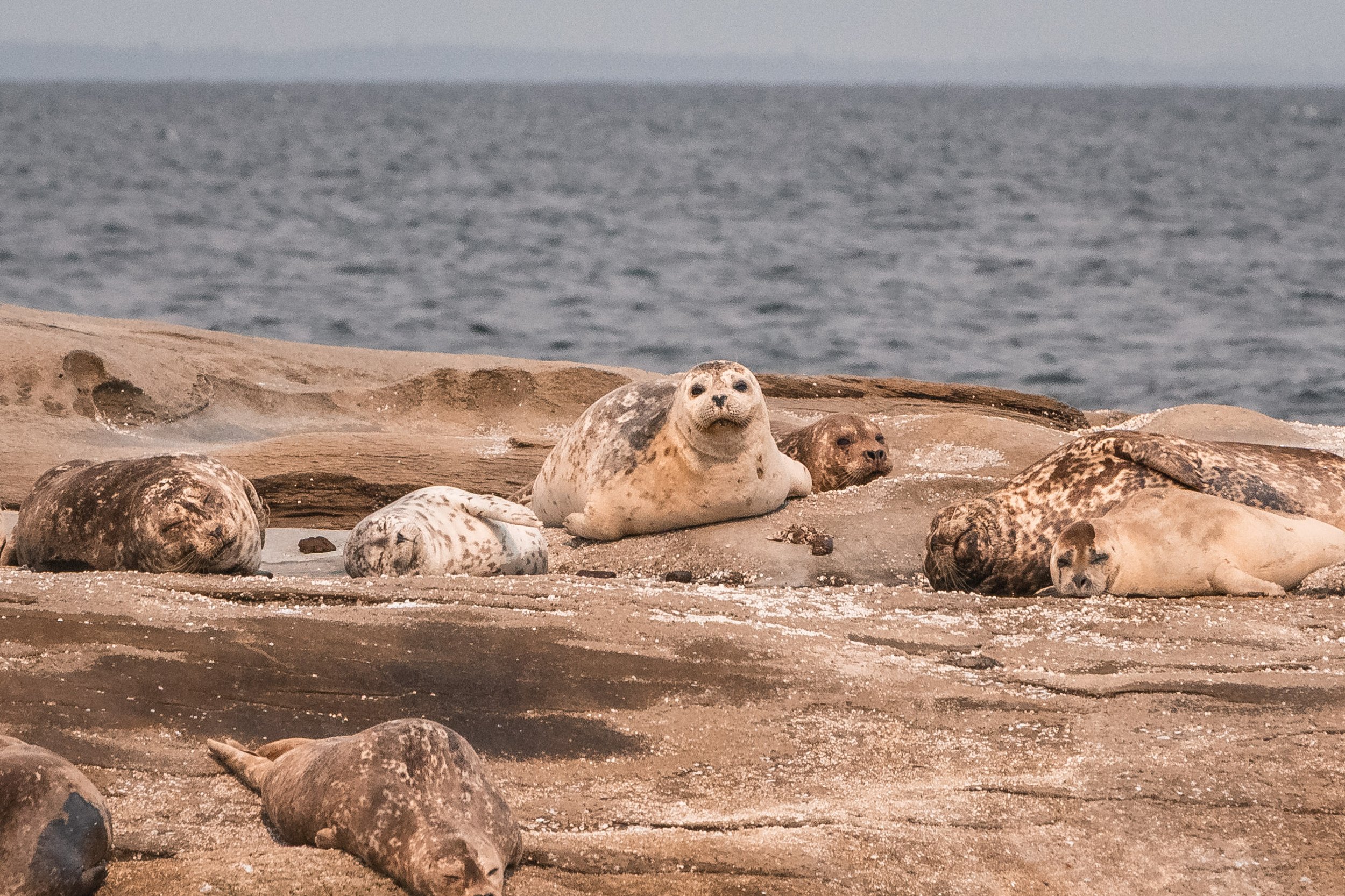
Happy Harbour Seal watching us. Photo by Jordan Robinson.
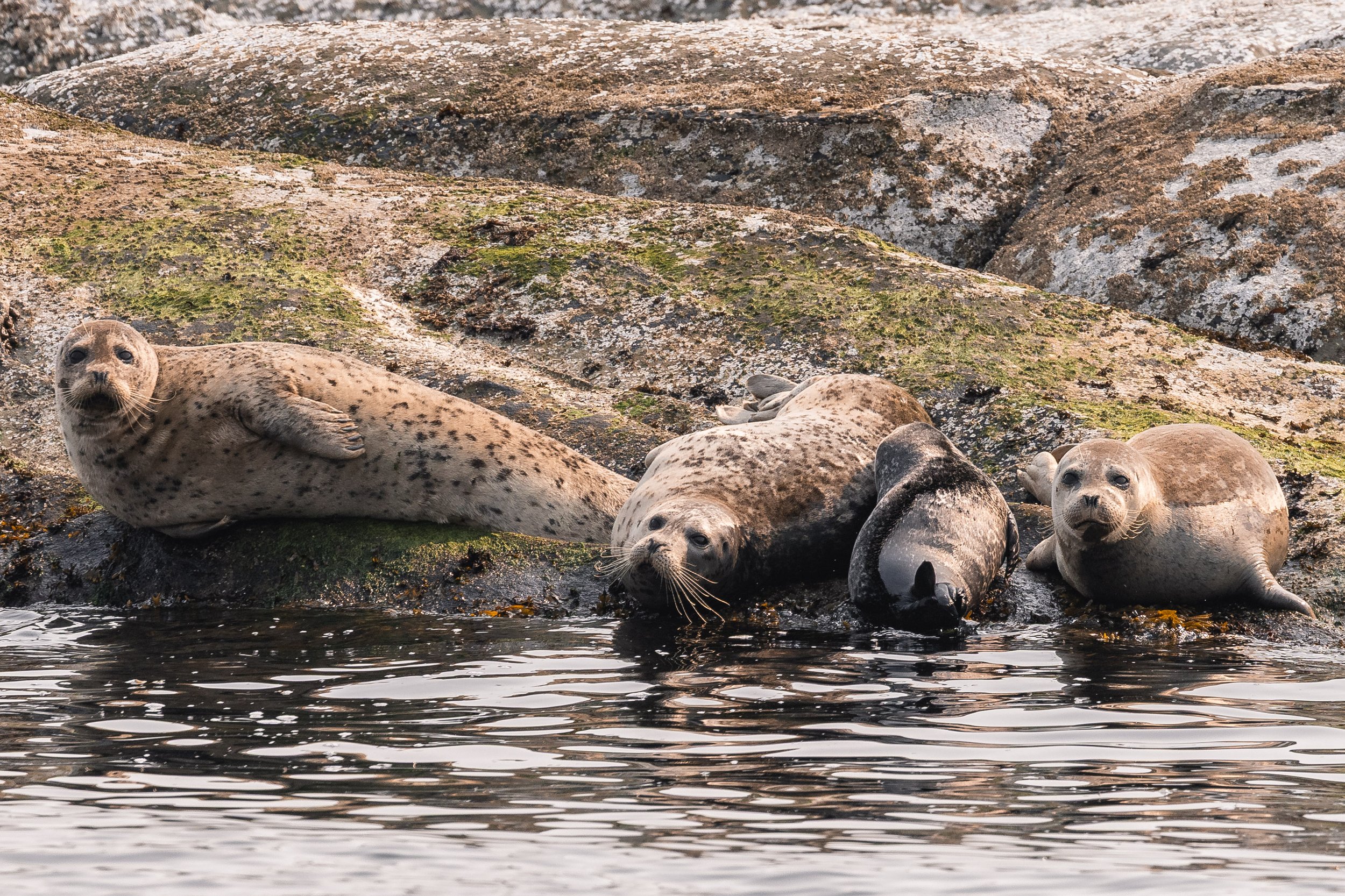
Harbour Seals relaxing on Stinky rock. Photo by Des Poier
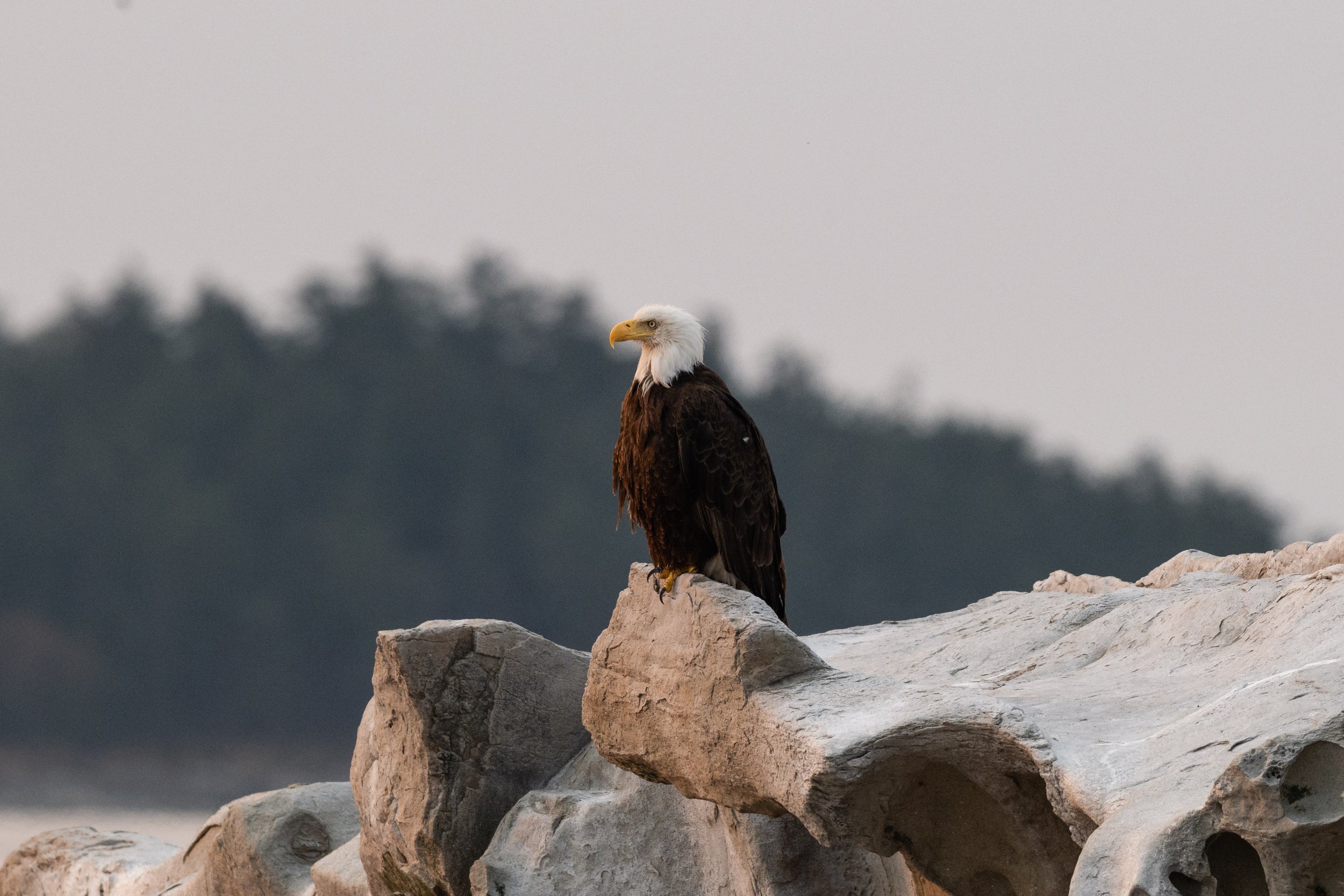
A bald eagle nesting on Stinky Rock. Photo by Aly Kohlman
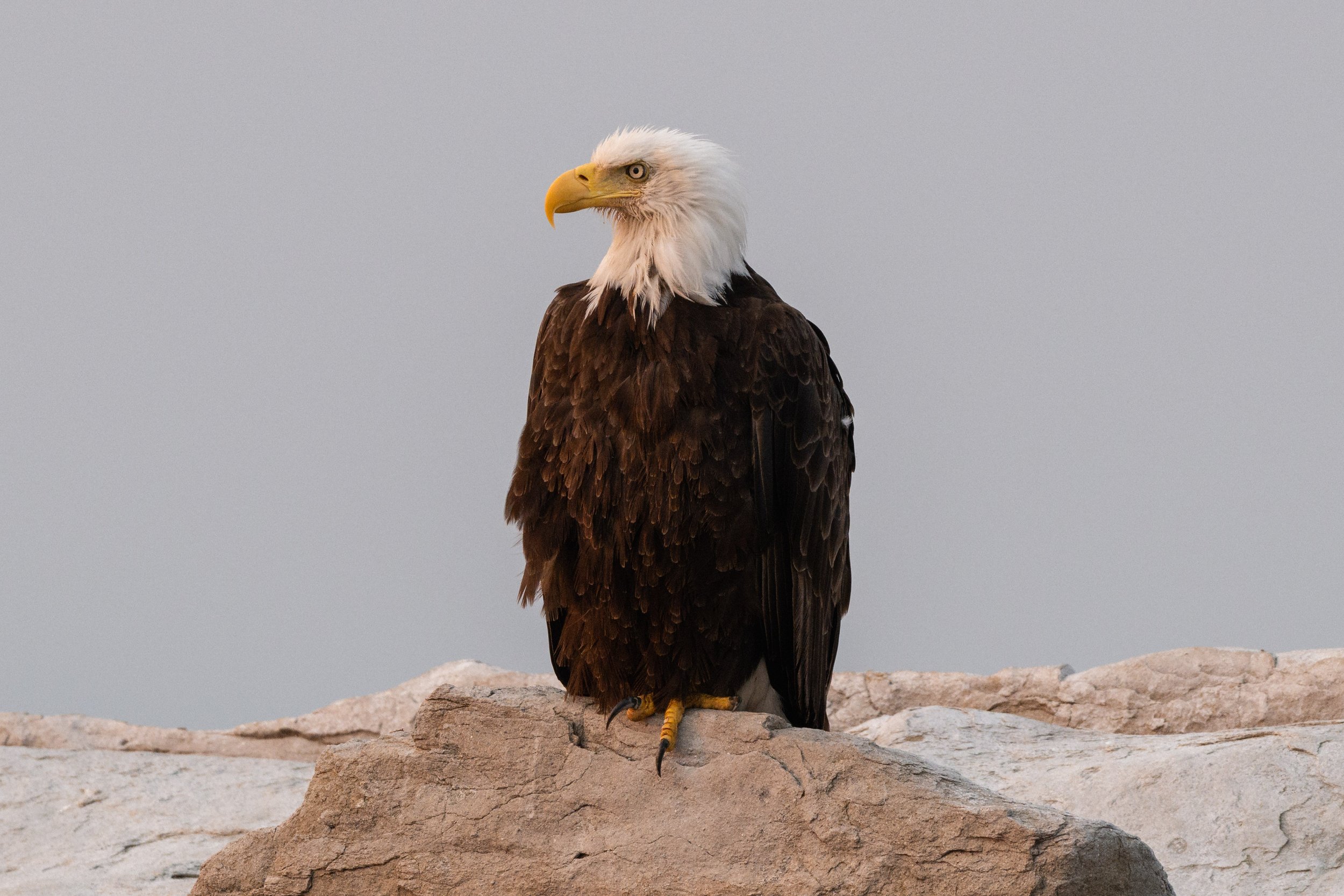
As you can see, Bald Eagles aren’t actually bald. The name actually originates from the old english word “balde” which means white. Photo by Aly Kohlman
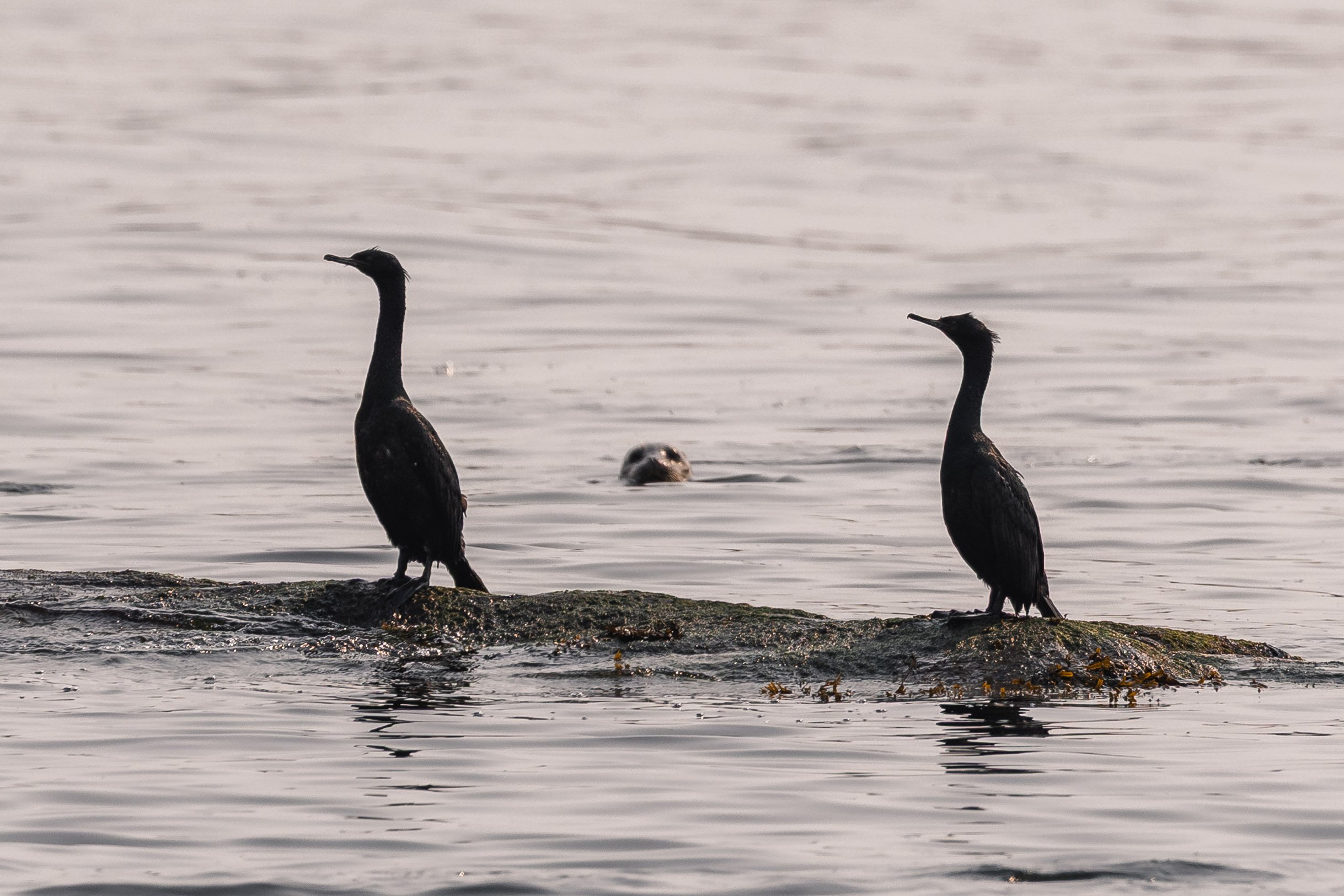
A Harbour Seal watching us between 2 cormorants. Photo by Des Poier
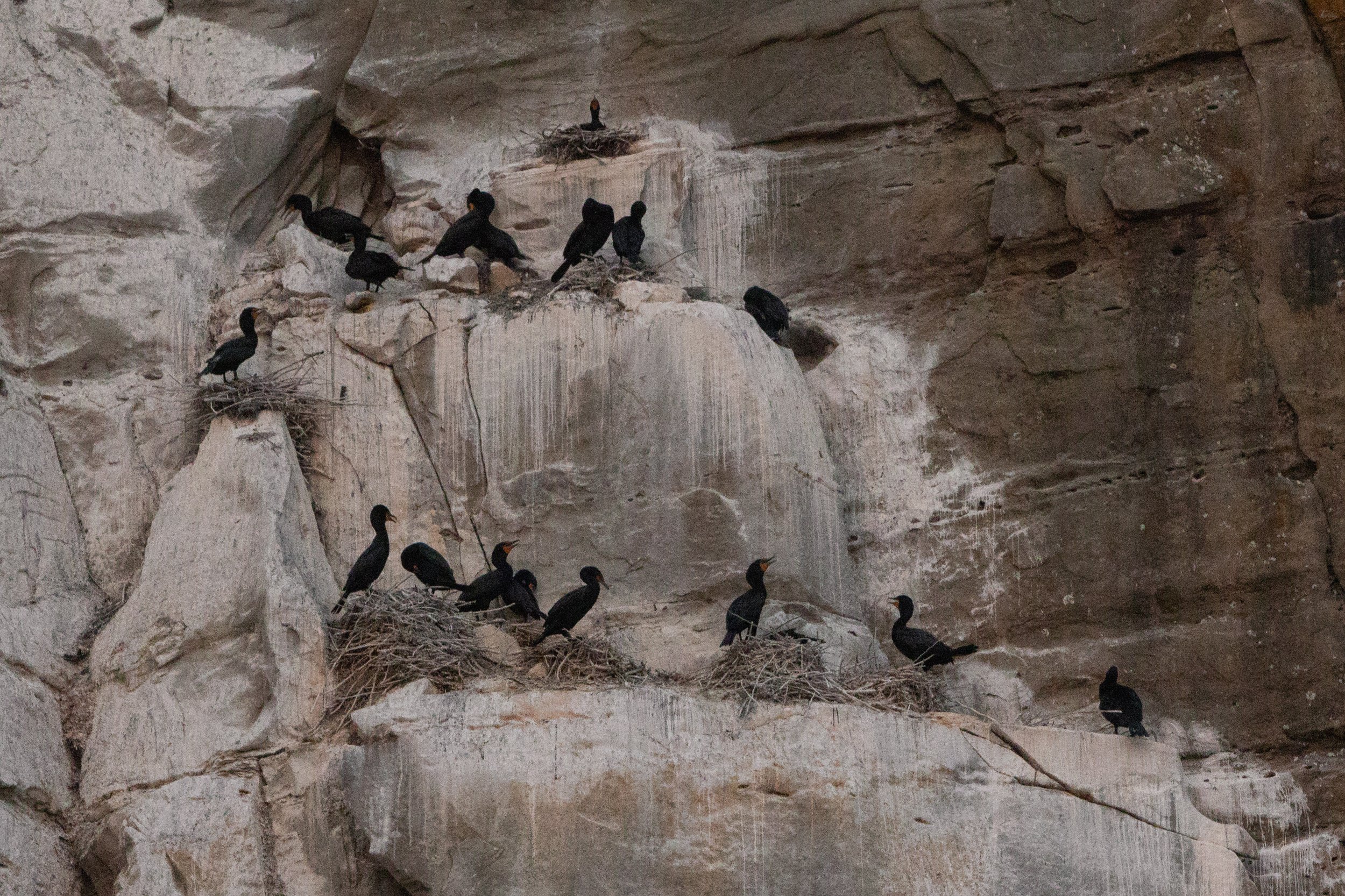
Cormorants in their nests at the Gabriola Bluffs. Photo by Jordan Robinson.
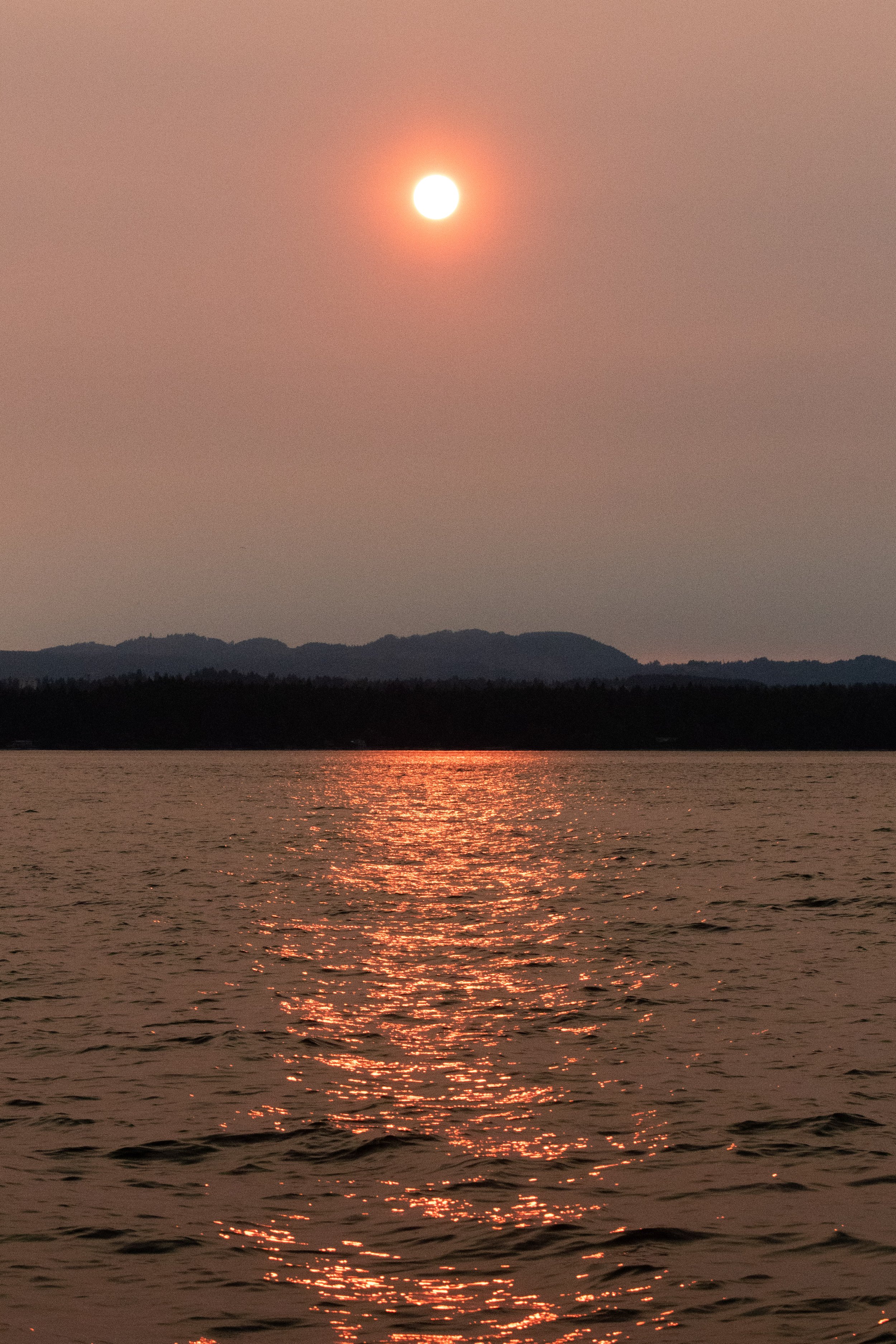
Smokey skies lead to very interesting lighting conditions in the evenings. Photo by Jordan Robinson.
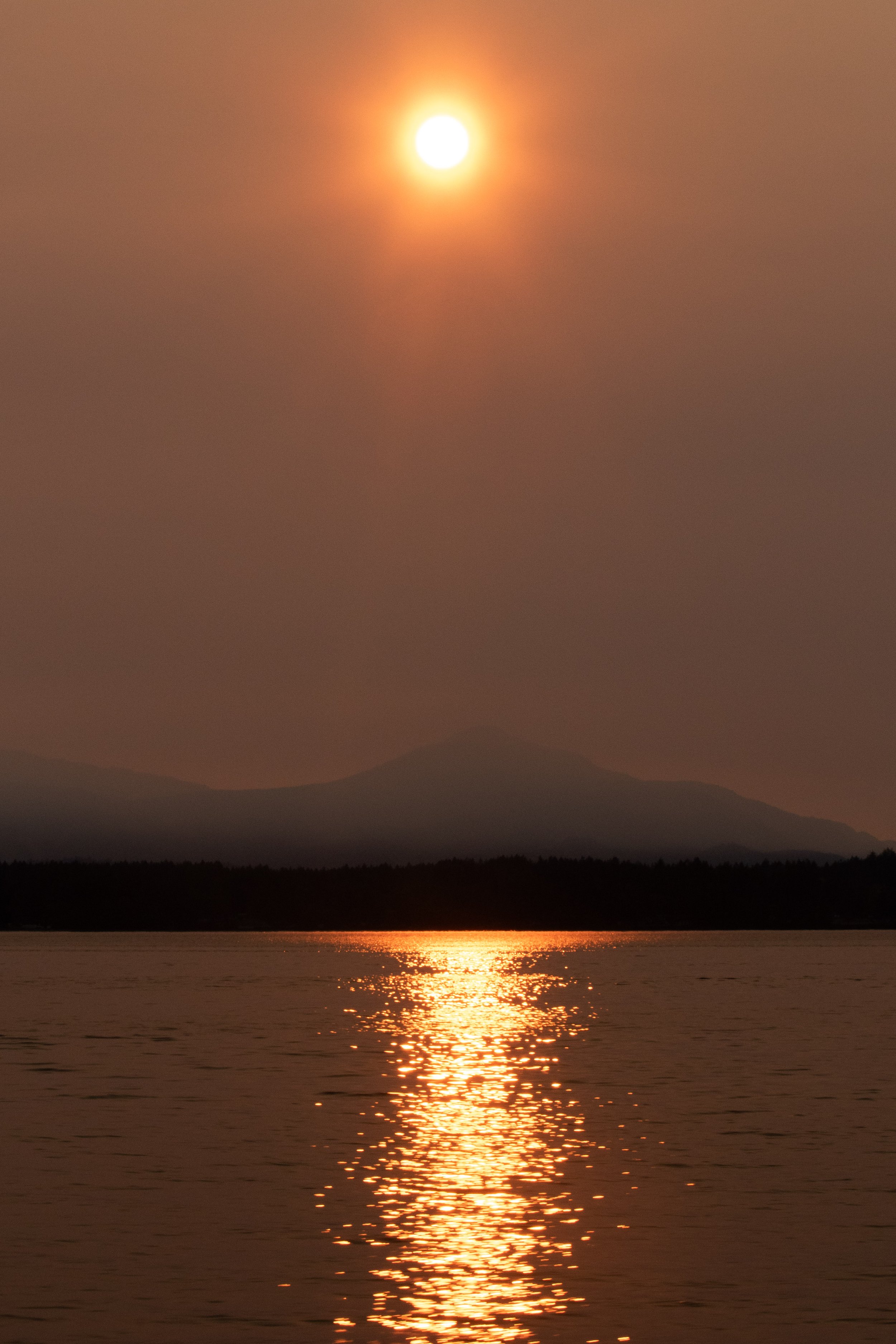
A stunning sunset. Photo by Jordan Robinson.
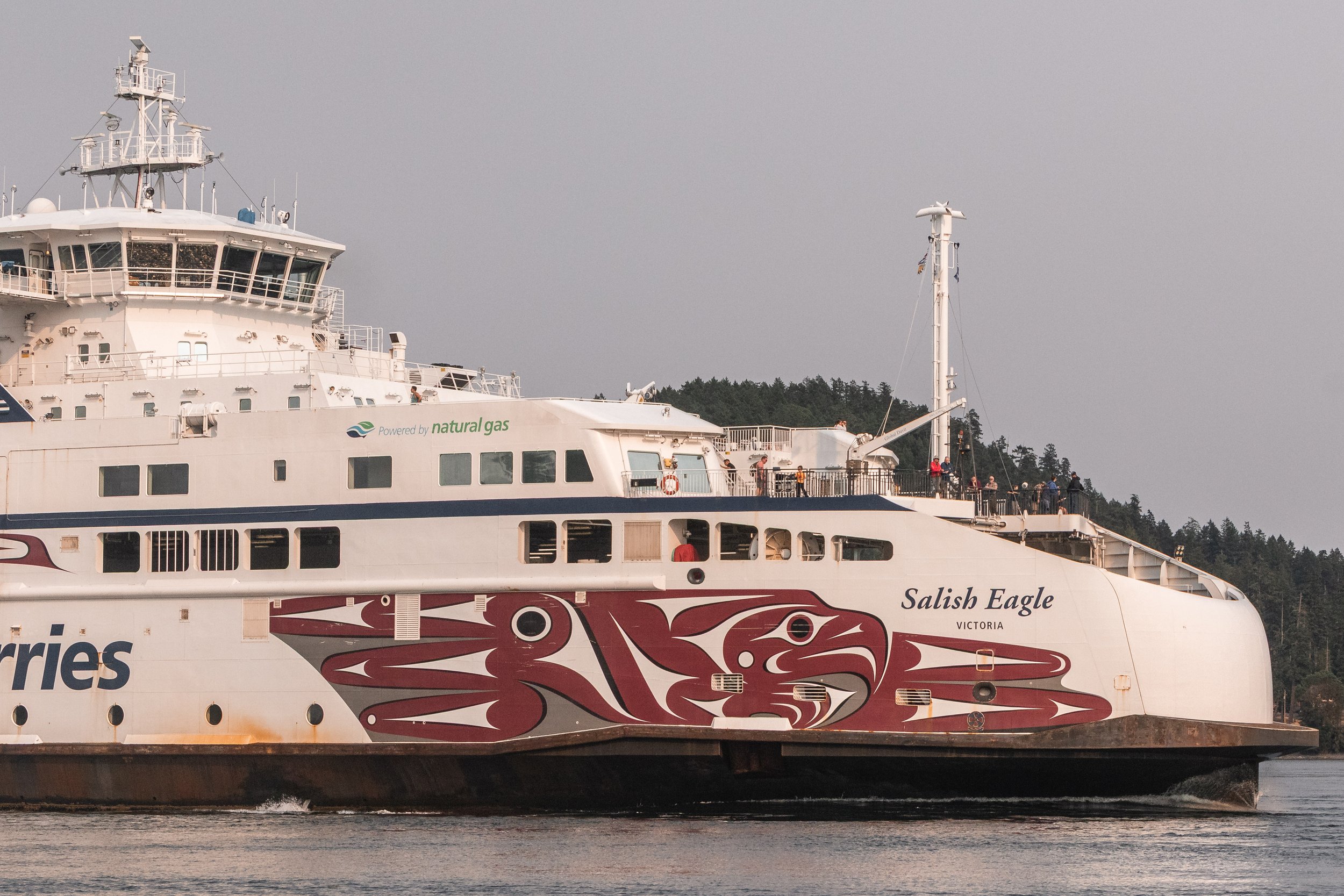
People on the ferry getting a peak at T030A Sequoia and T030C Salix. Photo by Jordan Robinson.
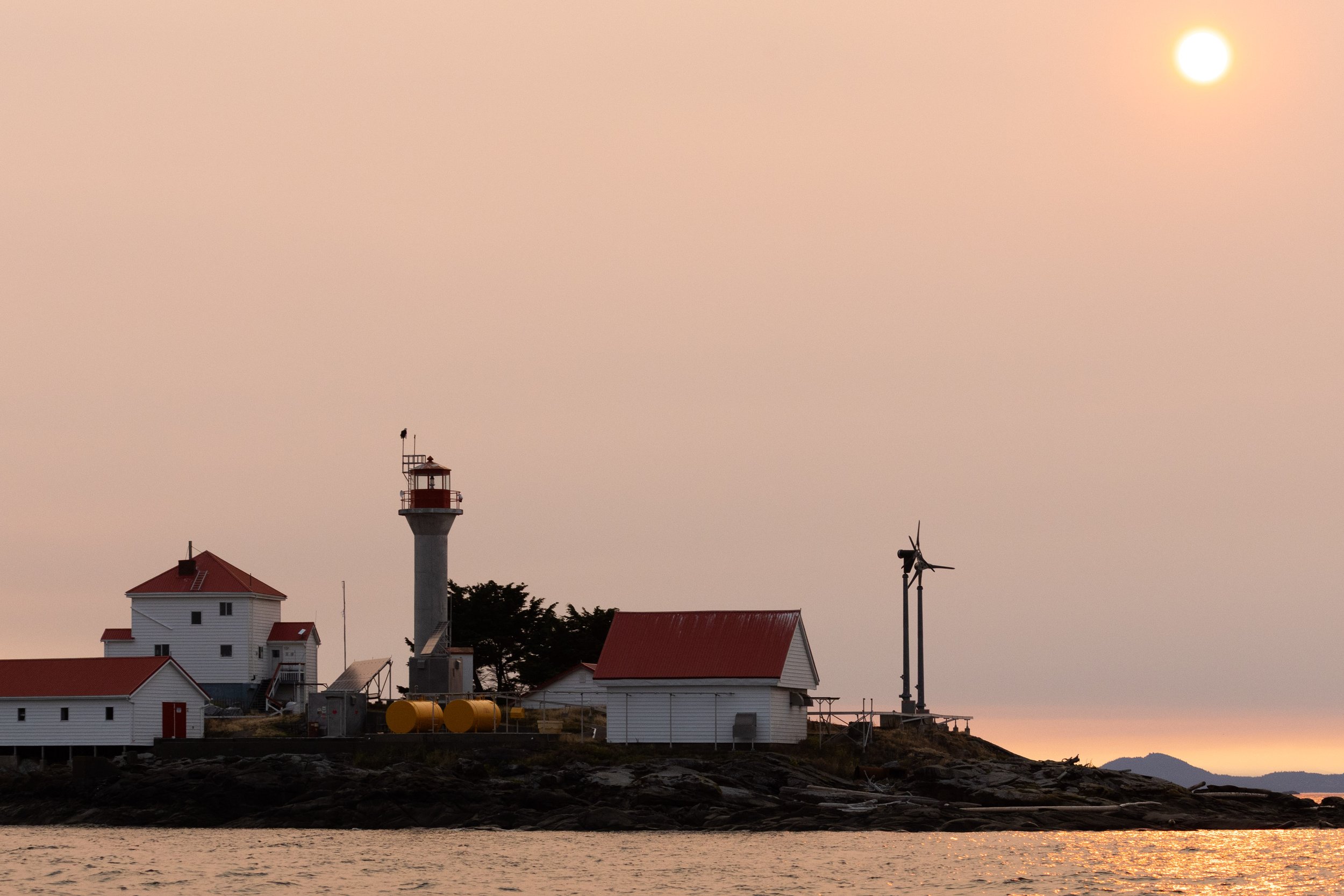
Entrance Island with the sun setting. Photo by Des Poier