
August 17, 2026, 10:30 AM - Humpbacks from all “walks” of life
All three of our boats once again heading out onto the water, and once again we were treated to excellent conditions! Calm seas and good visibility gave our fleet the opportunity to spread out across the Salish Sea, increasing our coverage and giving us a better chance of finding wildlife. This strategy paid off quickly, with Keta and Cascadia ending up together with one group of humpback whales, while Kula continued onward and soon found a pair of humpbacks of their own.
The group encountered by Keta and Cascadia consisted of three humpback whales: an adult, a calf, and a juvenile. The calf was certainly the most energetic member of the group, spending plenty of time at the surface and doing a wonderful collection of behaviours. We observed as the little one breached and slapped its pectoral fins against the surface, spending more time out of the water than in it!
Nearby, the juvenile whale was behaving a bit differently. At one point, they were seen travelling on their side, briefly revealing about half of the underside of their enormous fluke. Humpback whales can be surprisingly acrobatic animals, and while we often associate their flukes with deep dives, they can use their bodies in a remarkable variety of ways while travelling, feeding, resting, and socializing.
The adult whale eventually lifted their tail above the surface for a beautiful fluke photograph while the other two continued travelling nearby. With a few good photographs in hand, the Naturalists were able to identify the trio as Tempest (BCX0837), Tempest’s 2026 calf (BCX0837 calf 2026), and Bagheera (BCY1471)!
At only five years old, Bagheera is still a fairly young humpback. While lifespan speculations for the species are a bit skewed from previous whaling activity, it is believed they could live for many decades. Meaning five years represents only a small portion of a whale's potential lifespan. Bagheera appeared particularly interested in being in the company of another young whale today, and the association between the two younger animals was fascinating to see.
Humpback whales do not live in permanent family groups in the same way that many toothed whales do. Their social relationships are generally much more fluid, with individuals coming together and separating again depending on circumstances. We still have much to learn about exactly why particular whales choose to associate with one another. Sometimes these gatherings appear to be related to feeding, while other encounters may involve play, social interaction, courtship, or competition.
Tempest herself is a particularly well-known whale in our local area. Her first confirmed calf sighting dates back to 2007, and she has since raised calves in 2019, 2021, and 2024. The little whale travelling alongside her today represents her fifth confirmed calf.
There is also a more recent chapter to this calf's story that makes today's encounter especially meaningful. This young calf was very recently disentangled after becoming caught in fishing gear. Seeing this tiny whale back in open water, energetic and active alongside their mother, was a wonderful reminder of both the resilience of these animals and the importance of responding quickly when entanglements are spotted.
While Keta and Cascadia were enjoying their time with Tempest and company, Kula was working on identifying their pair of humpbacks. This particular interaction was a bit different from usual. One whale appeared considerably more assertive than the other, chasing the second whale around the area.
Humpback social behaviour can be difficult to interpret from the surface. We can observe what the whales are doing, but we cannot know exactly what is happening in their minds. After collecting several photographs of their flukes, Naturalist Des confirmed that Fader (BCY0195) was the whale doing the chasing, with Zephyr (BCZ0414) on the receiving end of the attention.
Was Fader attempting to establish some sort of dominance? Was this a playful interaction? Was courtship involved? We simply cannot say for certain. Humpback social structures remain one of the many fascinating areas of whale biology that researchers are still working to understand.
What we do know is that humpbacks are capable of forming temporary associations that can change very quickly. Two whales might spend hours together before separating, while other associations can last much longer. Their behaviour can also look quite dramatic from our perspective, particularly when one whale is repeatedly pursuing another. Without understanding the context of the interaction, however, it is best not to assign a human interpretation to what we see.
After spending some time with these groups, the boats eventually moved on in search of other wildlife. As is often the case when searching the Salish Sea, we did not have to travel far before the next encounters occurred. Keta found another trio of humpbacks, while Kula located a lone whale. Cascadia travelled a little farther before making their way over to join Keta once again.
Kula's solo whale was a particularly familiar individual. When the whale lifted their enormous tail high into the sky, the pattern on the underside of the fluke provided the identifying details our naturalists needed. It was Beak (BCX1606).
Beak is the 2014 calf of Big Momma (BCY0324), one of the arguably most famous humpback whales in our area. To understand why whales like Beak and Big Momma are so important to us, it helps to look back at the history of humpbacks in these waters.
Today, seeing humpback whales throughout the Salish Sea can feel almost ordinary during the summer months. We can encounter them around the Southern Gulf Islands, across the Strait of Georgia, and in many of the same productive feeding areas that have become familiar to generations of local whales. But it was not always this way.
During the commercial whaling era, humpback whales were hunted heavily throughout their range. Here in British Columbia, the species was nearly extirpated from many areas. By the late 1990s, sightings of humpbacks in our local waters were still incredibly rare.
A handful of whales began appearing with some regularity, including Big Momma, Kappa, and Houdini. These early returning whales would spend their summers feeding in local waters before departing on their seasonal migrations. Then something extraordinary happened - they came back the following year, and some returned with calves beside them! Those returning mothers and their young represented the beginning of what we now humbly refer to as the “Humpback Comeback”.
Humpback numbers have increased dramatically since those early days, and the population has now become a familiar and important part of the Salish Sea ecosystem.
Back with the Zodiac, Keta's duo provided another interesting encounter. We photographed both whales, but their association did not last long. Before long, one of the whales decided to continue on their way, leaving Chi behind.
The departing whale was Nike (BCX1377), while Chi (BCZ0575) remained in the area. Being left behind did not seem to bother Chi at all, though. In fact, Chi soon turned toward Keta and began approaching the vessel.
This behaviour is known as mugging, when a whale voluntarily approaches and spends time around a vessel.
It is important to remember that whales are wild animals, and a whale approaching a boat is not something that should be encouraged. Whales can weigh tens of thousands of kilograms and can move incredibly quickly. A sudden change in direction, a tail movement, or even a curious approach can put both the whale and the vessel and passengers in a potentially dangerous situation.
During this encounter, we remained stationary in the water, waiting for Chi to move further away. Once it was safe to do so, we began slowly departing, and soon Chi was back to travelling along, fluking as he went.
Of course, the Salish Sea has plenty of wildlife beyond the whales. As we continued through the area, we also made a stop around Stinky Rocks, where we found Harbour Seals and Steller Sea Lions resting among the rocks. We also spotted more Steller Sea Lions hauled out on the UM buoy, a marker found on the outskirts of the Flattop Islands.
Hauling out is an important behaviour for pinnipeds such as seals and sea lions. Time spent out of the water allows them to rest, regulate their body temperature, interact socially, and simply take a break from swimming.
And then there was one more surprise waiting around Stinky Rocks - a River Otter scuttled across the top of the rocks. Although River Otters are often associated with freshwater streams, lakes, and rivers, they are perfectly capable of spending considerable time in marine environments. In coastal British Columbia, River Otters can be found along shorelines, estuaries, tidal flats, and islands. They are excellent swimmers and are well equipped to move between freshwater and saltwater habitats. They are opportunistic predators and can hunt a variety of prey, including fish, crustaceans, amphibians, and other small aquatic animals. The boundary between freshwater and marine ecosystems is much less rigid for wildlife than it can seem to us. A River Otter may move between a coastal stream and the ocean depending on where food is available. Estuaries and shorelines can be particularly productive places because they bring together resources from both terrestrial and aquatic environments.
After a day filled with all sorts of wildlife sightings, it was time for the boats to turn back toward Nanaimo. We returned to the harbour with plenty of photographs and even more stories from another day spent exploring the waters!
Please enjoy these photos by Marine Naturalists Desarae Poier, Hayleigh Hilbert, and Jordan Robinson.
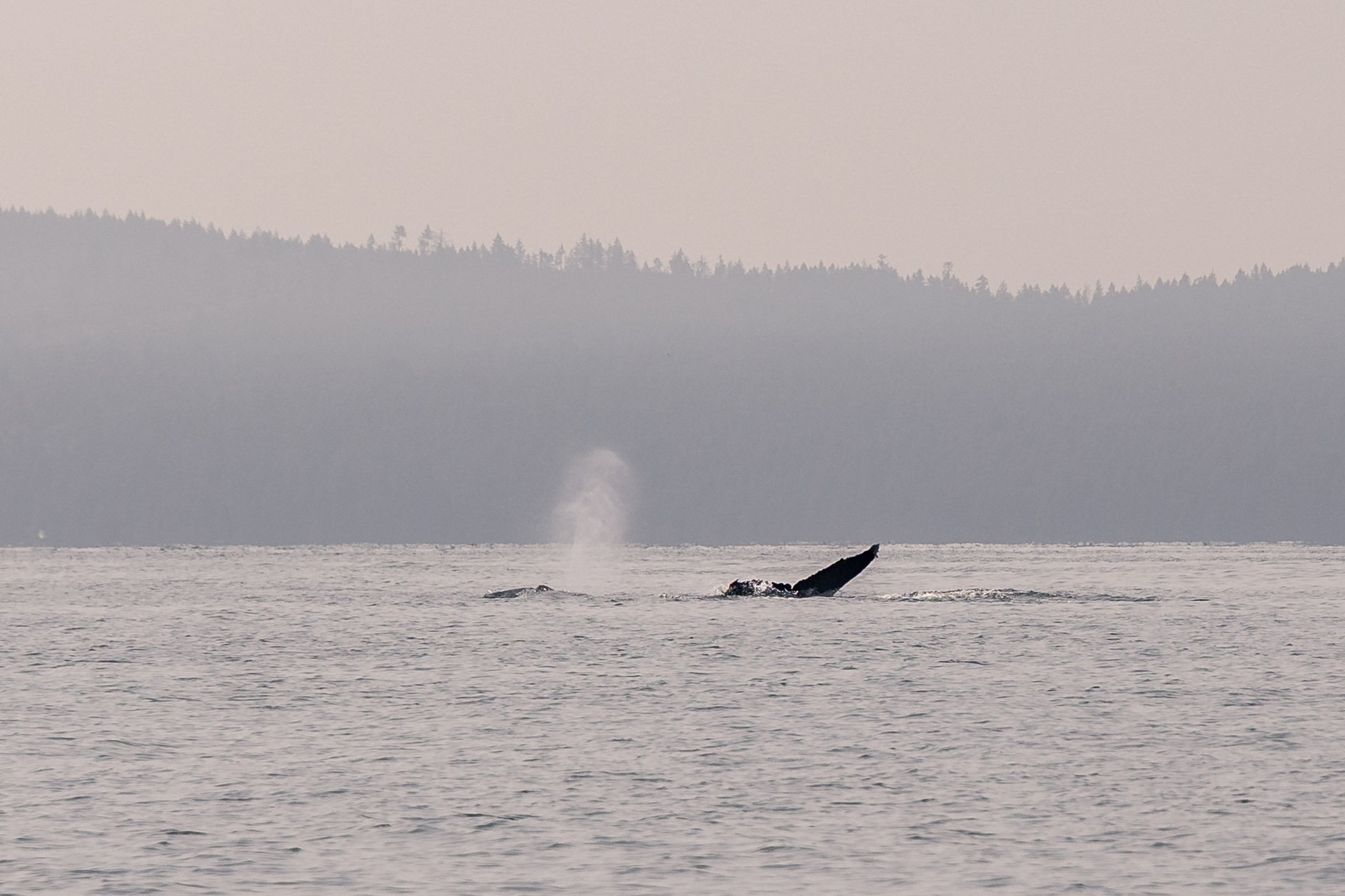
Tempest and her calf. Photo by Jordan Robinson.
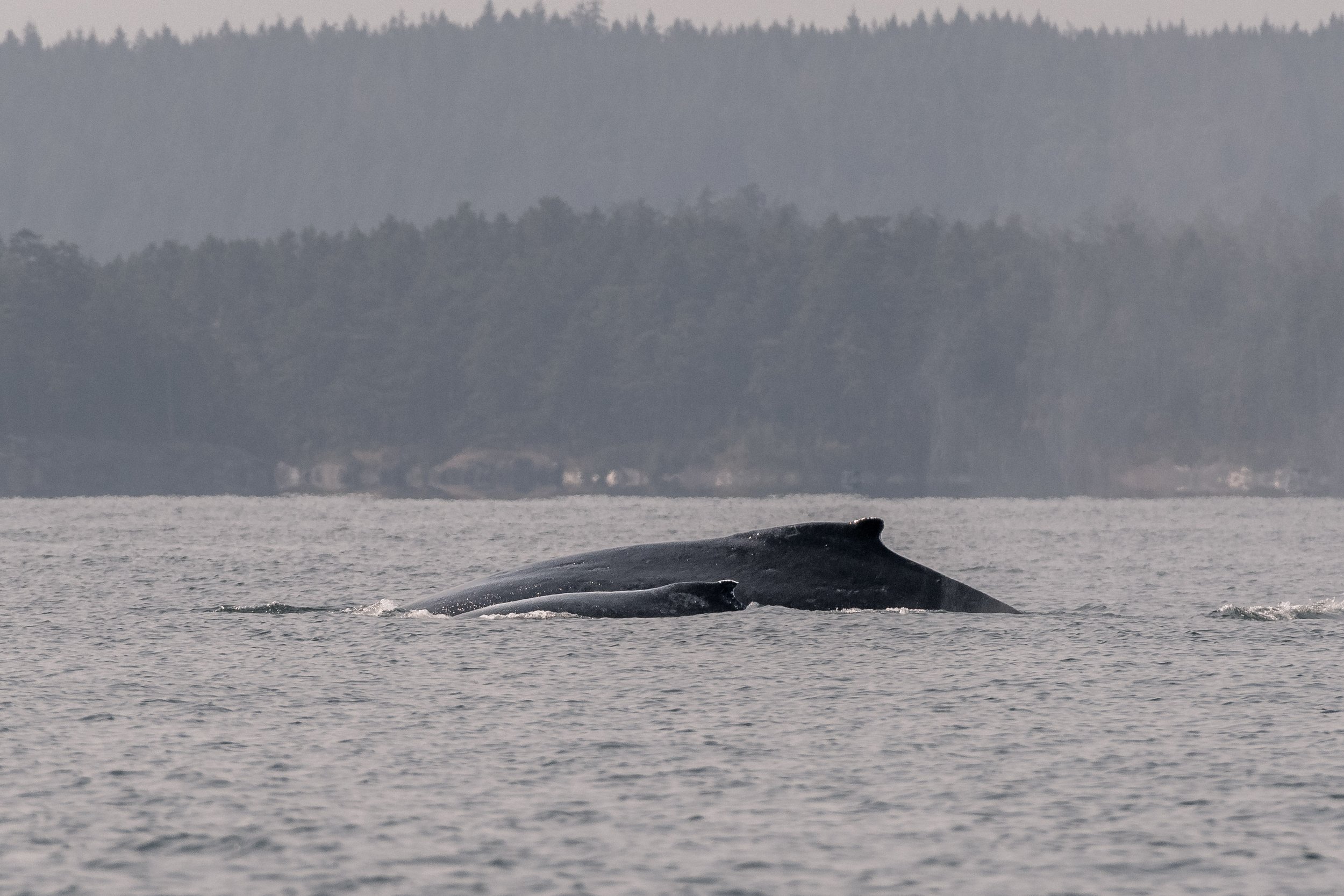
A tiny calf tucked beside their mother, Tempest. Photo by Hayleigh Hilbert.
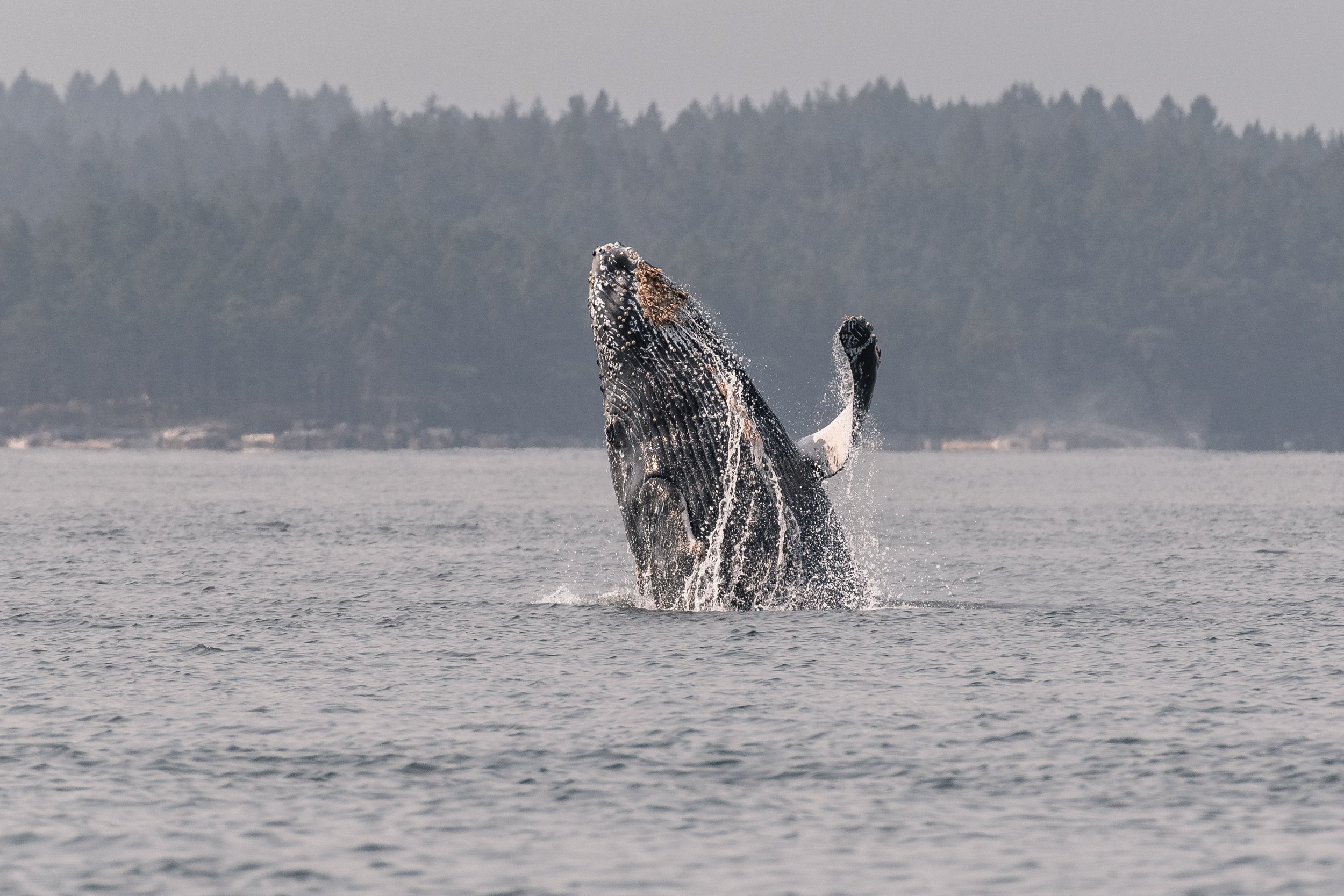
The calf breaching, with a pectoral fin out of the water. Photo by Hayleigh Hilbert.
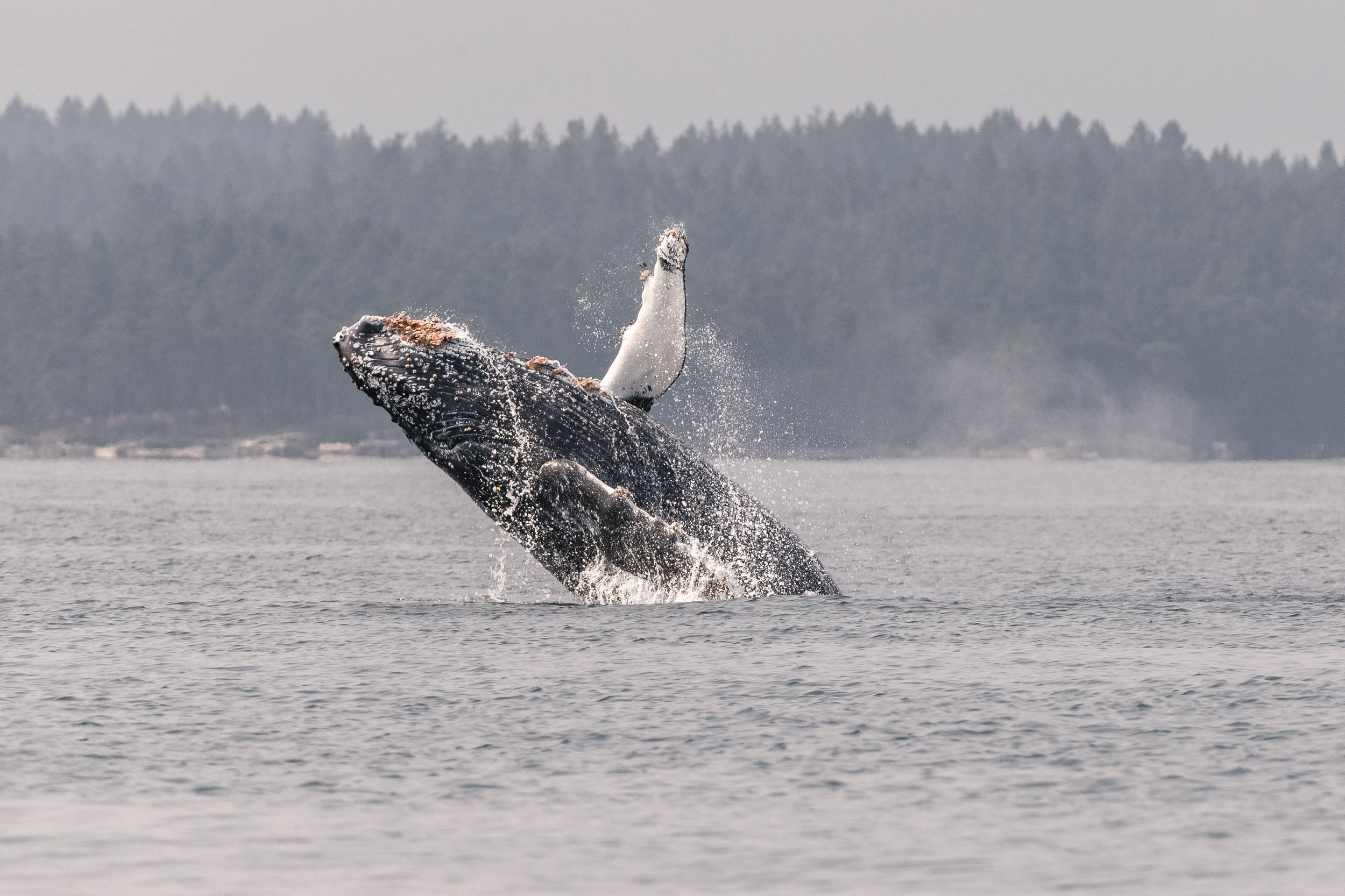
This little one is very barancle encrusted, and also is sporting some pretty intense scarring from what was likely an orca attack. Photo by Hayleigh Hilbert.
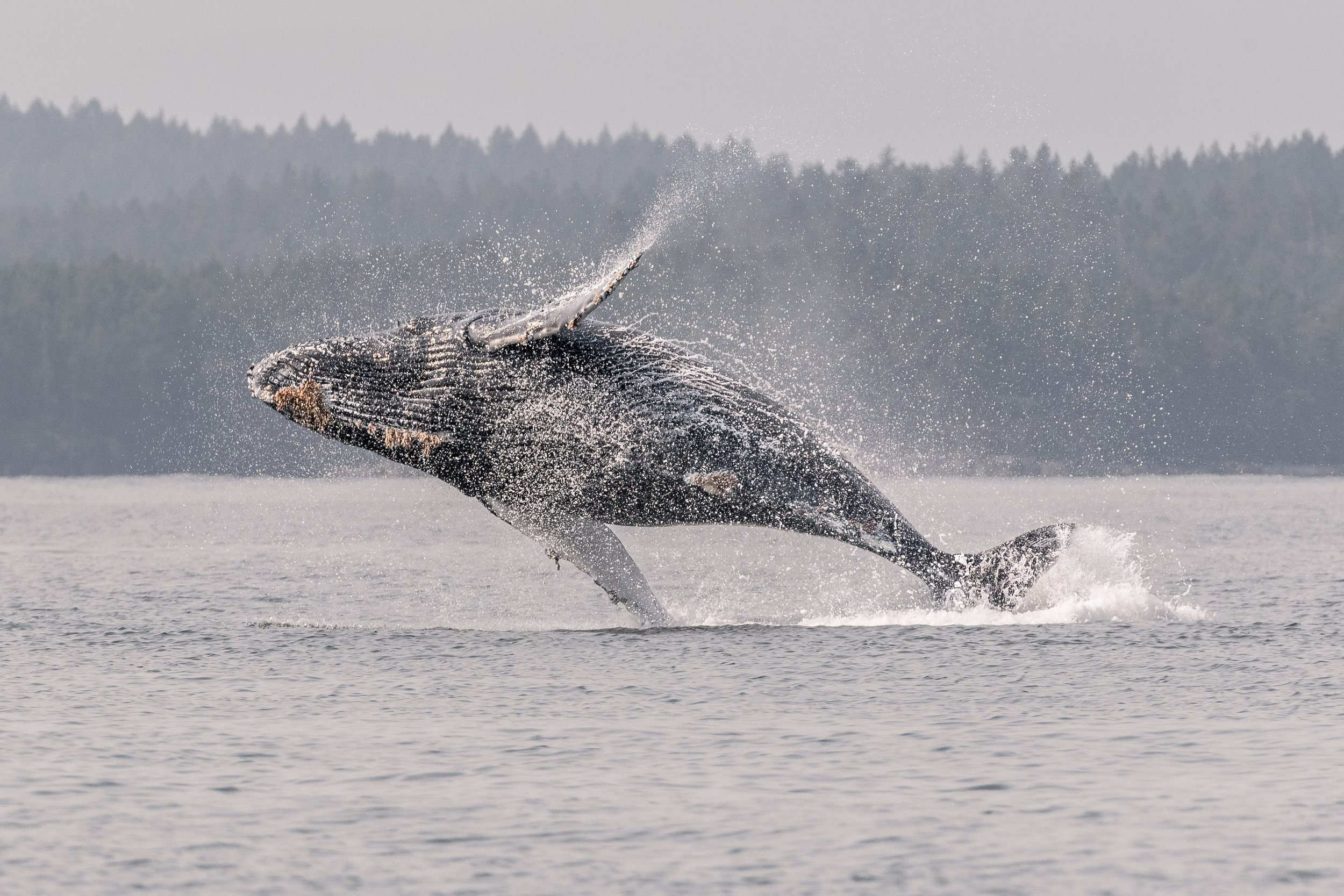
An interesting angle as the calf comes back into the water. Photo by Hayleigh Hilbert.
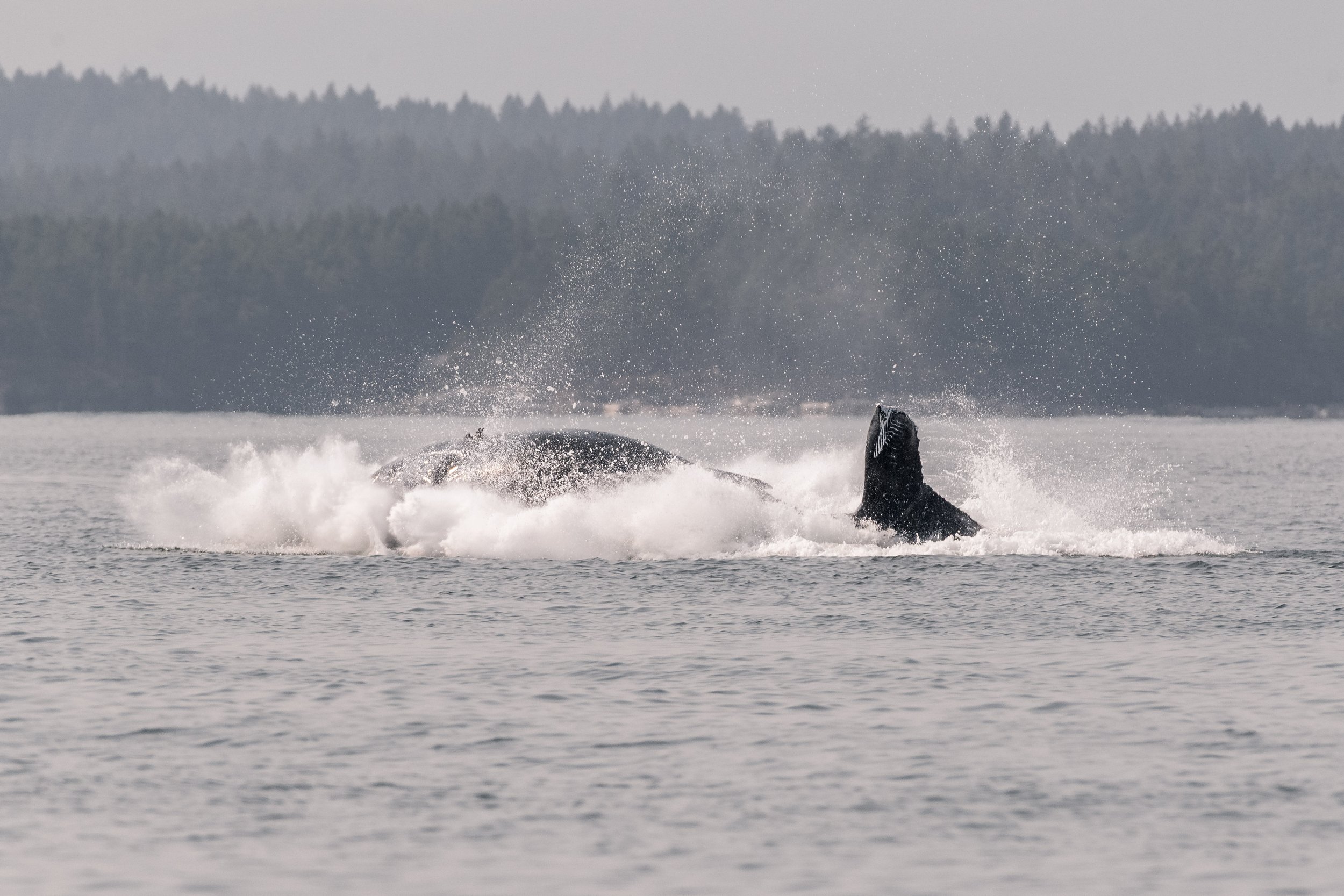
The corner of Tempest’s calf’s fluke visible as they come in for a landing - look at those rake marks! Photo by Hayleigh Hilbert.
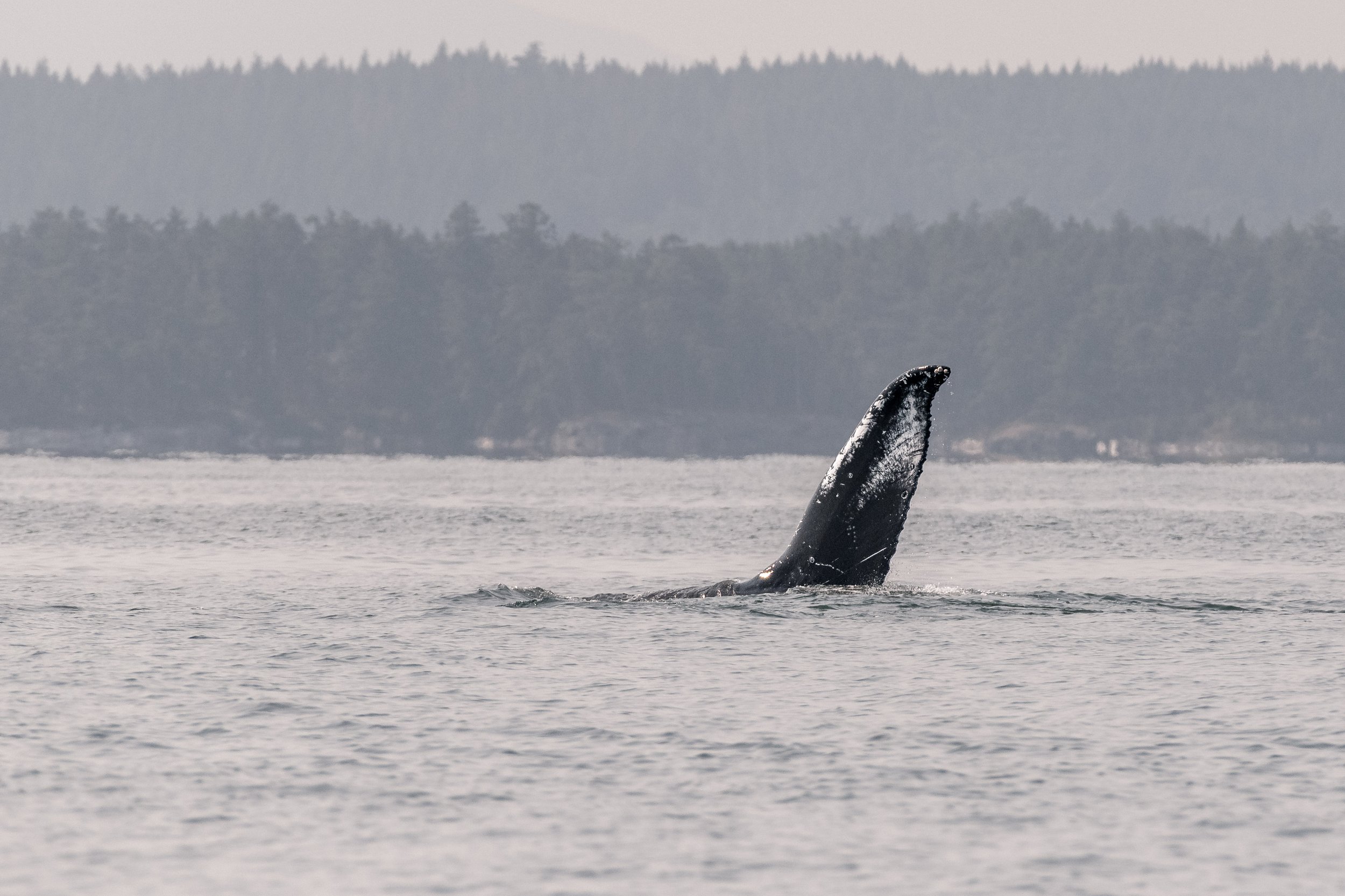
Bagheera travelling on their side. Photo by Hayleigh Hilbert.
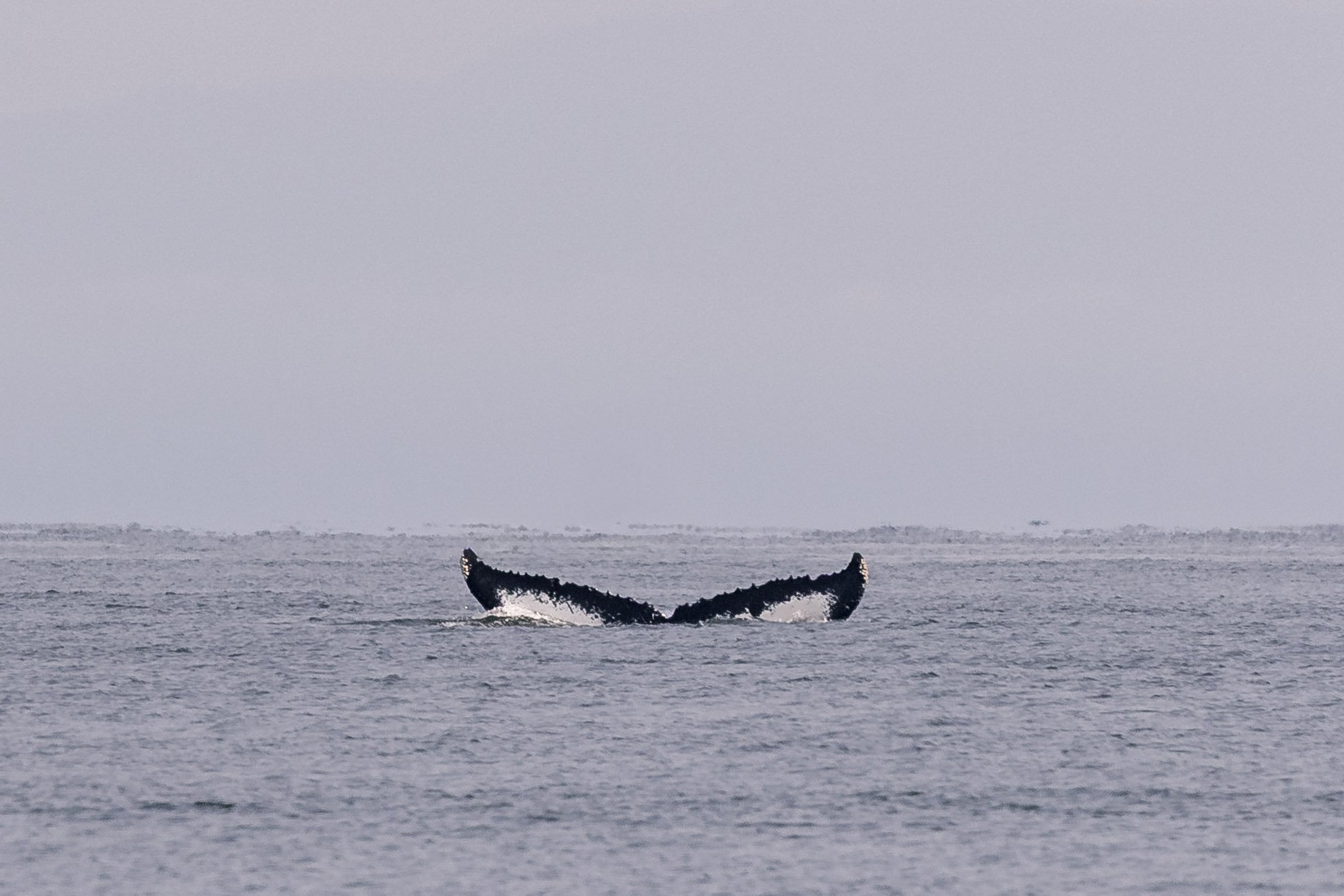
The tip of Zephyr’s fluke. Photo by Des Poier.
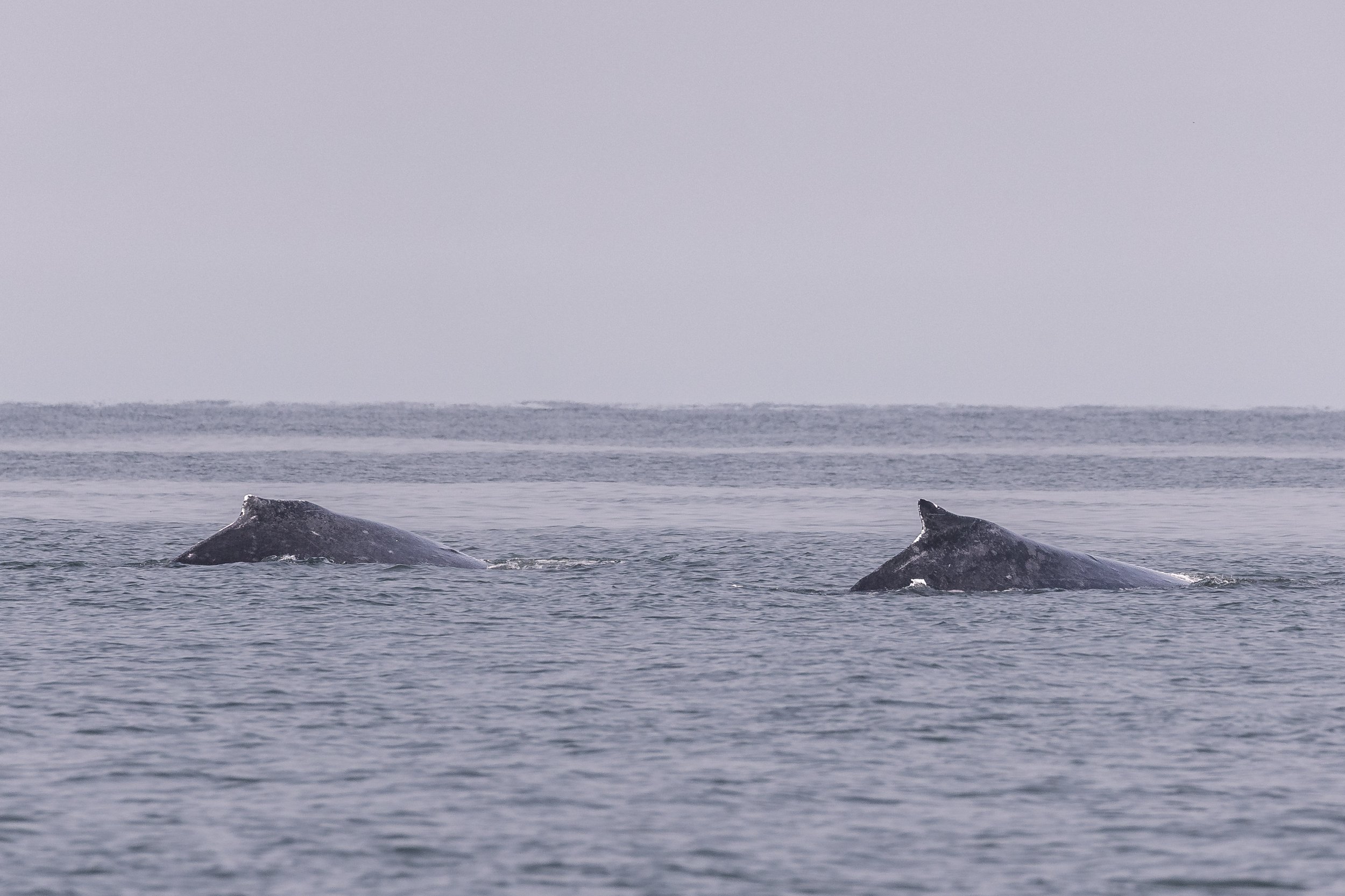
Fader and Zephyr side by side. Photo by Des Poier.
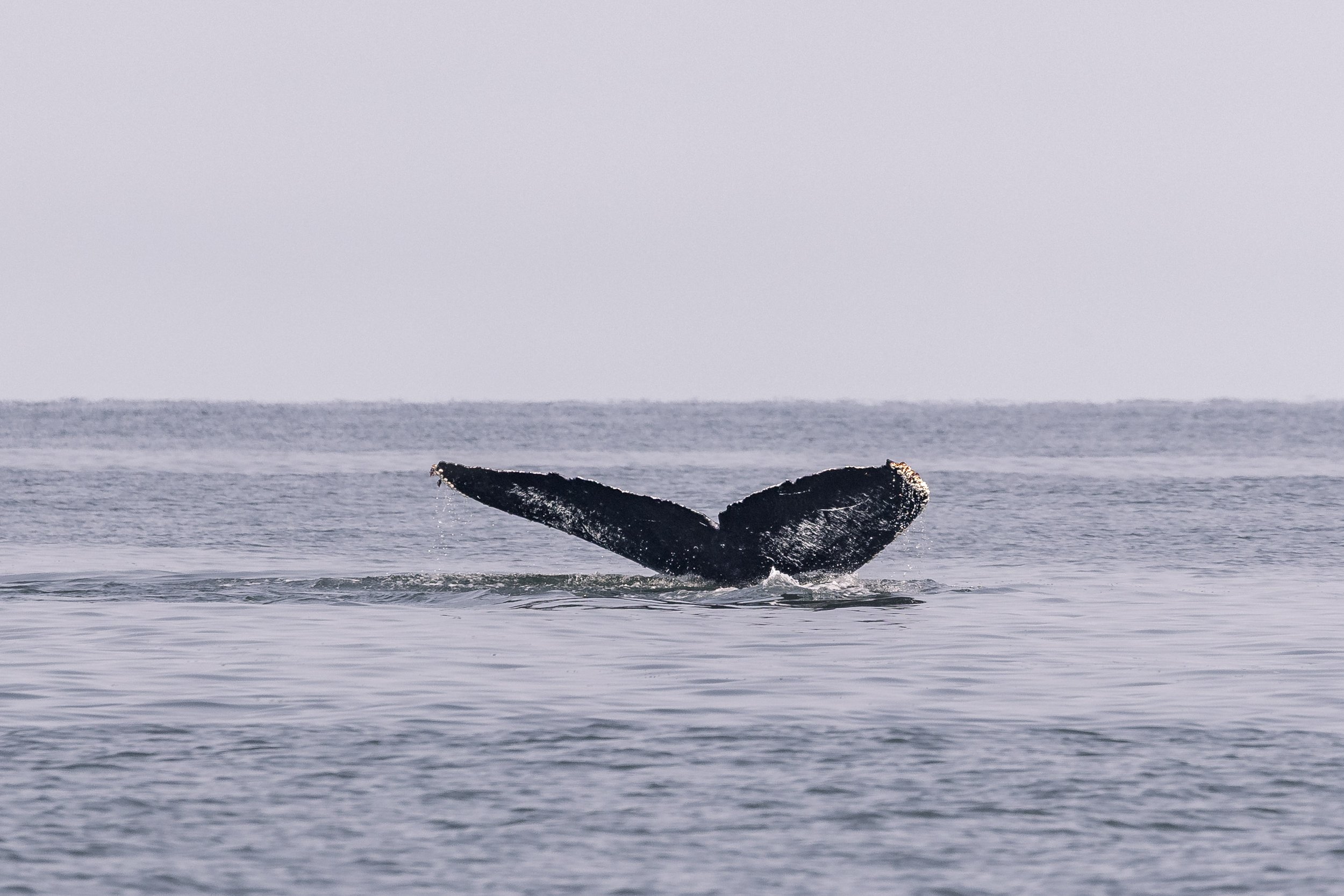
Fader fluking. Photo by Des Poier.
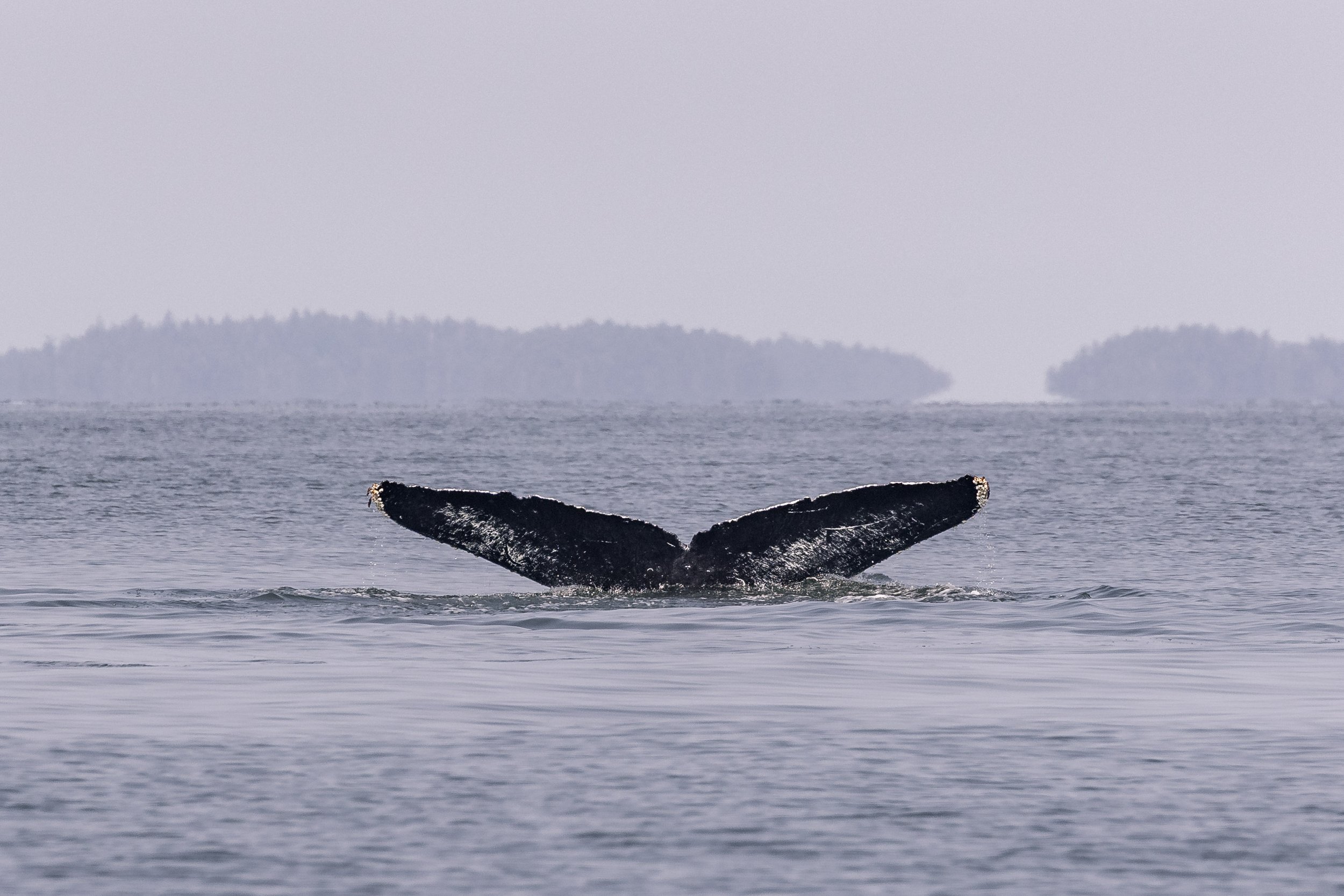
A great view of Fader’s complete fluke pattern. Photo by Des Poier.
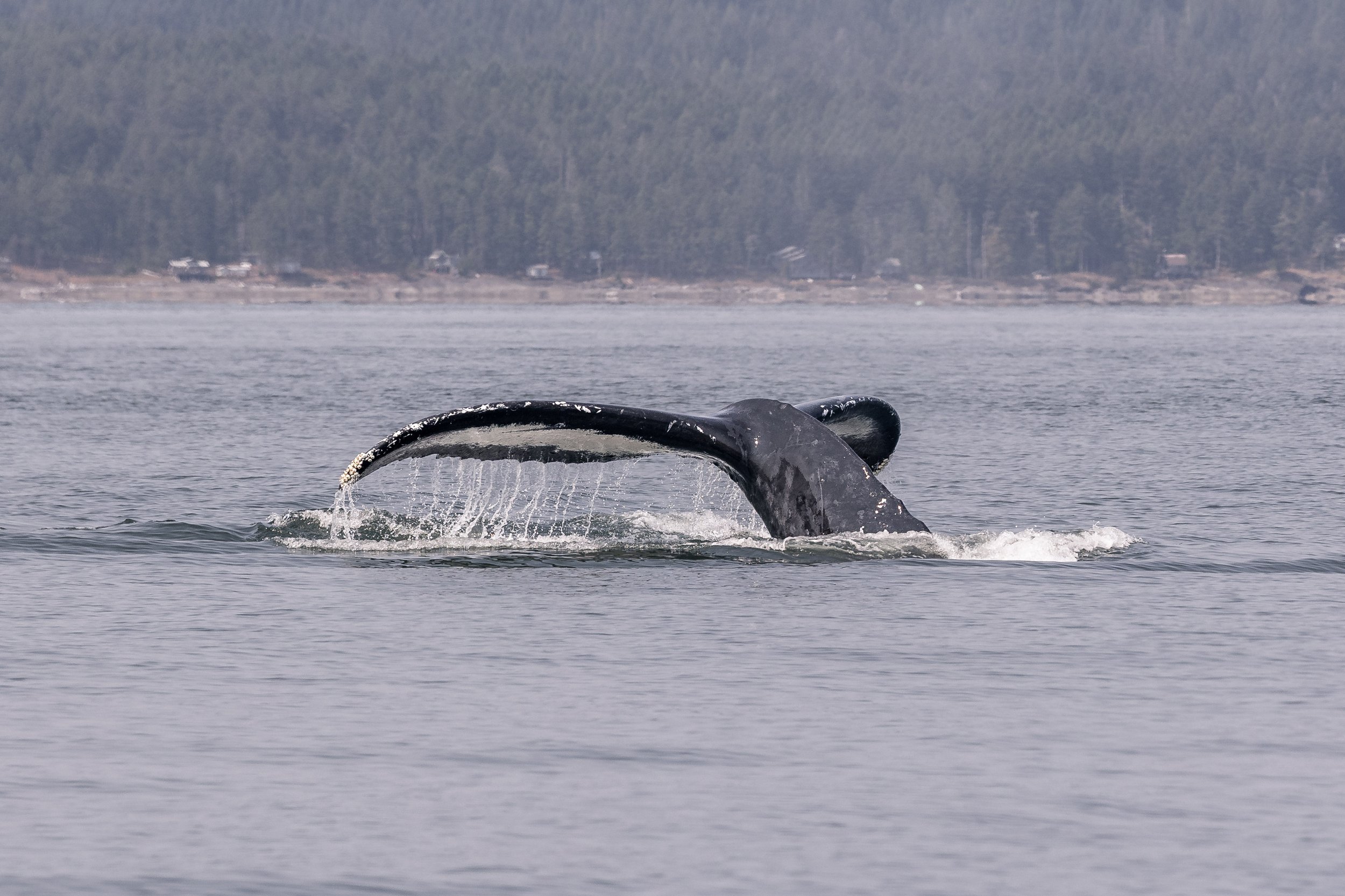
A fluke waterfall pouring off of Zephyr’s flukes. Photo by Des Poier.
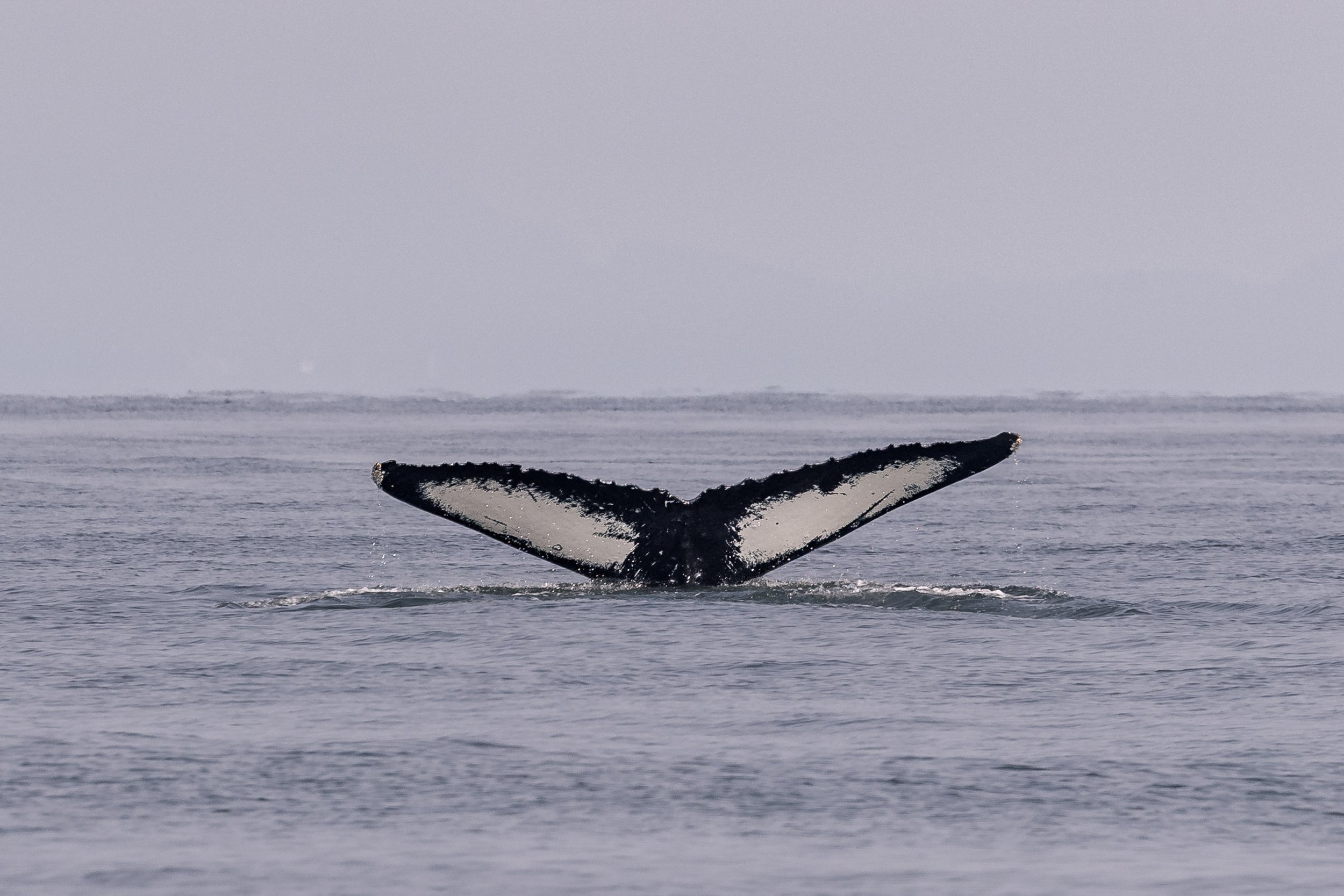
Zephyr fluking. Photo by Des Poier.
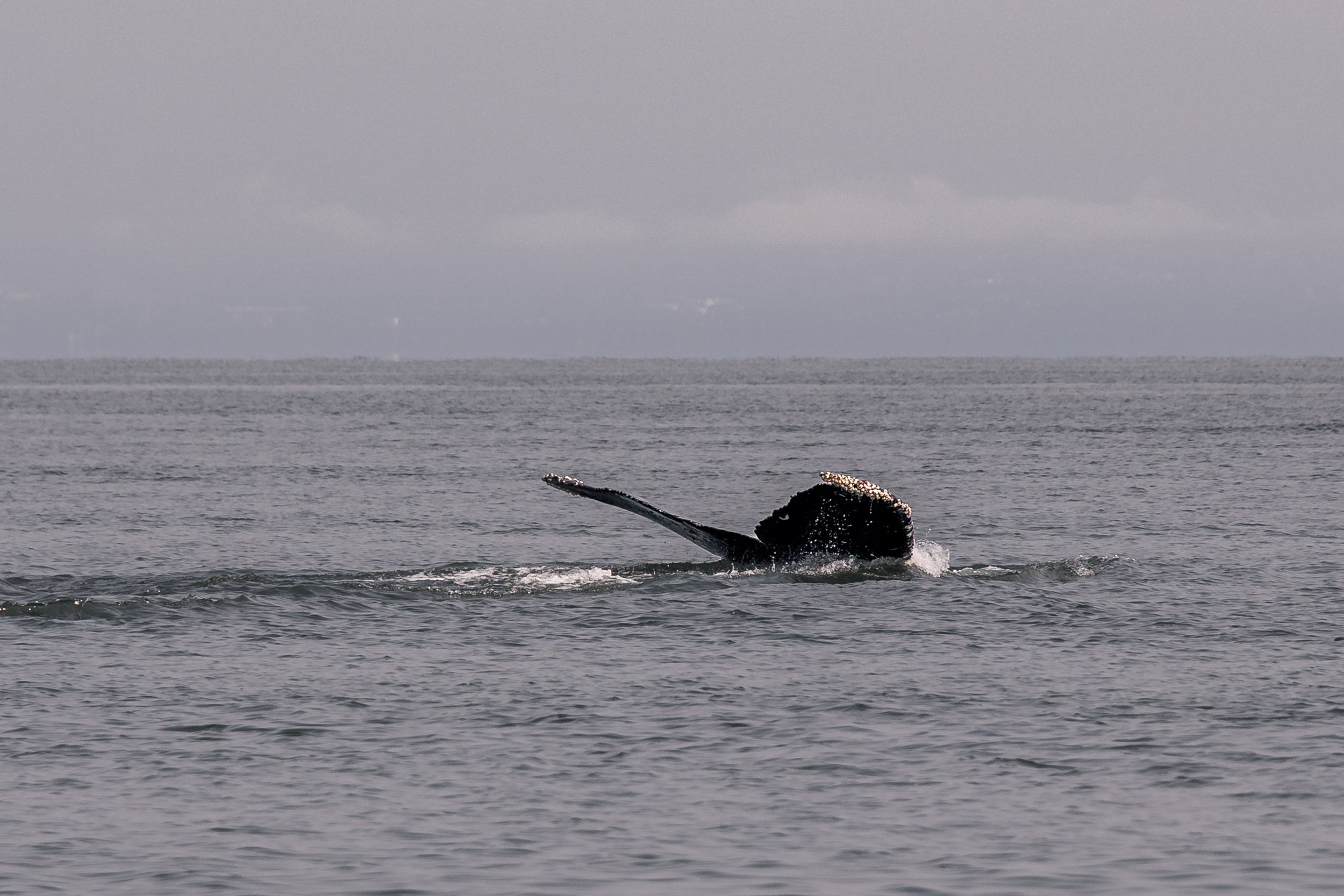
A peek at Nike as he dives. Photo by Jordan Robinson.
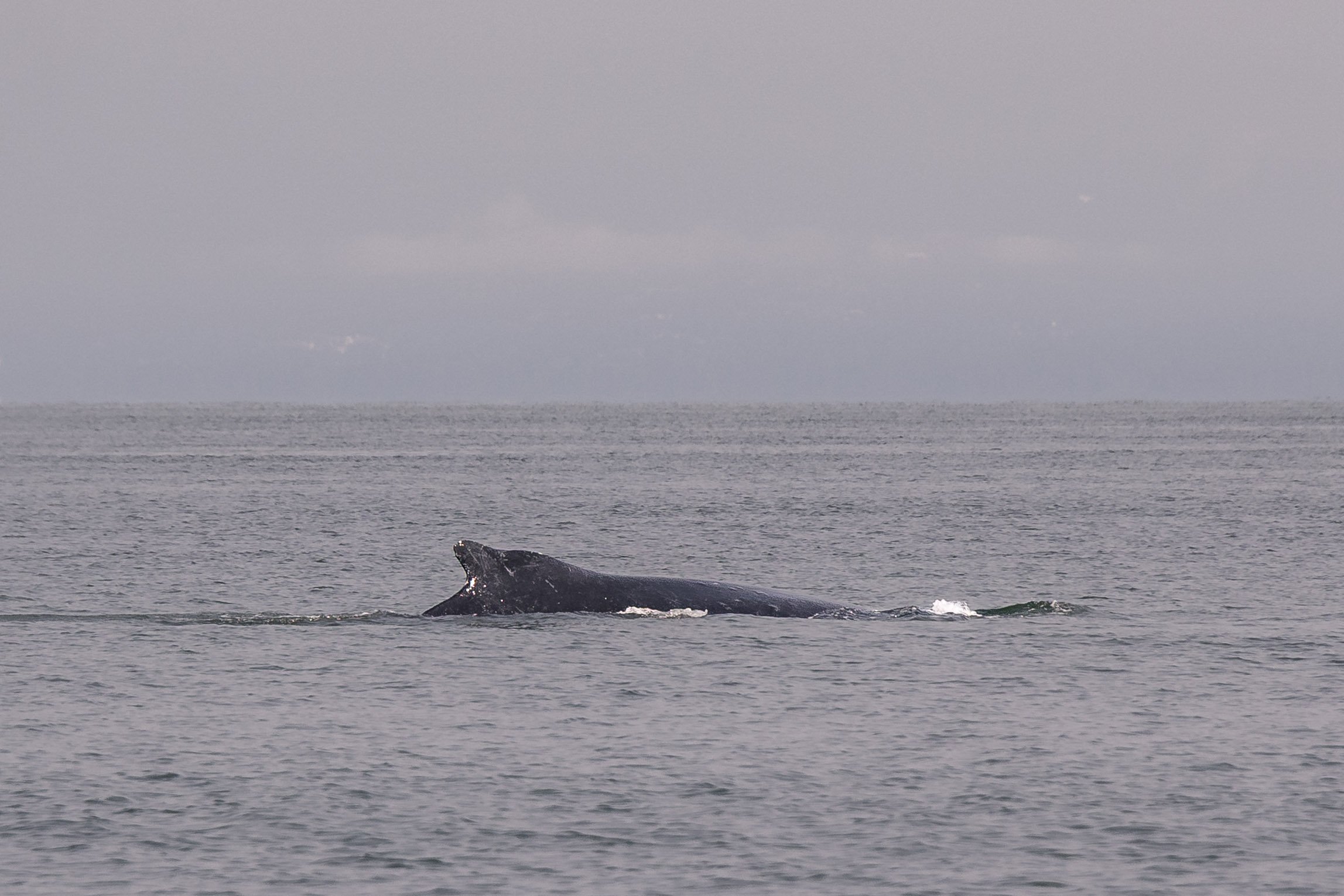
Chi scooting along. Photo by Jordan Robinson.
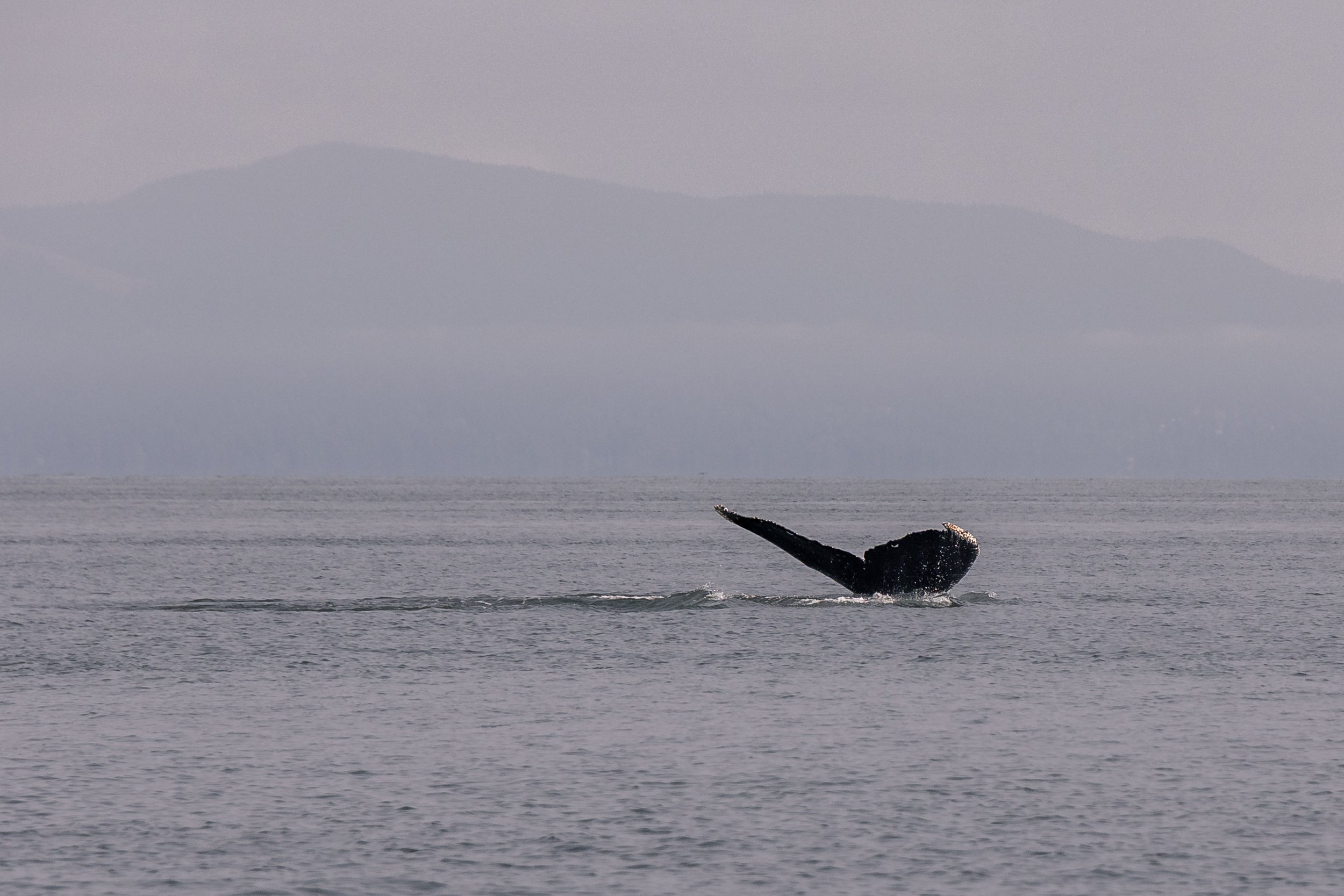
Nike diving after Chi just dove beside him. Photo by Jordan Robinson.
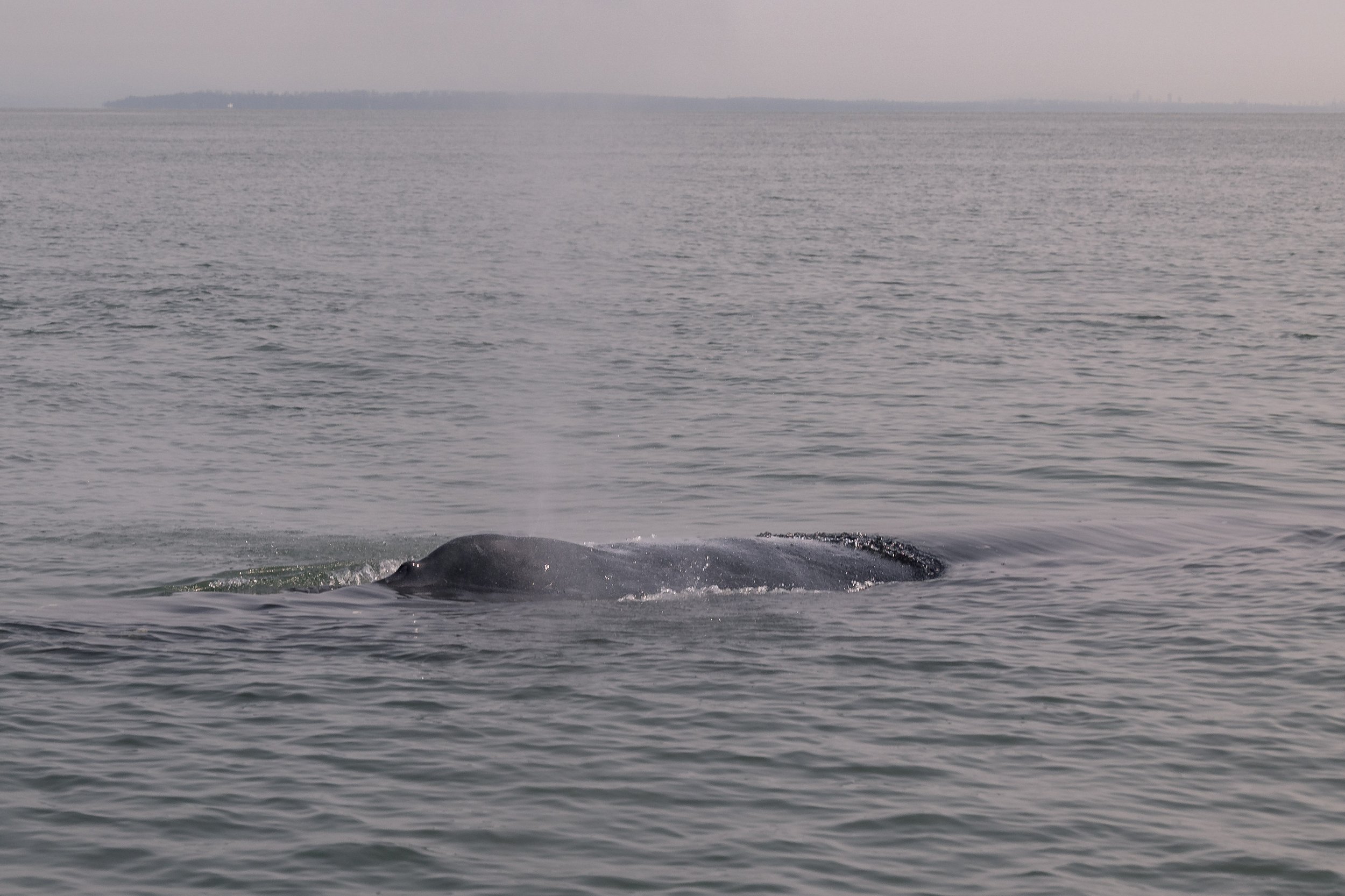
Chi coming up for a blow. Photo by Jordan Robinson.
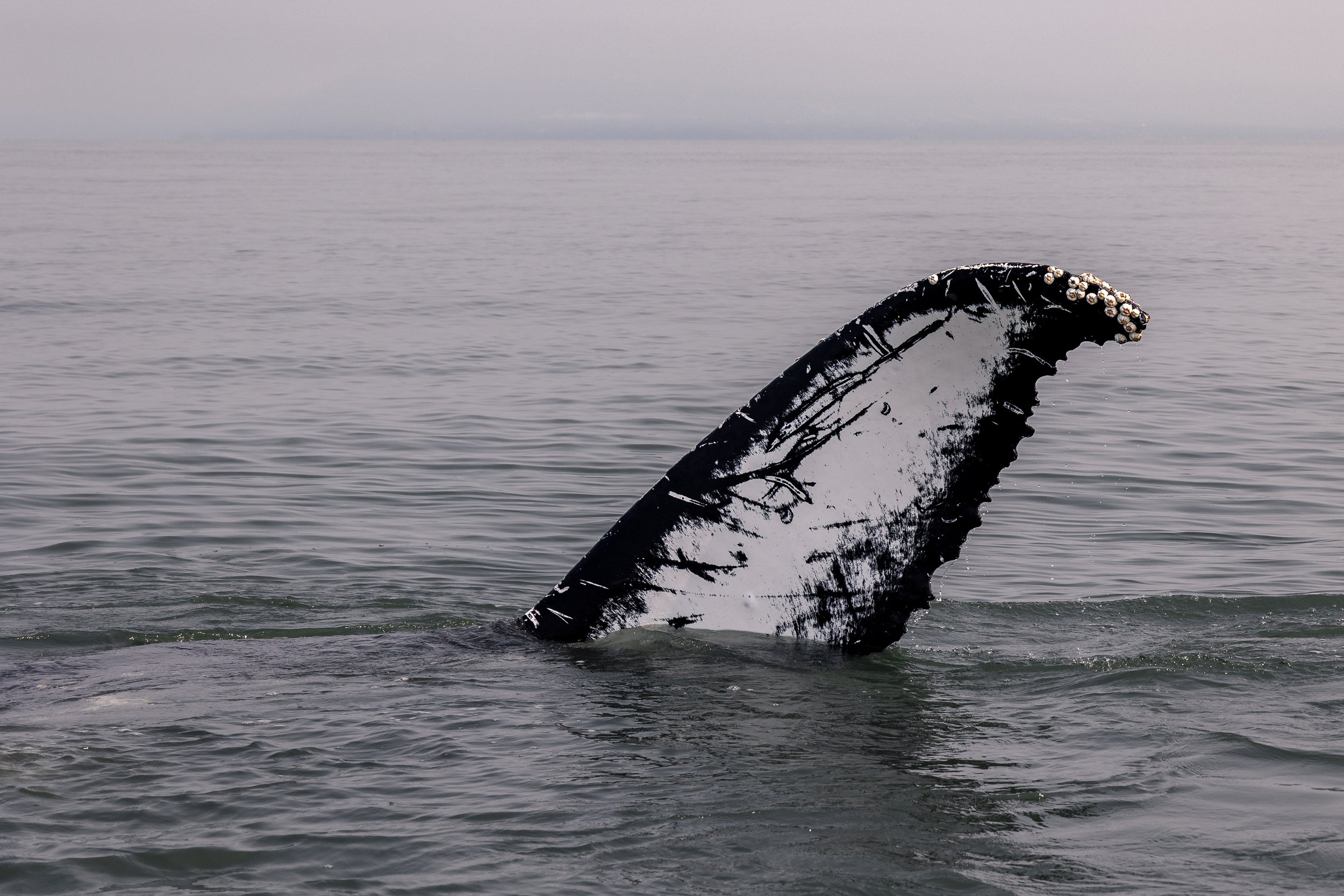
Half of Chi’s fluke. Photo by Jordan Robinson.
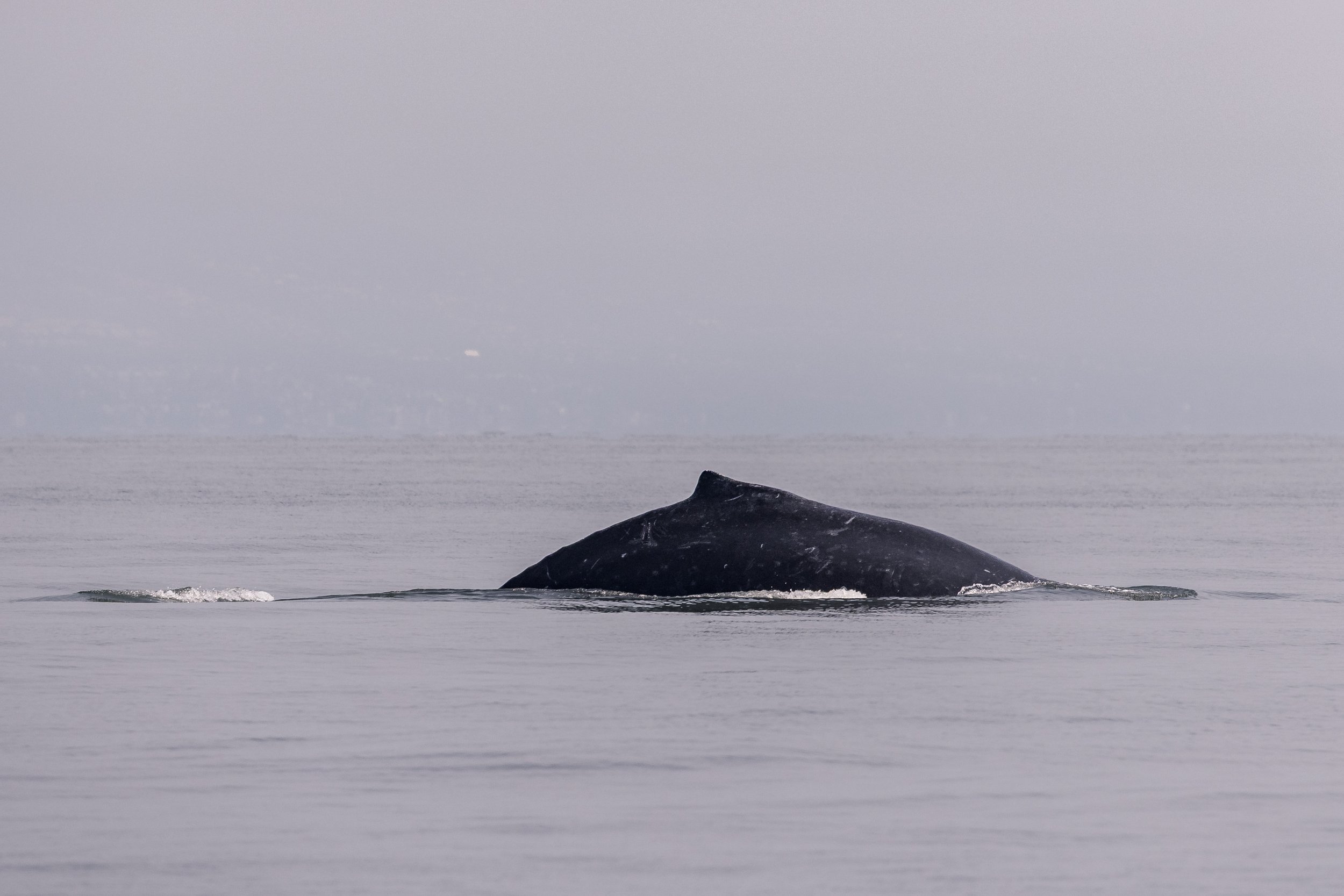
Beak travelling along. Photo by Des Poier.
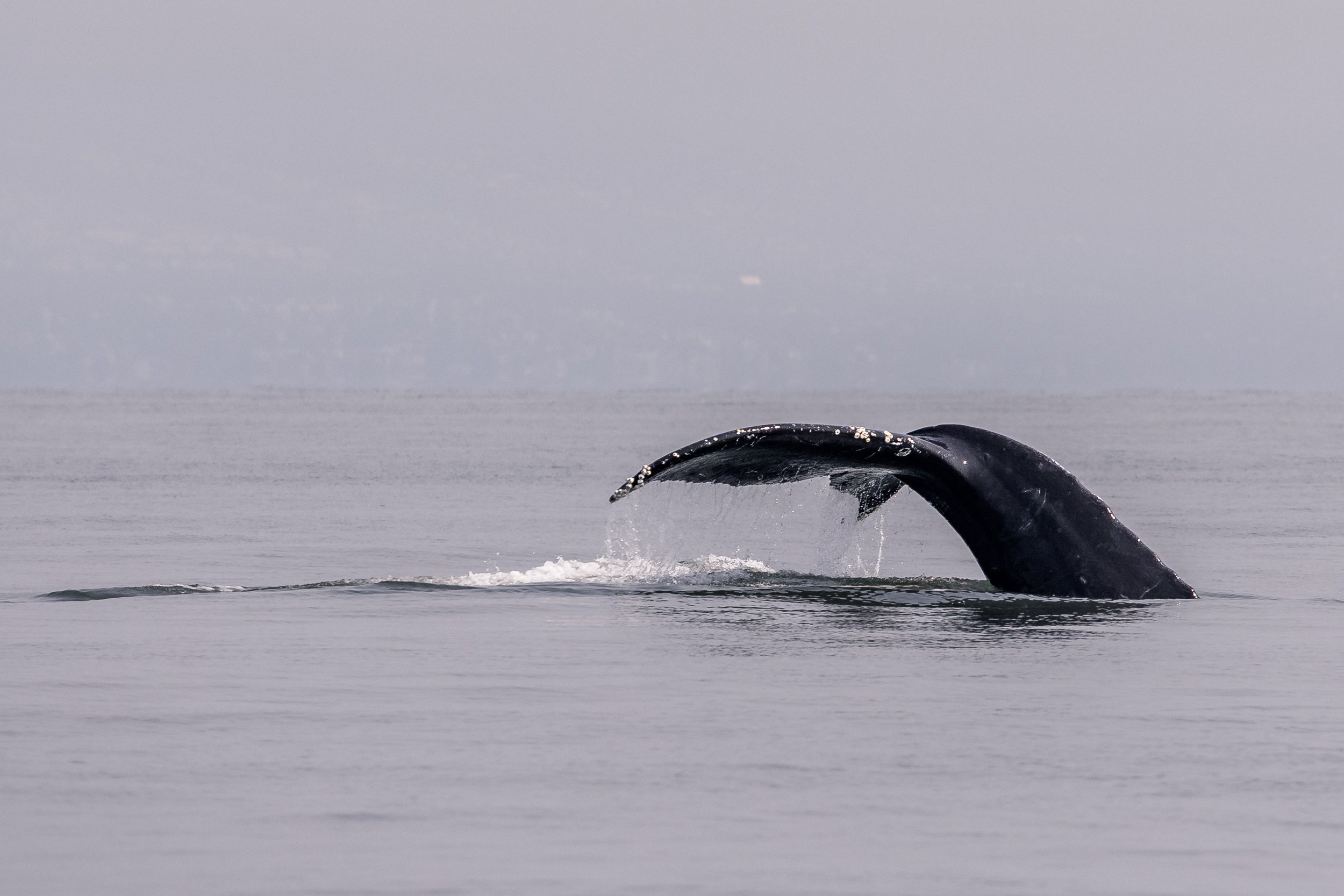
Arching for a dive. Photo by Des Poier.
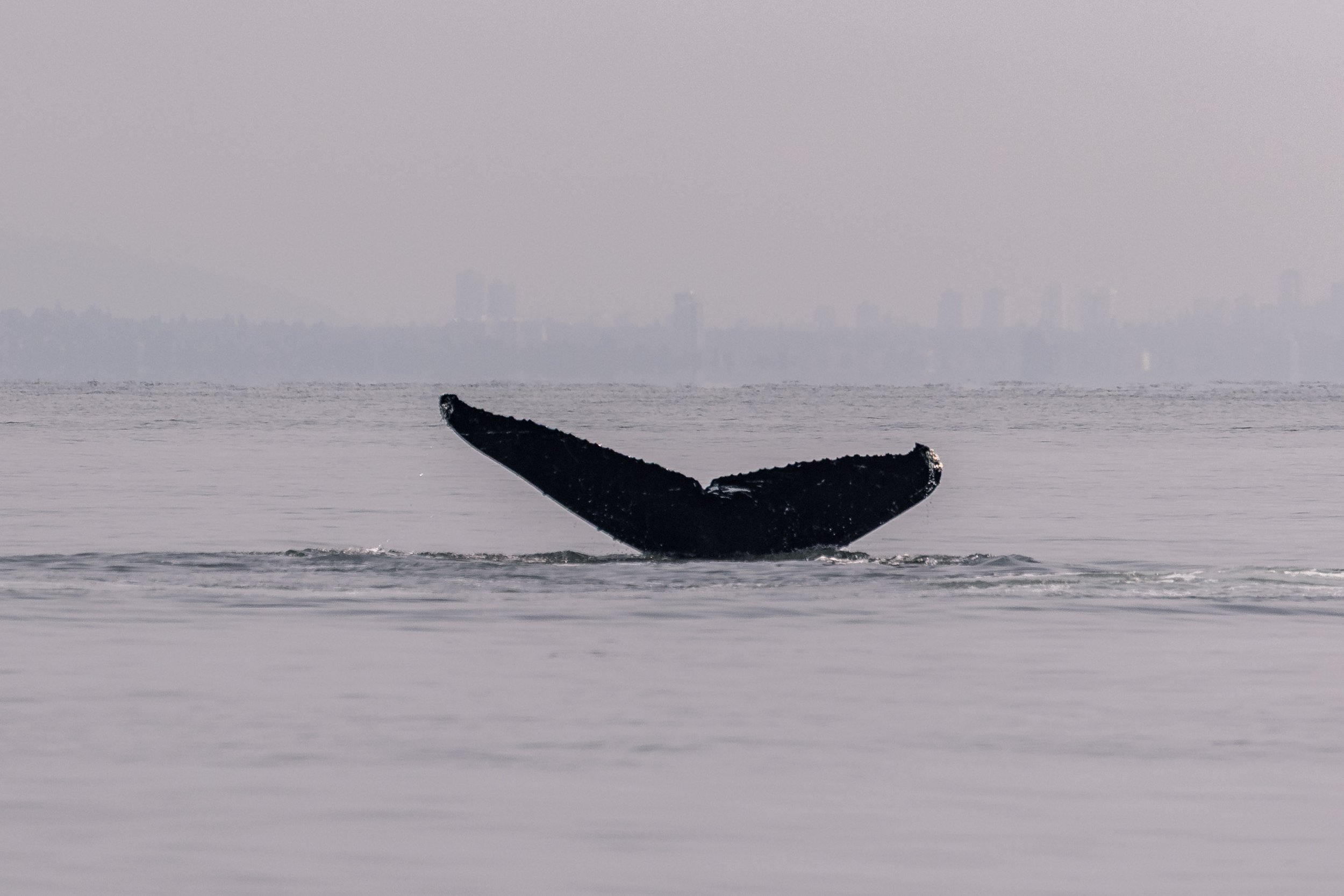
Beak fluking in the distance. Photo by Des Poier.
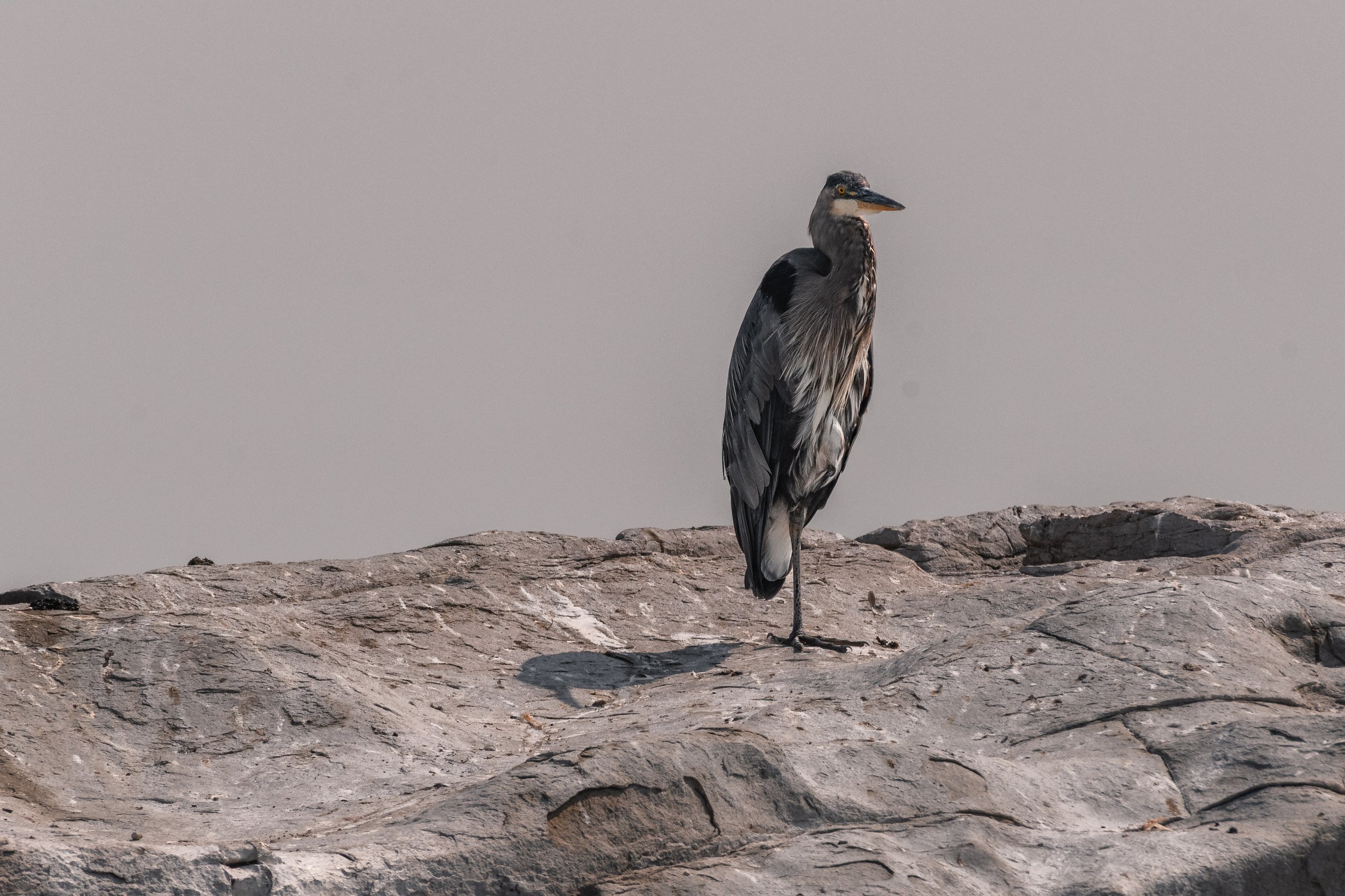
A Great Blue Heron unipedal resting on Stinky Rocks. Photo by Hayleigh Hilbert.
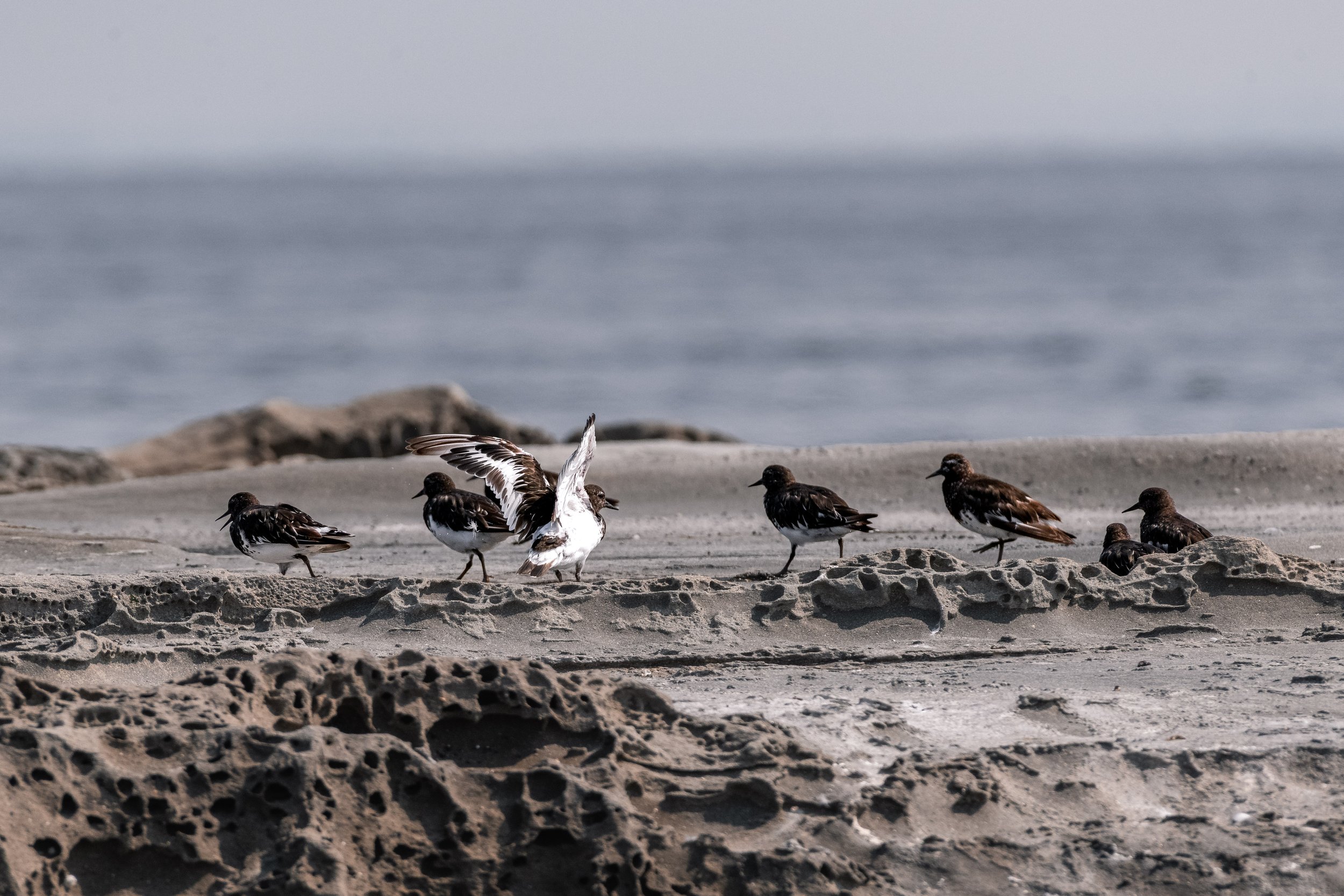
Black Turnstones making a squawk on the shores. Photo by Hayleigh Hilbert.
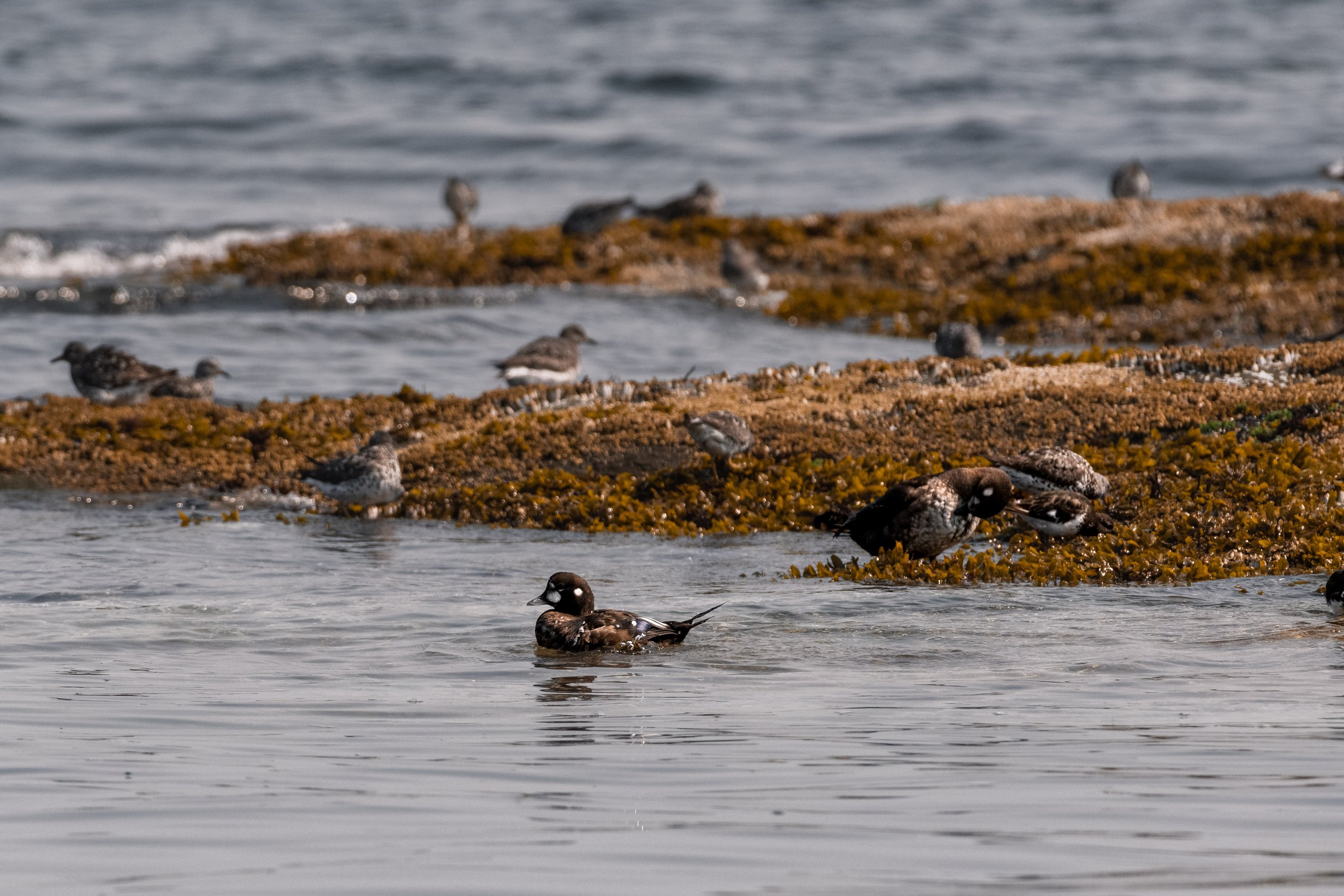
A beautiful Harlequin Duck in the shallows. Photo by Hayleigh Hilbert.
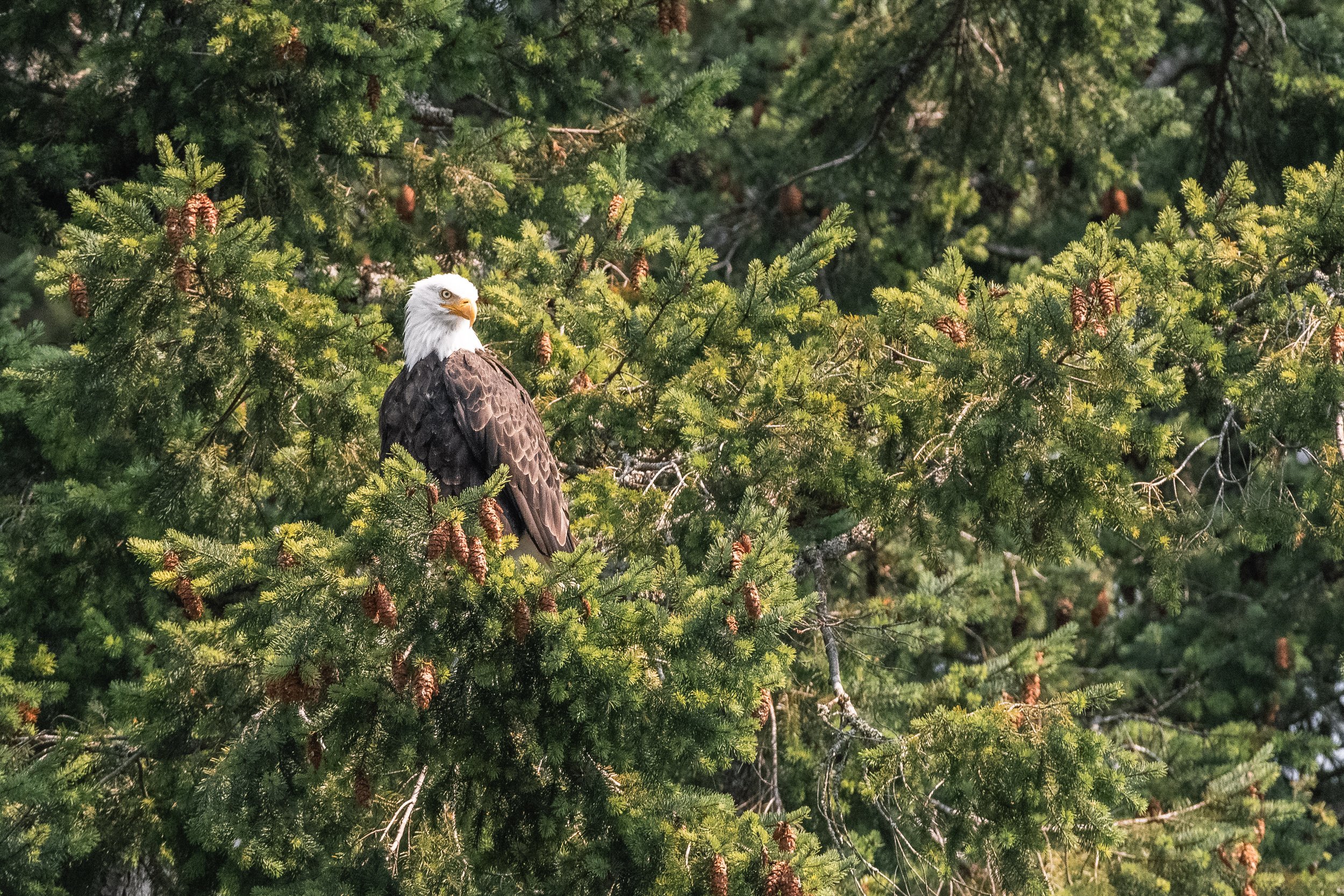
A Bald Eagle nestled close into a tree. Photo by Hayleigh Hilbert.
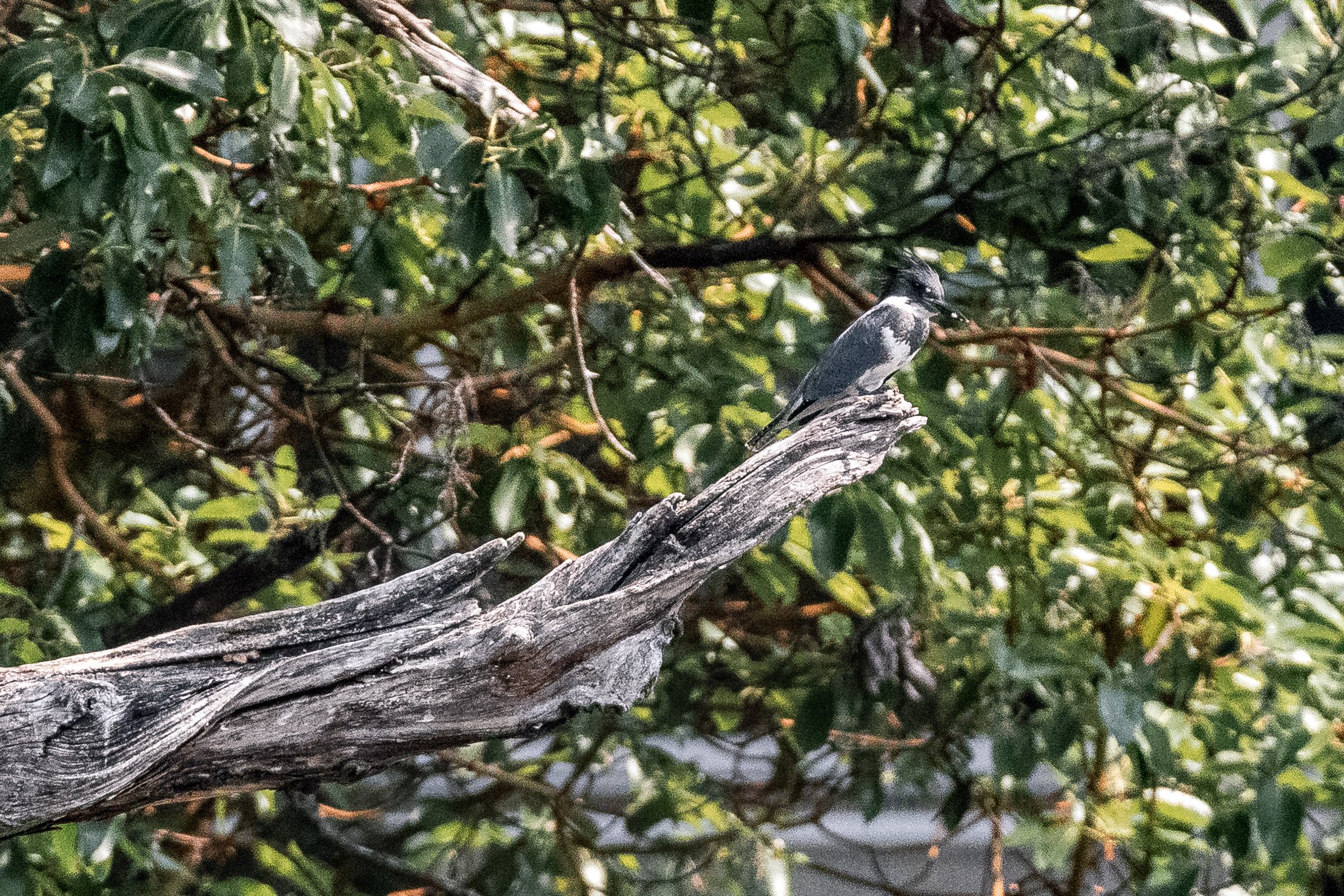
A Belted Kingfisher surveying the ocean below.Photo by Hayleigh Hilbert.
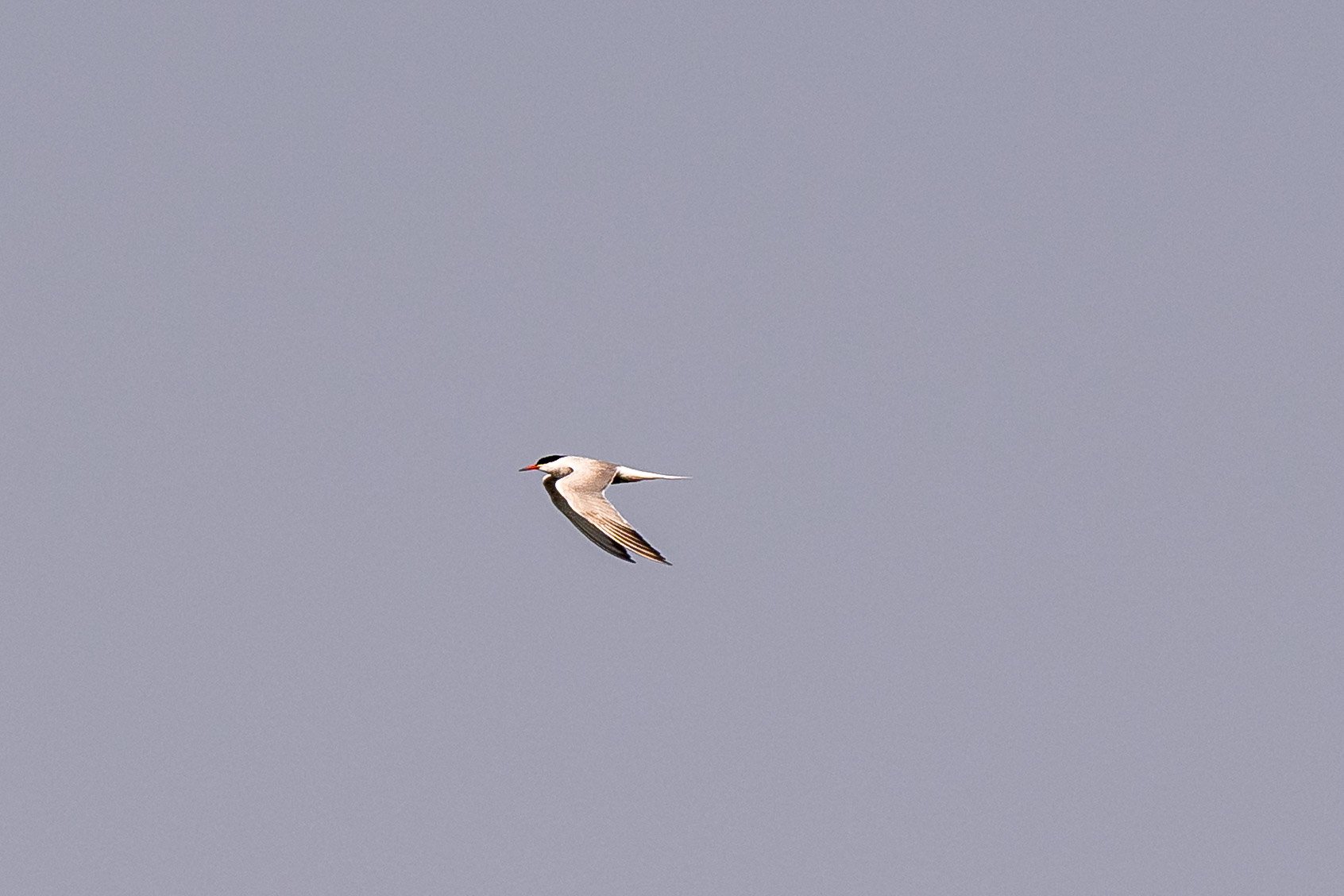
A Common Tern flying by. Photo by Jordan Robinson.
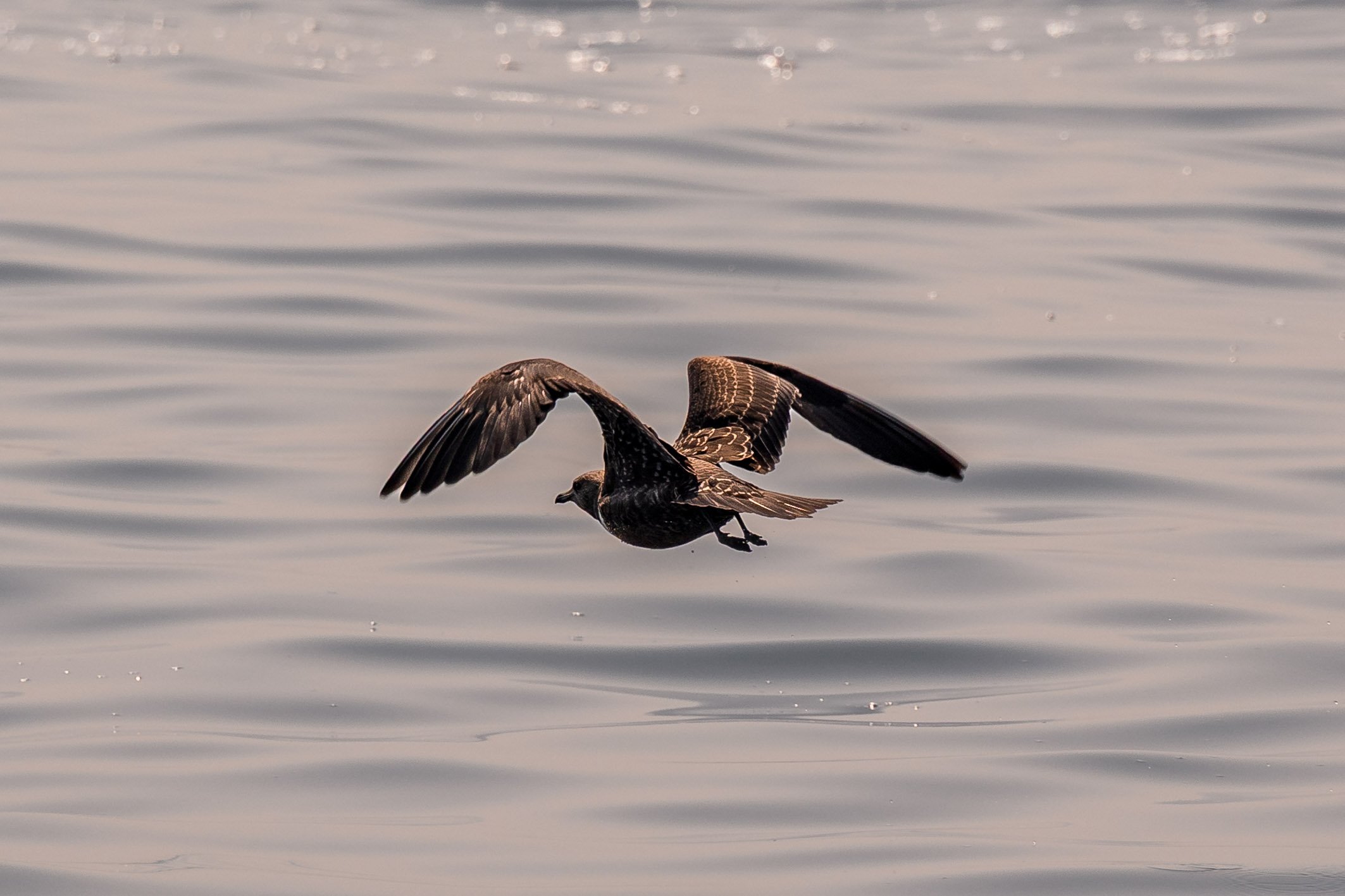
Flying on by. Photo by Jordan Robinson.
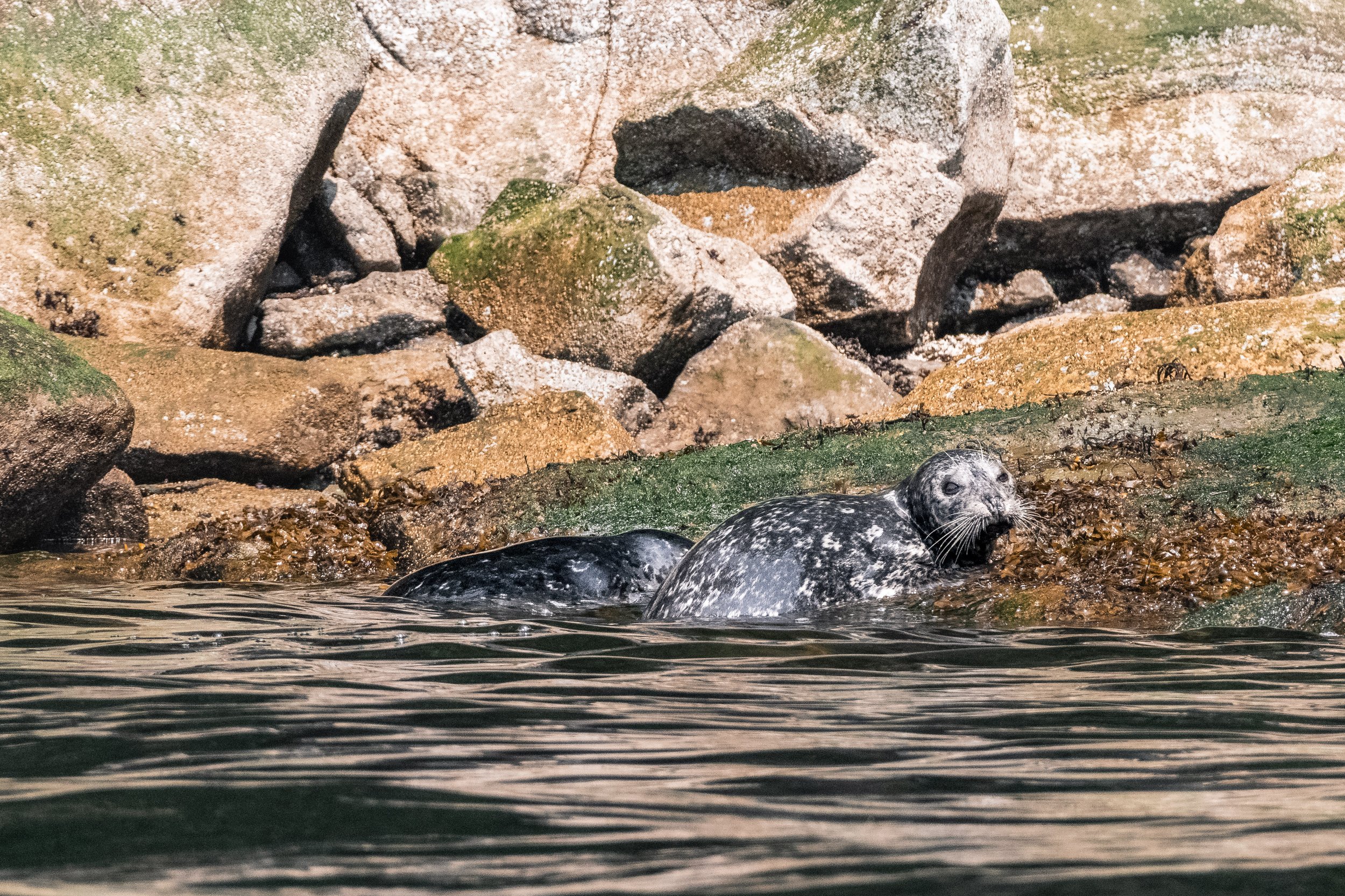
Harbour Seals at the edge of the water. Photo by Hayleigh Hilbert.
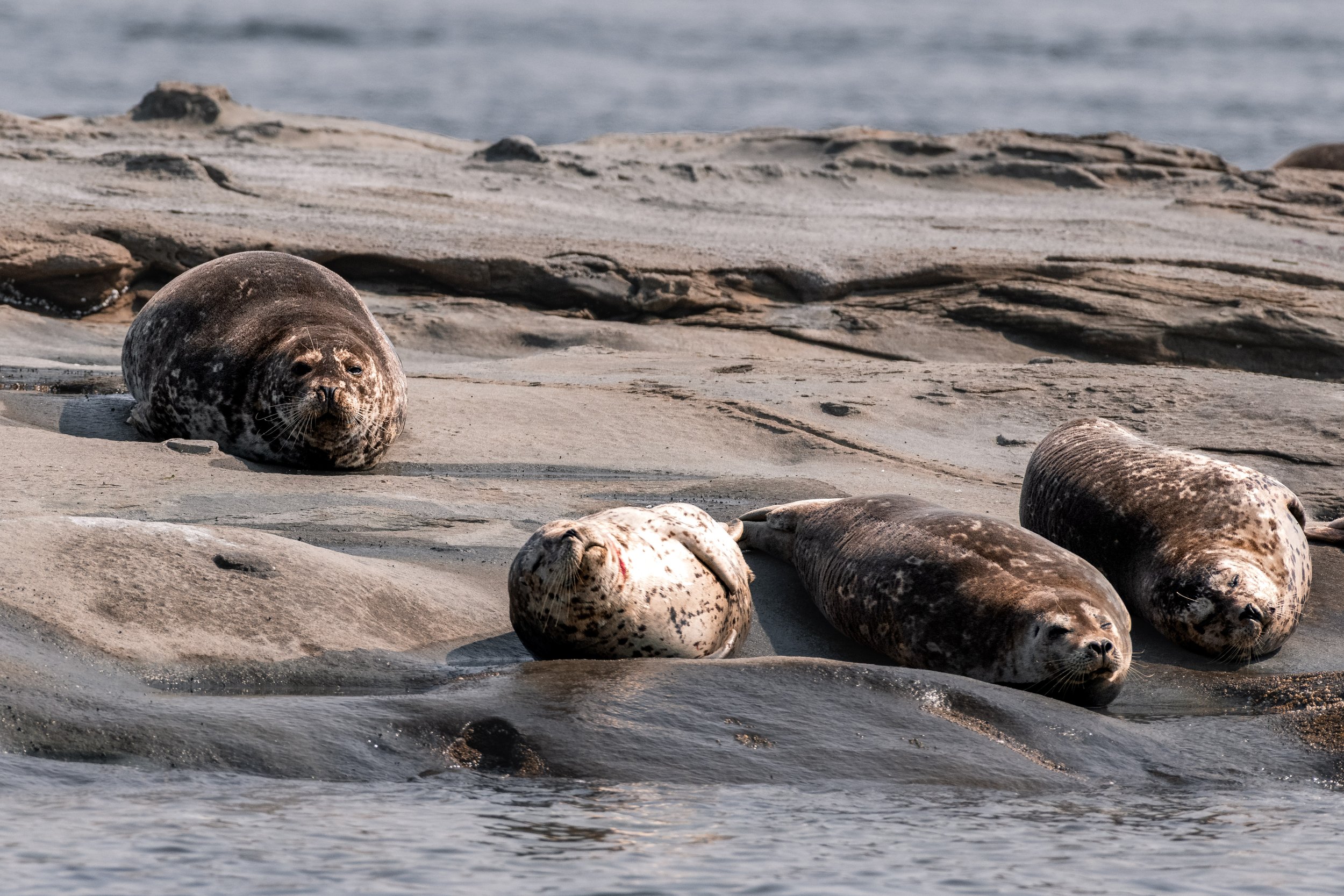
Harbour Seals resting on the rocks. Photo by Hayleigh Hilbert.
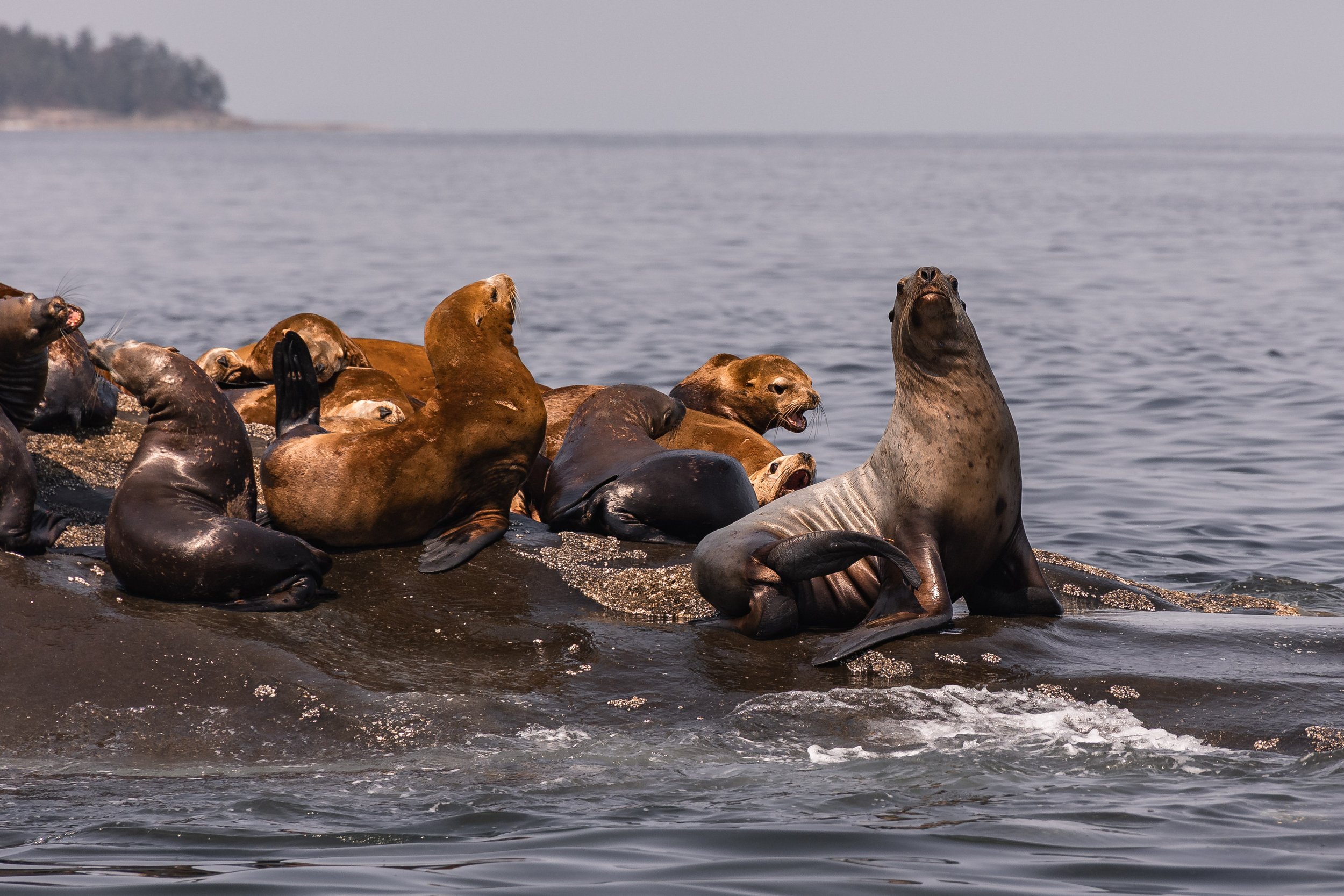
Steller Sea Lions at the tip of Stinky Rocks. Photo by Jordan Robinson.
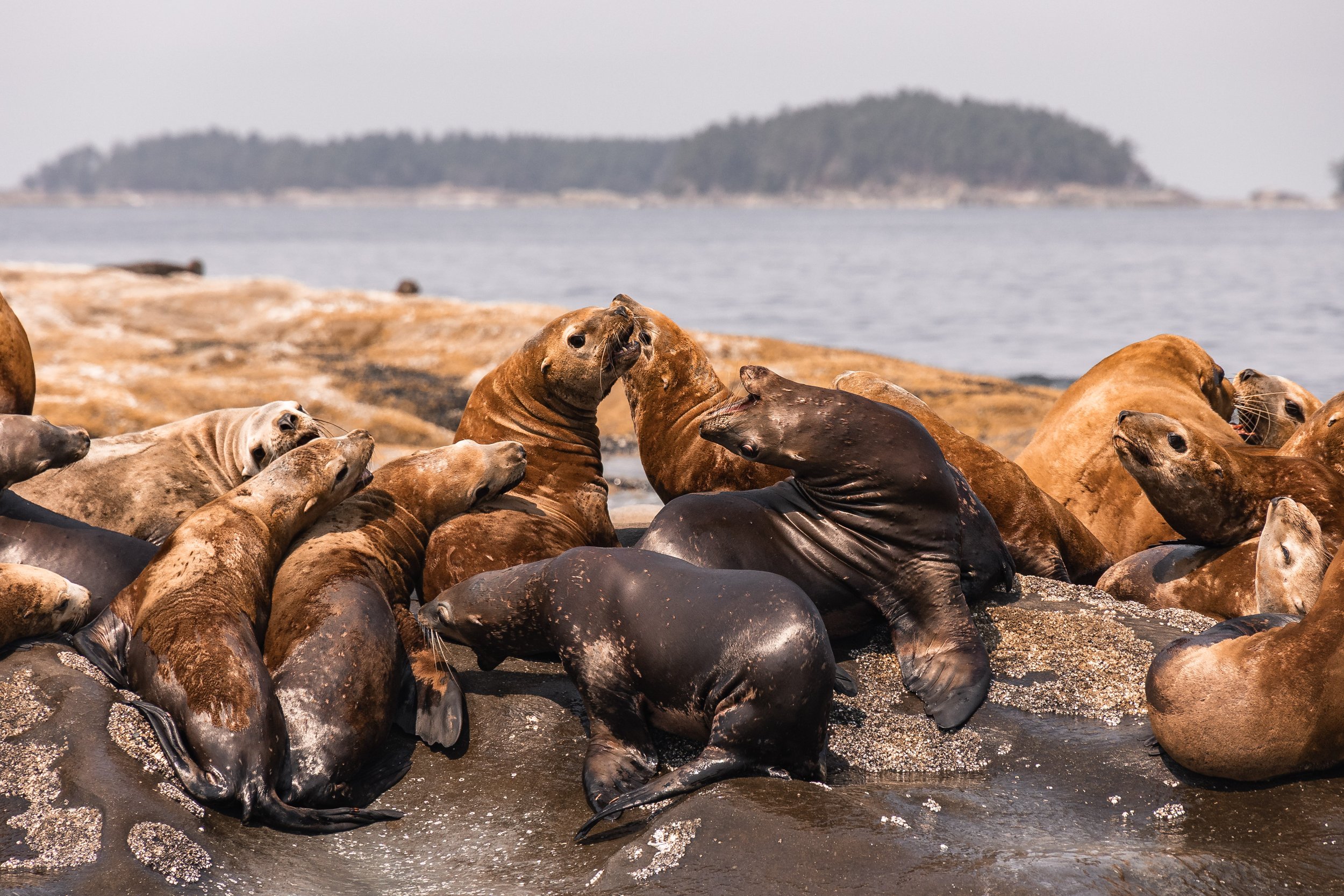
Bickering amogst the sea lions. Photo by Jordan Robinson.
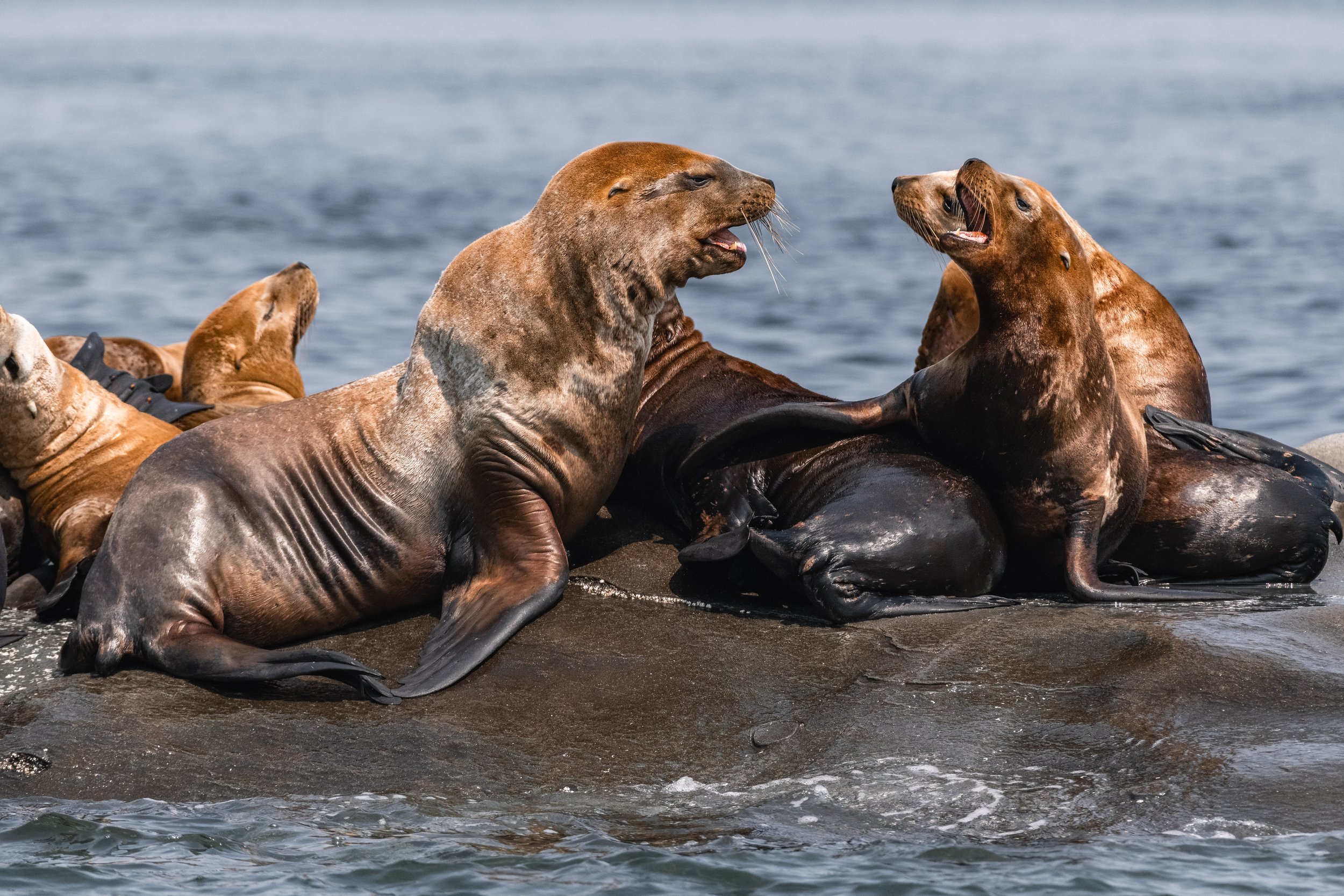
Pushing and shoving is a common occurence at haul out sites. Photo by Hayleigh Hilbert.
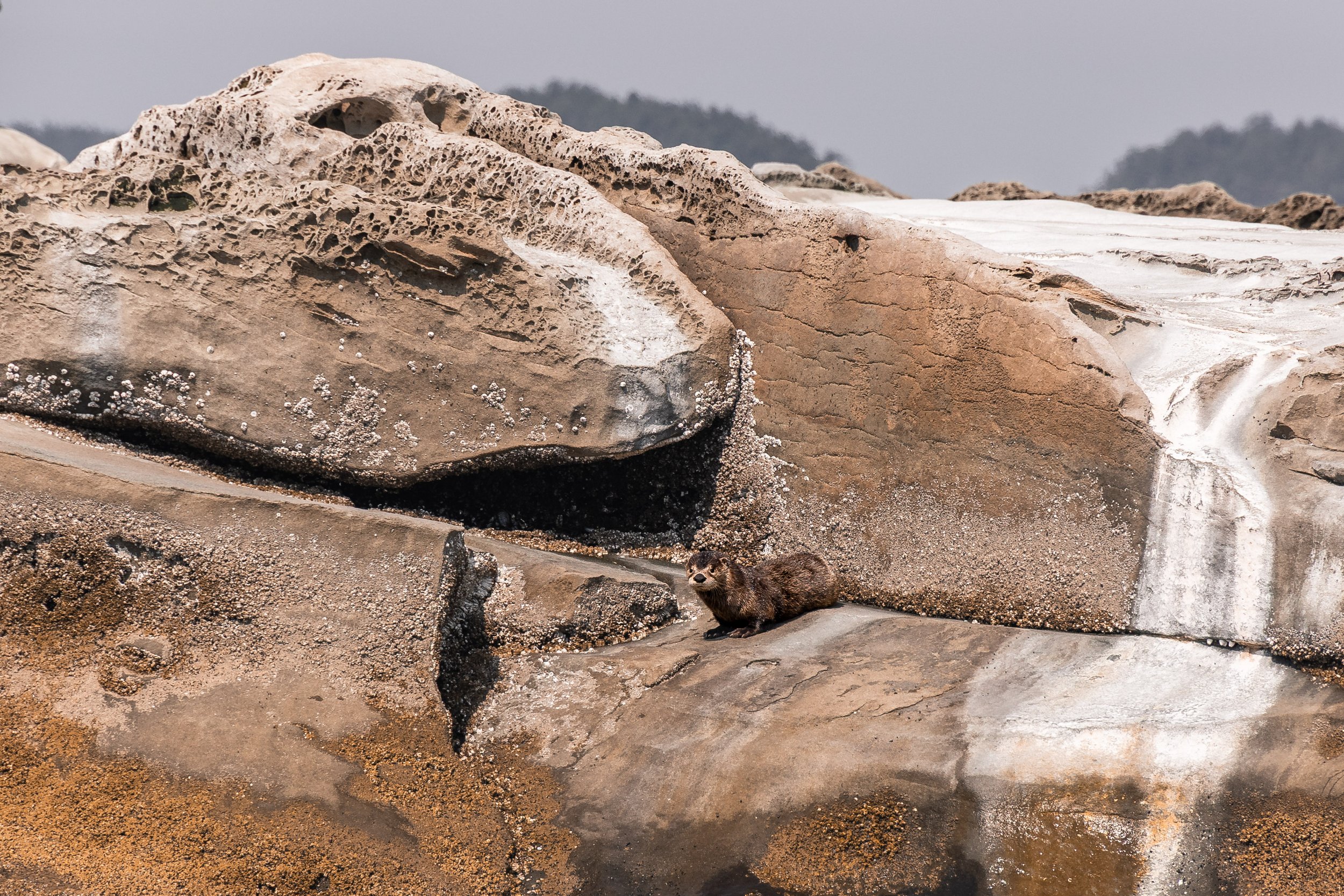
The River Otter peeking at us from the rocks. Photo by Jordan Robinson.