
August 16, 2026, 3:30 PM - Humpbacks for all, and the T101s are spotted too
All three of our vessels were out on the Salish Sea this afternoon, and we could not have asked for better conditions. The ocean was almost perfectly flat, with barely a ripple across the surface. On days like this, the horizon seems to stretch endlessly in every direction, giving our Naturalists and Captains an excellent opportunity to scan for the telltale signs of wildlife.
With three boats available, our fleet spread out across the Salish Sea to cover as much water as possible. This strategy is particularly useful when searching for whales because these animals can be widely dispersed throughout the region. Rather than having every vessel search the same area, spreading out allows us to explore different habitats and gives us a much better chance of locating wildlife. As luck would have it, all three boats ended up with their own separate humpback whale encounters!
Out in the middle of the Strait of Georgia, Cascadia located a solo humpback whale. This individual was being exceptionally cooperative, repeatedly raising their tail as they travelled along. Every time the whale surfaced, Naturalist Evan had another opportunity to photograph that distinctive black and white pattern on the underside of the tail.
Those photographs are especially valuable because humpback whales can often be identified by these patterns. Much like a fingerprint, the underside of a humpback's tail is unique to each individual. Researchers and naturalists can compare the shape, pigmentation, scars, and other markings against identification catalogues to determine who we are observing.
In this case, the whale was identified as Snoopy/Gibbous (BCY0770). Identifying individuals by name changes encounters from simply watching whales travelling through the Salish Sea into learning and understanding individuals with their own history and life story. Snoopy, for instance, has sightings dating back to 2010, meaning they are at least 16 years old. They have also been spotted in Hawaii, helping confirm that it is the breeding ground they head to in the winter.
Meanwhile, Kula was exploring waters closer to Thrasher Rock when the crew found a trio of humpback whales. Two were travelling particularly close together, clearly associating with one another, while a third whale was travelling a little farther away.
The pair were identified as Strike (BCX1675) and Vivaldi (BCX1704), while the more distant whale was identified as Geometry (BCZ0338). Strike and Vivaldi appeared to be very excited and were breaching and pectoral slapping as we observed.
Humpback whales are often described as solitary animals, and while adults can certainly spend considerable time on their own, that does not mean they never associate with one another. Temporary social groups can form around feeding opportunities, and individuals may choose to travel together for varying lengths of time. These associations can sometimes last only a short while, while other relationships appear to persist for much longer.
Further south, Keta had made their way toward Valdes Island and located a humpback of their own. When the whale was first spotted, it was making quite a “splash”, launching themselves out of the water and crashing back down. By the time Keta reached the area, however, the whale had settled down and returned to simply travelling through the water, appearing to have been tired out from their shenanigans.
This individual was identified as Crackle (BCY1227). We identified them by comparing their distinctive dorsal fin with photographs in our catalogue, along with a glimpse of their fluke later on. Dorsal fins can be incredibly useful for identifying humpbacks, particularly when a whale does not happen to raise its tail. The fin's shape, trailing edge, scars, notches, and other features can all be used in conjunction.
Keta did not remain with Crackle for too long, however. With information coming in from the other vessels, the crew soon made their way toward Kula's sighting to take a look at Strike and Vivaldi. One of the wonderful things about having multiple vessels on the water is that our crews can share information throughout the day, allowing the fleet to visit many different sightings throughout the trip.
While Keta and Cascadia were continuing their time in the Strait, Kula had made its way farther into the Southern Gulf Islands. It was here that another pair of dorsal fins appeared in the distance, moving steadily through Pylades Channel. This time, they were dark black, with one of them very tall and pointed. It was a pair of orca!
Cameras were raised once again. We then compared the photos with our identification catalogue. Soon after, it was confirmed that these were the T101s, a family of Transient orca:
T101 Reef ♀ (≤1969)
T101B Lagoon ♂ (1997)
With the orca sighting confirmed, the other boats began making their way over to join them. Cascadia, however, encountered one more group of humpbacks along the way.
Four whales were travelling together, and once again the cameras came out. Flukes were raised, photographs were captured, and the onboard Naturalist began working through the identification process. Before long, the group had been identified as Dalmatian (BCY0994), Sherwina (BCY0961), her 2026 calf (BCY0961 calf 2026), and Graphite (BCX2077).
Seeing a mother with her calf is always a special experience. Humpback calves spend their early months learning the skills they will eventually need to survive independently. They must learn how to dive efficiently, navigate their surroundings, communicate, and locate and capture prey. This all happens within their first year of life; soon after that, they will depart from their mother’s side, facing the ocean alone.
The T101s, meanwhile, were having a nice and simple afternoon adventure. The two orca continued steadily northbound through Pylades Channel, eventually heading toward Dodd Narrows.
The T101s have been making frequent appearances throughout our waters lately, travelling up and down the coast and using the maze of channels and islands that make up the Southern Gulf Islands.
There is also a more sombre element to seeing the T101s at the moment. Their older brother, T101A Rush, has now been missing for several weeks. Orca matrilines are strongly bonded, and the disappearance of an individual can be felt particularly keenly when we have become familiar with their family over the years.
We can only hope that Rush is simply spending time away from the rest of the family, perhaps living the bachelor lifestyle that we have seen from other adult males. T137A Jack, for example, has recently been spotted travelling independently, frequently visiting many coastal towns along the way. We will continue to keep an eye out and hope that Rush makes an appearance again one day.
As the afternoon continued, the boats also had an opportunity to visit Stinky Rocks. This small rocky haul-out area can be a hive of activity, particularly when pinnipeds are taking advantage of the rocks to rest between periods in the water.
Harbour Seals and Steller Sea Lions were scattered across the rocks, providing a completely different kind of wildlife encounter from the whales we had been searching for. Steller Sea Lions are the largest species of sea lion in the world, and seeing them hauled out together offers a great opportunity to appreciate just how massive these animals can be!
The pinnipeds were not the only animals enjoying the area, though. A large flock of Black Turnstones suddenly swooped past, moving as one impressive group through the air. These compact shorebirds are remarkably agile, and watching a flock change direction together can look almost choreographed!
As the afternoon began to wind down, our vessels started making their way back toward Nanaimo. Near the harbour, the Gabriola Bluffs came into view, illuminated by the soft rays of the late afternoon sun. The changing light turned the familiar rock faces into a beautiful final wildlife stop for the day.
Cormorants were nestled together along the rocks, settling in for the evening. After spending the day fishing and moving through the coastal waters, they appeared quite content to find a comfortable place to rest.
It was a fitting end to an afternoon that had taken us across a remarkable variety of the Salish Sea. Three boats spread across the water had brought us to many separate humpback encounters, a familiar family of Transient orcas, Harbour Seals, Steller Sea Lions, a flock of Black Turnstones, and a final glimpse of the Cormorants settling down for the evening.
Eventually, it was our turn to do the same. With the sun beginning to soften over the islands, we turned toward Nanaimo Harbour and made our way home, leaving the calm waters of the Salish Sea behind us for another day.
Photos taken by Marine Naturalists Evan Hessels, Jordan Robinson and Val Watson - please enjoy!
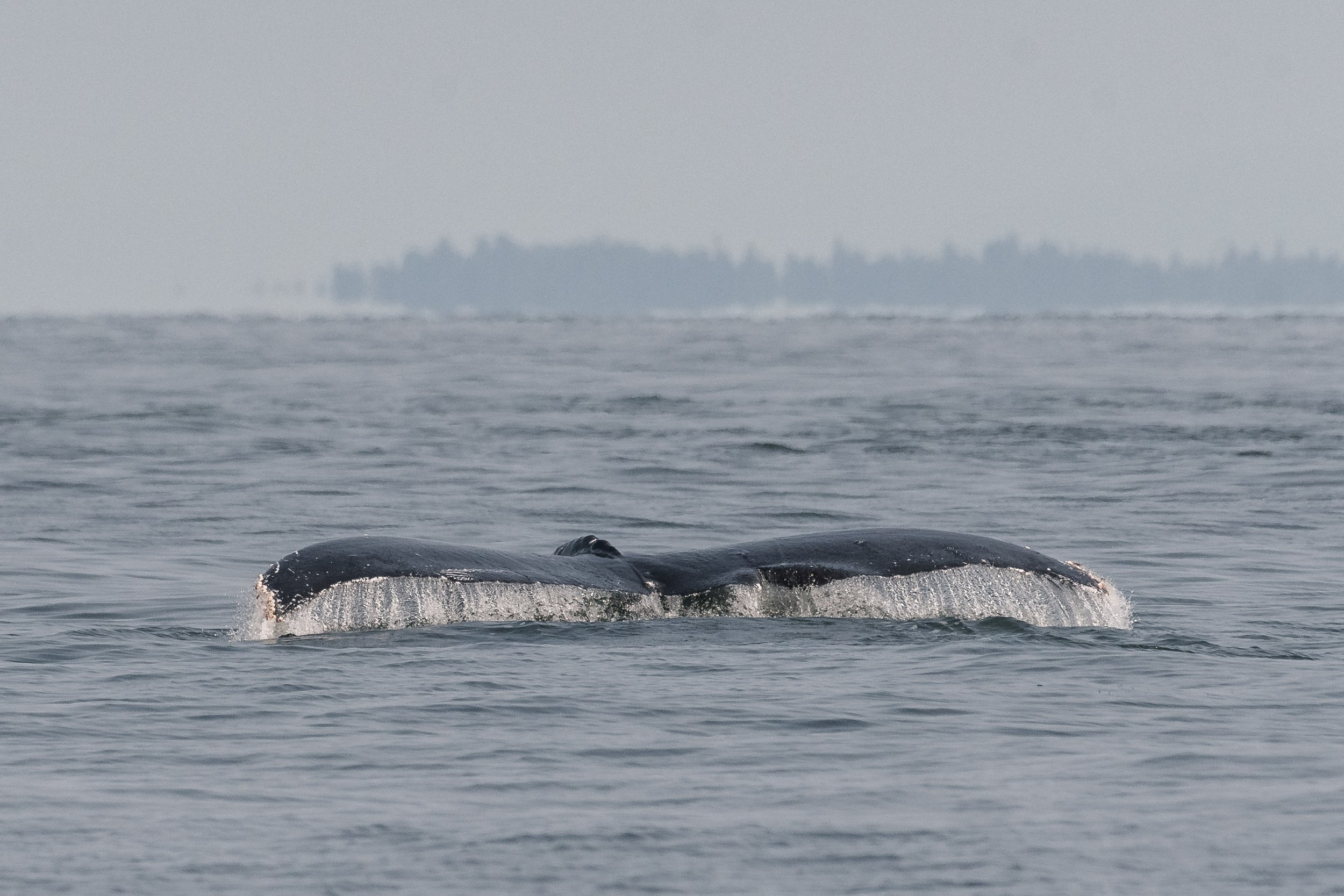
Snoopy creating a fluke waterfall. Photo by Evan Hessels.
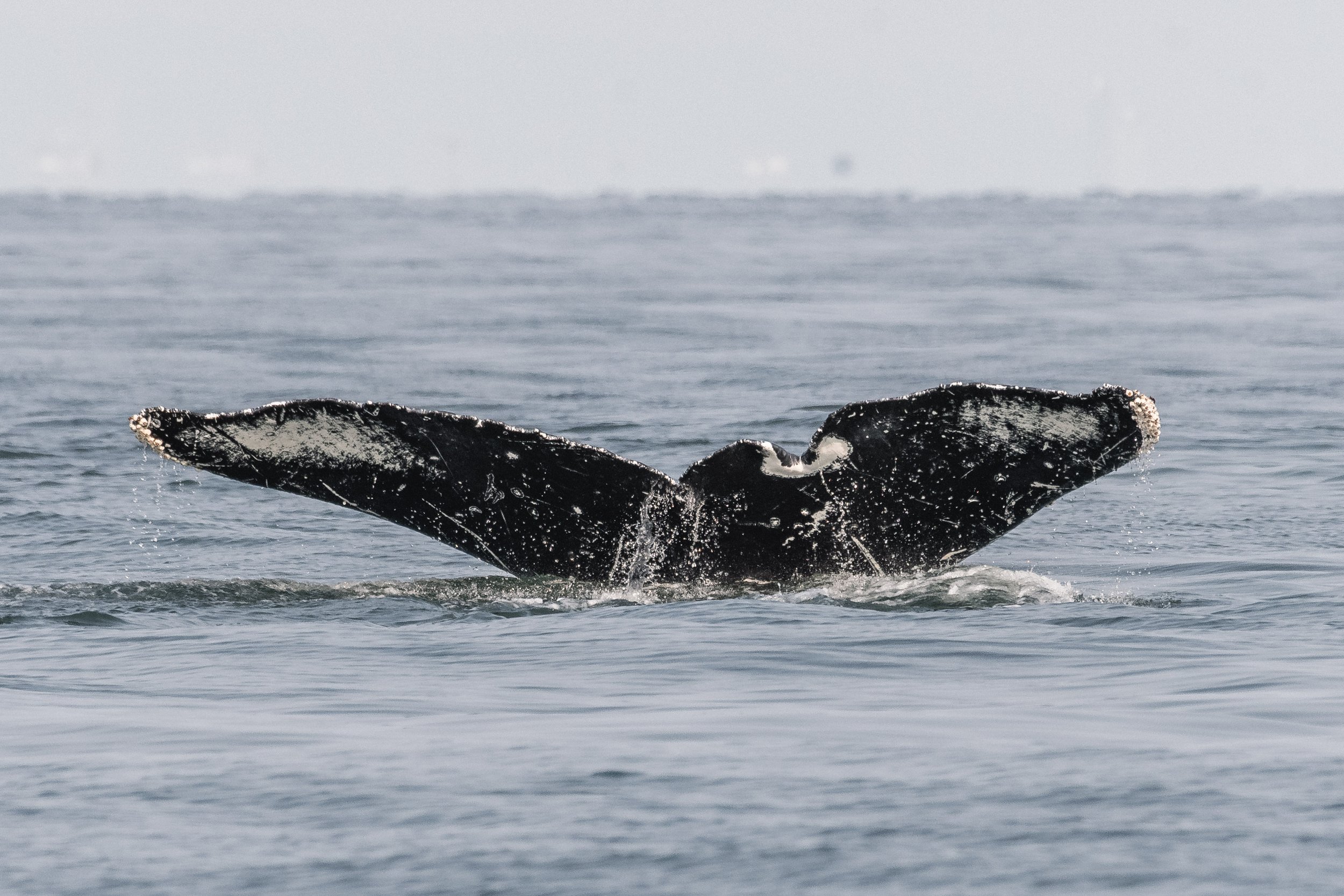
A perfect ID shot of Snoopy. Photo by Evan Hessels.
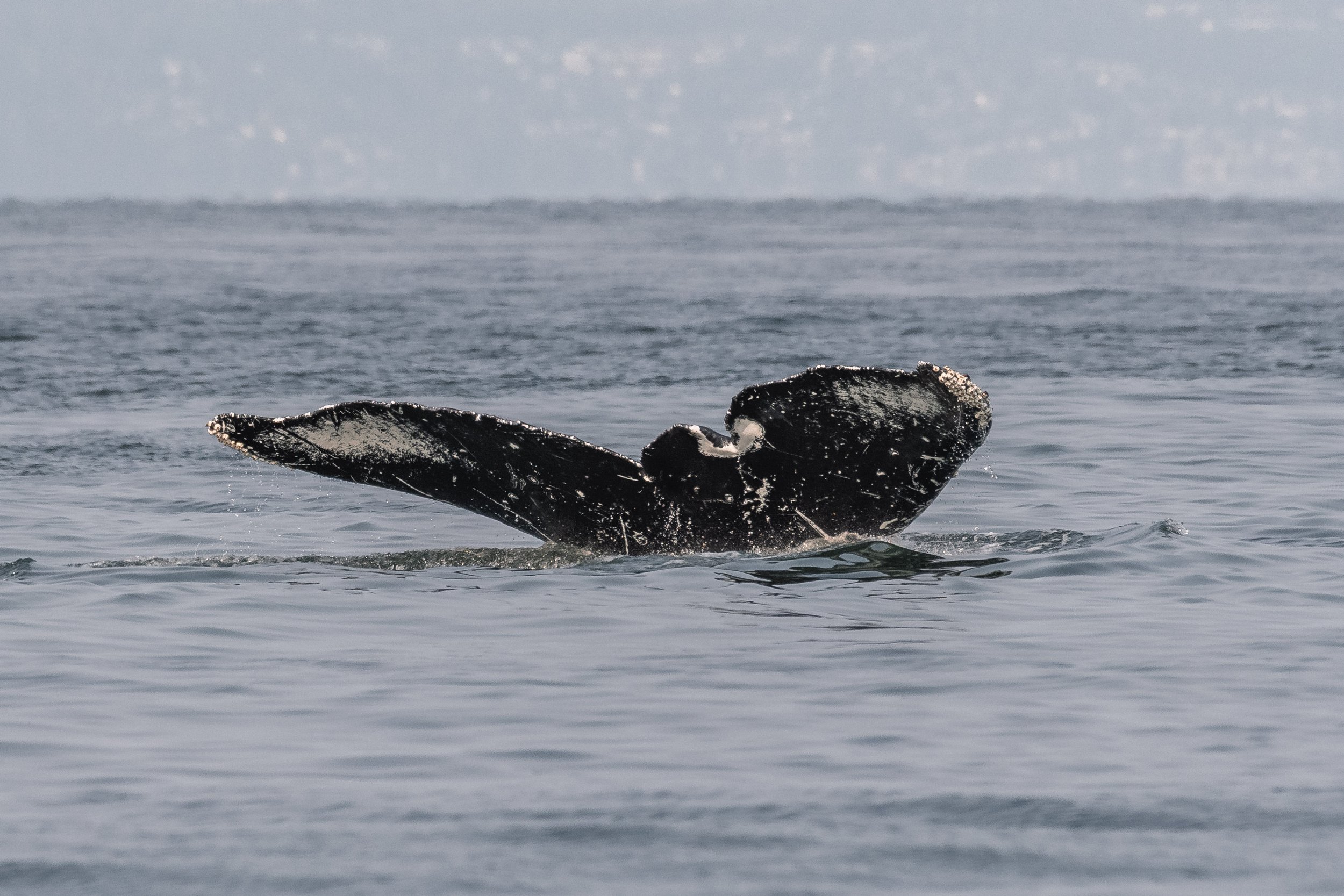
The large notch on the right fluke makes Snoopy easy to identify. Photo by Evan Hessels.
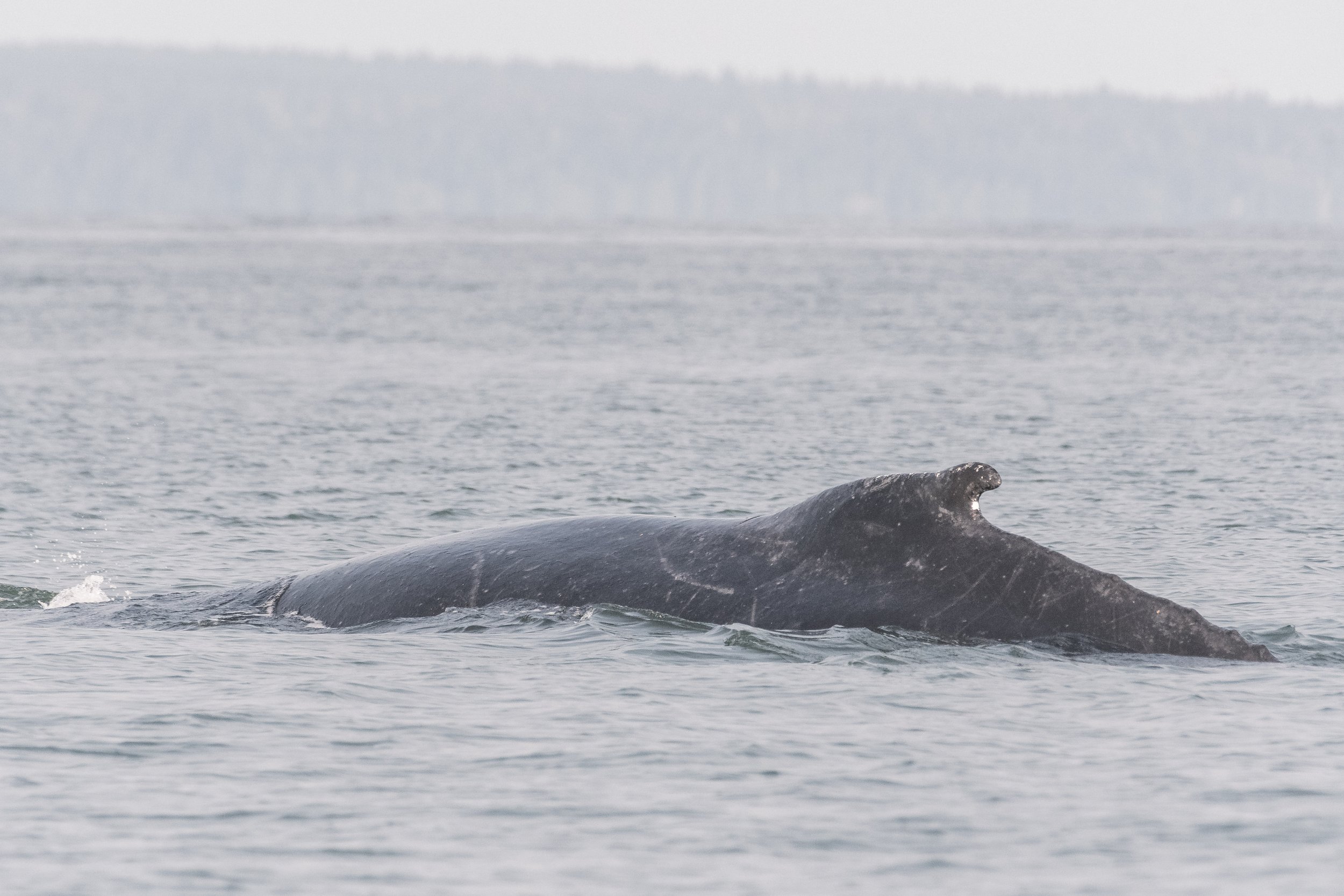
Dalmatian swimming by. Photo by Evan Hessels.
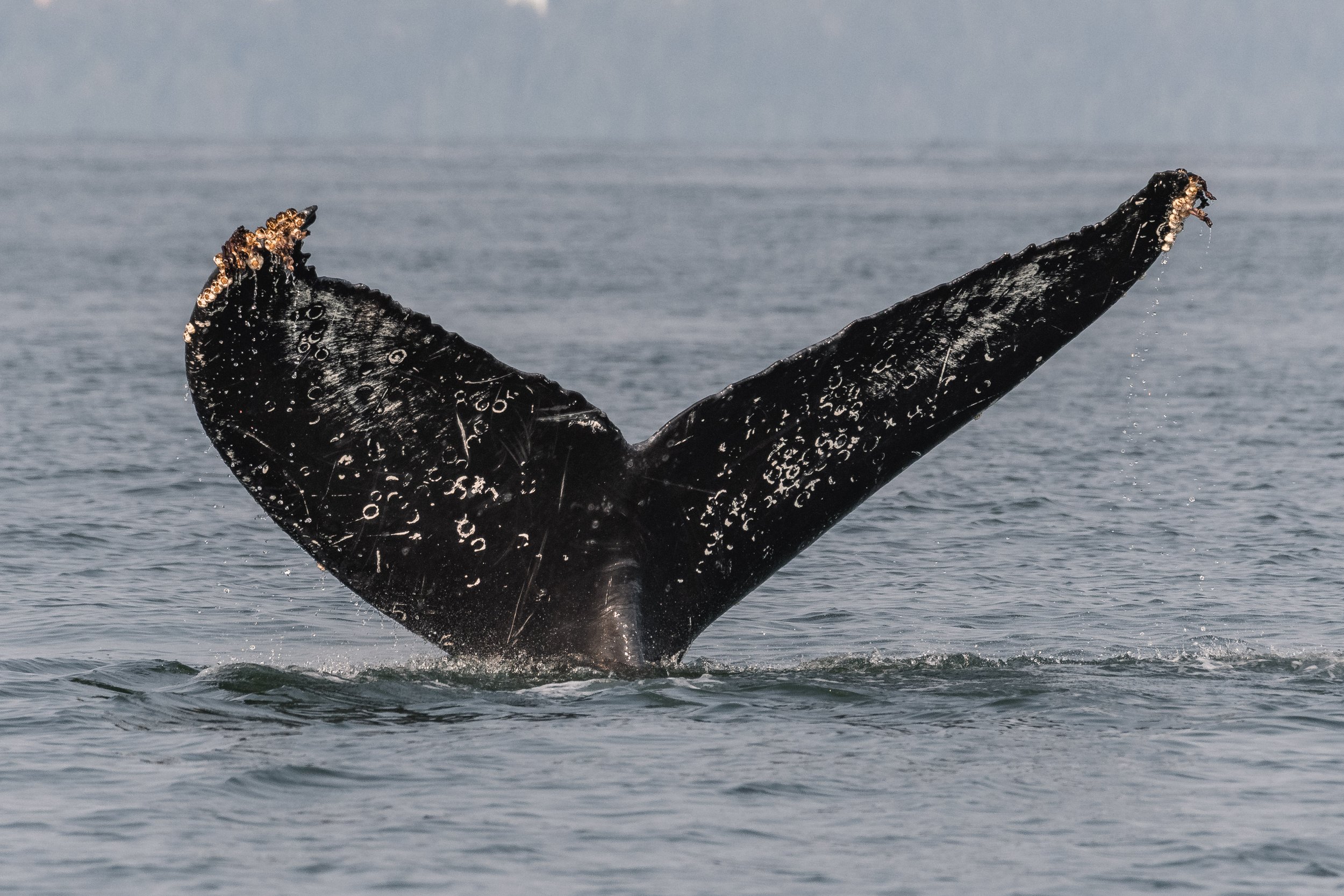
Dalmatian’s spotty flukes. Photo by Evan Hessels.
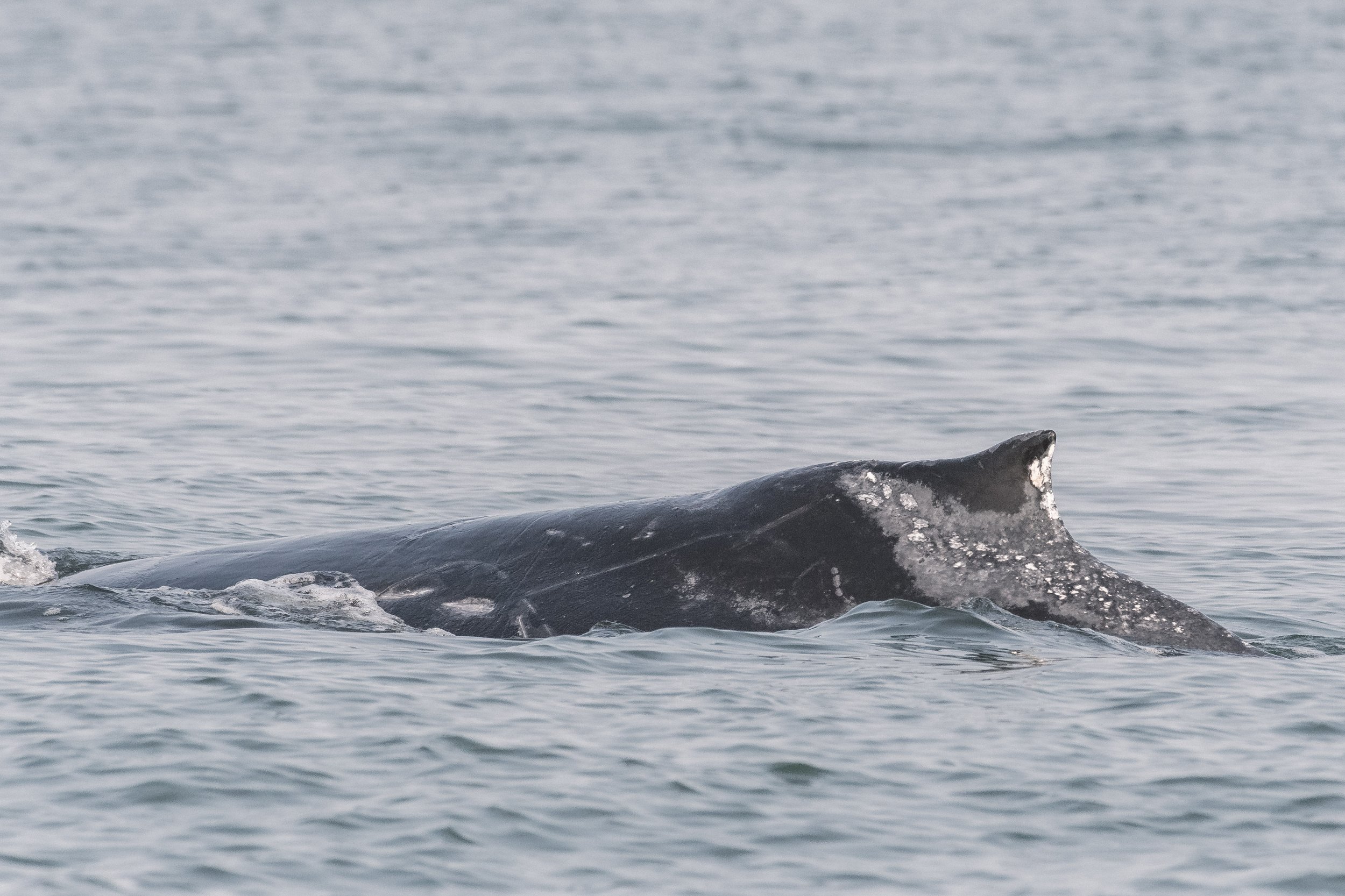
Sherwina’s calf has something interesting going on with their skin. Photo by Evan Hessels.
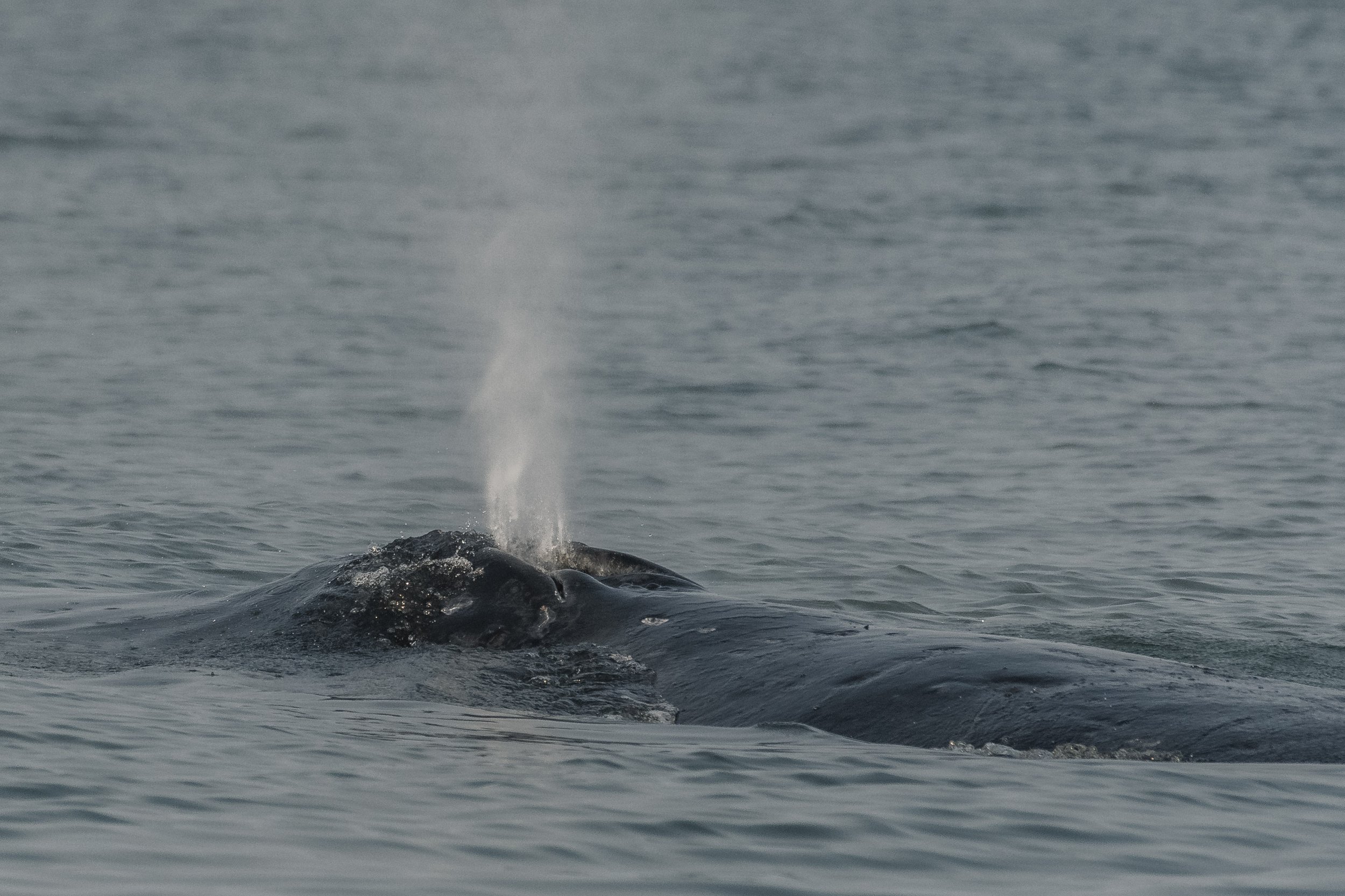
The start of a powerful exhalation. Photo by Evan Hessels.
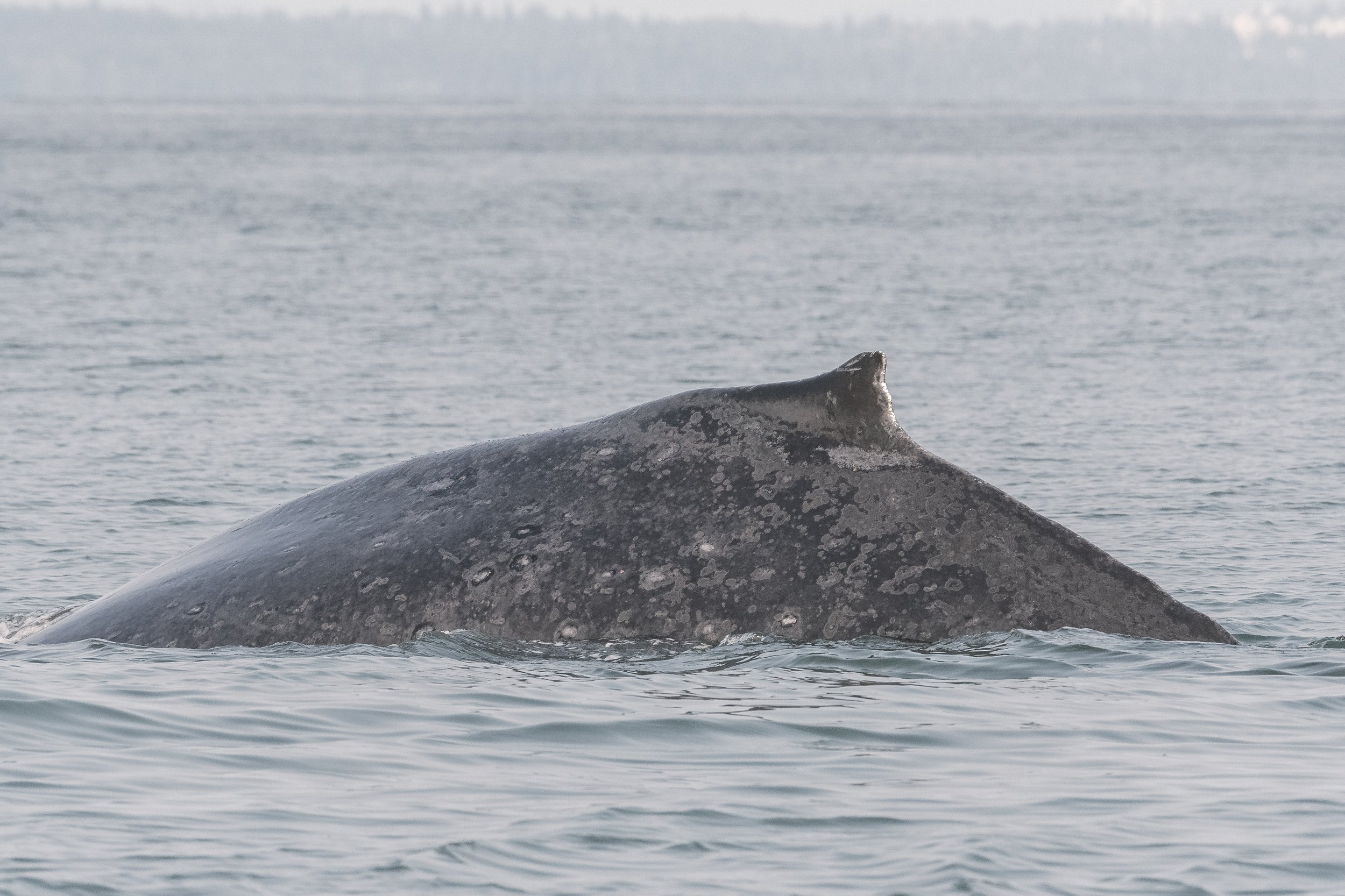
Sherwina’s dorsal fin. Photo by Evan Hessels.
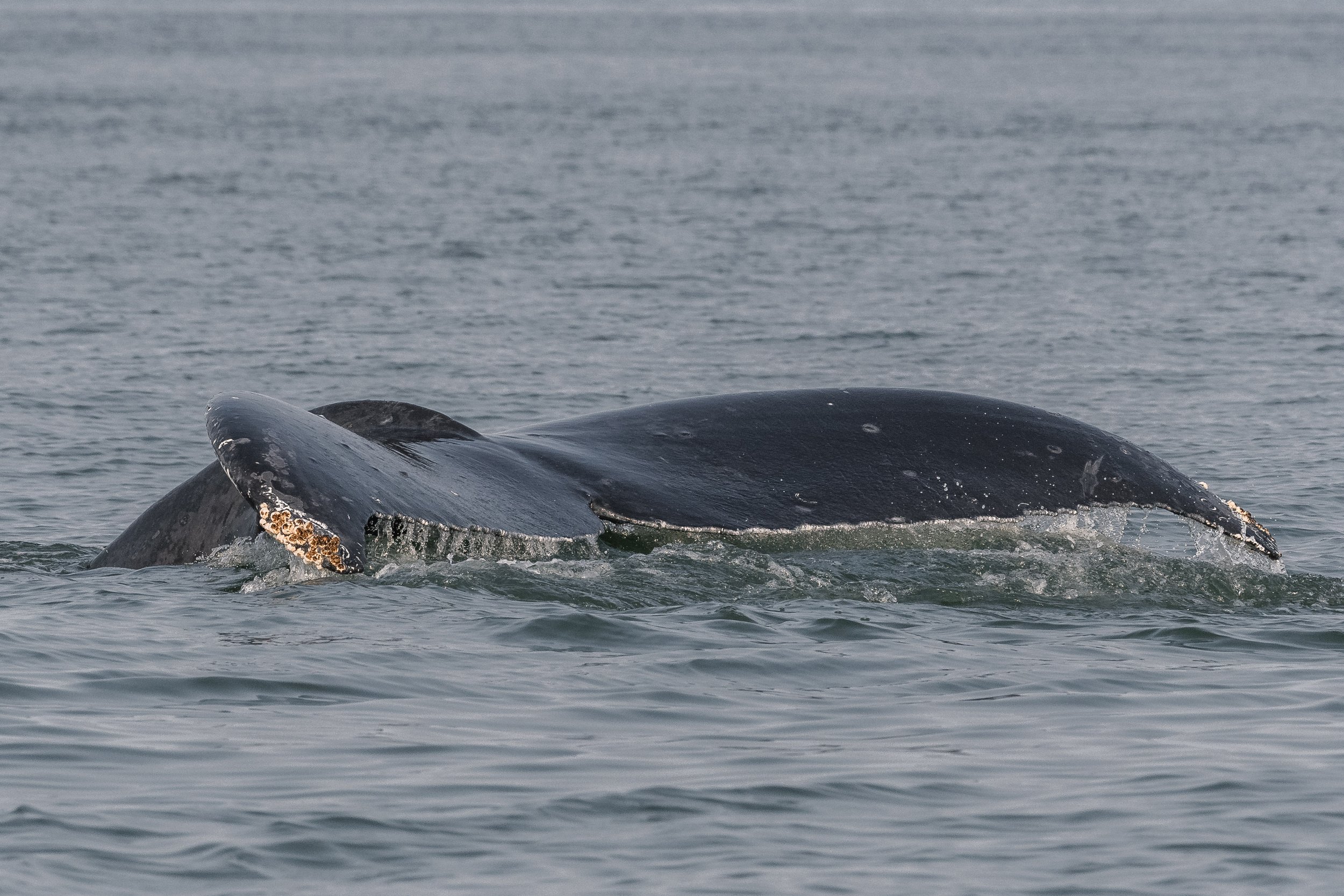
Those tails can reach up to 18 feet wide. Photo by Evan Hessels.
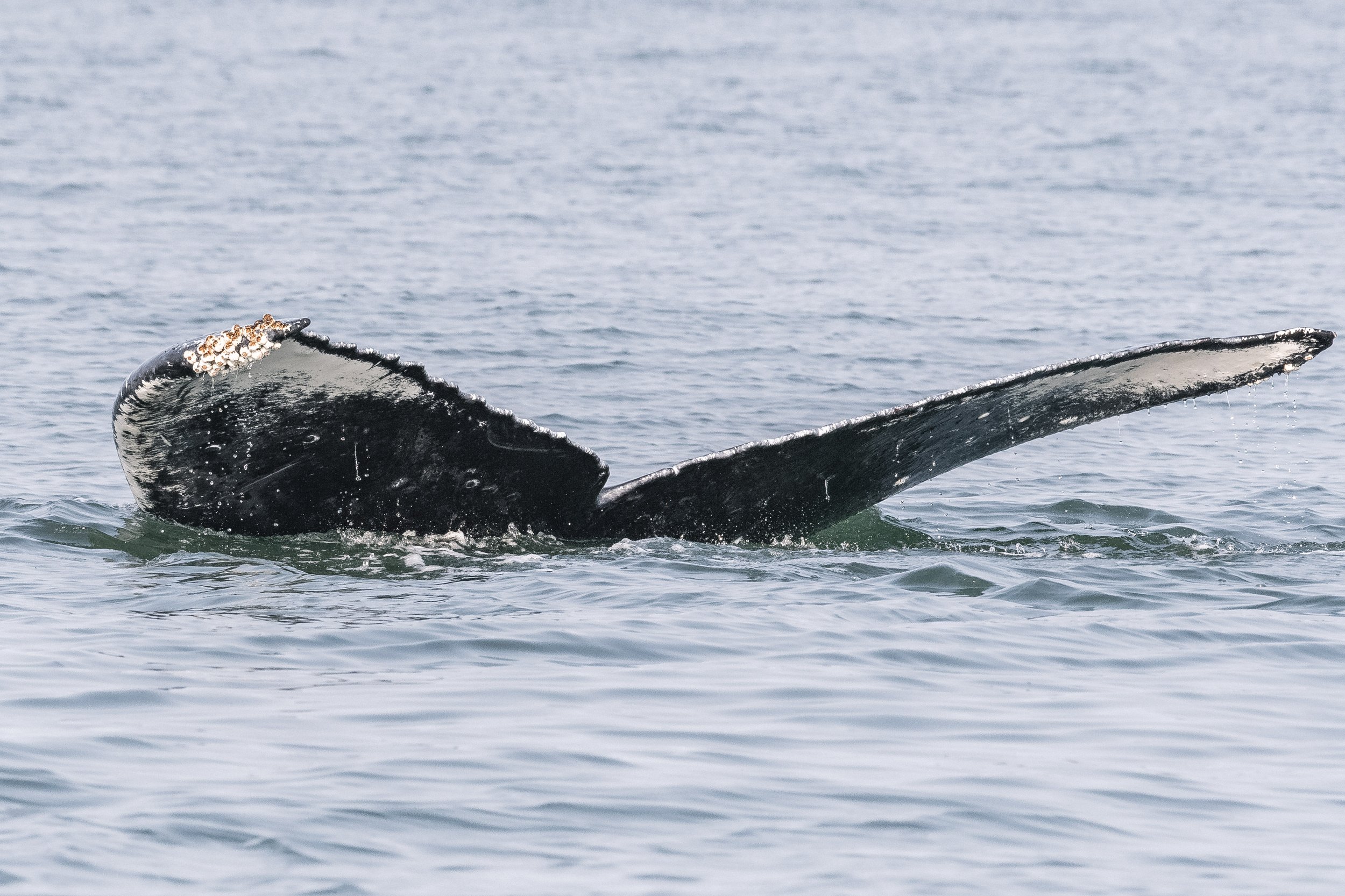
Sherwina’s lovely white tipped tail. Photo by Evan Hessels.
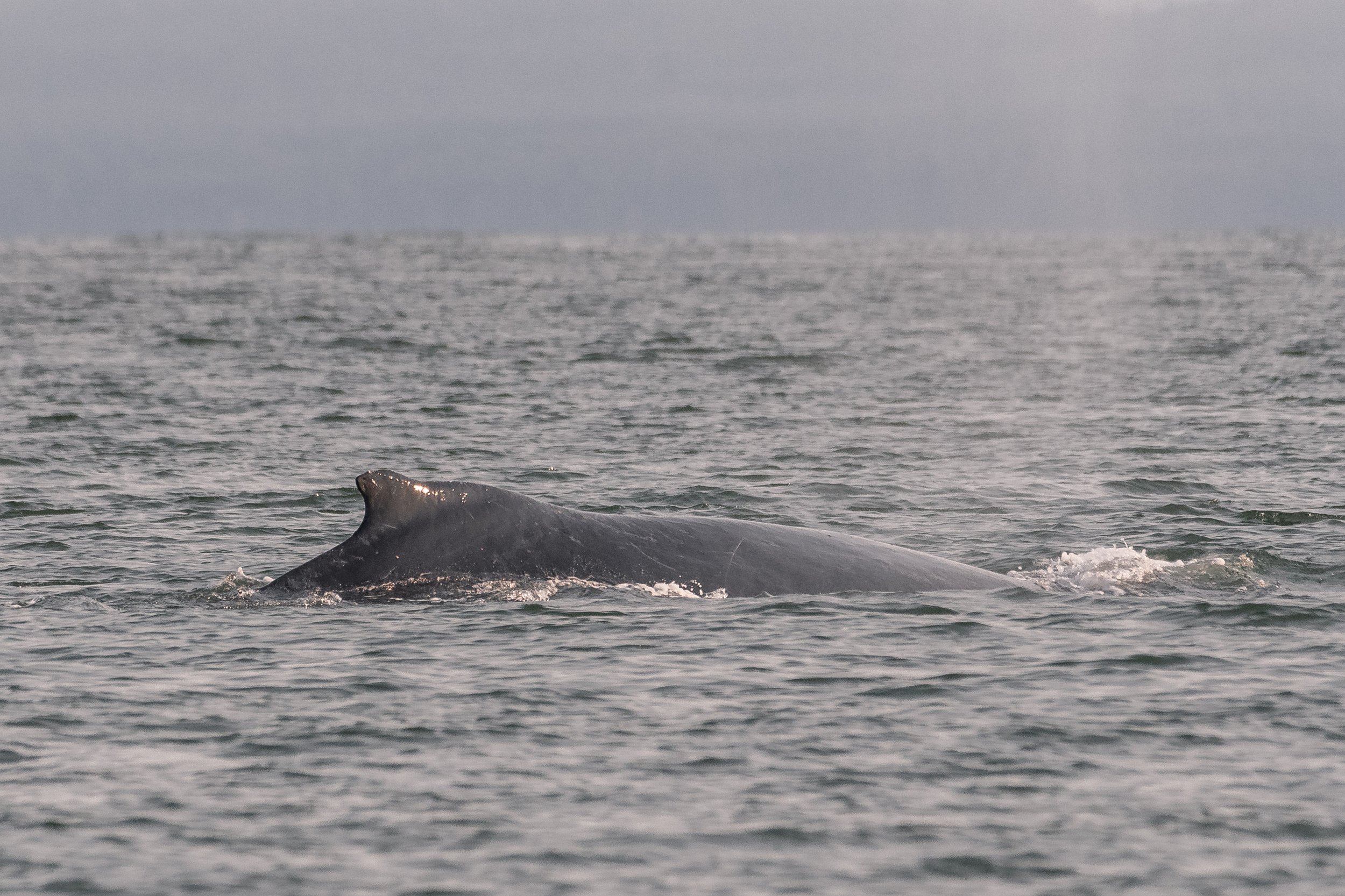
Graphite’s dorsal fin. Photo by Evan Hessels.
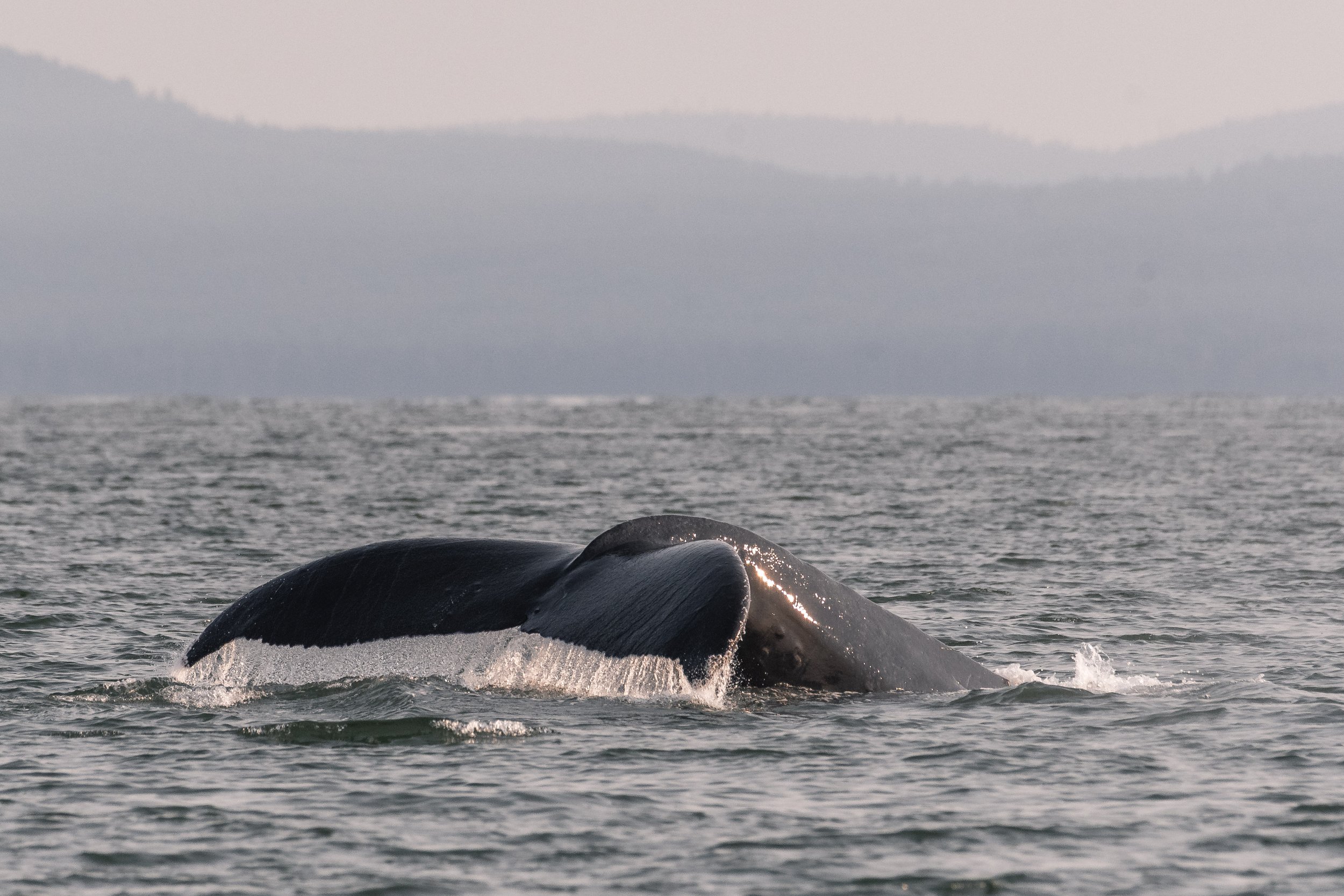
Another fluke waterfall, this time courtesy of Graphite. Photo by Evan Hessels.
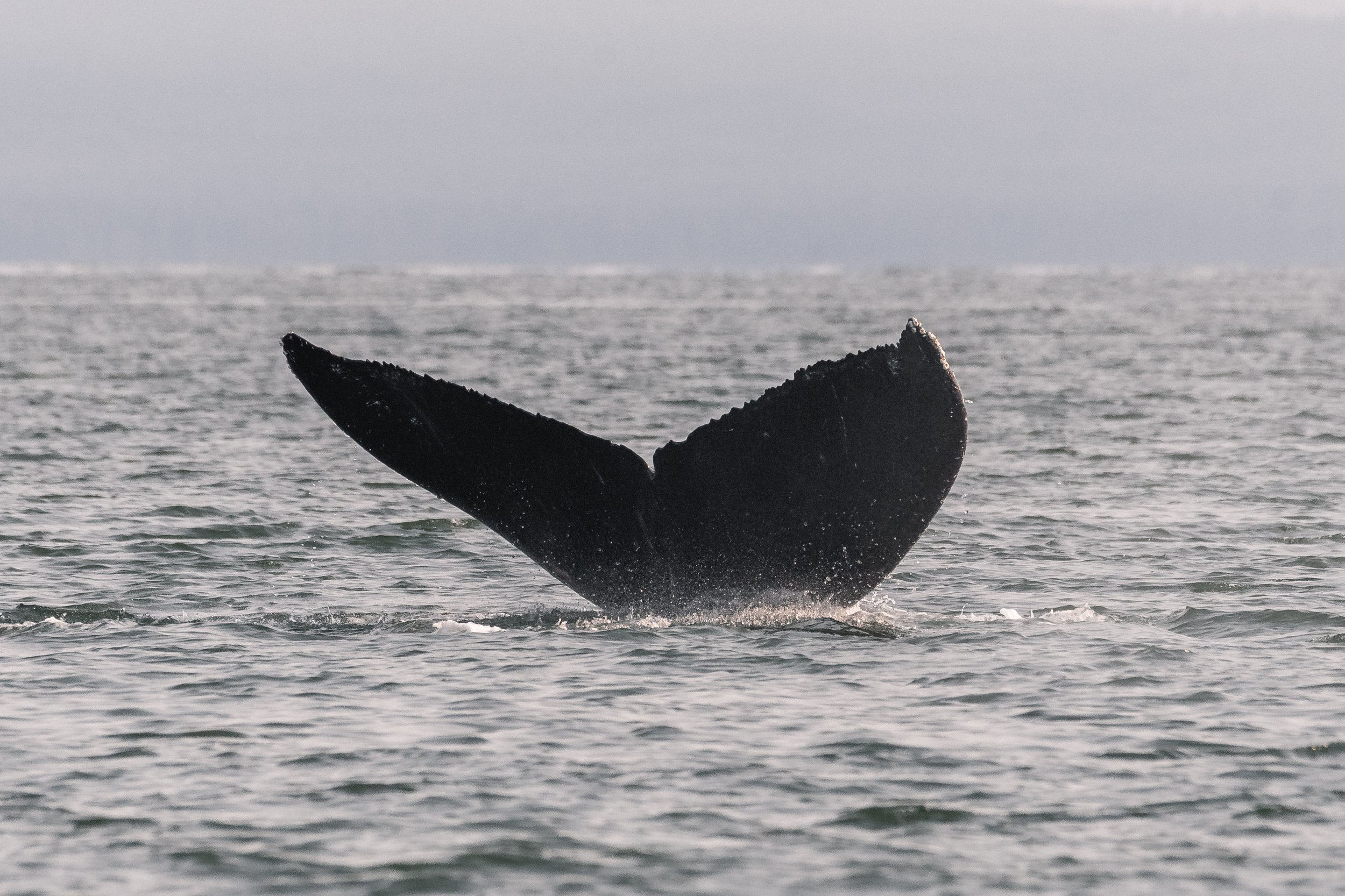
With less markings, Graphite’s tail makes him a little trickier to ID than some of our other whales today. Photo by Evan Hessels.
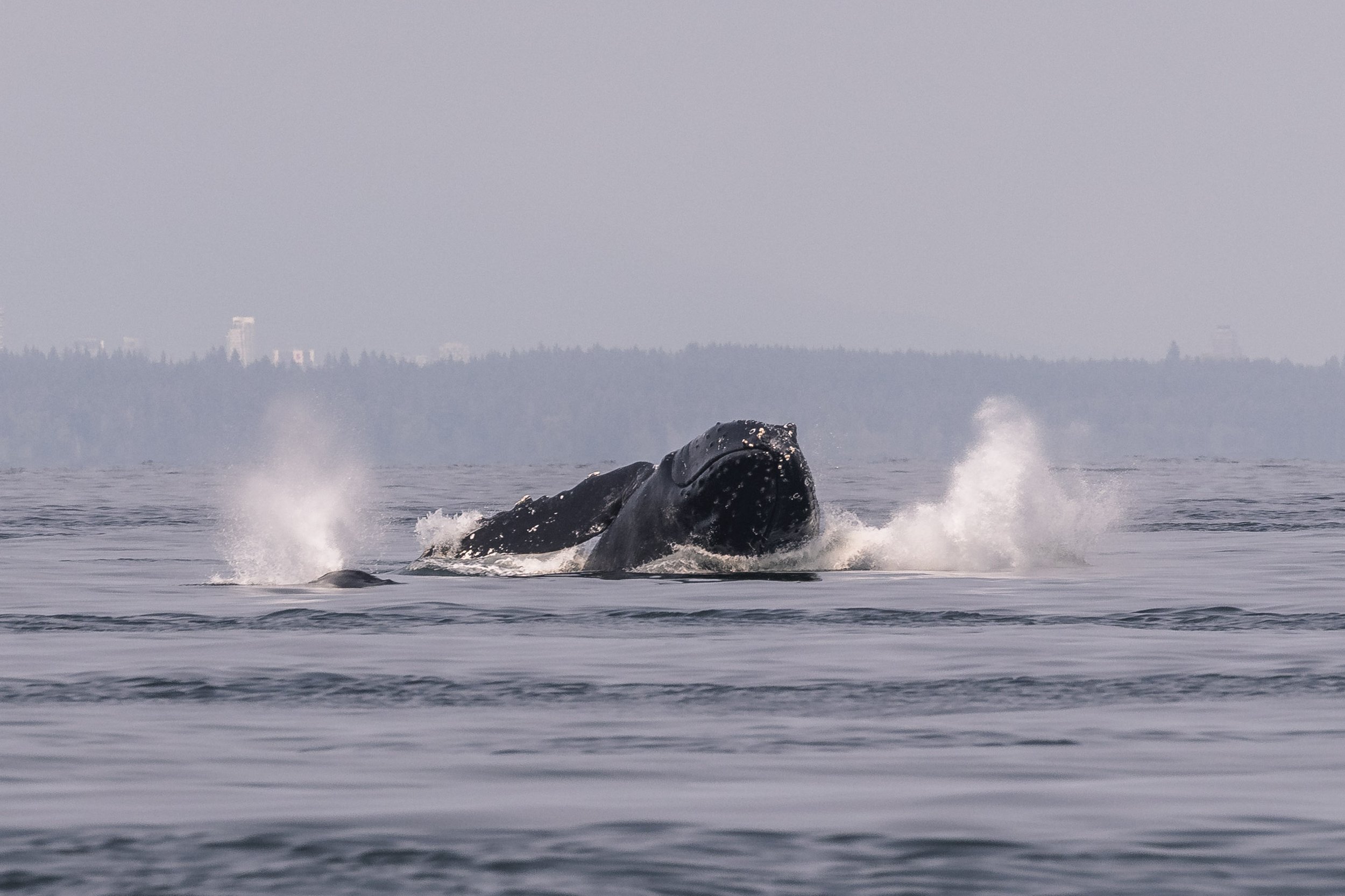
Splash landing. Photo by Jordan Robinson.
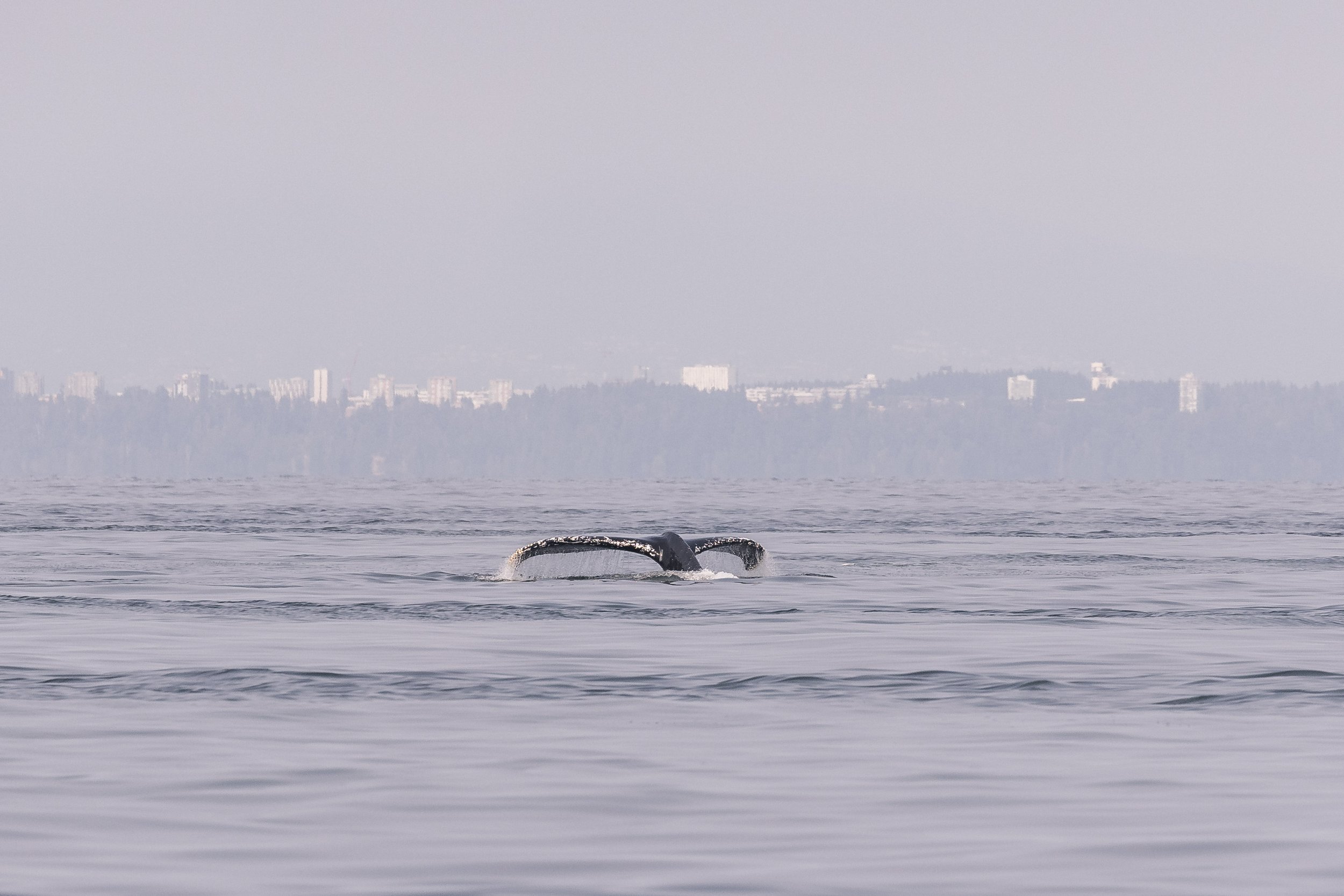
A scenic look at Strike. Photo by Jordan Robinson.
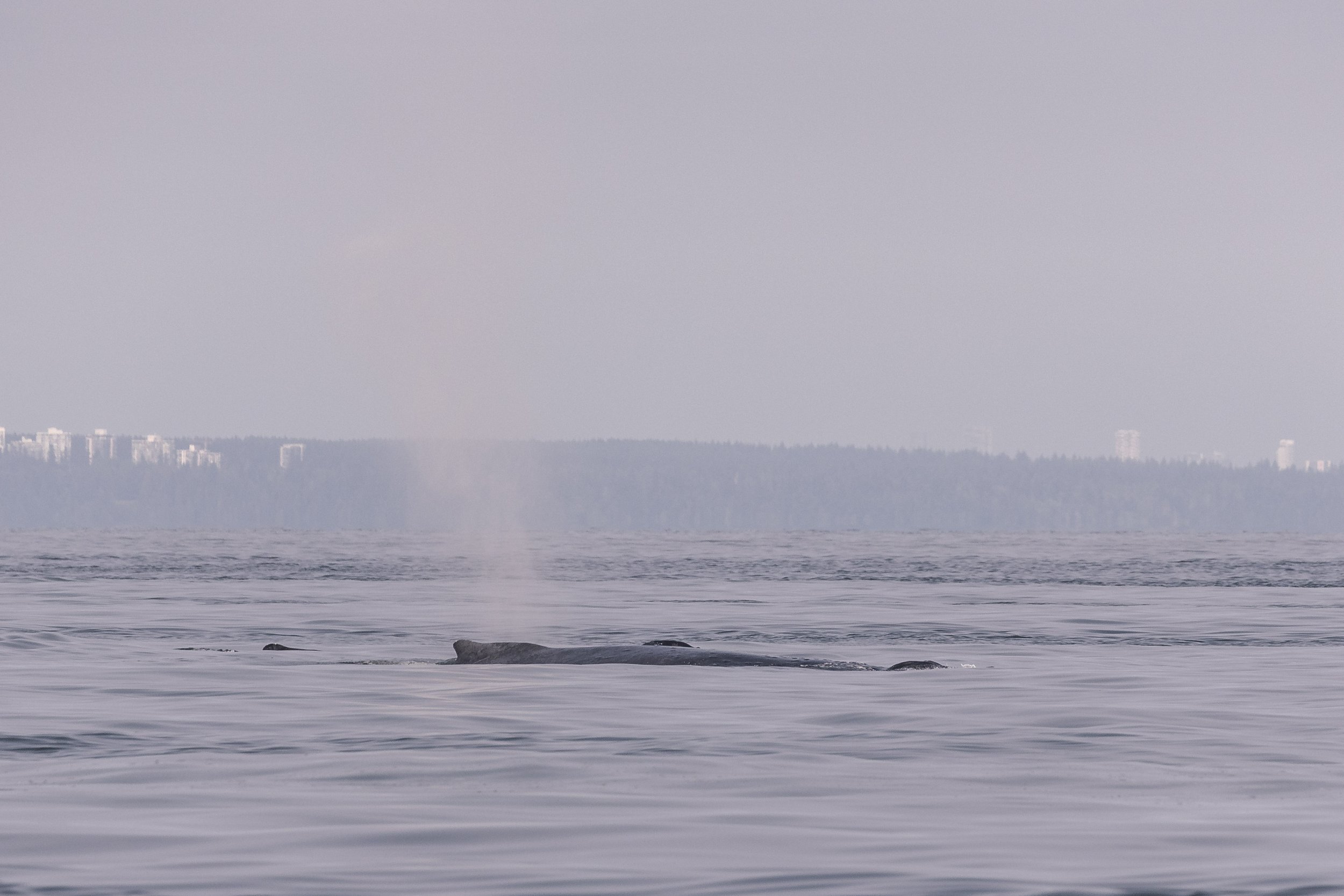
Vivaldi with Strike just popping up behind her. Photo by Jordan Robinson.
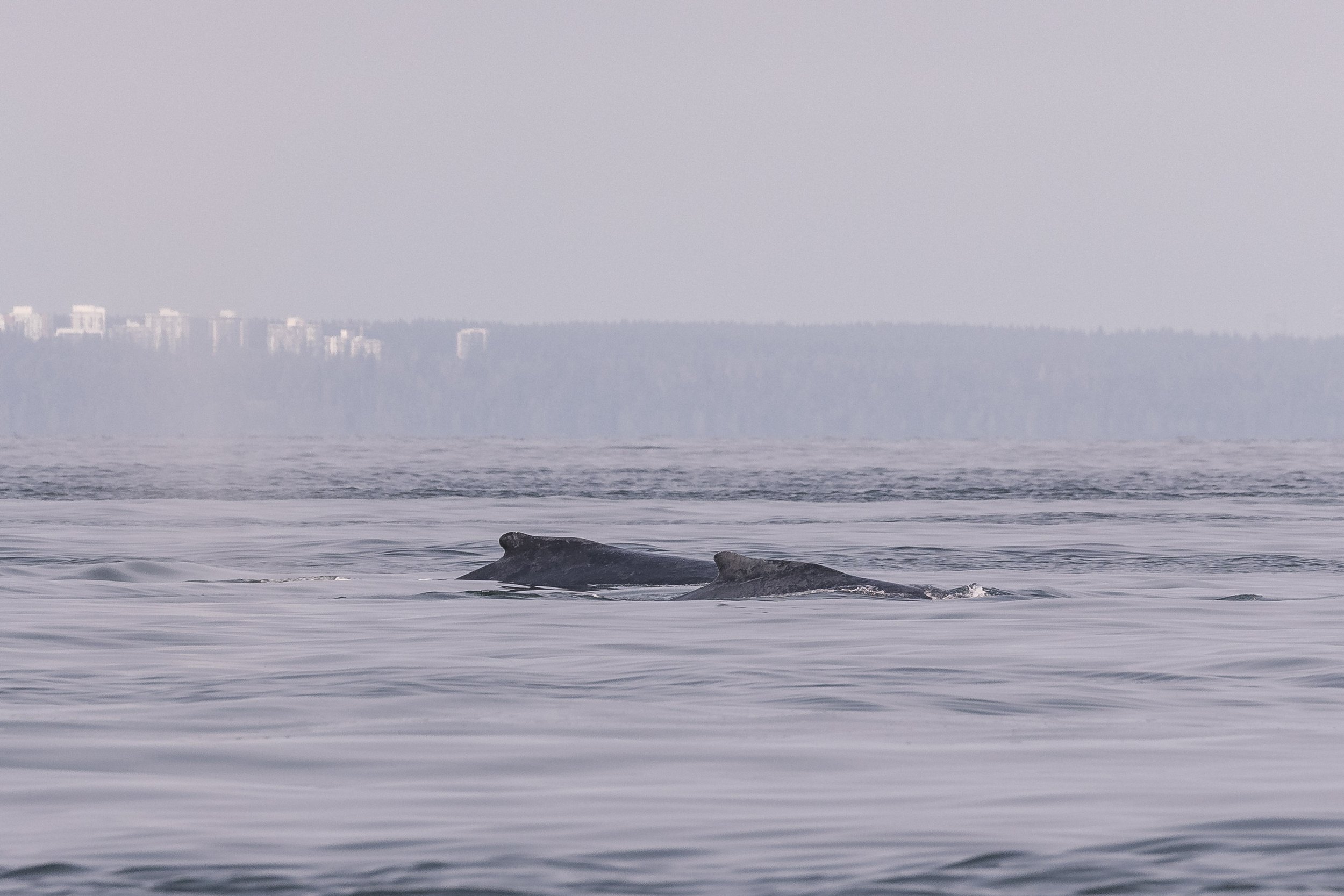
Vivaldi and Strike side by side. Photo by Jordan Robinson.
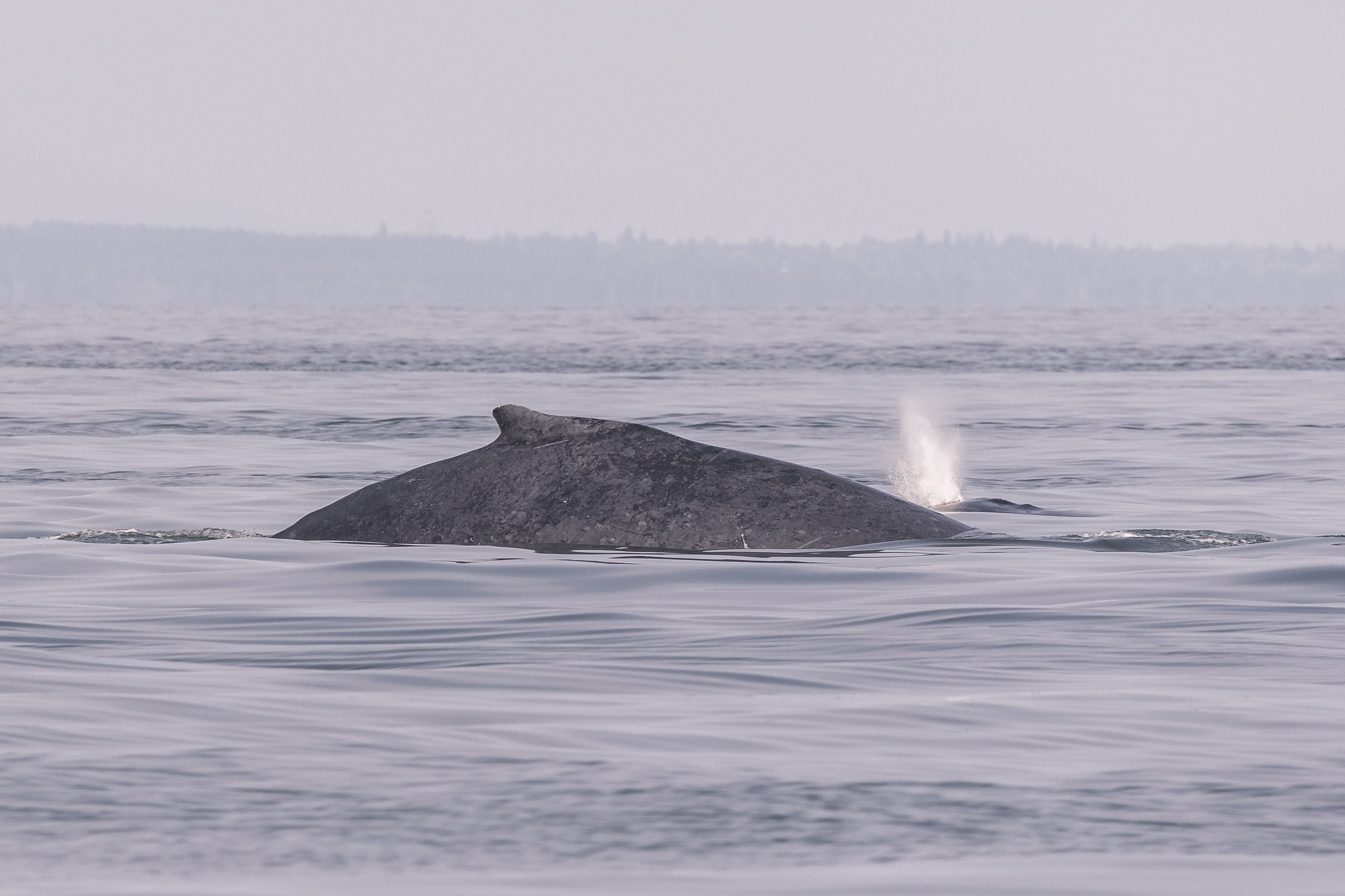
Vivaldi’s dorsal fin with Strike starting to exhale in the background. Photo by Jordan Robinson.
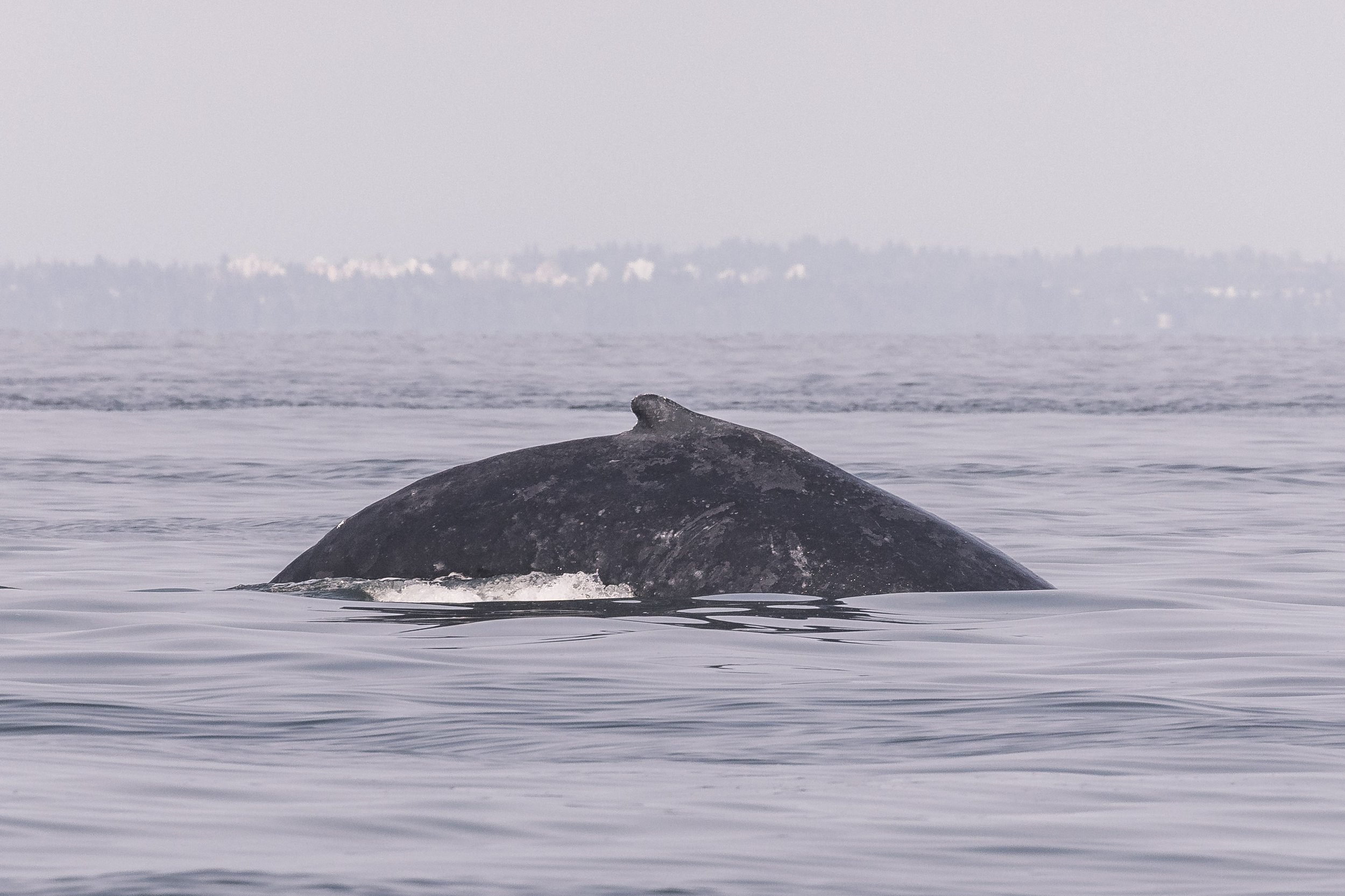
A nice high arch from Strike as she heads down for a dive. Photo by Jordan Robinson.
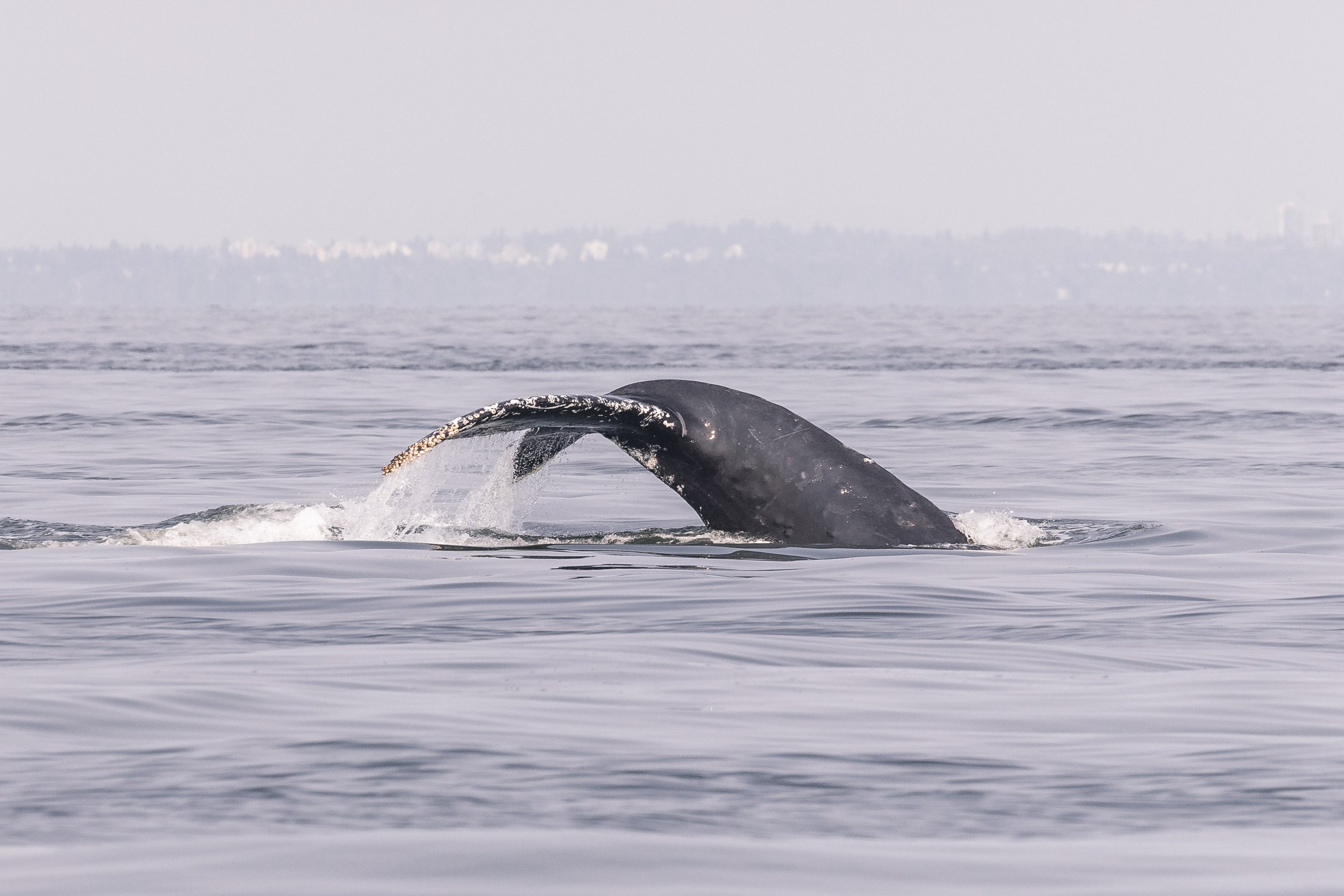
A side on look at Strike’s tail. Photo by Jordan Robinson.
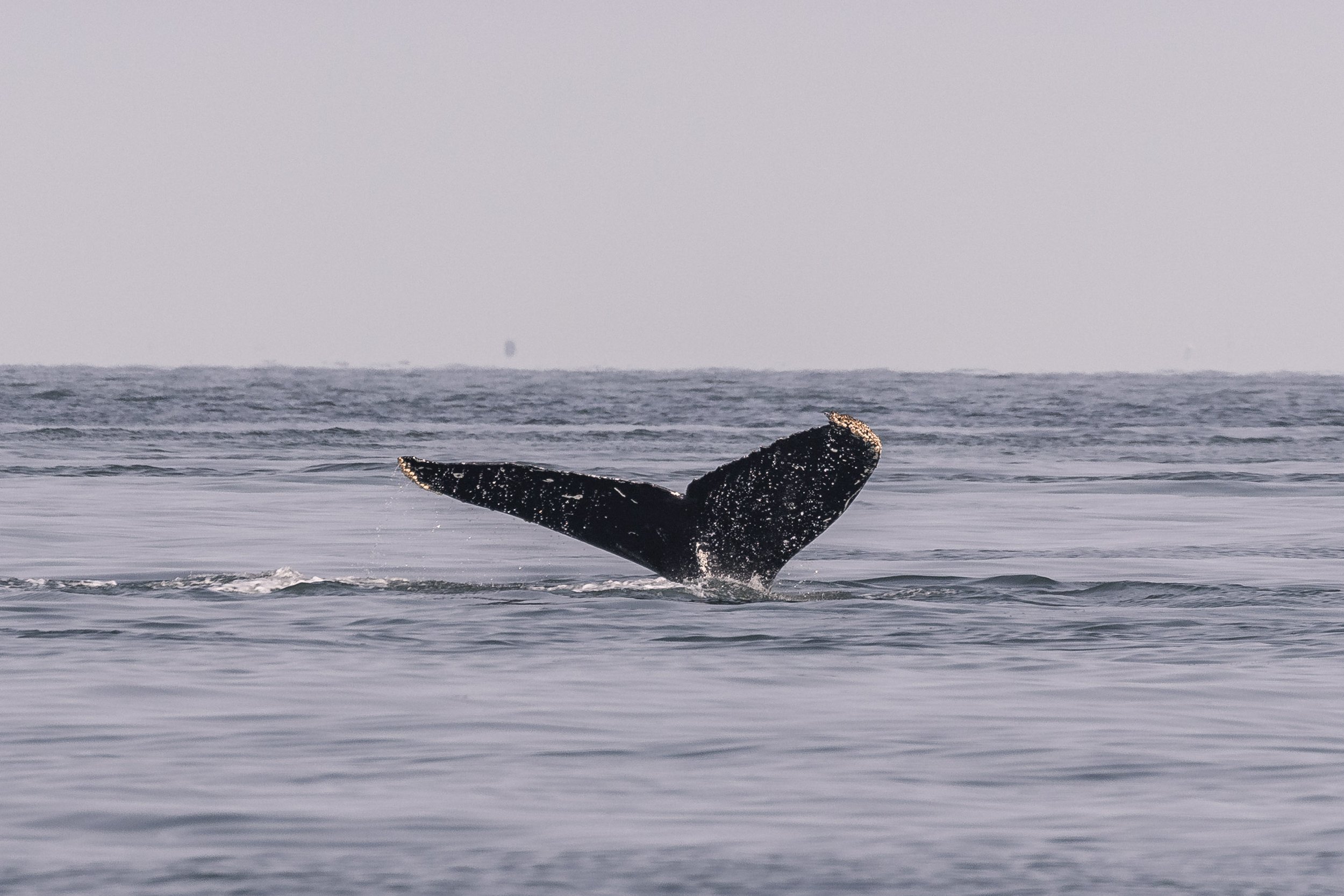
The unique markings on the underside of Strike’s tail. Photo by Jordan Robinson.
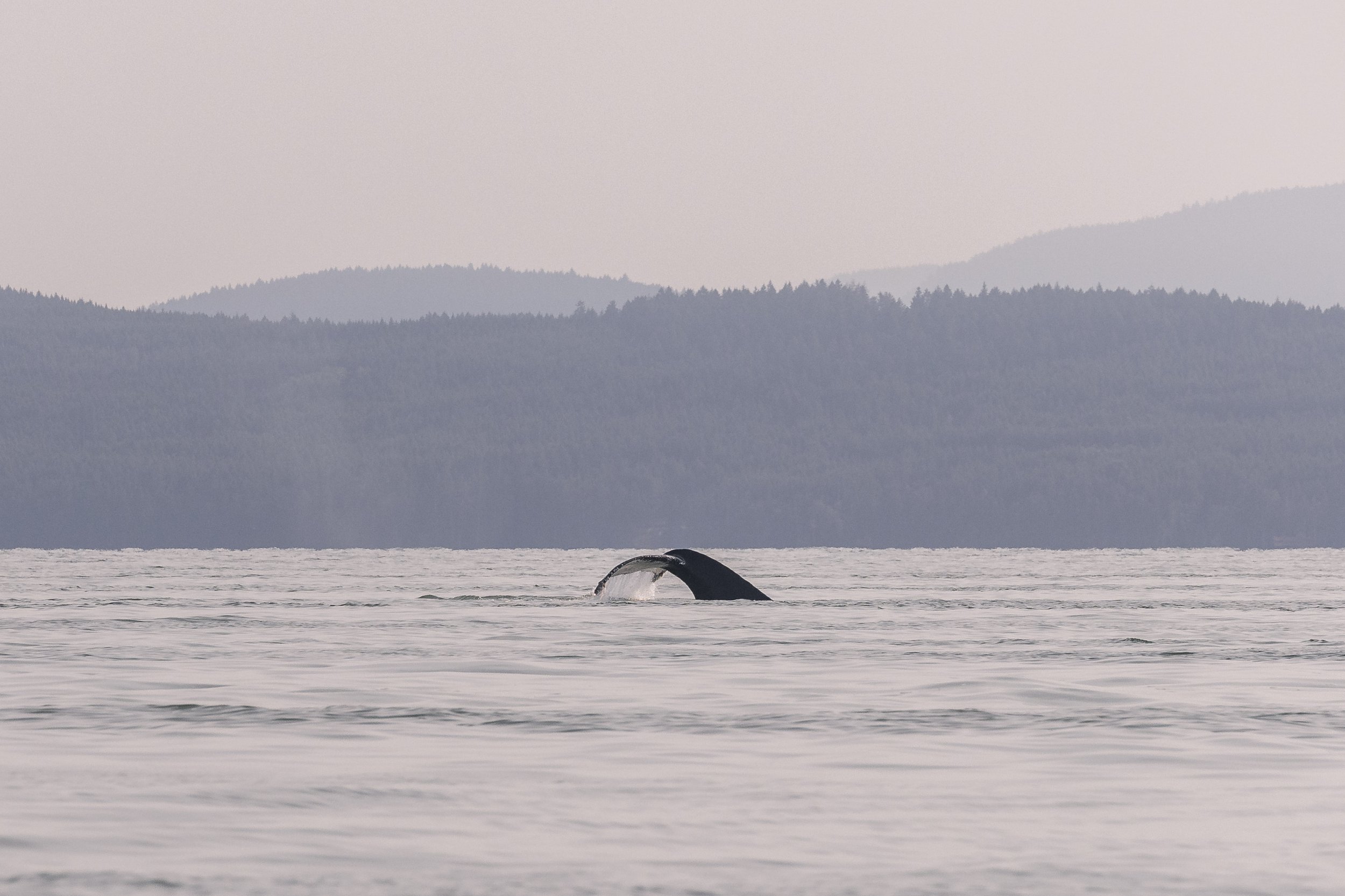
A surprise appearance from Geometry in the distance. Photo by Jordan Robinson.
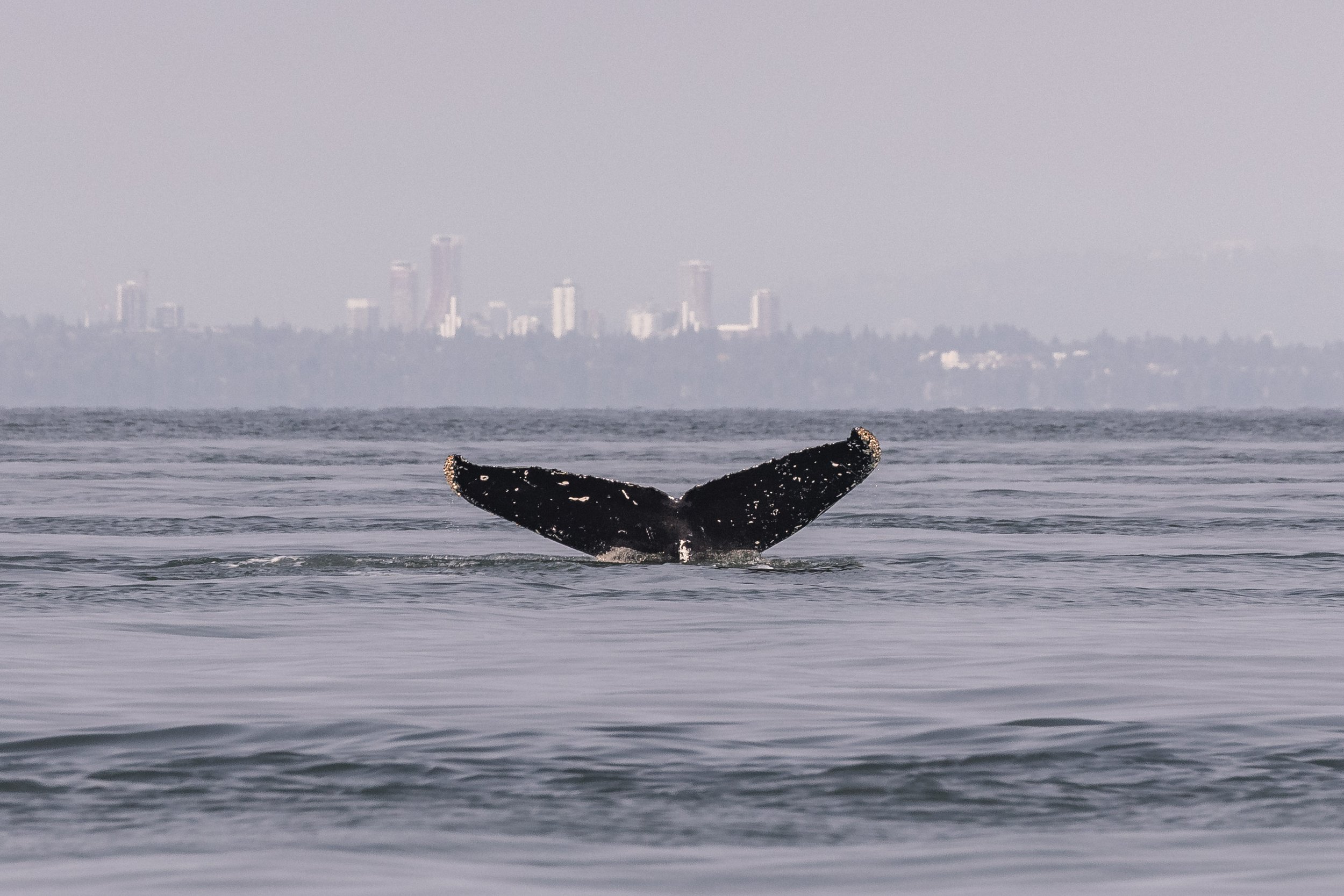
Another look at Strike’s flukes as she propels herself deeper. Photo by Jordan Robinson.
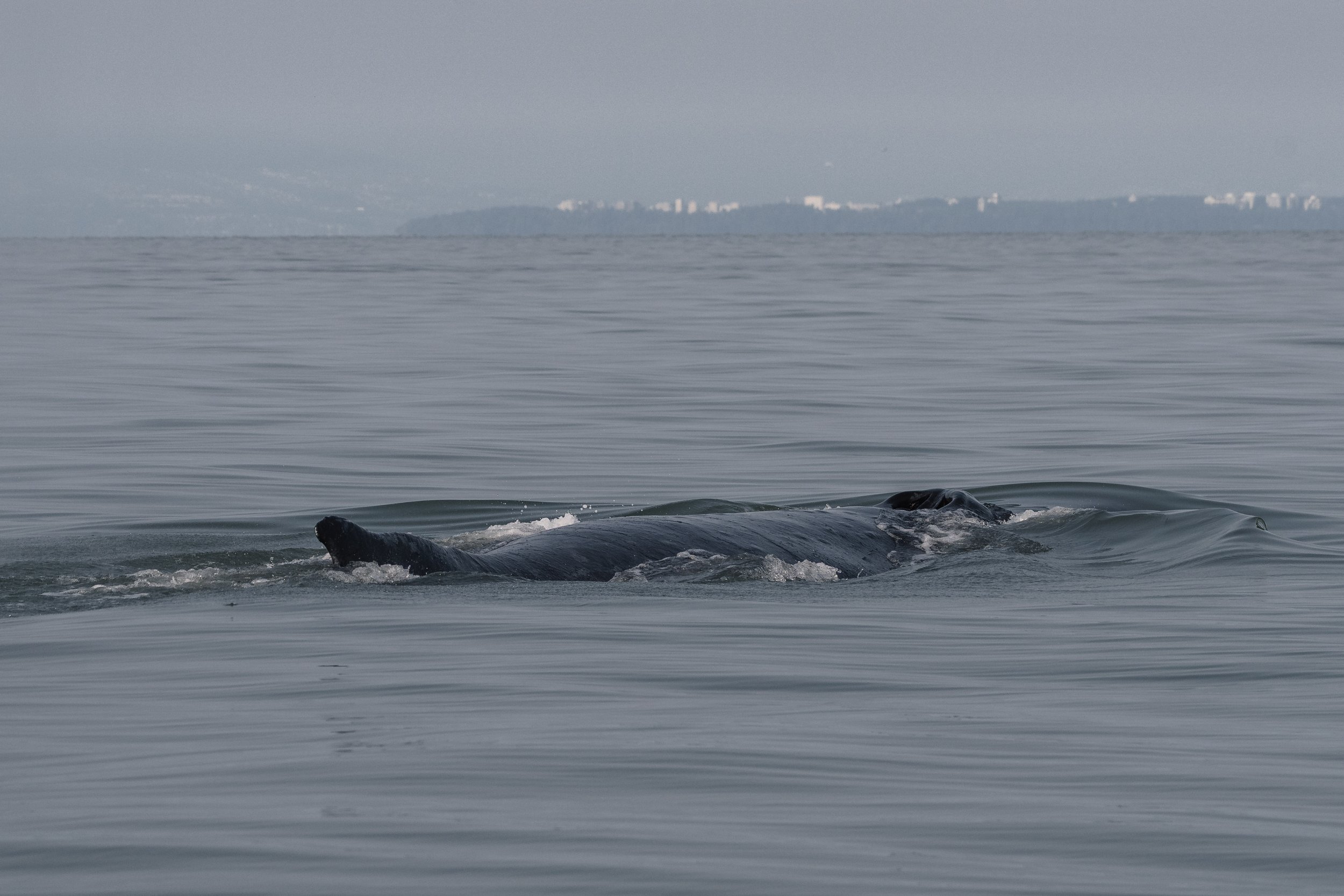
A look up Crackle’s nostrils. Photo by Val Watson.
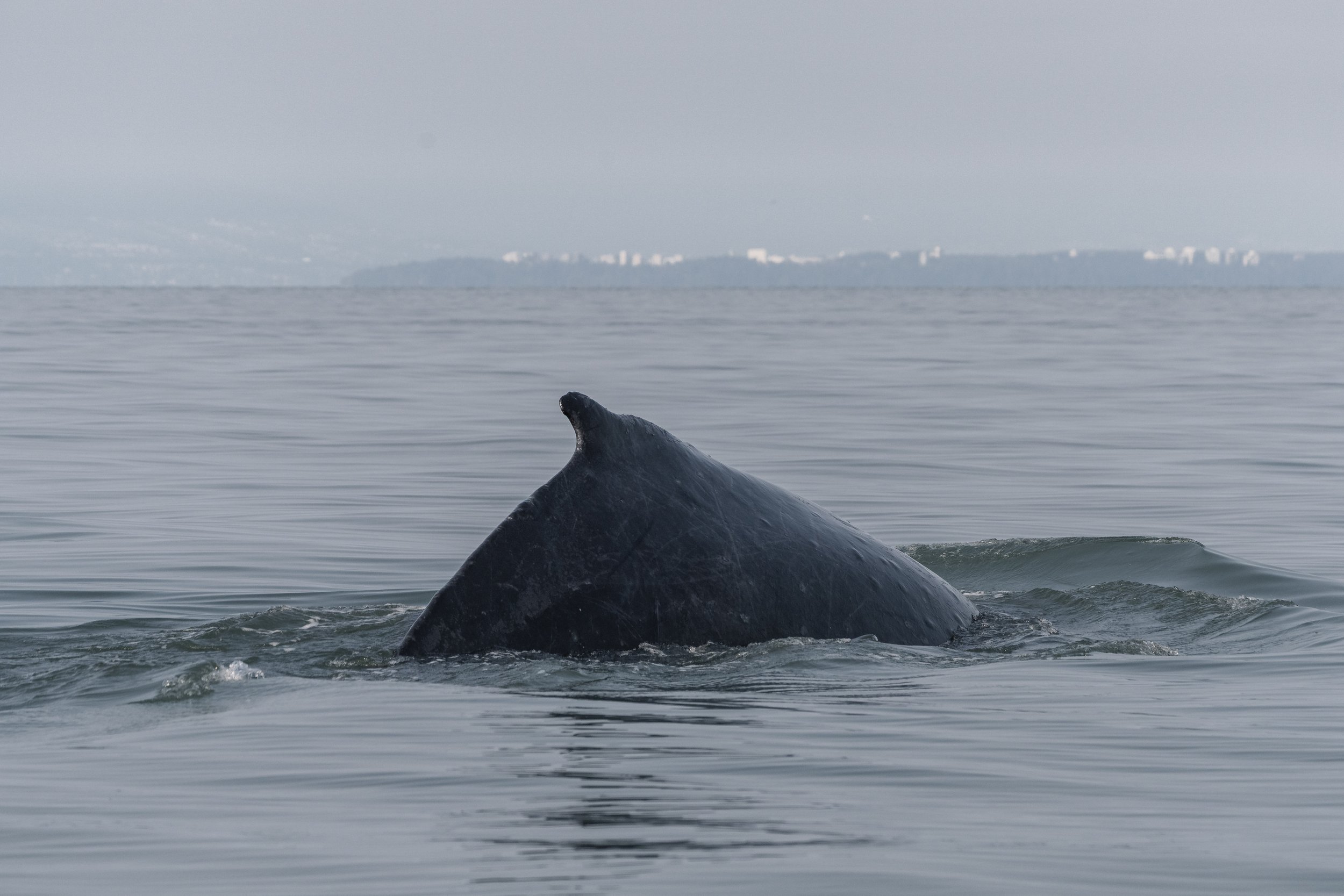
Going down. Photo by Val Watson.
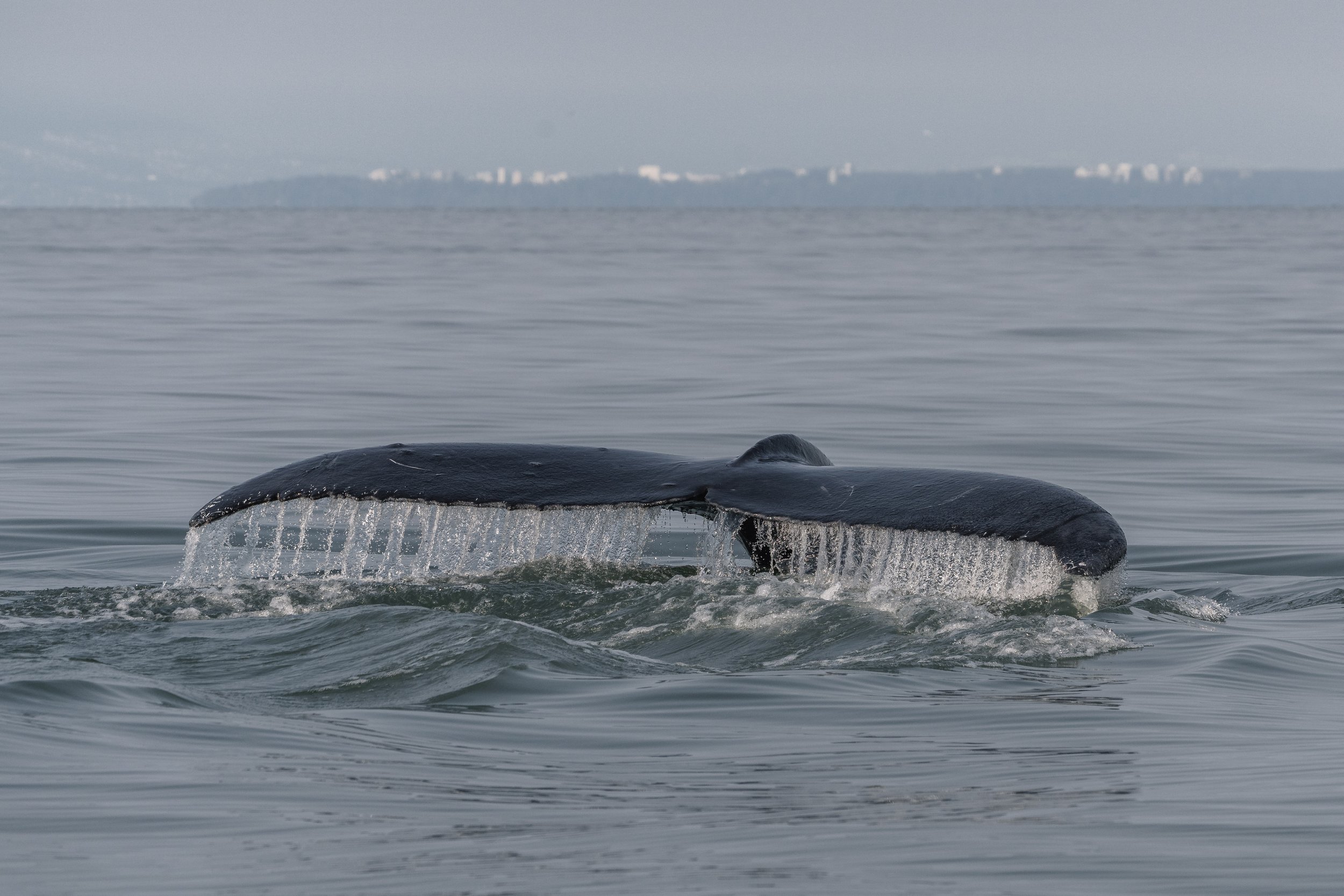
Water cascading off of Crackle’s tail. Photo by Val Watson.
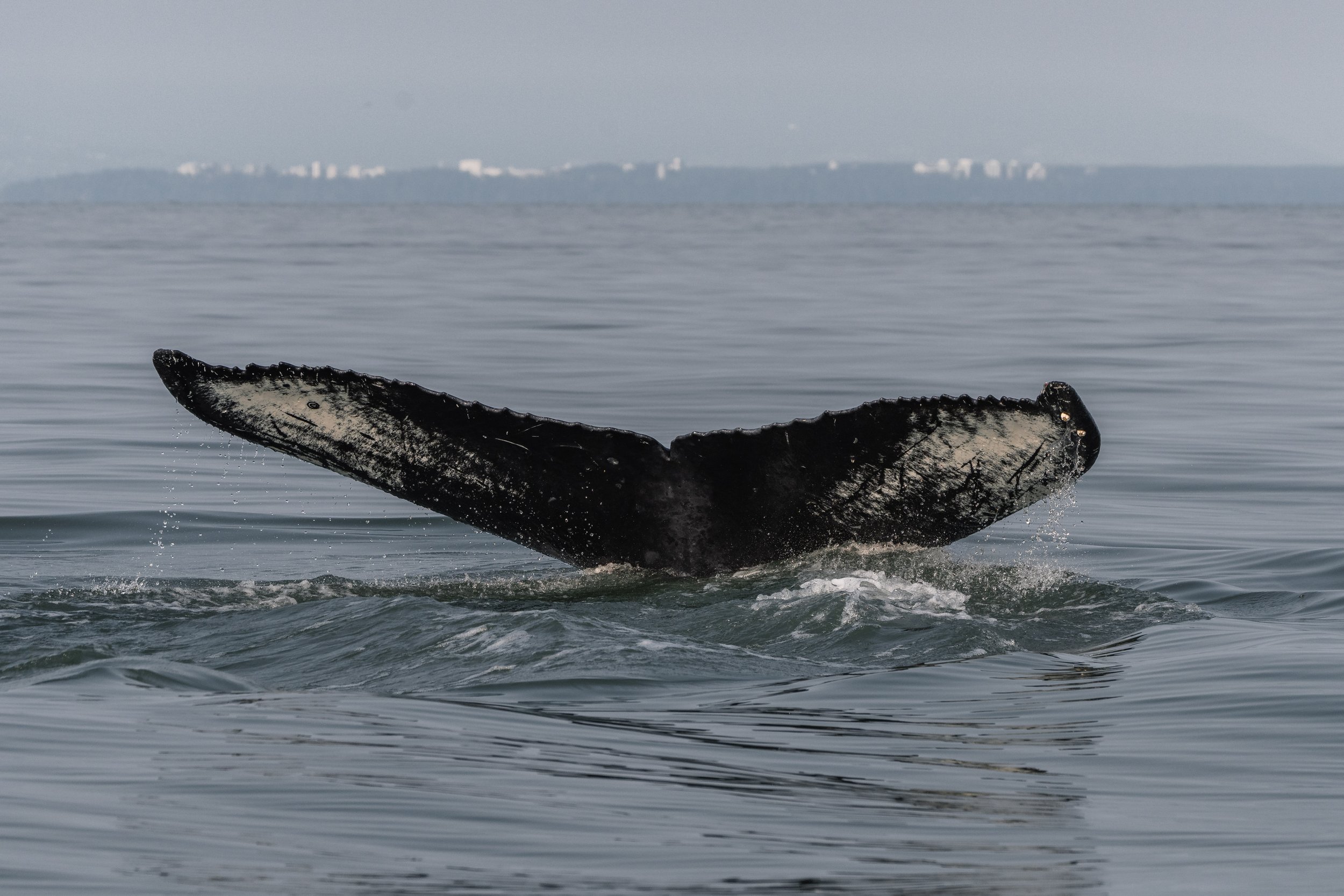
Crackle’s unique tail markings. Photo by Val Watson.
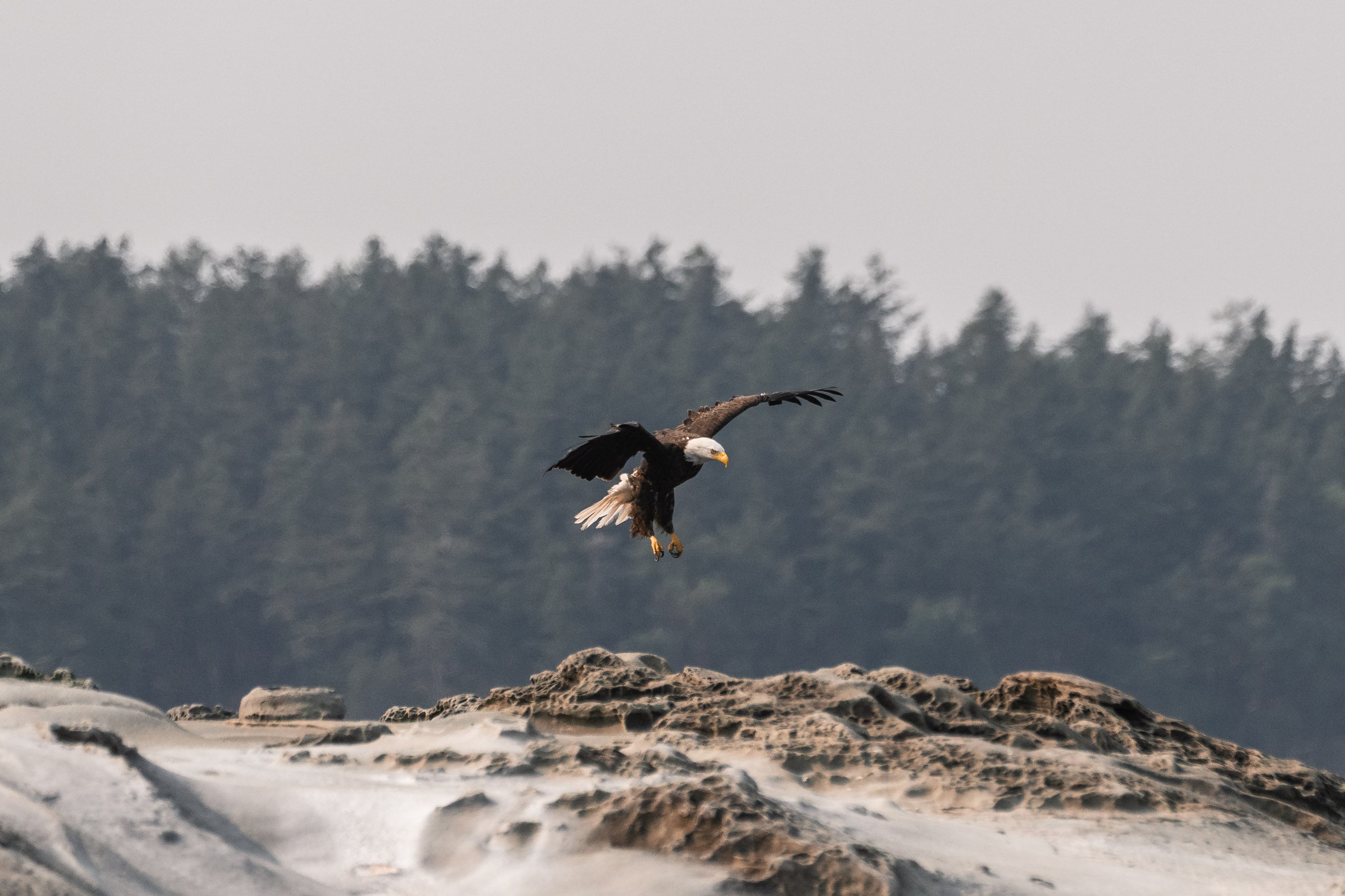
Coming in for landing. Photo by Val Watson.
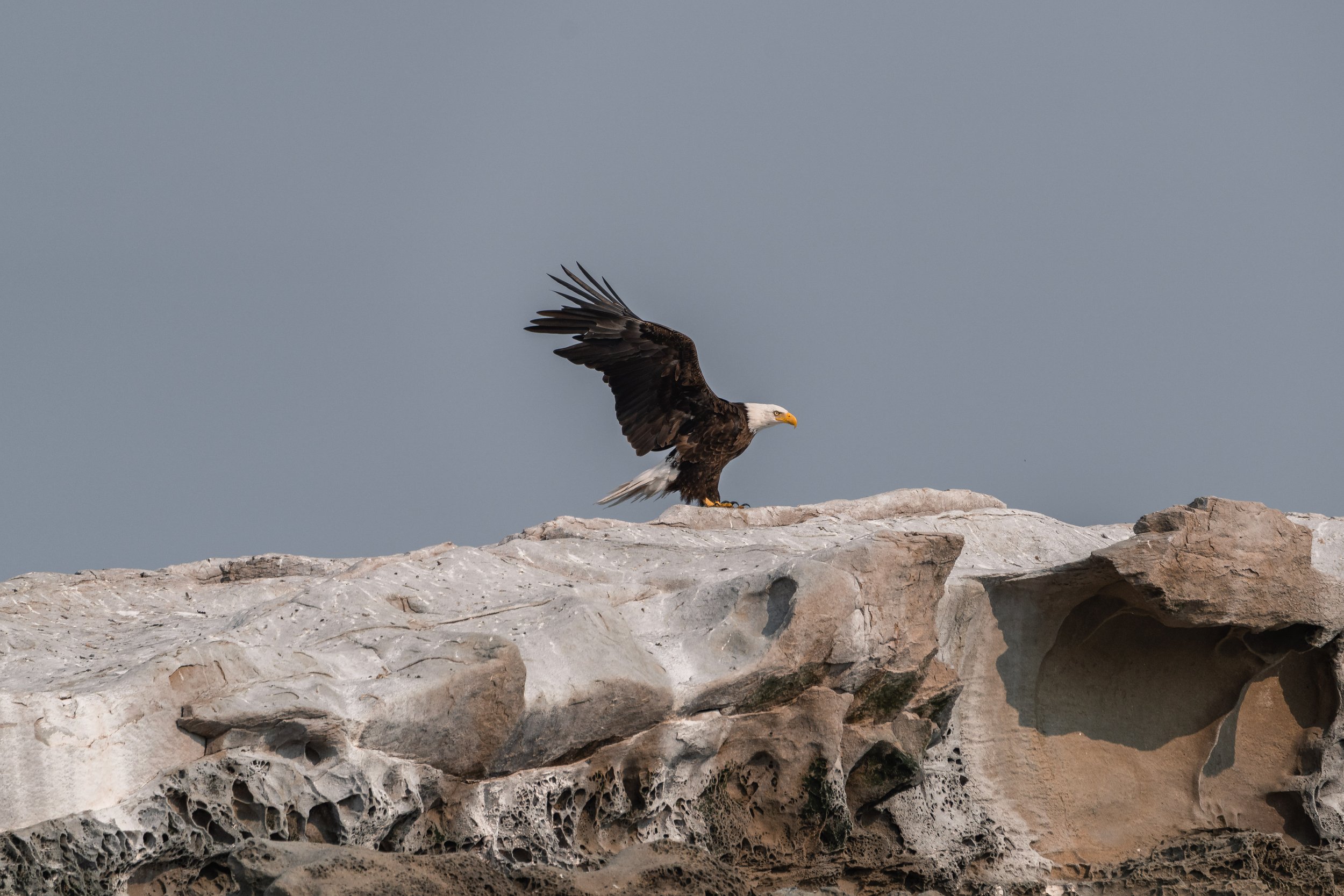
Nailed it. Photo by Val Watson.
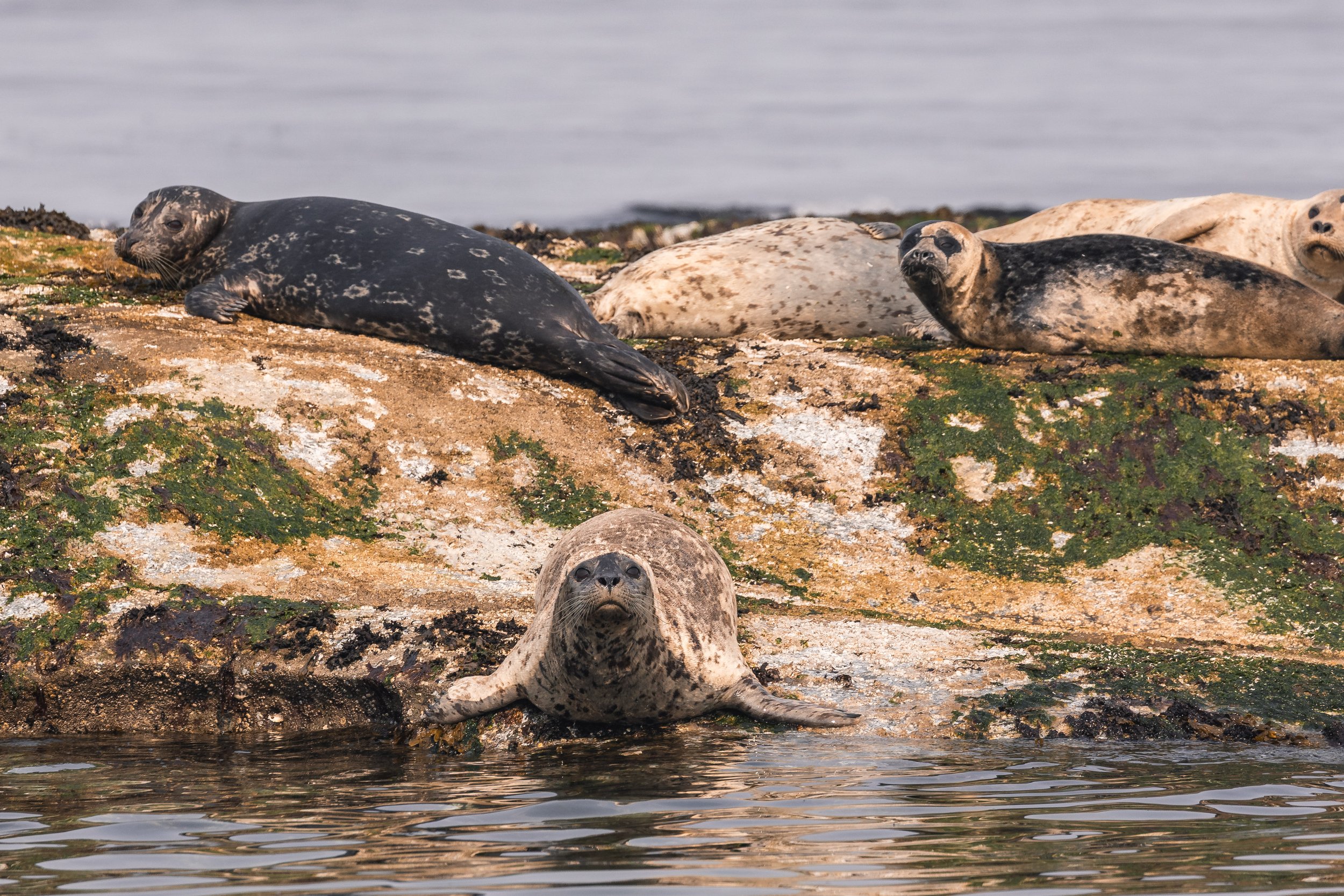
Harbour Seals checking us out. Photo by Jordan Robinson.
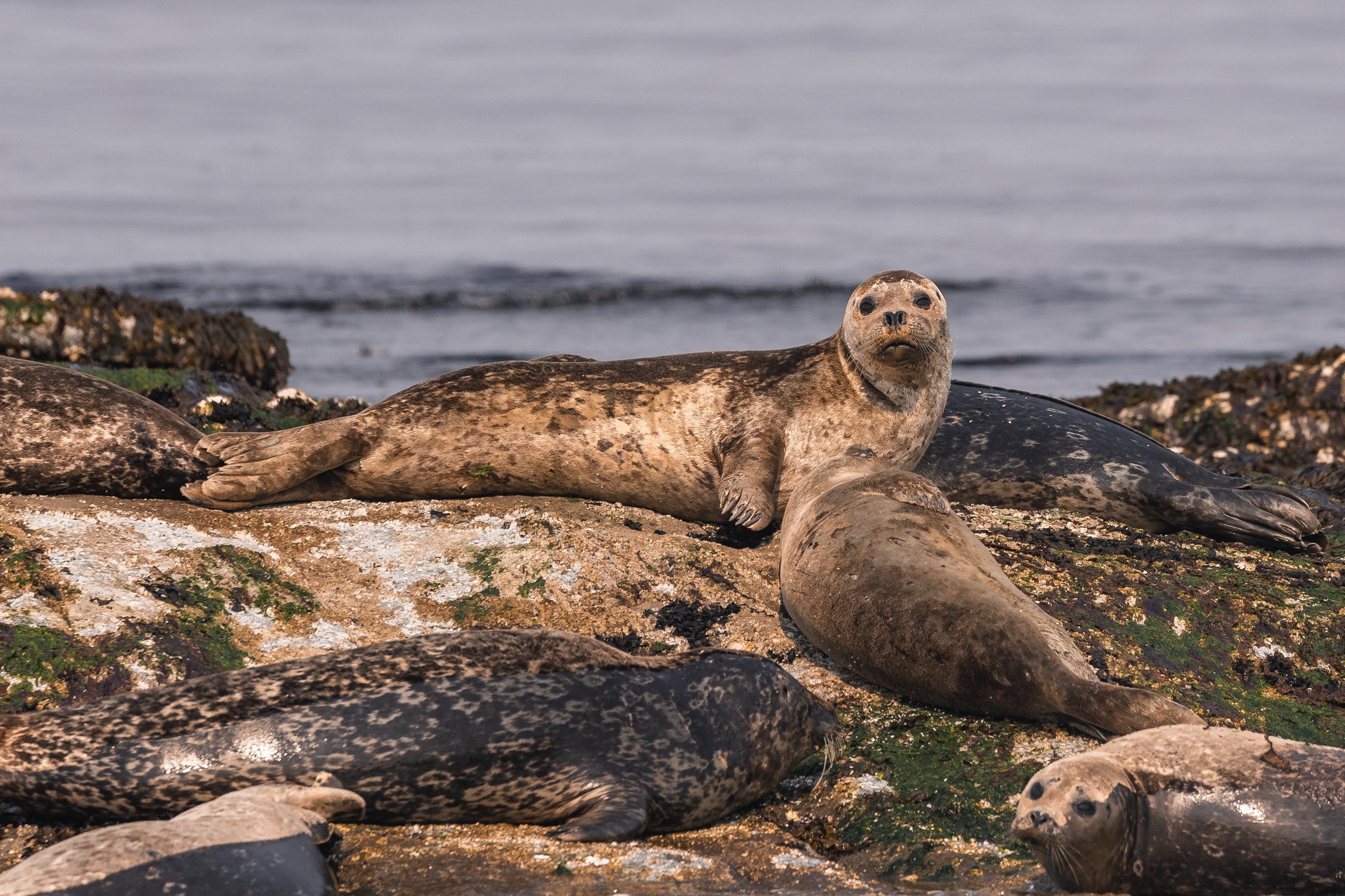
The speckled fur of the Harbour Seals makes them blend in very well with the rocks. Photo by Jordan Robinson.
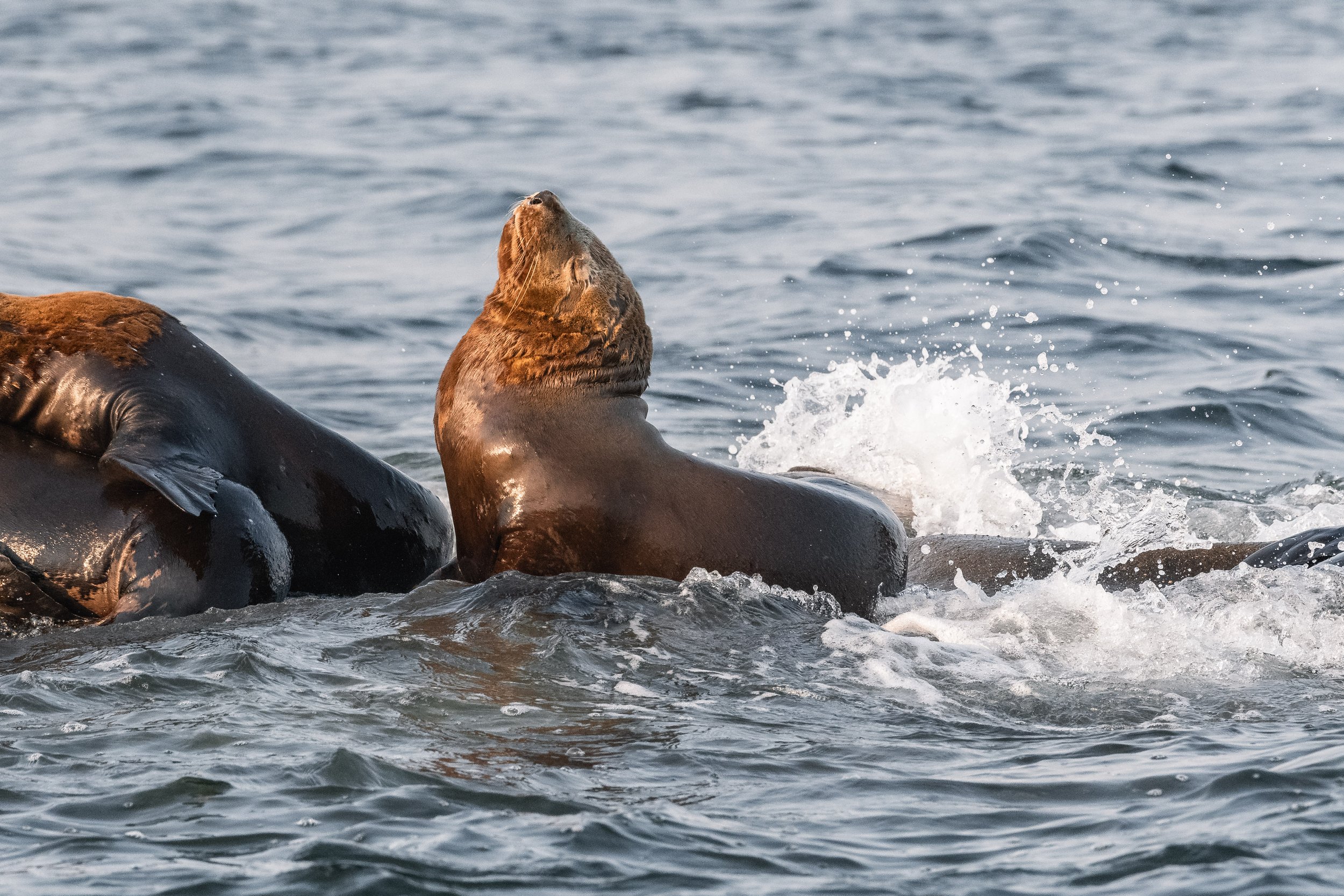
Unbothered, moisturised, happy, in their lane, focused, flourishing. Photo by Evan Hessels.
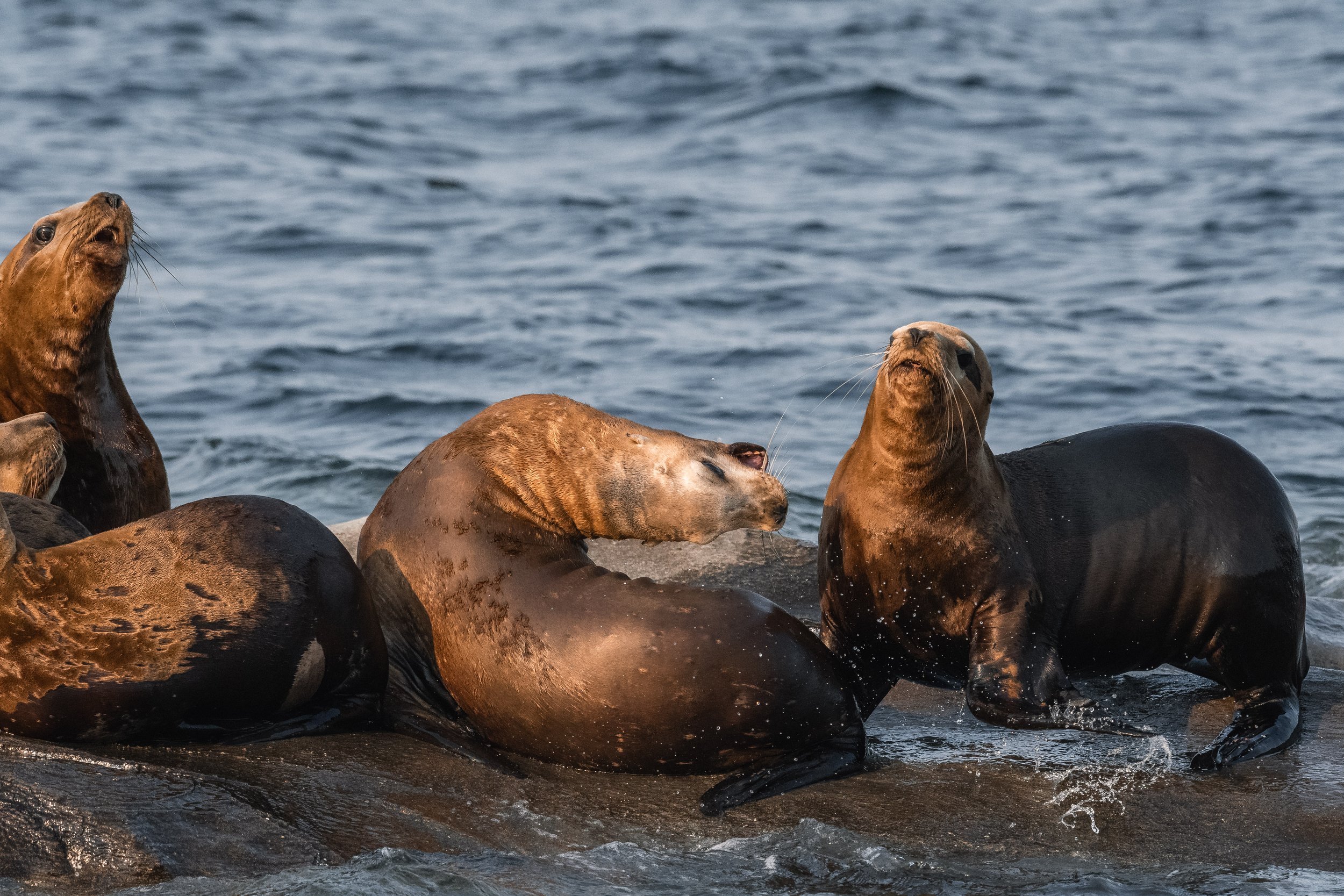
A slightly more bothered Steller Sea Lion. Photo by Evan Hessels.
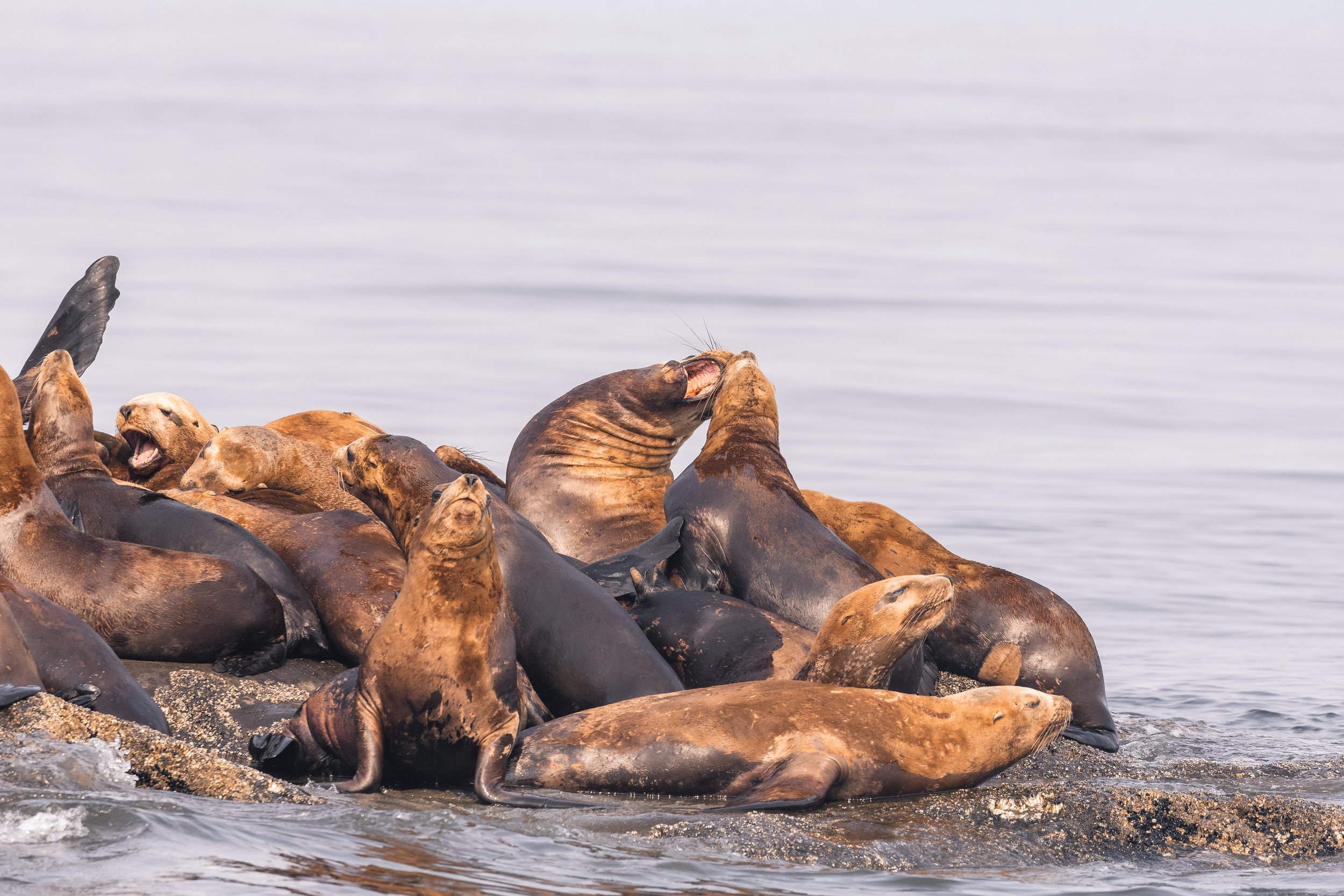
More commotion from the Stellers. Photo by Jordan Robinson.
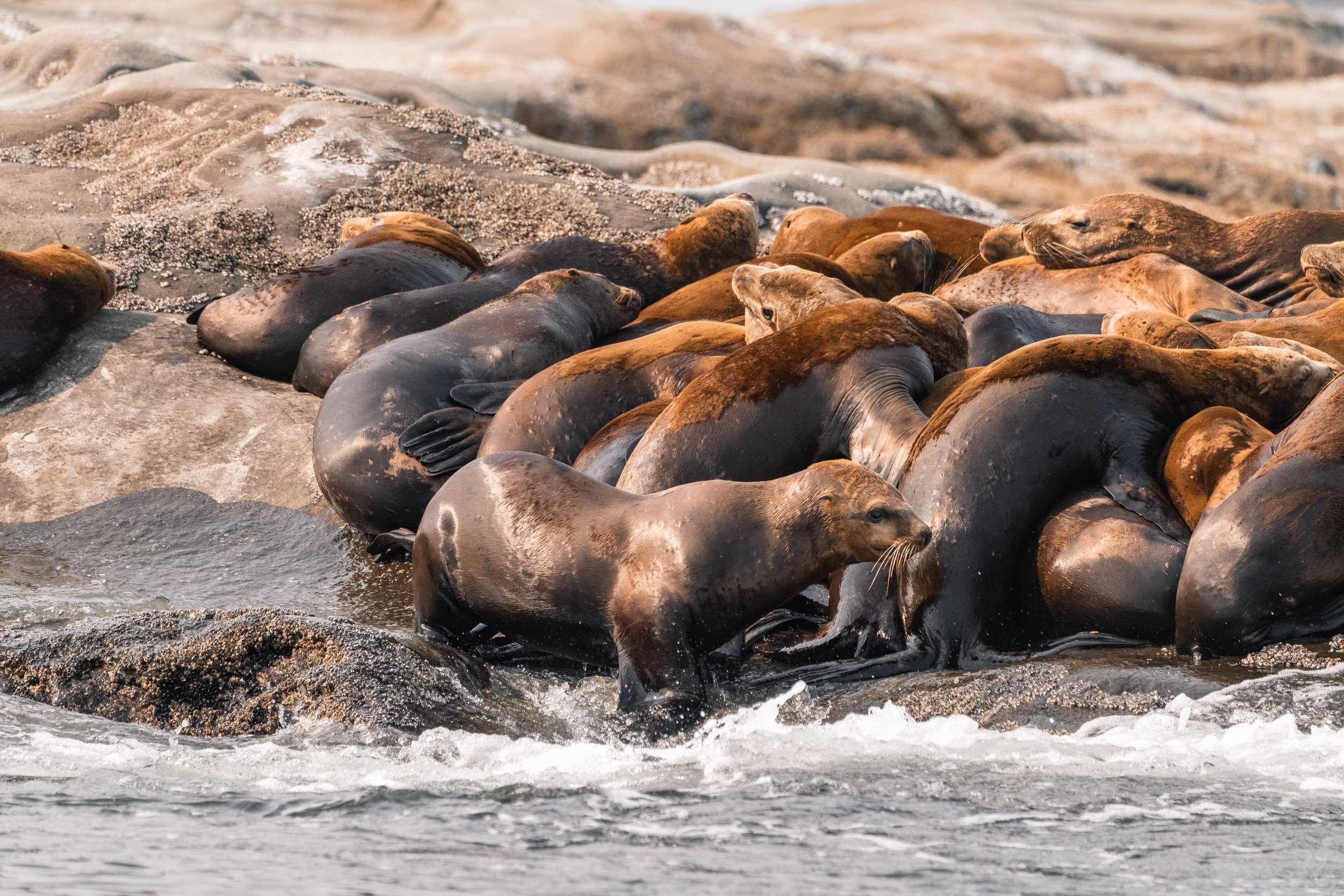
A sea lion exiting the cuddle puddle. Photo by Val Watson.
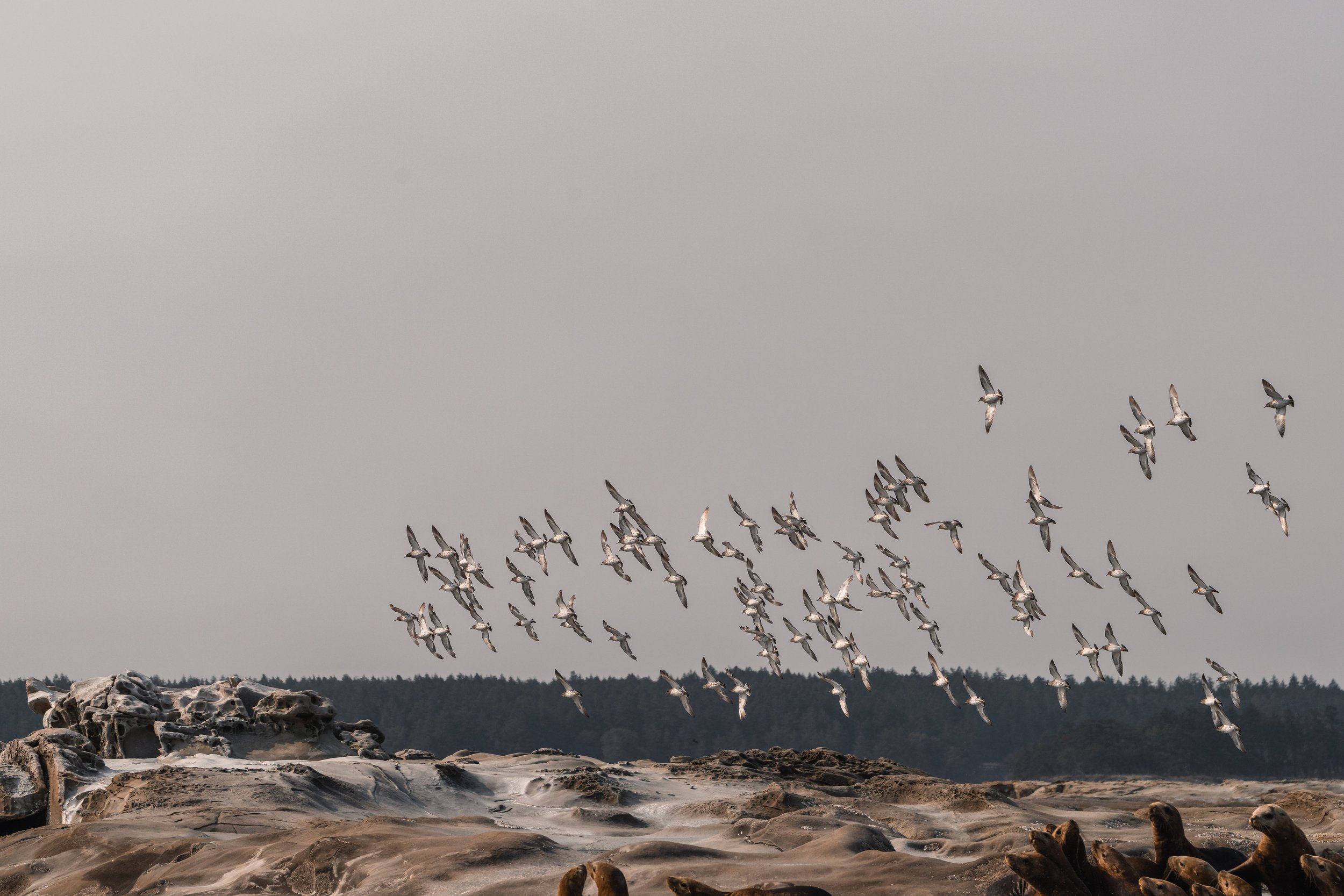
Coming in for a passby. Photo by Val Watson.
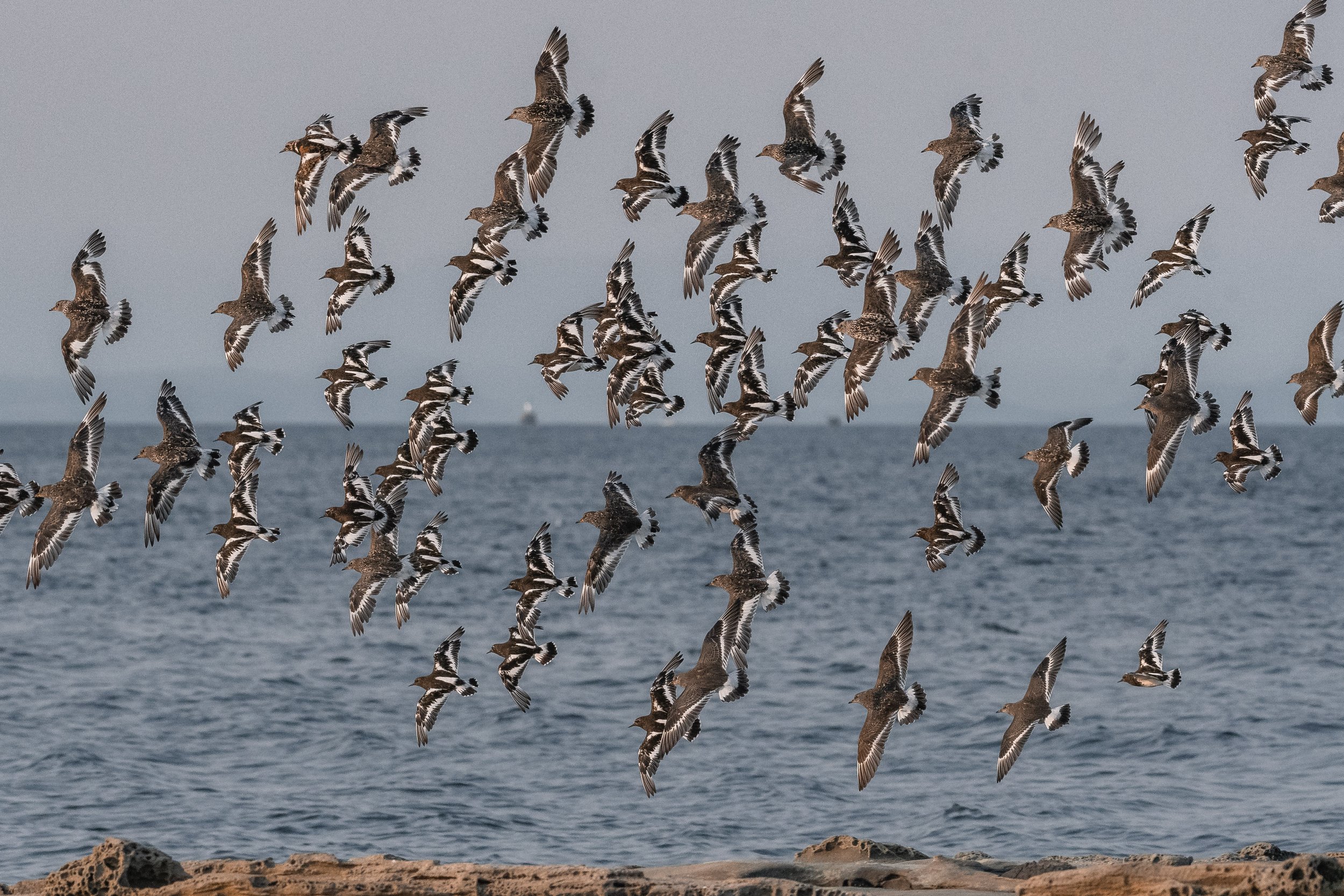
A flock of Black Turnstones. Photo by Evan Hessels.
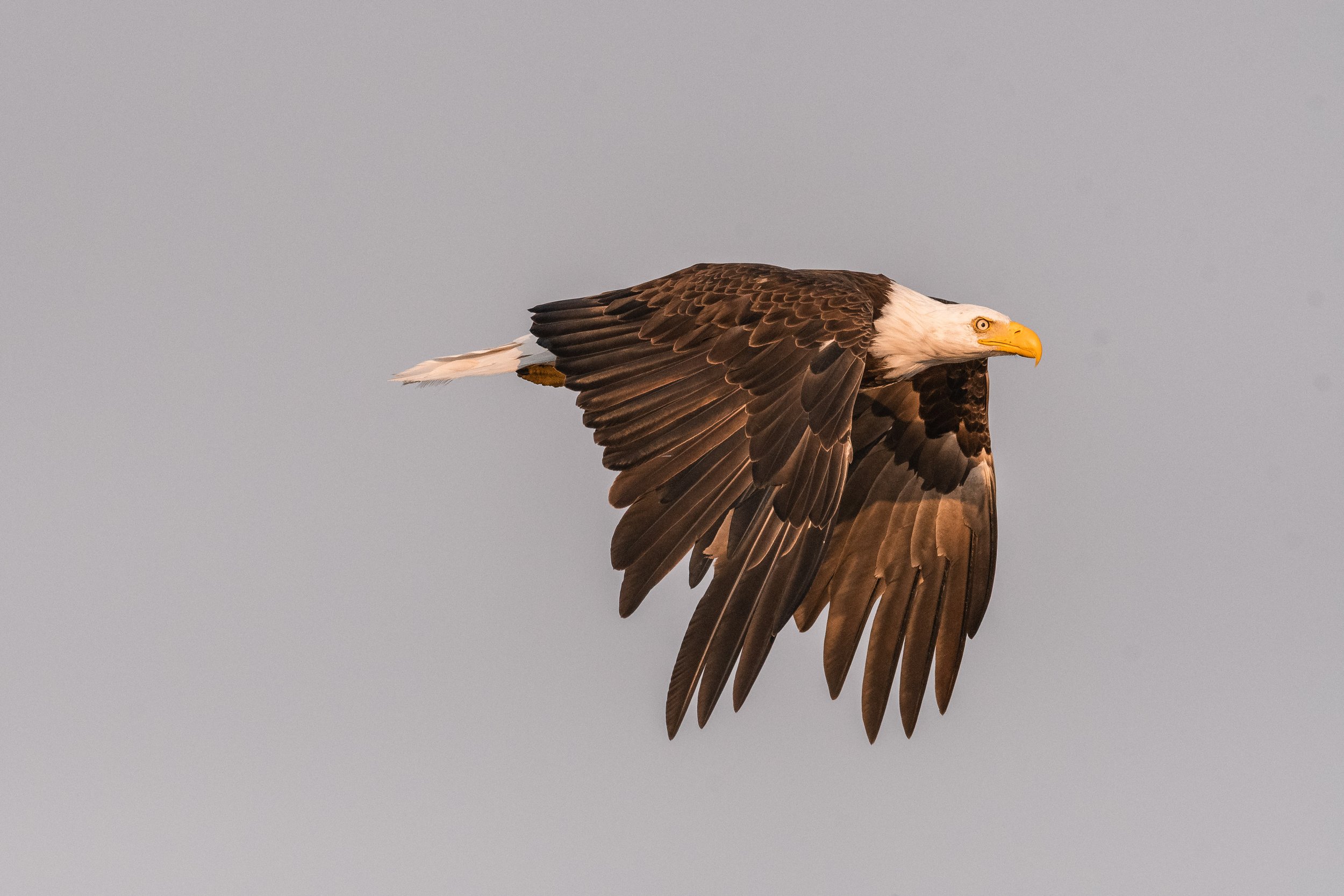
Look at those powerful wings in action. Photo by Evan Hessels.
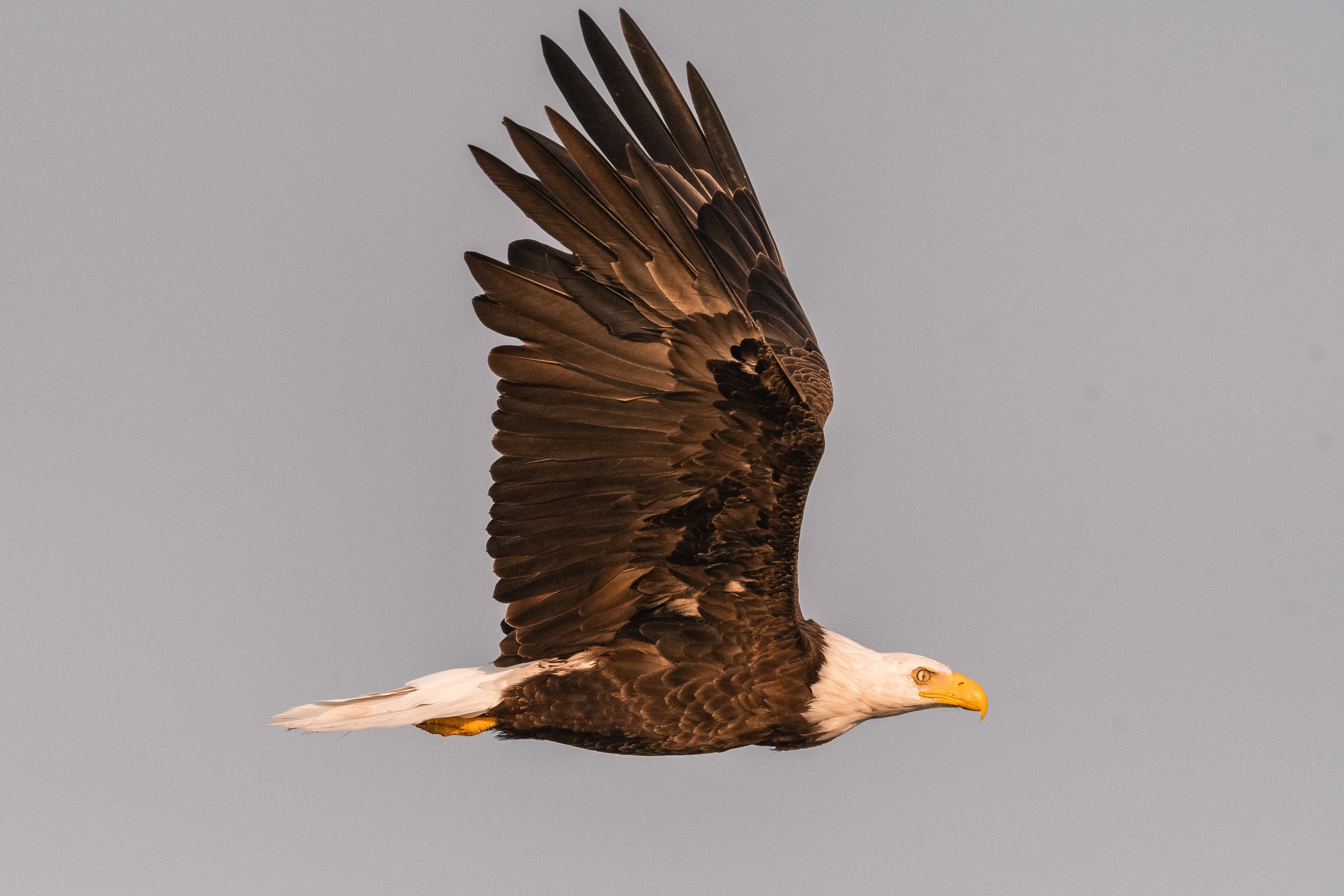
The wingspan of a Bald Eagle can reach up to 8 feet! Photo by Evan Hessels.
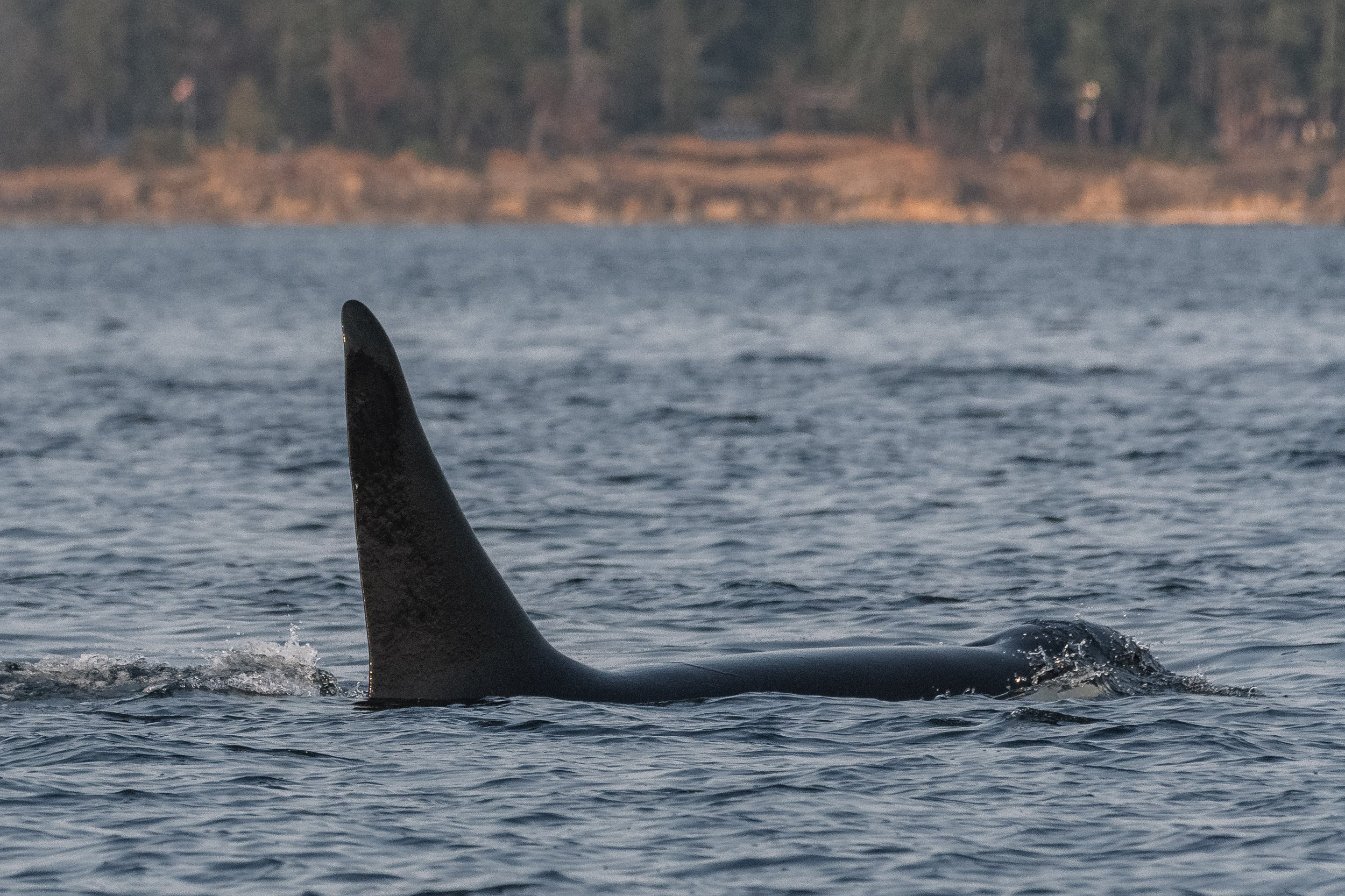
T101B Lagoon with water washing over his melon. Photo by Evan Hessels.
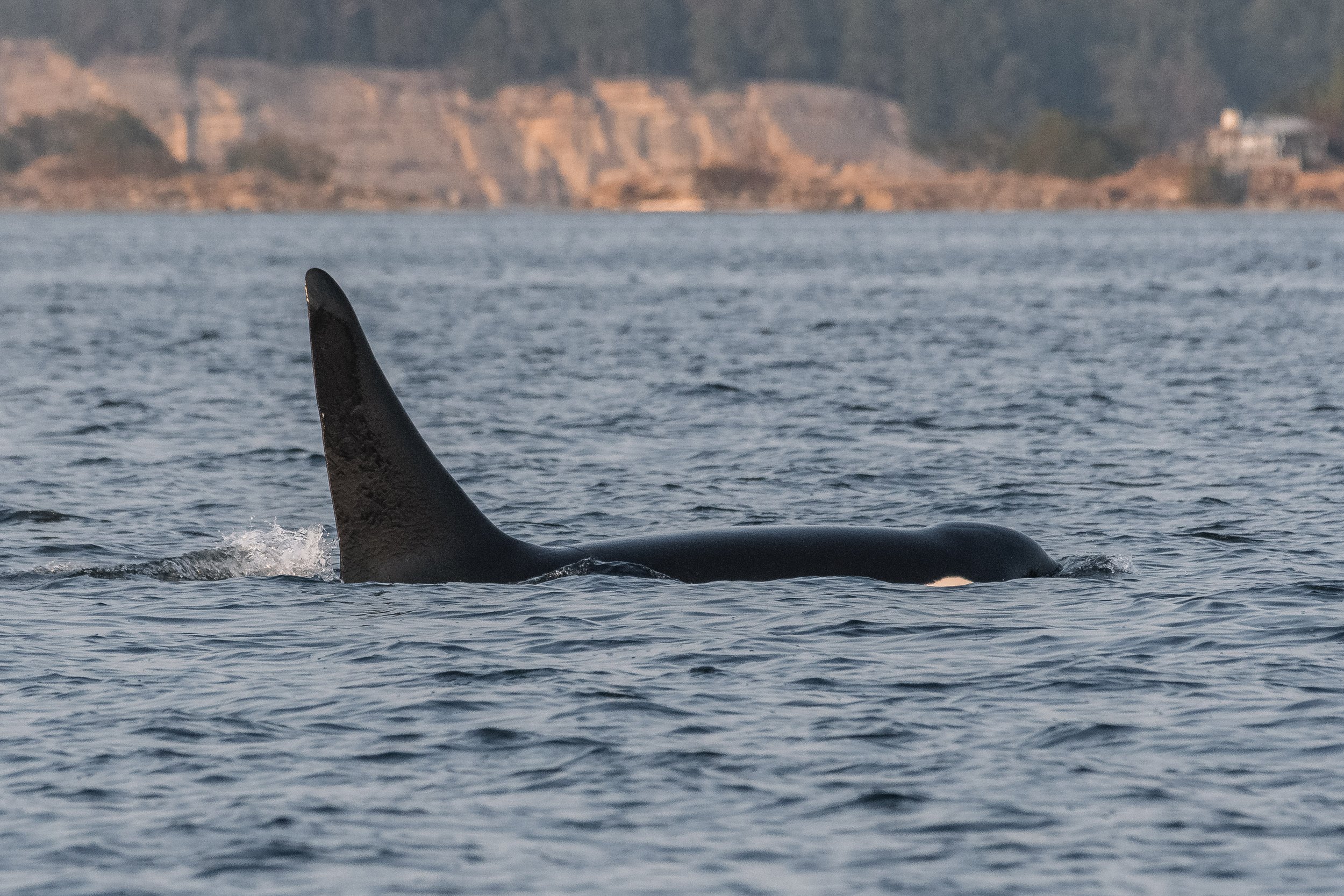
T101B Lagoon. Photo by Evan Hessels.
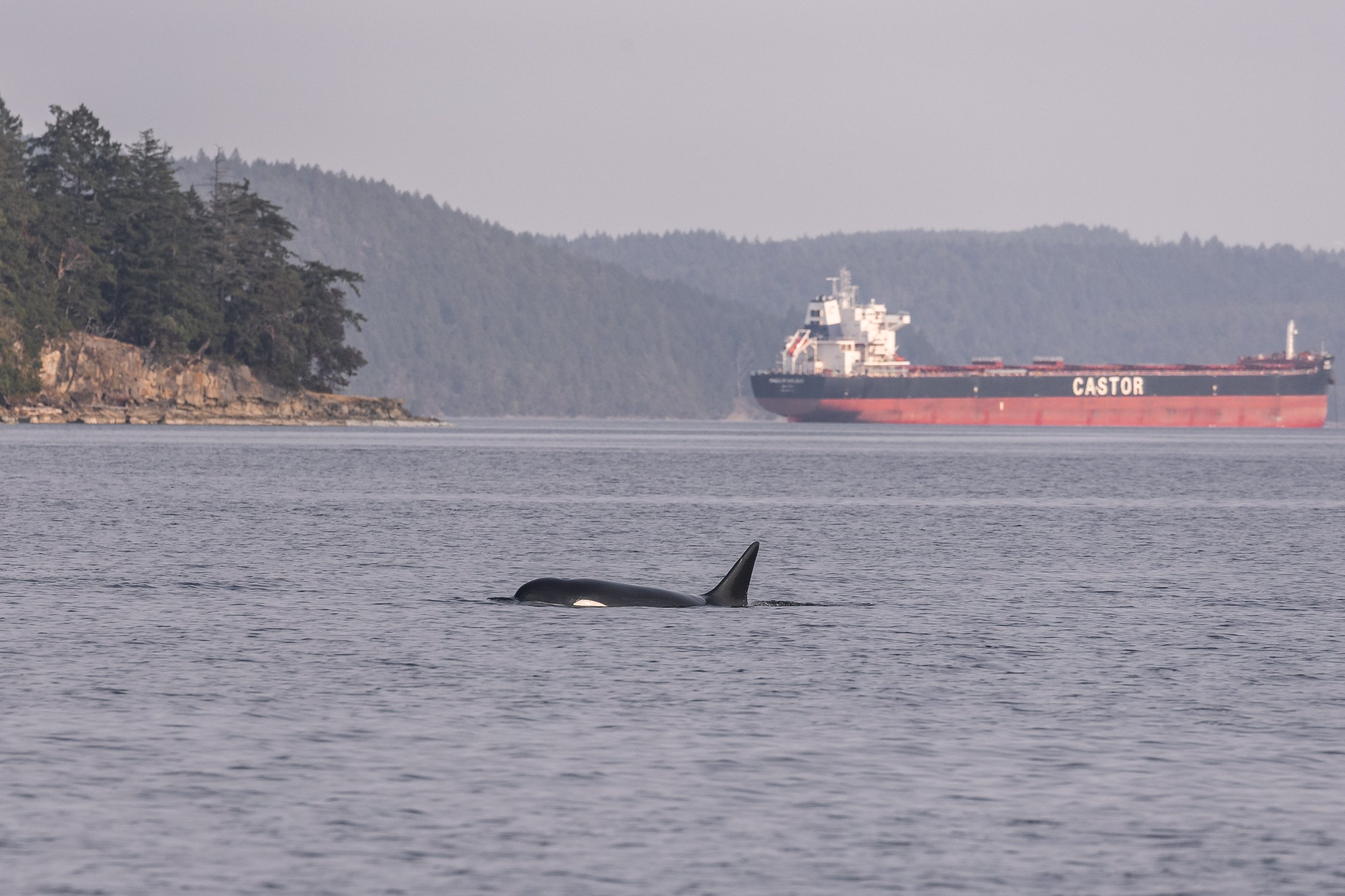
T101 Reef. Photo by Jordan Robinson.
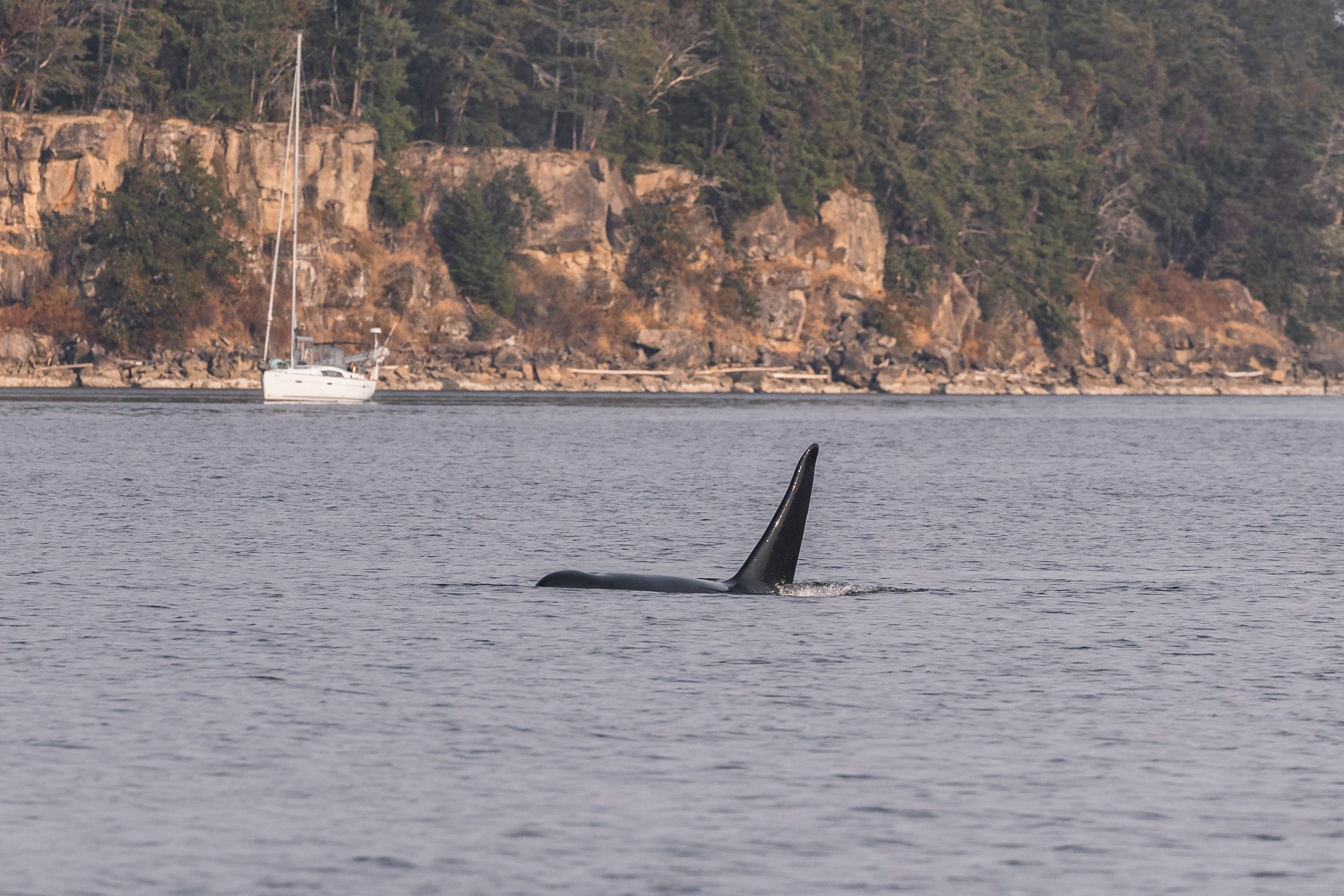
Lagoon’s impressively tall dorsal fin. Photo by Jordan Robinson.
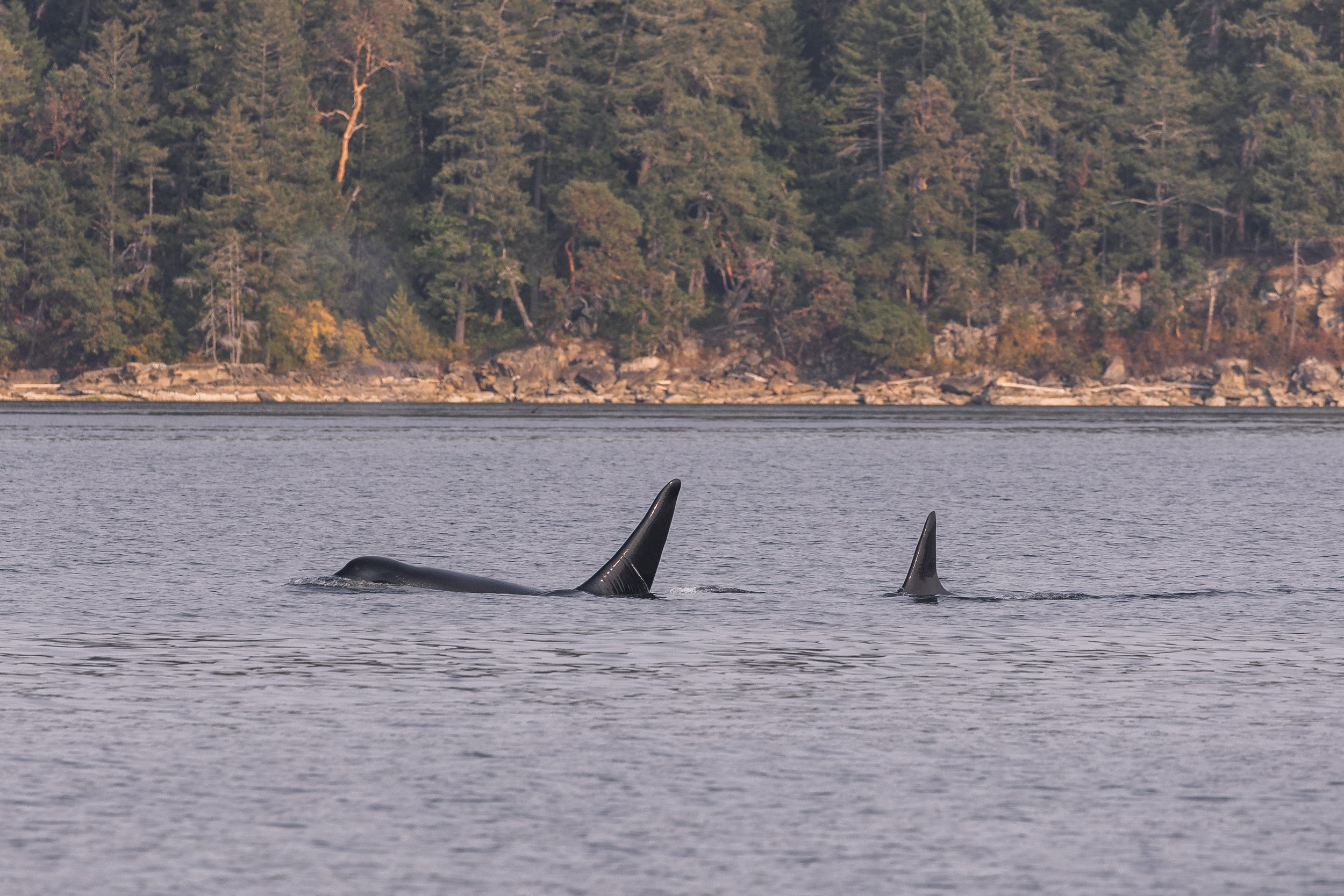
Lagoon leading the way with mom, Reef close behind. Photo by Jordan Robinson.
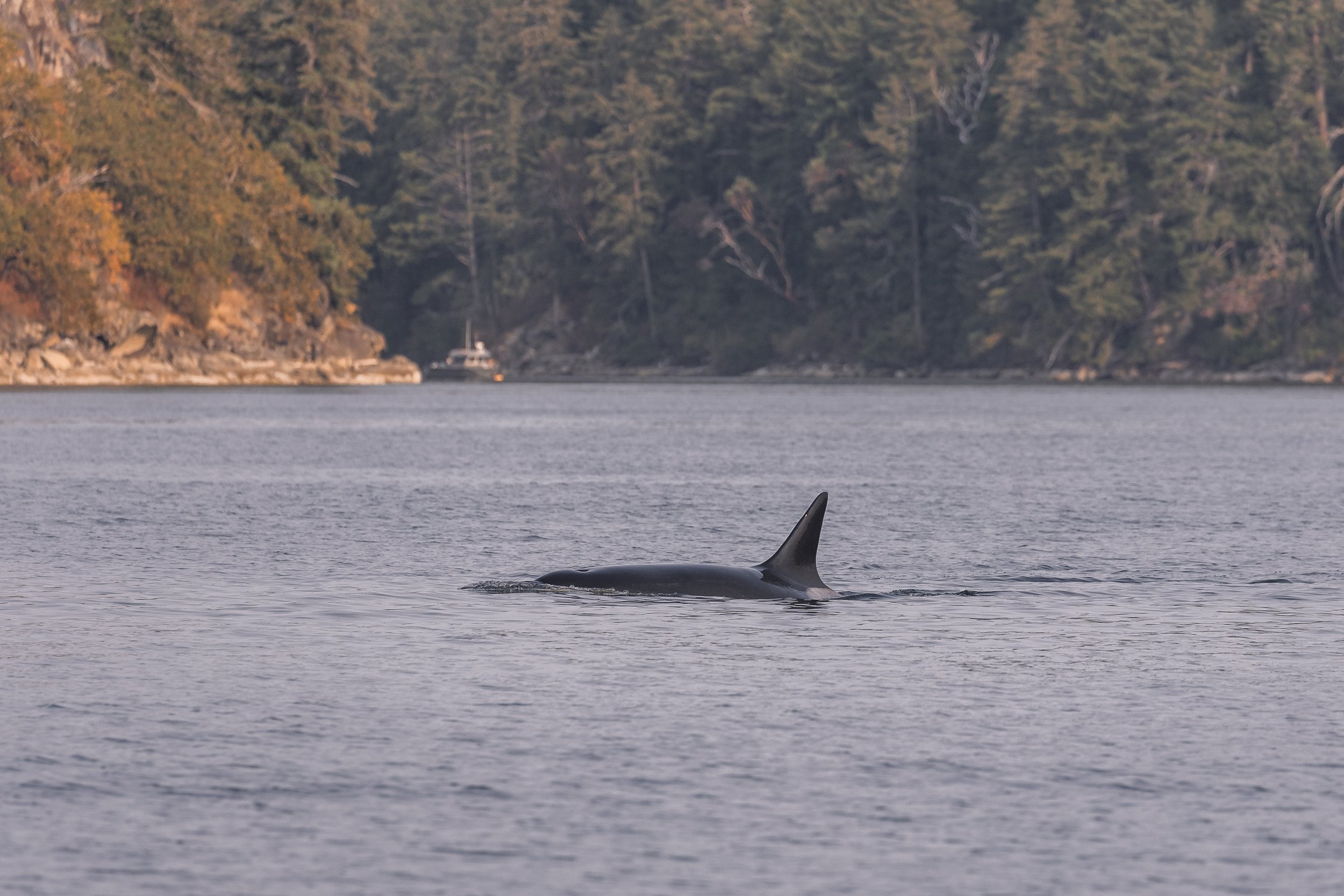
T101 Reef cruising by. Photo by Jordan Robinson.
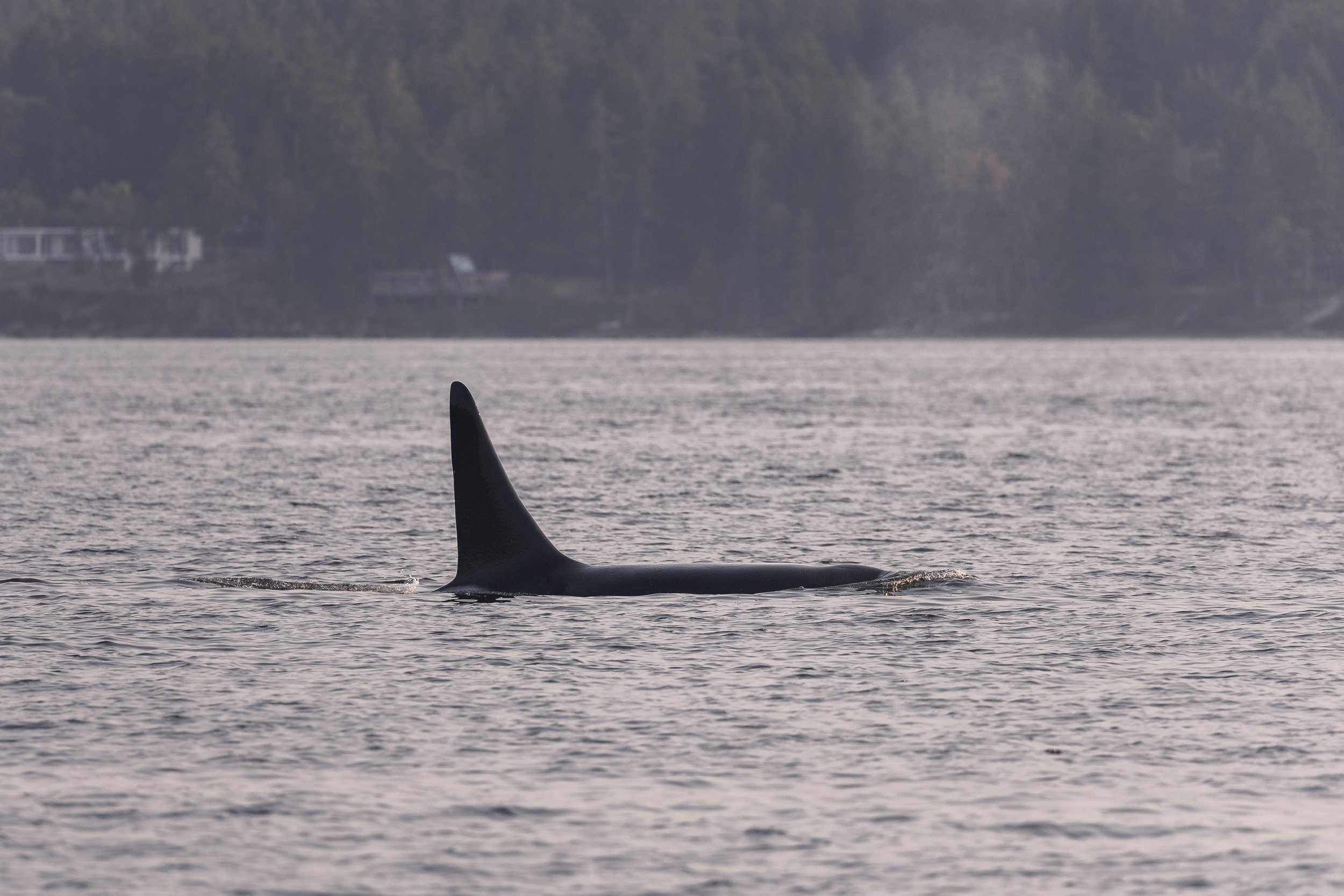
Photo by Jordan Robinson.
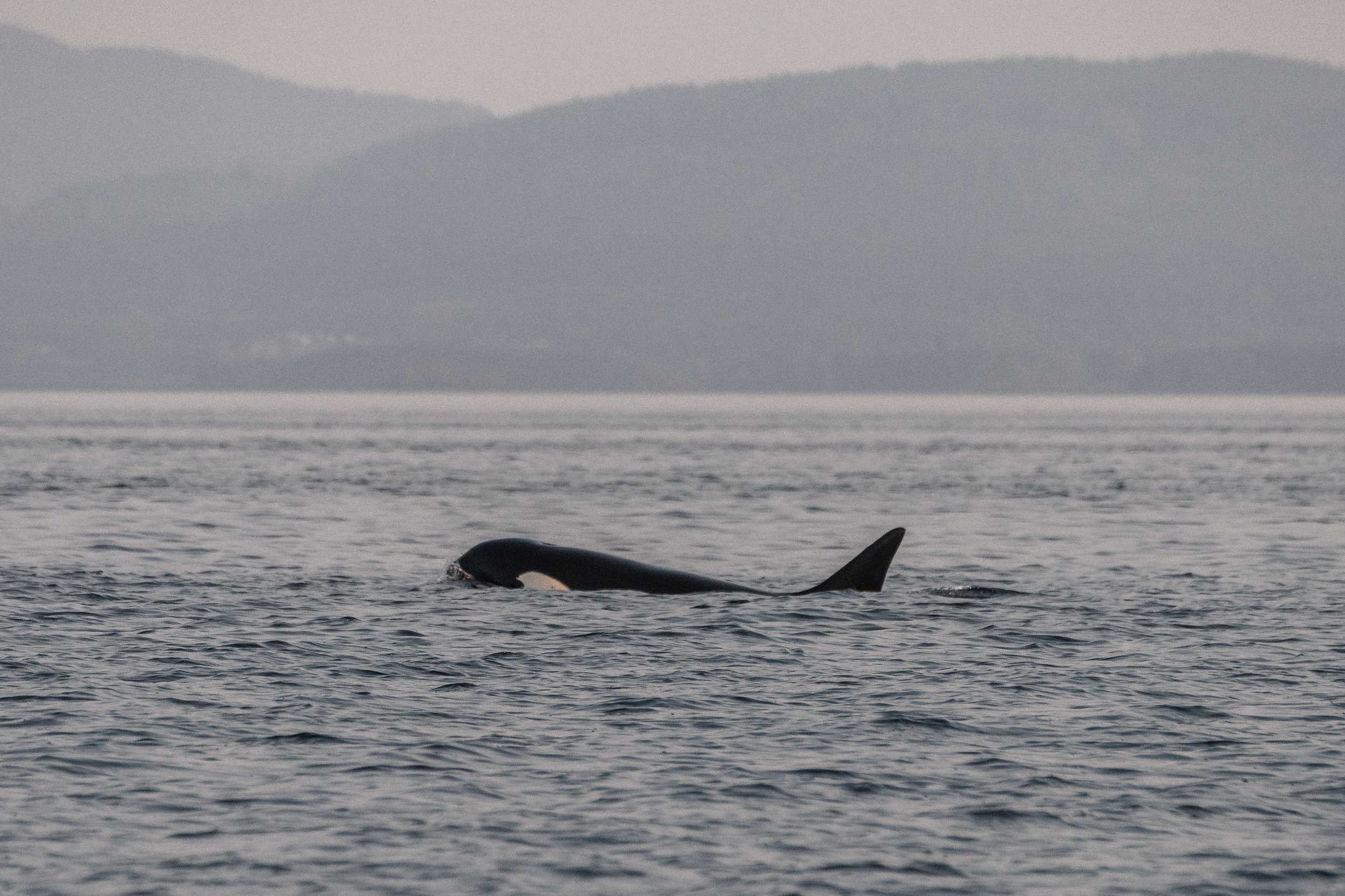
A peek at T101 Reef’s eyepatch freckle. Photo by Val Watson.
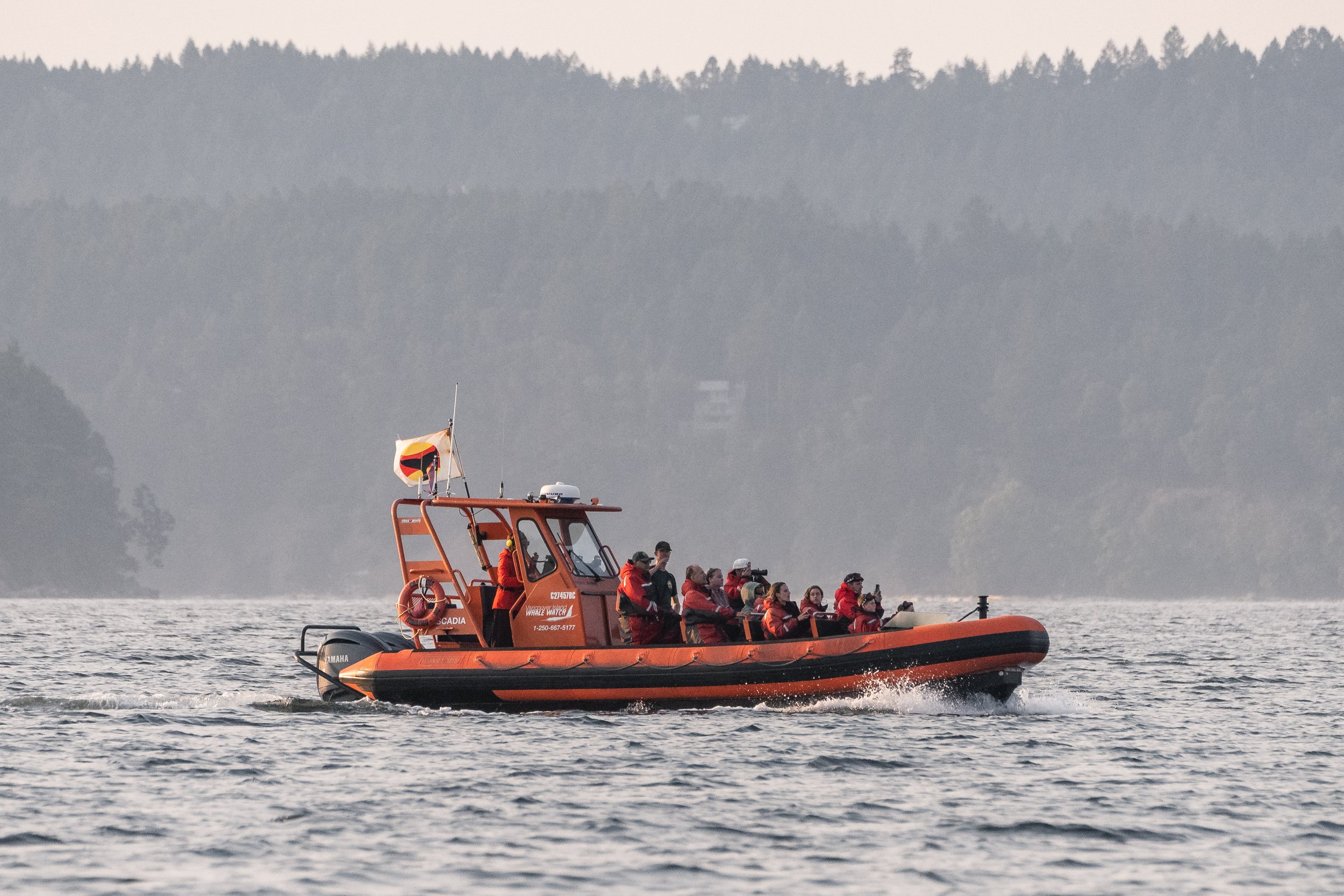
Guests on Cascadia enjoying their time on the water. Photo by Val Watson.
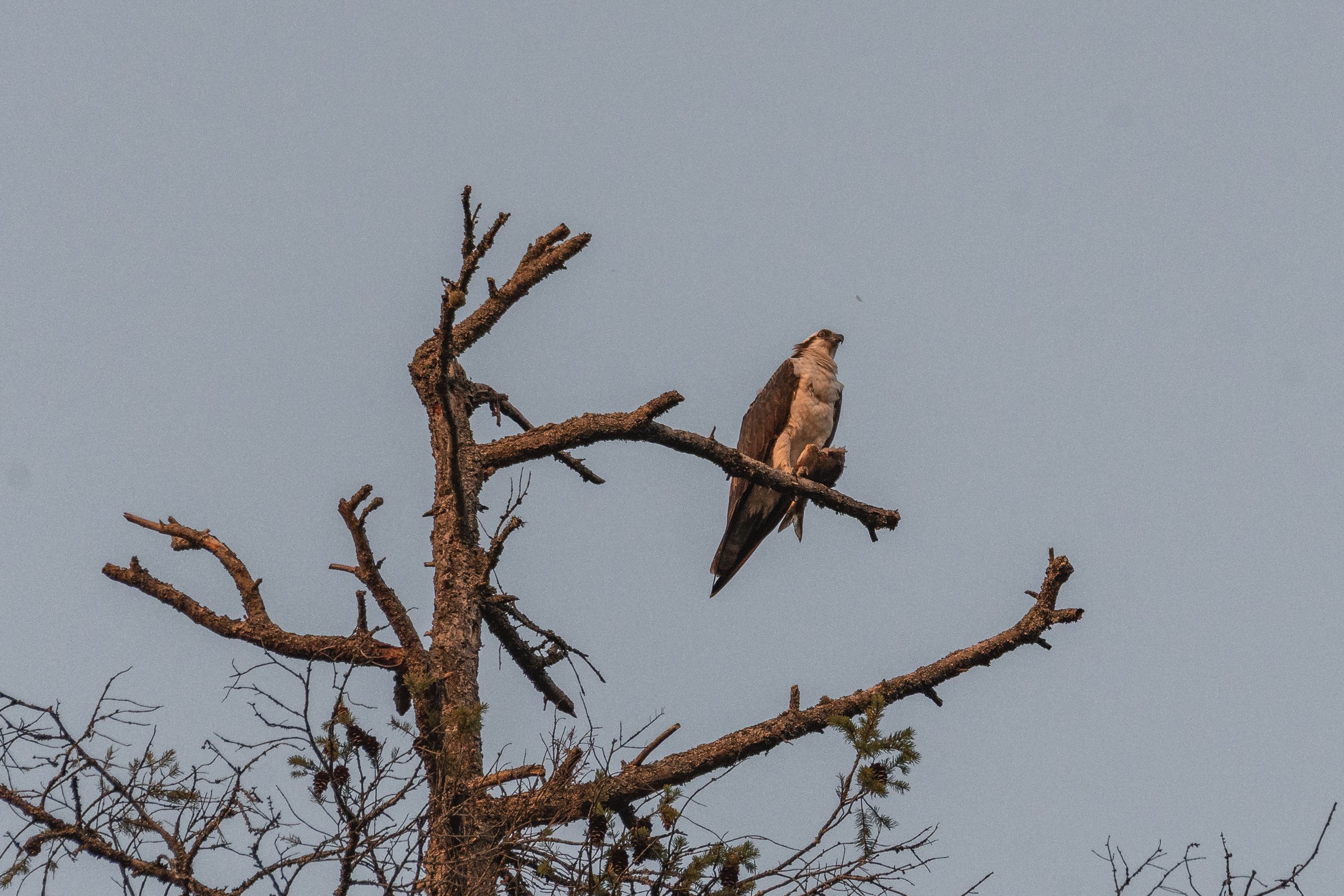
An osprey with a half eaten snack. Photo by Evan Hessels.
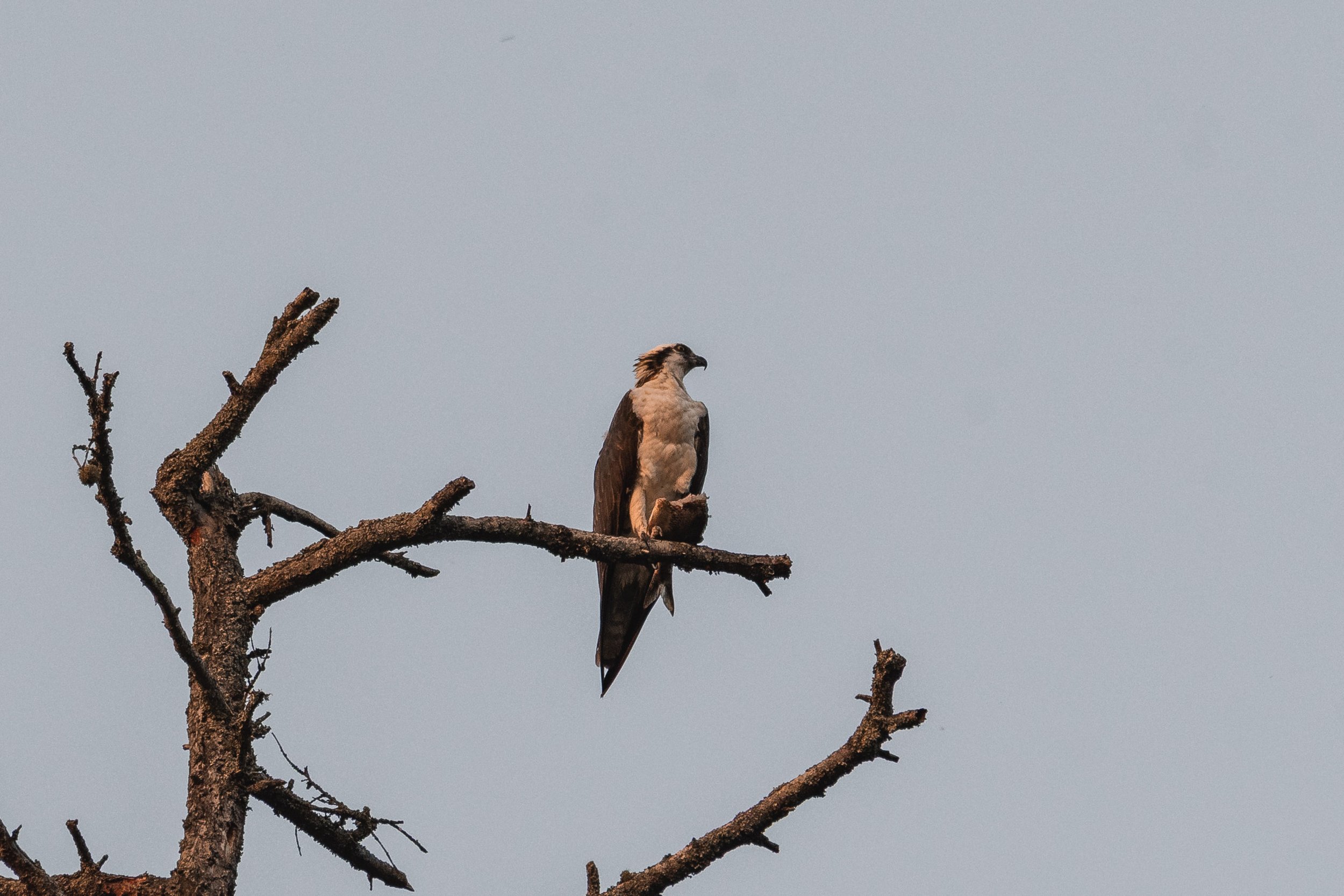
Giving us the side eye. Photo by Evan Hessels.
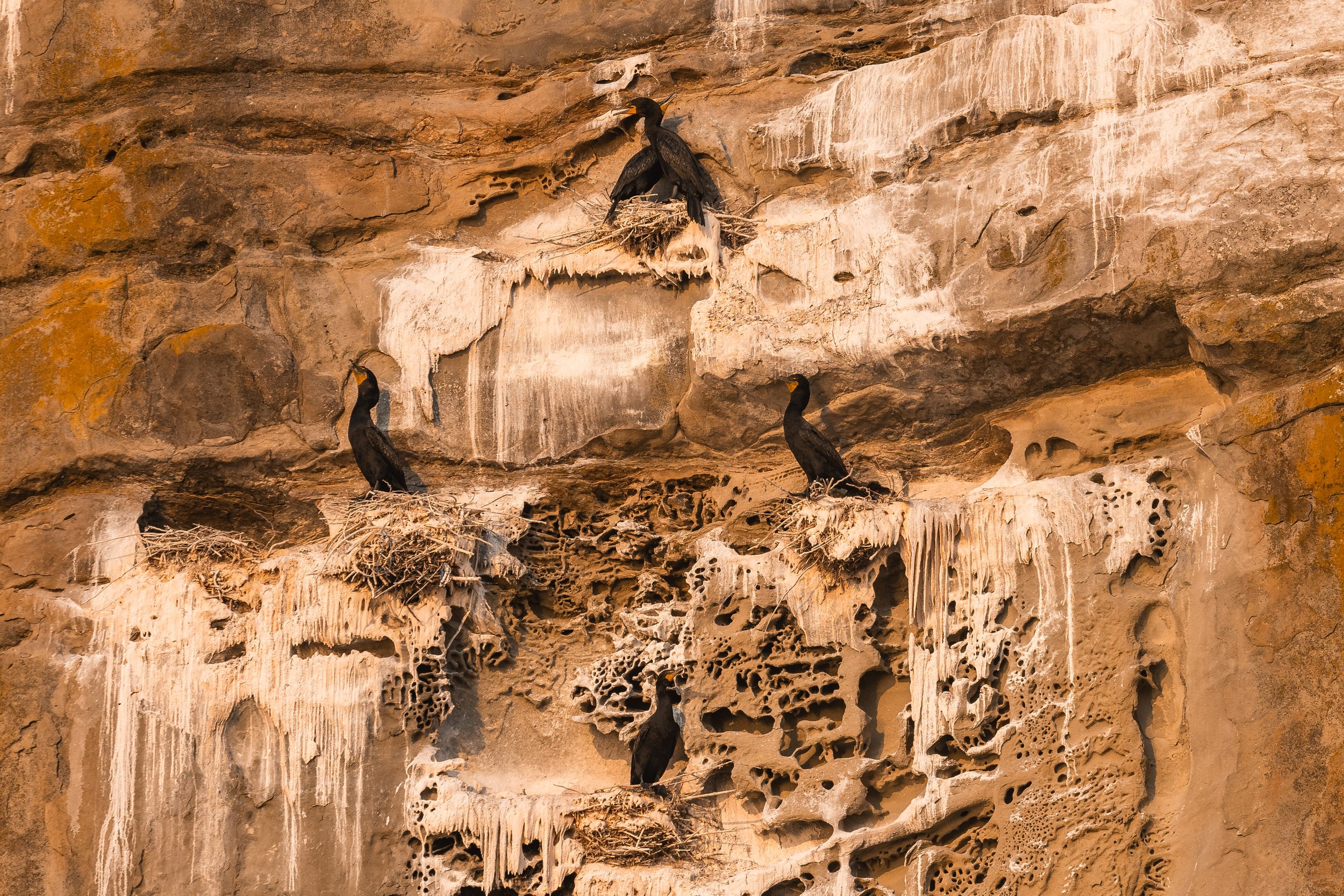
Cormorants nesting at the bluffs. Photo by Jordan Robinson.
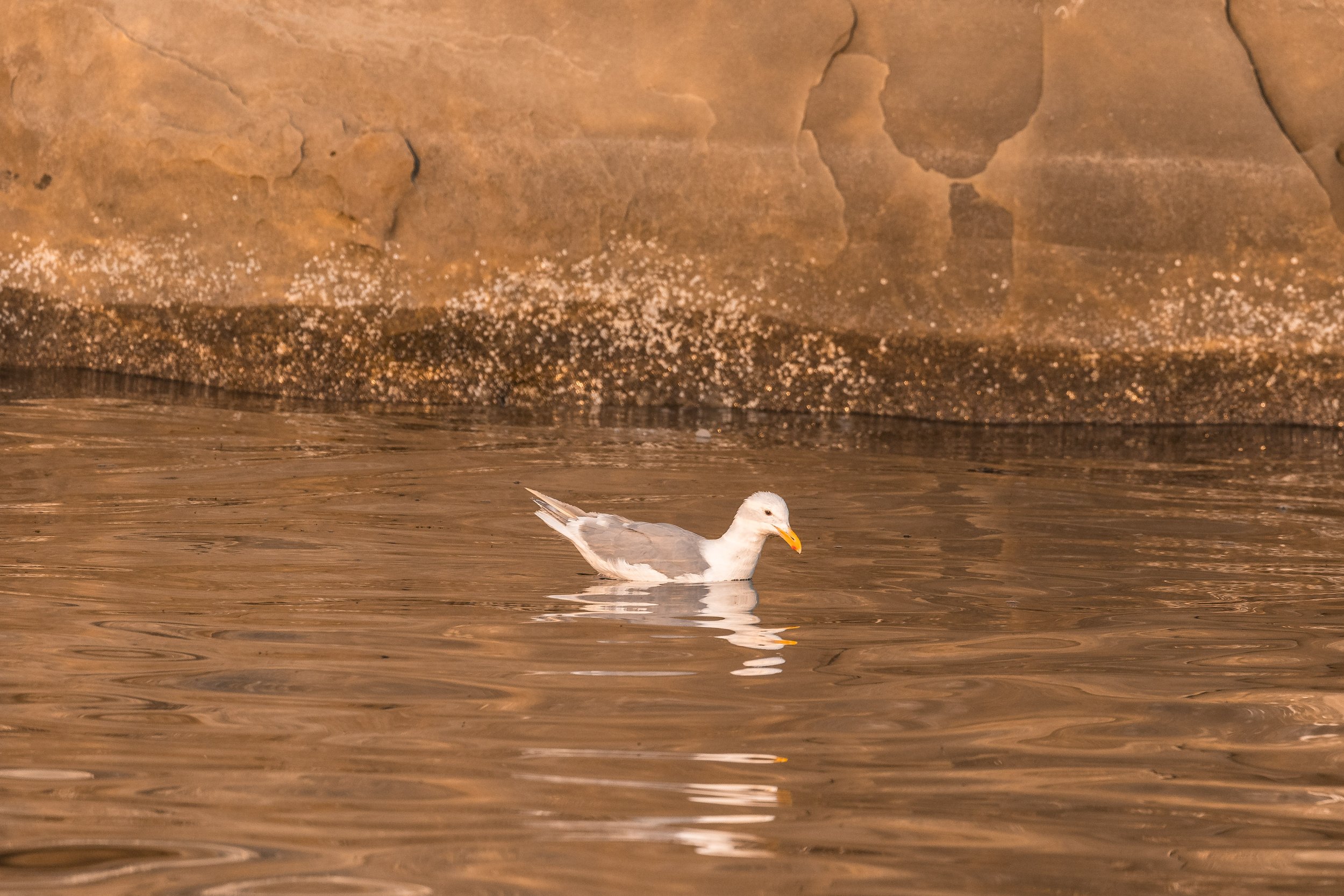
A golden hour gull. Photo by Jordan Robinson.
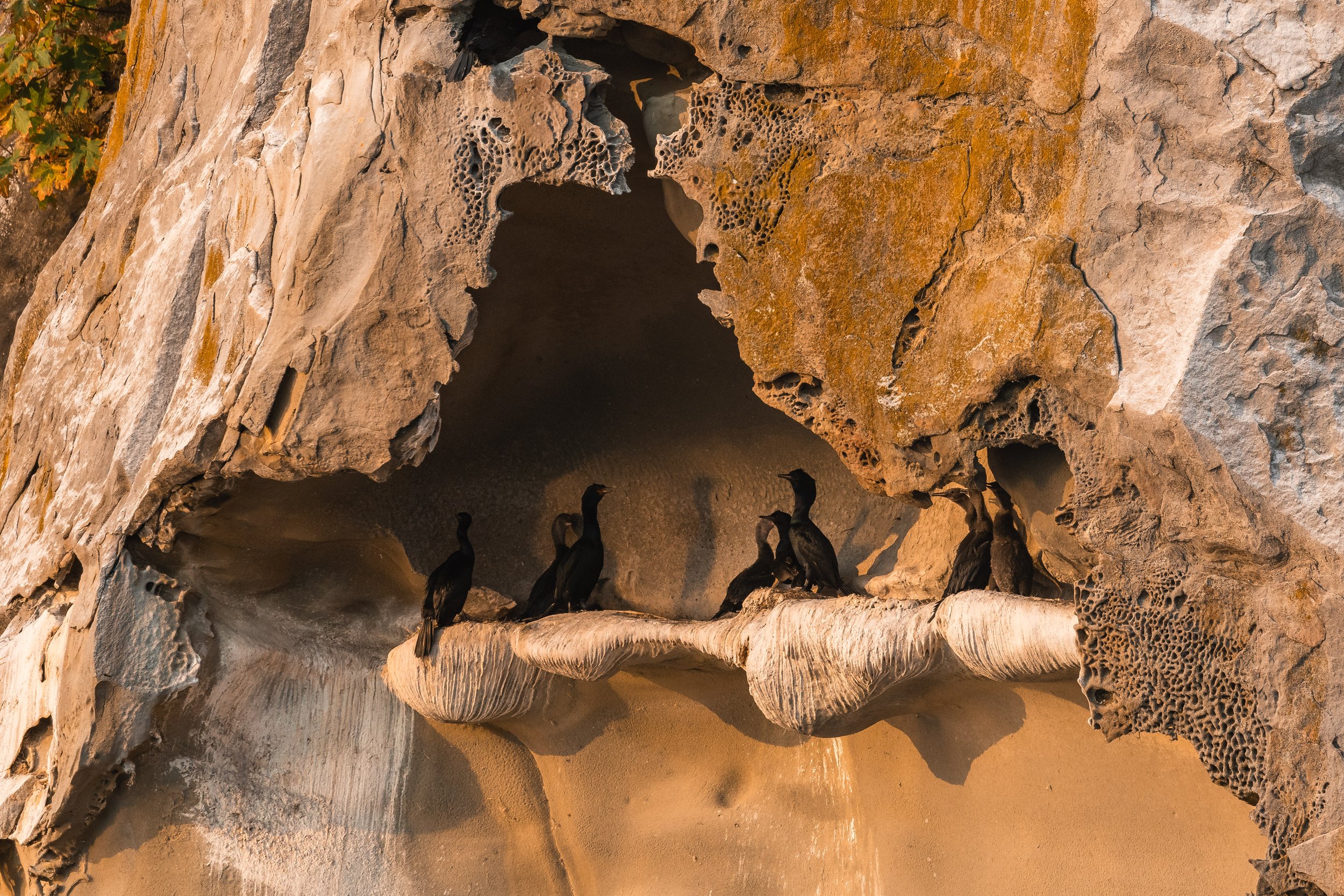
Those are some big ol’ chicks. Photo by Jordan Robinson.
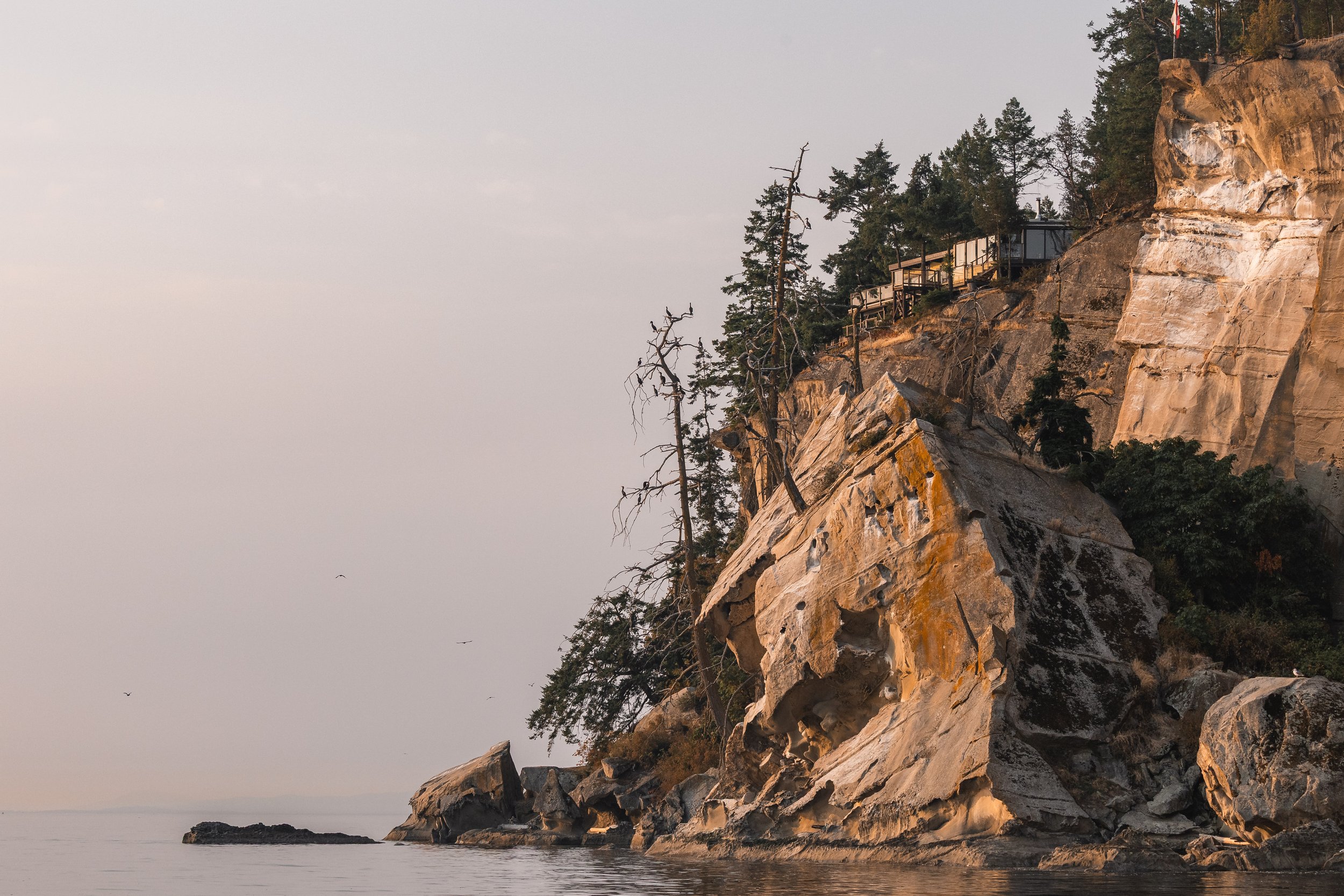
The Gabriola Bluffs looking lovely in the evening light. Photo by Jordan Robinson.
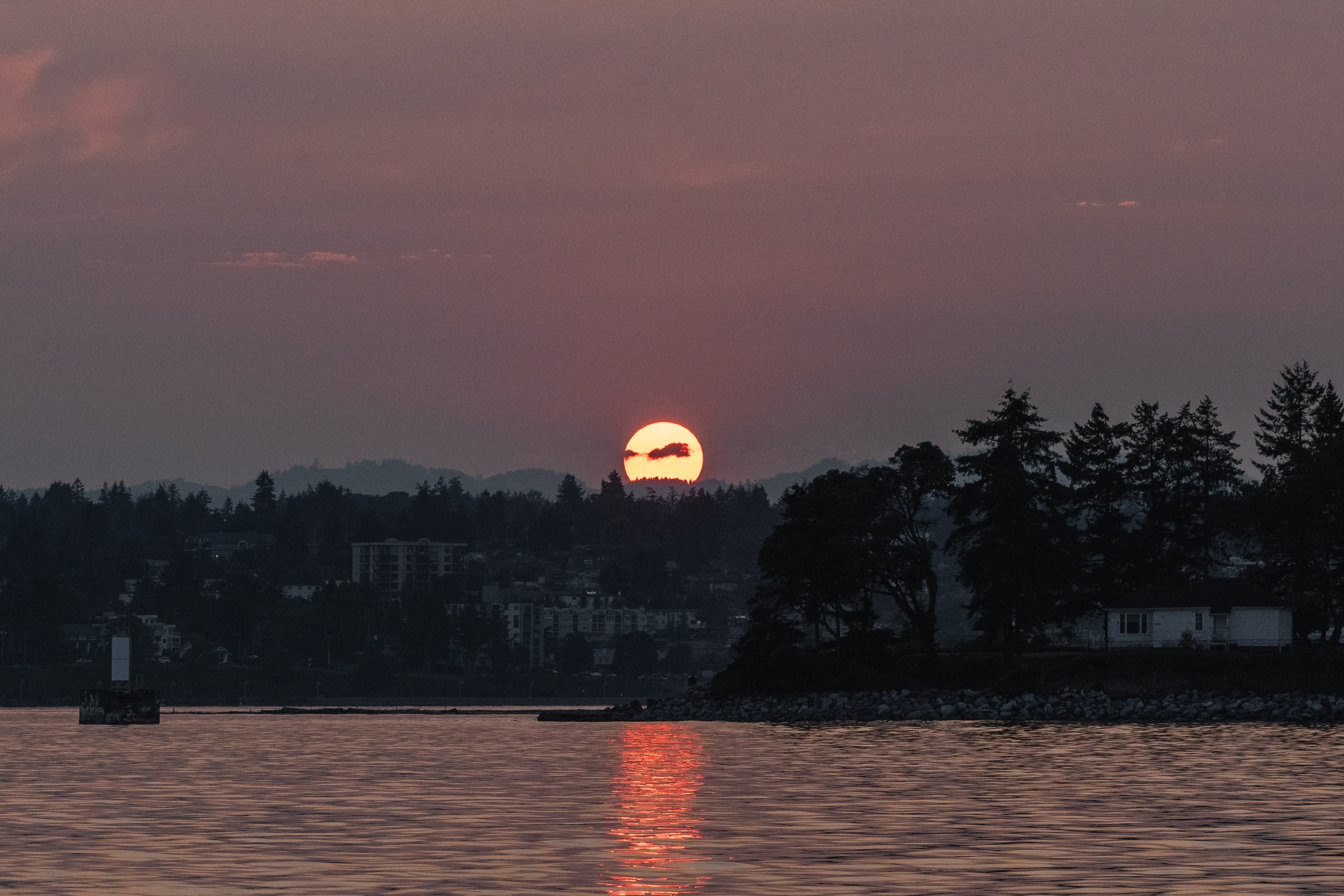
A beautiful sunset to end our trip. Photo by Val Watson.