
August 16, 2026, 10:30 AM - Associating with the gentle giants of the Salish Sea
The morning began with two of our vessels, Keta and Kula, heading out from Nanaimo and into the Strait of Georgia. With a wide stretch of ocean ahead of us, the search began. We began by heading across the Salish Sea to an area known as Halibut Bank.
Halibut Bank is a particularly productive area of the Strait of Georgia, and there is good reason why whales so often feed here. Beneath the surface is a complex underwater landscape that influences water-column movement. As currents interact with the seafloor and the surrounding underwater features, nutrients can be brought closer to the surface. Those nutrients help support the growth of microscopic plankton, which in turn supports an incredibly diverse food web and creates a dense area of feeding opportunities for filter-feeding animals such as humpback whales.
Our decision to make the journey across the Strait proved fruitful; soon after arriving, we spotted blows in the distance.
Cameras came up, and Marine Naturalists Val and Jordan began documenting the whales we were with. Identifying individual humpback whales is an important part of what we do on the water, because every sighting contributes to our understanding of which individuals are using and returning to the Salish Sea and how they are spending their time.
The first two whales we identified were Zig Zag (BCX1193) and Mantis (BCX0936). These two have been particularly interesting to watch lately because they have now been associating together for more than two weeks.
For a pair of humpback whales to spend this much time together is fascinating. Humpback whales were historically described as largely solitary animals, especially outside of the breeding season. Unlike some toothed whales, such as orcas, they do not live in permanent family groups. A humpback can often be found travelling and feeding alone, which helped shape the traditional view of them as solitary giants.
As researchers have continued to study humpback whales, however, that idea has become considerably more complicated.
We now know that humpback whales are capable of forming temporary associations that can last for hours, days, weeks, or sometimes even longer. These relationships can be difficult to predict, and the same individuals may associate with different whales at different times. What we see with Zig Zag and Mantis is therefore a great example of how much there still is to learn about humpback social behaviour.
There is also an interesting possibility behind why these associations appear to be more common today.
Humpback whales were hunted extensively throughout the 20th century, with populations in many parts of the world suffering enormous declines. In the North Pacific, commercial whaling reduced humpback numbers to a fraction of their historical abundance. When there are far fewer whales in the ocean, opportunities for individuals to encounter one another naturally become less frequent.
As populations recovered following the end of commercial whaling, researchers began observing social interactions more regularly. This has led to the idea that some of the apparent solitude of humpback whales may have been influenced by the dramatically reduced population sizes of the past.
That does not mean humpback whales suddenly became social animals. Rather, it suggests that we may be getting a clearer picture of their natural behaviour as their populations recover and stabilize.
There is still much to learn about why individual humpbacks choose to associate. Sometimes whales appear to travel together while feeding. Other associations may involve social behaviour, and some may simply result from two whales finding themselves in the same productive feeding area. The challenge is that we cannot always know exactly what is happening beneath the surface.
While Keta and Kula continued observing the pair, other humpbacks were also making appearances in the area. Two additional single whales were spotted further away. Kula was able to spend some time with Raptor (BCY0458), who was travelling a little farther from the original duo, while Keta was with another familiar individual, Beak (BCX1606).
It is always exciting to have multiple humpbacks spread throughout an area because it gives us a glimpse into just how much wildlife may be using the same productive waters. Humpbacks can be surprisingly difficult to spot when they are travelling alone, especially when they are between breaths on a series of long dives.
This is where patience, experience, and identification skills become incredibly valuable.
Every whale has its own unique markings. For humpbacks, the underside of the tail fluke is one of the most important identification features. The pattern of black-and-white pigmentation is unique to each individual, much like a fingerprint. Scars, dorsal fin shape, and other markings can also help confirm an identification.
Once a whale has been identified, sightings can be compared with previous observations. This allows scientists to track individuals across seasons and locations, building a bigger picture of their movements and behaviour. Websites such as Happywhale have been invaluable as more data is collected and compared.
After spending time with the humpbacks, we began making our way toward another important wildlife area, the White Islets.
The White Islets are a fantastic place to see a variety of marine life. As we approached, Harbour Seals and Steller Sea Lions could be seen hauled out on the rocks. These rocky outcrops provide an important resting location for marine mammals, allowing them to leave the water and conserve energy between feeding trips.
Steller Sea Lions are particularly impressive animals to encounter. They are the largest species of sea lion in the world, with adult males capable of reaching enormous sizes. Even from a distance, their bulk and chaotic chatter make them easy to distinguish from the smaller Harbour Seals sharing the rocks.
Among the sea lions was one individual that caught our attention because of a very recognizable marking: a brand reading 683R.
Branding is one method researchers have used to identify individual Steller Sea Lions. A number or combination of letters and numbers can be applied to an animal, providing a way to recognize that individual during future sightings. These identifications can contribute to long-term studies of movement, survival, population dynamics, and habitat use, just like the data now being collected for humpback whales!
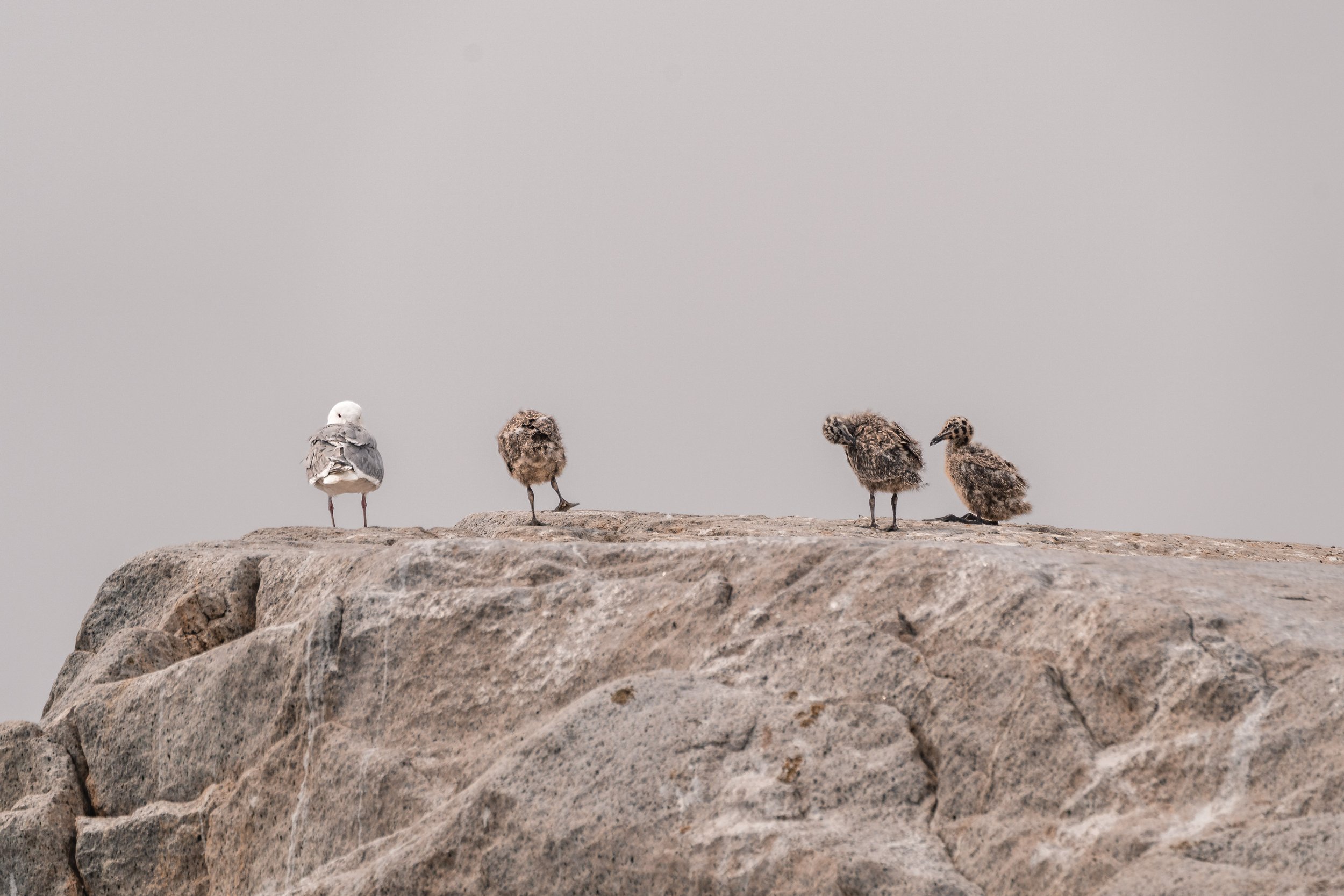
The rocks were busy with more than just marine mammals too. Gulls were scattered throughout the area, including plenty of young gull chicks. Coastal islands such as the White Islets can become incredibly active during the breeding season, with seabirds using the exposed rocks for nesting and resting.
Eventually, it was time to leave the wildlife behind and begin our journey back across the Strait of Georgia toward Nanaimo. We got comfortable once more before zipping back across. Soon, the harbour was once more in sight, and before we knew it, we were back at the dock, concluding a fin-filled morning with the humpbacks and pinnipeds.
Photos by Marine Naturalists Val Watson and Jordan Robinson - please enjoy!
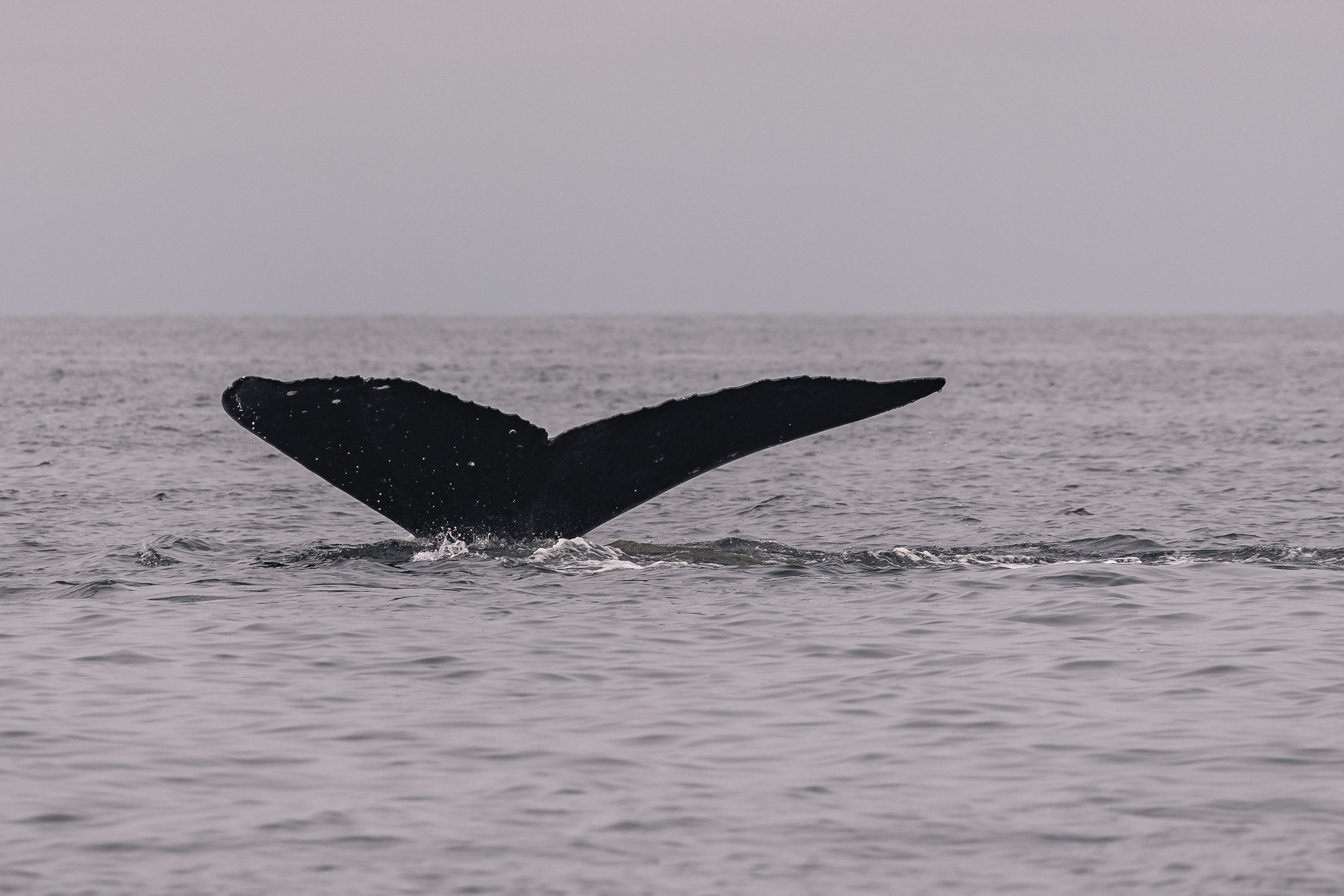
Zig Zag diving. Photo by Jordan Robinson.
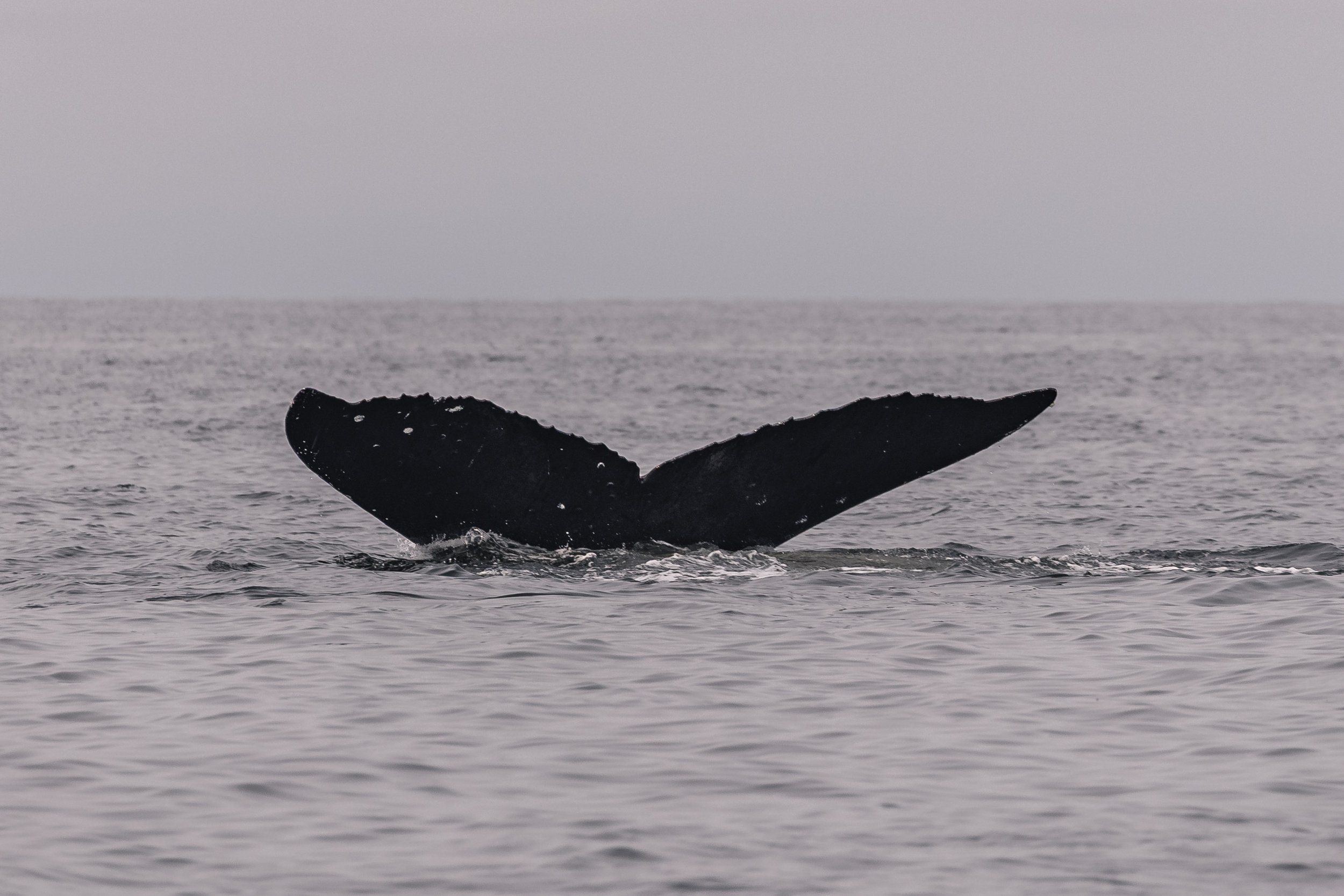
Zig Zag with her signature scars - a trio of dots - visible on her left fluke. Photo by Jordan Robinson.
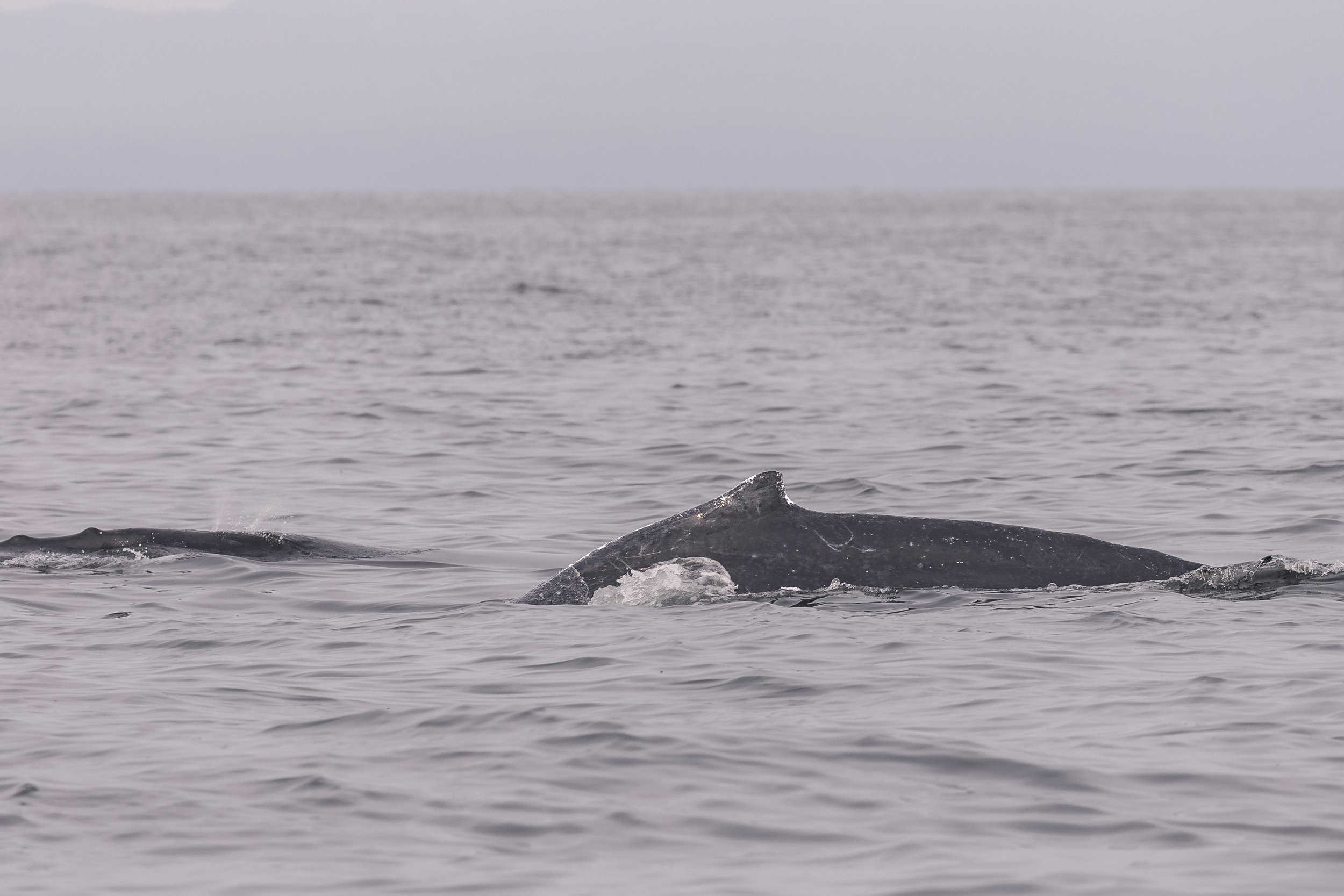
Mantis preparing to dive, with Zig Zag coming up for a breath beside them. Photo by Jordan Robinson.
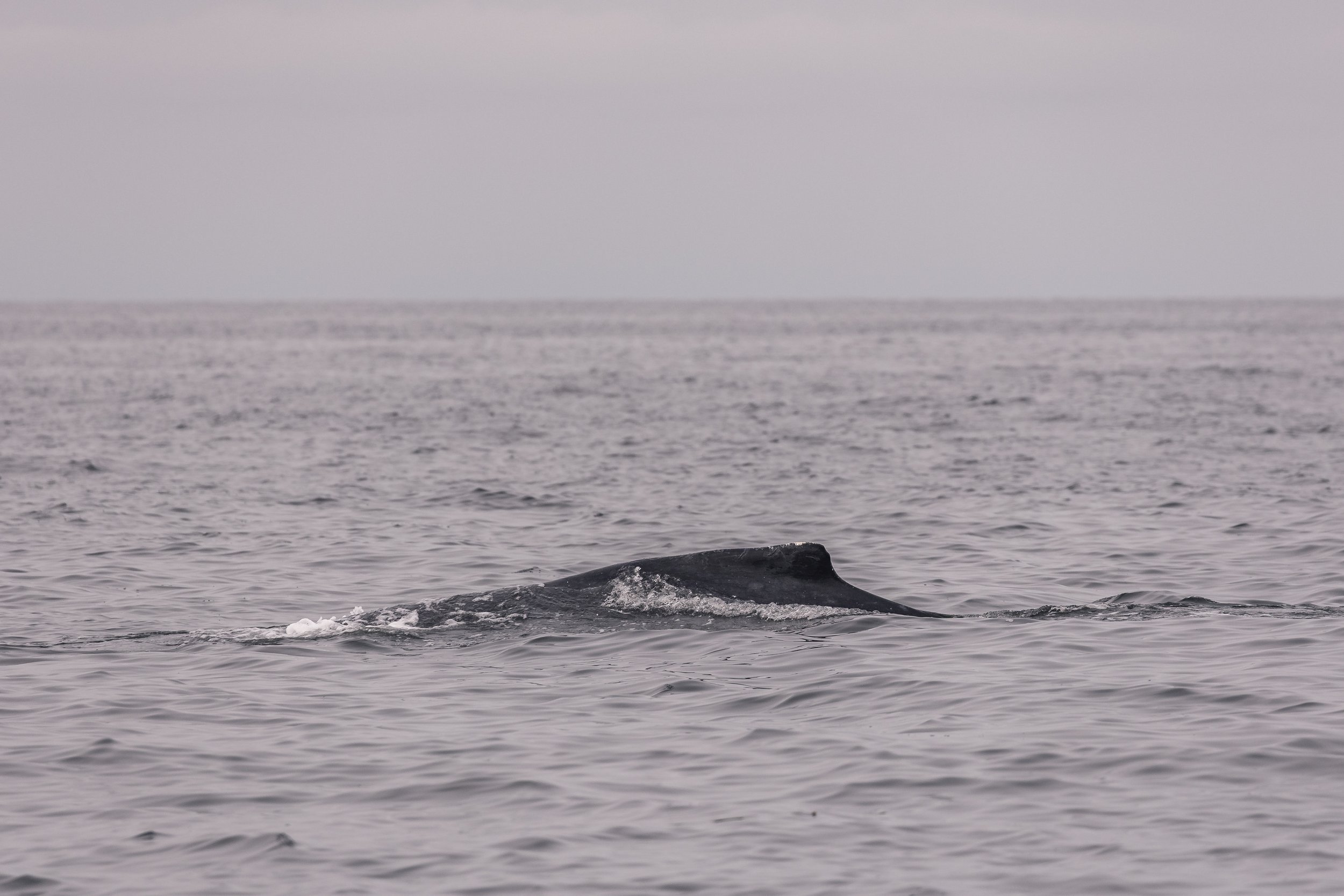
Zig Zag skimming along the surface. Photo by Jordan Robinson.
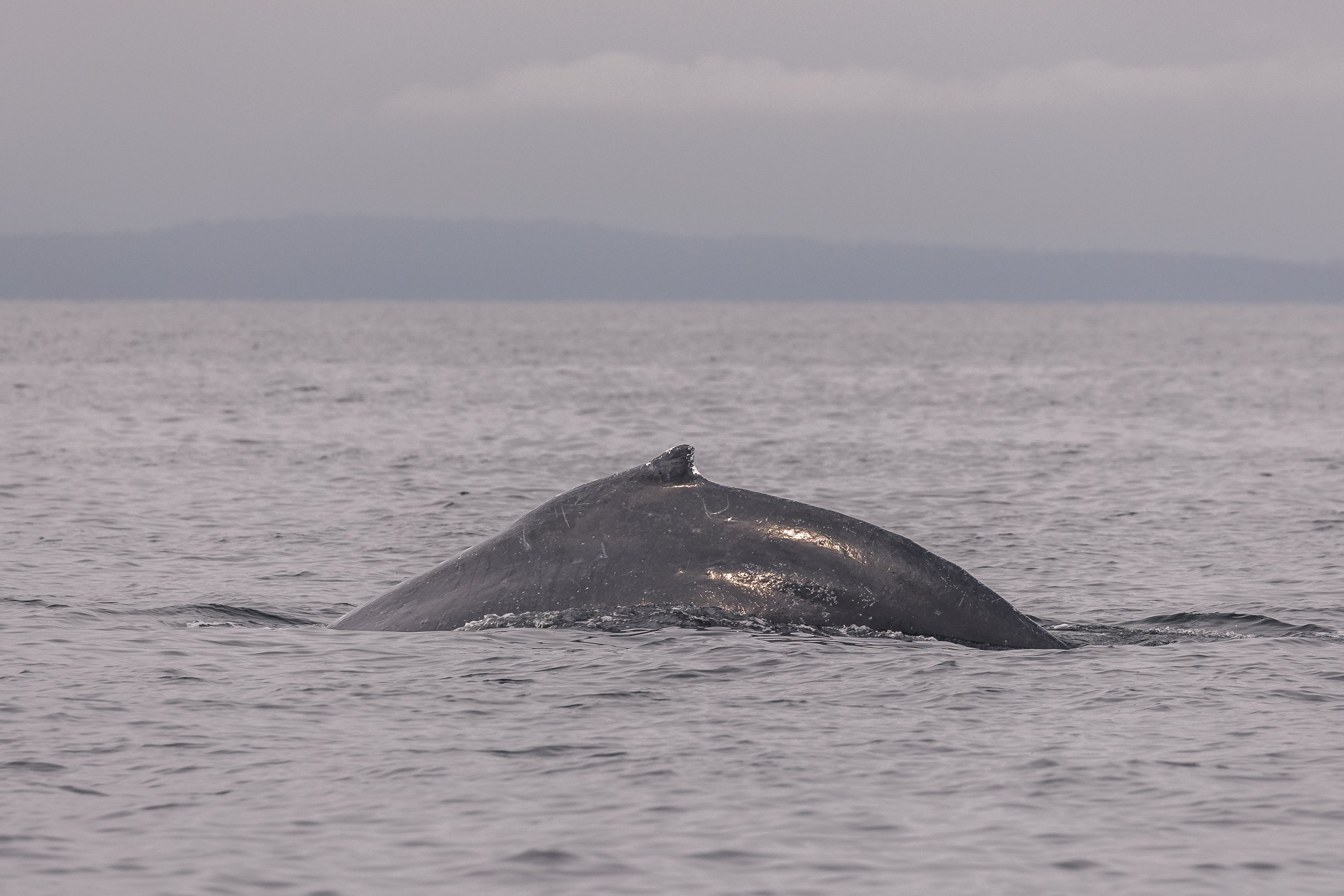
Mantis busily travelling along. Photo by Jordan Robinson.
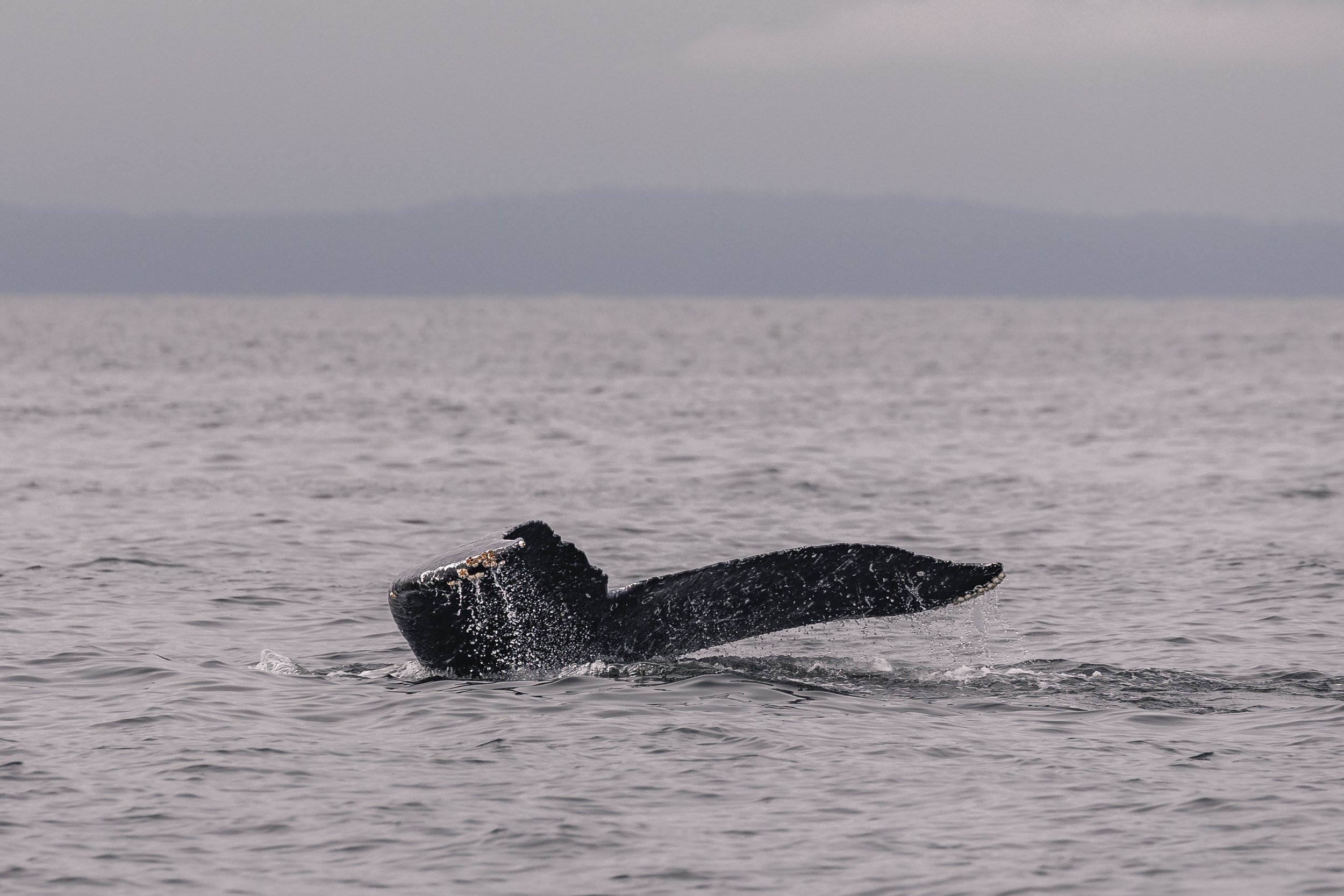
Mantis diving, some of their unique fluke scars visible. Photo by Jordan Robinson.
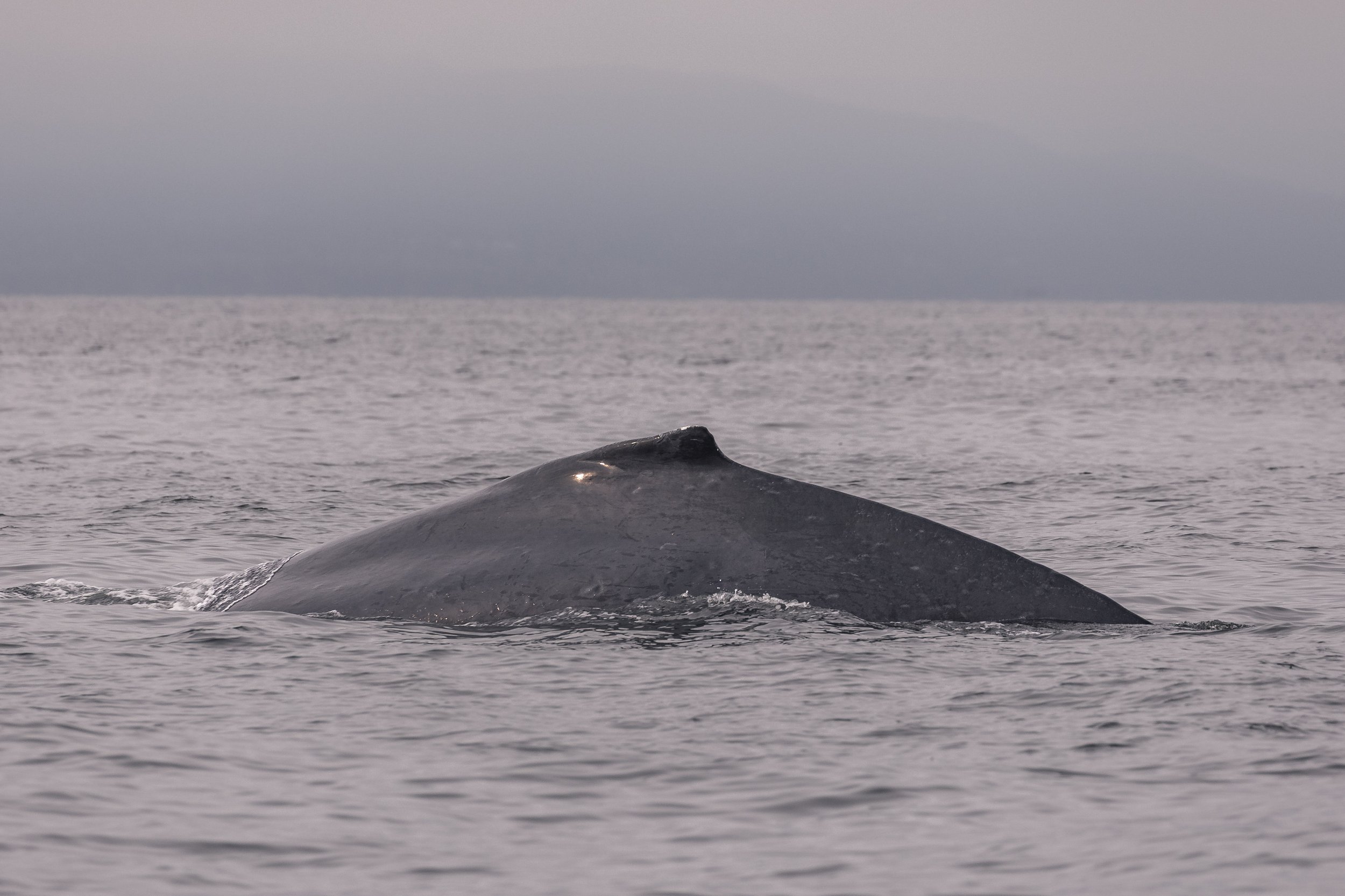
Zig Zag with a small wave washing over her front. Photo by Jordan Robinson.
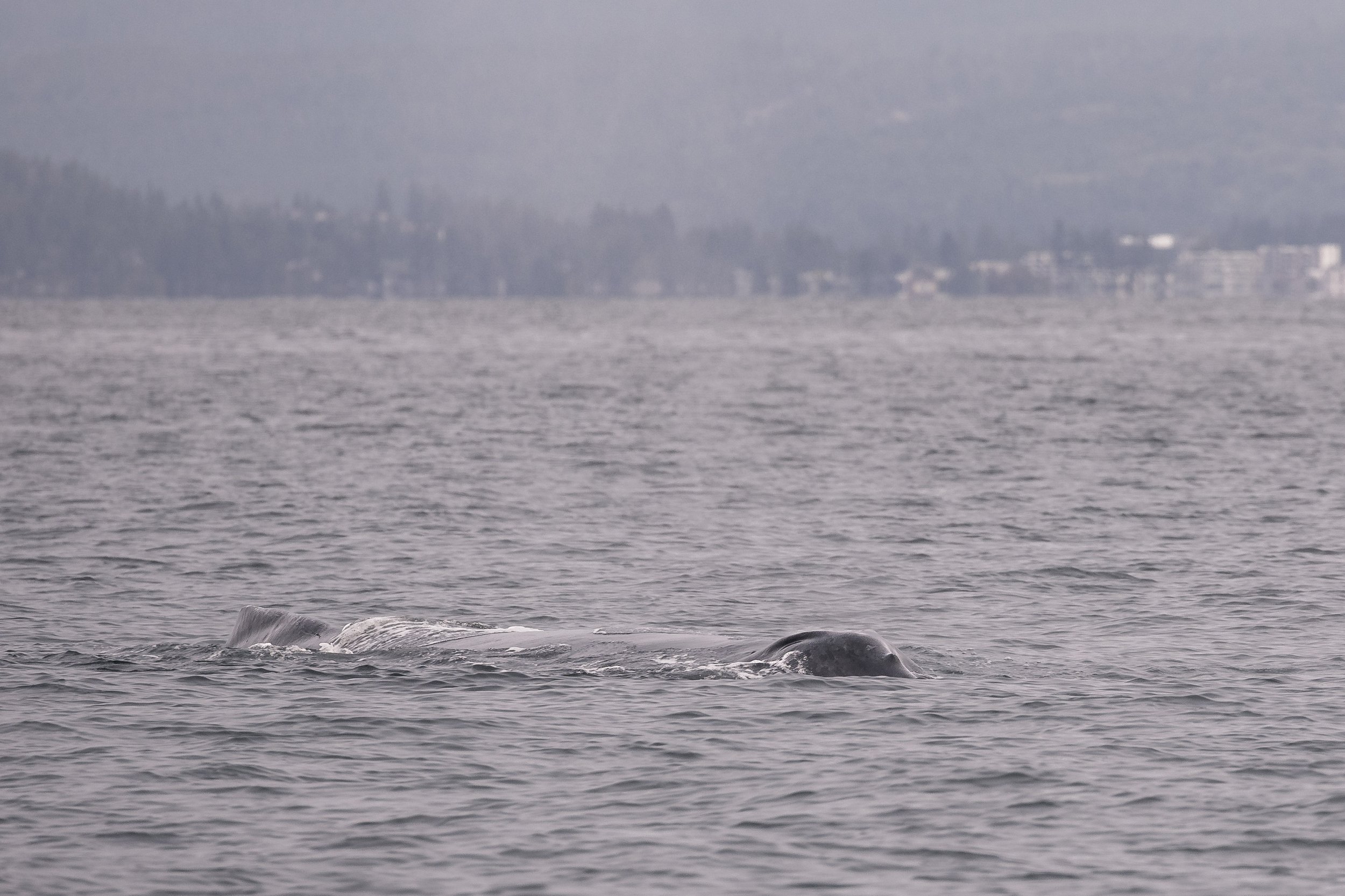
A peek at a pair of humpack blowholes! Photo by Jordan Robinson.
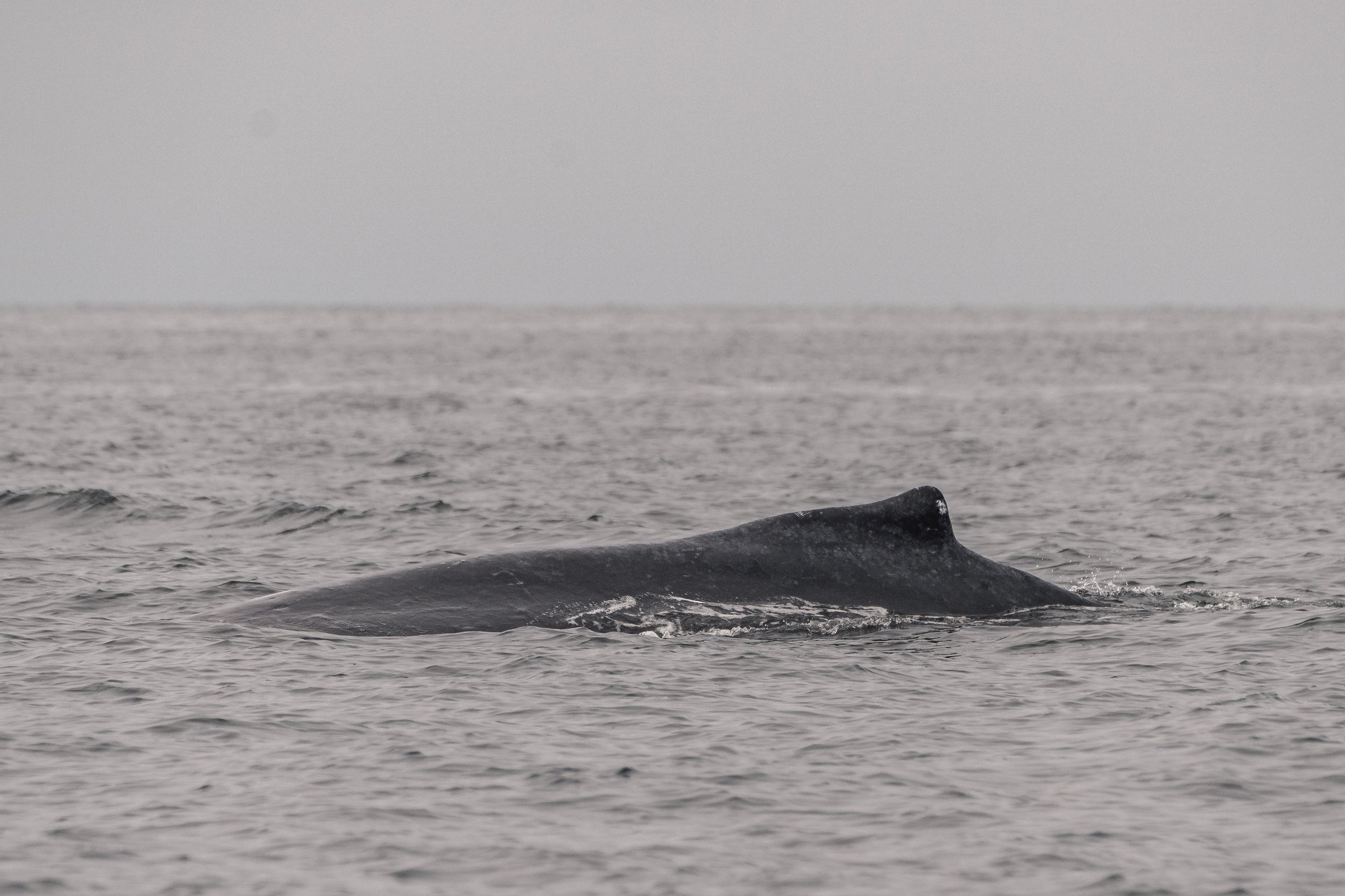
Beak’s dorsal fin. Photo by Val Watson.
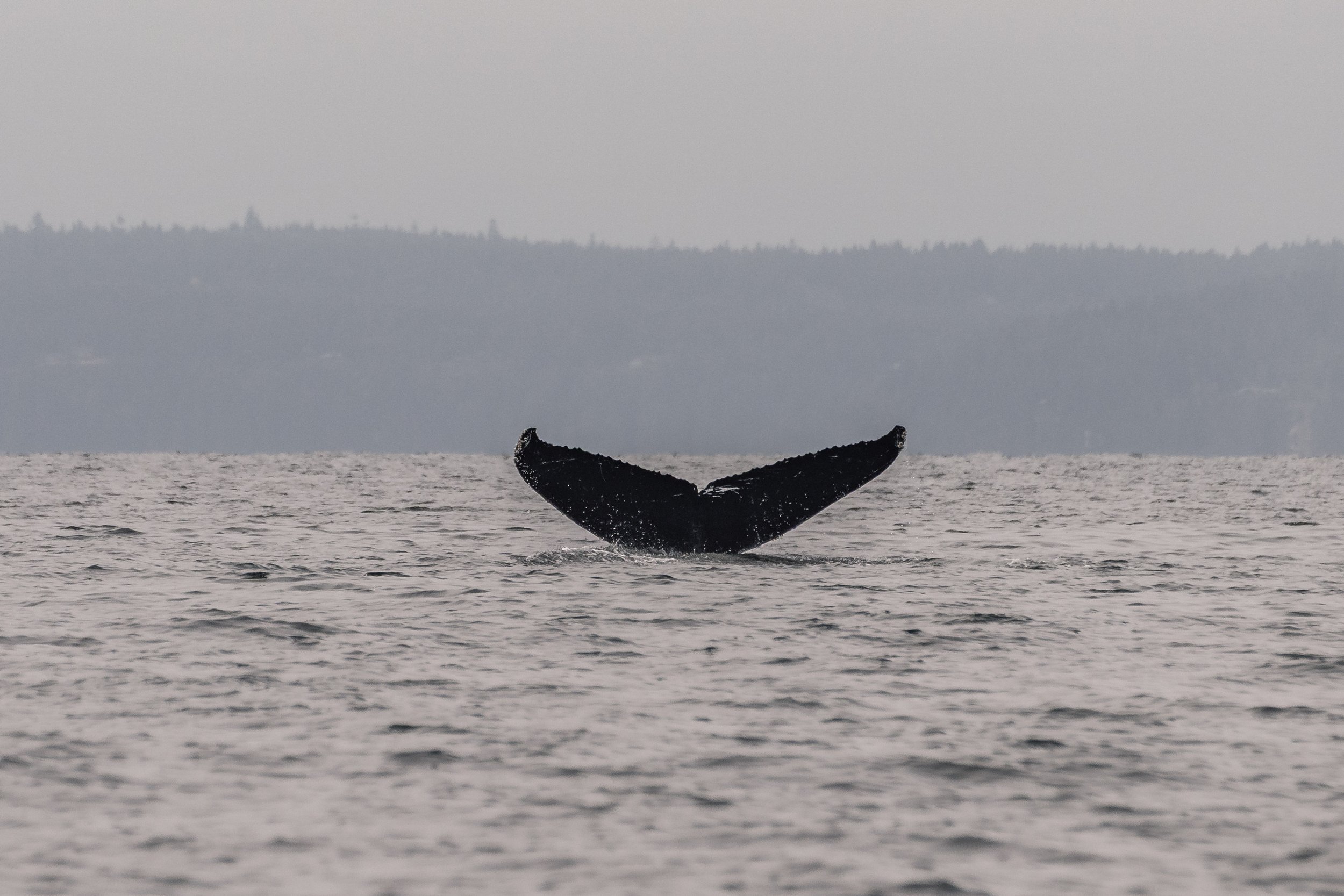
Beak fluking as he goes down for a dive. Photo by Val Watson.
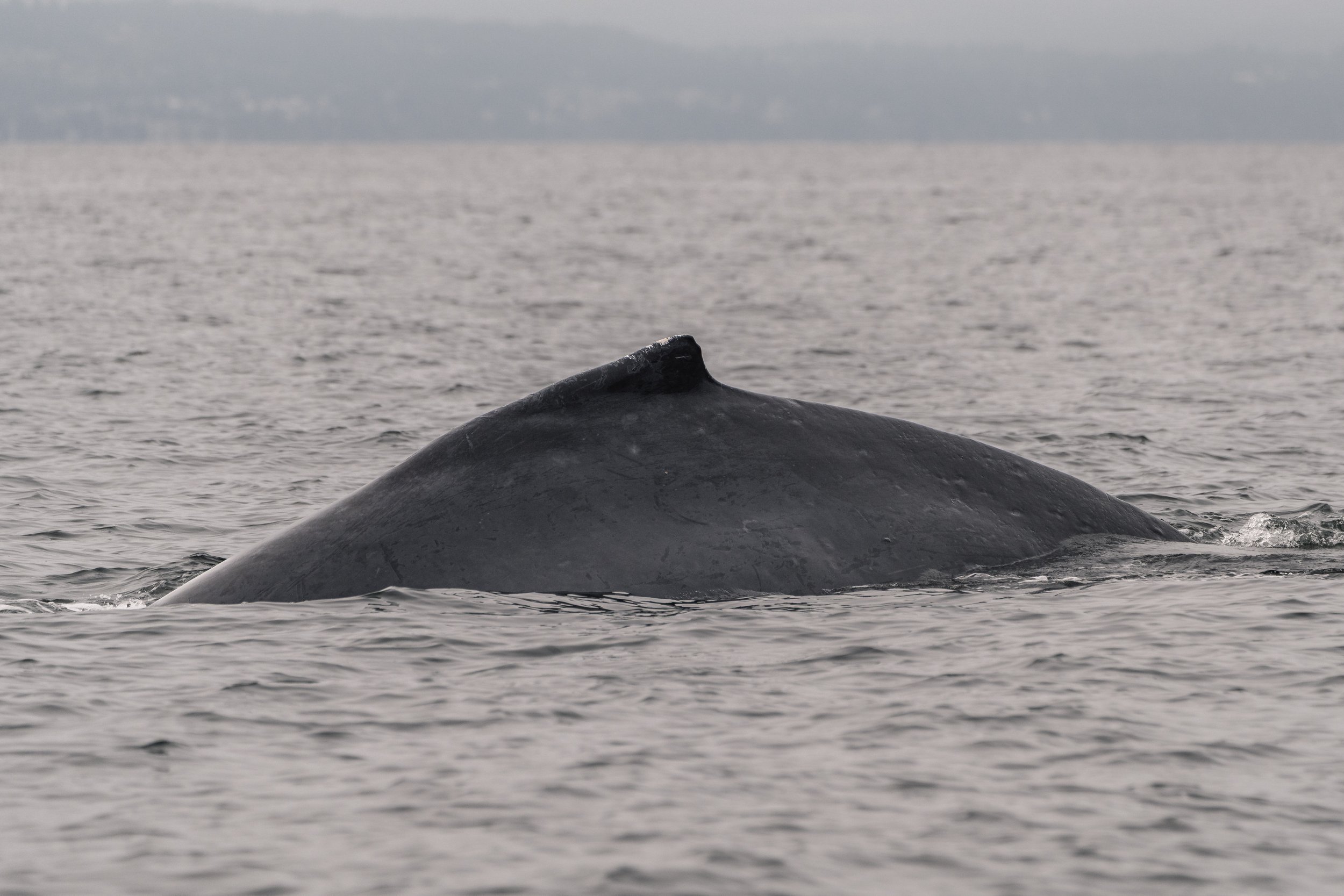
Zig Zag’s dorsal fin as she prepares to dive. Photo by Val Watson.
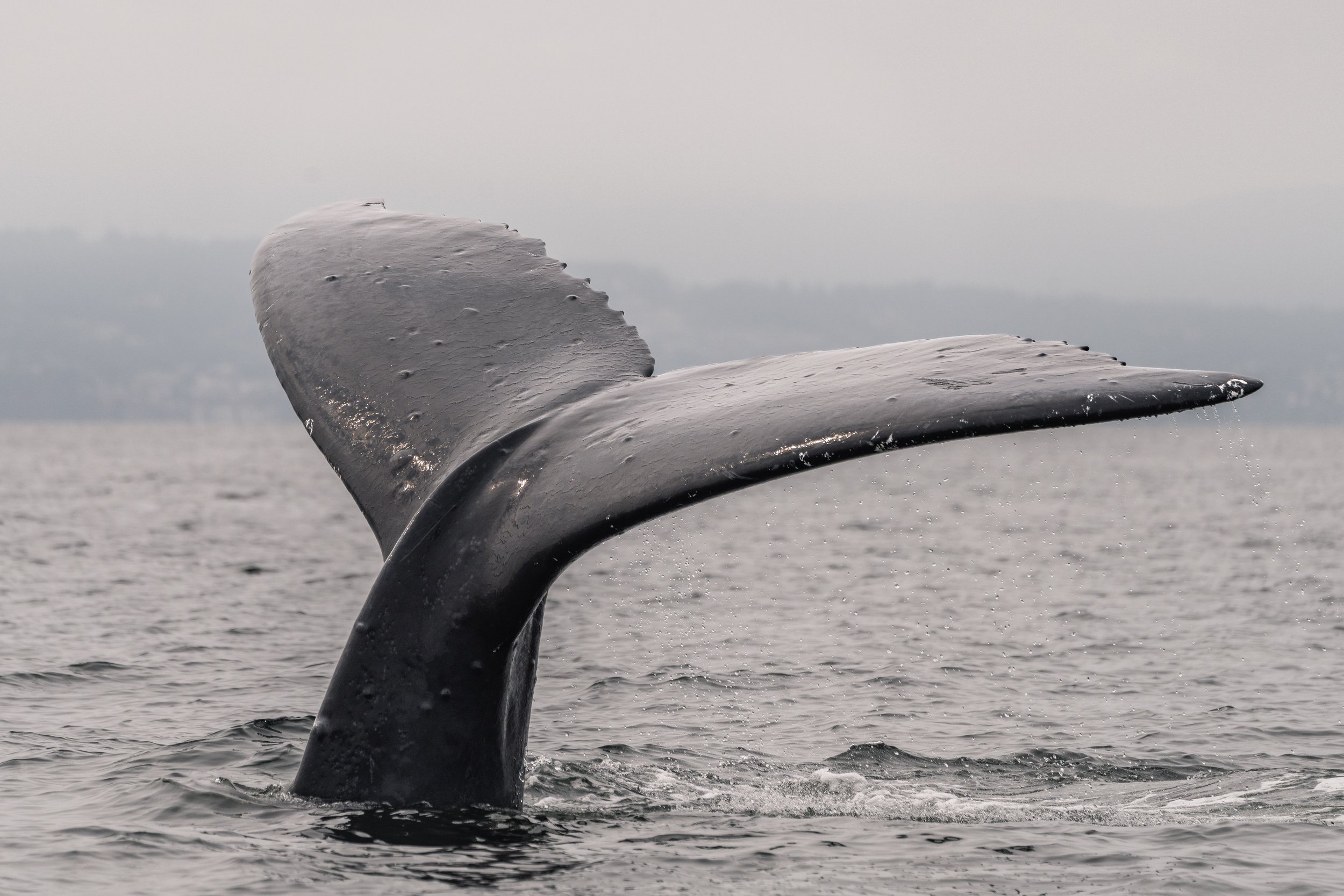
The top of Zig Zag’s fluke as she dives. Photo by Val Watson.
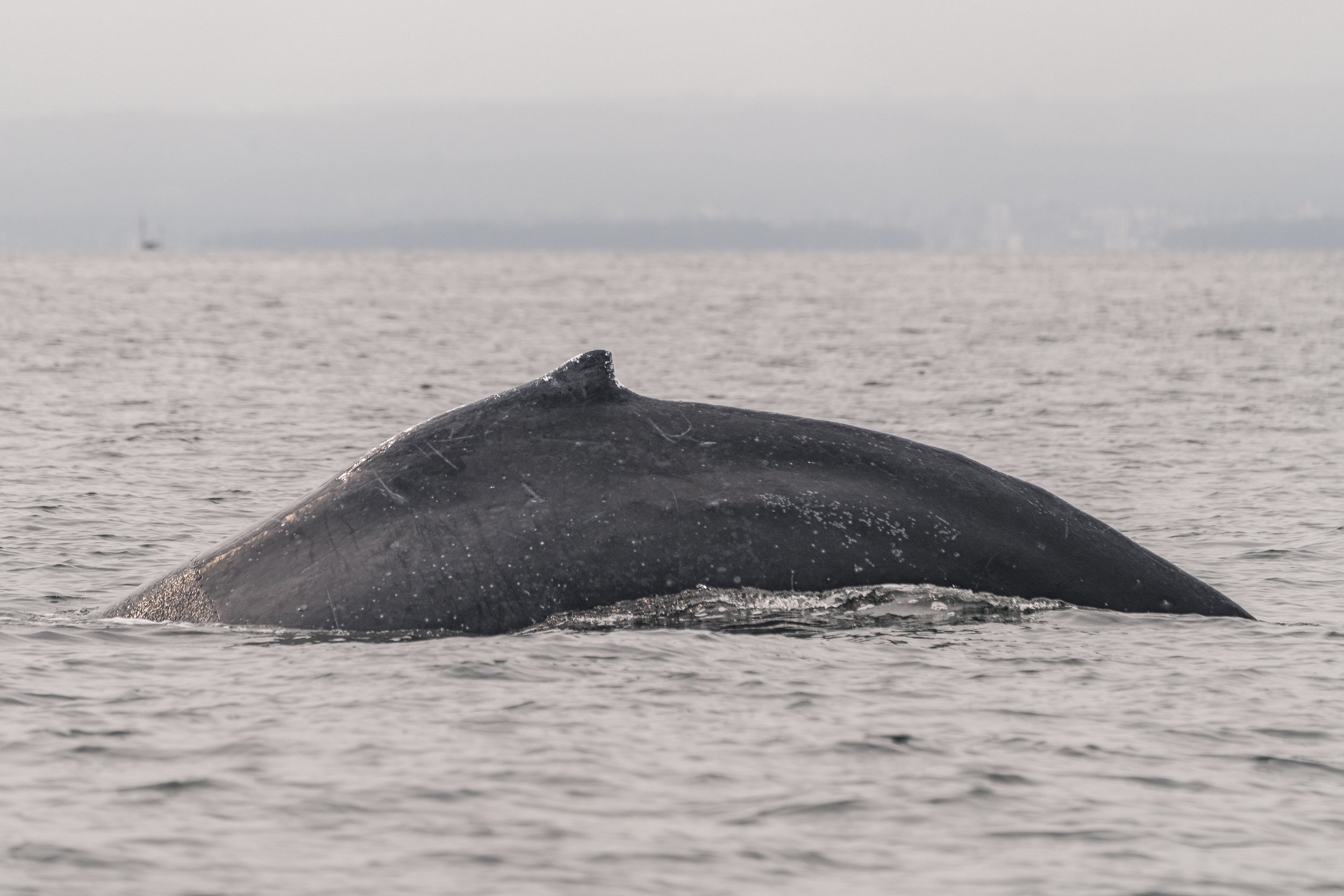
Mantis’ uniquely scarred dorsal fin. Photo by Val Watson.
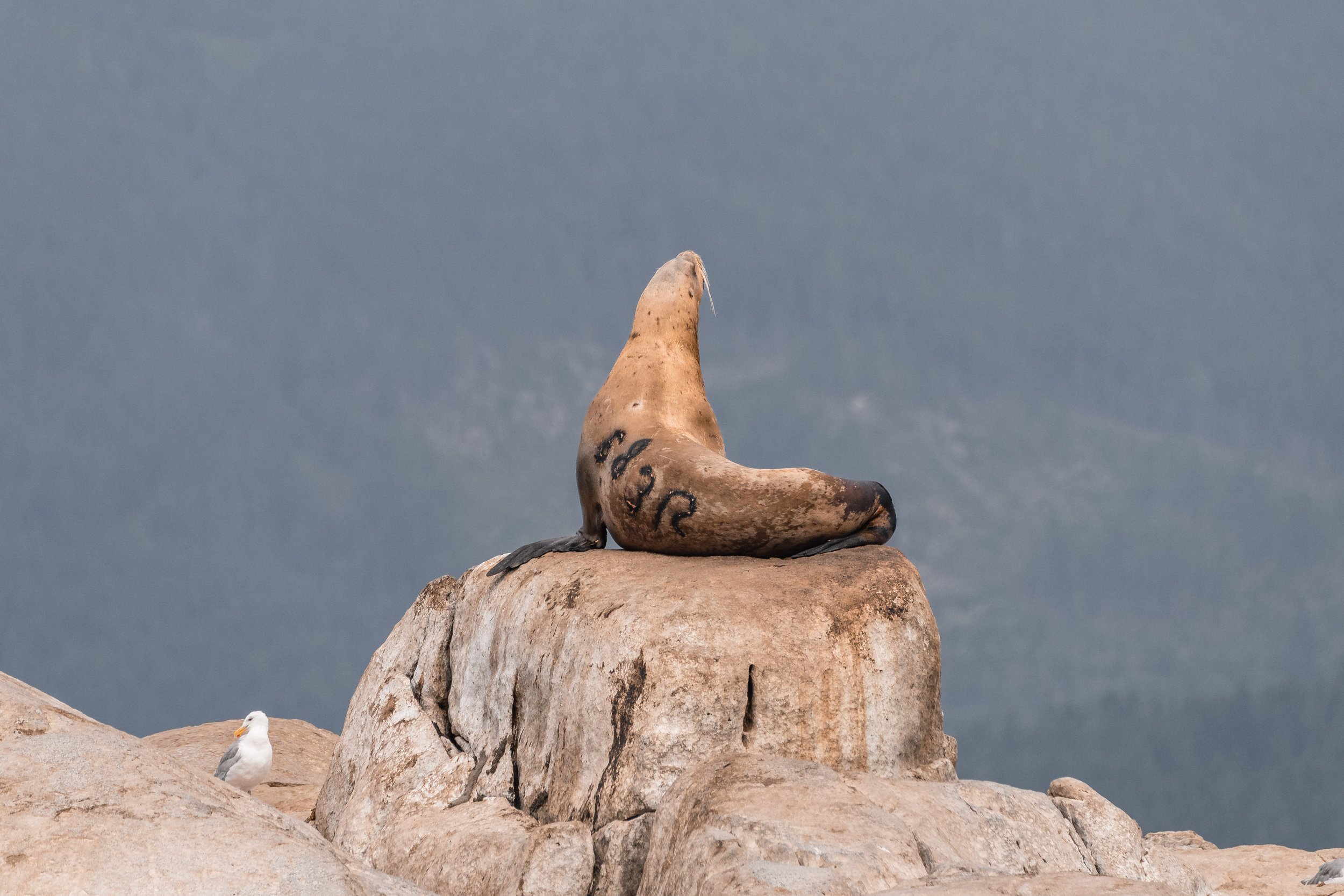
Majestically gracing the top of the White Islets. Photo by Val Watson.
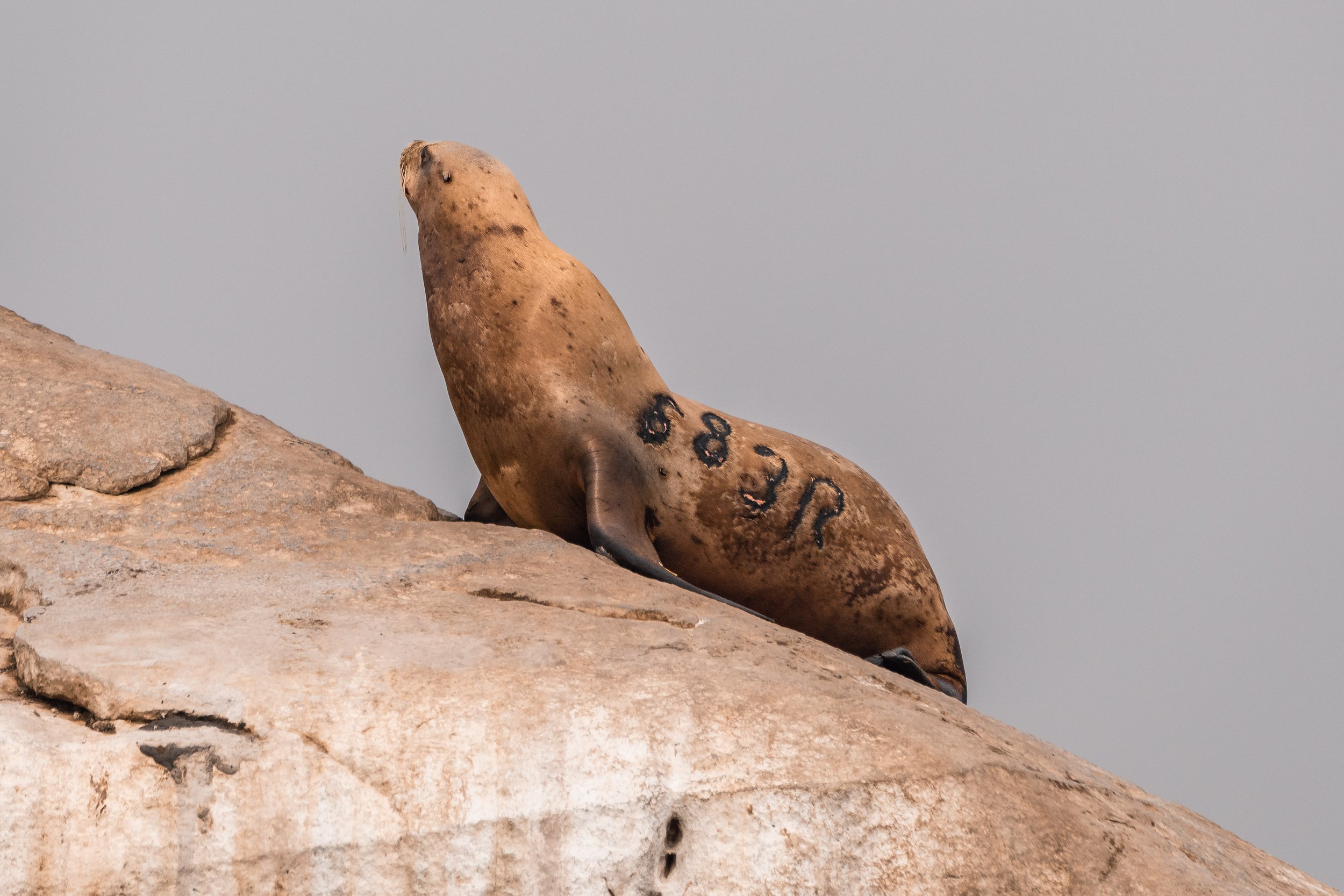
A female branded Steller Sea Lion. This brand occured in 2009 at Rogue Reef, OR. Photo by Val Watson.
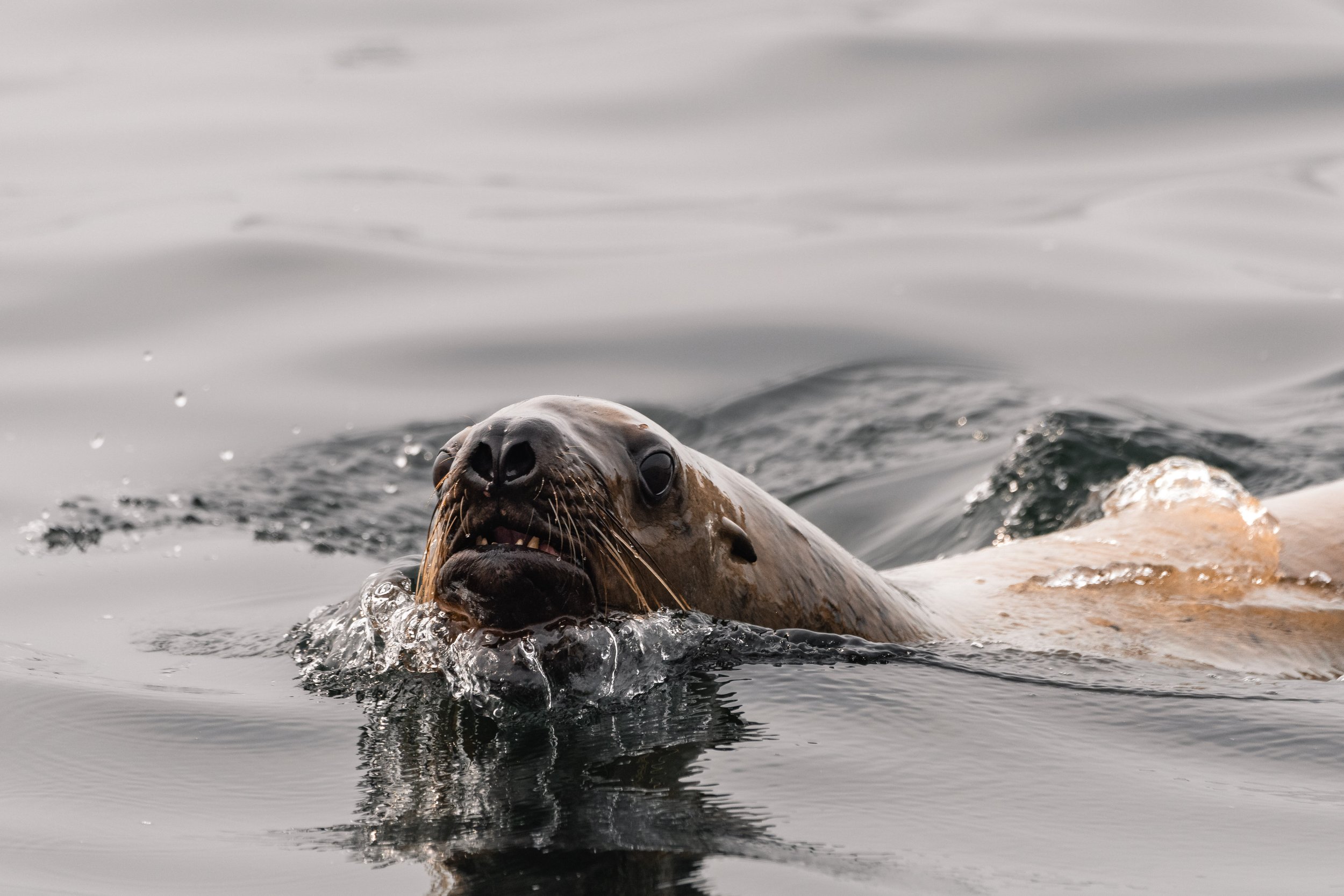
A Steller Sea Lion paddling along. Photo by Val Watson.
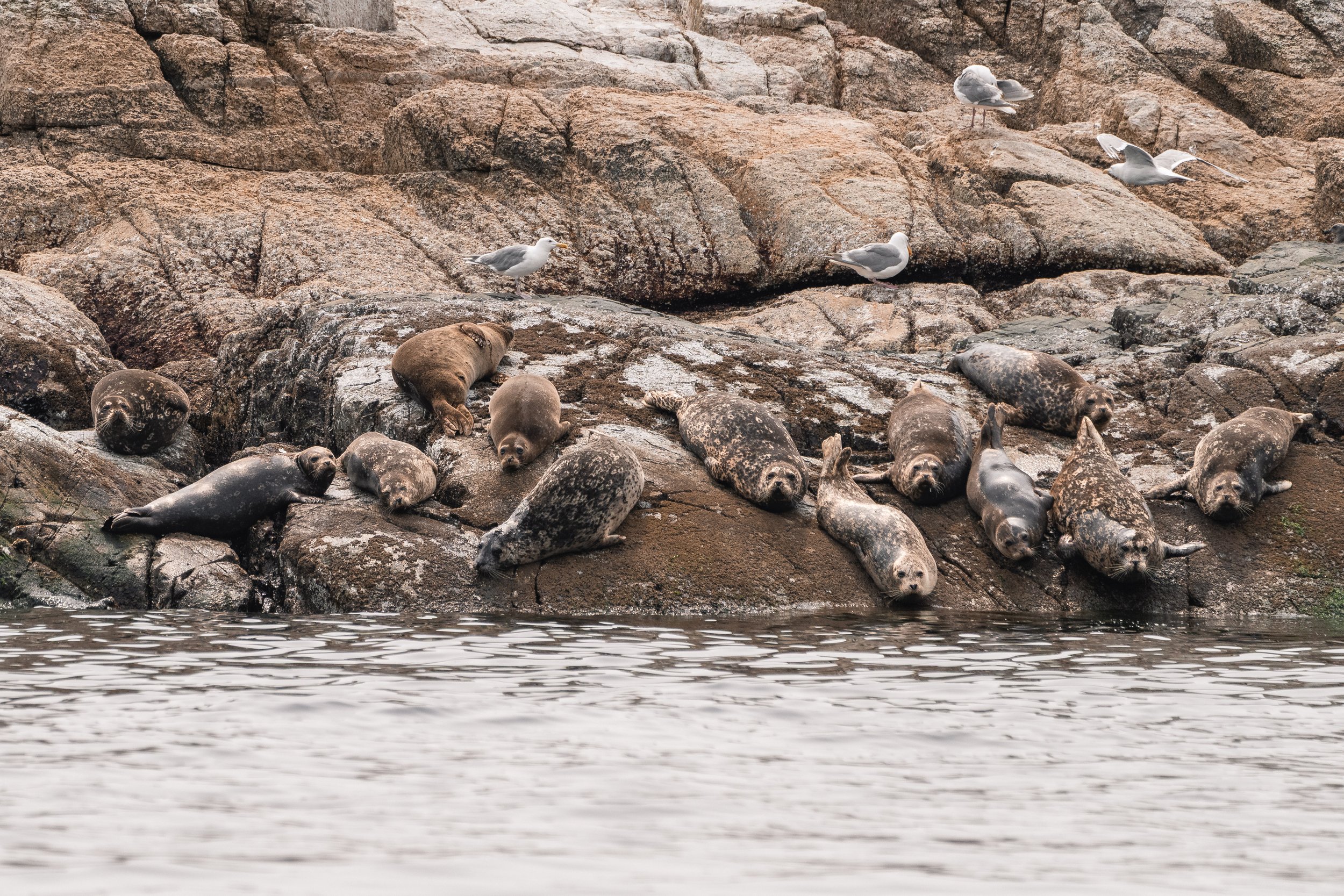
Harbour Seals coats come in a variety of shades, letting them naturally camoflauge into their surroundings. Photo by Val Watson.
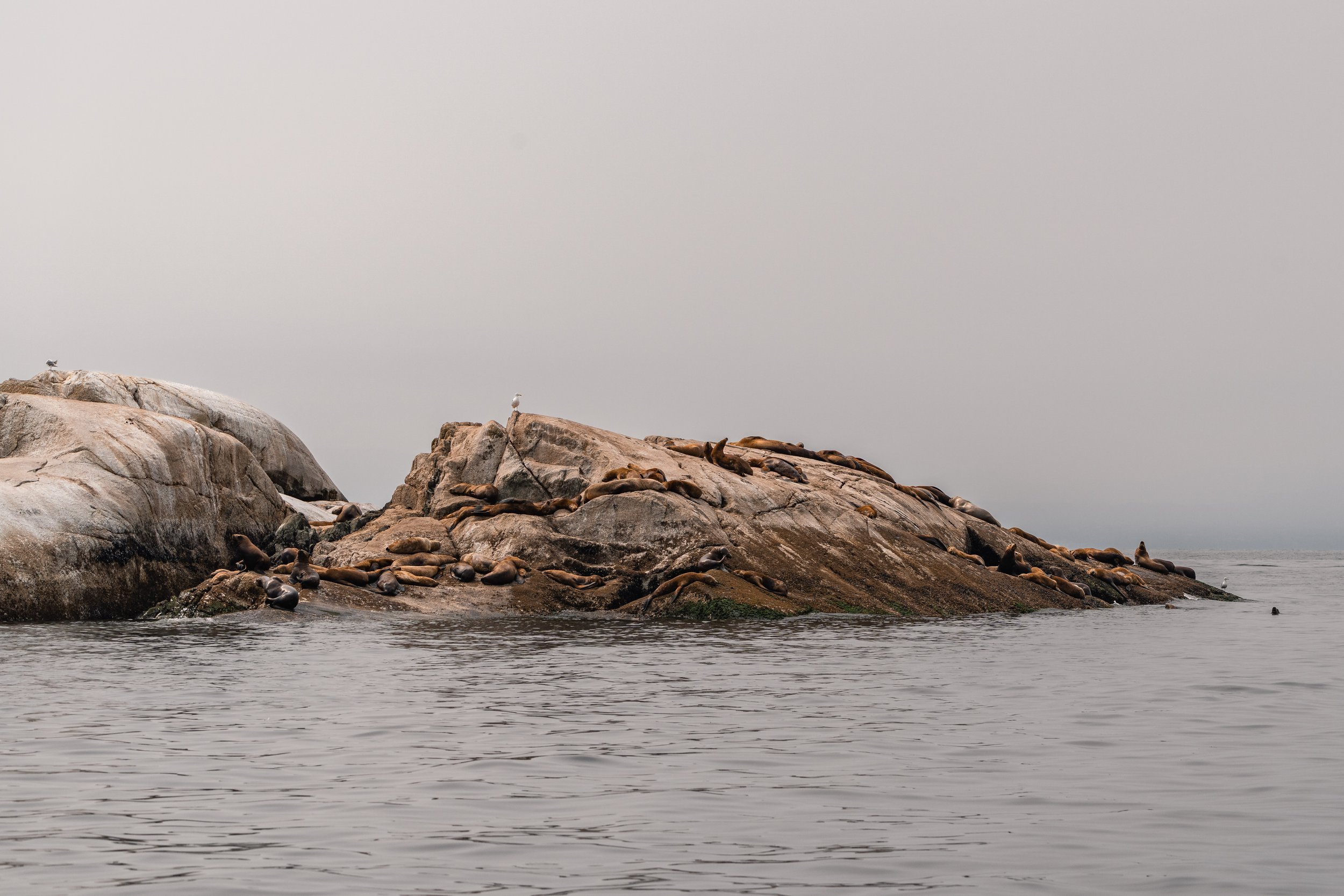
A great shot at the incredible biodiversity along the White Islets. Photo by Val Watson.
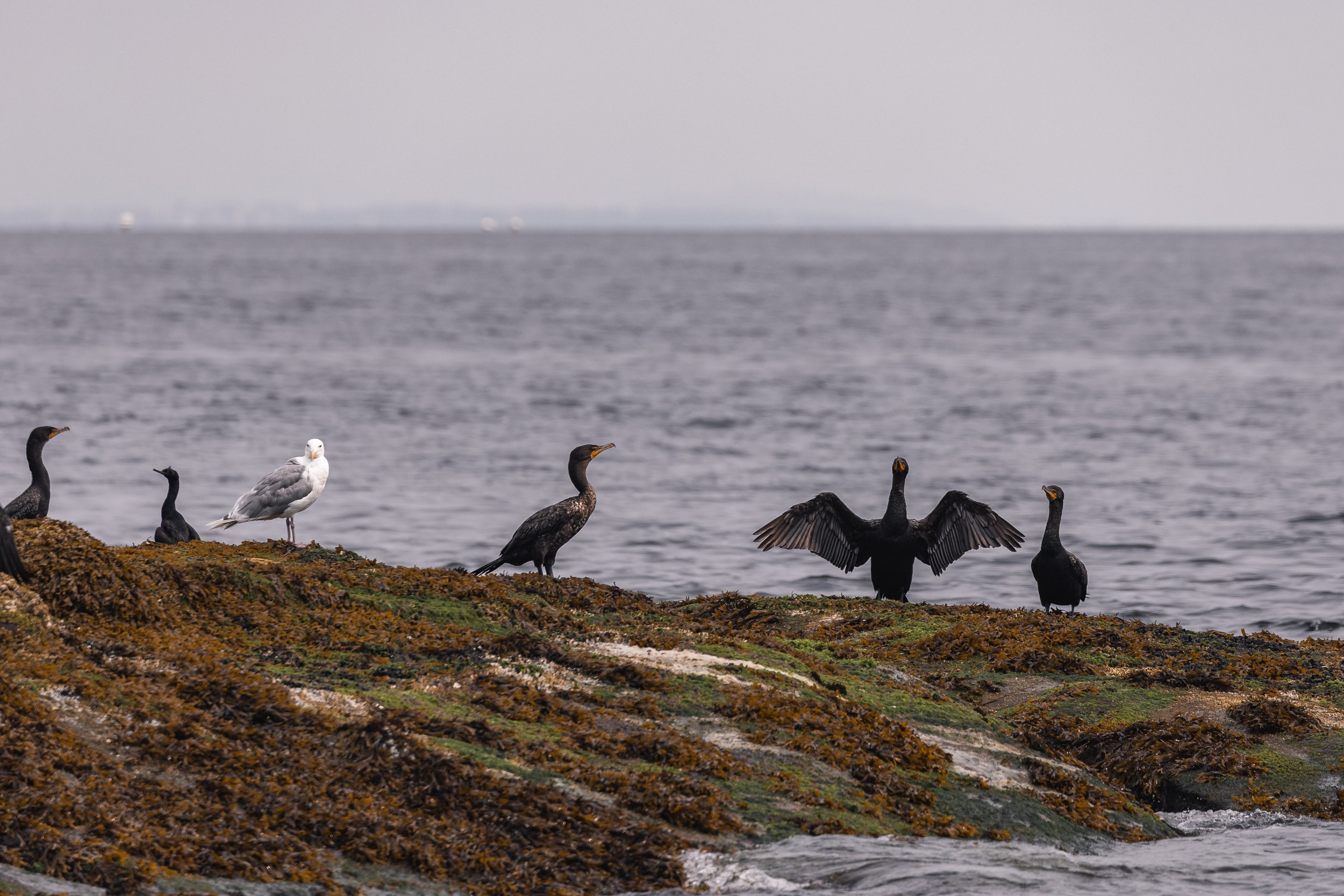
A Cormorant sunning itself on the rocks. Photo by Jordan Robinson.