
August 15, 2026, 3:30 PM - Two best (humpback) friends and a handful of orca too
The afternoon began with two of our vessels, Keta and Kula, heading out from Nanaimo into the Strait of Georgia. The conditions were a little wavy, but the ocean was still perfectly manageable, and there was plenty of water ahead of us to explore. With two boats on the water, the Naturalists and Captains could spread out and search different areas, giving us a better chance of finding the wildlife that makes the Salish Sea such an incredible place to explore.
About an hour into our trip, that search paid off near Halibut Bank. This underwater feature is one of the more productive areas of the Strait of Georgia, and it is not difficult to understand why. Halibut Bank rises from the surrounding seafloor, creating changes in the movement of the water. These underwater features can help bring nutrients upward through the water column, supporting the growth of plankton and creating feeding opportunities for everything from tiny forage fish to some of the largest animals in the ocean.
In this productive area, we spotted two humpback whales travelling together. They were spending time near one another, surfacing, associating, and occasionally lifting their enormous tails high into the air as they fluked. Our Naturalists were able to identify both whales as Zig Zag (BCX1193) and Mantis (BCX0936)!
Seeing two humpbacks together is always exciting, but this particular pairing is especially interesting. Mantis and Zig Zag have been frequently associating with one another since at least July 28, meaning they have now been spending considerable time in each other's company for more than two weeks. Humpback whales are generally considered to be fairly solitary animals, particularly when compared with highly social species such as orca. However, solitary does not mean antisocial. Humpbacks can form temporary associations, sometimes coming together around feeding opportunities or travelling in the same area for periods of time.
After spending some time with Mantis and Zig Zag, we eventually left the pair behind and continued our search. Once more, Keta and Kula spread out, and continued exploring different areas of the Strait of Georgia.
Eventually, we found ourselves in the middle of the Strait when another exciting sighting unfolded. Three killer whales appeared in the distance. Two were noticeably smaller, travelling alongside a much larger individual. The onboard Naturalists quickly began comparing photos of the trio to our catalogue, comapring details including the shape and size of their dorsal fins and the patterns of their saddle patches. Soon after, we had our answer - the three whales here were from the T100 matriline:
T100 Hutchins ♀ (~1979)
T100C Laurel ♂ (2002)
T100F Estrella (2004)
The T100s were on the move, travelling with purpose. As we watched, T100C Laurel began bringing his enormous flukes crashing down onto the water's surface in a behaviour known as tail slapping or tail lobbing.
Tail lobbing is one of those behaviours that can be difficult to interpret with certainty. Orca may slap their tails for a number of reasons, including communication, social interaction, agitation, or simply as part of energetic behaviour.
Soon, tail lobbing was enough, though, and then Laurel took things to the next level.
The tail slaps eventually gave way to repeated breaches, with Laurel launching a significant portion of his body out of the water before crashing back down into the Strait. Seeing an orca is one of the most dramatic encounters we can have on the water. There is something almost surreal about watching an animal of this size leave the ocean entirely, even if only for a moment. But that begs the question - why do whales breach?
That is a question that has no single definitive answer. Breaching may serve several purposes, and different individuals may breach for different reasons. One possibility is communication. A breach creates an enormous sound and disturbance when the whale lands, allowing a signal to travel through the water and potentially be noticed by other whales at a considerable distance. Breaching and other surface behaviours may also be associated with social excitement, play, courtship, or simply playful antics.
Whatever the reason, Laurel was certainly feeling very good today!
The T100s, Zig Zag, and Mantis weren’t the only wildlife we spotted, though. Close to Halibut Bank, we had made a stop for a different species. Several Steller Sea Lions had gathered on the ODAS buoy, a bright yellow marker lazily bobbing along in the surf.
For a marine mammal, finding a good place to rest can be almost as important as finding food. Pinnipeds regularly haul themselves out of the water to rest, regulate their body temperature, socialize, and simply take a break from swimming. Natural haulout sites can include rocky islands, reefs, beaches, and other exposed areas. An oceanographic buoy like this one can provide another option if natural haulouts aren’t an option.
The buoy sits above the water, creating a relatively small but useful platform where sea lions can get their bodies out of the ocean. Compared with a natural rocky haulout, a buoy can have some advantages. It is surrounded by open water, which can provide good visibility of approaching predators and other potential disturbances. No tides cover the top of the structure, so once a sea lion has climbed aboard, it has a stable place to rest regardless of the changing water level.
Of course, the buoy has its limitations. Space is limited, and it can get crowded when several large Steller Sea Lions decide they want to use the same resting spot. Seeing them negotiate the available space can be entertaining, especially when a much larger individual decides that everyone else needs to make room.
Our final stop of the afternoon brought us toward Gabriola Bluffs, where we shifted our attention from the water to the cliffs and shoreline. Even though the whales and dolphins are the highlight of the trip, something is always happening around us in the Salish Sea, and we strive to show our guests as many incredible species as we can on every trip.
Among the birds we spotted were both cormorant chicks and gull chicks. By late summer, many young seabirds are becoming much more independent, but the signs of the breeding season are still easy to spot. Seeing young birds along the bluffs reminds us that this ecosystem's productivity extends far beyond the animals swimming beneath the surface.
From plankton and forage fish to humpback whales, killer whales, sea lions, and seabirds, these animals are all connected by the same marine environment. A trip through the Strait of Georgia can cover only a small portion of this enormous ecosystem, but every sighting gives us another opportunity to see how its many integrated pieces fit together to create a healthy, harmonious balance for all the life that calls it home.
We made our way back to Nanaimo, concluding an excellent time out on the water. We had seen many different species today, and we were grateful for the brief glimpse into their lives we were able to witness!
Please enjoy today’s photos by Marine Naturalists Jordan Robinson and Evan Hessels.
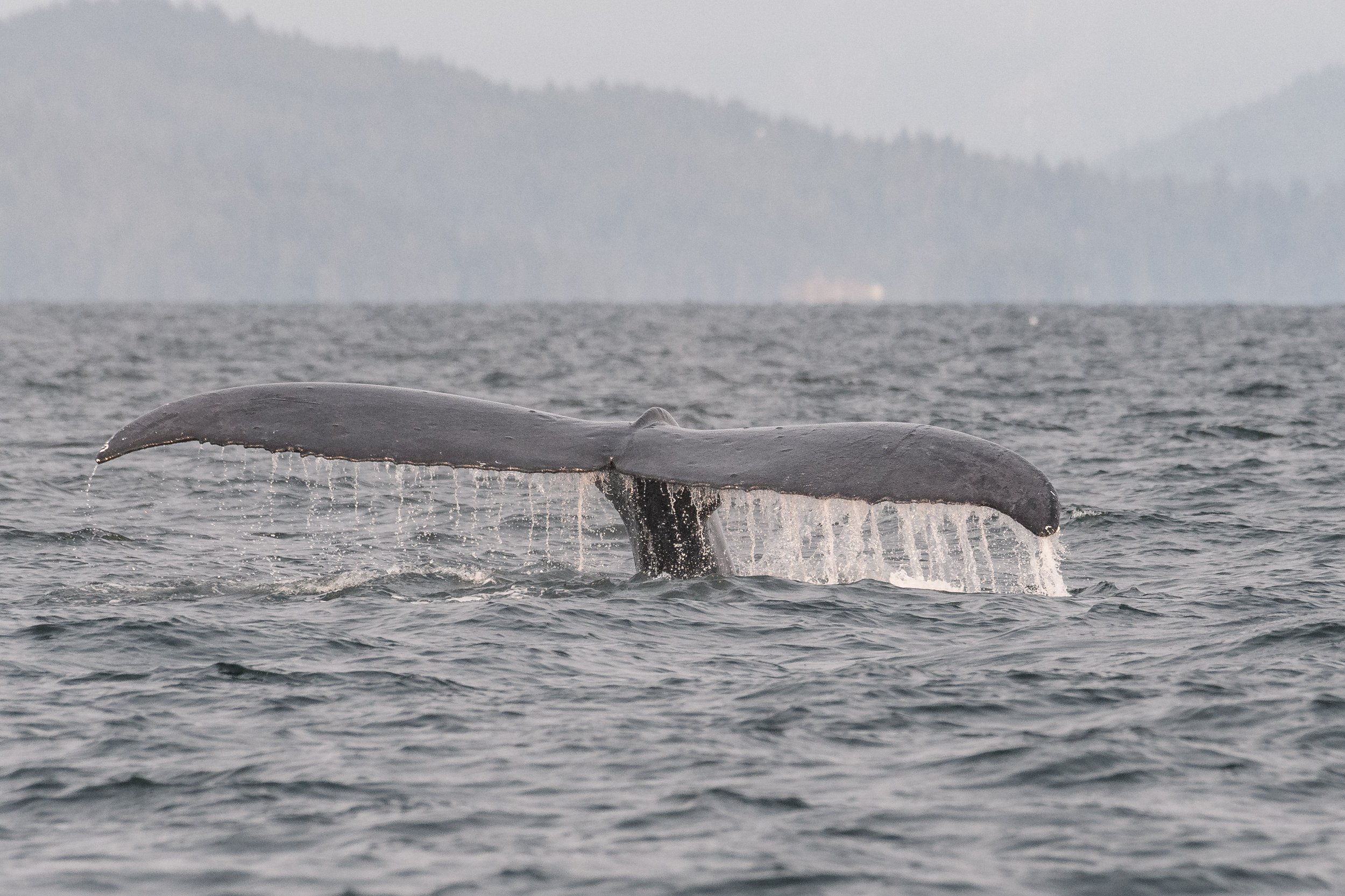
Zig Zag diving with water falling off her flukes. Photo by Evan Hessels.
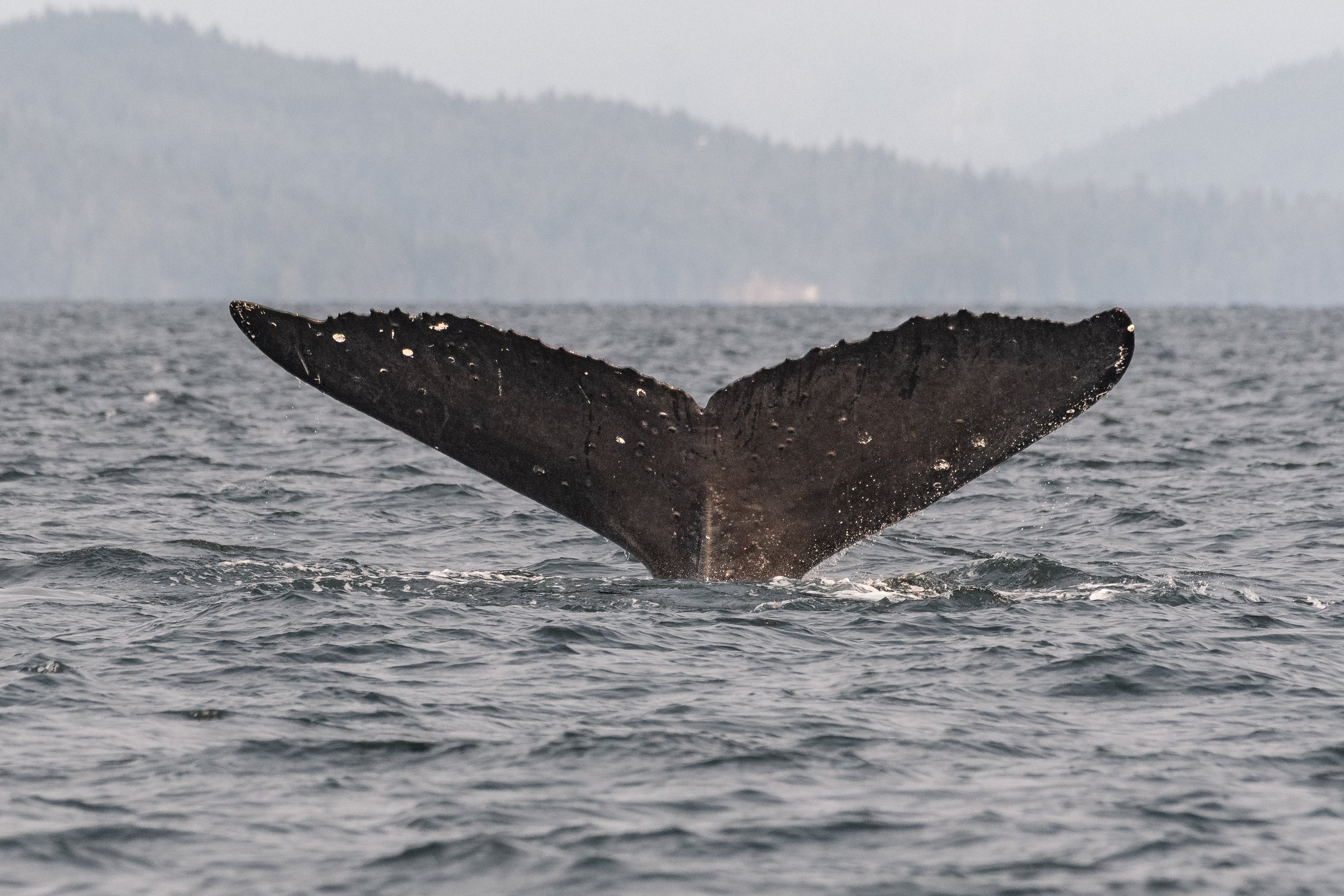
Zig Zag’s unique triple polkadot fluke. Photo by Evan Hessels.
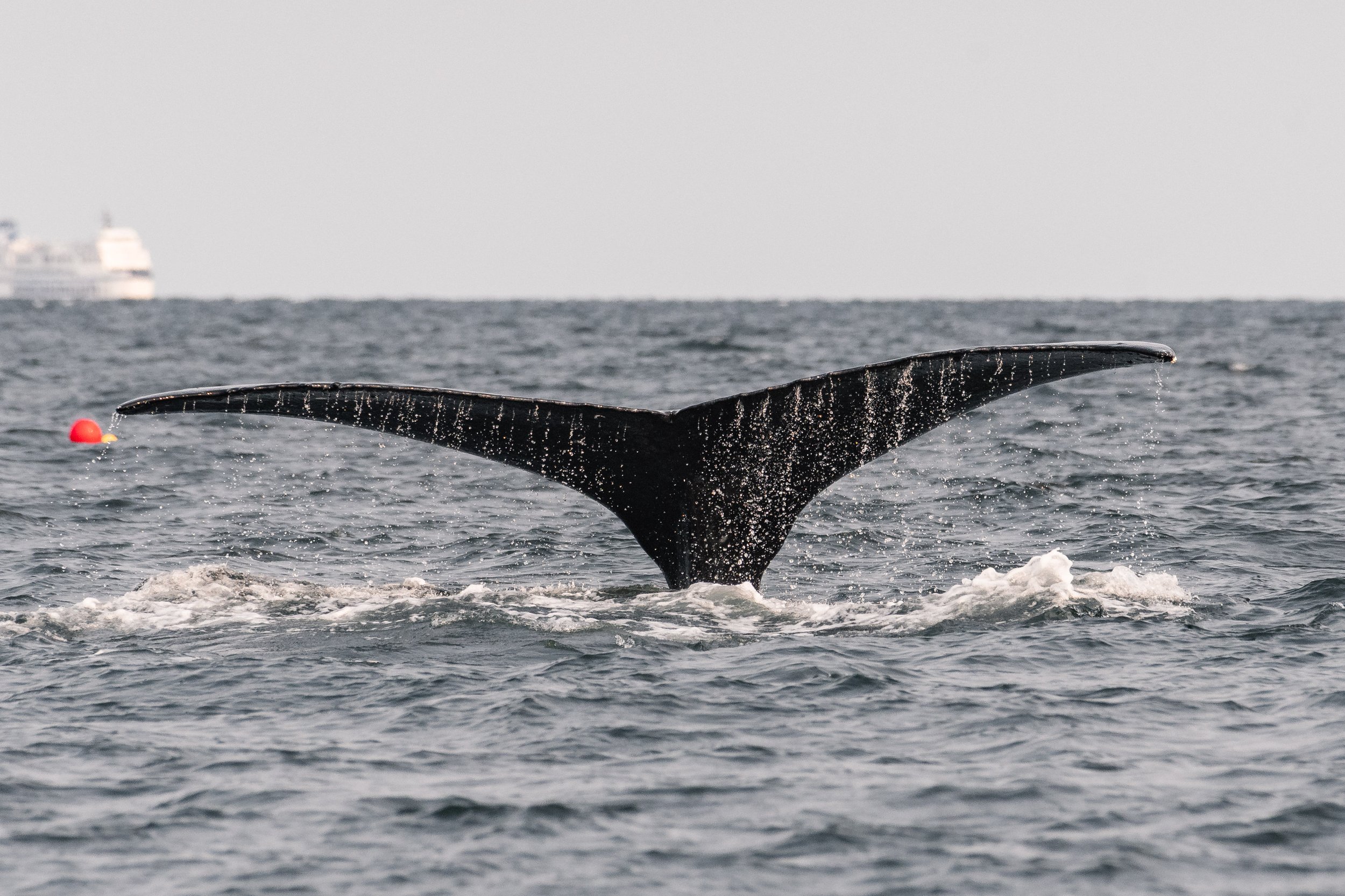
Going for a dive. Photo by Evan Hessels.
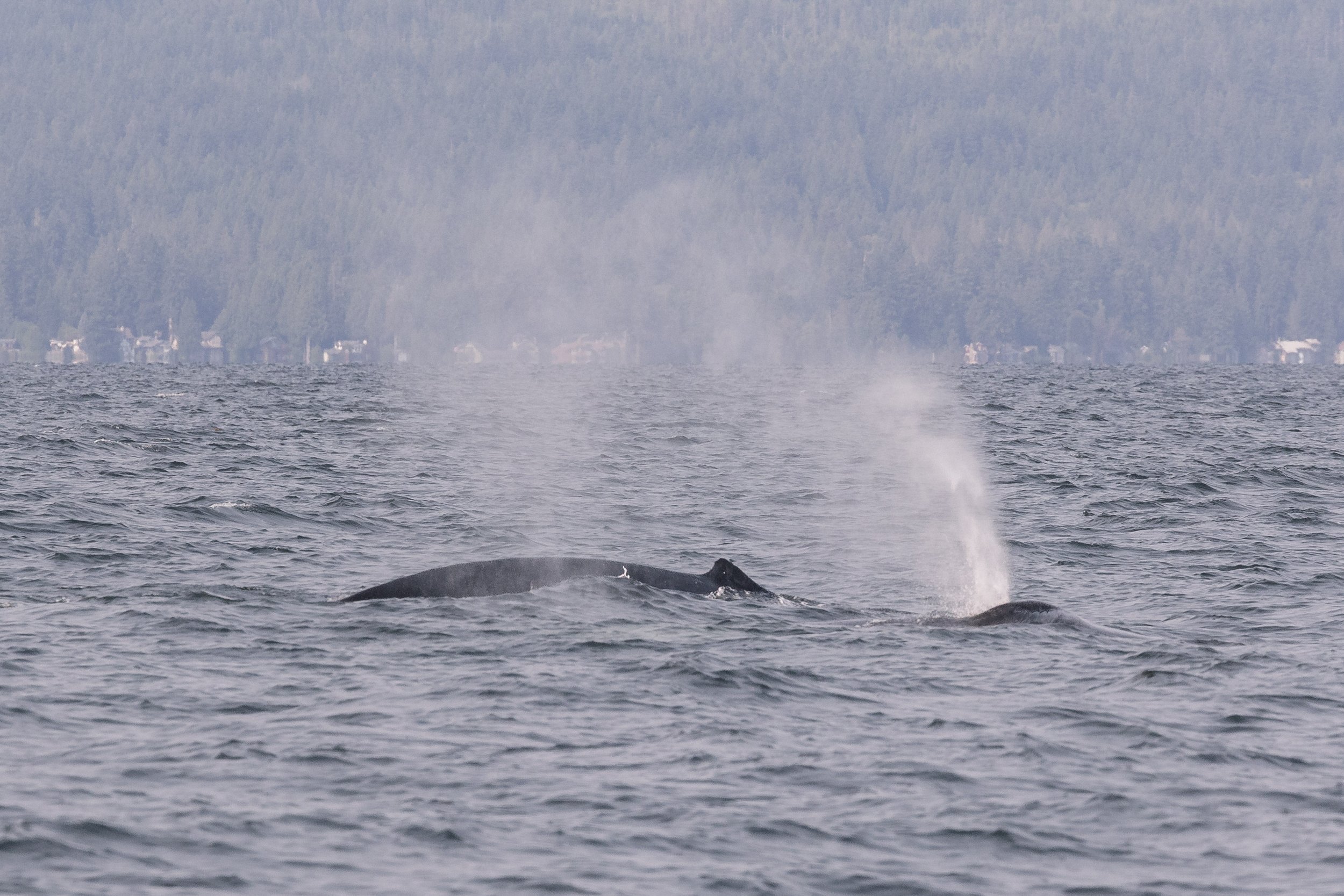
Mantis blowing as Zig Zag goes down for a dive. Photo by Jordan Robinson.
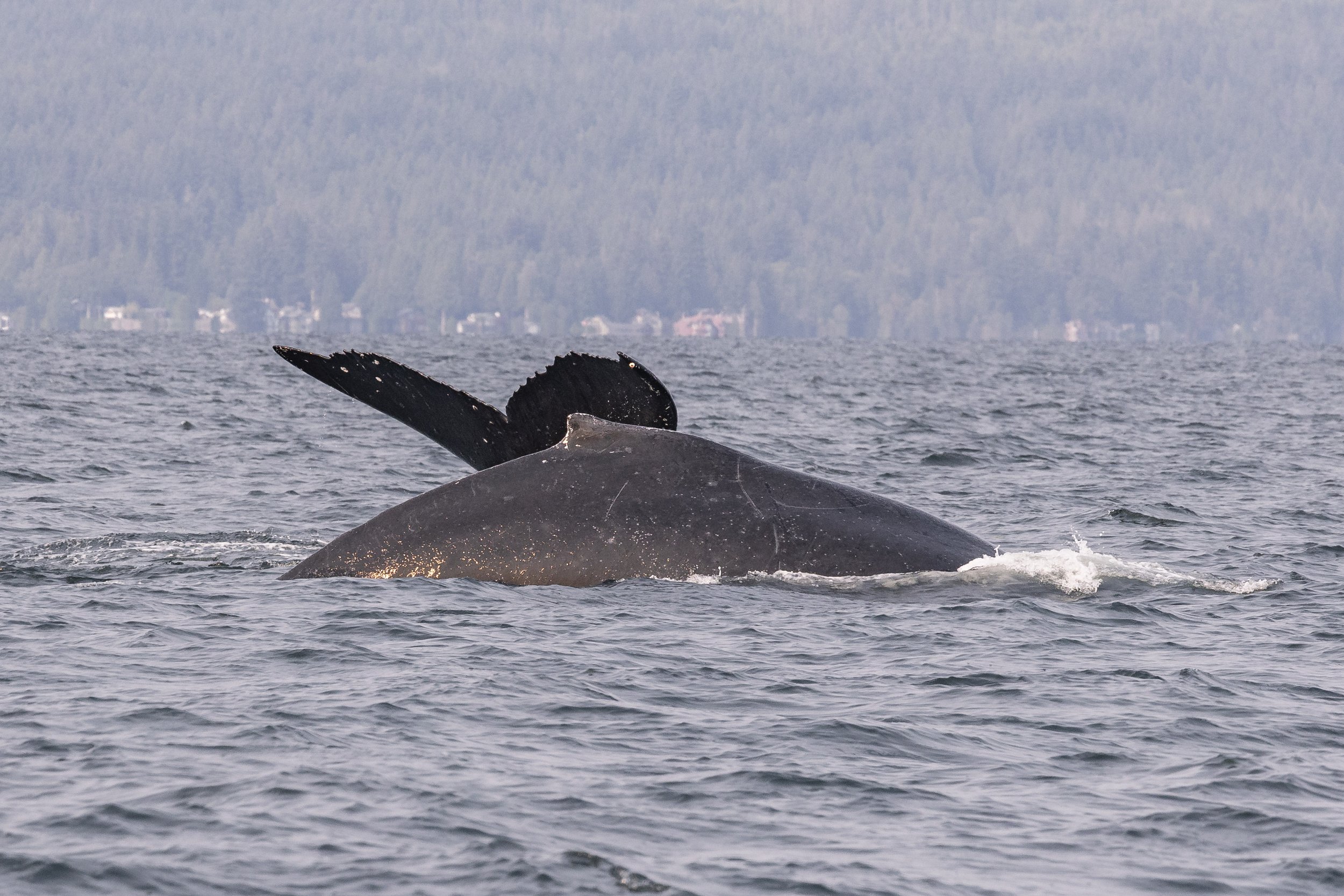
Zig Zag with her fluke up and Mantis beside her. Photo by Jordan Robinson.
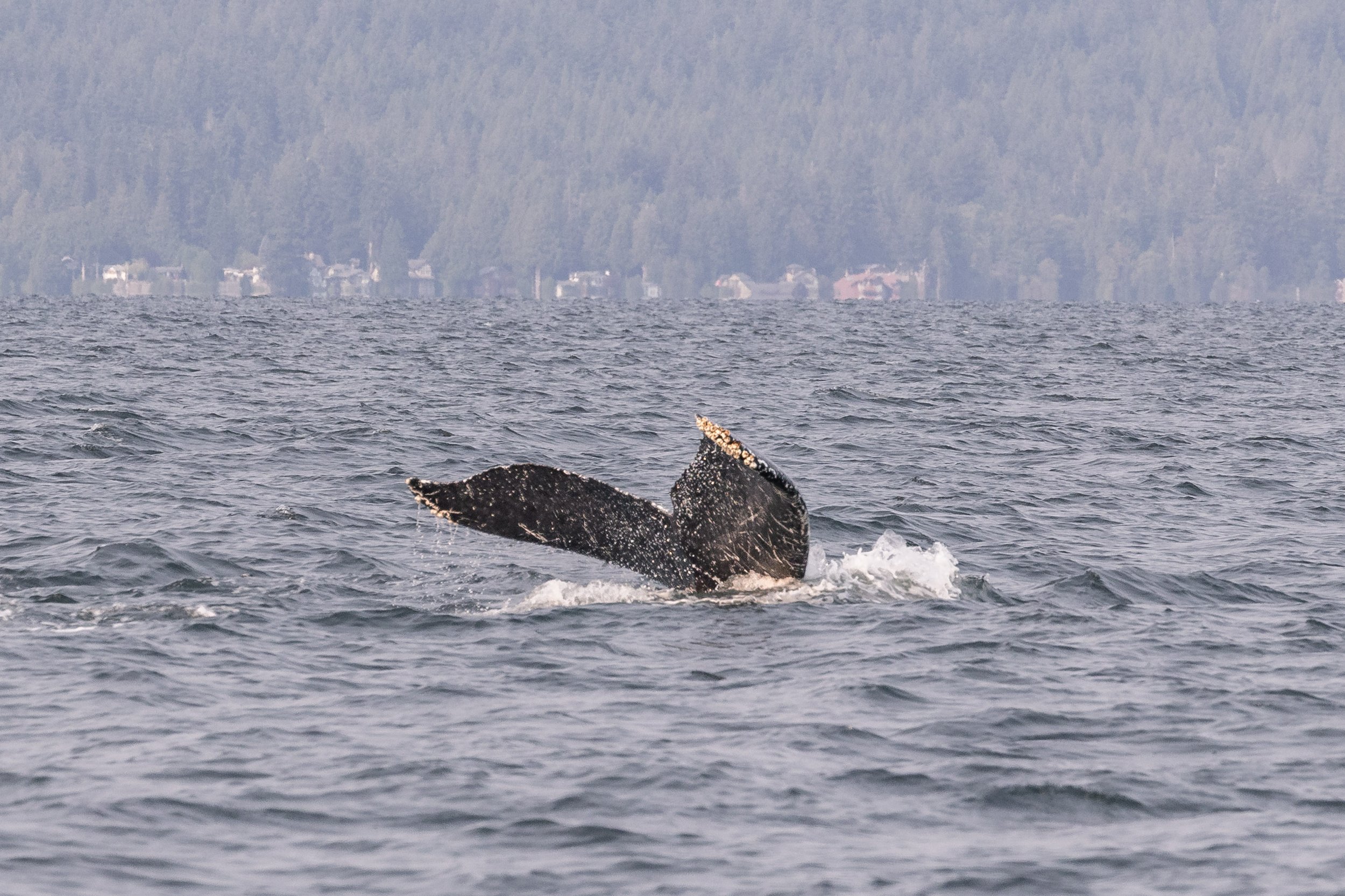
Mantis diving. Photo by Jordan Robinson.
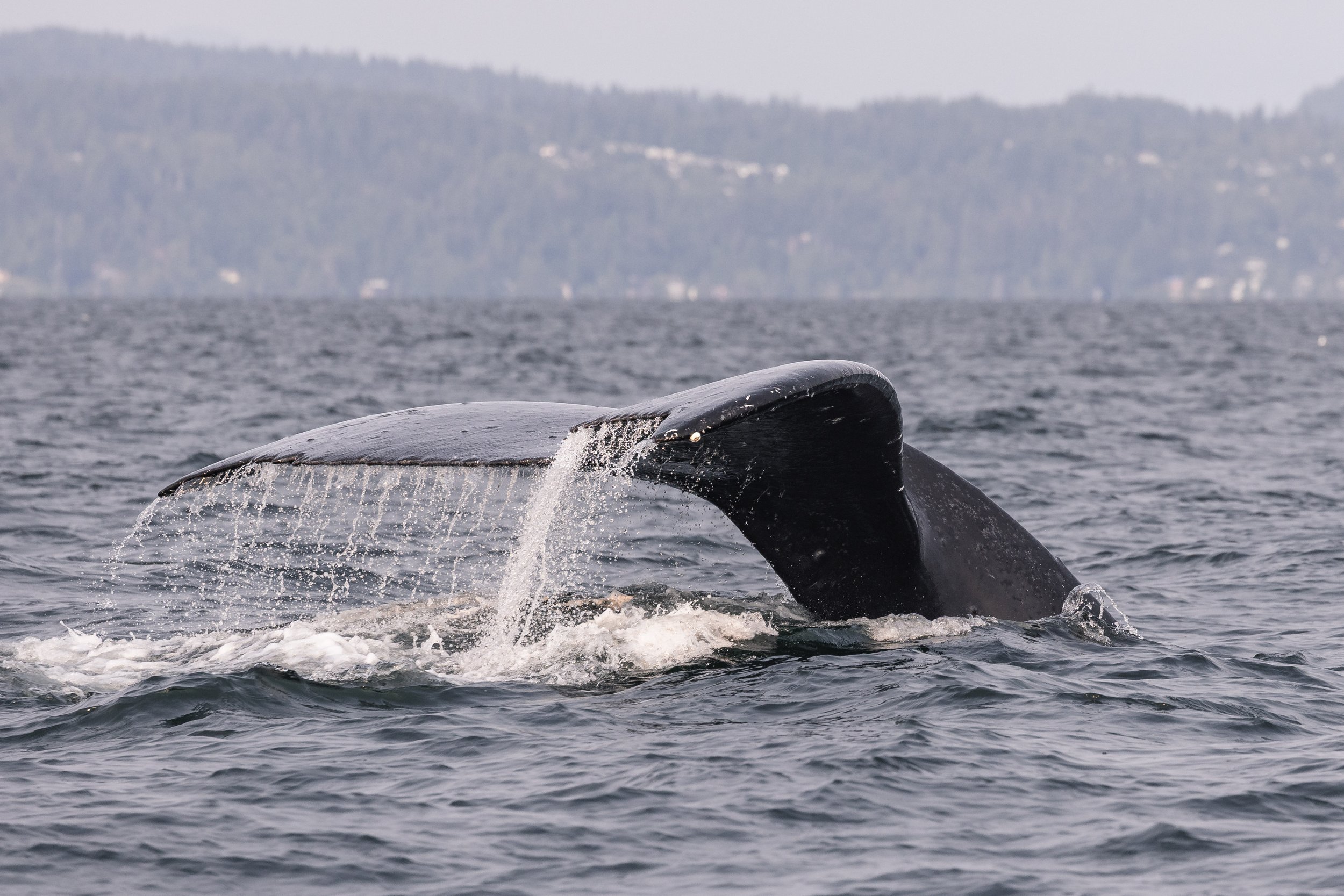
A fluke waterfall! Photo by Jordan Robinson.
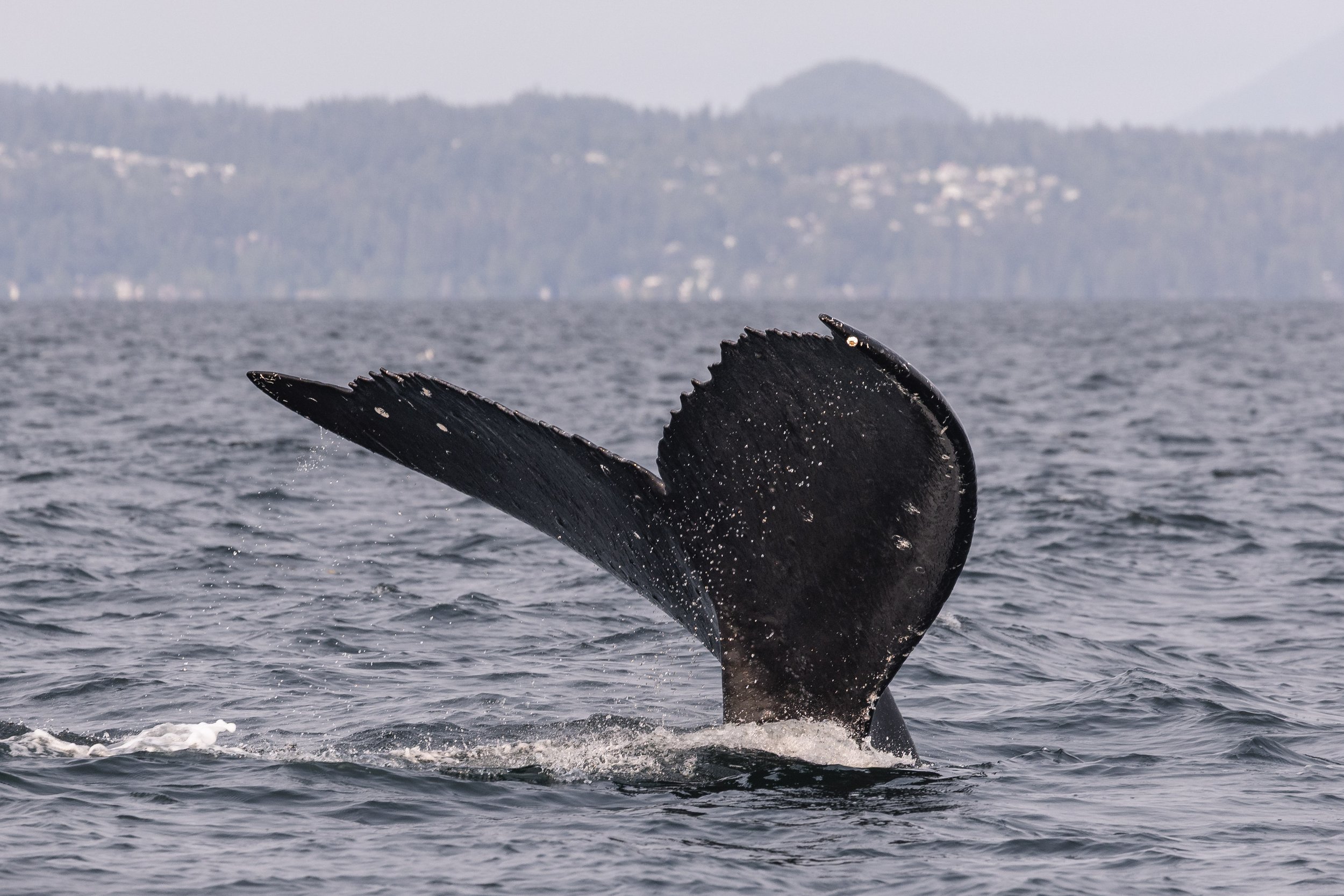
Zig Zag going under. Photo by Jordan Robinson.
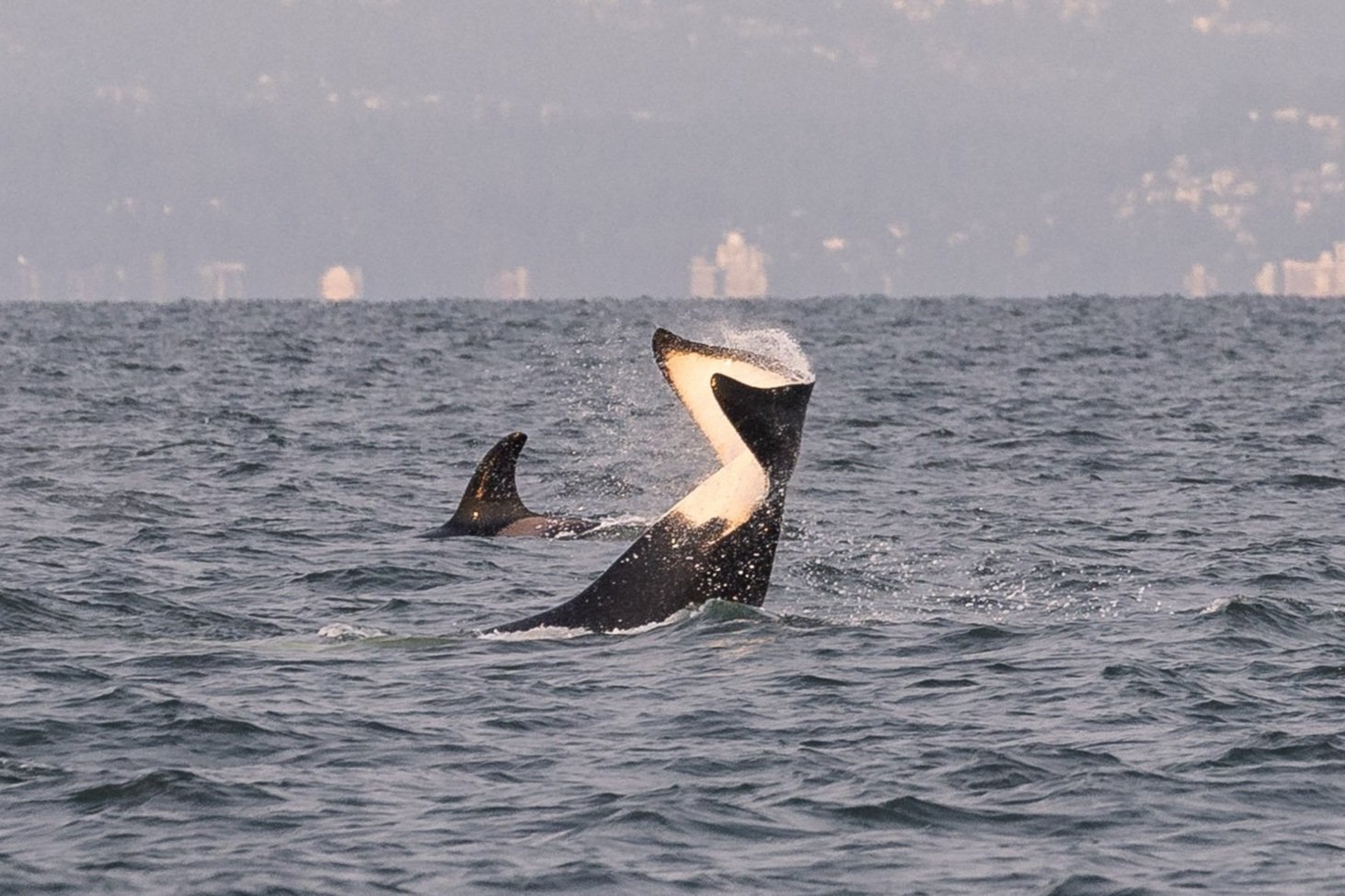
T100C Laurel smacks his flukes against the surface, while his younger brother, T100F Estrella, is beside him. Photo by Jordan Robinson.
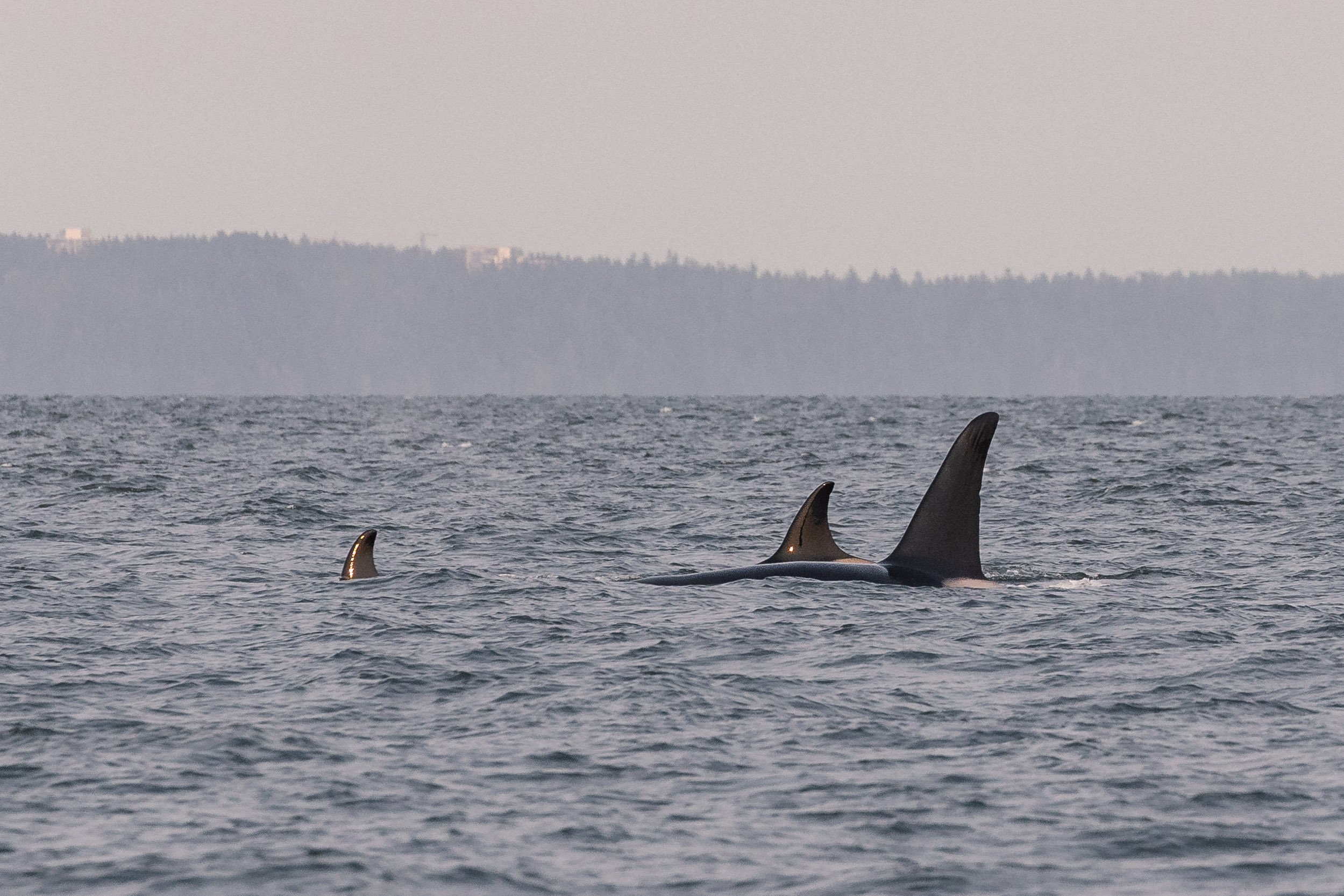
T100F Estrella, T100 Hutchins, and T100C Laurel. Photo by Jordan Robinson.
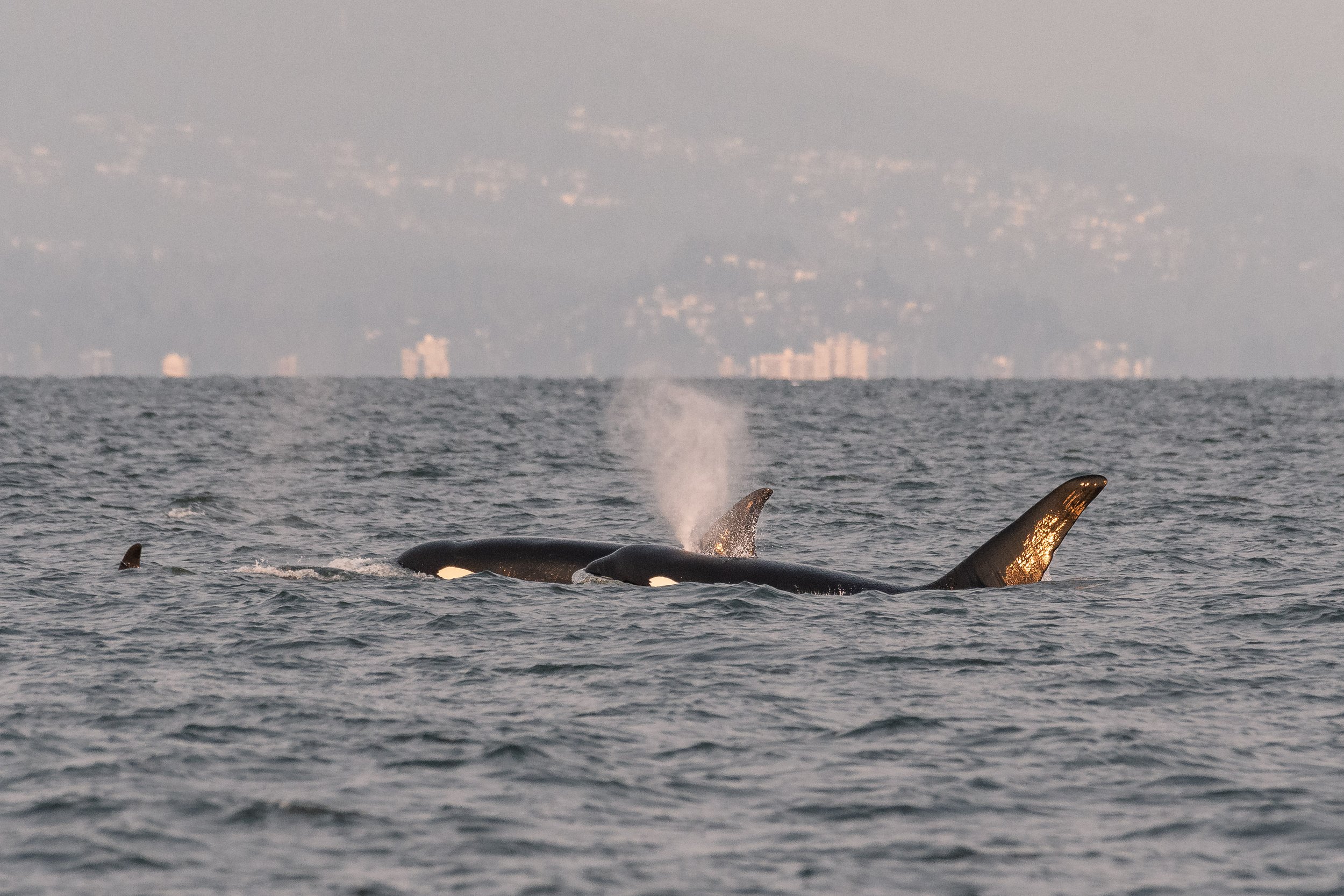
T100F Estrella, T100 Hutchins, and T100C Laurel, coming up for a big breath. Photo by Evan Hessels.
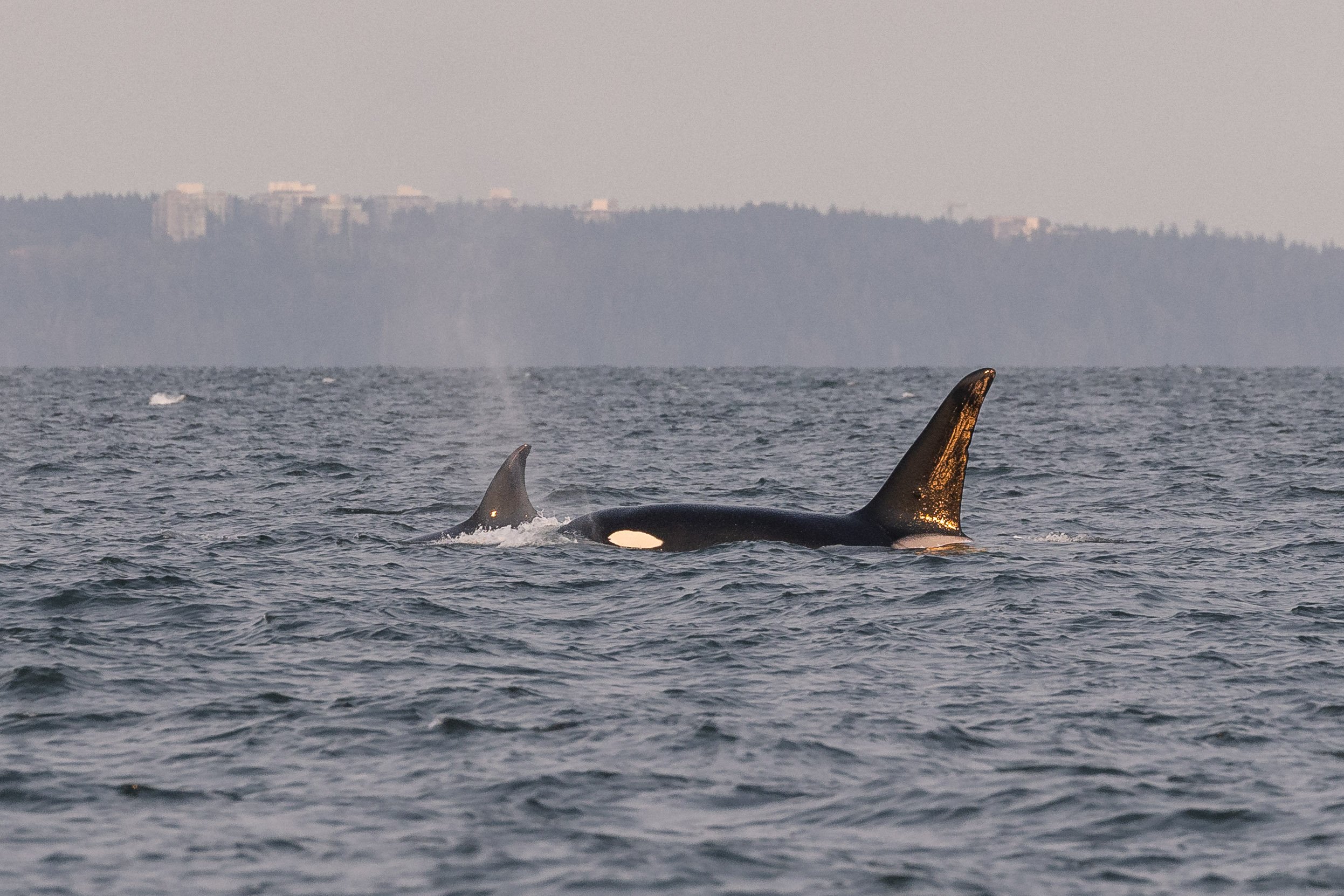
T100C Laurel with his eyepatch out of the water, beside his mother T100 Hutchins. Photo by Jordan Robinson.
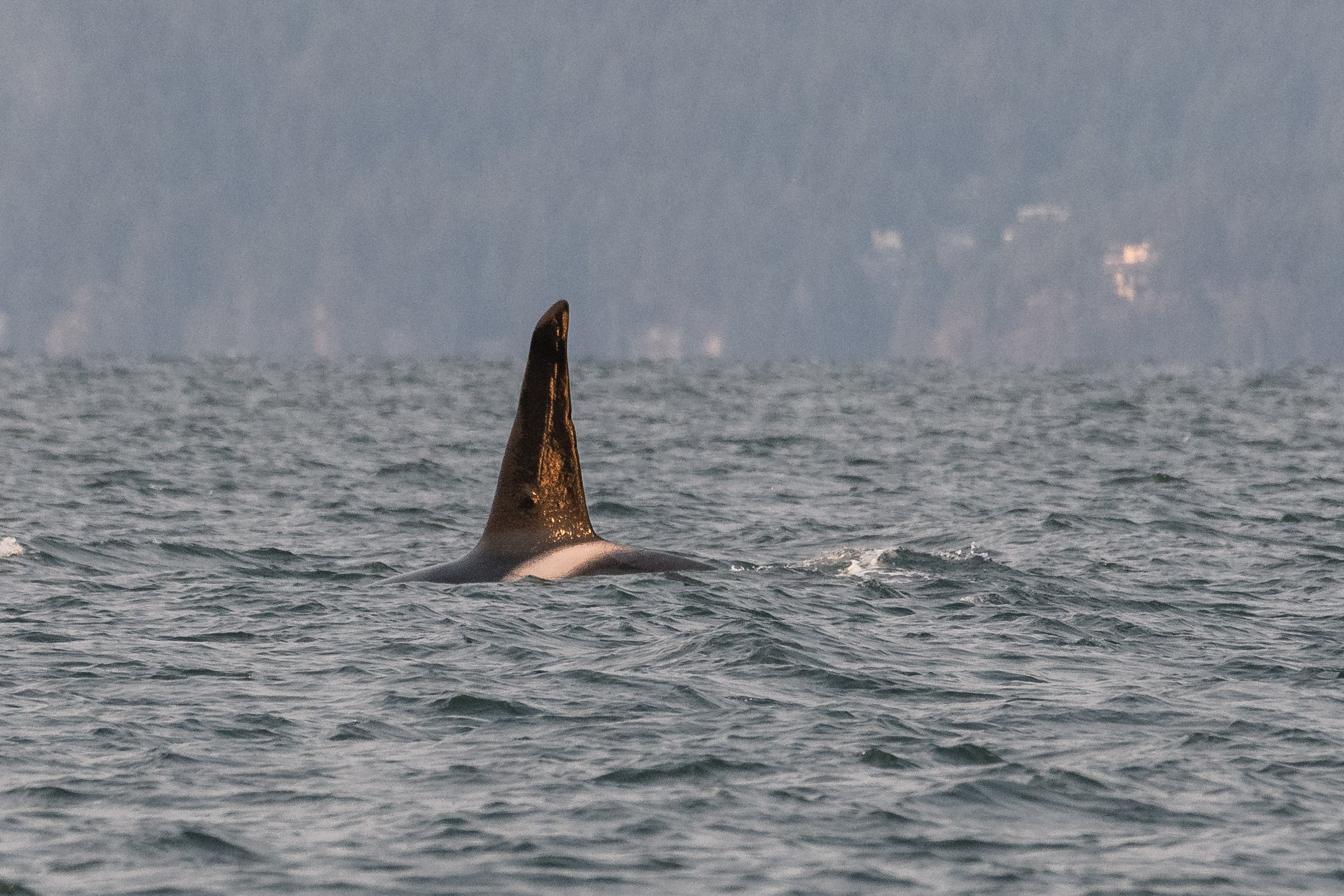
T100C Laurel glowing in the evening sun. Photo by Evan Hessels.
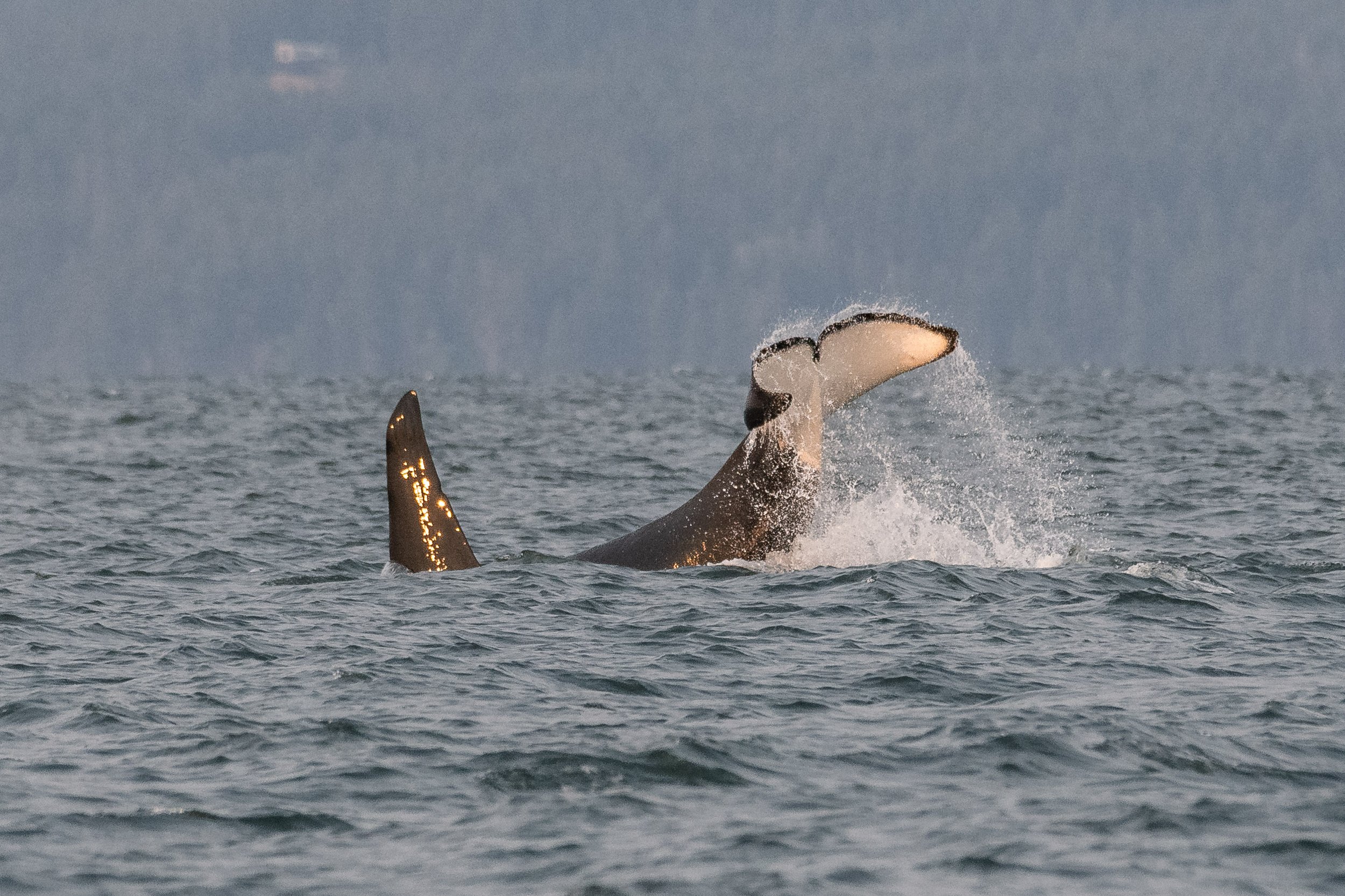
T100C Laurel taillobbing. Photo by Evan Hessels.
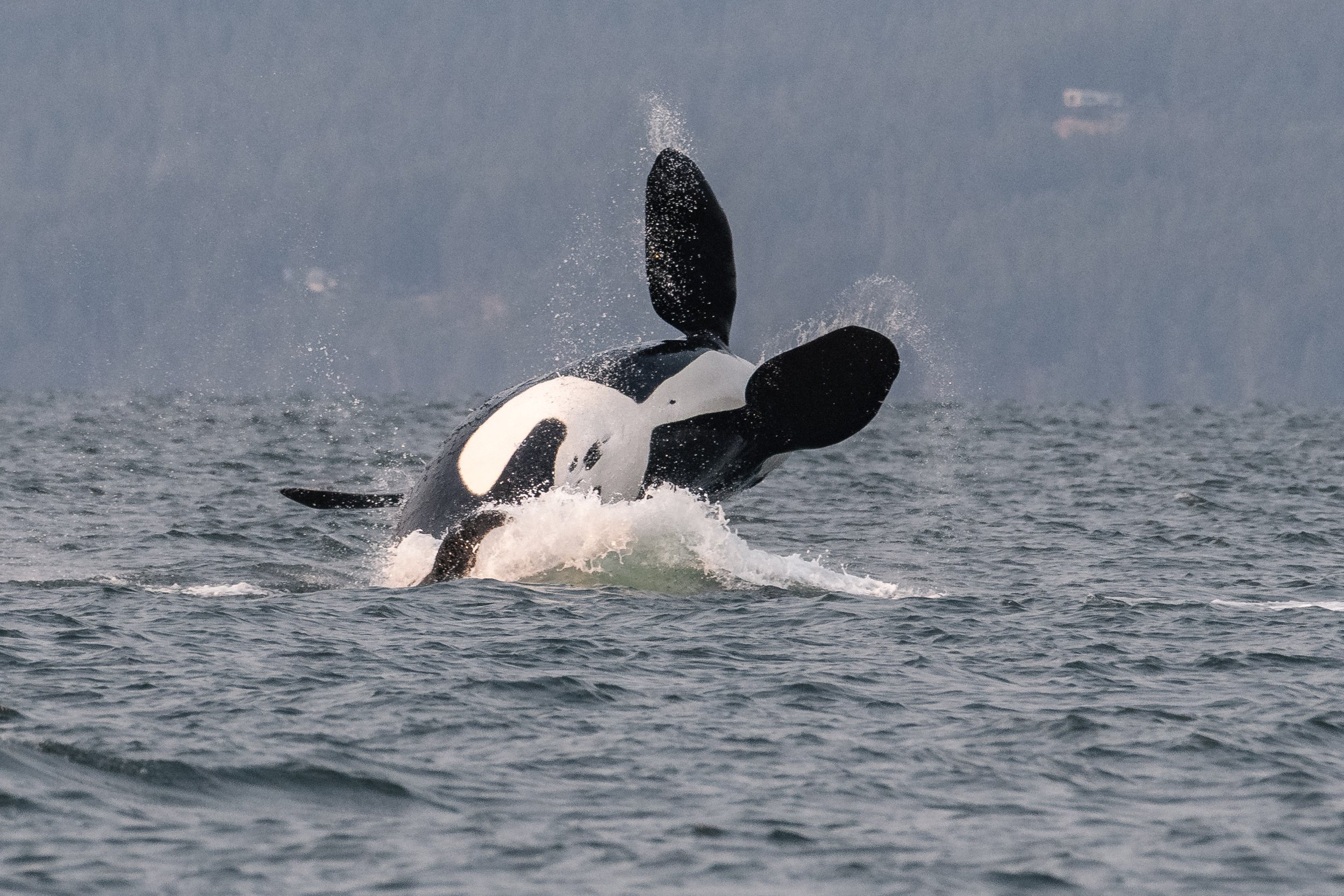
T100C Laurel with his pecs wiggling away as he breaches. Photo by Evan Hessels.
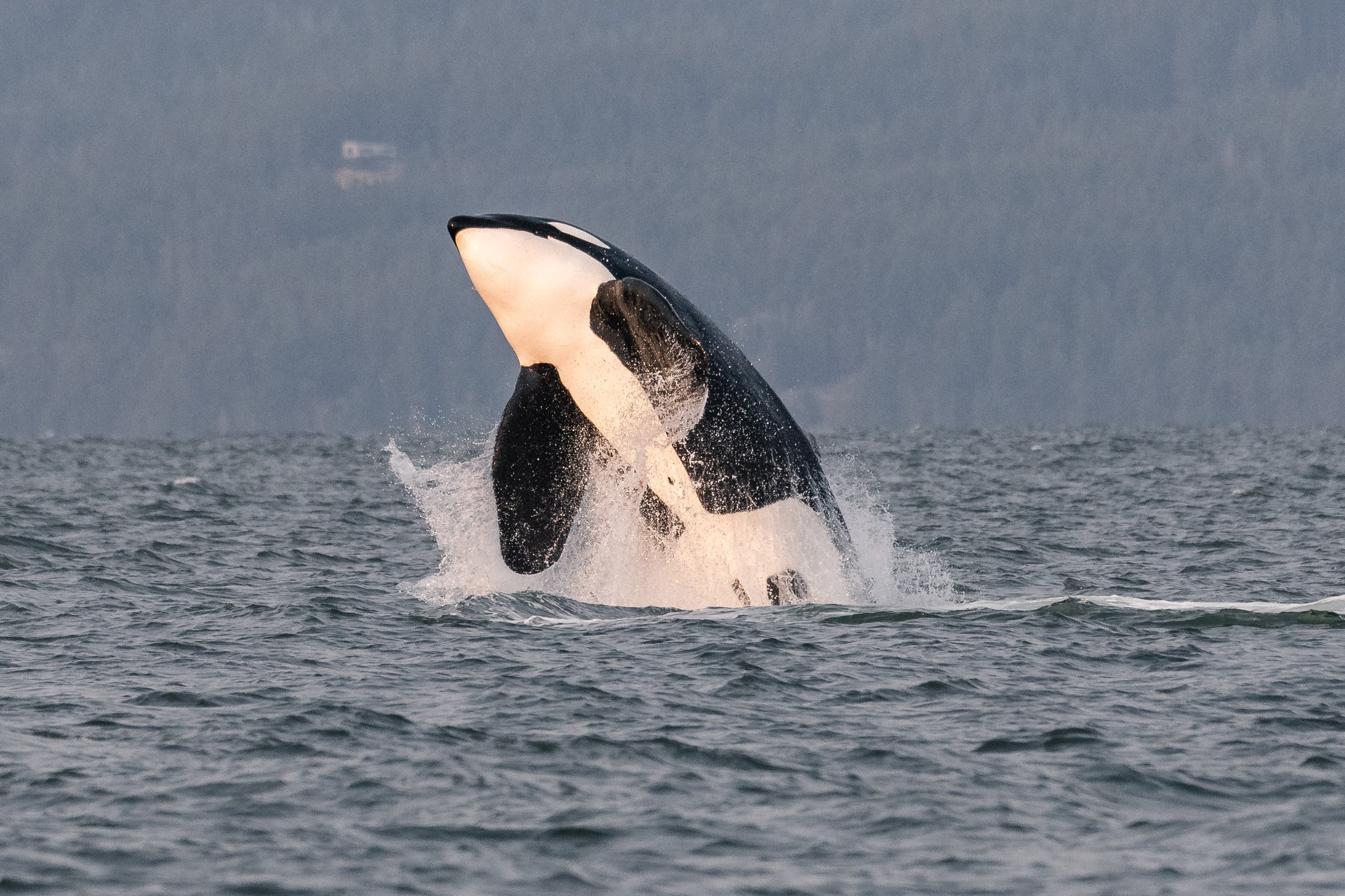
T100C Laurel was spending more time in the air than under the water! Photo by Evan Hessels.
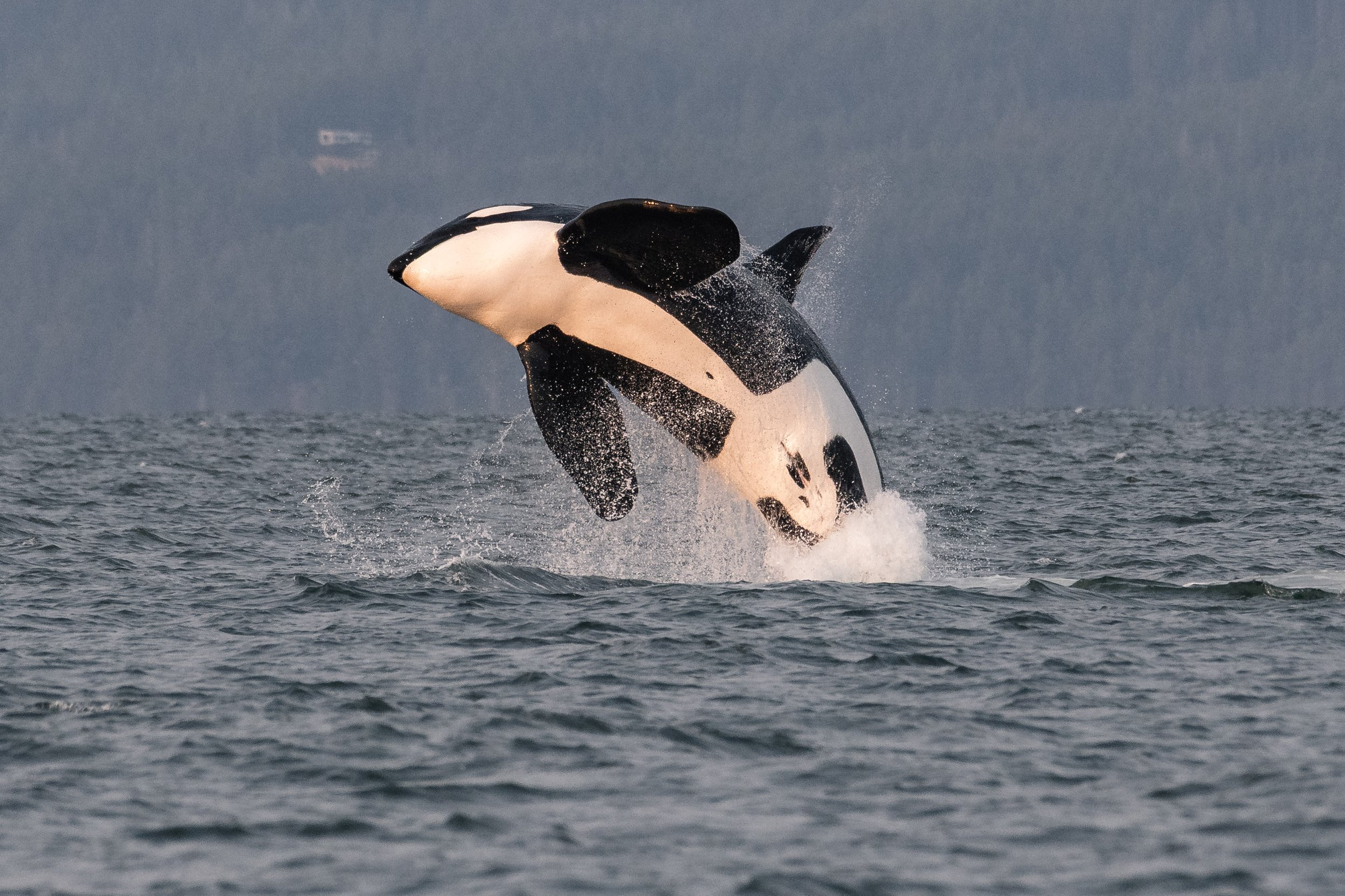
Can you spot T100C Laurel’s bellybutton in this photo? Photo by Evan Hessels.
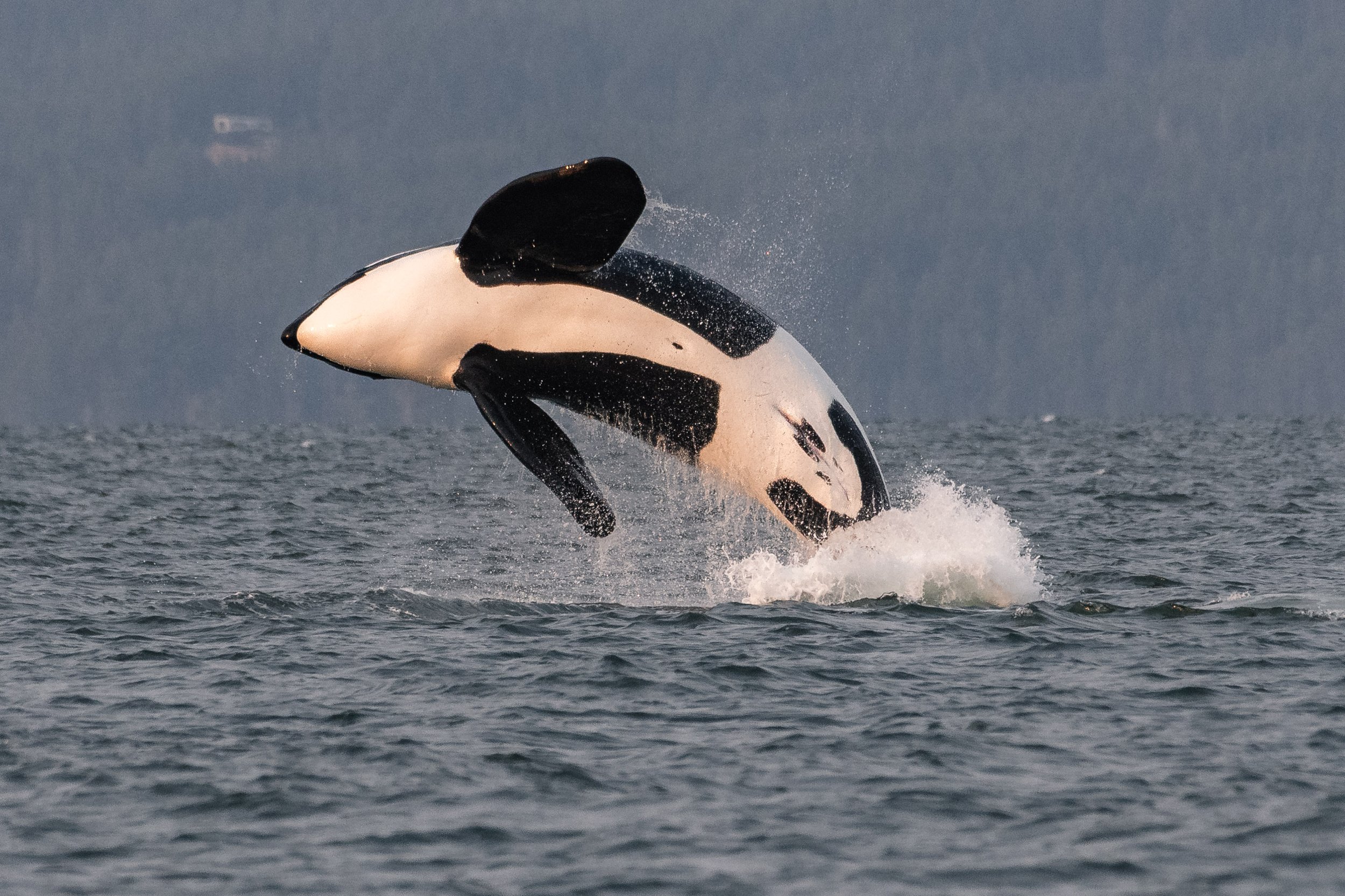
This angle shows the incredble countershading visible on an orca! Photo by Evan Hessels.
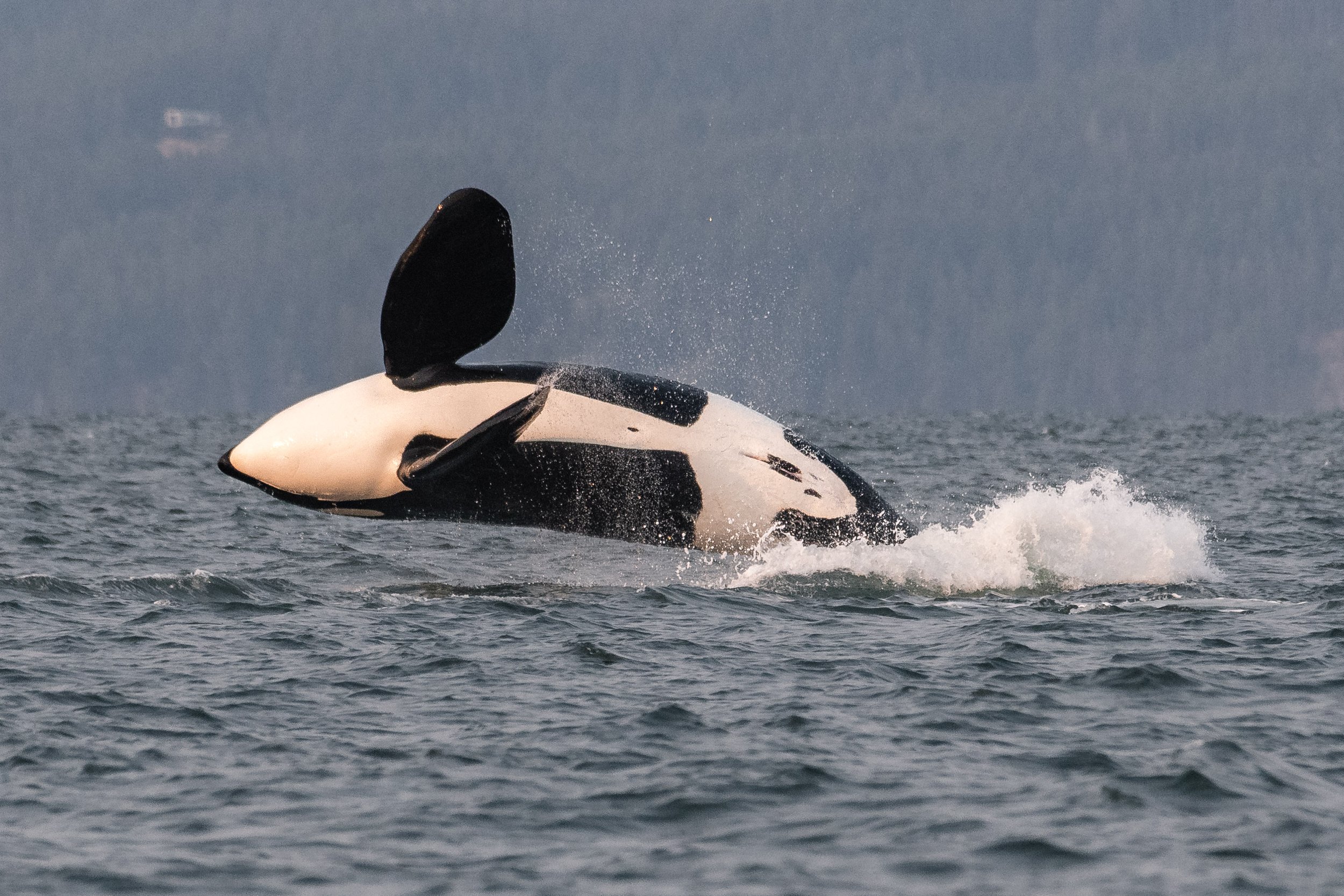
We give him extra points for the stylish landing. Photo by Evan Hessels.
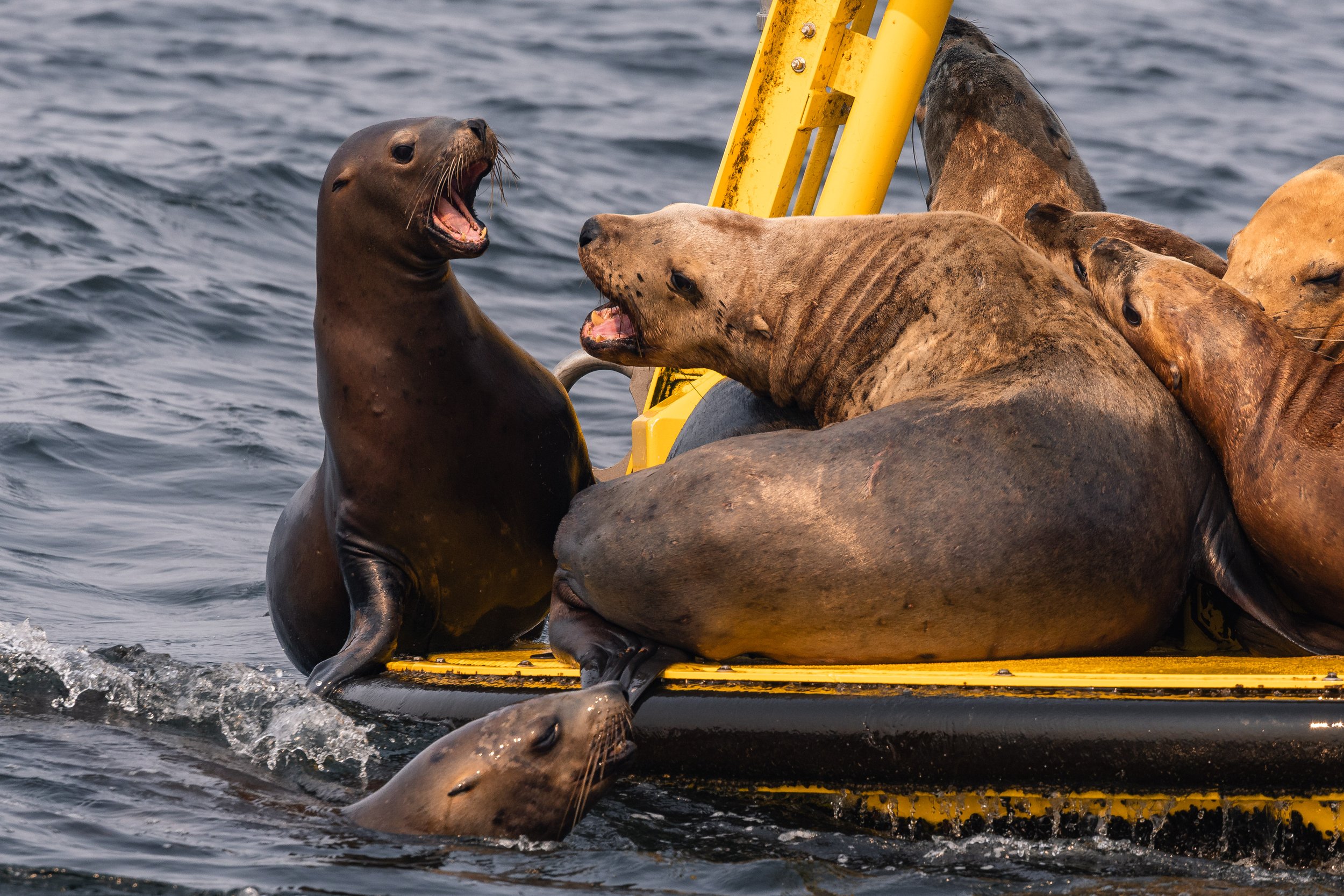
Fighting for the best spots on the ODAS marker. Photo by Jordan Robinson.
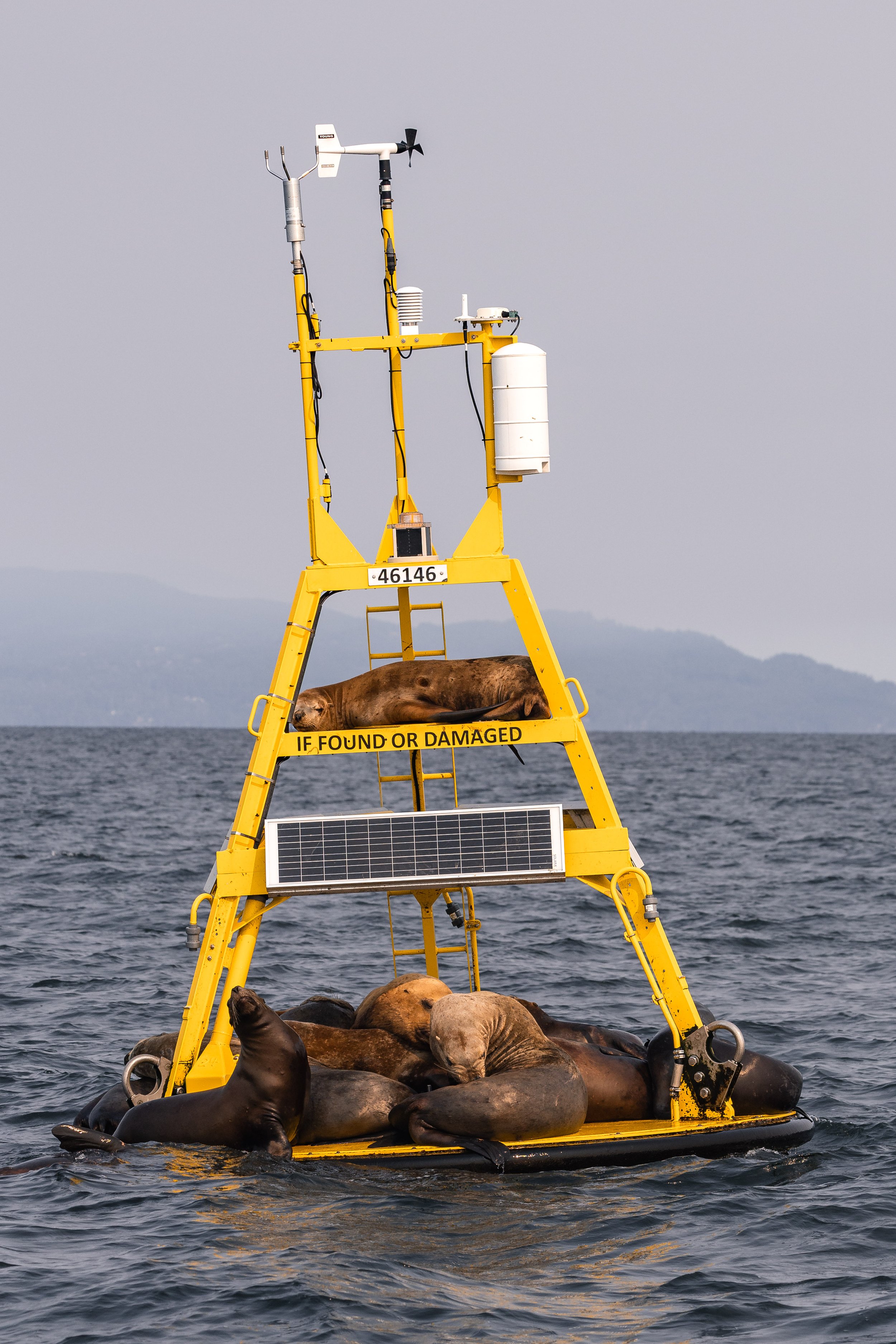
One of these is not like the others… Photo by Jordan Robinson.
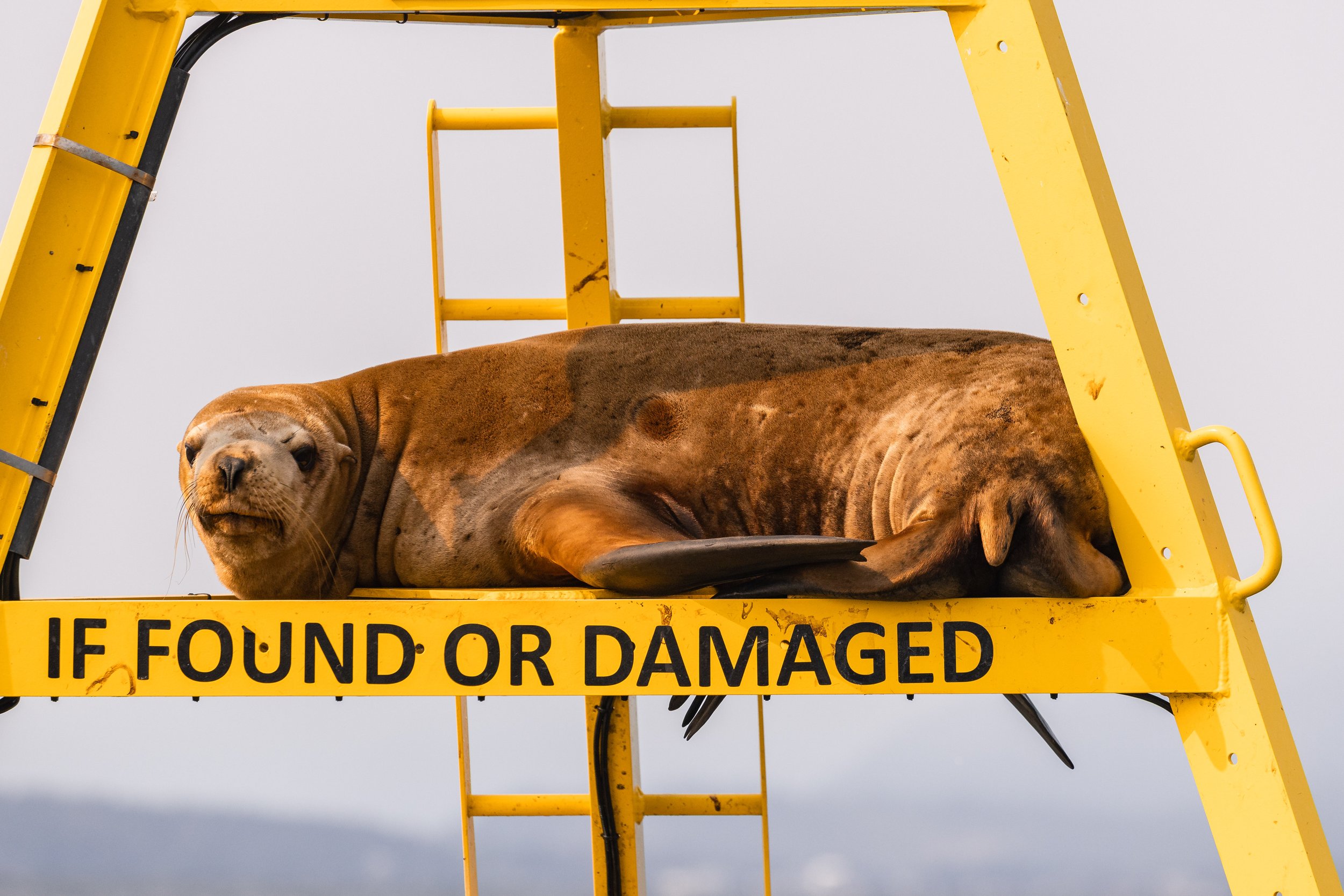
How did you get up there?! Photo by Jordan Robinson.
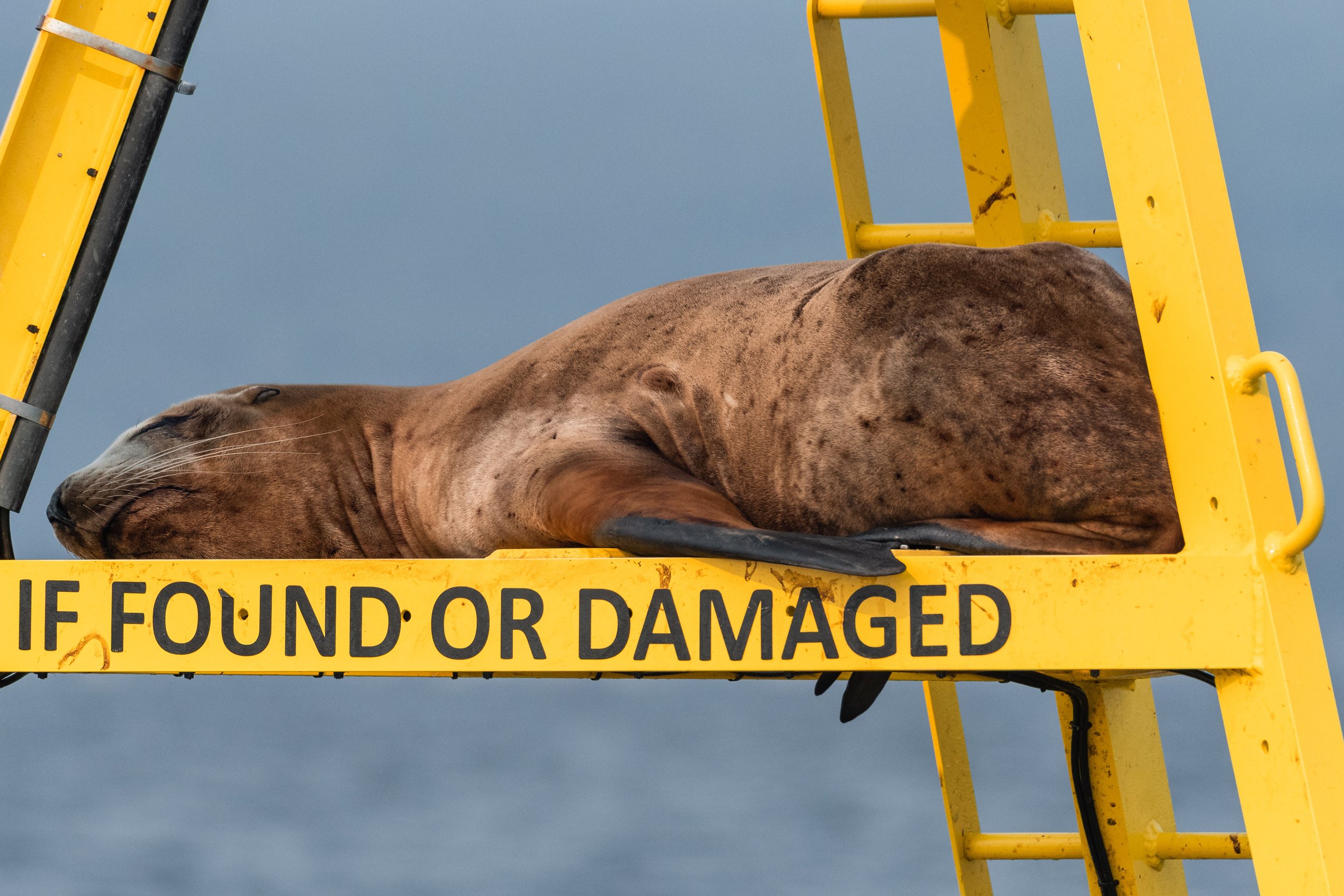
Nap time on their private ‘loft’ haulout. Photo by Evan Hessels.
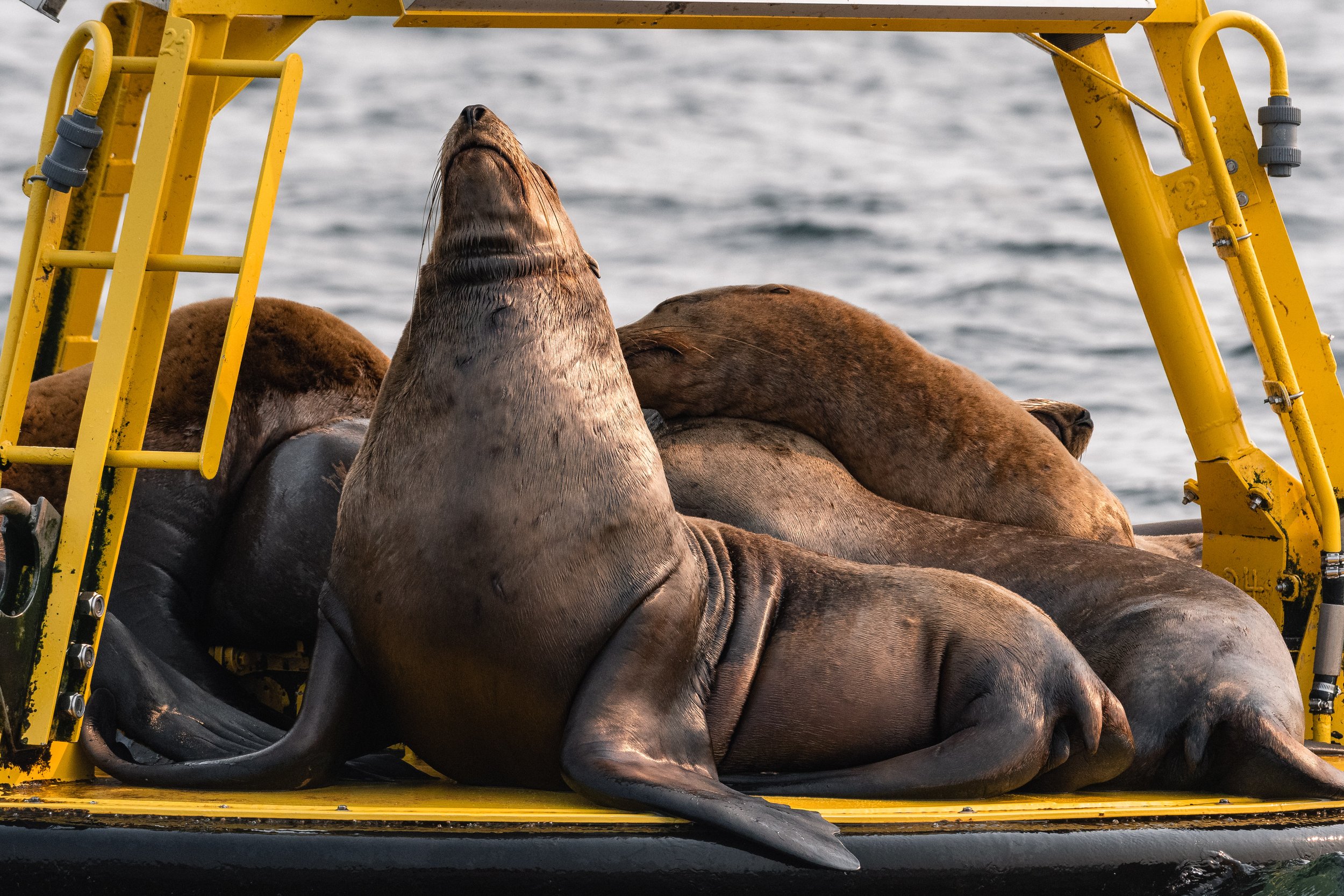
Stretching majestically. Photo by Evan Hessels.
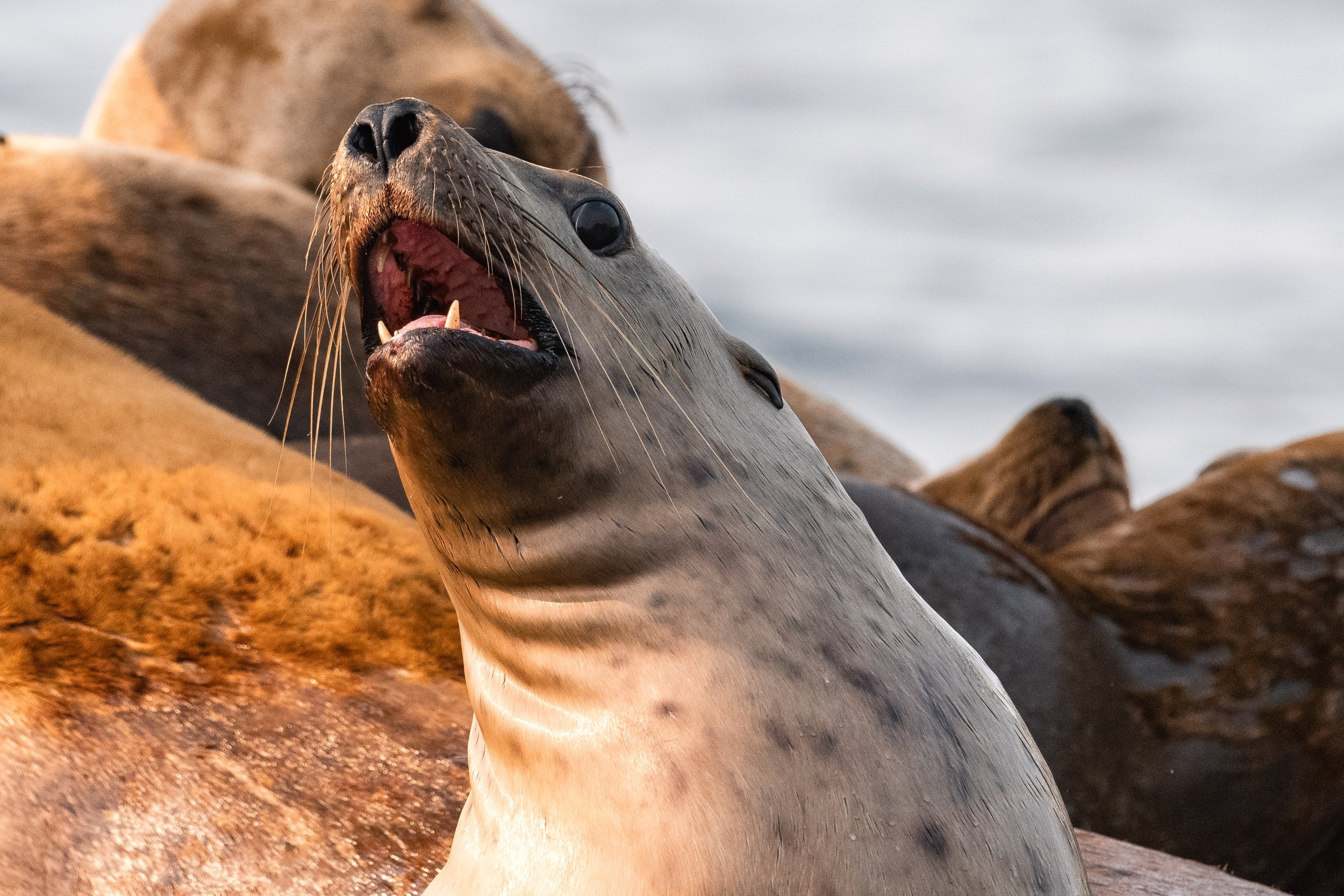
Sea lion whiskers are very long and stiff, as seen here. Photo by Evan Hessels.
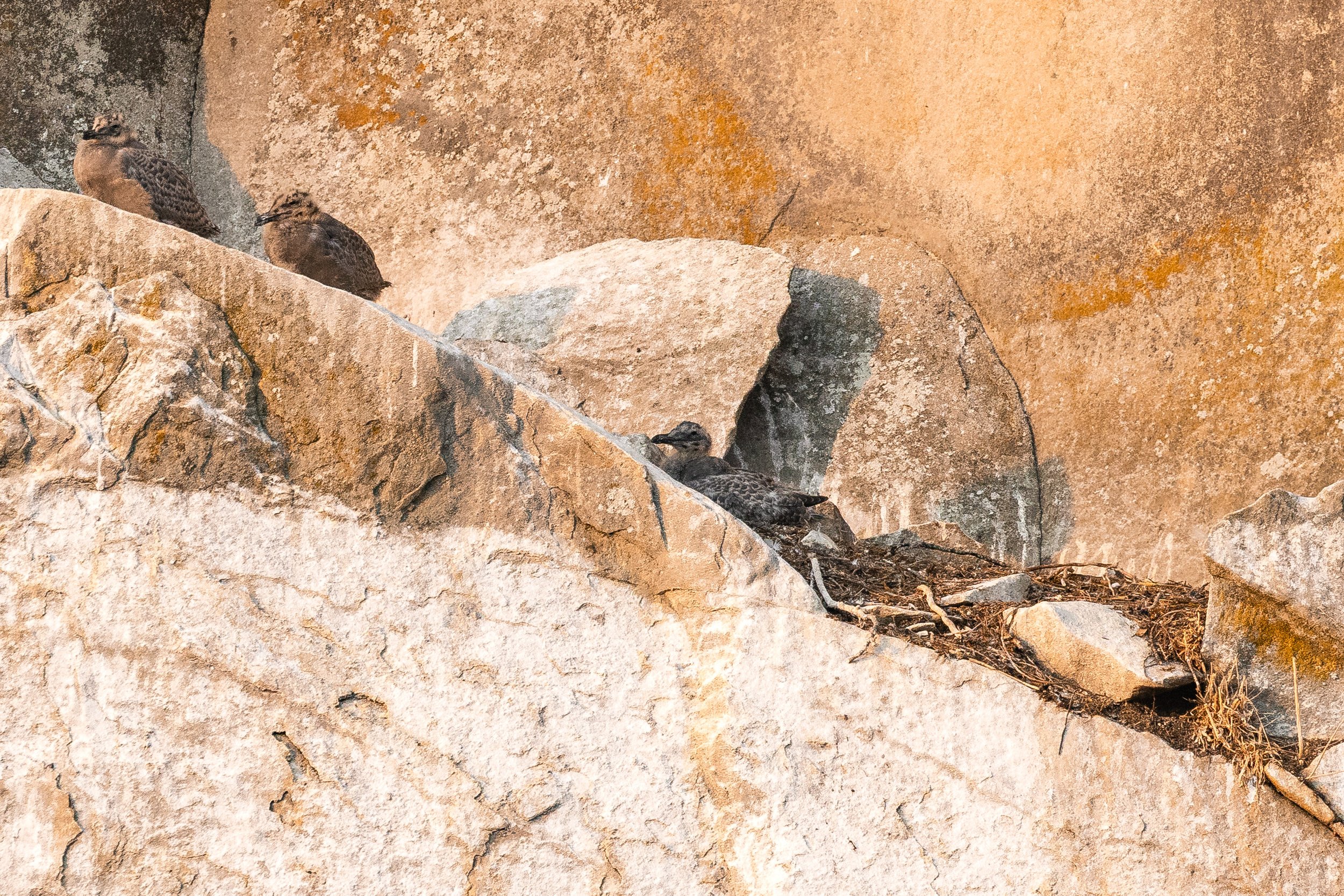
A trio of immature Gulls. Photo by Jordan Robinson.
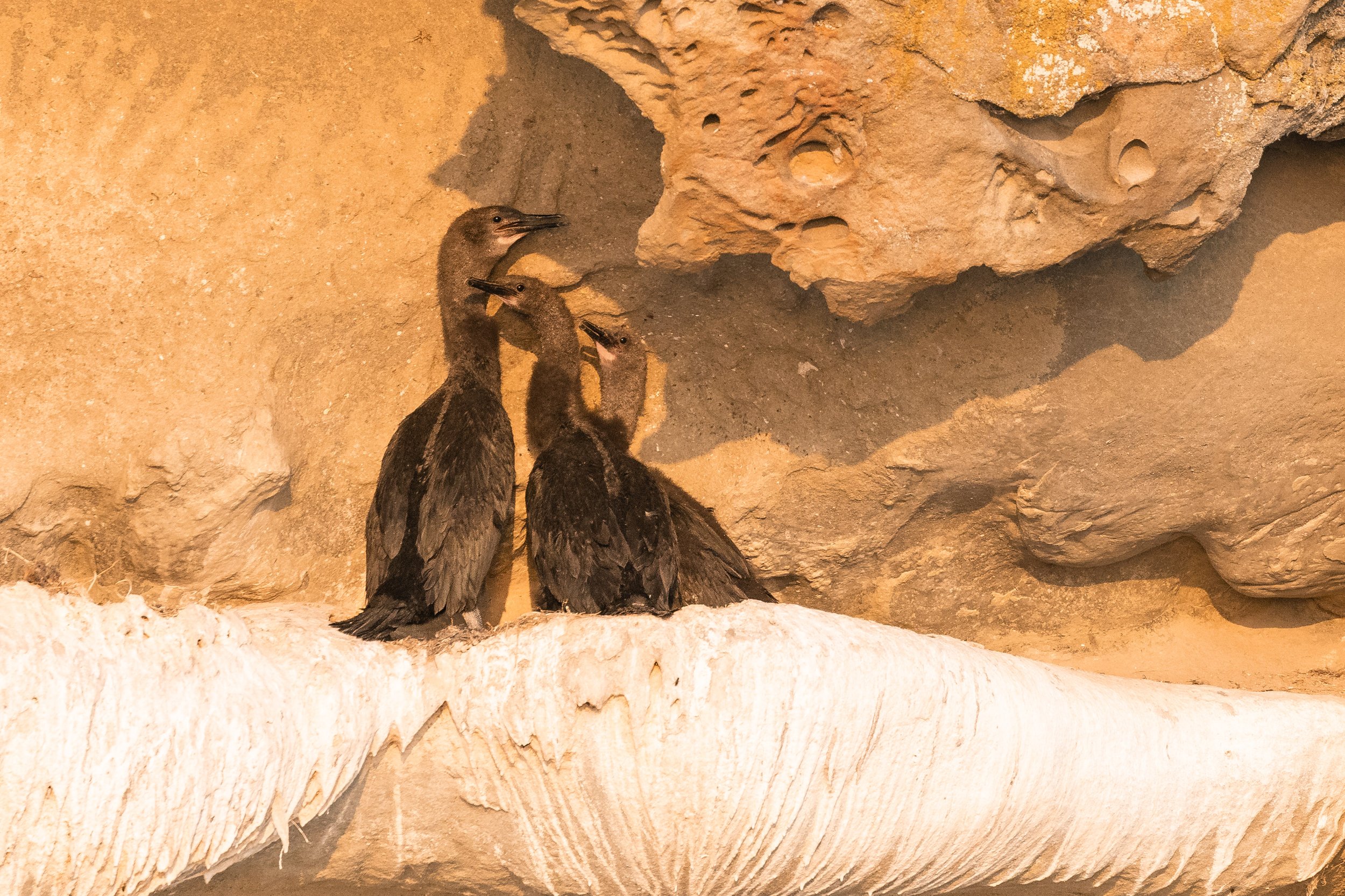
A trio of immature Cormorants. Photo by Jordan Robinson.
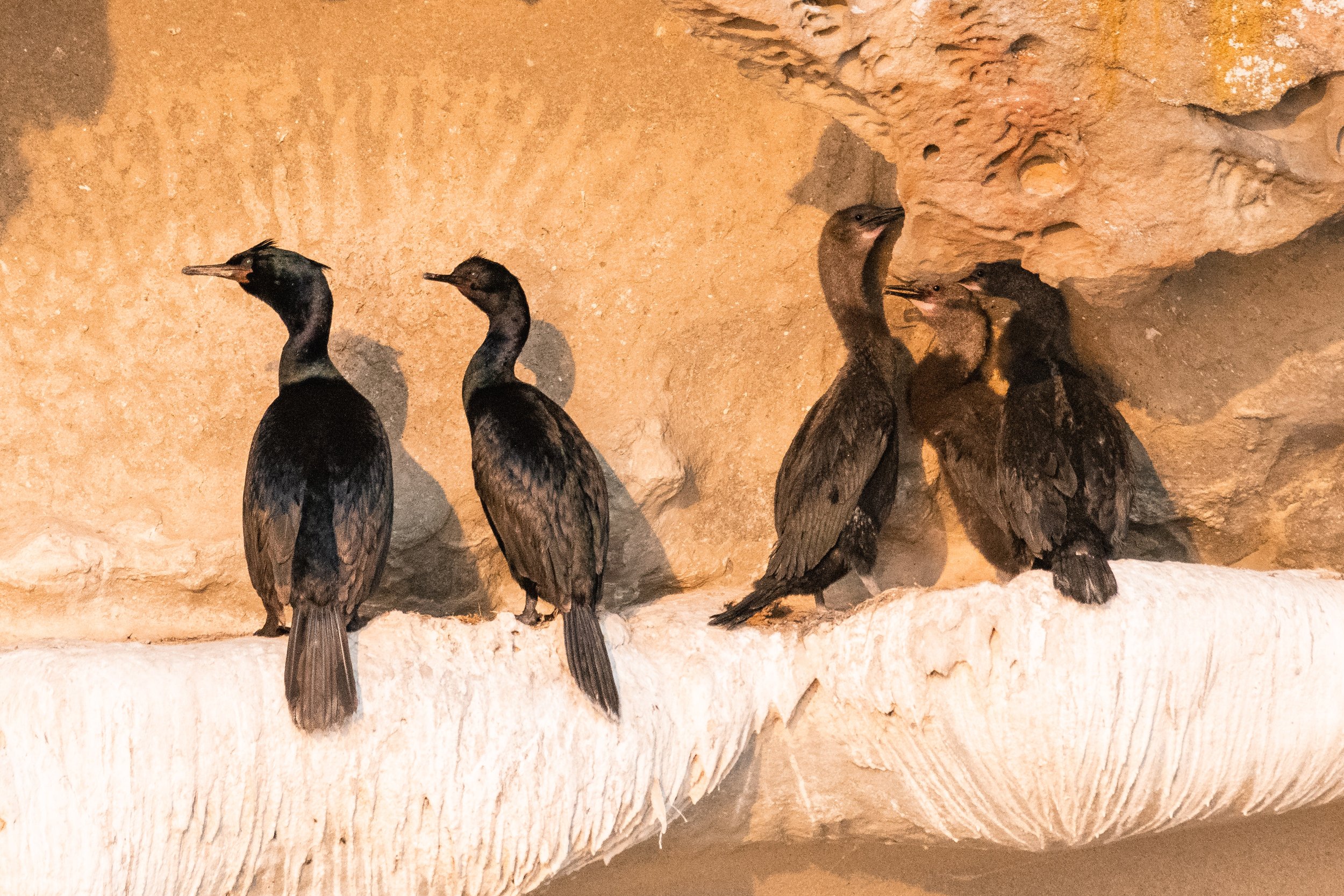
Cormorants nestled together on the Gabriola Bluffs. Photo by Evan Hessels.
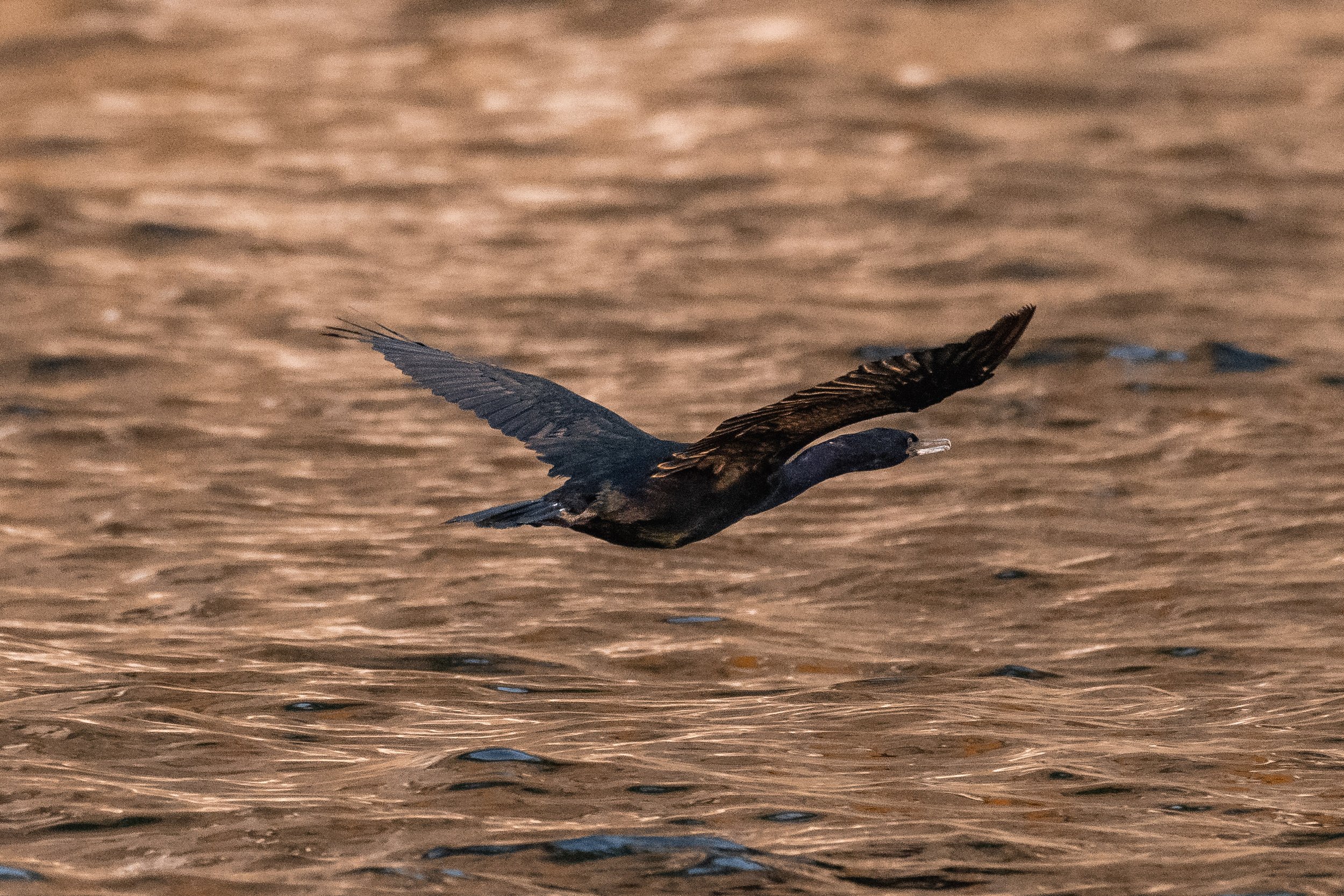
A Cormorant flying by. Photo by Evan Hessels.
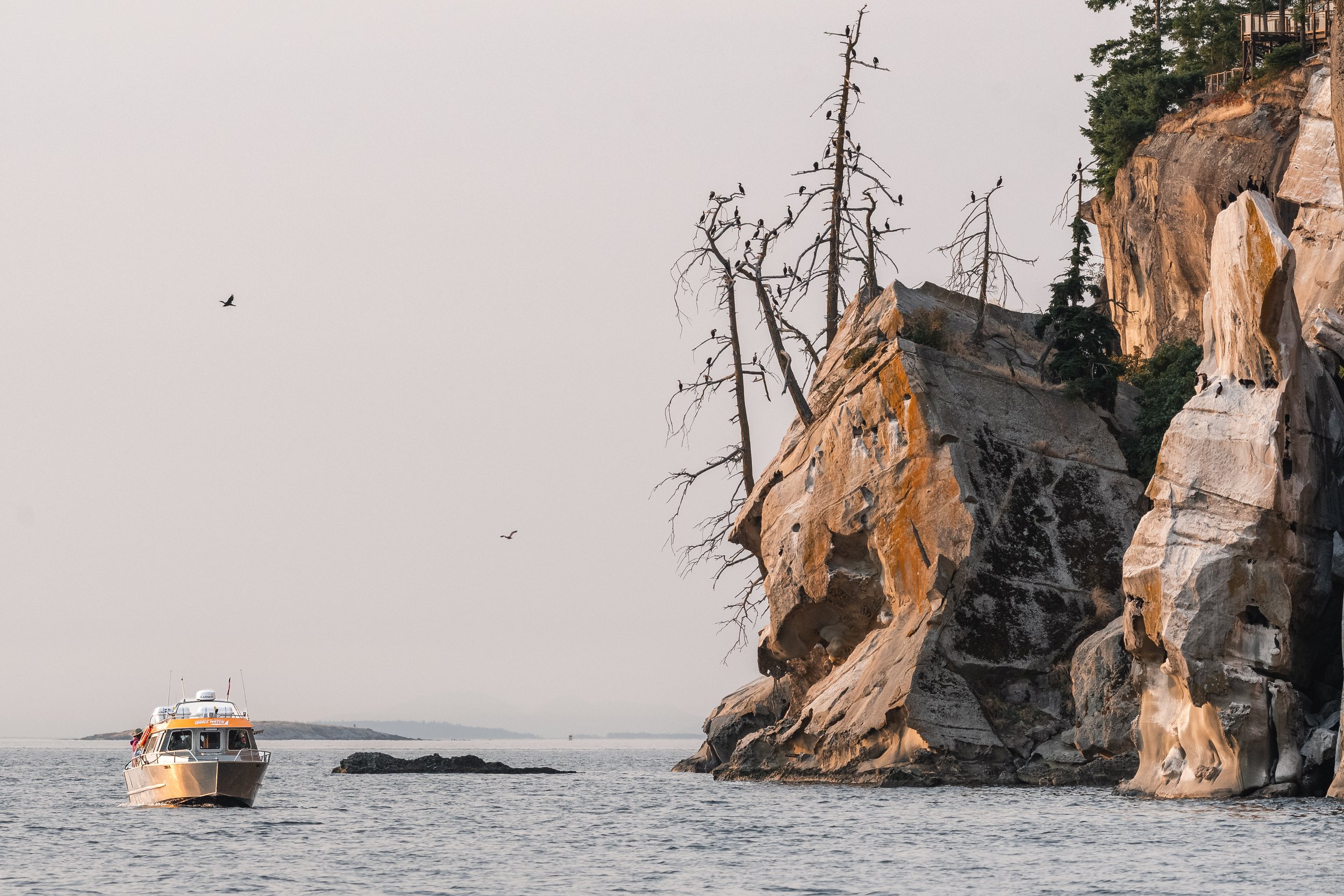
Kula by the Gabriola Bluffs. Photo by Evan Hessels.