
August 15, 2026, 10:30 AM - Feeding humpbacks and a trio of Orca
Moody skies greeted us as we boarded Cascadia, Keta, and Kula. Now halfway through August, the slight whisper of Autumn was in the air today. We have had many whales feeding and frolicking in the area in the past weeks - a great reminder of the importance of the delicate ecosystem we call home. Once we were seated, the Naturalists discussed what to look out for. They described blows resembling steam rising off the water, the dark triangular shapes of dorsal fins, and massive tails rising out of the surf. Once we knew what to peek around for, we set off and eagerly began scanning the waters all around us.
Heading out into the deeper waters of the Strait of Georgia, we soon found our first whale of the day - a lone humpback was travelling along near Entrance Island. They were busy skimming along the surface before sinking down into the water once more. They did not appear to be diving deep, as they never raised their flukes up above the water. When they do this, it can be difficult to confirm their identity, as the underside of their fluke is as unique to each whale as a fingerprint is to us. Thankfully, we can use a secondary characteristic: the shape (and any notches or spots) of their dorsal fin. This particular fin was very blunted on top, with a slightly rounded curve. Once we had a good photo, we compared it to our catalogues and confirmed that this was Crackle (BCY1227), the 2019 calf of Graze (BCY0523).
Interestingly, Graze is often a non-fluker with sightings as well. It is possible this family line may have a genetic predisposition to weaker peduncle muscles, leading to more surface feeding instead of deeper feeding.
After spending some time with Crackle, we headed on out to continue the trip, travelling southbound through the Salish Sea. While Cascadia and Keta observed Crackle, Kula journeyed through the Southern Gulf Islands and made their way down toward Active Pass. Turning towards Swanson Channel, they soon found three black fins travelling together - it was a pod of orca!
Naturalist Jordan captured a few photos of the trio, and soon after we learned that this was the T100s:
T100 Hutchins ♀ (~1979)
T100C Laurel ♂ (2002)
T100F Estrella ♂ (2004)
After catching word of the orca sighting inside the Gulf Islands, Cascadia and Keta began making their way south to join in on the fun. Along the way, though, they had another stop, as a pair of humpback whales had been spotted just outside of Active Pass. Making their way over, they captured photos once more, and after a couple of beautiful flukes from the duo, they identified them as Nike (BCX1377) and Europa (BCX0854)!
Both whales have been frequently spotted in our area, with Nike’s sightings dating back to 2009 and Europa’s to 2005. In humpback terms, these two are considered fairly old, as humpback whales were nearly wiped out during the whaling era, leading to fairly skewed dating regarding ages and longevity. As one of the whalers’ prime targets because of their high percentage of whale oil (fat), humpbacks were sought out extensively. Thankfully, after many decades of conservation efforts, their numbers are rebounding and growing yearly. With five confirmed calves over the last decade, Europa has already contributed greatly to helping continue the survival of her species.
Soon after, the open vessels continued on, making their way through Active Pass and up Trincomali Channel to join Kula with the orca.
The three pod members were hugging the shore as they went, potentially searching for an easy meal. This family has been travelling through our area frequently this summer, though never with their middle sibling, T100E Tharaya, in tow. Interestingly, Tharaya was spotted off Hoonah, Alaska, at nearly the same time as this encounter, travelling with the T124A1s and T087. That is over 1,300 kilometres away, and a great example of just how far Transient orca may travel from month to month! While we are unsure why she has decided to branch off and travel elsewhere from her natal pod, we hope Tharaya continues to thrive and that we get to see her again in the future.
We concluded our encounter with the T100s, and soon we had to start making our way back north. As we traversed the waters of the Southern Gulf Islands, we took in the beautiful landscape as we zoomed by.
While whales are always the highlight of the trips, they are rarely the only species we see on tours. Over by Stinky Rocks, a tiny group of islets off of Valdes Island’s shoreline, we encounter two pinniped species. Close to the water’s edge and dramatically draped over the rocks, the Harbour Seals continued their low-energy day, yawning, stretching, and napping away. Further out and much more boisterous, the Steller Sea Lions lunged at each other, fighting and bickering to conquer the best spots on the rocks.
Soon we crossed back through Dodd Narrows, and after a few more minutes of travelling, we arrived back in Nanaimo. Pulling back into the harbour, we chattered about all the events of the day, from seeing the gentle giants travelling along through the open waters to the orca nestled into the protected inner shores.
Photos by Marine Naturalists Evan Hessels, Hayleigh Hilbert, and Jordan Robinson - please enjoy!
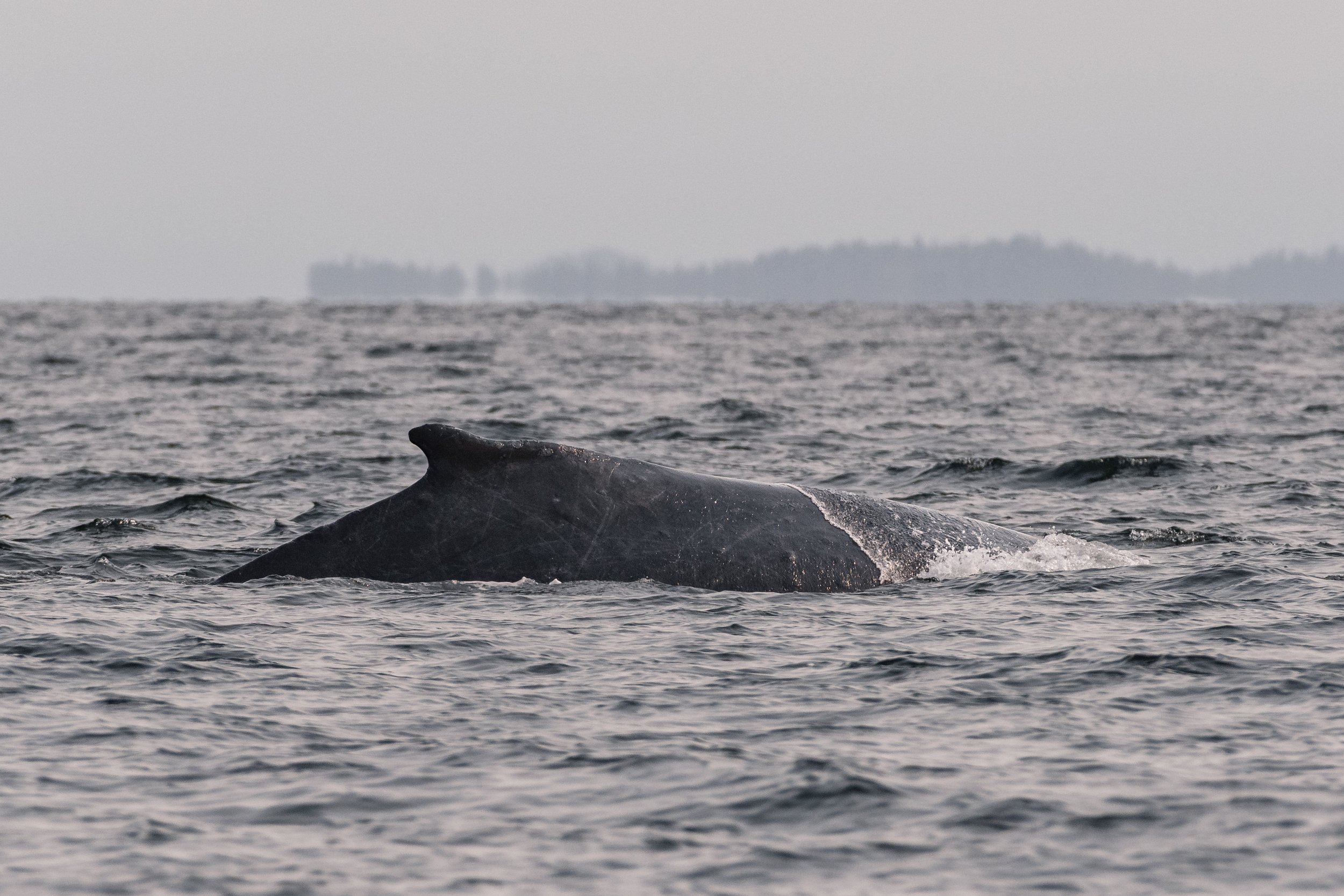
Crackle travelling along. Photo by Hayleigh Hilbert.
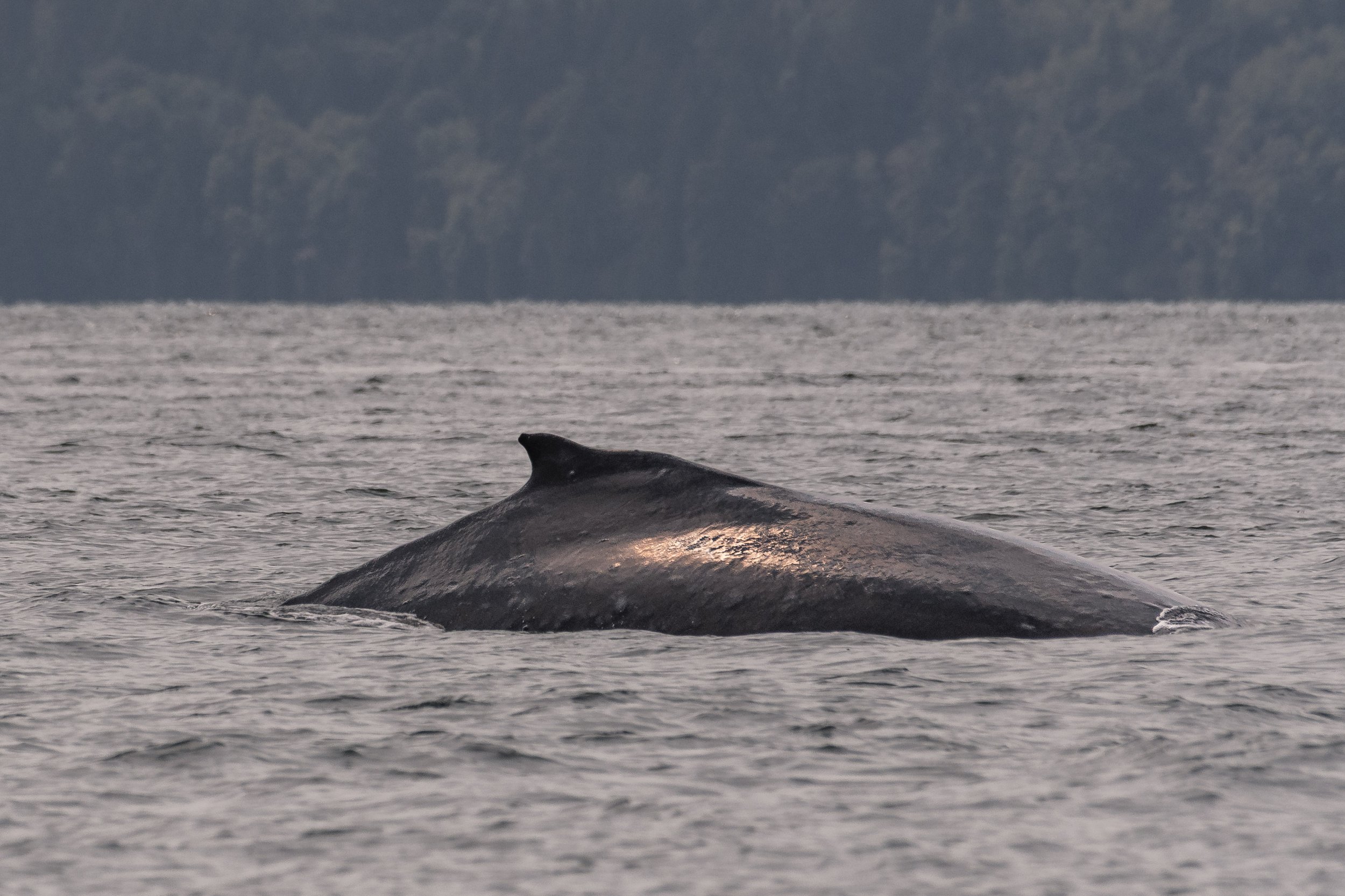
Orion’s unique dorsal fin as he travels. Photo by Evan Hessels.
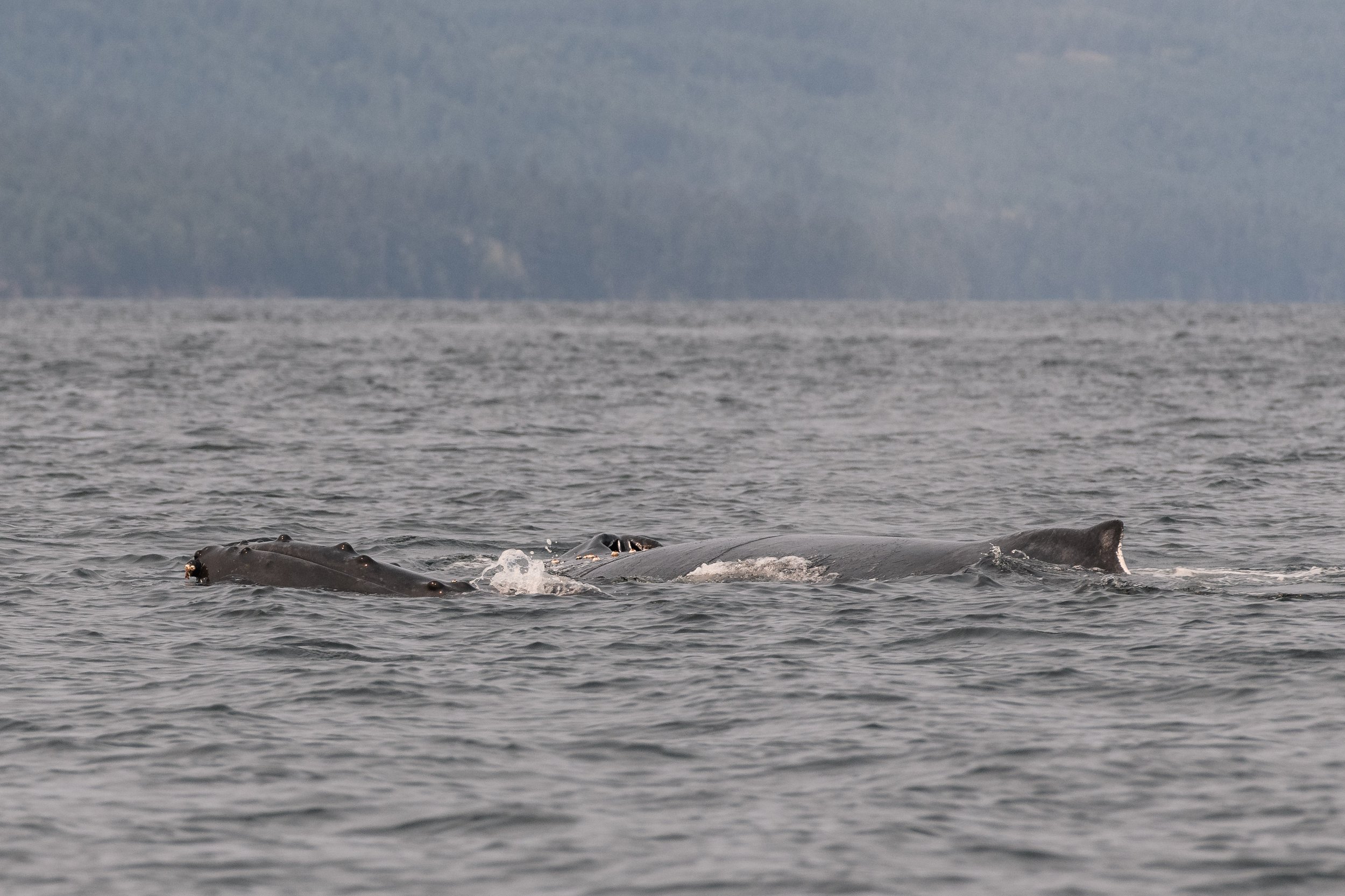
Europa travelling with Nike beside her, head out of the water. Photo by Hayleigh Hilbert.
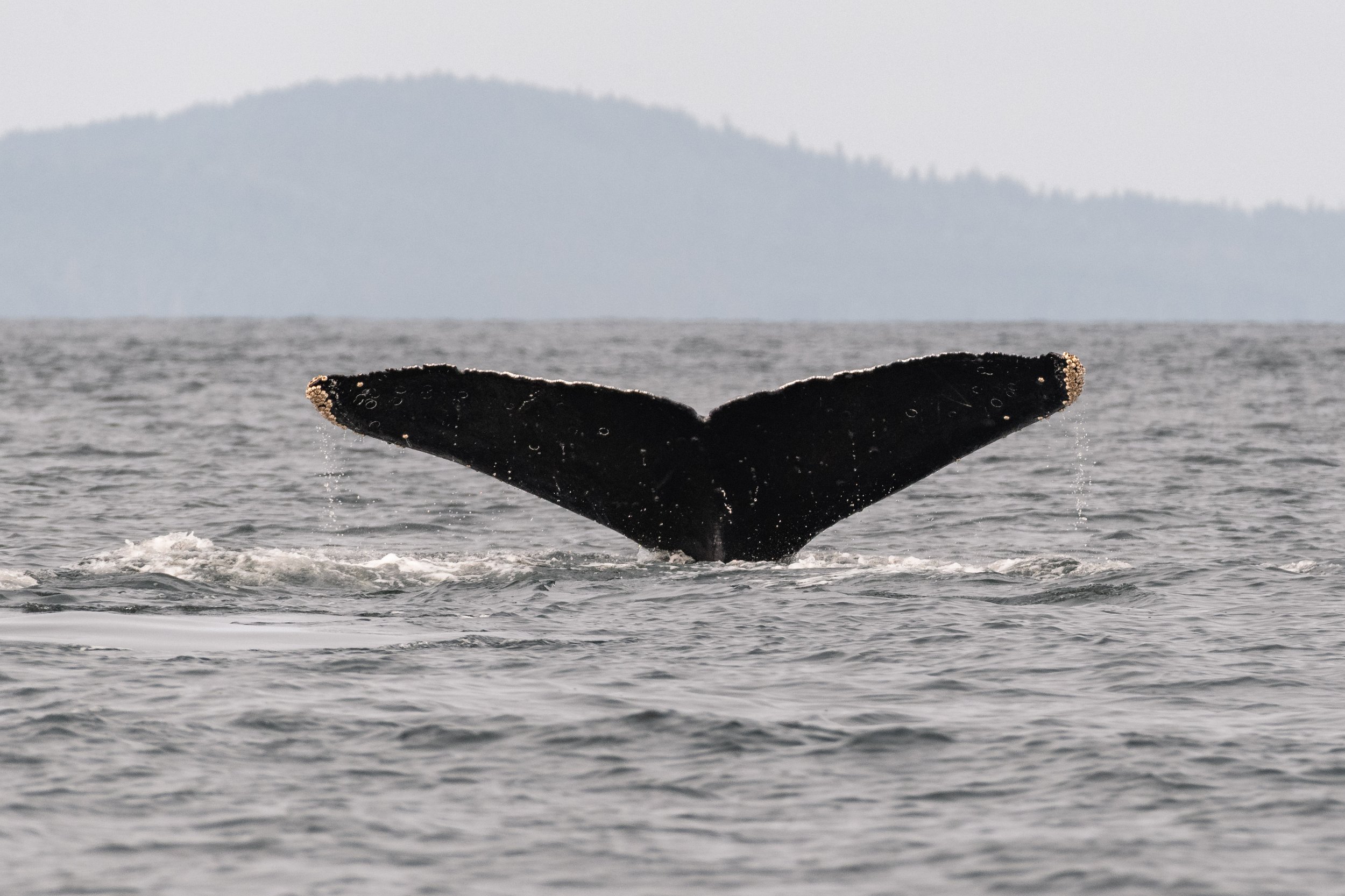
Europa diving. Photo by Hayleigh Hilbert.
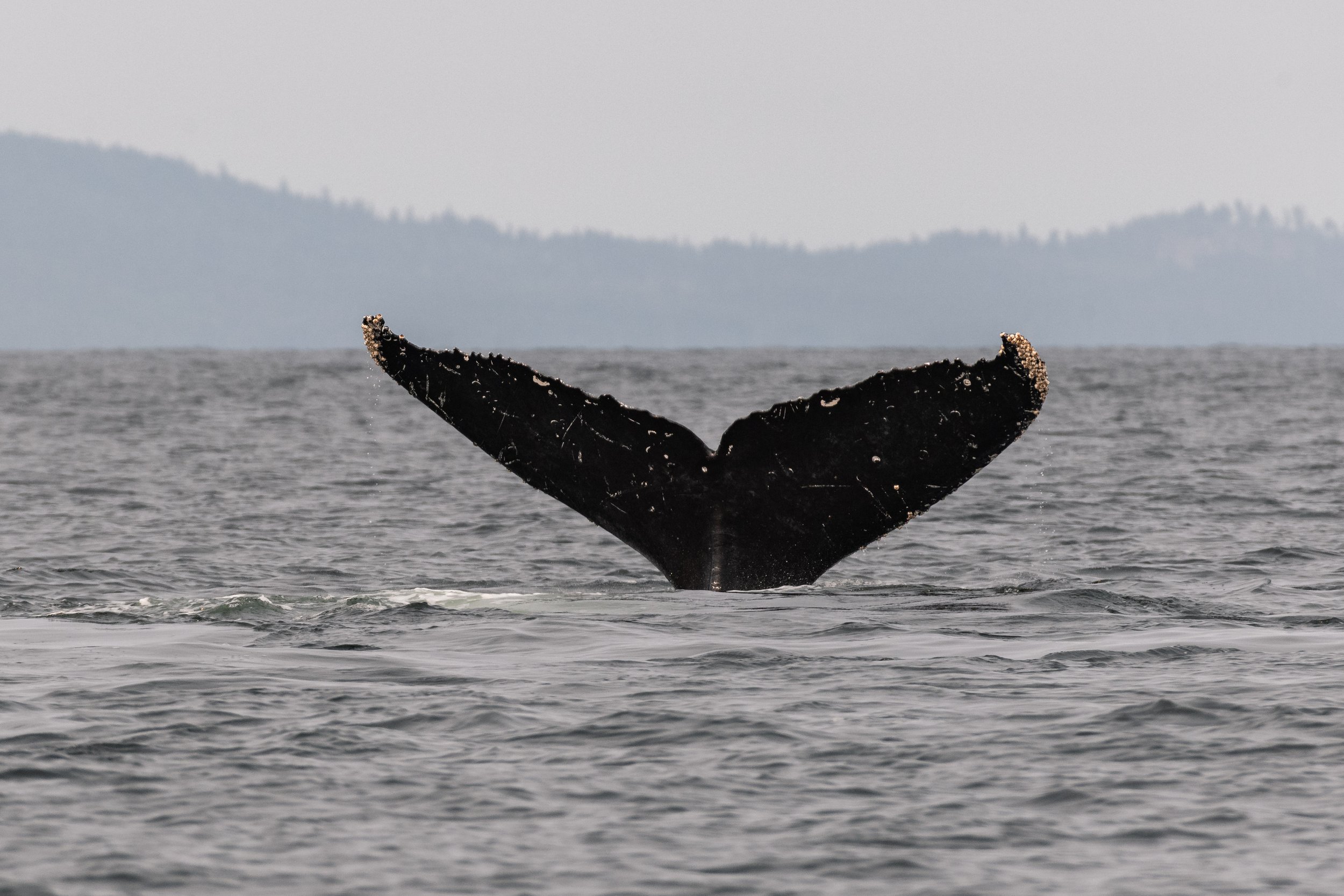
Nike’s unique fluke. Photo by Hayleigh Hilbert.
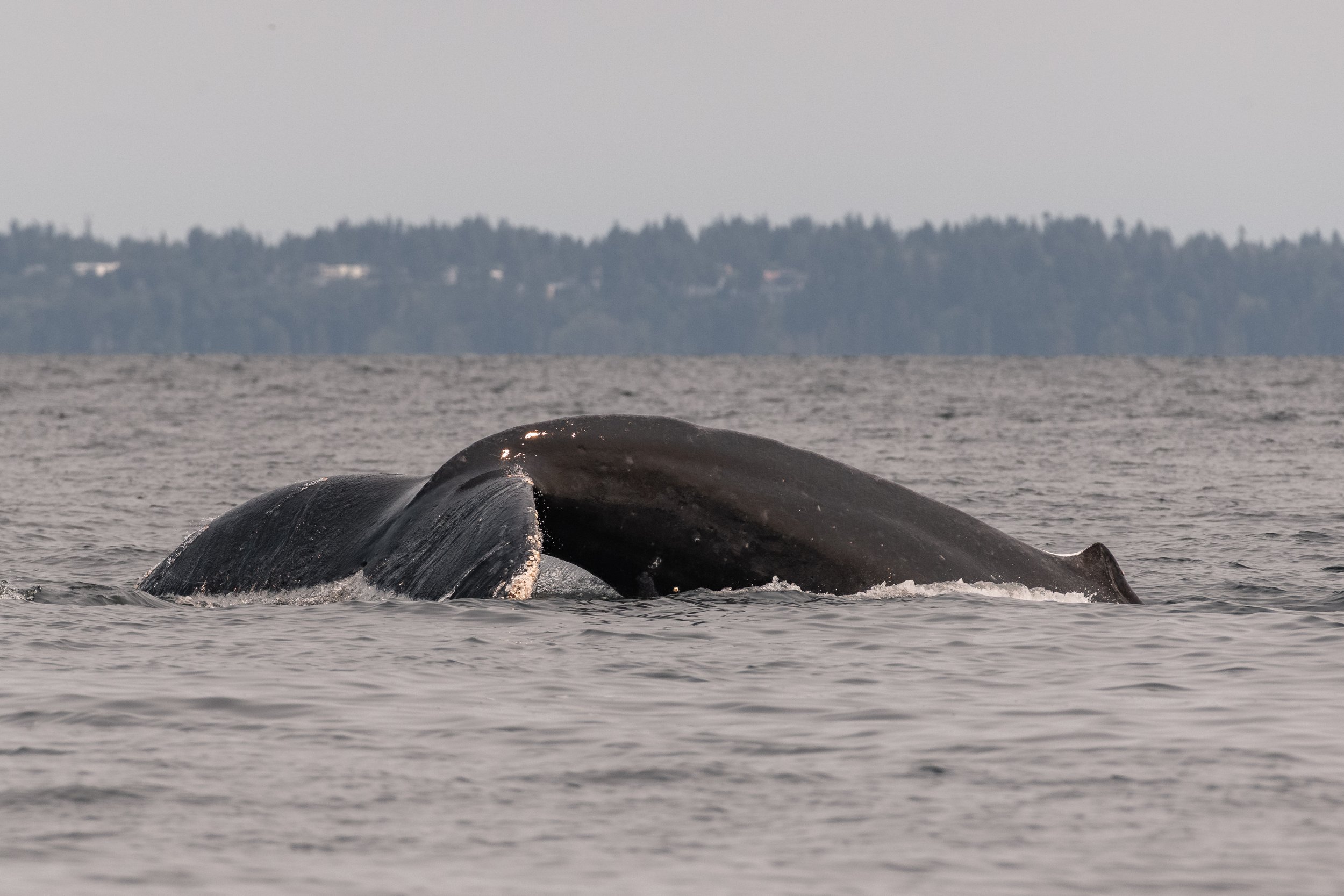
Europa arching for a dive. Photo by Hayleigh Hilbert.
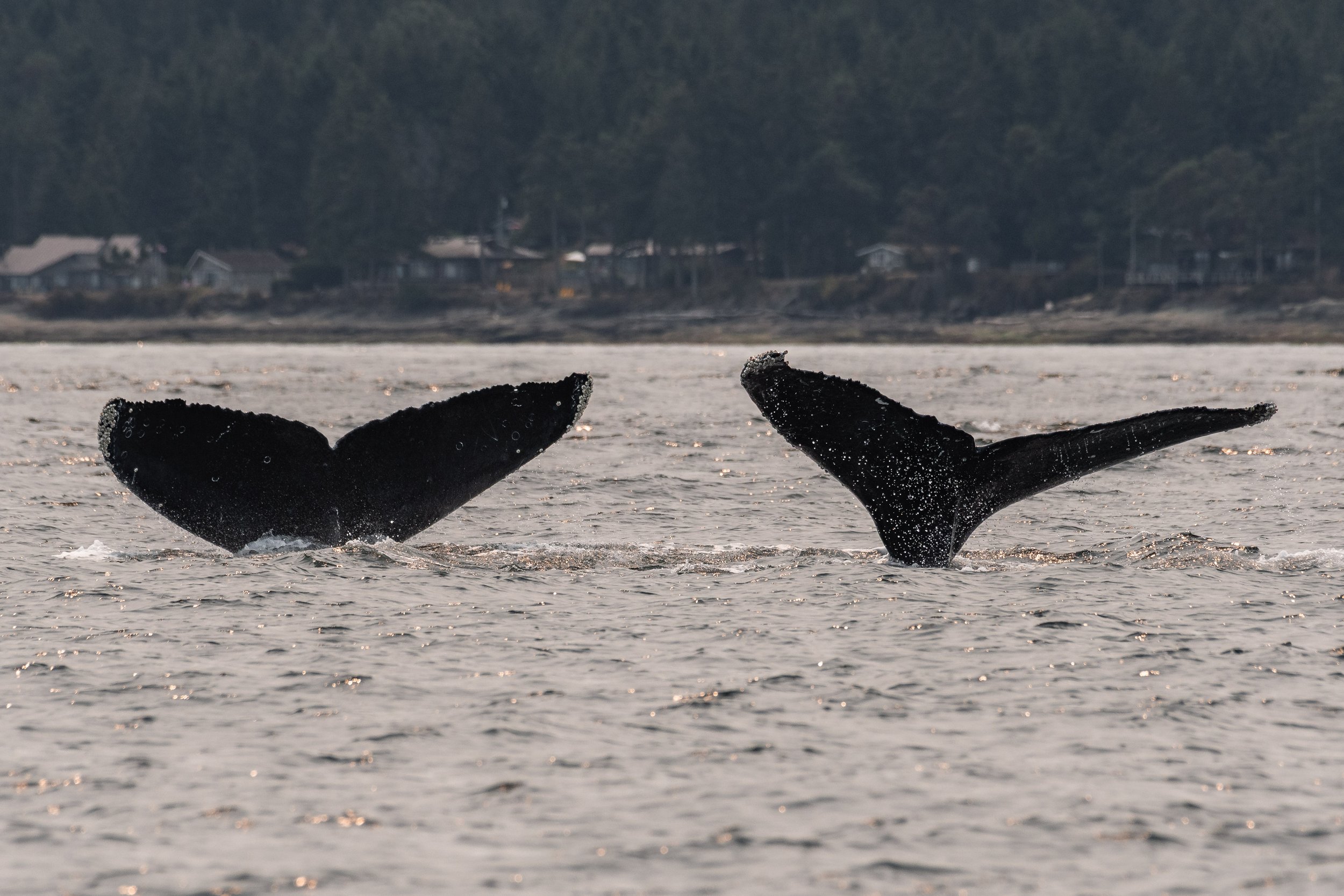
Europa and Nike fluking in sync. Photo by Evan Hessels.
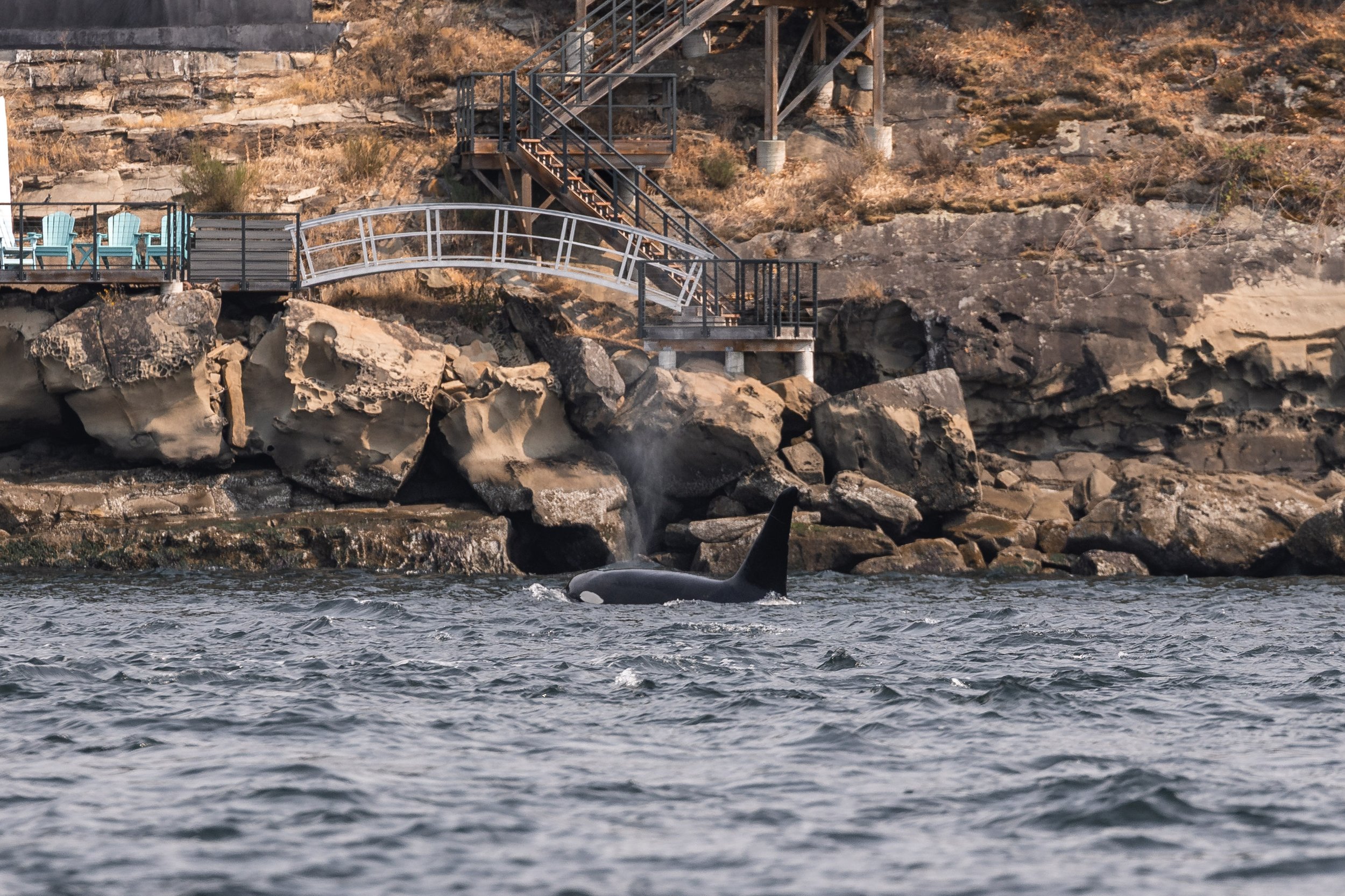
T100C Laurel next to shore. Photo by Jordan Robinson.
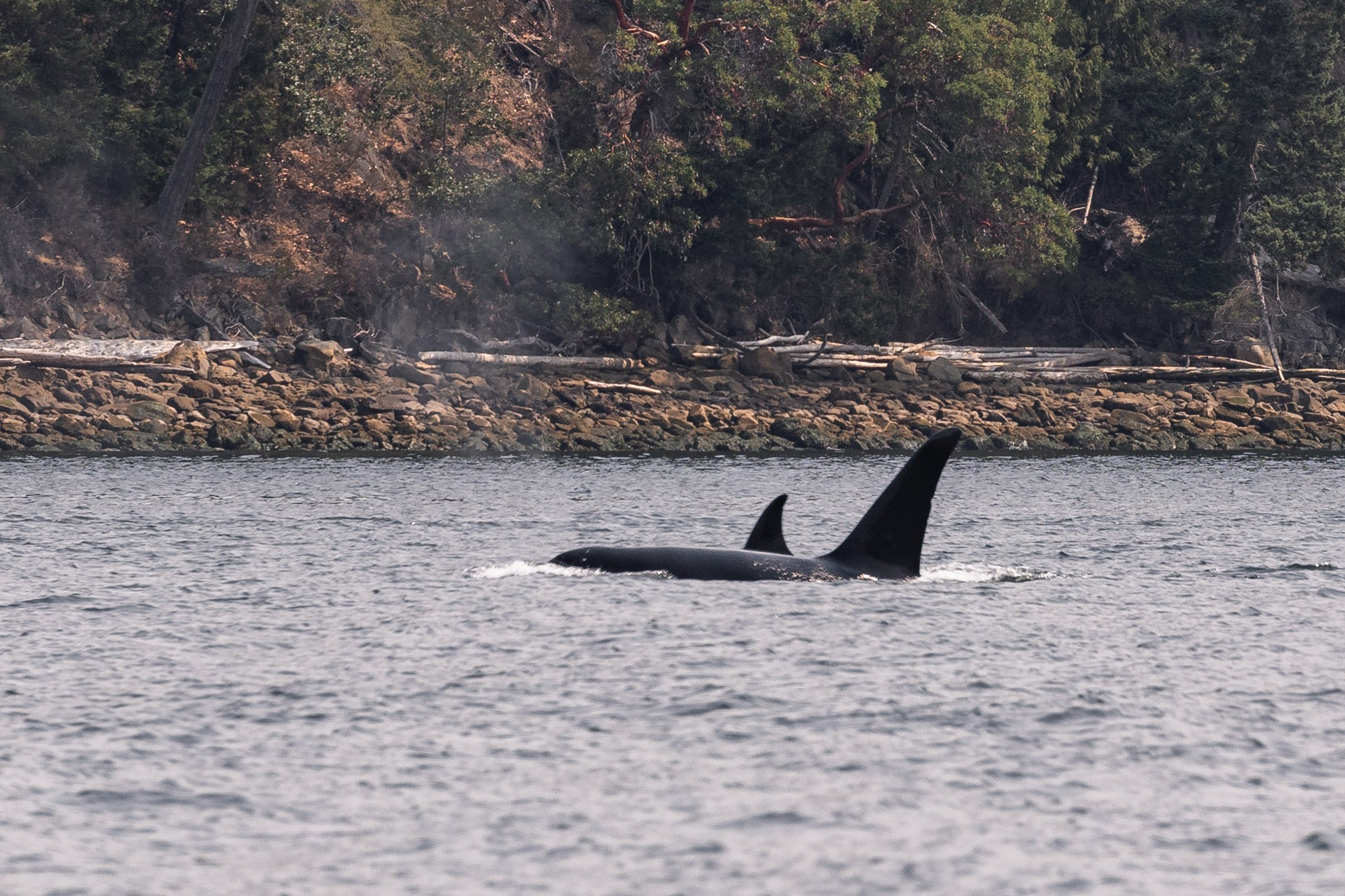
T100C Laurel and T100 Hutchins together by shore. Photo by Jordan Robinson.
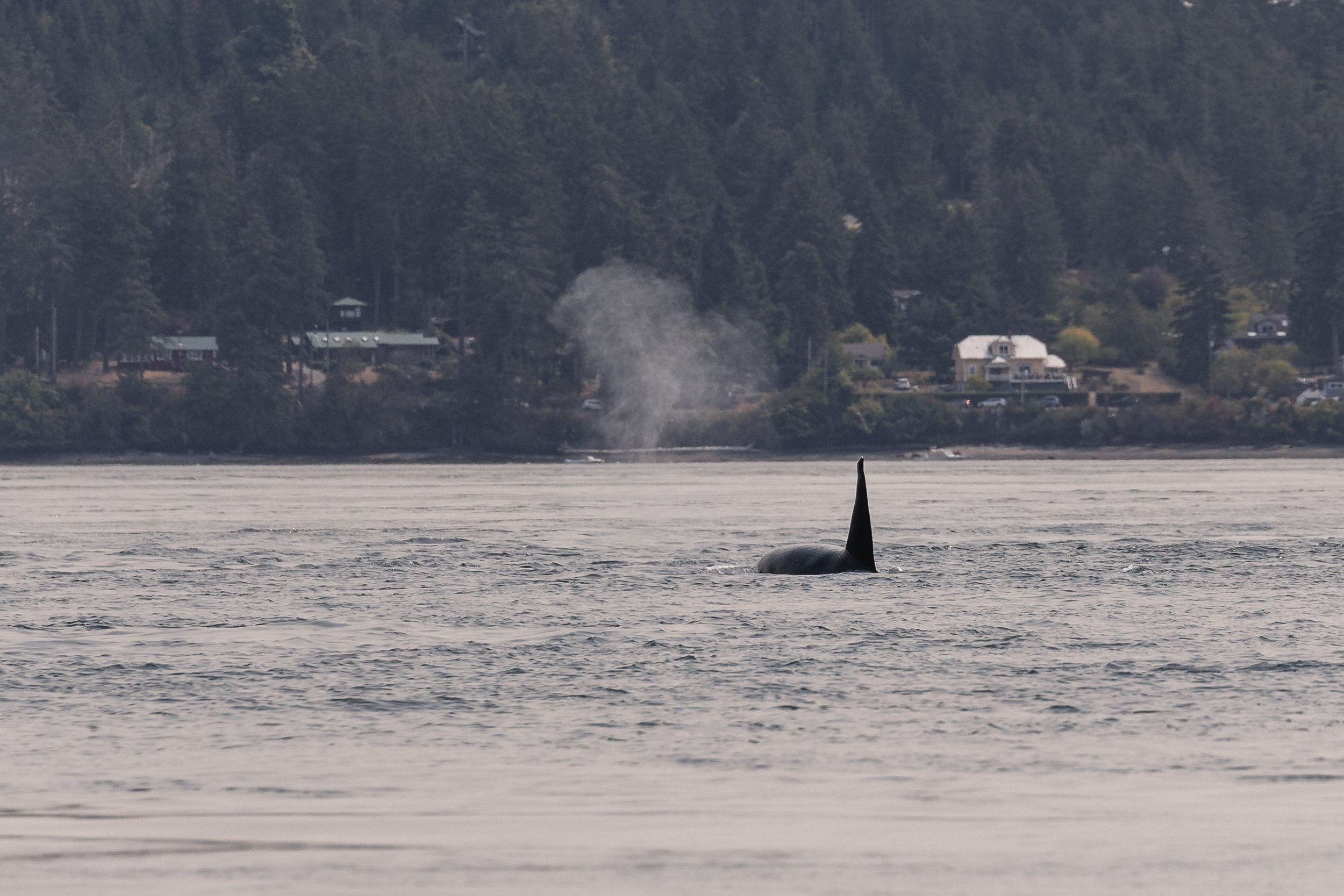
T100C Laurel making his way along. Photo by Jordan Robinson.
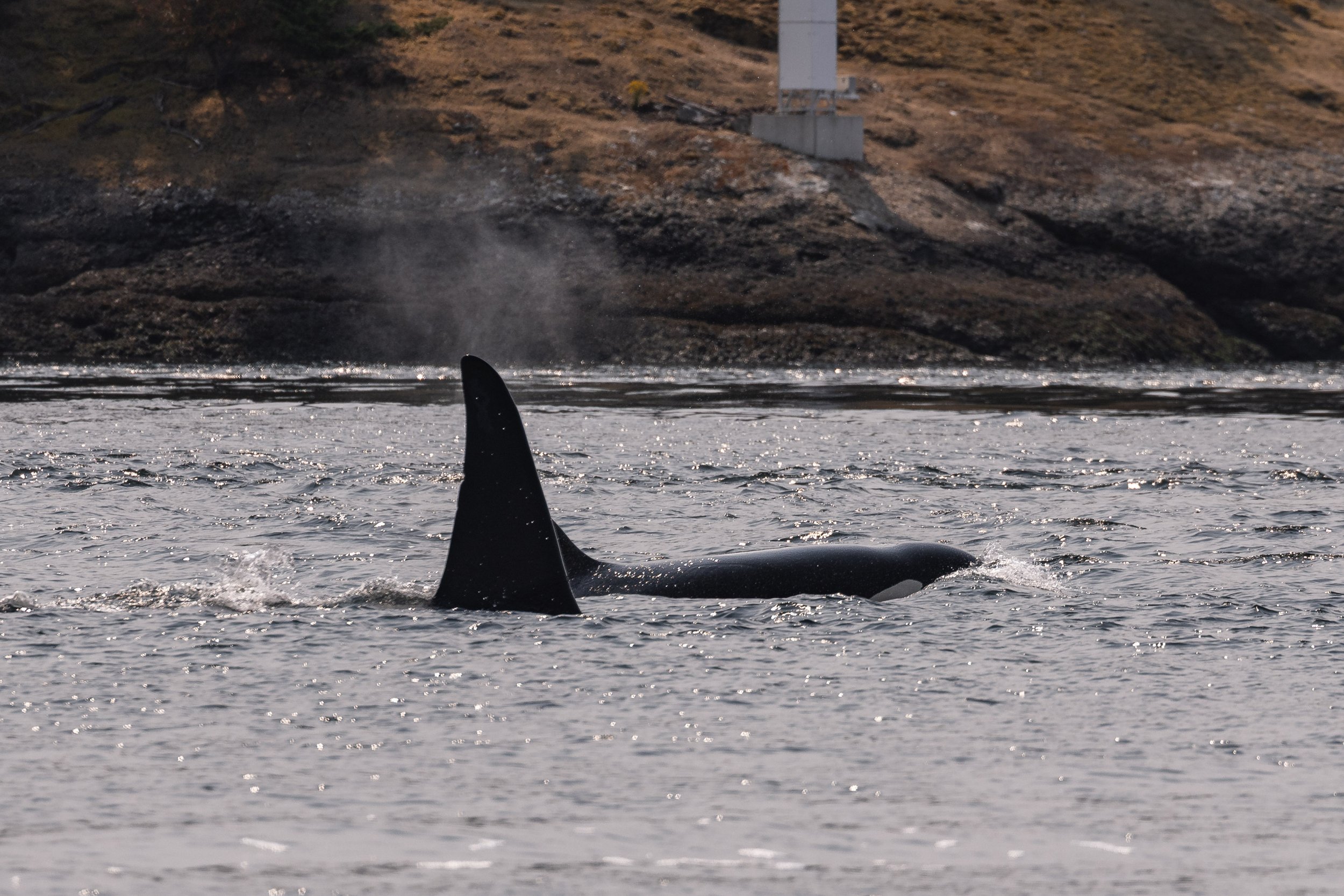
T100C Laurel and T100 Hutchins going through Active Pass. Photo by Jordan Robinson.
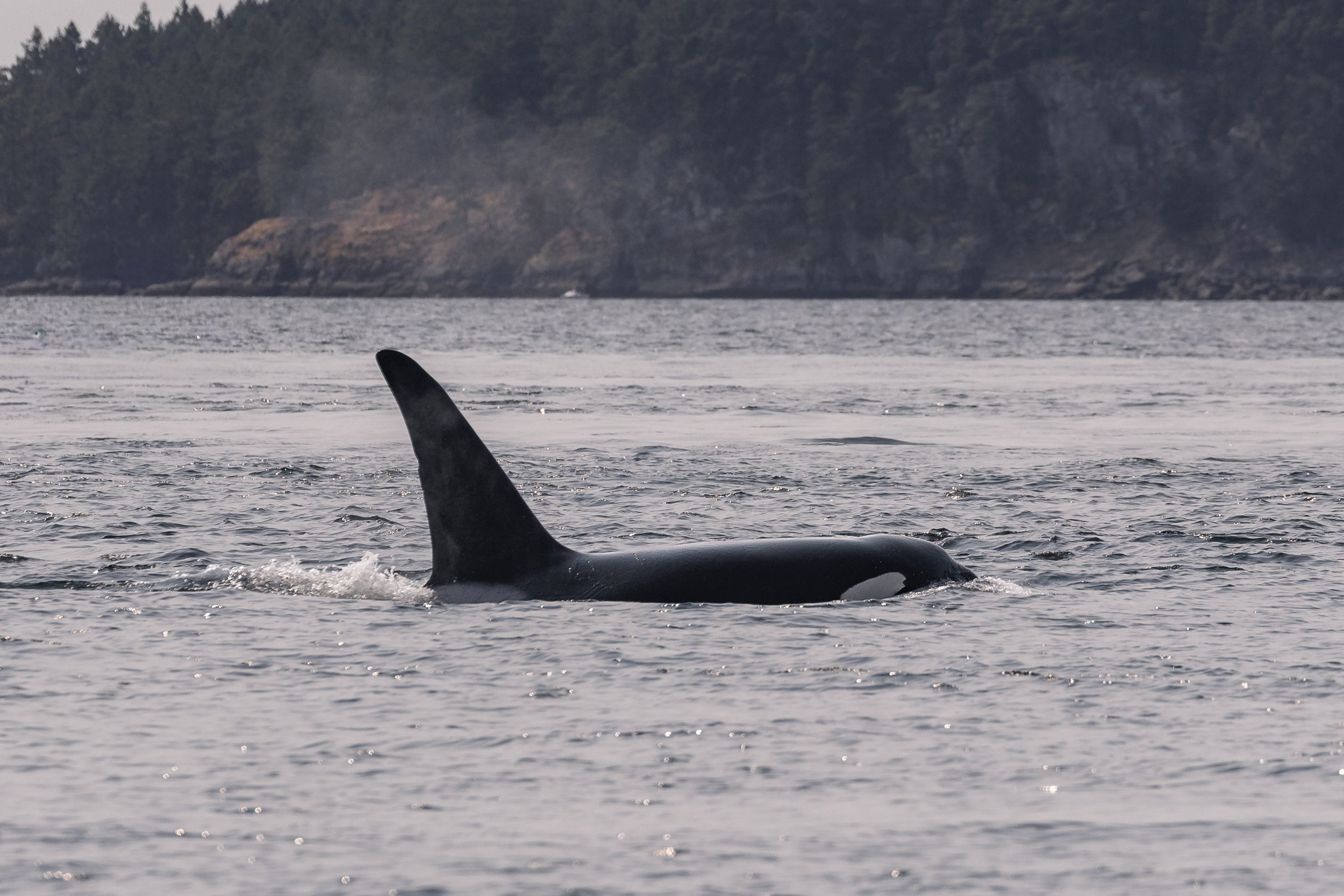
Picture perfect T100C Laurel with his eyepatch above the surface. Photo by Jordan Robinson.
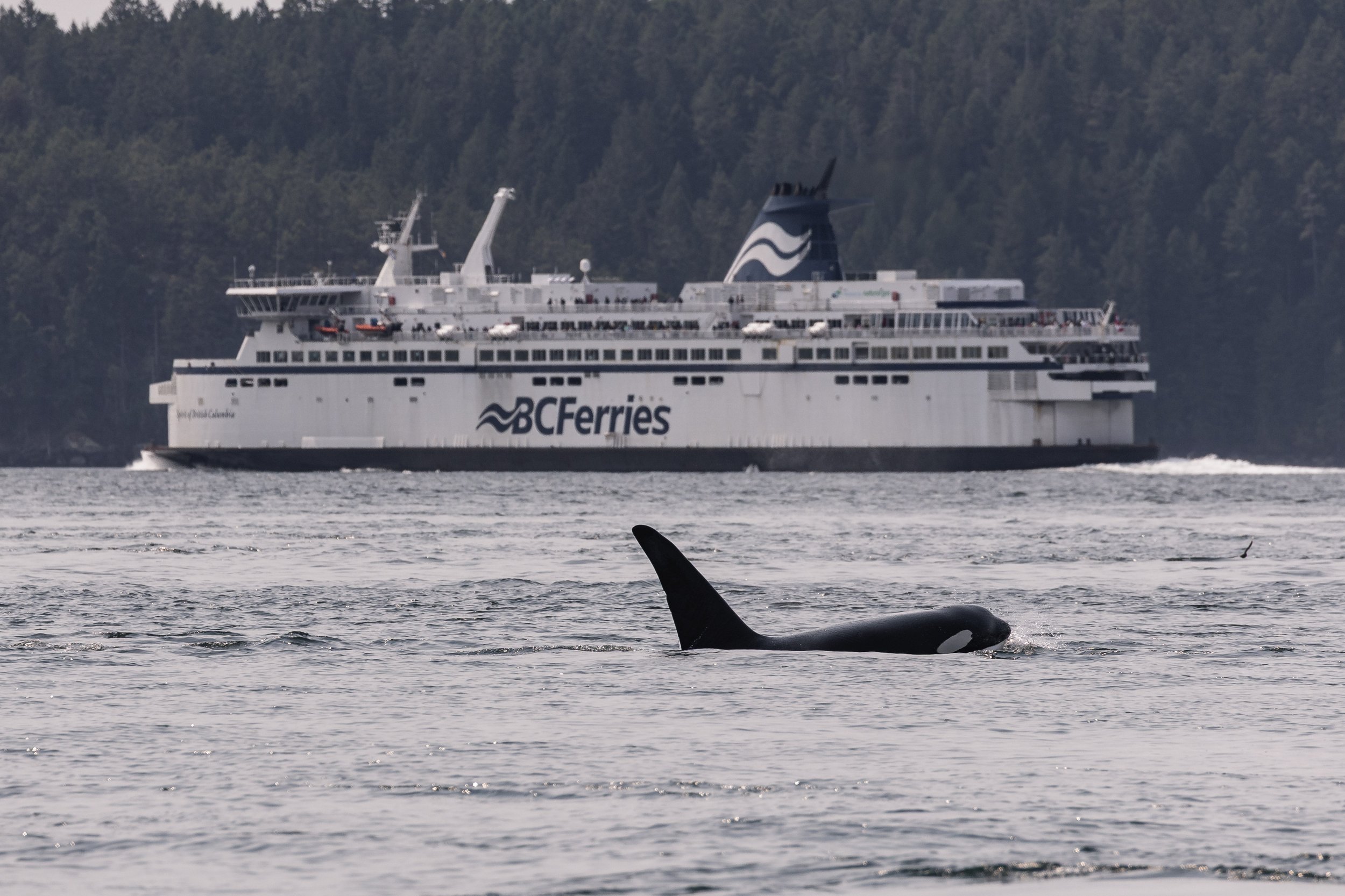
Active Pass is a busy waterway for both boats and wildlife. Photo by Jordan Robinson.
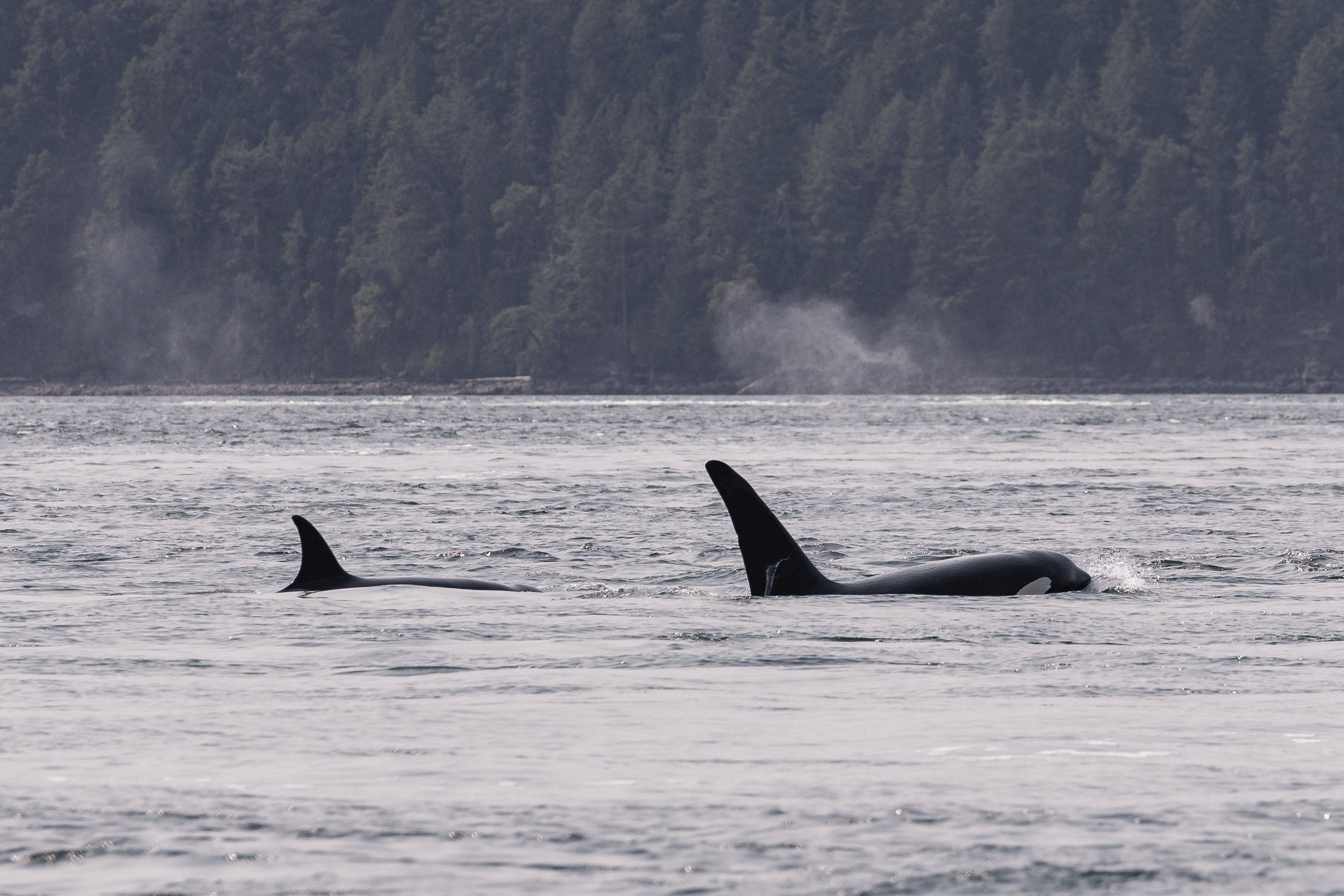
T100C Laurel with his mother T100 Hutchins behind him. Photo by Jordan Robinson.
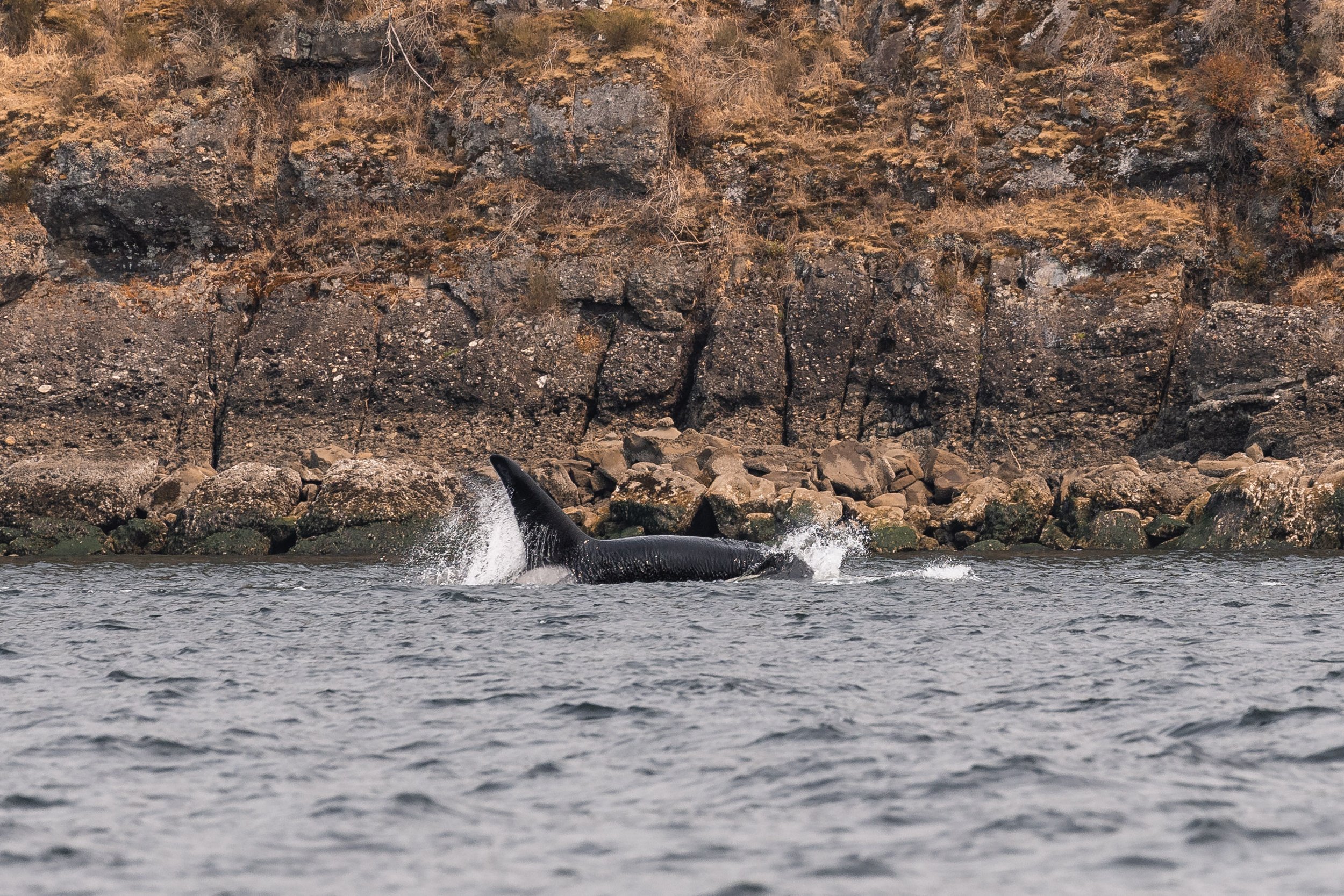
T100C Laurel making waves. Photo by Jordan Robinson.
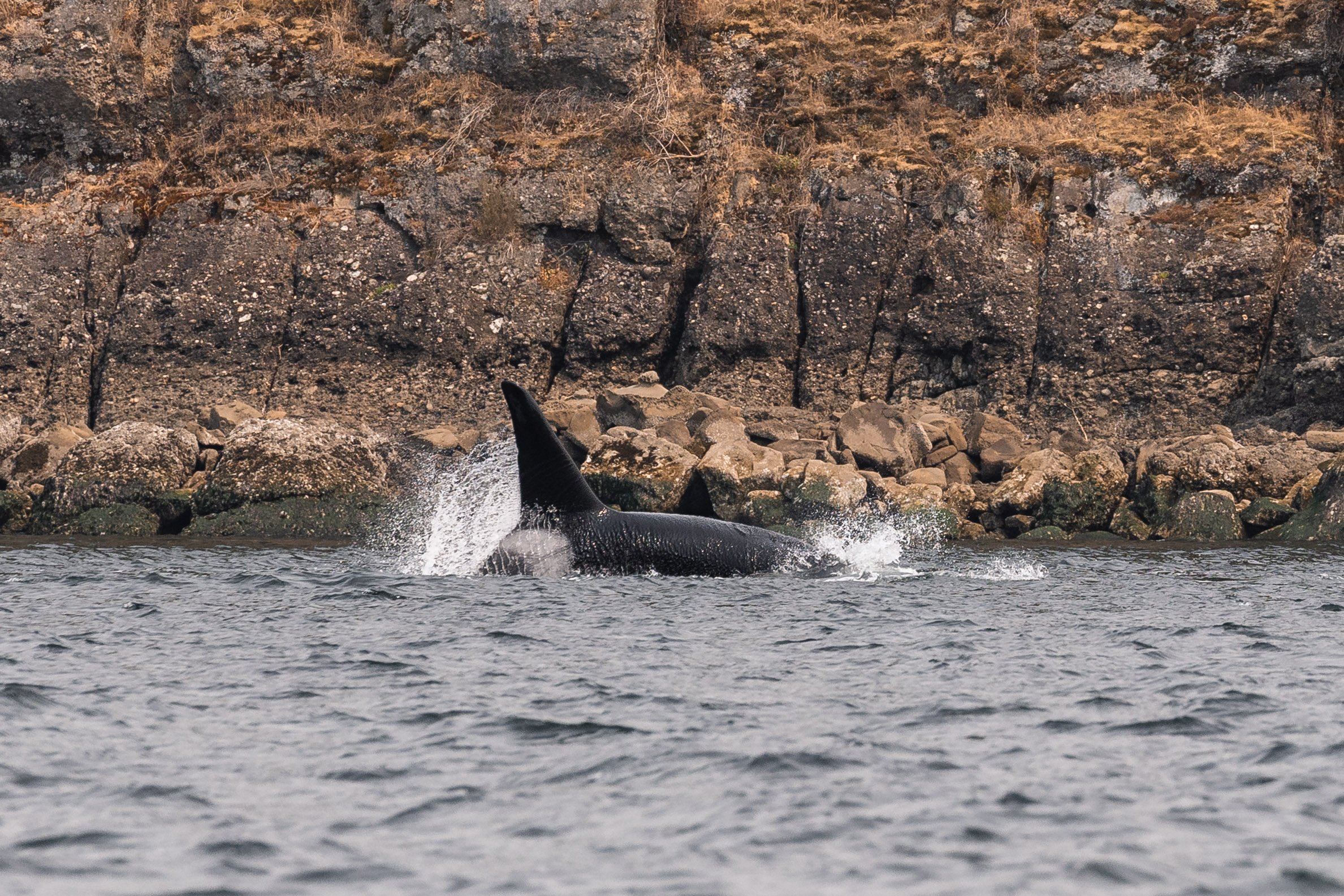
A nice view of T100C Laurel’s scarred saddlepatch. Photo by Jordan Robinson.
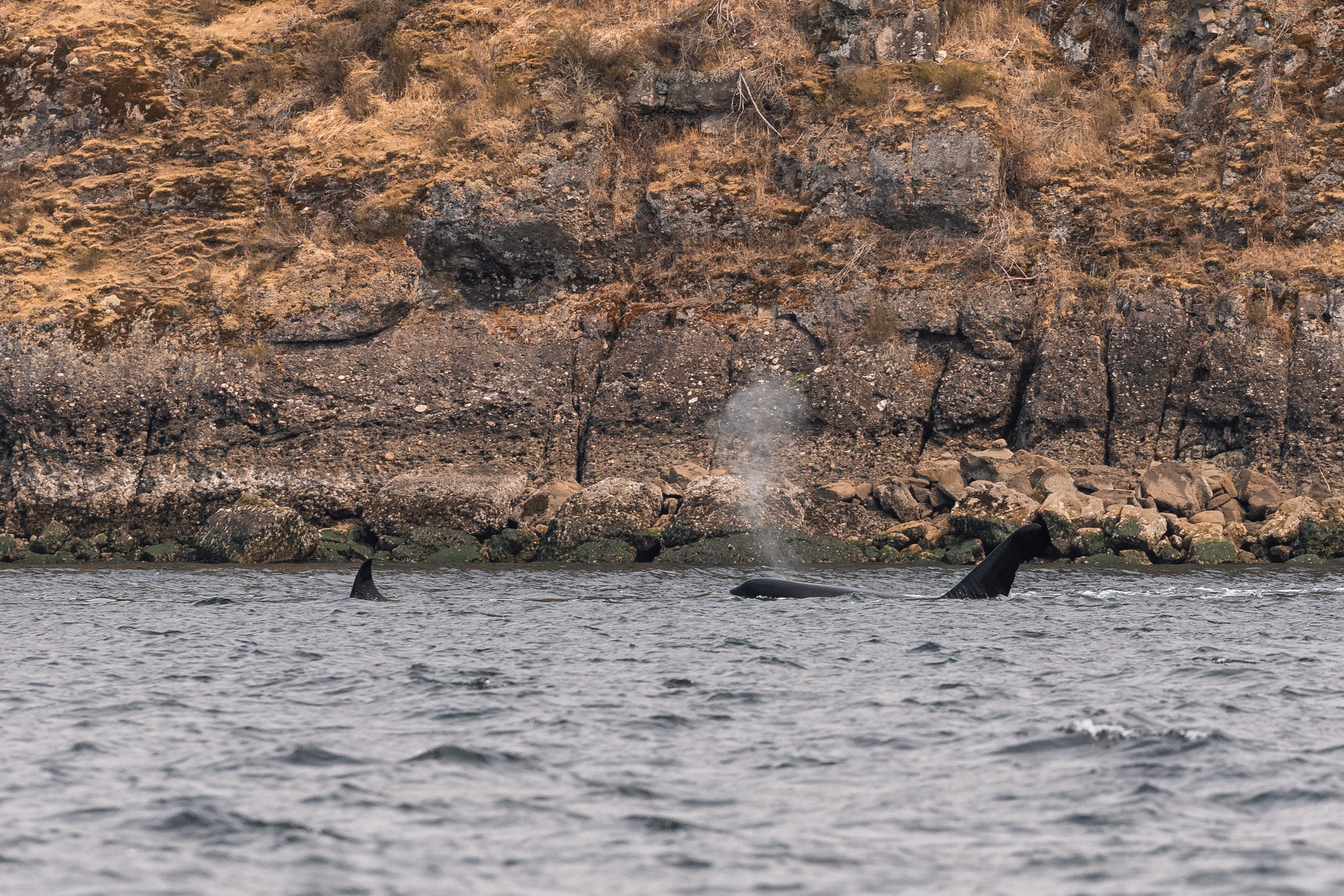
T100C Laurel with a backlit blow, and his mother T100 Hutchins ahead of him. Photo by Jordan Robinson.
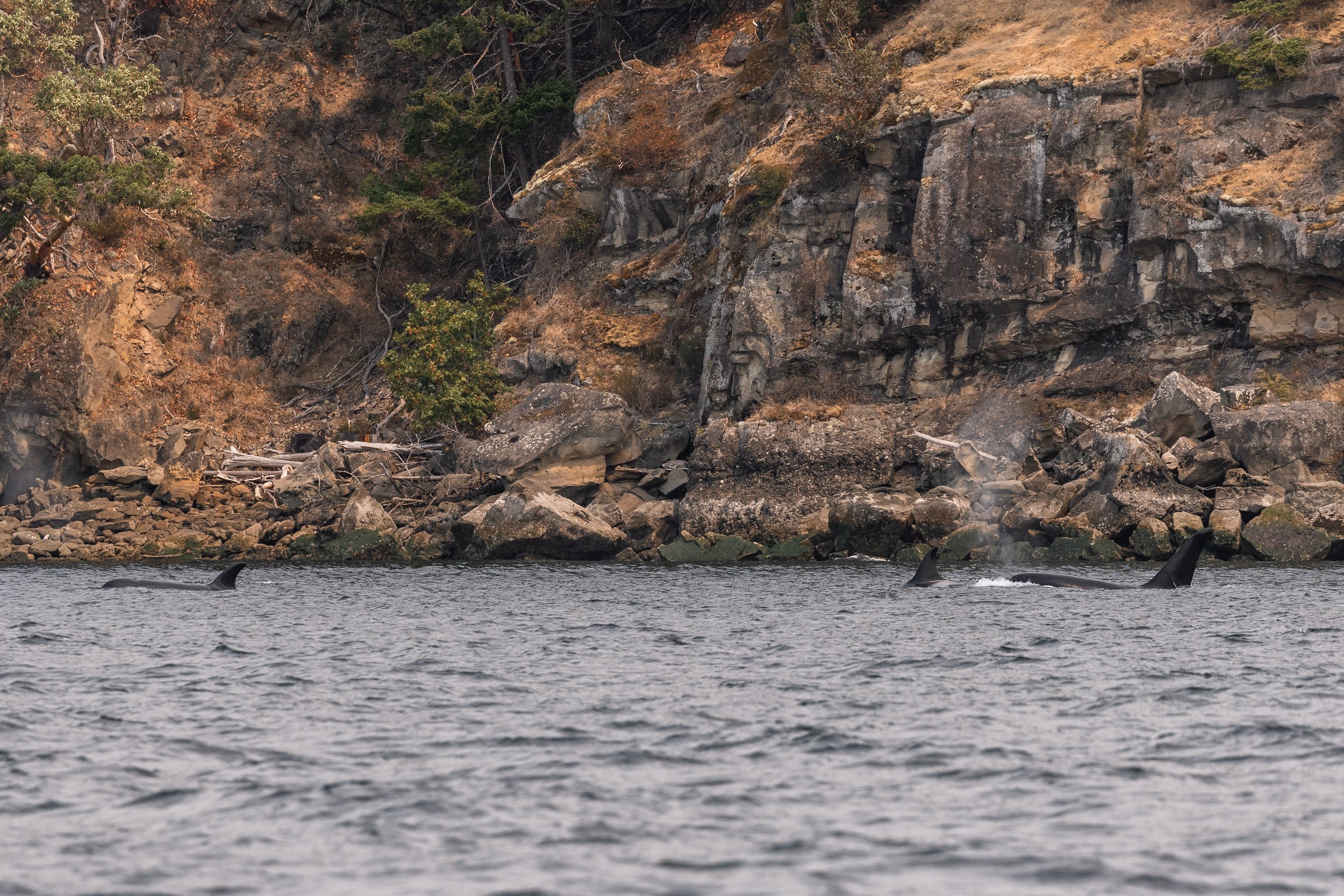
T100F Estrella in the lead, followed by T100 Hutchins and T100C Laurel. Photo by Jordan Robinson.
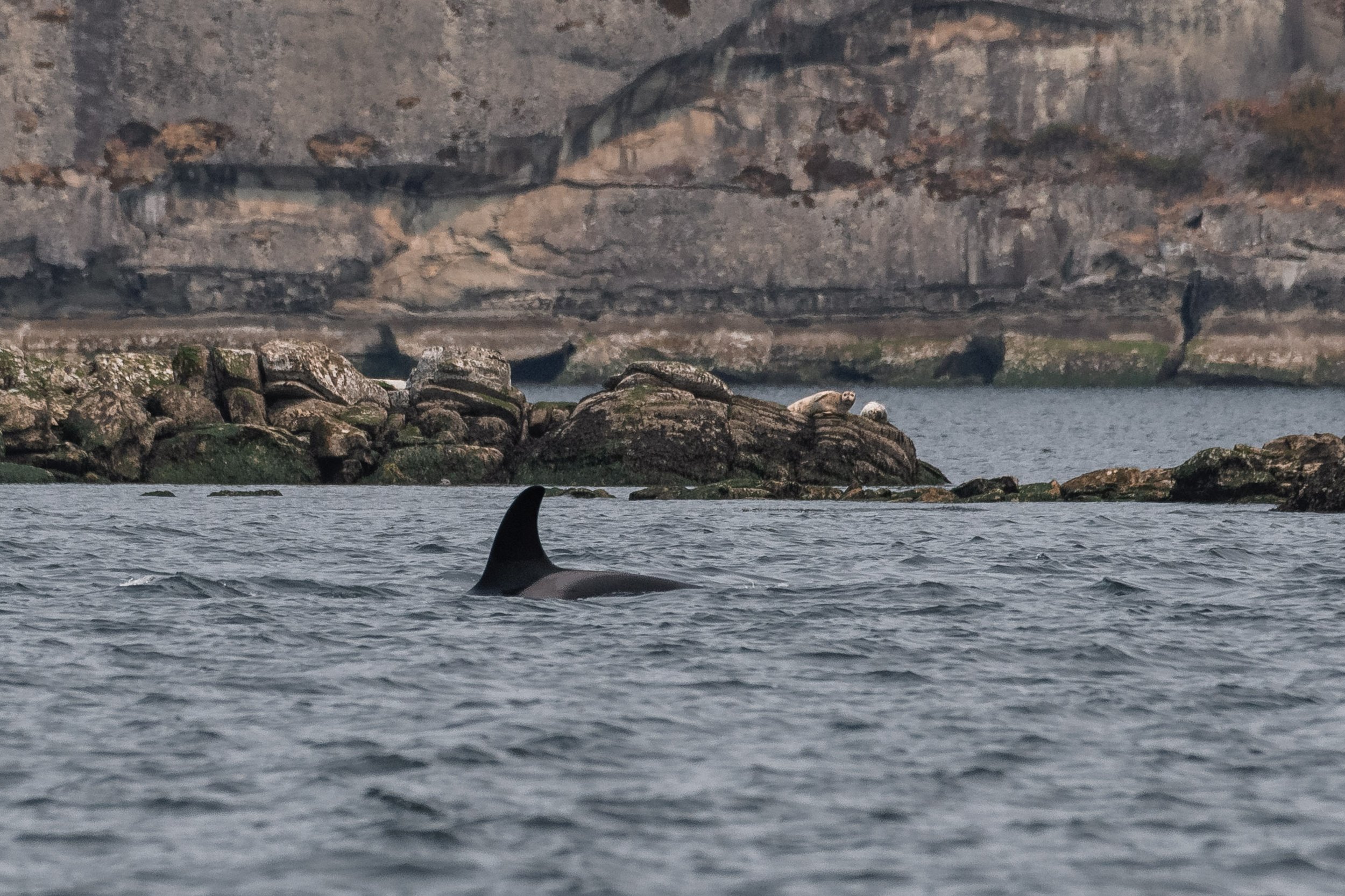
T100F Estrella with a few nervous Harbour Seals visible behind him. Photo by Evan Hessels.
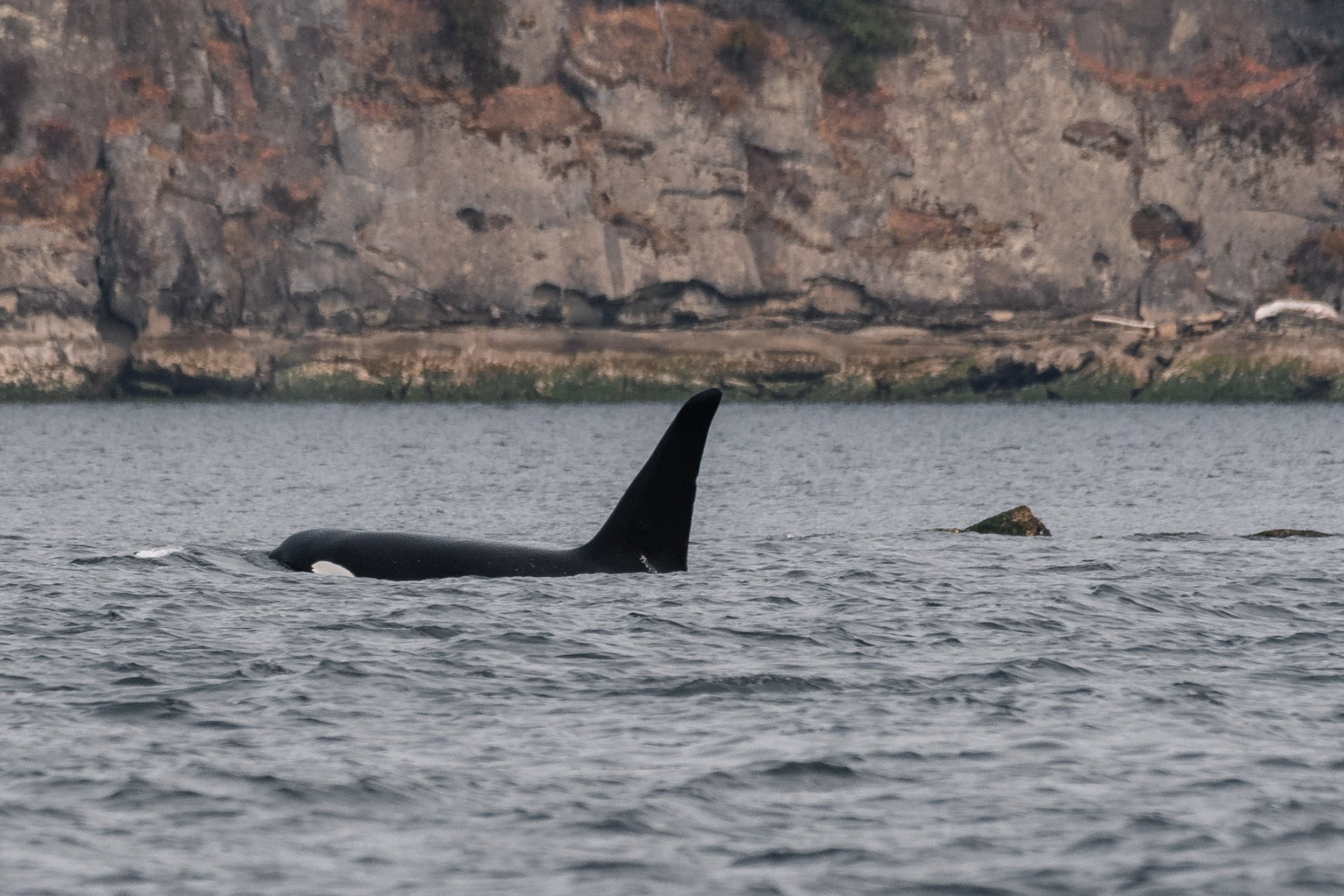
T100C Laurel with his distinctly notched dorsal fin visible. Photo by Evan Hessels.
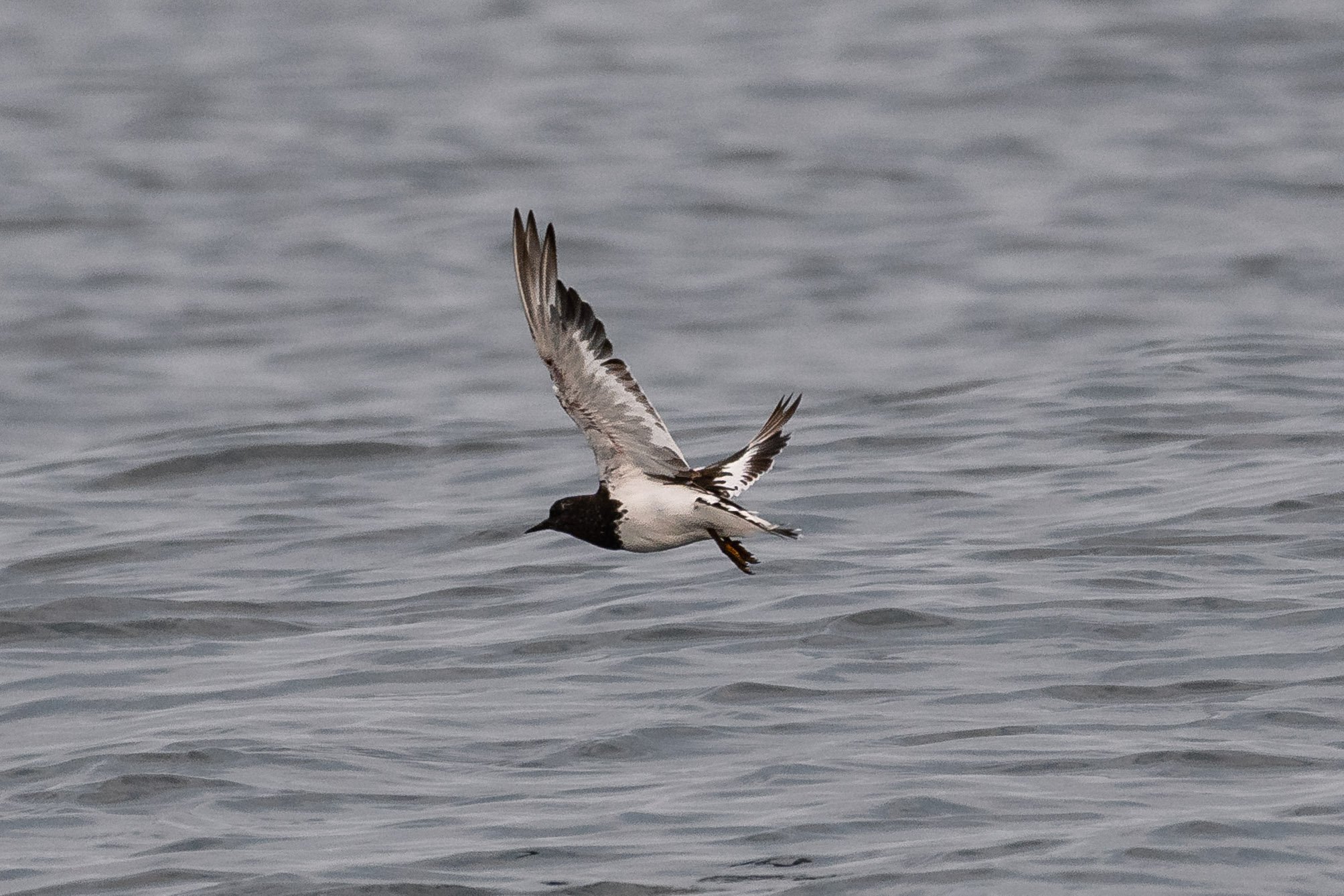
A Black Turnstone flying by. Photo by Evan Hessels.
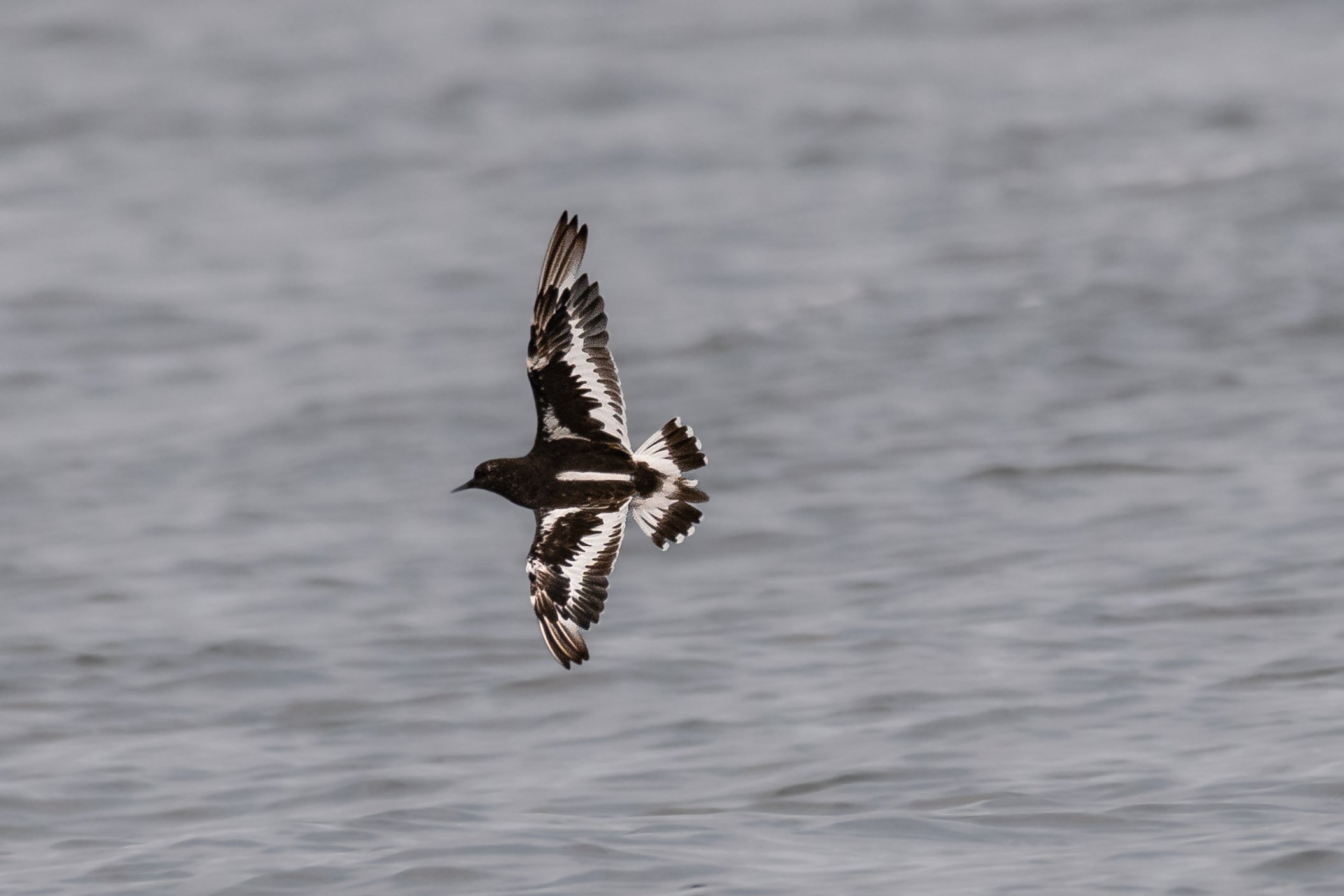
Look at that stunning plummage! Photo by Evan Hessels.
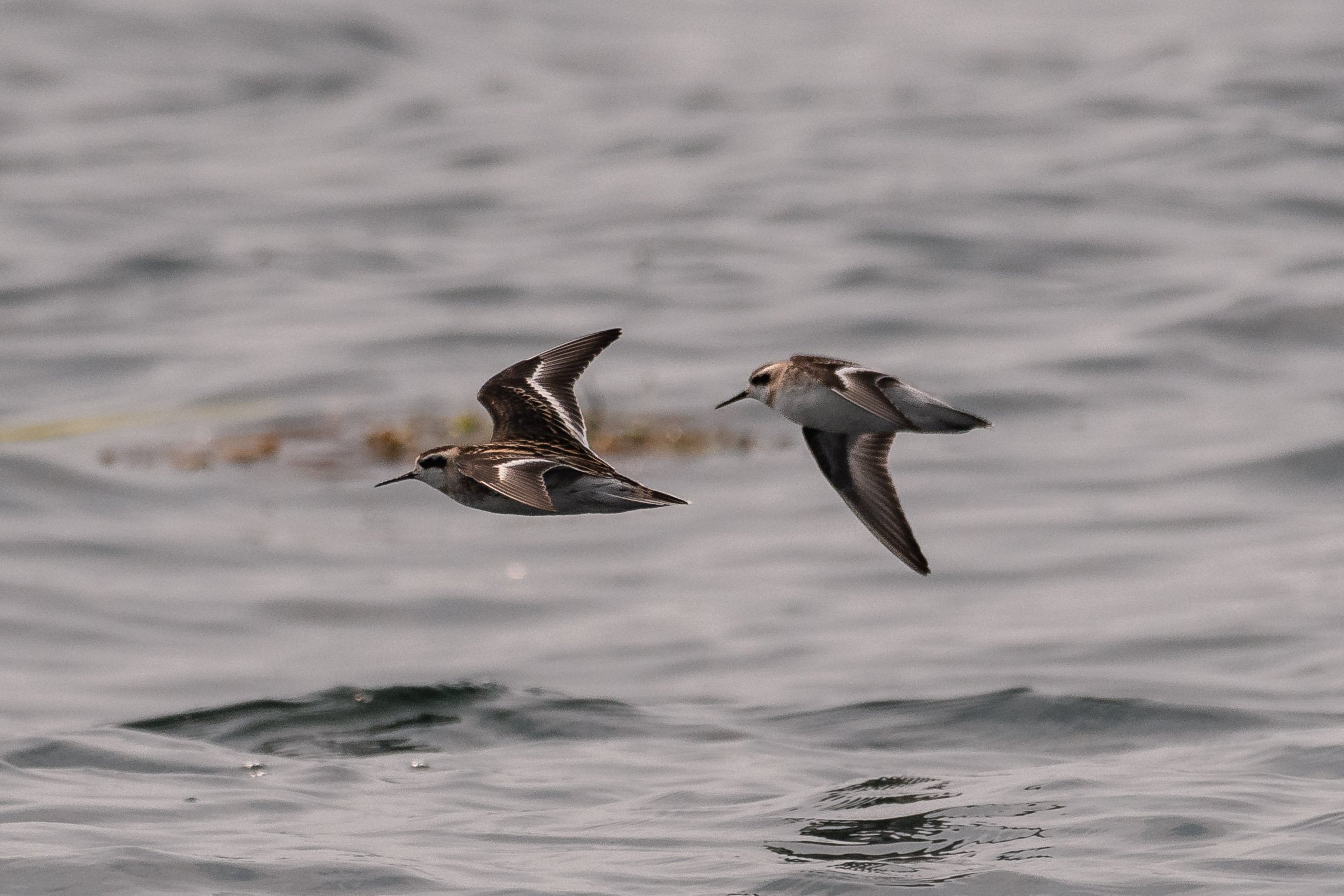
A pair of Red-necked Phalaropes in flight. Photo by Evan Hessels.
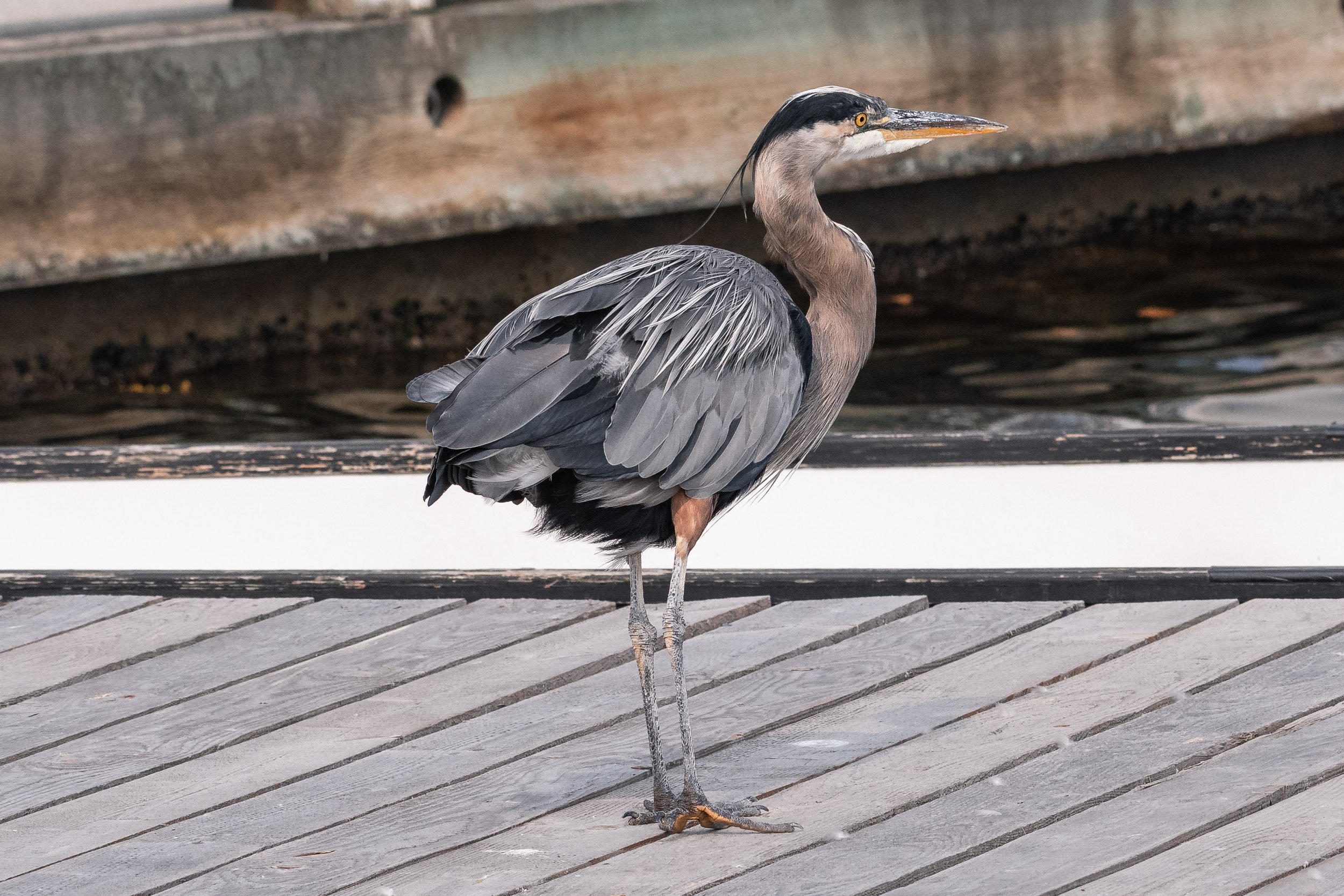
Great Blue Heron along the docks. Photo by Evan Hessels.
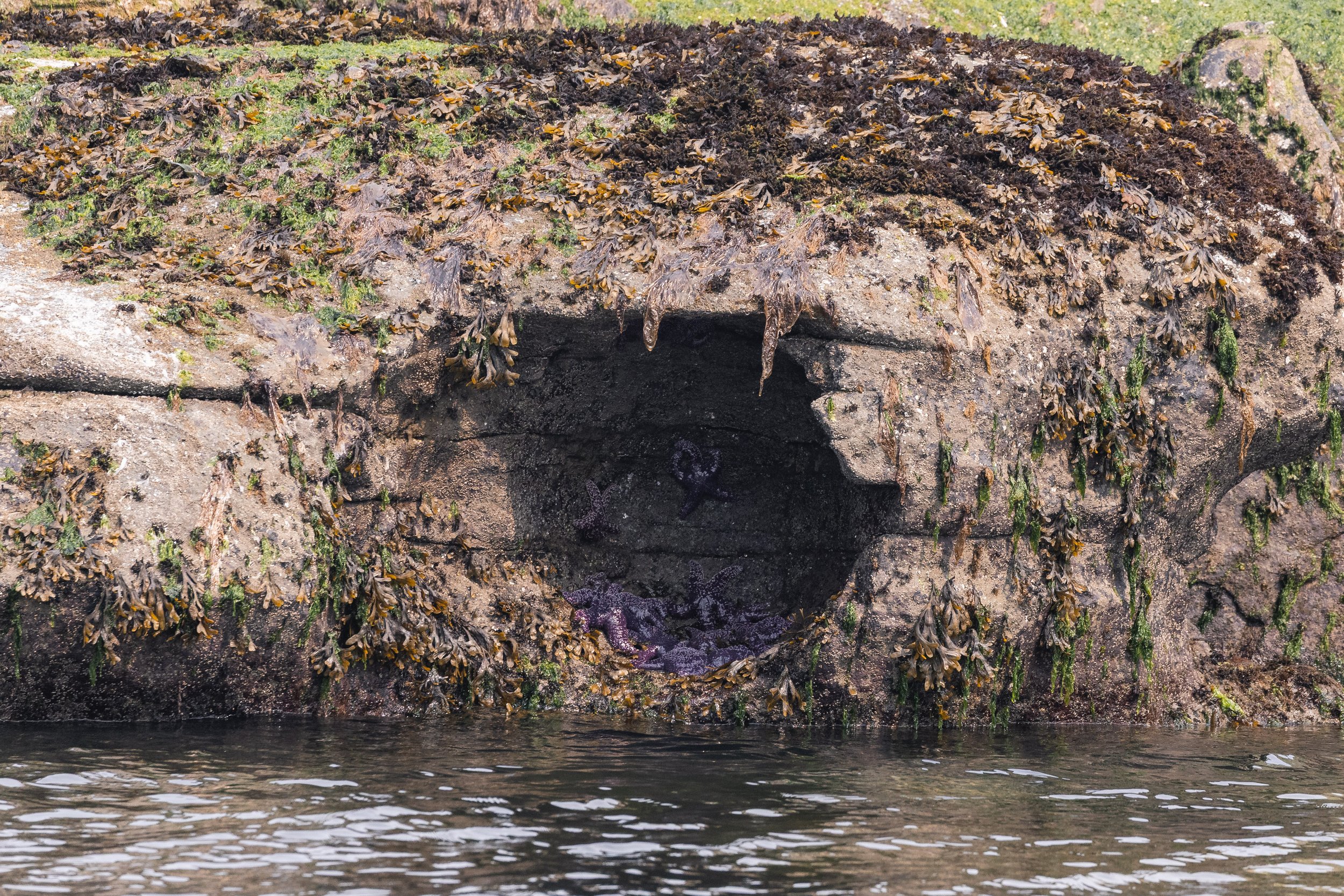
Sea stars in a haulout. Photo by Jordan Robinson.
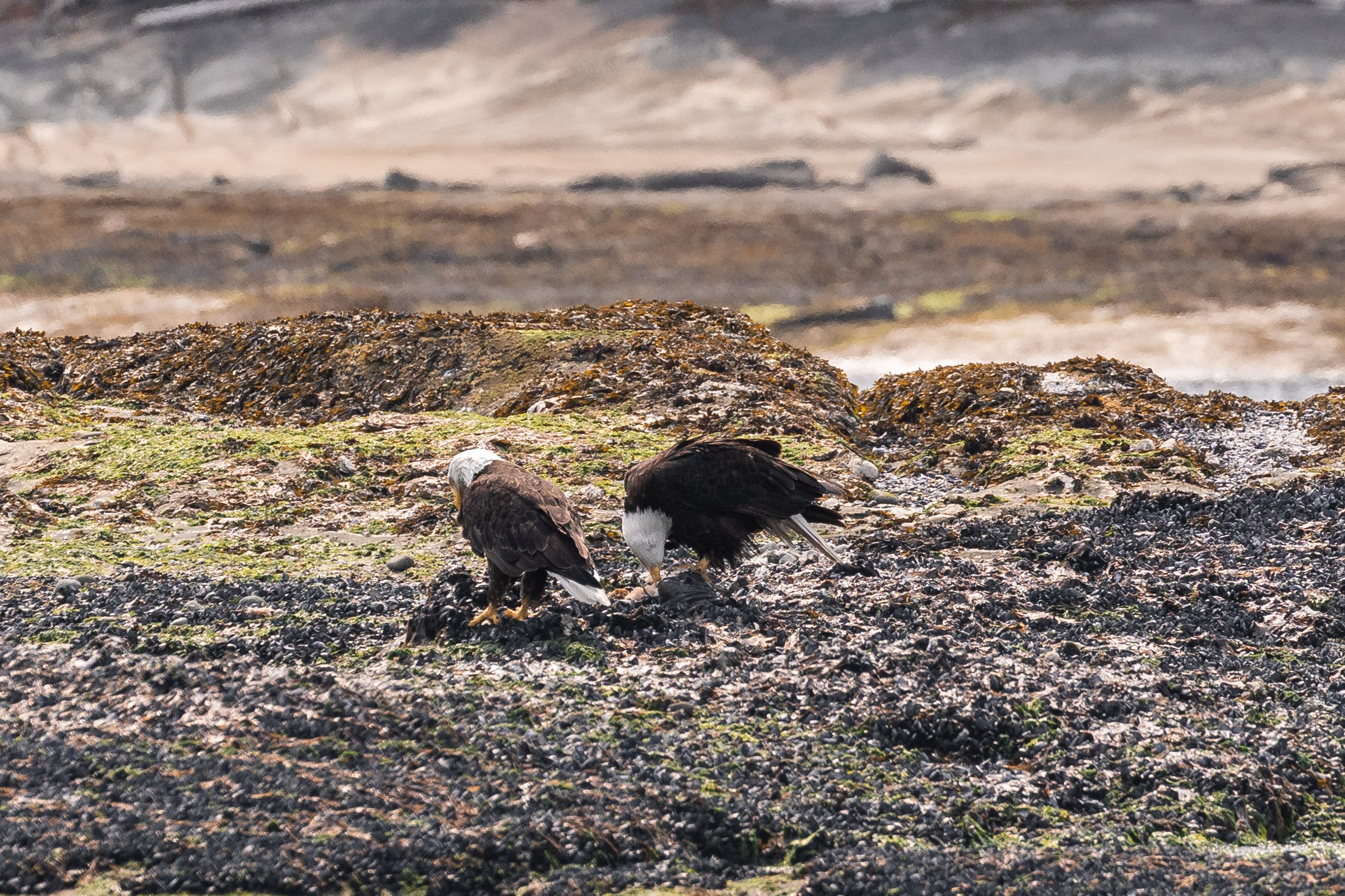
A pair of Bald Eagles eating a snack. Photo by Jordan Robinson.
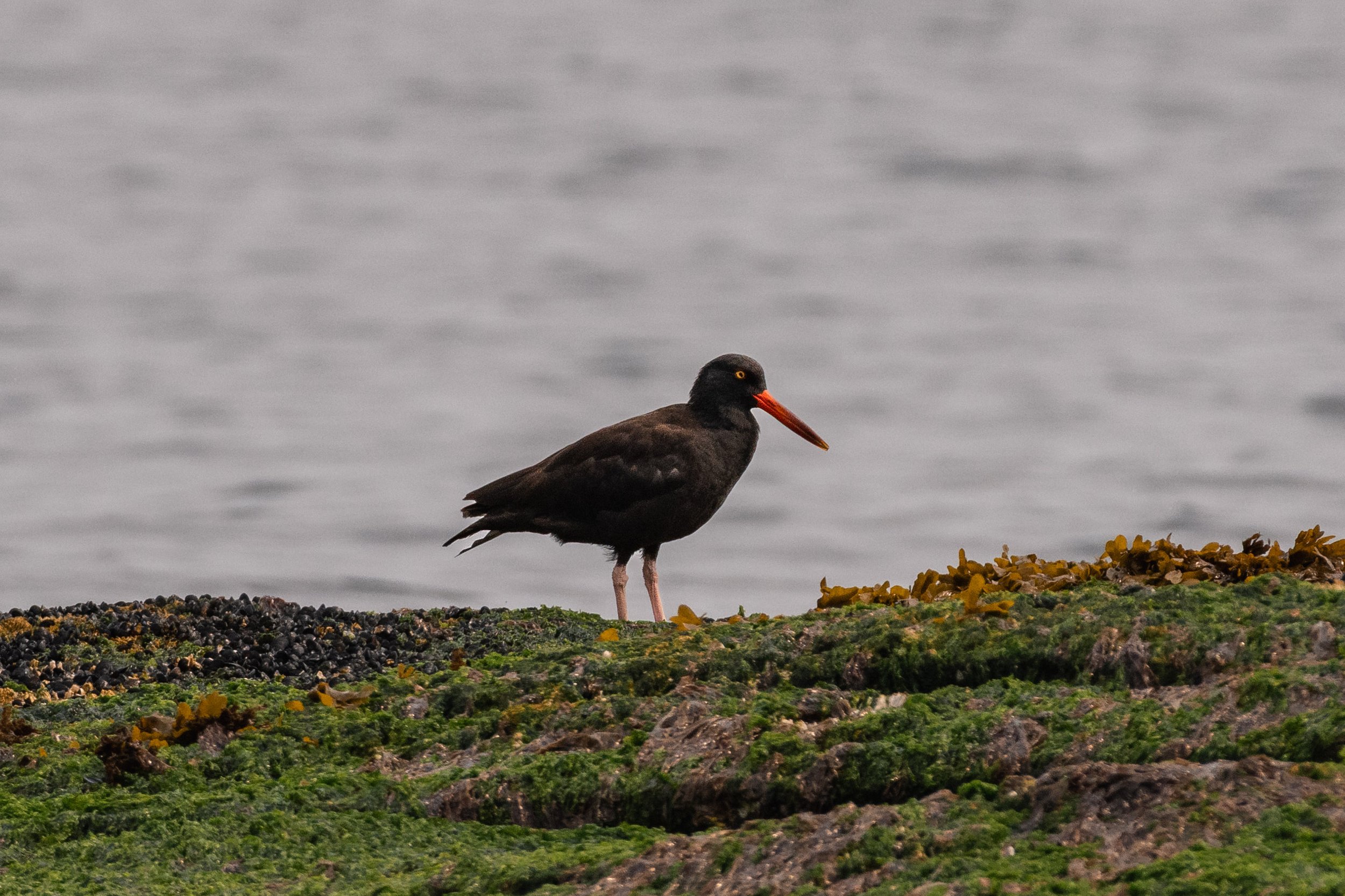
A Black Oystercatcher wandering along. Photo by Hayleigh Hilbert.
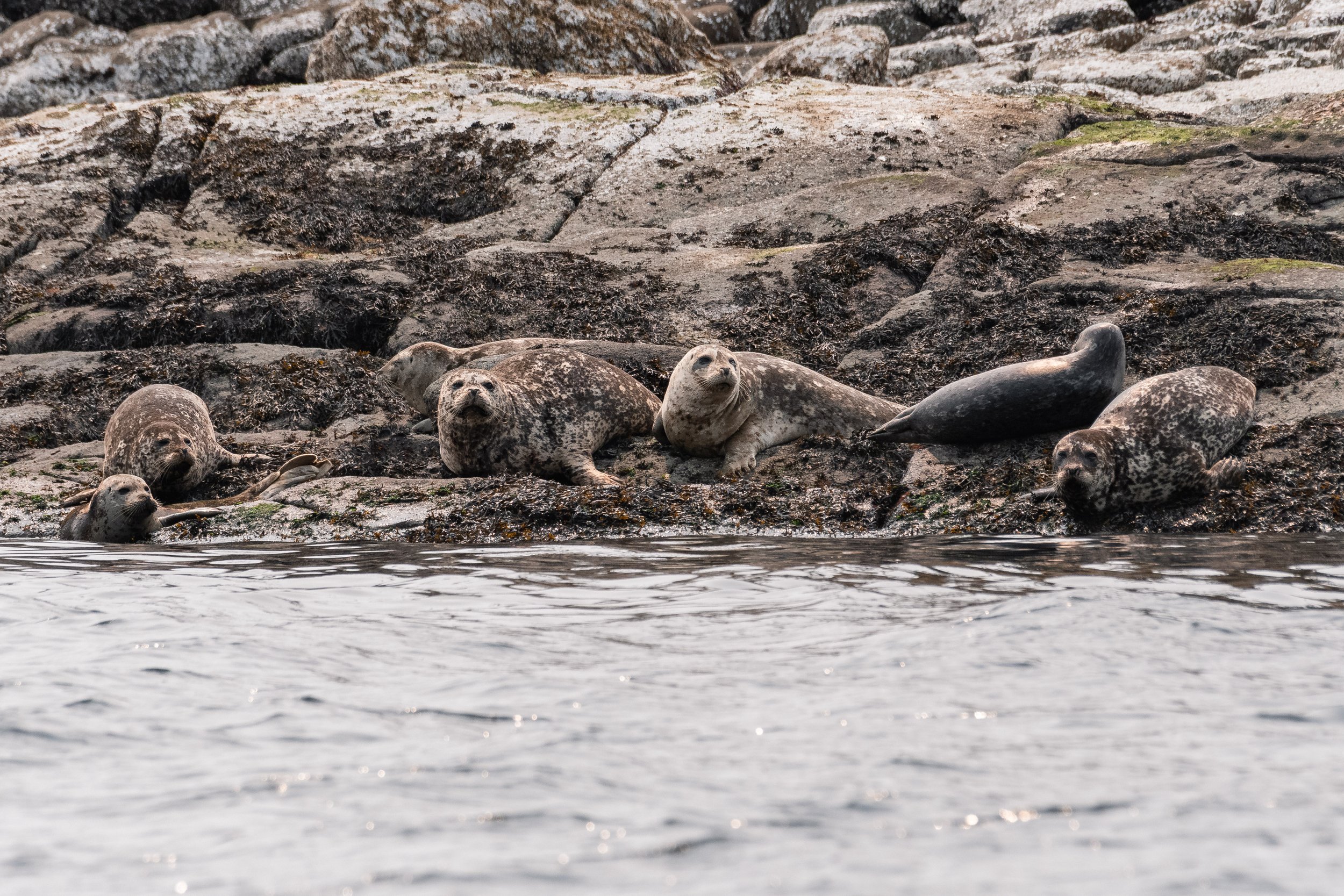
Harbour Seals hauled out enjoying the afternoon. Photo by Evan Hessels.
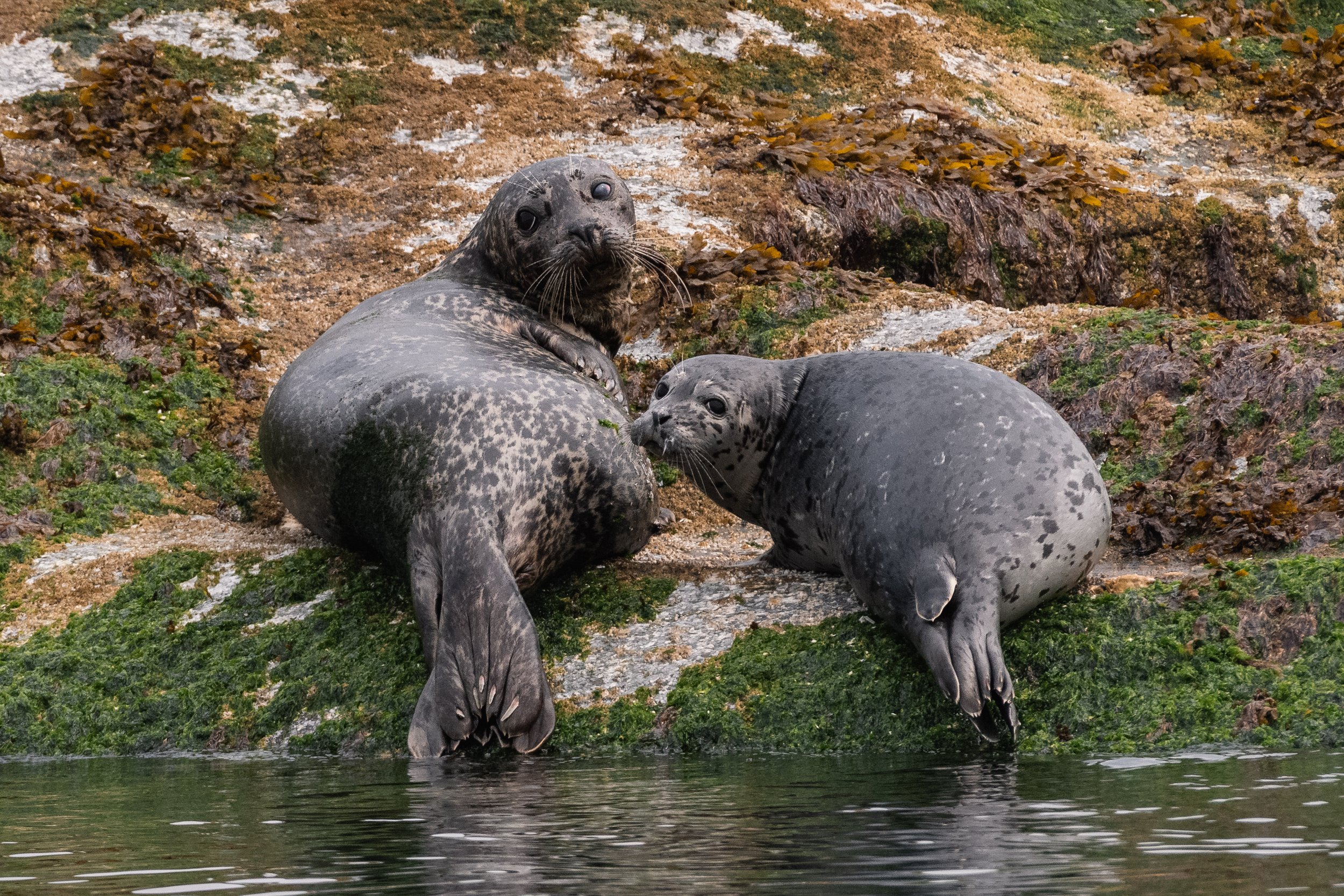
A pair of Harbour Seals hauled out together. Photo by Hayleigh Hilbert.
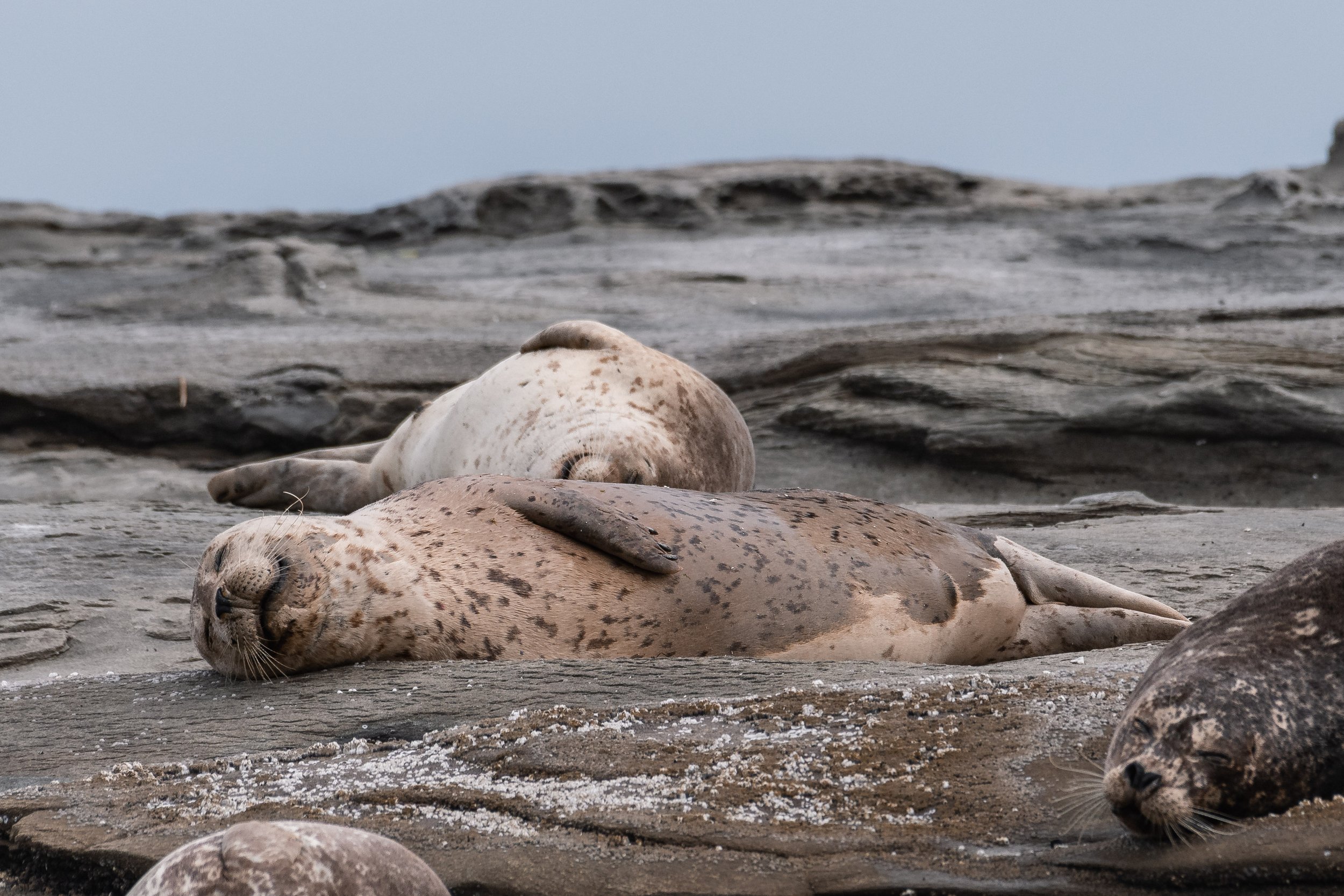
Dreaming of a tasty fish feast. Photo by Evan Hessels.
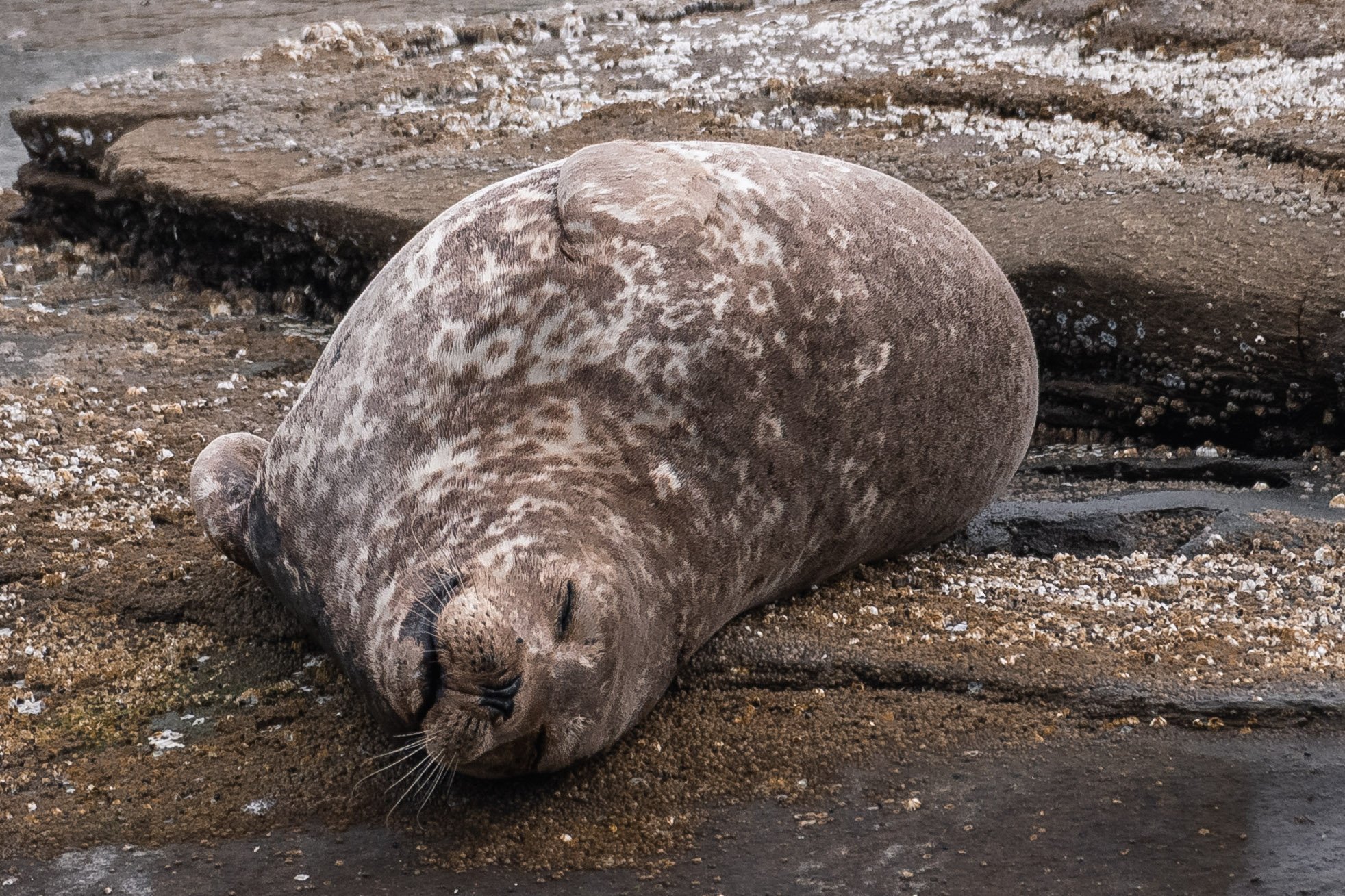
Oh to be this comfy and cozy! Photo by Evan Hessels.
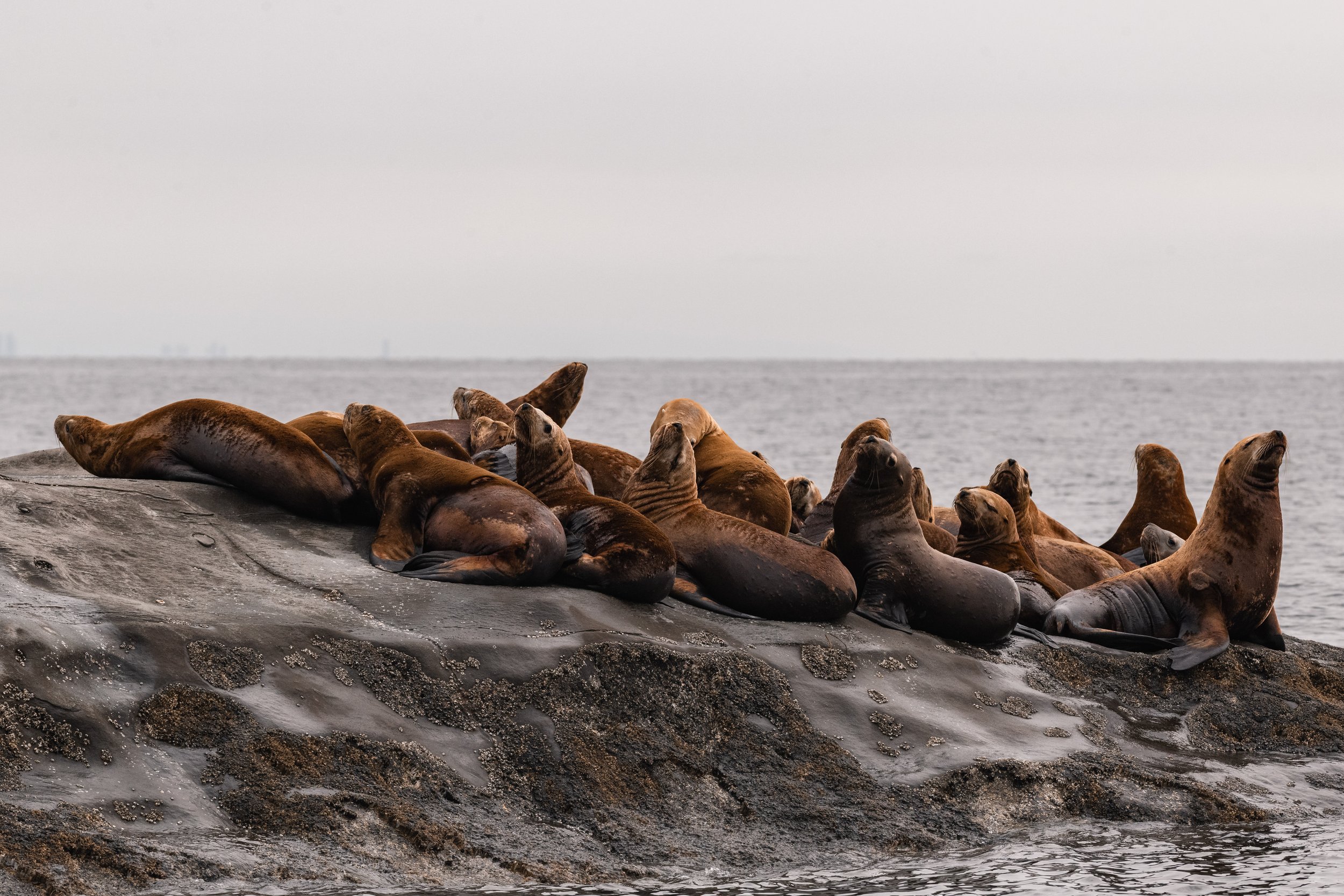
Stinky Rocks covered in Steller Sea Lions. Photo by Hayleigh Hilbert.
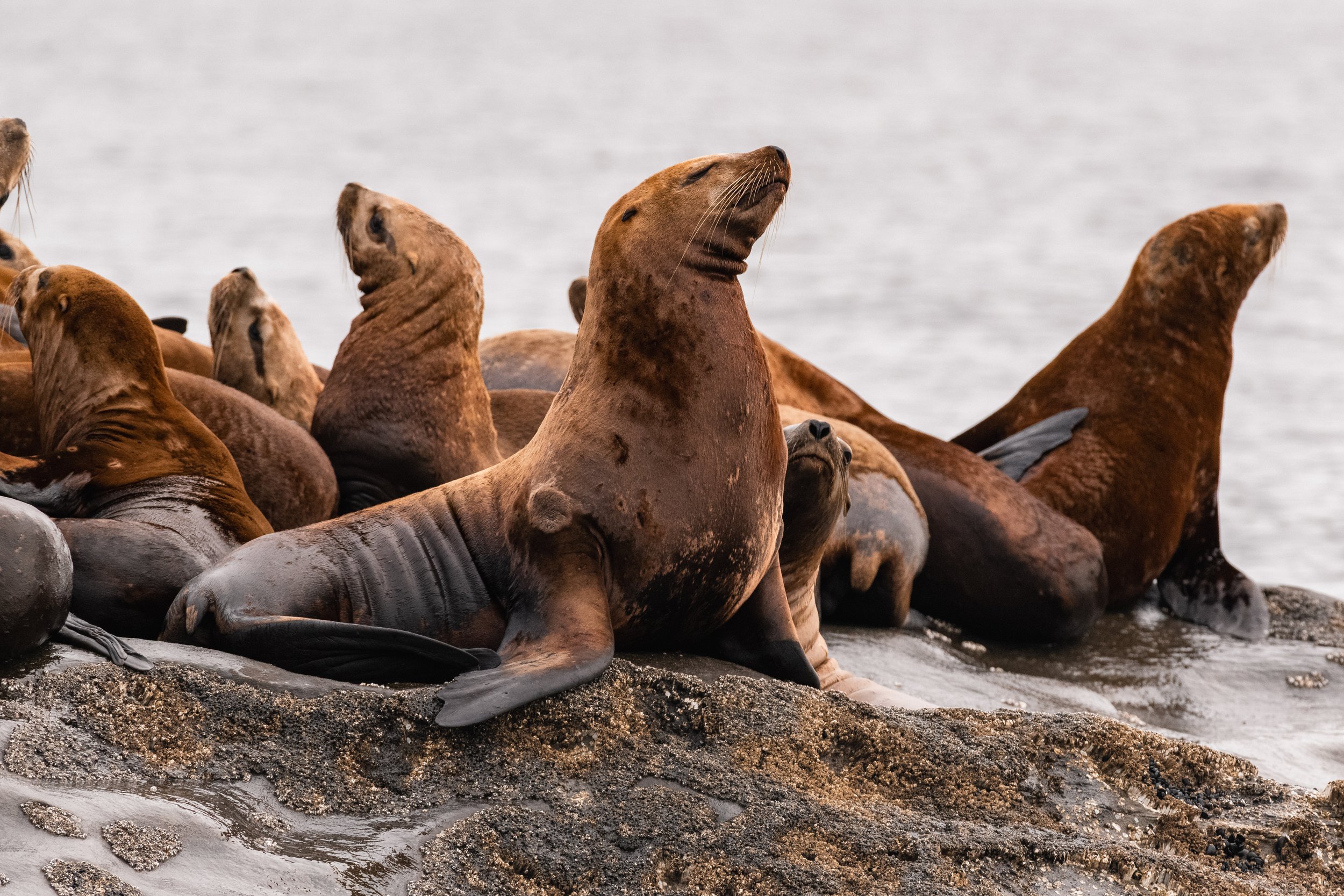
A Steller Sea Lion striking a pose as we watched. Photo by Hayleigh Hilbert.
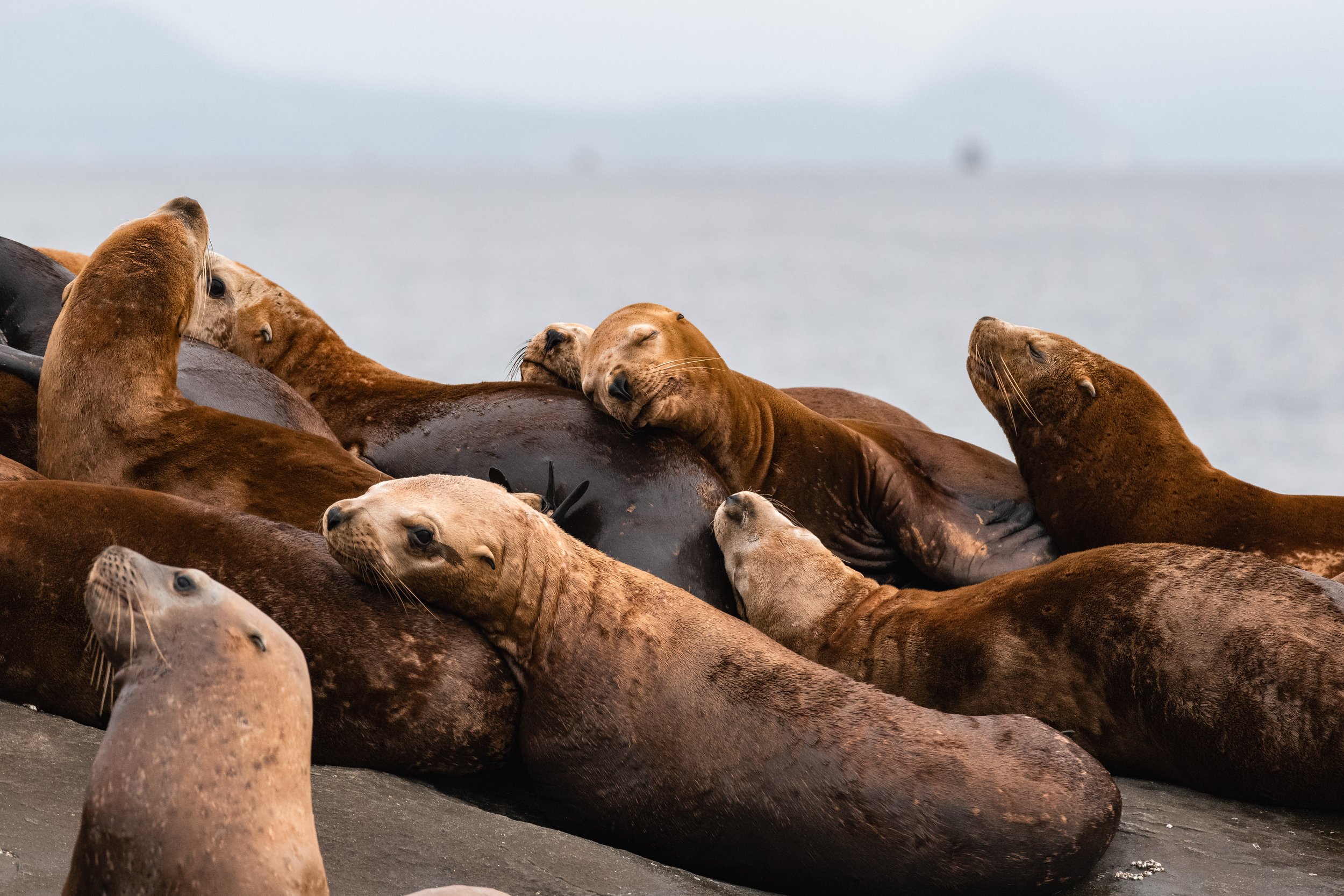
Nap time for the sea lions. Photo by Hayleigh Hilbert.
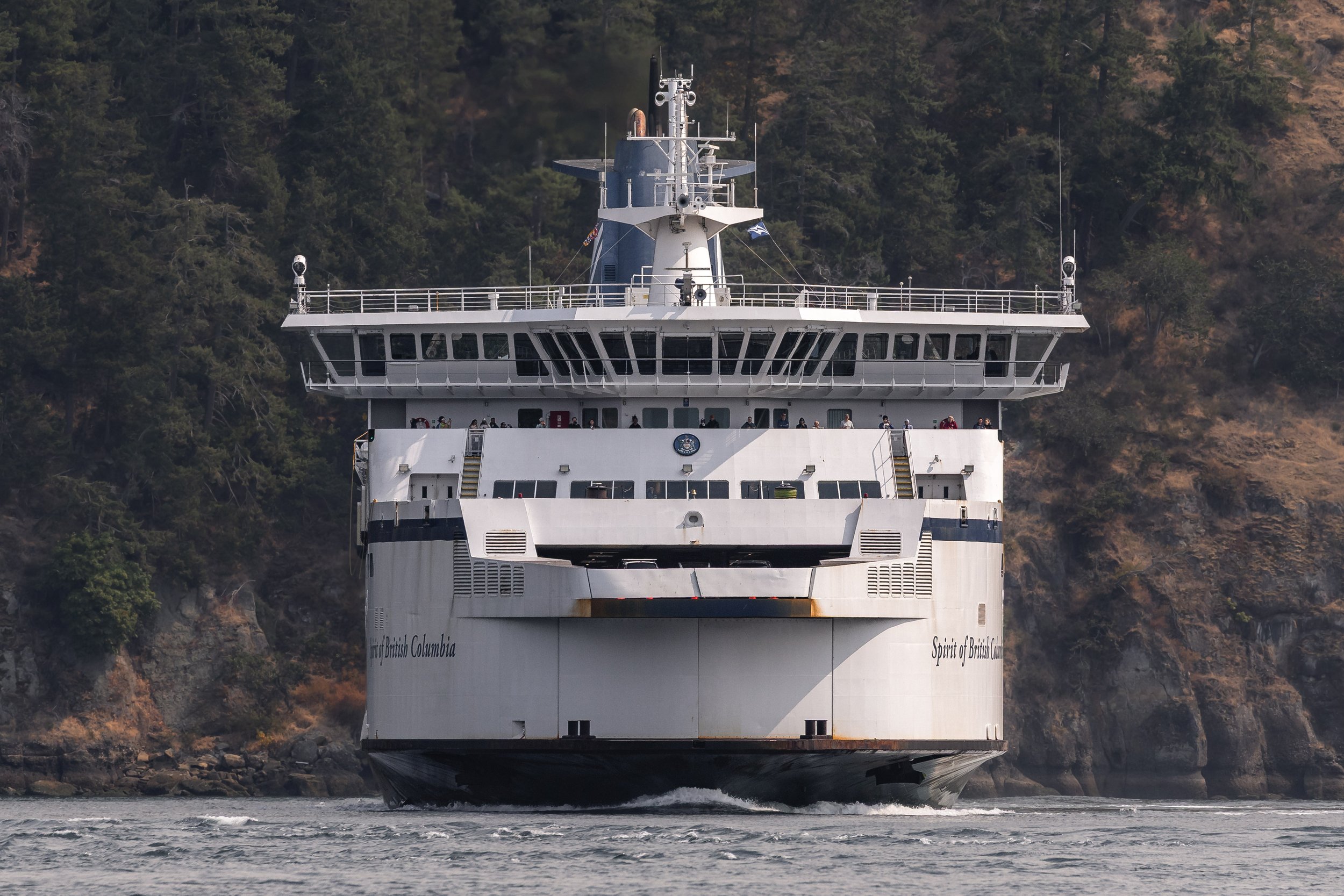
The Spirit of British Columbia, head on. Photo by Jordan Robinson.