
August 18, 2026, 10:30 AM - Lunchtime with the T060 brothers, plus 7 humpbacks too
With all three boats heading out, we spread across the Strait of Georgia to extend our search area. It did not take long for wildlife to start turning up, with two separate humpback encounters happening around the same time!
Cascadia was the first to find a pair of humpbacks travelling and associating together. Kula was nearby and decided to come over to join. One whale was regularly fluking, giving us some great identification photos, while the other was being a little more tail-shy. Fortunately, its distinctive dorsal fin made identification possible. The pair were Split Fluke (BCX1068) and Geometry (BCZ0338).
Both are familiar whales in our waters, having been repeatedly documented returning to the region over many summers. Humpbacks are known for their site fidelity, often returning to the same general feeding and breeding areas year after year. These repeat sightings are incredibly valuable, helping researchers and naturalists build a long-term record of individual whales and their movements.
Further south, Keta found another pair. A tiny calf was tucked closely alongside a much larger whale. These two were Tempest (BCX0837) and Tempest’s 2026 calf (BCX0837calf2026). The little calf was recently involved in an entanglement, so seeing it travelling normally with its mother and appearing to be in good health was especially encouraging.
Nearby, another pair was spotted, and Keta headed over to document them. These two were confirmed to be Zephyr (BCZ0414) and Crater/Mensa (BCX1565), another pair of familiar whales.
With so many humpbacks spread throughout the area, and each documented returning seasonally, this is a great example of how productive the Strait of Georgia can be during our summer months!
Kula soon headed off to continue searching, while Cascadia made its way over to Keta for a look at Tempest and her calf. Kula didn’t have to look too long, though, and soon, they made another exciting discovery - a pair of orca had been spotted.
These two killer whales were travelling close together. Both had tall, straight dorsal fins, with one showing two distinctive notches. A few photographs confirmed they were the T060 brothers:
T060D Onca ♂ (2004)
T060E Lynx ♂ (2008)
We have seen these two in our area many times over the past few years, often travelling together with no other orca around. During this encounter, they were simply moving steadily through the water at first, but then their behaviour suddenly changed. They picked up speed and began actively hunting ahead of us.
Most orca hunts happen beneath the surface, meaning we rarely know exactly what they are pursuing. This time, however, we got a very clear answer.
After several quick movements through the area, T060D Onca spyhopped, and we could see a piece of Harbour Porpoise in his jaws.
While witnessing predation can be difficult, it is important to remember that hunting is a natural and necessary part of the ecosystem. These orcas need to eat to survive, just like every other animal in the Salish Sea.
After their meal, the brothers continued travelling, and we started making our way away. However, shortly after our departure, Kula was with whales once more.
Kula soon found Geometry and Split Fluke again and stopped briefly to collect a few more identification photos. Only minutes later, they found another solo humpback a bit further away. This individual was identified as Windy (BCY0893). It was a quick encounter, but enough time to gather the data we needed to confirm his ID.
Of course, whales were not the only wildlife we stopped for, though. Nestled high up on the rocks, out of the frigid waters, we spotted Harbour Seals and Steller Sea Lions enjoying the warm sunny day. Many birds were also taking advantage of the weather, with Cormorants standing with wings spread and Black Oystercatchers preening away. The area was bustling with animal activity, and it was a great sign of how healthy the area is. Seeing such a variety of animals using the same ecosystem is always a wonderful reminder of how interconnected the Salish Sea is.
With plenty of wildlife documented throughout the trip, we finally turned toward home and headed back to Nanaimo, concluding the tour.
Photos taken by Marine Naturalists Hayleigh Hilbert, Jordan Robinson, and Aly Kohlman.
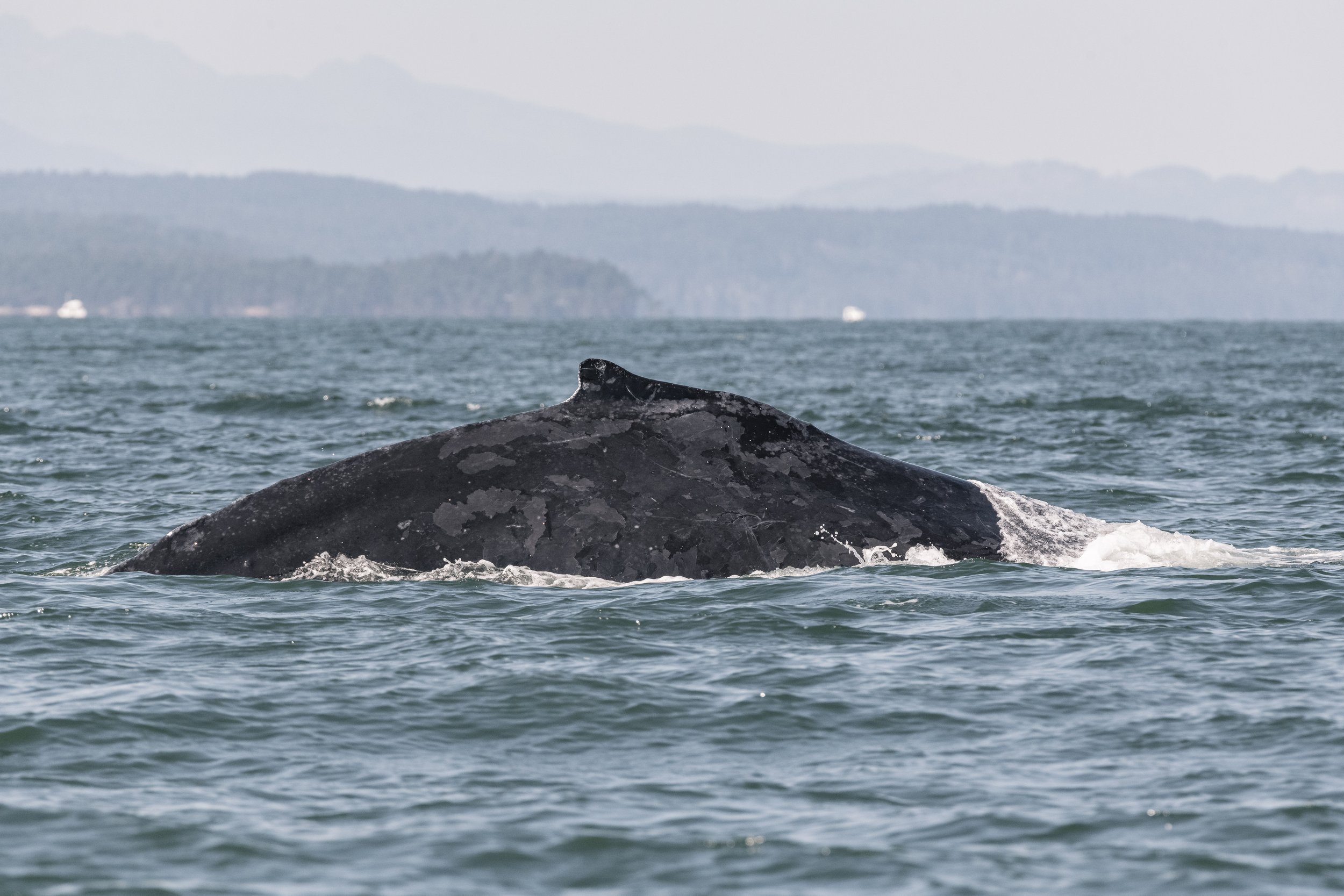
Split Fluke travelling. Photo by Hayleigh Hilbert.
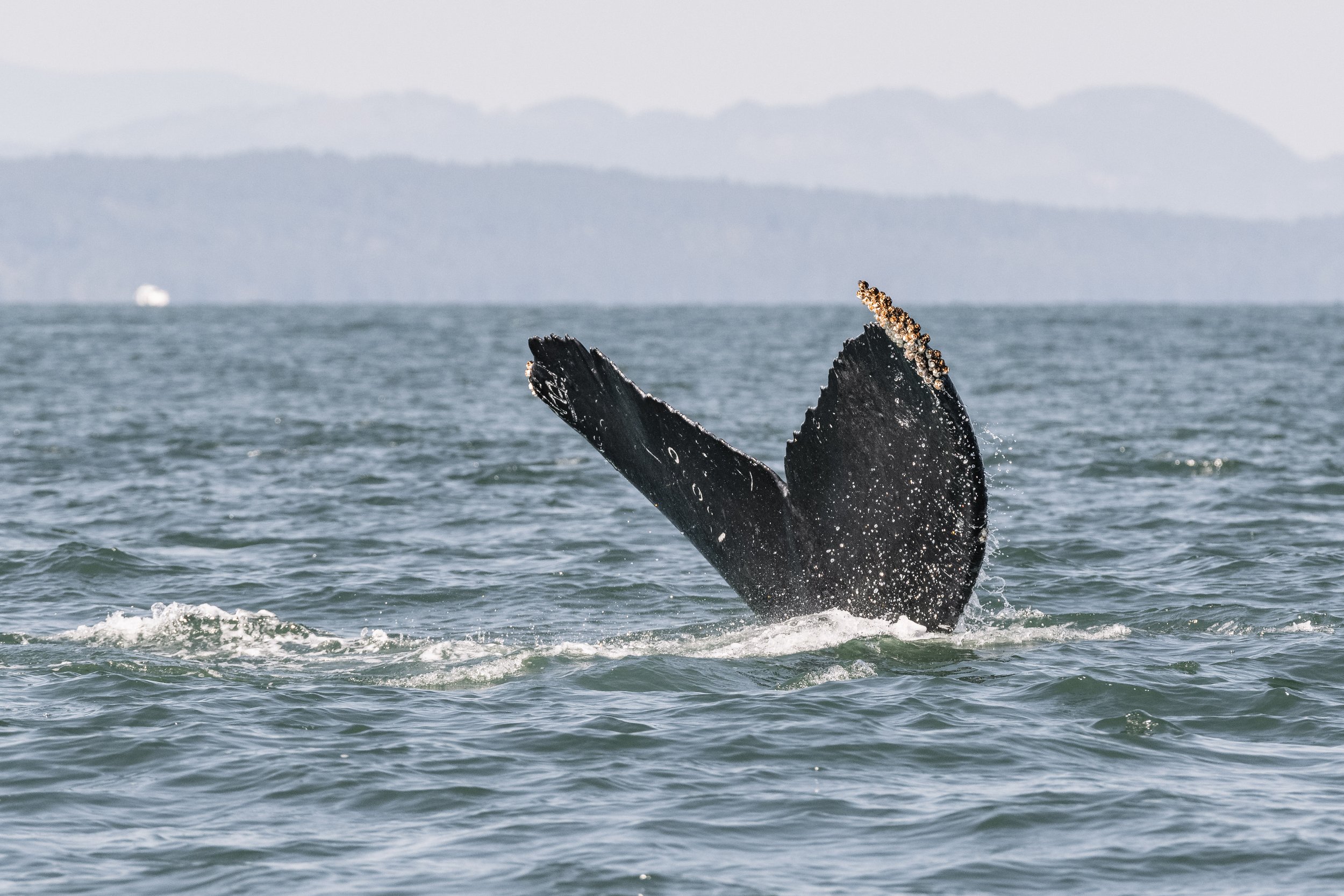
Going for a dive, Split Fluke raised her flukes clear of the water. Photo by Hayleigh Hilbert.
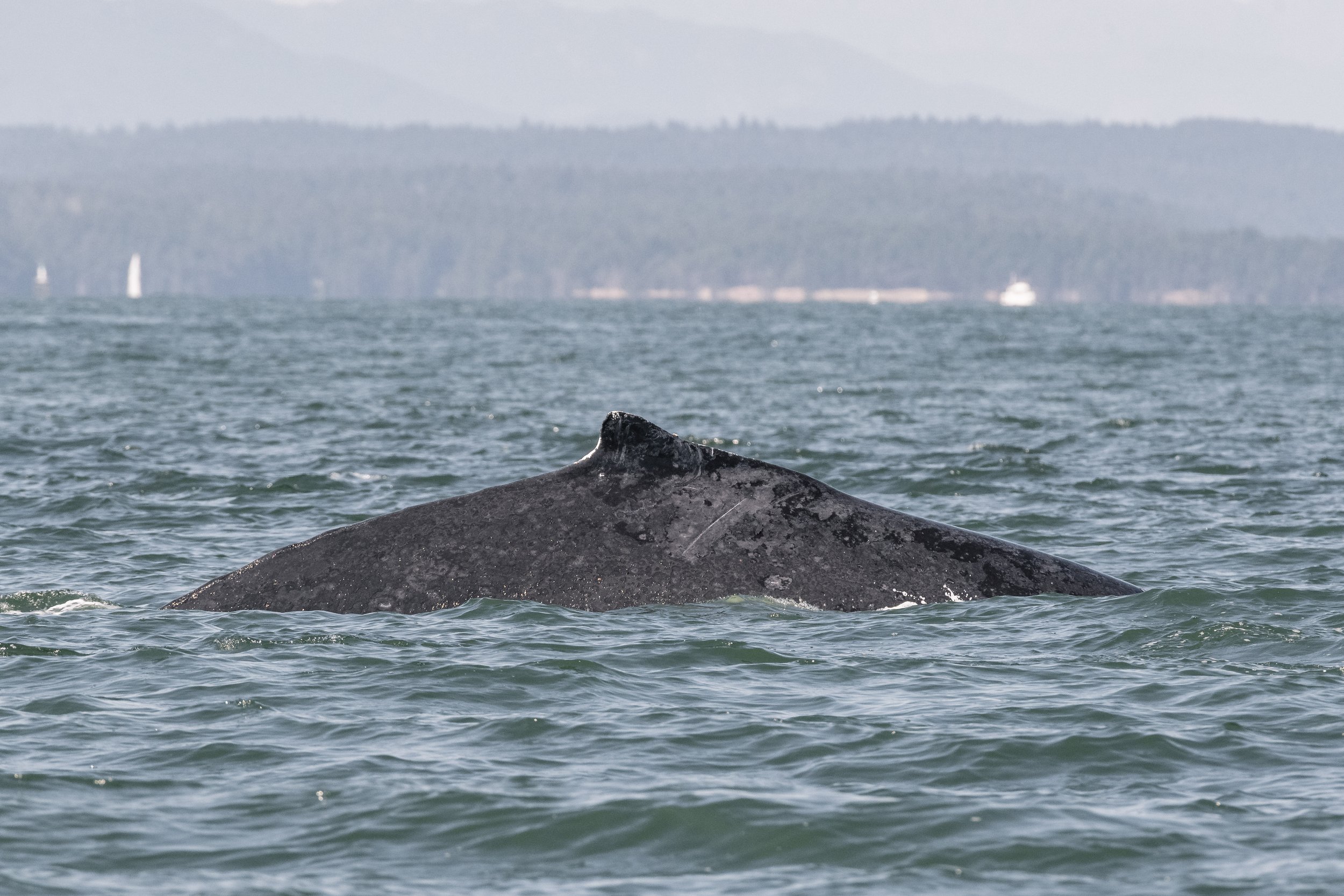
Geometry was being uncooperative and not raising his fluke today, but his unique dorsal fin helped confirm his ID. Photo by Hayleigh Hilbert.
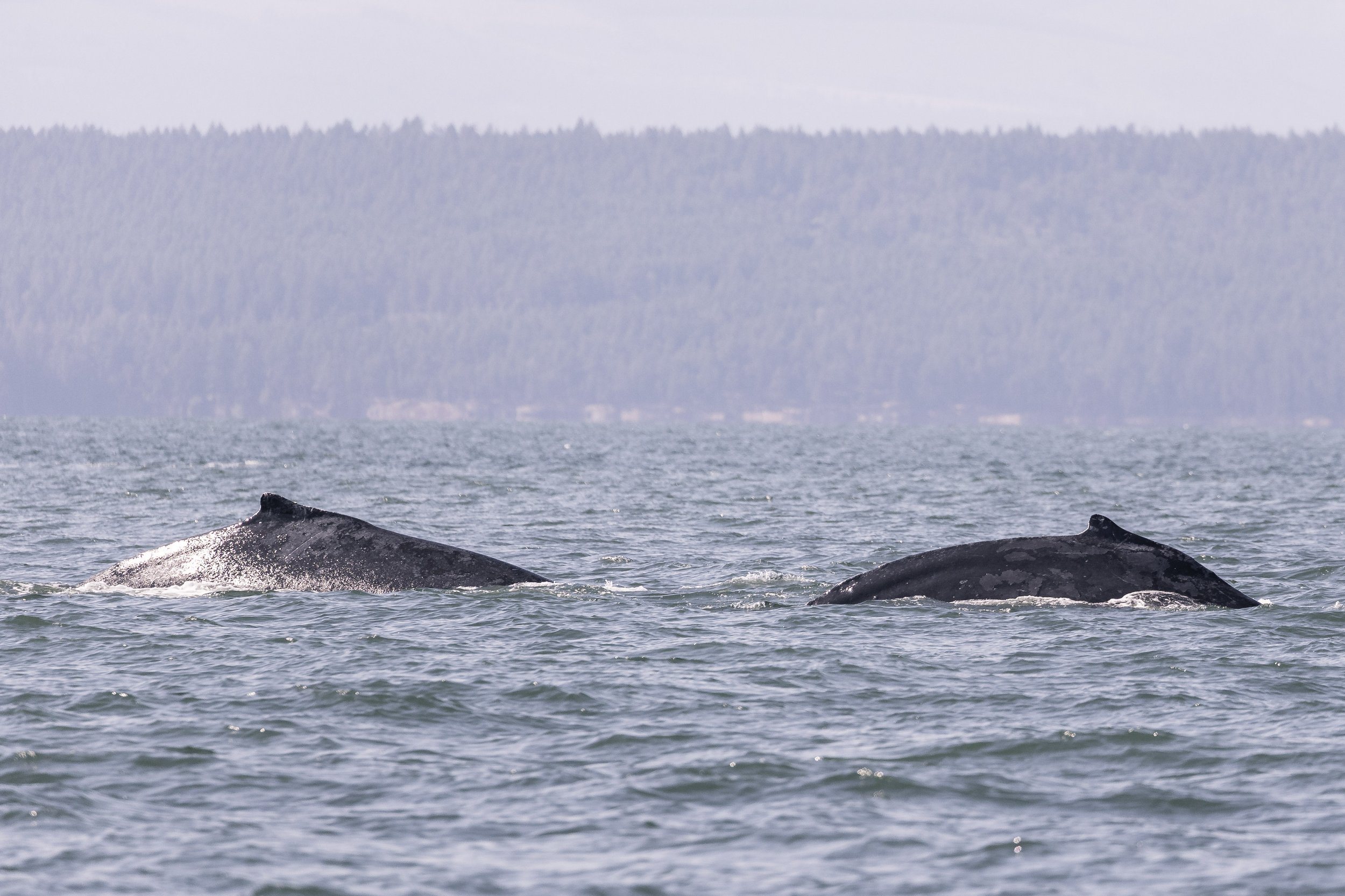
Geometry following behind Split Fluke. Photo by Jordan Robinson.
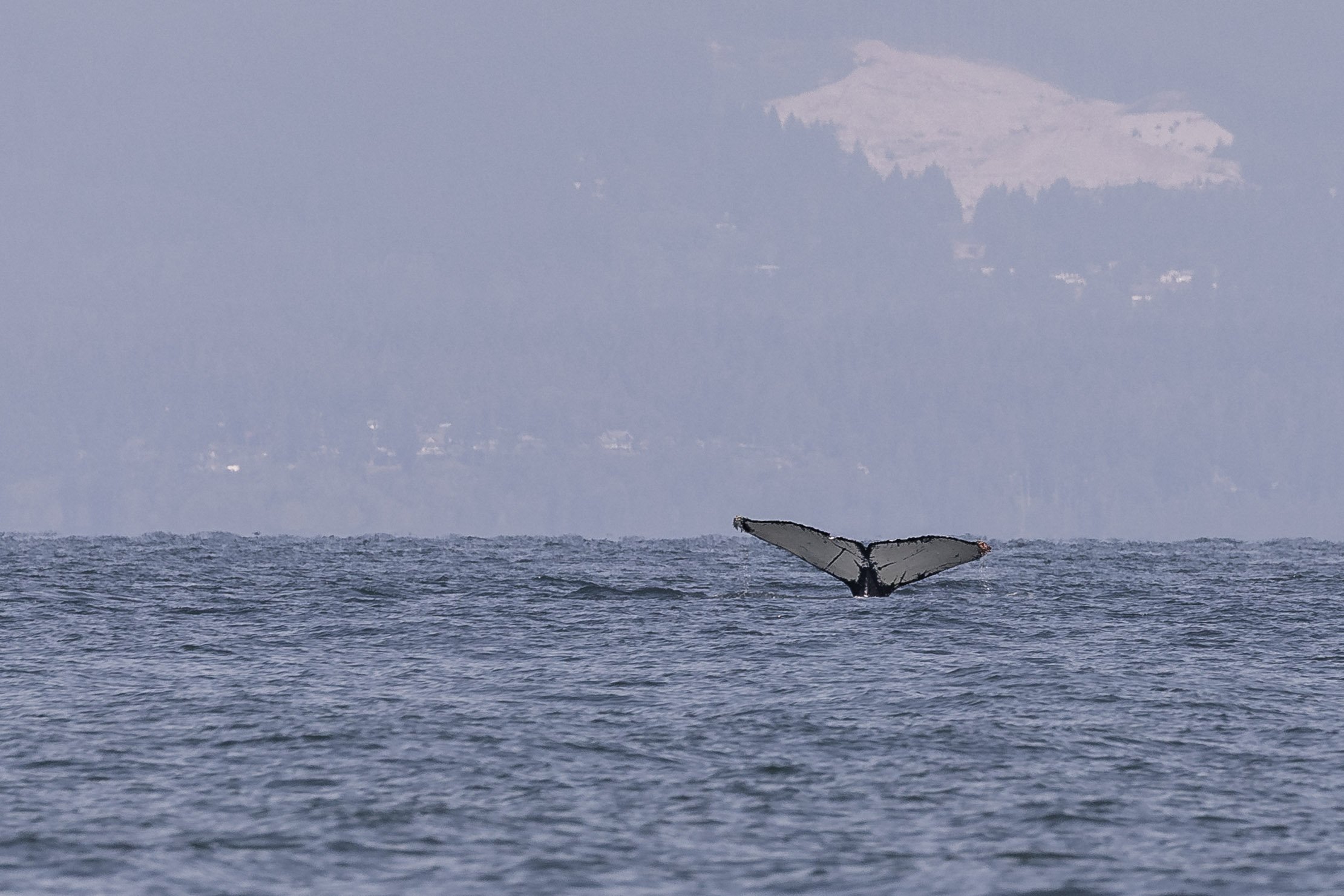
Finally, Geometry fluked - off in the distance! Photo by Jordan Robinson.
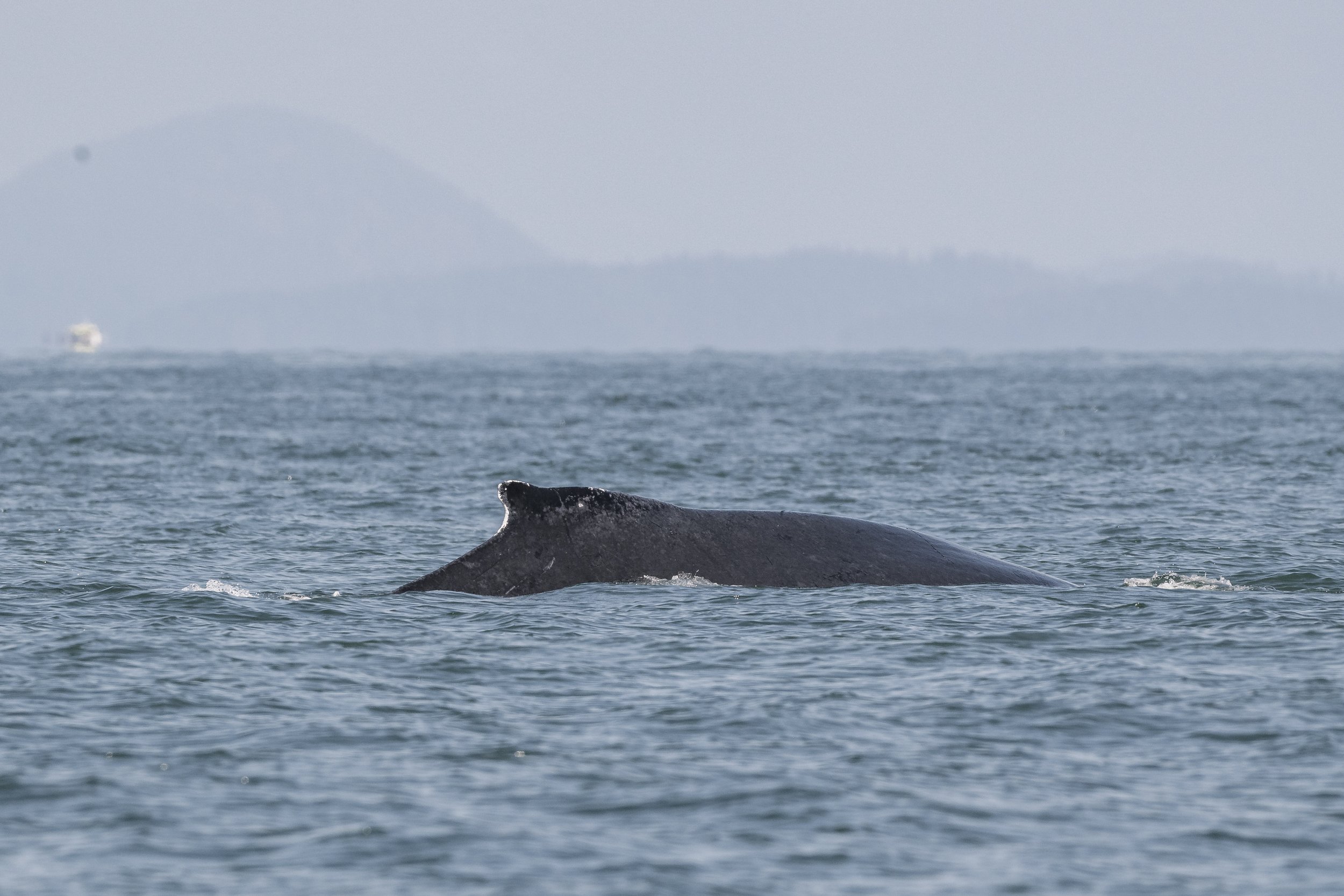
Tempest’s dorsal fin as she travels. Photo by Aly Kohlman.
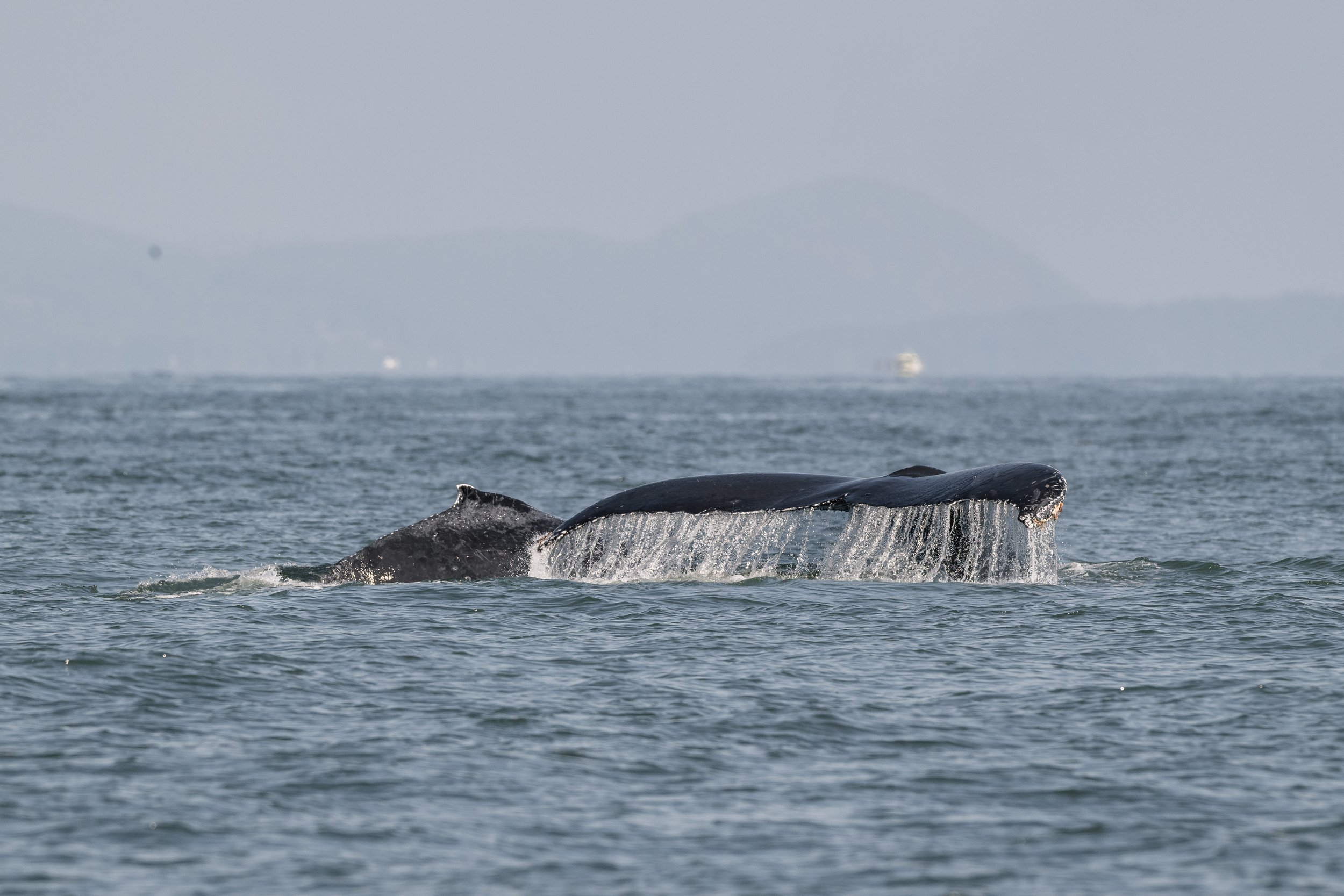
Tempest fluking, with her tiny calf beside her. Photo by Aly Kohlman.
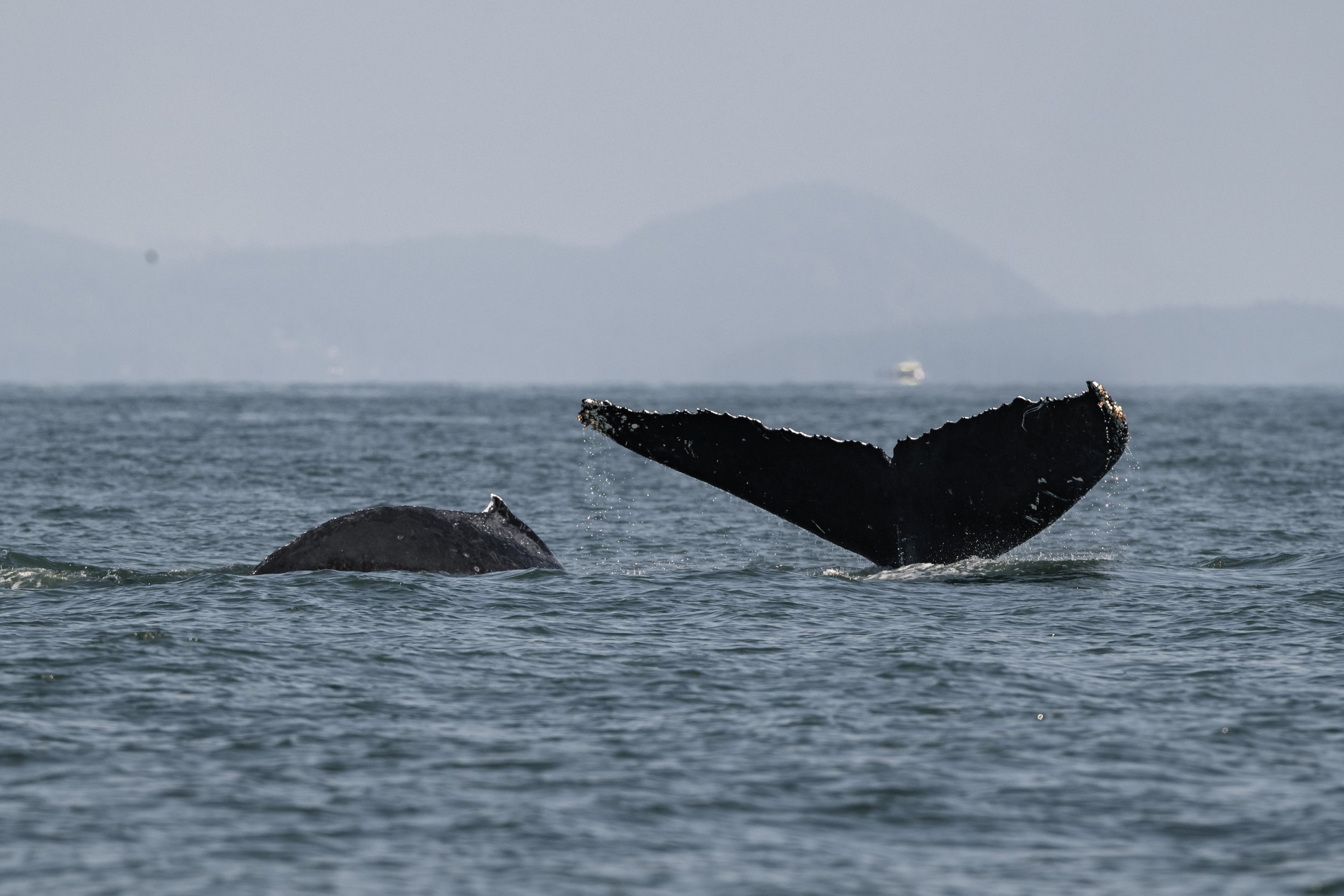
A full view of Tempest’s fluke, with her calf attempting to fluke as well. Photo by Aly Kohlman.
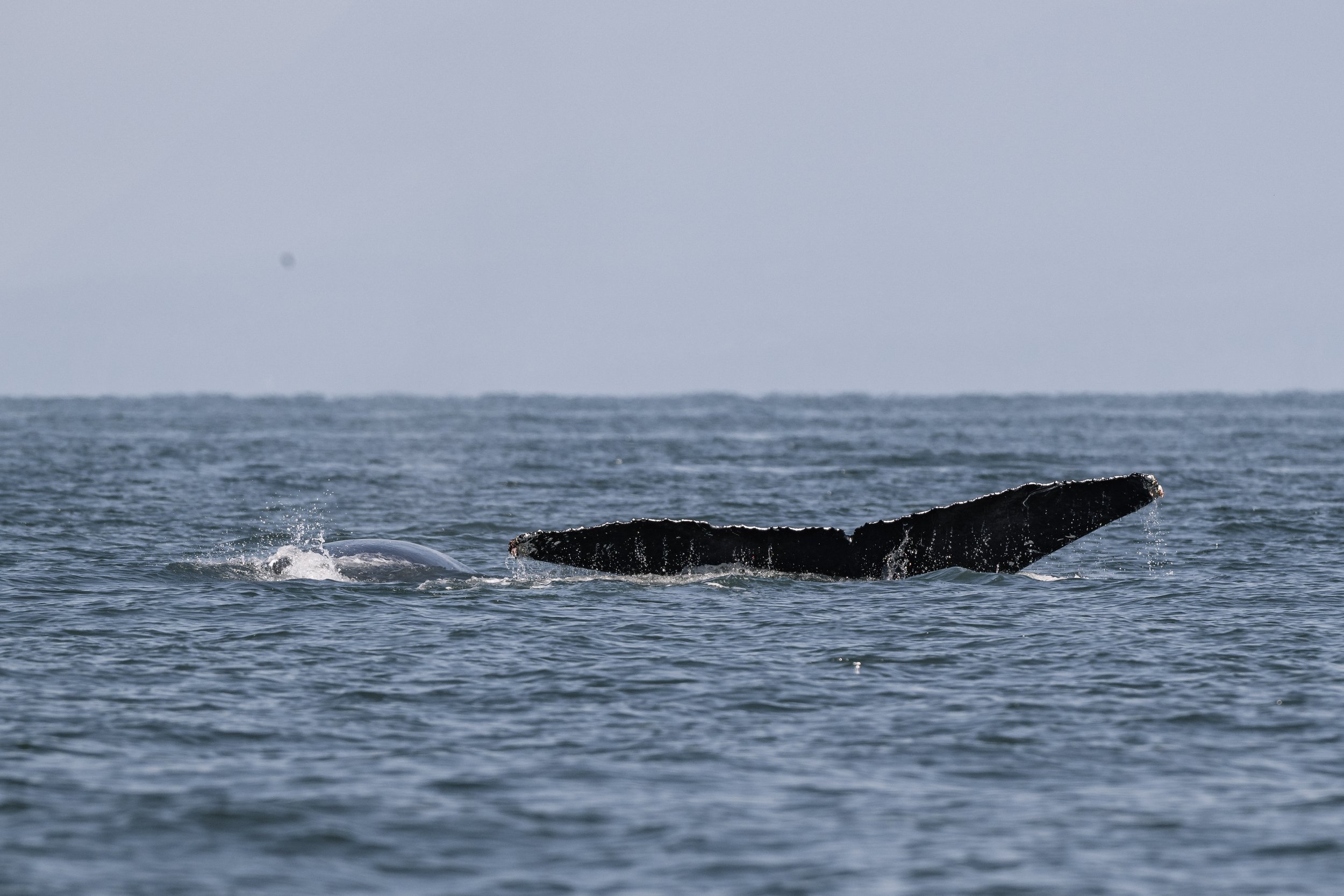
Going down! Photo by Aly Kohlman.
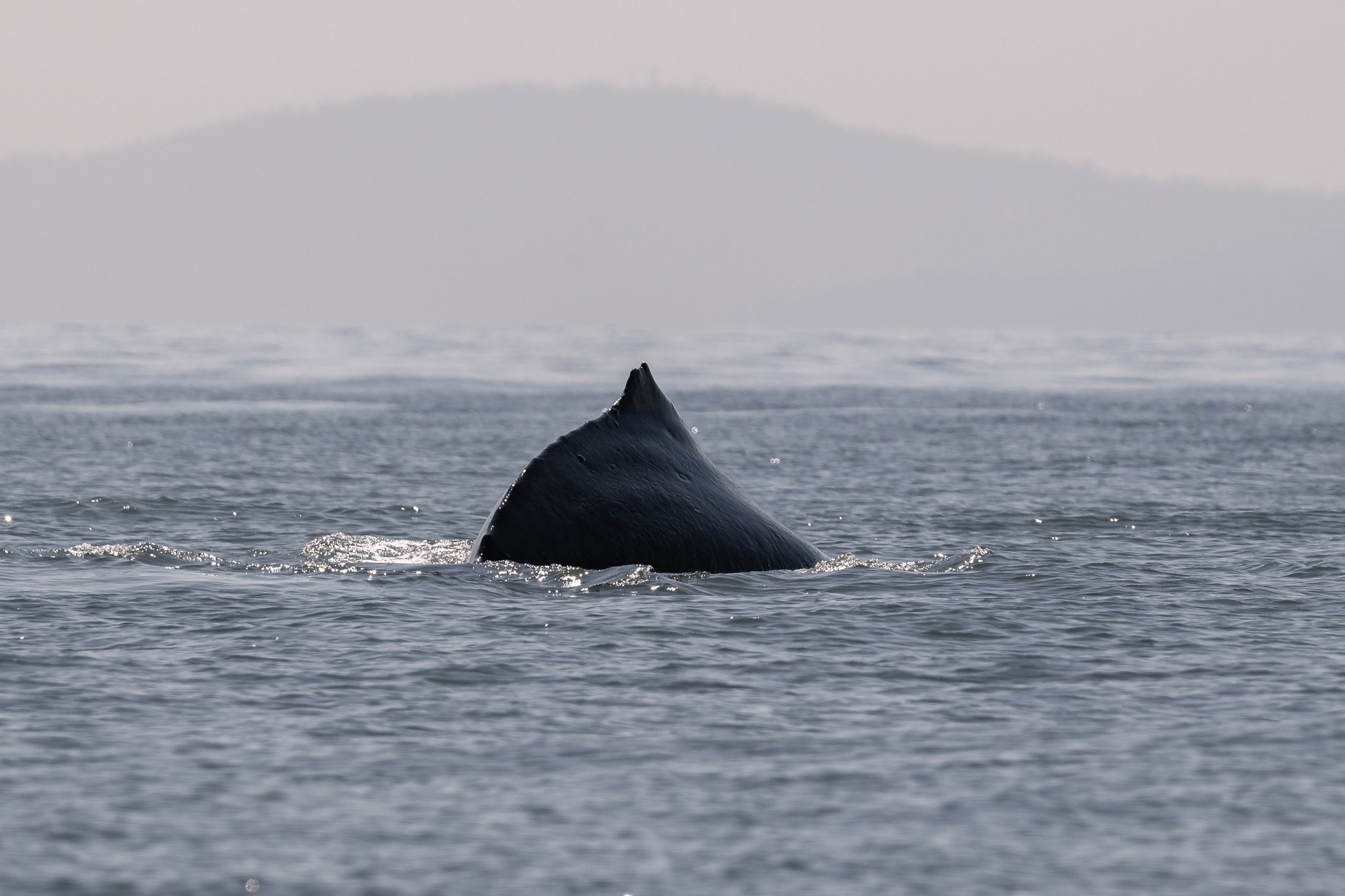
Crater arching for a dive. Photo by Aly Kohlman.
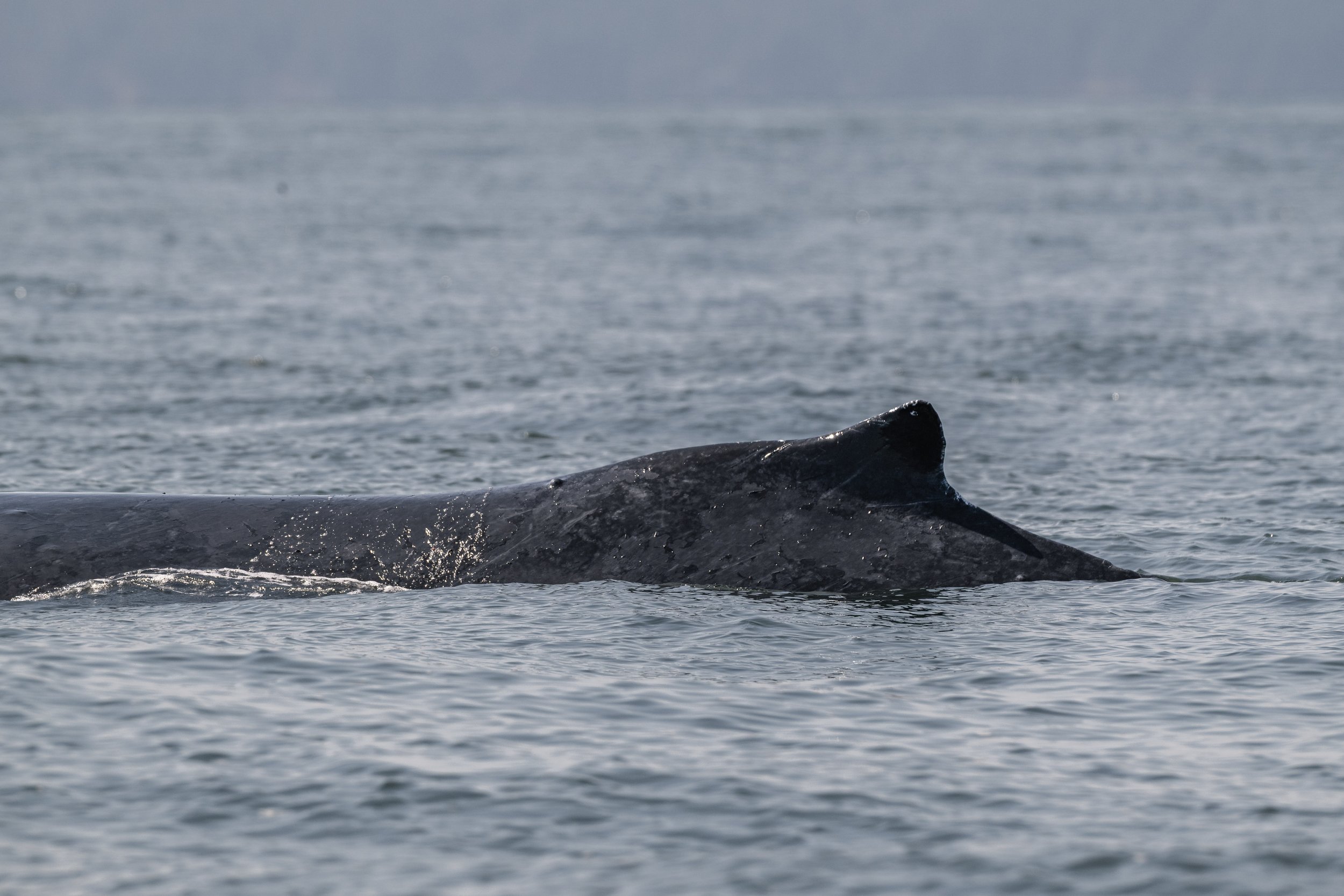
Zephyr’s uniquely lumpy and bumpy dorsal fin. Photo by Aly Kohlman.
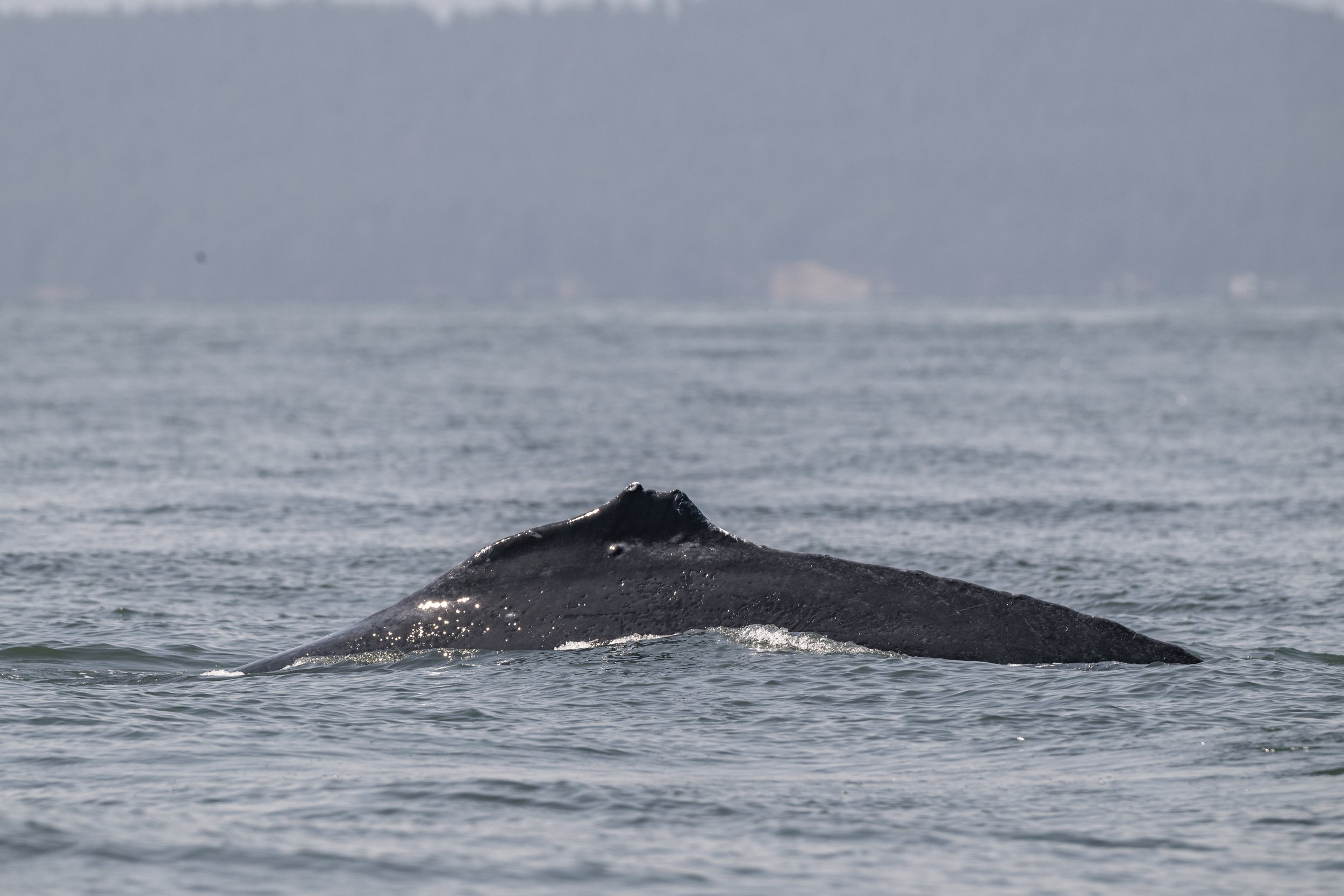
Can you see how Crater got their name? Photo by Aly Kohlman.
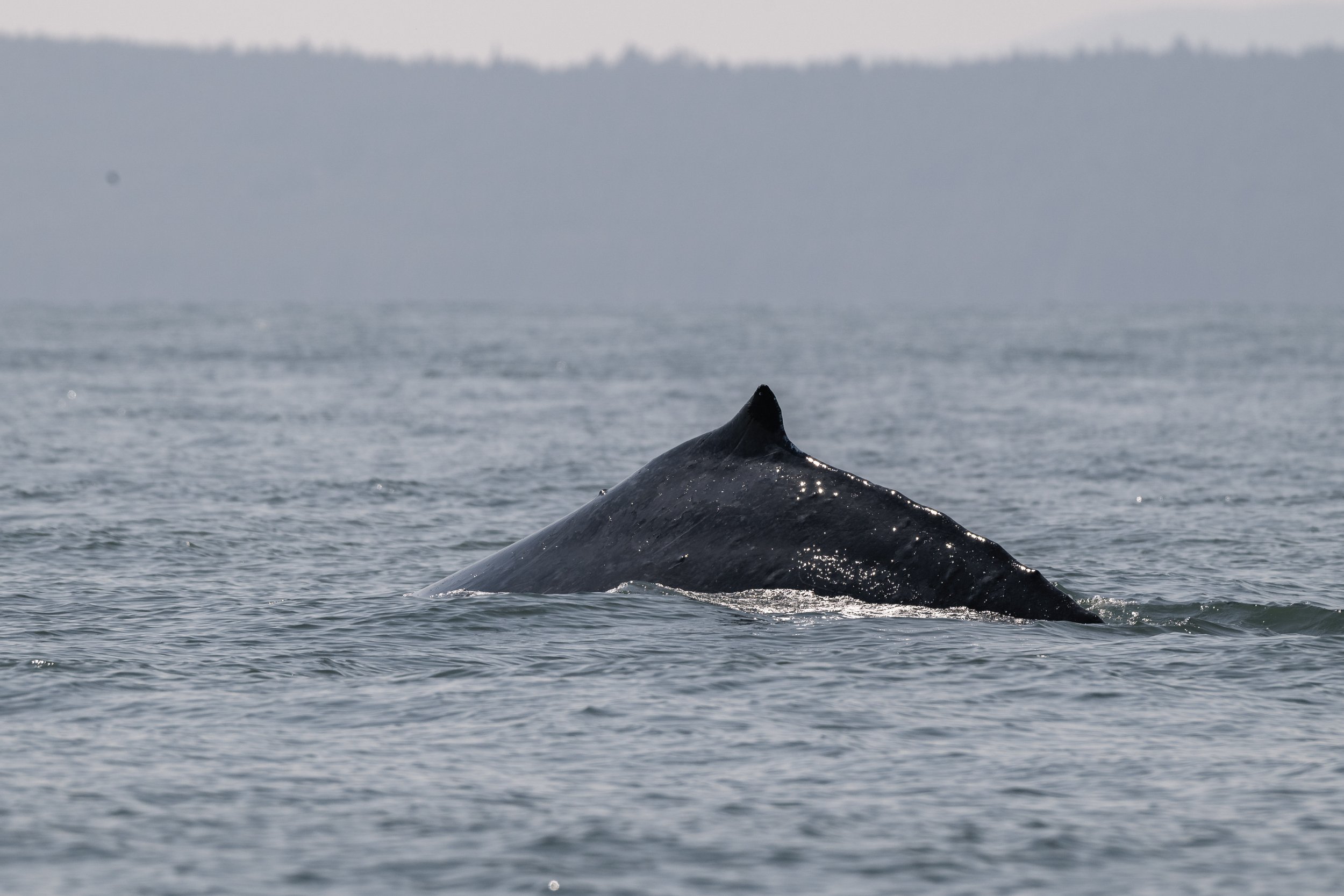
Zephyr’s back as she prepares to go under. Photo by Aly Kohlman.
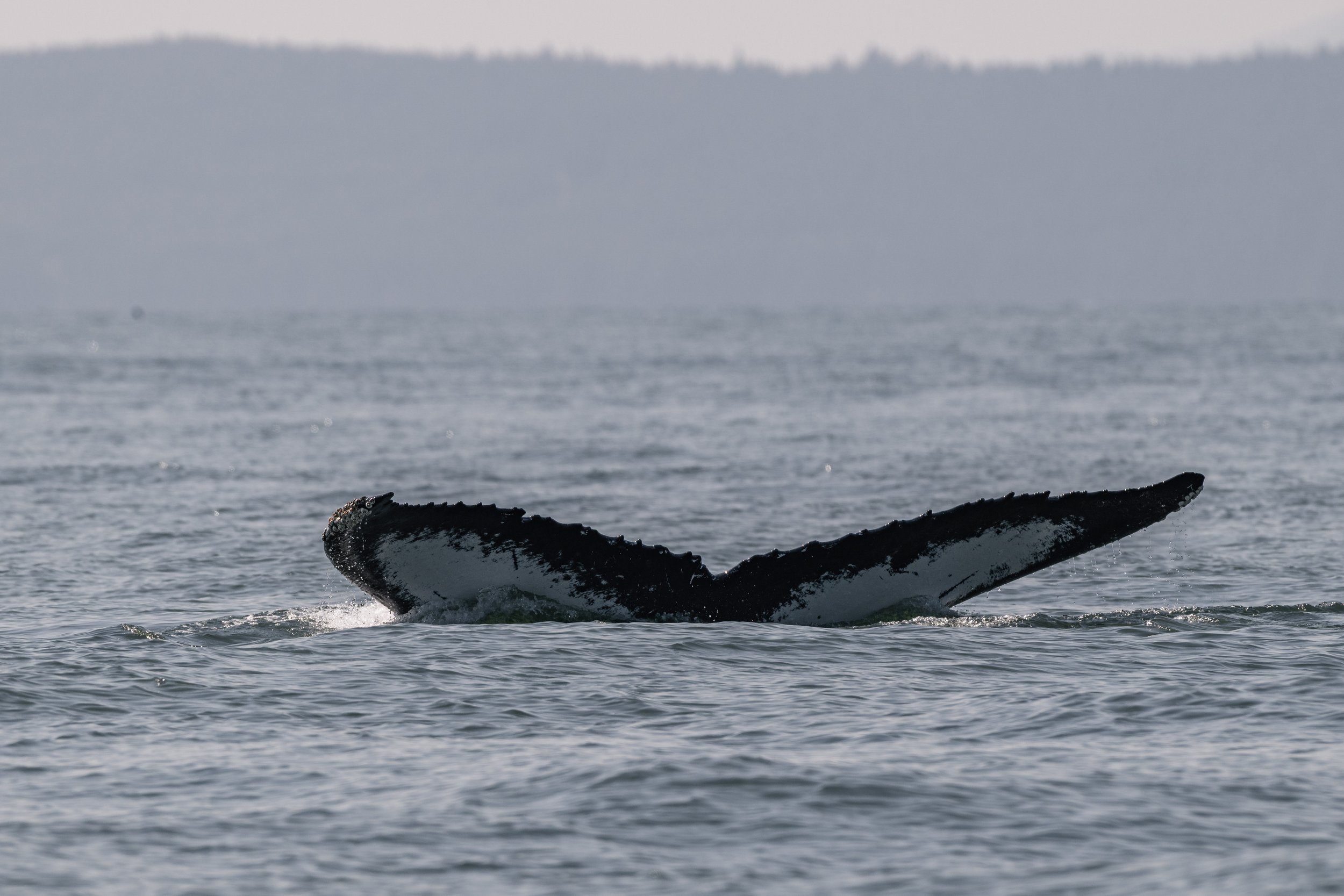
A peek at Zephyr’s fluke. Photo by Aly Kohlman.
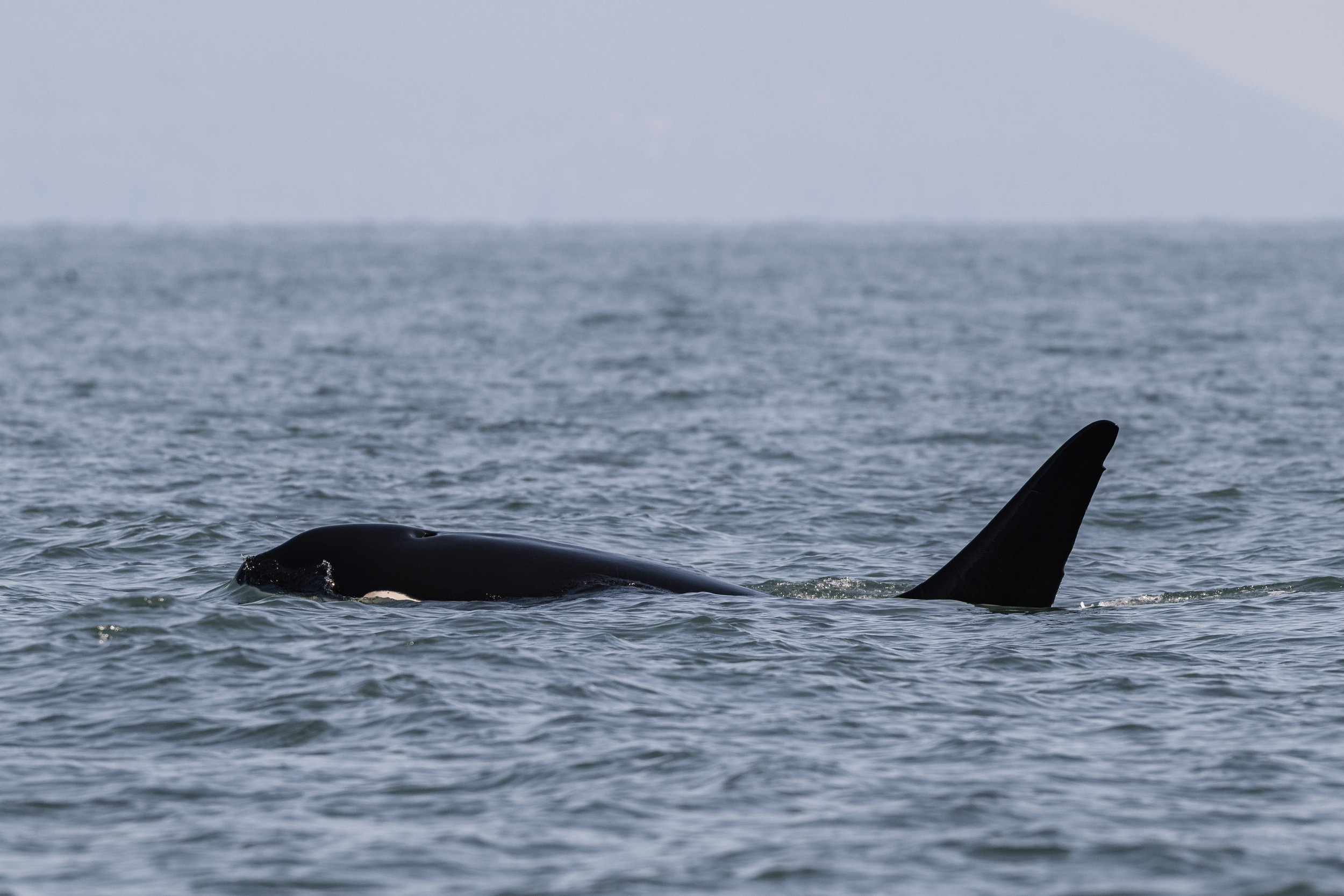
T060E Lynx with his face poking out of the water. Photo by Aly Kohlman.
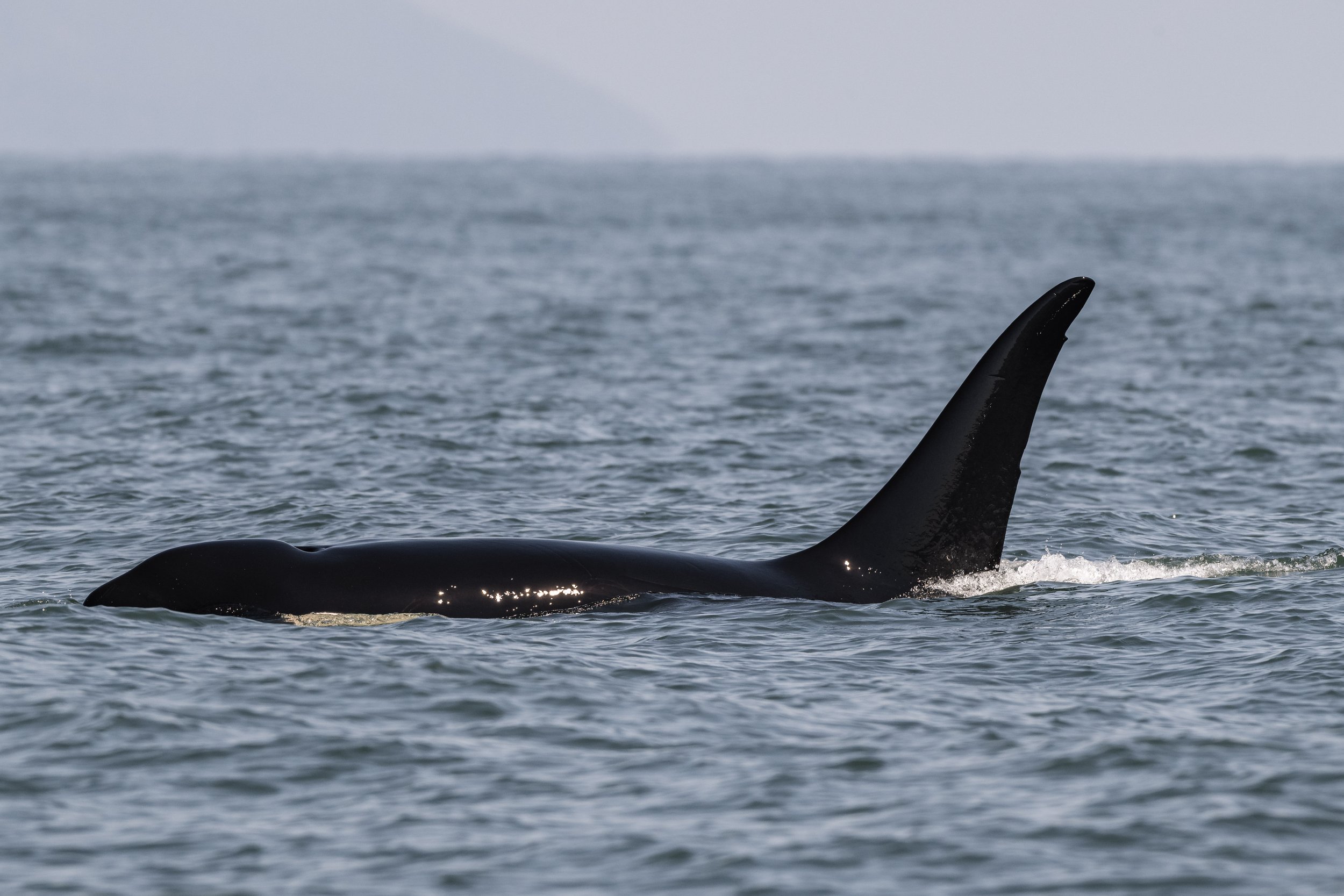
Can you see how T060E Lynx got his nickname? Photo by Aly Kohlman.
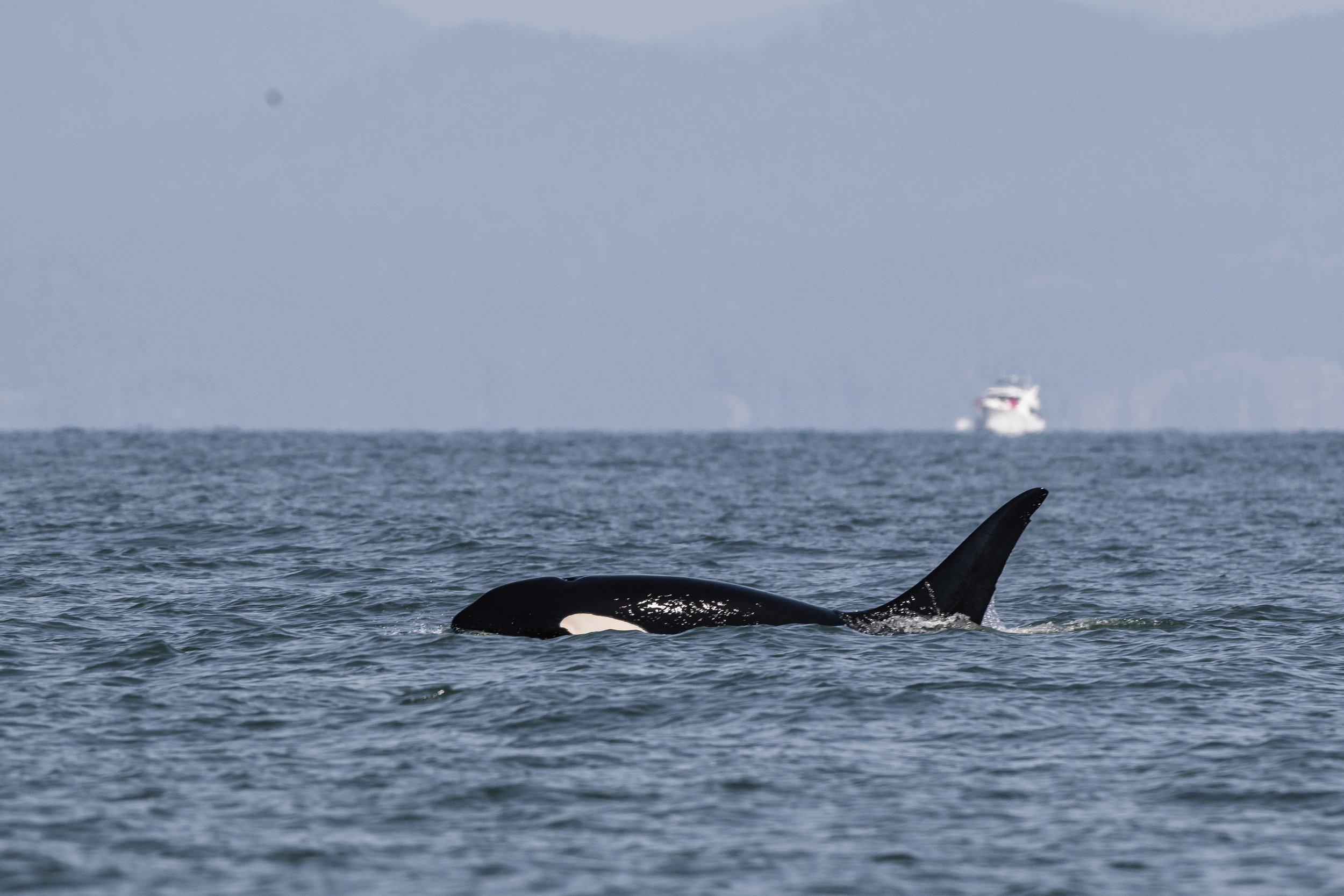
A peek at T060E Lynx’s eyepatch. Photo by Aly Kohlman.
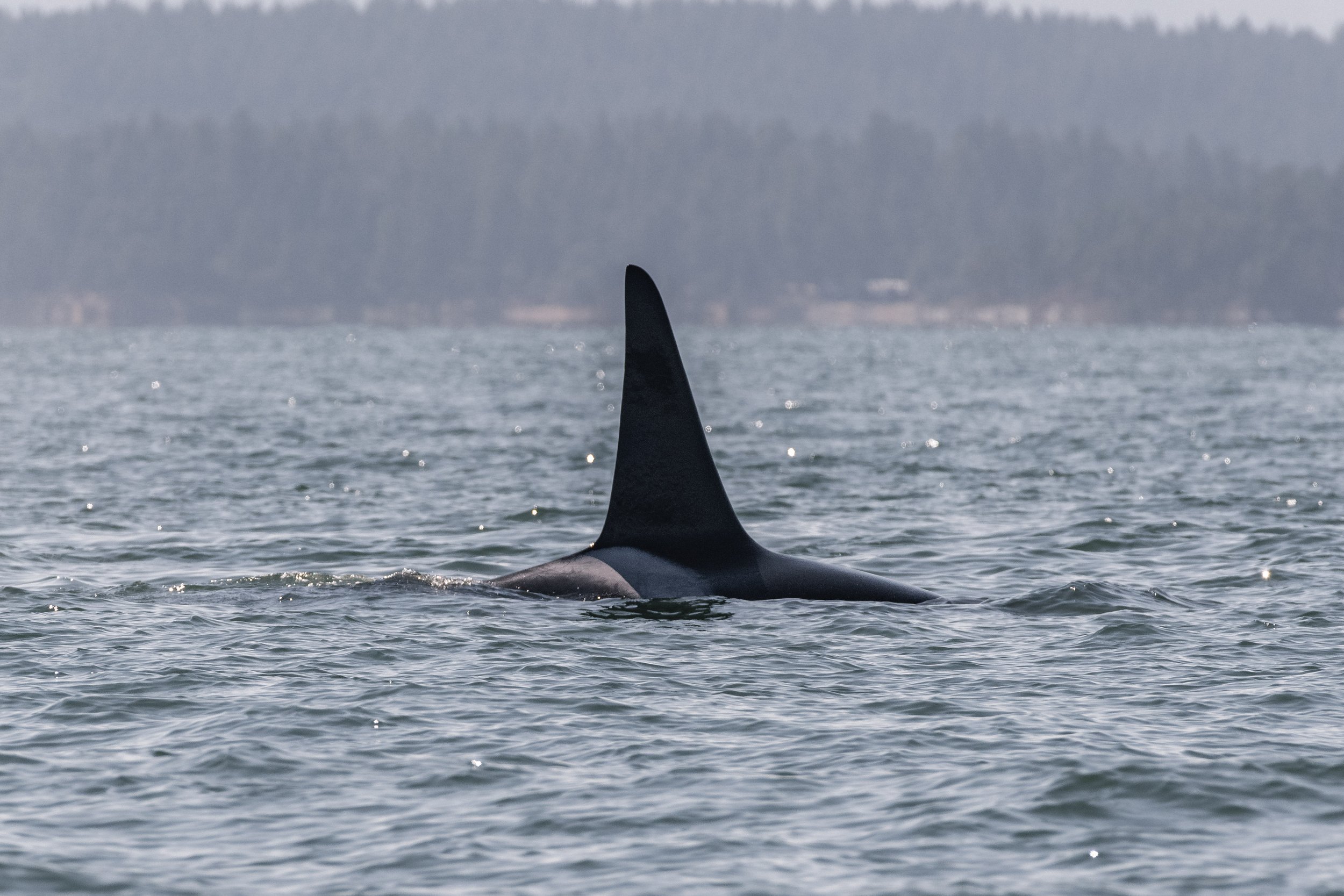
T060D Onca has a much simpler fin. Photo by Hayleigh Hilbert.
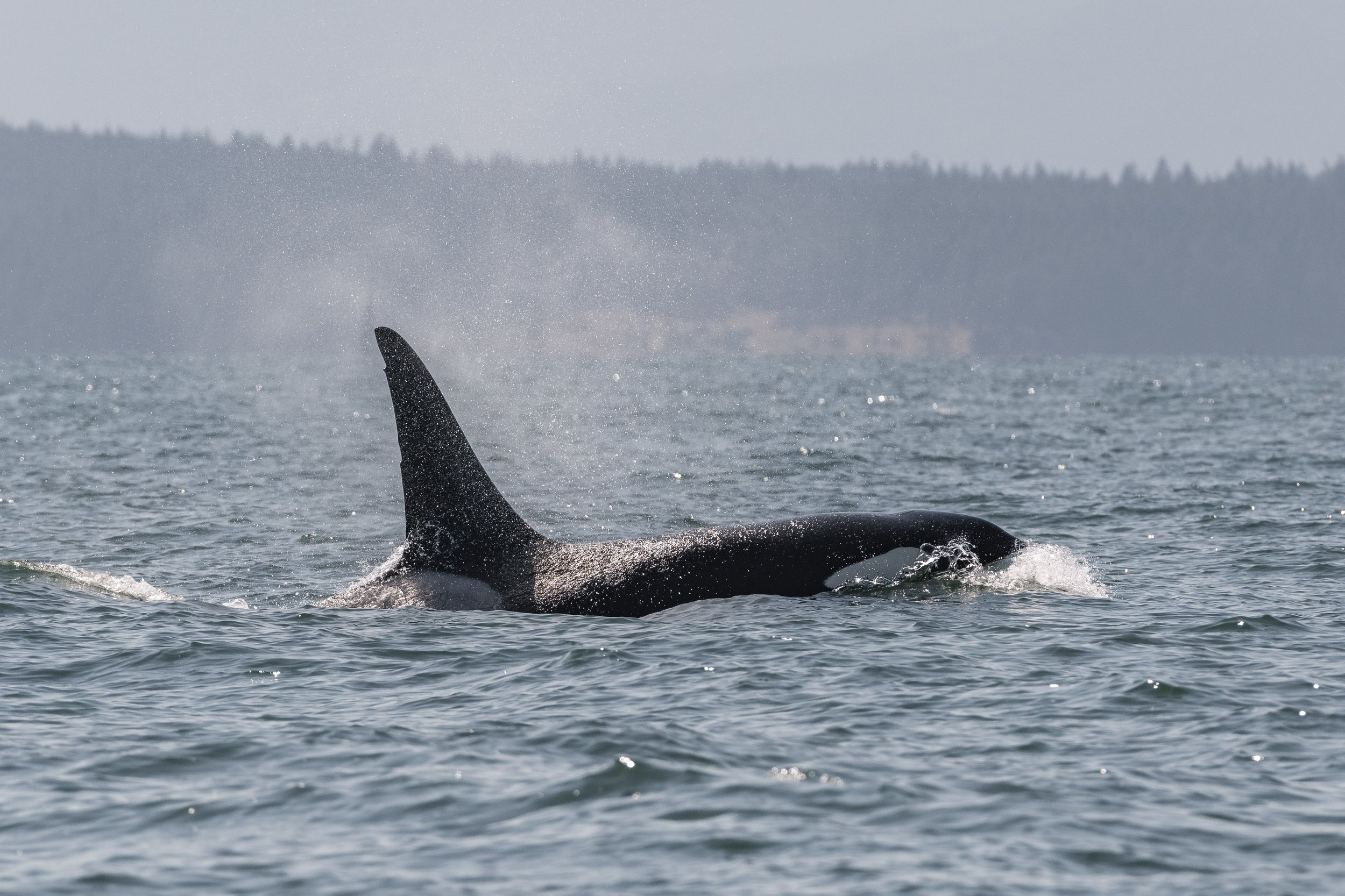
T060E Lynx racing through the surf. Photo by Hayleigh Hilbert.
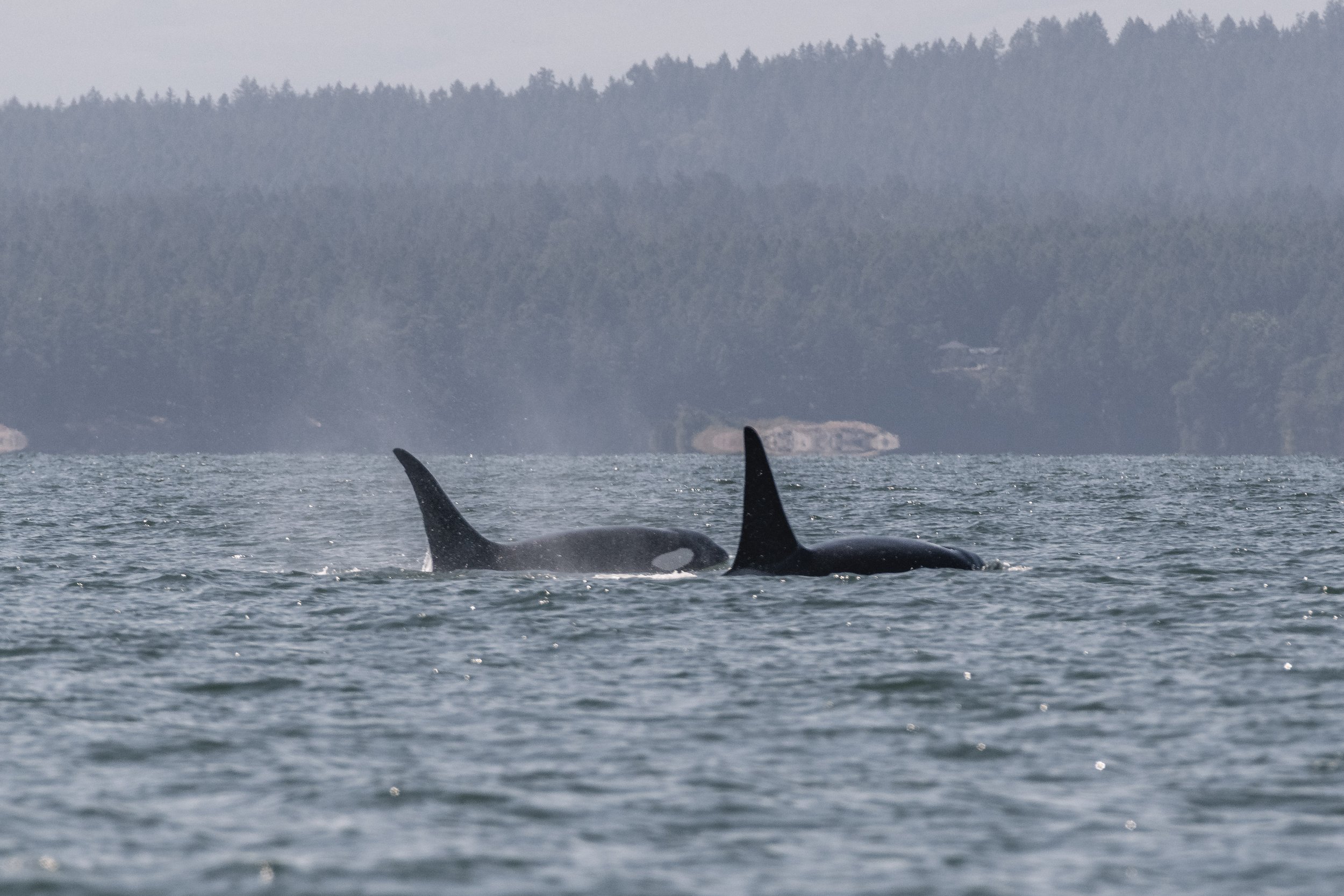
The brothers, T060E Lynx and T060D Onca, side by side. Photo by Hayleigh Hilbert.
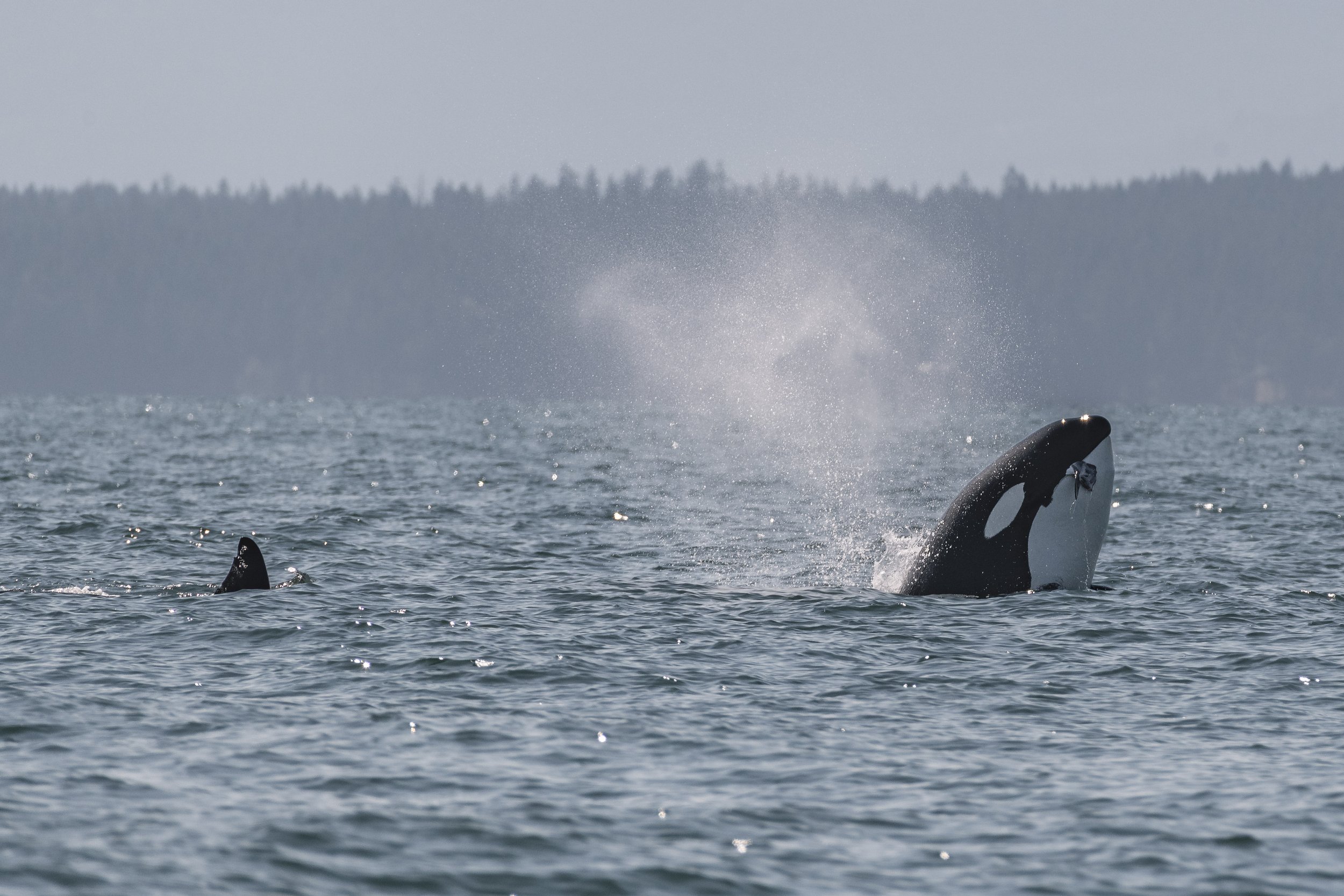
The hunt was a success! Photo by Hayleigh Hilbert.
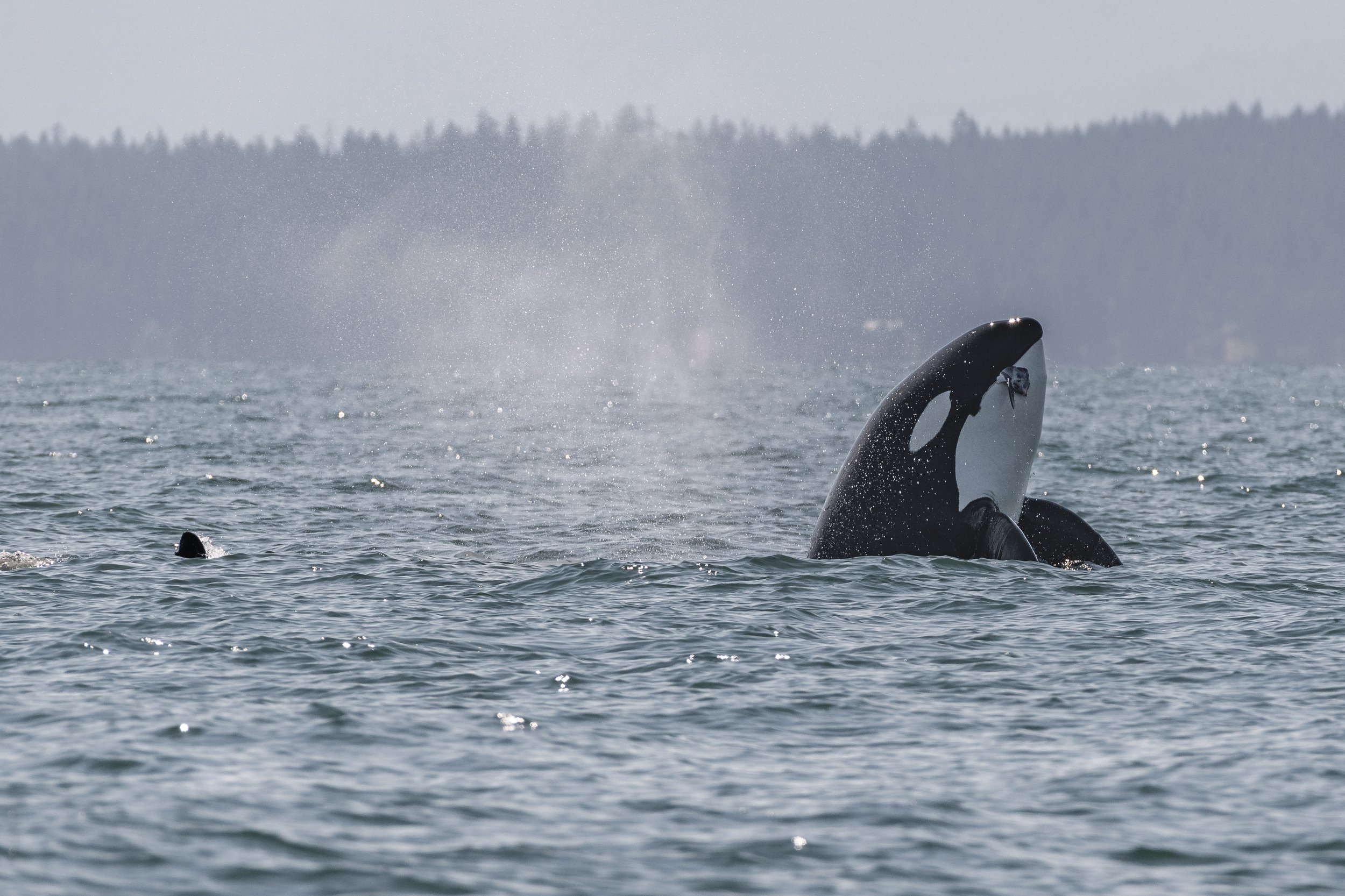
T060D Onca spyhopping with a chunk of his lunch in his mouth - a Harbour Porpoise. Photo by Hayleigh Hilbert.
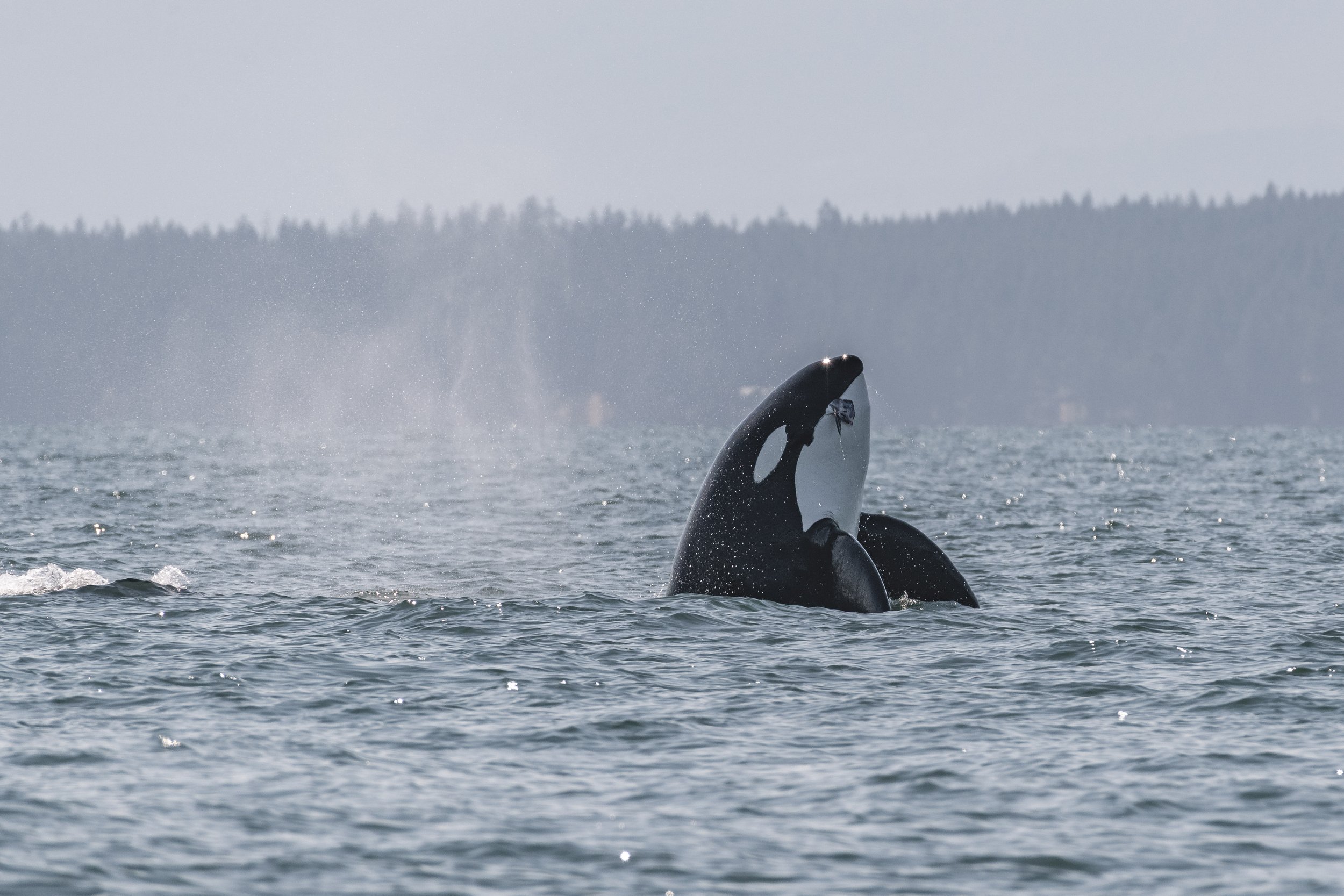
Look at the size of those pectoral fins! Photo by Hayleigh Hilbert.
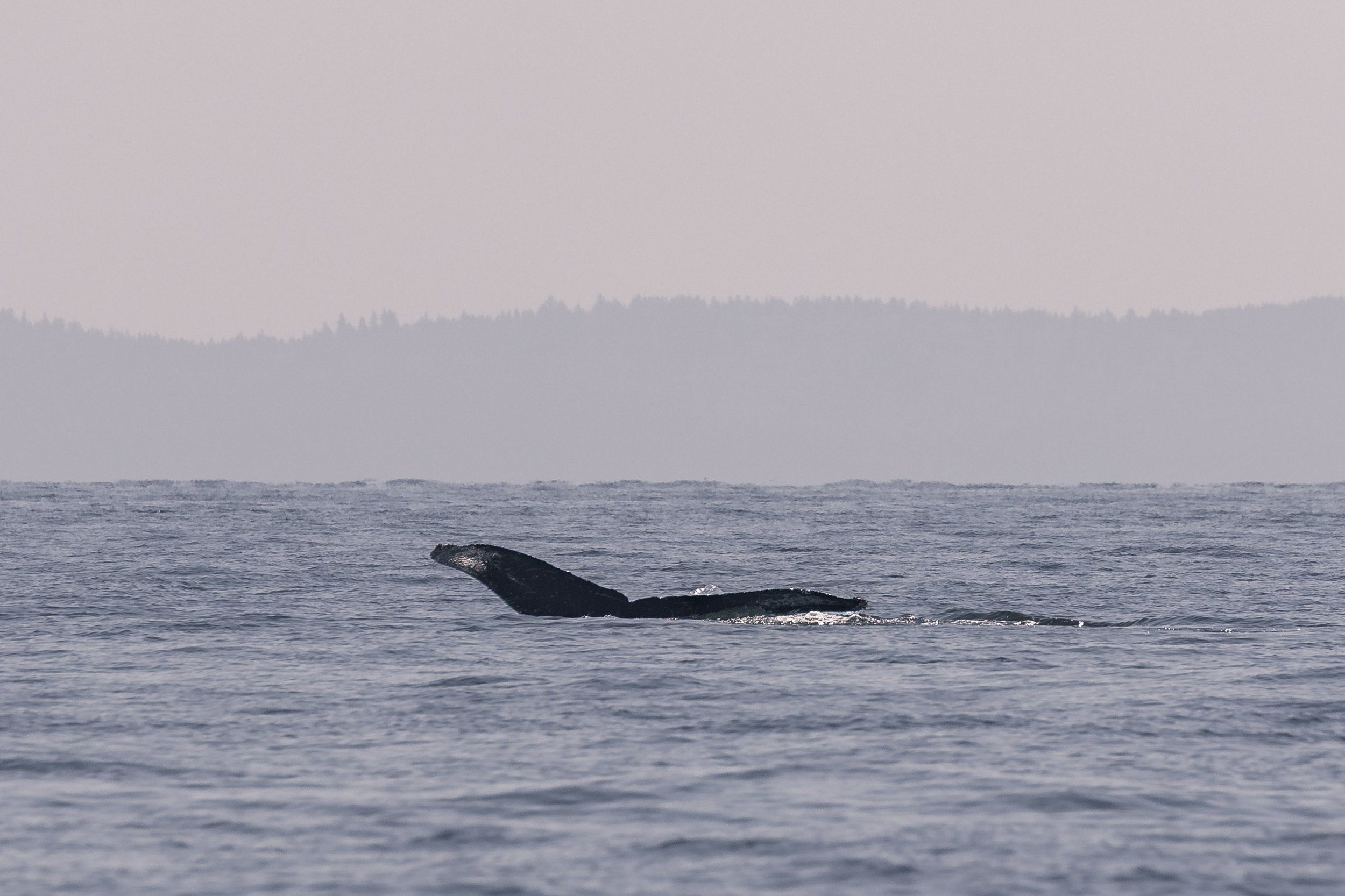
A brief peek at Windy. Photo by Jordan Robinson.
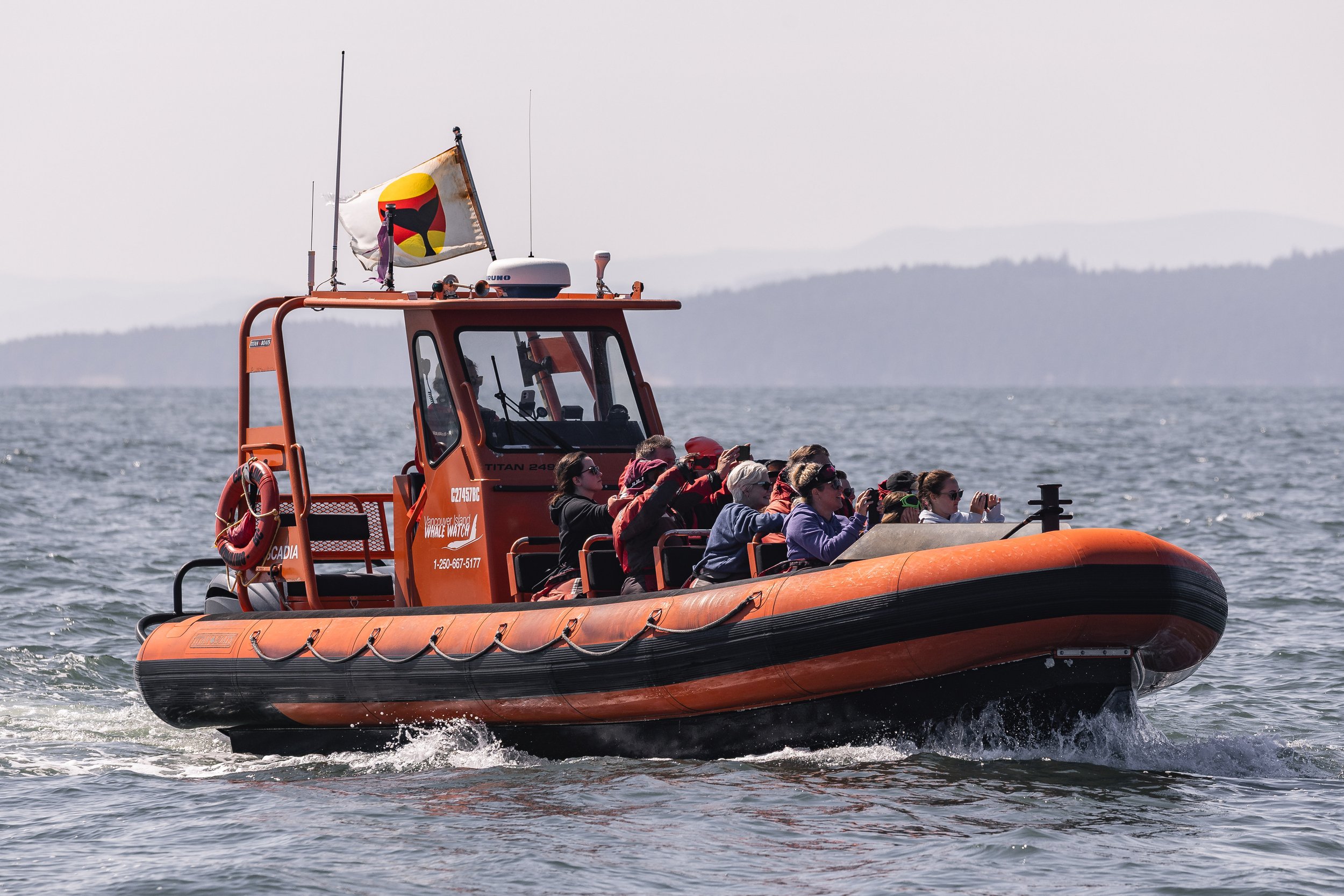
Guests aboard Cascadia. Photo by Jordan Robinson.
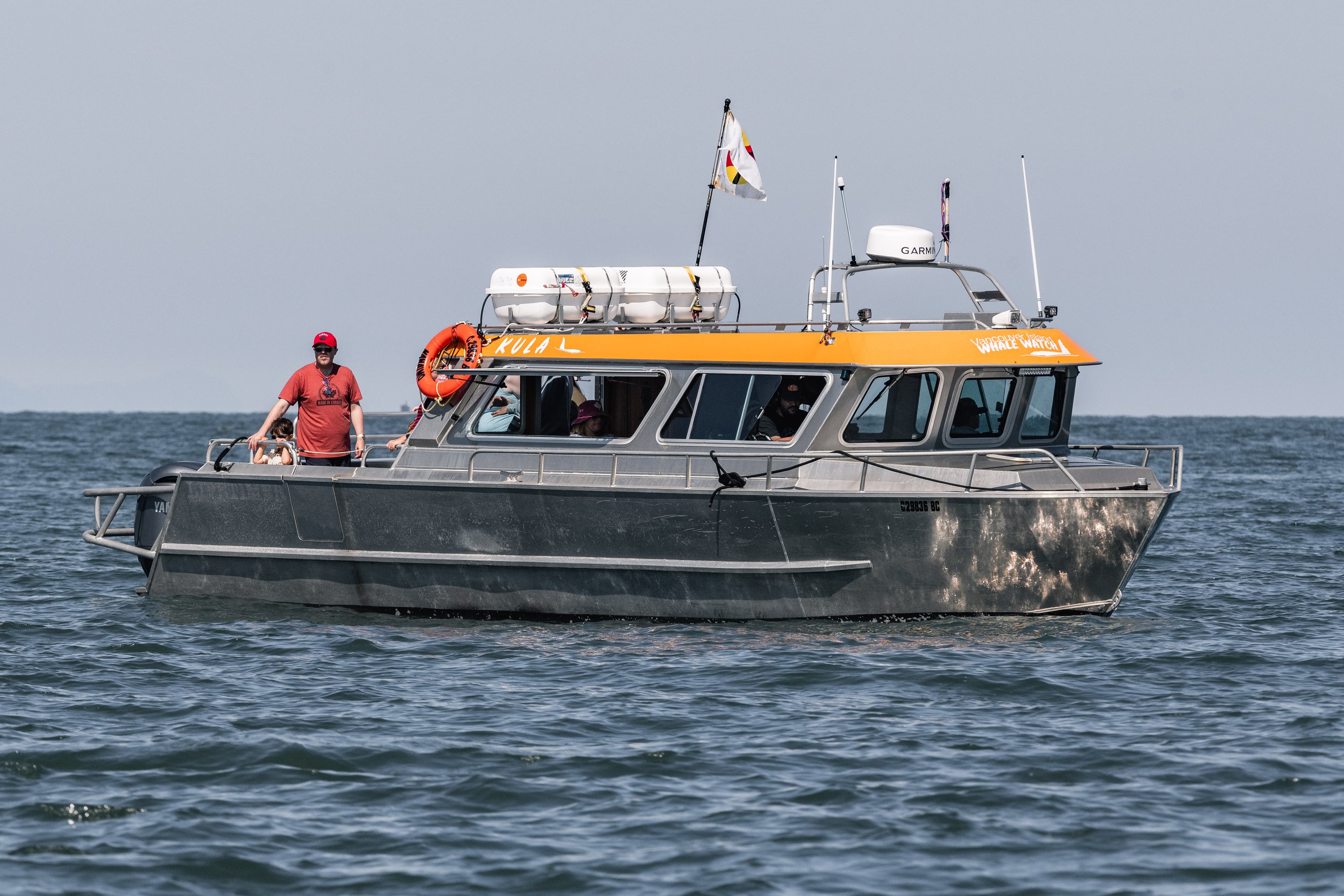
Kula with the whales. Photo by Hayleigh Hilbert.
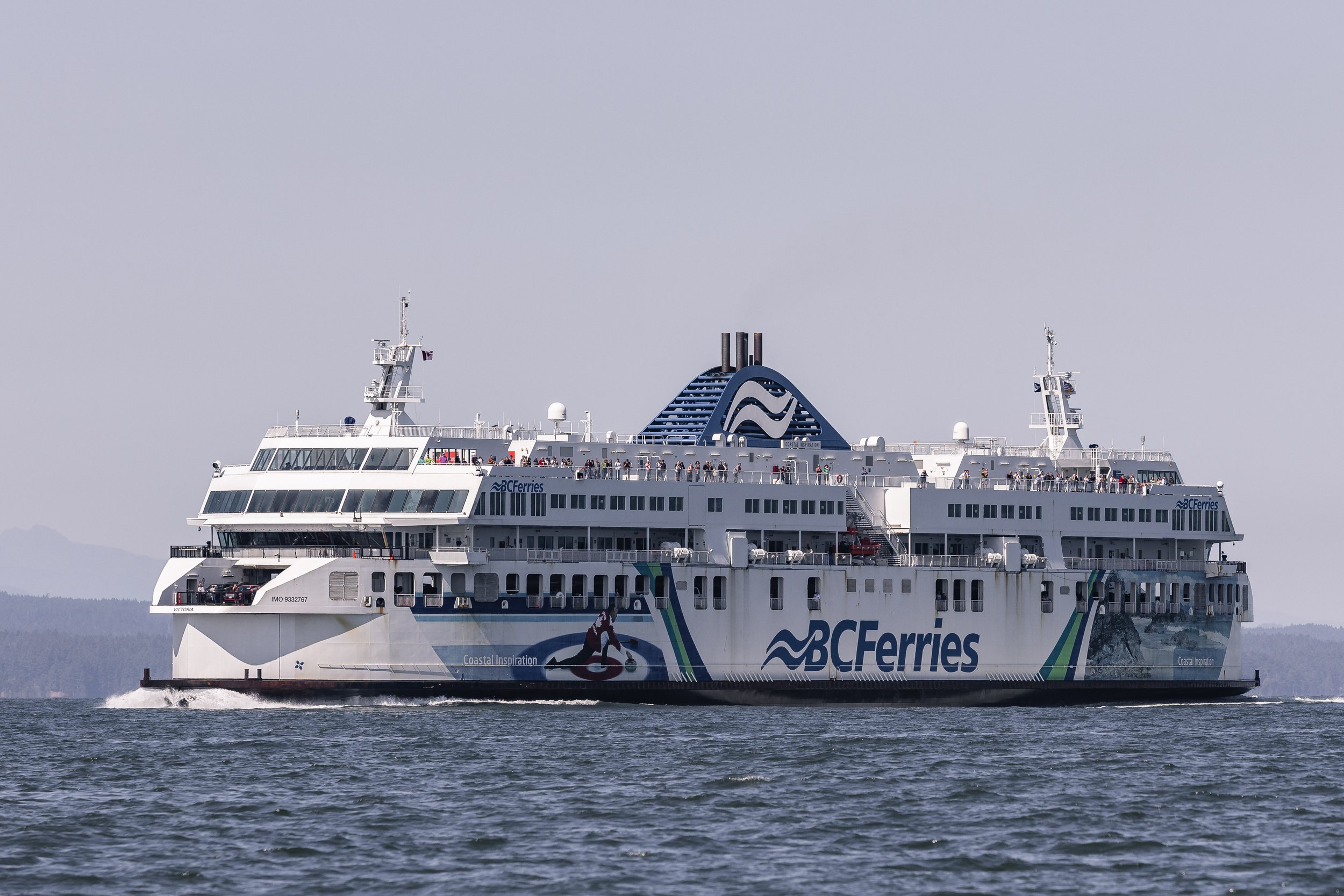
The Coastal Inspiration, one of the BC Ferries we often see while out on trips. Photo by Jordan Robinson.
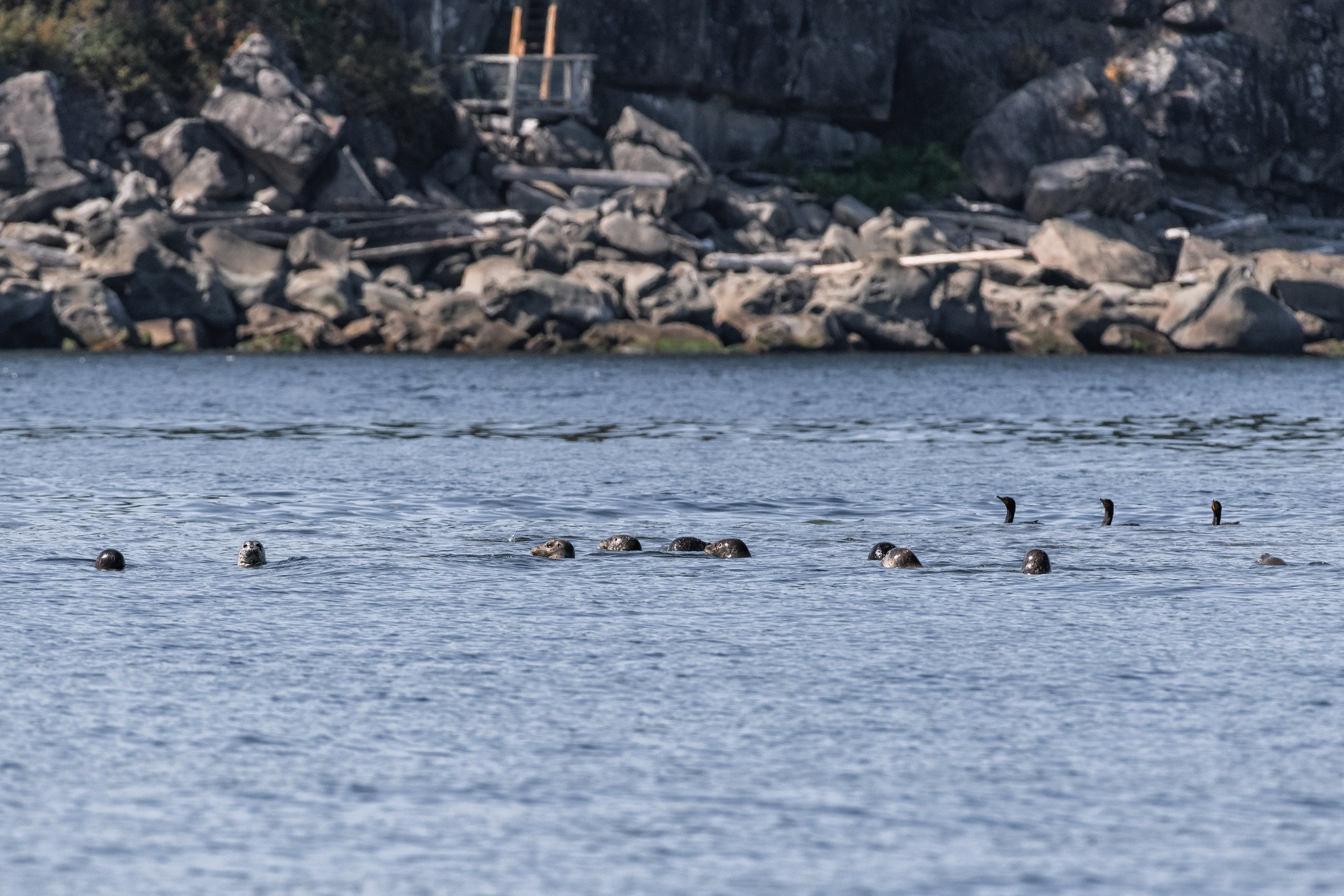
Harbour Seals bobbing along in the water. Photo by Jordan Robinson.
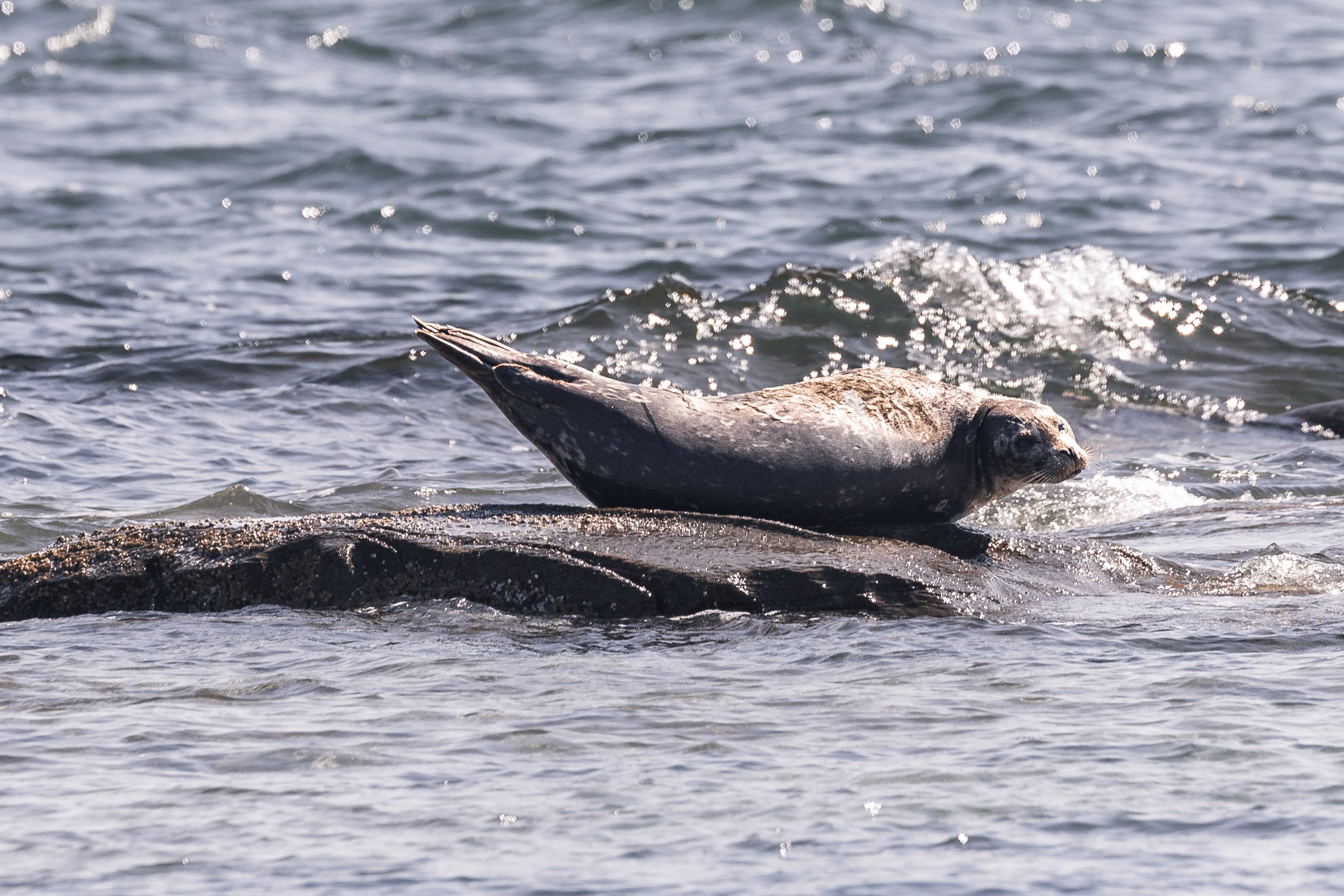
A Harbour Seal carefully balancing out of the surf. Photo by Jordan Robinson.
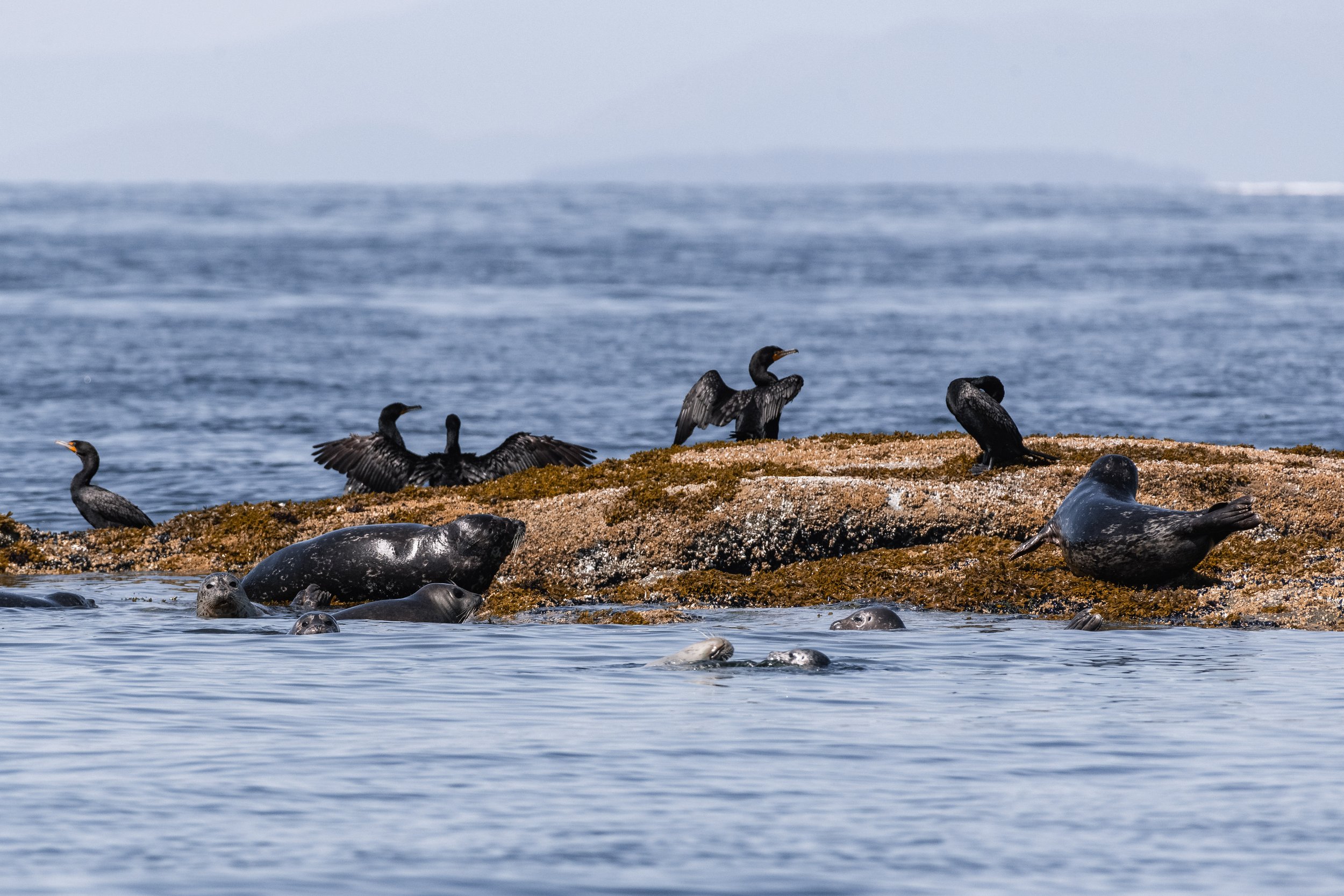
Harbour Seals and Cormorants enjoying the sunshine together. Photo by Jordan Robinson.
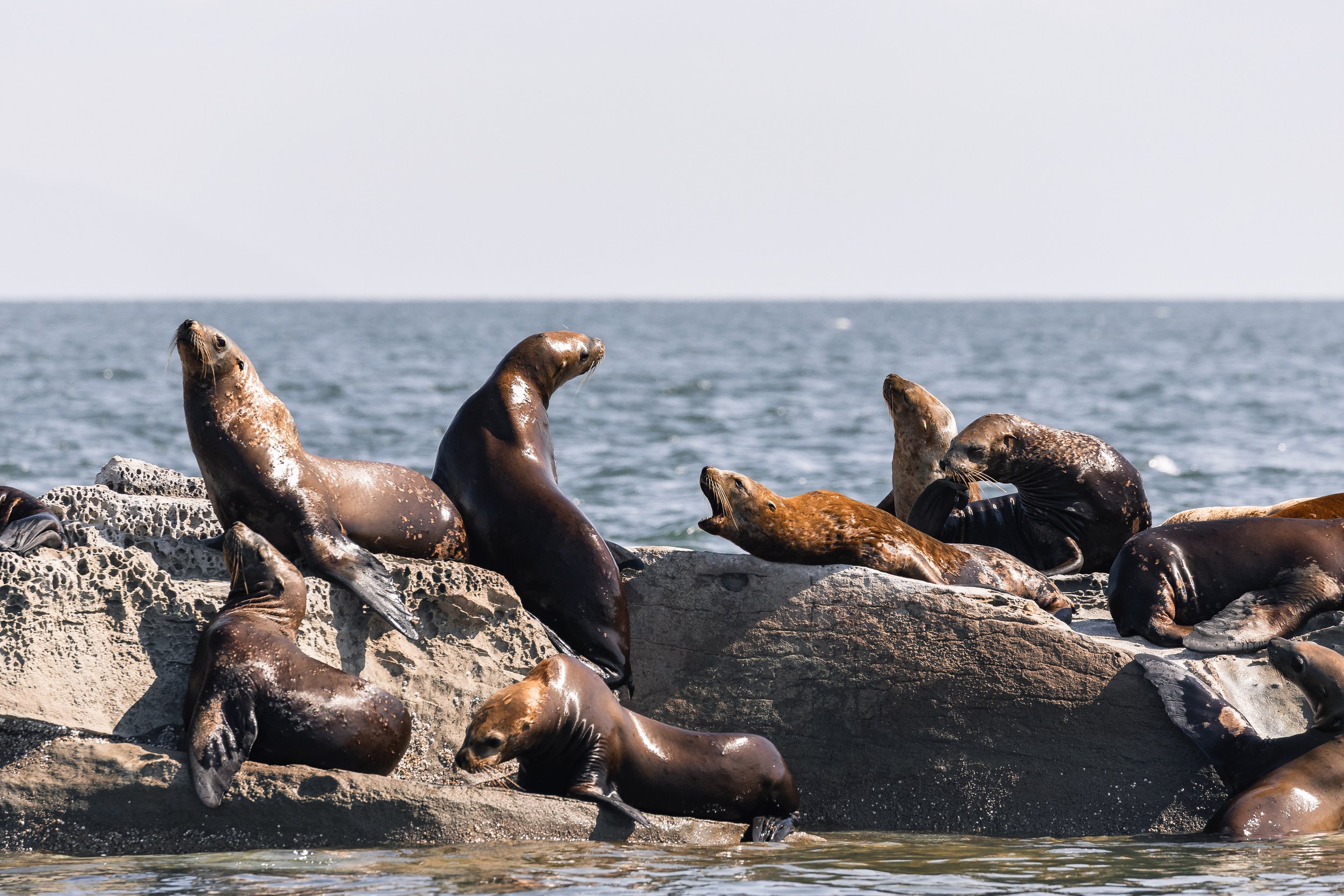
Navigating around the rocks for the best nap spot. Photo by Jordan Robinson.
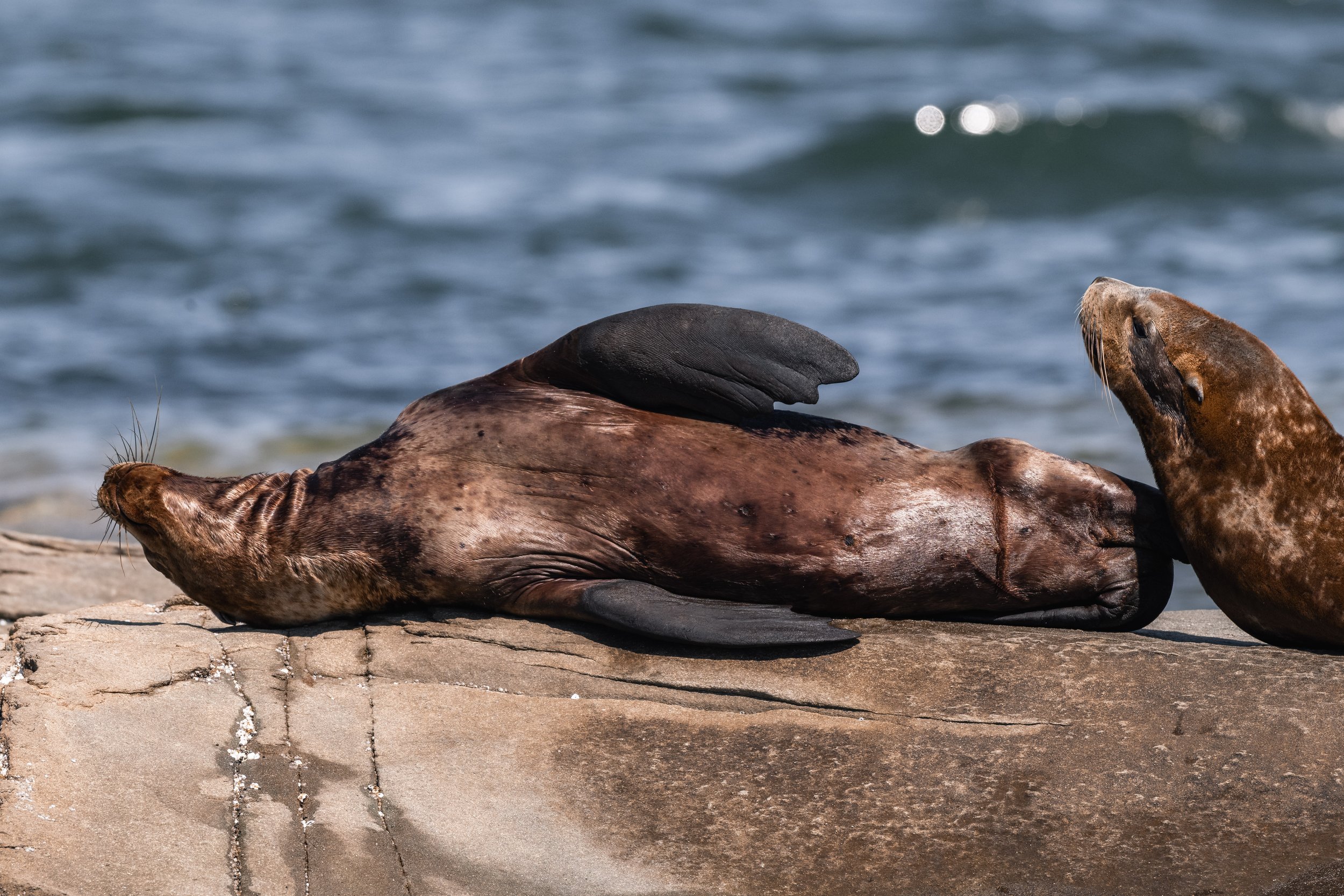
A very relaxed Steller Sea Lion on the rocks. Photo by Aly Kohlman.
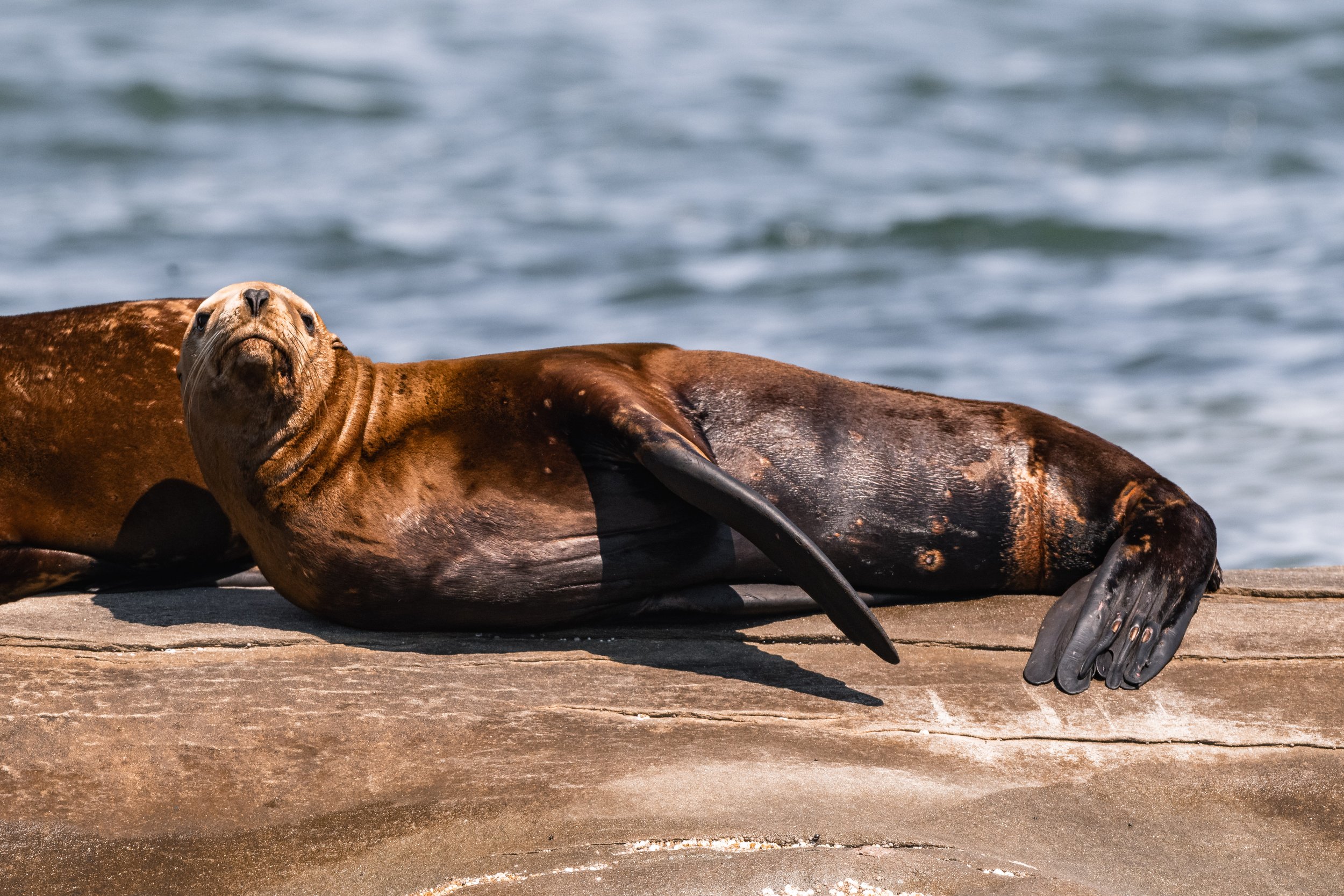
A good view at this Steller Sea Lion, with their claws visible on their flippers! Photo by Aly Kohlman.
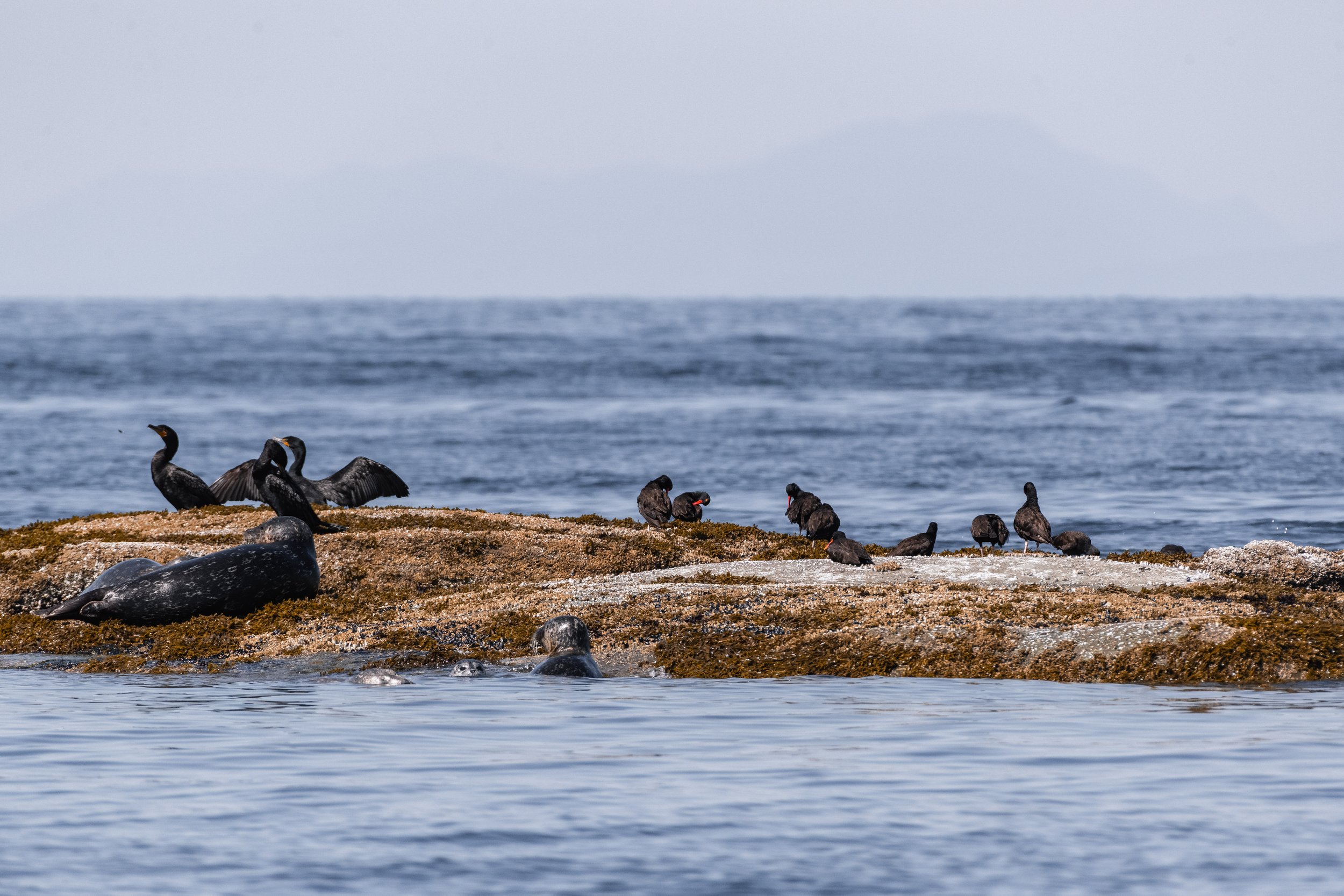
Preening time for the Black Oystercatchers. Photo by Jordan Robinson.
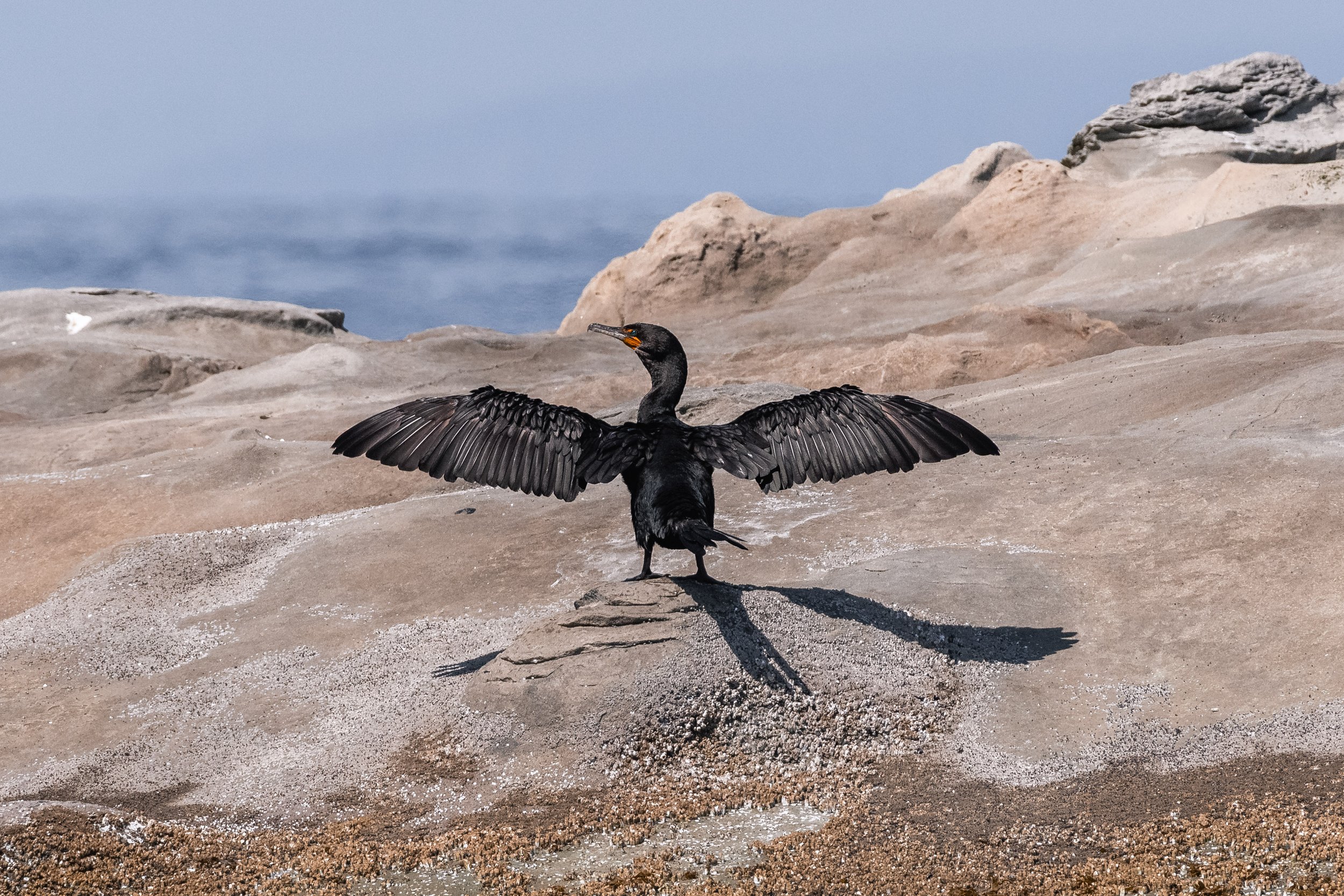
A majestic Double-crested Cormorant sunning themselves. Photo by Jordan Robinson.
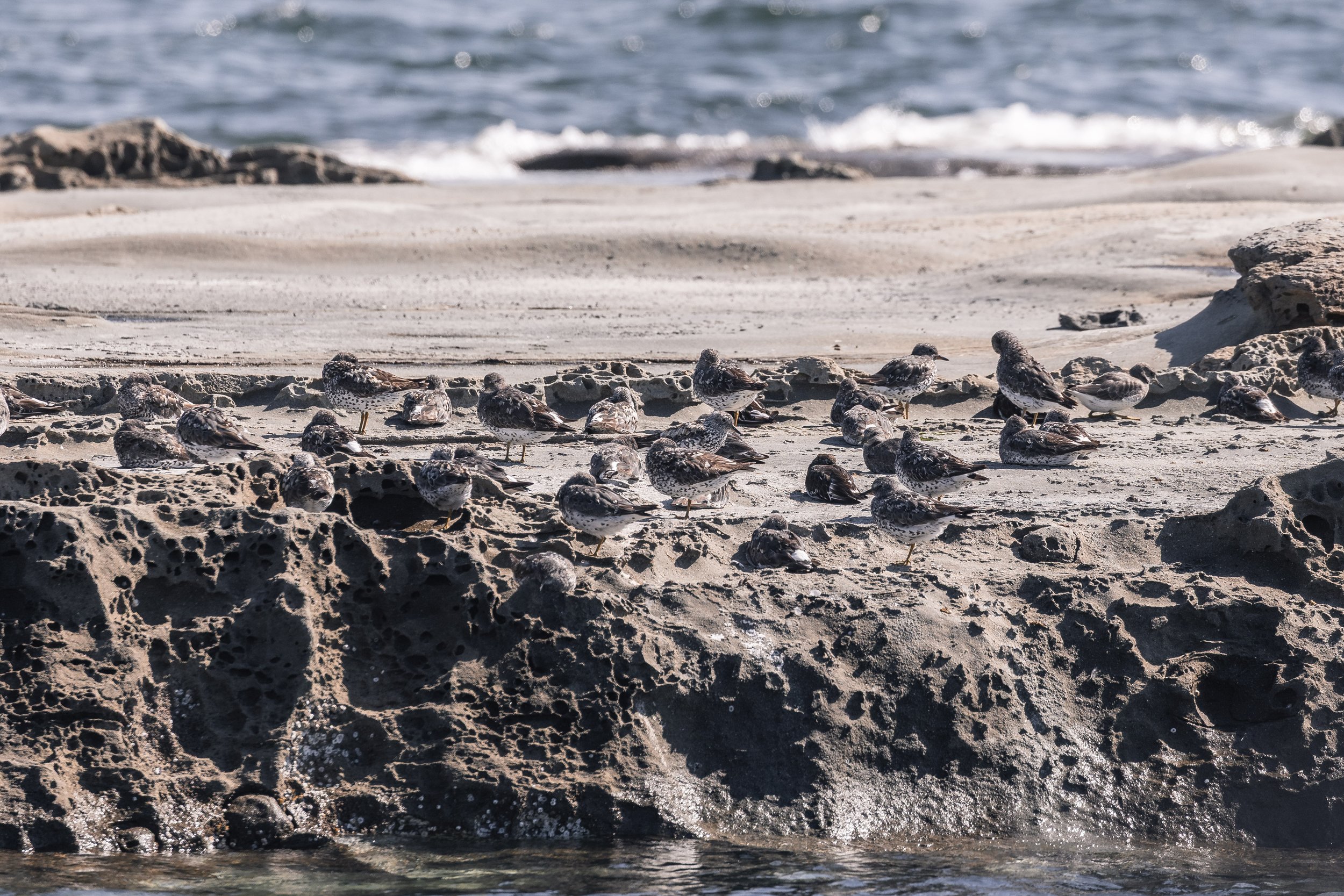
Surfbirds tucked in for a nap. Photo by Jordan Robinson.
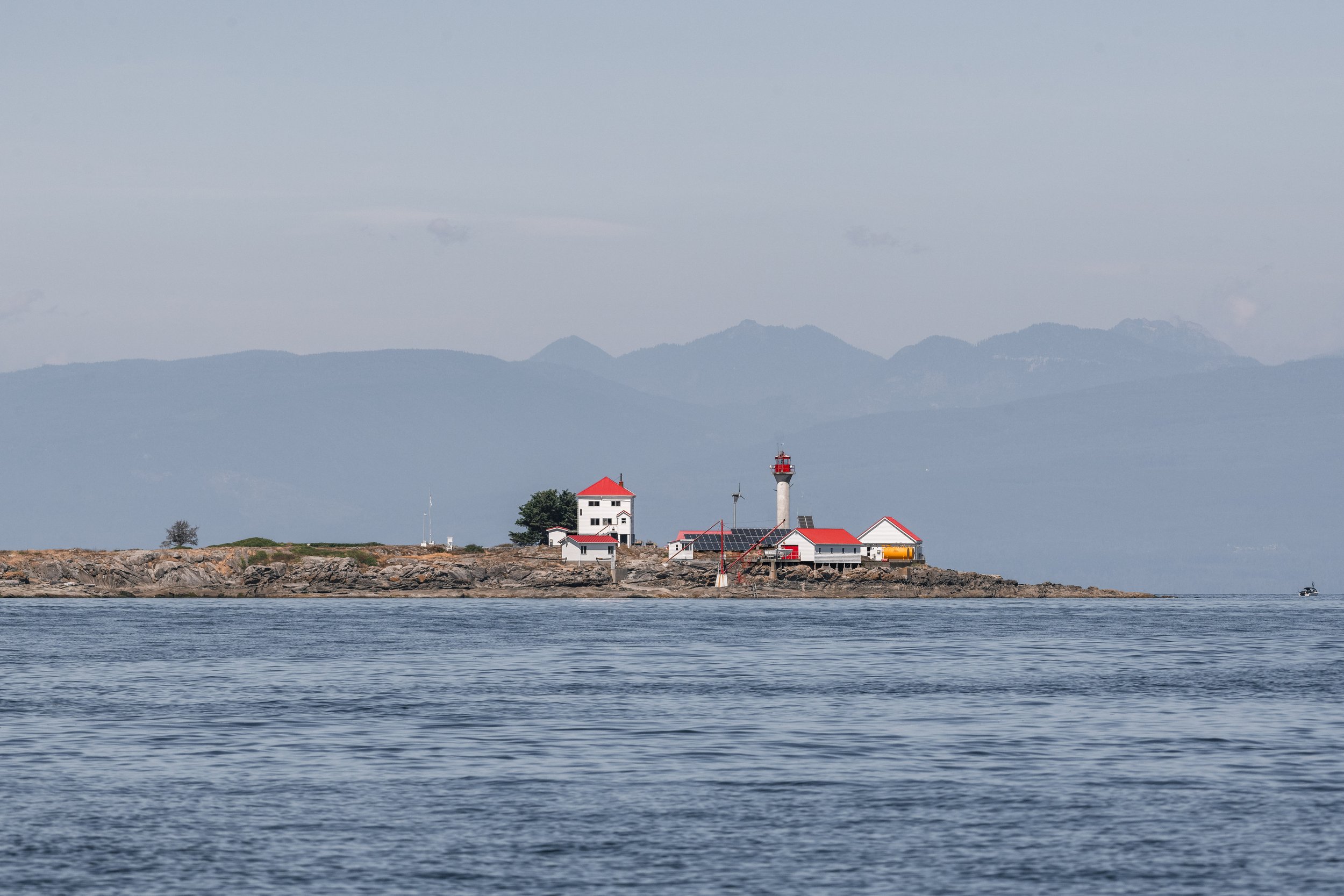
Entrance Island. Photo by Jordan Robinson.
GORE WARNING: The remains of T060D Onca and T060E Lynx’s hunt are seen below. Viewer discretion is advised.
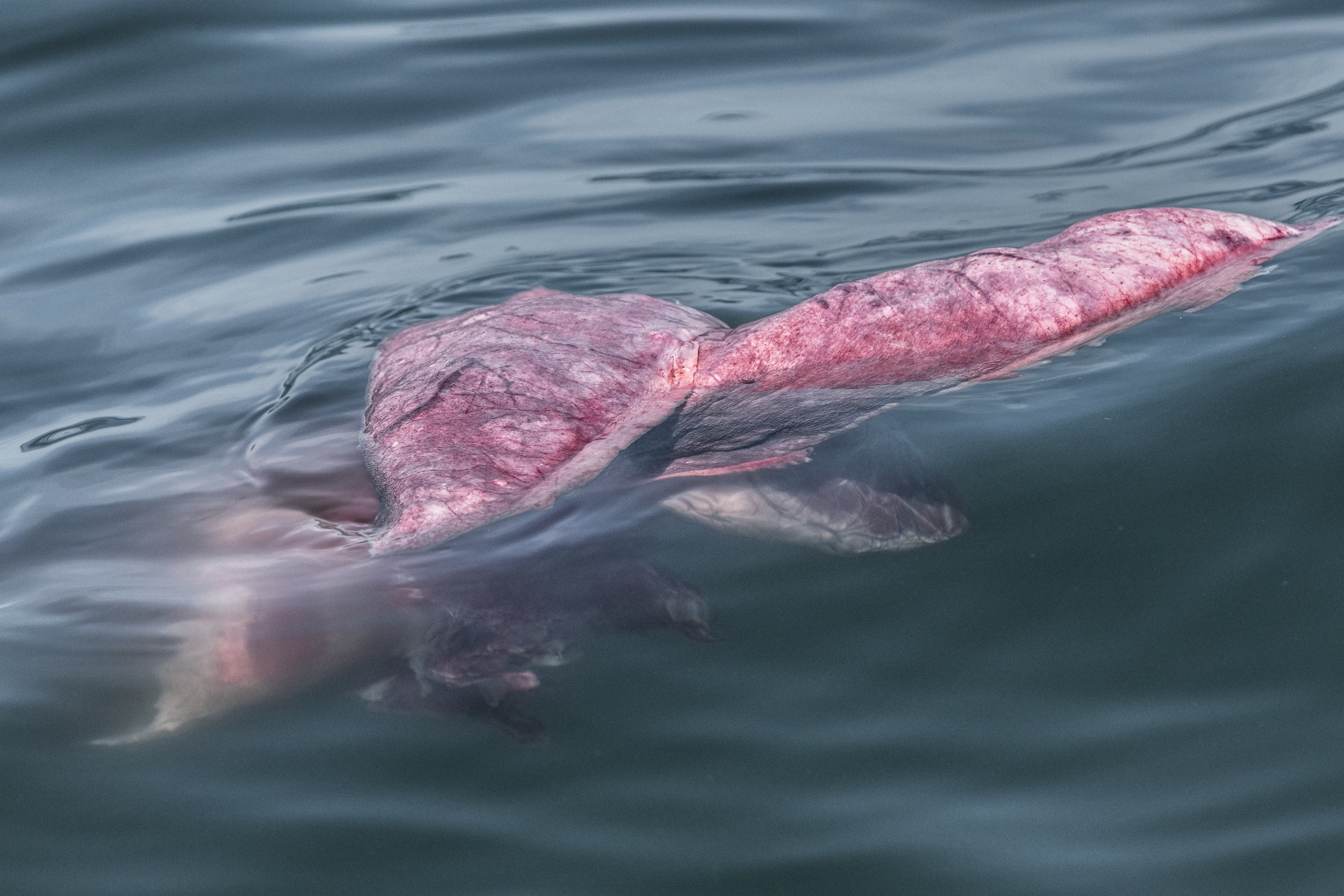
The leftovers - this time, a set of lungs plus additional viscera. Photo by Hayleigh Hilbert.