
August 18, 3:30 PM - "T"-party time with the Transient orca (and some humpbacks as well)
Perfect weather conditions were on the horizion as we gathered onto our fleet. Boarding onto Cascadia, Keta, and Kula, the Naturalists happily chatted about what to expect and what to keep an eye out for. Triangular dorsal fins ranging from grey to black, big tails, and bushy blows are all the most telltale signs of whale activity we scan for, and after a brief chat, we set off.
We started by exploring through the northern part of our range, around North Nanaimo and out towards the Sunshine Coast. After a bit of peeking around, we found what we were looking for - a pod of orca travelling together through the centre of the Strait. After a brief count, in combination with a series of photos for ID purposes, we discovered that this was not one pod, but actually members from four seperate matrilines travelling together, in what is known as a T-party:
T060D Onca ♂ (2004)
T060E Lynx ♂ (2008)
T065 Whidbey II ♀ (~1971)
T063 Chainsaw ♂ (~1978)
T065A5 Indy ♂ (2014)
T100 Hutchins ♀ (~1979)
T100C Laurel ♂ (2002)
T100F Estrella ♂ (2004)
T101 Reef ♀ (≤1969)
T101B Lagoon ♂ (1997)
Two of the party members seemed socialled out, though, and started travelling away at high speed shortly after the festivities began. These two were T060D Onca and T060E Lynx, a brother duo who is most often seen travelling just by themselves. Not to fret, though, as the other eight orca were still excited to continue celebrating.
Orca are highly social animals, and get-togethers like this are an excellent opportunity for them to develop their relationships. Interestingly, while these are individuals from four distinct matrilines, there are actually multiple family relations present.
T065A5 Indy is T065 Whidbey II’s grandson, and T063 Chainsaw is likely his uncle. T100 Hutchins is also believed to be T101 Reef’s eldest daughter, meaning those matrilines are directly related as well. Typically, family relations are clearer to understand in the Transient orca population, as calves are designated alphanumerical codes to designate their position in their family pod (for example: T060D Onca is T060 Panthera’s fourth calf, hence the D designation). However, this system was a bit flawed when it was originally constructed. When individuals were given their original codes, matrilines sometimes did not travel together. This led to odd designations that break the system we follow now. The best example of this is T063 Chainsaw, who is believed to be T065 Whidbey II’s eldest son. Because of this, his code should have been T065A - however, that designation actually belongs to T065A5 Indy’s mother now, Artemis. The same can be said for the T100s/T101s - T100 Hutchins is now believed to be T101 Reef’s eldest child. This means her designation should have been T101A. Okay, that makes sense, right? Well, it gets even more complicated. Reef used to travel with three sons, with the following designations: T102 Beardslee, T101A Rush, and T101B Lagoon. Similar to Chainsaw, Beardslee would have initially been seen away from his mother, leading to his different designation. With this in mind, not only is Hutchins’ number incorrect; technically, all four of her children’s numbers are wrong! Thankfully, more data is collected thoroughly now, leading to fewer potential hiccups in codes for future generations of orca.
After an amazing time with the party, we had to say our goodbyes, and soon we began exploring once more. With so much open water ahead of us, the possibilities were endless for what we could encounter. We made our way over to Halibut Bank, an area that has been teeming with whale activity to peek around at. This gamble soon paid off; blows and flukes came into sight just ahead!
Once in position, we began snapping photos of a pair of humpbacks travelling along. They were not directly associating; however, they were close enough to photograph both of them together. We identified these two as Snoopy/Gibbous (BCY0770) and Niagara (BCY0057). Both individuals are known males and frequent returners to our area. Niagara is the 2000 calf of Houdini (BCX0022), one of the first humpbacks documented returning to the Salish Sea post-whaling era. While we don’t know as much about Snoopy’s history, we do know that he is at least 16 years old.
These two were busy fluking high and diving down, likely feeding on krill deep in the water column. With the summer quickly coming to a close, it is vital that they pack on as much weight as possible before they depart for their breeding grounds. Both Niagara and Snoopy have been cross-matched to the breeding grounds in Hawaii, meaning they have quite the journey ahead of them this winter!
Besides the duo, Keta found another solo humpback a bit further away. Instead of travelling, this whale was being a bit more acrobatic, doing a behaviour we call cartwheeling, or launching the rear half of their body out of the water in a wide arc. A couple of photos of their dorsal fin, in conjunction with photos of their dorsal fin, confirmed that this was Dalmatian (BCY0994), the 2015 calf of Heather (BCY0160). Similar to Niagara and Snoopy, he has returned to our waters for the summers for many years. However, he has been cross-matched to the other breeding ground frequented by our humpback whale population, down in Mexico.
The encounters weren’t quite over yet, though, as Cascadia found another pair of humpbacks travelling close to Gabriola Island. These whales were diving a bit deeper than the others, and we didn't stay with them for long. We did, however, get enough photos to confirm who they were. These two were Zig Zag (BCX1193) and Mantis (BCX0936). This pair has been documented travelling together for nearly three weeks now, showing us a brief insight into the complex social structures of humpback whales that, for the most part, are still largely unknown to us. We hope that with continued study we learn more about how these interesting animals communicate and associate with each other in the future.
While whales are always the main species that we try to see while out and about, they are rarely the only wildlife we can spot. On two of our nearby buoys, known as the Halibut Bank ODAS buoy and UM buoy, large and grumpy Steller Sea Lions could be seen piled high on top of each other. Manmade structures such as buoys provide excellent spots for pinnipeds to rest on, whether to simply get out of the water or to recuperate after rough weather. It is always interesting to see the dynamics between individuals, as it is common to see them posturing on each other to get to the best spots to sleep.
In the water, though, a different kind of sea lion sighting also happened. A flurry of feathers was circling and squawking away as several Gulls picked and dove at a lone sea lion, making a splash. While it wasn’t clear at first what was happening, after capturing a few photos, we could more easily understand what the ruckus was about. The sea lion had caught a large creature for dinner and was busy slapping it on the surface in an attempt to break it up into smaller bites. The circling birds were taking advantage of the moment, diving to pick at any scraps that were floating on the surface. When we see this, it is usually a salmon being devoured. However, this ‘meal’ was a bit different - a long, slender armoured body with a distinct tail was being devoured. It was a Spiny Dogfish, a species of tiny shark. We are often asked if we have sharks in our waters, and while we do, they are rarely seen on tours. Many of our shark species live in the depths and aren't spotted near the surface.
With the sun beginning to set and the glow of evening falling over us, it was time for us to start making our way back to Nanaimo. We glided along back across the Salish Sea, and soon the familiar skyline of the city was in view. We pulled back into the harbour as we excitedly chattered about the afternoon, wrapping up another amazing day exploring the Strait of Georgia and learning about its many inhabitants!
Please enjoy these photos taken by Marine Naturalists Hayleigh Hilbert, Jordan Robinson, and Aly Kohlman.
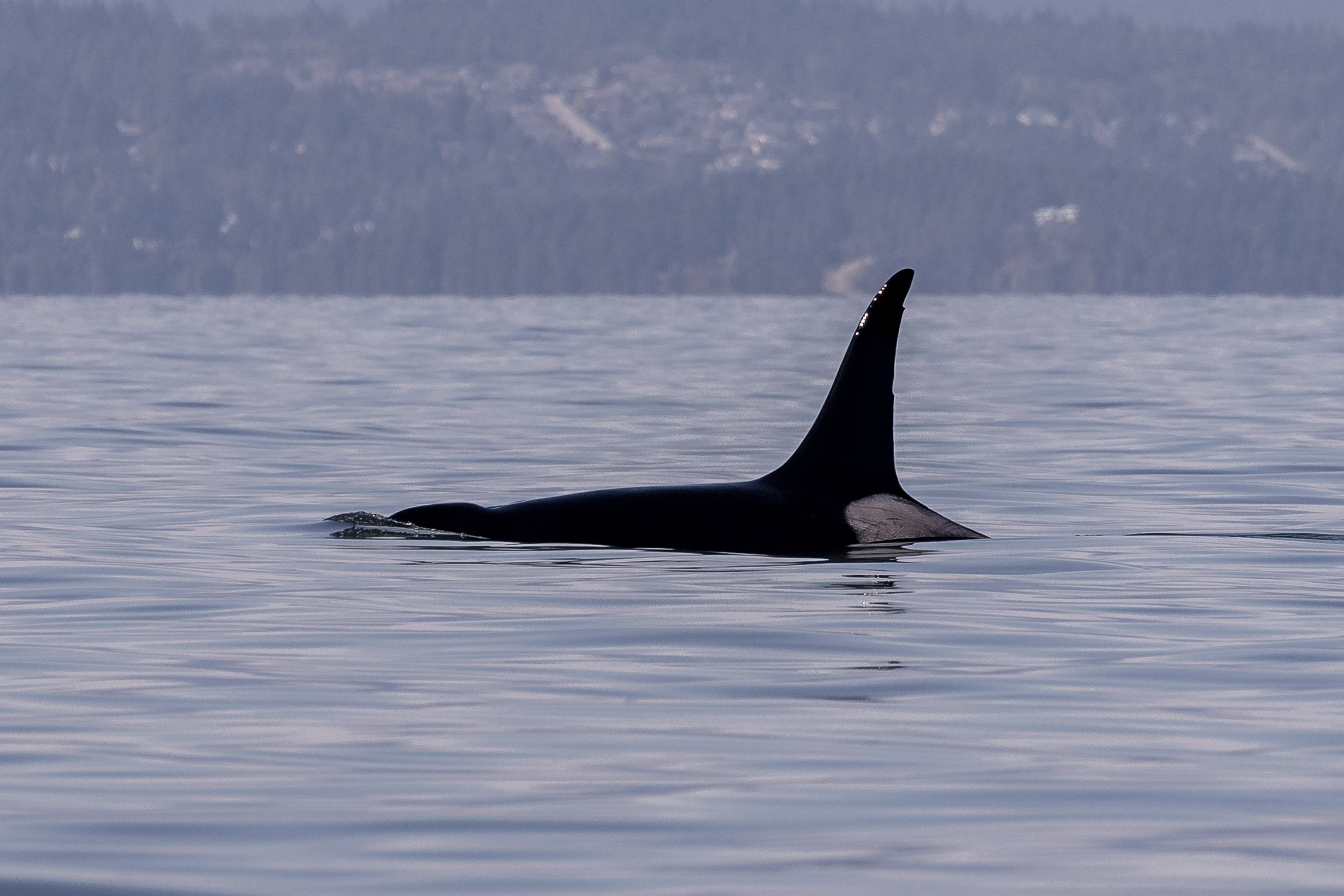
T060E Lynx - him and his brother T060D Onca very briefly made an appearance, but left almost as soon as the party began. Photo by Jordan Robinson.
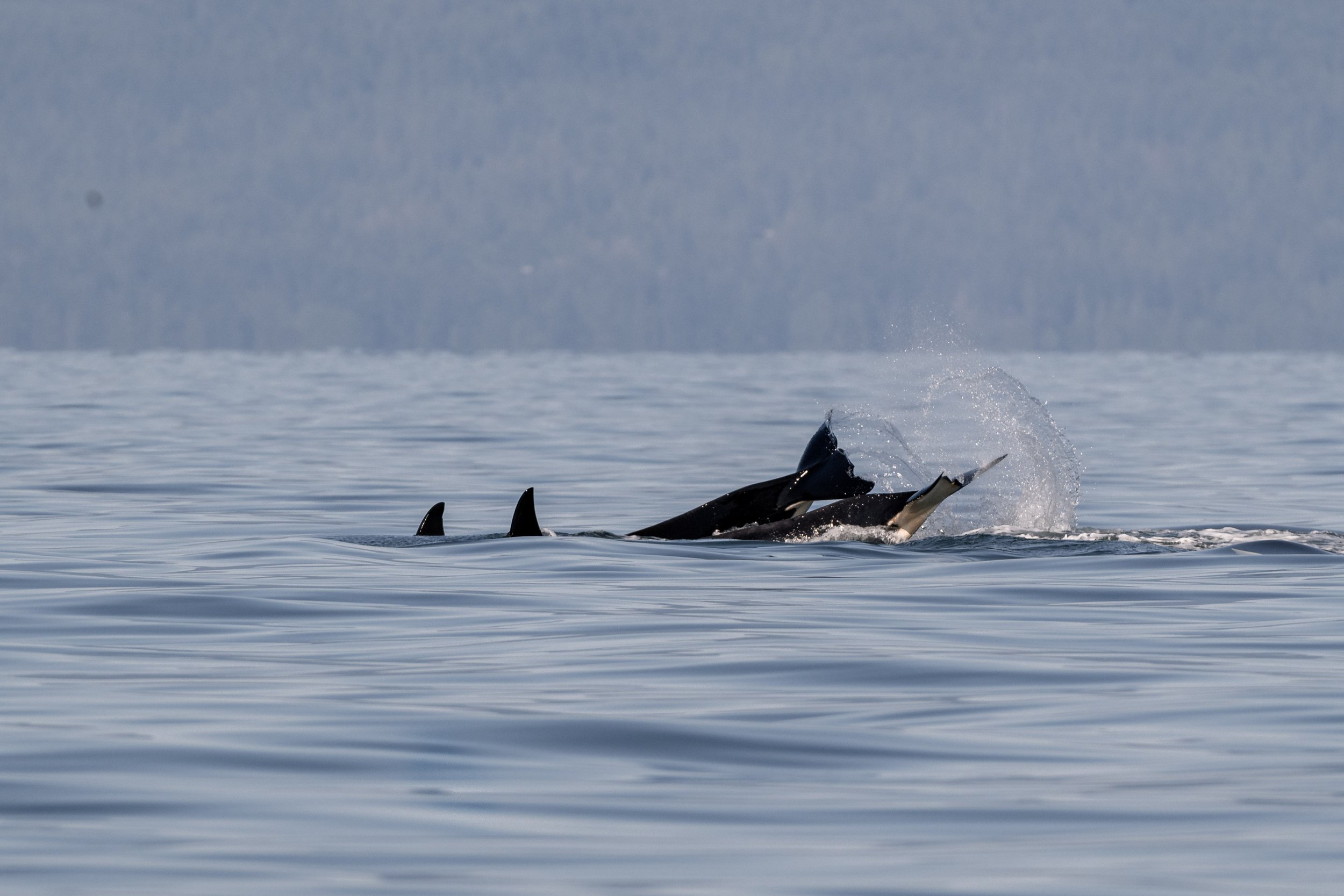
Flukes up! Photo by Aly Kohlman.
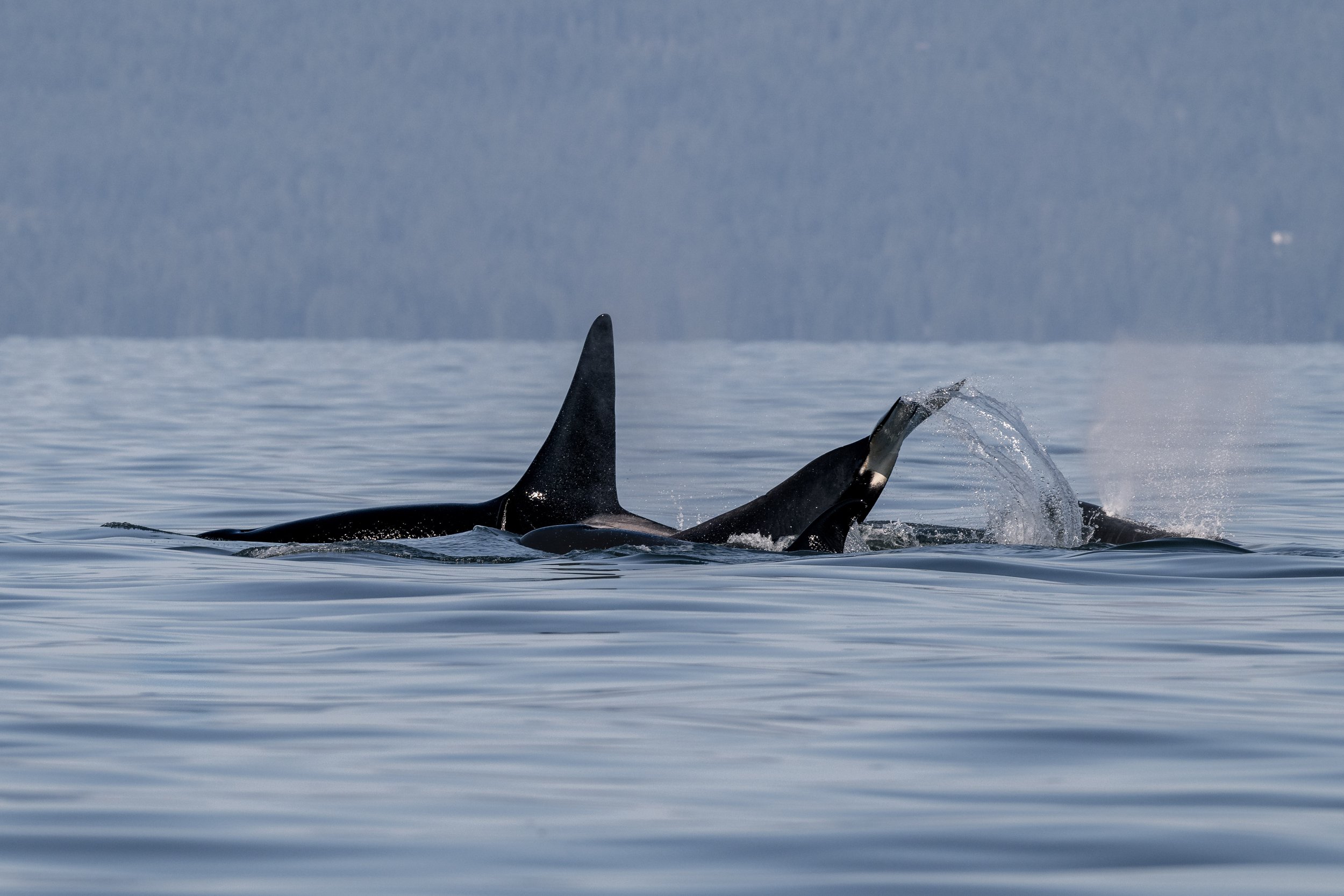
T101B Lagoon beside a couple of the younger whales, one of which was tail slapping. Photo by Aly Kohlman.
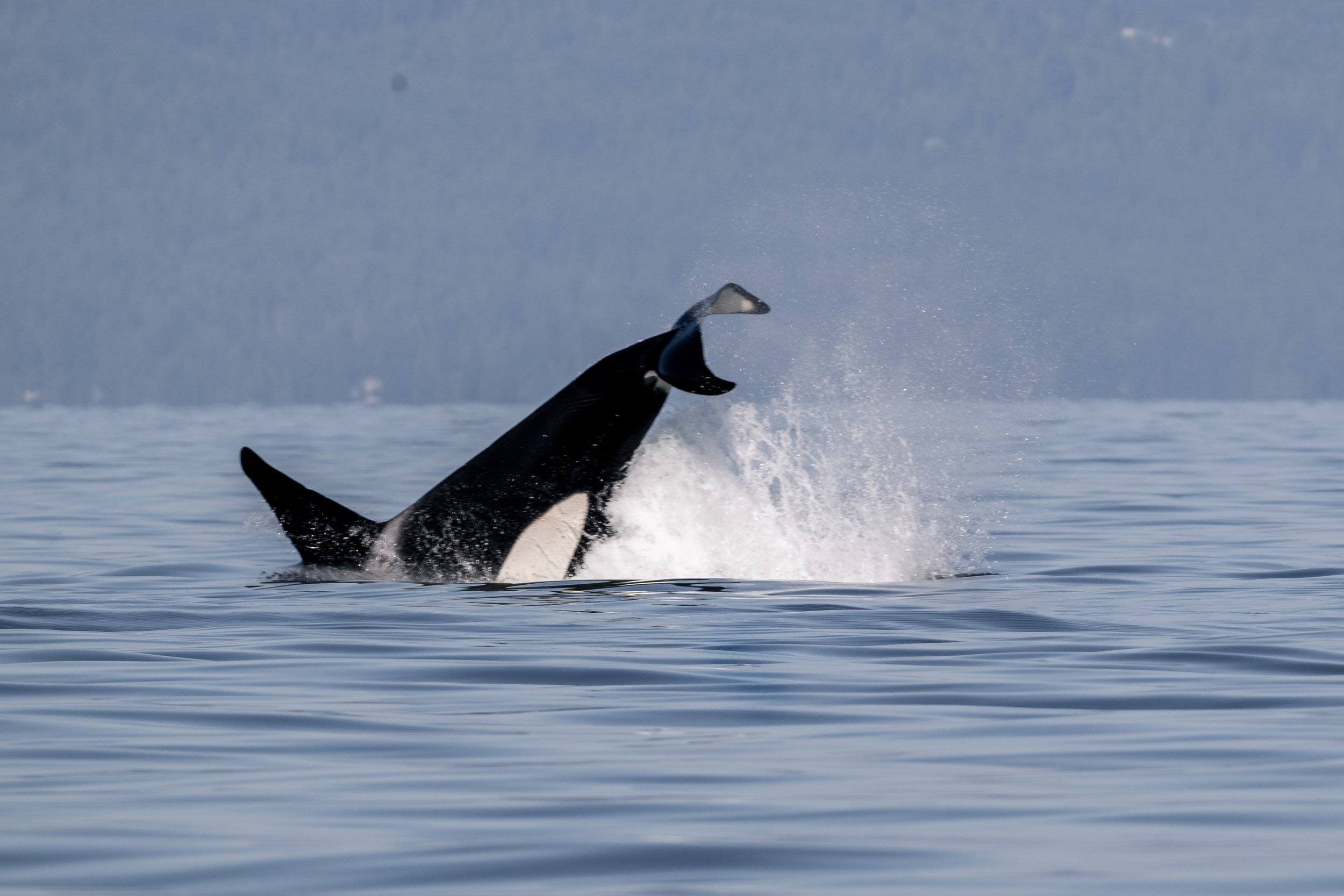
T100C Laurel coming in for a landing! Photo by Aly Kohlman.
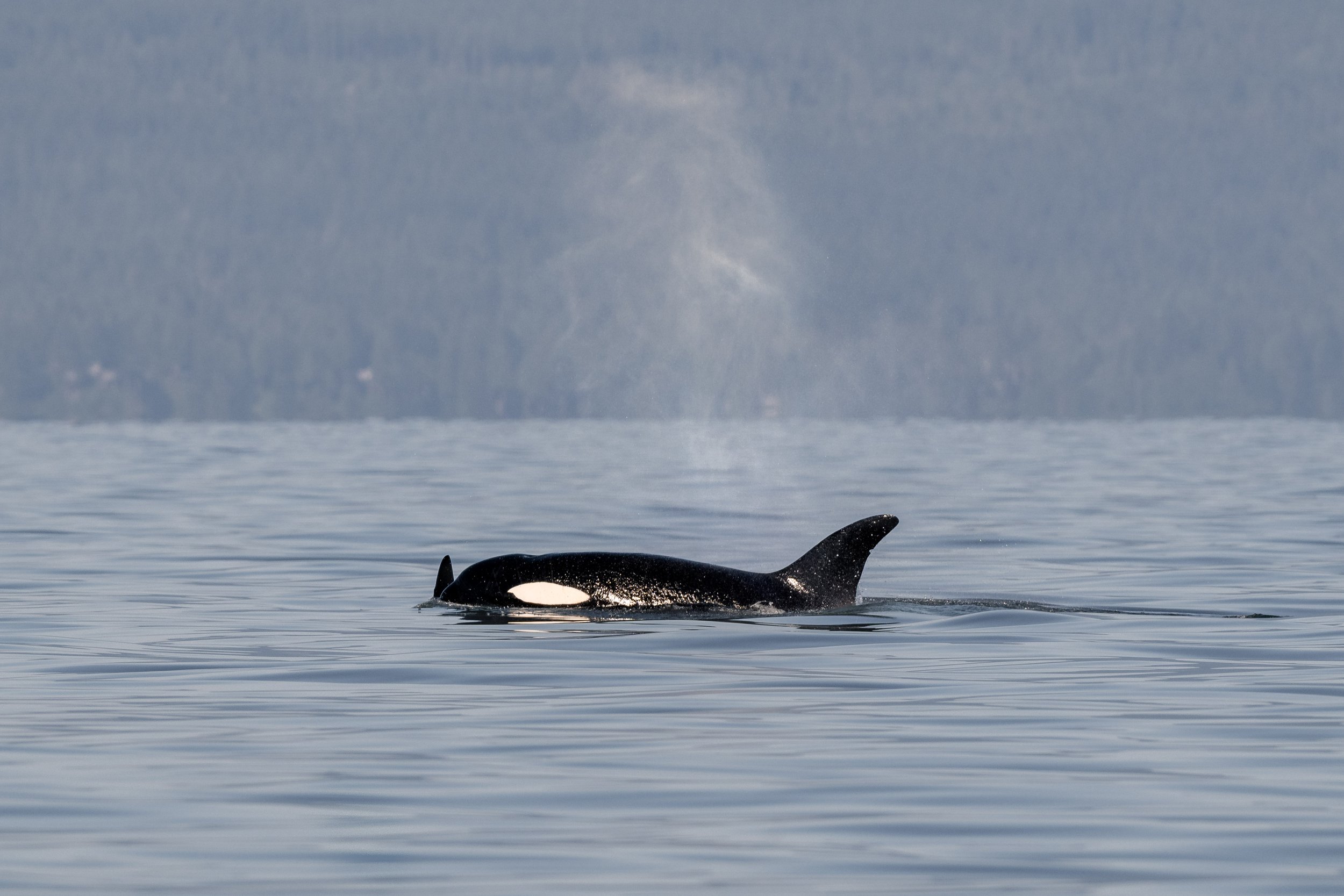
T065A5 Indy, one of our local misfit orca. Photo by Aly Kohlman.
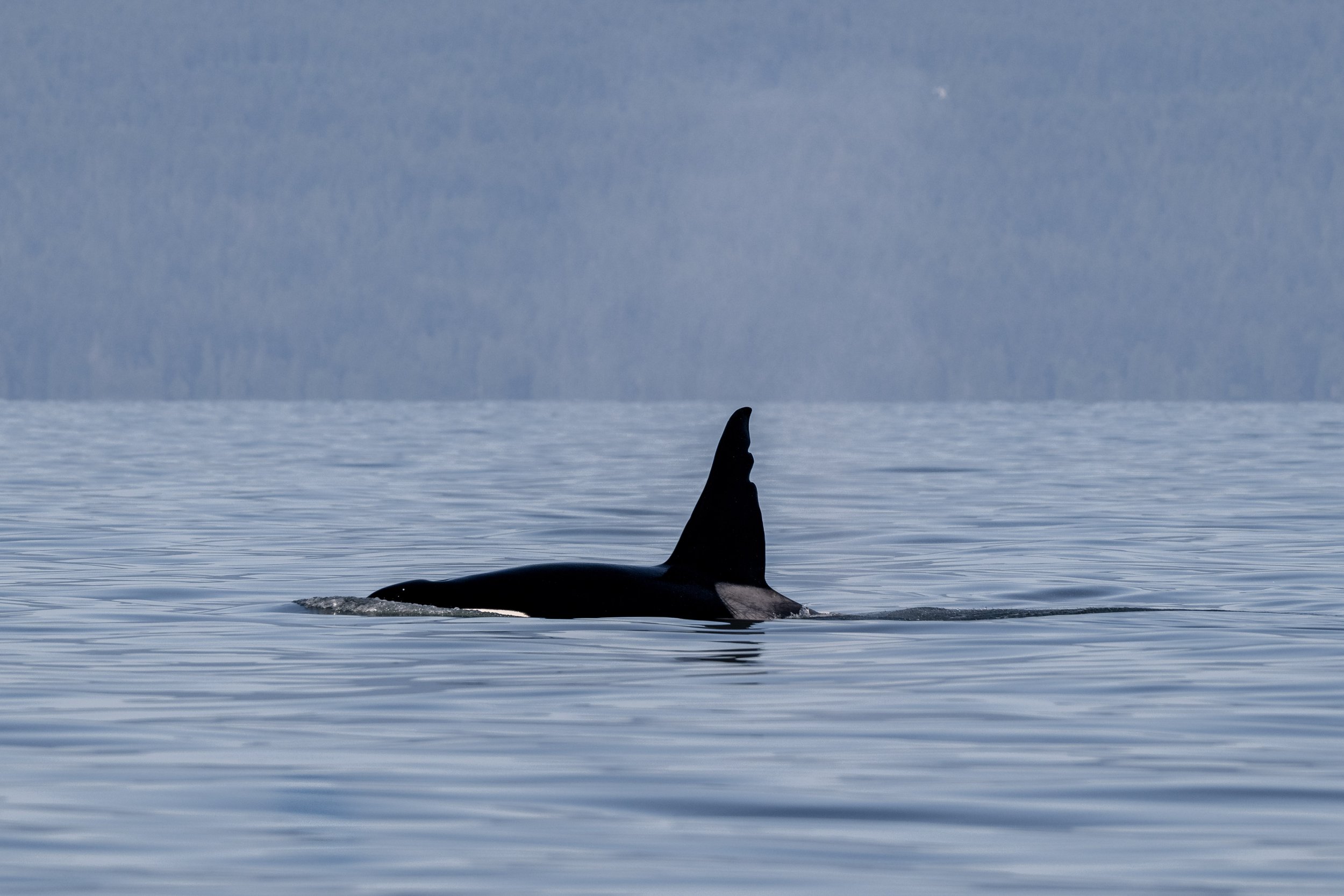
T063 Chainsaw in all his glory! Photo by Aly Kohlman.
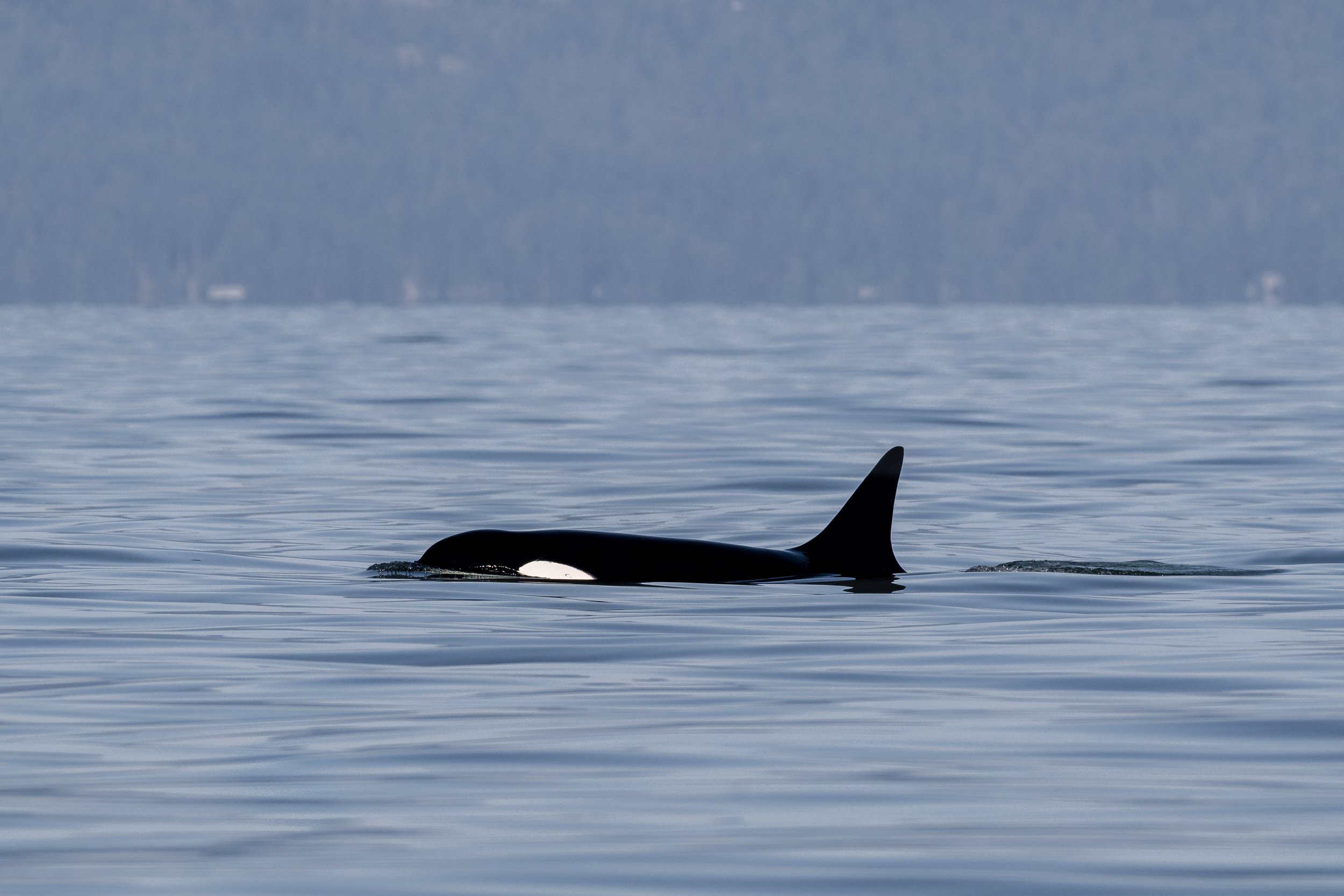
T101 Reef with her eyepatch freckle visible. Photo by Aly Kohlman.
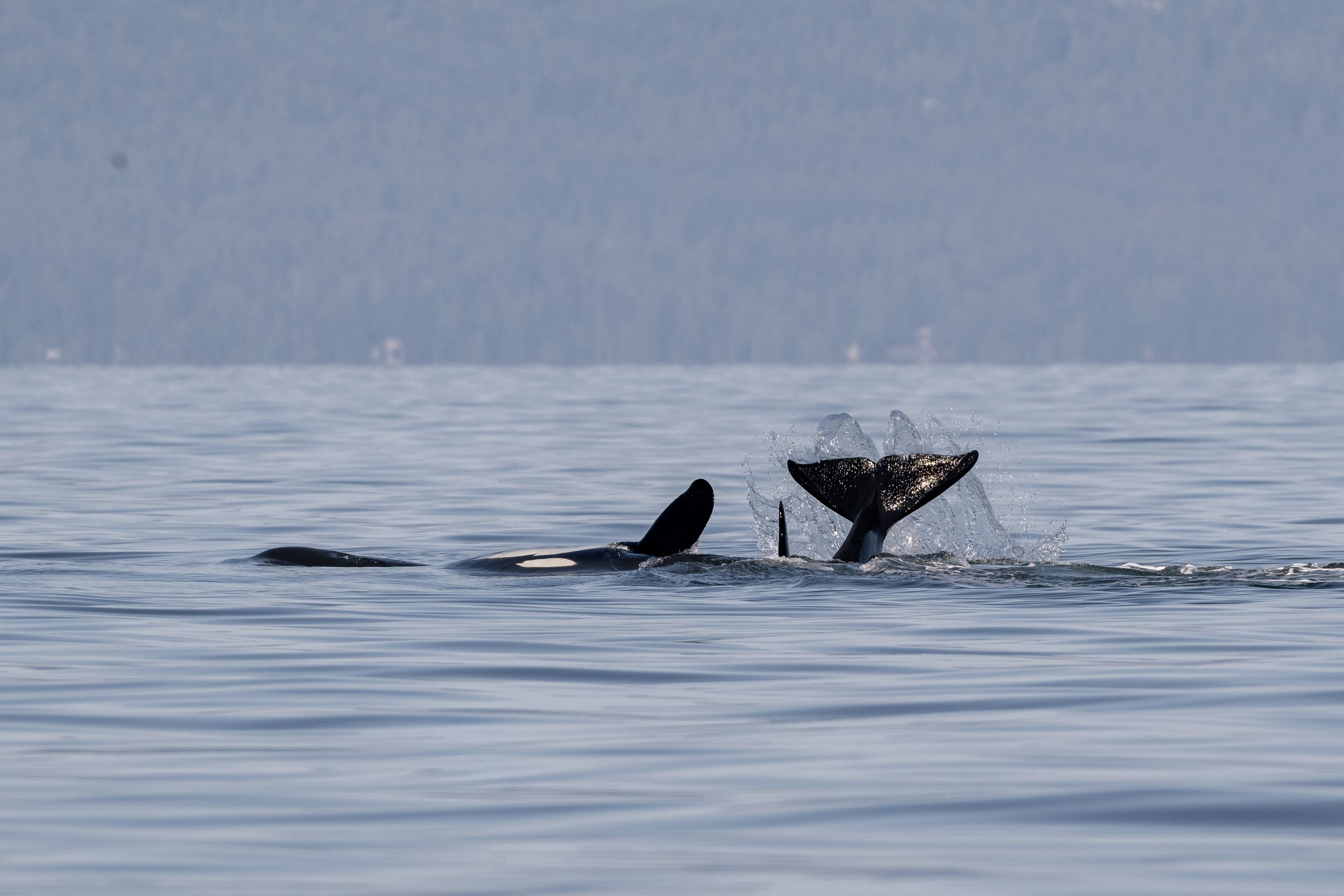
Rolling and slapping away together. Photo by Aly Kohlman.
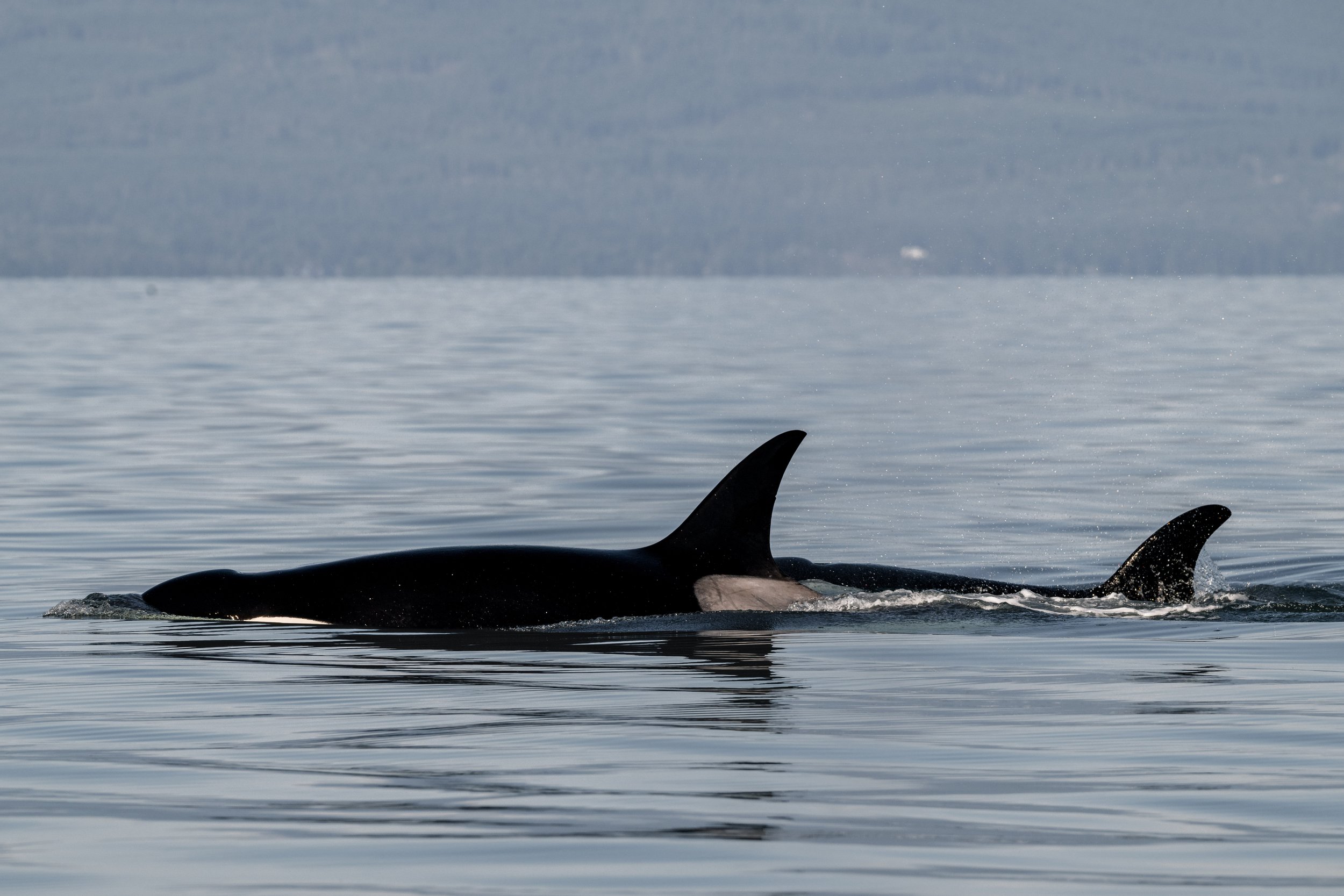
T065 Whidbey II and T100F Estrella travelling together. Photo by Aly Kohlman.
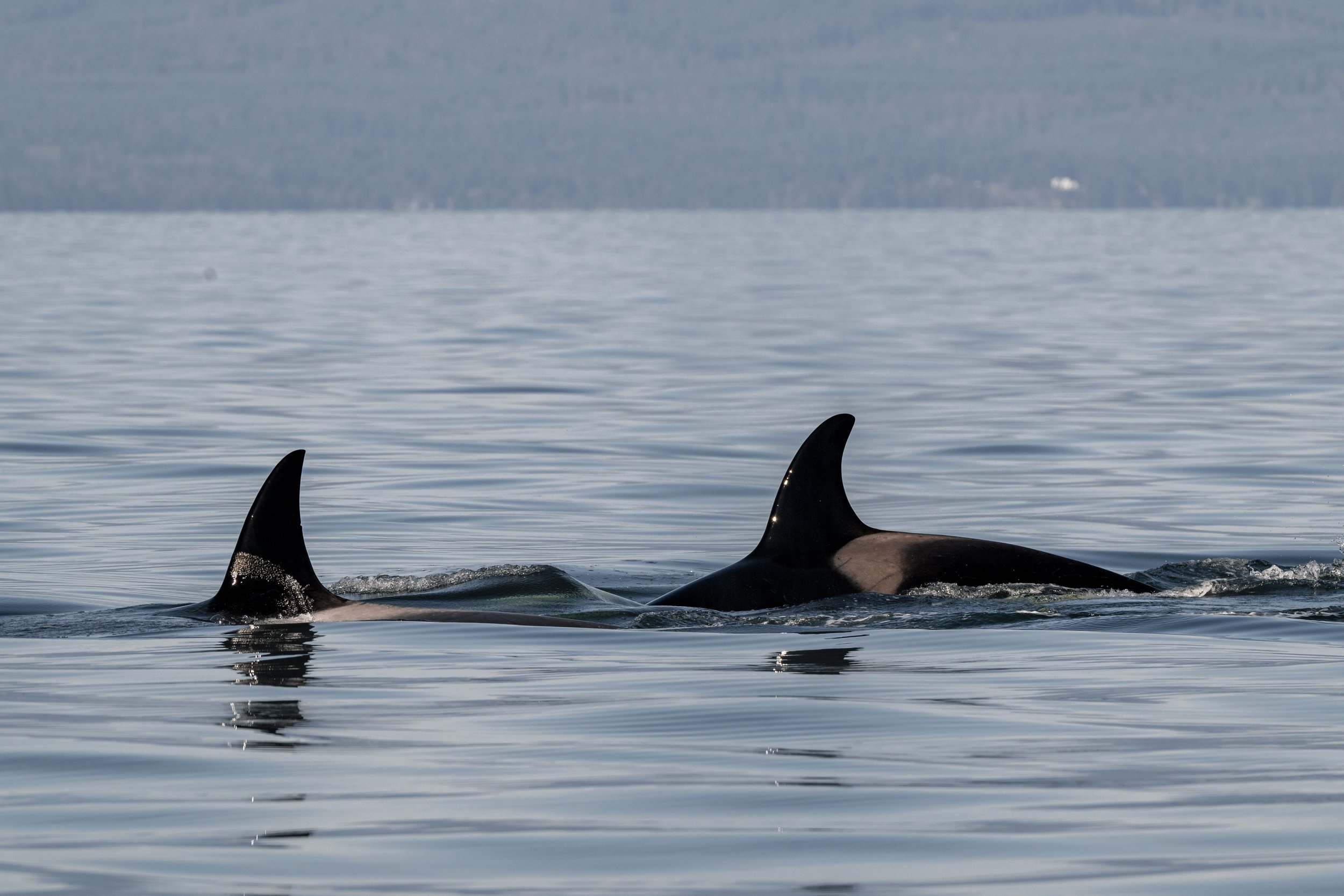
T065 Whidbey II and T100F Estrella diving. Photo by Aly Kohlman.
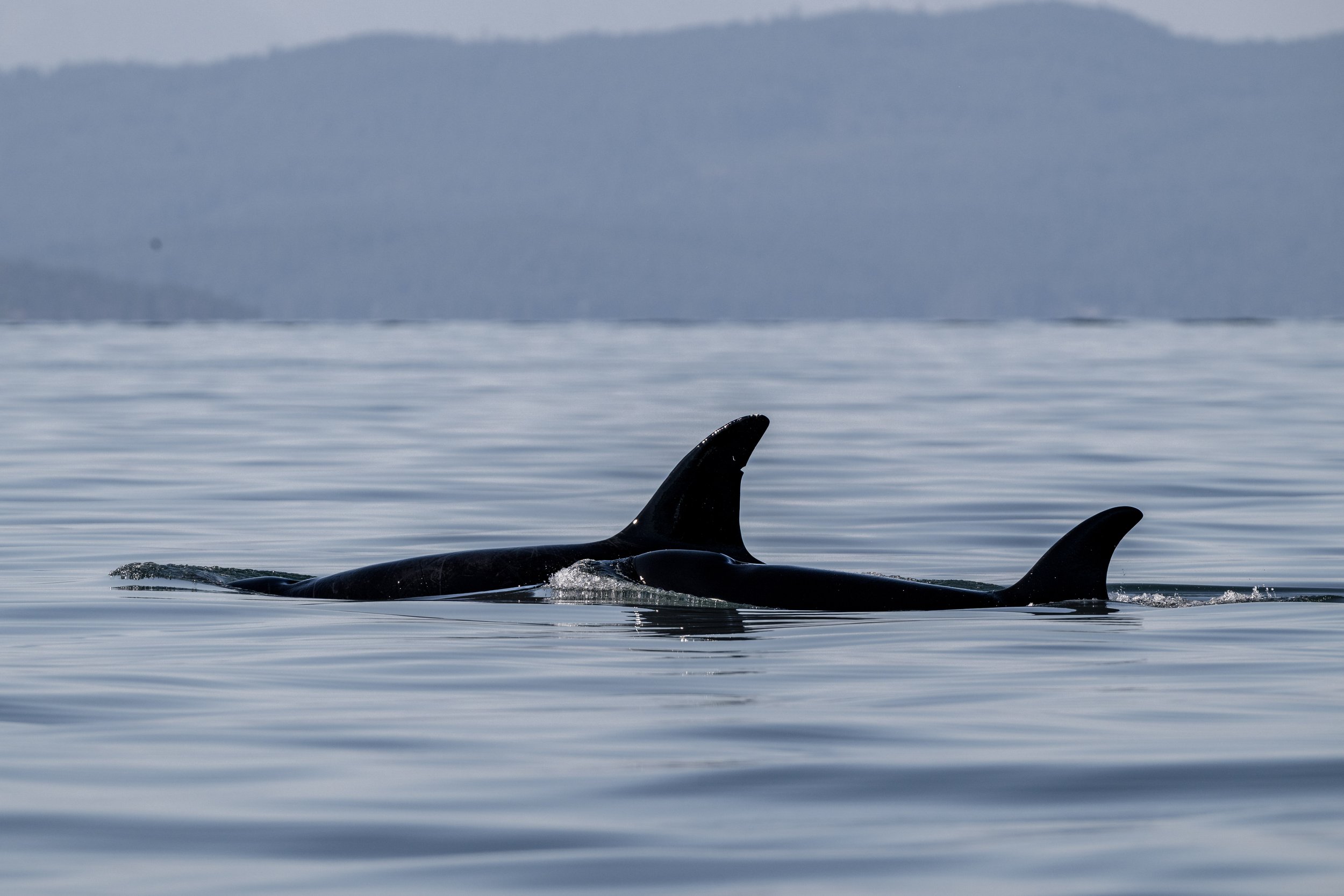
T065A5 Indy and T100F Estrella. Photo by Aly Kohlman.
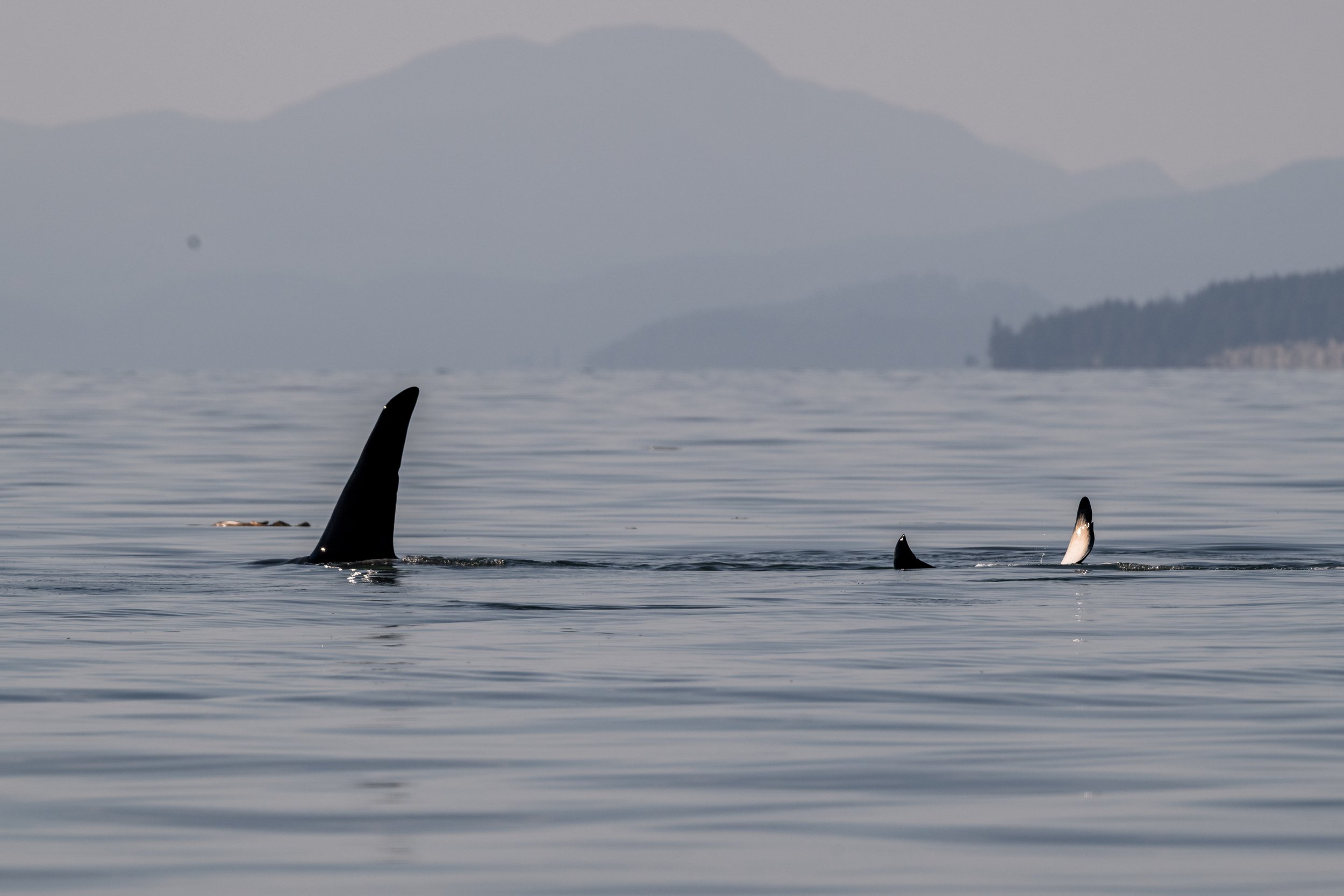
T100C Laurel with one of the other males upside down behind him. Photo by Aly Kohlman.
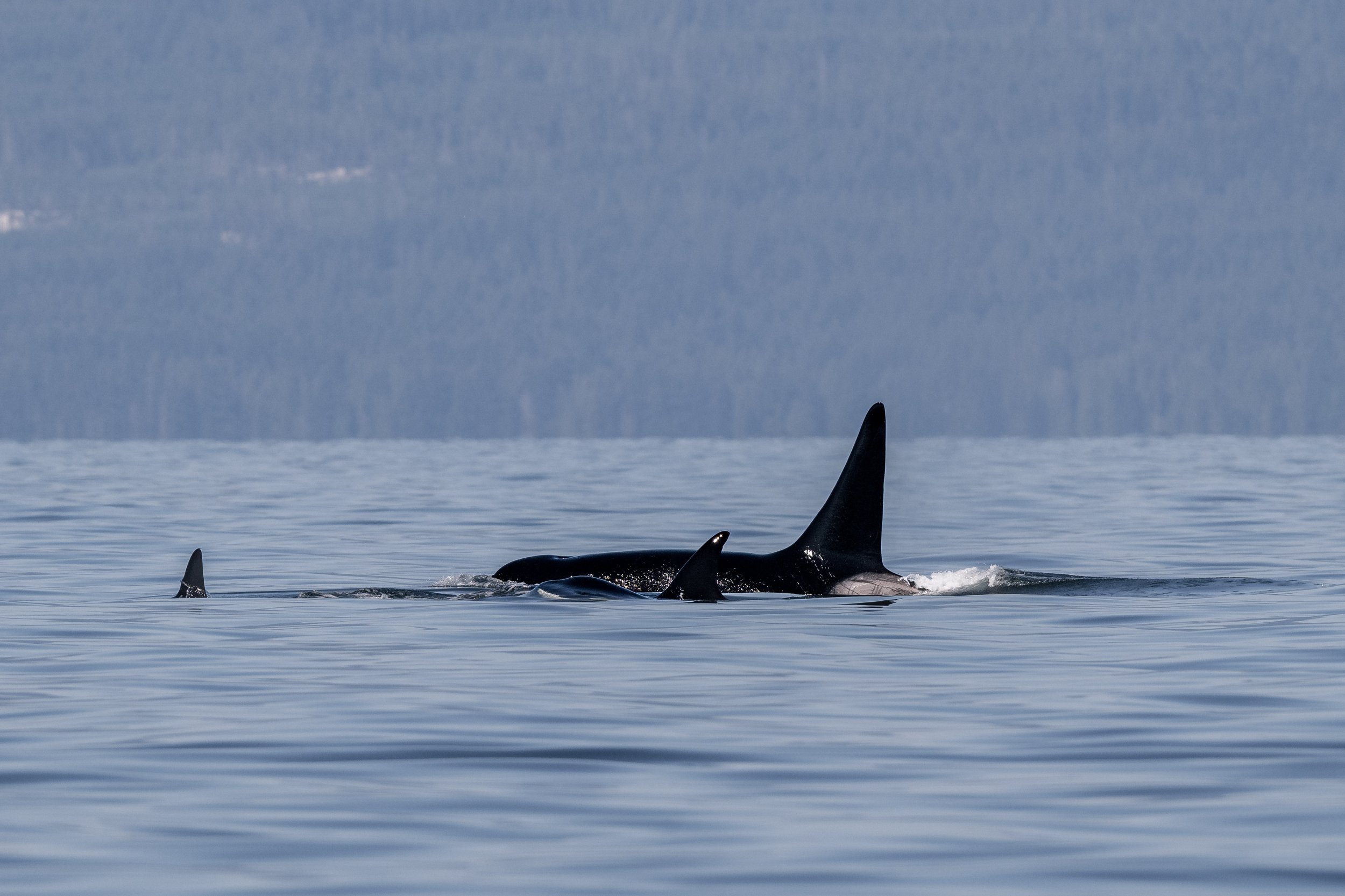
T101B Lagoon with T100 Hutchins beside him and T101 Reef ahead of him. Photo by Aly Kohlman.
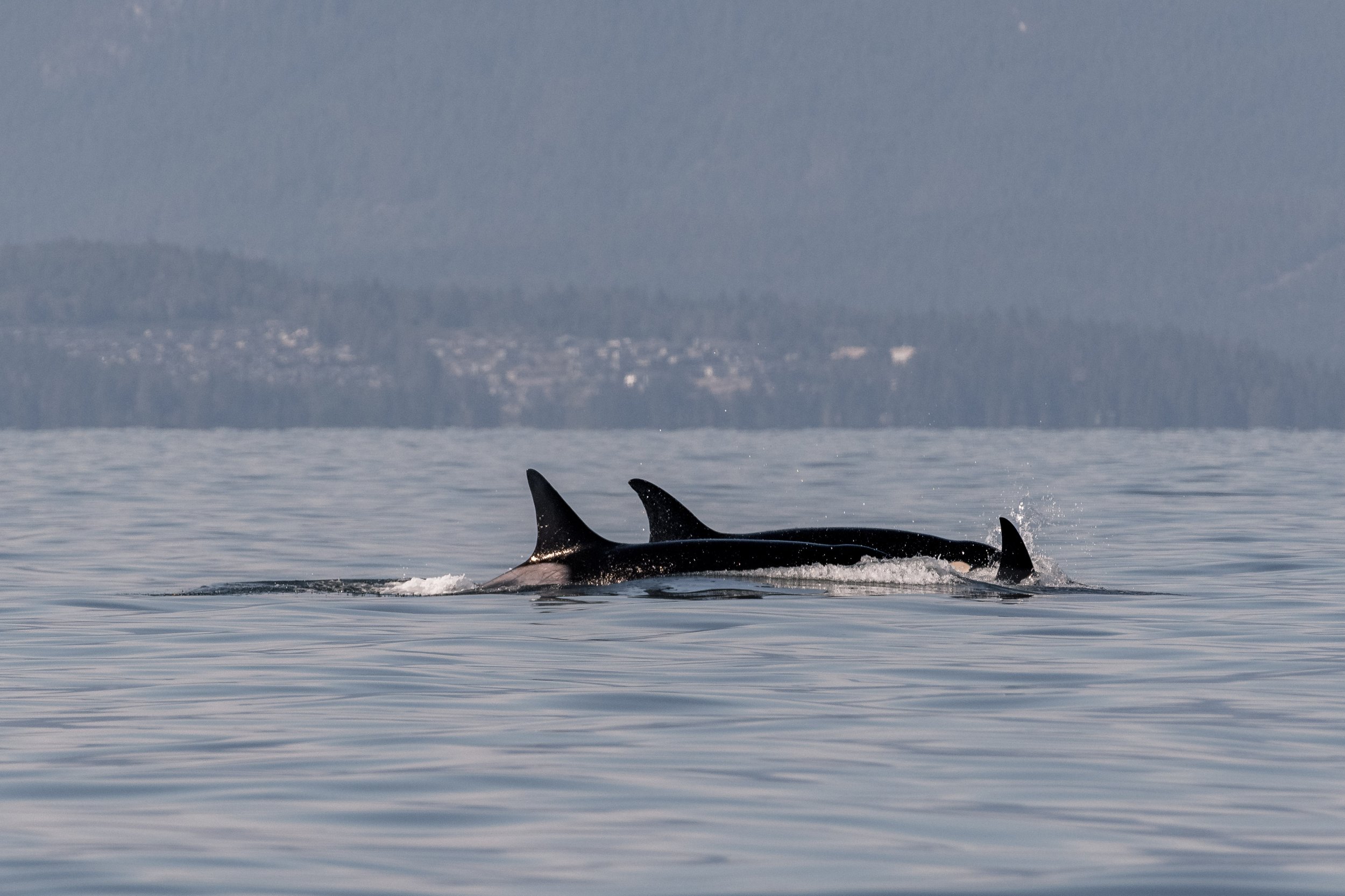
Matriarchs T101 Reef and T100 Hutchins porposiing along, with T065 Whidbey II ahead of them. Photo by Hayleigh Hilbert.
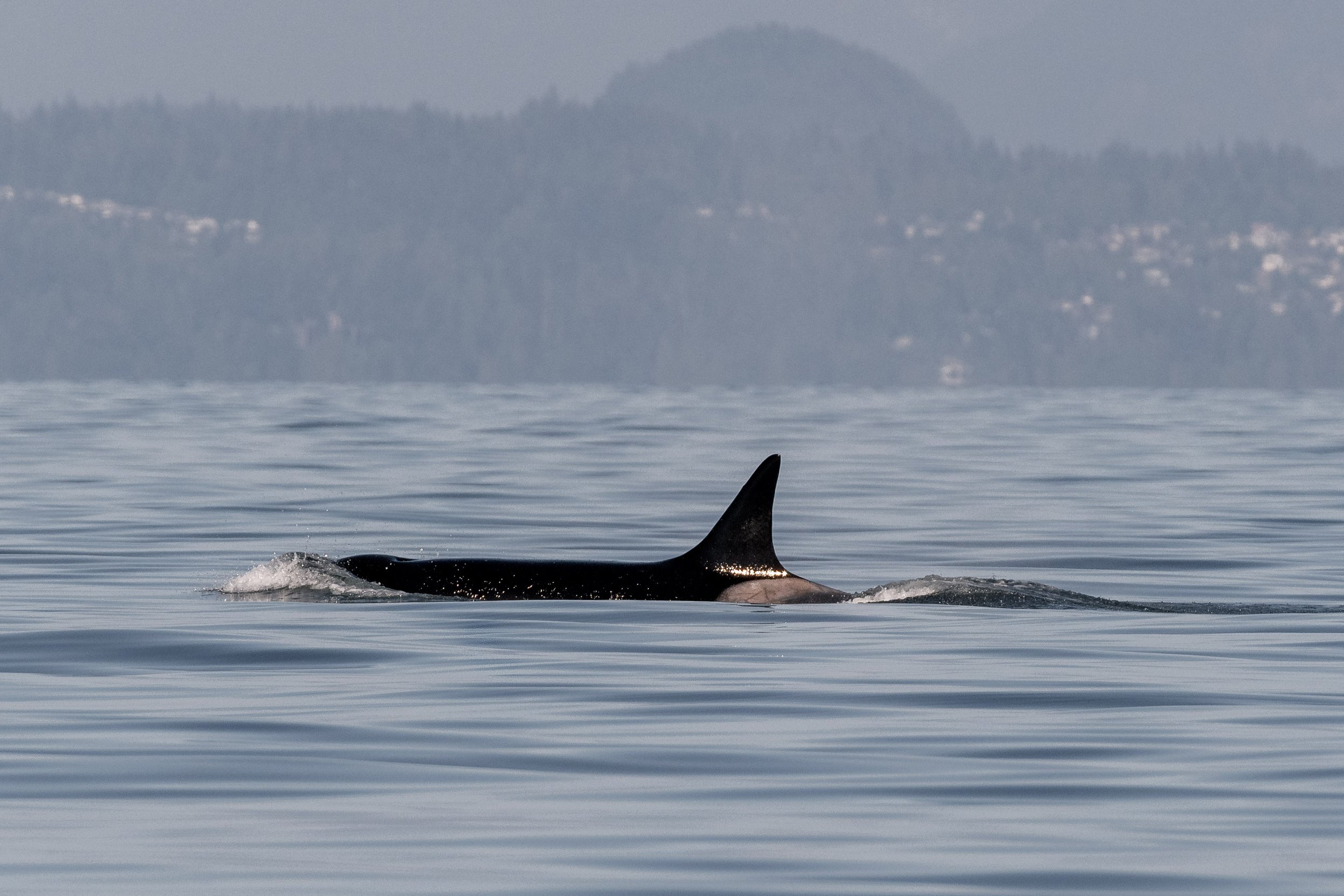
T101 Reef with her unique saddlepatch above the water. Photo by Hayleigh Hilbert.
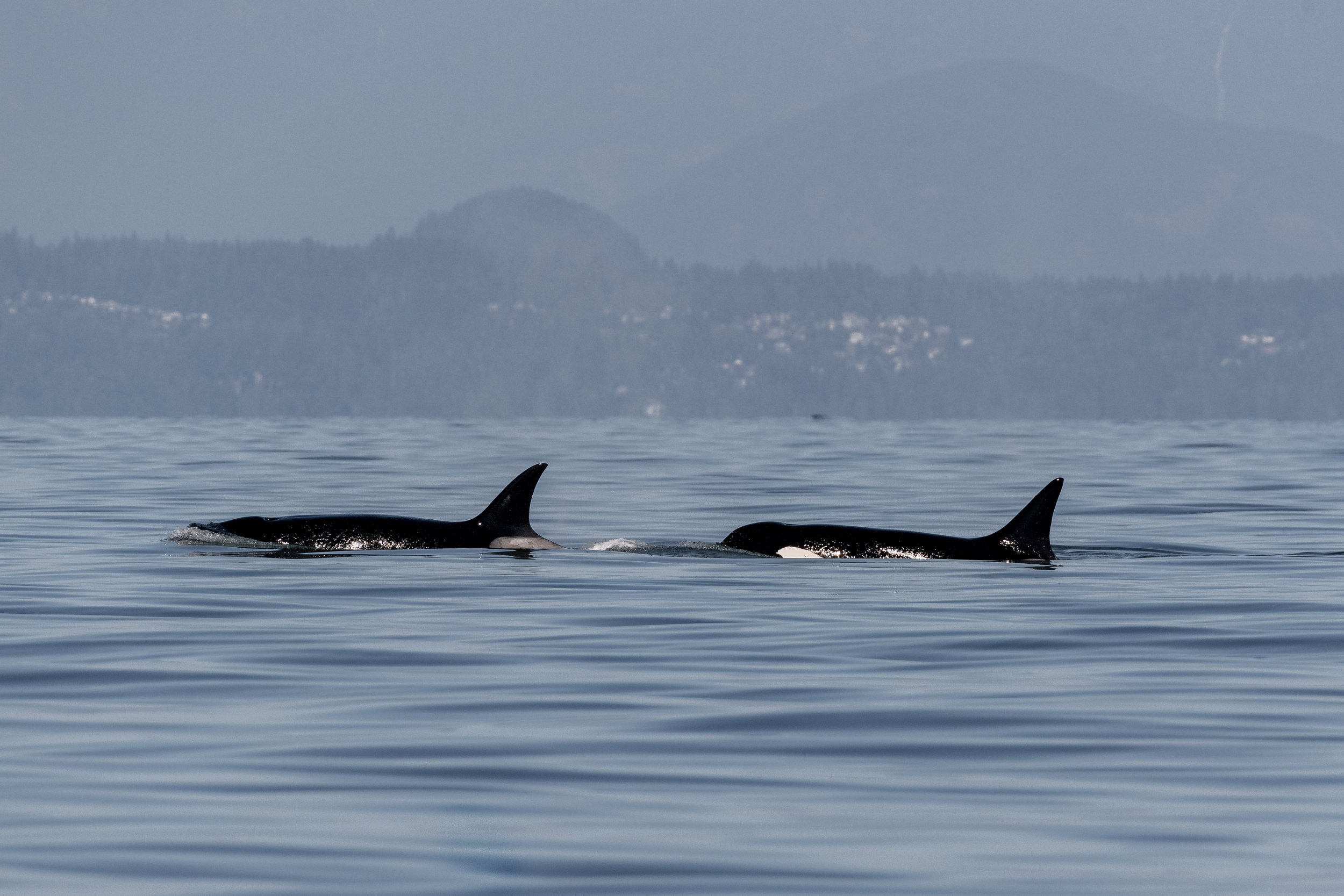
T065 Whidbey II and T101 Reef. Photo by Hayleigh Hilbert.
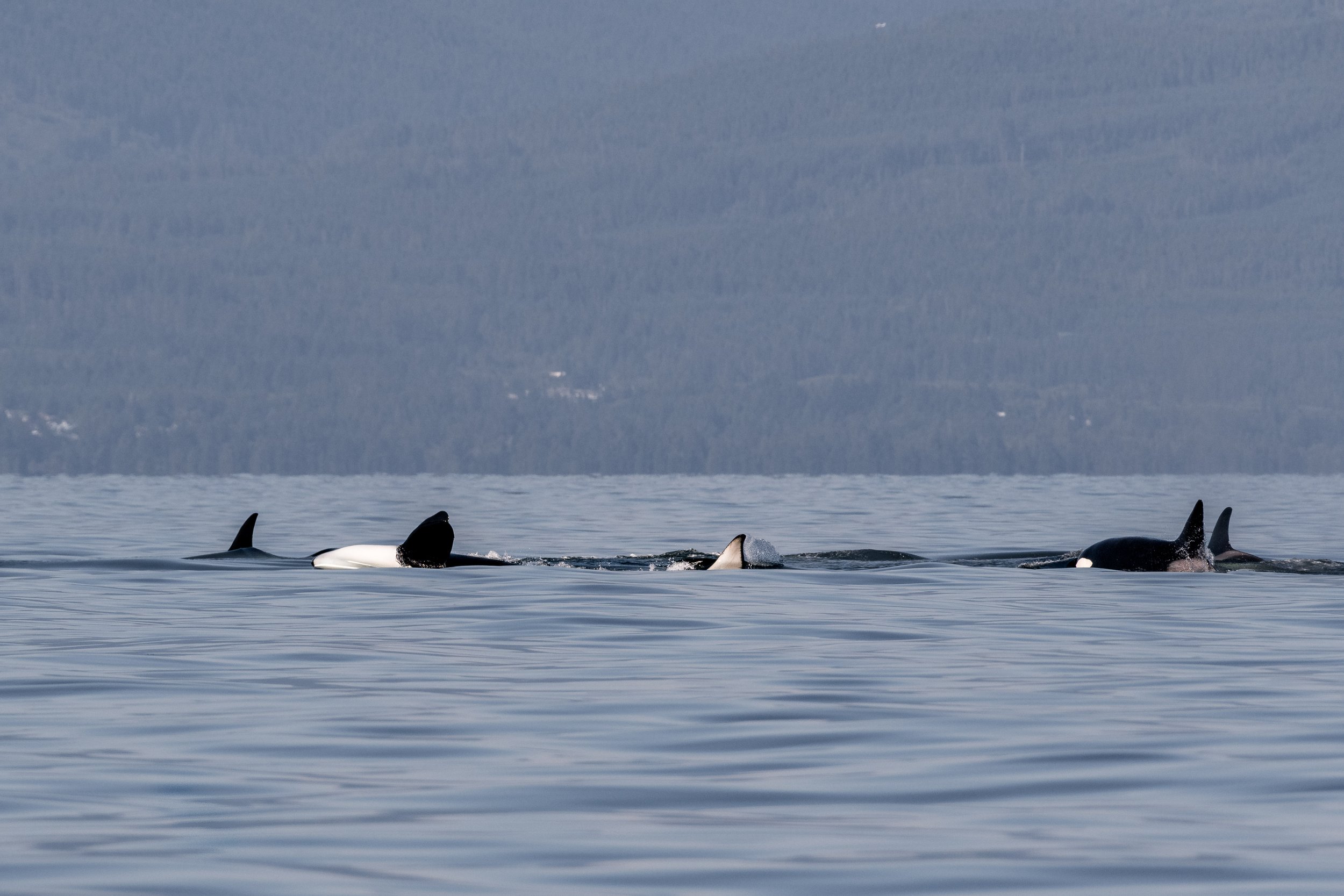
Party time! Photo by Hayleigh Hilbert.
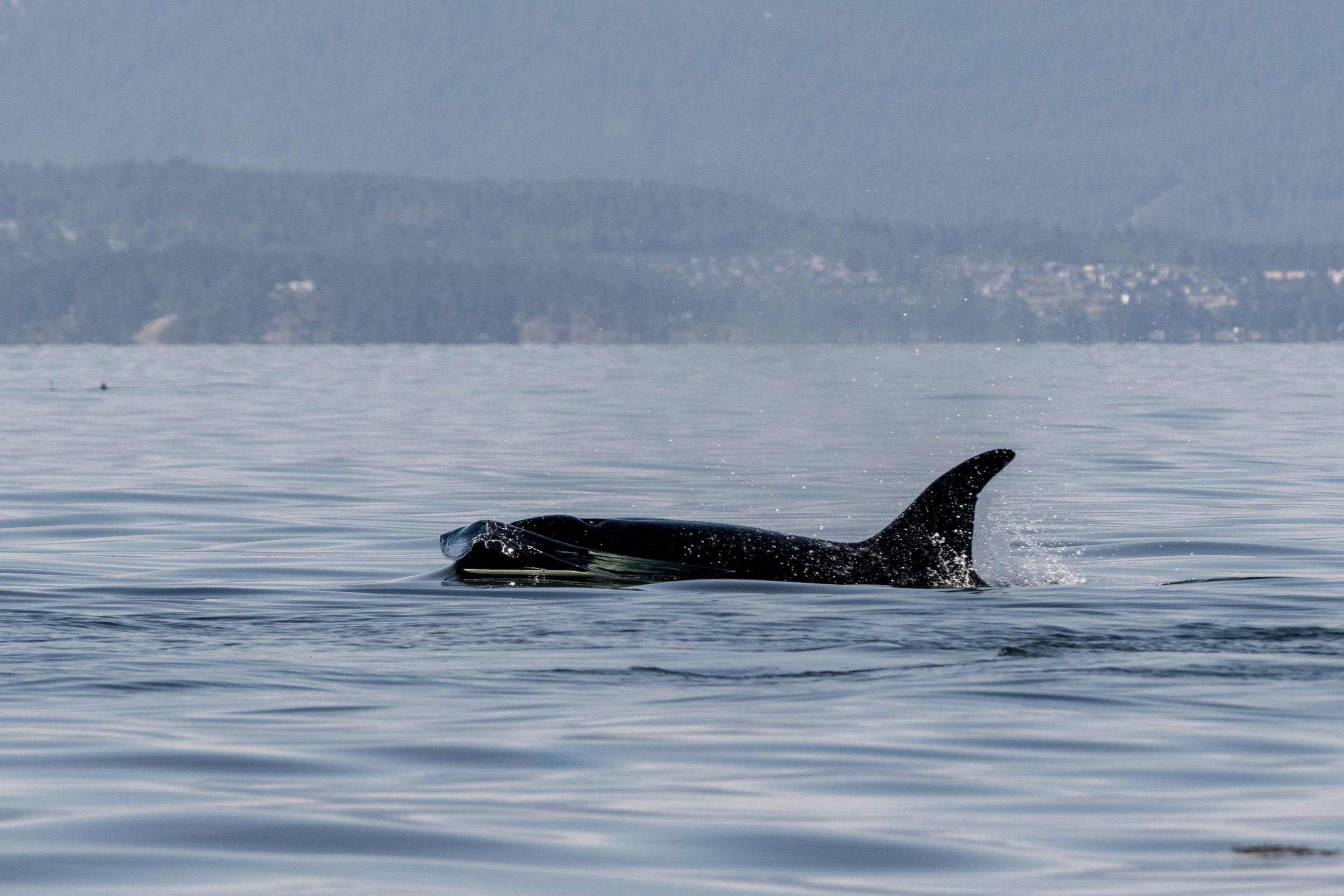
T065A5 Indy making waves. Photo by Hayleigh Hilbert.
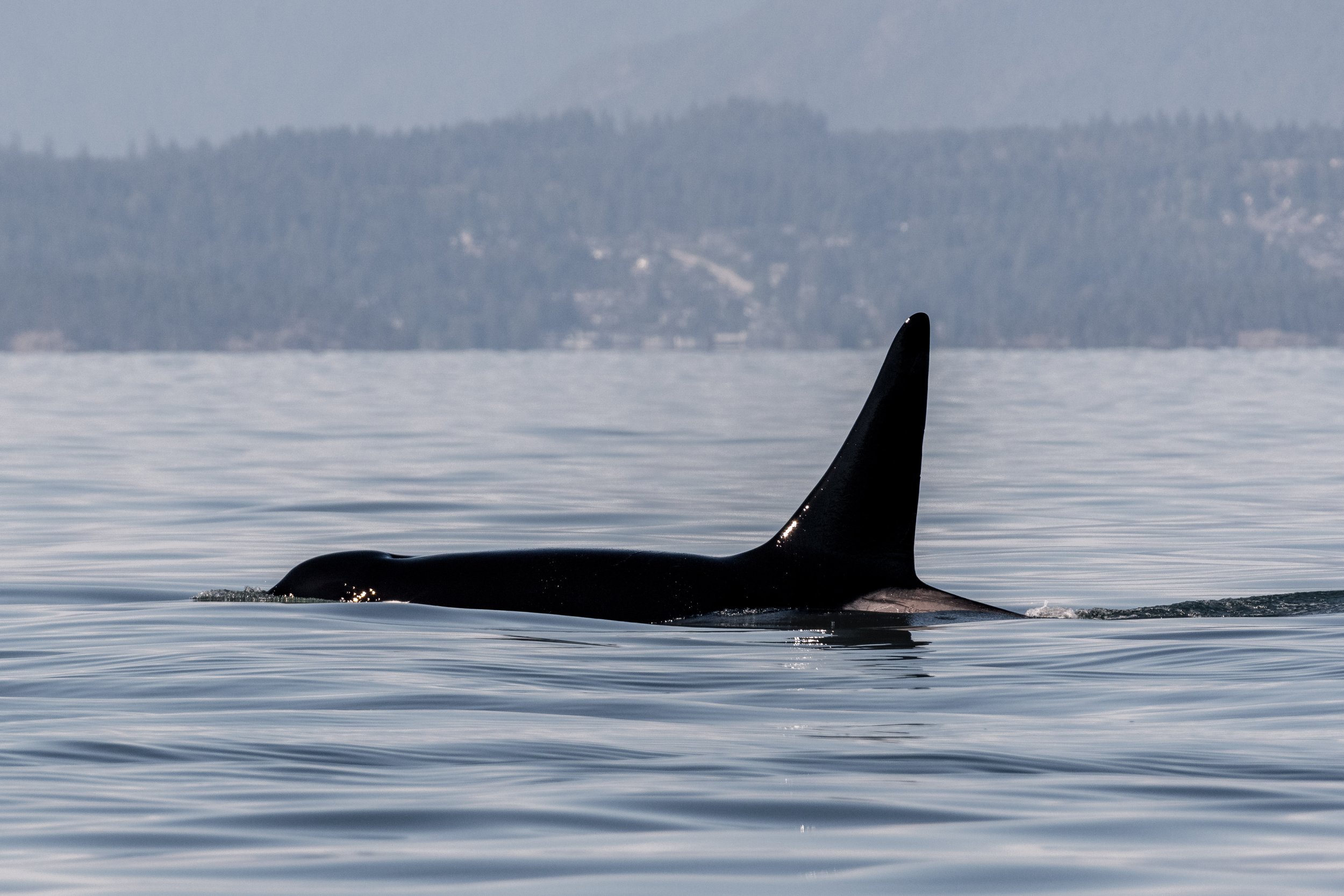
T101B Lagoon with his perfectly intact dorsal fin. Photo by Hayleigh Hilbert.
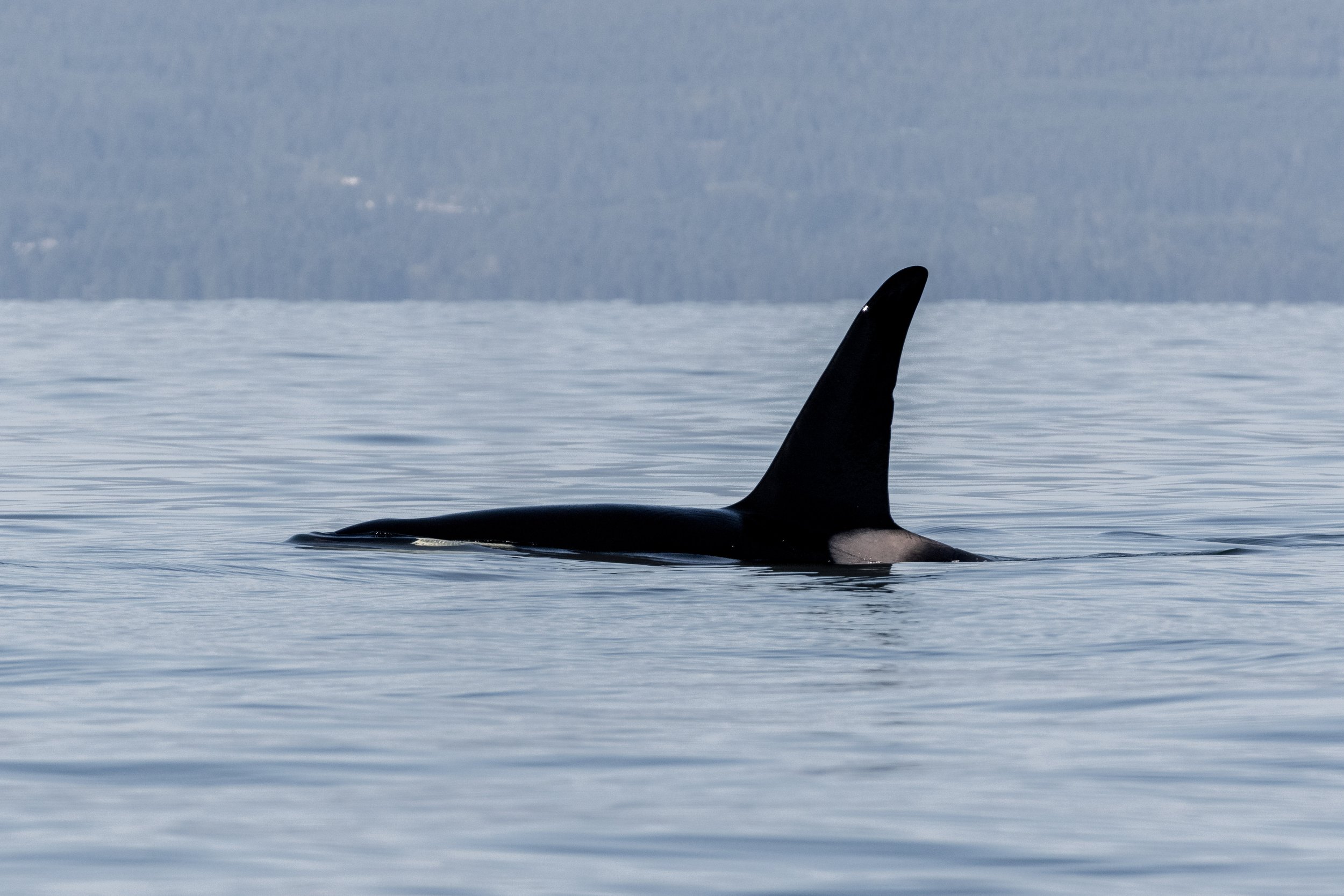
T100C Laurel with his notched dorsal fin. Photo by Hayleigh Hilbert.
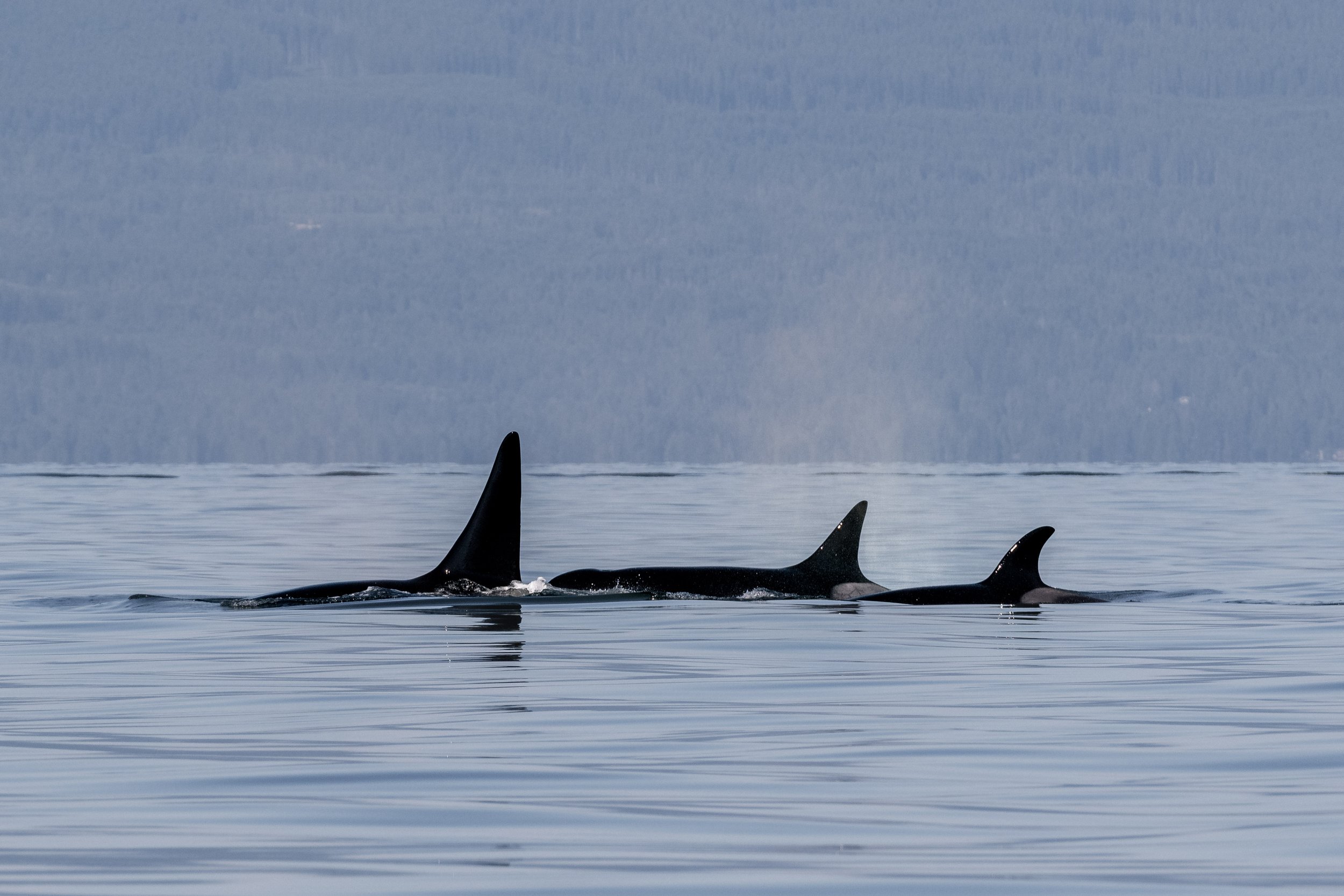
T101B Lagoon, T101 Reef, and T100F Estrella together. Photo by Hayleigh Hilbert.
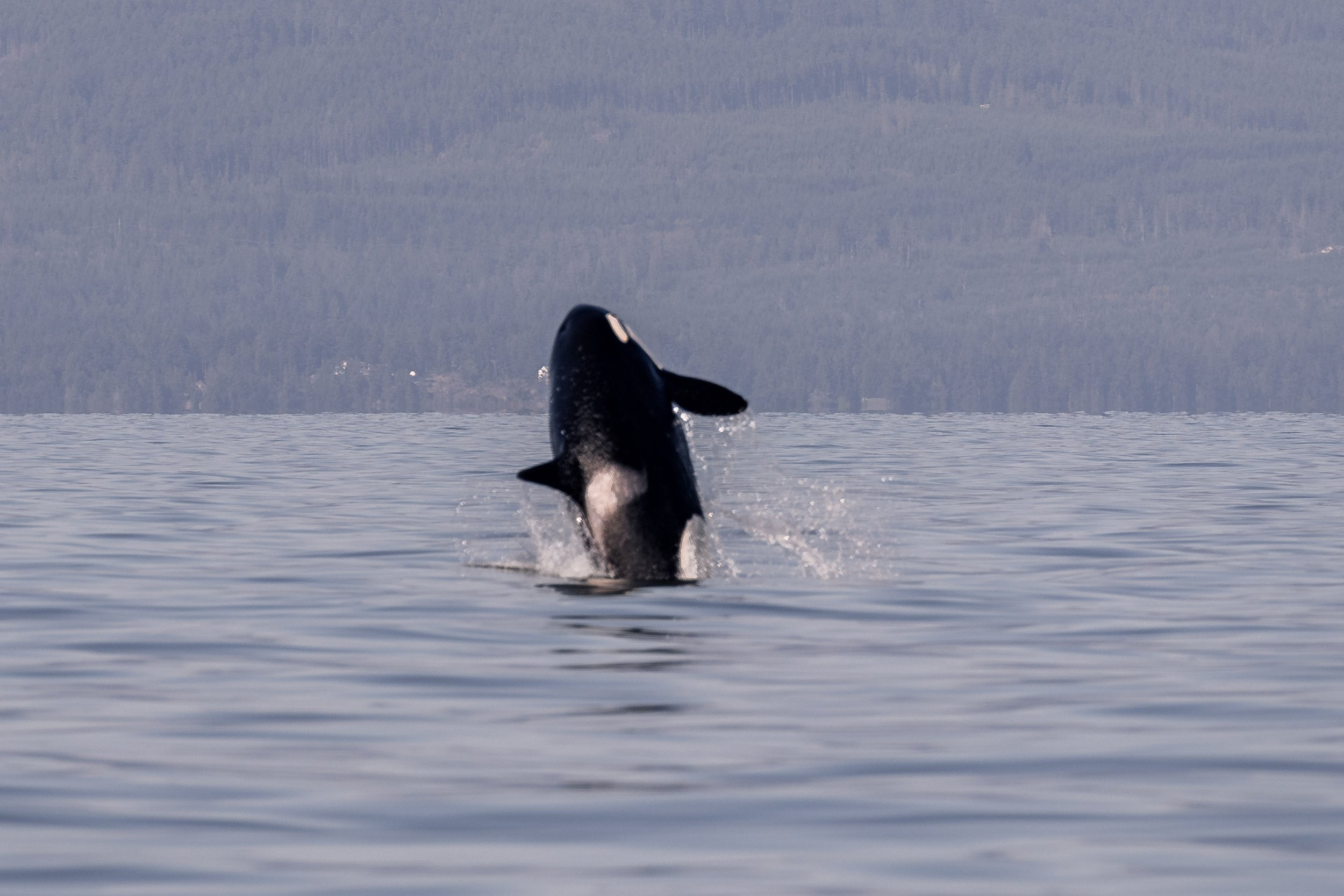
Breach for the sky! Photo by Jordan Robinson.
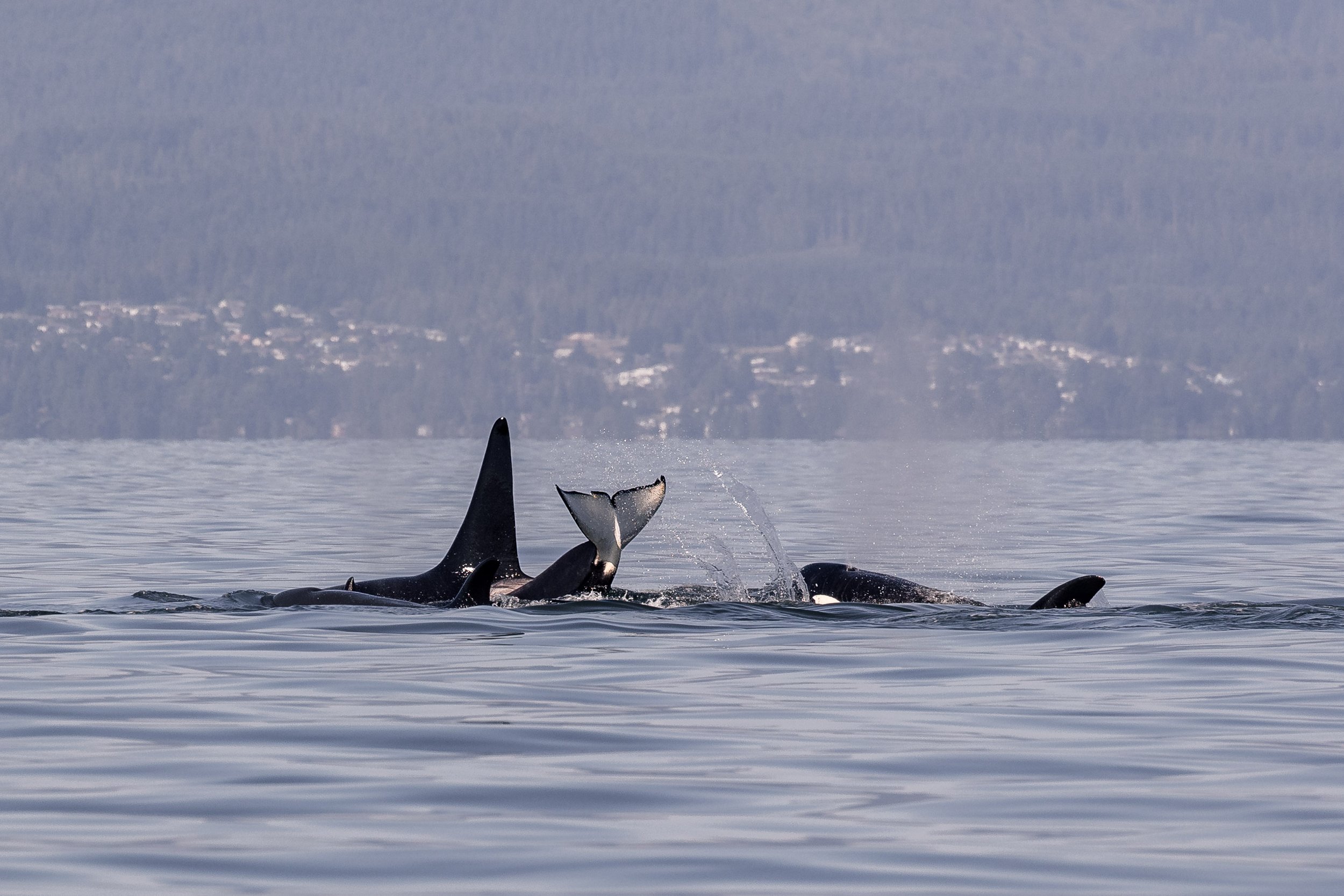
There were many individuals associating together all at once! Photo by Jordan Robinson.
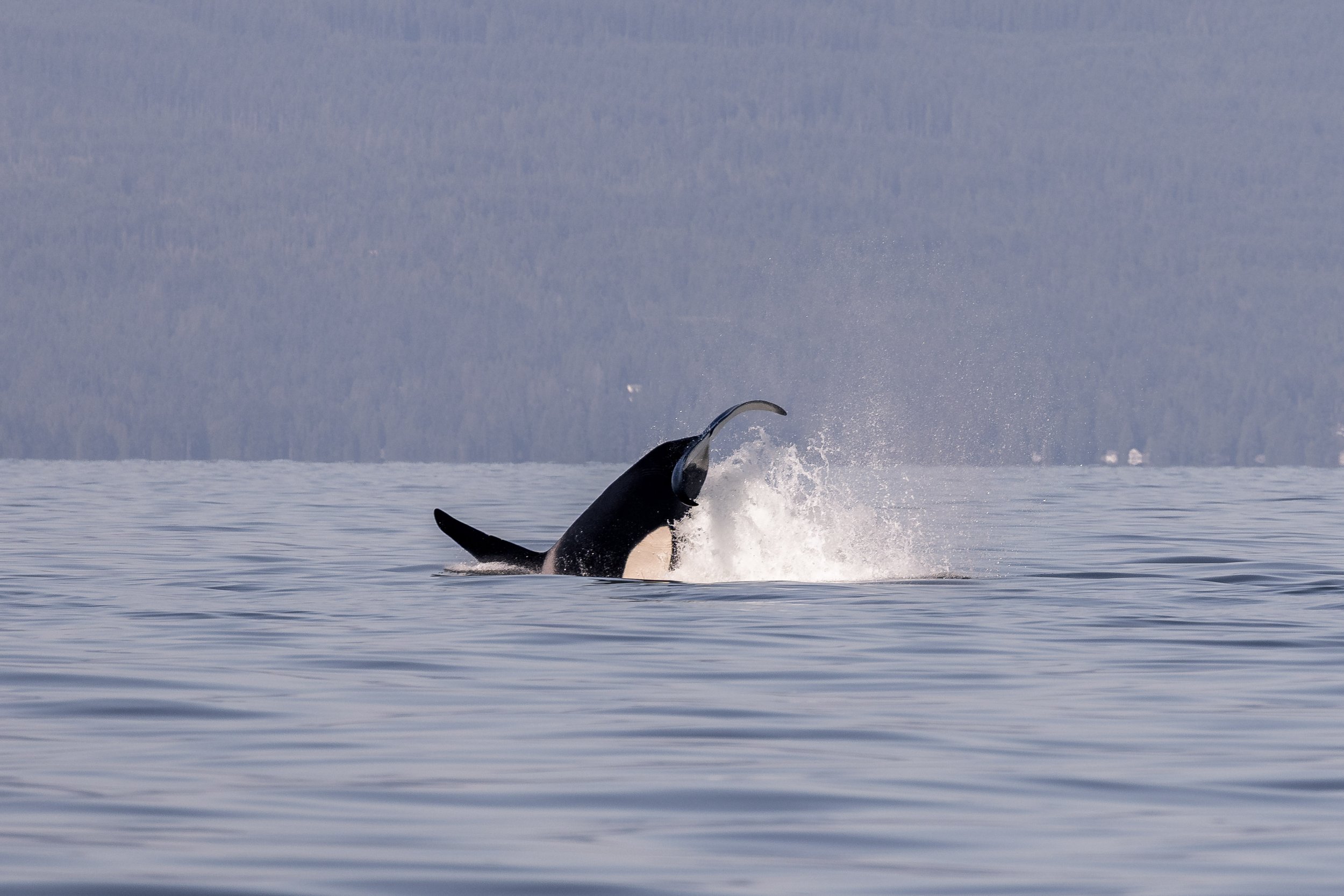
T100C Laurel landing at an awkward angle. Photo by Jordan Robinson.
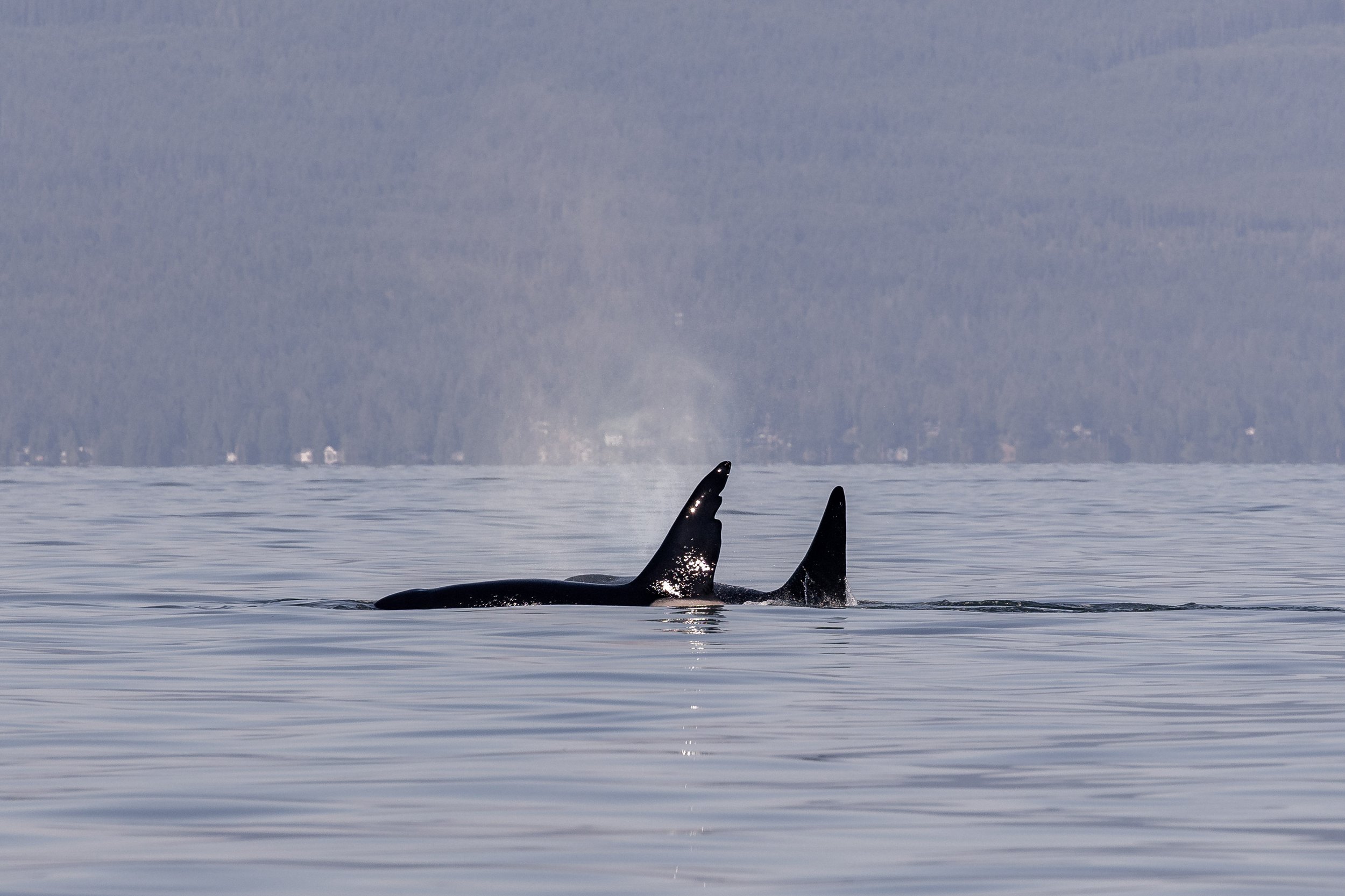
T063 Chainsaw and T101B Lagoon together. Photo by Jordan Robinson.
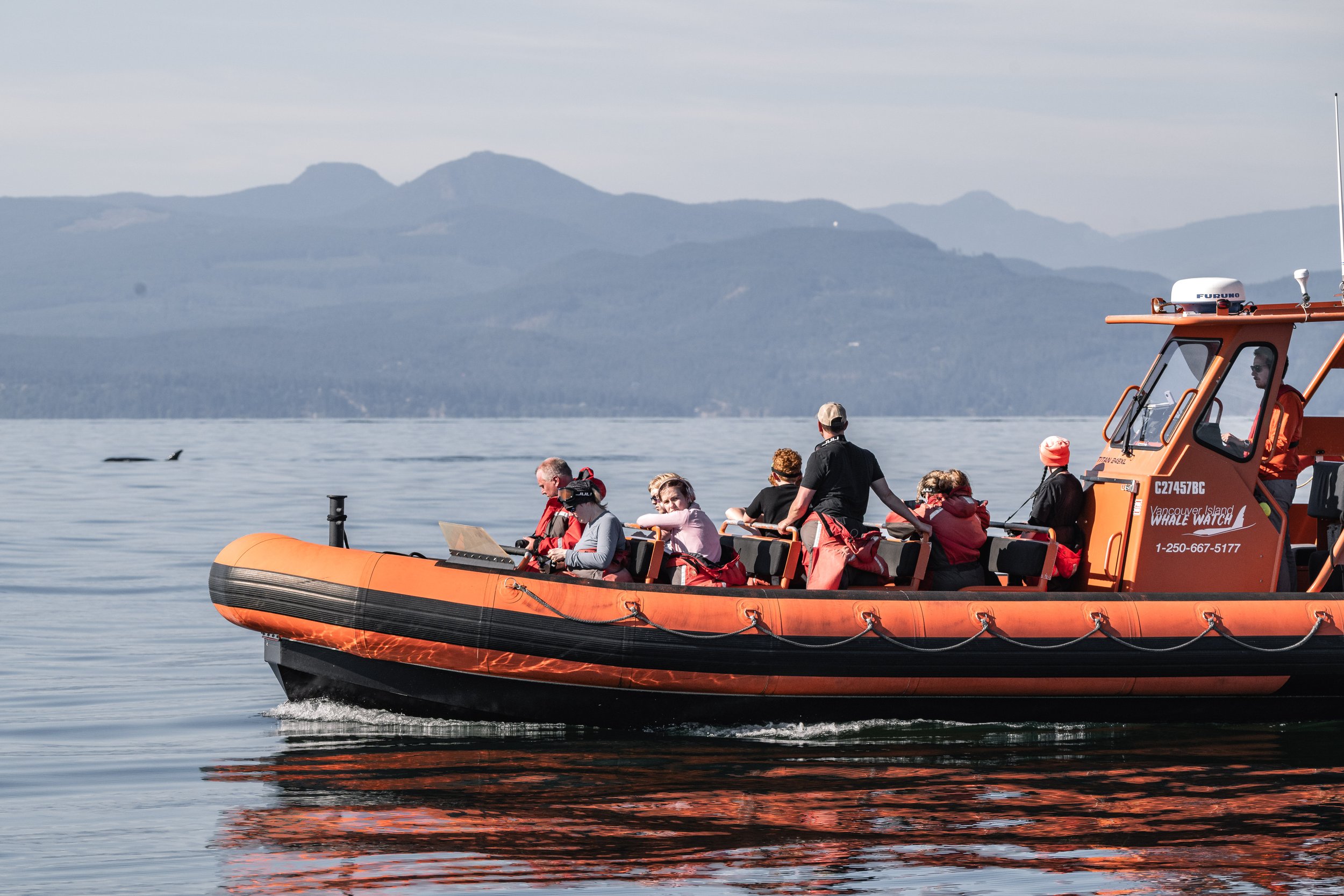
Cascadia and guests watching the whales. Photo by Aly Kohlman.
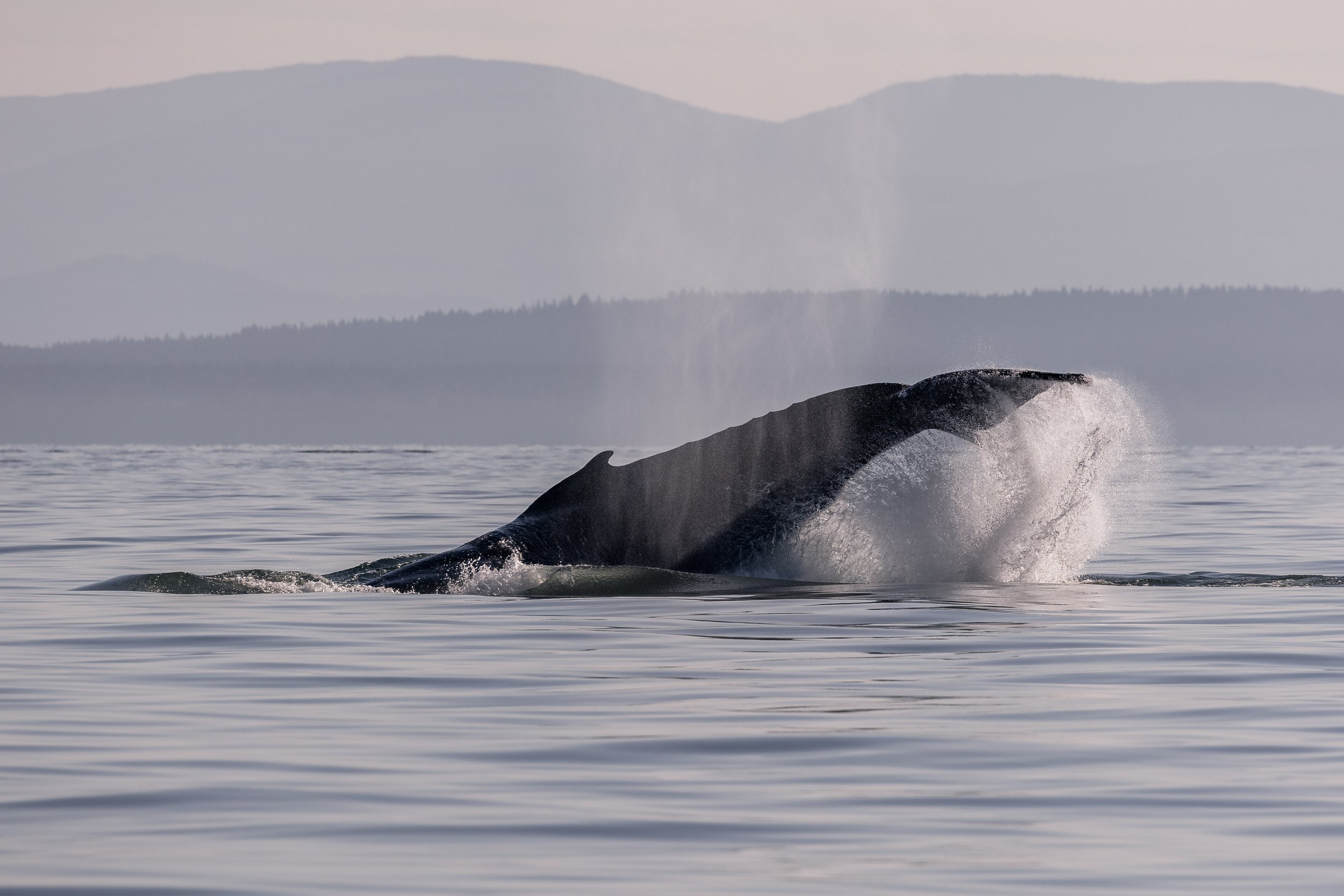
Dalmatian cartwheeling. Photo by Jordan Robinson.
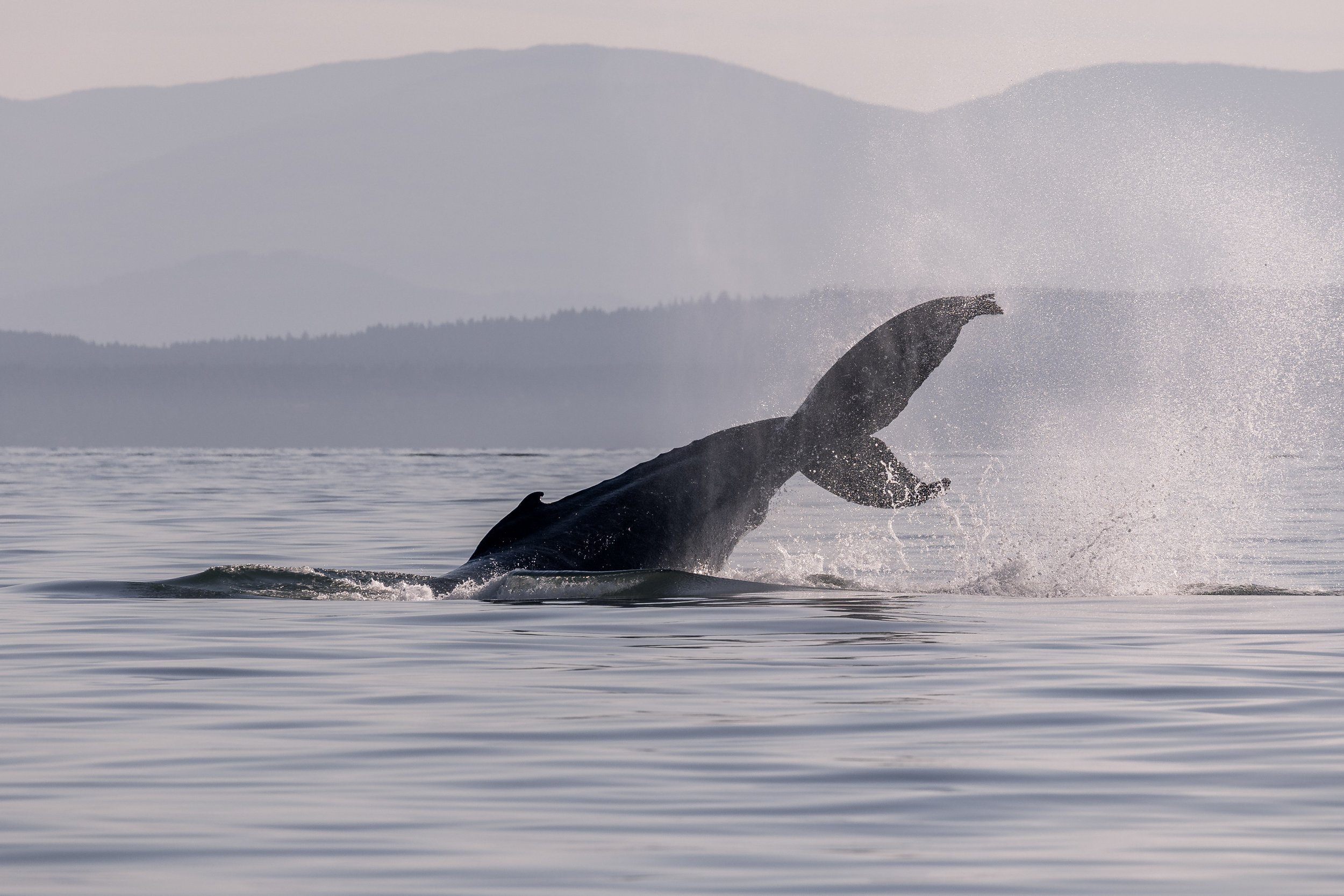
Dalmatian beautifully backlit. Photo by Jordan Robinson.
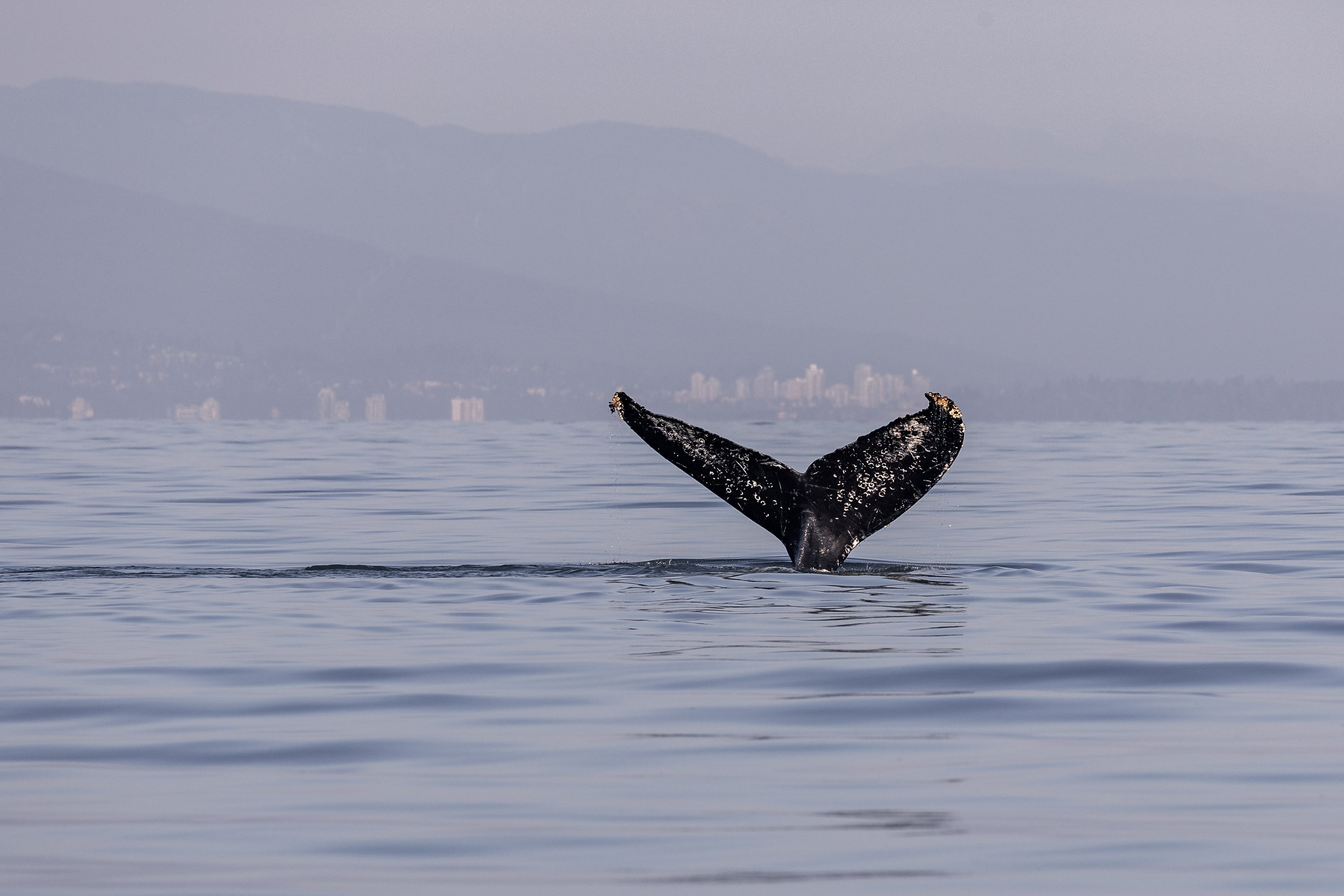
Dalmatian diving, with Vancouver visible behind him. Photo by Jordan Robinson.
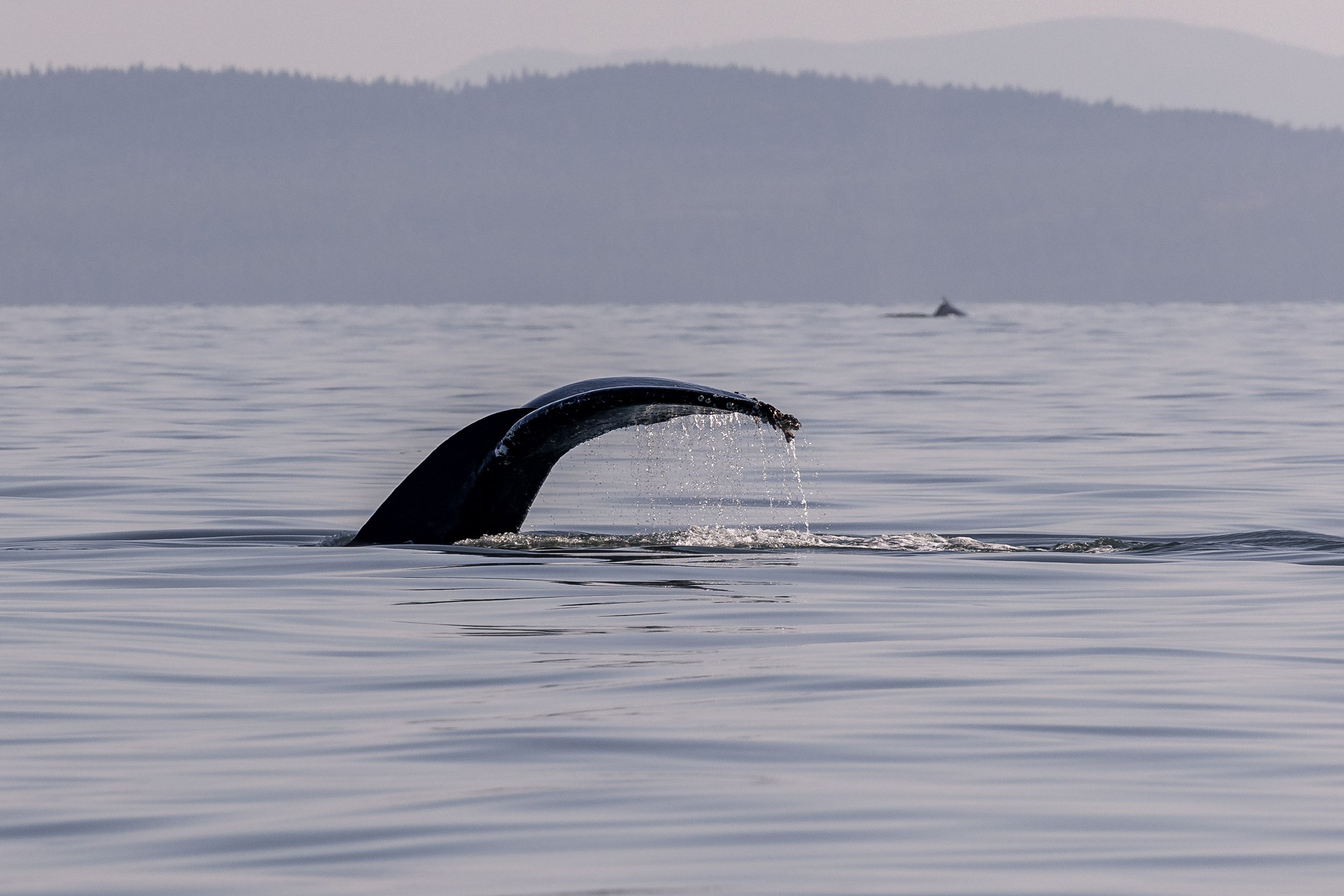
Niagara diving, with another whale behind him - who could that be? Photo by Jordan Robinson.
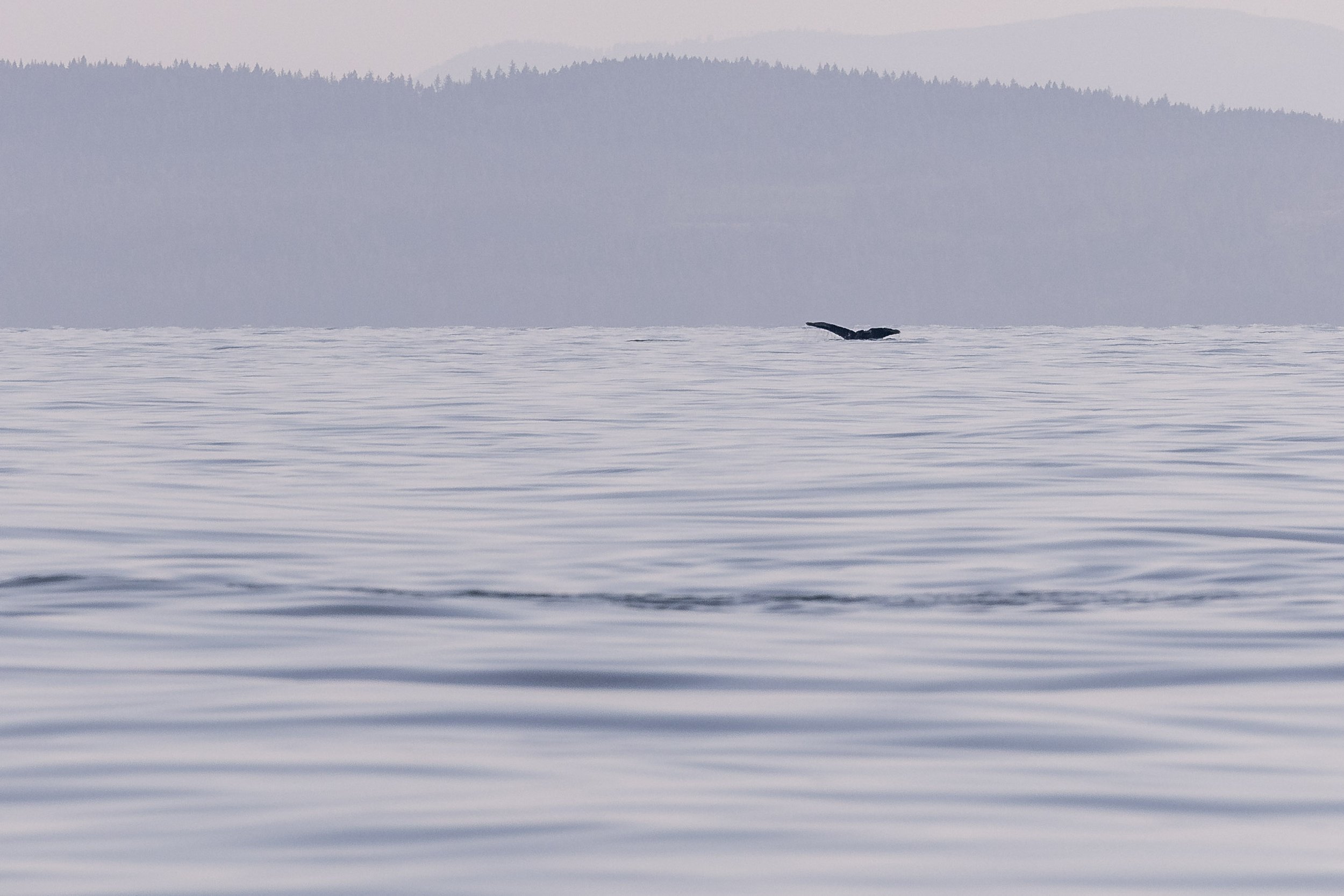
It’s Snoopy! Even from a distance, his uniquely shaped fluke makes him easy to ID. Photo by Jordan Robinson.
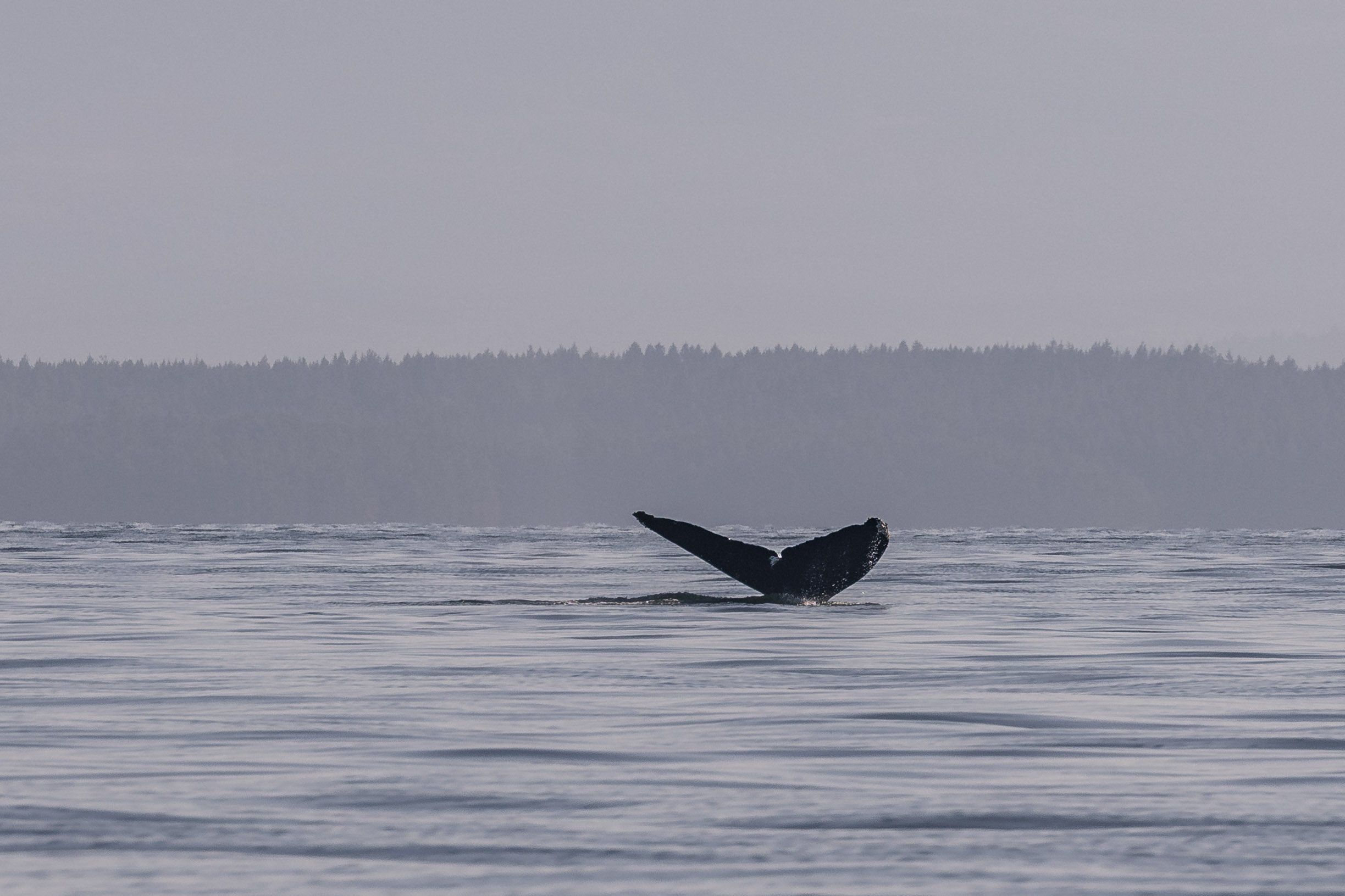
Niagara’s fluke - do you see how he got his nickname? Photo by Jordan Robinson.
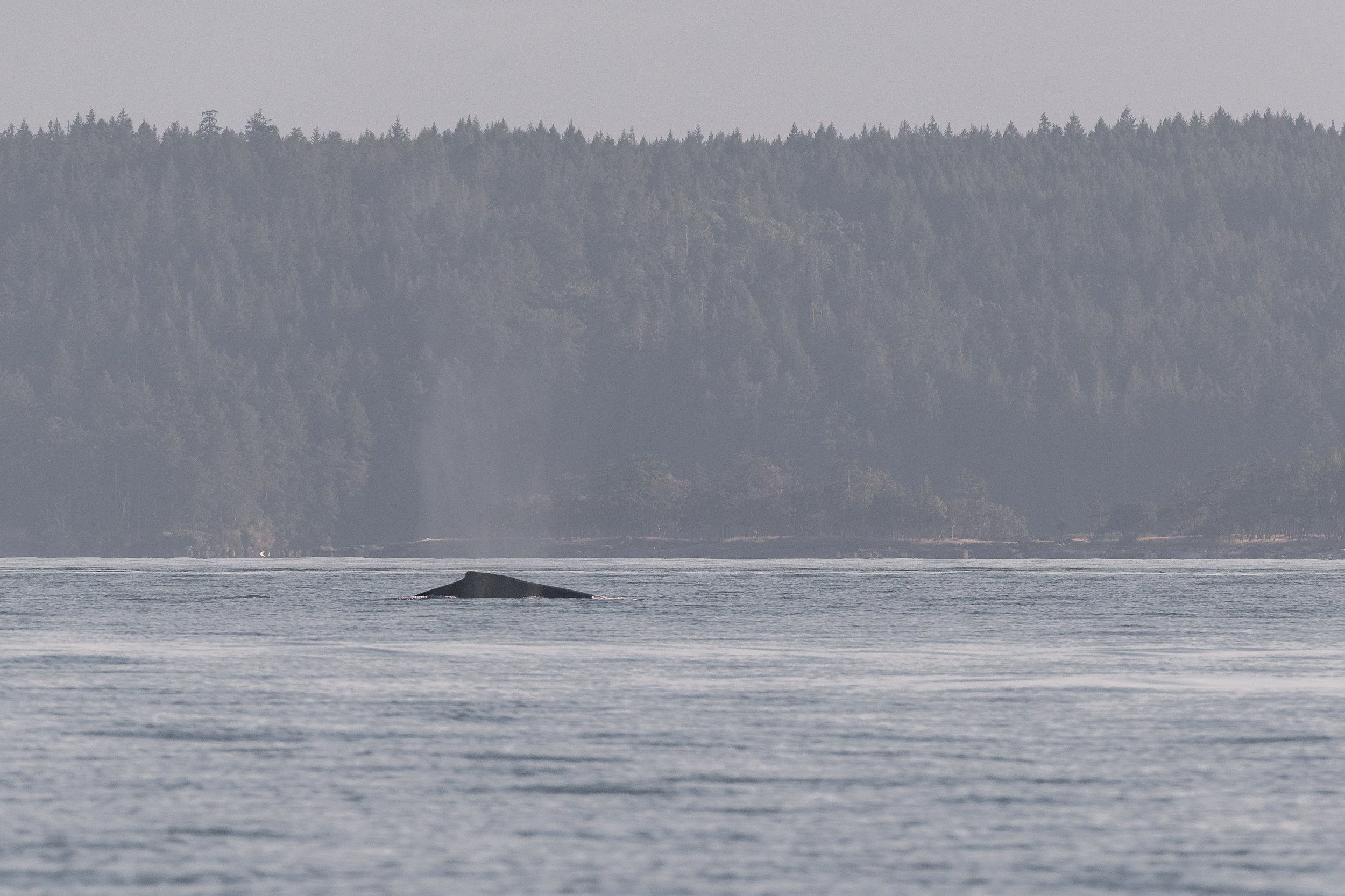
Zig Zag zigzagging along. Photo by Hayleigh Hilbert.
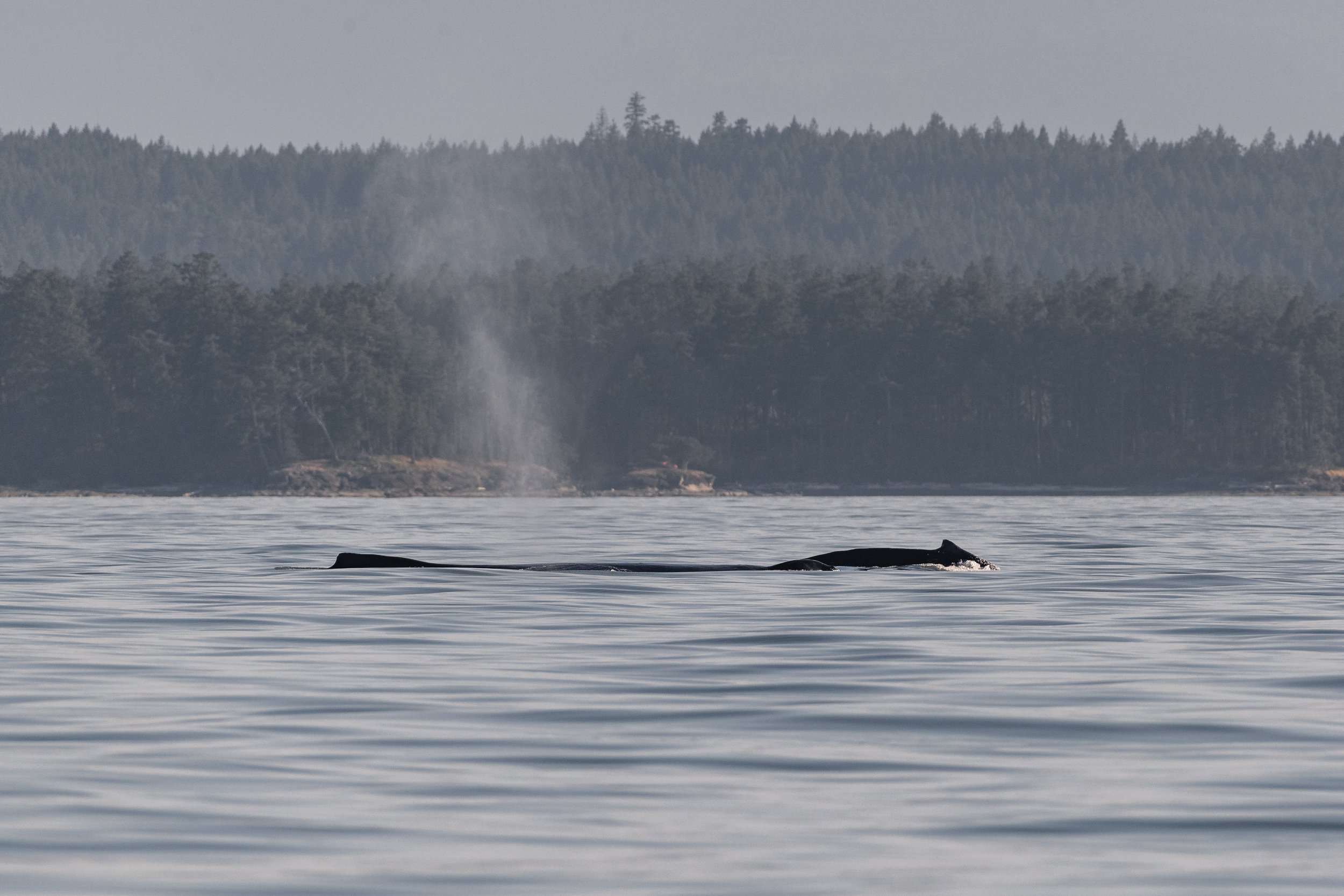
Mantis with Zig Zag behind him. Photo by Hayleigh Hilbert.
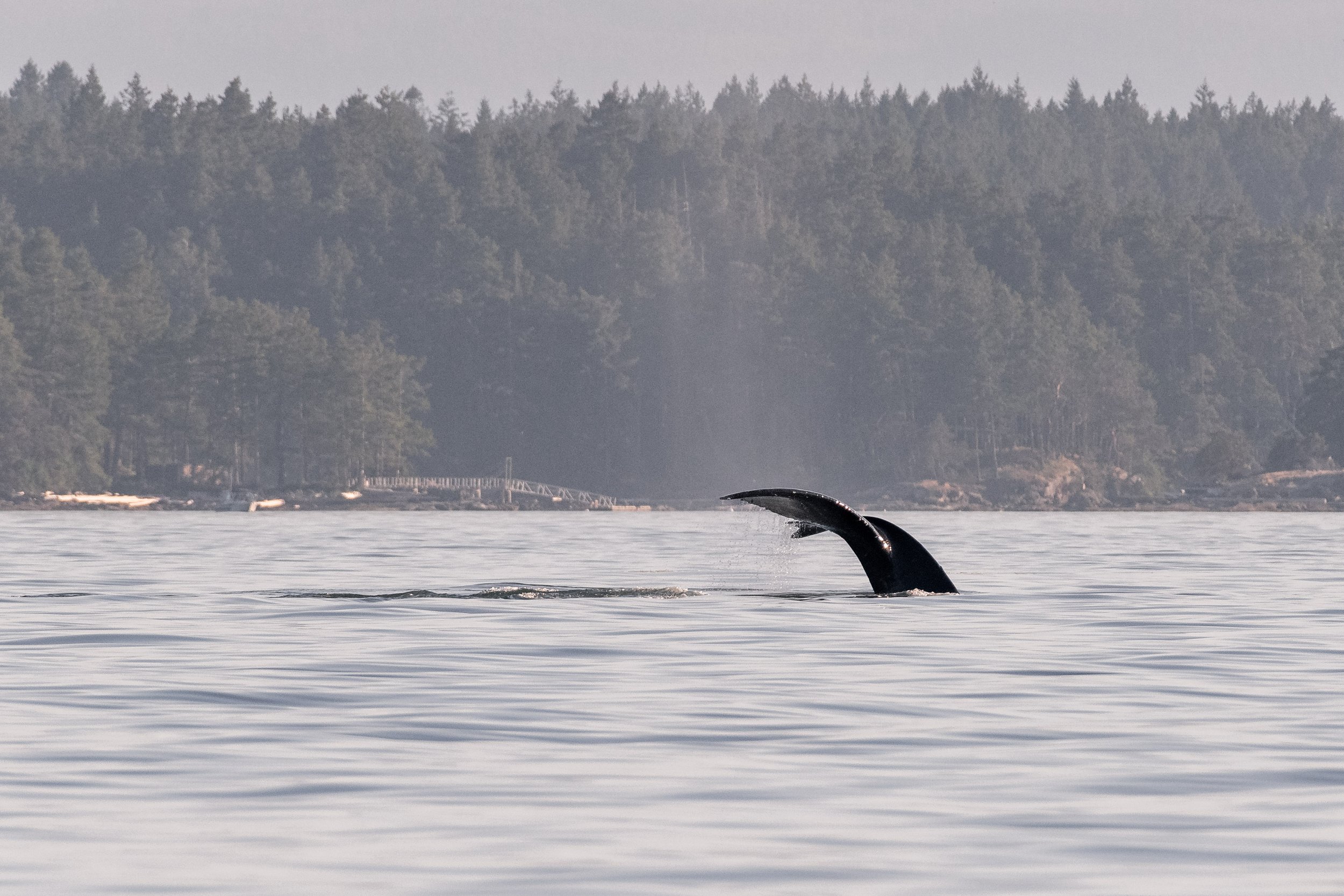
A goodbye fluke from Mantis. Photo by Hayleigh Hilbert.
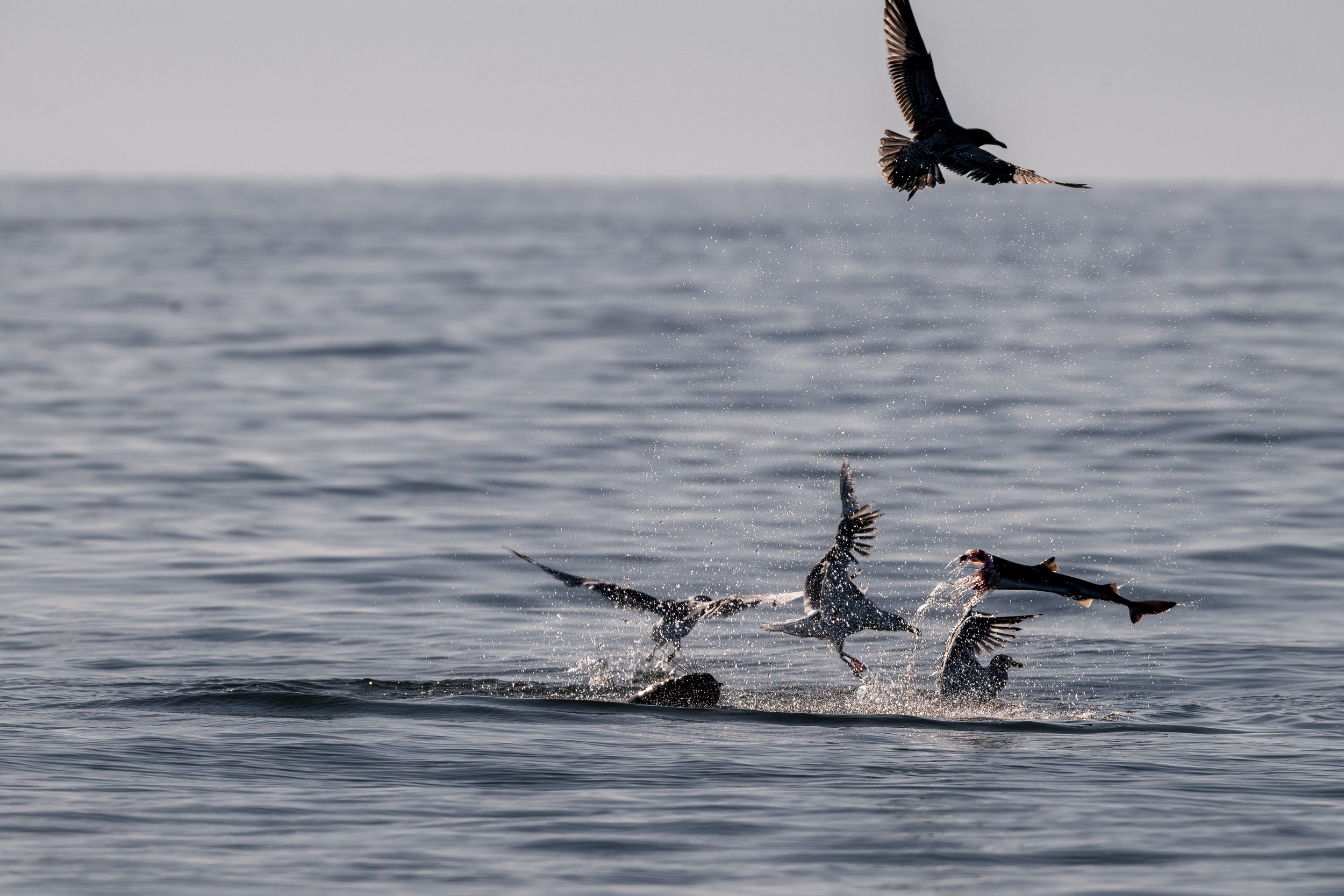
Now that’s what we call ‘fast food’! Photo by Aly Kohlman.
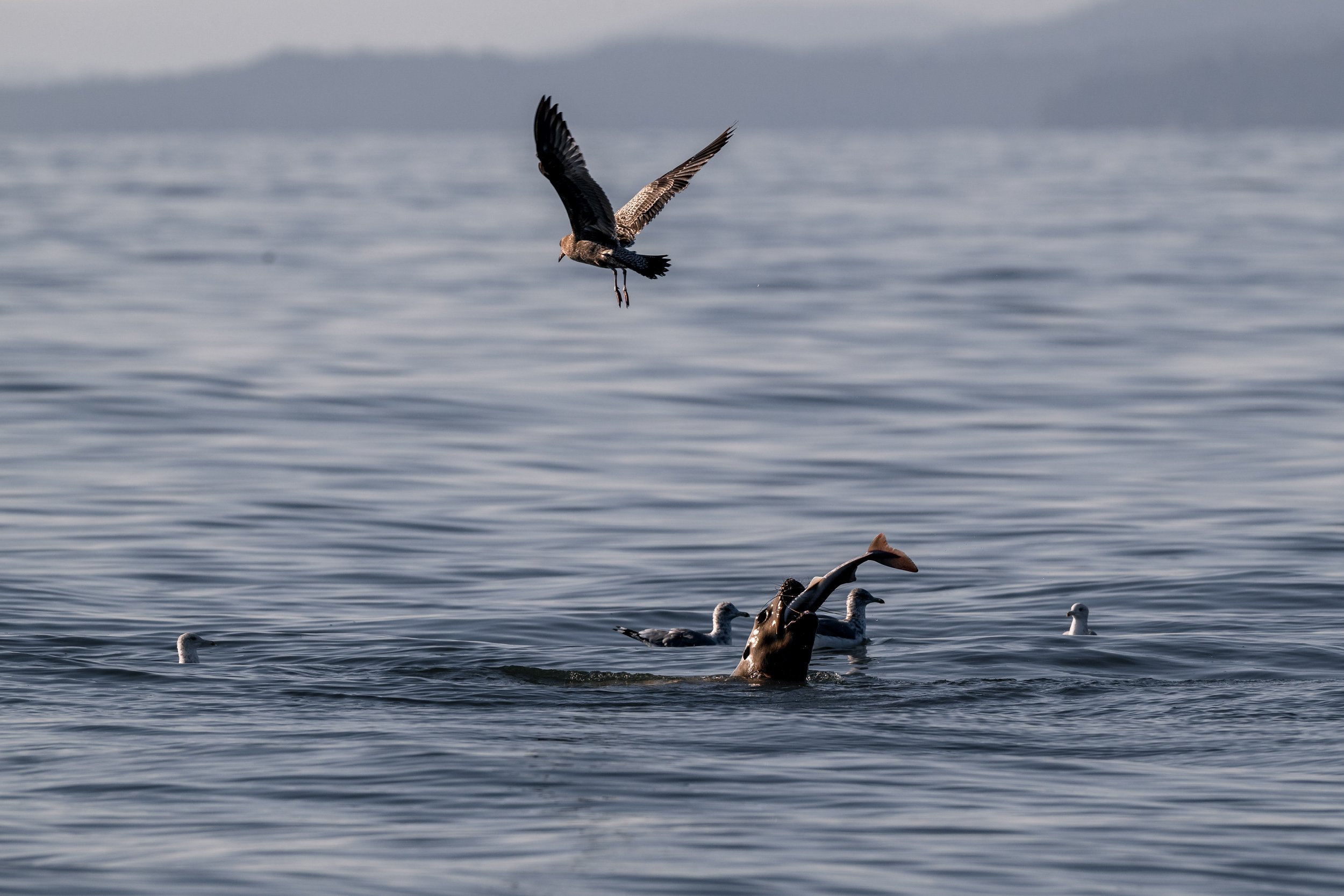
This sea lion had quite the feast - it was snacking on a Spiny Dogfish! Photo by Aly Kohlman.
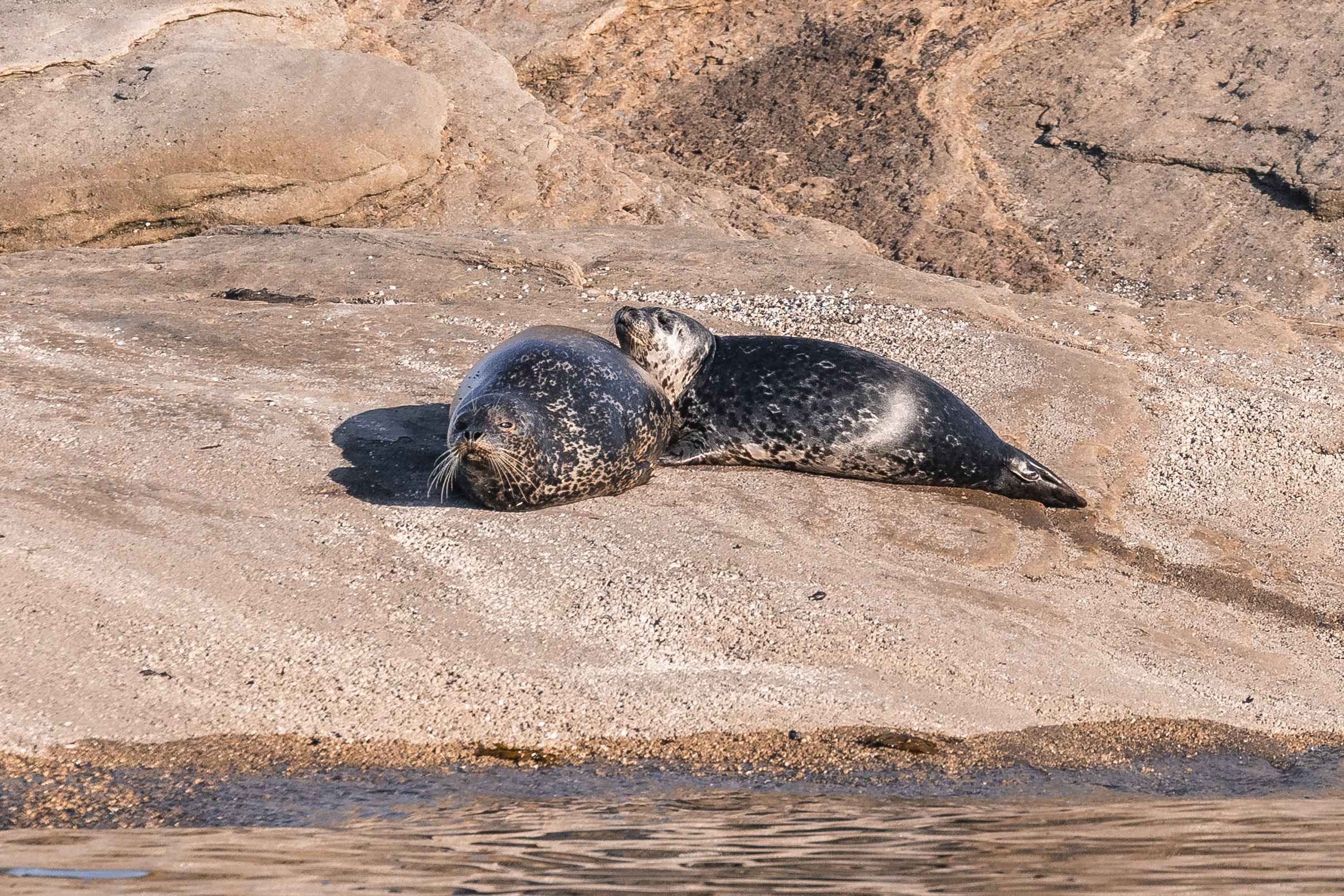
Harbour Seals napping on the rocks. Photo by Jordan Robinson.
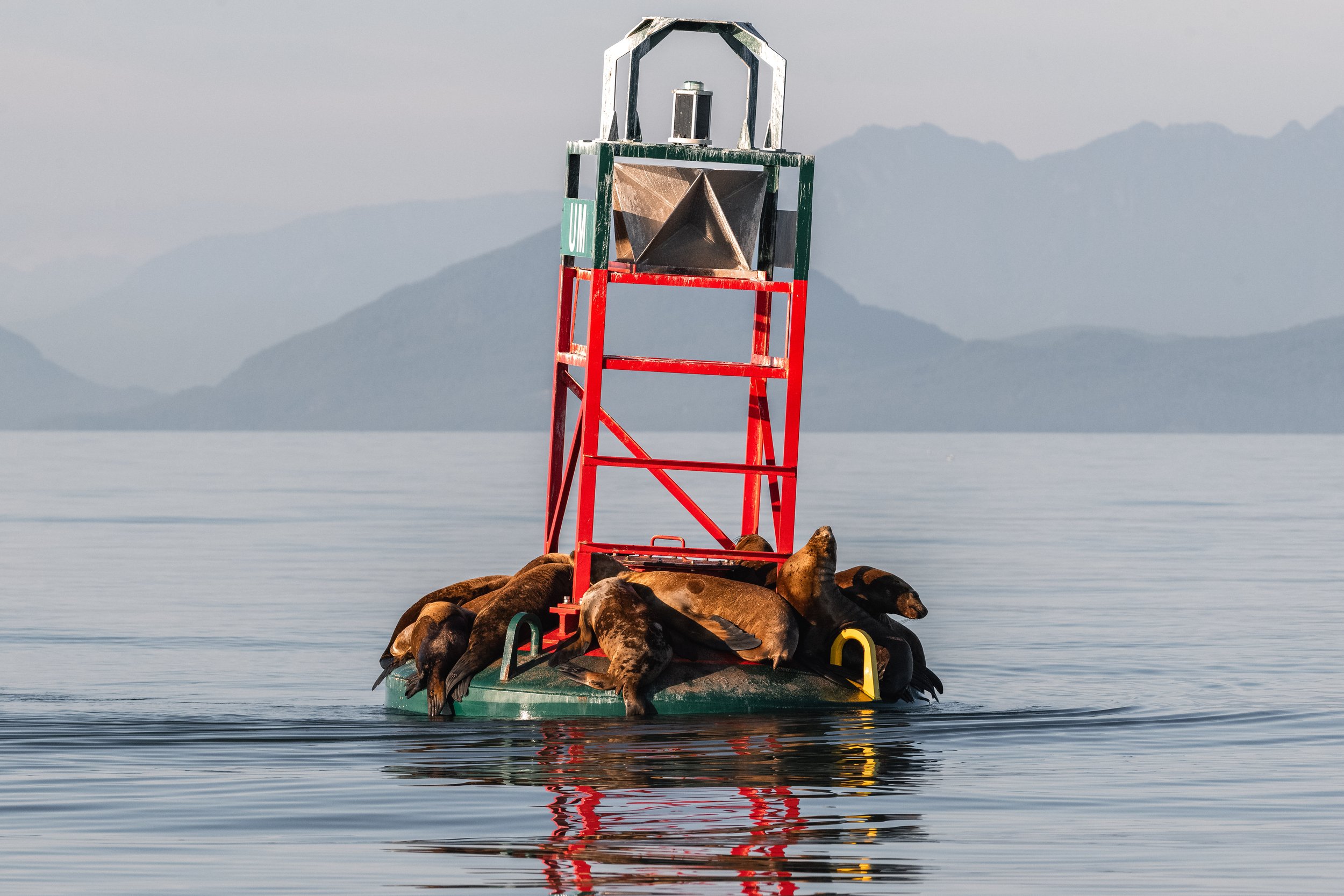
The UM buoy, a favourite haul out for the Steller Sea Lions. Photo by Hayleigh Hilbert.
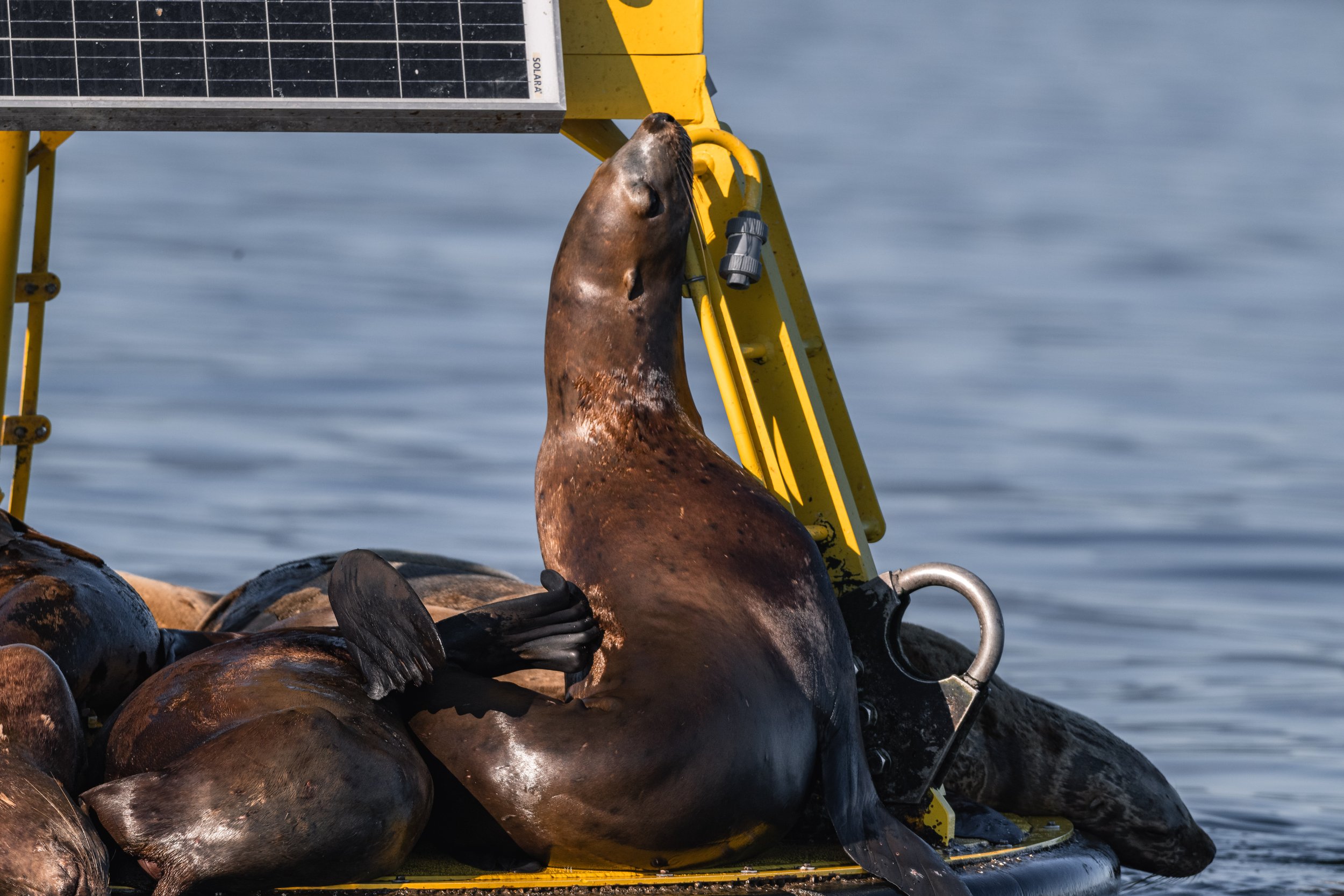
The Halibut Bank ODAS buoy is an equally as busy haul out. Photo by Aly Kohlman.
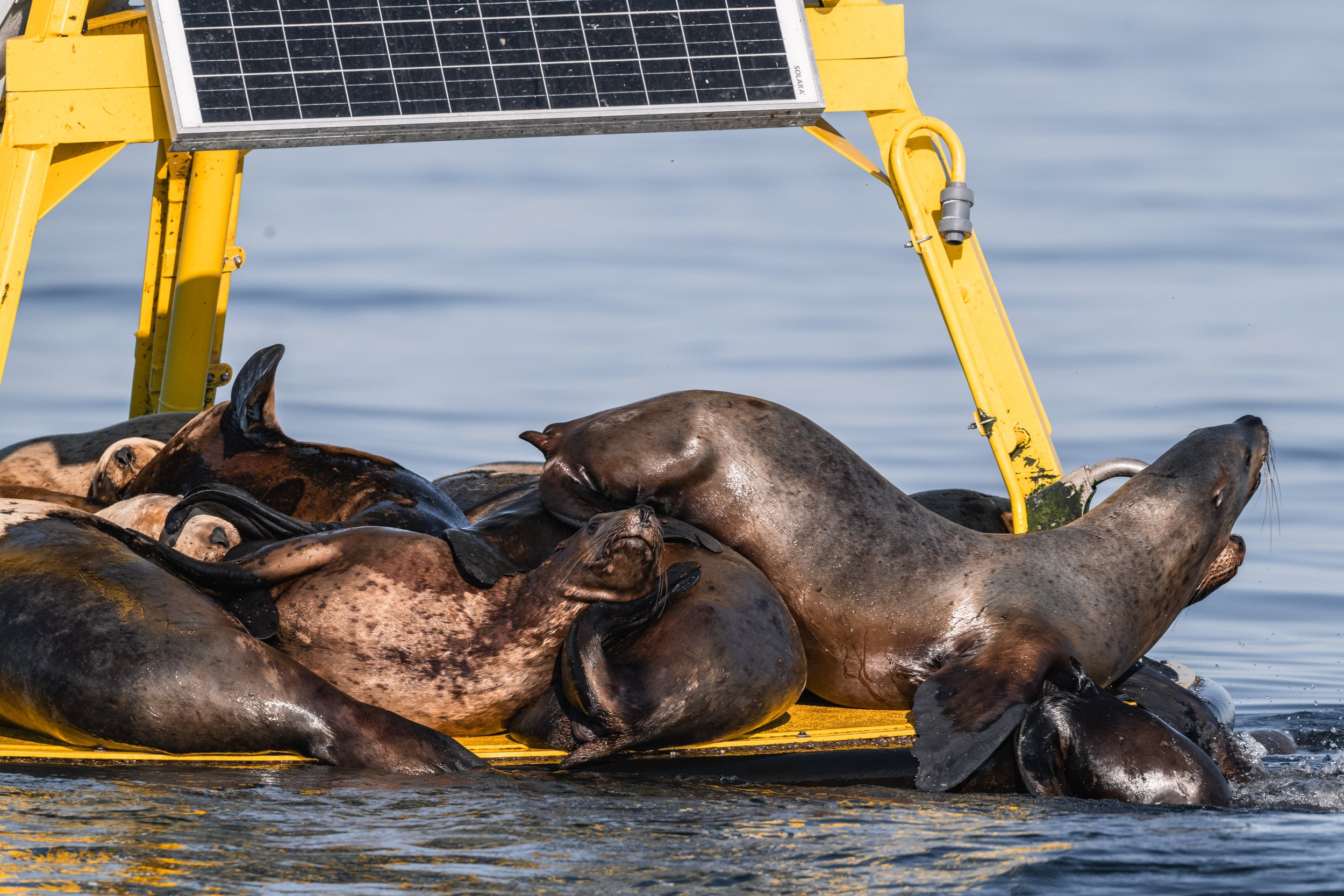
The Steller Sea Lions fighting for the best spots to sleep. Photo by Aly Kohlman.
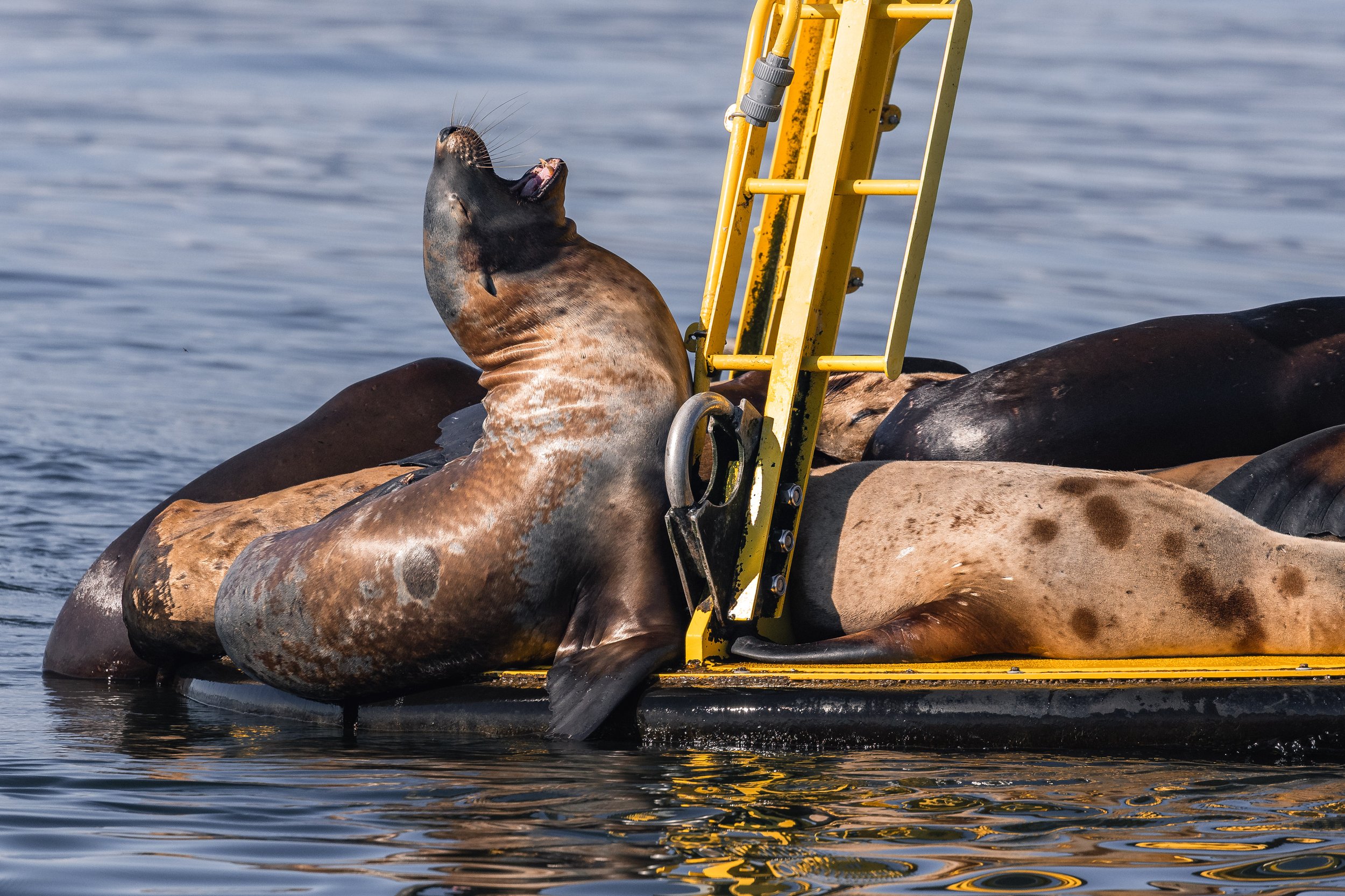
The sea lions are masters of dramatics. Photo by Jordan Robinson.
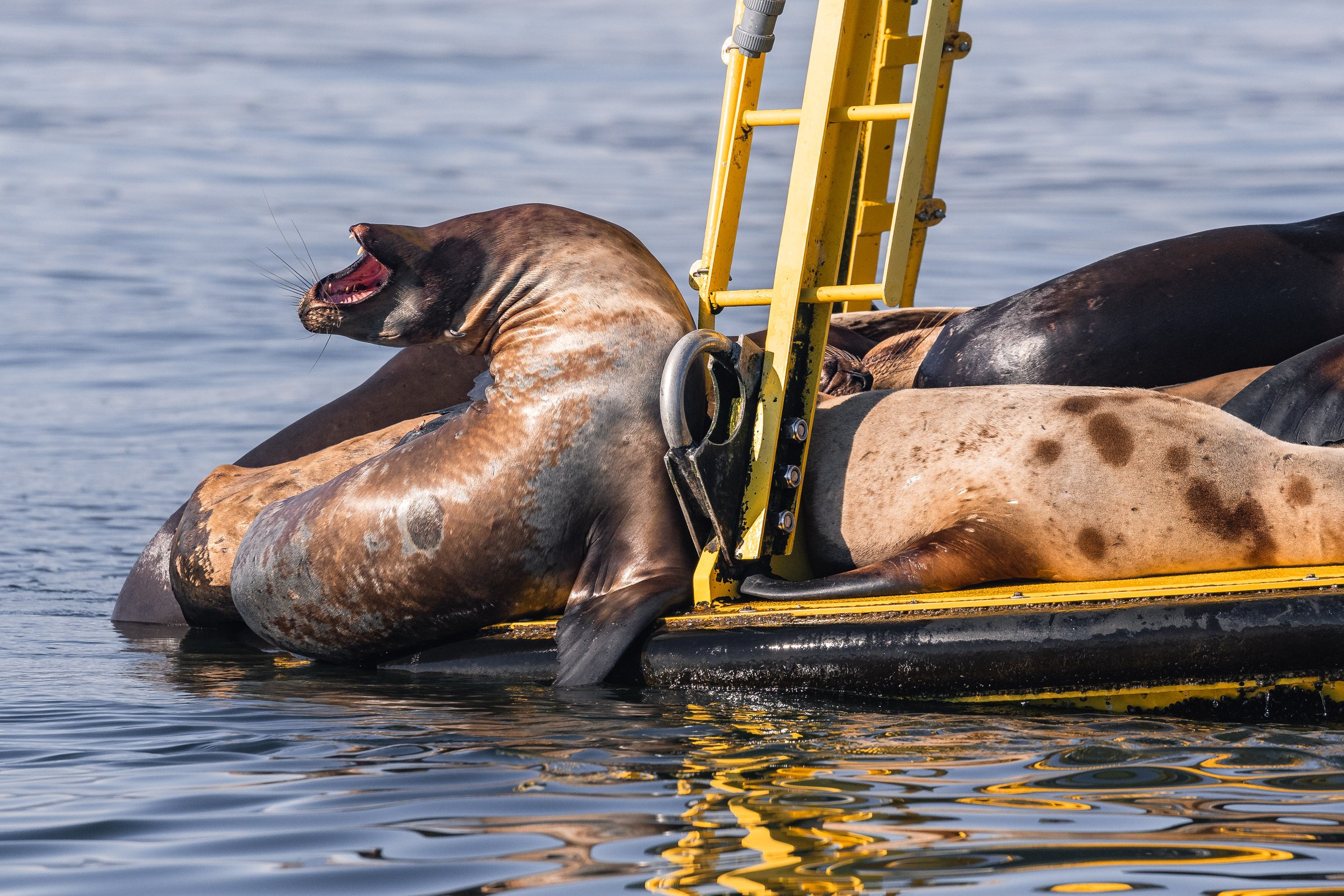
See what we mean? Ever present, ever dramatic. Photo by Jordan Robinson.
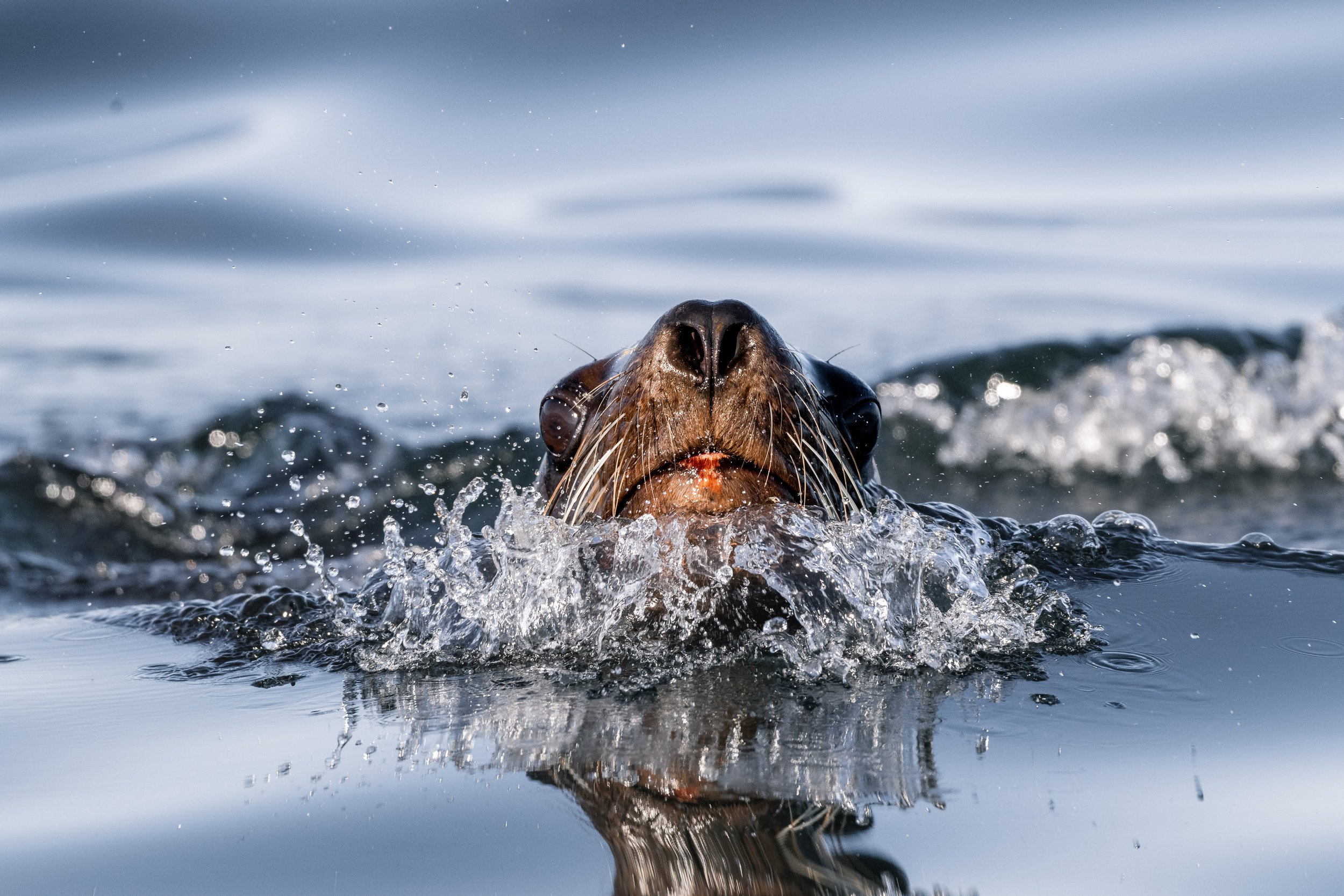
A closeup of a swimming Steller Sea Lion. Photo by Aly Kohlman.
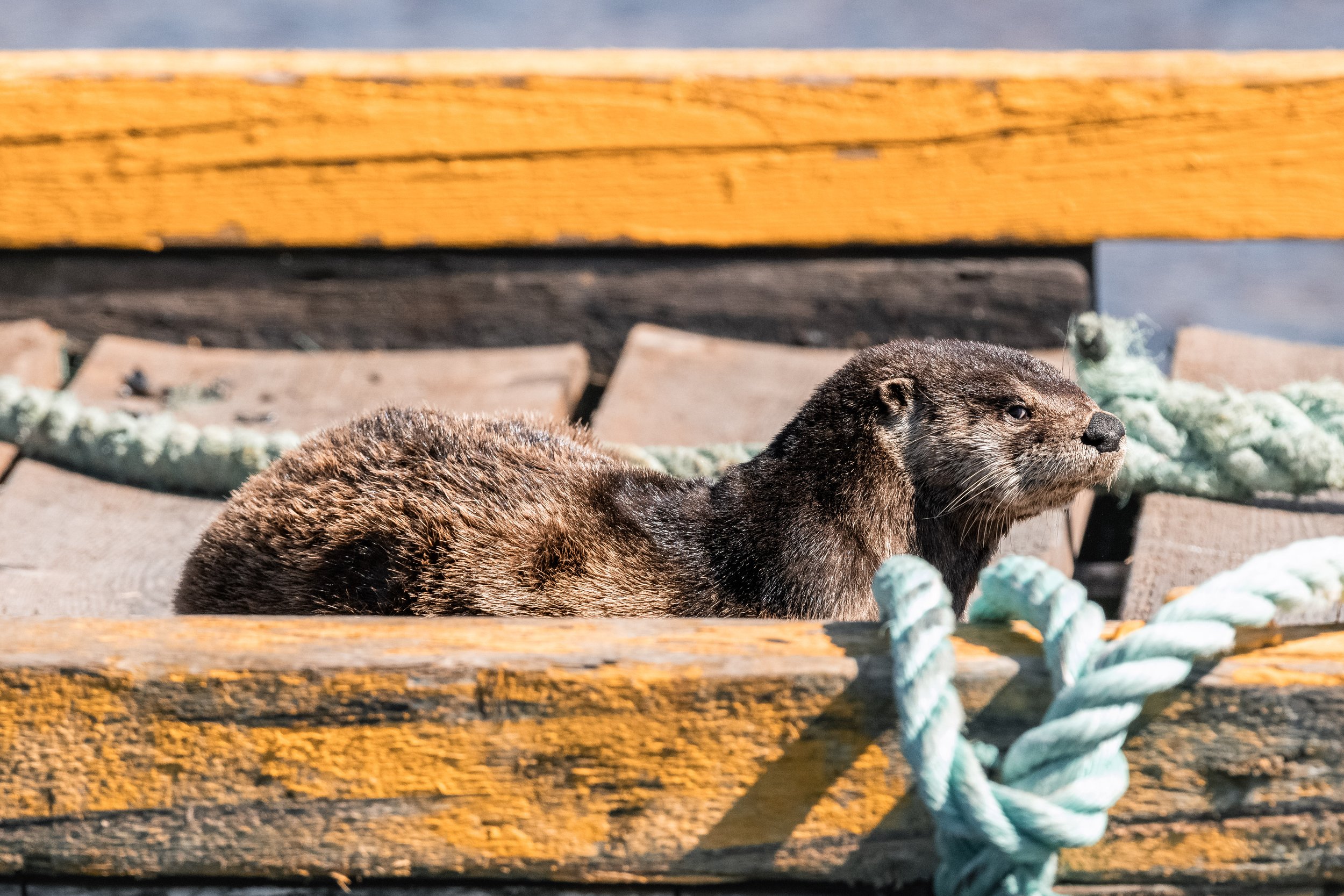
Sideeyed from a River Otter at the docks. Photo by Hayleigh Hilbert.
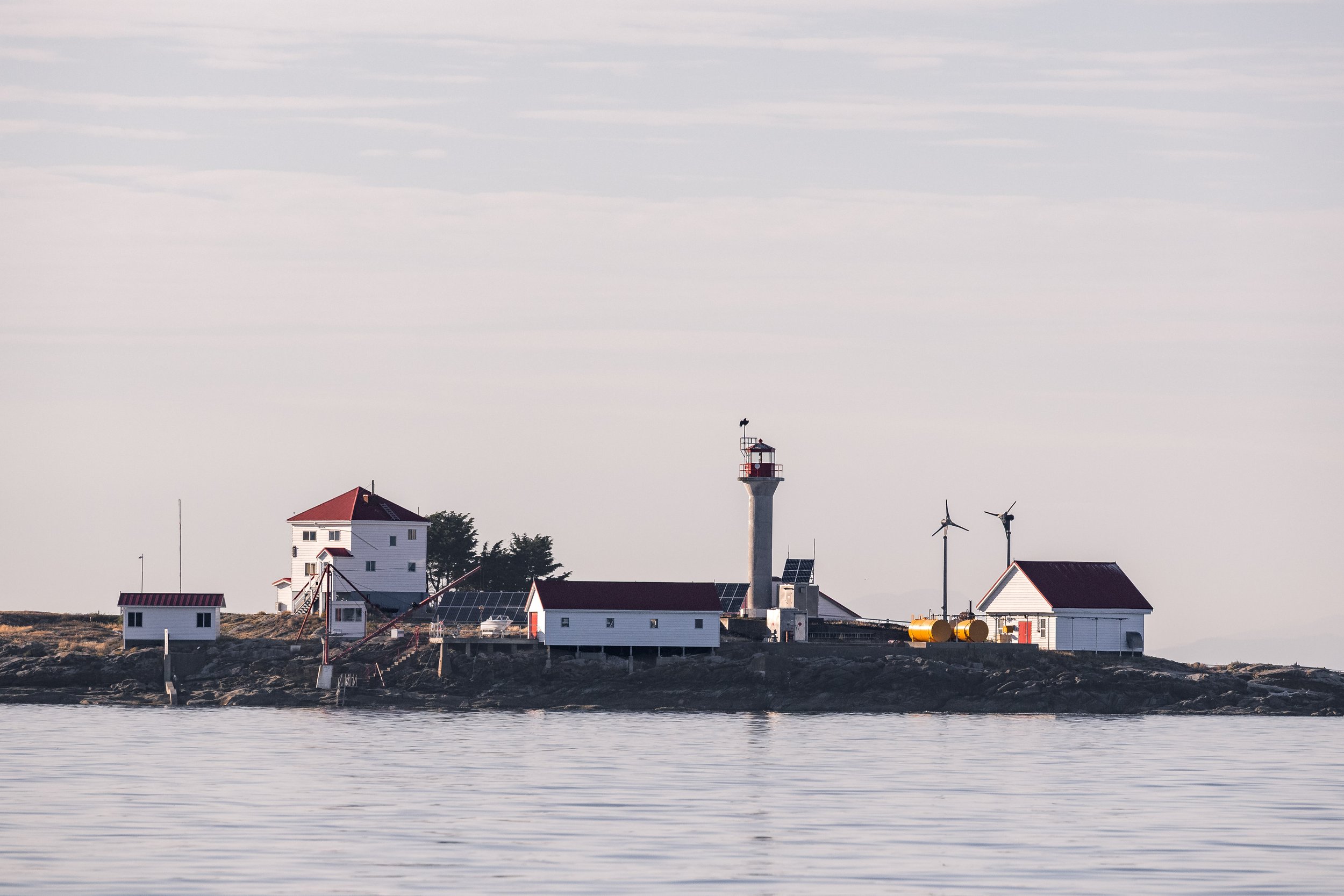
Entrance Island in the evening light. Photo by Jordan Robinson.
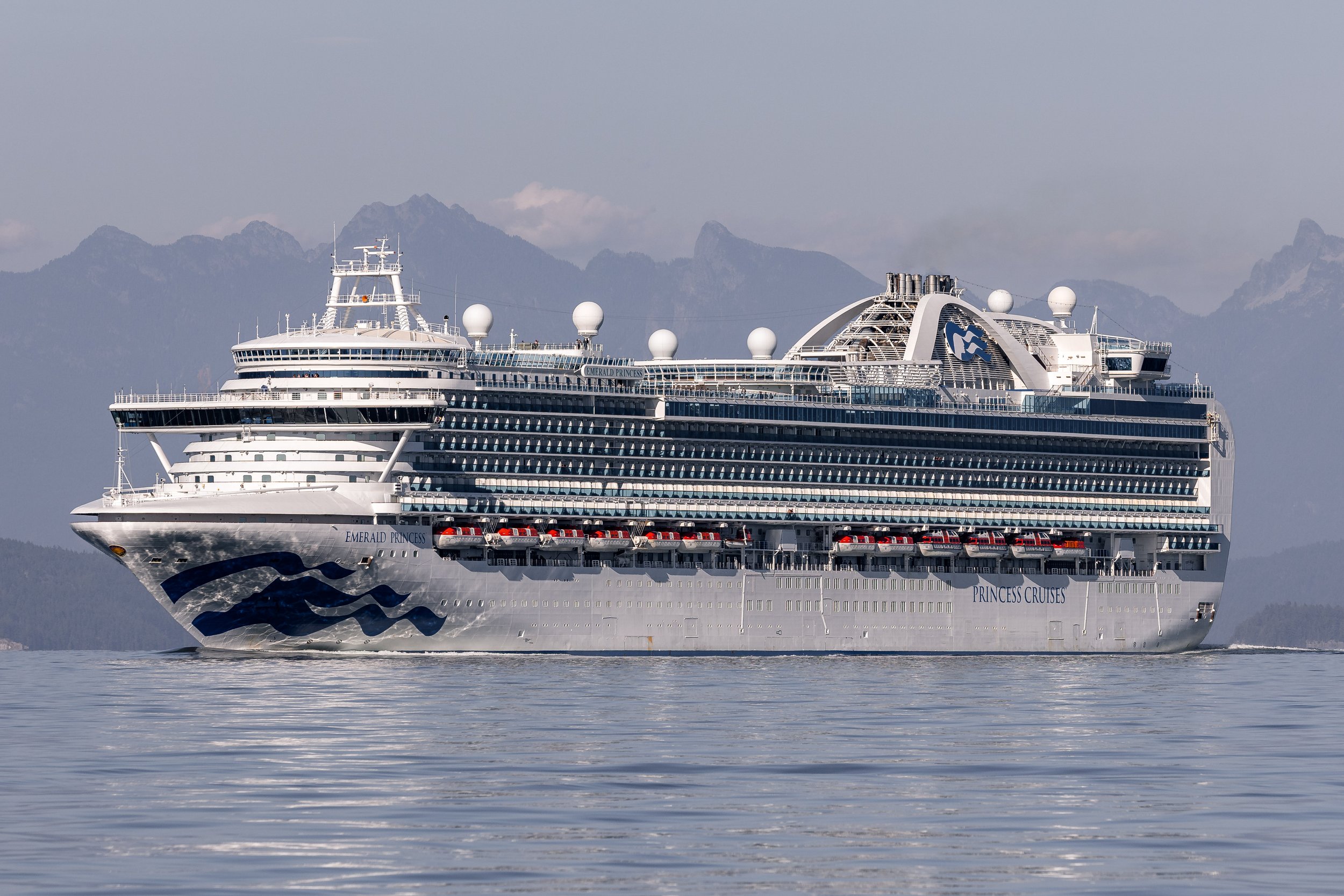
The Emerald Princess on its way up to Alaska. Photo by Jordan Robinson.