
August 30, 2026, 3:30 PM - The T002Cs and T002B In Porlier Pass, Plus Humpbacks in the Strait
Two boats headed south from Nanaimo with the Southern Gulf Islands as their destination. With reports of wildlife scattered throughout the area, there was plenty of ground to cover, and the route took both vessels through Dodd Narrows and onward toward Porlier Pass.
Dodd Narrows is always an interesting part of the journey. The narrow passage connects the waters around Nanaimo with the channels to the south, and its strong tidal currents can make for a very different landscape depending on the stage of the tide. From there, the boats continued toward Porlier Pass, each taking a slightly different approach to the search.
One boat made it through the pass and continued farther south, eventually finding a familiar humpback whale, Chi (BCZ0575). The other boat, however, never made it through Porlier Pass. Not because of the conditions, but because they found something else entirely.
A pod of orca was travelling through the pass.
It did not take long for the Naturalist team to recognize the whales as the T002Cs travelling alongside T002B. The T002Cs are a family group within the Bigg's orcas, and their association with T002B has become increasingly common over the past few weeks. Seeing these whales repeatedly joining together offers an interesting glimpse into the flexible social lives of Bigg's orcas.
T002C Tasu ♀ (1989)
T002C1 Rocky ♂ (2002)
T002C3 Lucy ♀ (2011)
T002C5 Zippy/Guardian (2020)
T002C6 Yukon (2025)
T002B Pedder ♀ (1979)
Unlike resident orcas, which are often observed travelling in stable, closely connected family groups, Bigg's orcas can have much more fluid associations. Related whales may spend time together, separate, and reunite with other individuals or family groups. These temporary gatherings can be especially interesting when they persist over several weeks, as this one has.
As the whales moved through Porlier Pass, the T002Cs and T002B were travelling tightly together. Their synchronized movements made the family association especially apparent as they moved through the narrow waters.
Once they reached Trincomali Channel, however, their formation began to change.
Instead of continuing as one tightly packed group, the whales spread out across the channel. From a distance, it might simply look like the pod was becoming less organized, but for hunting orcas, spacing out can be an important part of searching for prey.
Bigg's orcas are mammal-eating predators, and they spend much of their time travelling and searching for potential prey. Their movements can change dramatically when they detect something beneath the surface. Individuals may spread out to cover more water, while other whales remain nearby and communicate or coordinate their movements.
That appeared to be happening here.
The whales travelled across a broader area of Trincomali Channel, with the group no longer as tightly concentrated as it had been in Porlier Pass. Then, toward the end of the encounter, the behaviour changed again.
One of the boats witnessed what appeared to be a successful hunt.
The first signs were subtle. The orca's steady travel gave way to fast movements at the surface. Instead of continuing along a consistent route, the whales began moving quickly within a much smaller area. Their forward progress stalled, and for a while they remained concentrated in the same section of the channel.
For a predator that spends much of its time travelling, this sudden change can matter. A successful hunt may unfold almost entirely beneath the surface, leaving observers with only brief glimpses of the action. A burst of speed, sudden changes in direction, splashing, or a period of concentrated activity can all provide clues about what is happening below.
Eventually, the activity subsided, and the whales resumed travelling south. With the orca continuing on their way, both boats turned back toward the Strait of Georgia. The search was far from over.
The boat that had originally found the whales headed out into the Strait of Georgia and also came across Chi, who was still spending his time in the same area.
The other boat encountered another humpback, Windy (BCY0893), providing a second opportunity to observe one of the Strait's most recognizable large marine mammals.
Humpbacks and Bigg's orcas share the same waters, but their lives beneath the surface differ greatly. Humpbacks are baleen whales, using baleen plates to filter food from seawater rather than relying on teeth to capture individual prey. Their feeding strategy can involve long dives, surfacing sequences, and dramatic behaviour changes depending on where their prey is concentrated.
For the boats, the humpbacks offered a quieter contrast to the fast-paced orca hunt earlier in the day.
But there was still more wildlife to find. The open boat stopped at Stinky Rock, where harbour seals hauled out along the rocks. These smaller pinnipeds often rest between feeding trips, and haul-out sites such as Stinky Rock provide an important place to get out of the water and conserve energy. A Steller Sea Lion was also spotted hauled out nearby.
Steller Sea Lions are the largest members of the Otariidae family, which includes sea lions and fur seals. Unlike Harbour Seals, they have visible external ear flaps and large front flippers that they use to move around on land. Their powerful forelimbs also make them highly capable swimmers, allowing them to travel considerable distances between feeding and resting areas.
Not far away, the other boat encountered another group of Steller Sea Lions gathered around the UM buoy.
Buoys and other structures can become useful resting platforms for marine mammals, particularly when animals travel through areas where suitable natural haul-out locations are limited. Seeing Steller Sea Lions using these structures is a good reminder that wildlife does not necessarily restrict itself to the habitats we might expect.
After their time at the buoy, the semi-covered boat ventured further into the Strait to make their way home and was rewarded with one more whale sighting for the day: Humpback whales Bond (BCX1640) and Kappa (BCX0158) travelling together. They got some beautiful looks at these two whales surfacing in the sunset before continuing towards Nanaimo.
The final stop brought both boats toward the Gabriola Bluffs. After a day that had included narrow tidal passages, travelling orca, a witnessed hunt, four humpback whales, Harbour Seals, and Steller Sea Lions, the bluffs offered a chance to slow down and look upward.
A variety of seabirds use the cliffs and surrounding waters, adding another layer to the day's wildlife observations. From the water's surface, these birds can be easy to overlook, but they are an important part of the marine ecosystem and often provide clues about where food is concentrated.
What began as a search through the Southern Gulf Islands ultimately became a tour that followed wildlife across several different habitats. From the fast-moving currents of Dodd Narrows and Porlier Pass to the open waters of Trincomali Channel and the Strait of Georgia, each area offered something different.
Days like this are a reminder that whale watching is rarely about finding just one species. The Salish Sea is a connected ecosystem, and every change in location can bring a different part of that ecosystem into view. Throughout these moments, Marine Naturalists Val Watson and Jordan Robinson captured some amazing photos, which you can enjoy below.
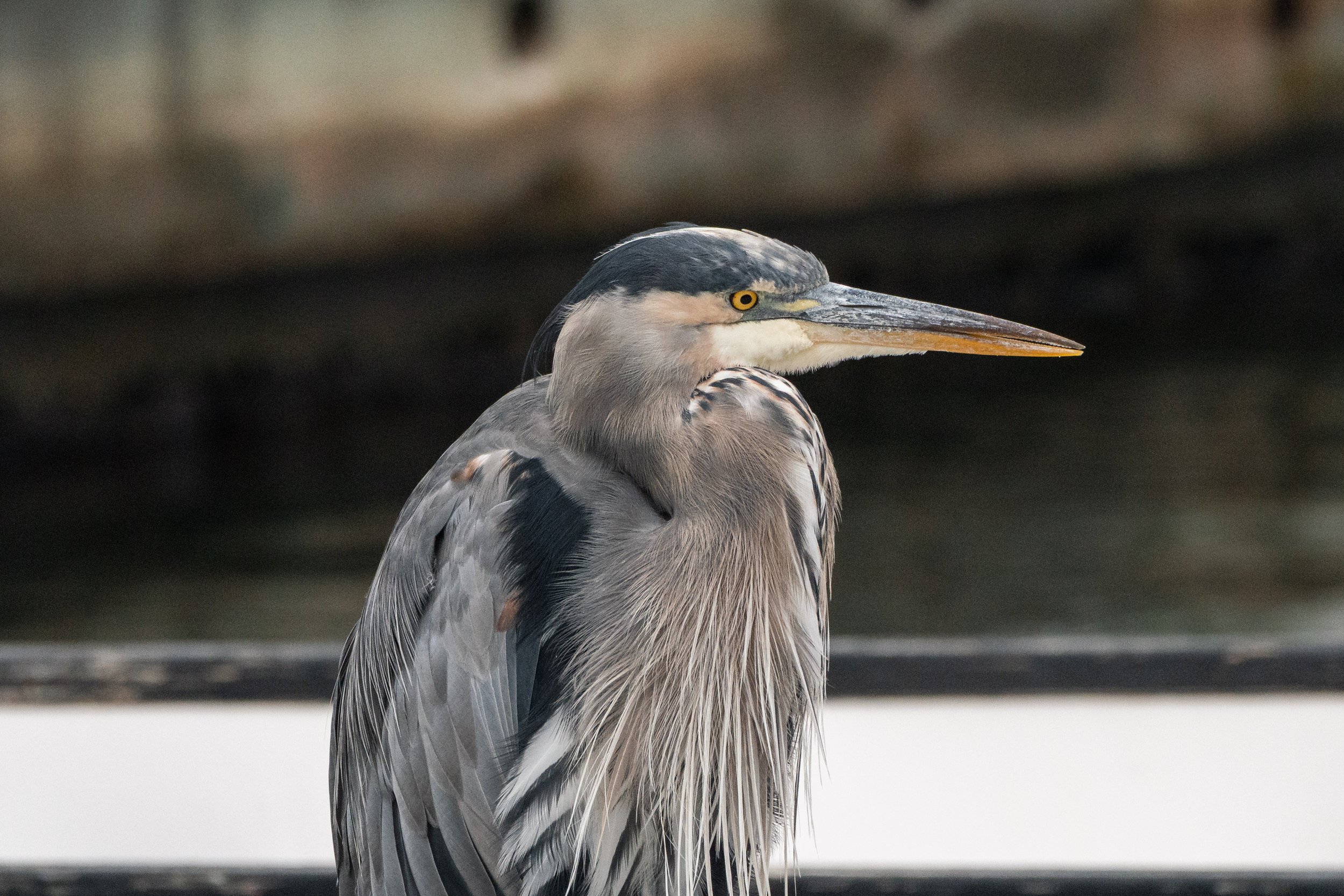
A Great Blue Heron posing on the dock before the tour. Photo by Val Watson.
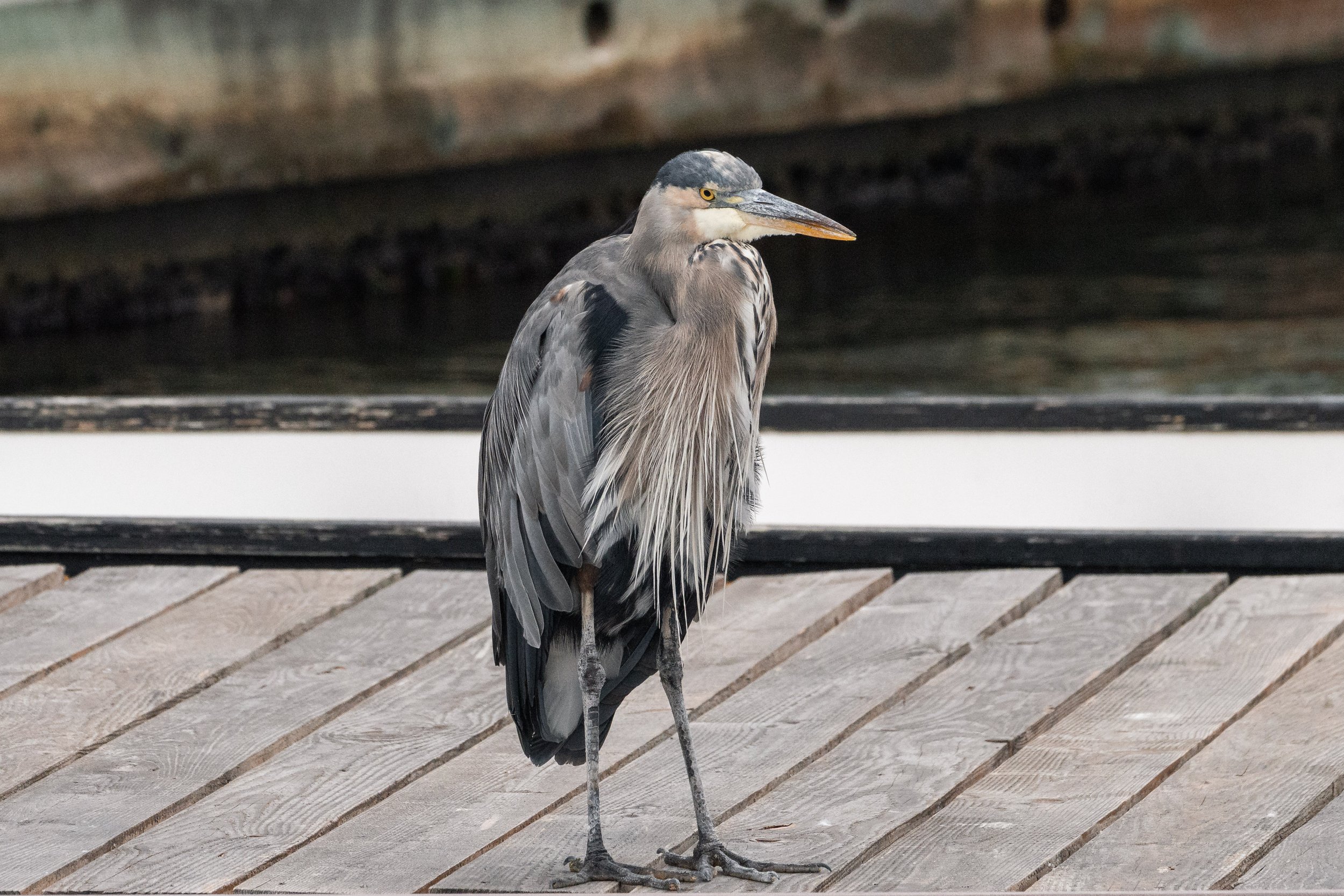
A great look at the Great Blue Heron. Photo by Val Watson.
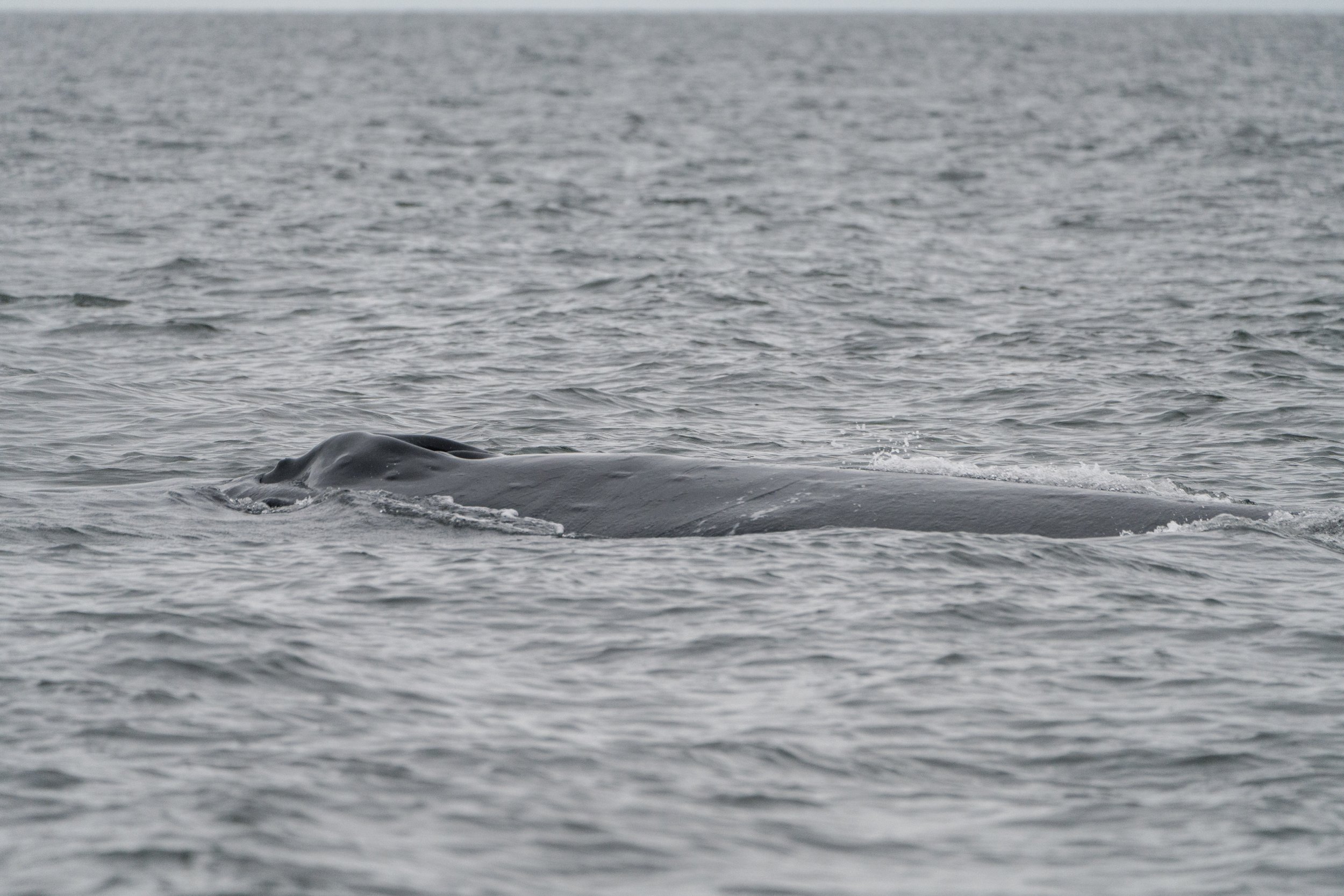
Chi surfacing. Photo by Val Watson.
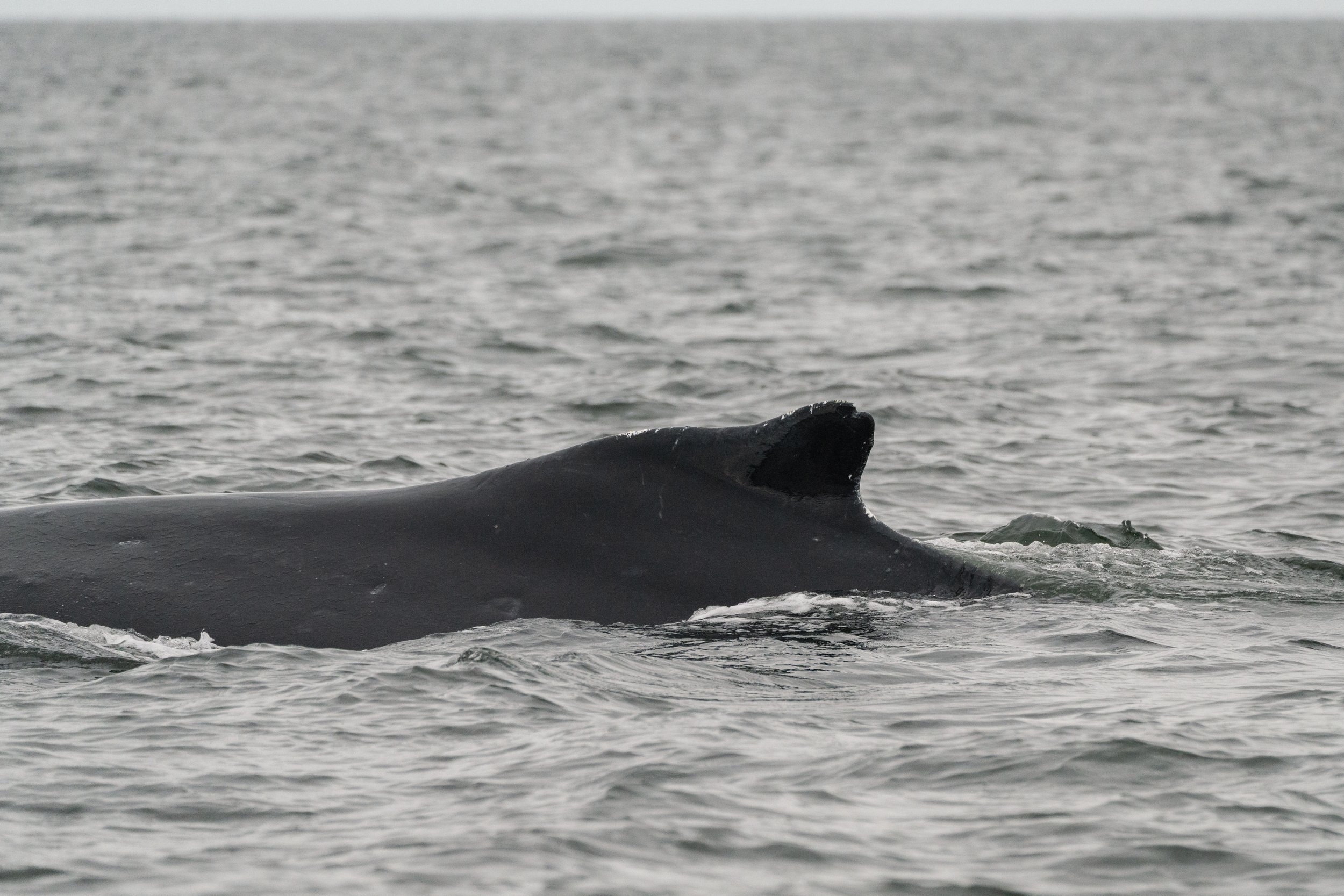
Chi’s distinct dorsal fin as he surfces. Photo by Val Watson.
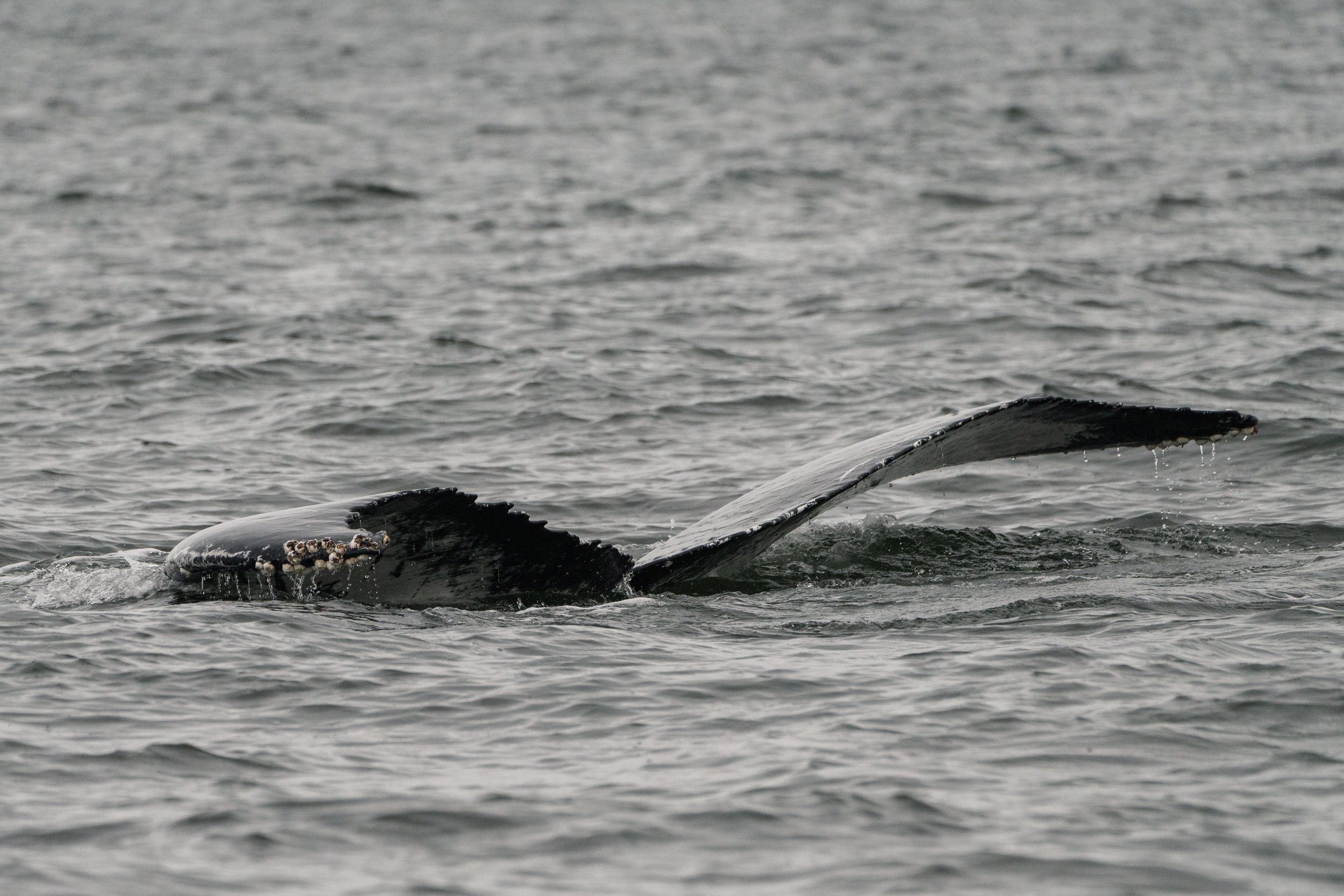
Chi doing a lazy fluke as he dives. Photo by Val Watson.
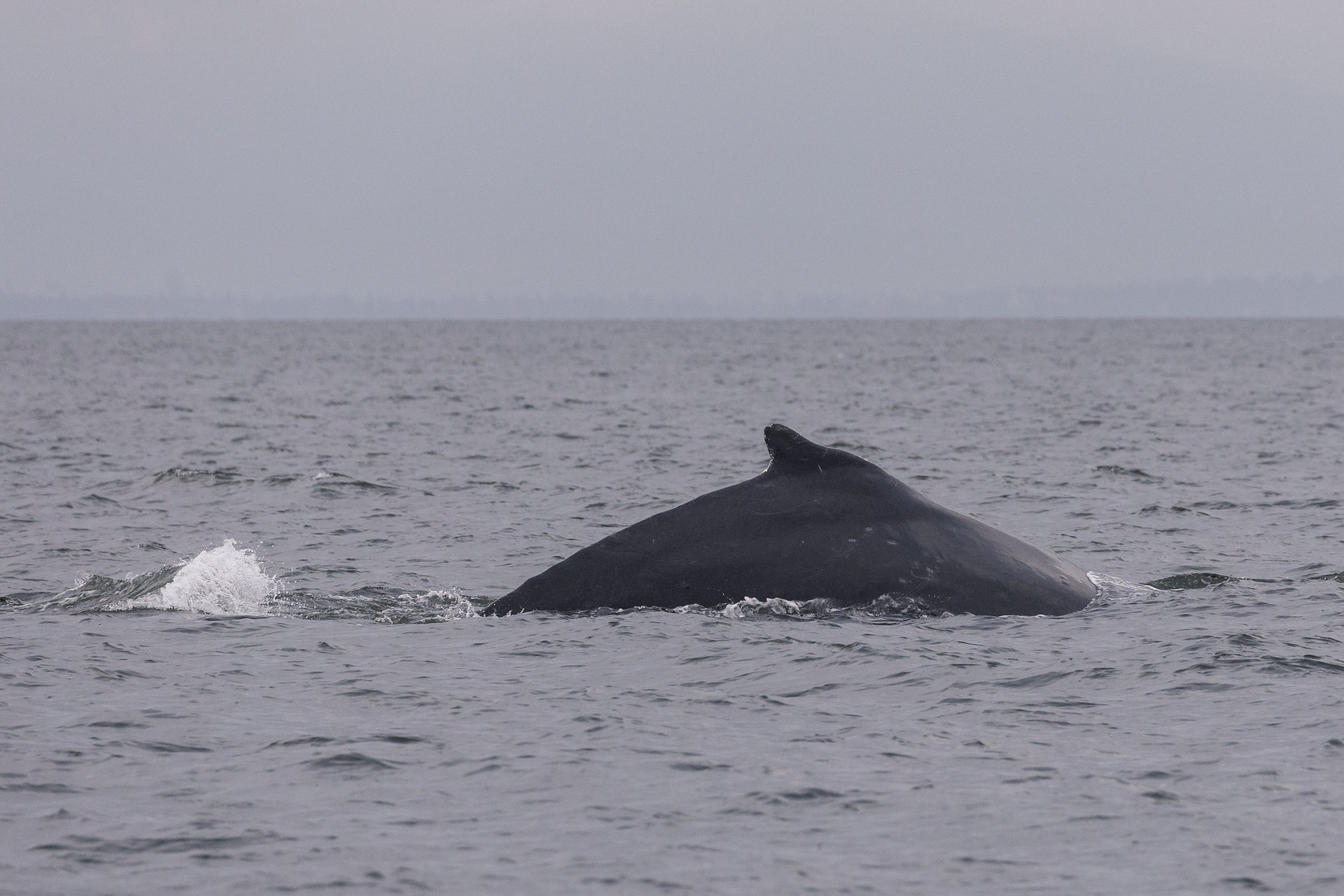
Chi going for a dive. Photo by Jordan Robinson.
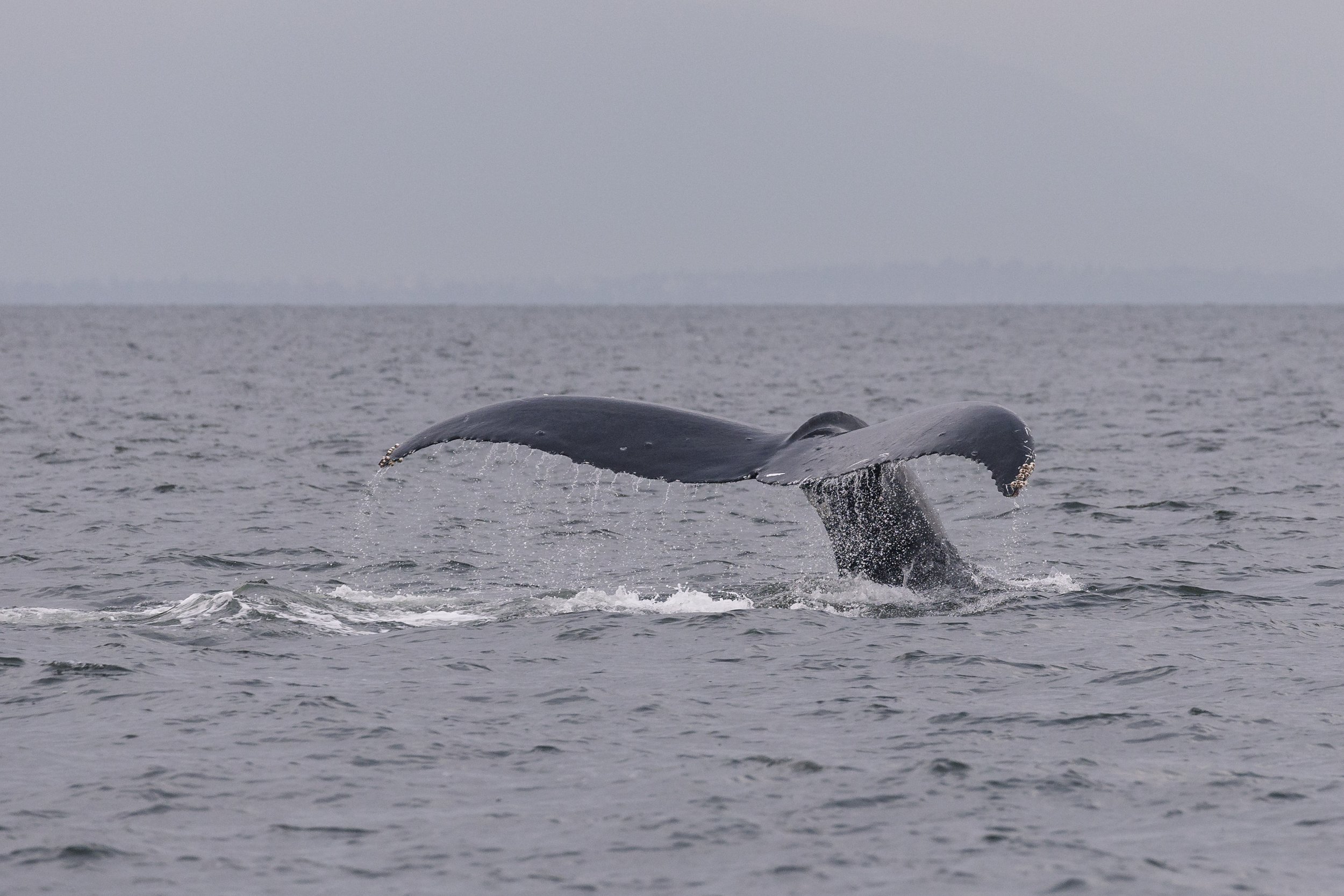
A lovely fluke waterfall from Chi. Photo by Jordan Robinson.
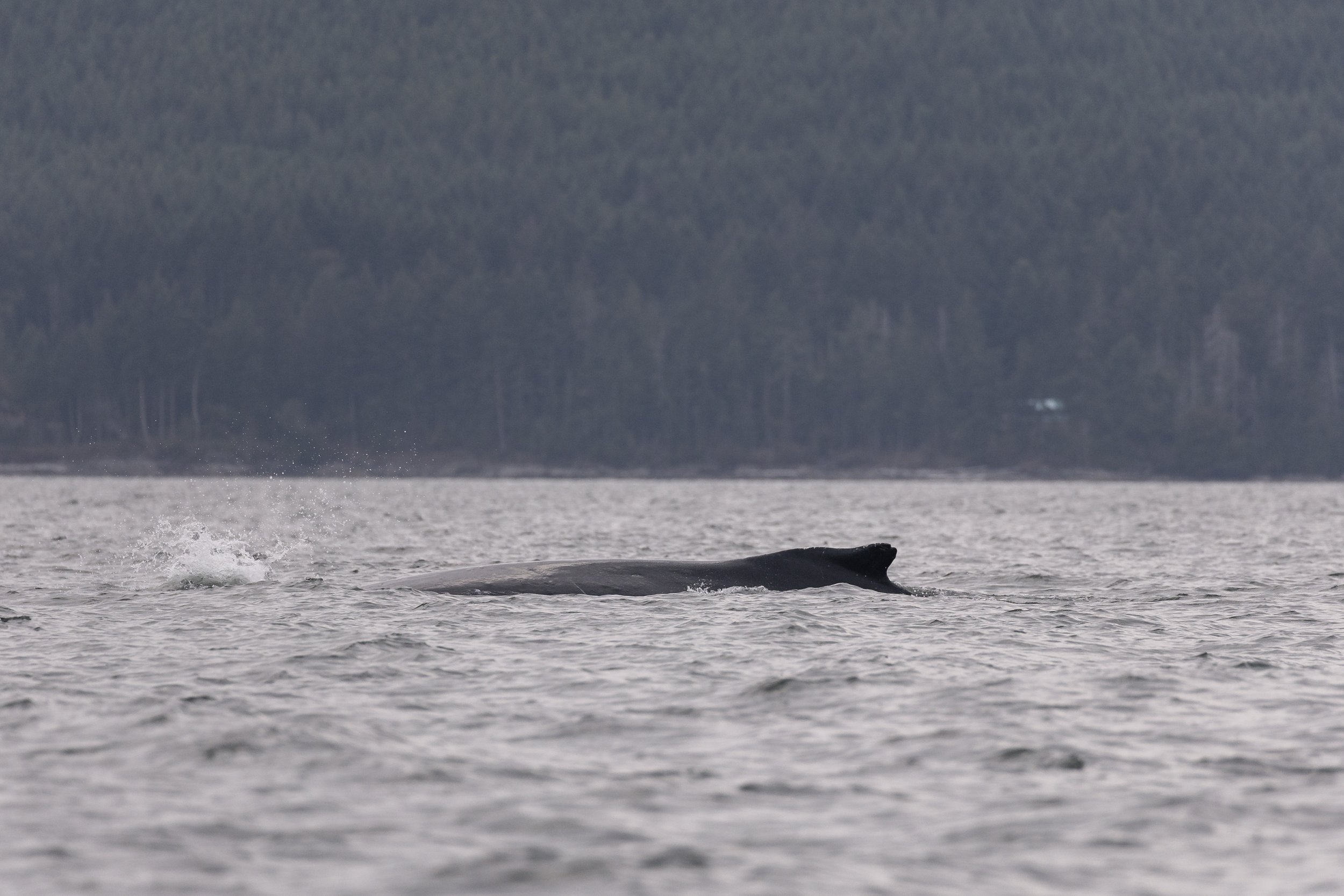
Chi’s very unique dorsal fin as he surfaces. Photo by Jordan Robinson.
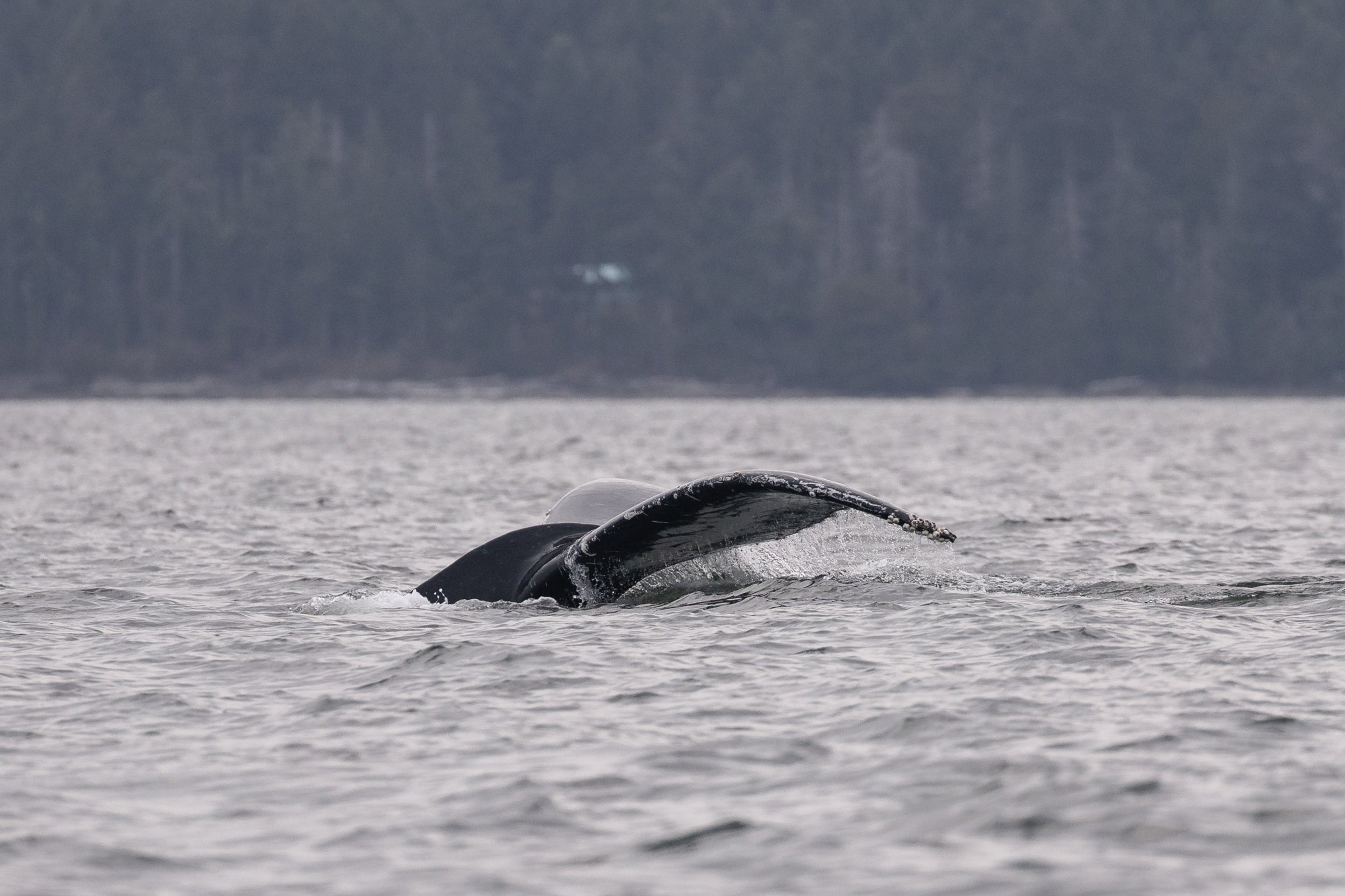
Chi going for a dive. Photo by Jordan Robinson.
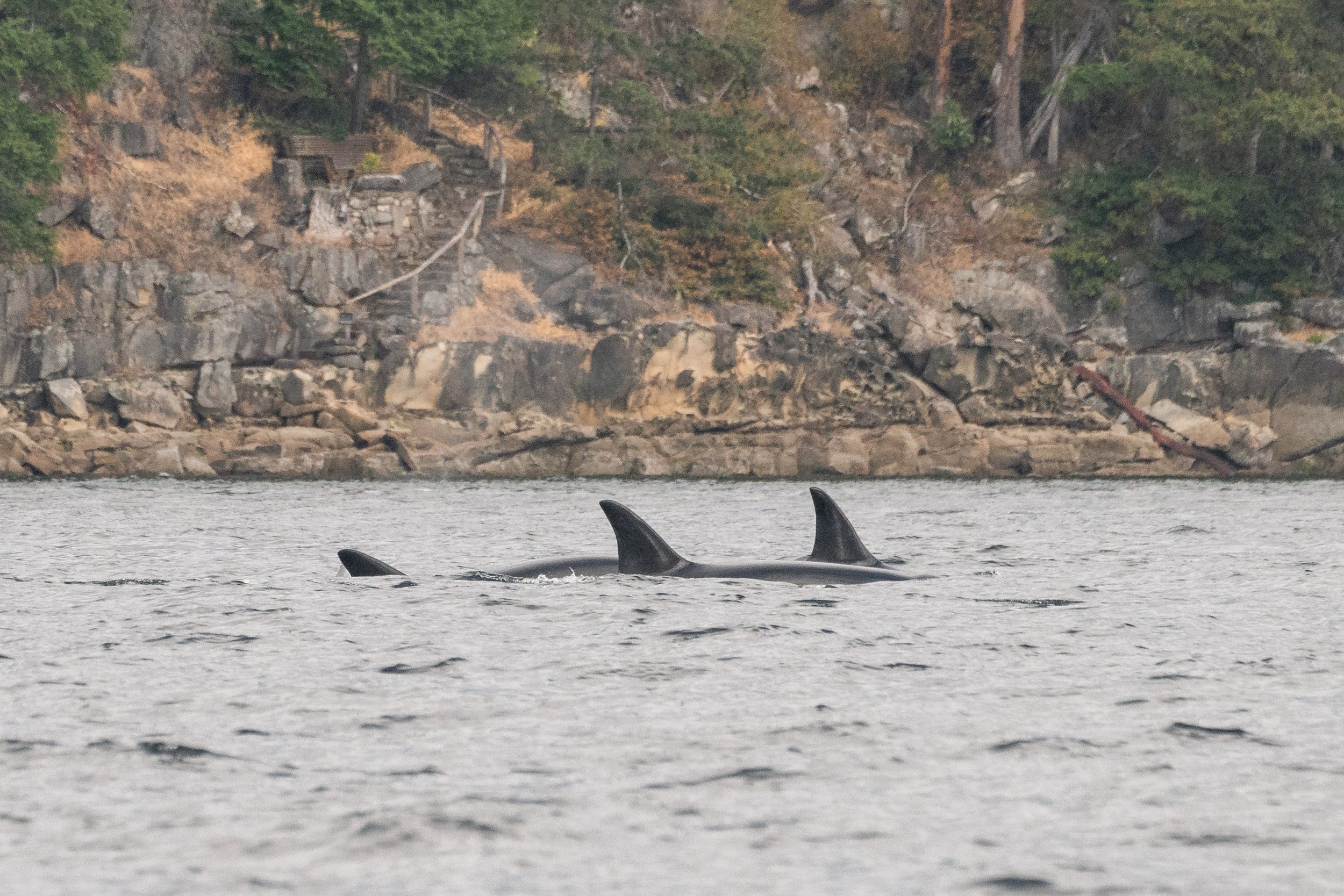
T002C Tasu surfacing between her sister, T002B Pedder, and daughter T002C3 Lucy. Photo by Val Watson.
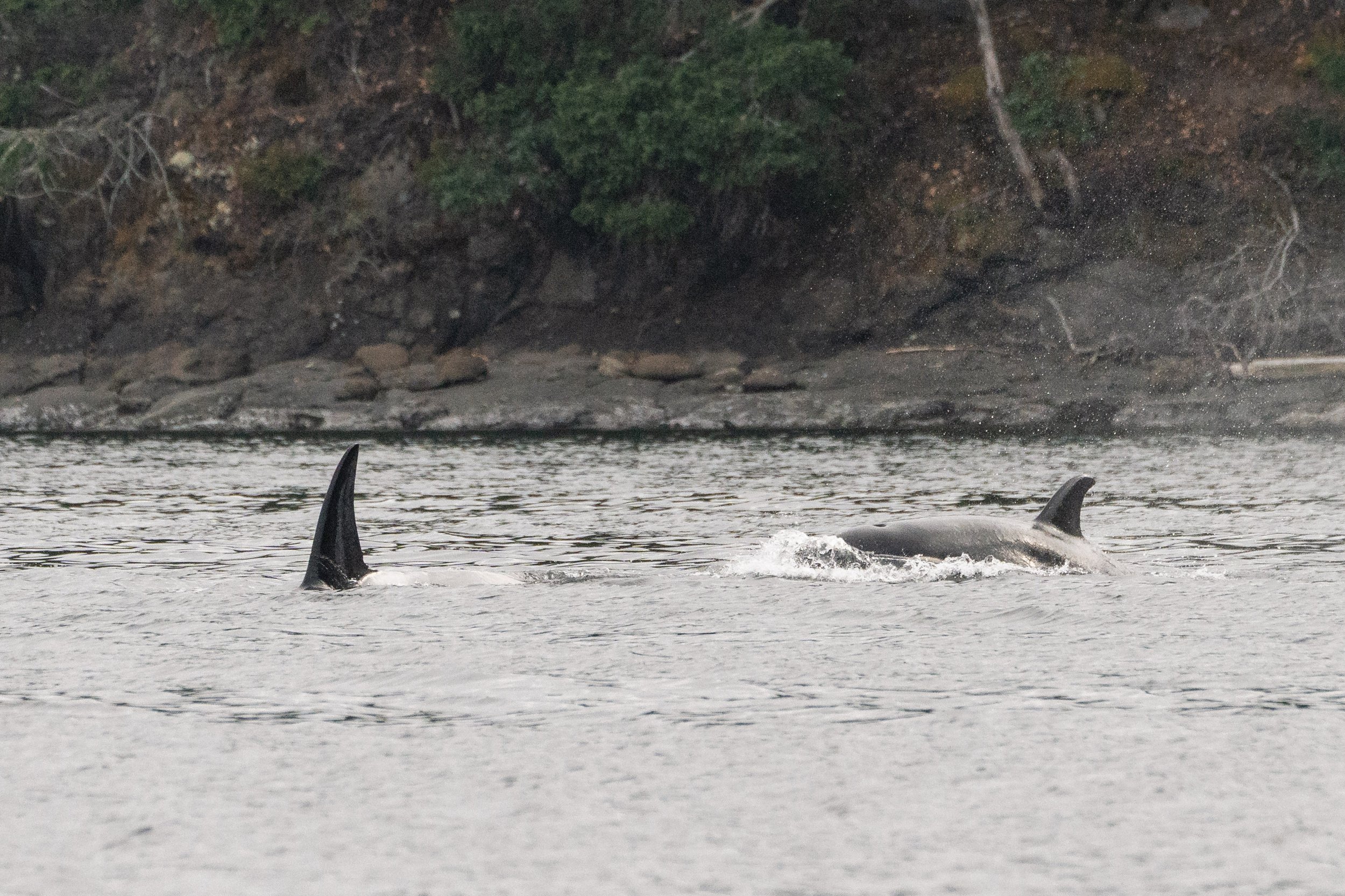
T002C Tasu surfacing ahead of T002C6 Yukon. Photo by Val Watson.
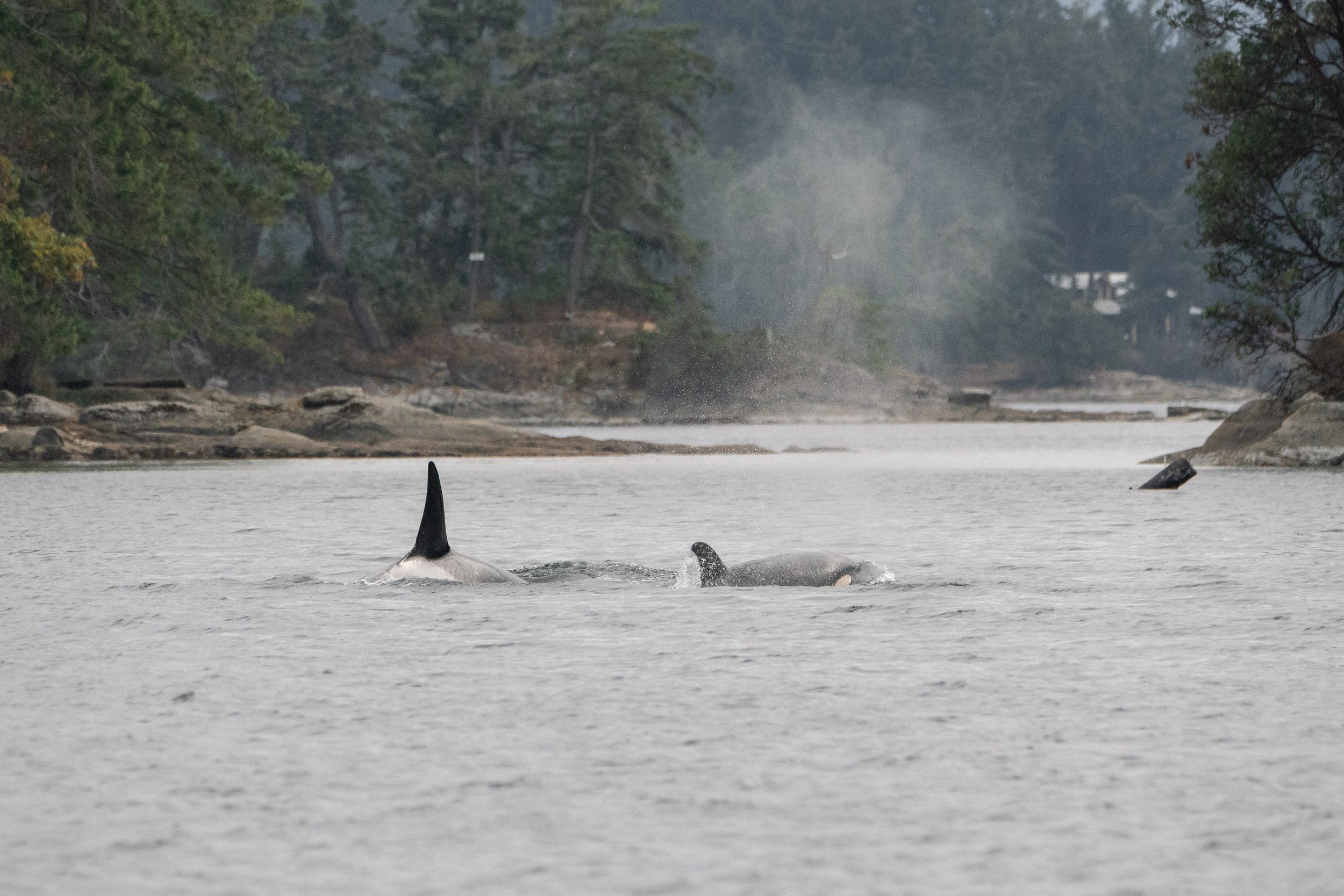
T002C Tasu and T002C6 Yukon surfacing together during the hunt. Photo by Val Watson.
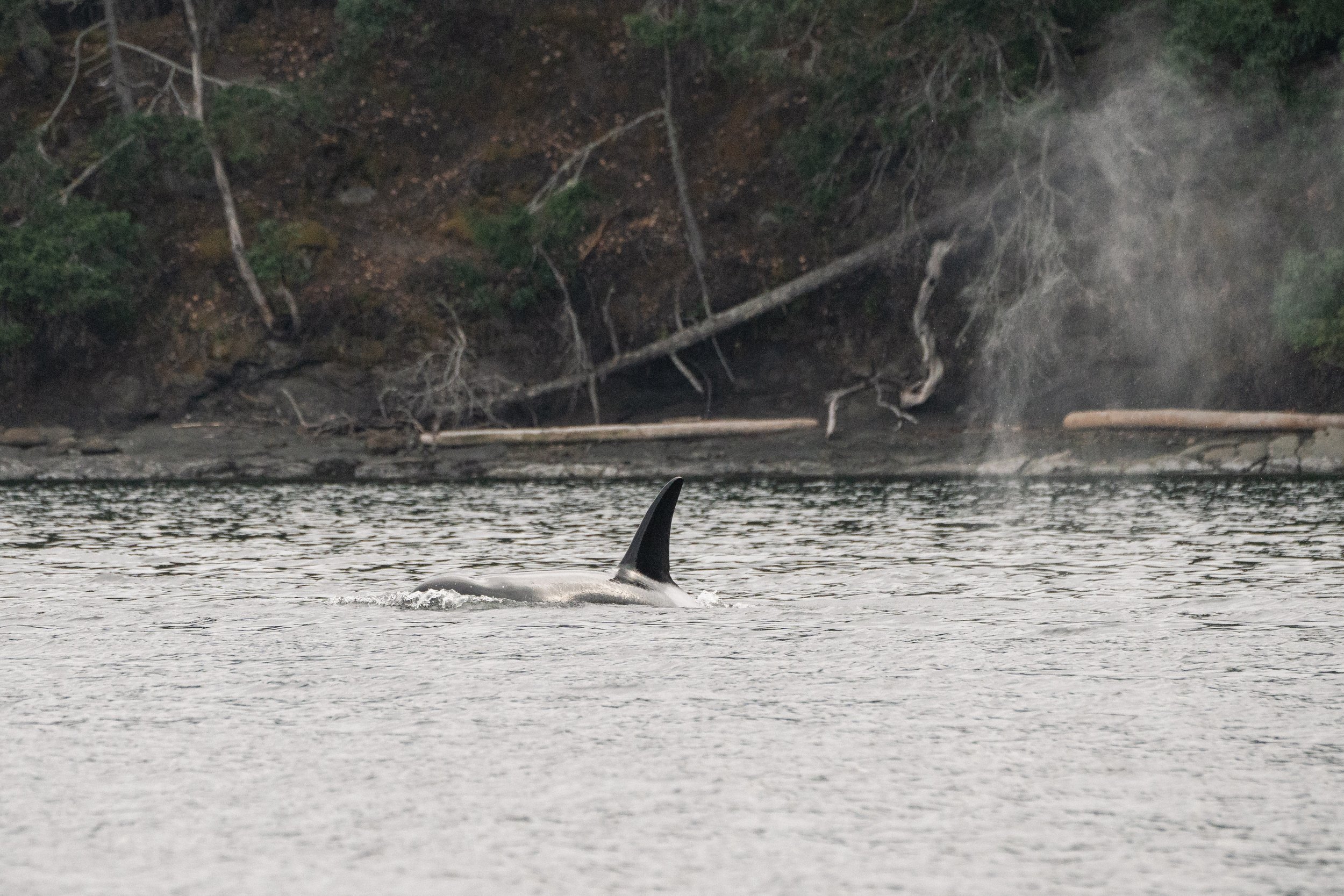
A great look at T002C Tasu surfacing along the shoreline. Photo by Val Watson.
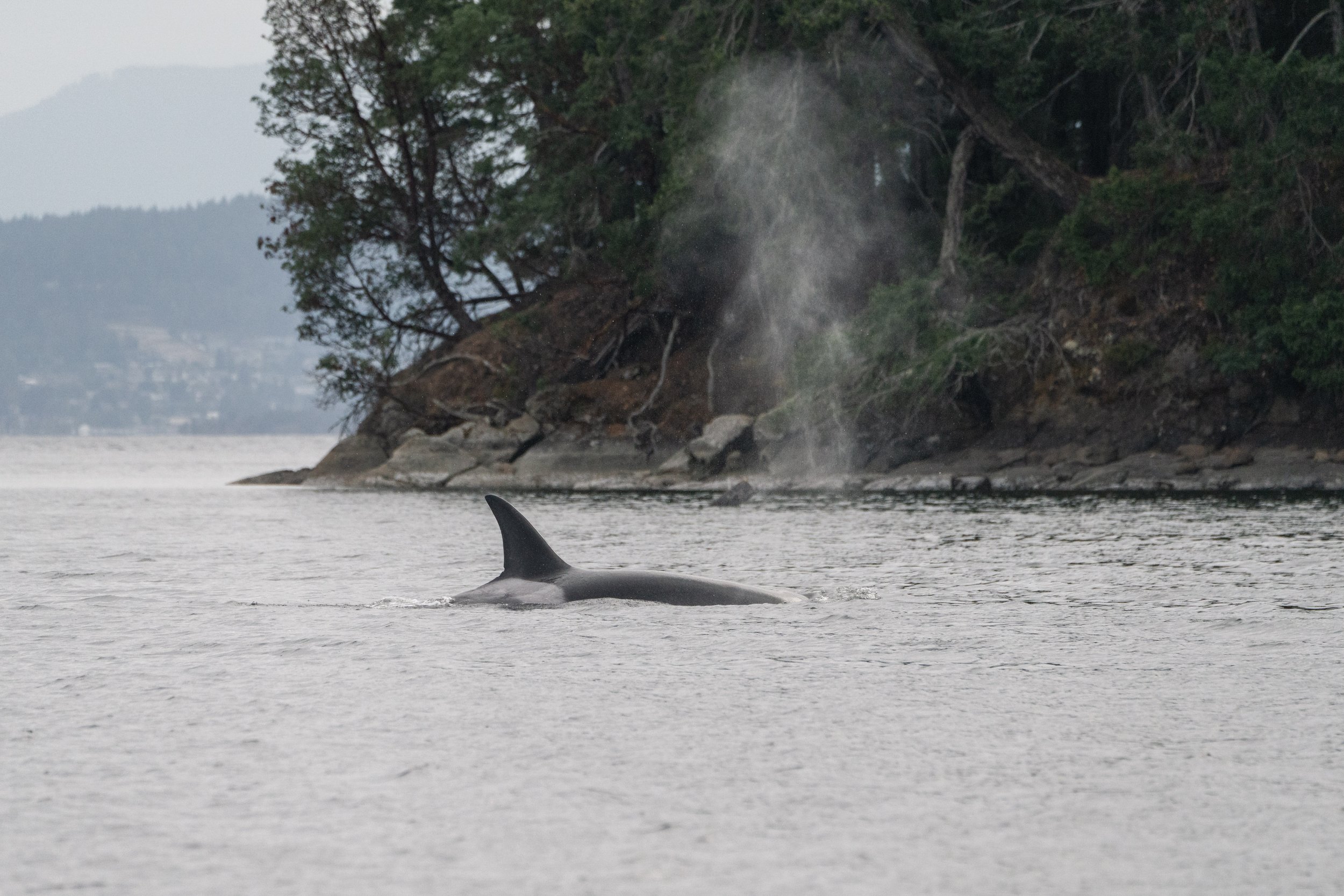
Can you spot the notch at the base of T002C Tasu’s dorsal fin? Photo by Val Watson.
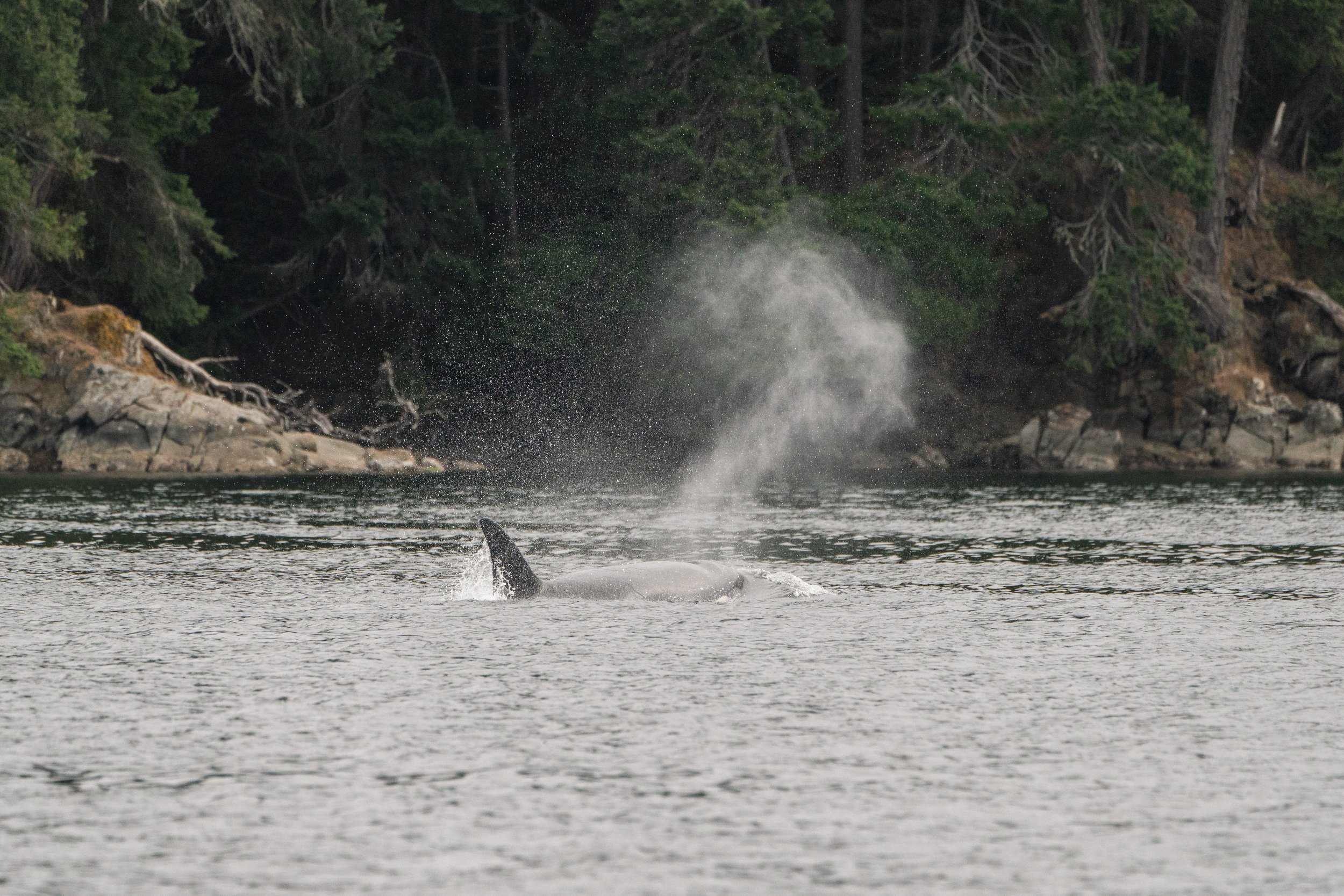
T002C Tasu with a big exhale at the surface. Photo by Val Watson.
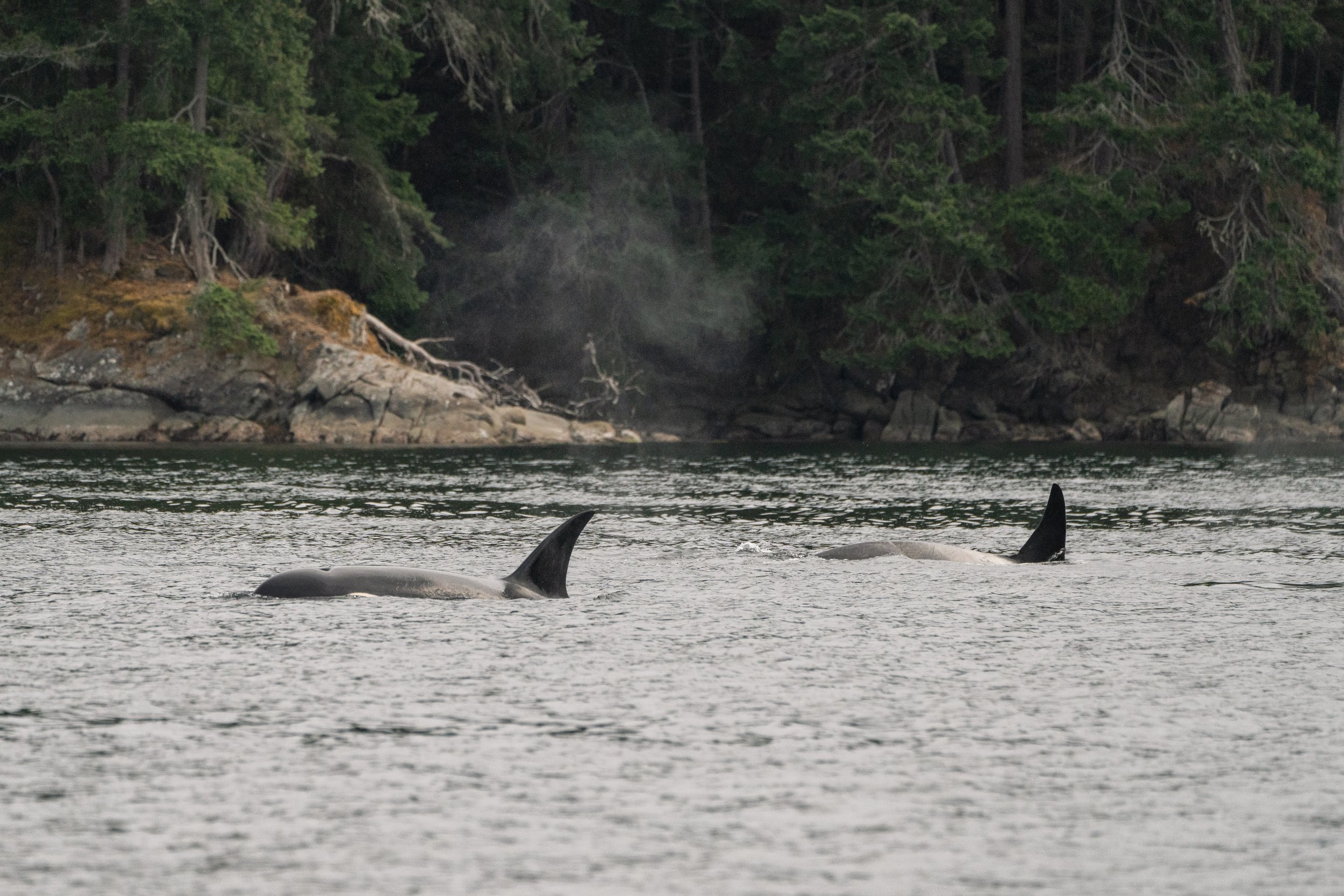
T002B Pedder and T002C Tasu surfacing together. Photo by Val Watson.
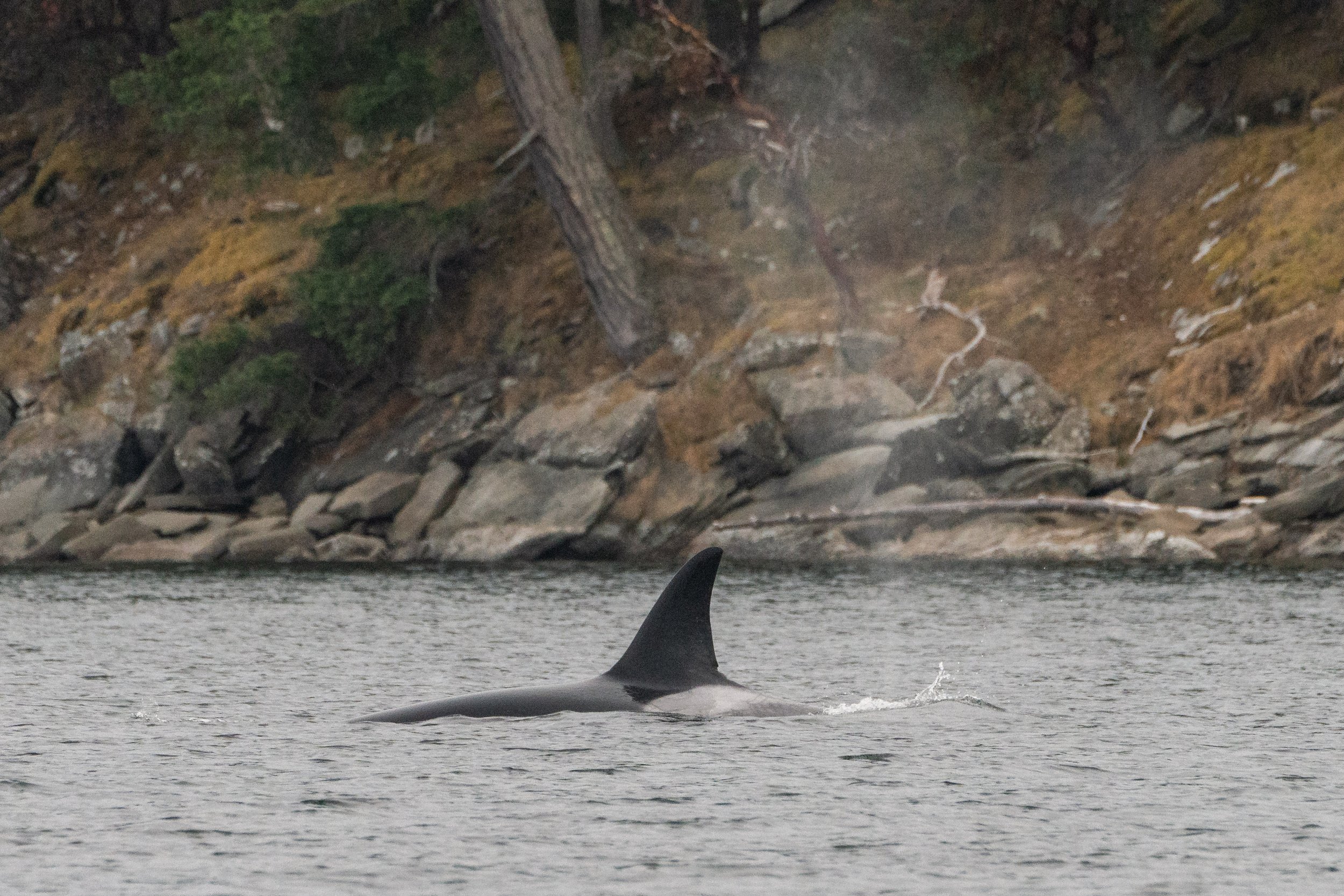
T002C Tasu surfacing along the shoreline. Photo by Val Watson.
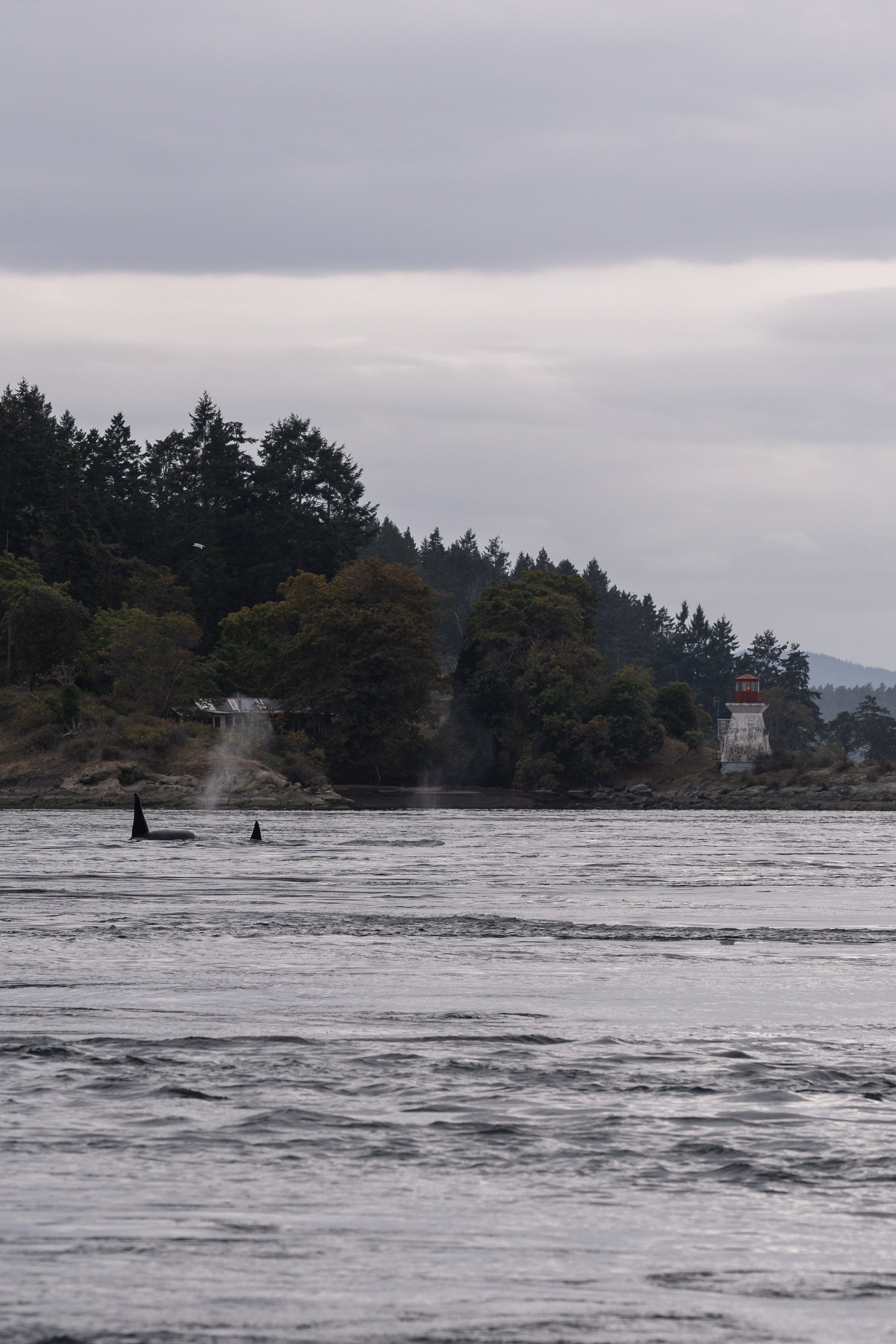
T002C1 Rocky and T002C3 Lucy surfacing together in Porlier Pass. Photo by Jordan Robinson.
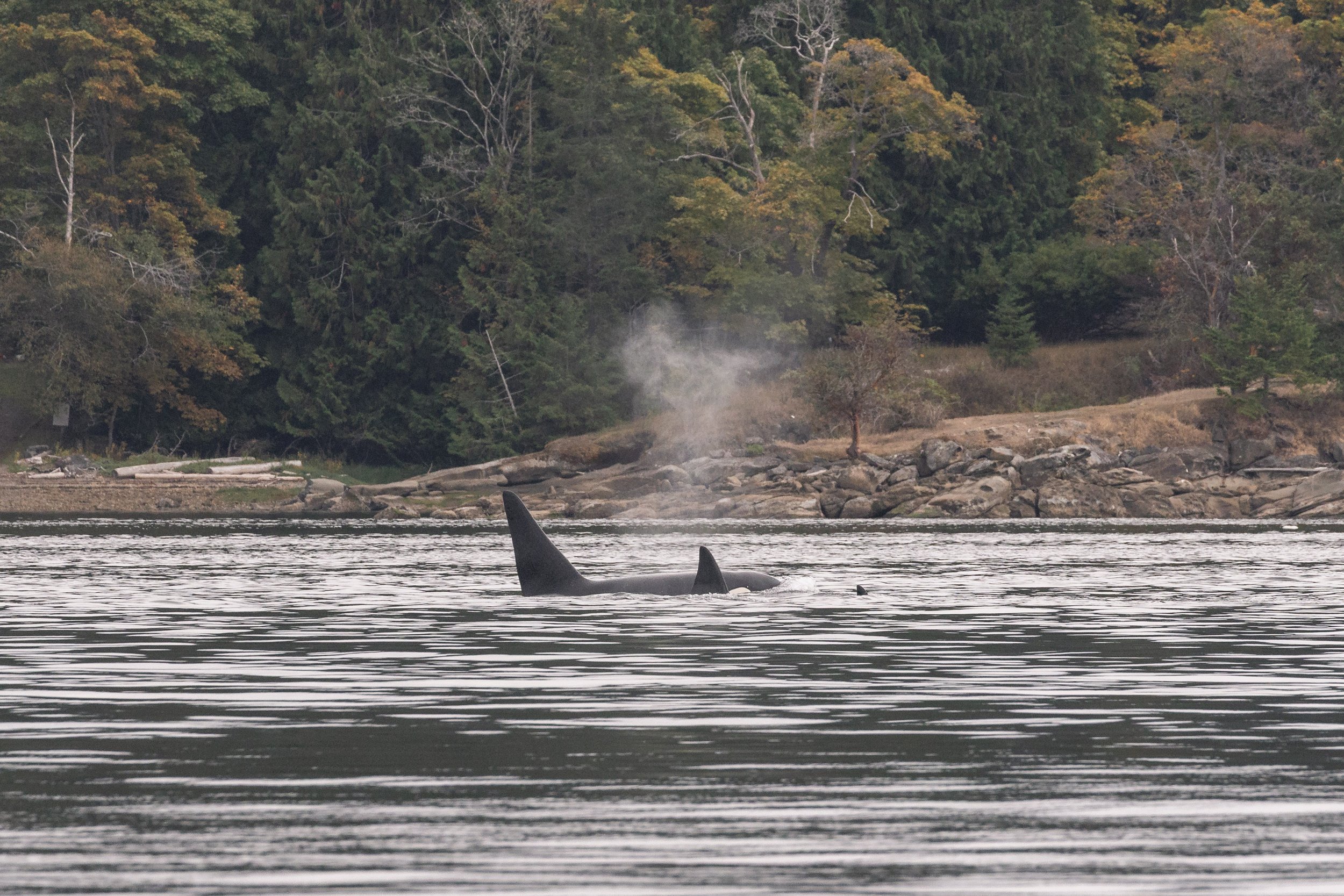
T002C1 Rocky Surfacing with T002C3 Lucy in Porlier Pass. Photo by Jordan Robinson.
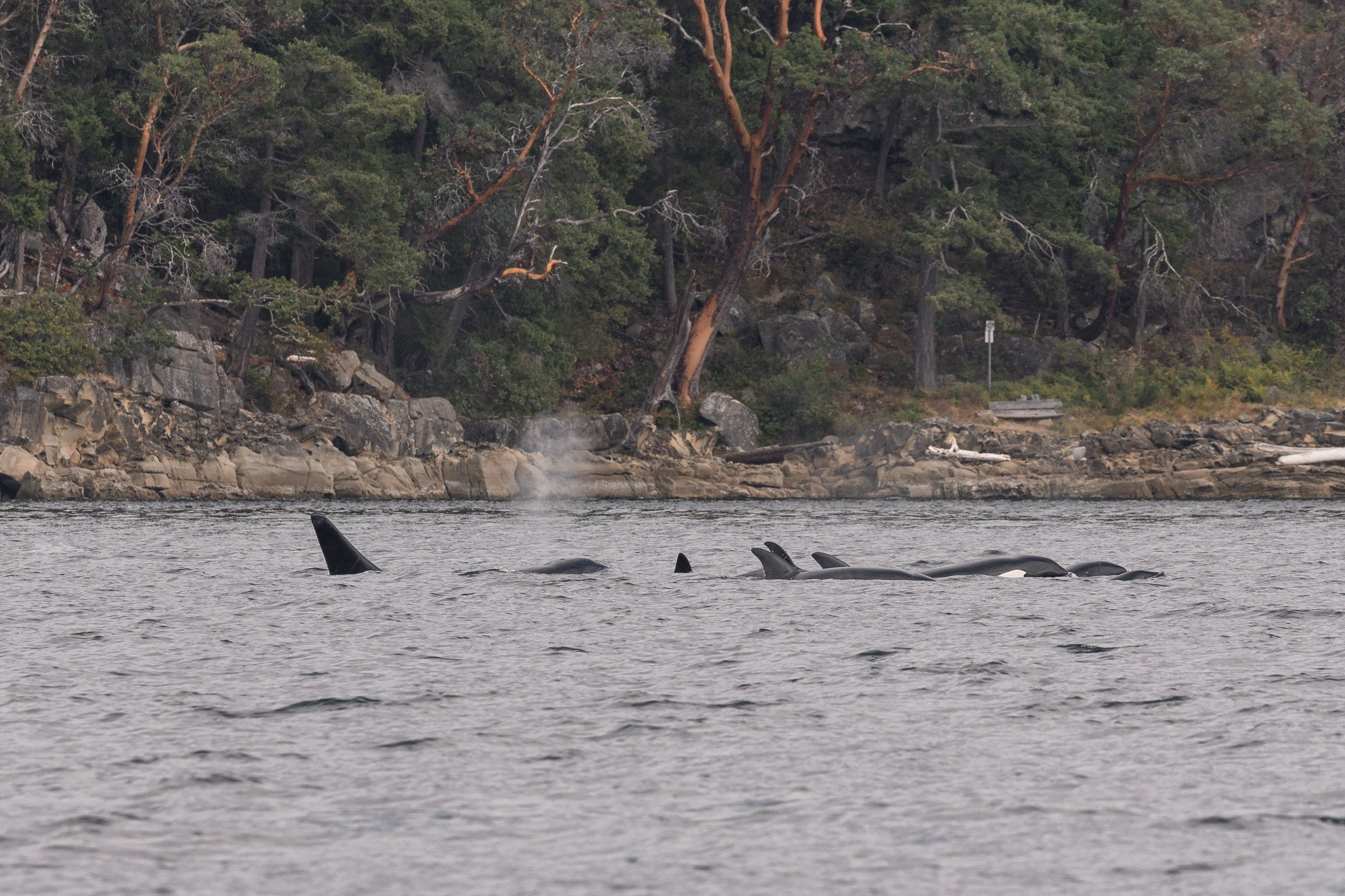
A family photo featuring all the T002Cs and T002B. Photo by Jordan Robinson.
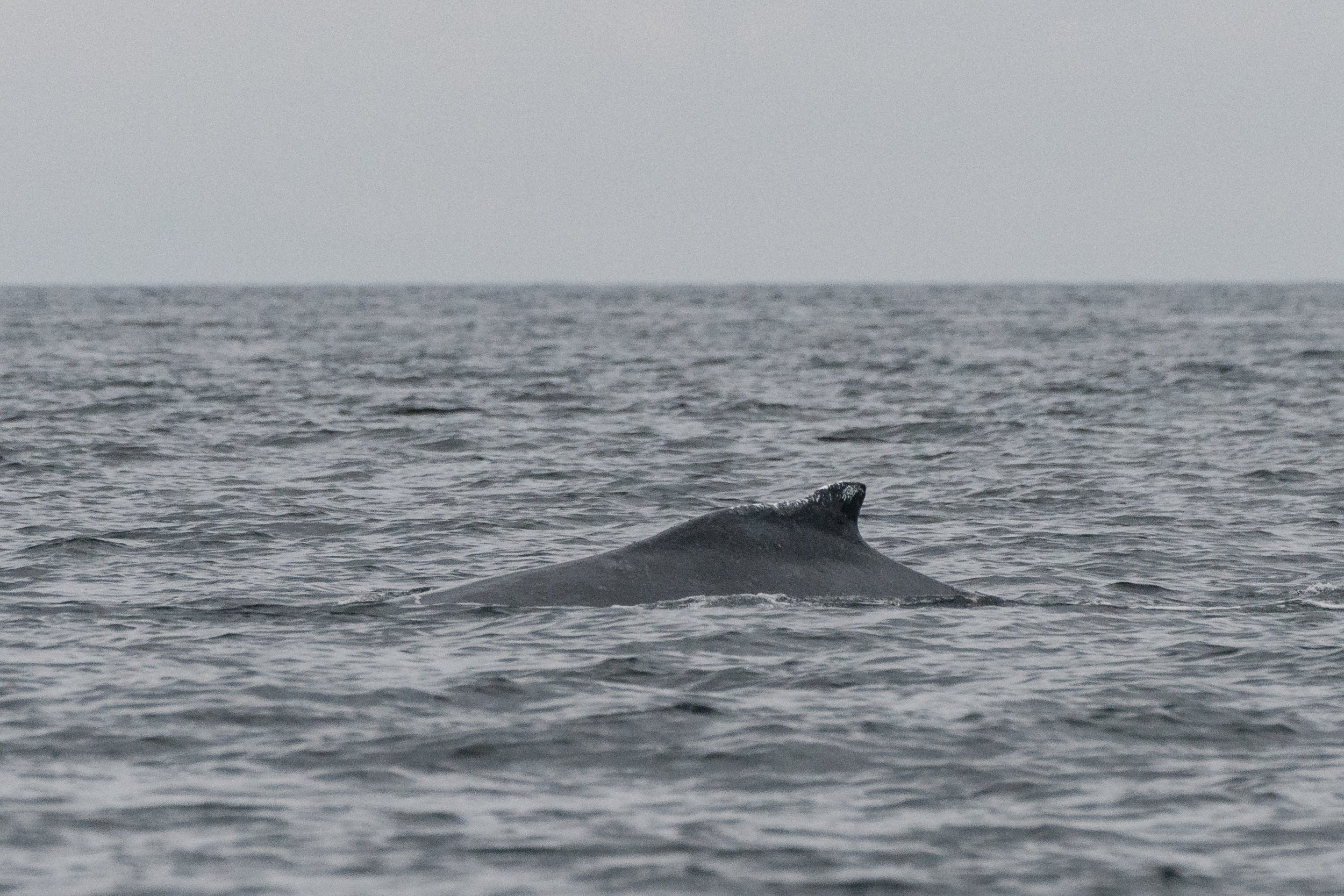
Windy coming to the surface. Photo by Val Watson.
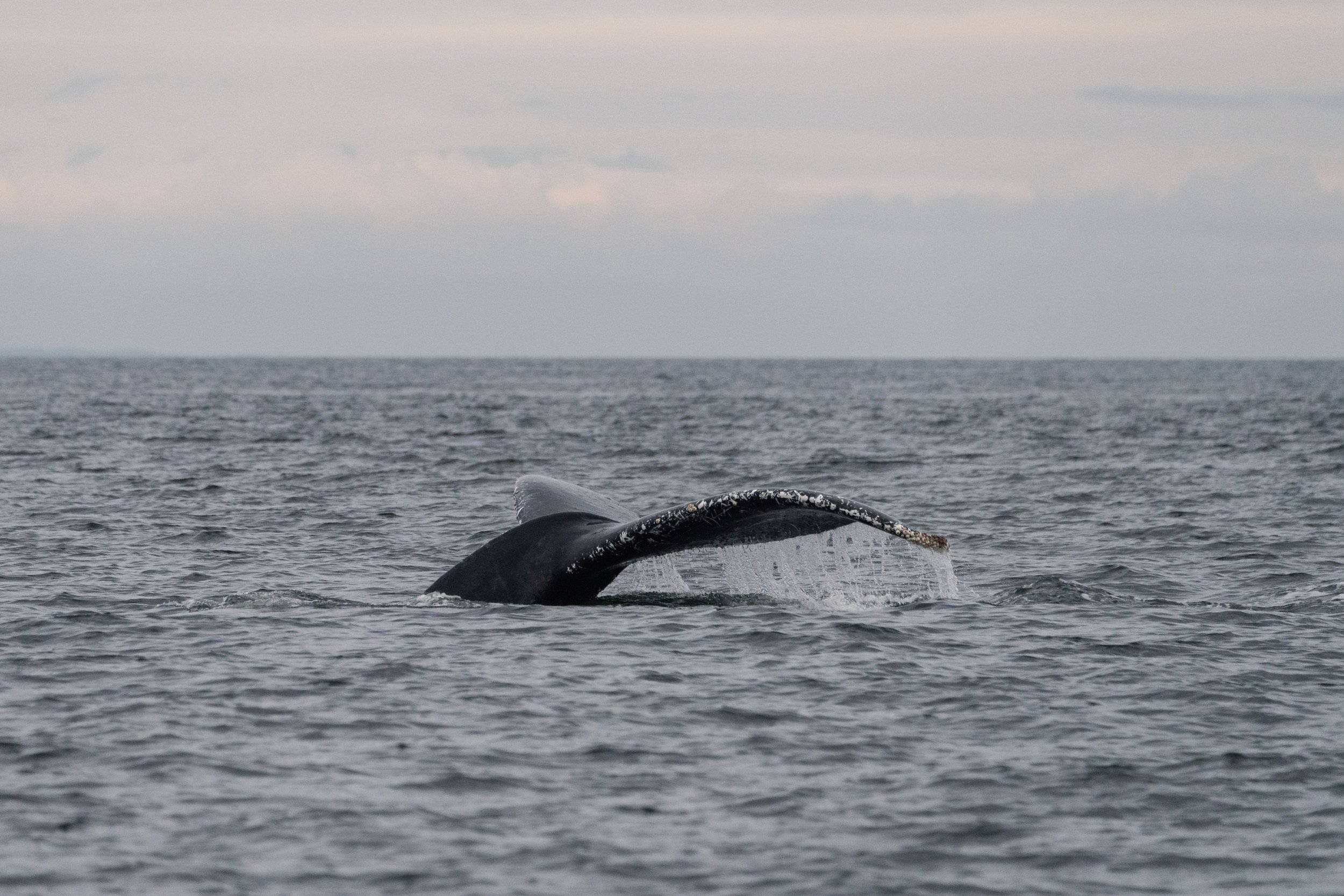
Windy going for a dive. Photo by Val Watson.
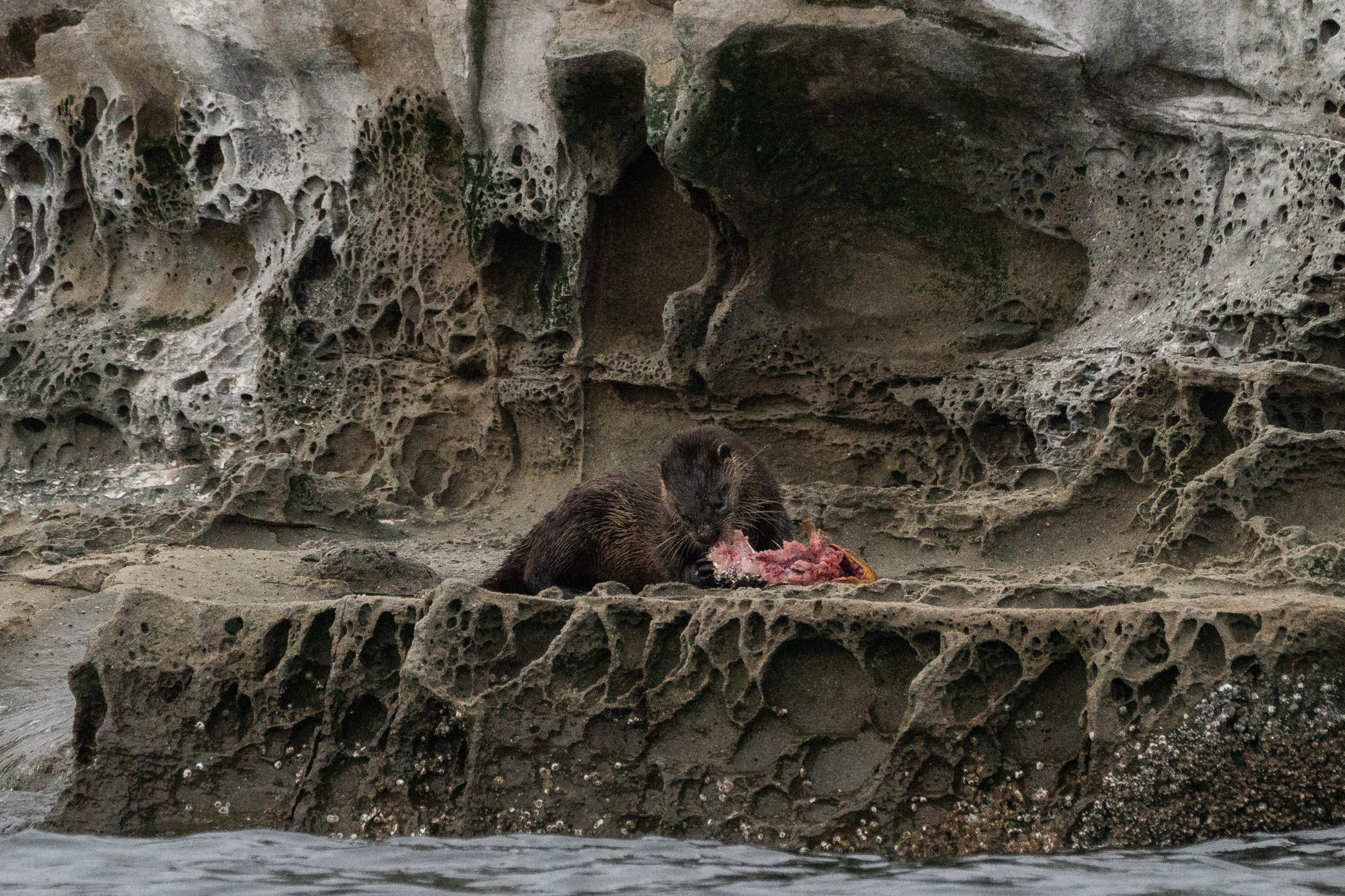
A river otter with a fishy meal at Stinky Rock. Photo by Val Watson.
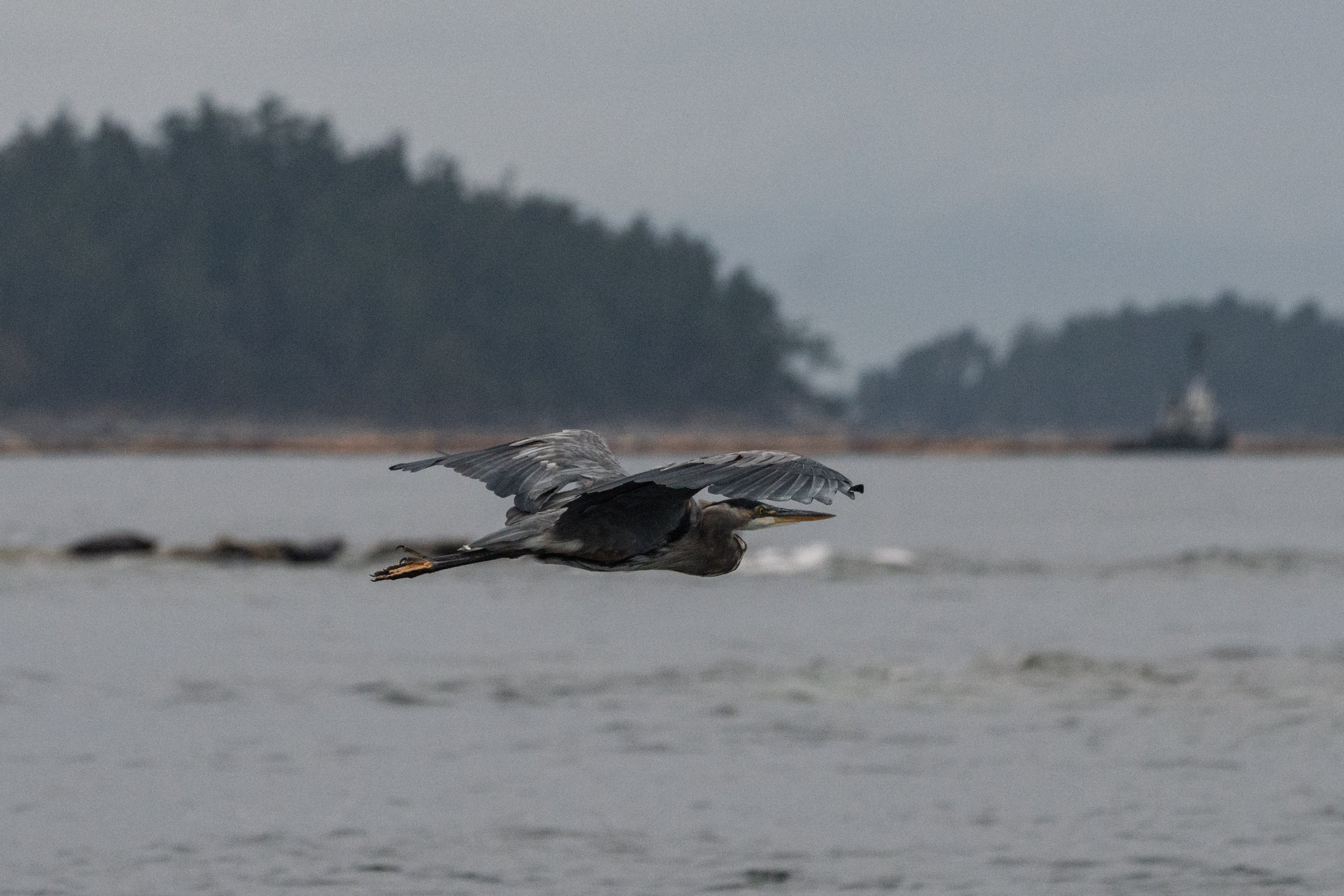
A Great Blue Heron flying by. Photo by Val Watson.
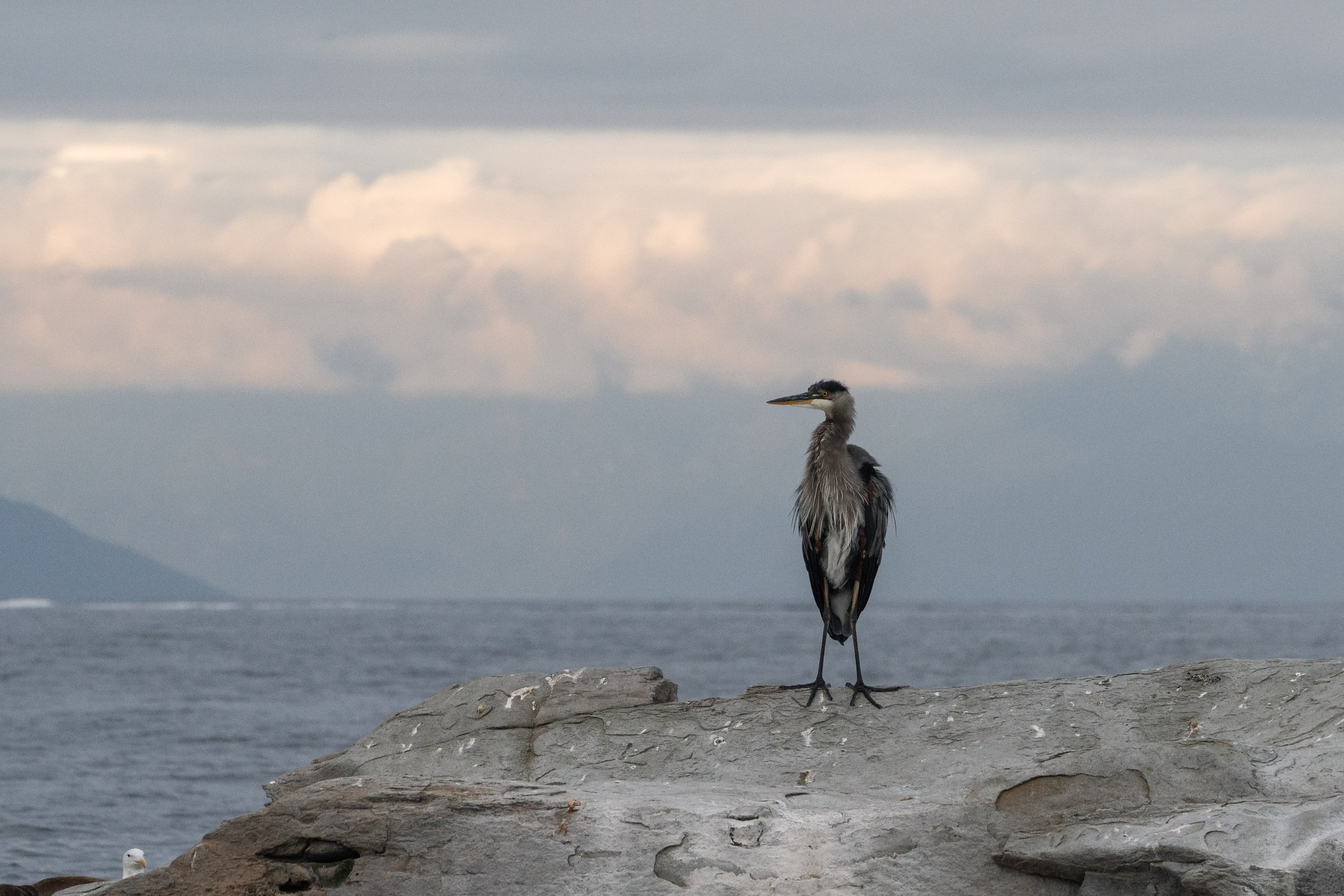
A Great Blue Heron posing on the rock. Photo by Val Watson.
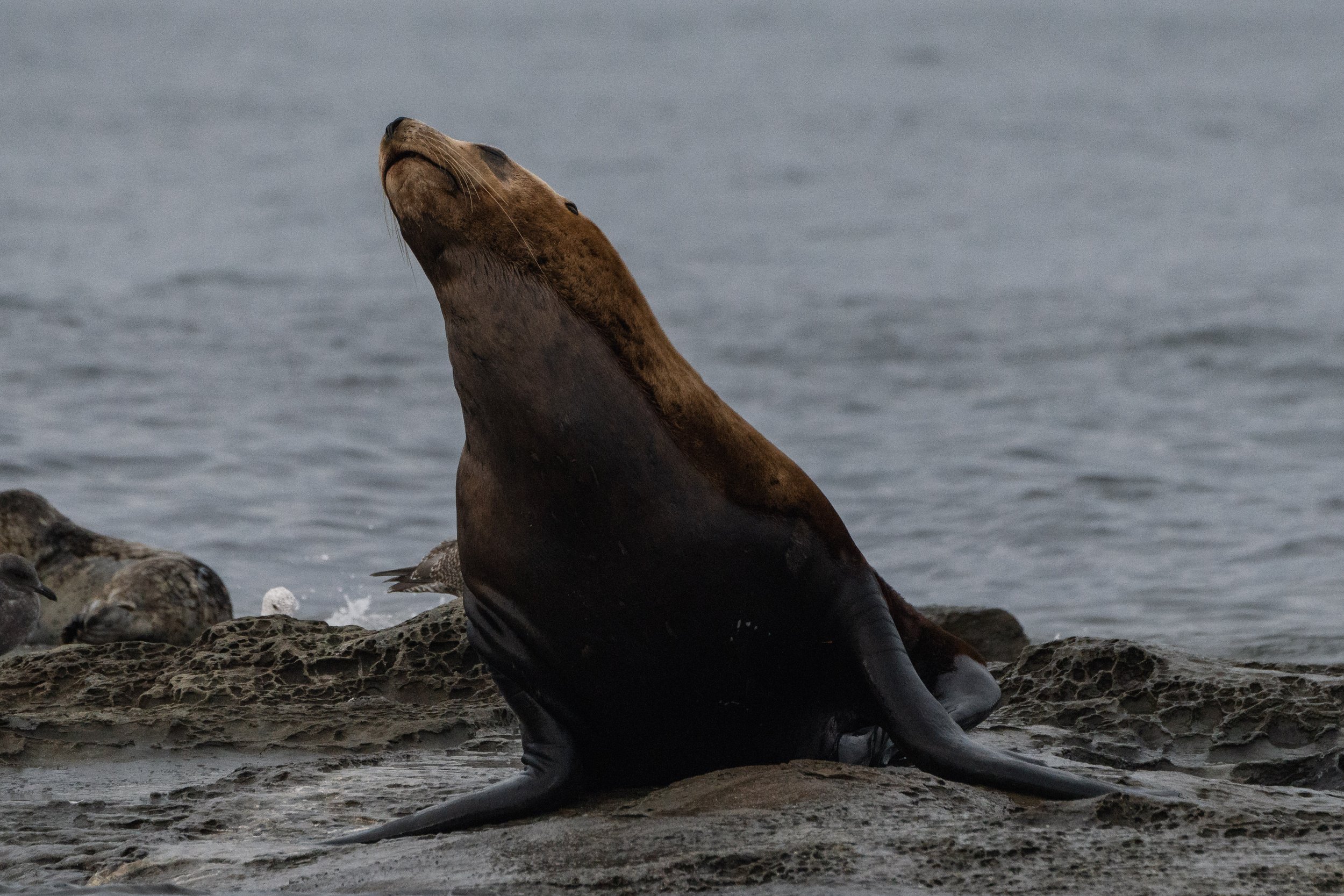
A Steller Sea Lion on Stinky Rock. Photo by Val Watson.
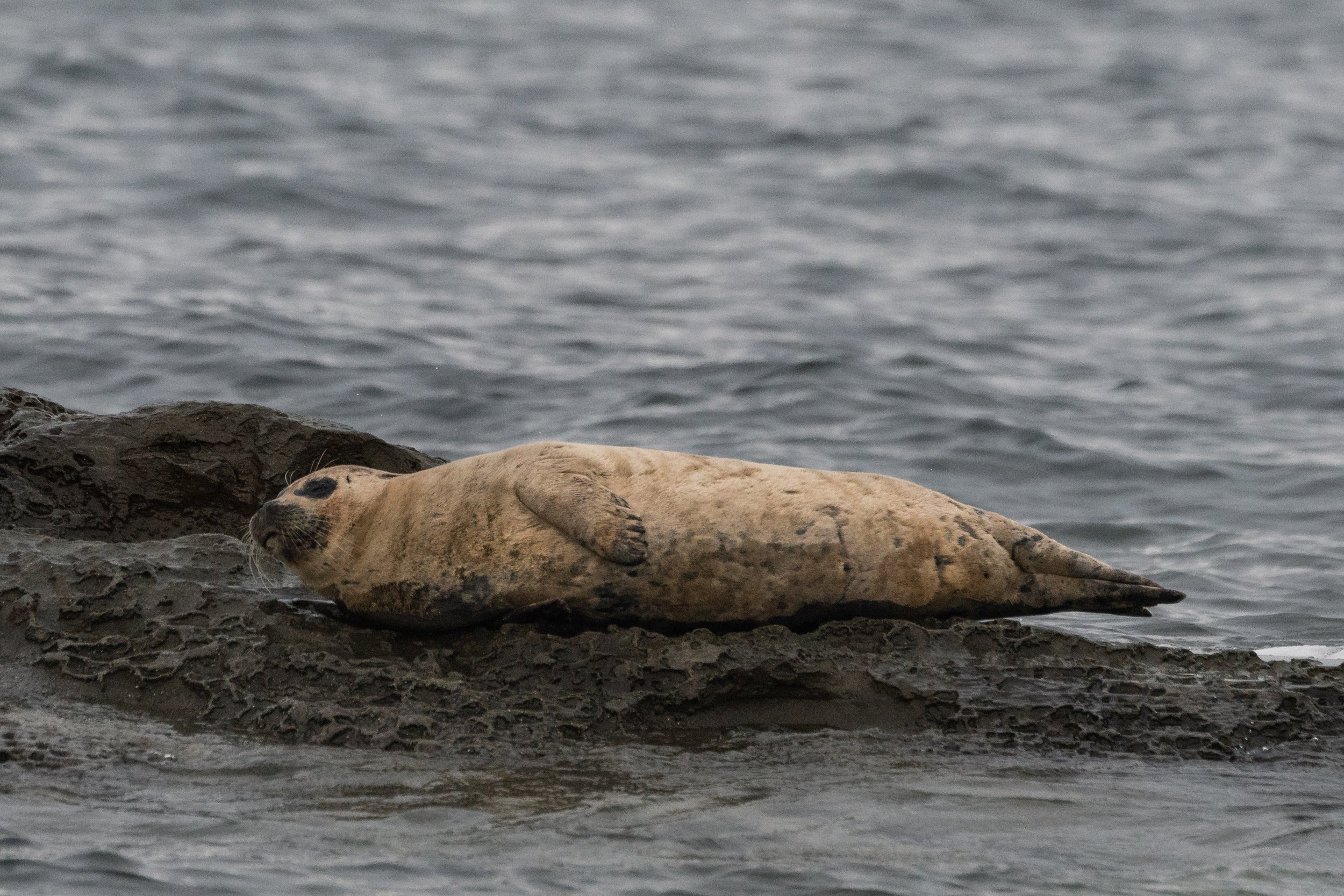
A Harbour Seal hauled out on Stinky. Photo by Val Watson.
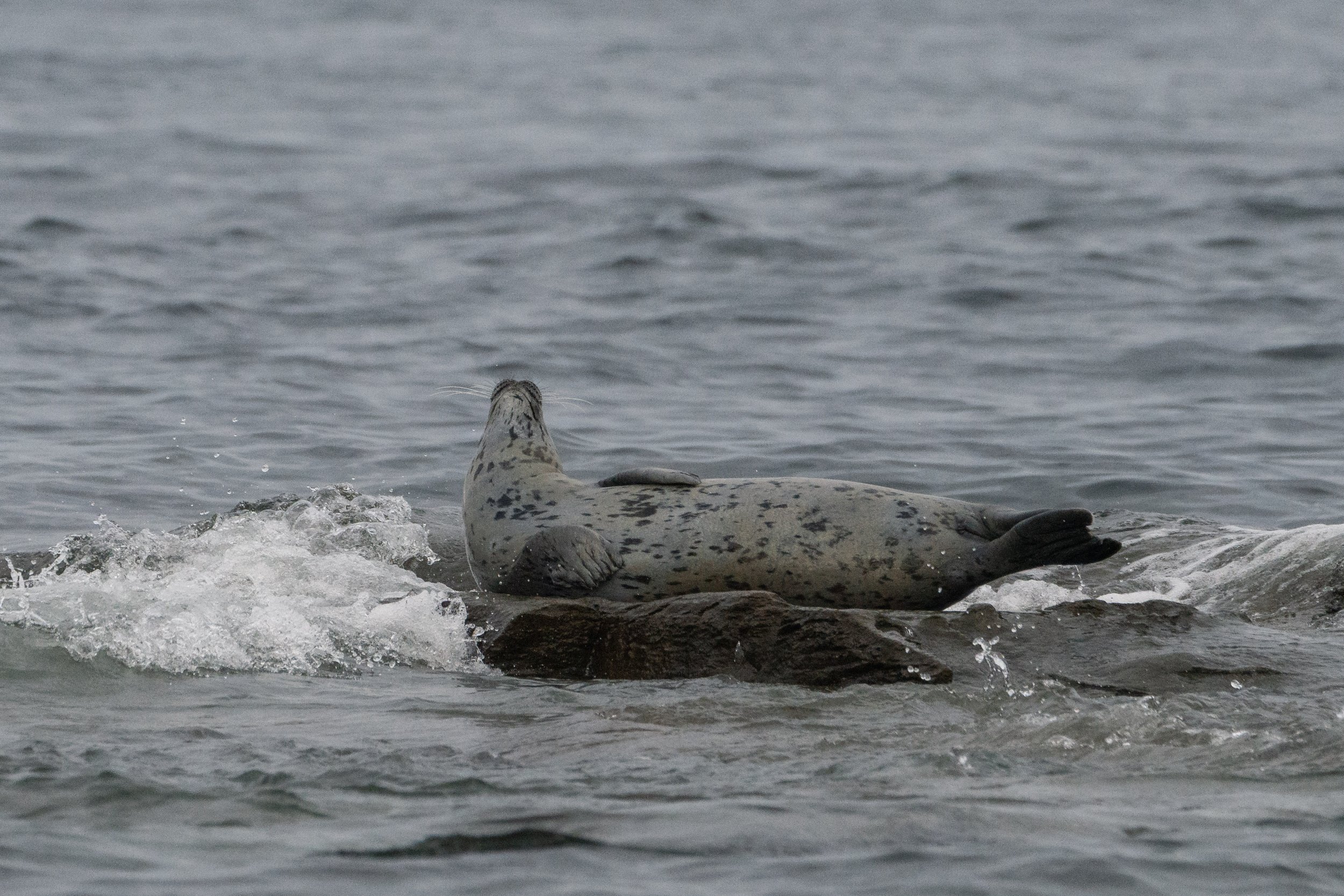
An interesting pose from th Harbour Seals. Photo by Val Watson.
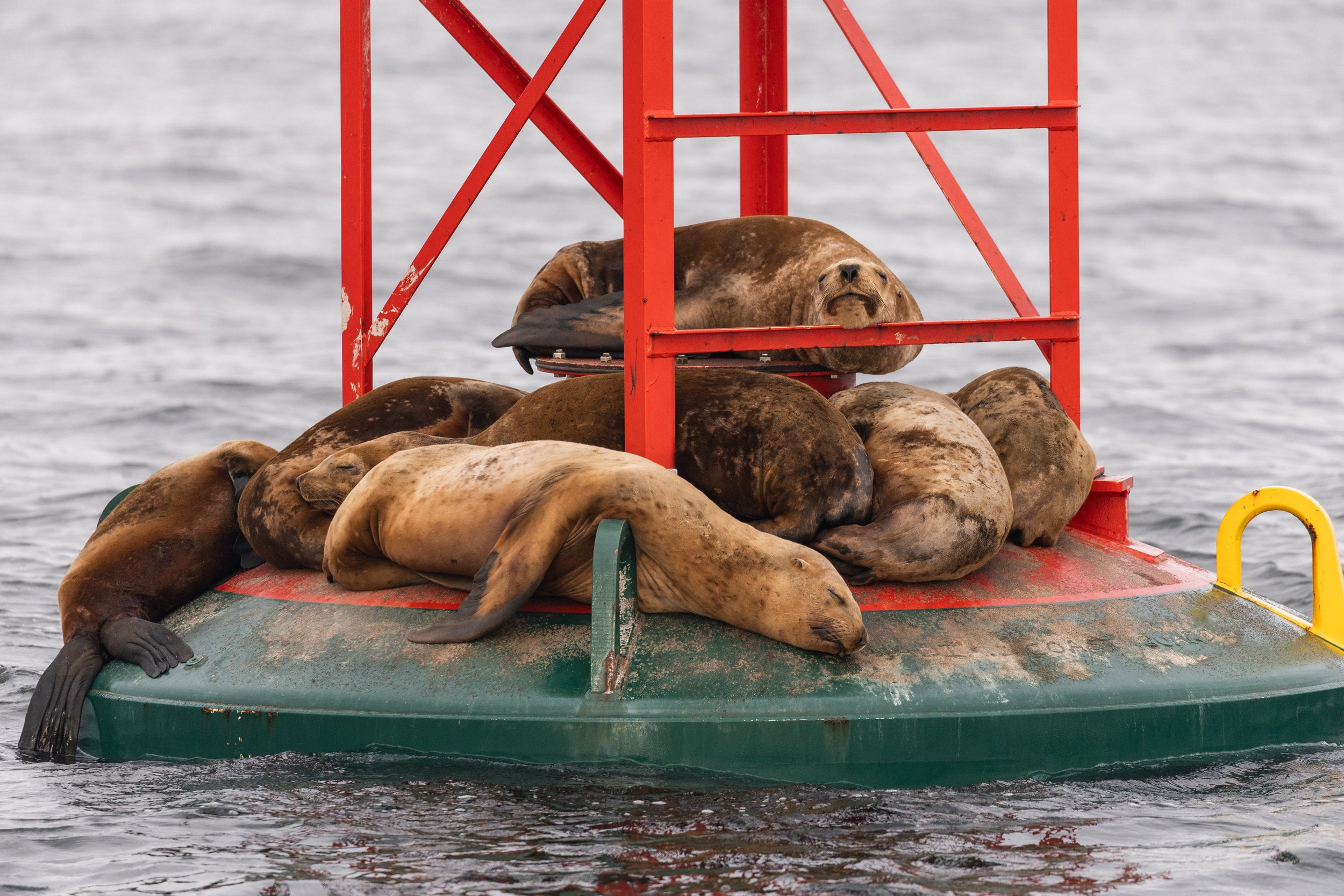
Steller Sea Lions on the UM buoy. Photo by Jordan Robinson.
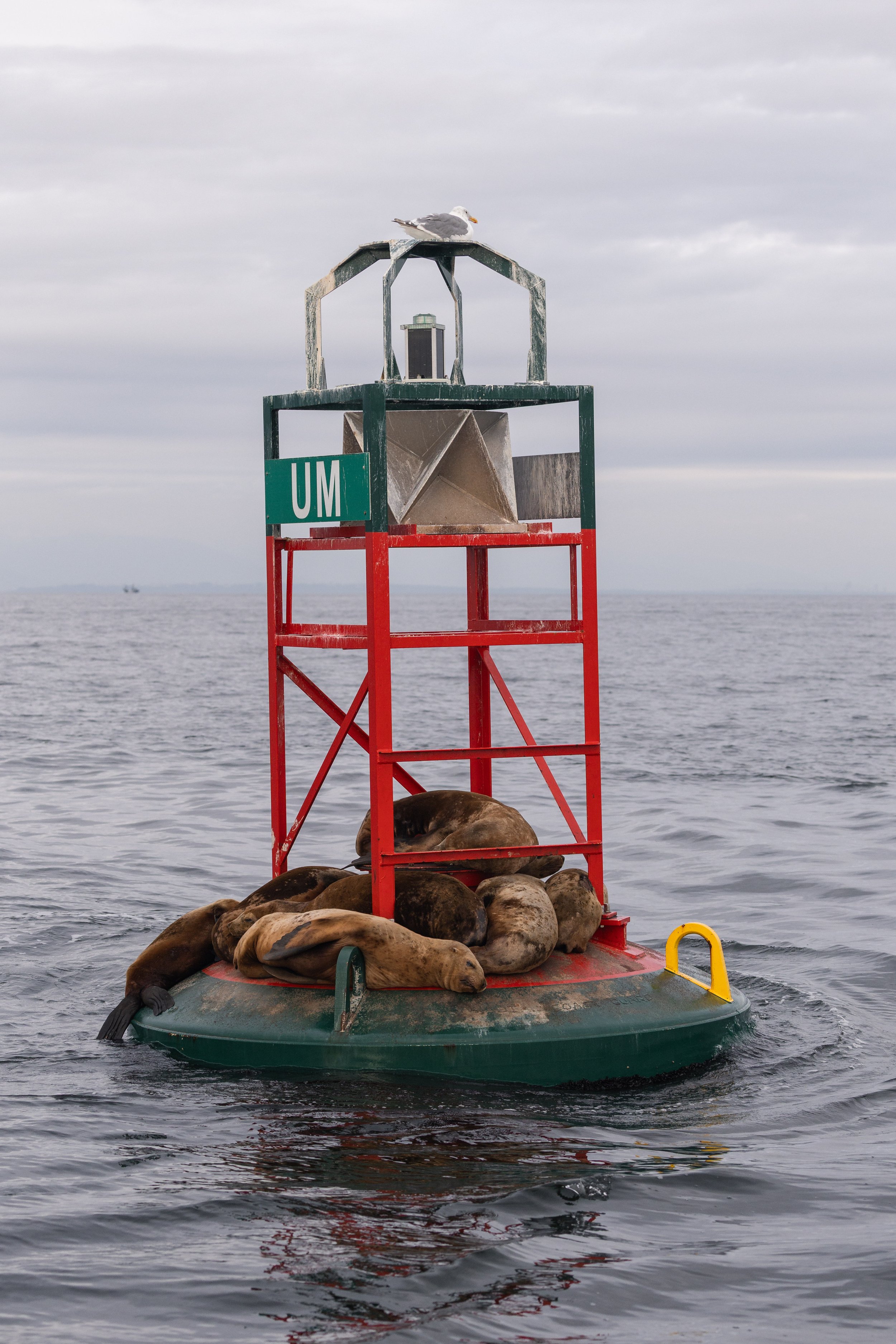
A great look at all the passengers on the buoy. Photo by Jordan Robinson.
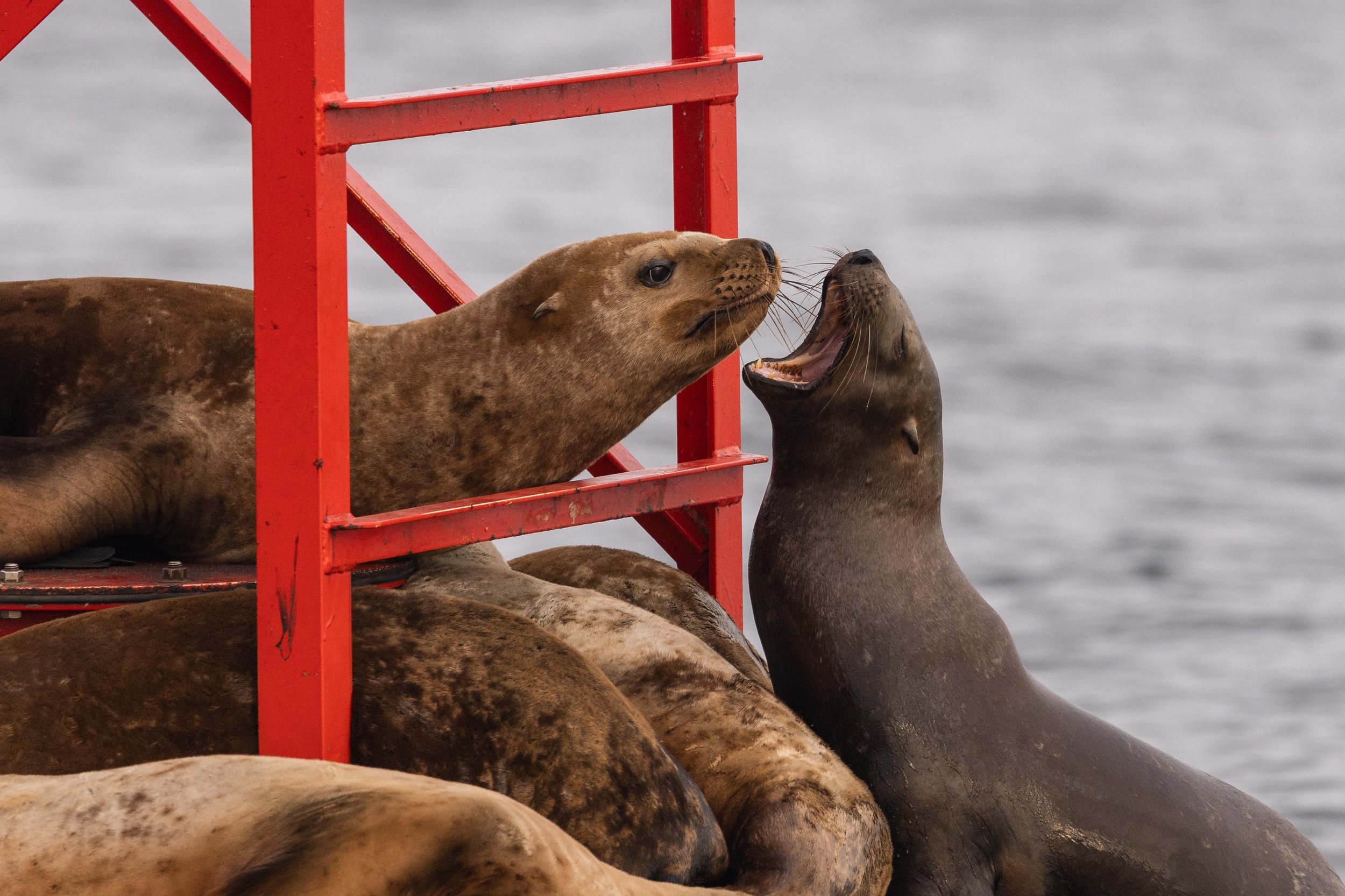
Steller Sea Lions fighting on the buoy. Photo by Jordan Robinson.
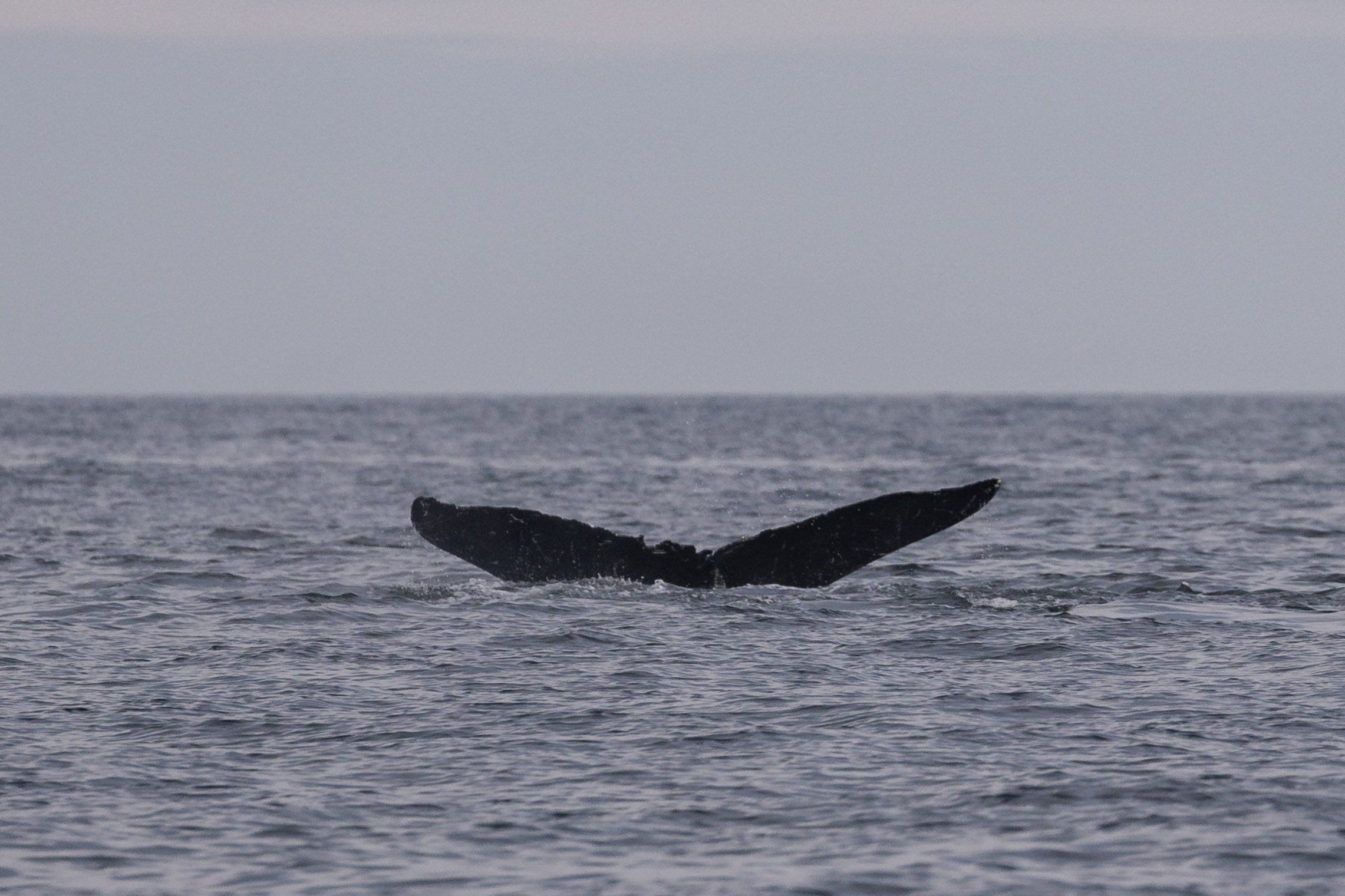
Bond going for a dive. Photo by Jordan Robinson.
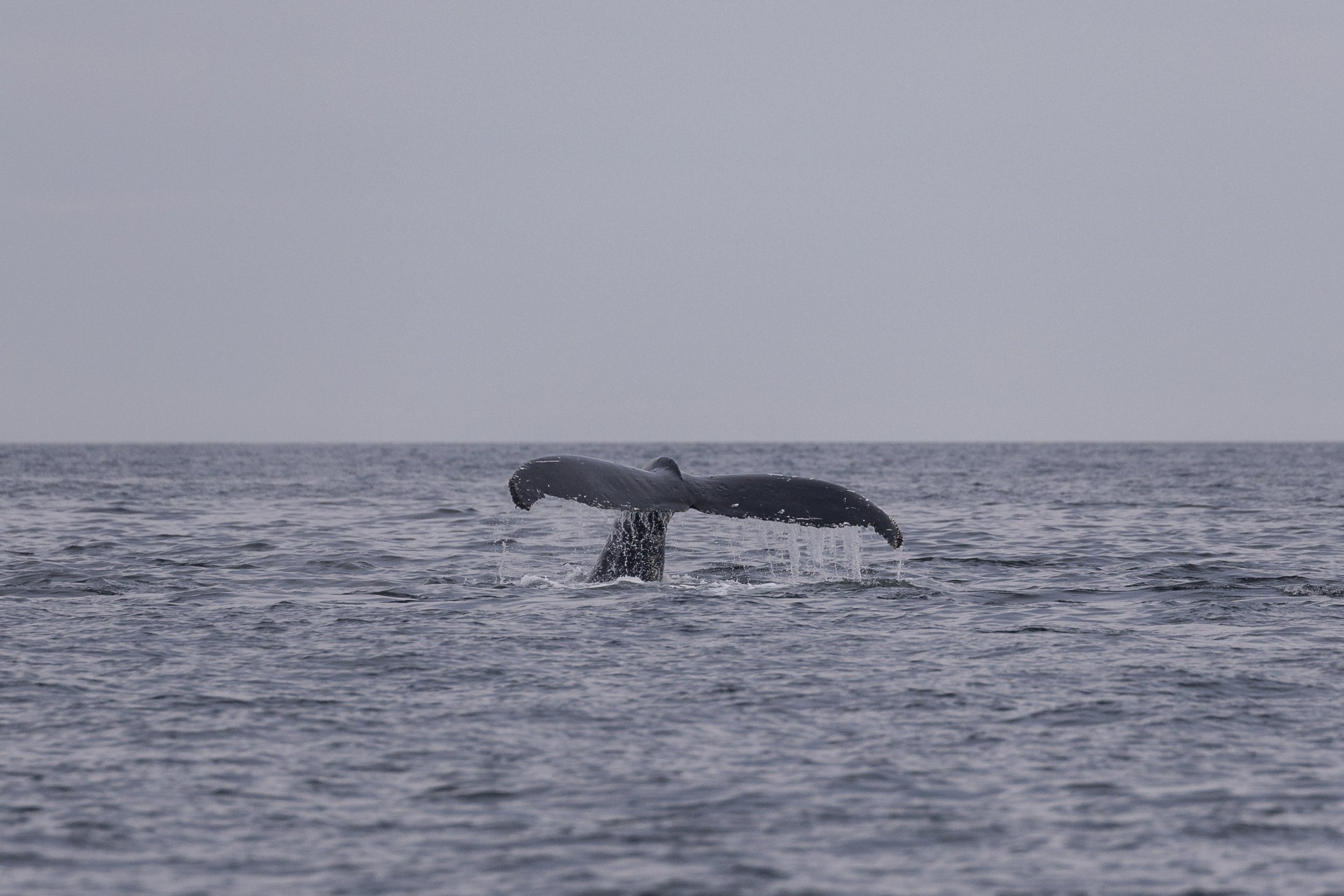
Kappa going for dive.Photo by Jordan Robinson.
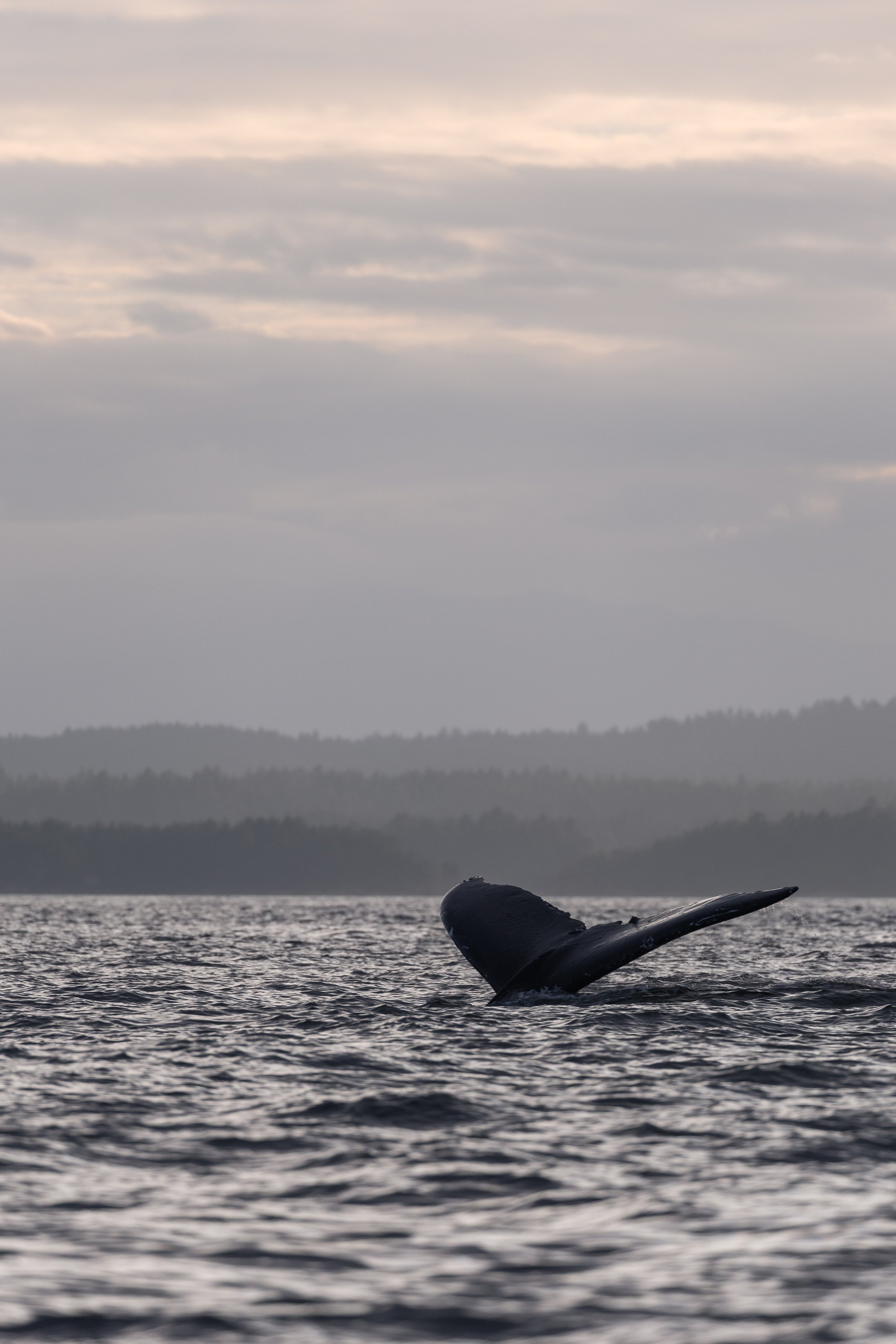
Bond going for a dive in the sunset. Photo by Jordan Robinson.
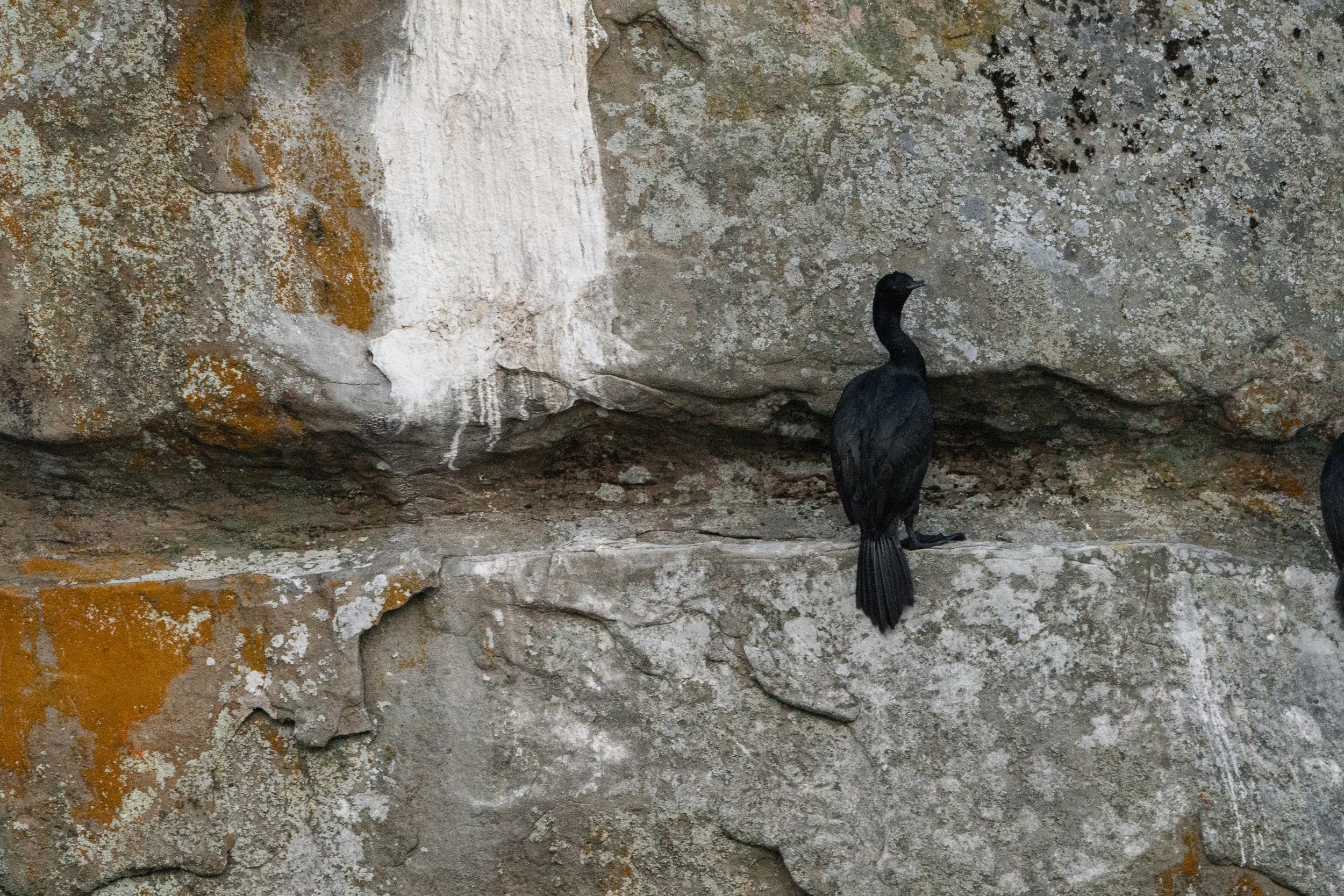
A Cormorant on the Gabriola Bluffs. Photo by Val Watson.
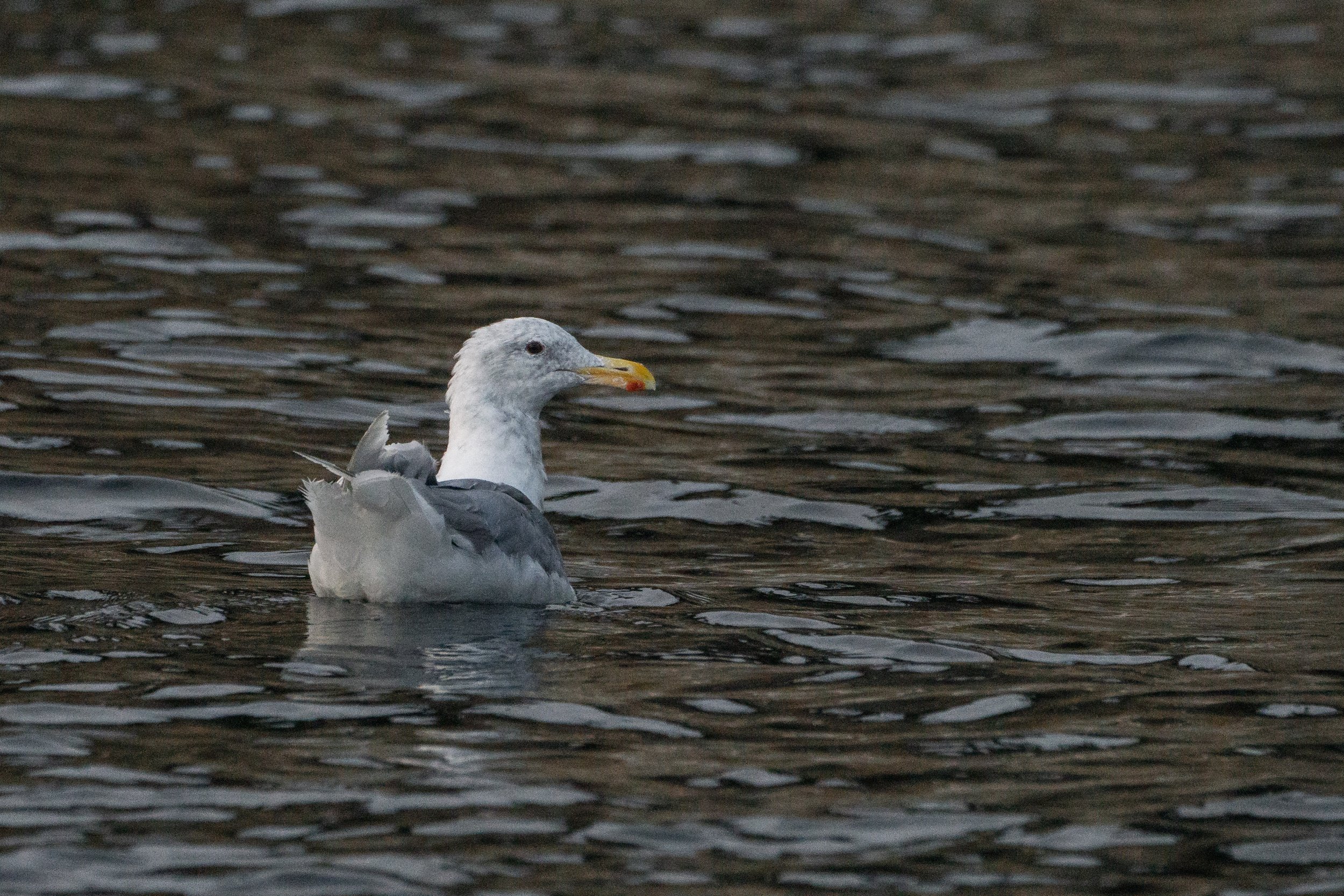
A gull floating by. Photo by Val Watson.
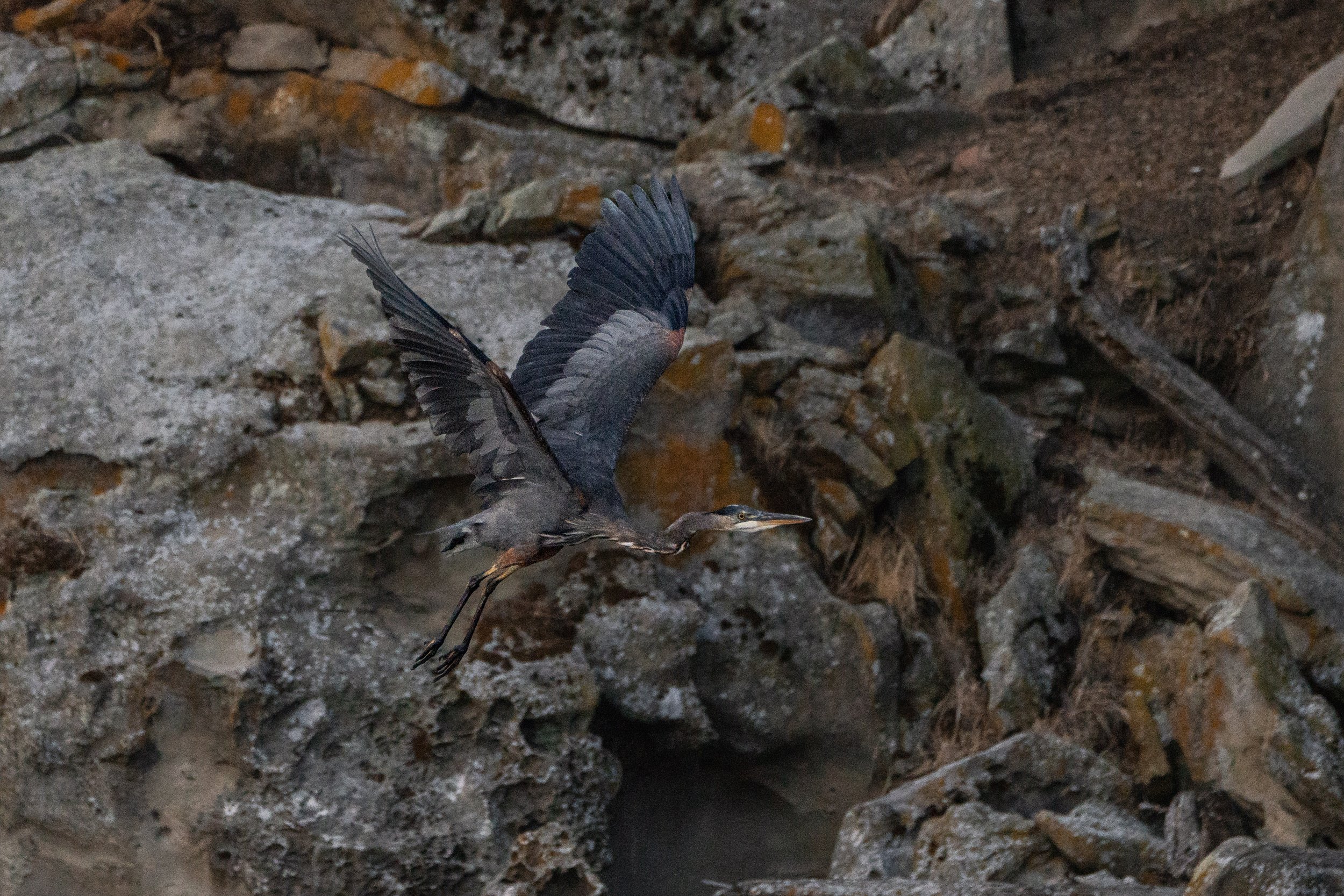
A Great Blue Heron flying by at the Bluffs. Photo by Val Watson.
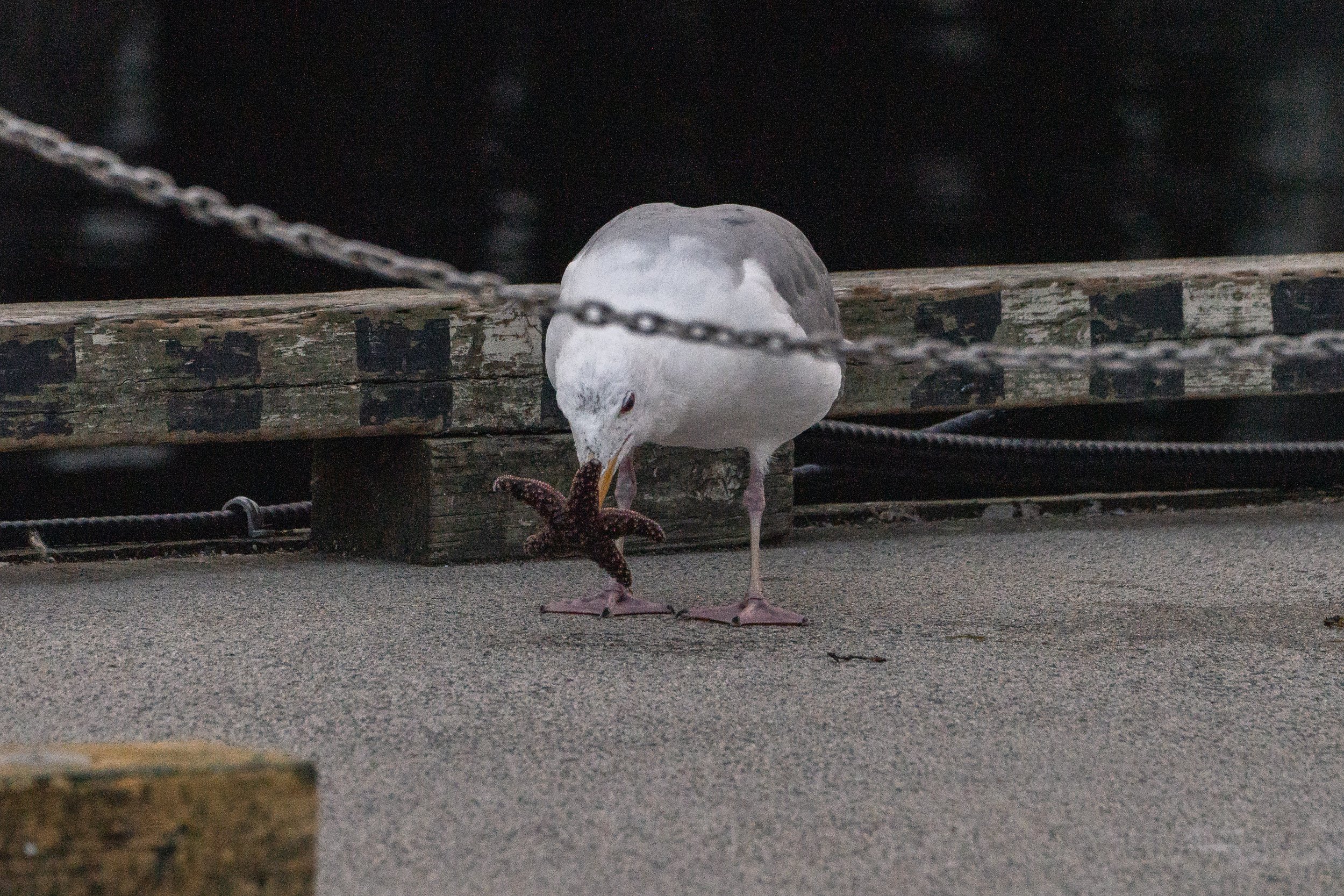
A gull eating a starfish at the docks. Photo by Val Watson.