
August 30, 2026, 10:30 AM - The T049As and a Strait Full of Whales
With three boats heading out from Nanaimo, we expected a day of searching the Strait of Georgia. As it turned out, the search did not have to take us very far at all.
Before we had even made it well into the Strait, word came over the radio that a group of orca had been spotted just north of Snake Island, less than ten minutes from Nanaimo. It is always exciting when a sighting comes in so close to home, especially when it means we can spend more of our time watching the whales rather than travelling to find them.
We headed toward the report and, as we approached the area, it did not take long to recognize the group. These were the T049As, a well-known group of Bigg's killer whales that we encounter in the waters around Vancouver Island.
T049A Nan ♀ (1986)
T049A3 Nat ♂ (2011)
T049A4 Neptune ♂ (2014)
T049A5 Nebula ♀ (2017)
T049A6 Charlie II ♂ (2022)
T049A7 Nimbus (2026)
Almost immediately, it was clear that something interesting had been happening beneath the surface.
The whales appeared to have been hunting, and the calm travelling behaviour we sometimes see from orca was nowhere to be found. Instead, the surface was full of activity. Tails slapped against the water, whales porpoised through the waves, and every so often a whale would break the surface with a burst of energy before disappearing again.
Then T049A3, Nat, gave us an especially memorable look.
He rose vertically out of the water in a large spyhop, lifting his head high above the surface and giving everyone on board a chance to see just how impressive these animals are. A spyhop is one of the more dramatic behaviours we can witness from an orca. The whale rises almost vertically, usually with its eyes above the surface, allowing it to look around its surroundings. Exactly why an individual spyhops can vary, and we cannot always know what prompted the behaviour. It may be associated with investigating something at the surface, social interactions, or simply curiosity.
Whatever the reason, it is a behaviour that makes for an unforgettable sight. For much of our time with the T049As, they remained remarkably active. After what appeared to be a successful hunt, the group seemed to settle into playing in the waves. Plenty of surface activity continued, with tail slaps and porpoising as the whales moved through the water.
Watching orcas behave like this reminds us that their lives are not simply a series of hunts and long-distance travels. They have complex social relationships and engage in a wide range of behaviours that we are still learning to understand. A few minutes of surface activity can give us a small window into that world, even if we cannot always know exactly what each behaviour means.
Eventually, the T049As shifted back into a more typical travelling pattern and headed north. With the whales moving away from us, we decided it was time to continue our own journey.
While one route would have taken us directly back through the Strait, the three boats instead headed south through the more protected waters around the Southern Gulf Islands. We travelled through Dodd Narrows, passed through Ruxton Passage, and eventually made our way out through Gabriola Pass.
Dodd Narrows is a particularly interesting section of the route. At its narrowest, the passage is only around 60 metres wide, and the tidal currents can become extremely powerful as water moves between the Strait of Georgia and the surrounding channels. Travelling through areas like this gives us a chance to experience another side of the Salish Sea, where the movement of the water itself plays a major role in shaping the marine environment.
Our next stop was Stinky Rock. The rocky outcrop was alive with wildlife, making it a perfect place to take a short break from our search. Steller sea lions were hauled out on the rocks, while harbour seals rested nearby.
Steller sea lions and harbour seals are both pinnipeds, but they are quite different animals. Steller sea lions belong to the eared seal family, which means they have visible external ear flaps and large front flippers that they use to move around on land. Harbour seals are true seals and lack those external ears. Their smaller front flippers make them much less agile on land, but they swim very well.
Watching both species around the same rocky habitat provides a great opportunity to see those differences in action. After enjoying the wildlife at Stinky Rock, it was time to head back into the Strait of Georgia. The day had already given us an excellent encounter with orca, but plenty of water remained to explore.
It was not long before the search produced another result. This time, it was humpback whales!
One boat located a pair travelling together near Thrasher Rock, where they found Kappa (BCX0158) and Bond (BCX1640). The two whales were staying relatively close together at the surface and appeared to be feeding.
Humpback whales can be remarkably flexible in the way they feed. They may work alone, travel with another whale, or occasionally gather in larger groups when prey is concentrated. Their feeding behaviour can also look very different depending on the conditions and the type of prey available.
Kappa and Bond stayed close together as they worked through the area, surfacing and diving in a rhythm that suggested they were focused on finding food below.
Further out in the waves, another boat located Fader (BCY0195)
When the crew first arrived, Fader was putting on quite a display of his own. He was repeatedly slapping his tail and pectoral fins against the surface, creating large splashes around him.
Like the orca earlier in the day, Fader eventually settled into feeding behaviour. The transition was a good reminder that what we see at the surface is only part of the story. A humpback can spend most of a feeding dive well below the boat, searching for and pursuing prey that we cannot see. What happens at the surface can offer clues, but an entire underwater world unfolds beyond our view.
After spending time with the humpbacks, the boats began making their way back toward Nanaimo.
But the day had one more surprise waiting.
As one of our boats was heading home, they encountered another group of humpbacks: Prowler (BCX1660), Geometry (BCZ0338), and Orion (BCX1251).
These three whales also appeared to be feeding, giving the boat another chance to watch them work through the area. At one point, the whales surfaced surprisingly close to the boat, offering everyone on board a completely different perspective on their size.
From a distance, a humpback can appear deceptively small against the vastness of the Strait. Seeing one surface nearby changes that perception immediately. The broad back seems to go on and on as it rises from the water, and the animal's sheer scale becomes much easier to appreciate.
That contrast is one of the most fascinating parts of spending time around humpback whales. Their movements can be slow and deliberate, but their size is extraordinary. Even a single surface can make the ocean around them feel suddenly much smaller.
Eventually, it was truly time to head home.
All three boats made their way back toward Nanaimo, carrying with them a full day of sightings that had taken us through several very different marine habitats. We had started just offshore with the T049As, watched an energetic group of orca move through the waves after what appeared to be a successful hunt, travelled through the protected channels of the Southern Gulf Islands, stopped to watch Steller sea lions and harbour seals at Stinky Rock, and then returned to the open Strait to spend time with several groups of humpback whales.
It was a day that showed just how much variety can be found within a relatively small stretch of the Salish Sea. Photos taken throughout the trip by Marine Naturalists Val Watson, Jordan Robinson, and Evan Hessels are included below.
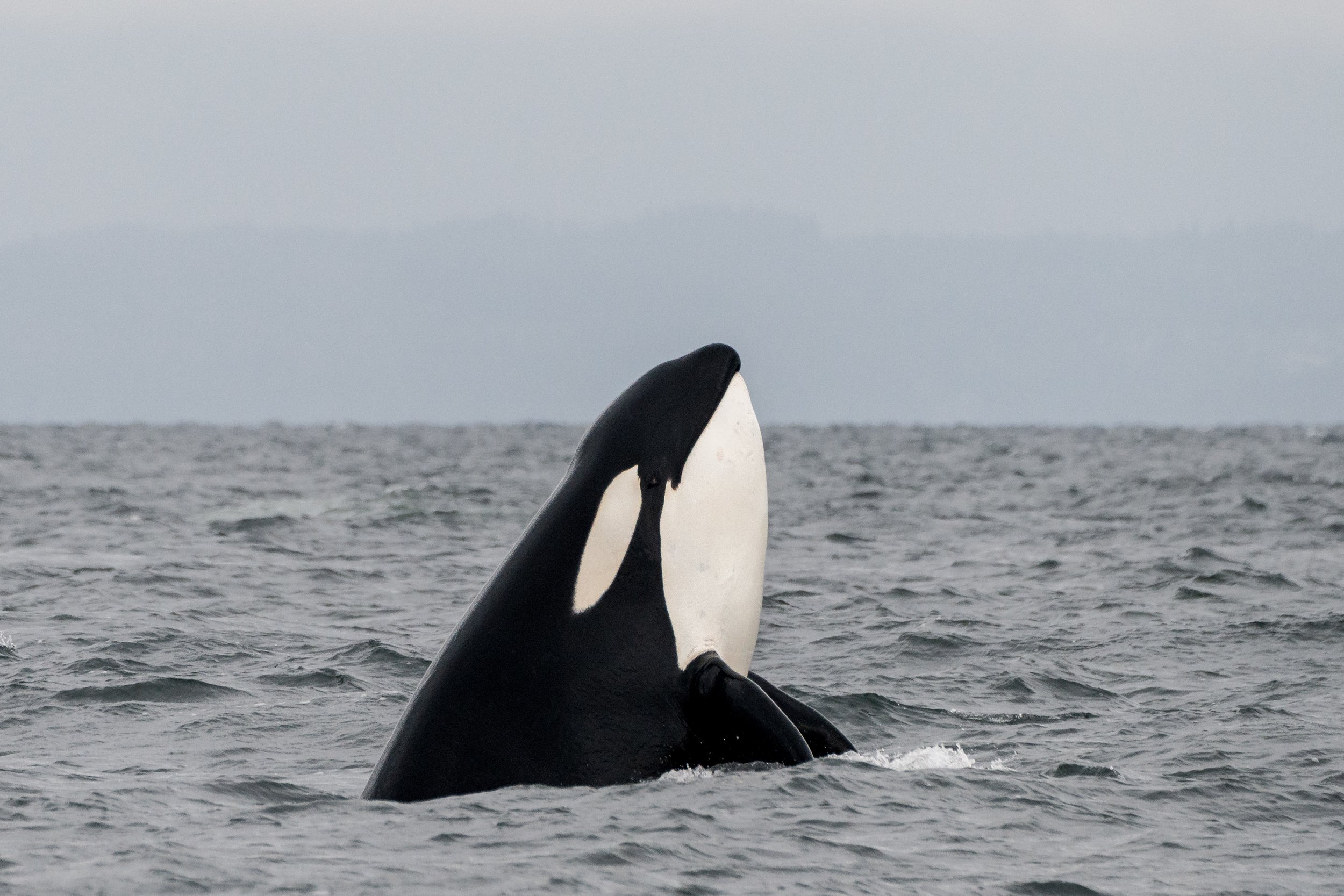
T049A3 Nat spy hopping. Photo by Val Watson.
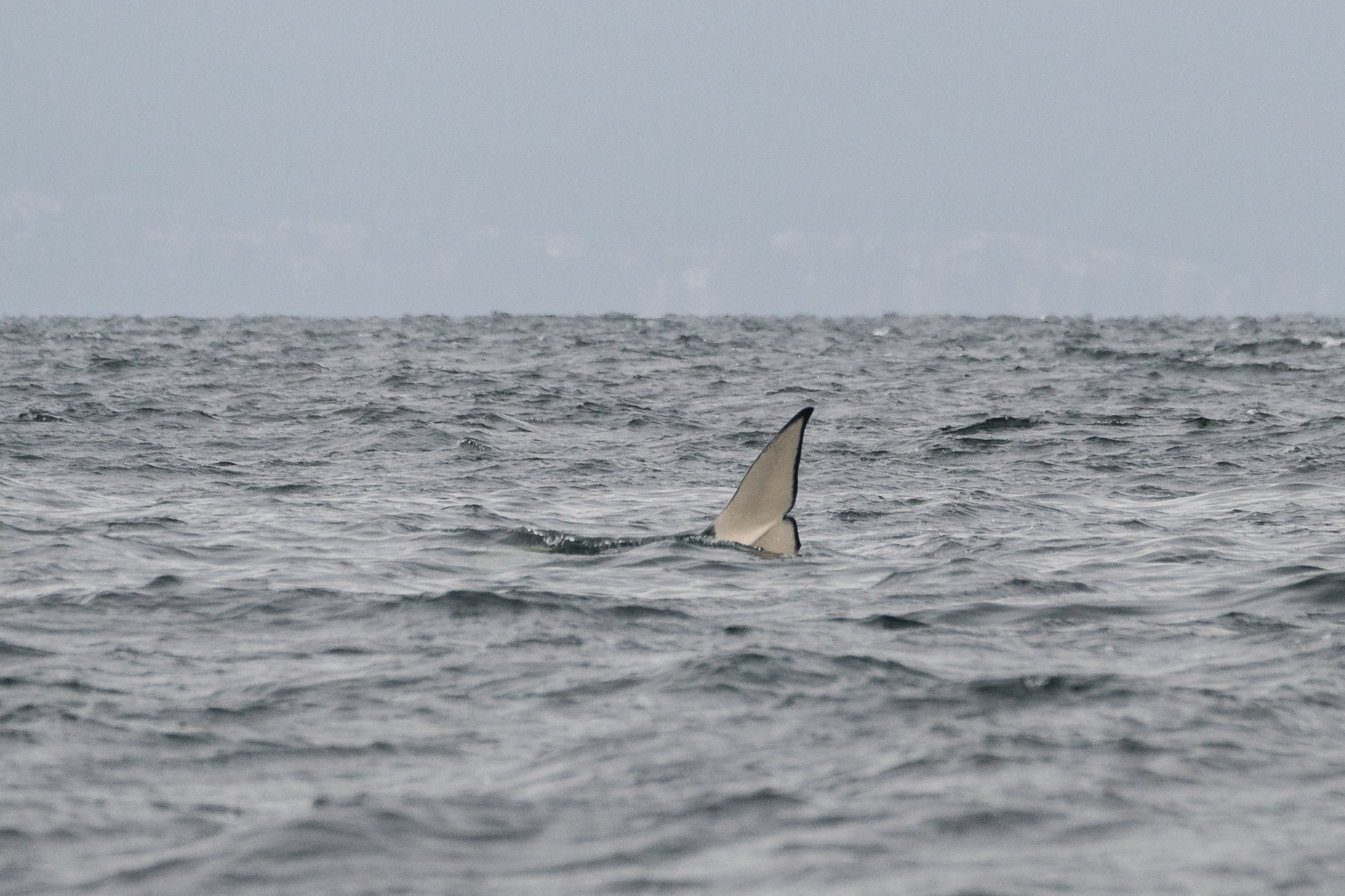
One of the youngsters tail as they swim. Photo by Val Watson.
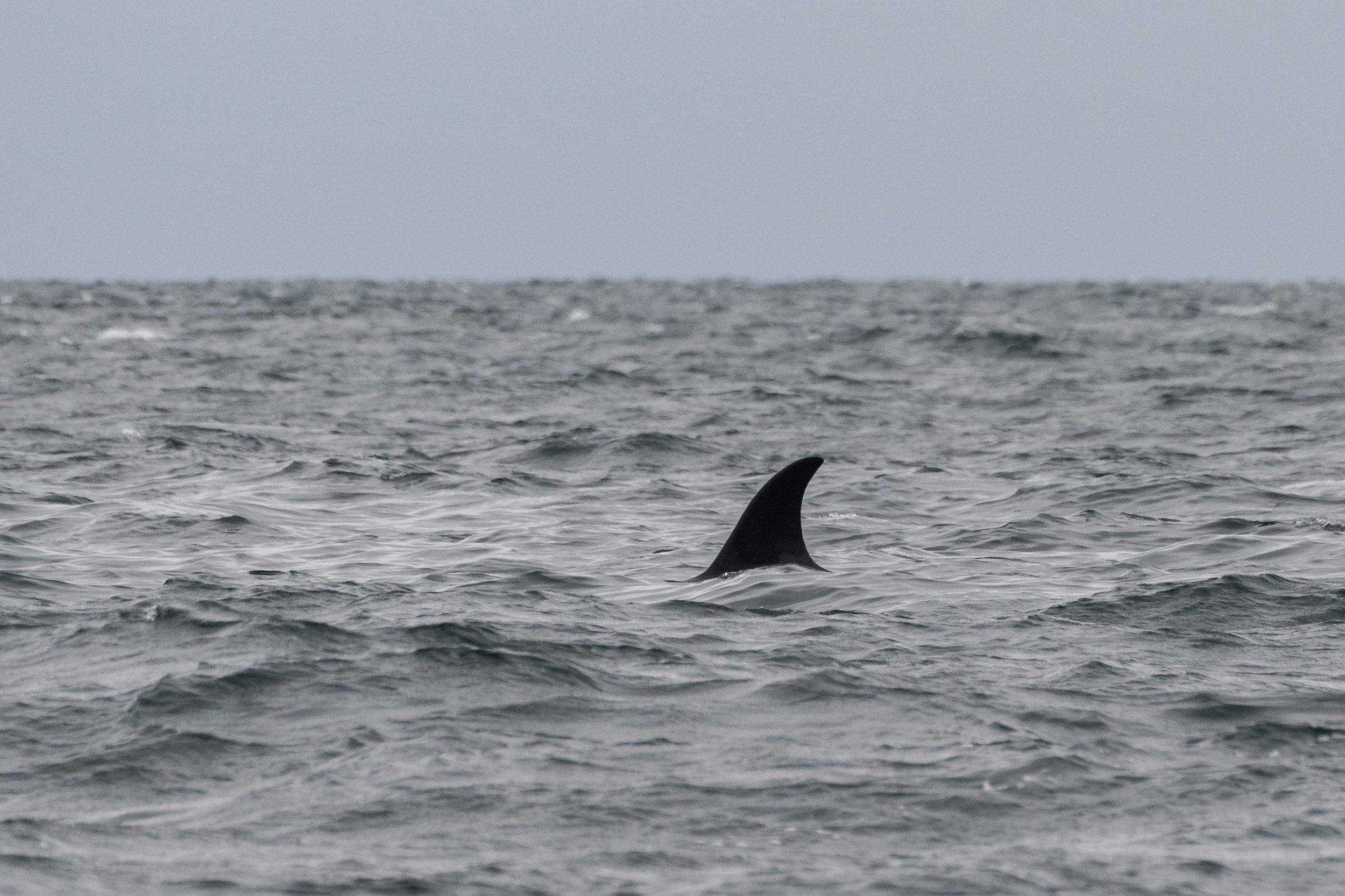
T049A5 Nebula surfacing in the waves. Photo by Val Watson.
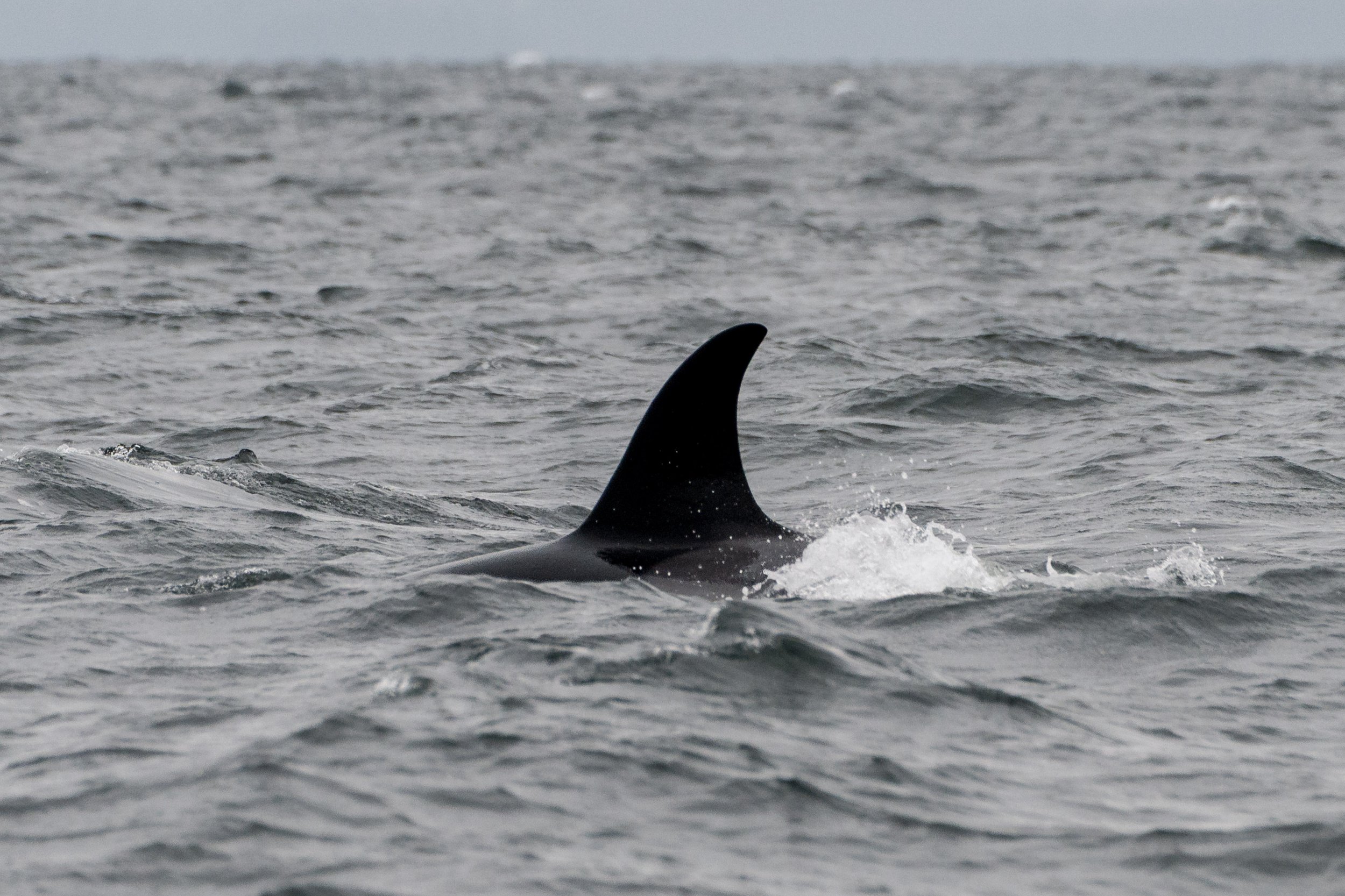
T049A5 Nebula making a splash as she moves through the waves. Photo by Val Watson.
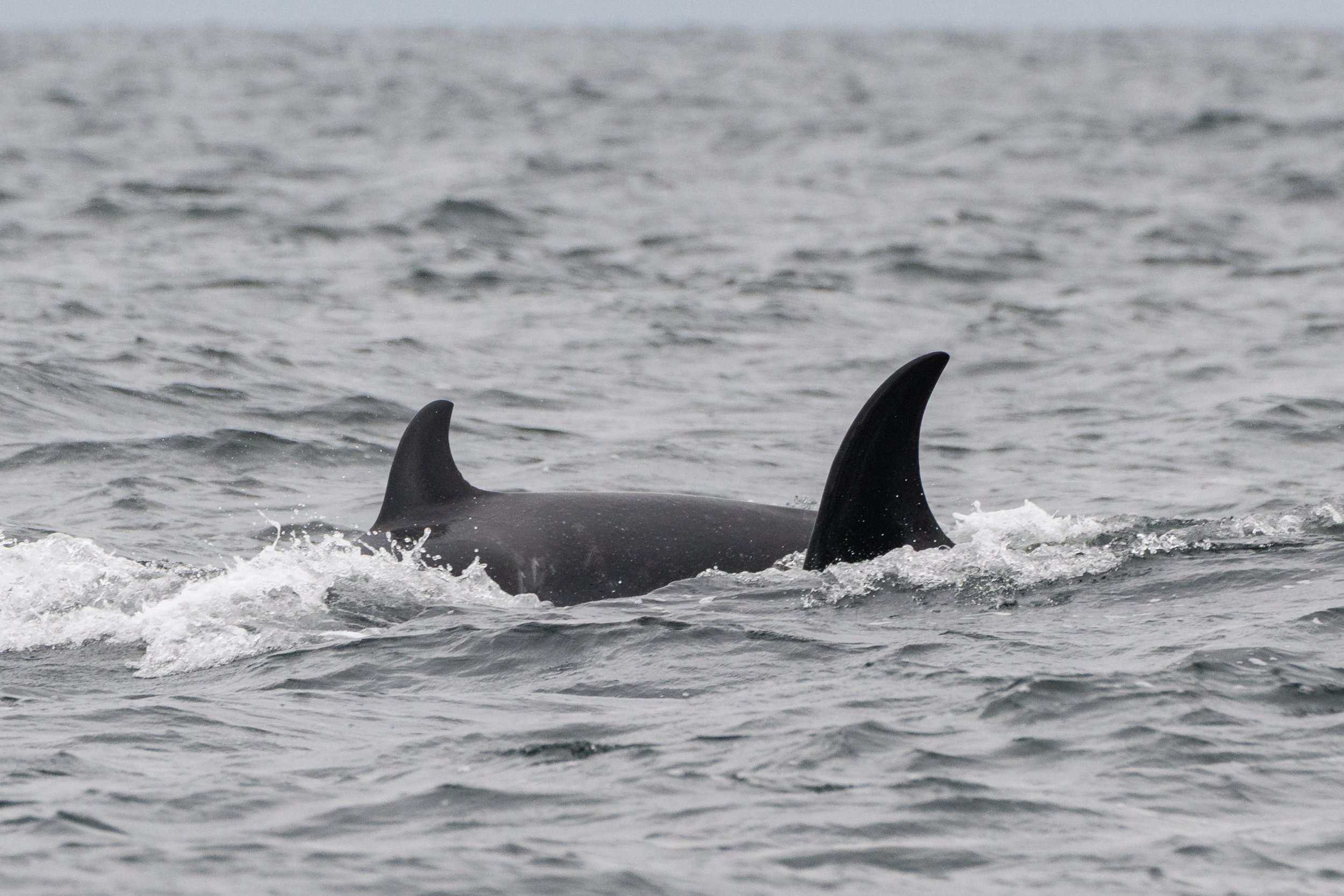
T049A7 Nimbus surfacing beside T049A5 Nebula. Photo by Val Watson.
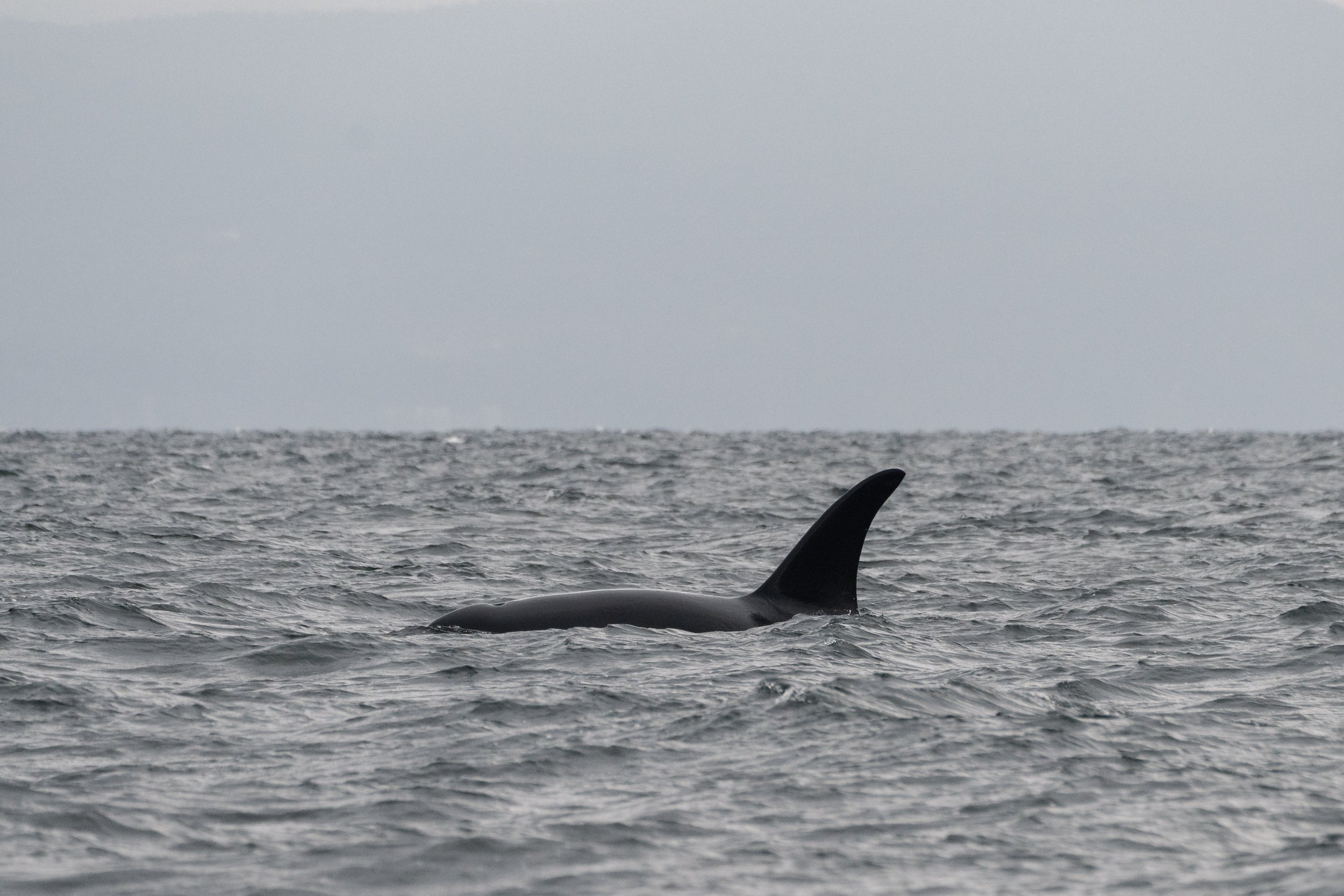
T049A3 Nat surfacing in the waves. Photo by Val Watson.
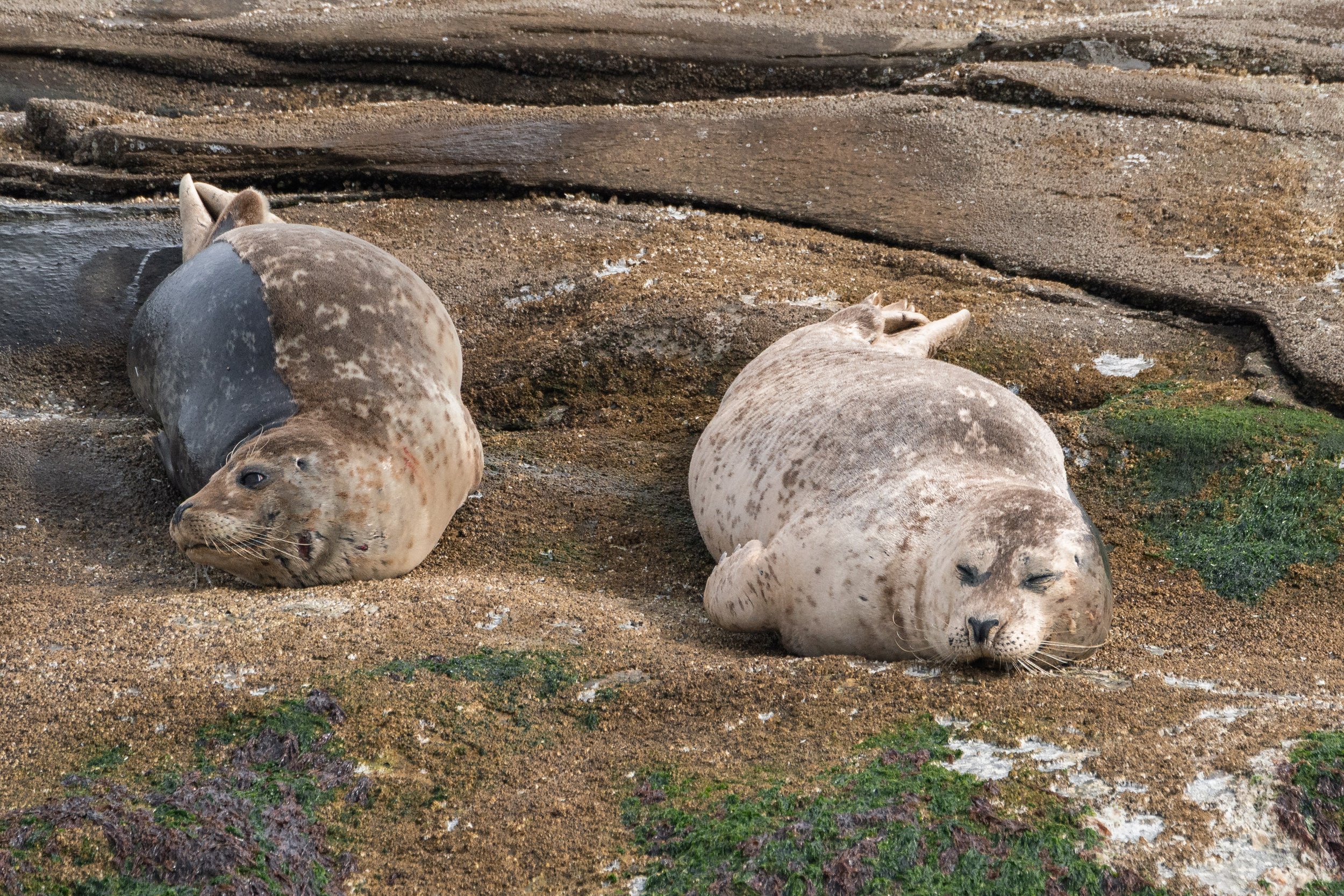
A cute pair of Harbour Seals relaxing on Stinky Rock. Photo by Val Watson.
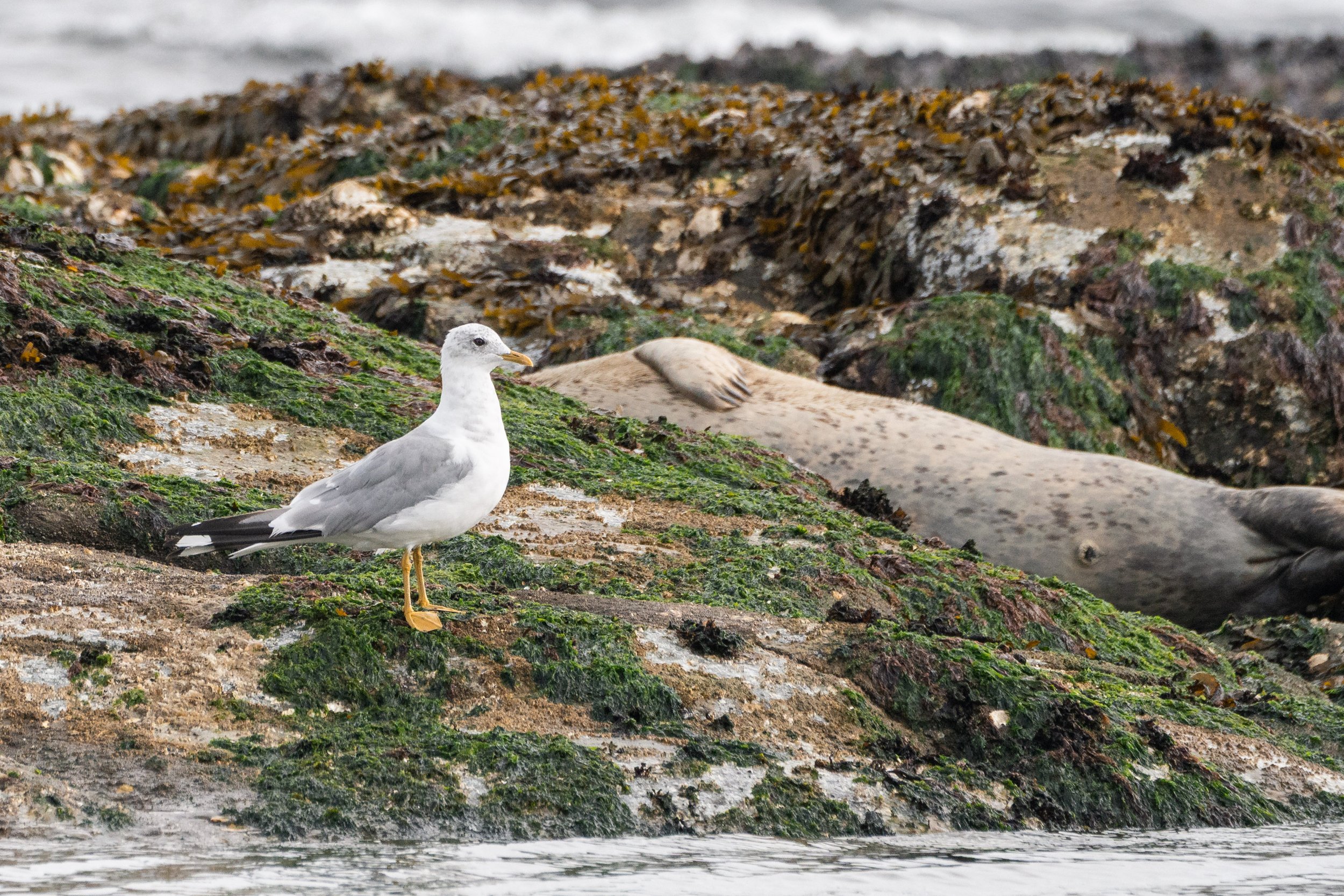
A short-billed gull hanging out at Stinky Rock. Photo by Val Watson.
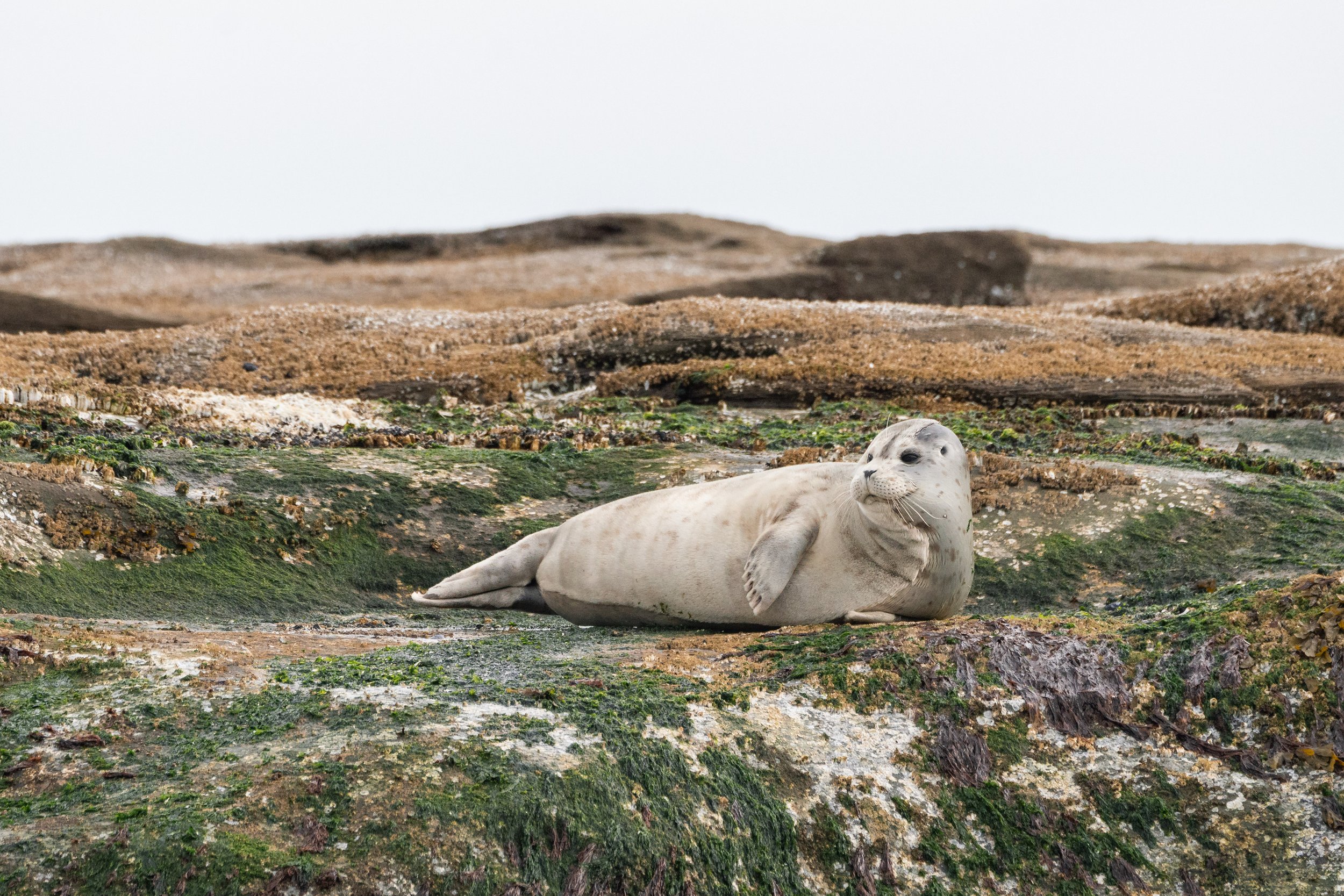
A Harbour Seal relaxing on the Seaweed. Photo by Val Watson.
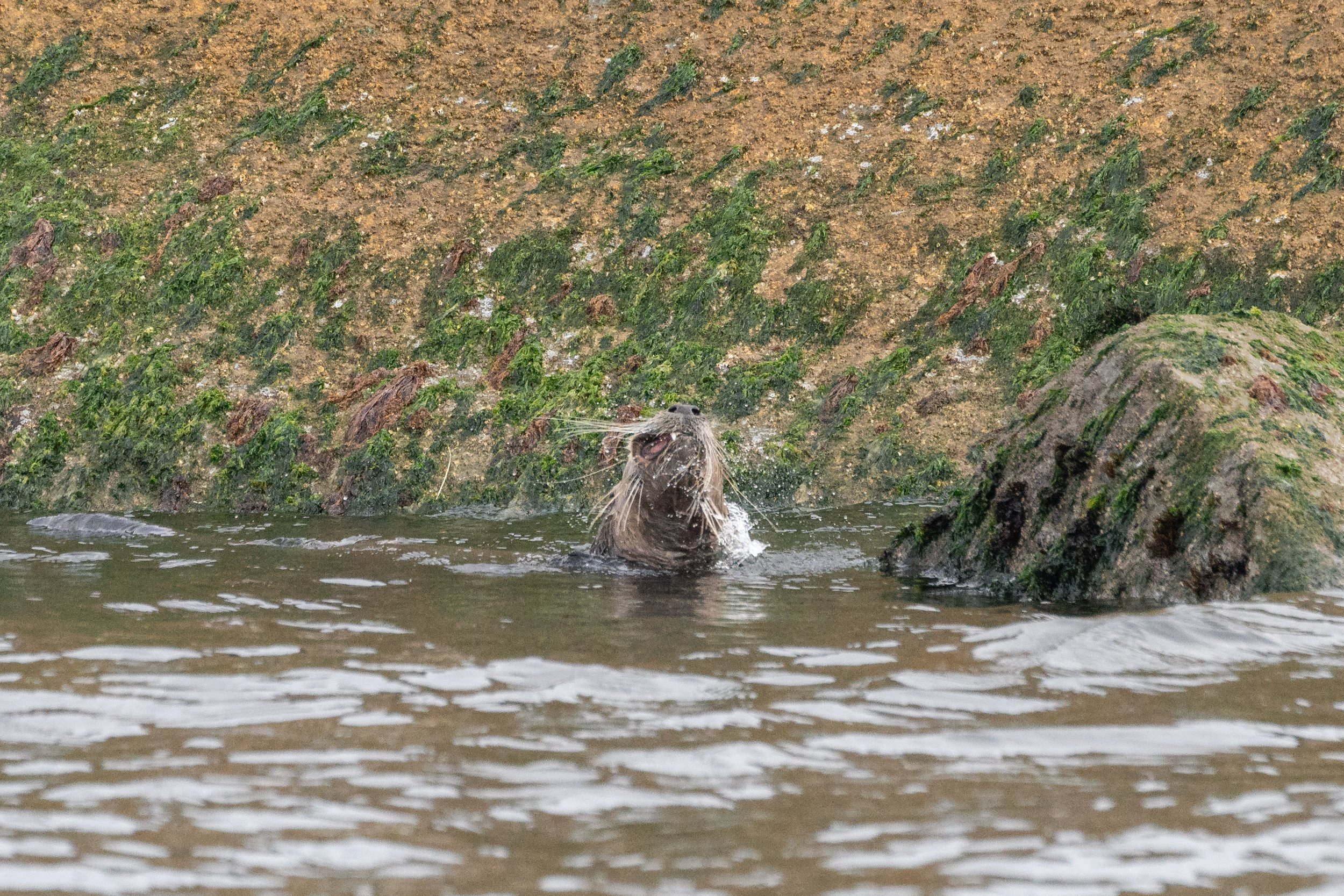
A River Otter shaking its face dry. Photo by Val Watson.
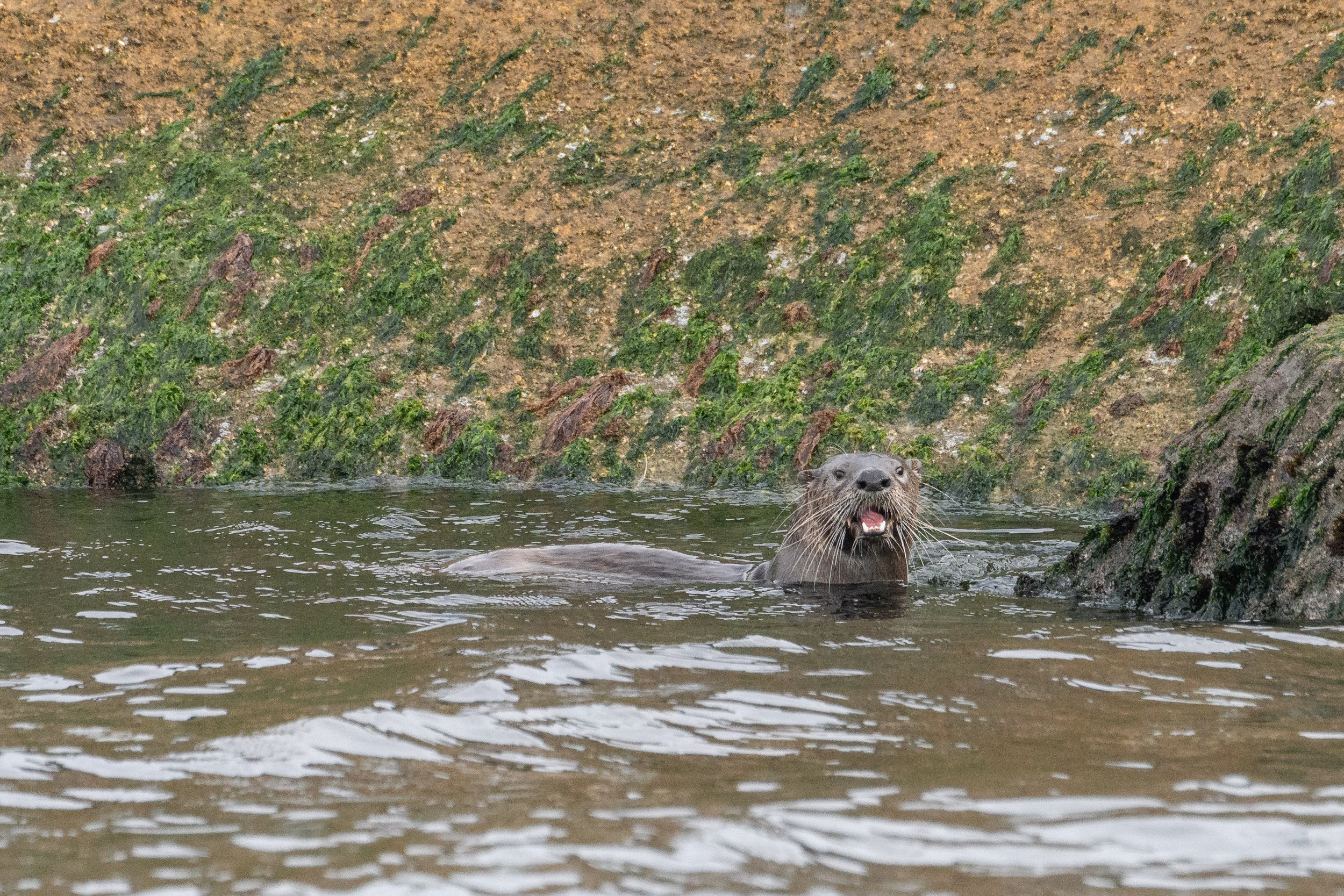
A much nicer look at th River Otter in the water. Photo by Val Watson.
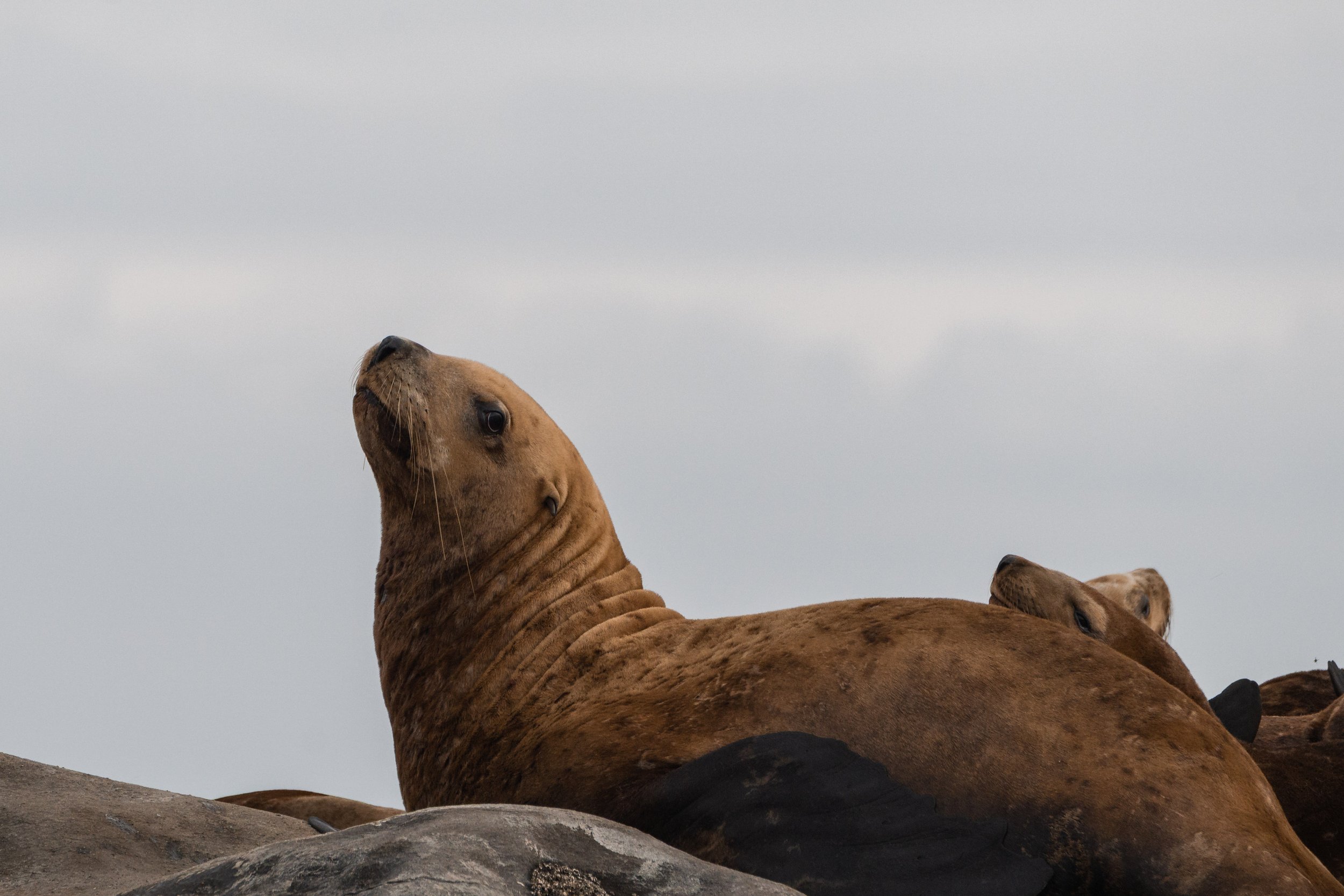
A Steller Sea lion posing nicely amongst the group. Photo by Val Watson.
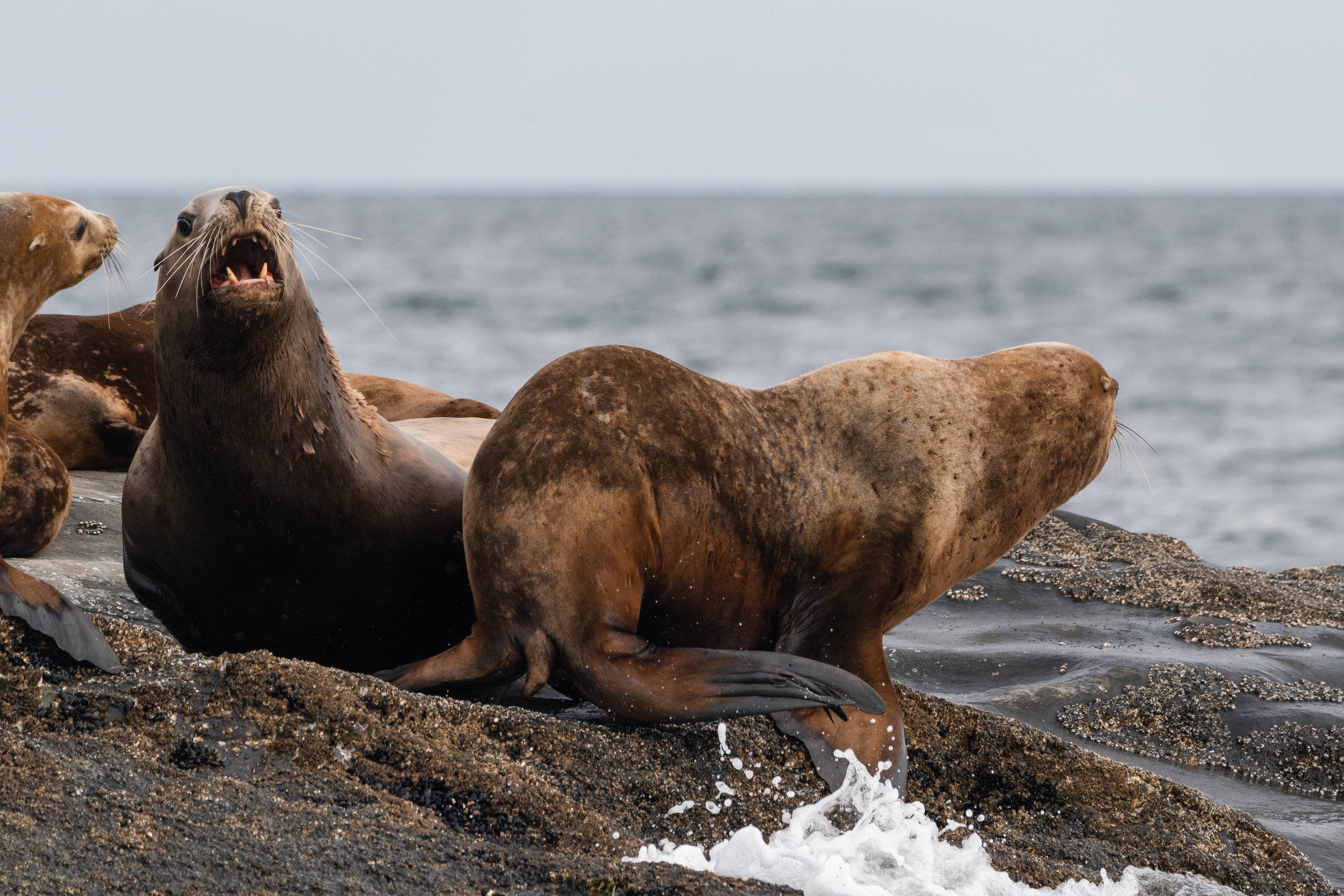
A fight breaking out among te Steller Sea Lions on Stinky. Photo by Val Watson.
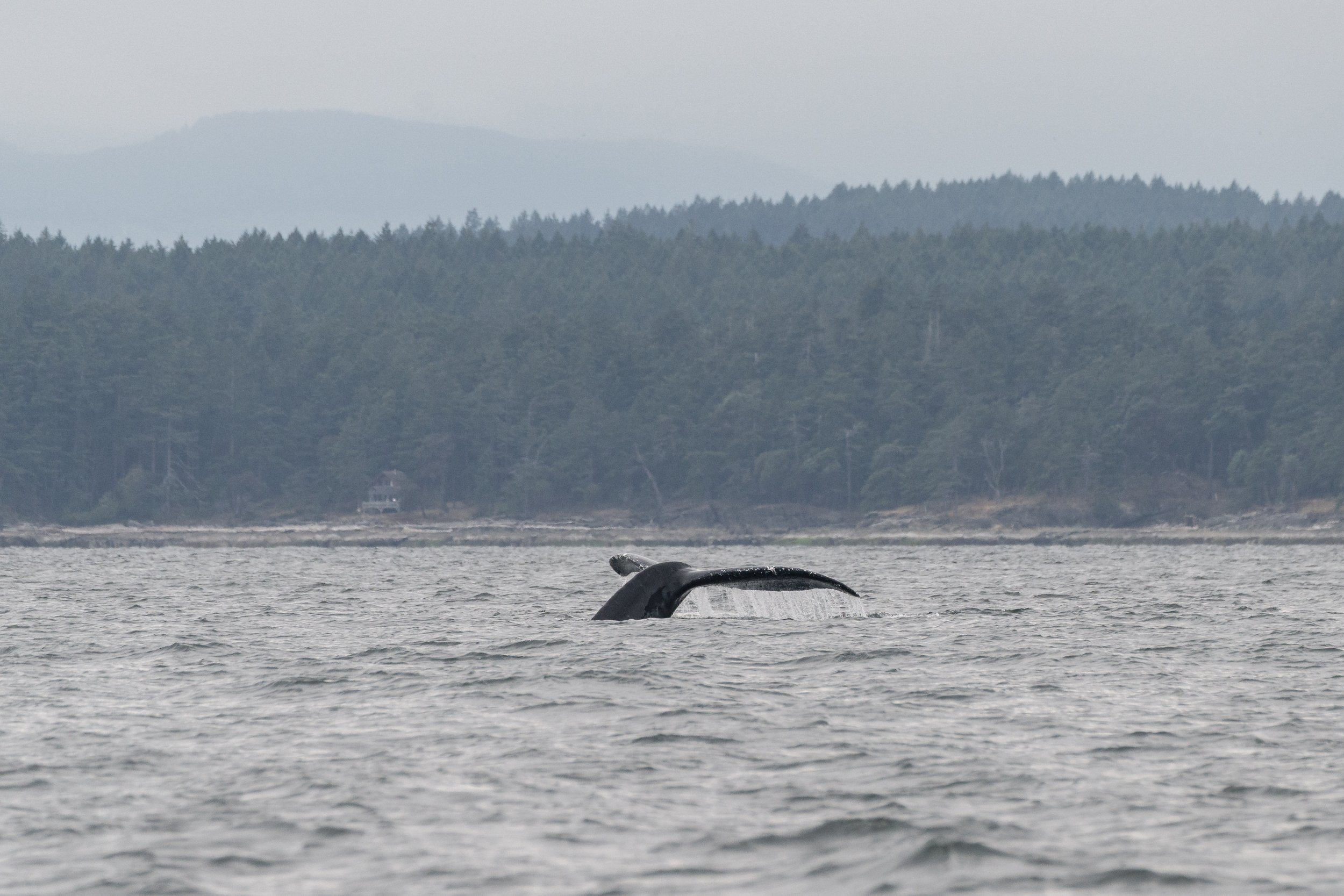
Bond going for a dive. Photo by Val Watson.
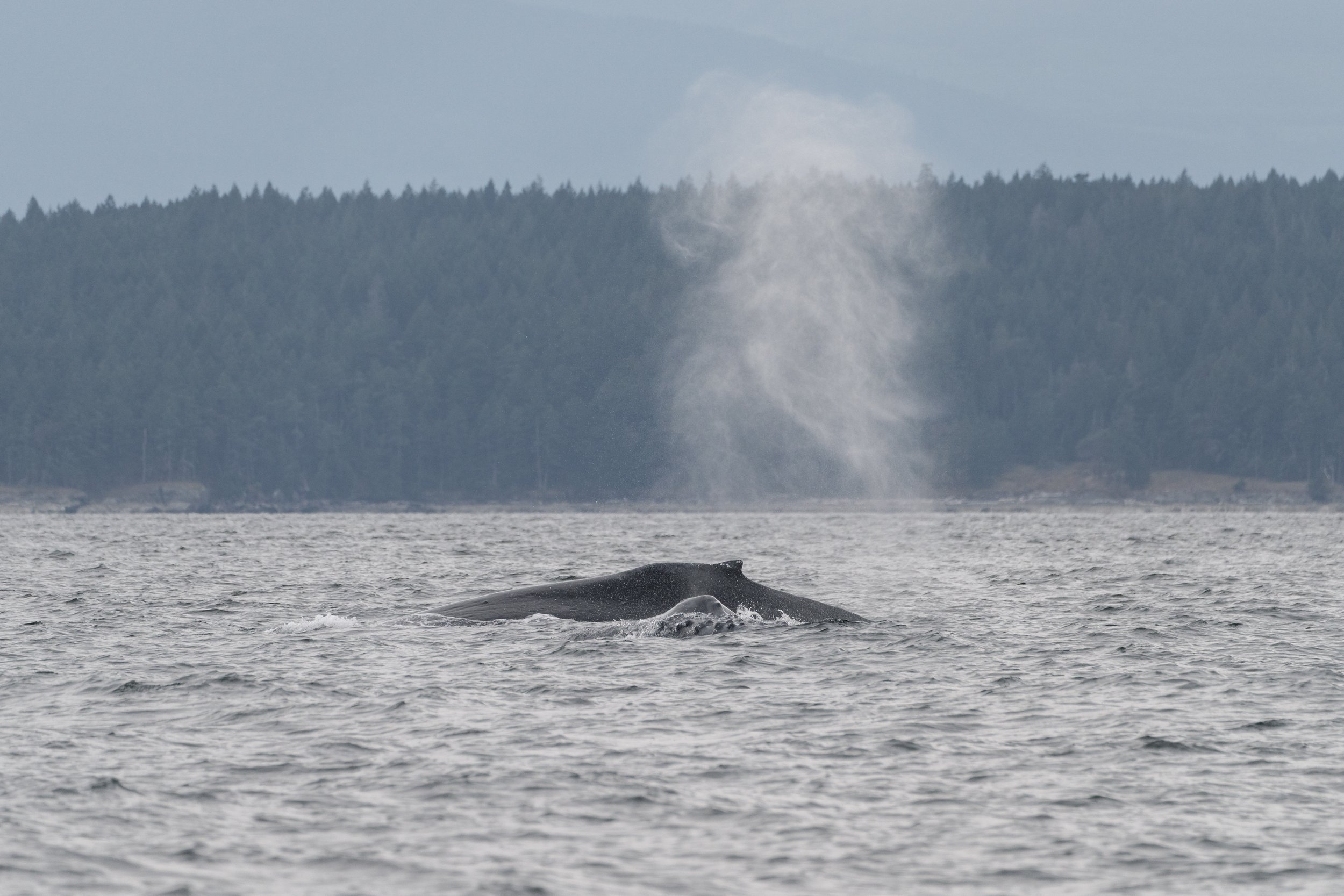
Bond’s rostrum out of the water as Kappa surfaces behind. Photo by Val Watson.
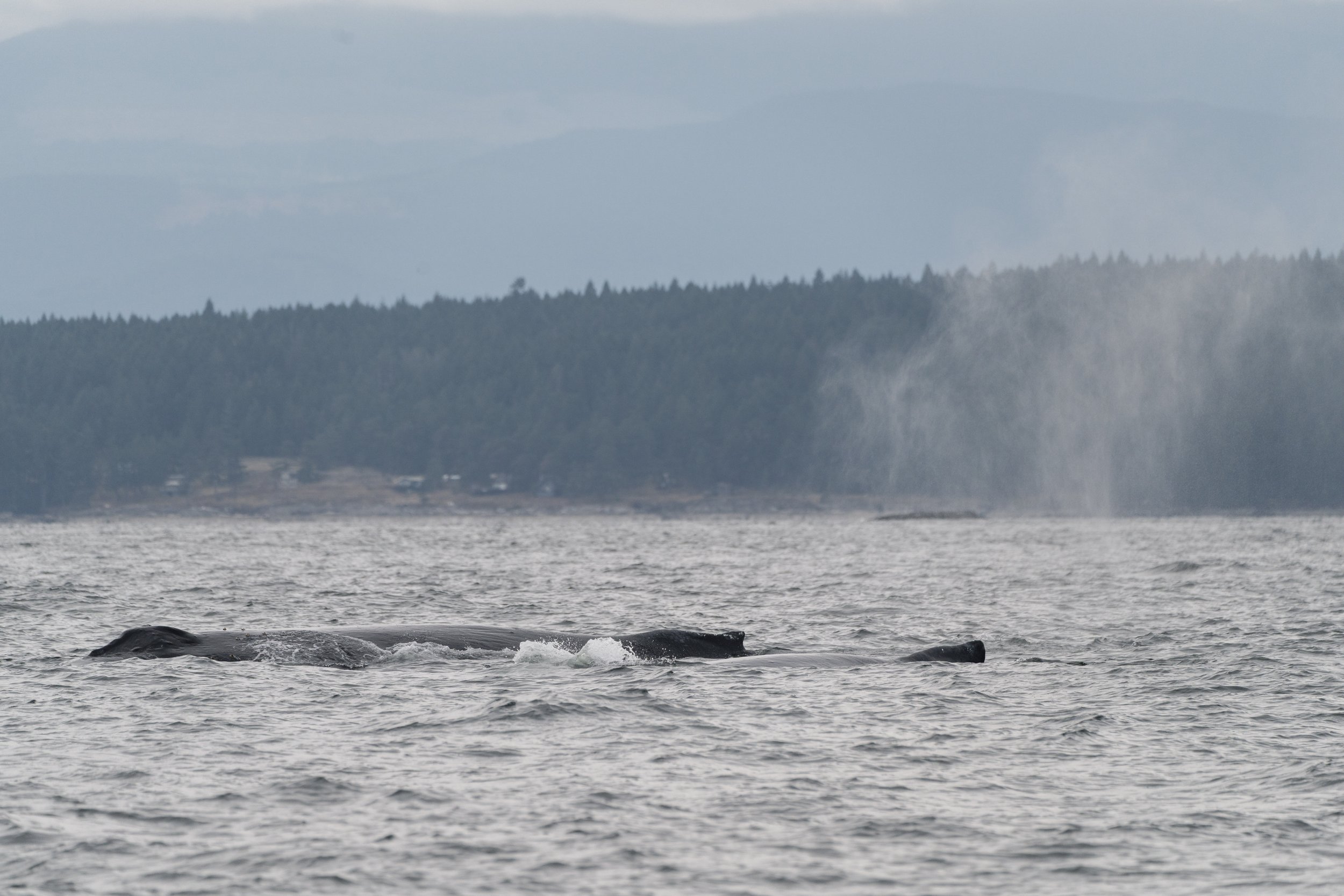
Kappa (back) and Bond (front) surfacing together. Photo by Val Watson.
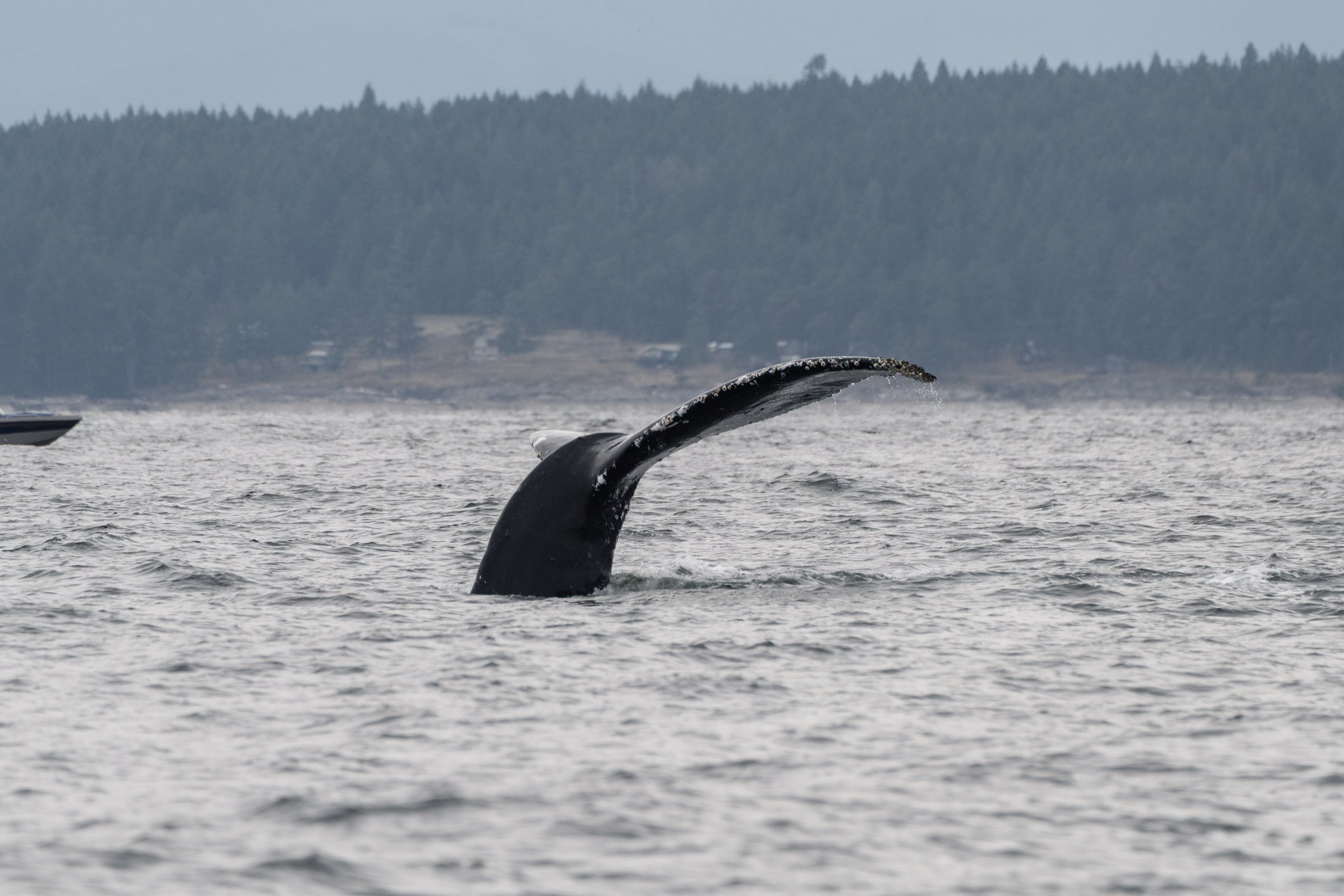
A lovely high fluke from Kappa. Photo by Val Watson.
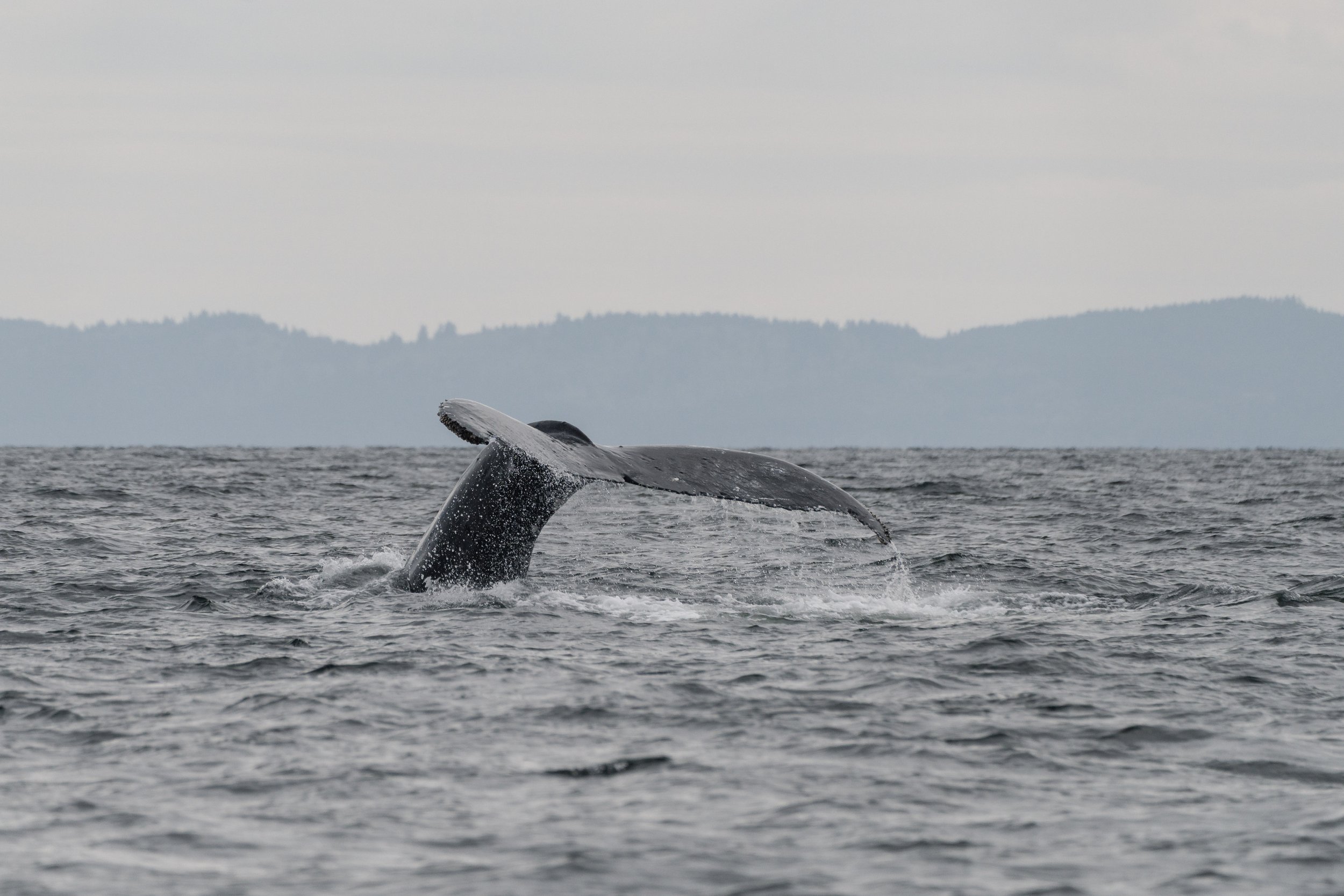
A fluke waterfall from Kappa as she dives. Photo by Val Watson.
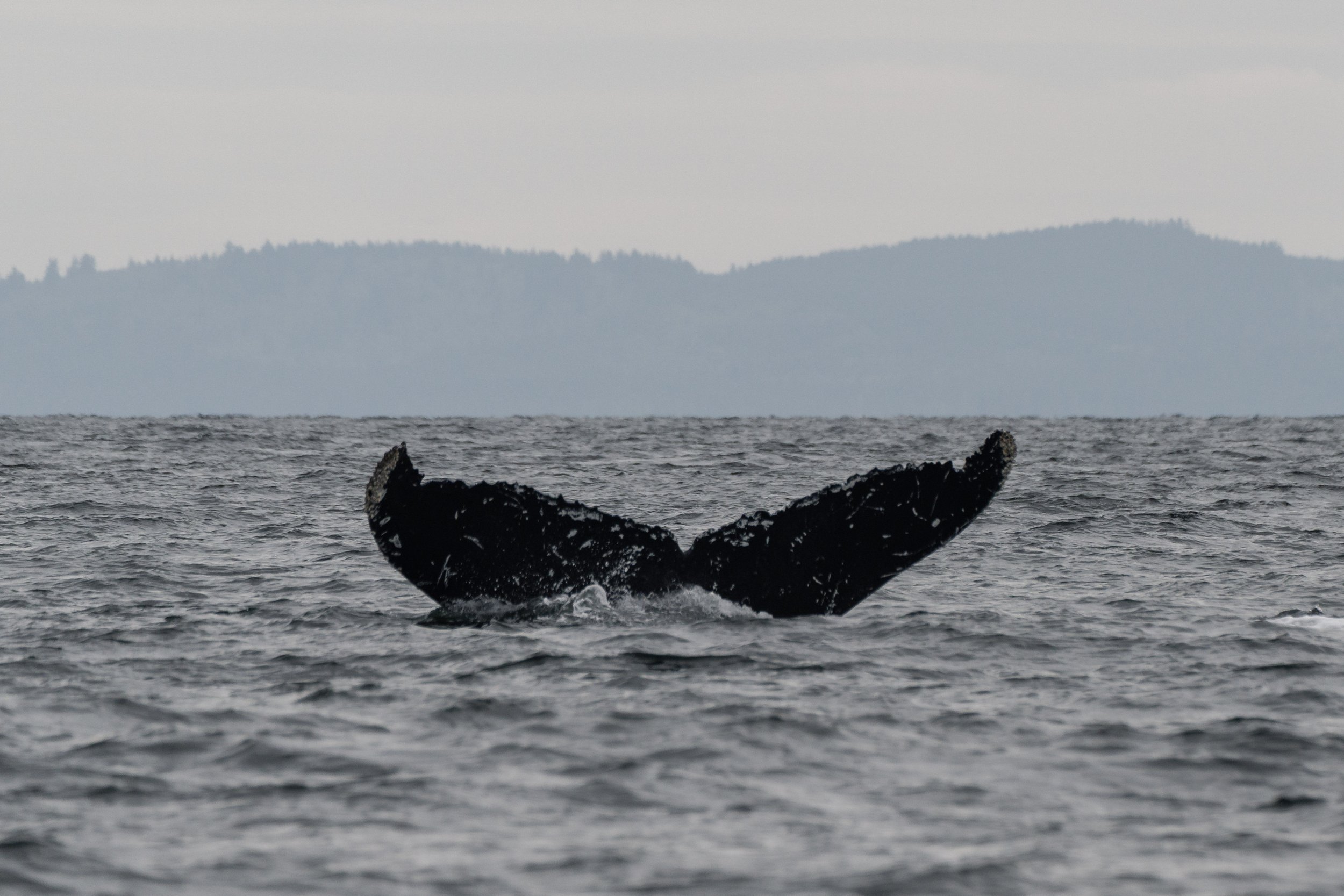
Can you spot the “κ” on the left side of Kappa’s tail that she is named for? Photo by Val Watson.
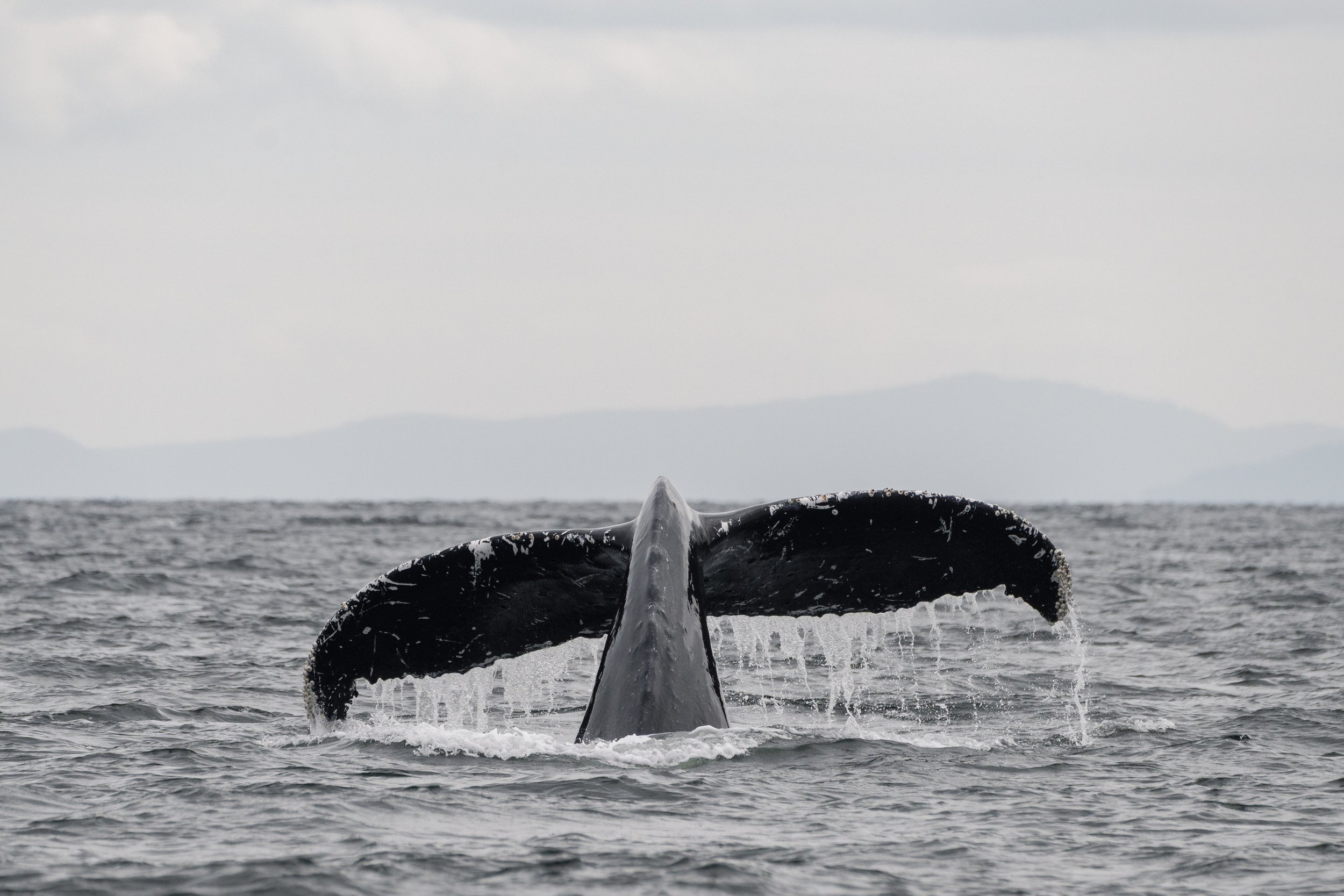
A beautiful look at Kappa as she dives. Photo by Val Watson.
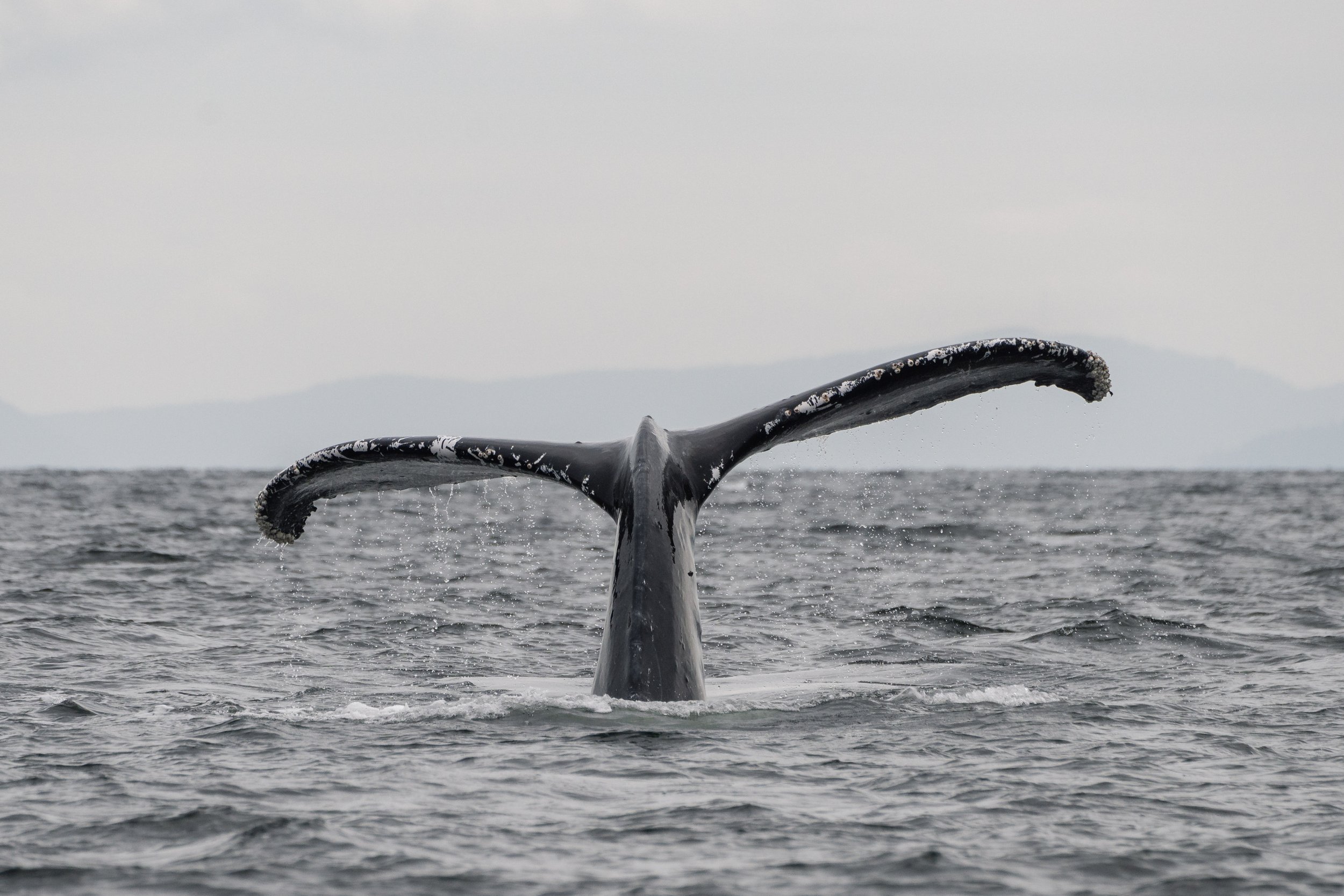
A very high fluke from Kappa as she dives. Photo by Val Watson.
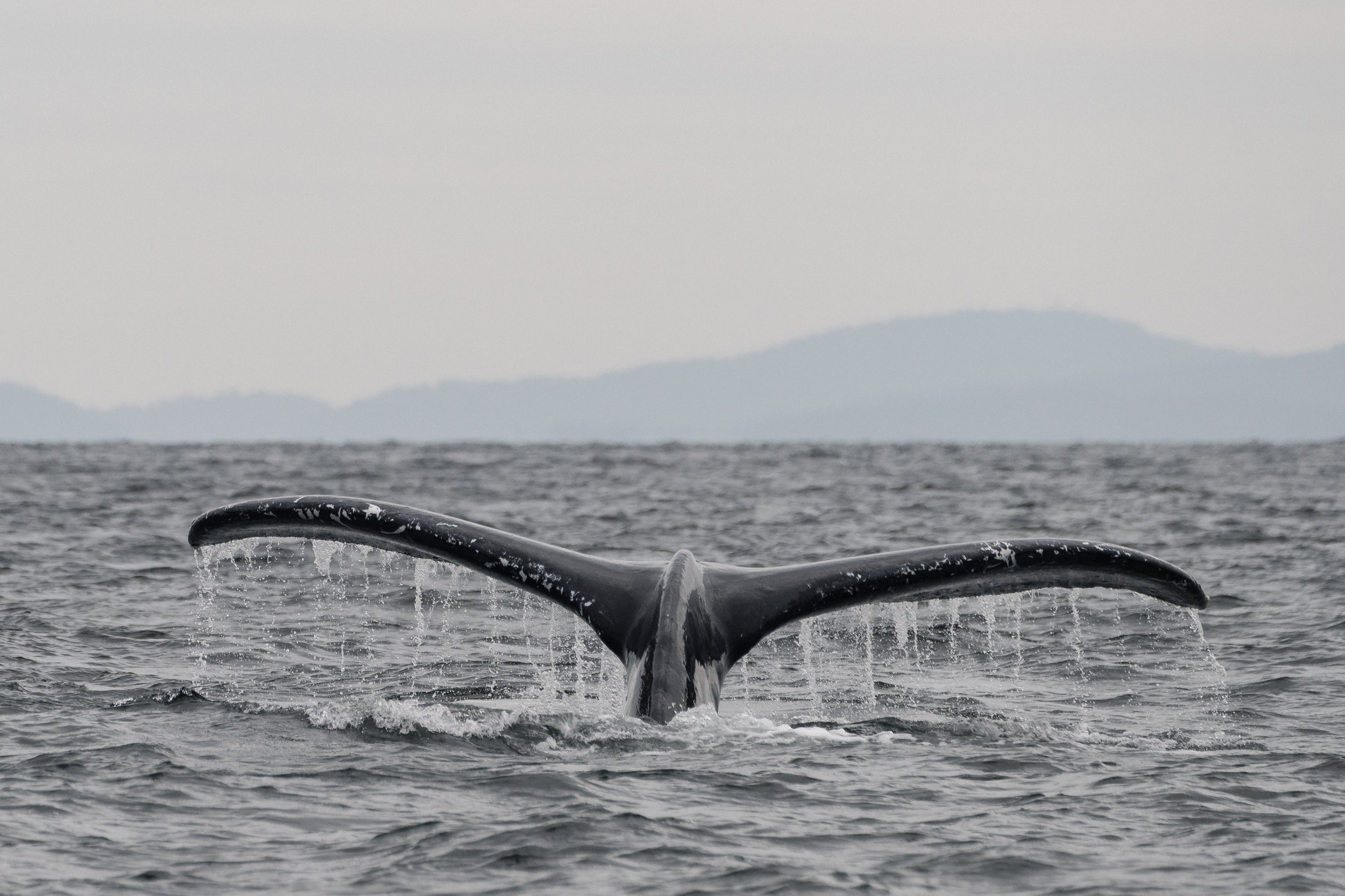
A lovely look at Bond as he follows suit. Photo by Val Watson.
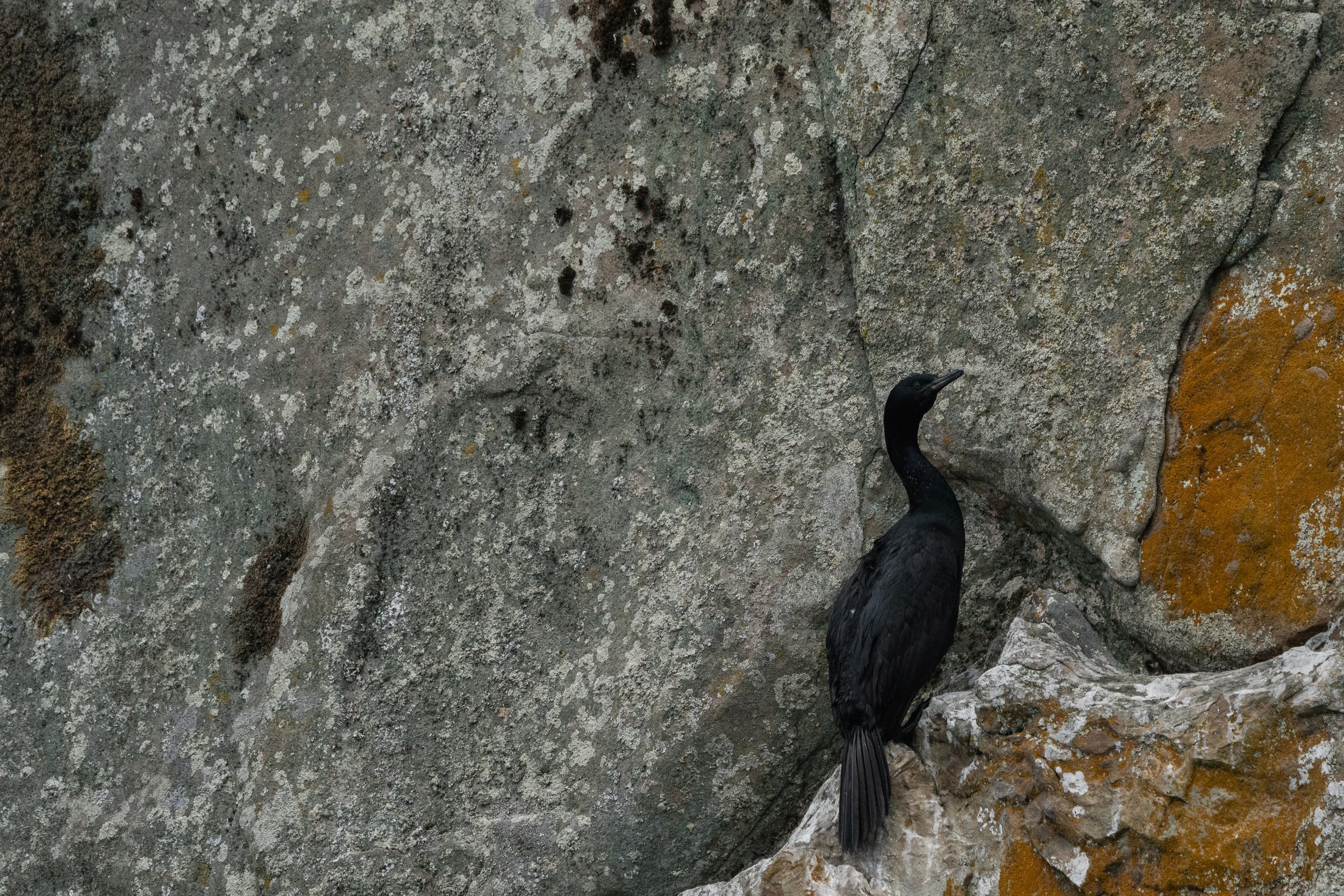
A cormorant on the Gabriola Bluffs. Photo by Val Watson.
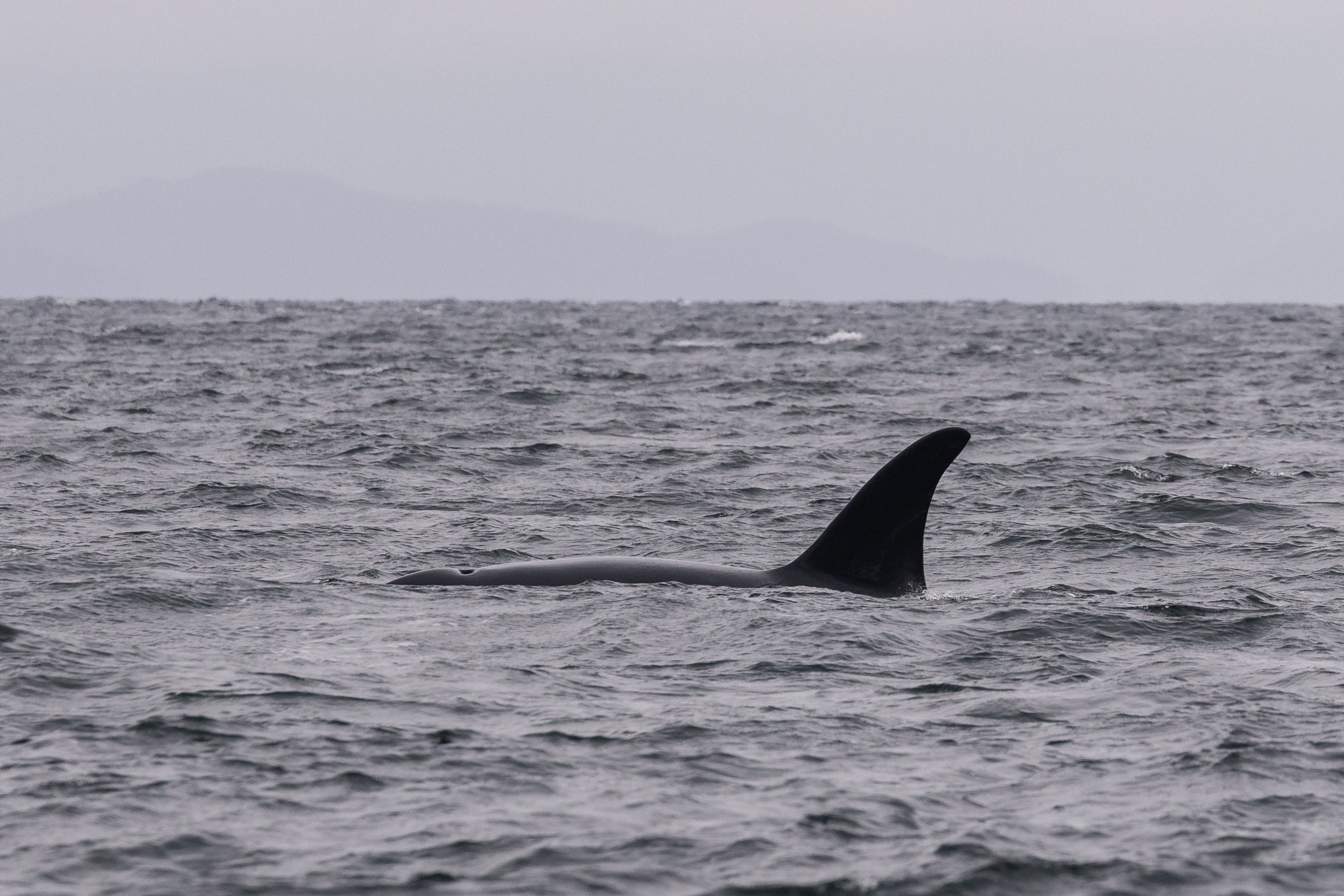
T049A3 Nat surfacing. Photo by Jordan Robinson.
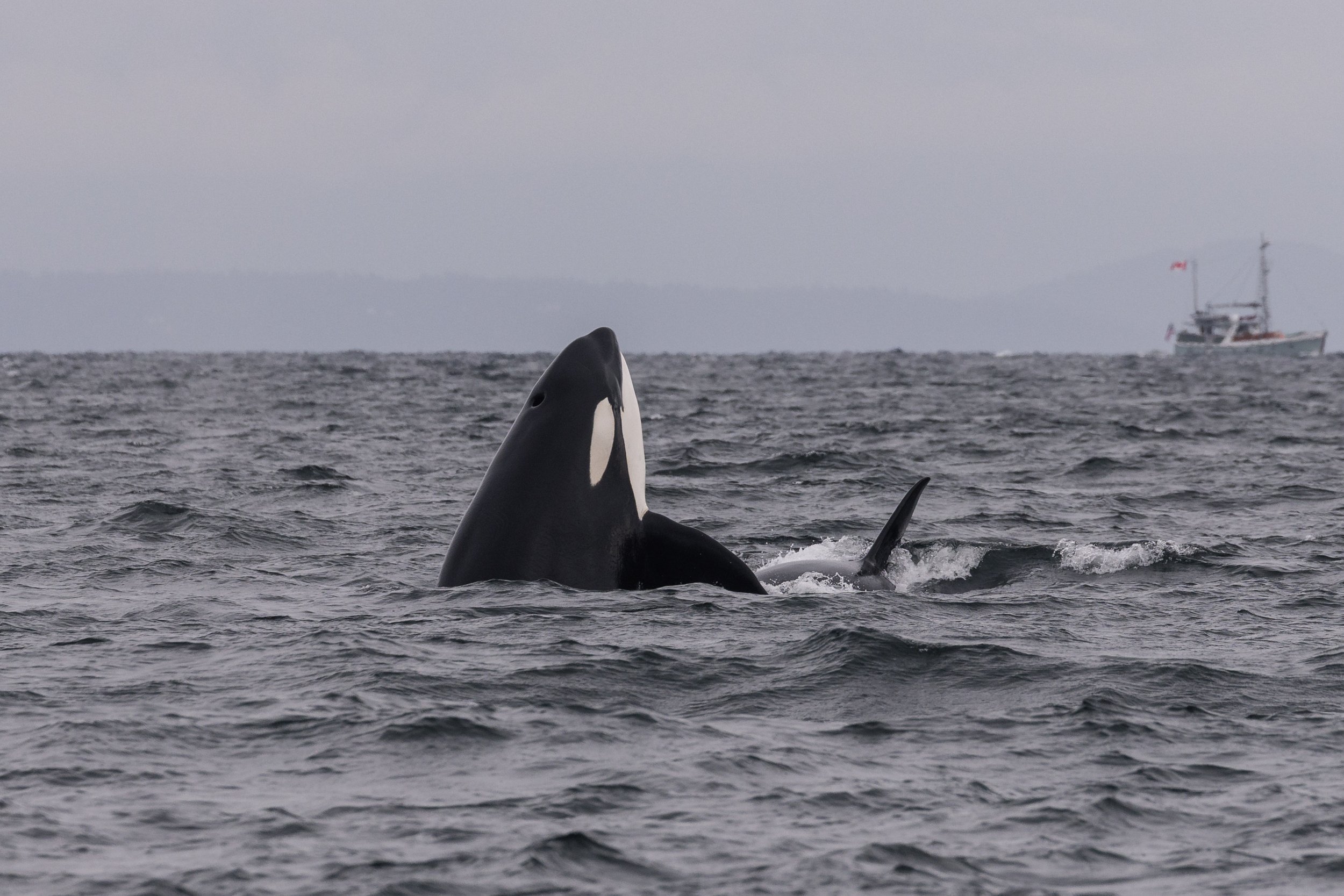
T049A3 Nat spy hopping with another surfacing beside him. Photo by Jordan Robinson.
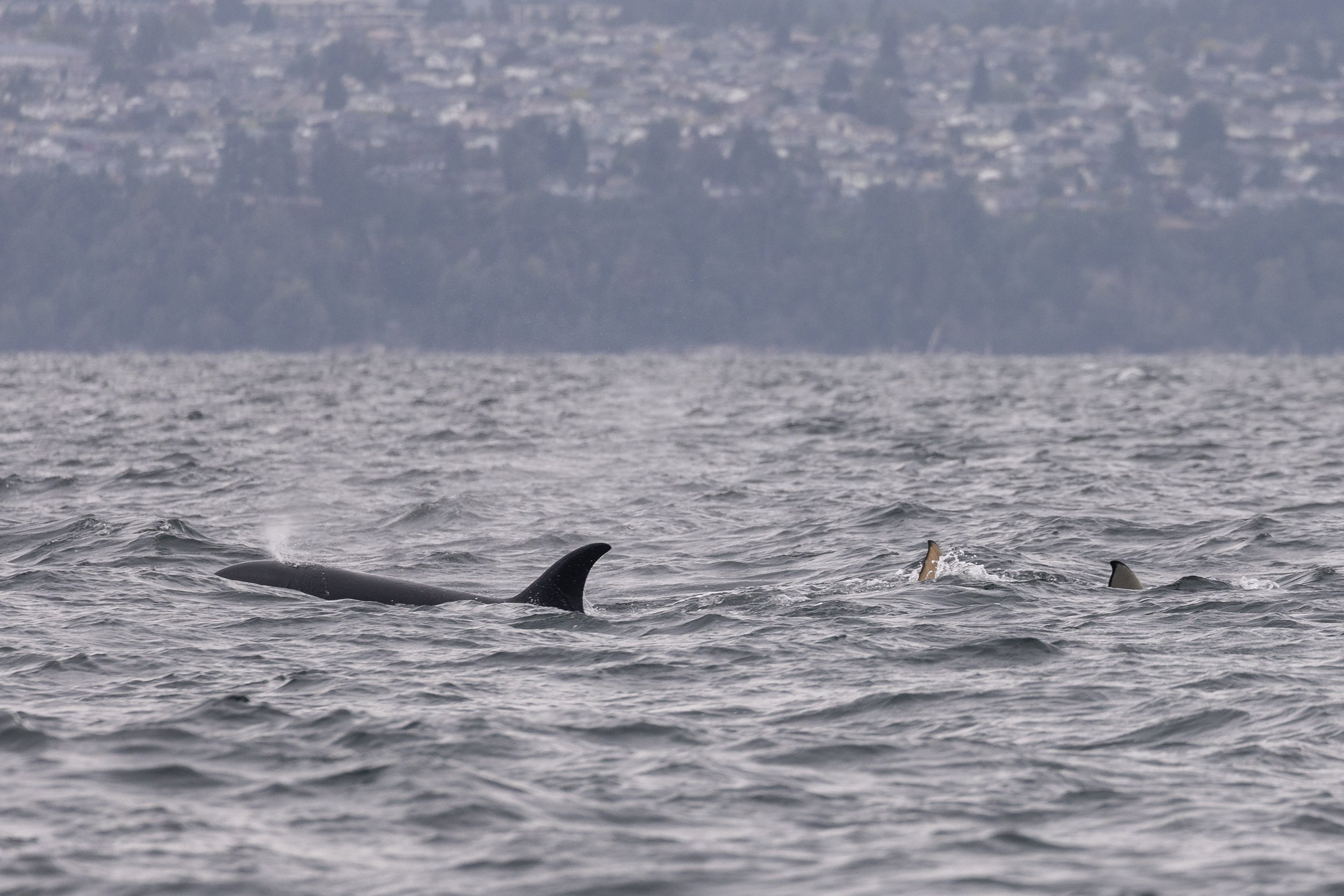
T049A5 Nebula surfacing with a couples of her sibilings tails behind her. Photo by Jordan Robinson.
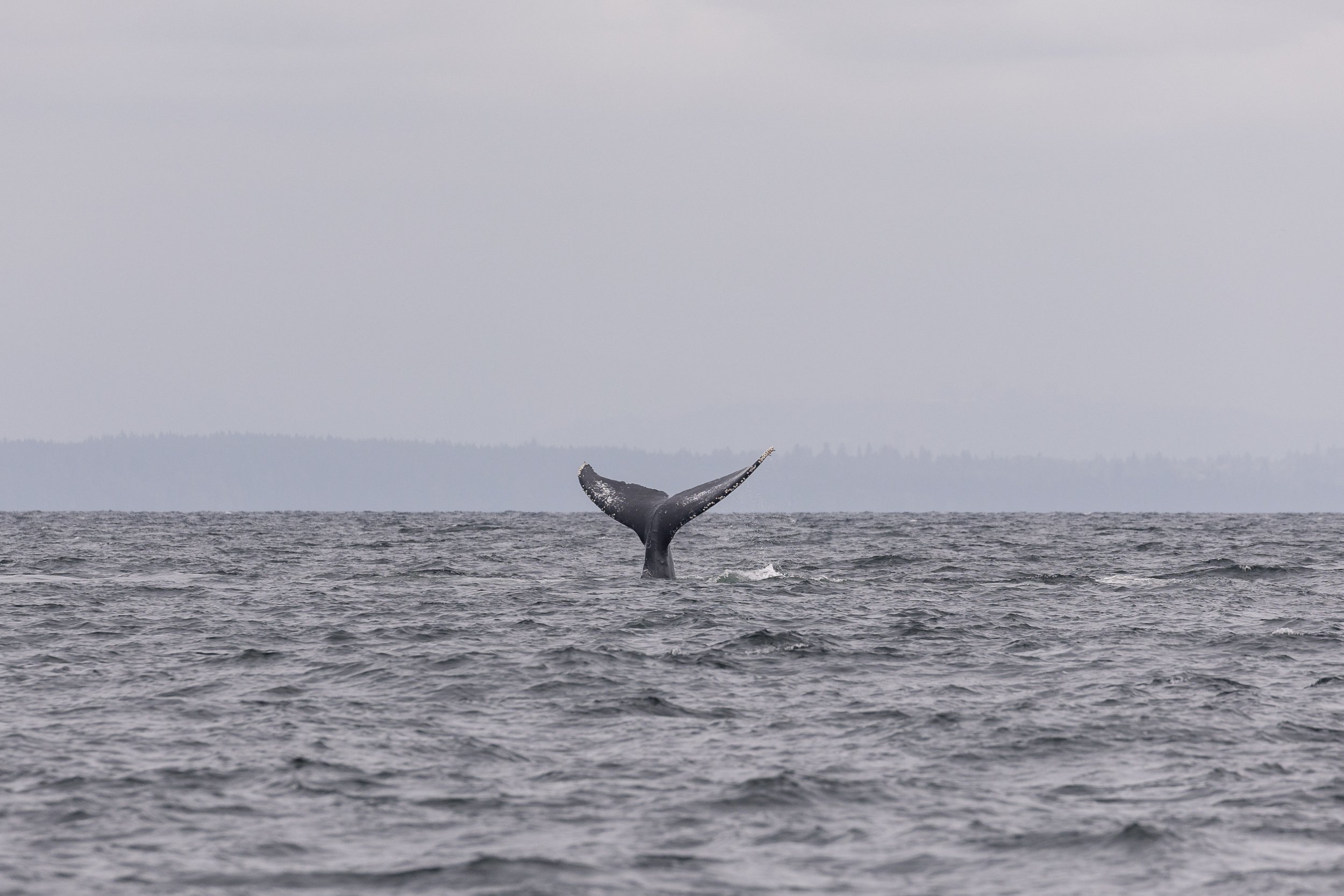
Fader tail lobbing. Photo by Jordan Robinson.
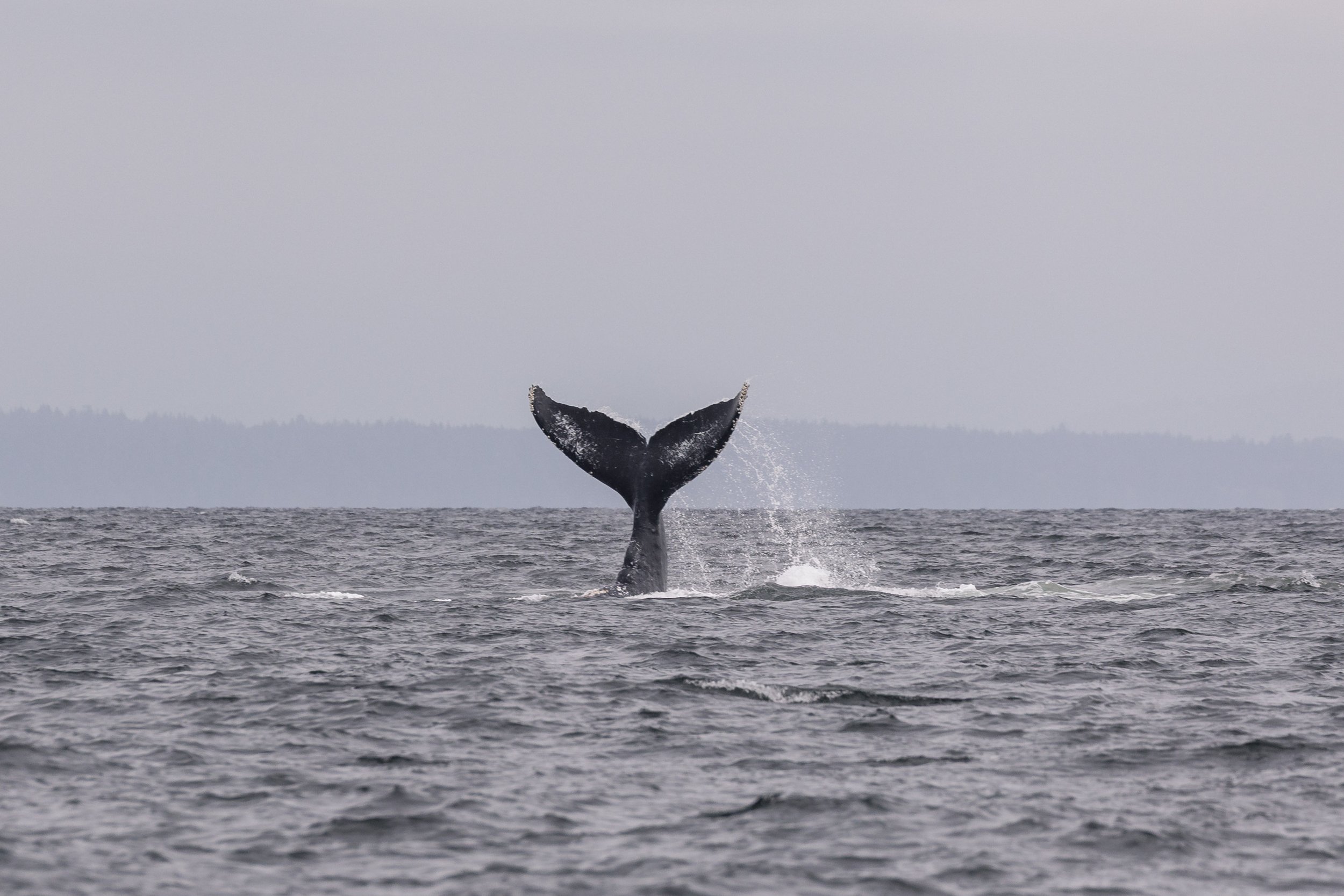
From this photo we now know Fader is a boy! Photo by Jordan Robinson.
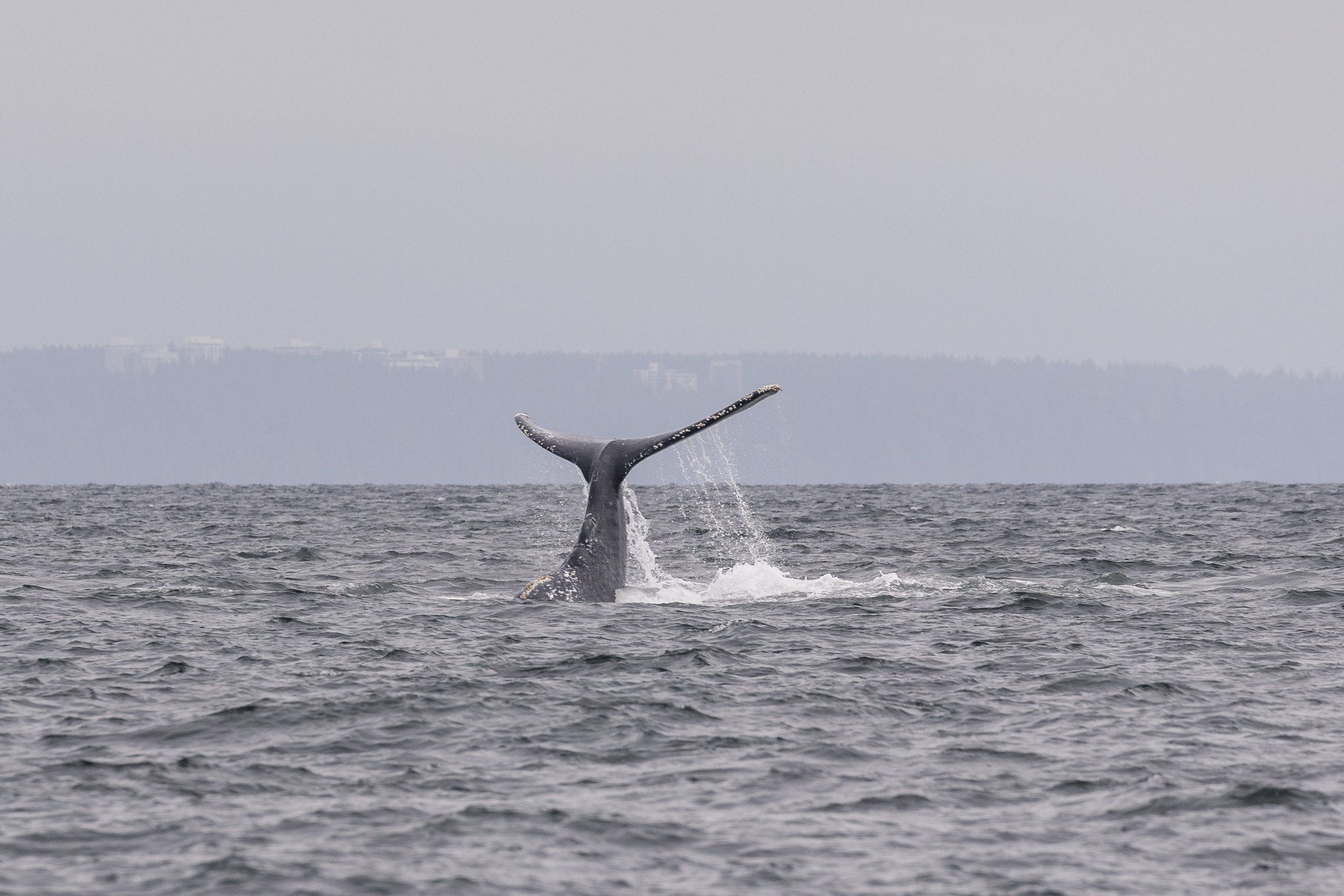
A lovely look at Fader tail lobbing. Photo by Jordan Robinson.
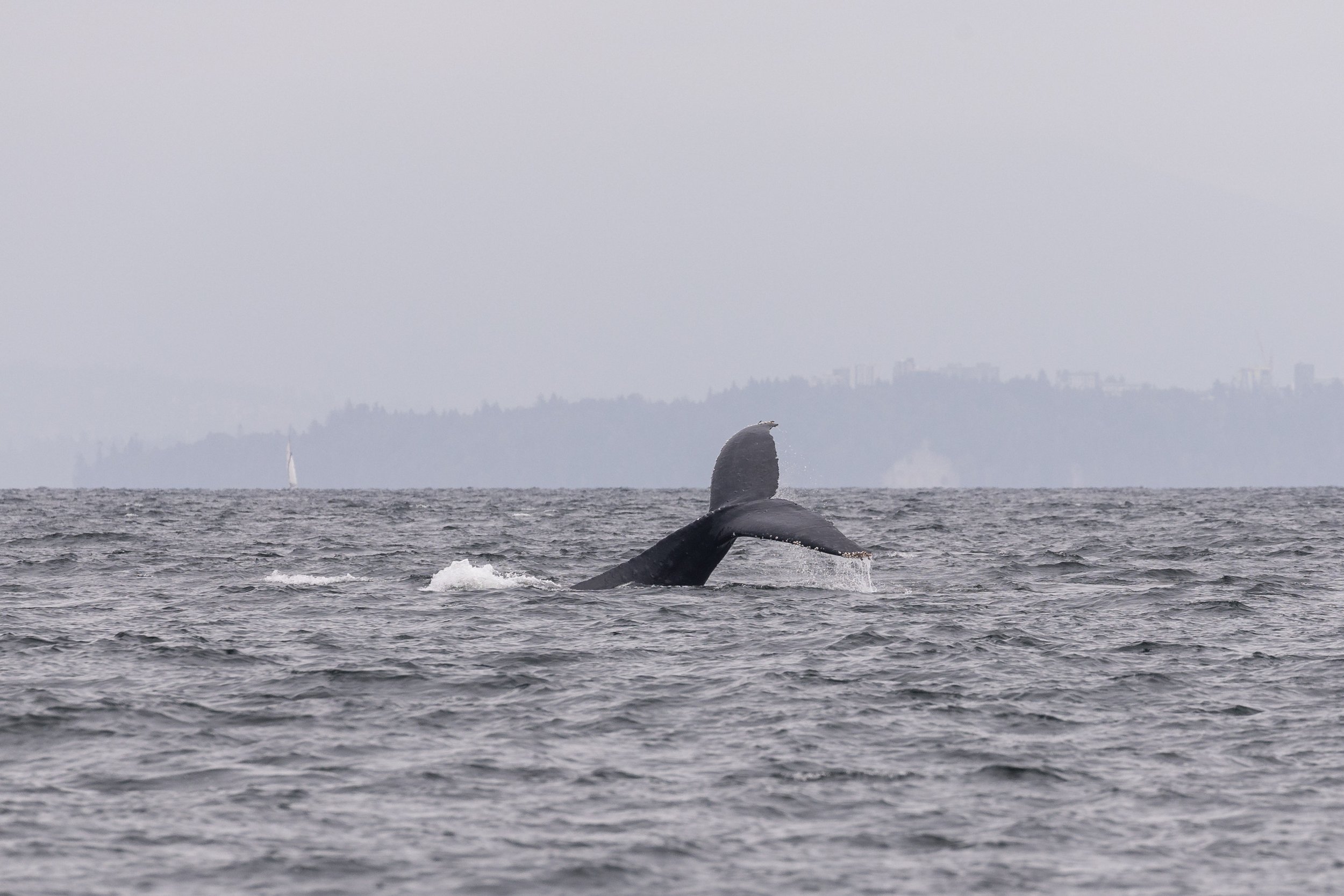
A tail flick from Fader. Photo by Jordan Robinson.
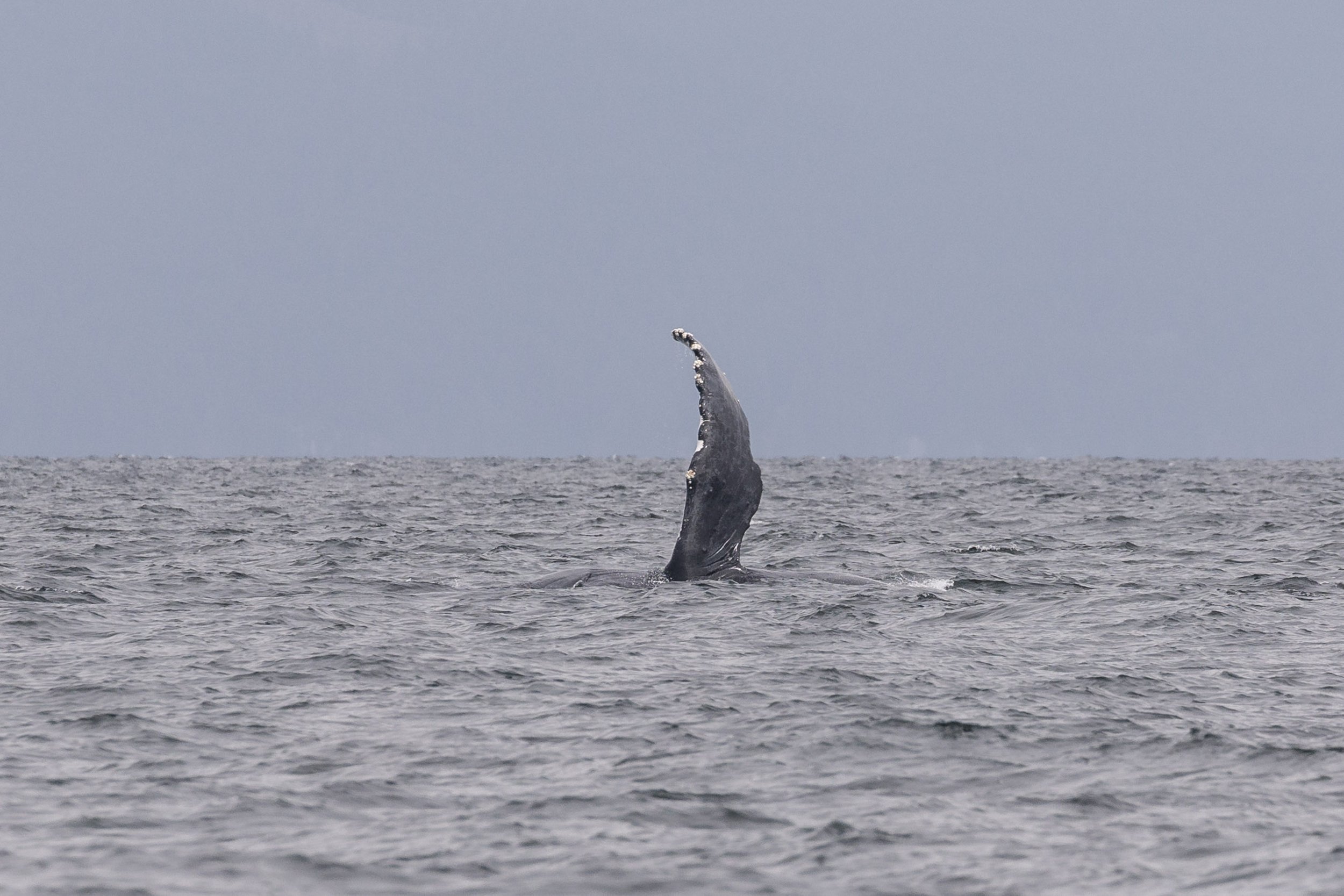
Fader with his pectoral fin at the surface. Photo by Jordan Robinson.
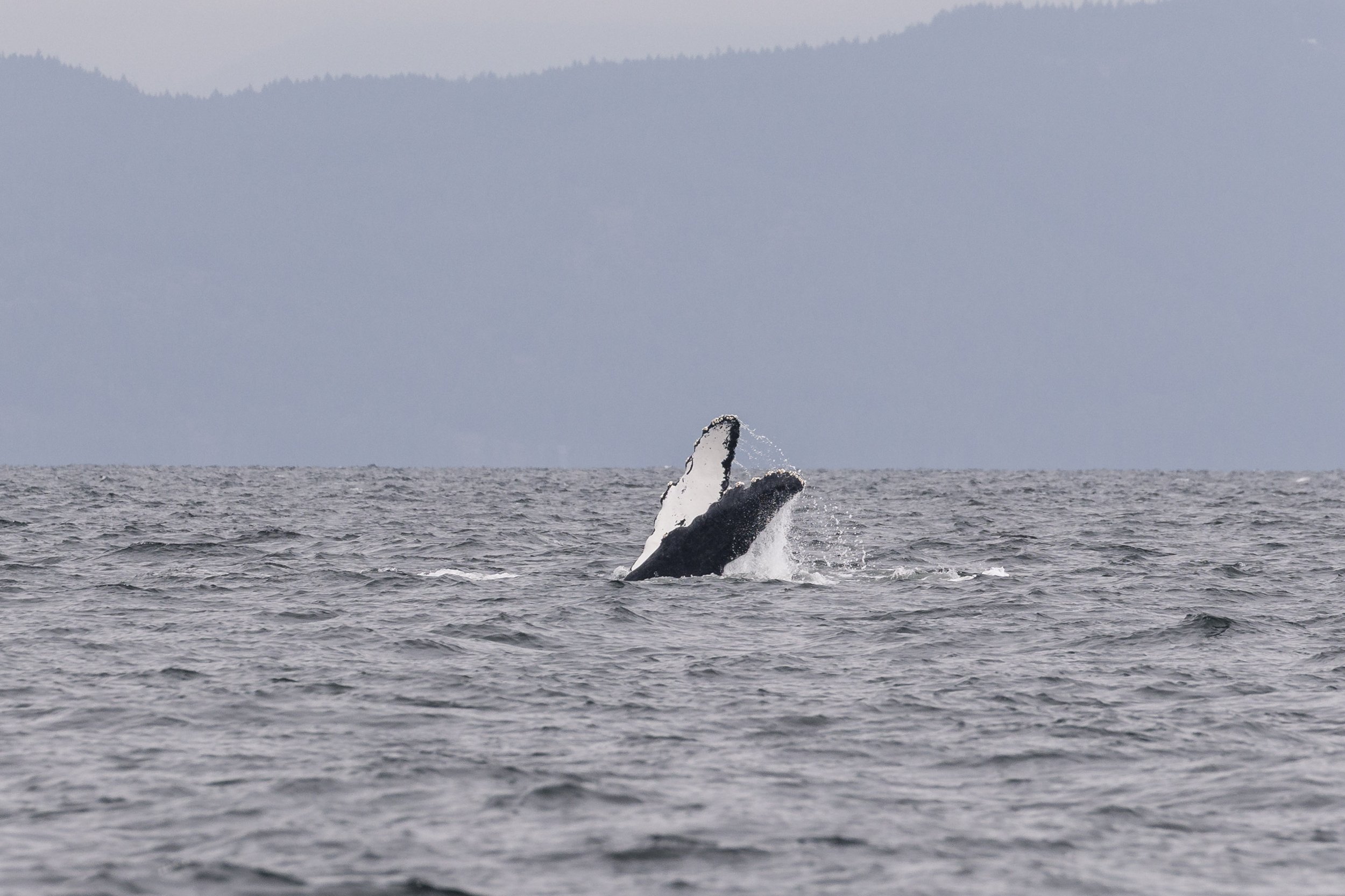
Both of Fader’s pectoral fins in the air. Photo by Jordan Robinson.
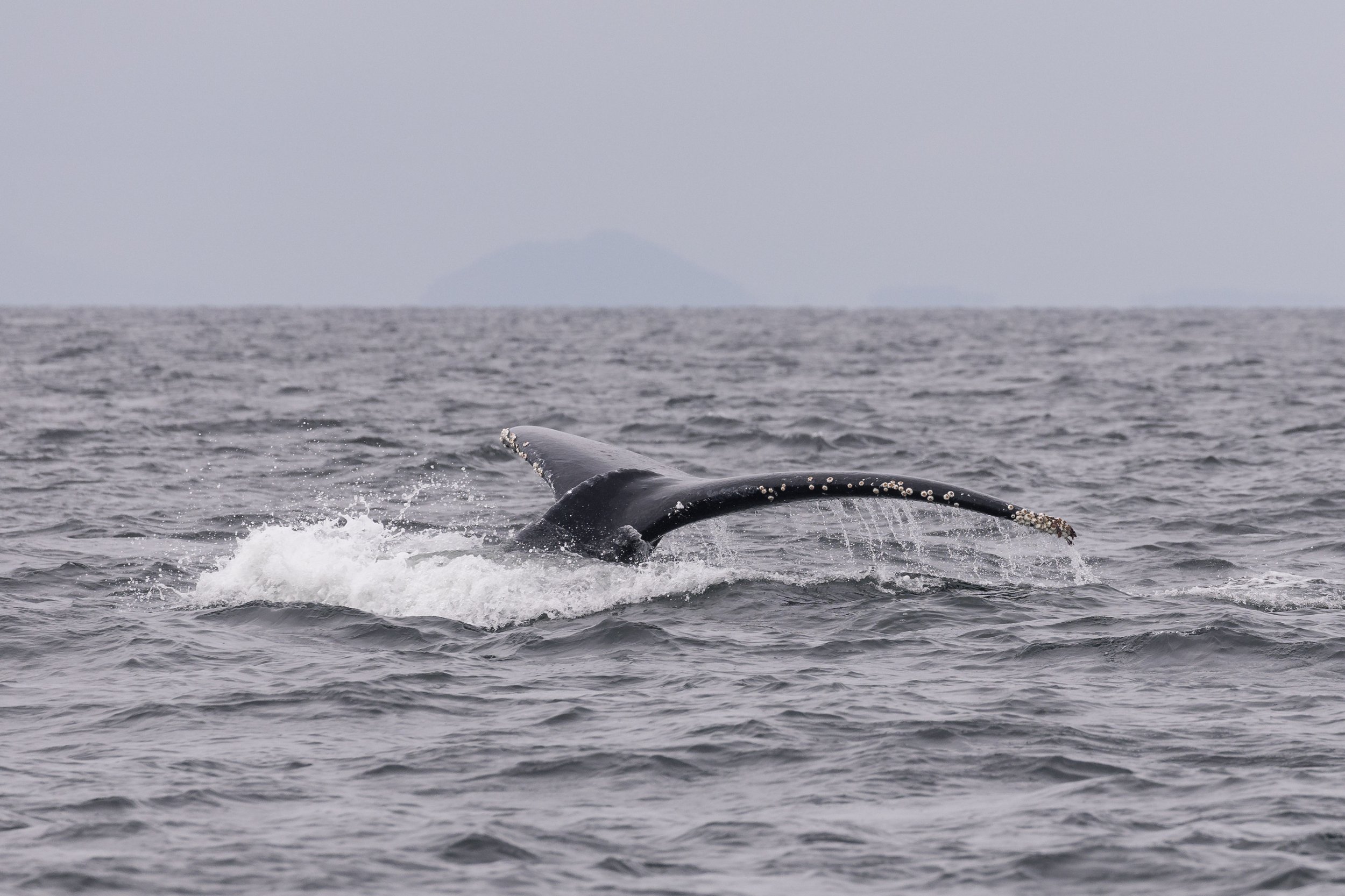
Fader going for a dive. Photo by Jordan Robinson.
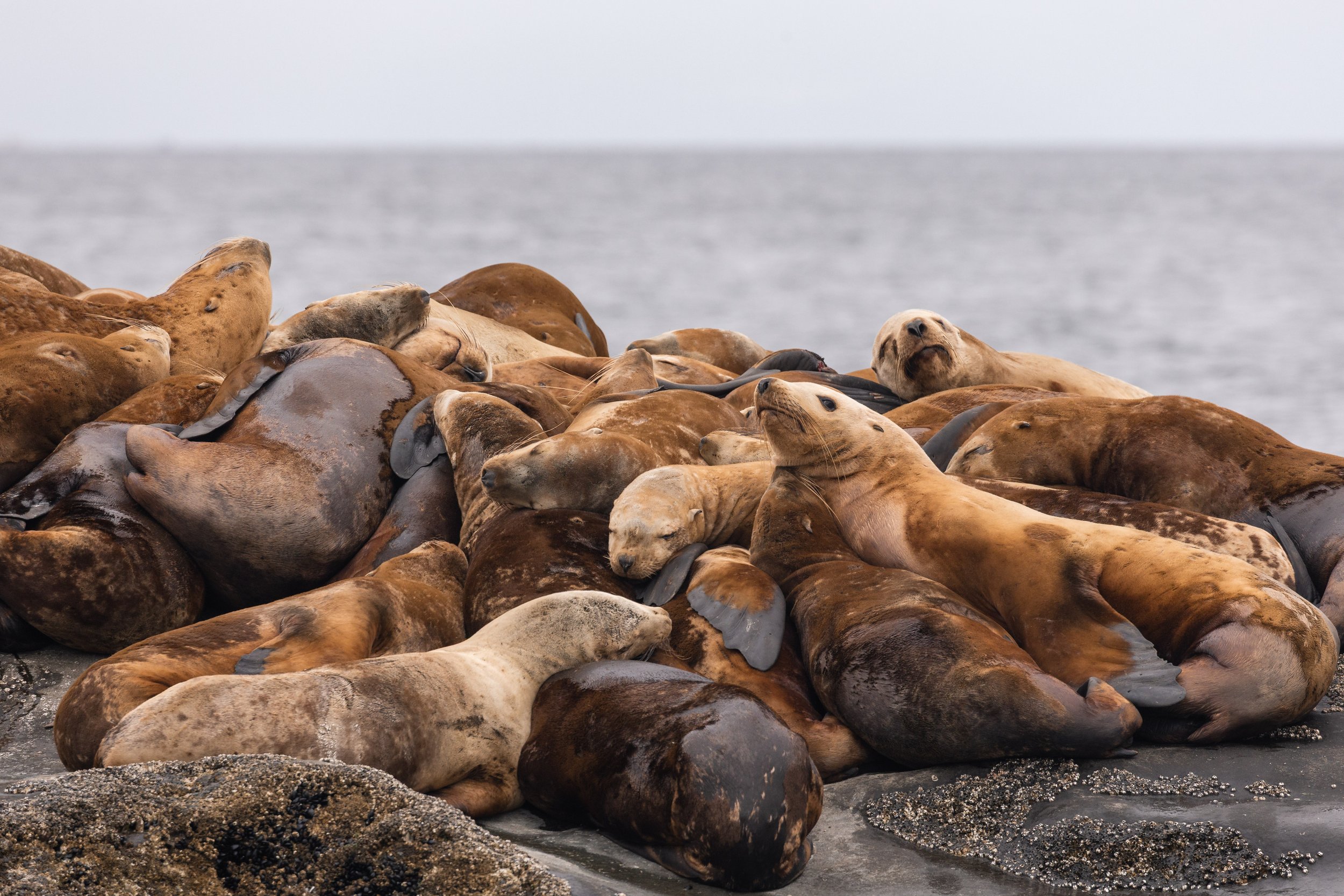
A cuddle puddle of Steller Sea Lions at Stinky Rock. Photo by Jordan Robinson.
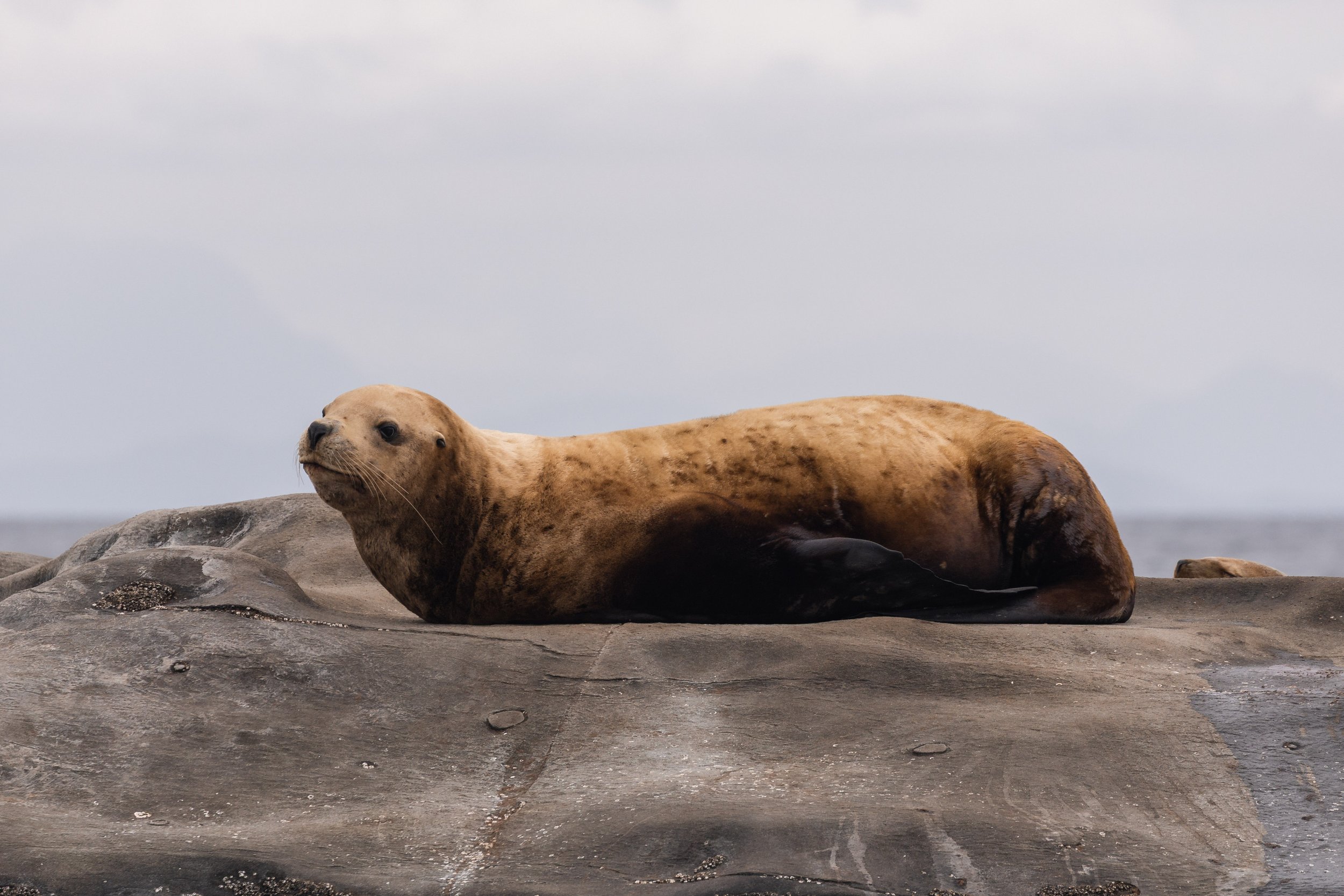
A Steller Sea Lion practicing her planking. Photo by Jordan Robinson.
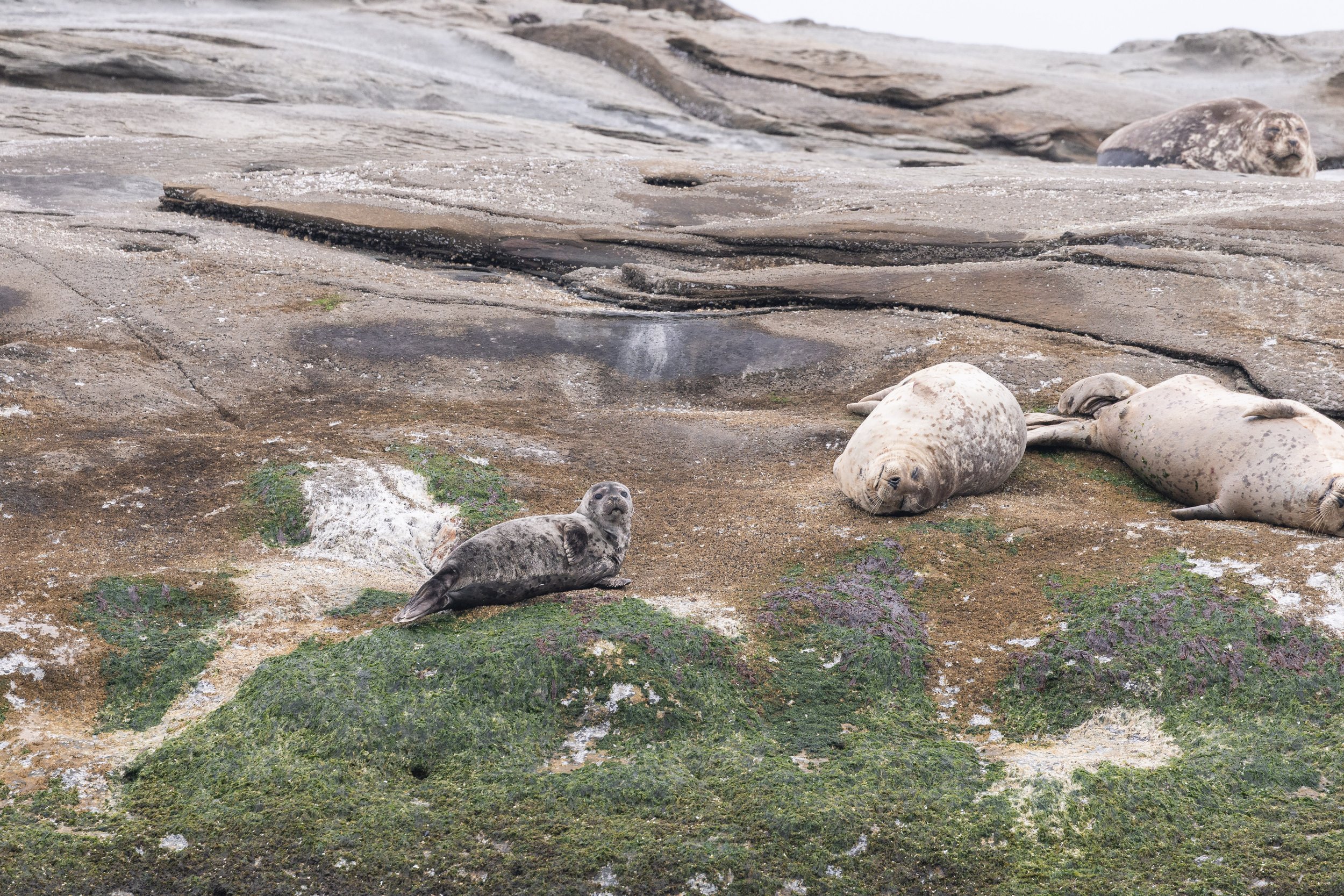
Some very relaxed Harbour Seals Photo by Jordan Robinson.
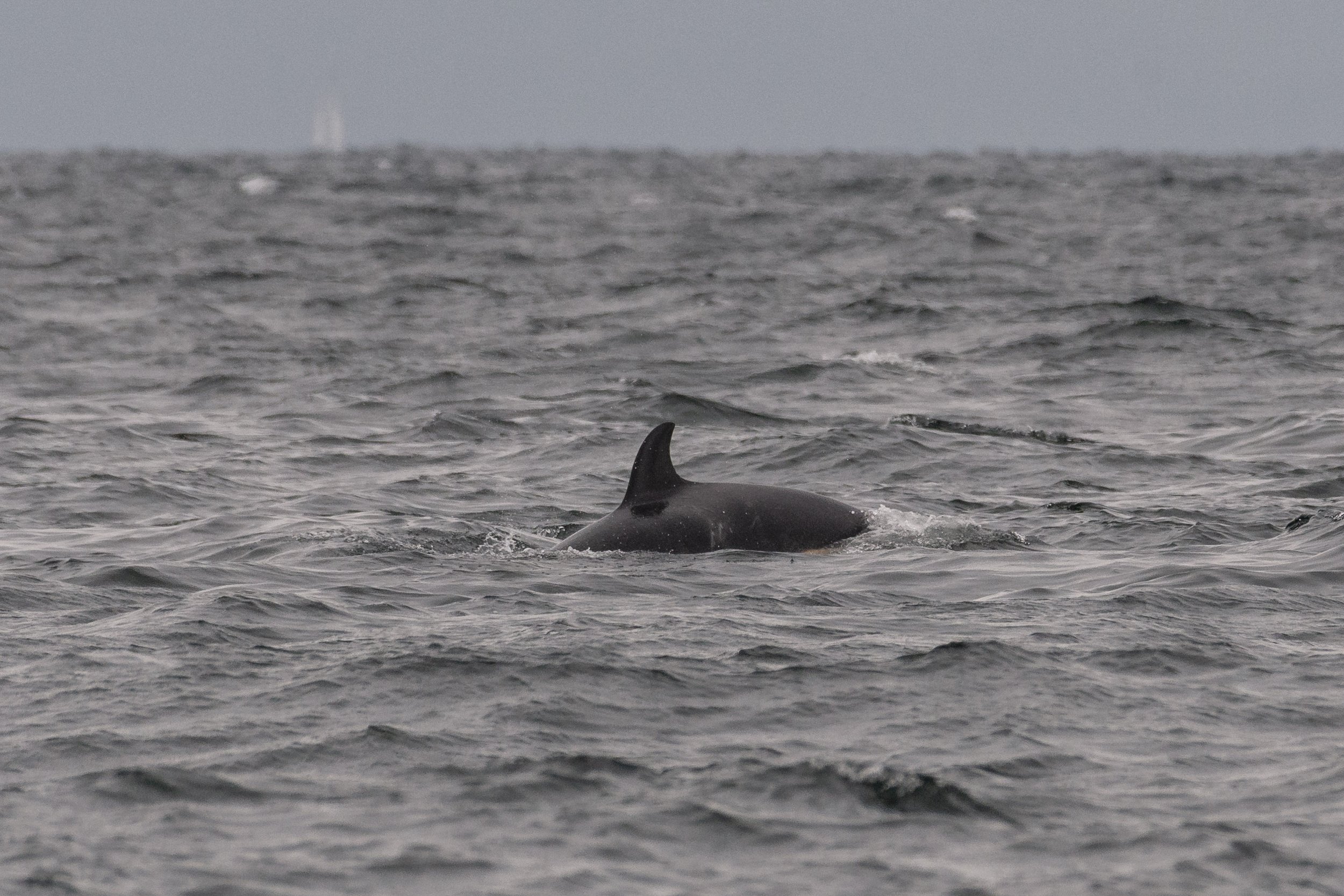
T049A7 Nimbus surfacing. Photo by Evan Hessels.
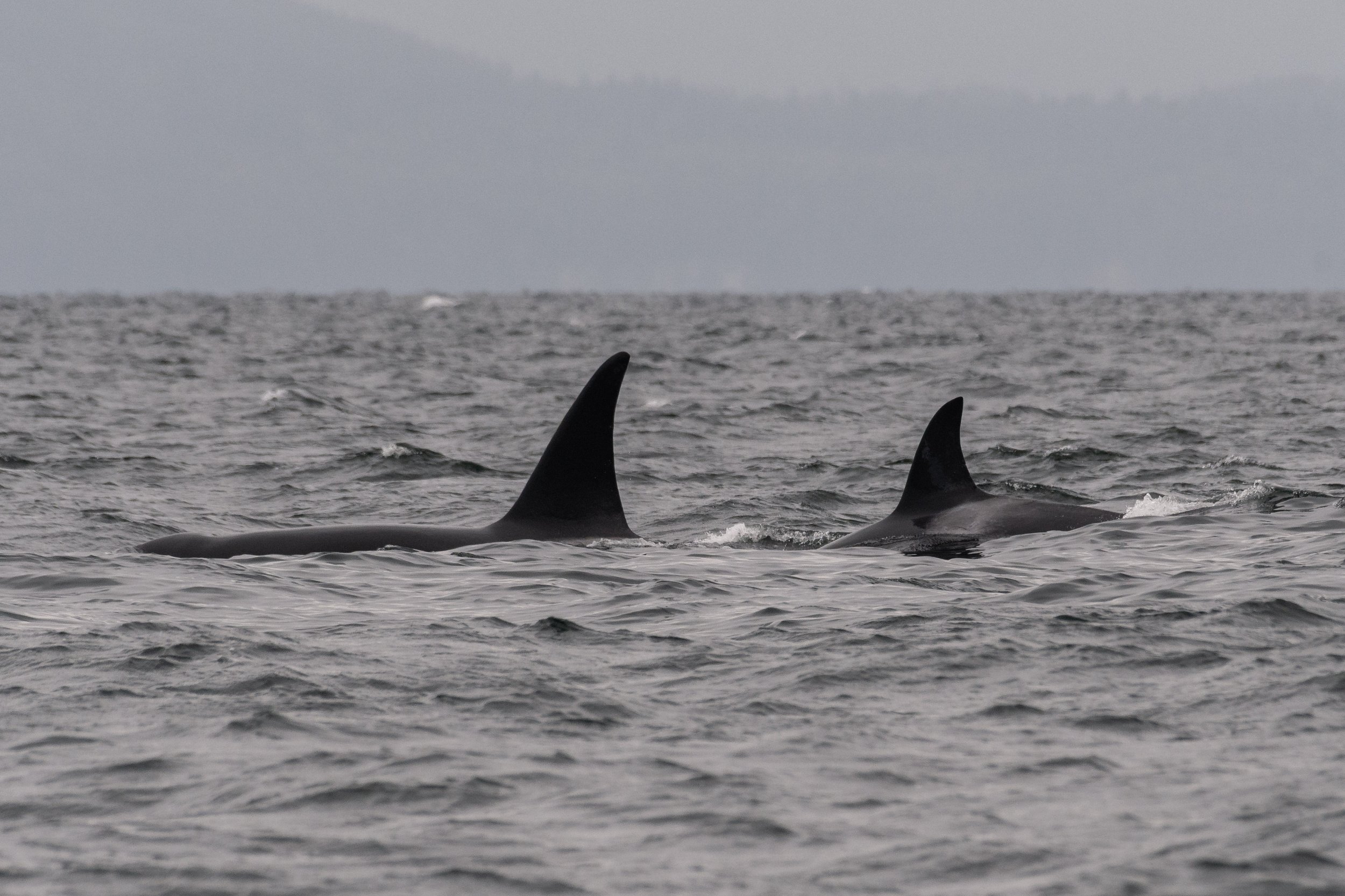
T49A3 Nat surfacing with T049A4 Neptune. Photo by Evan Hessels.
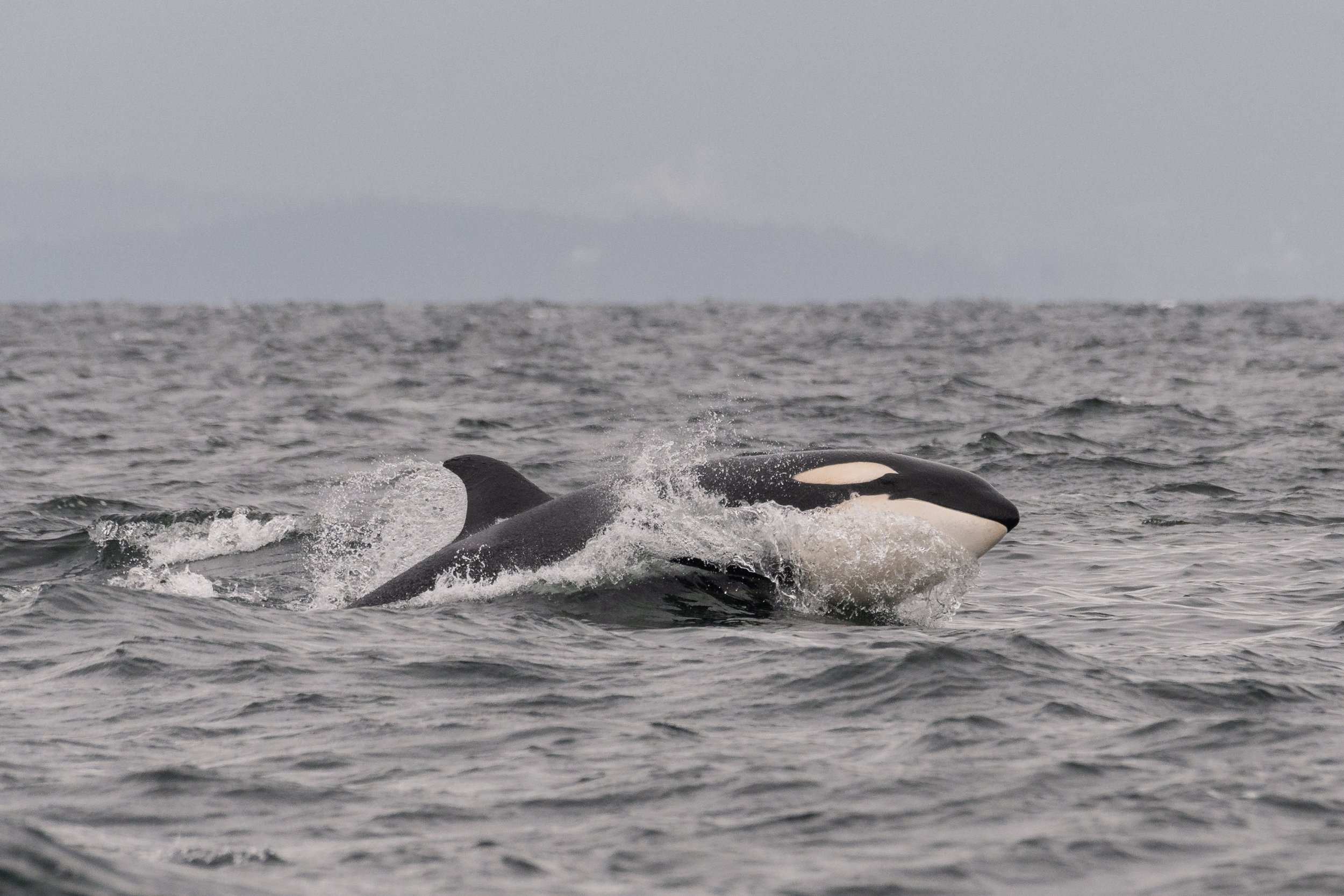
T049A5 Nebula lunging through the waves. Photo by Evan Hessels.
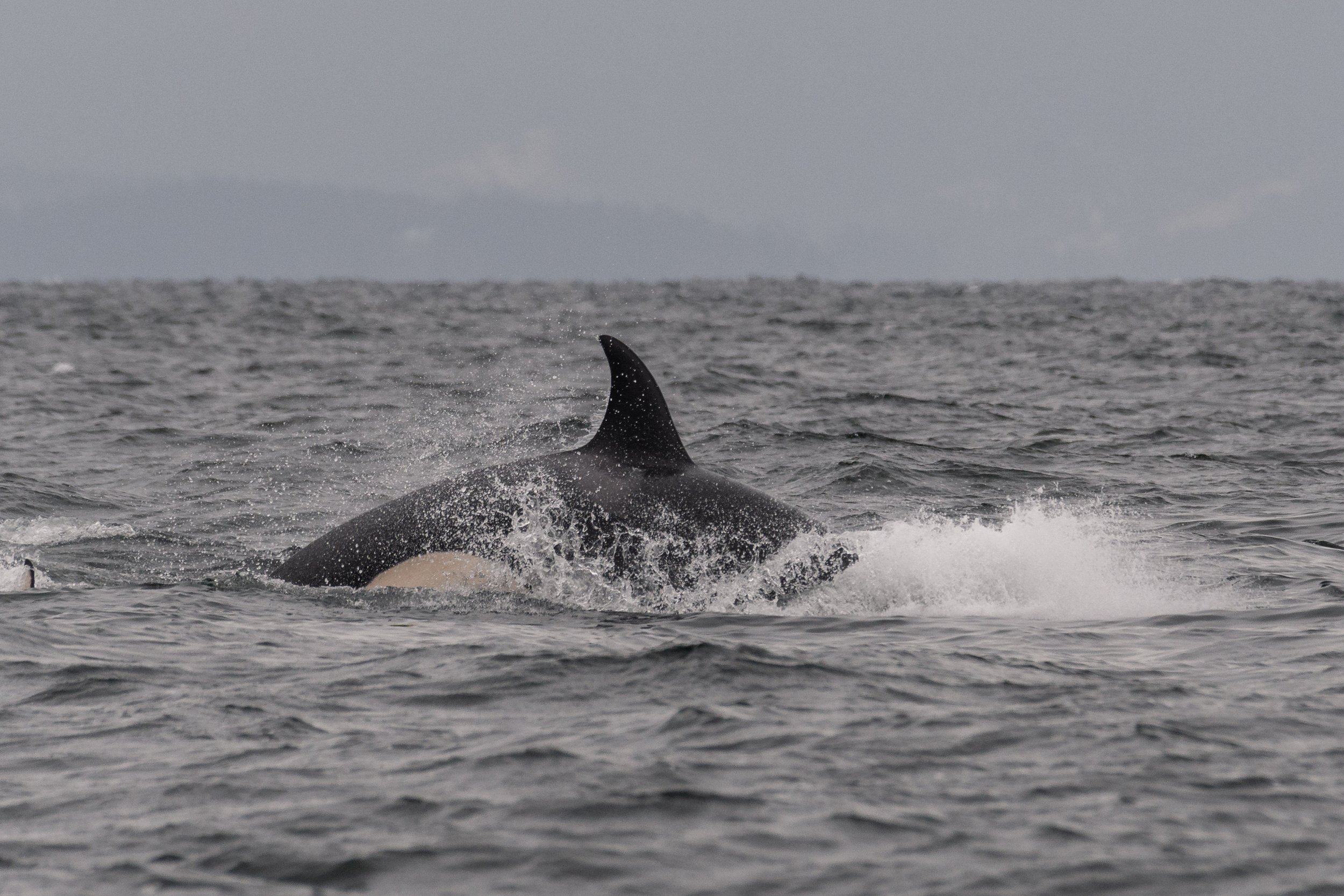
A big Splash from T049A5 Nebula. Photo by Evan Hessels.
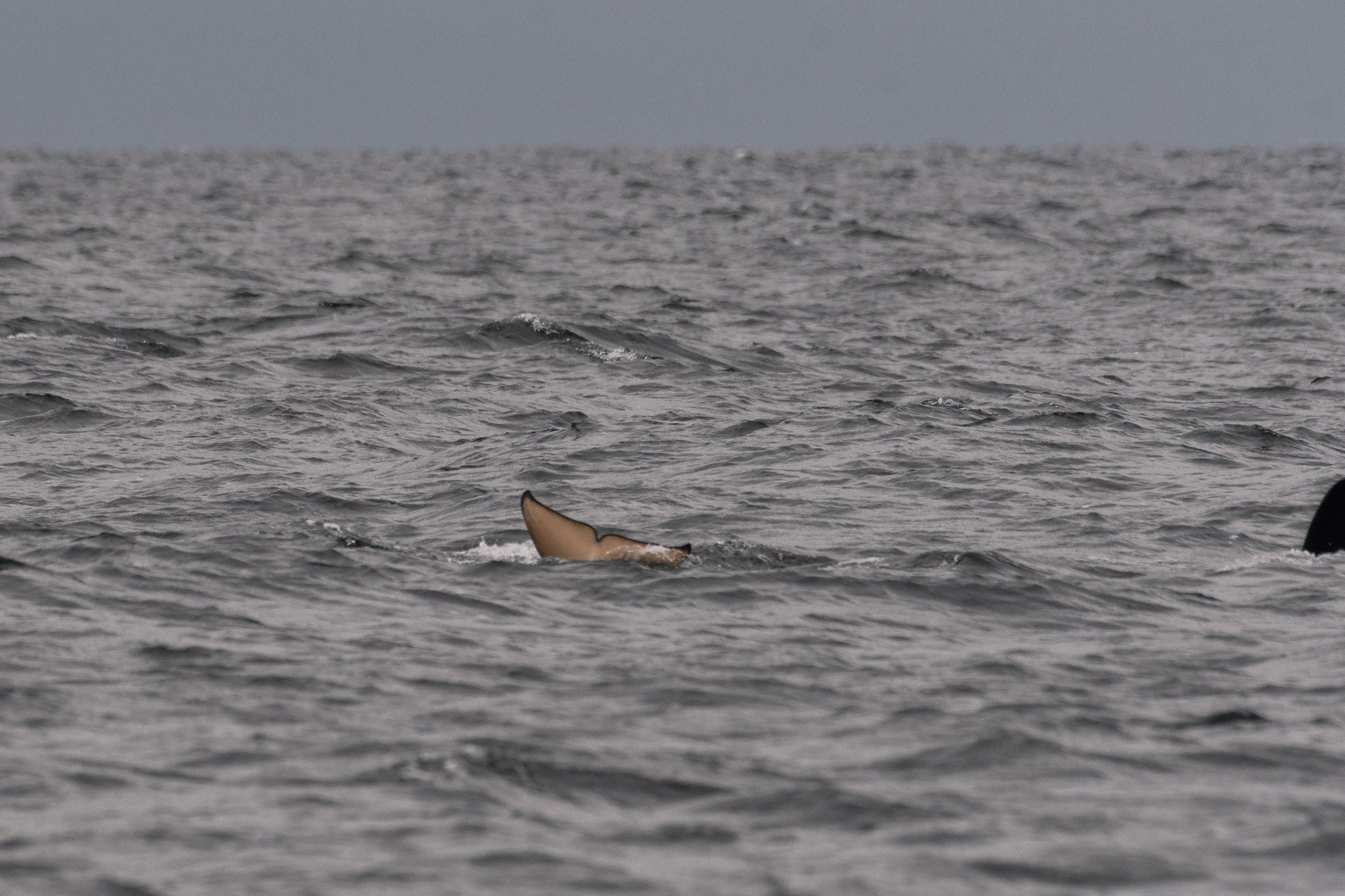
T049A7 Nimbus’ tail out of the water. Photo by Evan Hessels.
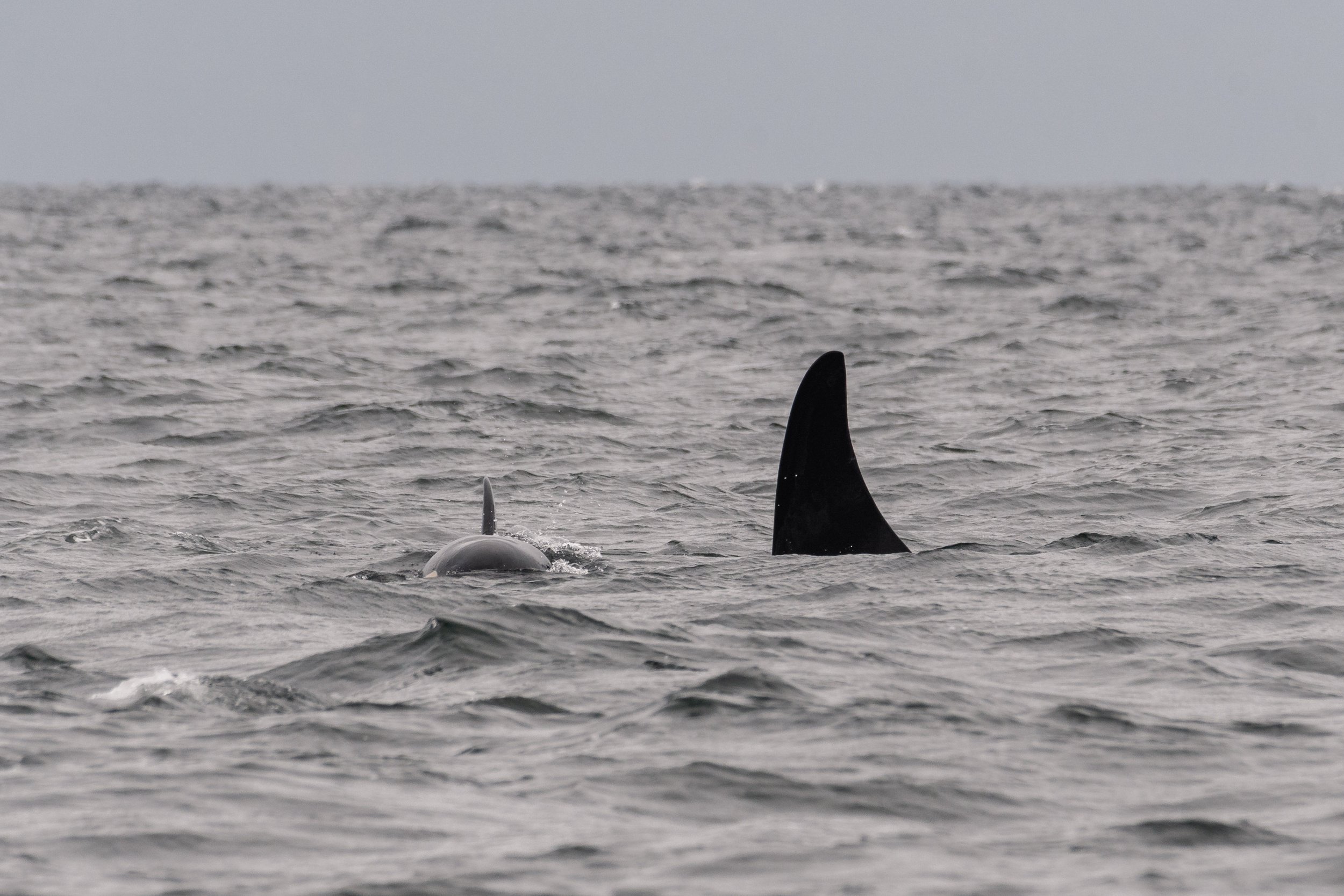
T049A7 Nimbus surfacing facing the camera with their big brother T049A3 Nat’s dorsal fin beside them. Photo by Evan Hessels.
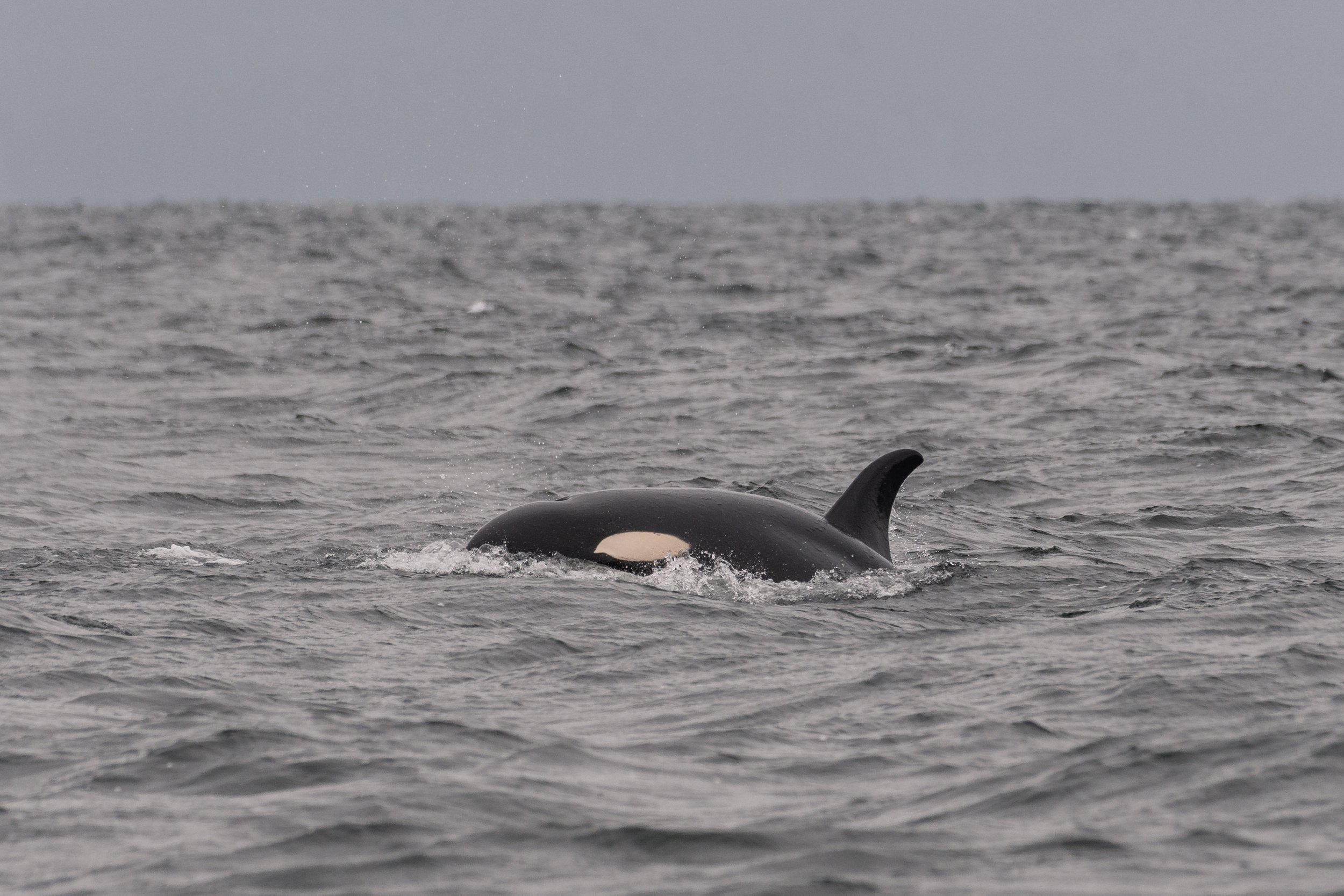
T049A5 Nebula’s eye patch has some freckles in it. Photo by Evan Hessels.
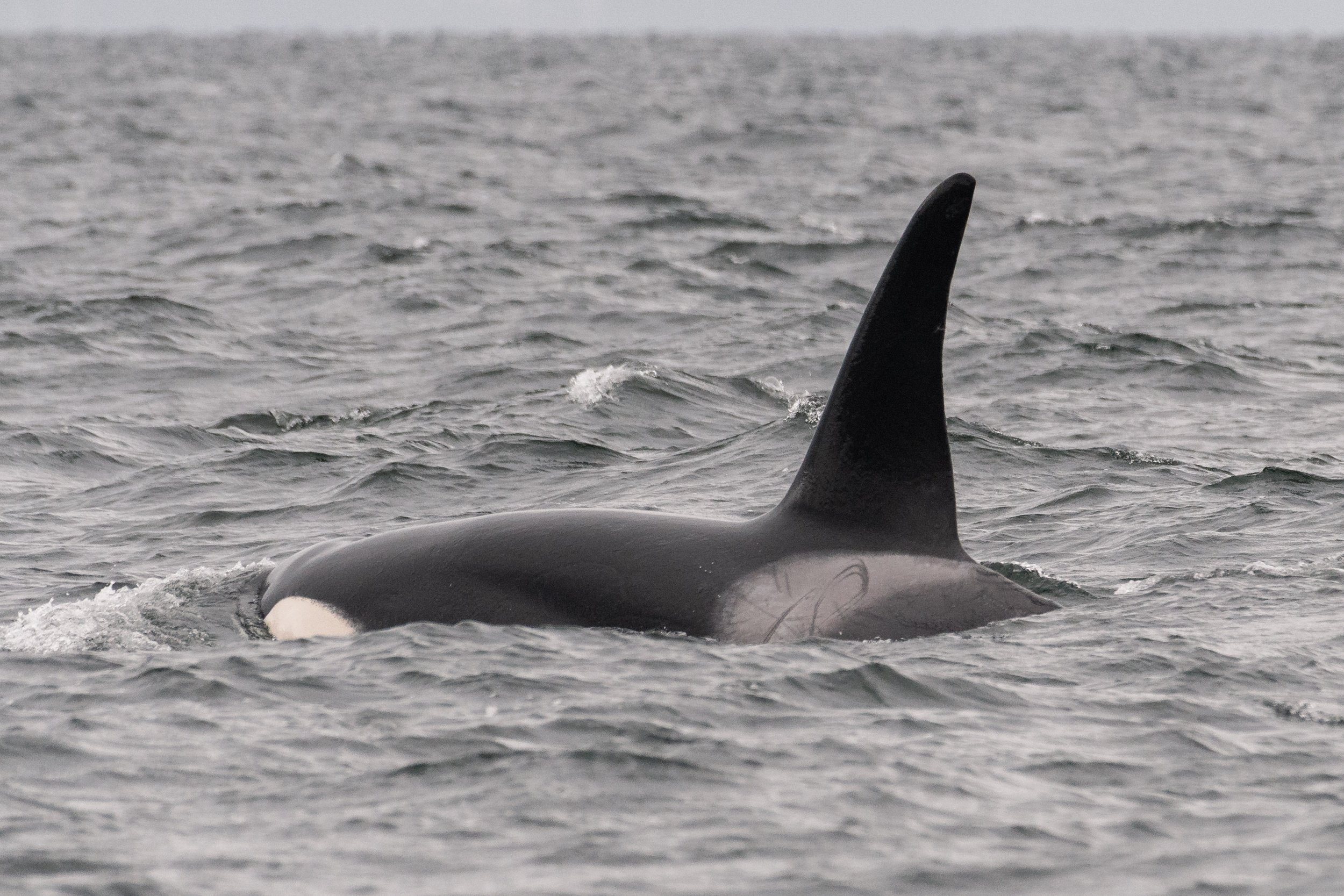
A great look at T049A3 Nat. Photo by Evan Hessels.
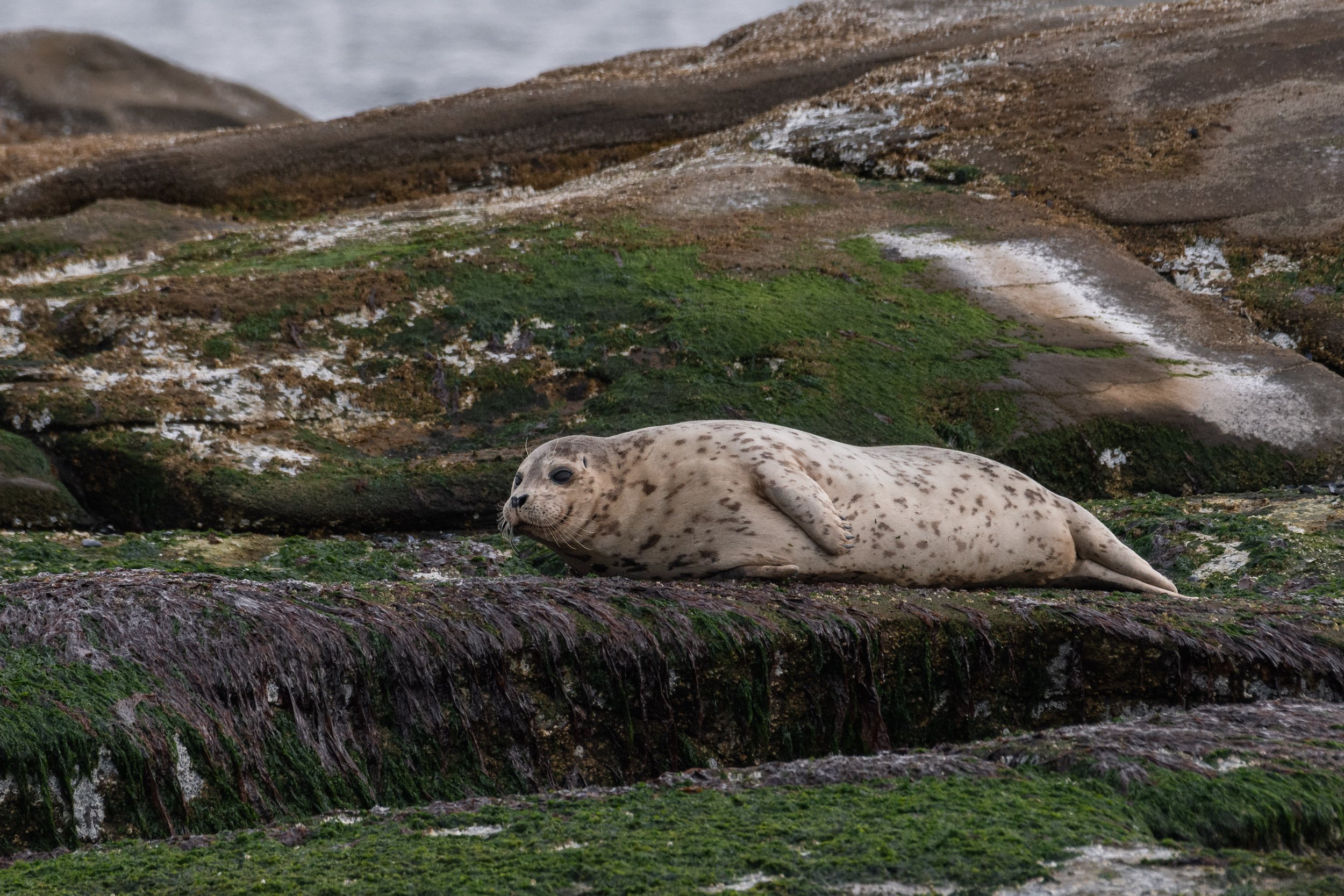
A Harbour Seal posing on the rocks. Photo by Evan Hessels.
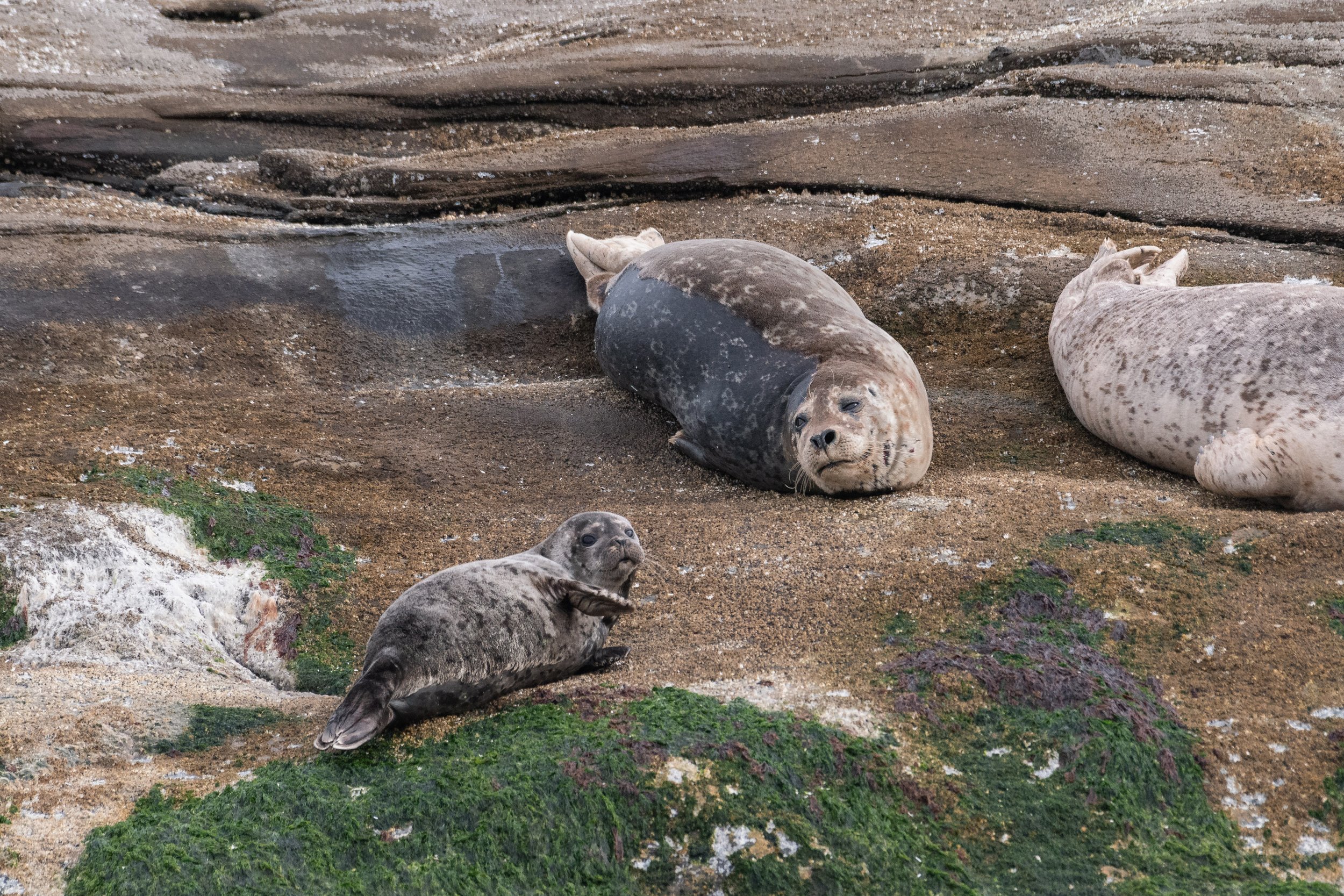
This is likely a pup born this year, now on it’s own next to an adult. Photo by Evan Hessels.
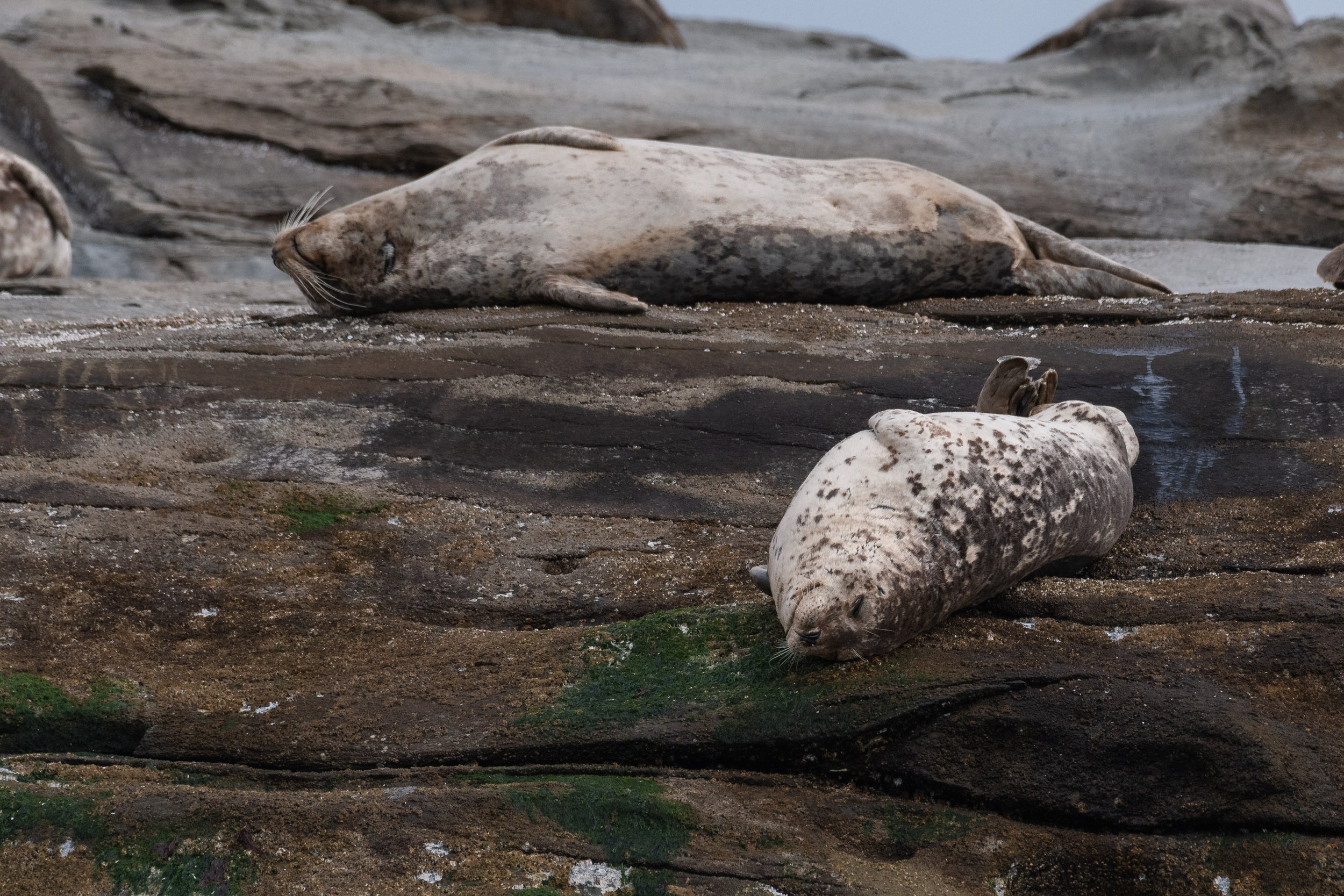
These Harbour Seals sure look comfortable! Photo by Evan Hessels.
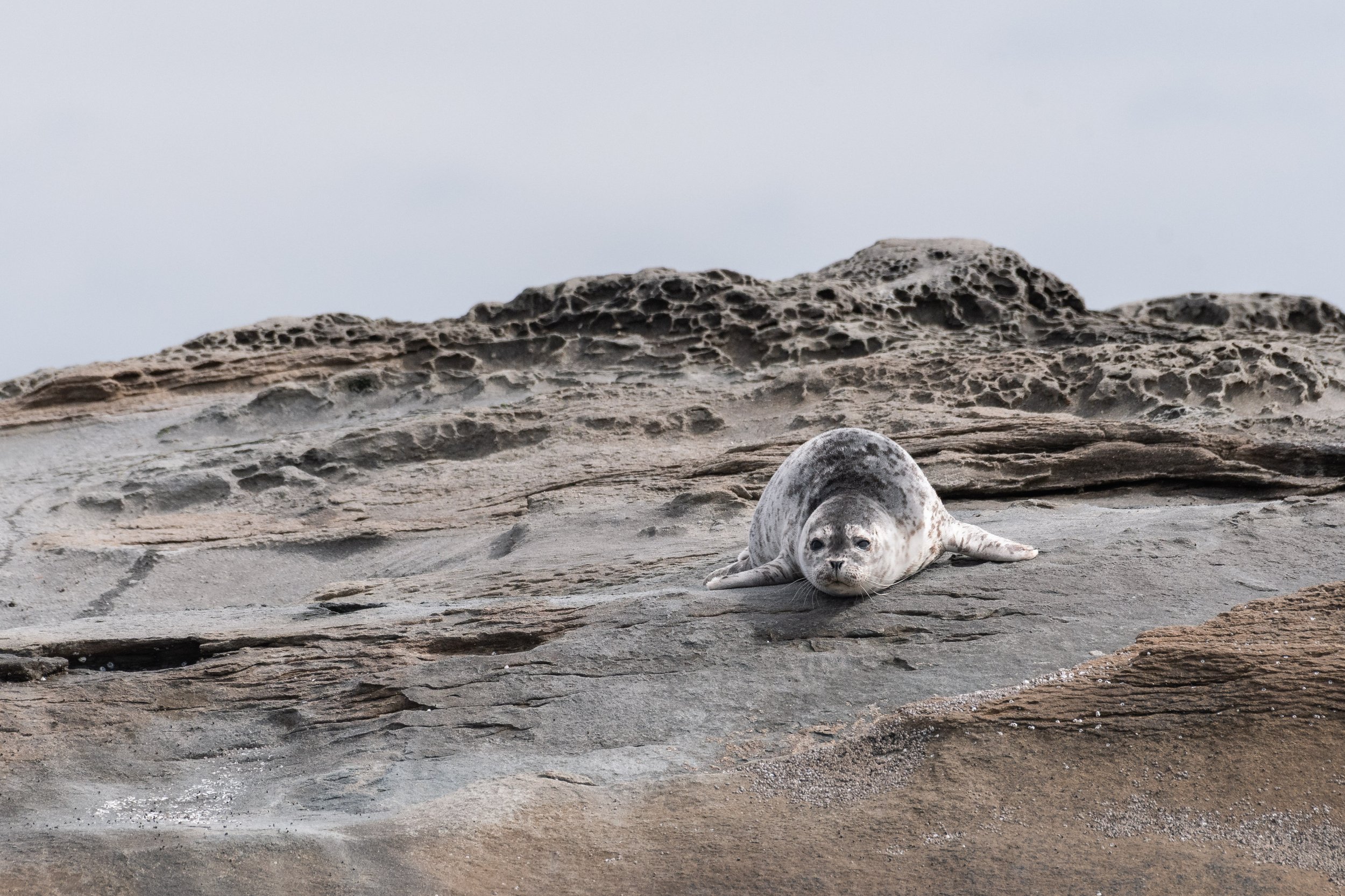
A nice look at the Harbour Seal and the Sandstone structure behind it. Photo by Evan Hessels.
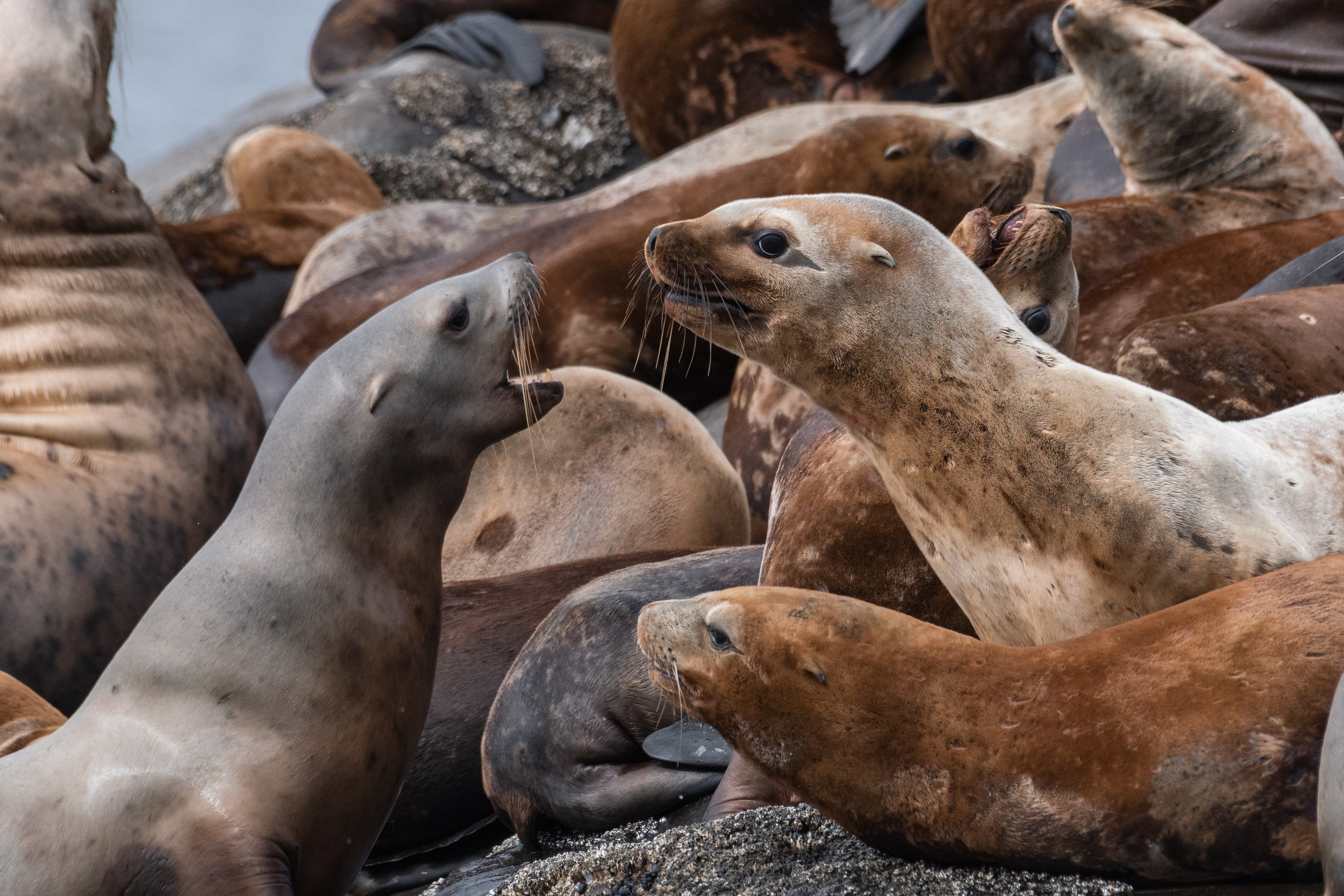
Fighting among the Steller Sea Lions at Stinky Rock. Photo by Evan Hessels.
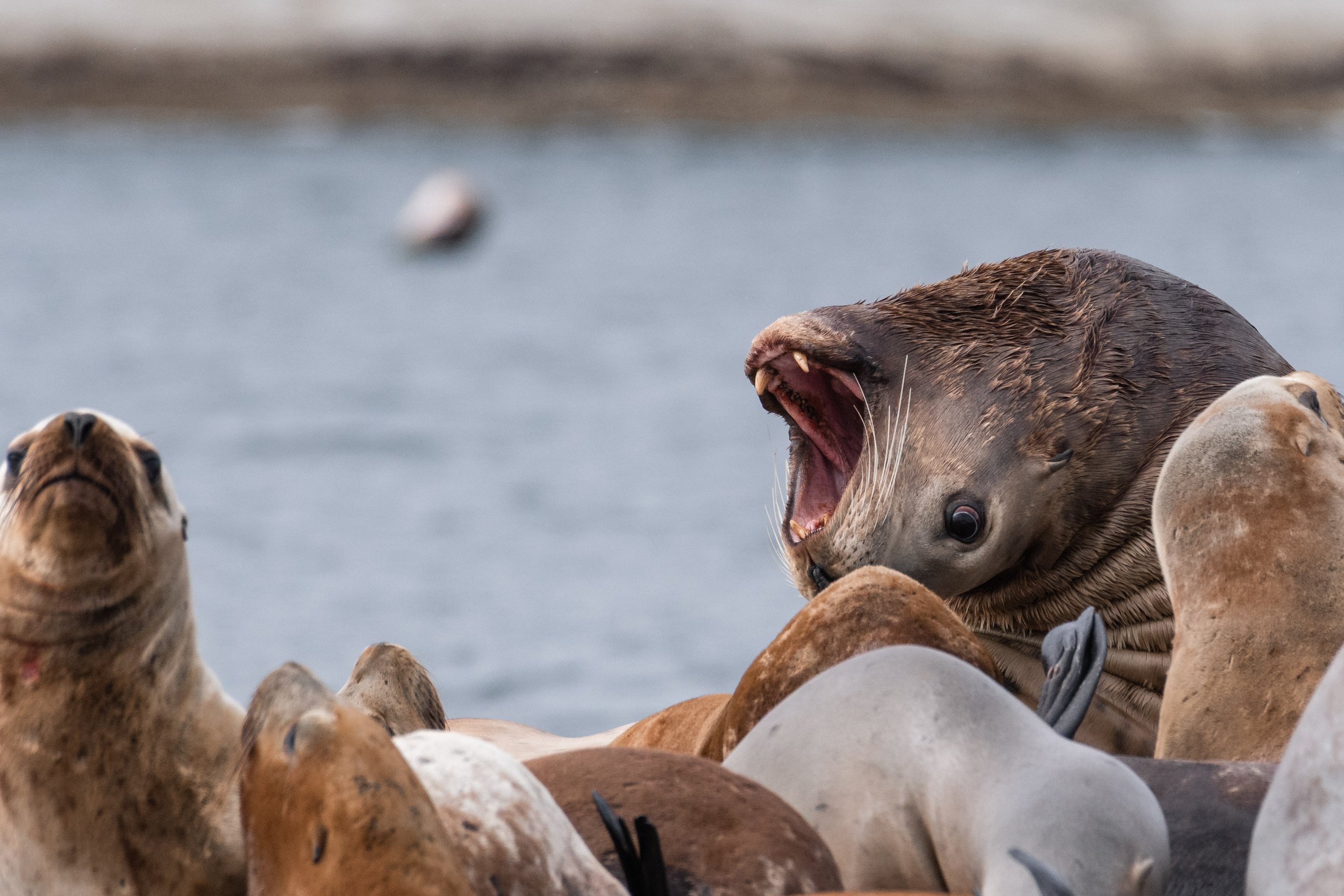
An interesting pose from the large male Steller Sea Lion as he yells at the others. Photo by Evan Hessels.
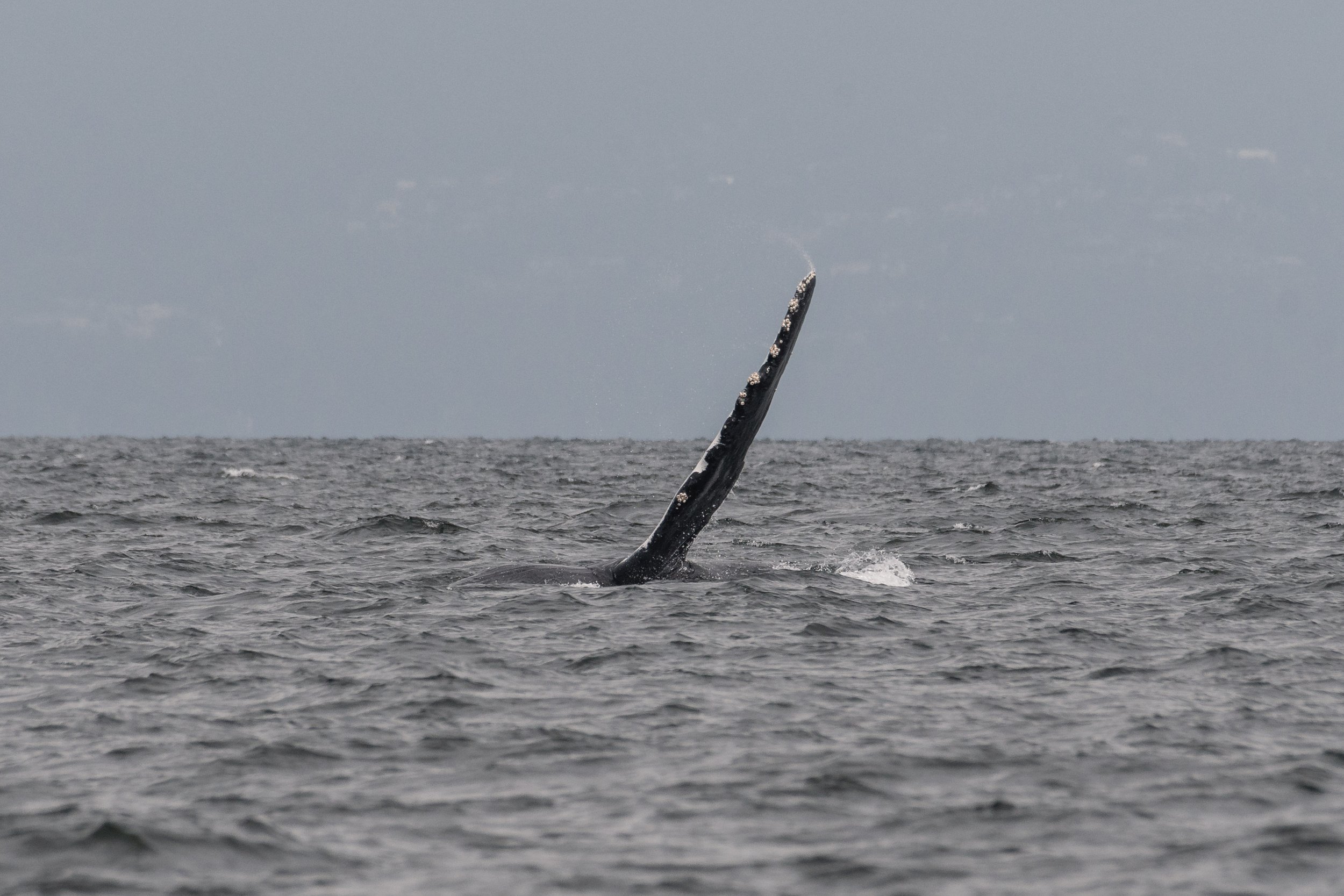
Fader slapping his pectora fins. Photo by Evan Hessels.
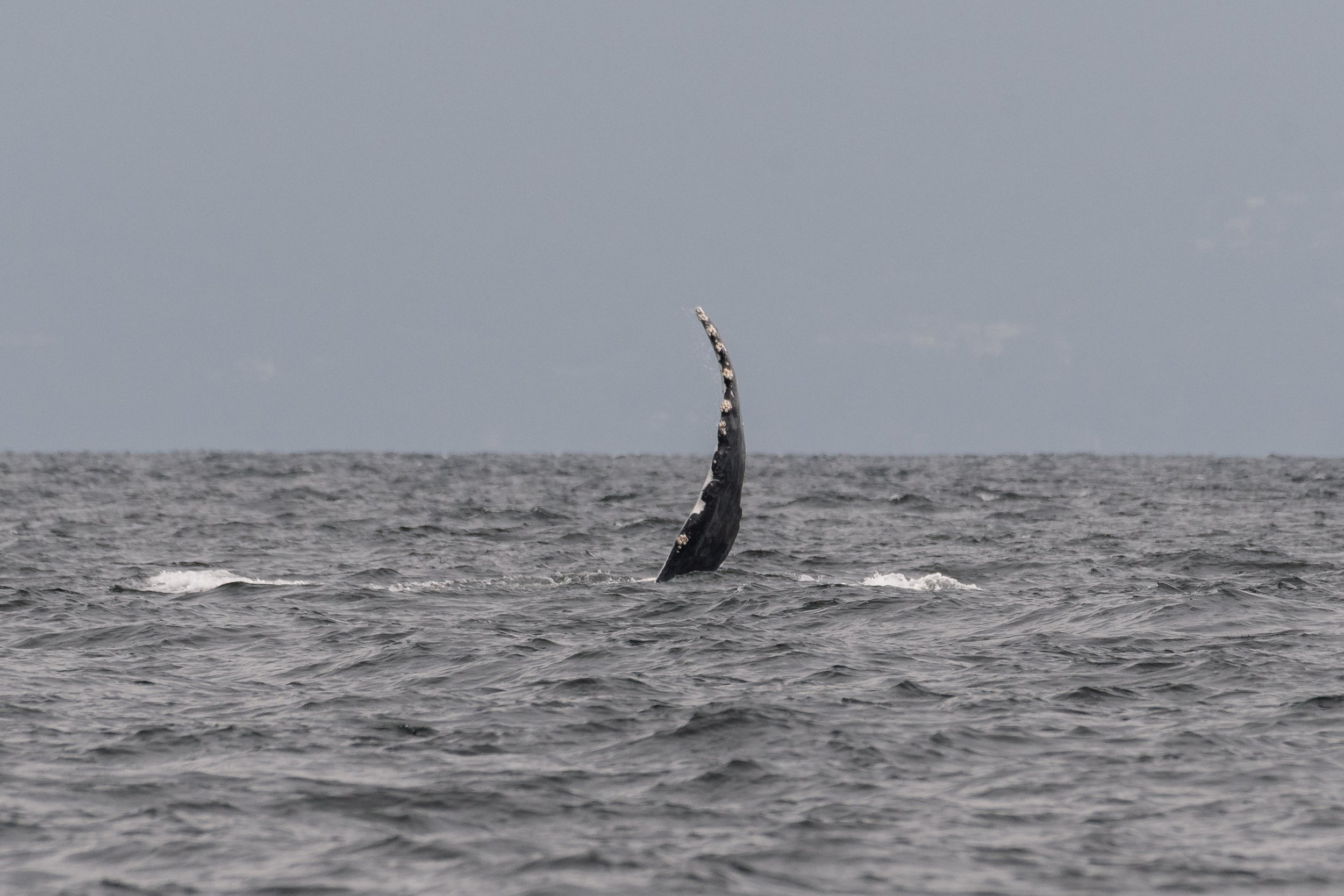
Just look how flexible that 5-meter long fin is! Photo by Evan Hessels.
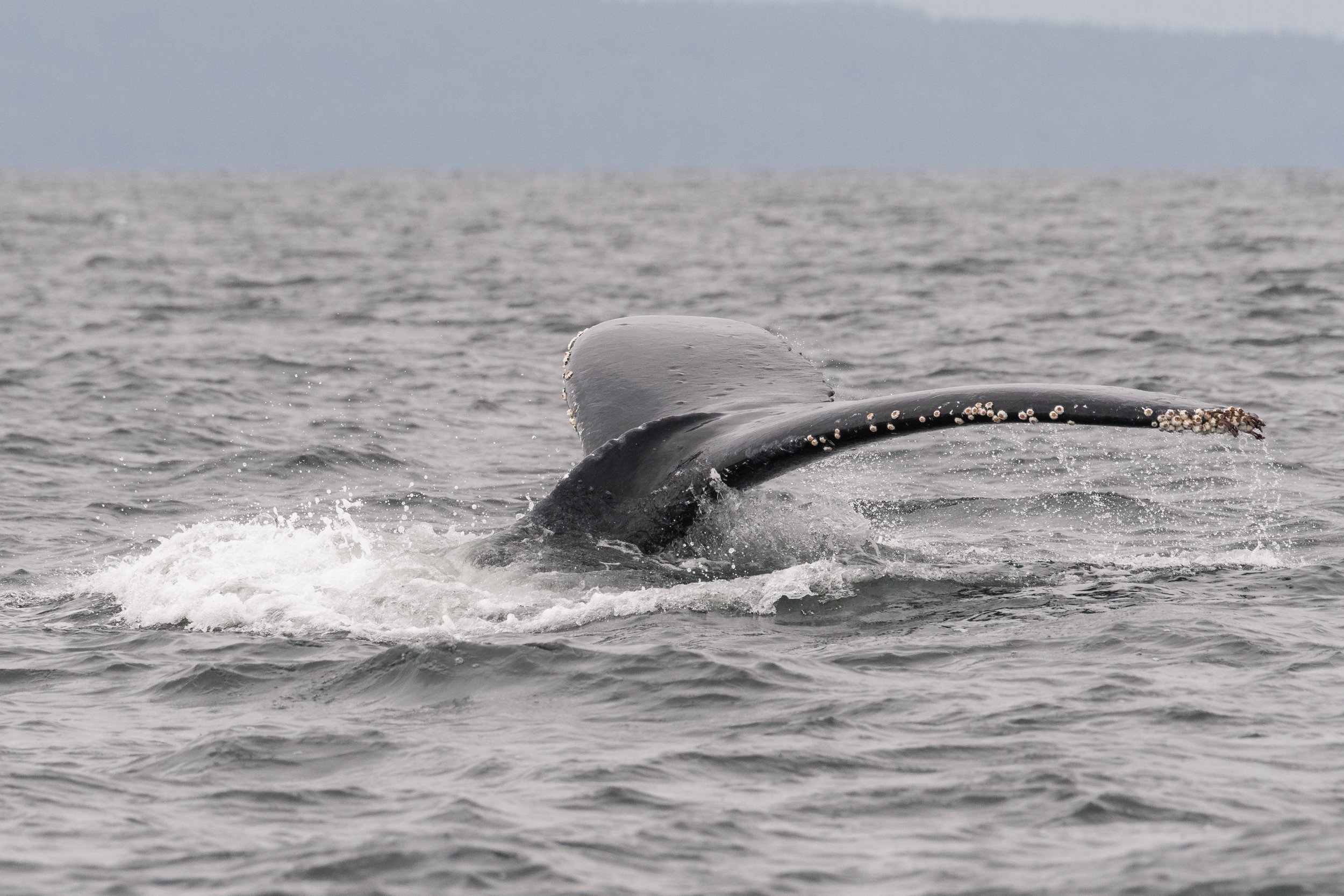
Fader going for a dive. Photo by Evan Hessels.
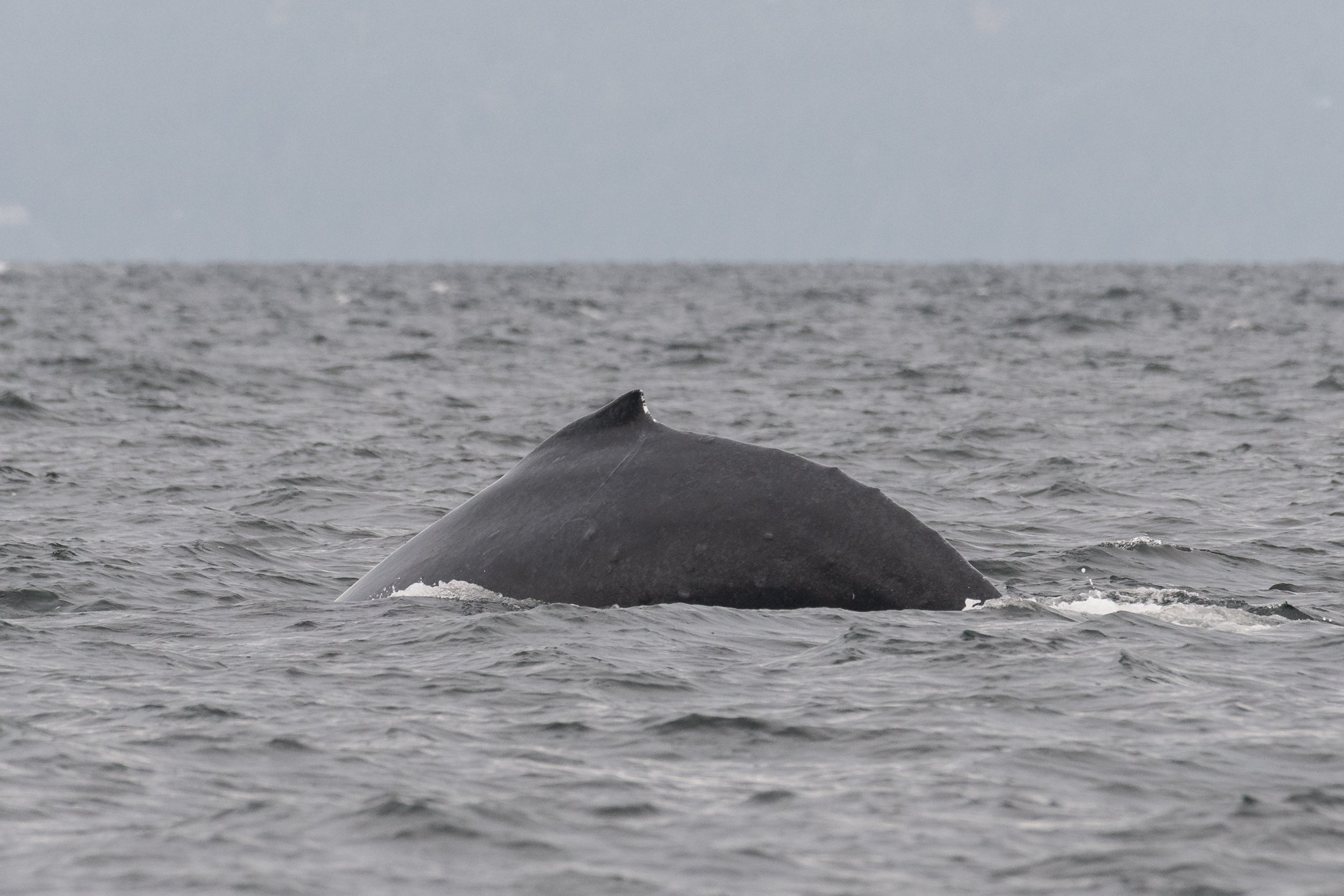
Prowler arching for a dive. Photo by Evan Hessels.
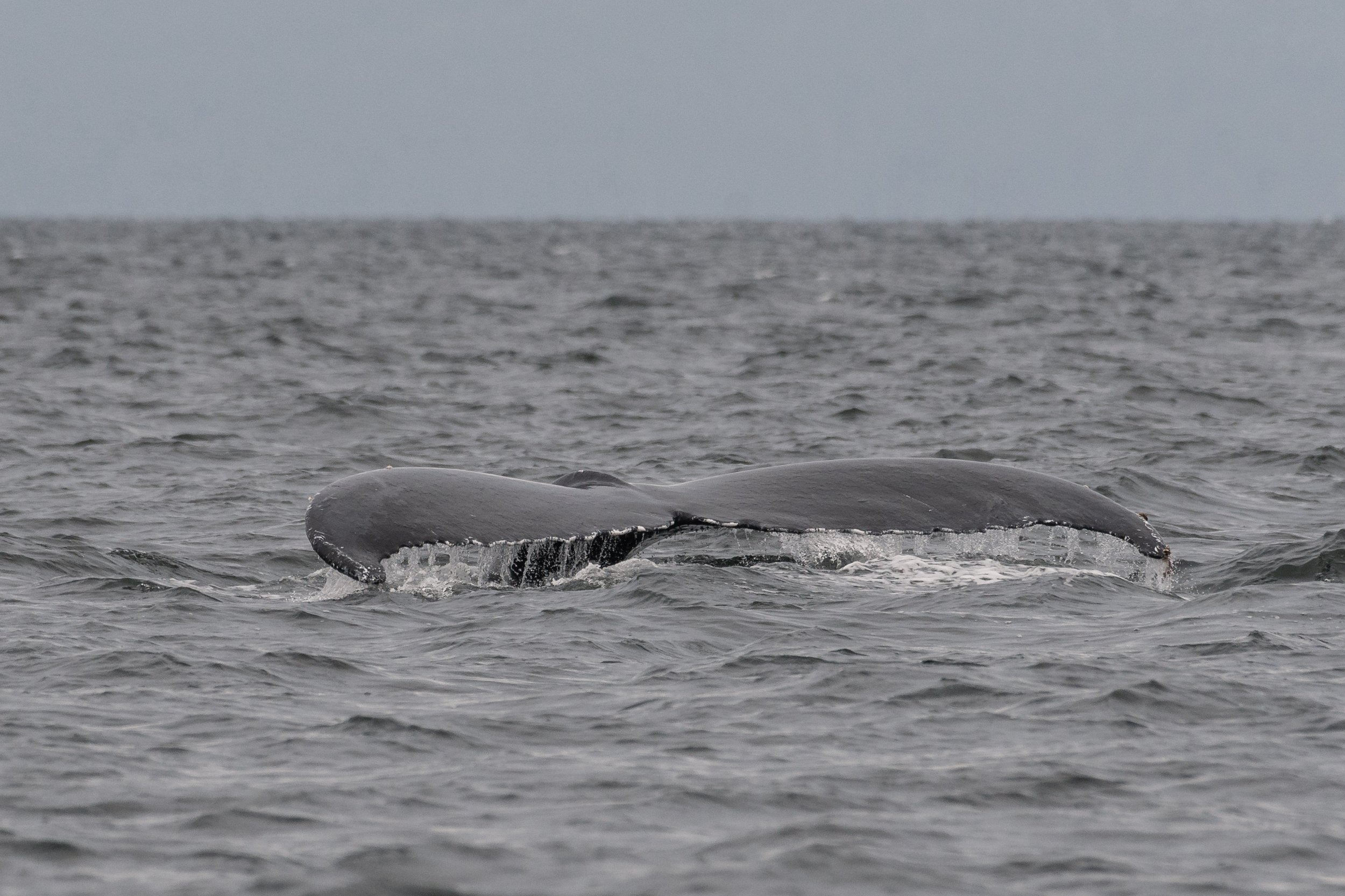
A little fluke waterfall from Prowler. Photo by Evan Hessels.
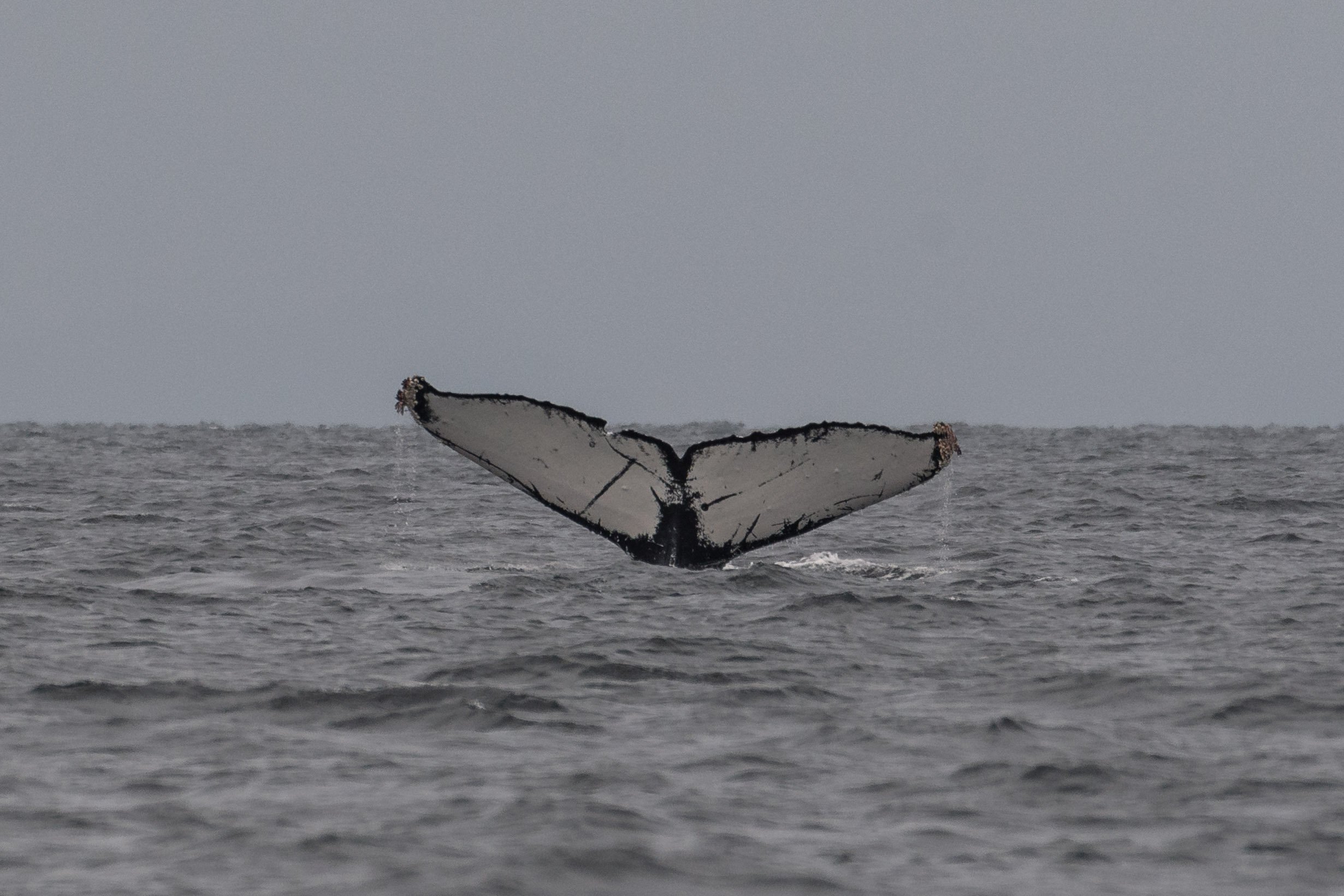
The lovely white underside of Geometry’s tail. Photo by Evan Hessels.
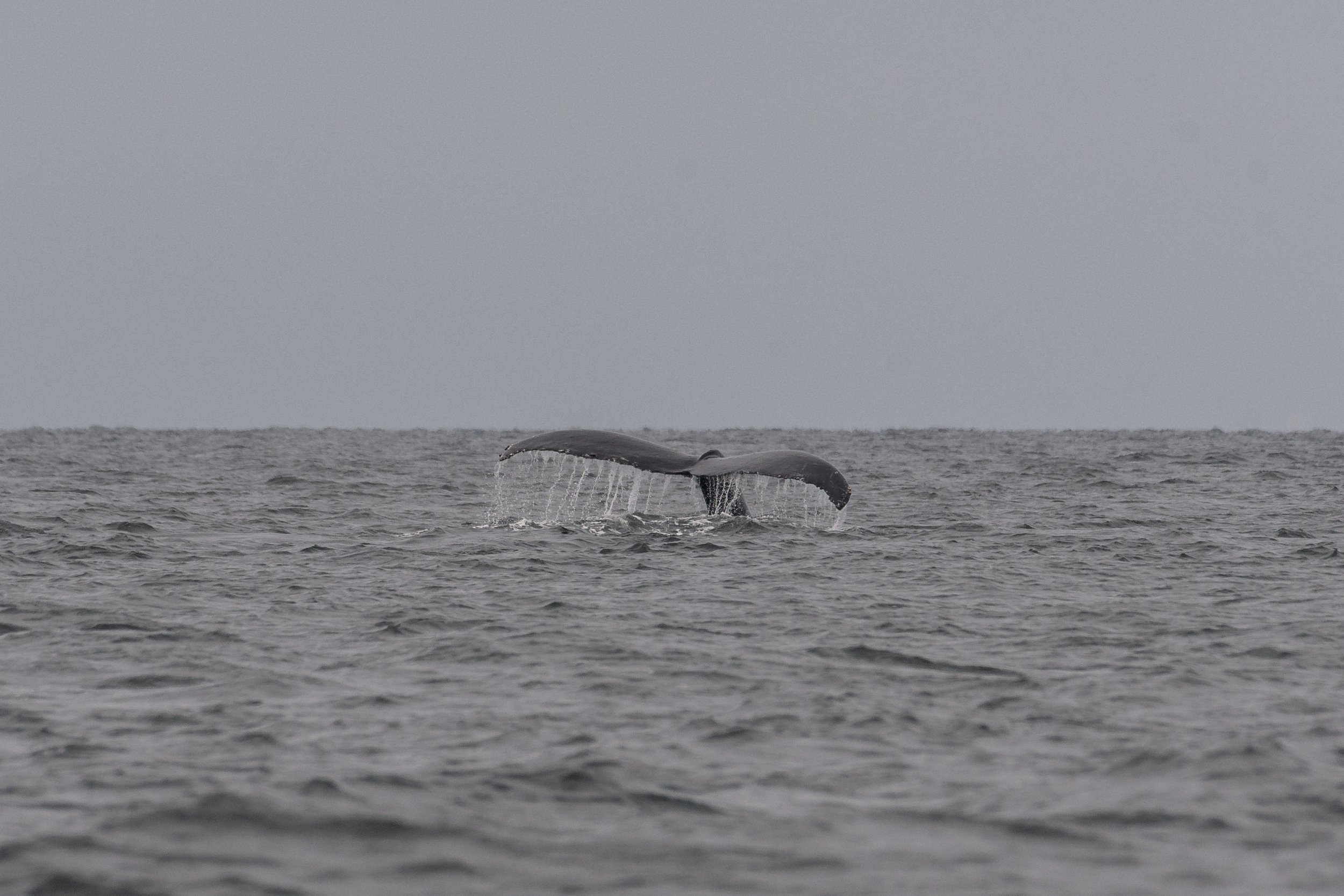
Orion lifting his tail to dive. Photo by Evan Hessels.
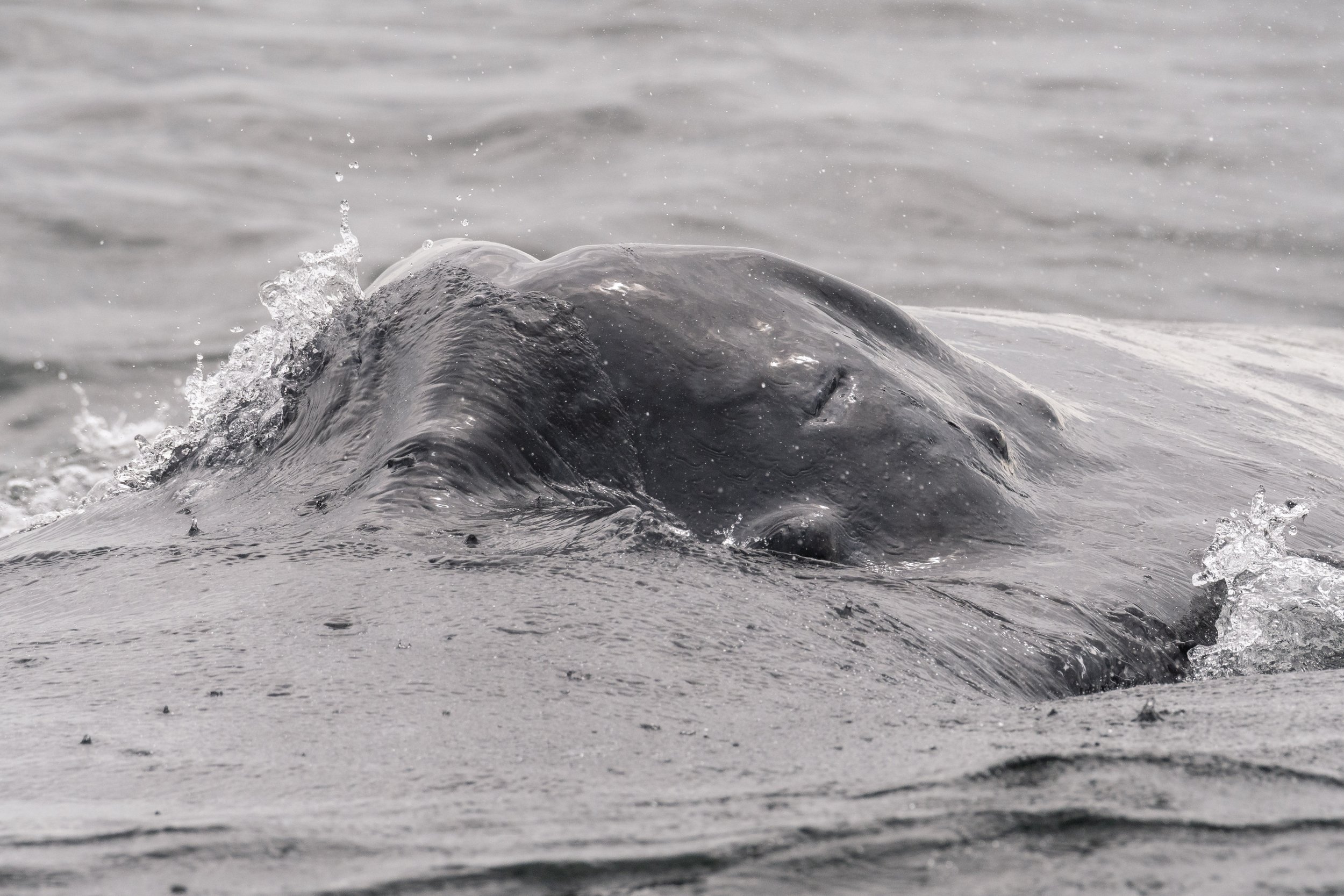
A close up look at one of the whales, the downside of the zoom lens! Photo by Evan Hessels.