
August 29, 2026, 3:30 PM - From Orca Hunts to a Humpback Sunset
Leaving Nanaimo, we pointed the boat west across the Strait of Georgia, following a report of orca travelling north toward Howe Sound. It was a longer run than some of our trips, but the possibility of finding the whales in such a remarkable setting made the journey worthwhile.
Howe Sound is one of those places where the landscape itself becomes part of the experience. Steep mountains rise dramatically from the water, creating a striking backdrop for the wildlife that moves through the sound. It is also a place with an important environmental story. After decades of industrial activity and significant ecological impacts, Howe Sound has become an example of what restoration can look like when communities, scientists, conservation groups, industry, and governments work toward a healthier marine environment.
The recovery has not happened overnight, and it is certainly not finished. But today, Howe Sound supports a growing variety of marine life, making it a fascinating place to explore how ecosystems can respond when pressure on the environment is reduced and restoration efforts are given time to take effect.
As we made our way into the sound, we eventually located the T124Ds.
T124D Field ♀ (1996)
T124D1 Salish II (2014)
T124D3 Lupine ♀ (2022)
T124D4 Dune (2024)
What made the sighting particularly interesting was where we found them. Rather than travelling through open water, the orcas were working their way around the log booms near a pulp mill, apparently searching for prey amongst the logs and structures along the shoreline.
For a population of marine mammals that spends so much of its time travelling through open coastal waters, seeing transient orcas working in such a human-dominated environment is always a reminder of how adaptable these animals can be. Their habitat is not limited to pristine-looking wilderness. The T124Ds can and do move through busy waterways, near shorelines, and around structures where prey may be found.
Transient, or Bigg's, killer whales are mammal hunters, and their diet can include harbour seals, Steller sea lions, porpoises, dolphins, and other marine mammals. Their hunting strategies can vary considerably depending on the prey and the environment. Unlike fish-eating resident killer whales, which often spend long periods using echolocation to locate and pursue fish, Bigg's killer whales frequently rely on stealth when approaching marine mammal prey.
That makes a location like this particularly interesting. The log booms and surrounding structures create a complicated underwater environment, with plenty of places for prey to hide and plenty of opportunities for an experienced group of orcas to search. The T124Ds appeared to be finding success.
Birds began gathering around the area, taking advantage of scraps left behind from the orcas' meal. Gulls and other scavengers are an important part of the marine ecosystem, and their presence can sometimes provide a fascinating glimpse into what is happening beneath the surface.
This is one of the things we love about spending time on the water. A whale sighting is rarely just about the animal itself. An entire community of wildlife often responds to what is happening below the surface. A successful hunt can become a meal for more than one species, with scraps and remains supporting birds and other scavengers.
Eventually, it was time for us to begin the journey back toward the Strait of Georgia. But our day of wildlife encounters was far from over.
On our way out, we stopped at the White Islets, a small group of rocky islands that sit not too far from the entrance to the Strait. The islets and surrounding waters provide habitat for an impressive variety of marine life, and on this visit there was plenty to see.
Steller Sea Lions were hauled out and moving through the surrounding waters, while Harbour Seals surfaced nearby. Above them, the rocks and skies were filled with birds, including cormorants, gulls, and black oystercatchers.
The sea lions were particularly entertaining as several launched themselves from the water, briefly breaking the surface before disappearing again. Steller Sea Lions are the largest of the eared seals and are a familiar sight around many of the rocky islands and reefs of coastal British Columbia. They are powerful swimmers and can travel considerable distances in search of food. Like the orcas we had watched earlier, they are also predators, connecting them to the same larger food web that supports so much of the Salish Sea's wildlife.
Harbour Seals occupy a different ecological niche, but seeing the two species in the same area reminds you that coastal habitats can support a remarkable range of marine mammals at once. The birds added another layer to the scene.
Cormorants perched on the rocks with their wings spread, using the breeze to help dry their feathers. Gulls moved between the water and the shoreline, always alert to an opportunity for an easy meal. Black oystercatchers gathered along the rocky shoreline, their bright bills well suited to prying marine invertebrates from the intertidal zone.
The White Islets are a good example of why small pieces of habitat can be so important. To someone passing by, a collection of rocky islands might not look particularly significant. But to wildlife, these rocks can provide resting areas, nesting habitat, feeding grounds, and shelter.
The marine environment is full of these connections. A rocky outcrop becomes a haul-out for sea lions. The same area becomes a resting place for seals and seabirds. The surrounding waters provide food. Tidal movement brings nutrients and prey through the area. What looks like a small feature on a map can therefore become a busy centre of activity for an entire community.
After taking some time to watch the wildlife at the islets, we continued toward Nanaimo.
The sun was beginning to lower toward the horizon, casting the Strait of Georgia in the warm light of evening. And before we made it home, we had one more whale to see. Helen (BCX2494) surfaced ahead of us.
The humpback whale moved calmly through the evening water, her back and dorsal fin appearing and disappearing with each slow breath. As the light softened around us, the scene took on a completely different feeling from our earlier encounter with the T124Ds.
Where the orcas had been active and focused on finding food, Helen offered a quieter end to the day.
Humpback whales are well known for their long migrations and their remarkable ability to return to productive coastal waters year after year. British Columbia's waters provide important feeding habitat during the summer and fall, when humpbacks can take advantage of seasonal concentrations of krill, forage fish, and other prey.
Every humpback also carries a unique visual record on its body. The underside of the tail, or fluke, contains individual patterns of pigmentation, scars, and markings that researchers and naturalists can use to identify whales. These natural markings have allowed scientists to build long-term photo-identification catalogues and follow individual whales over many years.
As Helen disappeared beneath the surface and the sunset deepened, it felt like a fitting way to end the trip.
From the mountains of Howe Sound to the rocky shores of White Islets, the day had taken us through several very different habitats, each supporting its own community of wildlife. We had watched the T124Ds search for prey around the log booms, seen birds benefit from the remains of a successful hunt, watched sea lions launch themselves from the water, spotted seals and seabirds around the islets, and finally shared the evening with a humpback whale.
Please enjoy the photos below, taken by Marine Naturalist Jordan Robinson throughout the trip.
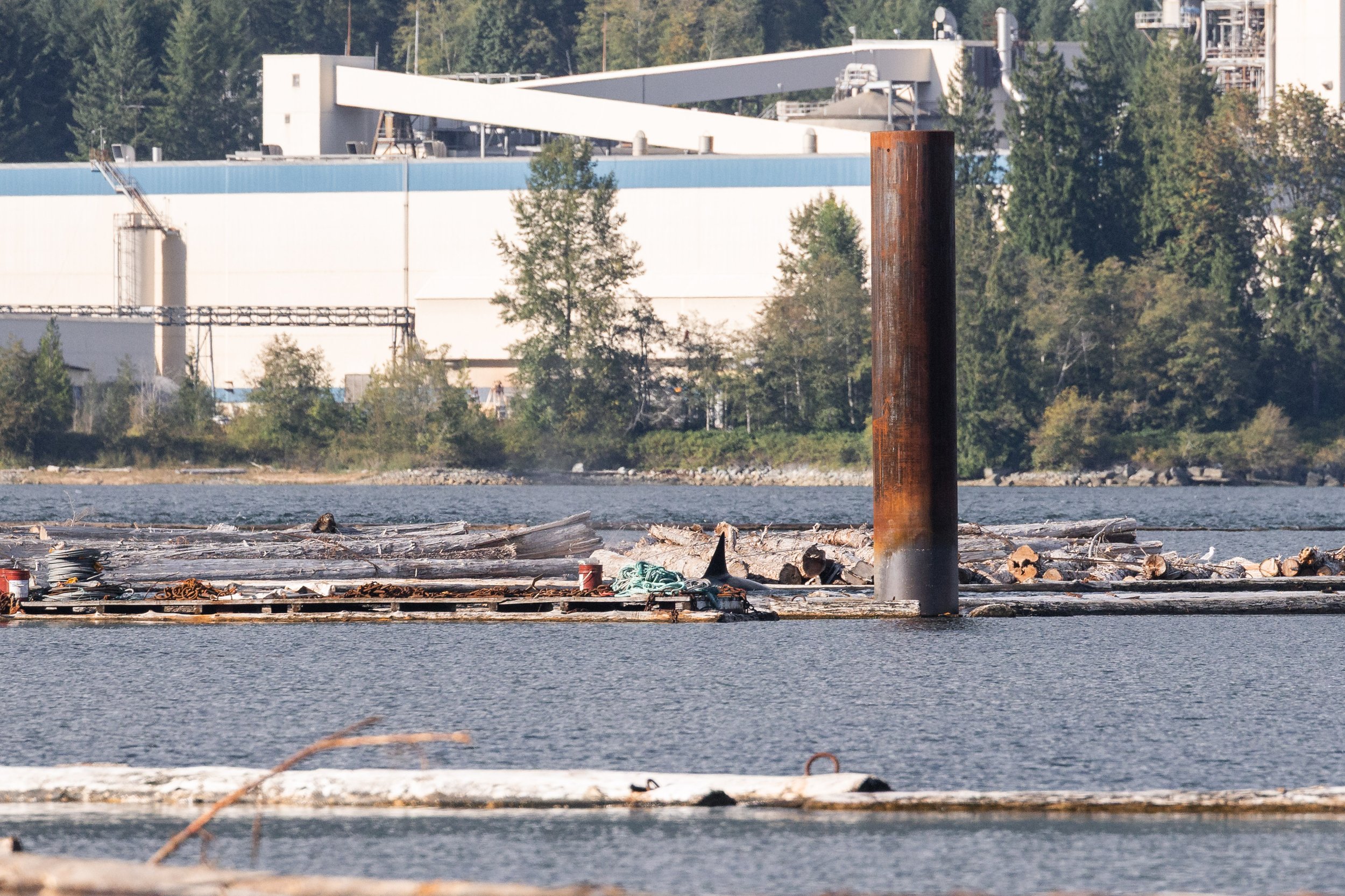
Can you spot the whale amongst the logs?
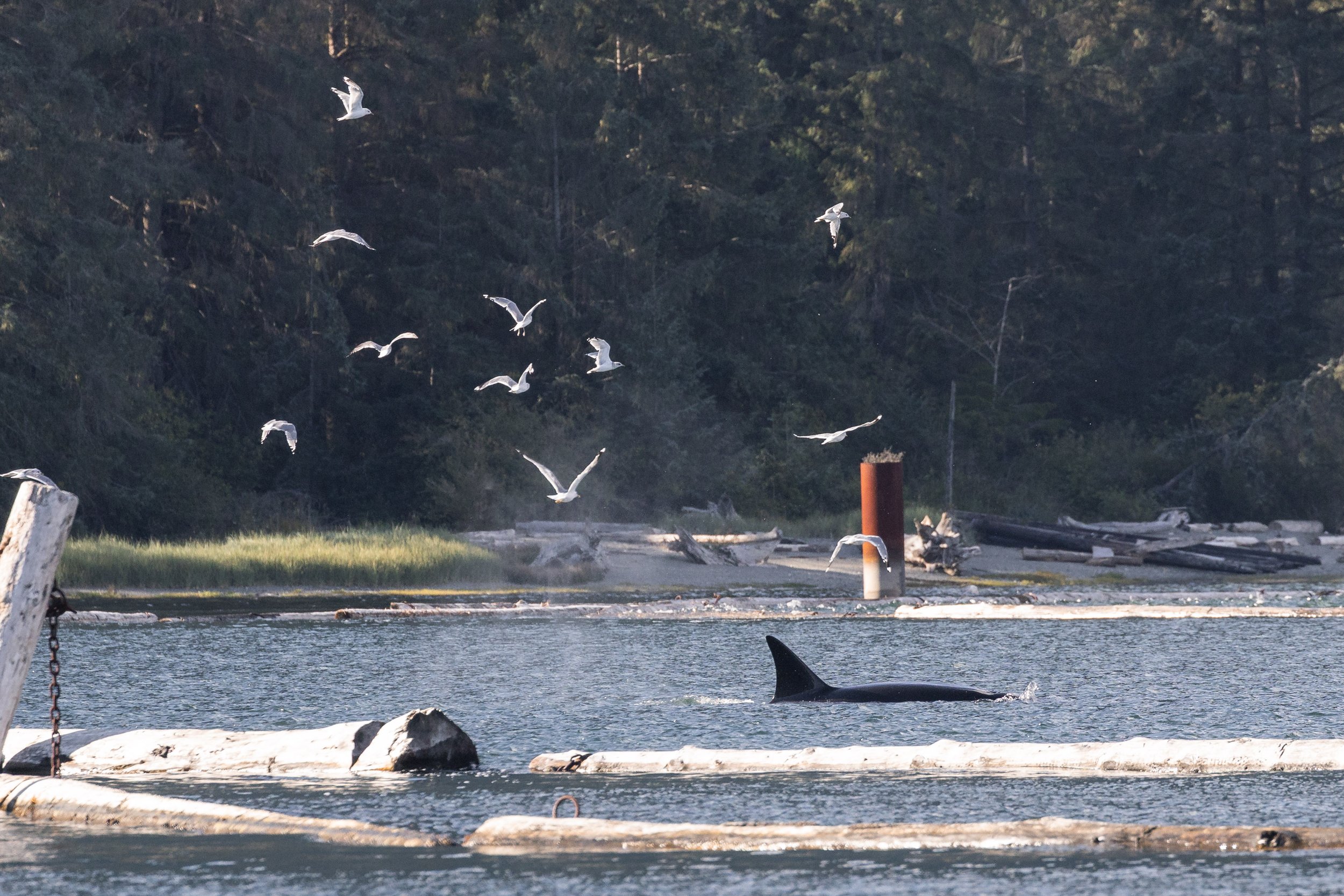
T124D1 Salish II surfacing with the birds moving in.
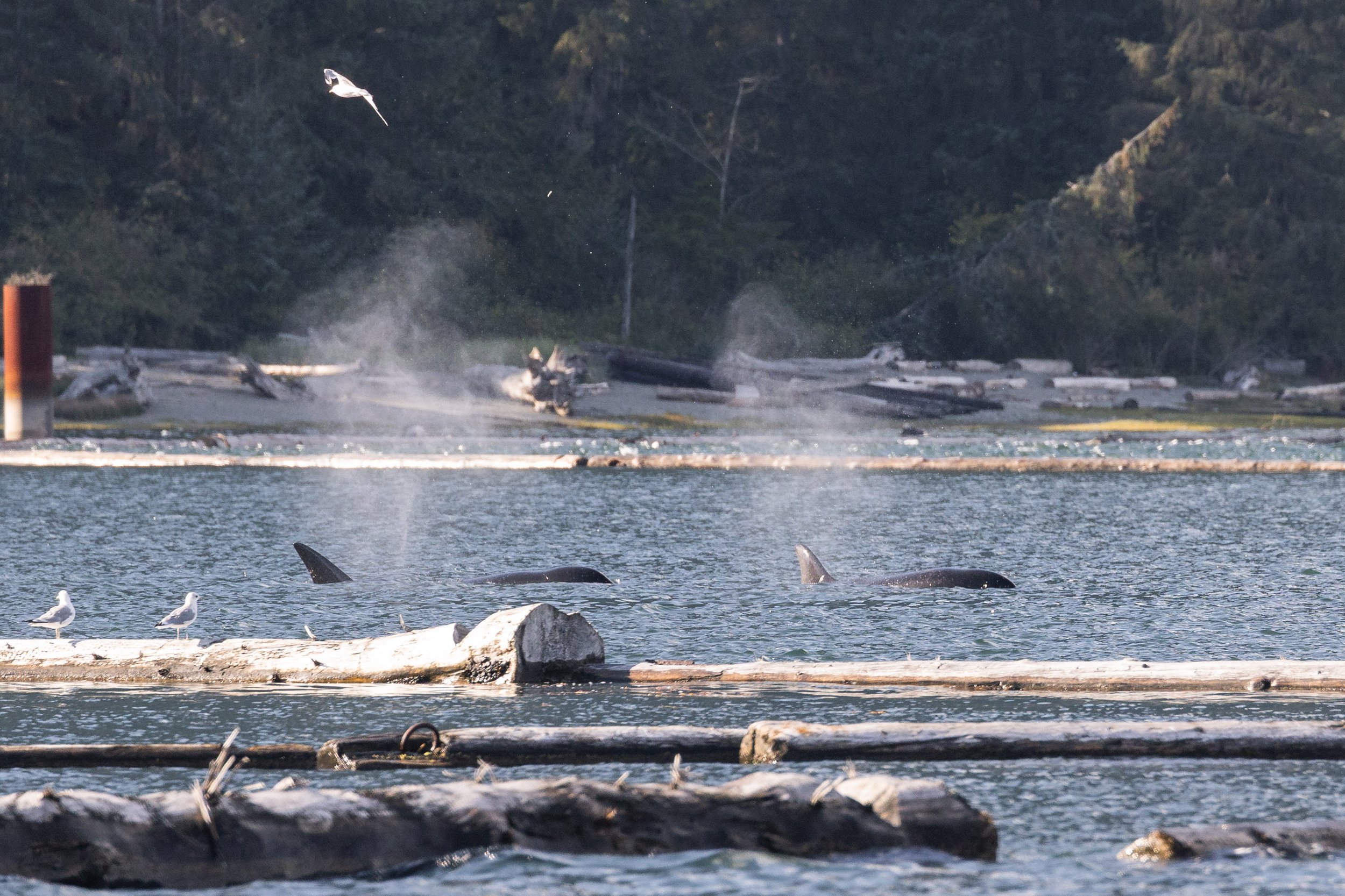
T124D Field and T124D4 Dune surfacing together.
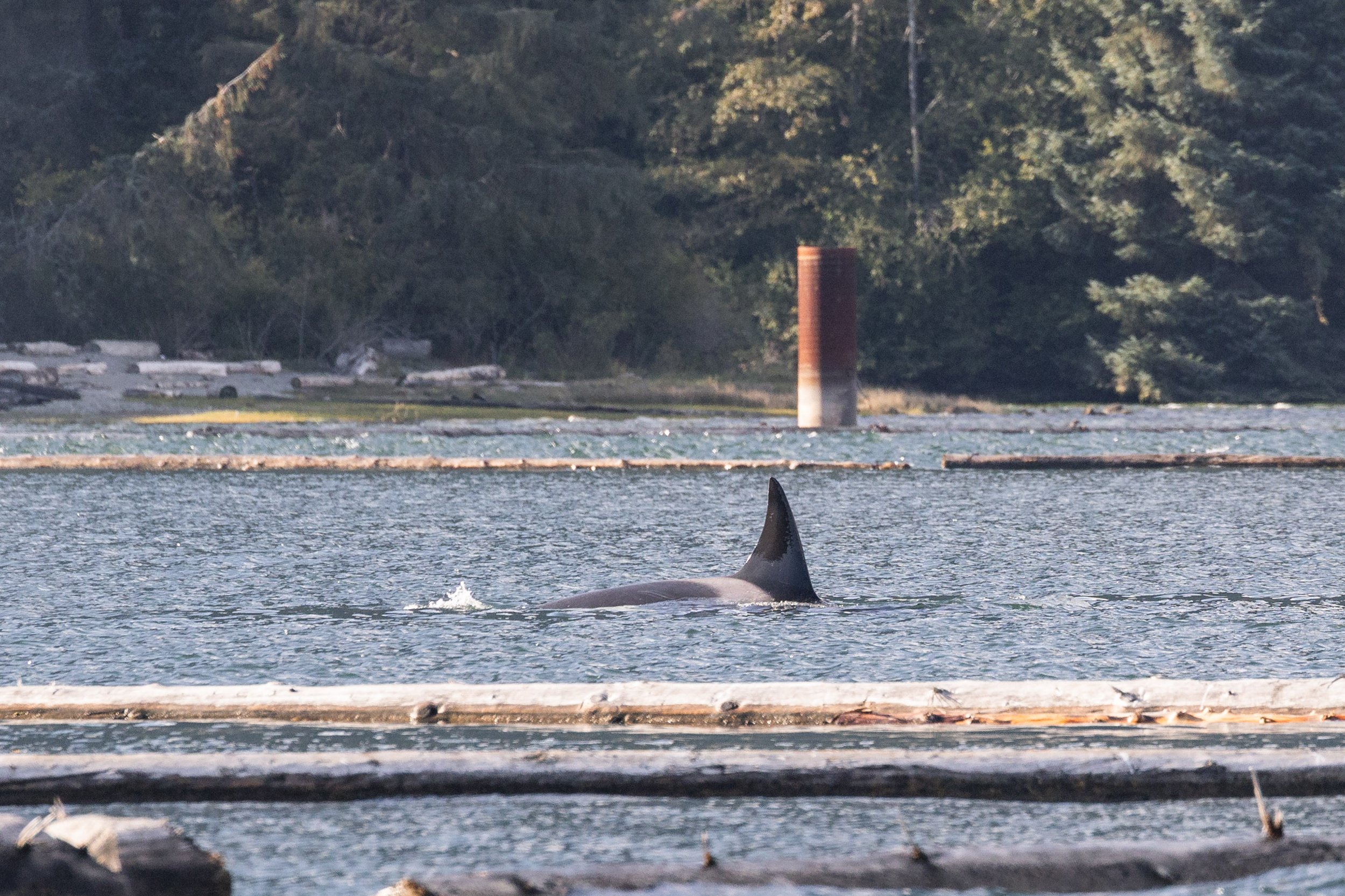
T124D1 Salish II showing off his saddle patch.
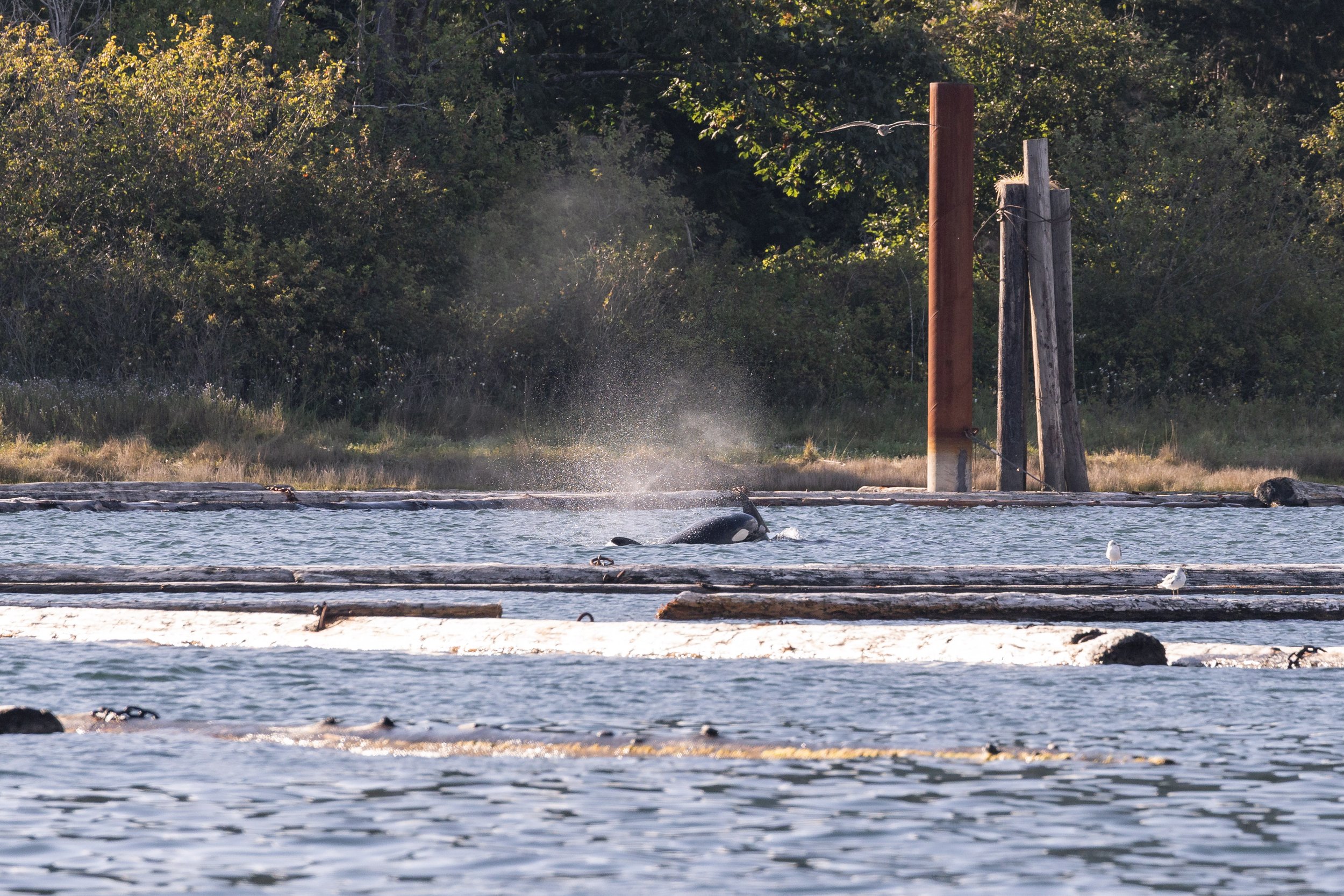
T124D4 Dune surfacing with their mom, T124D Field.
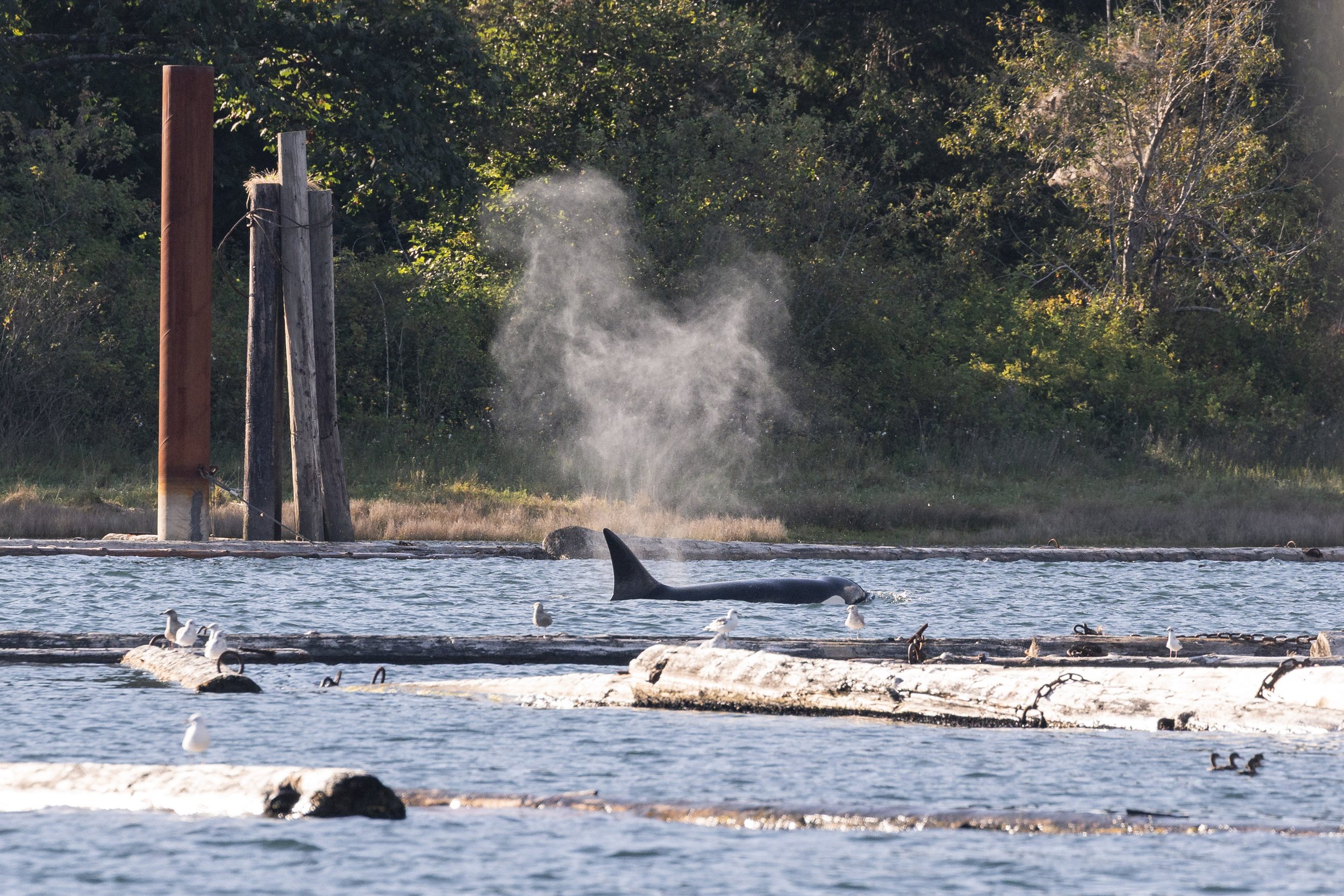
A lovely backlit blo as T124D Field sufaces.
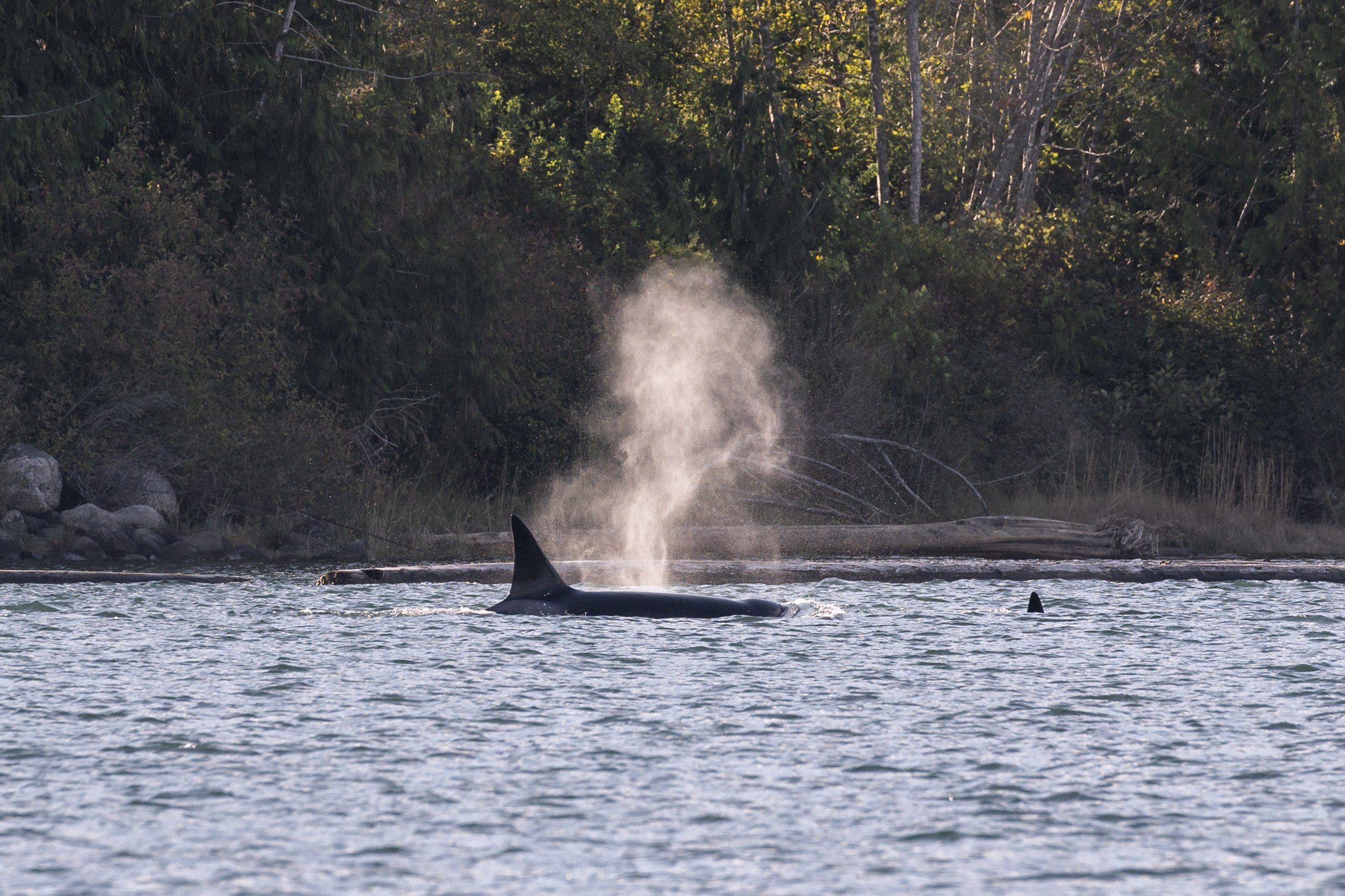
T124D1 Salish II surfacing with their blow also backlit.
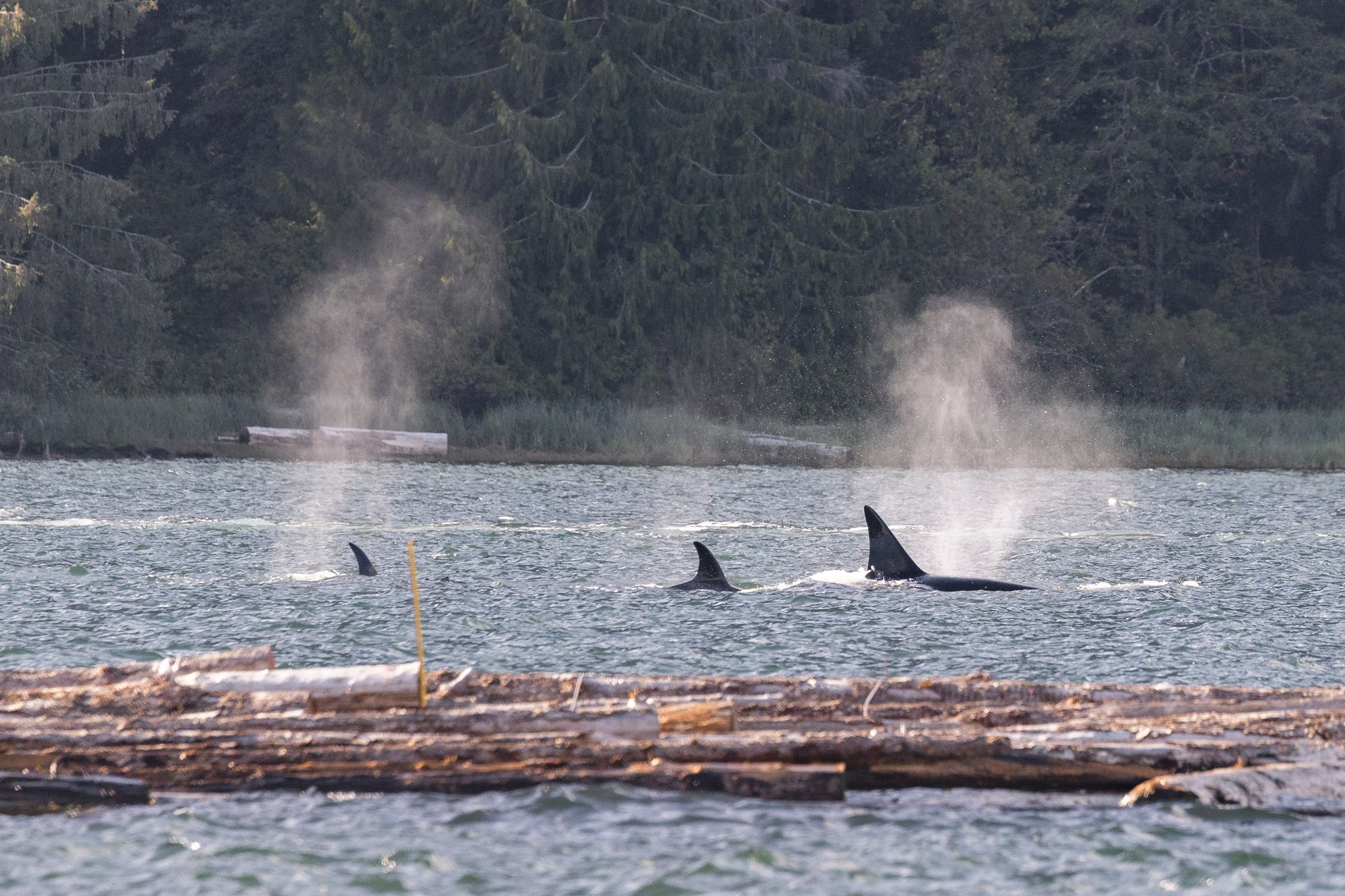
A family photo with T124D4 Dune, T124D4 Lupine, and T124D1 Salish II.
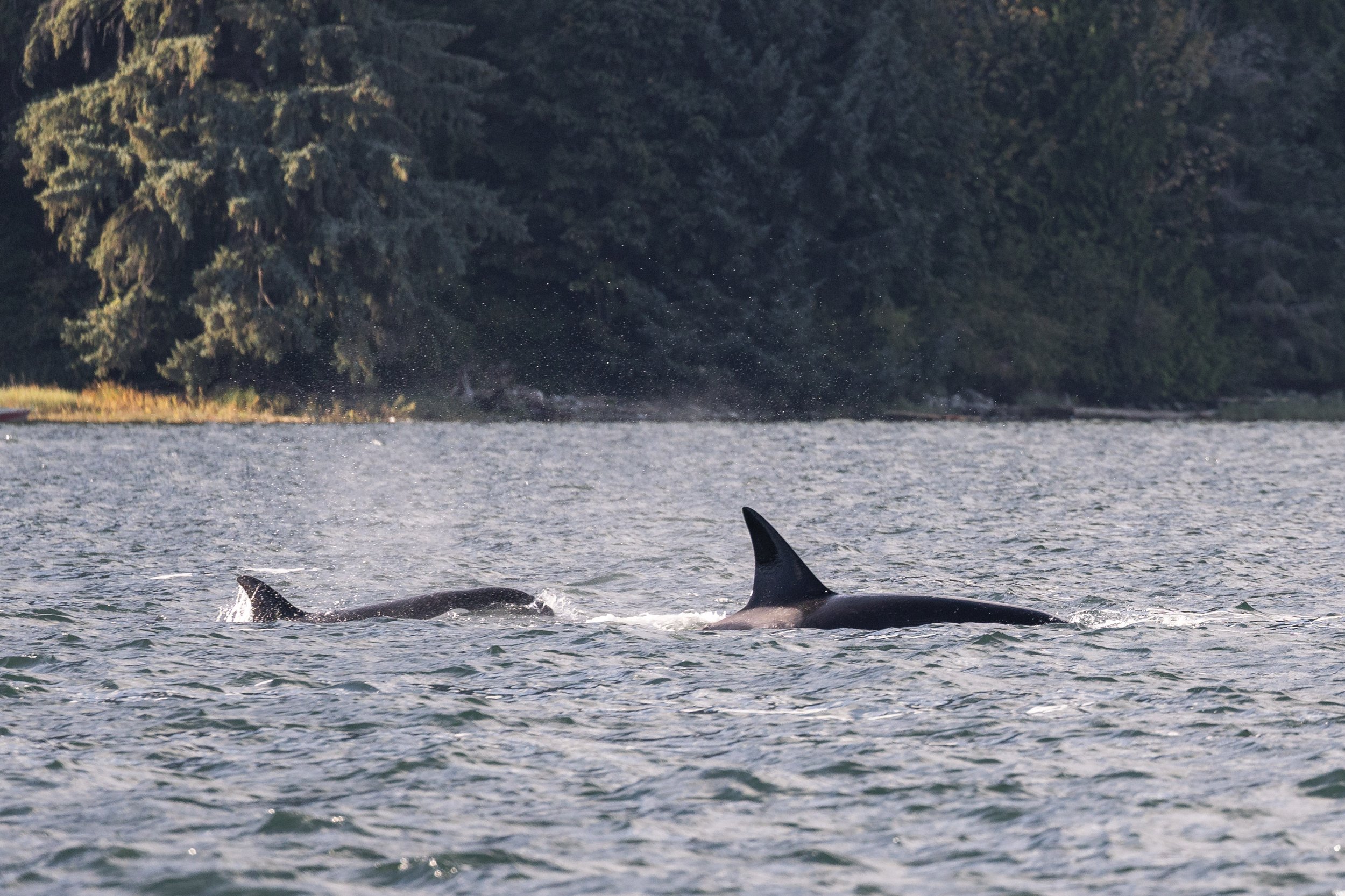
T124D4 Lupine and T124D Field surfacing together.
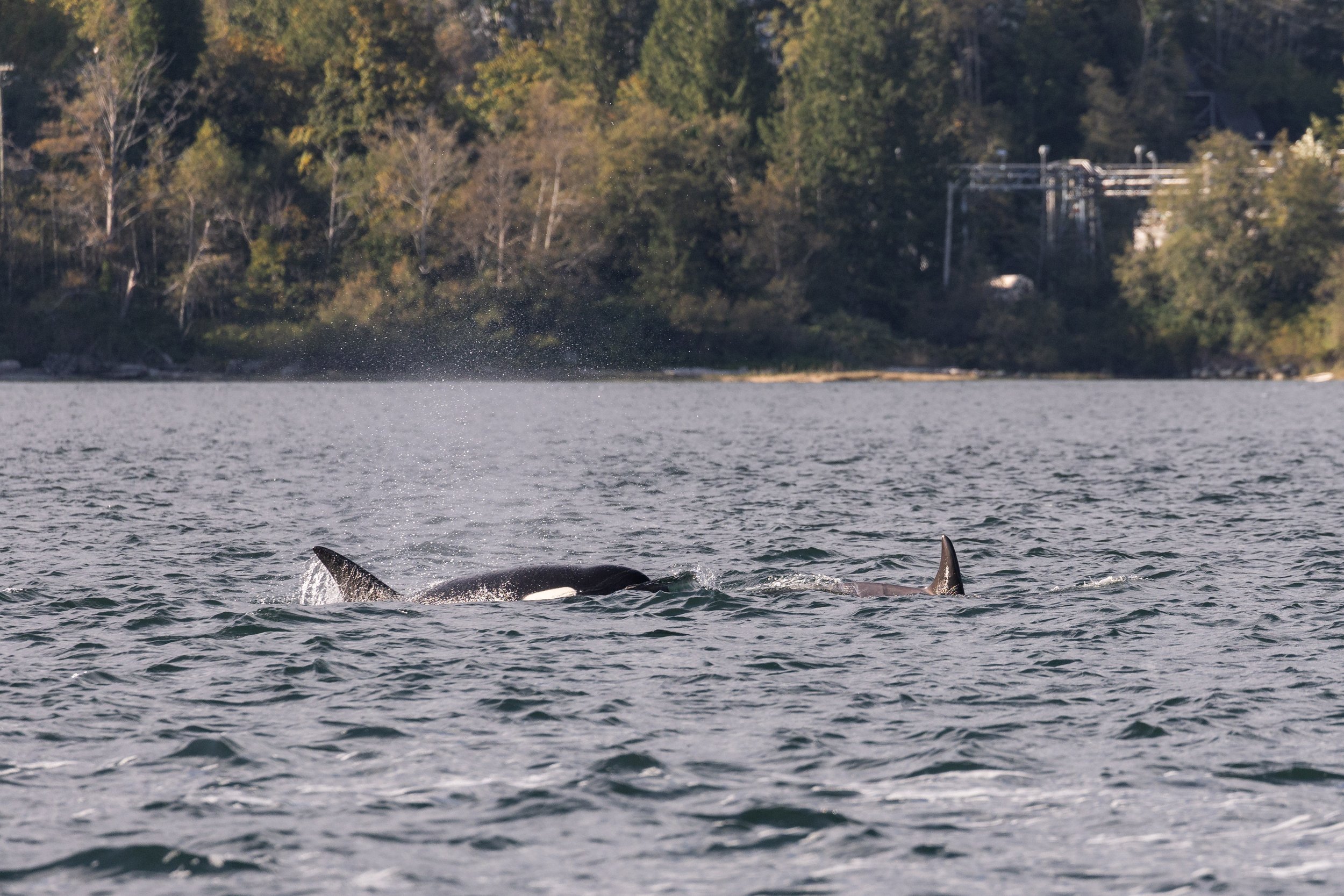
T124D Field surfacing just behind T124D4 Lupine.
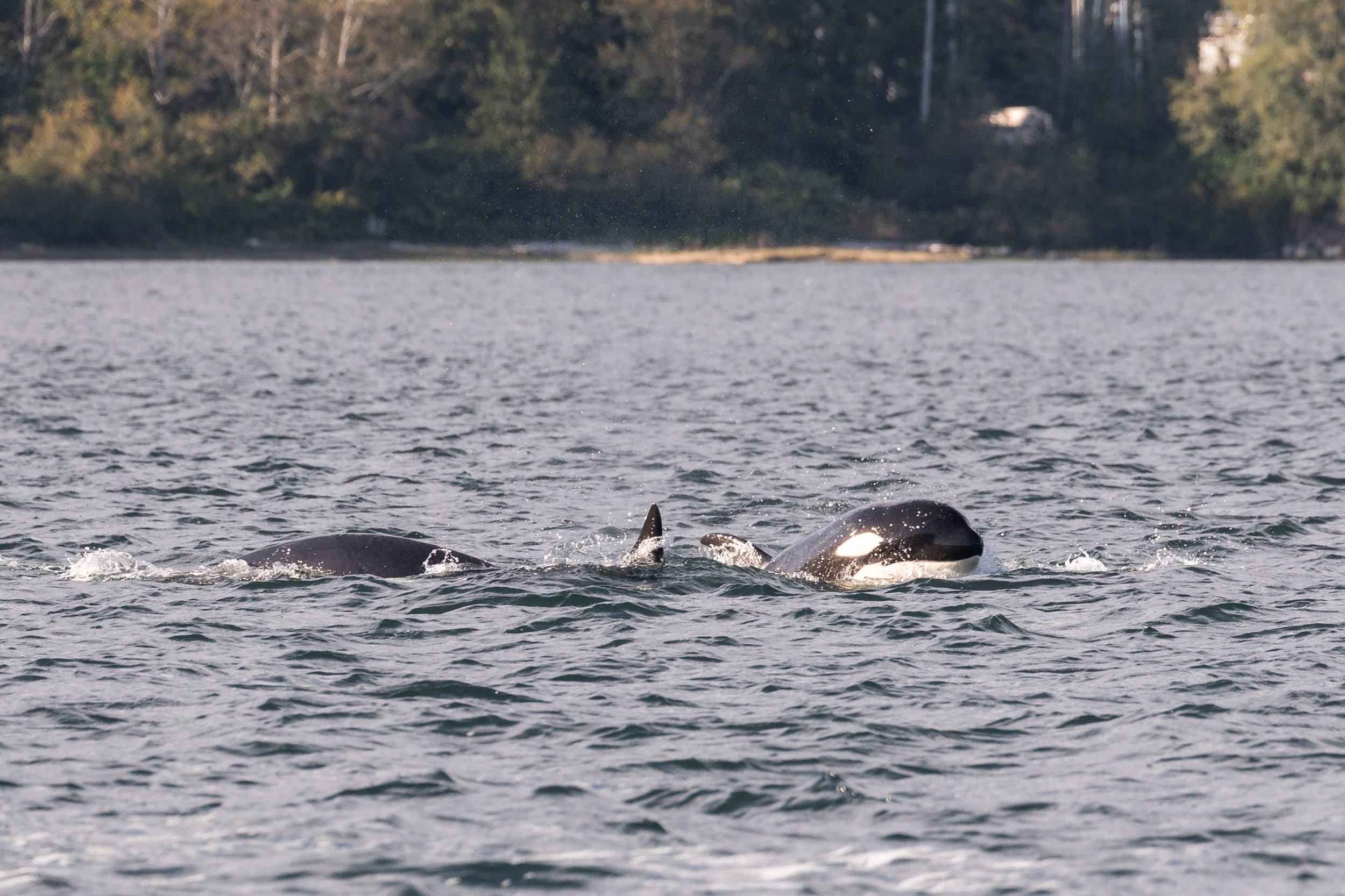
A great look at T124D4 Lupine as they move quickly thorugh the water.
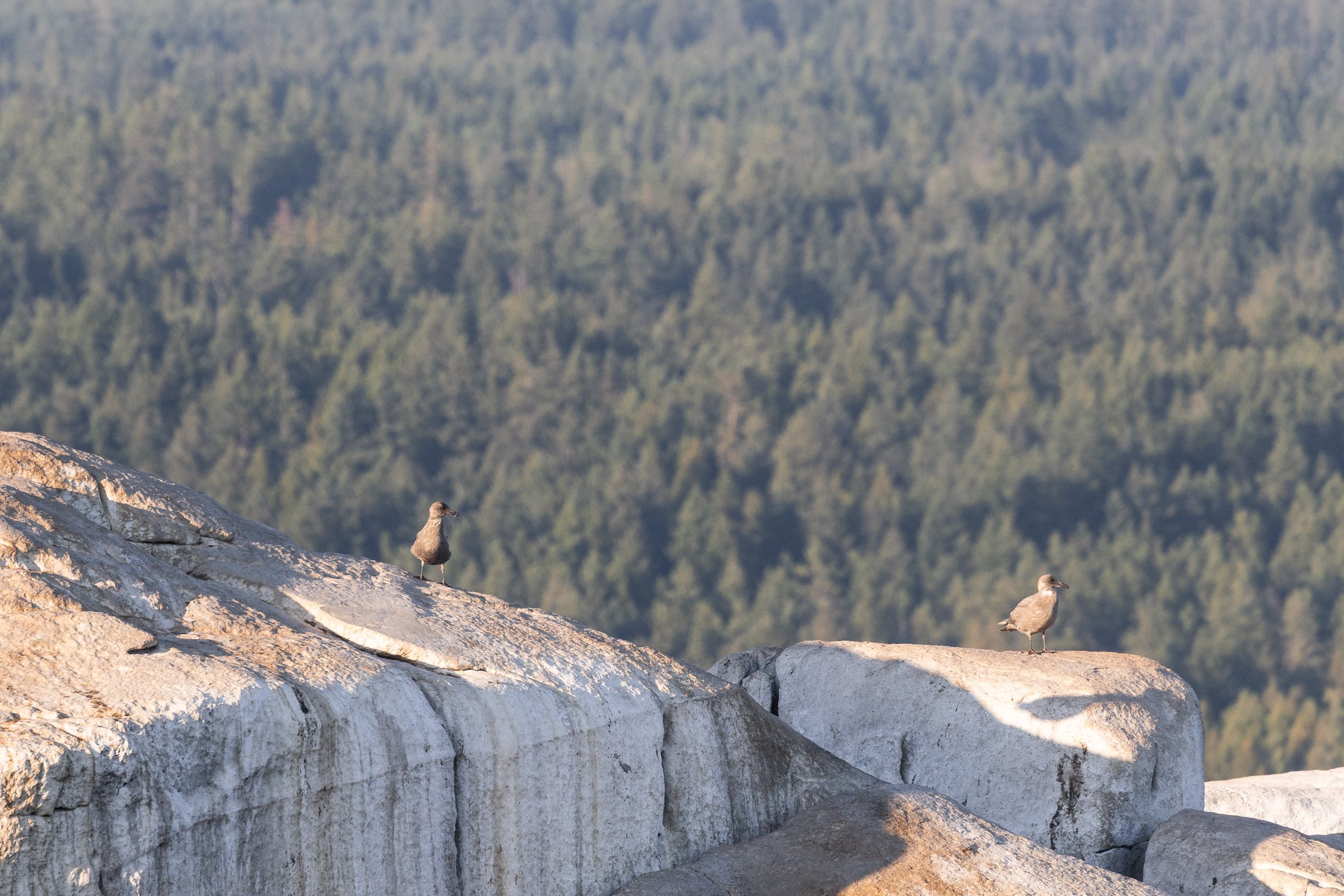
Some gulls striking a pose on the rocks.
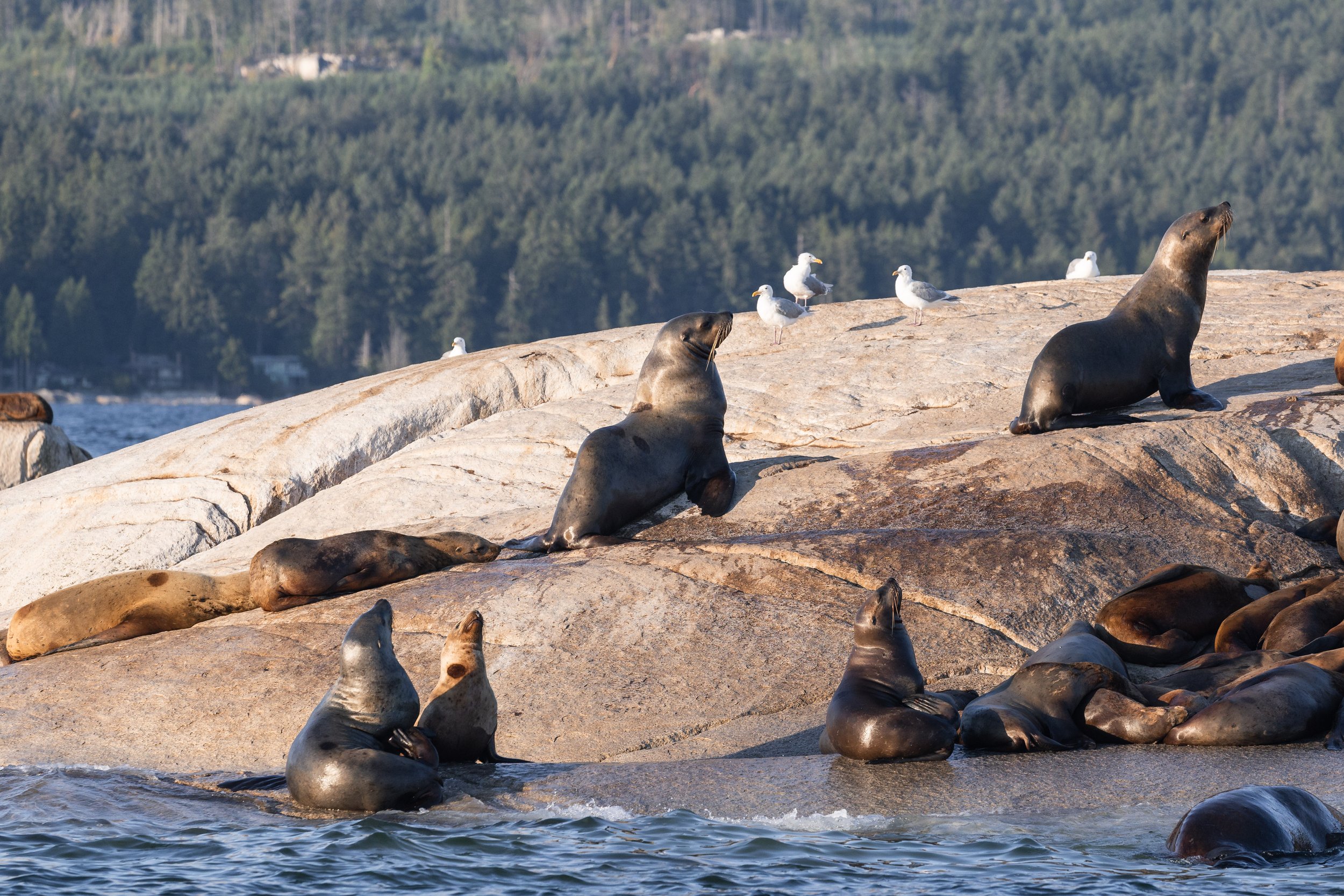
Steller Sea Lions at the White Islets.
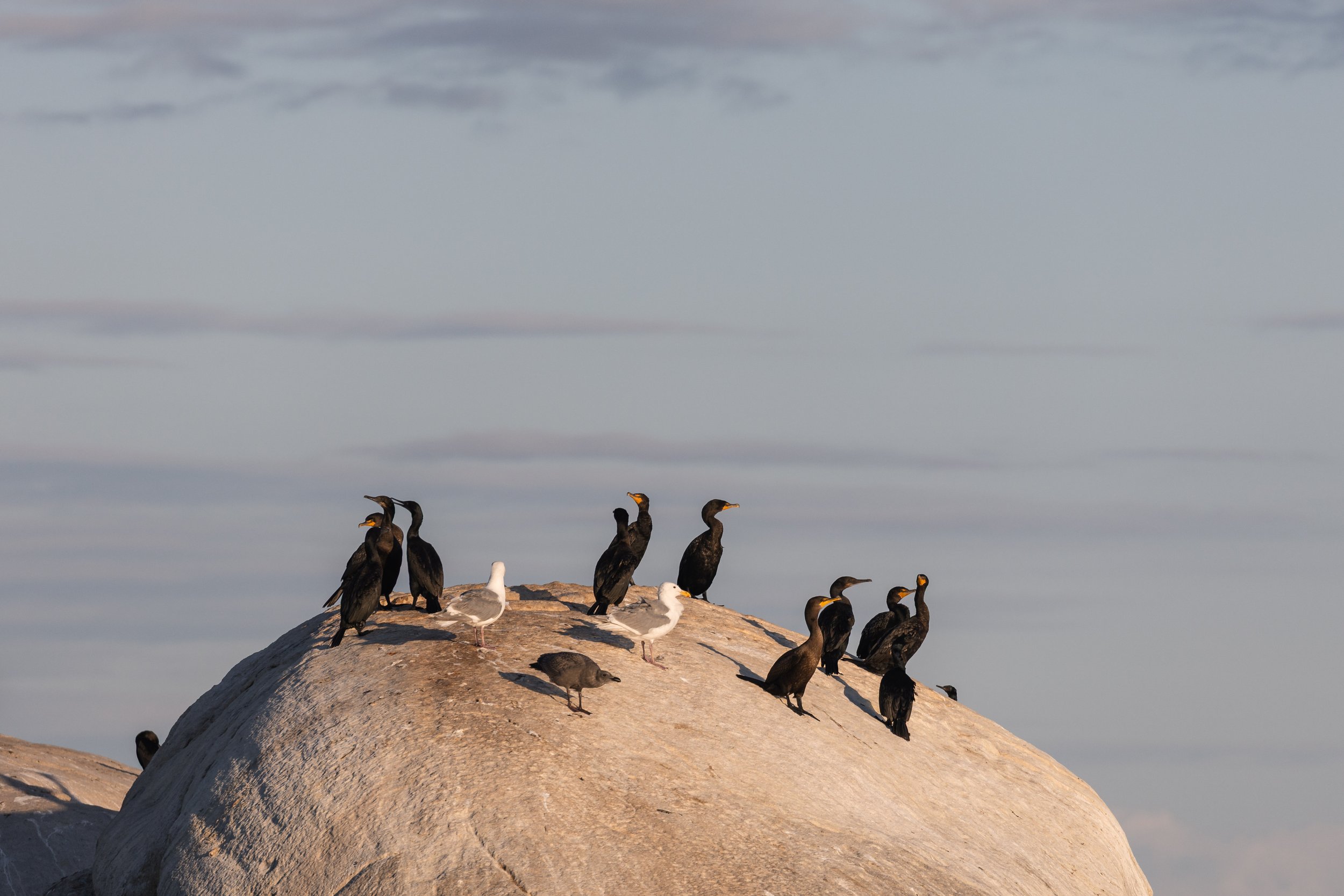
Some cormorants and gulls spending time together on the rocks.
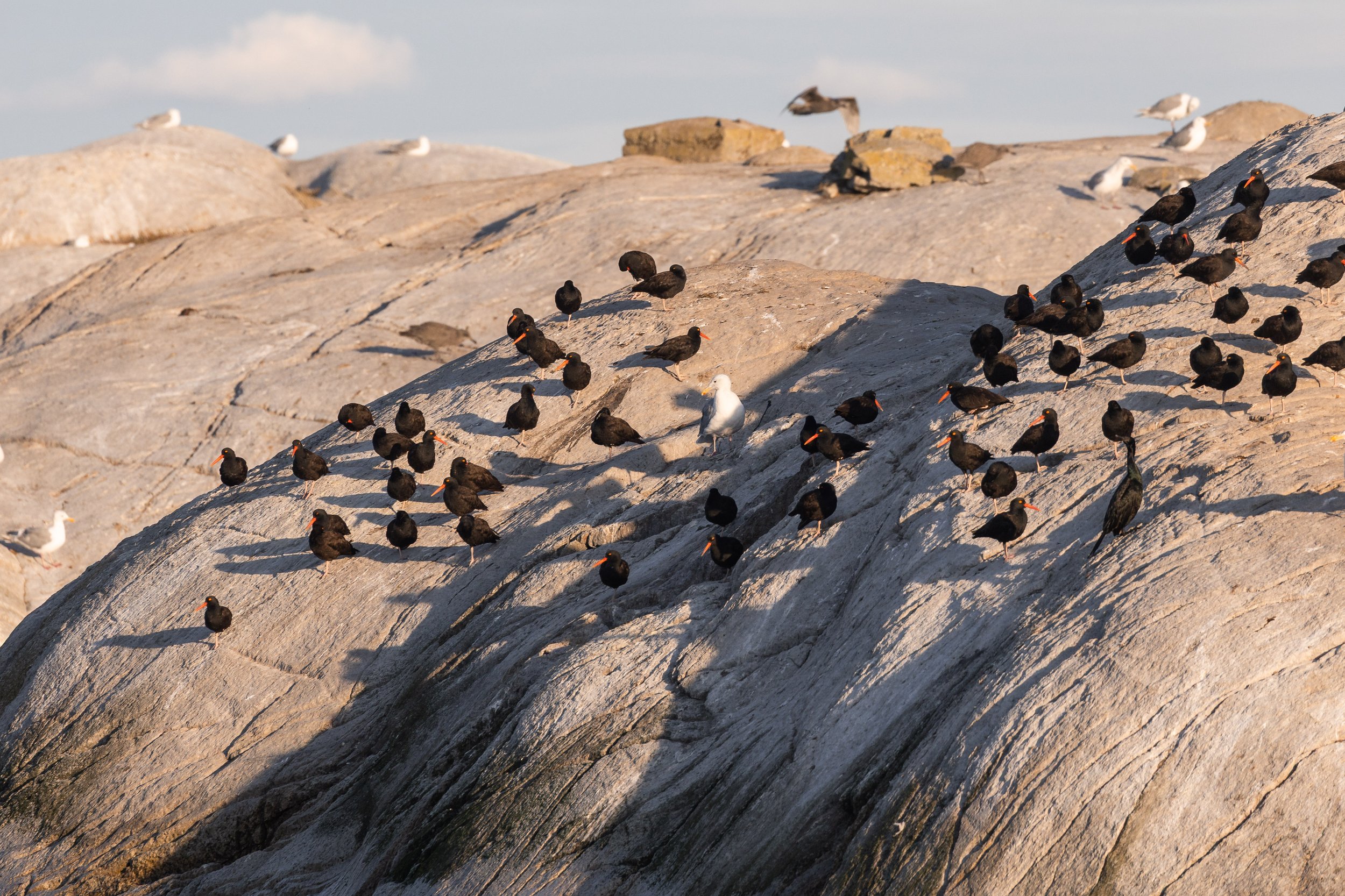
Black Oystercatchers on the rock as well.
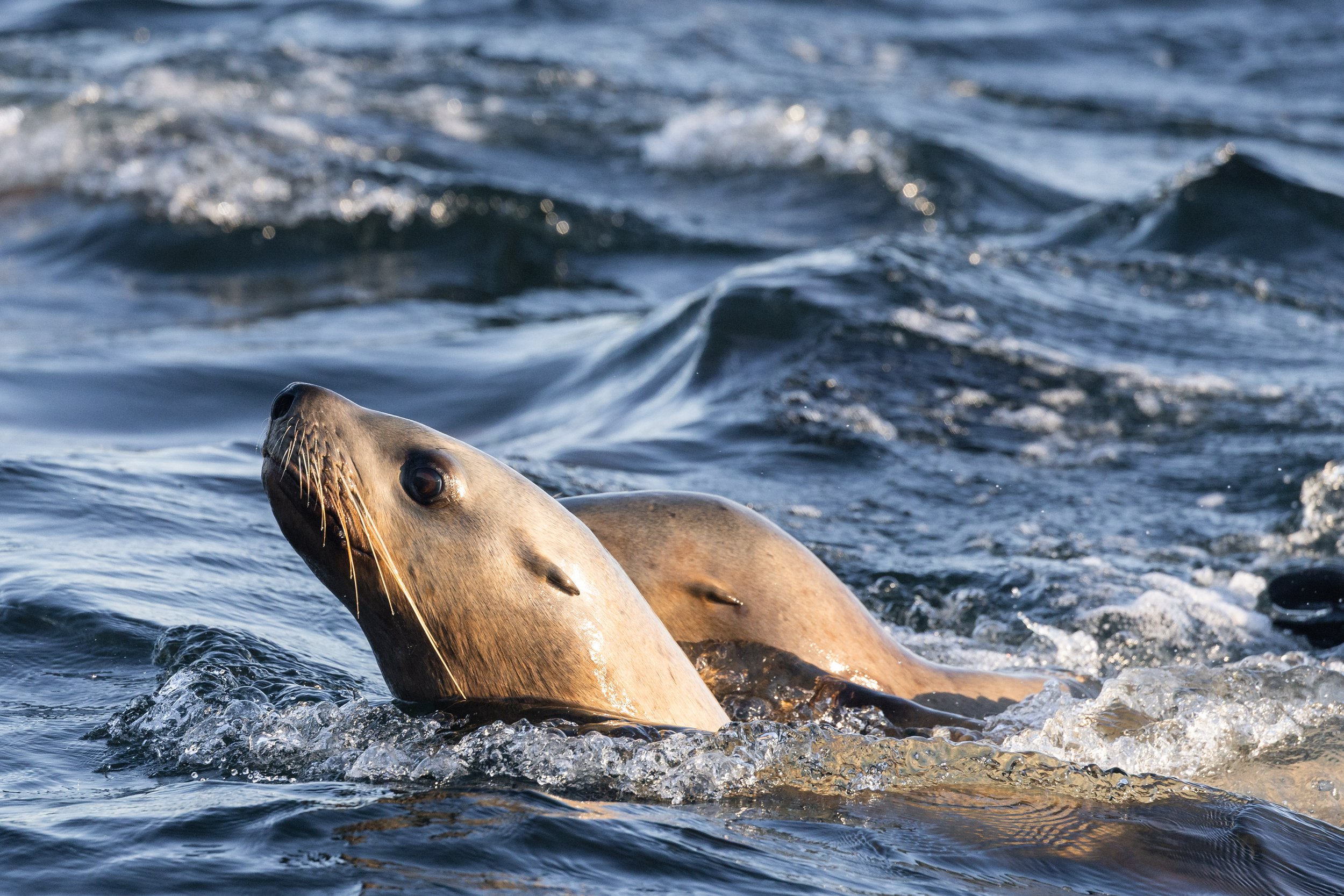
Some Steller Sea Lions watching us from the water.
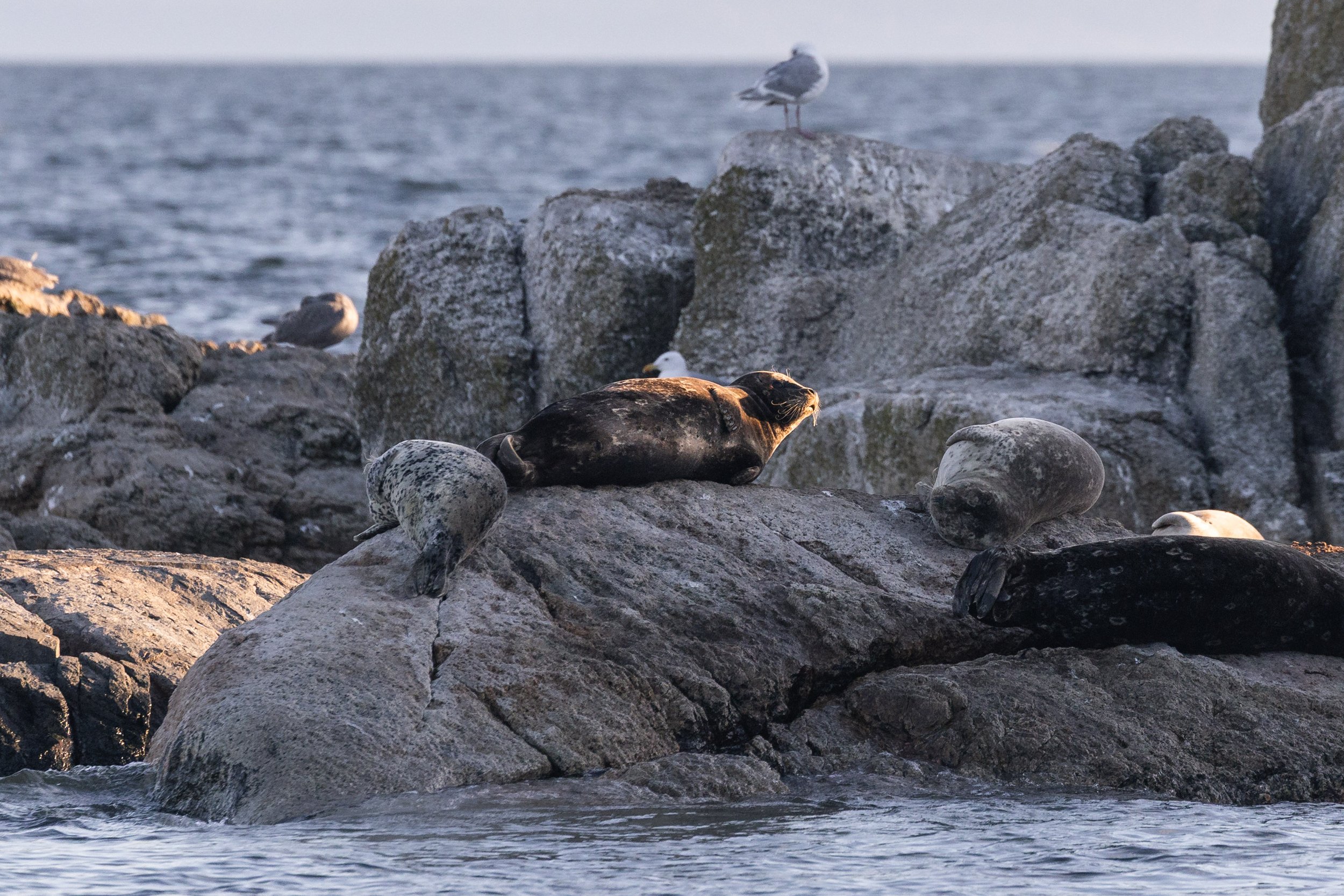
Harbour Seals relaxing on the rocks.
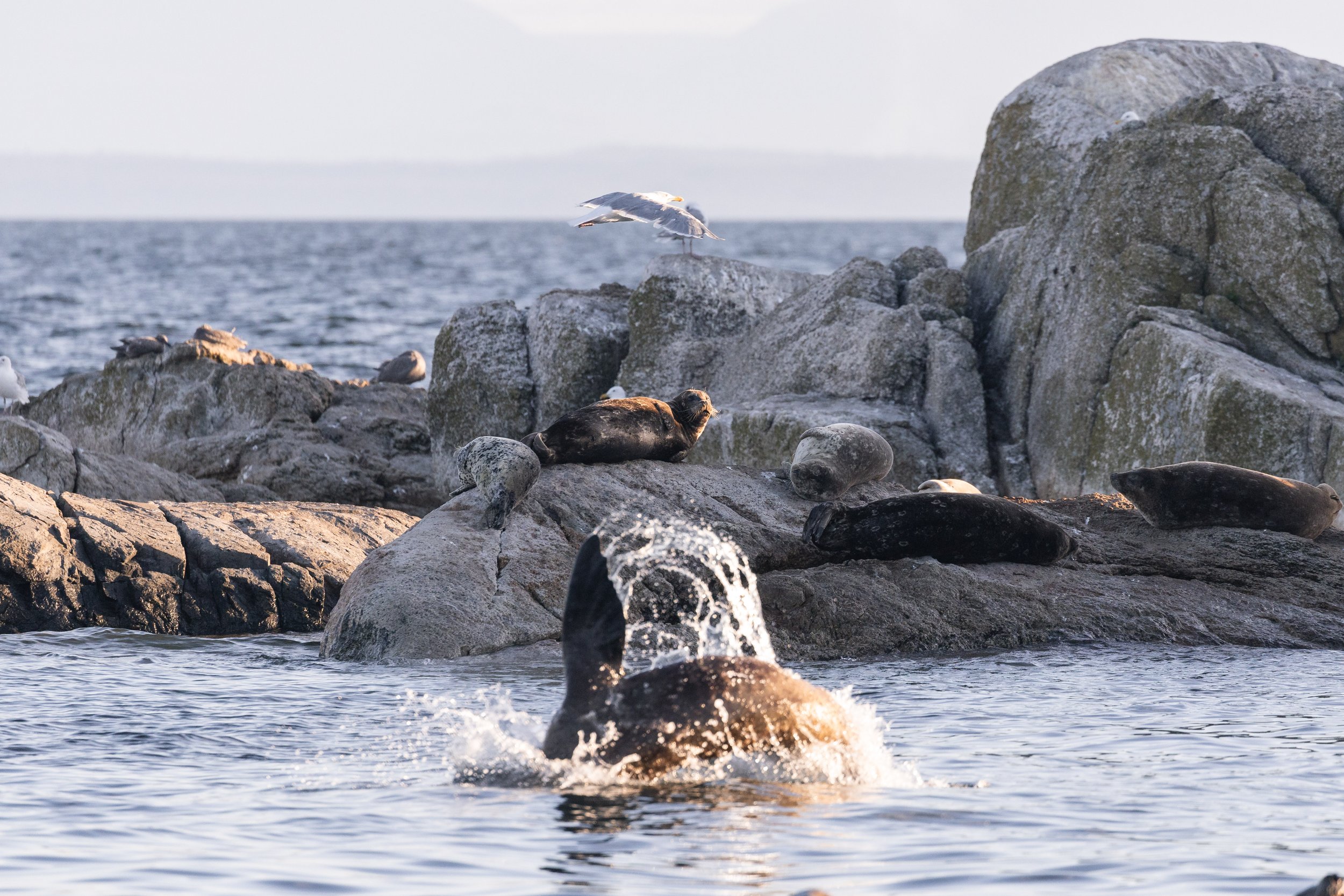
Some action as a Steller Sea Lion porpoises through the water with the Harbour Seals watching from th rocks.
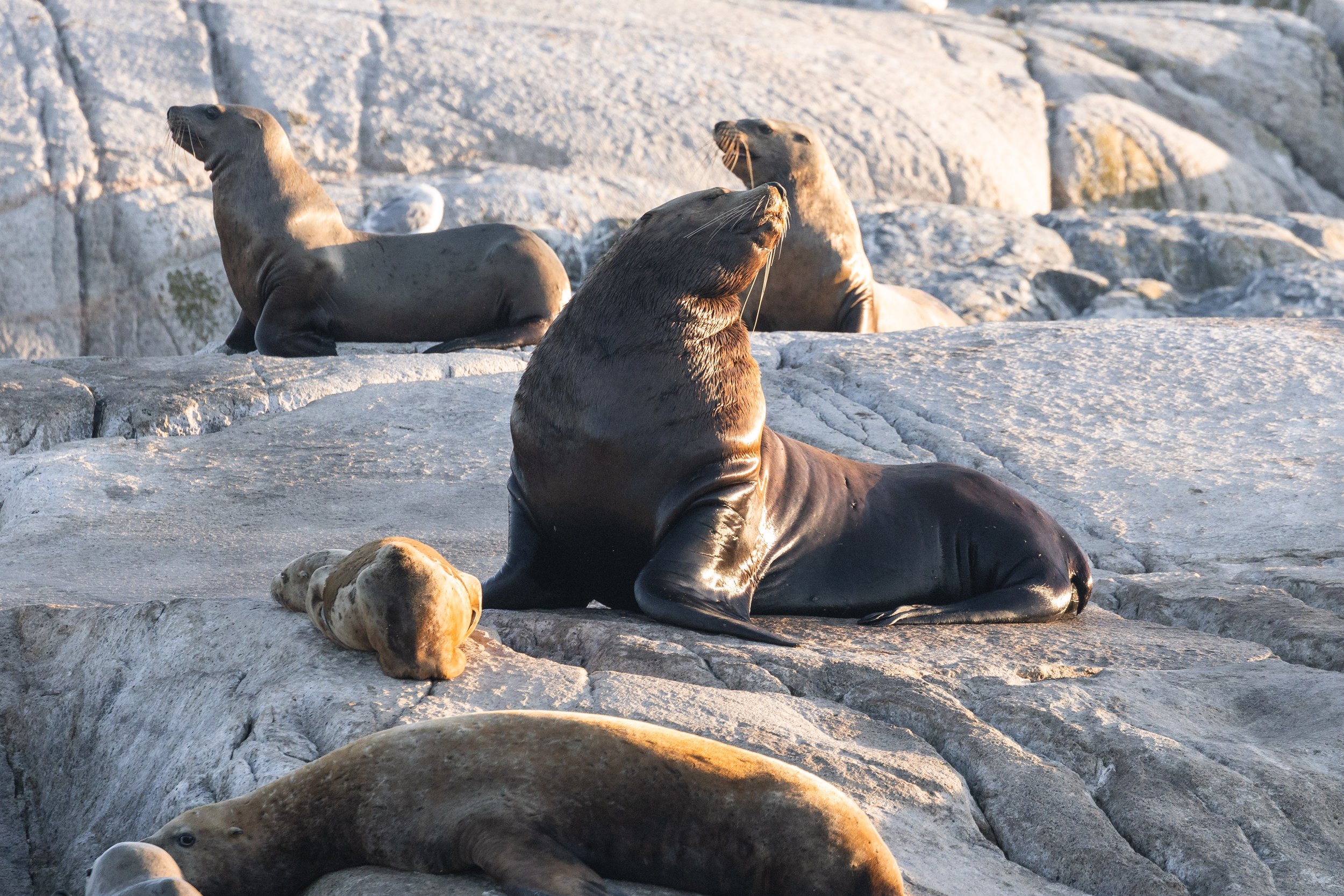
A large male Steller Sea Lion next to a smaller juvenile.
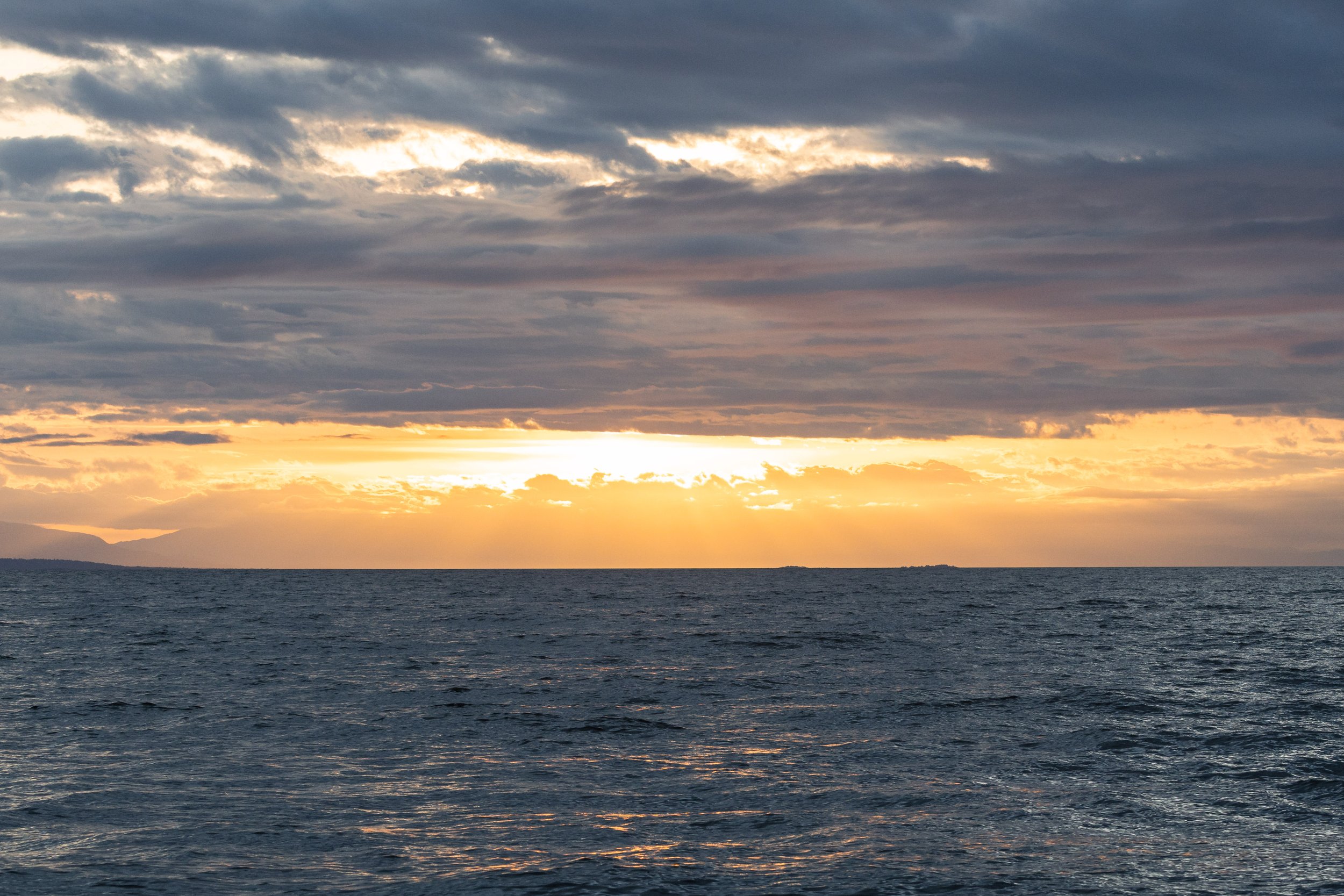
A lovely sunset over the water.
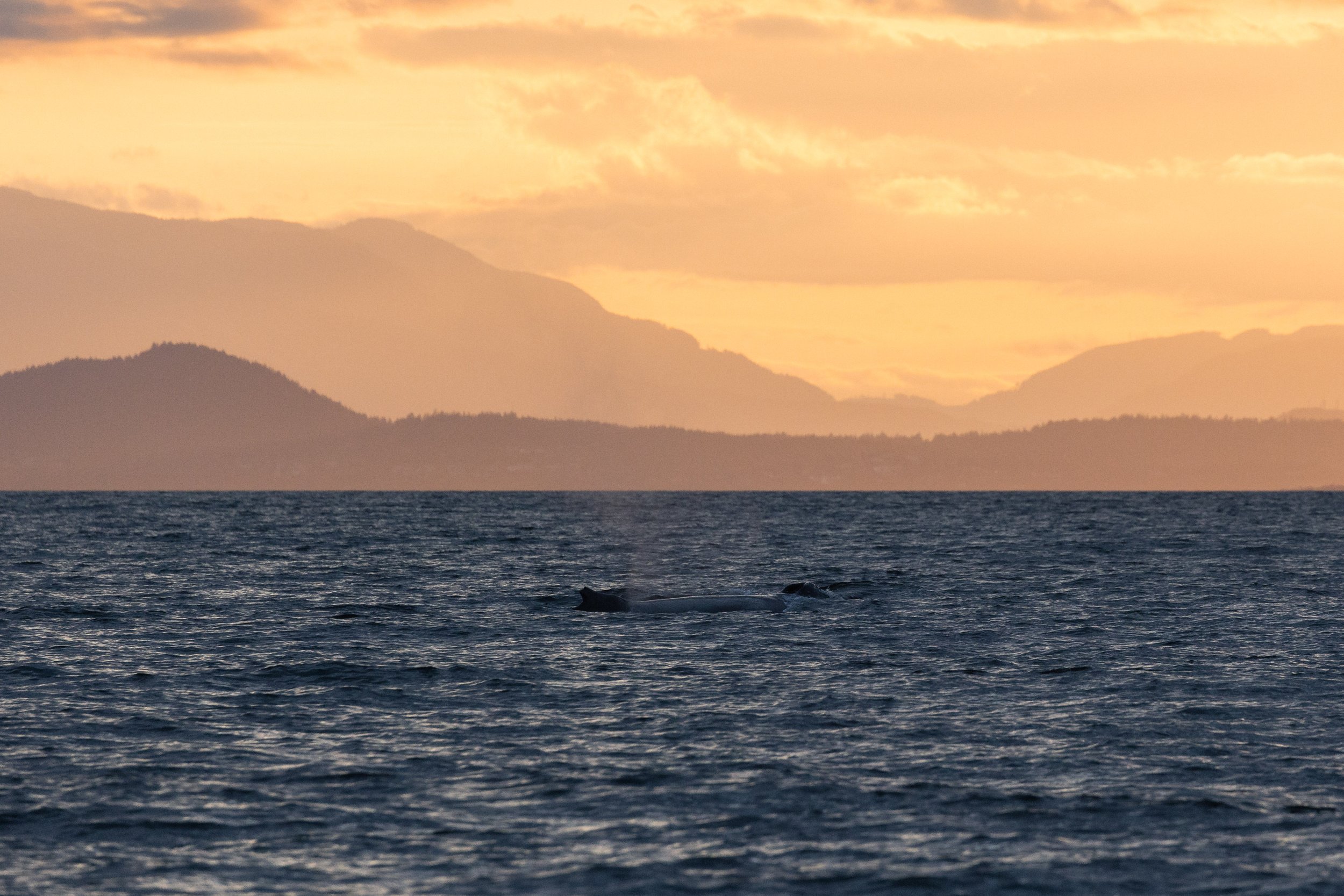
Helen surfacing in the sunset.
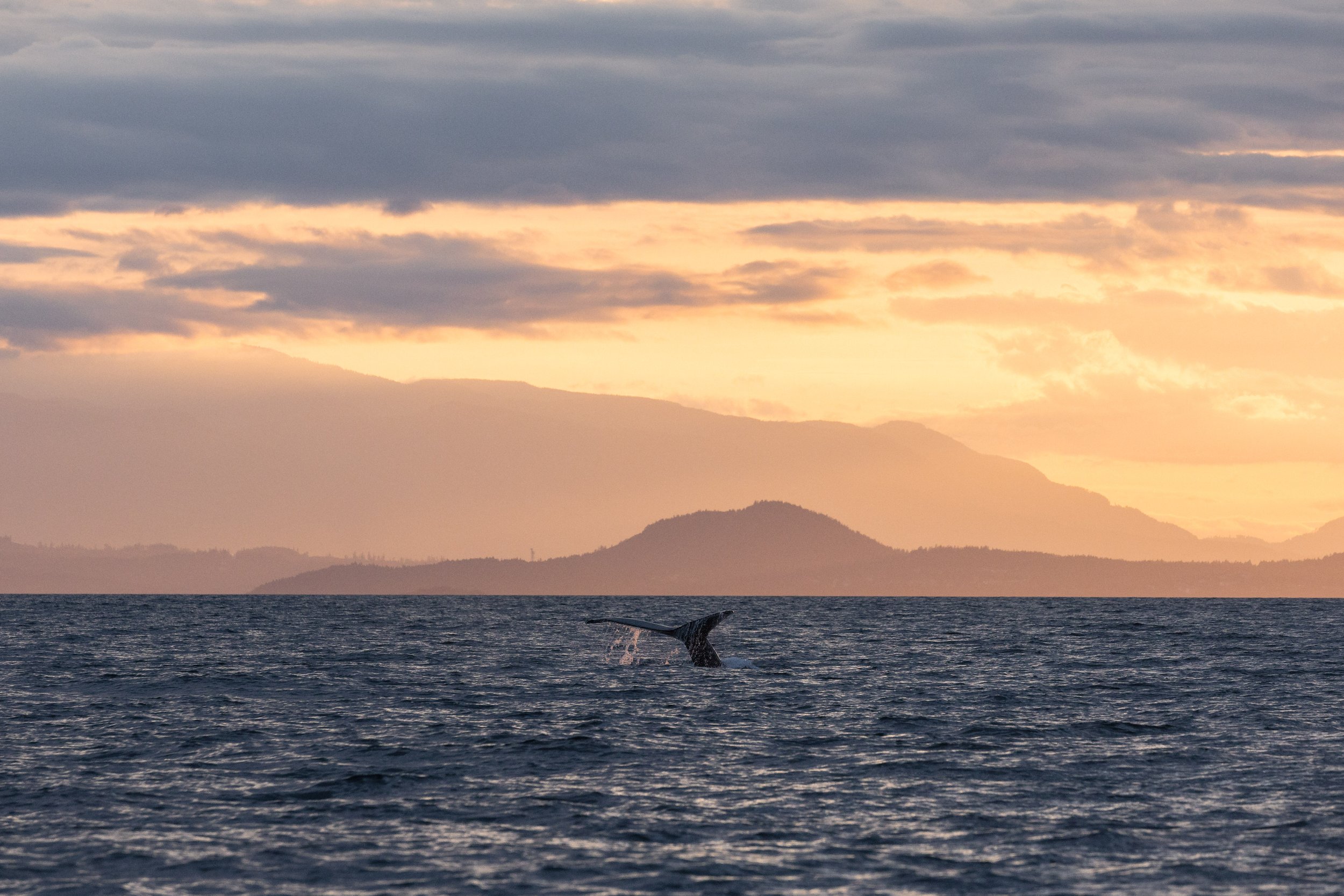
A lovely Fluke Waterfall from Helen.
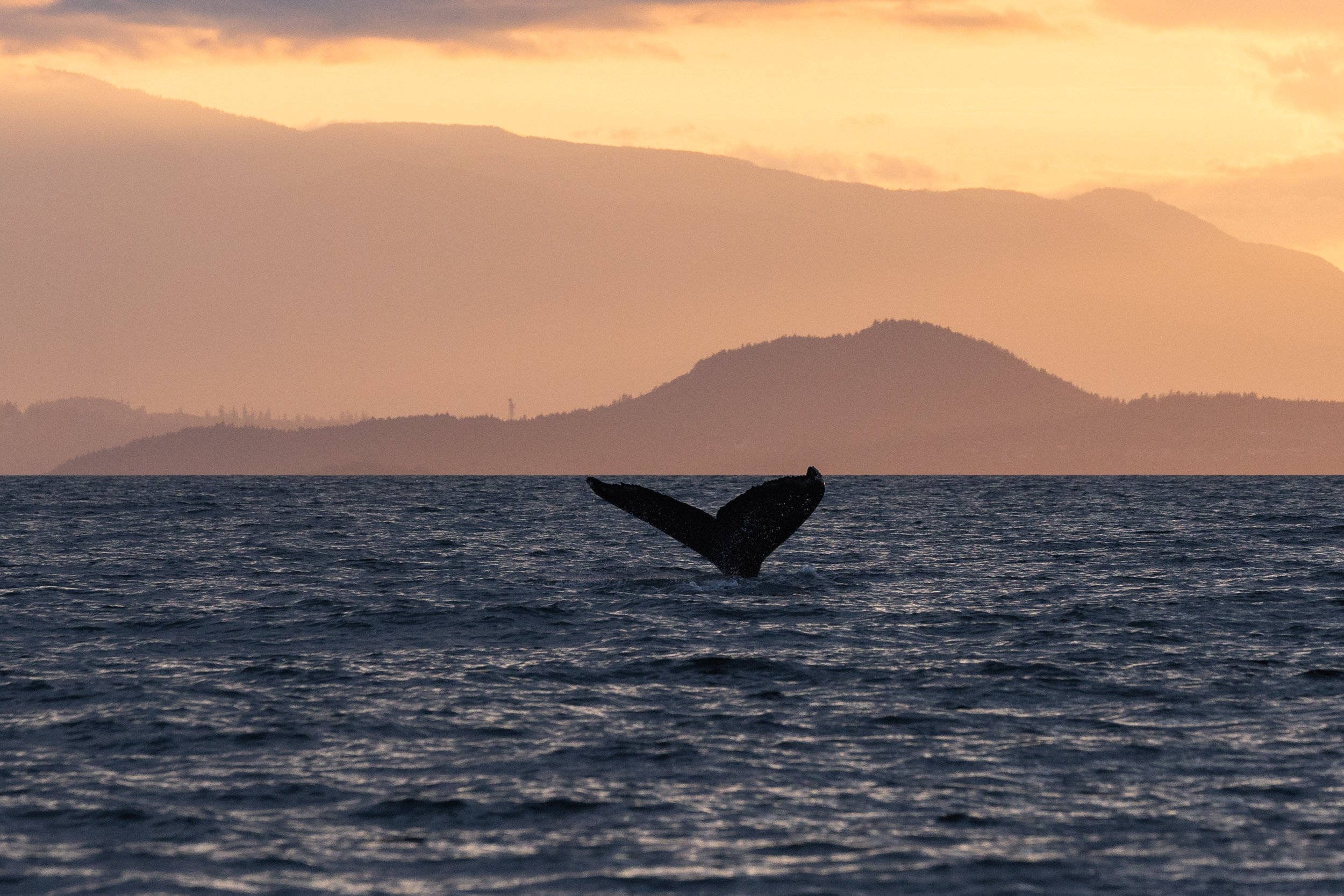
Helen going for a dive in the sunset.