
August 31, 2026, 3:30 PM - A Busy Day Around Halibut Bank
The waters around Bowen Island were already busy when we arrived, with a familiar group of Bigg’s killer whales travelling along the island’s coastline. The whales were the T124Ds, a well-known family group that we have encountered throughout the Salish Sea.
T124D Field ♀ (1996)
T124D1 Salish II (2014)
T124D3 Lupine ♀ (2022)
T124D4 Dune (2024)
The T124Ds were spread out as they travelled, moving steadily along the shoreline. Travelling in a loose formation is common for killer whales, particularly when they are covering distance between areas. Rather than remaining tightly grouped at the surface, individuals may spread out, periodically surfacing and then disappearing beneath the water as they continue in the same general direction.
For us, these encounters are an opportunity to focus on the individual whales within the group. Identifying killer whales often means piecing together several visual clues. Their dorsal fins, saddle patches, and natural markings can all help distinguish one individual from another. Family groups such as the T124Ds also let us observe relationships between generations, as younger whales travel alongside older family members.
Unlike the Southern Resident killer whales, Bigg’s killer whales are mammal-eating predators. Their movements can therefore be influenced by where their prey is found, and a travelling group can quickly change direction or behaviour if an opportunity to hunt presents itself. On this occasion, however, the T124Ds continued steadily along Bowen Island, giving us a peaceful look at the group as they moved through the area.
After spending some time with the orca, we continued towards Halibut Bank. The area is well known for its productive waters, and our next stop was the ODAS buoy, where a group of Steller Sea Lions had gathered.
The sea lions were making good use of the buoy and the surrounding waters, giving us a chance to watch another species that regularly visits this part of the Salish Sea. Steller Sea Lions are the largest of the eared seals, and unlike harbour seals, they can often be seen hauled out together in groups on structures such as buoys, rocks, and small islands.
But the wildlife around Halibut Bank was not finished with us yet.
Nearby, we spotted Helen (BCX2494), a humpback whale, who seemed to be showing off a bit. Instead of simply surfacing and disappearing again, Helen repeatedly brought her enormous tail out of the water and slapped it against the surface.
Tail slapping is one of the more dramatic behaviours we can see from humpback whales. A whale may lift the rear portion of its body and bring its flukes down onto the water with considerable force, creating a splash visible from a surprising distance. The reason for the behaviour isn't always obvious. Humpbacks may tail slap during social interactions, while feeding, or as part of other behaviours, and without knowing what is happening beneath the surface, we cannot always determine exactly why an individual whale is doing it.
Watching Helen tail slap near the bank was a fitting reminder of just how much life can be concentrated in these waters. Within a relatively small area, we had encountered travelling Bigg’s killer whales, hauled-out Steller Sea Lions, and a humpback whale displaying one of the most recognizable behaviours associated with its species.
Halibut Bank is one of those places where the Salish Sea's productivity becomes especially apparent. Ocean currents, tides, and underwater features help concentrate nutrients and prey, creating feeding opportunities that attract a wide variety of marine life.
By the end of the encounter, we had witnessed three very different species using the same stretch of ocean in completely different ways. The T124Ds were on the move, the Steller Sea Lions were taking advantage of a convenient resting spot, and Helen was putting her flukes to work on the surface.
It was a busy day on the water, and a perfect example of how much can be happening just beneath the surface.
Photos by Marine Naturalist Aly Kohlman.
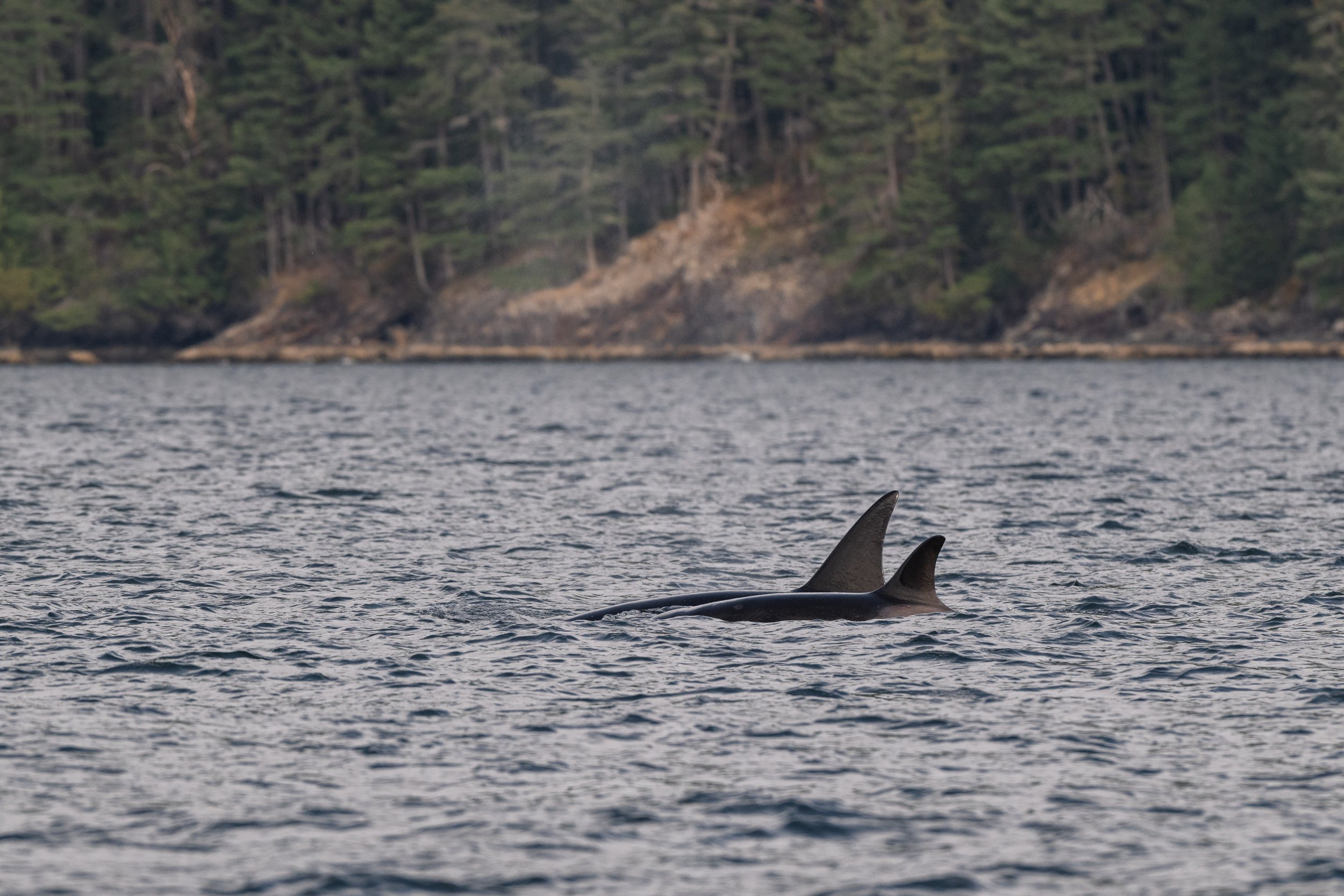
T124D Field with T124D4 Dune.
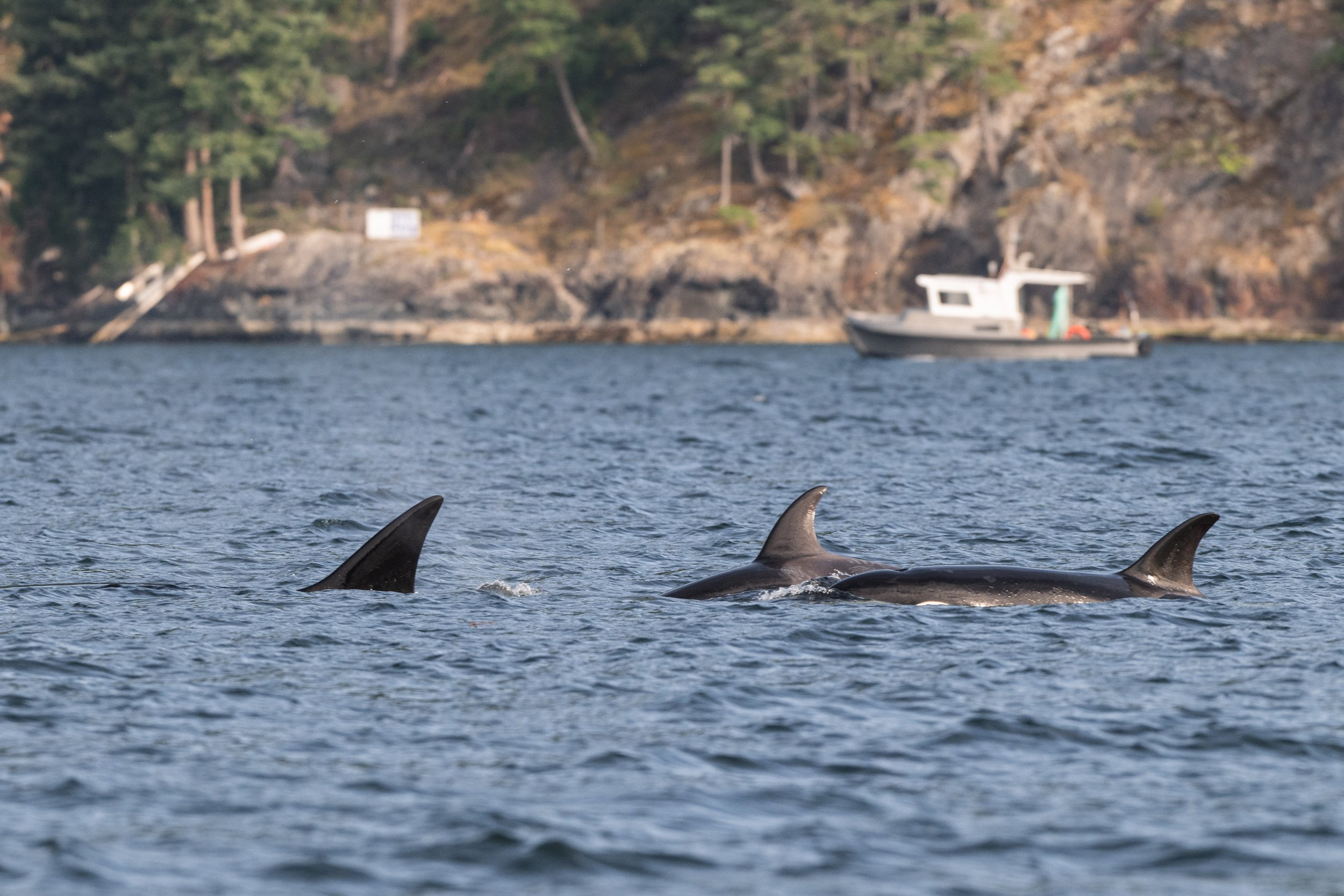
T124D Field followed by T0124D4 Dune and T124D3 Lupine.
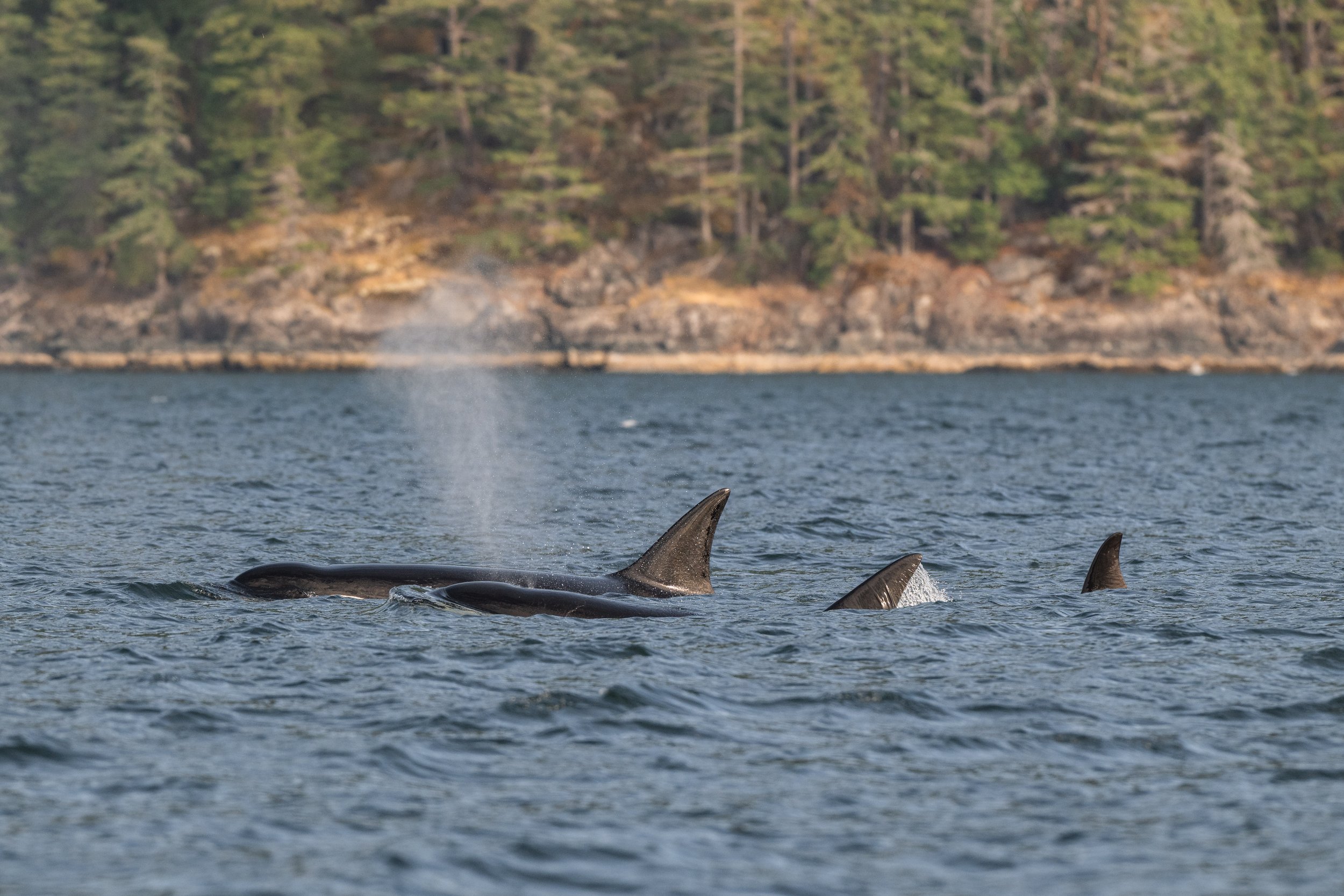
T124D Field with T124D1 Salish II surfacing beside her, followed by T124D4 Dune.
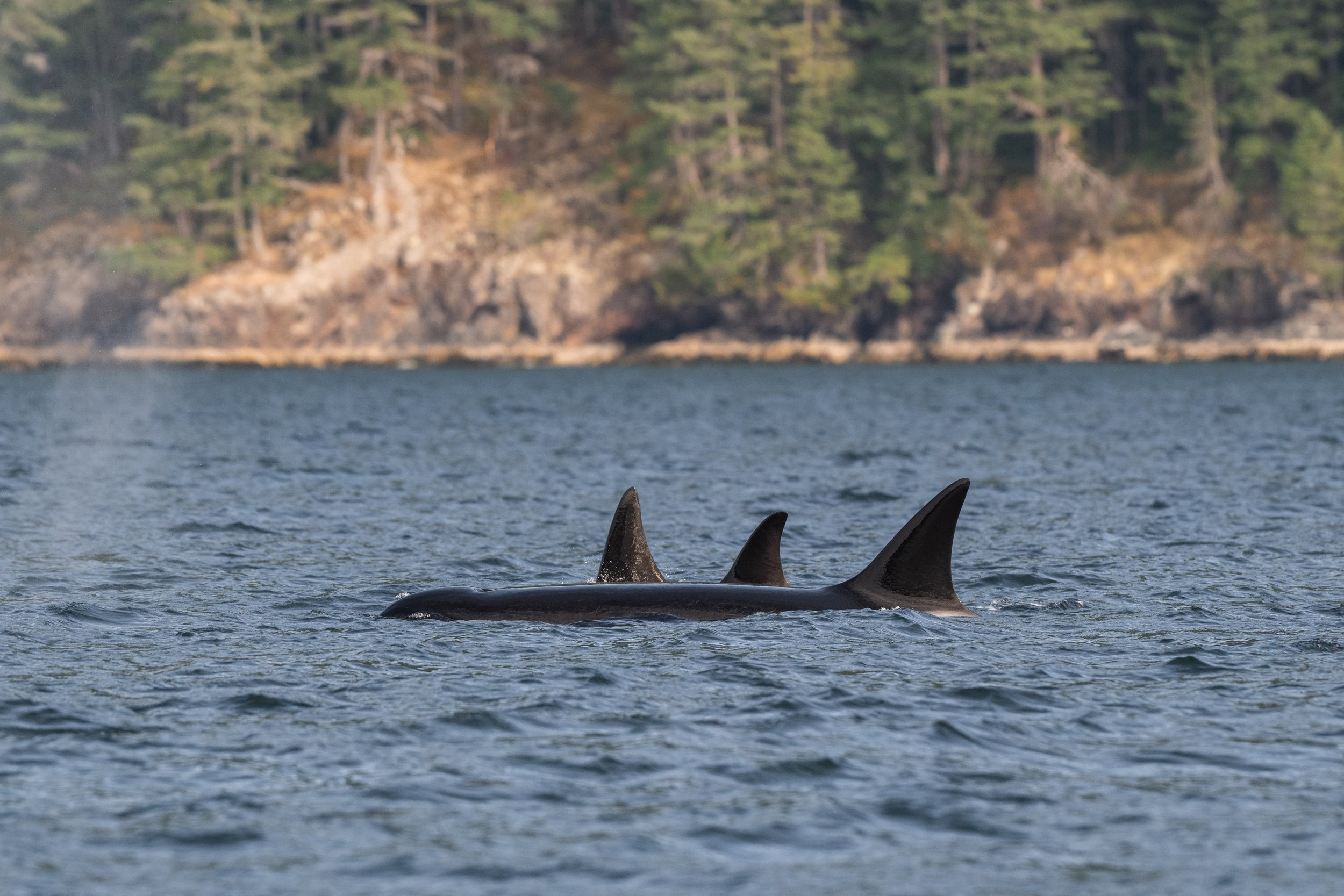
T124D1 Salish II surfacing with T124D Field and T124D3 Lupine just behind.
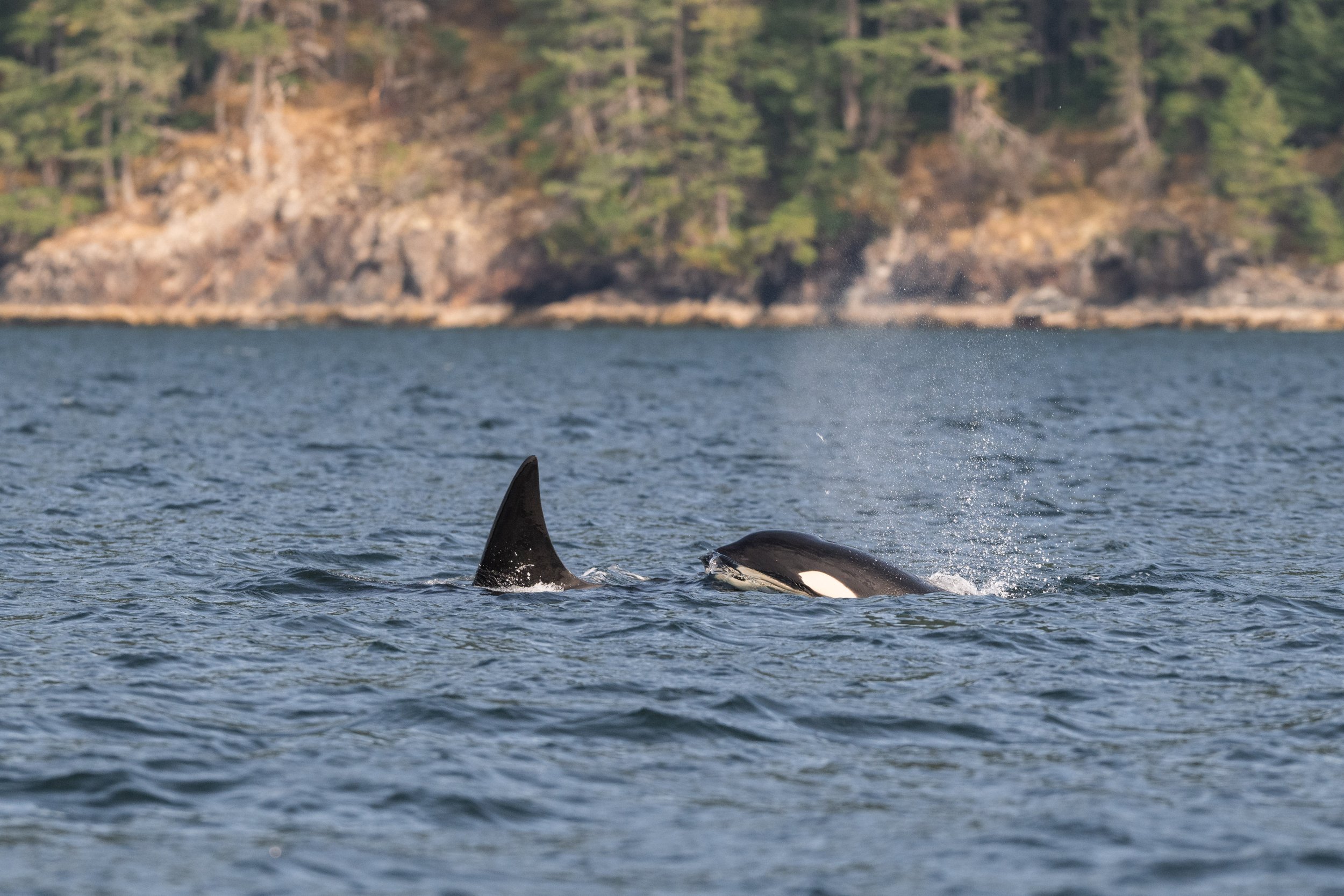
T124D Field surfacing with T0124D4 Dune showing off their eye patch.
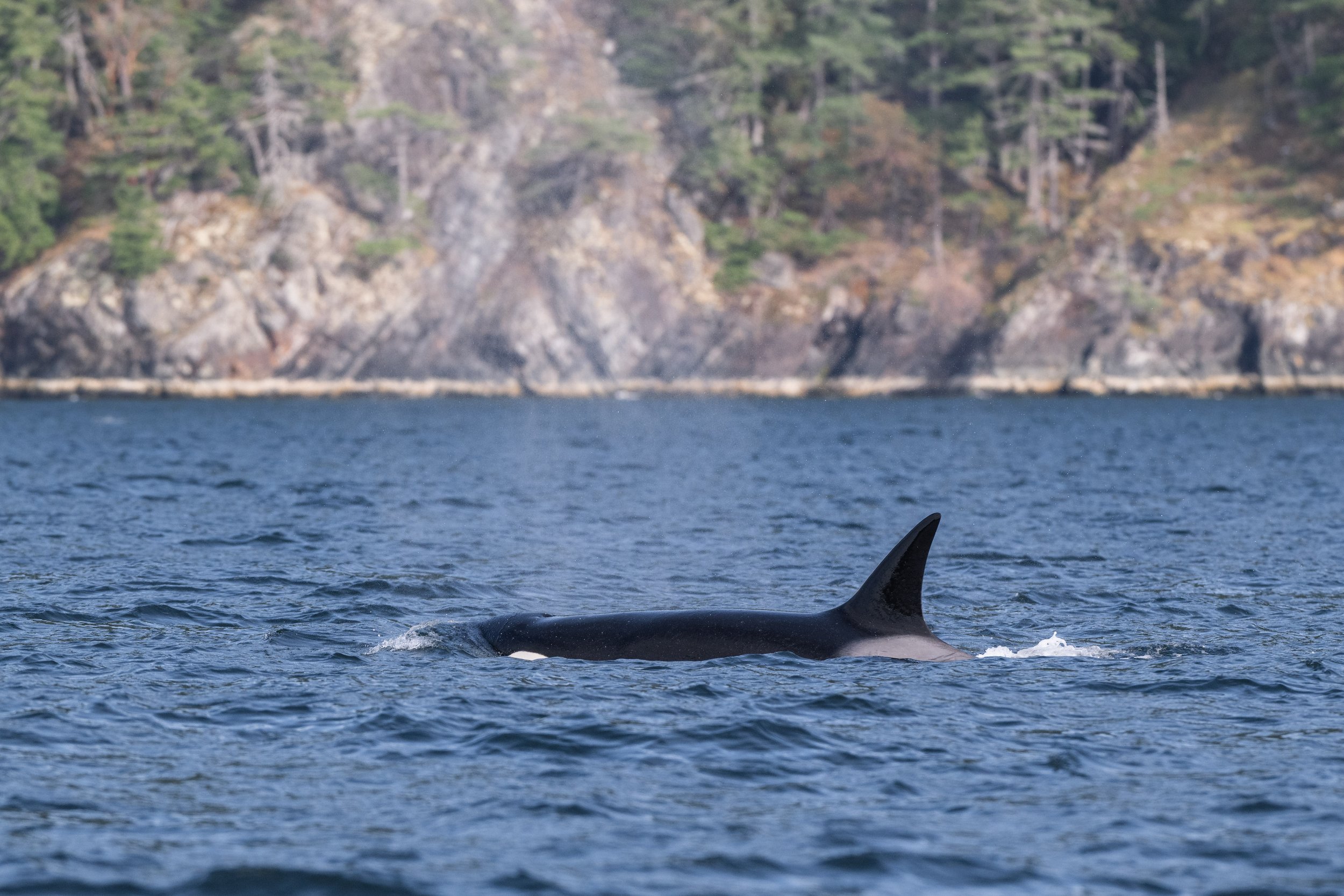
A nice final look at T124D Field.
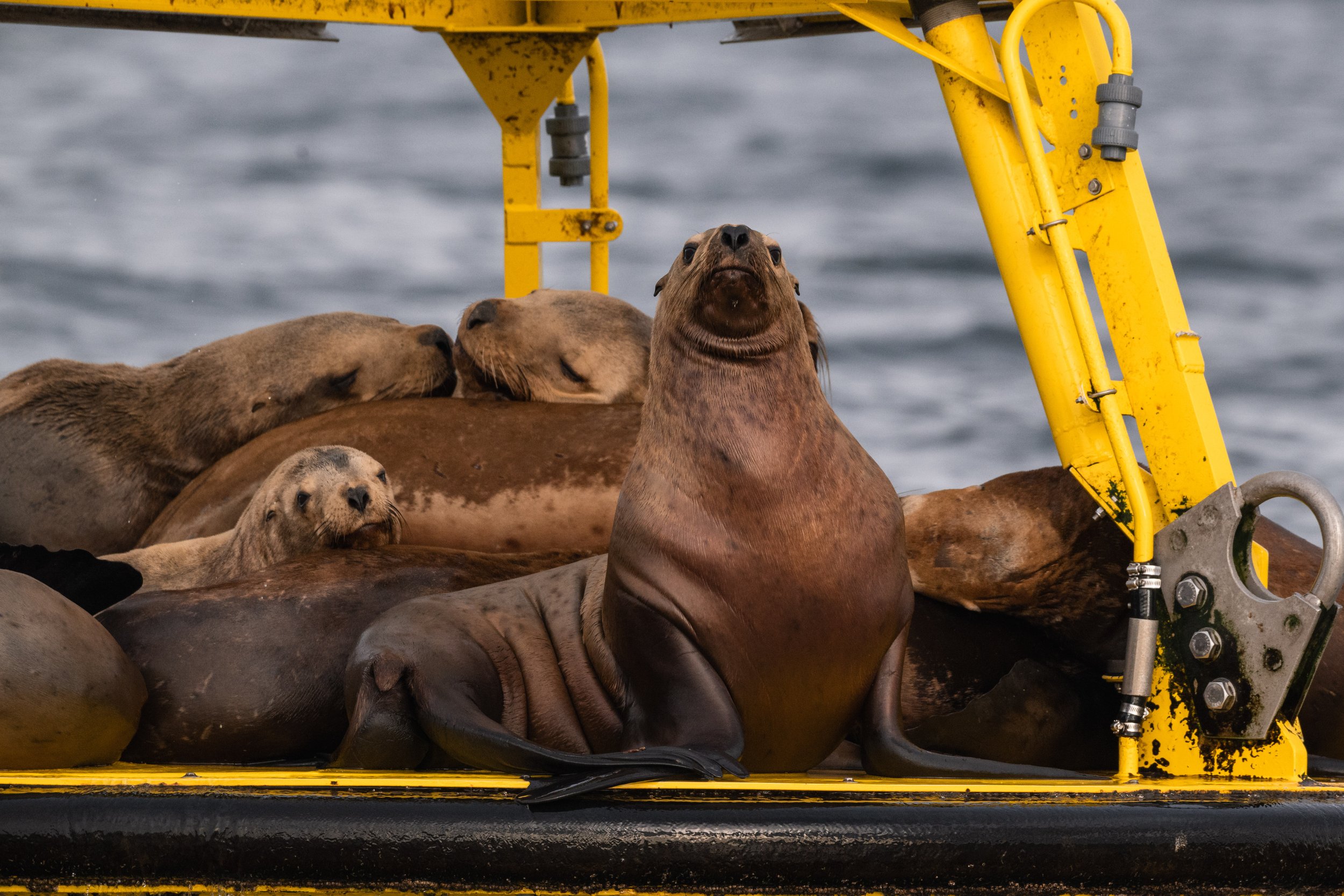
Steller Sea Lions at Halibut Bank.
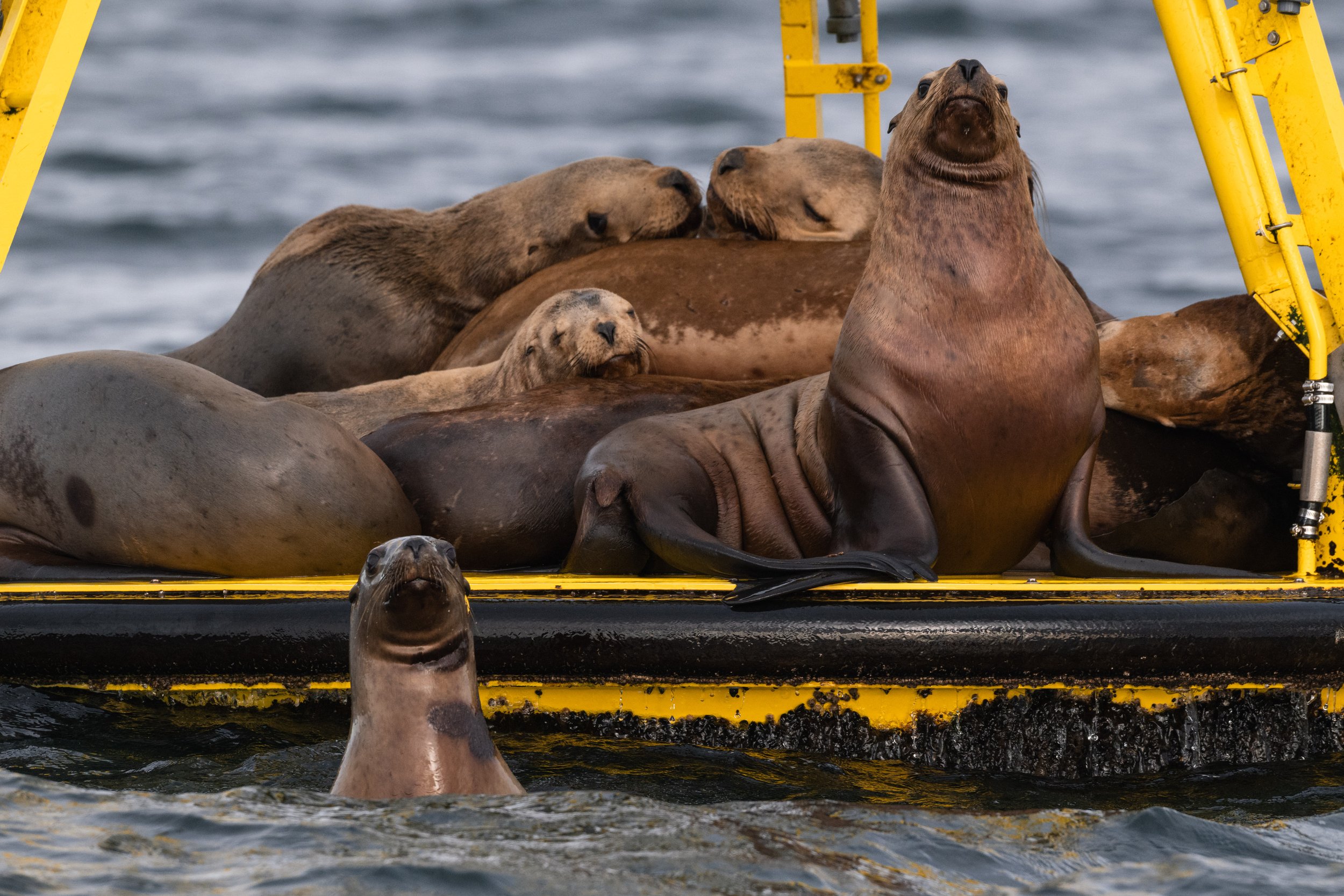
Matching poses from the Steller Sea Lions above and below the water.
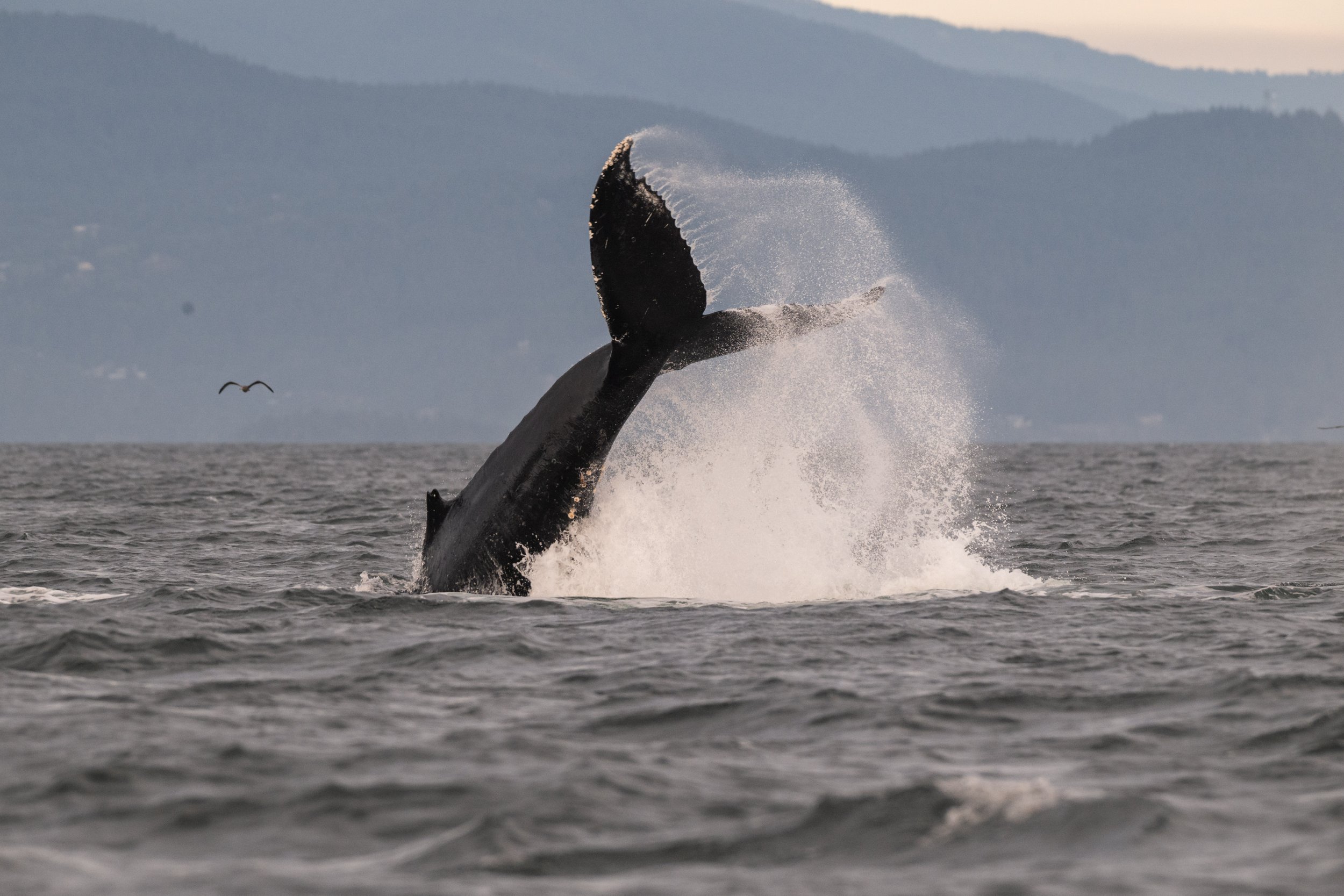
Helen cartwheeling.
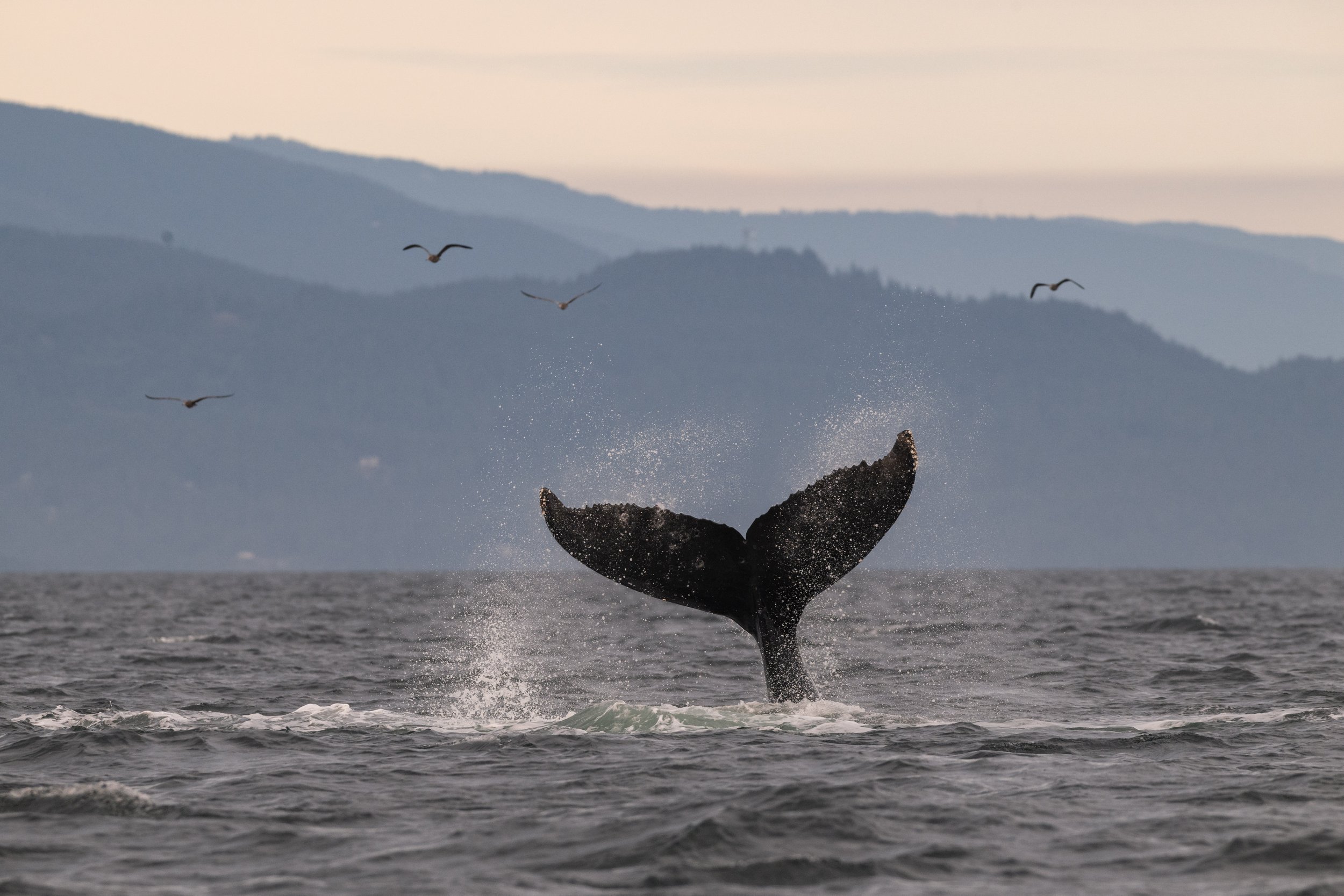
A lovely tail sap from Helen.
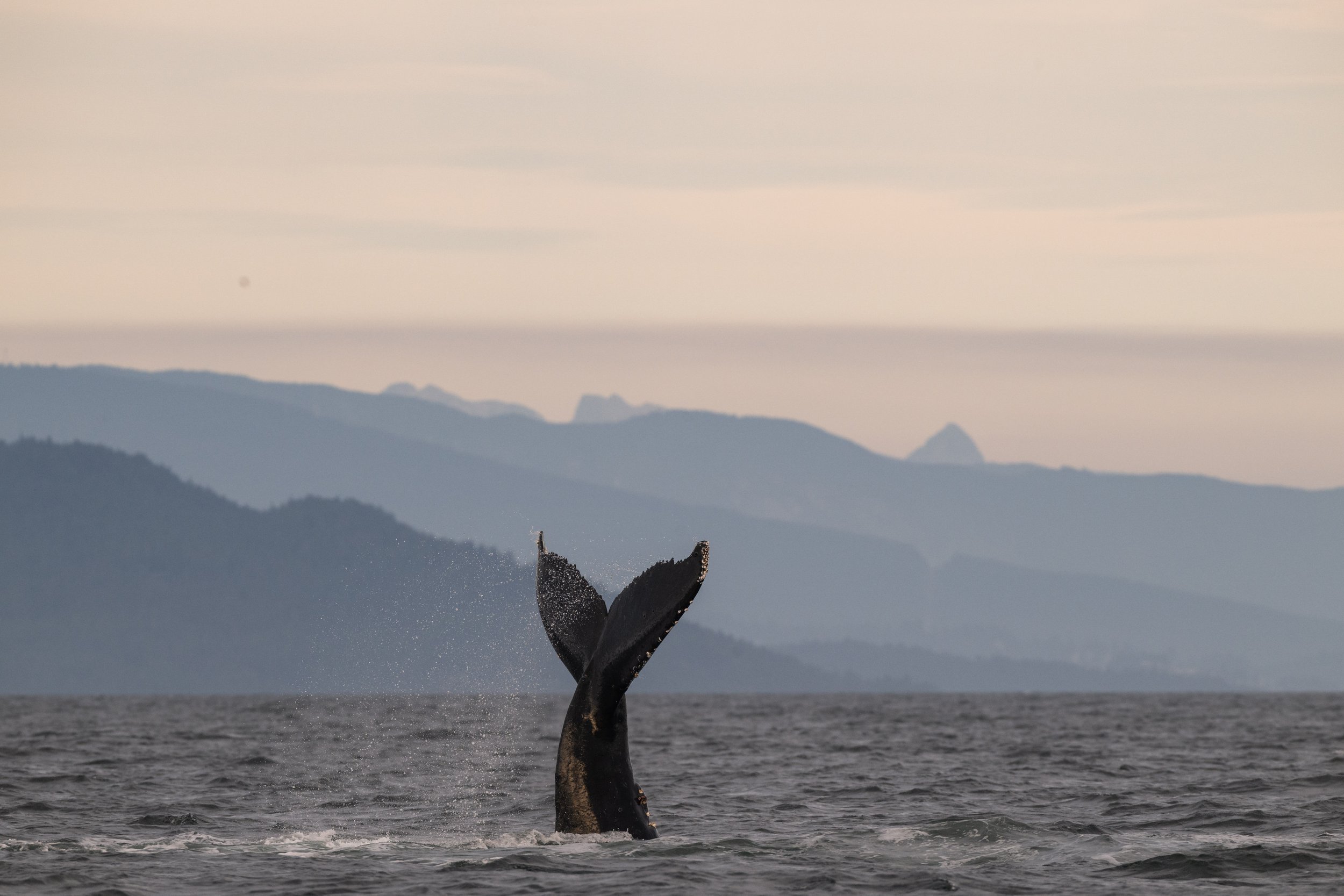
Helen in the sunset.
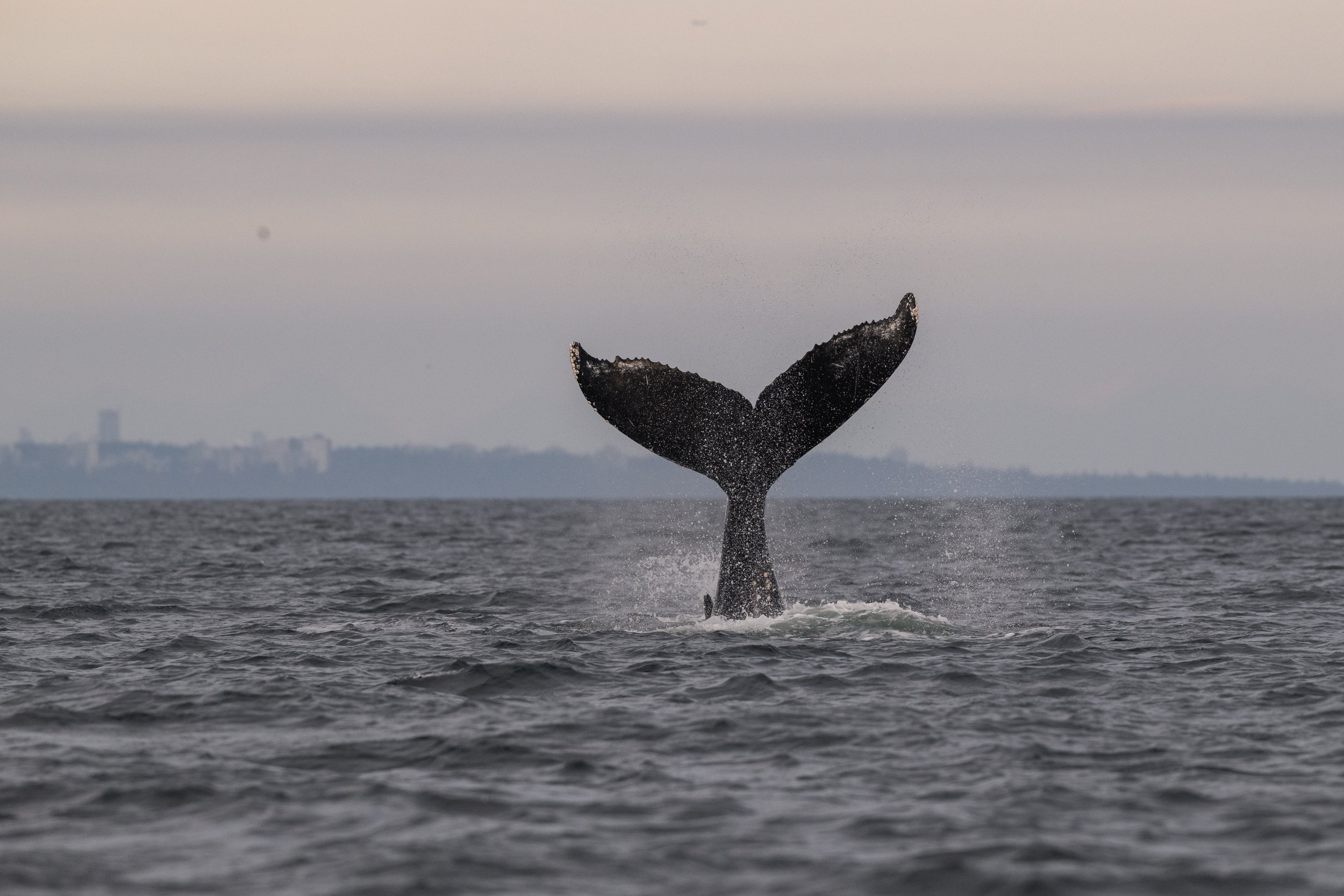
A great look at the underside of Helen’s tail.