
September 1, 2026, 10:30 AM - A T-Party and a Productive Journey Home
Our semi-covered boat left the dock and headed south into the Southern Gulf Islands, beginning a day that would take us through some of the Salish Sea's most scenic, wildlife-rich waters.
Weaving between the islands, we kept our eyes on the water, searching for signs of wildlife. The Southern Gulf Islands offer plenty to look at even when the whales are elusive, with rocky shorelines, forested islands, tidal currents, and open channels creating a constantly changing landscape. Eventually, we made our way towards Porlier Pass, where our search suddenly became much more rewarding.
Ahead was a T-party in progress.
We had found the T035As, T037A4, and the T099s travelling and spending time together.
T035A Lester ♀ (1998)
T035A1 Opal ♀ (2010)
T035A1A (2026)
T035A2 Topaz ♂ (2013)
T035A3 Garnet (2018)
T035A5 (2026)
T037A4 Crinkle ♀ (2015)
T099 ♀ Bella ( ~1984)
T099B ♀ Holly (2007)
T099C ♂ Barakat (2009)
T099D ♂ Puck (2015)
T099E ♀ Qwiin qwiin oo qwii la (2021)
For anyone familiar with Bigg's killer whales, seeing multiple pods come together like this is always an exciting sight. These gatherings can be more than simply a chance to travel in the same direction. Time spent together can provide opportunities for social interactions between individuals and groups.
Killer whales live in complex social societies, and these relationships extend beyond the immediate family group. Bigg's killer whales are particularly interesting to watch during these gatherings because different pods may come together temporarily before eventually going their separate ways. These encounters can involve travelling, changes in direction, surface activity, and periods of close association.
T-parties are generally associated with killer whales of the same ecotype. Bigg's killer whales and Southern Resident killer whales have different diets and social cultures, and encounters between the two ecotypes can look very different. While both are members of the same species, their ecological niches are quite distinct. Bigg's killer whales specialize in marine mammals, while Southern Residents primarily feed on fish, particularly Chinook salmon. Given their differences, these two don’t tend to get along. But Gatherings like this of multiple matrilines in the same ecotype are always fun!
Eventually, it was time for us to begin our journey back north. But the wildlife around Porlier Pass had other plans.
Our trip home quickly became a series of unexpected stops as humpback whales kept appearing along our route. First came Niagara (BCY0057) and Bullet (BCX1658), two humpbacks we spent some time watching as they fed in the area. Then came Fader (BCY0195), followed by Bond (BCX1640).
Rather than simply travelling through the area, each of these humpbacks appeared to be taking advantage of the abundant food available in these waters. That productivity is no coincidence.
Porlier Pass sits within an important mixing zone where strong tidal currents move water between the Gulf Islands and the Strait of Georgia. These currents help stir and redistribute nutrients throughout the water column, supporting the microscopic organisms at the foundation of the marine food web. Nutrients also enter the Strait of Georgia through the Fraser River, creating conditions that support abundant life throughout the region.
For a humpback whale, that productivity can mean an excellent feeding opportunity. Their feeding strategies let them take advantage of concentrations of small schooling fish and other prey, sometimes staying in the same general area when food is plentiful.
So while we had originally planned to simply make our way back north, the presence of one humpback after another kept pulling us back to the water around Porlier Pass. What started as a search for orca turned into an afternoon showcasing just how many different species can use this productive part of the Salish Sea at the same time.
Our final stop of the day brought us to Stinky Rock, where the wildlife encounter shifted from animals moving through the water to animals taking a well-earned break on shore.
Several pinnipeds were hauled out, including Harbour Seals and Steller Sea Lions. The two species may share the same coastal environment, but they are quite different animals. Harbour Seals are true seals, while Steller Sea Lions are members of the eared seal family. Their differences are easy to spot when they haul out, especially in their body shape, foreflippers, and how they move on land.
It was a fitting end to a day that had taken us through so many different corners of the Salish Sea. Marine Naturalist Hayleigh Hilbert captured the photos below throughout the tour.
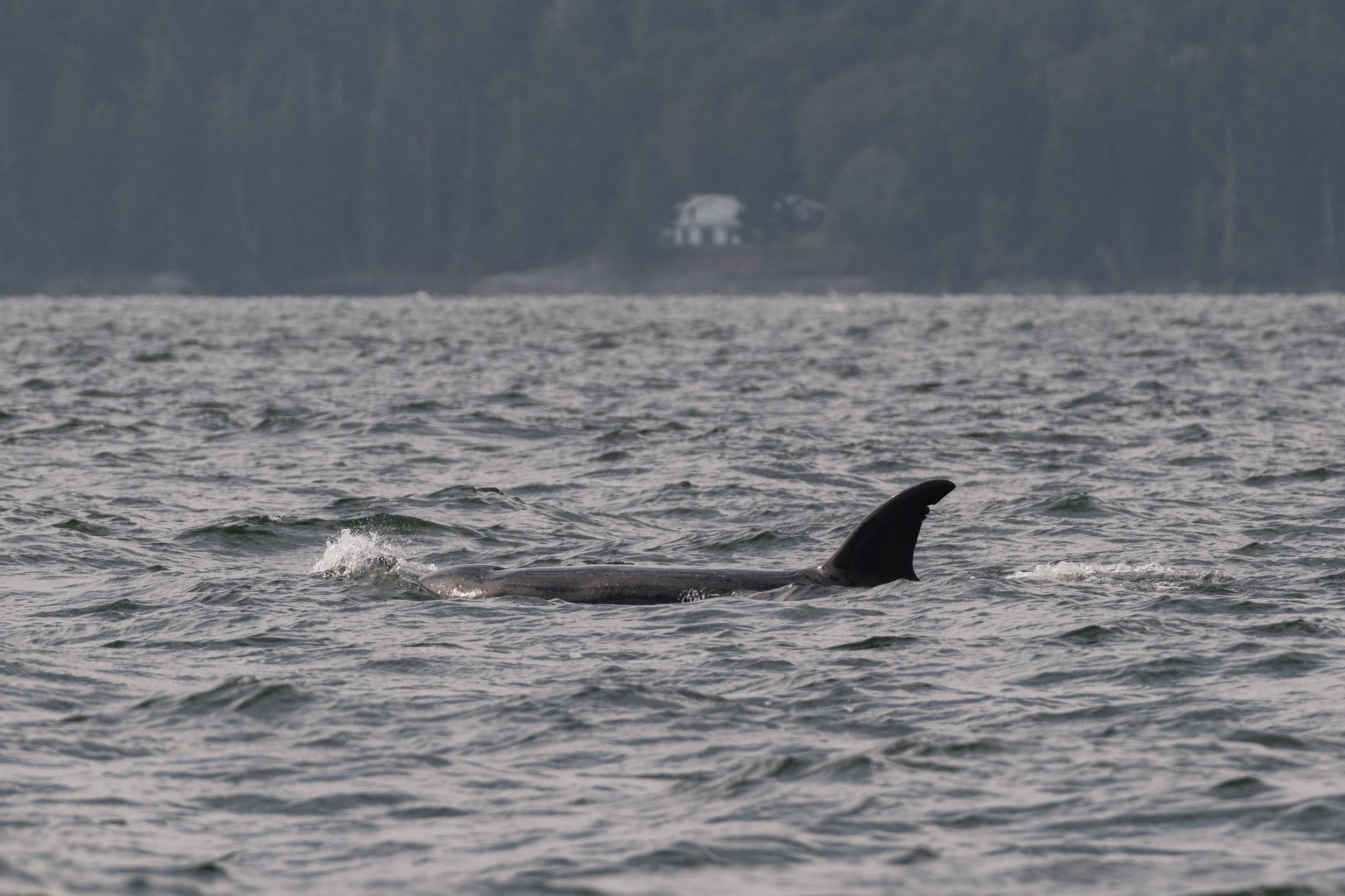
T099B Holly surfacing in the waves.
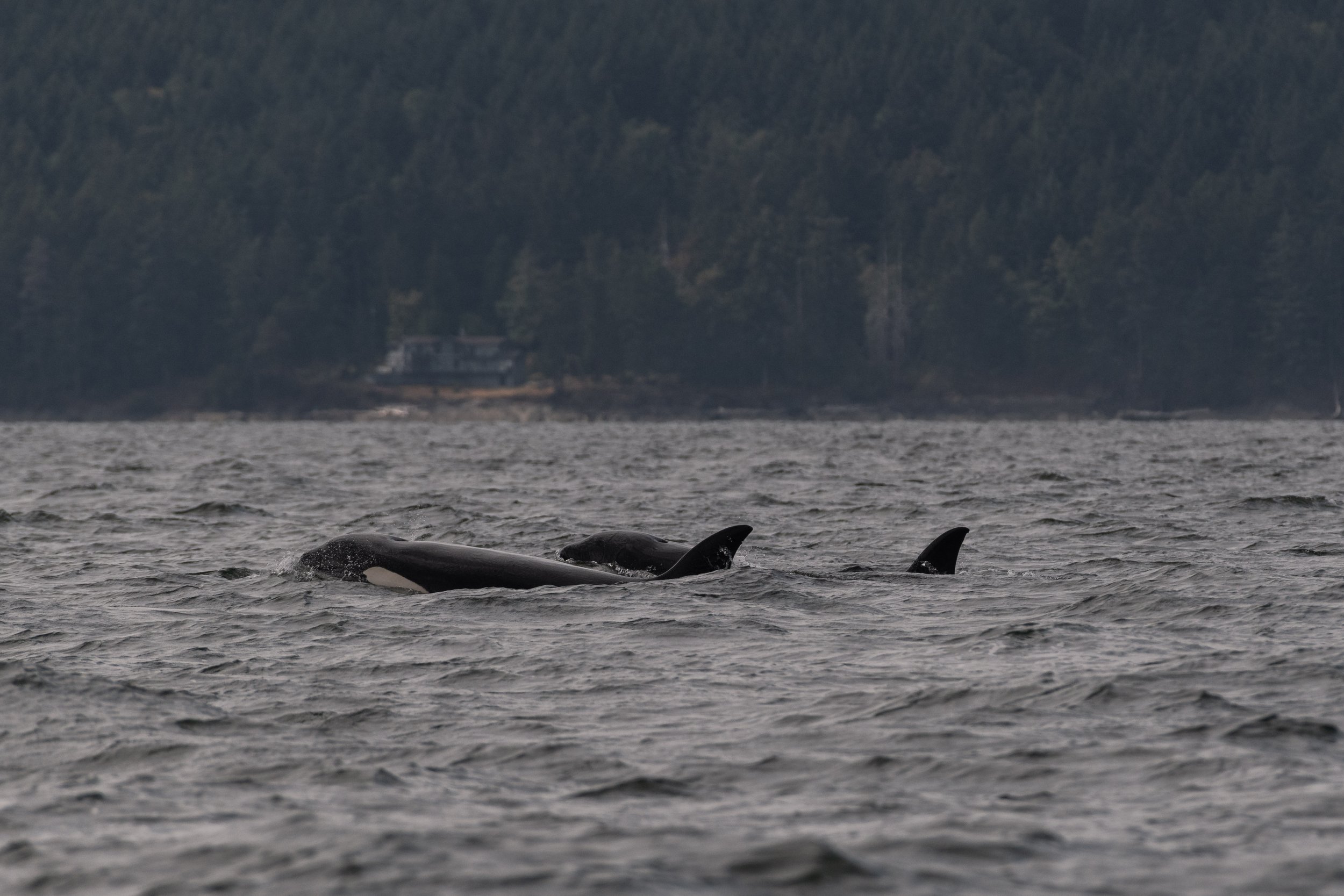
T099 Bella surfacing beside other matriarch T035A Lester.
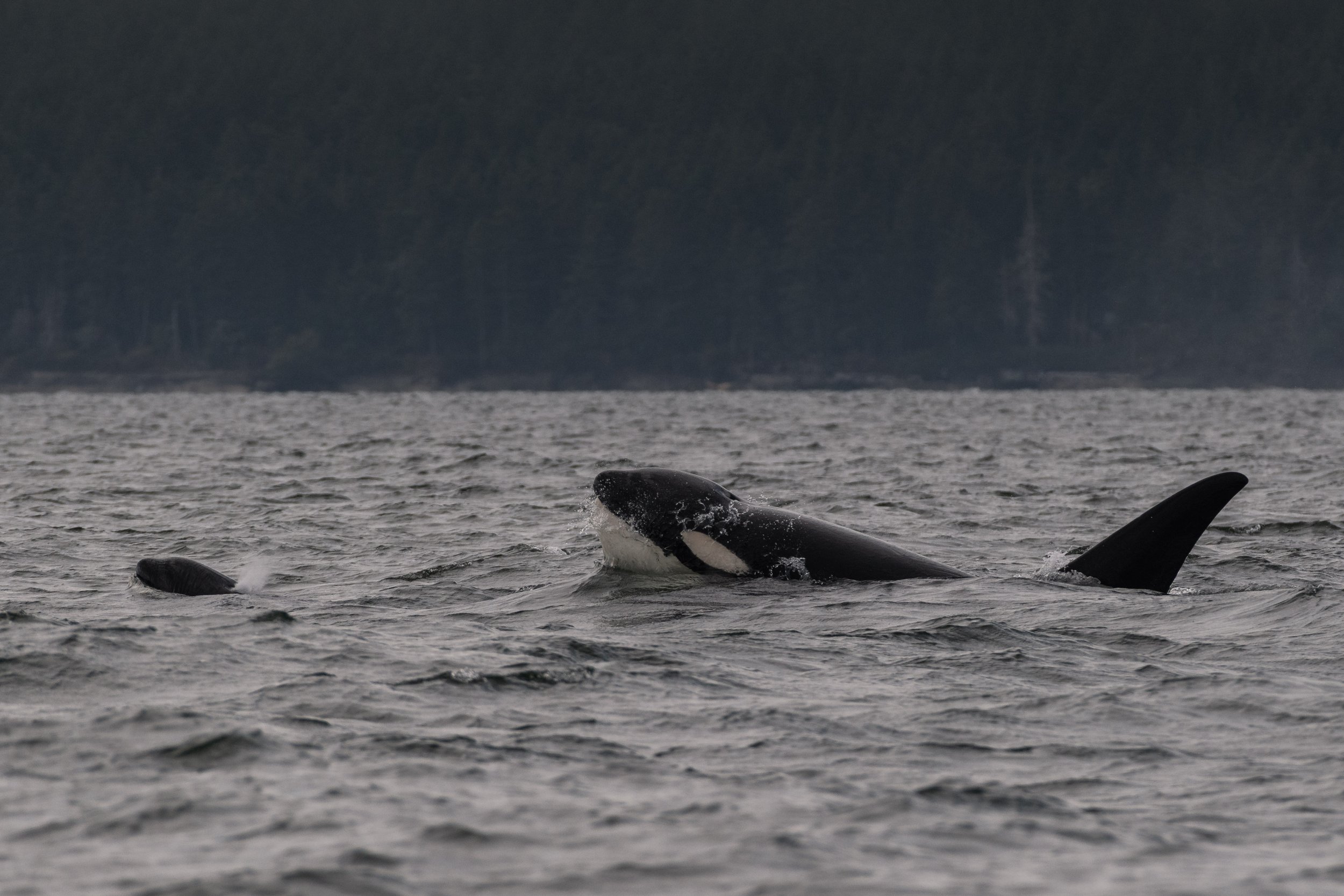
T099C Barakat lifting his rostrum high out of the water.
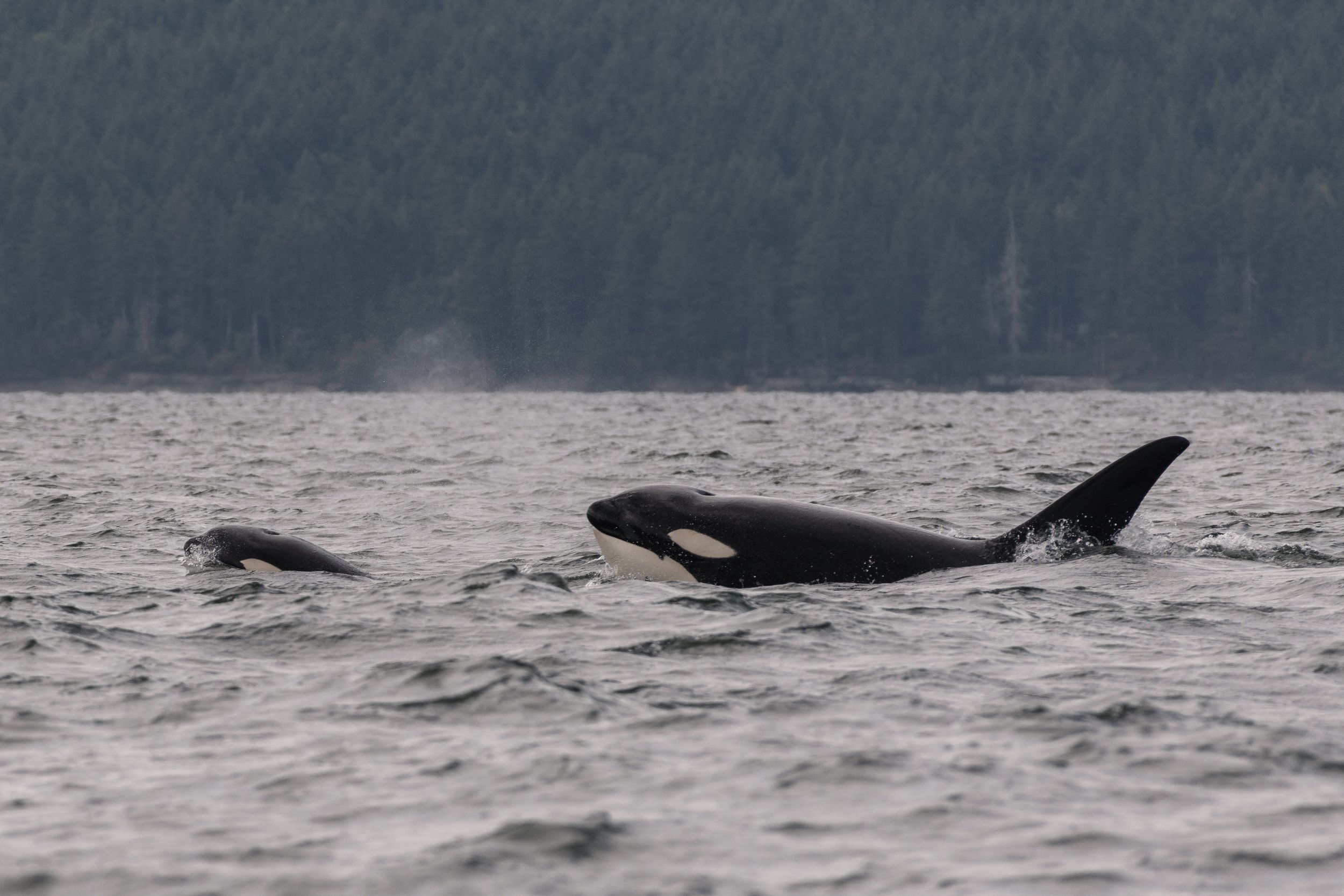
T099E Qwiin qwiin oo qwii la surfacing just ahead of T099C Barakat
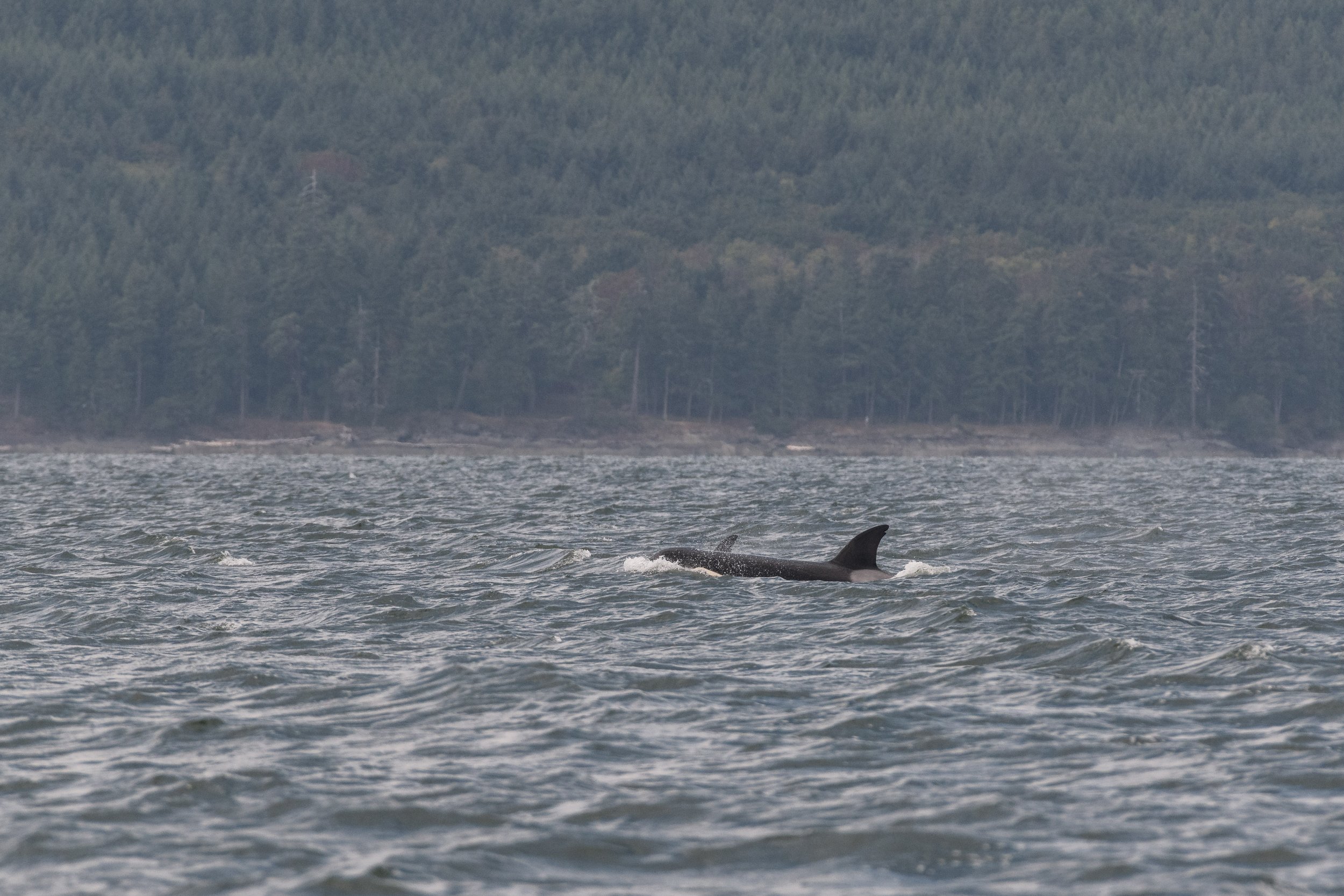
T037A4 Crinkle surfacing in the waves.
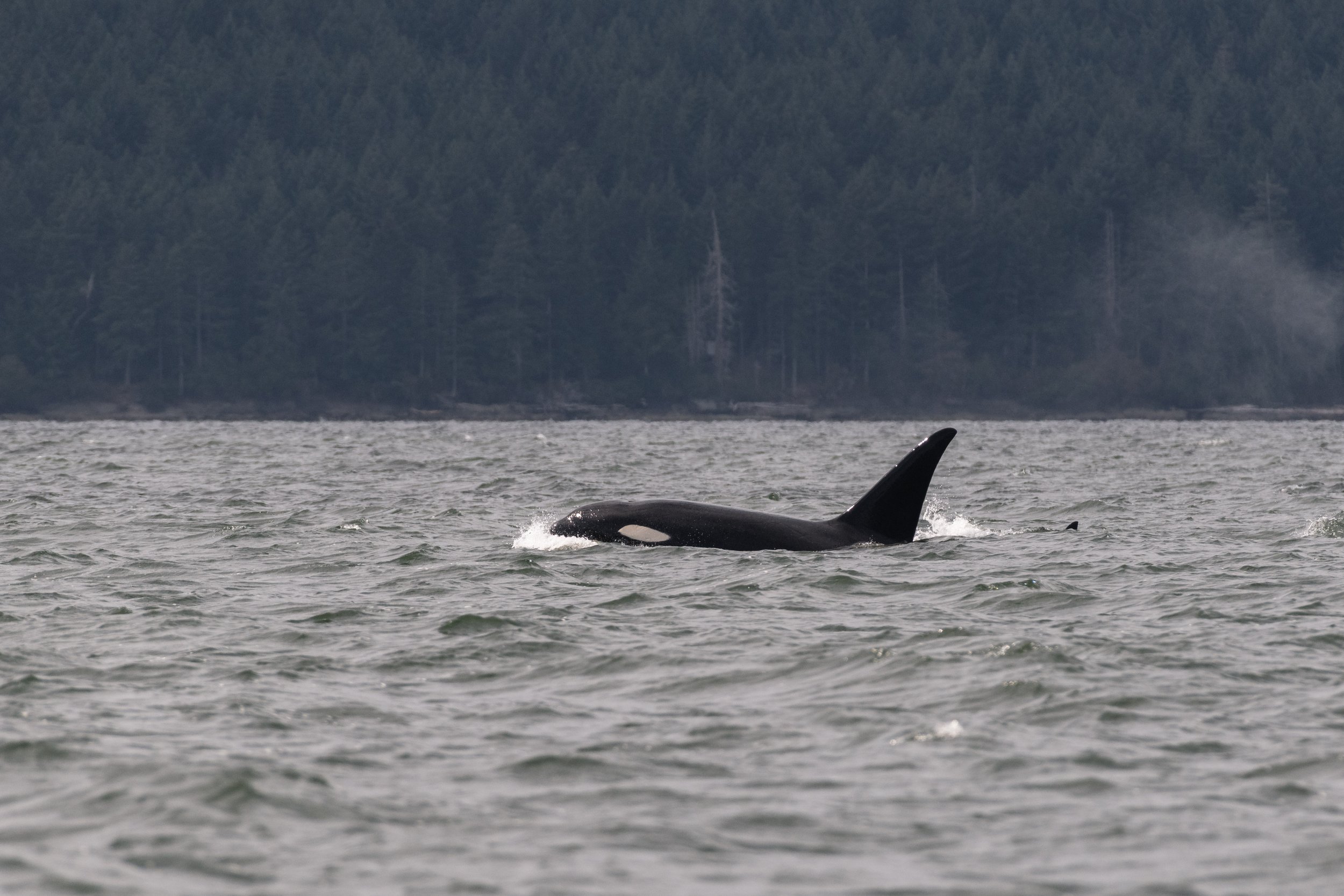
A gerat look at T099C Barakat’s eye patch.
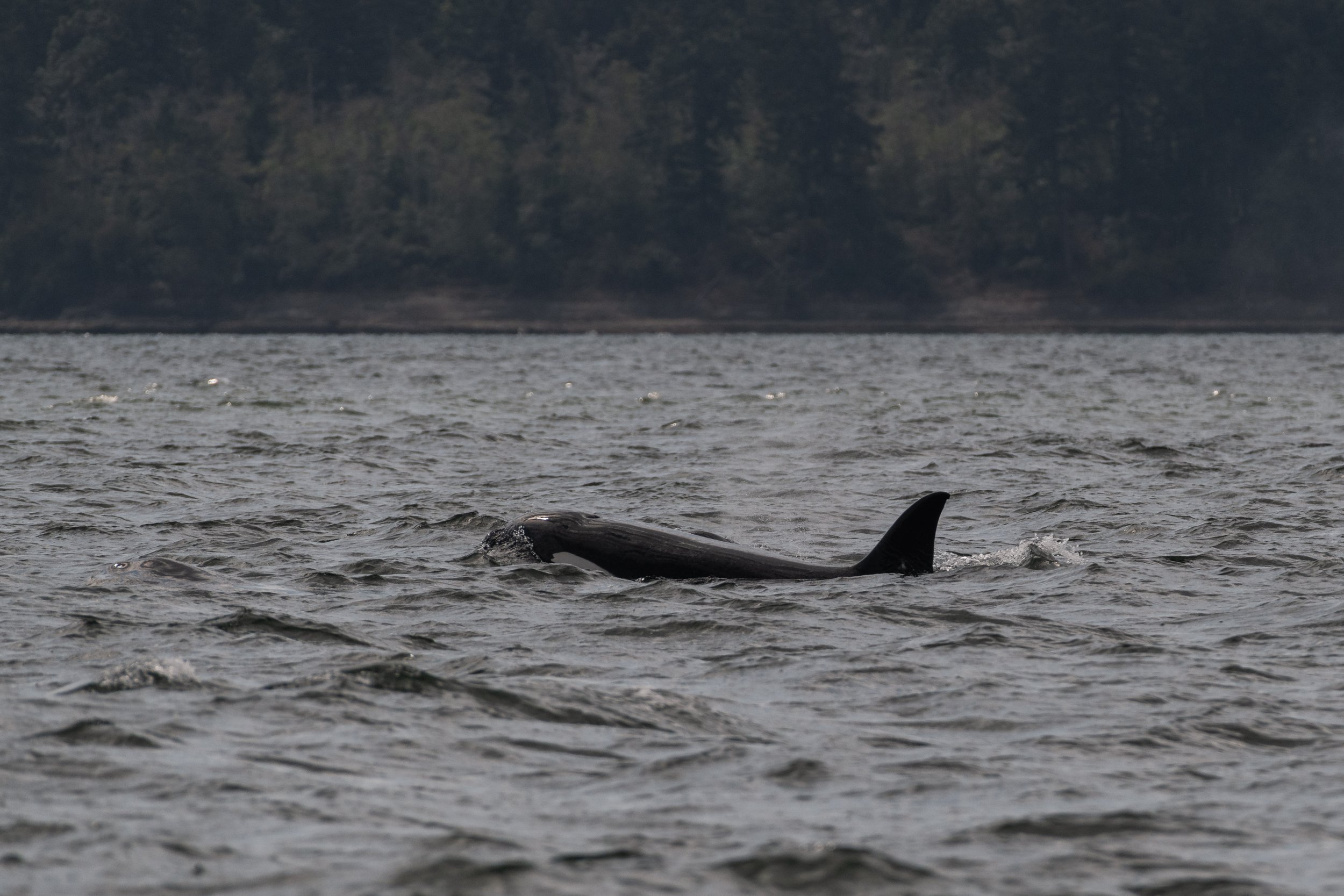
T035A Lester surfacing.
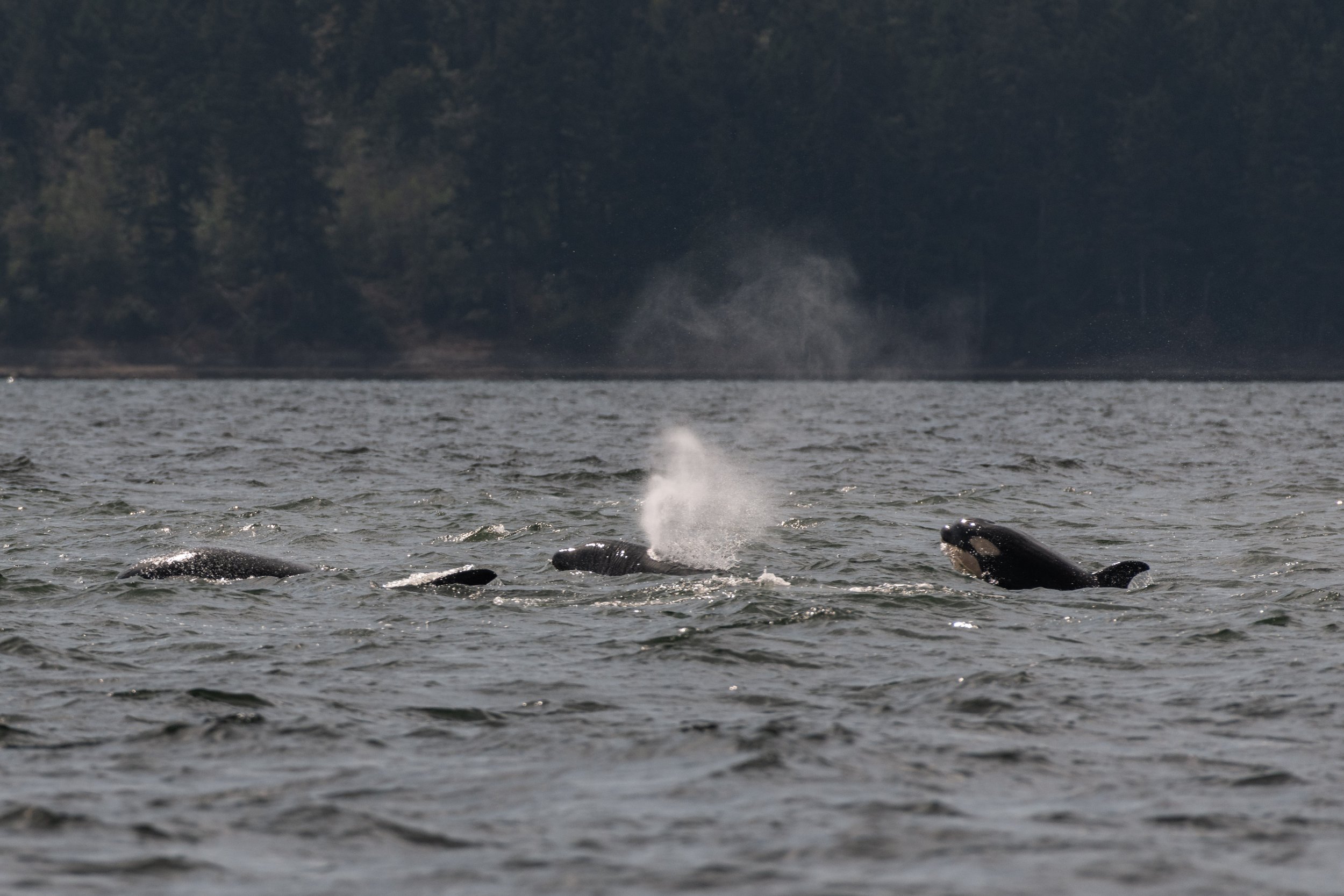
A great look at one of the new T035A babies.
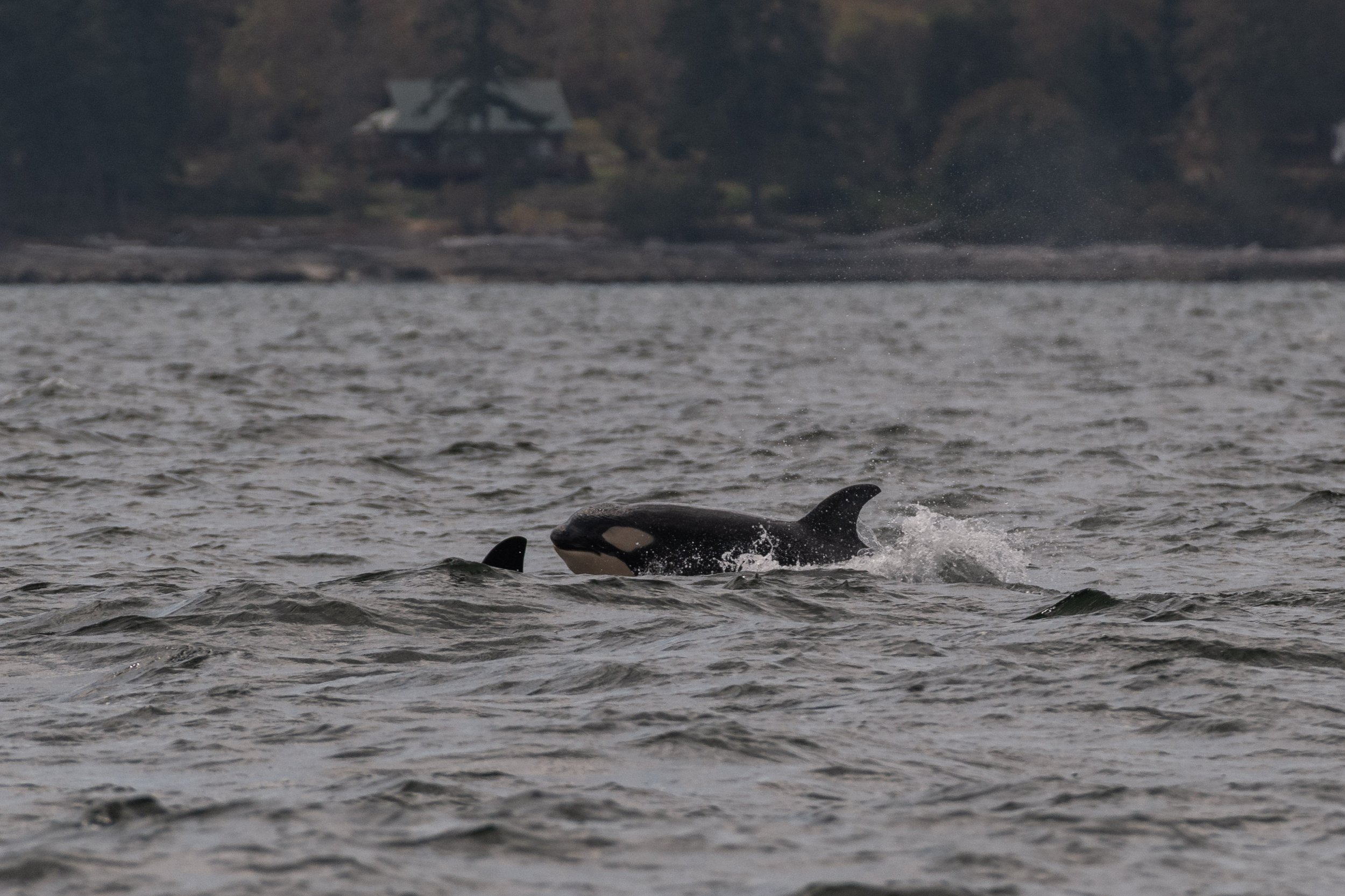
T035A1A surfacing in the waves.
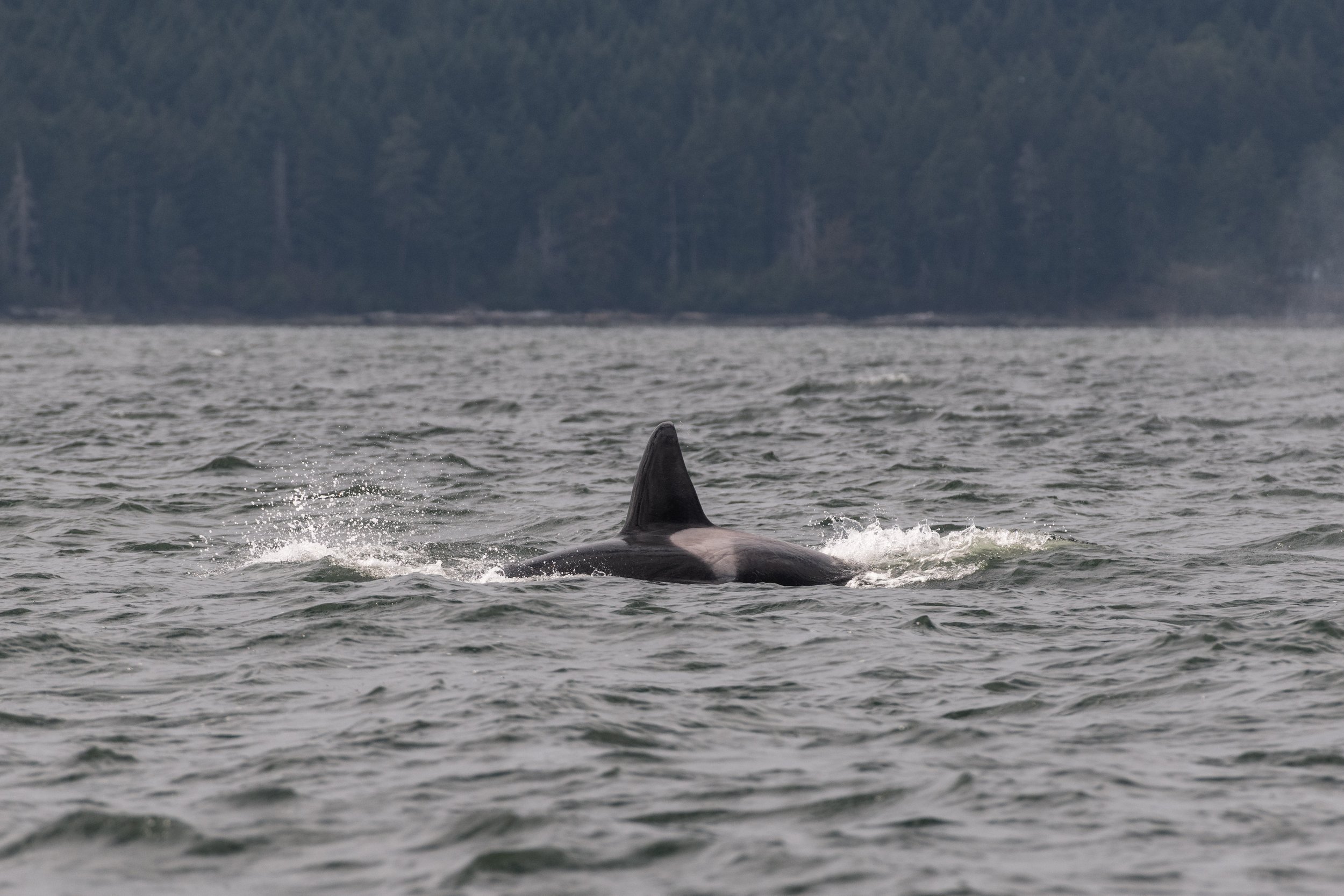
T035A2 Topas moving quickly through the water.
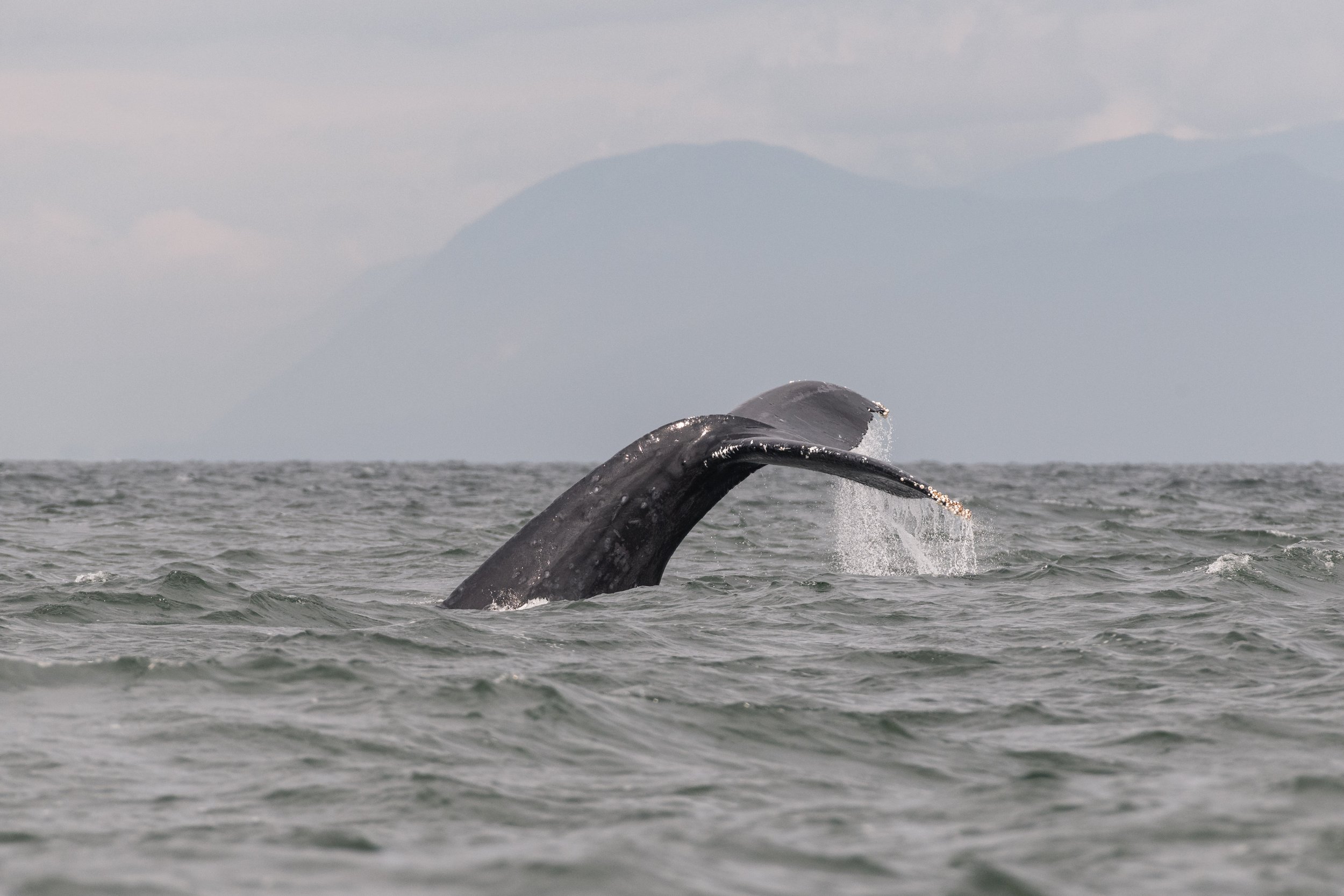
Bullet going for a dive.
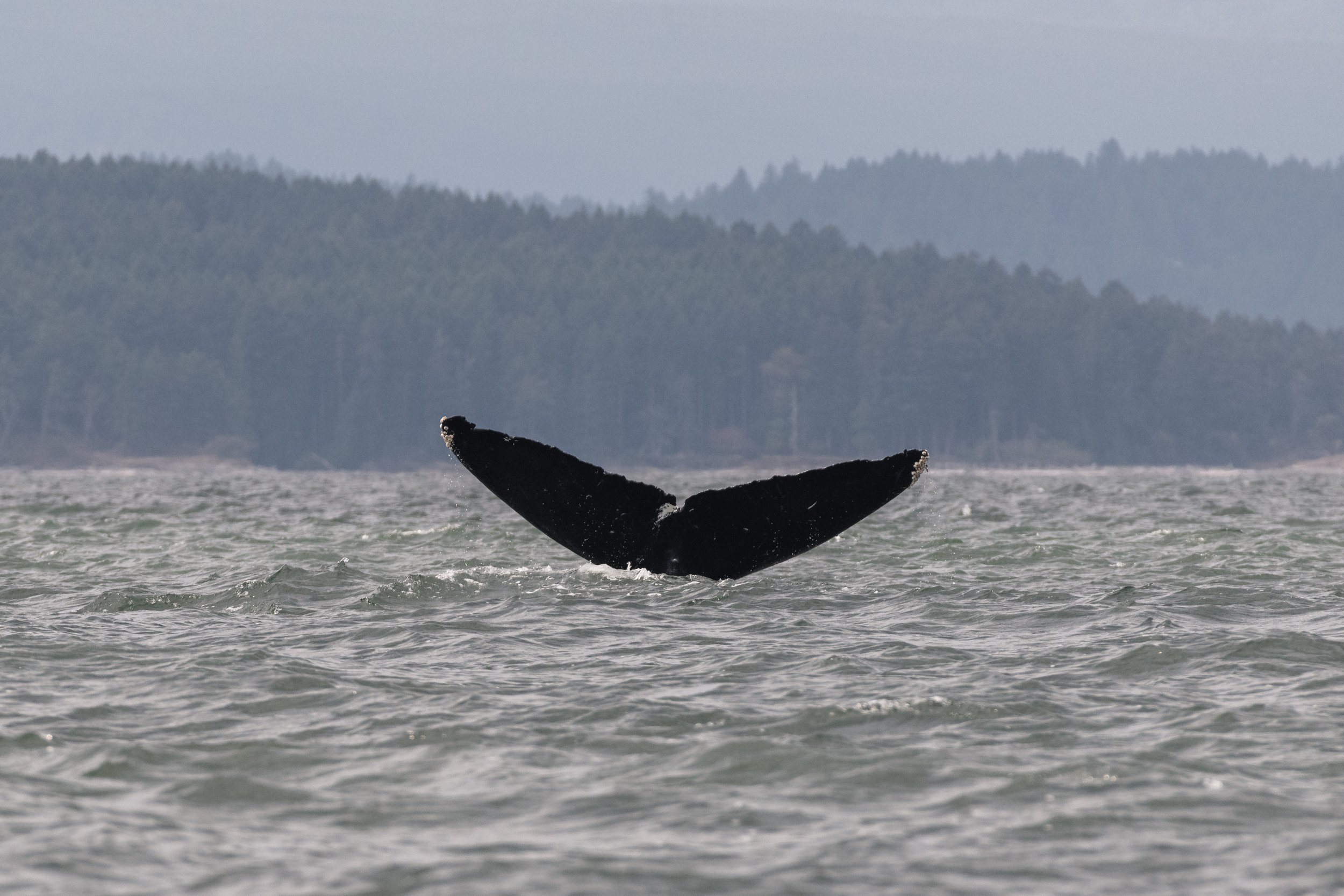
The unique underside of Niagara’s fluke as he dives.
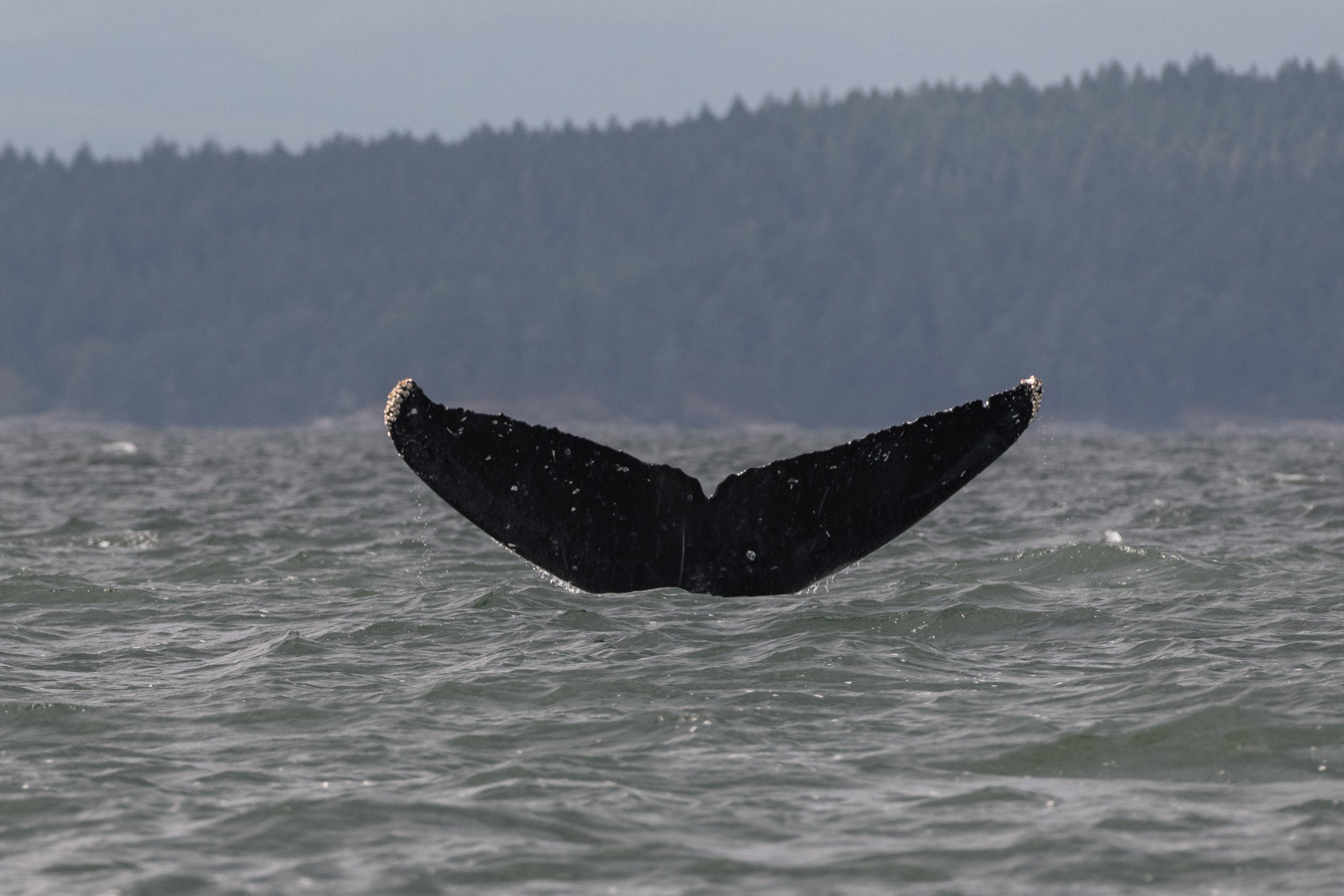
The underside of Bullet’s tail as she dives.
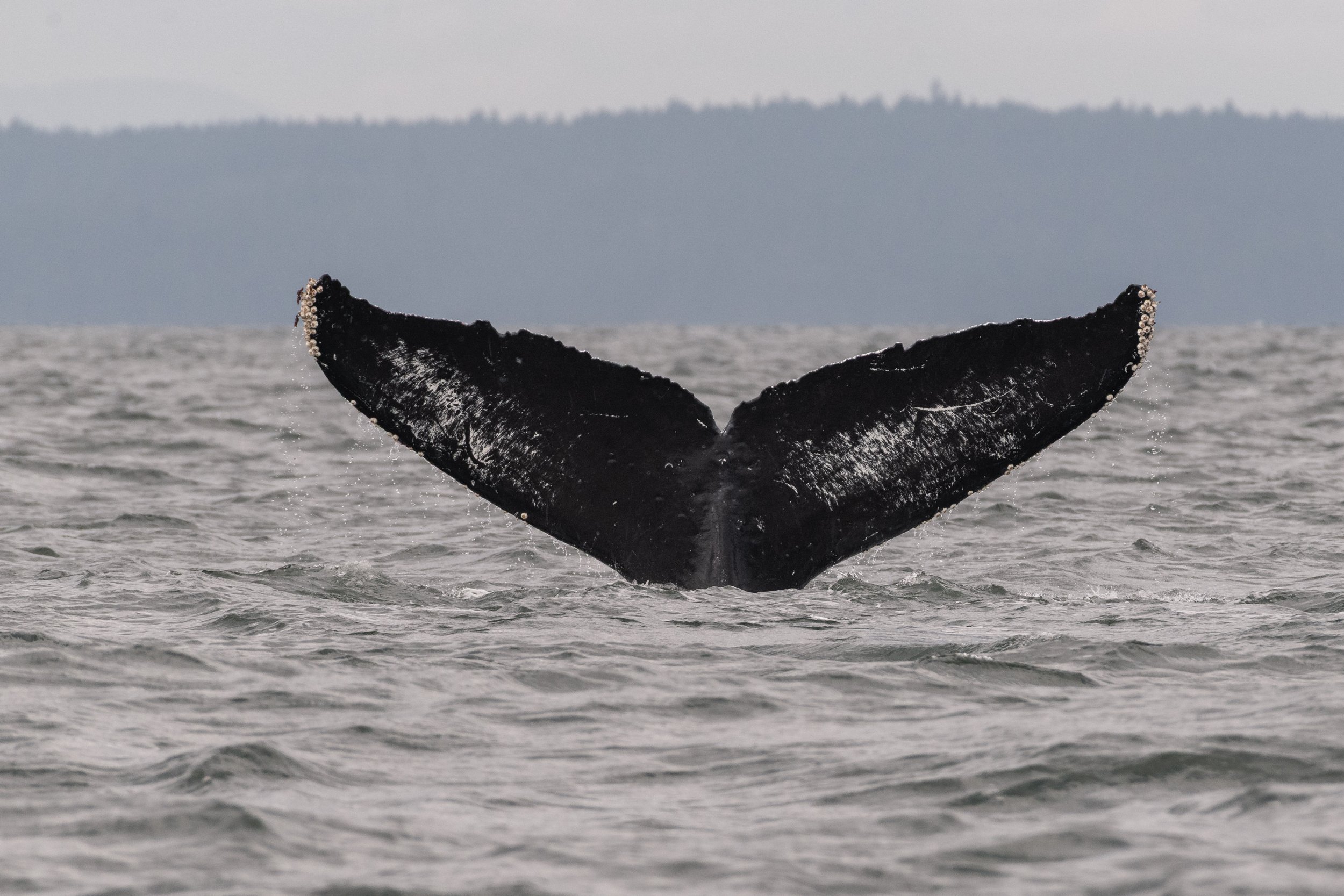
The underside of Fader’s tail as he dives.
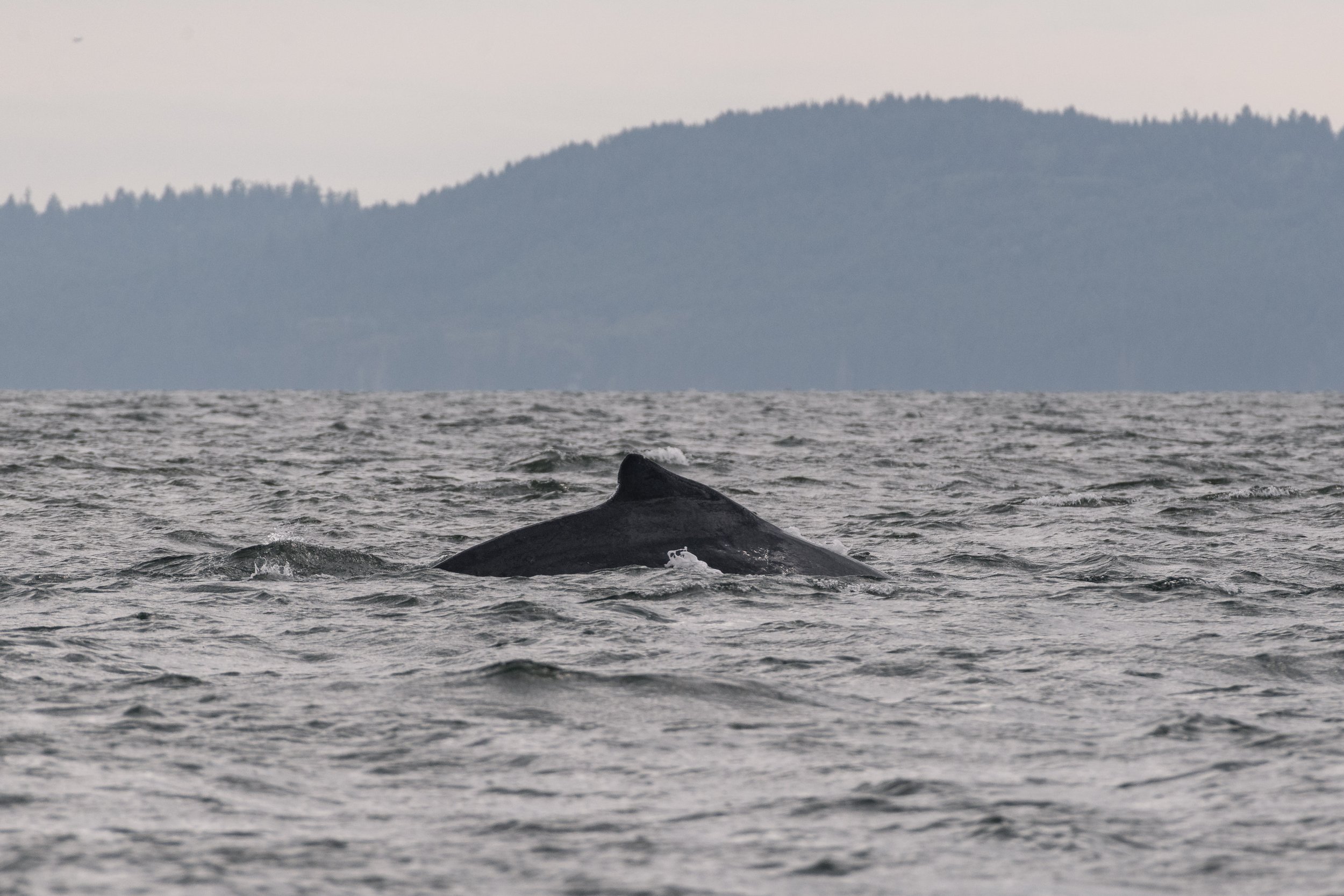
Bond’s dorsal fin rising from the waves.
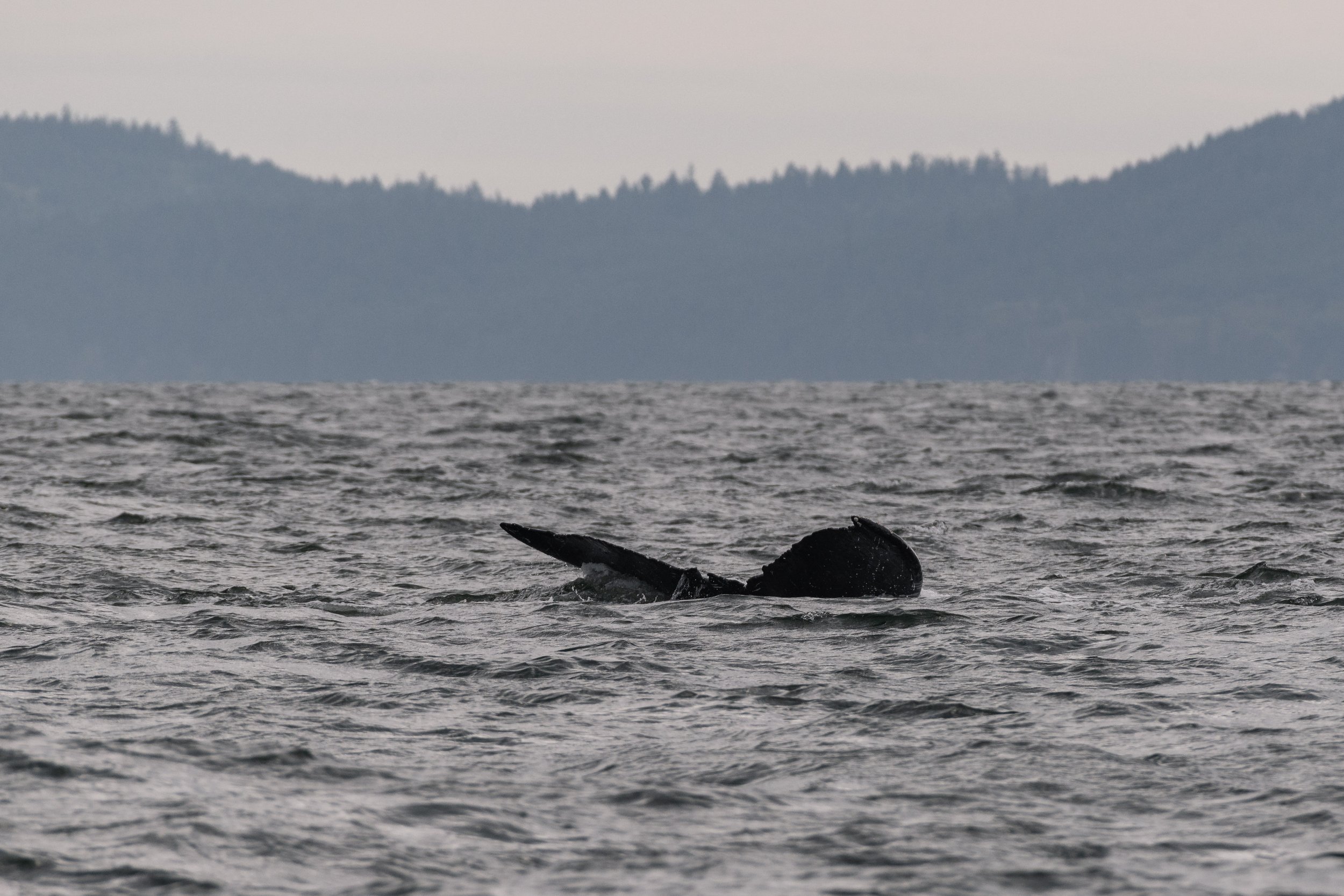
Bond going for a dive.
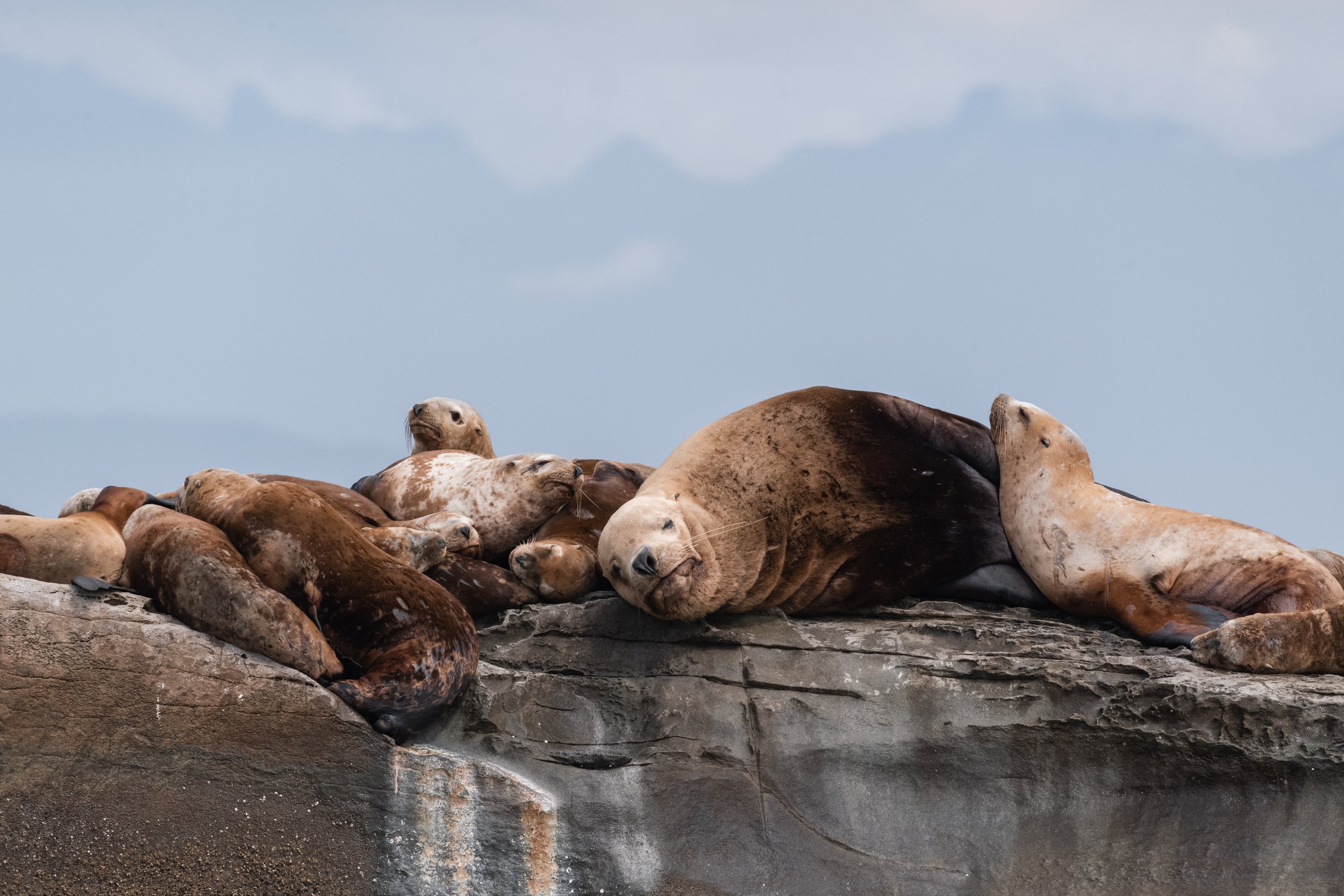
Steller Sea Lions cuddling at Stinky Rocks.
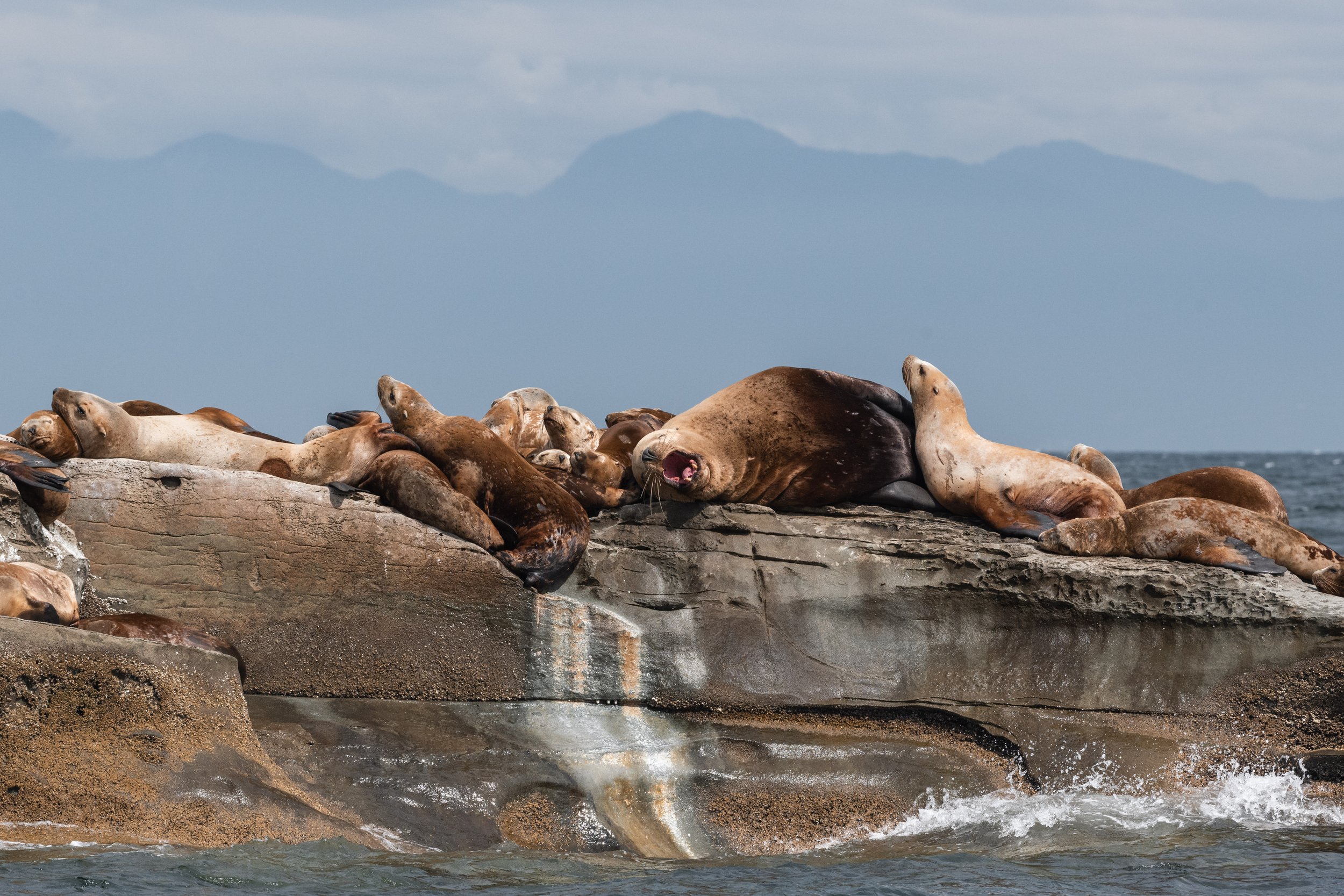
A big yawn from the male in the middle of the group.
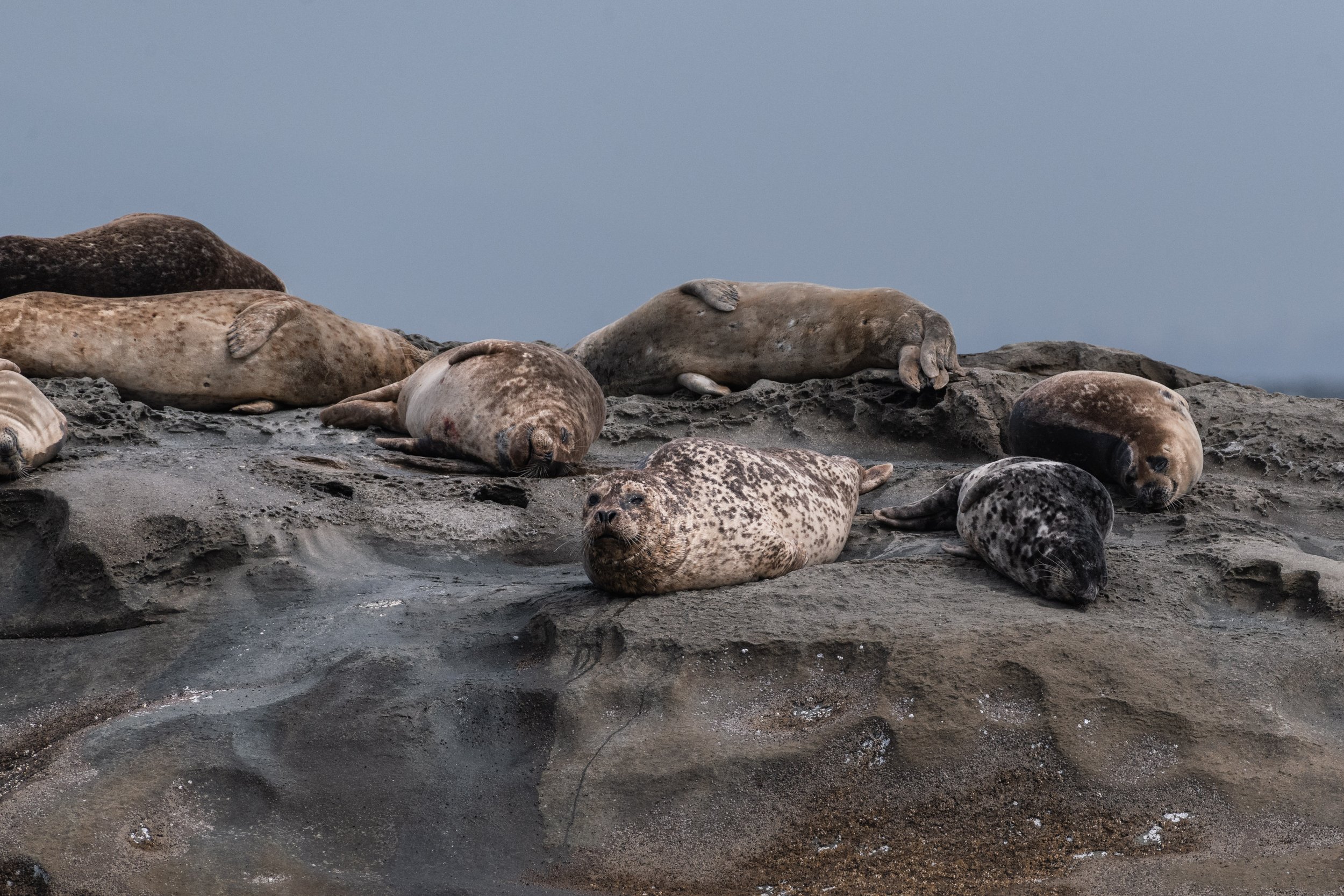
Harbour Seals relaxing on the rocks.
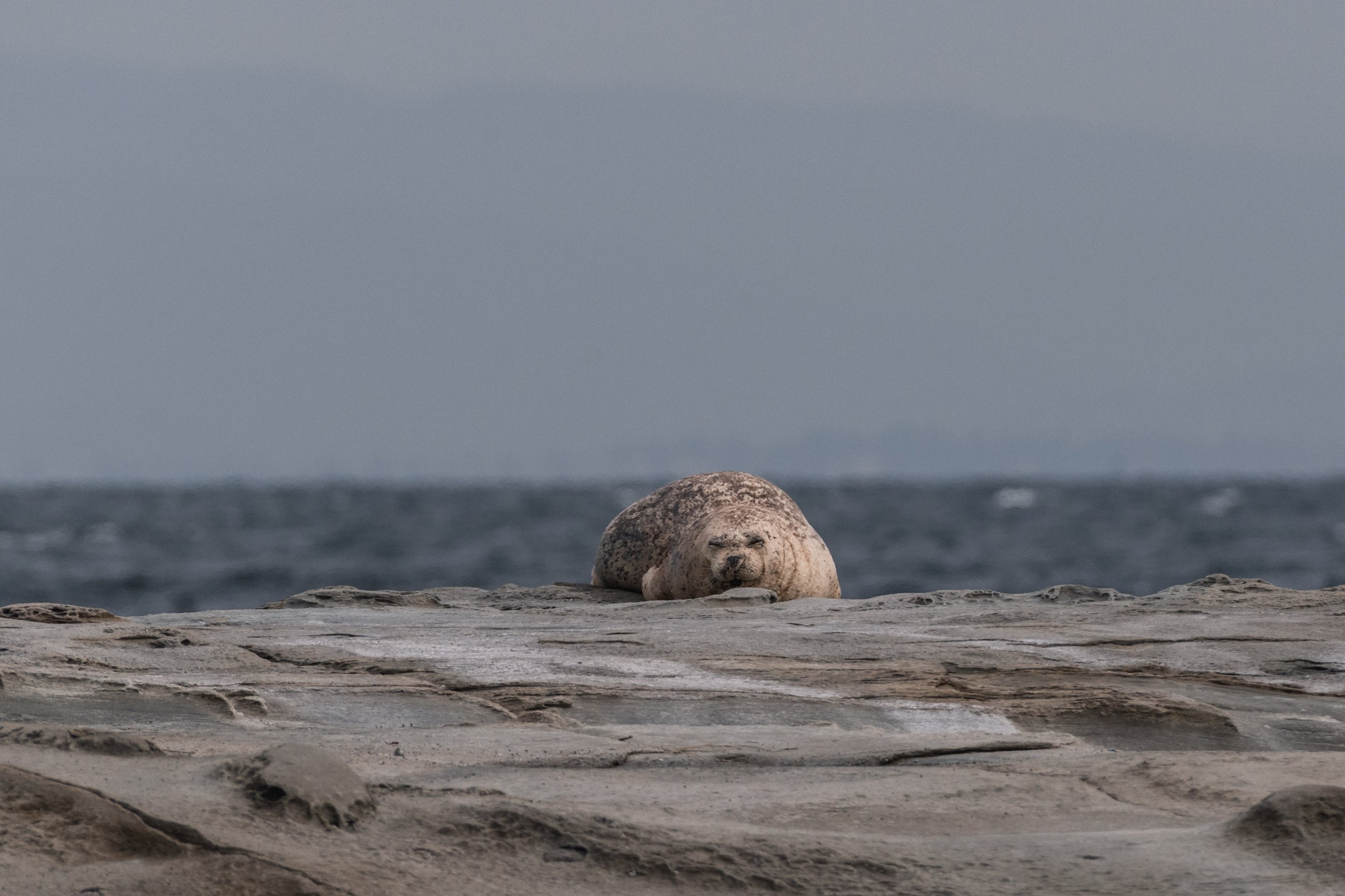
An extra happy looking Harbour Seal.