
September 1, 2026, 3:30 PM - Two pairs of humpbacks in the Strait
Heading on out for the afternoon aboard Keta, we eagerly chatted about what was in store for us as we began our departure. With none of our whales tagged or tracked, every day is a new adventure as we explore!
The trip took us south, to the outer edge of the Southern Gulf Islands. Halfway down Valdes Island, one of the islands on the outer edge of the island group. After a bit more searching, we found our first whale sighting of the day: a pair of humpback whales travelling together.
Their dorsal fins sliced through the water, giving Naturalist Hayleigh opportunities to grab photos to confirm their IDs. While we usually try to photograph their fluke, or the underside of their tail, because that pattern is highly individual, sometimes, when they are being a bit uncooperative, we use their dorsal fin instead. These two have fairly interesting dorsal fin shapes: one is missing a bit of the tip, and the other is nearly flat across. With these details, we identified the pair as Niagara (BCY0057) and Bullet (BCX1658).
Niagara is 26 years old and is Houdini's (BCX0022) 2000 calf. Bullet is at least 11 years old, with her first confirmed Happywhale sighting back in 2015. She also has one confirmed calf, nicknamed Butterfly Wings (BCX2212). Sadly, Butterfly Wings had a serious incident last year that left their left fluke very ragged. We hope they can recover and continue thriving throughout the year.
The pair continued their travels, and soon after, we did too. After a bit more searching, we spotted another pair of humpbacks close by. These two were being a bit more cooperative than the original pair, lifting their flukes clear of the water. We learned this pair was Bond (BCX1640) and Chi (BCZ0575).
We've seen both of them regularly in our area over the past few months, and we are happy to still see them around. We have an incredible amount of knowledge about Chi's family tree thanks to decades of documentation. They are the 2021 calf of Zephyr (BCZ0414), one of Divot (BCX1057)'s grand-calves, and one of the famous humpback Big Momma (BCY0324)'s great-grandcalves.
While they began by simply travelling along, Chi soon became very surface active. He dove deep and then broke the surface, bursting out of the water in an amazing behaviour known as a breach. Scientists are still unsure of the true reason for breaching, but there are many hypotheses. Leading theories suggest it may be for communication, since when they land back in the water, a giant sound wave travels far in all directions. These sound waves could warn others of potential danger or signal that a large quantity of food is nearby. Breaching may also help remove irritants from their skin. It could also simply be an expression of joy, celebrating a good meal or just playing around in the waves. Whatever the case, it is always an incredible sight to behold, and we watched in awe as he splashed away. At one point, he changed it up, arching his back as he brought the rear half of his body out of the water in a different behaviour known as a cartwheel.
We floated along, enjoying our time with the duo, when suddenly Chi changed direction, and soon he was pointed straight at the boat. We shut down our engines and peeked around to see where he would show up next. Humpback whales can change direction quickly, so you never really know what they'll do. At this point, a loud blow sounded, and Chi peeked at the boat. This behaviour, known as mugging, is when a whale begins interacting with a boat. Mugging is not a behaviour that should be encouraged, as it can become dangerous quickly for both the whale and the boaters in the area. When this happens, we remain calm and wait until the whale decides to leave. Chi became disinterested fairly fast, and after a few minutes, turned away and began travelling away once again. Once he was a safe distance away, we turned our engines back on and began making our way away.
The day wasn’t quite over, though, as we had one more place to explore. Heading back close to Valdes’ shoreline, we made our way north. Just ahead, a couple of rocks jutted high out of the surf. These small outcroppings, cheekily referred to as “Stinky Rocks”, are little oceanside oases where pinnipeds can rest and recuperate before splashing back down into the frigid waters again. The Harbour Seals were taking full advantage of this, stretching and yawning the day away. The sea lions were busy in the water itself, likely peeking around in search of their next meal.
After a few views of the seals and sea lions, it was time for us to start our journey home. We made our way back through the Gulf Islands and up through Dodd Narrows. Coasting through Northumberland Channel, we made one final turn, and soon Nanaimo came into view. We made our way back into the harbour, and soon we were back on dry land. It had been a wet and wild adventure, with many great sightings of our four humpback whales and other wildlife.
Photos by Marine Naturalist Hayleigh Hilbert - please enjoy.
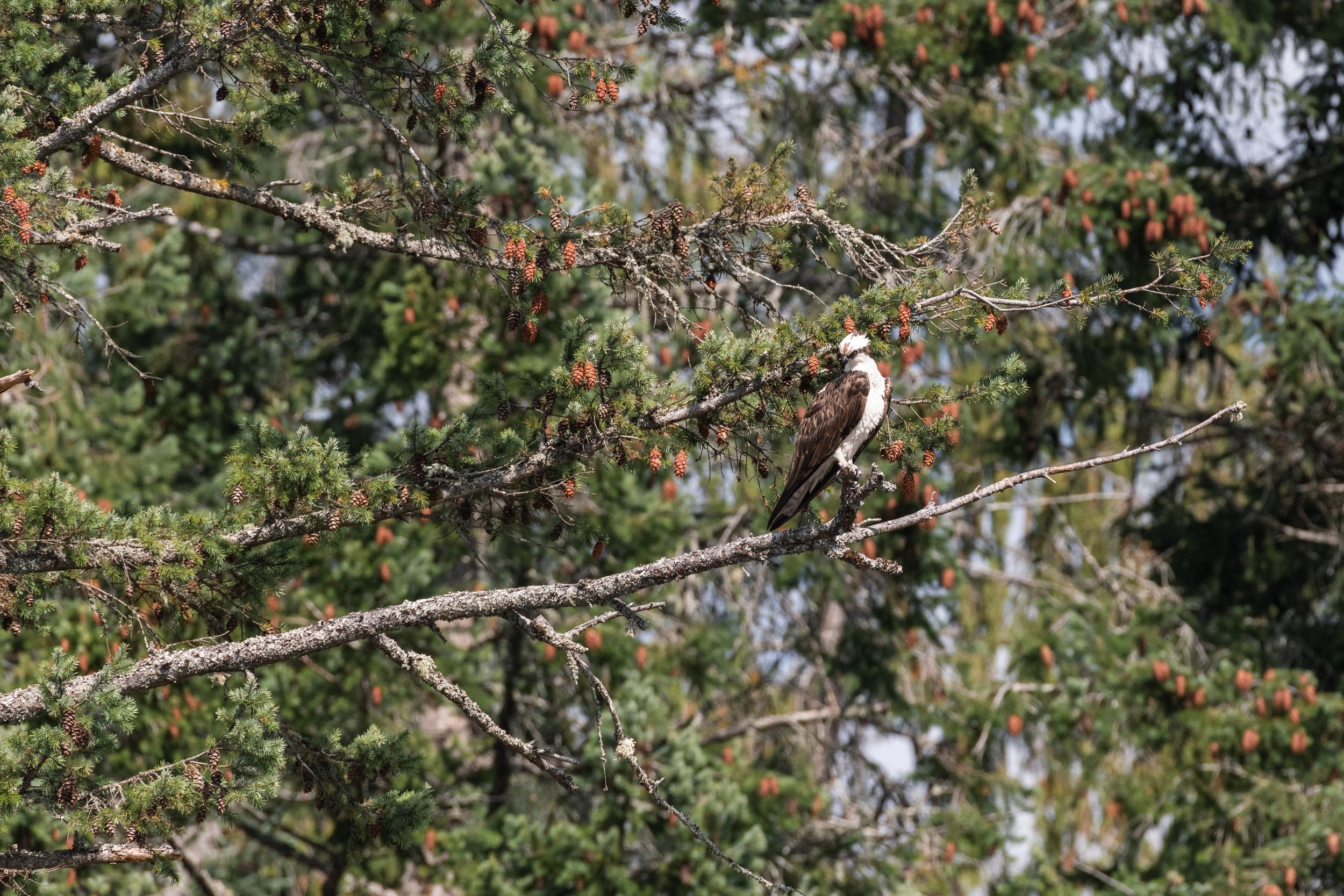
An Osprey keeping an eye out over Dodd Narrows.
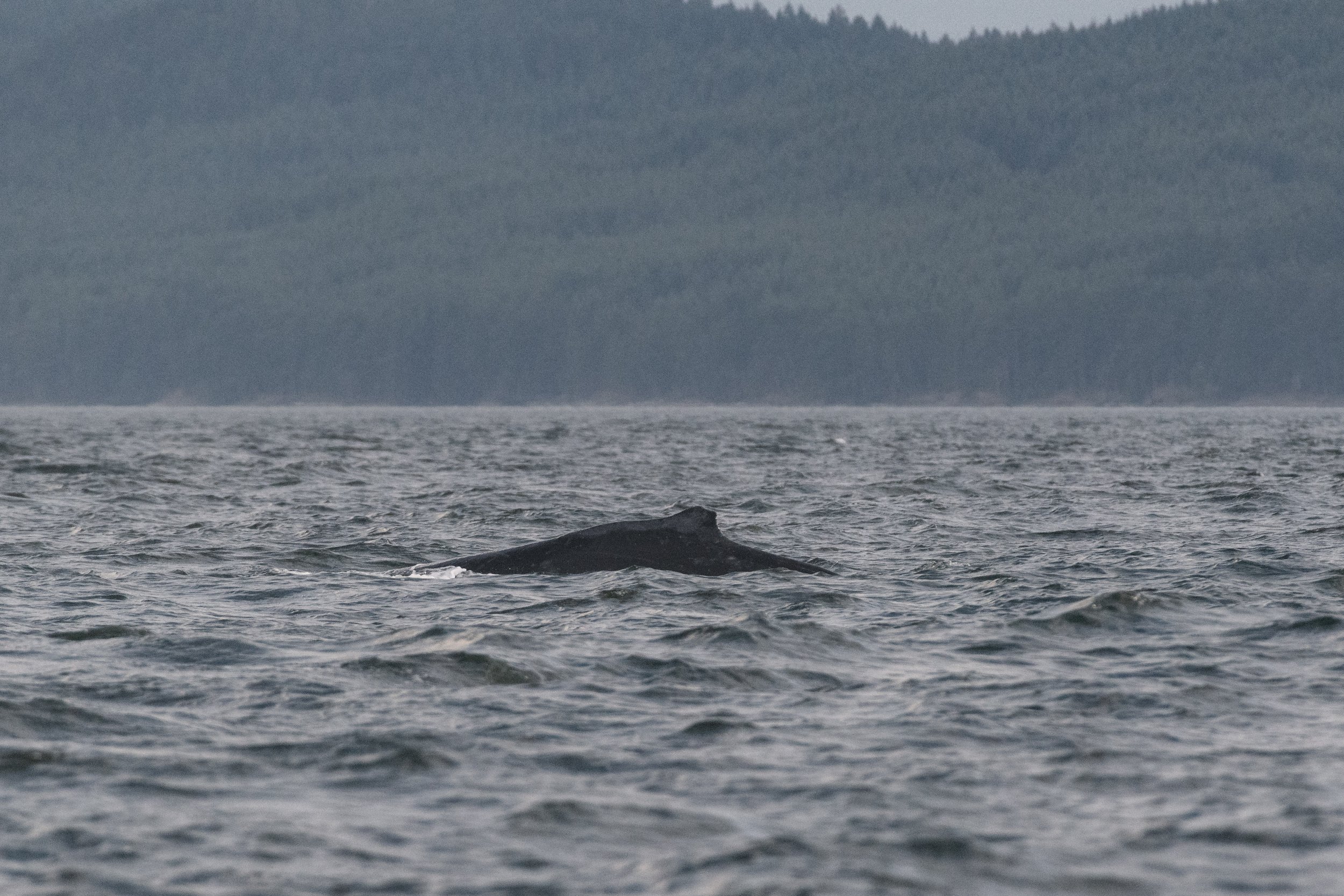
Bullet surfacing.
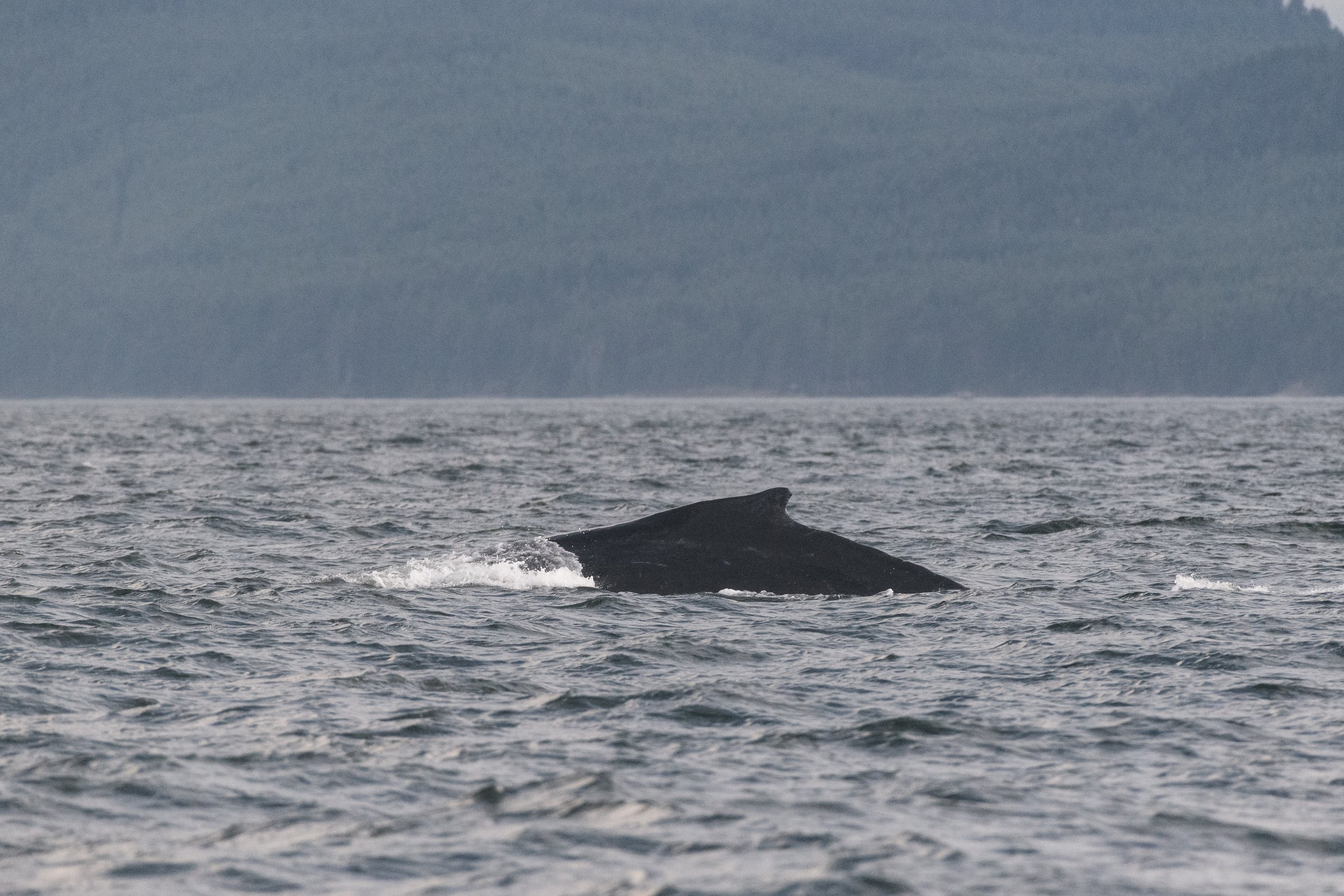
Niagara surfacing with Valdes Island behind him.
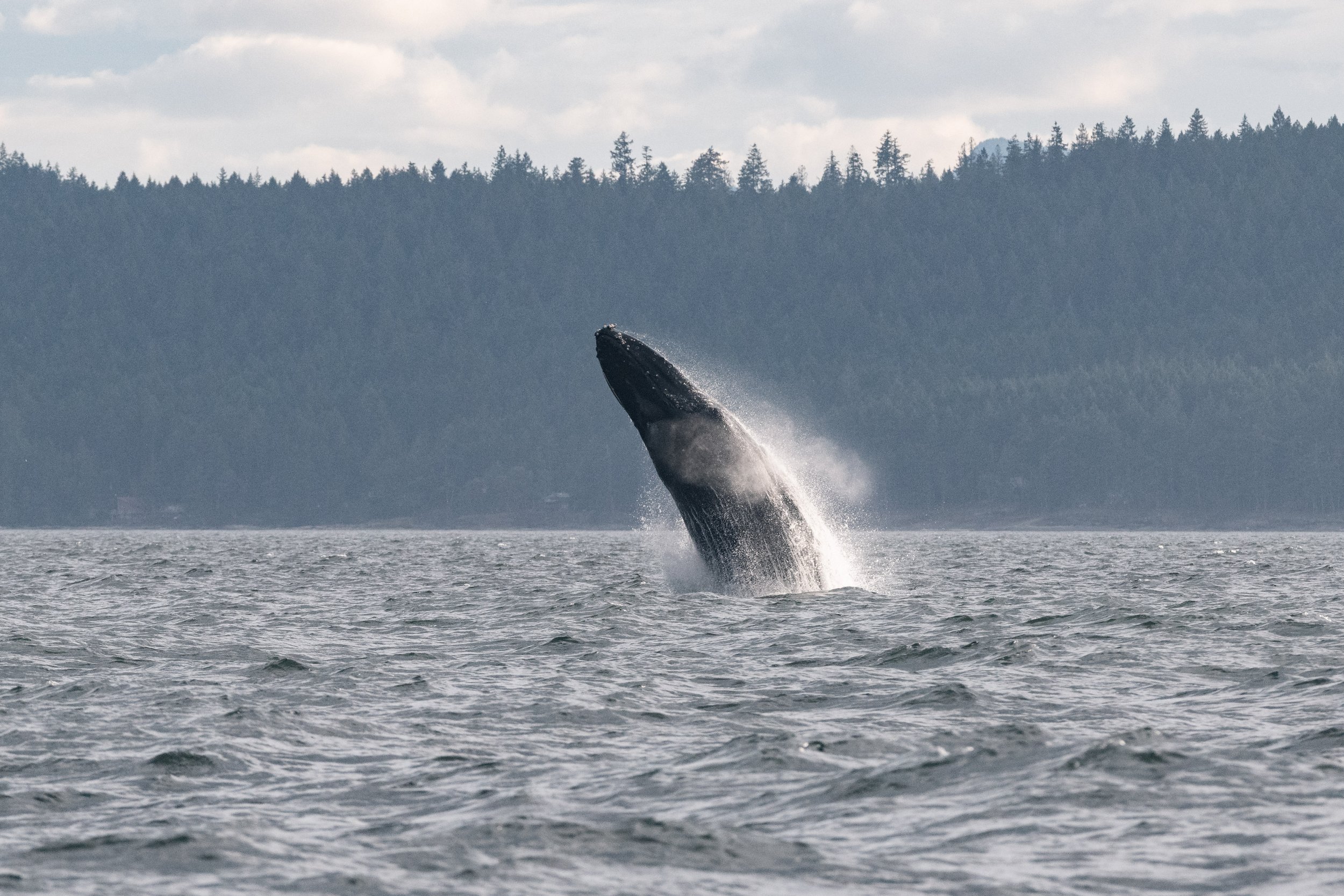
Chi breaching.
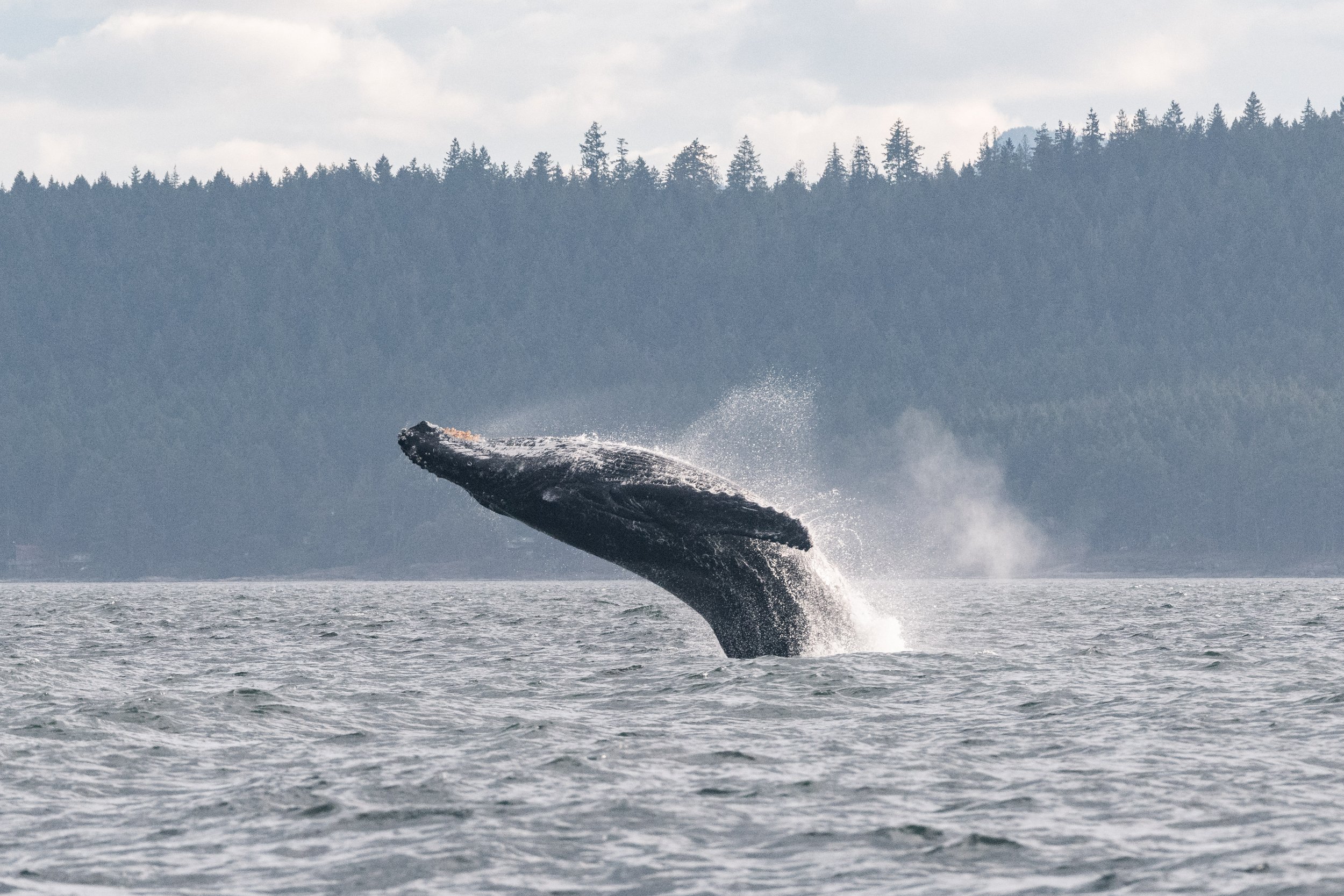
Chi coming in for a landing.
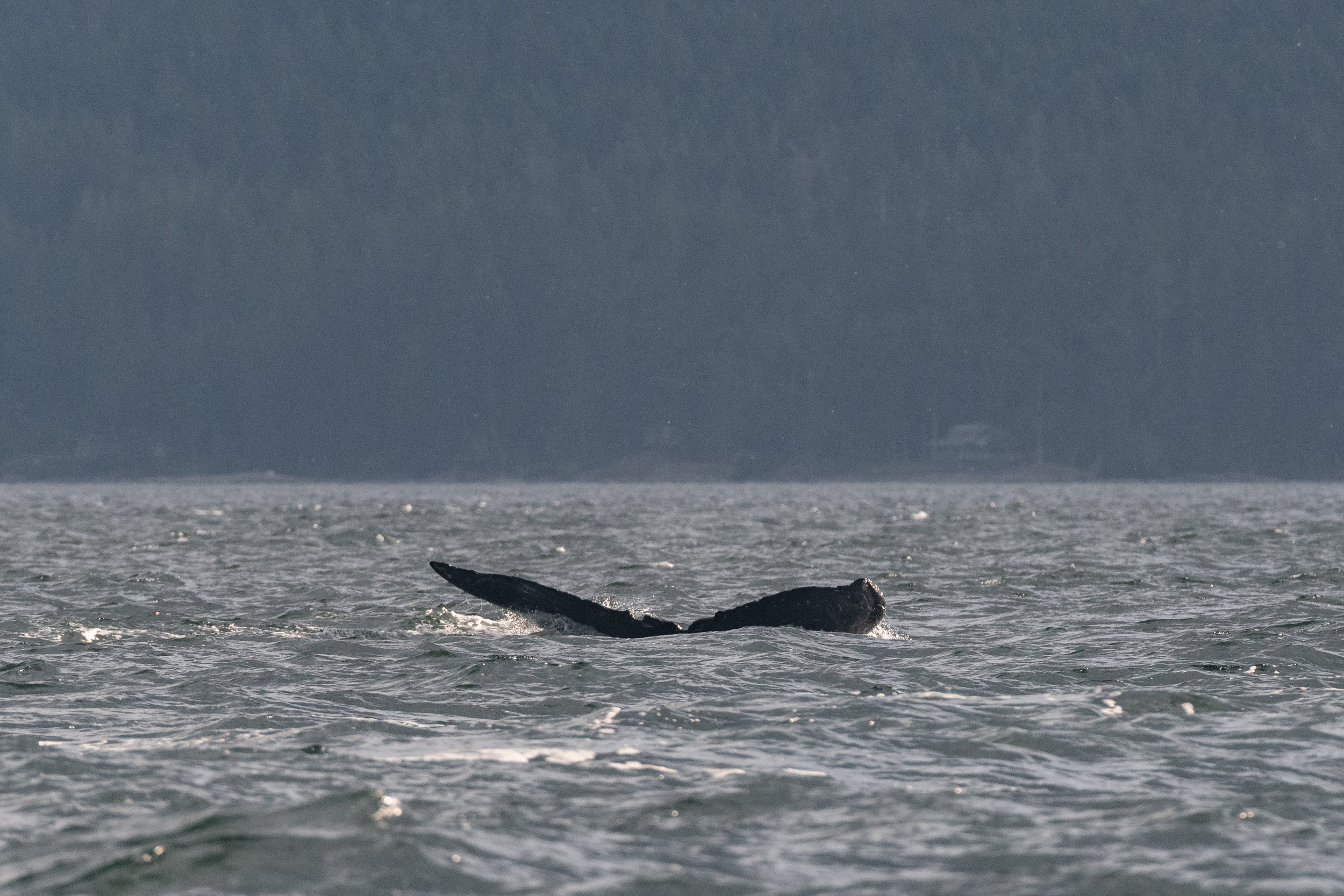
The underside of Bond’s tail as he dives.
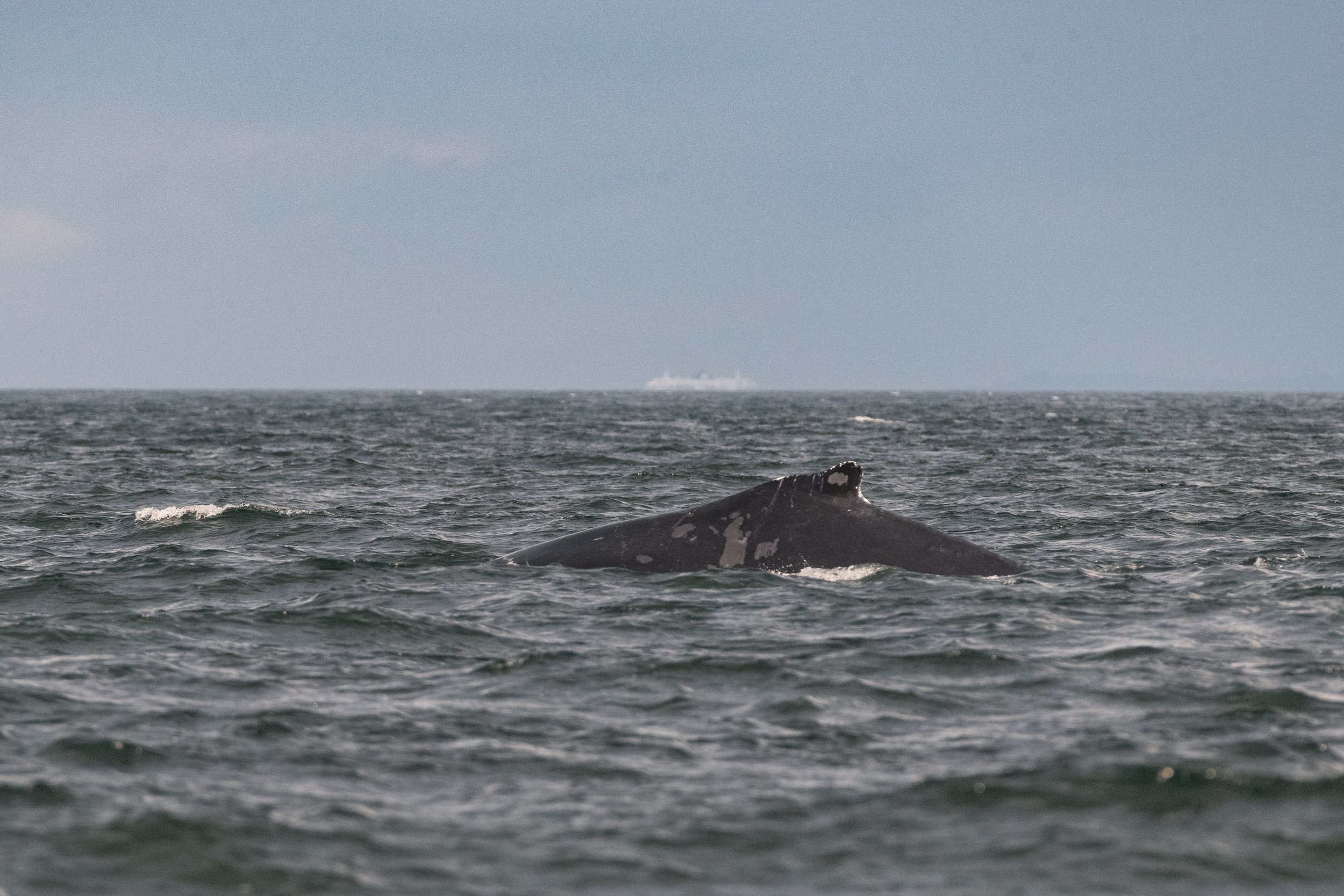
Chi’s unique dorsal fin.
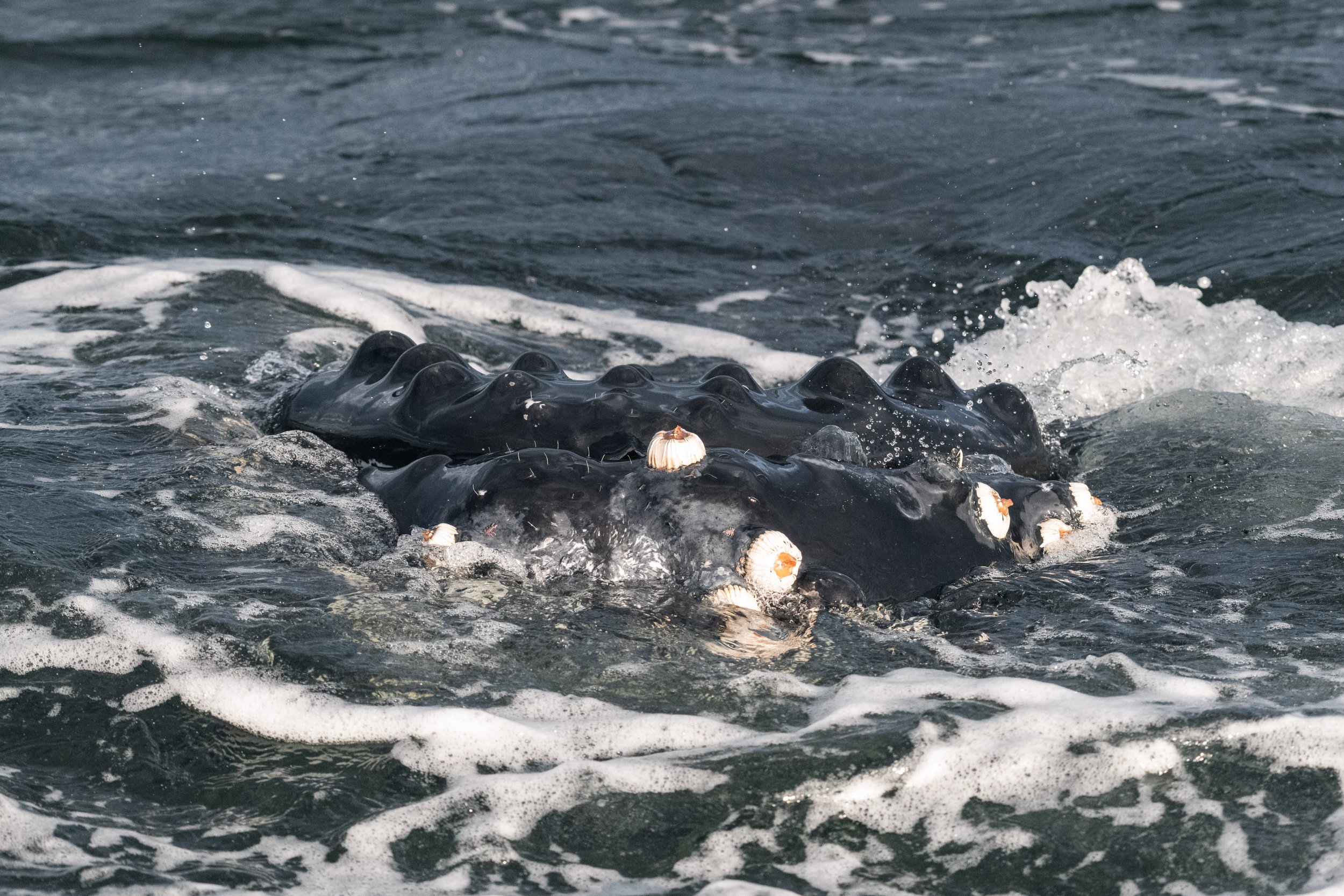
Can you spot the hairs on Chi’s rostrum?
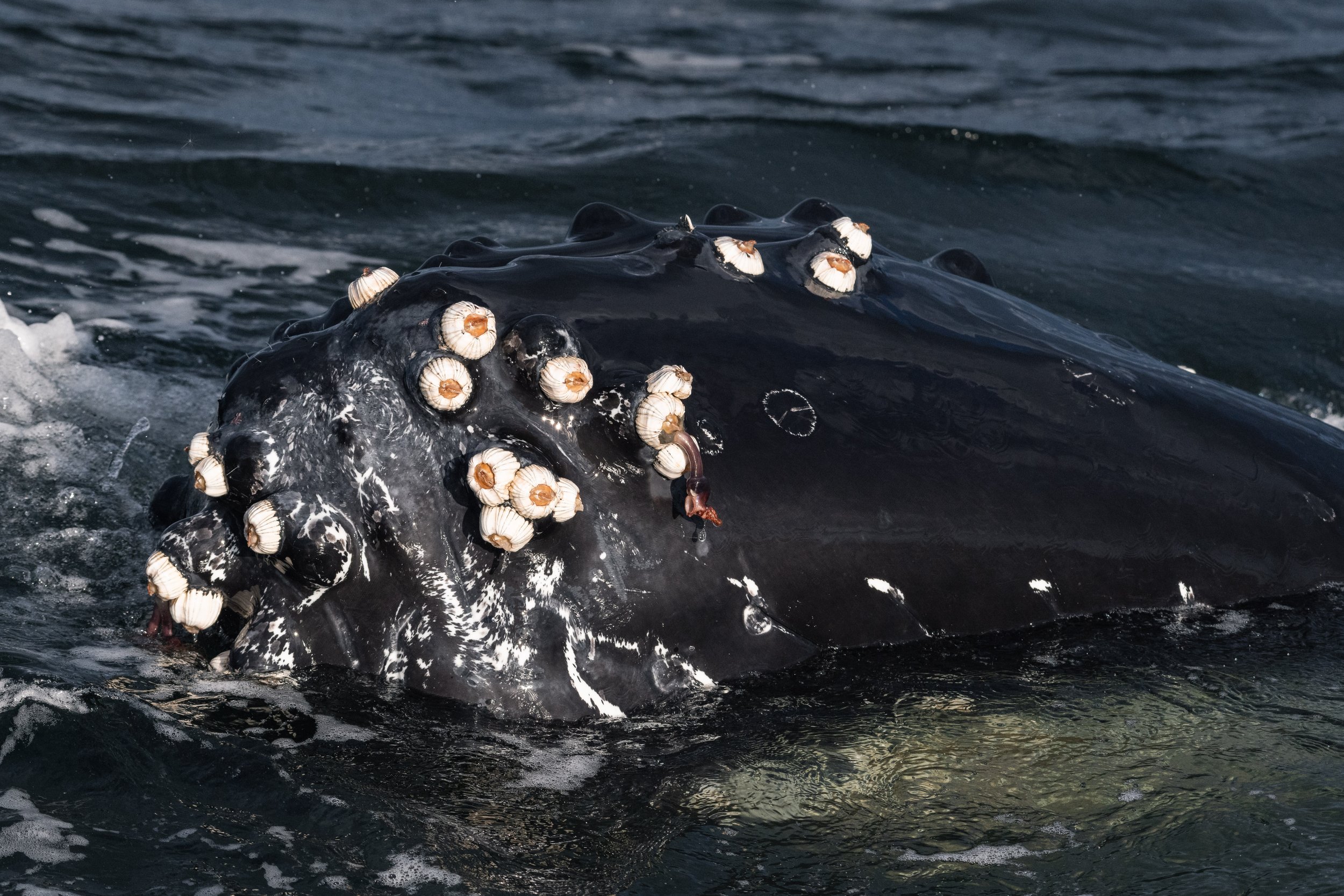
Chi showing off his barnacles.
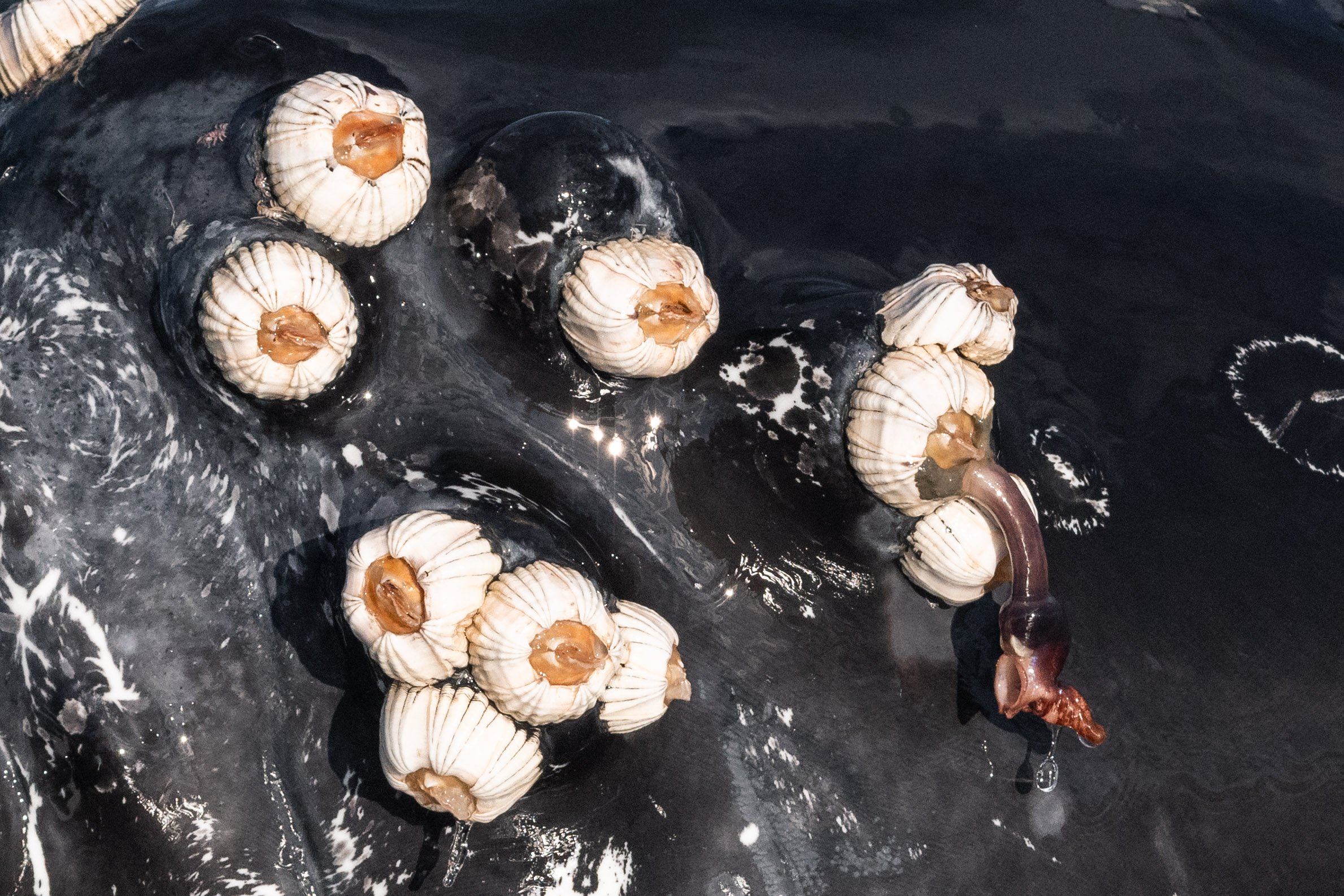
On this close up you can spot Humpback Whale Acorn Barnacles, Rabbit Eared Gooseneck Barnacles, and even Humpback Whale Lice! No wonder he was jumping to try and get some of these off.
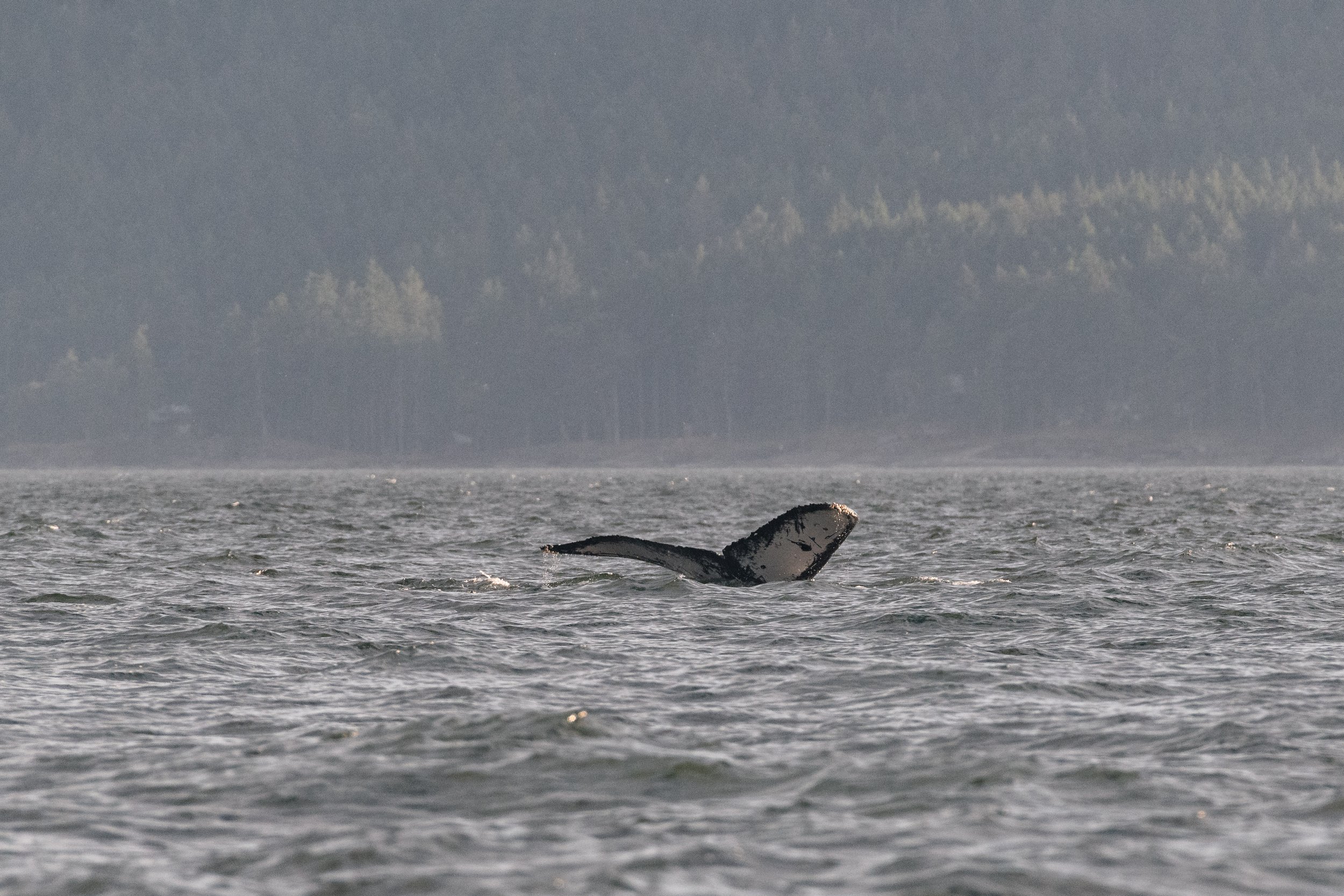
The beautiful underside of Chi’s tail as he dives.
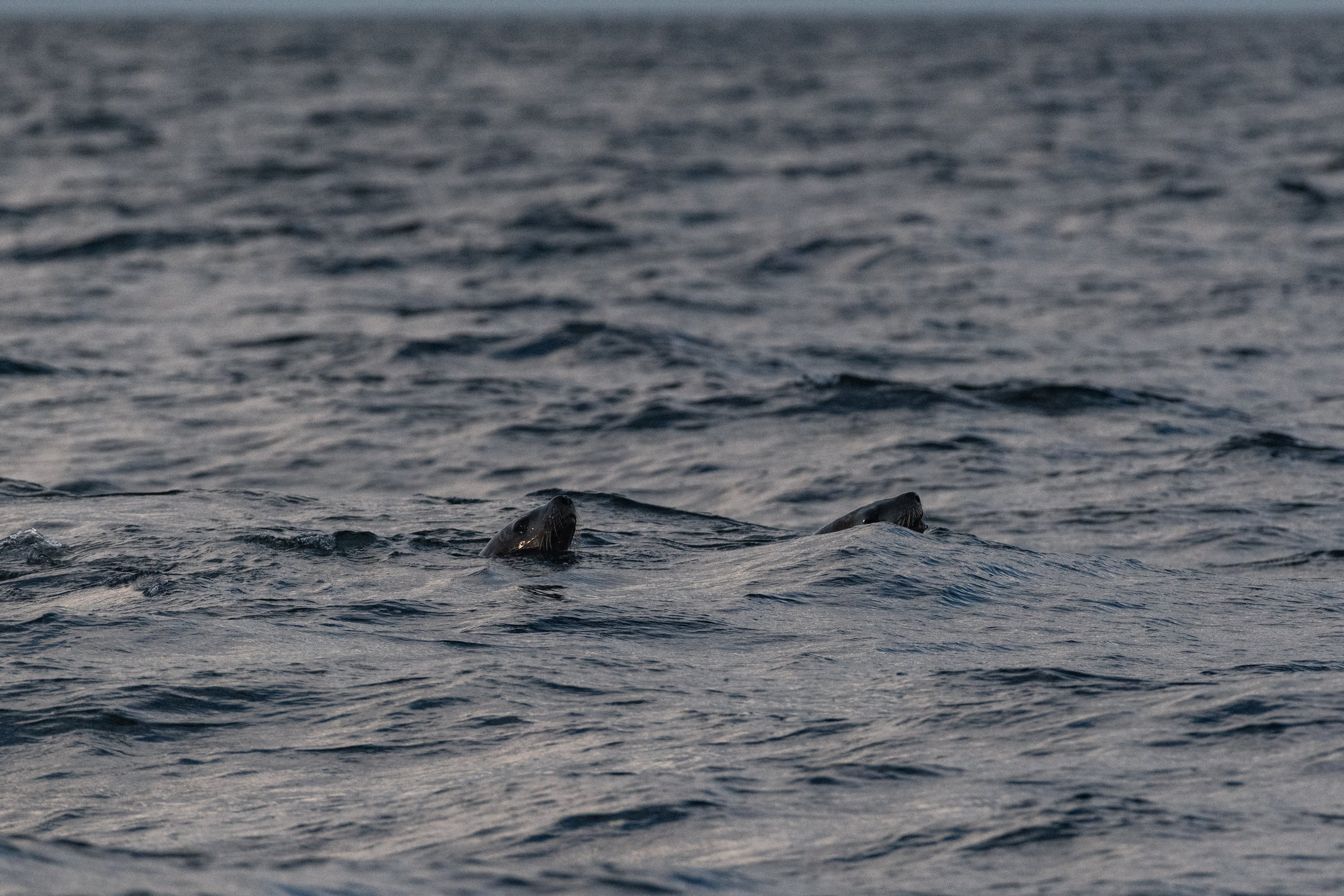
Steller Sea Lions swimming by.
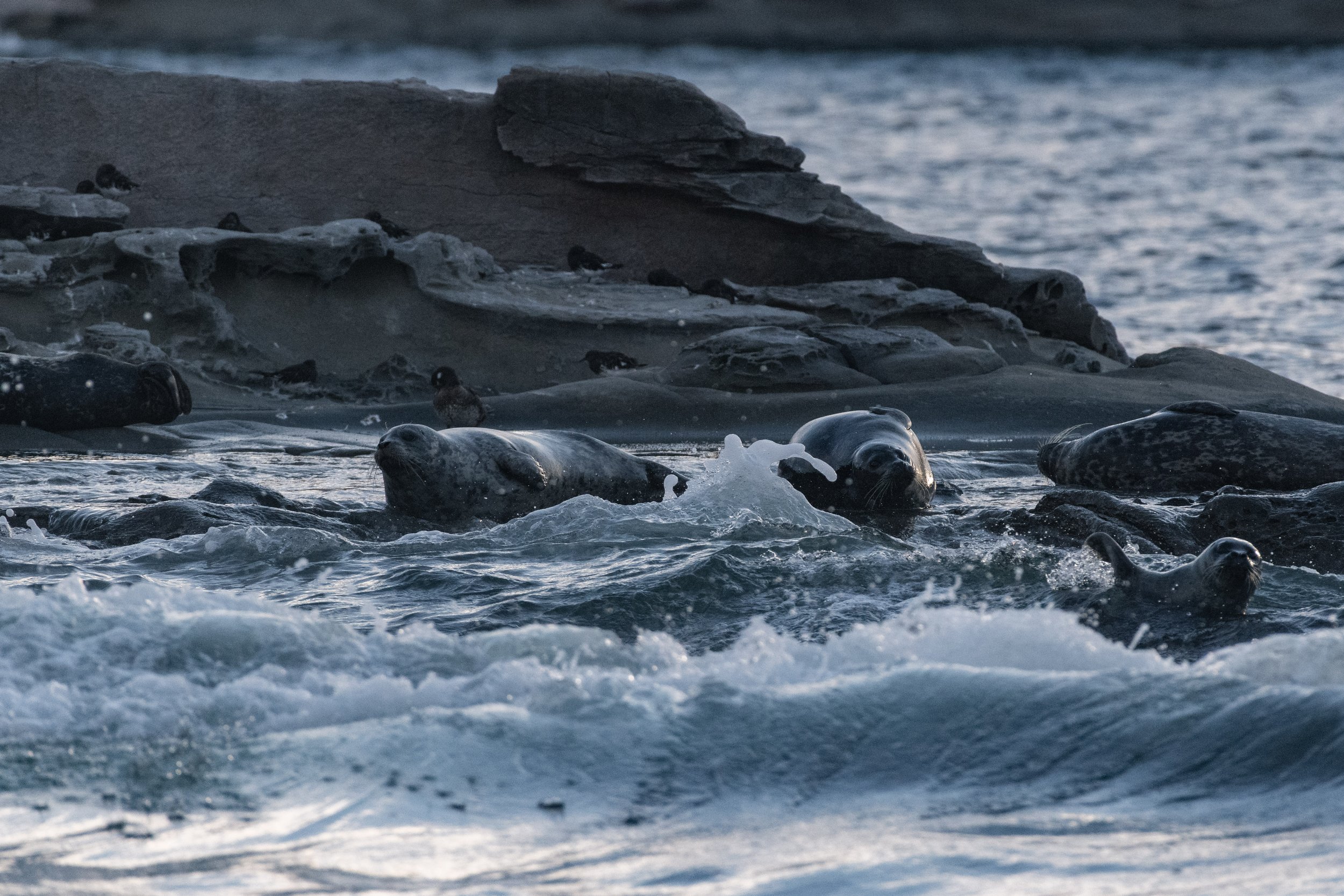
Some Harbour Seals enjoying the waves.
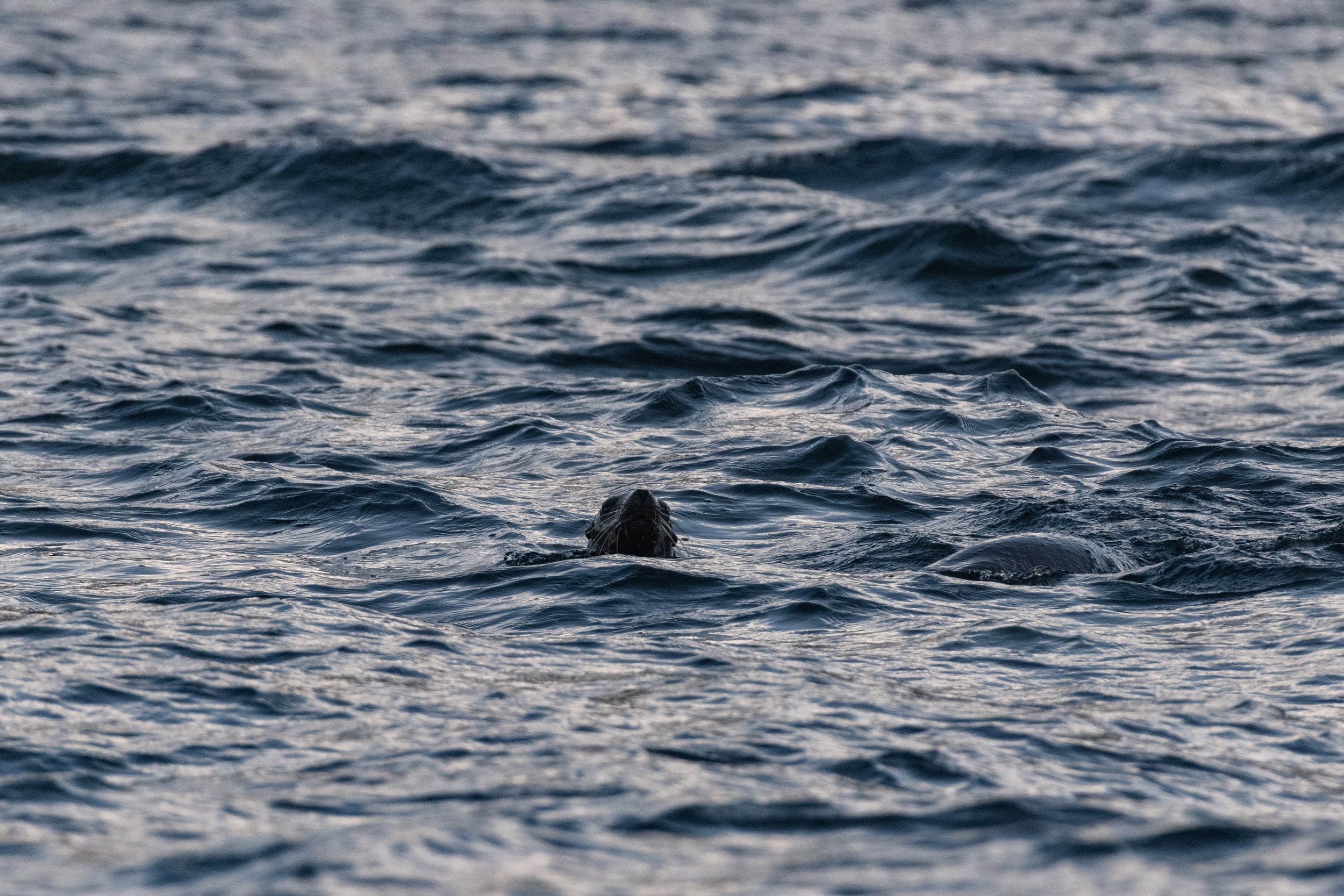
A Steller Sea Lion checking us out from the water.