
August 20, 2026, 3:30 PM - Humpbacks off of Porlier Pass, and the T101s in Ladysmith Harbour
A quiet afternoon greeted us as we settled onboard Kula. Naturalist Evan chatted about what we could potentially find during the trip, and soon after, we were off. We began scanning, eagerly peeking around for signs of whales.
Weaving along, scanning as we went, after a bit of searching we diverted our attention towards a different kind of wildlife. Next to Valdes Island, one of the outermost Southern Gulf Islands, sits a small set of islets known as “Stinky Rocks”. This area is a popular haul out for many different species, including seals, sea lions, and birds. Haul outs are invaluable areas as they provide safe spots for wildlife to rest after travelling. On the shallower islets, Harbour Seals nestled into the rocks, content to snooze the evening away. On the taller islets, large and excitable Steller Sea Lions blundered along, pushing at each other for the best nap spots. Stinky Rocks is situated just outside Gabriola Pass, meaning it is also an ideal location for pinnipeds, as many of them take advantage of fish and other marine life passing through the smaller waterways to maximize their hunting success.
Once we had had our fill of time with the pinnipeds, we headed on out and began searching once again. Our travels took us south, down into the Strait of Georgia. The area outside Porlier Pass has been a hotspot for whale activity lately, and we were eager to try our luck looking around it.
That luck soon paid off, as two humpback whales came into view. With the camera raised, we began taking photos of the duo’s dorsal fins and flukes to confirm their identities. We identified them as Crater/Mensa (BCX1565) and Valiant (BCY1773). While we usually rely on individuals' flukes to confirm their identities, these two also have exceptionally unique dorsal fins to match. Crater, for example, has a blunted dorsal fin, with a couple of hills and valleys on it, giving it a ‘crater’-like appearance. Valiant’s dorsal fin has changed quite dramatically over the years, and what once used to be a rounded fin has now become very sharp and pointy. While we don’t know what caused her intense change in fin shape, it is interesting to document!
After a bit of time with these two, we headed out, eyes peeled once more. We didn’t have to look for long, though, as another trio of humpbacks was spotted close by! Once again, we took photos, compared fins and flukes, and confirmed IDs. This group consisted of three large whales and one smaller one tucked beside an adult. This was Sherwina (BCY0961), Sherwina’s 2026 calf (BCY0961Calf2026), travelling with Nike (BCX1377) and Chomper (BCX2192). The quartet travelled close together, with the adults fluking away and the young calf trying to match them. This time of the year is vital for humpback calves, as they develop their peduncle muscles and lung capacity, both bodily functions incredibly necessary for deep diving while foraging.
The sightings weren’t done yet, though, as we caught word of more whale sightings inside the Southern Gulf Islands. Making our way through the channels, we travelled along the coast of Vancouver Island, and soon made our way towards Ladysmith, a picturesque coastal city south of Nanaimo. Here, with the golden rays of the setting sun bathing the harbour, two dorsal fins were spotted gliding through the tides. One small triangular fin, paired with one tall and perfect fin. A quick glimpse was all we needed to confirm that these were the T101s:
T101 Reef ♀ (≤1969)
T101B Lagoon ♂ (1997)
These two have been travelling through the inner waters of the islands very frequently lately and have been a wonderful sight to behold every time. Estimated to be born in 1969, or potentially earlier, T101 Reef is likely one of the eldest individuals in the Transient orca population. She has had a handful of calves over the years but now lives a quieter life with her youngest surviving son, T101B Lagoon, by her side. Orca are one of the only species besides humans that are known to go through menopause and live a fairly long post-reproductive life. During these years, matriarchs pass on their wisdom to their children and grandchildren and help hunt to keep them in prime condition.
We took in the T101’s in all their glory for a bit, and soon after, we started to make our way back to home port. Heading north, we passed through Dodd Narrows and skirted through Northumberland Channel. Soon the city was in view once more, and before long, we were back at the dock, wrapping up another excellent adventure.
Please enjoy today’s photos taken by Marine Naturalist Evan Hessels.
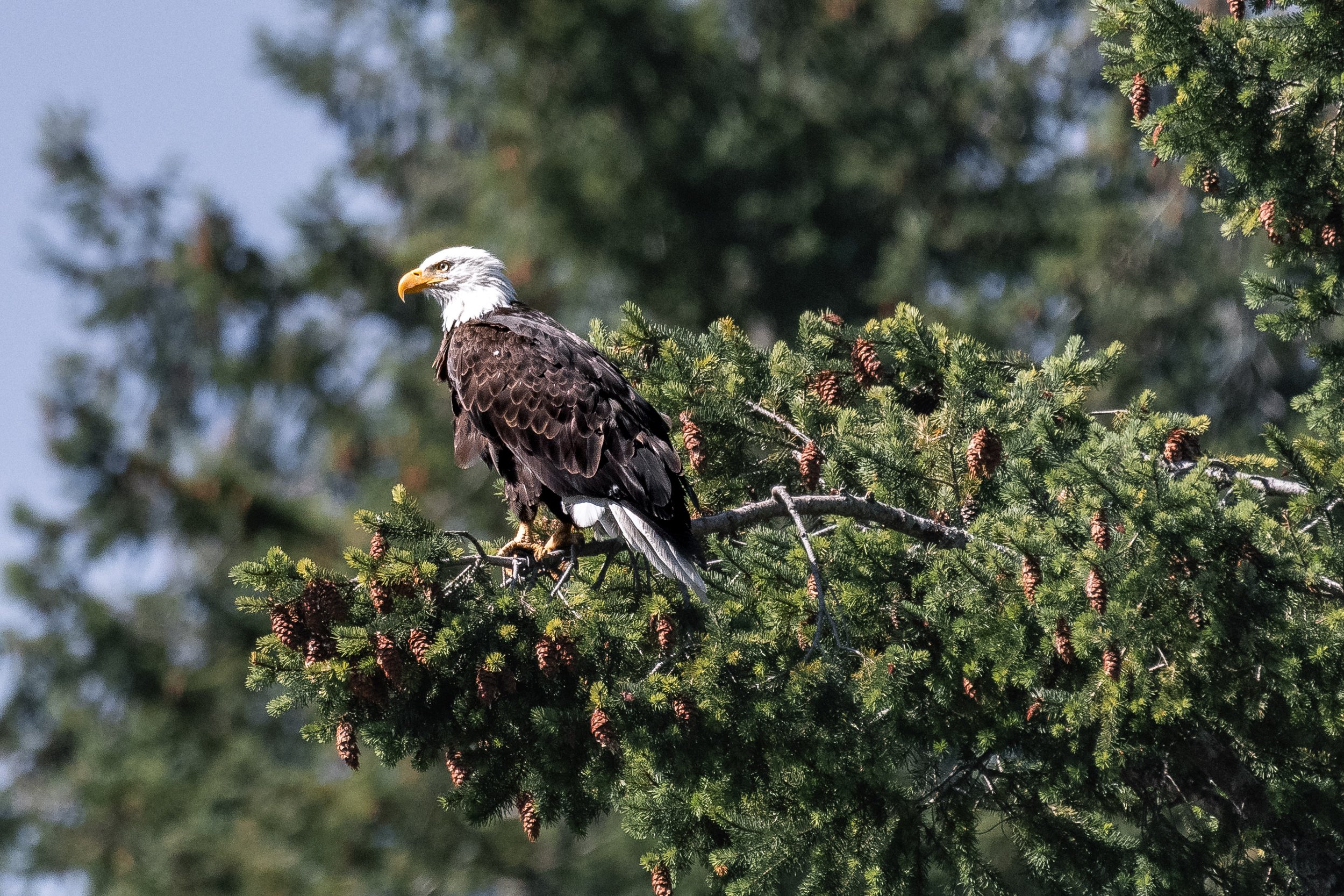
A Bald Eagle perched up on a tree.
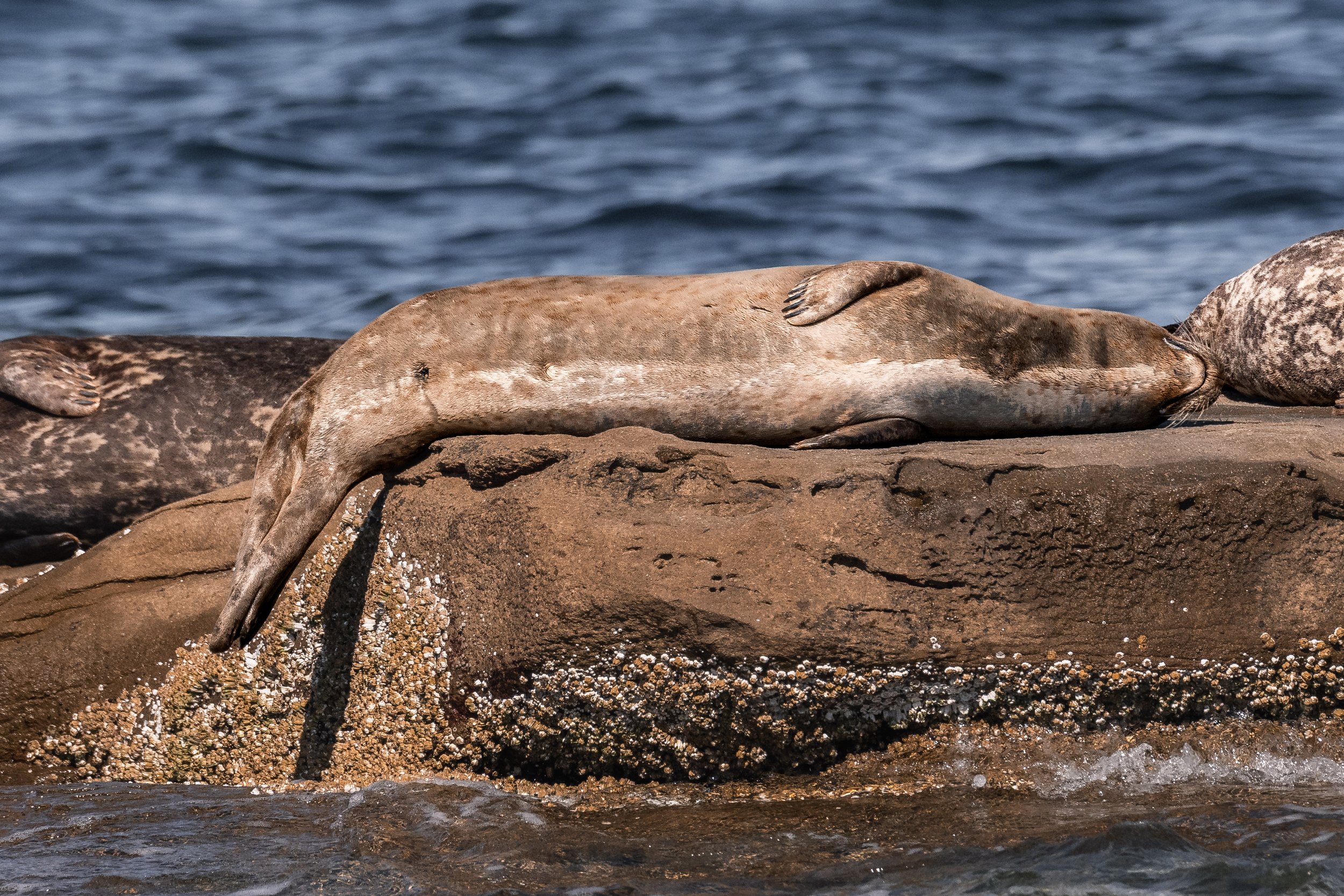
A sleepy Harbour Seal draped over the rocks.
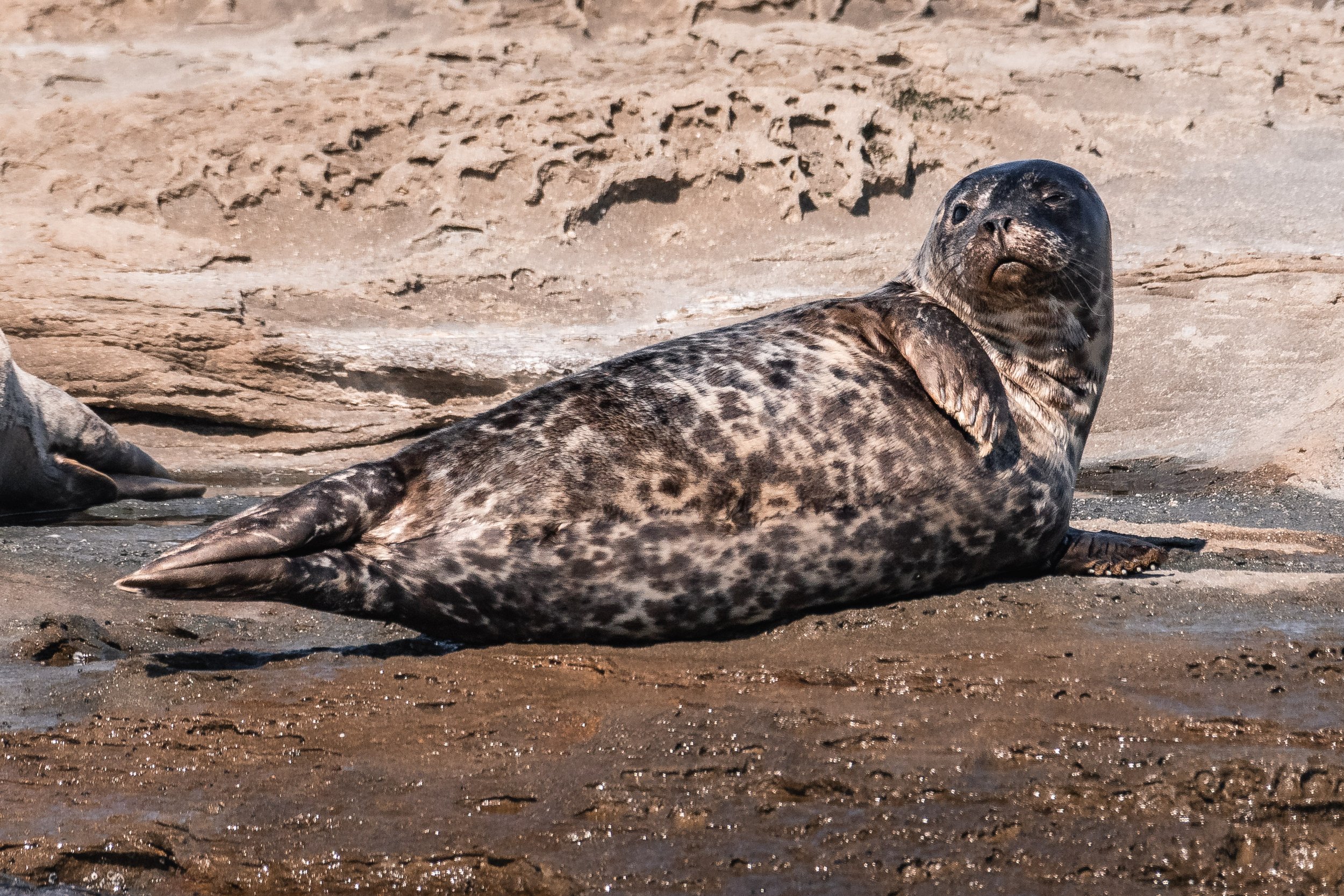
Looks like someone just woke up!
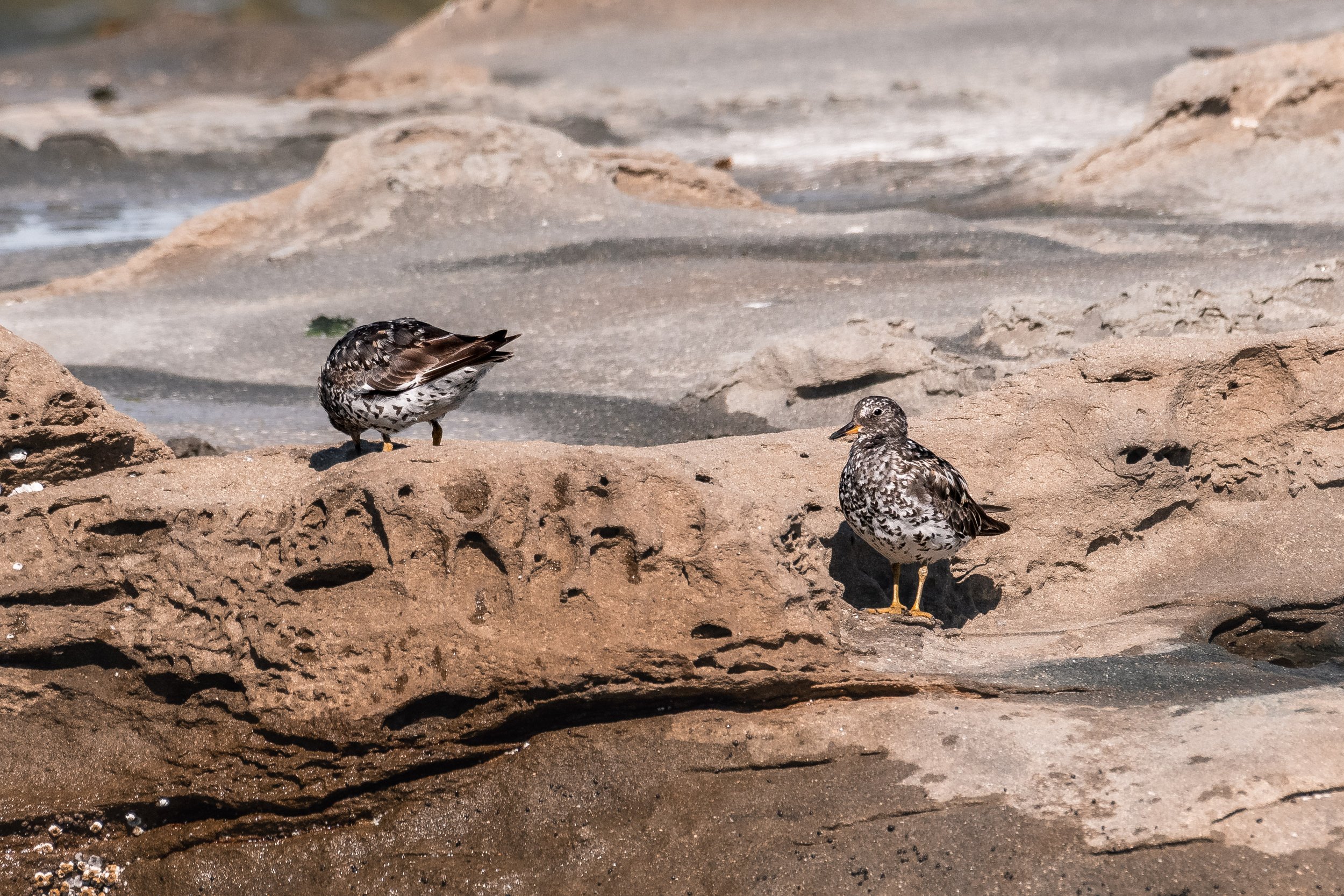
A pair of Surfbirds foraging.
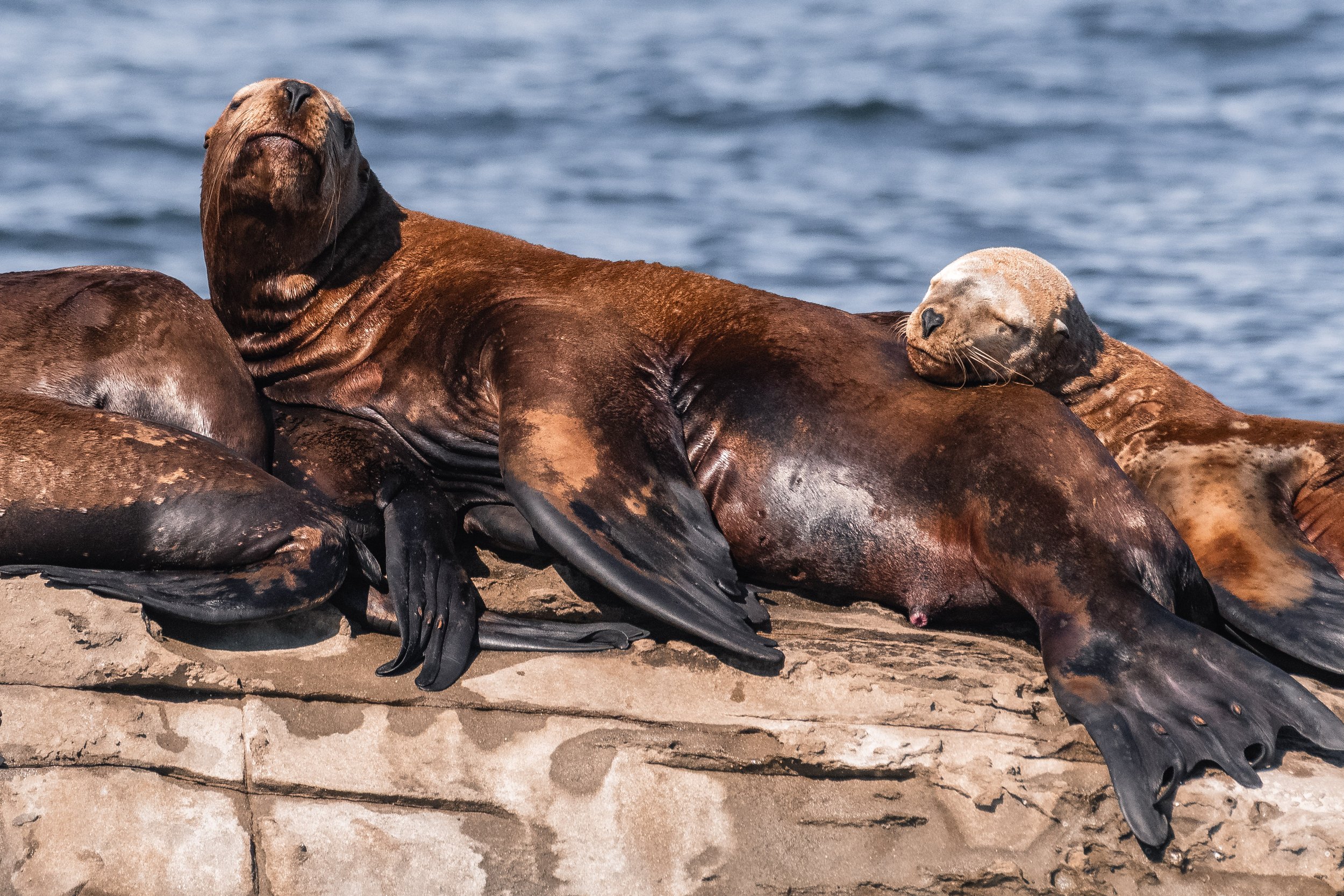
Relaxing with the Steller Sea Lions, and using eachother as a pillow!
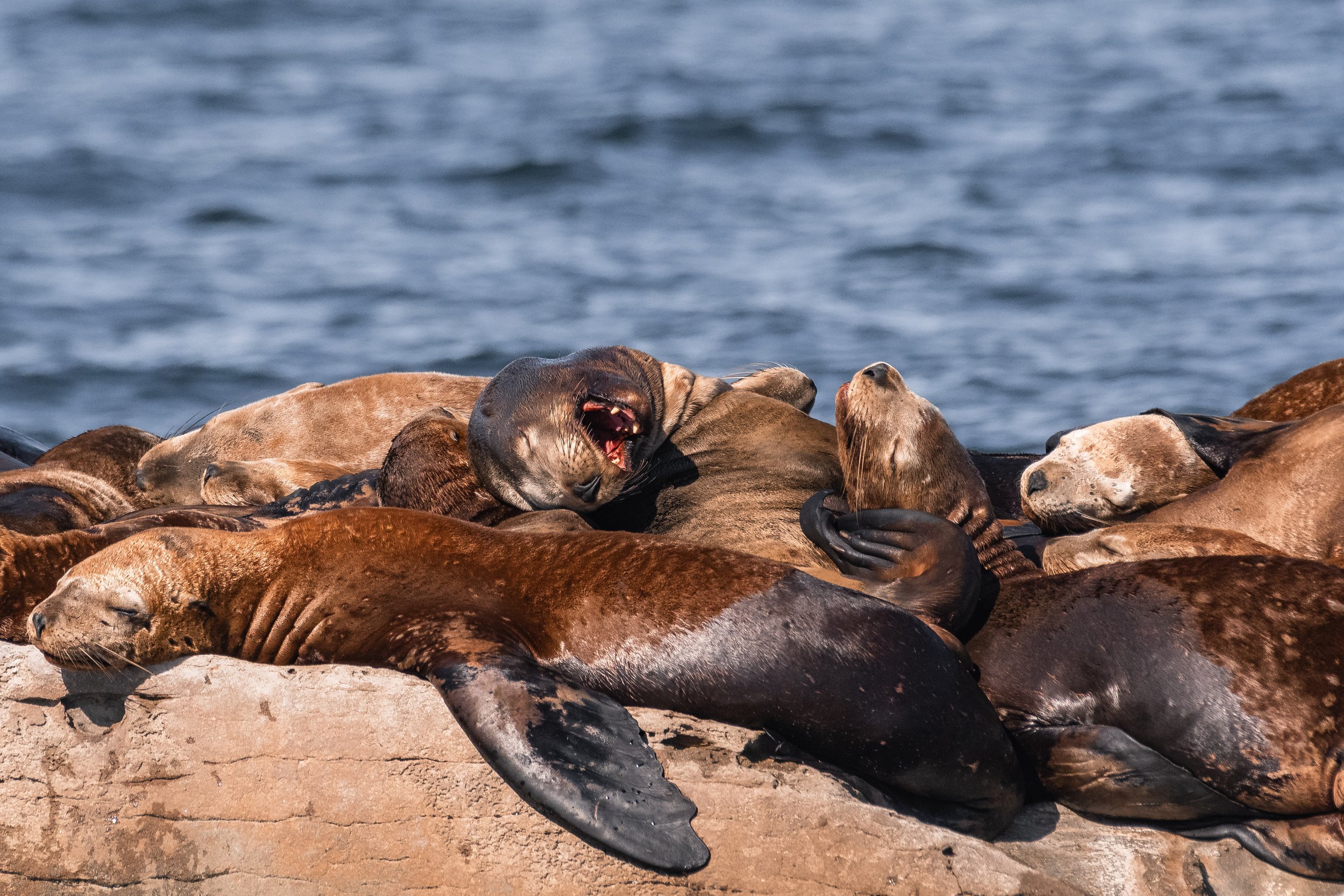
Snoring, roaring, and scratching away!
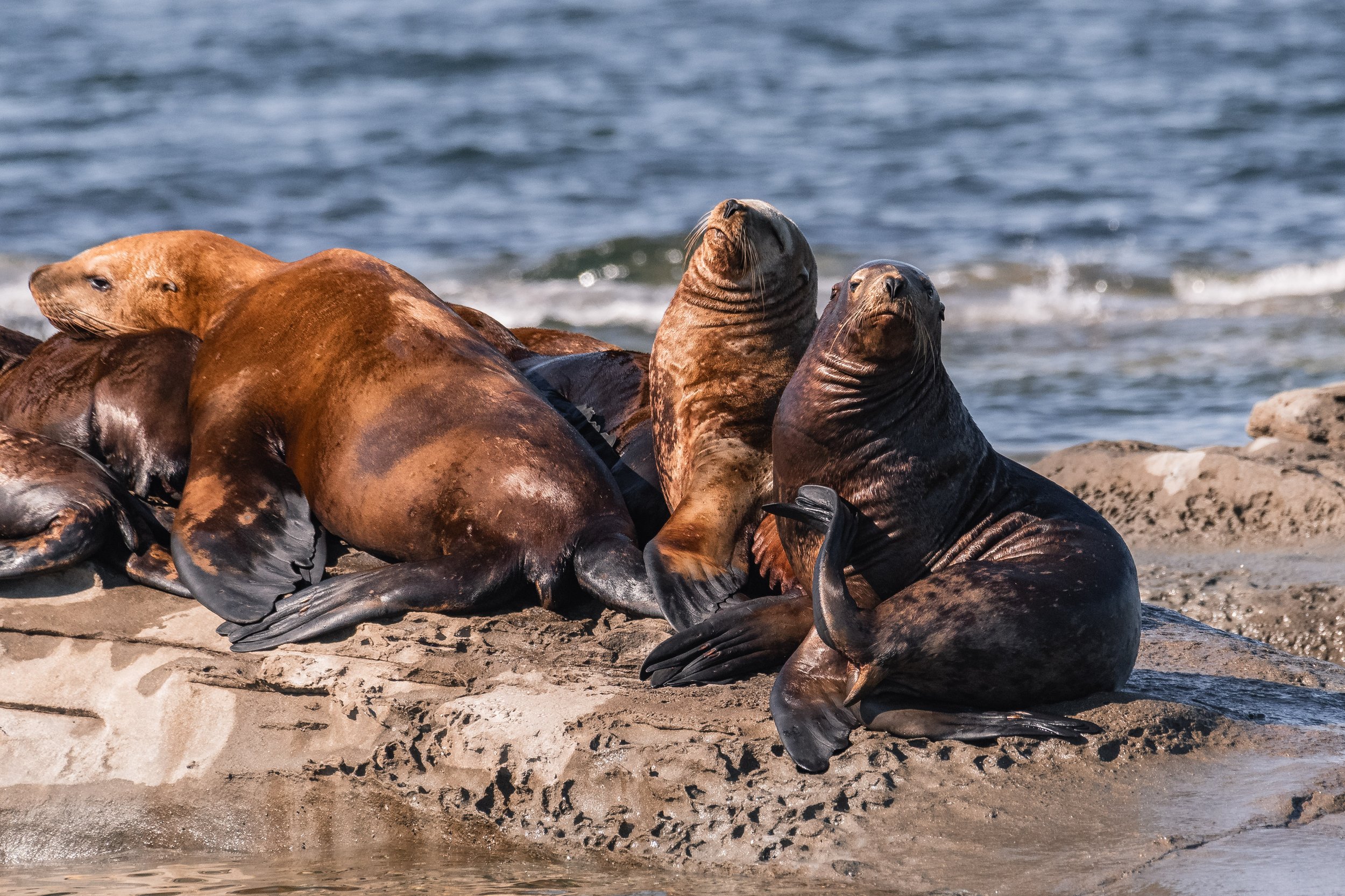
They were all very itchy and scratchy today!
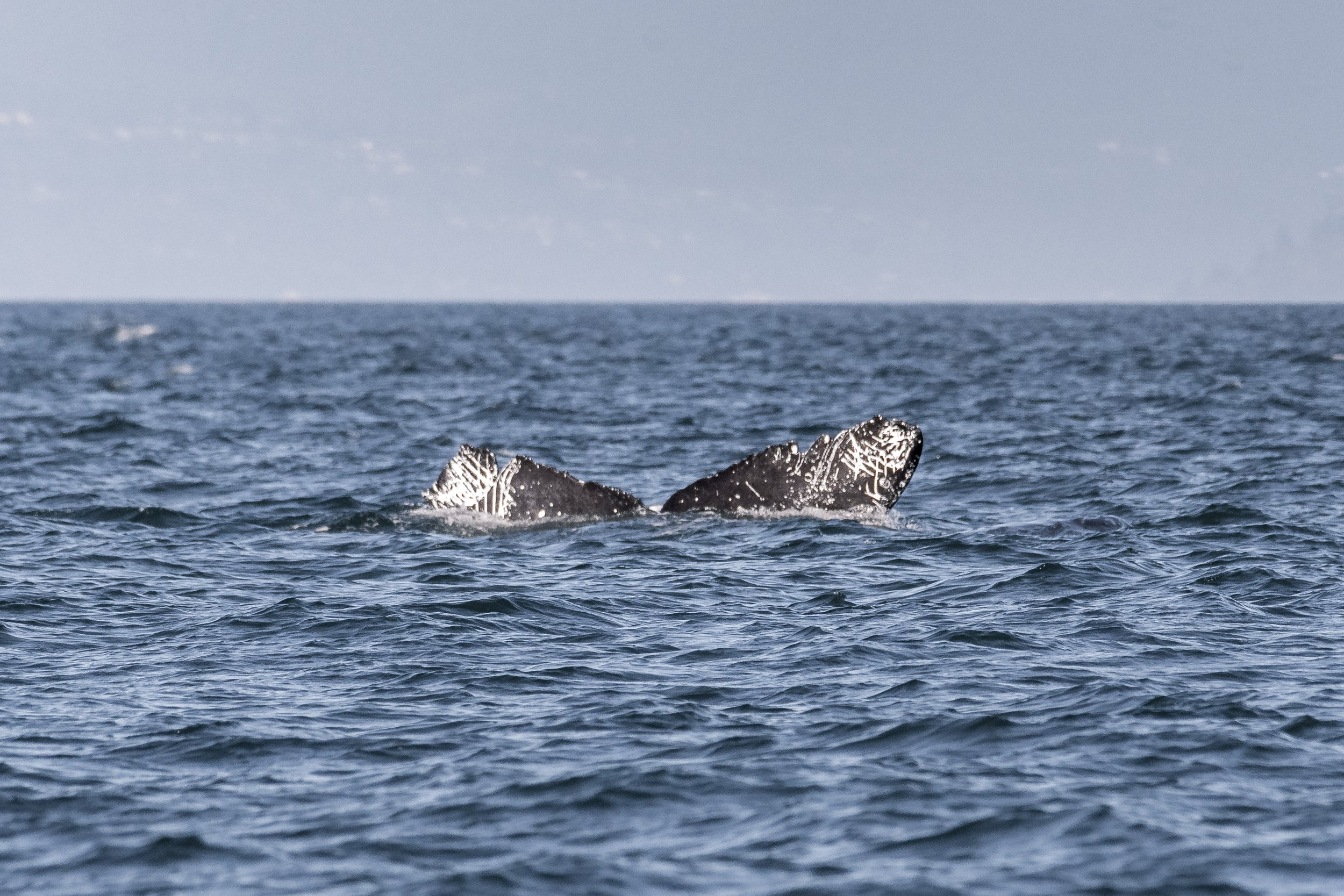
A peek at Valiant’s fluke.
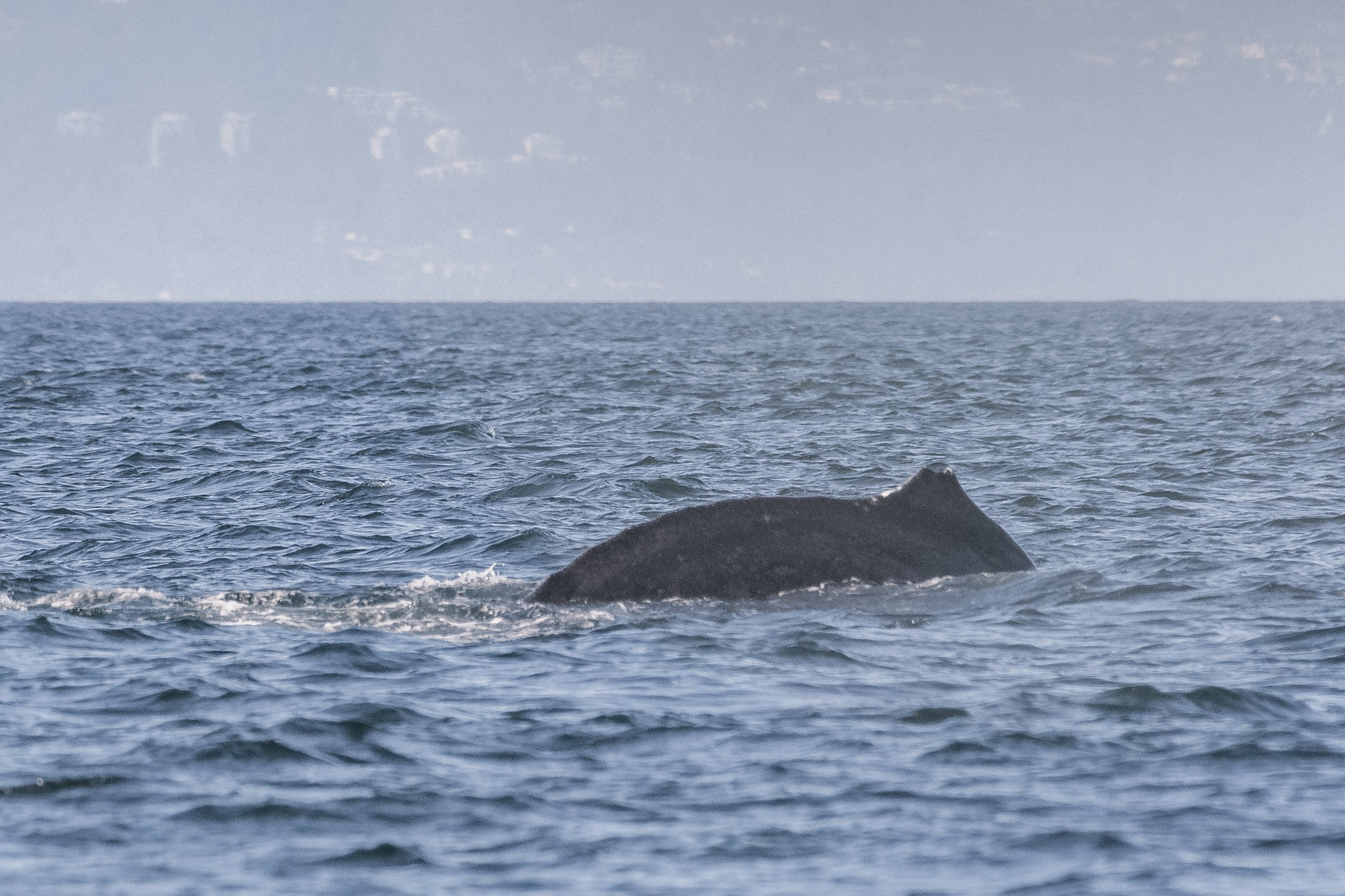
Crater going down for a dive.
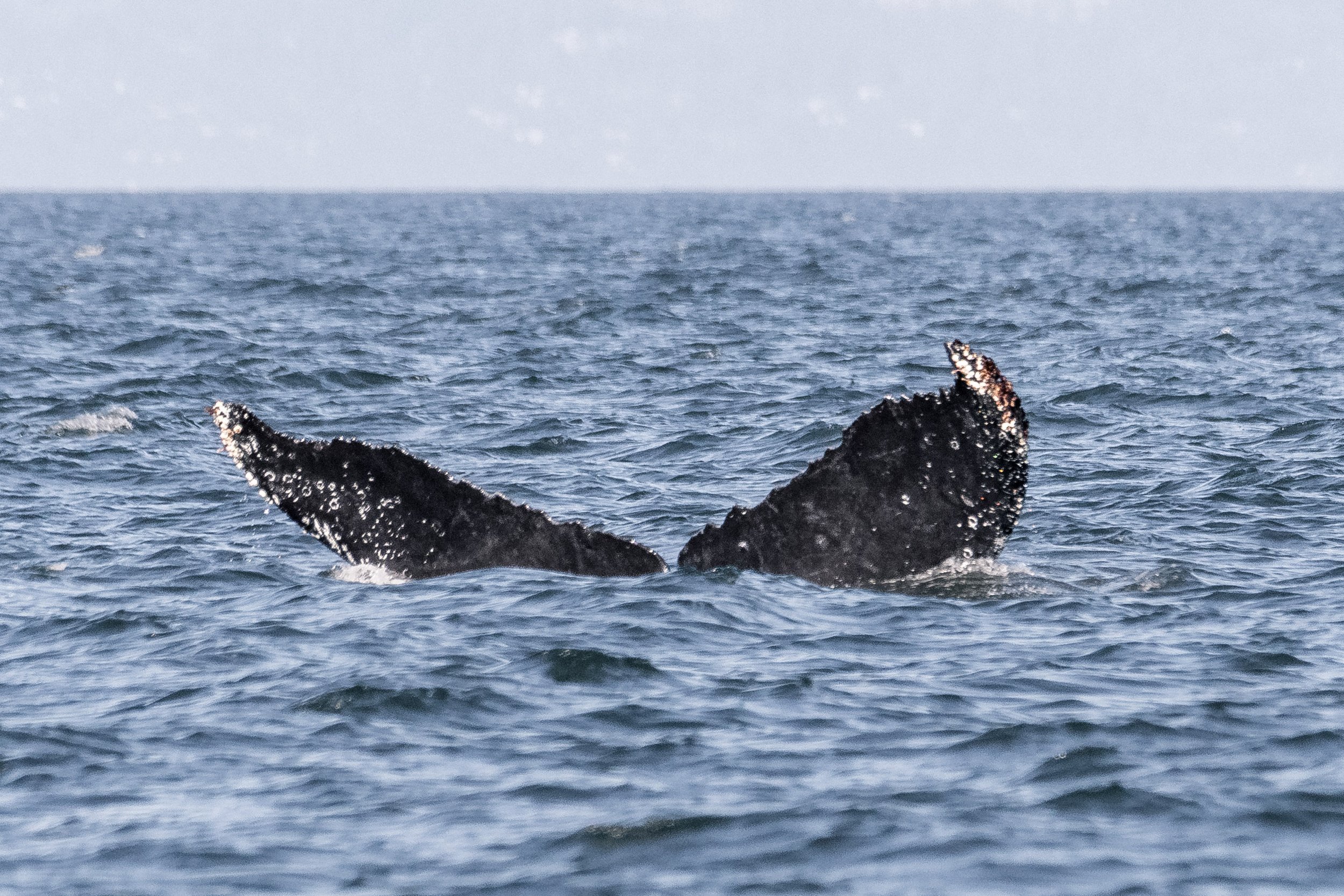
Crater fluking.
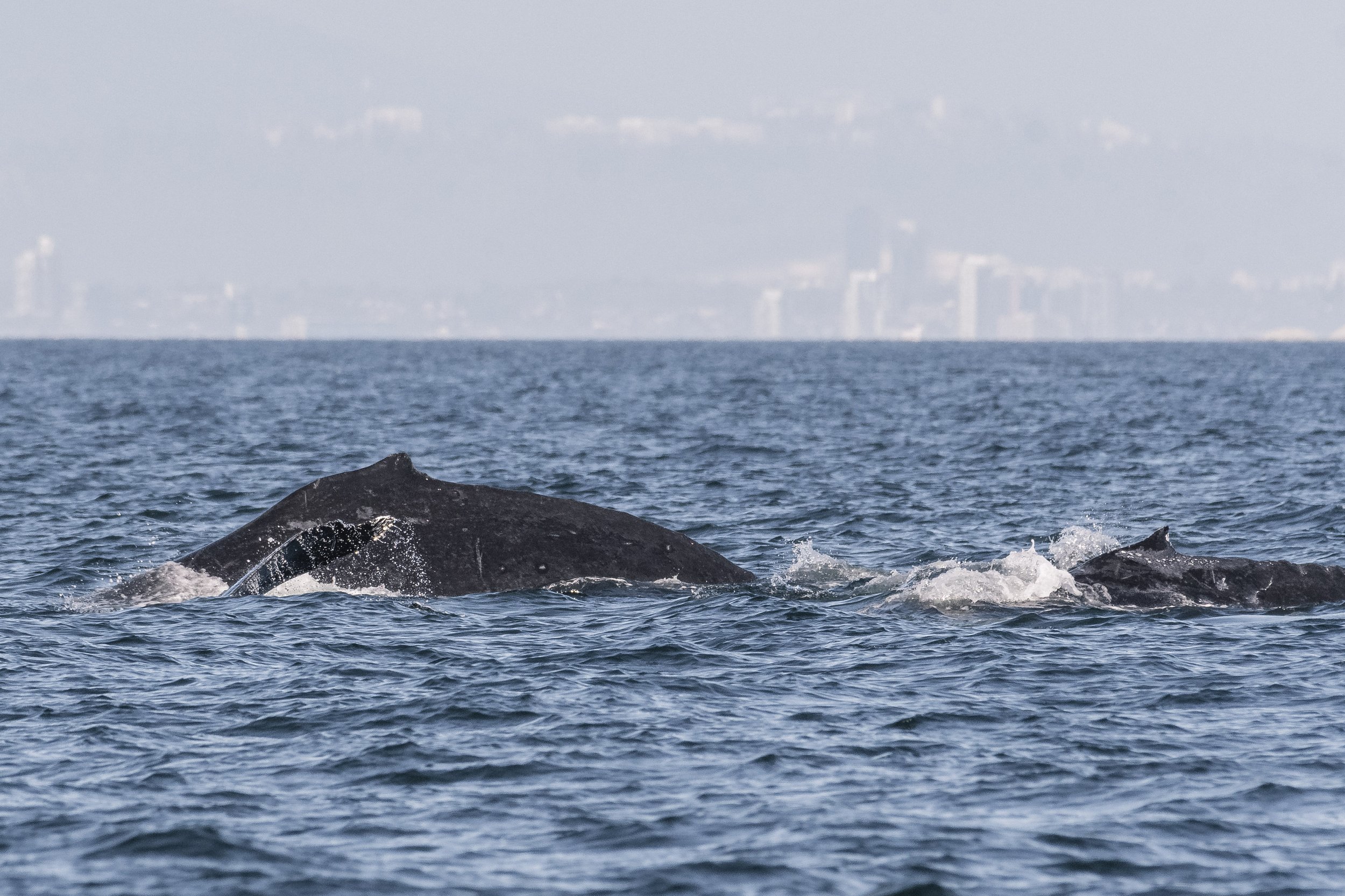
Nike in the front, with the corner of Chomper’s fluke visible, and Sherwina’s 2026 calf behind them.
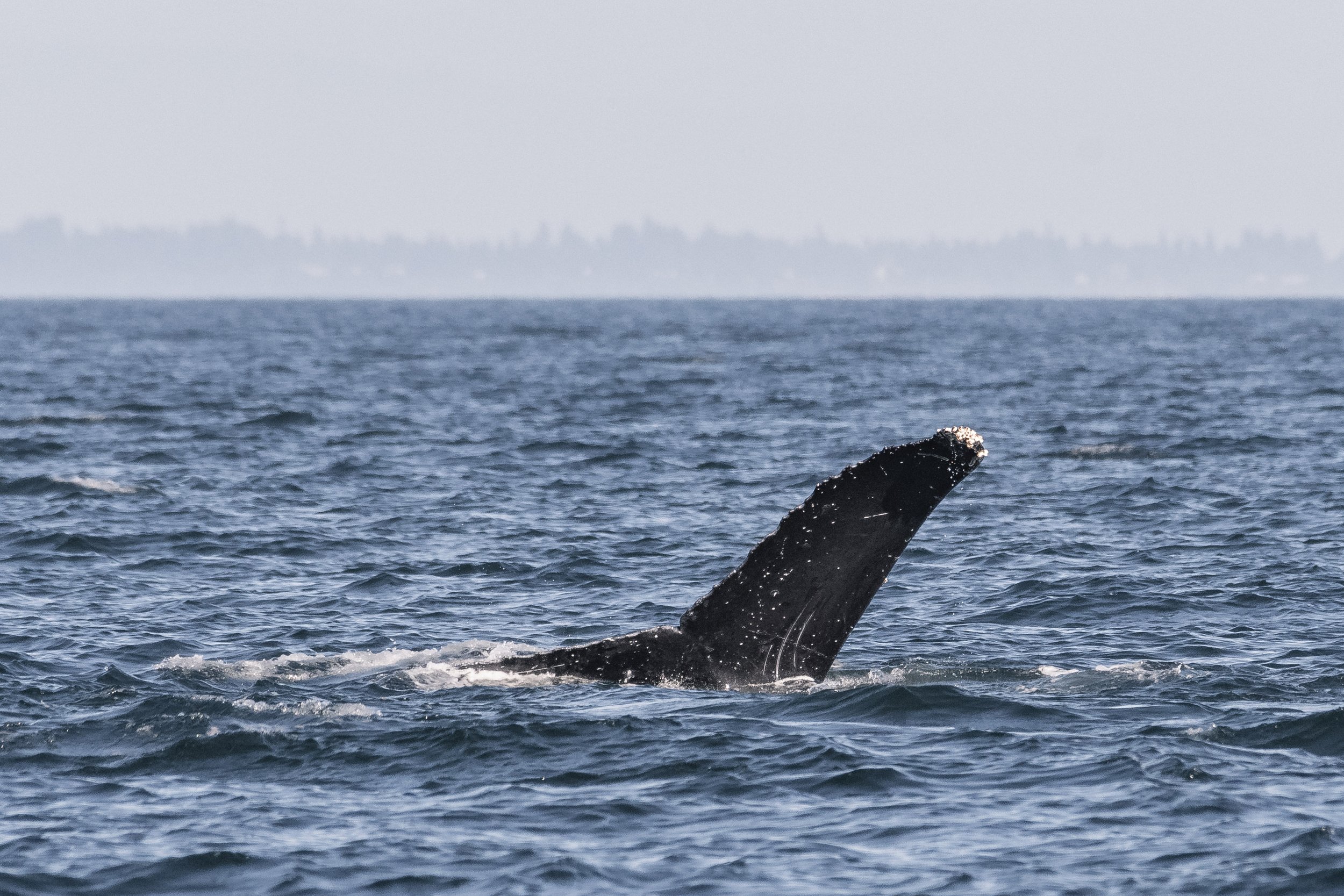
Chomper fluking, with many new markings visible.
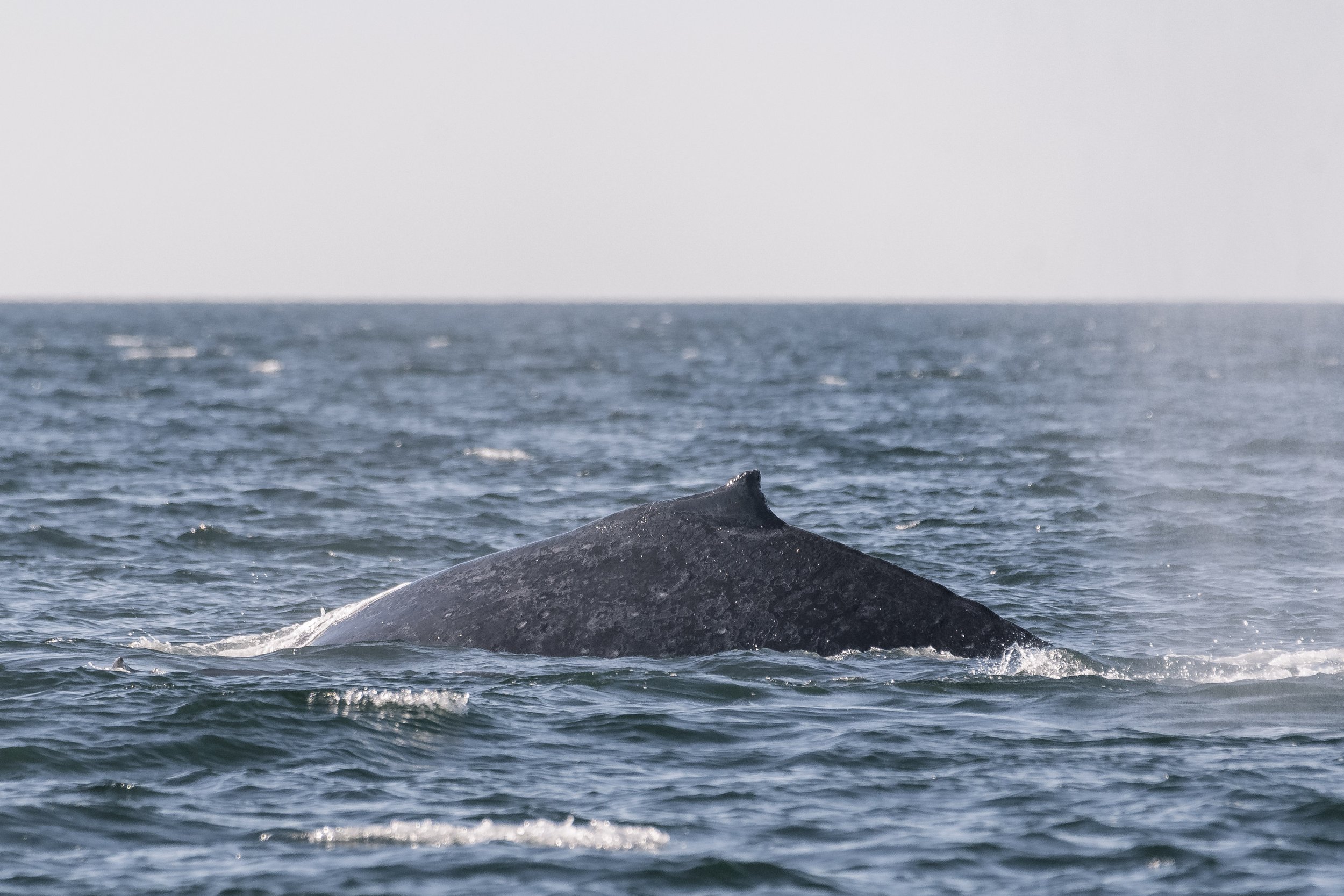
Sherwina travelling along.
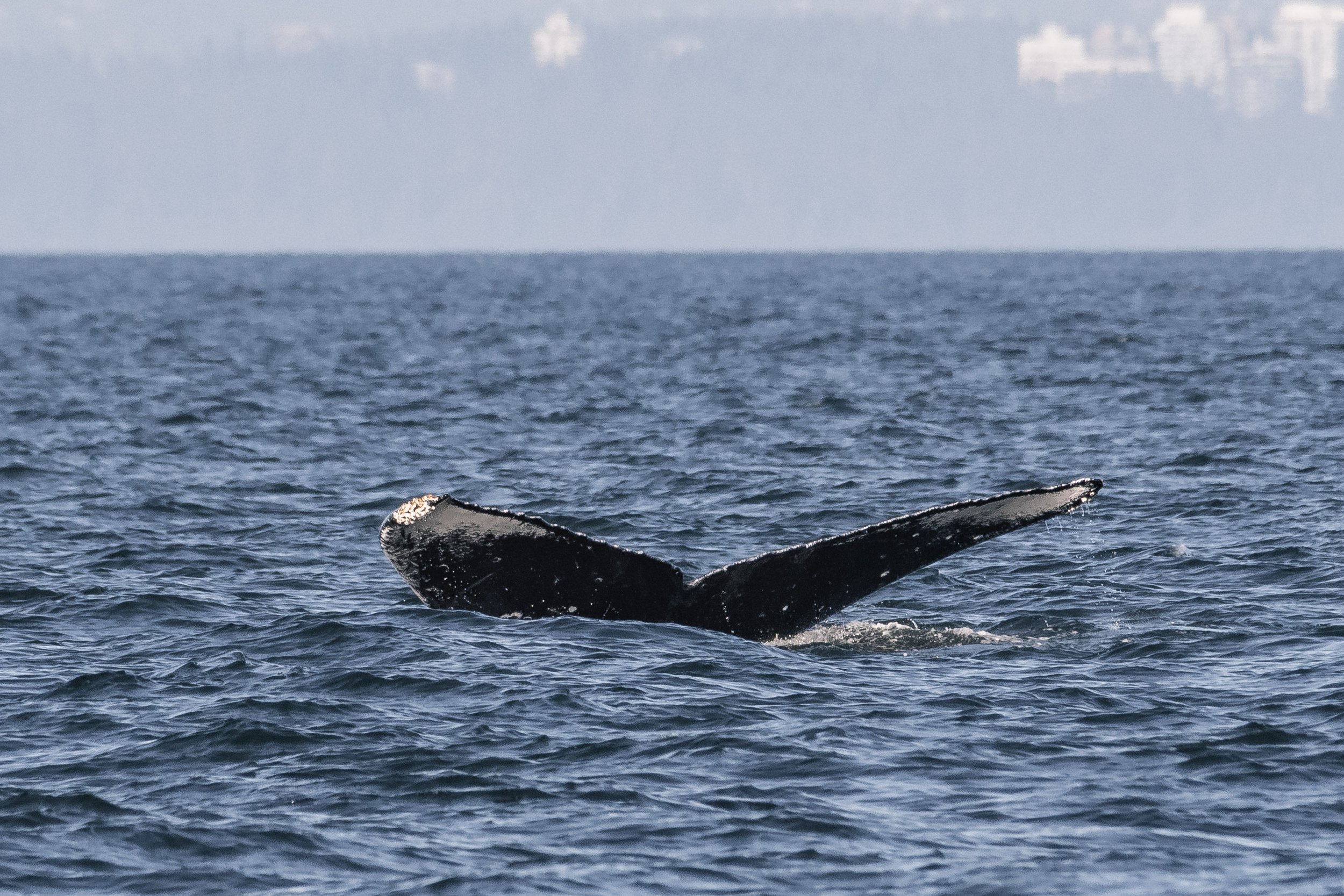
Sherwina’s beautiful ‘paint-dipped’ fluke pattern!
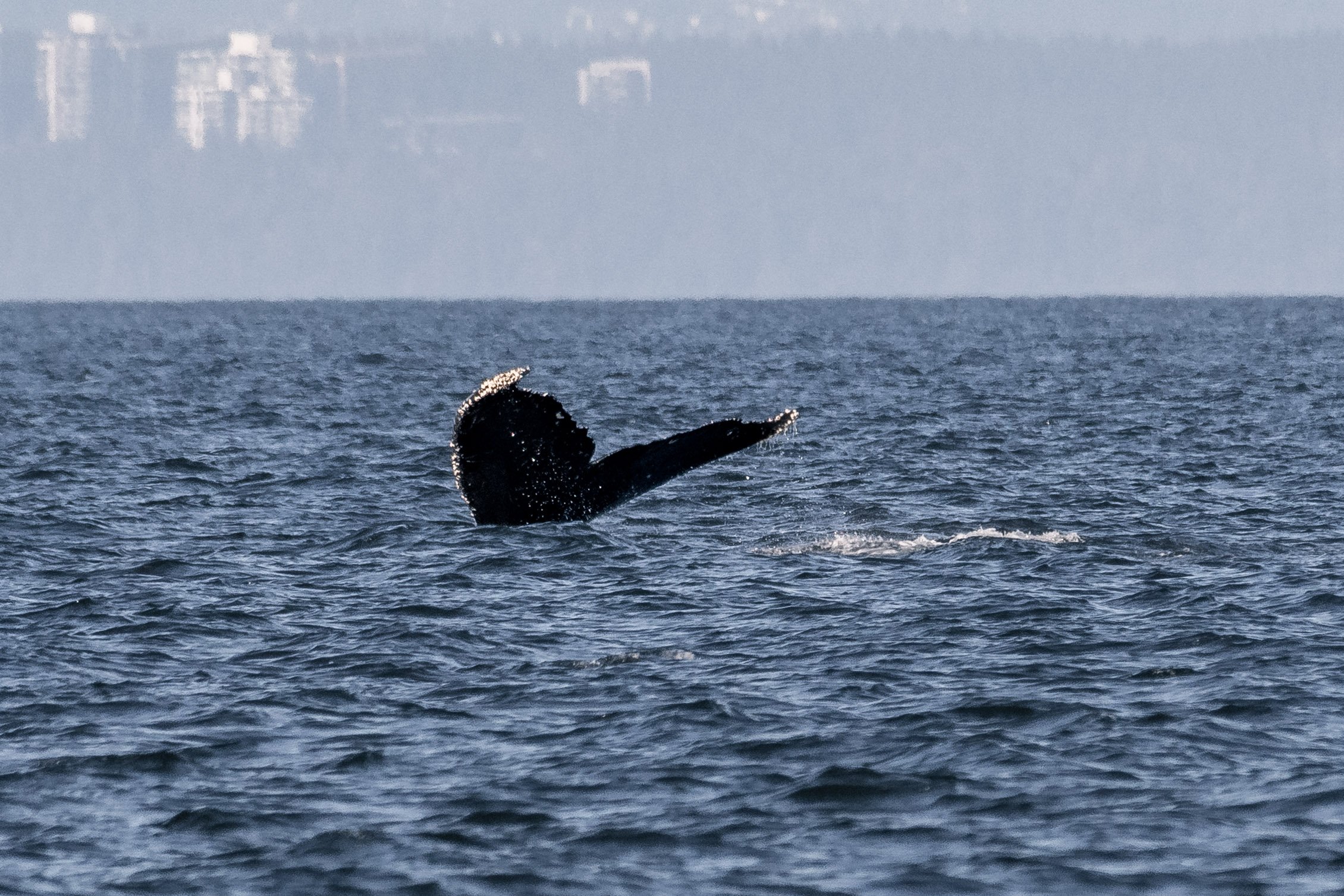
A peek at Nike’s fluke as he dives.
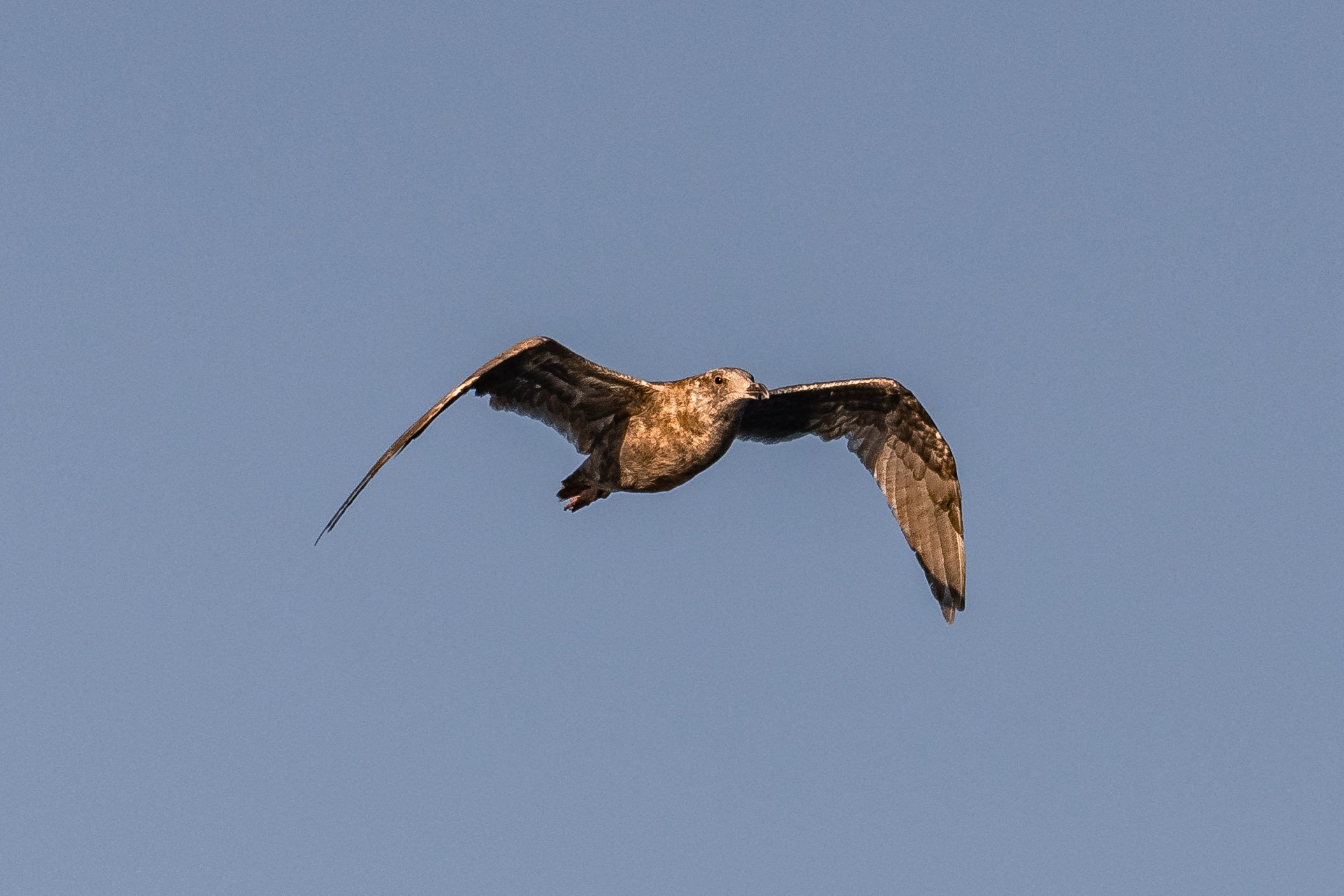
Flying on overhead.
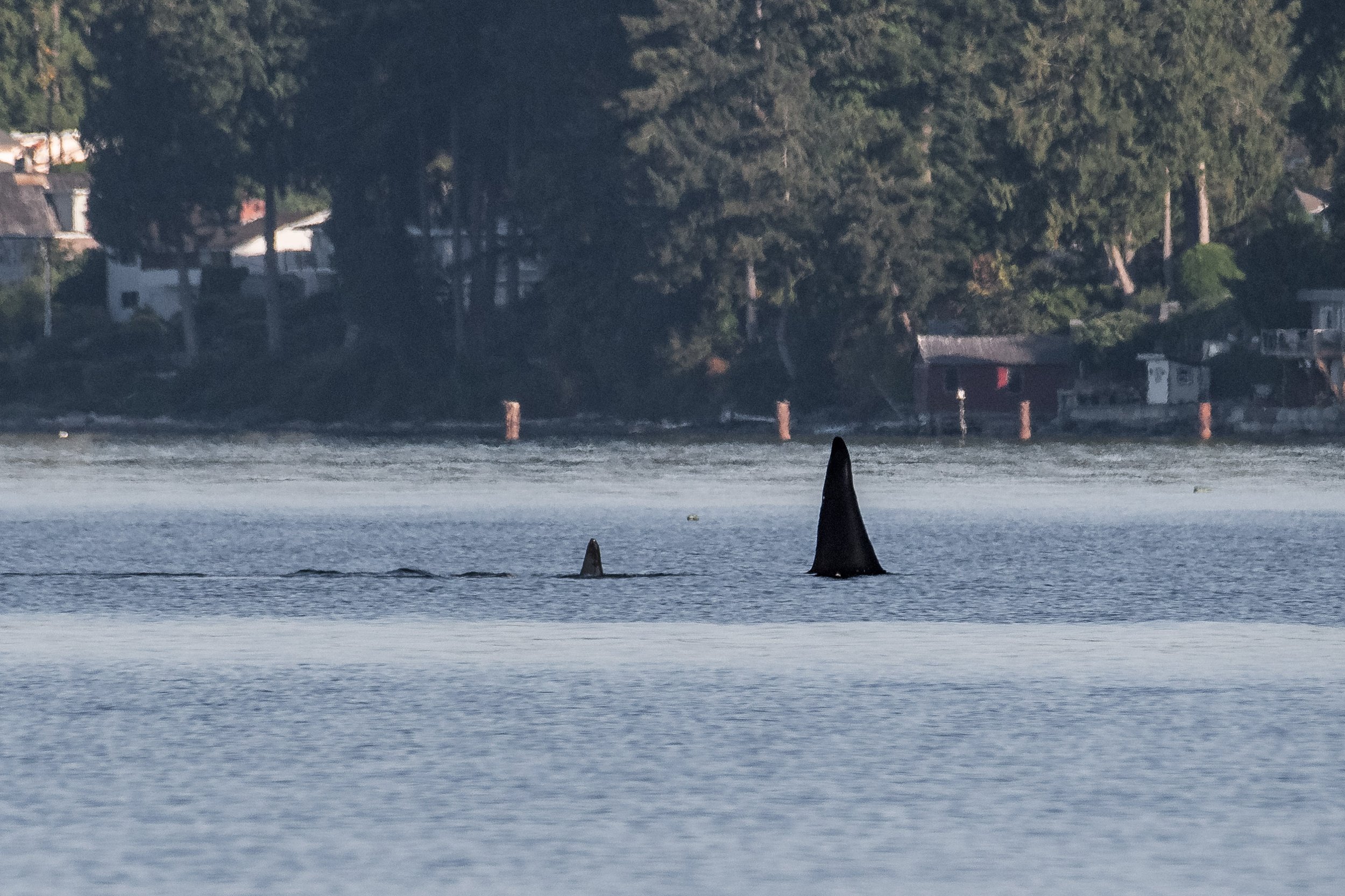
T101 Reef behind her son T101B Lagoon.
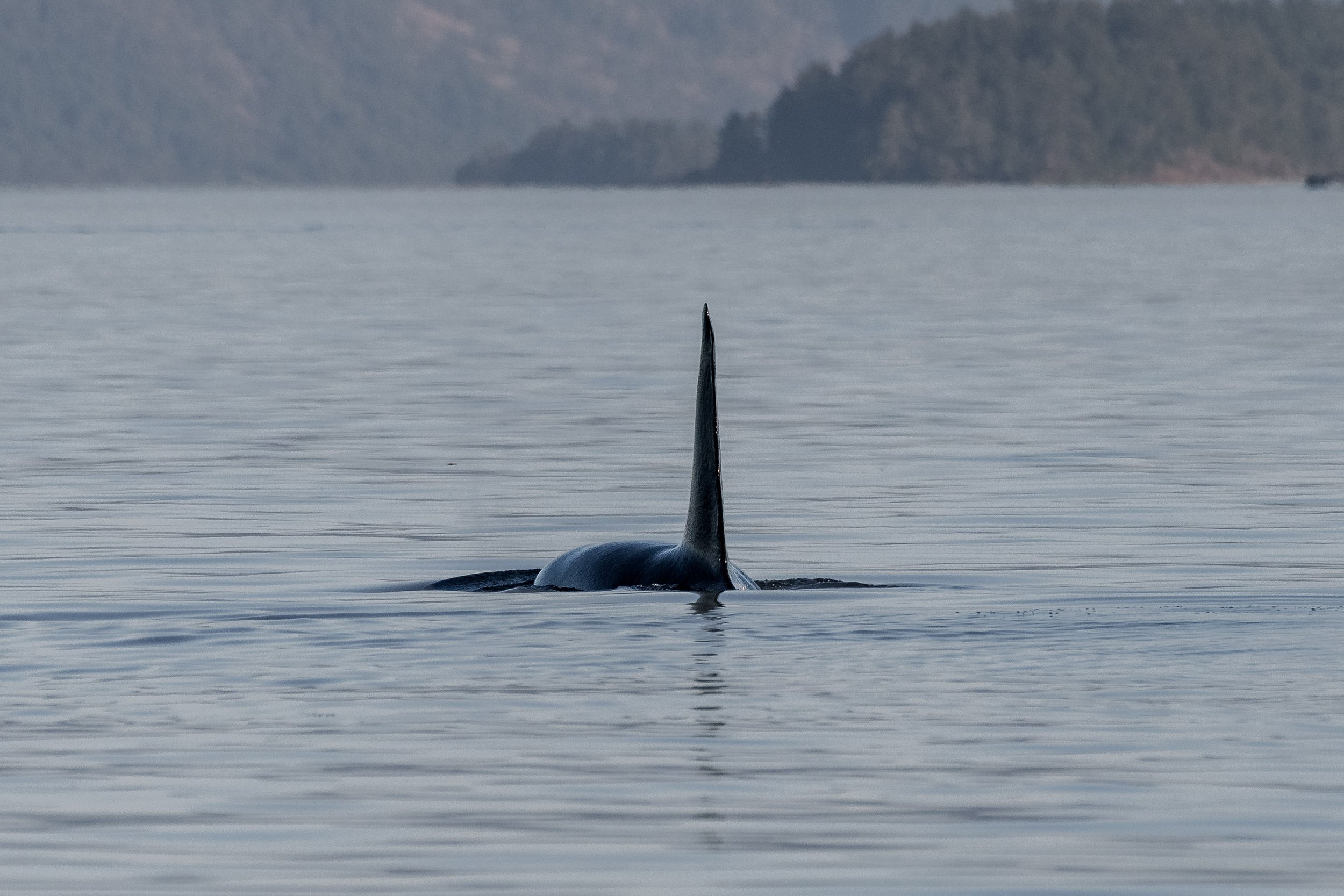
A bit of a different angle of T101B Lagoon.
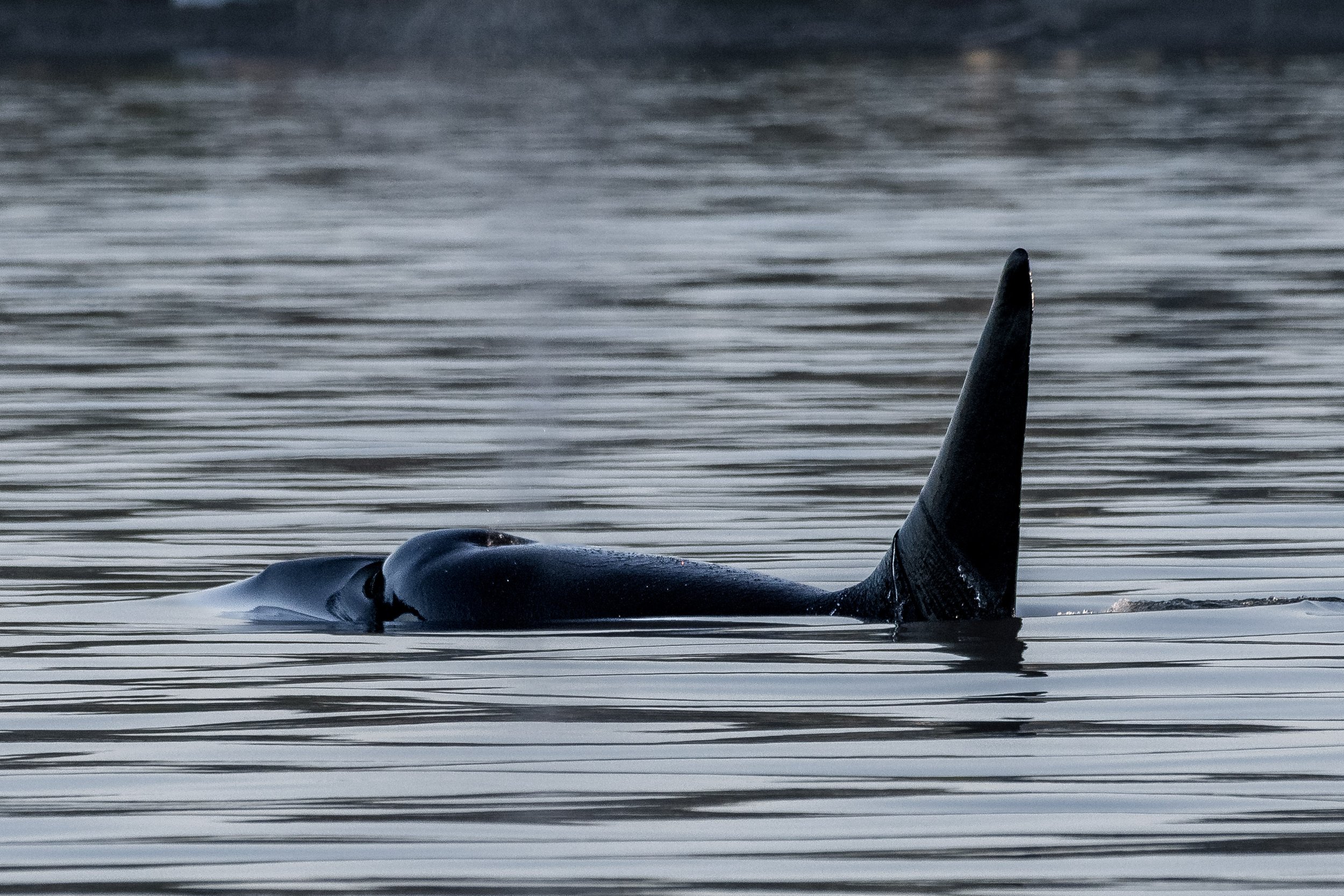
T101B Lagoon making waves.
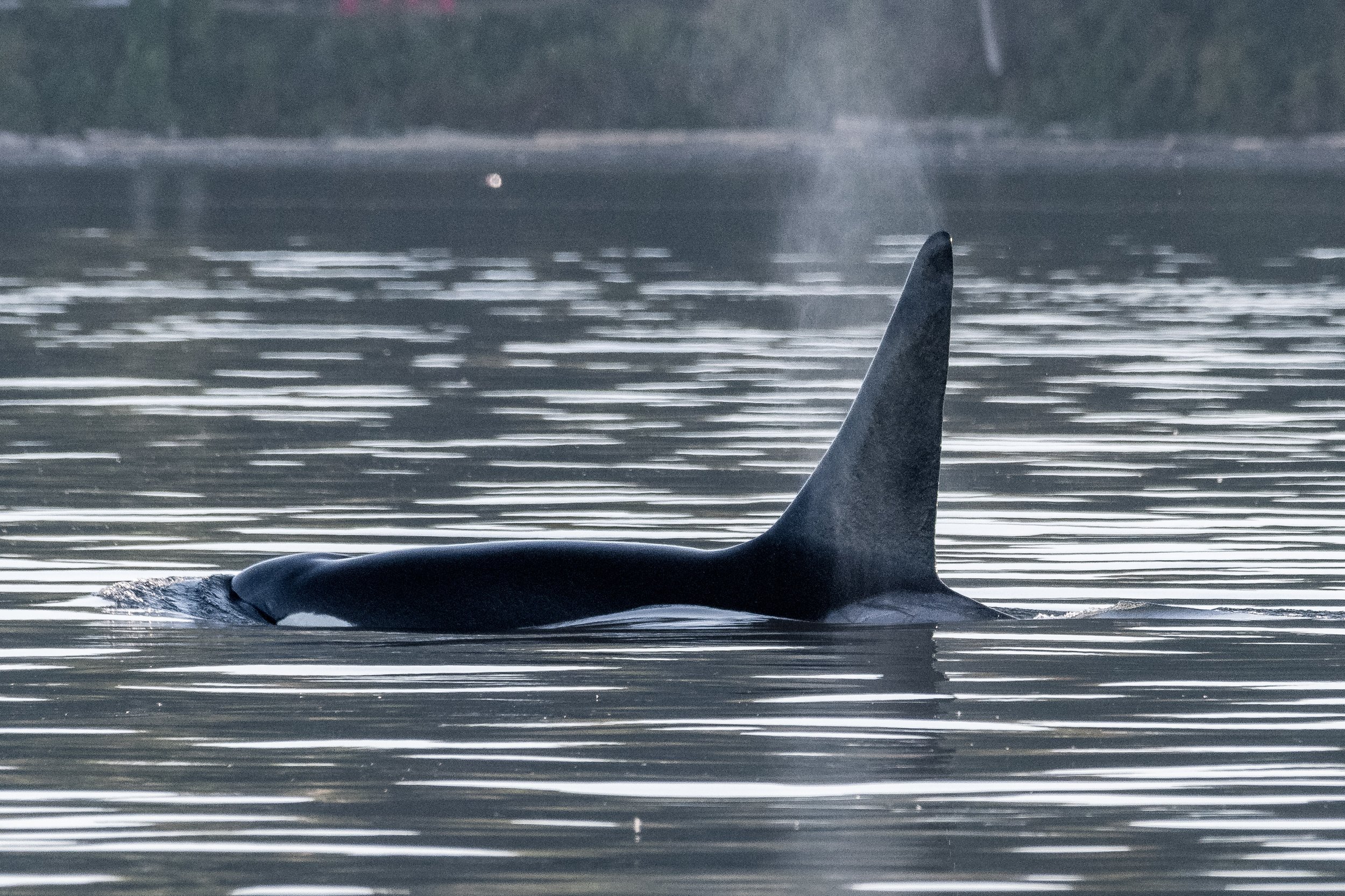
A tiny peek at the top of T101B Lagoon’s eyepatch as he makes his way along.
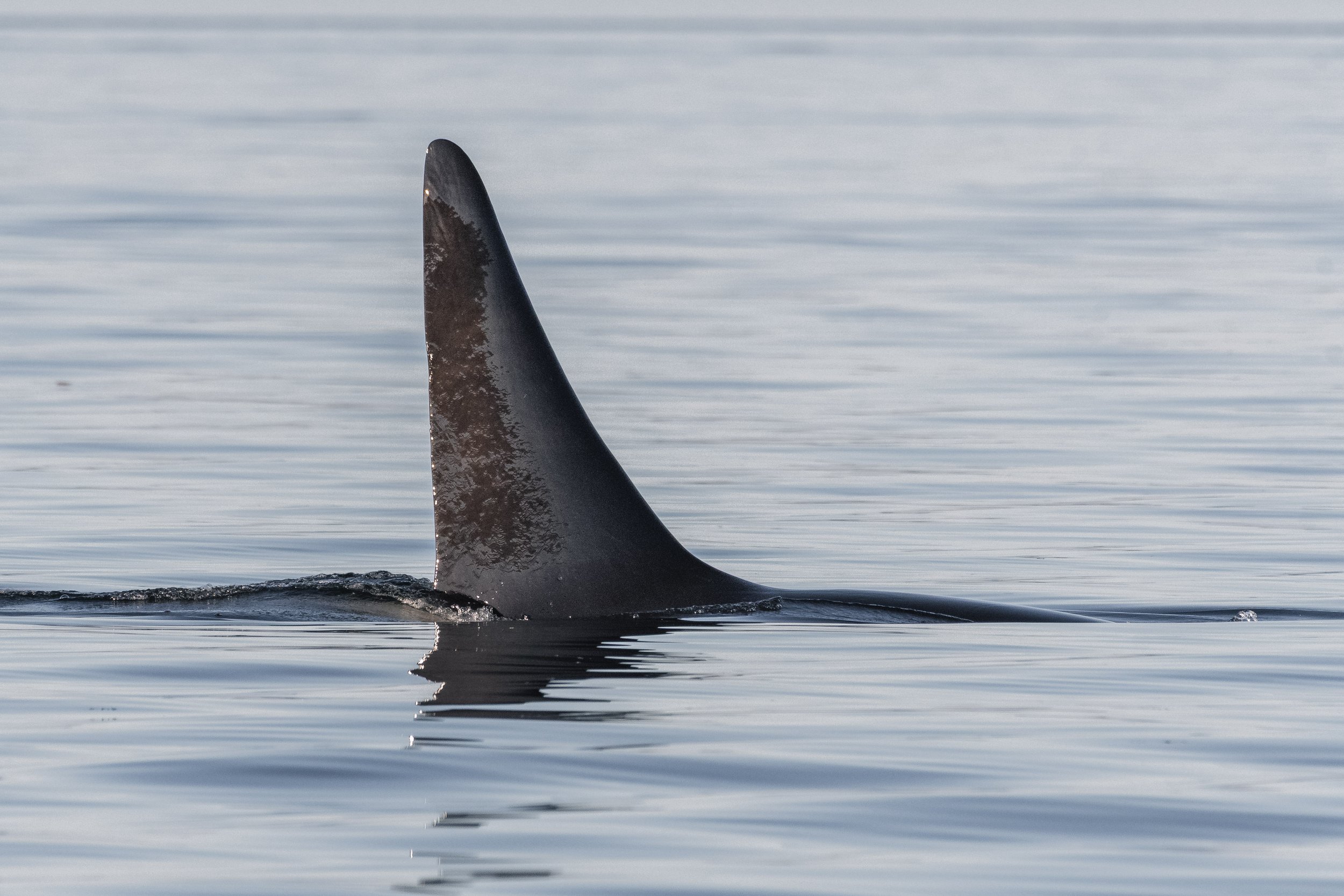
A beautiful broadside photo of T101B Lagoon in the harbour.
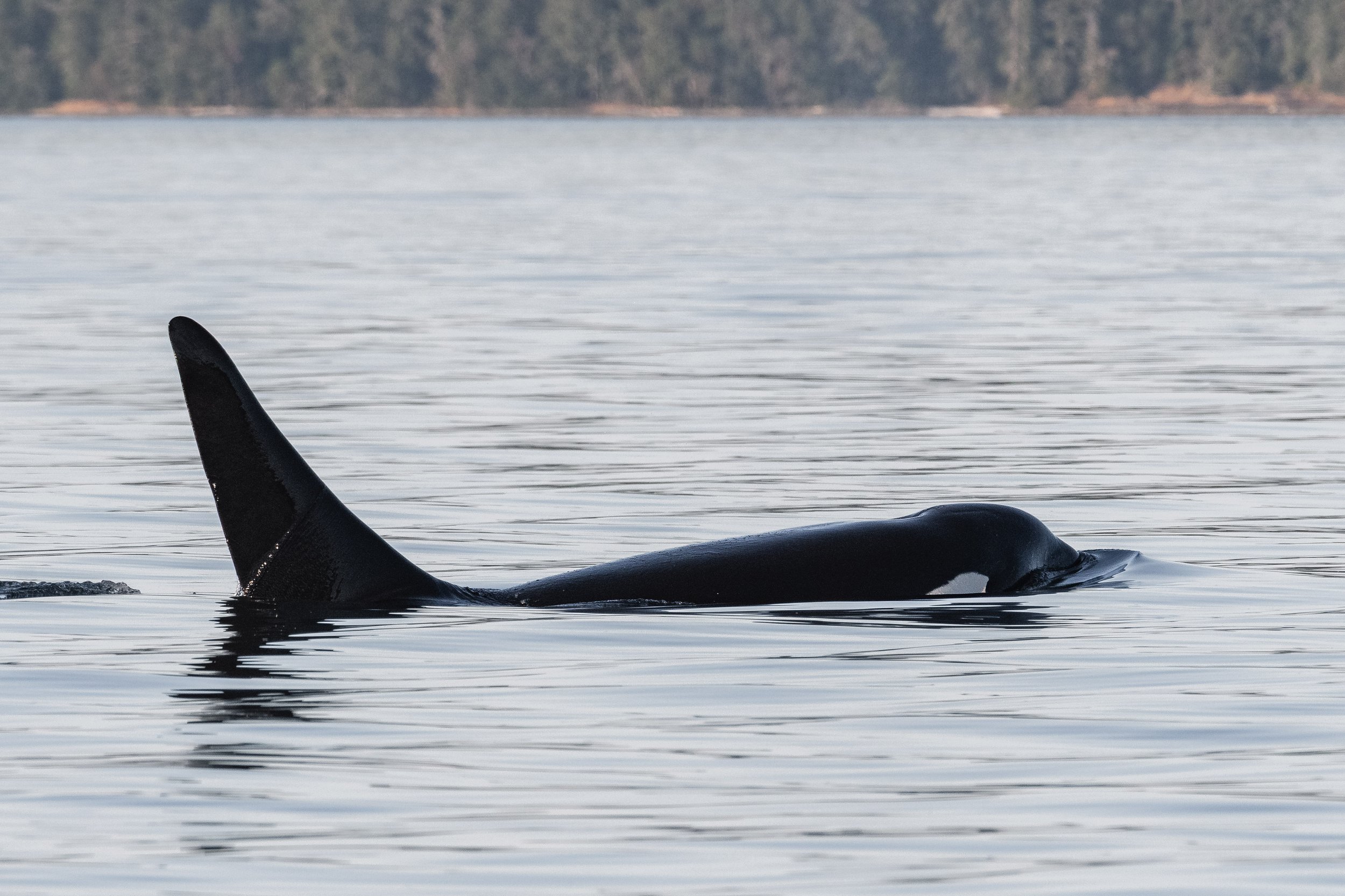
A final look at T101B Lagoon.