
August 21, 2026, 10:30 AM - A splash-tastic morning with orca and humpbacks
Another morning meant another tour for the full fleet to get out and explore! We got onboard and settled into our seats, then departed shortly after. With some wind at our backs, we were bound for some splashes as we went, but that didn’t deter our enthusiasm as we began scanning all around us.
We headed out north of Gabriola Island, eyes fixated on the waters all around us. Before long, a pair of whales was spotted. Kula and Cascadia made their way over, and soon were in position to watch the duo. One smaller whale was travelling close to a much larger individual. A couple of quick photos confirmed that this was Tempest (BCX0837) and her 2026 calf (BCX0837calf2026). They were slowly travelling in tandem as we observed, with Tempest occasionally fluking along the way. The calf was very recently entangled and, thanks to the Marine Mammal Rescue team, was successfully disentangled shortly after. Entanglements, if left unchecked, can quickly cause injuries or even become fatal, meaning time is of the essence any time one occurs. Unfortunately, the vast majority of our humpback whale populations show scarring indicating they have been entangled at least once in their lifetime. Thankfully, this calf appears mostly unharmed and was travelling beside its mother, with only a small amount of scarring from the ordeal. They now need to focus on learning all they can from Tempest, as they will only stay by her side for roughly a year before heading on out to explore the big wide ocean by themselves. After a few surfaces, we bid the pair adieu and once more were under way, back into search mode.
At the same time, Keta had popped over to Stinky Rocks, one of the haul-outs where many of our pinnipeds reside. Here, Harbour Seals and Steller Sea Lions were seen scattered across the rocks, staying out of the waves and enjoying the summer sunshine. Cascadia soon made their way over as well to see the wildlife among the rocks. While the pinnipeds are the most common species to reside at Stinky Rocks, many other creatures can be seen here as well, and today was a great example of that. Countless birds dotted the shores, including Surfbirds, Black Turnstones, a Great Blue Heron, and a Killdeer. Tucked into a hollow off to the side, another small furry face could be seen - a River Otter had decided to nap amongst the sandstone! While seeing a River Otter in a marine environment may seem like a bit of an oxymoron, it is actually more common than you would think. River otters can traverse both salt and freshwater environments, and it is common to see them dabble in both in areas like ours, where they may paddle out to grab a crab or fish for a snack before returning to shore, or travel back up the river systems to their home range.
Keta soon departed and began peeking around once more, eager to have their first encounter. Heading a bit further offshore, their wish was soon granted, as a trio of humpback whales came into view, closely associating together. They were fluking as they went, creating great ID photo opportunities. These photos, along with their uniquely shaped dorsal fins, helped us confirm their identities as Chi (BCZ0575), Split Fluke (BCX1068), and Crater/Mensa (BCX1565). Cascadia and Kula were informed, and soon the fleet came together to watch the trio.
Initially, the trio was simply travelling and fluking - the most traditional of humpback whale behaviours. This soon changed, however, when they began getting more rambunctious. One of the whales launched the rear half of their body out of the water in a behaviour known as cartwheeling. This seemed to rile the others up, as they began diving faster and at odd angles. Soon after, giant black and white pectoral fins began towering overhead, and then were slapped down on the surface. This behaviour is known as pectoral slapping, or pec slapping, and the sound the fin makes as it lands is surprisingly loud. While we do not truly know why they do this, a couple of leading theories exist. The top theory at this time is that these thunderous slaps could be for communication, whether that be in a positive (“There’s a ton of food over here, come join!”) or negative (“There’s danger here, stay away!”) way. It could also help dislodge parasites embedded on their fins, or it could simply be an expression of excitement or happiness. Whatever the case, it is always an amazing behaviour to witness!
Soon our time with the energetic trio had concluded, and we had to say our goodbyes. Not to fret, though, as Keta (who had left a bit earlier) had found another set of whales nearby. This time, they were smaller, and instead of short, curved dorsal fins, they had tall, straight ones. They had located a pair of orca travelling up the outer coast of the Southern Gulf Islands!
Once more, we got into position, raised our cameras, and gathered more photos for IDing. One shorter fin raced ahead, with a second larger one towering over them. We quickly confirmed these two as the T101s:
T101 Reef ♀ (≤1969)
T101B Lagoon ♂ (1997)
Unlike humpbacks like Tempest and her calf, orca like T101 Reef and T101B Lagoon often form lifelong bonds. For orca males in particular, they will rarely leave their mother’s side and are often affectionately referred to as “momma’s boys”. Females tend to stay with their mother until they have a calf or two of their own, and then will often disperse to form their own matrilines. With no female calves by her side, and being past reproductive age, these two will now be solely in each other's company for the foreseeable future. We hope to see Lagoon and Reef side by side for many years to come, exploring and thriving throughout the Salish Sea.
After an excellent day encountering species of all shapes and sizes, it was time for us to make our way back to home port. We headed back north, and soon Nanaimo was back in our view. It had been an amazing morning, seeing many different species thriving in their own part of the Salish Sea, and we felt blessed to call this area our ‘home’.
Photos by Marine Naturalists Evan Hessels, Hayleigh Hilbert, and Jordan Robinson - please enjoy!
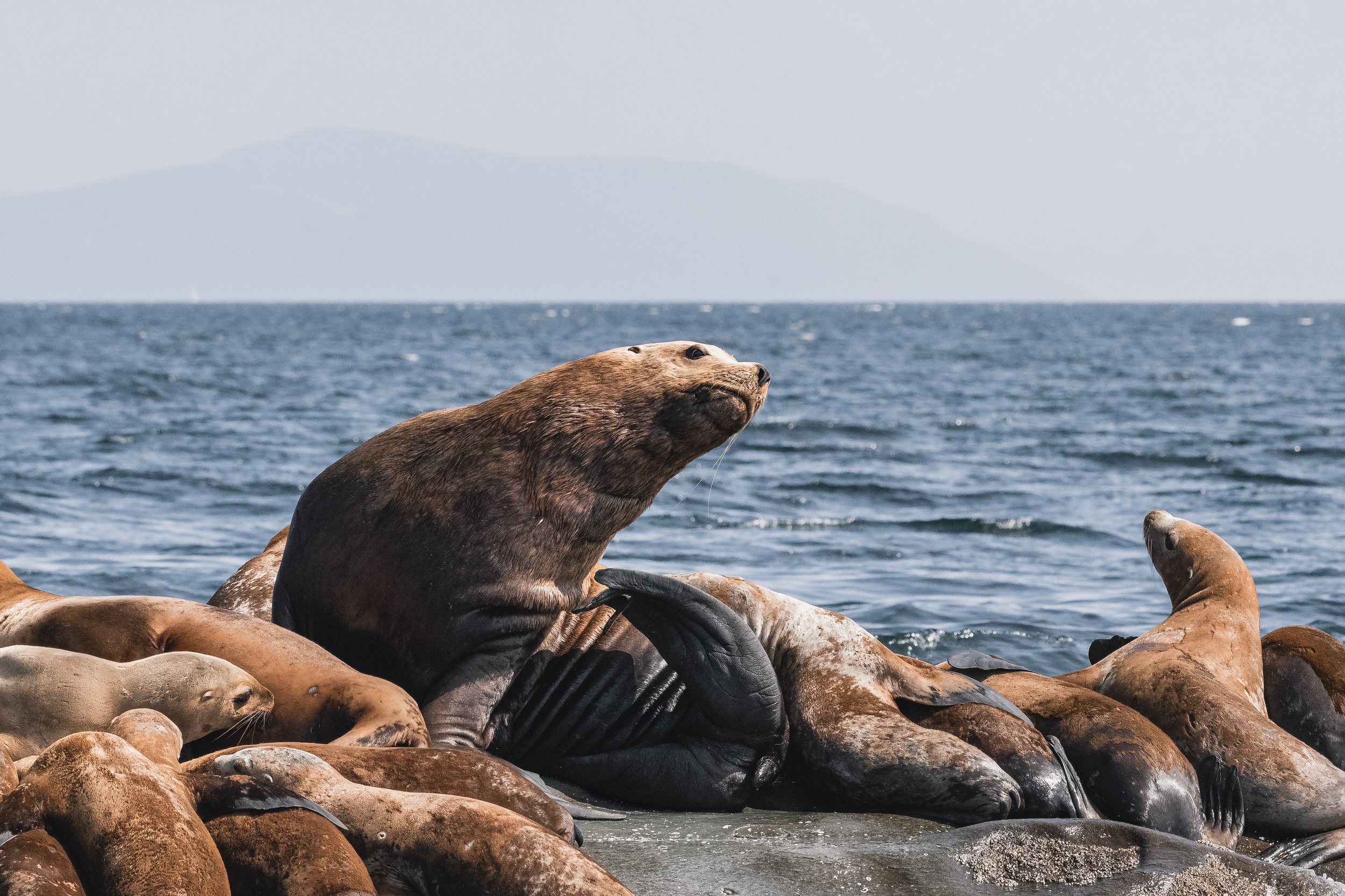
Scratching an itch on the top of Stinky Rocks. Photo by Evan Hessels.
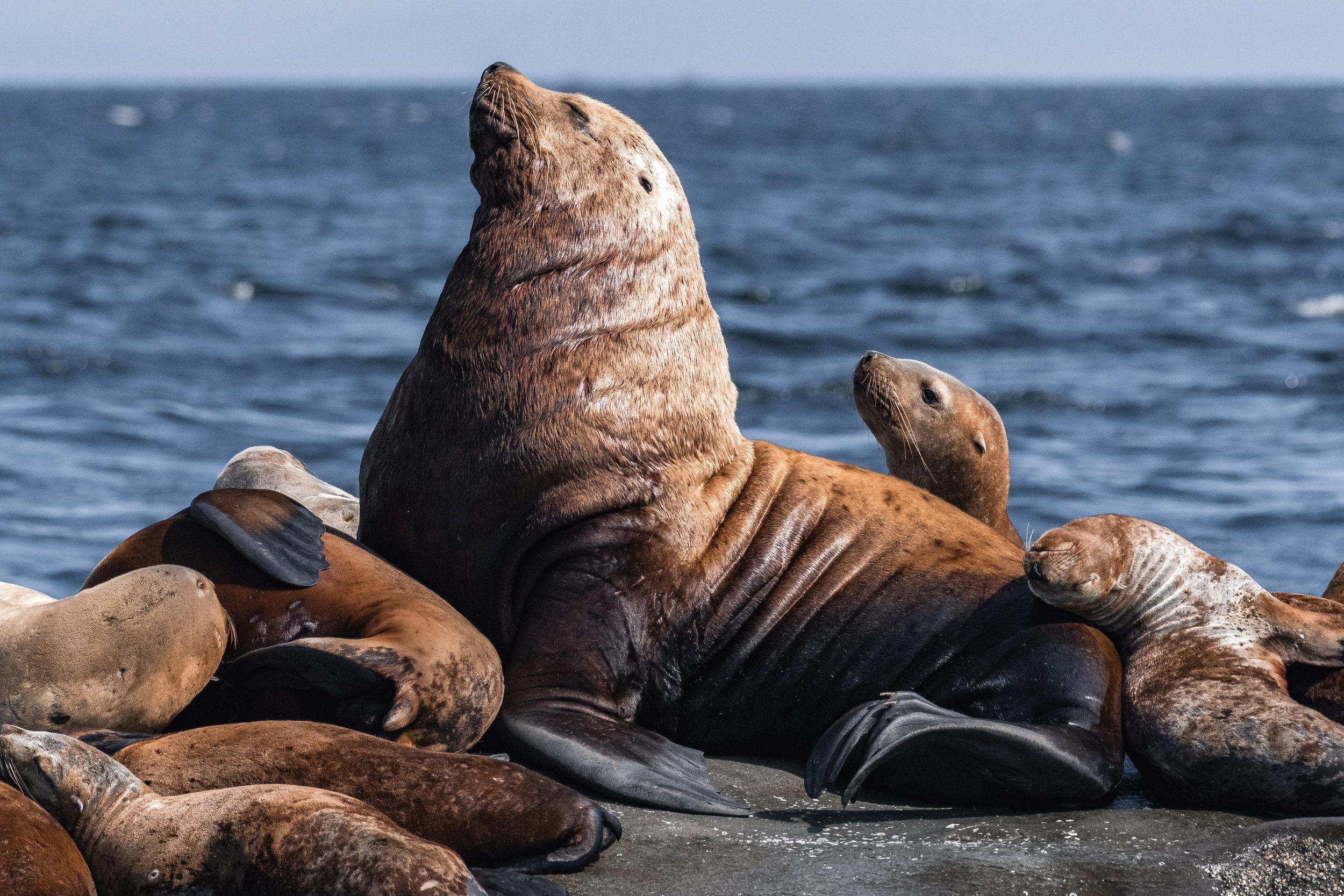
Big and proud. Photo by Evan Hessels.
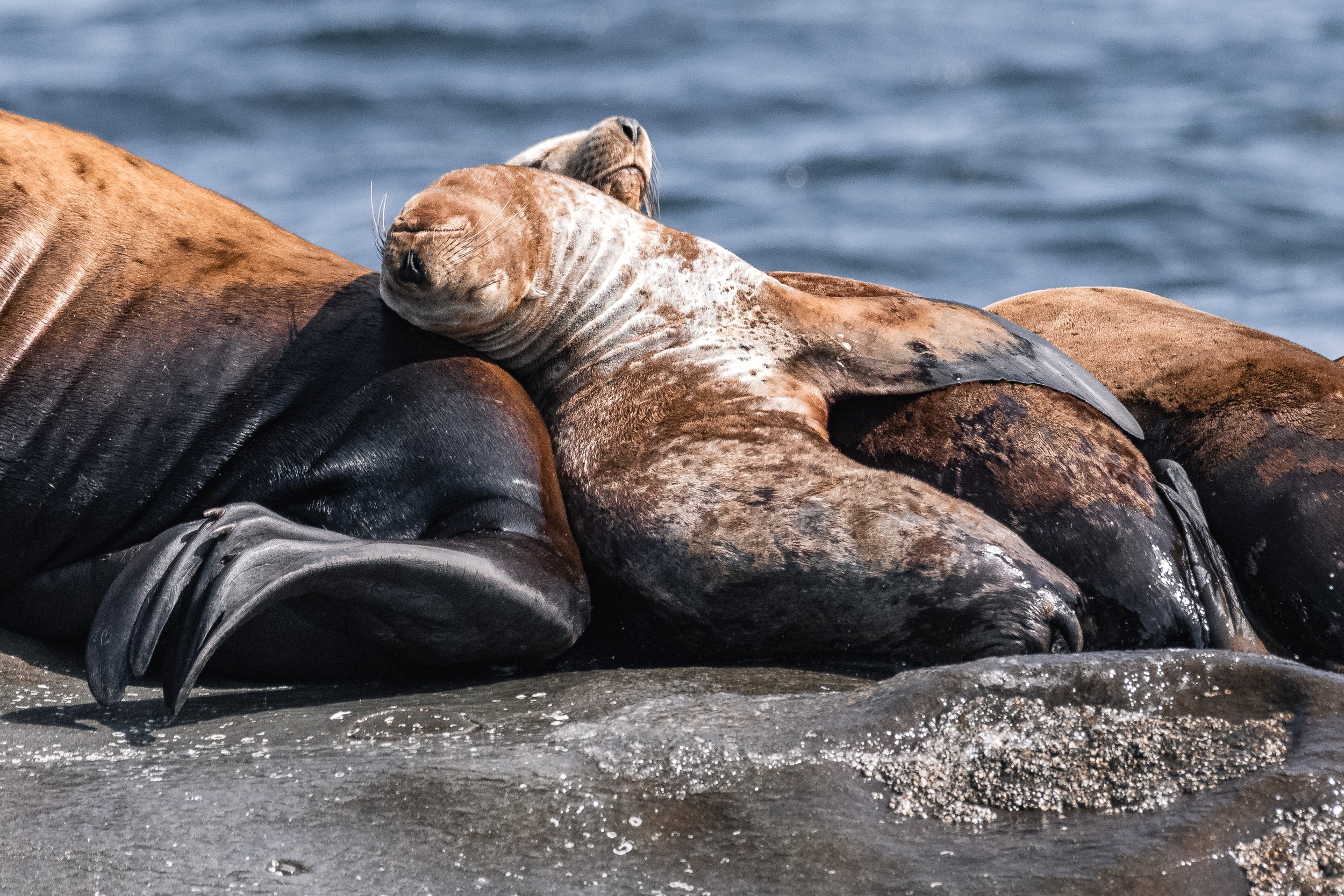
That can’t be comfortable. Photo by Evan Hessels.
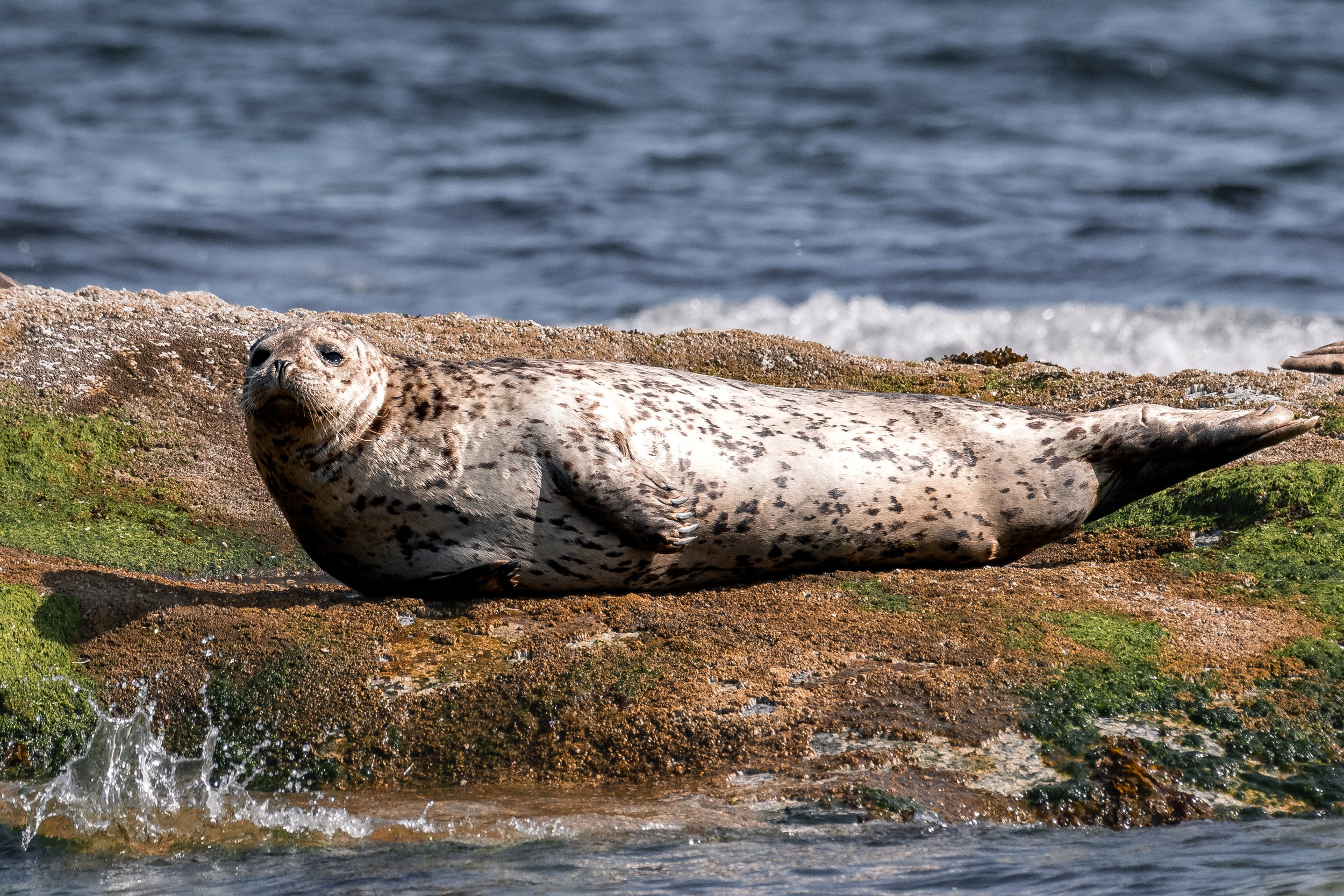
Look at the size of those claws! Photo by Evan Hessels.
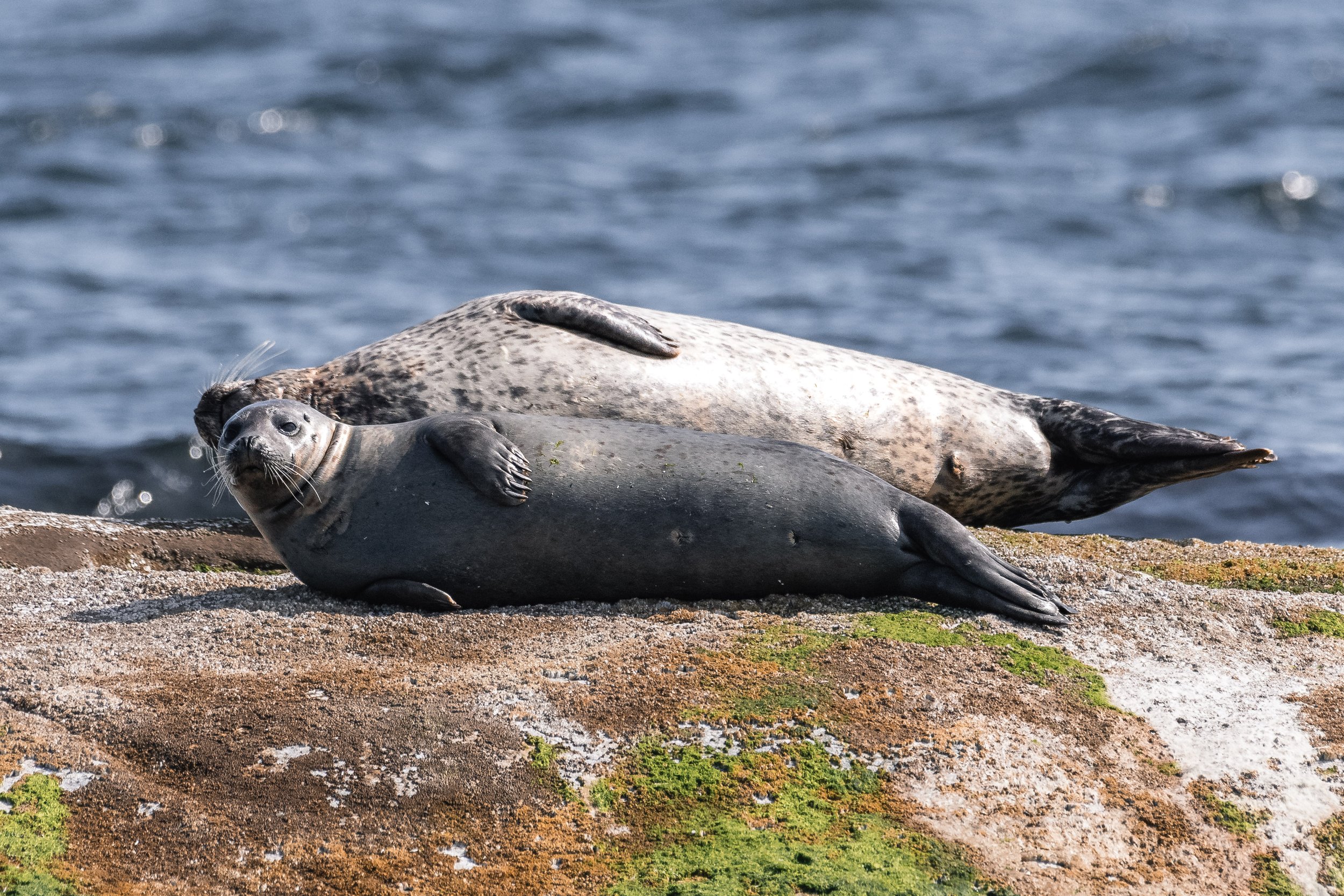
Sunbathing Harbour Seals on the rocks. Photo by Evan Hessels.
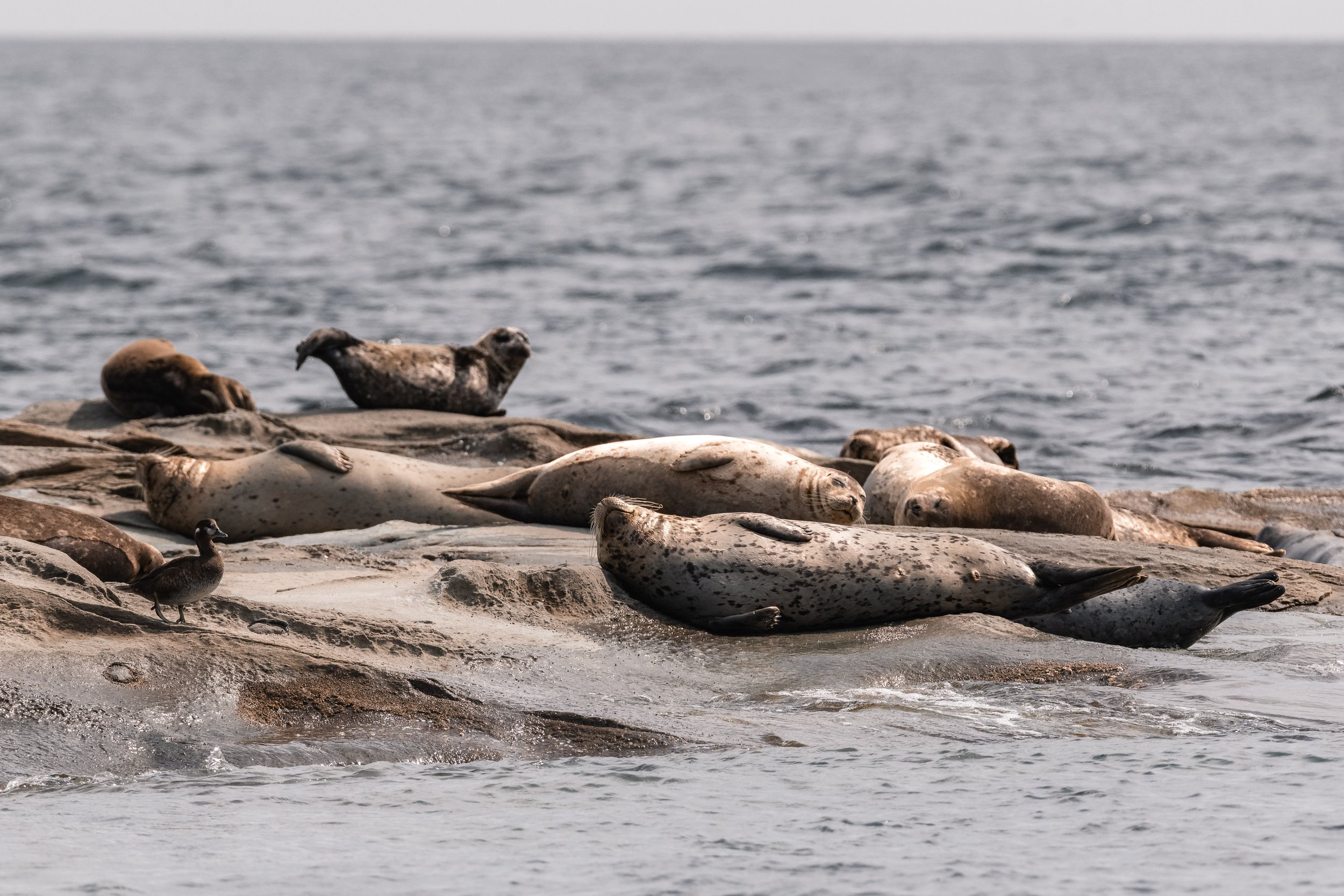
Group nap time. Photo by Hayleigh Hilbert.
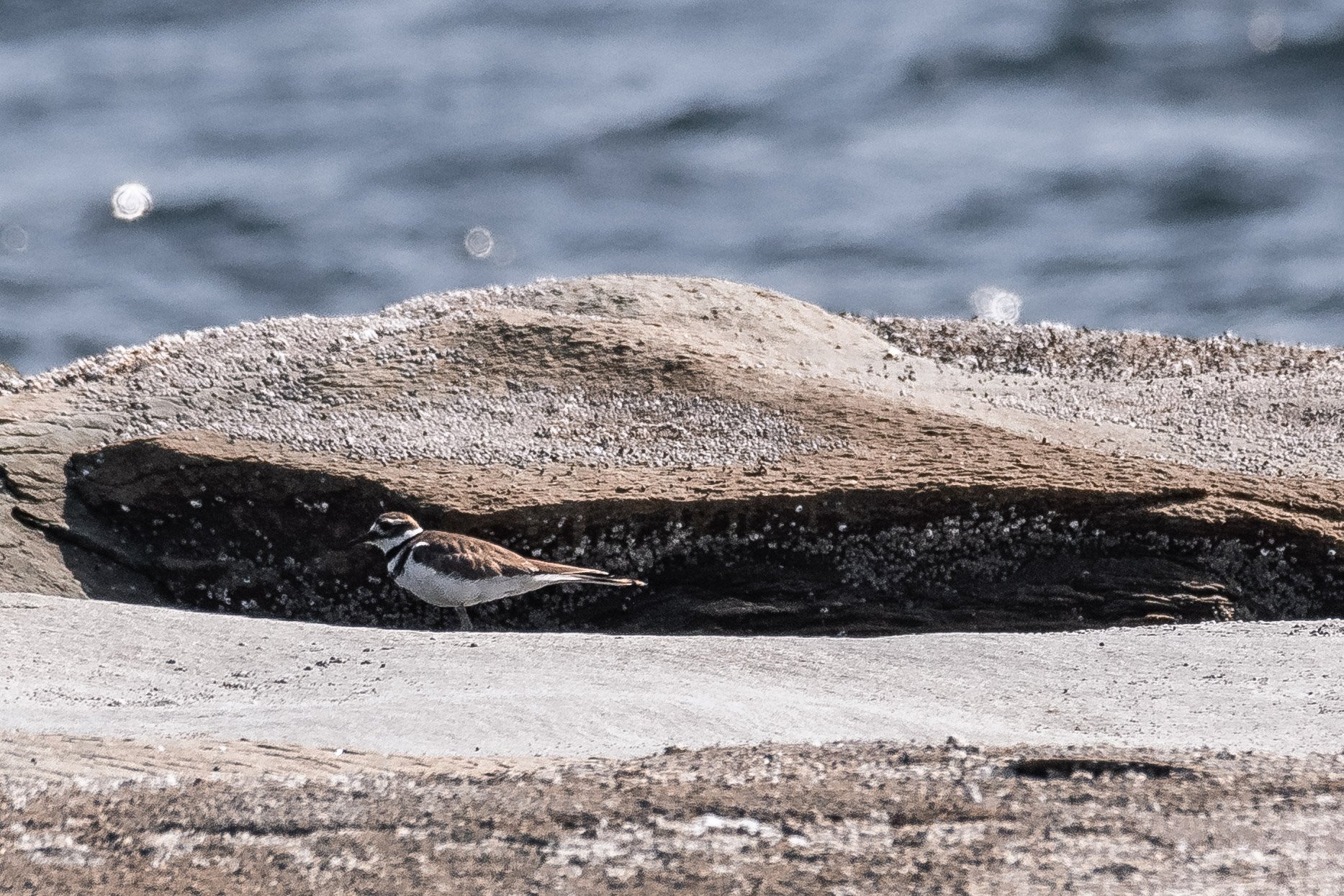
AKilldeer on the rocks. Photo by Evan Hessels.
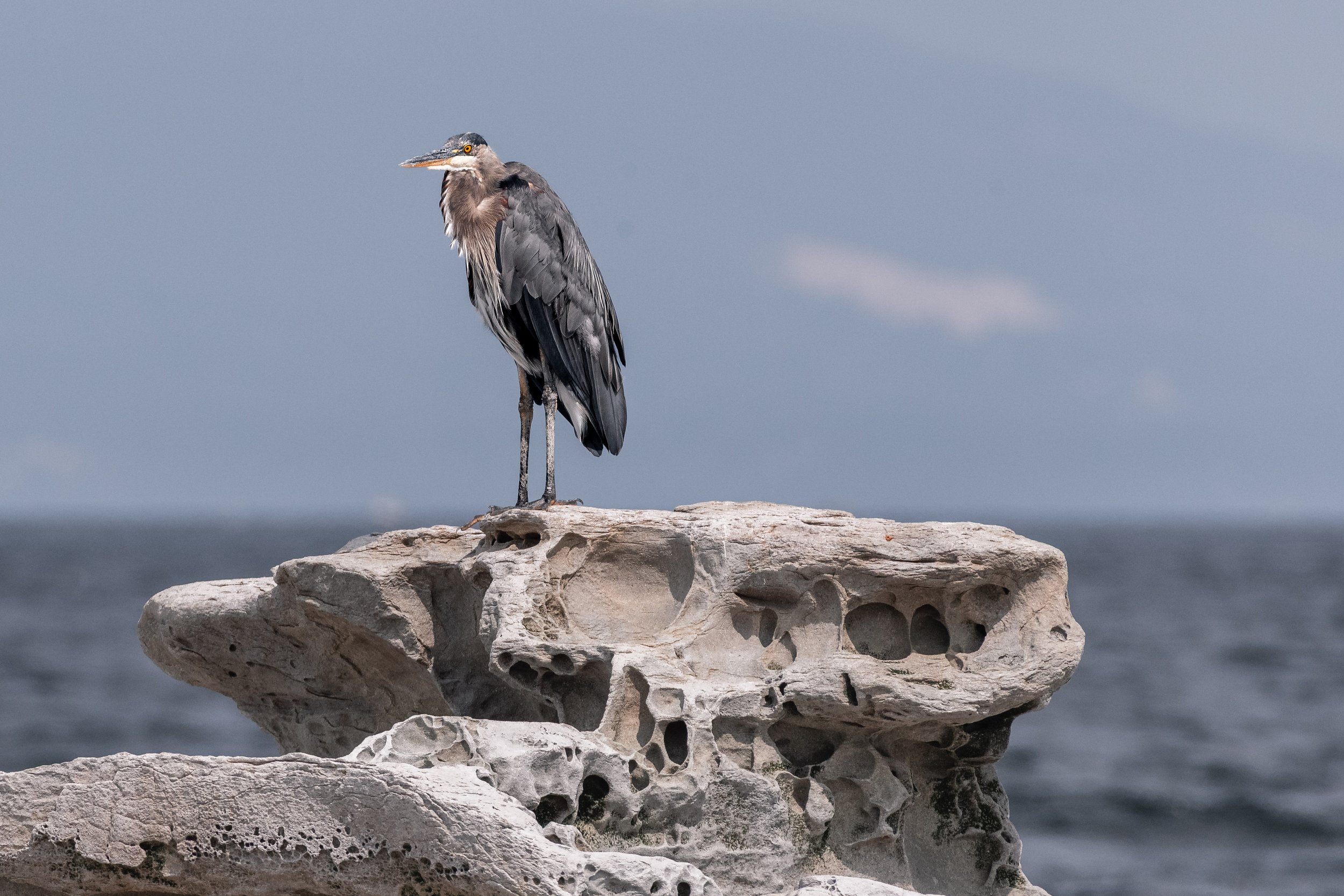
The majestic Great Blue Heron watching the tides below. Photo by Hayleigh Hilbert.
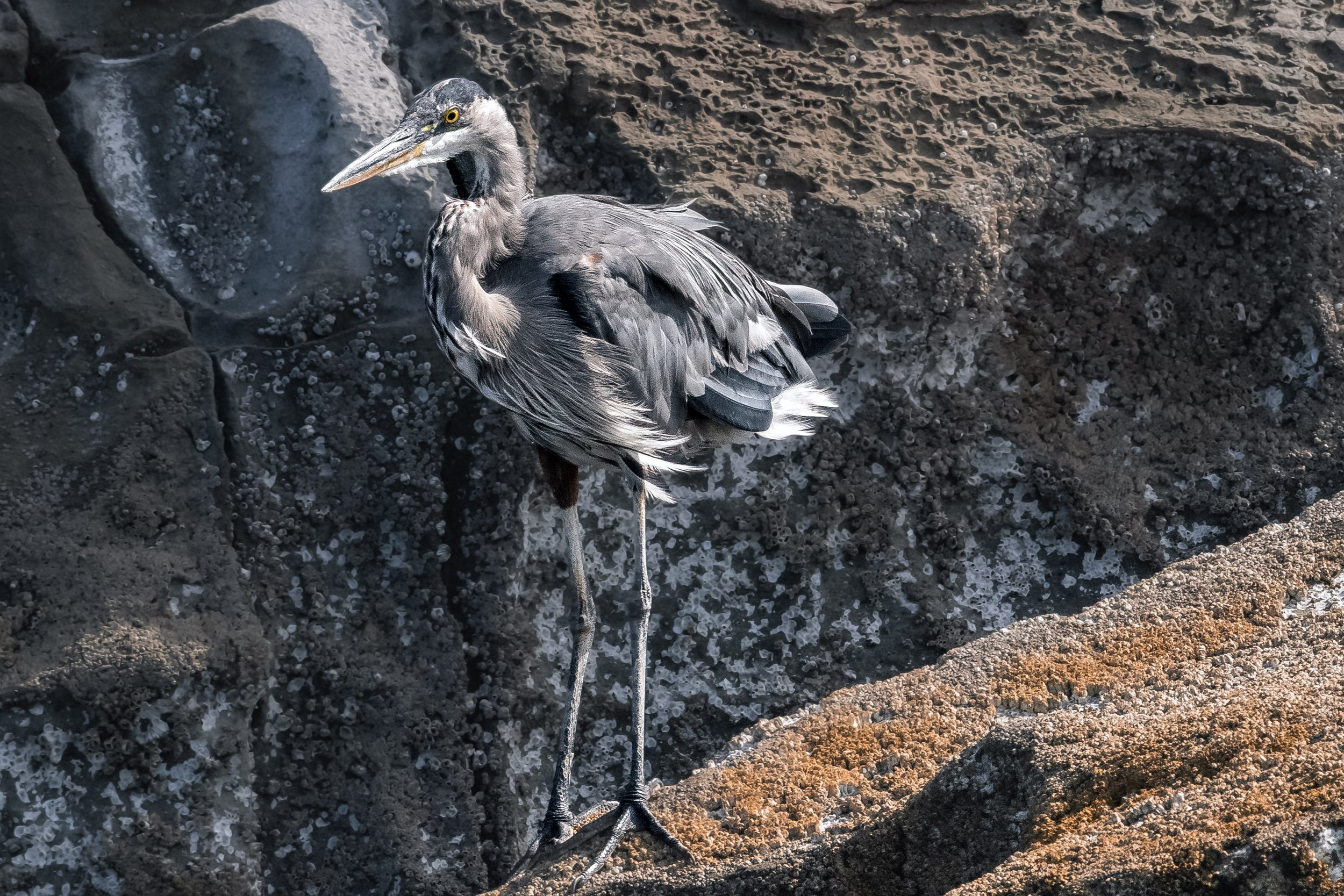
Great Blue Herons are one of our most interesting looking bird species! Photo by Evan Hessels.
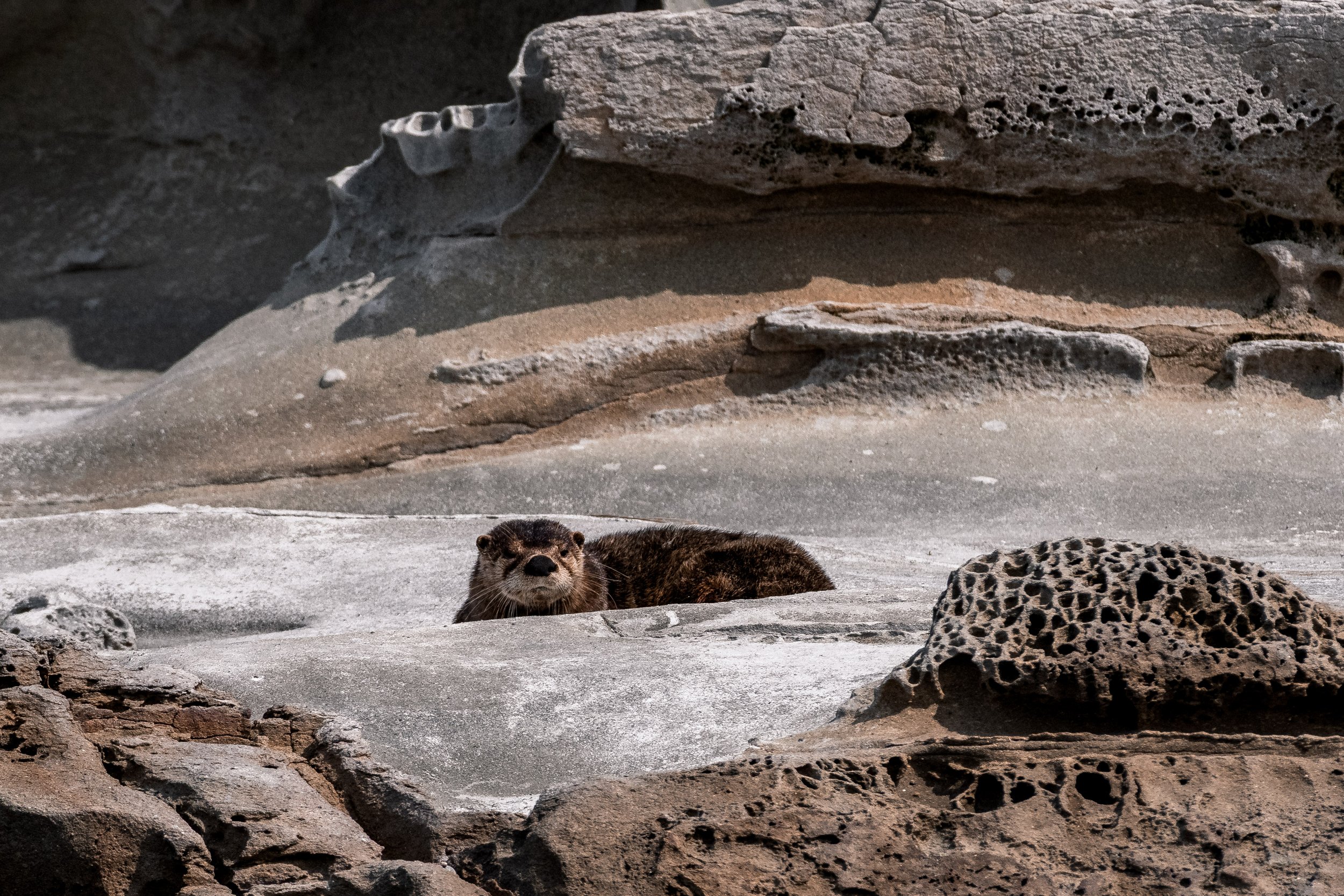
Another furry face - a River Otter! Photo by Hayleigh Hilbert.
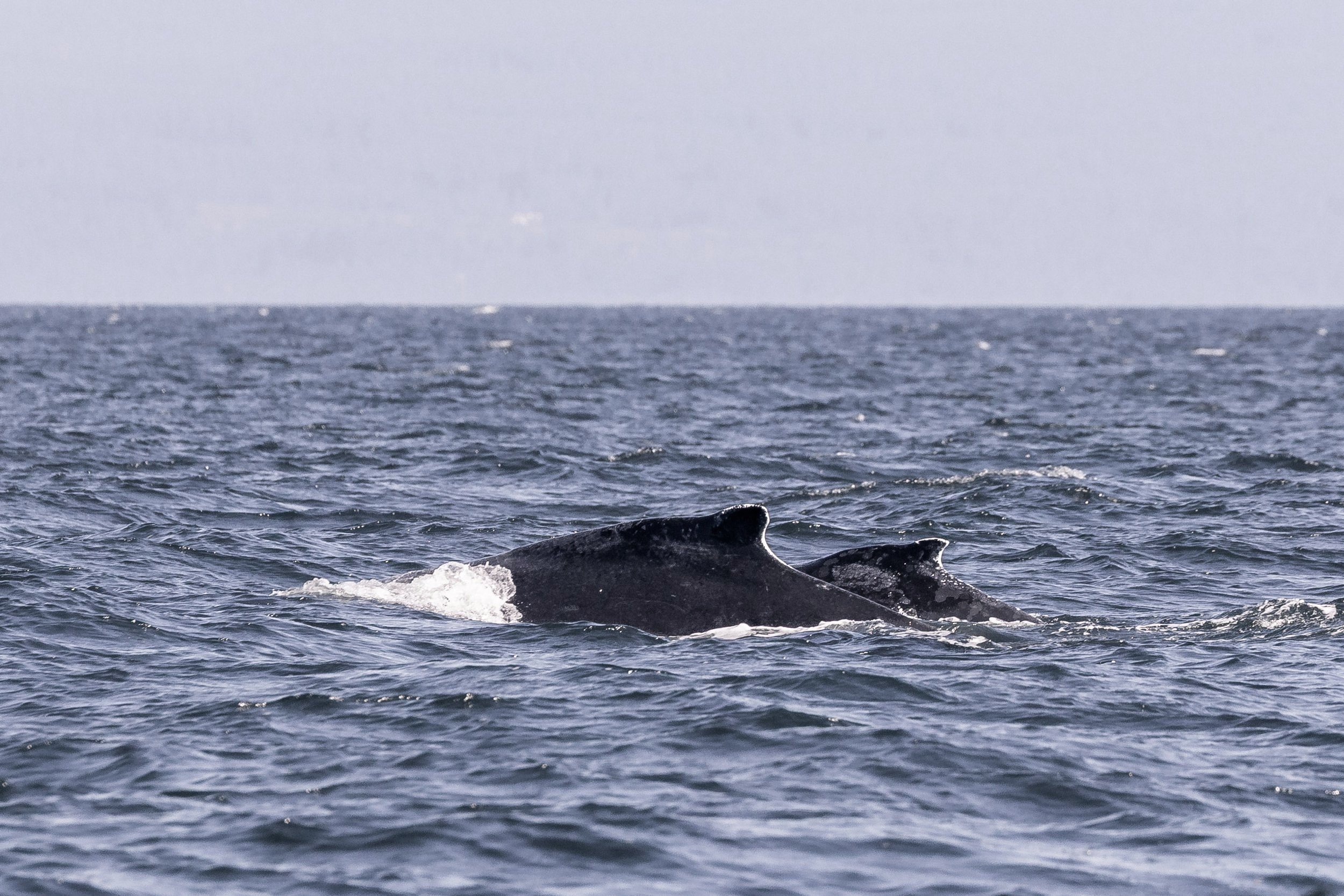
Temepst with her calf right alongside her. Photo by Jordan Robinson.
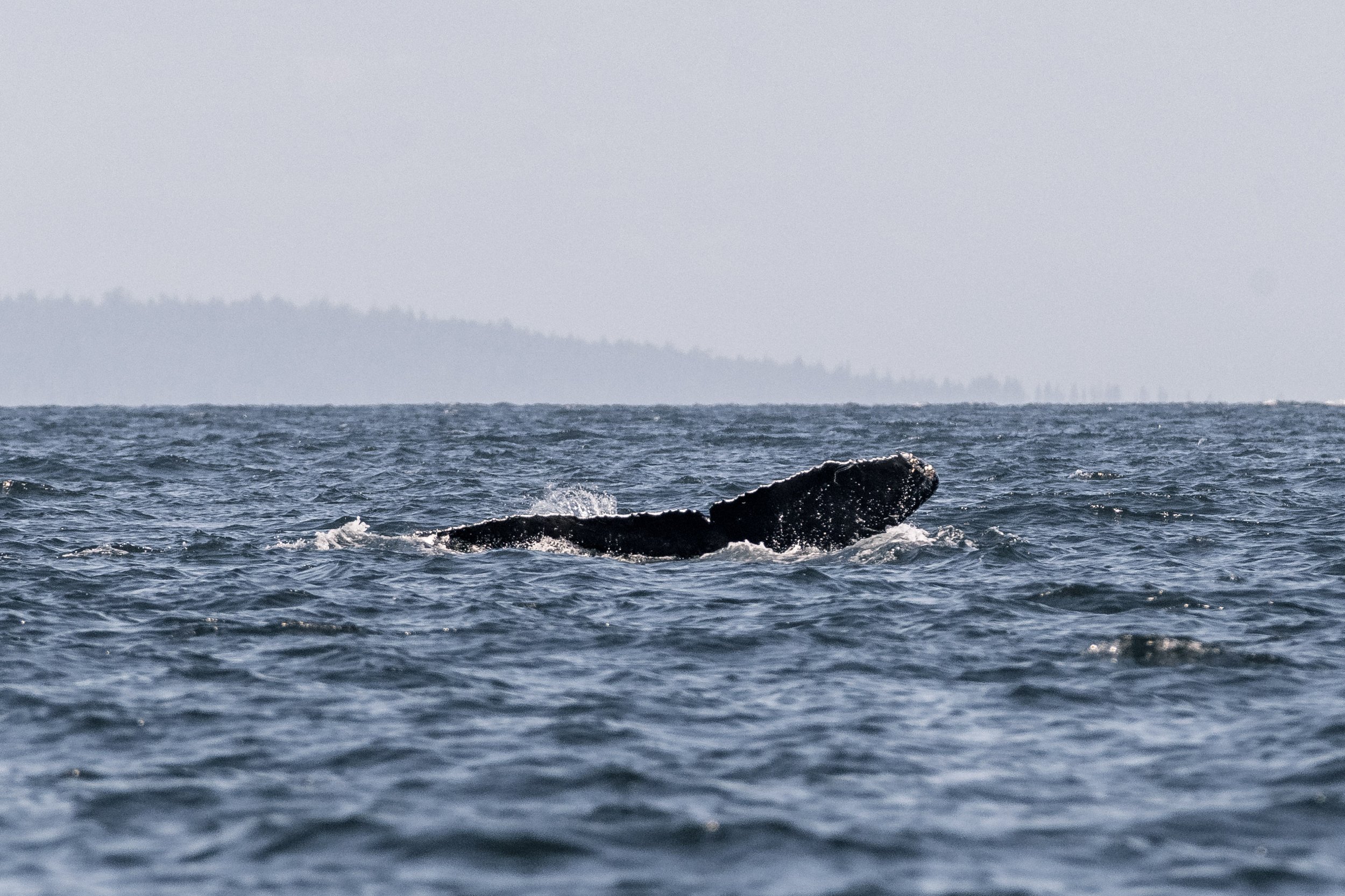
A peek at part of Tempest’s fluke. Photo by Hayleigh Hilbert.
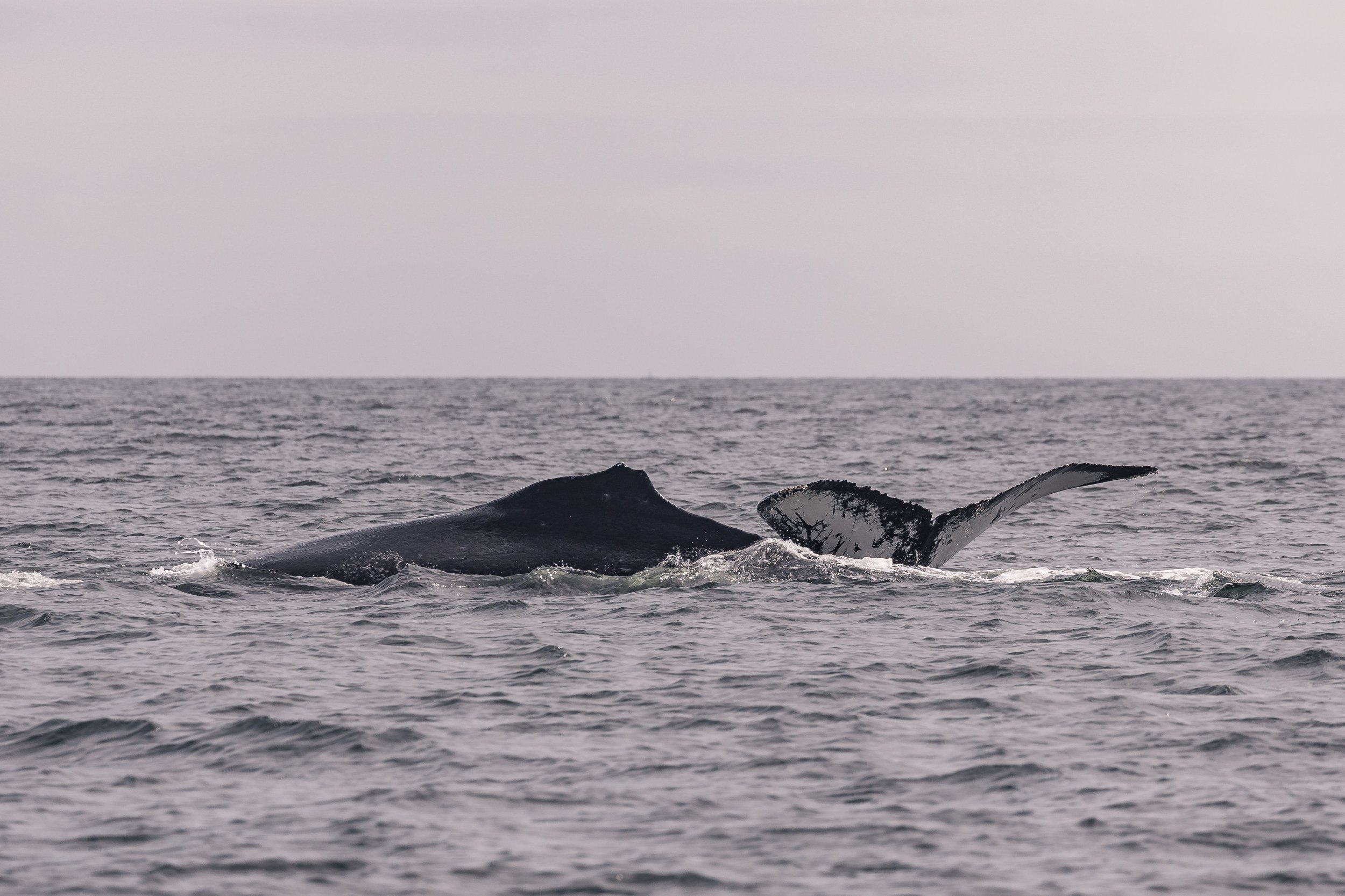
Crater travelling with Chi fluking beside them. Photo by Jordan Robinson.
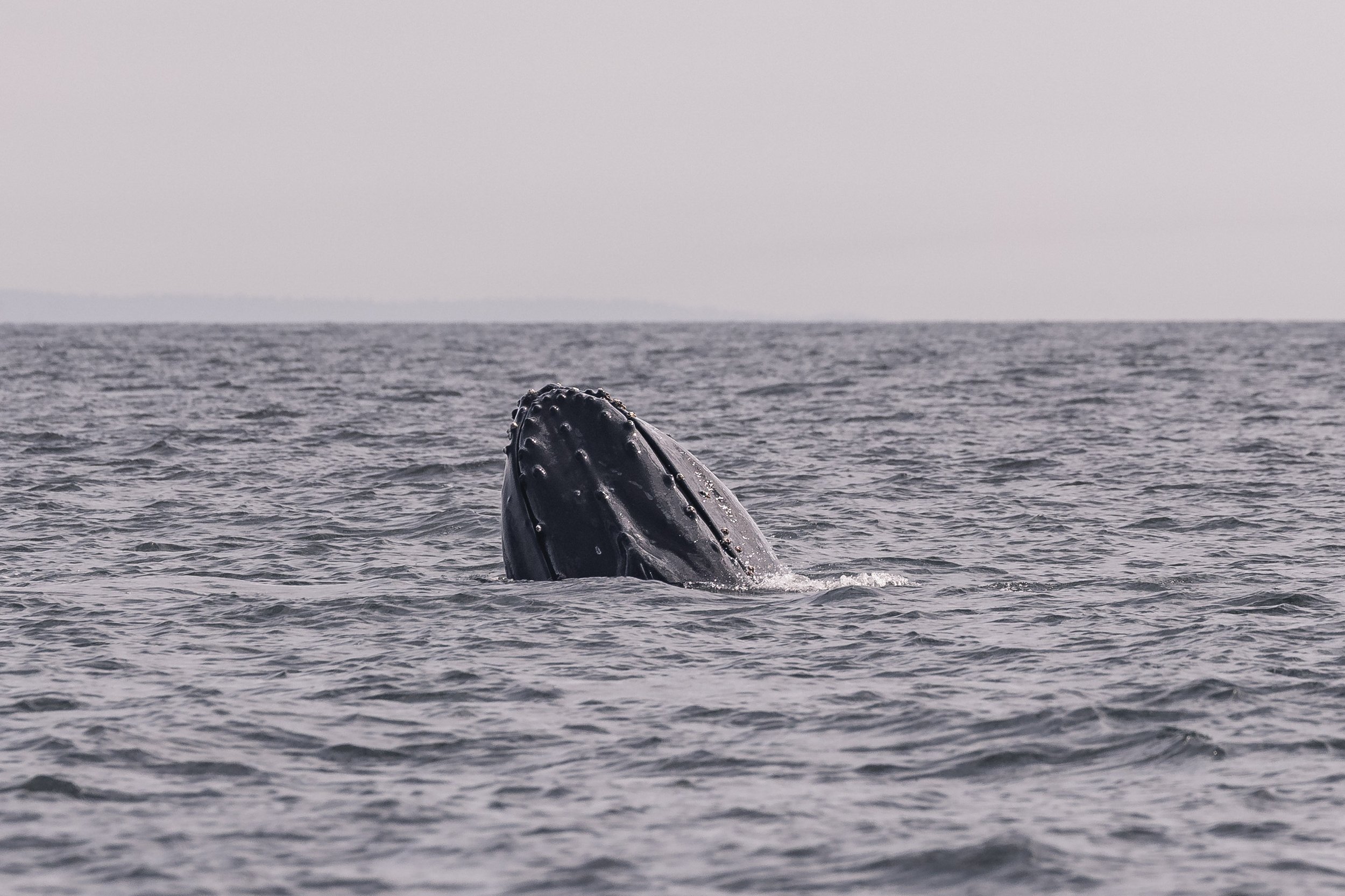
The rostrum, or front of the head, of one of the whales! Photo by Jordan Robinson.
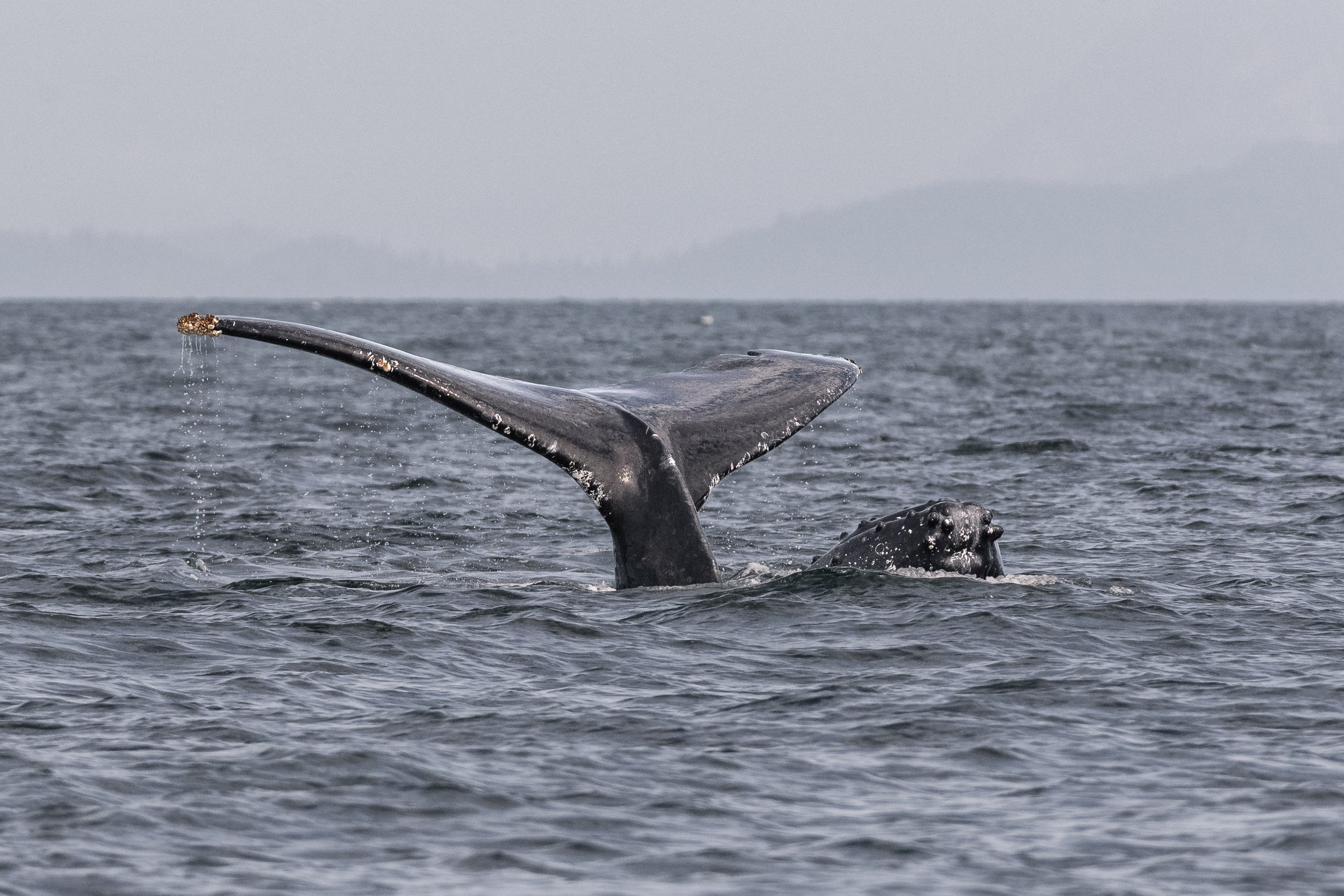
Split Fluke fluking, with a rostrum above the surface beside her. Photo by Hayleigh Hilbert.
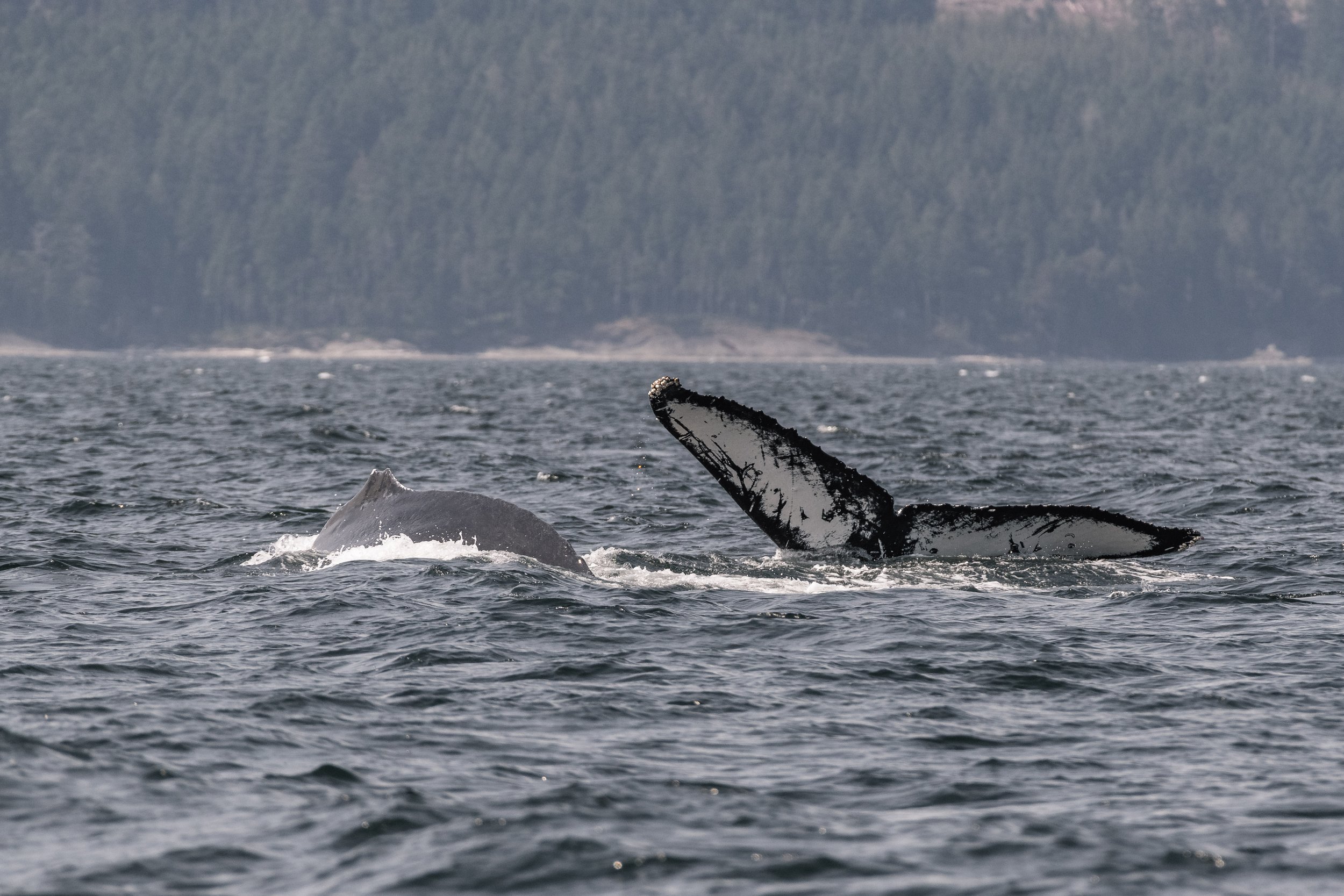
A nice view of Chi’s fluke as Crater arches for a dive. Photo by Hayleigh Hilbert.
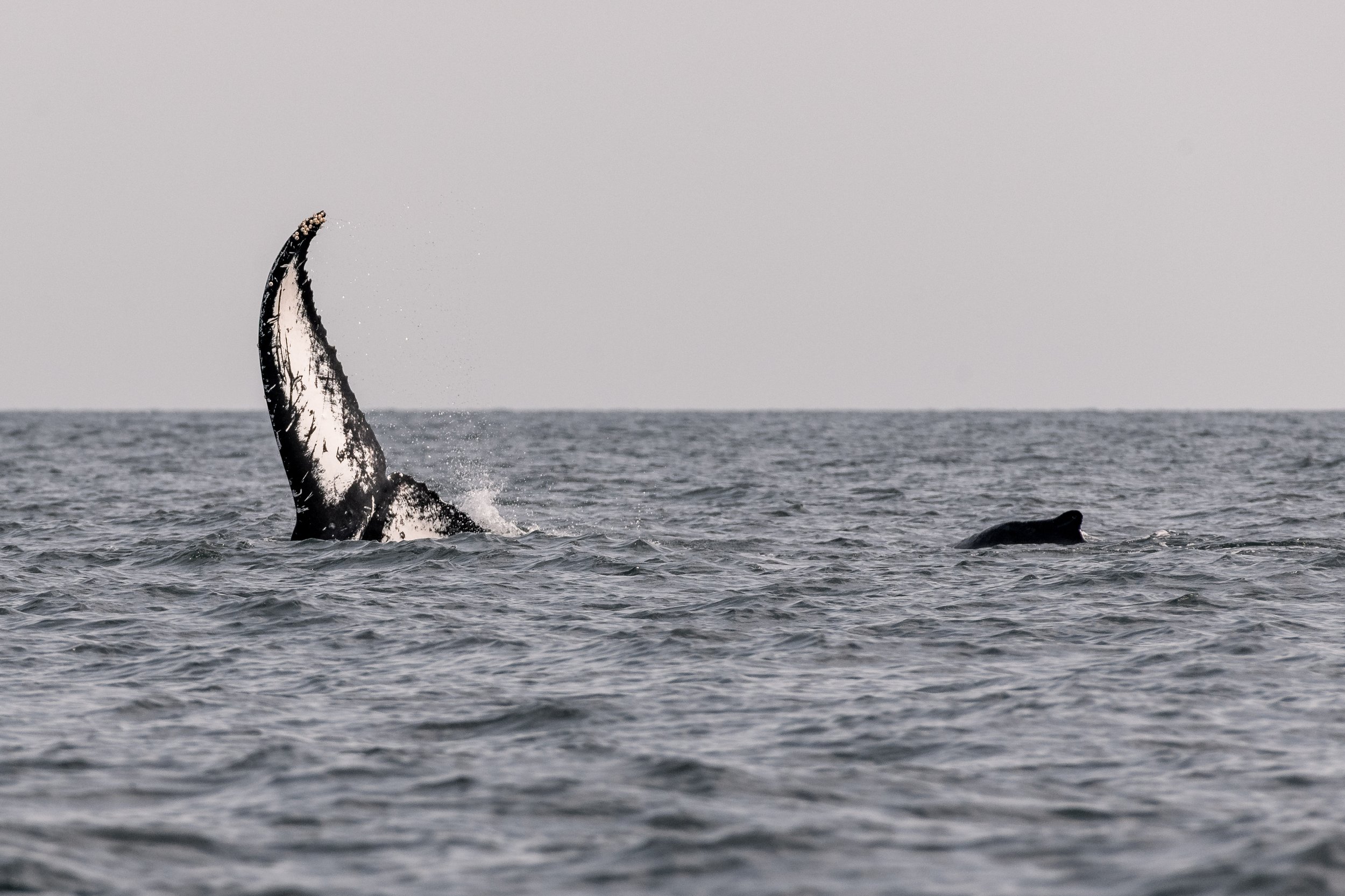
Chi swinging his tail around with Split Fluke beside him. Photo by Hayleigh Hilbert.
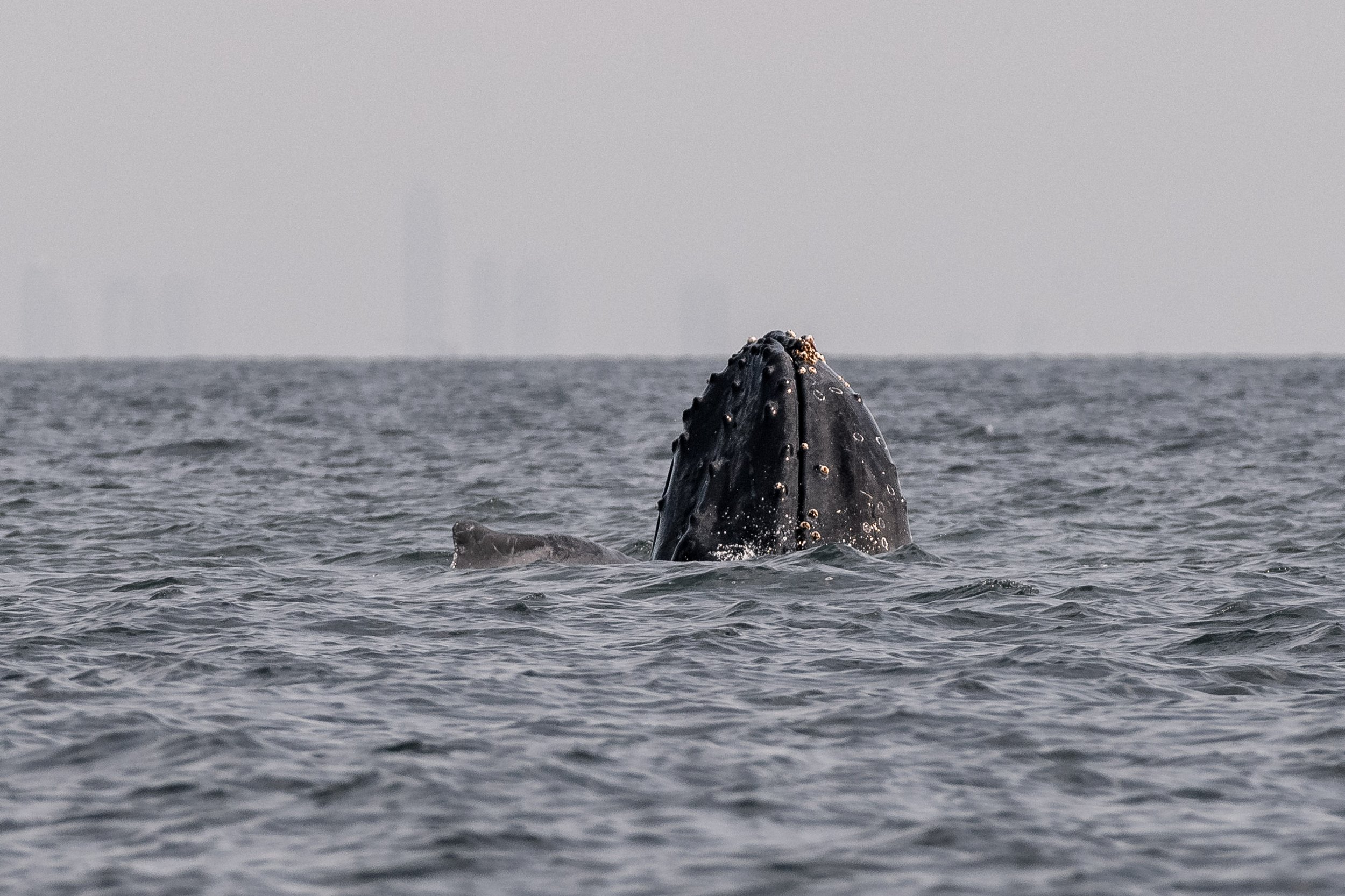
Split Fluke’s dorsal fin with one of the other’s rostrums out of the water beside her. Photo by Hayleigh Hilbert.
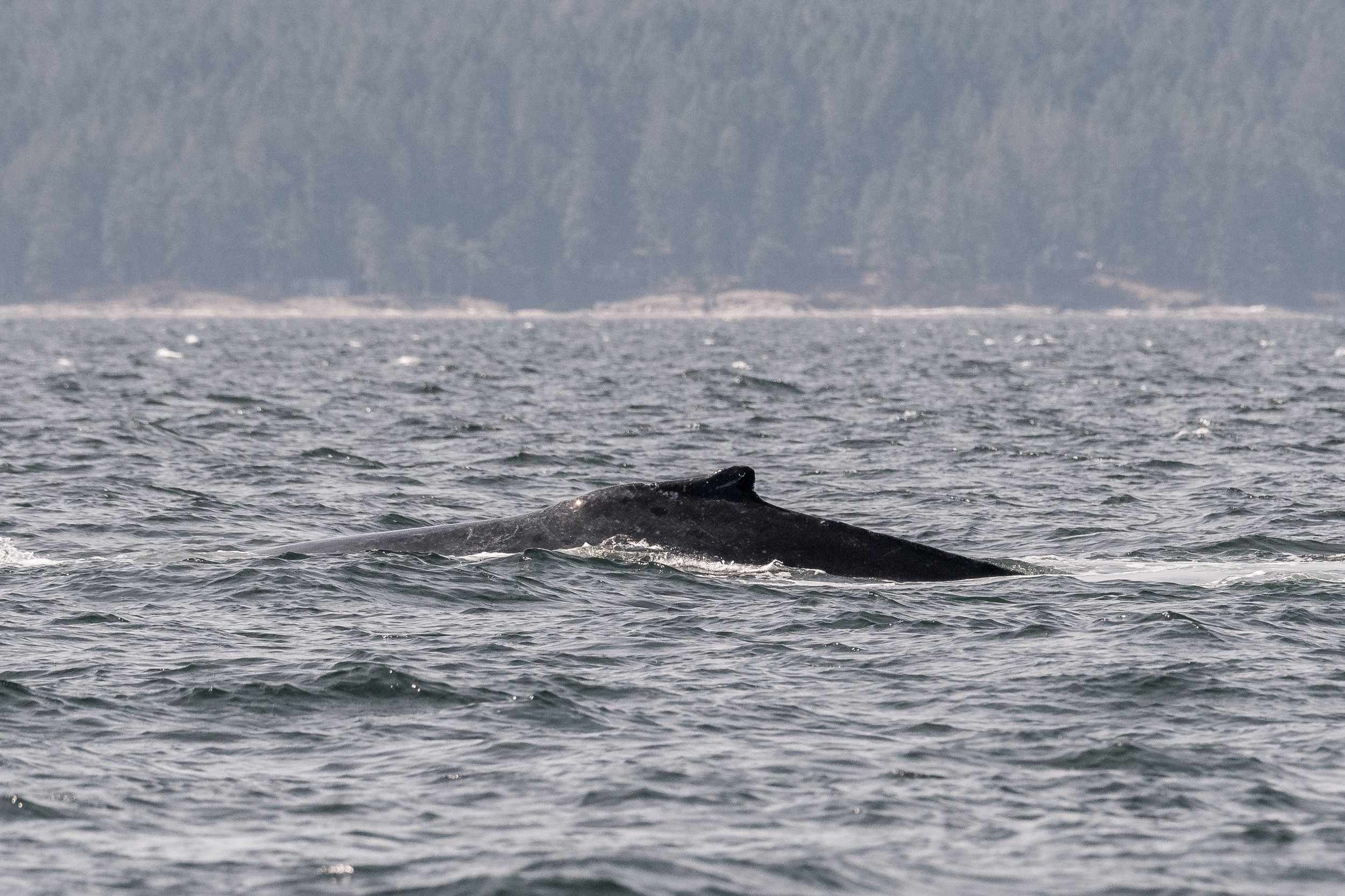
Split Fluke underway. Photo by Evan Hessels.
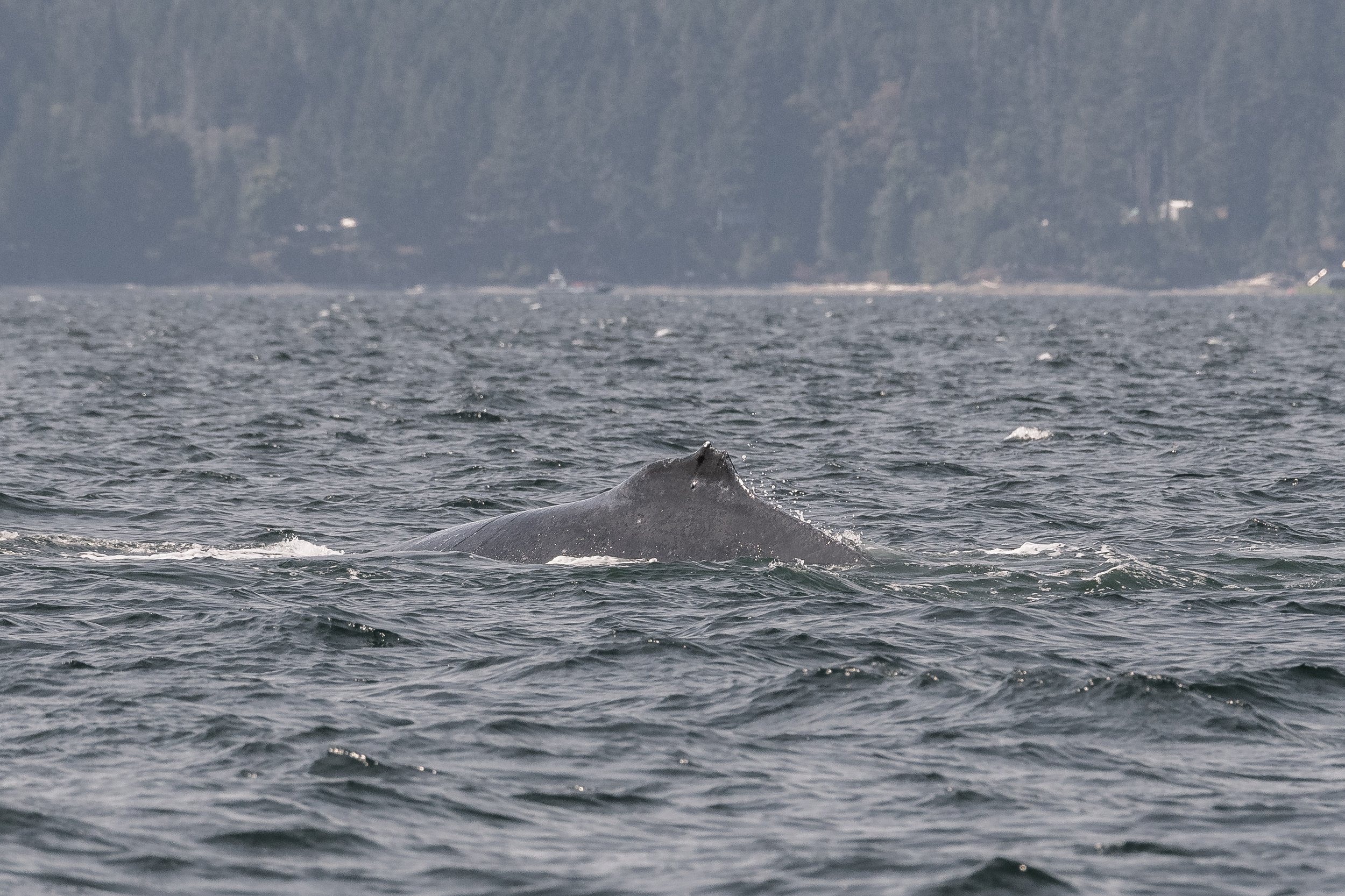
Crater travelling, with their distinct dorsal fin visible. Photo by Evan Hessels.
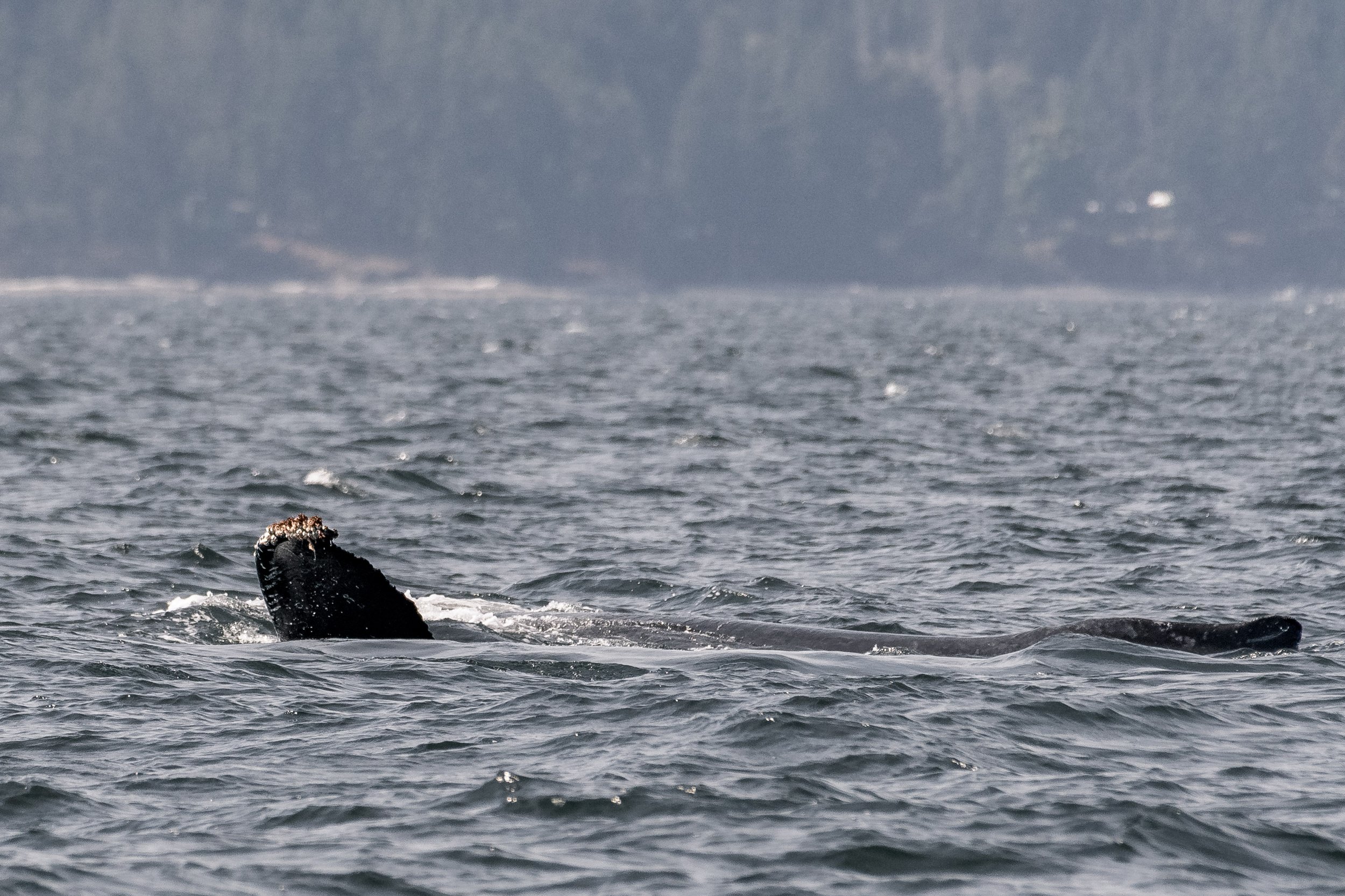
A tiny corner of Crater’s fluke with Split Fluke travelling beside them. Photo by Evan Hessels.
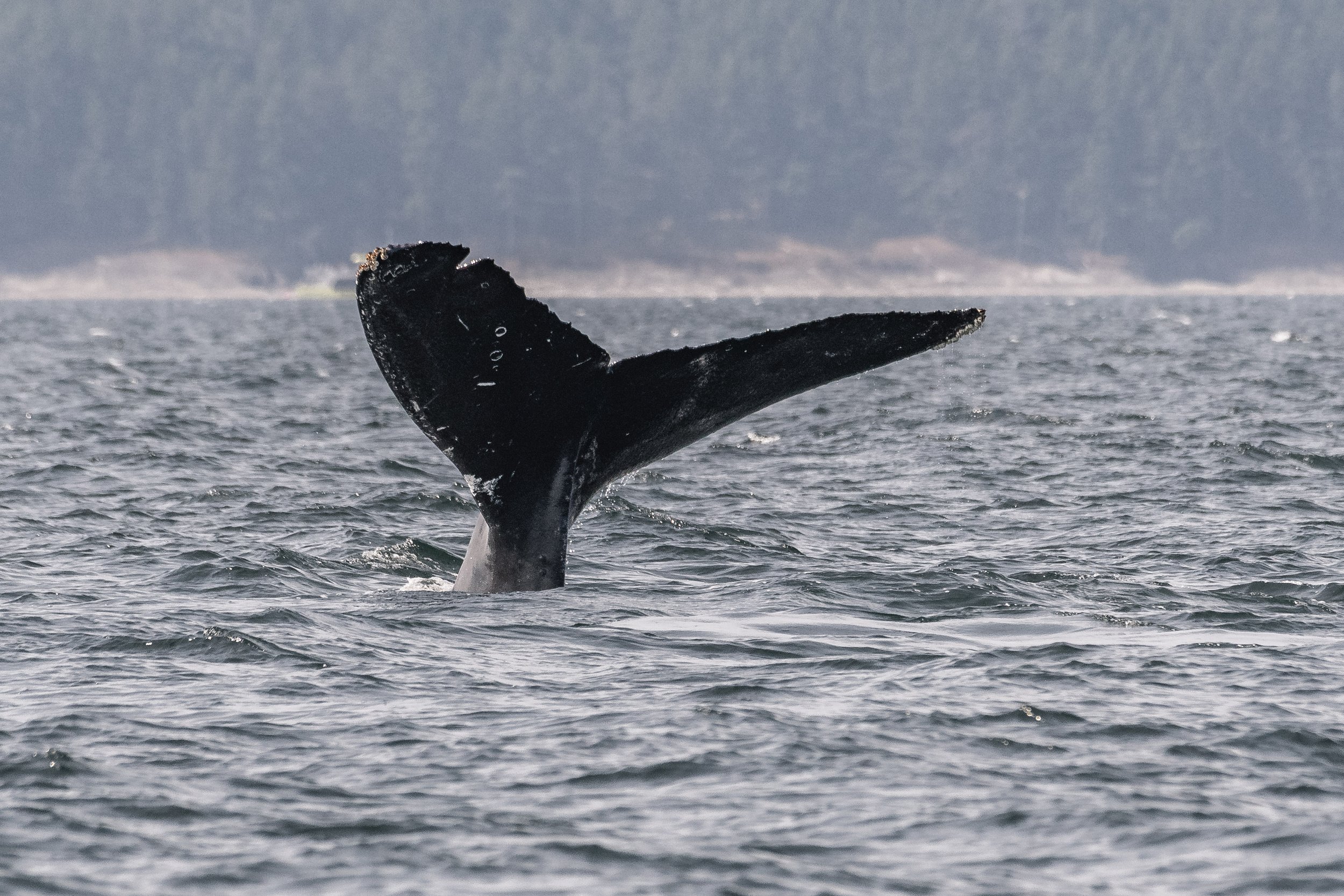
Split Fluke diving - can you see how she got her name? Photo by Evan Hessels.
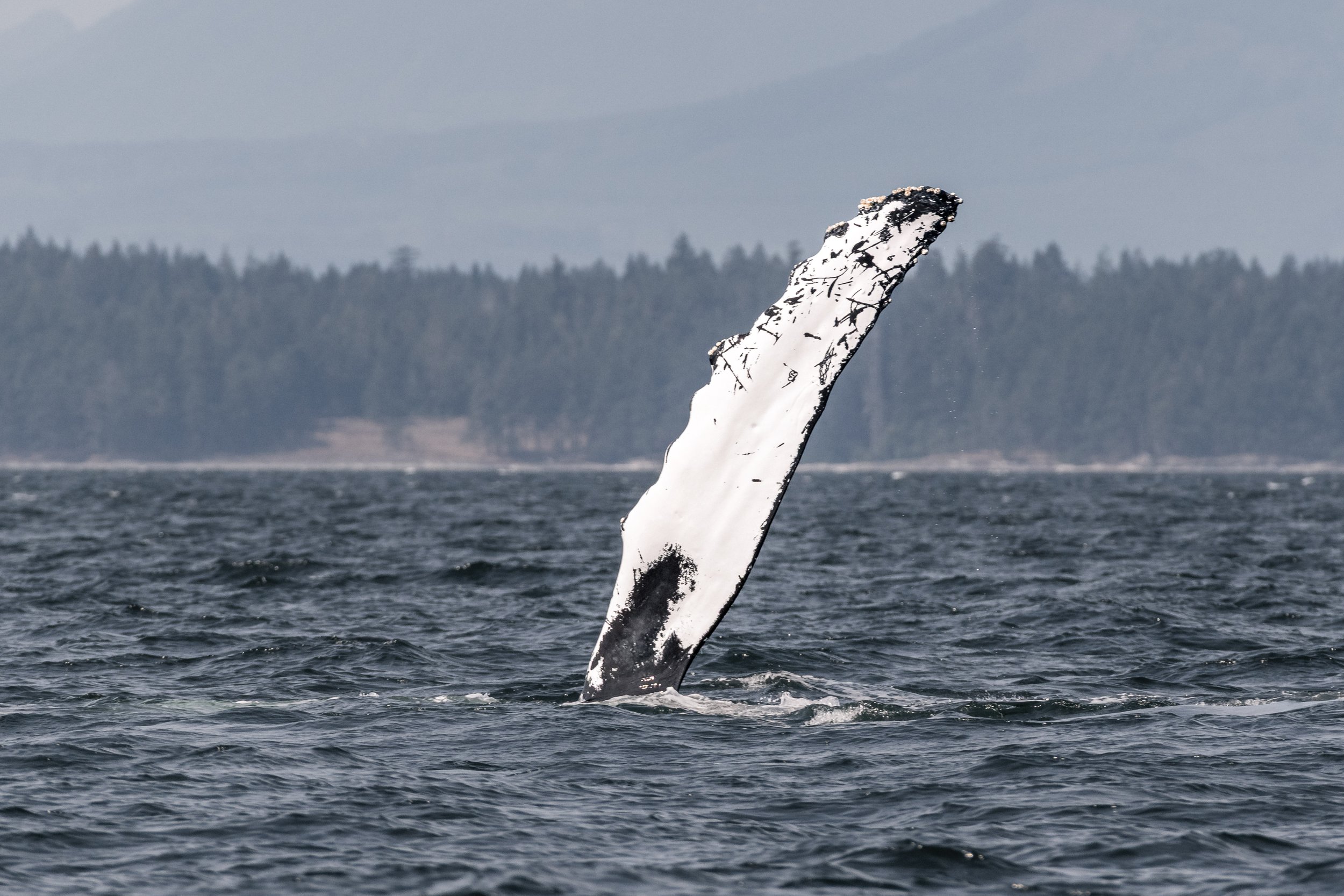
A pectoral wave! Photo by Hayleigh Hilbert.
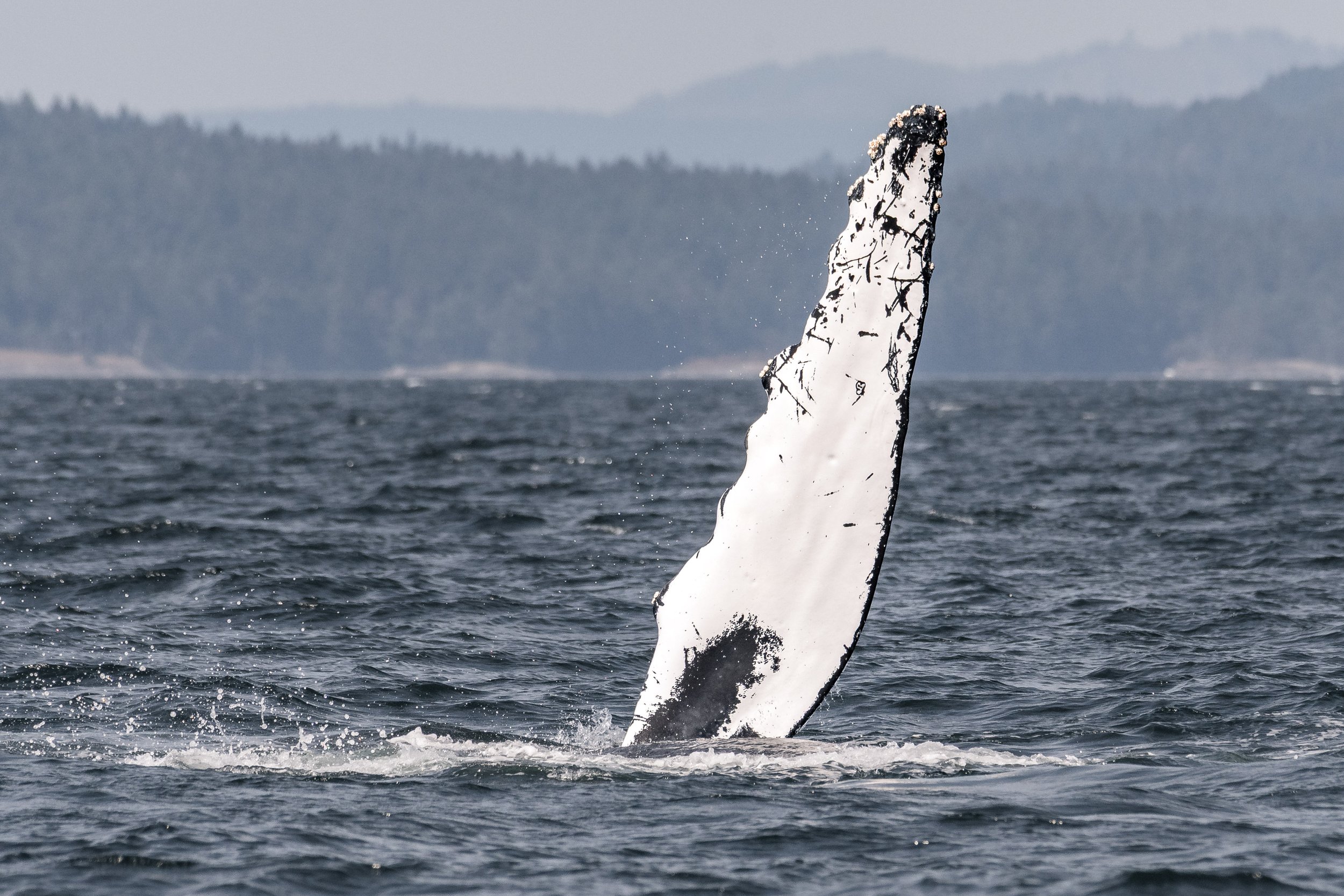
Patterns on pectoral fins could theoretically be used for ID purposes due to their unique shapes and markings. Photo by Evan Hessels.
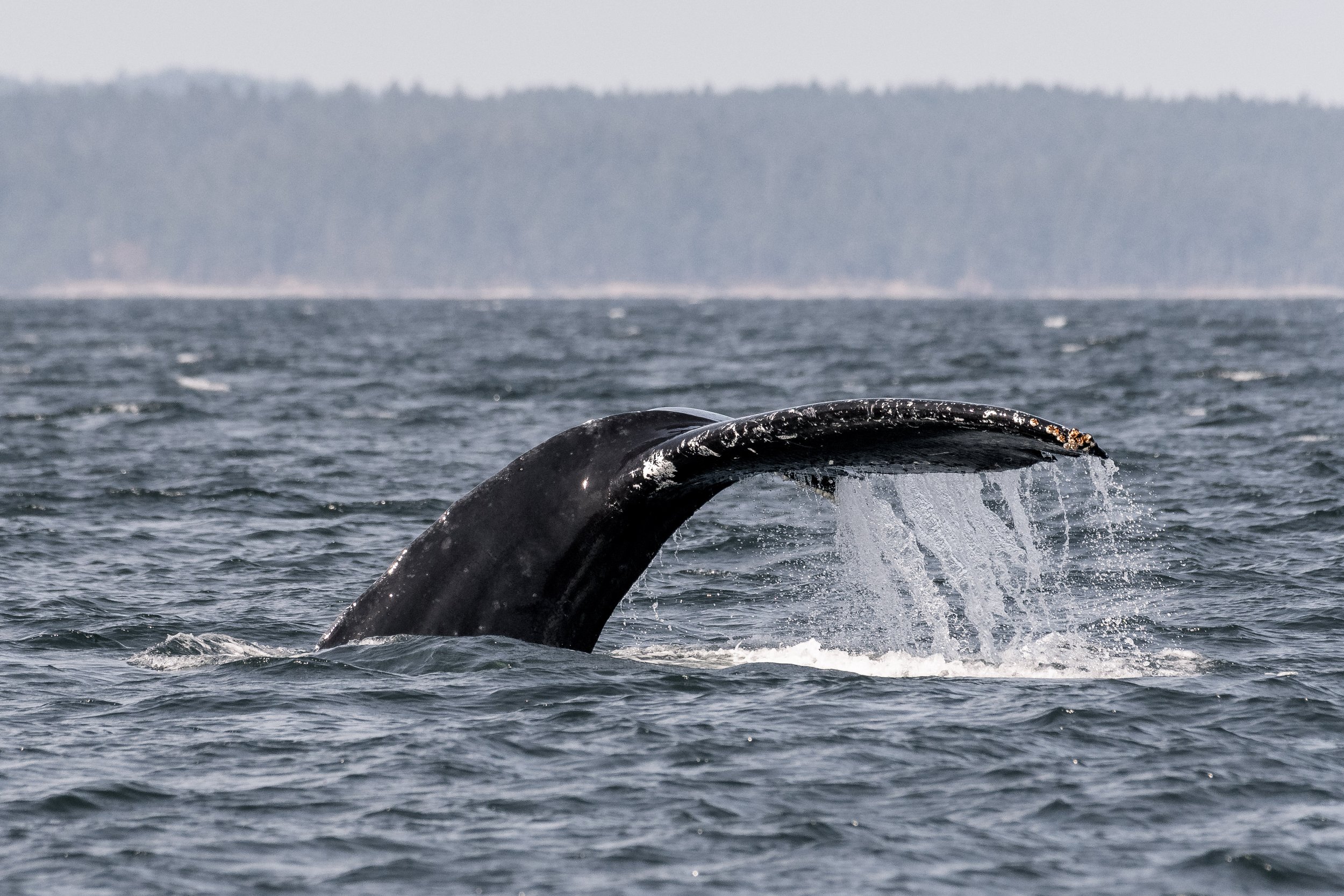
A fluke waterfall from Split Fluke. Photo by Evan Hessels.
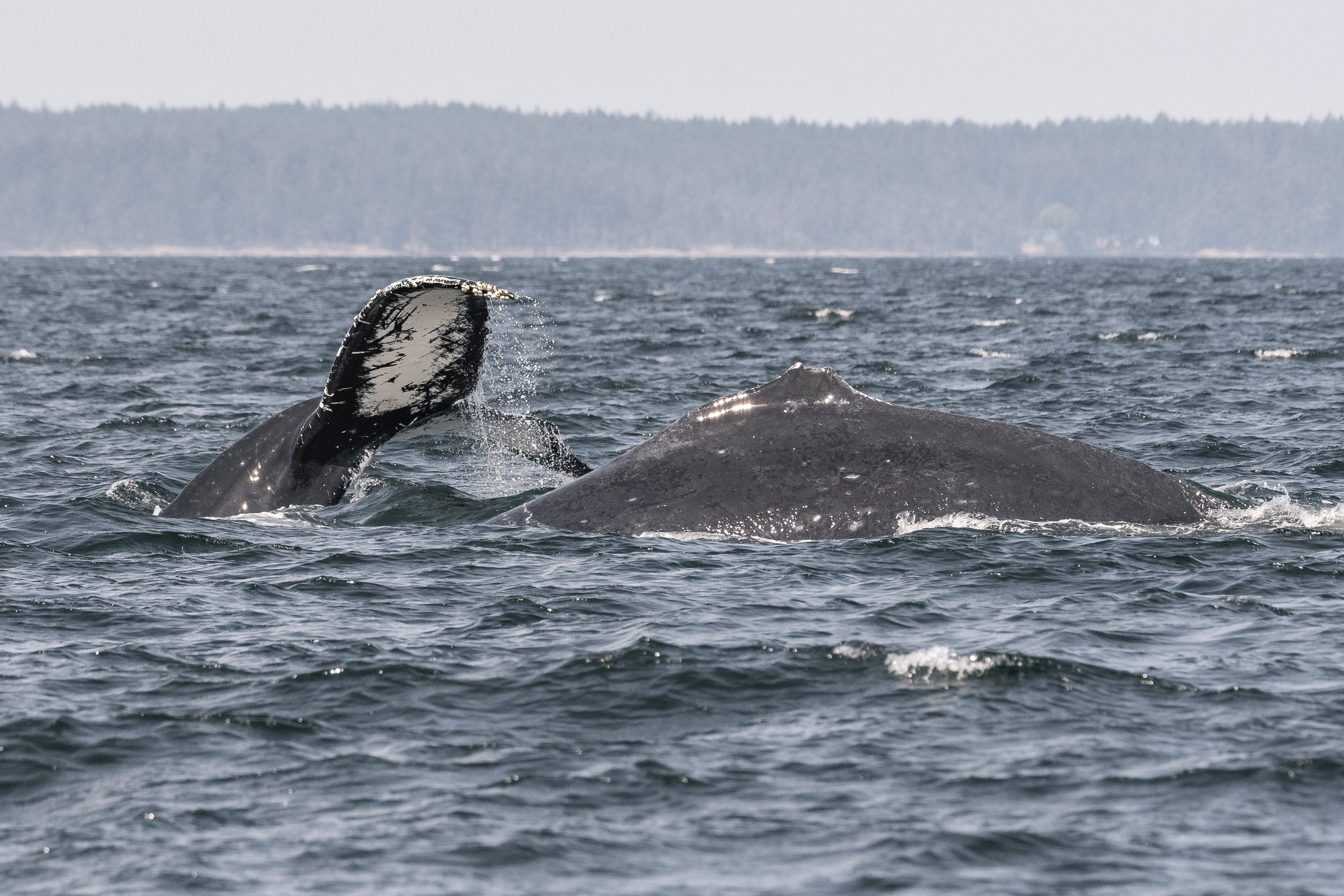
Chi diving, and Crater contemplating diving as well. Photo by Evan Hessels.
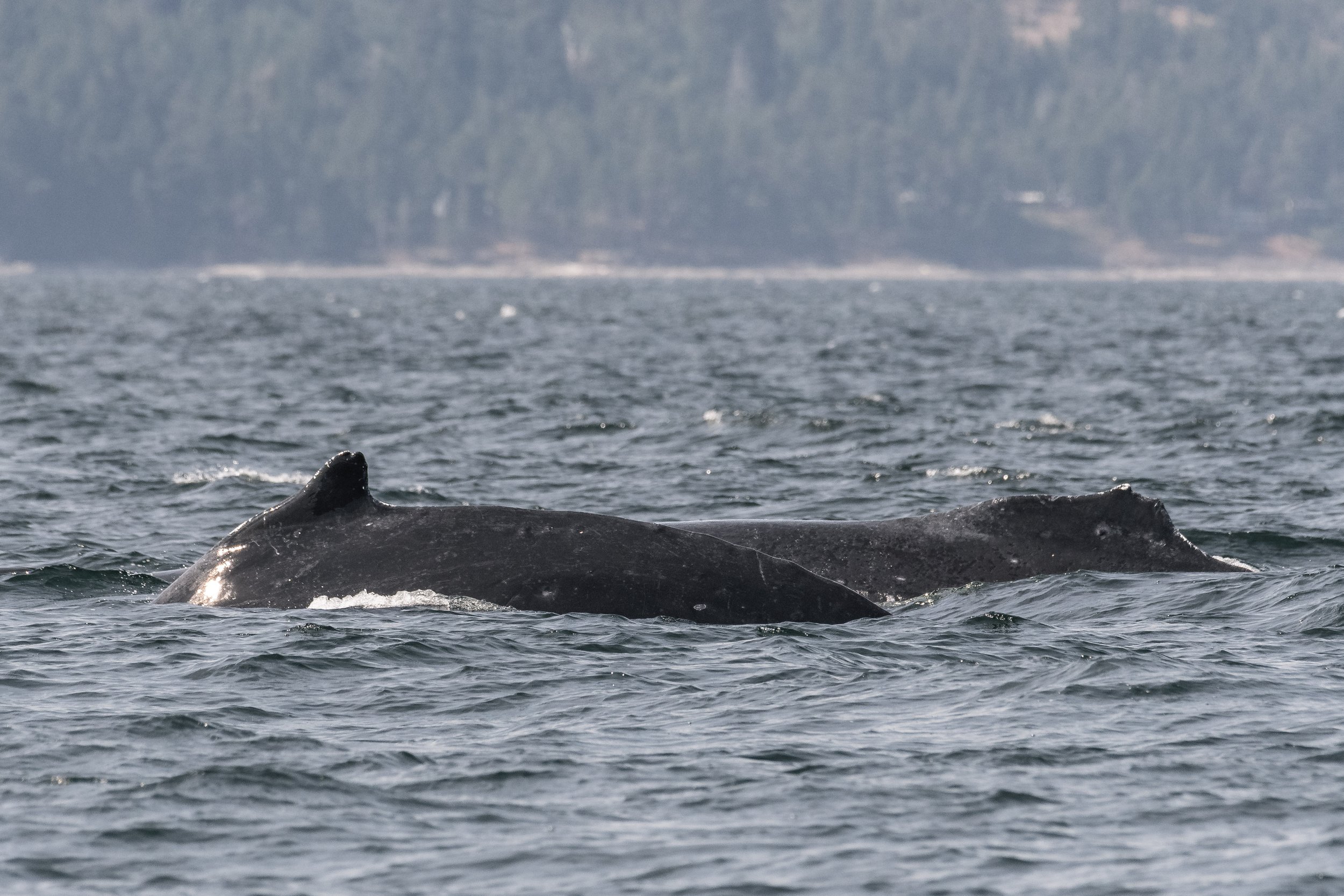
Chi and Crater, side by side. Photo by Evan Hessels.
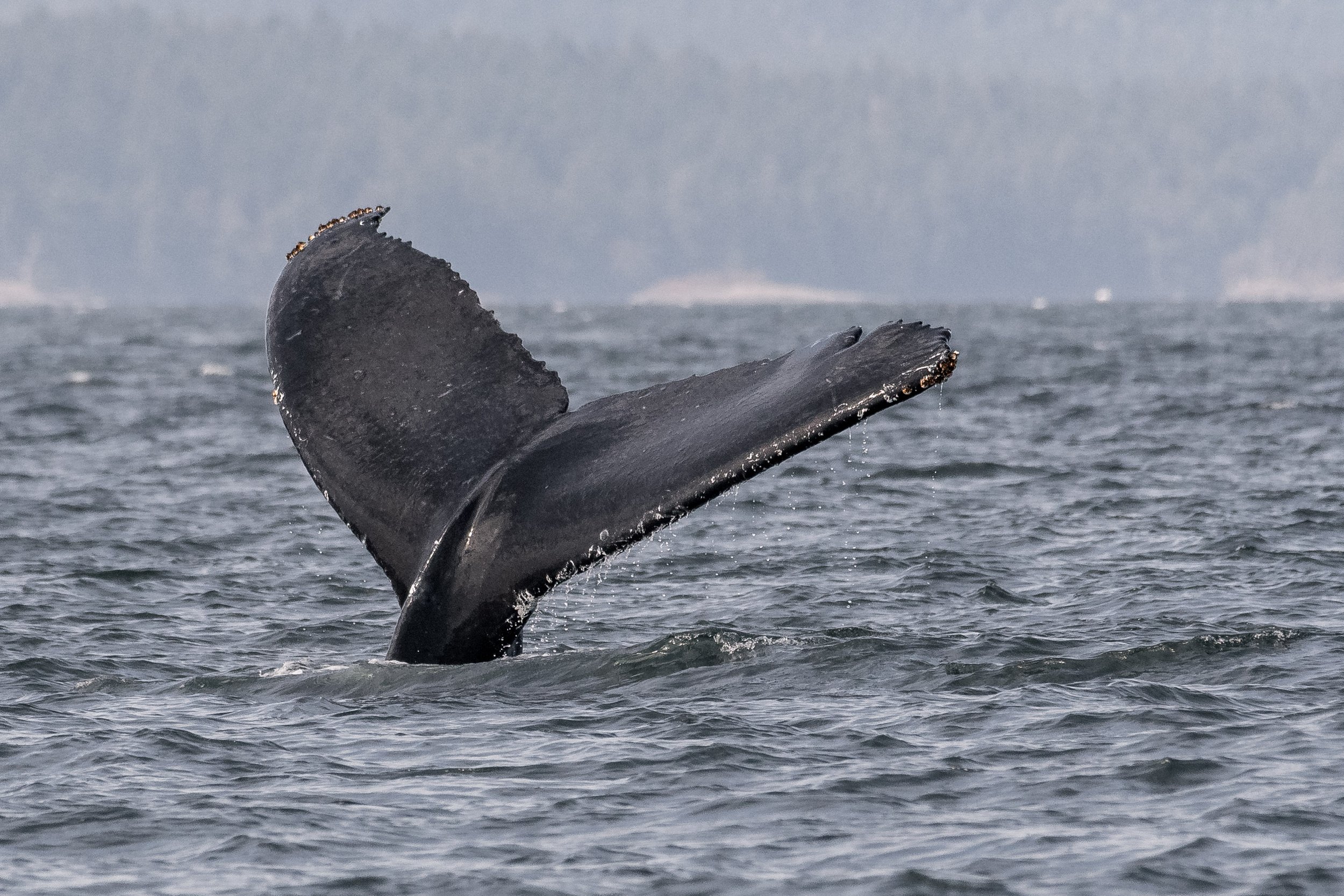
The top of Split Fluke’s fluke as she goes under. Photo by Evan Hessels.
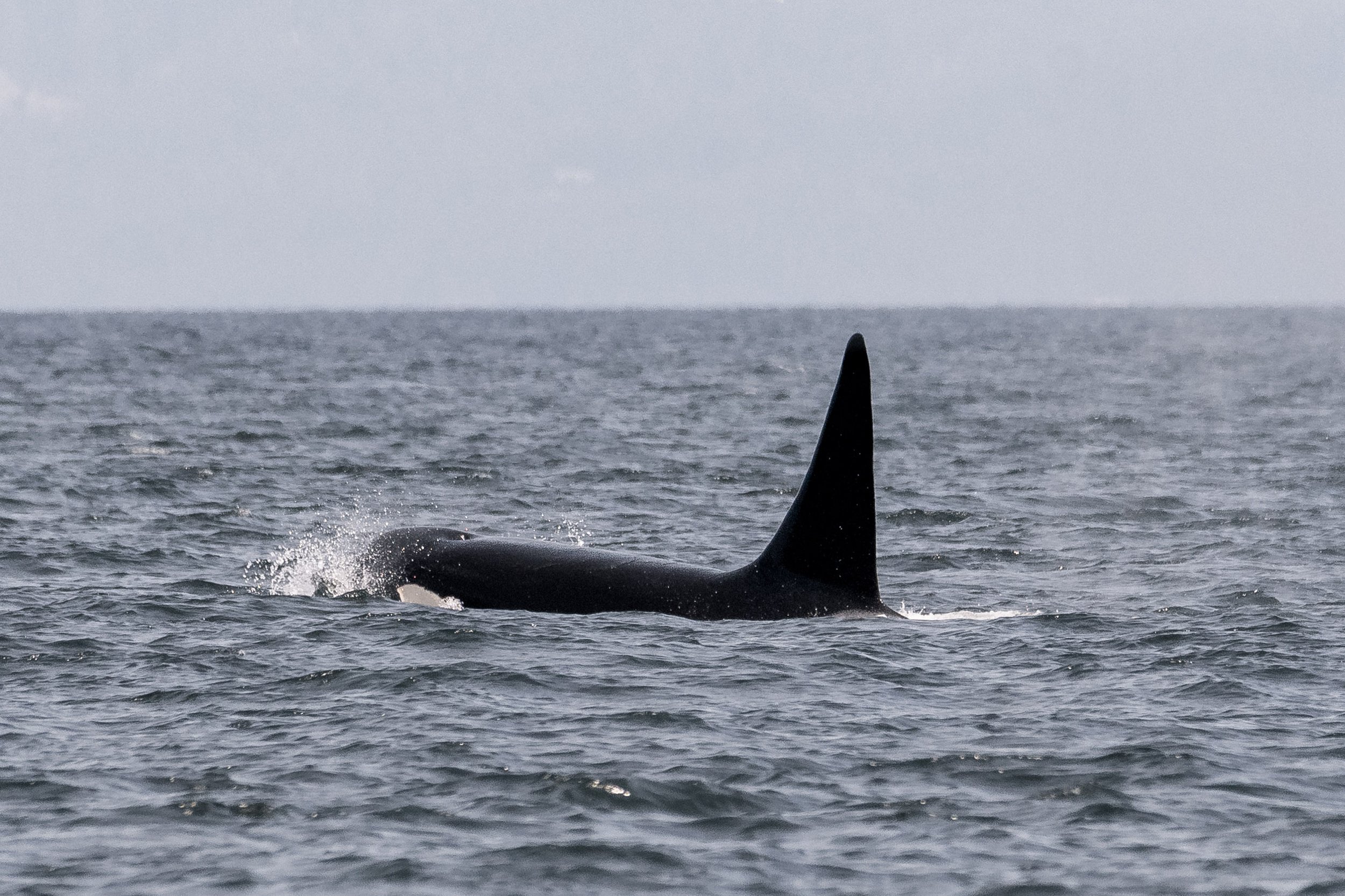
T101B Lagoon making a splash! Photo by Evan Hessels.
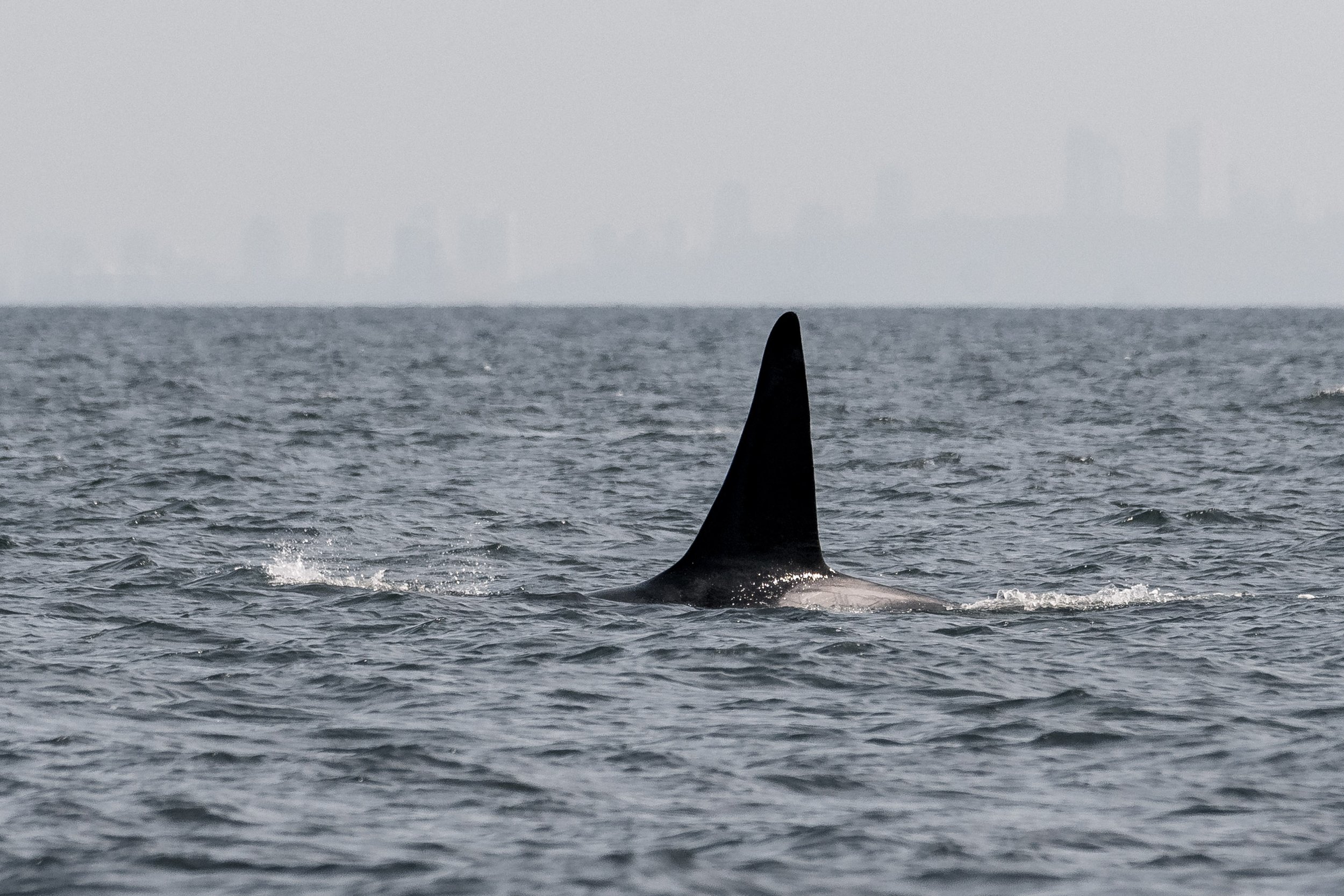
T101B Lagoon has a perfectly flawless dorsal fin, a fairly uncommon occurence amongst adult male Transient orca. Photo by Evan Hessels.
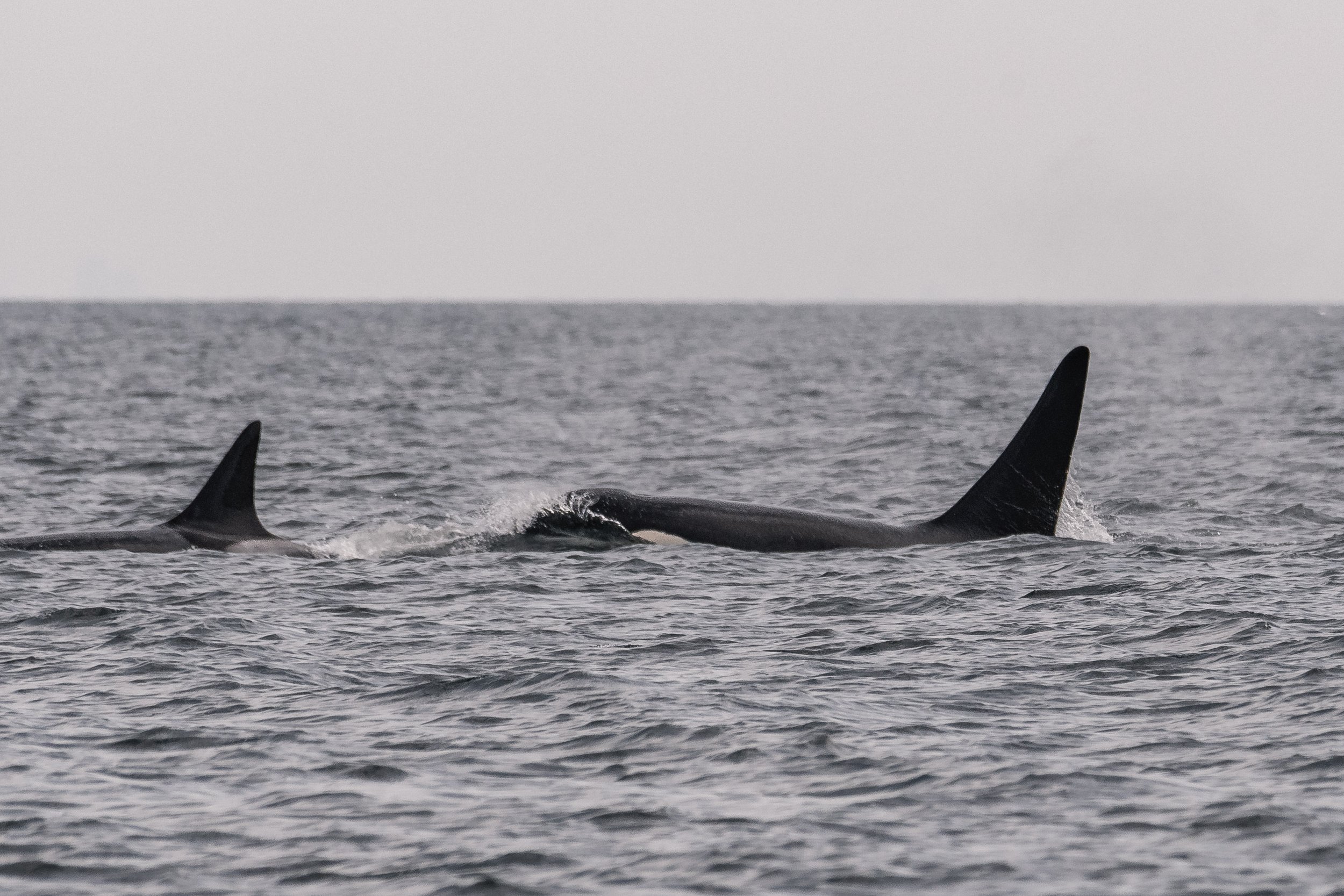
T101 Reef and T101B Lagoon together. Photo by Evan Hessels.
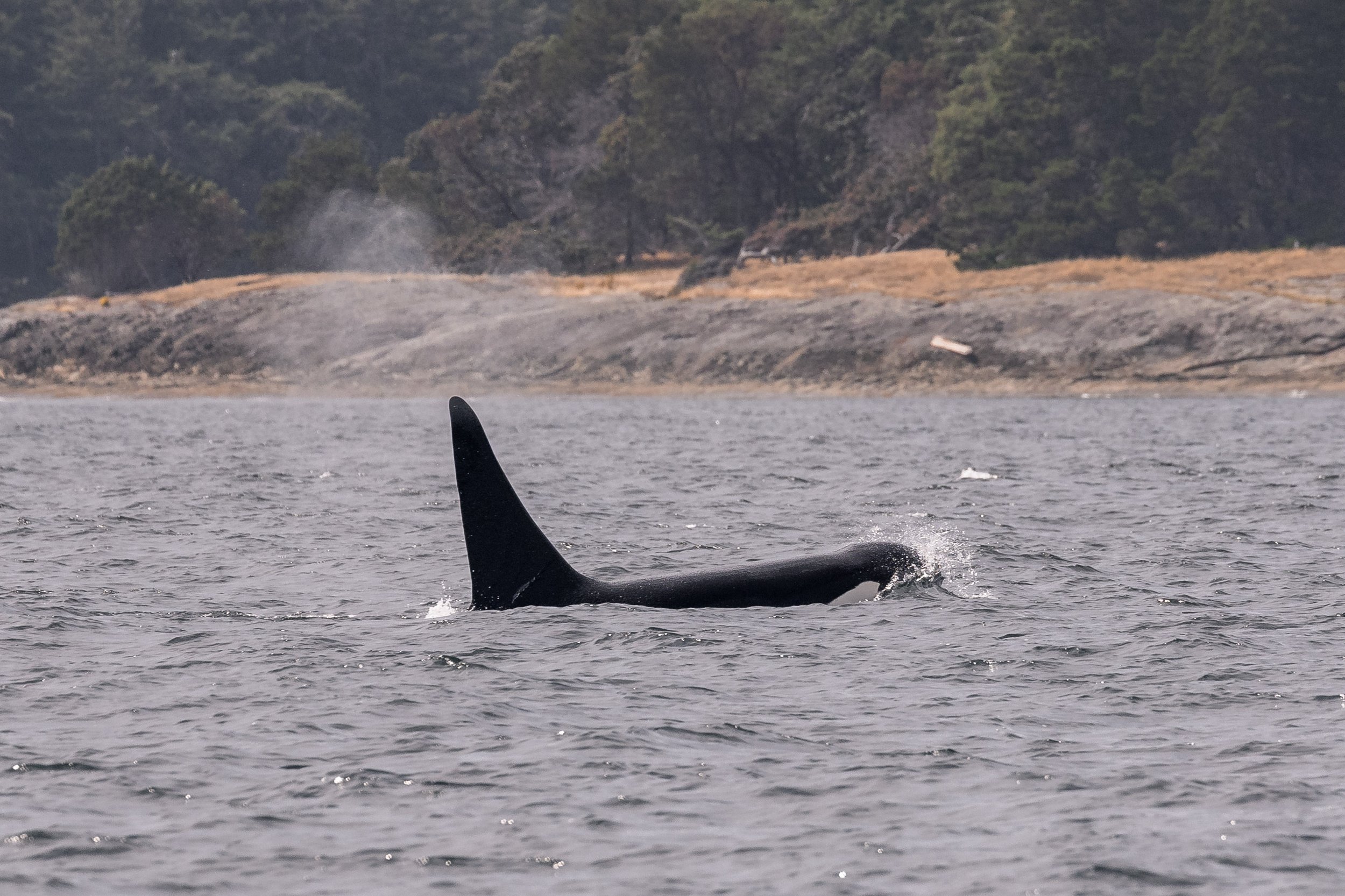
T101B Lagoon with the coastal islands behind him. Photo by Jordan Robinson.
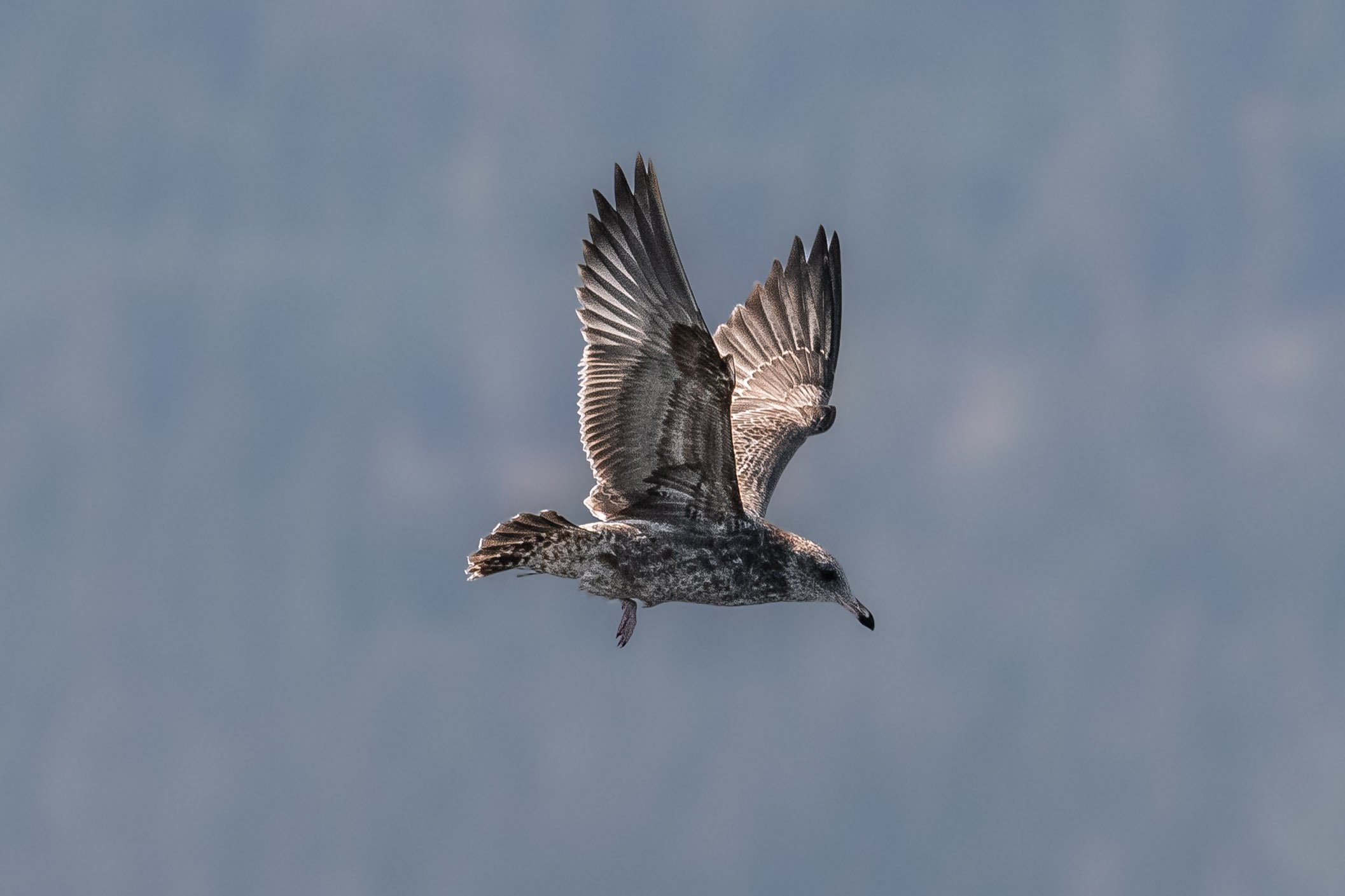
A Gull looking for a snack below it. Photo by Evan Hessels.
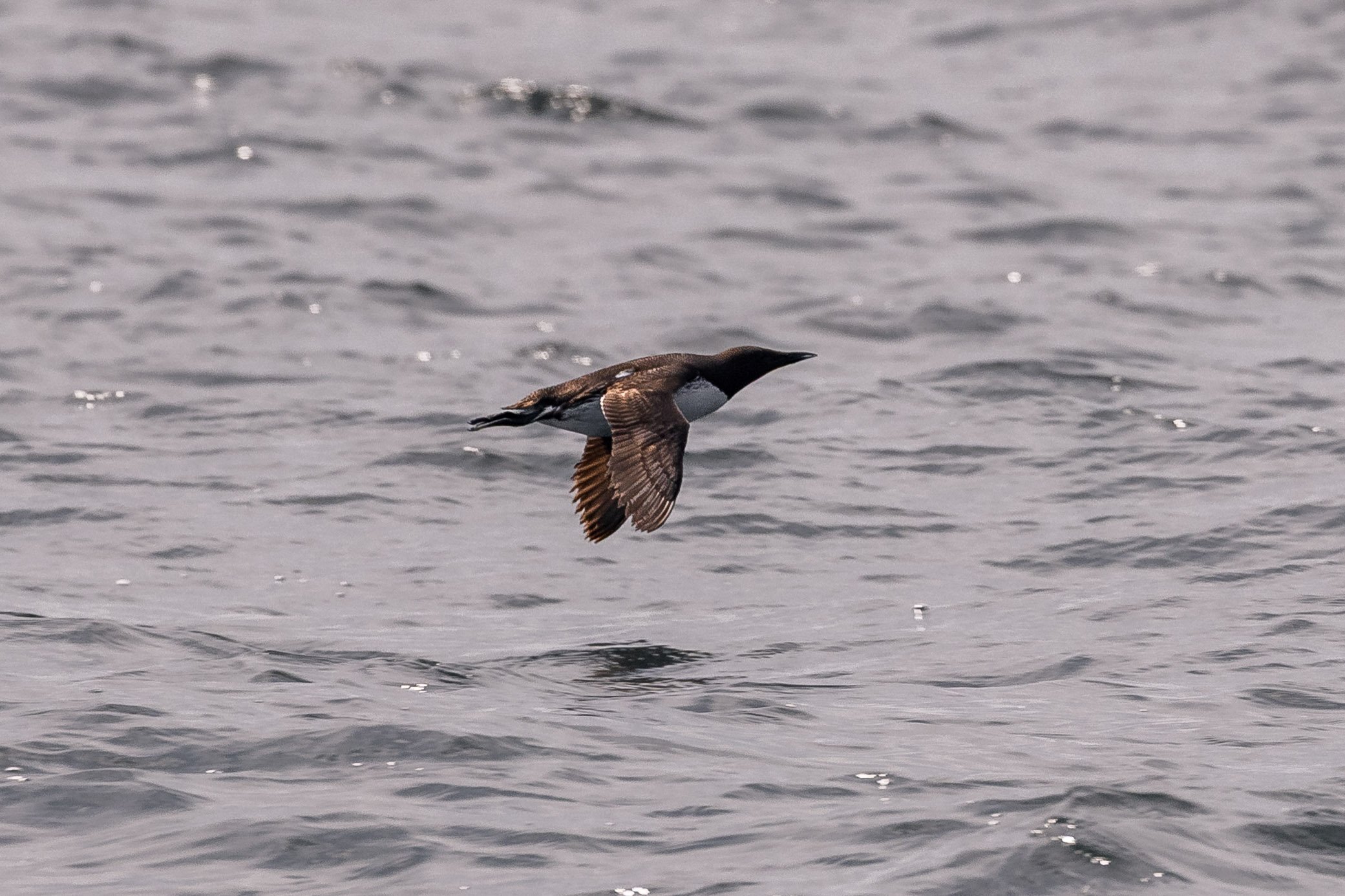
A Common Murre flying by. Photo by Jordan Robinson.
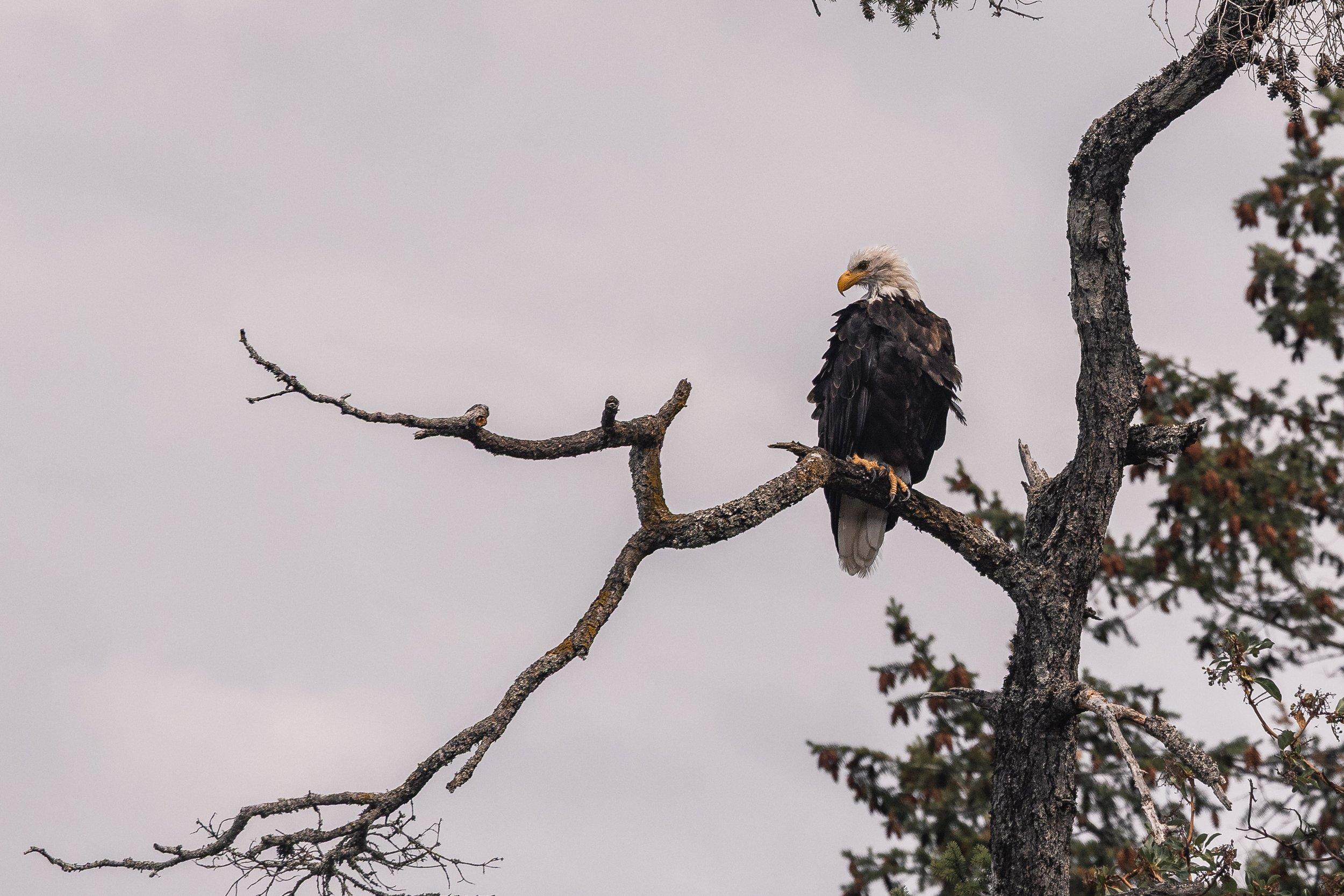
A beautiful Bald Eagle high in the trees. Photo by Jordan Robinson.