
September 5, 2026, 3:30 PM - Adventures around Halibut Bank
The Strait of Georgia has a way of reminding us that no two days on the water are ever quite the same. Even when the search begins with one destination in mind, the wildlife we encounter can lead us in an entirely different direction.
With two vessels departing Nanaimo, we began by exploring the northern portion of our range. Keta and Kula spread out across the water, allowing us to search different areas and increase our chances of finding wildlife. The Strait of Georgia is a vast and dynamic environment, and covering more ground can be especially valuable when sightings have been sparse.
We eventually crossed over towards Halibut Bank, an underwater shelf well known for its productivity. Beneath the surface, the seafloor rises and changes the movement of water, helping to bring nutrients into the upper parts of the ocean. These conditions can support the growth of plankton and attract the small fish that feed on it, creating opportunities for larger creatures as well, such as our orca and humpbacks.
It was here that Keta found two humpback whales. One was identified as Strike (BCX1675), while the second remained unidentified. Although we spent a few surfaces observing them, we did not obtain a clear photograph of the second whale’s fluke. Humpback whale identification relies heavily on the unique patterns of pigmentation, scars, and markings found on the underside of the tail. Without a good view of these features, confirming an individual’s identity can be difficult.
For now, this whale remains an unknown in our records. We hope that, as we continue searching, we are able to confirm their ID in the future.
From Halibut Bank, our search continued towards the middle of the Strait of Georgia. It was not long before we caught sight of the other common whale species in our area - a group of orca!
We spotted two large fins, with one smaller fin occasionally rising out of the water between them. Our cameras came up, and we learned that it was T063 Chainsaw, T065 Whidbey II, and T137A Jack:
T065 Whidbey II ♀ (~1971)
T063 Chainsaw ♂ (~1978)
T137A Jack ♂ (2002)
These are familiar members of the Transient orca population, the type of orca we can observe on our trip. Unlike Southern Resident killer whales, whose diet consists primarily of fish, Transients are marine mammal-eating specialists. Their prey can include seals, sea lions, porpoises, and other marine mammals.
Earlier in the day, these three had been travelling with the T035As, another well-known matriline. However, by the time we arrived, the T035As were nowhere to be seen. Associations amongst orca can change throughout the day, with individuals and families sometimes travelling together briefly before separating and continuing on their own paths.
The trio were simply travelling when we encountered them. There was no obvious surface activity to suggest a hunt, and the trio appeared to be moving steadily through the Strait. However, although we did not witness any predation, we did come across an interesting find. Nearby, there was a small collection of leftovers from what appeared to have been an earlier hunt. It was an interesting example of how pods can leave an impact on the area, even after they have moved along.
After enjoying the evening with the three orca, we headed out and continued our search. Close by, though, we encountered two more humpback whales within view of the orca. We identified these individuals as Zig Zag (BCX1193) and Raptor (BCY0458), two well-known female whales.
Raptor and Zig Zag appeared to be focused on their own activities. They were diving and surfacing, lifting their huge flukes into the air as they dove beneath the surface. They did not appear to pay much attention to the nearby orca.
The two humpbacks may have been feeding, although we could not confirm exactly what was happening below. Humpback whales often spend much of their time underwater, where they may be searching for fish, adjusting their position in the water column, or moving between feeding areas. Their dives can offer only brief glimpses into what is happening below.
Seeing these two species in the same stretch of ocean reminded us that the Strait of Georgia is home to a wide variety of marine life. Although their diets and behaviours differ, both humpbacks and Transient orca depend on this ecosystem's productivity to sustain themselves.
Soon after we departed, but Keta had one more encounter in store for them. While continuing to explore, they encountered another orca, this time travelling alone. The individual was identified as T049A1 Noah:
T049A1 Noah ♂ (2001)
Noah is a well-known lone male orca in our area. While his natal matriline, the T049As, also frequents our seas, he is more commonly seen by himself than with them. While we will likely never know why Noah decided to live such an unconventional lifestyle, as male orca (particularly first-born sons) tend to stay by their mother’s side their whole lives, we will continue to cherish every encounter we have with this peculiar bull.
As the sun began to set, we made our way to the White Islets, a haul-out often teeming with a variety of wildlife. Here, we spotted Steller Sea Lions, Harbour Seals, and many birds enjoying the late afternoon sunshine. Steller Sea Lions grumbled to each other, jostling amongst themselves for the best areas to rest on the rocks. The seals remained ever demure, quietly galmphing along the rocks. Gulls of various shades flew overhead and wandered along the shores. We also saw a Common Murre paddling along close by, peeking around in search of its next meal.
It was soon time for us to depart and make our way back across the Strait. Once we were comfortable in our seats again, we crossed, and soon after Nanaimo was back in view. It had been an incredible afternoon full of multiple encounters, from our gentle giants to the speedy orca, and from the noisy sea lions to quiet seals.
Photos by Marine Naturalists Jordan Robinson and Evan Hessels - please enjoy!
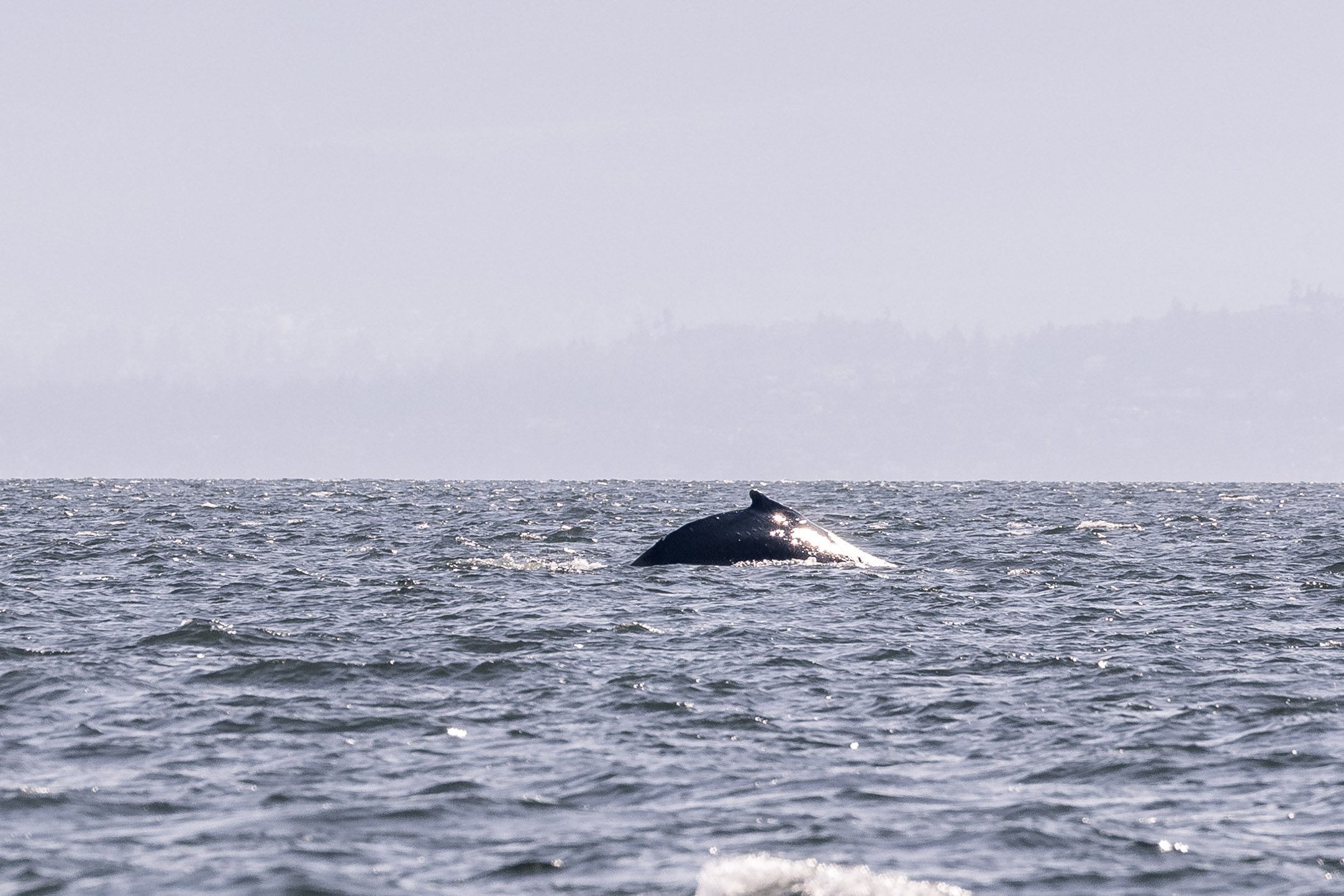
The unknown travelling along. Photo by Jordan Robinson.
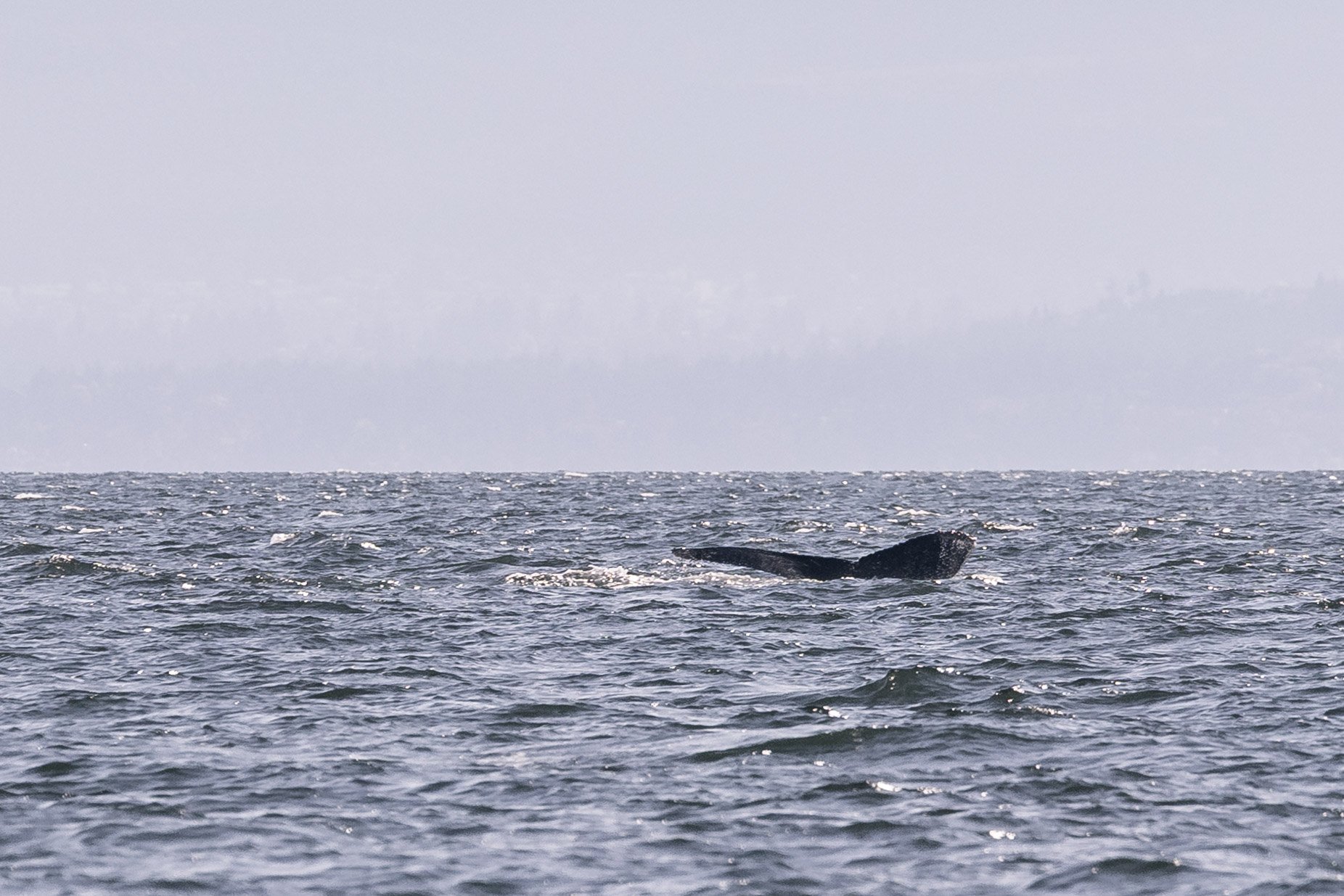
Strike fluking in the distance. Photo by Jordan Robinson.
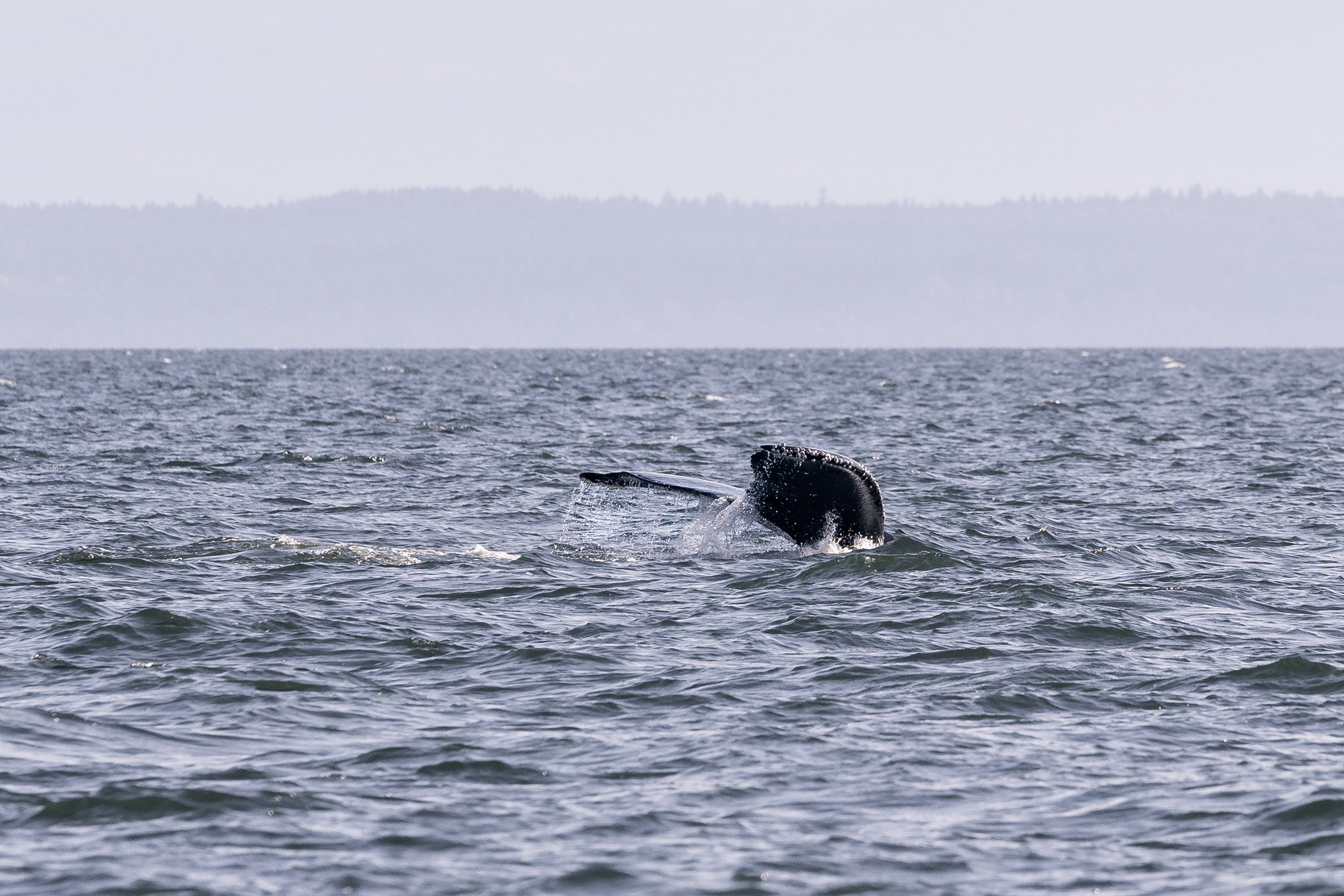
A tiny peek at the corner of the unknown’s fluke. Photo by Jordan Robinson.
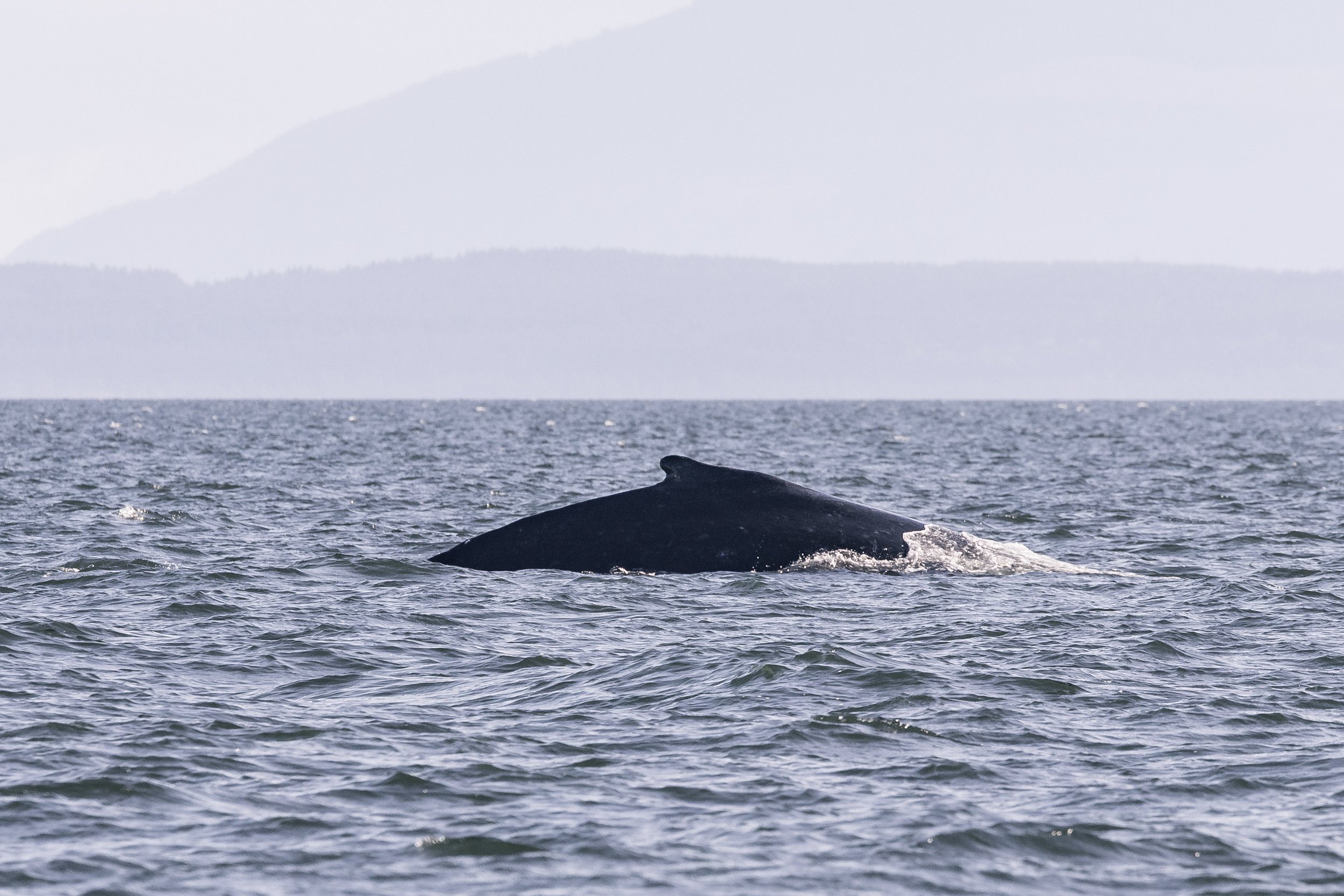
Strike travelling along. Photo by Jordan Robinson.
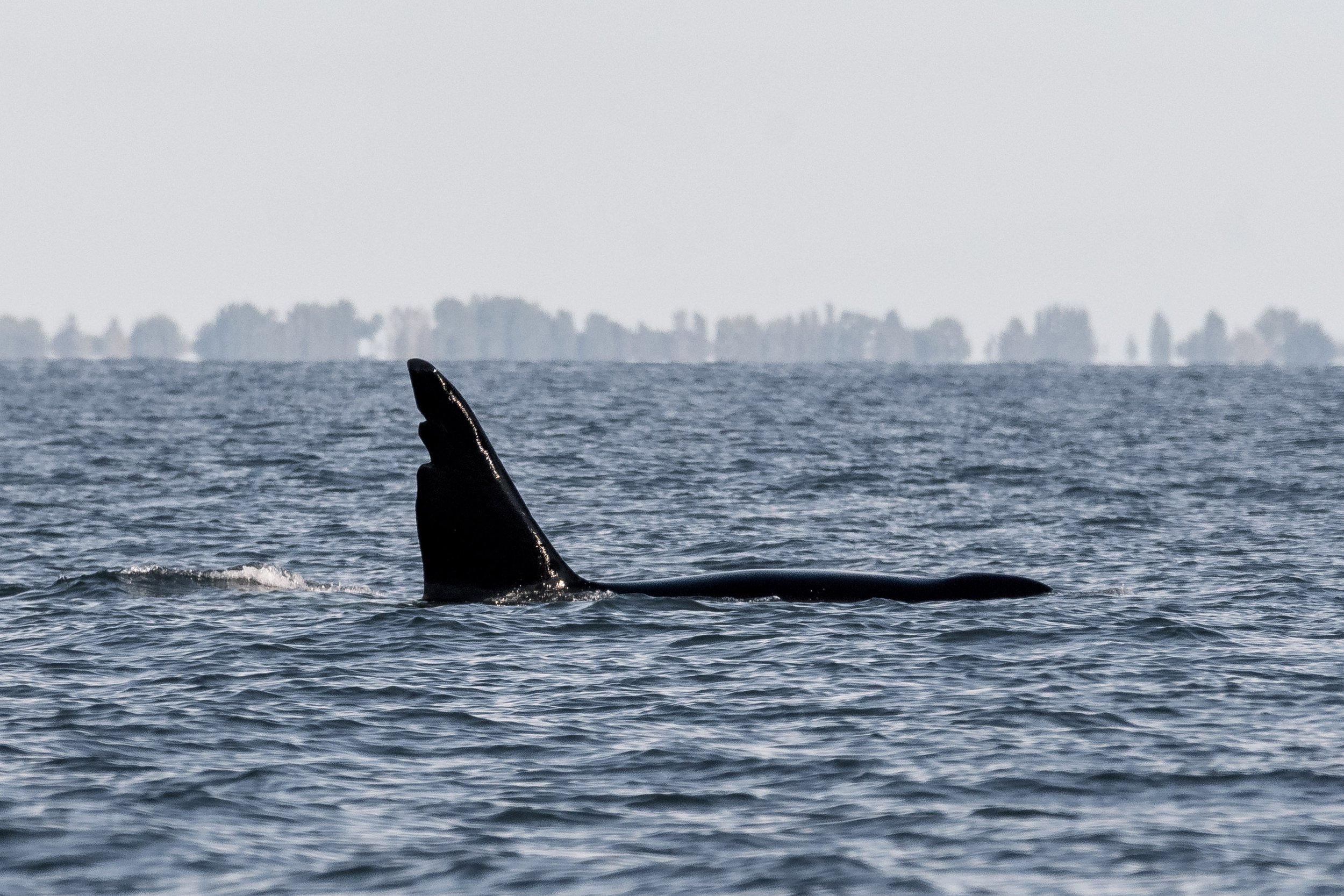
T063 Chainsaw, one of the most iconic fins in the Salish Sea. Photo by Evan Hessels.
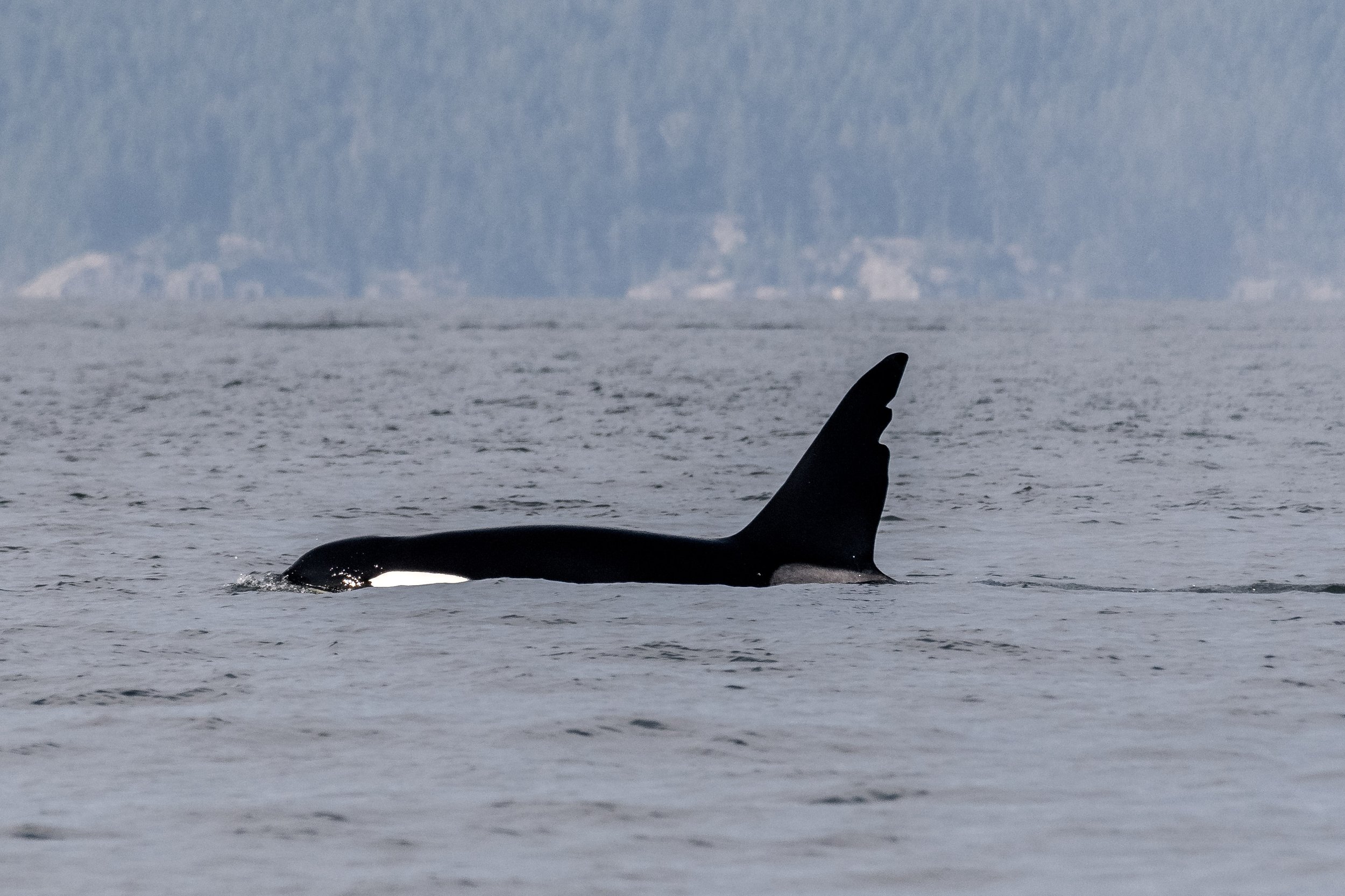
T063 Chainsaw cruising by. Photo by Evan Hessels.
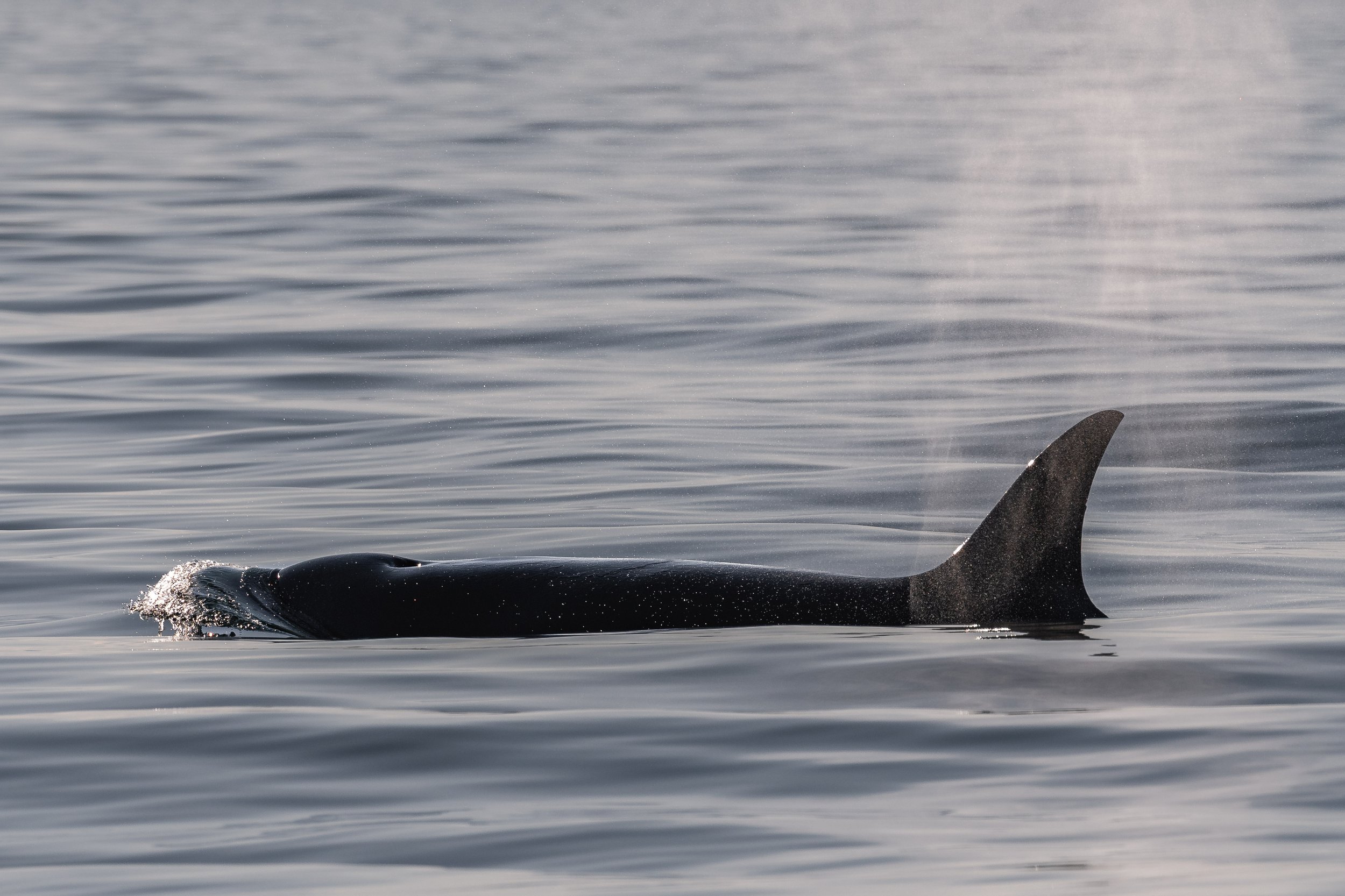
T065 Whidbey II, another iconic fin in the area. Photo by Evan Hessels.
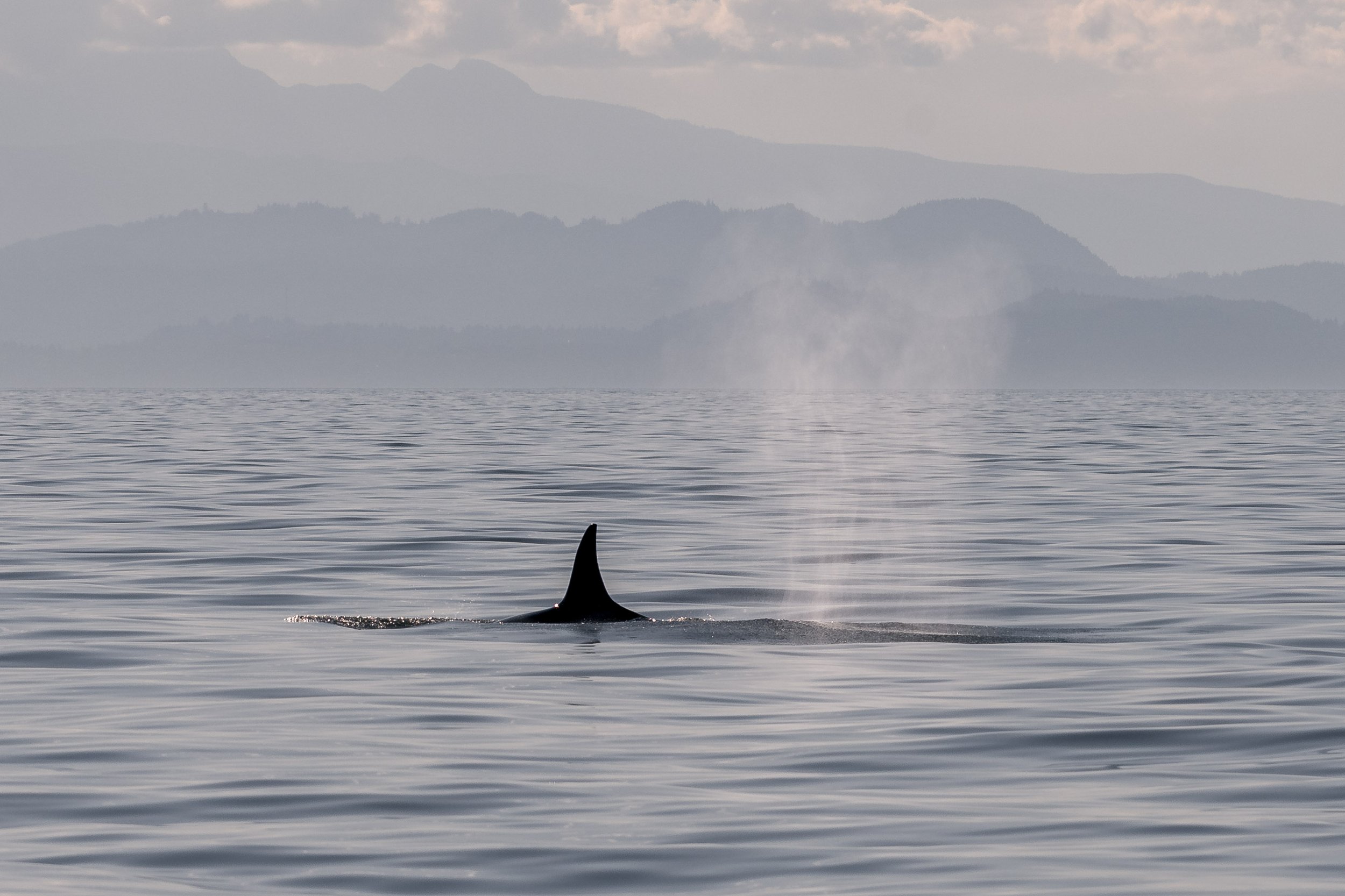
T065 Whidbey II with a blow beside her. Photo by Evan Hessels.
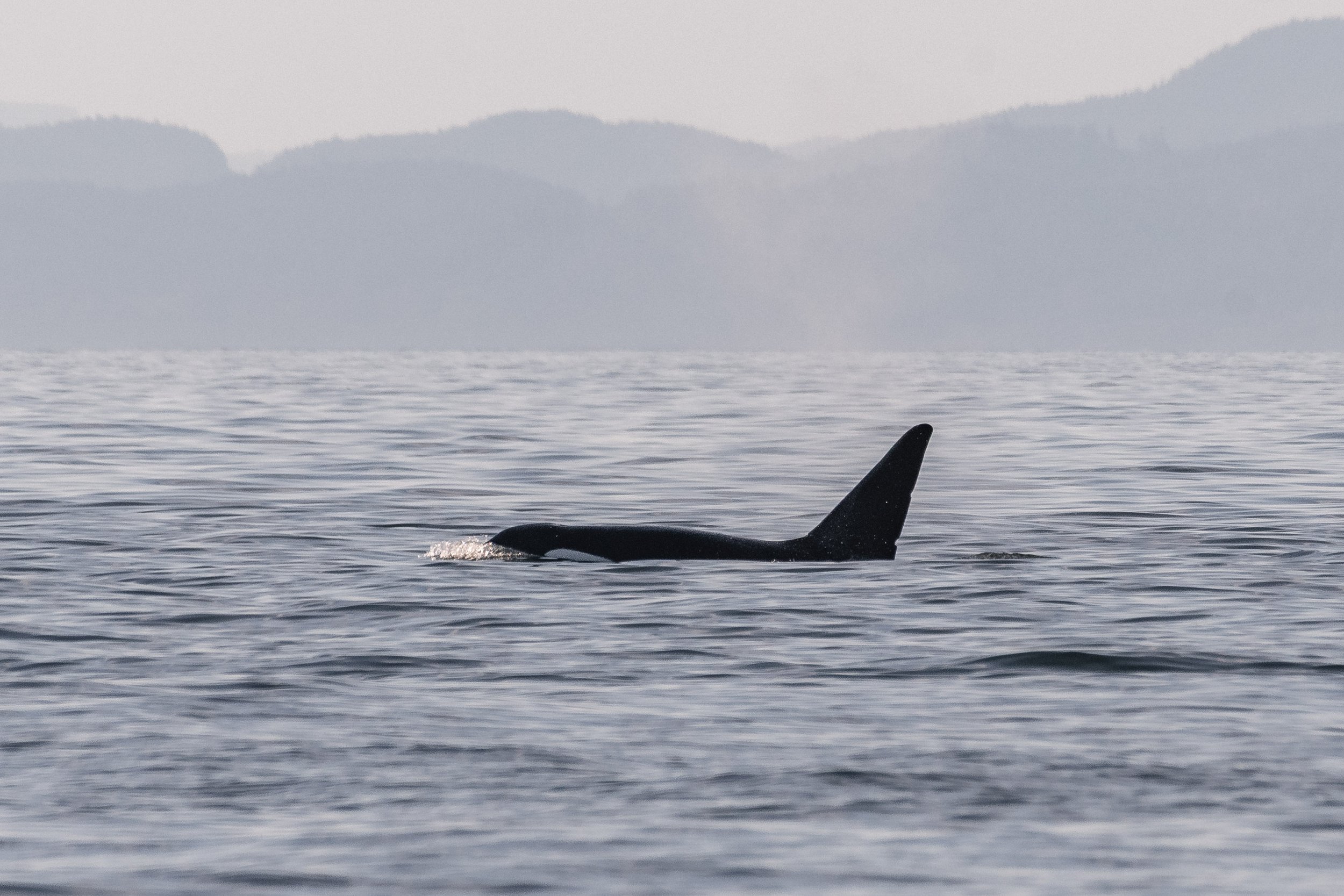
The most surprising individual today, T137A Jack! Photo by Evan Hessels.
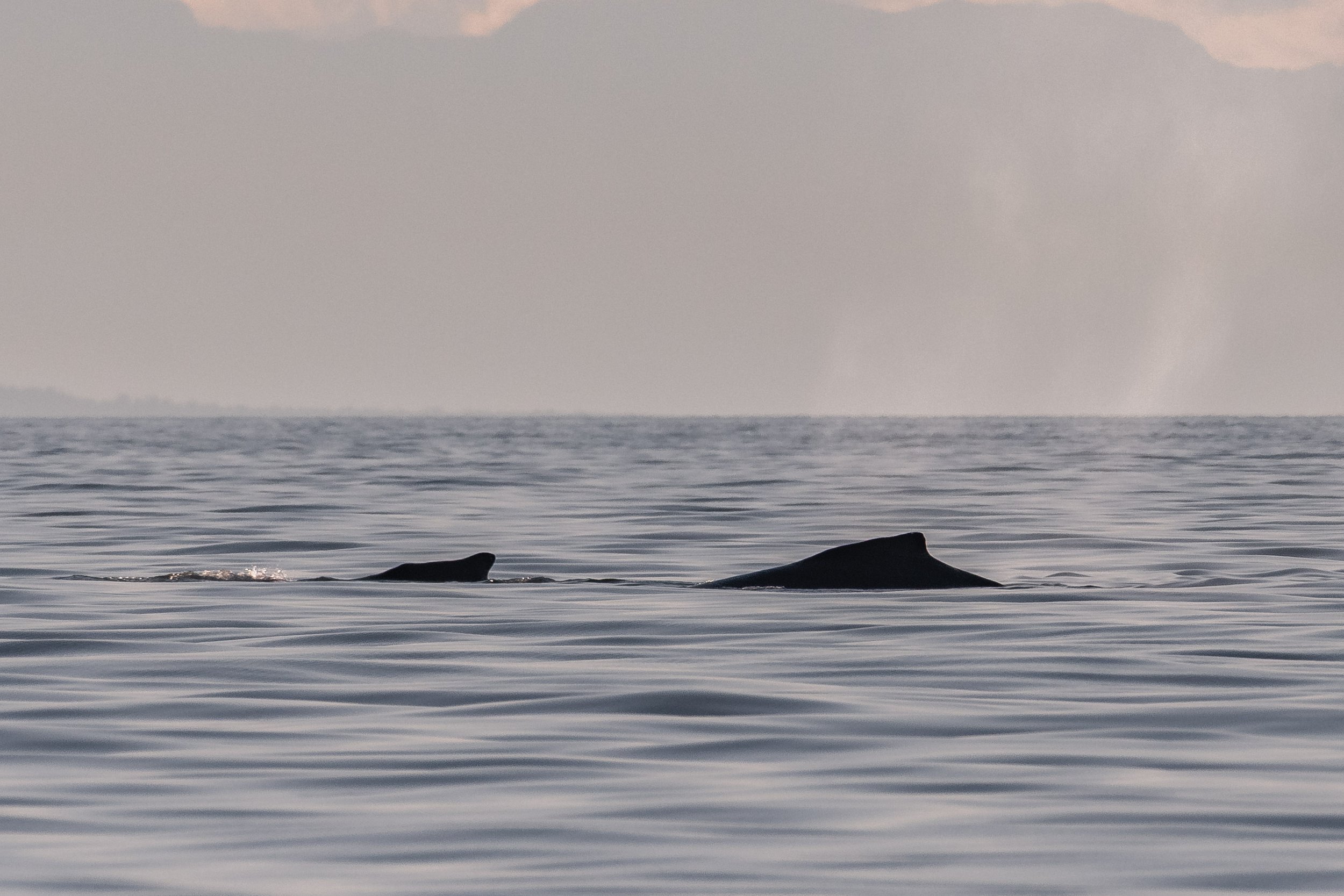
Raptor ahead of Zig Zag. Photo by Evan Hessels.
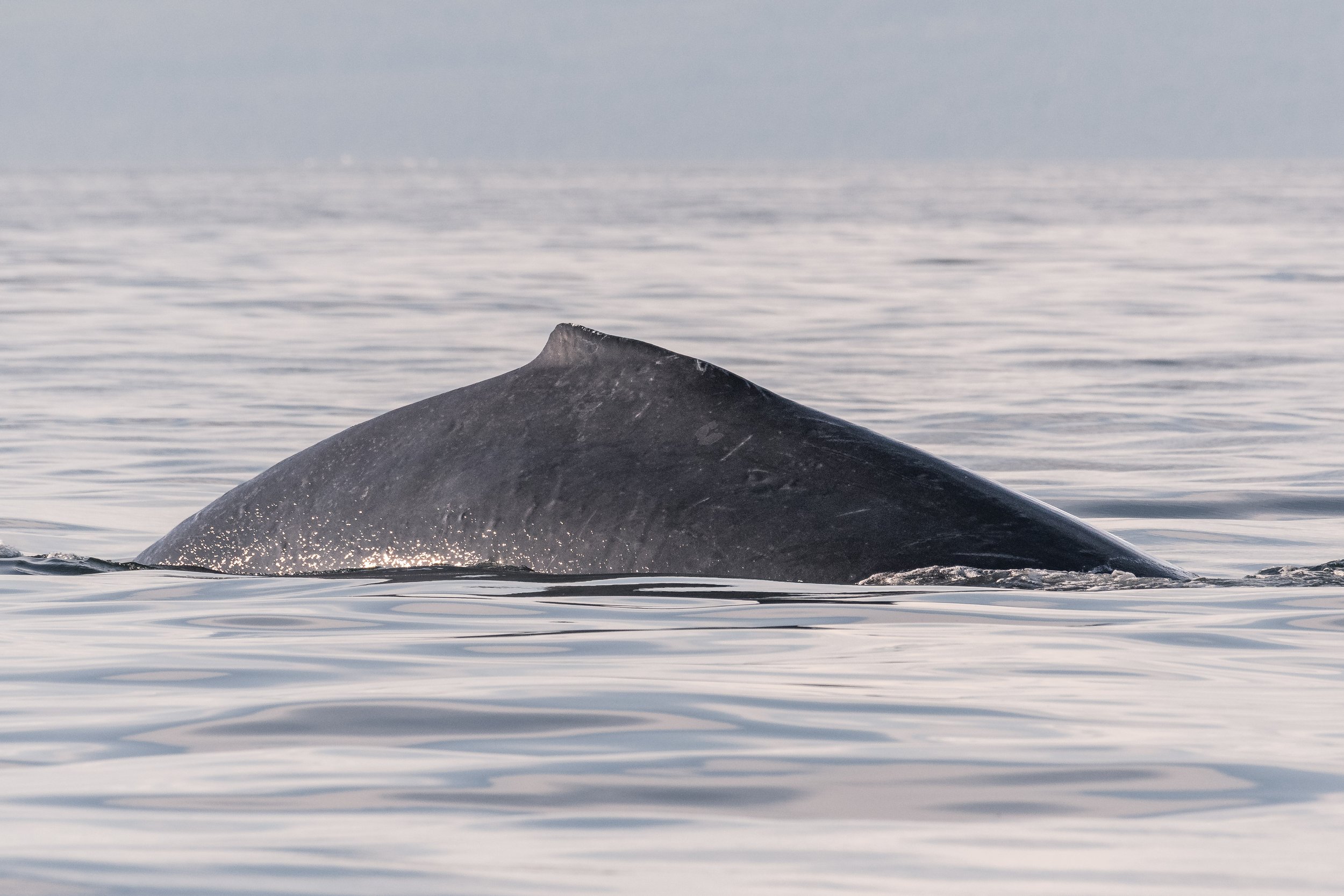
Zig Zag arching for a dive. Photo by Evan Hessels.
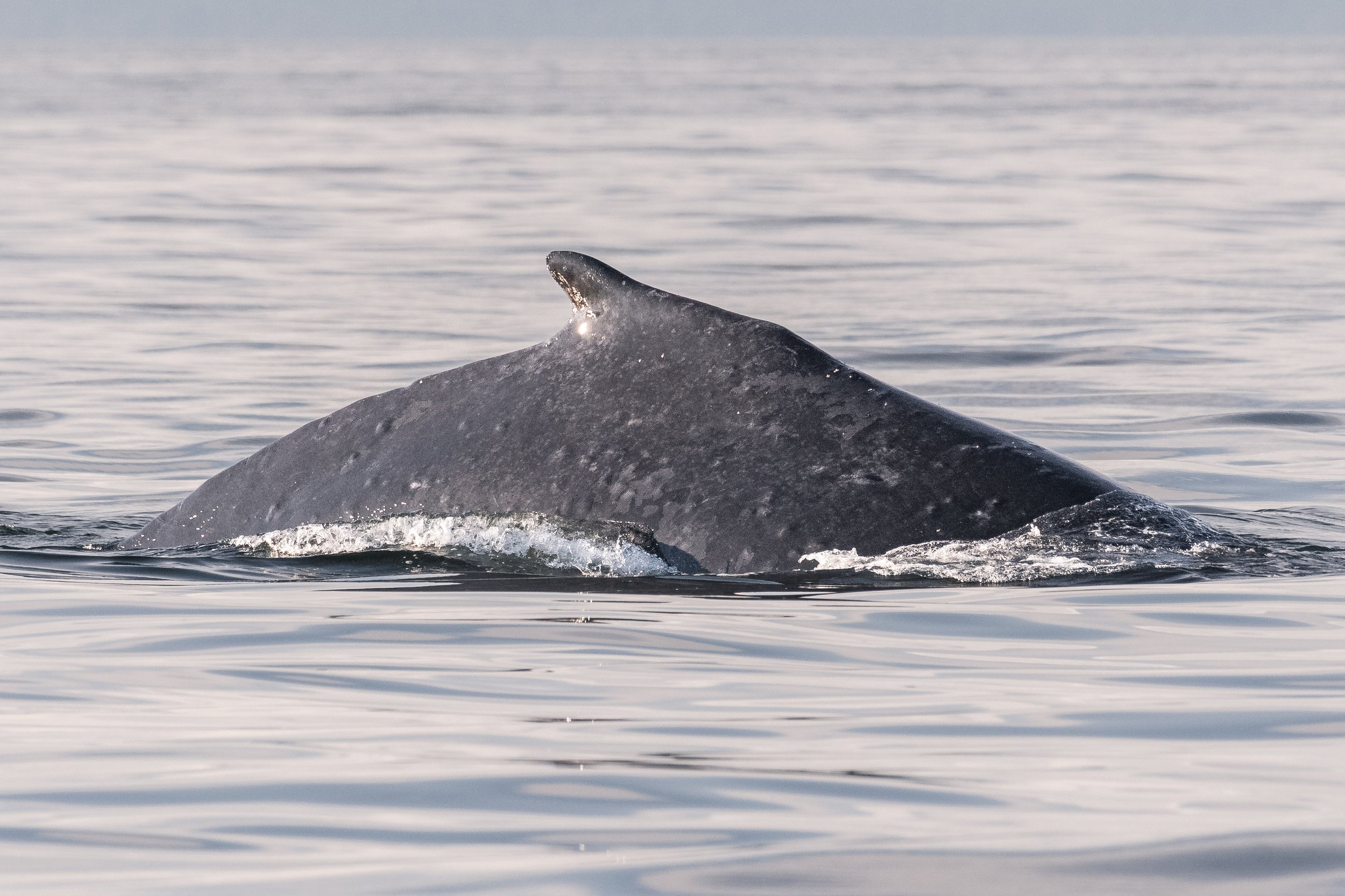
Raptor zipping by. Photo by Evan Hessels.
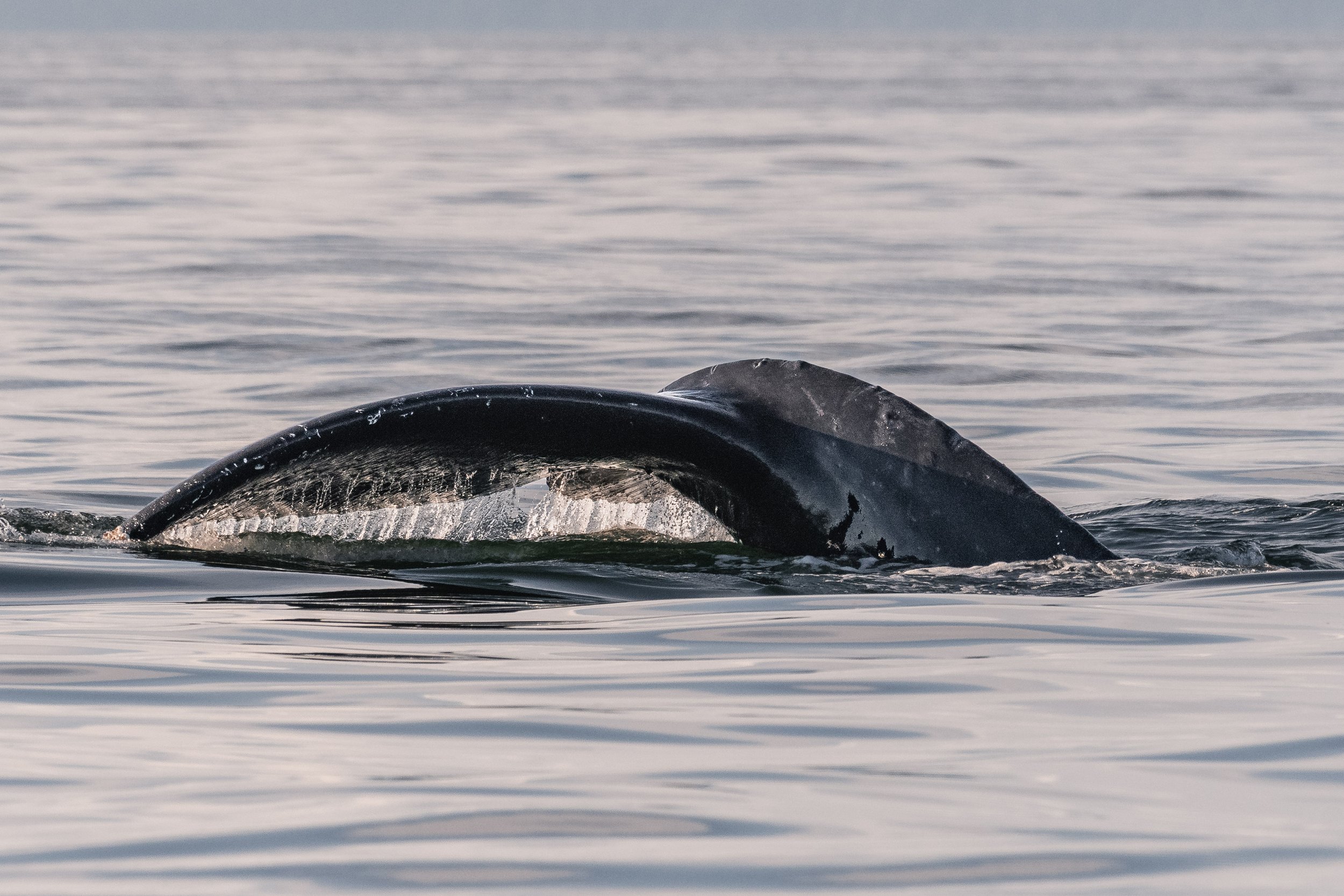
Time for a dive! Photo by Evan Hessels.
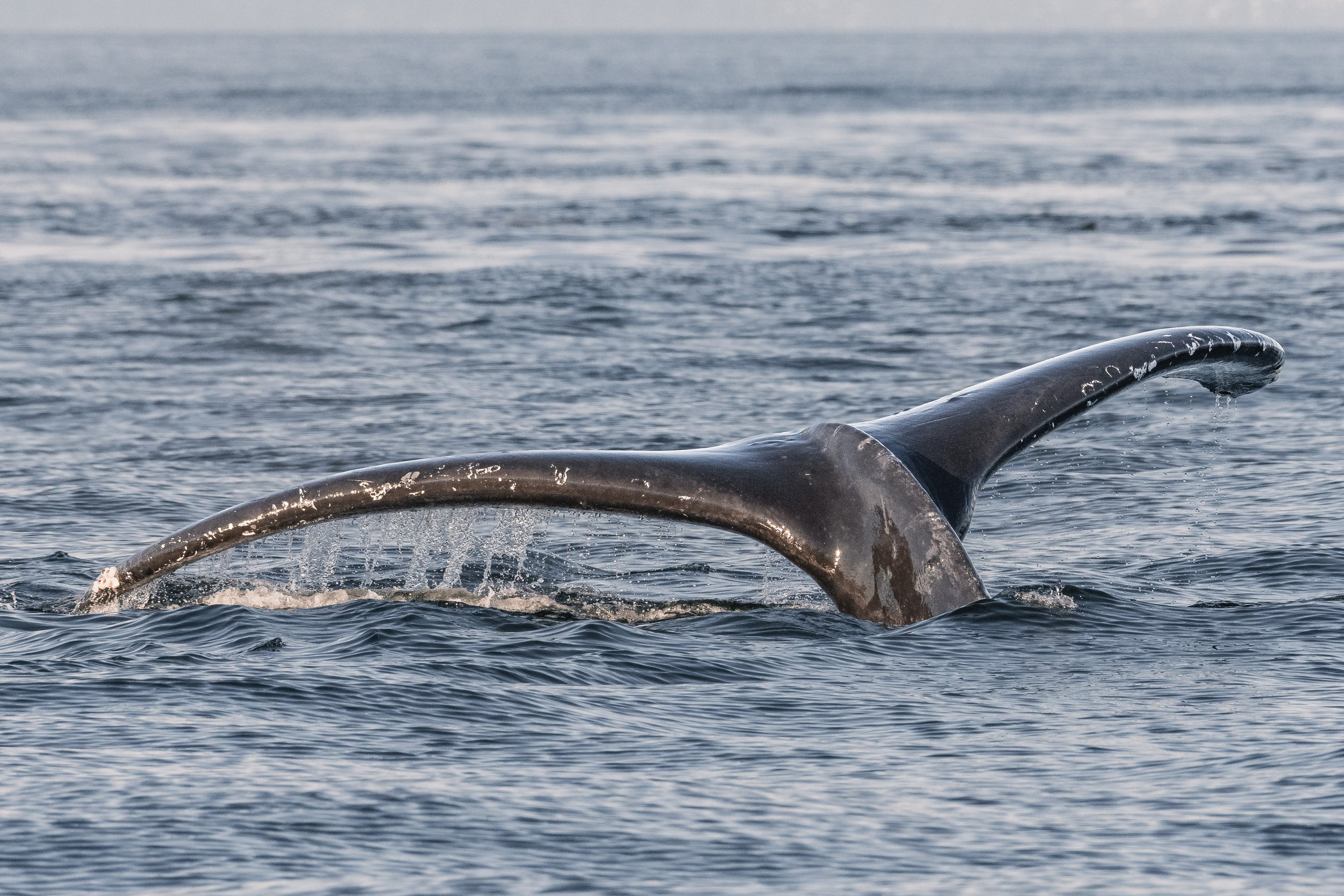
An interesting angle, showing all kinds of scarring aloing the top of the peduncle and leading edge of the flukes. Photo by Evan Hessels.
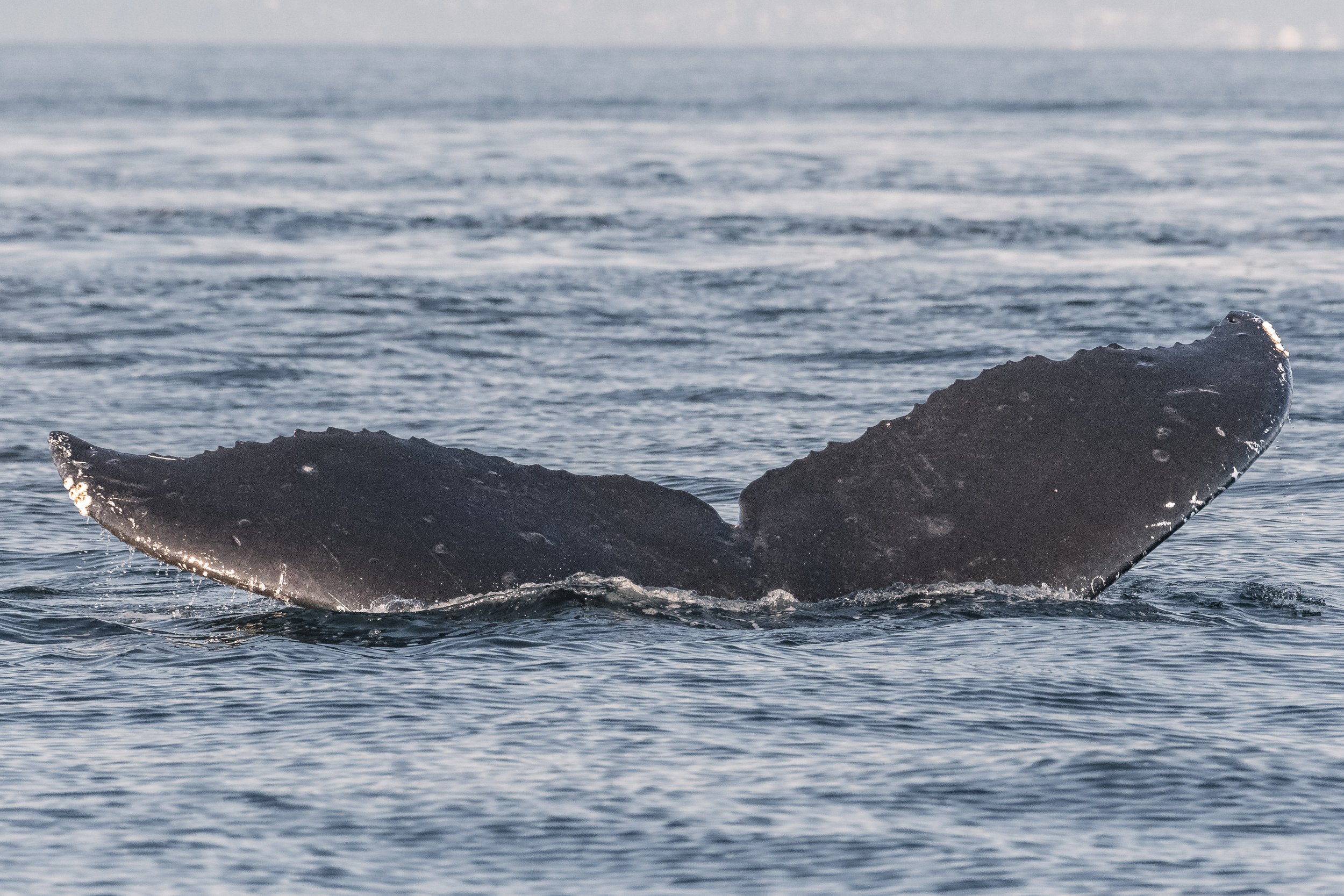
Raptor’s top fluke. Photo by Evan Hessels.
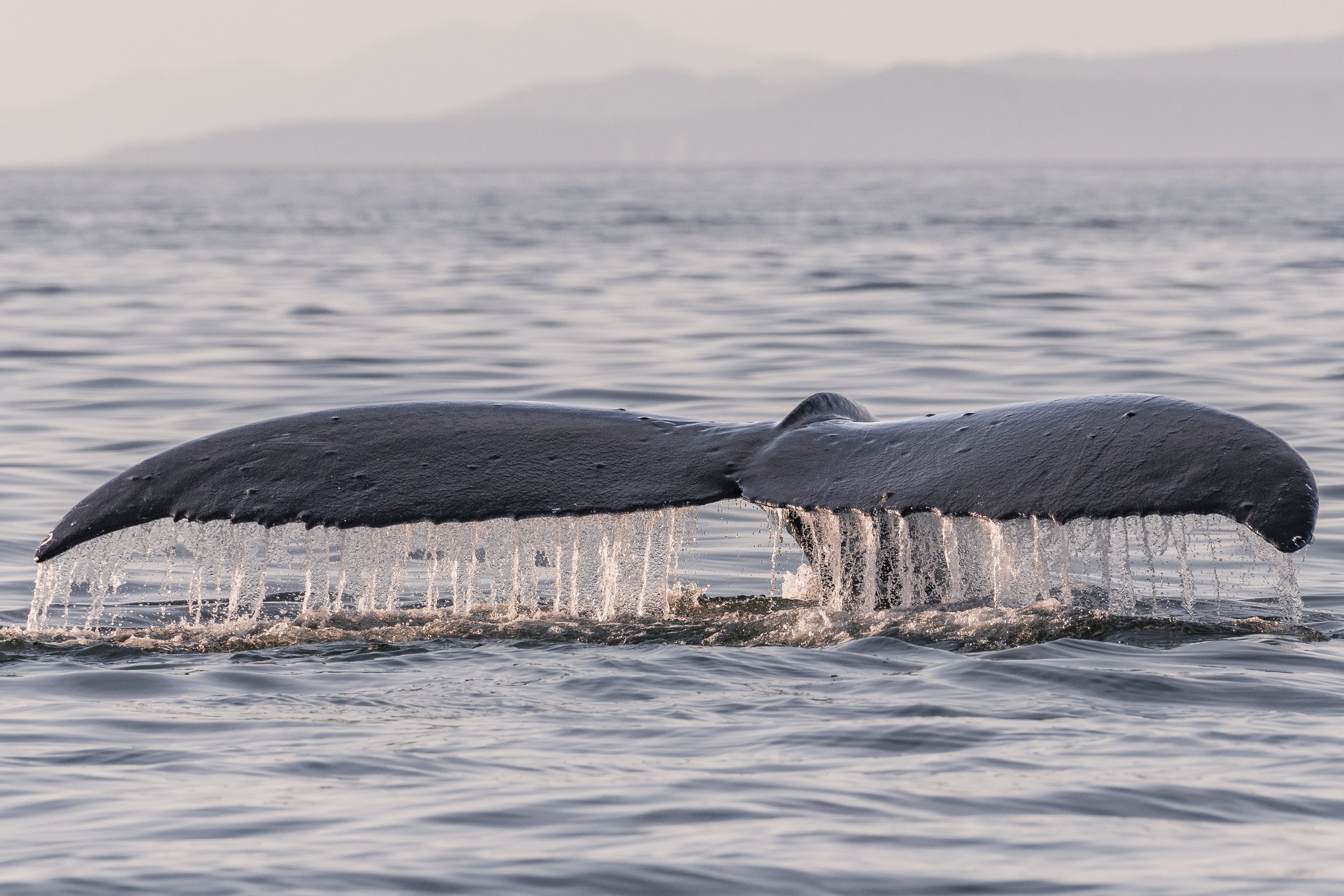
A fluke waterfall from Zig Zag. Photo by Evan Hessels.
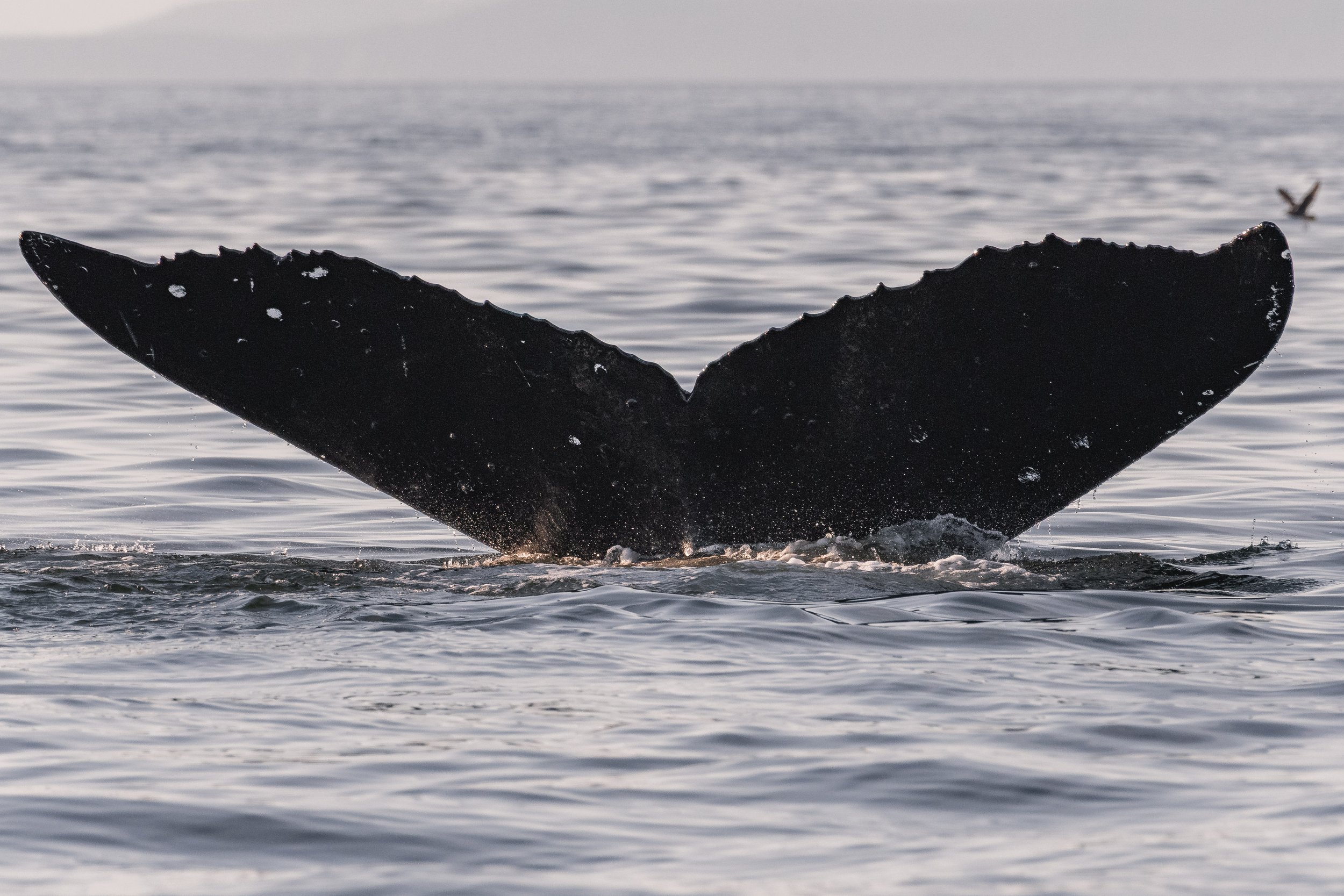
Zig Zag showing her iconic triple dot marking. Photo by Evan Hessels.
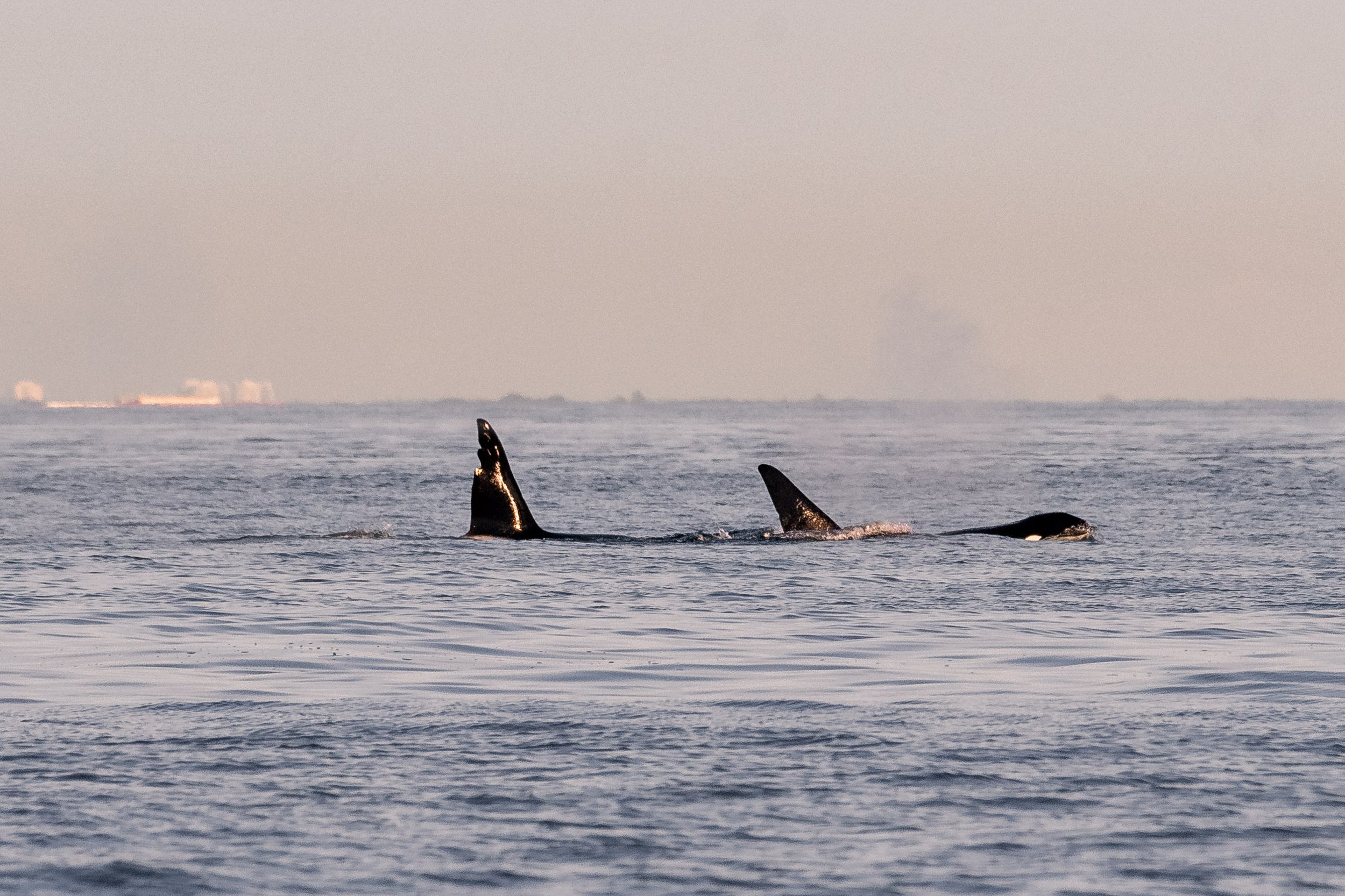
T063 Chainsaw and T137A Jack together in the fading sun. Photo by Evan Hessels.
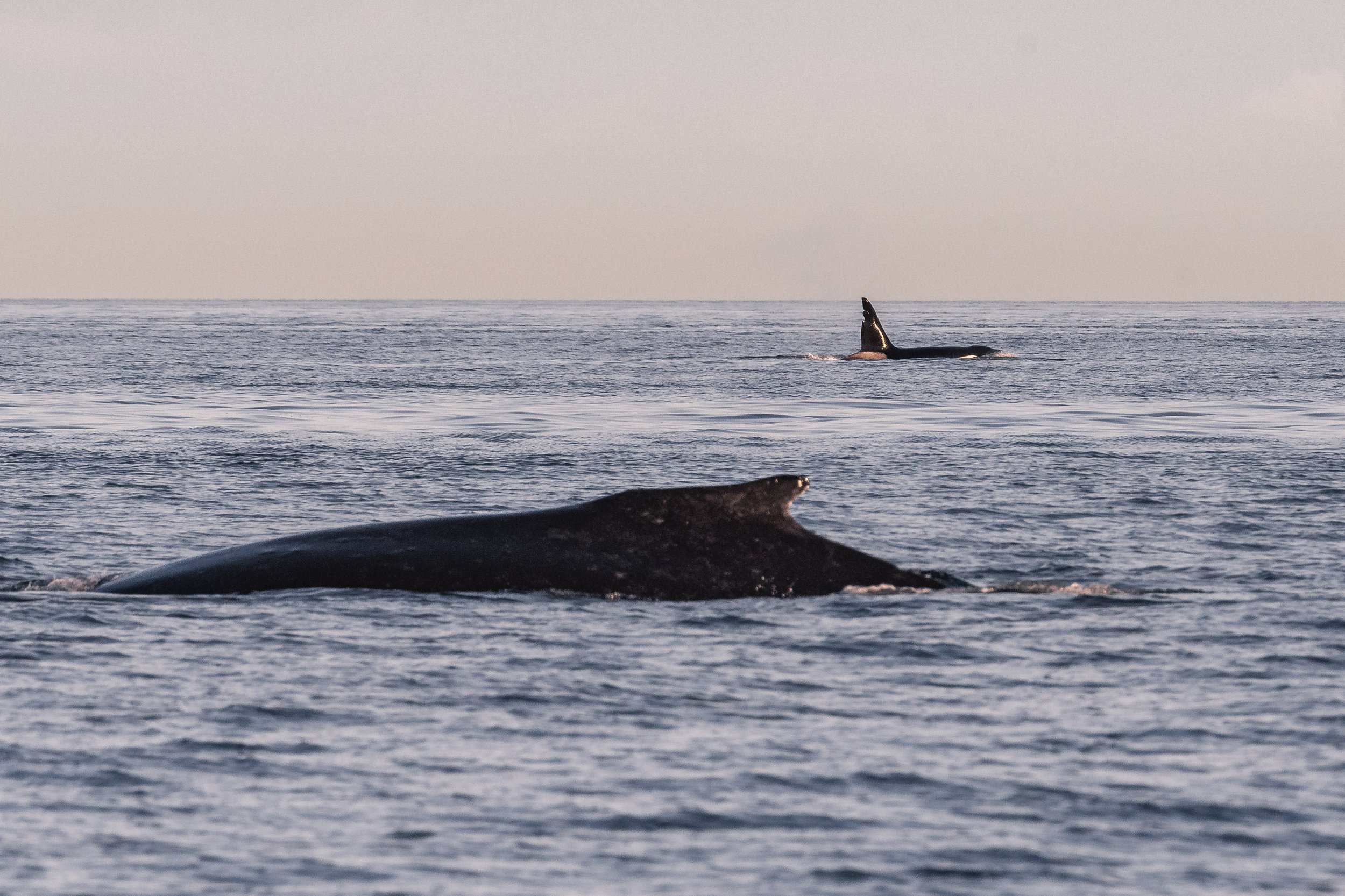
Raptor passing by with T063 Chainsaw off on the horizion. Photo by Evan Hessels.
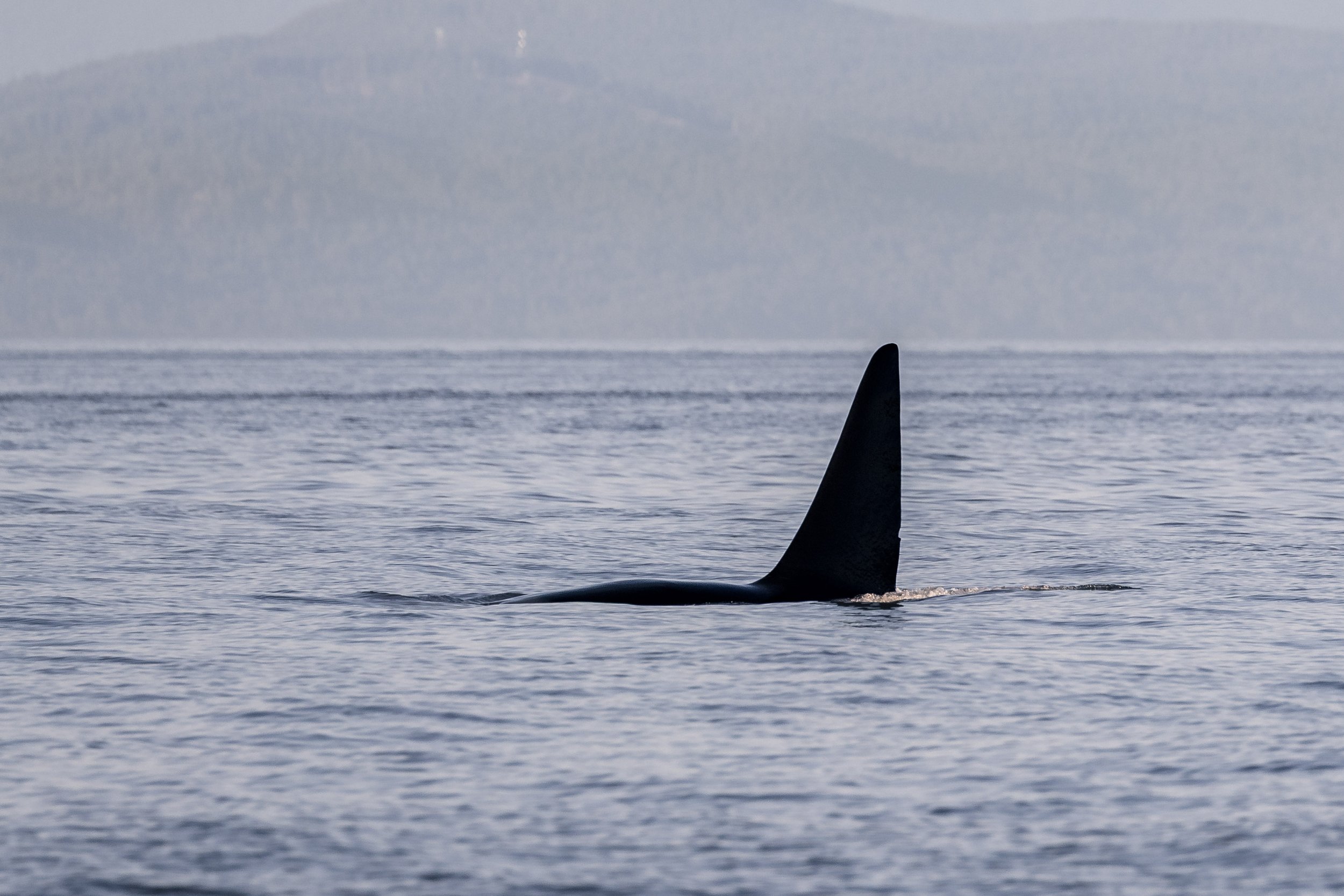
A surprise orca encounter - T049A1 Noah on his own! Photo by Jordan Robinson.
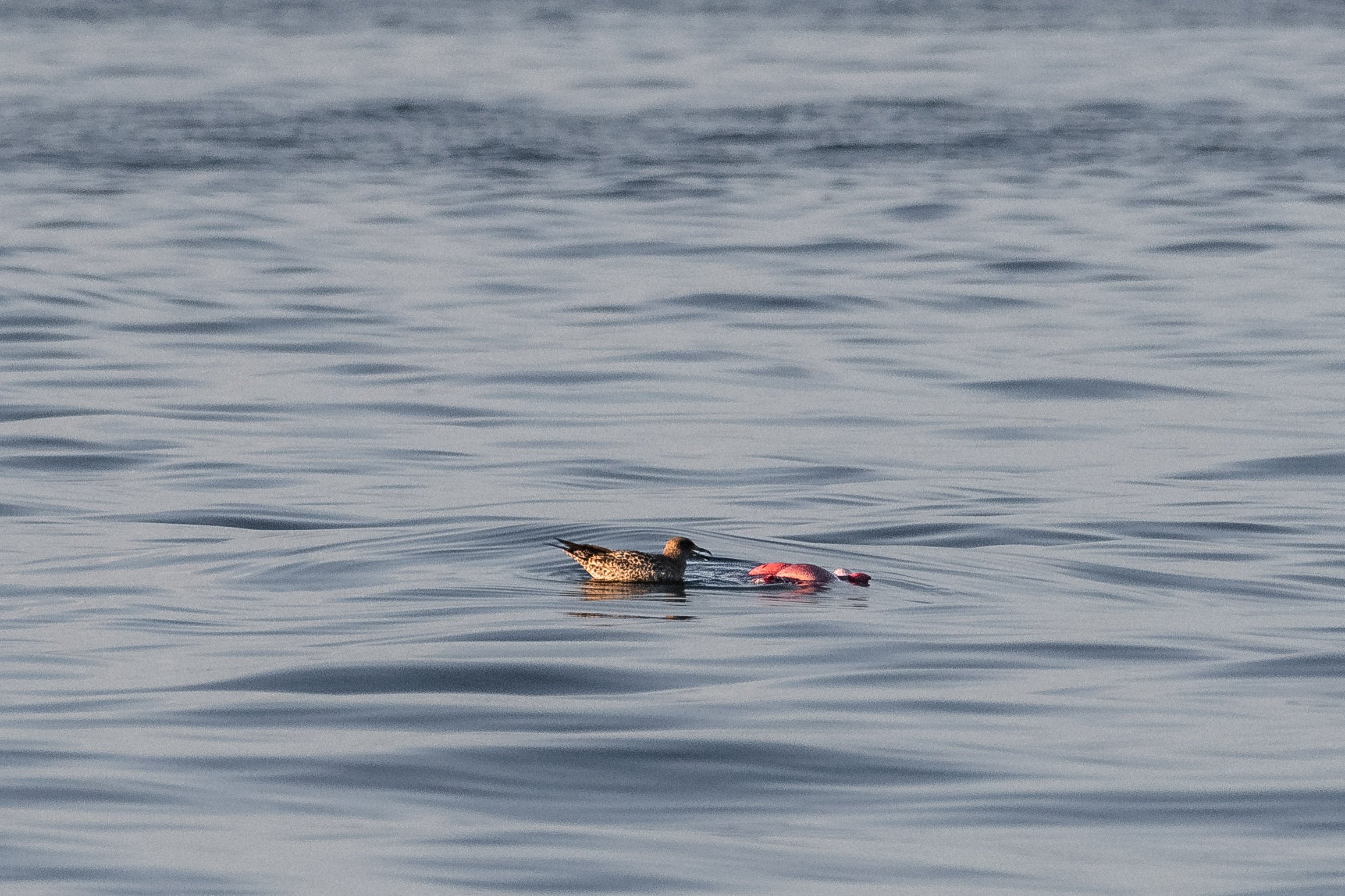
A Gull with scraps from a hunt. We did not witness a hunt this encounter, so it may have happened before we arrived. Photo by Evan Hessels.
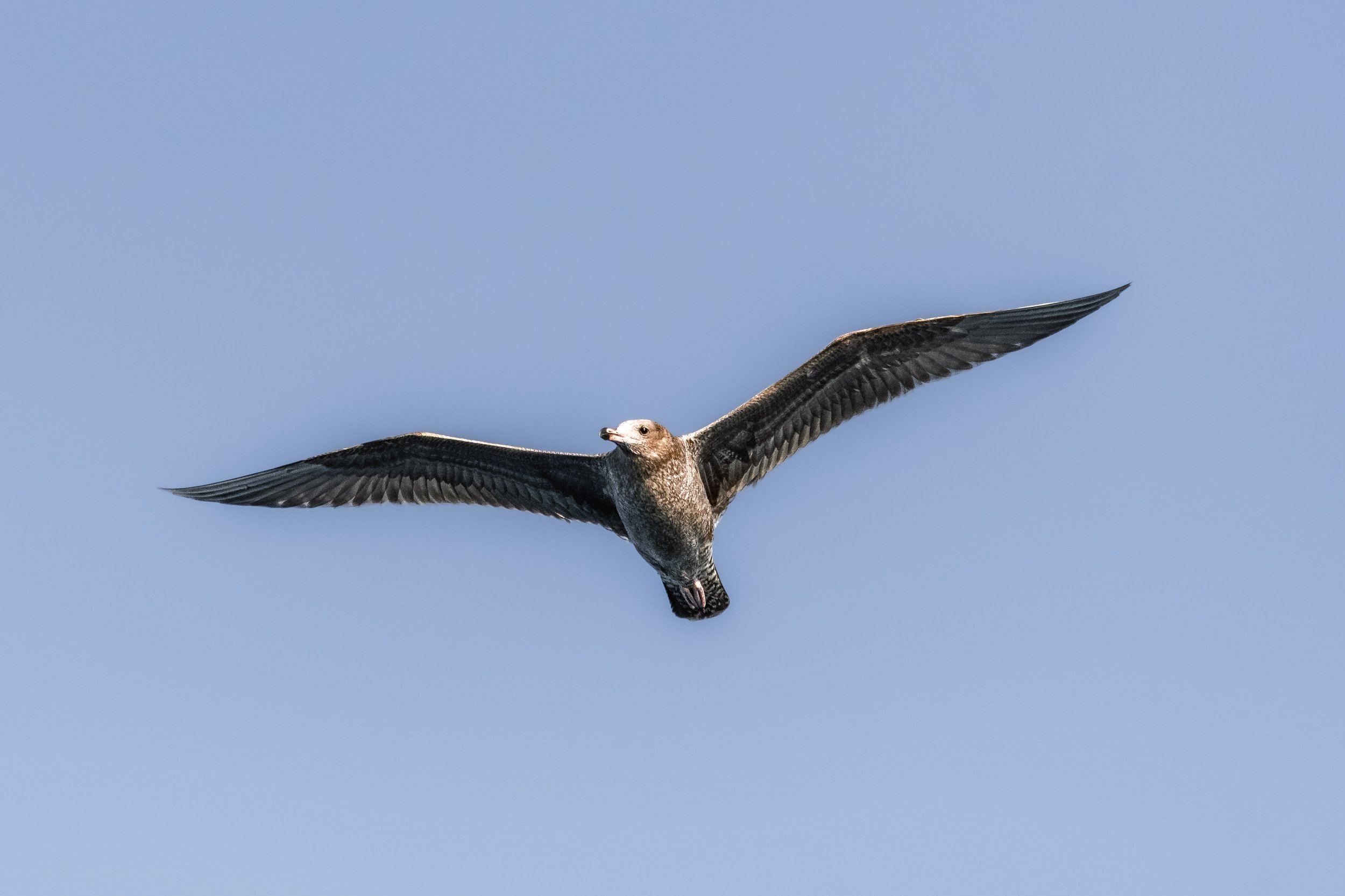
A Gull fly by. Photo by Evan Hessels.
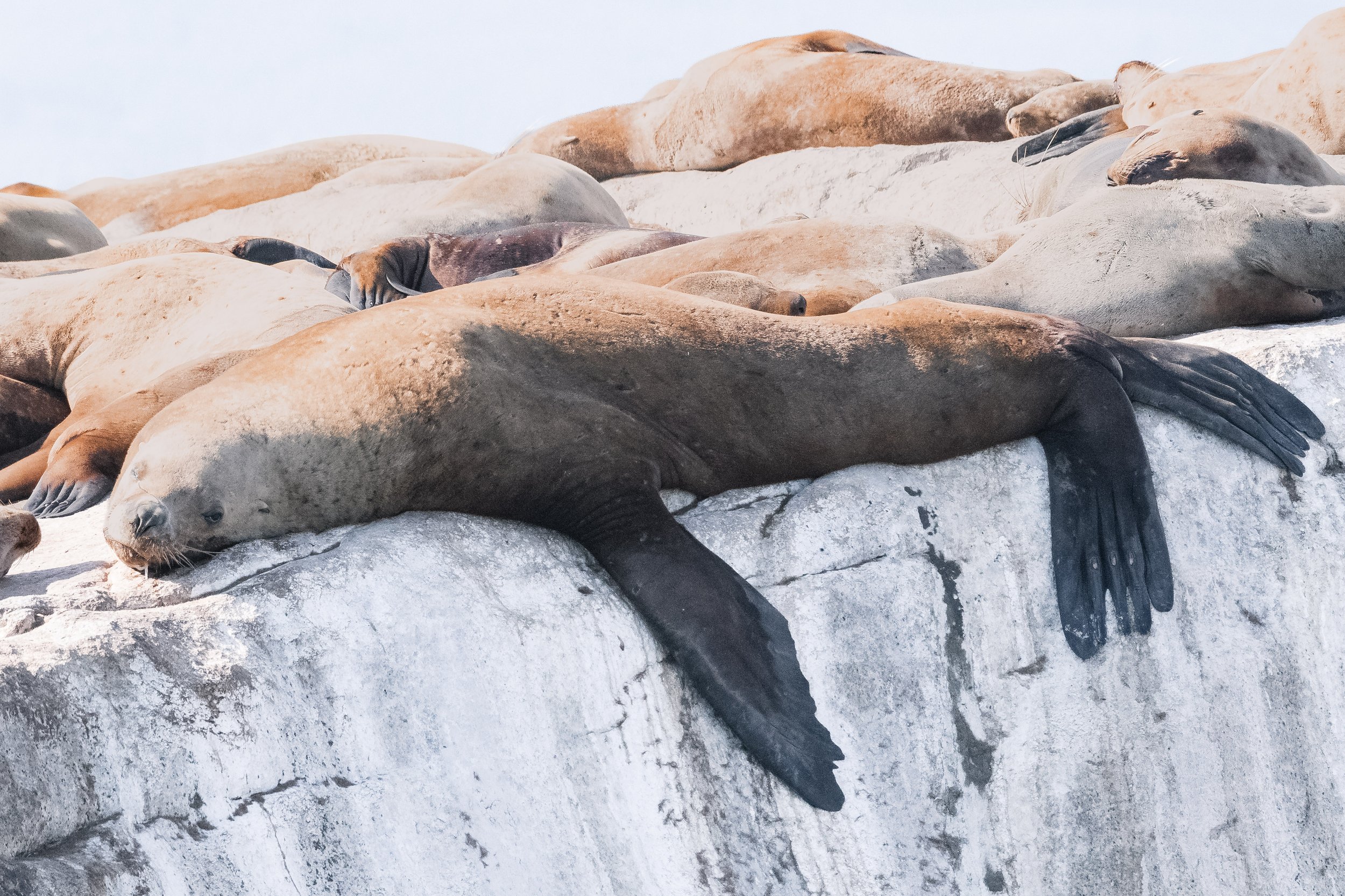
A giant Steller Sea Lion napping. Photo by Evan Hessels.
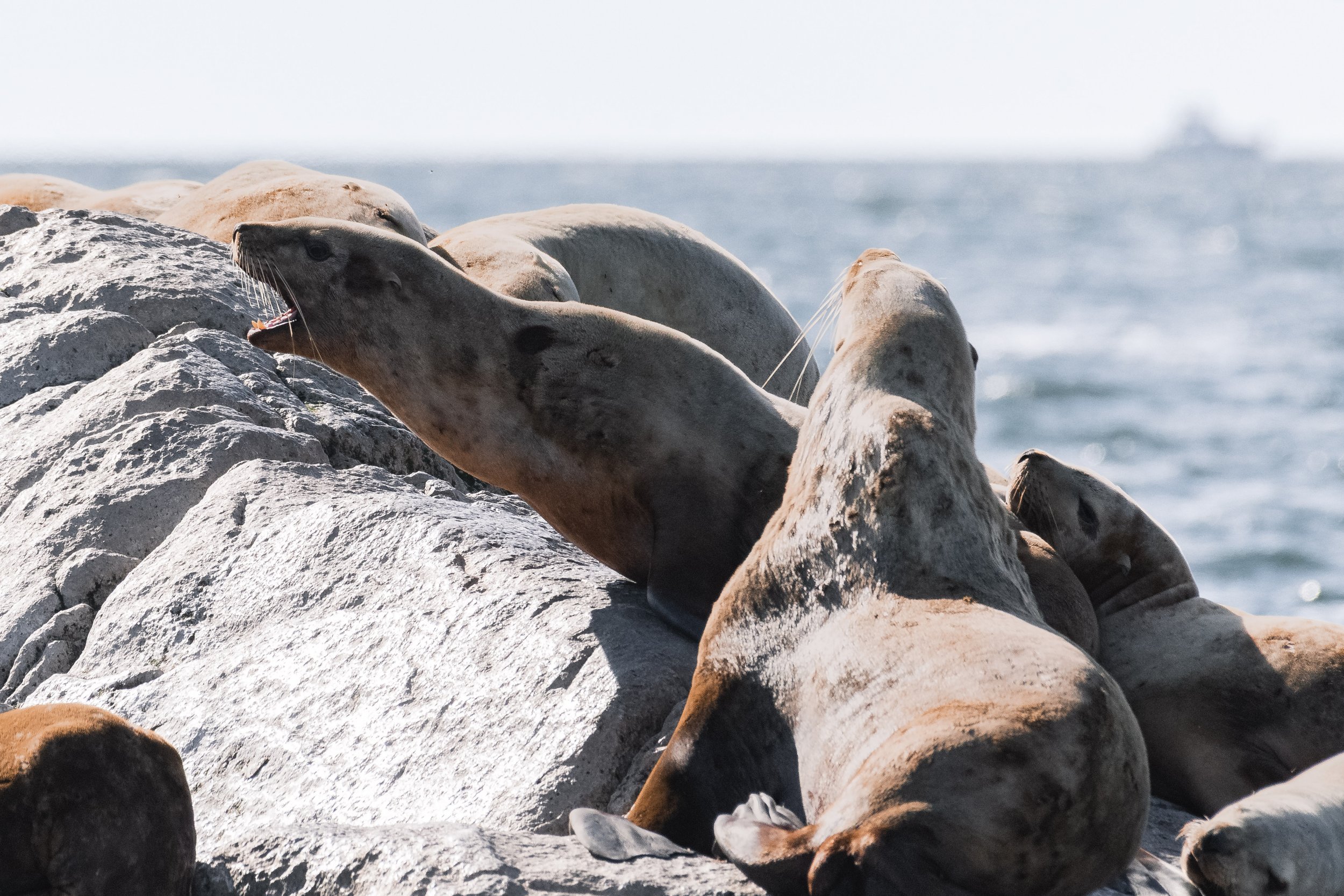
The Sea Lions are usually the loudest animals we see on trips. Photo by Evan Hessels.
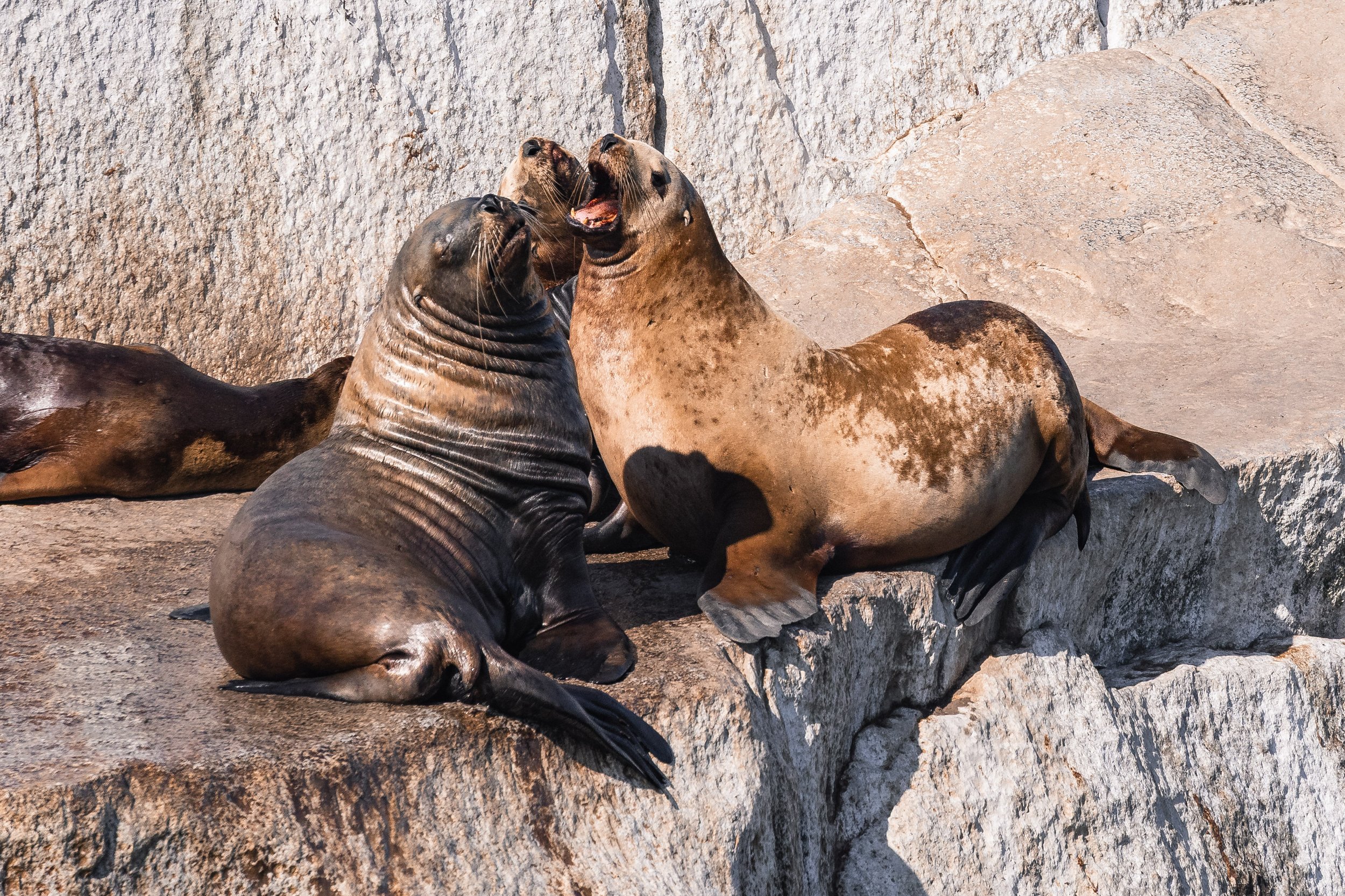
Bickering is common at haul outs. Photo by Jordan Robinson.
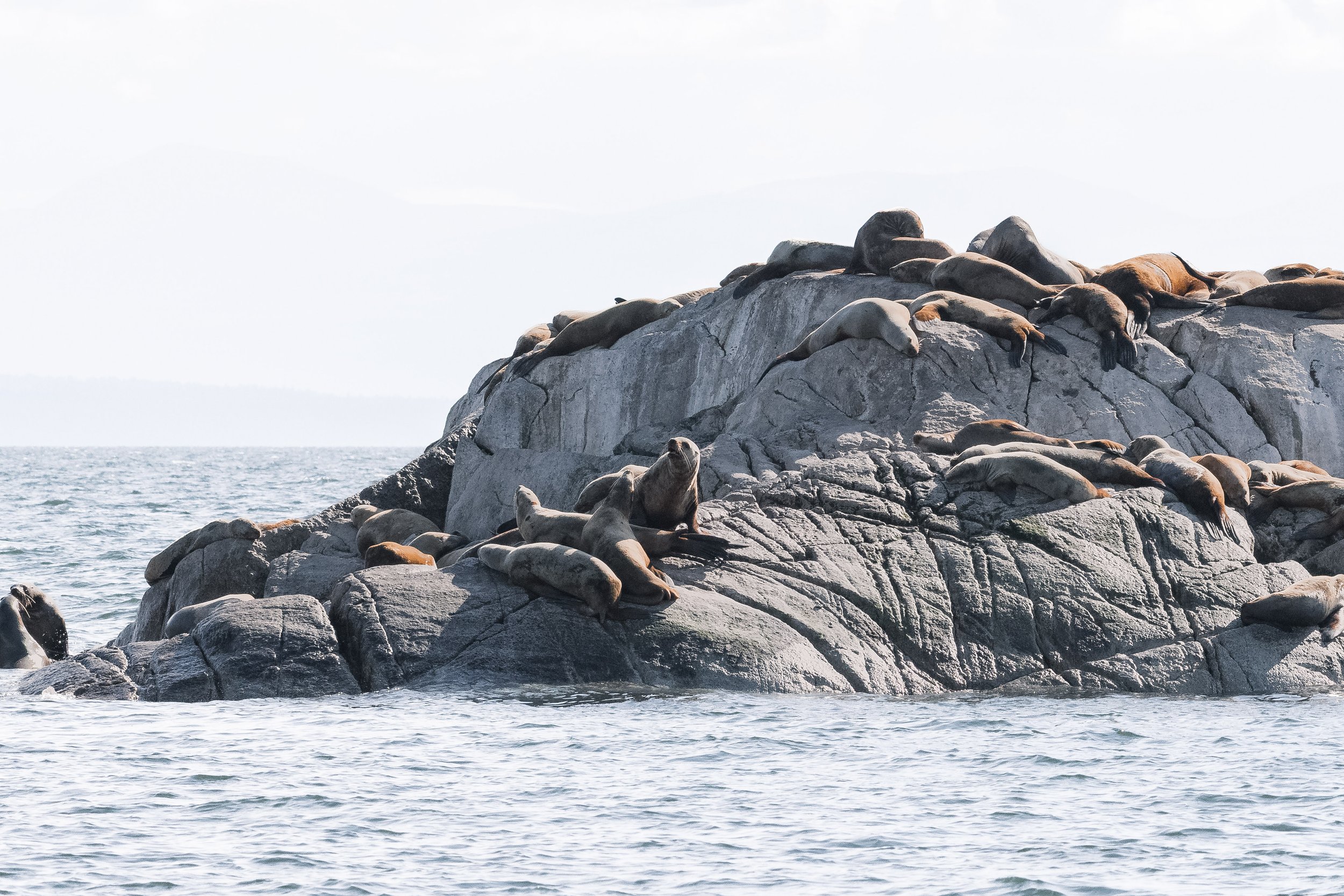
Carefully balanced all over the rocks. Photo by Evan Hessels.
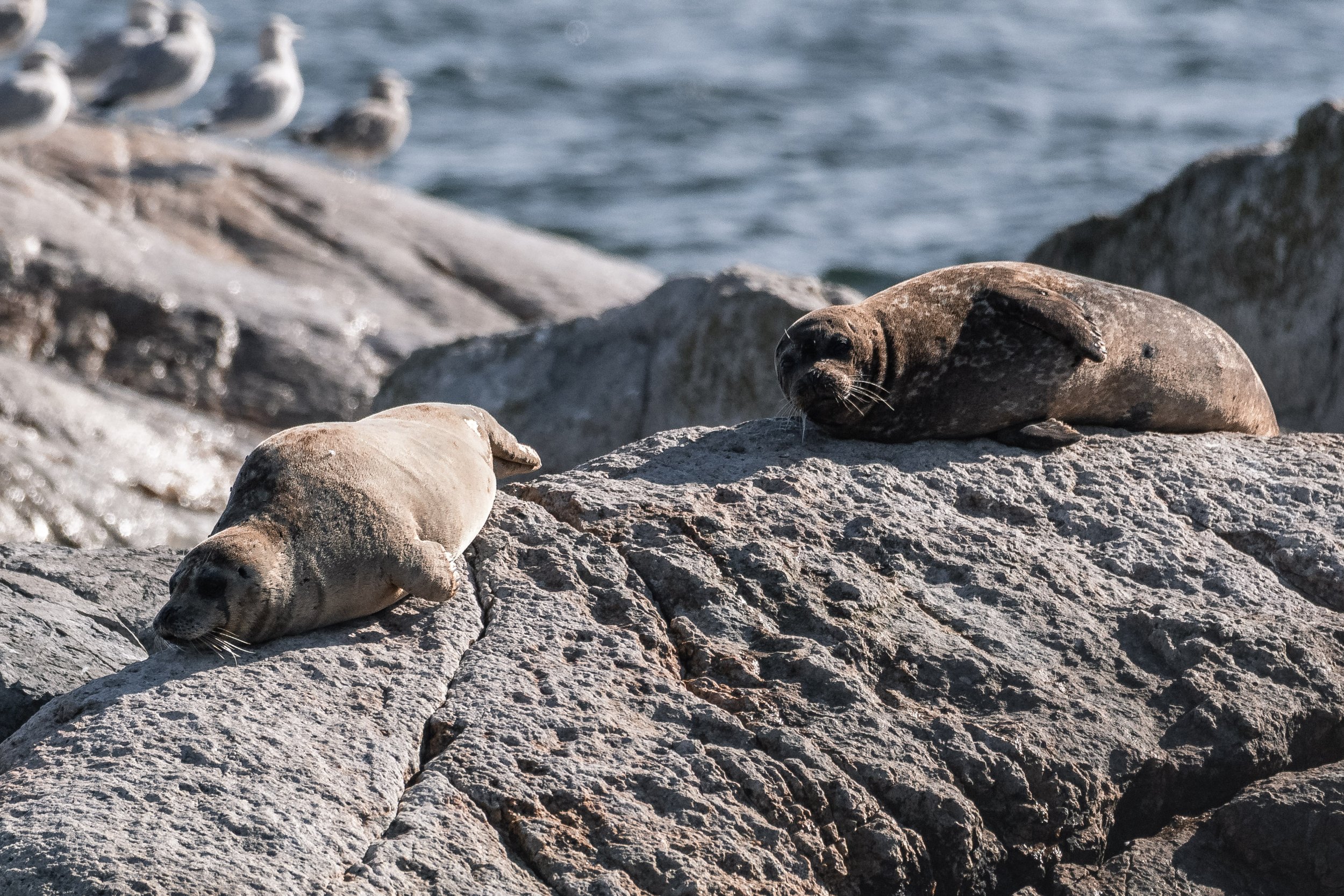
Galumphing along. Photo by Evan Hessels.
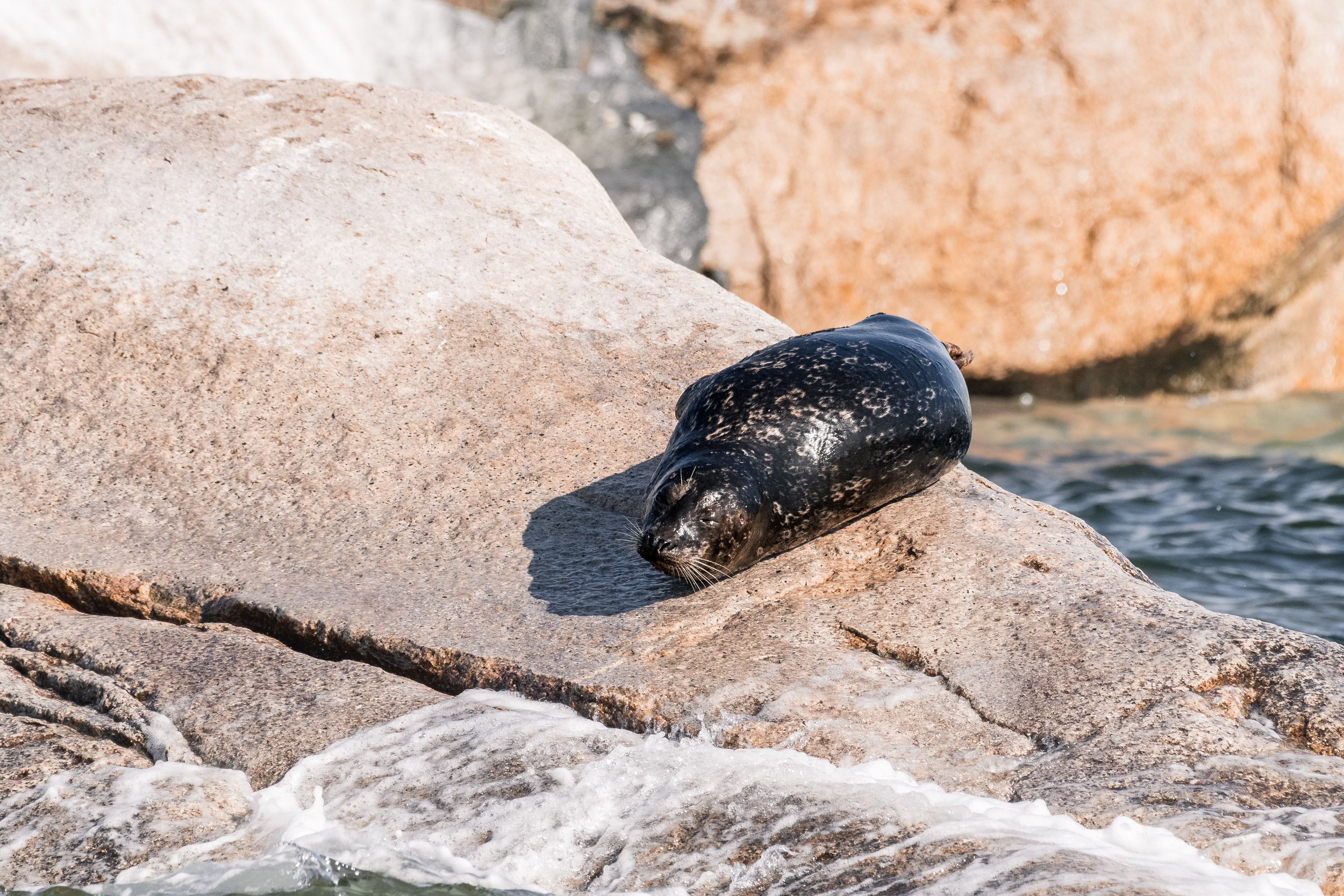
A sleepy Harbour Seal. Photo by Evan Hessels.
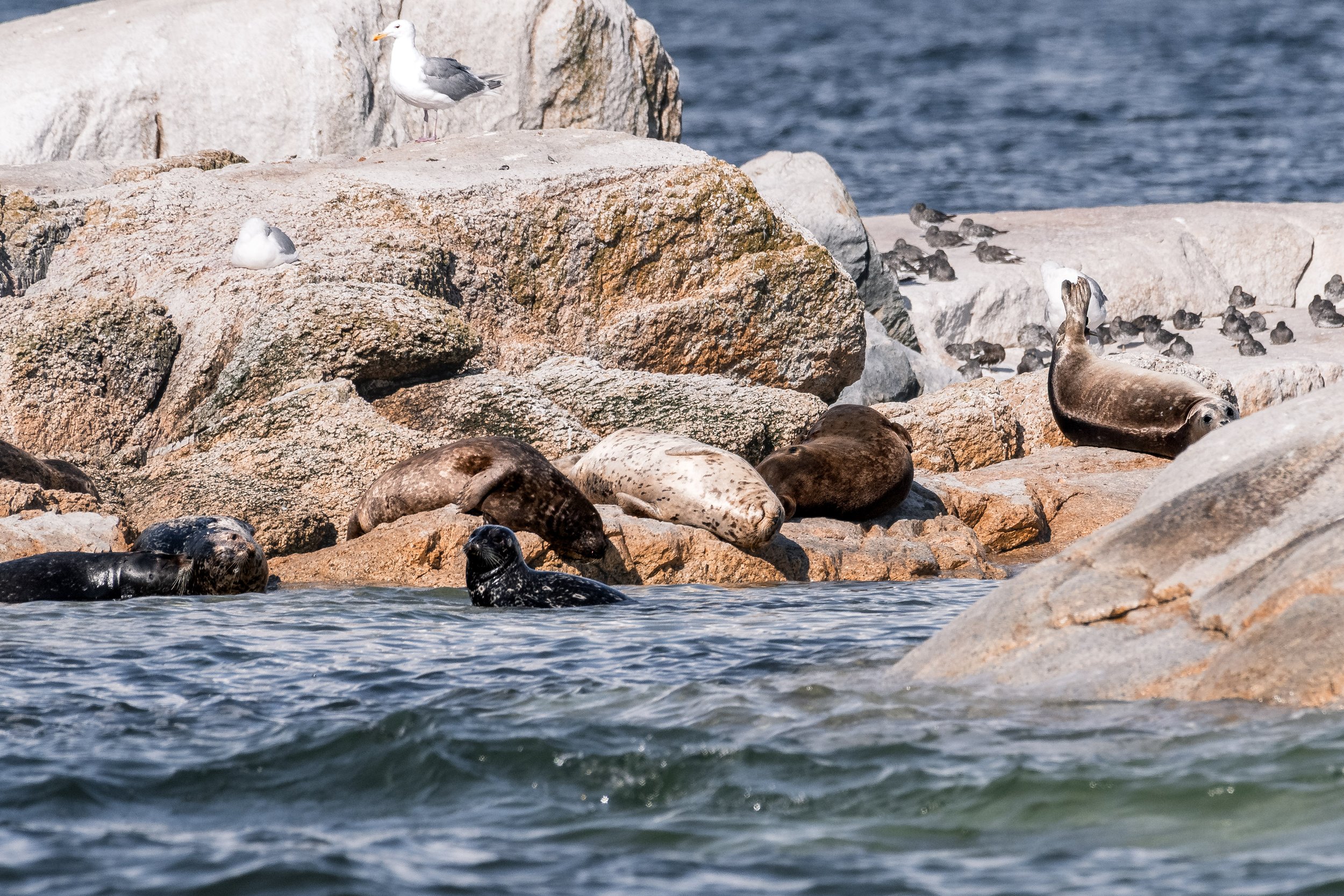
Dramatically draped seals. Photo by Evan Hessels.
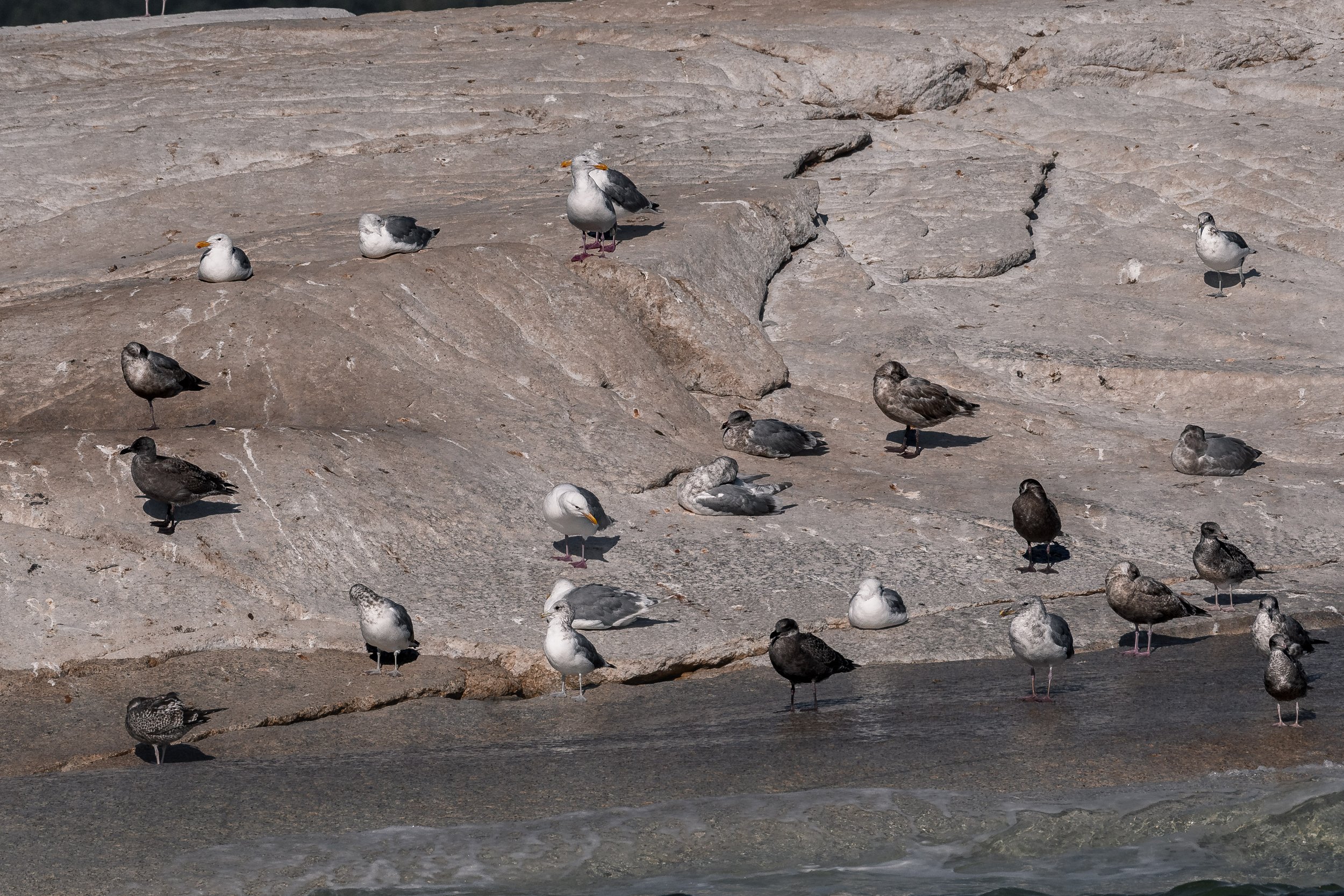
Nap time! Photo by Evan Hessels.
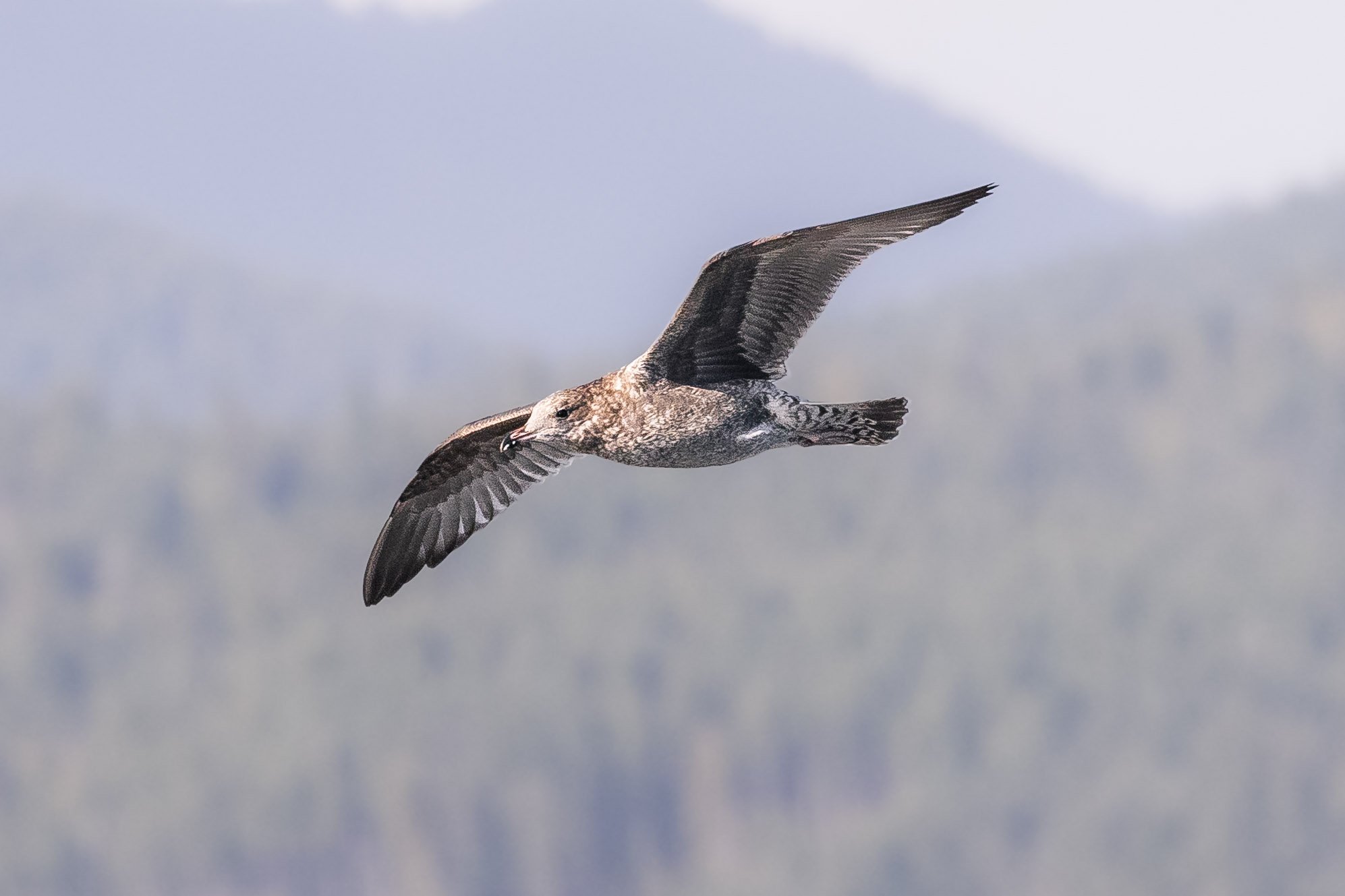
A speckly young Gull. Photo by Jordan Robinson.
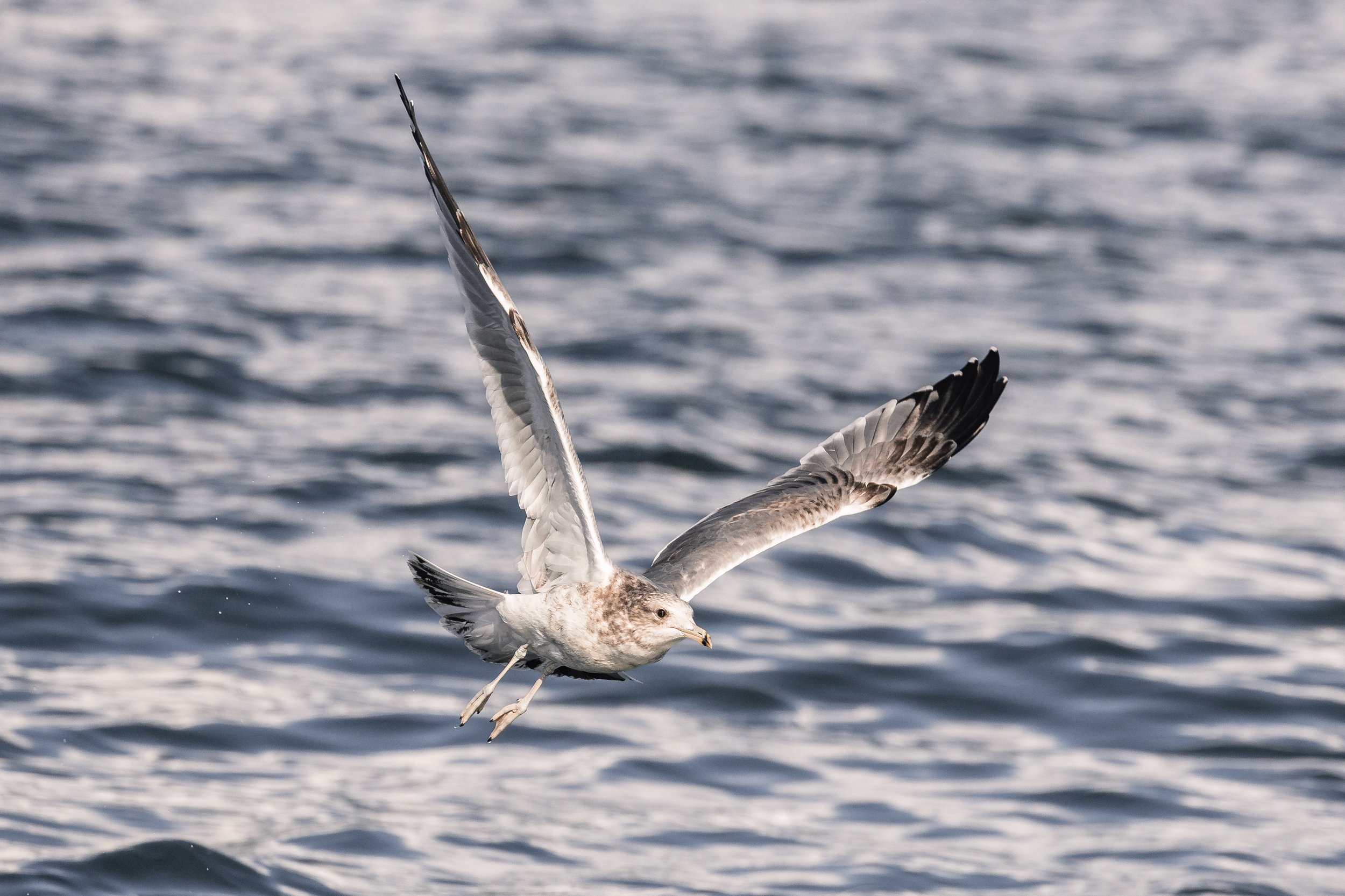
Take off! Photo by Jordan Robinson.
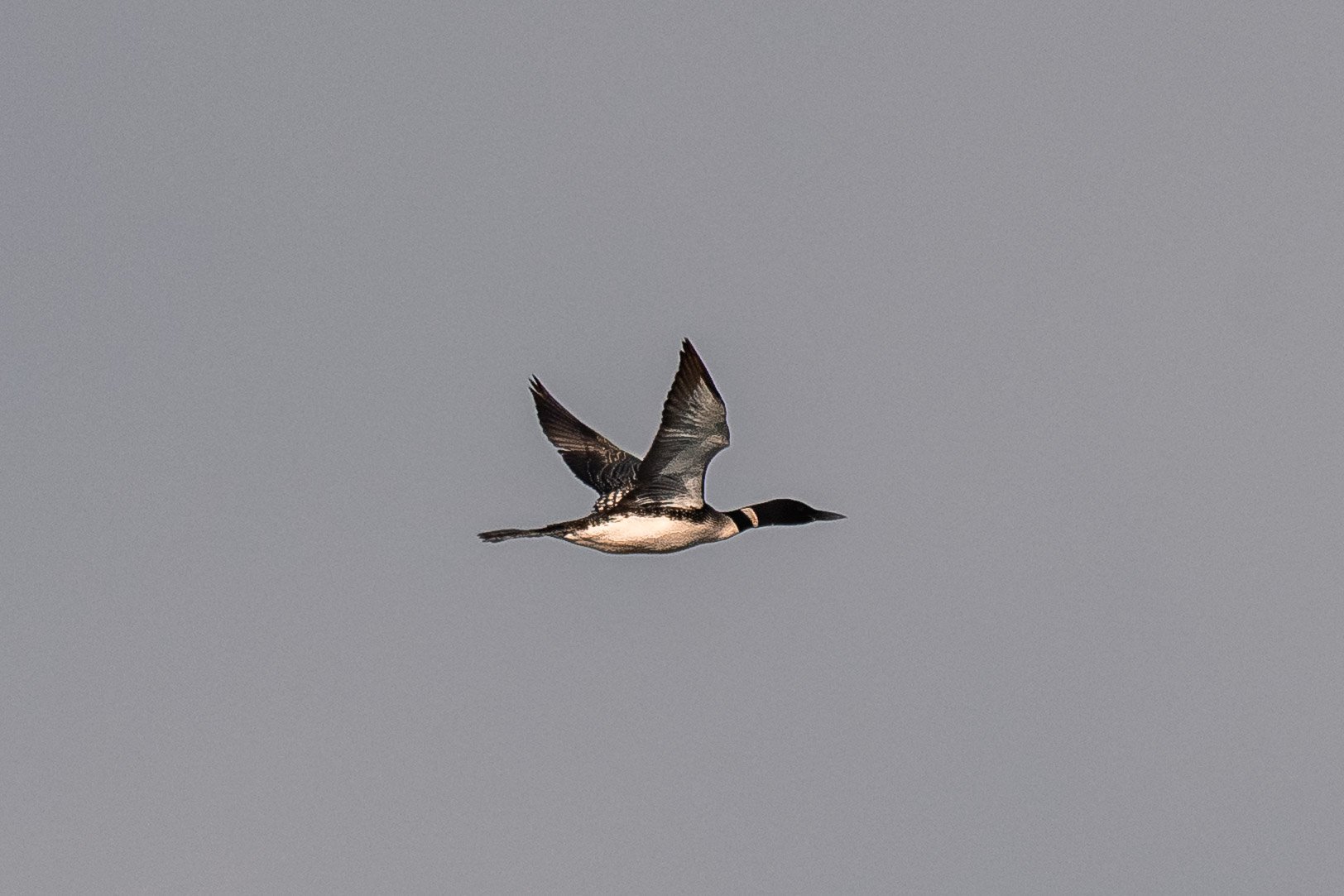
A Common Loon flying overhead. Photo by Evan Hessels.
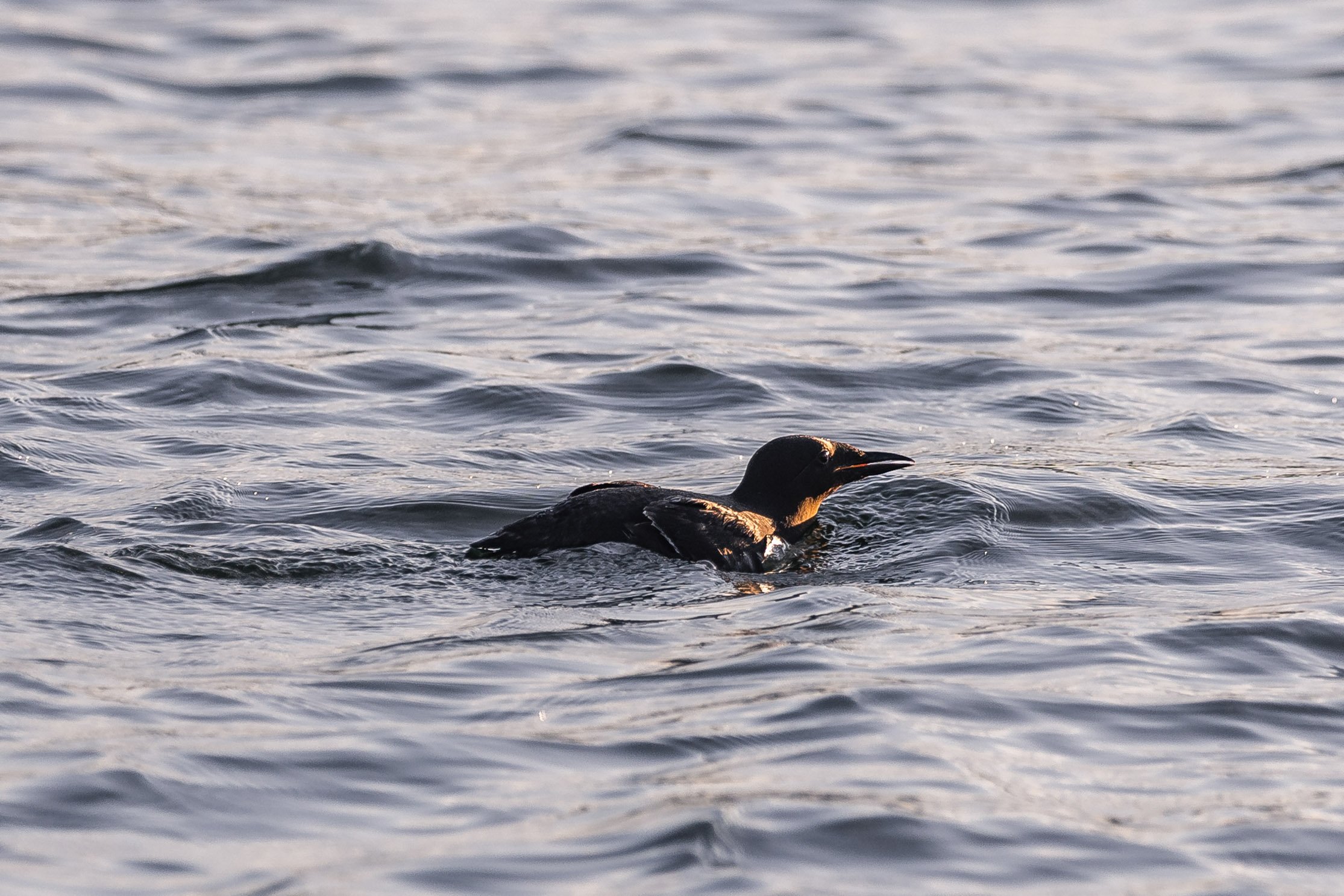
A Common Murre paddling along. Photo by Jordan Robinson.
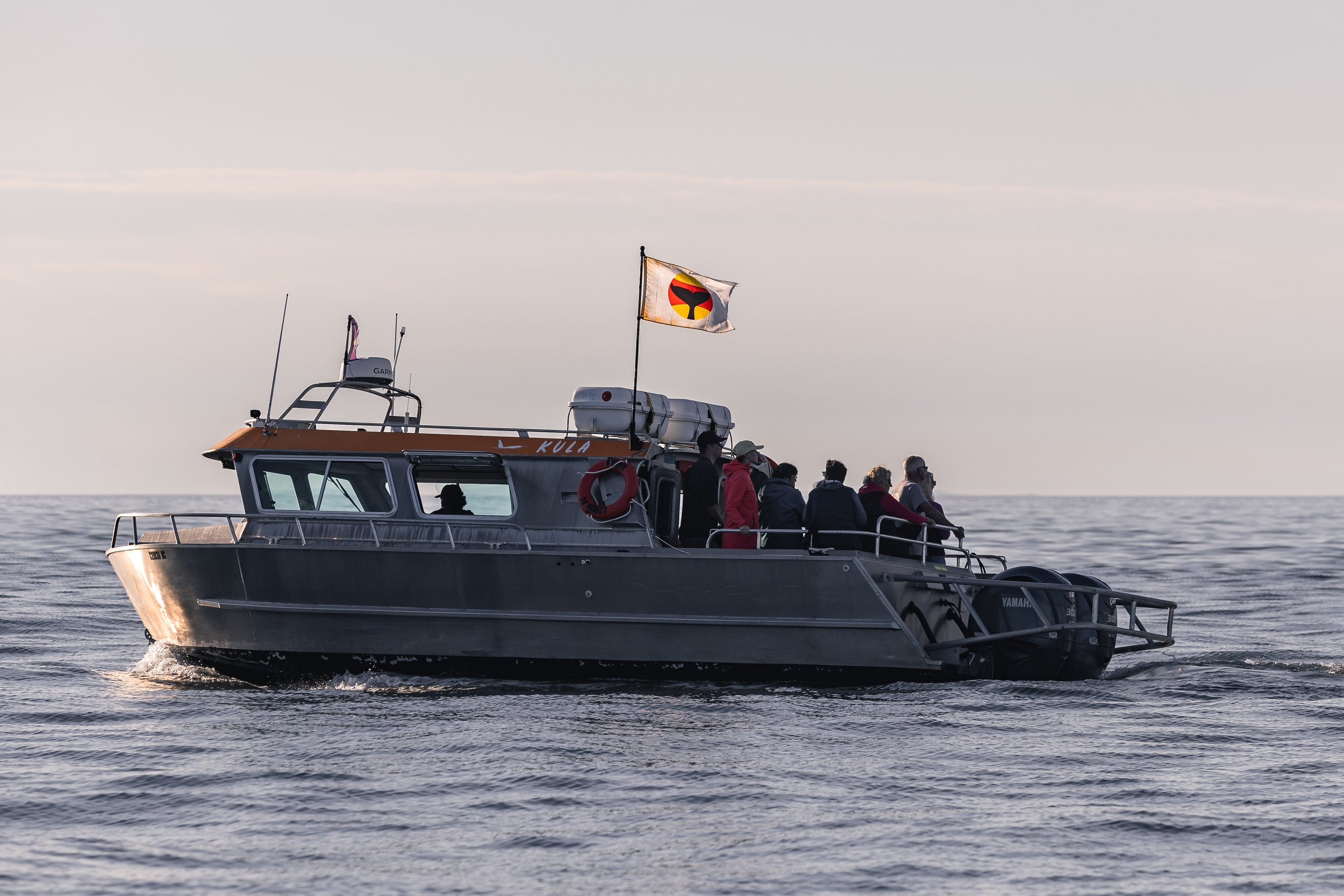
Kula while on scene. Photo by Jordan Robinson.