
September 5, 2026, 10:30AM - A Day of Upwelling, Playful Calves, and Orca Gatherings
The day began with two of our vessels heading into the Strait of Georgia, making our way toward Halibut Bank. This area is one we often watch when searching for humpback whales, and the search didn't take long to pay off.
As we approached Halibut Bank, we found four humpback whales travelling in close proximity: Windy (BCY0893), Europa (BCX0854), Harpy (BCZ0503), and her Calf (BCZ0503calf2026).
Halibut Bank is an especially interesting place to find humpbacks because of what is happening beneath the surface. Although the Strait of Georgia may appear relatively uniform from above, the seafloor is anything but flat. Halibut Bank rises from the surrounding depths like an underwater mountain, and the shape of the seafloor influences how water moves through the area.
When currents encounter these underwater features, they can push deeper, colder water toward the surface. This process, known as upwelling, brings nutrients and oxygen-rich water into the sunlit portion of the ocean where microscopic phytoplankton can thrive. That productivity supports the rest of the food web, from tiny organisms to the fish that humpback whales depend on.
For a humpback whale, a productive area like Halibut Bank can be well worth returning to.
The four whales appeared to be making use of the area, travelling and feeding while we watched. While the adults continued with their more focused routine, Harpy's calf had a little more energy to spare and became increasingly playful around the adults.
Seeing a young humpback behave this way is always a reminder that a calf's life is quite different from its mother's. Calves are not yet spending their days catching and processing the same quantities of prey as an adult. Instead, they rely on their mother's milk, which is extremely rich in fat and nutrients and allows them to grow rapidly during the early months of life.
That extra energy can sometimes show itself through playful behaviour, including rolling, breaching, tail movements, and other bursts of activity. Of course, not every playful-looking behaviour has a single explanation, and whale behaviour is rarely as straightforward as assigning one action to one meaning. Sometimes, a young whale may simply have the energy and curiosity to explore its surroundings.
While the humpbacks continued using Halibut Bank, we received word that another group of whales had been found not far away. This time, they were orca.
We headed in their direction and soon found the T036s travelling alongside Indy, T065A5. Rather than moving steadily through the water, these whales put on quite a display of surface activity.
T036 Flapjack ♀ (1970)
T036B Tattertip ♀ (1998)
T036B1 Bhotia ♀ (2009)
T036B1A Maple ♀ (2025)
T036B2 Greenfelder ♀ (2013)
T036B4 Auk ♂ (2024)
T065A5 Indy ♂ (2014)
There were plenty of moments to watch as the whales interacted at the surface, giving us glimpses of just how dynamic a travelling group of orca can be.
Surface activity in orca can sometimes provide clues about what is happening beneath the surface. When hunting, for example, orca may suddenly accelerate, change direction, dive and resurface repeatedly, or display bursts of activity as they coordinate around prey. But those same kinds of energetic behaviours can also happen for other reasons.
Orca are highly social animals, and gatherings between different family groups can be an opportunity for social interaction. Travelling alongside familiar individuals, meeting up with other groups, and spending time in close proximity can all be part of these whales' complex social lives.
With the T036s and T065A5 together, we had plenty of opportunities to watch that social energy unfold. While we could not know exactly what each interaction meant to the whales, the overall impression on this particular encounter was that the activity was more social than hunting-related.
After spending some time with the active group, we began our journey back across the Strait of Georgia. But the day was not quite finished yet.
One of our vessels had a couple of short surprise encounters on the way home.
The first came in the form of Meqe’ (BCZ0492), a humpback whale who surfaced nearby before quickly diving again and continuing to feed. It was brief, but even a quick glimpse can tell us what the whales are doing in the area. Meqe’ continued to use the productive waters of the Strait, diving below the surface to search for prey.
Not long after, the boat came across another group of orca. This time, it was another T-party, with the T035As, T063, T065, and T137A travelling together.
T035A Lester ♀ (1998)
T035A1 Opal ♀ (2010)
T035A1A (2026)
T035A2 Topaz ♂ (2013)
T035A3 Garnet (2018)
T035A5 (2026)
T065 Whidbey II ♀ (~1971)
T063 Chainsaw ♂ (~1978)
T137A Jack ♂ (2002)
T-parties are one of the more fascinating aspects of Bigg's killer whale social behaviour. These gatherings bring together whales from different family groups, sometimes for short periods and sometimes for longer stretches. They provide opportunities for socializing and interaction, and they can result in some impressive combinations of familiar individuals travelling together.
We did not stay with this group for long, but it was a wonderful way to finish the day. Please enjoy the photos below, captured throughout the tour by Marine Naturalists Jordan Robinson and Evan Hessels.
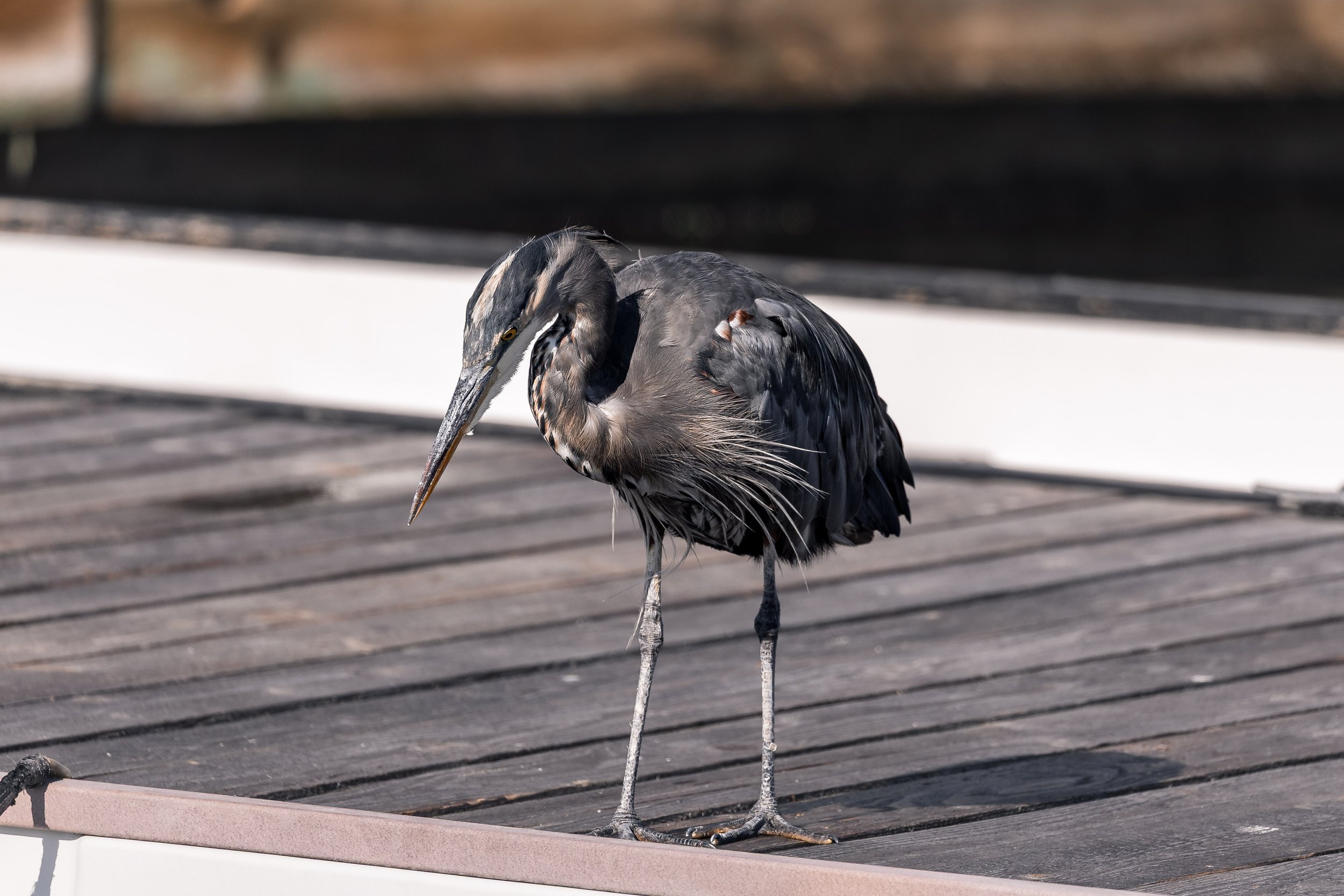
A Great Blue Heron contemplating the shallows below it. Photograph by Jordan Robinson.
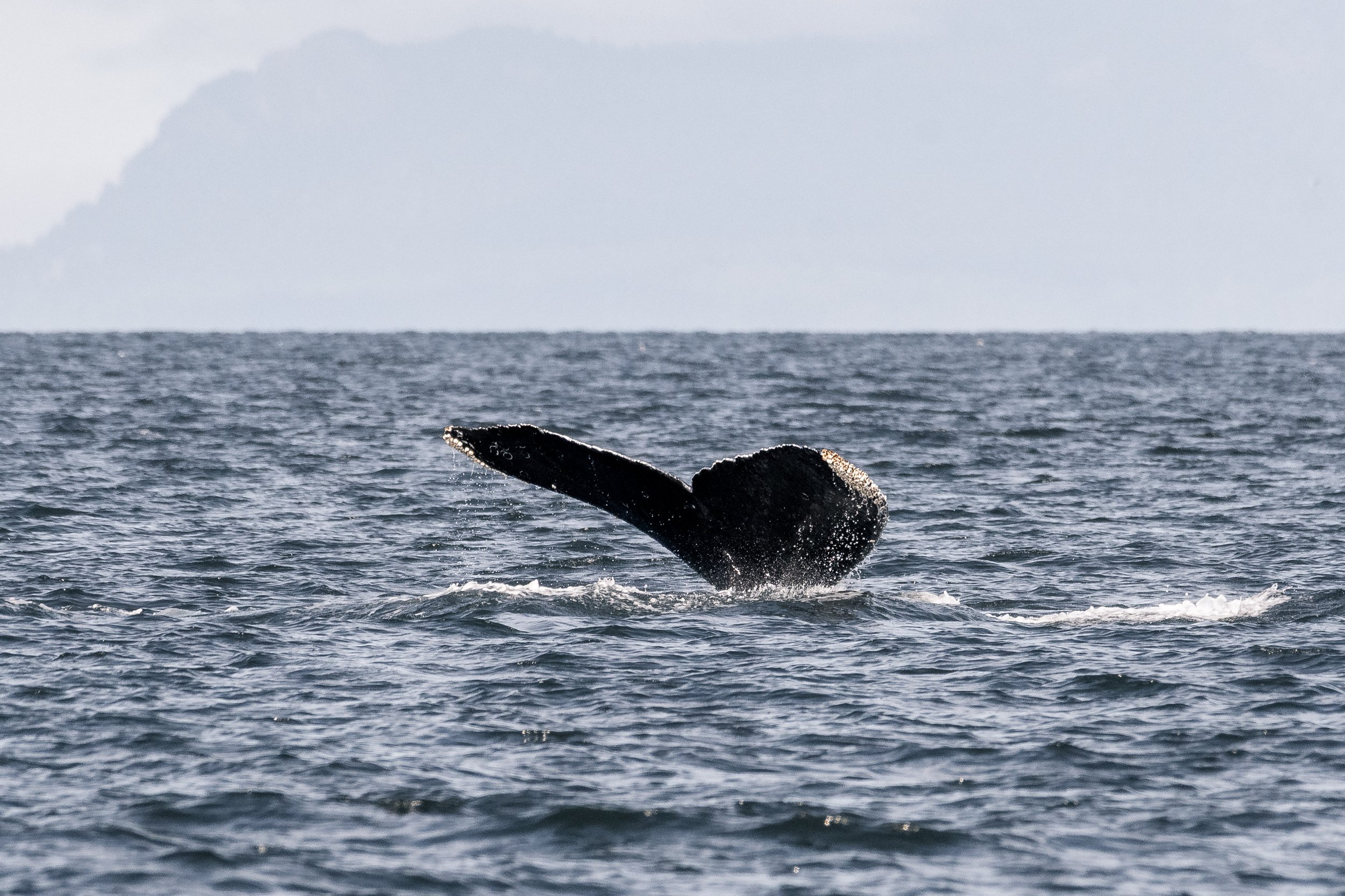
Europa going down for a dive. Photograph by Evan Hessels.
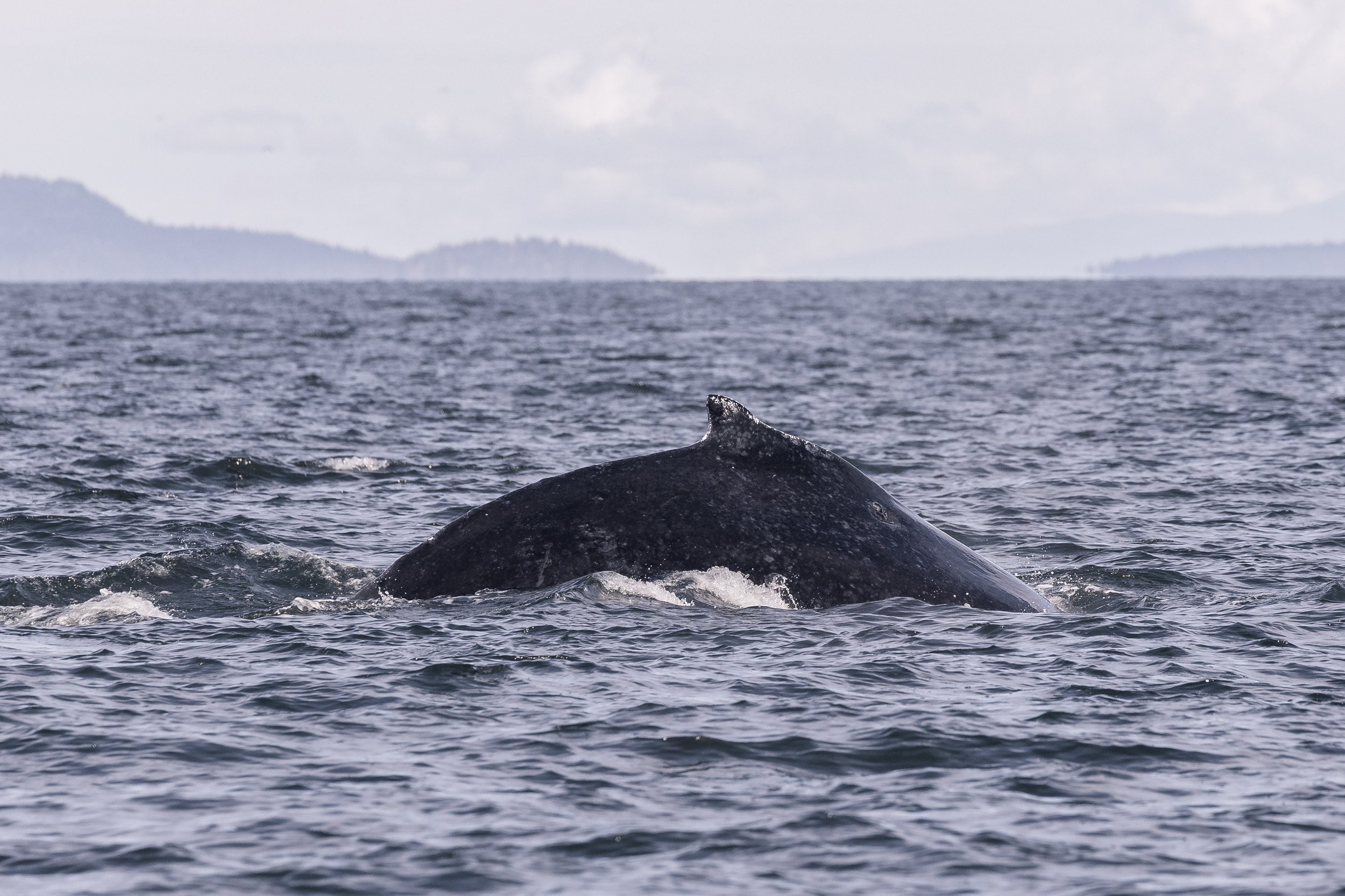
Windy can be identified by his satellite tag scar - can you spot it here? Photograph by Jordan Robinson.
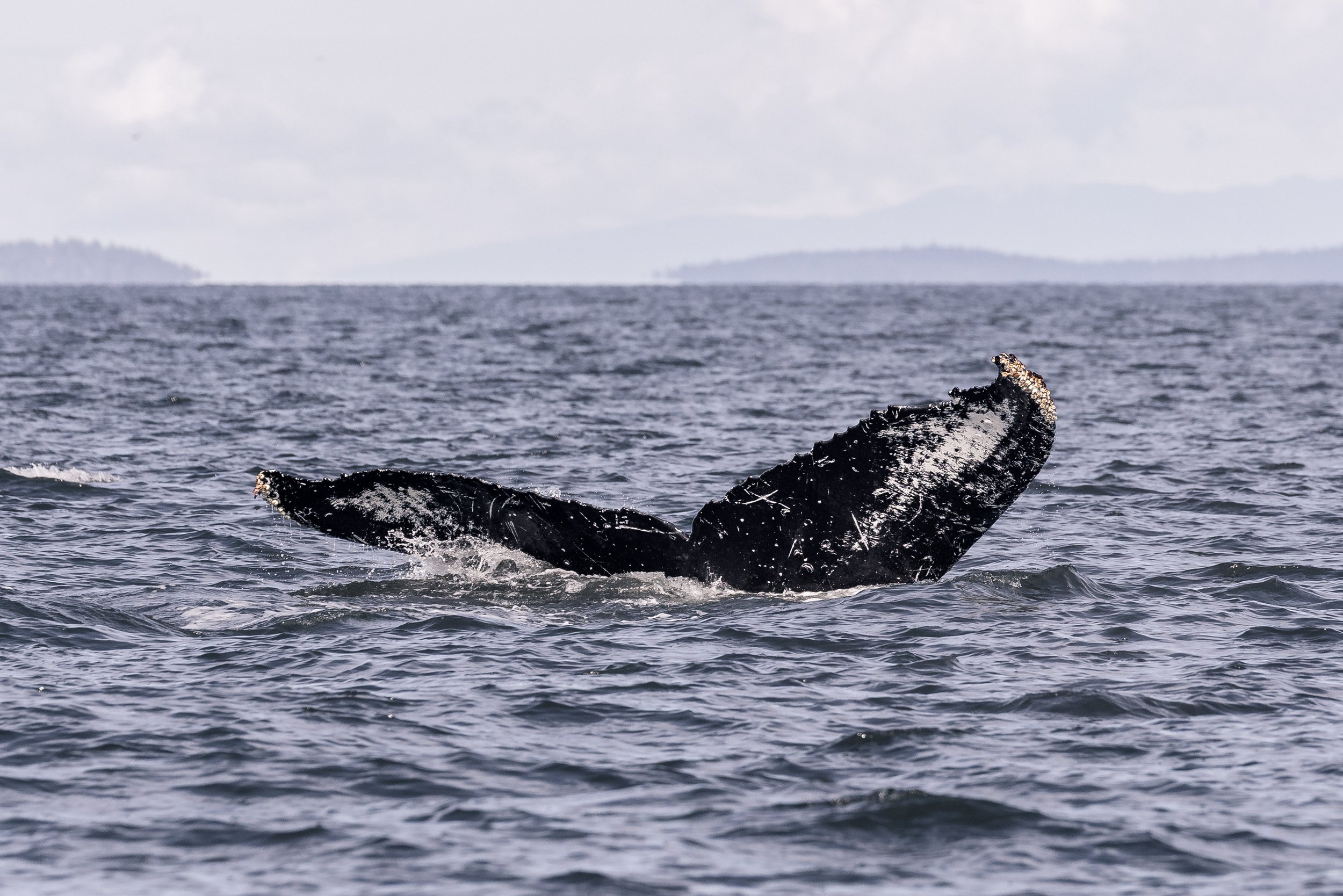
Windy fluking. Photograph by Jordan Robinson.
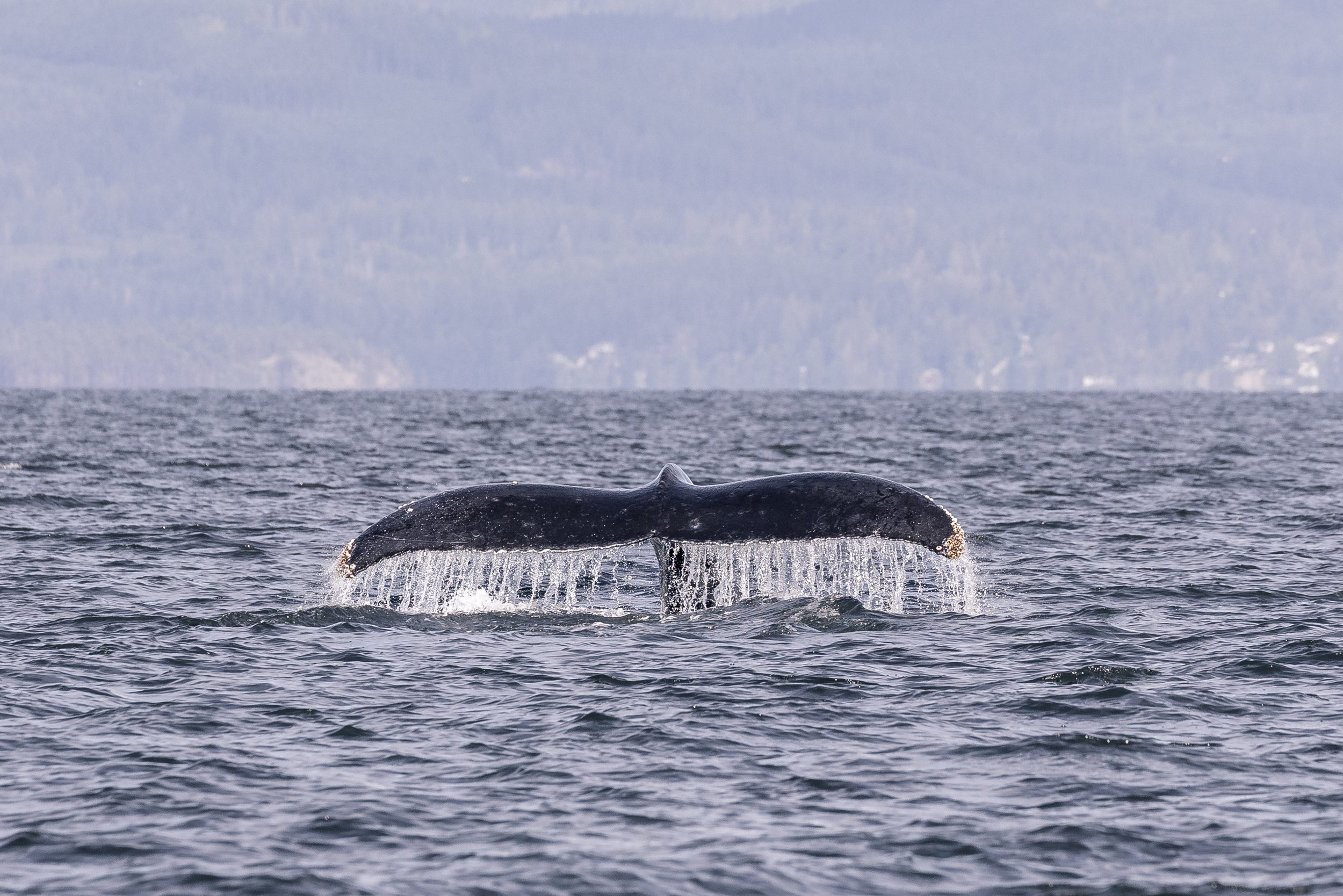
Europa preparing to dive, with water falling off of her fluke. Photograph by Jordan Robinson.
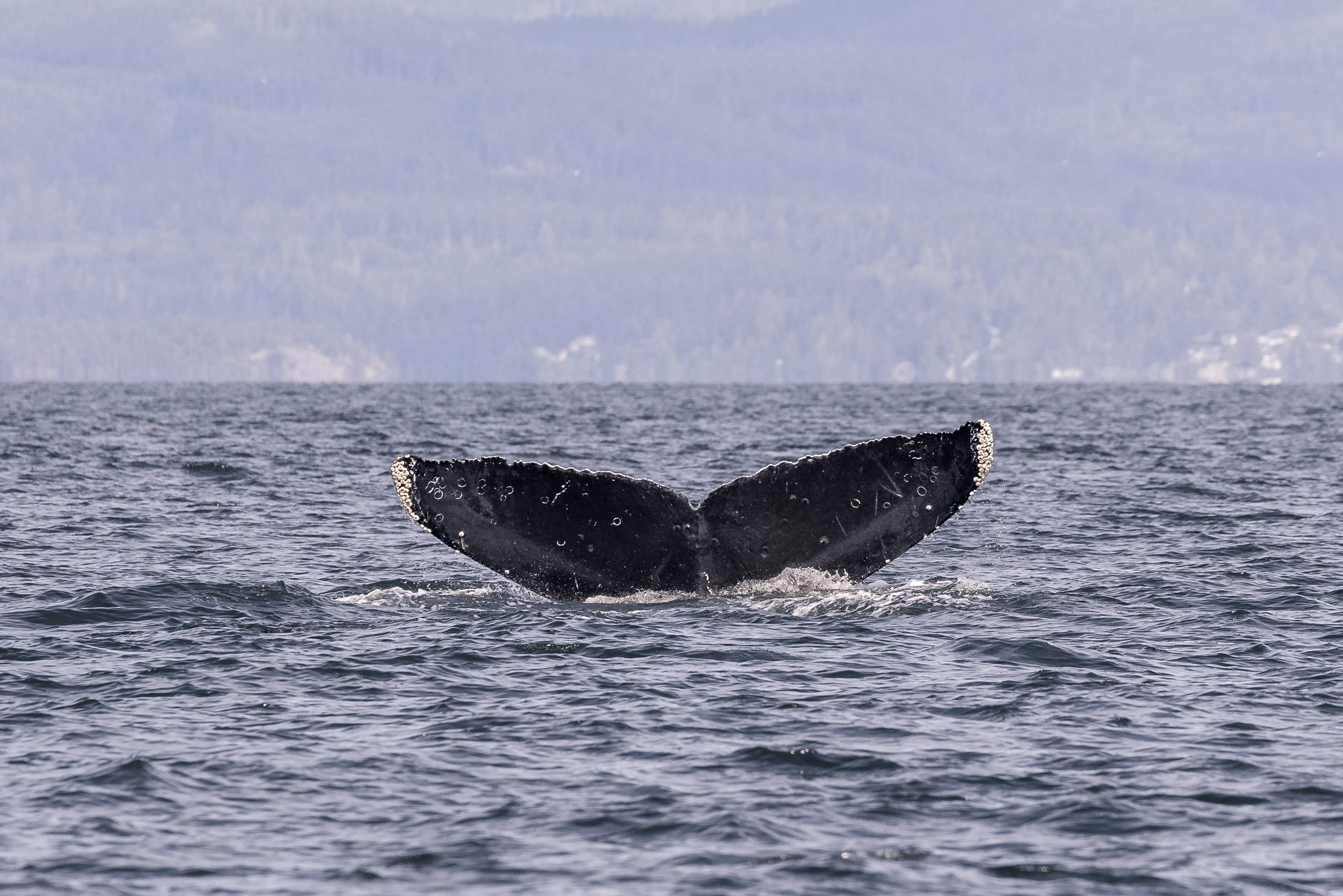
Europa fluking high into the air. Photograph by Jordan Robinson.
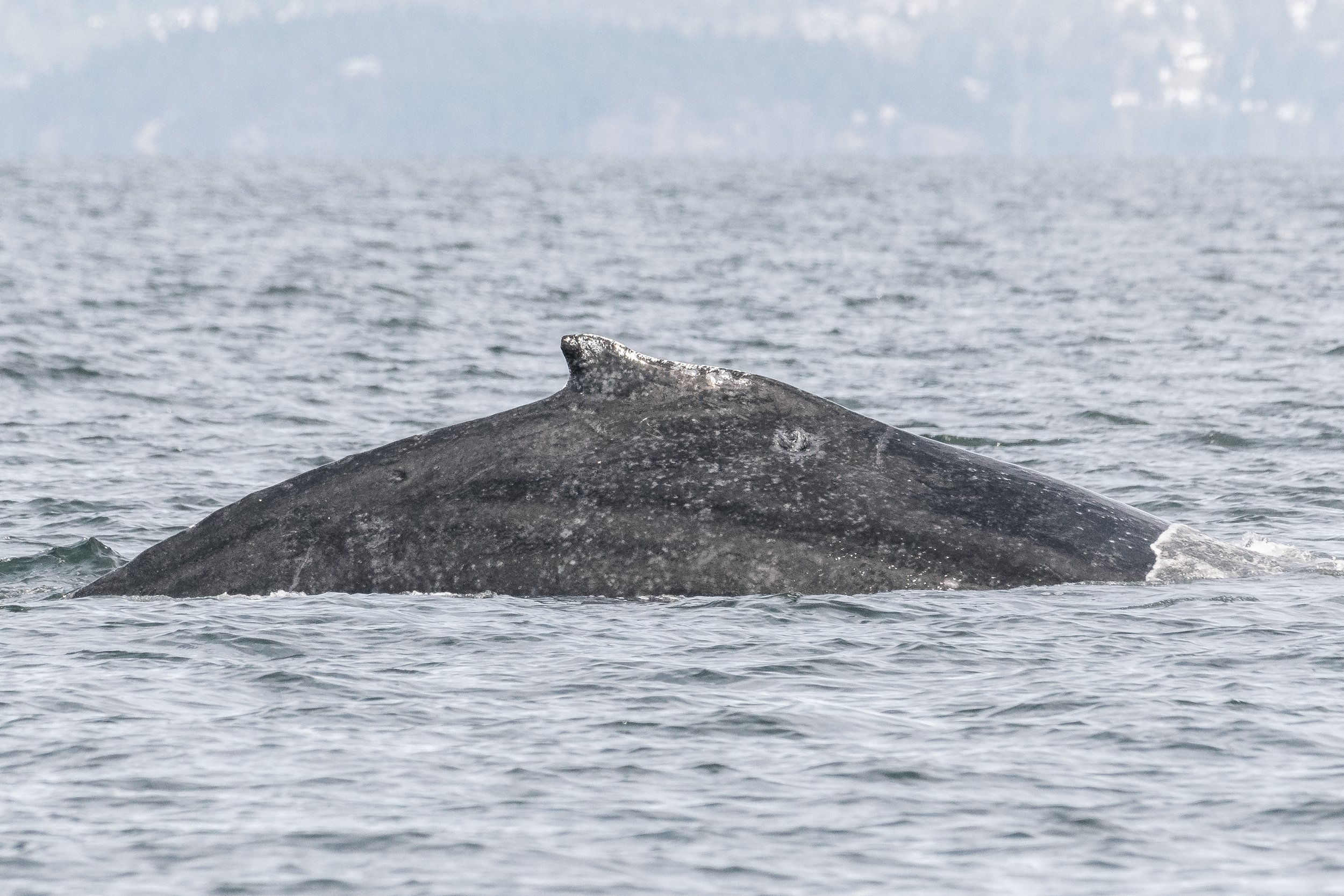
Windy travelling along. Photograph by Evan Hessels.
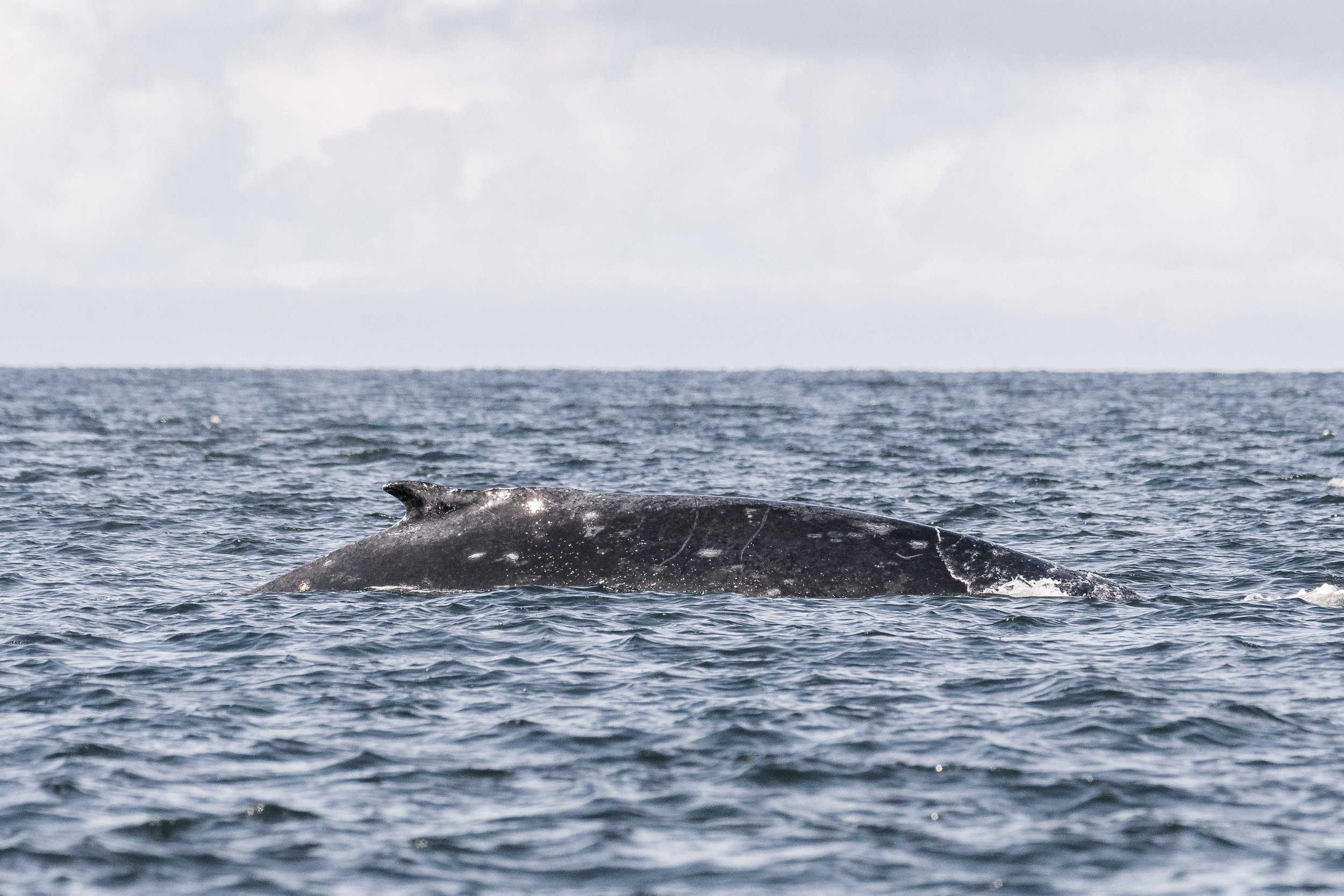
Harpy zipping by. Photograph by Evan Hessels.
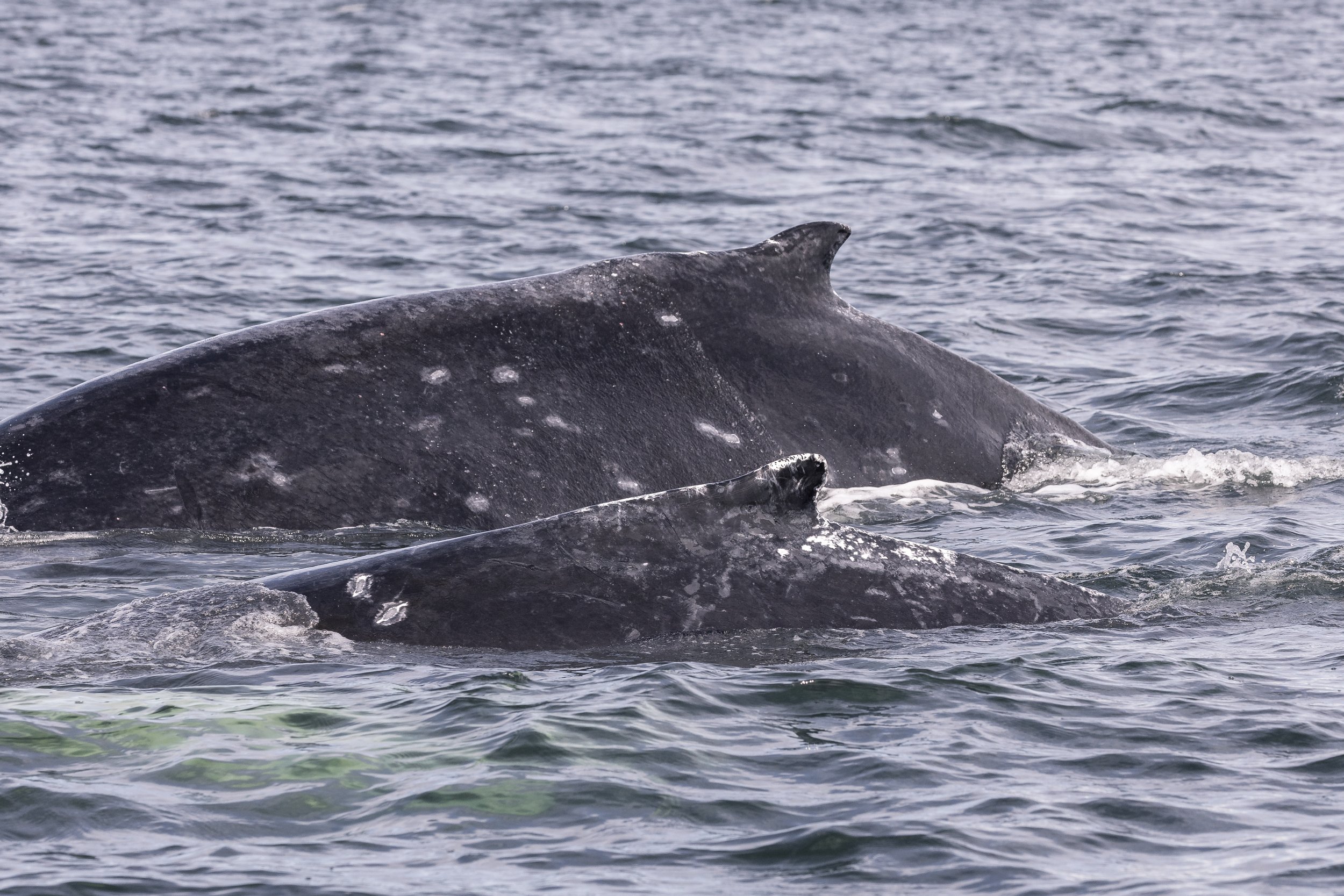
Harpy and her calf, side by side. Photograph by Jordan Robinson.
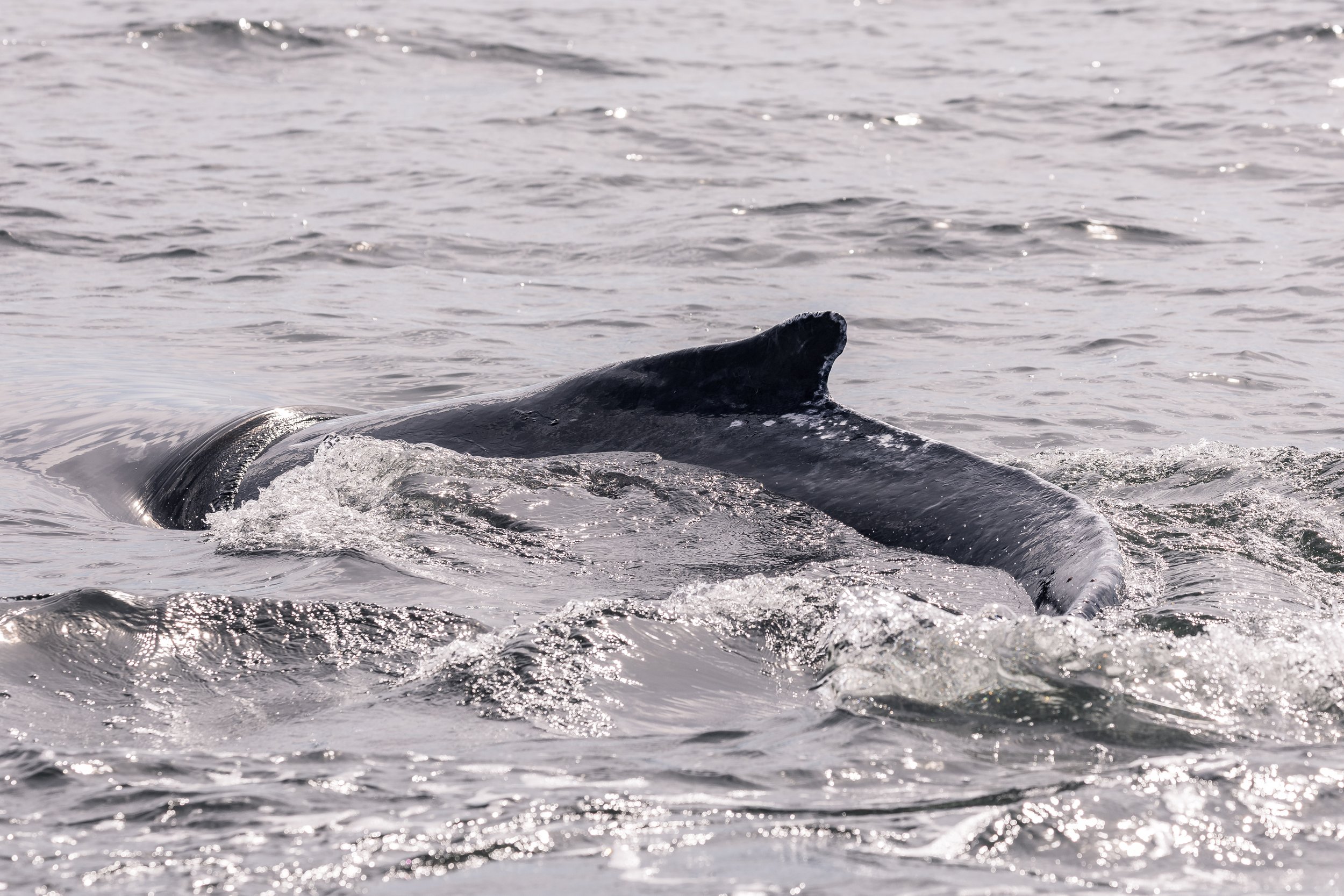
Harpy’s 2026 calf swishing its tail. Photograph by Jordan Robinson.
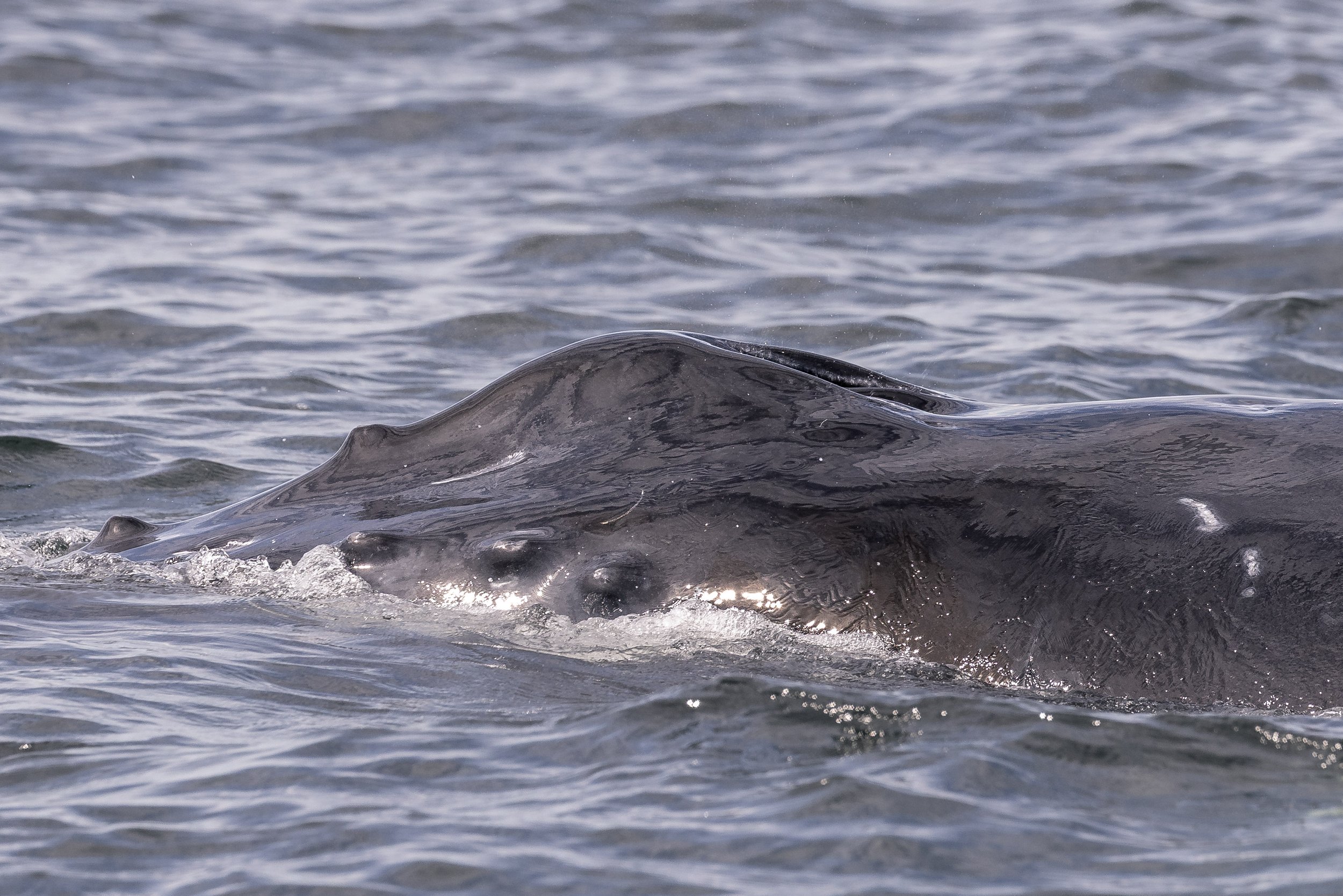
A good look at the tubercles on the calf’s head. Photograph by Jordan Robinson.
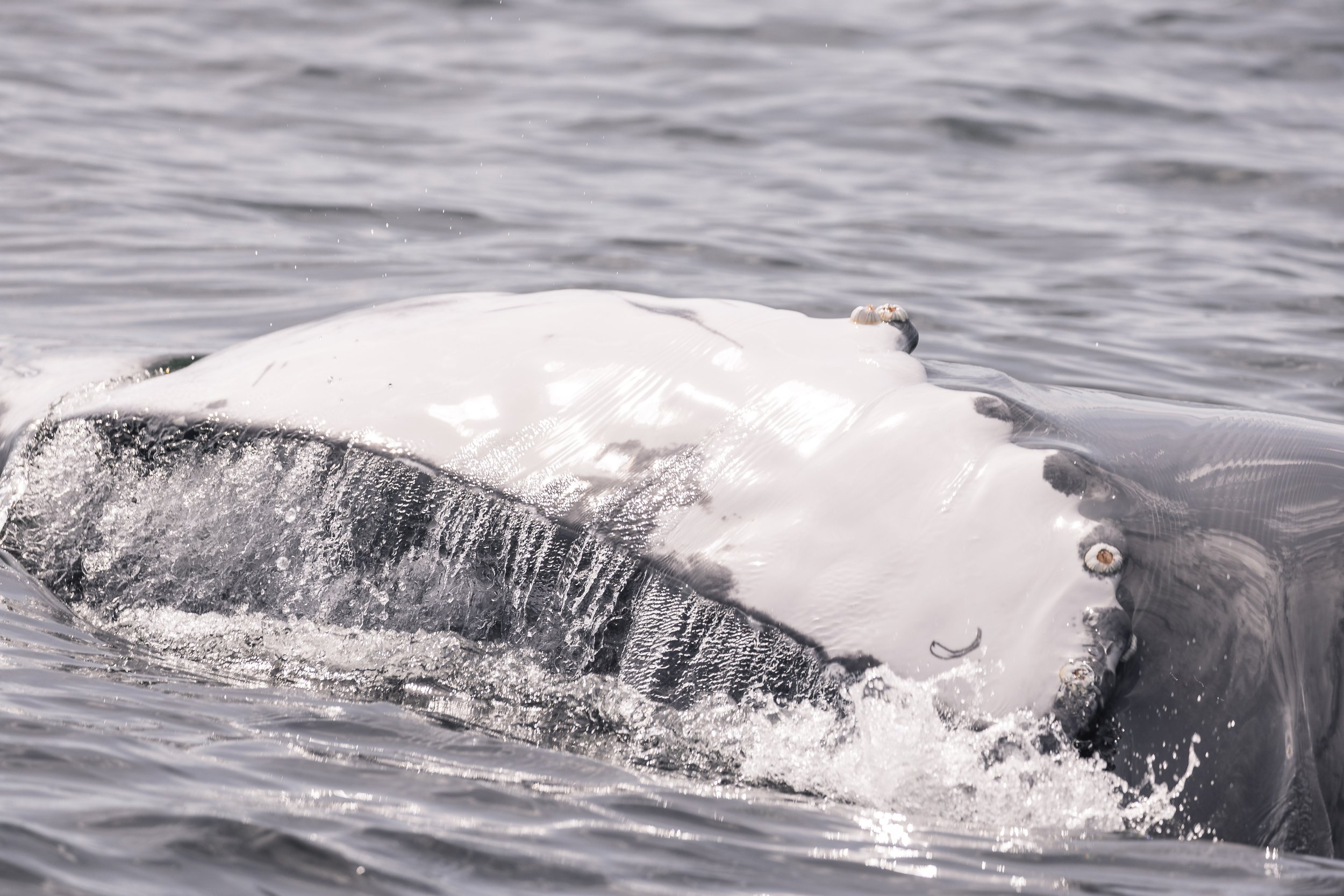
Harpy’s 2026 calf rolling, creating a beautiful water curtain over its pectoral fin. Photograph by Jordan Robinson.
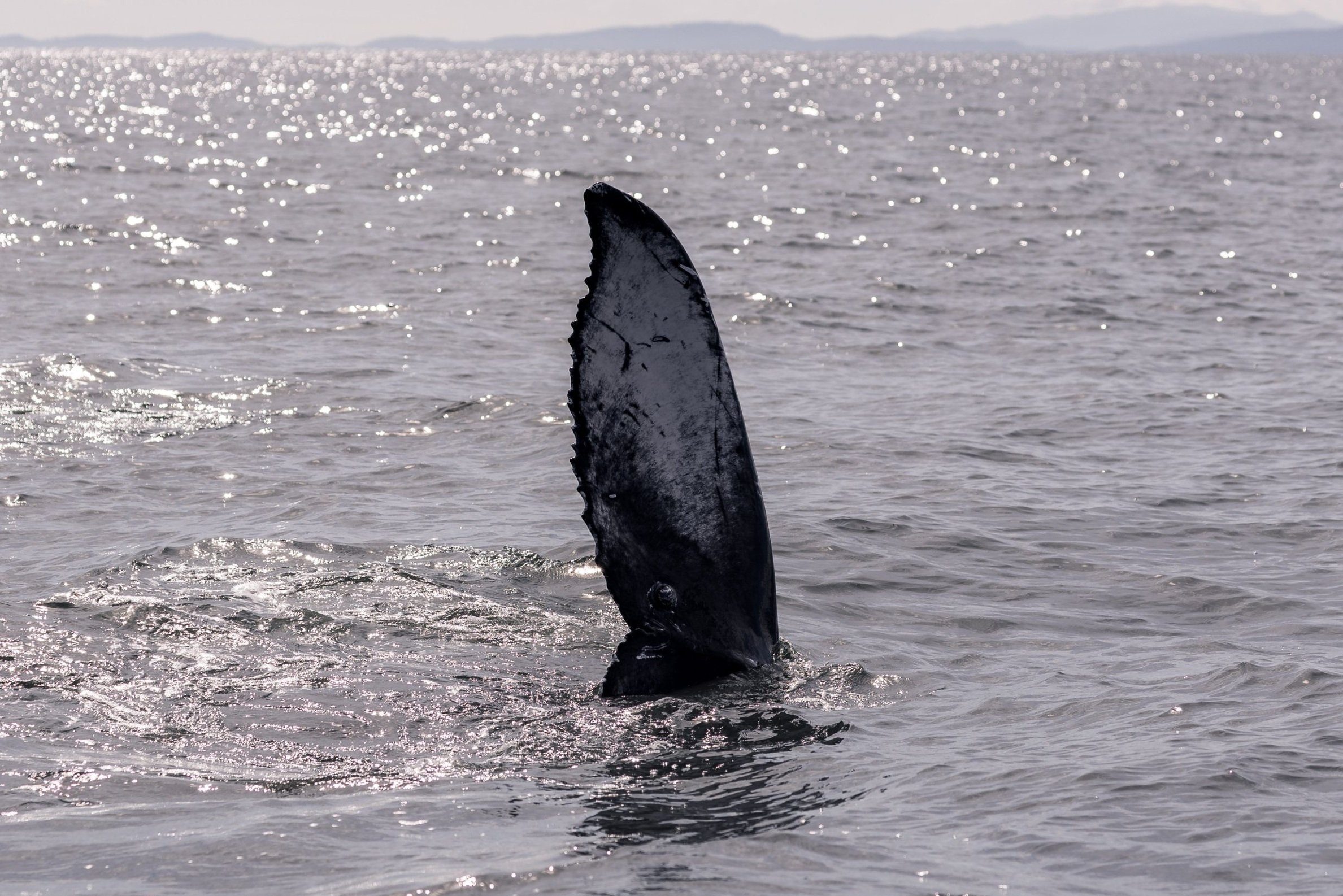
Harpy’s 2026 calf’s fluke as it rolls around. Photograph by Jordan Robinson.
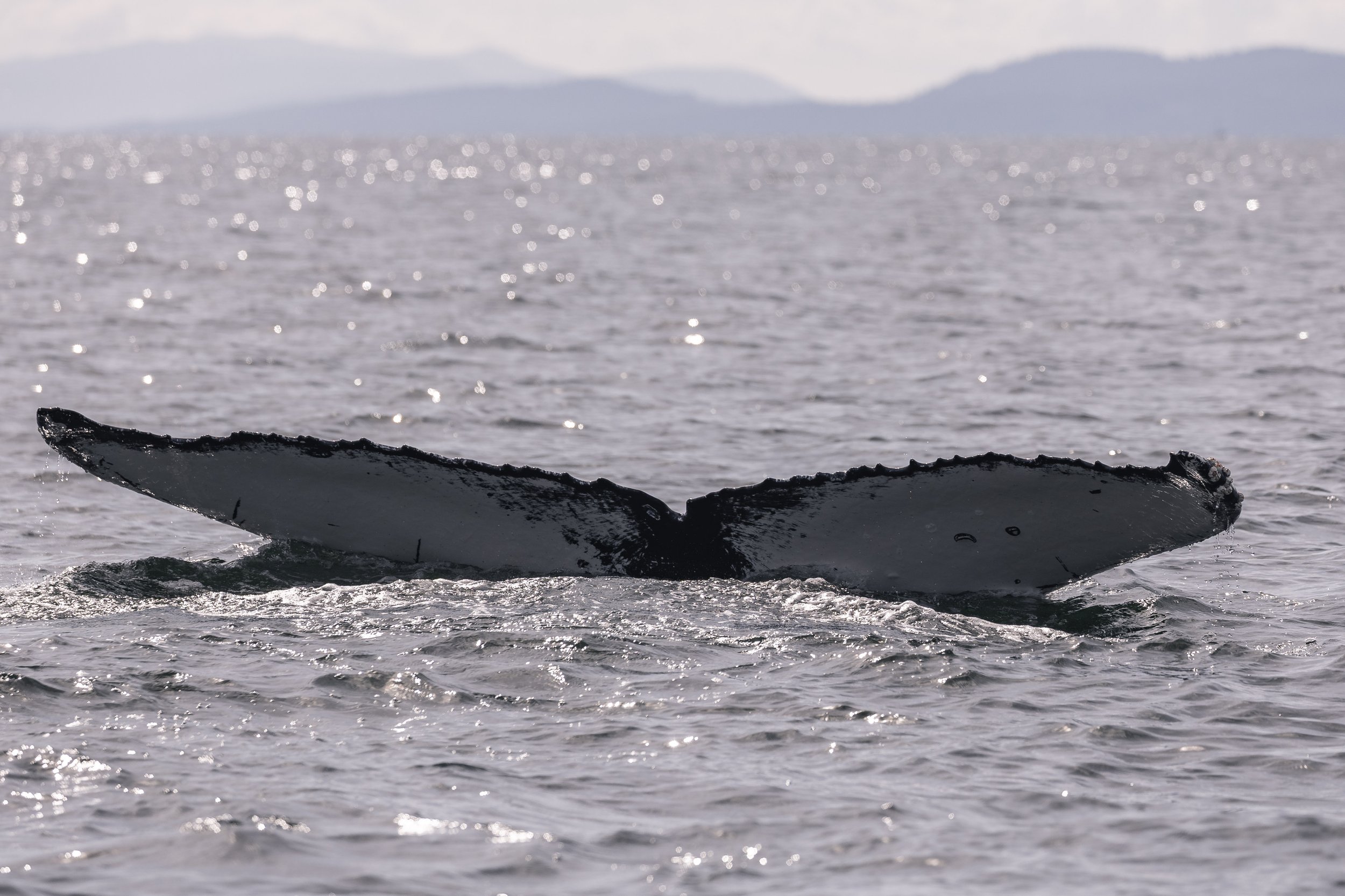
Harpy’s fluke as she begins to dive. Photograph by Jordan Robinson.
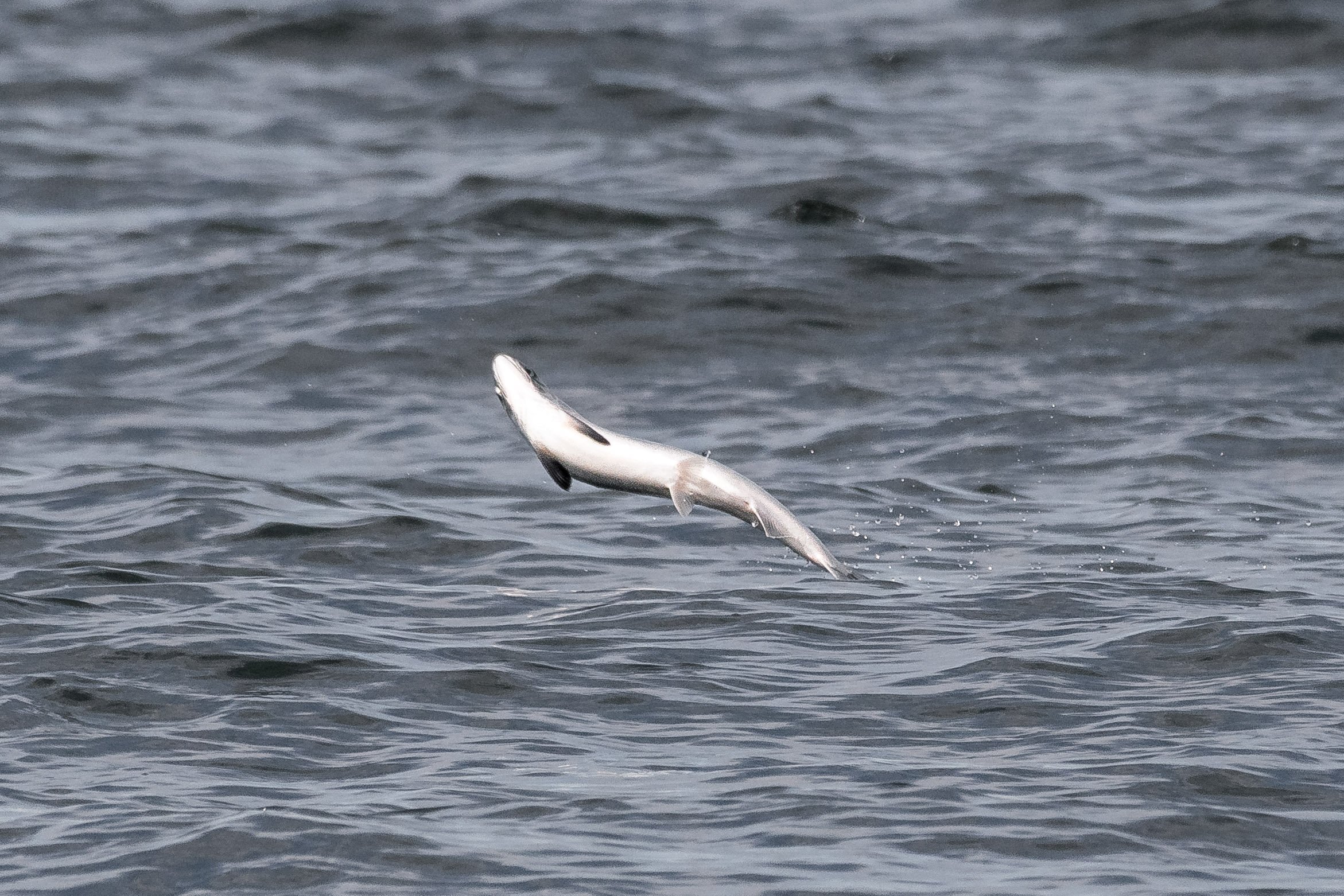
A different kind of breach - this time from a salmon! Photograph by Evan Hessels.
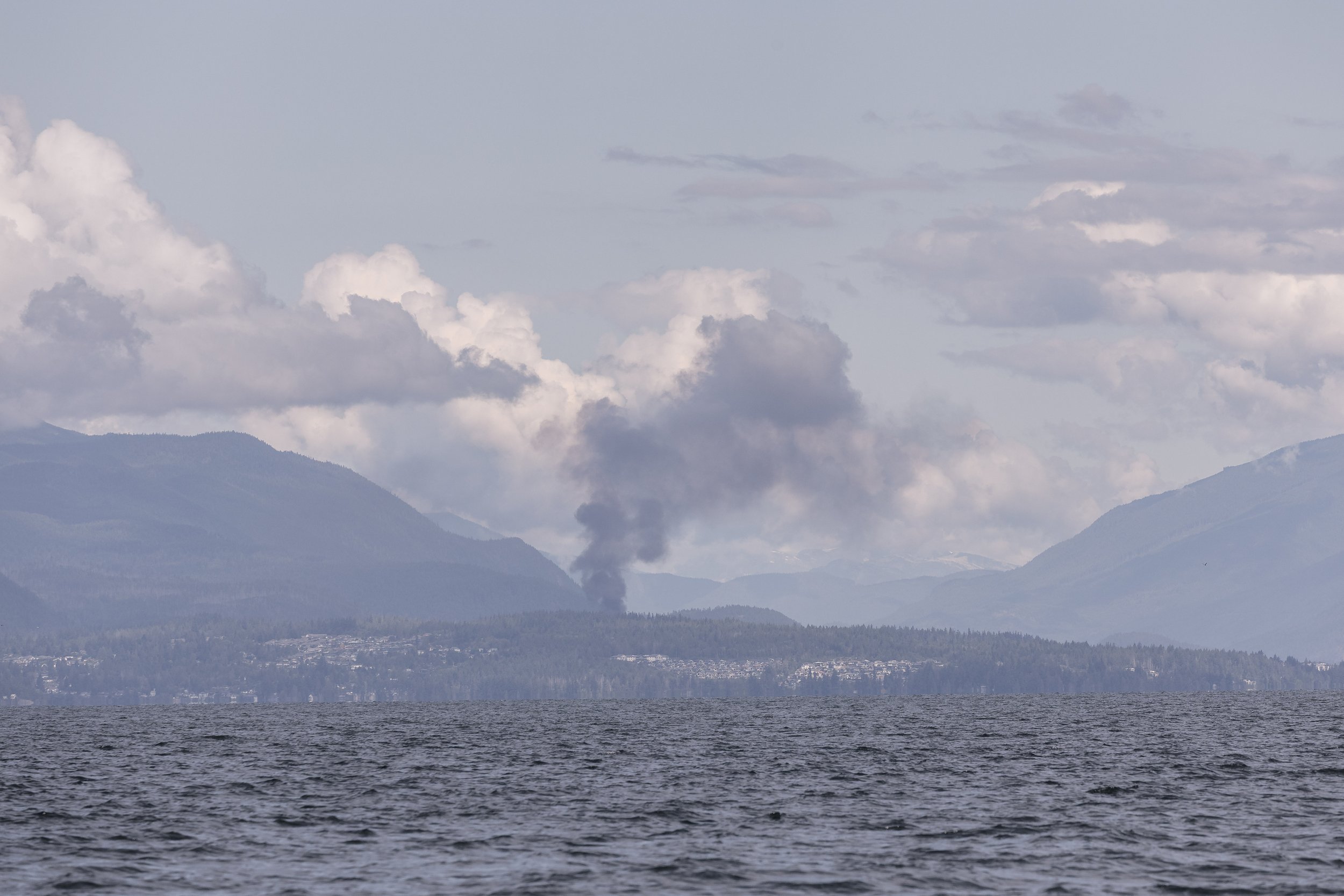
A wildfire on the mainland. Photograph by Jordan Robinson.
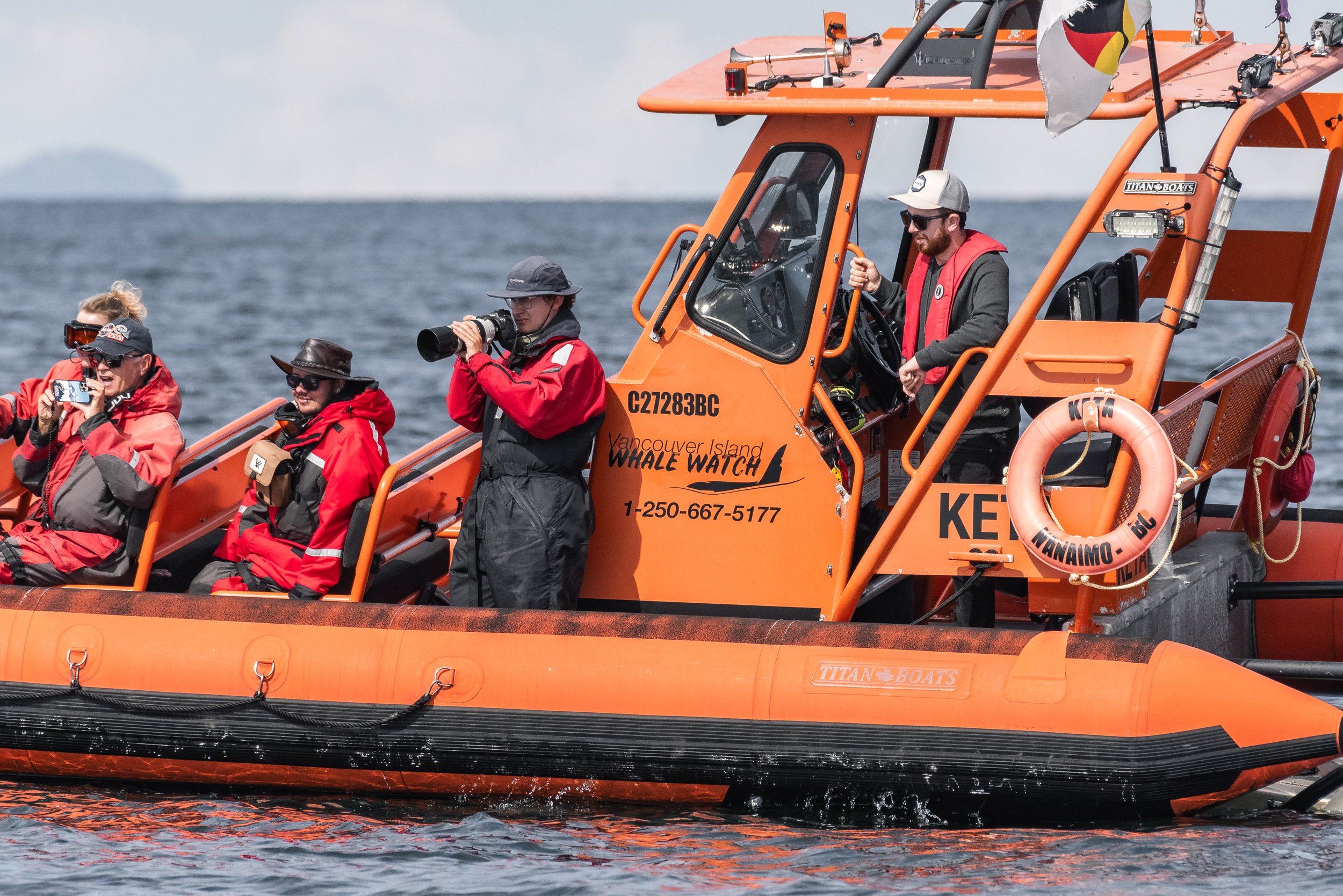
Keta on scene, photographing the moment. Photograph by Evan Hessels.
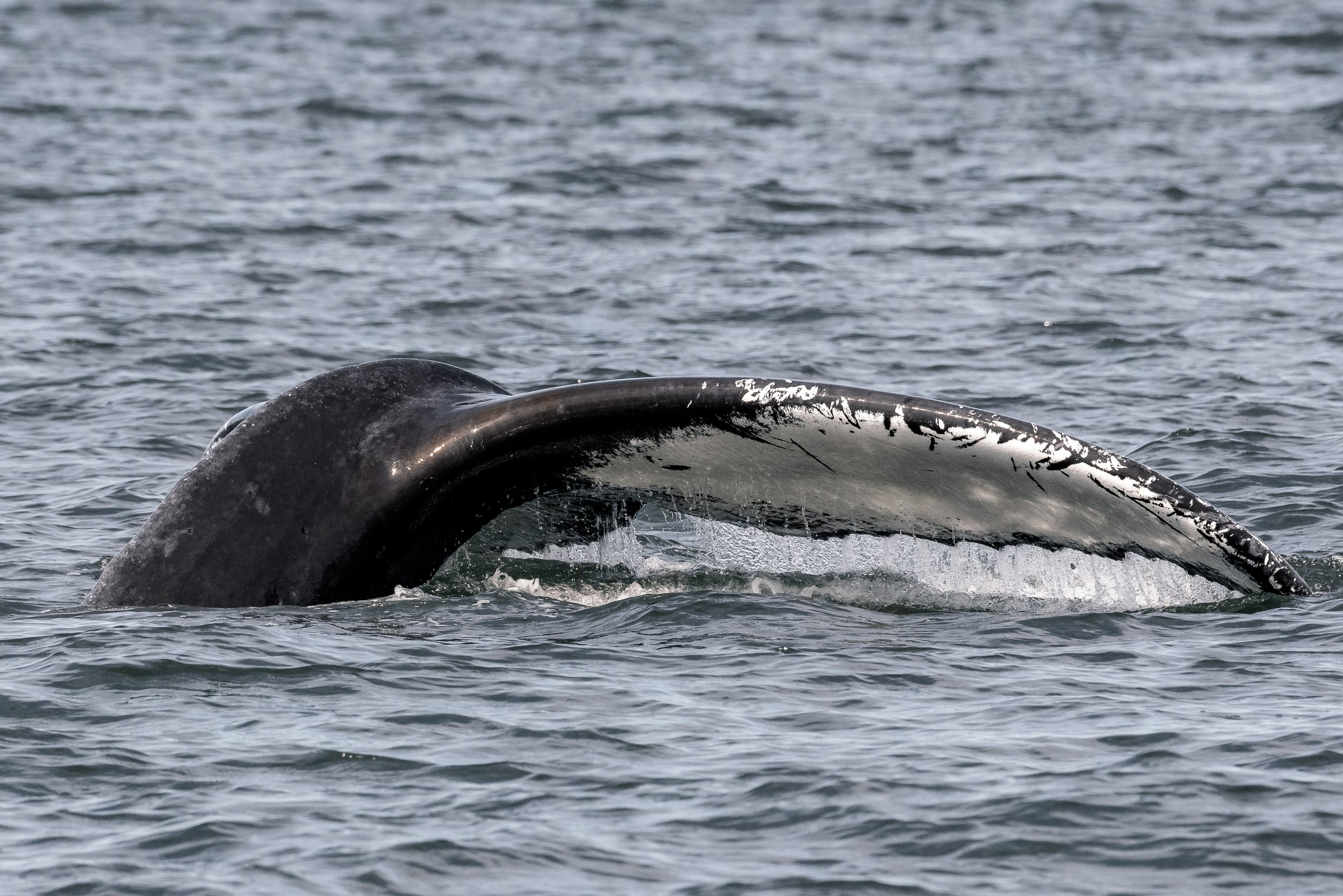
A side angle of Harpy. Photograph by Evan Hessels.
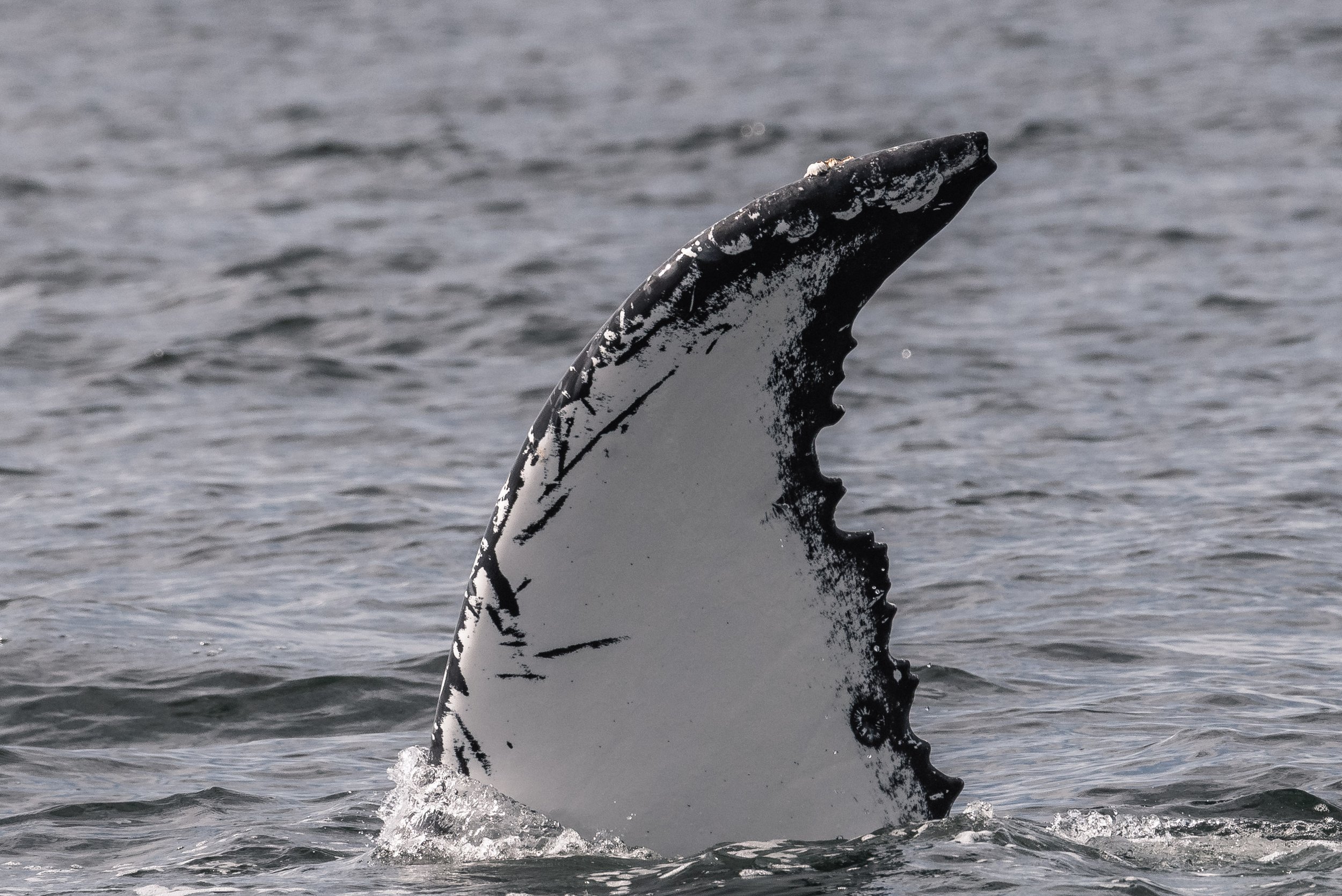
The corner of Harpy’s fluke. Photograph by Evan Hessels.
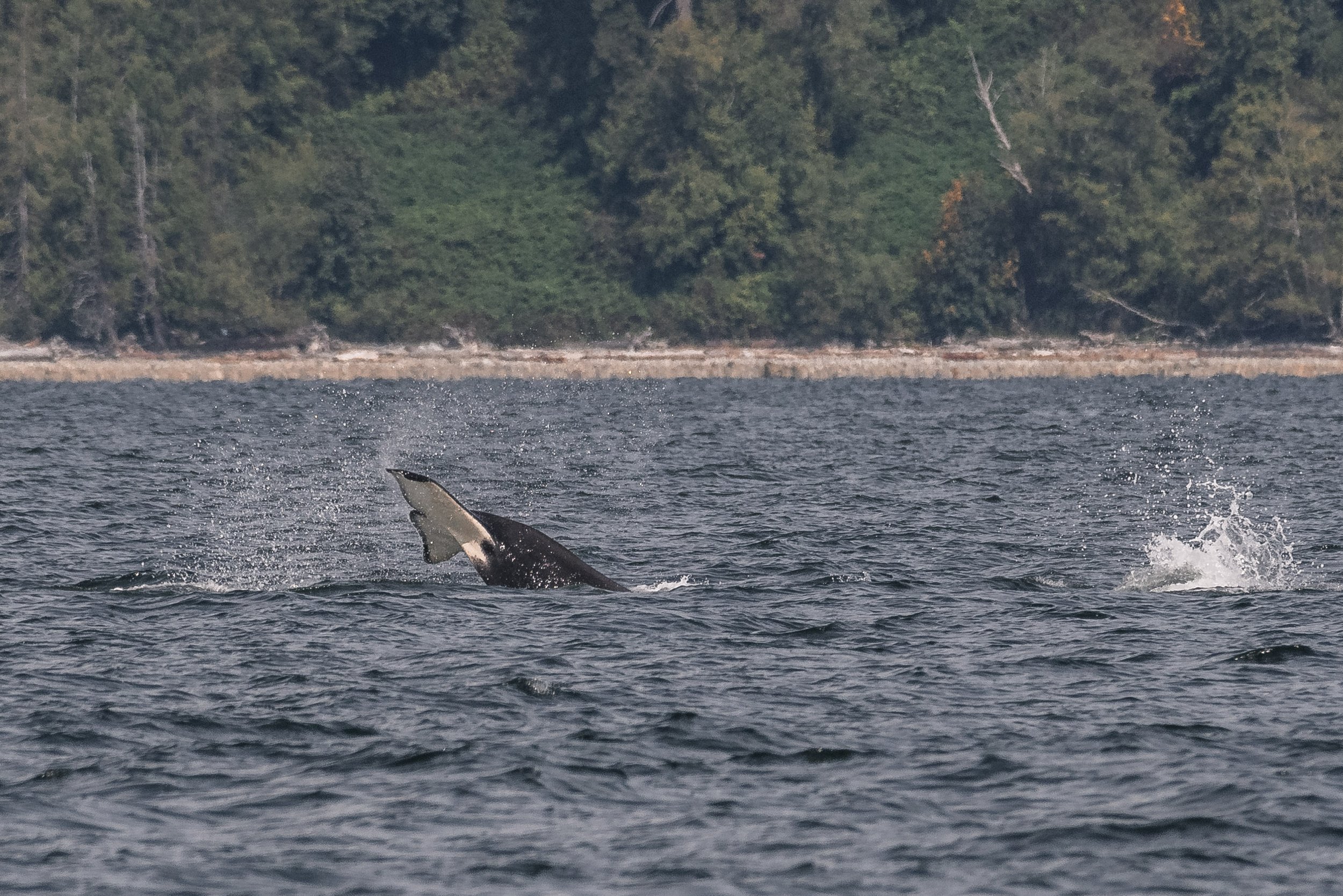
The orca were being very slap happy when we were with them today. Photograph by Evan Hessels.
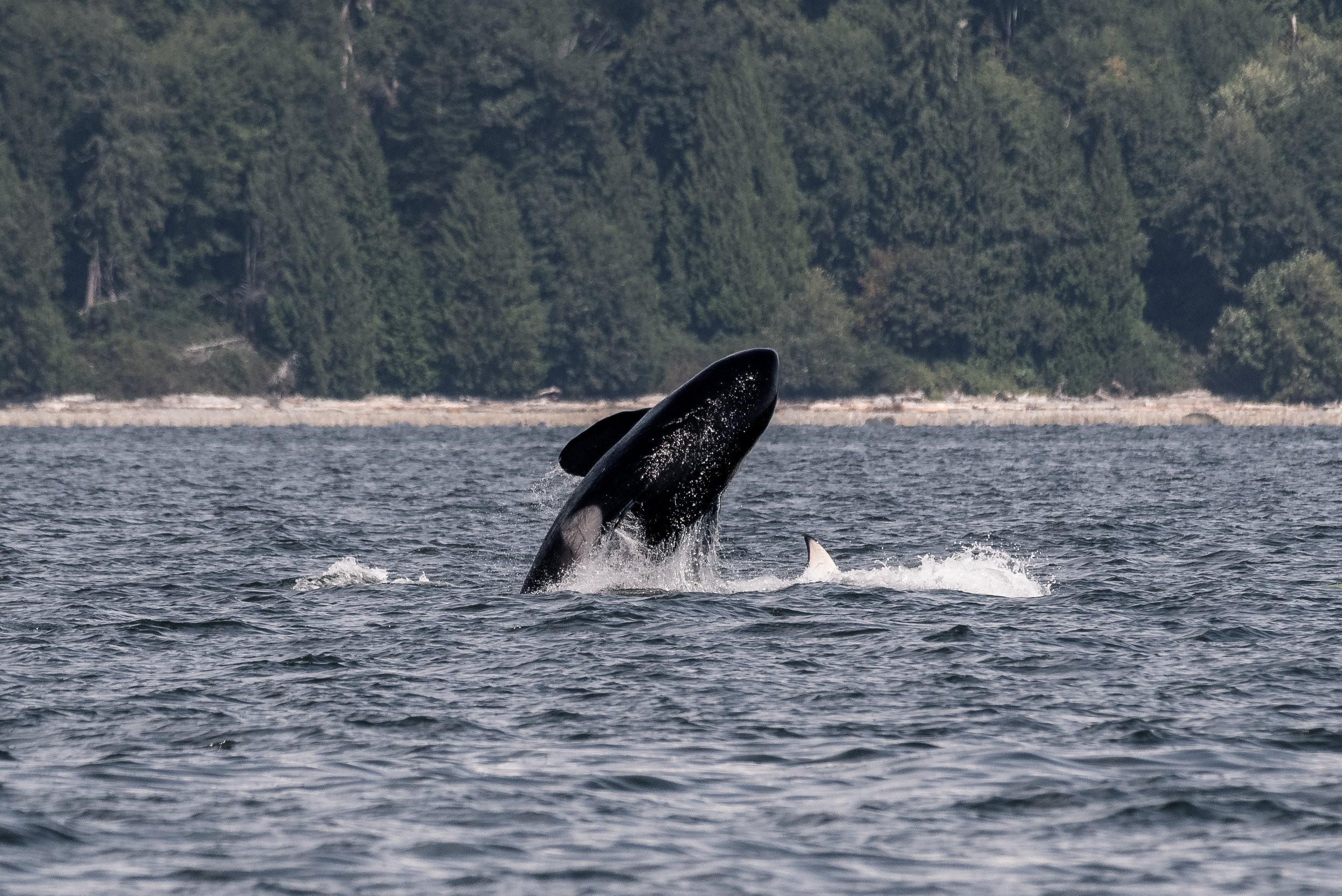
T065A5 Indy breaching with another beside him. Photograph by Evan Hessels.
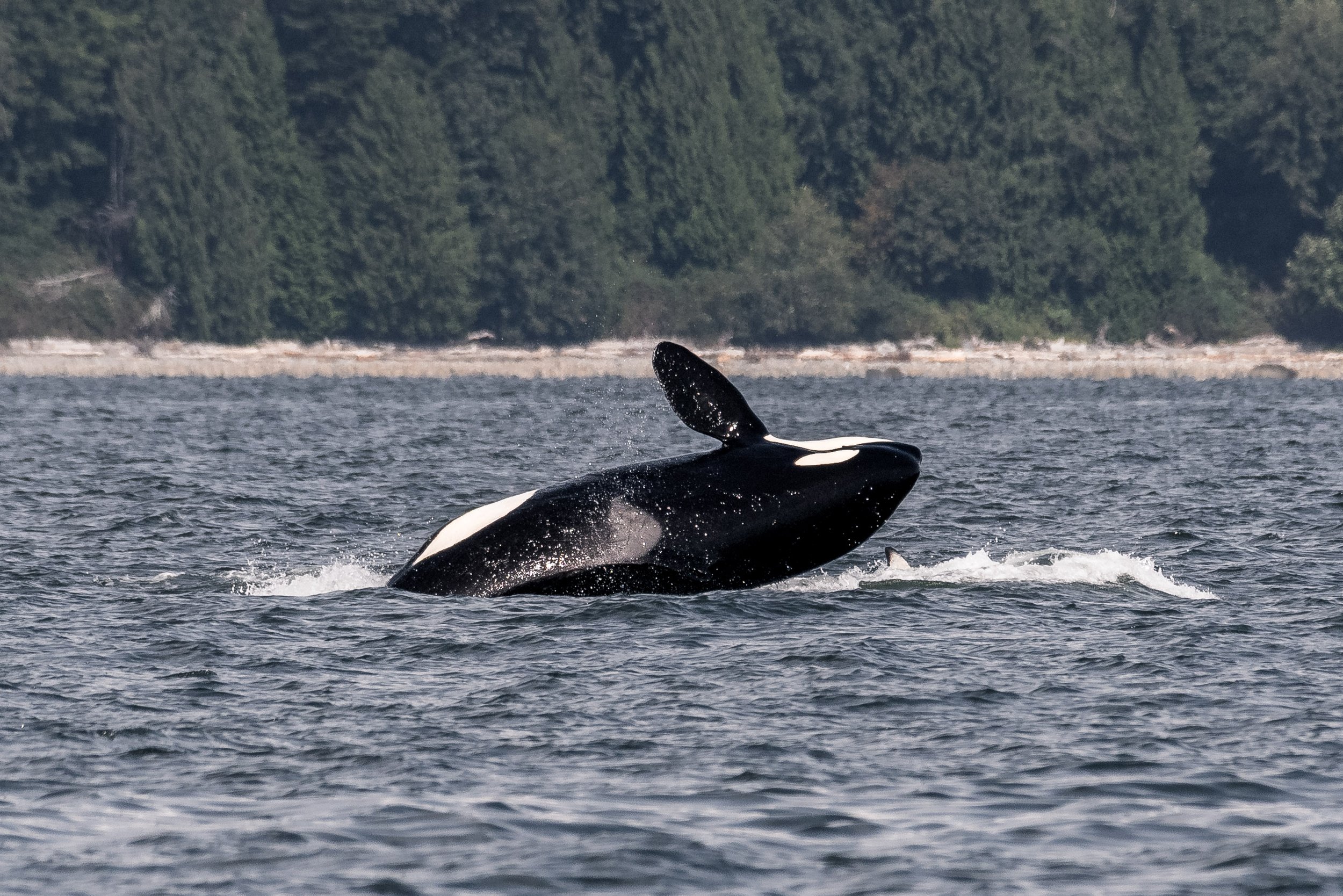
T065A5 Indy, as graceful as ever, landing likely on another orca. Photograph by Evan Hessels.
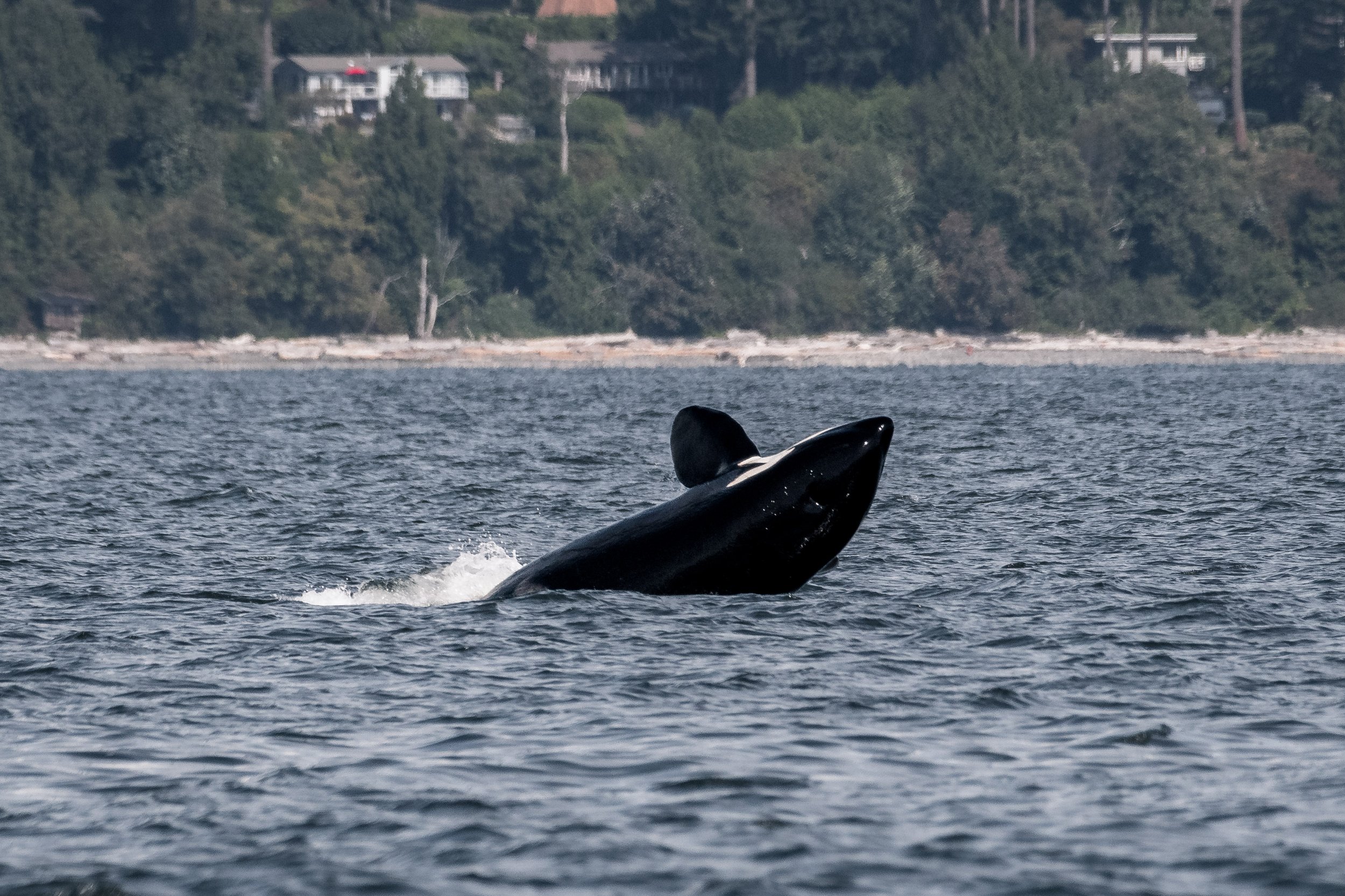
T065A5 Indy was extremely surface active today. Photograph by Evan Hessels.
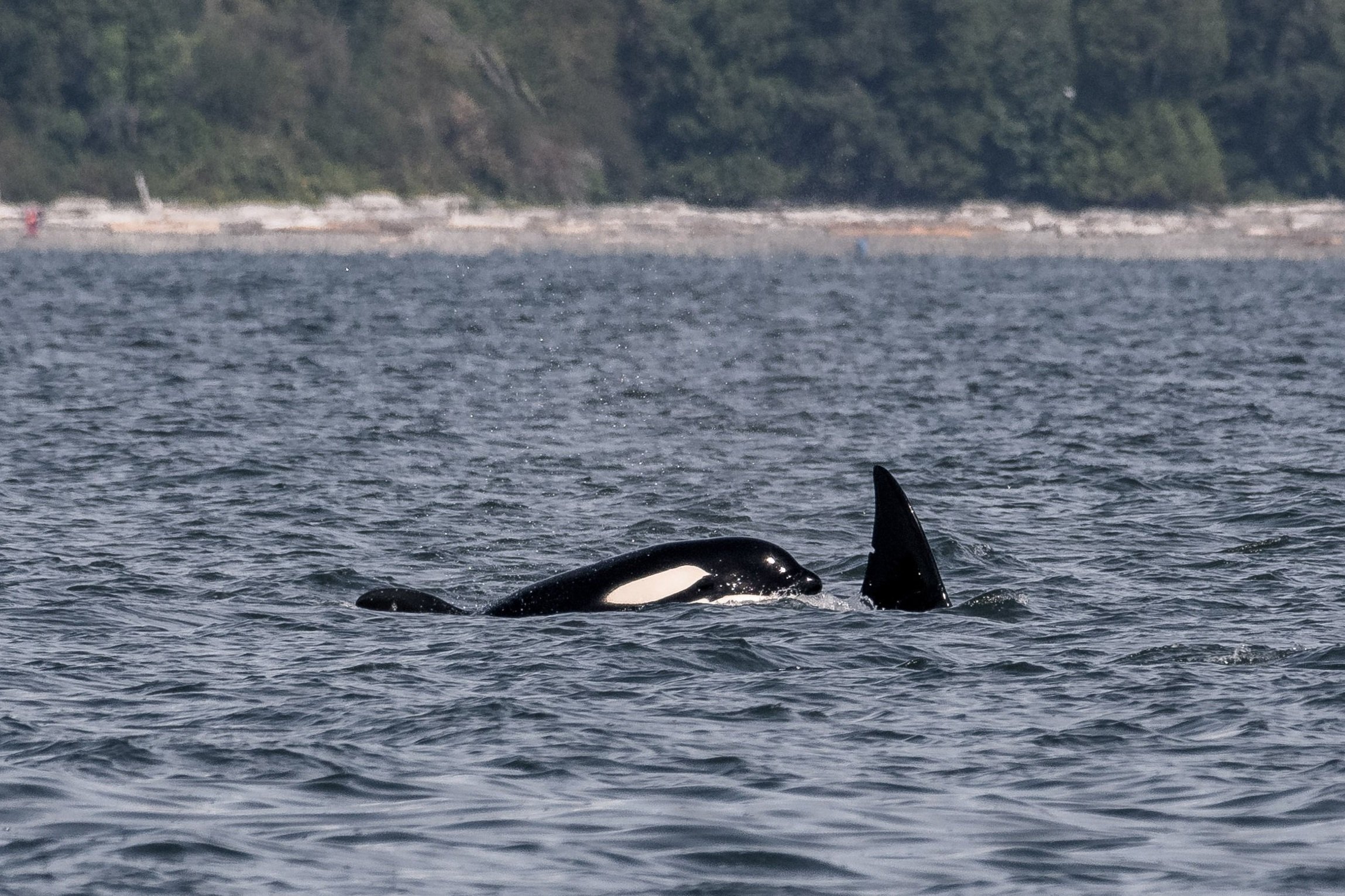
T036B1A Maple behind their mother T036B1 Bhotia. Photograph by Evan Hessels.
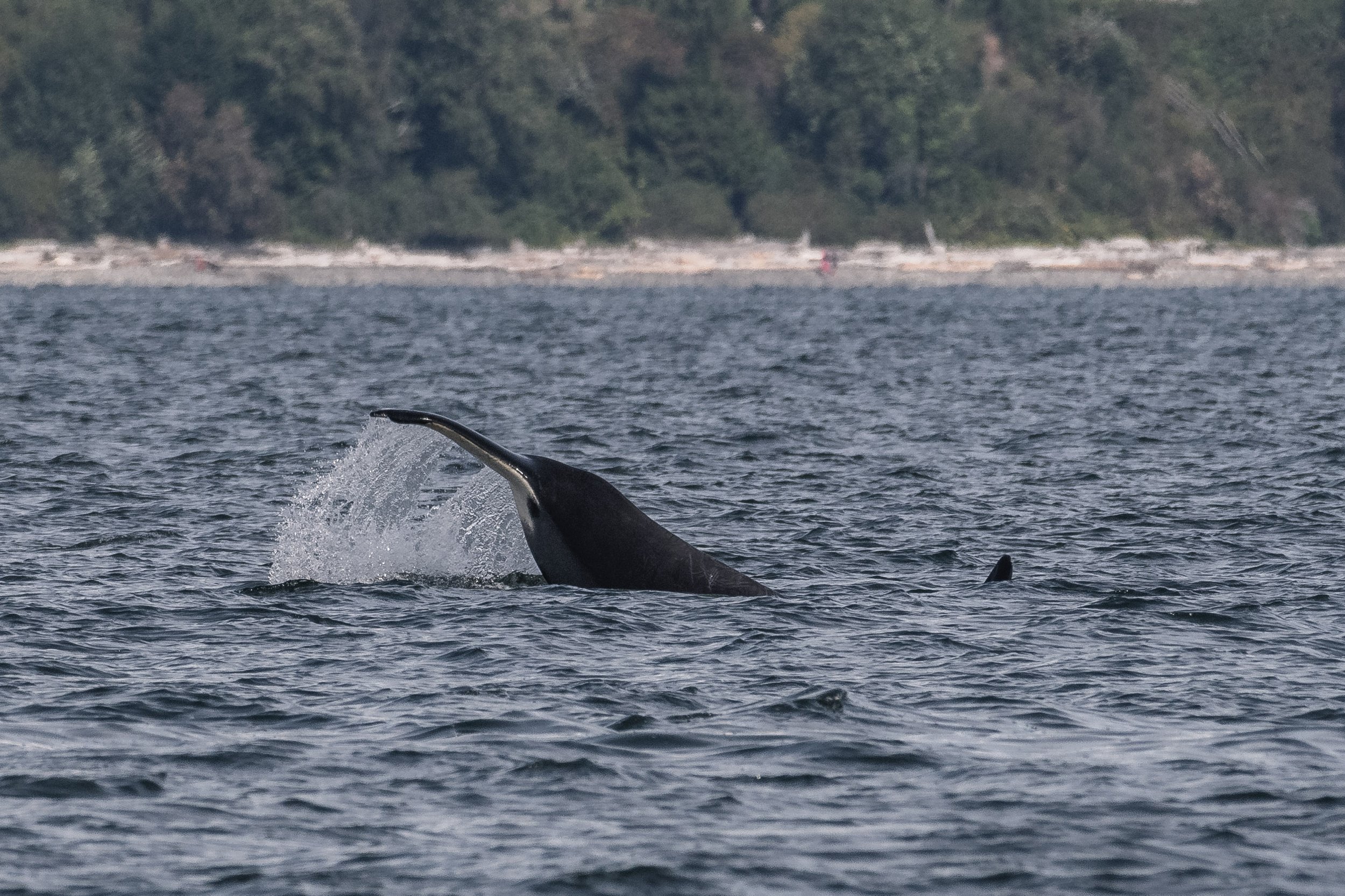
T065A5 Indy tail slapping away. Photograph by Evan Hessels.
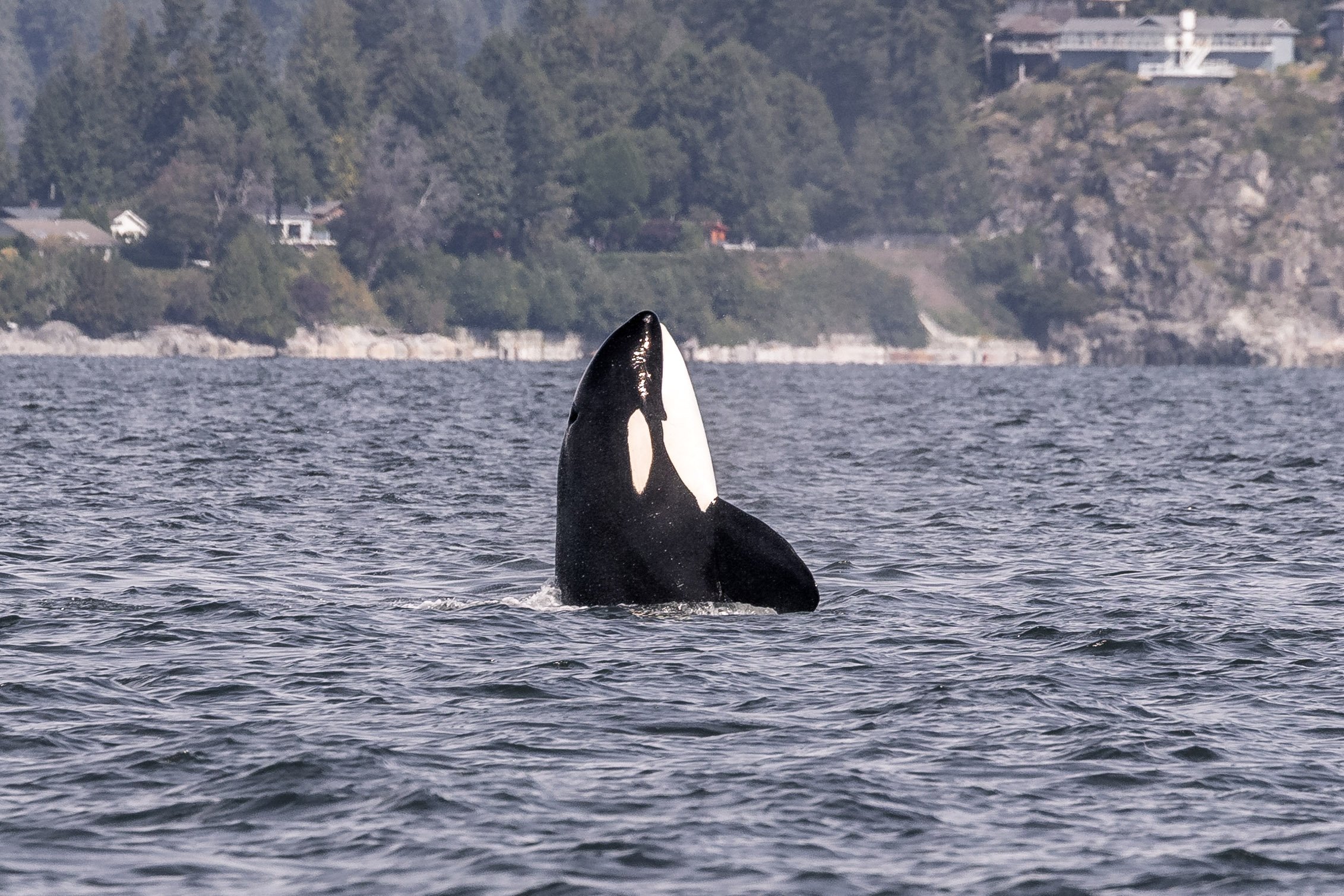
A spyhop from T036B2 Greenfelder! Photograph by Jordan Robinson.
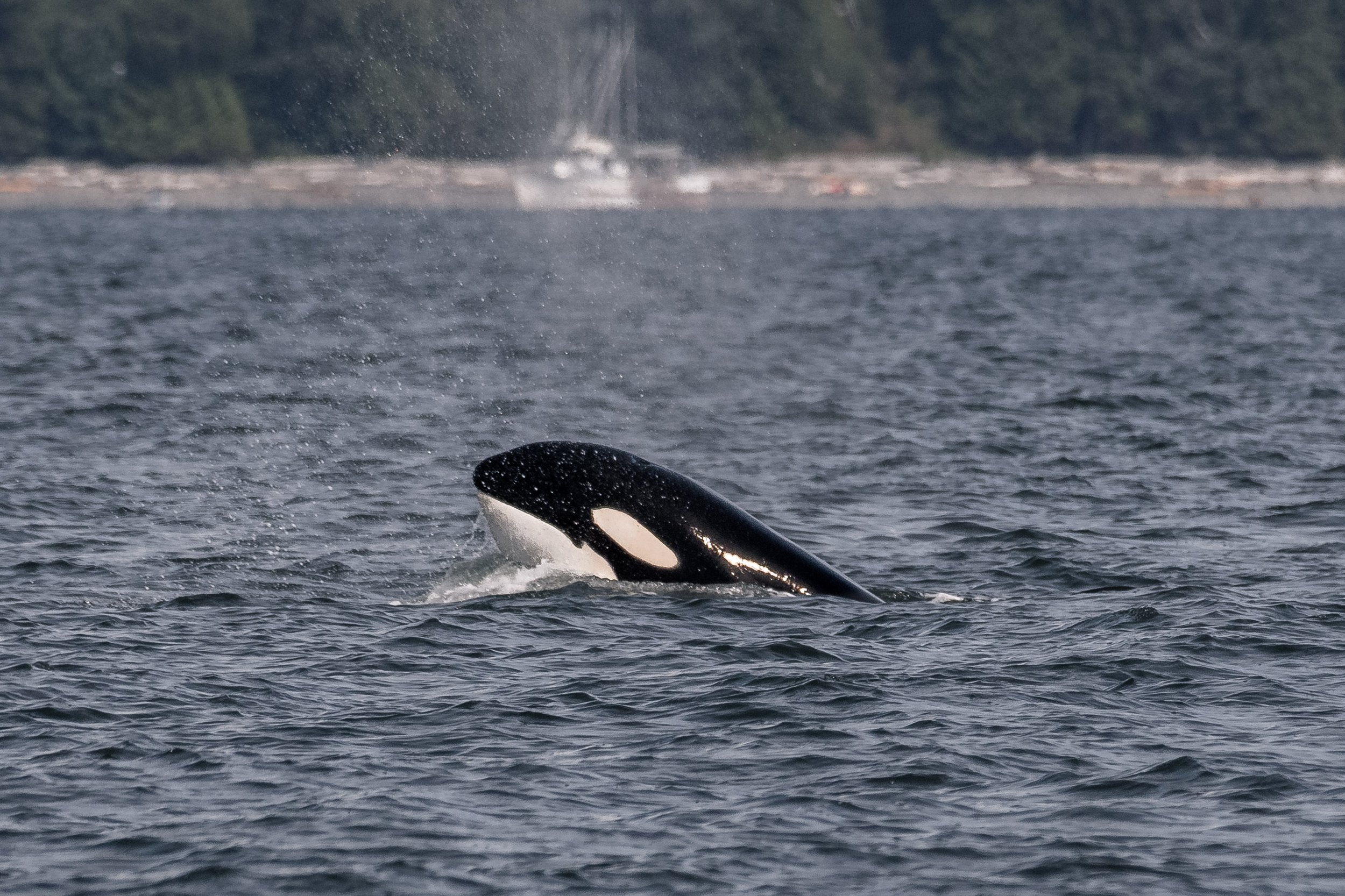
T036B2 Greenfelder with her face out of the water! Photograph by Evan Hessels.
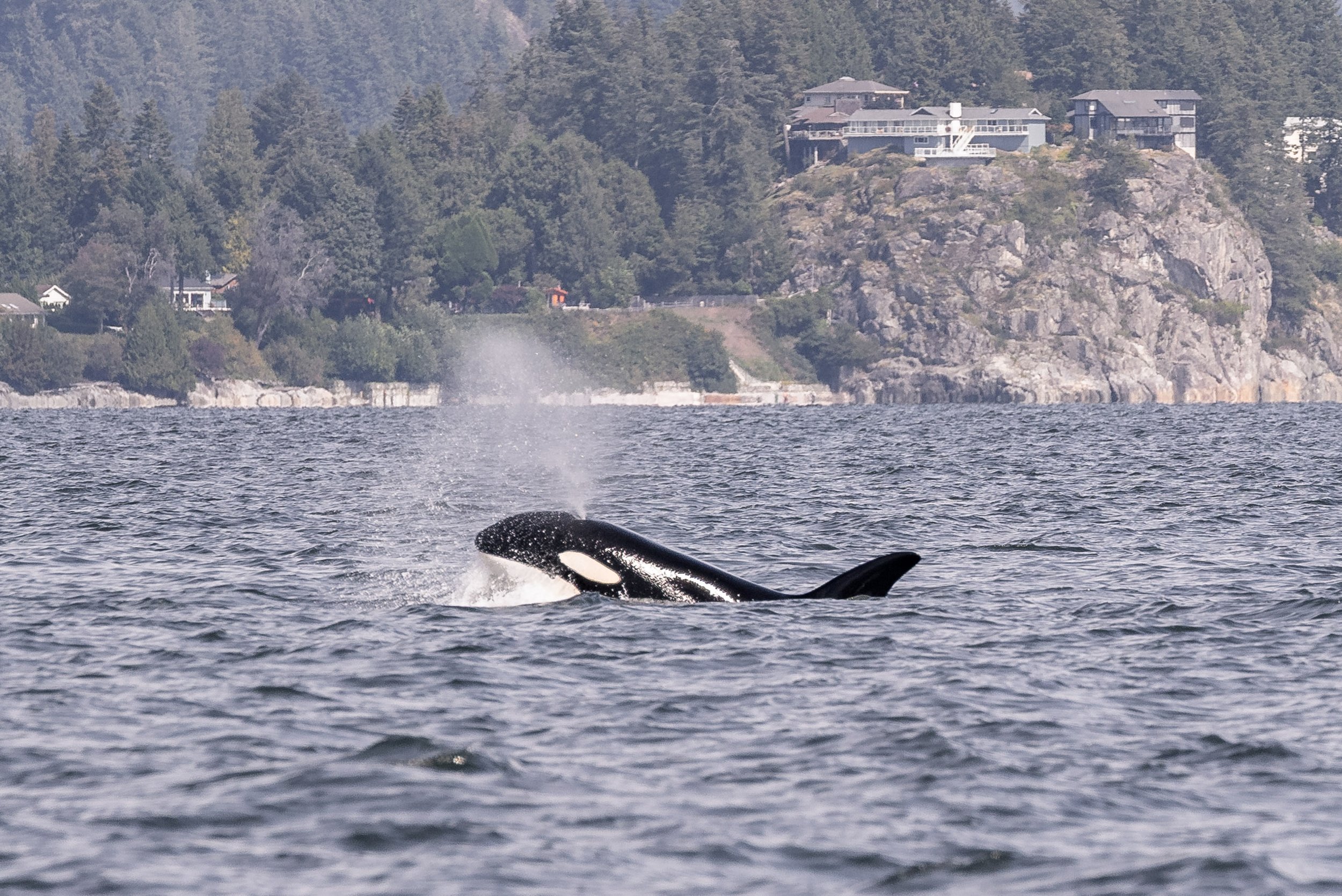
A big blow from T036B2 Greenfelder. Photograph by Jordan Robinson.
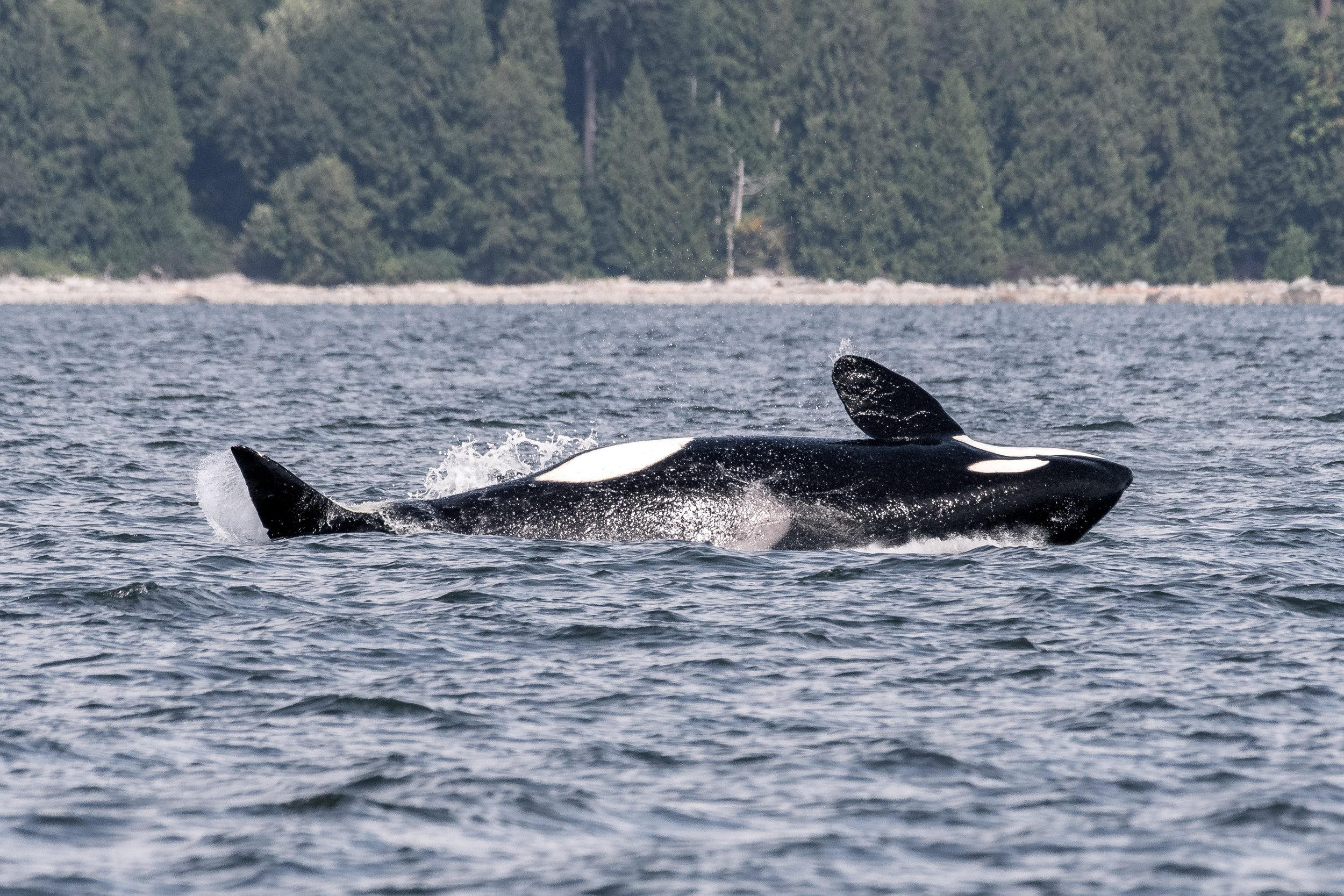
T065A5 Indy, with his eyepatch and half his tail visible. Photograph by Evan Hessels.
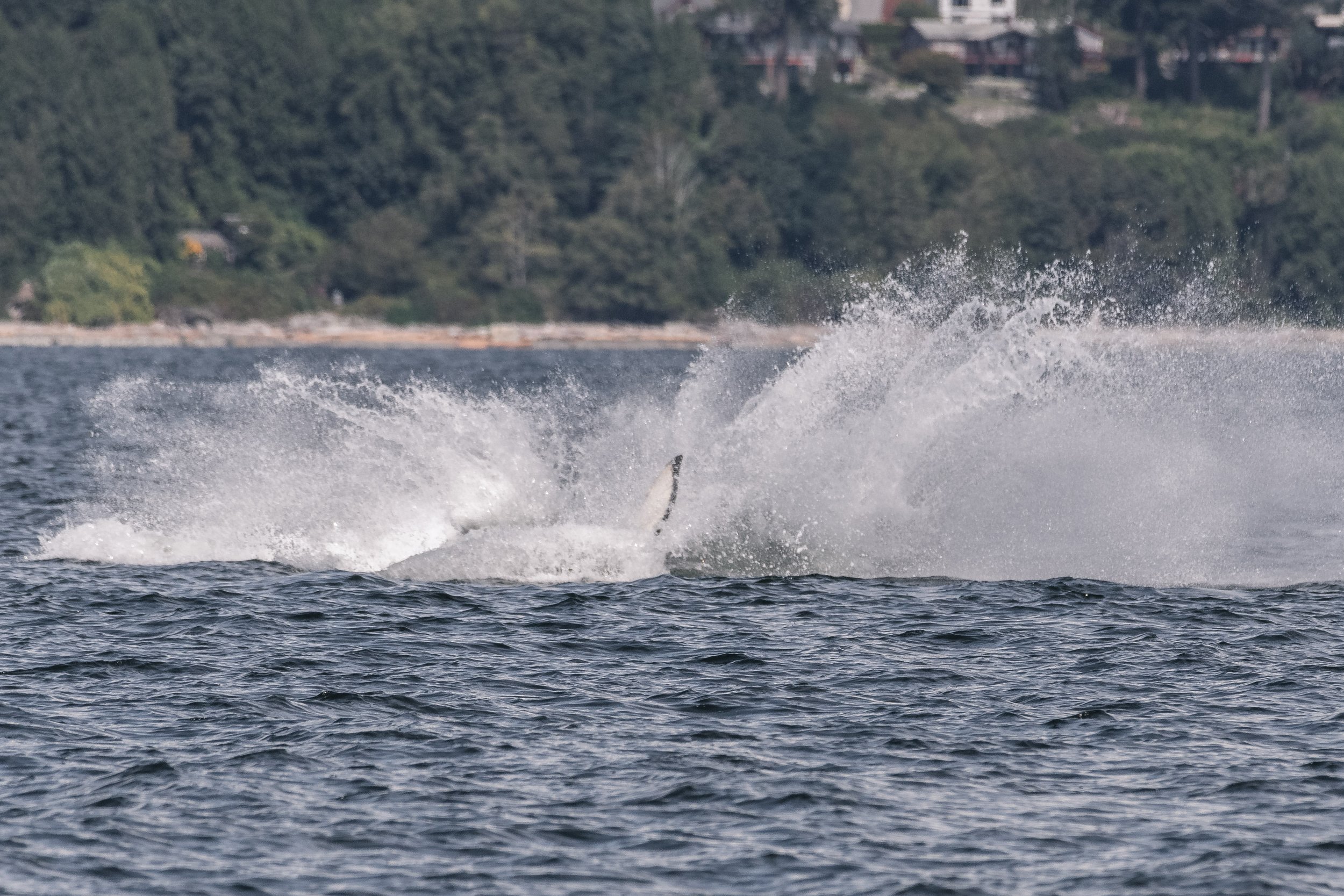
A huge splash from a breach. Photograph by Evan Hessels.
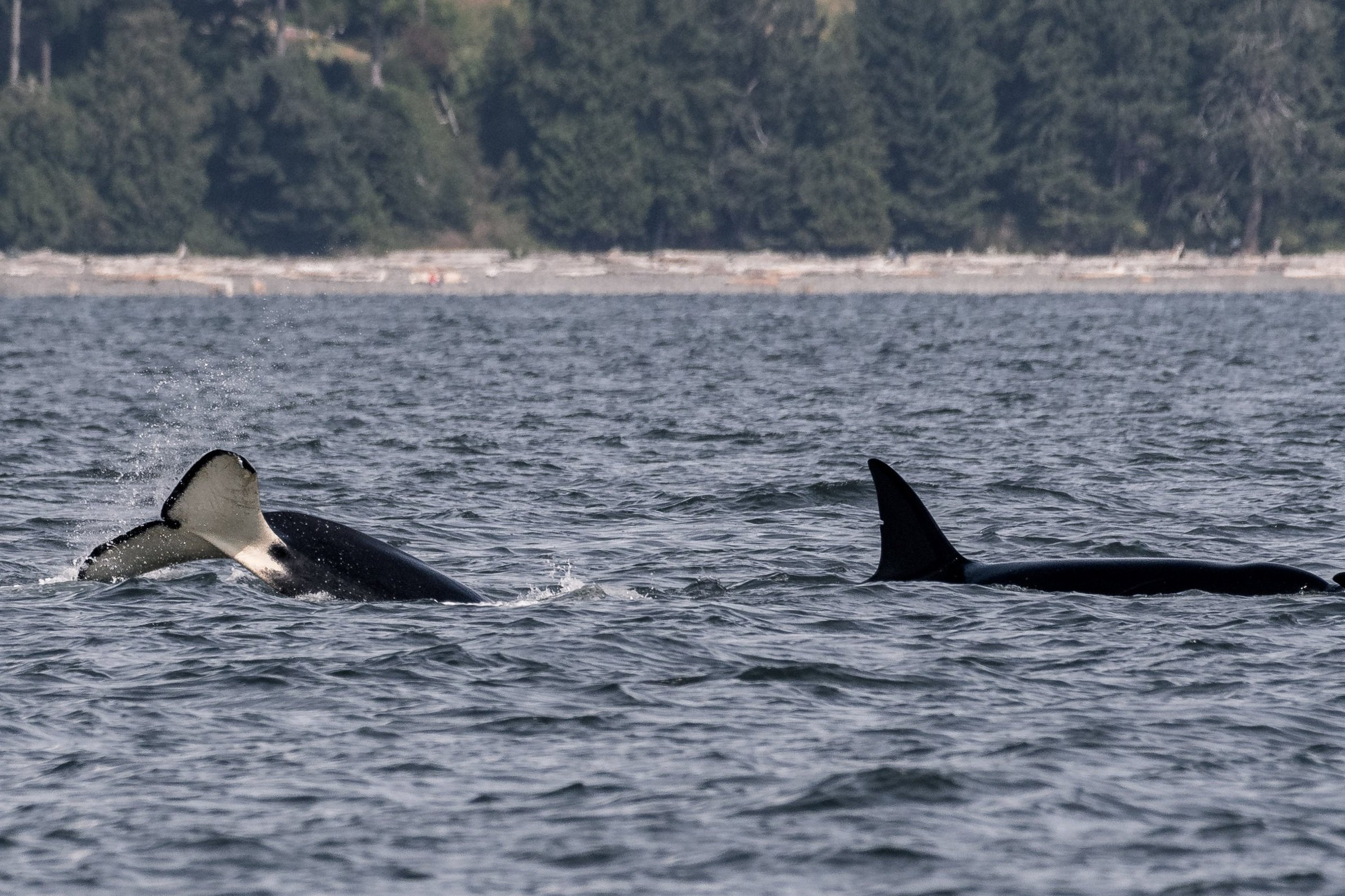
T036B1 Bhotia with T065A5 Indy tail slapping behind her. Photograph by Evan Hessels.
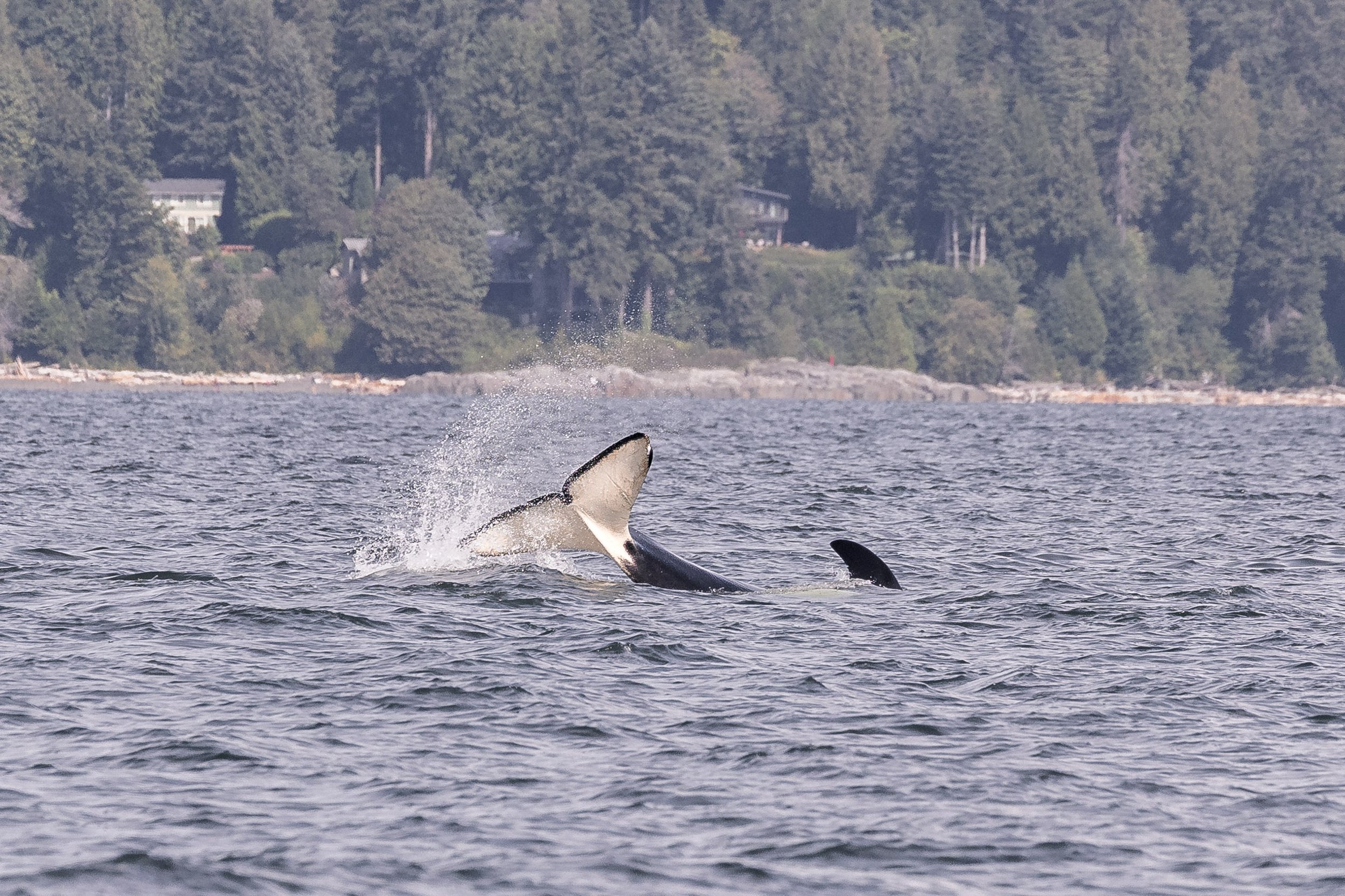
T065A5 Indy continuing to tail slap away. Photograph by Jordan Robinson.
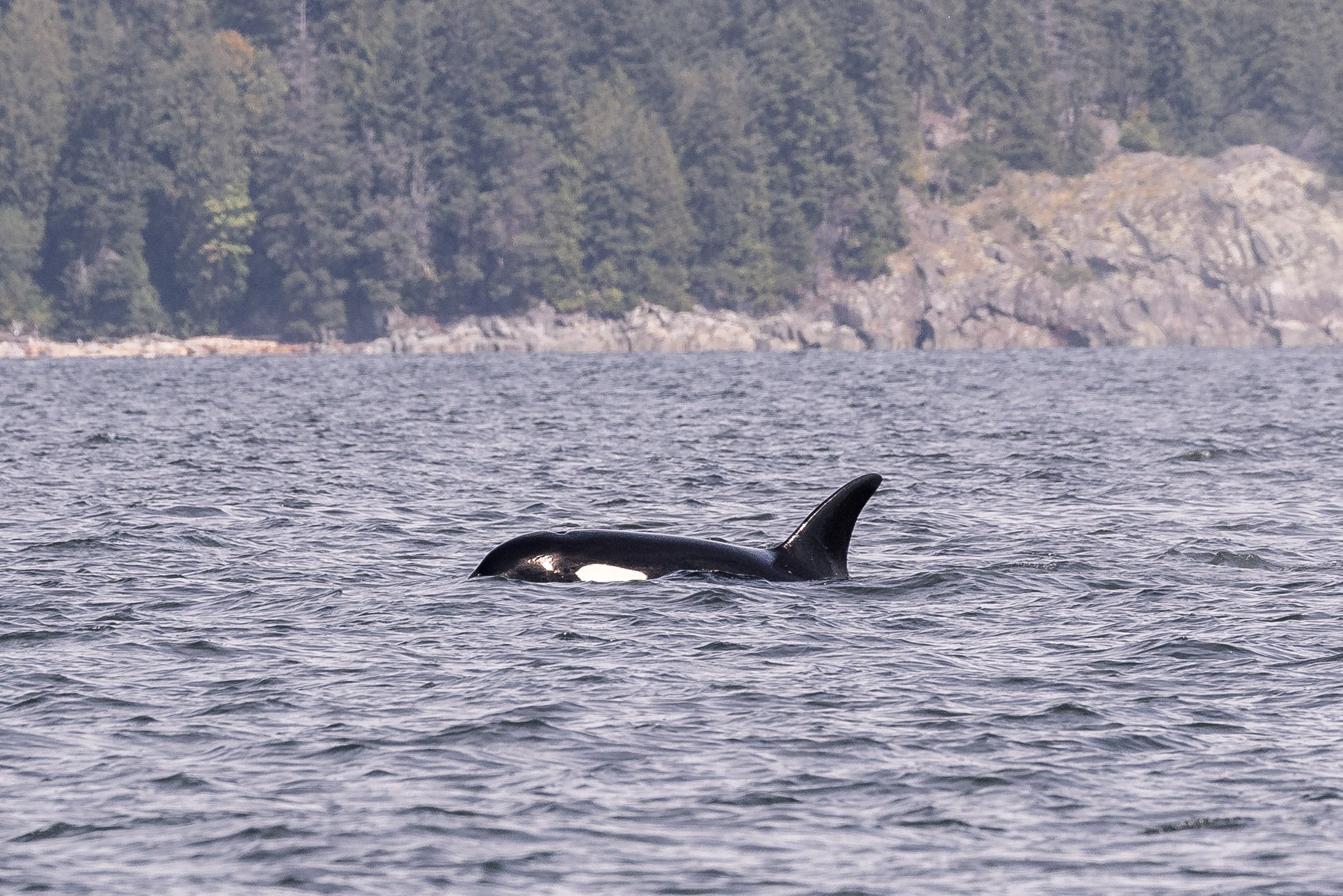
T036B2 Greenfelder with a part of her eyepatch visible. Photograph by Jordan Robinson.
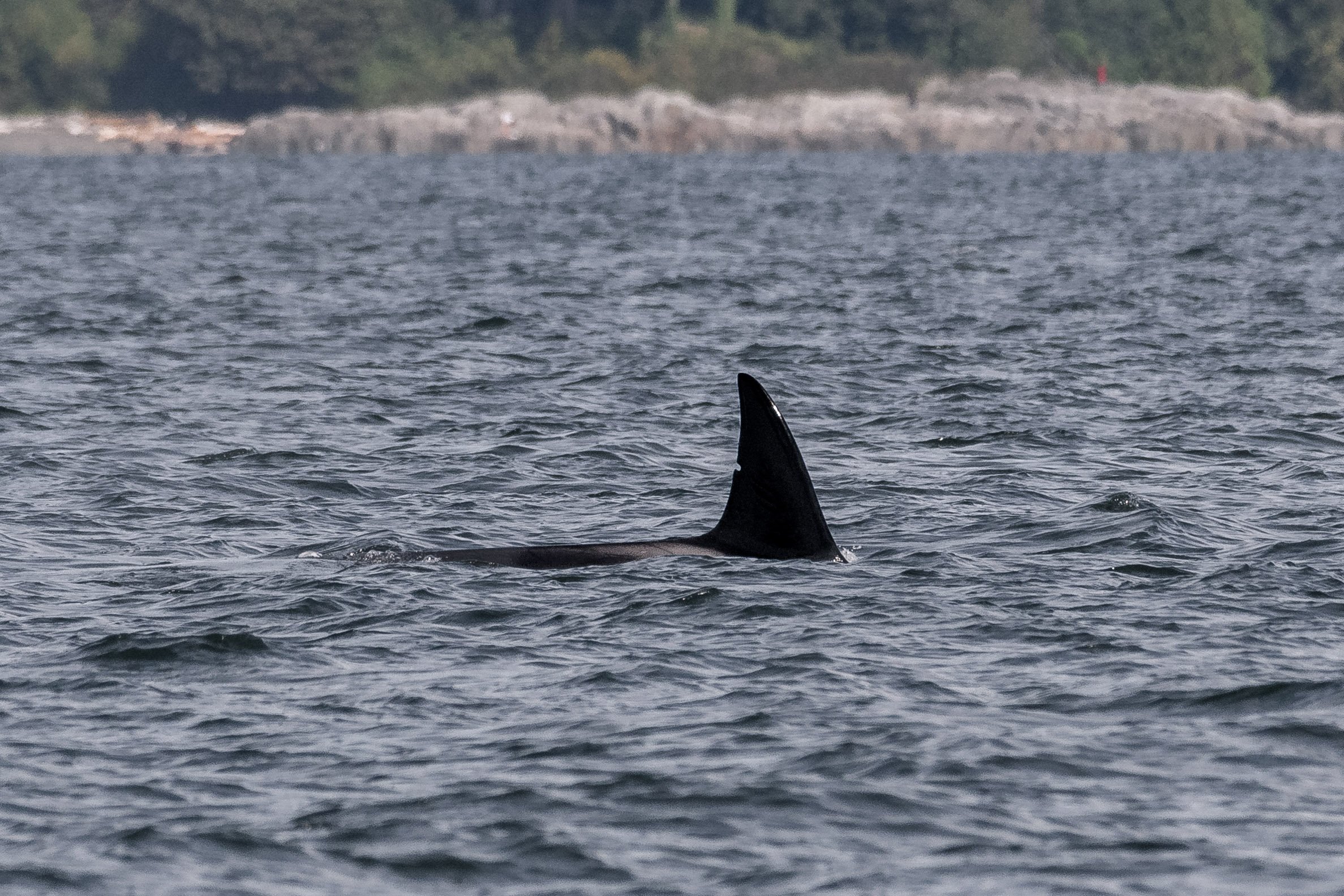
T036B1 Bhotia zipping along. Photograph by Evan Hessels.
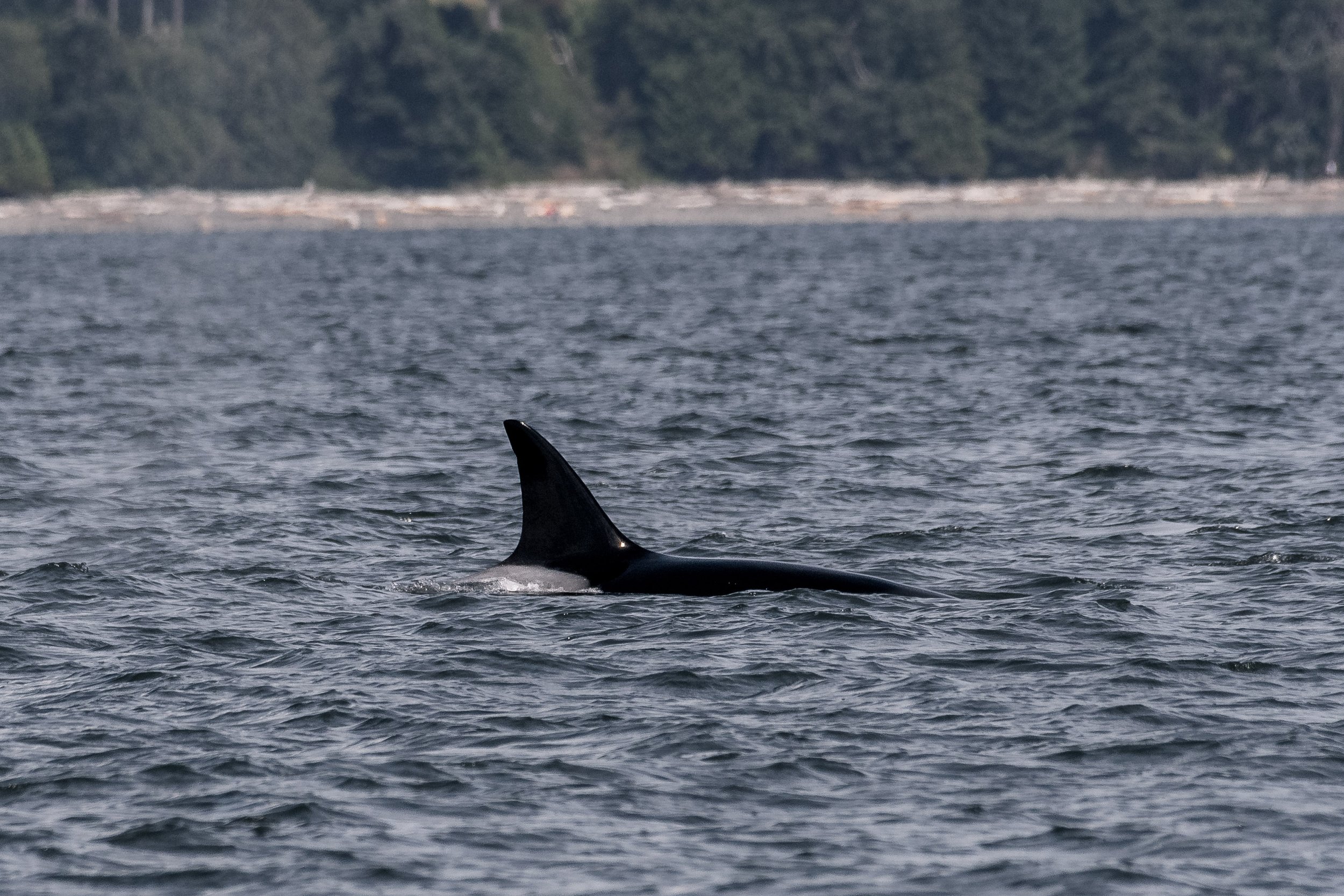
T036 Flapjack with her distinct notch visible. Photograph by Evan Hessels.
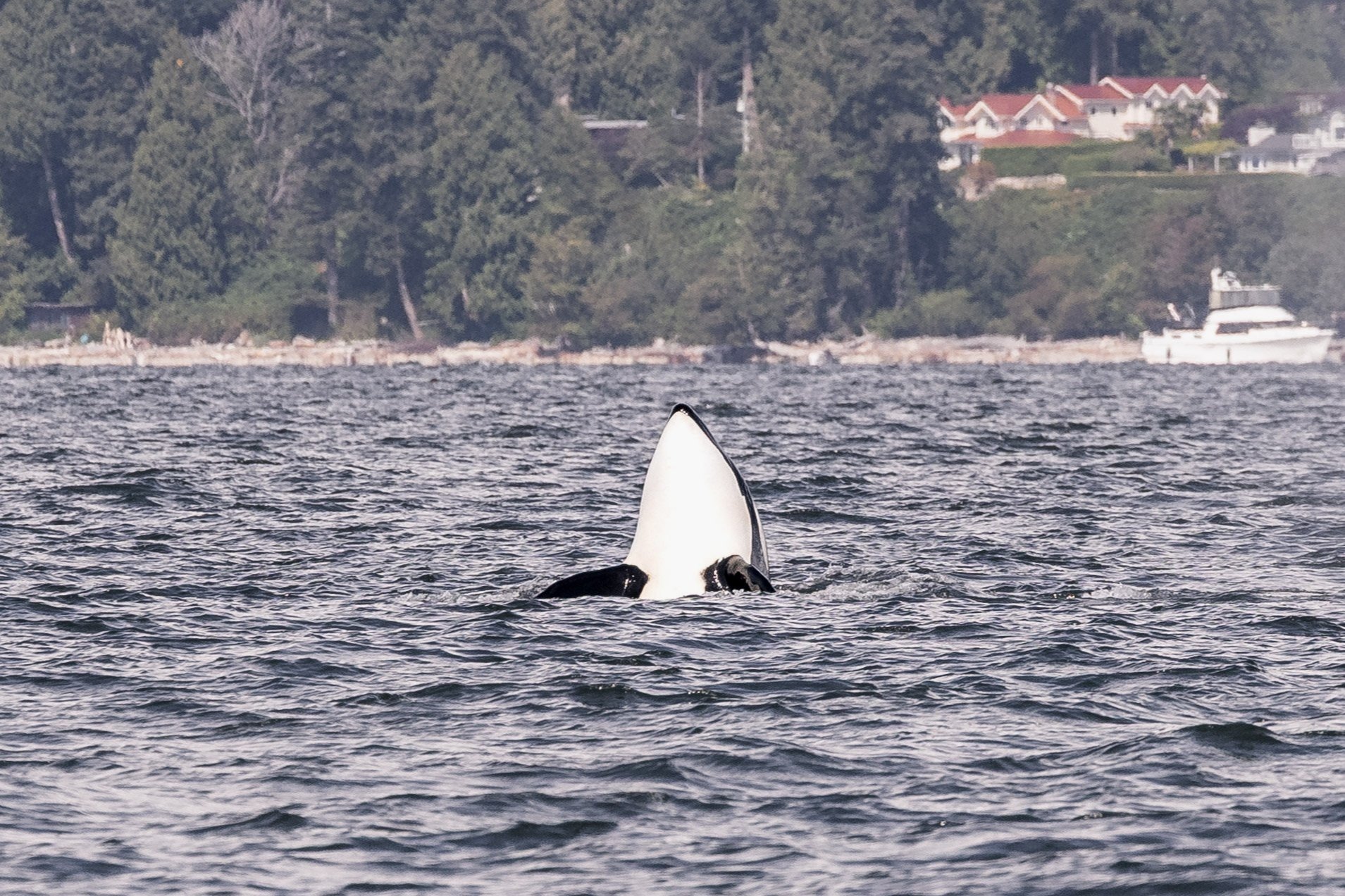
A cute little chin angle of one of the whales! Photograph by Jordan Robinson.
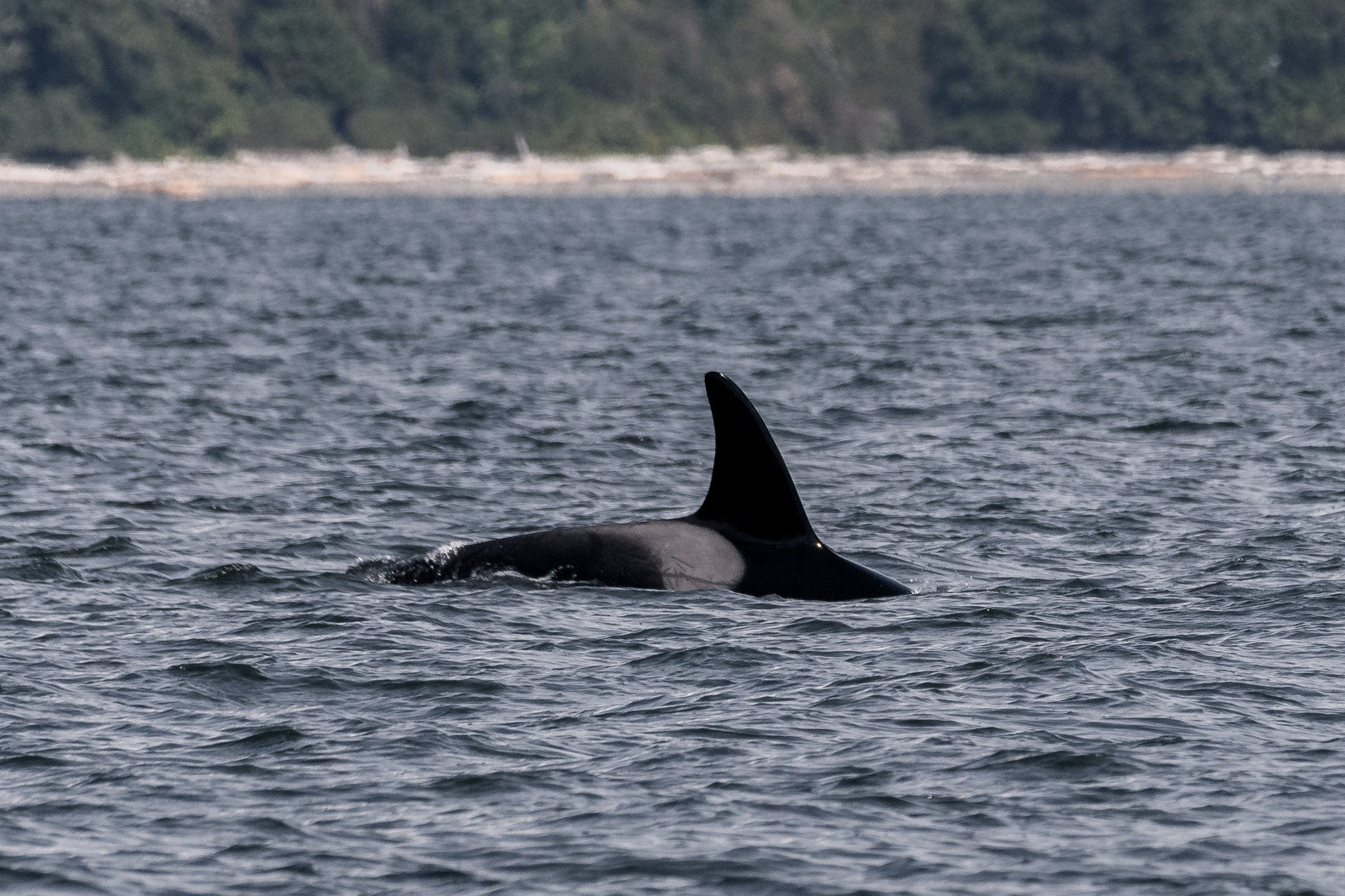
T036B2 Greenfelder going down for a dive. Photograph by Evan Hessels.
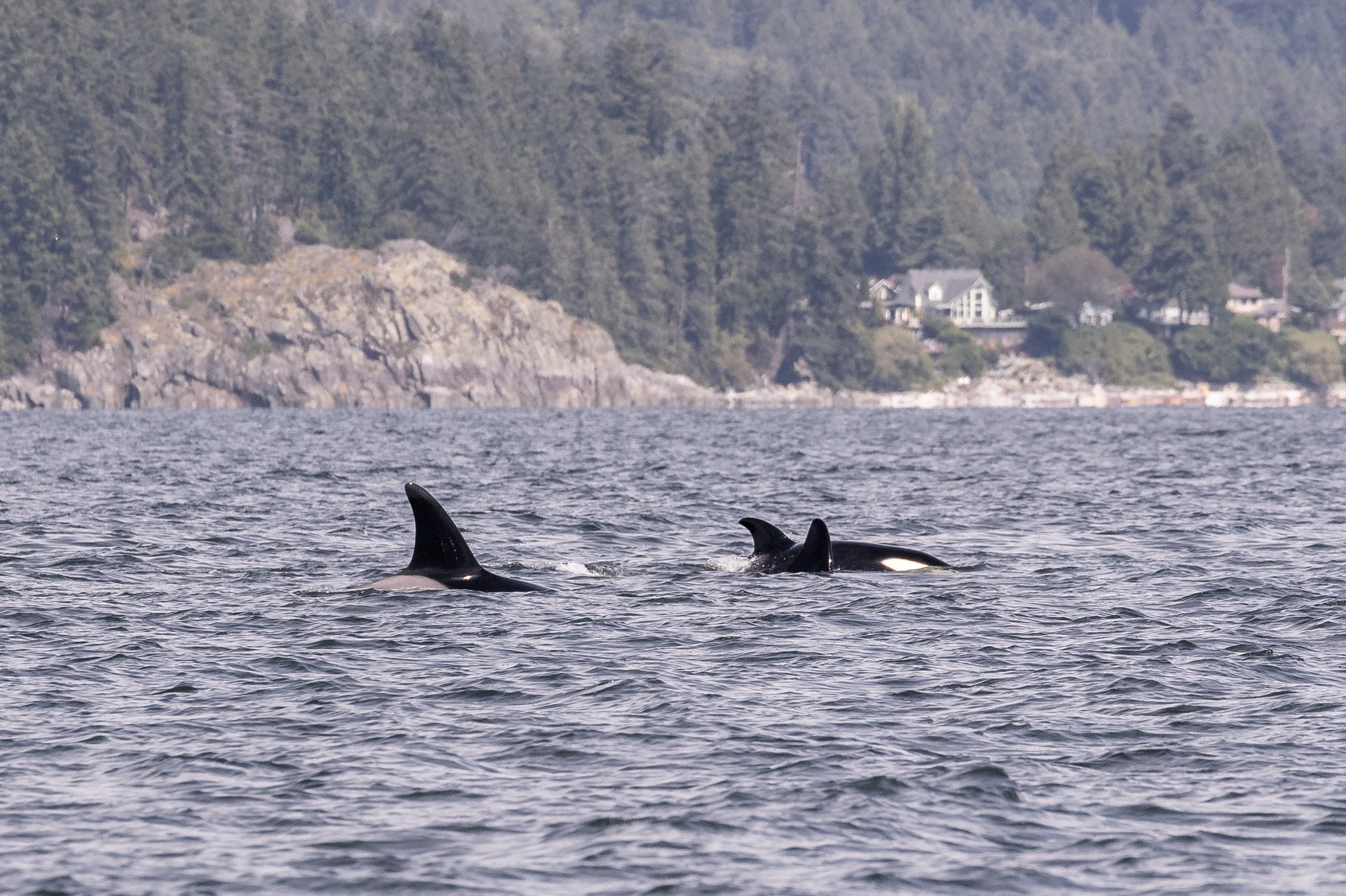
T036B2 Greenfelder with T036B4 Auk ahead of them. Photograph by Jordan Robinson.
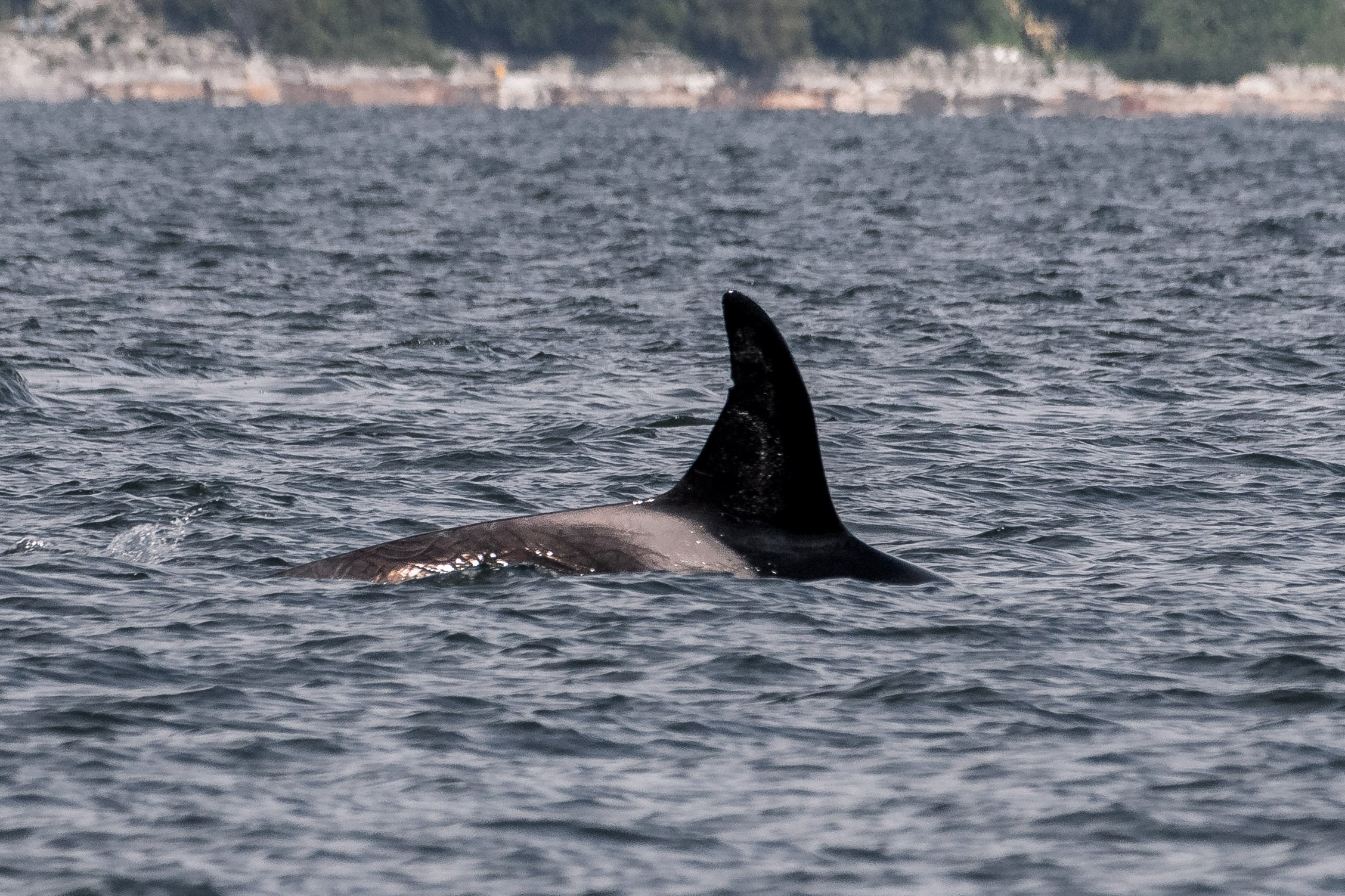
T065A5 Indy, one of the misfits of the Transient population. Photograph by Evan Hessels.
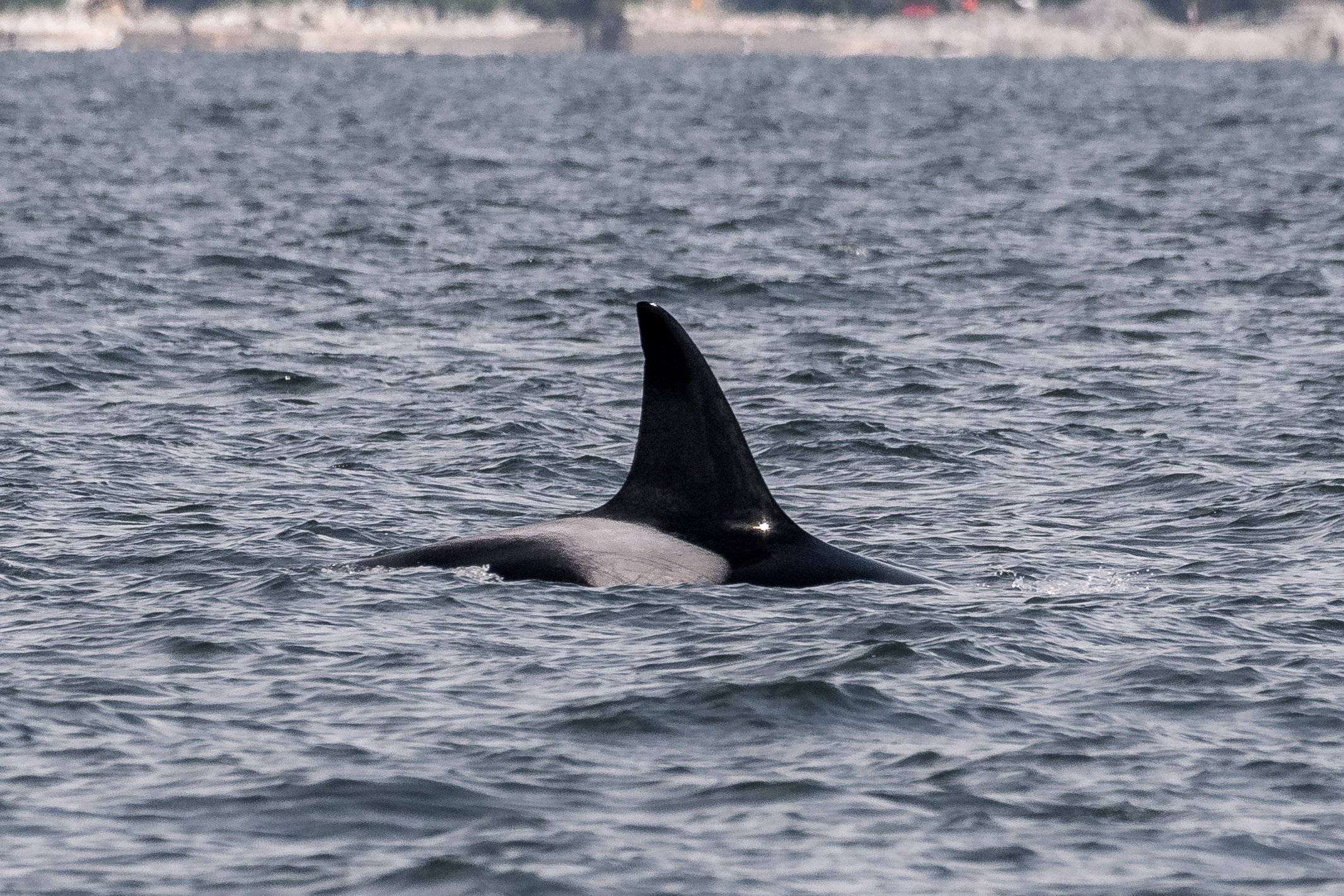
T036 Flapjack, the matriarch. Photograph by Evan Hessels.
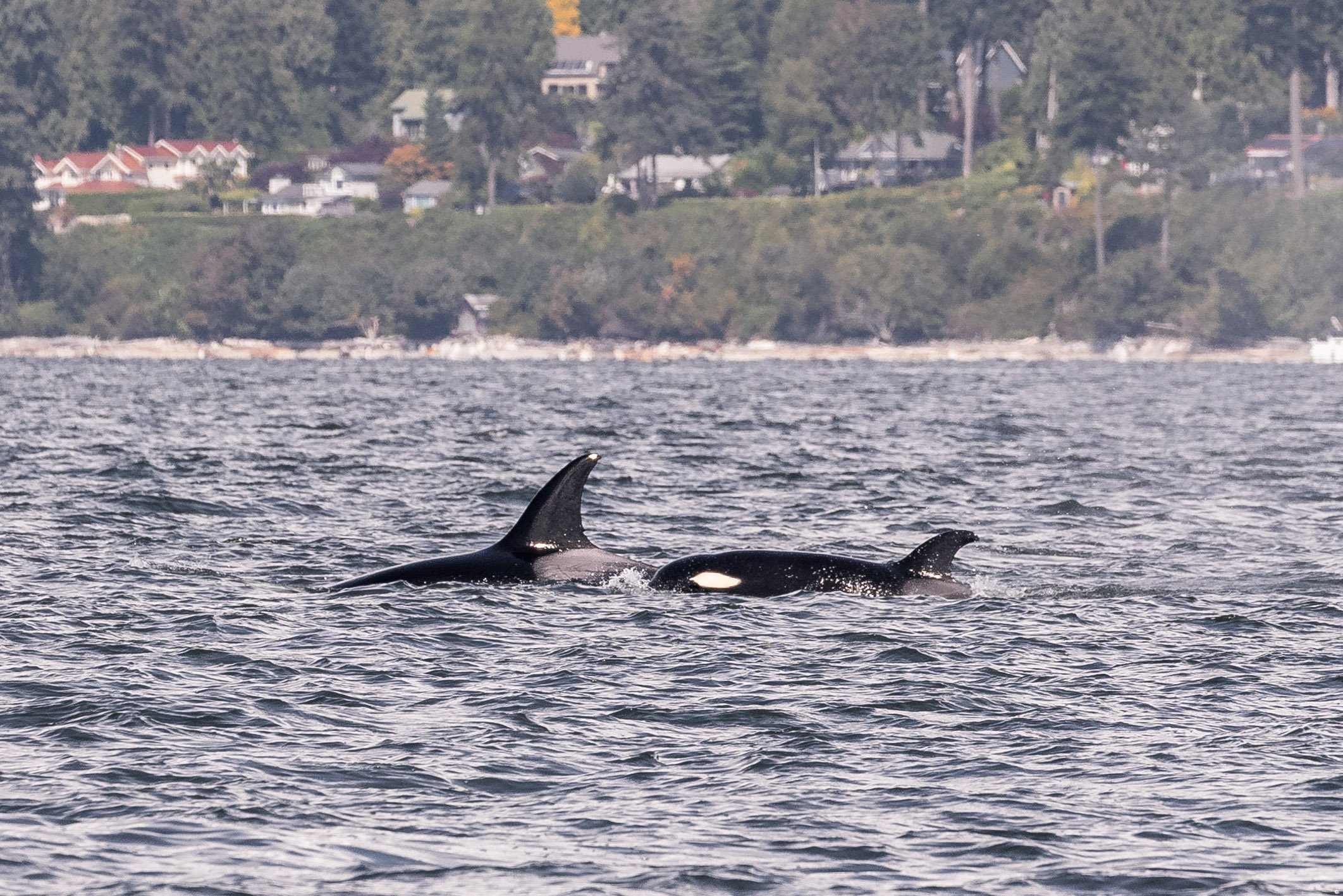
T036B Tattertip and her youngest T036B4 Auk. Photograph by Jordan Robinson.
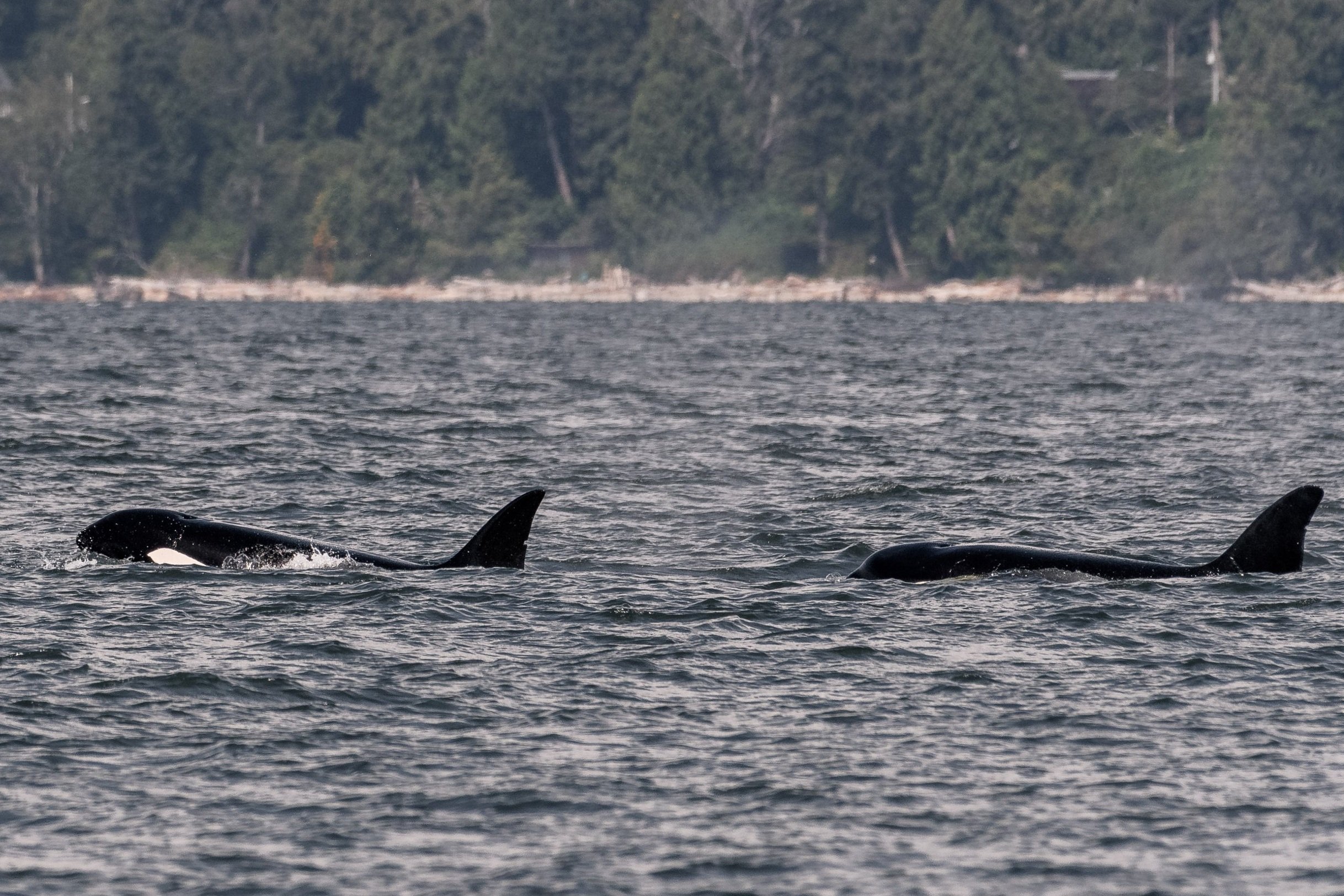
T036B1 Bhotia with T065A5 Indy right behind her. Photograph by Evan Hessels.
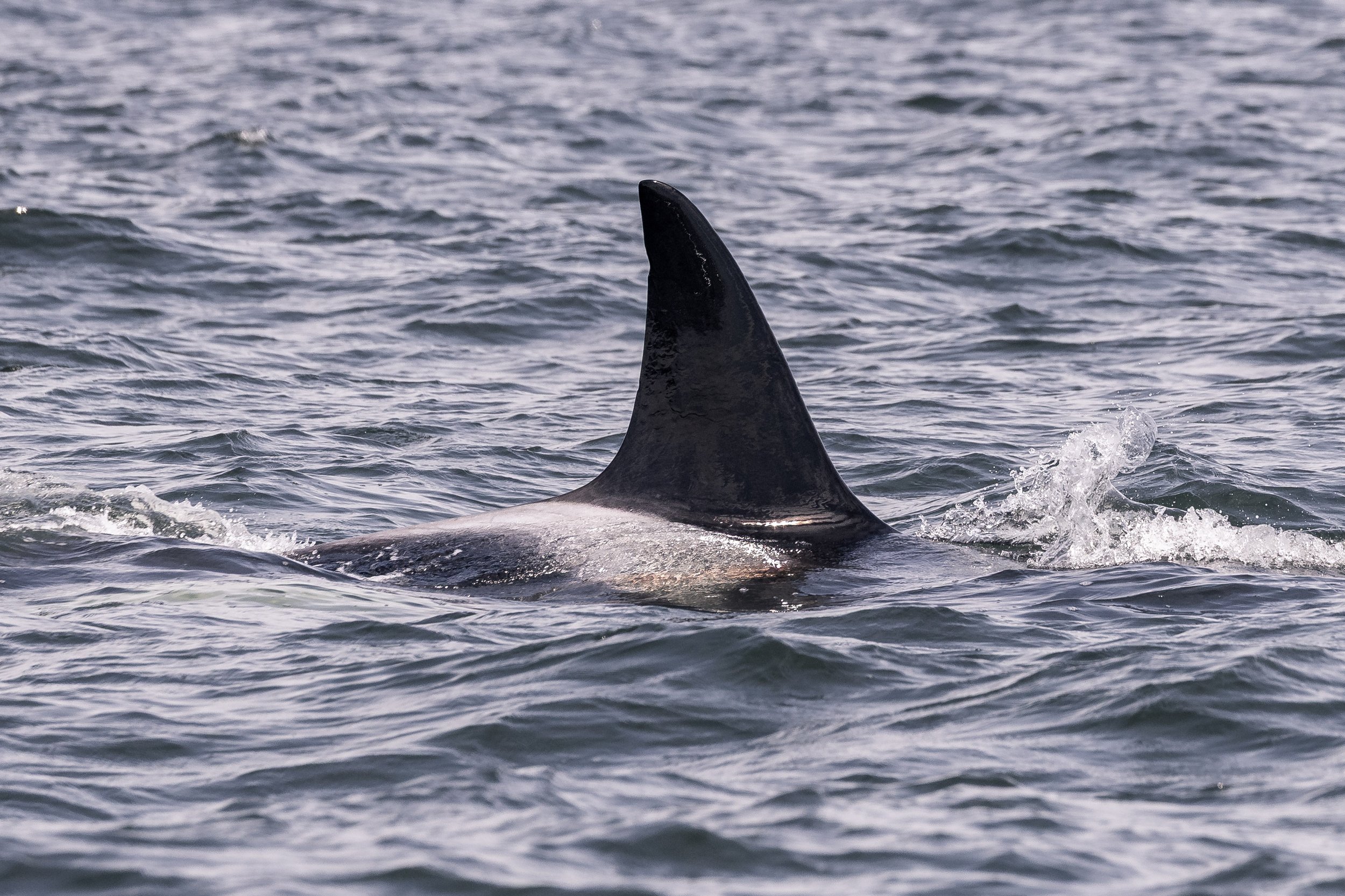
T036 Flapjack preparing to go down for a dive. Photograph by Jordan Robinson.
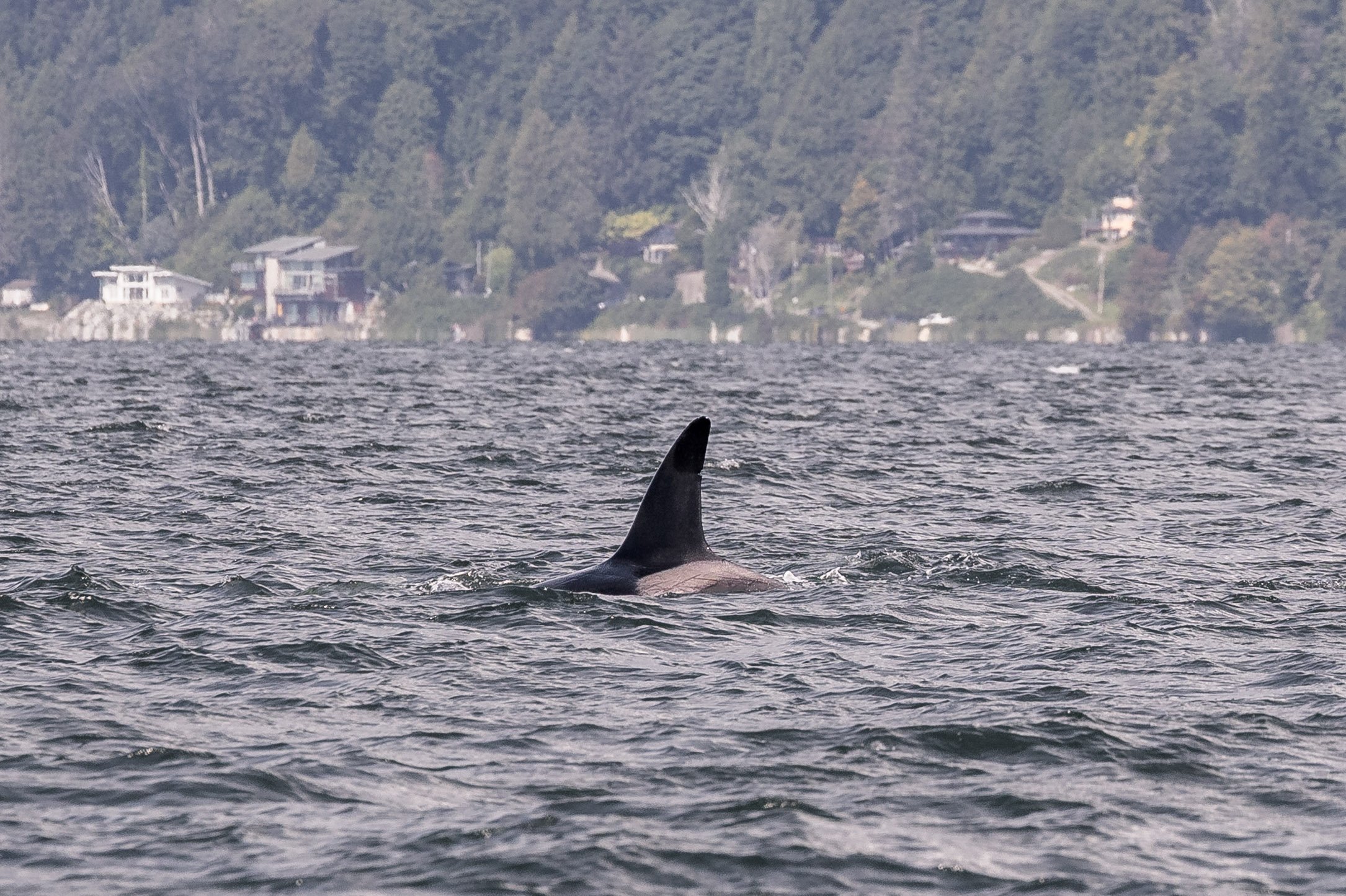
T065A5 Indy travelling along. Photograph by Jordan Robinson.
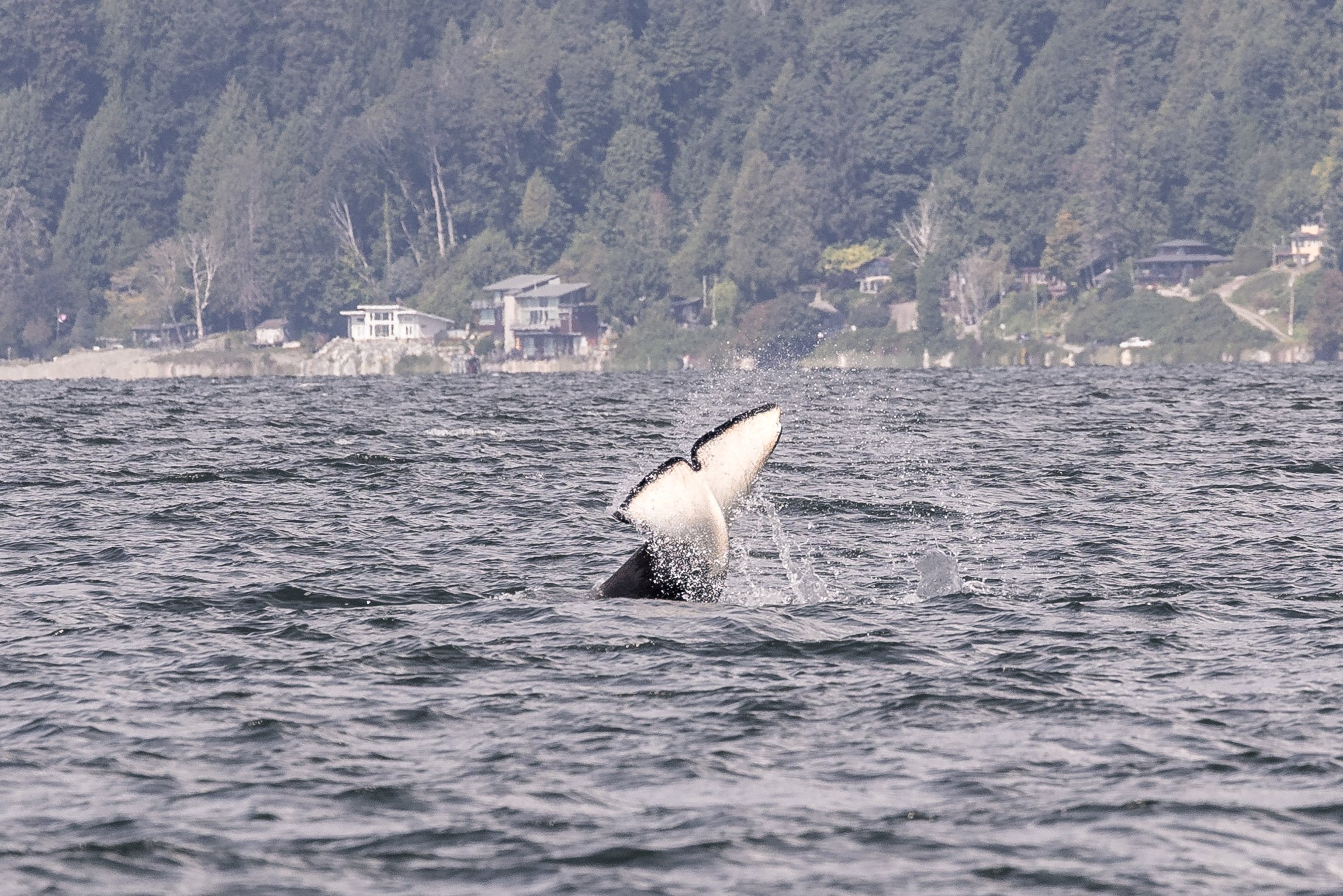
T065A5 Indy continuing to tail flick at the surface. Photograph by Jordan Robinson.
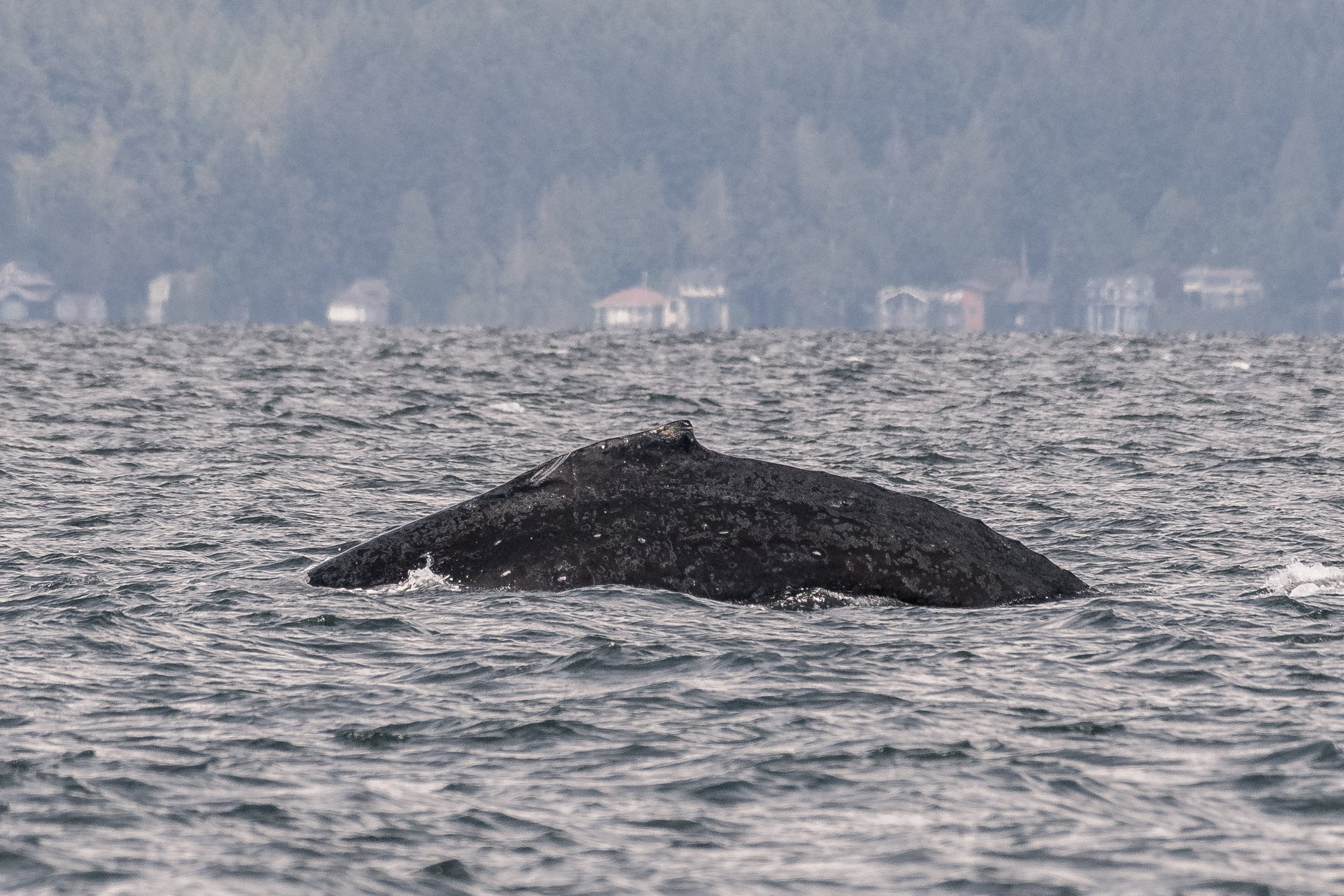
Meqe’ travelling along. Photograph by Evan Hessels.
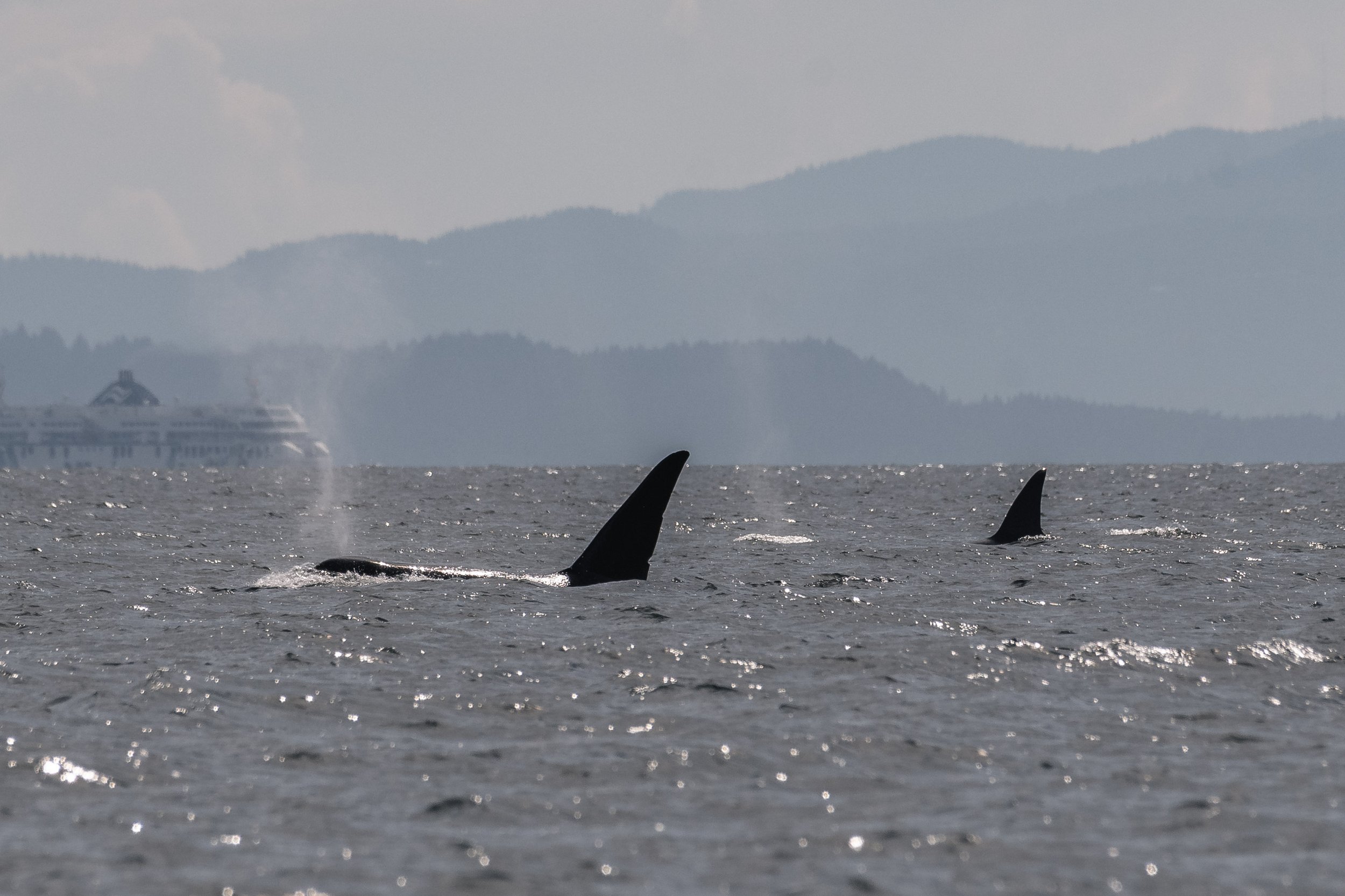
T137A Jack with T035A2 Topaz behind him. Photograph by Evan Hessels.
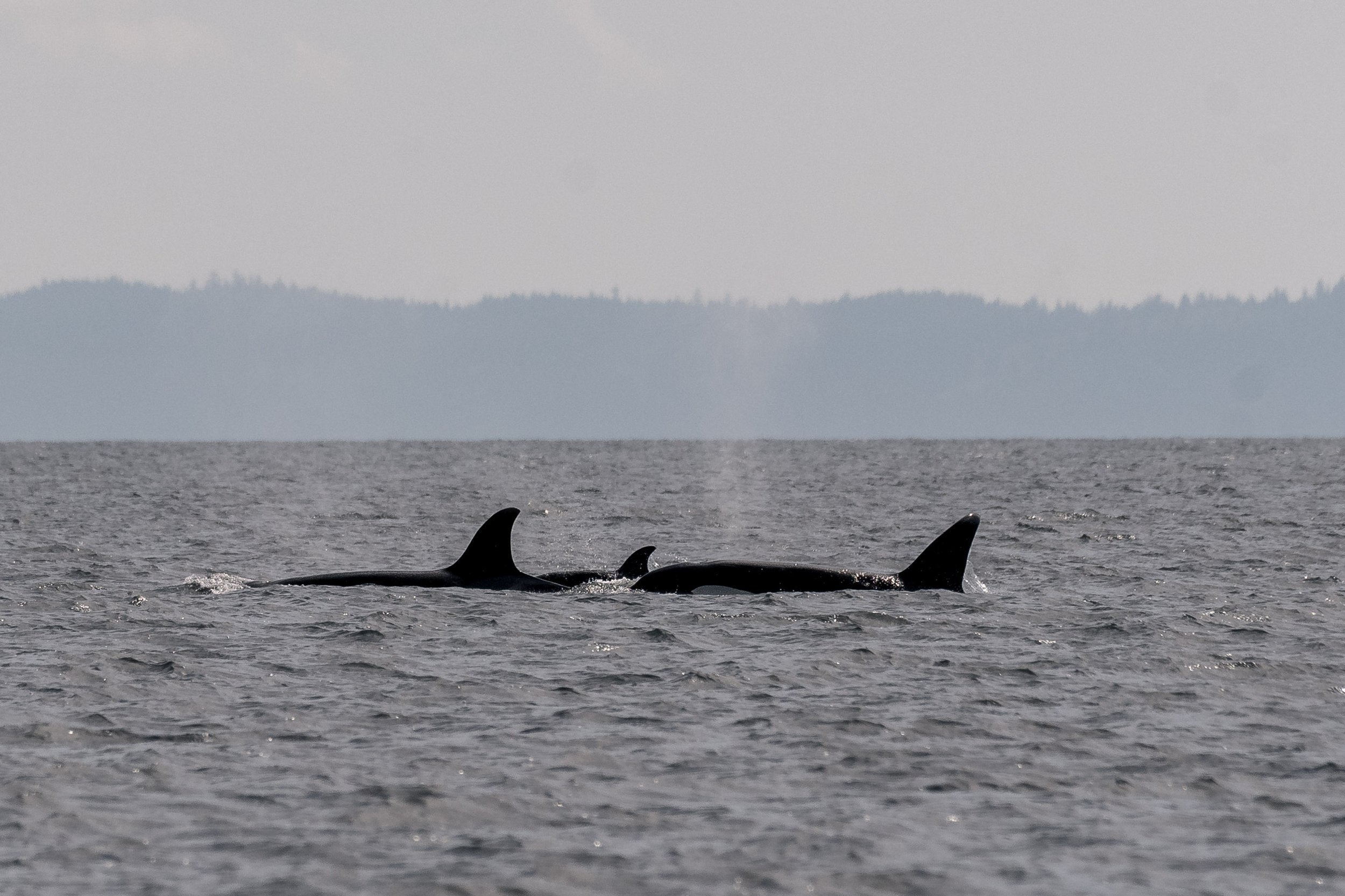
T035A1 Opal, T035A1A beside her, and T035A2 Topaz behind them. Photograph by Evan Hessels.
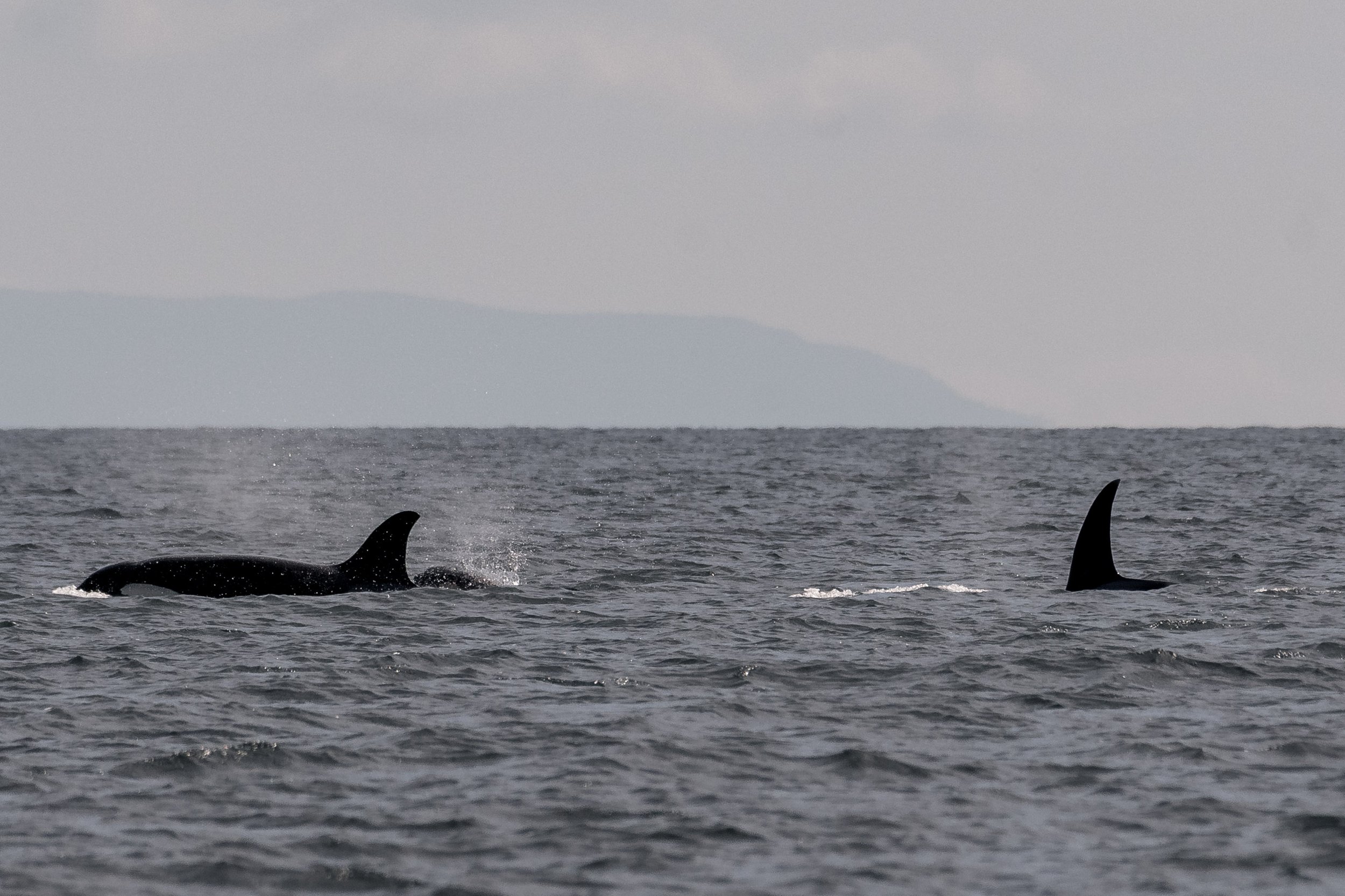
T035A1 Opal, T035A1A (little head peeking out of the water), and T035A2 Topaz together. Photograph by Evan Hessels.
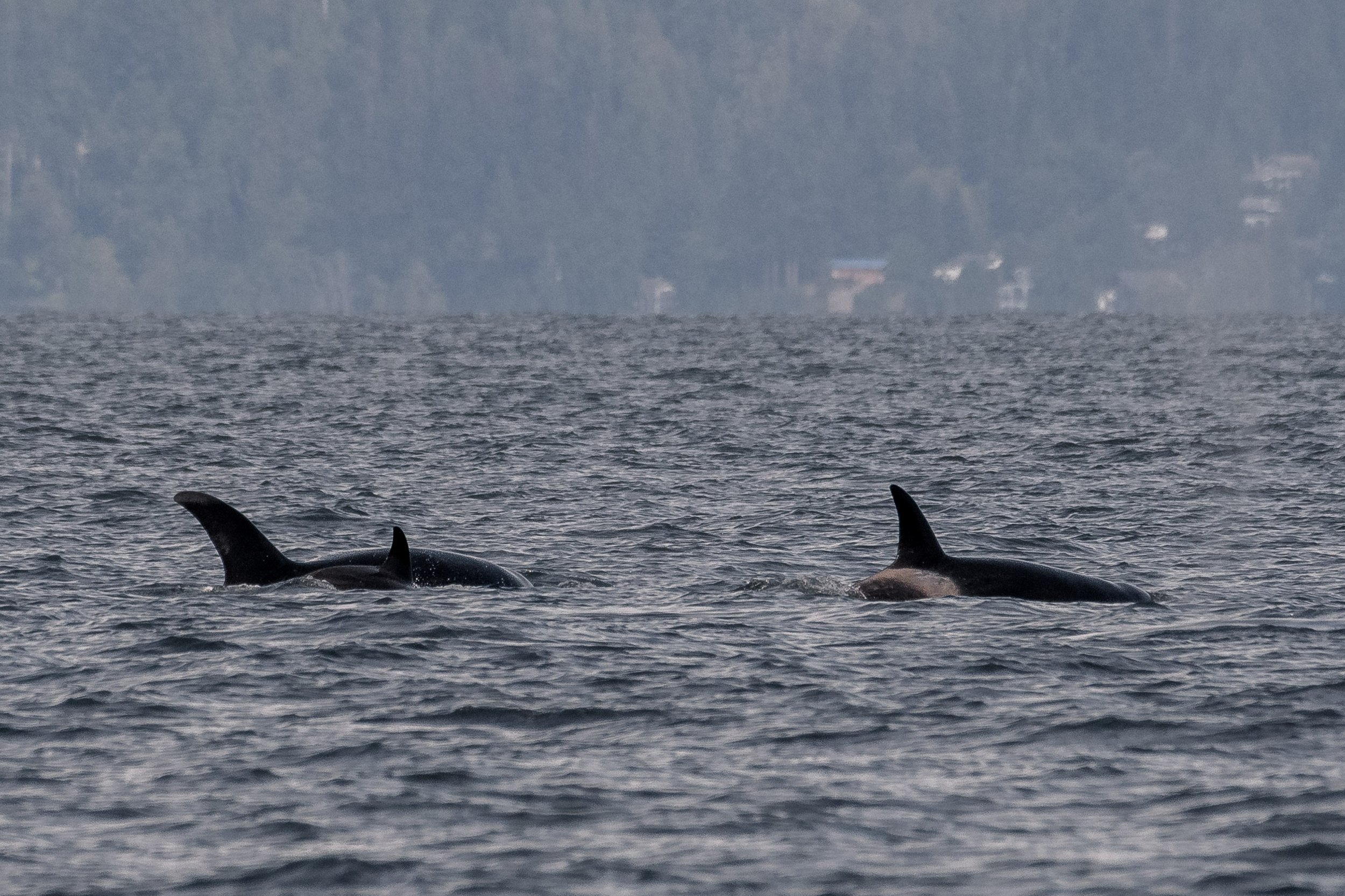
Photograph by Evan Hessels.
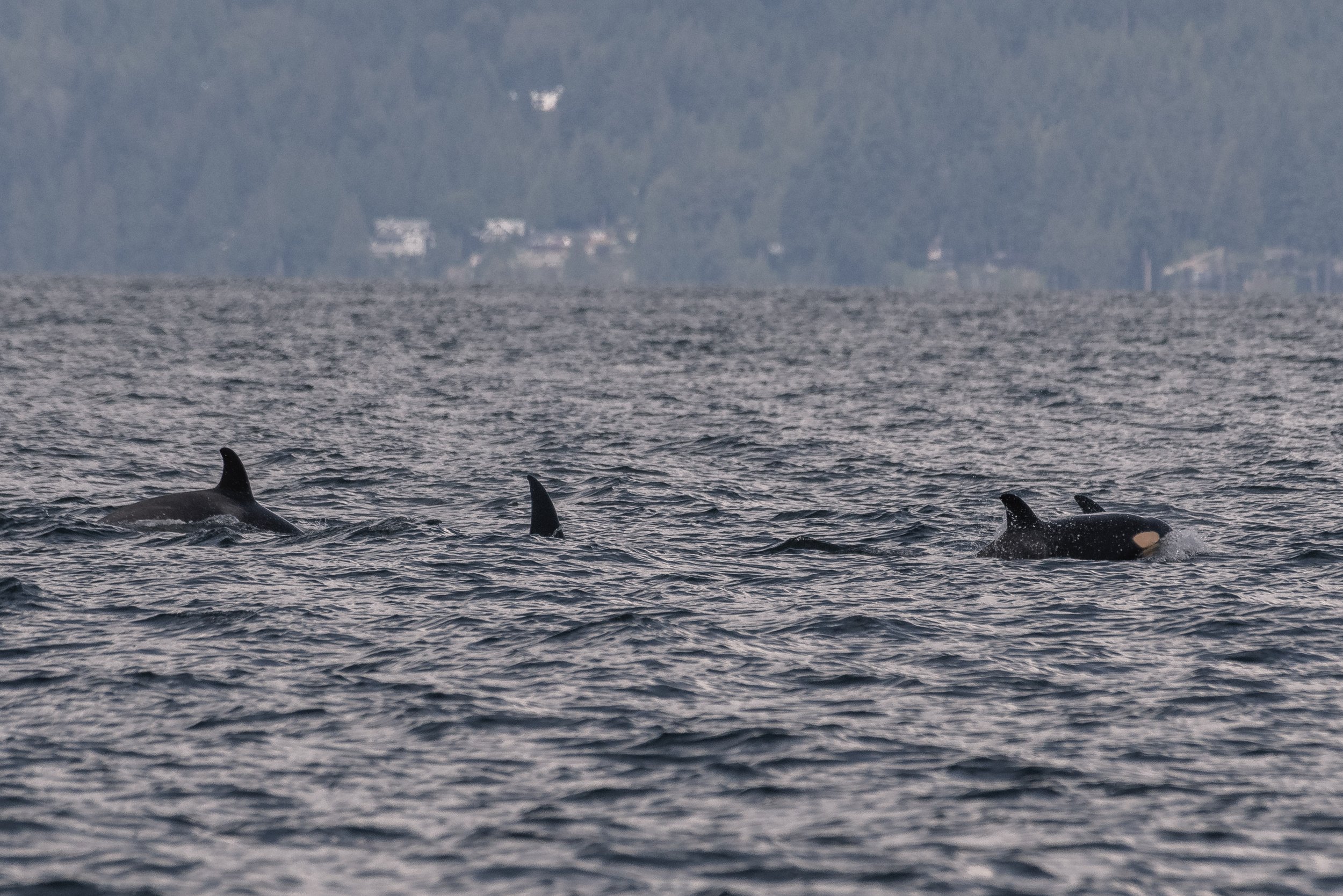
Left to right: T035A5, T035A Lester, T035A1A (eyepatch), and T035A1 Bhotia. Photograph by Evan Hessels.
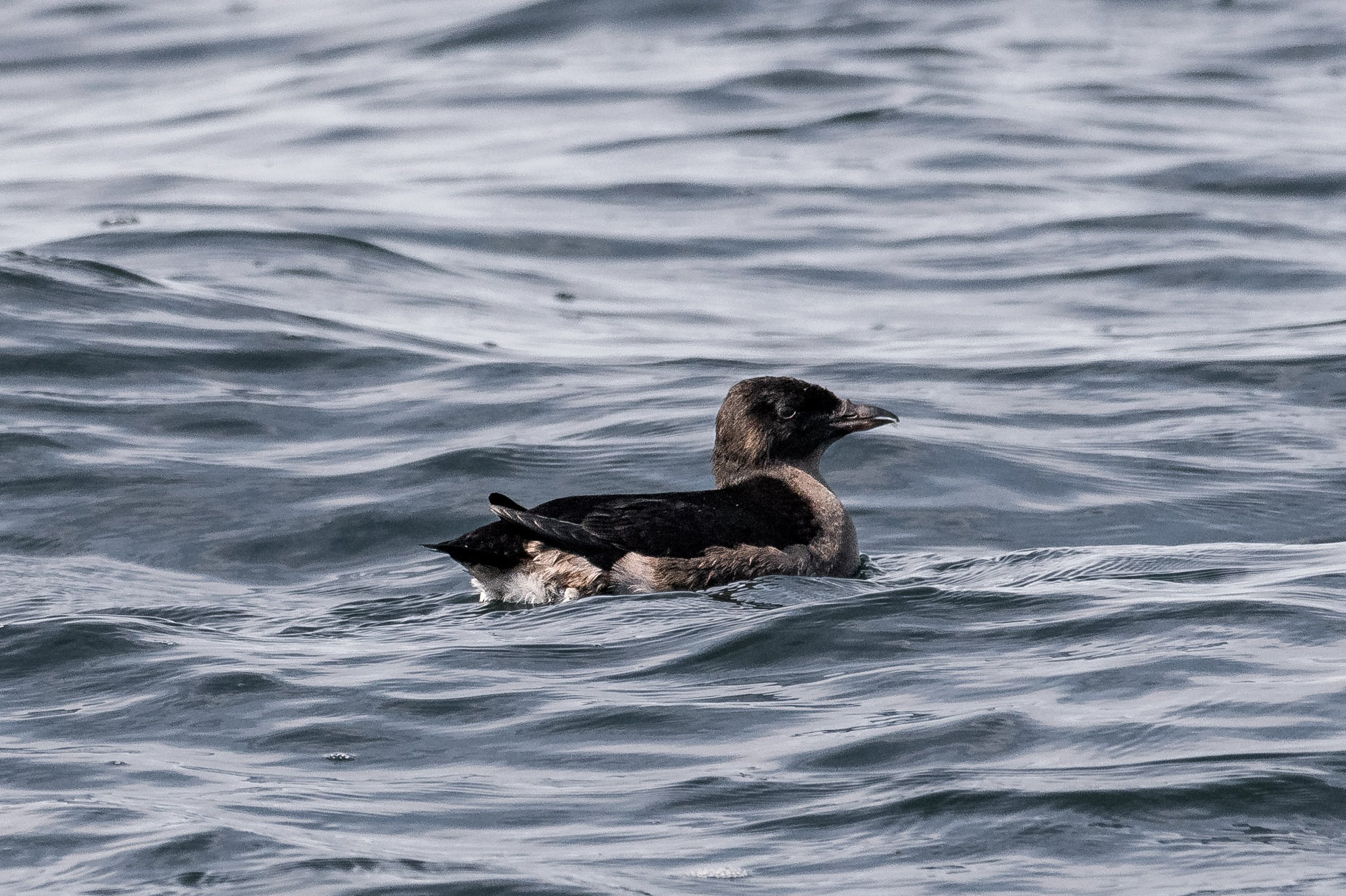
A Rhinoceros Auklet in non-breeding plummage. Photograph by Evan Hessels.