
September 6, 2026, 3:30 PM - From a T-Party to Humpbacks and Stinky Rock
Some days on the water seem to unfold in chapters, with each stretch of the Southern Gulf Islands revealing something different. One moment, we can be watching a gathering of Bigg’s killer whales travelling together through a channel. A little later, the scene can become much quieter as two humpback whales surface nearby. And before the day is over, we may find ourselves watching seals and sea lions hauled out on a rocky outcrop.
That was the story of this trip, which took us from a T-party in Trincomali Channel, to a pair of humpbacks near Porlier Pass, and finally to the busy haul-out at Stinky Rock.
Our search took us south through the Southern Gulf Islands, where we eventually encountered a group of Bigg’s killer whales travelling through Trincomali Channel.
Naturalists quickly began working through the familiar dorsal fins, comparing what they were seeing with our photo identification catalogues. The group turned out to be made up of the T035As and T049As, two familiar Bigg’s killer whale families travelling together.
T035A Lester ♀ (1998)
T035A1 Opal ♀ (2010)
T035A1A (2026)
T035A2 Topaz ♂ (2013)
T035A3 Garnet (2018)
T035A5 (2026)
T049A Nan ♀ (1986)
T049A3 Nat ♂ (2011)
T049A4 Neptune ♂ (2014)
T049A5 Nebula ♀ (2017)
T049A6 Charlie II ♂ (2022)
T049A7 (2026)
When multiple Bigg’s killer whale families come together like this, naturalists often refer to the gathering as a “T-party.” These larger gatherings can include several family groups and may be quite fluid, with whales joining and leaving as they travel.
Bigg’s killer whales, also known as transient killer whales, live in family groups centred around matrilines. The relationships within these families are important and can persist for decades. But that does not mean these whales spend all of their time exclusively with their own family. They can encounter and travel alongside other groups, creating opportunities for social interaction between different family units.
Exactly what motivates any particular gathering can be difficult to determine from the surface. The whales may simply be travelling in the same direction, they may be taking advantage of an area with prey, or there may be social reasons for spending time together. Rather than assuming there is one explanation, these encounters give researchers and naturalists an opportunity to observe how flexible the social lives of these whales can be.
For a naturalist, a T-party is also an exciting identification challenge. With several families travelling together, there can be a steady procession of dorsal fins appearing at the surface. Each one carries a different combination of shape, notches, scars, and other identifying features that allow individual whales to be recognized.
For the whales, however, it was simply another day moving through the waters of the Gulf Islands.
Eventually, our attention shifted away from the orcas as the search continued toward Porlier Pass.
Here, the encounter changed completely.
Instead of a large gathering of killer whales, we found two humpback whales, Europa (BCX0854) and Bagheera (BCY1471) travelling close together. Their surfacings brought a slower rhythm to the afternoon as we watched for their blows, dorsal fins, and eventually their flukes.
Humpback whales are generally considered more solitary animals, but that does not mean they never spend time around one another. Temporary associations between humpbacks are common, particularly in areas where feeding opportunities bring multiple whales into the same productive waters.
Seeing two humpbacks travelling together can therefore be fascinating, but it does not necessarily mean that the whales are a permanent pair or have a long-term social bond. Humpback associations can change over time, with individuals coming together and separating again.
One of the most useful tools naturalists have for understanding these whales is their fluke.
When a humpback prepares to make a deeper dive, it often raises its tail above the surface. The underside of the fluke contains a unique combination of pigmentation, scars, markings, and other features. By photographing these patterns and comparing them with identification catalogues, researchers can recognize individual whales and follow their movements over the years.
For the people watching from the boat, it can be easy to think of a fluke as simply a beautiful moment at the end of a dive. For researchers, it can be a piece of data that helps tell the much larger story of where an individual whale has been and how it uses the coast.
Then, as quickly as the whales appeared, it was time to keep exploring.
Our final wildlife stop brought us to one of the smaller but surprisingly lively features of the Southern Gulf Islands: Stinky Rock.
Here, the enormous scale of the whales gave way to a collection of marine mammals packed onto the rocks.
Harbour Seals rested along the shoreline, taking advantage of the exposed rocks as a place to haul out and rest. These rocky sites are important parts of a seal's daily life, providing a place to get out of the water, warm up, and take a break from swimming.
Mixed into the scene were Steller Sea Lions, whose presence is hard to miss.
Steller sea lions are considerably larger than Harbour Seals, and their behaviour on land is very different. While seals tend to move by wriggling and scooting across the rocks, sea lions can use their large foreflippers and hind flippers to move more effectively on land.
They are also considerably louder.
A haul-out can become a surprisingly busy place as animals jostle for space, vocalize, reposition themselves, and occasionally decide that another spot looks more comfortable.
Watching these animals together also reminds you that the rocky shoreline is not simply scenery. A small outcrop like Stinky Rock can become an important resting location for marine mammals moving through the surrounding waters.
The day began with the social energy of a T-party, as the T035As and T049As travelled together through Trincomali Channel. From there, the scene became quieter with two humpbacks near Porlier Pass, before ending among the harbour seals and Steller sea lions at Stinky Rock.
Each encounter offered something different.
The killer whales showed us the complex and flexible social lives of Bigg’s killer whale families. The humpbacks offered a glimpse into the temporary associations that can form between individuals of a generally solitary species. And at Stinky Rock, we saw how even a small rocky outcrop can become an important gathering place for marine mammals.
This is one of the things that makes exploring the Southern Gulf Islands so special. The ecosystem is not defined by a single species or one type of habitat. Channels, passes, banks, islands, rocky shorelines, and underwater habitats all play different roles, creating opportunities for an incredible variety of marine life.
Please enjoy the photos below, captured throughout the tour by Marine Naturalists Jordan Robinson and Evan Hessels.
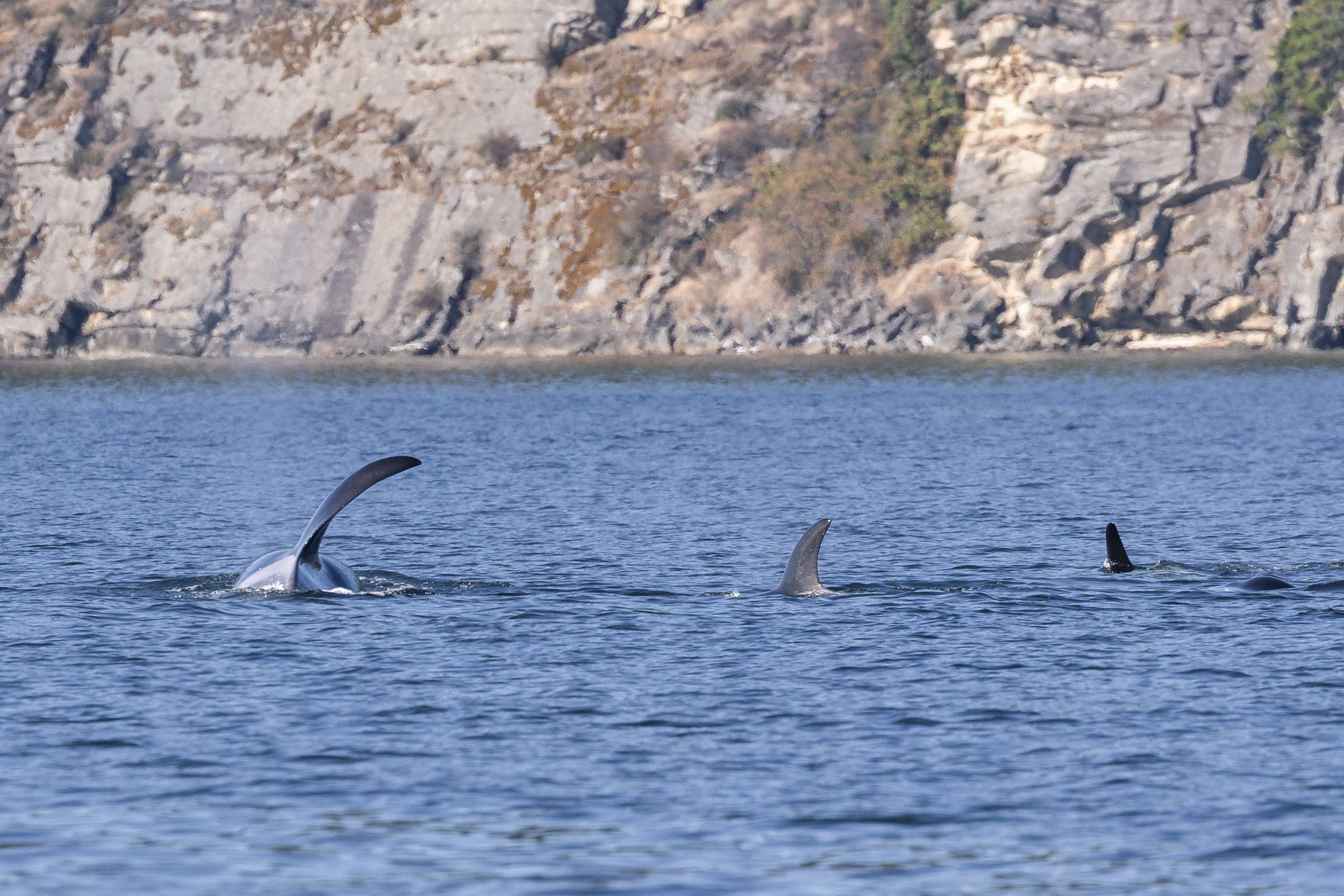
T035A2 Topaz on the left with his floppy dorsal fin. Photo by Jordan Robinson.
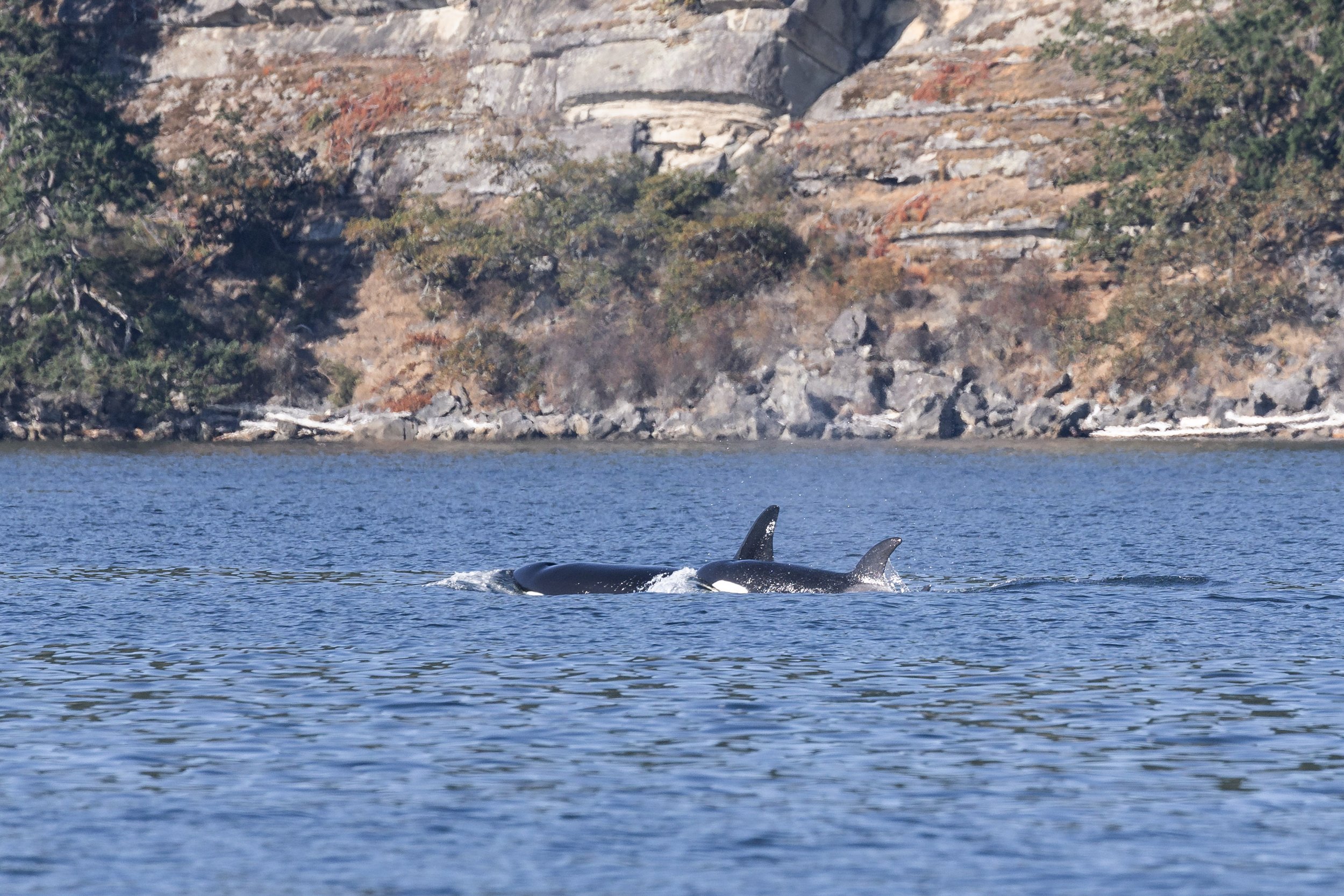
T049A6 Charlie II surfacing with T049A Nan. Photo by Jordan Robinson.
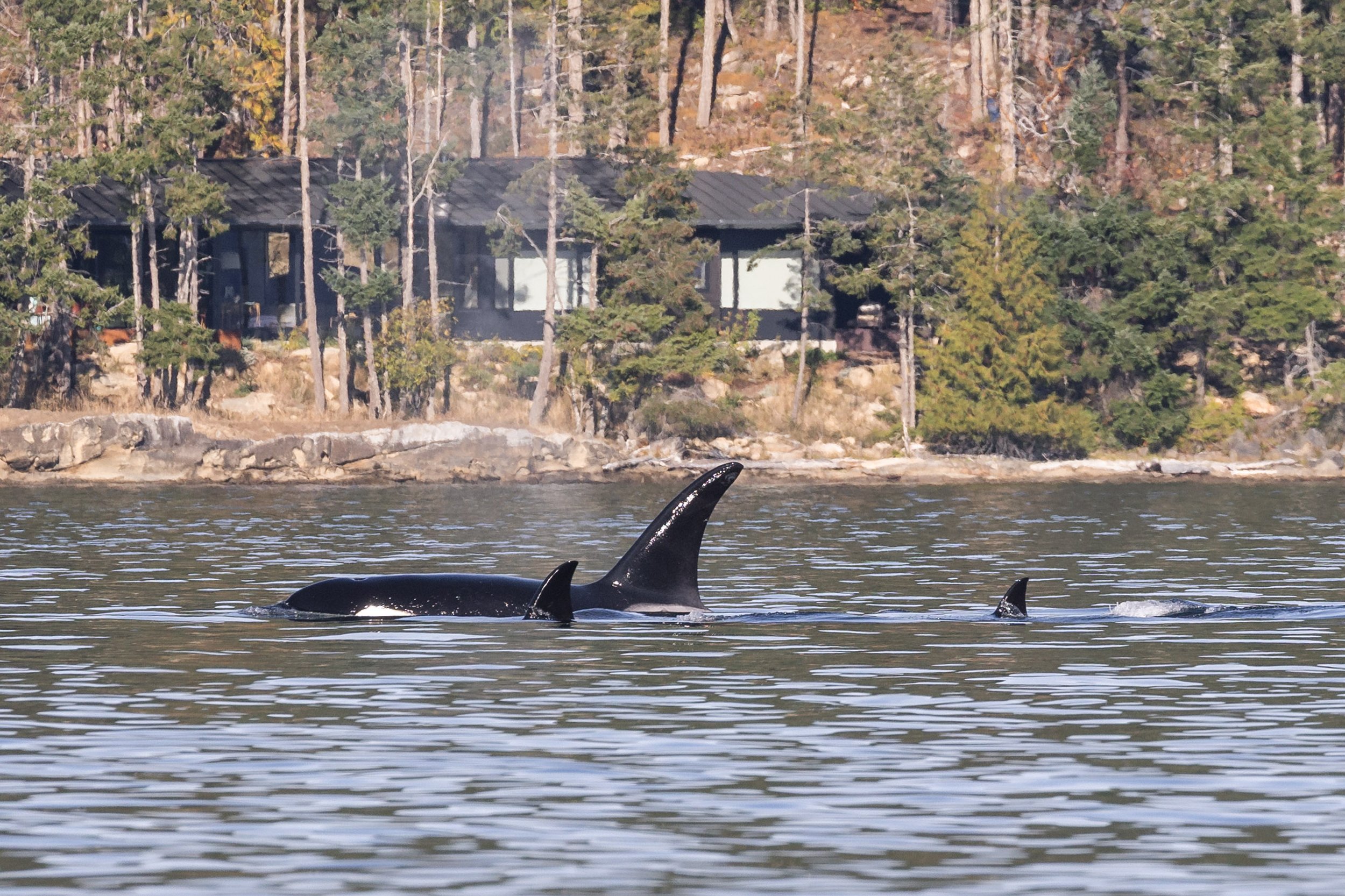
T049A3 Nat surfacing with T035A1 Opal and T035A Lester. Photo by Jordan Robinson.
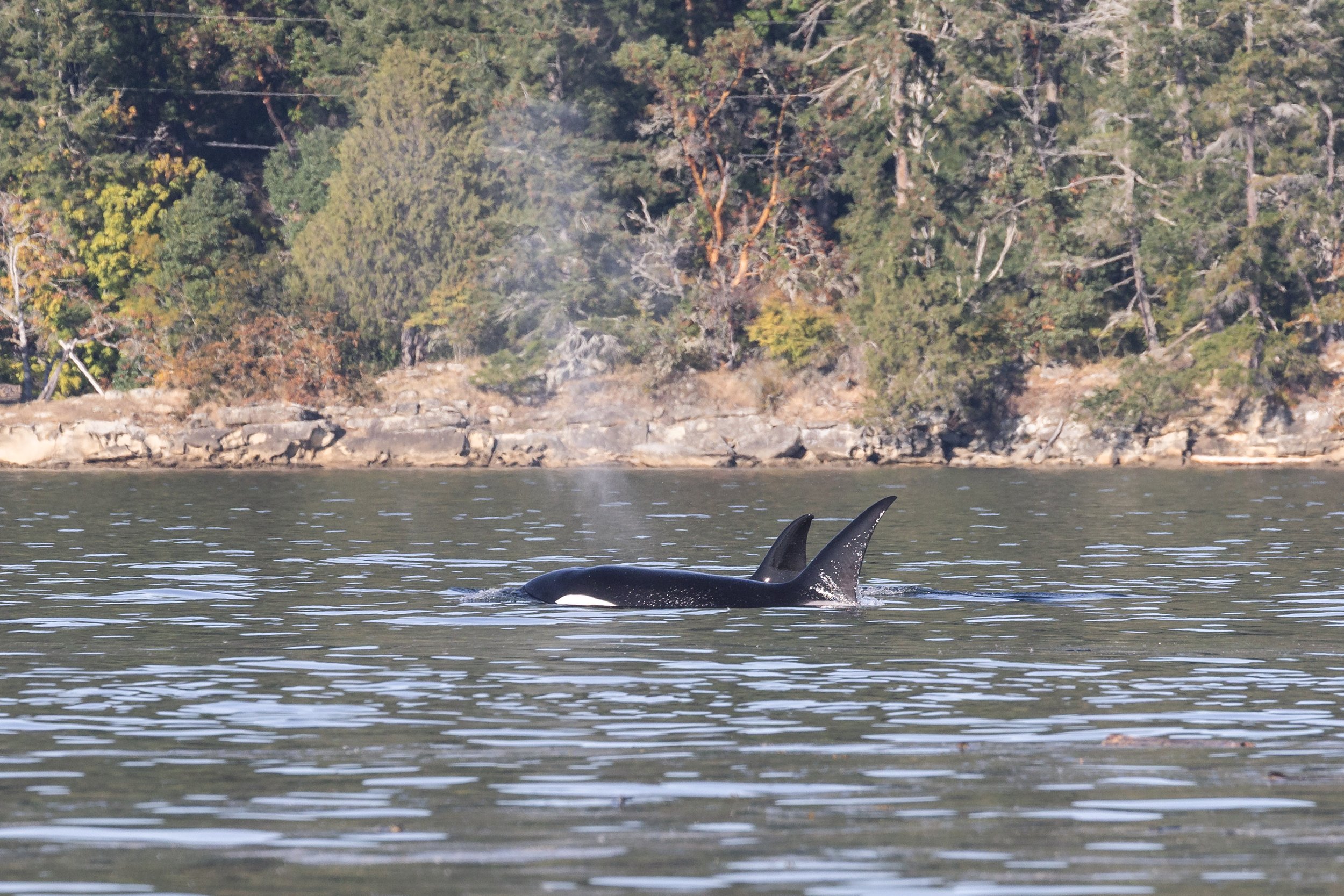
T035A2 Topaz surfacing with his mom, T035A Lester. Photo by Jordan Robinson.
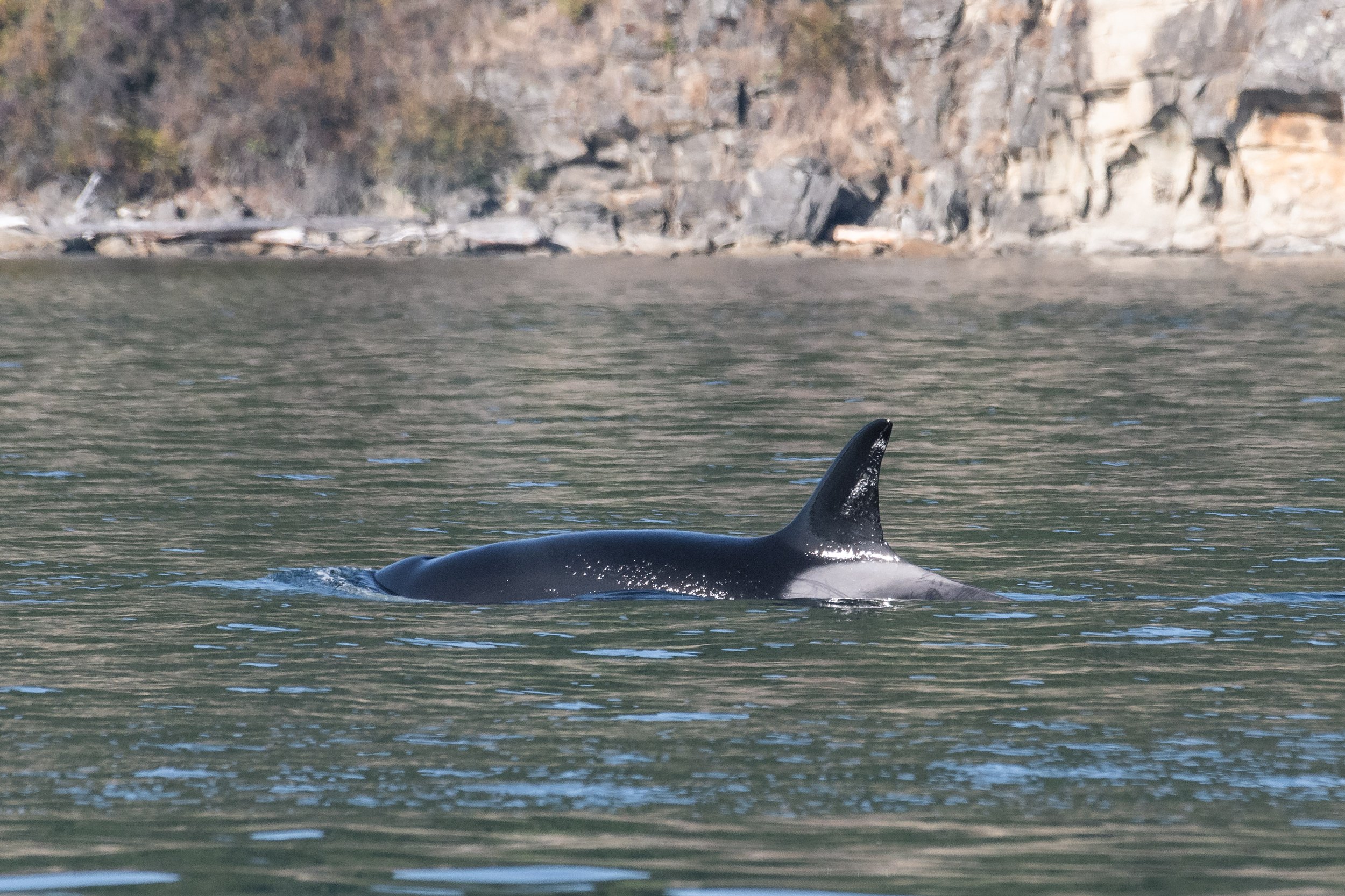
T049A Nan surfacing and showing off her scars. Photo by Evan Hessels.
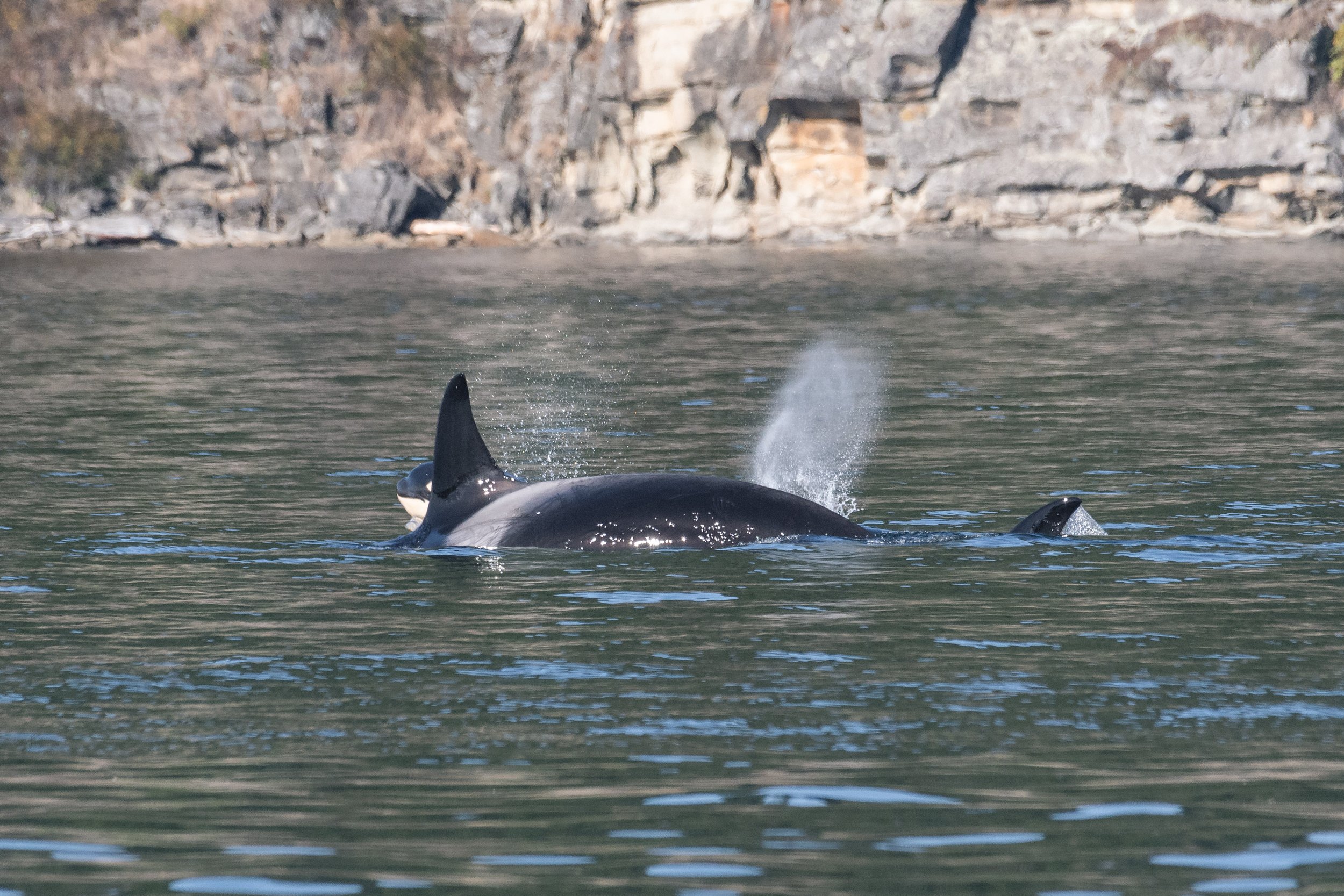
T049A Nan surfacing with her new calf, T049A7 Nimbus. Photo by Evan Hessels.
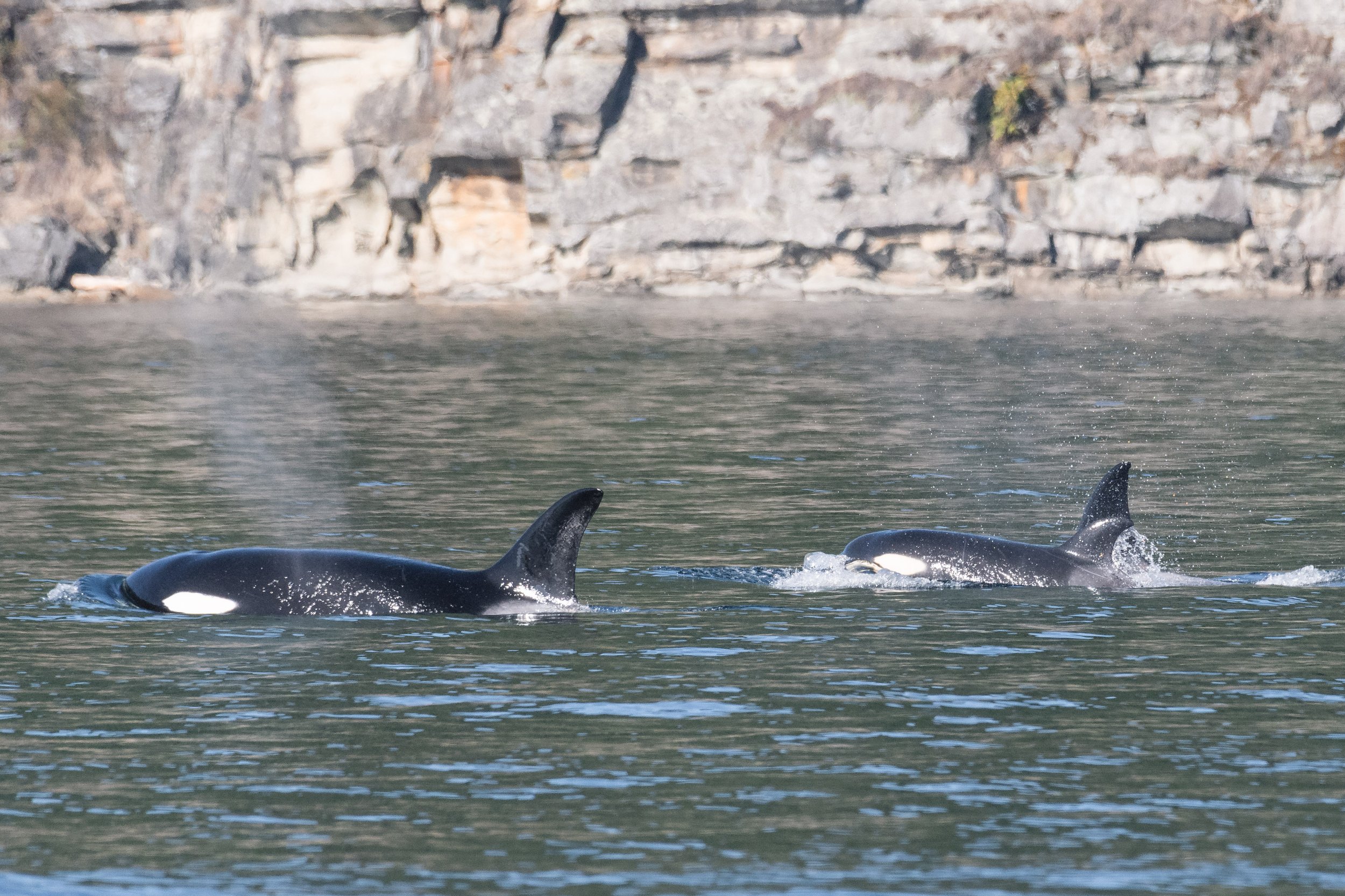
T049A4 Neptune sufacing beside T035A4 Agate and T035A Lester. Photo by Evan Hessels.
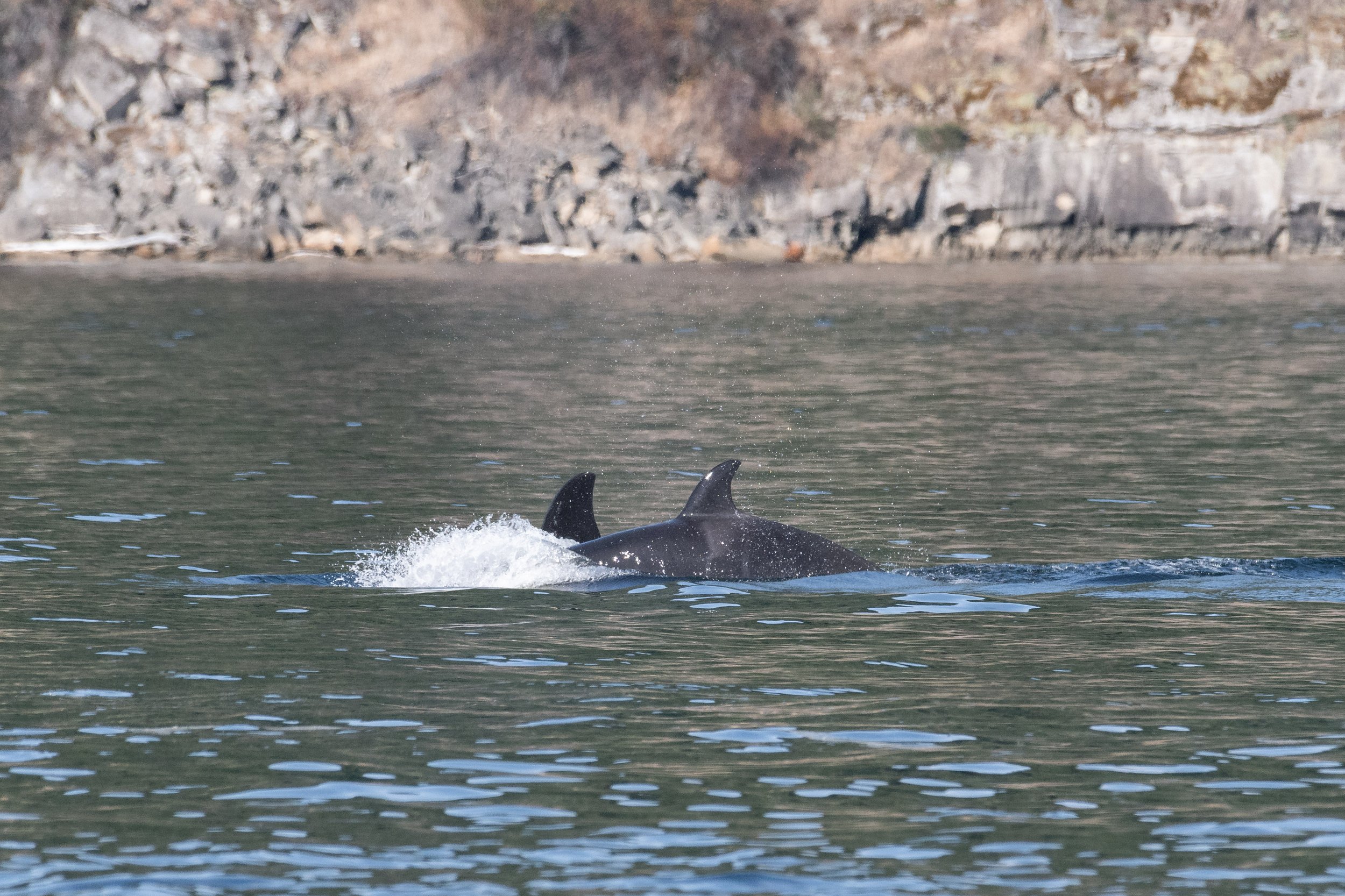
T035A1A surfacing beside their mom, T035A1 Opal. Photo by Evan Hessels.
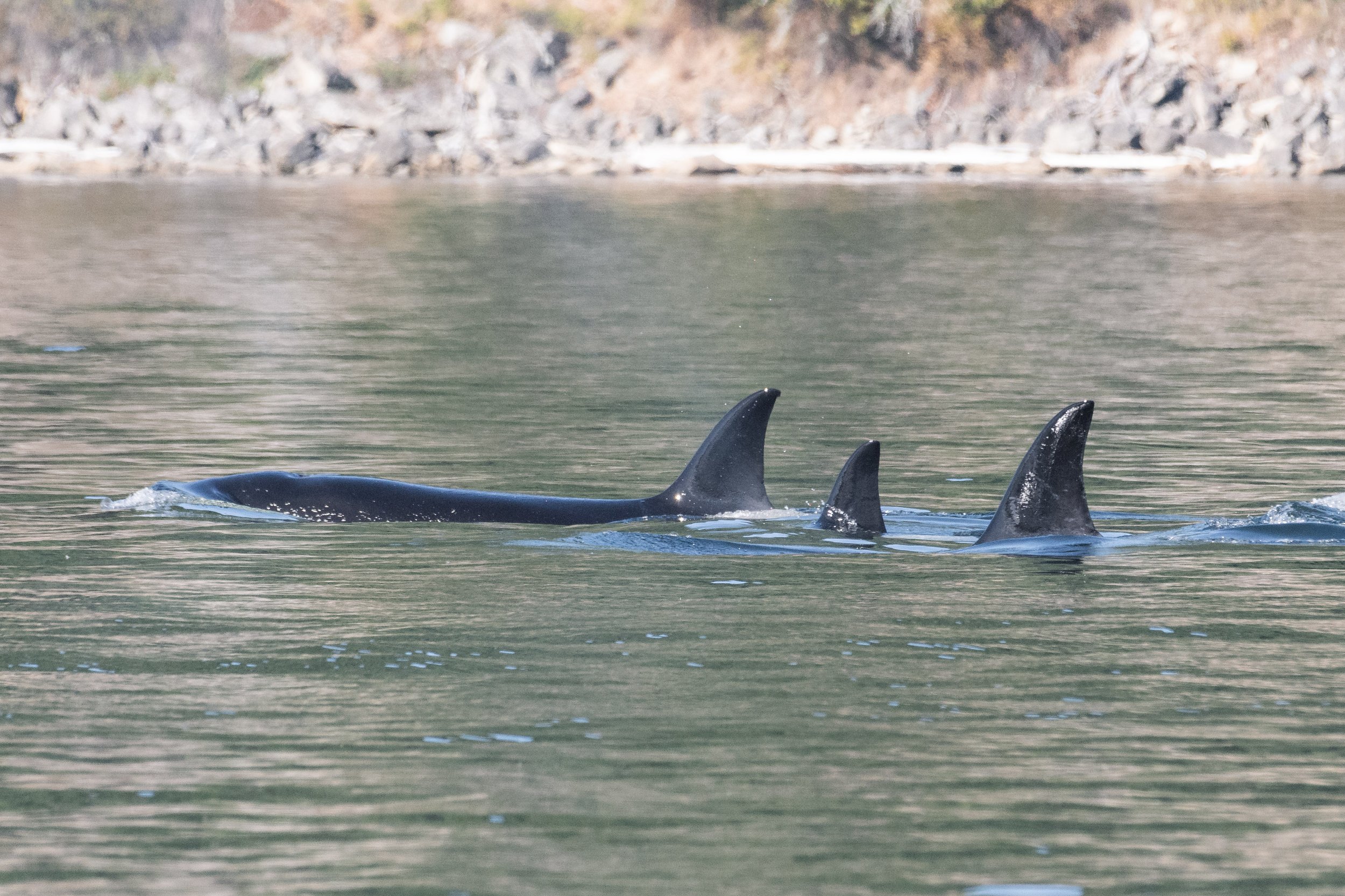
T035A Lester surfacing with T049A4 Neptune. Photo by Evan Hessels.
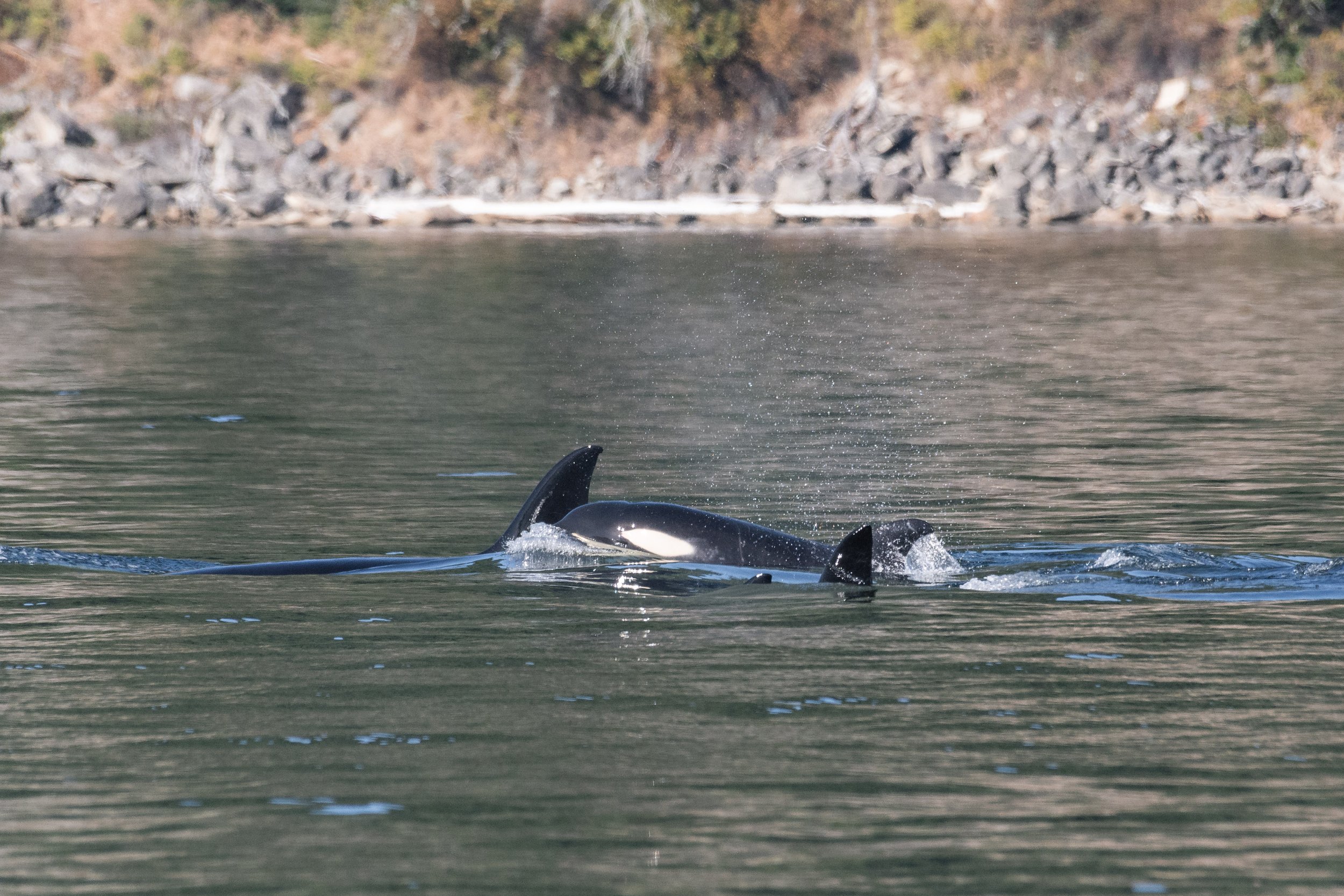
T035A5 surfacing with T035A Lester. Photo by Evan Hessels.
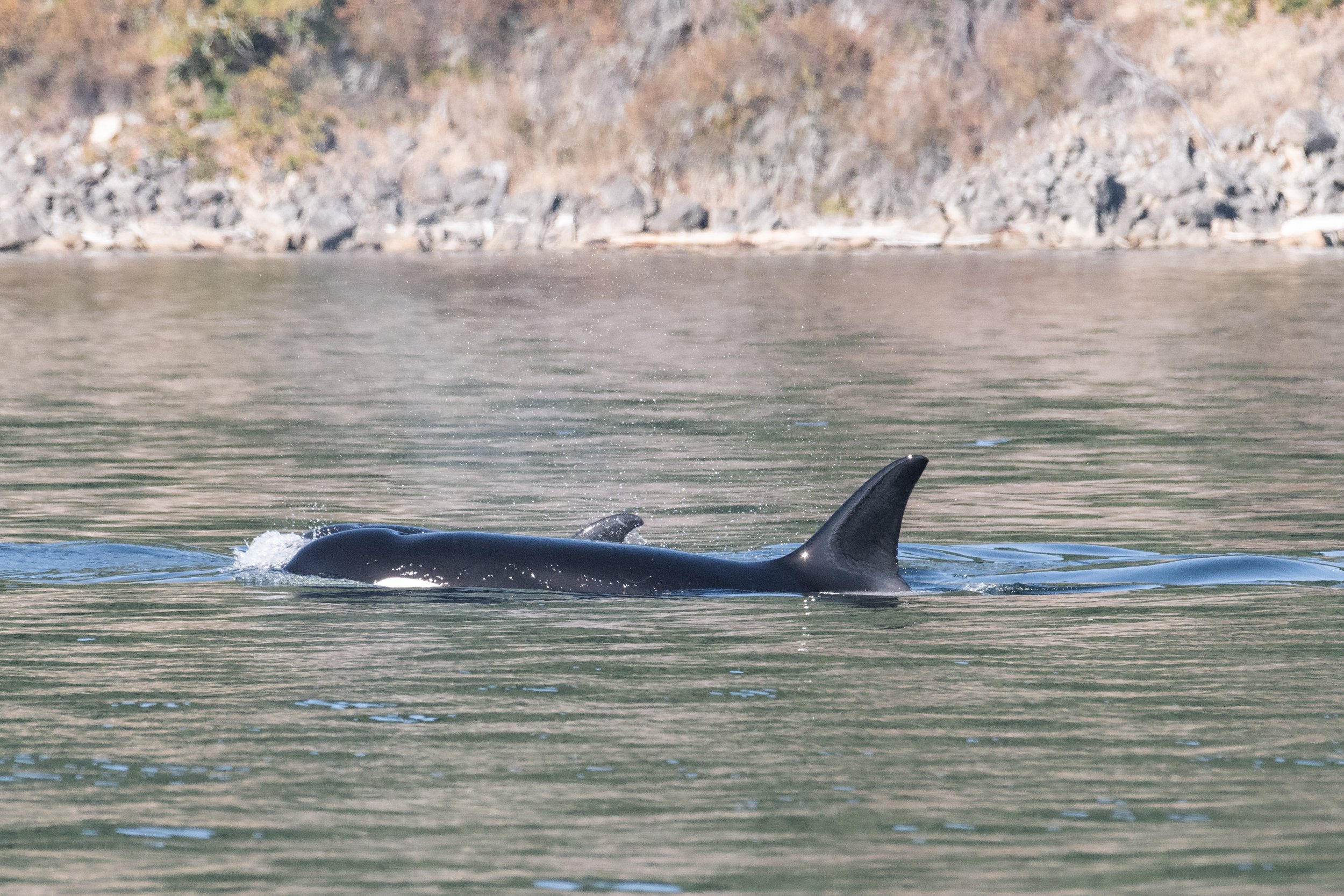
A great look at T049A Nan. Photo by Evan Hessels.
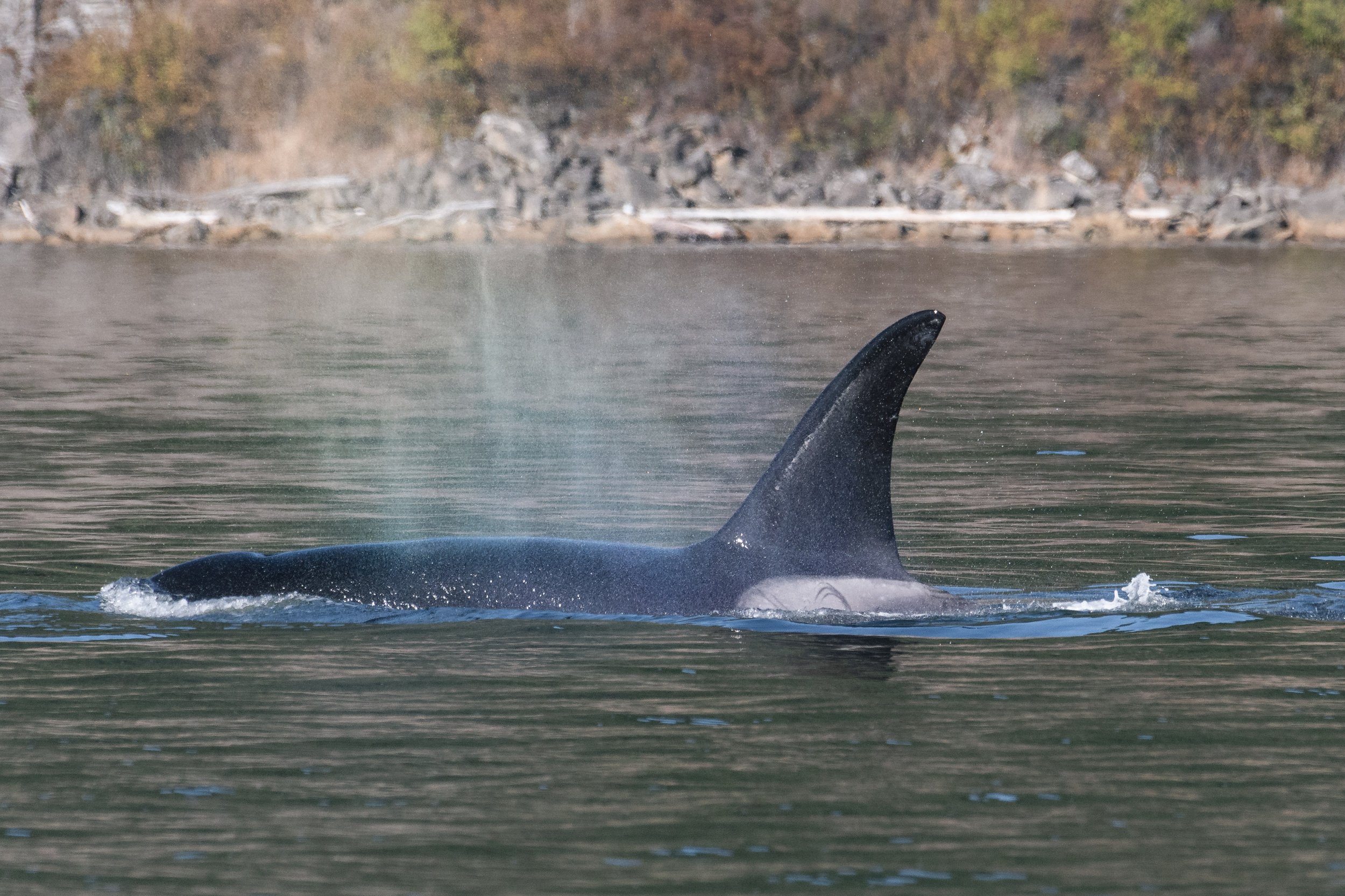
T049A3 Nat with a rainblow. Photo by Evan Hessels.
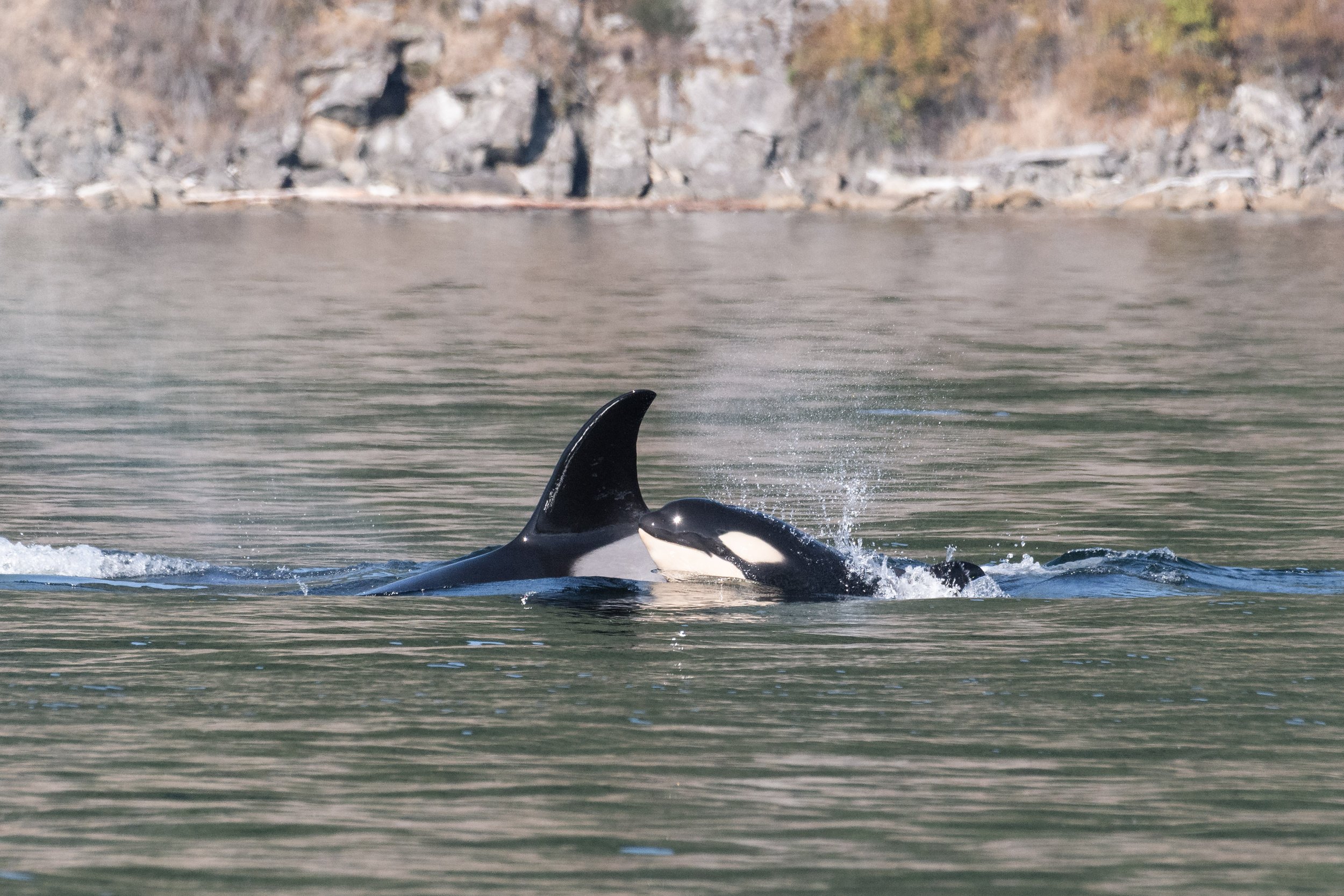
T035A1 Opal surfacing with her calf, T035A1A. Photo by Evan Hessels.
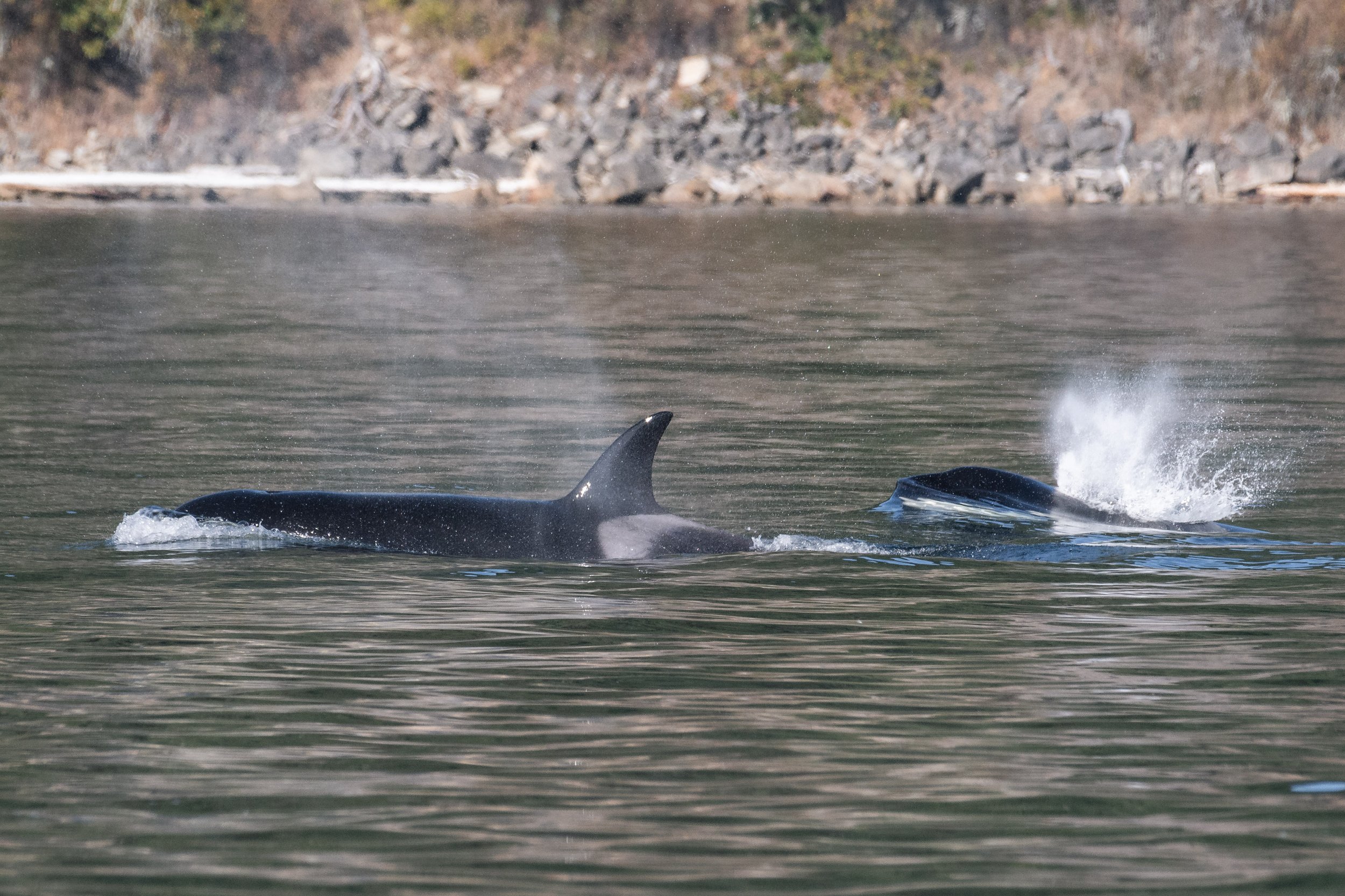
T035A3 Garnet surfacing while another one exhales beside them. Photo by Evan Hessels.
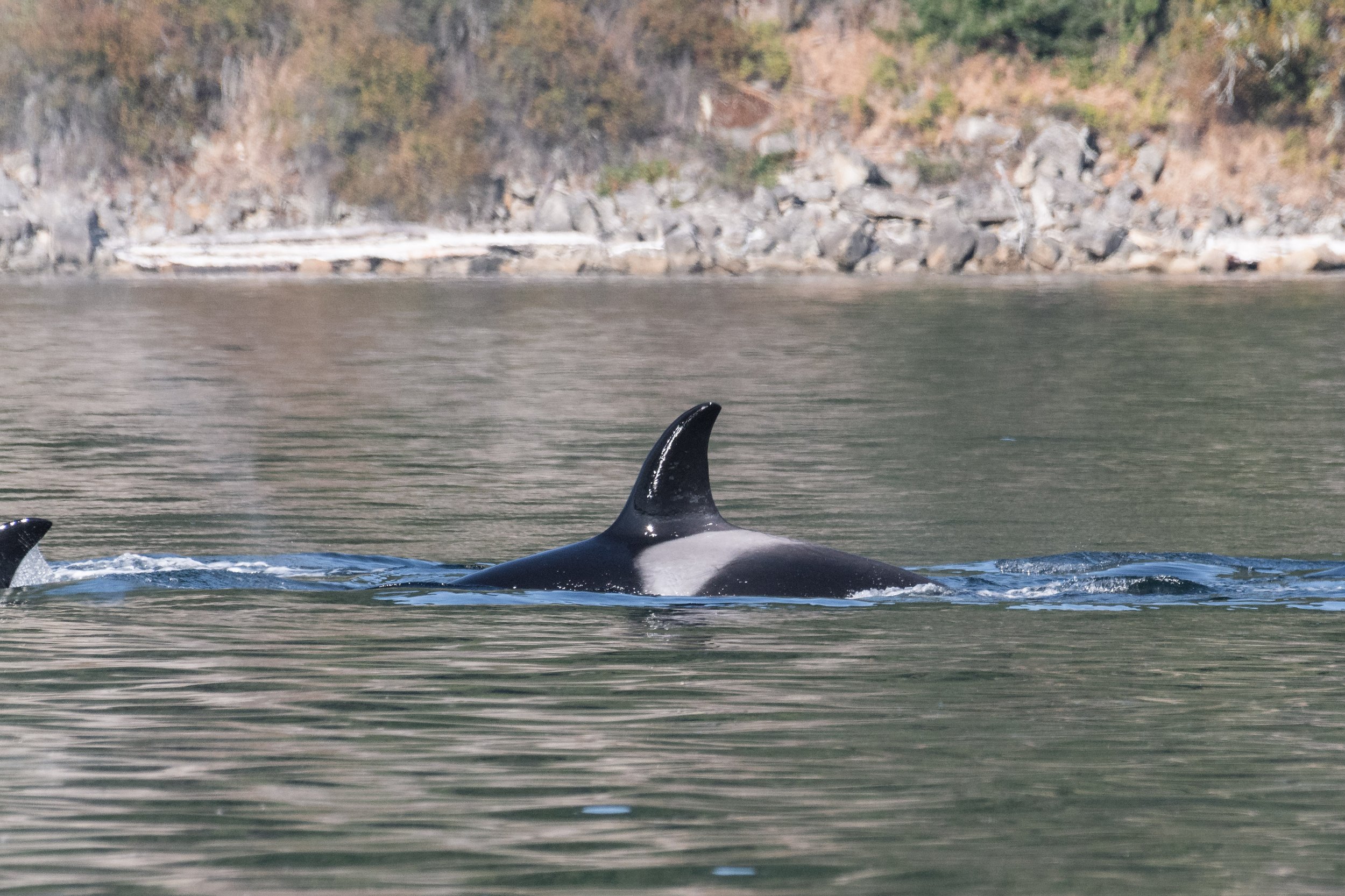
Check out the few scars on T035A1 Opal’s saddle patch. Photo by Evan Hessels.
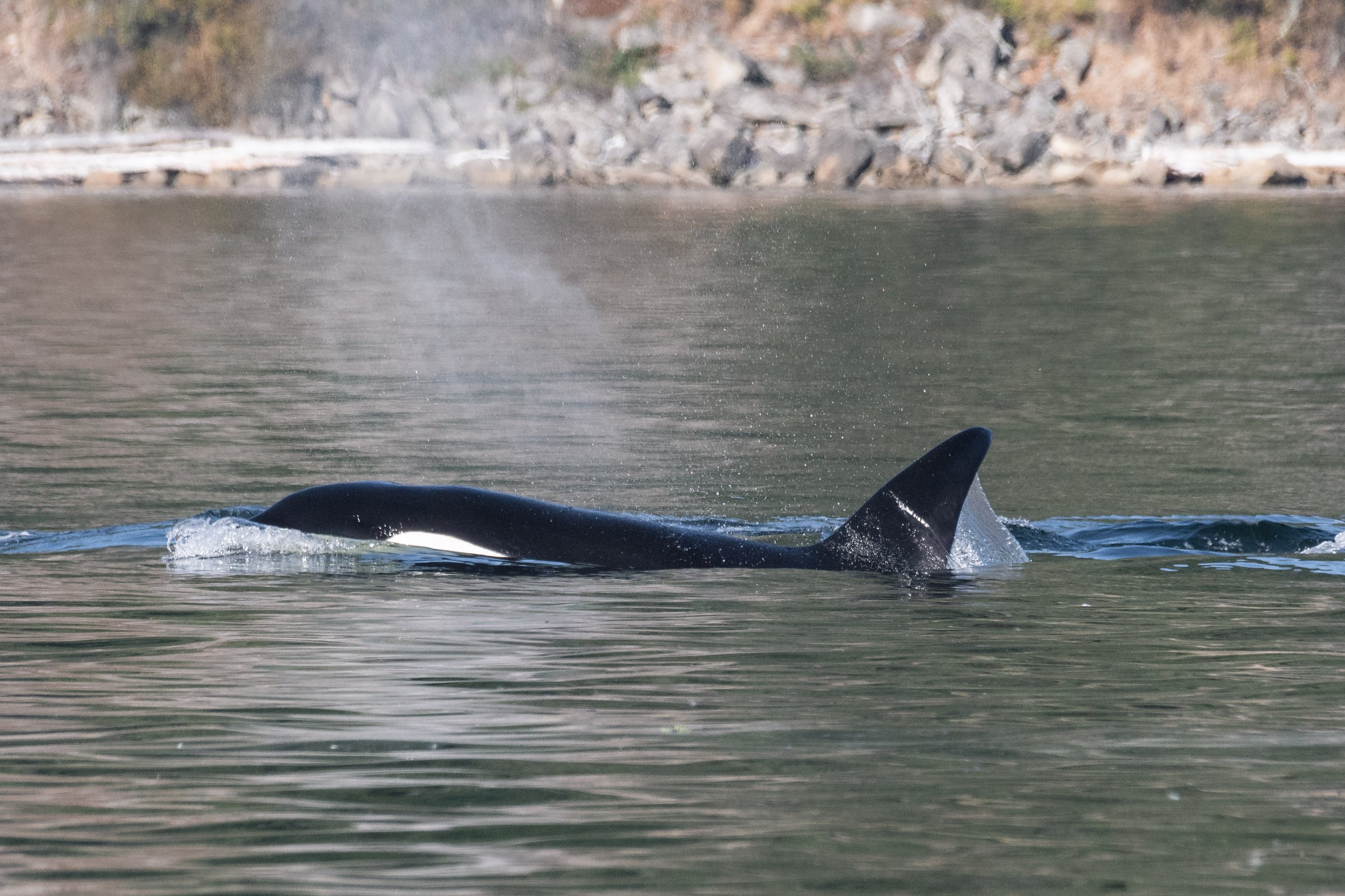
T035A2 Topaz surfacing in the calm waters. Photo by Evan Hessels.
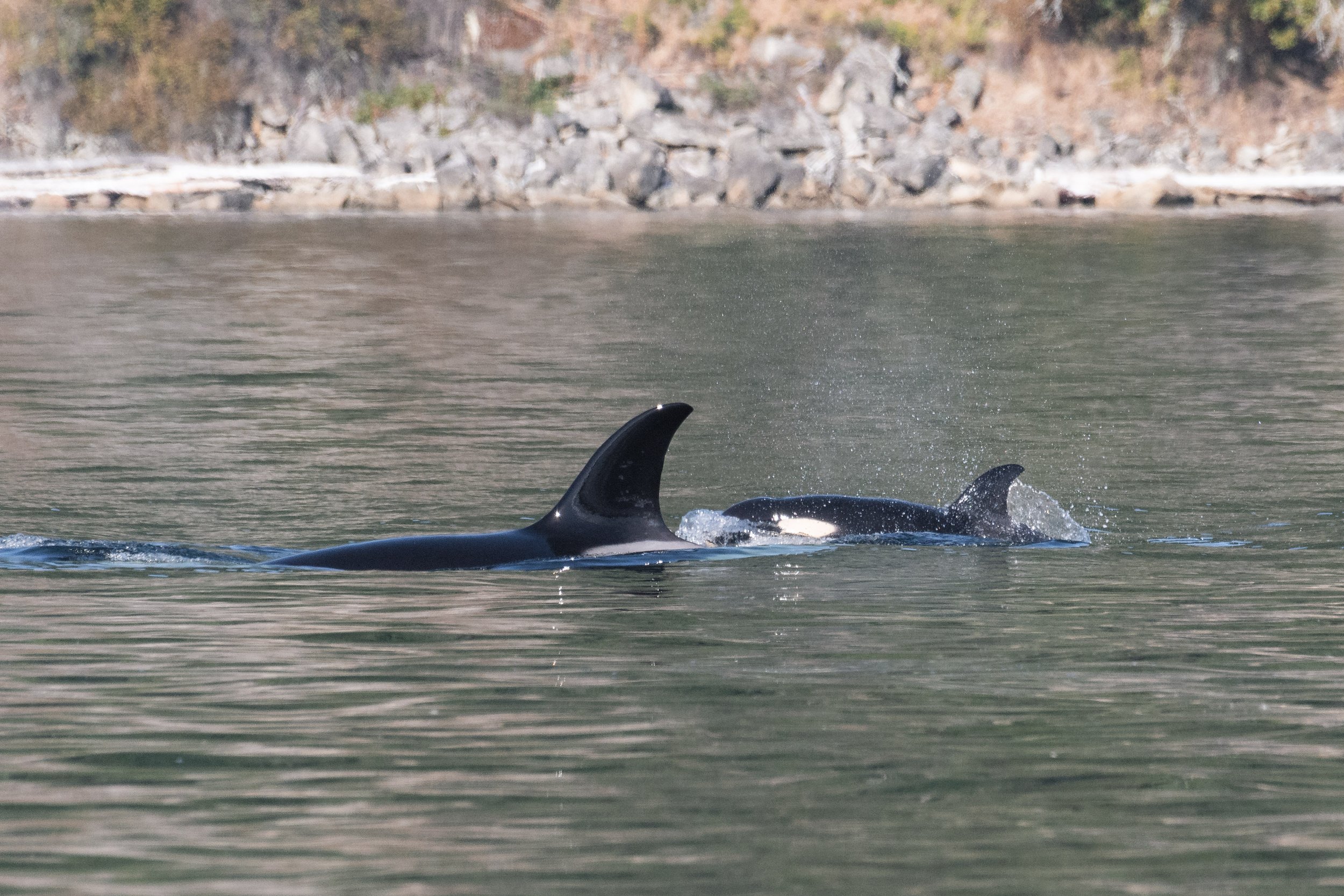
T035A1 Opal surfacing with T035A1A. Photo by Evan Hessels.
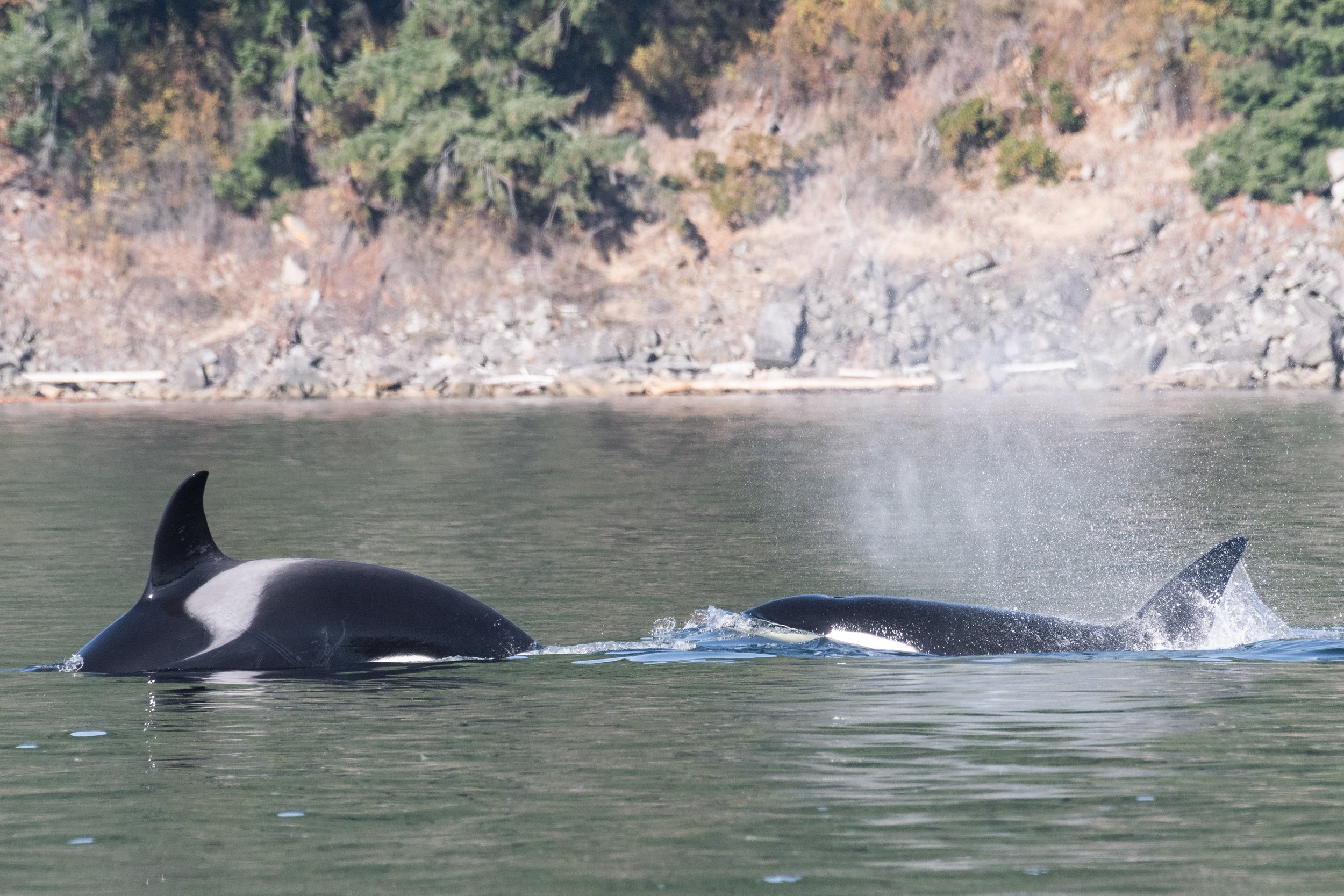
T049A5 Nebula doing a big arch ahead of T035A2 Topaz. Photo by Evan Hessels.
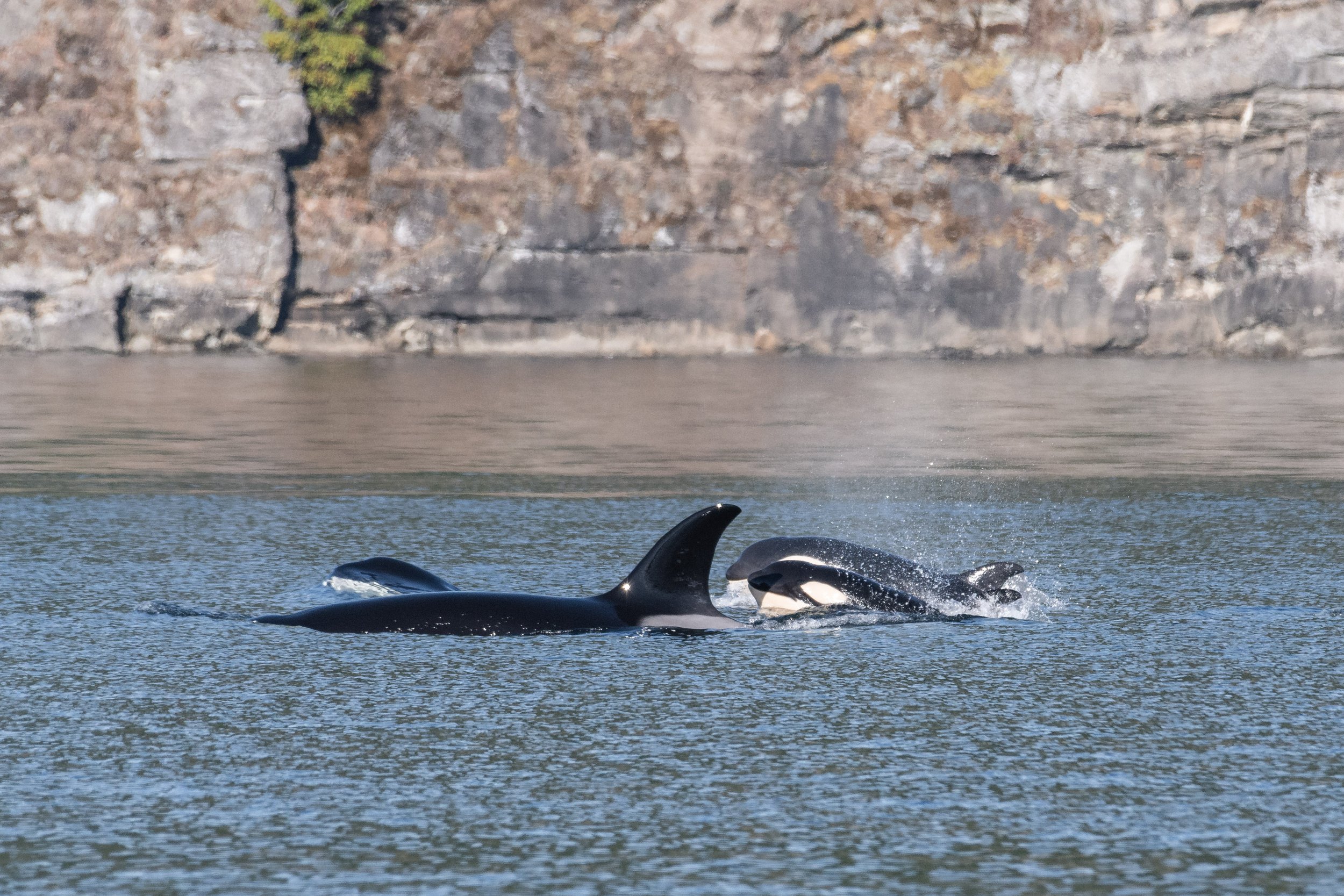
Both T035A1A and T035A5 surfacing behind T035A1 Opal. Photo by Evan Hessels.
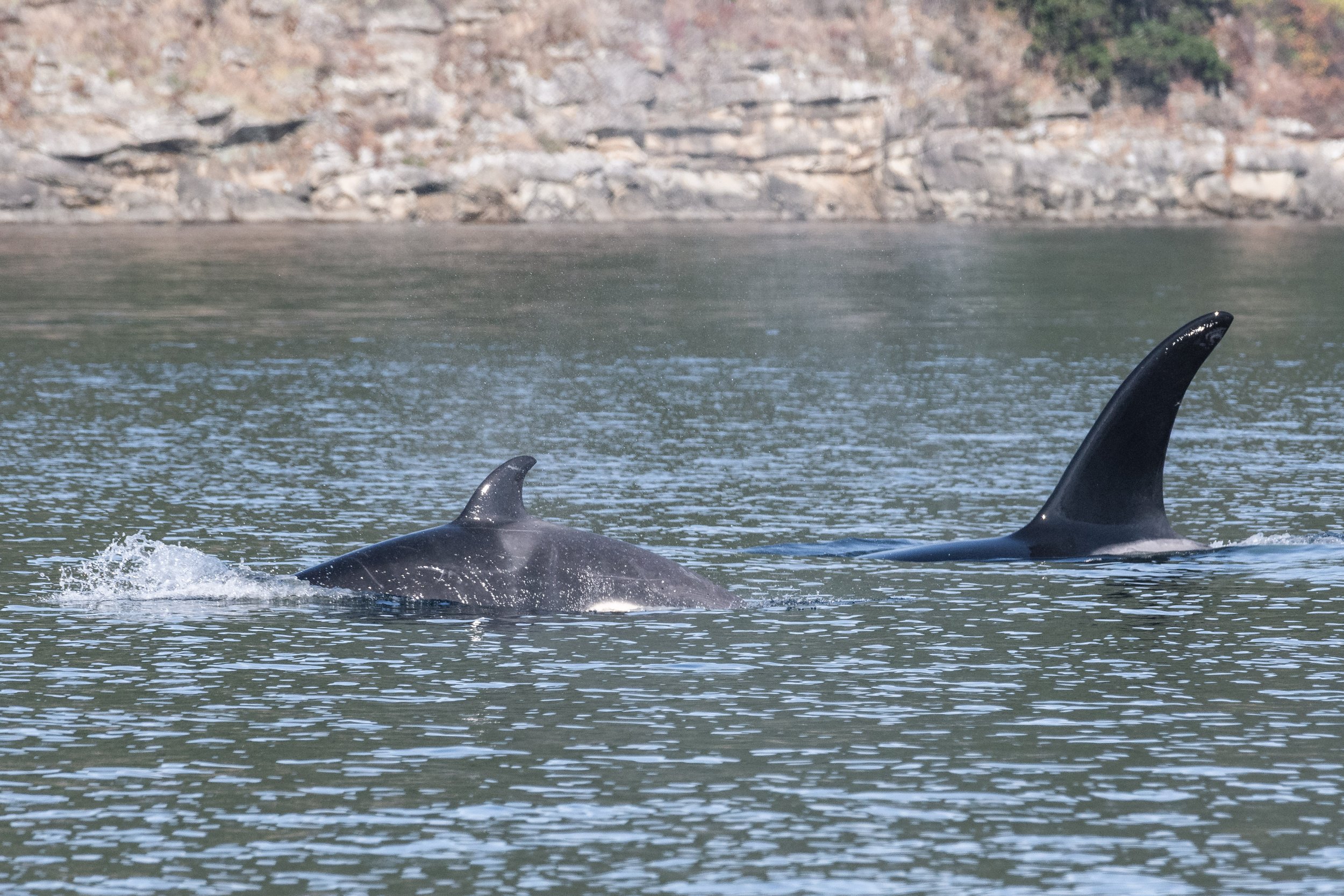
T035A5 surfacing ahead of T049A3 Nat. Photo by Evan Hessels.
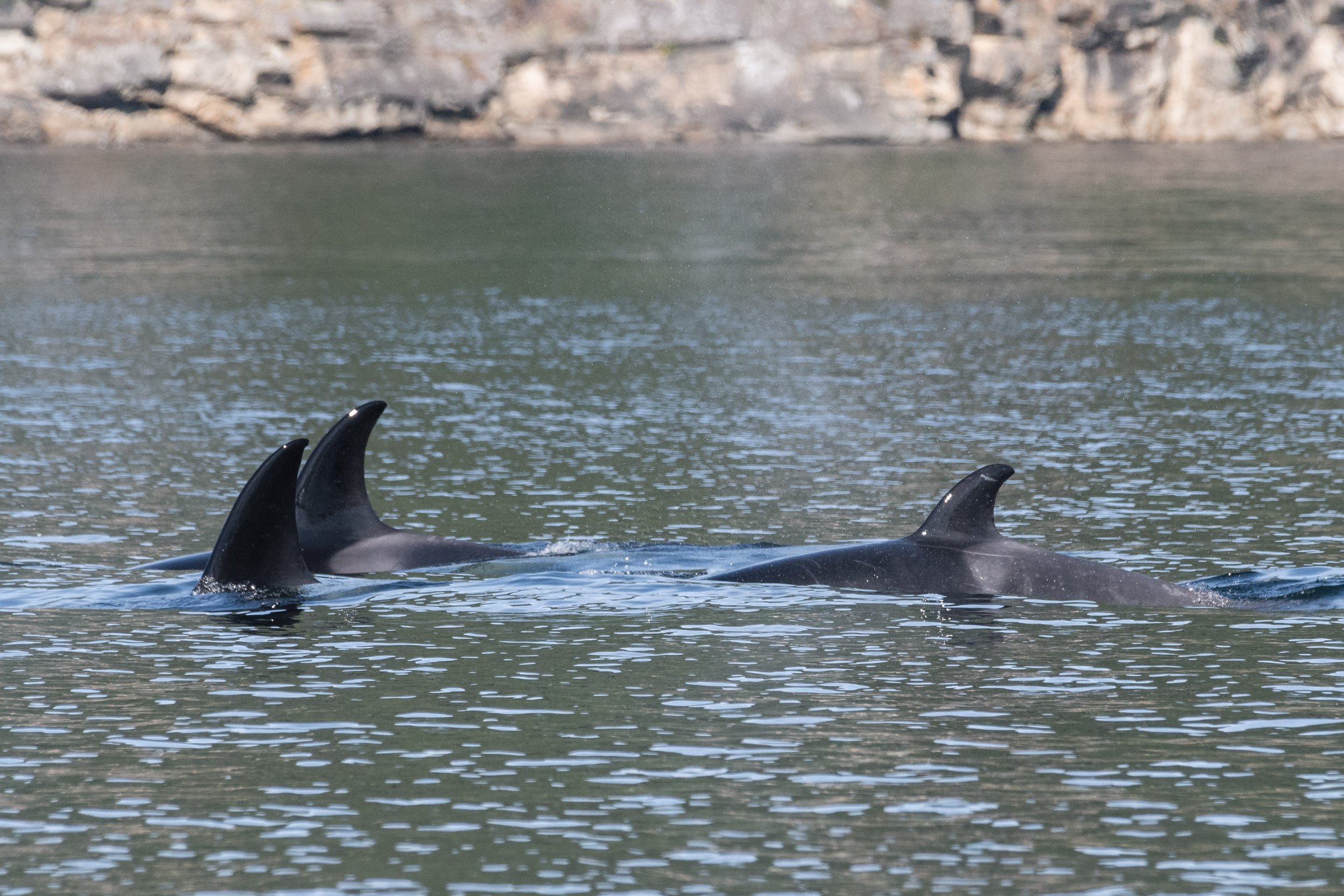
T035A Lester, T49A5 Nebula, and T035A5 surfacing together. Photo by Evan Hessels.
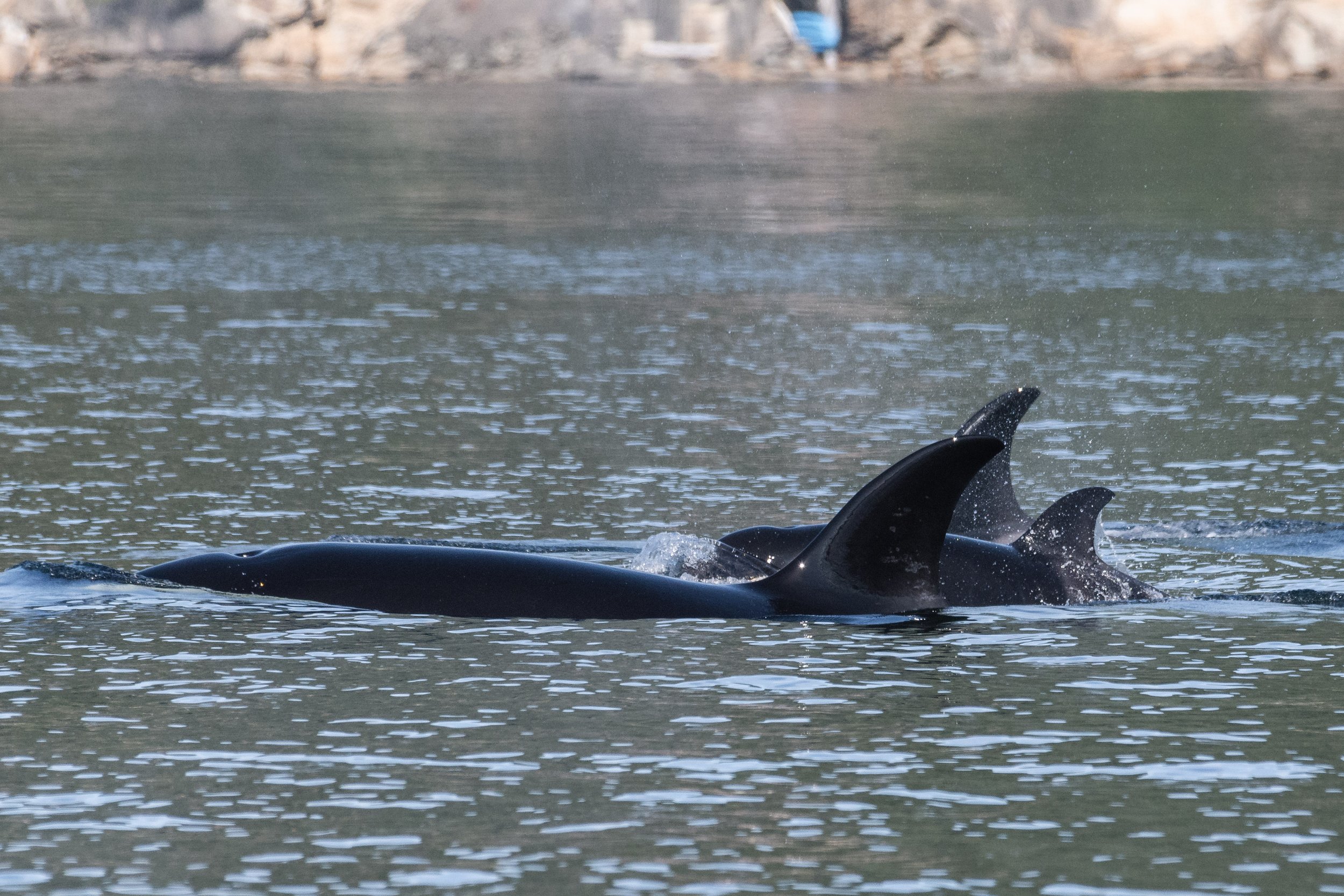
T035A1 Opal surfacing with her baby, T035A1A. Photo by Evan Hessels.
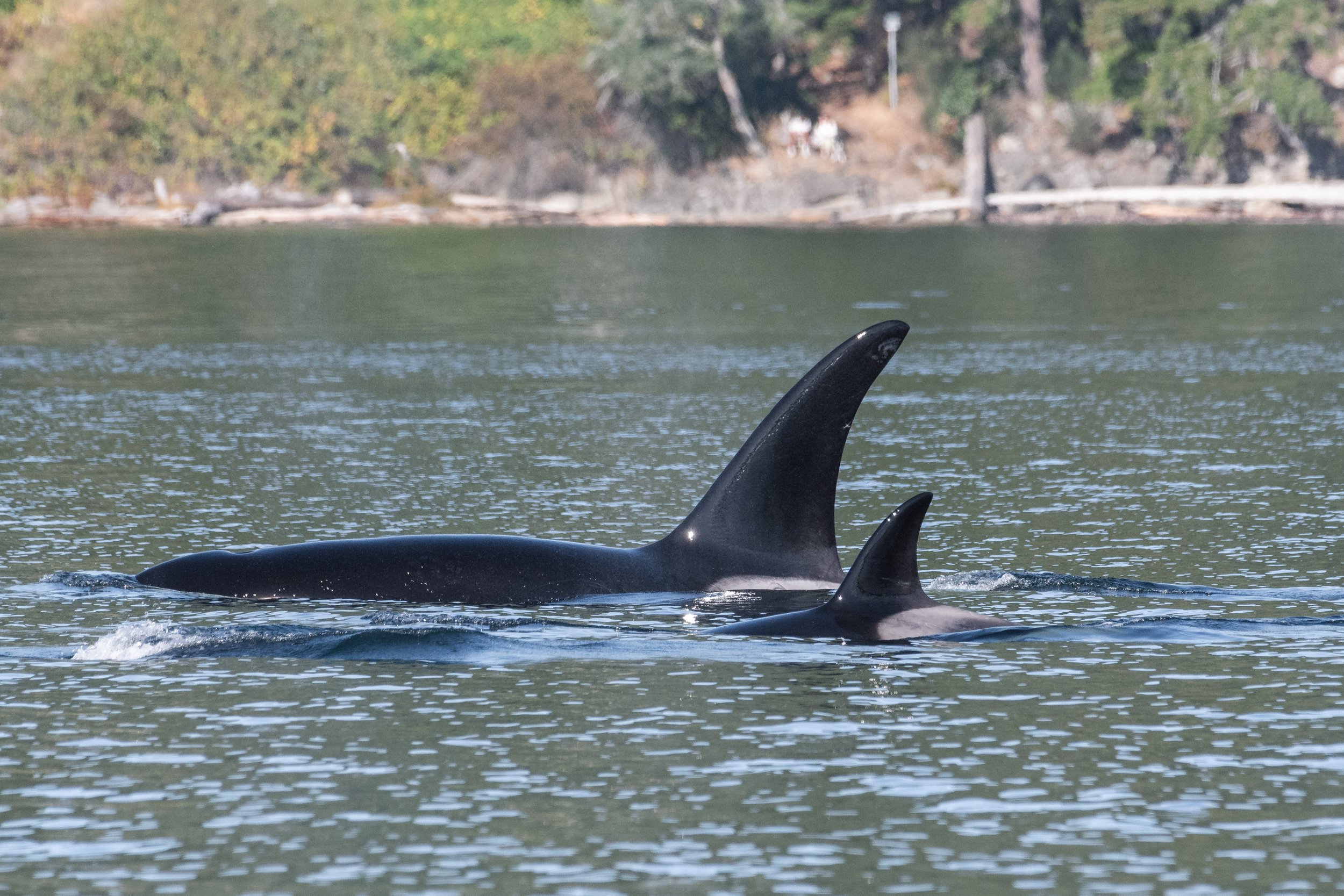
T049A3 Nat surfacing beside his sister T049A5 Nebula. Photo by Evan Hessels.
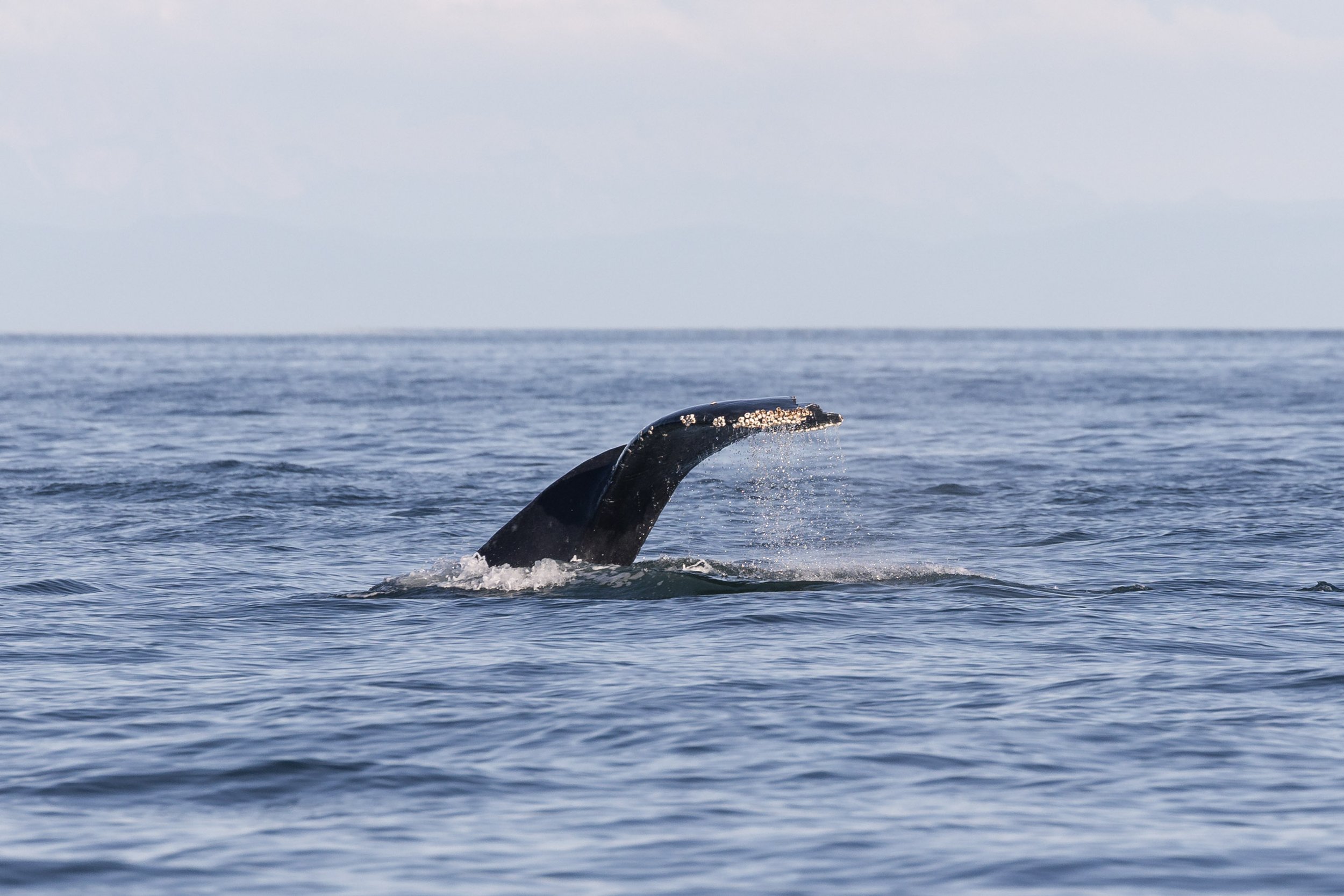
Europa going for a dive. Photo by Jordan Robinson.
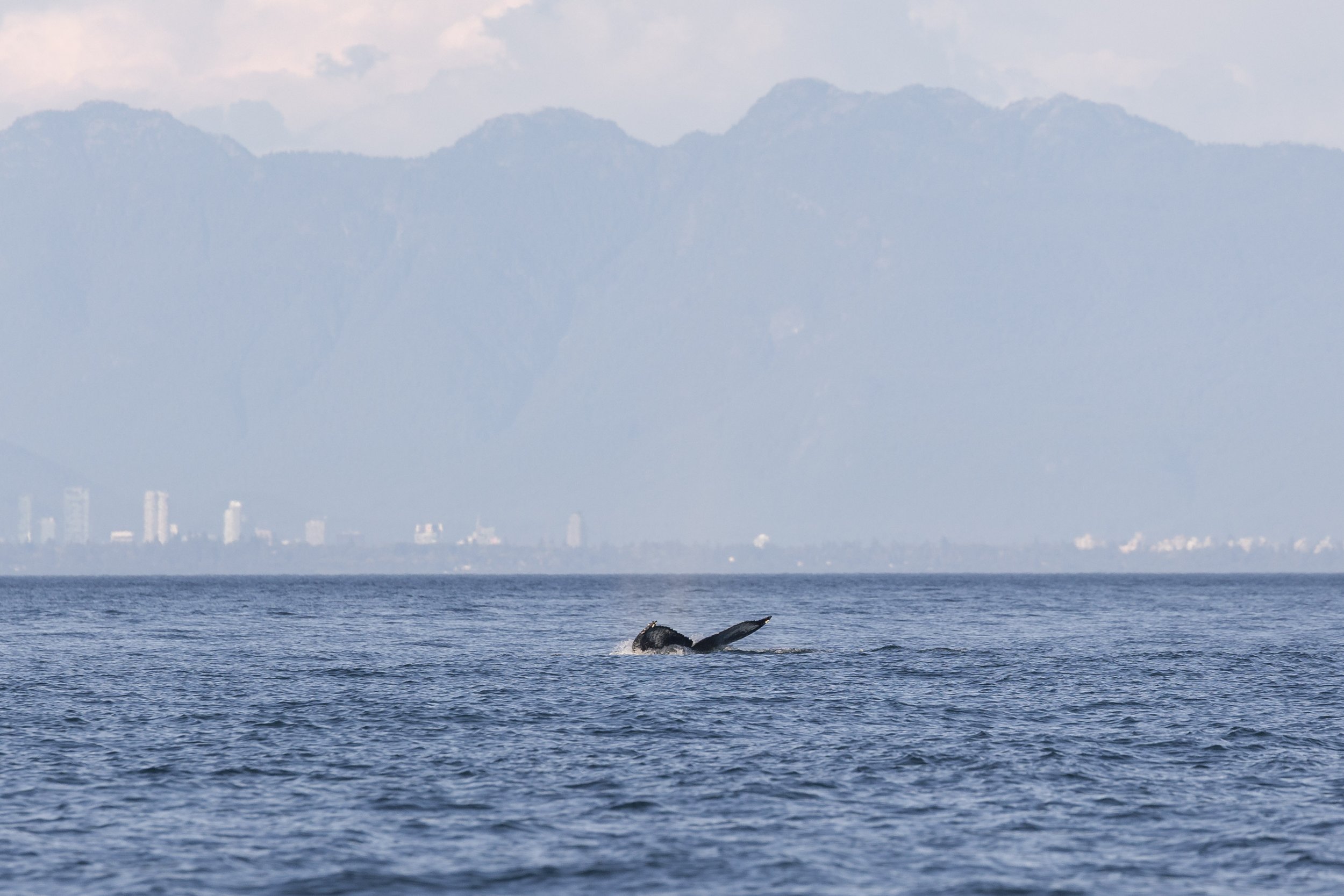
Bagheera diving in the distance. Photo by Jordan Robinson.
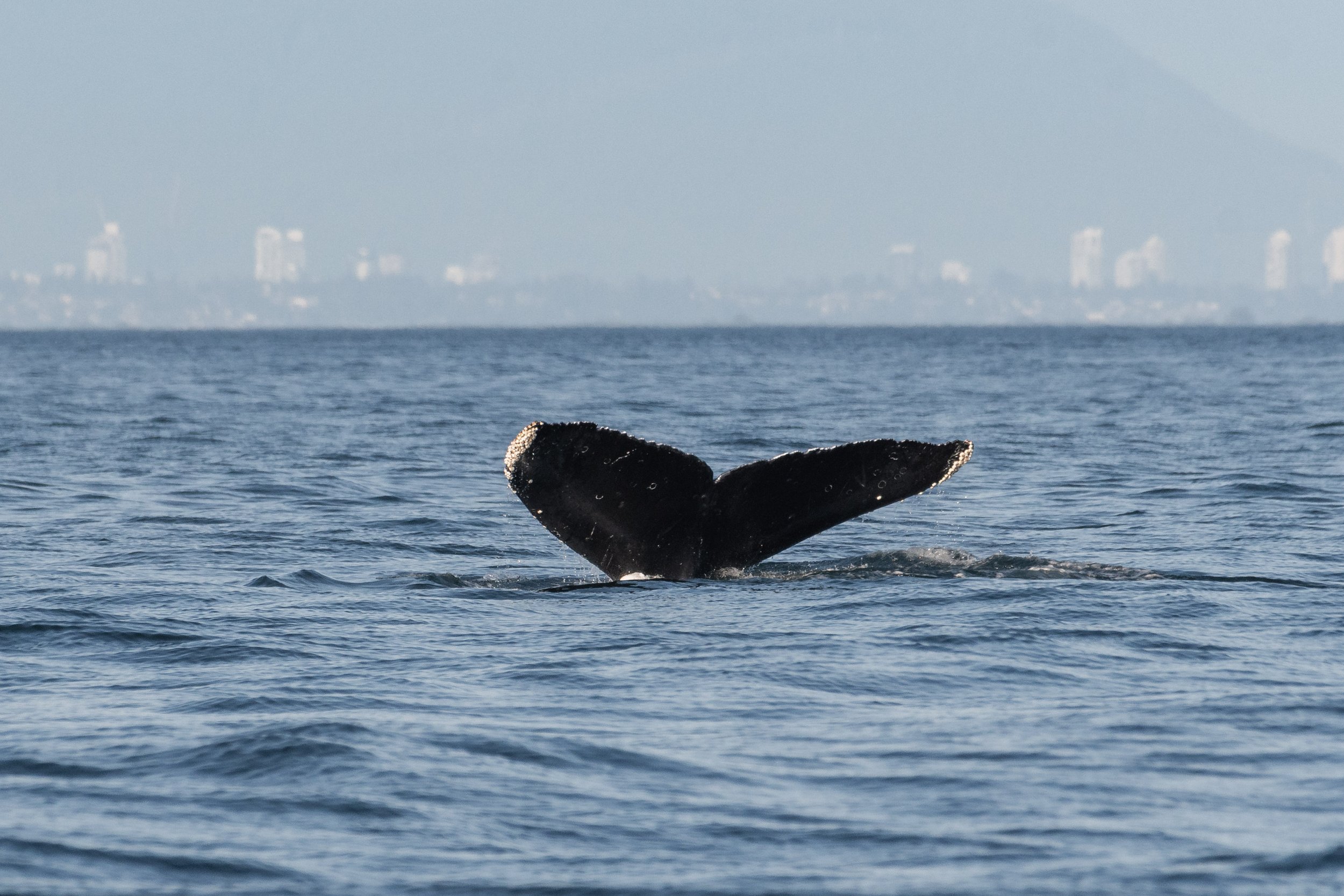
The bottom of Europa’s tail as she dives. Photo by Evan Hessels.
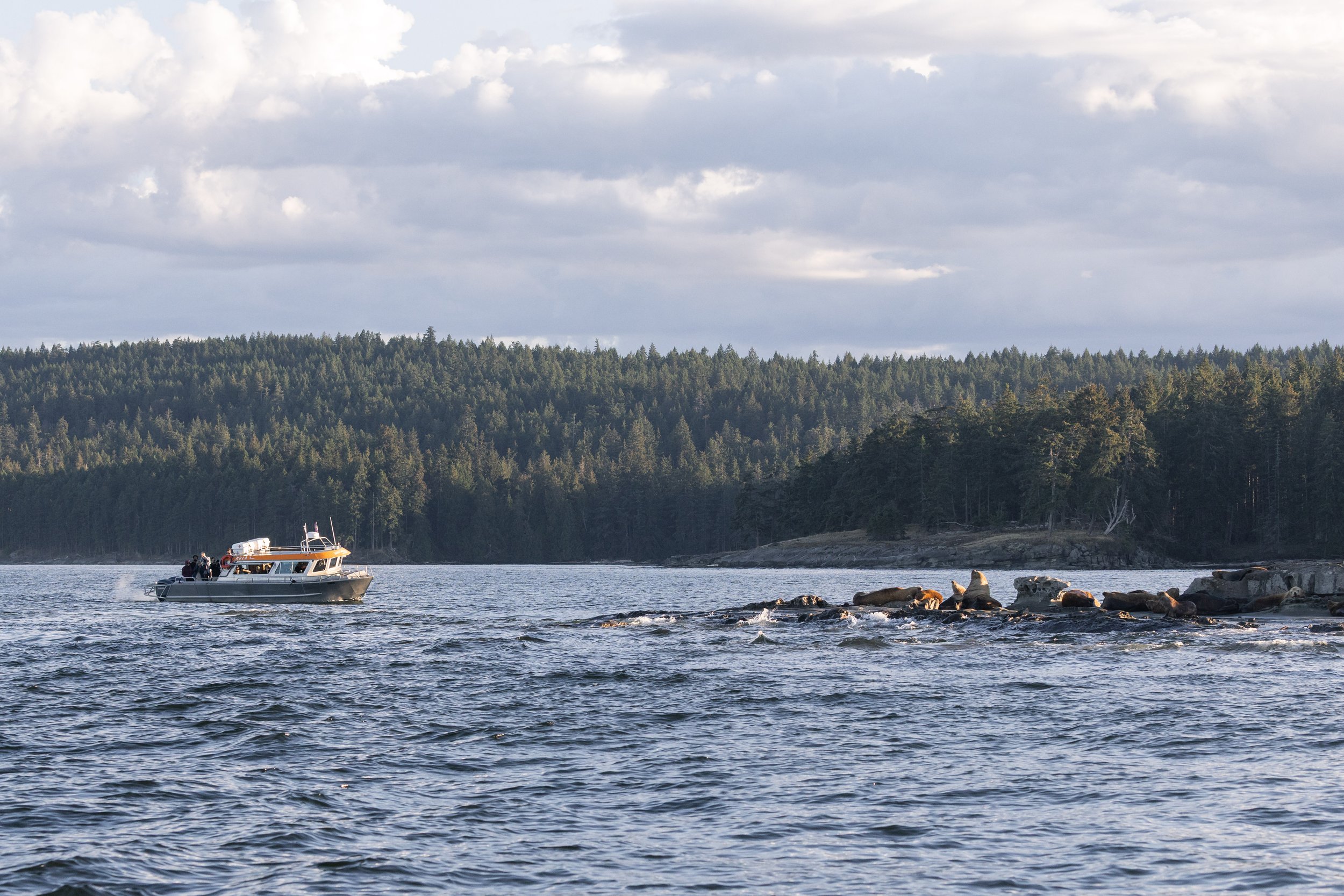
Kula watching the sea lions. Photo by Jordan Robinson.
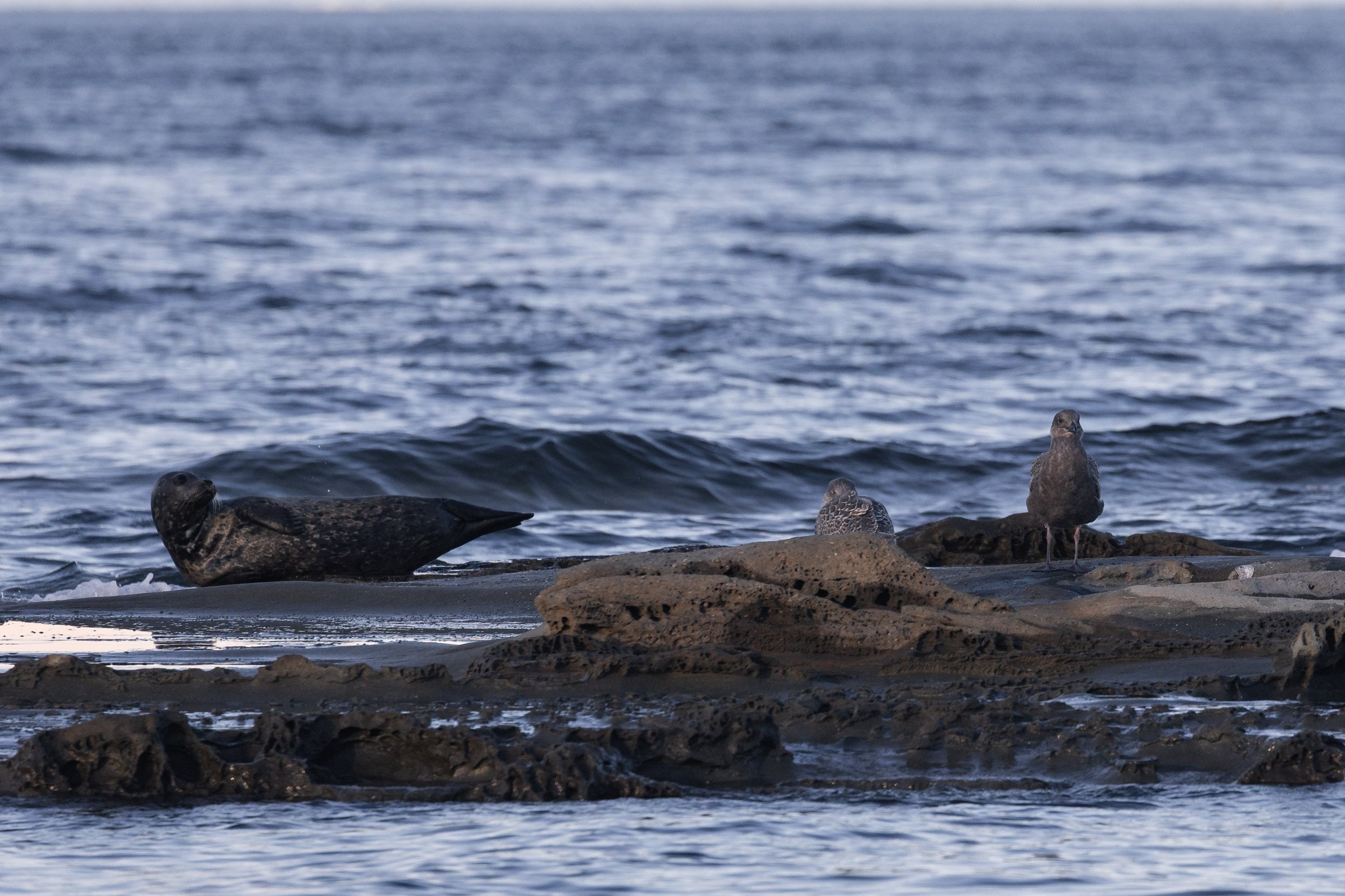
A pair of juvenile gulls and a Harbour Seal sharing the rocks. Photo by Jordan Robinson.
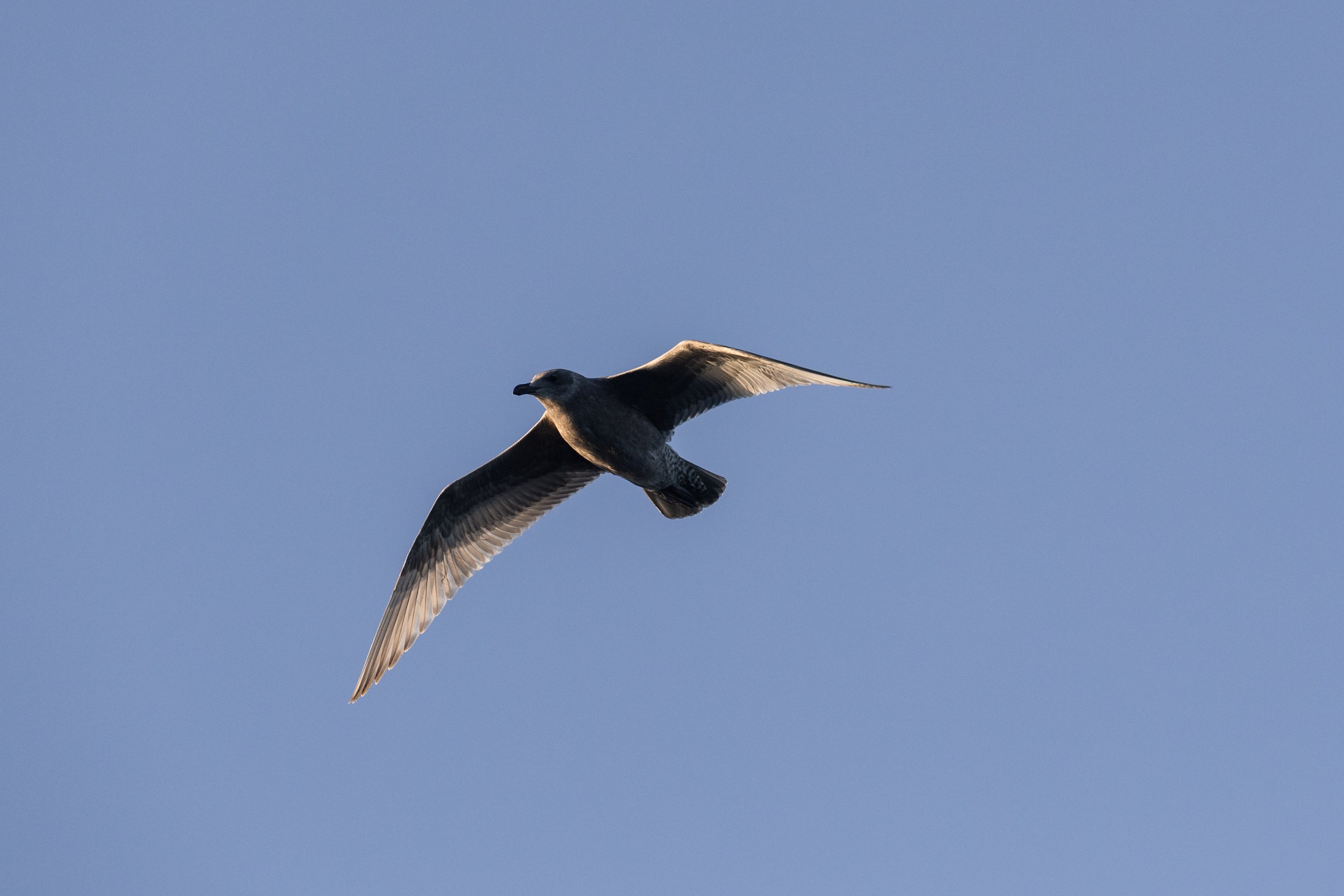
A lovey look at a gull flying by. Photo by Jordan Robinson.
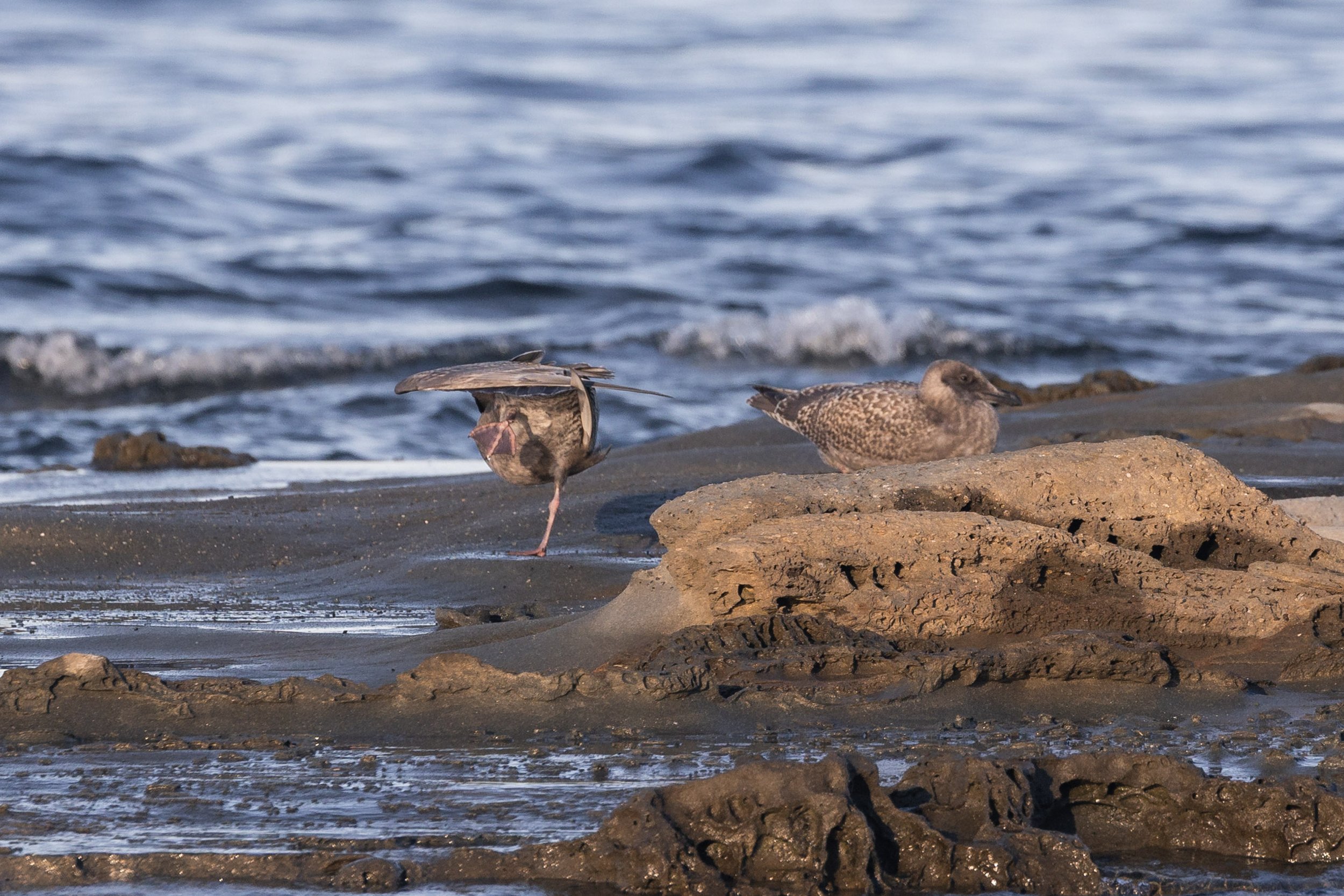
One of the gull doing yoga. Photo by Jordan Robinson.
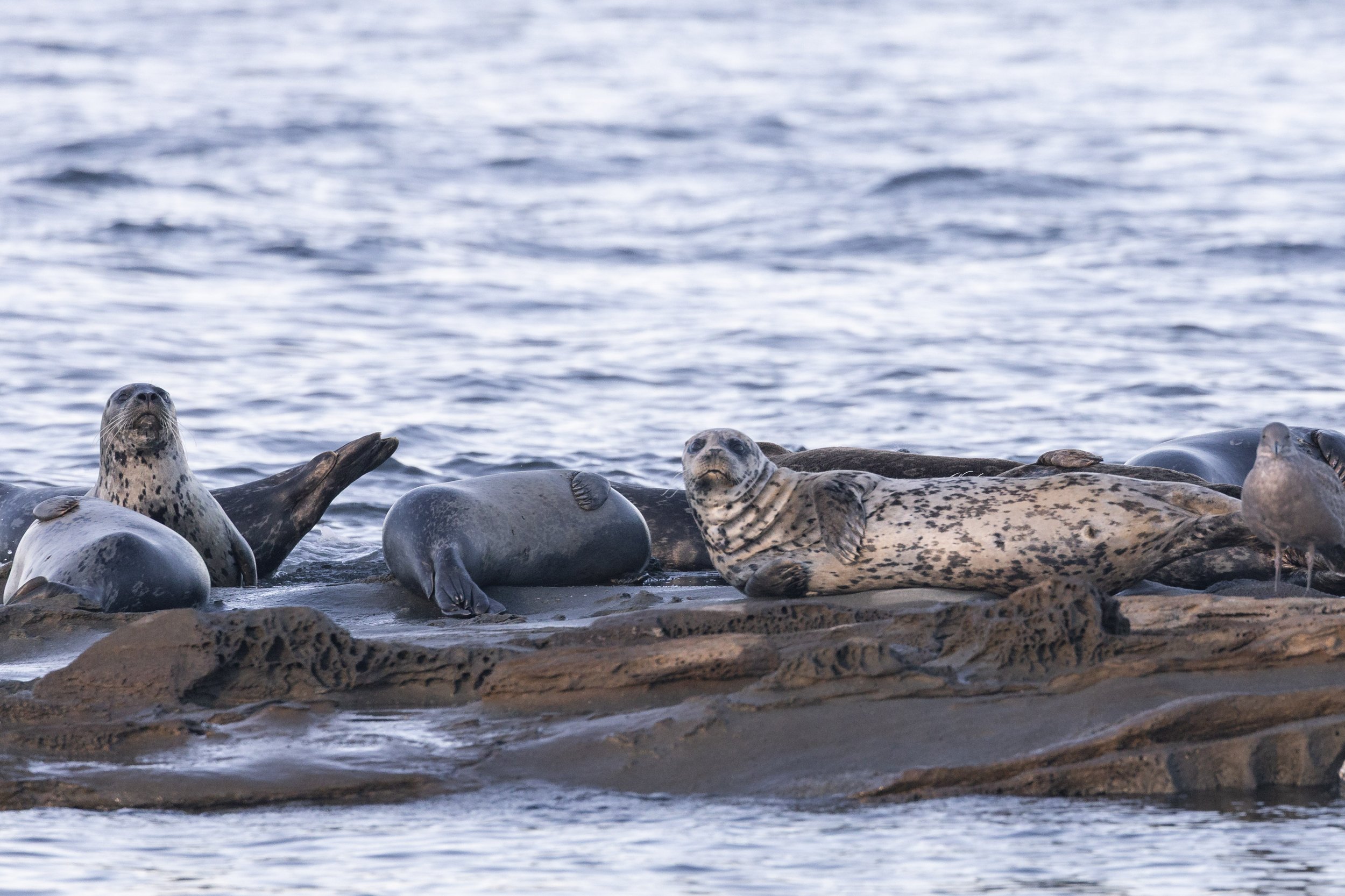
Harbour Seals hauled out on Stinky Rock. Photo by Jordan Robinson.
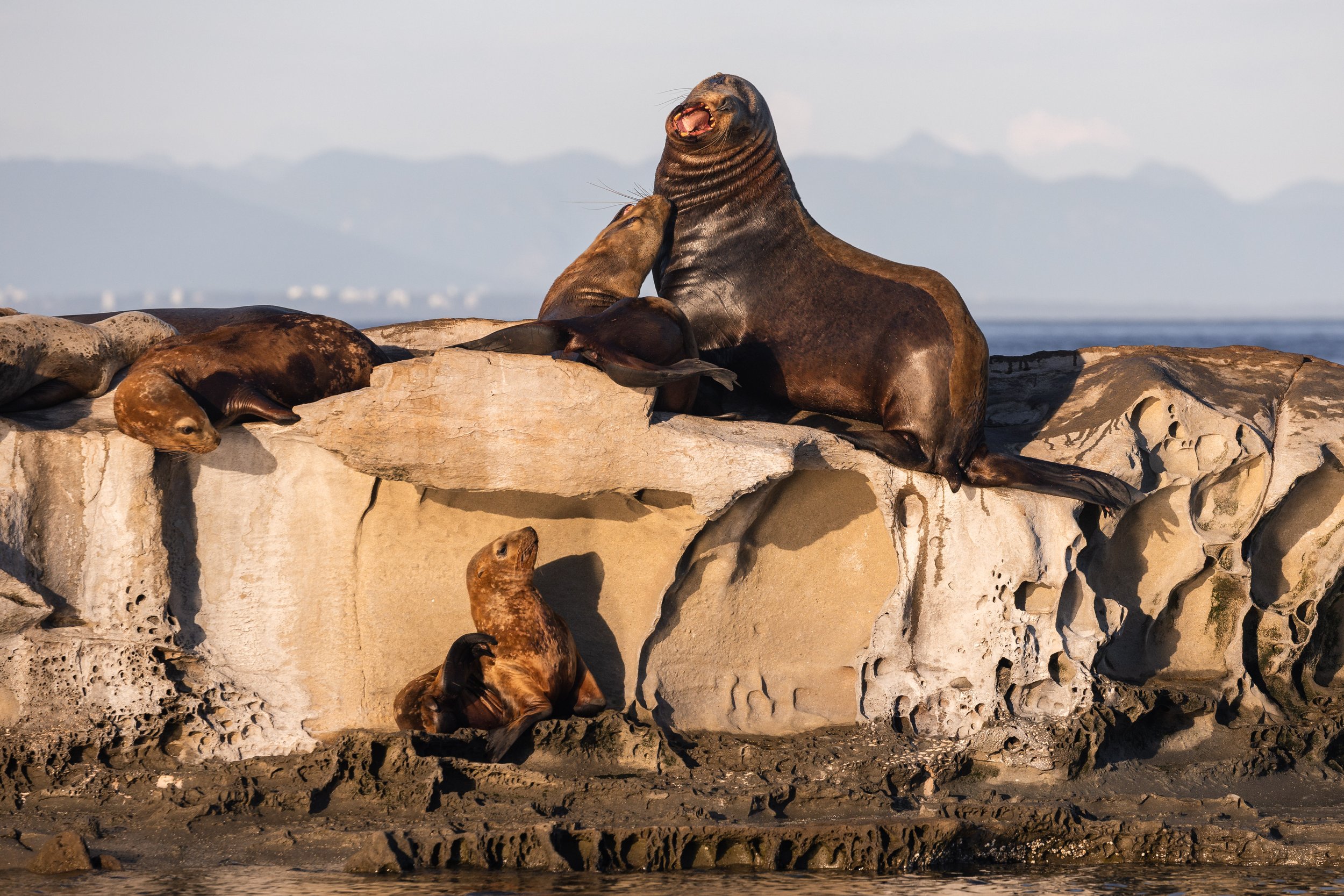
SSome nicely posed Steller Sea Lions at Stinky Rock. Photo by Jordan Robinson.
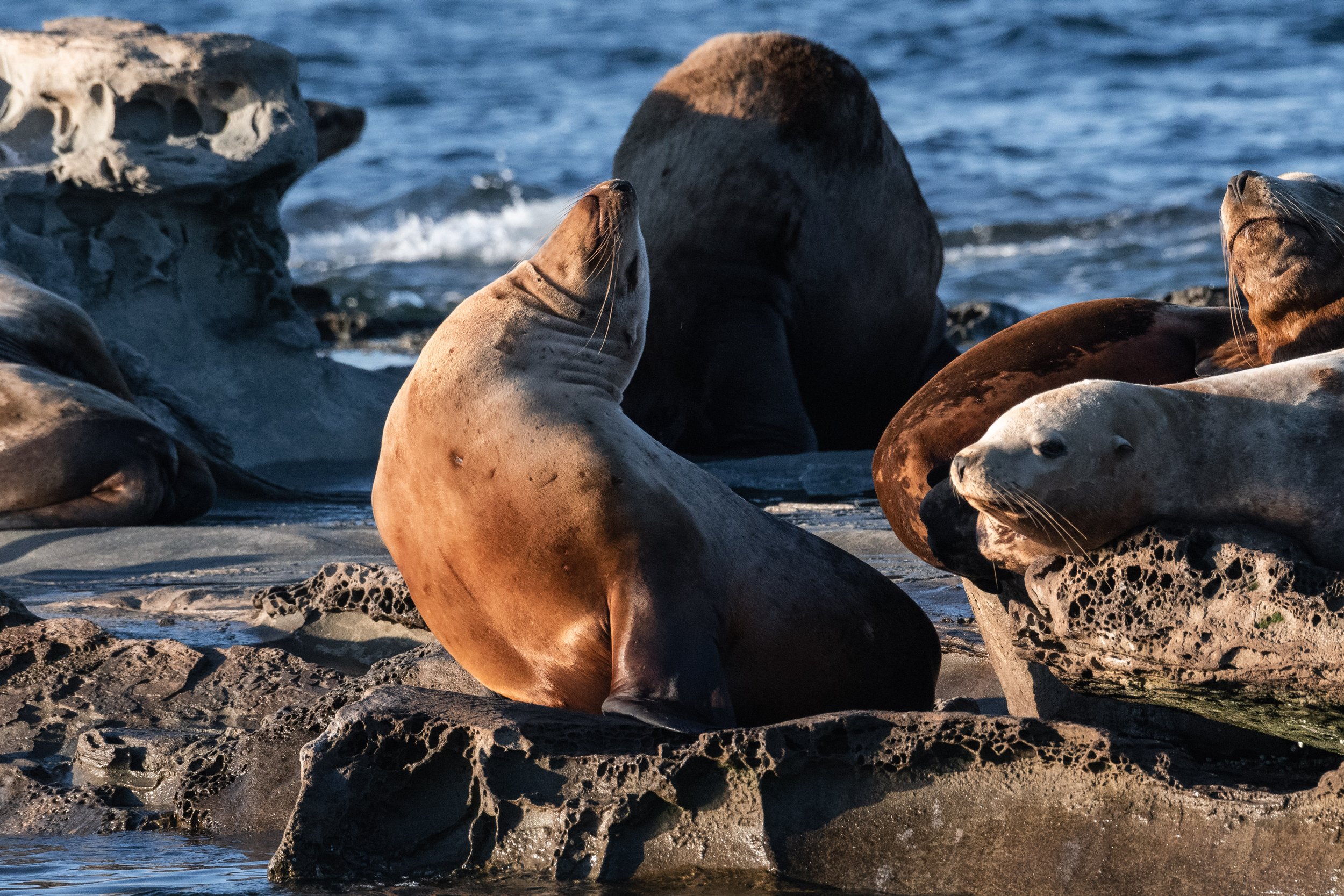
Steller Sea Lions posing on the rocks.Photo by Evan Hessels.
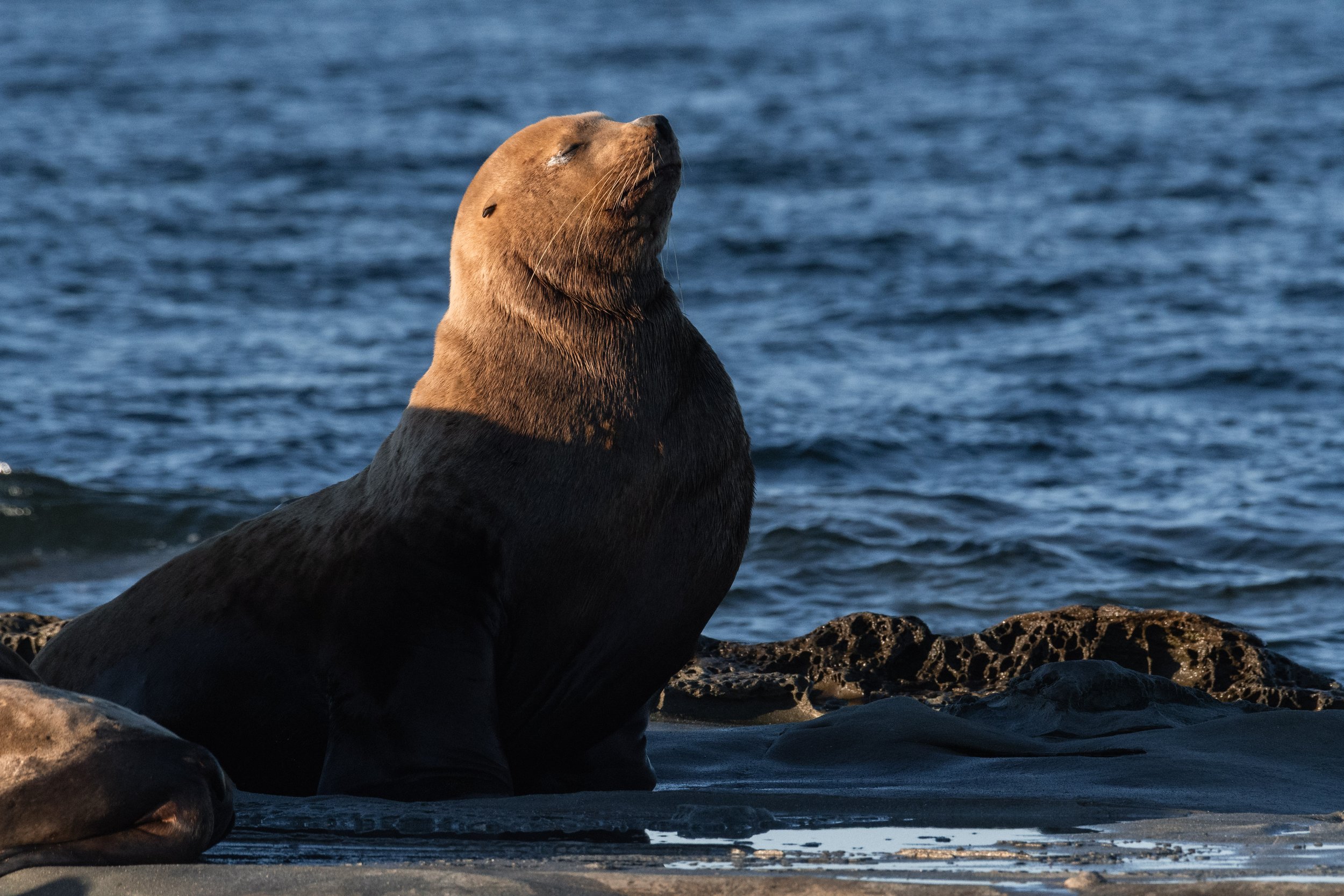
A lovely look at the Steller Sea Lions. Photo by Evan Hessels.
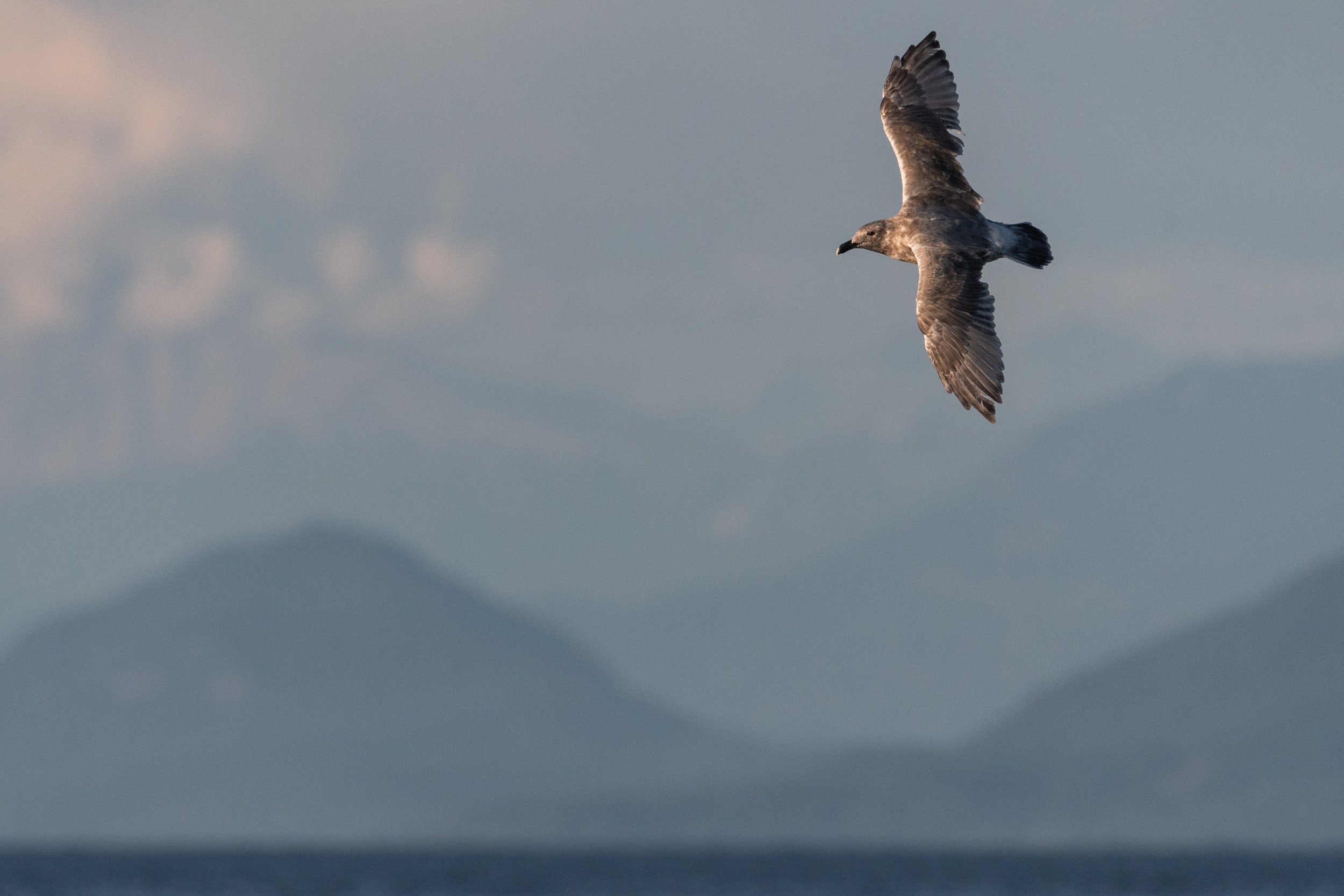
A gull flying by. Photo by Evan Hessels.
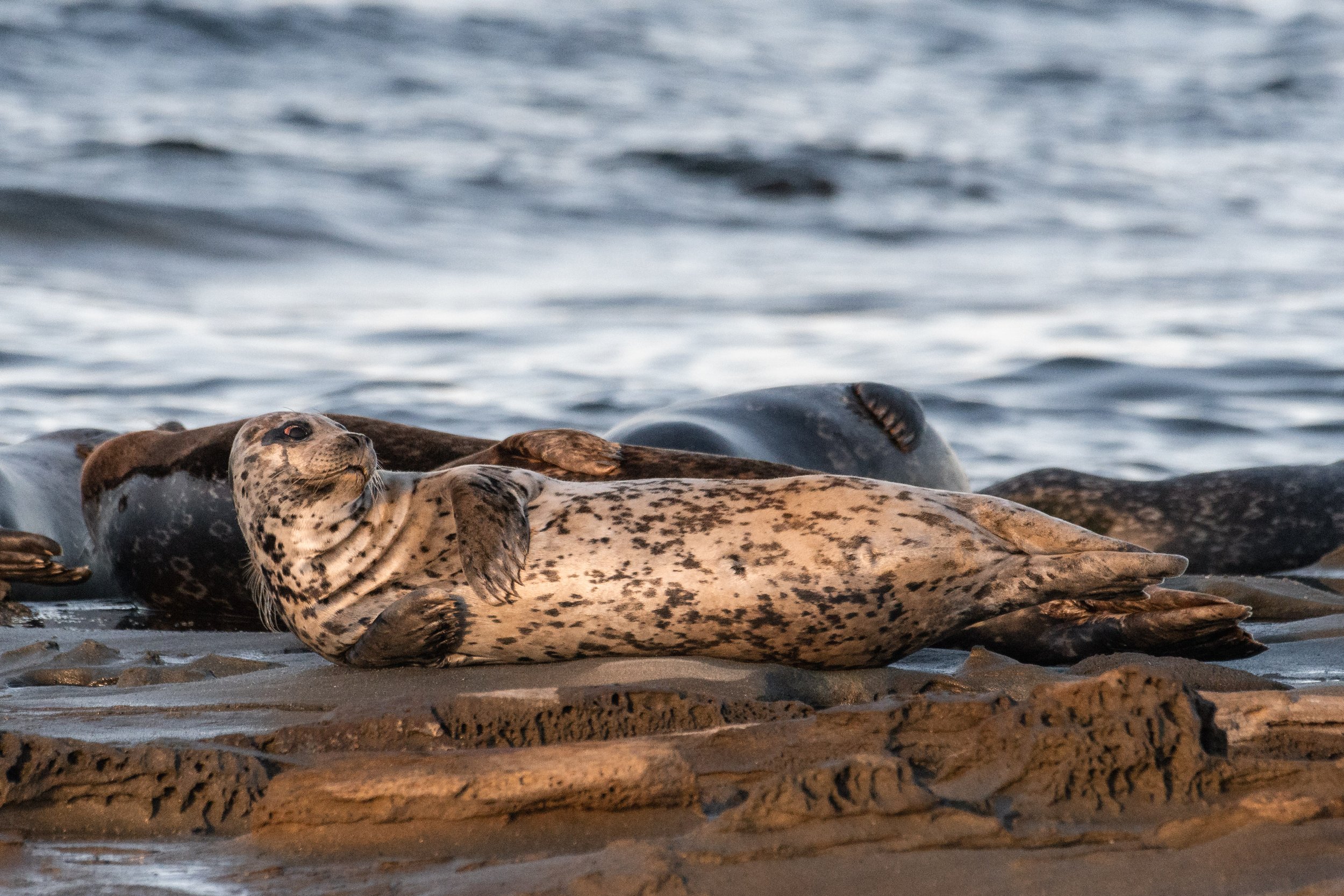
A Harbour Seal striking a pose. Photo by Evan Hessels.
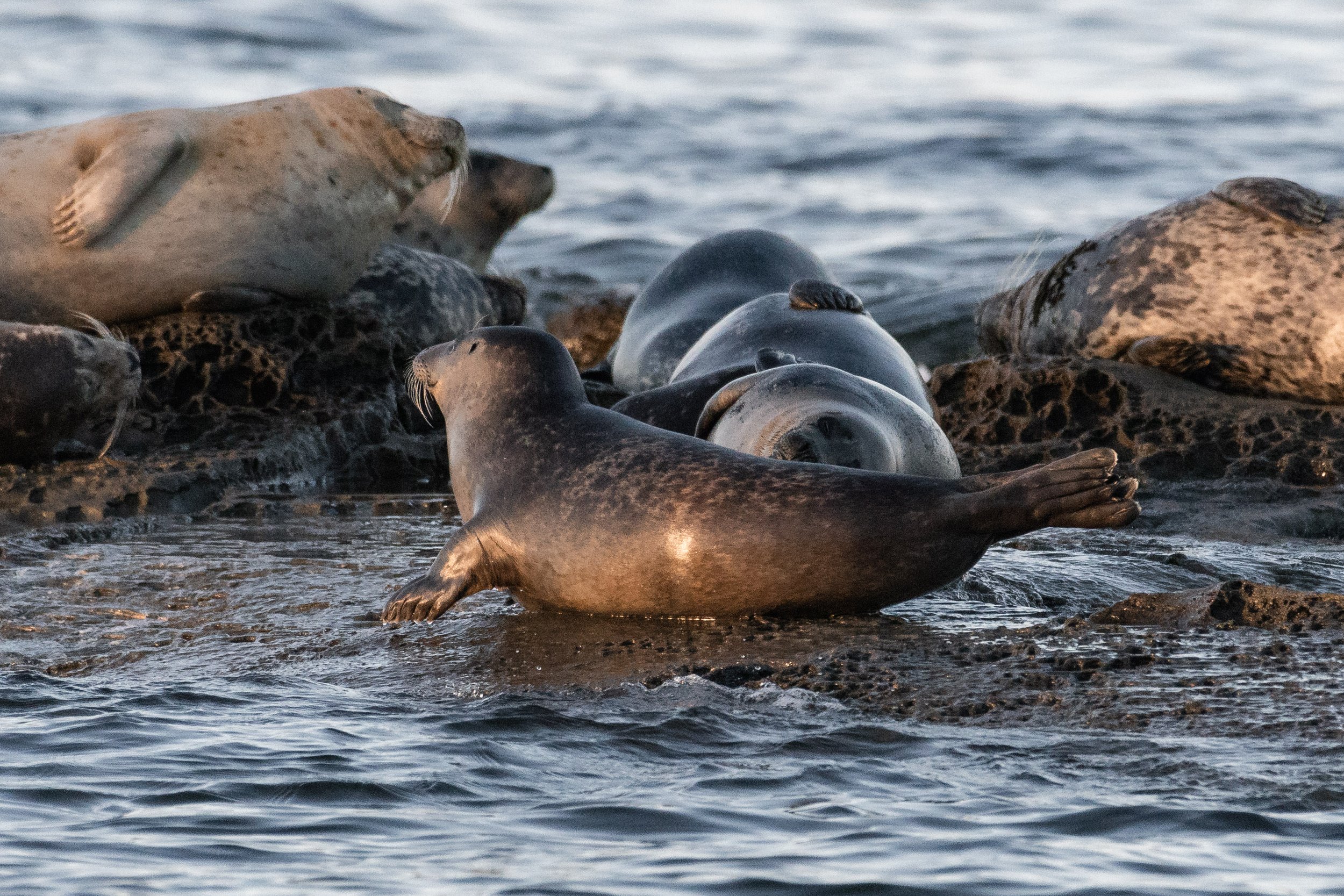
A Harbour Seal Galumphing along the rocks. Photo by Evan Hessels.