
September 7, 2026, 10:30 AM - A Mothers Love on Display, plus time spent with Humpbacks
Another beautiful day awaited us on the Salish Sea, with plenty of encounters in store. As guests and crew climbed aboard all three of our vessels, everyone was excited to see what we might find.
Our search began as we headed south through Northumberland Channel, into Stuart Channel, and eventually toward Porlier Pass. While we didn’t find any whales in the inner waters, the scenery alone made the journey worthwhile. We travelled through the Southern Gulf Islands, where rocky shorelines provide a striking contrast against the lush forests that cover the islands. It is breathtaking even without a whale in sight.
But the search had to continue, so we left the islands behind and headed out into the Strait of Georgia.
We followed the shoreline of Galiano Island and were soon rewarded with our first whale encounter of the day. Two black dorsal fins cut through the water, one of which we quickly recognized. It was arguably one of the most recognizable Bigg’s killer whales in the population: Chainsaw travelling alongside his mother, Whidbey.
T065 Whidbey II ♀ (~1971)
T063 Chainsaw ♂ (~1978)
This mother-and-son duo is frequently seen travelling together, although they aren’t always as close to one another as they are today. Their relationship is a great example of one of the most fascinating aspects of Bigg’s killer whale family life: male orcas often remain closely associated with their mothers throughout their lives.
Male offspring typically remain with their mothers rather than dispersing to form their own family groups. Female offspring, on the other hand, may eventually establish their own matrilines as they have calves of their own.
Whidbey has two daughters, T065A Artemis and T065B Chunk, both of whom are now matriarchs of their own family groups. They each travel with their own collections of family members, which helps explain why we so often see just Whidbey and Chainsaw travelling together.
There are likely several factors that influence how Bigg’s killer whale families organize themselves. Hunting is one important consideration. These whales rely heavily on stealth when pursuing marine mammal prey, and larger groups may be more difficult to keep hidden. As females begin raising calves of their own, establishing and maintaining their own family groups can therefore be advantageous.
Social dynamics may also play a role. With multiple reproductive females and their calves travelling together, dispersal can create more space between family units and reduce potential competition.
But dispersal doesn’t mean these family members stop being connected.
Although family groups may spend much of their time travelling separately, they can come back together for larger gatherings known as T-parties. These gatherings can bring multiple family groups together for periods of socializing and interaction, reminding us that dispersal does not necessarily mean separation in the long term.
Today, however, we got to witness the close, long-term relationship between a mother and her adult son as Whidbey and Chainsaw travelled together through the Strait of Georgia.
And they weren’t the only mother-and-son pair we would encounter that day.
Before we found Volker and Inky, however, we encountered some humpback whales while making our way toward Stinky Rock.
Our first was a young whale known as Chi (BCZ0575), who was behaving playfully around a boat in the area. We didn’t stay long, as we don't want to encourage these close approaches with wild whales, but we still got some beautiful looks at Chi before continuing on.
Chi is a Z-type humpback, meaning the underside of his fluke is predominantly white. His tail also has a particularly striking pattern.
The underside of a humpback whale’s fluke is one of the most useful tools we have for identifying individuals. Every whale has its own combination of pigmentation, scars, and other markings, creating an essentially unique pattern. By photographing these flukes and comparing them with identification catalogues, researchers and naturalists can track individual whales over many years.
Although our encounter with Chi was brief, it was still a great opportunity to see this young whale before continuing our search.
Not long afterward, one of our boats found another humpback displaying a much more typical behaviour: Seltzer (BCY1274).
Seltzer was feeding in the area, lifting their tail high out of the water before diving below the surface in pursuit of krill and small schooling fish. After spending several minutes underwater, Seltzer would return to the surface for a series of breaths before beginning another dive.
This pattern of diving, feeding, and resurfacing gave everyone some beautiful opportunities to watch the whale at work before we continued toward Stinky Rock.
As usual, Stinky Rock was bustling with wildlife.
This small rocky outcrop is a hotspot of activity, with Steller sea lions, harbour seals, and a variety of seabirds regularly using the shoreline. The pinnipeds are creatures of habit, returning to familiar haul-out sites to rest and spend time out of the water.
Harbour seals can often be found resting quietly on the rocks, while Steller sea lions bring a very different kind of energy to the scene. You can hear them long before you see them, with their loud vocalizations carrying across the water.
The sea lions also use Stinky Rock seasonally, while harbour seals can be seen there throughout much of the year.
Watching the animals rest, interact, and occasionally squabble over space, while seabirds moved overhead, was a special treat. It reminded me that something is always happening along the shoreline, even when our attention is focused on the larger animals offshore.
After our time at Stinky Rock, we continued our search and eventually found Volker and Inky travelling together in Stuart Channel after passing south through Dodd Narrows.
T037A Volker ♀ (1994)
T037A2 Inky ♂ (2009)
Like Whidbey and Chainsaw, this mother-and-son pair has been travelling together for some time.
Their family story is a little different, however. Volker once travelled as part of a larger family group that included several younger whales. Over time, that family structure changed. After one of the younger whales died, the remaining members eventually spent less time travelling together, leaving Inky as Volker’s most consistent companion.
We can’t know exactly what caused those changes in their family structure, and the lives of wild killer whales rarely fit neatly into the patterns we expect. Families change, relationships shift, and individuals sometimes spend periods apart before reconnecting. For now, though, it was wonderful to see Volker and Inky continuing to travel side by side.
We spent some time with the pair before it was finally time to draw the tour to a close and head back toward Nanaimo.
But the wildlife had other plans.
As we headed home, two of our boats spotted a pair of humpback whales just outside Nanaimo Harbour.
The whales appeared to be feeding in the area, giving us one last chance to watch their movements before the day ended. We got brief looks at their flukes and identified them as Nalu (BCY1072) travelling alongside Wolf Eel (BCY0940).
After a long day of travelling, feeding, socializing, and searching, we left the two humpbacks to continue their afternoon and finally headed back toward Nanaimo.
Throughout the tour, our onboard Marine Naturalists Desarae Poier, Jordan Robinson, and Evan Hessels captured great photos, which you can enjoy below.
Whidbey II & Chainsaw
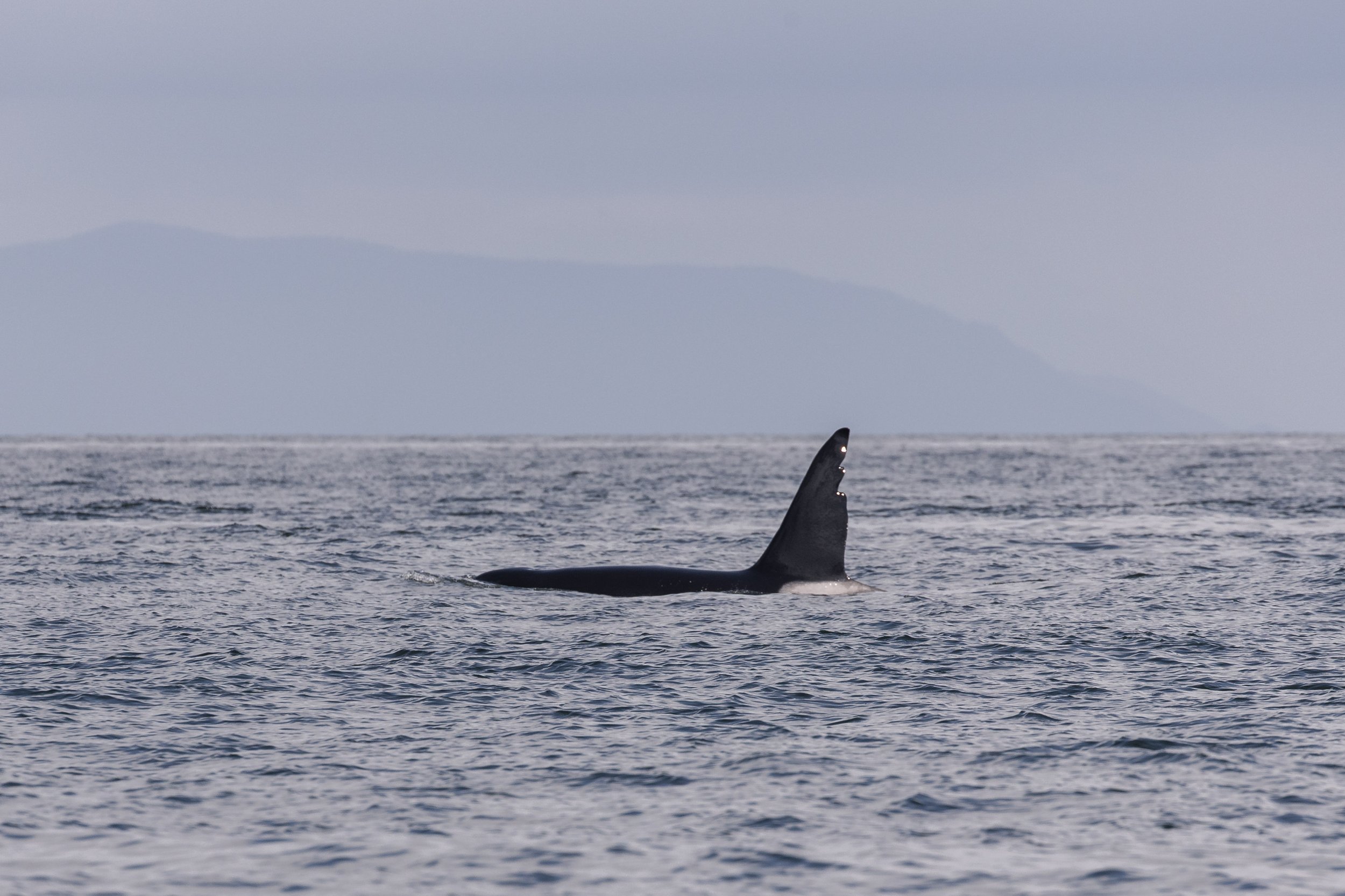
T063 Chainsaw surfacing in the Strait. Photo by Desarae Poier.
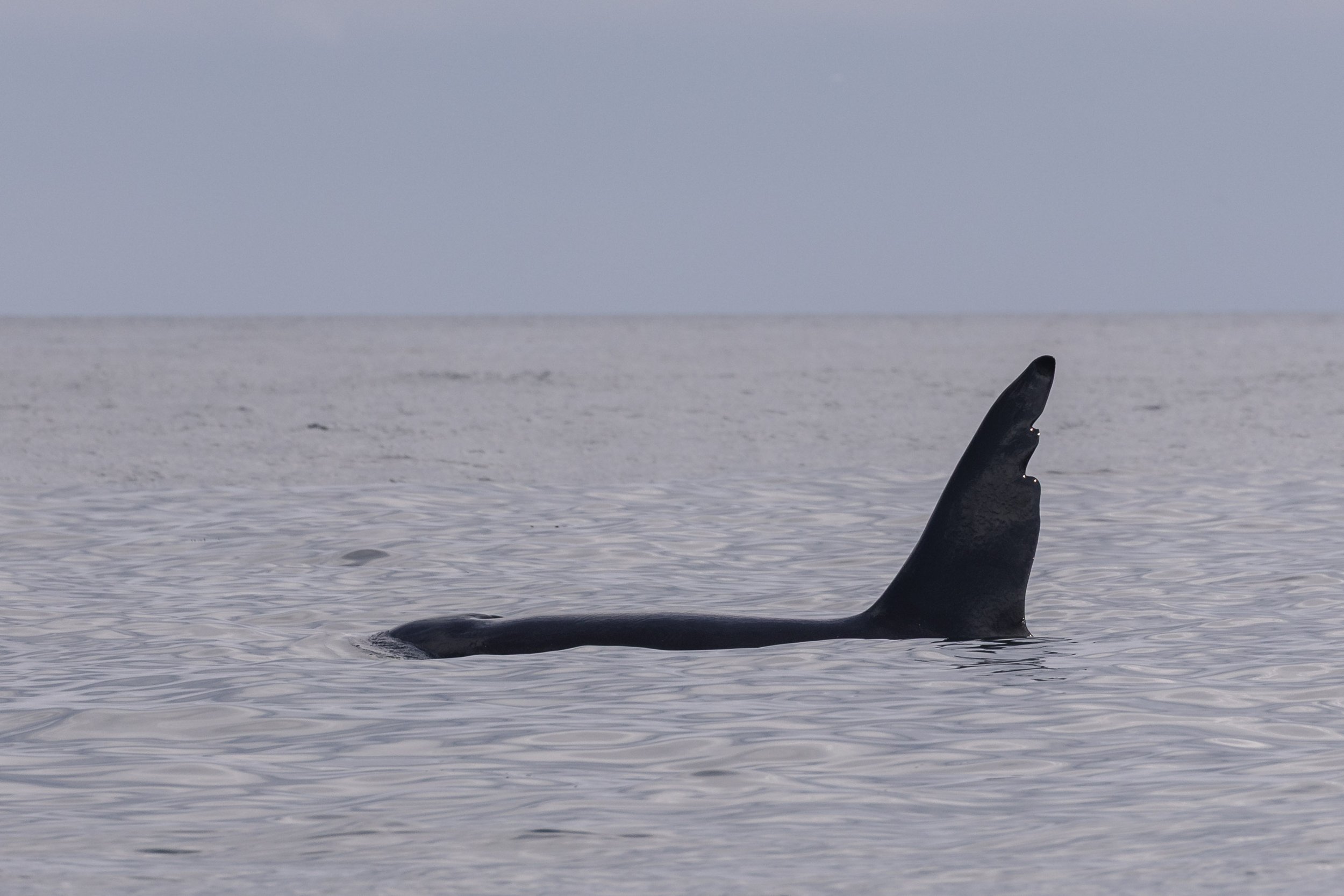
A great look at T063 Chainsaw. Photo by Desarae Poier.
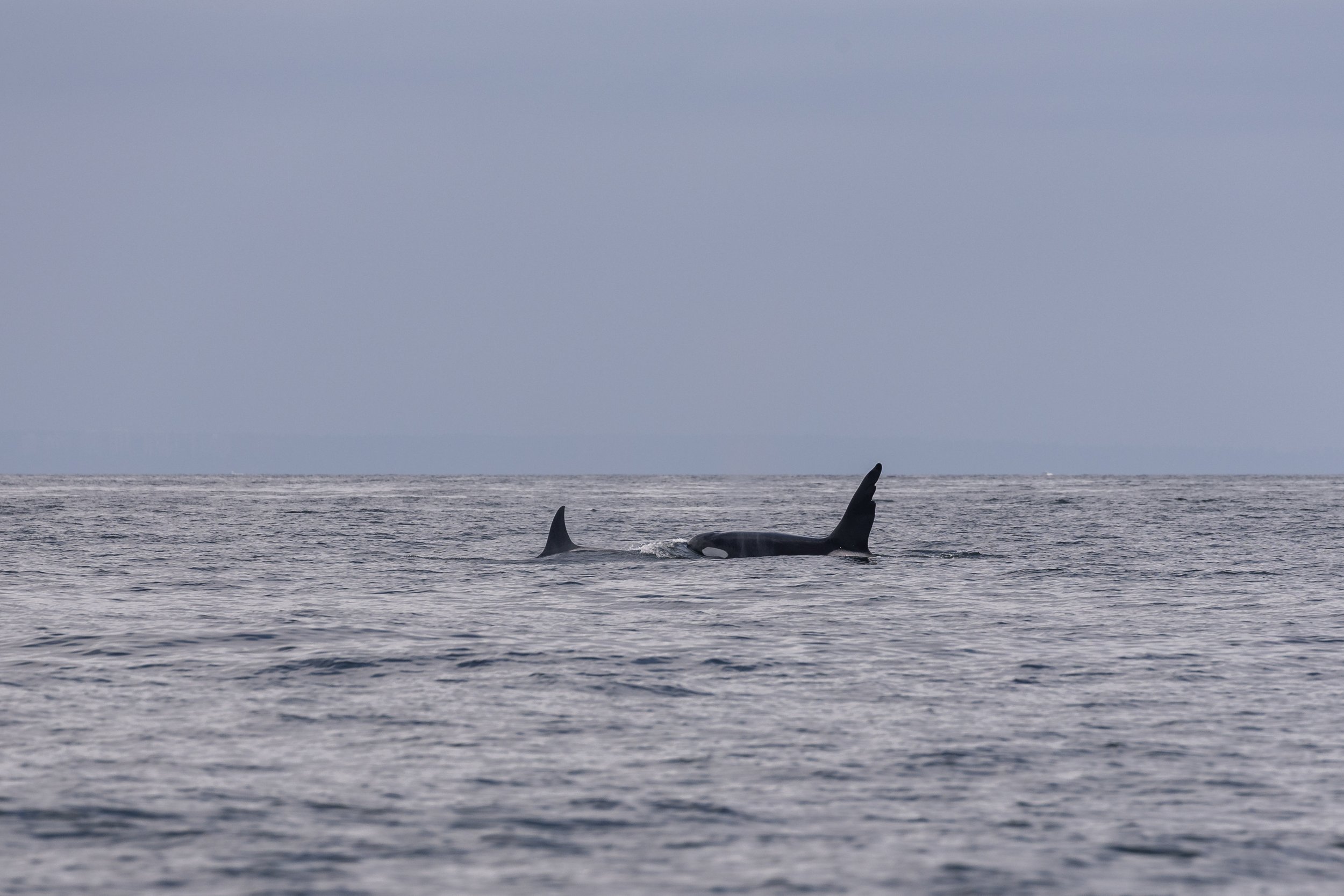
T065 Whidbey and T063 Chainsaw surfacing together. Photo by Desarae Poier.
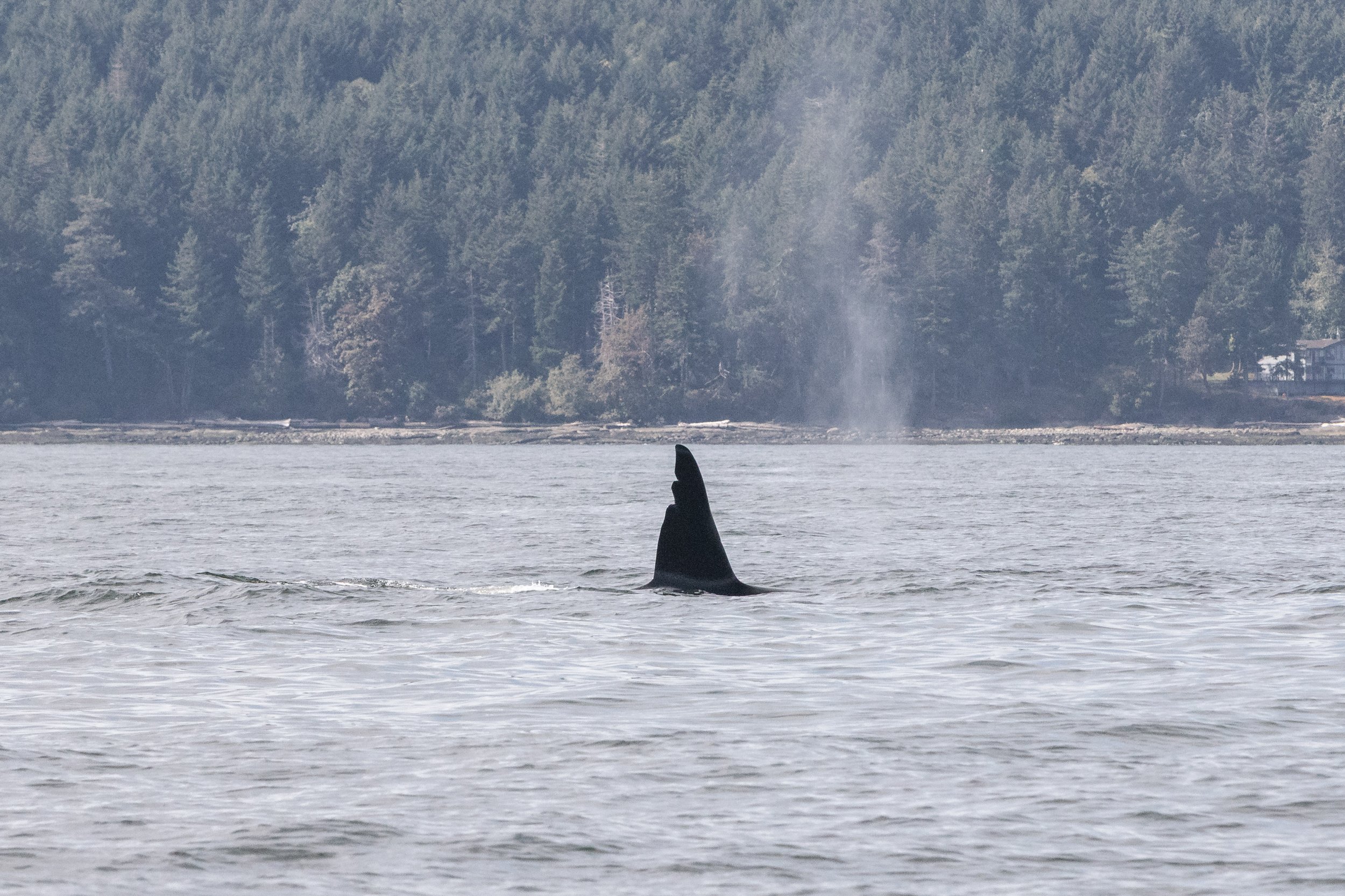
T063 Chainsaw surfacing with Valdes Island as the backdrop. Photo by Jordan Robinson.
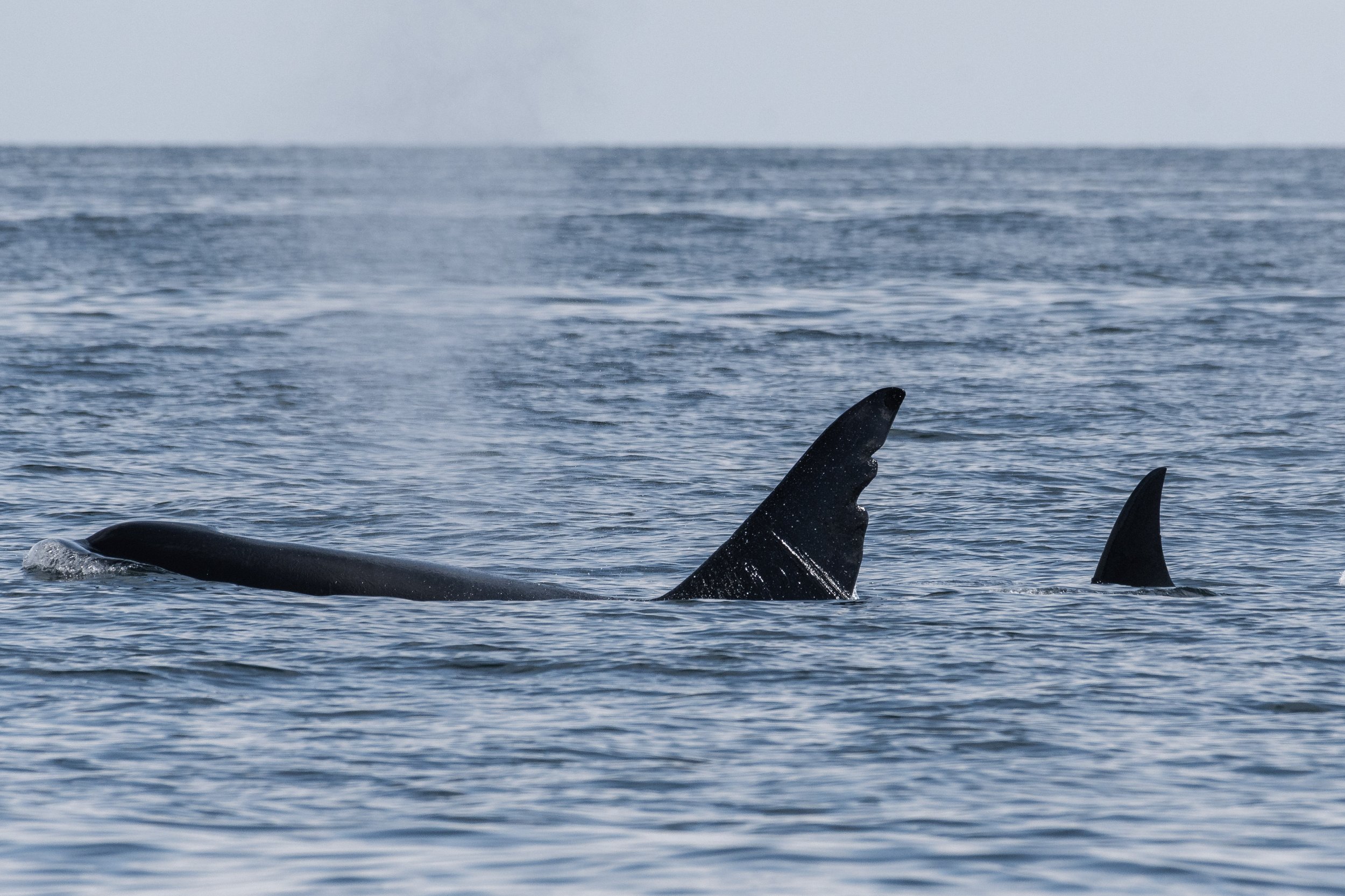
T063 Chainsaw surfacing just ahead of his mom, T065 Whidbey. Photo by Evan Hessels.
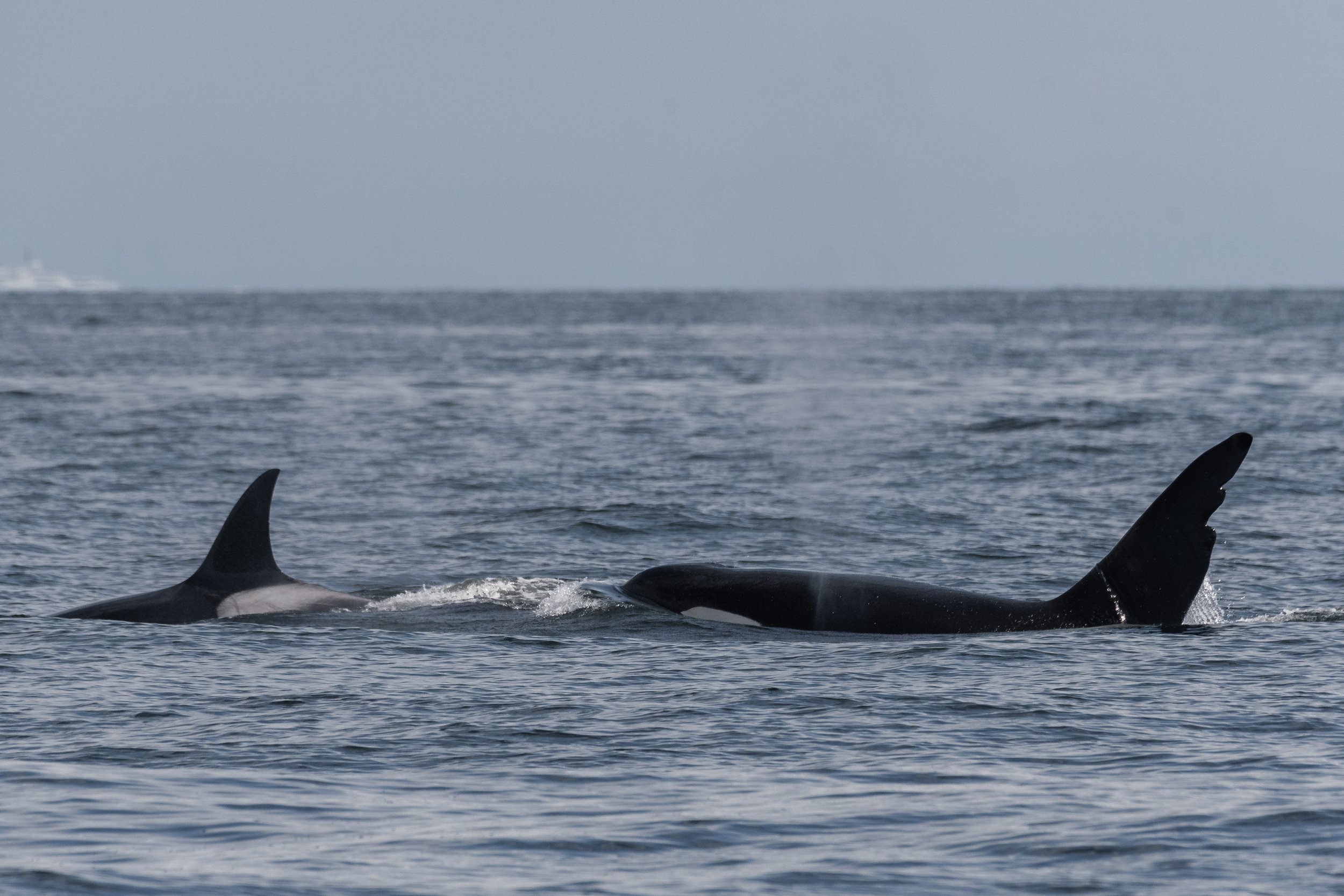
A look at T065 Whidbey and T063 Chainsaw surfacing together. Photo by Evan Hessels.
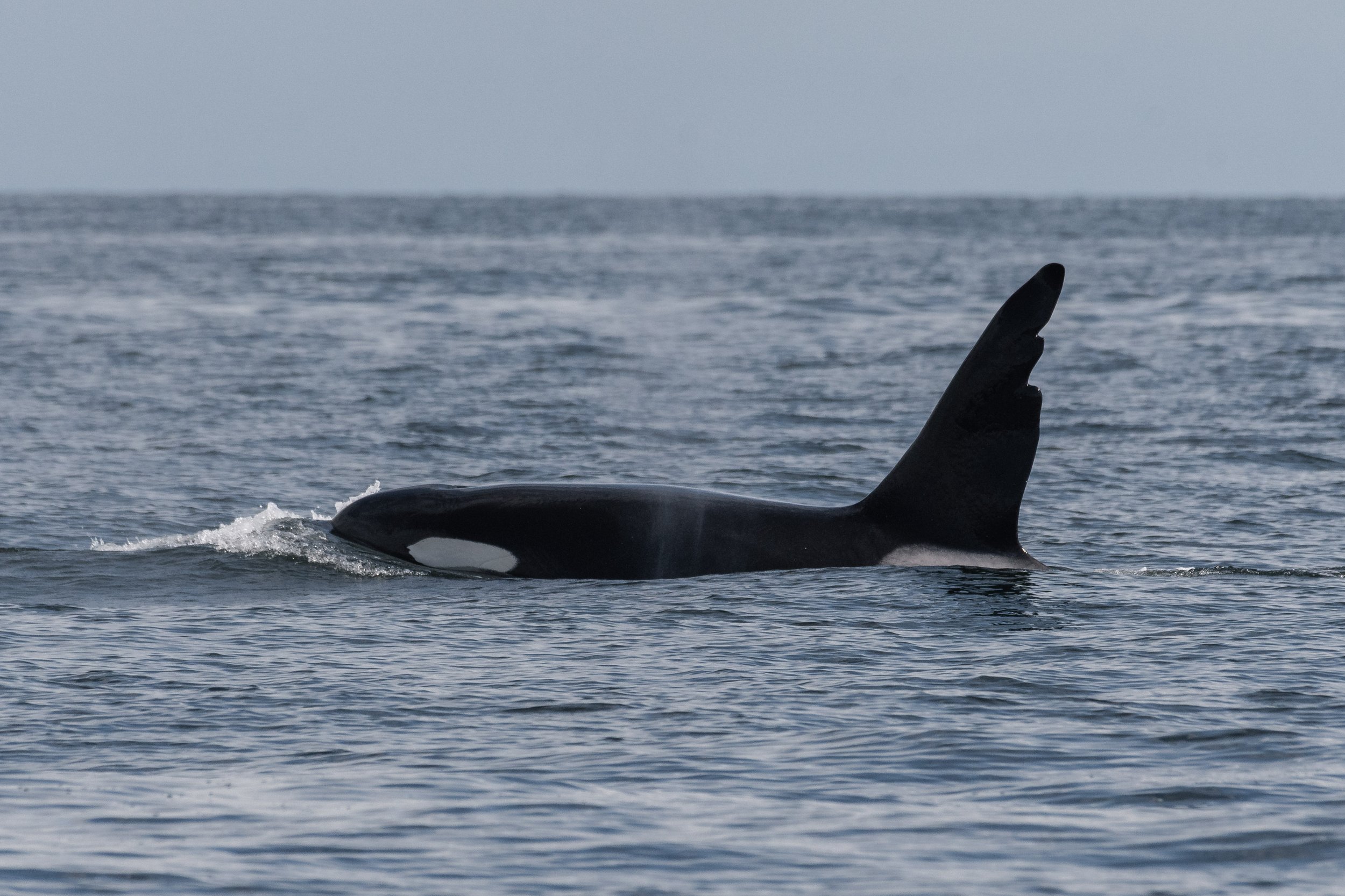
A fantastic look at T063 Chainsaw as he surfaces. Photo by Evan Hessels.
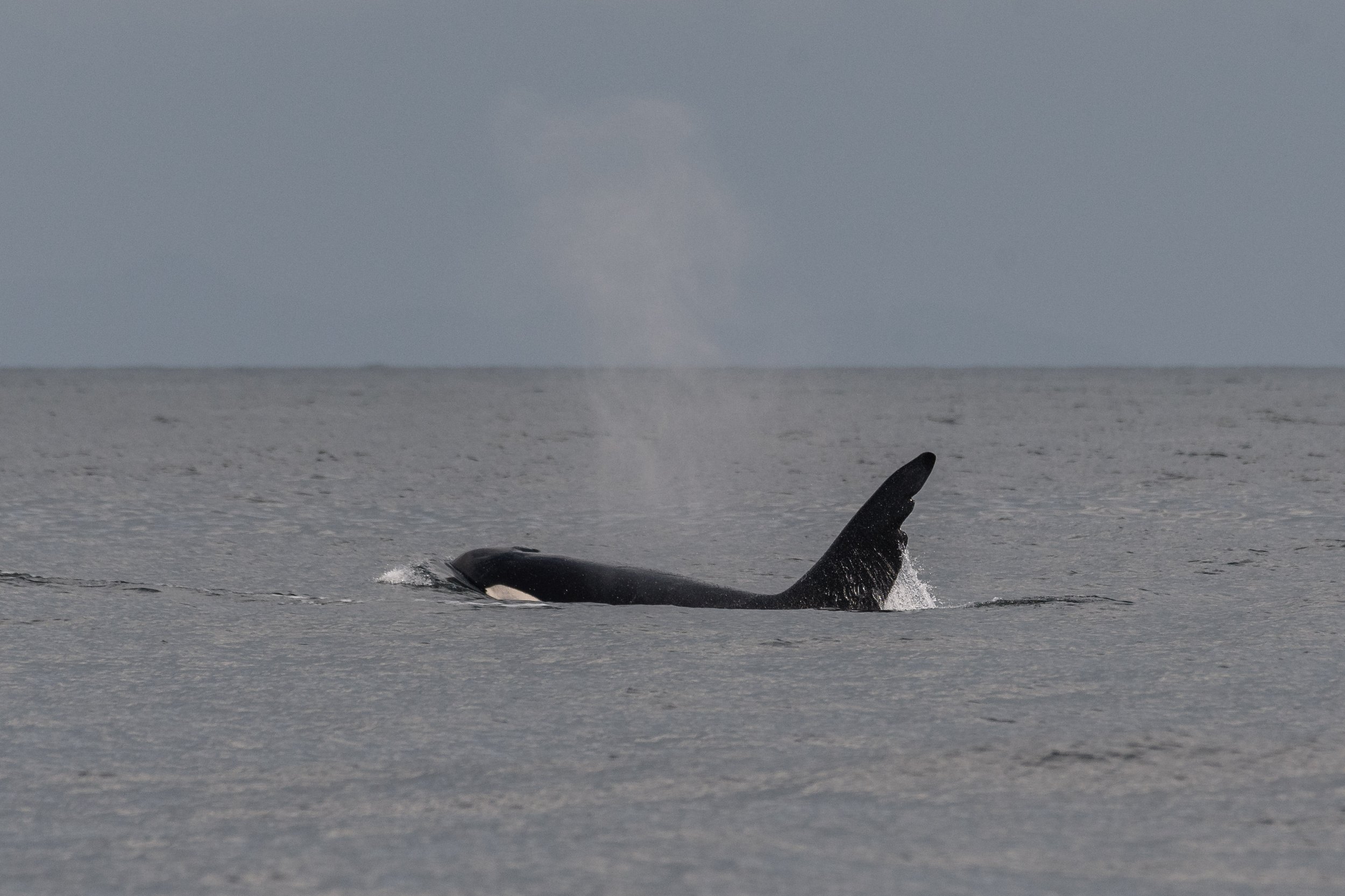
Just look at all that water cascading off T063 Chainsaw’s dorsal fin. Photo by Evan Hessels.
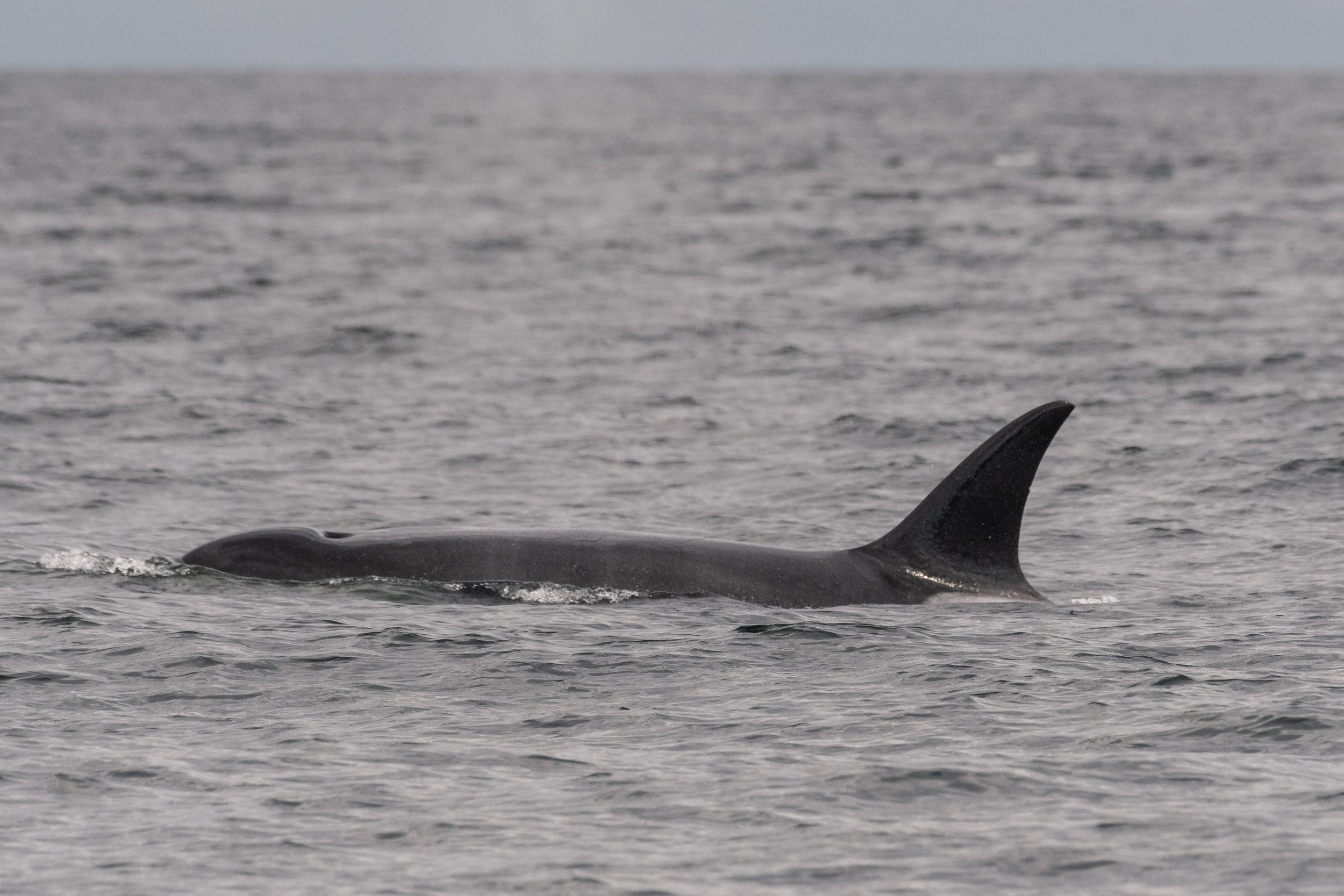
T065 Whidbey surfacing. Photo by Evan Hessels.
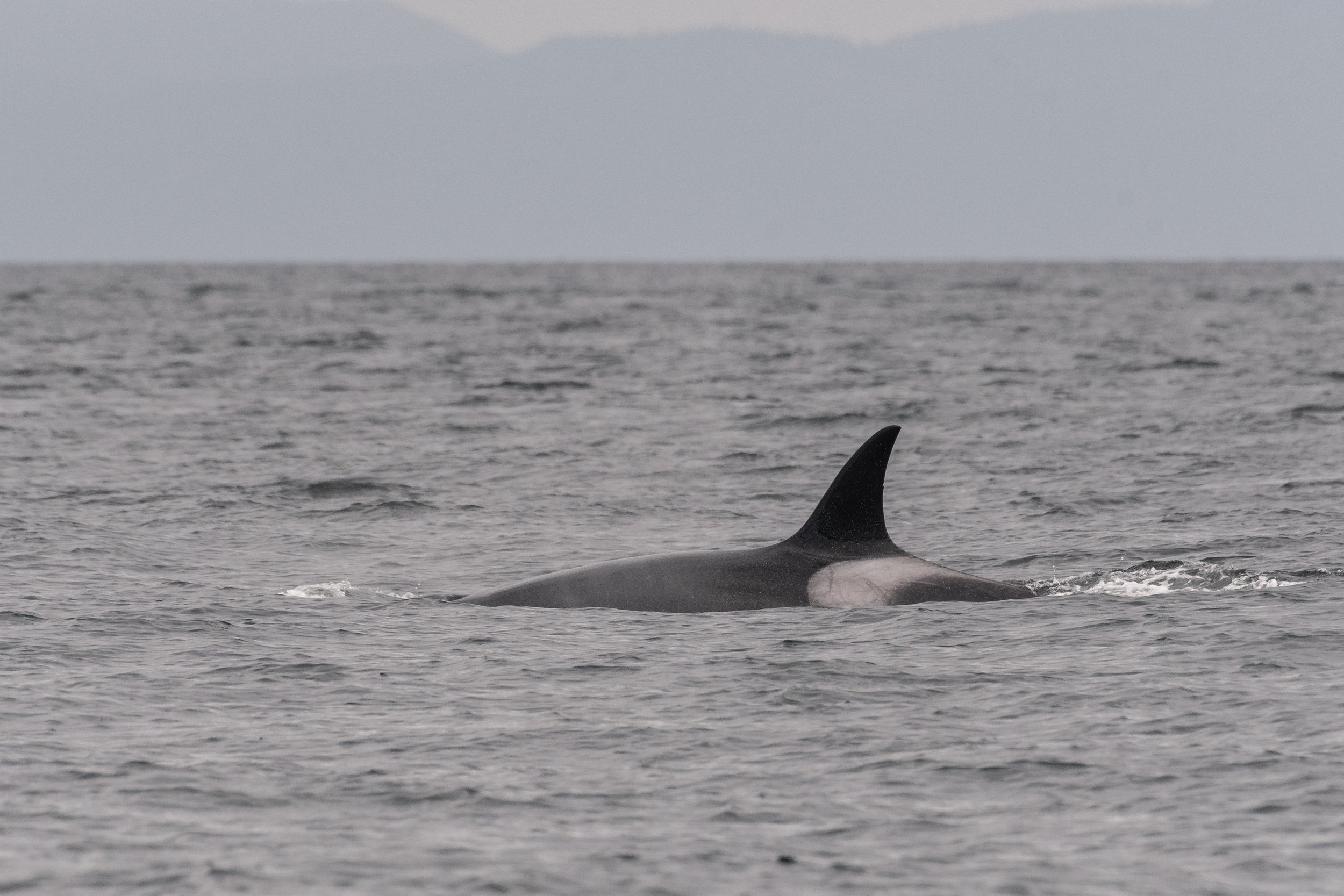
T065 Whidbey showing off her saddle patch as she surfaces. Photo by Evan Hessels.
Chi
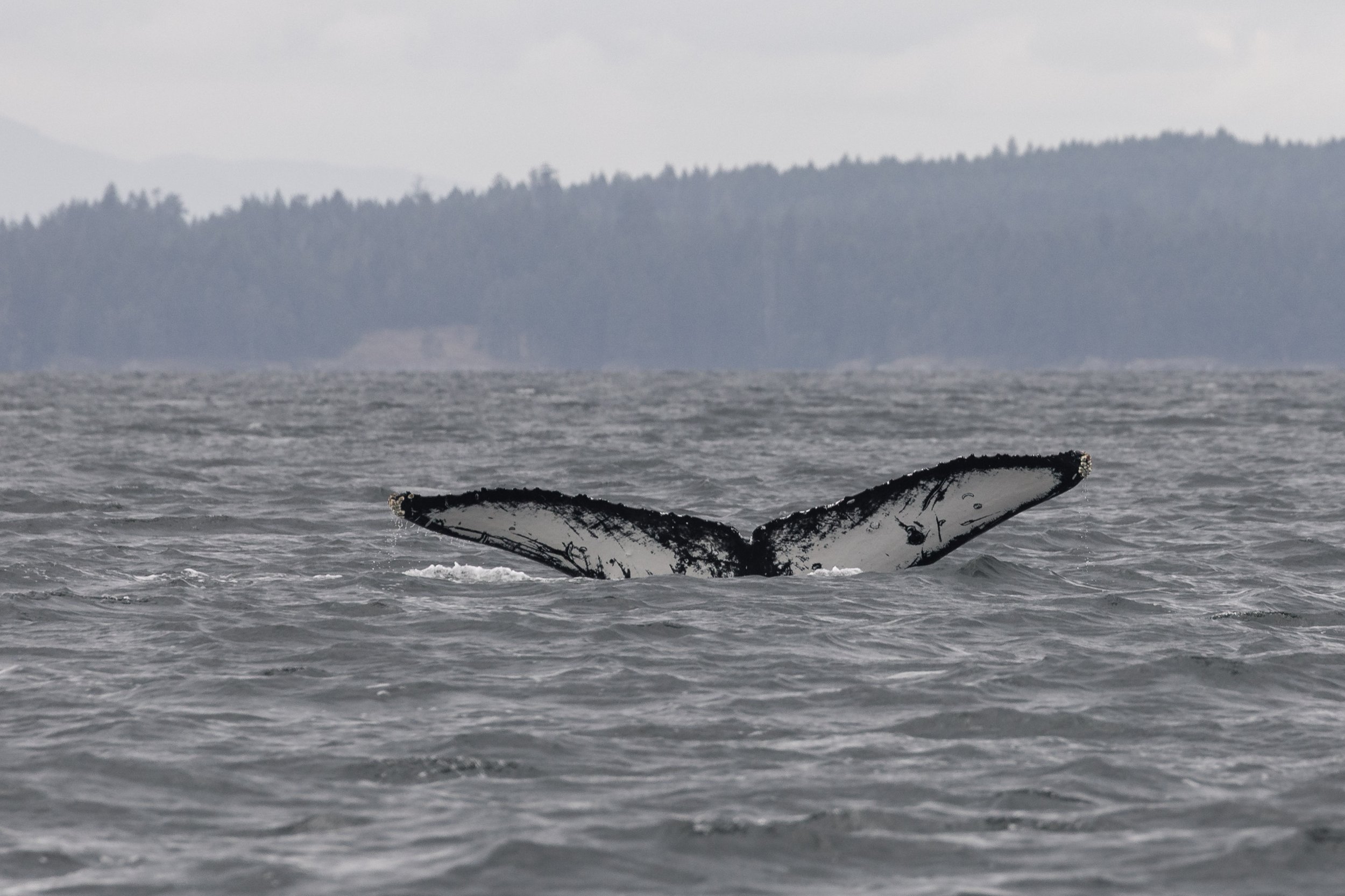
Chi going for a dive. Photo by Desarae Poier.
Seltzer
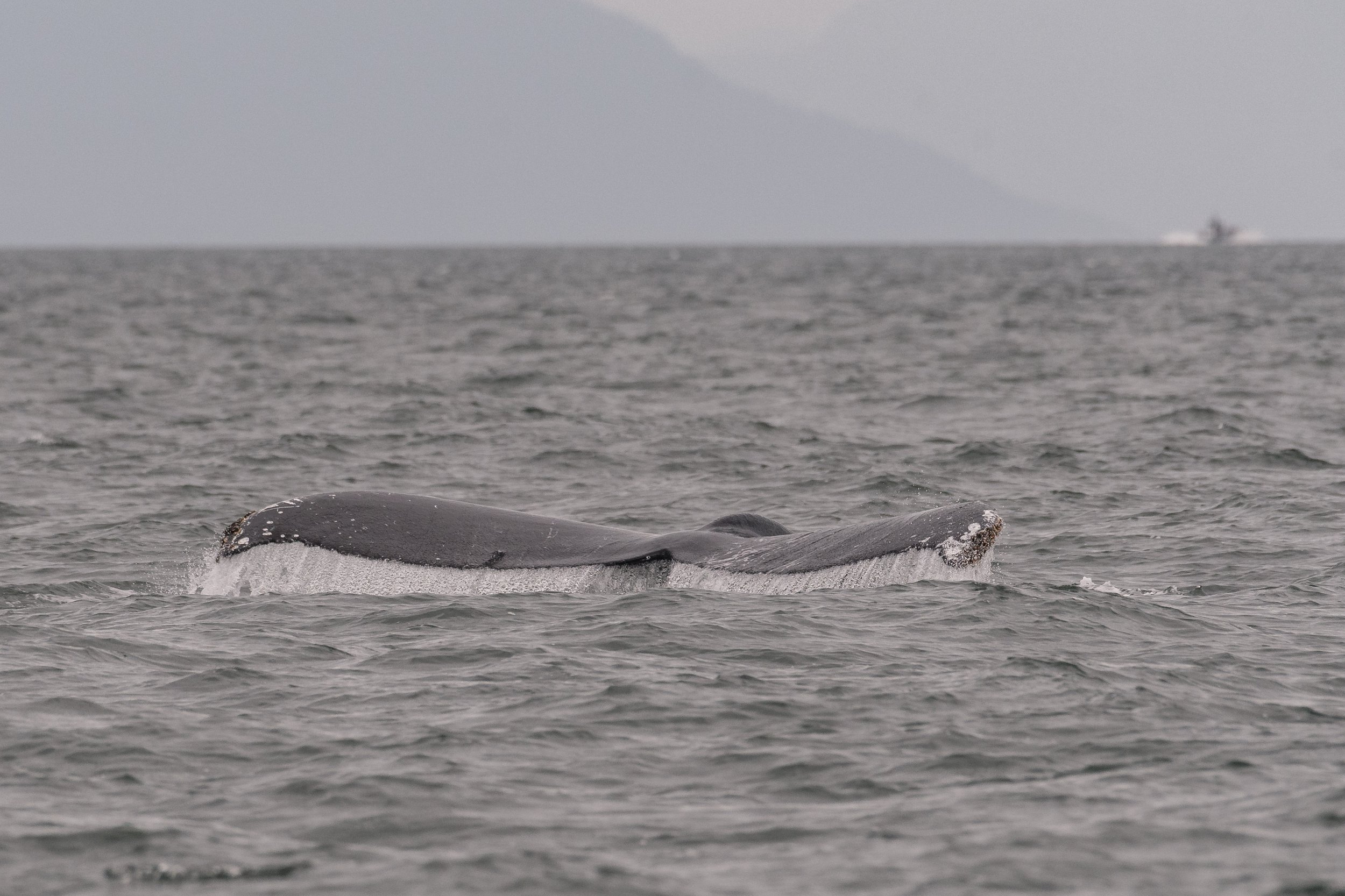
Seltzer going for a dive. Photo by Evan Hessels.
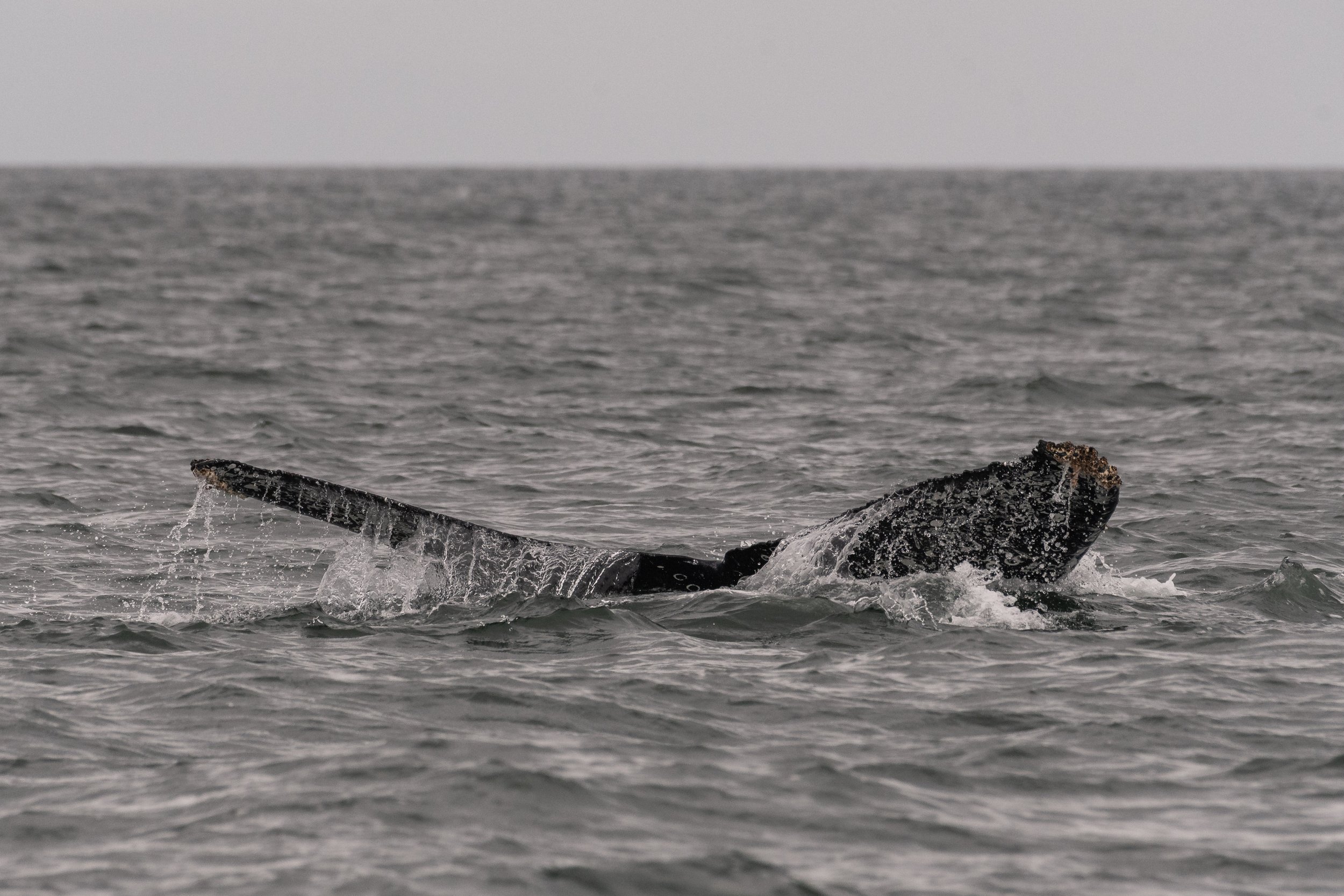
Can you see the dots on the underside of Seltzer’s tail where the name came from? Photo by Evan Hessels.
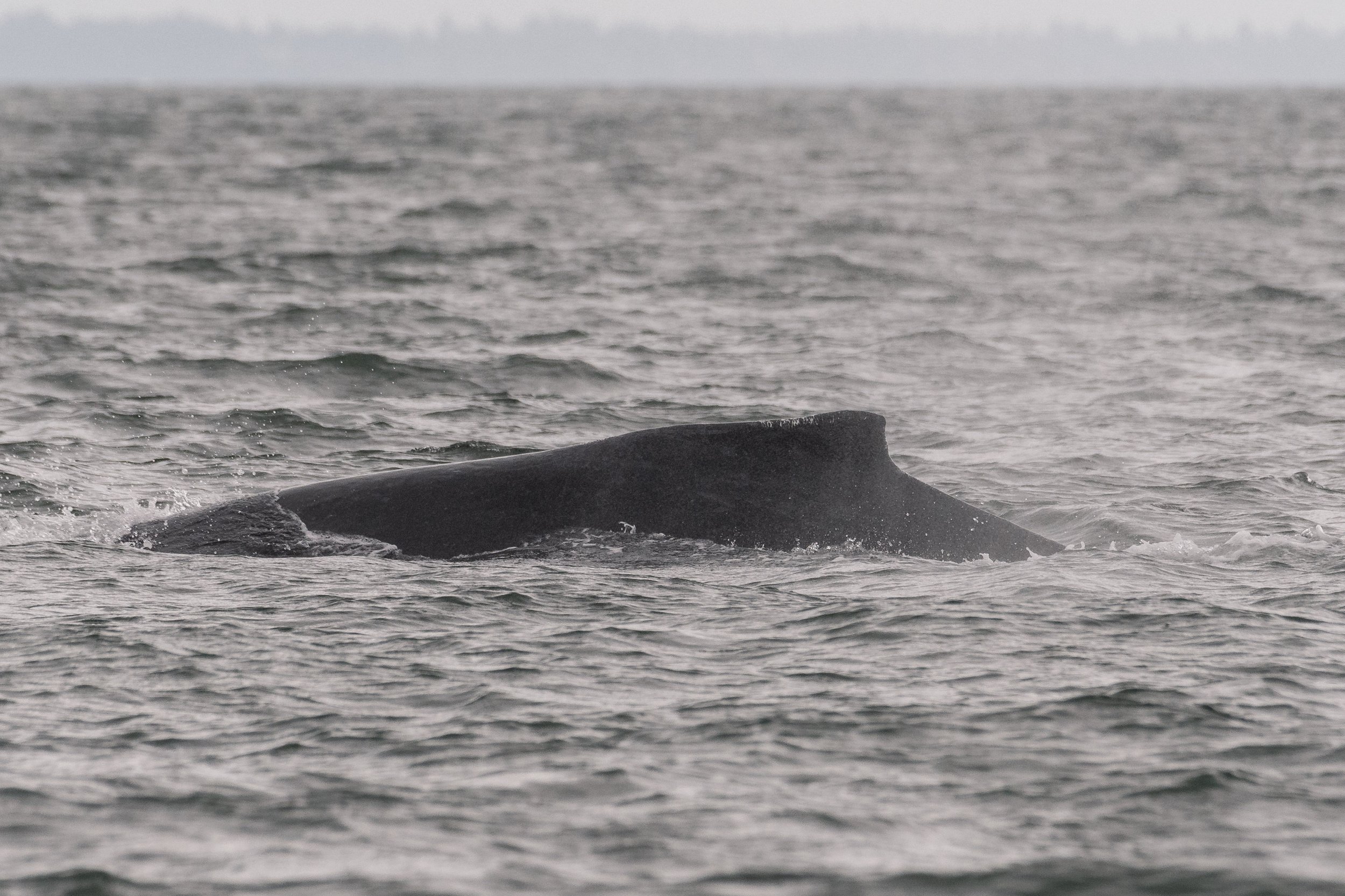
Selzter’s dorsal fin as they surface in the waves. Photo by Evan Hessels.
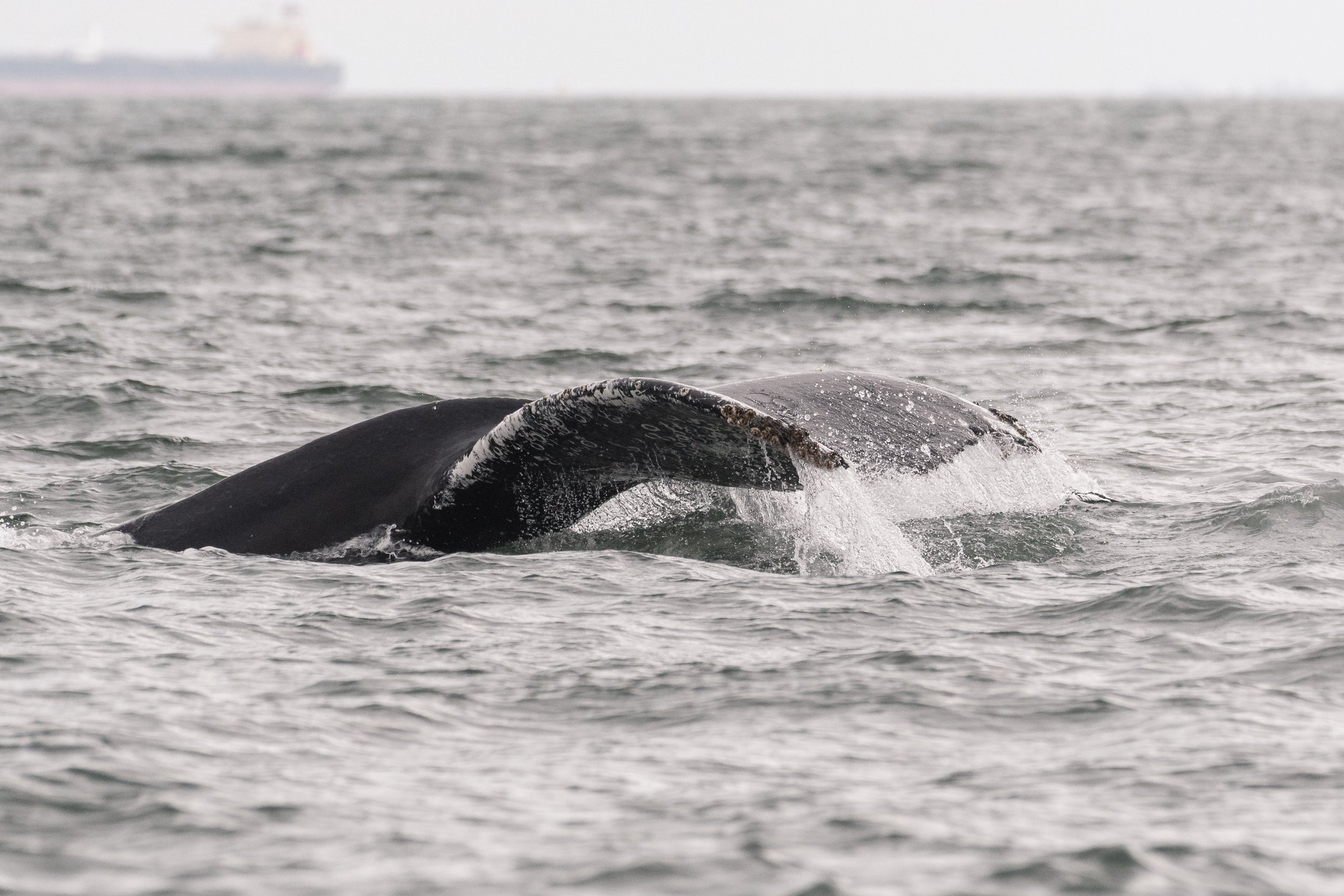
Seltzer lifting their tail to dive. Photo by Evan Hessels.
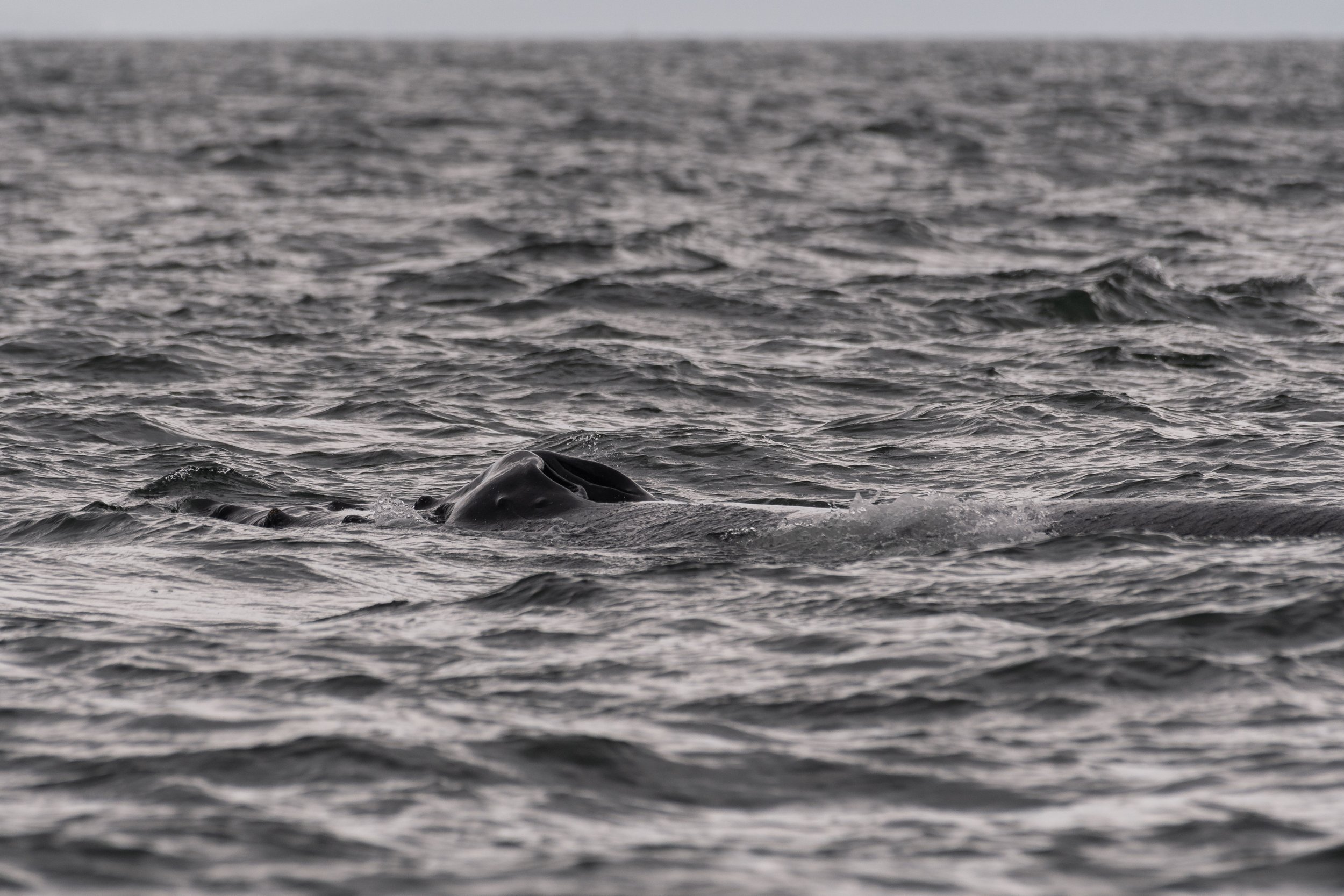
A look up Seltzer’s nostrils. Photo by Evan Hessels.
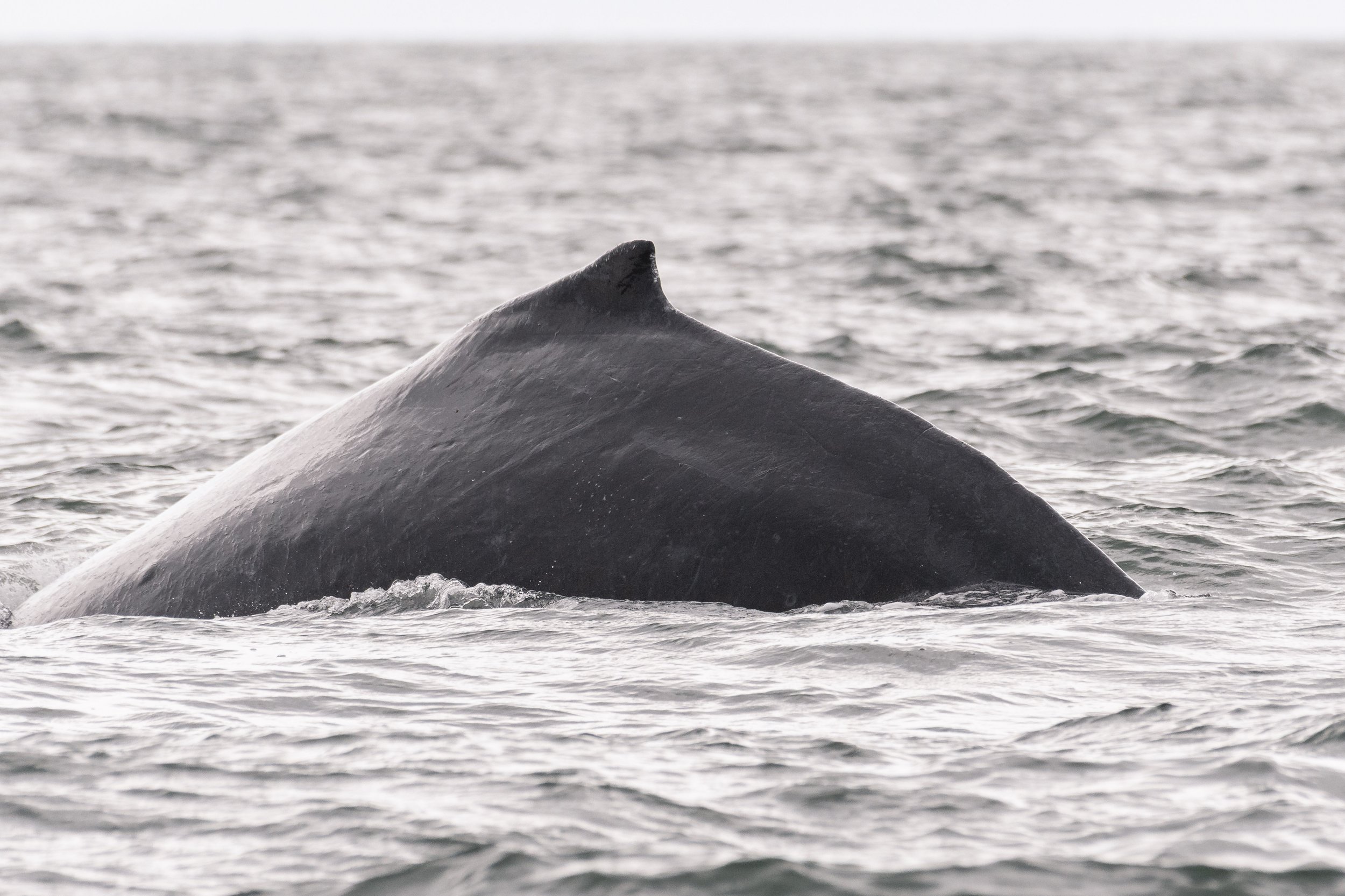
Seltzer arching for a dive. Photo by Evan Hessels.
Stinky Rock
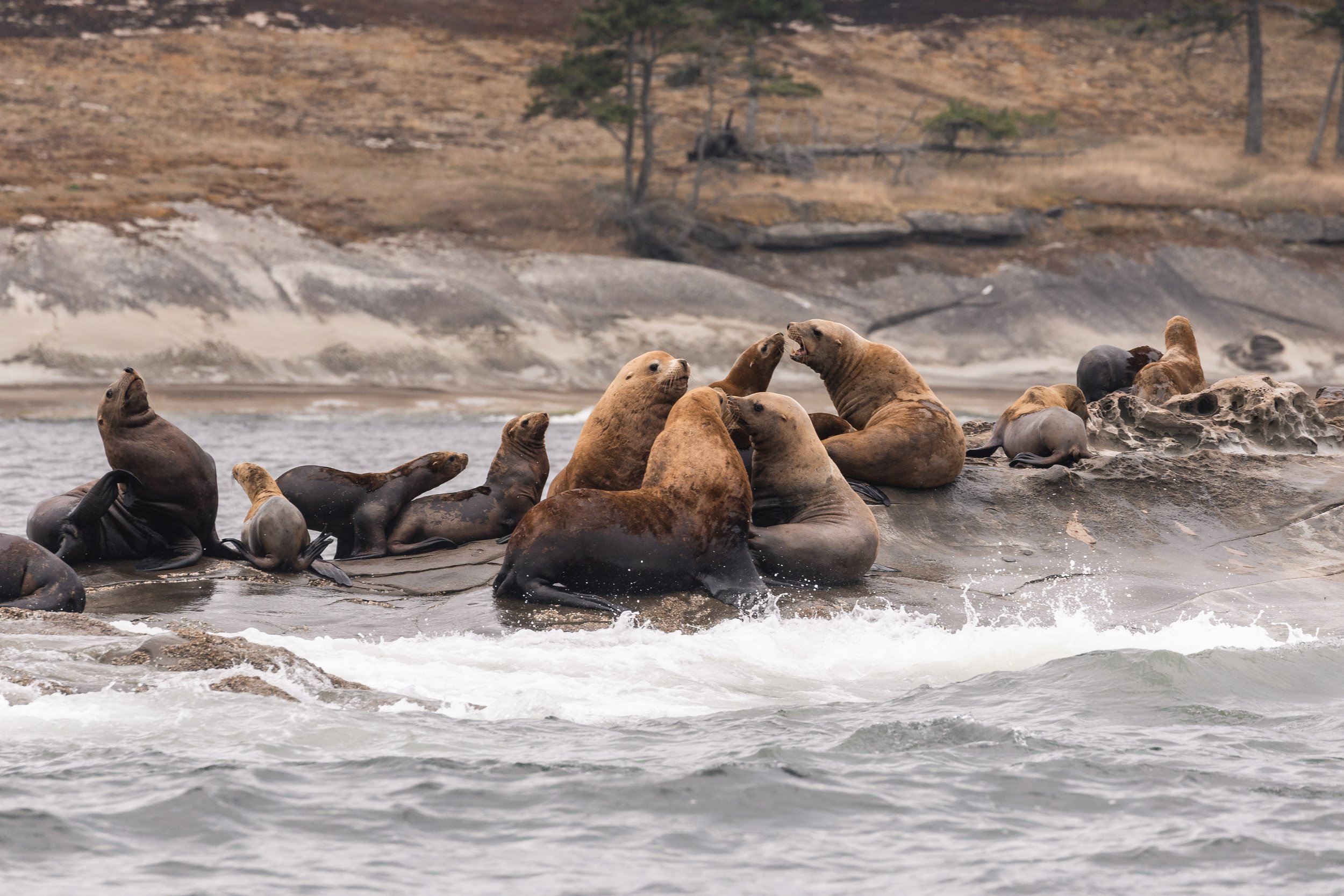
Fighting Steller Sea Lions on Stinky Rock. Photo by Desarae Poier.
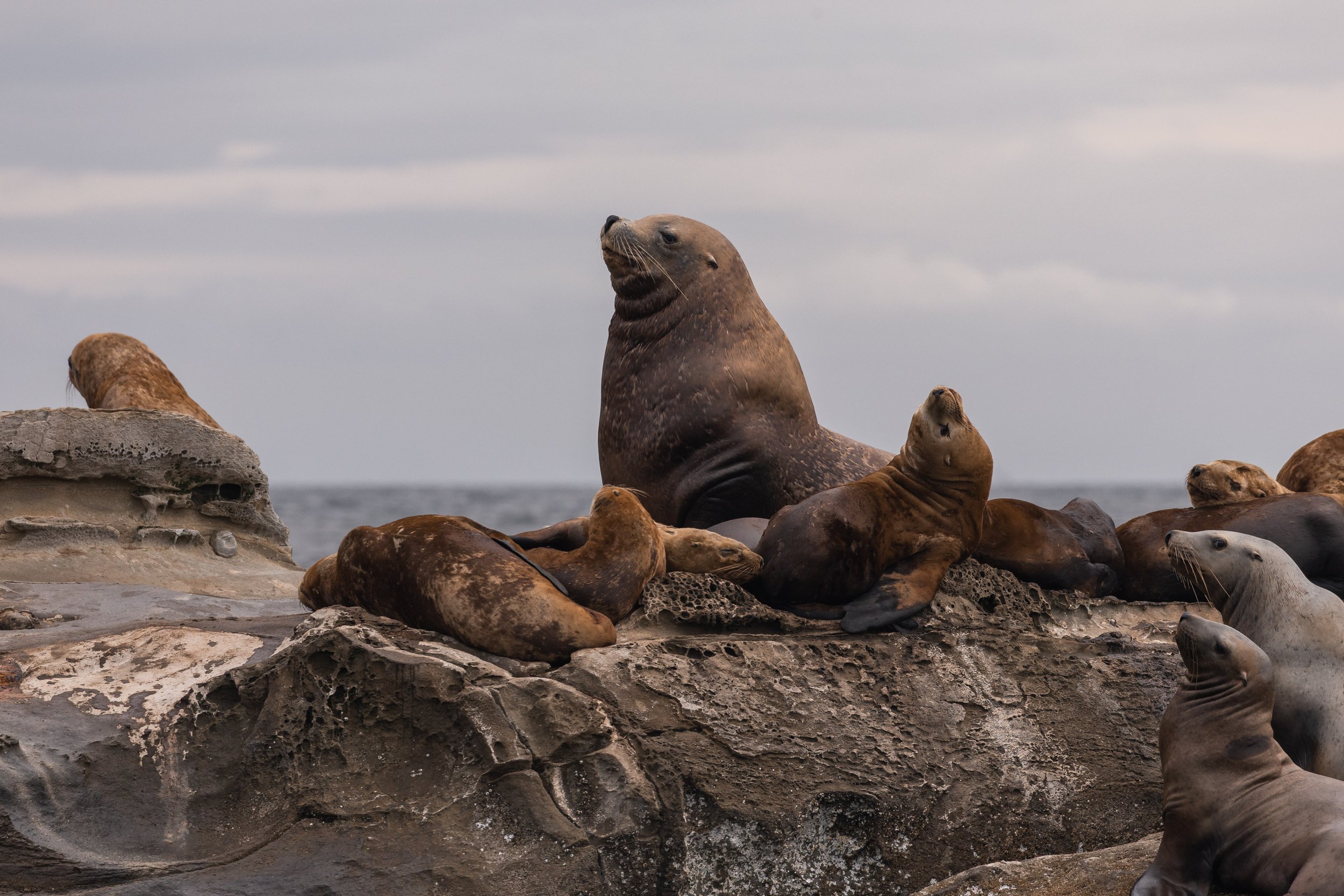
Just look at the size difference betweent these Steller Sea Lions. Photo by Desarae Poier.
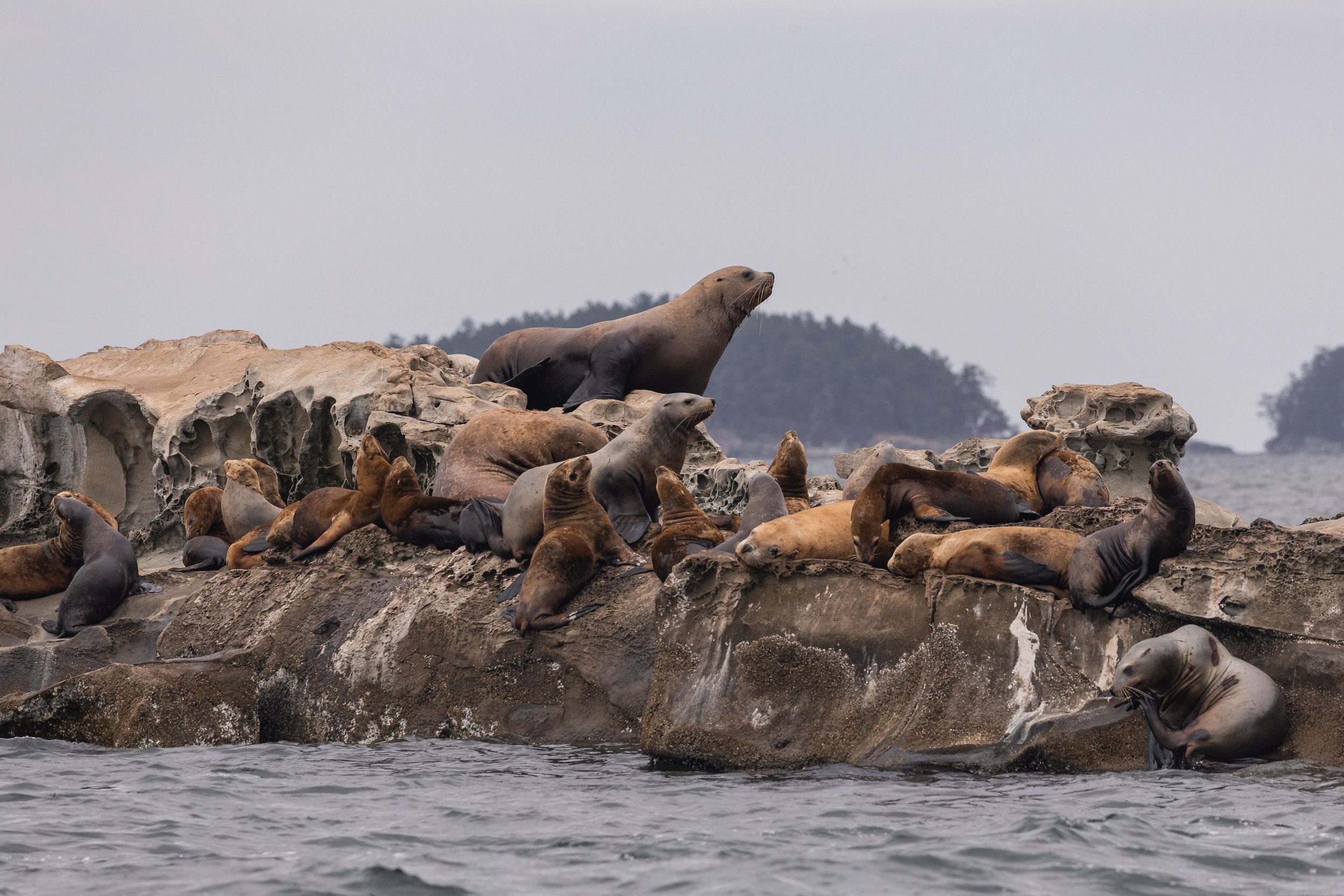
A great look at Stinky Rock. Photo by Desarae Poier.
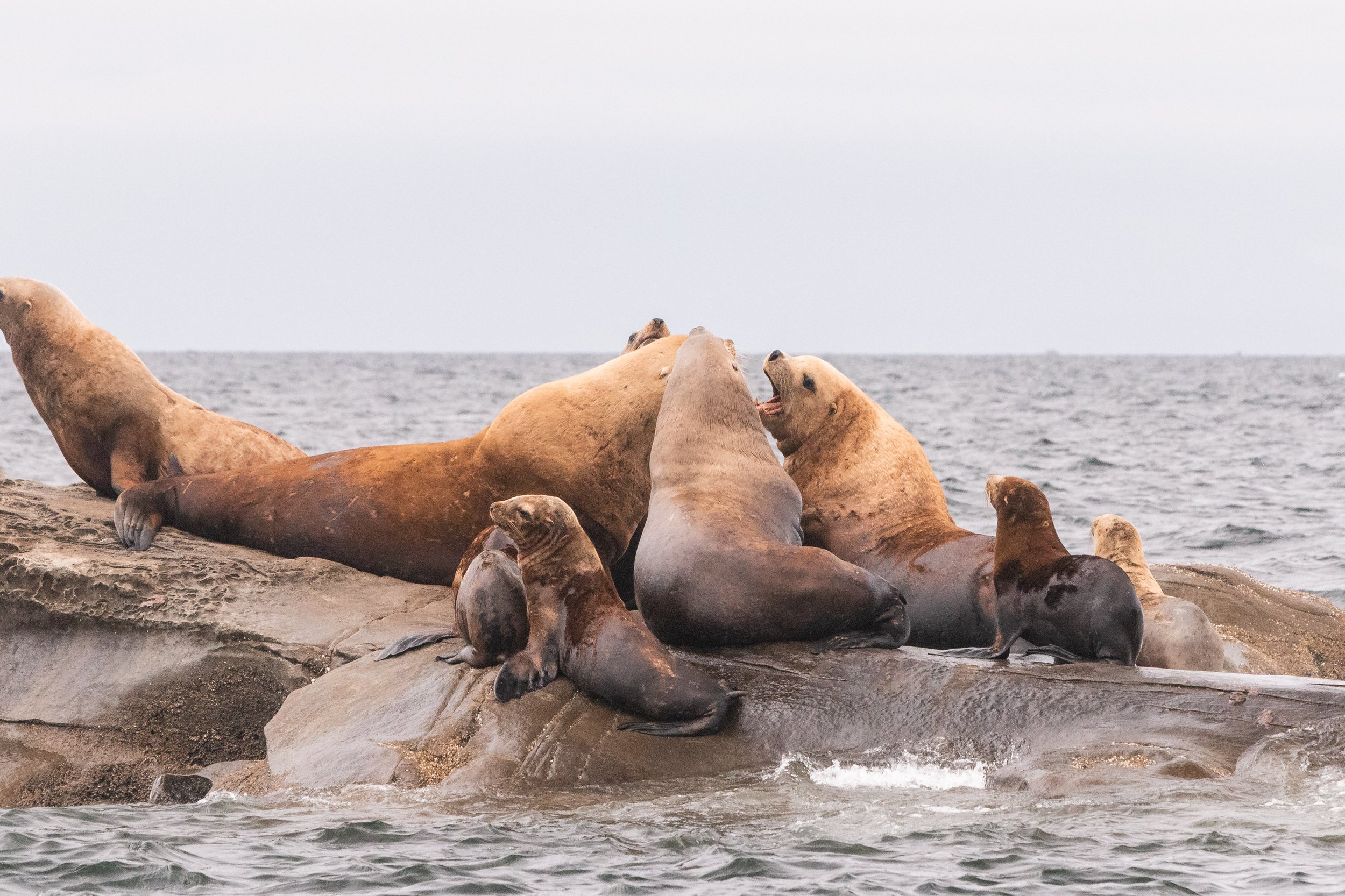
Fighting Steller Sea Lions from another angle. Photo by Jordan Robinson.
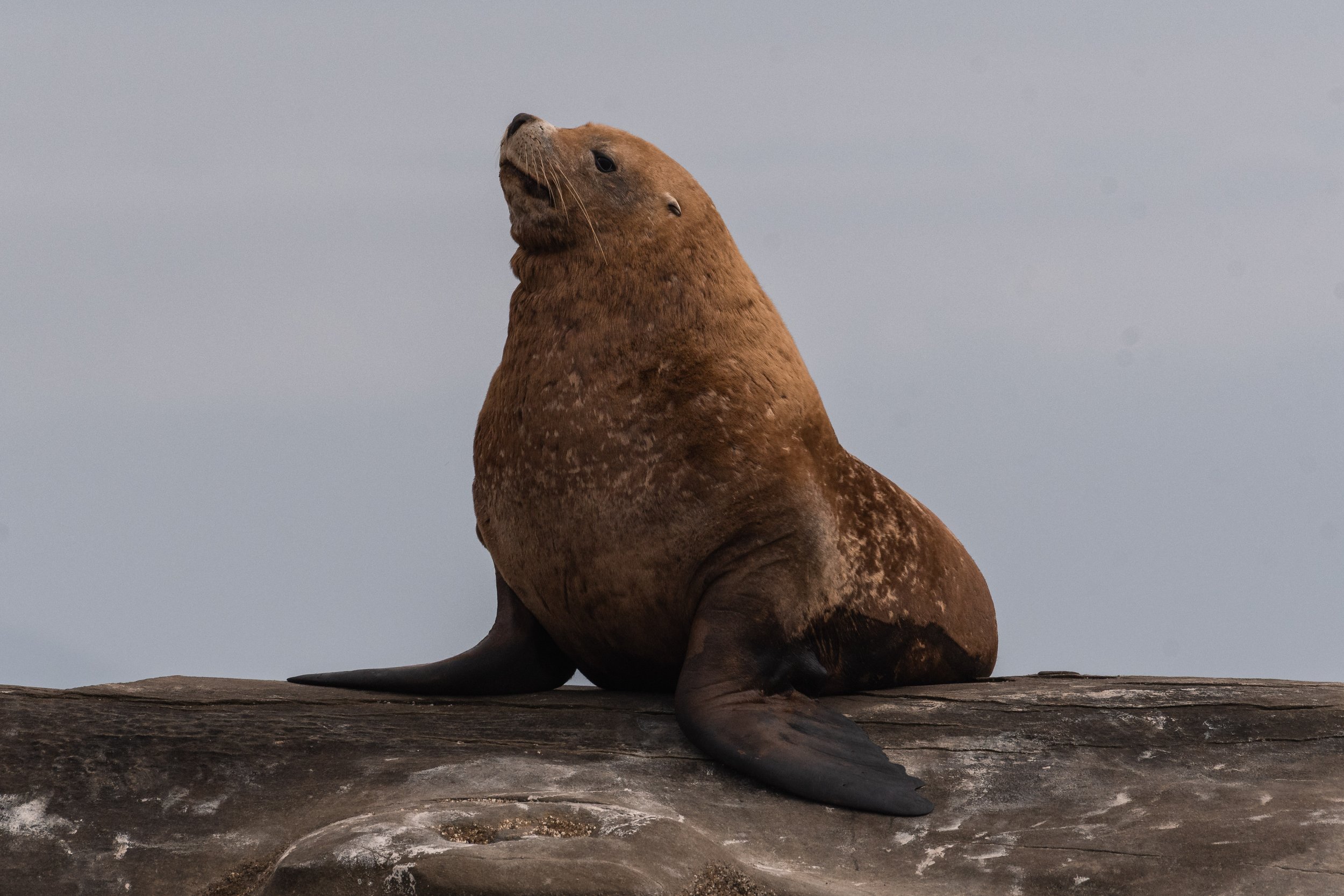
A male Steller Sea Lion striking a pose. Photo by Evan Hessels.
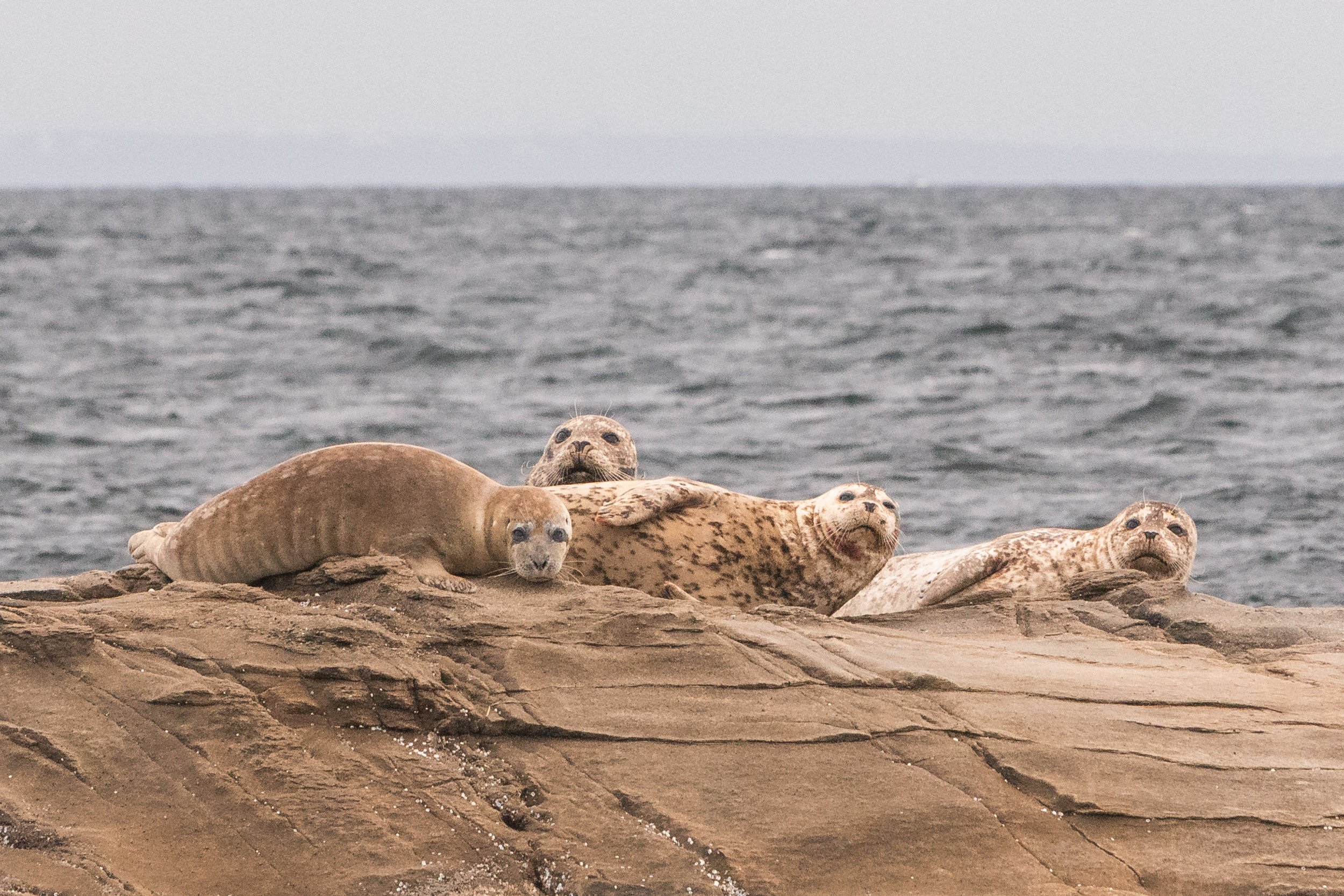
Some very sute Harbour Seals blending into the Sandstone. Photo by Jordan Robinson.
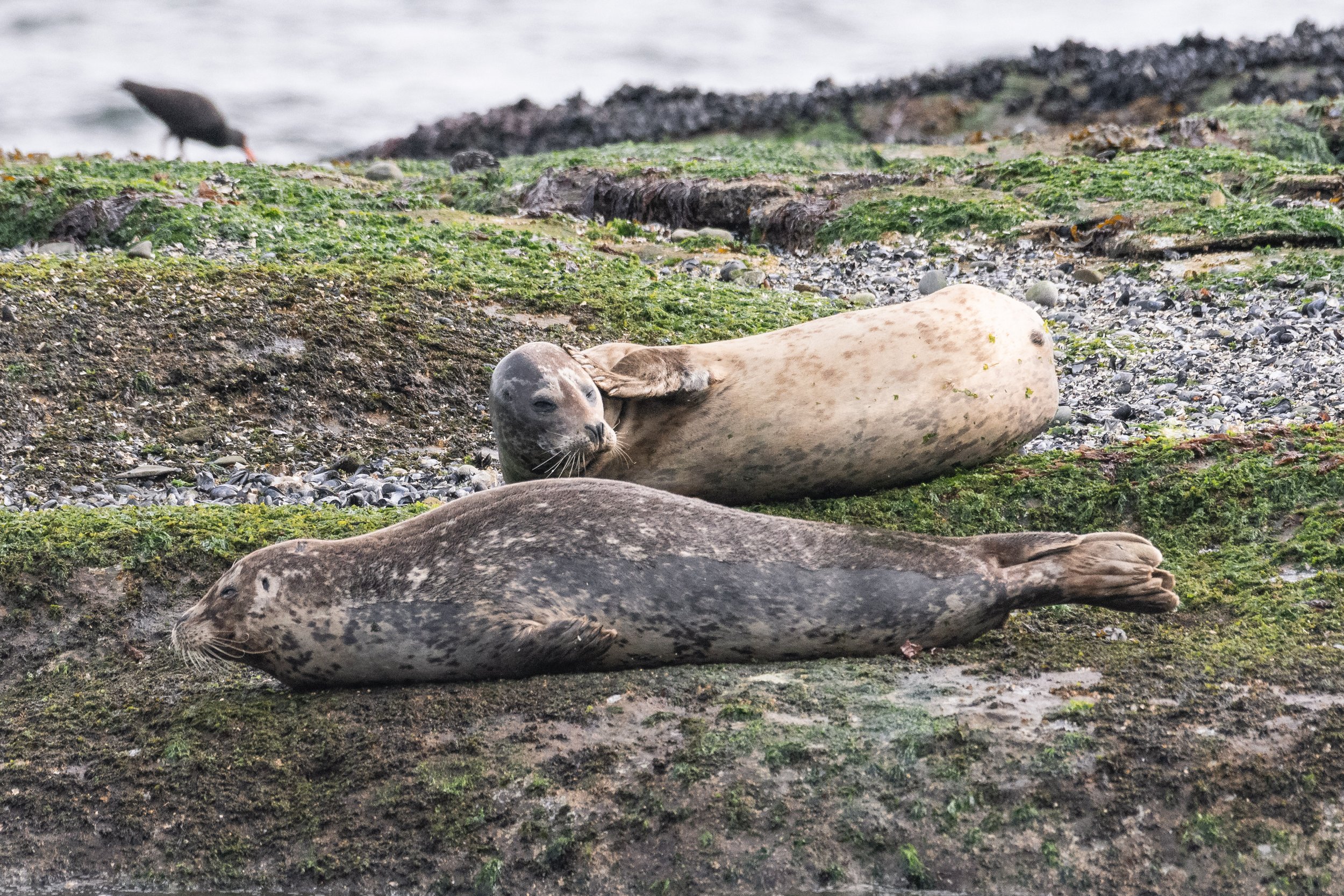
Some Harbour Seals striking a pose on Stinky Rock. Photo by Evan Hessels.
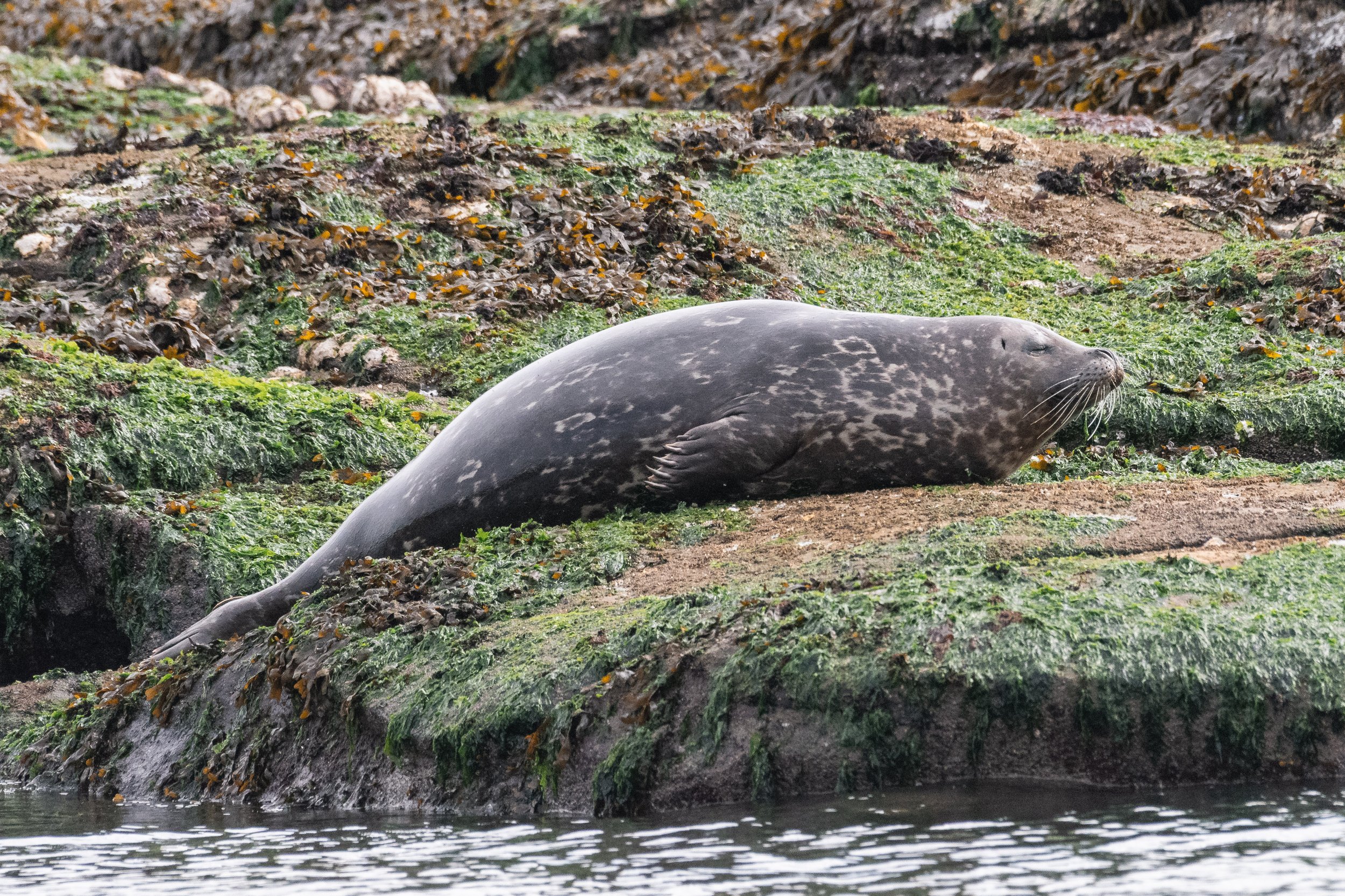
A very happy looking Harbour Seal. Photo by Evan Hessels.
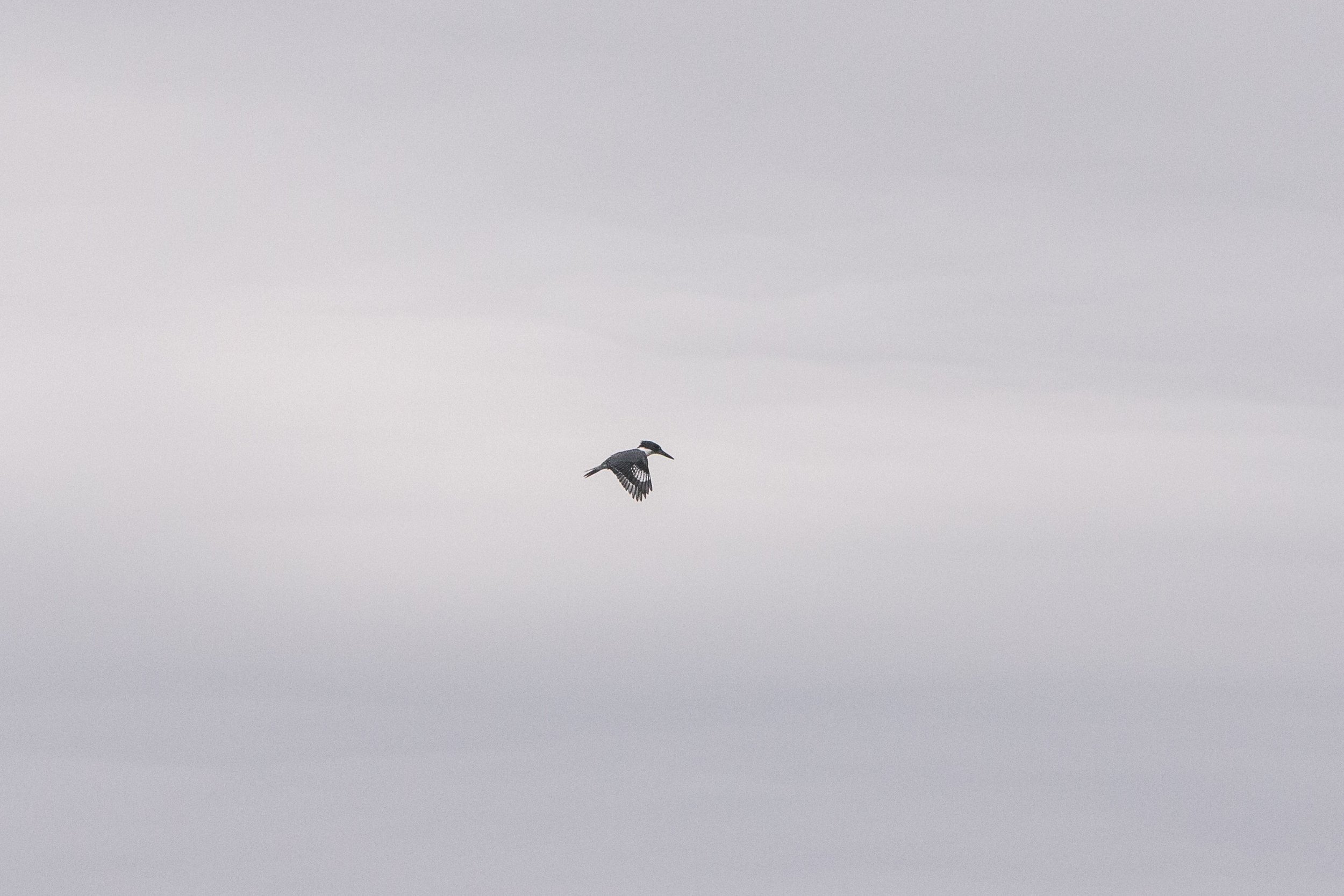
A Belted Kingfisher looking for some fish. Photo by Jordan Robinson.
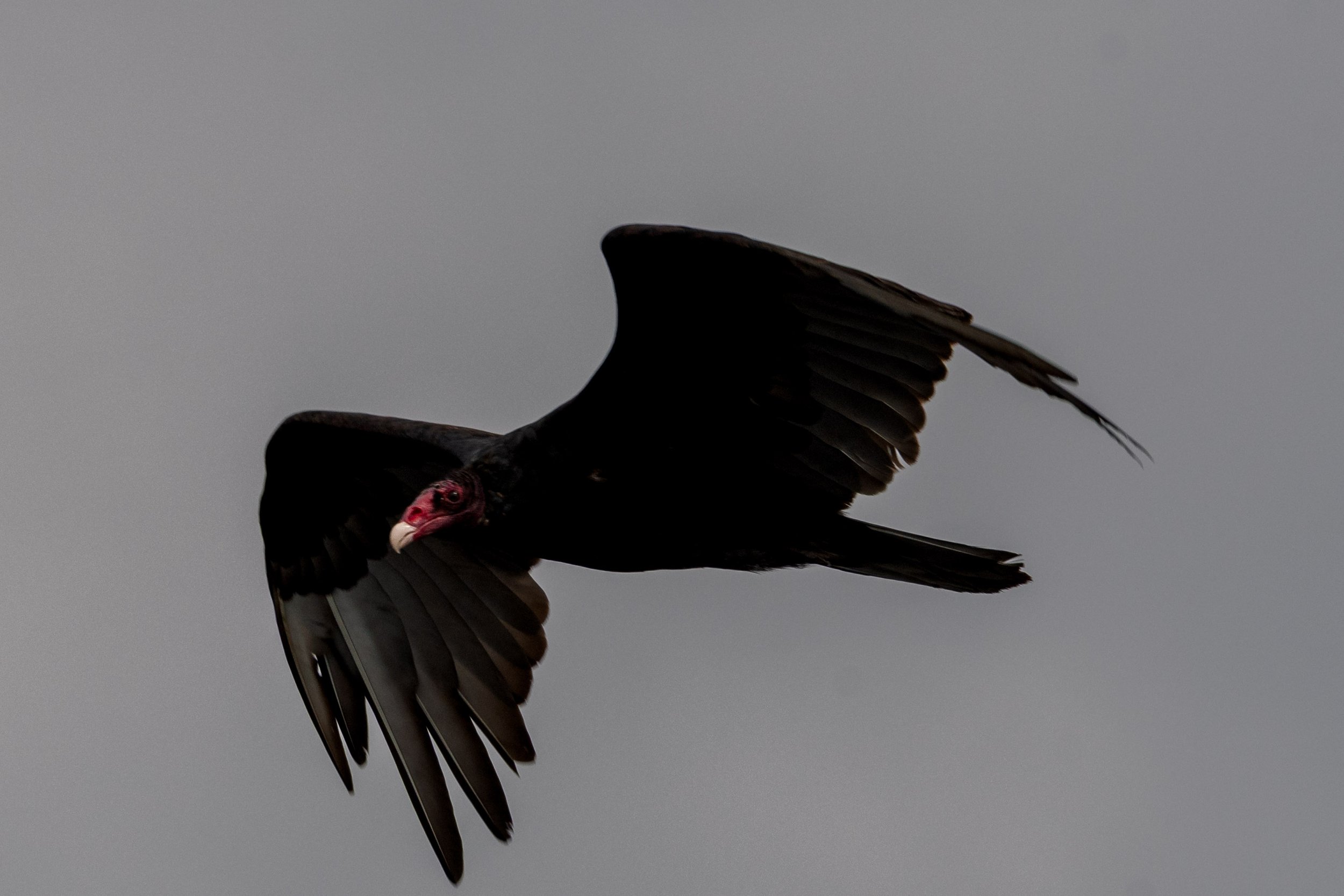
A Turkey Vulture flying by. Photo by Evan Hessels.
Volker & Inky
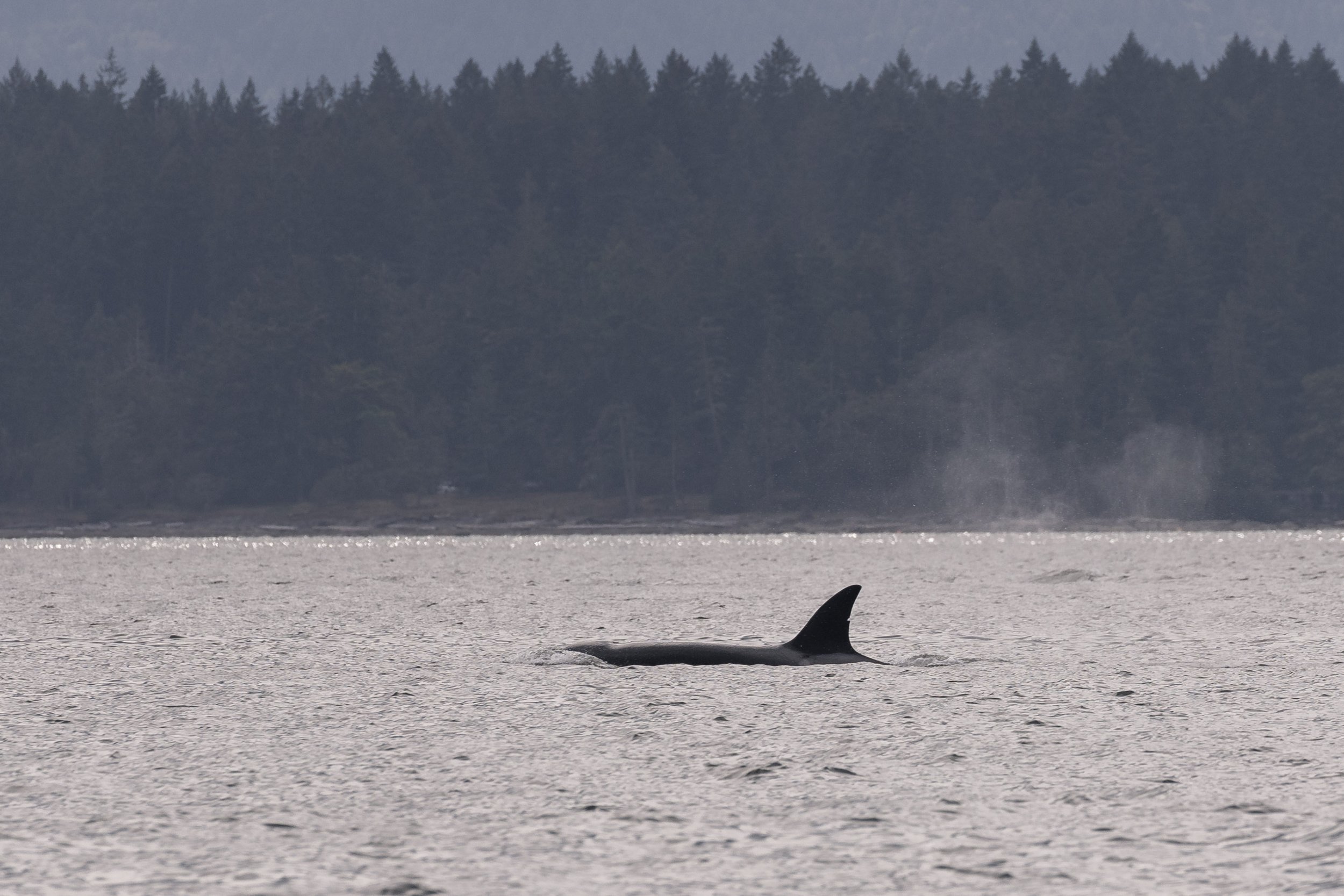
T037A Volker surfacng in Stuart Channel. Photo by Desarae Poier.
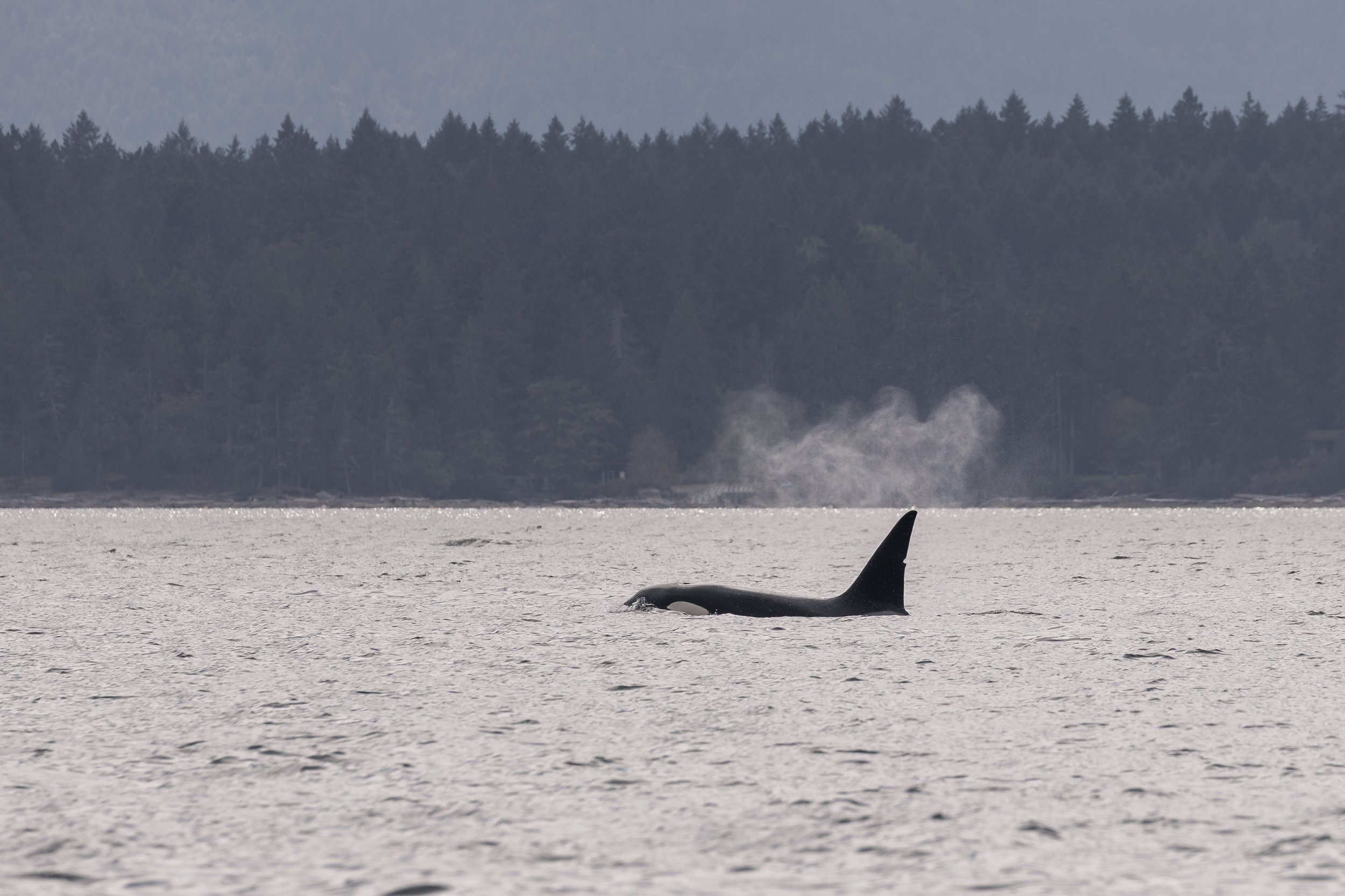
T037A2 Inky with his lovely backlit blow. Photo by Desarae Poier.
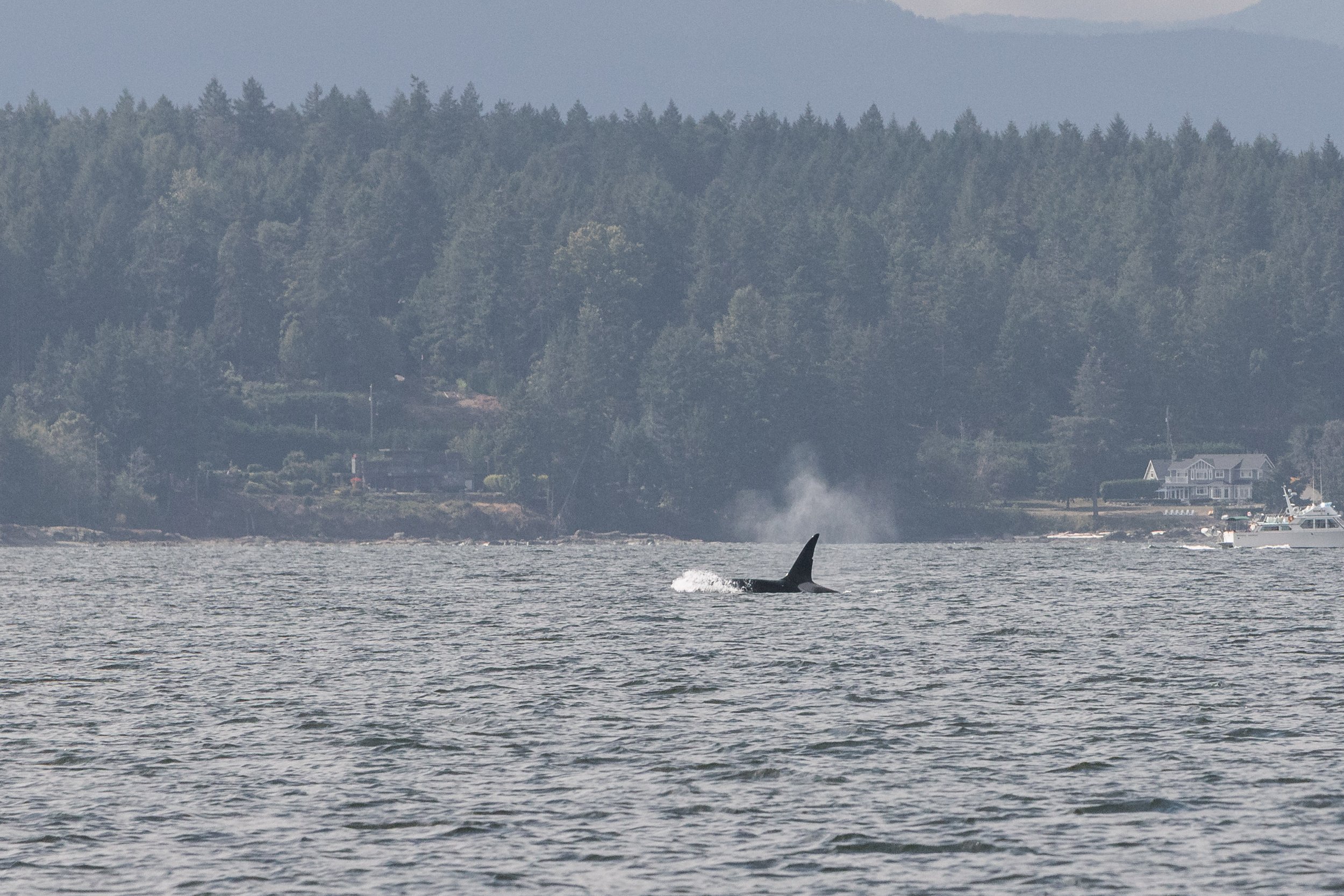
A lovely look at T037A2 Inky travelling south. Photo by Jordan Robinson.
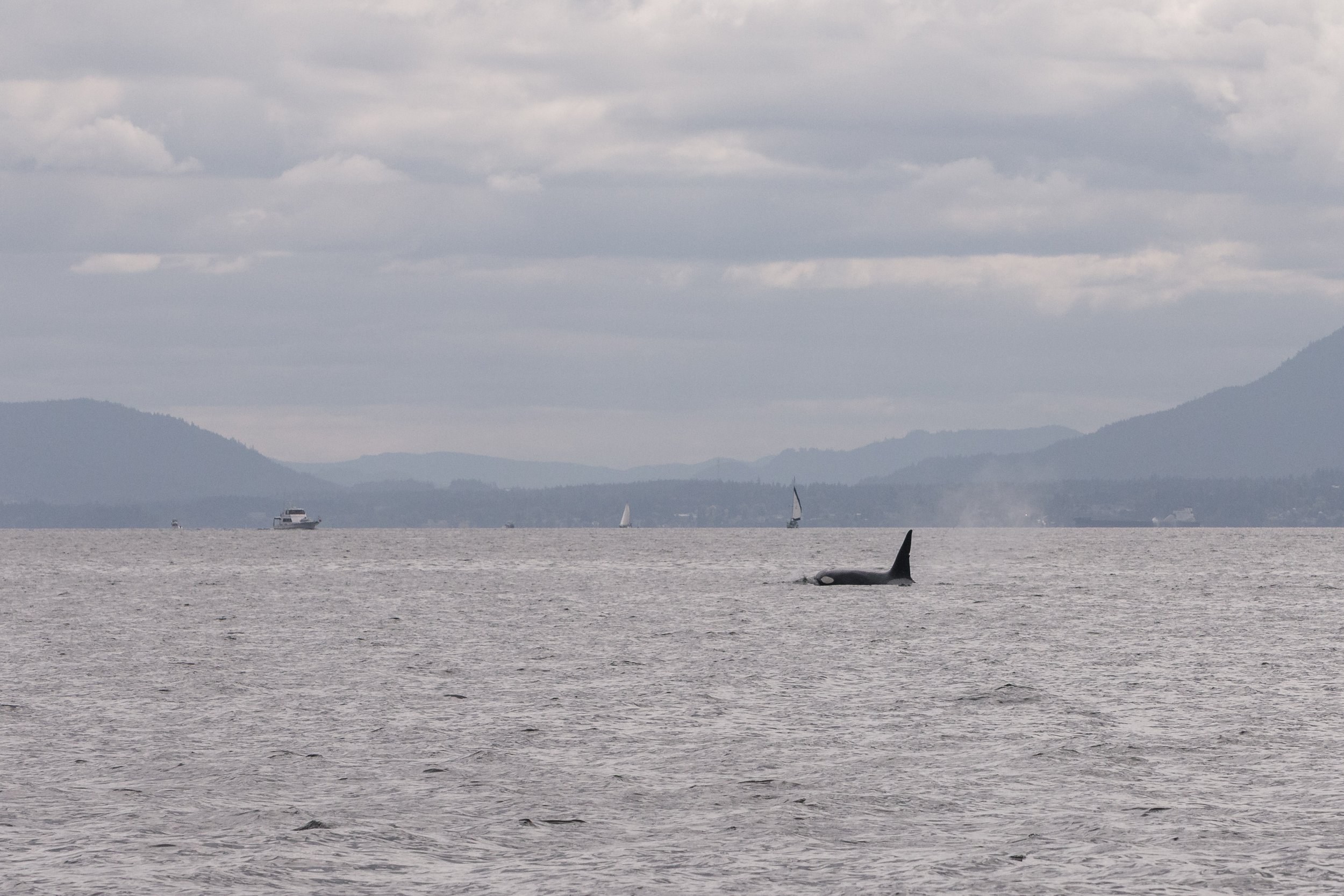
T037A2 Inky showing off his eye patch as he travels. Photo by Jordan Robinson.
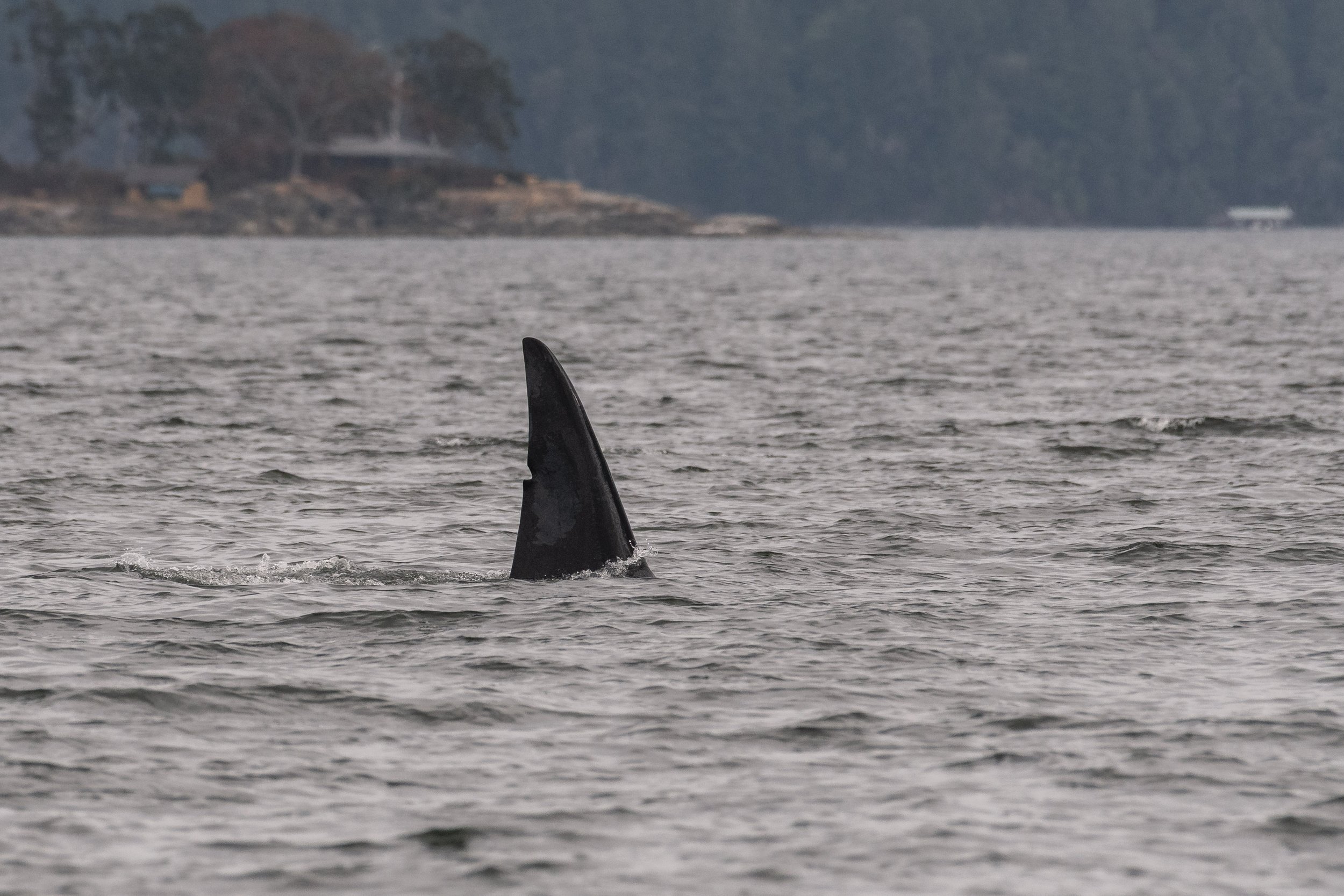
T037A2 Inky sinking beneath the water. Photo by Evan Hessels.
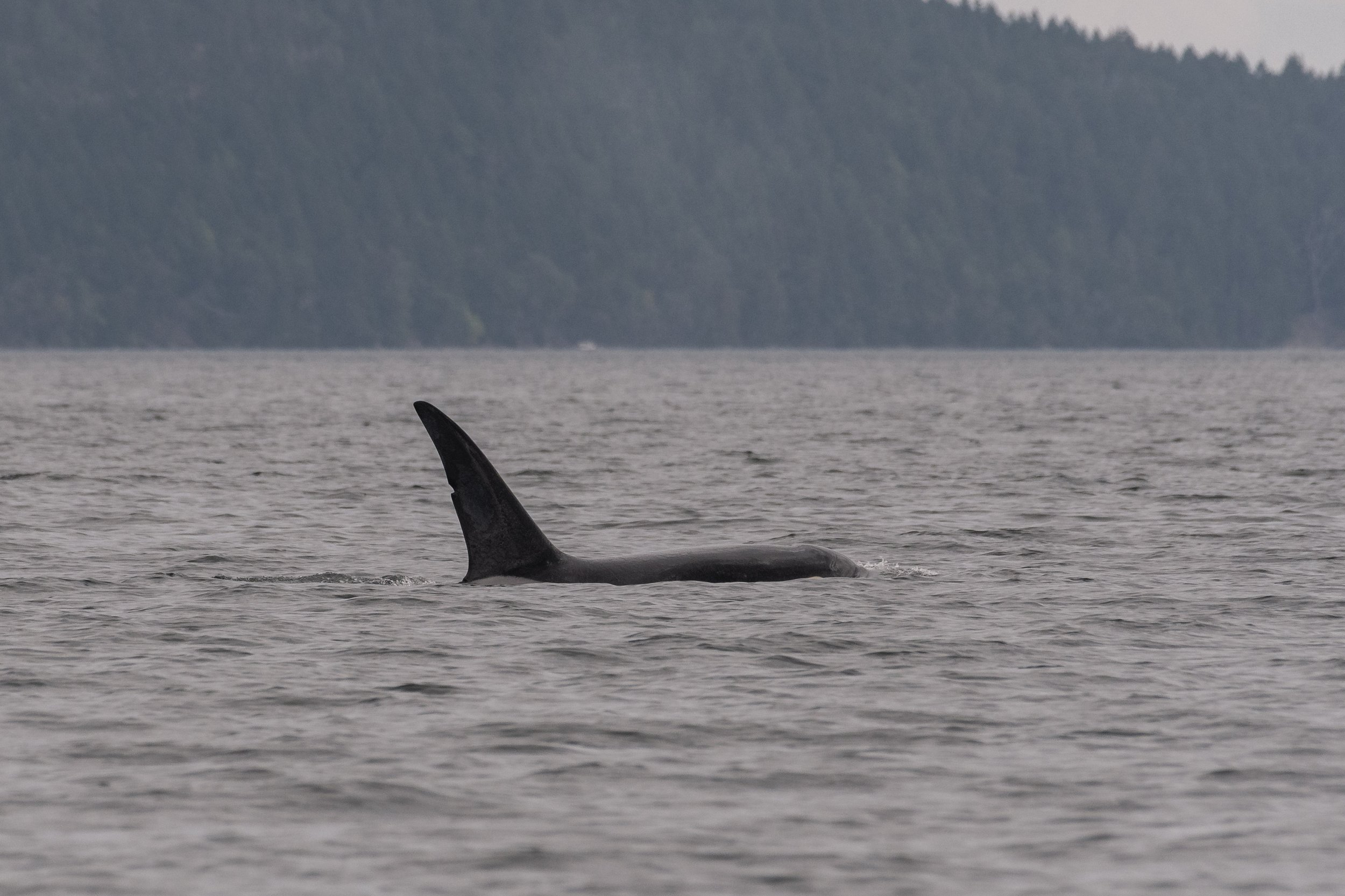
T037A2 Inky surfacing as he travels. Photo by Evan Hessels.
Wolf Eel & Nalu
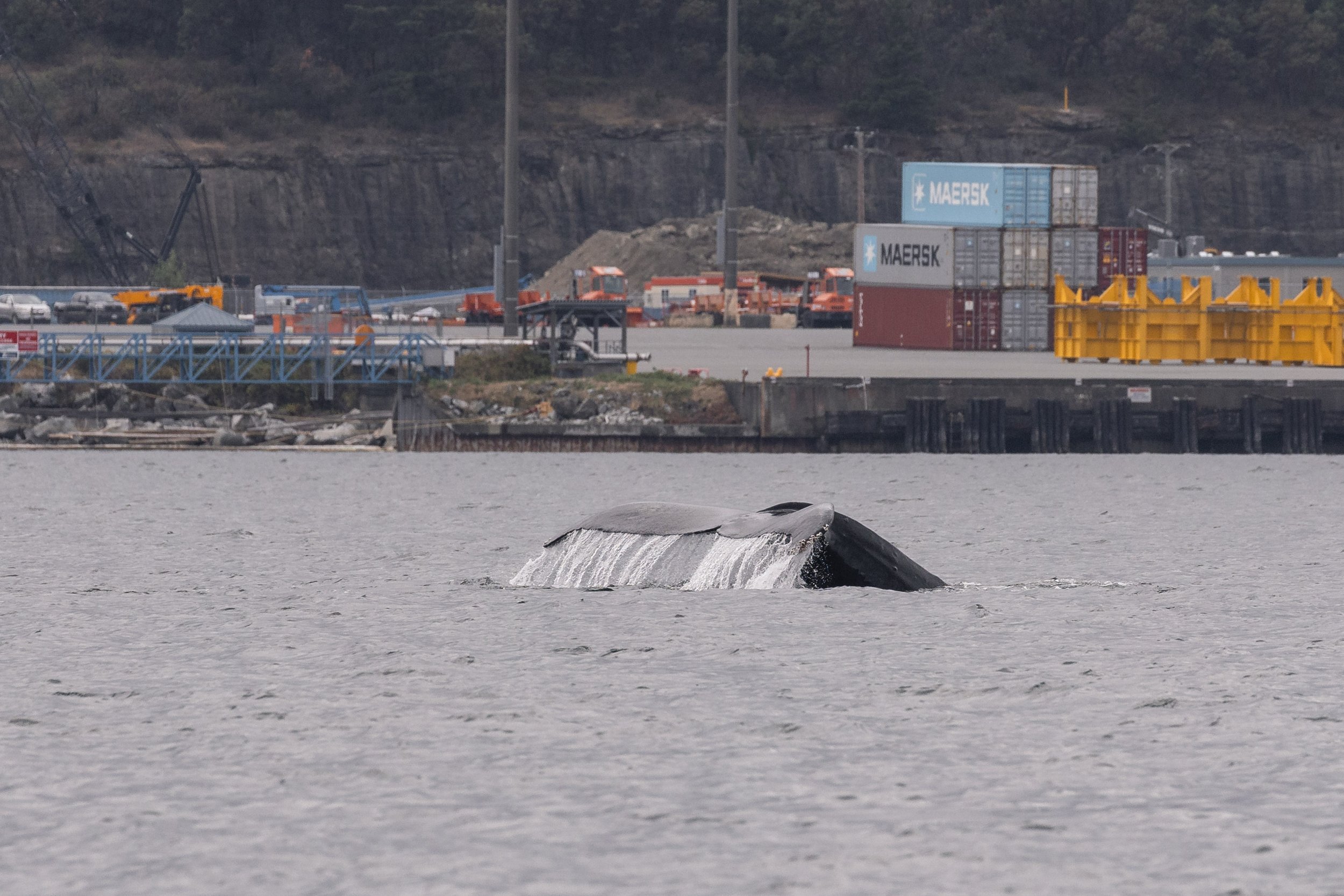
Wolf Eel going for a dive. Photo by Desarae Poier.
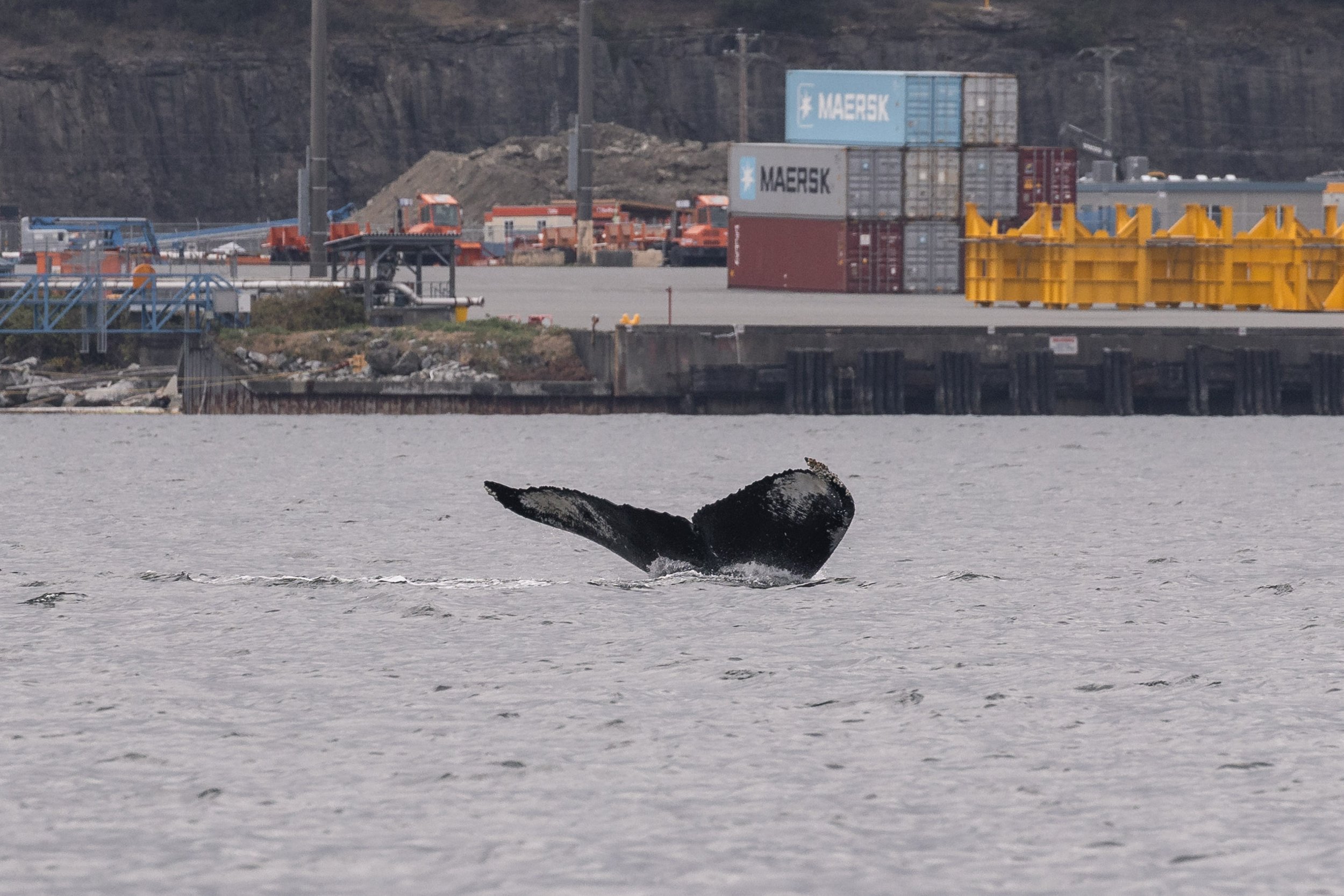
The unique underside of Wolf Eel’s tail as she dives. Photo by Desarae Poier.
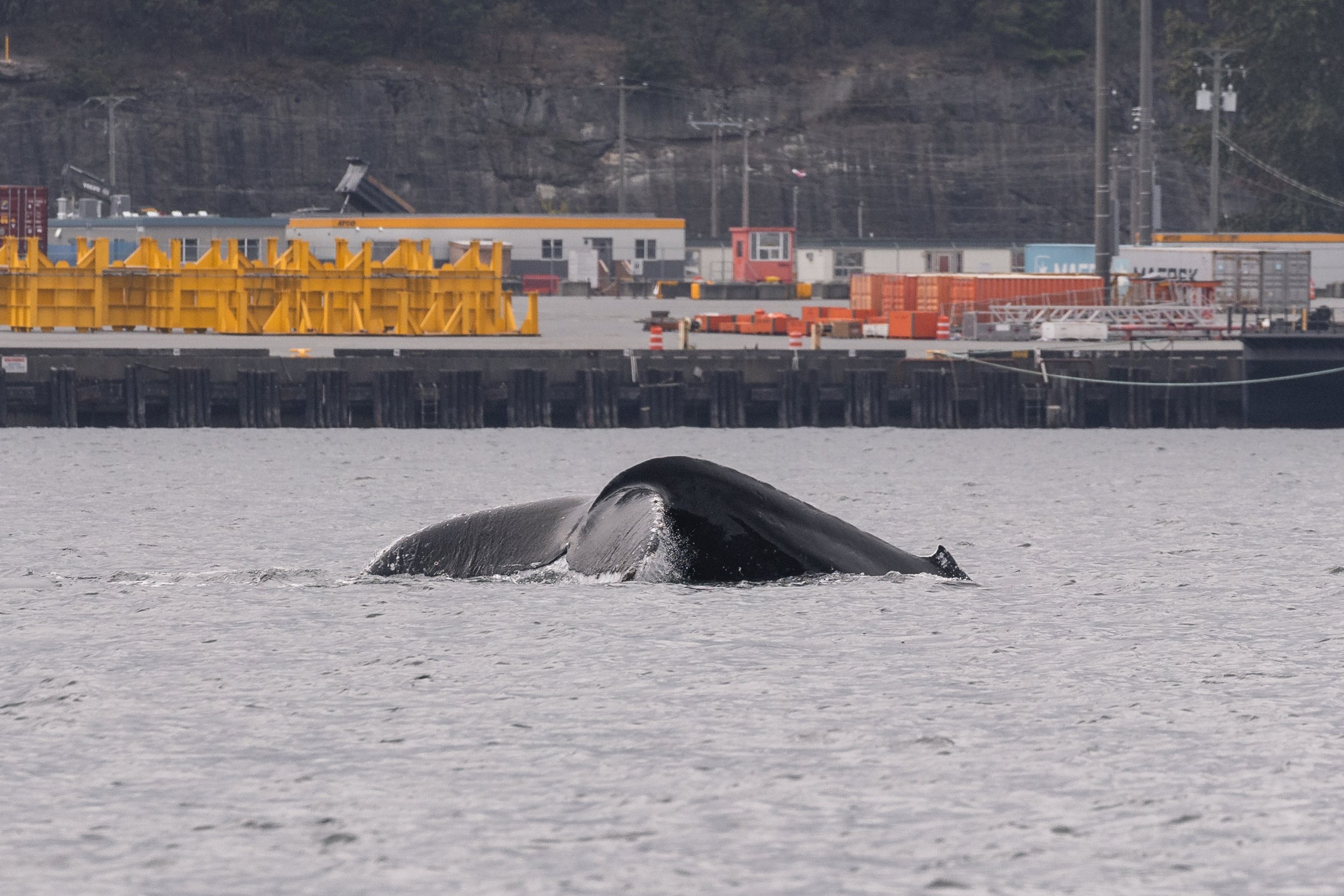
Nalu about to her tail to dive. Photo by Desarae Poier.
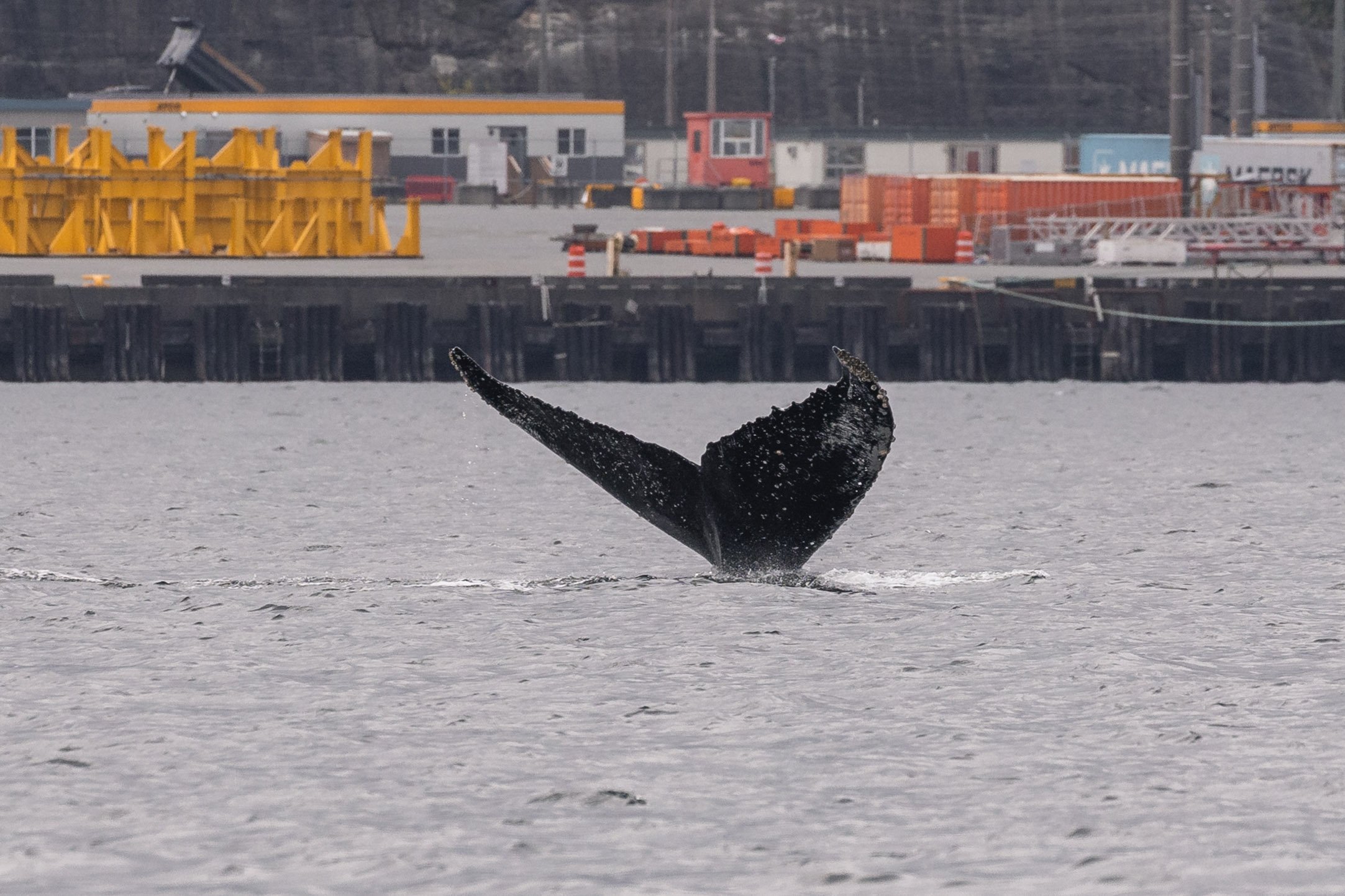
The underside of Nalu’s tail as she dives. Photo by Desarae Poier.
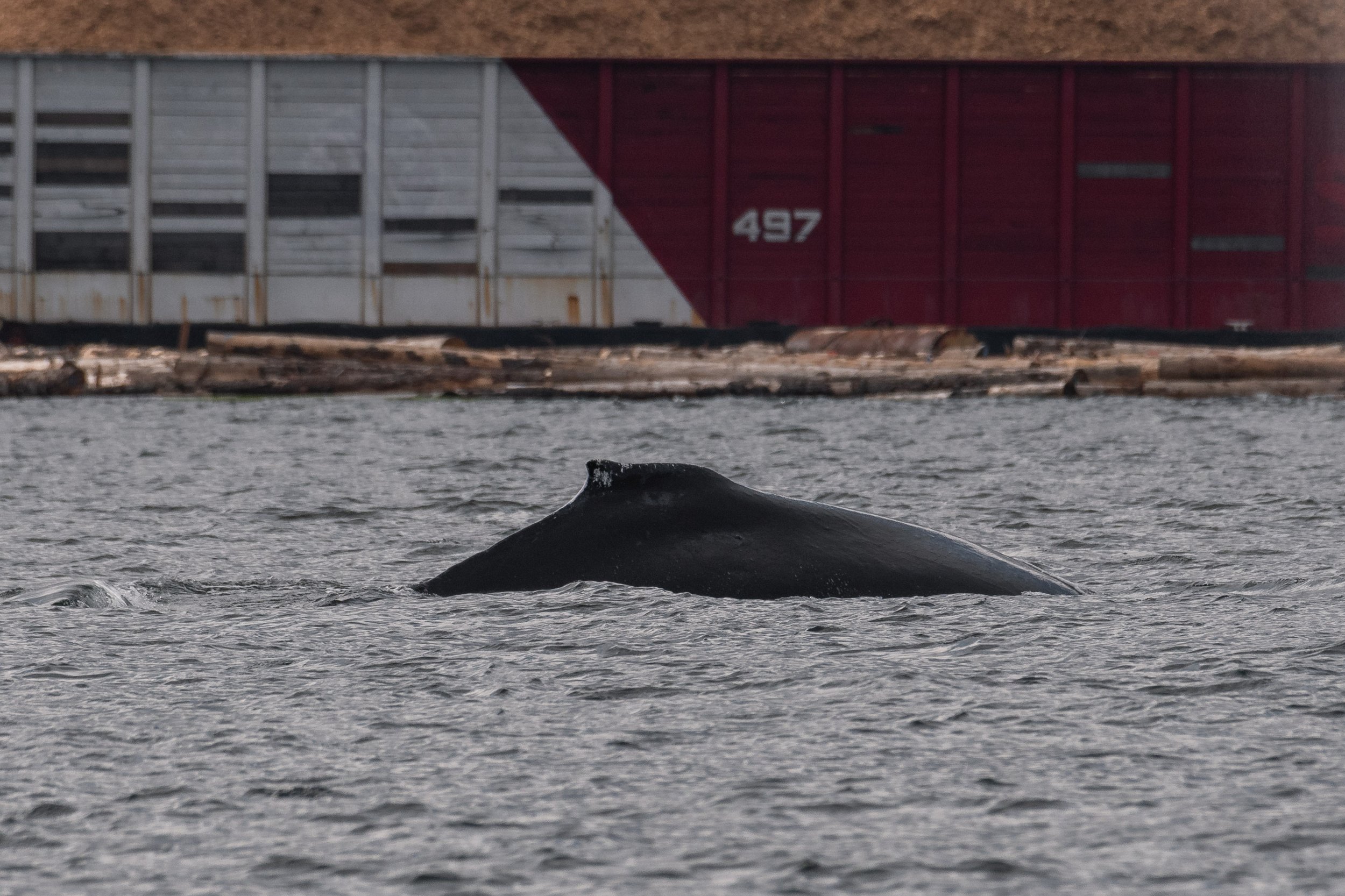
Nalu surfacing in northumberland channel. Photo by Evan Hessels.
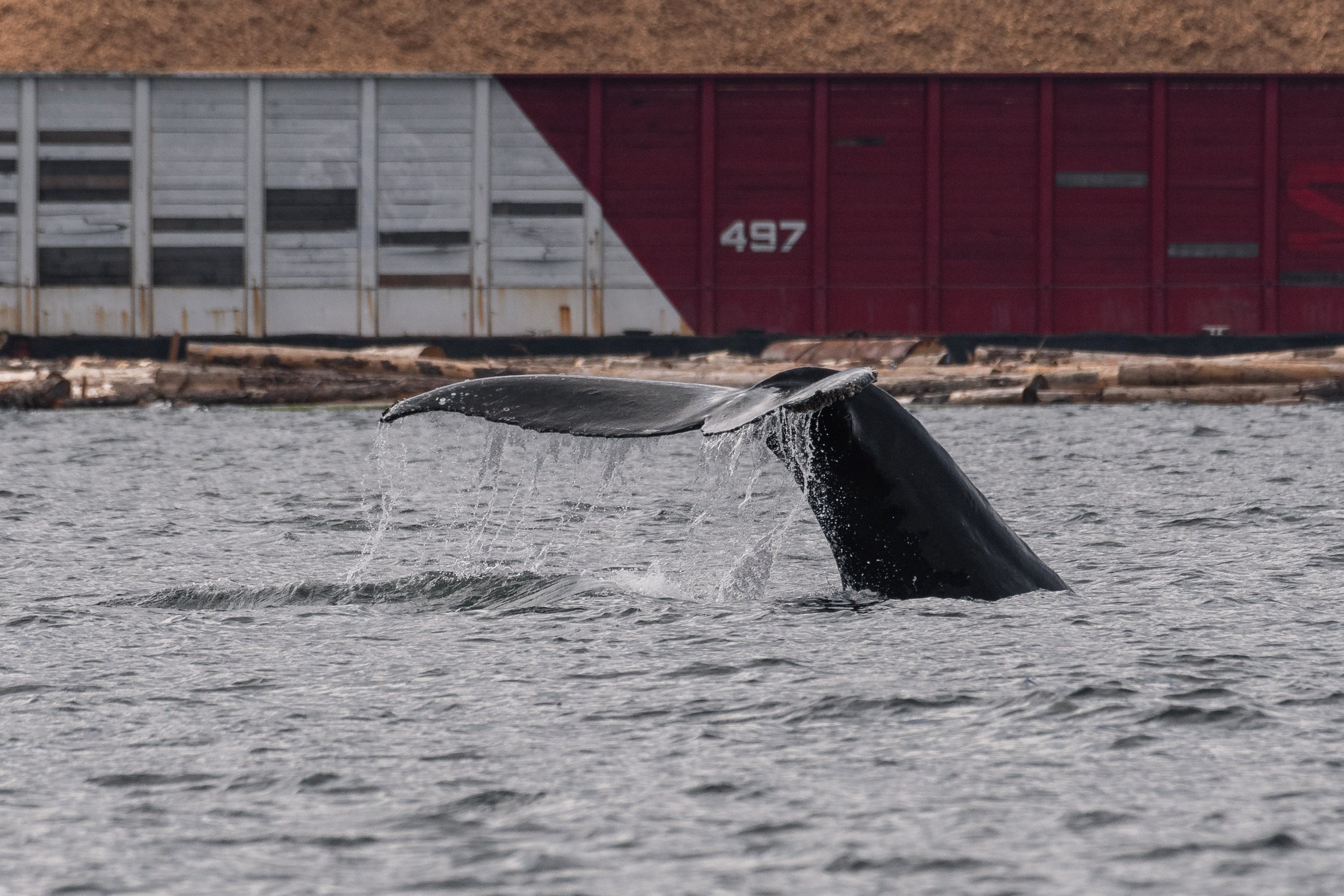
Nalu giving a lovely fluke waterfall as they dive. Photo by Evan Hessels.