
September 12, 2026, 10:30 AM - A tale of tails around the Strait of Georgia
Kula and Cascadia were out this morning, eager to explore the seas. Starting the adventure by heading north, we crossed the Strait, our eyes ever searching the horizon for signs of whale activity. We made our way over to Halibut Bank, an area that has been bustling with activity in the last few weeks.
This was the perfect place to start peeking around, and our vessels spread out to cover more area and maximize our search range. This led to Kula's first sighting of the day, when two large whales were seen travelling close together. It was a pair of humpback whales!
Naturalist Jordan pulled out his camera and began working on identifying the pair. They were travelling quickly, with small surfaces before going under again. After grabbing a photo of a partial fluke and a photo of the other whale’s dorsal fin, we confirmed these two were Fader (BCY0195) and Prowler (BCX1660). Both of these whales are well known to us, having returned to our area for many years to feed. It is possible they were doing just that as we observed, diving deep into the water column to feed far out of sight. After some time with them, we continued our way, searching once more.
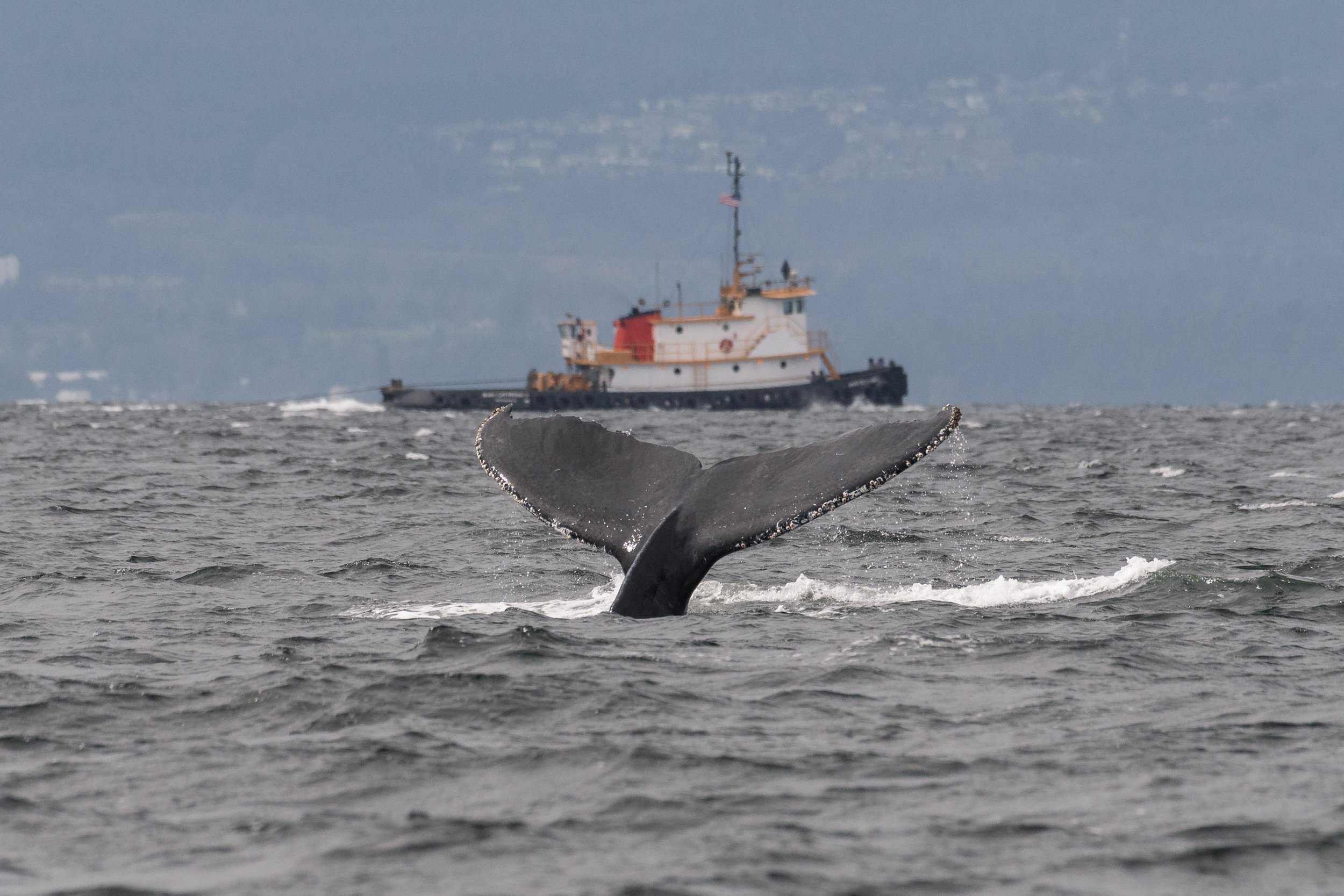
Heading farther into the heart of the Strait, we soon spotted a lone humpback. This time, both Kula and Cascadia made their way over to watch them together. This individual was fluking high as we got into position, letting us grab a few great photos to use for identification. This mostly black fluke with white markings at the tips was identified as Smudge (BCY0228). Smudge is a very interesting whale, as they do not follow the typical ‘formula’ for humpbacks of travelling to one specific feeding ground and one specific breeding ground. Interestingly, they have been cross-matched on Happywhale travelling to both the Hawaii breeding grounds and the Mexico breeding grounds. It wasn’t a one-off occurrence either – at the time of writing, Smudge has been matched to two different encounters in Mexico in 2018, as well as one back in 2010. However, since 2021, they seem to prefer going to Hawaii instead. We are excited to see where Smudge will be spotted next!
After our time with Smudge, we slowly started meandering our way back across the Strait, towards the Southern Gulf Islands. Along the way, another big busy blow was spotted – a lone humpback was travelling close to the Flat Top Islands. Heading on over for a quick peek, we noticed that it was a smaller individual. Size is often one of the references we use to ID individuals, as we often have yearlings or other young whales return to the area. However, that strategy didn’t work for this individual, as they turned out to be a ‘young’ 23-year-old male named Cassiopeia (BCY0796)!
Cassiopeia is another intriguing case of a humpback not following the traditional site fidelity lifestyle that we see in most individuals. His mother, Juneauite (SEAK-1447), is a very well-known female with zero confirmed sightings in British Columbia. She feeds strictly in Alaska, much farther north than where Cassiopeia tends to reside for the summer. Current Happywhale sightings also indicate that he has not been up to Alaska since leaving his mother’s side. Juneauite also always goes to Hawaii for her breeding grounds, whereas Cassiopeia always goes to Mexico. Many intricacies of humpback social dynamics are still unknown, but we hope that with continued study we will better understand how these gentle giants operate in years to come.
We said goodbye to Cassiopeia and continued towards Valdes Island. Here, a haul-out nicknamed Stinky Rocks sits, and the area was absolutely bustling as we approached. Steller Sea Lions grumbled and belched away from the top of the rocks, busy shuffling around for a place to nap. The much quieter Harbour Seals rolled over, too deep in slumber to care about the sea lions' antics. In the waters below, a slender brown body slithered along before popping onto the rocks and shaking itself off. It was a River Otter! It can be confusing to see a River Otter in this area, as many assume otters seen in the ocean are Sea Otters. However, Sea Otters in our area are extirpated (locally extinct) due to intensive hunting during the fur trade. Thankfully, occasional sightings have now been confirmed, and we hope to see them in our area again in the future. For now, though, we get to watch the intrepid river otters venture into the sea, diving to grab crabs and other snacks for themselves and their pups.
It had been a fun trip so far, but it was soon time to start making our way back. However, Cascadia still had one more encounter in store for them a bit east of Stinky Rocks. Two humpbacks were travelling along, with one being noticeably smaller than the other. This turned out to be a mother-calf pair, more specifically identified as Tempest (BCX0837) and her 2026 calf (BCX0837calf2026). Tempest has had a handful of calves over the years, with her first one being documented back in 2007. She has returned to BC to feed in the summer for over two decades, then returns to Mexico in the winter to give birth.
The pair was closely associating with each other as we watched, with the calf diving right by its mother’s side. We are quite far into the season now, and the young ones are now practicing their deeper dives. This will be vital for their survival, as they will be soon travelling through the ocean by themselves, and will need to be able to feed on their own volition. We are eager to see what the future has in store for this little calf and hope we can see them again next year.
Heading back north, we skirted alongside the many islands before making our way back into harbour. The city skyline came back into view, and before we knew it, we were back at the docks, concluding another tour through the Salish Sea.
Please enjoy this tour’s photos taken by Marine Naturalists Evan Hessels and Jordan Robinson!
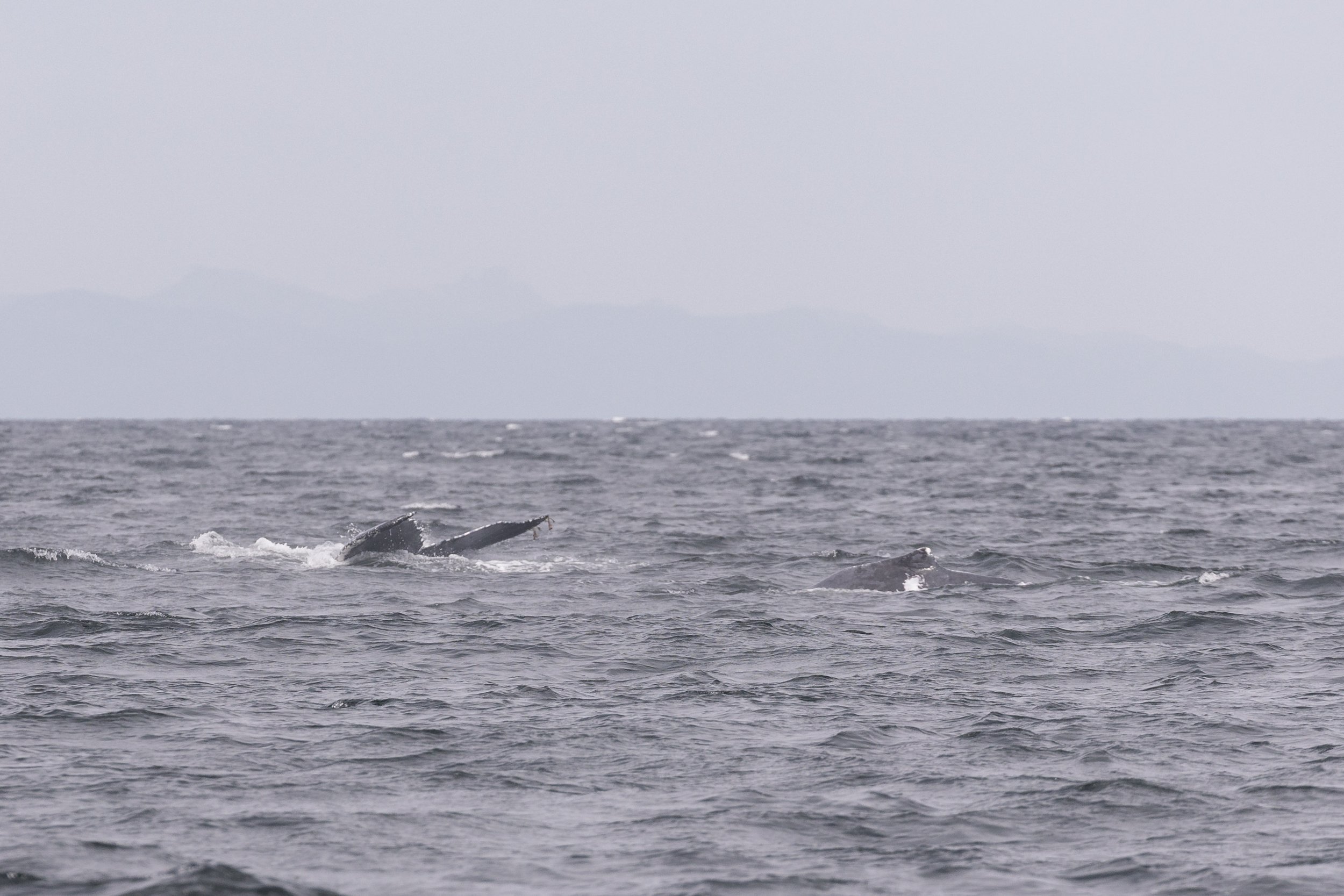
Prowler’s tail as he dives on the left, with Fader’s dorsal fin on the right. Photo by Jordan Robinson.
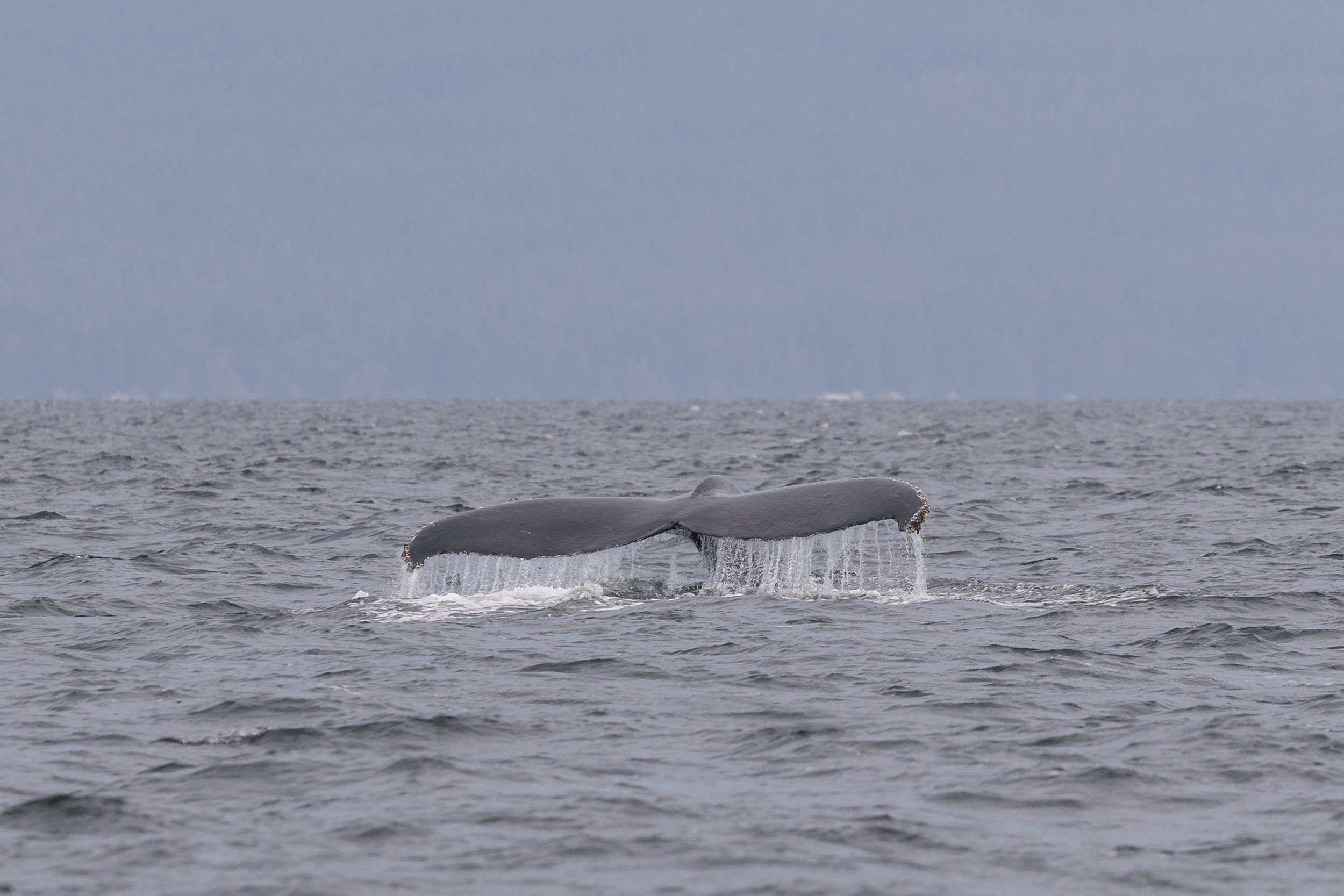
Smudge going for a dive. Photo by Jordan Robinson.
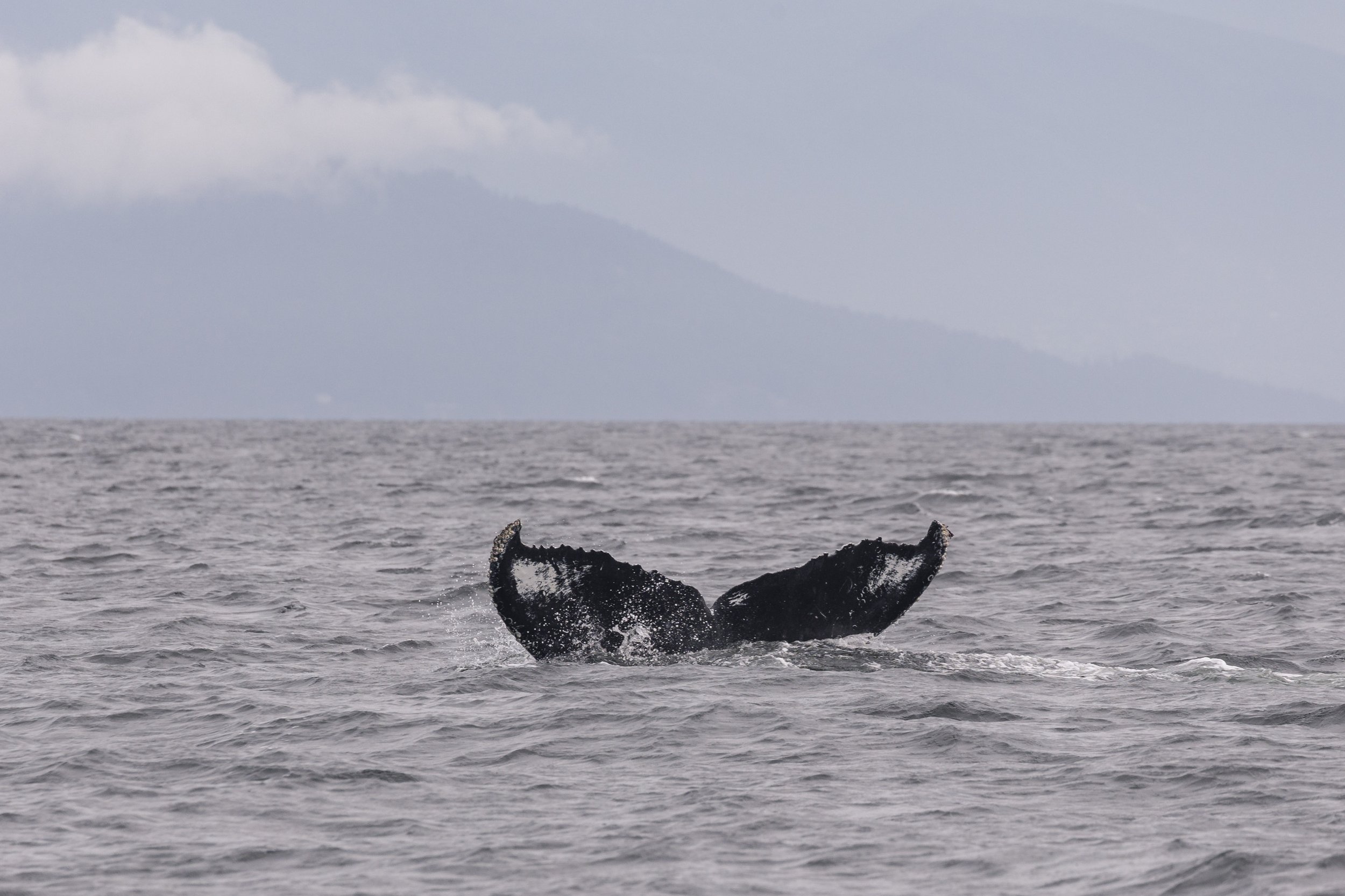
The underside of Smudge’s tail as he dives. Photo by Jordan Robinson.
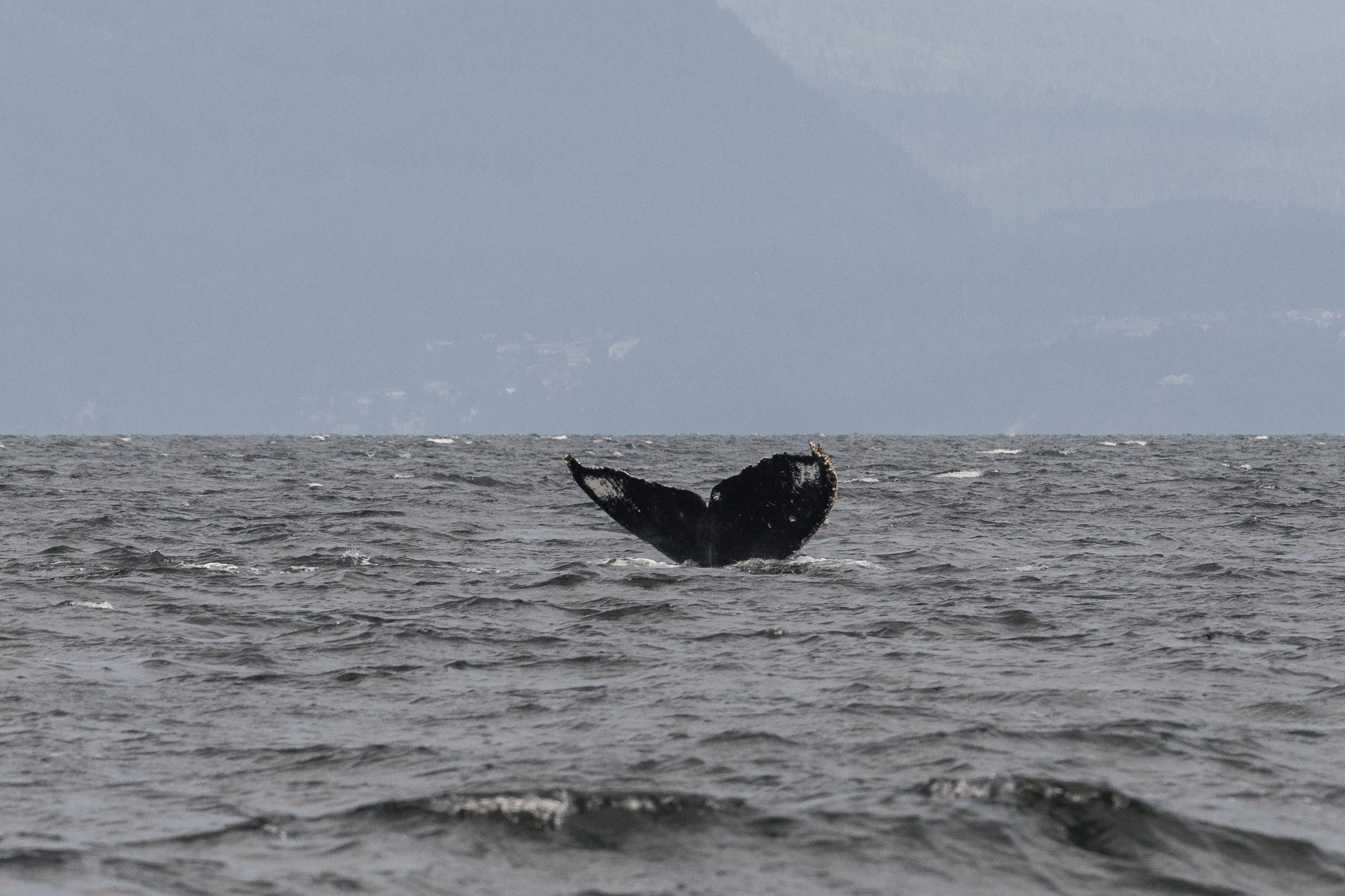
The underside fo Smudge’s tail as they dive. Photo by Evan Hessels.
Smudge lifting their tail high out of the water. Photo by Evan Hessels.
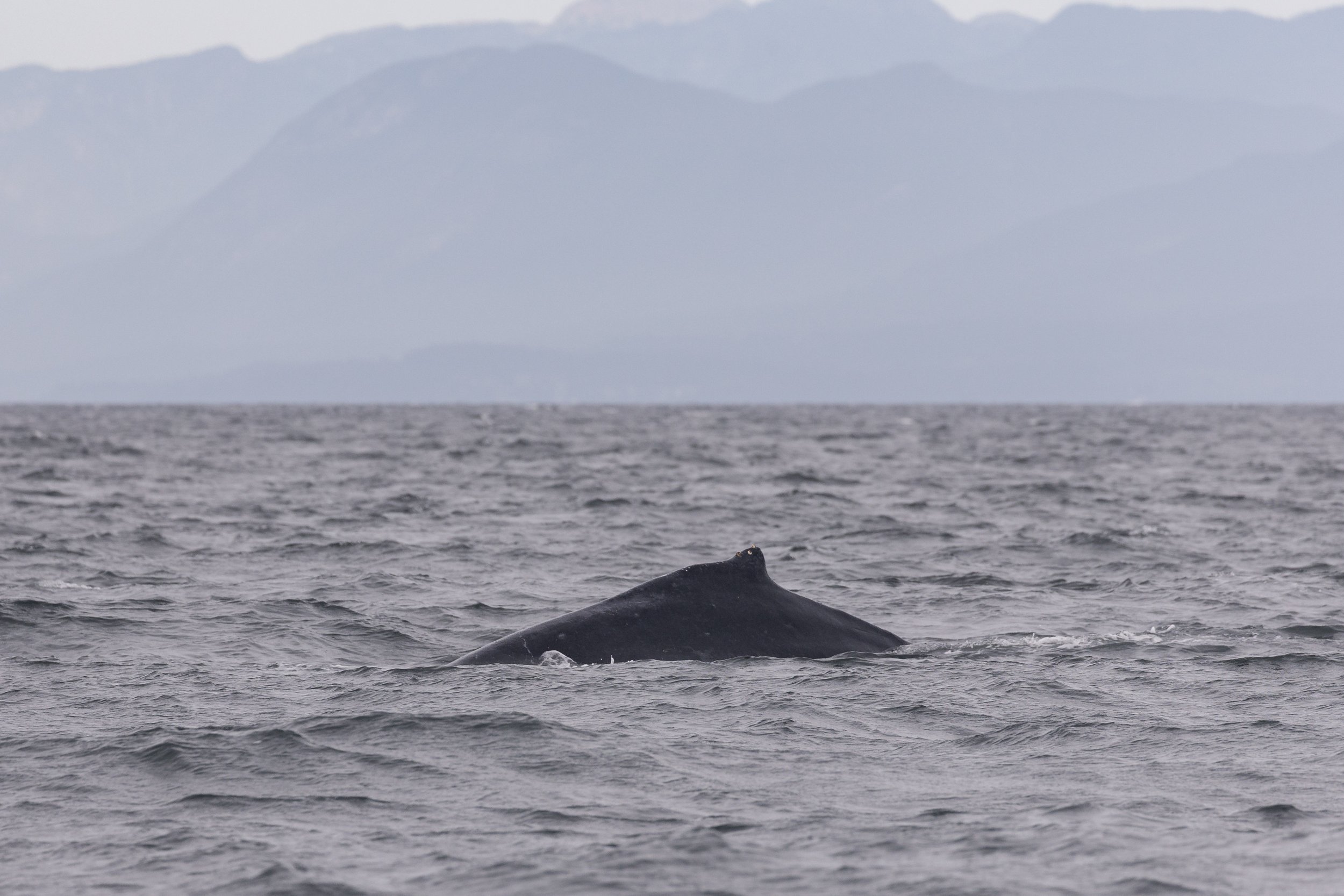
Cassiopeia’s dorsal fin as he dives. Photo by Jordan Robinson.
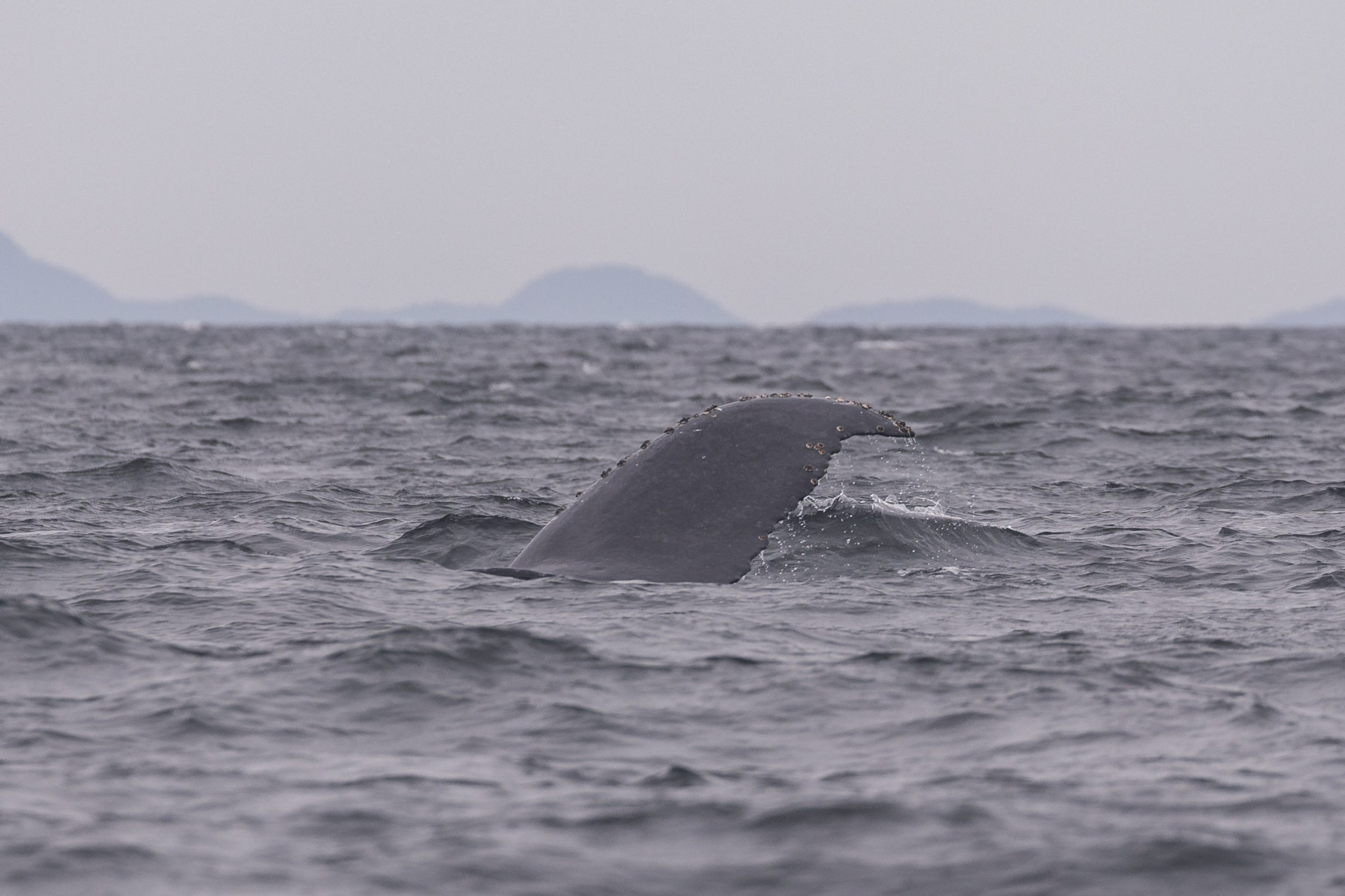
Cassiopeia’s tail sideways out of the water. Photo by Jordan Robinson.
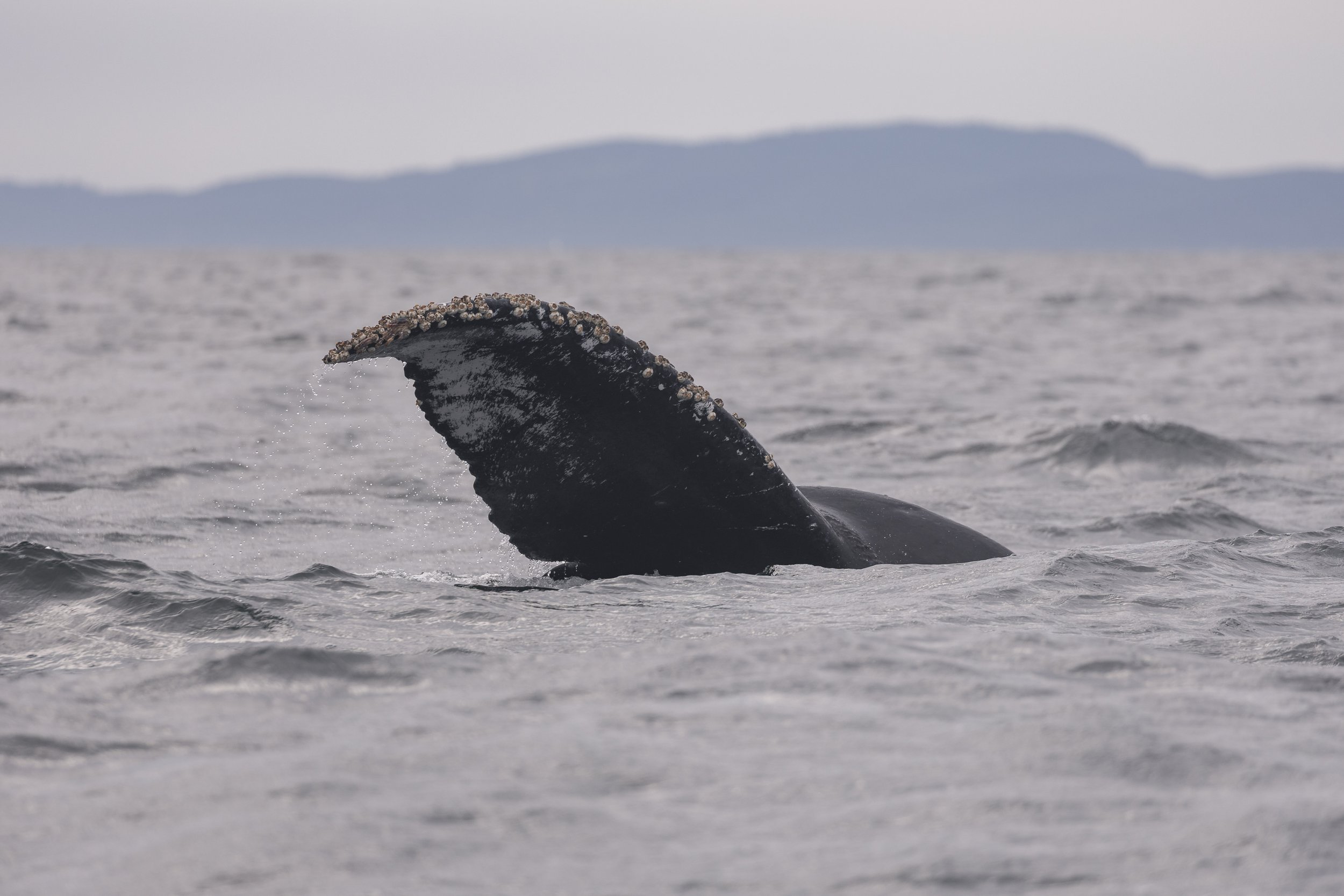
Cassiopeia lifting his fluke sideways. Photo by Jordan Robinson.
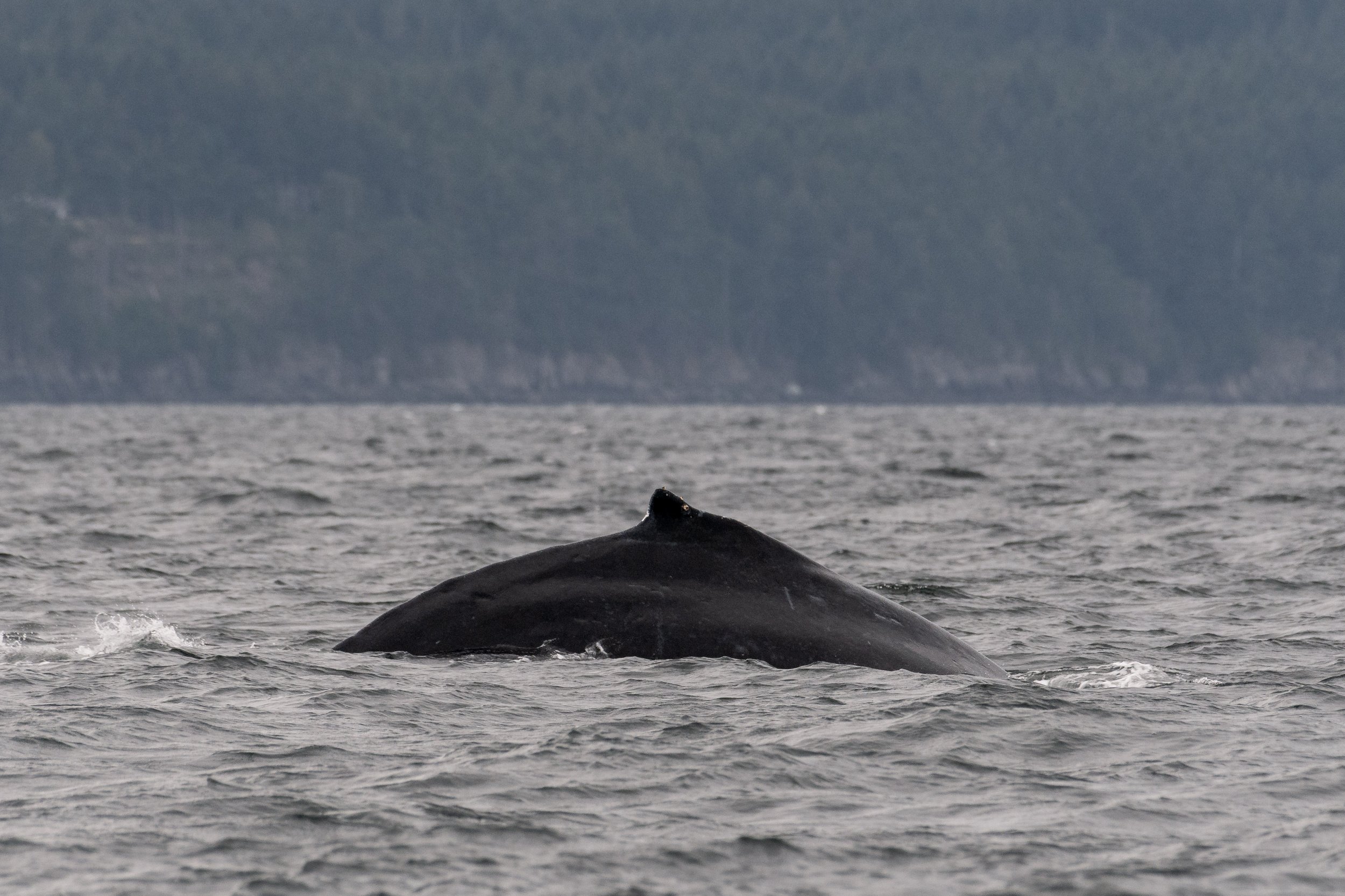
Cassiopeia has some distinct barnacles on his dorsal fin this season. Photo by Evan Hessels.
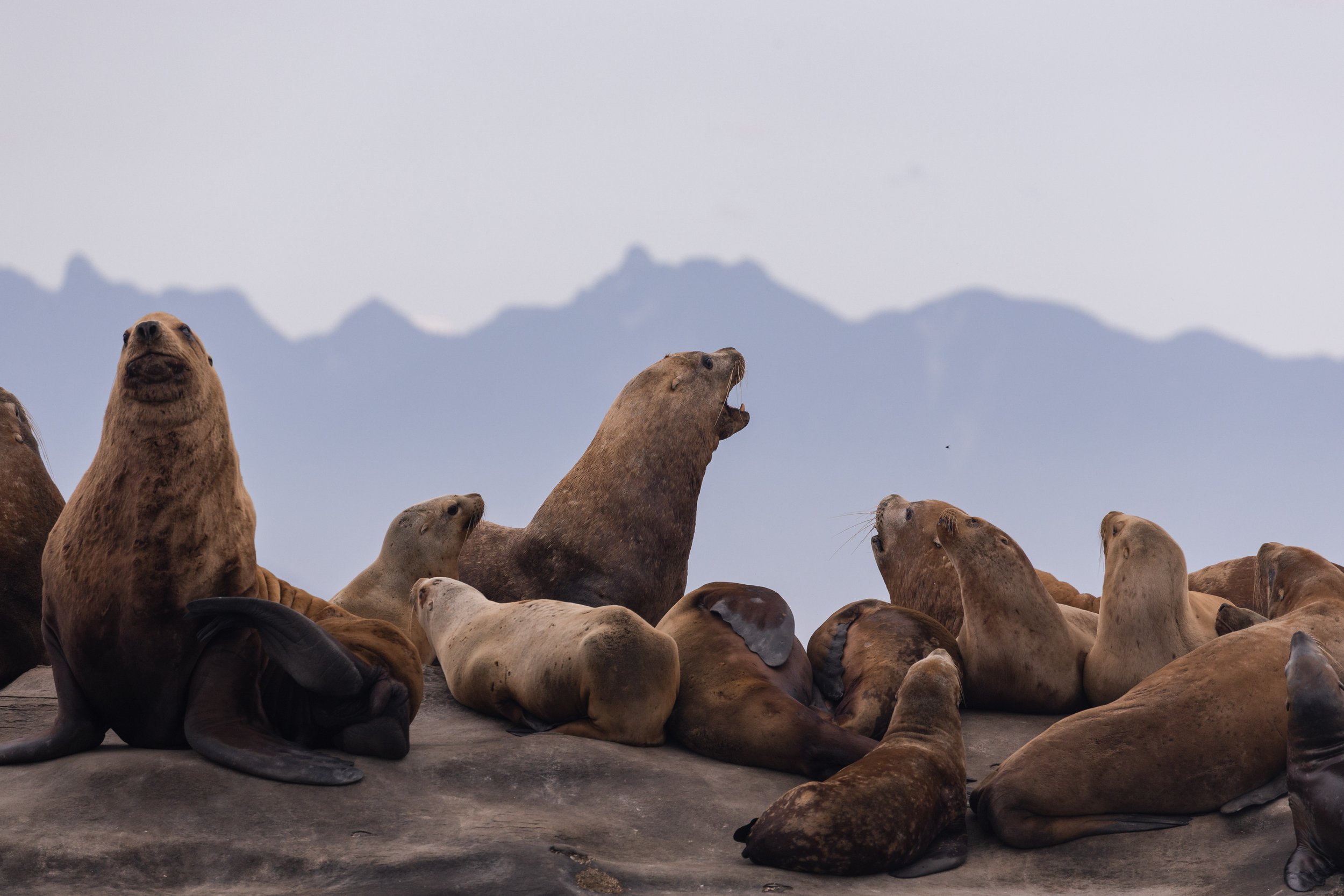
Steller Sea Lions on Stinky Rock. Photo by Jordan Robinson.
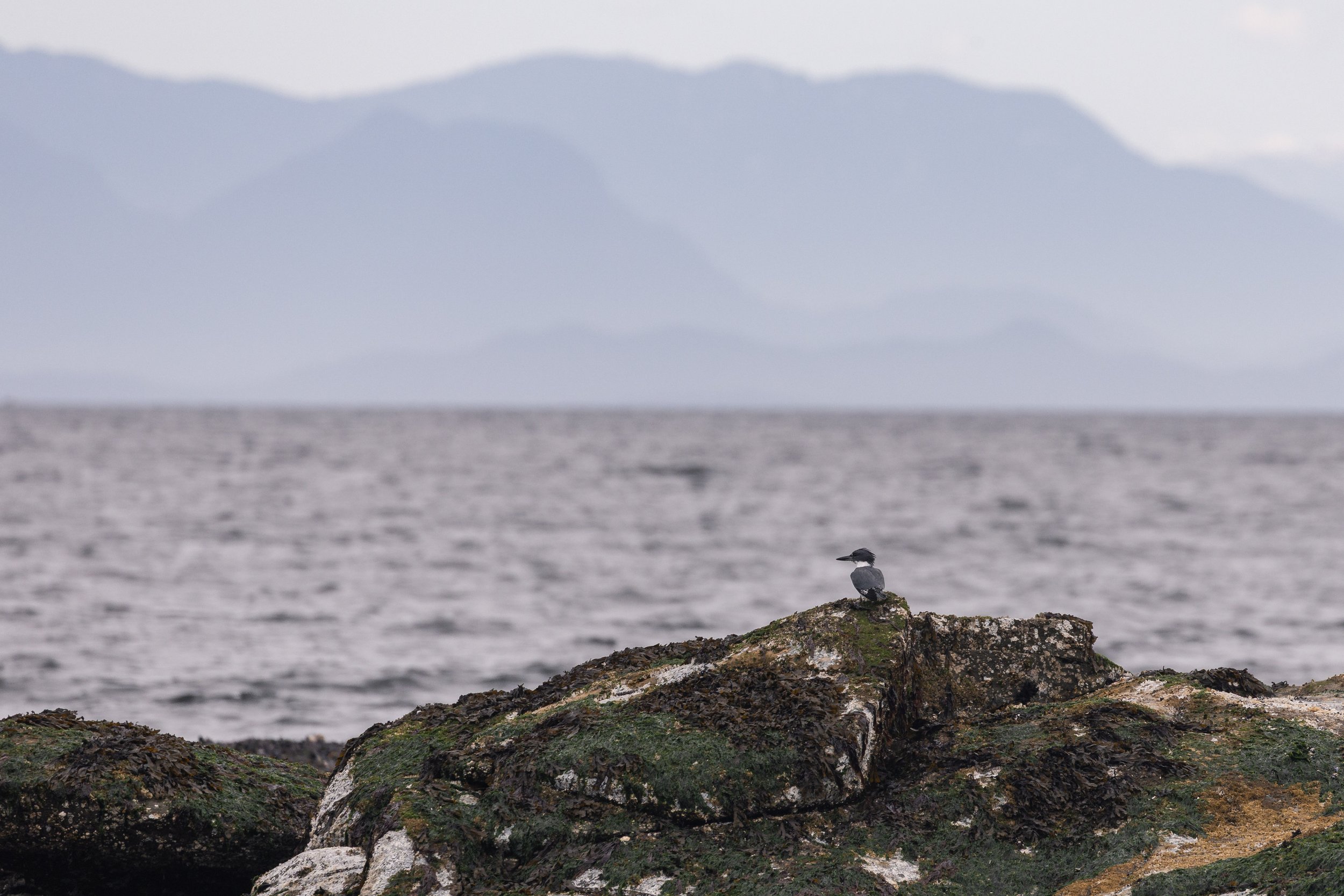
A Beled Kingfisher on the rocks at Stinky. Photo by Jordan Robinson.
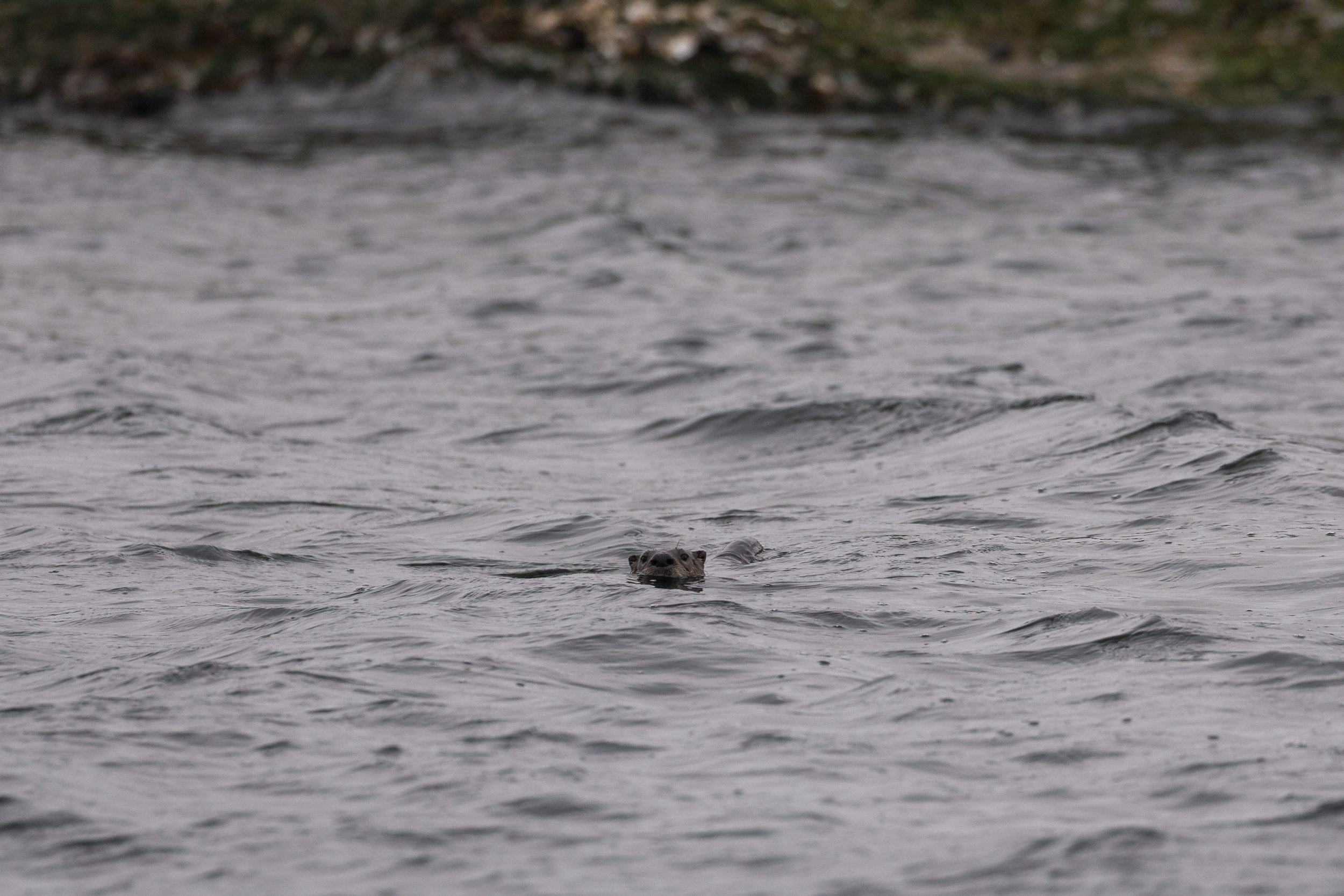
A River Otter hanging out at Stinky. Photo by Jordan Robinson.
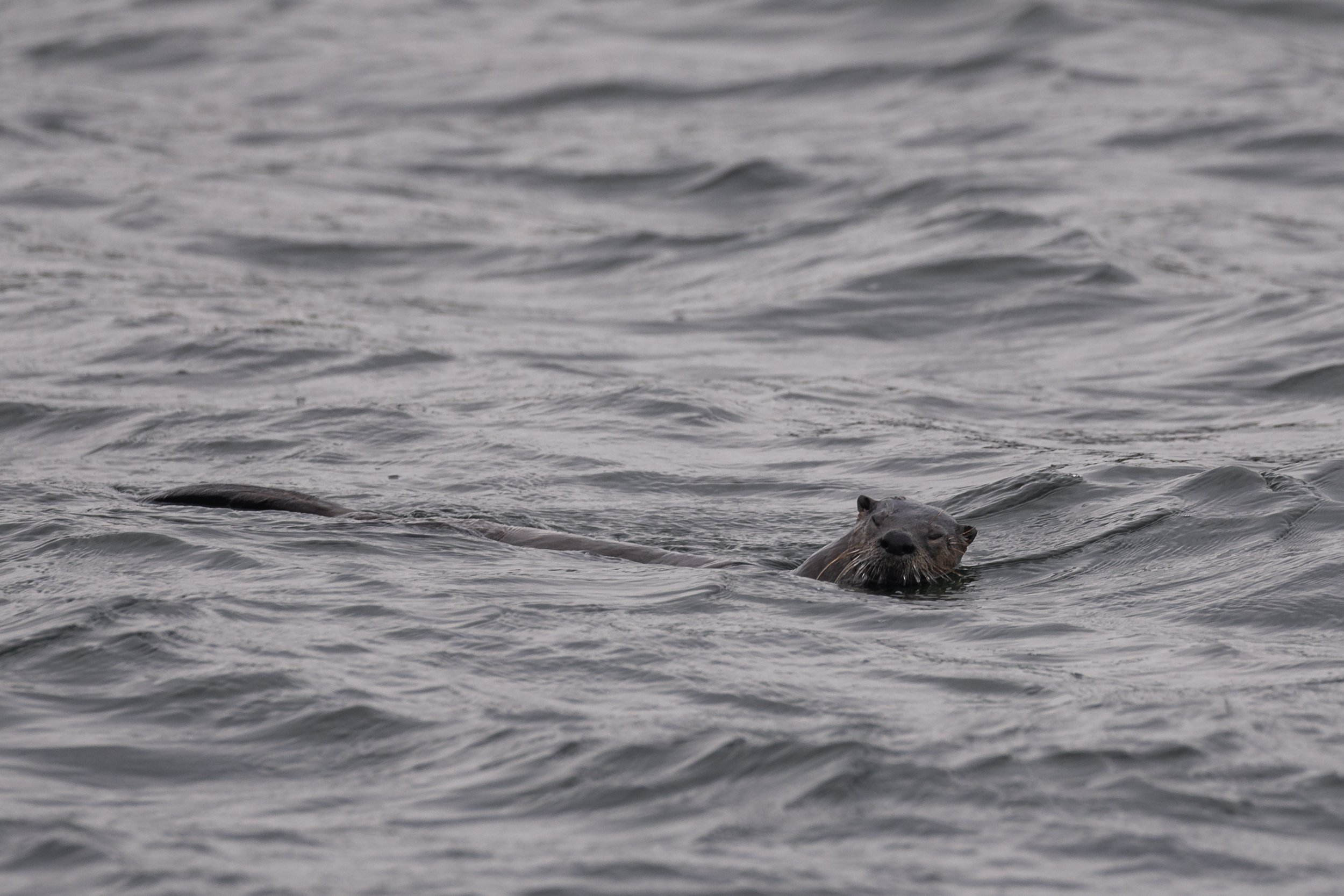
River Otter looking all cute in the water. Photo by Jordan Robinson.
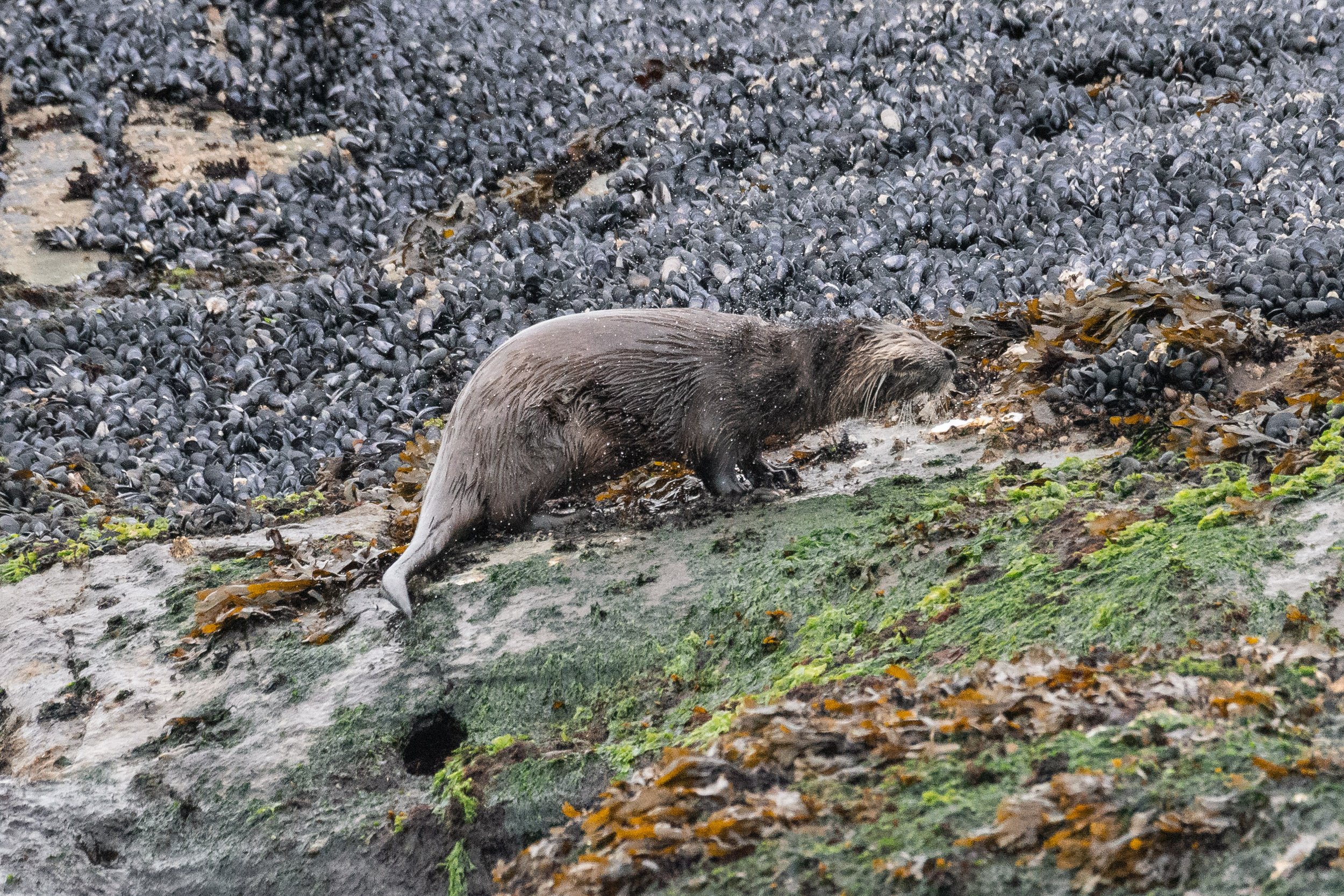
A River Otter drying off on the rocks at Stinky. Photo by Evan Hessels.
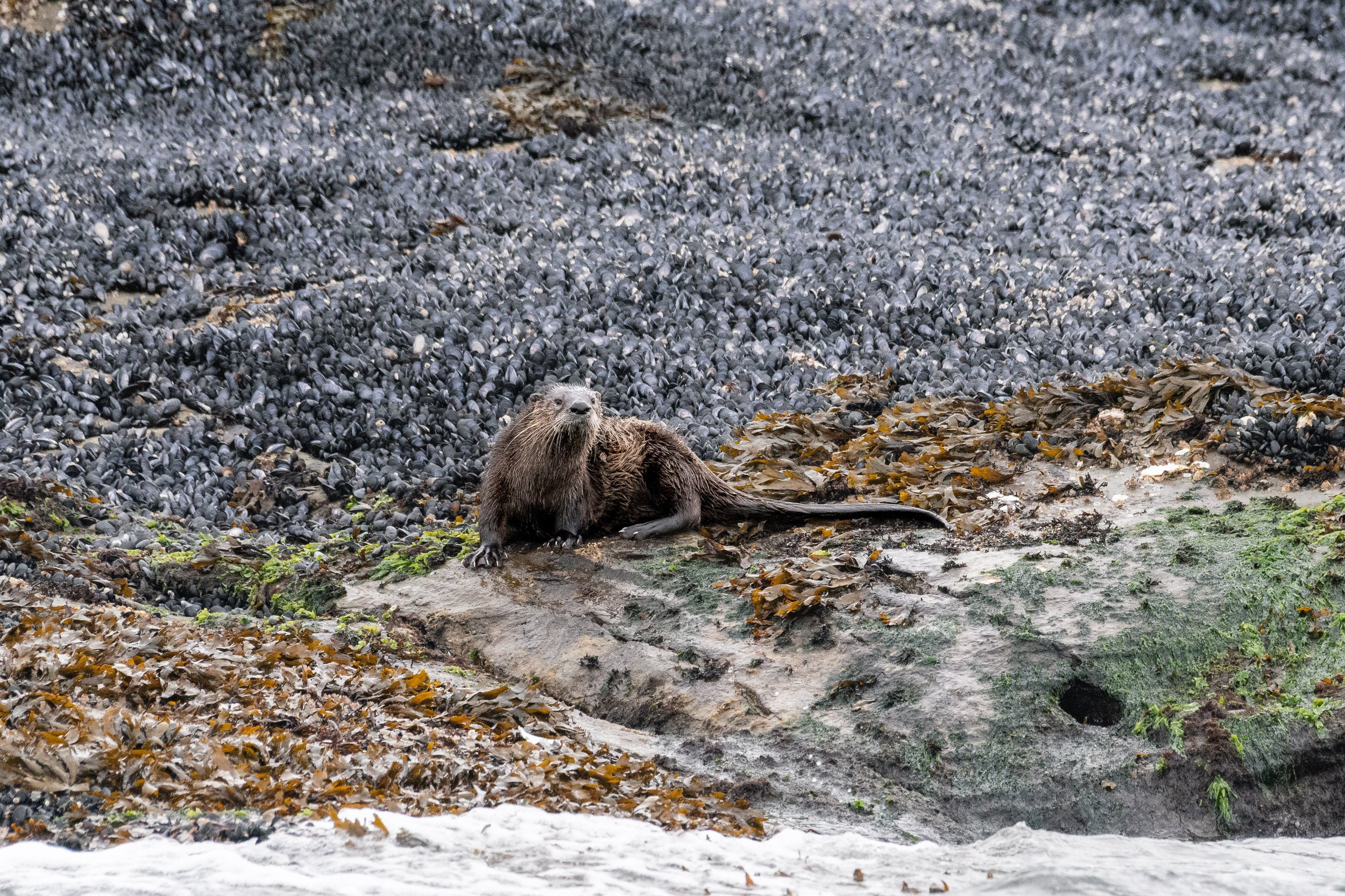
River Otter striking a pose on the rocks. Photo by Evan Hessels.
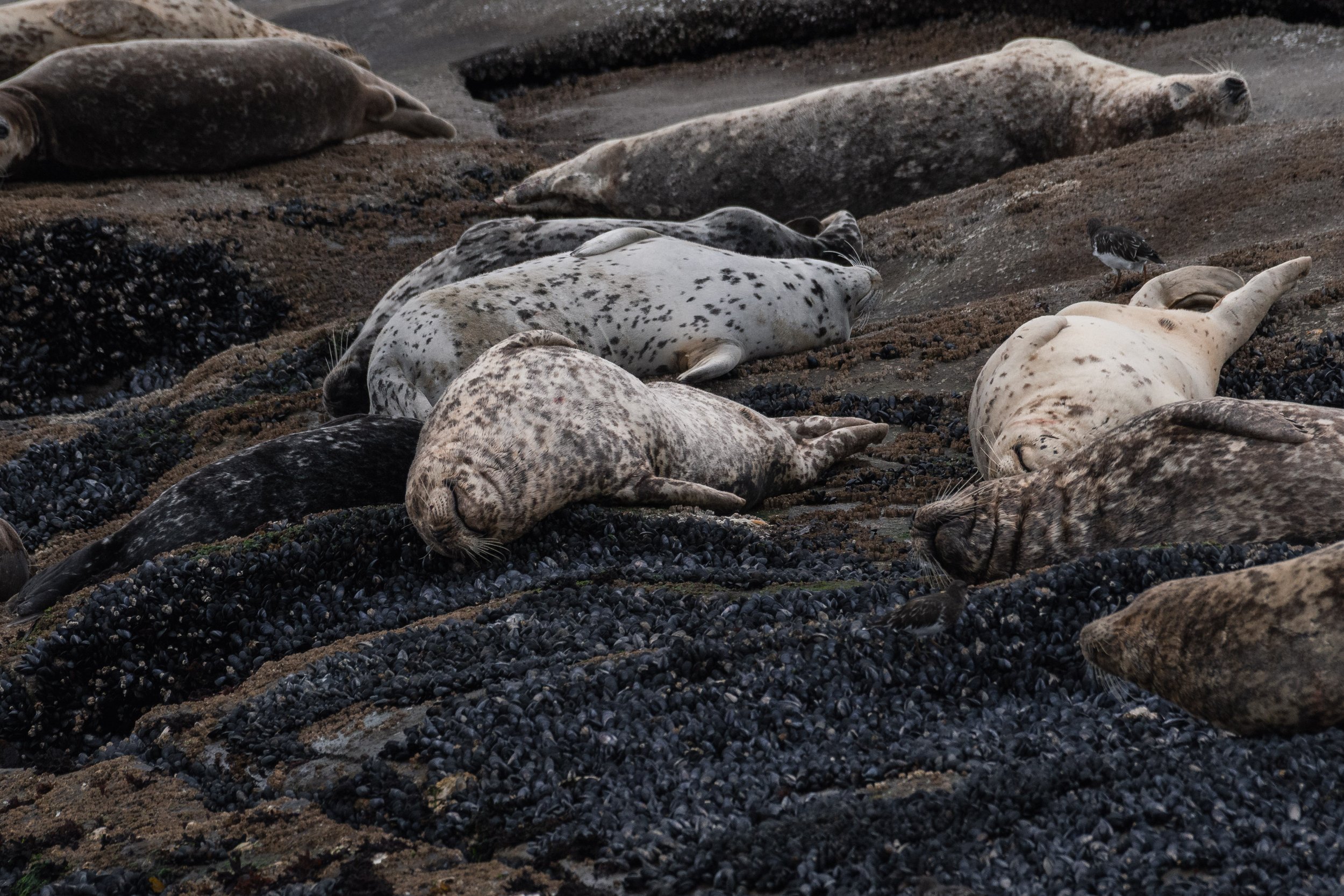
Harbour Seals relaxing in what looks like an uncomfortable spot. Photo by Evan Hessels.
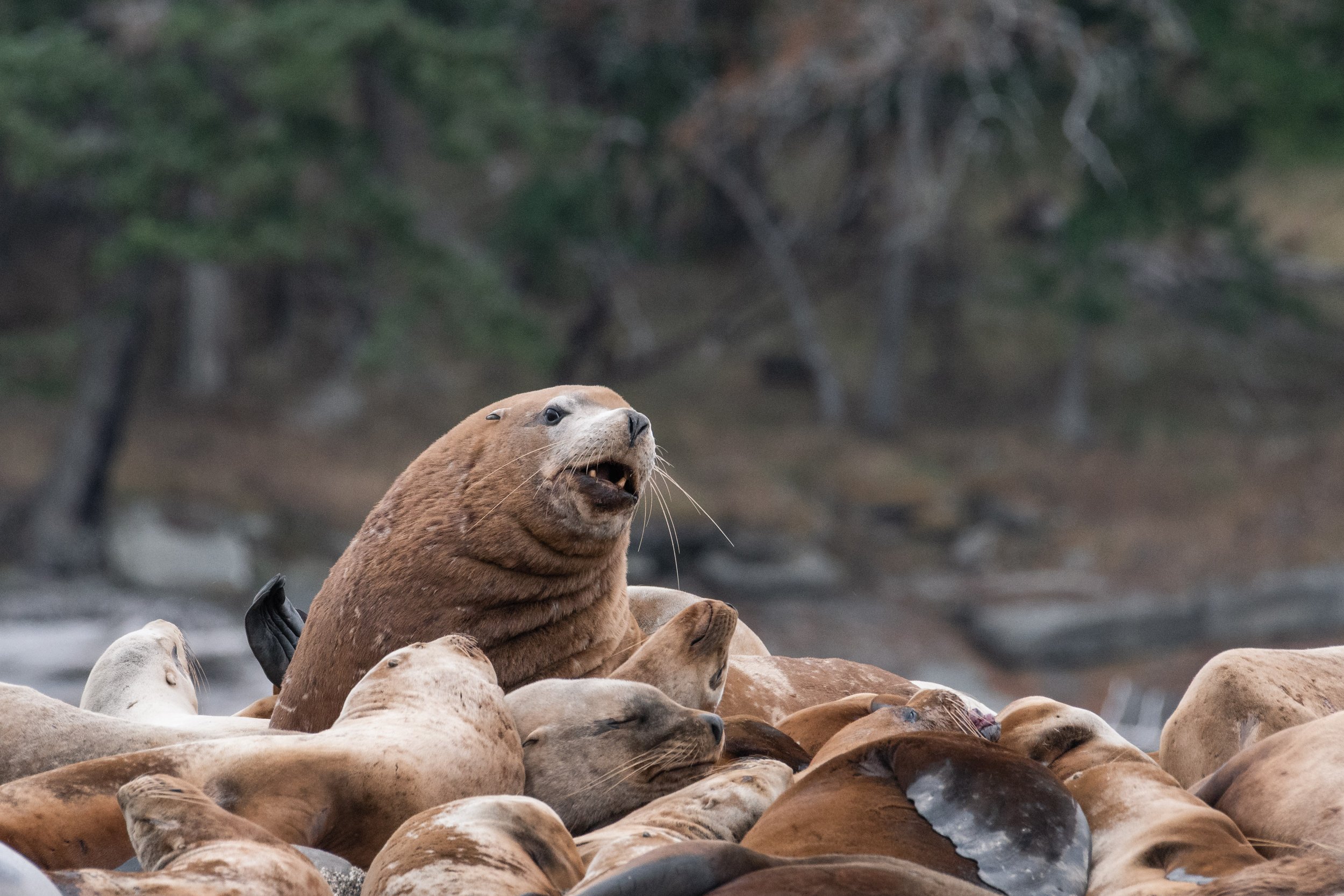
Steller Sea Lions fighting at Stinky Rock. Photo by Evan Hessels.
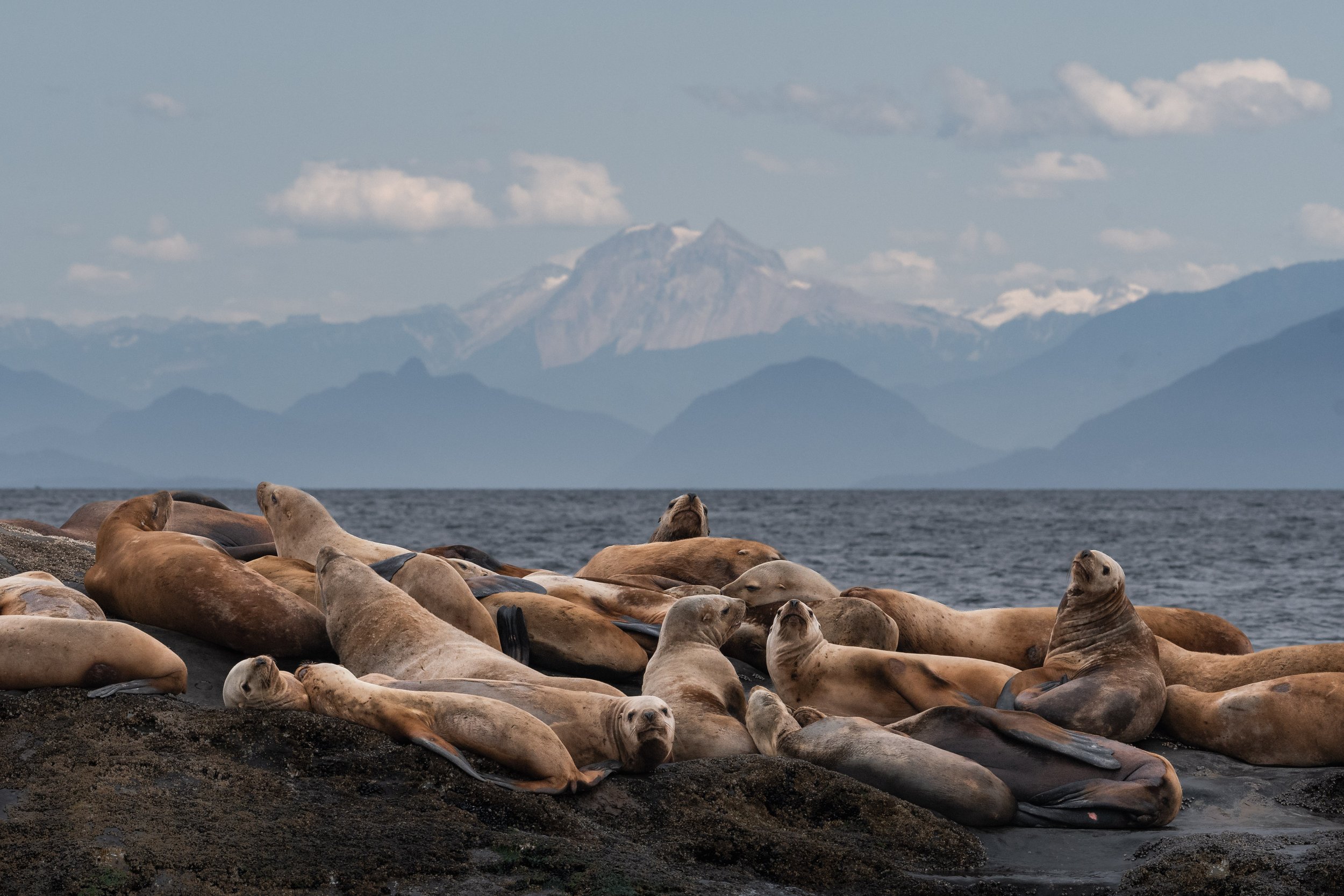
The Steller Sea Lions on Stinky Rock with Mt. Garilabdi in the background. Photo by Evan Hessels.
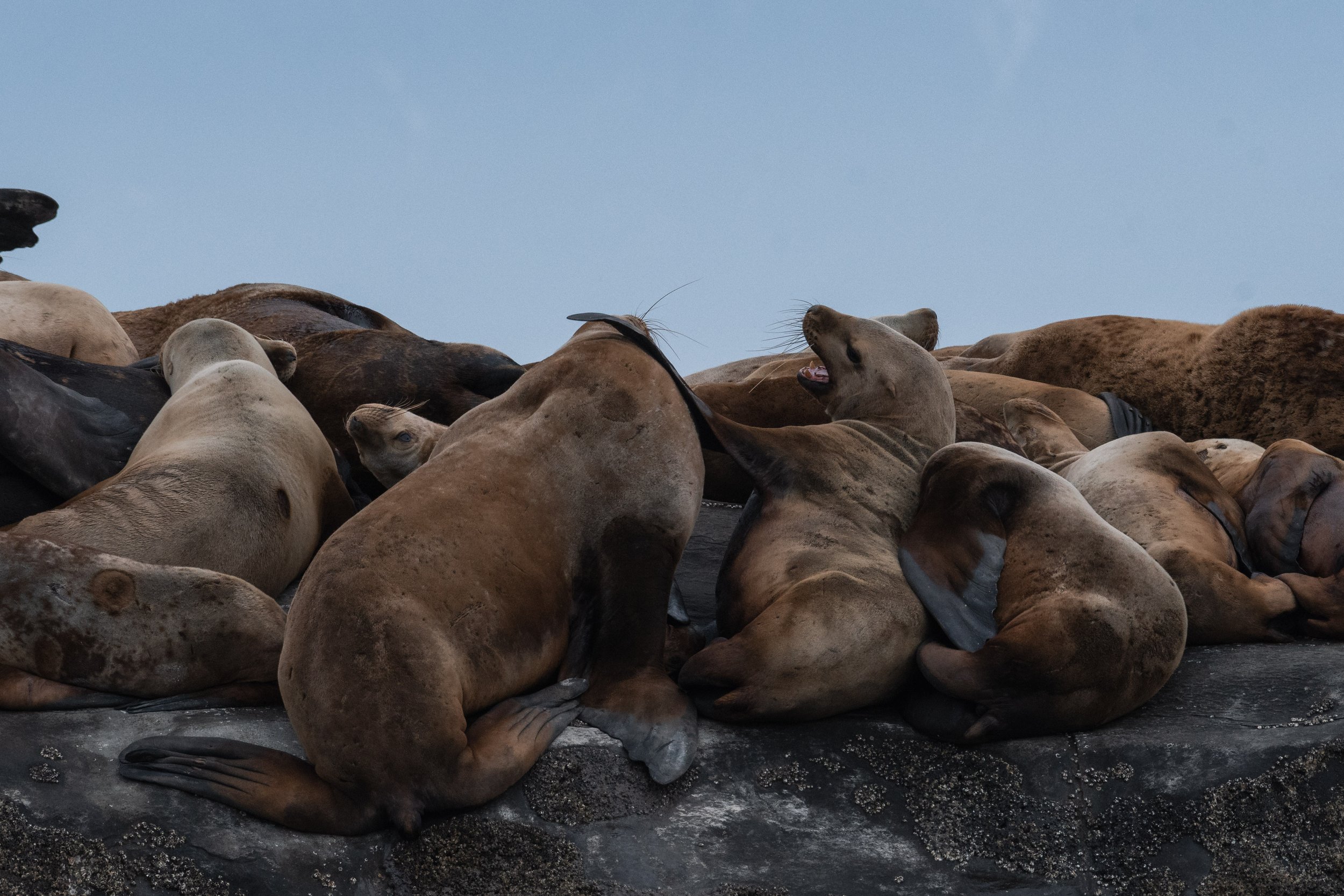
Either a fight breaking out amongst these Steller Sea Lions, or the one on teh right is giving some much needed advice. Photo by Evan Hessels.
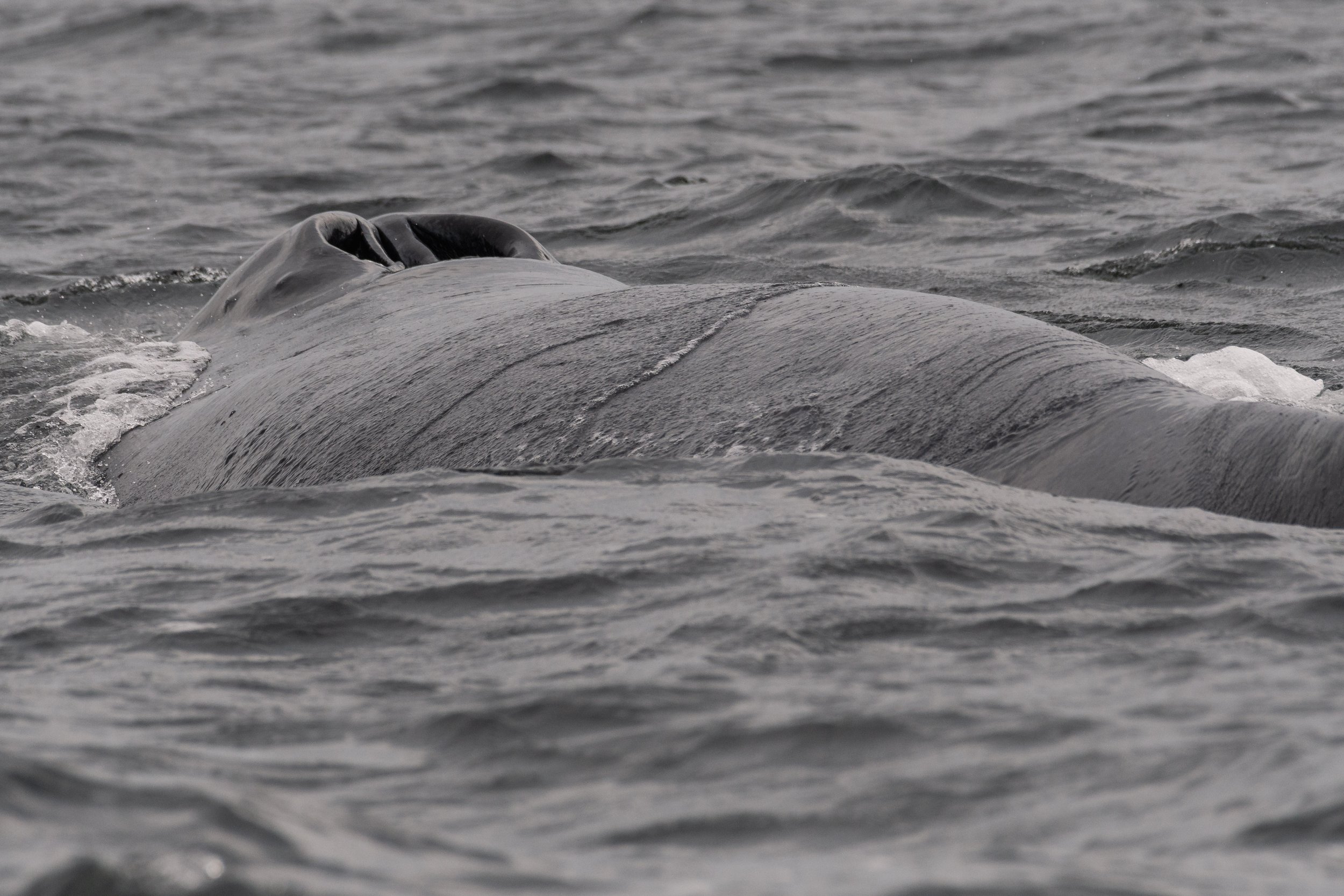
A close encounter with Tempest. Photo by Evan Hessels.
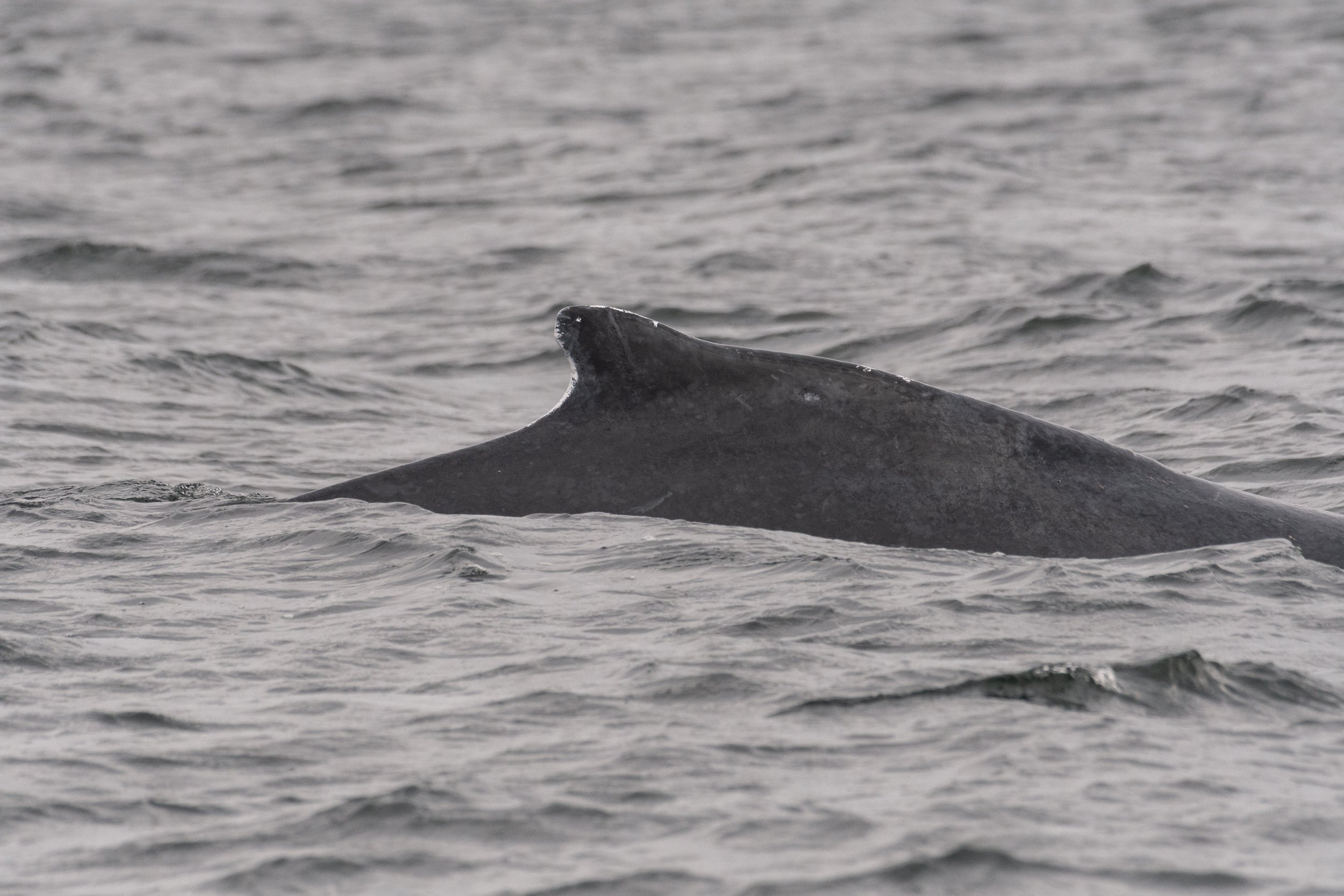
Tempest’s dorsal fin as she surfaces. Photo by Evan Hessels.
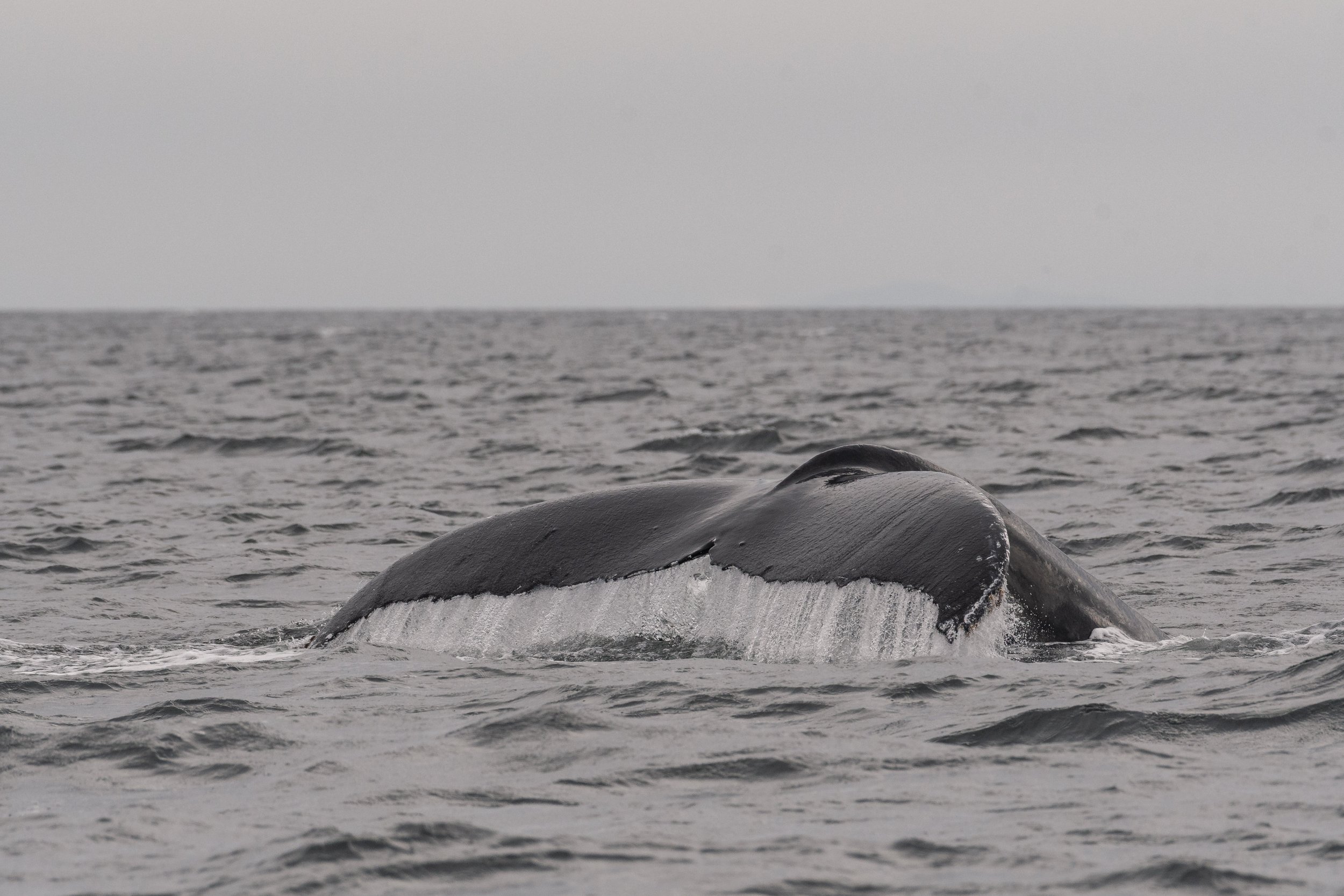
A lovely fluke waterfall as Tempest dives. Photo by Evan Hessels.
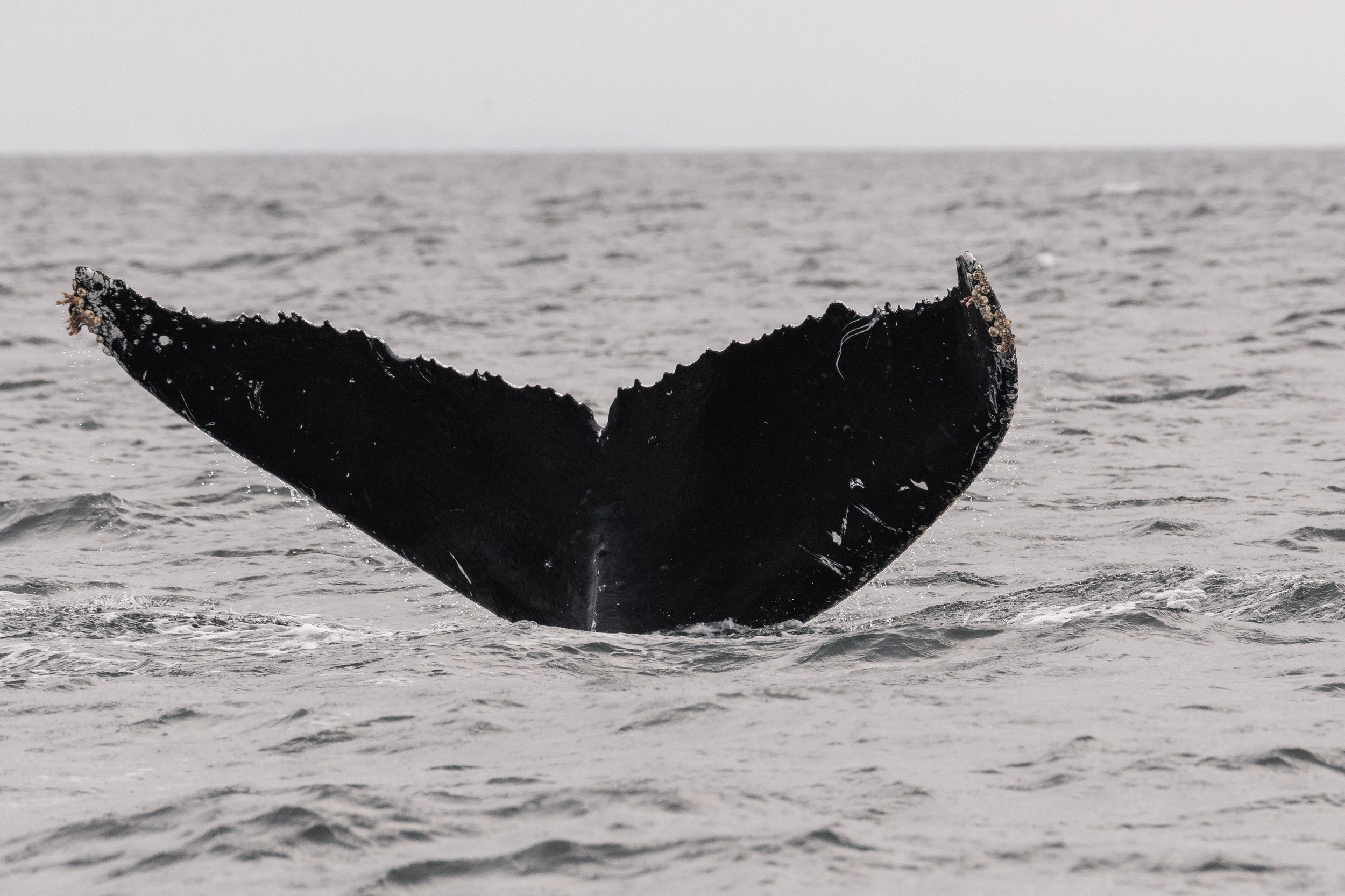
The unique underside of Tempest’s tail. Photo by Evan Hessels.
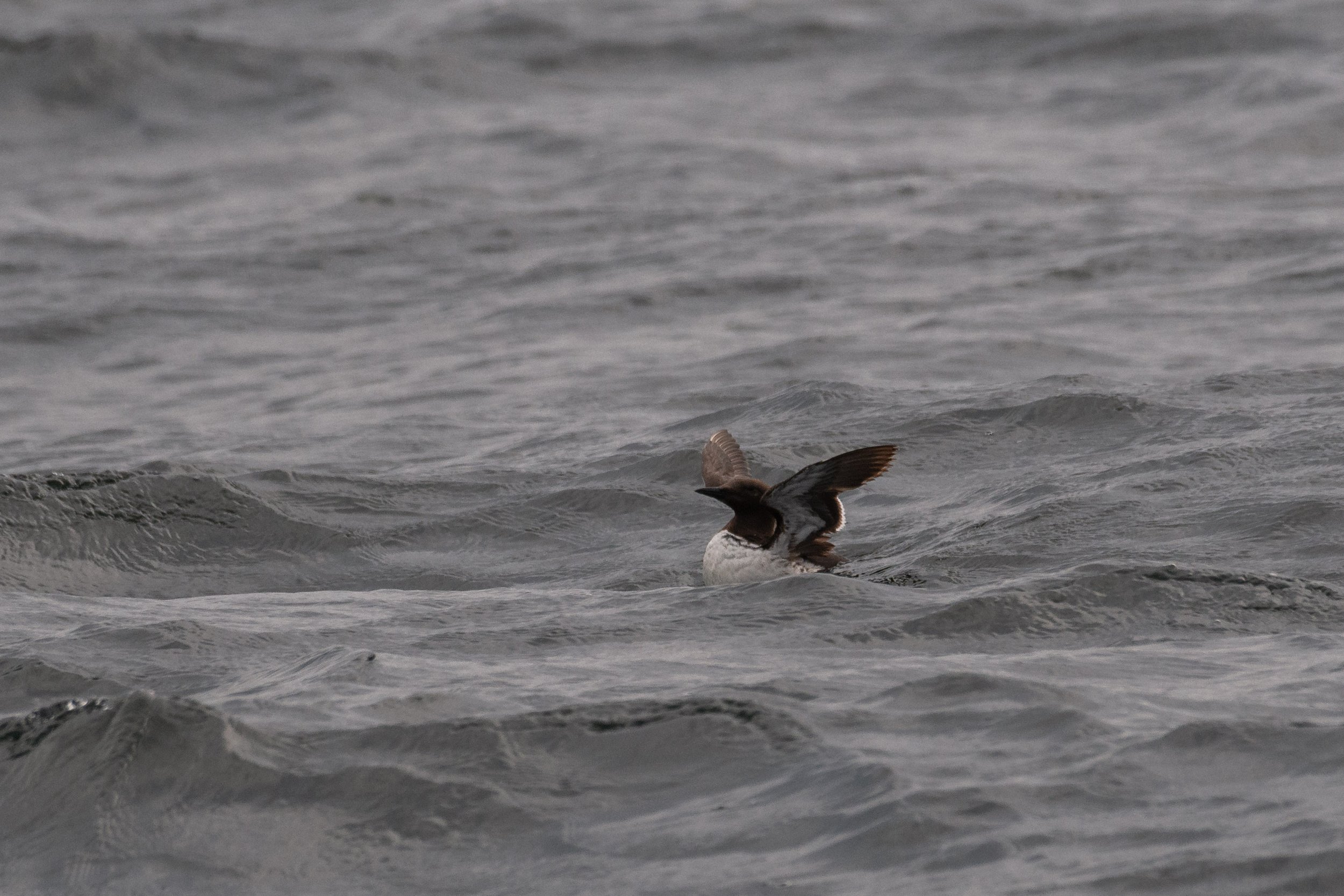
A common Murre flapping its wings. Photo by Evan Hessels.