
September 20, 2026, 3:30 PM - A double species northbound trek
The beautiful conditions of the morning had kept up for the afternoon, leading to another beautiful trip full of glass-like sea conditions. Naturalist Val discussed where we were heading, and after a quick introduction, we departed. Our journey was northbound today, scanning and searching for a pod of orca that had travelled nearby.
As we travelled farther and farther, we made our way towards Qualicum Bay. Our patience paid off as soon after, we spotted them – several dark dorsal fins popping up, followed by big bushy blows accompanying them. After a few photos, it was confirmed that these were the T023s:
T023 Janice ♀ (≤1964)
T023D Axle ♀ (1993)
T023D3 Robin ♂ (2012)
T023D4 Sixx (2015)
T023D5 Wildside (2019)
T023D6 Mars (2026)
The pod was very spread out when we arrived on scene, with a few of the members hugging the shore, while the others stayed further out. It was possible that they were searching as they travelled, potentially wanting to take advantage of a quick meal if the chance arose.
For the group in deeper waters, a tiny fin quickly popped up beside another before disappearing into the depths. Tiny T023D6 Mars travelled close to their mother, T023D Axle, porpoising along her side. First spotted in February, Mars still has a lot of growth to do before they become more independent. They are still quite orange in colour as well, instead of the classic black-and-white silhouette most orca showcase. This interesting colouration is likely because they have a very thin layer of blubber at birth, making the calf’s blood vessels more visible through their skin. Usually around a year after birth, this blubber layer has thickened enough that they no longer appear orange.
After enjoying some time with the T023s, we set off again, peeking all around for other potential whales. As we made our way toward Hornby Island, several large blows and dark backs soon came into view. Several humpbacks were travelling through the area, fluking as they went. Up came our camera, and after a few photos, it was determined that Moraine (BCY1465), Seabird (BCY1774), and Wizard (BCY1412) were associating together, with Achilles (BCX2500) a bit further off to the side, and several others in the distance. The trio was travelling fin-to-fin as we observed them, occasionally trumpeting along the way. At one point, (WHO WAS FLICKING?) was swishing their tail back and forth along the surface, a behaviour known as tail flicking. This is believed to be a specialized foraging technique, potentially helping the whale concentrate prey before stunning it. It is a behaviour that is considered uncommon in our area, so any time we witness it, we feel very lucky!
We spent some time with these humpbacks before we departed and began travelling once more. We didn’t get far, though, before another pair of humpbacks were spotted. This time, it was Stingray (BCZ0409) and Tag (BCX0429), travelling and diving away.
Tag is an older whale, with their first confirmed Happywhale sighting dating back to 2004. Stingray similarly has been seen since 2011. Both of these two are fairly uncommonly seen on our tours, as they tend to spend their summers in more northern waterways, so we feel very blessed any time we get to encounter them.
By this point, the sun was beginning to sink below the horizon, and it was time to head back toward Nanaimo. We began zipping along, enjoying the evening as we headed south. Nearly back in the outer harbour, we happened to find one more sighting to round off the trip – two orcas were travelling by Neck Point. One male and one female, with the male’s dorsal fin bearing two large notches. This turned out to be none other than famous T063 Chainsaw alongside his mother, T065 Whidbey II.
T065 Whidbey II ♀ (~1971)
T063 Chainsaw ♂ (~1978)
The pair was simply slowly travelling along, rising and falling as they went. We did not stay long, but it was a great way to wrap up the evening.
Turning away one final time, we departed, and a few minutes later, we were back in the harbour. It had been a lovely time exploring the northern part of our range, with many whale sightings to boot!
Please enjoy this trip’s photos taken by Marine Naturalist Val Watson.
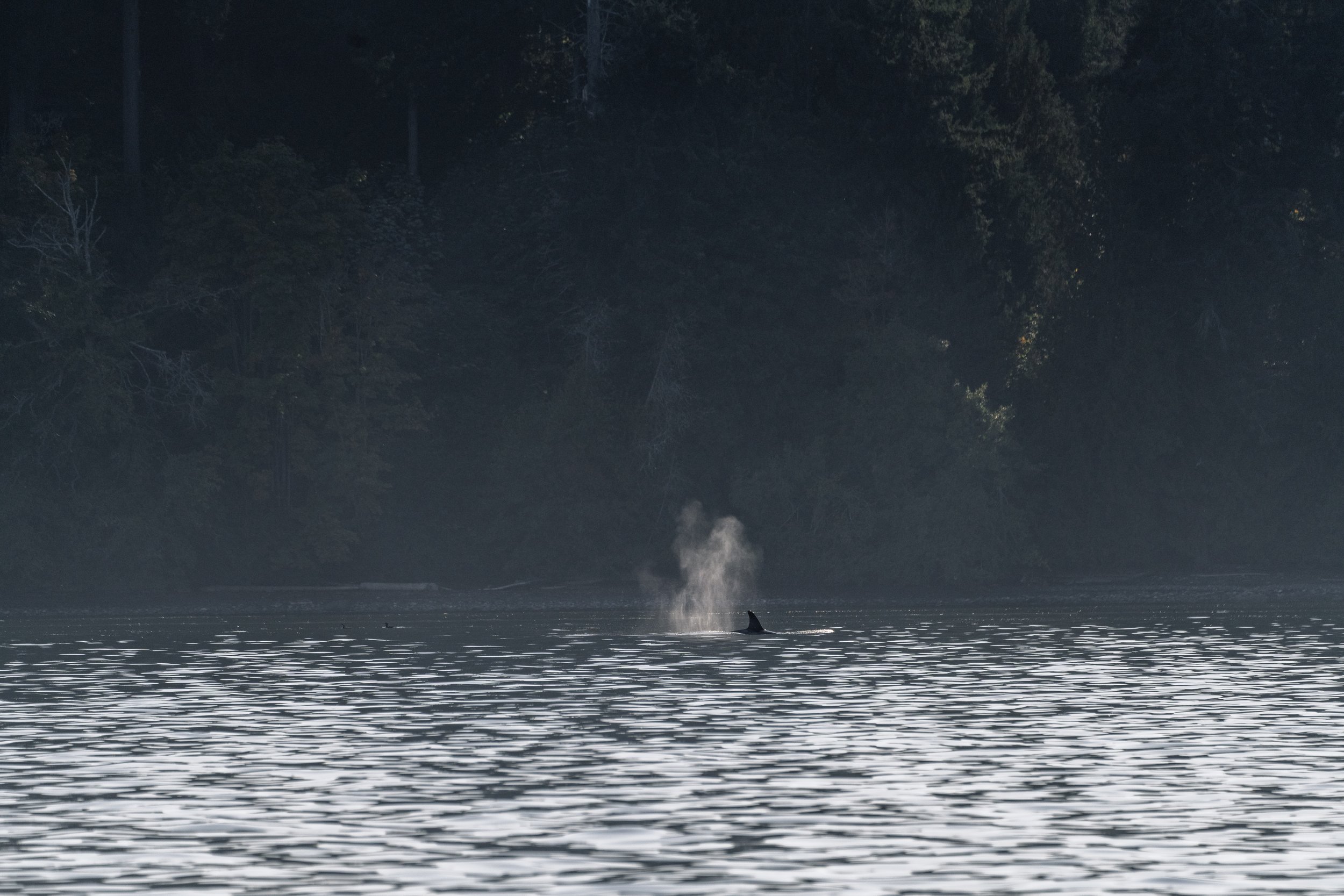
T023D5 Wildside on the coast, with a backlit blow visible.
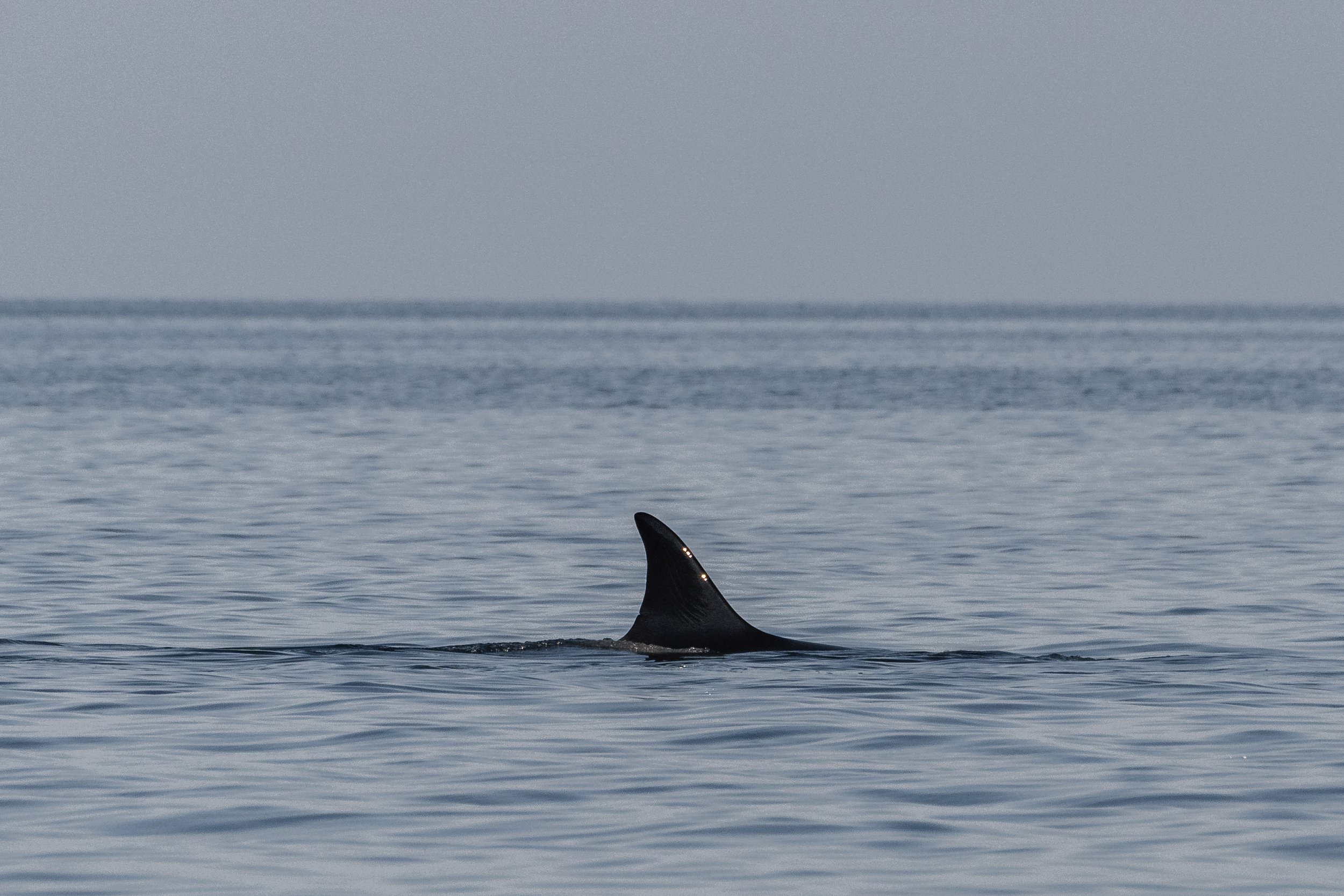
T023D Axle with her tiny dorsal notch!
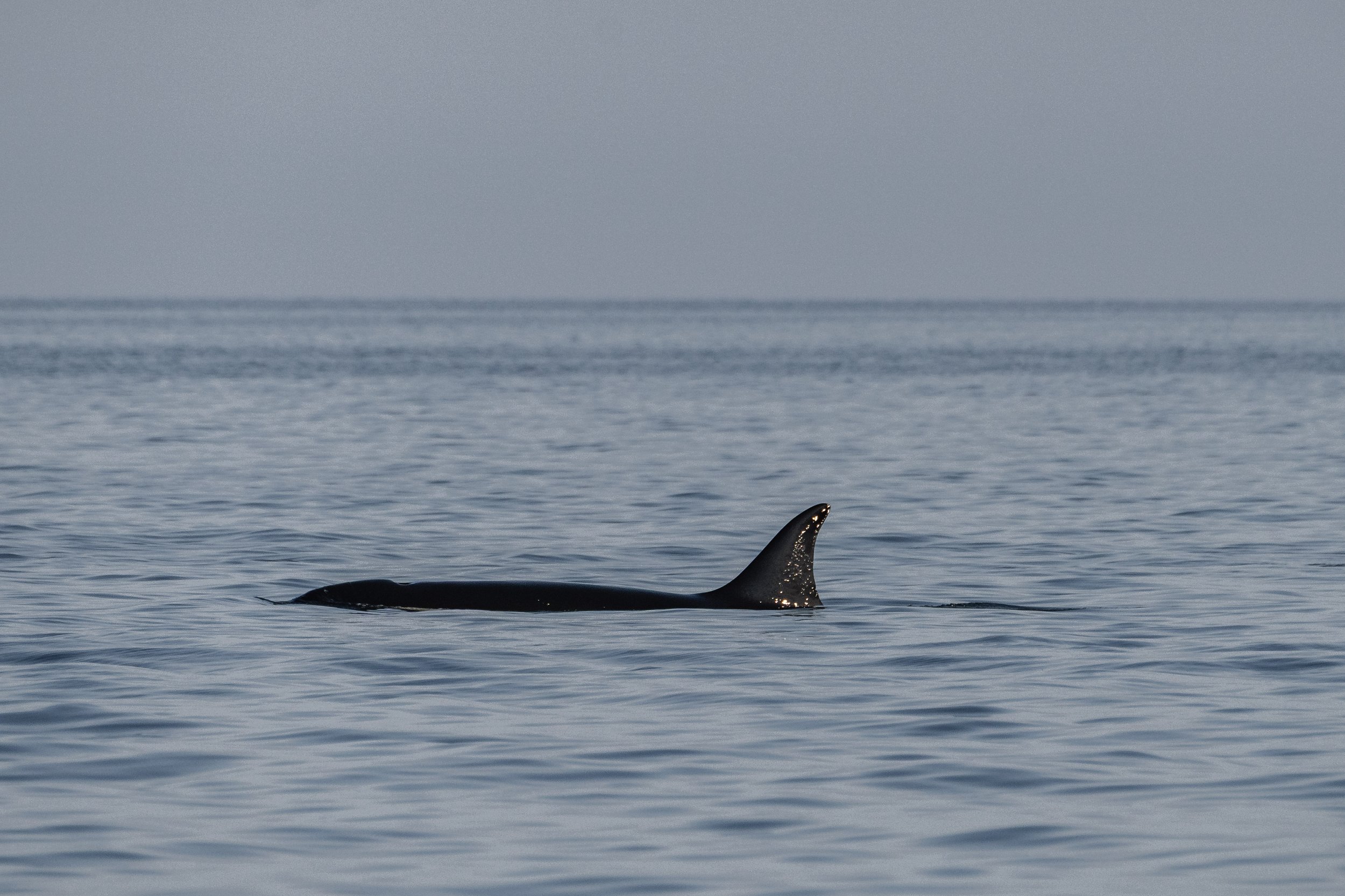
T023D Axle glistening in the sunlight.
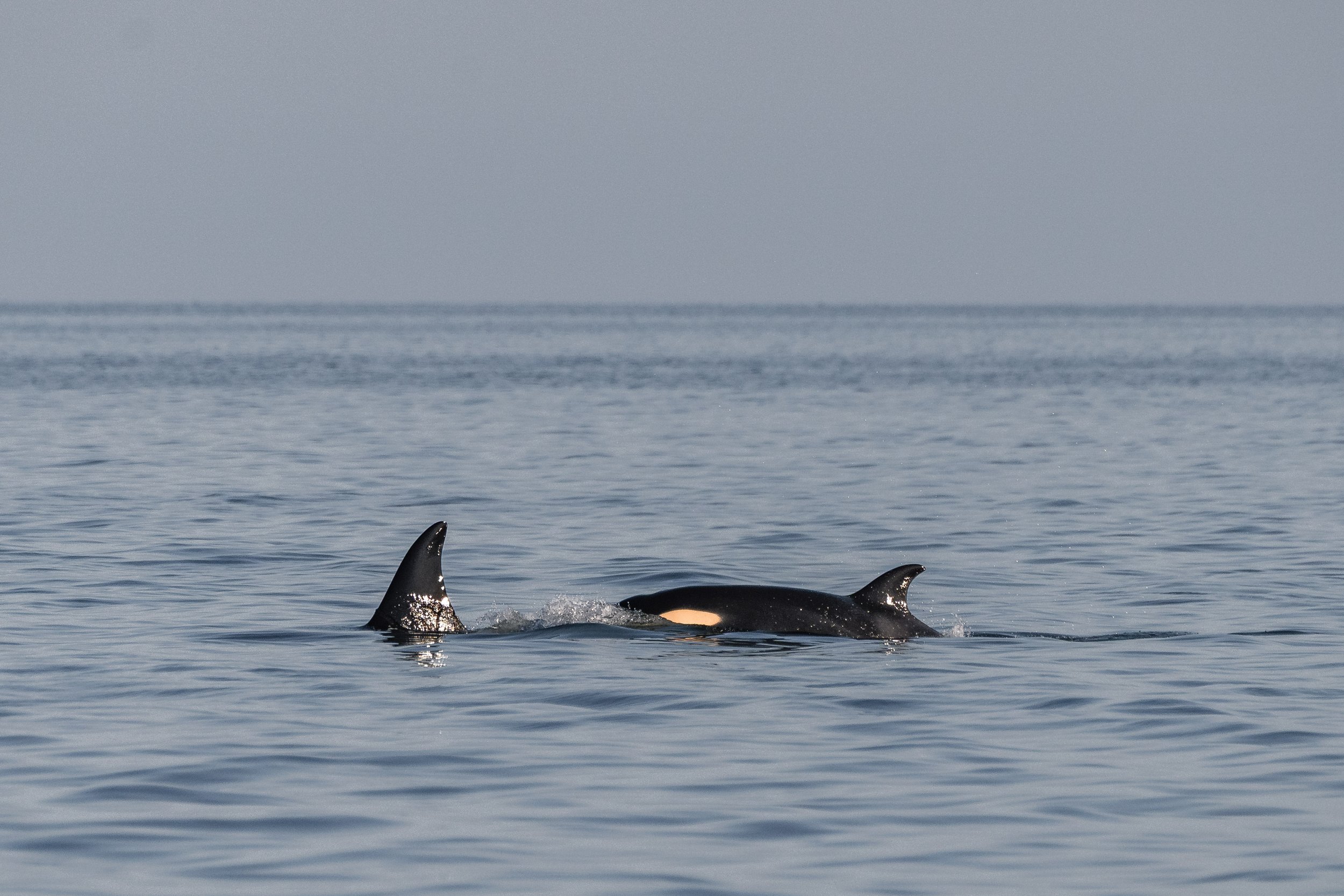
T023D Axle with her youngest calf, T023D6 Mars.
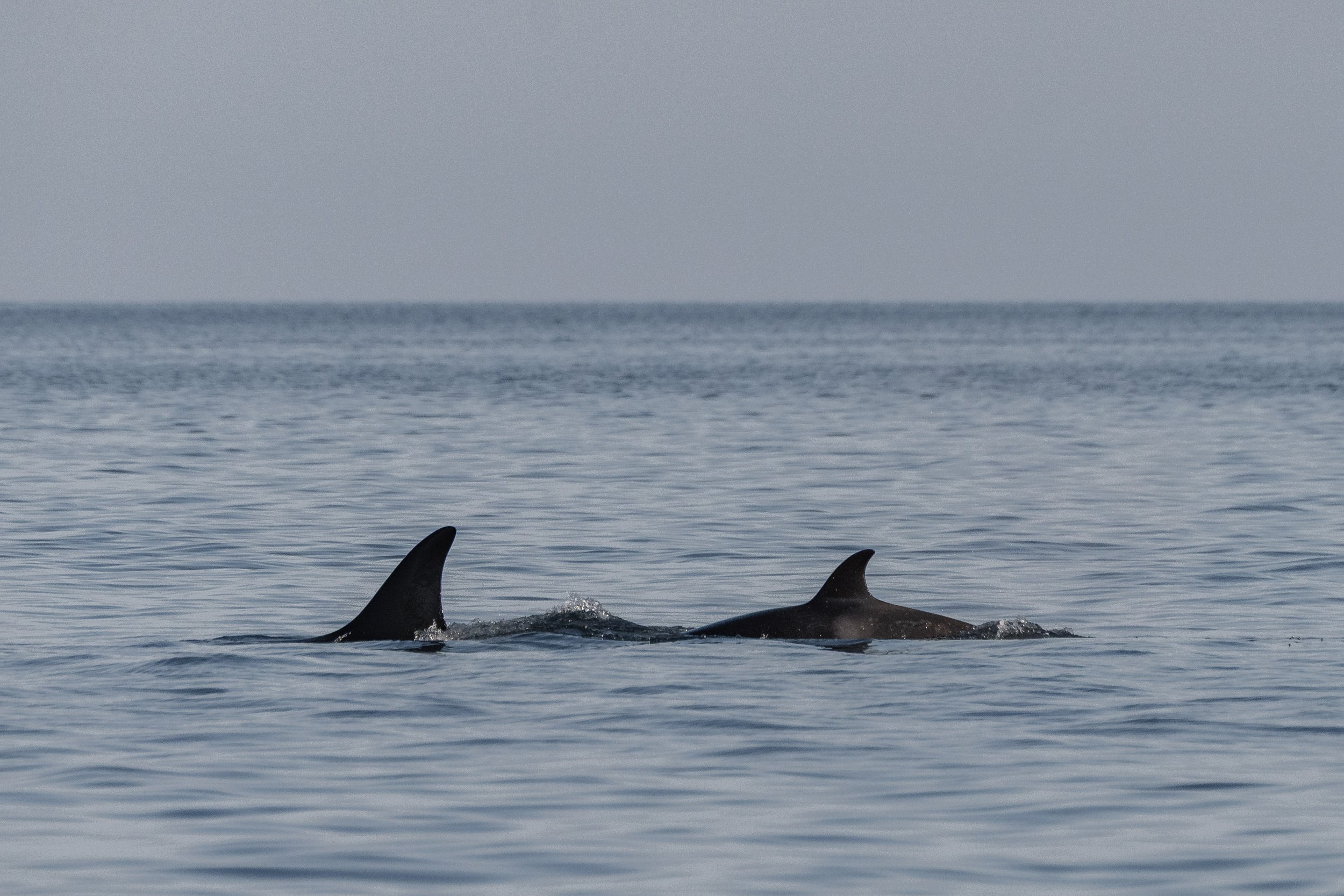
Mother T023D Axle and calf T023D6 Mars travelling together.
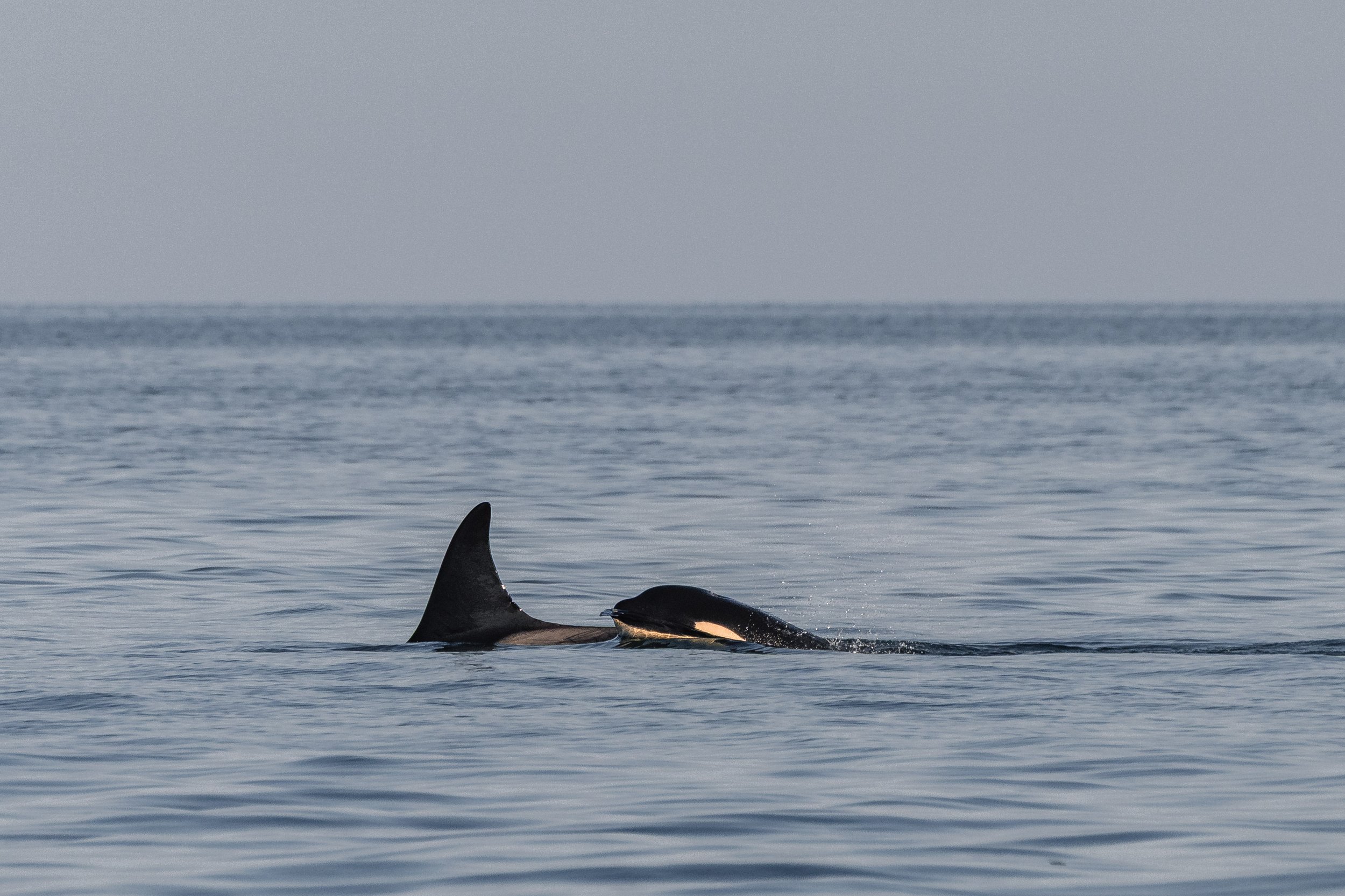
T023D6 Mars just breaking the surface behind T023D Axle.
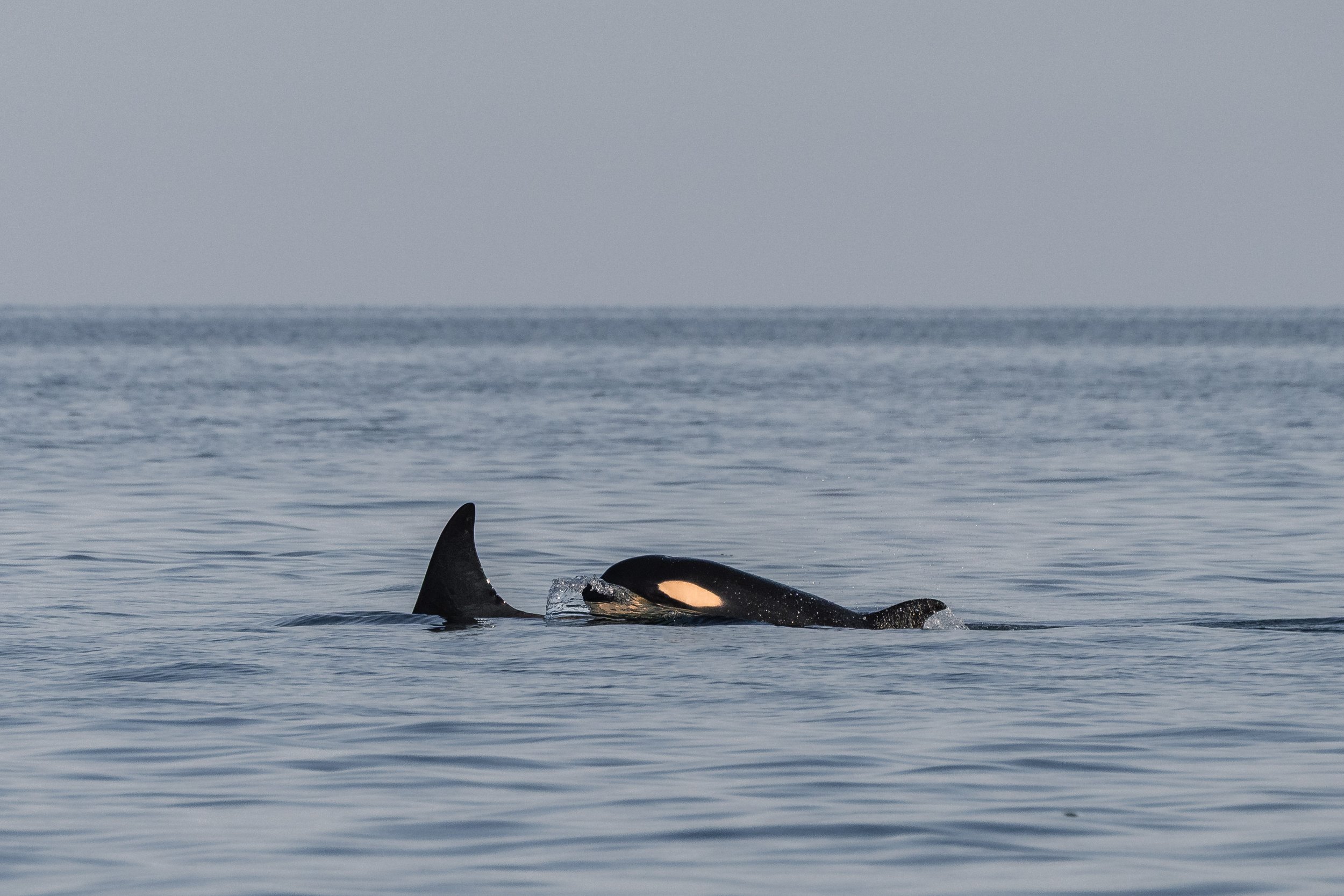
A peek at T023D6 Mars’ eyepatch.
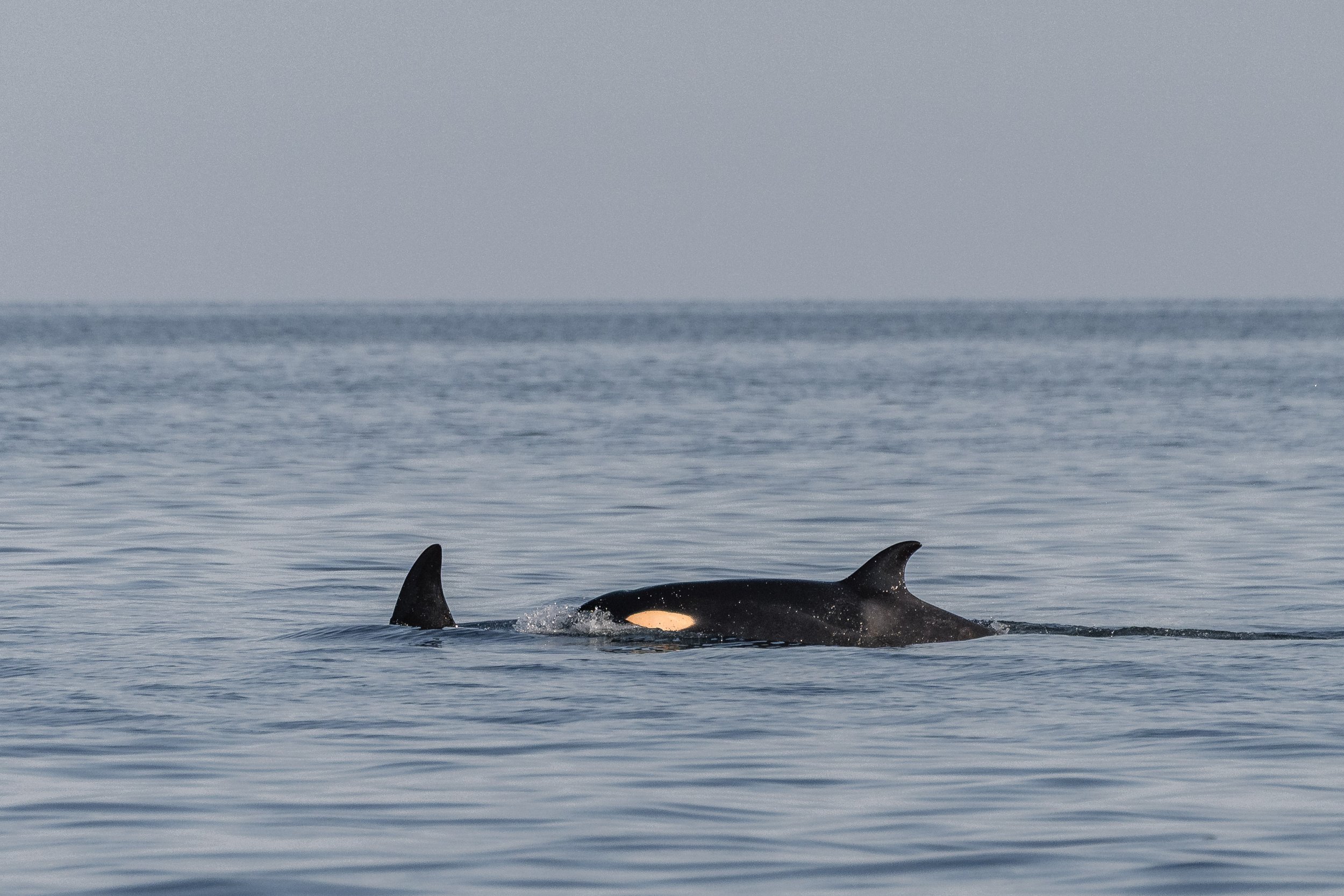
T023D6 Mars zipping along.
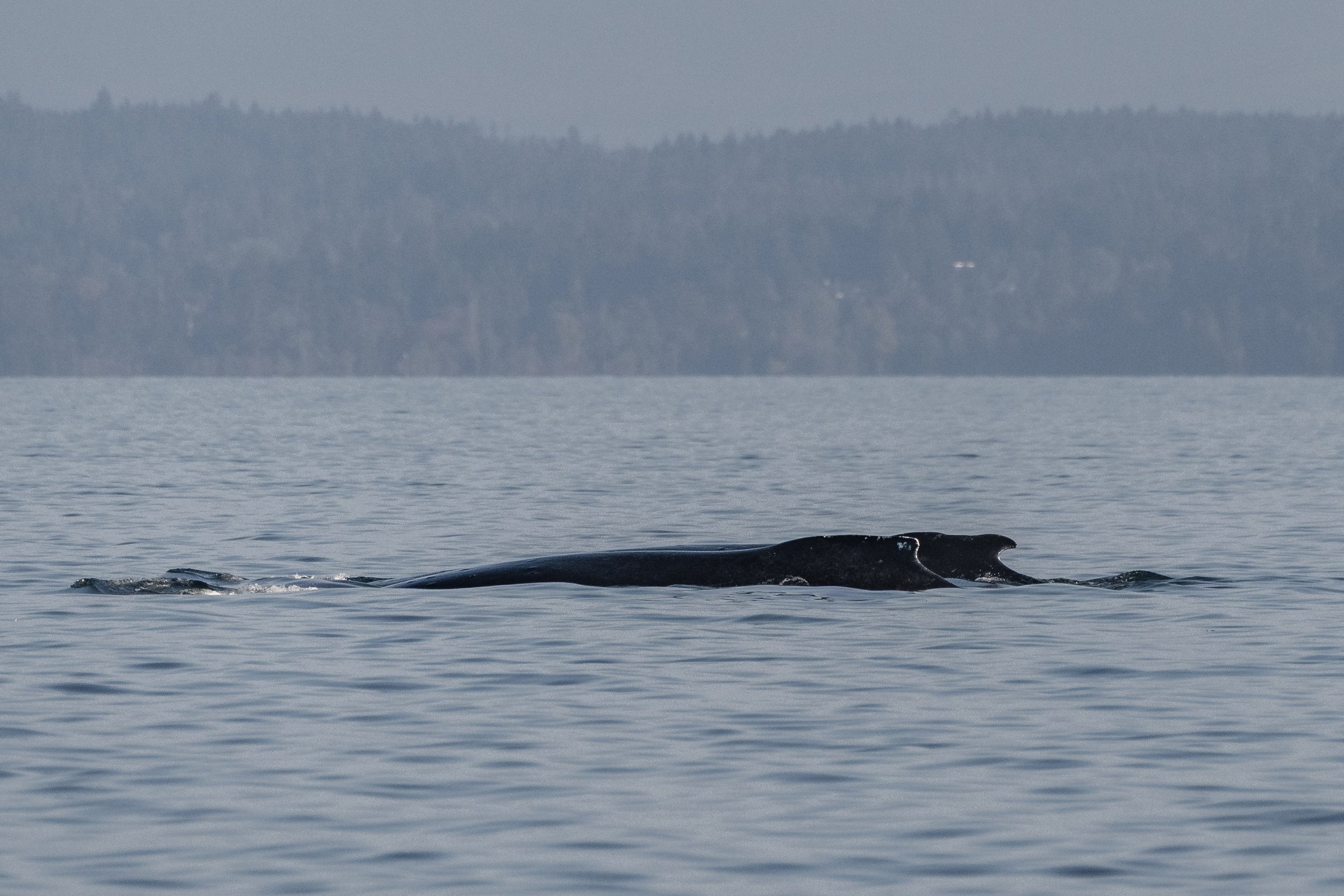
Seabird and Moraine travelling close together.
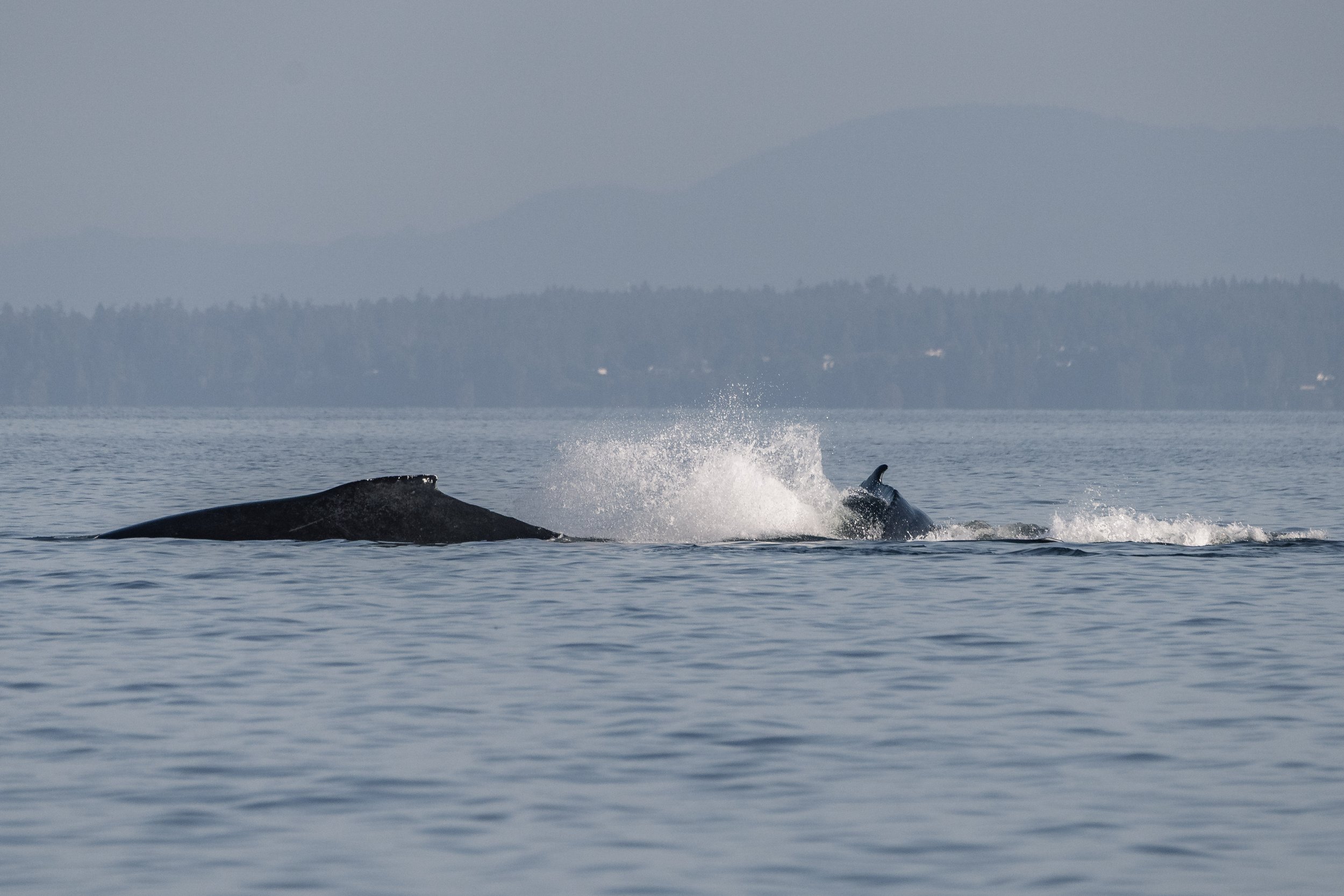
Seabird travelling, with Moraine tail flicking beside them.
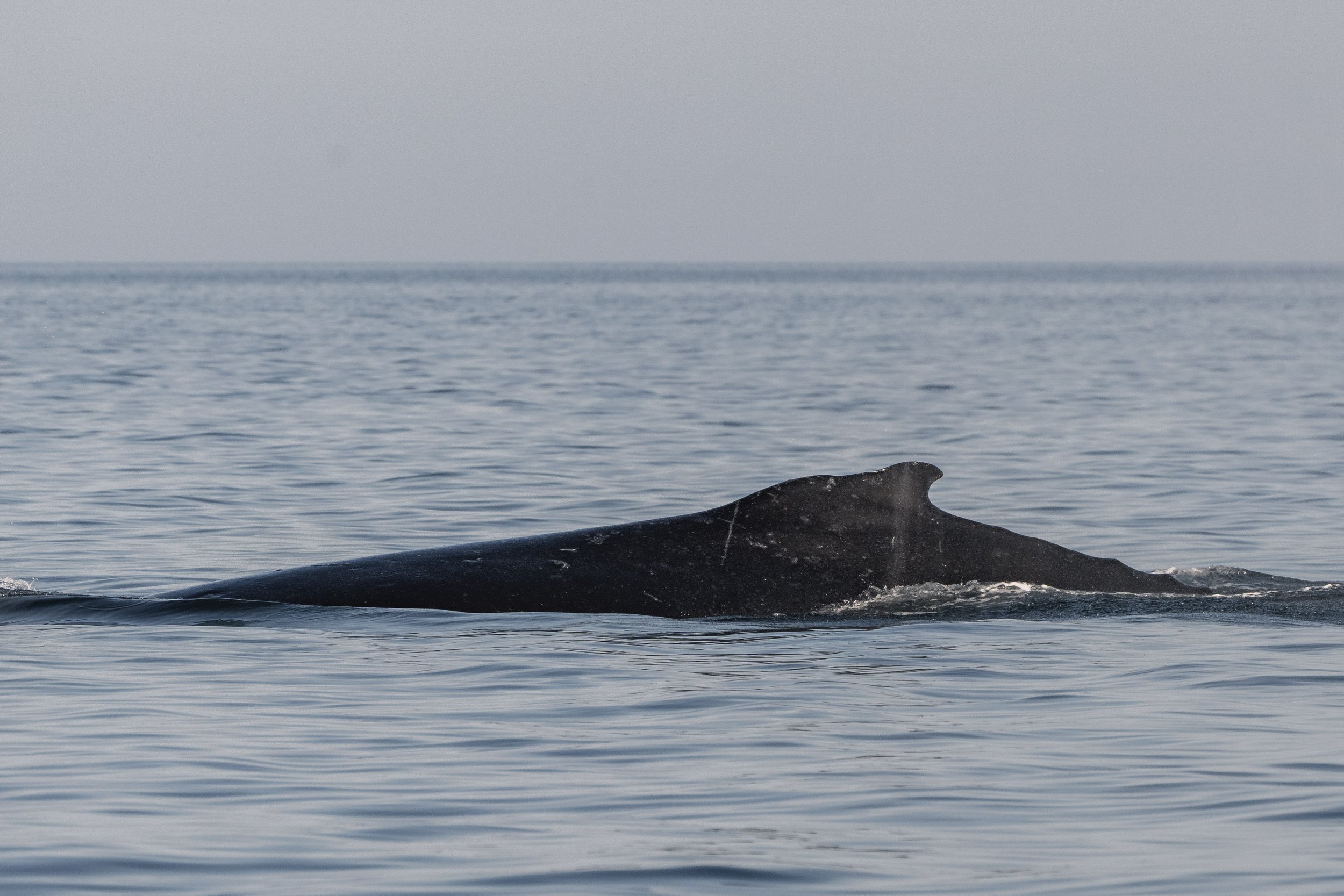
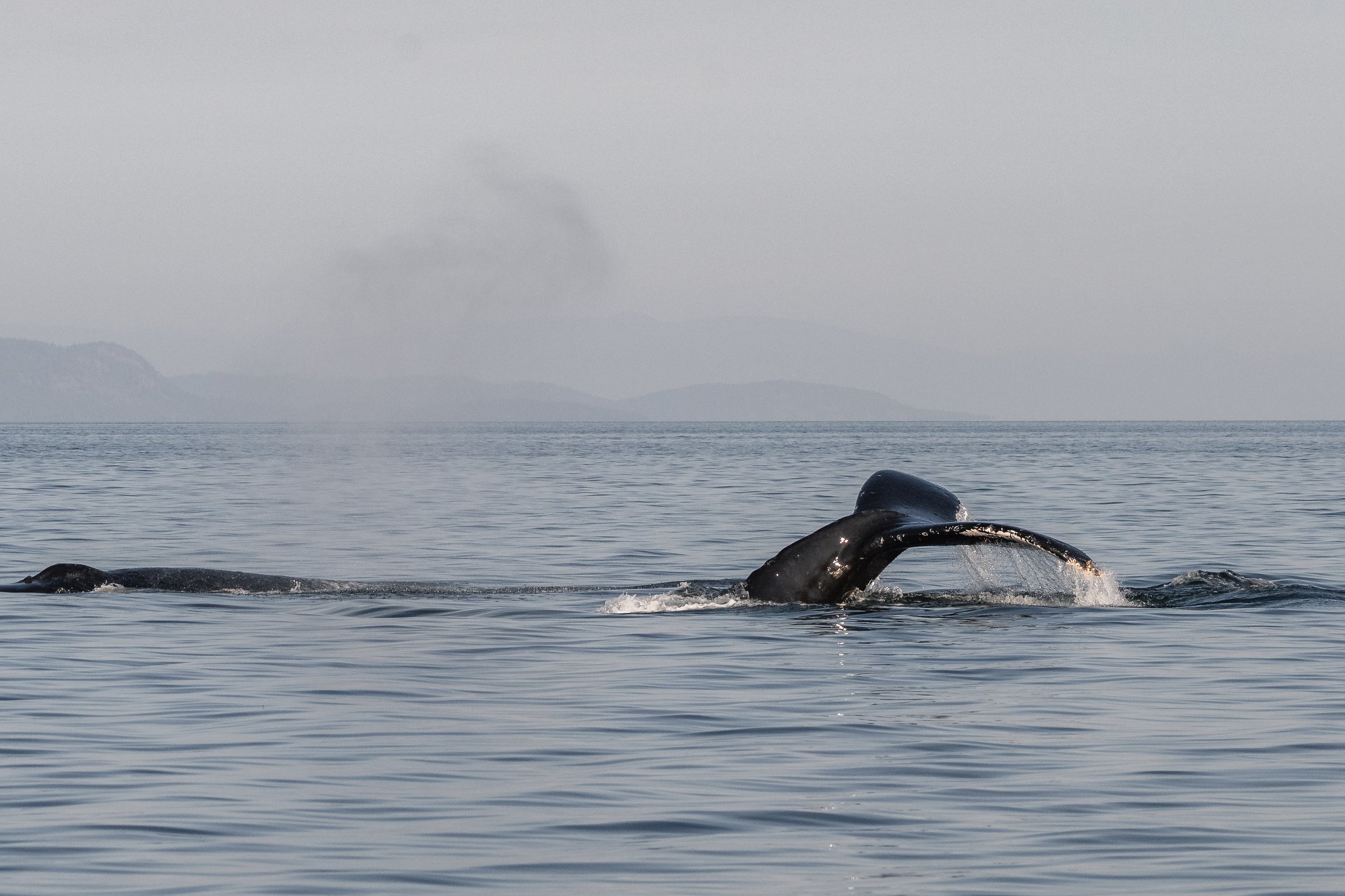
Moraine fluking beside Seabird.
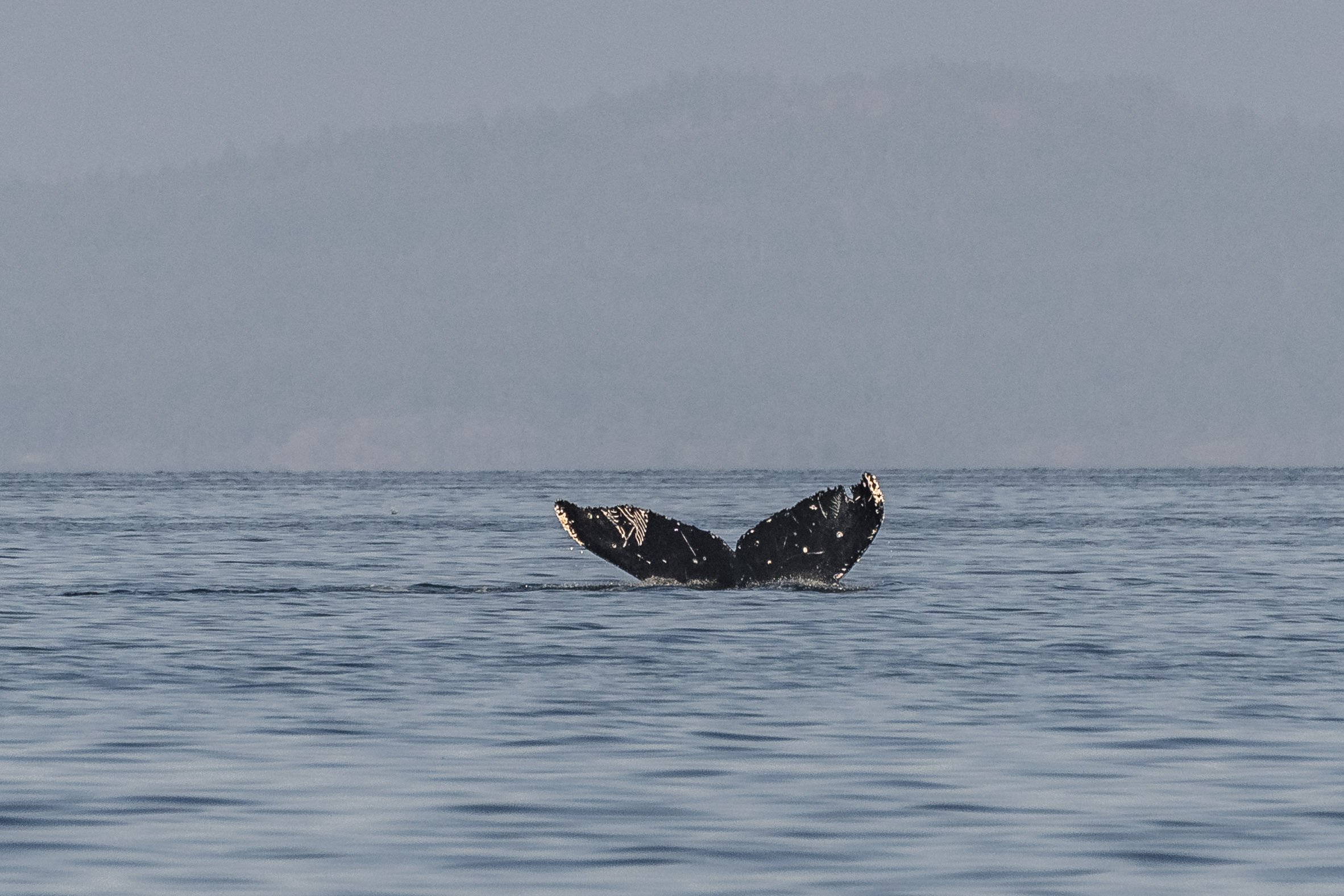
Achilles fluking in the distance.
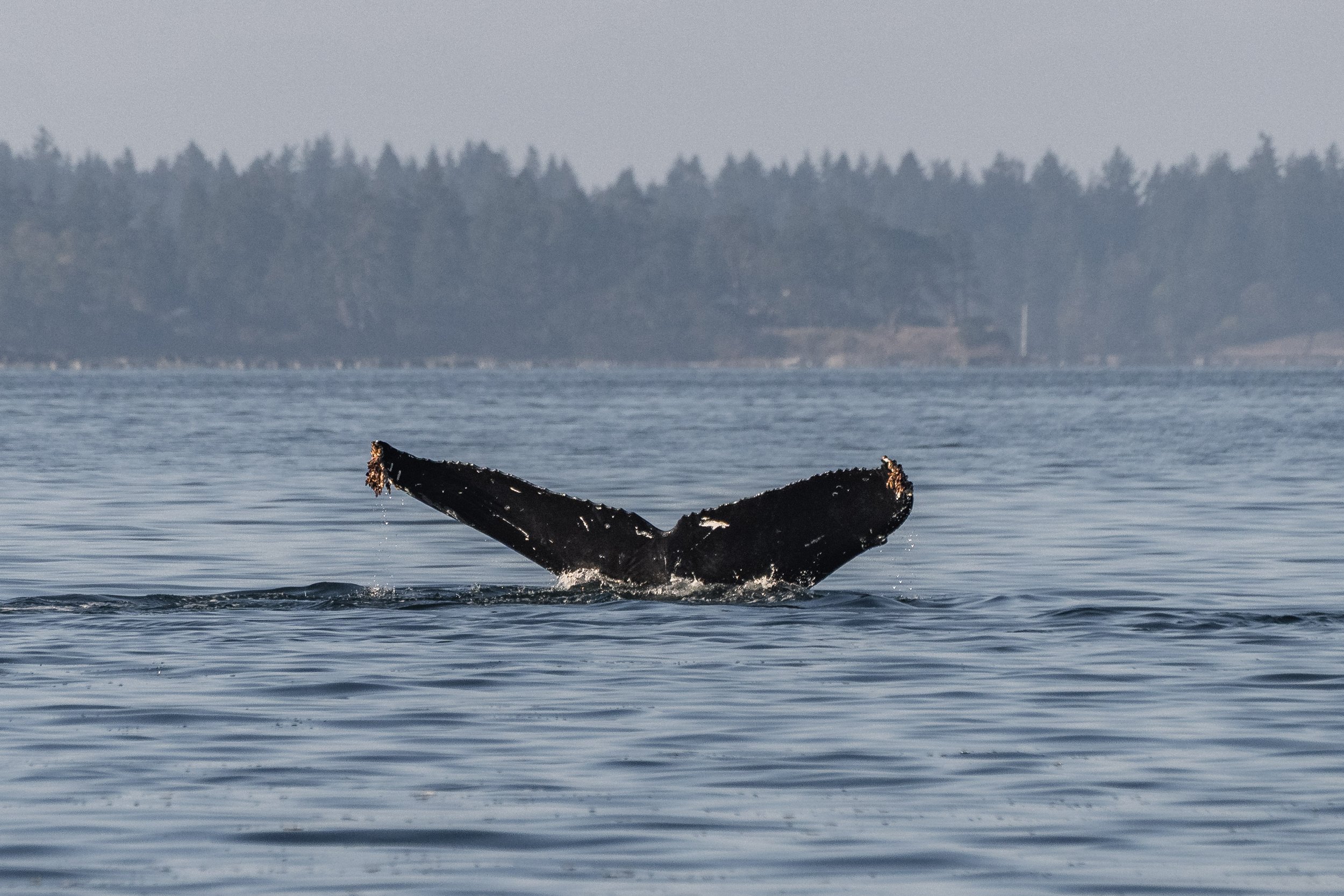
Seabird’s interesting fluke.
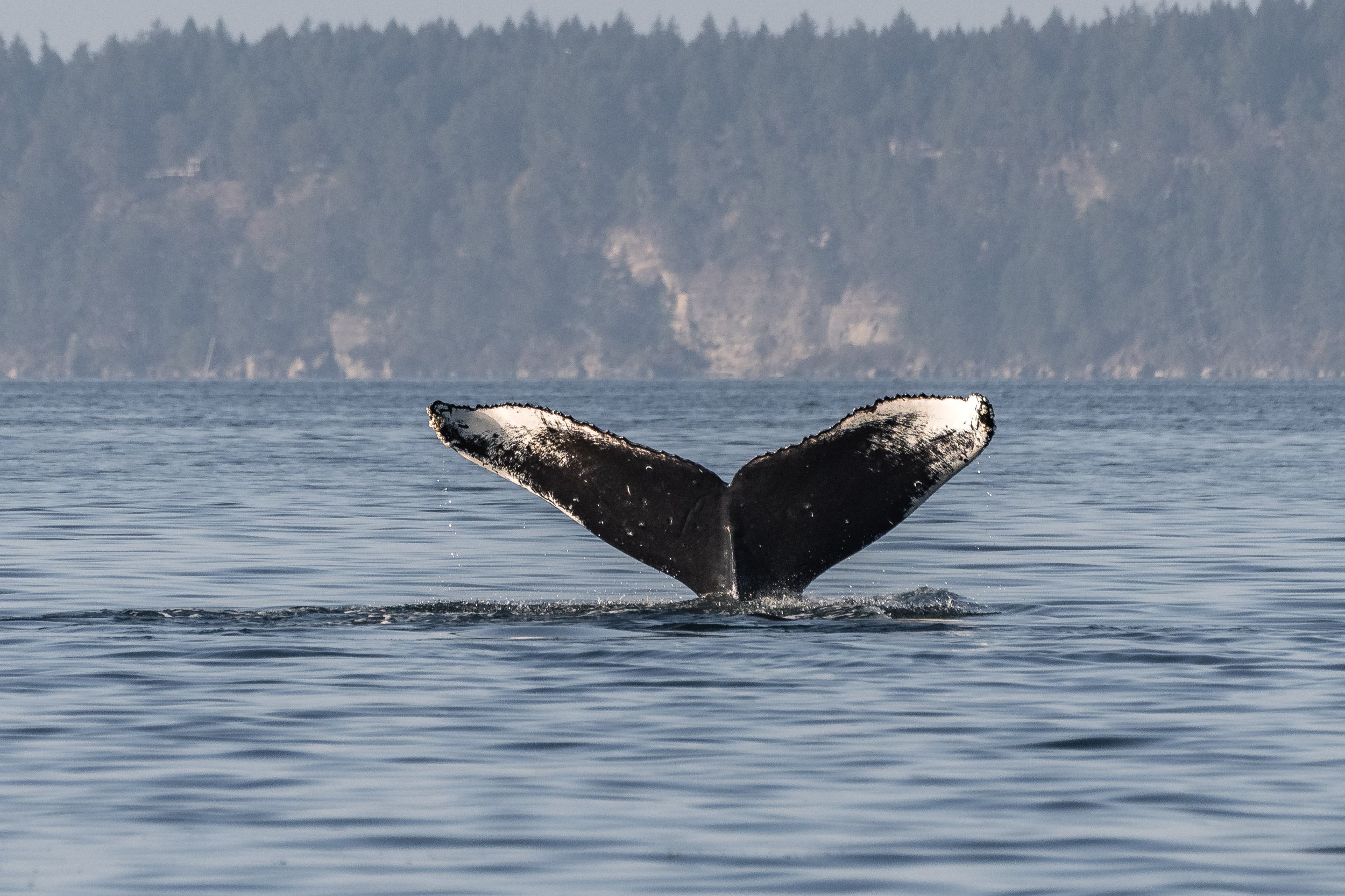
Moraine fluking.
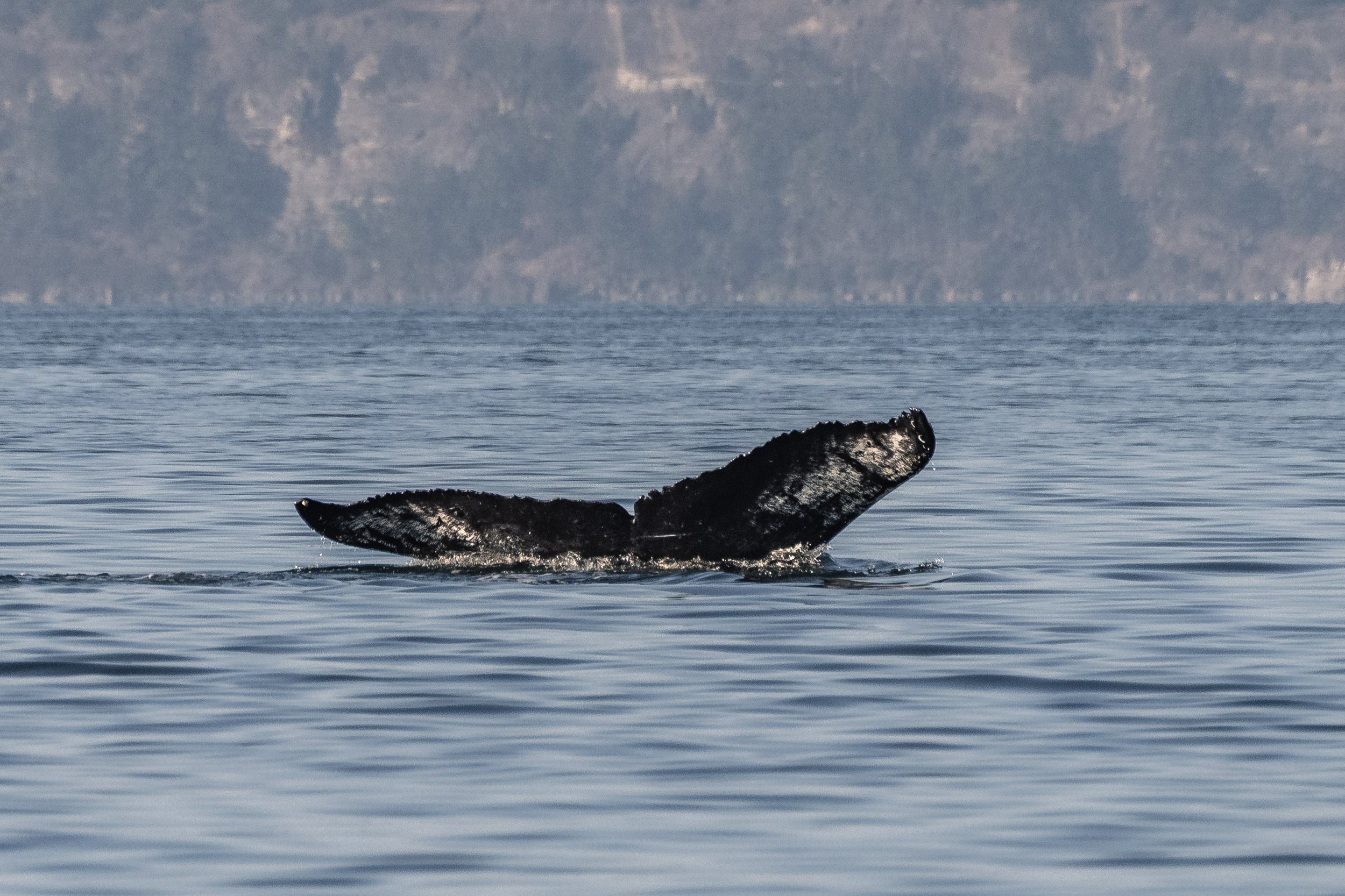
Wizard going down for a dive.
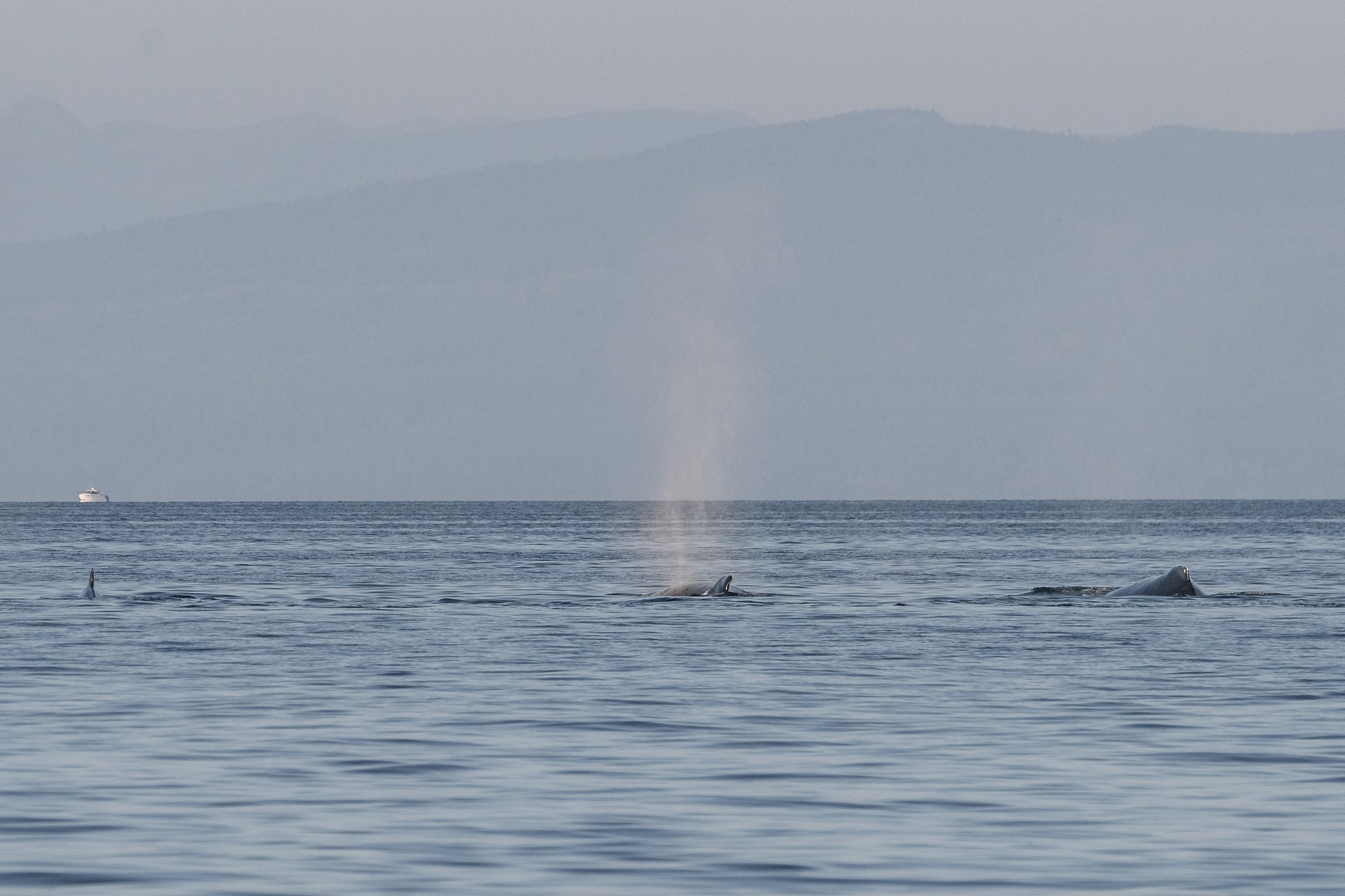
The trio, Wizard, Moraine, and Seabird, travelling beside one another.
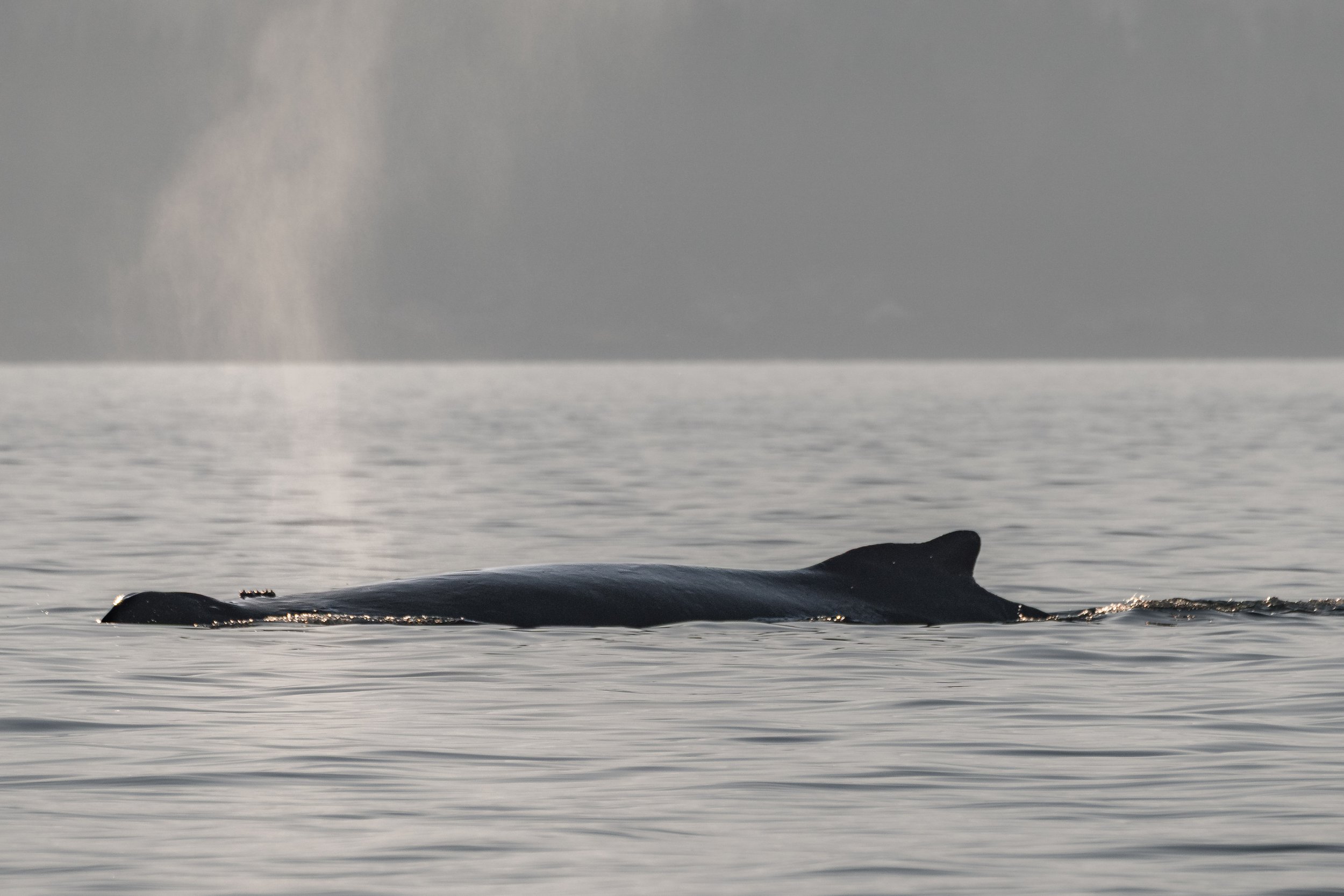
Achilles’ dorsal fin, and interesting barnacle patch near their blowholes.
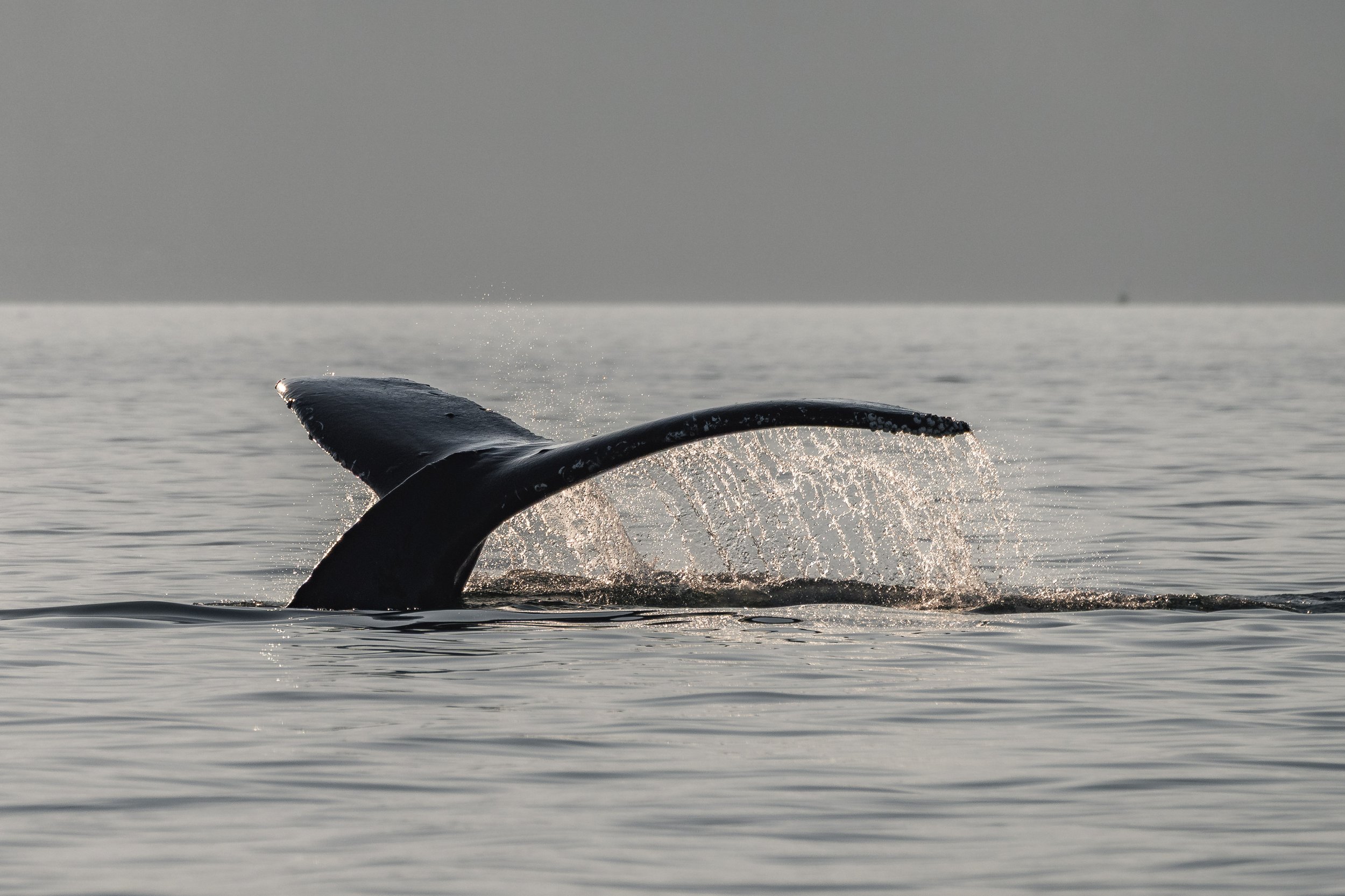
A fluke waterfall from Achilles.
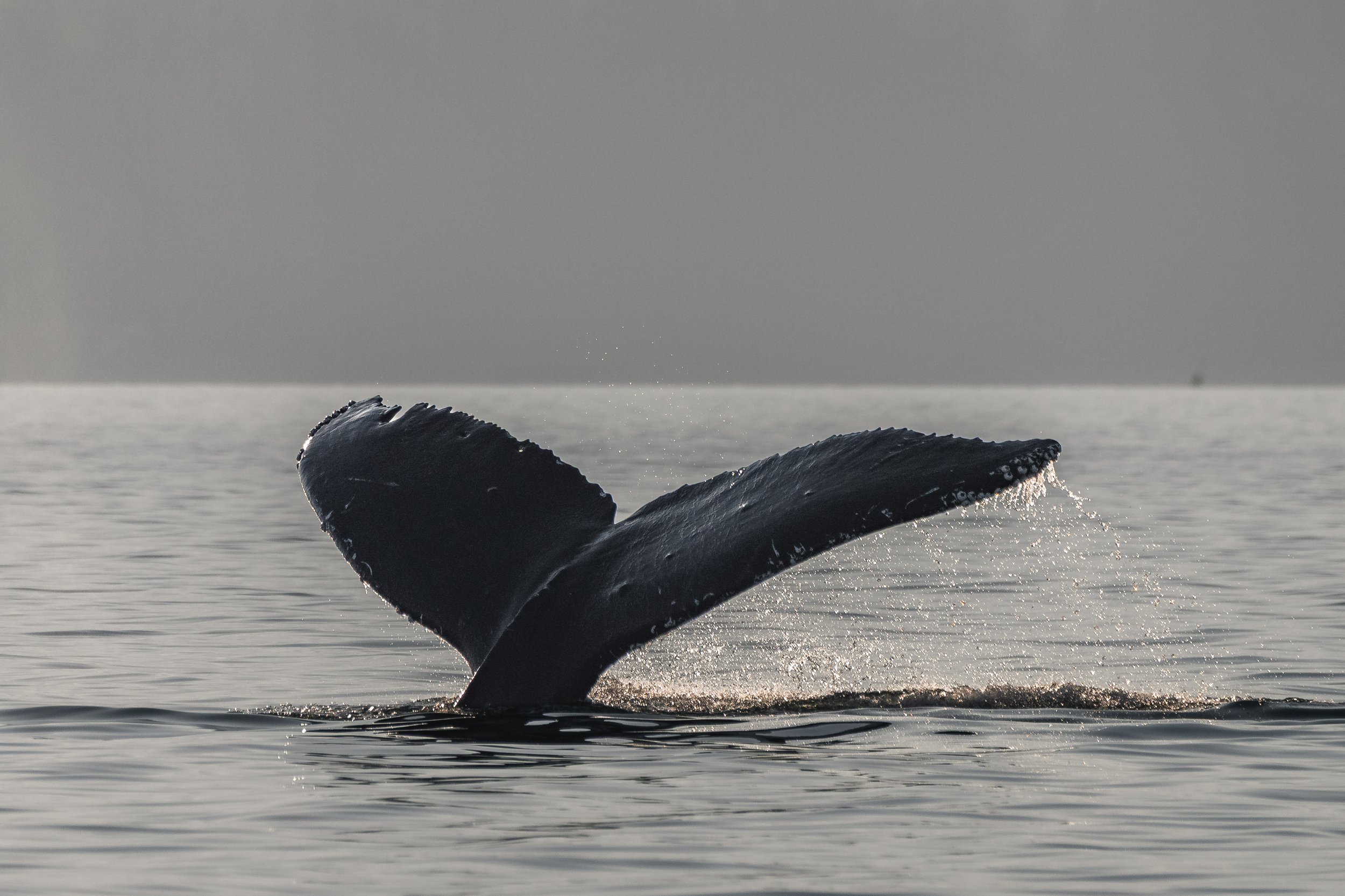
Achilles can be identifed from the top side due to their unique trailing edge and fluke notch.
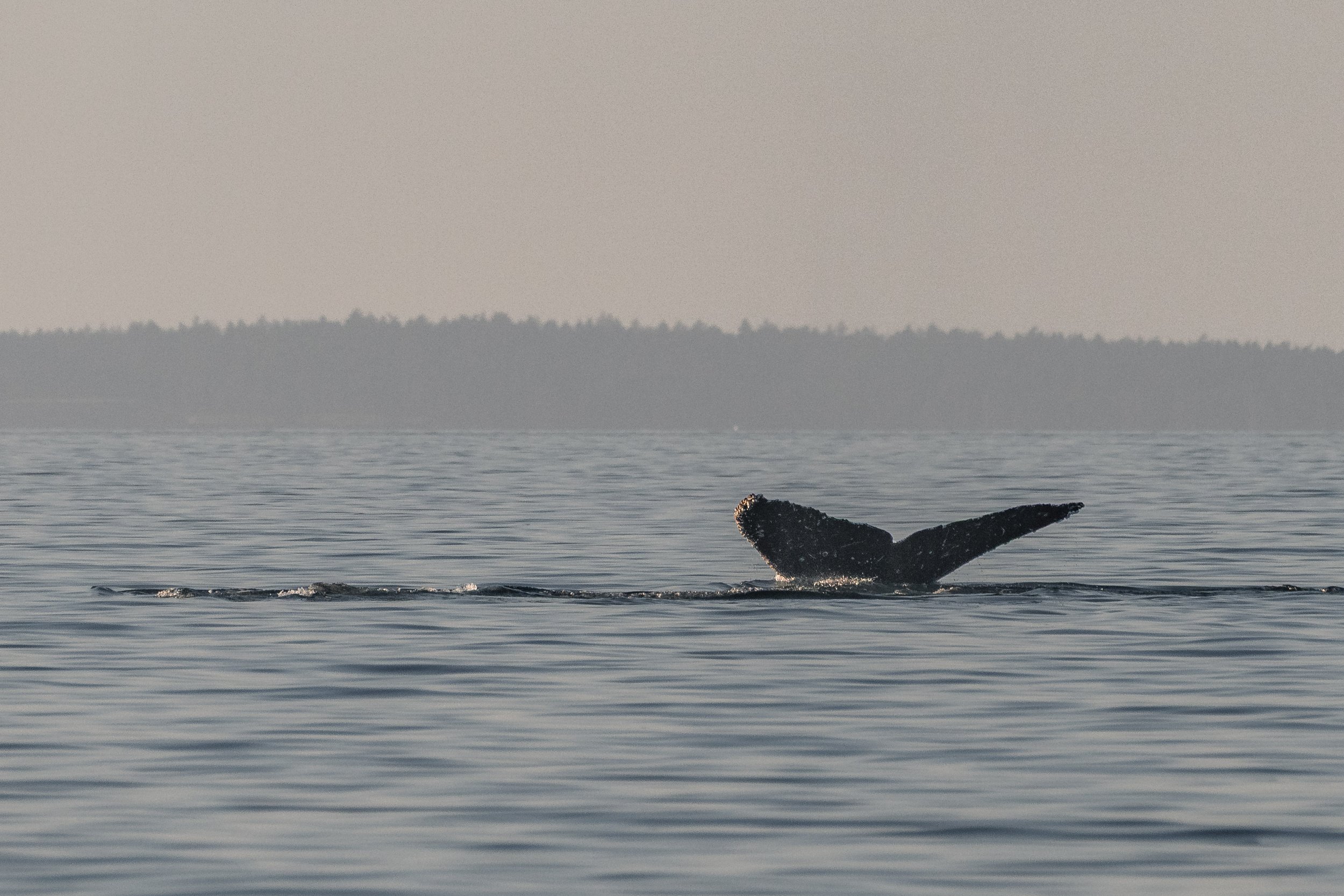
Tag diving.
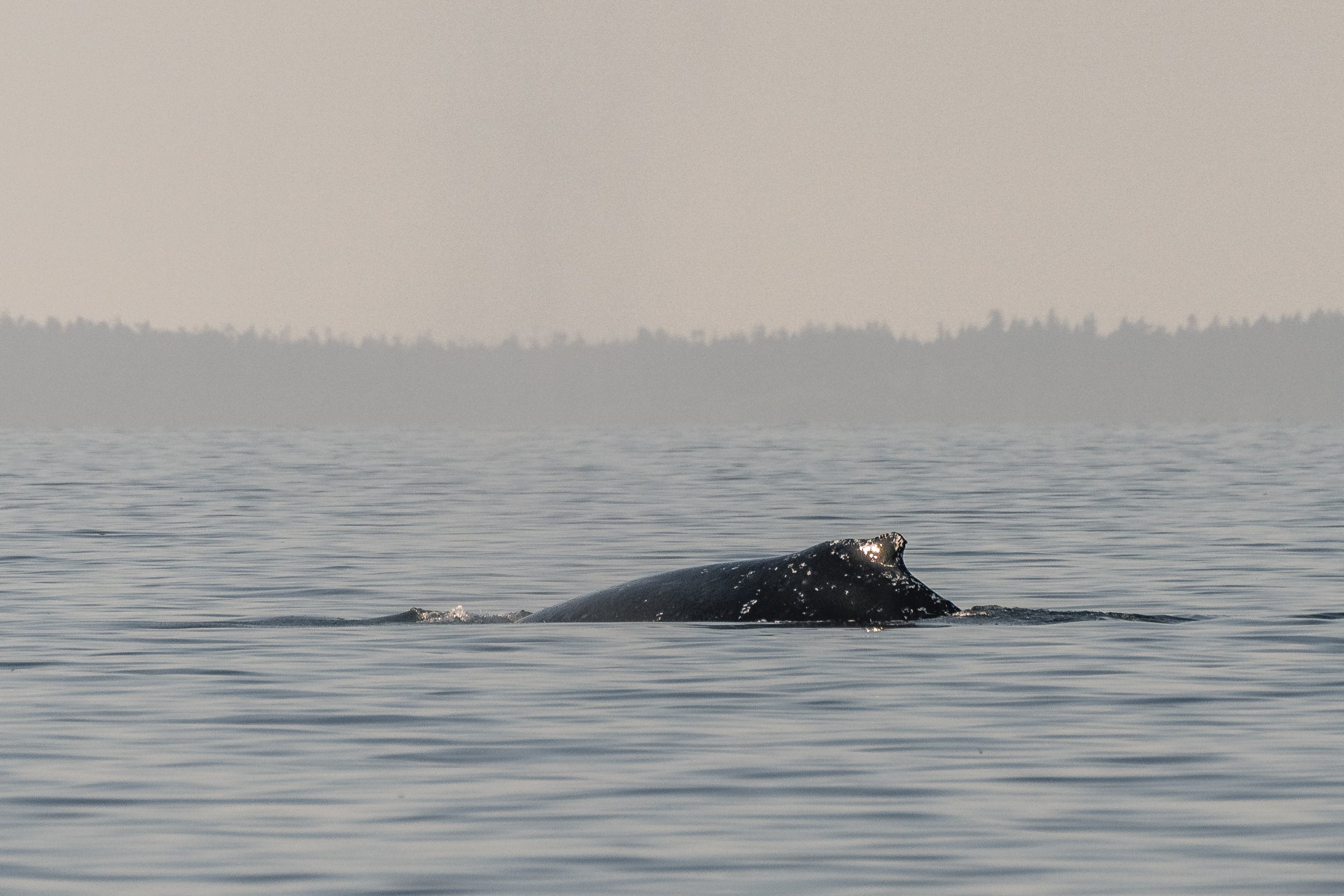
Stingray with her heavily spotted dorsal fin.
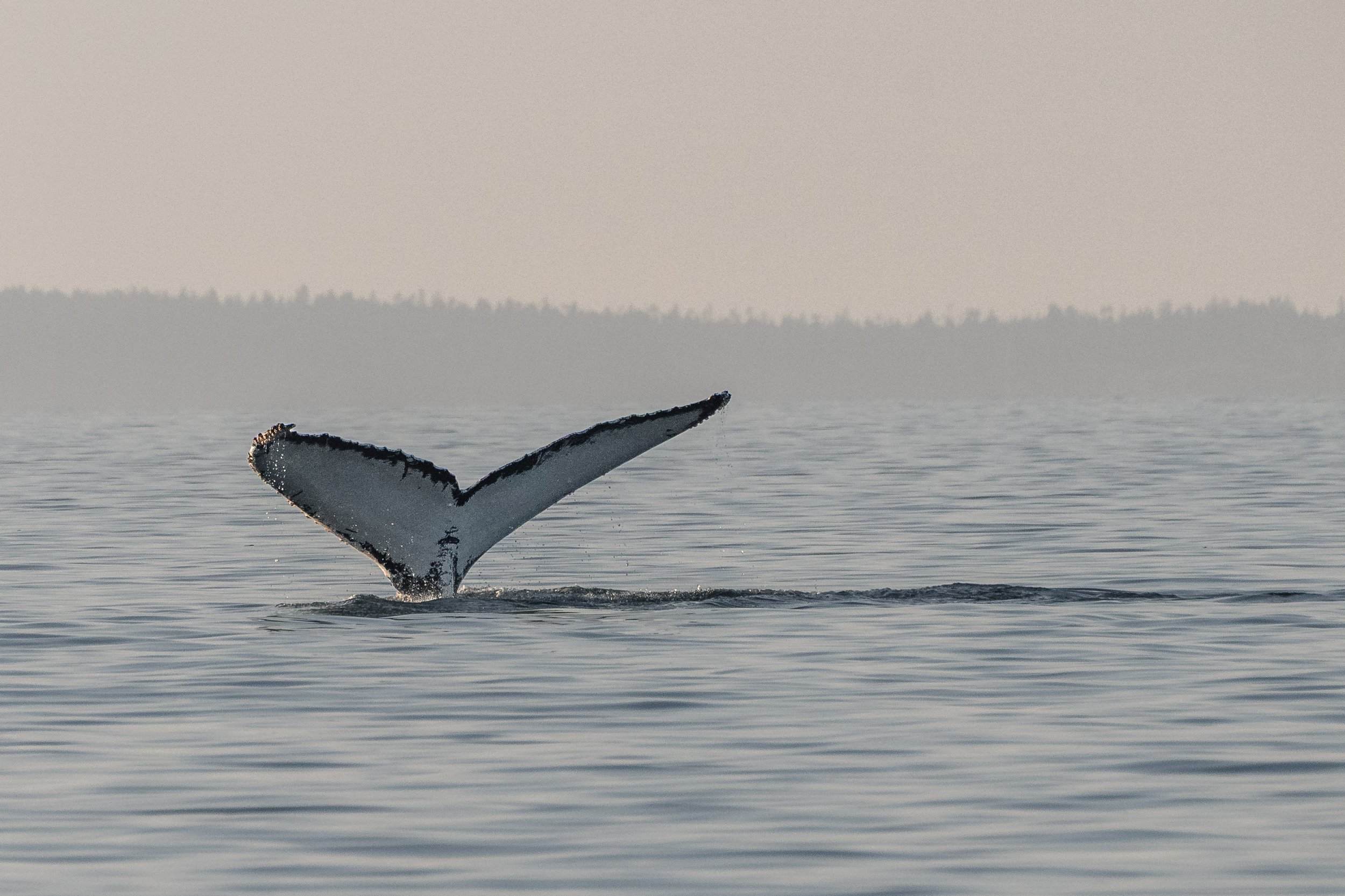
Stingray’s nearly perfectly solid fluke pattern.
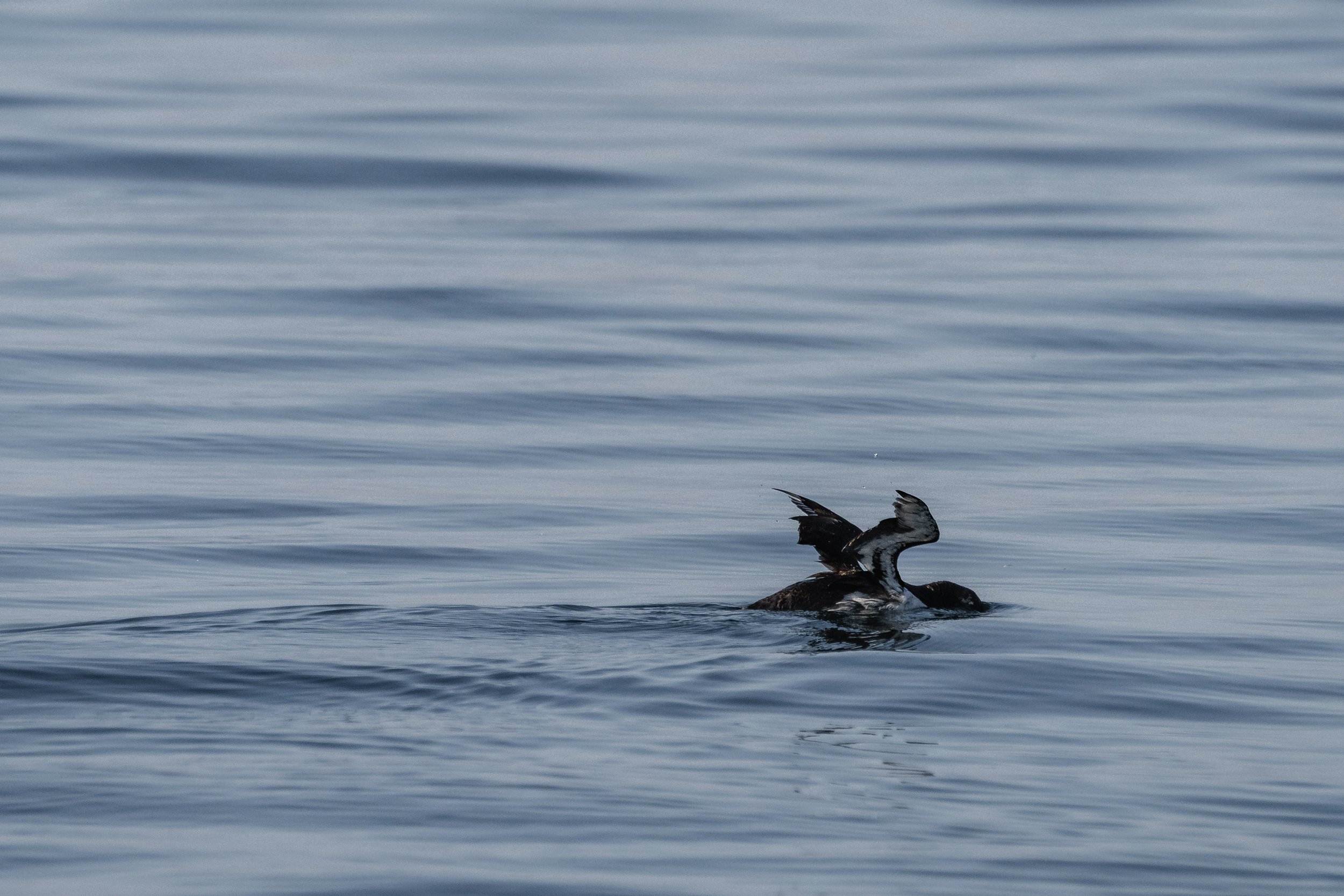
Time for dinner!
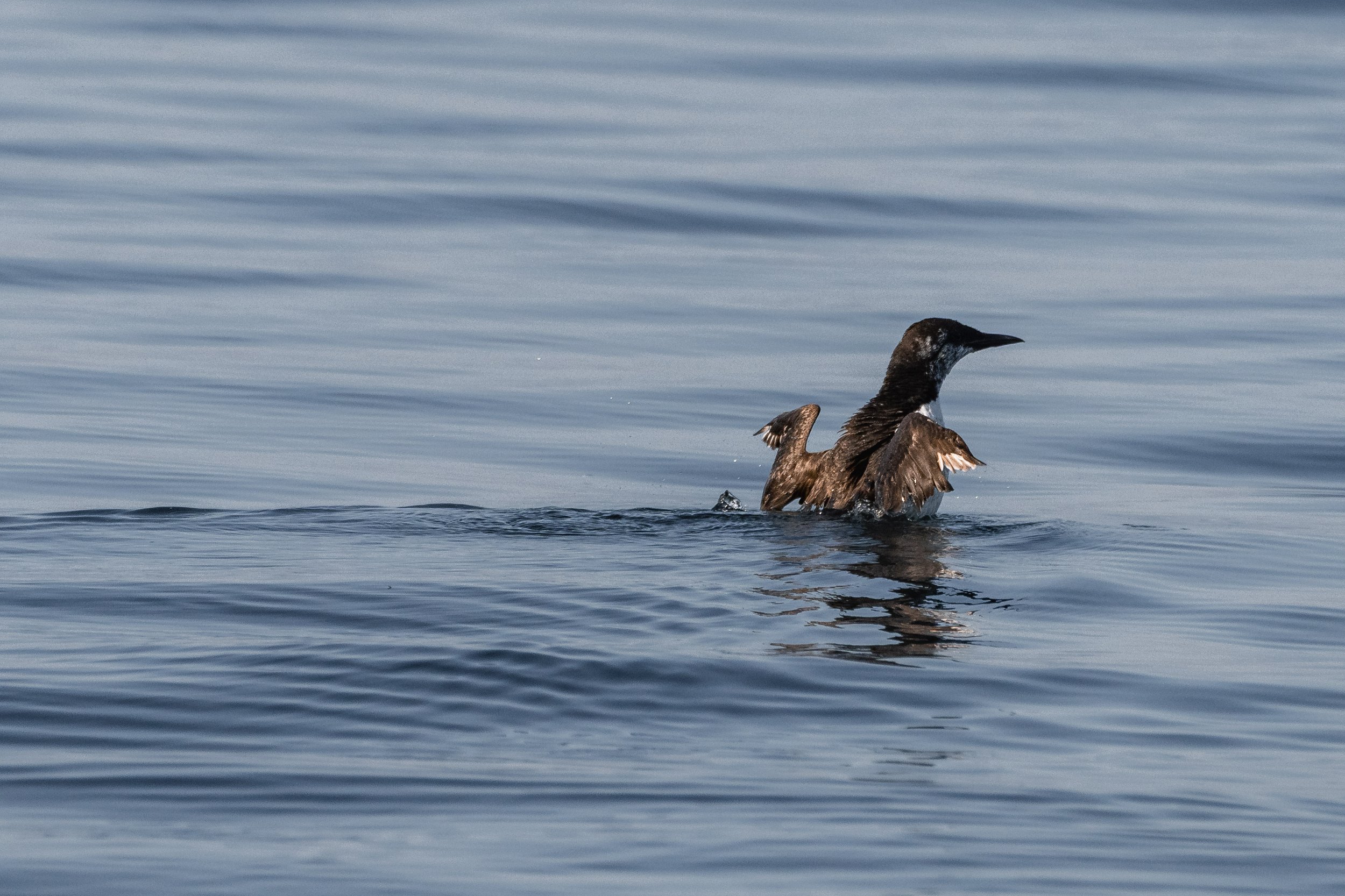
A very soggy Common Murre as it repeatedly dips under the surface.
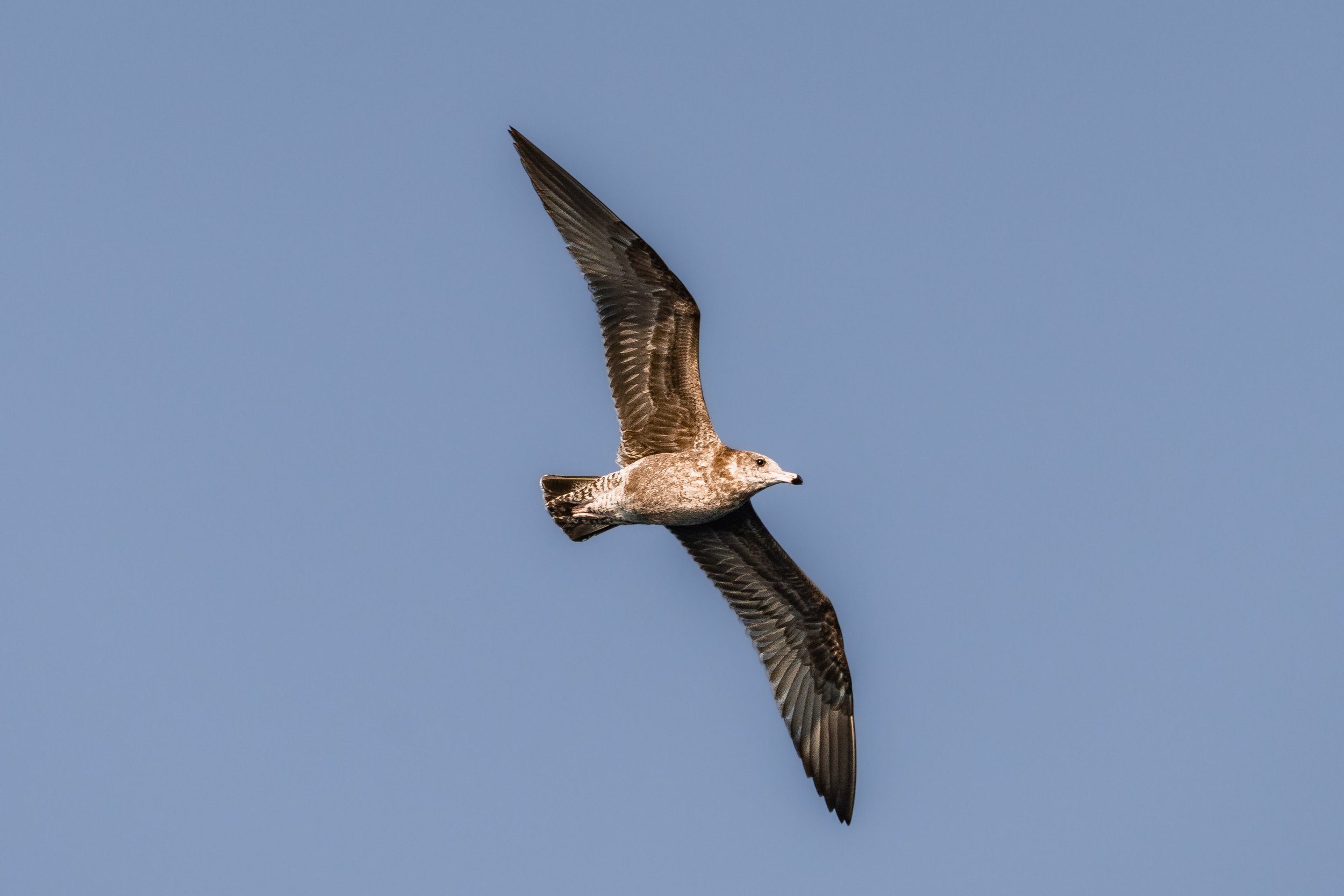
A Gull flying by.
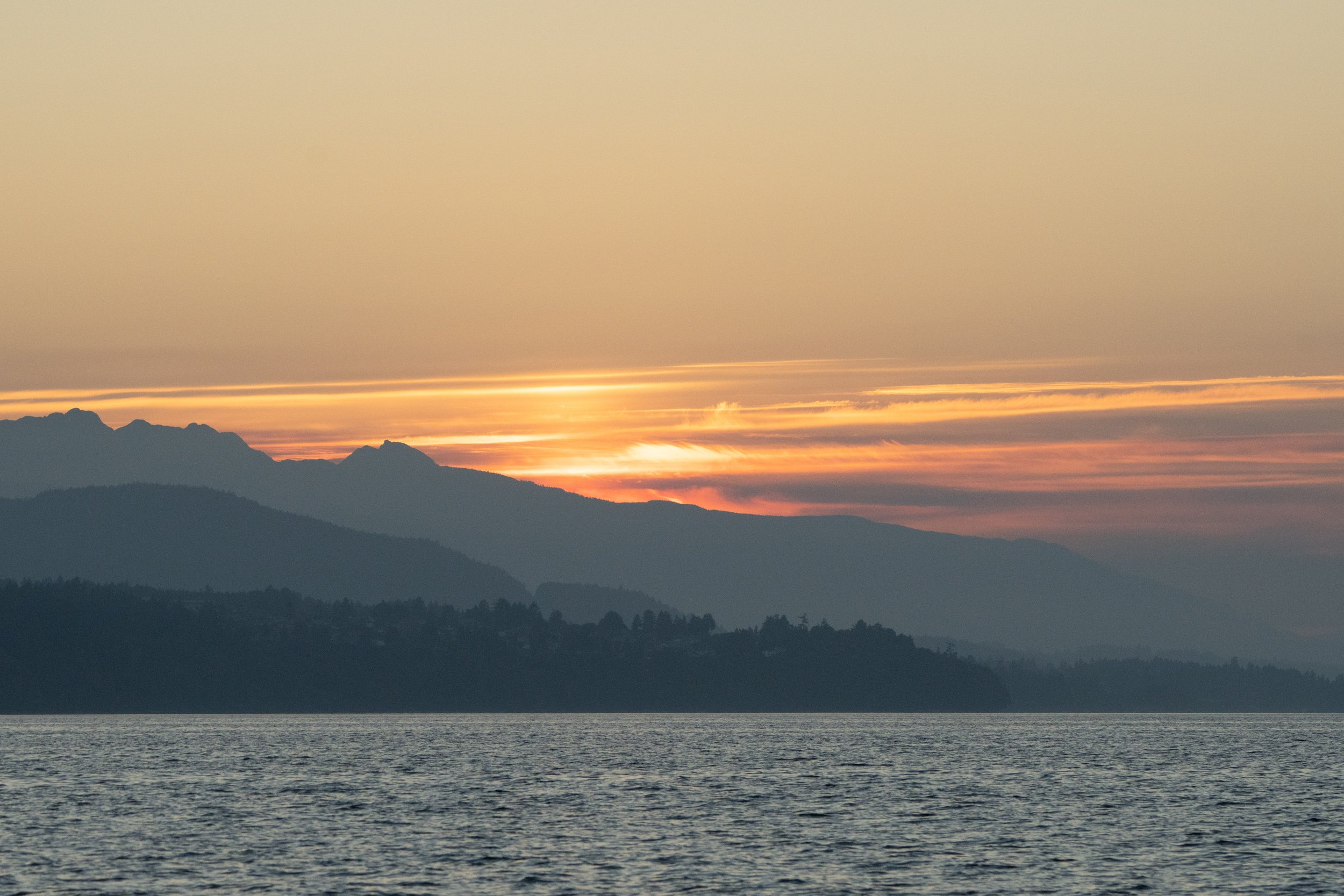
The beautiful sunset at the end of the day.
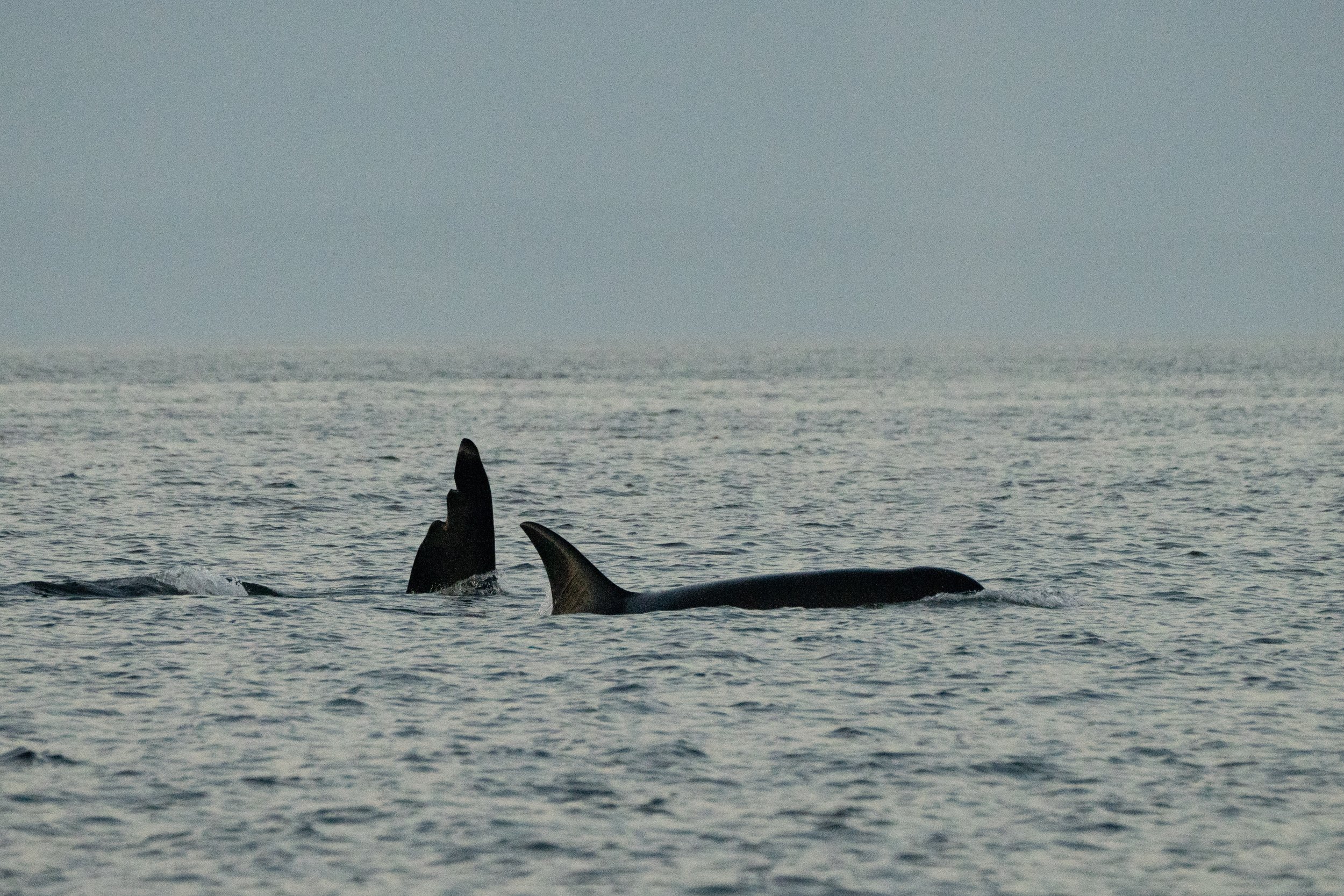
T063 Chainsaw diving behind his mother T064 Whidbey II.
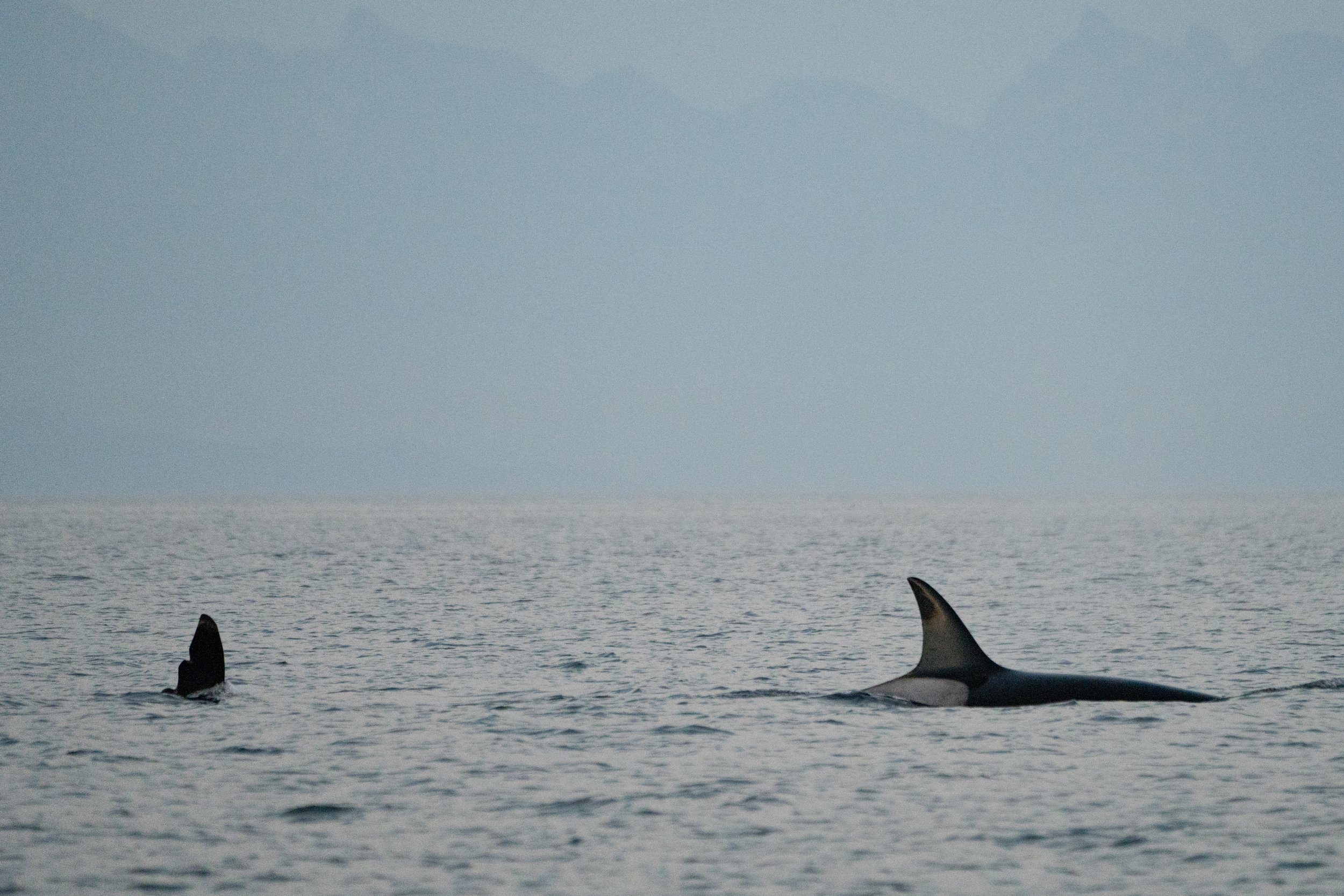
T065 Whidbey II and T063 Chainsaw (tip of dorsal) in the Strait.
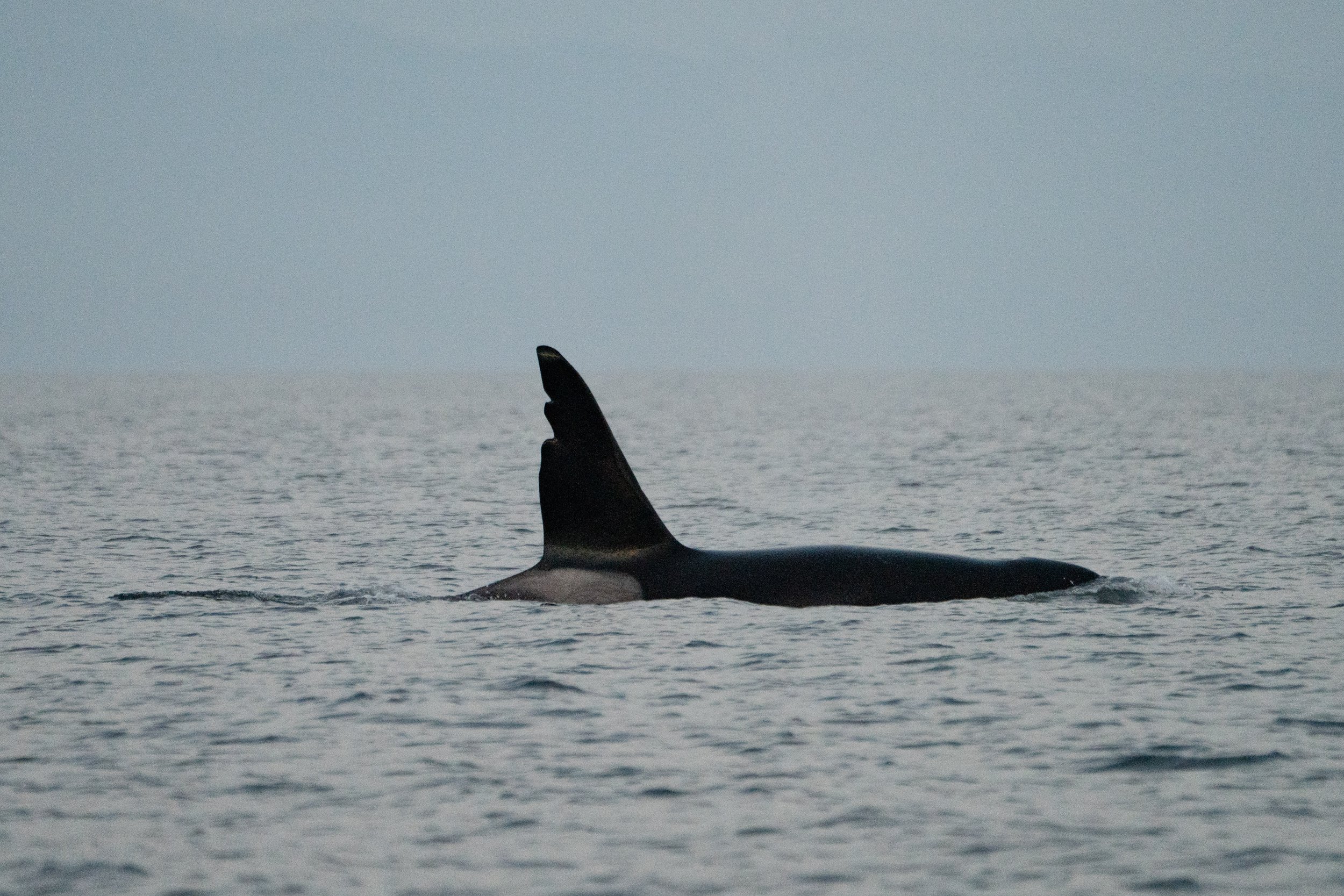
Can you see how T063 Chainsaw got his name?
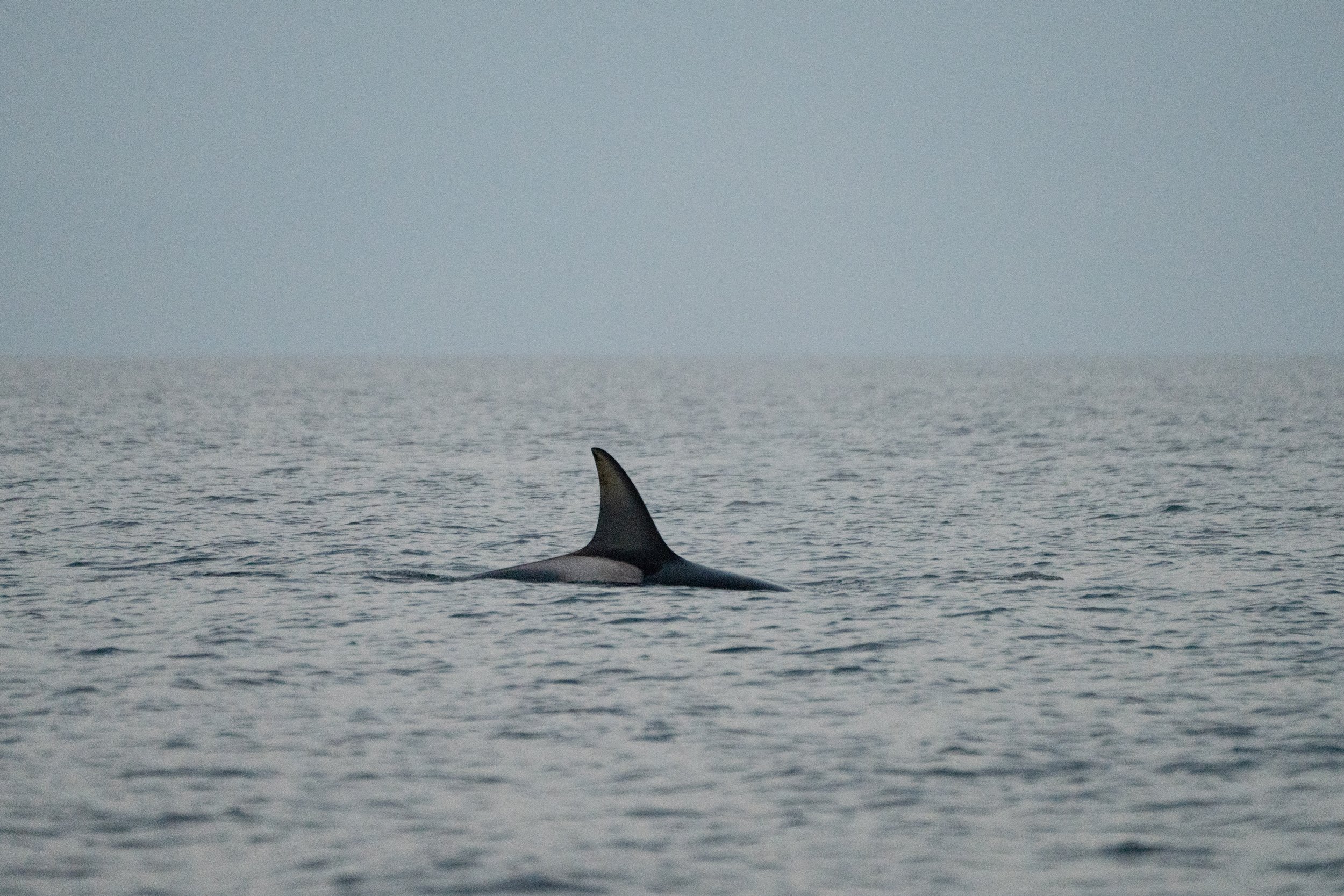
T065 Whidbey II - in our opinion, an equally as famous orca (compared to her son)!
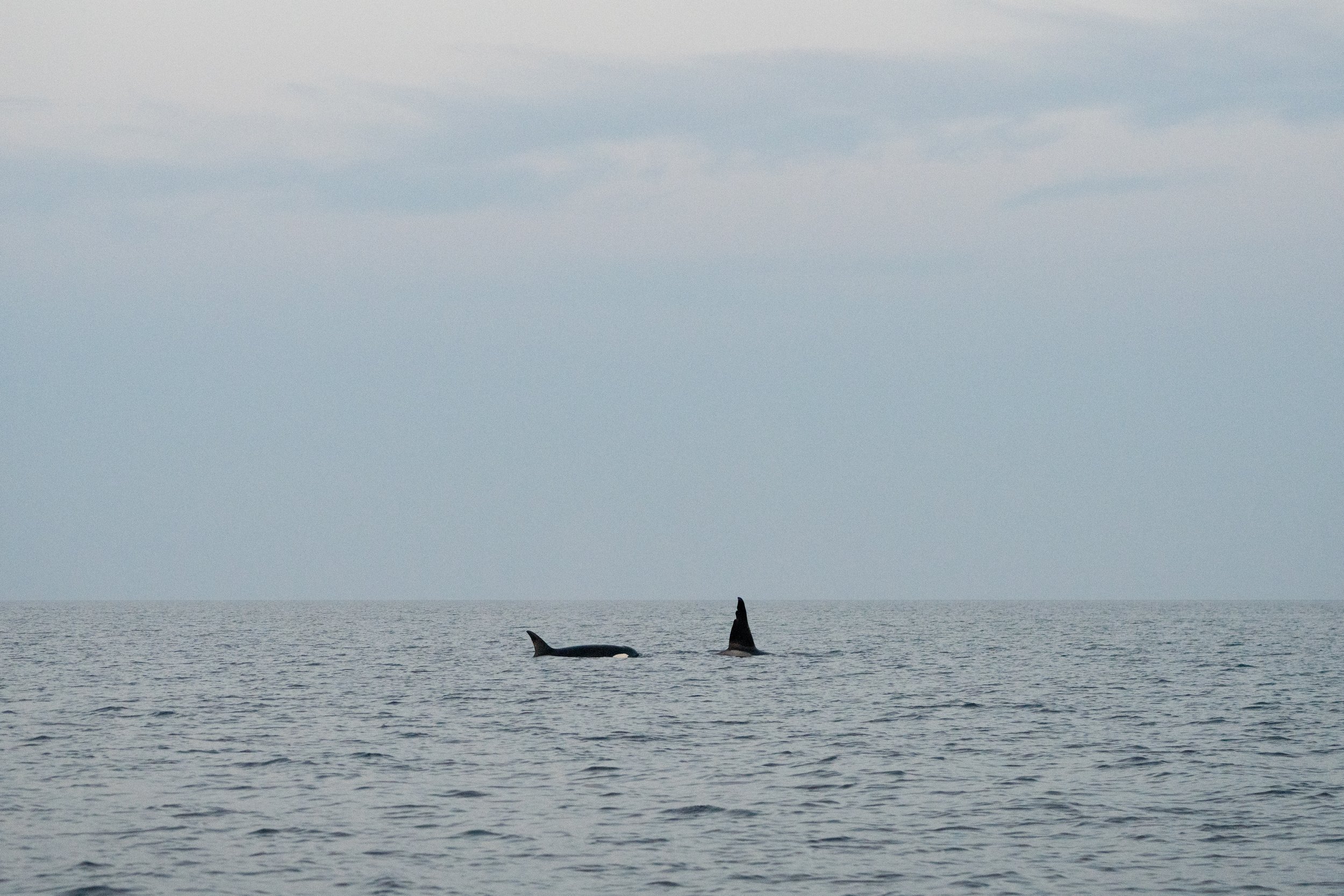
A last few of T065 Whidbey II and T063 Chainsaw as they continue their travels.