
October 9, 2026 - Orcas in Cowichan Bay
Spirits were high as both our semi-covered boat, Kula, and the open boat, Cascadia, left the dock to see what we could find. The plan was to head south, into the tranquil waters of the Gulf Islands. There was an orca report down south, and we were keen to explore the winding coves of Samsun Narrows, eager to find them. After a short stop with Harbour Seals, we continued on and saw the signature black fins we were searching for. Sucess! Five orca awaited us, and as they headed into Cowichan Bay, we quickly identified them as the following:
T019 Nootka ♀ (≤1965)
T019B Galiano ♂ (1995)
T019C Spouter ♂ (2001)
T050D Lyrical ♂ (2011)
T050B1 Blakeslee (2012)
Although we had five whales present, this little group didn’t consist of just one family. While the T019s are a matrilineal pod, T050B1 Blakeslee and T050D Lyrical are not. However, these two are still family. Even though these two are similar in age, Lyrical is actually Blakeslee’s Uncle!
The sheltered waters of Cowichan Bay offered a calm place to spend time with our group of Bigg’s killer whales. Protected from the wind, the bay was especially peaceful, with smooth water making it easier to watch the whales as they travelled through the area.
Nootka is estimated to have been born in or before 1965, making her an impressive elder in a population where age and experience can span several generations. As a female, she represents an important part of the family structure that is so characteristic of Bigg’s killer whales. Male Bigg’s killer whales are particularly well known for their close relationships with their mothers. Unlike many other mammals, male orcas often remain closely associated with their mothers throughout their lives, rather than leaving to establish independent groups. Galiano and Spouter are good examples of this pattern, travelling alongside Nootka as part of their family unit, despite being well into adulthood.
However, not every Bigg’s killer whale follows the same family pattern. Blakeslee and Lyrical offer an opportunity to consider just how much individual lives can vary within this population. Their associations do not fit as neatly into the familiar picture of a mother travelling with her offspring, reminding us that orca social structures are more varied than they might first appear. We can only speculate as to why this pair chose to leave their own families behind but it was nice to see them socialise today with the T019s.
It is not uncommon for the sex of a killer whale to remain a mystery for many years. Juveniles of both sexes look very similar, and the pronounced differences in size and appearance between adult males and females develop as they mature. Just like humans, between the ages of around 12 and 15 years old, the orca will go through puberty. This is when the females are able to start reproducing and the males start to go through a growth spurt, which will continue into their early 20s. Adult males grow much larger than females and eventually develop the tall, upright dorsal fin that makes them easier to identify. Galiano and Spouter are impressive examples of adult males. Blakeslee’s sex remains unknown, while Lyrical is identified as a male but is still relatively small. His appearance is a reminder that young males do not develop their adult size and features overnight. We are excited to watch him grow over the coming years, maybe in time he will even outgrow Galiano and Spouter!
Although Cowichan Bay held plenty of wildlife that day, the sea lions scattered throughout the sheltered waters did not become the focus of a hunt. Bigg’s killer whales are skilled predators, but not every encounter with potential prey results in a chase. Sometimes, the whales simply continue on their way, and we are left to observe their movements and social interactions. After our time with the whales, we stopped by the dock to check out the Steller Sea Lions and California Sea Lions, sharing space and entertaining us with their harmonious vocalisations.
After leaving the bay, a Bald Eagle added to the day’s wildlife sightings, followed by a second stop at a Harbour Seal haulout. Together, these encounters highlighted the variety of marine and coastal life found around Vancouver Island, even on a day when the whales themselves were the main attraction.
Time spent watching a group like Nootka, Galiano, Spouter, Blakeslee and Lyrical gives us more than an opportunity to see killer whales in the wild. It allows us to consider the relationships that shape their lives, from the long-lasting bonds between mothers and sons to the individual differences that make each whale’s story unique. Even familiar patterns have exceptions, and every encounter offers another small piece of the puzzle of Bigg’s killer whale society.
Please enjoy the photos taken throughout today’s trip by Marine Naturalists, Cheyenne Brewster and Hayleigh Hilbert.
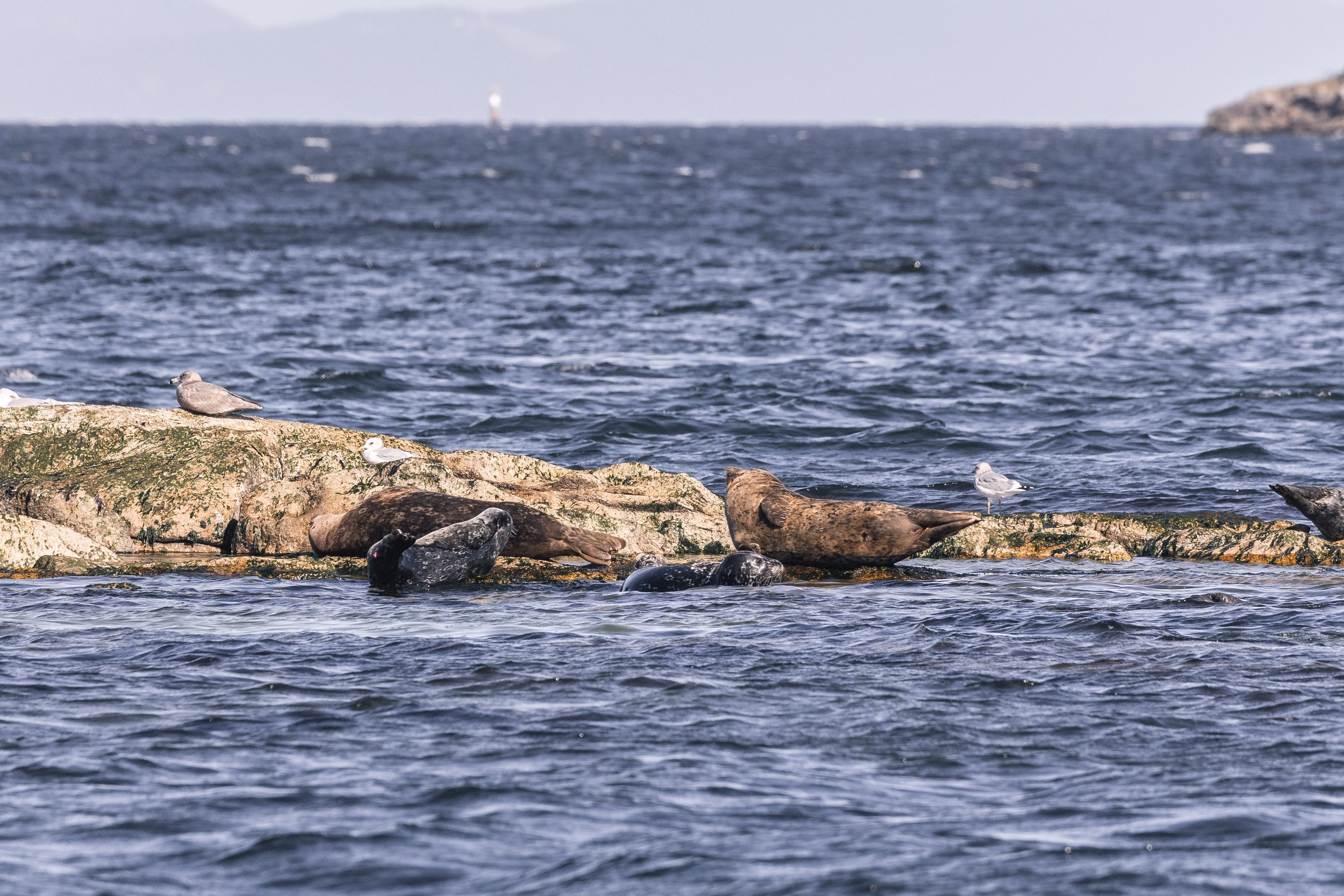
Harbour Seals hauled out by Norway Island. Photo by Cheyenne Brewster.
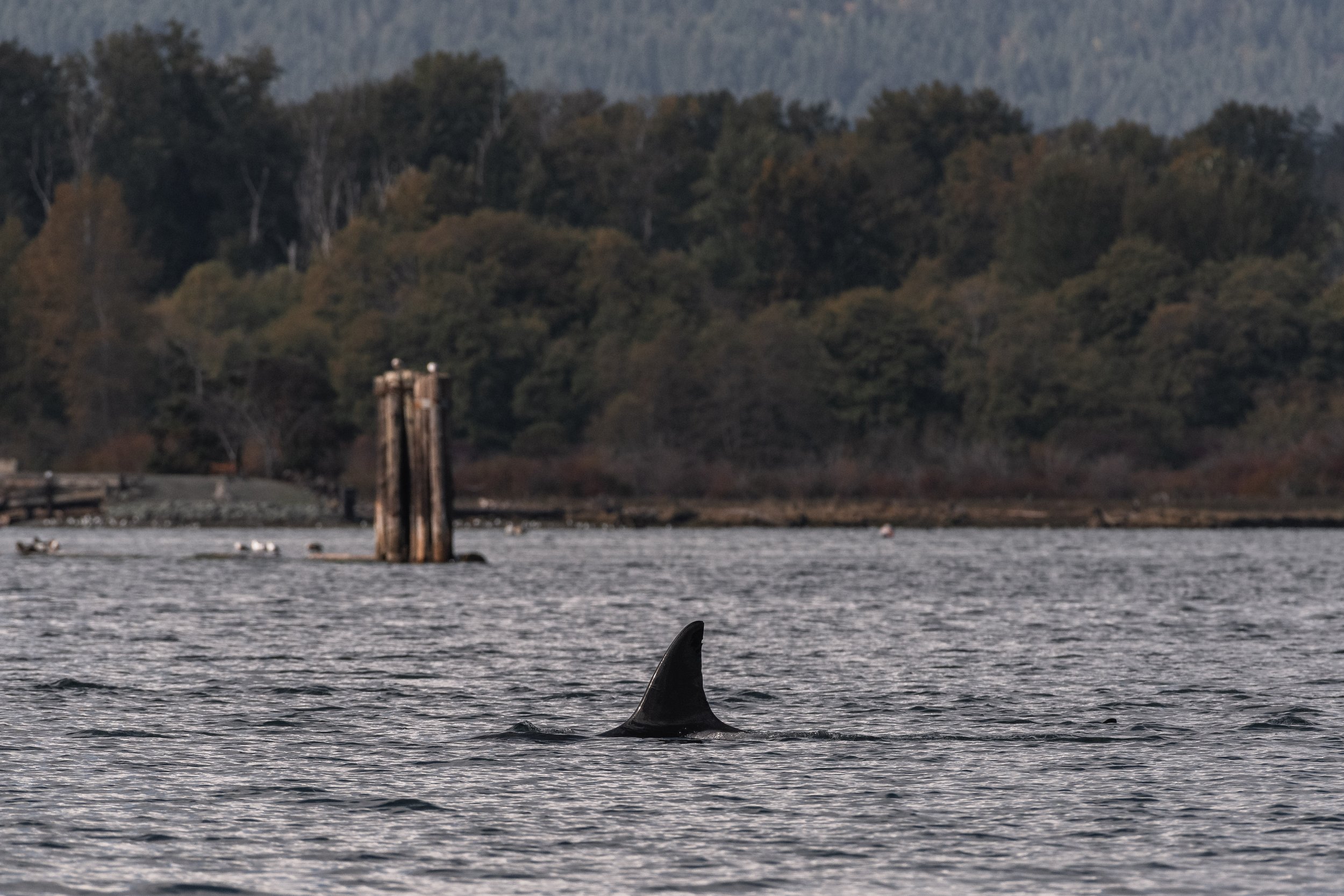
T019 Nootka is one of the oldest whales in the entire Biggs population. Photo by Hayleigh Hilbert.
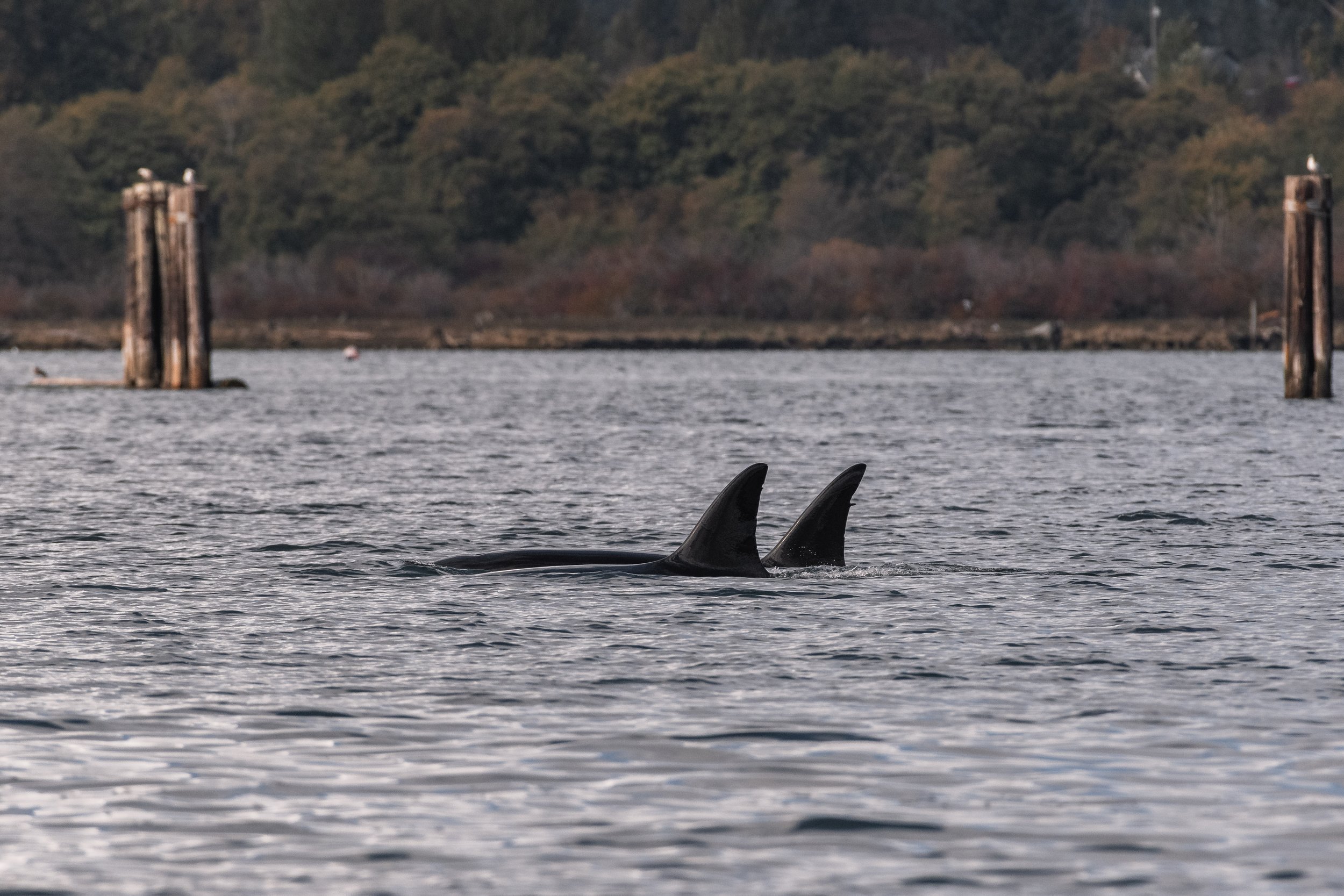
T019 Nootka in front with T050D Lyrical behind. Photo by Hayleigh Hilbert.
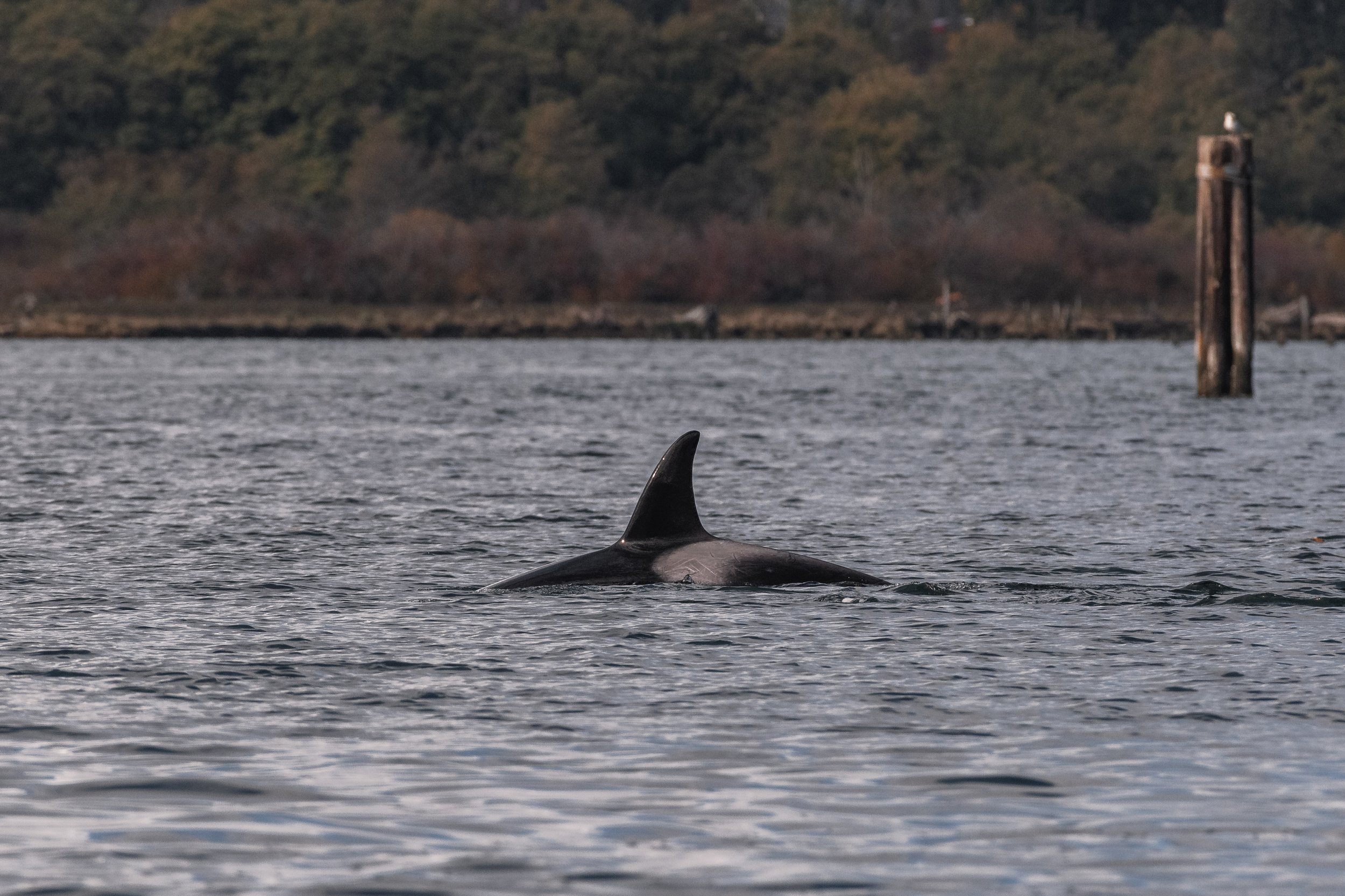
T050B1 Blakeslee. Photo by Hayleigh Hilbert.
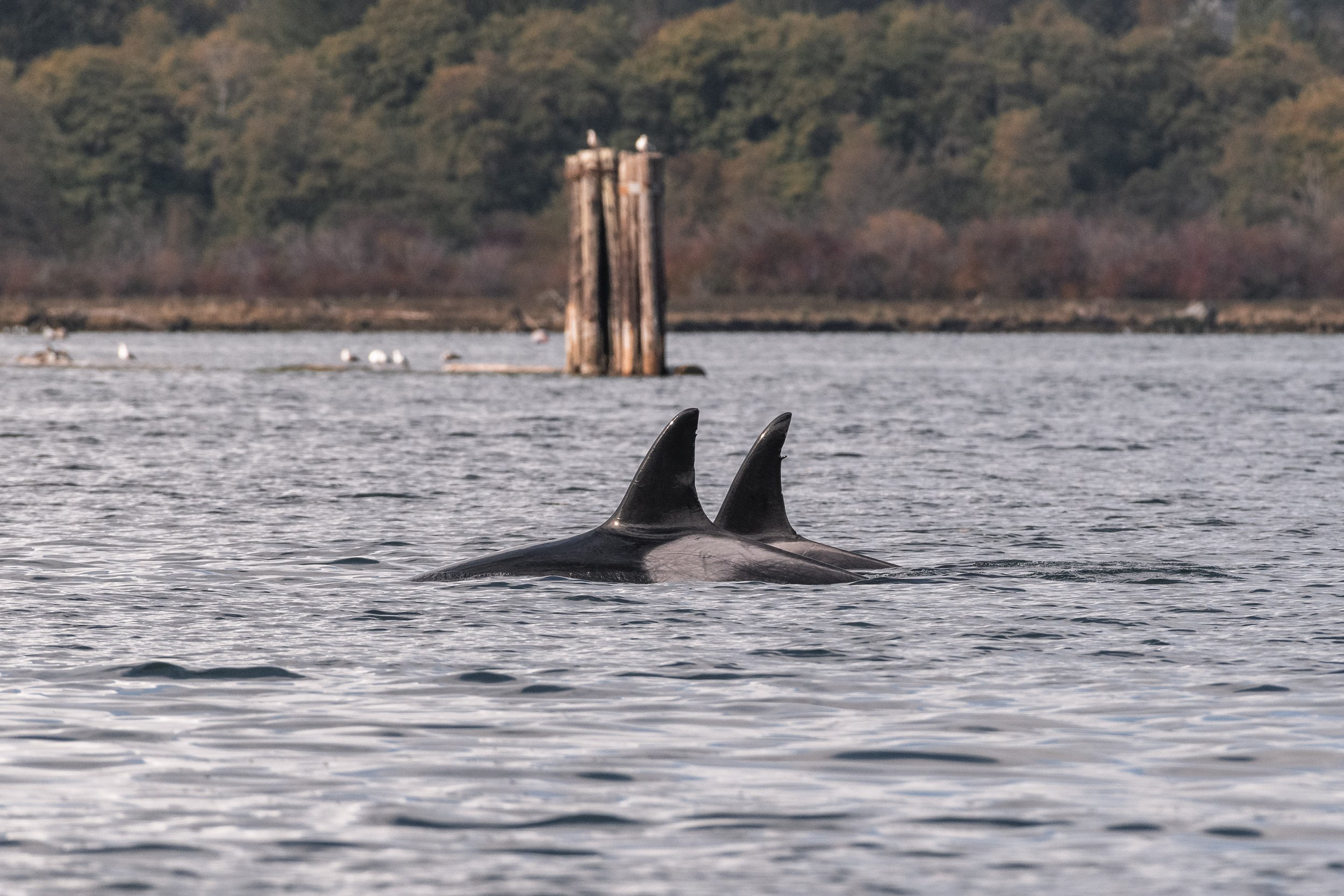
A good look at T019 Nootka’s saddle patch as she surfaces in front of T050D Lyrical. Photo by Hayleigh Hilbert.
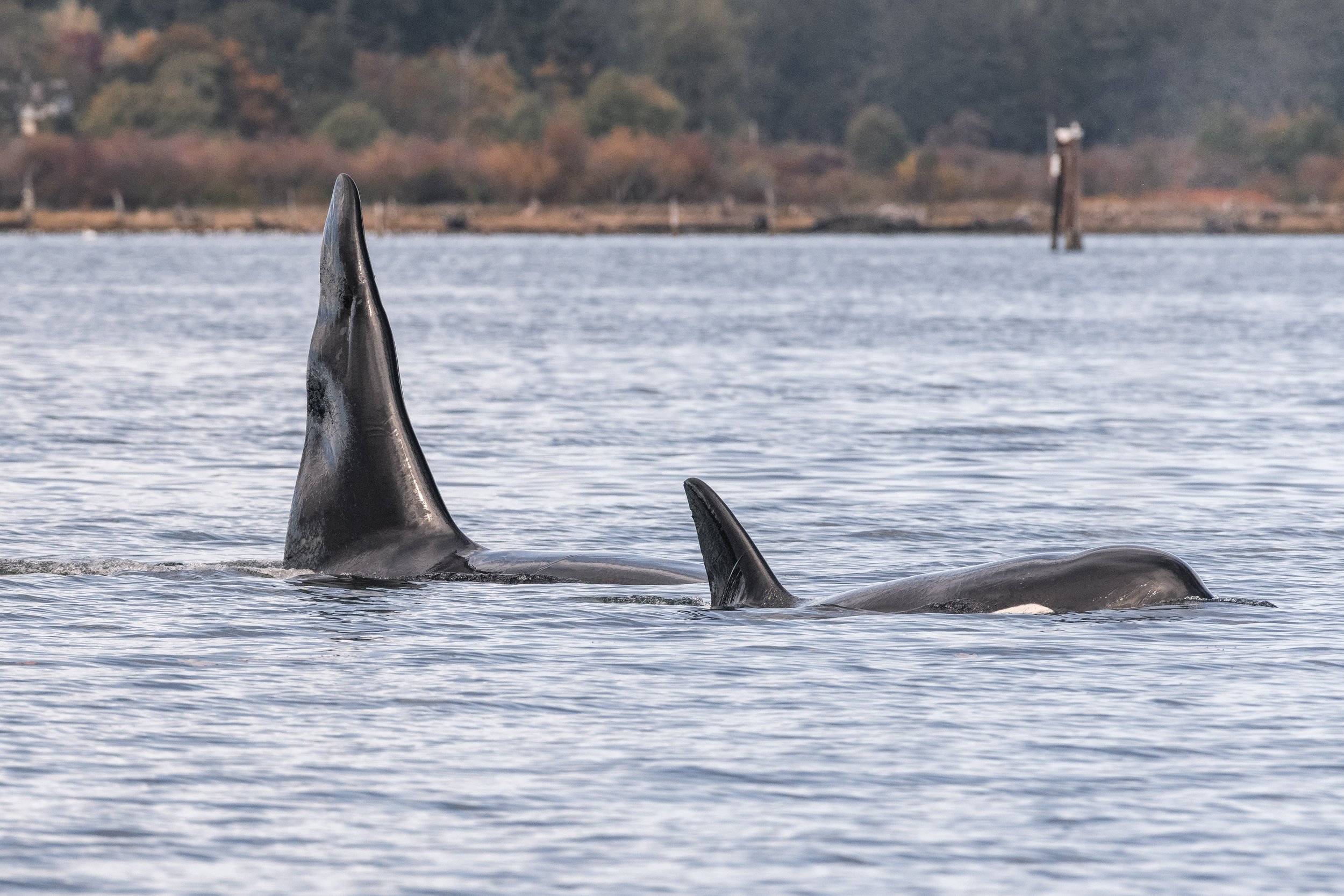
The very impressive T019C Spouter following closely behind his mom, T019 Nootka. Photo by Hayleigh Hilbert.
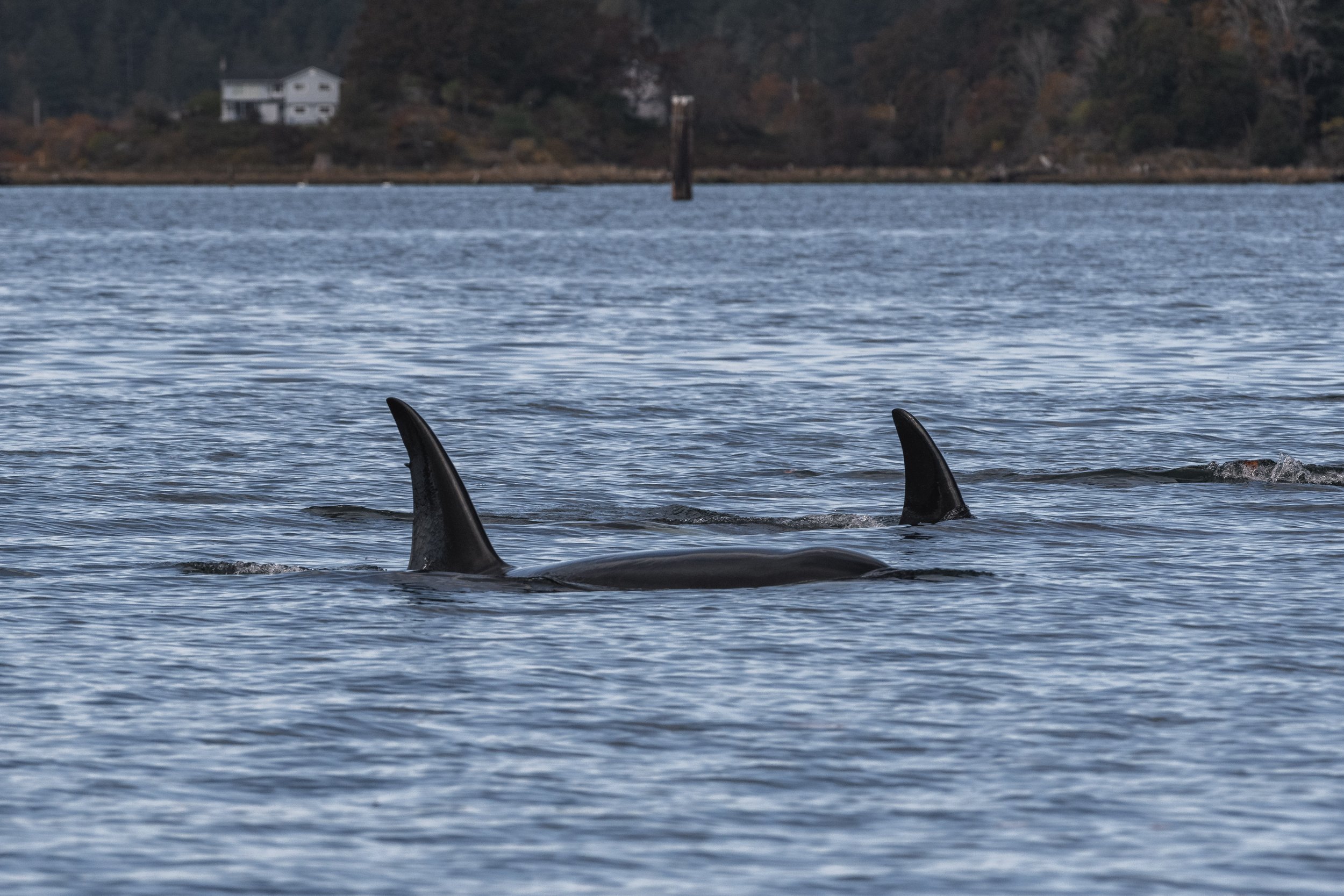
Uncle, T050D Lyrical, alongside his neice/nephew, T050B1 Blakeslee. Photo by Hayleigh Hilbert.
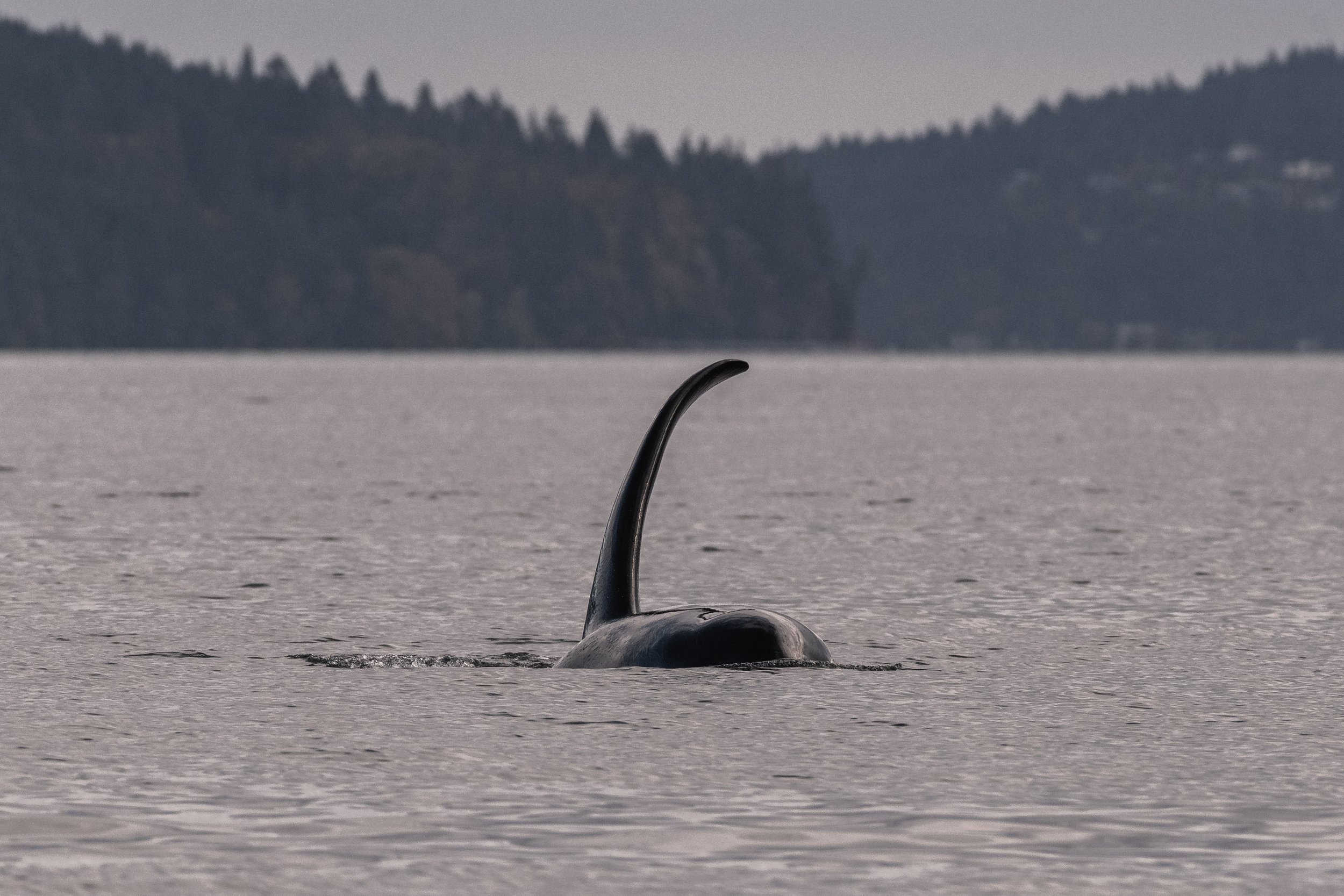
T019B Galiano has a very distinctive lean in his dorsal fin. Photo by Hayleigh Hilbert.
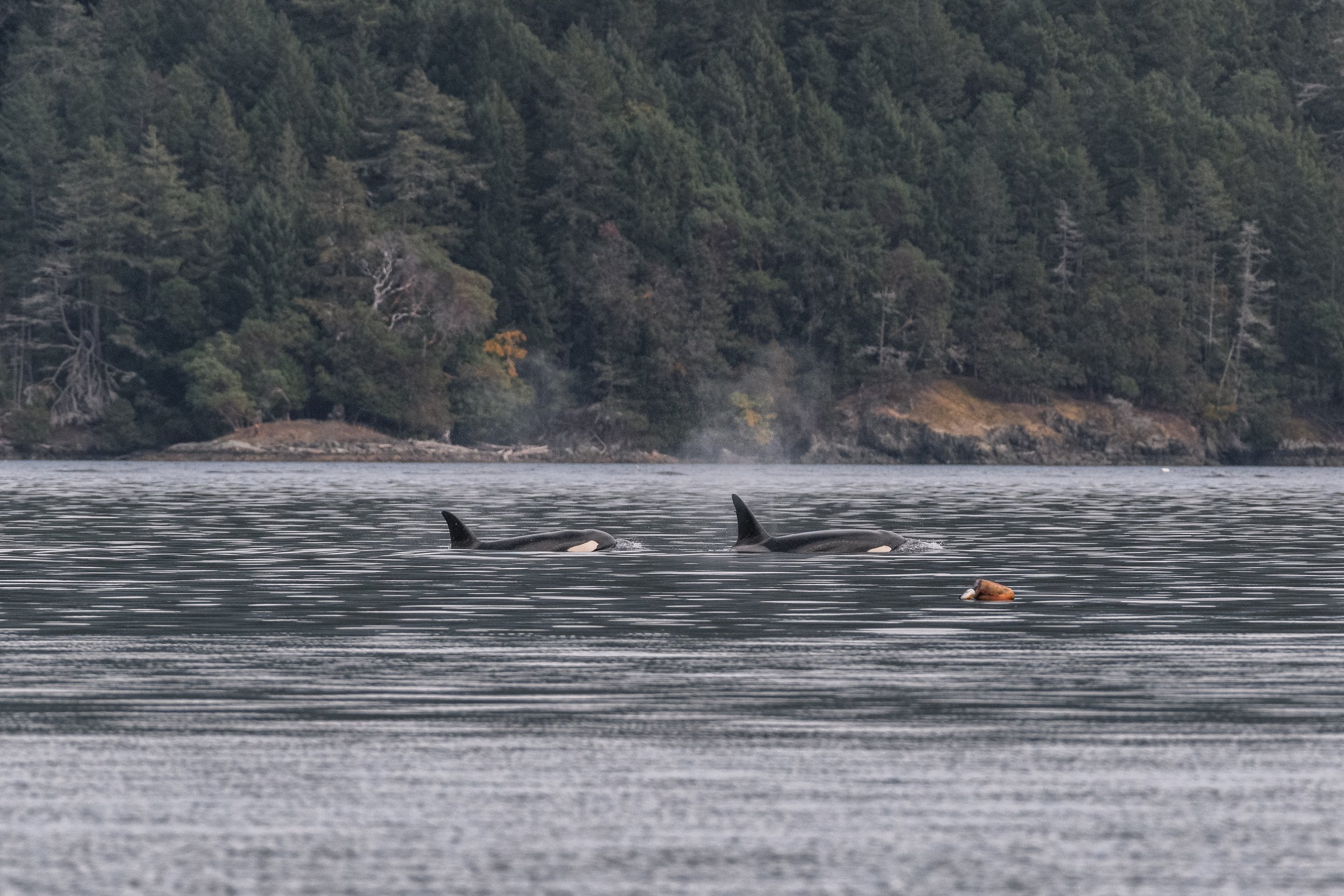
T050D Lyrical ahead of T050B1 Blakeslee. Photo by Hayleigh Hilbert.
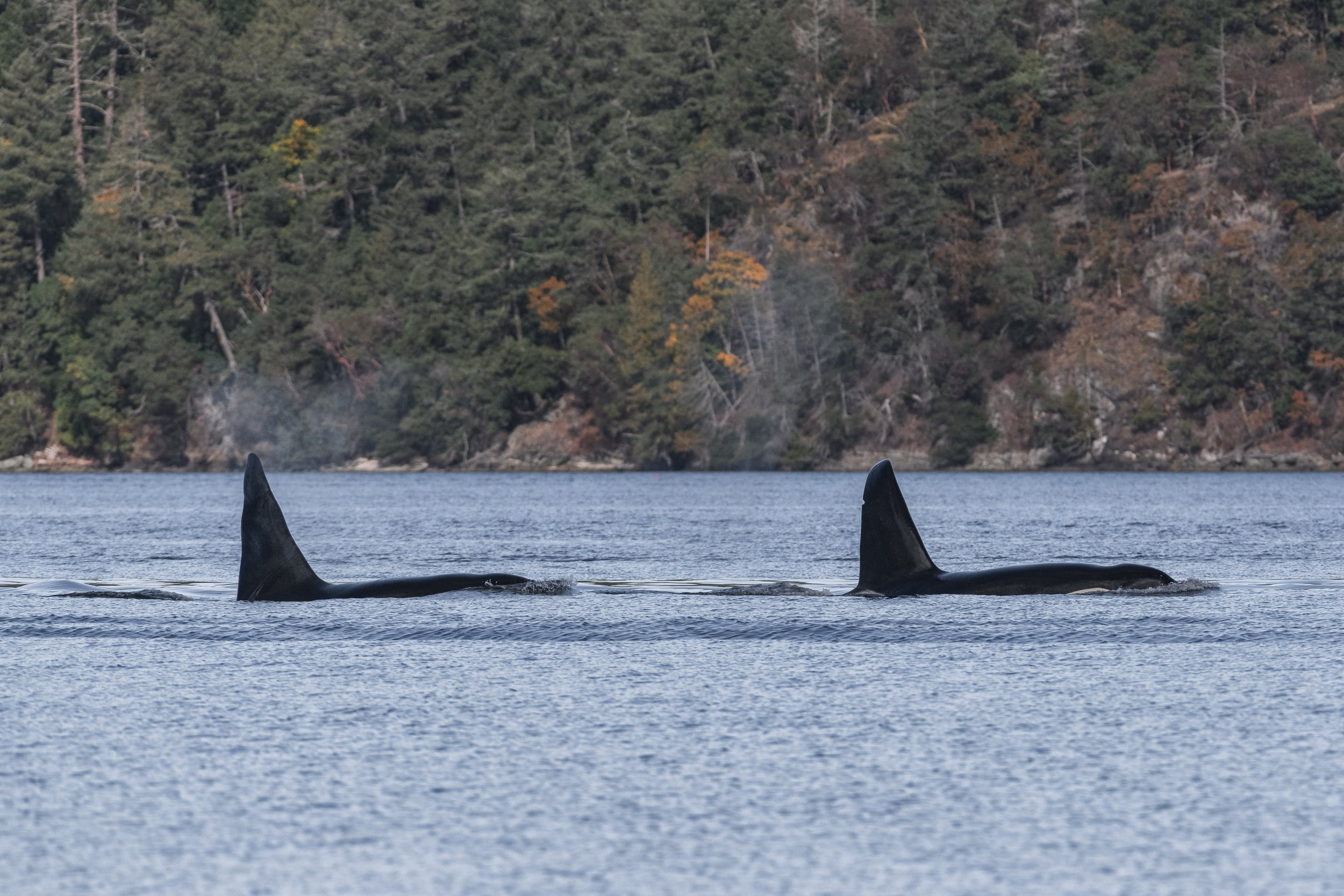
Brothers, T019B Galiano and T019C Spouter. Photo by Hayleigh Hilbert.
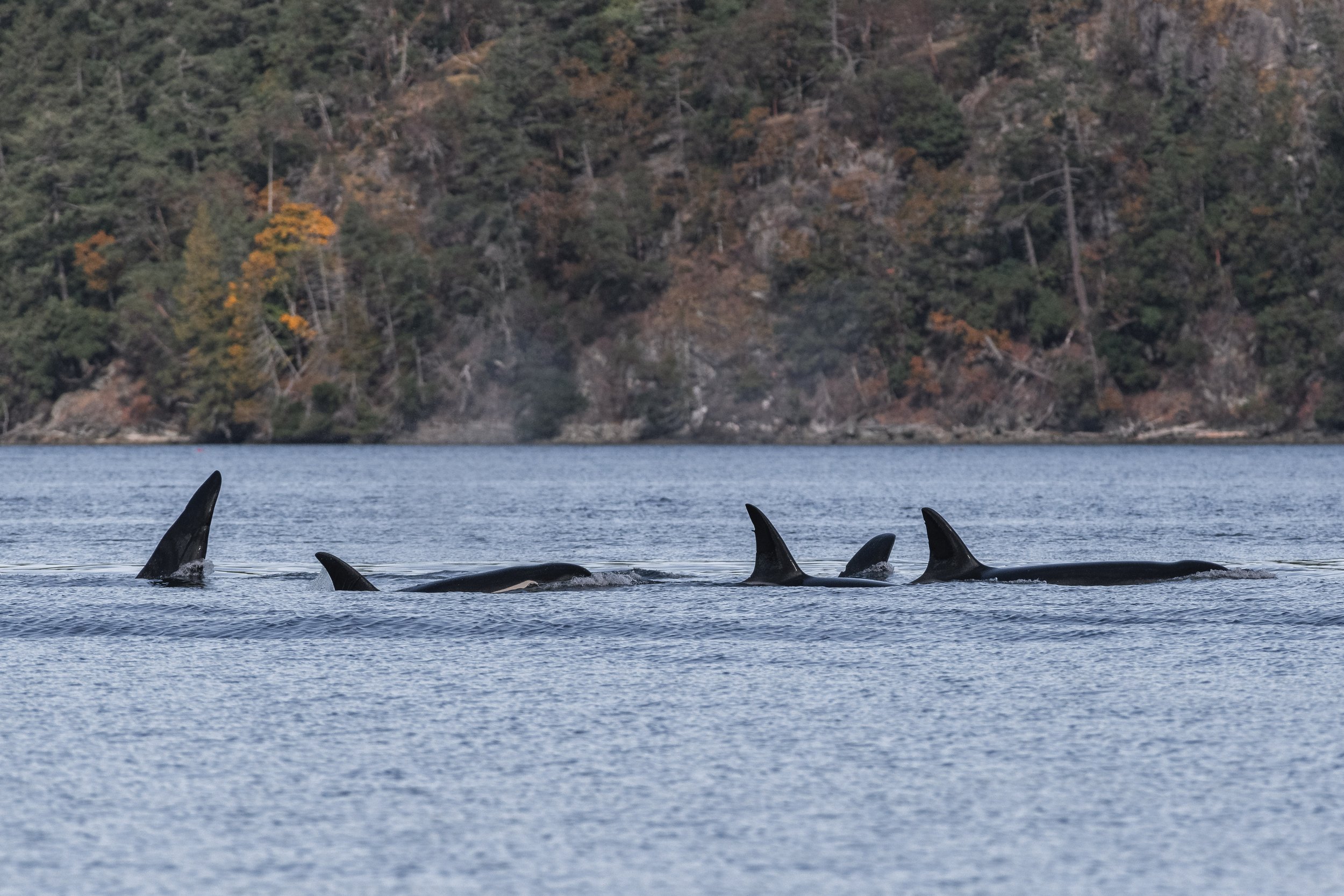
Group photo! From right to left: T019 Nootka, T019B Galiano, T050D Lyrical, T050B1 Blakeslee and T019C Spouter. Photo by Hayleigh Hilbert.
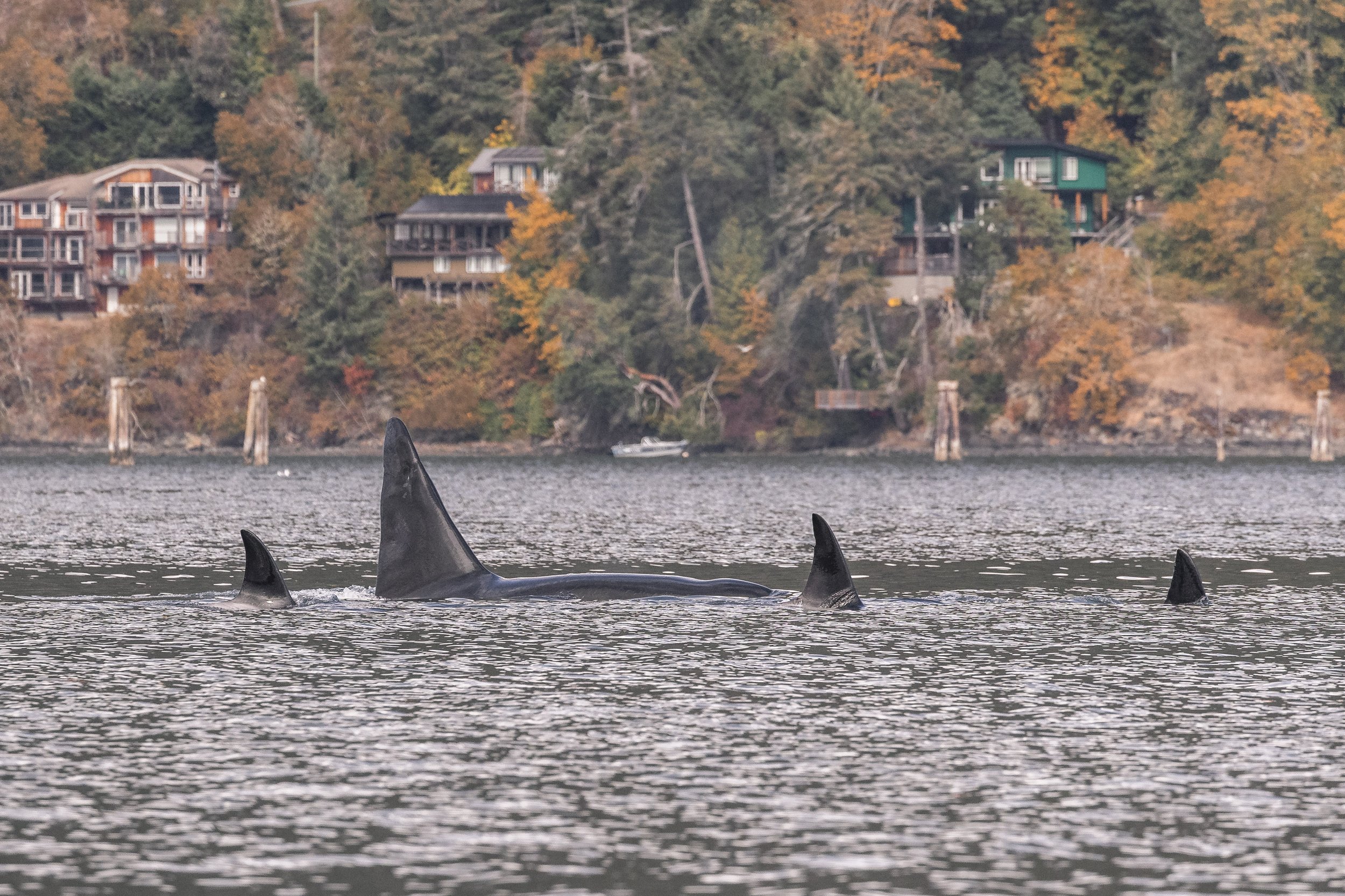
T019C Spouter makes the rest of the gang look teeny tiny! Photo by Cheyenne Brewster.
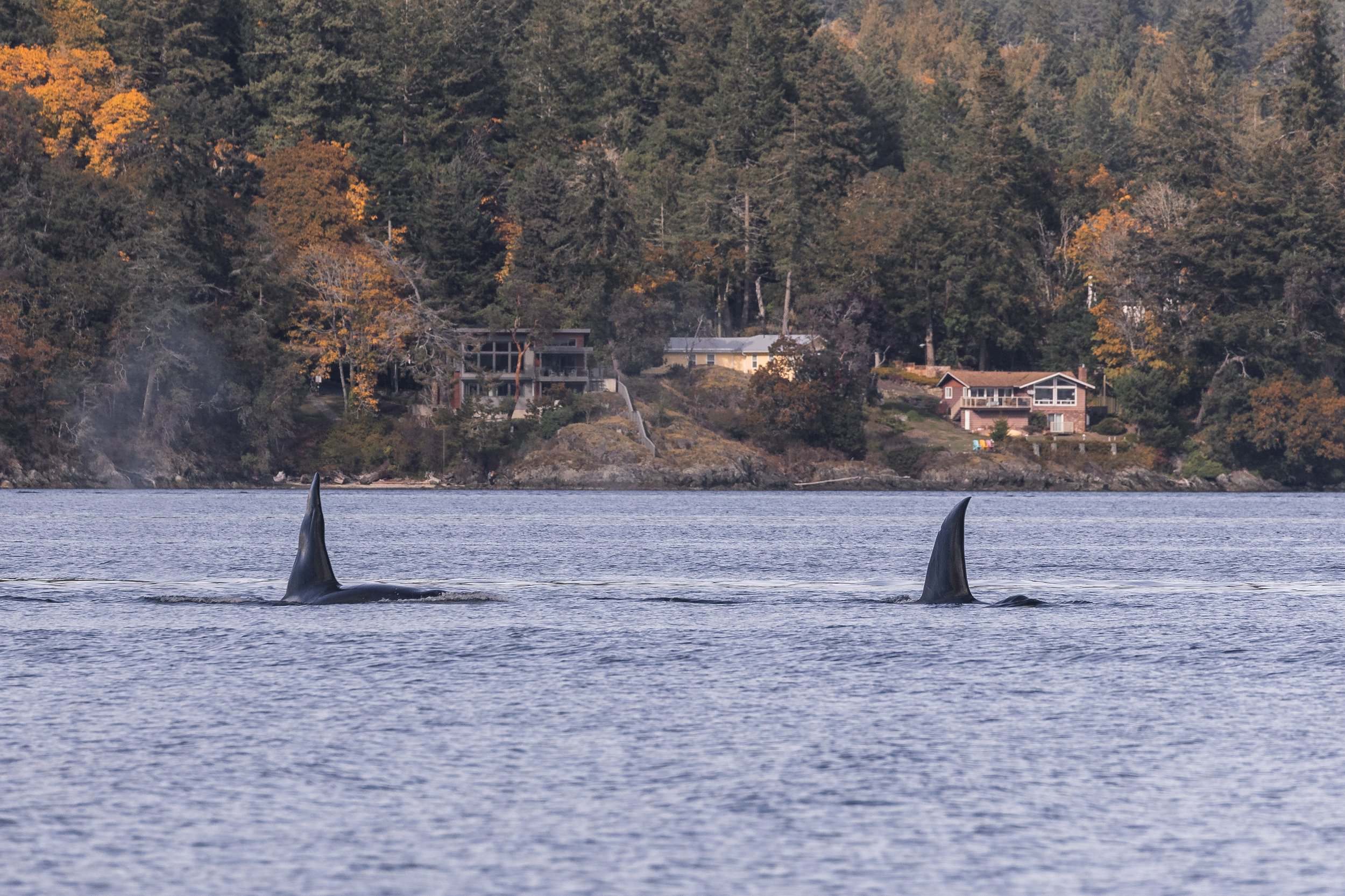
T019C Spouter on the left and his big brother, T019B Galiano on the right, in front of a beautiful autumnal backdrop. Photo by Cheyenne Brewster.
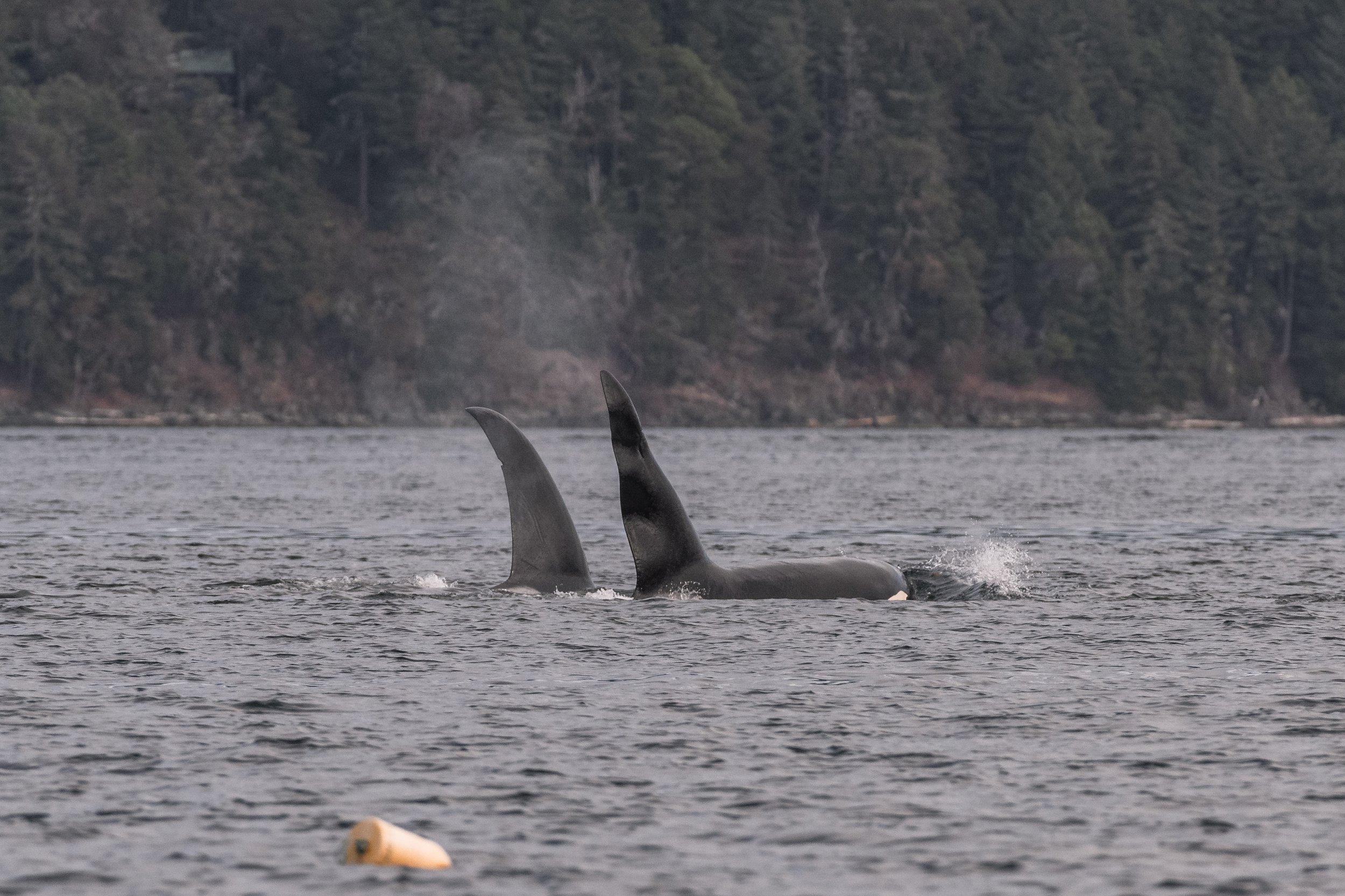
From this angle you can see the lean in T019B Galiano’s dorsal fin and the wiggle in T019C Spouter’s. Photo by Hayleigh Hilbert.
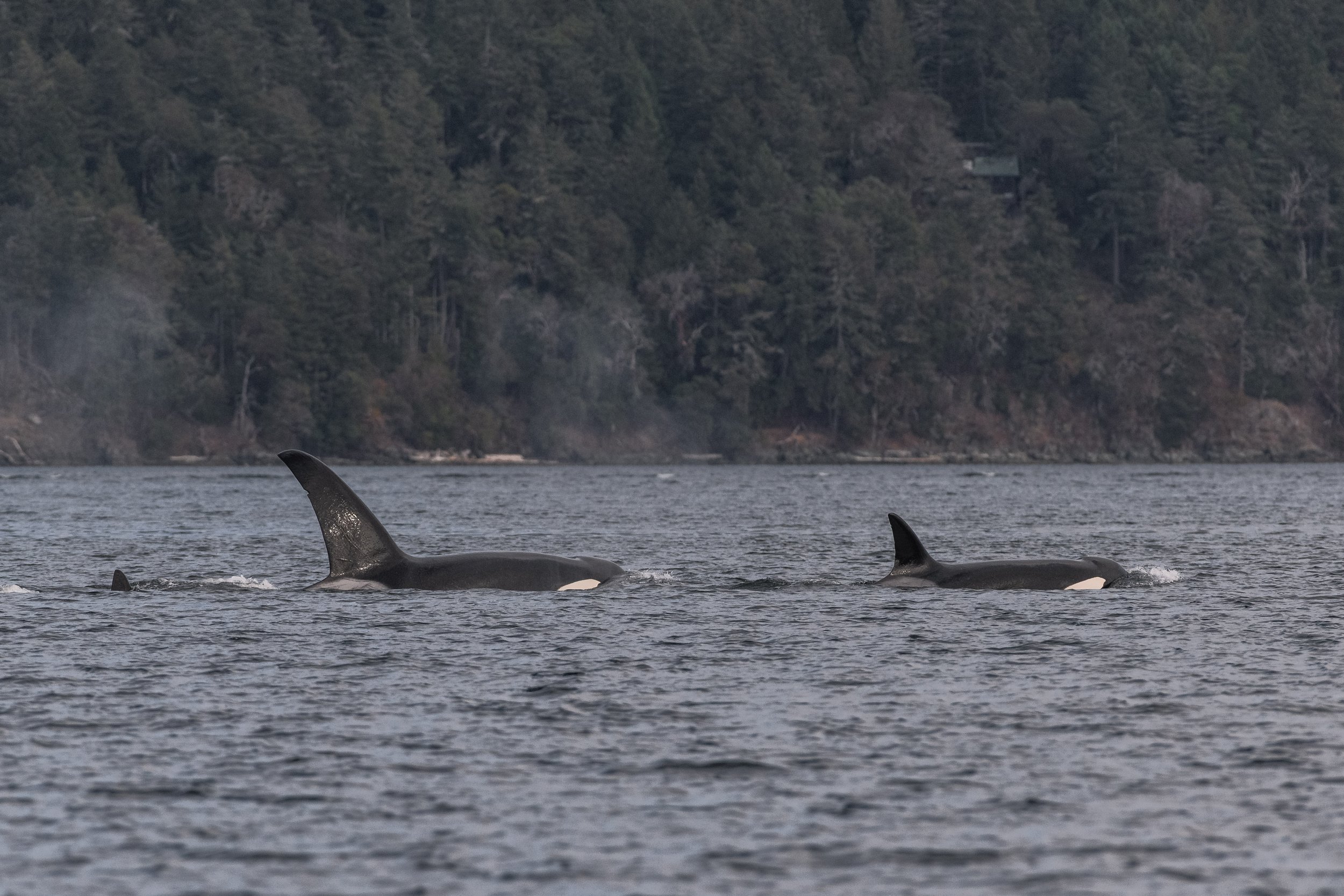
Matriarch, T019 Nootka, taking charge with her two sons following behind. Photo by Hayleigh Hilbert.
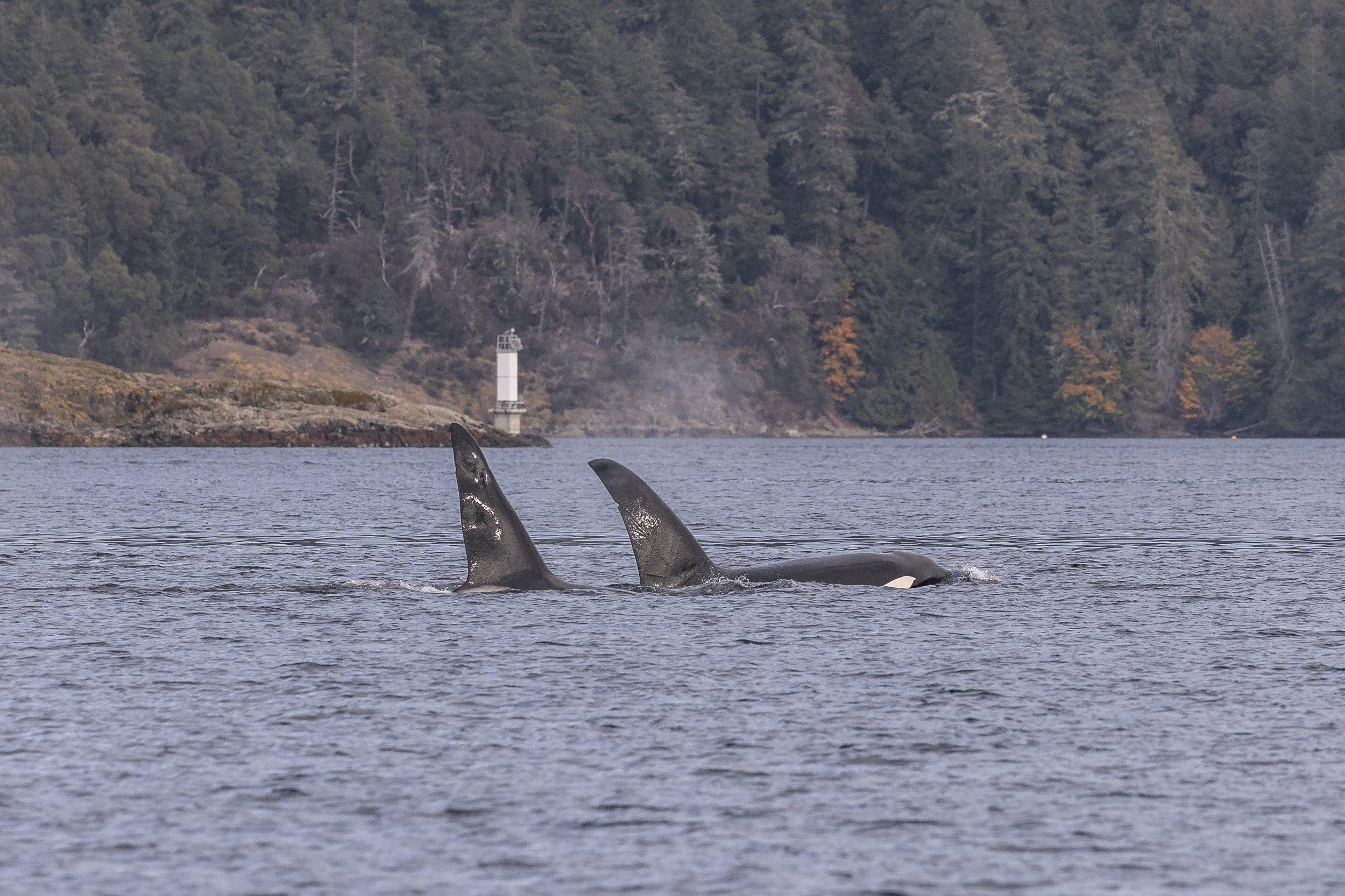
Sibling love. Photo by Cheyenne Brewster.
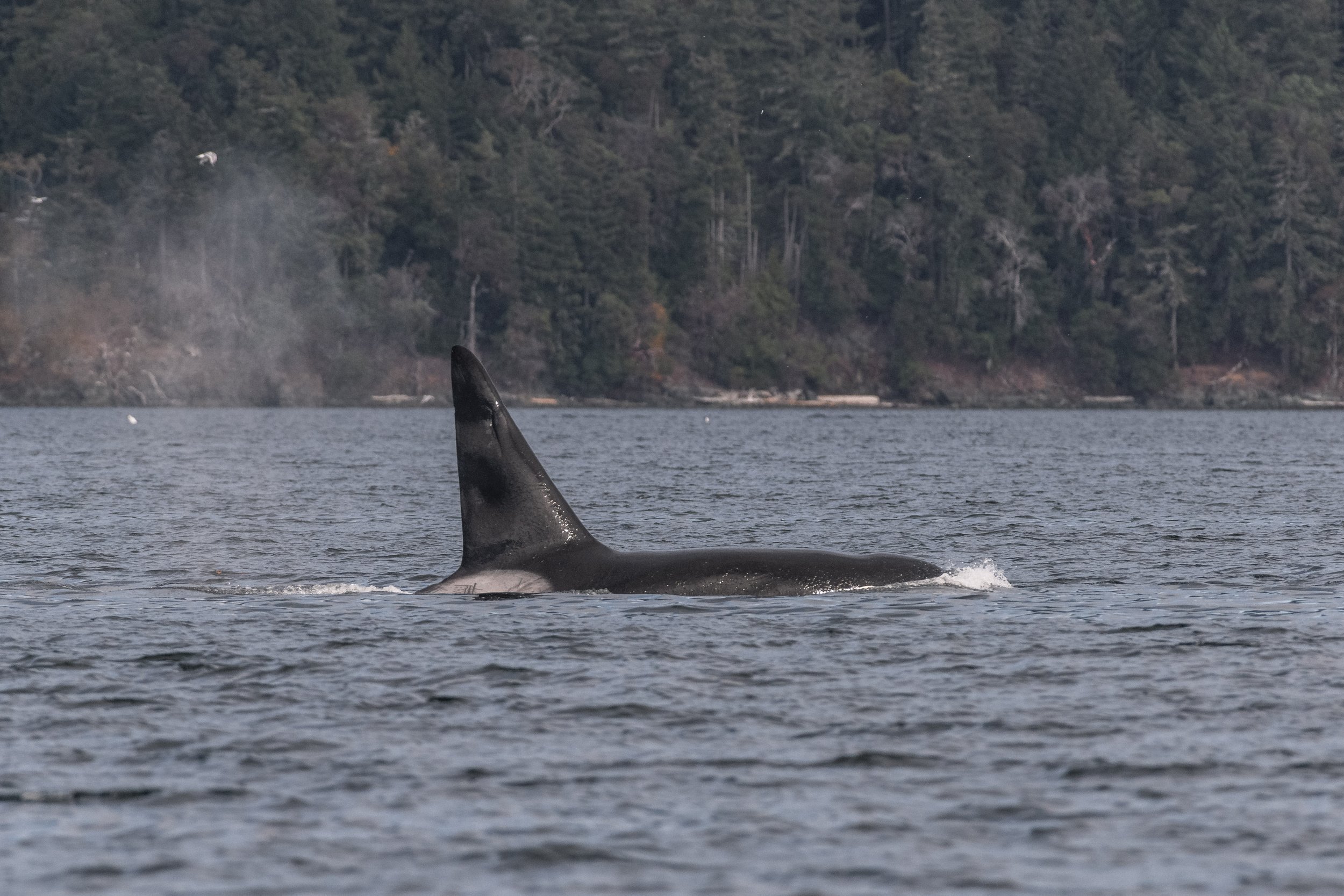
One last look at T109C Spouter before we departed. Photo by Hayleigh Hilbert.
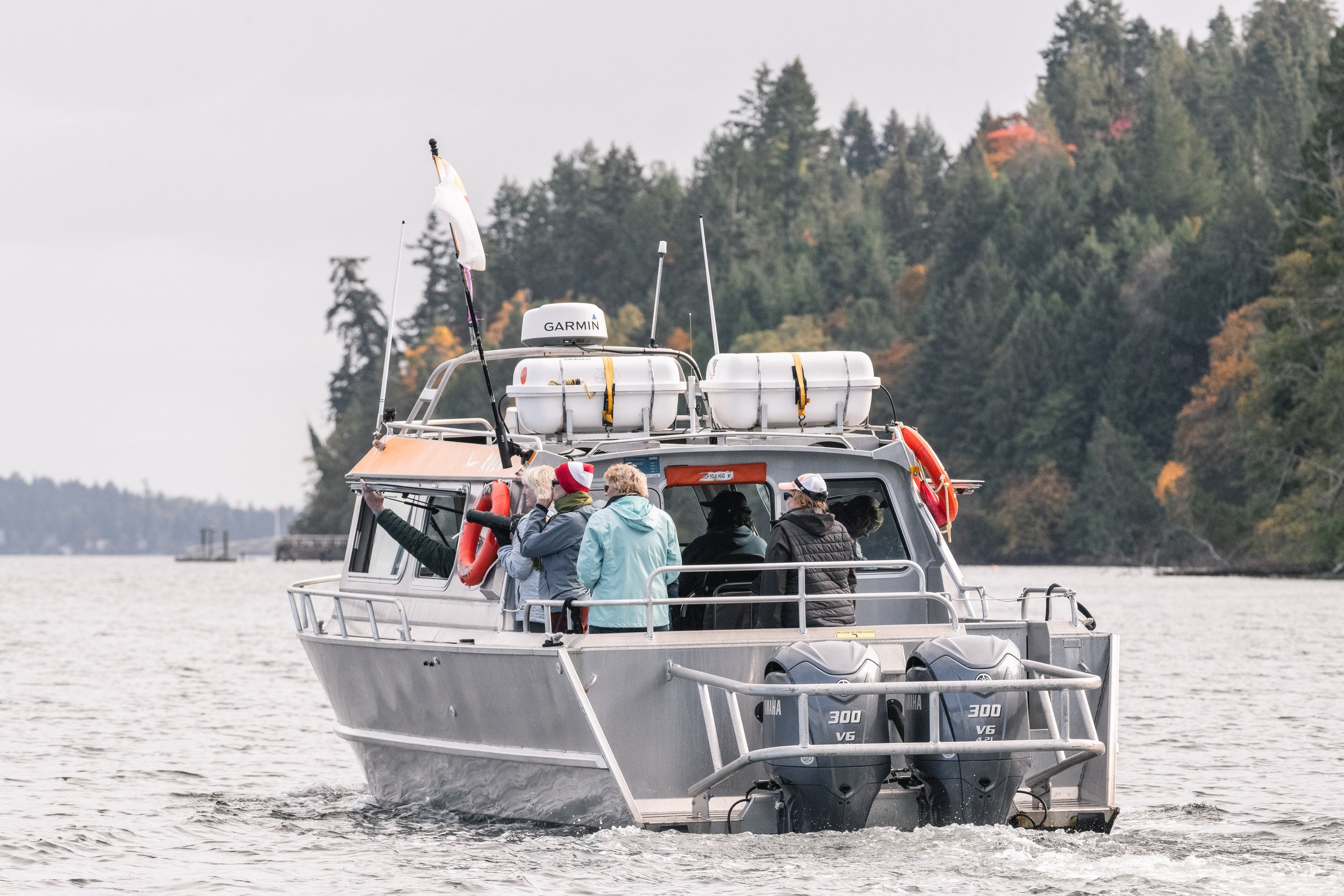
Guests on Kula watching the whales. Photo by Hayleigh Hilbert.
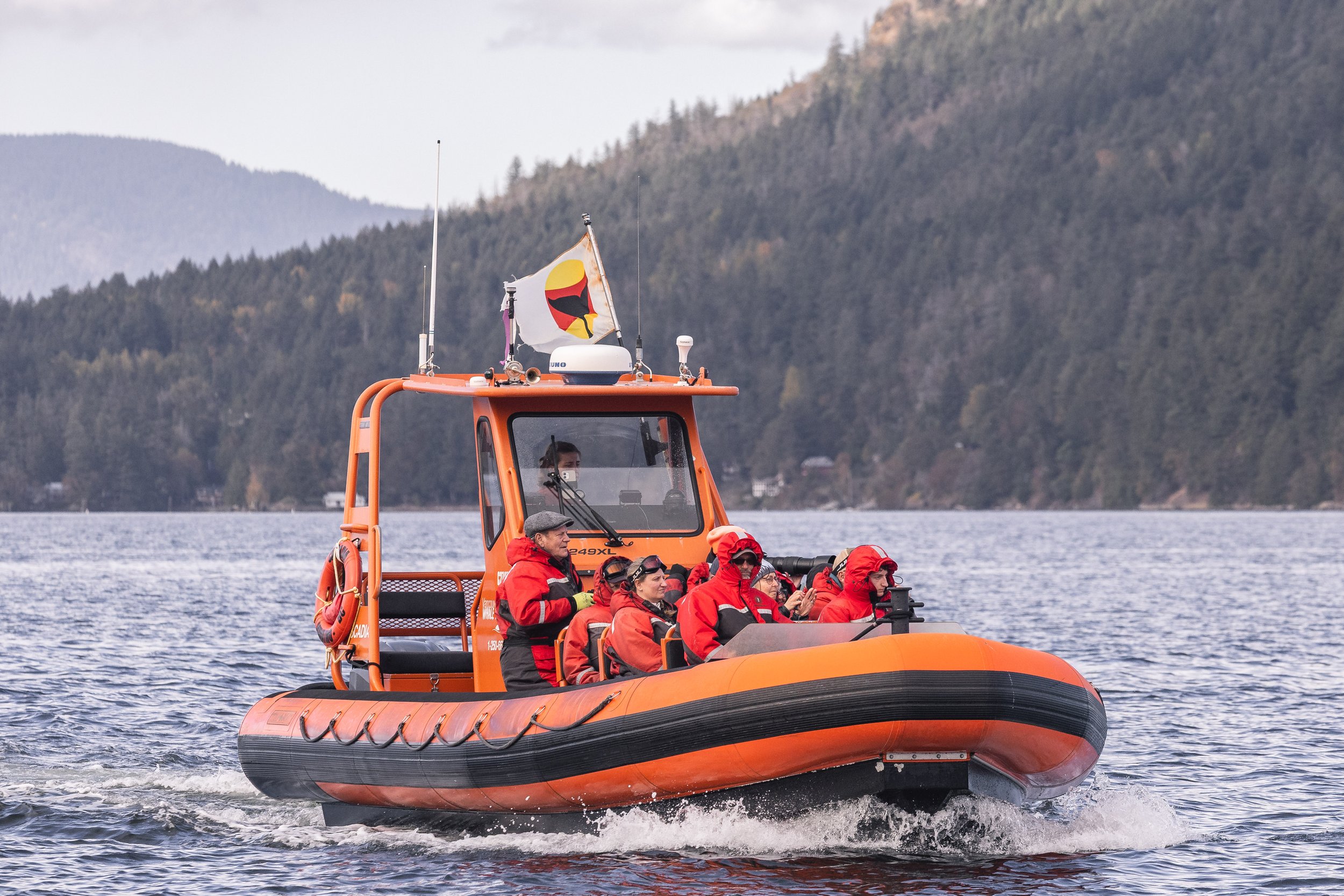
Guests on Cascadia cruising along the bay. Photo by Cheyenne Brewster.
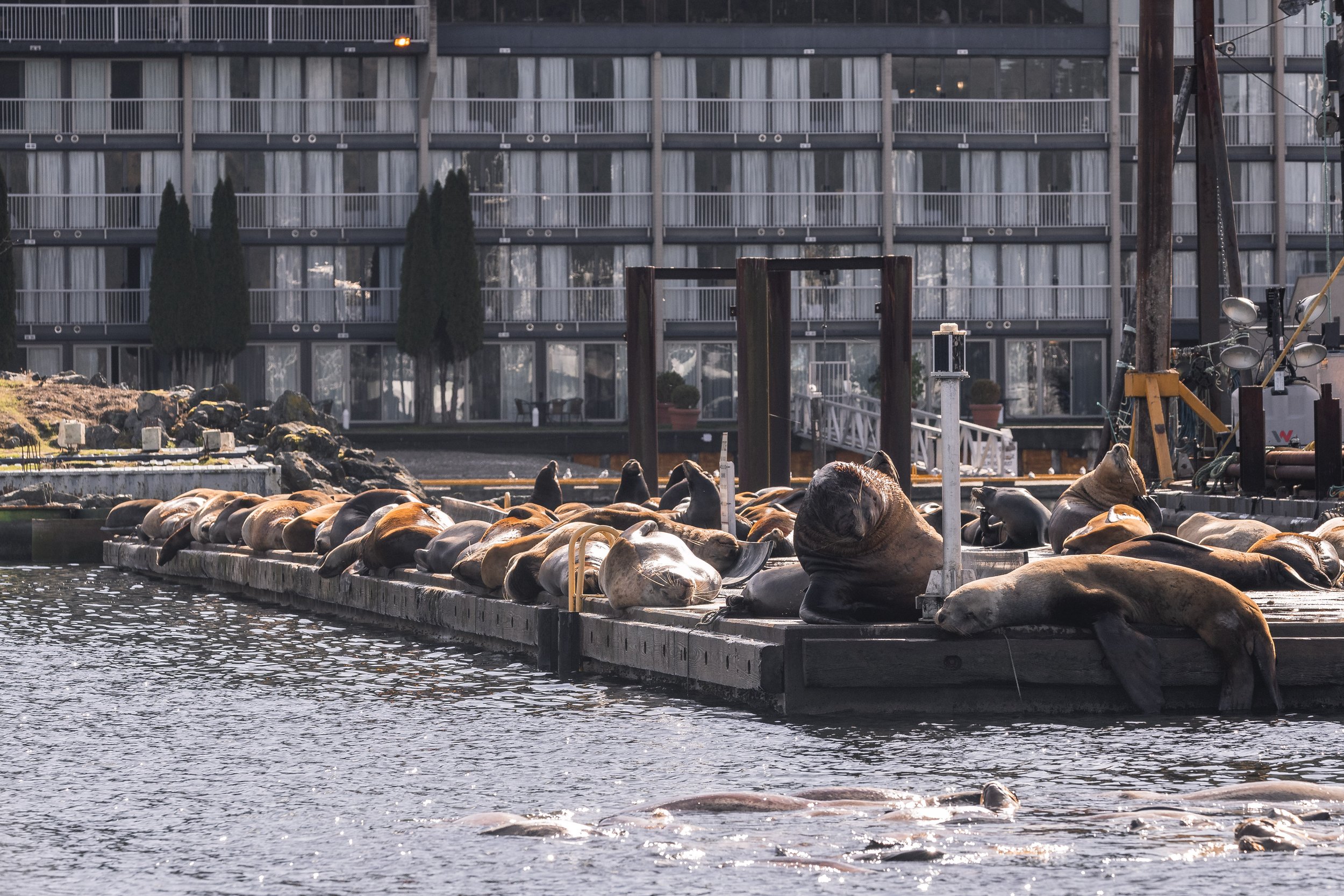
Steller Sea Lions taking up space along the edge of the dock with California Sea Lions in the back. Photo by Cheyenne Brewster.
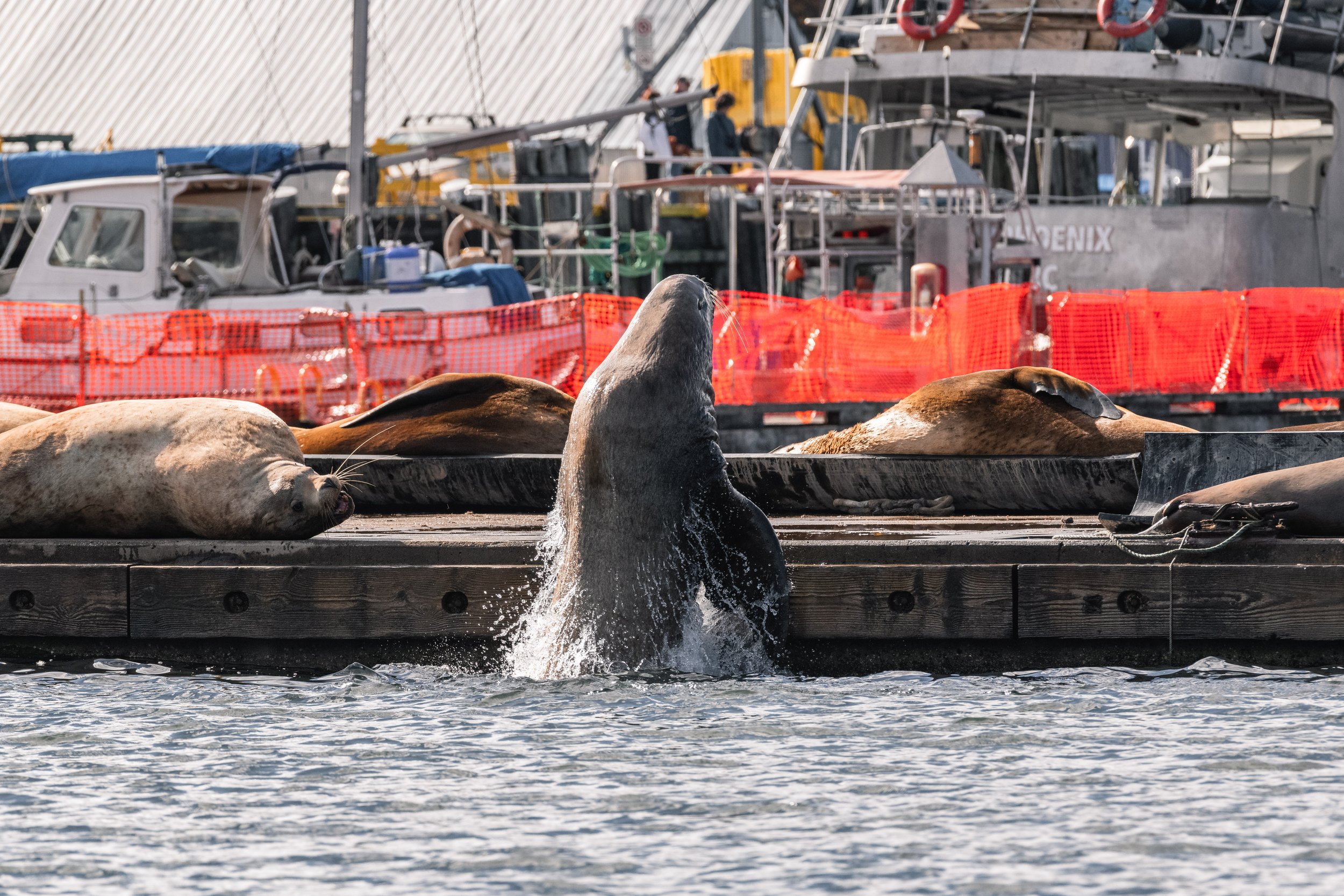
Making a graceful exit from the water. Photo by Hayleigh Hilbert.
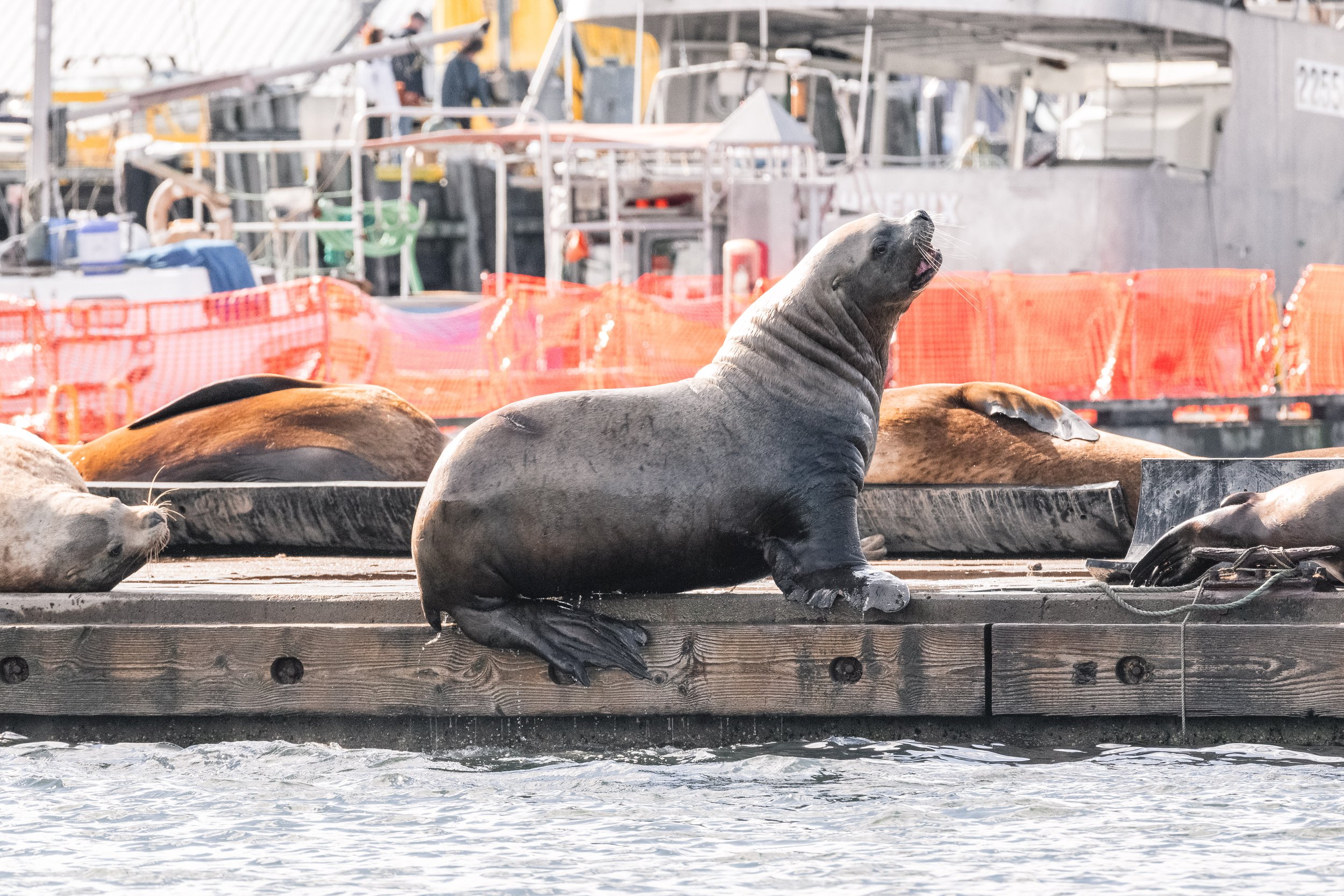
Such cute little ears on such a big guy. Photo by Hayleigh Hilbert.
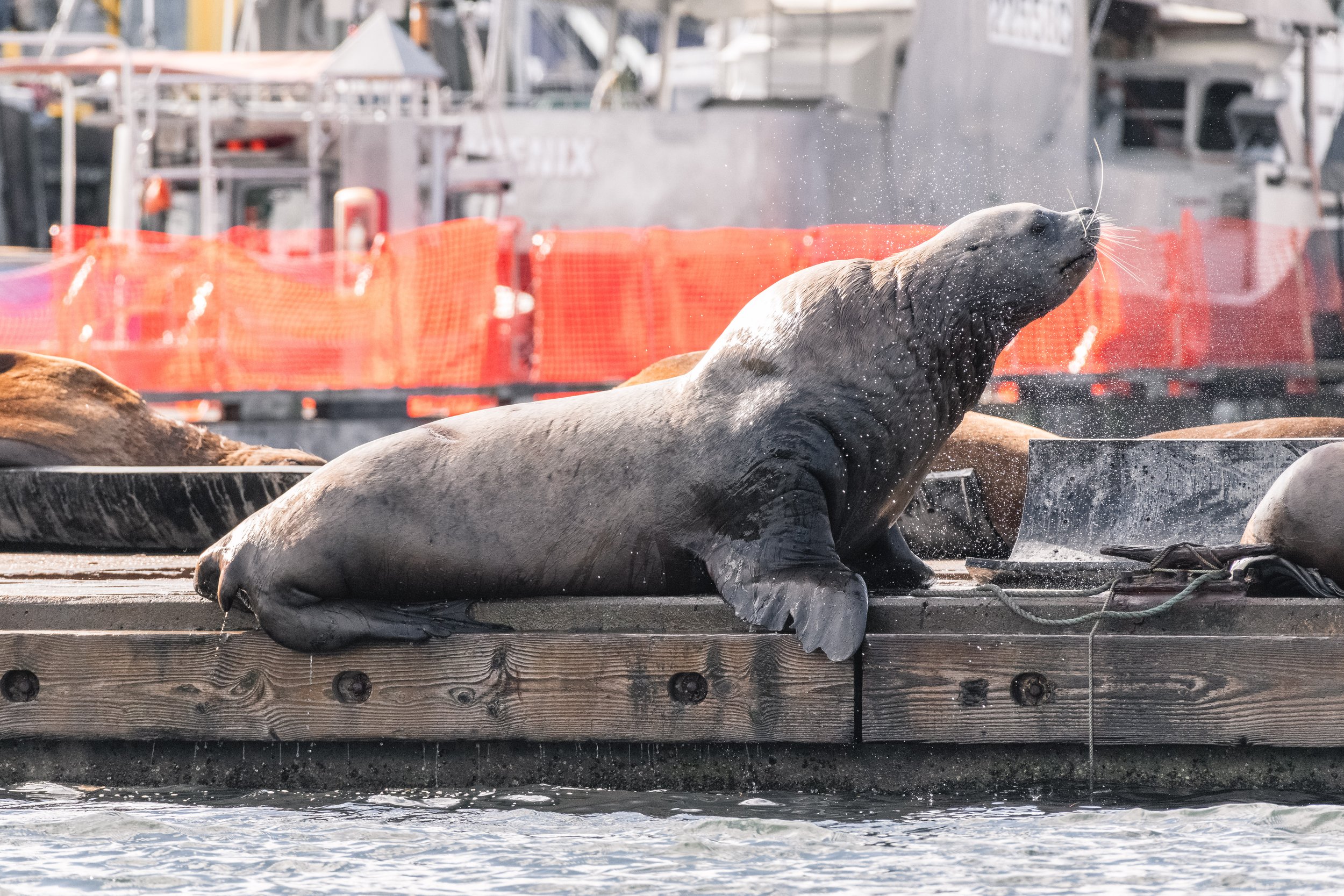
A quick shake to dry off. Photo by Hayleigh Hilbert.
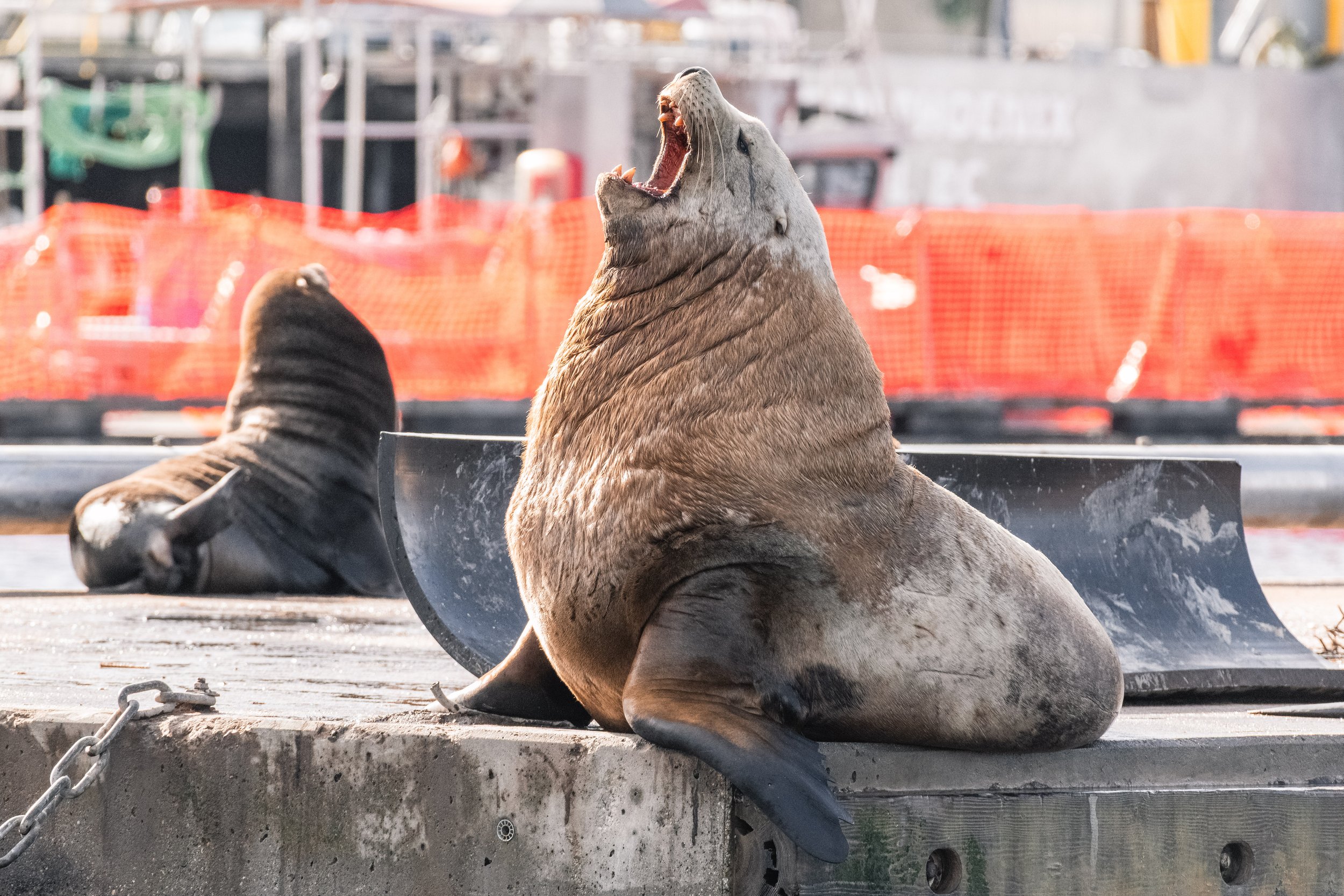
The skulls of large male Steller Sea Lions are very similar to the skulls of grizzly bears! Photo by Hayleigh Hilbert.
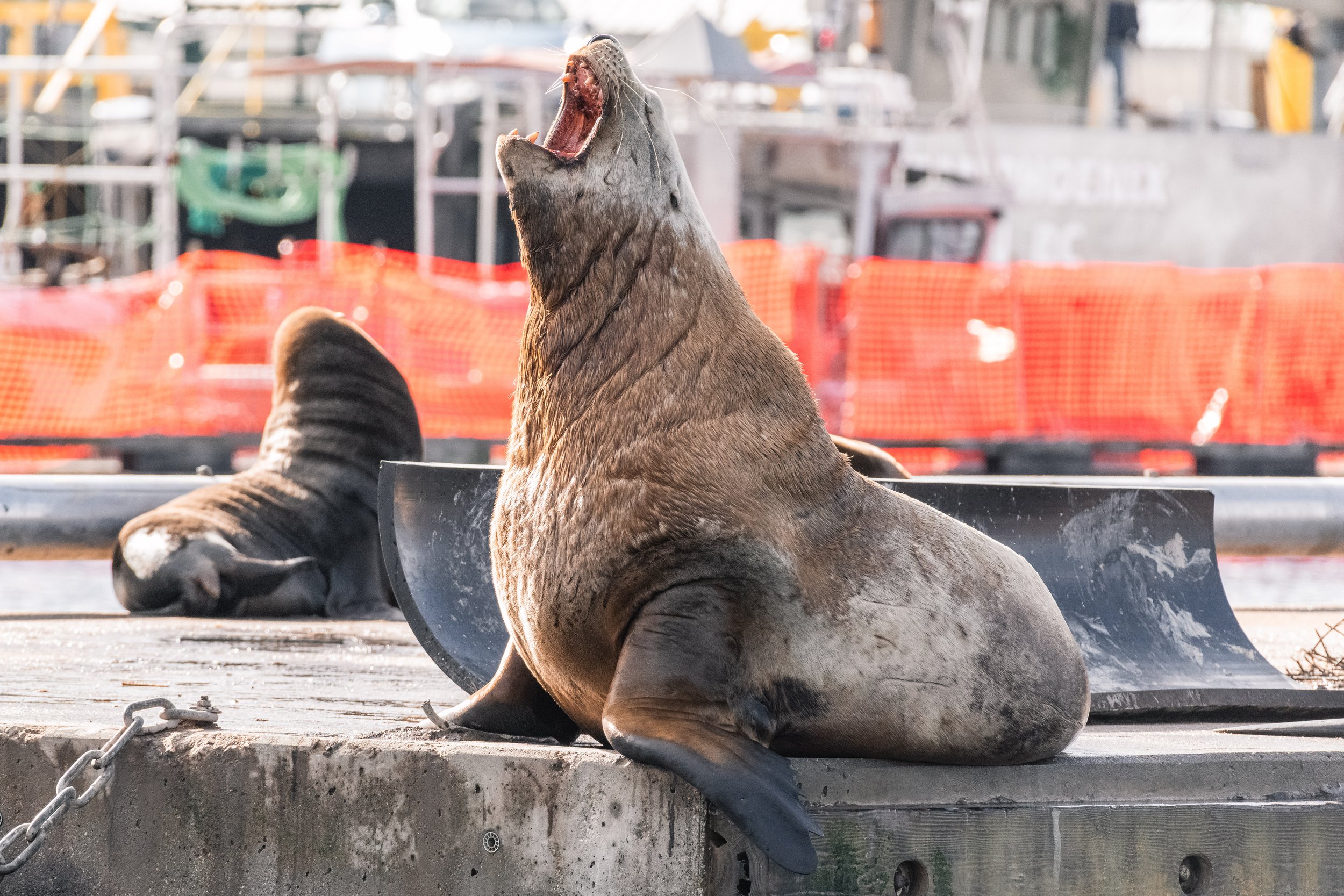
“And IIIIIIIIIIIIIIIIIIIIIIIIII, will always love yooouuuuu” - Whtiney Houston/me in the shower/this sea lion. Photo by Hayleigh Hilbert.
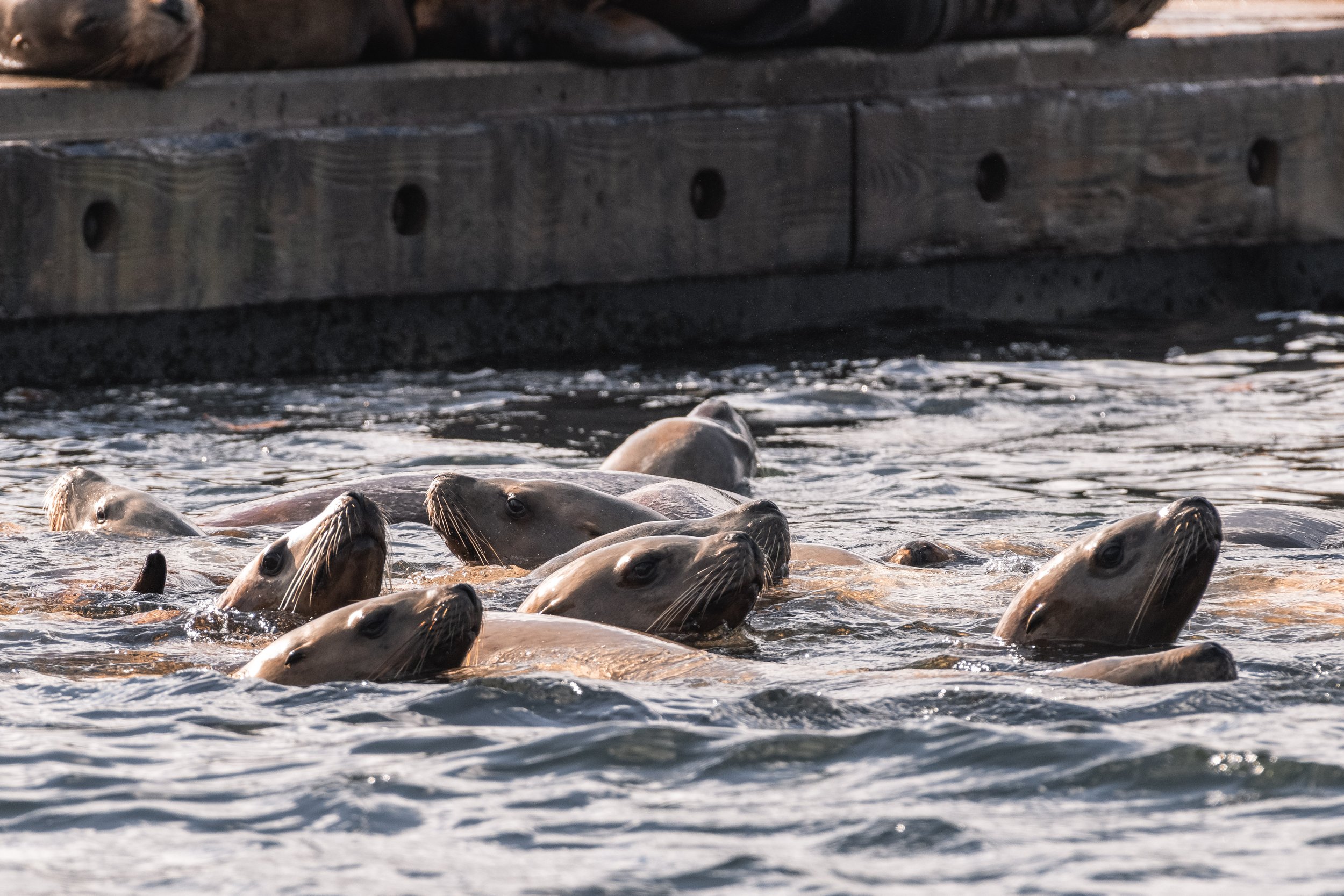
Stellers taking a dip. Photo by Hayleigh Hilbert.
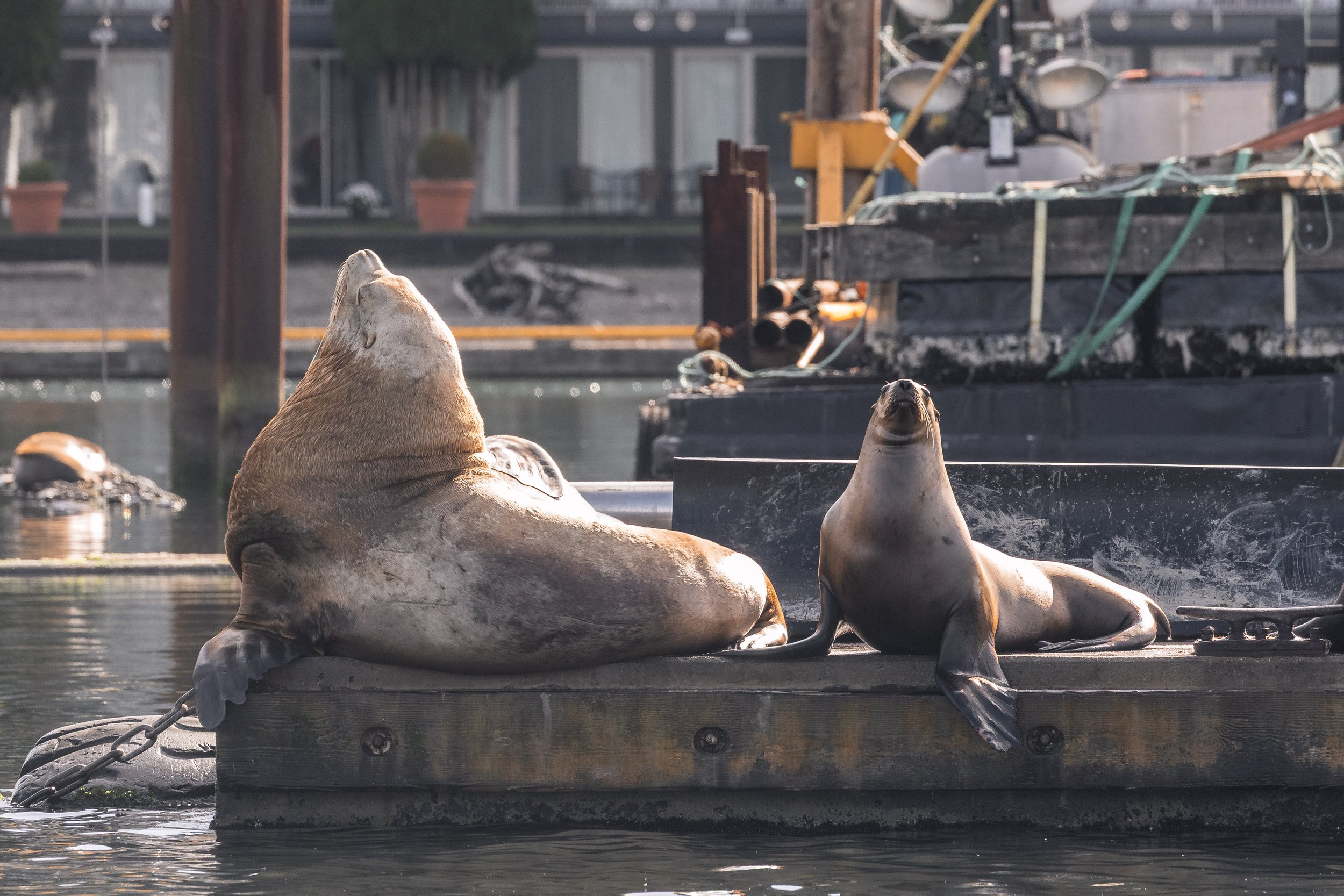
Male Steller Sea Lions can weigh more than some cars. Photo by Cheyenne Brewster.
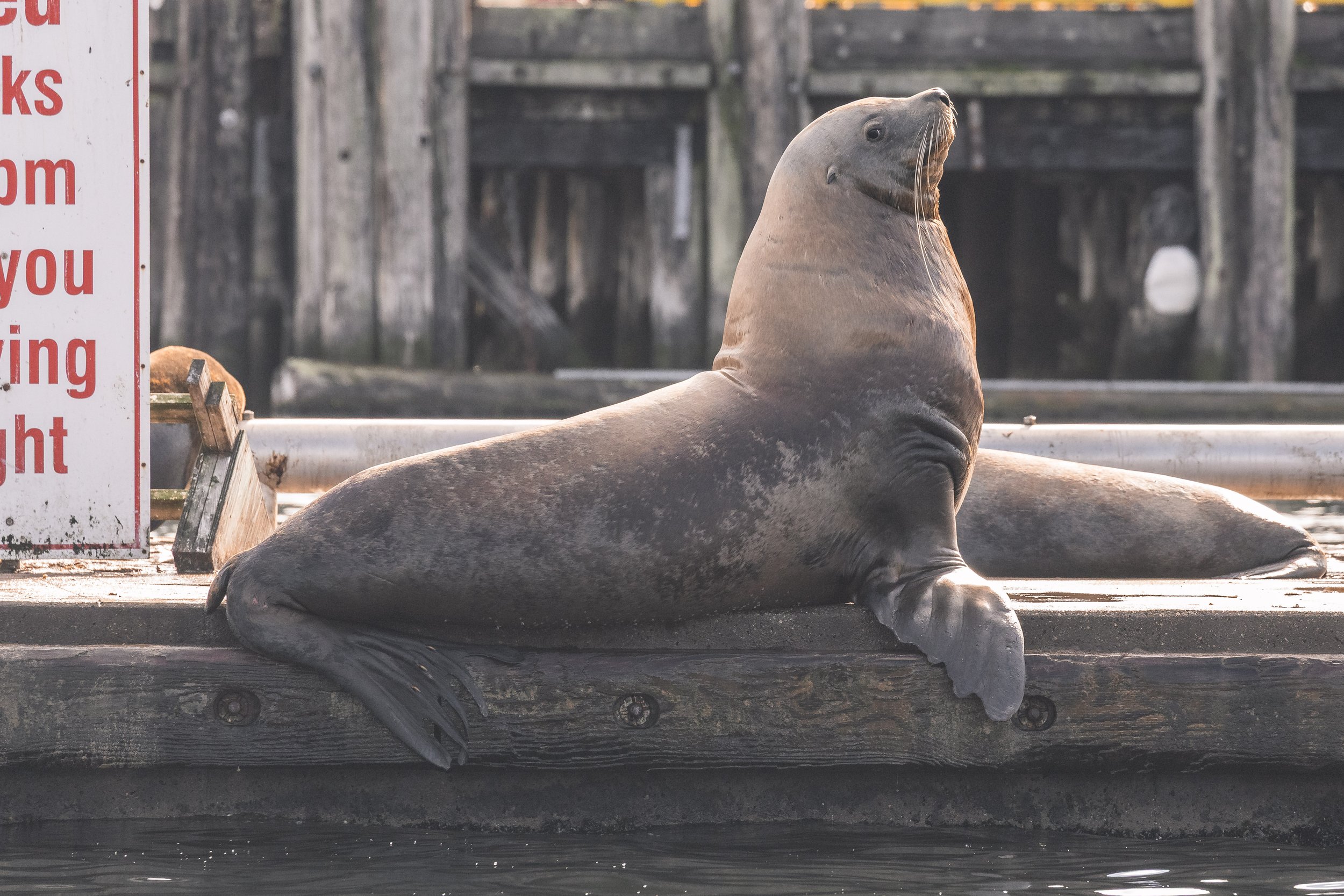
Act natural. Photo by Cheyenne Brewster.
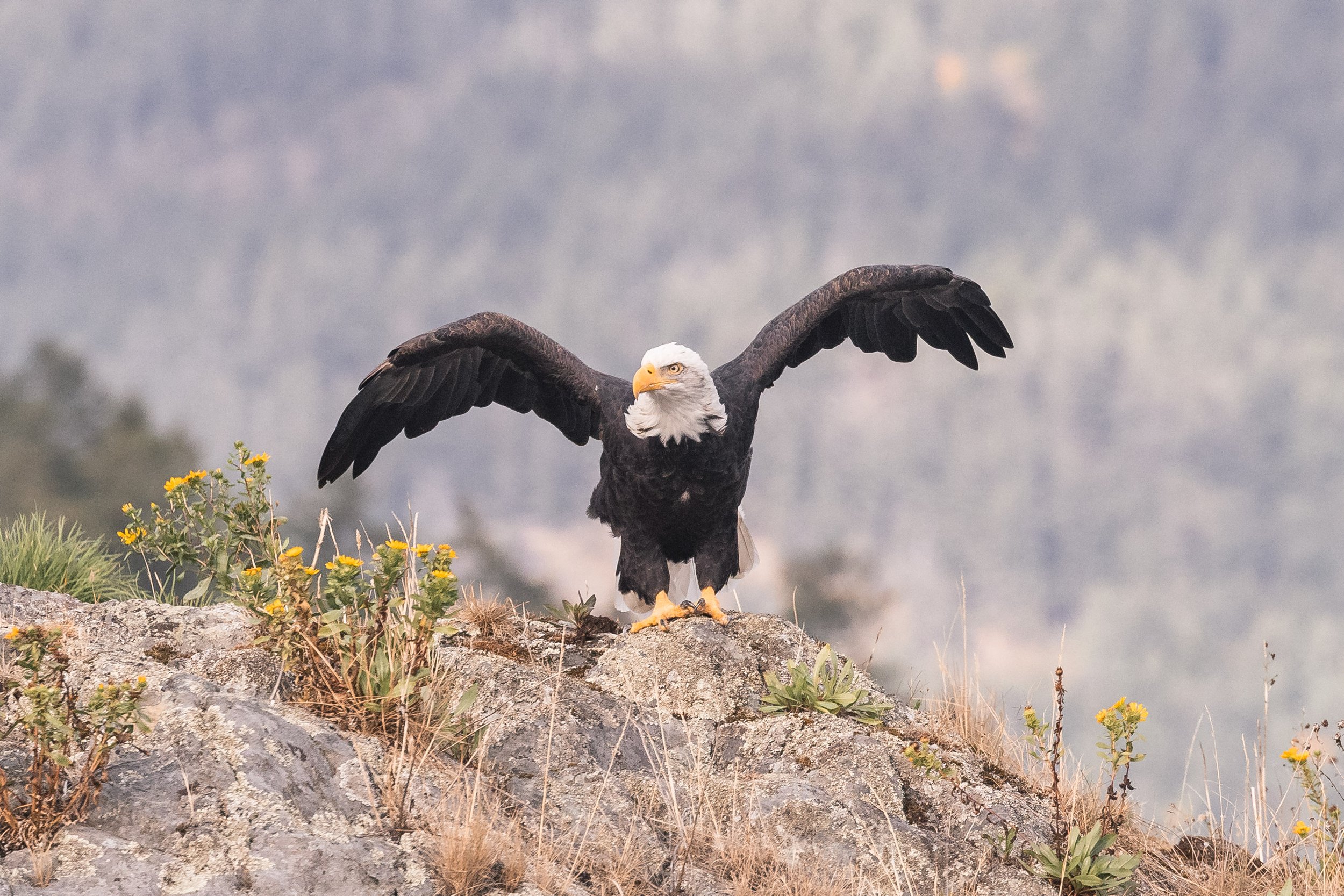
A Bald Eagle preparing for take off. Photo by Cheyenne Brewster.
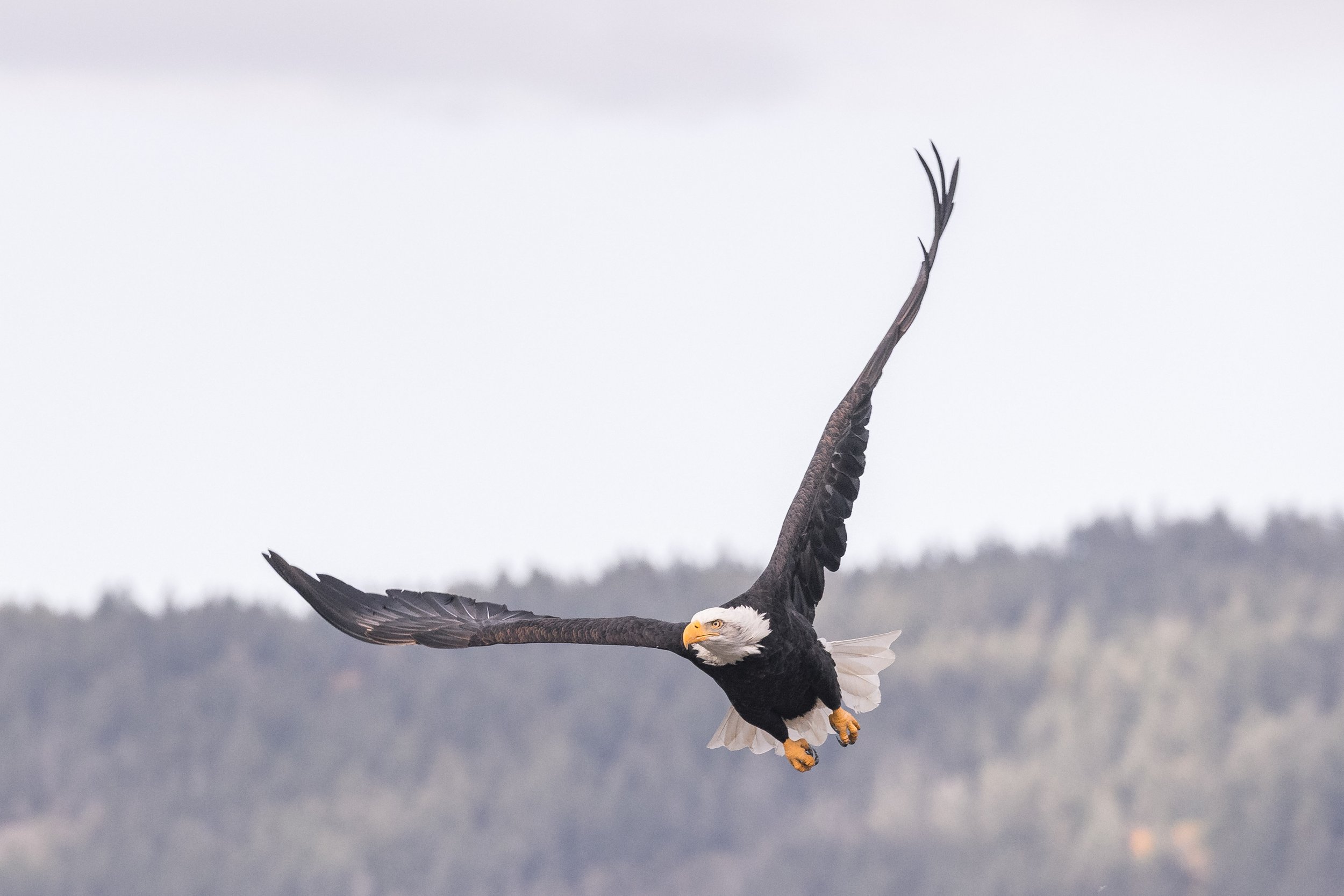
Up and away. Photo by Cheyenne Brewster.
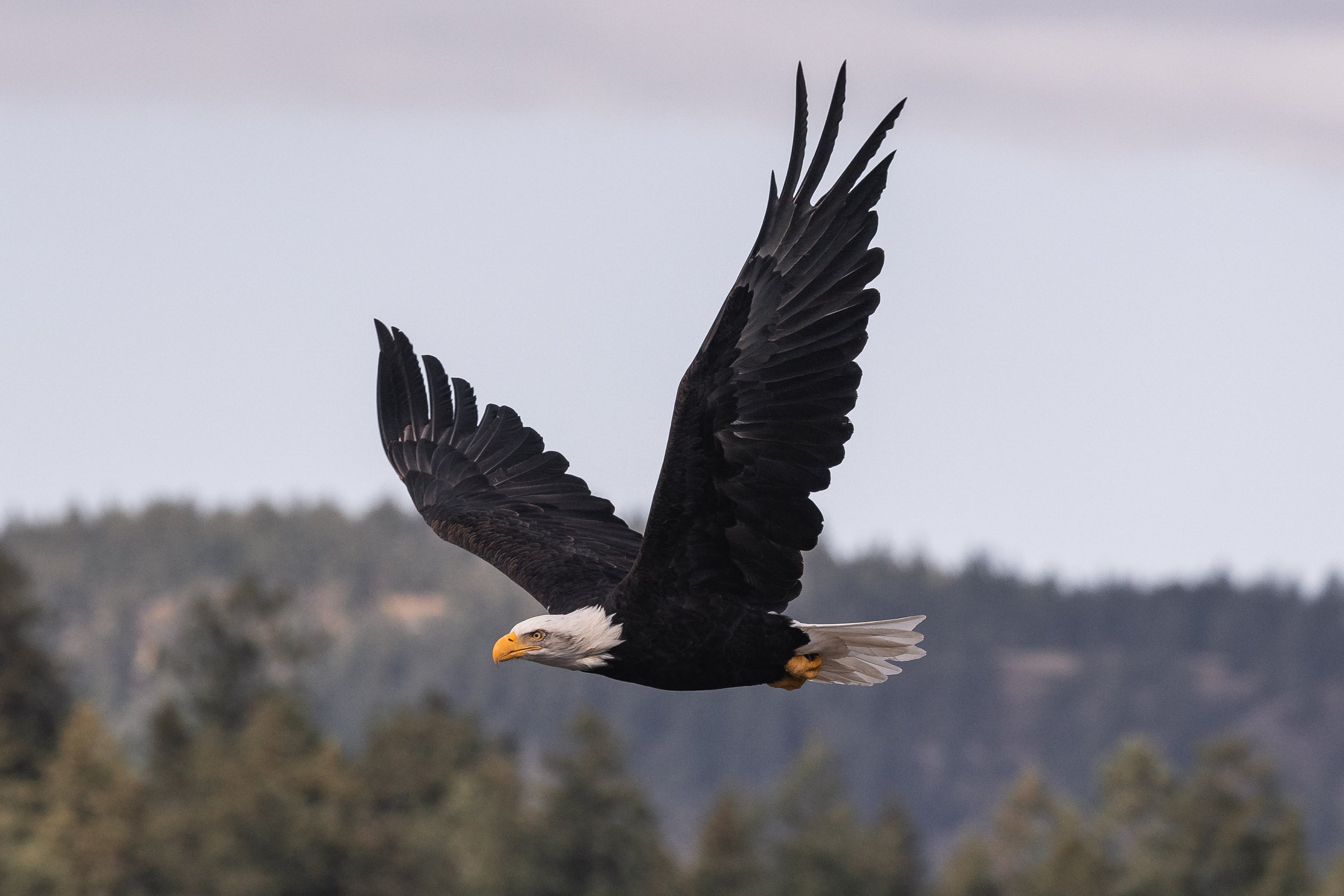
The wingspan of a Bald Eagle can reach up to 8 feet! Photo by Cheyenne Brewster.
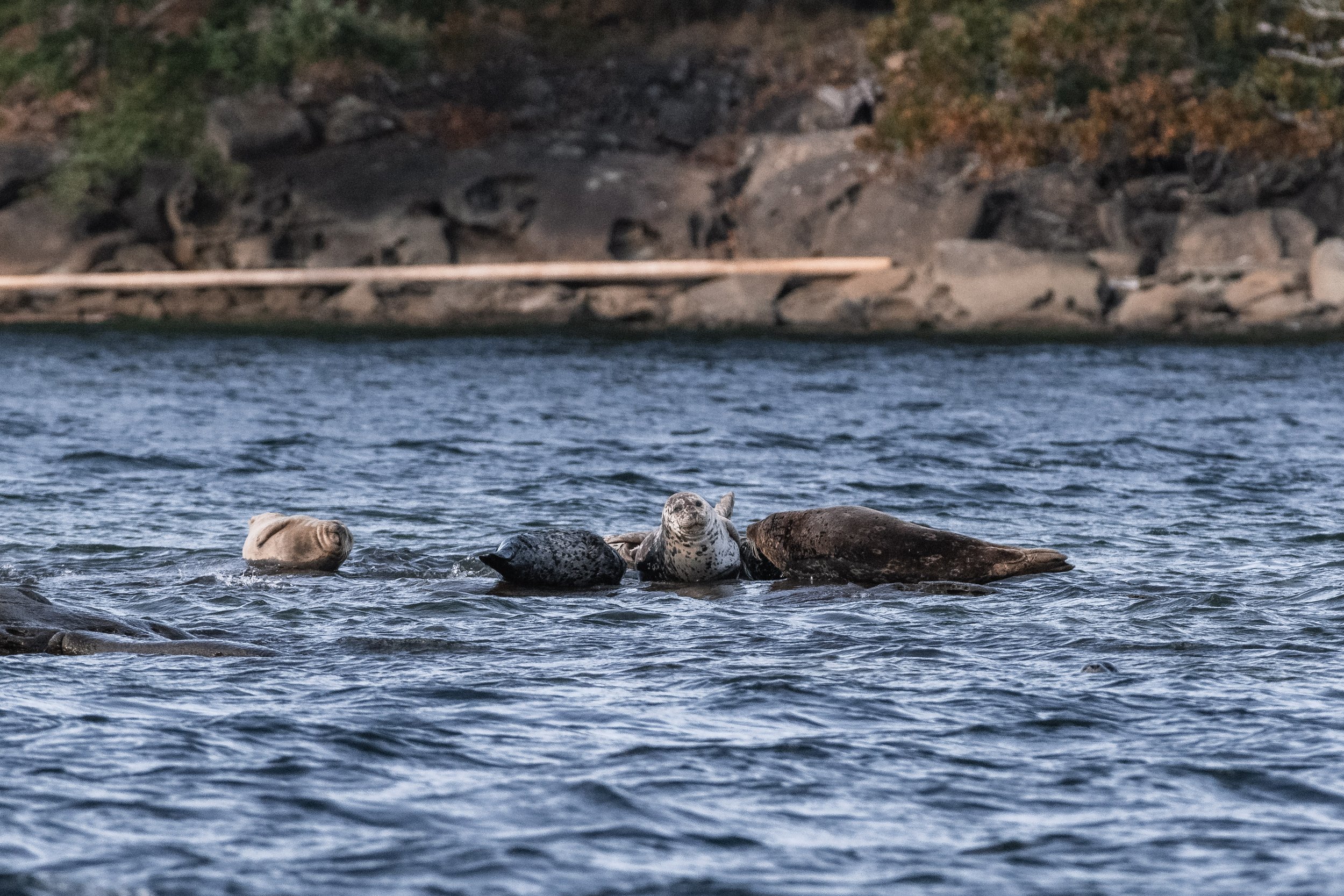
Harbour Seals clinging on to the last of the rocks as the tide rises. Photo by Hayleigh Hilbert.
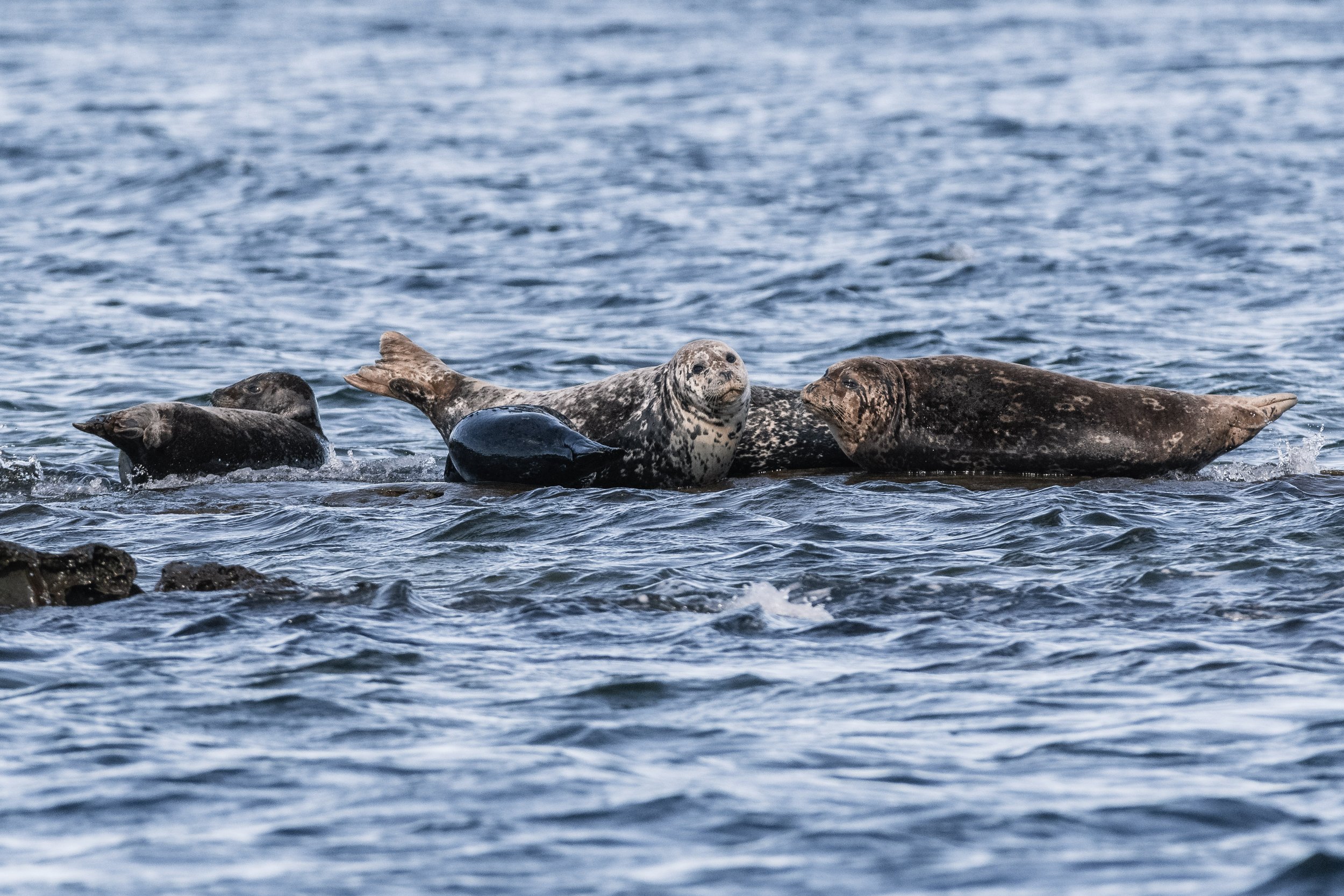
Looking at us, looking at them. Photo by Hayleigh Hilbert.
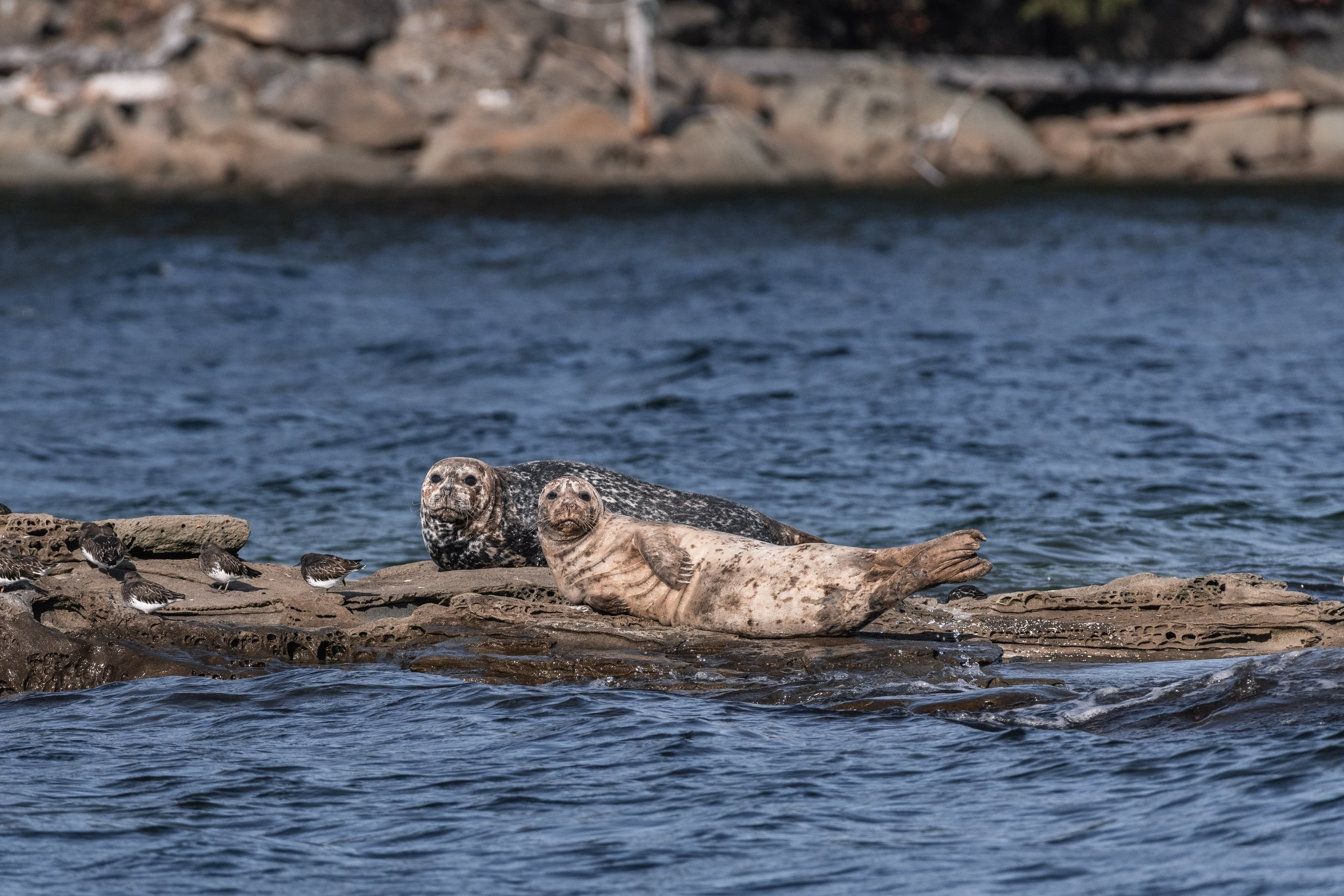
Photo by Hayleigh Hilbert.
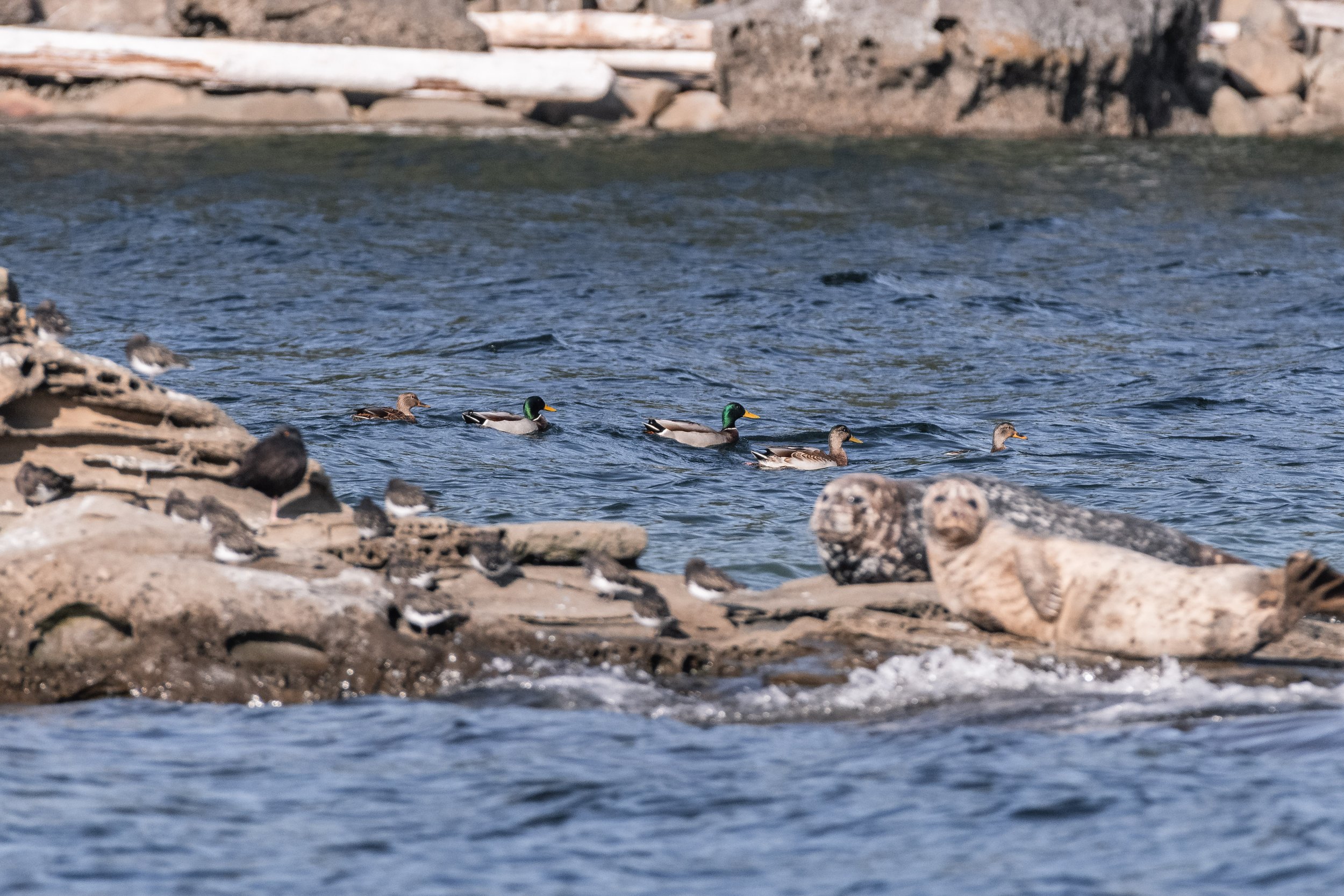
Ducks! Photo by Hayleigh Hilbert.
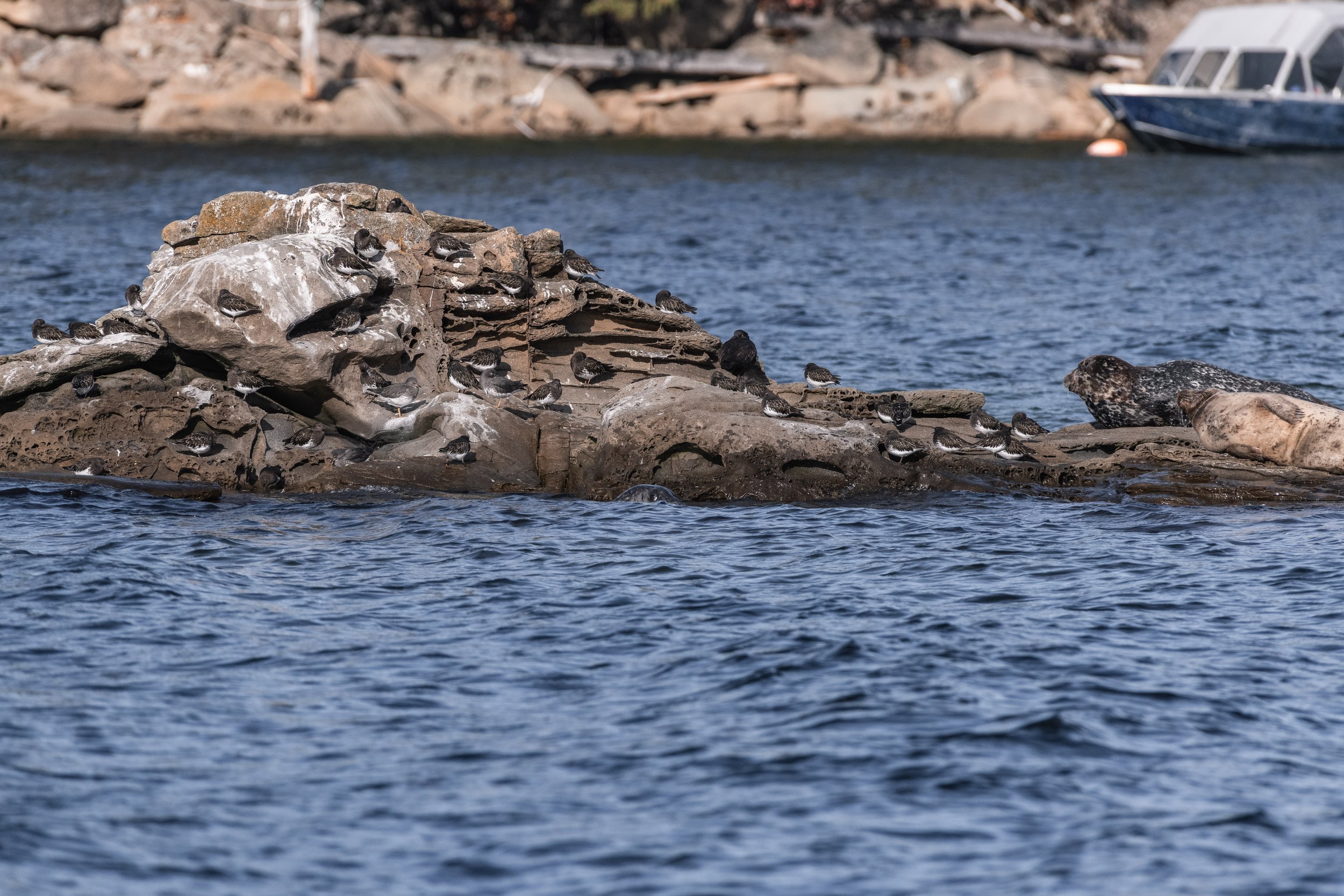
Black Turnstones, Surfbirds and a Black Oystercatcher resting on the rocks. Photo by Hayleigh Hilbert.