
October 1, 2026 - A Serving of Humpback Soup, Plus Chainsaw during our Adventure!
We were excited to start the adventure today; calm winds and seas made it easy to search wherever we wanted during the tour. Each day, we aren’t sure when or where we might find the whales that we will be watching, or even if we will be able to spot any at all, but armed with experience, our captain decided to try searching to the south first, taking the path through the Southern Gulf Islands before heading into the more open waters of the Strait of Georgia.
To enter the Southern Gulf Islands from Nanaimo, we typically take Dodd Narrows, a narrow passageway between Mudge Island and Joan Point on Vancouver Island. Today, this passageway is teeming with life, a common sight year-round, although salmon runs typically boost the activity you can see here. As these fish return to their home rivers to reproduce, they are also funnelled into this passageway, where the current and tight quarters make prime hunting grounds for seals and sea lions. The currents can disorient the fish and push them closer to the surface, while strong swimming pinnipeds can take a chance at grabbing one. While we didn’t see any active fishing today, we still got great looks at the sea lions floating in the current, waiting for their next meal.
From Dodd, we wove through the Islands, enjoying the scenery as we searched for whales until we headed out of Porlier Pass and into the Strait of Georgia. It wasn’t long until we found the whales out here, as many humpback blows dotted the horizon. Humpbacks tend to gather in highly productive areas, where concentrated food draws them in. Each humpback needs to eat a substantial amount each day, nearly 3,000 pounds, so seeing them gathered where there's plenty of food makes sense.
Today there were 6 whales in close proximity, with two of them, Honu (BCX1856) and Aether (KEZ0015), choosing to feed solo, while the other 4, Fader (BCY0195), Arial (BCY0767), Meqe' (BCZ0492), and Barge Boy (BCX2514), formed an associated group. Although seeing humpbacks with companions is becoming more common as their populations recover, spotting four whales spending time together is still a special encounter.
Unlike some other whale species, humpbacks do not generally maintain permanent social groups. Their associations tend to be temporary, lasting anywhere from a few minutes to several hours or, occasionally, longer. Two whales may travel together, feed in the same area, or simply cross paths while moving through a productive feeding ground. These relationships can change quickly, with individuals separating or joining other whales as they go about their day.
Scientists are still working to understand what draws particular humpbacks together and what these associations mean. Shared feeding areas are an important part of the picture, as several whales may take advantage of the same concentrations of prey without necessarily coordinating their behaviour. In other cases, whales may appear to travel closely together or engage in more interactive behaviours. An association does not automatically mean that two whales are close companions or that they will remain together for long.
This is part of what makes humpback encounters so interesting. Each whale has its own movements and behaviours, and the groupings we observe on the water are only a snapshot of their lives. Some individuals return to the same feeding grounds year after year, while others pass through the area during their seasonal migrations. Recognizing familiar flukes allows naturalists to identify individuals and follow their movements over time, helping us build a better understanding of how these whales use the waters around Vancouver Island.
With so many humpbacks in the area, there was plenty to watch as the whales surfaced, breathed, and disappeared beneath the water again. Some continued feeding on their own, while the associated group provided an opportunity to observe several individuals sharing the same stretch of ocean. Even when whales are close together, their behaviours can differ considerably, reminding us that each encounter is unique.
After spending time with the humpbacks, we continued exploring the surrounding waters. We made a stop at Stinky Rock, where Steller sea lions were another highlight of the day. These impressive pinnipeds are the largest sea lions in the world, and their size is especially noticeable when they haul out together on rocky outcrops. In the water, however, they become agile swimmers, using their powerful foreflippers to propel themselves through the ocean. Like the sea lions we saw earlier in Dodd Narrows, they depend on the rich marine environment around Vancouver Island for food, and rocky resting places provide an important place to haul out between foraging trips.
Our search also brought us to calm waters off North Nanaimo, where we encountered T063 Chainsaw, a Bigg's killer whale.
T063 Chainsaw ♂ (~1978)
While humpbacks often spend time feeding in loose associations, Bigg's killer whales have a different social structure. They live in stable family groups, with individuals commonly travelling alongside close relatives. These groups are particularly important for understanding their movements and behaviour, as family members often share hunting strategies and remain associated over many years. Although we only saw Chainsaw during today’s encounter, we can assume his mother, T065 Whidbey II, wasn’t far away, as the two rarely separate.
Bigg's killer whales are mammal-eating orcas, and their hunting behaviour differs from that of fish-eating populations. Rather than relying on echolocation to locate fish as they do, they often move quietly while searching for marine mammal prey, helping them avoid alerting potential targets to their presence. Although we cannot know what Chainsaw was looking for during this particular encounter, seeing an orca travelling through such calm water offered a wonderful opportunity to appreciate the quiet, deliberate movements of these powerful predators.
While we were watching Chainsaw, a familiar sight caught the Marine Naturalists’ attention: another humpback whale was a little ways away from where Chainsaw was travelling. With a few quick photos, we identified this whale as Mogul (BCY1108).
From all our humpbacks to seeing Chainsaw travelling through calm waters, today's adventure highlighted the importance of BC's waters for a wide variety of species. We returned to Nanaimo thankful for the opportunity to see so many of these wonderful creatures.
Throughout the tour, the onboard Marine Naturalist, Evan Hessels, captured some great photos, which you can view below!
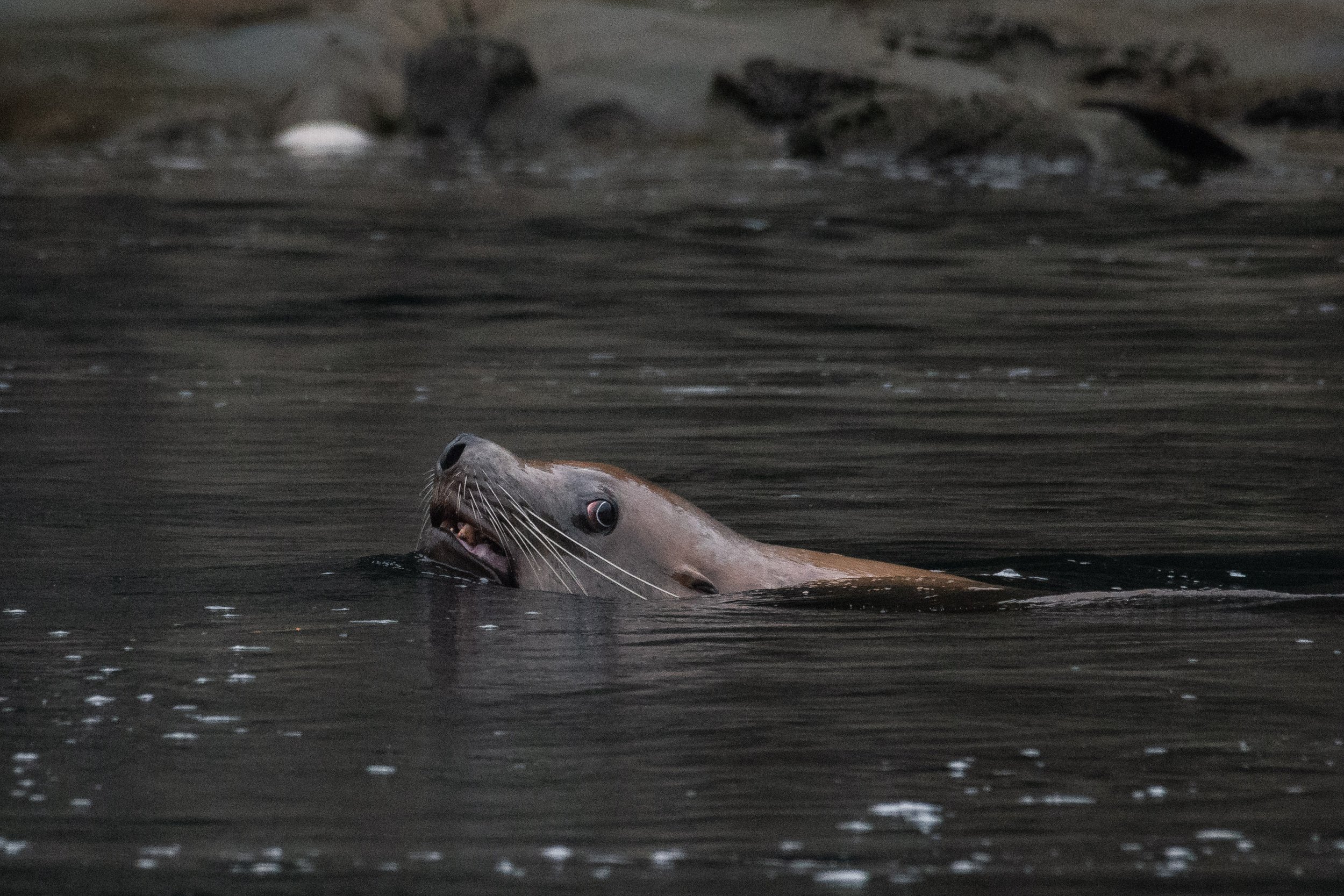
A Male Steller Sea Lion cruising by us in Dodd Narrows.
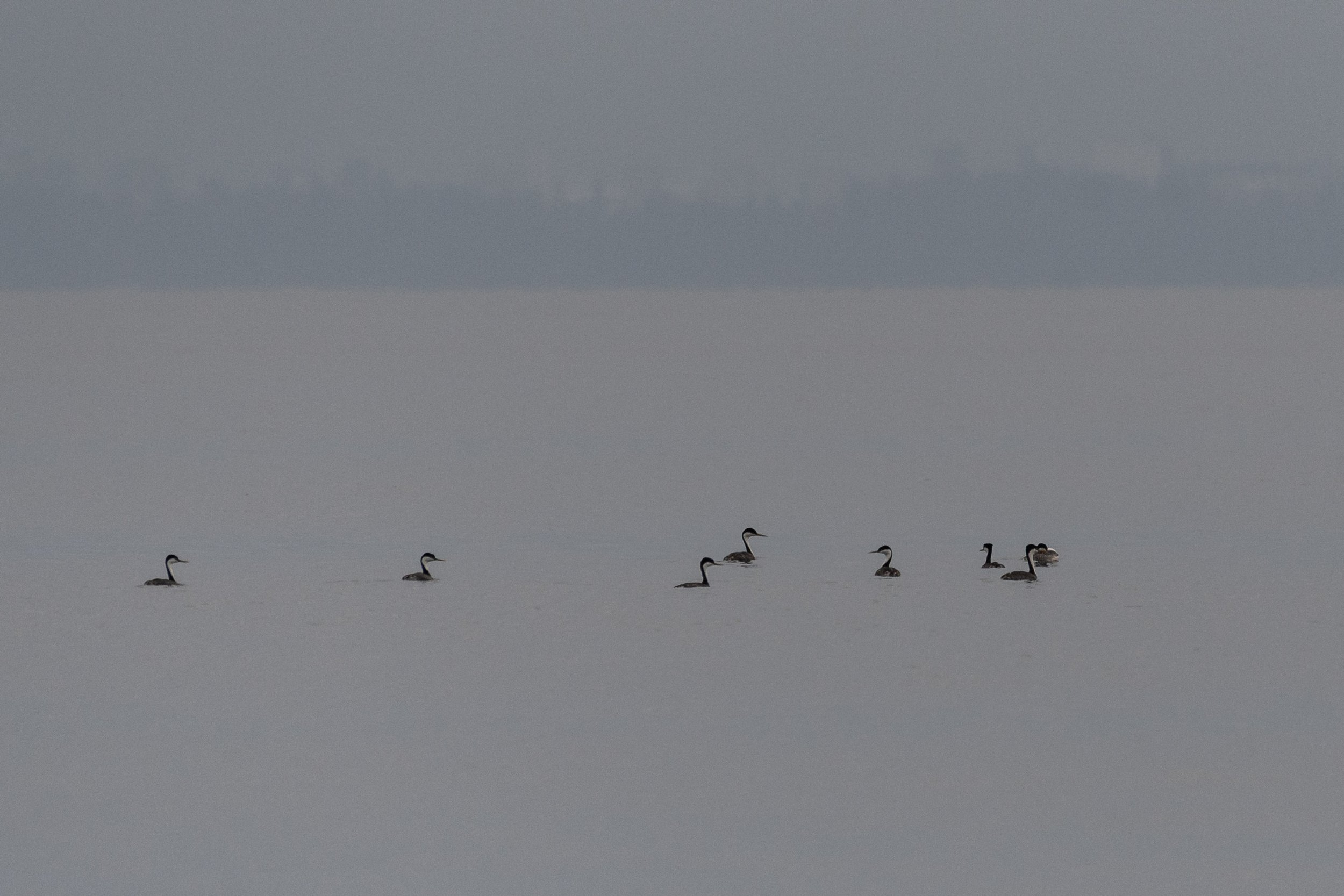
A group of Western Grebe’s in the Strait.
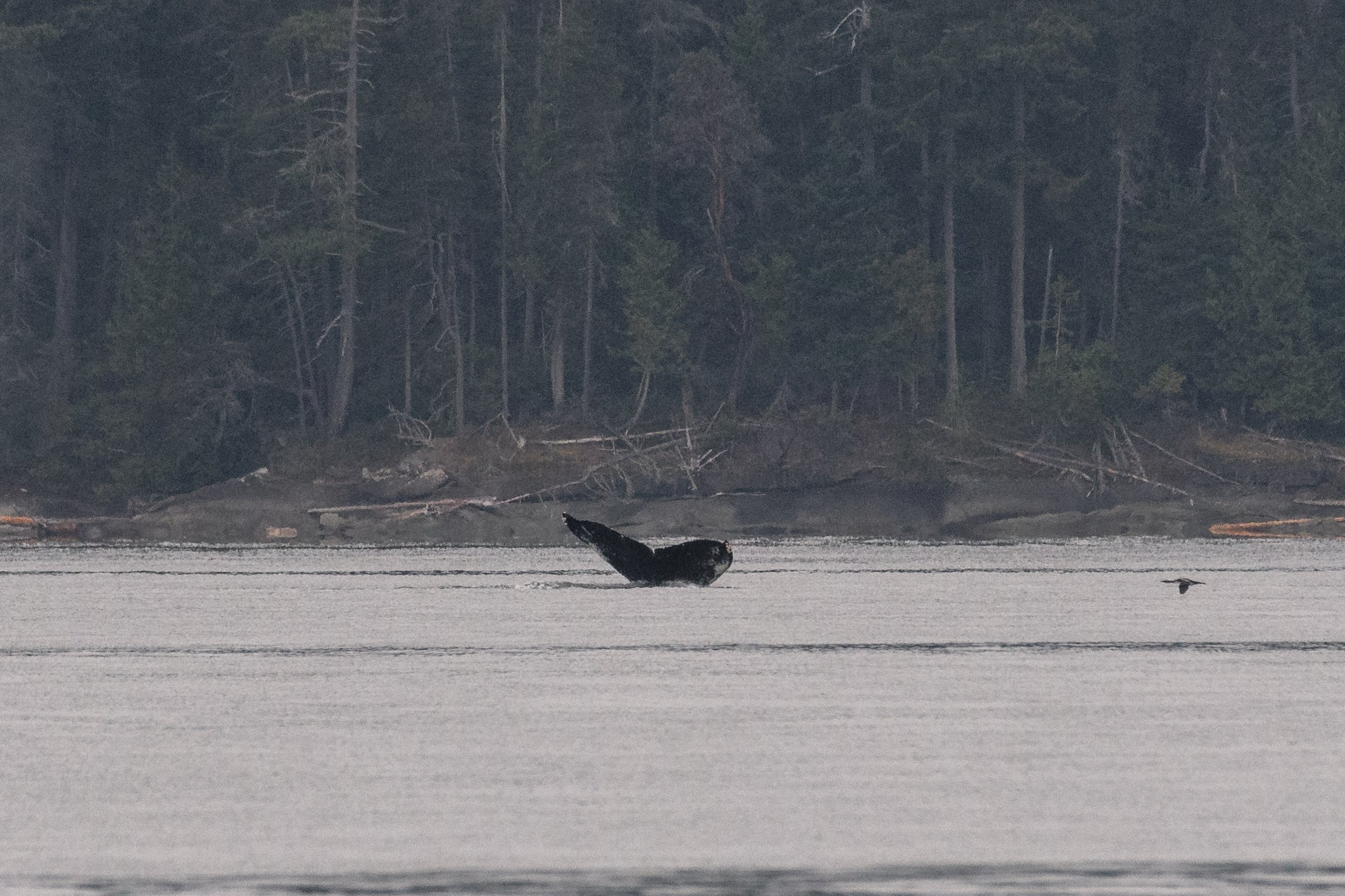
Honu surfacing along Valdes Island.
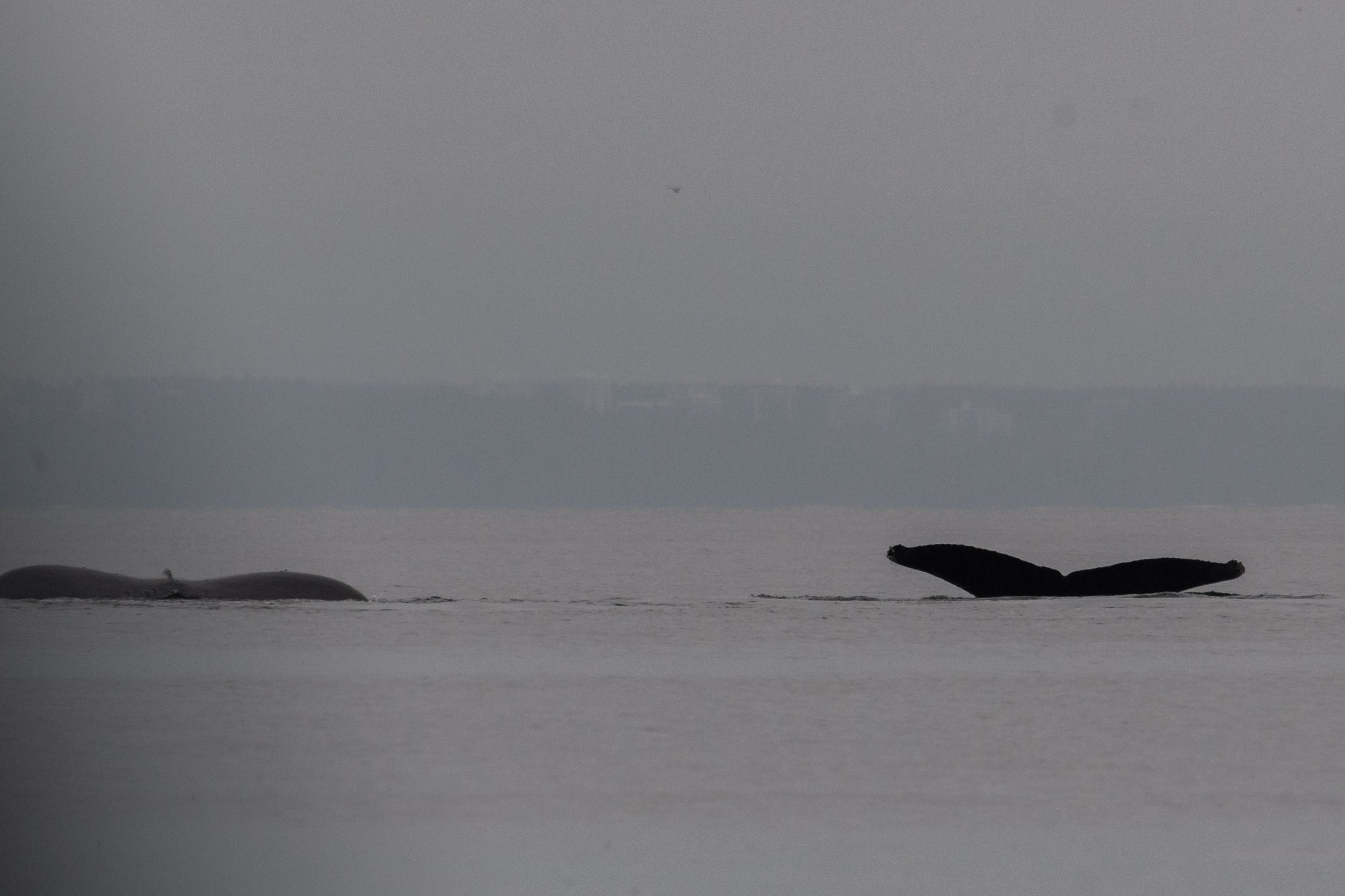
Fader lifting his tail on the left with Barge Boy diving to the right.
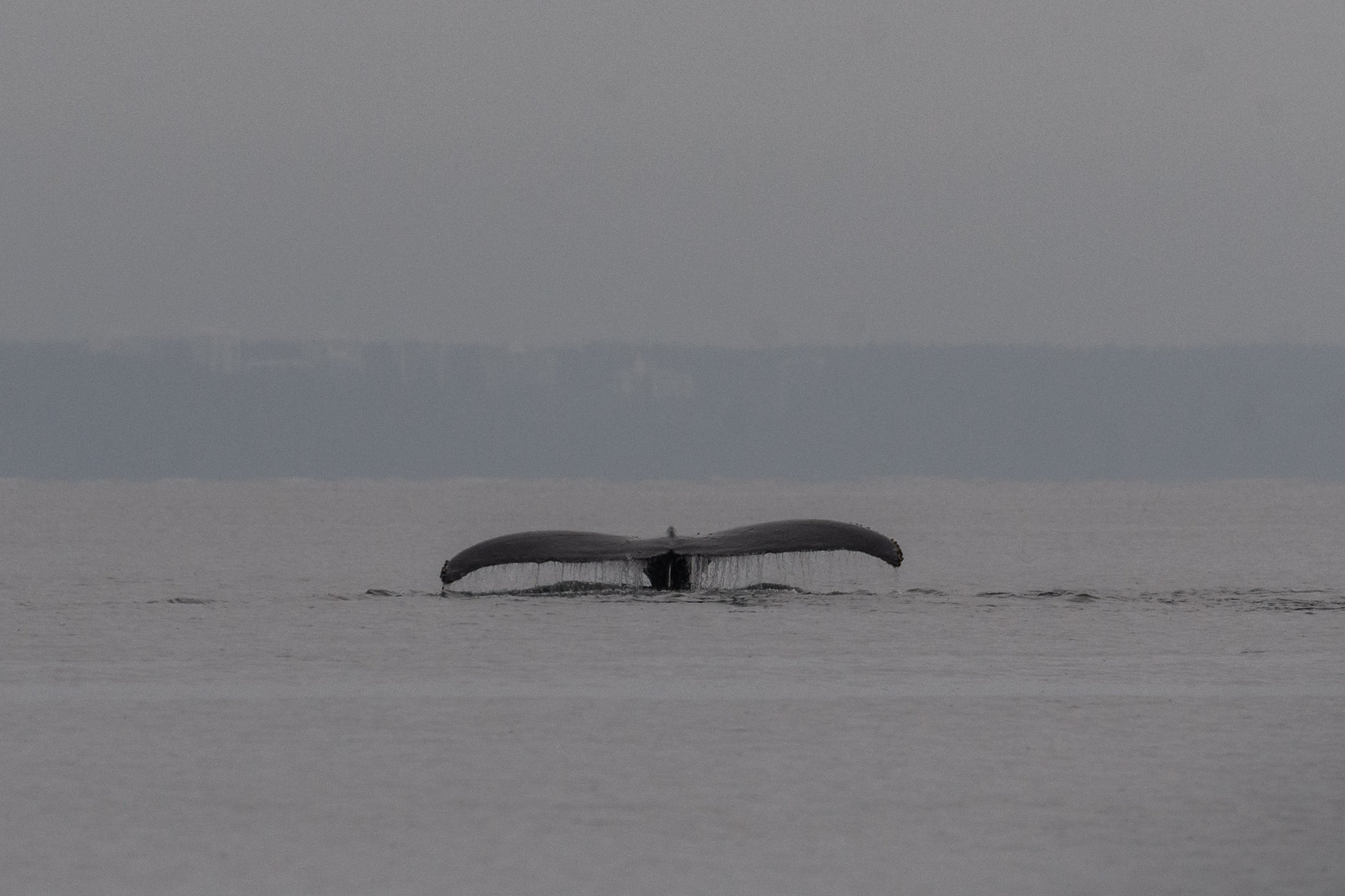
A fluke waterfall from Fader as he dives.
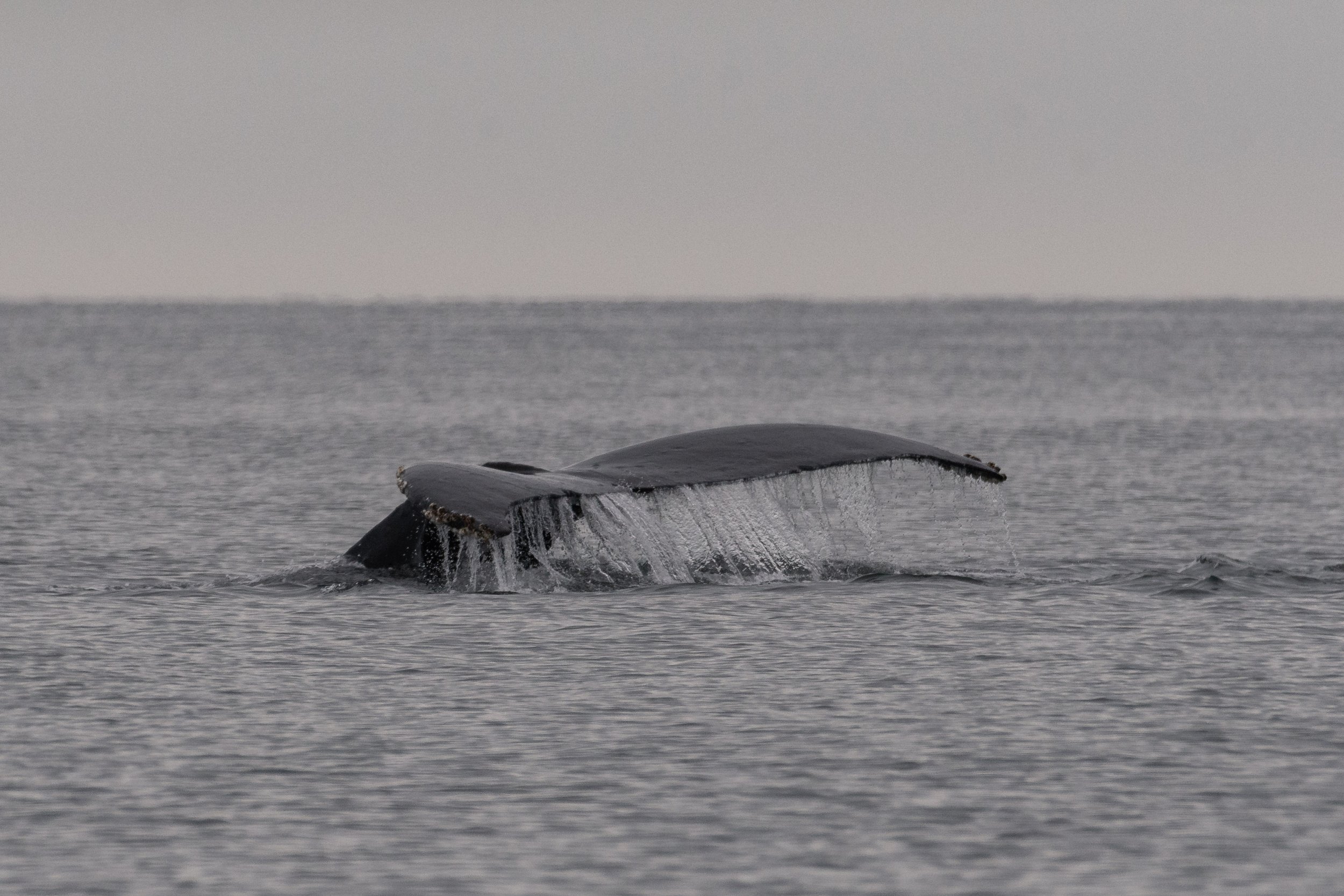
Fader giving a fluke waterfall as he dives.
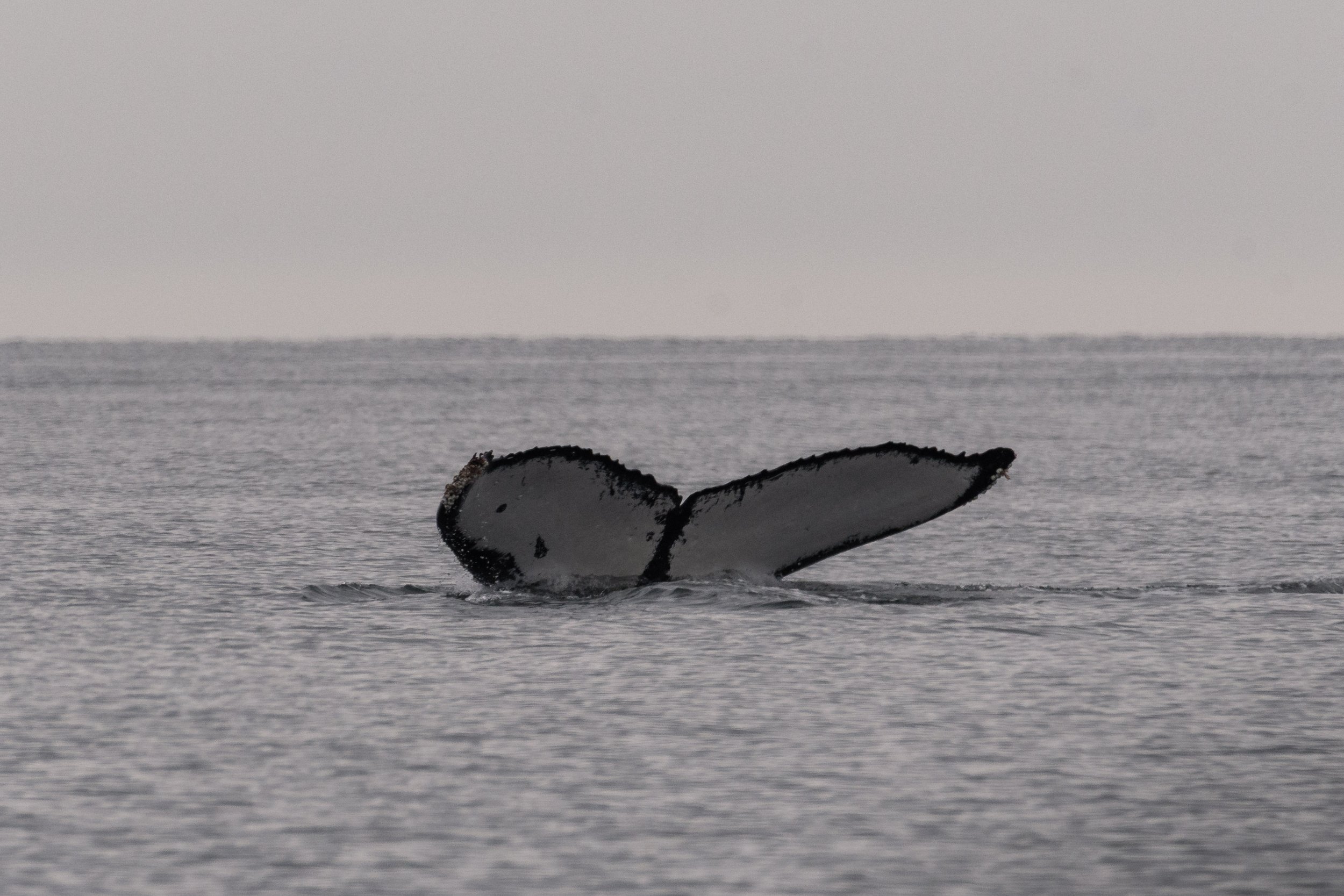
The lovely white underside of Meqe’s tail.
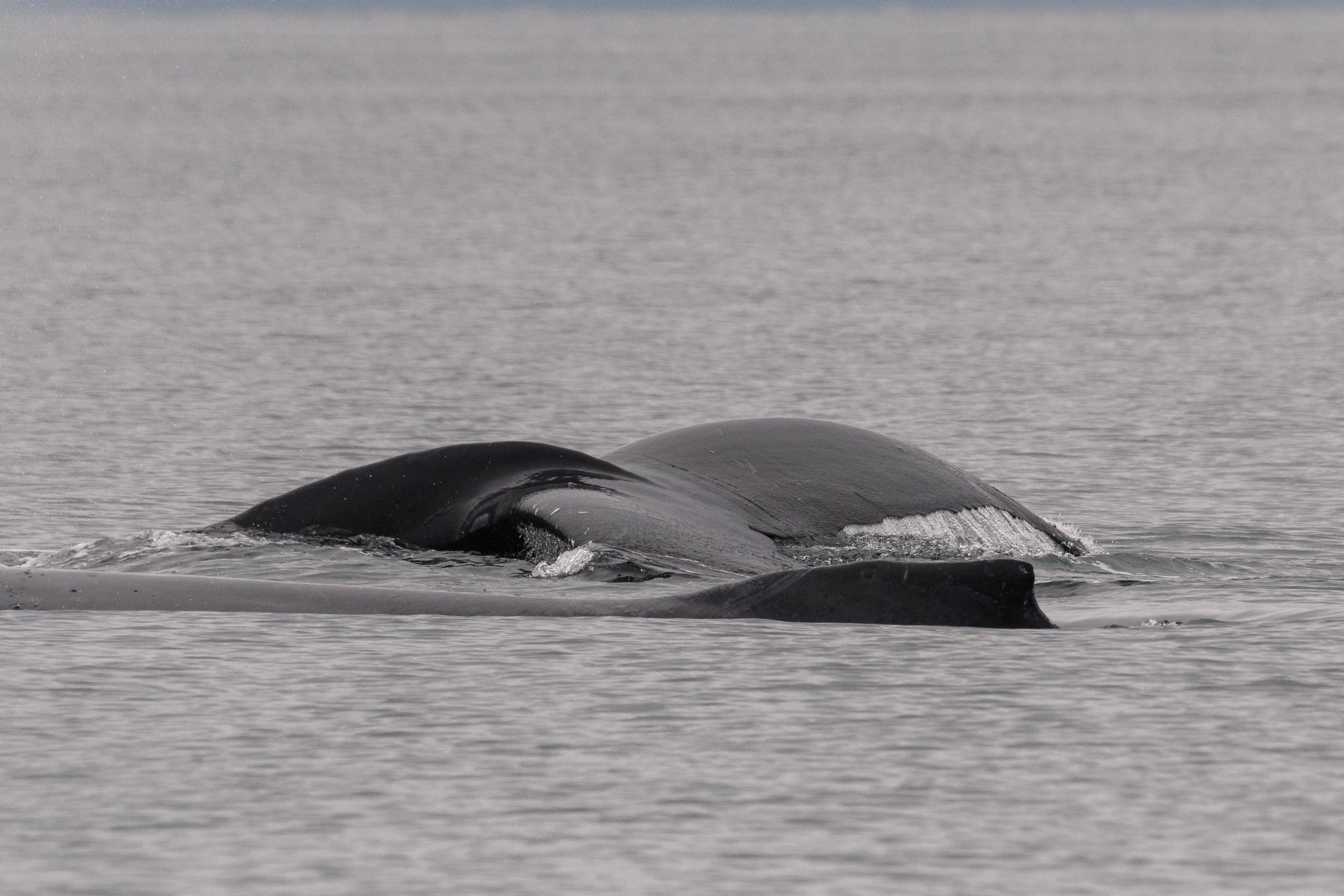
Meqe’ at the surface in front of Barge Boy going for a dive.
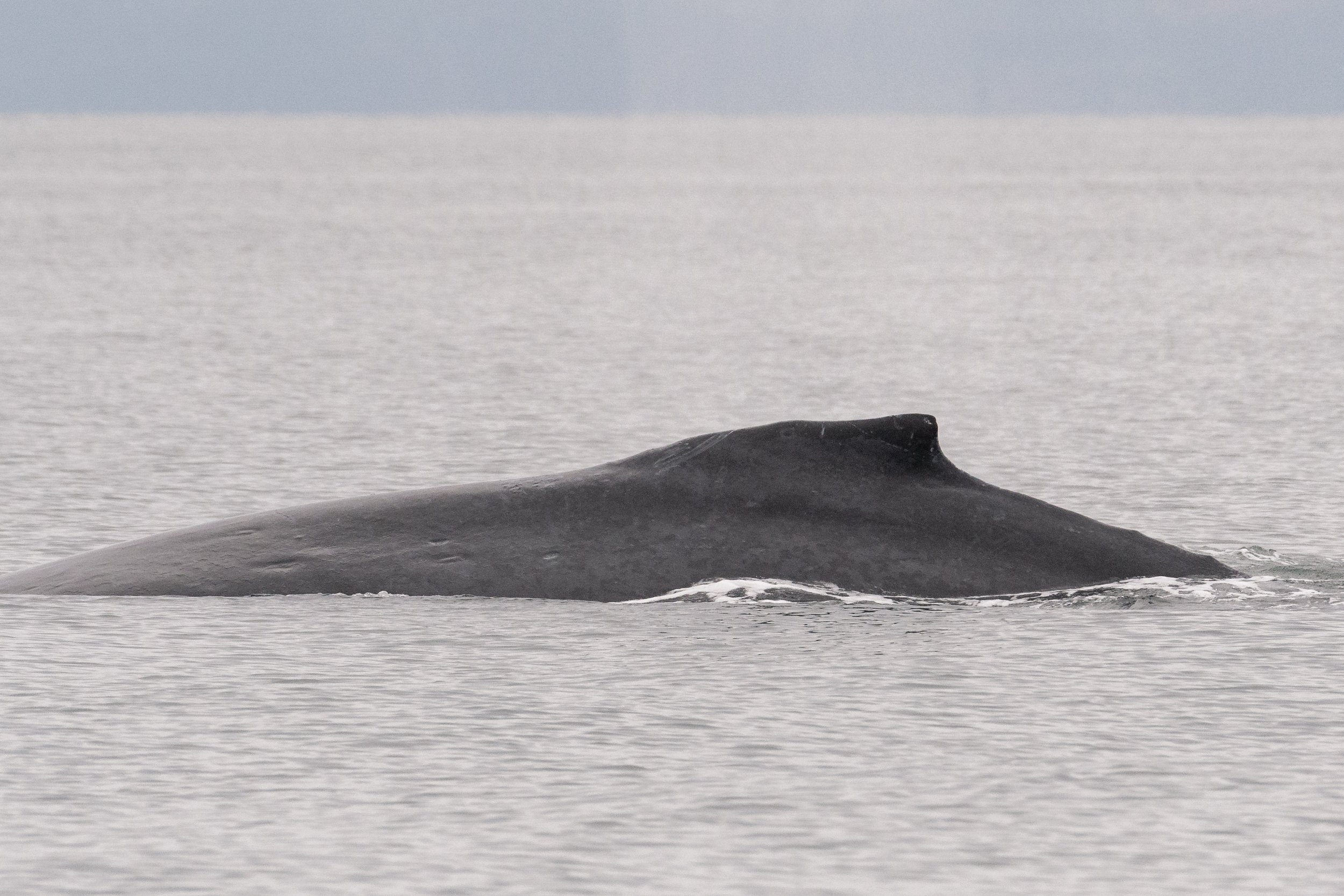
Meqe’ has a unique dorsal fin, shown here.
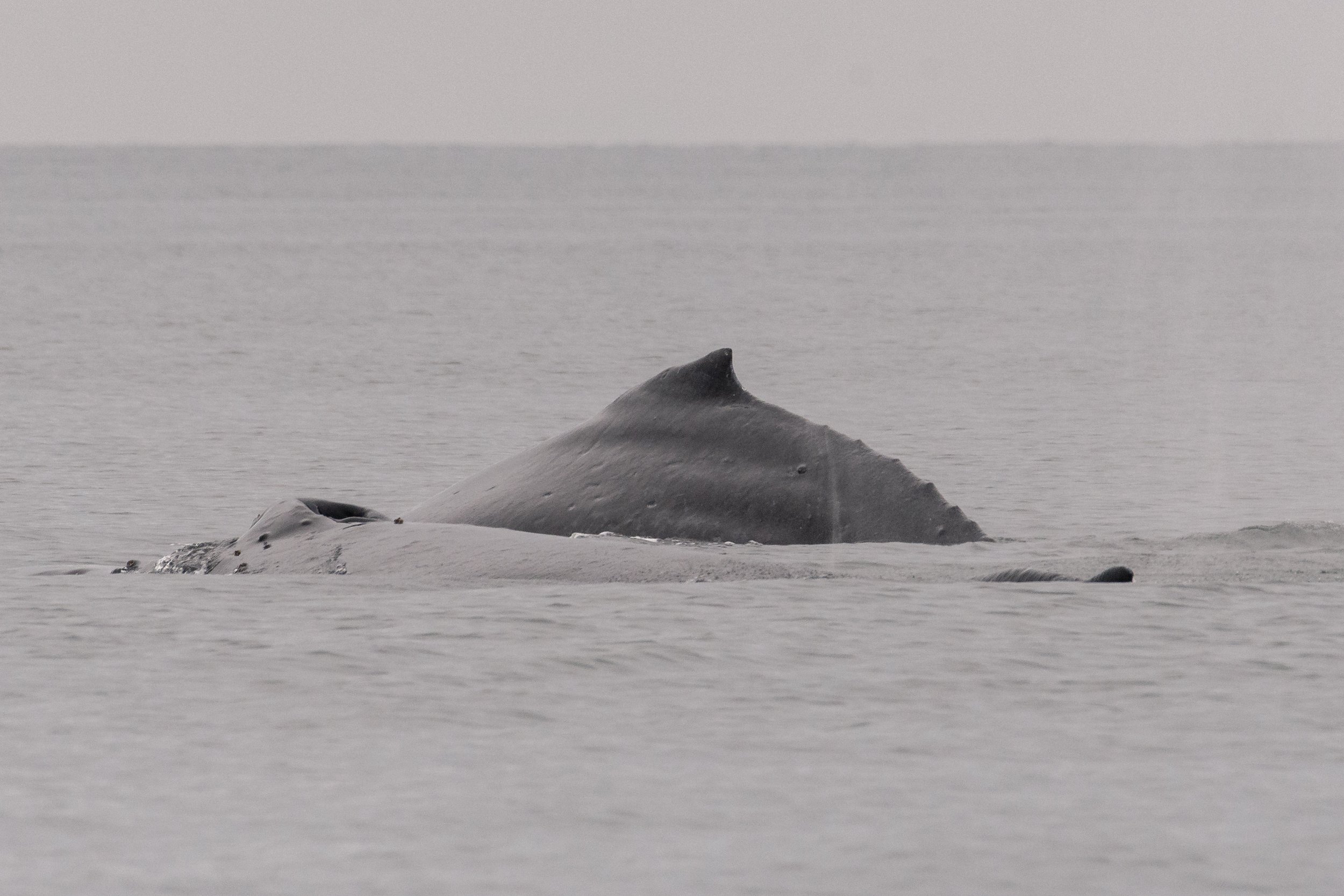
Meqe’ arching to prepare to dive with Arial surfacing beside.
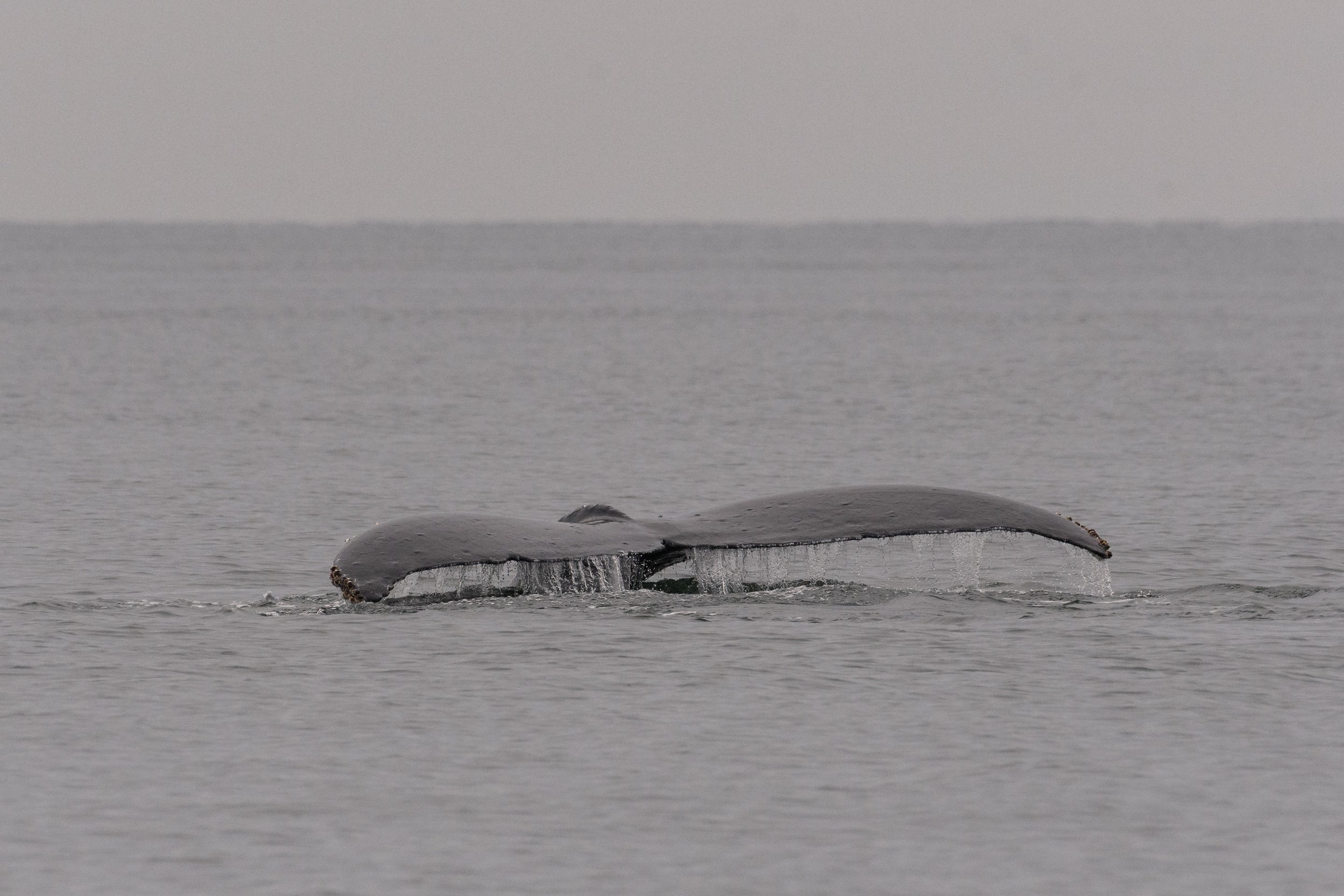
Fader with water cascading off his tail as he dives.
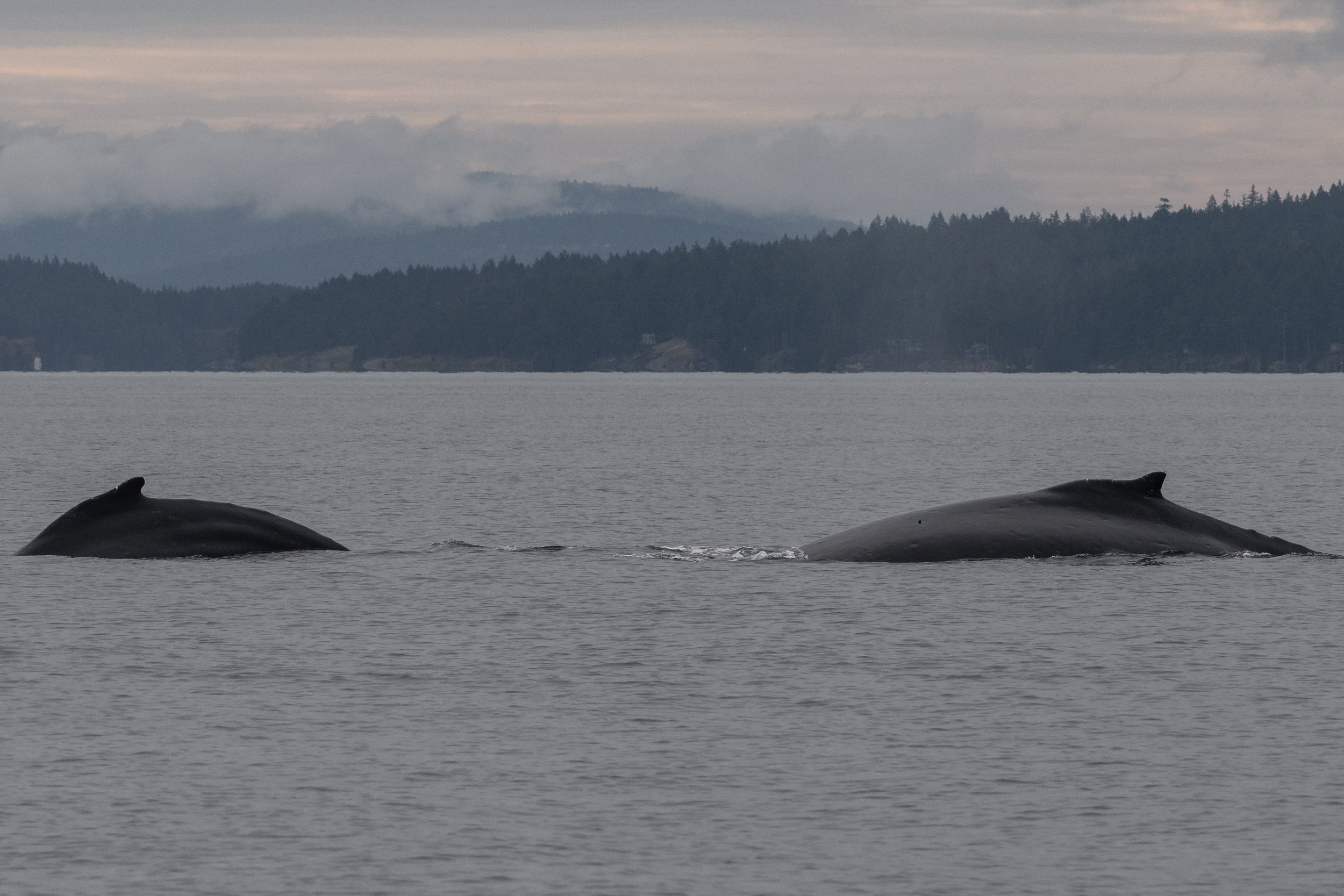
Barge Boy (left) and Arial (right) surfacing together with the Southern Gulf Islands as their backdrop.
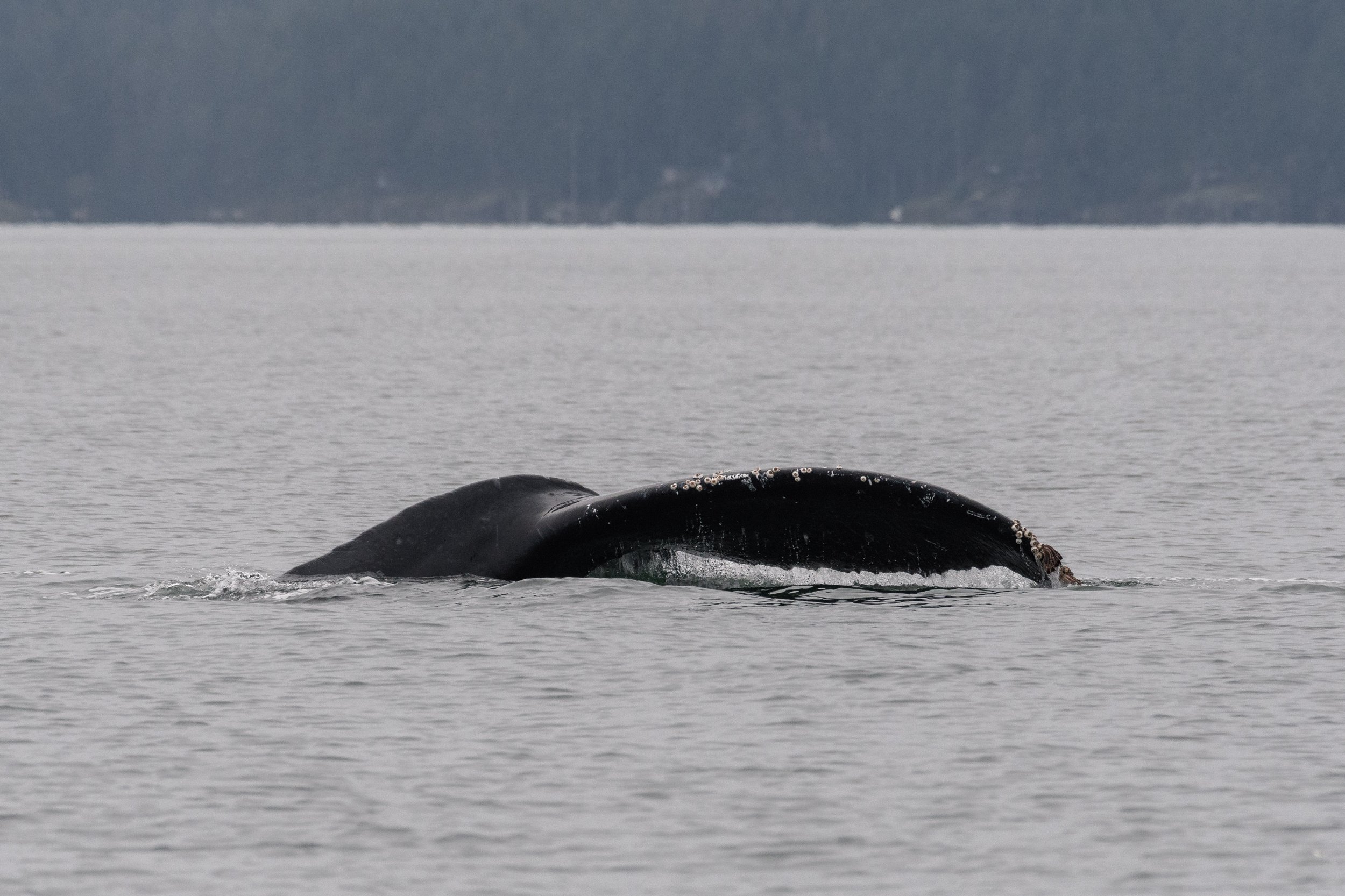
An interesting angle of Arial as he dives.
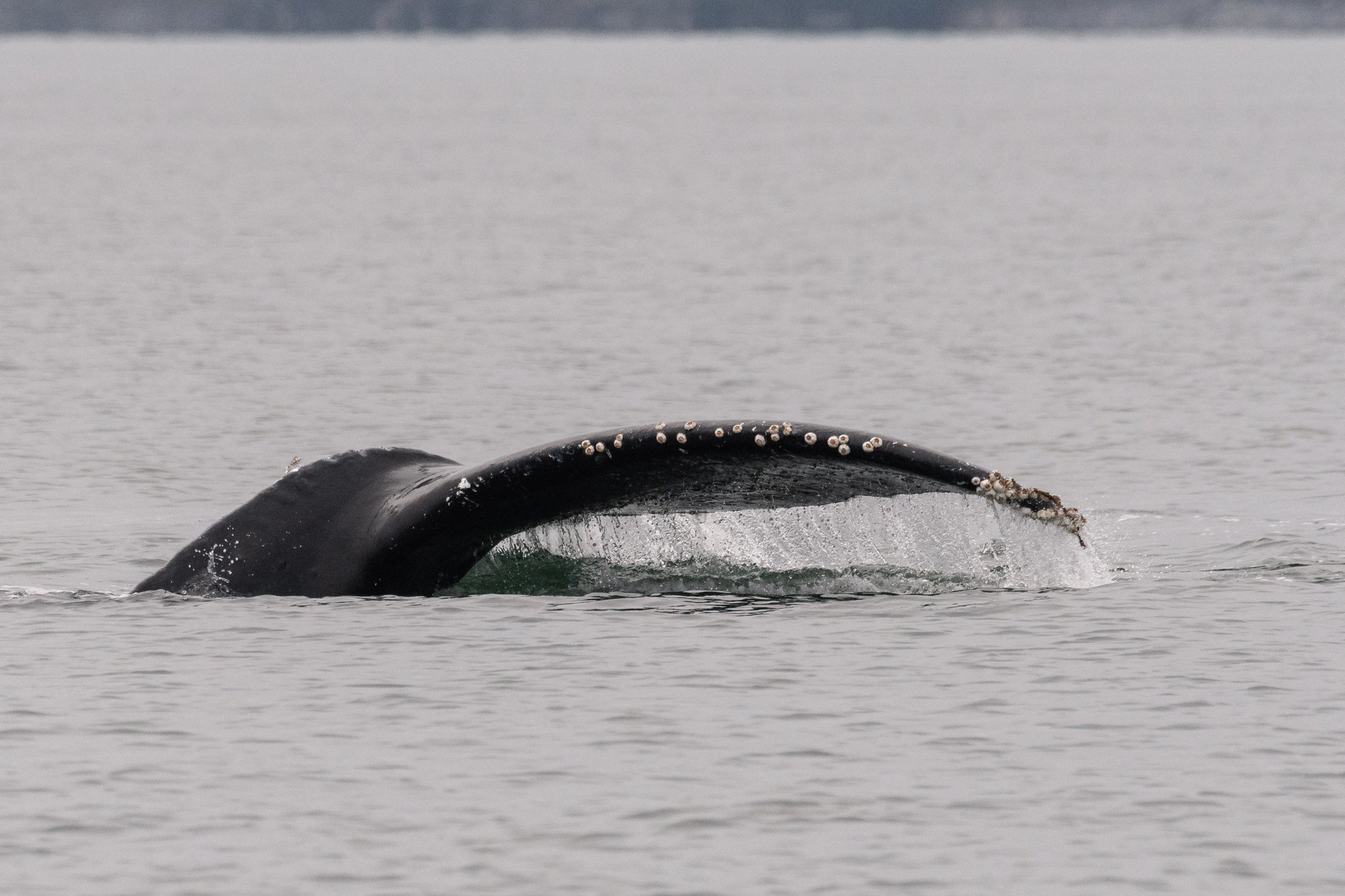
A side look at Fader as he dives.
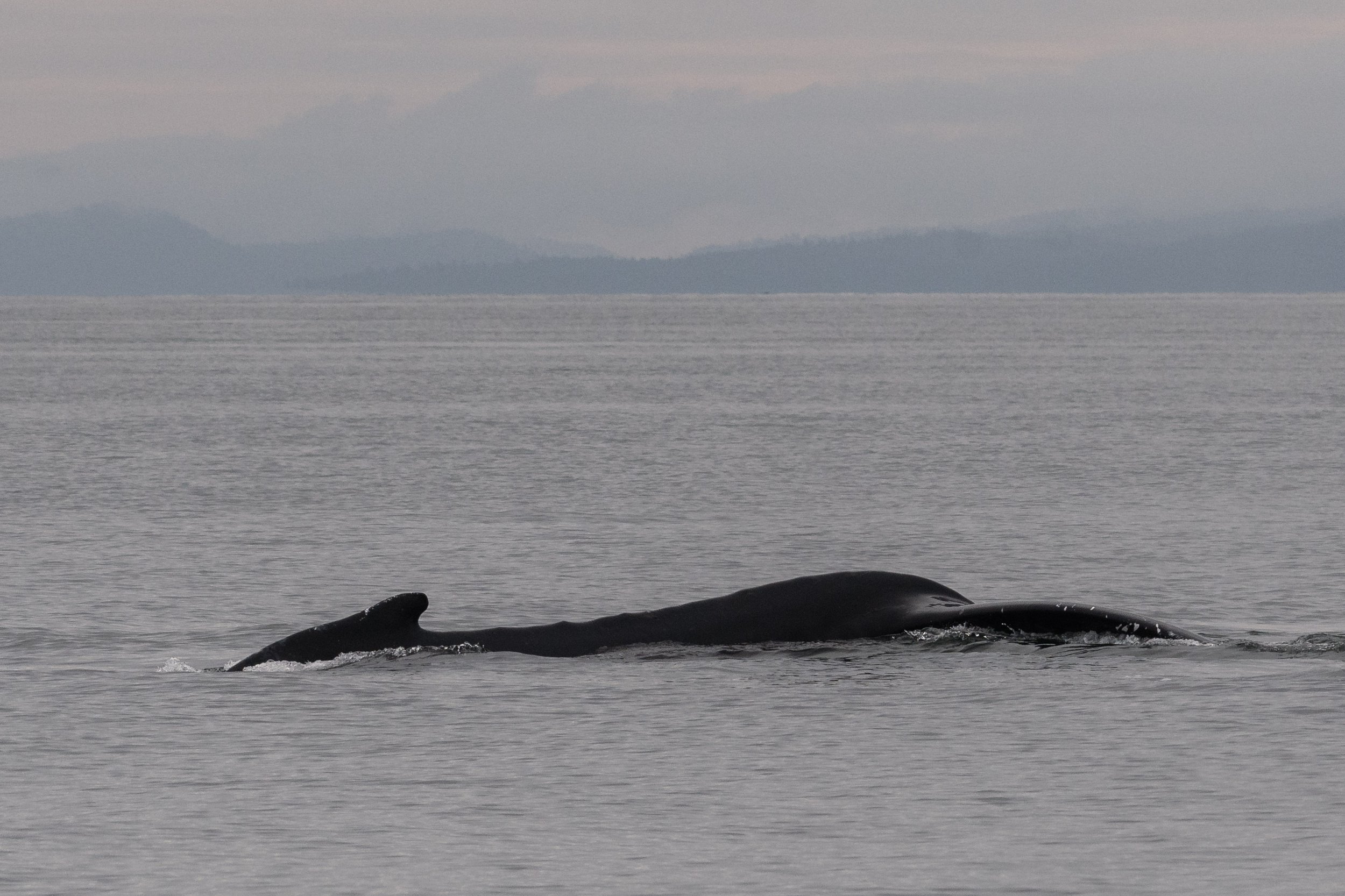
Barge Boy lifting their peduncle out of the water.
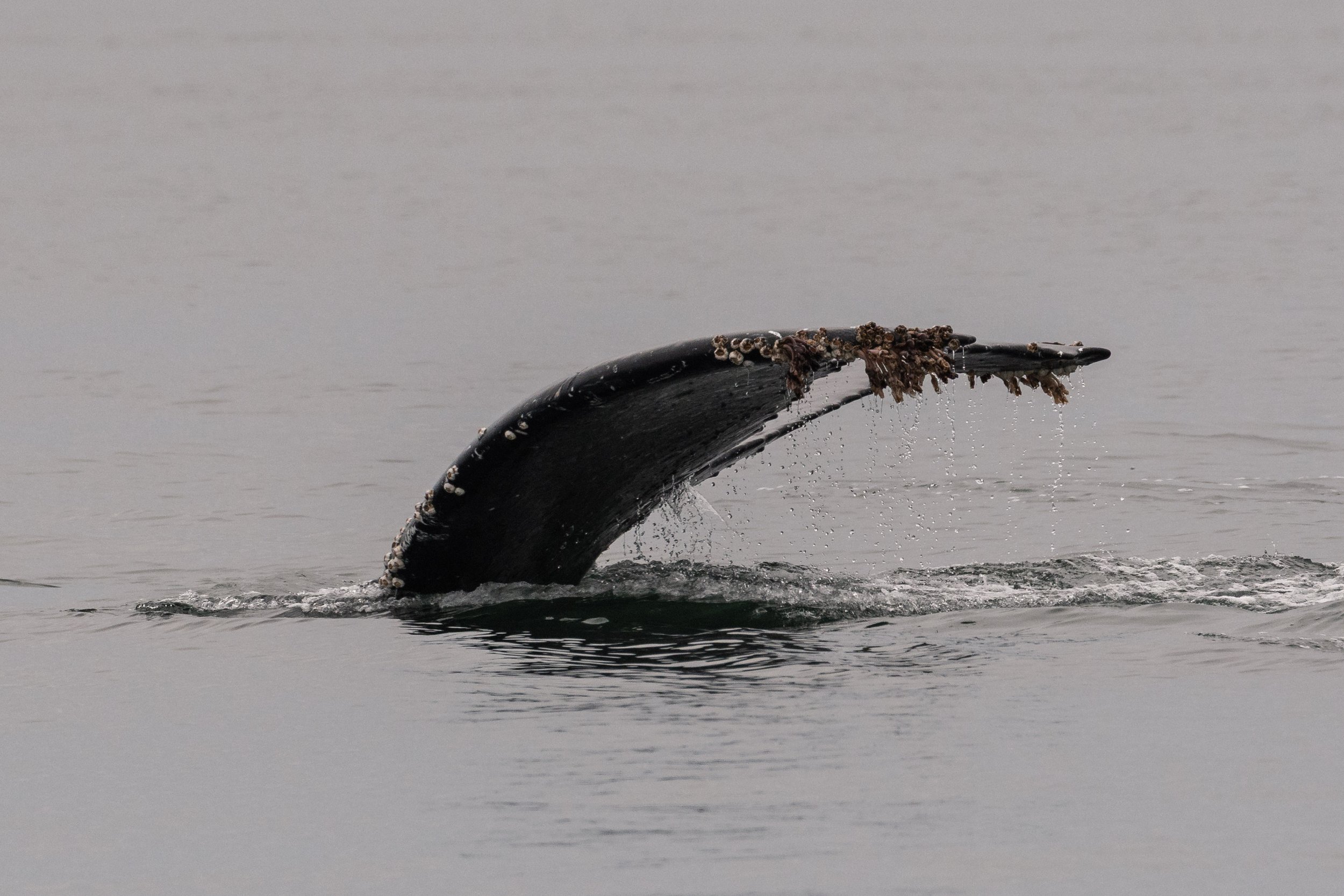
Arial has a lot of barnacles on his tail flukes.
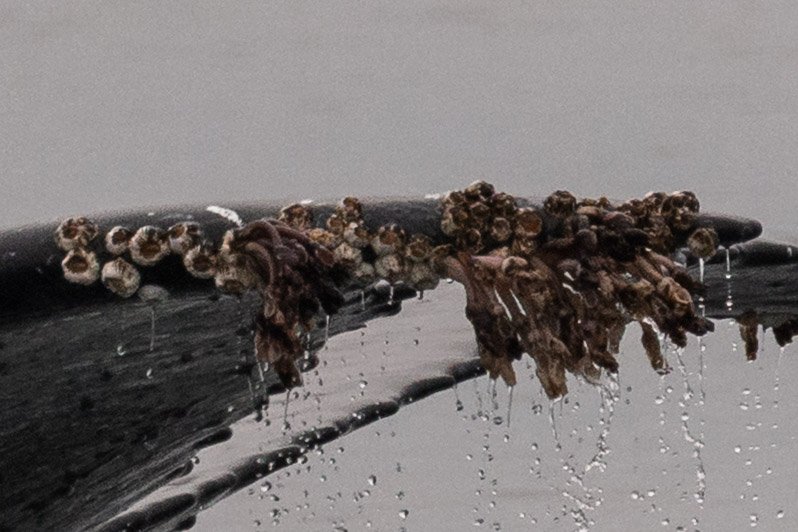
Heres a closer look at those barnacles. The white, round ones are Humpback Whale Acorn Barnacles, and the pink fleshy ones are Rabbit-eared Barnacles.
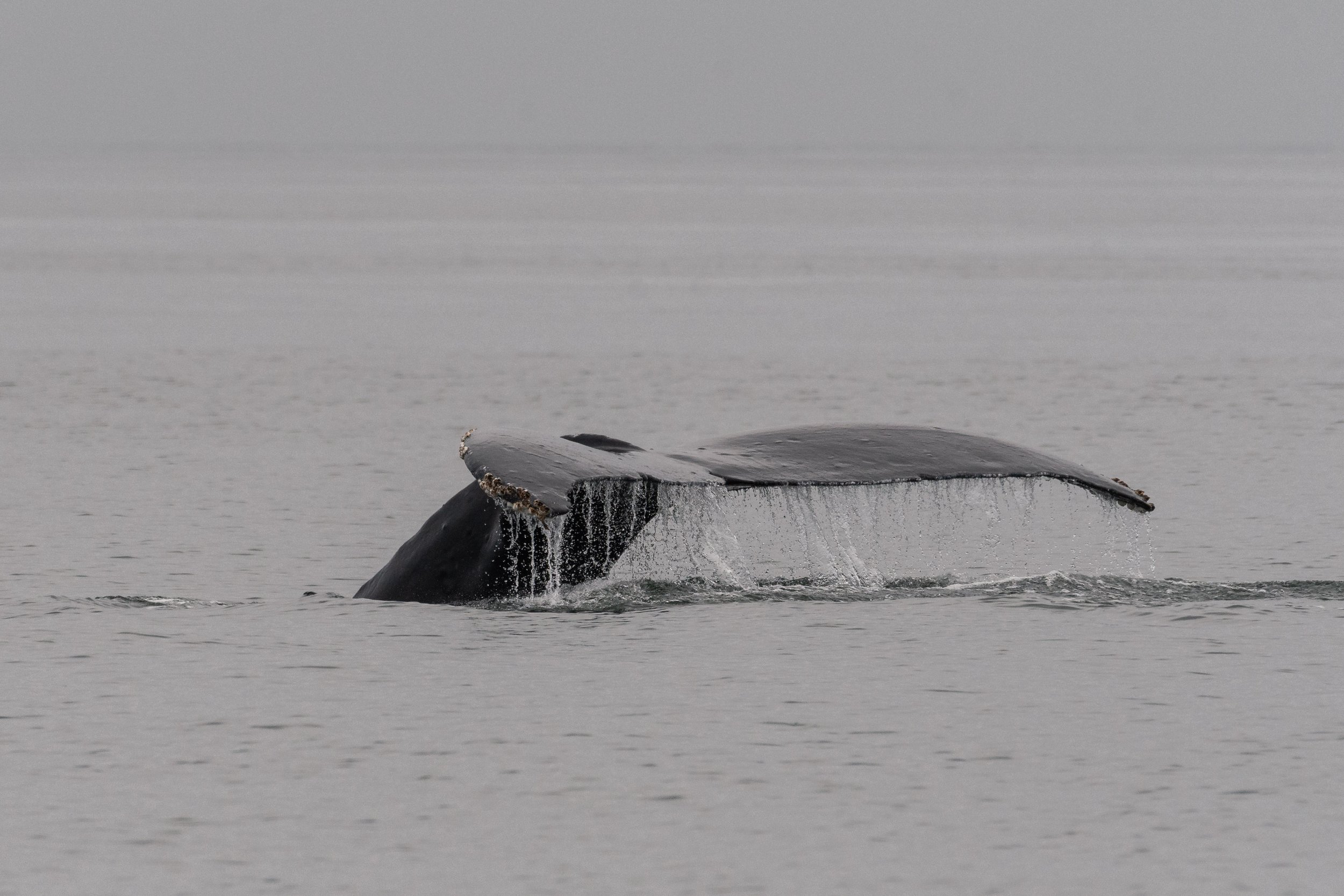
Another fluke waterfall from Fader as he dives.
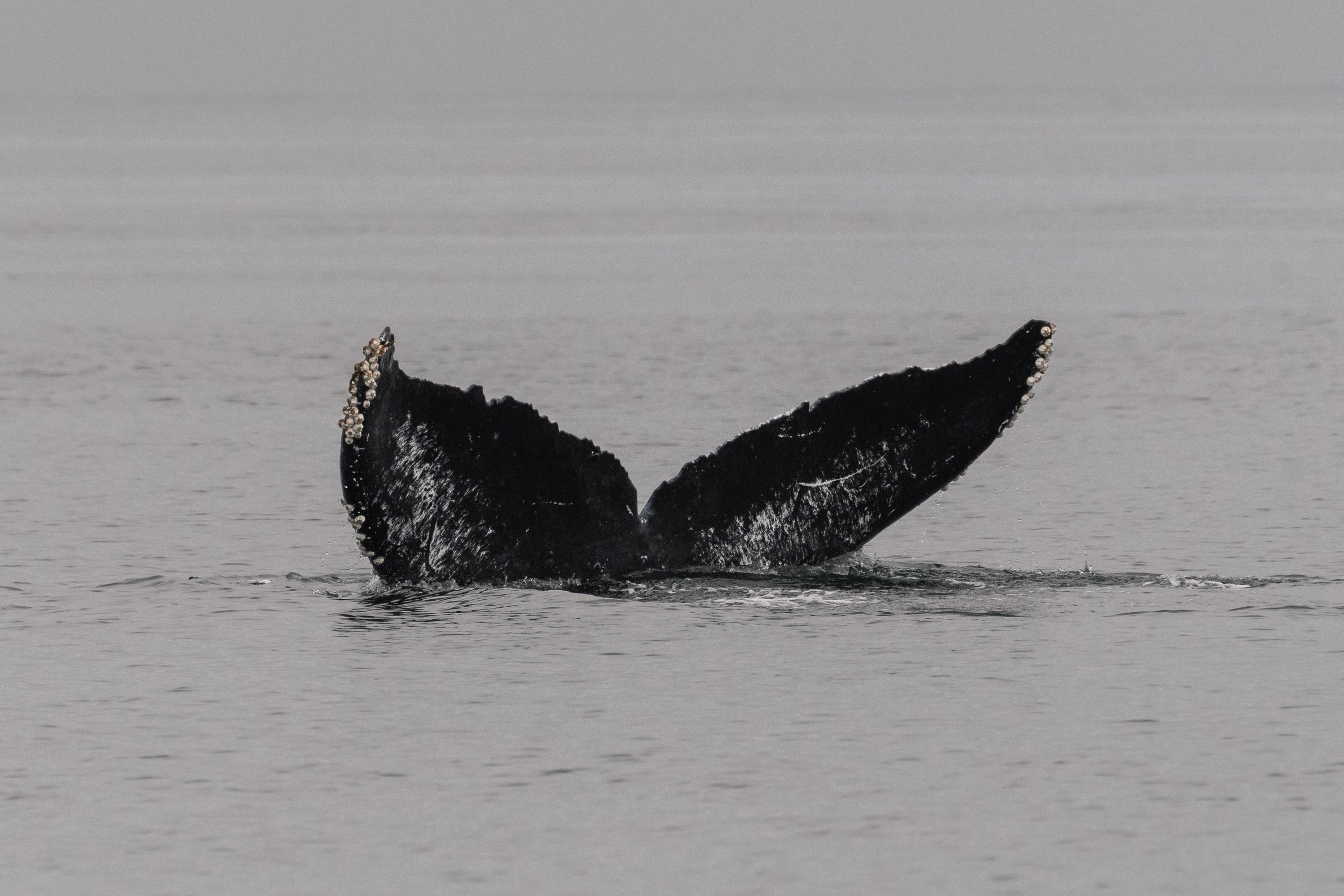
A look at the lovely underside of Fader’s tail.
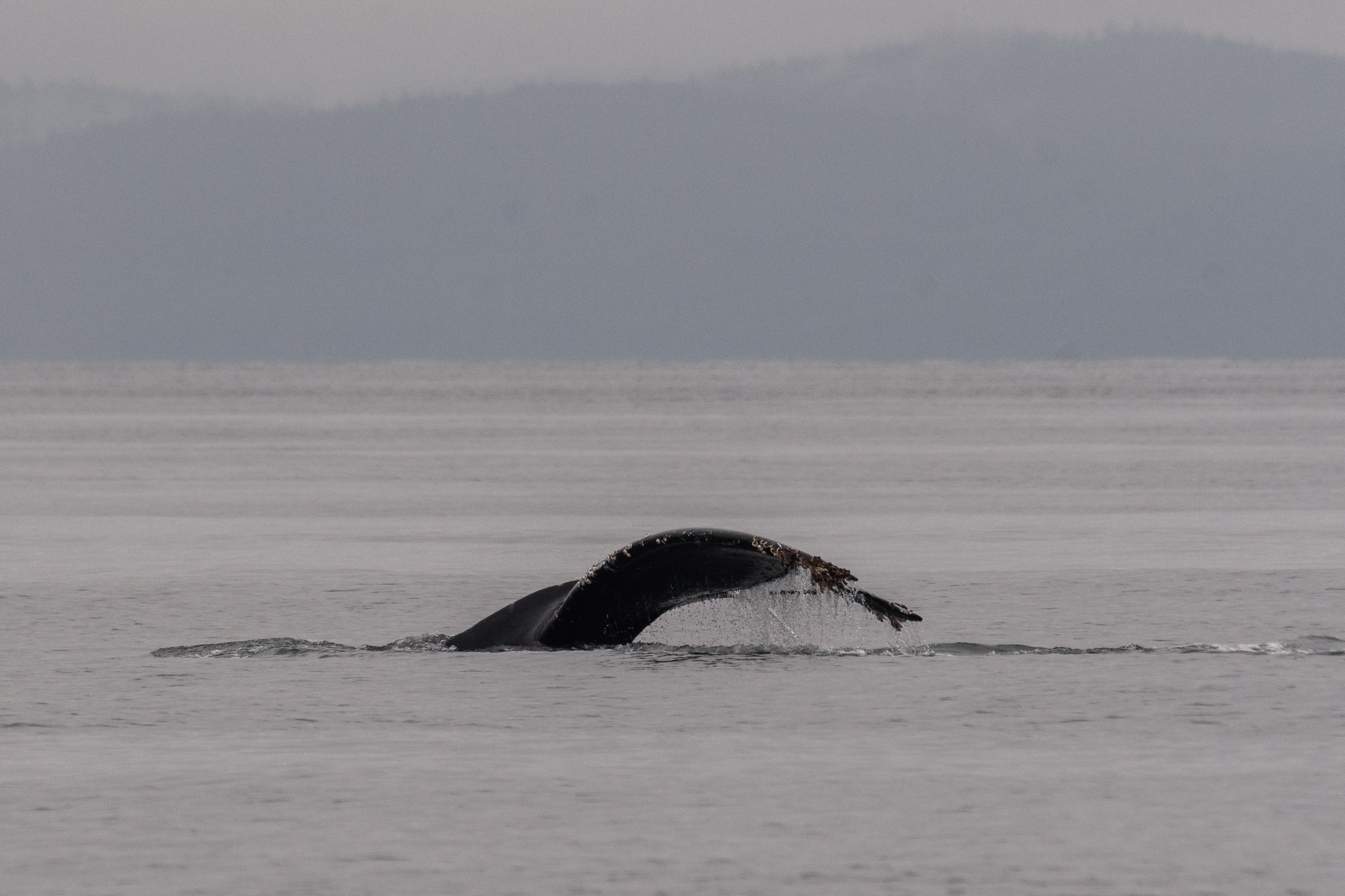
Arial giving a lovely fluke waterfall as he dives.
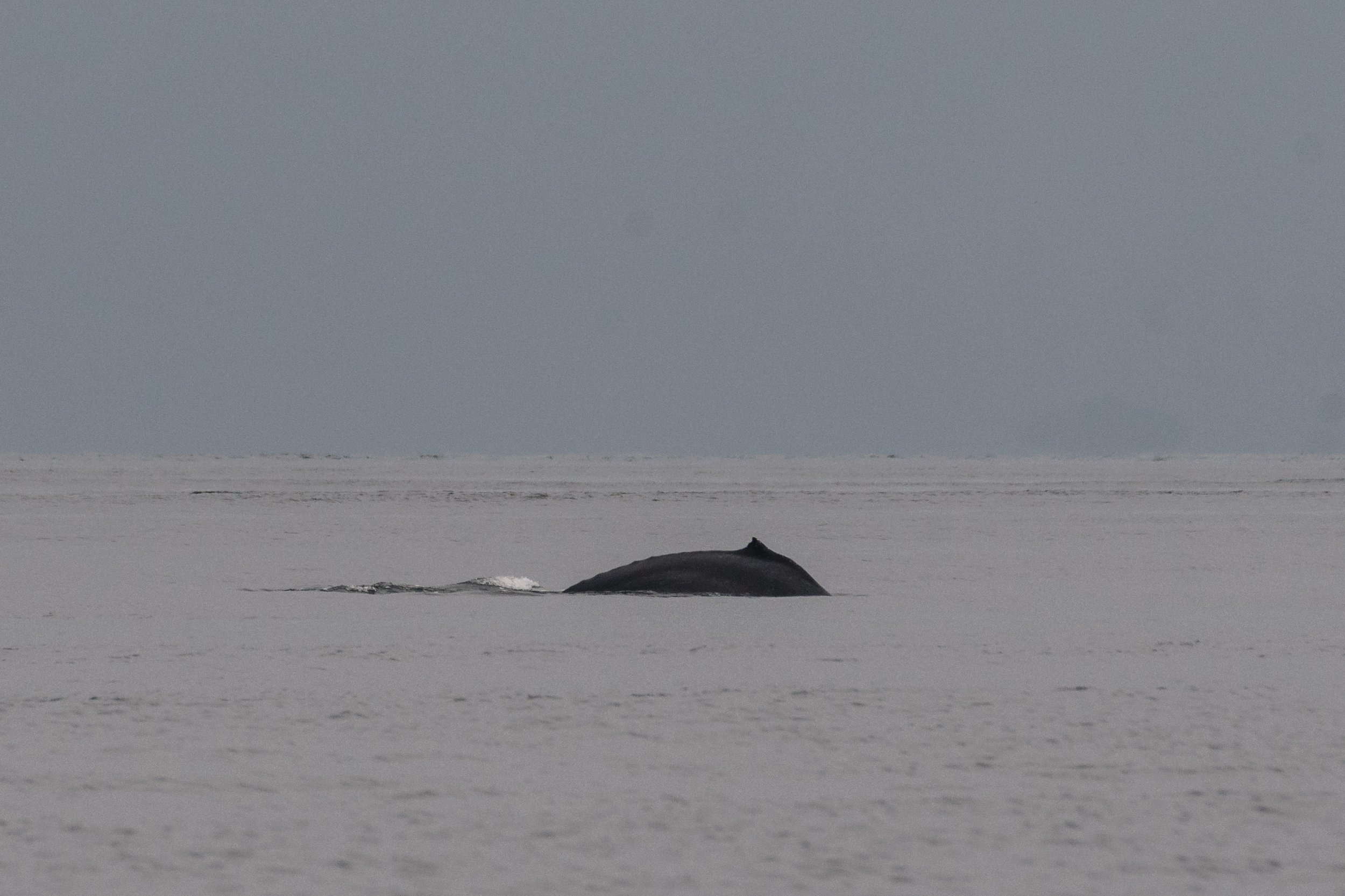
Aether has a unique dorsal fin that allows us to ID him from a fair distance!
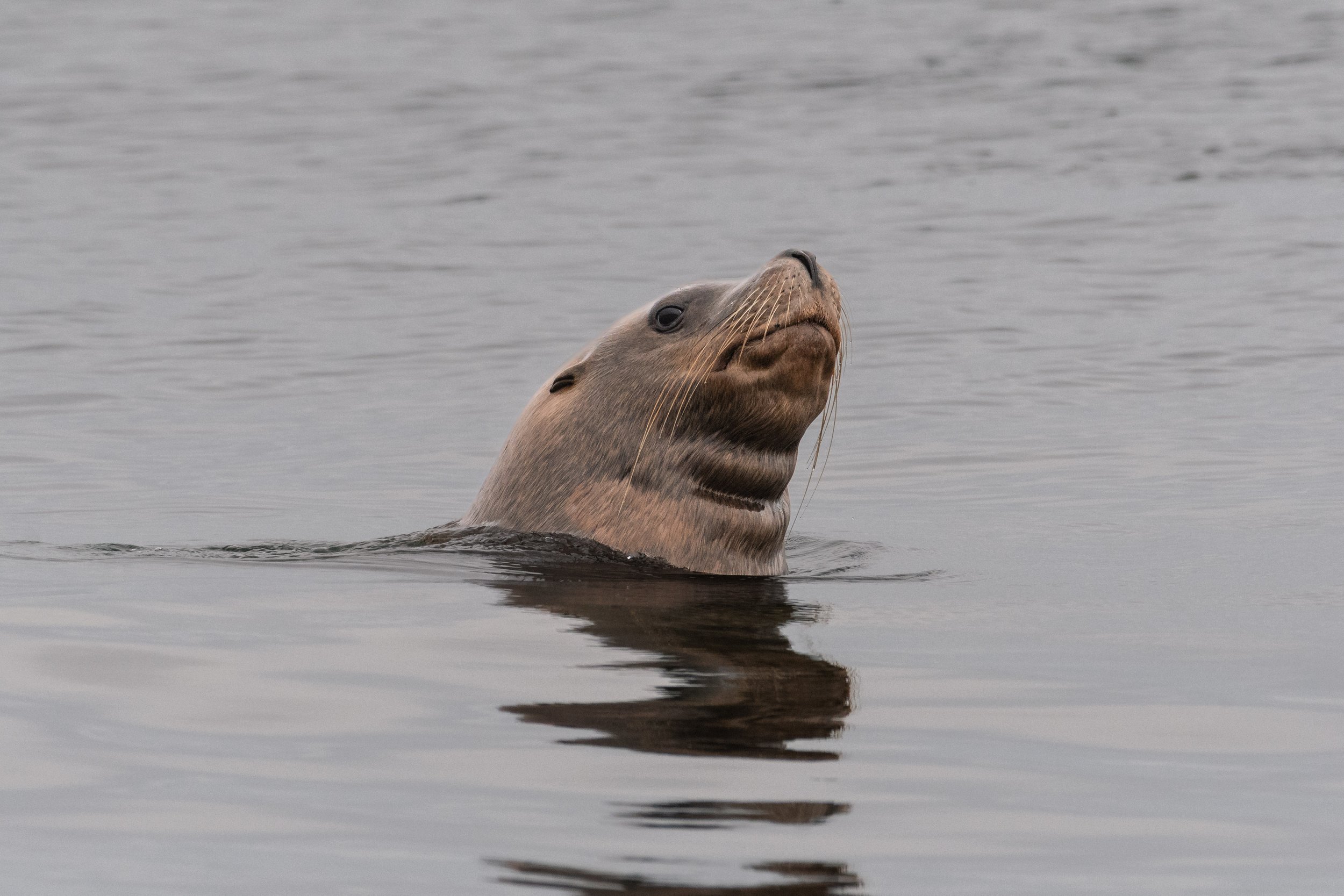
A Steller Sea Lion giving us a funny look from the water.
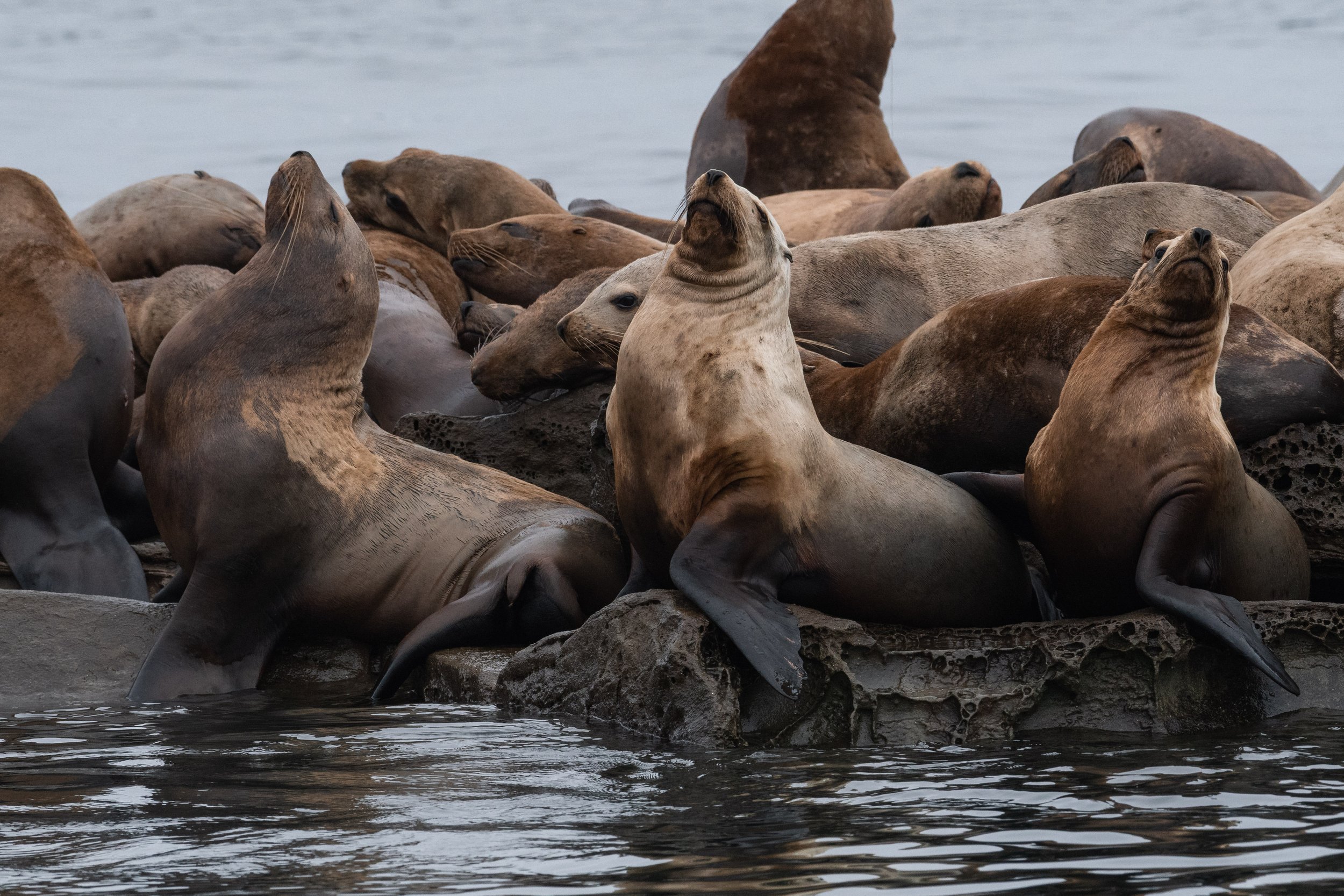
A nicely posing trio of Steller Sea Lions at Stinky Rock.
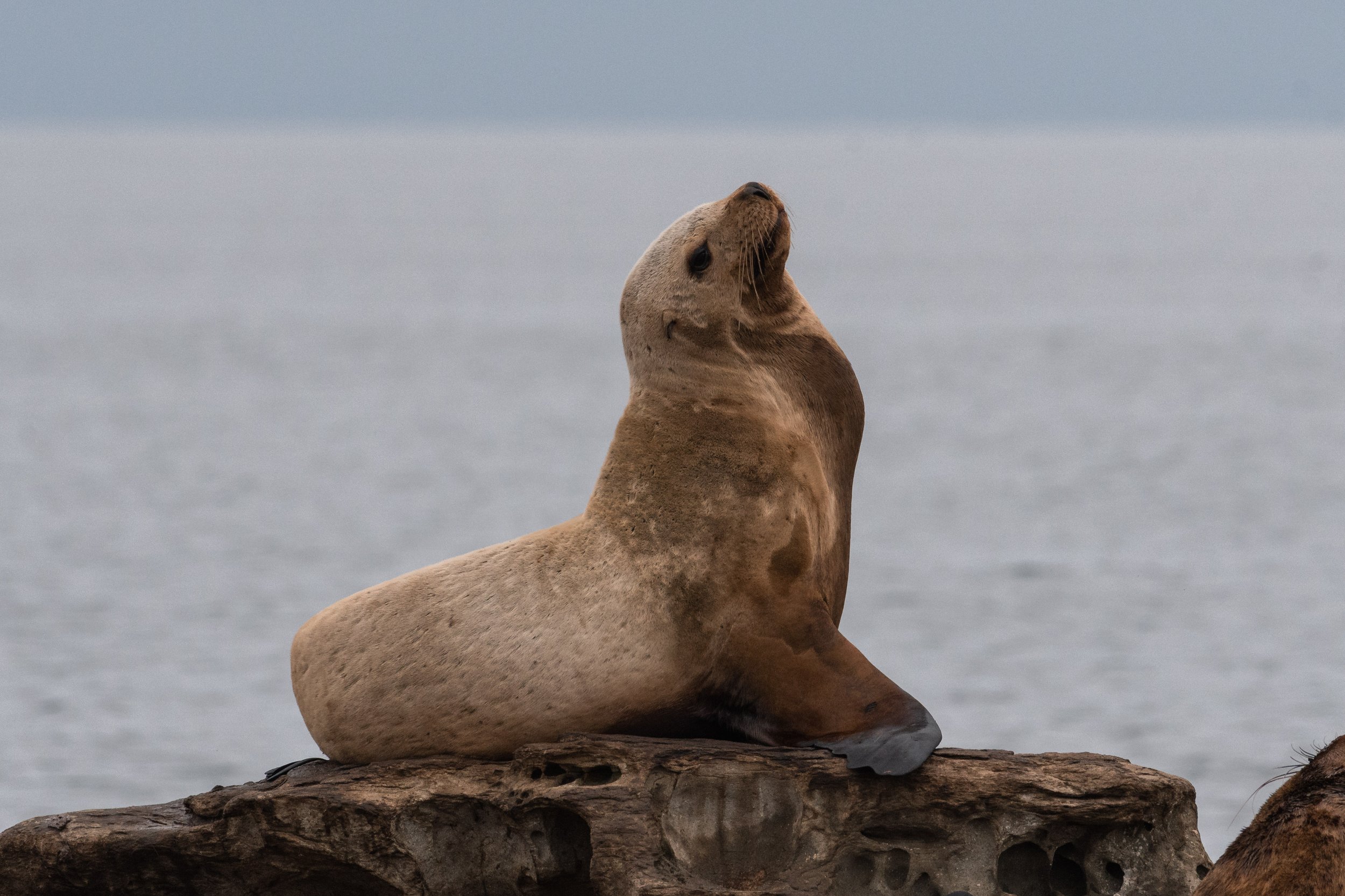
This sea lion thinks its the king of the castle.
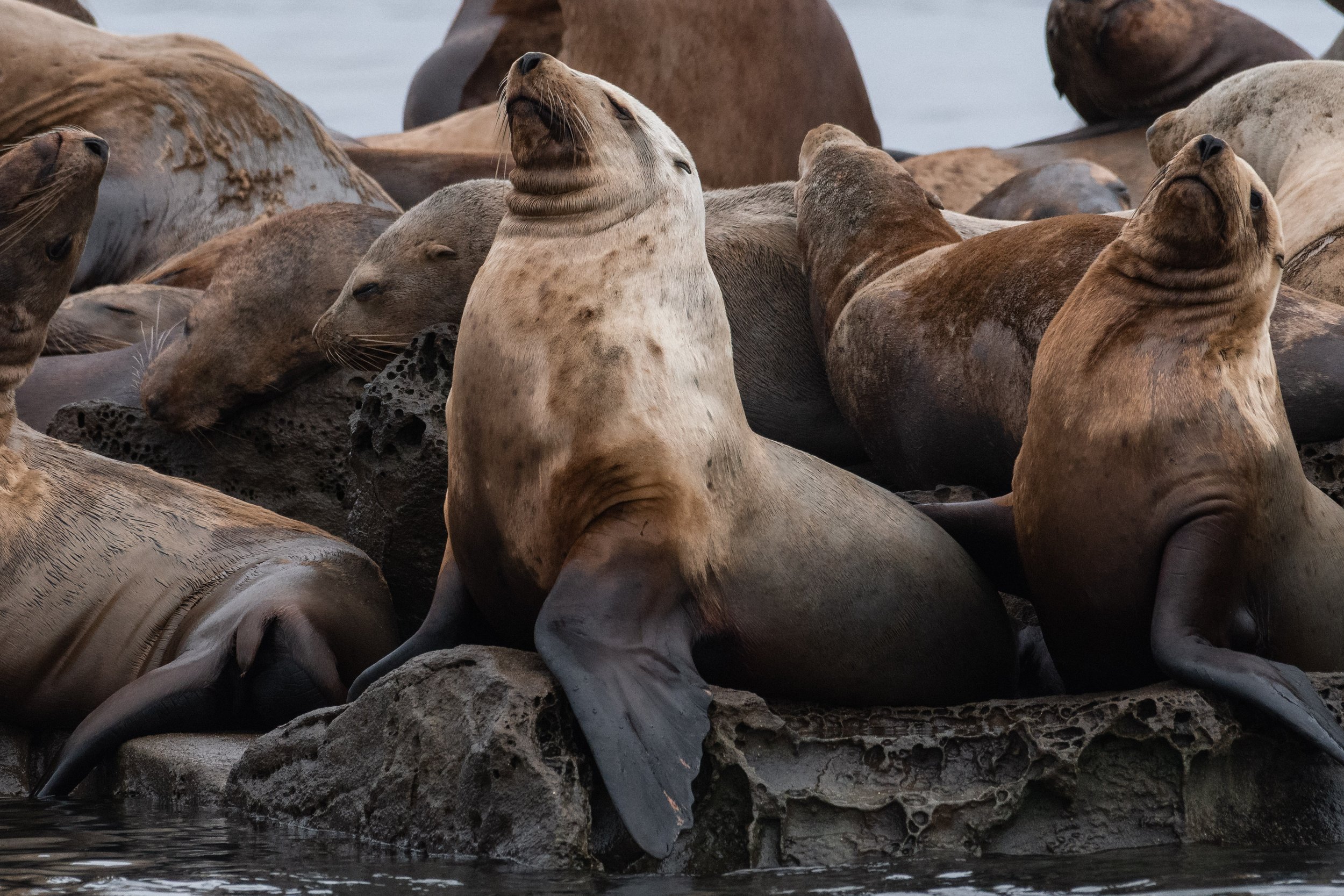
This upright position is one of the ways to tell sea lions from seals.
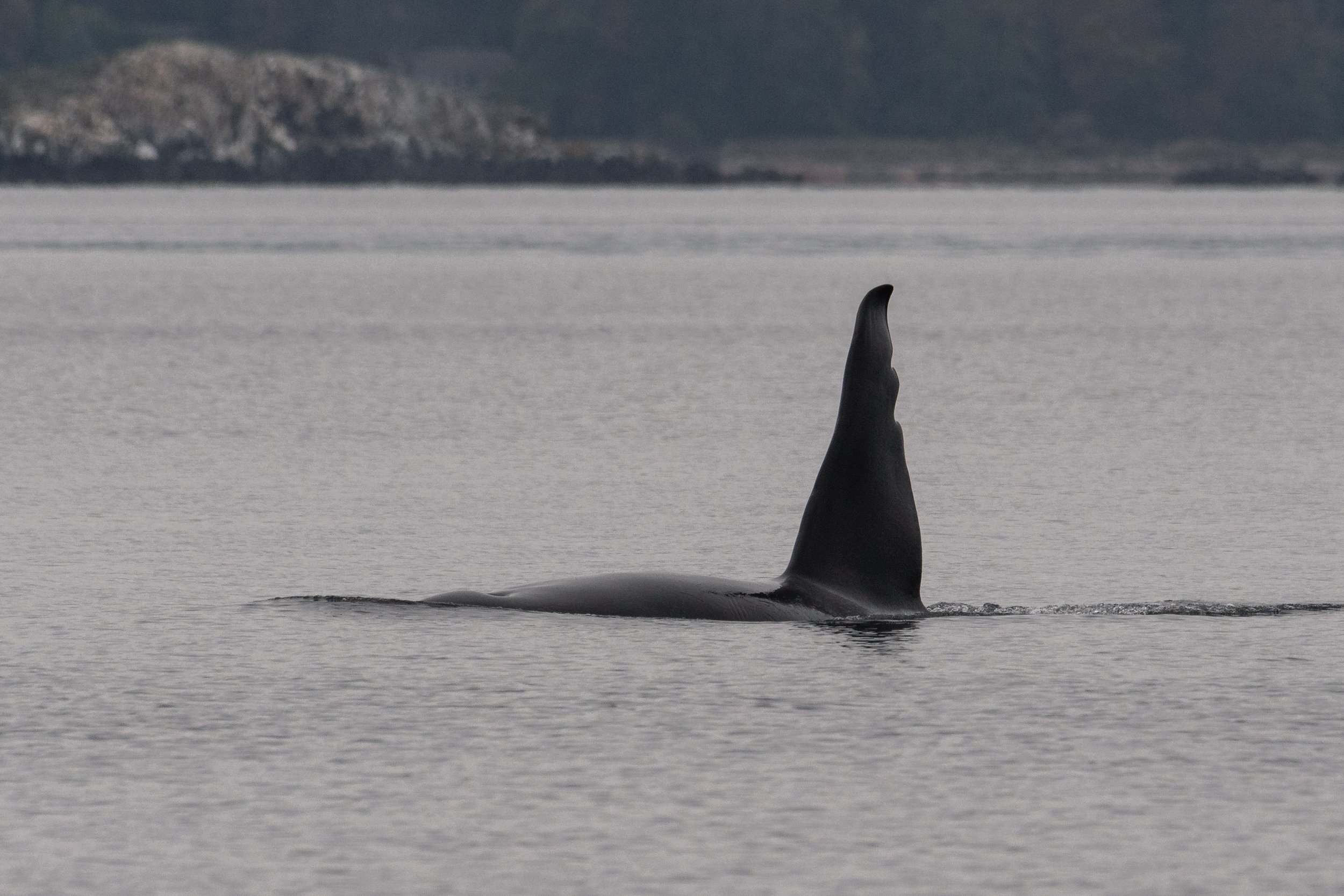
T063 Chainsaw surfacing in the calm waters.
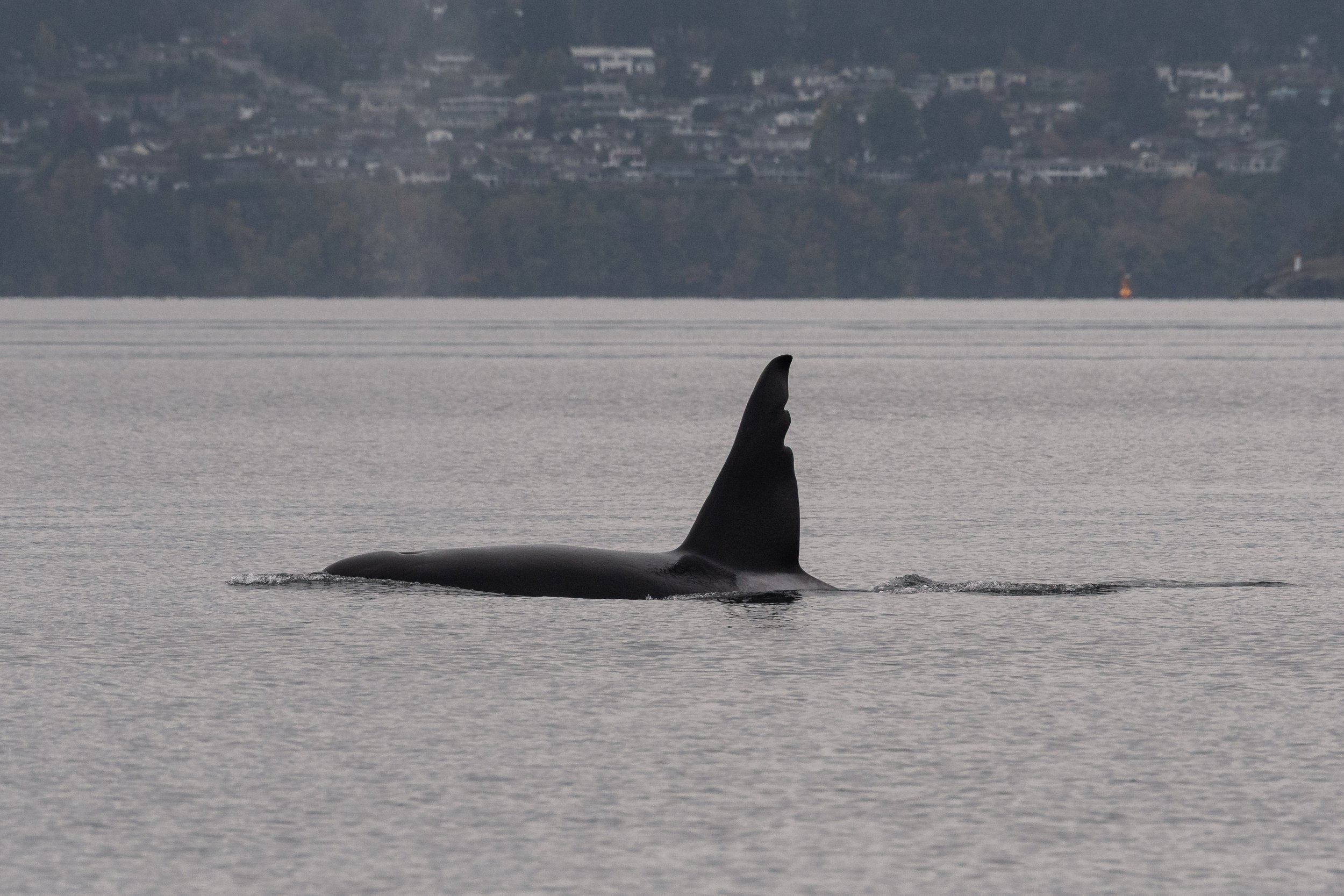
A lovely look at the two distinct notches on T063 Chainsaw’s dorsal fin.
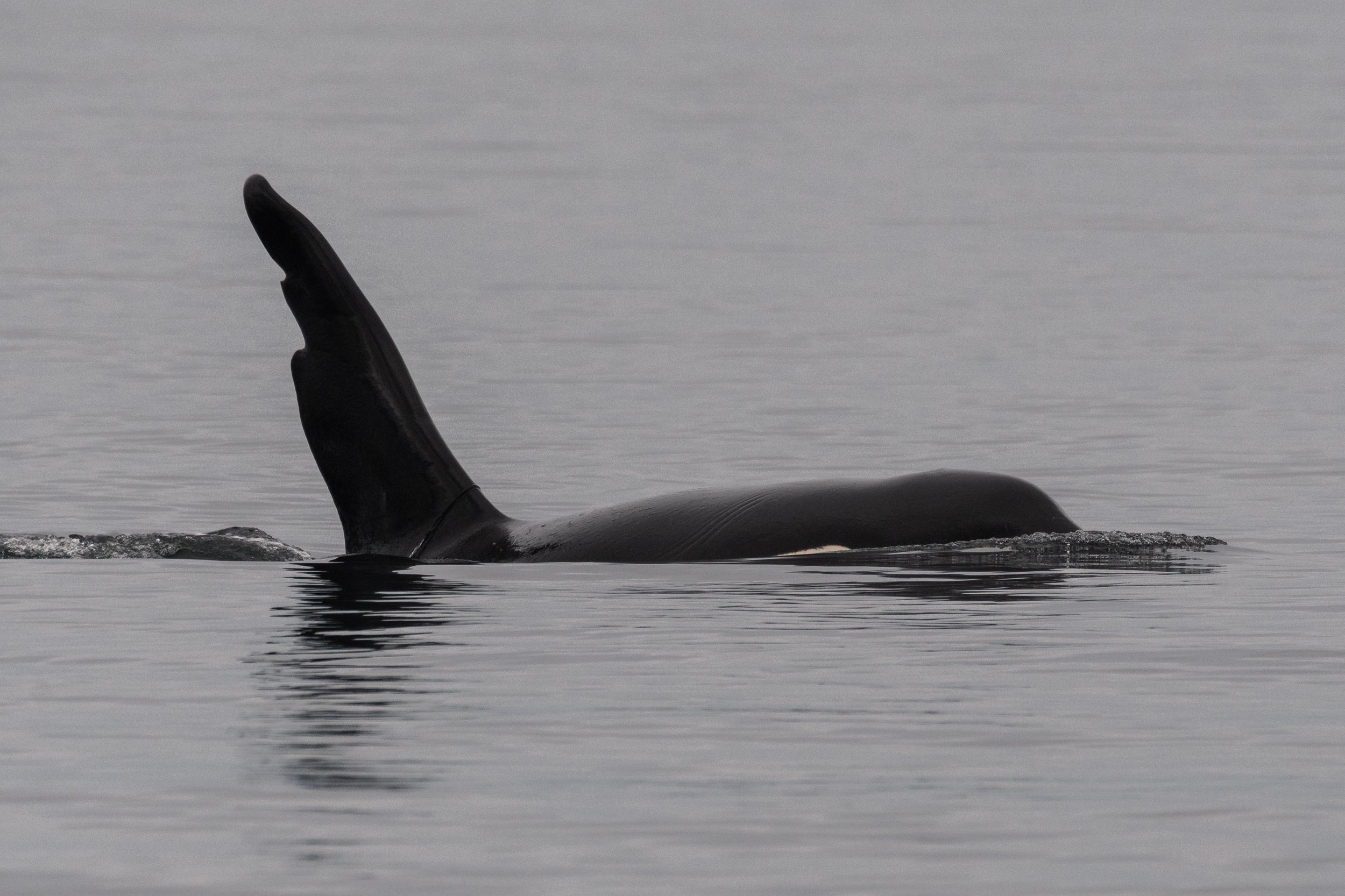
T063 Chainsaw with his eye patch poking out of the calm water.
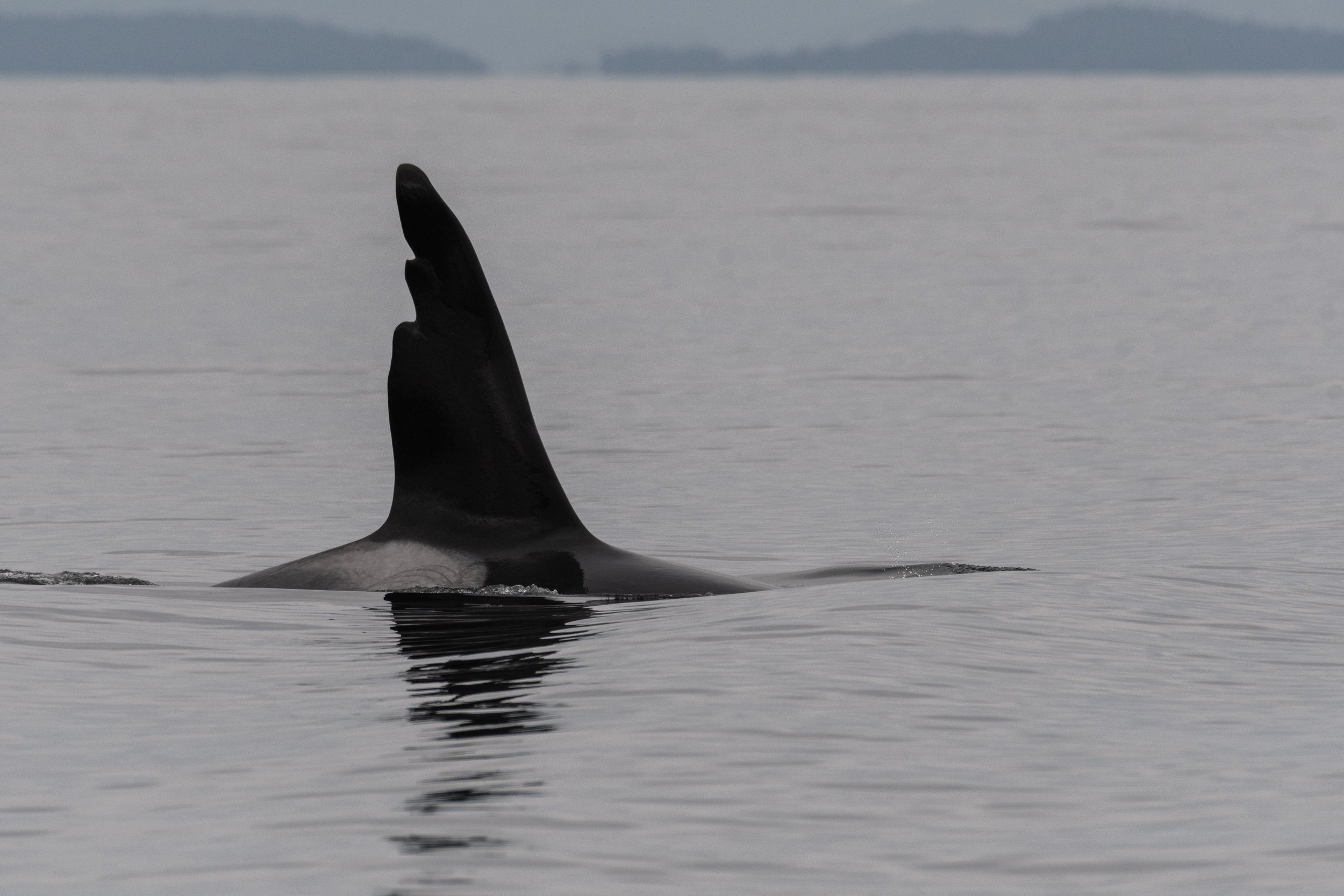
A lovely dorsal fin reflection in the water as T063 Chainsaw moves past.
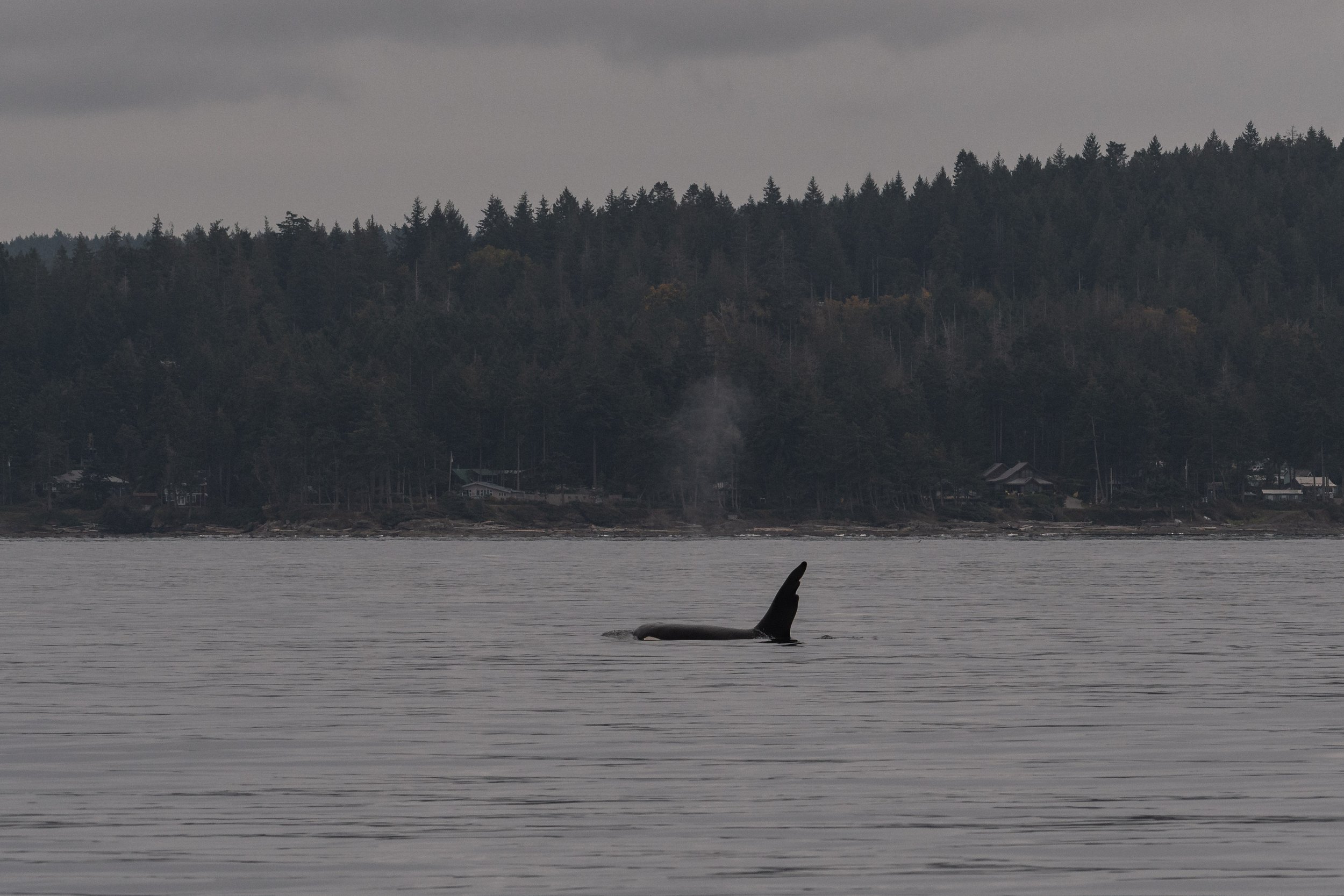
T063 Chainsaw travelling along Nanaimo.
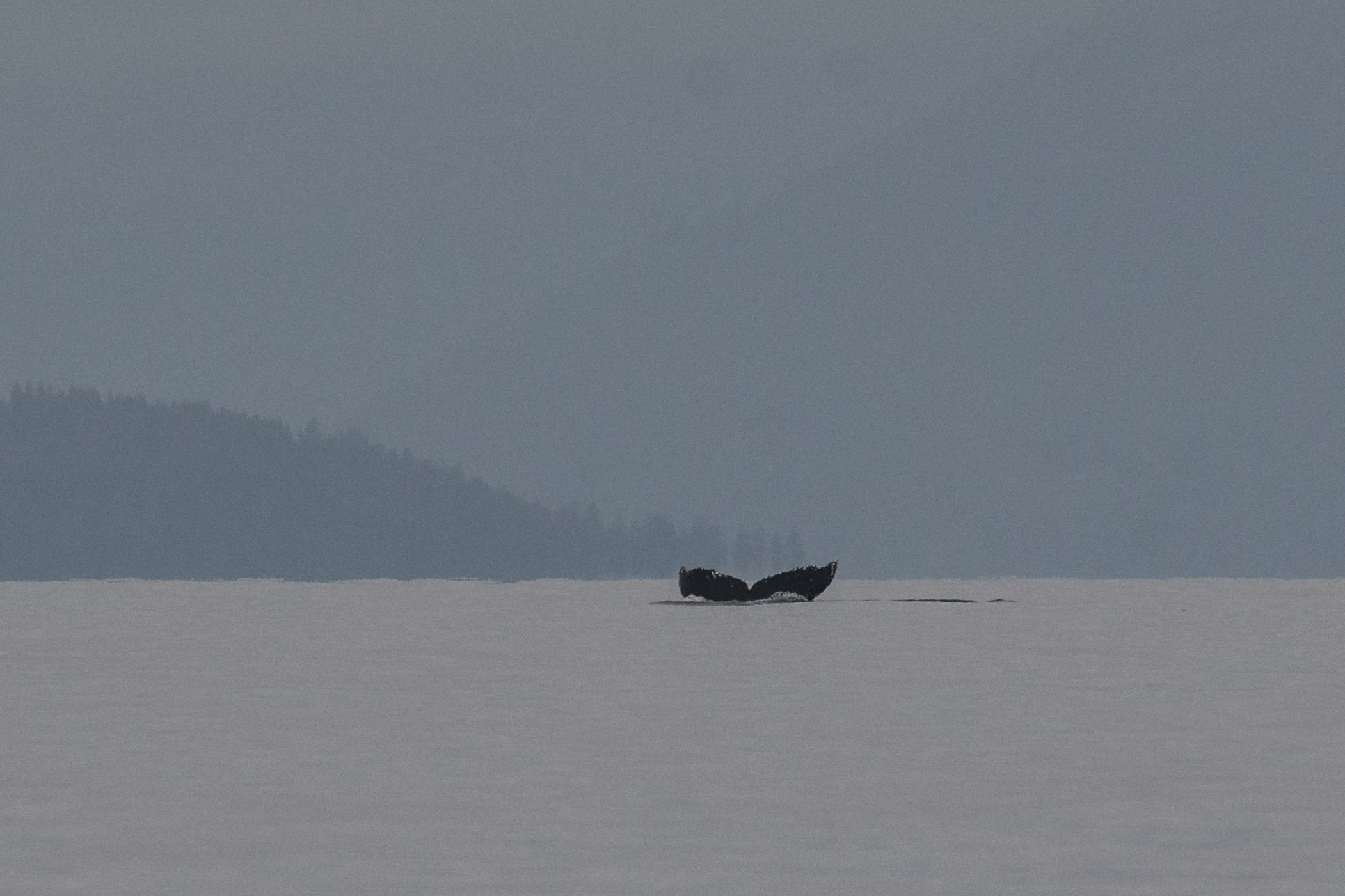
Mogul going for a dive in the distance.
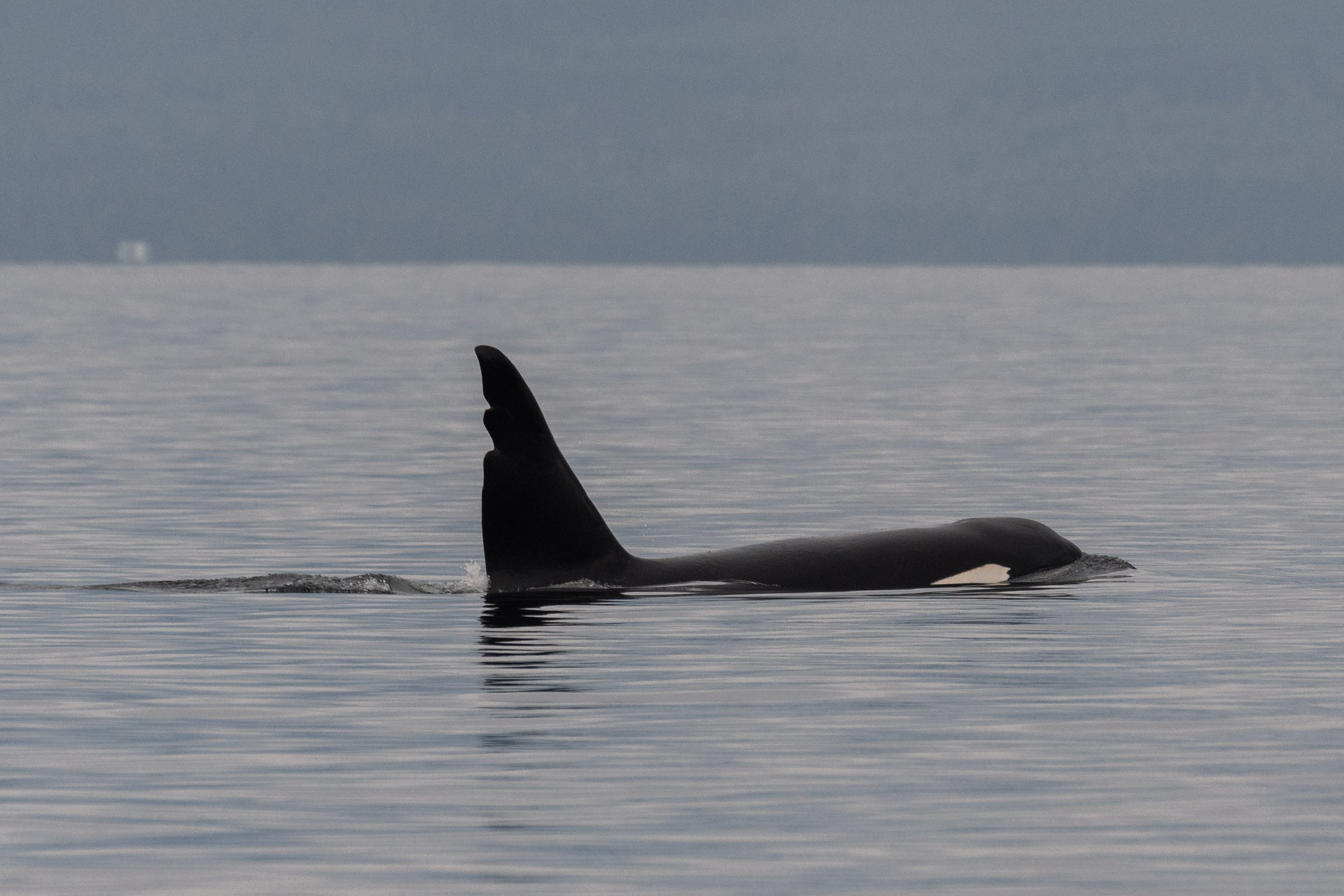
A great look at T063 Chainsaw’s eye patch as he surfaces.
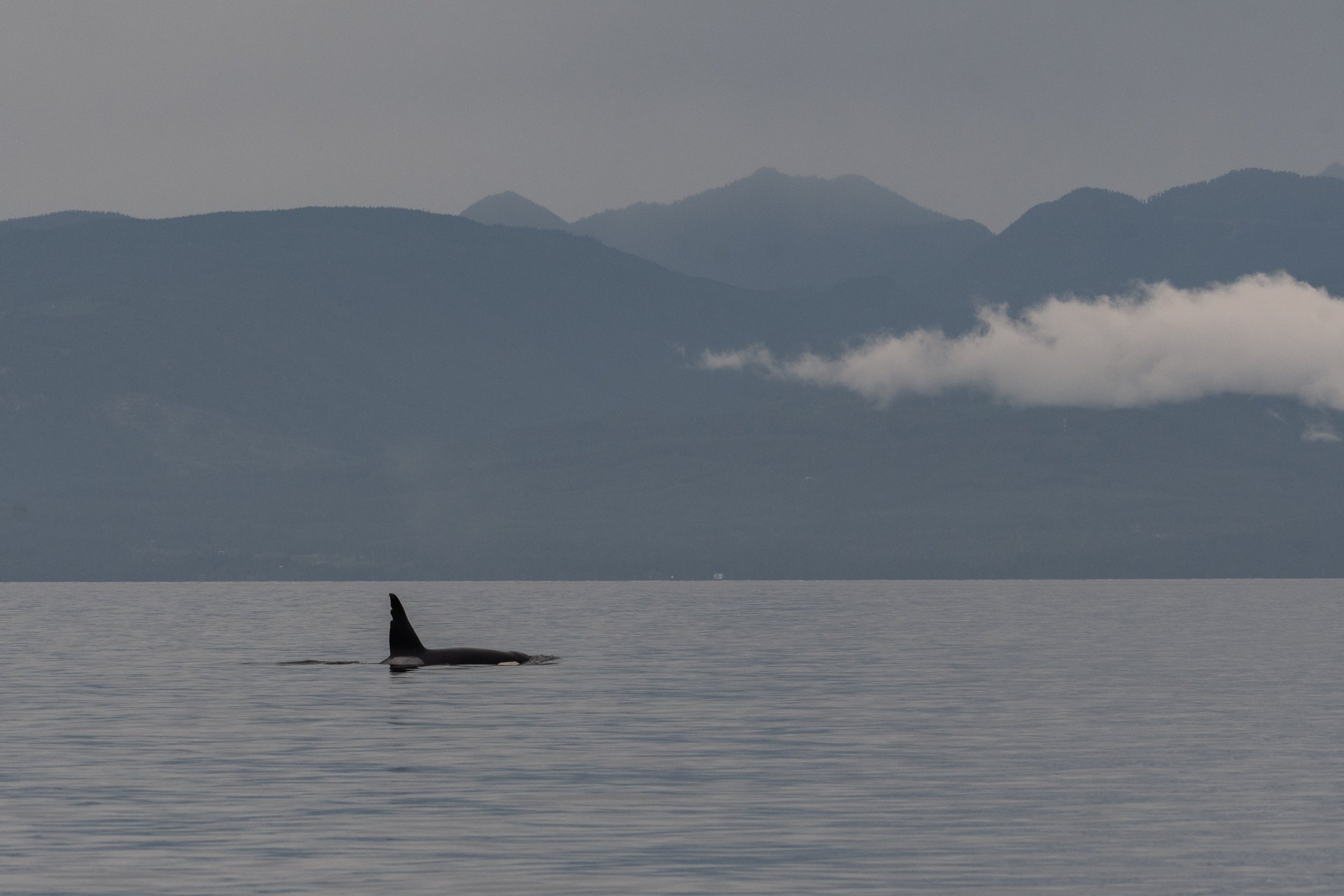
A moody look at T063 Chainsaw as he surfaces with a misty mainland in the background.
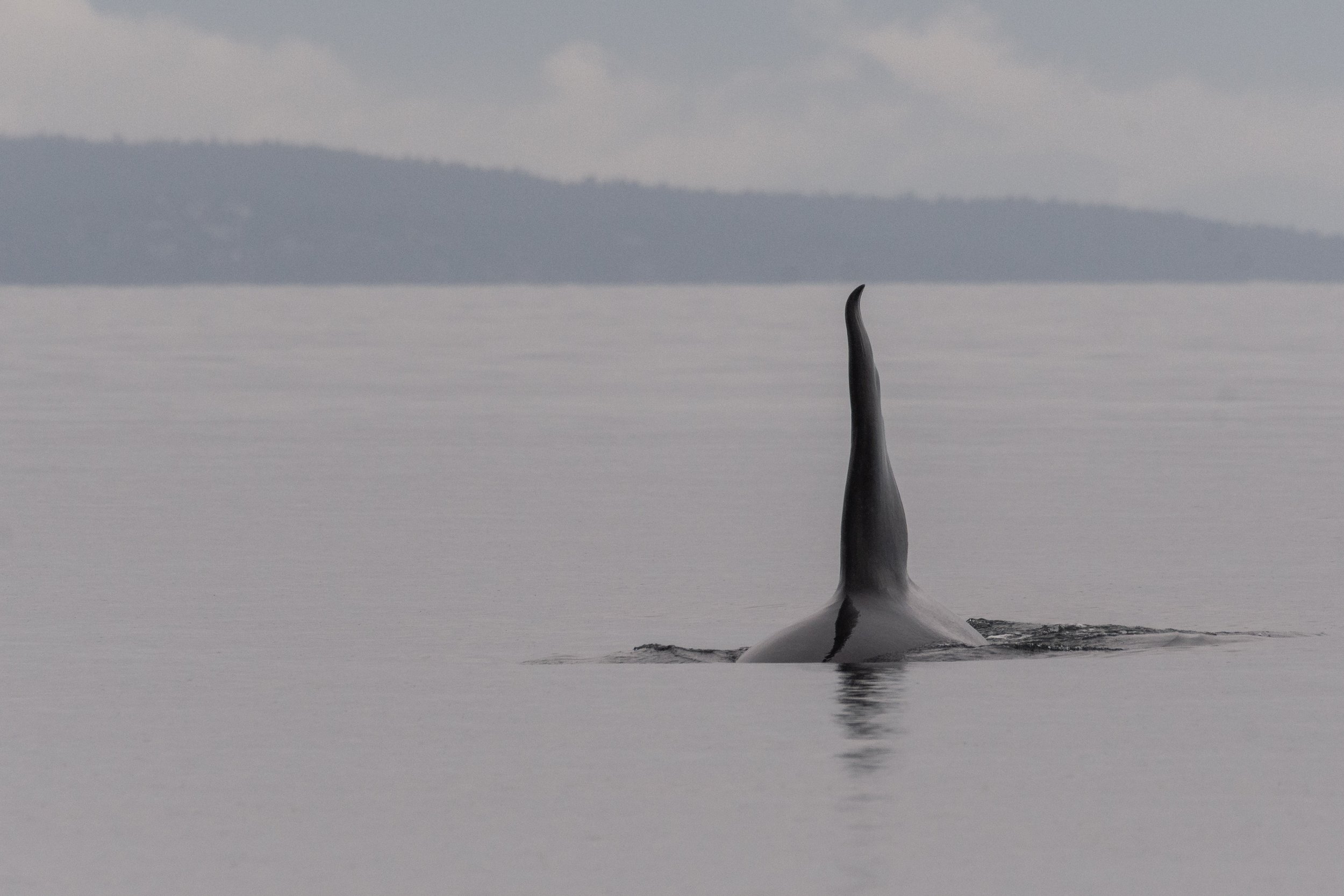
This angle lets you see the warping in T063 Chainsaw’s dorsal fin caused by the damage that made those notches.