
October 2, 2026 - That's enough Slices!
Moody skies greeted us as we boarded Keta and Kula and pushed off the dock today. After discussing the route, we decided to split up; Keta would head northeast across the Strait of Georgia toward the Sunshine Coast. Kula would stay farther south and head into Howe Sound to look around. This separation led to slightly different encounters for the start of the trip.
Keta began the day over at Halibut Bank, a highly productive area often bustling with wildlife. Today was no different, and soon after arriving, three dorsal fins popped out of the water ahead. These whales were travelling along, very occasionally fluking before diving once more. Unfortunately, two of the three were being extra tricky, and we only managed to get photos of their dorsal fins to use for identification. While one of them is still currently unidentified, the second whale had a distinct white scar on the right side, letting us confirm them as Graphite (BCX2077). The third individual dove, letting us see the underside pattern of their fluke clearly, and letting us identify them as Mow (BCY1518). Mow is the 2023 calf of Graze (BCY0523), and Graphite is the 2019 calf of Slate (BCX1210). While this encounter was going on, Kula had made a discovery of their own in the Sound!
Kula had travelled up through Howe Sound and had reached the eastern coast of Gambier Island. Here, three dorsal fins were spotted again – however, this time they were significantly taller than Keta’s trio. These were orca dorsal fins! Once in position, Naturalist Evan began working on identifying the three whales. Keta departed from their humpbacks and began making their way over as well. However, at the mouth of Howe Sound, they stopped once more when another three humpback whales were spotted.
Once more, cameras came up, and we took photos to determine who was present. From an identification standpoint, these three were being much more cooperative, as all three of them fluked high above the surface before plunging into the depths. This allowed us to confirm that they were Cirque’s 2024 calf (BCY1059calf2024), Constellation (BCX1784), and Slice (BCX2487). Like their original group, these three were also simply travelling and diving along. It is possible that both groups were busy feeding deep in the water column, getting their last feasts in before they begin to migrate out of the area. Keta did not stay with these three for too long, and after a few surfaces, they continued their way deeper into the Sound.
The three orca were slowly making their way along the coastline as we worked on identifying them. Amongst the three, one fin was quite small – they were likely under 5 years old. In the middle, a slightly hooked fin dove. Behind her, a taller fin towered overhead – this appeared to be a younger male that was just beginning to ‘sprout’ or enter puberty. These clues, alongside photos of their dorsal fins and saddle patches, helped us identify the group as the T037Bs:
T037B Harald ♀ (1998)
T037B1 Lance ♂ (2012)
T037B3 Slice ♀ (2022)
The trio travelled along slowly, at one point milling together for a few minutes. It is possible they were scanning the shoreline, looking for any potential easy prey for their next meal. They have travelled quite a bit in the last few days, as on September 30th we saw these three off the Belle Chain Islets alongside the T030 siblings, about 75 kilometers away.
The youngest member of the pod, T037B3 Slice, was busy zipping around, bouncing between her mother and brother as she went. At only 4 years old, she is still quite young and is busy energetically following her pod members along.
After spending some time with them, we said our goodbyes and headed on out. Once more, the fleet spread out, and once more, they found slightly different encounters.
Just at the edge of Howe Sound, Kula located four more humpback whales. These four were travelling in two distinct pairs. Of the four, three of them fluked, and the fourth thankfully had a uniquely shaped dorsal fin. We identified these whales as Zig Zag (BCX1193), Notcho (BCX1700), and Kappachino (BCX2492), and confirmed the non-fluker as Malachite (BCY1463). Malachite and Kappachino were together, while Notcho and Zig Zag were side by side a bit further off. Zig Zag became a bit slap happy at one point, waving her massive flukes in the air before smacking them down on the surface. While scientists still don't know for sure why humpbacks do certain behaviours (tail lobbing/slapping being one of them), several leading theories exist. It could be for communication, as a large sound wave travels through the water after the tail lands back on the surface. It may also be used as a hunting strategy to stun prey at the surface. It could also help dislodge parasites from the skin, such as when there is an abundance of whale lice.
Keta at this point had made their way back across the Strait of Georgia and had made their way towards Entrance Island. Once more, a blow was spotted – this time it was a single humpback whale shallowly surfacing and travelling along. Up came the camera, photo captured, and ID confirmed – this was Incognito (BCX2053), a very regularly seen individual in our area. After a few surfaces, Keta departed, and slowly made their way closer to Gabriola Island.
Tucked in close to Lock Bay, a small and shallow rocky islet sits. This area is cheekily known as Seal Rock, as many of our small and rotund pinnipeds haul out here. That was exactly what they were up to today, too, stretching, yawning, and enjoying being out of the frigid water. Haul-outs are important not only for resting, but also for temperature regulation. Depending on conditions, it can be much easier to stay warm out of the water than within it. We often see the Harbour Seals taking full advantage of this on sunny days, snoozing for hours on end.
The day was starting to wind down, but there was still one last wildlife spot to check out before returning to dock. Cruising through Northumberland Channel, we headed over to the log booms outside Harmac. Here, significantly chunkier pinnipeds were busy scratching. Steller Sea Lions and California Sea Lions were dozing away all over the logs. With a yawn of our own, we turned one final time and left the sea lions behind.
One short trip later, we were back in Nanaimo Harbour. It had been a busy day full of interesting encounters, from the humpbacks to the orca to the pinnipeds.
Photos by Marine Naturalists Hayleigh Hilbert and Evan Hessels - please enjoy.
Mow, Graphite, and their Unknown friend
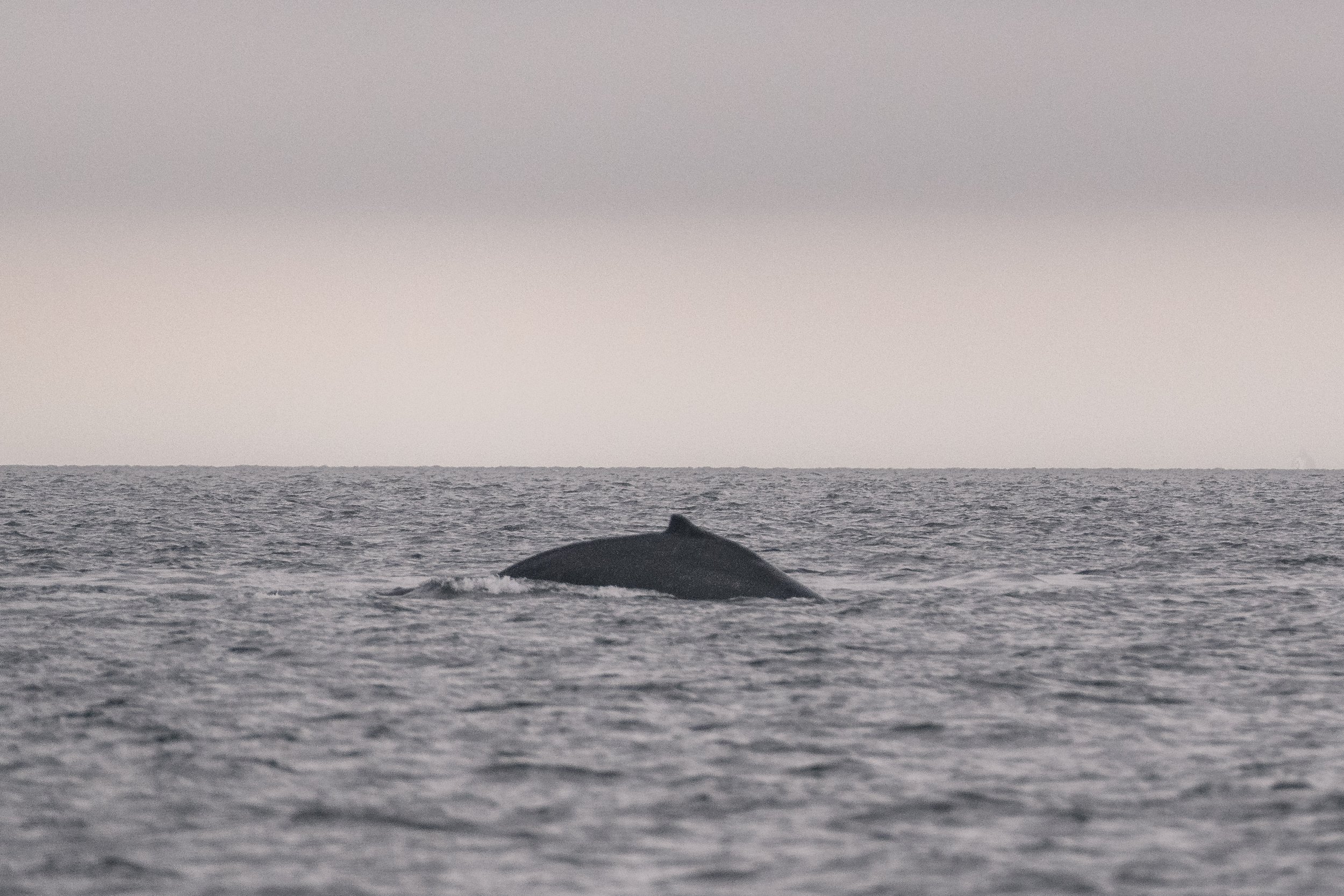
The Unknown friend diving. Photo by Hayleigh Hilbert.
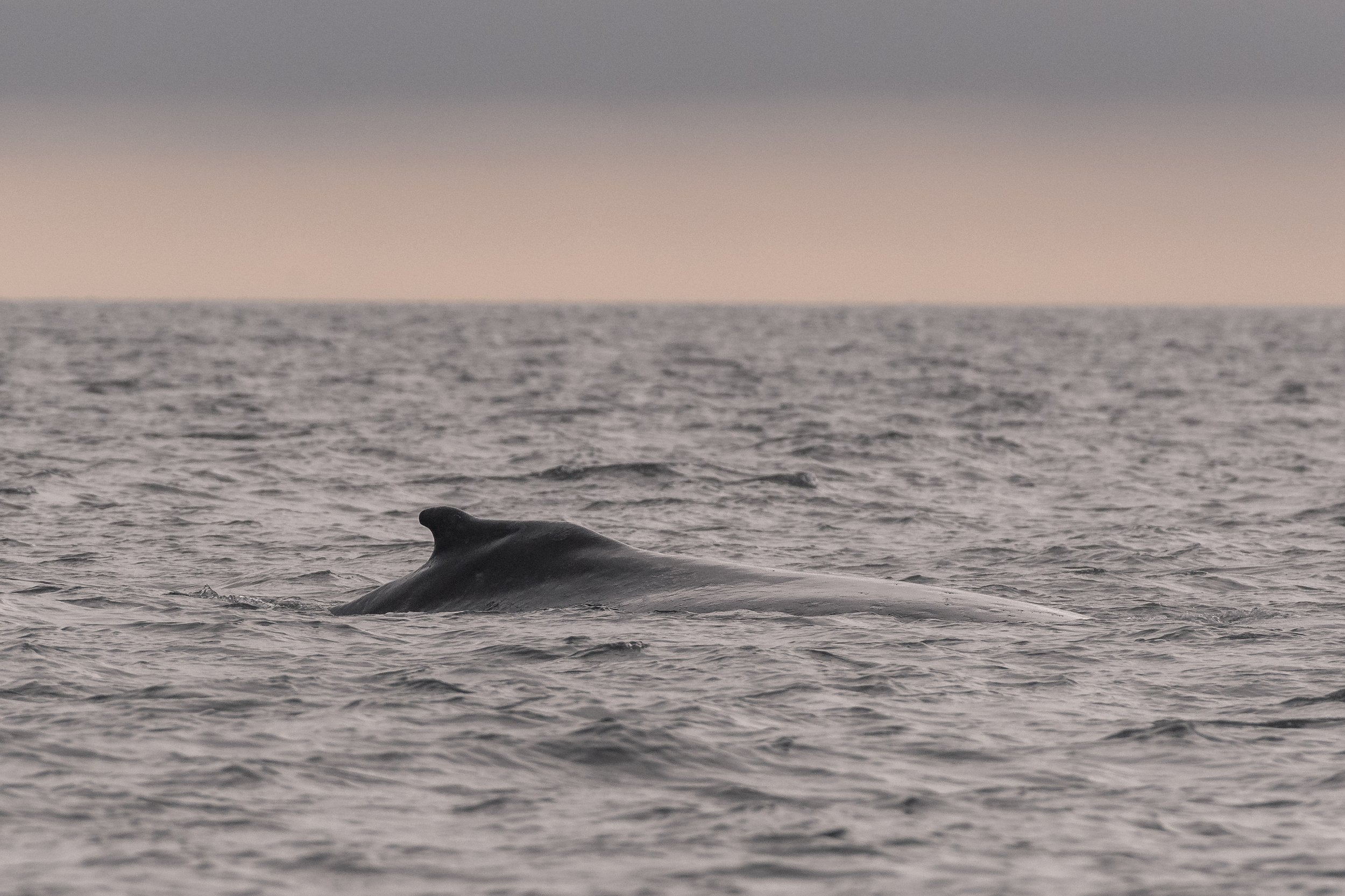
Mow floating on along. Photo by Hayleigh Hilbert.
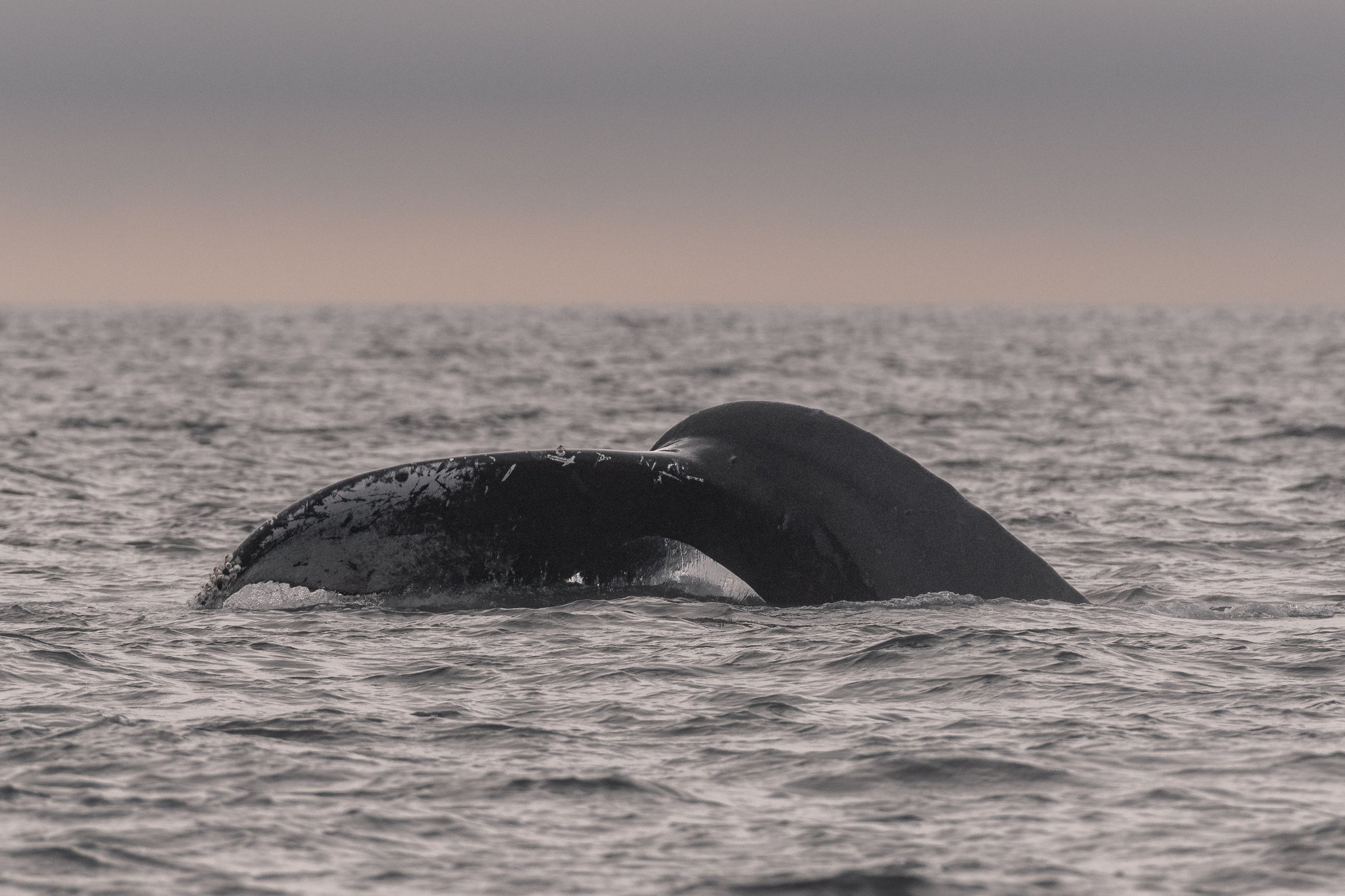
A tiny peek at the corner of Mow’s fluke. Photo by Hayleigh Hilbert.
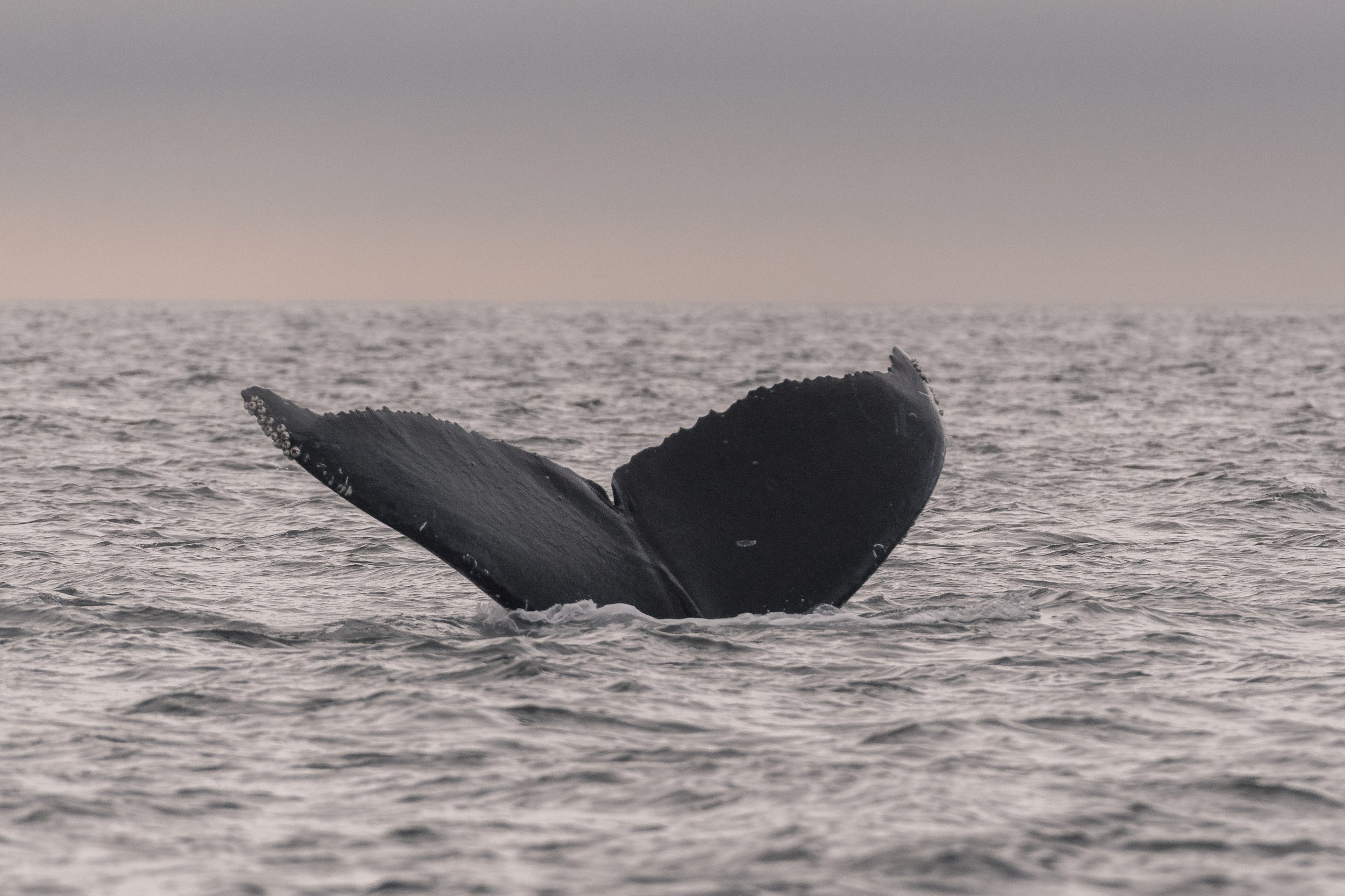
The top of Mow’s fluke as they go under. Photo by Hayleigh Hilbert.
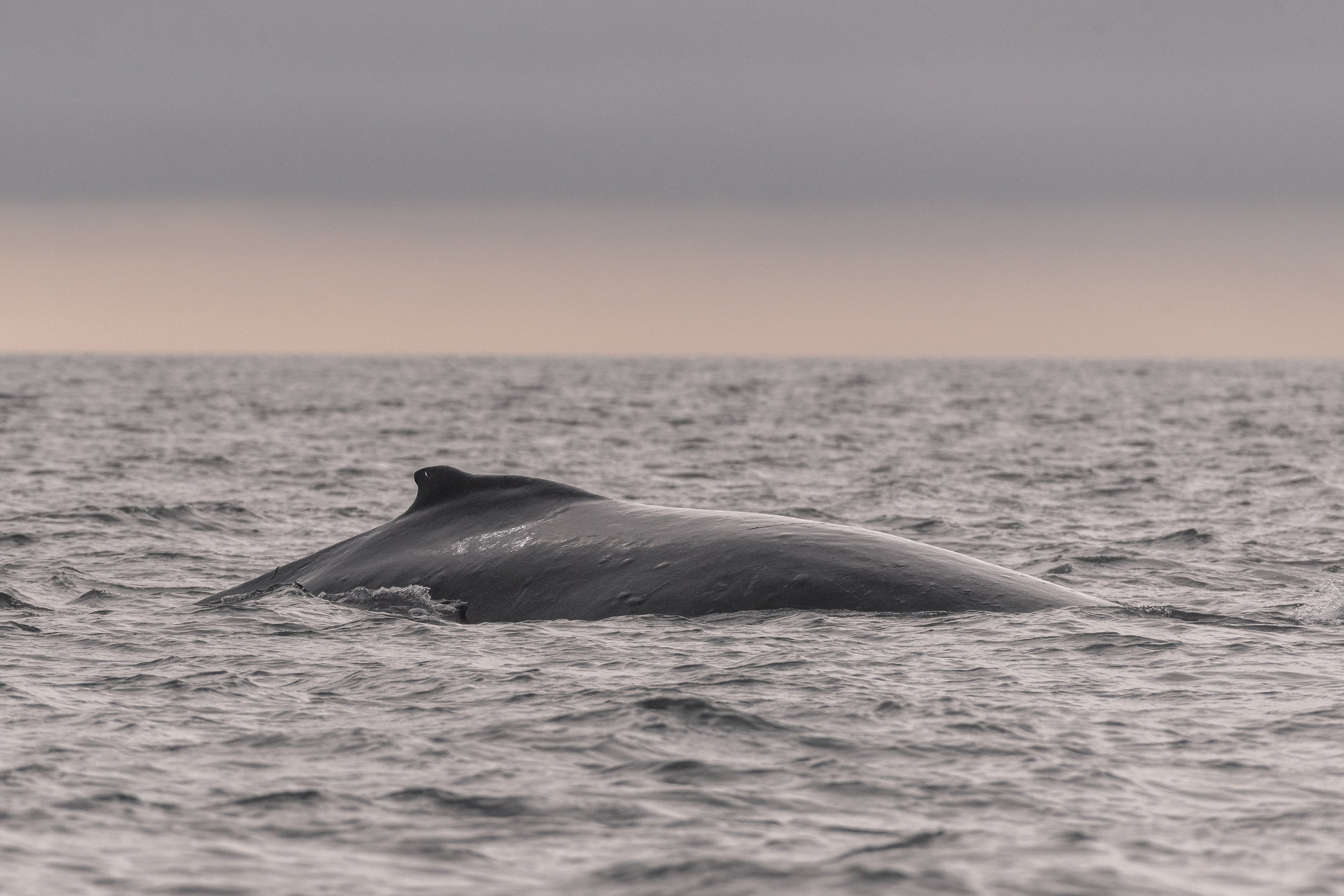
Graphite, identity confirmed by the marking on his right dorsal fin seen here. Photo by Hayleigh Hilbert.
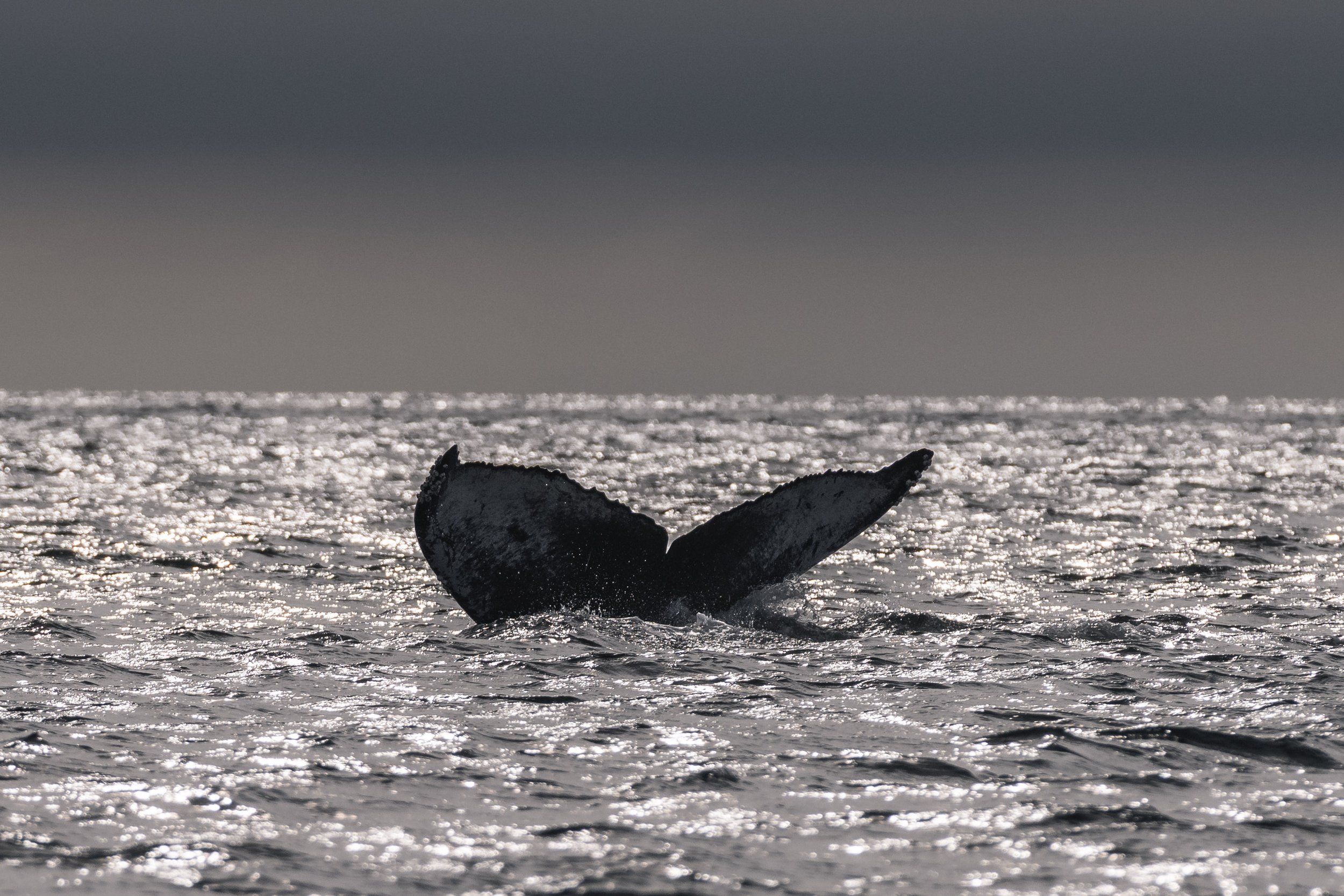
A backlit photo of Mow as they dive. Photo by Hayleigh Hilbert.
Cirque’s 2024 calf, Constellation, and Slice
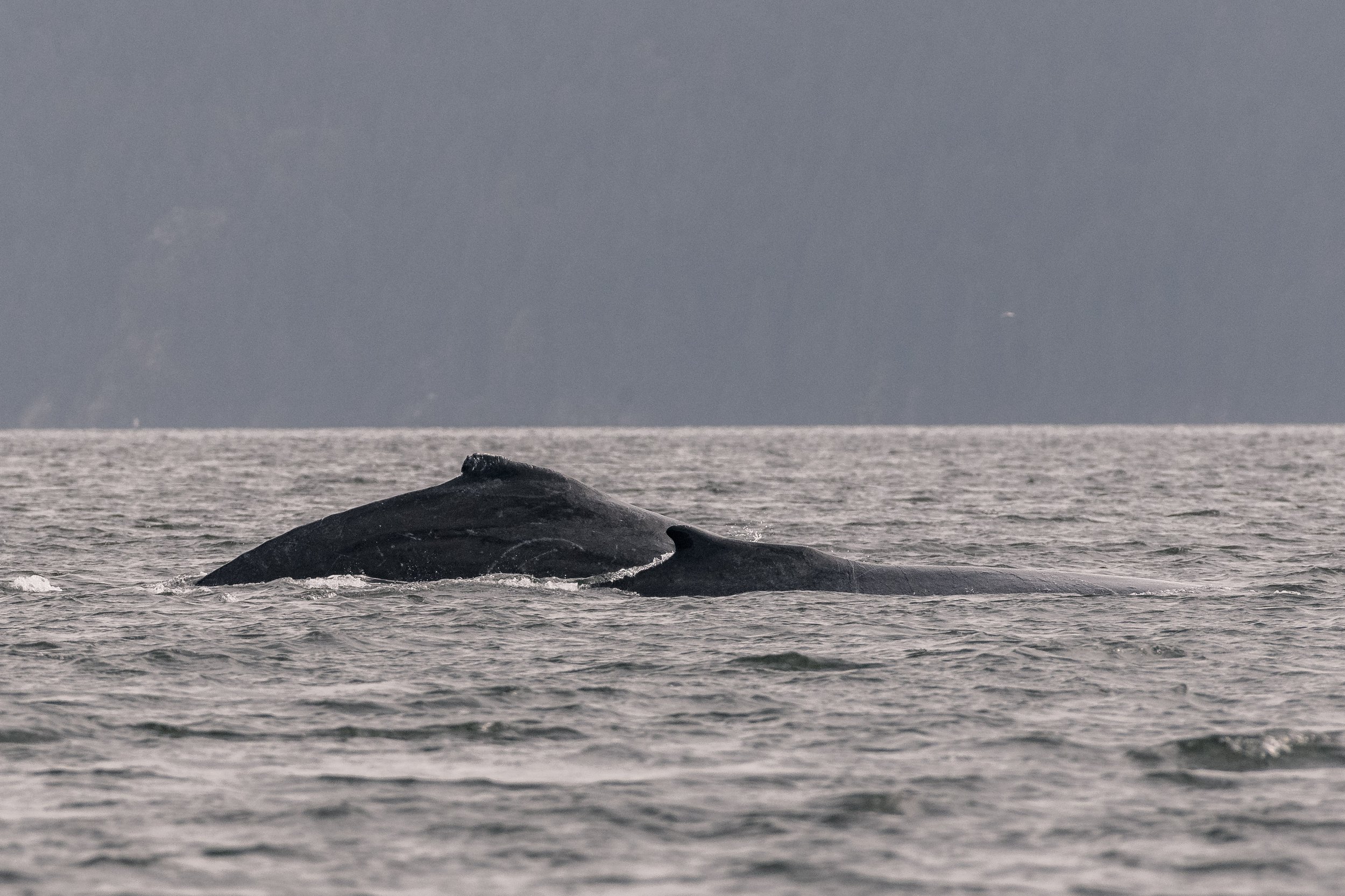
Slice arching his back beside Constellation. Photo by Hayleigh Hilbert.
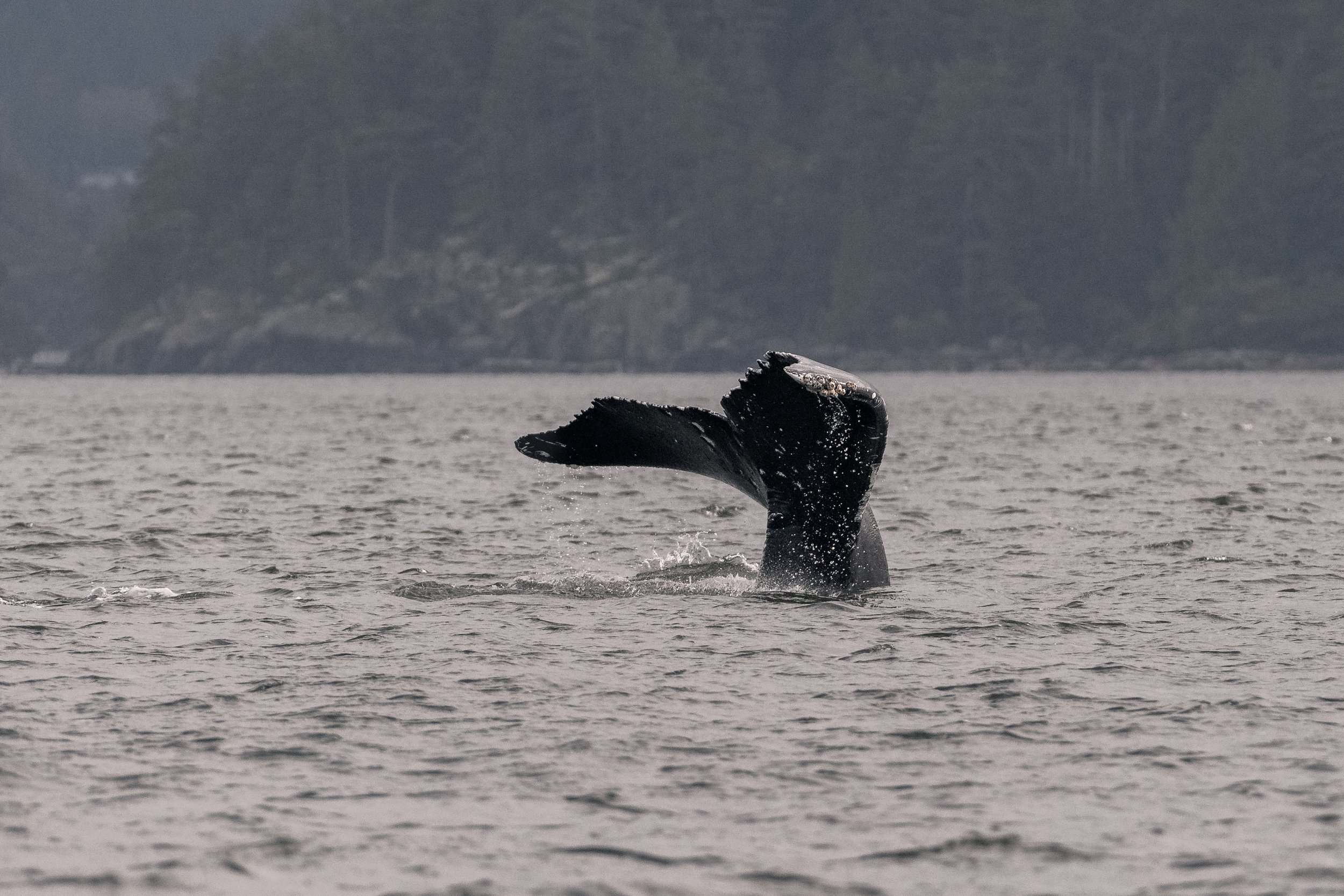
Constellation going down for a dive. Photo by Hayleigh Hilbert.
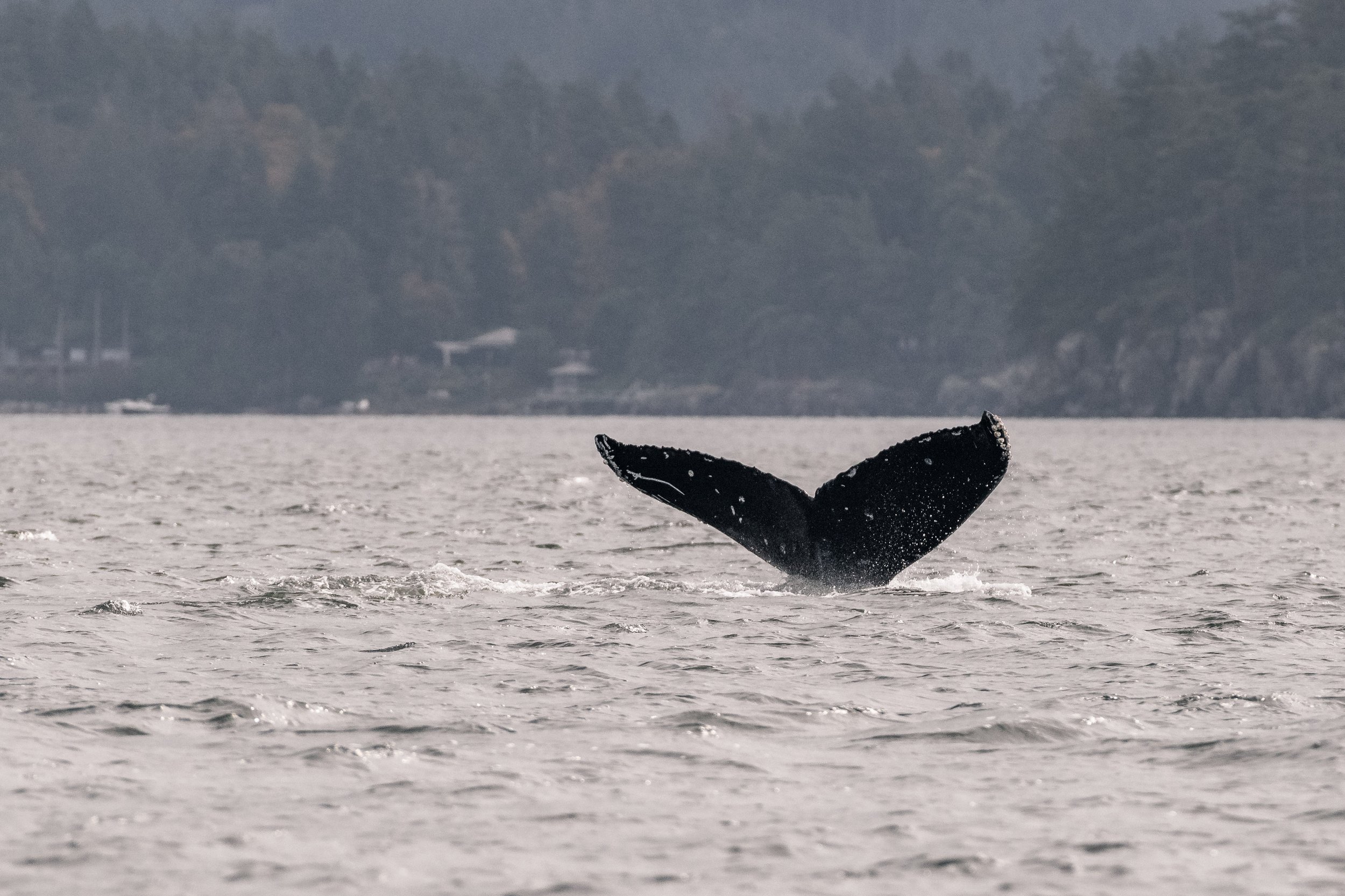
Cirque’s 2024 calf’s fluke with its interesting markings all over it. Photo by Hayleigh Hilbert.
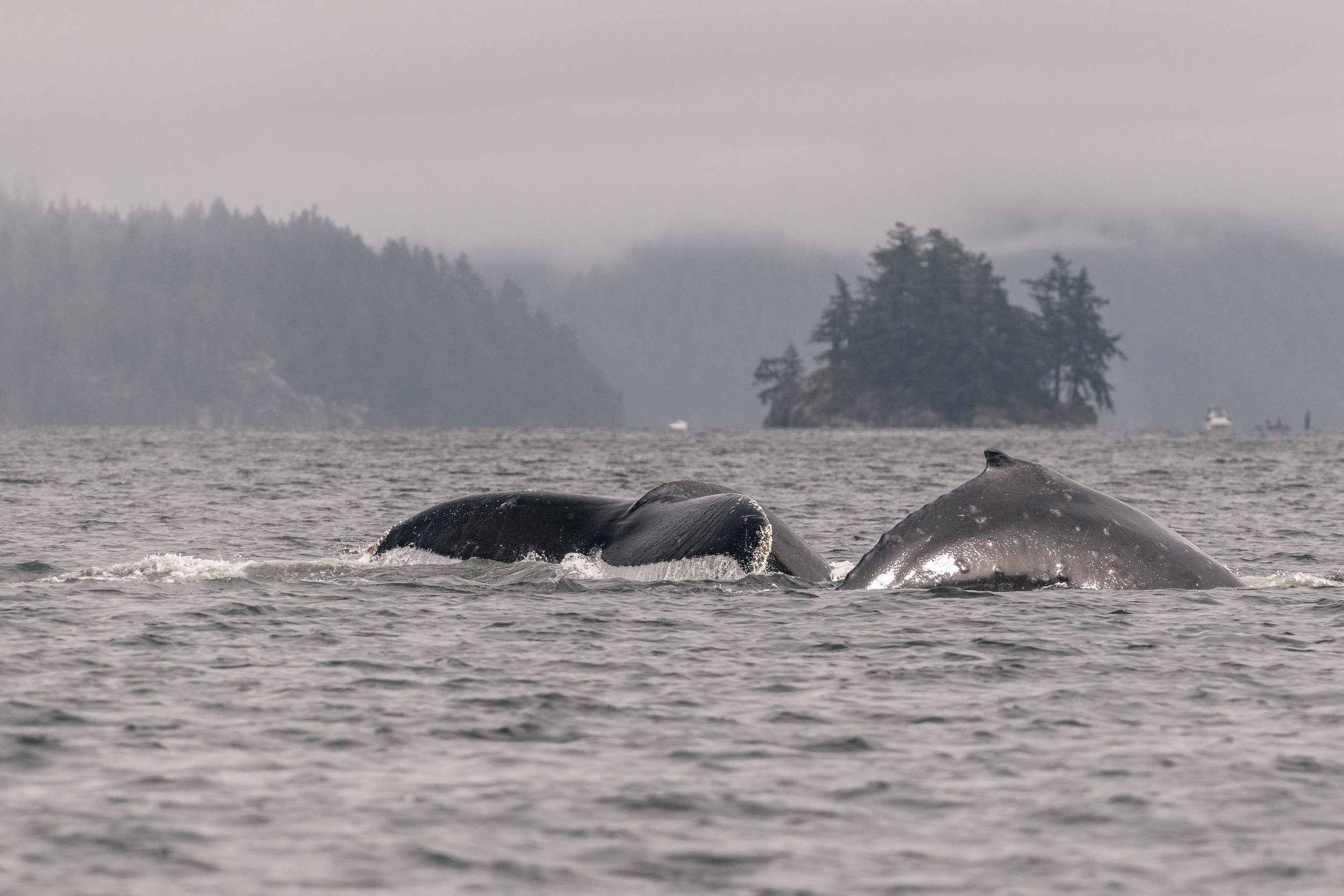
Cirque’s 2024 calf with their dorsal fin out of the water, and Slice with a fluke waterfall beside them. Photo by Hayleigh Hilbert.
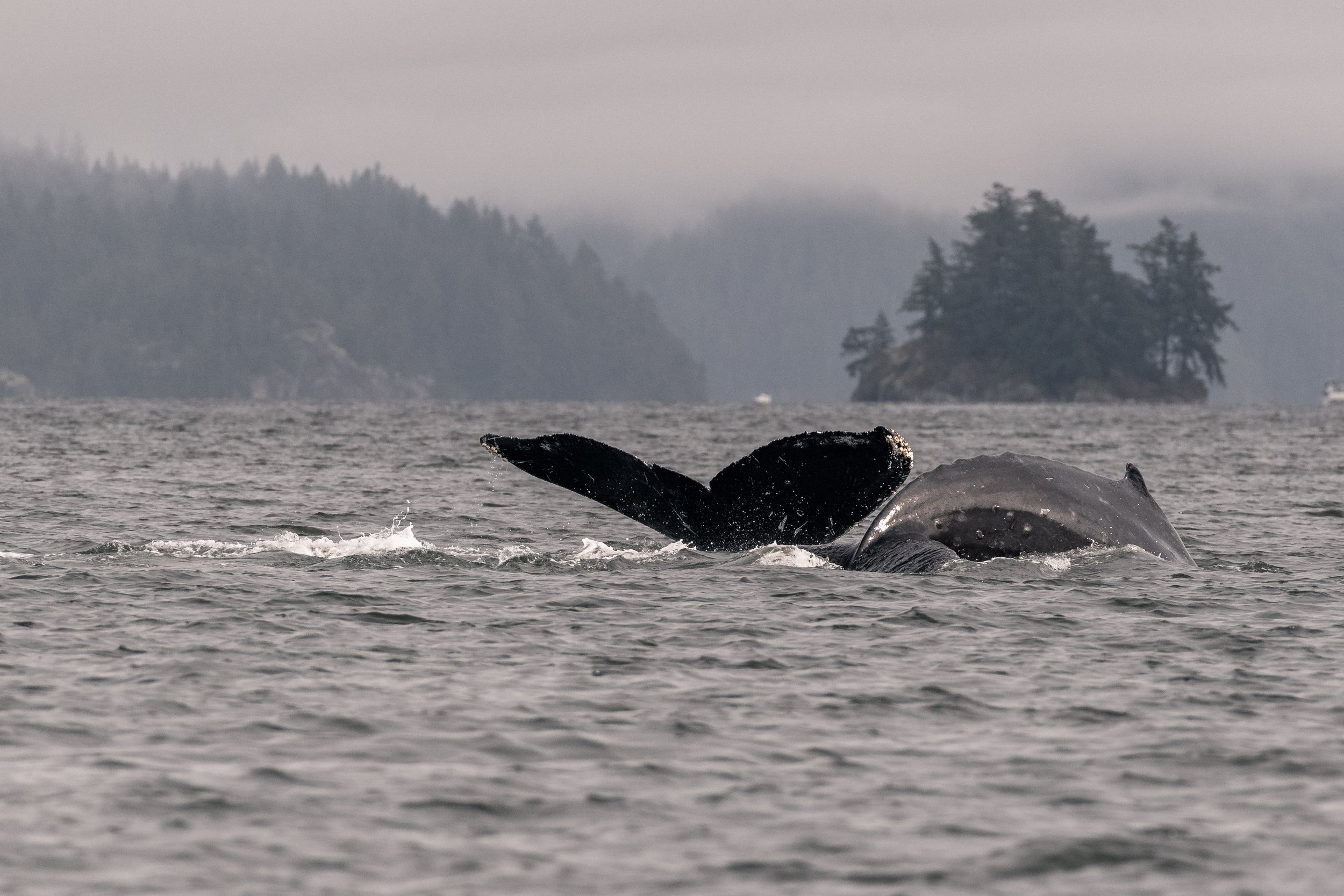
Slice also has many unique fluke markings, as seen here, as Cirque’s 2024 calf dives beside them. Photo by Hayleigh Hilbert.
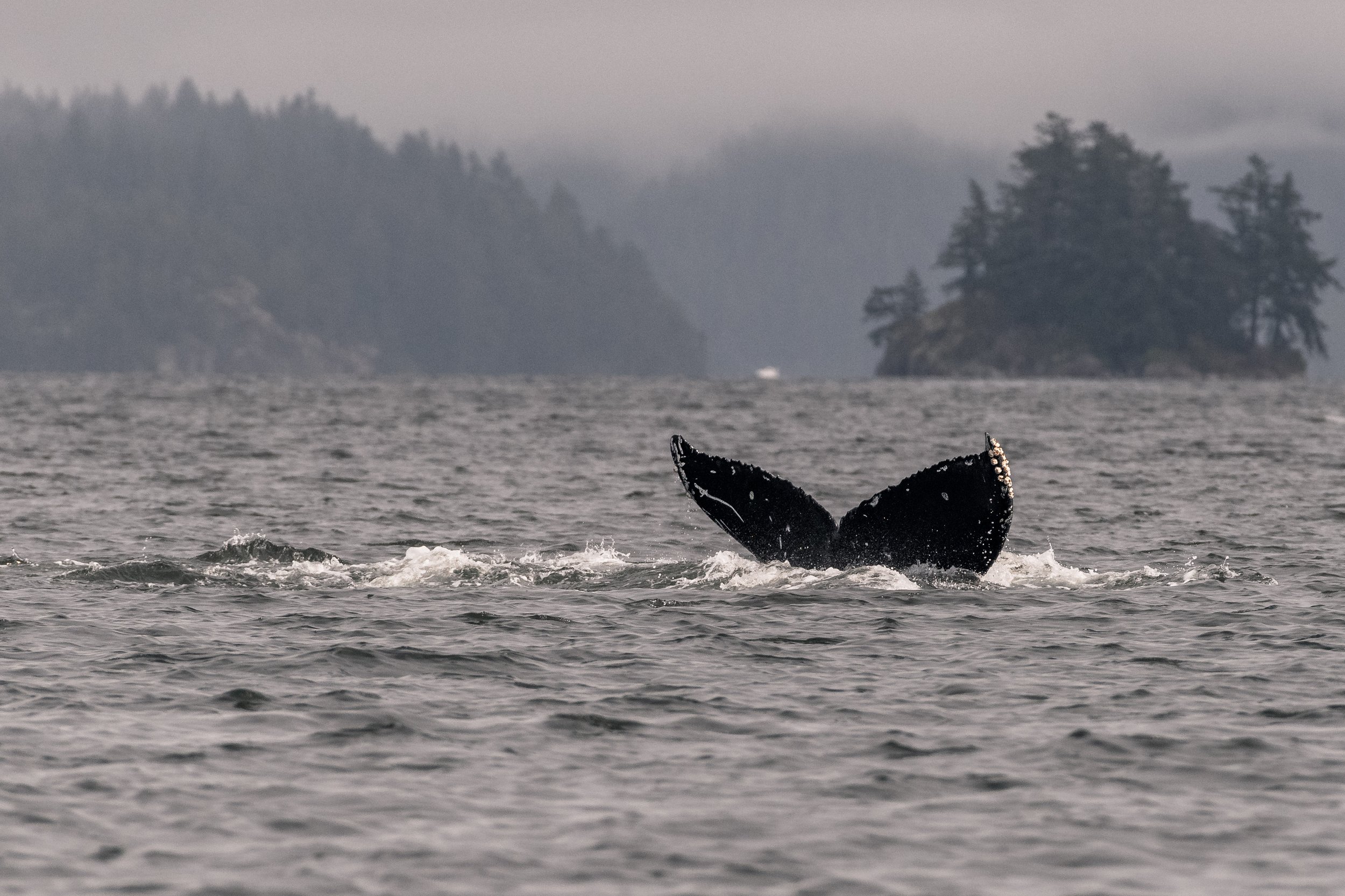
A better view of Cirque’s 2024 calf’s markings. Photo by Hayleigh Hilbert.
The T037Bs
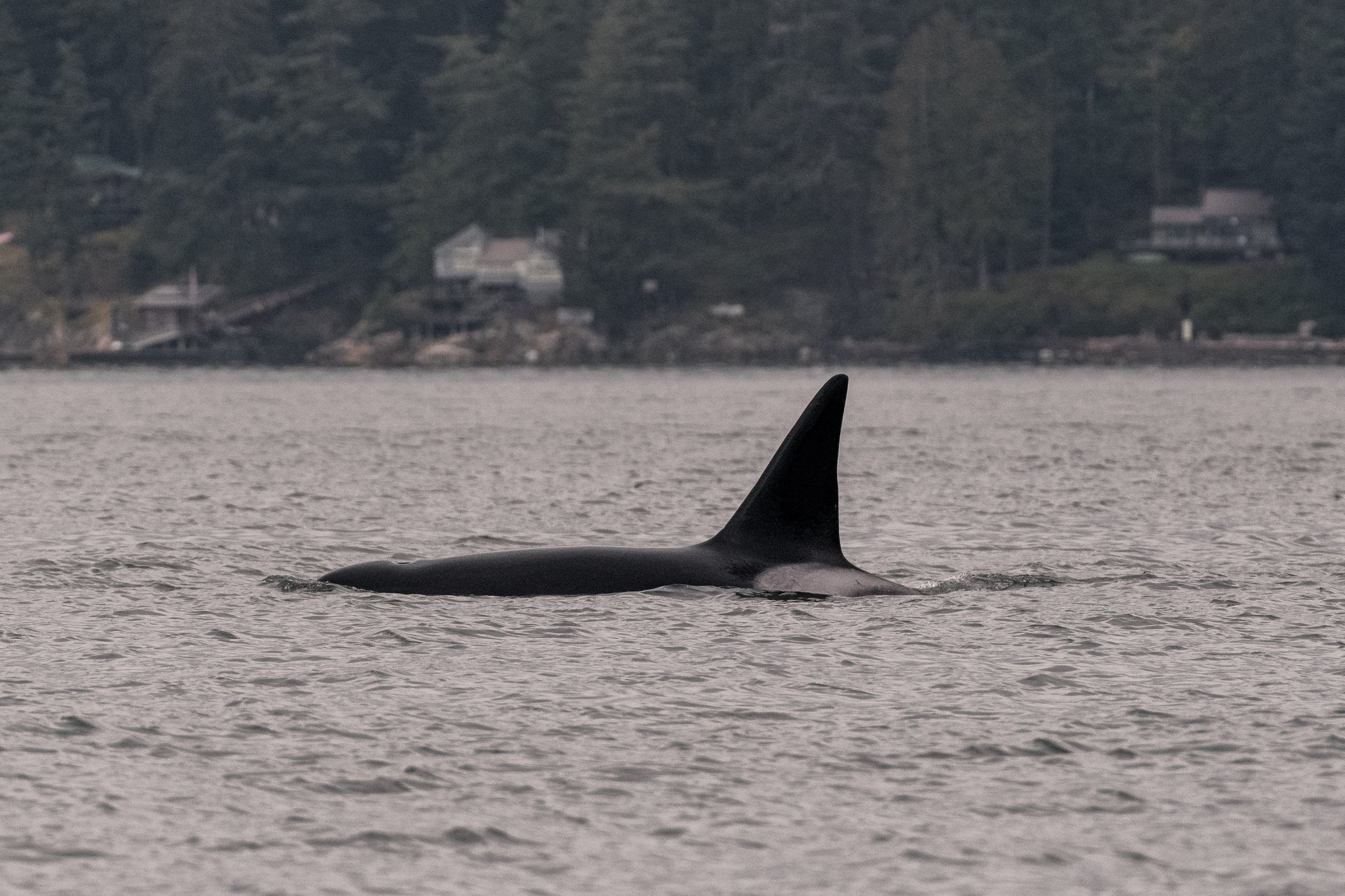
T037B1 Lance has sprouted a ton over the last year! Photo by Hayleigh Hilbert.
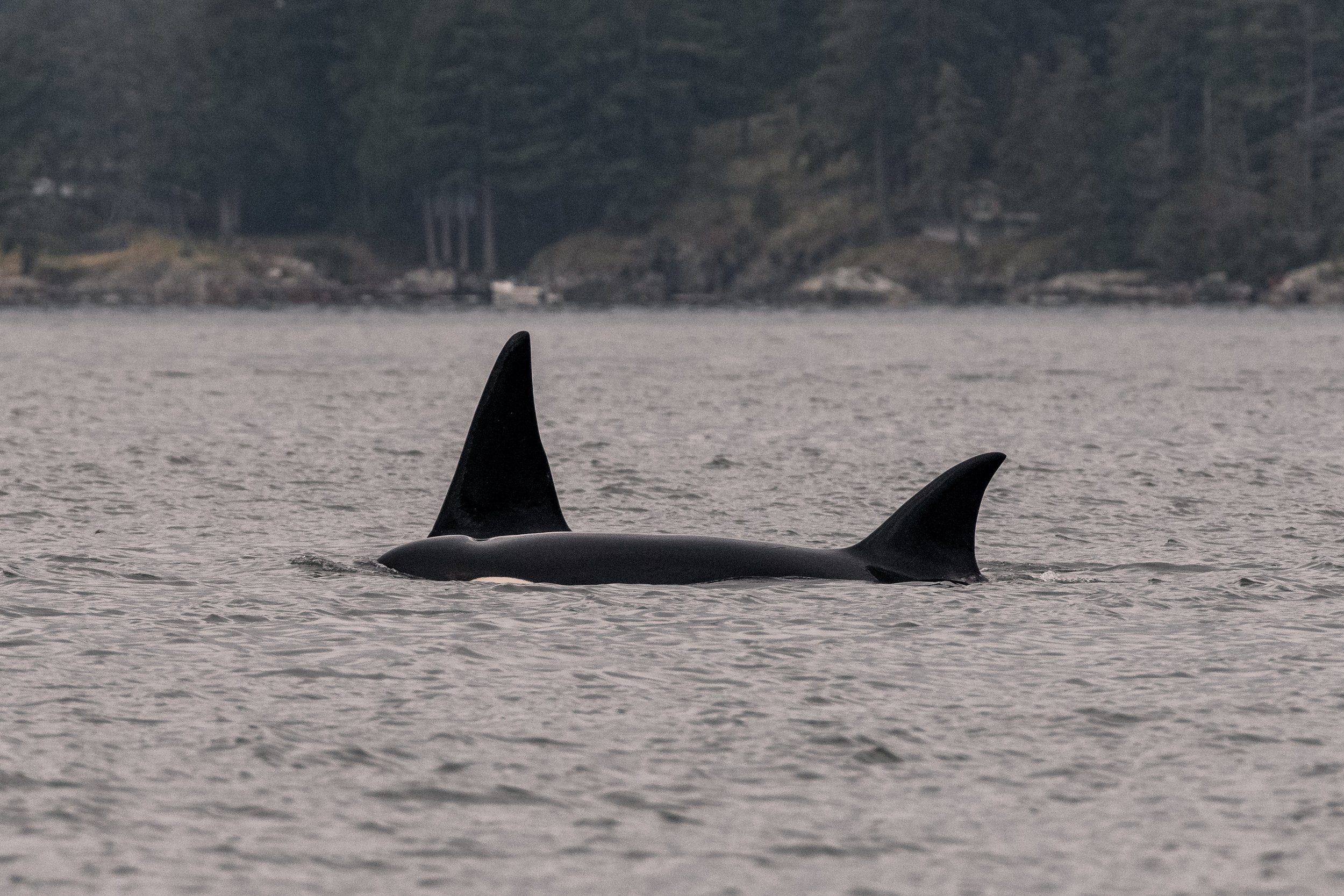
T037B1 Lance beside his mother T037B Harald. Photo by Hayleigh Hilbert.
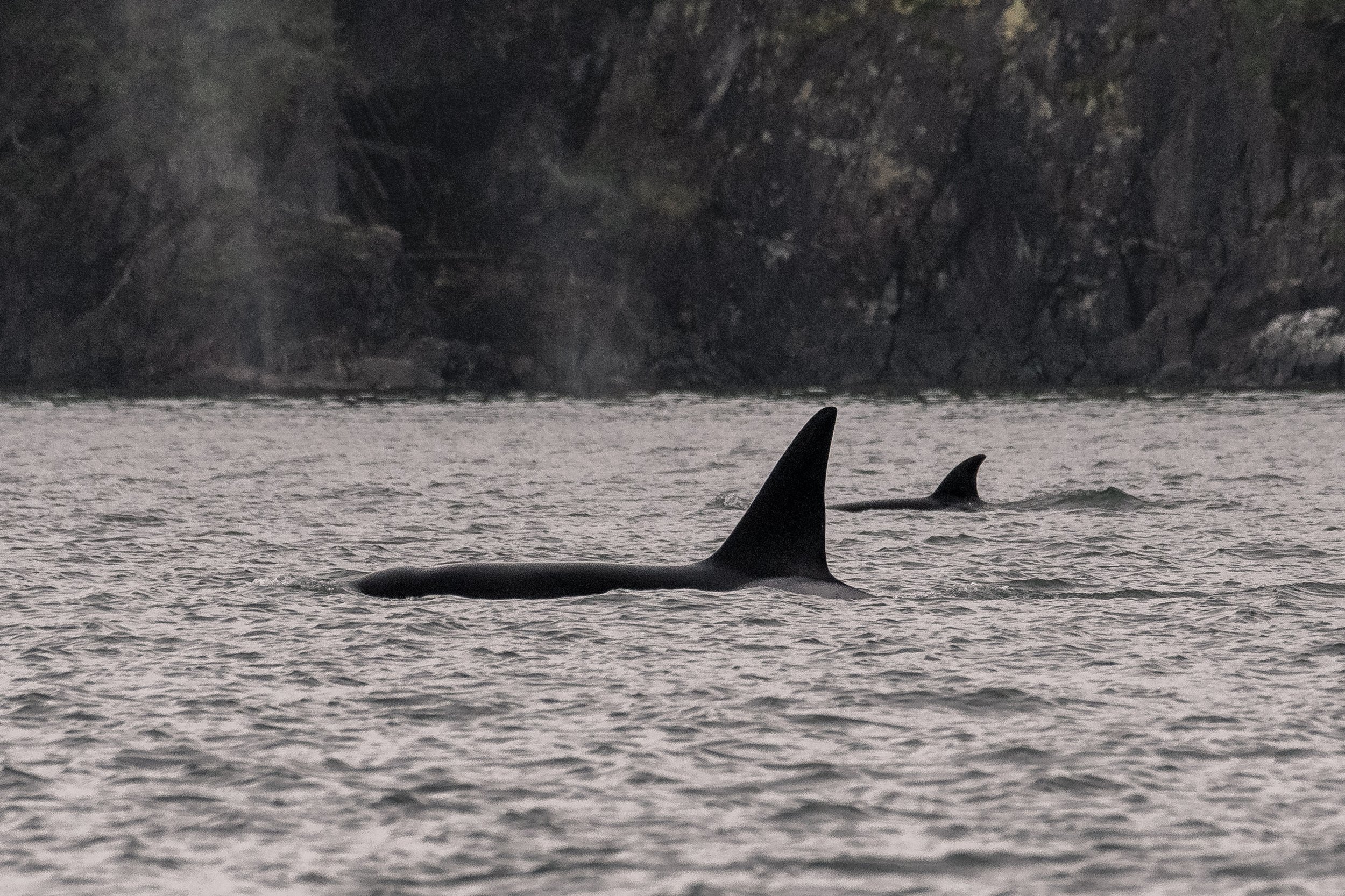
T037B1 Lance with his little sister T037B3 Slice behind him. Photo by Evan Hessels.
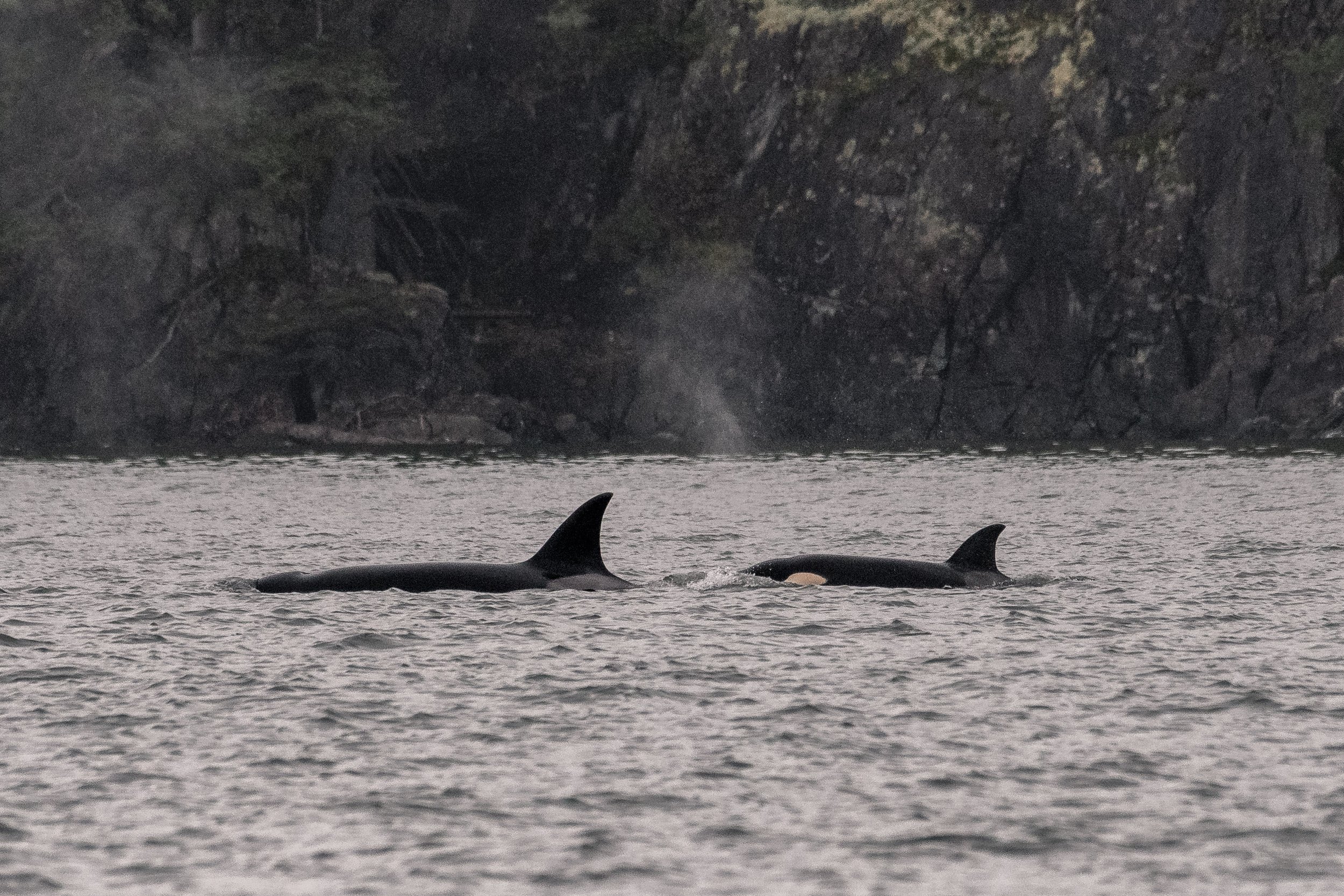
T037B3 Slice zipping along to catch up with her mother T037B Harald. Photo by Evan Hessels.
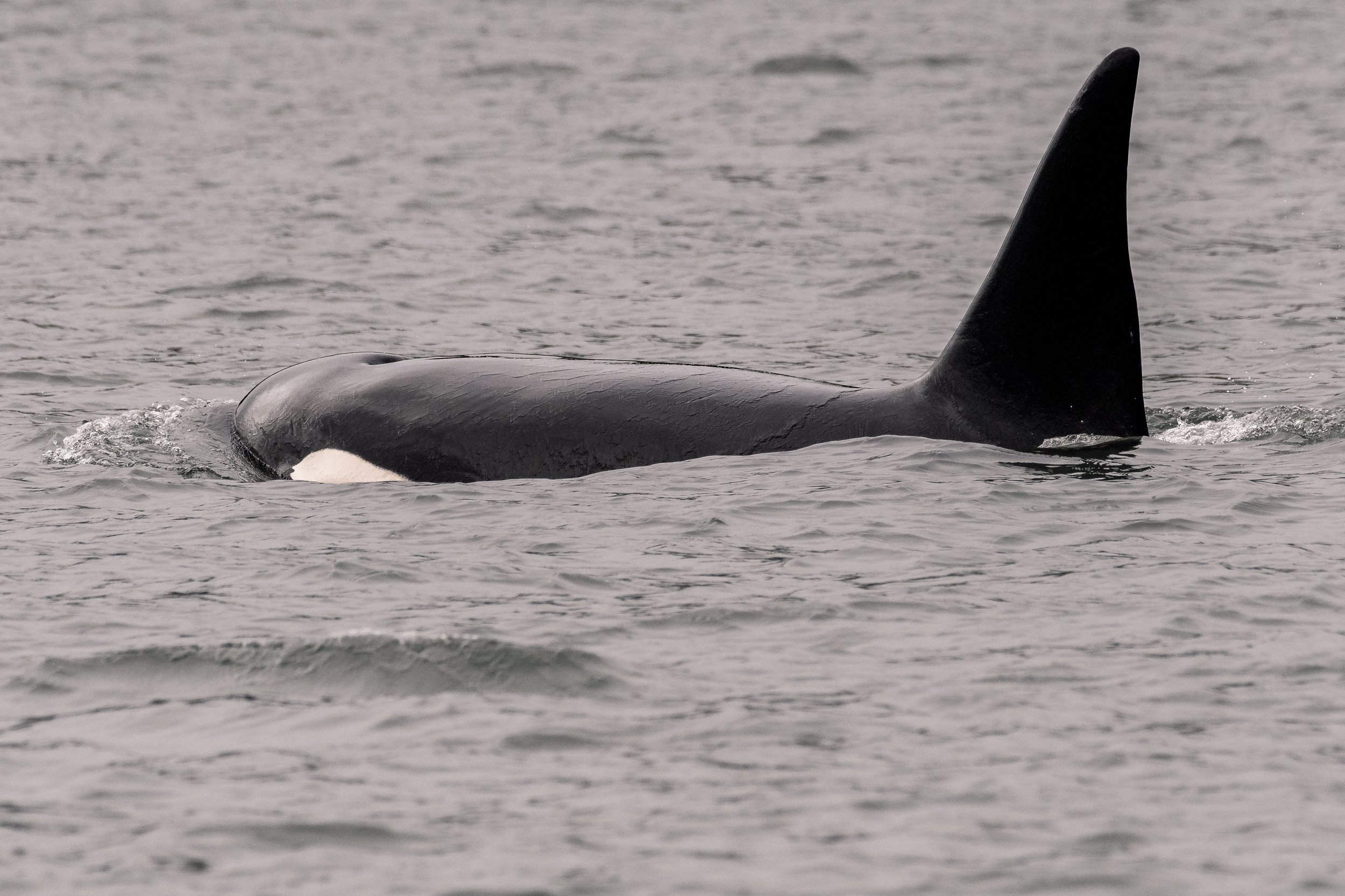
T037B1 Lance with scars lightly visible all across his body. Photo by Evan Hessels.
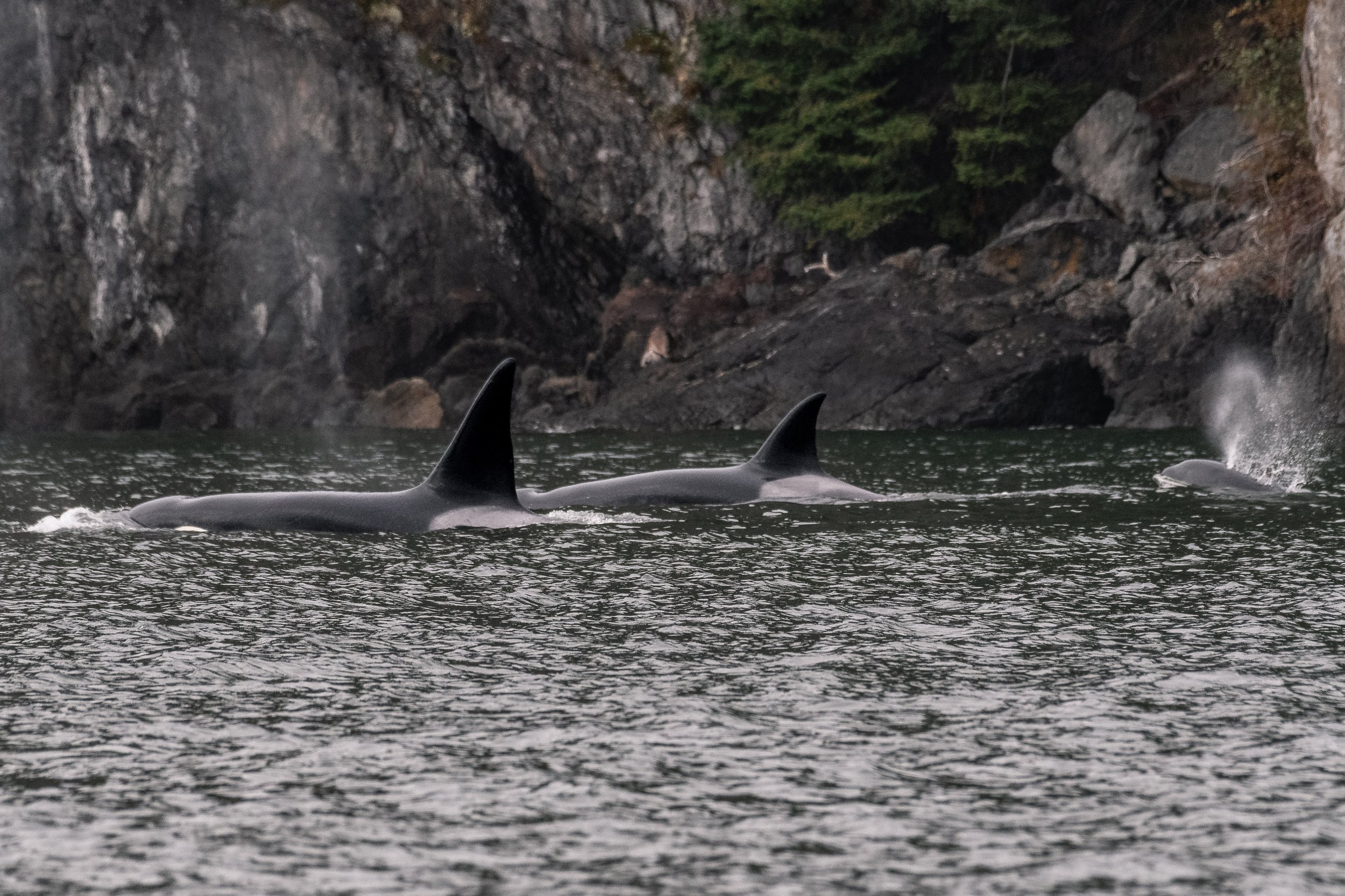
T037B1 Lance charging along, with T037B Harald in the middle, and T037B3 Slice surfacing in the back. Photo by Evan Hessels.
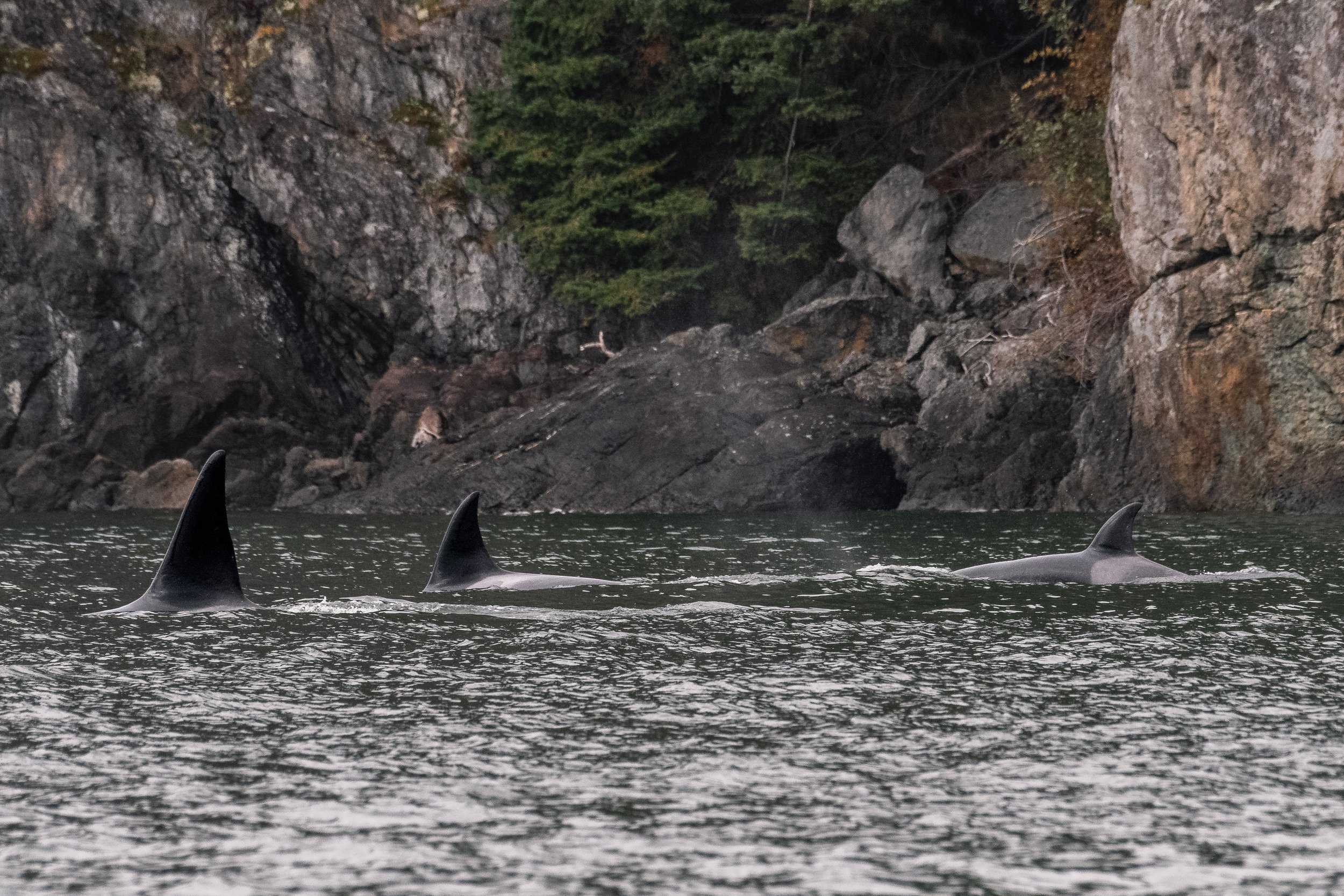
The full family - T037B1 Lance, T037B Harald, and T037B3 Slice. Photo by Evan Hessels.
Zig Zag, Notcho, Kappachino, and Malachite
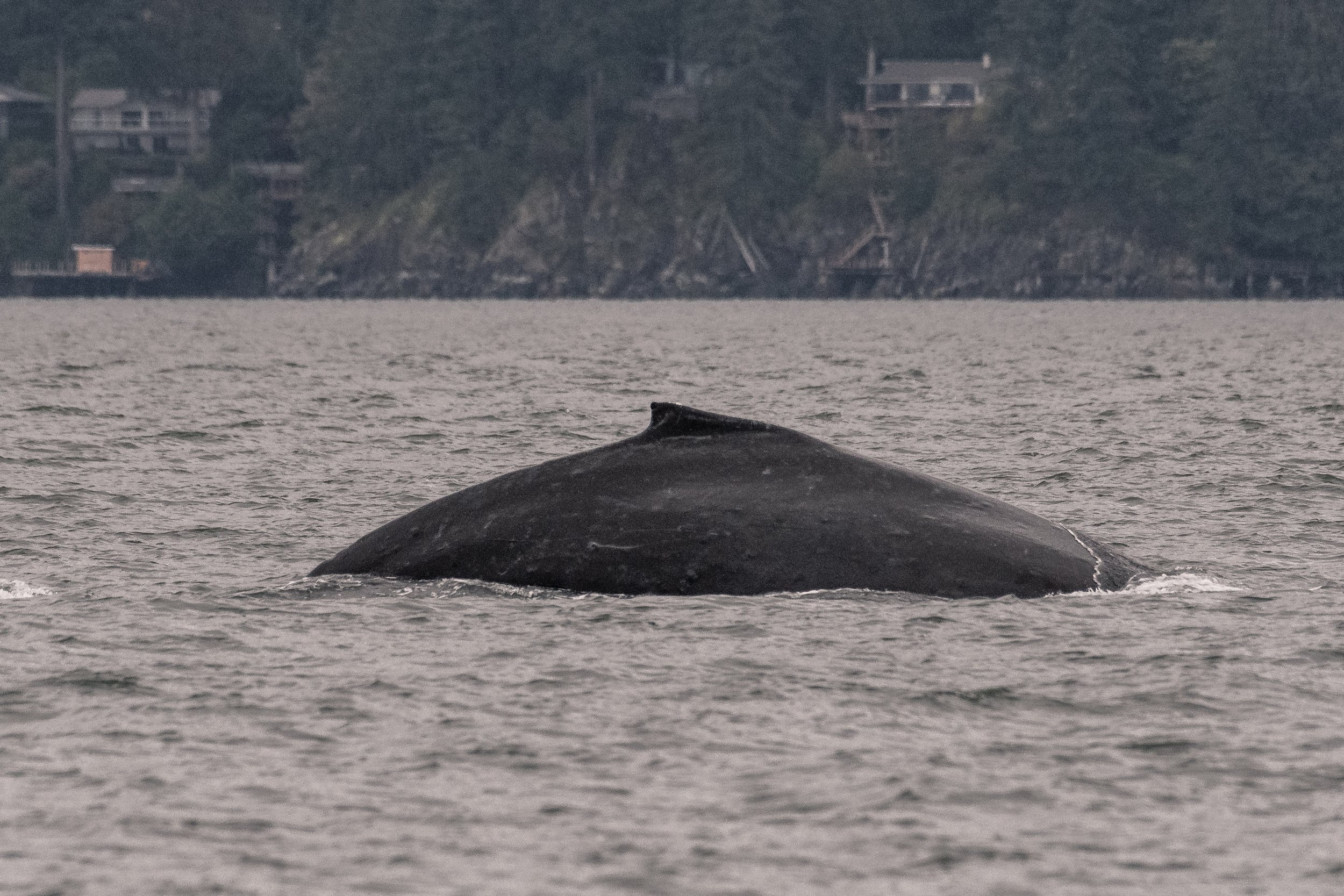
Notcho preparing to dive. Photo by Evan Hessels.
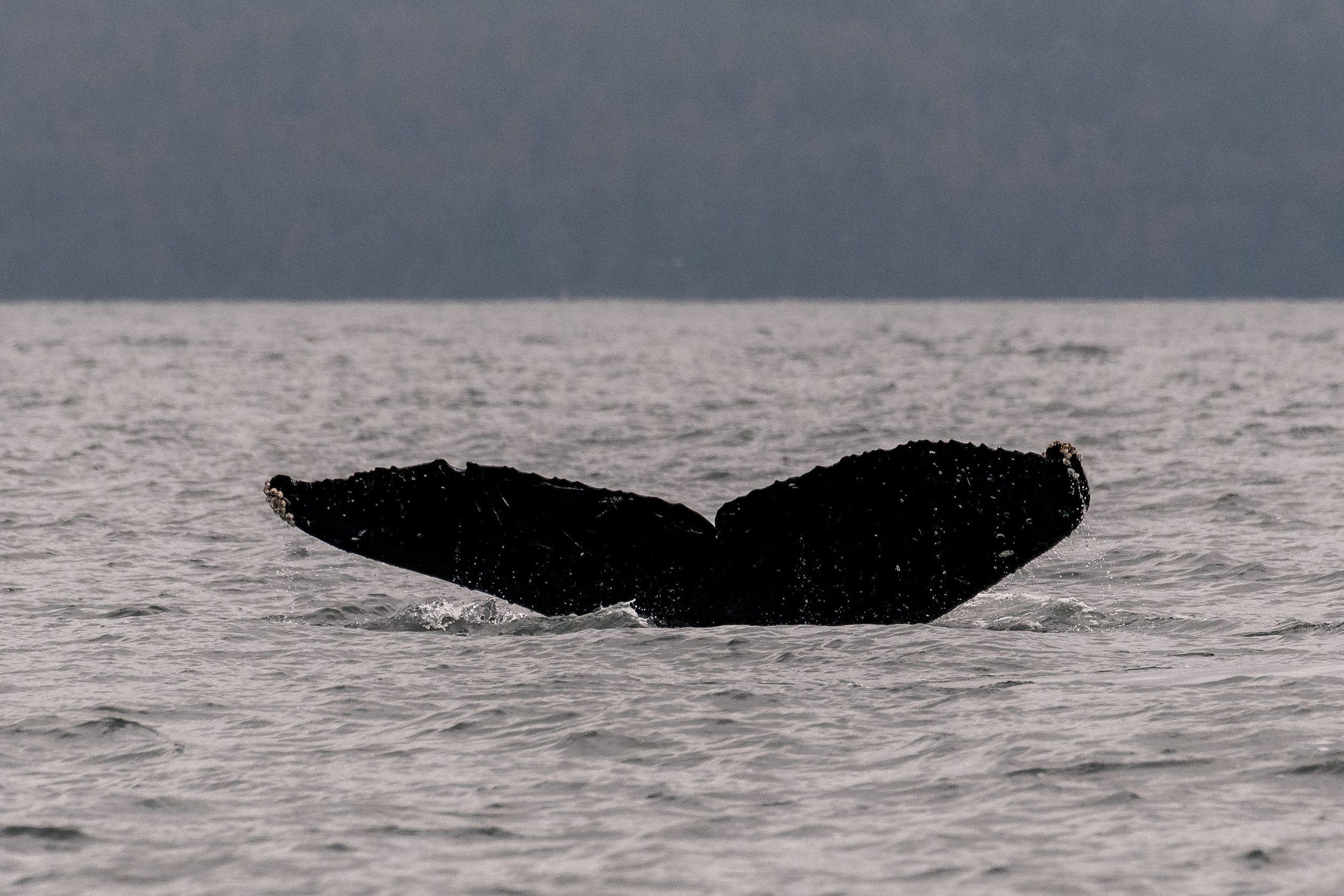
Notcho - can you see how they got their nickname? Photo by Evan Hessels.
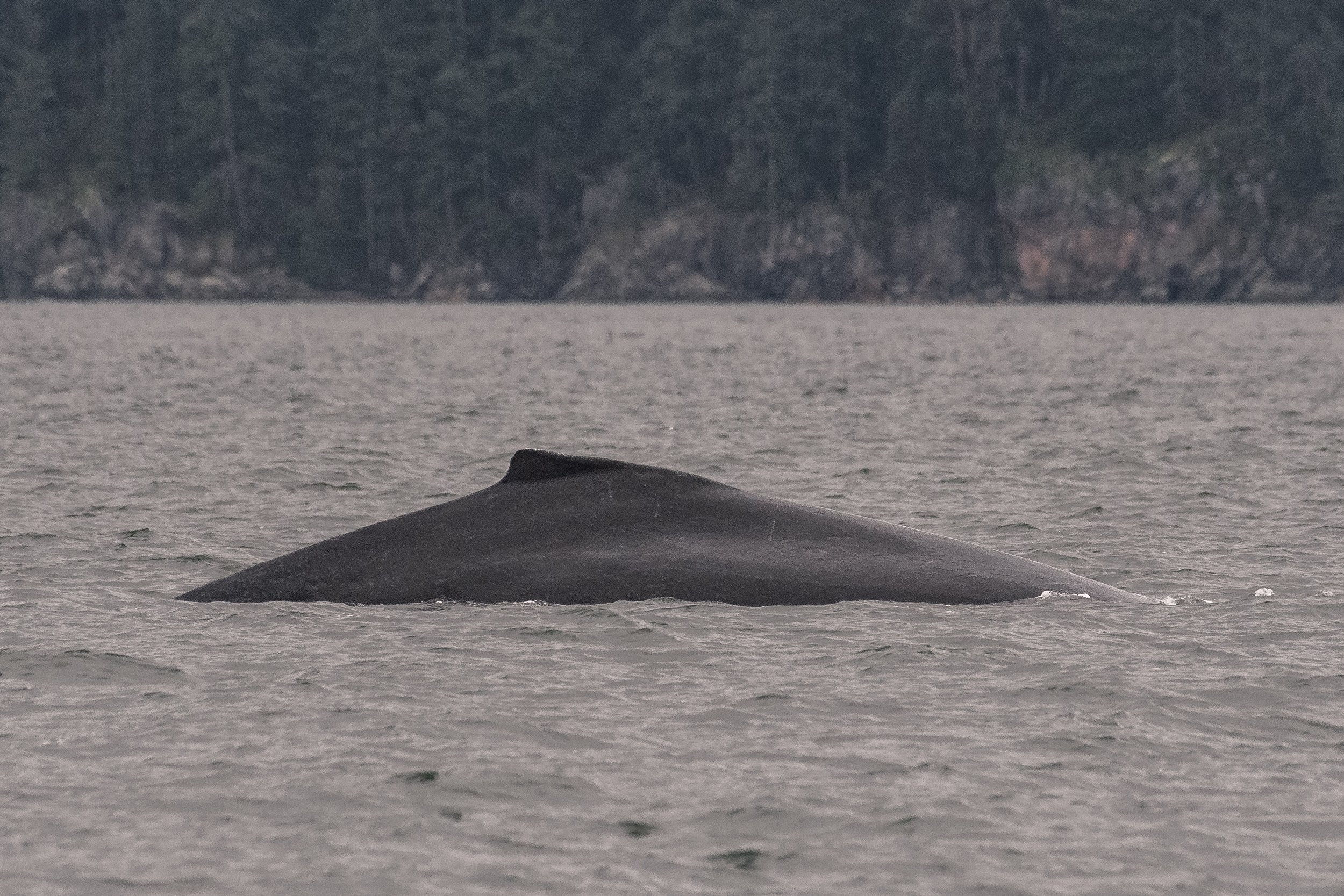
Zig Zag has a very softly sloped dorsal fin compared to many other humpbacks. Photo by Evan Hessels.
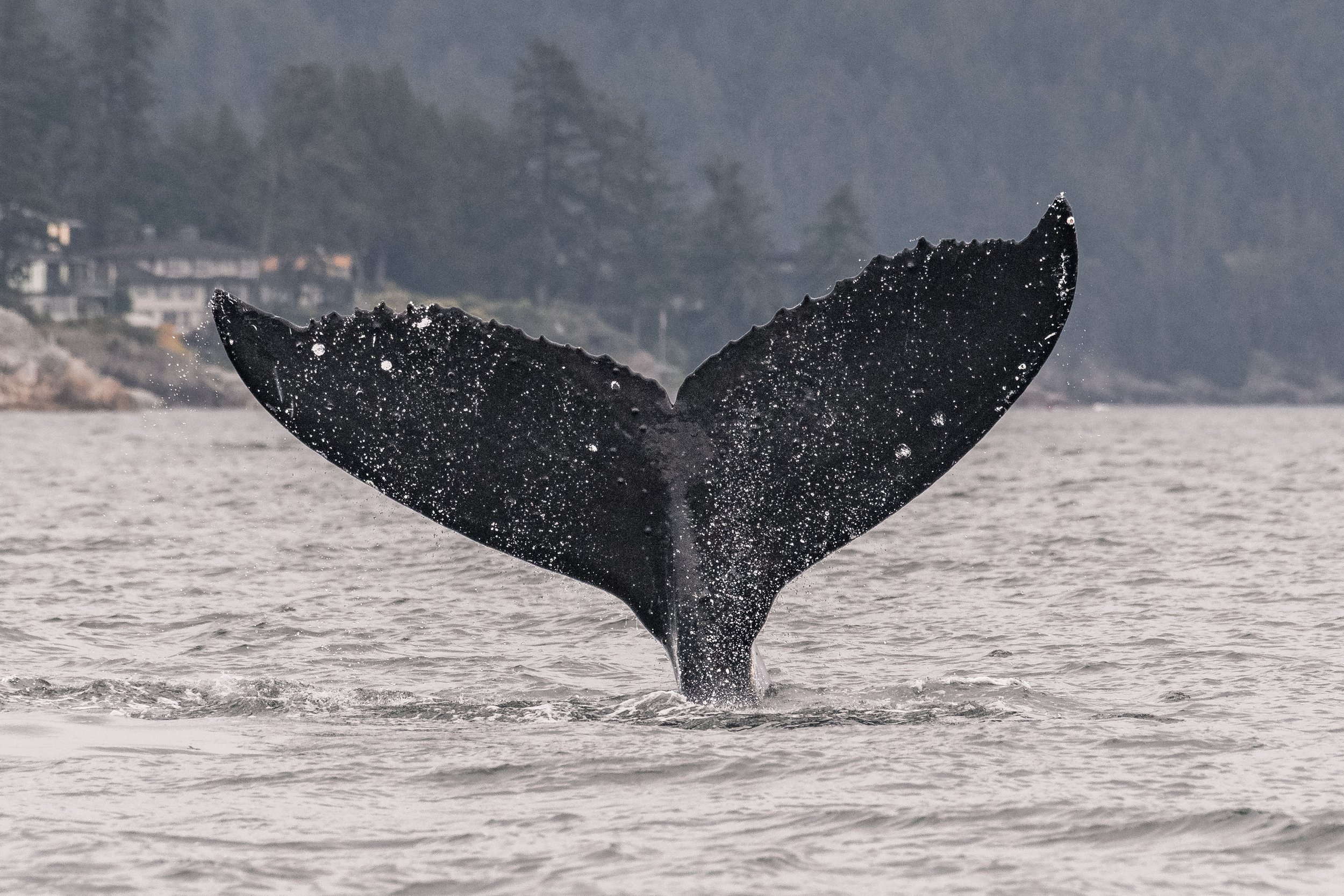
Zig Zag with her beautiful triple dot fluke pattern. Photo by Evan Hessels.
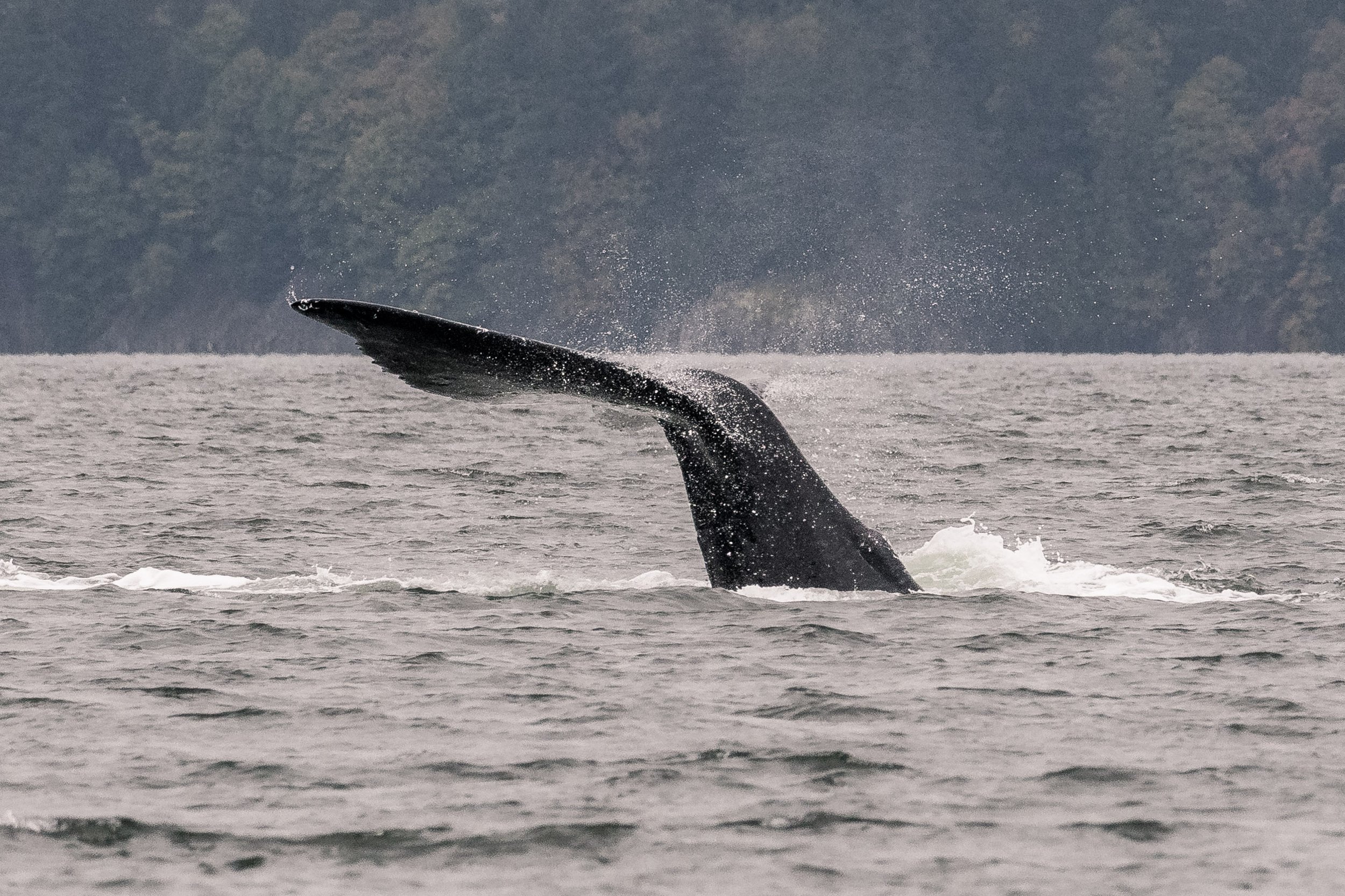
These three were being very slap happy. Photo by Evan Hessels.
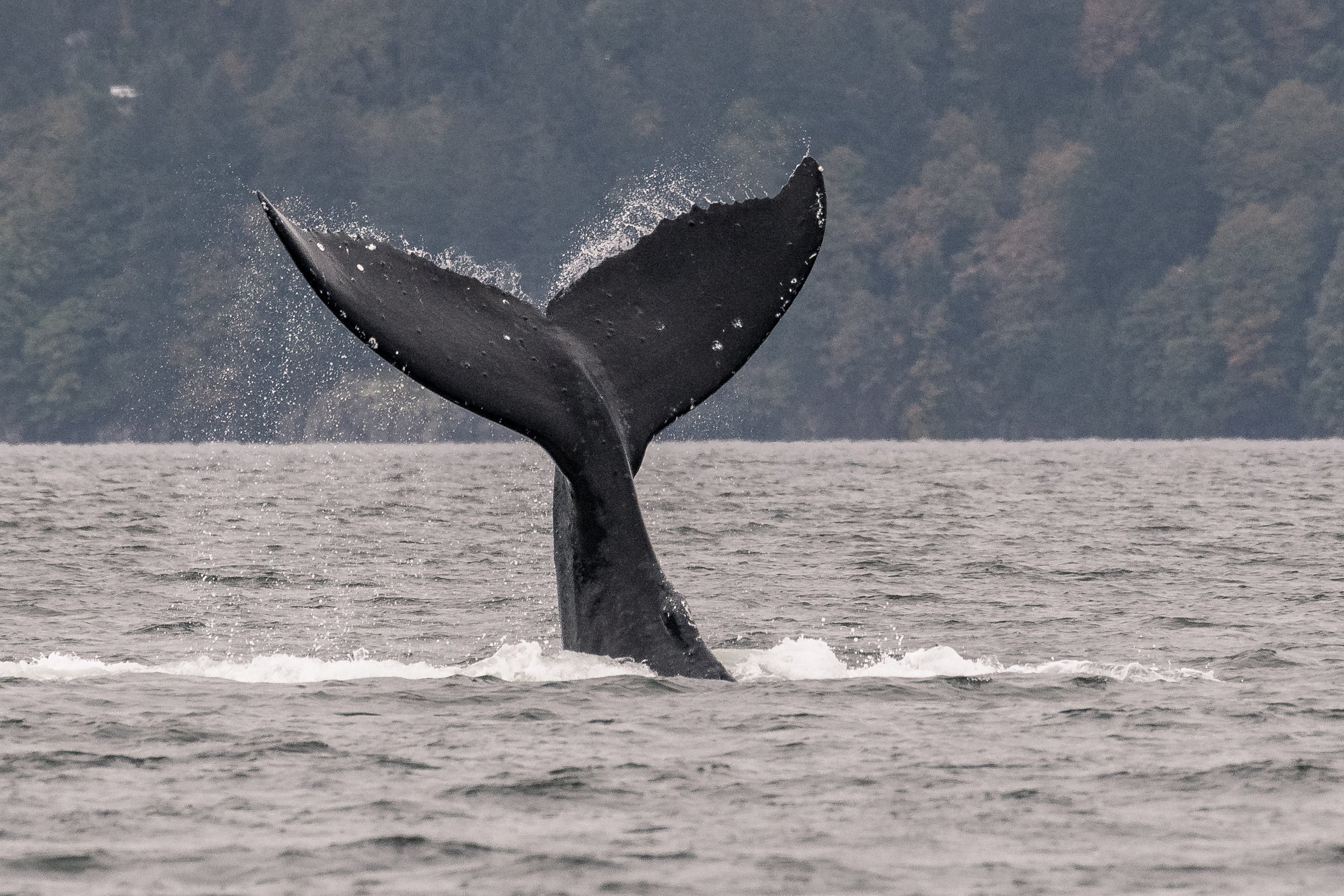
Zig Zag tail lobbing along. Photo by Evan Hessels.
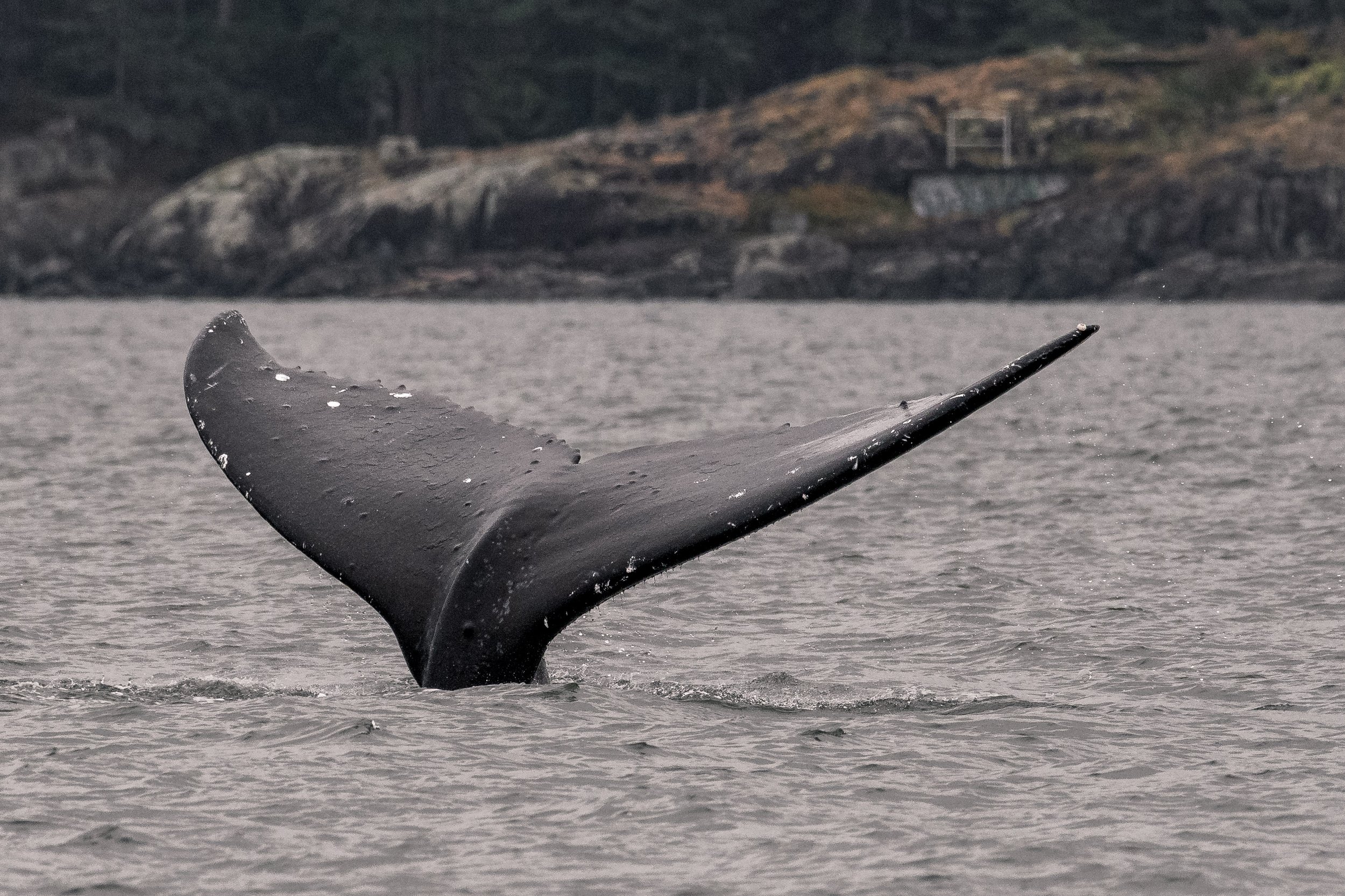
Zig Zag with her tail inverted above the surface. Photo by Evan Hessels.
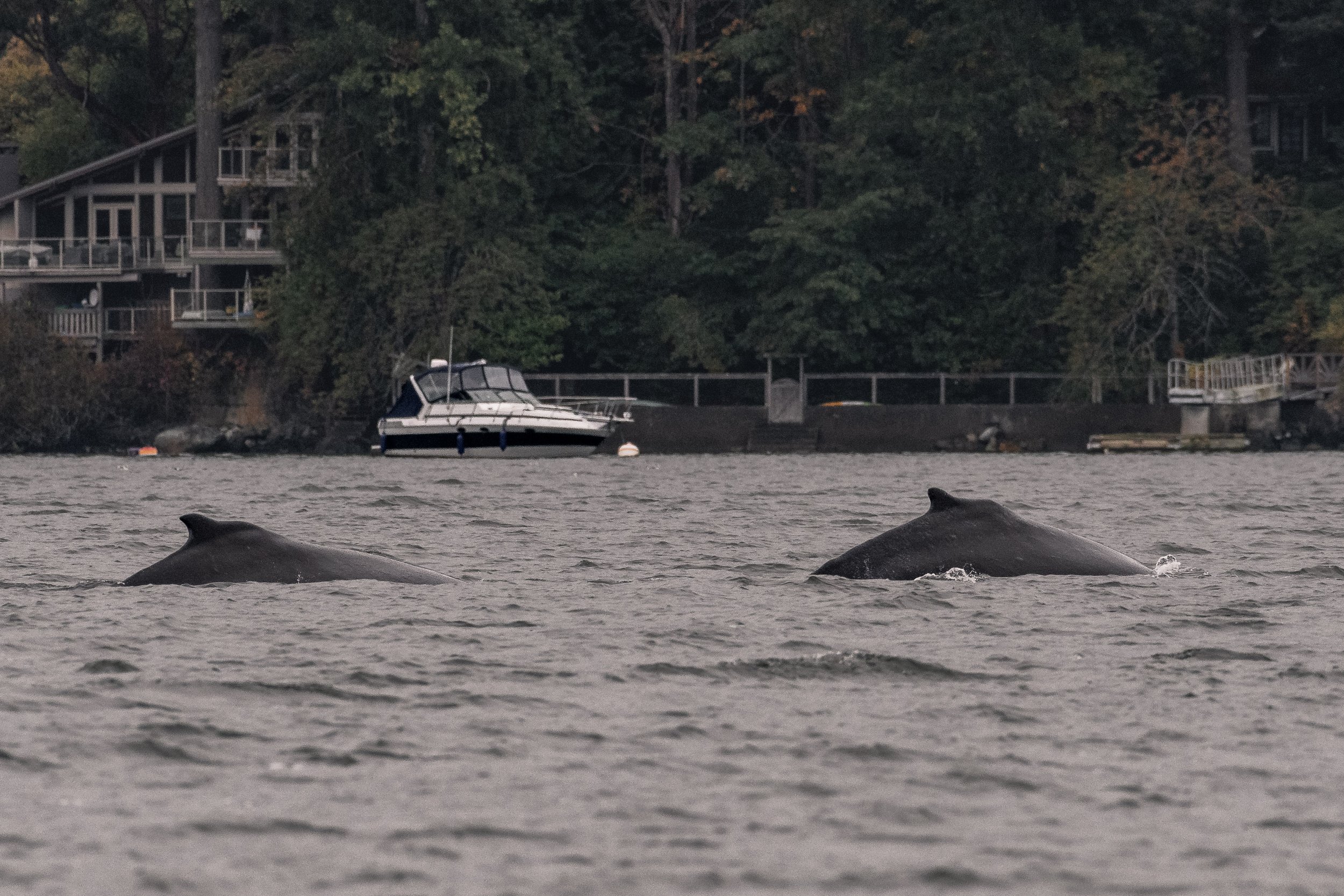
Malachite and Kappachino travelling side by side. Photo by Evan Hessels.
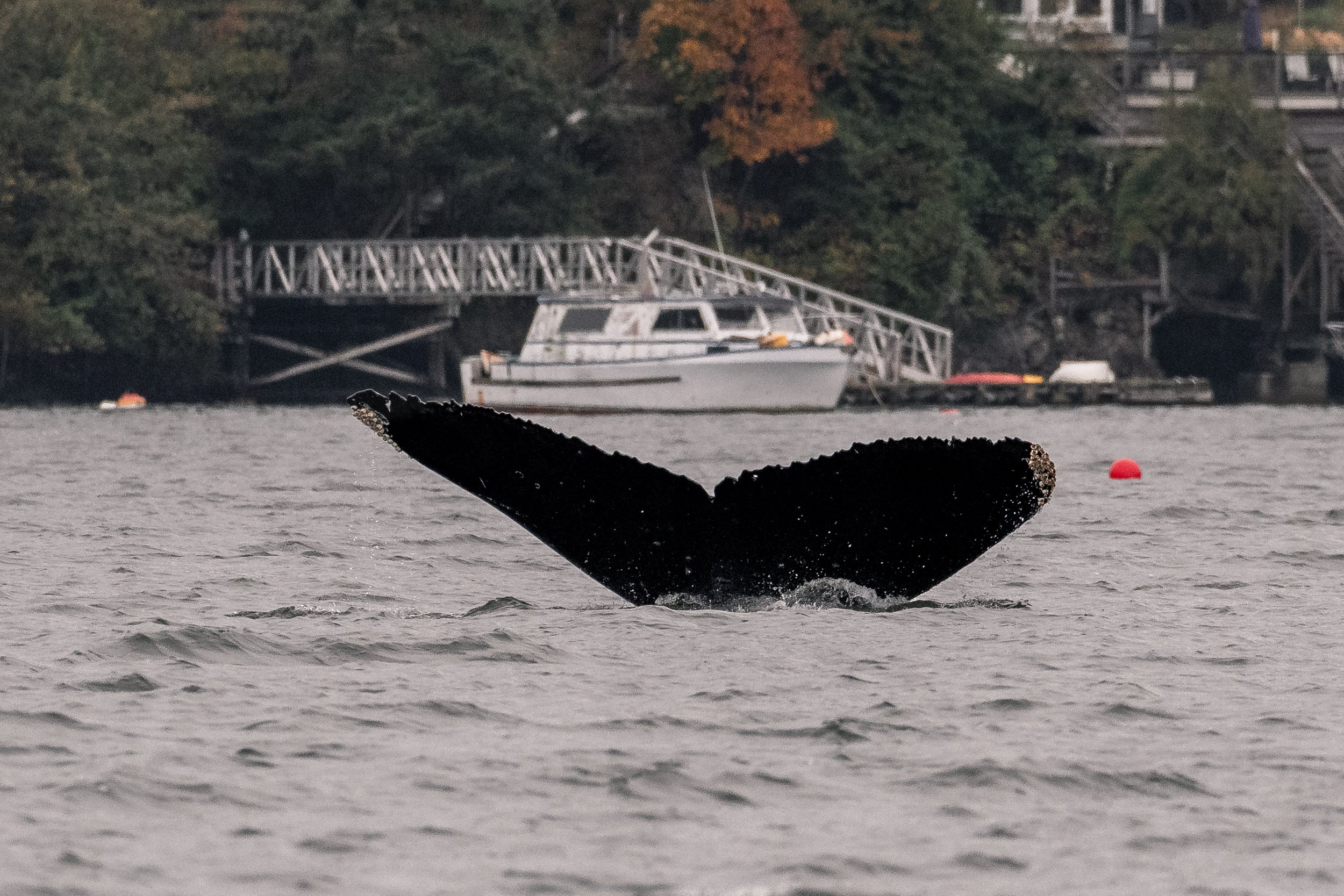
Kappachino diving in Howe Sound. Photo by Evan Hessels.
Incognito
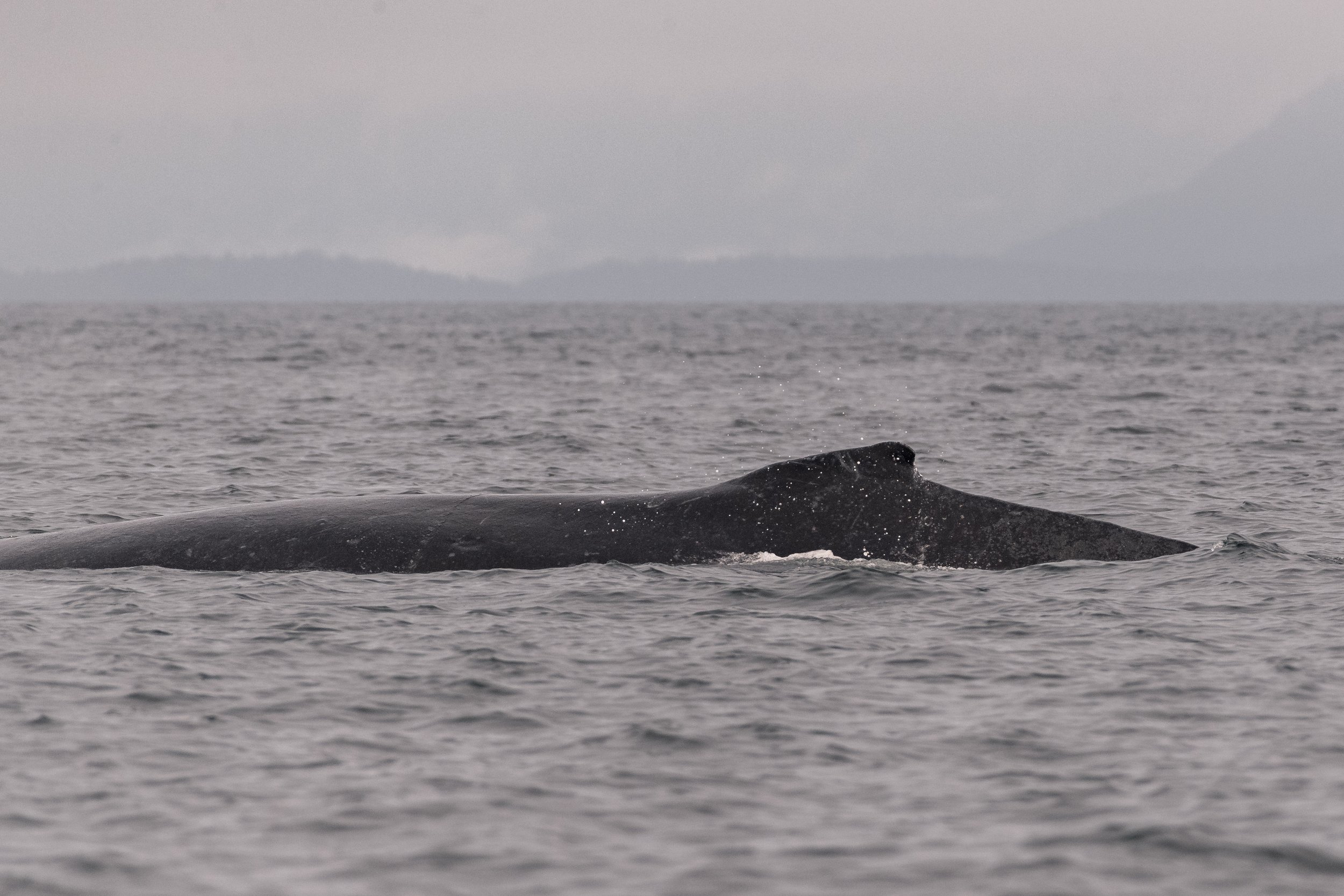
Incognito making their way along. Photo by Hayleigh Hilbert.
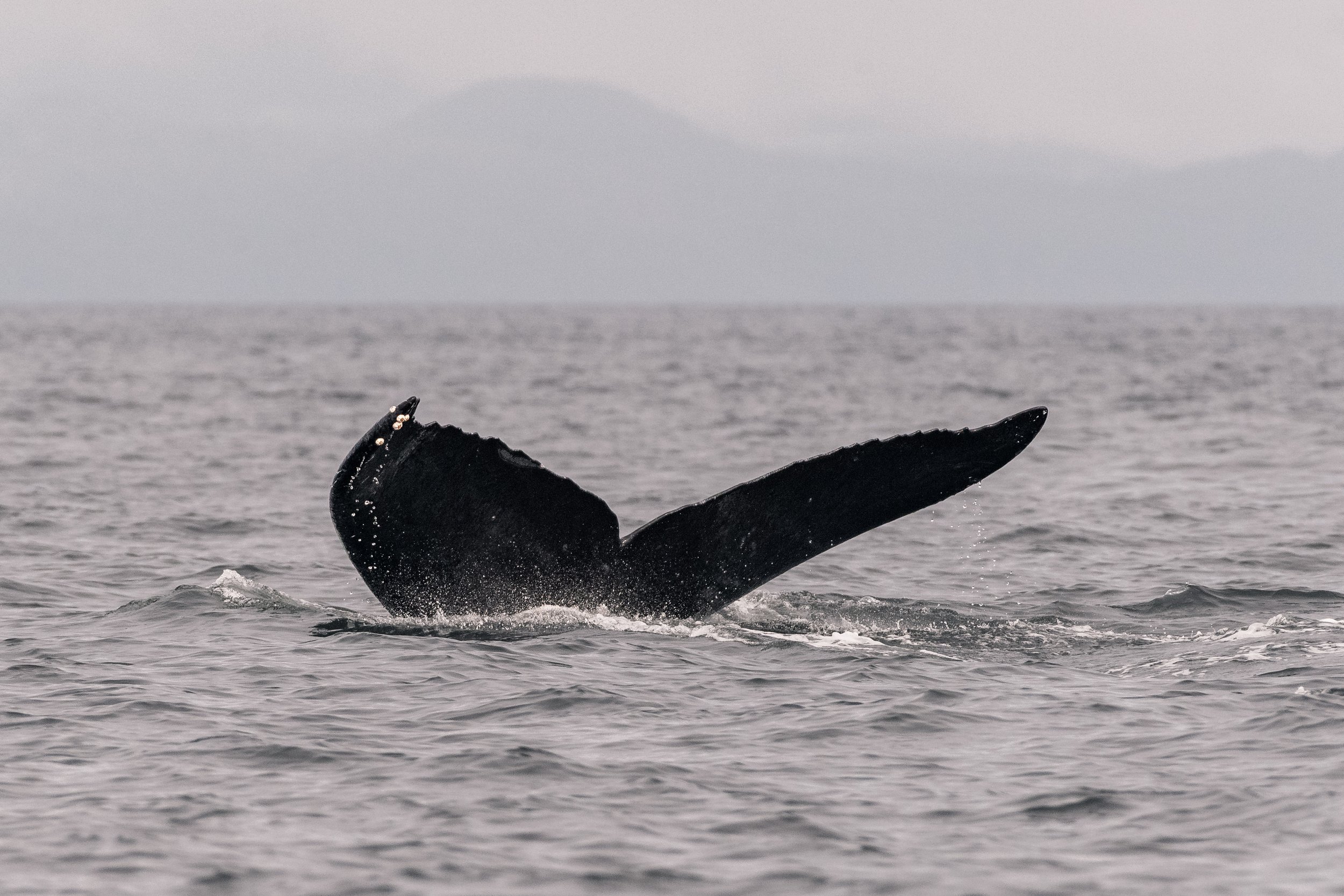
A little peek at Incognito’s fluke as they dive. Photo by Hayleigh Hilbert.
Other Wildlife
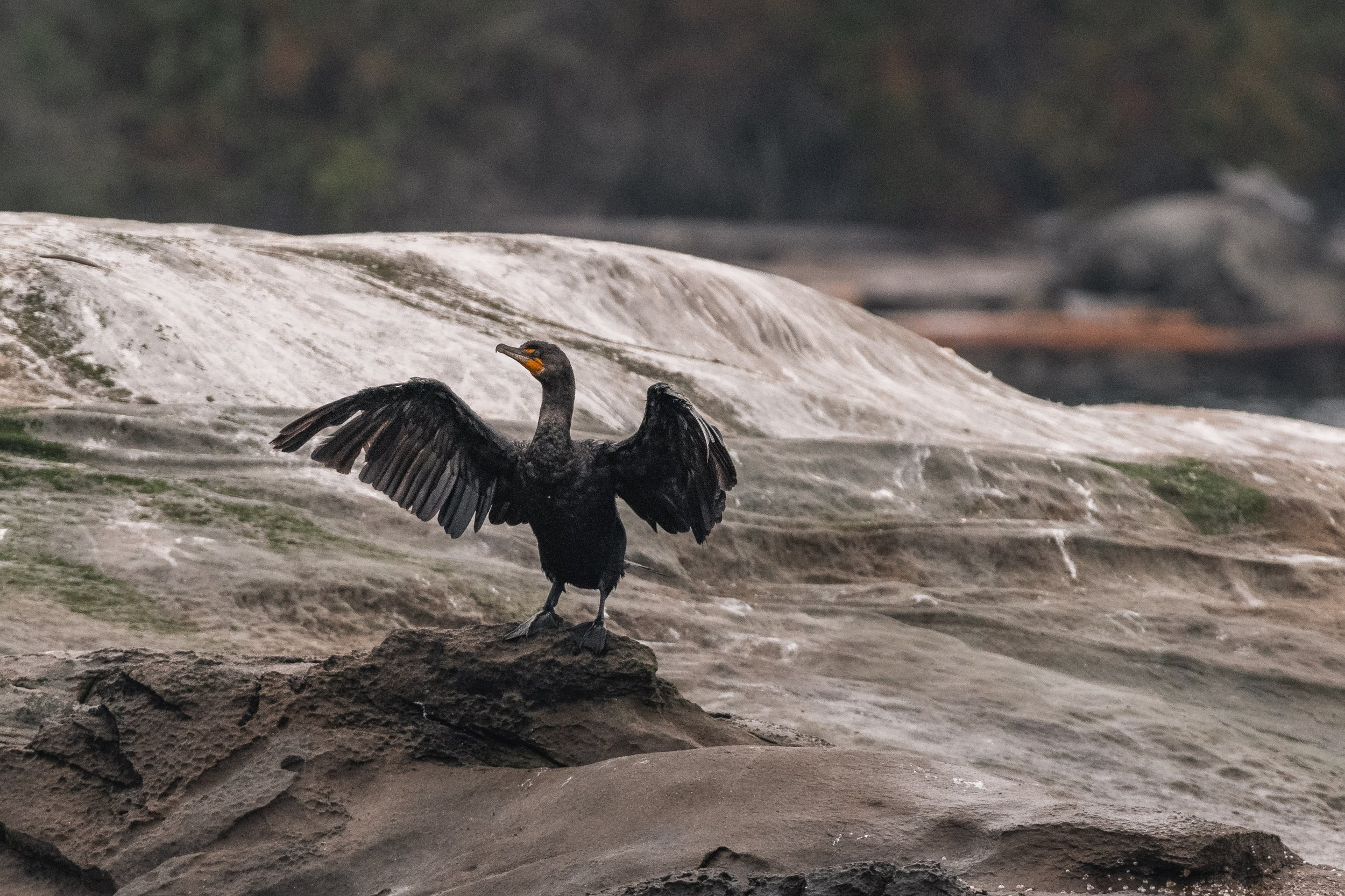
A Double-crested Cormorant in horaltic pose. Photo by Hayleigh Hilbert.
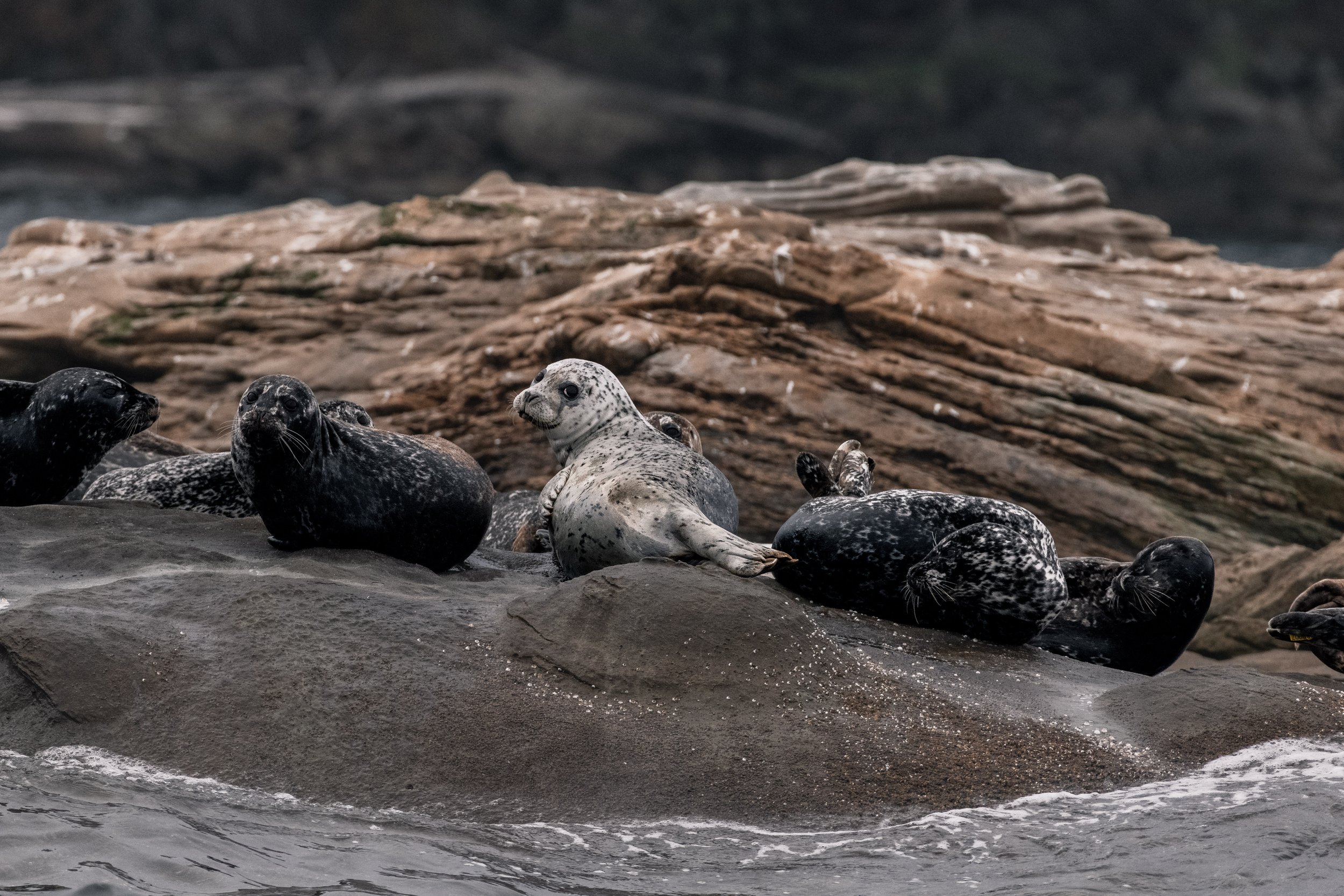
Harbour Seals hauled out on the rocks. Photo by Hayleigh Hilbert.
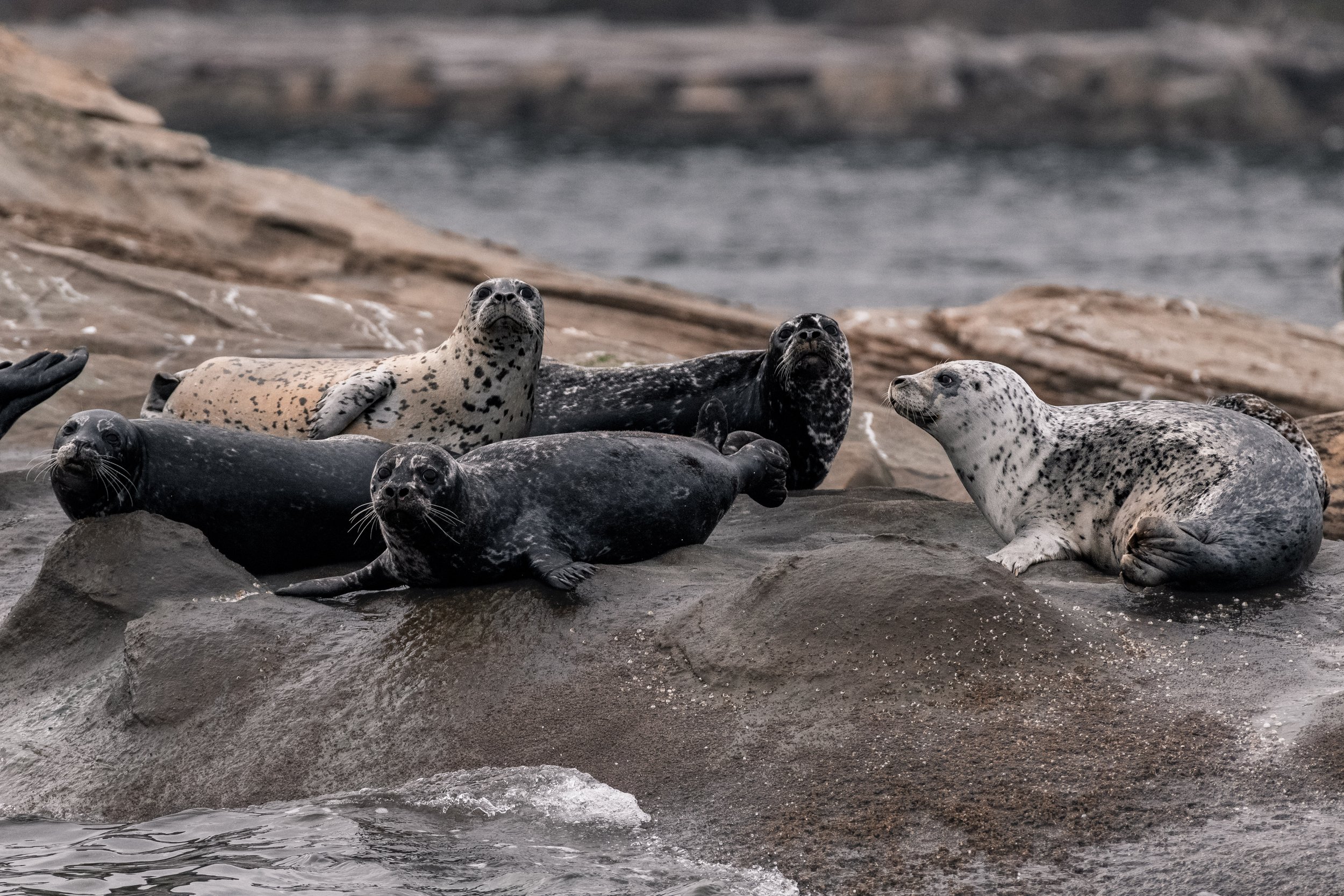
Stretching and relaxing with the Harbour Seals. Photo by Hayleigh Hilbert.
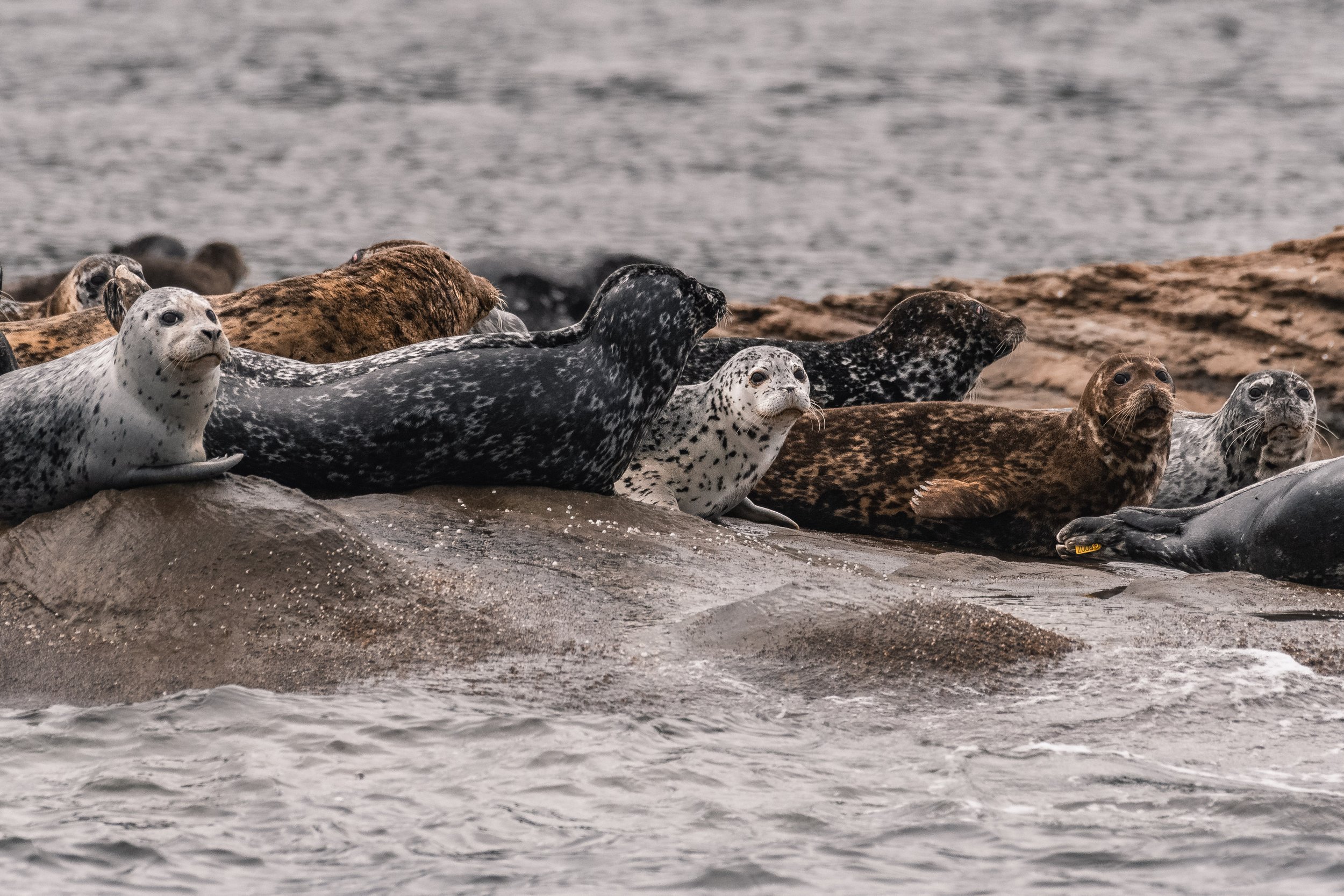
The hauled out Harbour Seals, with one interesting addition - a flipper tag is visible on one of them! Photo by Evan Hessels.
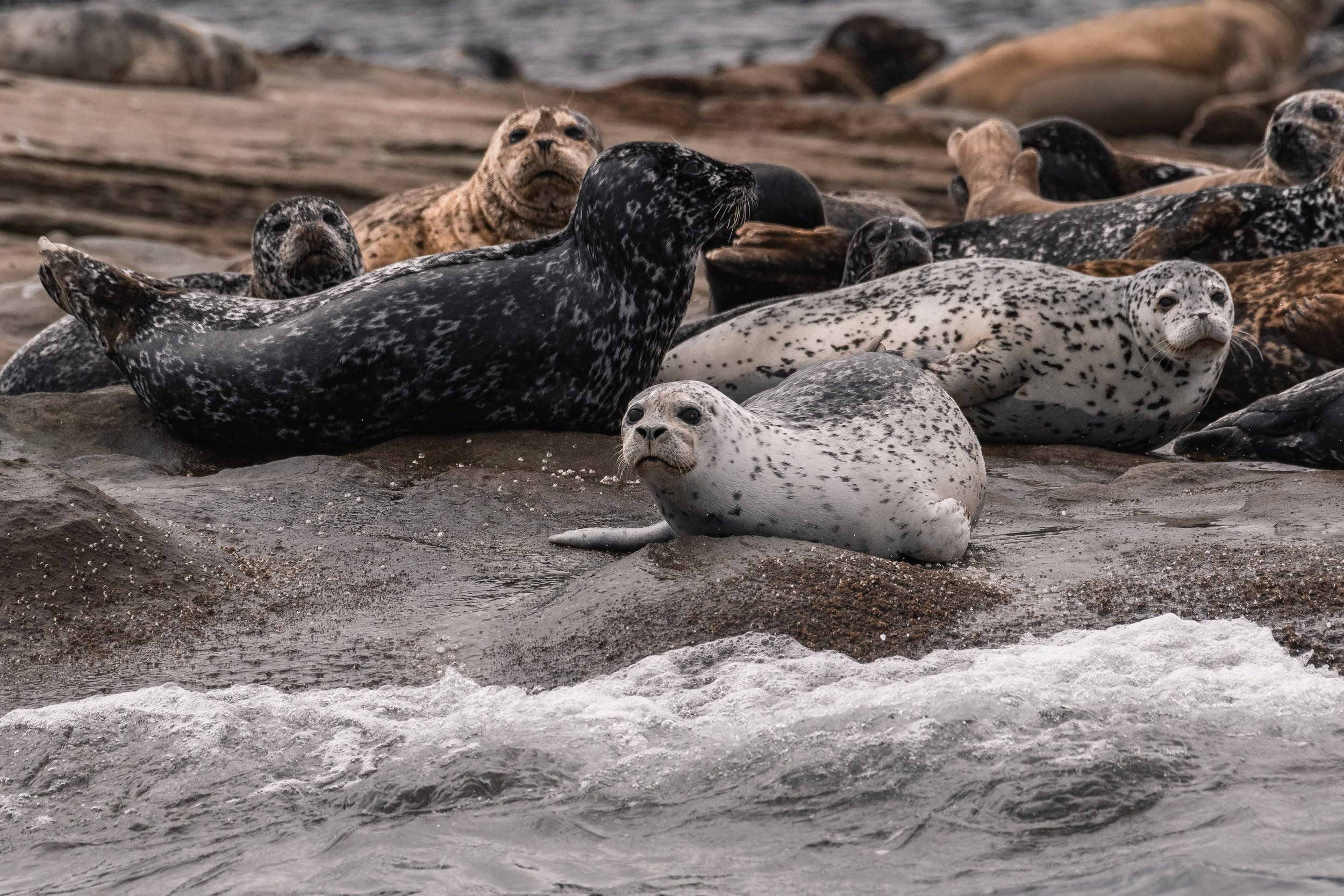
The Harbour Seals were watching us back! Photo by Evan Hessels.
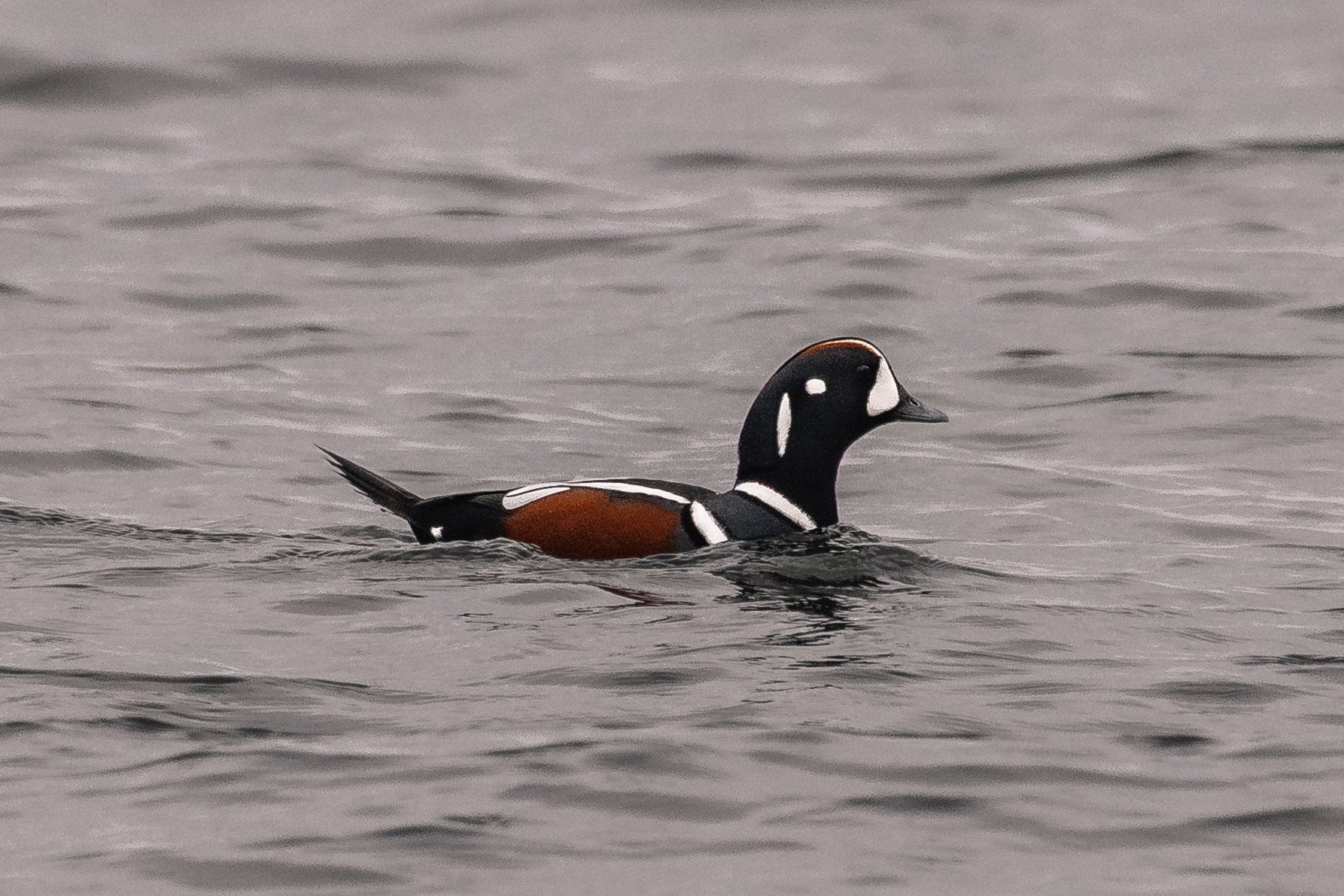
A beautiful male Harlequin Duck. Photo by Evan Hessels.
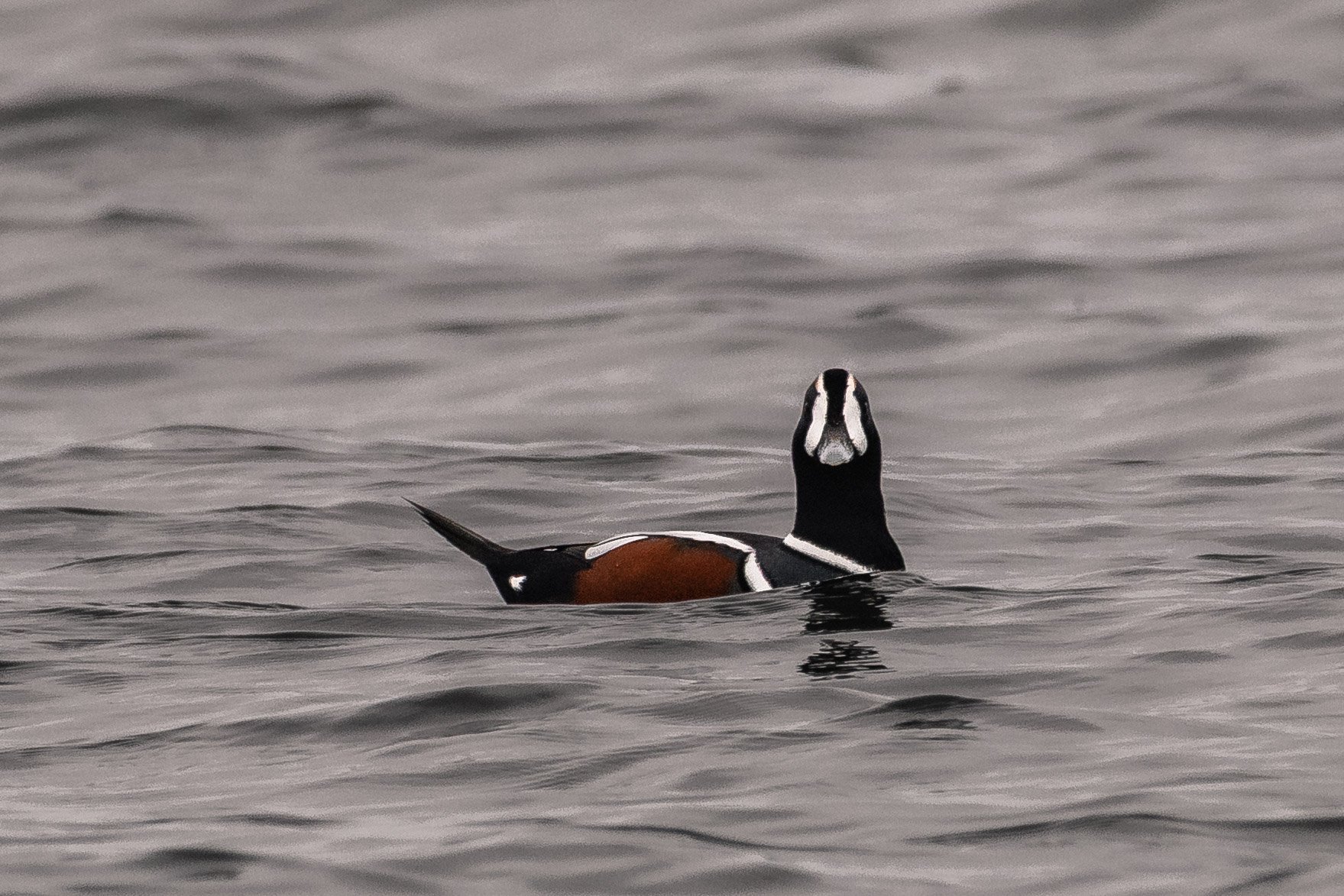
Birds always look very interesting when they look straight at you… Photo by Evan Hessels.
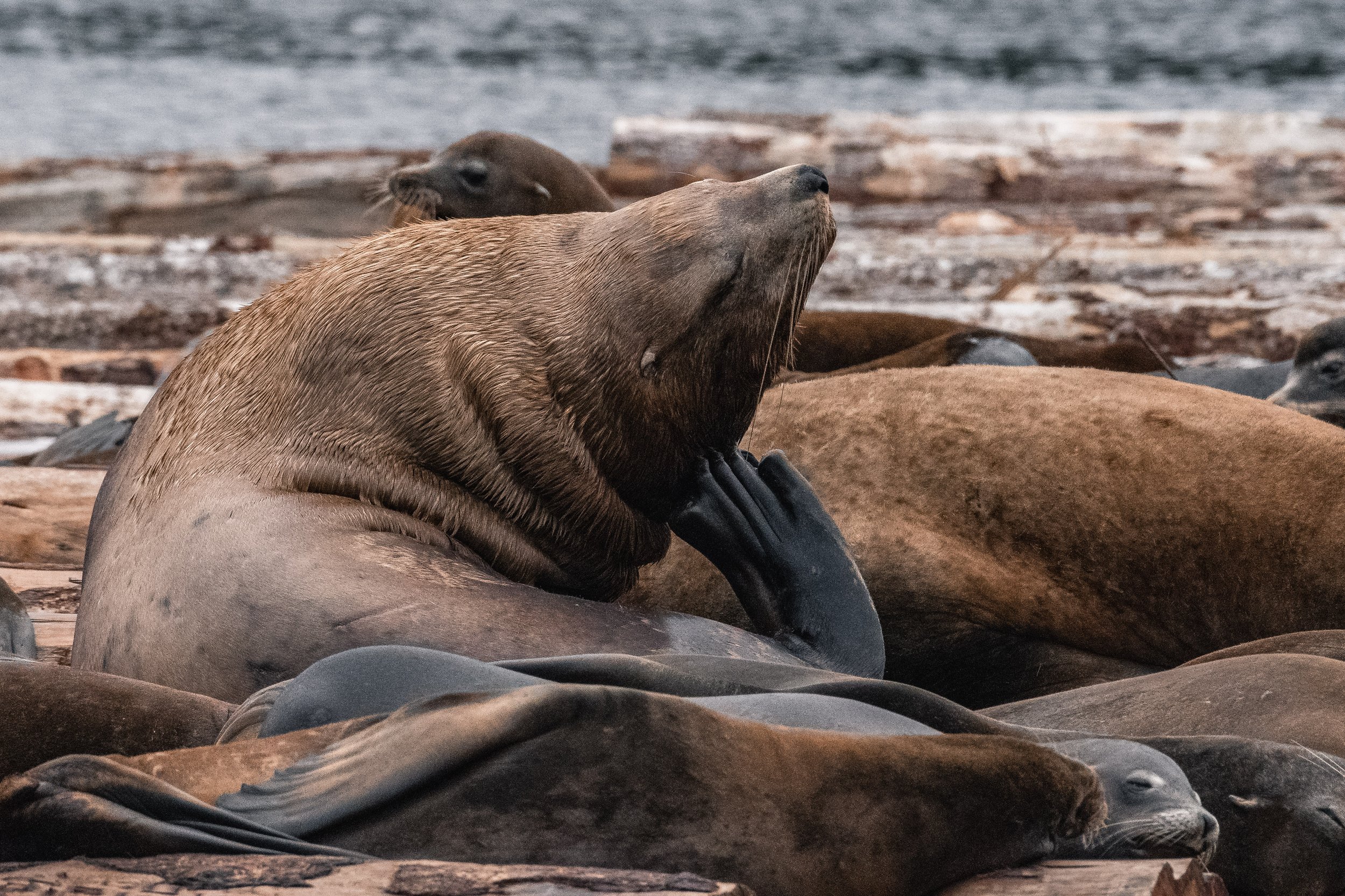
Scratching an itch on the log booms. Photo by Evan Hessels.
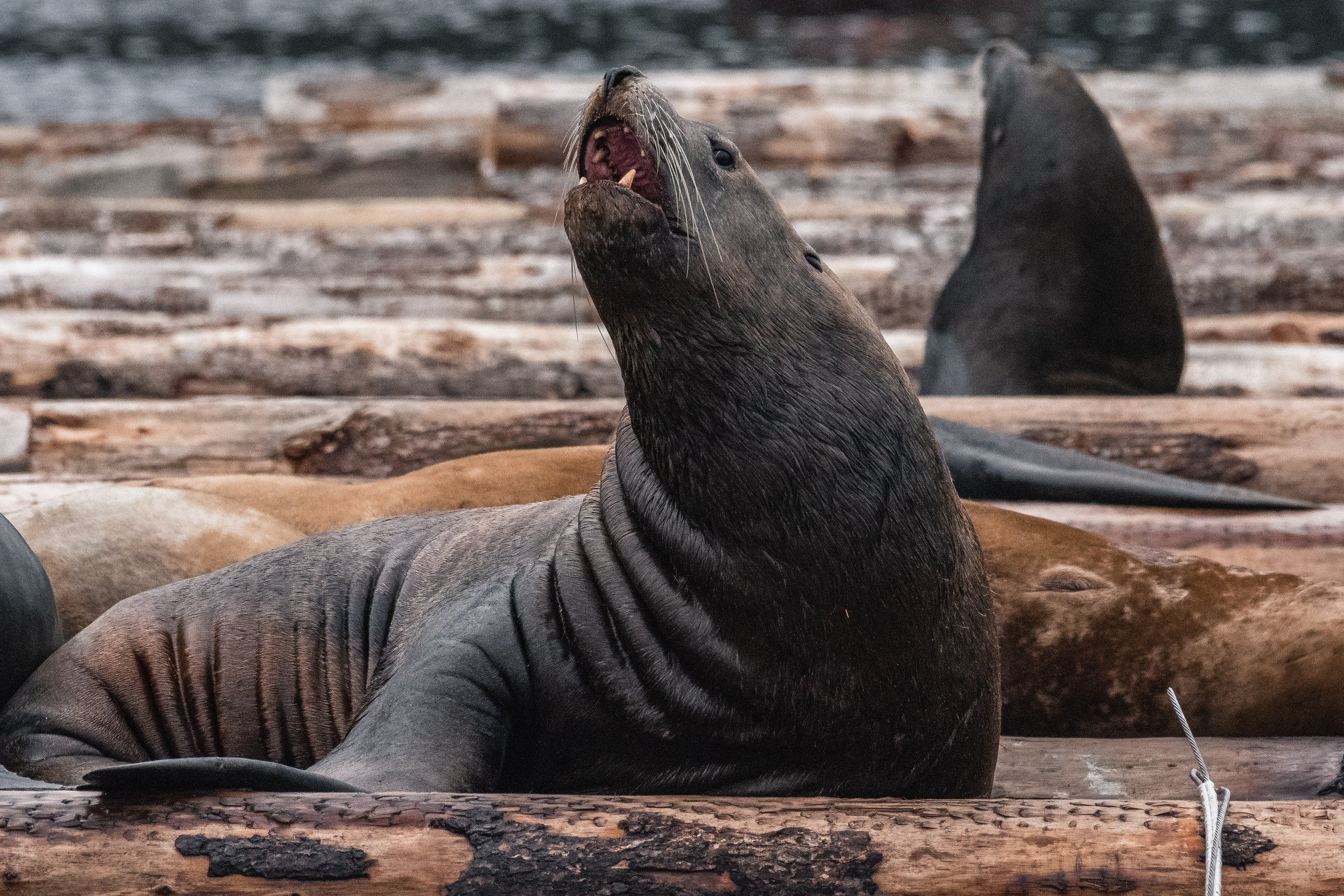
Bellowing away - look at the size of those teeth! Photo by Evan Hessels.
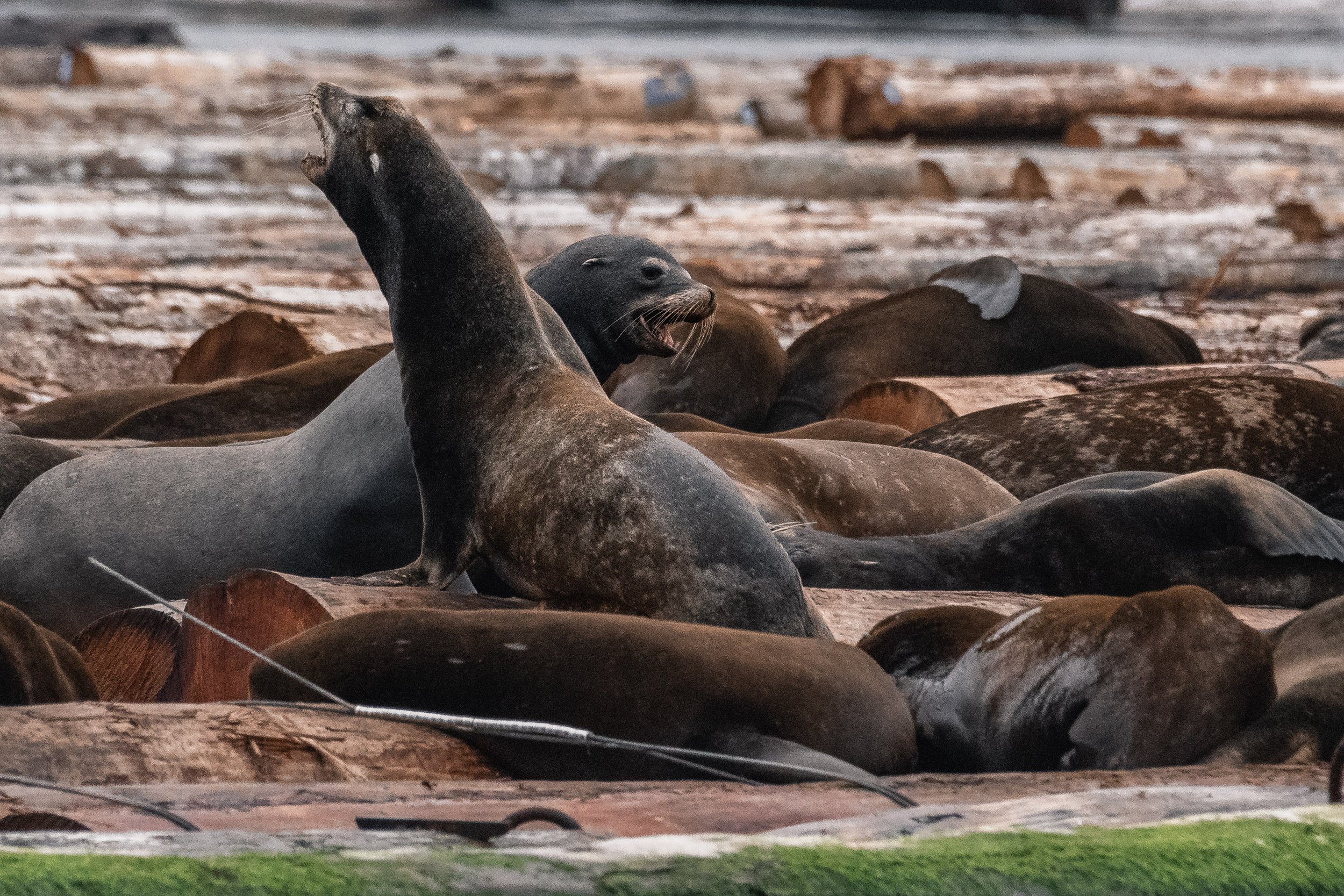
There was a lot of bickering amongst the sea lions on the log booms today. Photo by Evan Hessels.
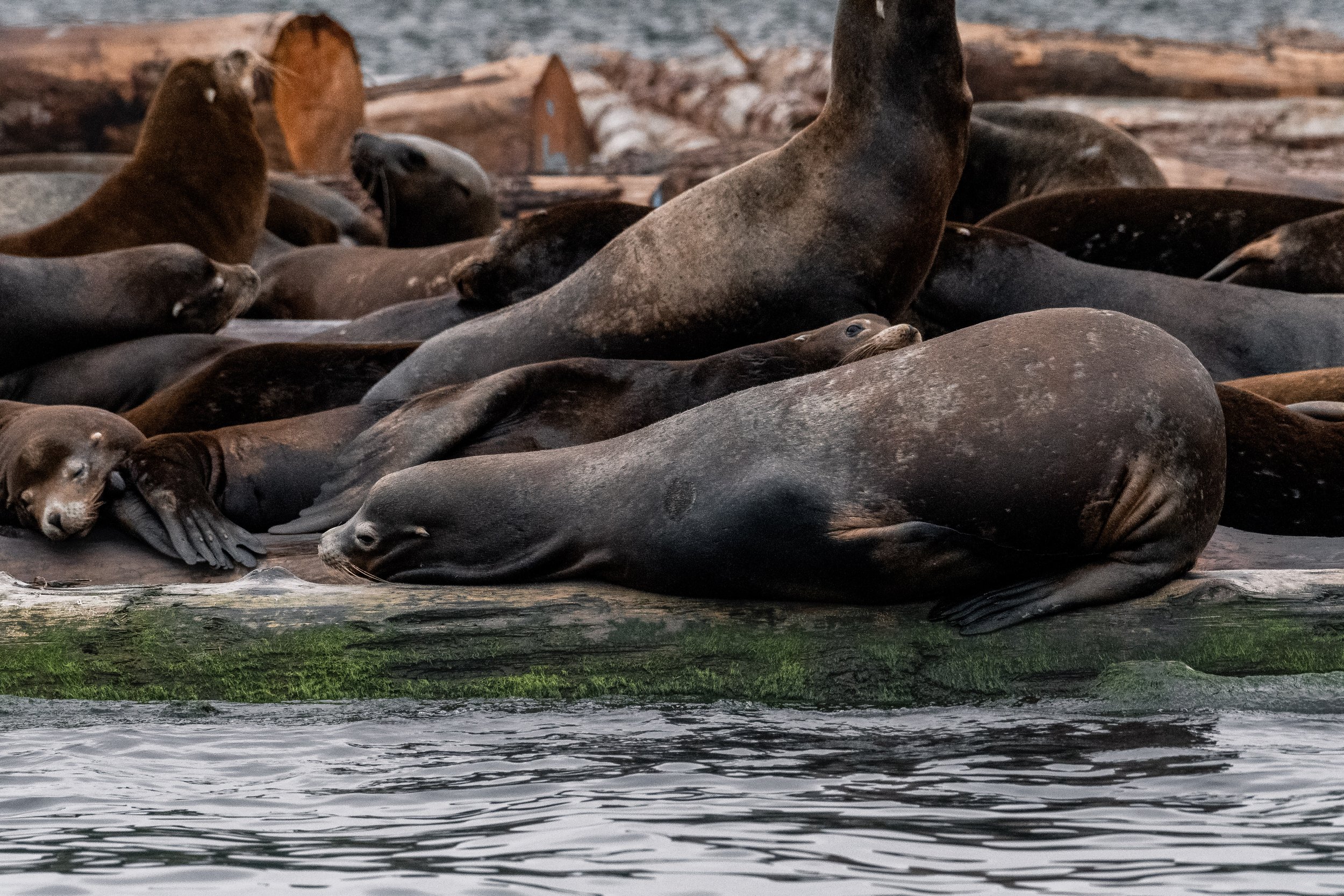
California Sea Lions napping in some interesting positions. Photo by Evan Hessels.
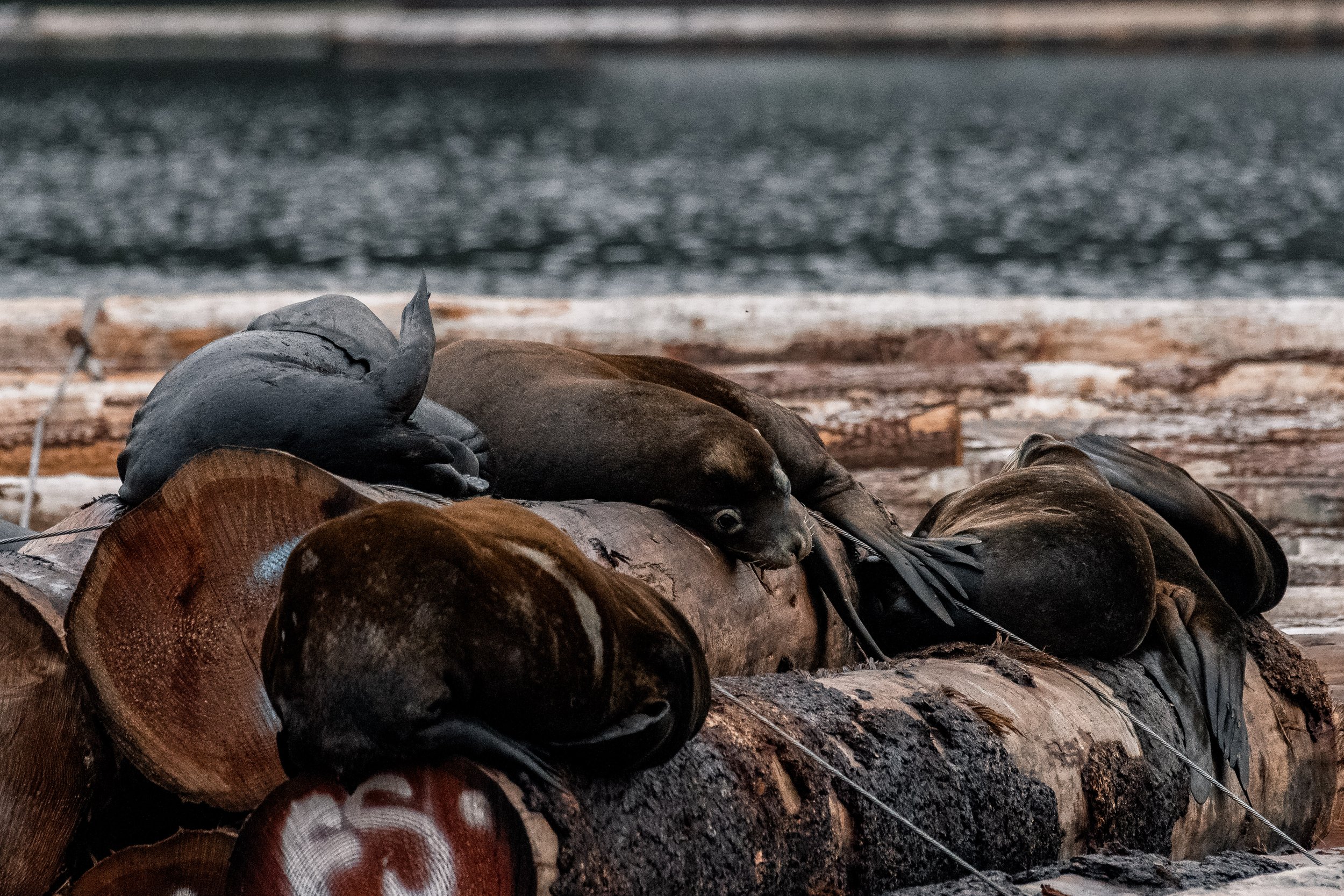
Carefully balanced at the top of the pile. Photo by Evan Hessels.