
April 11, 2026 - Adventures to the North
The sun sat high overhead as we departed aboard Keta, our open Zodiac, the light reflecting off the water in every direction. Our anticipation was buzzing as Marine Naturalist Jordan outlined the trip’s plan. We would head north, following up on an early report of whales. With no recent updates, there was no guarantee they would still be in the area. That uncertainty settled in as we cruised onward, eyes scanning constantly, each ripple and shadow drawing attention.
As we travelled farther from Nanaimo, the landscape began to shift. Vancouver Island faded into the distance behind us while the rugged outline of Texada Island rose ahead. We followed along its eastern shoreline, scanning carefully as we continued. After some time, we paused for a break at McRae Islet, a small rocky outcrop that has gained recognition far beyond these waters - this little island was featured as one of National Geographic’s Best Photos of the Year in 2025!
The rocks were alive with movement as we watched. Steller sea lions covered the haulout, their large bodies covering the rocks as they shifted, vocalized, and rested. These haulout spaces are essential, offering a place to recover between long stretches at sea. Looking closer, the importance of this small island extended beyond the sea lions. It has also supported a significant portion of the Glaucous-winged gull population over the years, a reminder that even the smallest pieces of habitat can play a large role in the broader ecosystem. During a survey in the 1980s, McRae Islet was documented supporting 262 pairs of Glaucous-winged Gulls. While this may not sound like a large number, it accounts for over 1% of the species' population in Canada!
Leaving the haulout behind, we turned toward the entrance of Jervis Inlet. The change was near immediate. Steep mountains rose on either side, enclosing the waters below. Jervis Inlet is the deepest coastal fjord in British Columbia, with beautiful mountains encircling the pristine waterway. As we continued scanning for whales, it was impossible not to take in the scale of the surrounding landscape. The stillness of the inlet contrasted with the open water we had just crossed, offering a moment to reflect on the diversity of environments within the Salish Sea.
Back out in the open, we resumed our search, weaving through the Malaspina Strait and eventually turning southbound once more. Orca can travel great distances in short periods of time, and with that in mind, the search continued with the same focus. Each stretch of water held potential, even as time passed.
Returning toward Gabriola Island, word came in of a possible sighting along its coastline. We adjusted course and began scanning intently along the island's shores. Near Orlebar Point, we paused beside a small rocky islet where a lone harbour seal rested.
It moved with a distinct, rolling motion as it shifted along the rock, a reminder of how different these animals are from their sea lion relatives. Harbour seals cannot rotate their hind flippers beneath them, so instead they pull themselves forward, a movement often described as galumphing, or to move clumsily. The word comes from the classic novel Through the Looking-Glass, the sequel to Alice in Wonderland, both written by Lewis Carroll.
From that same vantage point, Entrance Island came into view. Its lighthouse stood as a reminder of another kind of movement across these waters. In earlier days, this area was a hub of activity during the coal era, with ships navigating carefully into Nanaimo Harbour. The light from the island guided them safely through, helping avoid the rocky shoreline that surrounds the harbour’s entrance. Even now, it stands as a marker of how people have long relied on these waters.
We departed our seal and rounded the tip of Gabriola Island, heading back towards Nanaimo. While the whales evaded us today, every guest on board was provided with a voucher, so they can join us again at their leisure.
Please enjoy this trip’s photos, taken by Marine Naturalist Jordan Robinson.
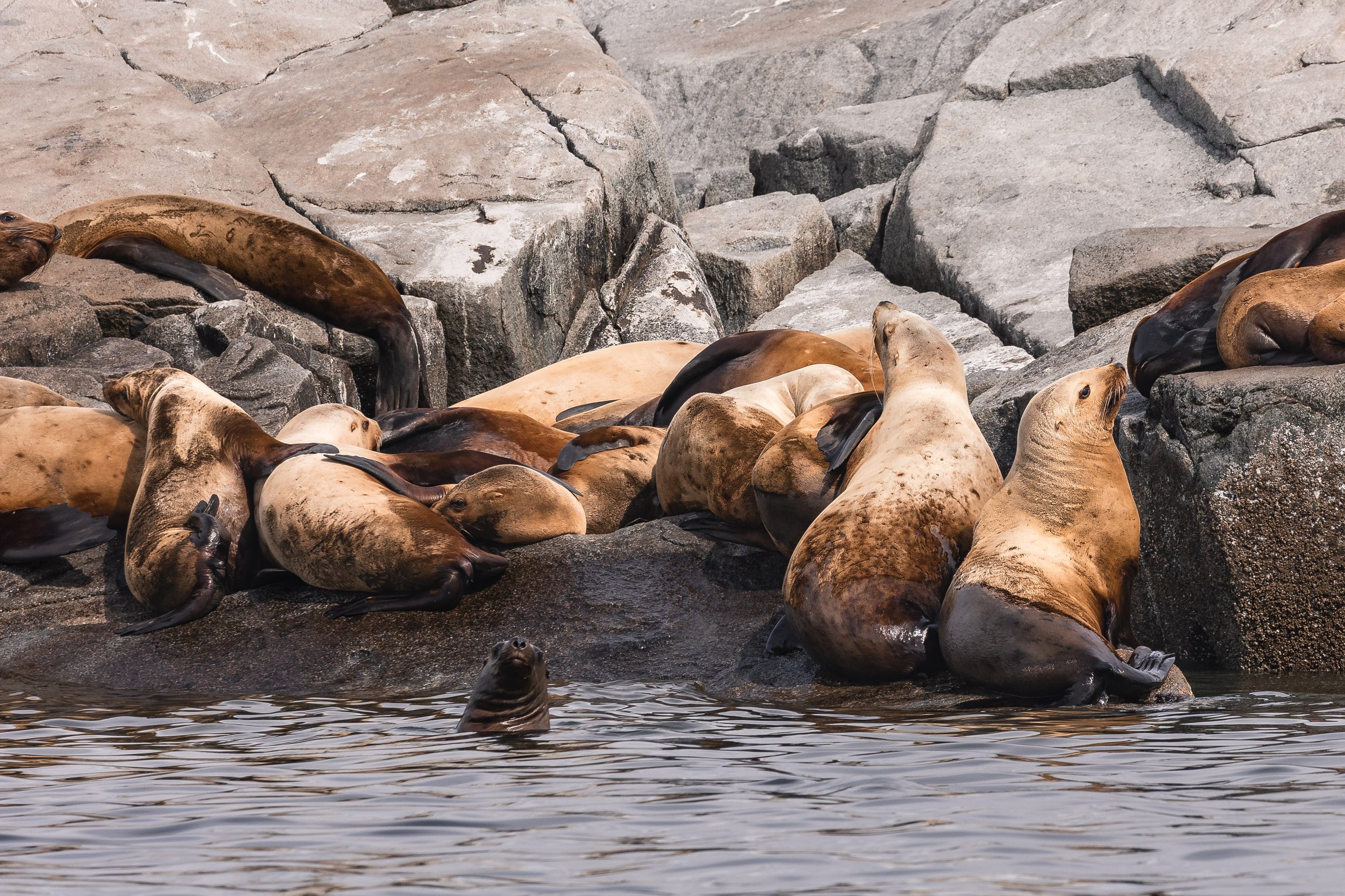
Relaxing on the shores.
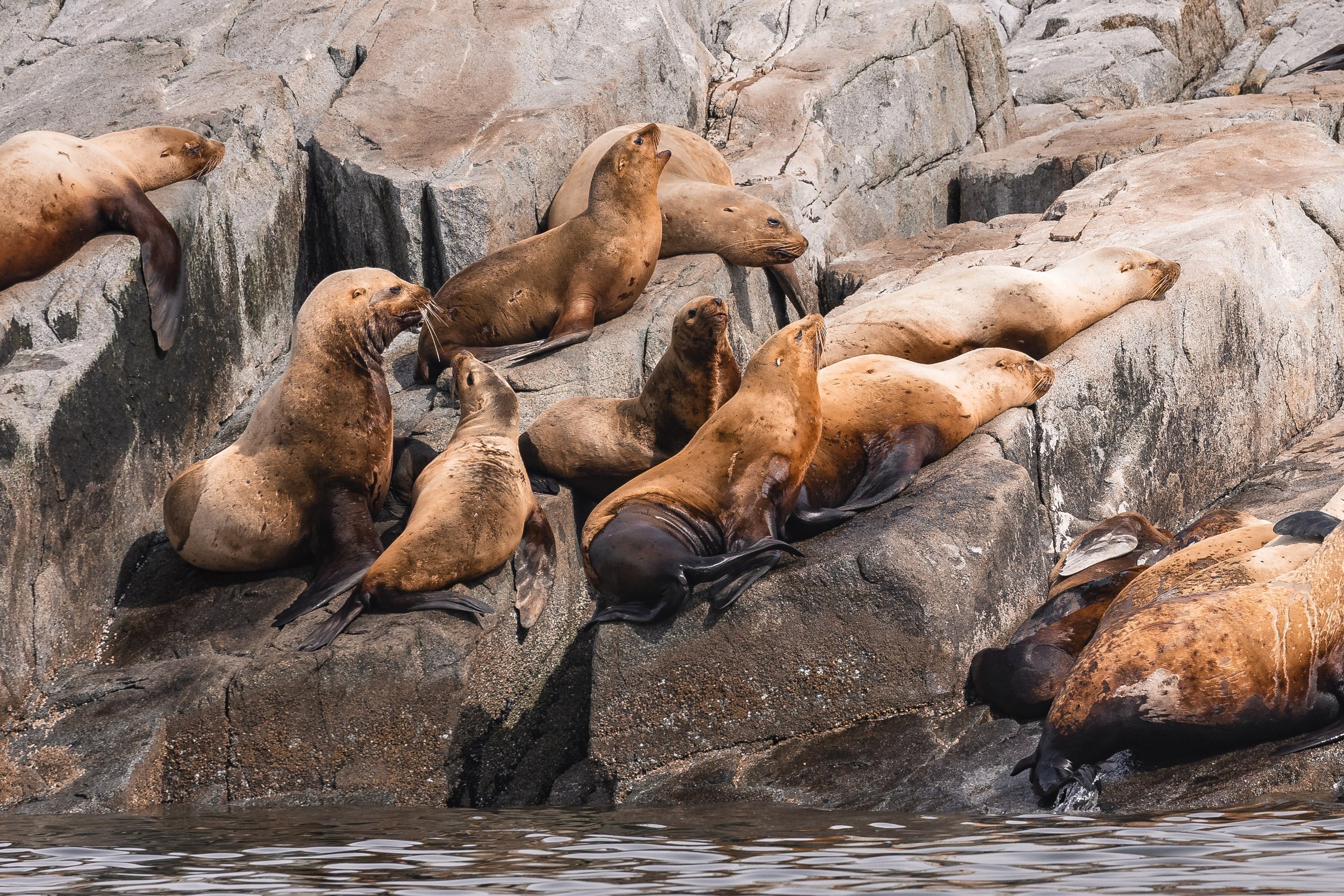
Sea lions of all sizes can be found at our haulouts.
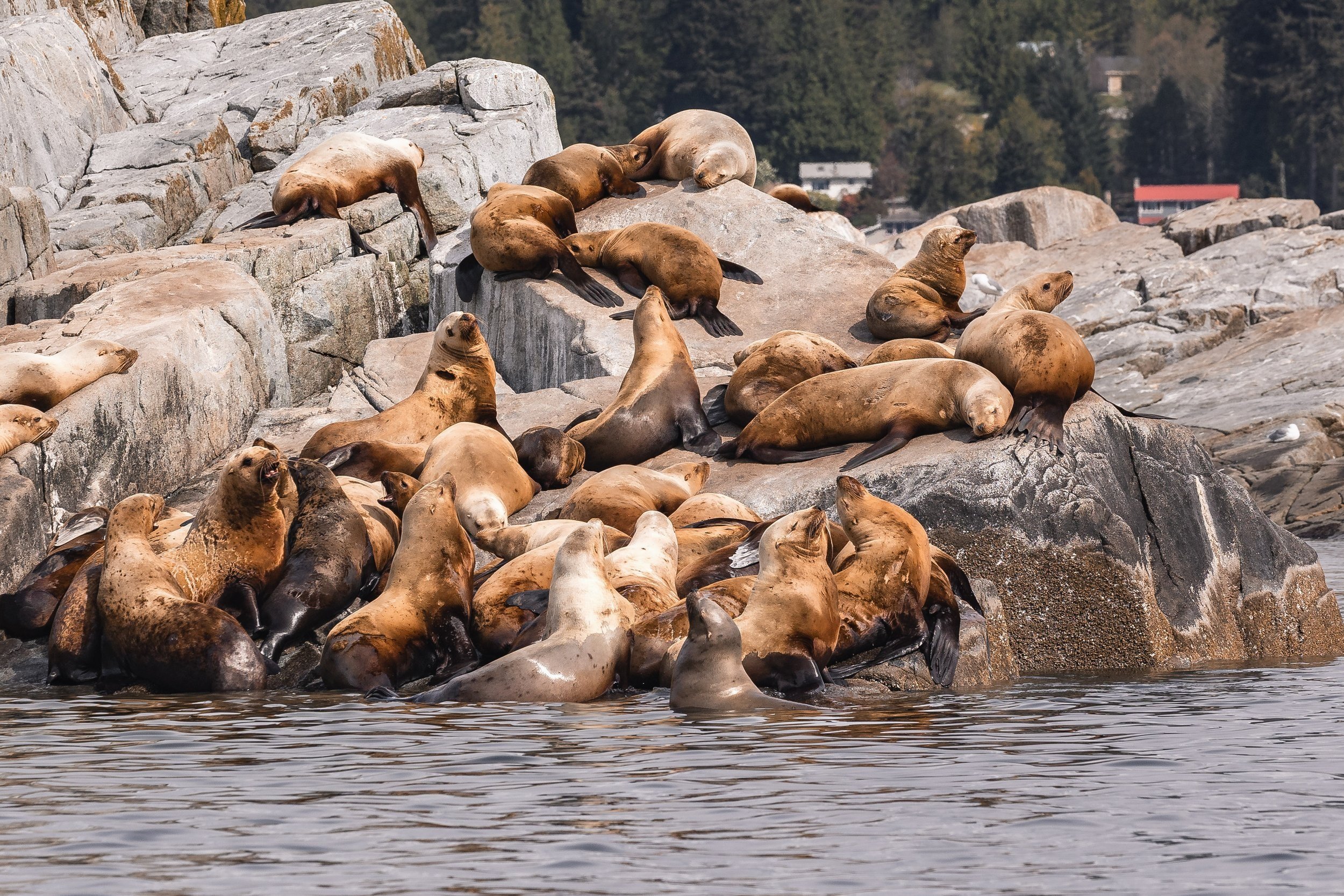
Steller Sea Lions, resting, roaring, and yawning the day away.
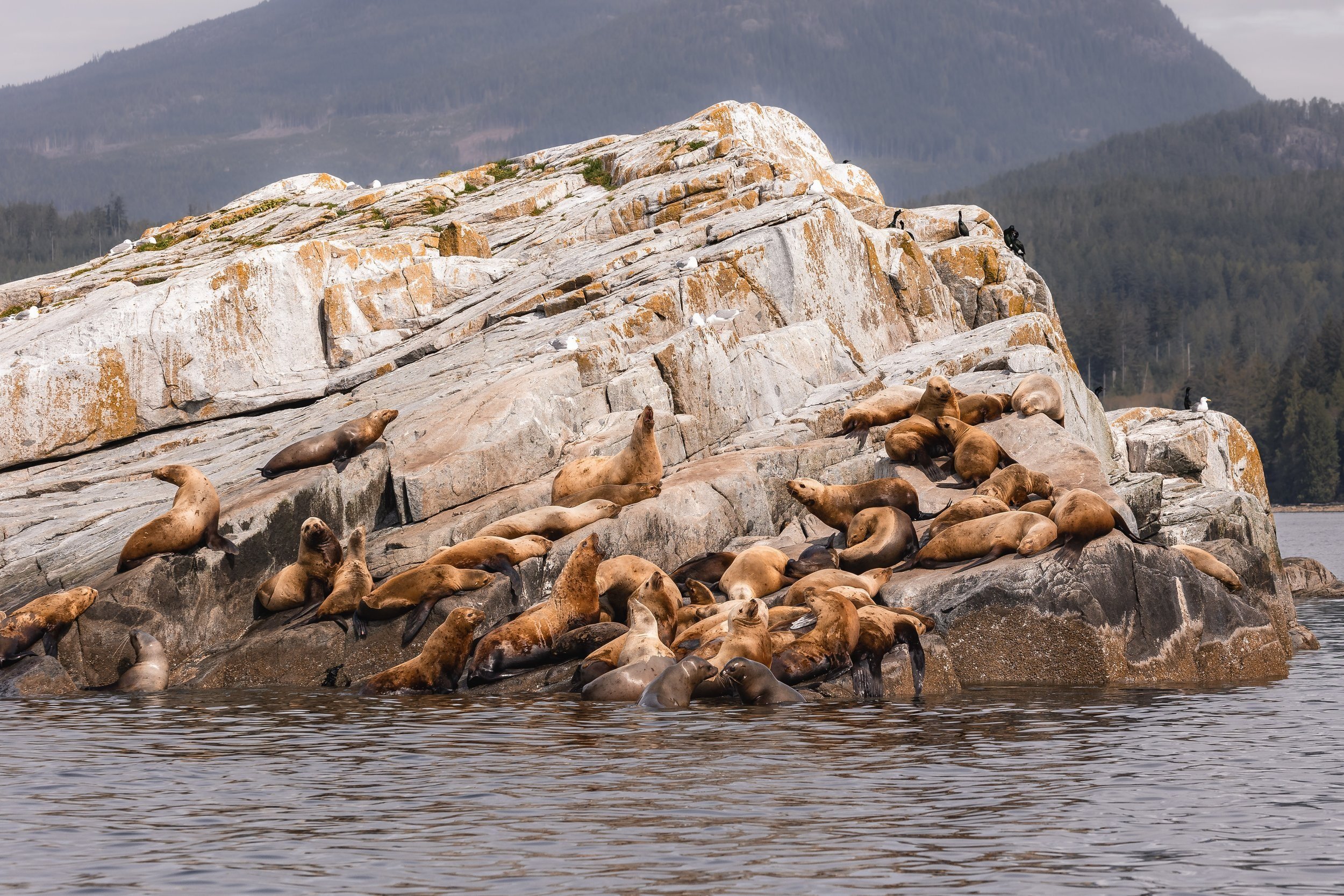
Many small rocky islands like McRae Islet are common haulouts for our pinnipeds.
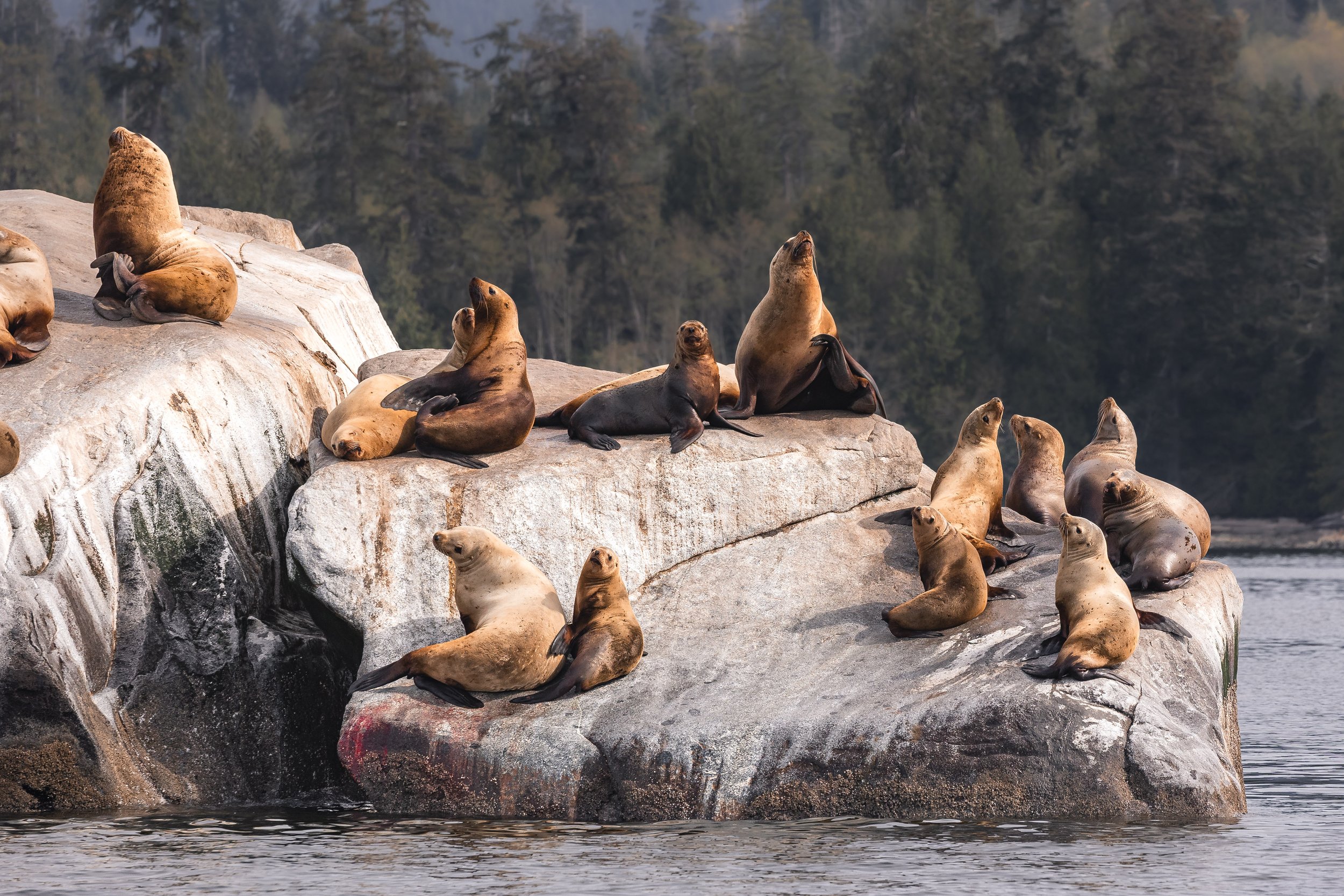
Carefully balanced at the top of the rocks.
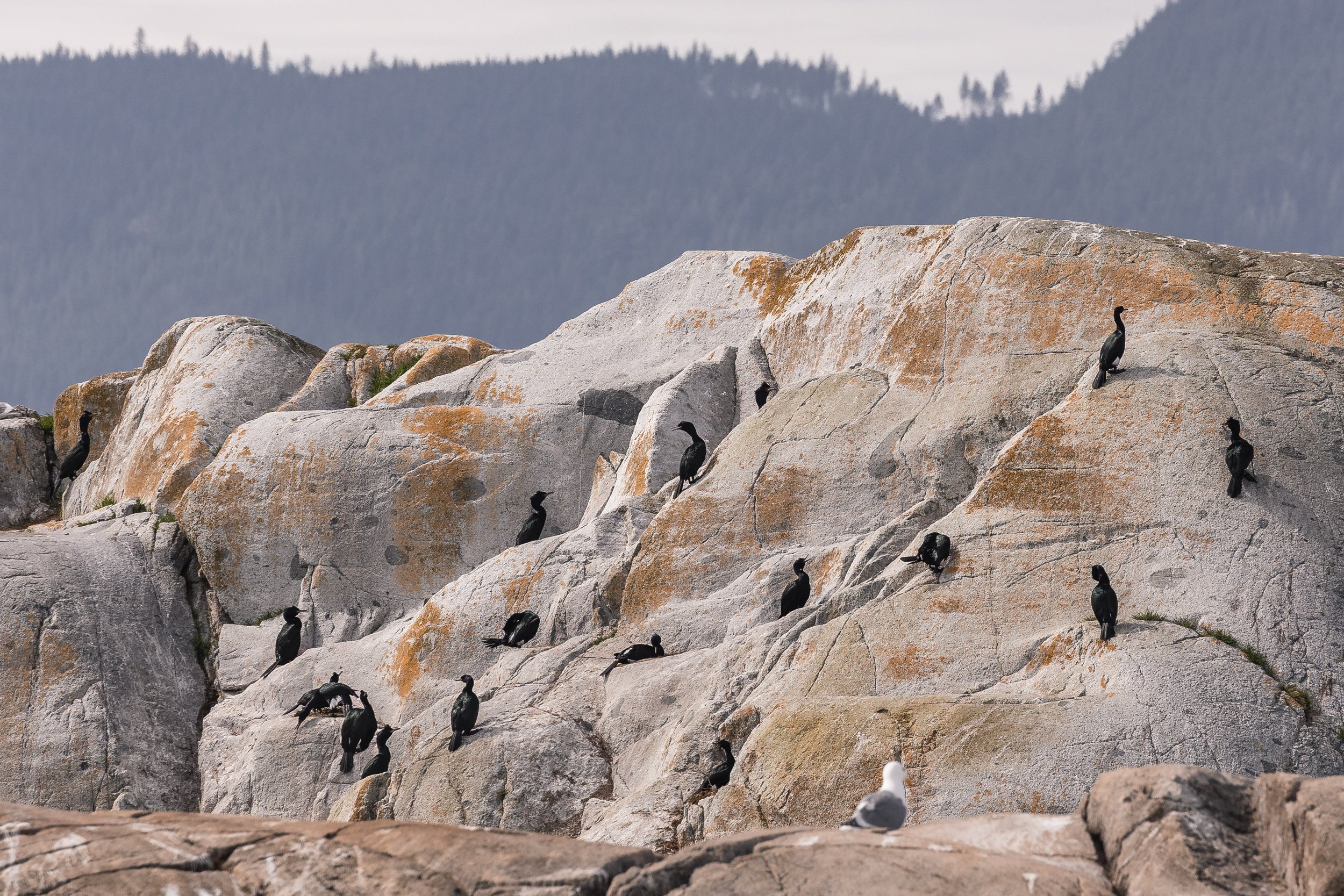
Cormorants (and a gull) also resting on McRae Islet.
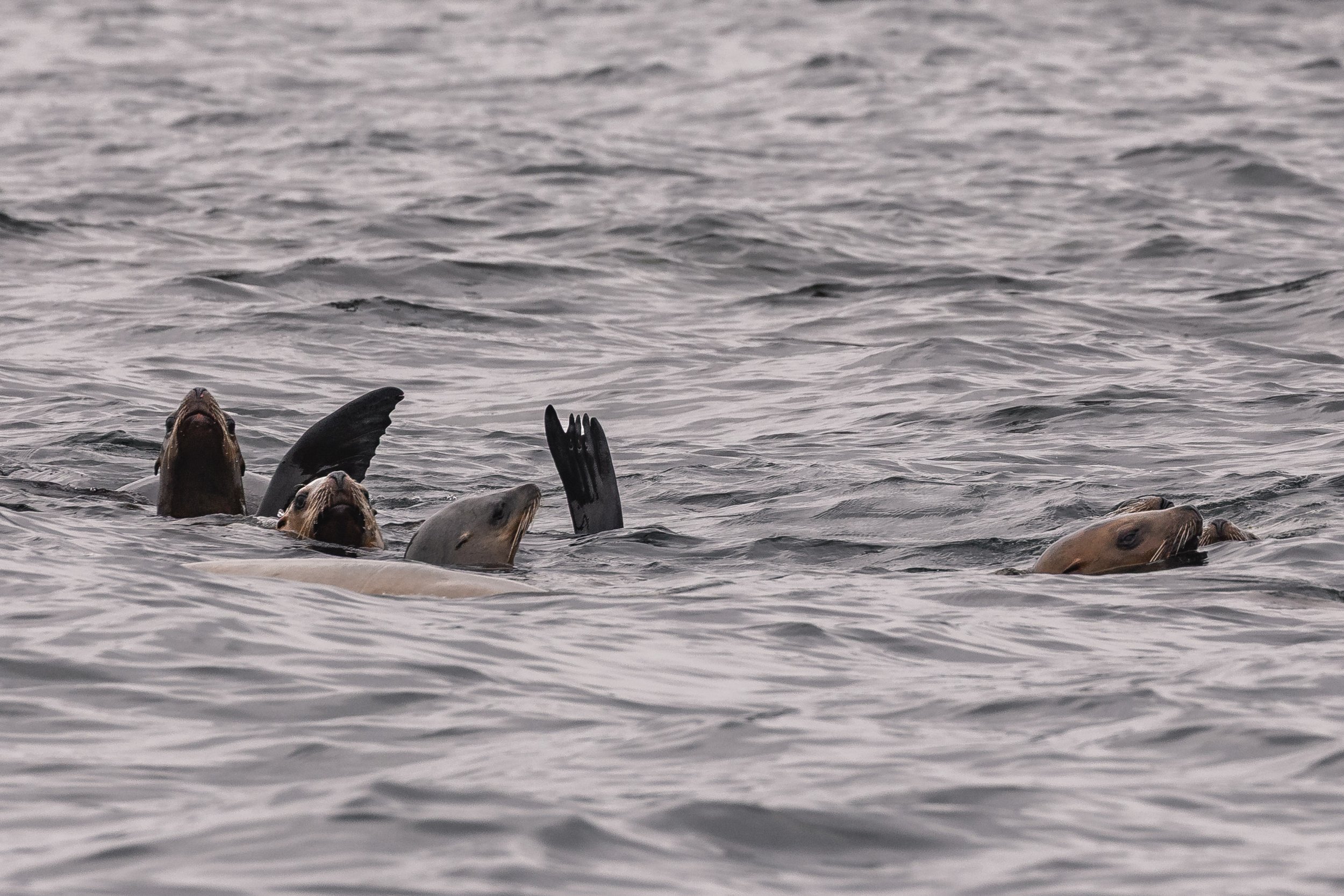
Sea lions eyeing us up as we watch them.
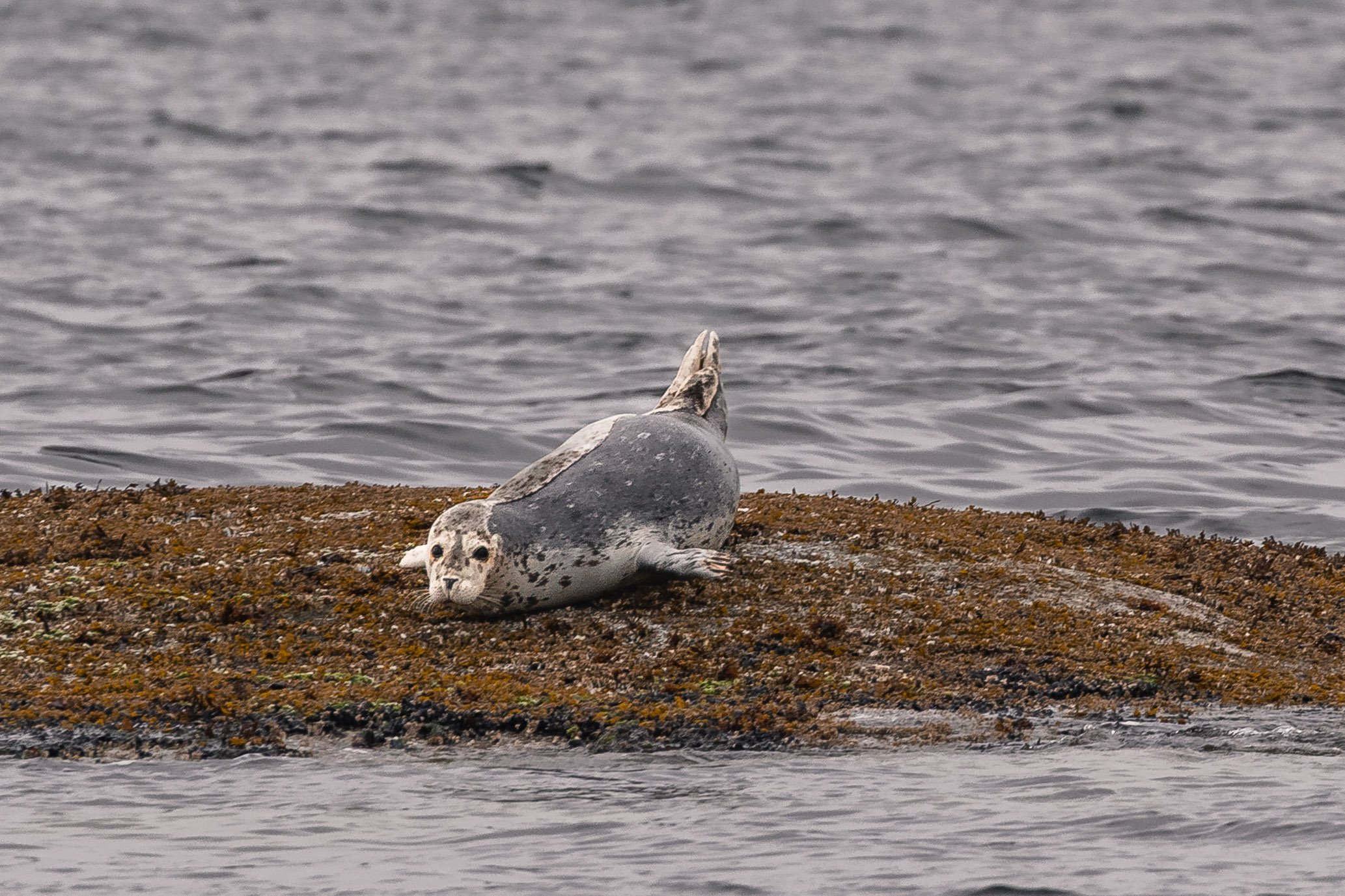
A Harbour Seal galumphing along.
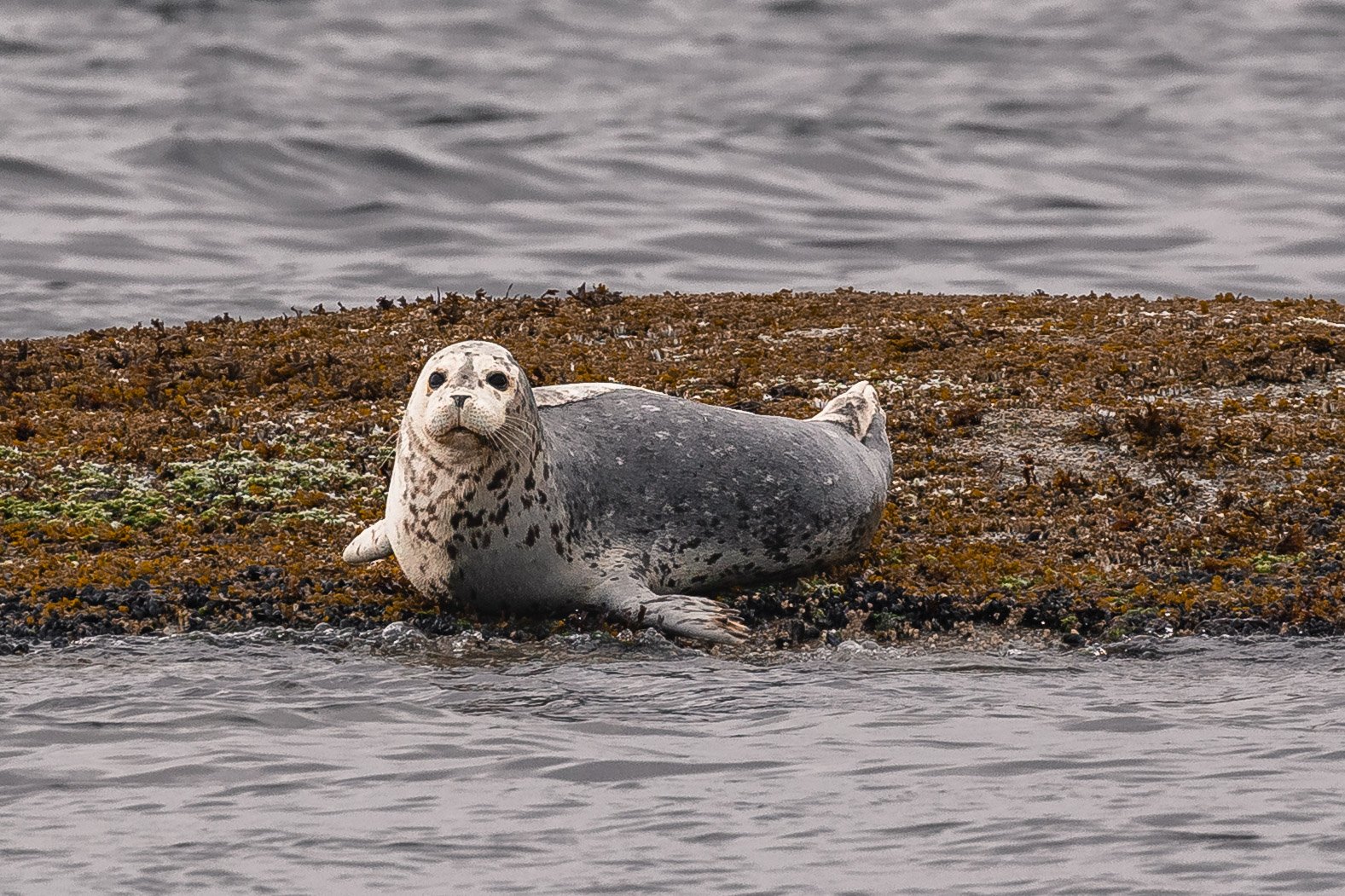
Rotund is the perfect shape for a Harbour Seal!
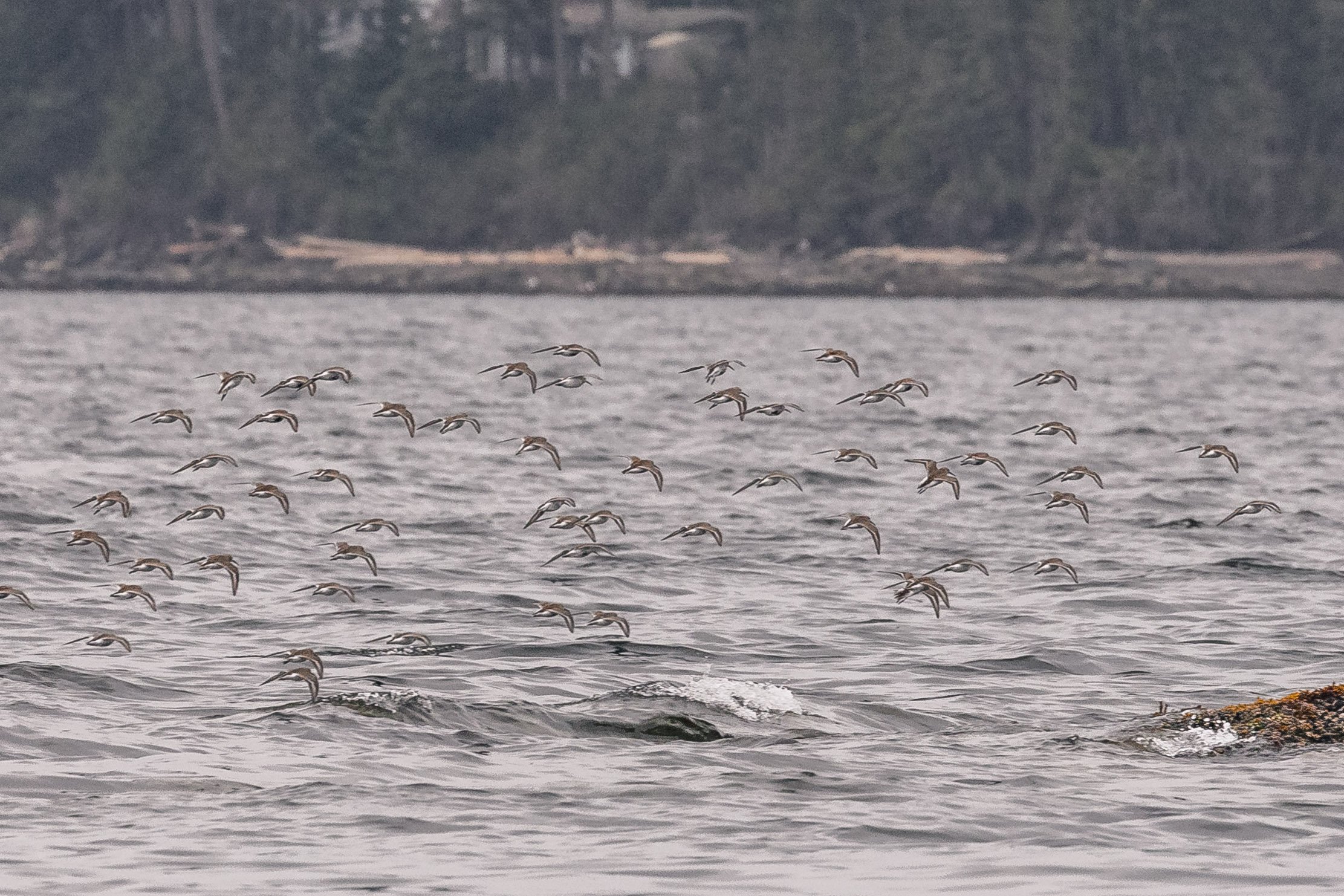
Soaring along.
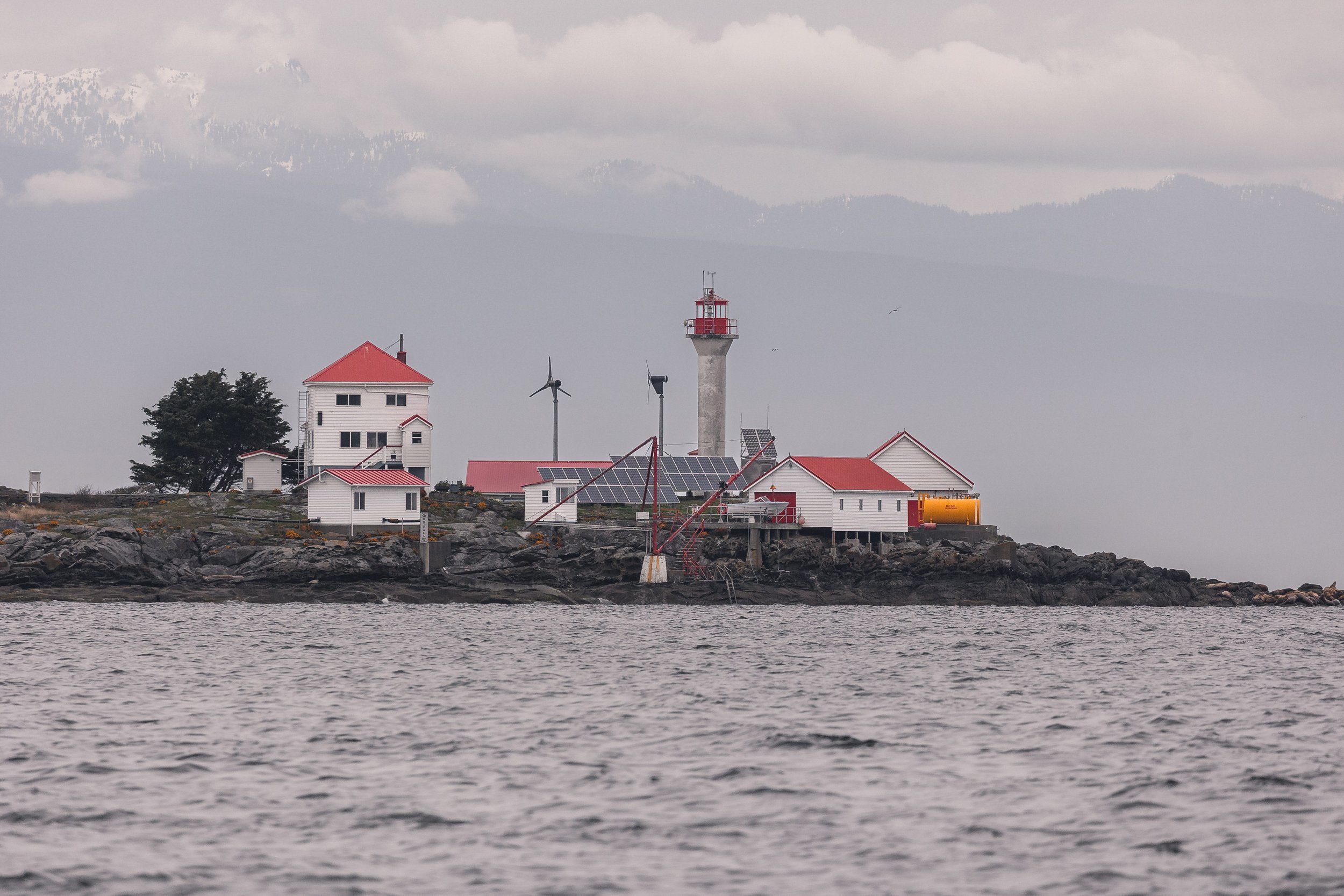
The many building on Entrance Island.
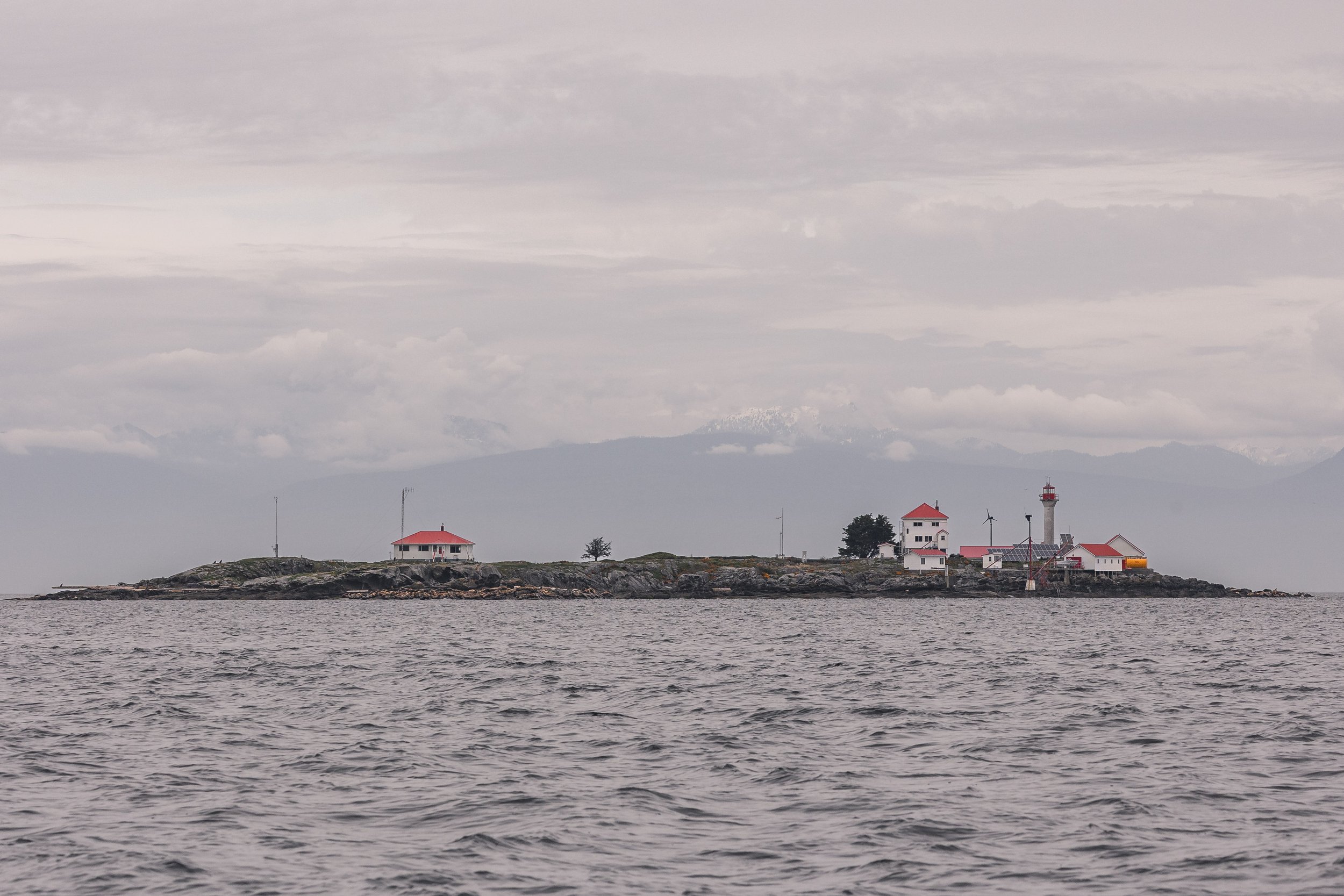
Entrance Island with the mainland in the background.