
April 7, 2026 - Spending time with the T019s in the Sannich Inlet
When we head out on the water to explore the Salish Sea, we never know where the day is going to take us, and, boy, did today prove that point! We started the adventure by heading into the Southern Gulf Islands by way of Dodd Narrows. This beautiful narrow passageway never dissapoints, given it’s beautiful shoreline, adbundance of wildlife, and the currents that get running through during the tide changes. These currents are what help shape this area, maintaining temperature and chemical composition through mixing the water column while also effecting the errosion rates of the area. The currents are likely why you see such a rugged coastline along the islands off British Columbia, as the softer stones like sandstone and shale will easily wear away under the powerful force of the moving water.
Although all this might not have been on our minds as we admired the coastline during our search, we couldn’t help but be in awe of the obviously powerful forces that helped shape what we weere seeing. We got to enjoy a lot of the coastline of the Southern Gulf Islands, as we had our two boats split up and continue south. We had our eyes peeled along the way for any dorsal fins in the distance, blows catching the sunlight, or any unusual splashing or bird activity. All of these can be signs that there are whales in the area, with some more obvious than the others.
As we travelled, scanning the horizon, the captains got word over the radio of a sighting of whales from one of the ferries that were transiting Active Pass. We headed that direction, eager to see what we might find there. Reports like this can be tough, since they lack a lot of the information we need to find the whales. Things like direction, number, and group composition can all help us know what to look for and where to look. When you consider that the whales are travelling at around 3-7 knots, or 5-12 km/h, they can make it a fair distance in the time it takes us to motor over. And they have an infinite number of directions to choose from to head from that initial sighting point! It’s part of the thrill of whale watching; you are never sure exactly what you will find, or if you will find anything at all. In this case, the whales had moved on, and we had no luck relocating them. Luckily for us, though, these weren’t the only whales that were around today! We got word that some other whale watching boats had been looking into a different report, and they had some luck! They had found a group of 3 orca travelling together into Sannich Inlet, so we left our Active Pass search and headed over to this group instead.
As we approached and saw the towering dorsal fins of two males and the smaller fin of the martriarch between them, we knew coming here was a good choice since this is one of our favourite pods: the T019s!
T019 Nootka ♀ (~1965)
T019B Galiano ♂ (1995)
T019C Spouter ♂ (2001)
This group has changed a bit over the last few years, mostly due to the death of the previous matriarch, Esperanza. She was the oldest member of the Transient Orca population, with her birth estimated around 1955. This age is nothing to shake a stick at, but some age estimates for other whales suggest that they might be able to live much longer, sometimes close to their 100s. This estimate is primarily based on one recorded individual: J2 Granny from the Southern Resident Population. She was estimated to be over 100 years old, as she had an adult son at the time of her first recording, which put her age at around 40 in 1971. This was later disproved when genetic testing showed that this individual was not actually Granny’s son! Later in her life, they were able to get a biopsy sample from her, and using that, they determined she was likely closer to 60 - 80 years old. From this, you can probably tell that aging an older orca is no easy feat! Things like growth rings on their teeth or earplugs can be the most accurate, but this requires that the whale has passed away to be used. With younger whales, typically considered those born after research began in the 1970s, we have much greater accuracy in aging them. This is because researchers know the year they were first sighted as calves through their research and have been able to track them each year since. Given this, we know both Galiano and Spouters' exact ages, while Nootka is old enough to have only an estimate!
Although older, Nootka doesn’t often let her age show, as she boldly leads her adult sons around the Salish Sea. People are often fooled into thinking that the larger, more impressive-looking males are the ones leading the pod, but it’s actually the mom. Orca have a matriarchal society, meaning that these impressive males are actually just big mama’s boys. They will travel with mom for the rest of their, or her, life. Hopefully, we will still be seeing this trio of whales travelling together for a very long time.
We enjoyed our time with this pod as they travelled deeper and deeper into the Saanich Inlet, before it was time for us to make our way back towards Nanaimo. The long journey home gave us plenty of time to reflect on the day and our time spent with this incredible family of orca. With a final stop at the log booms in Northumberland Channel to spend time with the Steller and California Sea Lions, we headed back to port.
Throughout the tour, our Marine Naturalists on board, Aly Kohlman and Evan Hessels, were capturing these moments, which are available to view below!
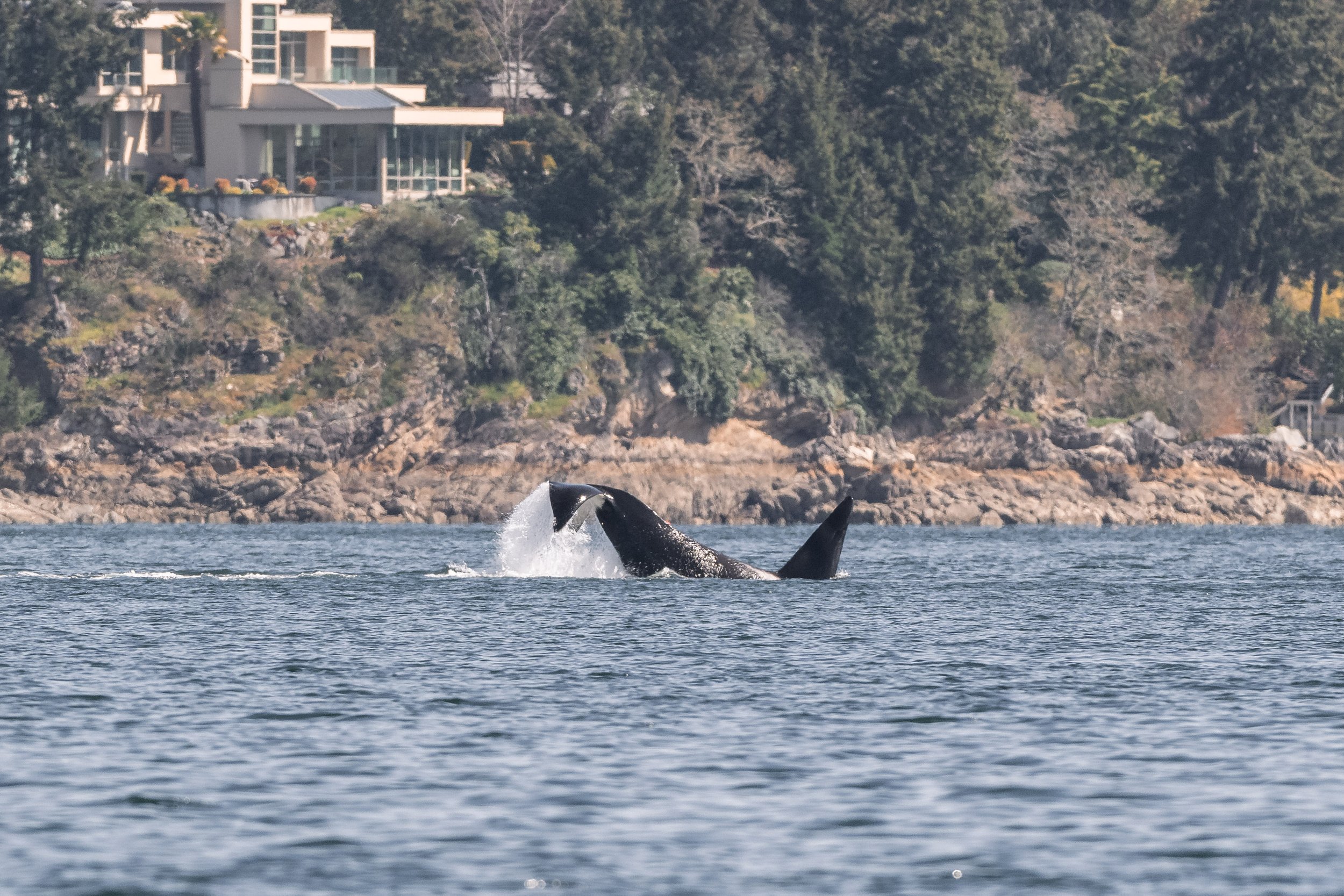
T019C Spouter slapping his tail. Photo by Aly Kohlman.
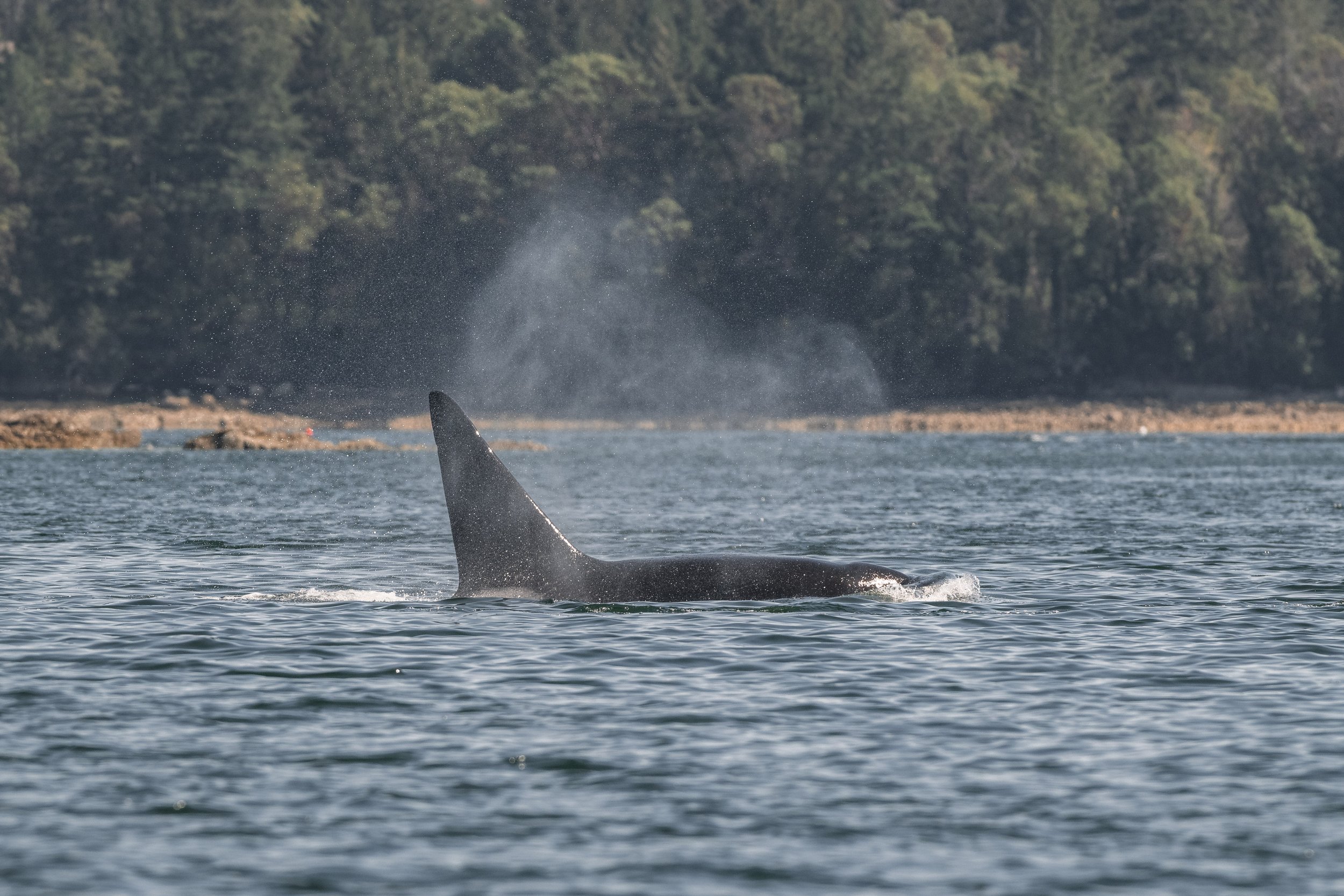
T019C Spouter with the water from his blow falling around him. Photo by Aly Kohlman.
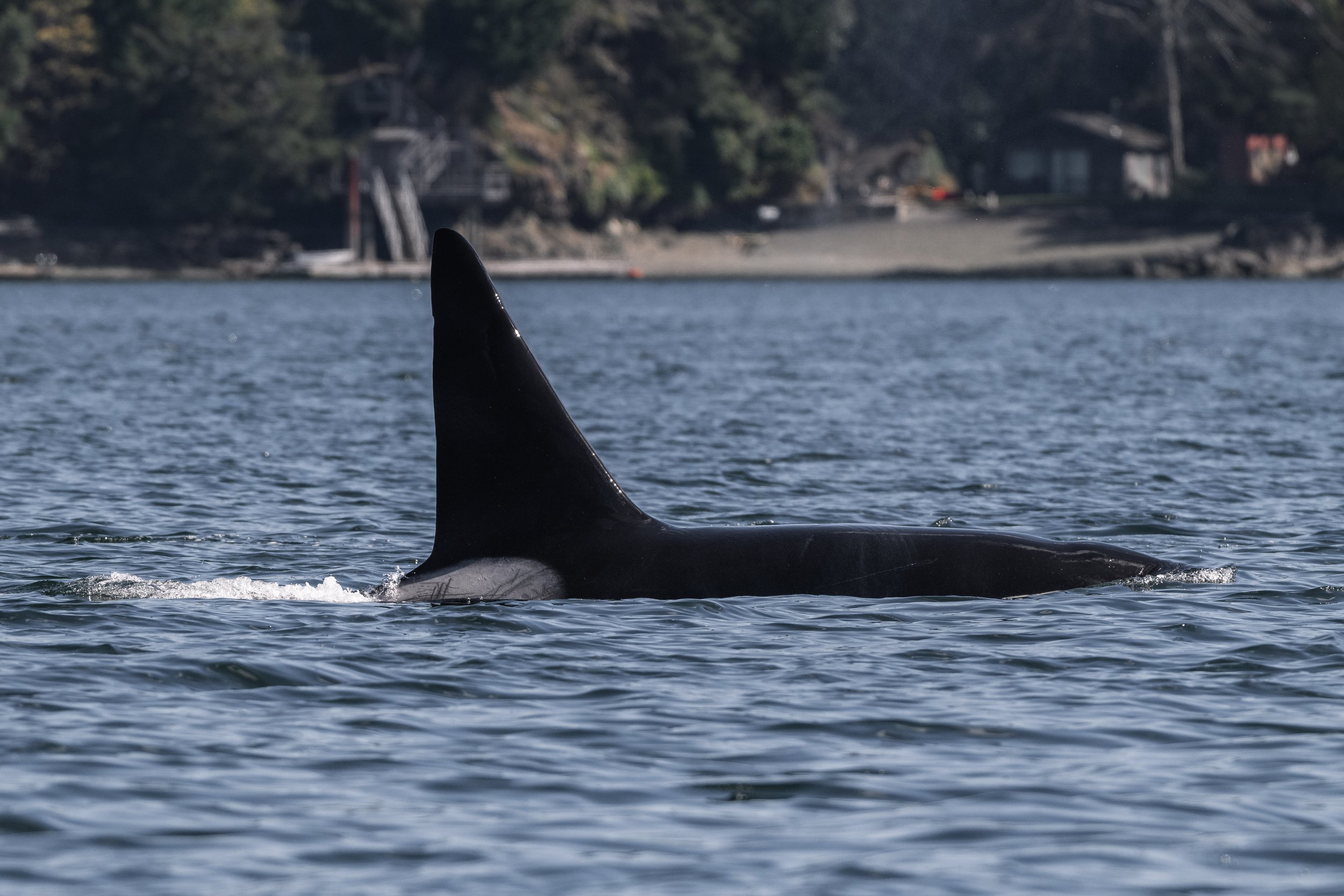
Can you spot the tiny notch on T019C Spouter’s dorsal fin? Photo by Aly Kohlman.
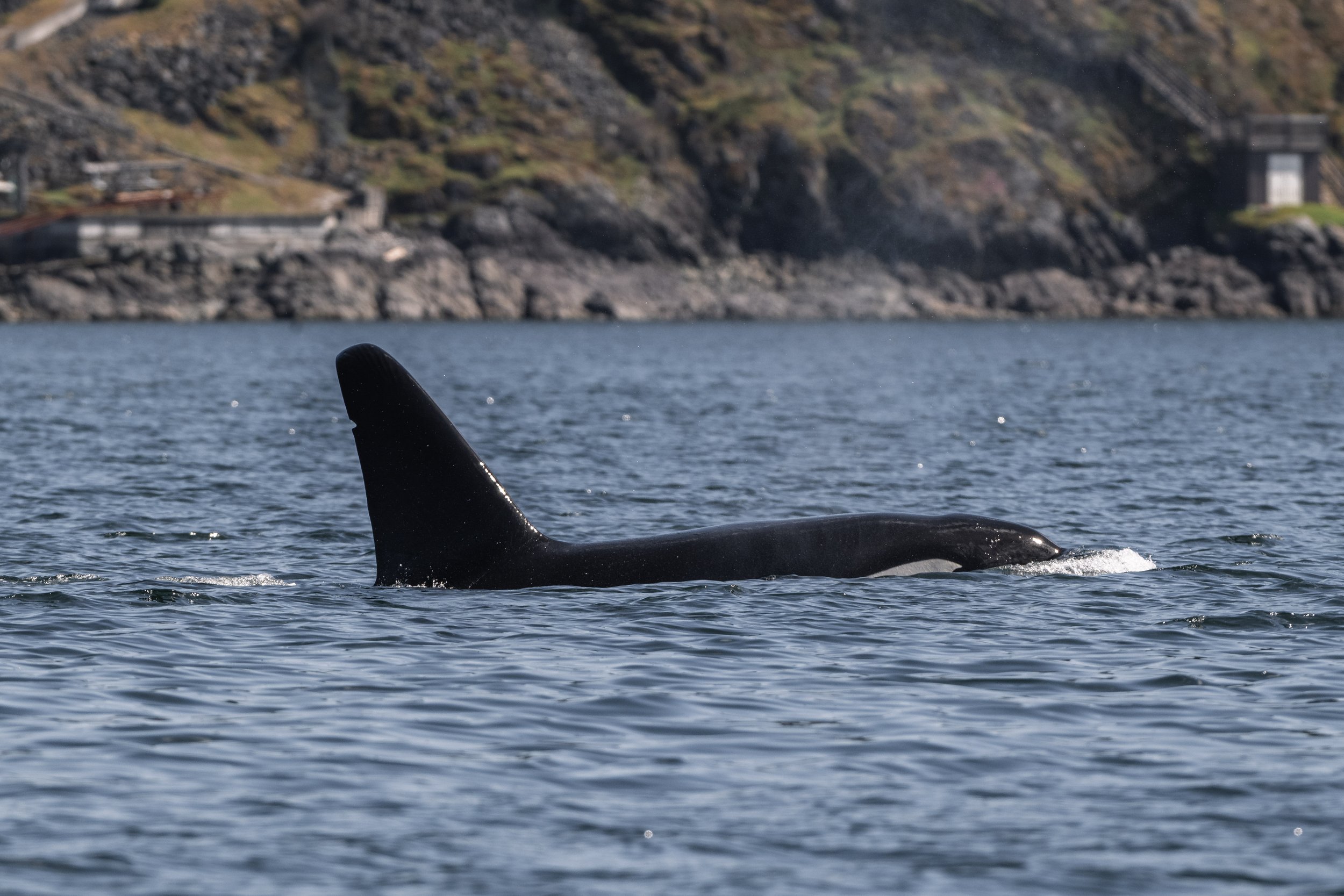
T019B Galiano showing off a bit of his eye patch. Photo by Aly Kohlman.
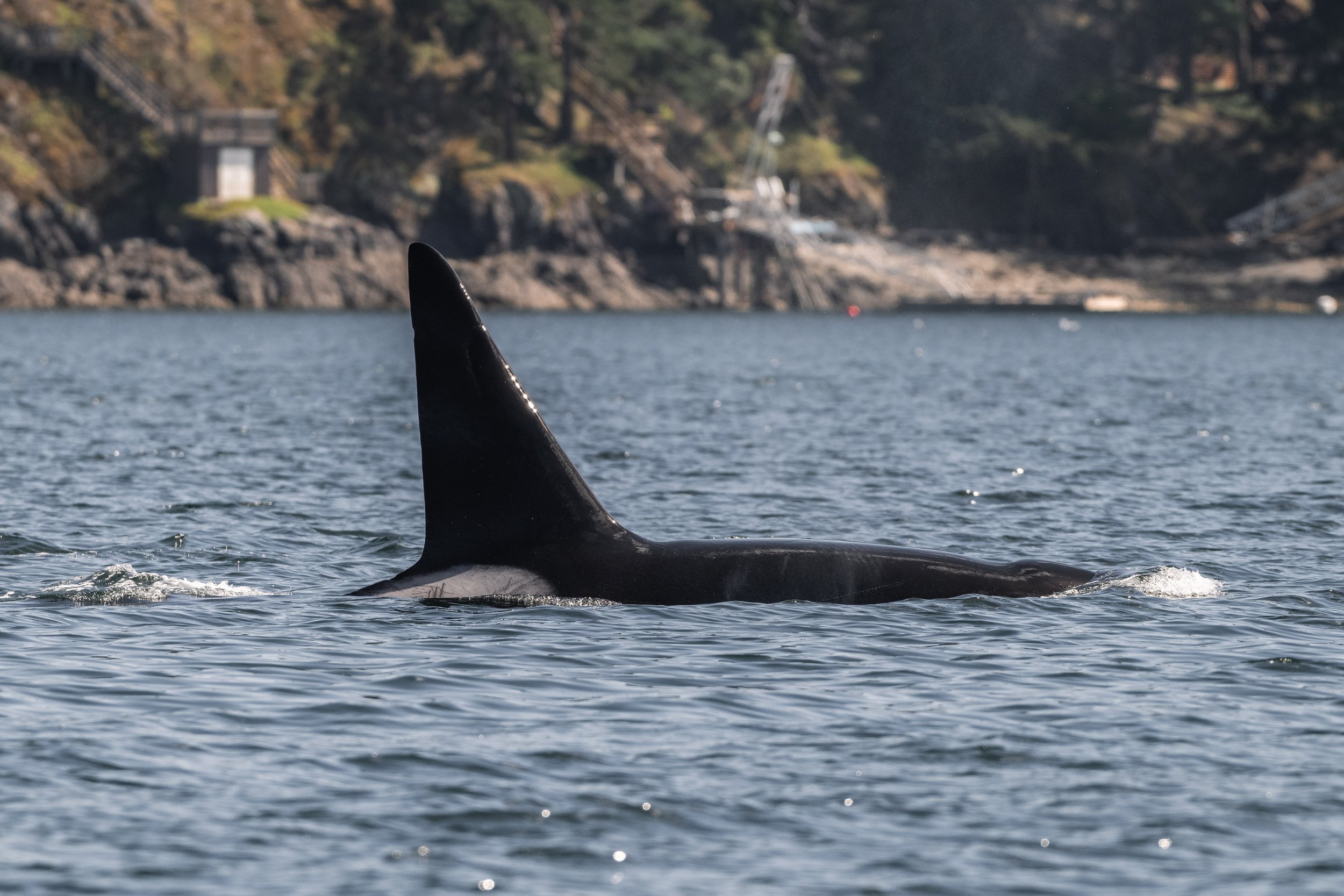
Look at all the scarring on T019C Spouter’s saddle patch. Photo by Aly Kohlman.
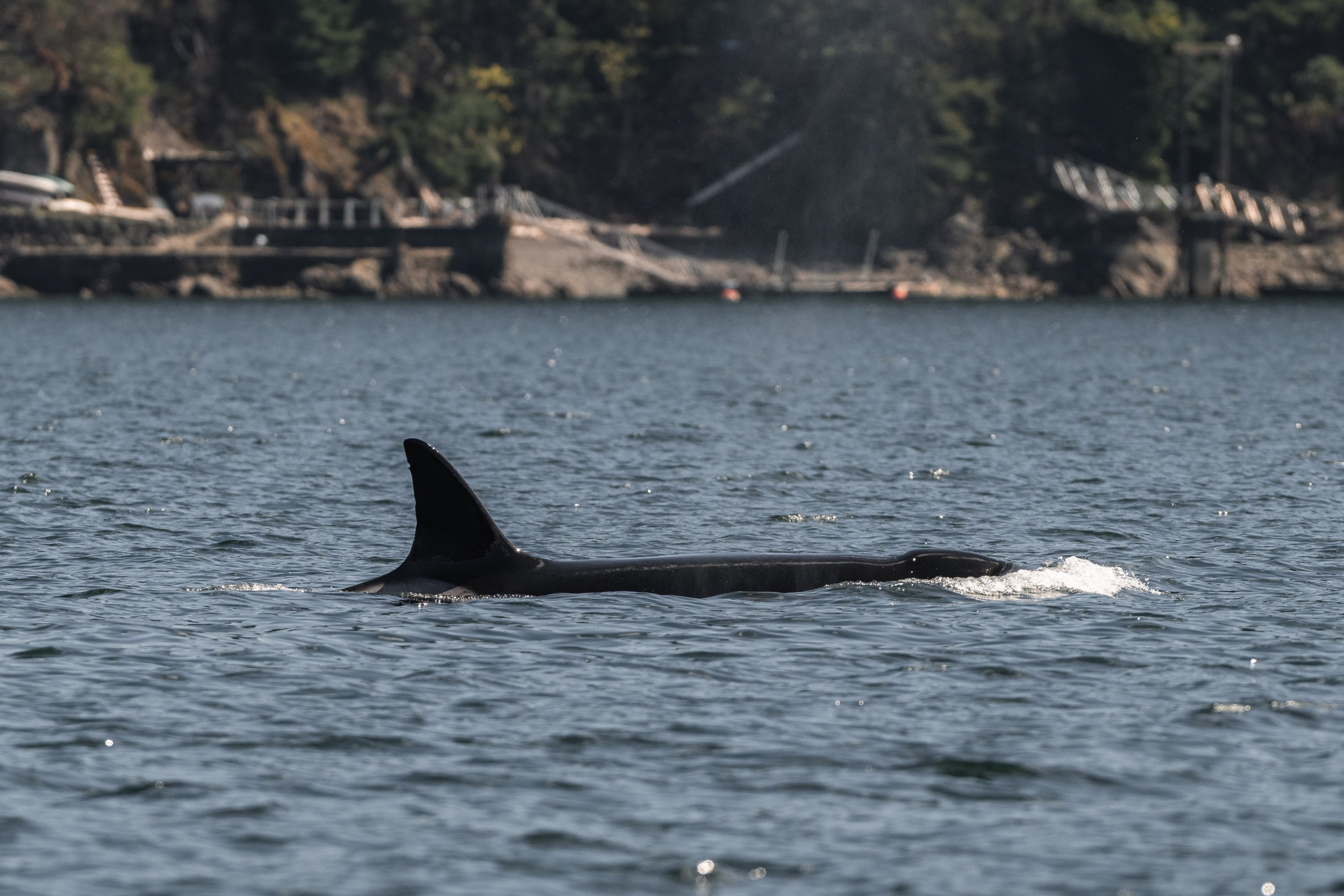
T019 Nootka, the Matriarch of this group. Photo by Aly Kohlman.
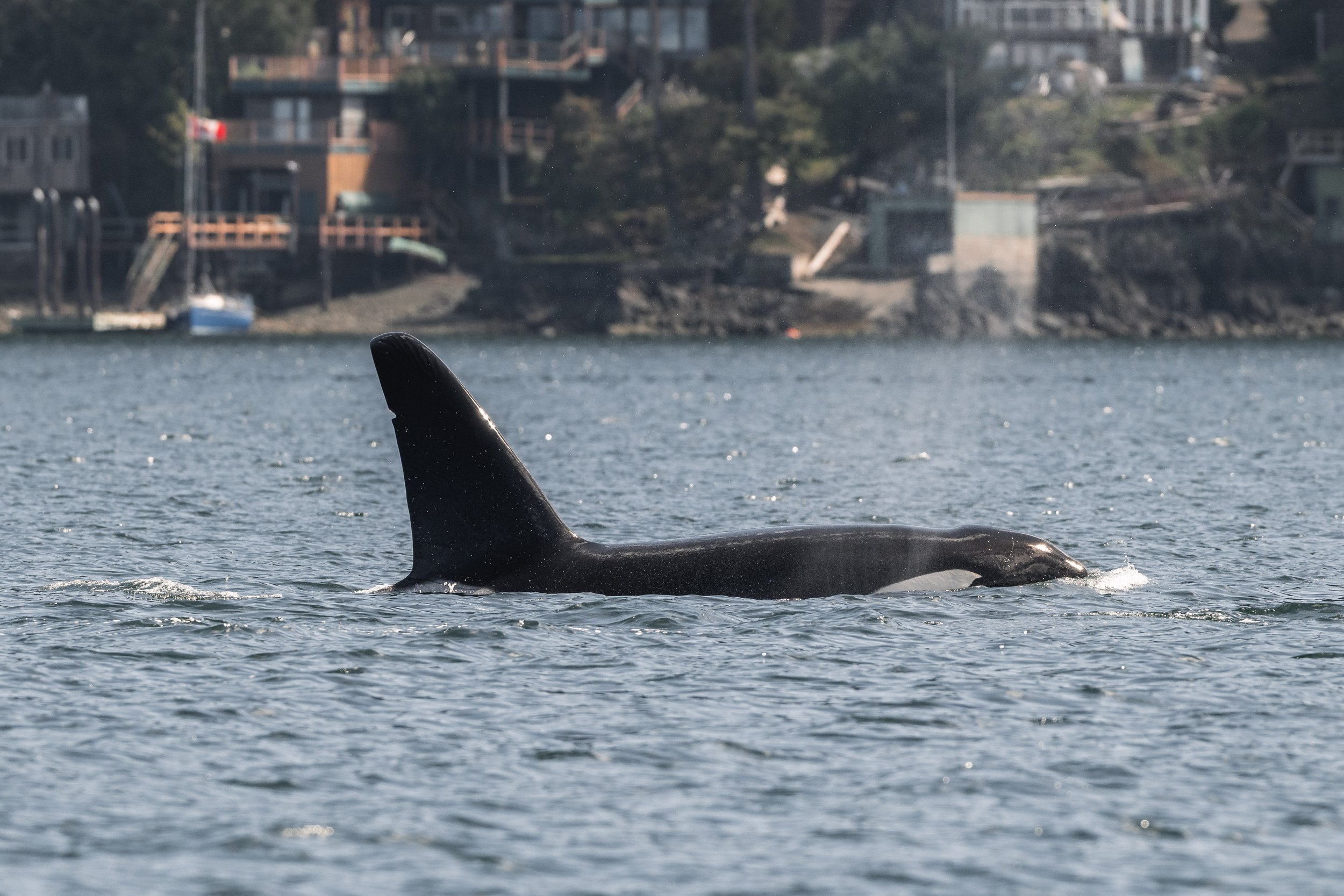
Another great look at T019B Galiano surfacing in the calm water. Photo by Aly Kohlman.
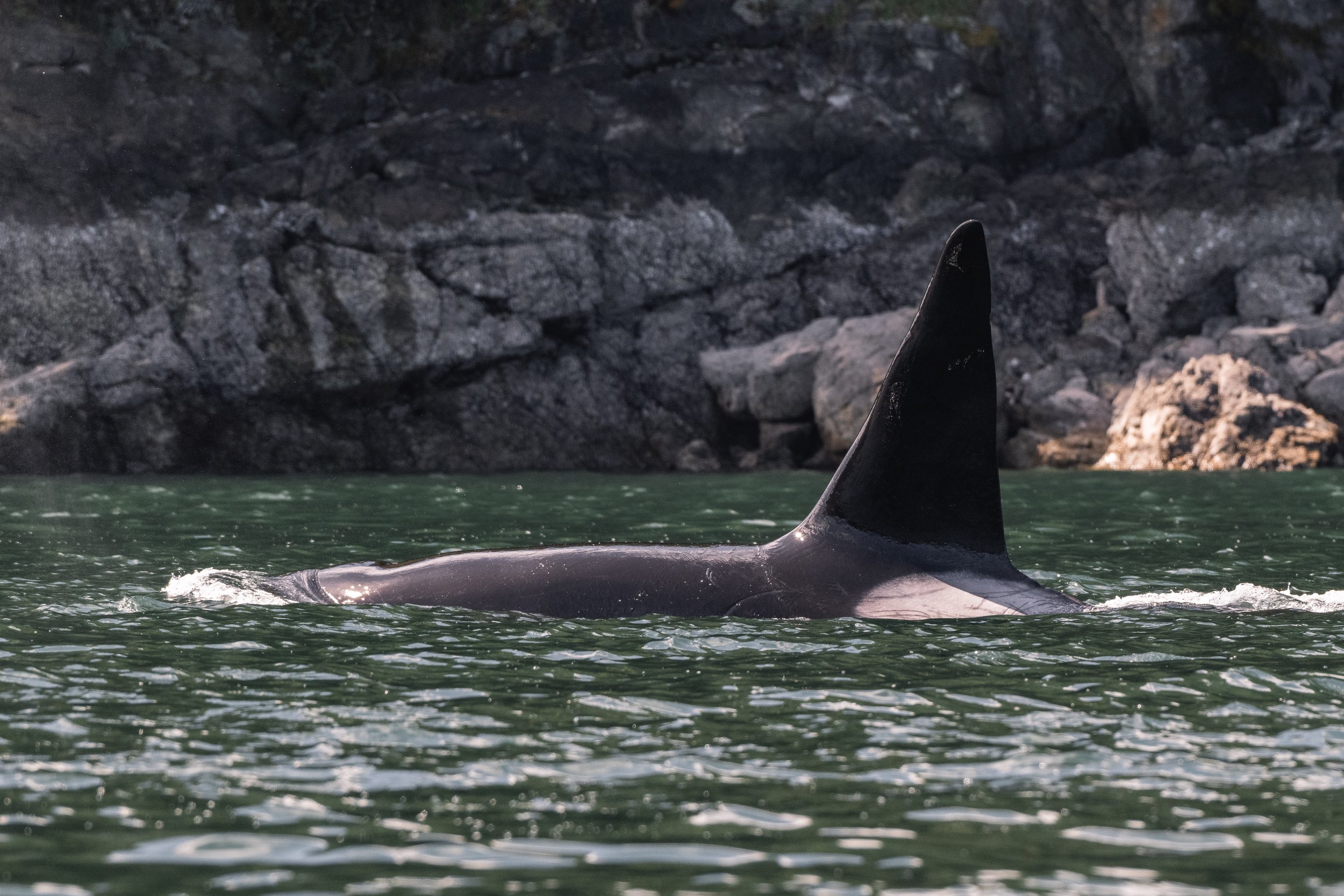
T019C Spouter is also covered with scars on this side of his body, visible here! Photo by Aly Kohlman.
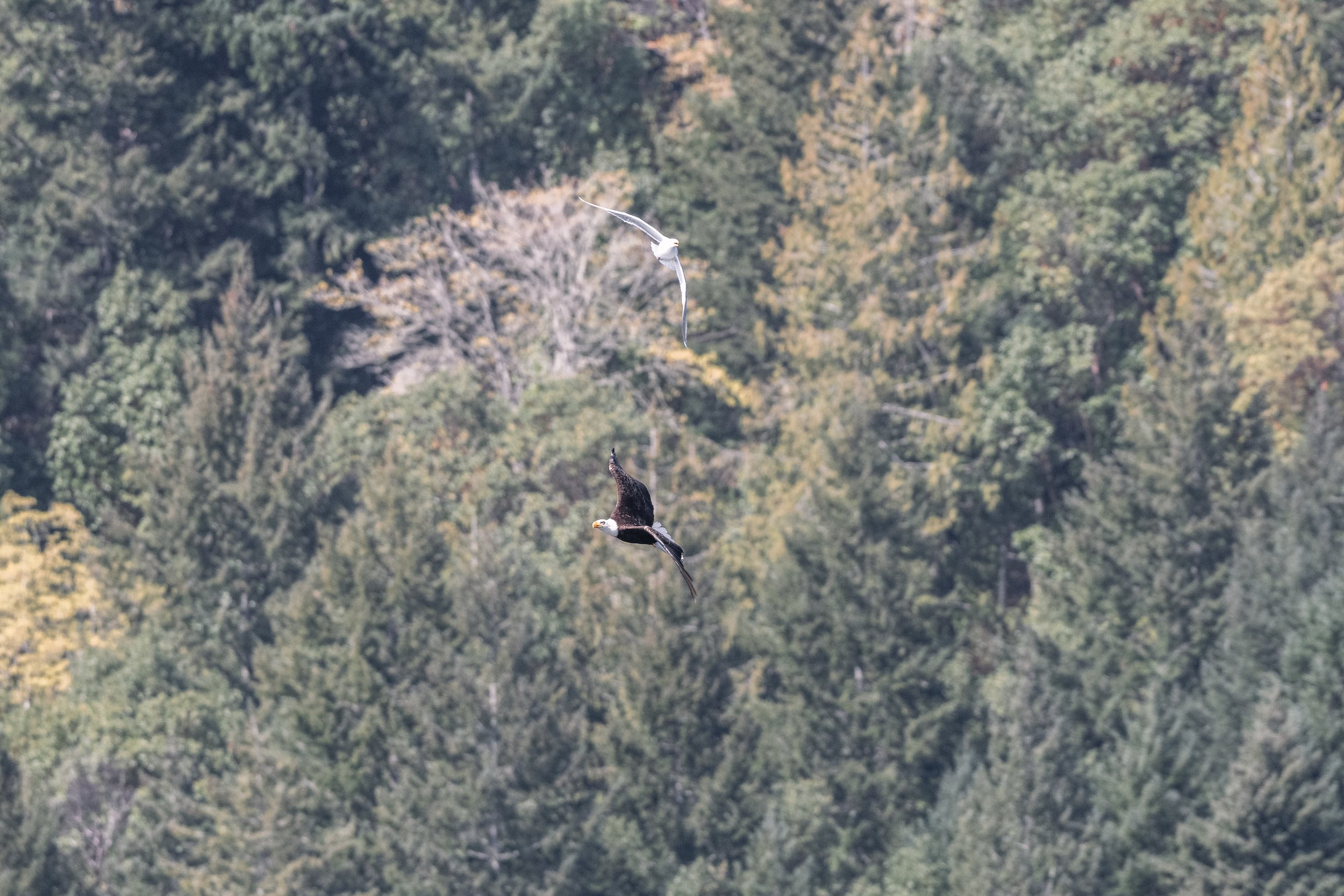
A bald eagle chasing a gull. Photo by Aly Kohlman.
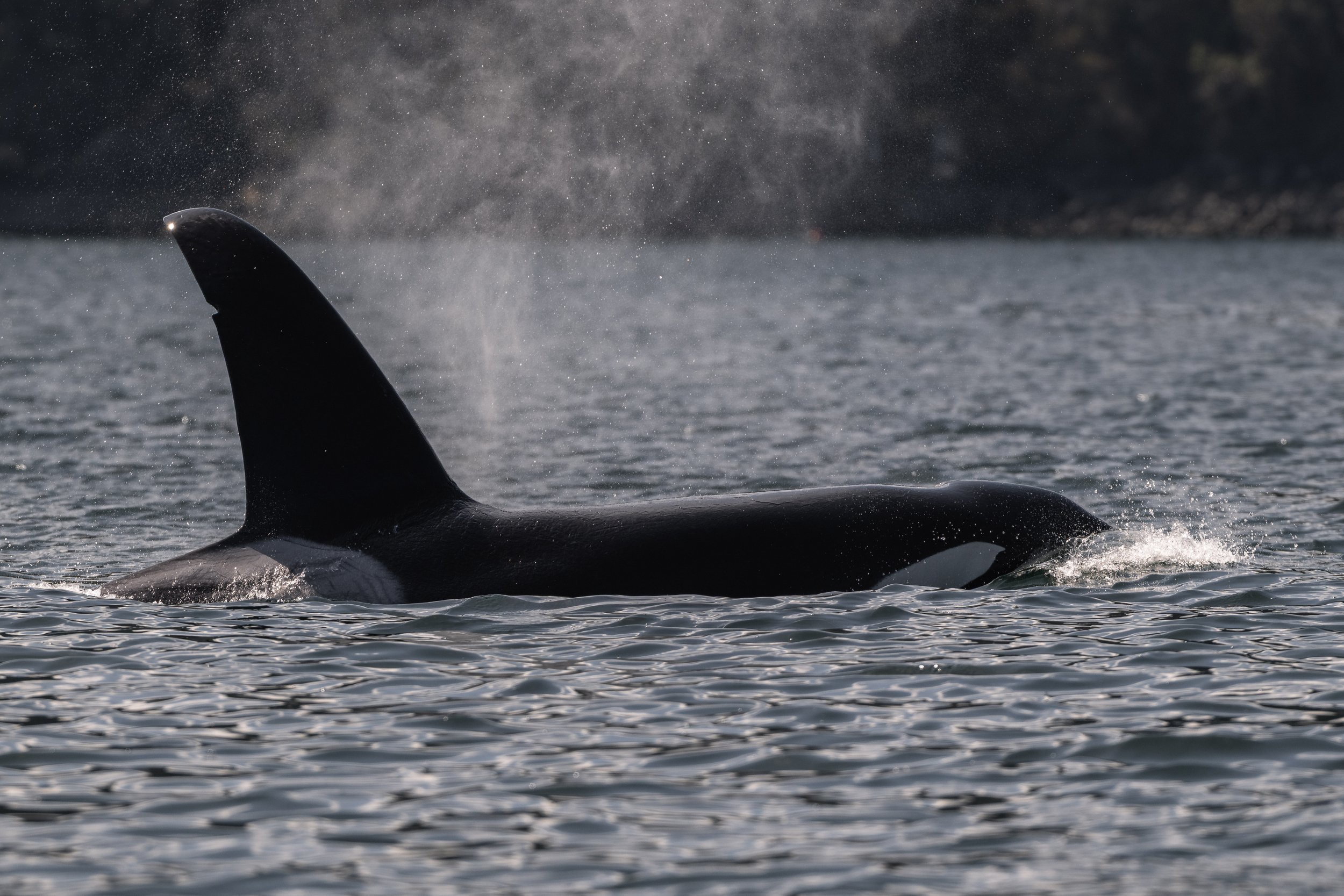
A lovely backlit look at T019B Galiano. Photo by Aly Kohlman.
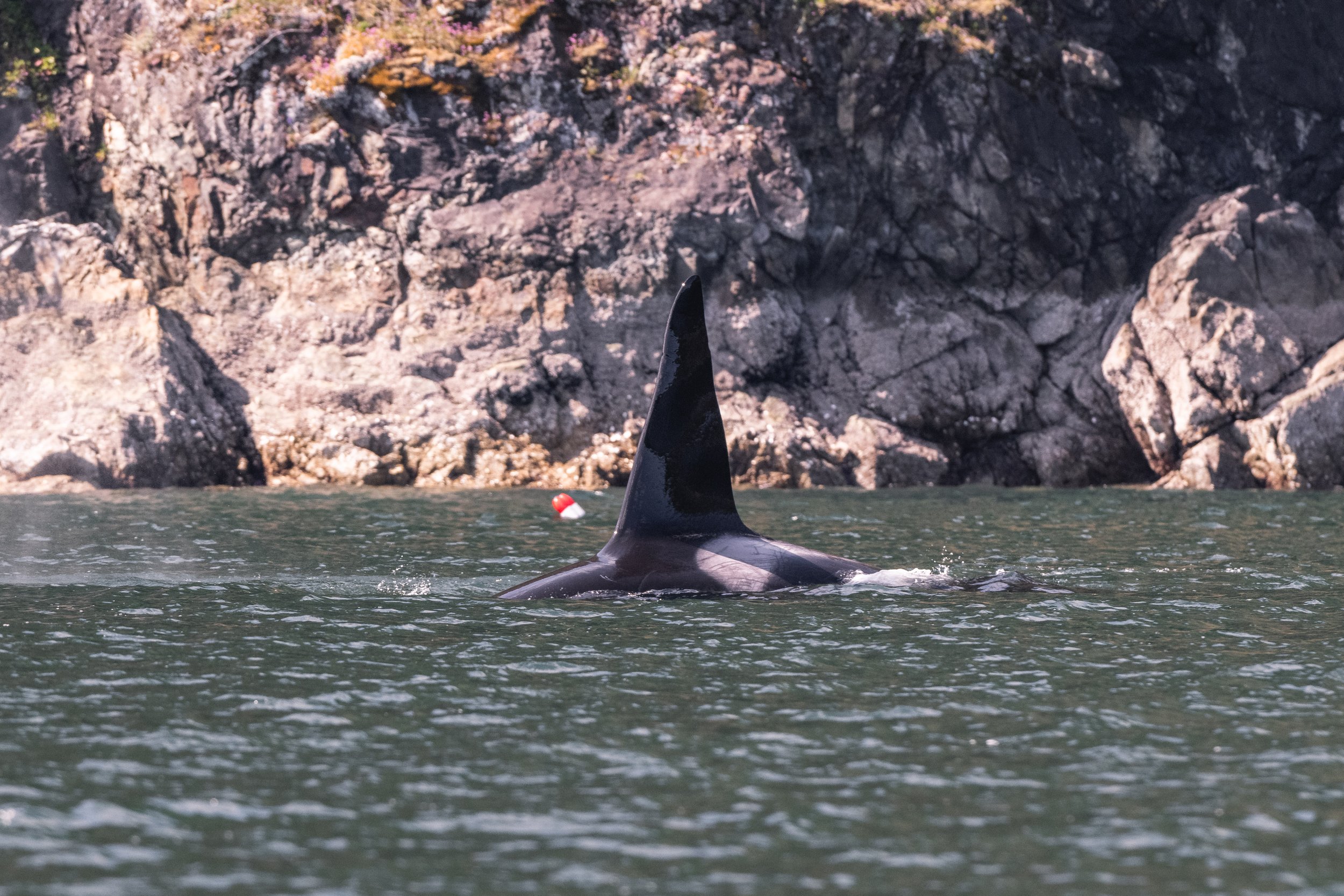
T019C Spouter surfacing in the Sannich Inlet. Photo by Aly Kohlman.
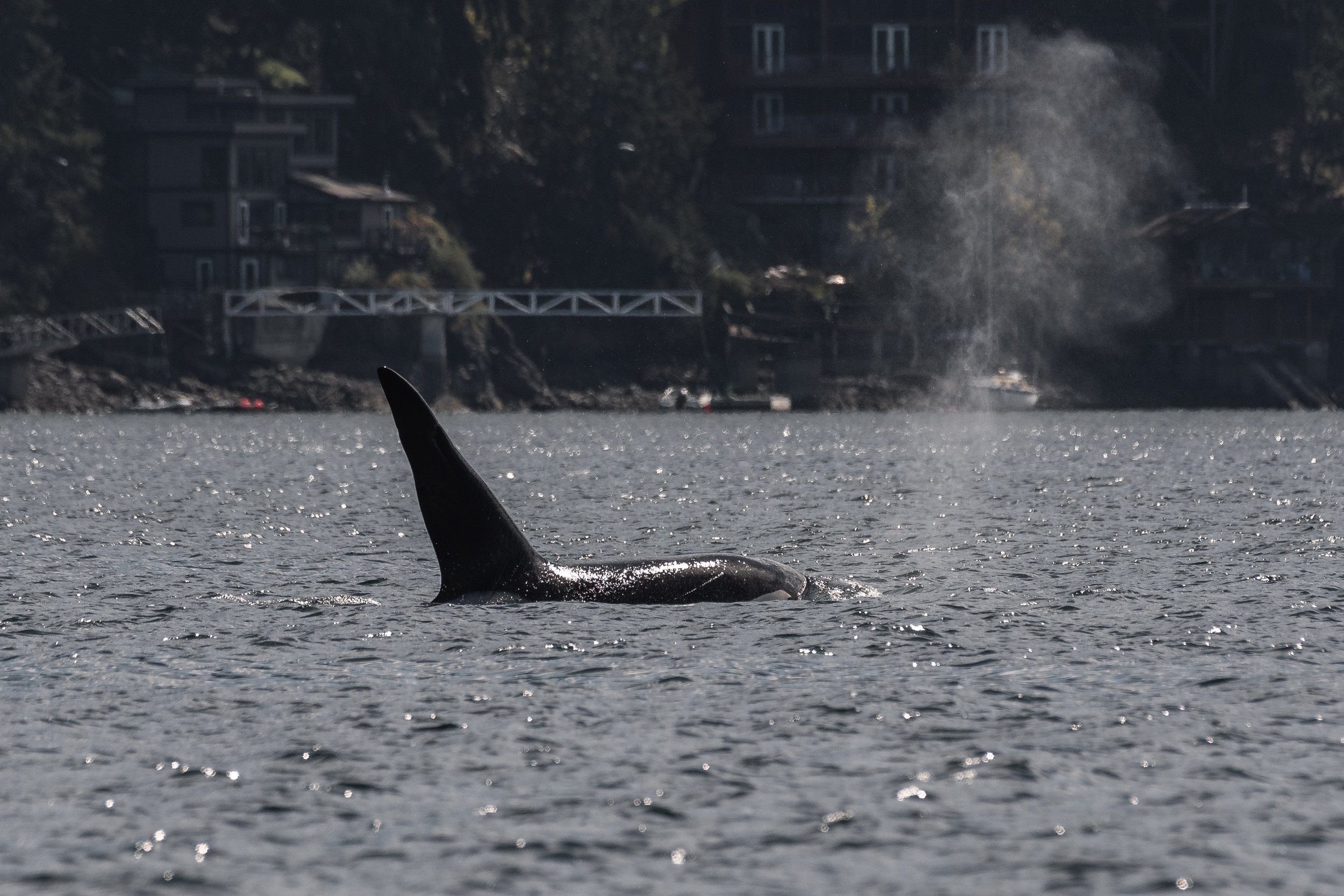
T019C sufacing in the sunshine. Photo by Evan Hessels.
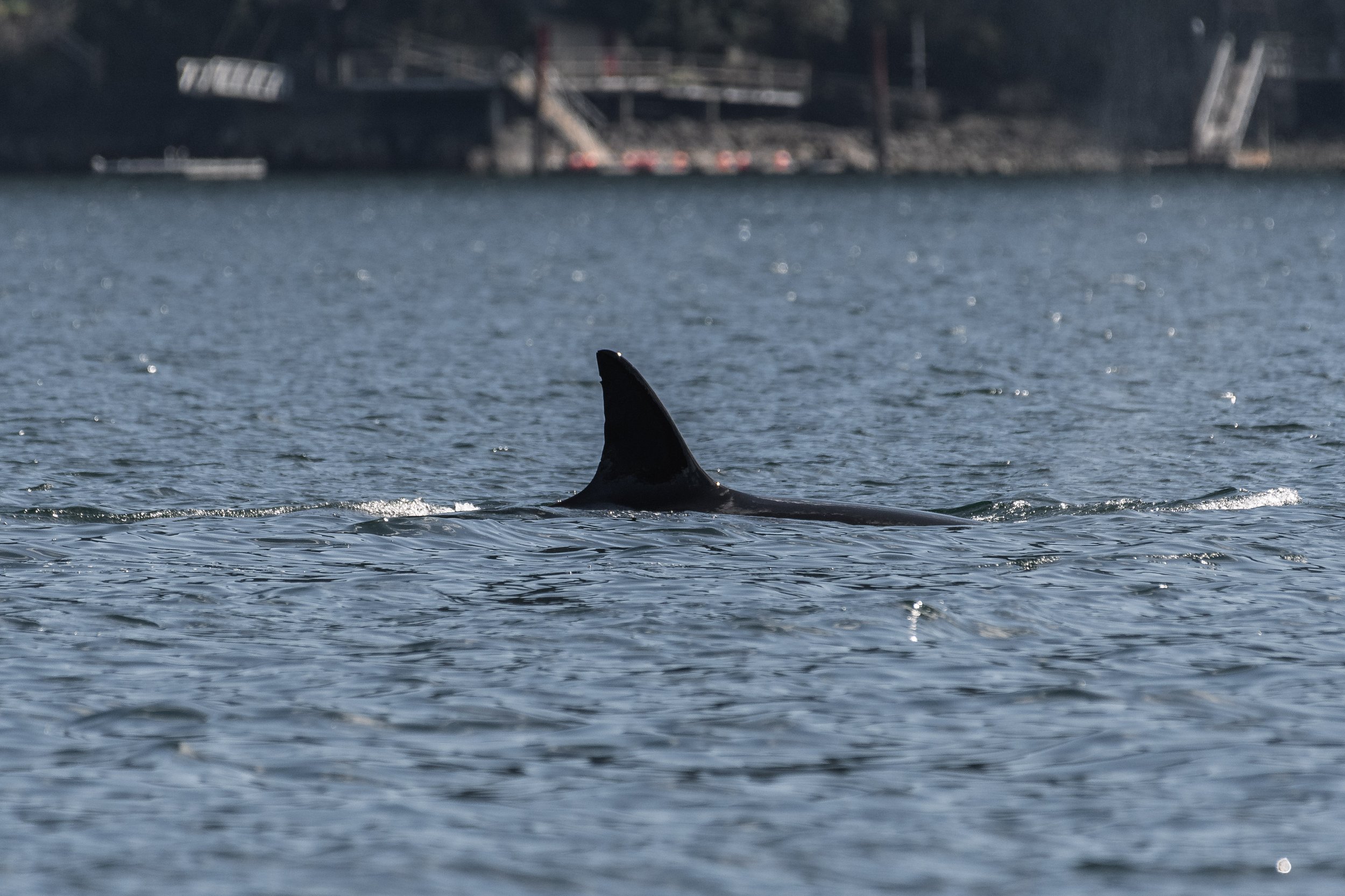
Look at all the notches in T019 Nootka’s dorsal fin. Photo by Evan Hessels.
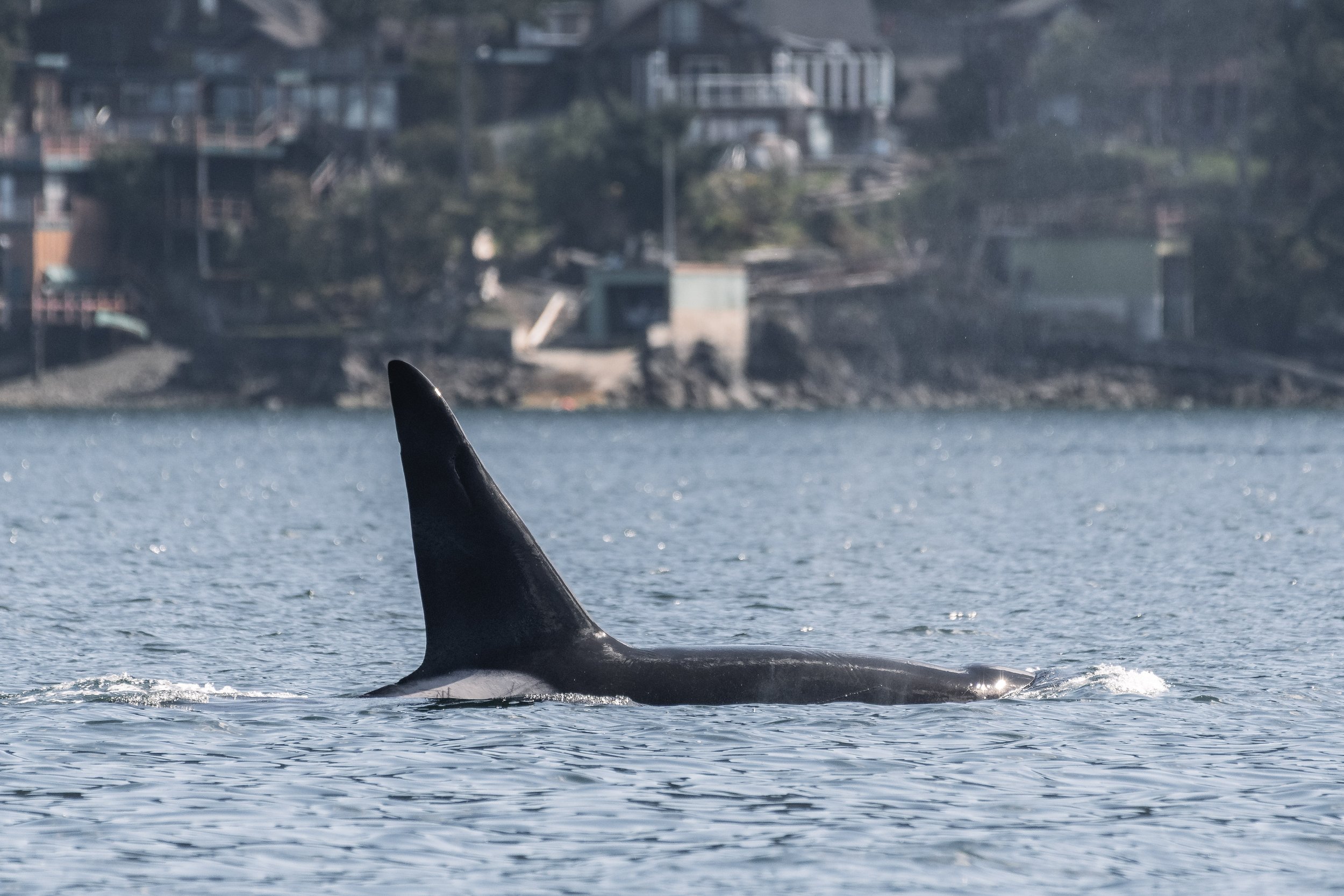
T019C Spouter surfacing in the calm. Photo by Evan Hessels.
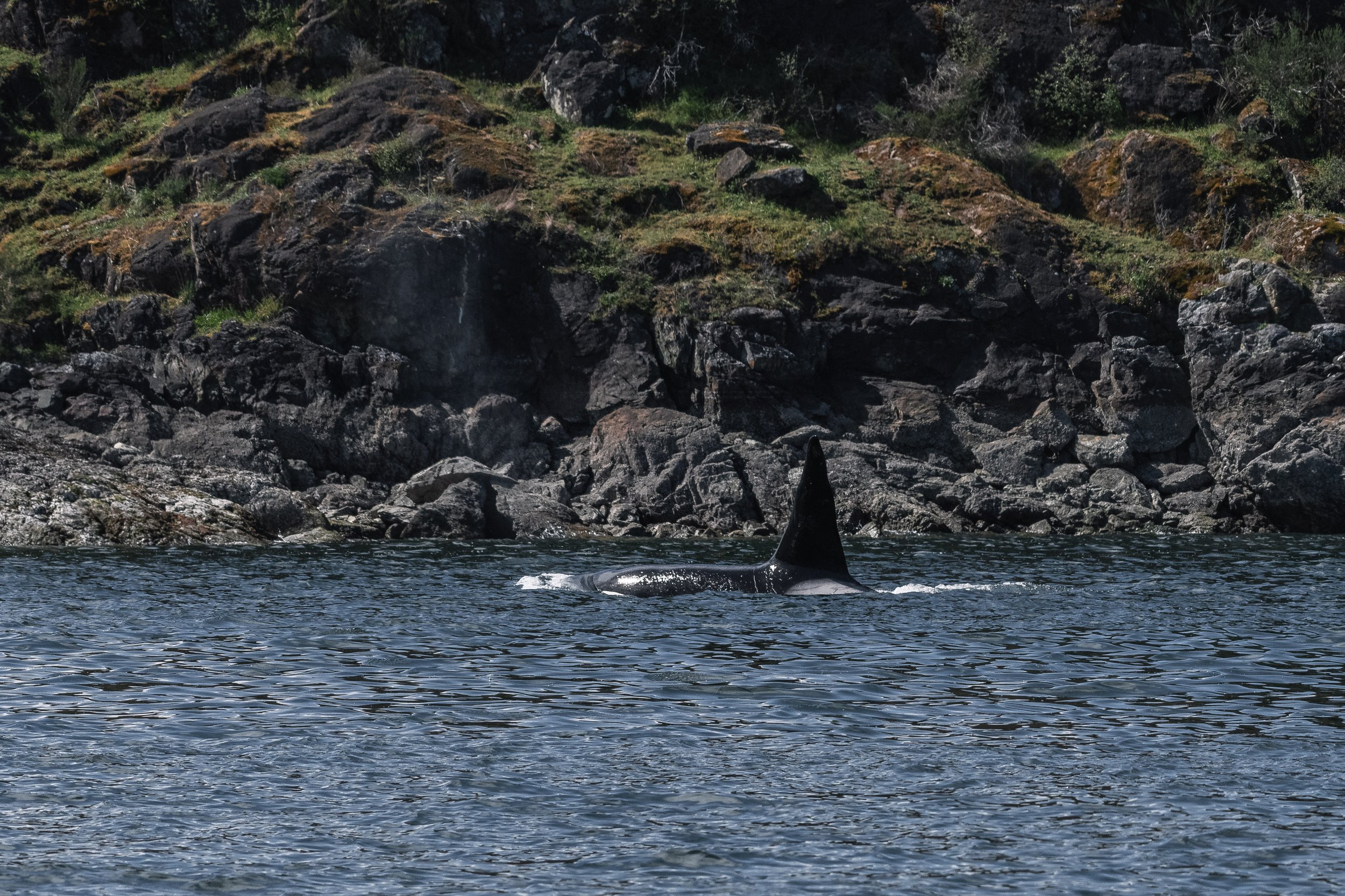
T019C Spouter trolling the shoreline. Photo by Evan Hessels.
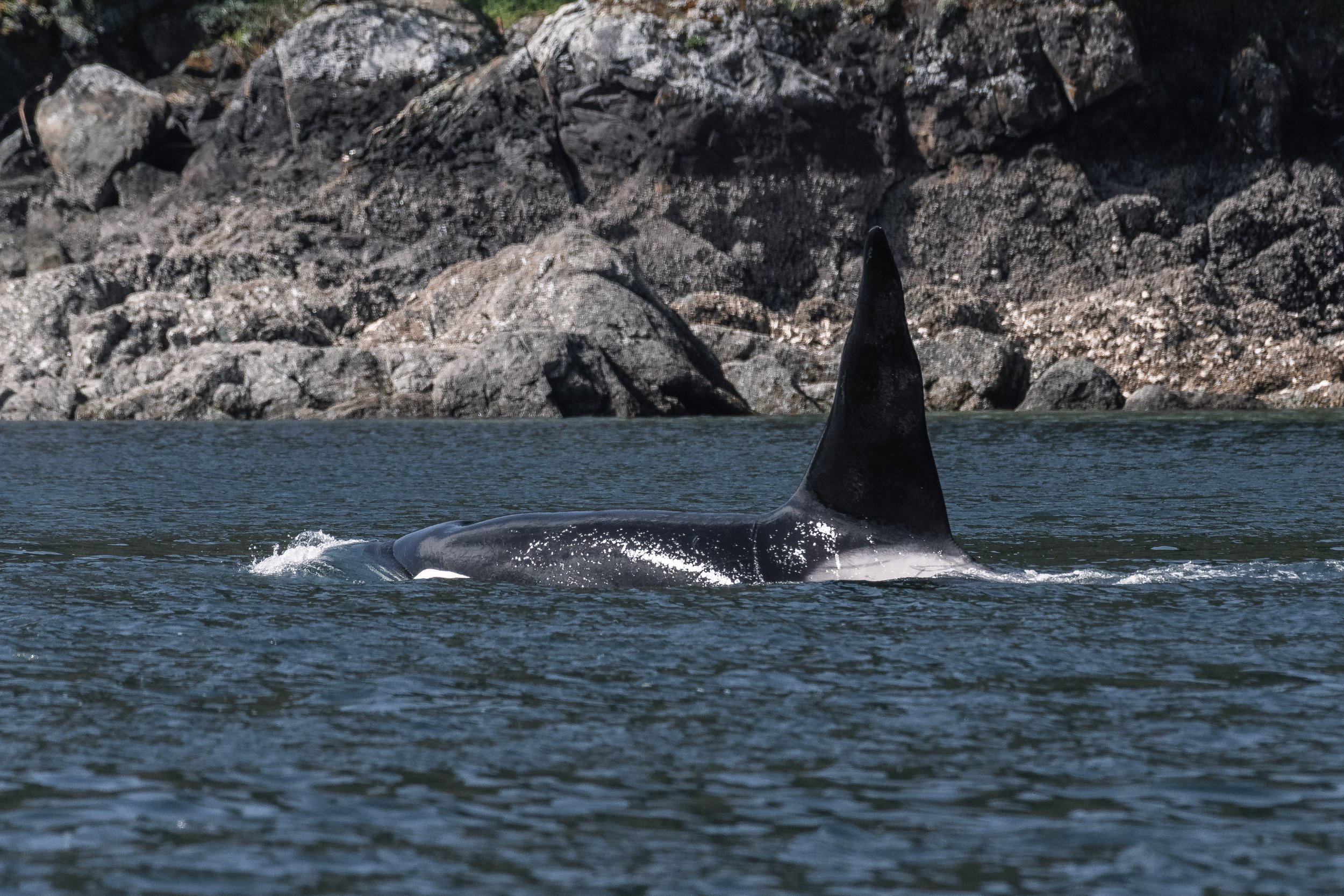
A great look at the wavey trailing edge of T019s Spouter’s dorsal fin. Photo by Evan Hessels.
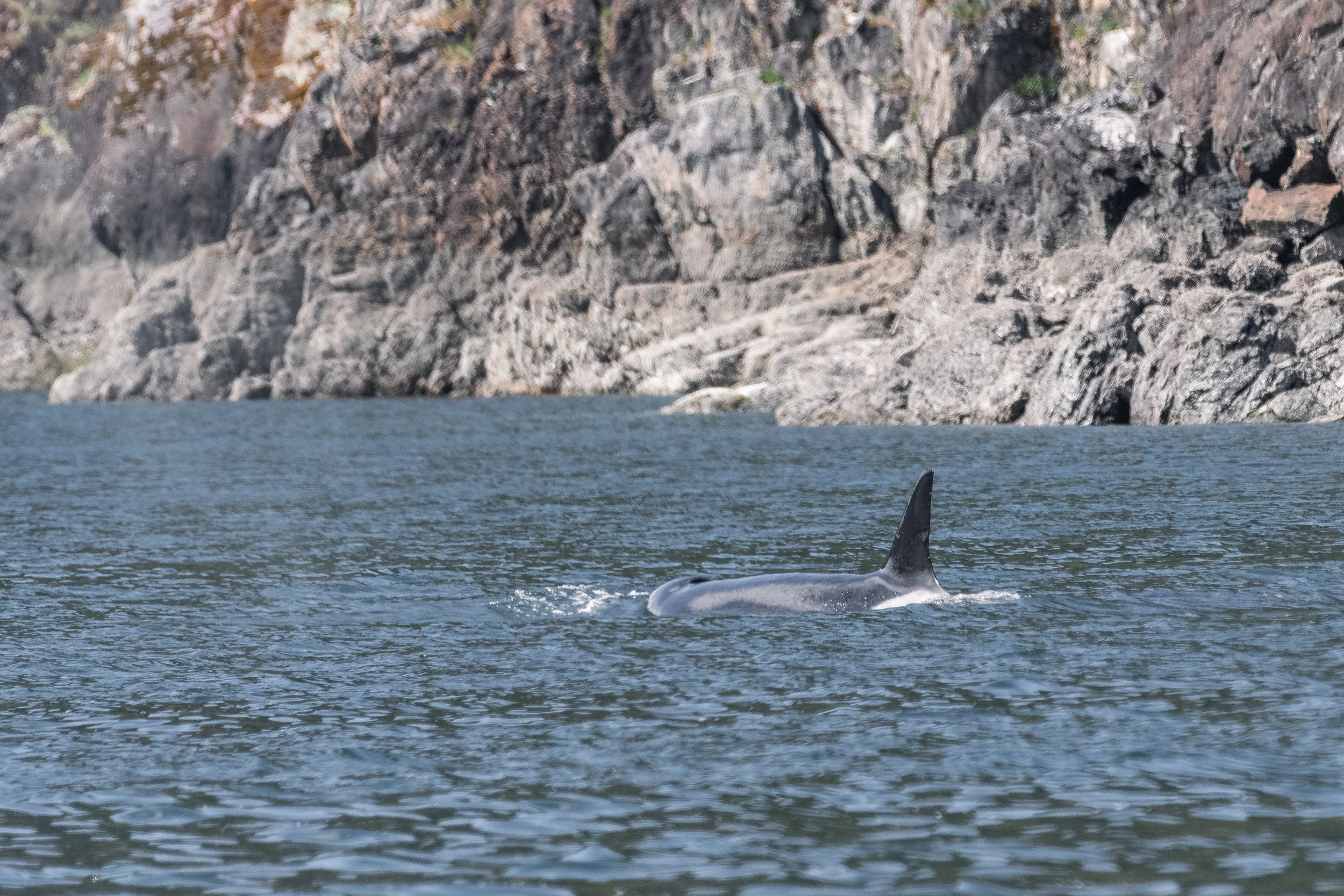
T019 Nootka swimming down the inlet. Photo by Evan Hessels.
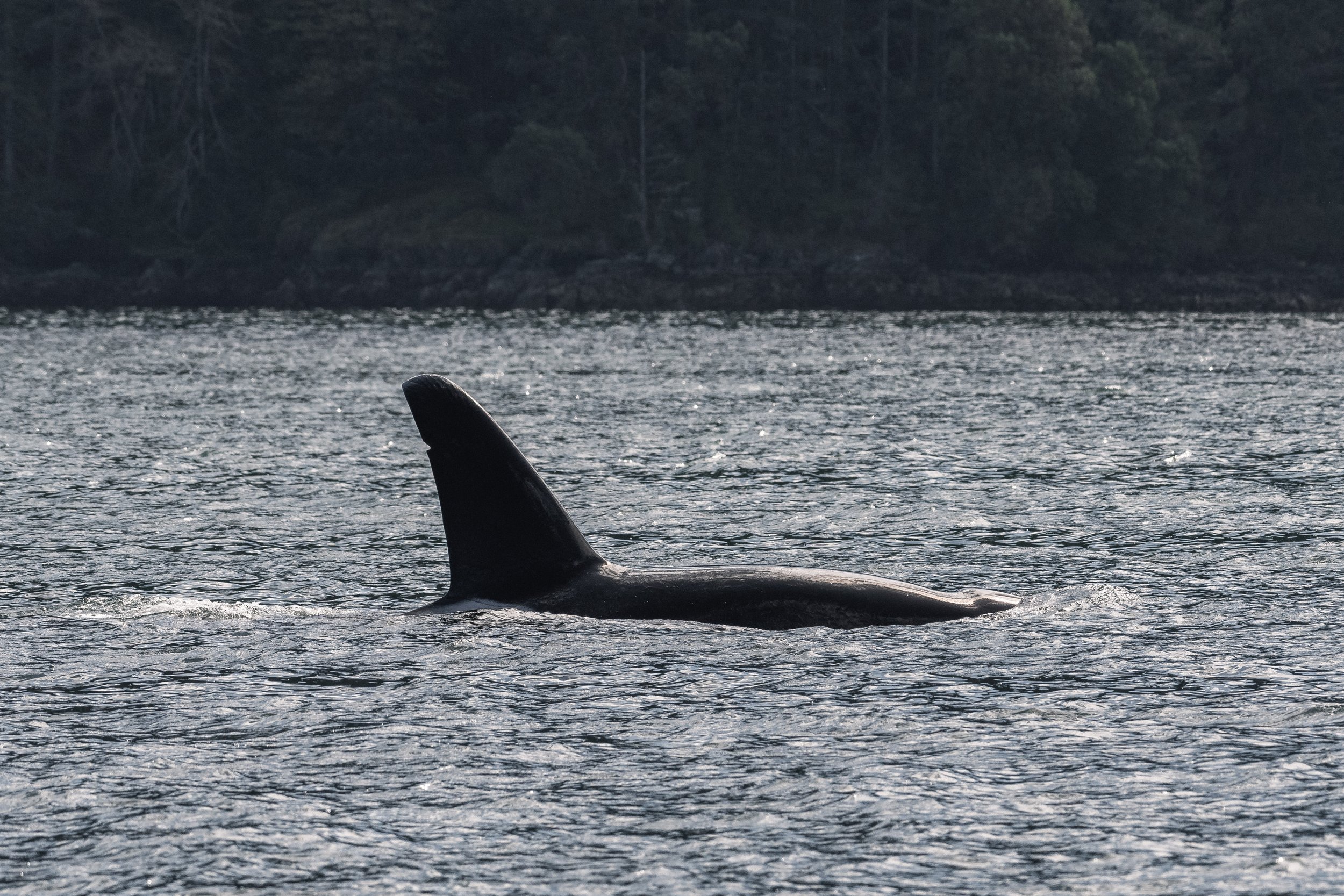
Can you spot the large notch of T019B Galiano’s dorsal fin? Photo by Evan Hessels.
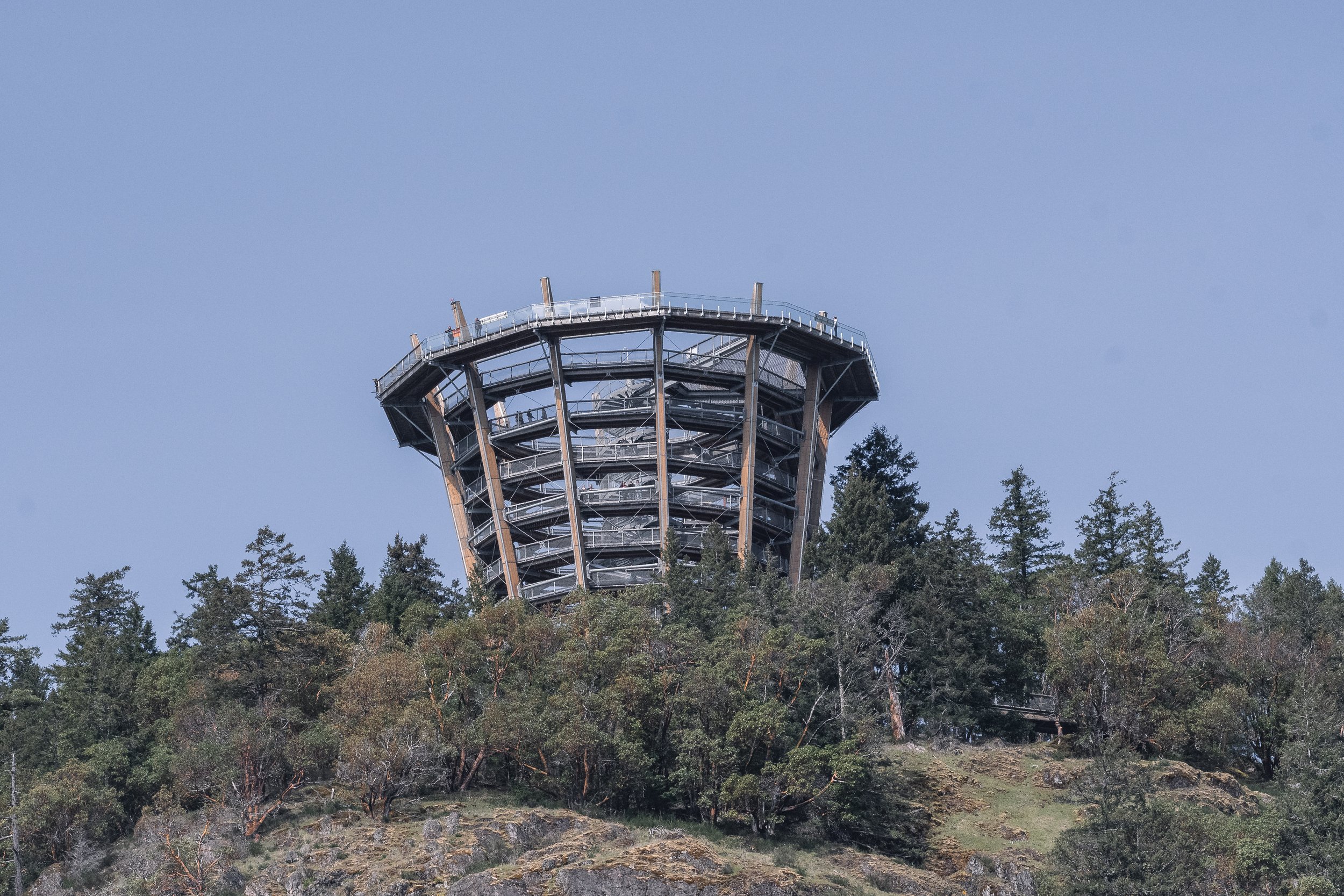
People watching from the Malahat Skywalk. Photo by Evan Hessels.
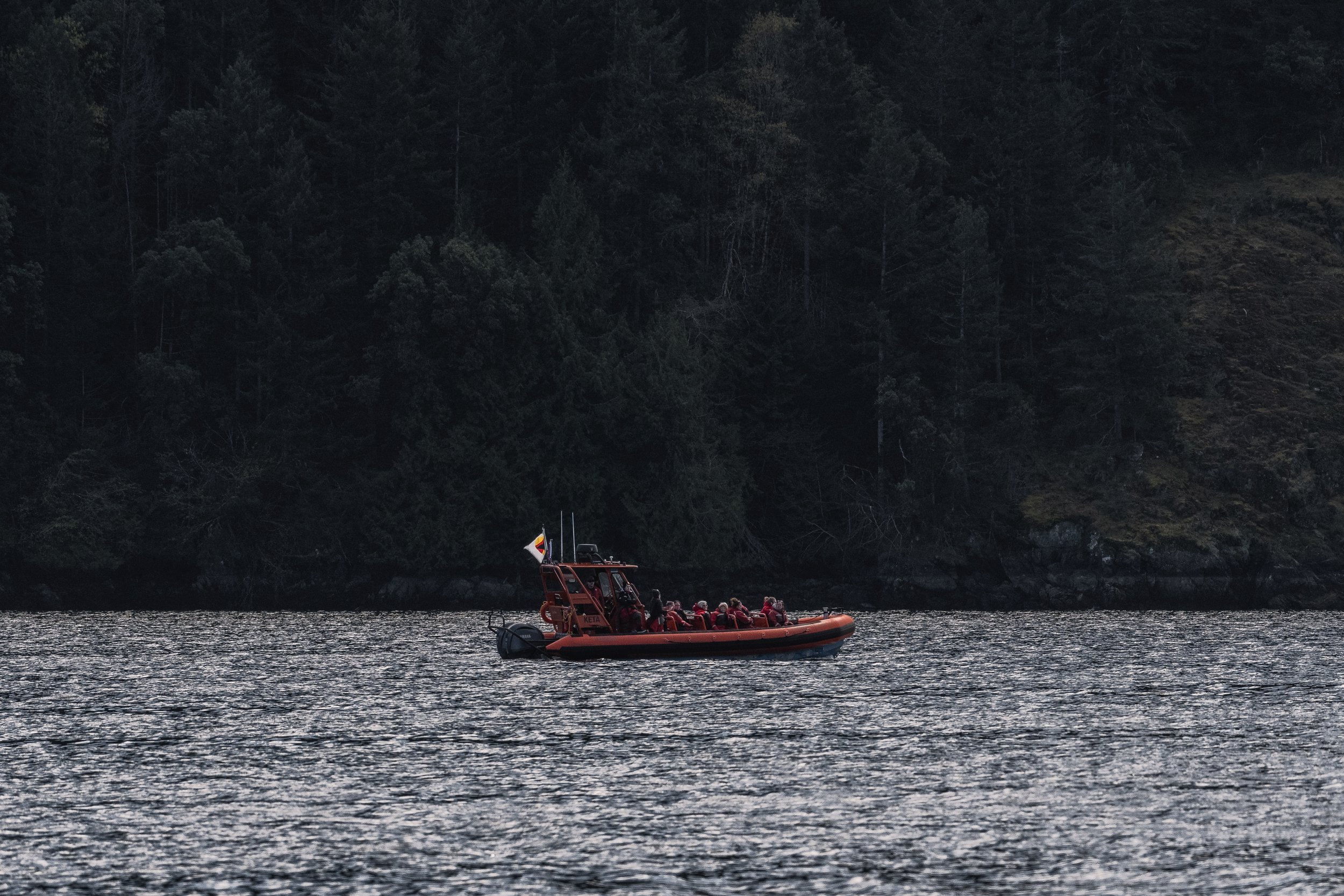
Happy whale watchers on Keta. Photo by Evan Hessels.
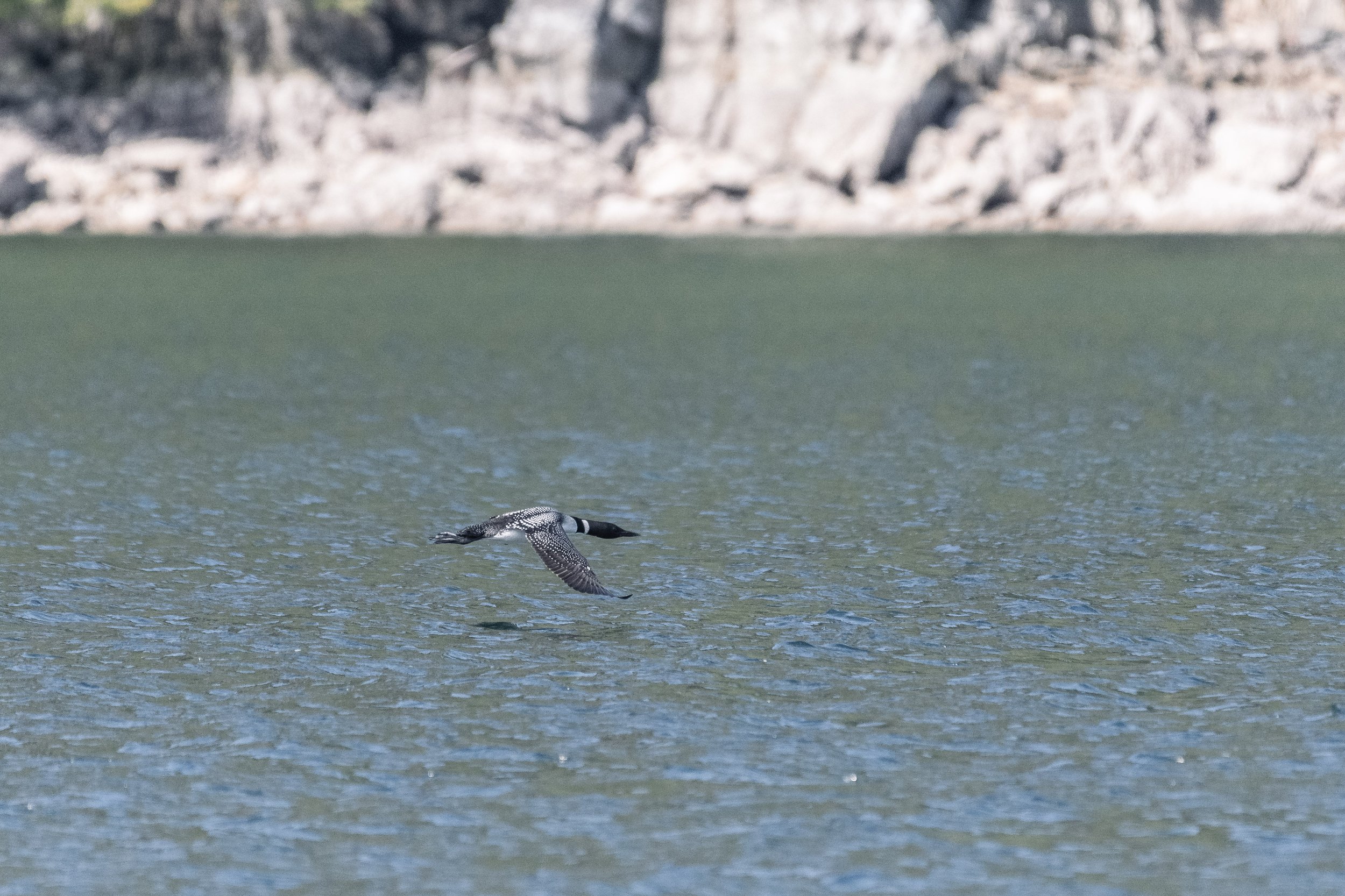
A Common Loon flying by. Photo by Evan Hessels.
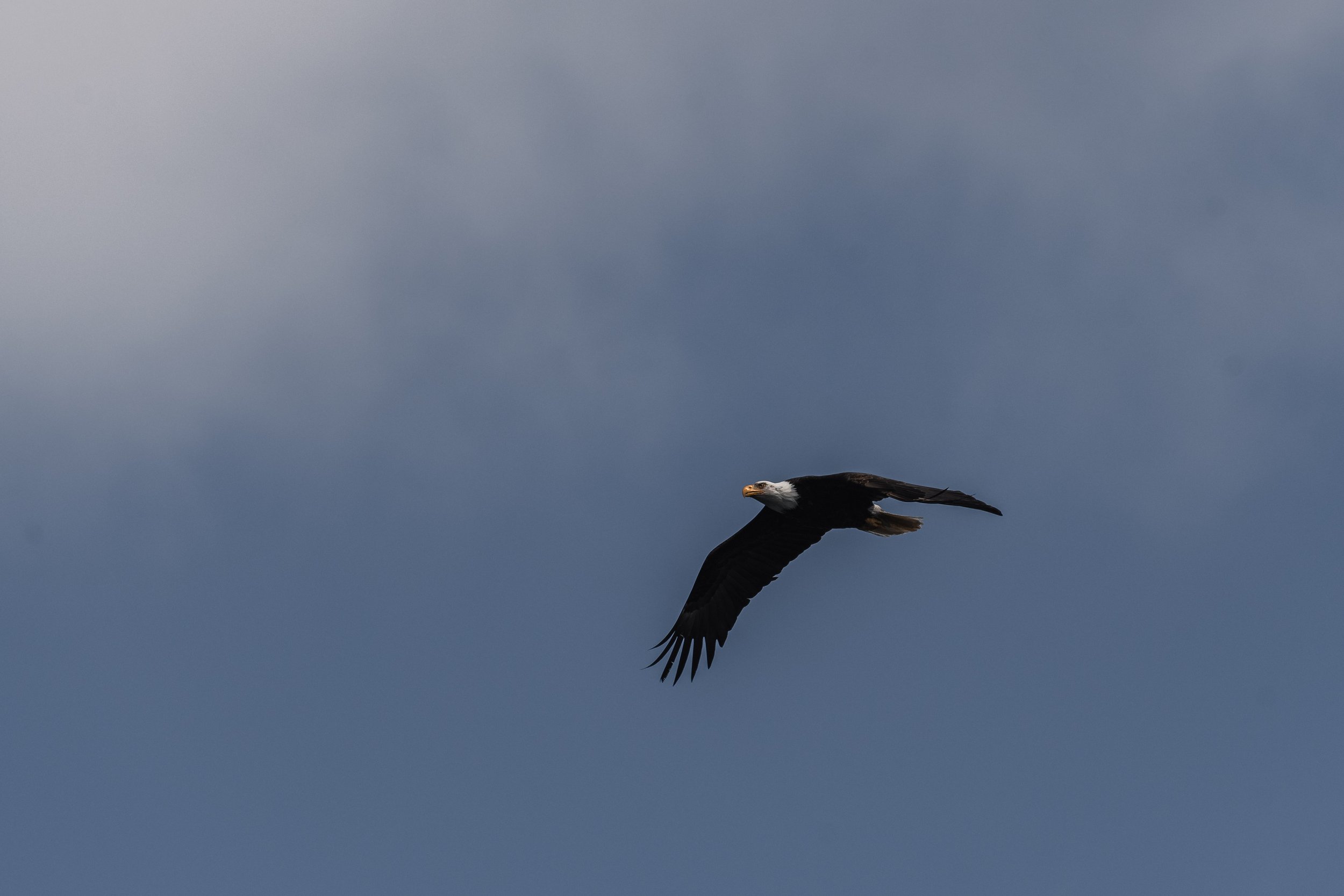
An Adult Eagle soaring by. Photo by Evan Hessels.
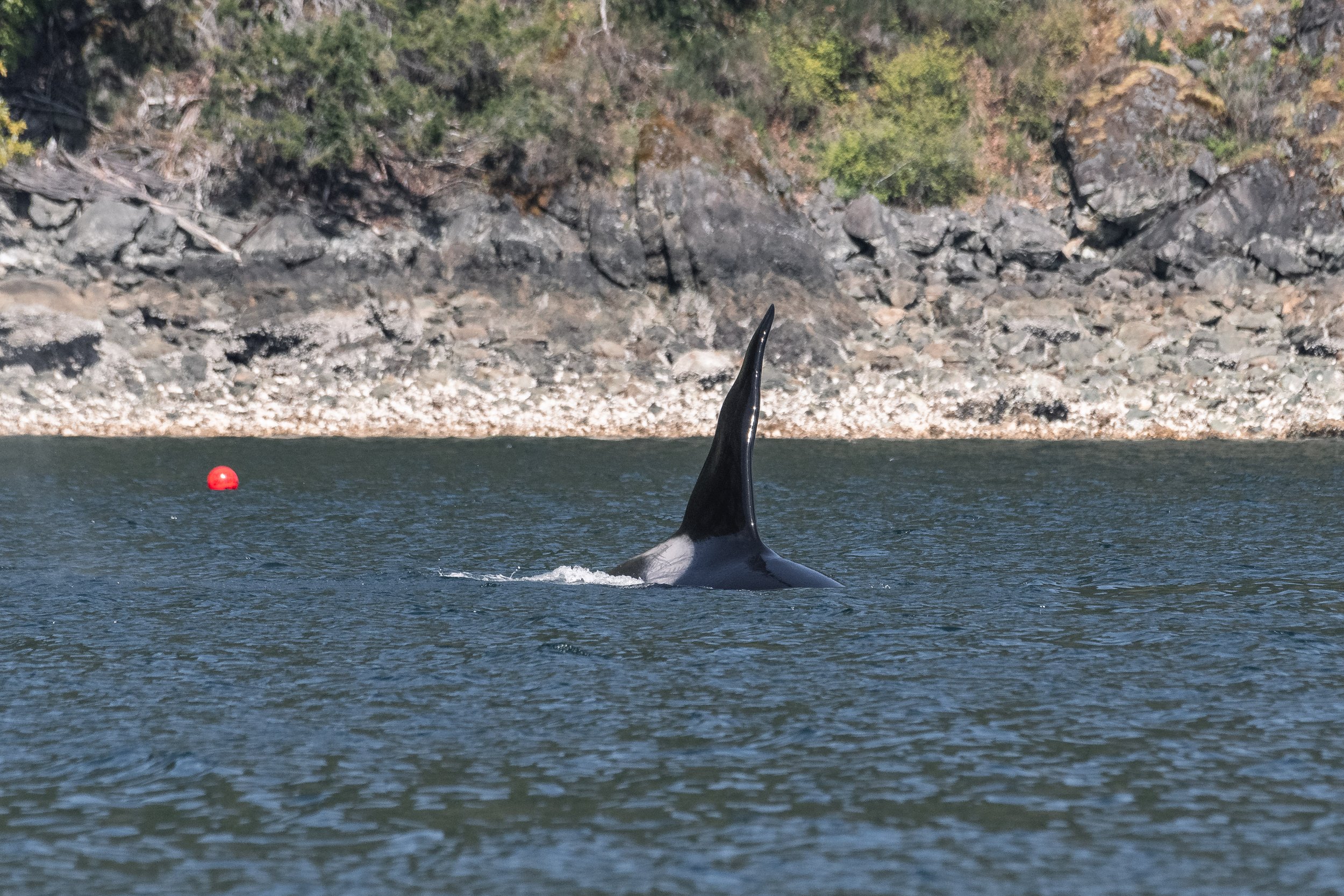
T019C Spouter lunging at the surface. Photo by Evan Hessels.
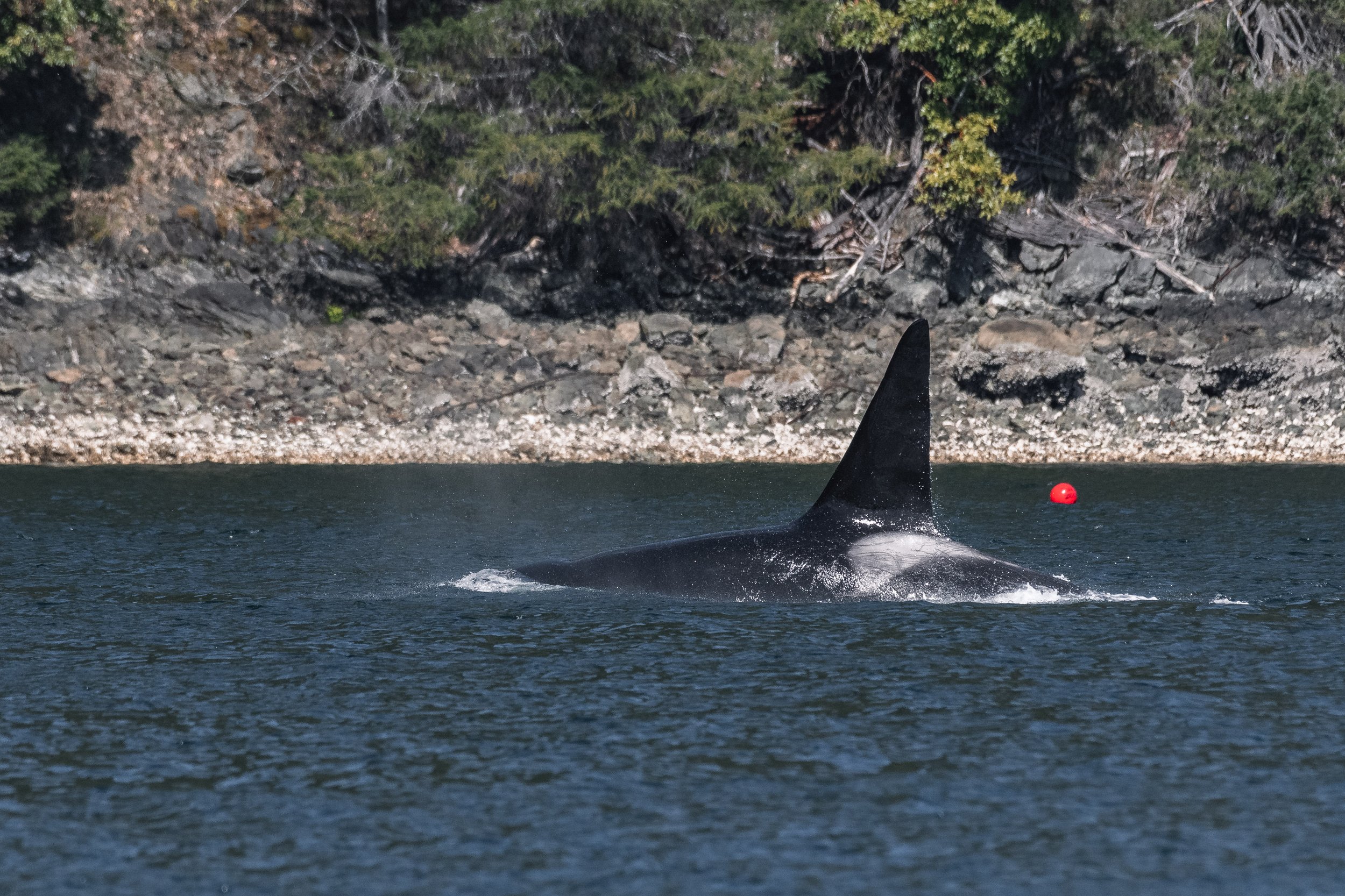
Water cascading off of T019C Spouters dorsal fin. Photo by Evan Hessels.
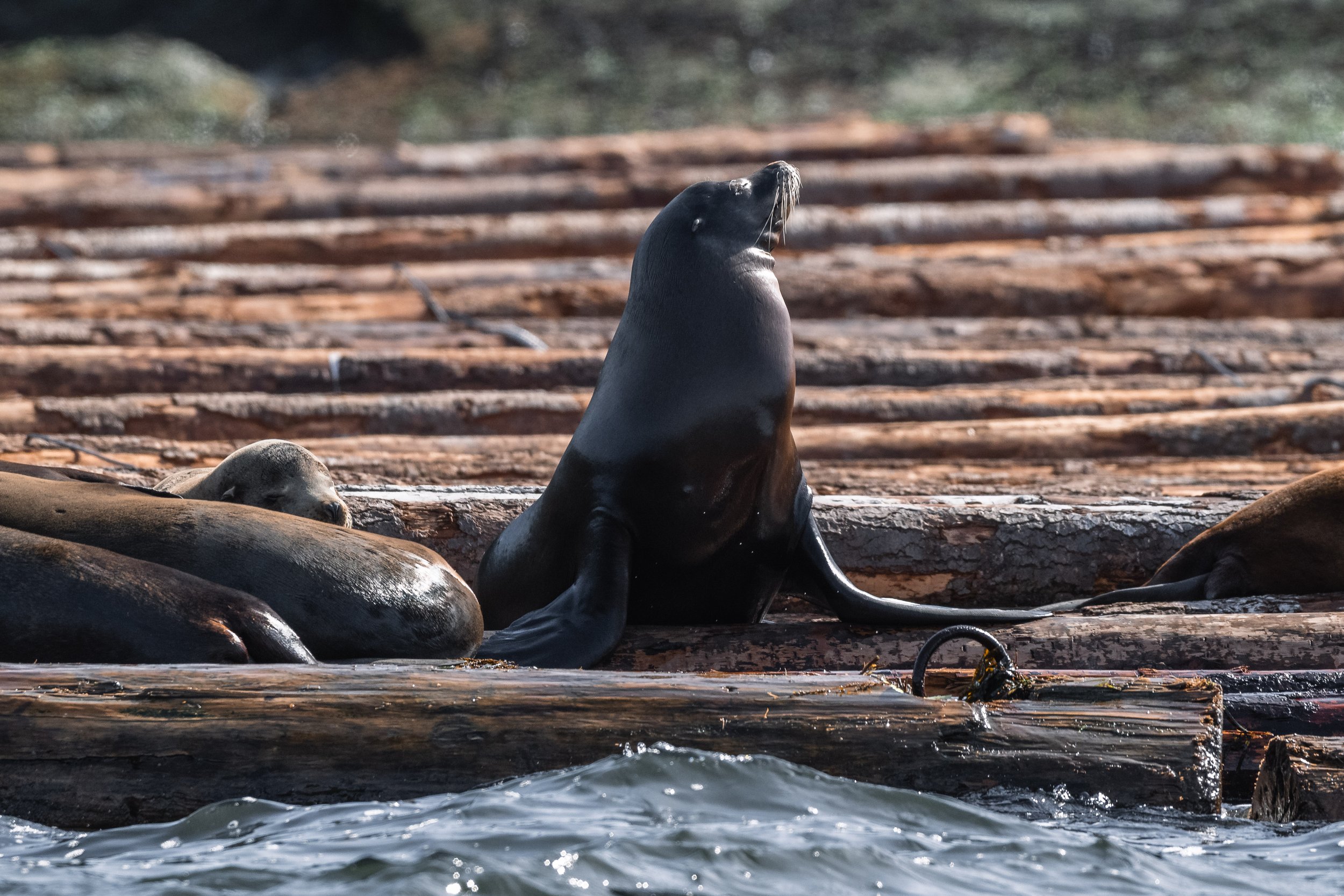
California Sea Lions relaxing on the log booms near Harmac. Photo by Aly Kohlman
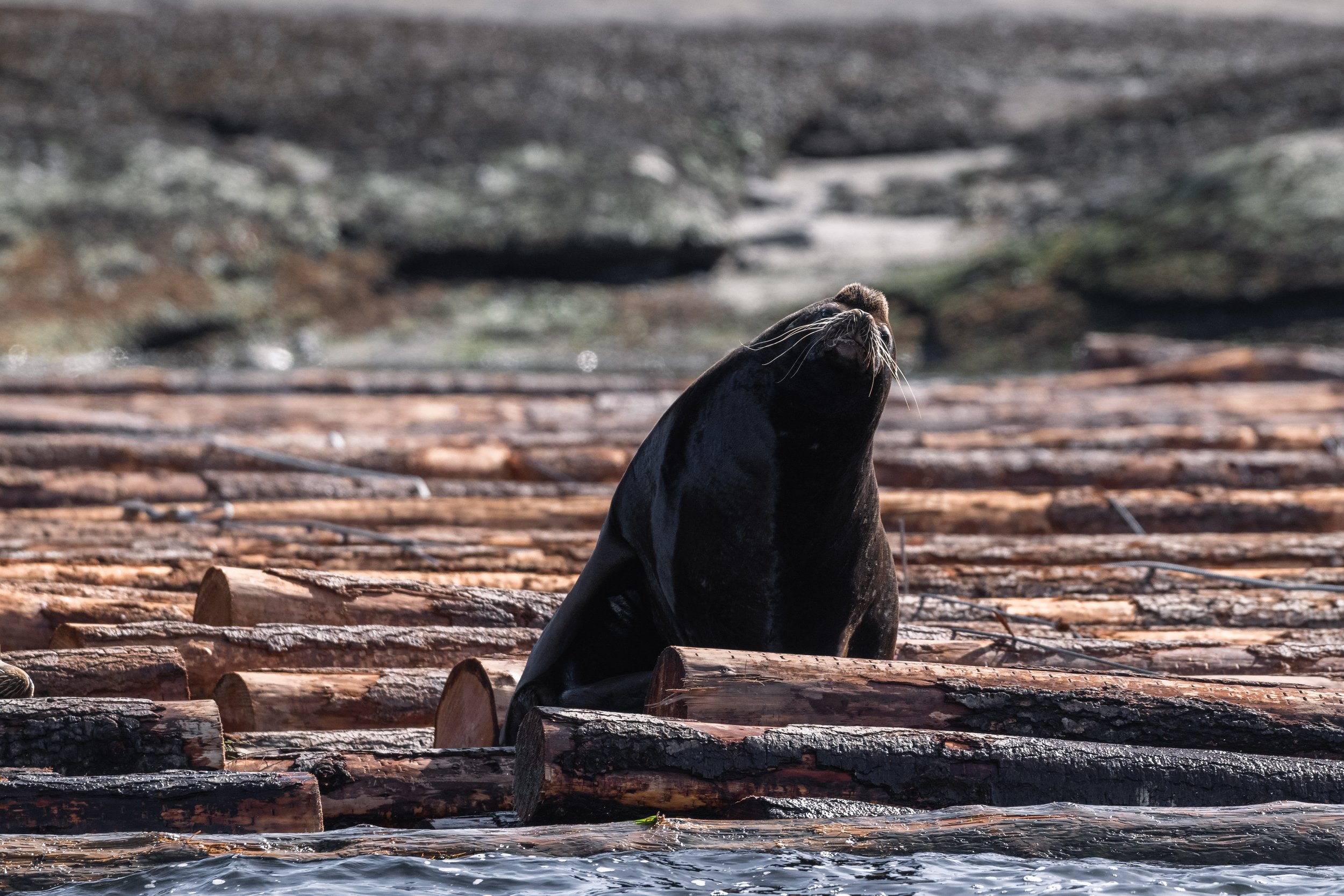
This large California Sea Lion has some extra long whiskers! Photo by Aly Kohlman.
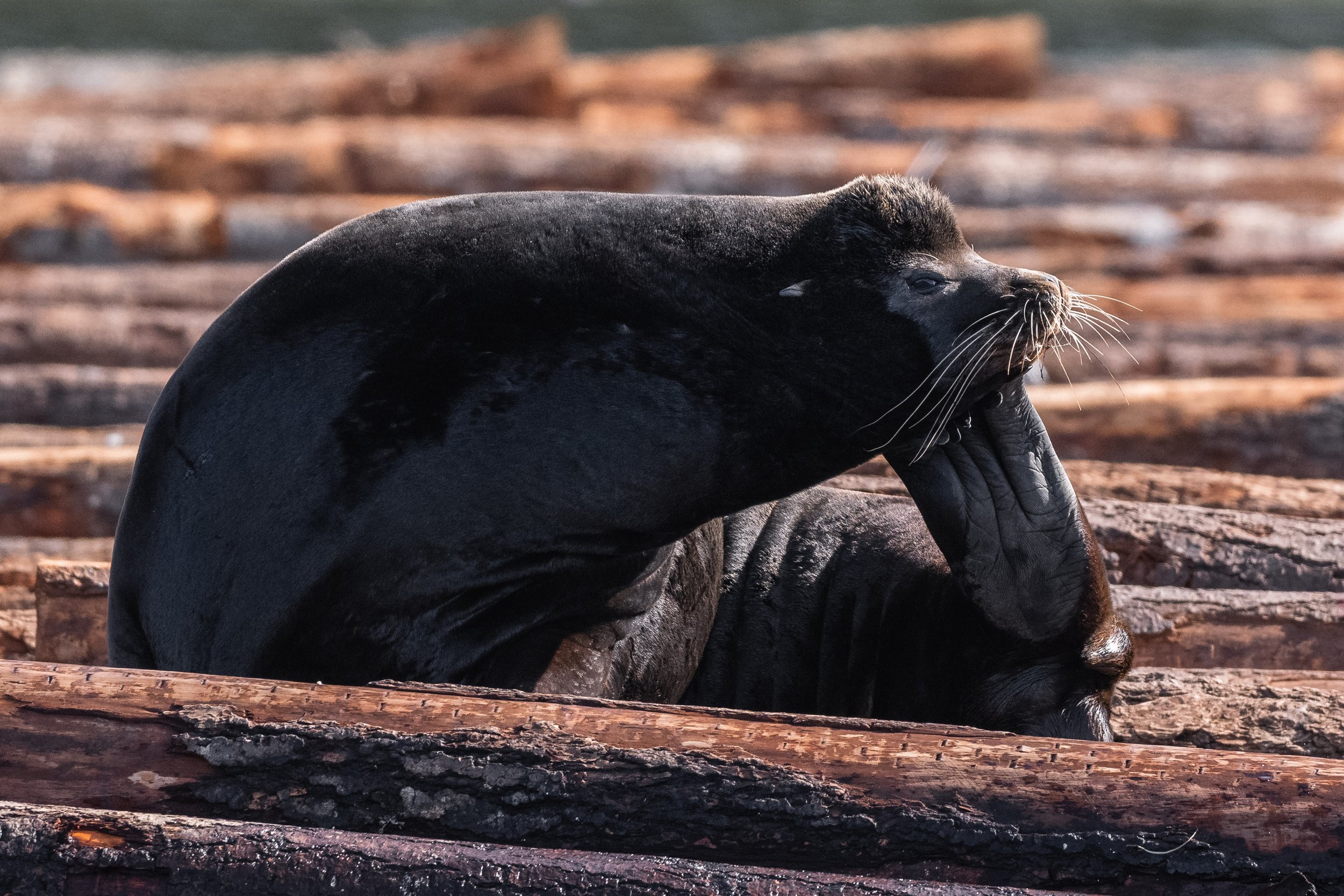
California Sea Lion scratching an itch. Photo by Aly Kohlman.
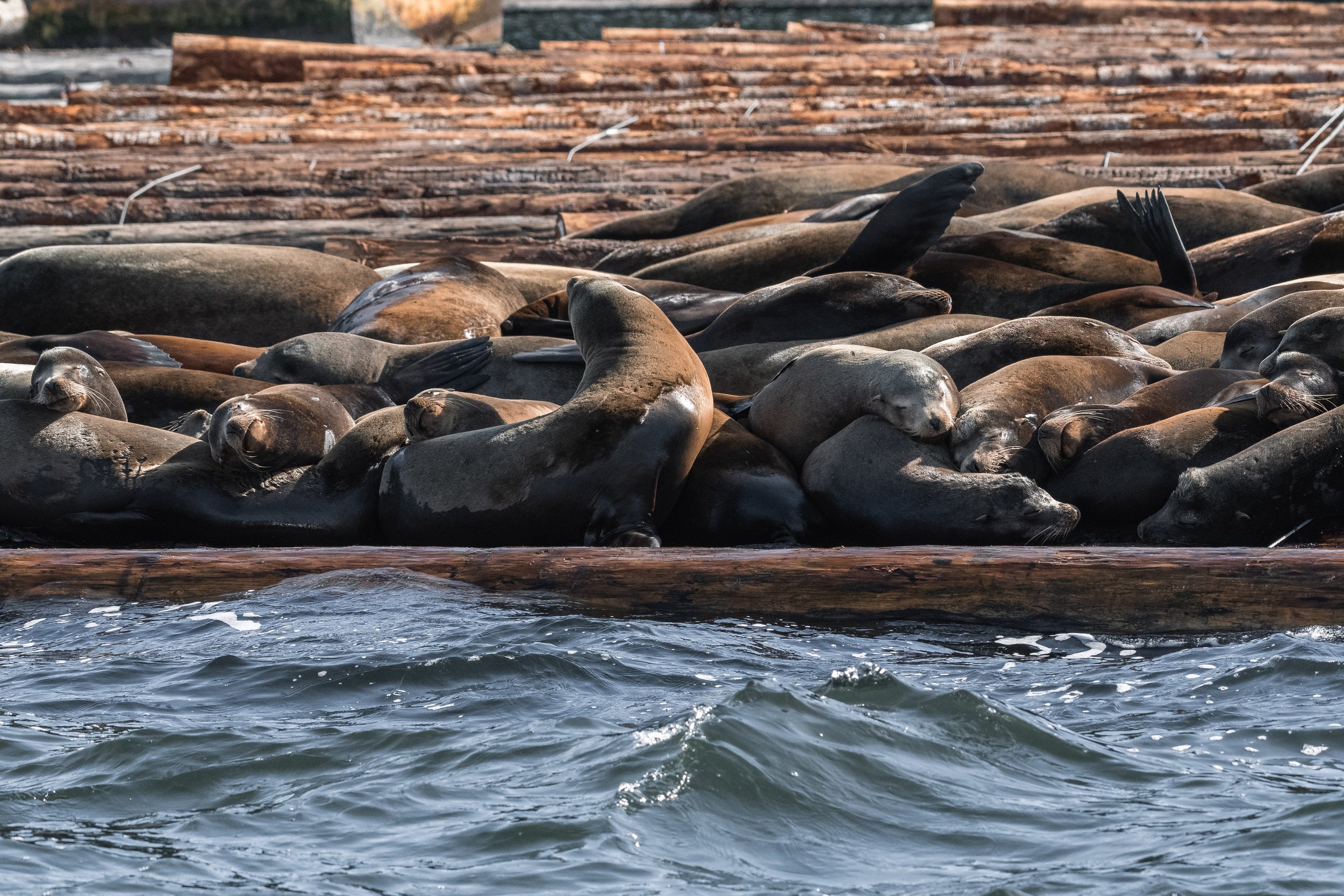
A cuddle puddle of California Sea Lions on the log booms. Photo by Evan Hessels.
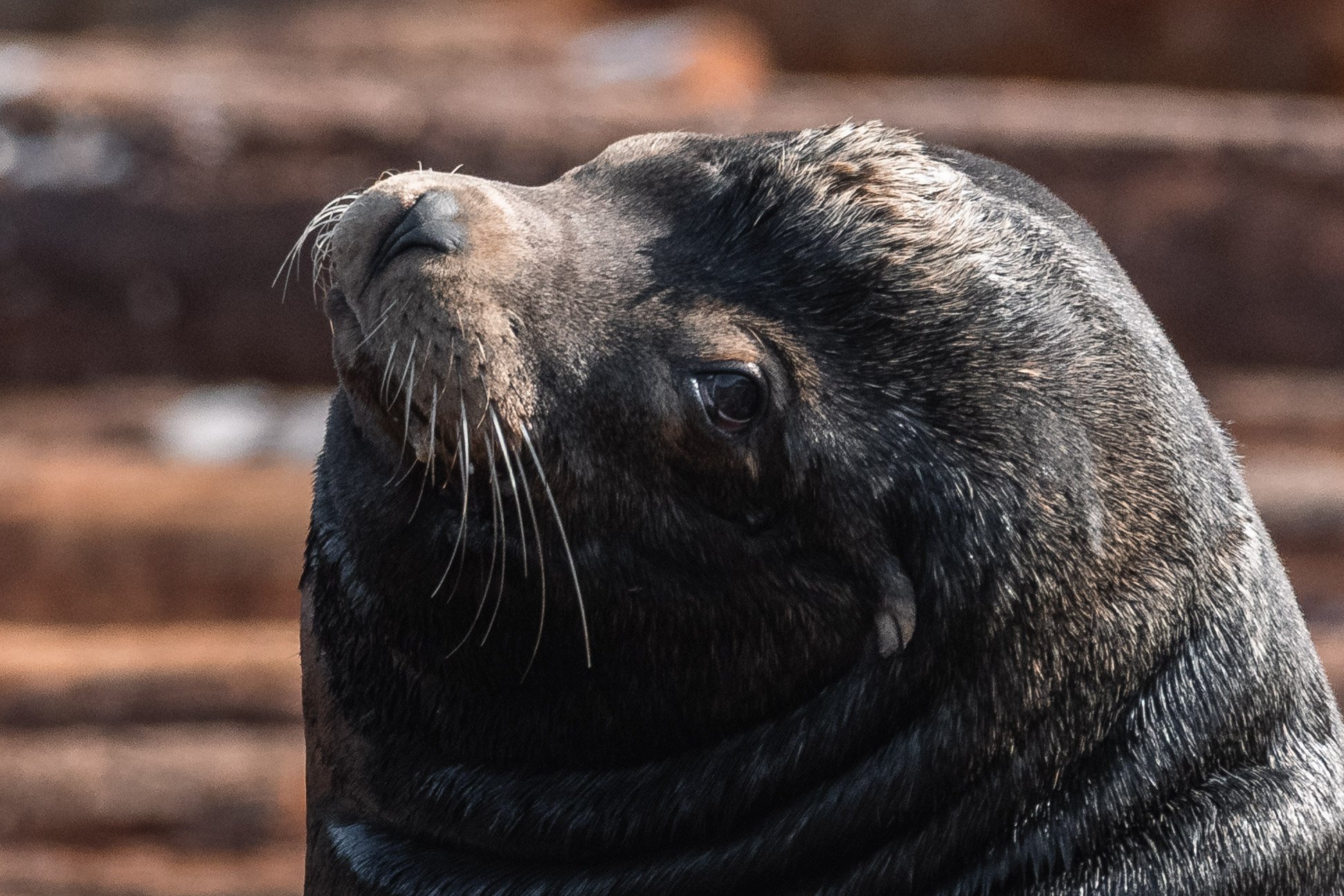
A close up look at the Califoria Sea Lion, striking a pose. Photo by Evan Hessels.